EP1206485B1 - Neue effektoren der dipeptidyl peptidase iv zur topischen anwendung - Google Patents
Neue effektoren der dipeptidyl peptidase iv zur topischen anwendung Download PDFInfo
- Publication number
- EP1206485B1 EP1206485B1 EP00953186A EP00953186A EP1206485B1 EP 1206485 B1 EP1206485 B1 EP 1206485B1 EP 00953186 A EP00953186 A EP 00953186A EP 00953186 A EP00953186 A EP 00953186A EP 1206485 B1 EP1206485 B1 EP 1206485B1
- Authority
- EP
- European Patent Office
- Prior art keywords
- compound according
- amino acid
- dipeptidyl peptidase
- activity
- inhibitors
- Prior art date
- Legal status (The legal status is an assumption and is not a legal conclusion. Google has not performed a legal analysis and makes no representation as to the accuracy of the status listed.)
- Expired - Lifetime
Links
Images
Classifications
-
- C—CHEMISTRY; METALLURGY
- C07—ORGANIC CHEMISTRY
- C07K—PEPTIDES
- C07K7/00—Peptides having 5 to 20 amino acids in a fully defined sequence; Derivatives thereof
-
- C—CHEMISTRY; METALLURGY
- C07—ORGANIC CHEMISTRY
- C07K—PEPTIDES
- C07K5/00—Peptides containing up to four amino acids in a fully defined sequence; Derivatives thereof
- C07K5/04—Peptides containing up to four amino acids in a fully defined sequence; Derivatives thereof containing only normal peptide links
- C07K5/06—Dipeptides
- C07K5/06008—Dipeptides with the first amino acid being neutral
- C07K5/06078—Dipeptides with the first amino acid being neutral and aromatic or cycloaliphatic
-
- A—HUMAN NECESSITIES
- A61—MEDICAL OR VETERINARY SCIENCE; HYGIENE
- A61P—SPECIFIC THERAPEUTIC ACTIVITY OF CHEMICAL COMPOUNDS OR MEDICINAL PREPARATIONS
- A61P1/00—Drugs for disorders of the alimentary tract or the digestive system
- A61P1/02—Stomatological preparations, e.g. drugs for caries, aphtae, periodontitis
-
- A—HUMAN NECESSITIES
- A61—MEDICAL OR VETERINARY SCIENCE; HYGIENE
- A61P—SPECIFIC THERAPEUTIC ACTIVITY OF CHEMICAL COMPOUNDS OR MEDICINAL PREPARATIONS
- A61P17/00—Drugs for dermatological disorders
-
- A—HUMAN NECESSITIES
- A61—MEDICAL OR VETERINARY SCIENCE; HYGIENE
- A61P—SPECIFIC THERAPEUTIC ACTIVITY OF CHEMICAL COMPOUNDS OR MEDICINAL PREPARATIONS
- A61P17/00—Drugs for dermatological disorders
- A61P17/06—Antipsoriatics
-
- A—HUMAN NECESSITIES
- A61—MEDICAL OR VETERINARY SCIENCE; HYGIENE
- A61P—SPECIFIC THERAPEUTIC ACTIVITY OF CHEMICAL COMPOUNDS OR MEDICINAL PREPARATIONS
- A61P19/00—Drugs for skeletal disorders
- A61P19/02—Drugs for skeletal disorders for joint disorders, e.g. arthritis, arthrosis
-
- A—HUMAN NECESSITIES
- A61—MEDICAL OR VETERINARY SCIENCE; HYGIENE
- A61P—SPECIFIC THERAPEUTIC ACTIVITY OF CHEMICAL COMPOUNDS OR MEDICINAL PREPARATIONS
- A61P29/00—Non-central analgesic, antipyretic or antiinflammatory agents, e.g. antirheumatic agents; Non-steroidal antiinflammatory drugs [NSAID]
-
- A—HUMAN NECESSITIES
- A61—MEDICAL OR VETERINARY SCIENCE; HYGIENE
- A61P—SPECIFIC THERAPEUTIC ACTIVITY OF CHEMICAL COMPOUNDS OR MEDICINAL PREPARATIONS
- A61P3/00—Drugs for disorders of the metabolism
-
- A—HUMAN NECESSITIES
- A61—MEDICAL OR VETERINARY SCIENCE; HYGIENE
- A61P—SPECIFIC THERAPEUTIC ACTIVITY OF CHEMICAL COMPOUNDS OR MEDICINAL PREPARATIONS
- A61P35/00—Antineoplastic agents
-
- A—HUMAN NECESSITIES
- A61—MEDICAL OR VETERINARY SCIENCE; HYGIENE
- A61P—SPECIFIC THERAPEUTIC ACTIVITY OF CHEMICAL COMPOUNDS OR MEDICINAL PREPARATIONS
- A61P37/00—Drugs for immunological or allergic disorders
-
- A—HUMAN NECESSITIES
- A61—MEDICAL OR VETERINARY SCIENCE; HYGIENE
- A61P—SPECIFIC THERAPEUTIC ACTIVITY OF CHEMICAL COMPOUNDS OR MEDICINAL PREPARATIONS
- A61P37/00—Drugs for immunological or allergic disorders
- A61P37/02—Immunomodulators
- A61P37/06—Immunosuppressants, e.g. drugs for graft rejection
-
- A—HUMAN NECESSITIES
- A61—MEDICAL OR VETERINARY SCIENCE; HYGIENE
- A61P—SPECIFIC THERAPEUTIC ACTIVITY OF CHEMICAL COMPOUNDS OR MEDICINAL PREPARATIONS
- A61P37/00—Drugs for immunological or allergic disorders
- A61P37/08—Antiallergic agents
-
- A—HUMAN NECESSITIES
- A61—MEDICAL OR VETERINARY SCIENCE; HYGIENE
- A61P—SPECIFIC THERAPEUTIC ACTIVITY OF CHEMICAL COMPOUNDS OR MEDICINAL PREPARATIONS
- A61P43/00—Drugs for specific purposes, not provided for in groups A61P1/00-A61P41/00
-
- C—CHEMISTRY; METALLURGY
- C07—ORGANIC CHEMISTRY
- C07K—PEPTIDES
- C07K5/00—Peptides containing up to four amino acids in a fully defined sequence; Derivatives thereof
- C07K5/04—Peptides containing up to four amino acids in a fully defined sequence; Derivatives thereof containing only normal peptide links
- C07K5/06—Dipeptides
- C07K5/06104—Dipeptides with the first amino acid being acidic
-
- C—CHEMISTRY; METALLURGY
- C07—ORGANIC CHEMISTRY
- C07K—PEPTIDES
- C07K5/00—Peptides containing up to four amino acids in a fully defined sequence; Derivatives thereof
- C07K5/04—Peptides containing up to four amino acids in a fully defined sequence; Derivatives thereof containing only normal peptide links
- C07K5/08—Tripeptides
- C07K5/0802—Tripeptides with the first amino acid being neutral
- C07K5/0804—Tripeptides with the first amino acid being neutral and aliphatic
- C07K5/0806—Tripeptides with the first amino acid being neutral and aliphatic the side chain containing 0 or 1 carbon atoms, i.e. Gly, Ala
-
- C—CHEMISTRY; METALLURGY
- C07—ORGANIC CHEMISTRY
- C07K—PEPTIDES
- C07K7/00—Peptides having 5 to 20 amino acids in a fully defined sequence; Derivatives thereof
- C07K7/04—Linear peptides containing only normal peptide links
- C07K7/08—Linear peptides containing only normal peptide links having 12 to 20 amino acids
-
- C—CHEMISTRY; METALLURGY
- C08—ORGANIC MACROMOLECULAR COMPOUNDS; THEIR PREPARATION OR CHEMICAL WORKING-UP; COMPOSITIONS BASED THEREON
- C08G—MACROMOLECULAR COMPOUNDS OBTAINED OTHERWISE THAN BY REACTIONS ONLY INVOLVING UNSATURATED CARBON-TO-CARBON BONDS
- C08G65/00—Macromolecular compounds obtained by reactions forming an ether link in the main chain of the macromolecule
- C08G65/02—Macromolecular compounds obtained by reactions forming an ether link in the main chain of the macromolecule from cyclic ethers by opening of the heterocyclic ring
- C08G65/32—Polymers modified by chemical after-treatment
- C08G65/329—Polymers modified by chemical after-treatment with organic compounds
-
- A—HUMAN NECESSITIES
- A61—MEDICAL OR VETERINARY SCIENCE; HYGIENE
- A61K—PREPARATIONS FOR MEDICAL, DENTAL OR TOILETRY PURPOSES
- A61K38/00—Medicinal preparations containing peptides
Definitions
- the invention relates to novel effectors of dipeptidyl peptidase IV. These effectors can be used for the targeted influencing of locally limited pathophysiological and physiological processes (inflammations, chemotaxis, autoimmune diseases, wound healing).
- the enzymatic activity and the binding activities of dipeptidyl peptidase IV and of enzymes with comparable or identical activity as well as of proteins with related primary structure are achieved by means of effectors (substrates, Pseudo-substrates, inhibitors, antibodies, binding proteins, binding antagonists, binding agonists, etc.).
- proline-specific peptidases Due to the abundance of the amino acid proline in a variety of peptide hormones and the associated structural properties of these peptides, proline-specific peptidases have a function analogous to signal peptidases (Yaron and Naider, 1993); (Vanhoof et al., 1995). In this case, proline in these peptides, by virtue of its particular structure, determines both conformation and stability of these peptides by preventing them from degrading protects non-specific proteases (Kessler, 1982). Enzymes, however, which have a highly specific structure-altering effect on proline-containing sequences (HIV protease, cyclophylin, etc.) are attractive targets of current drug discovery.
- proline-splitting peptidases prolyl endopeptidase (PEP) and dipeptidyl peptidase IV (DP IV), relationships between the modulation of the biological activity of natural peptide substrates and their selective cleavage by these enzymes could be made probable.
- PEP prolyl endopeptidase
- DP IV dipeptidyl peptidase IV
- DP IV- or DP IV-analogous activity occurs in the bloodstream and in almost all organs, where it cleaves highly specific dipeptides from the N-terminus of biologically active peptides when proline or alanine represents the adjacent residues of the N-terminal amino acid in their sequence. Therefore, this enzyme is believed to be involved in regulating the biological activity of polypeptides in vivo (Vanhoof et al., 1995).
- chemokines have been shown to be substrates of DP IV and their function modulated by DP IV (Proost et al., 1998; Proost et al., 1998 Proost et al., 1999); (Shioda et al., 1998)).
- Chemokines by virtue of their chemotactic action, are involved in the regulation of local immunological processes, such as autoimmune processes, inflammation and wound healing (Nelson and Krensky, 1998).
- biologically active peptides with serine or threonine in the P 1 position are also substrates of DP IV.
- a number of biologically active DP IV substrates (substance P, somatostatin, VIP, PACAP, etc.) are involved in the regulation of neuronal, immunological and vasoactive processes in the skin (Scholzen et al., 1998); (Wallengren, 1997). Dipeptidyl peptidase IV thus represents an important switching point in the regulation of the activity of gastrointestinal, immunologically or neurologically active peptides and thus an interesting therapeutic target (Augustyns et al., 1999). However, the exact signal cascades are not fully understood in detail.
- DP IV is an activation marker of T lymphocytes and a receptor for adenosine deaminase.
- the use of DP IV inhibitors has immunosuppressive effects in cell culture and in vivo (Ansorge et al., 1995, Reinhold et al., 1997, Kubota et al., 1992).
- monoclonal antibodies to CD26 stimulatory effects on intracellular signaling cascades (Ca 2+ influx, kinase activations) were achieved, in part independently of the enzymatic activity of the enzyme (Hegen et al., 1993, Kameoka et al., 1995, Tanaka et al. , Kahn et al., 1995).
- DP IV inhibitors In addition to the use of DP IV inhibitors to normalize blood glucose, DP IV inhibitors have been systemically used to treat arthritis in animal models. In arthritis patients as well as in animal arthritis models, a decrease in DP IV activity has been observed (Riellertz and Boigk, 1986) (Fujita et al., 1992). In particular, by oral or subcutaneous administration of systemically acting DP IV inhibitors suppression of alkyldiamine-induced arthritis has been achieved in the animal model (Tanaka et al., 1997, Tanaka et al., 1998).
- DP IV inhibition suppressed the proliferation of mylin basic protein-specific T cell clones (Reinhold et al., 1998).
- DP IV inhibition suppressed the proliferation of mylin basic protein-specific T cell clones (Reinhold et al., 1998).
- skin diseases psoriasis, lichen planus
- carcinogenic skin disorders increased DP IV activity has been demonstrated in keratinocytes and fibroblasts (Novelli et al., 1996) (Raynaud et al., 1992).
- fibroblast-activation protein which has approximately 50% sequence homology to DP IV and is probably identical to the seprase described by Pi ⁇ eiro-Sanchez et al ., 1997, is exacerbated by inactivated fibroblasts of epithelial carcinomas and healing wounds expressed (Niedermeyer et al., 1998).
- DP IV inhibitors Due to the widespread proliferation of the protein in the organism and the diverse mechanisms in which DP IV, DP IV activities and DP IV related proteins are involved, systemic therapy (enteral or parenteral administration) with DP IV inhibitors may result in a number of undesired Cause side effects. Thus, a parenteral or enteral application of DP IV inhibitors regulate or deregulatory in the glucose metabolism.
- phosphorylated dipeptide (B) p -nitroanilides [KASPARI, A., et al., 1996] are substrates of DP IV.
- DP IV inhibitors such as Glu (Gly) thia or Lys (Z-NO 2 ) thia [REINHOLD, D., et al., 1998] are fully transported.
- the problem to be solved was to produce compounds that can be used to specifically influence locally limited pathophysiological and physiological processes.
- the object of the invention is to achieve a locally limited inhibition of DP IV or DP IV-analogous activity in order to be able to intervene specifically in the regulation of the activity of locally active peptide hormones.
- At least one pharmaceutical composition is provided which at least one compound of the general formulas contains.
- A is an ⁇ -amino acid, more preferably a natural ⁇ -amino acid, preferably threonine, tyrosine, serine, arginine, lysine, aspartic acid, glutamic acid or cysteine.
- the oligopeptides are homopolymers, copolymers or block copolymers.
- Such compounds or pharmaceutical compositions are used for topically influencing in particular the reduction of the activity of dipeptidyl peptidase IV or analogous enzymes.
- alkyl may represent a C 1-50 alkyl group, preferably a C 6-30 alkyl group, preferably a C 8-12 alkyl group;
- an alkyl group may be, for example, a methyl, ethyl, propyl, isopropyl or butyl group;
- alk is defined in the term “alkoxy” and the term “alkane” is defined, for example, in the term “alkanoyl” such as “alkyl”; aromatics are preferably substituted or unsubstituted phenyl, benzyl, naphthyl, biphenyl or anthracene groups, which preferably have at least 8 carbon atoms;
- alkenyl may represent a C 2-10 alkenyl group, preferably a C 2-6 alkenyl group, which has the double bond (s) at any position and may be unsubstituted or substituted; the term "
- the compounds according to the invention can still bind to the active site of the enzyme dipeptidyl peptidase IV and analogous enzymes despite prolonged side-function, but are no longer actively transported by the peptide transporter PepT1.
- the resulting diminished or severely limited transportability of the compounds of the invention leads ideally to a local, topical inhibition of DP IV and analogous enzymes.
- the compounds according to the invention or compounds used according to the invention can be present or used as racemates or as enantiomerically pure compounds, preferably in the L-threo or L-allo form, based on A.
- an effective action of the inhibitors in the tissue to be treated can be achieved, and on the other hand systemic effects of the inhibitors can be largely avoided by localized, ie topical application of DP IV inhibitors.
- an effective and low-side effect local physiological and pathophysiological processes is achieved.
- the invention thus provides novel DP IV inhibitors and a novel approach to the use of DP IV inhibitors in vivo .
- Corresponding inhibitors can be adapted to the type of application by chemical modifications or formulations.
- voluminous hydrophilic substitutions on the side chain make it difficult or avoid systemic distribution.
- the inhibitors can be administered in pharmaceutical and cosmetic preparations.
- the topical application comprises the local application of the inhibitors by direct application to the tissue to be treated (eg skin, wounds, tumors) by ointments, creams, cosmetics, or indirect application by effector-containing patches, bandages o. ⁇ ., By application in body parts (Mouth, nose, ears, eyes, lungs) in the form of drops, sprays, inhalants or the like, by direct injection into or around the tissue to be treated and by implantation of effector-containing materials.
- the topical application further comprises the oral or anal application of difficult or nonabsorbable effectors of dipeptidyl peptidase IV or DP IV analogue sequences for the selective influencing of gastrointestinal DP IV.
- oligopeptides have chain lengths of 3 to 15, particularly preferably 4 to 10 amino acids, and / or the polyethylene glycols having molecular weights of at least 250 g / mol, preferably of at least 1500 g / mol and up to 15,000 g / mol, and / or have the optionally substituted organic amines, amides, alcohols, acids or aromatics having at least 12 carbon atoms and preferably up to 30 carbon atoms.
- compositions containing at least one compound of the invention optionally in combination with conventional carriers or adjuvants are optionally in combination with conventional carriers or adjuvants.
- the compounds according to the invention or pharmaceutical or cosmetic compositions can be used for topically influencing the activity of dipeptidyl peptidase IV or analogous enzymes, in particular for the prophylaxis or therapy of skin or mucous membrane diseases, autoimmune diseases and inflammations such as, for example, Psoriasis, allergies, arthritis, tumors or autoimmune diseases.
- the compounds and pharmaceutical or cosmetic compositions can be formulated and used as an ointment, cream, cosmetic, patch, bandage, drop, spray, inhalant, implant or injection solution.
- the adjuvants used according to the invention are known per se.
- the invention thus relates to the topical application of effectors of dipeptidyl peptidase IV as well as DP IV-analogous enzyme activities and DP IV-like proteins.
- the topical application allows a local modulation of the activities of the abovementioned highly specific enzymes, which are crucially involved in the inactivation and activation of biologically active peptides (chemokines, substance P, VIP, PHM, PACAP, growth factors, etc.).
- chemokines, substance P, VIP, PHM, PACAP, growth factors, etc. biologically active peptides
- chemokines chemokines, substance P, VIP, PHM, PACAP, growth factors, etc.
- chemokines chemokines, substance P, VIP, PHM, PACAP, growth factors, etc.
- chemokines chemokines, substance P, VIP, PHM, PACAP, growth factors, etc.
- chemokines chemokines, substance P, VIP, PHM, PACAP, growth factors, etc.
- the low systemic exposure to the corresponding effectors avoids influencing the incretin system and the systemic immune response.
- DP IV inhibitors are well suited to achieve a localized (topical) inhibition of DP IV in the organism.
- Table 1 Transportability and inhibitor constants of selected DP IV inhibitors.
- ⁇ / b> Compound amino acid thiazolidides EC50 (mM) 1 I max (nA) 2 K i (mol / l) 3 H-Ile-Thia 0.98 25 ⁇ 8 1.3e-7 ⁇ 11.1% H-Glu-Thia 1.1 35 ⁇ 13 6,1e-7 ⁇ 11.4% Side-chain modified glutanylthiazolidines H-Glu (NHOH) -Thia 3.18 42 ⁇ 11 1.7E-6 ⁇ 8.6% H-Glu (Gly 3 ) Thia 8.54 4 1,92e-7 ⁇ 8,4% H-Glu (Gly 5 ) thia > 10 4 9,93e-8 ⁇ 11.4% H-Glu (PEG) -Thia > 10 4 3,11e-6 ⁇ 9.8% 1 Effective concentrations of compounds that inhibit the binding of 3 HD
- the inhibition of plasma DP IV was investigated after oral administration of side-chain-modified DP IV inhibitors (5 .mu.M / 300 mg rat) compared to unmodified inhibitors in healthy Wistar rats.
- the inhibitors have approximately the same K i values compared to DP IV (Table 1), the plasma DP IV is markedly slower and significantly less inhibited by the novel side chain-modified inhibitors. This means that these inhibitors are significantly worse or not absorbed from the intestine. In particular, in the case of Glu (Gly) 5 -Thia no systemic effect of the orally applied drug is detectable.
- inhibitors can function as a lead structure for the synthesis of novel topically applied DP IV inhibitors without systemic action.
- Boc-Glu-Thia was modified at the ⁇ -carboxylic acid function by the introduction of different sized residues. These residues were coupled via their amino group to the ⁇ -carboxylic acid function by forming an amide bond. Depending on the rest, different coupling methods were used.
- amino component Coupling methods see section 3.4
- Exploit Polyethylene glycolamine M r ⁇ 8000
- the N-terminal Boc protective groups were cleaved by Method F.
- the modified with Gly derivatives substances were purified by preparative HPLC separation, and are present as trifluoroacetates.
- the H-Glu (PEG) thia was purified on a gel filtration column like the Boc-protected precursor.
- Method A Peptide bond formation by mixed anhydride method with CAIBE as activating reagent
- reaction mixture is concentrated in a rotary evaporator, taken up in EA, washed with 5% strength KH 2 SO 4 solution, saturated NaHCO 3 soln and saturated NaCl solution and dried over NaSO 4 . After removal of LM i. Vak. the compound is recrystallized from EA / pentane.
- Method B Peptide bond formation using mixed anhydride method with pivaline chloride as the activating reagent
- the further work-up is carried out as in method A.
- the further work-up is carried out as in method A.
Landscapes
- Health & Medical Sciences (AREA)
- Chemical & Material Sciences (AREA)
- Organic Chemistry (AREA)
- Medicinal Chemistry (AREA)
- Life Sciences & Earth Sciences (AREA)
- General Health & Medical Sciences (AREA)
- Chemical Kinetics & Catalysis (AREA)
- General Chemical & Material Sciences (AREA)
- Veterinary Medicine (AREA)
- Animal Behavior & Ethology (AREA)
- Pharmacology & Pharmacy (AREA)
- Public Health (AREA)
- Nuclear Medicine, Radiotherapy & Molecular Imaging (AREA)
- Engineering & Computer Science (AREA)
- Bioinformatics & Cheminformatics (AREA)
- Molecular Biology (AREA)
- Proteomics, Peptides & Aminoacids (AREA)
- Genetics & Genomics (AREA)
- Biochemistry (AREA)
- Biophysics (AREA)
- Immunology (AREA)
- Polymers & Plastics (AREA)
- Rheumatology (AREA)
- Dermatology (AREA)
- Obesity (AREA)
- Pulmonology (AREA)
- Hematology (AREA)
- Diabetes (AREA)
- Transplantation (AREA)
- Orthopedic Medicine & Surgery (AREA)
- Physical Education & Sports Medicine (AREA)
- Pain & Pain Management (AREA)
- Medicines That Contain Protein Lipid Enzymes And Other Medicines (AREA)
- Cosmetics (AREA)
- Peptides Or Proteins (AREA)
- Medicinal Preparation (AREA)
- Pharmaceuticals Containing Other Organic And Inorganic Compounds (AREA)
- Polyethers (AREA)
- Organic Low-Molecular-Weight Compounds And Preparation Thereof (AREA)
- Acyclic And Carbocyclic Compounds In Medicinal Compositions (AREA)
Description
- Die Erfindung betrifft neue Effektoren der Dipeptidyl Peptidase IV. Diese Effektoren können zur gezielten Beeinflussung lokal begrenzter pathophysiologischer und physiologischer Prozesse (Entzündungen, Chemotaxis, Autoimmunerkrankungen, Wundheilung) eingesetzt werden. Dabei werden die enzymatische Aktivität und die Bindungsaktivitäten der Dipeptidyl Peptidase IV und von Enzymen mit vergleichbarer oder identischer Aktivität sowie von Proteinen mit verwandter Primärstruktur (z. B. FAP, Fibroplast Activation Protein (Levy et al., 1999)) mittels Effektoren (Substrate, Pseudosubstrate, Inhibitoren, Antikörpern, Bindungsproteine, Bindungsantagonisten, Bindungsagonisten u.a.) beeinflußt.
- Neben Proteasen, die in unspezifische Proteolyse einbezogen sind, was letztlich den Abbau von Proteinen zu Aminosäuren bewirkt, kennt man regulatorische Proteasen, die an der Funktionalisierung (Aktivierung, Deaktivierung, Modulierung) von endogenen Peptidwirkstoffen beteiligt sind (Kirschke et al., 1995) Kräusslich and Wimmer, 1987). Insbesondere im Zusammenhang mit der Immunforschung und der Neuropeptidforschung sind eine Reihe solcher sogenannten Konvertasen, Signalpeptidasen oder Enkephalinasen entdeckt worden (Gomez et al., 1988)(Ansorge et al., 1991).
- Aufgrund der Häufigkeit des Vorkommens der Aminosäure Prolin in einer Vielzahl von Peptidhormonen und den damit verbundenen Struktureigenschaften dieser Peptide wird für prolinspezifische Peptidasen eine den Signalpeptidasen analoge Funktion diskutiert (Yaron and Naider, 1993); (Vanhoof et al., 1995). Dabei bestimmt Prolin in diesen Peptiden durch seine besondere Struktur sowohl Konformation als auch Stabilität dieser Peptide, indem es sie vor Abbau durch unspezifische Proteasen schützt (Kessler, 1982). Enzyme, die dagegen hochspezifisch strukturverändernd auf Prolin-haltige Sequenzen einwirken (HIV-Protease, Cyclophylin u. a.) sind attraktive Ziele der aktuellen Wirkstoff-Forschung. Insbesondere für die nach dem Prolin spaltenden Peptidasen Prolyl Endopeptidase (PEP) und Dipeptidyl Peptidase IV (DP IV) konnten Beziehungen zwischen der Modulation der biologischen Aktivität von natürlichen Peptidsubstraten und deren selektiver Spaltung durch diese Enzyme wahrscheinlich gemacht werden. So nimmt man an, daß PEP eine Rolle beim Lernen bzw. im Gedächtnisprozeß spielt und DP IV in die Signalübertragung während der Immunantwort einbezogen ist (Ishiura et al., 1989); (Hegen et al., 1990).
- DP IV- bzw. DP IV-analoge Aktivität (z. B. besitzt die lysosomale DP II eine der DP IV nahezu identische Substratspezifität) kommt im Blutkreislauf sowie in nahezu allen Organen vor, wo sie hochspezifisch Dipeptide vom N-Terminus biologisch aktiver Peptide abspaltet, wenn Prolin oder Alanin die benachbarten Reste der N-terminalen Aminosäure in deren Sequenz darstellen. Deshalb wird davon ausgegangen, daß dieses Enzym an der Regulation der biologischen Aktivität von Polypeptiden in vivo beteiligt ist (Vanhoof et al., 1995).
- Kürzlich wurde gezeigt, daß eine Reihe von Chemokinen (RANTES, SDF-1alpha, MDC, Eotaxin u.a.) Substrate der DP IV sind und diese durch DP IV in ihrer Funktion moduliert werden (Proost et al.,1998; Proost et al., 1998; Proost et al., 1999); (Shioda et al., 1998)). Chemökine sind durch ihre chemotaktische Wirkung wesentlich an der Regulation lokaler immunologischer Vorgänge, wie Autoimmunprozesse, Enzündungen und Wundheilung beteiligt (Nelson and Krensky, 1998). In neueren Arbeiten konnte von uns nachgewiesen werden, daß auch biologisch aktive Peptide mit Serin oder Threonin in P1-Position (Glukagon, VIP, PACAP) Substrate der DP IV darstellen.
- Eine Reihe von biologisch aktiven DP IV-Substraten (Substanz P, Somatostatin, VIP, PACAP u.a.) sind an der Regulation von neuronalen, immunologischen und vasoaktiven Prozessen in der Haut beteiligt (Scholzen et al., 1998); (Wallengren, 1997). Die Dipeptidyl Peptidase IV stellt somit eine wichtige Schaltstelle bei der Regulation der Aktivität gastrointestinal, immunologisch bzw. neurologisch aktiver Peptide und damit ein interessantes therapeutisches Target dar (Augustyns et al., 1999). Die genauen Signalkaskaden sind im einzelnen jedoch nicht vollständig aufgeklärt.
- Genauere Kenntnisse existieren über die Rolle der DP IV bei der Regulation der Blutzuckers. Durch limitierte Proteolyse werden die Inkretine GIP1-4 und GLP-17-37 inaktiviert. Eine Hemmung der Plasma-DP IV-Aktivität führt über eine verlängerte Aktivität der Inkretine und eine verstärkte Insulinfreisetzung zu einer Normalisierung des Blutzuckerspiegels (Demuth et al., 1996; Pauly et al., 1999; Pauly et al., 1996).
- Die Rolle die DP IV im Immunsystem ist noch nicht vollständig geklärt. Sie ist ein Aktivierungsmarker von T-Lymphozyten sowie ein Rezeptor für die Adenosindeaminase. Der Einsatz von DP IV-Inhibitoren hat in der Zellkultur und in vivo immunsuppressive Effekte (Ansorge et al., 1995; Reinhold et al., 1997; Kubota et al., 1992). Mit monoklonalen Antikörpern gegen CD26 wurden zum Teil unabhängig von der enzymatischen Aktivität des Enzyms stimulatorische Effekte auf intrazelluläre Signalkaskaden (Ca2+-influx, Kinaseaktivierungen) erzielt (Hegen et al., 1993; Kameoka et a/., 1995; Tanaka et al., 1993; Kähne et al., 1995).
- Aus der N-terminalen Sequenz der Substanz P abgeleitete Lysyl-Prolyl-Analoga zeigten einen fördernden Effekt auf die Wundheilung, der auf die Strukturähnlichkeit zu Substanz P zurückgeführt wird. Systemisch eingesetzte irreversible DP IV-Inhibitoren führten dagegen zu einer Hemmung der Wundheilung (Buntrock et al., 1988; Kohl et al., 1991; Kohl et al., 1989).
- Neben der Anwendung von DP IV- Inhibitoren zur Normalisierung der Blutglukose wurden DP IV-Inhibitoren bisher systemisch für die Behandlung von Arthritis im Tiermodell eingesetzt. Bei Arthritis-Patienten sowie in tierischen Arthritismodellen wurde eine Verringerung der DP IV-Aktivität beobachtet (Küllertz and Boigk, 1986) (Fujita et al., 1992). Insbesondere durch orale oder subkutane Applikation von systemisch wirkenden DP IV Inhibitoren wurde im Tiermodell eine Unterdrückung der Alkyldiamin-induzierten Arthritis erreicht (Tanaka et al., 1997; Tanaka et al., 1998).
- Auch im Zusammenhang mit anderen Autoimmunerkrankungen wurde eine Wirkung durch DP IV-Inhibitoren erzielt. So konnte durch DP IV-Inhibierung eine Unterdrückung der Proliferation von ,mylin basic protein'-spezifischen T-Zell-Klonen erreicht werden (Reinhold et al., 1998). Bei verschiedenen Hautkrankheiten (Psoriasis, Lichen planus) und kanzerogenen Erkrankungen der Haut konnte eine erhöhte DP IV-Aktivität in Keratinozyten und Fibroblasten nachgewiesen werden (Novelli et al., 1996) (Raynaud et al., 1992). Auch das eng mit DP IV verwandte ,fibroblast-activation protein`, das ca. 50% Sequenzhomologie zur DP IV aufweist und wahrscheinlich mit der durch Piñeiro-Sanchez et al., 1997 beschriebenen Seprase identisch ist, wird verstärkt von inaktivierten Fibroblasten von Epithelkarzinomen und heilenden Wunden exprimiert (Niedermeyer et al., 1998).
- Auf Grund der weiten Verbreitung des Proteins im Organismus und der vielfältigen Mechanismen in die DP IV, DP IV-Aktivitäten und DP IV-verwandte Proteine involviert sind, kann eine systemische Therapie (enterale oder parenterale Applikation) mit DP IV-Inhibitoren zu einer Reihe unerwünschter Nebenwirkungen führen. So greift eine parenterale oder enterale Applikation von DP IV-Inhibitoren regulierend bzw. deregulierend in den Glukosestoffwechsel ein.
- Es konnte nun gezeigt werden, daß Seitenketten-modifizierte Substrate des Enzyms Dipeptidyl Peptidase IV durch das Enzym erkannt und wie unmodifizierte Substrate gespalten werden können.(DEMUTH, H.-U., HEINS, J., 1995).
- So konnte z.B. gezeigt werden, daß phosphorylierte Dipeptid-(B)-p-nitroanilide [KASPARI, A., et al., 1996] Substrate der DP IV sind. DP IV-Inhibitoren wie z.B. Glu(Gly)-Thia oder Lys(Z-NO2)-Thia [REINHOLD, D., et al., 1998] werden vollständig transportiert.
- Die zu lösende Aufgabe bestand darin, Verbindungen herzustellen, die zur gezielten Beeinflussung lokal begrenzter pathophysiologischer und physiologischer Prozesse eingesetzt werden können. Insbesondere besteht die Aufgabe der Erfindung darin, eine lokal begrenzte Hemmung von DP IV bzw. DP IV-analoger Aktivität zu erzielen, um damit gezielt in die Regulation der Aktivität von lokal wirksamen Peptidhormonen eingreifen zu können.
- Diese Aufgabe wird erfindungsgemäß durch die Bereitstellung von Verbindungen der allgemeinen Formeln

A eine Aminosäure mit mindestens einer funktionellen Gruppe in der Seitenkette ist,
B eine chemische Verbindung ist, die kovalent an mindestens eine funktionelle Gruppe der Seitenkette von A gebunden ist, nämlich - Oligopeptide mit einer Kettenlänge von bis zu 20 Aminosäuren, außer Homopolymeren von Glycin aus bis zu 6 Glycinmonomeren, oder
- Polyethylenglykole mit Molmassen von bis zu 20000 g/mol, und
- Insbesondere wird erfindungsgemäß mindestens eine pharmazeutische Zusammensetzung bereitgestellt, die
mindestens eine Verbindung der allgemeinen Formeln
- Vorzugsweise ist A eine α-Aminosäure, besonders bevorzugt eine natürliche α-Aminosäure vorzugsweise Threonin, Tyrosin, Serin, Arginin, Lysin, Asparaginsäure, Glutaminsäure oder Cystein.
- Vorzugsweise sind die Oligopeptide Homopolymere, Copolymere oder Blockcopolymere.
- Ferner werden derartige Verbindungen bzw. pharmazeutische Zusammensetzungen zur topischen Beeinflussung insbesondere der Verringerung der Aktivität von Dipeptidyl-Peptidase IV oder analoger Enzyme verwendet.
- In der gesamten Beschreibung und den Ansprüchen kann der Ausdruck "Alkyl" eine C1-50 Alkylgruppe, bevorzugt eine C6-30 Alkylgruppe, vorzugsweise eine C8-12 Alkylgruppe darstellen; so kann eine Alkylgruppe z.B. eine Methyl-, Ethyl-, Propyl-, Isopropyl- oder Butylgruppe sein;
ist der Ausdruck "Alk" z.B. in dem Ausdruck "Alkoxy" und der Ausdruck "Alkan" z.B. in dem Ausdruck "Alkanoyl" wie "Alkyl" definiert;
sind Aromaten bevorzugt substituierte oder gegebenenfalls unsubstituierte Phenyl-, Benzyl-, Naphthyl-, Biphenyl- oder Anthracengruppen, die vorzugsweise mindestens 8 C-Atome aufweisen;
kann der Ausdruck "Alkenyl" eine C2-10 Alkenylgruppe, vorzugsweise eine C2-6 Alkenylgruppe darstellen, die die Doppelbindung(en) an beliebiger Stelle aufweist und unsubstituiert oder substituiert sein kann;
kann der Ausdruck "Alkinyl" eine C2-10 Alkinylgruppe, vorzugsweise eine C2-6 Alkinylgruppe darstellen, die die Dreifachbindung(en) an beliebiger Stelle aufweist und unsubstituiert oder substituiert sein kann;
kann der Ausdruck "substituiert" oder Substituent eine beliebige Substitution durch eine oder mehrere, vorzugsweise eine oder zwei Alkyl-, Alkenyl-, Alkinyl-, ein- oder mehrwertige Acyl-, Alkanoyl-, Alkoxyalkanoyl- oder Alkoxyalkylgruppen darstellen; die vorstehenden Substituenten können wiederum eine oder mehrere, vorzugsweise jedoch keine, Alkyl-, Alkenyl-, Alkinyl-, ein- oder mehrwertige Acyl-, Alkanoyl-, Alkoxyalkanoyl- oder Alkoxyalkylgruppen als Seitengruppen aufweisen;
können organische Amine, Amide, Alkohole oder Säuren mit jeweils 8 bis 50 C-Atomen vorzugsweise mit 10 bis 20 C-Atomen die Formeln (Alkyl)2N- oder Alkyl-NH-, -CO-N(Alkyl)2 oder -CO-NH(Alkyl), -Alkyl-OH oder -Alkyl-COOH aufweisen. - Die erfindungsgemäßen Verbindungen können trotz verlängerter Seitenkeitenfunktion noch an das aktive Zentrum des Enzyms Dipeptidyl Peptidase IV und analoger Enzyme binden, werden aber nicht mehr aktiv durch den Peptidtransporter PepT1 transportiert. Die daraus resultierende verminderte bzw. stark eingeschränkte Transportfähigkeit der erfindungsgemäßen Verbindungen führt in idealer Weise zu einer lokalen, topischen Inhibierung der DP IV und analoger Enzyme.
- Die erfindungsgemäßen Verbindungen bzw. erfindungsgemäß verwendeten Verbindungen können als Racemate oder als enantiomerenreine Verbindungen, vorzugsweise in der L-threo- oder L-allo-Form, bezogen auf A, vorliegen bzw. verwendet werden.
- Ein lokaler Eingriff in die Regulation von Peptidhormonen durch topische Applikation von spezifischen DP IV-Inhibitoren bietet damit die Möglichkeit, durch enterale oder parenterale Gabe von DP IV-Inhibitoren verursachte systemische Nebenwirkungen zu vermeiden, da nur eine lokal begrenzte Hemmung der DP IV-Aktivität stattfindet. Systemische Regulations-prozesse bzw. Regulationsprozesse in anderen Geweben bleiben weitestgehend unbeeinflußt, da eine schnelle systemische Verteilung dieser Verbindungen vermieden wird.
- Durch Verlängerung / Vergrösserung der Seitenkettenmodifikationen z.B. über eine Kohlenstoffanzahl von sieben C-Atomen hinaus, kann erfindungsgemäß also eine dramatische Reduktion der Transportierbarkeit erzielt werden (Tabelle 1). Die Beispiele in Tabelle 1 zeigen deutlich, daß mit zunehmender räumlicher Grösse der Seitenketten die Transportfähigkeit der Substanzen abnimmt. Durch die räumliche und sterische Vergrösserung der Seitenketten z.B. über die Atomgruppengrösse eines einfach substituierten Phenylrestes, Hydroxylaminrestes oder Aminosäurerestes hinaus, kann man erfindungsgemäss die Transportierbarkeit der Zielsubstanzen modulieren bzw. supprimieren.
- Damit wird eine diskriminierende Beeinflussung der DP IV-Aktivität im lebenden Organismus ermöglicht.
- Durch die Erfindung kann damit zum einen eine effektive Wirkung der Inhibitoren im zu behandelnden Gewebe erreicht werden, und zum anderen können durch lokal begrenzte, also topische Applikation von DP IV-Inhibitoren systemische Wirkungen der Inhibitoren weitestgehend vermieden werden. Damit wird eine effektive und nebenwirkungsarme Beeinflussung lokaler physiologischer und pathophysiologischer Prozesse (Entzündungen, Psoriasis, Arthritis, Autoimmunerkrankungen, Allergien) erreicht.
- Die Erfindung stützt sich auf folgende Tatsachen:
- Enteral bzw. parenteral, d. h. oral bzw. i.v. oder subkutan verabreichte DP IV-Inhibitoren verteilen sich systemisch und hemmen die DP IV und analoge Aktivitäten im gesamten Organismus.
- Eine Reihe von bioaktiven Peptidsubstraten der DP IV sind dagegen in die Regulation lokaler Signalkaskaden involviert (Chemotaxis, Entzündungen, Neurotransmission).
- Überraschenderweise zeigen die erfindungsgemäßen seitenkettenmodifizierten DP IV-Inhibitoren eine hohe inhibitorische Potenz, werden aber kaum bzw. nicht absorbiert und transportiert und führen damit nicht zu nachweisbaren systemischen Effekten.
- Die Erfindung stellt also neue DP IV-Inhibitoren und eine neuartige Herangehensweise für die Anwendung der DP IV- Inhibitoren in vivo bereit. Entsprechende Inhibitoren lassen sich durch chemische Modifizierungen bzw. Formulierungen auf die Art der Anwendung anpassen. So wird z.B. durch voluminöse hydrophile Substitutionen an der Seitenkette eine systemische Verteilung erschwert bzw. vermieden.
- Die Inhibitoren können in pharmazeutischen und kosmetischen Präparaten verabreicht werden.
- Die topische Anwendung umfaßt dabei die lokale Anwendung der Inhibitoren durch direktes Aufbringen auf das zu behandelnde Gewebe (z.B. Haut, Wunden, Tumore) durch Salben, Cremes, Kosmetika, oder indirektes Aufbringen durch effektorhaltige Pflaster, Binden o. ä., durch Applikation in Körperteile (Mund, Nase, Ohren, Augen, Lunge) in Form von Tropfen, Sprays, Inhalaten o. ä., durch direkte Injektion in oder um das zu behandelnde Gewebe und durch Implantation von effektorhaltigen Materialien. Die topische Anwendung umfaßt weiterhin die orale oder anale Applikation schwer- bzw. nichtabsorbierbarer Effektoren der Dipeptidyl Peptidase IV bzw. DP IV-analoger Sequenzen zur selektiven Beeinflussung der gastro-intestinalen DP IV.
- Erfindungsgemäß werden insbesondere Verbindungen eingesetzt, in denen die Oligopeptide Kettenlängen von 3 bis 15, besonders bevorzugt von 4 bis 10 Aminosäuren aufweisen, und/oder die Polyethylenglykole mit Molmassen von mindestens 250 g/mol, vorzugsweise von mindestens 1500 g/mol und bis zu 15000 g/mol aufweisen, und/oder die gegebenenfalls substituierten organischen Amine, Amide, Alkohole, Säuren oder Aromaten mit mindestens 12 C-Atomen und vorzugsweise bis zu 30 C-Atomen aufweisen. Weiter werden pharmazeutische und kosmetische Zusammensetzungen offenbart, die mindestens eine erfindungsgemäße Verbindung gegebenenfalls in Kombination mit an sich üblichen Trägern oder Adjuvantien enthält.
- Die erfindungsgemäßen Verbindungen oder pharmazeutischen oder kosmetischen Zusammensetzungen können zur topischen Beeinflussung der Aktivität von Dipeptidylpeptidase IV oder analoger Enzyme, insbesondere zur Prophylaxe oder Therapie von Haut- oder Schleimhauterkrankungen, Autoimmunerkrankungen und Entzündungen wie z.B. Psoriasis, Allergien, Arthritis, Tumoren oder Autoimmunerkrankungen eingesetzt werden.
- DieVerbindungen und pharmazeutischen oder kosmetischen Zusammensetzungen können als Salbe, Creme, Kosmetikum, Pflaster, Binde, Tropfen, Spray, Inhalat, Implantat oder Injektionslösung formuliert und eingesetzt werden.
- Die erfindungsgemäß eingesetzten Adjuvantien sind an sich bekannt.
- Die Erfindung betrifft also die topische Anwendung von Effektoren der Dipeptidyl Peptidase IV sowie DP IV-analoger Enzymaktivitäten und DP IV-ähnlicher Proteine. Die topische Anwendung erlaubt eine lokale Modulation der Aktivitäten der obengenannten hochspezifischen Enzyme, die entscheidend an der Inaktivierung und Aktivierung biologisch aktiver Peptide (Chemokine, Substanz P, VIP, PHM, PACAP, Wachstumsfaktoren, u.a.) beteiligt sind.
Damit ist ein gezieltes Eingreifen in lokale immunologische Prozesse (Chemotaxis, Entzündungsprozesse, Autoimmunerkrankungen) und eine wirksame und gezielte Behandlung damit verbundener pathophysiologischer und physiologischer Prozesse (Psoriasis, Parodontitis, Arthritis, Allergien, Entzündungen) möglich. Die Erfindung ermöglicht eine leichte Anwendbarkeit der Inhibitoren in hohen lokalen Konzentrationen. - Durch die geringe systemische Belastung mit den entsprechenden Effektoren wird eine Beeinflussung des Inkretinsystems sowie der systemischen Immunantwort vermieden.
- Es wurden seitenkettenmodifizierte Glutamylthiazolidine der Struktur H-Glu(X)-Thia synthetisiert, wobei als X Polyethylenglycol oder Glycinoligomere verschiedener Kettenlänge verwendet wurden (Synthesebeschreibung siehe Methode A). Von diesen Derivaten wurden die Bindungseigenschaften am und die Transportfähigkeit durch den Peptidtransporter PepT1 untersucht sowie die Ki-Werte gegenüber DP IV bestimmt (Tabelle 1).
- Überraschenderweise konnte festgestellt werden, daß die Seitenkettenmodifikationen die Bindungs-Eigenschaften an der Verbindung nur in geringem Maße verändern. Dagegen wird die Transportfähigkeit der Inhibitoren durch den Peptidtransporter durch die Seitenkettenmodifizierung drastisch herabgesetzt.
- Damit eignen sich diese DP IV-Inhibitoren hervorragend, um eine lokal begrenzte (topische) Hemmung der DP IV im Organismus zu erreichen.
Tabelle 1: Transportierbarkeit und Inhibitorkonstanten von ausgewählten DP IV-Inhibitoren. Verbindung Aminosäurethiazolidide EC50 (mM)1 Imax (nA)2 Ki (Mol/l)3 H-Ile-Thia 0,98 25 ± 8 1,3e-7 ± 11,1% H-Glu-Thia 1,1 35±13 6,1e-7±11,4% Seitenkettenmodifizierte Glutanzylthiazolidine H-Glu(NHOH)-Thia 3,18 42±11 1,7e-6±8,6% H-Glu(Gly3)-Thia 8,54 n.n.4 1,92e-7± 8,4% H-Glu(Gly5)-Thia >10 n.n.4 9,93e-8±11,4% H-Glu(PEG)-Thia >10 n.n.4 3,11e-6±9,8% 1 Effektive Konzentrationen der Verbindungen, die die Bindung von 3H-D-Phe-Ala (80mM) an PepT1-exprimierende P. pastoris-Zellen zu 50% inhibieren (EC50-Werte)
2 Transponverhalten an PepT1-exprimierenden Oocyten von X. leavis - mittels Zwei-Elektroden-Spannungsclamp-Methode, I = durch den Transport generierte Einwärtsströme
3 Inhibitorkonstanten für die kompetitive Hemmung von gereinigter Nieren-DP IV durch die Beispielverbindungen
4 nicht nachweisbar - Die Hemmung der Plasma DP IV (systemische Wirkung) wurde nach oraler Applikation von seitenkettenmodifizierten DP IV Inhibitoren (5µM/300mg Ratte) im Vergleich zu unmodifizierten Inhibitoren an gesunden Wistar-Ratten untersucht.
- Obwohl die Inhibitoren annähernd gleiche Ki-Werte gegenüber DP IV besitzen (Tabelle 1) wird die Plasma-DP IV durch die neuartigen seitenkettenmodifizierten Inhibitoren deutlich langsamer und insgesamt wesentlich weniger gehemmt. Das heißt, daß diese Inhibitoren deutlich schlechter oder gar nicht aus dem Darm absorbiert werden. Insbesondere im Falle des Glu(Gly)5-Thia ist keine systemische Wirkung des oral applizierten Wirkstoffes nachweisbar.
- Damit können diese Inhibitoren als Leitstruktur für die Synthese neuartiger topisch applizierbarer DP IV-Inhibitoren ohne systemische Wirkung fungieren.
- Umsetzung von Boc-Glu(OMe)-OH mit Thia*HCl nach Methode B (Methoden siehe Abschnitt 3.4), Verseifung des Boc-Glu(OMe)-Thia nach Methode G
Tabelle 2 Analytische Daten des Boc-Glu-Thia Verbindung Summenformel Mr Synthesemethode Ausbeute MS [M+H]+ DC:Rf/System Fp [α]20D. Konzentration LM Elementaranalyse (ber./gef.) % HPLC Rt [min]/ System Boc-Glu-Thia C13H22N2O5S 318,38 B + G 62% 319,5 0,52 / A1 0,42 /B1 115-118°C -3,1 c = 1 Methanol C:49,04/48,89 H:6,96/6,82 N:8,80/8,59 13,93 / A2 1 Dünnschichtchromatographie
System A: Chloroform/Methanol 90:10
System B: Benzen/Aceton/Essigsäure 25:10:0,5
System C: n-Butanol/EE/Essigsäure/H2O 1:1:1:1
2 HPLC-Trennbedingungen
Säule: Nucleosil C-18, 7µ, 250mm x 21mm
Eluent: Isokratisch, 40% ACN/Wasser/0,1% TFA
Fluß: 6ml/min
λ = 220nm - Boc-Glu-Thia wurde an der γ-Carbonsäurefunktion durch die Einführung verschieden großer Reste modifiziert. Diese Reste wurden über ihre Aminogruppe durch Ausbildung einer Amidbindung an die γ-Carbonsäurefunktion gekuppelt. Dabei kamen je nach Rest verschiedene Kupplungsverfahren zum Einsatz.
- Folgende Aminokomponenten wurden mit der angegebenen Methode an Boc-Glu-Thia geknüpft:
Aminokomponente Kupplungsmethoden (siehe Abschnitt 3.4) Ausbeuten Polyethylenglycolamin (Mr ≈ 8000) C 93% H-Gly-Gly-Gly-OH D + E 49% H-Gly-Gly-Gly-Gly-Gly-OH D + E 86% - Die Aufreinigung der Reaktionsprodukte weicht in 2 Fällen von der allgemeinen Synthesebeschreibung ab.
- Das Produkt fällt bereits im Ansatz beim Rühren über Nacht aus, wird anschließend abfiltriert und mit 0,1n HCl und reichlich Wasser gewaschen. Danach wird es über P4O10 i. Vak. getrocknet.
- Abweichend von der allgemeinen Vorschrift werden die Ausgangsstoffe der Synthese in einem 500fachen Überschuß an DMF gelöst. Nach Reaktionsende wird das DMF i.Vak. vollständig entfernt und der Rückstand in viel Methanol gelöst. Nach Überschichtung mit Ether fällt das Produkt zusammen mit nicht umgesetztem PEG aus. Die Feinreinigung erfolgte durch präparative HPLC-Trennung an einer Gelfiltrationssäule (Pharmazia, Sephadex G-25, 90µm, 260mm-100mm).
Trennbedingungen: Eluent: Wasser, Fluß: 5ml/min, λ = 220nmTabelle 3 Synthesedaten der seitenkettenmodifizierten Boc-Glutamylthiazolidine Verbindung Summenformel Mr Ausbeute MS [M+H]+ DC/Rf/System Fp [α]20D, Konzentration LM Elementarana lyse (ber./gef.) % HPLC Rt [min]/ System Boc-Glu(Gly3)-Thia C19H31N5O8S 489,54 49% 490,5 C:46,62 H:6,38 N:14,31 Boc-Glu(Gly5)-Thia C23H37N7O10S 603,64 86% 604,5 0,09 / C Zers. ab 202°C n. b. C:45,76/5,60 H:6,18/6,11 N:16,24/16,5 6 11,93 / A2 Boc-Glu(PEG)-Thia 93% ≈8000 (Massenschwepunkt) 52-53°C n. b. n.b. n.b. 2 HPLC-Trennbedingungen
Säule: Nucleosil C-18, 7µ, 250mm x 21mm
Eluent: Isokratisch, 40% ACN/Wasser/0,1% TFA
Fluß: 6ml/min
λ = 220nm . - Von den in Tabelle 3 beschriebenen Verbindungen wurden nach Methode F die N-terminalen Boc-Schutzgruppen abgespalten. Die mit Gly-Derivaten modifizierten Substanzen wurden durch präparative HPLC-Trennung aufgereinigt, und liegen als Trifluoracetate vor. Das H-Glu(PEG)-Thia wurde wie die Boc-geschützte Vorstufe an einer Gelfiltrationssäule gereinigt.
Tabelle 4 Synthesedaten der seitenkettenmodifizierten Glutamylthiazolidine Verbindung Summenformel Mr Ausbeute MS [M+H]+ DC/Rf/System Fp [α]20D, Konzentration LM Elementarana lyse (ber./gef.) % HPLC Rt [min]/ System H-Glu(Gly3)-Thia *TFA C16H24N5O8SF3 503,45 94% 503,45 0,32 / C 91-94°C +4,1 c = 1 Methanol C:38,17/37,56 H:4,80/4,78 N:13,91/13,4 3 7,84/C° H-Glu(Gly5)-Thia *TFA C20 H30N7O10SF 3 617,55 98% 617,55 0,25 / C 105-107°C n. b. C:38,90/38,82 H:4,90/4,79 N:15,88/15,3 9 8,22 / C3 H-Glu(PEG)-Thia *HCl 92% ≈8000 (Massenschwerpunkt) n. b. n. b. n. b. 3 HPLC-Trennbedingungen
Säule: Nucleosil C-18, 7µ, 250mm x 21mm
Eluent: ACN/Wasser/0,1 % TFA
Gradient: 20% ACN → 90% ACN in 30min
Fluß: 6ml/min
λ = 220nm
n.b. - nicht bestimmt oder nicht bestimmbar - 10mmol N-terminal geschützte Aminosäure bzw. Peptid werden in 20ml absolutem THF gelöst. Die Lösung wird auf -15 °C ± 2°C abgekühlt. Nacheinander werden unter Rühren je 10mmol N-MM und 10mmol Chlorameisensäureisobutylester zugegeben, wobei streng auf die Einhaltung des angegebenen Temperaturbereichs geachtet wird. Nach ca 6min werden 10mmol der Aminokomponente zugesetzt. Handelt es sich bei der Aminokomponente um ein Salz, wird der Reaktionsansatz anschließend mit weiteren 10mmol N-MM versetzt. Danach wird die Reaktionsmischung 2h in der Kälte und über Nacht bei RT gerührt.
- Der Reaktionsansatz wird einrotiert, in EE aufgenommen, mit mit 5%iger KH2SO4-Lösung, gesättigter NaHCO3-Lösuna und gesättigter NaCl-Lösung gewaschen und über NaSO4 getrocknet. Nach der Entfernung des LM i. Vak. wird die Verbindung aus EE/Pentan umkristallisiert.
- 10mmol N-terminal geschützte Aminosäure bzw. Peptid werden in 20ml absolutem THF gelöst. Die Lösung wird auf 0°C abgekühlt. Nacheinander werden unter Rühren je 10mmol N-MM und 10mmol Pivalinsäurechlorid zugegeben, wobei streng auf die Einhaltung des angegebenen Temperaturbereichs geachtet wird. Nach ca 6min wird der Ansatz auf -15°C abgekühlt und es werden nach Erreichen der tieferen Temperatur 10mmol der Aminokomponente zugesetzt. Handelt es sich bei der Aminokomponente um ein Salz, wird der Reaktionsansatz anschließend mit weiteren 10mmol N-MM versetzt. Danach wird die Reaktionsmischung 2h in der Kälte und über Nacht bei RT gerührt.
- 10mmol der N-terminal geschützten Aminosäure bzw. Peptid und 10mmol der C-terminal geschützten der Aminokomponente werden in 20ml absolutem DMF gelöst. Die Lösung wird auf 0°C abgekühlt. Nacheinander werden unter Rühren je 10mmol DIPEA und 10mmol TBTU zugegeben. Der Ansatz wird ein Stunde bei 0°C und anschließend über Nacht bei RT gerührt. Das DMF wird vollständig i. Vak. entfernt und das Produkt wie unter Methode A beschrieben aufgearbeitet.
- 10mmol N-terminal geschützte Aminosäure bzw. Peptid und 10mmol N-Hydroxysuccinimid werden in 20ml absolutem THF gelöst. Die Lösung wird auf 0°C abgekühlt, und es werden 10mmol Diyclohexylcarbodiimid unter Rühren zugegeben. Der Reaktionsansatz wird weitere 2h bei 0°C und anschließend bei RT über Nacht gerührt. Der entstandene N,N'-Dicyclohexylharnstoff wird abfiltriert, das LM i. Vak entfernt und das zurückbleibende Produkt aus EE/Pentan umkristallisiert.
- 10mmol der C-terminal ungeschützten Aminokomponente werden in einer NaHCO3-Lösung (20mmol in 20ml Wasser) vorgelegt. Zu dieser Lösung werden bei RT unter Rühren langsam 10mmol des in 10ml Dioxan gelösten N-terminal geschützten N-Hydroxysuccinimidesters zugetropft. Der Reaktionsansatz wird weiter über Nacht gerührt und anschließend das Lösungsmittel
- 1mmol Boc-geschütztes Aminosäurepyrrolidid, -thiazolidid oder Peptid wird mit 3ml 1,1n HCl/Eisessig (Methode F1) oder 3ml 1,1n HCl/Dioxan (Methode F2) oder 3ml 50%ige TFA in DCM (Methode F3) versetzt. Die Abspaltung bei RT wird mittels DC verfolgt. Nach Beendigung der Reaktion (ca 2h) wird die Verbindung als Hydrochlorid mit absolutem Diethylether ausgefällt, abgesaugt und i. Vak. über P4O10 getrocknet. Das Produkt wird aus Methanol/Ether umkristallisiert oder umgefällt.
- 1mmol Peptidmethylester wird in 10ml Aceton und 1ml 0,1M NaOH-Lösung gelöst und bei RT gerührt. Der Verlauf der Verseifung wird mittels DC verfolgt. Nach Beendigung der Reaktion wird das Aceton i. Vak. entfernt. Die verbleibende wässrige Lösung wird mit konzentrierter KH2SO4-Lösung bis zum Erreichen eines pH-Wertes von 2-3 angesäuert. Anschließend extrahiert man das Produkt mehrmals mit EE und wäscht die vereinigten Essigesterfraktionen mit gesättigter Nacl-Lösung, trocknet über NaSO4 und entfernt i. Vak. das Lösungsmittel. Die Kristallisation erfolgt aus EE/Pentan.
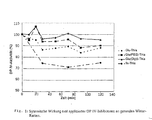
- Dargestellt ist der zeitliche Verlauf der prozentualen Hemmung der Plasma-DP IV-Aktivität nach oraler Applikation von 5µMol Inhibitor pro 300g Kalte (n=2)
-
- Ansorge, S., Schön, E., and Kunz, D. (1991). Membrane-bound peptidases of lymphocytes: functional implications. Biomed.Biochim.Acta 50, 799-807.
- Ansorge, S., Bühling, F., Hoffmann, T., Kähne, T., Neubert, K., and Reinhold, D. (1995). Dipeptidylpeptidase IV (CD26) in metabolism and the immune response (Fleischer, B., Ed.). Springer-Verlag, Heidelberg. 163-184.
- Augustyns, K., Bal, G., Thonus, G., Belyaev, A., Zhang, X. M., Bollaert, W., Lambeir, A. M., Durinx, C., Goossens, F., and Haemers, A. (1999). The unique properties of dipeptidylpeptidase IV (DPP IV/CD26) and the therapeutic potential of DPP IV inhibitors. Curr Medicina Chem 6,311-327.
- Buntrock, P., Neubert, K., Koh1, A., Moch, C., Born, I., Demuth, H.-U., and Barth, A. (1988). Stimulation and inhibition of wound healing process using short-chain peptides. Biol.Zent.bl. 107, 87-92.
- Demuth, H.-U., Heins, J., On the catalytic Mechanism of Dipeptidyl Peptidase IV. in Dipeptidyl Peptidase IV, Fleischer, Ed., R.G.Landes, Biomedical Publishers, Georgetown, 1, 1995.
- Demuth, H.-U., McIntosh, C. H. S., Rosche, F., Pauly, R. P., Pederson, R. A., and Schmidt, J. Verfahren zur Senkung des Blutglukosespiegels in Säugern. DE 196 16 486.9
- Fujita, K., Hagihara, M., Nagatsu, T., Iwata, H., and Miura, T. (1992). The activity of dipeptidyl peptidase II and dipeptidyl peptidase IV in mice immunized with type II collagen. Biochem.Med.Metab.Biol. 48, 227-234.
- Gomez, S., Gluschankof, P., Lepage, A., and Cohen, P. (1988). Relationship between endo-and exopeptidases in a processing enzyme system: activation of an endoprotease by the aminopeptidase B-like activity in somatostatin-28 convertase. Proc Natl Acad Sci USA 85, 5468-5472.
- Hegen, M., Niedobitek, G., Klein, C.E., Stein, H., and Fleischer, B. (1990). The T cell triggering molecule Tp103 is associated with dipeptidyl aminopeptidase IV activity. J. Immunol. 144,2908-2914.
- Hegen, M., Mittrücker, H.-W., Hug, R., Demuth, H.U., Neubert, K., Barth, A., and Fleischer, B. (1993). Enzymatic activity of CD26 (dipeptidylpeptidase IV) is not required for its signalling function in T cells. Immunobiol. 189, 483-493.
- Ishiura, S., Tsukahara, T., Tabira, T., and Sugita, H. (1989). Putative N-terminal splitting enzyme of amyloid A4 peptides is the multicatalytic proteinase, ingensin, which is widely distributed in mammalian cells. FEBS Lett 257, 388-392.
- Kameoka, J., Sato, T., Torimoto, Y., Sugita, K., Soiffer, RJ., Schlossman, S.F., Ritz, J., and Morimoto, C. (1995). Differential CD26-mediated activation of the CD3 and CD2 pathways after CD6-depleted allogeneic bone marrow transplantation. Blood 85, 1132-1137.
- Kähne, T., Neubert, K., and Ansorge, S. (1995). Enzymatic activity of DPIV / CD26 is involved in PMA-induced hyperphosphorylation of p56lck. Immunol. Lett. 46, 189-193.
- Kaspari, A., Diefenthal, T., Grosche, G., Schierhorn, A., Demuth, H.-U., Substrates containing phosphorylated residues adjacent to proline decrease cleavage by proline-specific peptidases, Protein Struct Mol Enzym, 147, 1996
- Kessler, H. (1982). Konformation und biologische Wirkung von zyklischen Peptiden. Angew. Chem. 94, 509
- Kirschke, H., Barrett, A.J., and Rawlings, N.D. (1995). Proteinases 1: lysosomal cysteine proteinases. Protein Profile 2, 1581-1643.
- Kohl, A., Volk, H.D., Diezel, W., Buntrock, P., and Diamantstein, T. (1989). The dipeptide Lys-Pro restores the diminished wound healing following treatment with anti-T-helper cell monoclonal antibody. Int.J.Immunopharmacol. 11, 237-240.
- Kohl, A., Volk, H.D., Buntrock, P., Kohl, G., Diamantstein, T., and von Baehr, R. (1991). The role of dipeptidylpeptidase IV positive T cells in wound healing and angiogenesis. Agents Actions 32, 125-127.
- Kräusslich, H.-G. and Wimmer, E. (1987). Viral Proteinases. Ann. Rev. Biochem. 57, 701
- Kubota, T., Flentke, G.R., Bachovchin, W.W., and Stollar, B.D. (1992). Involvement of dipeptidyl peptidase IV in an in vivo immune response. Clin. Exp. Immunol. 89, 192-197.
- Küllertz, G. and Boigk, J. (1986). Dipeptidyl peptidase IV activity in the serum and synovia of patients with rheumatoid arthritis. Z Rheumatol 45, 52-56.
- Levy, M.T., McCaughan, G.W., Abbott, C.A., Park, J.E., Cunningham, A.M., Müller, E., Rettig, WJ., Gorell, M.D., Fibroblast Activation Protein: A Cell Surface Dipeptidyl Peptidase and Gelatinase Expressed by Stellate Cells at the Tissue Remodelling Interface in Human Cirrhosis Hepatology, 29, 1999, 1768-1778.
- Nelson, PJ. and Krensky, A.M. (1998). Chemokines, lymphocytes and viruses: what goes around, comes around. Curr Opin Immunol 10, 265-270.
- Niedermeyer, J., Enenkel, B., Park, J. E., Lenter, M., Rettig, W. J., Damm, K., and Schnapp, A. (1998). Mouse fibroblast-activation protein - Conserved Fap gene organization and biochemical function as a serine protease. Eur J Biochem 254, 650-654.
- Novelli, M., Savoia, P., Fierro, M. T., Verrone, A., Quaglino, P., and Bernengo, M.G. (1996). Keratinocytes express dipeptidyl-peptidase IV (CD26) in benign and malignant skin diseases. Br J Dermatol 134,1052-1056.
- Pauly, R. P., Demuth, H. U., Rosche, F., Schmidt, J., White, H. A., Lynn, F., McIntosh, C. H. S., and Pederson, R. A. (1999). Improved glucose tolerance in rats treated with the dipeptidyl peptidase IV (CD26) inhibitor ile-thiazolidide. Metabolism 48, 385-389.
- Pauly, R. P., Rosche, F., Wermann, M., McIntosh, C. H. S., Pederson, R. A., and Demuth, H. U. (1996). Investigation of glucose-dependent insulinotropic polypeptide-(1- 42) and glucagon-like peptide-1-(7-36) degradation in vitro by dipeptidyl peptidase IV using matrixassisted laser desorption/ionization time of flight mass spectrometry - A novel kinetic approach. J Biol Chem 271, 23222-23229.
- Proost, P., De Meester, I., Schols, D., Struyf, S., Lambeir, A.M., Wuyts, A., Opdenakker, G., De Clercq, E., Scharp□S., and Van Damme, J. (1998a). Amino-terminal truncation of chemokines by CD26/dipeptidyl-peptidase IV. Conversion of RANTES into a potent inhibitor of monocyte chemotaxis and HIV-1-infection. J Biol Chem 273, 7222-7227.
- Proost, P., Struyf, S., Schols, D., Durinx, C., Wuyts, A., Lenaerts, J.P., De Clercq, E., De Meester, I., and Van Damme, J. (1998b). Processing by CD26/dipeptidyl-peptidase IV reduces the chemotactic and anti-HIV-1 activity of stromal-cell-derived factor-1alpha. FEBS Lett 432, 73-76.
- Proost, P., Struyf, S., Schols, D., Opdenakker, G., Sozzani, S., Allavena, P., Mantovani, A., Augustyns, K., Bal, G., Haemers, A., Lambeir, A.M., Scharp□S., Van Damme, J., and De Meester, I. (1999). Truncation of macrophage-derived chemokine by CD26/ dipeptidylpeptidase IV beyond its predicted cleavage site affects chemotactic activity and CC chemokine receptor 4 interaction. J Biol Chem 274, 3988-3993.
- Raynaud, F., Bauvois, B., Gerbaud, P., and Evain Brion, D. (1992). Characterization of specific proteases associated with the surface of human skin fibroblasts, and their modulation in pathology. J.Cell.Physiol. 151, 378-385.
- Reinhold, D., Bank, U., Buhling, F., Tager, M., Born, I., Faust, J., Neubert, K., and Ansorge, S. (1997). Inhibitors of dipeptidyl peptidase IV (DP IV, CD26) induces secretion of transforming growth factor-beta 1 (TGF-beta 1) in stimulated mouse splenocytes and thymocytes. Immunol Lett 58, 29-35.
- Reinhold, D., Hemmer, B., Gran, B., Born, I, Faust, J., Neubert, K., McFarland, H. F., Martin, R., and Ansorge, S. (1998). Inhibitors of dipeptidyl peptidase IV/CD26 suppress activation of human MBP-specific CD4+T cell clones. J Neuroimmunol 87, 203-209.
- Reinhold D., Hemmer, B., Steinbrecher, A., Born, I., Faust, J., Neubert, K., Brocke, S., Martin, R., Ansorge, S., Dipeptidyl Peptidase IV (CD 26): Role in T cell activation and autoimmune disease. Biol. Chem.379, S 69, 1998.
- Scholzen, T., Armstrong, C.A., Bunnett, N.W., Luger, T.A., Olerud, J.E., and Ansel, J.C. (1998). Neuropeptides in the skin: interactions between the neuroendocrine and the skin immune systems. Exp Dermatol 7 , 81-96.
- Shioda, T., Kato, H., Ohnishi, Y., Tashiro, K., Ikegawa, M., Nakayama, E.E., Hu, H., Kato, A., Sakai, Y., Liu, H., Honjo, T., Nomoto, A., Iwamoto, A., Morimoto, C., and Nagai, Y. (1998). Anti-HIV-1 and chemotactic activities of human stromal cell-derived factor 1alpha (SDF-1alpha) and SDF-1beta are abolished by CD26/dipeptidyl peptidase IV-mediated cleavage. Proc Natl Acad Sci USA 95, 6331-6336.
- Tanaka, T., Kameoka, J., Yaron, A., Schlossman, S.F., and Morimoto, C. (1993). The costimulatory activity of the CD26 antigen requires dipeptidyl peptidase IV enzymatic activity. Proc.NatlAcad.Sci.U.S.A. 90, 4586-4590.
- Tanaka, S., Murakami, T., Horikawa, H., Sugiura, M., Kawashima, K., and Sugita, T. (1997). Suppression of arthritis by the inhibitors of dipeptidyl peptidase IV. Int J Immunopharmacol 19, 15-24.
- Tanaka, S., Murakami, T., Nonaka, N., Ohnuki, T., Yamada, M., and Sugita, T. (1998). Antiarthritic effects of the novel dipeptidyl peptidase IV inhibitors TMC-2A and TSL-225. Immunopharmacology 40, 21-26.
- Vanhoof, G., Goossens, F., De Meester I, Hendriks, D., and Scharpe, S. (1995). Proline motifs in peptides and their biological processing. FASEB J. 9, 736-744.
- Wallengren, J. (1997). Vasoactive peptides in the skin. J Investig Dermatol Symp Proc 2, 49-55.
- Yaron, A. and Naider, F. (1993). Proline-dependent structural and biological properties of peptides and proteins. Crit.Rev.Biochem.Mol.Biol. 28(1), 31-38.
Claims (14)
- Verbindung der allgemeinen Formel

A eine Aminosäure mit mindestens einer funktionellen Gruppe in der Seitenkette ist,
B eine chemische Verbindung ist, die kovalent an mindestens eine funktionelle Gruppe der Seitenkette von A gebunden ist, nämlich- Oligopeptide mit einer Kettenlänge von bis zu 20 Aminosäuren außer Homopolymeren von Glycin aus bis zu 6 Glycinmonomeren oder- Polyethylenglykole mit Molmassen von bis zu 20000 g/mol,C eine Thiazolidin-, Pyrrolidin-, Cyanopyrrolidin-, Hydroxyprolin-, Dehydroprolin- oder Piperidingruppe ist, die in Amidbindung mit A vorliegt. - Verbindung nach Anspruch 1, dadurch gekennzeichnet, daß A eine α-Aminosaure ist.
- Verbindung nach einem der vorstehenden Ansprüche, dadurch gekennzeichnet, daß A eine natürliche α-Aminosäure ist.
- Verbindung nach einem der vorstehenden Ansprüche, dadurch gekennzeichnet, daß die Aminosäure Threonin, Tyrosin, Serin, Arginin, Lysin, Asparaginsäure, Glutaminsäure oder Cystein ist.
- Verbindung nach einem der vorstehenden Ansprüche, dadurch gekennzeichnet, daß die Oligopeptide Kettenlängen von 3 bis 15 Aminosäuren aufweisen.
- Verbindung nach einem der vorstehenden Ansprüche, dadurch gekennzeichnet, daß die Oligopeptide Homopolymere, Copolymere oder Blockcopolymere sind.
- Verbindung nach einem der vorstehenden Ansprüche, dadurch gekennzeichnet, daß die Polyethylenglykole Molmassen von mindestens 250 g/mol aufweisen.
- Verbindung nach einem der vorstehenden Ansprüche, dadurch gekennzeichnet, daß C eine Thiazolidin- Pyrrolidin-, oder Cyanopyrrolidingruppe ist.
- Pharmazeutische Zusammensetzung, die eine Verbindung nach einem der vorstehenden Ansprüche gegebenenfalls in Kombination mit an sich üblichen Trägern oder Adjuvantien enthält.
- Kosmetische Zusammensetzung, die eine Verbindung nach einem der Ansprüche 1 bis 8 gegebenenfalls in Kombination mit an sich üblichen Trägern oder Adjuvantien enthält.
- Verwendung von mindestens einer Verbindung nach einem der Ansprüche 1 bis 8 zur Herstellung eines Arzneimittels zur topischen Beeinflussung der Aktivität von Dipeptidyl-Peptidase IV oder analoger Enzyme.
- Verwendung von mindestens einer Verbindung nach einem der Ansprüche 1 bis 8 zur Herstellung eines Arzneimittels zur Prophylaxe oder Therapie von Haut- oder Schleimhauterkrankungen, Autoimmunerkrankungen und Entzündungen.
- Verwendung von mindestens einer Verbindung nach einem der Ansprüche 1 bis 8 zur Herstellung eines Arzneimittels zur Prophylaxe oder Therapie von Entzündungen, Psoriasis, Allergien, Arthritis, Tumoren oder Autoimmunerkrankungen.
- Verwendung von mindestens einer Verbindung oder pharmazeutischen oder kosmetischen Zusammensetzung nach einem der Ansprüche 1 bis 10 in Salbe, Creme, Kosmetikum, Pflaster, Binde, Tropfen, Spray, Inhalat, Implantat oder Injektionslösung.
Priority Applications (1)
| Application Number | Priority Date | Filing Date | Title |
|---|---|---|---|
| EP07104464A EP1792910A2 (de) | 1999-08-24 | 2000-08-20 | Effektoren der Dipeptidyl Peptidase IV zur topischen Anwendung |
Applications Claiming Priority (3)
| Application Number | Priority Date | Filing Date | Title |
|---|---|---|---|
| DE19940130 | 1999-08-24 | ||
| DE19940130A DE19940130A1 (de) | 1999-08-24 | 1999-08-24 | Neue Effektoren der Dipeptidyl Peptidase IV zur topischen Anwendung |
| PCT/EP2000/008118 WO2001014318A2 (de) | 1999-08-24 | 2000-08-20 | Neue effektoren der dipeptidyl peptidase iv zur topischen anwendung |
Related Child Applications (1)
| Application Number | Title | Priority Date | Filing Date |
|---|---|---|---|
| EP07104464A Division EP1792910A2 (de) | 1999-08-24 | 2000-08-20 | Effektoren der Dipeptidyl Peptidase IV zur topischen Anwendung |
Publications (2)
| Publication Number | Publication Date |
|---|---|
| EP1206485A2 EP1206485A2 (de) | 2002-05-22 |
| EP1206485B1 true EP1206485B1 (de) | 2007-03-21 |
Family
ID=7919444
Family Applications (2)
| Application Number | Title | Priority Date | Filing Date |
|---|---|---|---|
| EP07104464A Withdrawn EP1792910A2 (de) | 1999-08-24 | 2000-08-20 | Effektoren der Dipeptidyl Peptidase IV zur topischen Anwendung |
| EP00953186A Expired - Lifetime EP1206485B1 (de) | 1999-08-24 | 2000-08-20 | Neue effektoren der dipeptidyl peptidase iv zur topischen anwendung |
Family Applications Before (1)
| Application Number | Title | Priority Date | Filing Date |
|---|---|---|---|
| EP07104464A Withdrawn EP1792910A2 (de) | 1999-08-24 | 2000-08-20 | Effektoren der Dipeptidyl Peptidase IV zur topischen Anwendung |
Country Status (18)
| Country | Link |
|---|---|
| US (2) | US6949515B2 (de) |
| EP (2) | EP1792910A2 (de) |
| JP (1) | JP2003519099A (de) |
| KR (1) | KR20020040787A (de) |
| CN (1) | CN1370181A (de) |
| AT (1) | ATE357455T1 (de) |
| AU (1) | AU769404B2 (de) |
| BR (1) | BR0013577A (de) |
| CA (1) | CA2379875A1 (de) |
| DE (2) | DE19940130A1 (de) |
| ES (1) | ES2282130T3 (de) |
| IL (1) | IL148170A0 (de) |
| MX (1) | MXPA02001800A (de) |
| NO (1) | NO20020858D0 (de) |
| NZ (1) | NZ528770A (de) |
| PT (1) | PT1206485E (de) |
| WO (1) | WO2001014318A2 (de) |
| ZA (1) | ZA200200794B (de) |
Families Citing this family (54)
| Publication number | Priority date | Publication date | Assignee | Title |
|---|---|---|---|---|
| AU766219B2 (en) | 1998-02-02 | 2003-10-09 | 1149336 Ontario Inc. | Method of regulating glucose metabolism, and reagents related thereto |
| US6979697B1 (en) | 1998-08-21 | 2005-12-27 | Point Therapeutics, Inc. | Regulation of substrate activity |
| GB0010183D0 (en) * | 2000-04-26 | 2000-06-14 | Ferring Bv | Inhibitors of dipeptidyl peptidase IV |
| JP4300108B2 (ja) | 2001-06-27 | 2009-07-22 | スミスクライン ビーチャム コーポレーション | ジペプチジルペプチダーゼ阻害剤としてのピロリジン類 |
| ES2296979T3 (es) | 2001-06-27 | 2008-05-01 | Smithkline Beecham Corporation | Fluoropirrolidinas como inhibidores de dipeptidil peptidasa. |
| DE60221983T2 (de) | 2001-06-27 | 2008-05-15 | Smithkline Beecham Corp. | Fluorpyrrolidine als dipeptidyl-peptidase inhibitoren |
| US7368421B2 (en) * | 2001-06-27 | 2008-05-06 | Probiodrug Ag | Use of dipeptidyl peptidase IV inhibitors in the treatment of multiple sclerosis |
| WO2003045228A2 (en) * | 2001-11-26 | 2003-06-05 | Trustees Of Tufts College | Methods for treating autoimmune disorders, and reagents related thereto |
| EP1469873A4 (de) | 2001-11-26 | 2007-10-03 | Tufts College | Peptidomimetische inhibitoren von hinter prolin spaltenden enzymen |
| US7550590B2 (en) | 2003-03-25 | 2009-06-23 | Takeda Pharmaceutical Company Limited | Dipeptidyl peptidase inhibitors |
| US20040229848A1 (en) * | 2003-05-05 | 2004-11-18 | Hans-Ulrich Demuth | Glutaminyl based DP IV-inhibitors |
| JP4806628B2 (ja) | 2003-05-05 | 2011-11-02 | プロビオドルグ エージー | グルタミニルシクラーゼ阻害剤 |
| WO2004103993A1 (en) | 2003-05-14 | 2004-12-02 | Syrrx, Inc. | Dipeptidyl peptidase inhibitors |
| US7169926B1 (en) | 2003-08-13 | 2007-01-30 | Takeda Pharmaceutical Company Limited | Dipeptidyl peptidase inhibitors |
| US7678909B1 (en) | 2003-08-13 | 2010-03-16 | Takeda Pharmaceutical Company Limited | Dipeptidyl peptidase inhibitors |
| KR20060041309A (ko) | 2003-08-13 | 2006-05-11 | 다케다 야쿠힌 고교 가부시키가이샤 | 4-피리미돈 유도체 및 펩티딜 펩티다제 저해제로서의 그의용도 |
| WO2005030751A2 (en) * | 2003-09-08 | 2005-04-07 | Takeda Pharmaceutical Company Limited | Dipeptidyl peptidase inhibitors |
| US7790734B2 (en) | 2003-09-08 | 2010-09-07 | Takeda Pharmaceutical Company Limited | Dipeptidyl peptidase inhibitors |
| US7732446B1 (en) | 2004-03-11 | 2010-06-08 | Takeda Pharmaceutical Company Limited | Dipeptidyl peptidase inhibitors |
| CN102127057A (zh) | 2004-03-15 | 2011-07-20 | 武田药品工业株式会社 | 二肽基肽酶抑制剂 |
| JP2008501714A (ja) | 2004-06-04 | 2008-01-24 | 武田薬品工業株式会社 | ジペプチジルペプチダーゼインヒビター |
| WO2006019965A2 (en) | 2004-07-16 | 2006-02-23 | Takeda San Diego, Inc. | Dipeptidyl peptidase inhibitors |
| ATE553077T1 (de) | 2004-07-23 | 2012-04-15 | Nuada Llc | Peptidaseinhibitoren |
| WO2006068978A2 (en) | 2004-12-21 | 2006-06-29 | Takeda Pharmaceutial Company Limited | Dipeptidyl peptidase inhibitors |
| DOP2006000008A (es) | 2005-01-10 | 2006-08-31 | Arena Pharm Inc | Terapia combinada para el tratamiento de la diabetes y afecciones relacionadas y para el tratamiento de afecciones que mejoran mediante un incremento de la concentración sanguínea de glp-1 |
| AU2006239929B2 (en) | 2005-04-22 | 2011-11-03 | Alantos Pharmaceuticals Holding, Inc. | Dipeptidyl peptidase-IV inhibitors |
| PL1931350T5 (pl) * | 2005-09-14 | 2021-11-15 | Takeda Pharmaceutical Company Limited | Podanie inhibitorów dipeptydylo-peptydazy |
| EP2073810B1 (de) * | 2006-09-13 | 2011-08-31 | Takeda Pharmaceutical Company Limited | Verwendung von 2-6-(3-amin-piperidin-1-yl)-3-methyl-2,4-dioxo-3,4-dihydro-2h-pyrimidin-1-ylmethyl-4-fluor-benzonitril zur behandlung von diabetes, krebs, autoimmunerkrankungen und hiv-infektionen |
| PE20070622A1 (es) * | 2005-09-14 | 2007-08-22 | Takeda Pharmaceutical | Administracion de inhibidores de dipeptidil peptidasa |
| GEP20135838B (en) | 2005-09-14 | 2013-06-10 | Takeda Pharmaceutical | Dipeptidyl peptidase inhibitors usage at diabetes treatment |
| TW200745080A (en) * | 2005-09-16 | 2007-12-16 | Takeda Pharmaceuticals Co | Polymorphs of tartrate salt of 2-[2-(3-(R)-amino-piperidin-1-yl)-5-fluoro-6-oxo-6H-pyrimidin-1-ylmethyl]-benzonitrile and methods of use therefor |
| CN101360723A (zh) | 2005-09-16 | 2009-02-04 | 武田药品工业株式会社 | 制备嘧啶二酮衍生物的方法 |
| TW200745079A (en) * | 2005-09-16 | 2007-12-16 | Takeda Pharmaceuticals Co | Polymorphs of benzoate salt of 2-[[6-[(3R)-3-amino-1-piperidinyl]-3,4-dihydro-3-methyl-2,4-dioxo-1(2H)-pyrimidinyl]methyl]-benzonitrile and methods of use therefor |
| WO2007112347A1 (en) | 2006-03-28 | 2007-10-04 | Takeda Pharmaceutical Company Limited | Dipeptidyl peptidase inhibitors |
| EP1999108A1 (de) * | 2006-03-28 | 2008-12-10 | Takeda Pharmaceutical Company Limited | Herstellung von (r)-3-aminopiperidin-dihydrochlorid |
| SG10201404220TA (en) | 2006-04-11 | 2014-10-30 | Arena Pharm Inc | Methods of using gpr119 receptor to identify compounds useful for increasing bone mass in an individual |
| PE20071221A1 (es) | 2006-04-11 | 2007-12-14 | Arena Pharm Inc | Agonistas del receptor gpr119 en metodos para aumentar la masa osea y para tratar la osteoporosis y otras afecciones caracterizadas por masa osea baja, y la terapia combinada relacionada a estos agonistas |
| US8324383B2 (en) | 2006-09-13 | 2012-12-04 | Takeda Pharmaceutical Company Limited | Methods of making polymorphs of benzoate salt of 2-[[6-[(3R)-3-amino-1-piperidinyl]-3,4-dihydro-3-methyl-2,4-dioxo-1(2H)-pyrimidinyl]methyl]-benzonitrile |
| EP2089383B1 (de) | 2006-11-09 | 2015-09-16 | Probiodrug AG | 3-hydroxy-1,5-dihydropyrrol-2-one derivate als inhibitoren von glutaminylcyclase zur behandlung von geschwüren, krebs und anderen krankheiten |
| TW200838536A (en) | 2006-11-29 | 2008-10-01 | Takeda Pharmaceutical | Polymorphs of succinate salt of 2-[6-(3-amino-piperidin-1-yl)-3-methyl-2,4-dioxo-3,4-dihydro-2H-pyrimidin-1-ylmethy]-4-fluor-benzonitrile and methods of use therefor |
| US9126987B2 (en) | 2006-11-30 | 2015-09-08 | Probiodrug Ag | Inhibitors of glutaminyl cyclase |
| US8093236B2 (en) | 2007-03-13 | 2012-01-10 | Takeda Pharmaceuticals Company Limited | Weekly administration of dipeptidyl peptidase inhibitors |
| CN101279955B (zh) * | 2007-04-03 | 2012-11-28 | 北京摩力克科技有限公司 | 作为二肽肽激酶-iv抑制剂的n-取代硫吗啉衍生物及其医药用途 |
| JP5667440B2 (ja) | 2007-04-18 | 2015-02-12 | プロビオドルグ エージー | グルタミニルシクラーゼ阻害剤としてのチオ尿素誘導体 |
| EP2108960A1 (de) | 2008-04-07 | 2009-10-14 | Arena Pharmaceuticals, Inc. | Verfahren zur Verwendung eines A G Protein-gekoppelten Rezeptors zur Identifikation von Peptid YY (PYY) Sekretagoga und nützliche Verbindungen zur Behandlung von durch (PYY) Sekretagoga modulierten Zuständen und nützliche Verbindungen zur Behandlung von Zuständen durch PYY |
| JP5934645B2 (ja) | 2009-09-11 | 2016-06-15 | プロビオドルグ エージー | グルタミニルシクラーゼ阻害剤としてのヘテロ環式誘導体 |
| WO2011107530A2 (en) | 2010-03-03 | 2011-09-09 | Probiodrug Ag | Novel inhibitors |
| JP5688745B2 (ja) | 2010-03-10 | 2015-03-25 | プロビオドルグ エージー | グルタミニルシクラーゼ(qc、ec2.3.2.5)の複素環阻害剤 |
| WO2011131748A2 (en) | 2010-04-21 | 2011-10-27 | Probiodrug Ag | Novel inhibitors |
| EP2686313B1 (de) | 2011-03-16 | 2016-02-03 | Probiodrug AG | Benzimidazolderivate als glutaminylcyclase-hemmer |
| EA201791982A1 (ru) | 2015-03-09 | 2020-02-17 | Интекрин Терапьютикс, Инк. | Способы лечения неалкогольной жировой болезни печени и/или липодистрофии |
| AU2018249822A1 (en) | 2017-04-03 | 2019-10-31 | Coherus Biosciences Inc. | PPArgamma agonist for treatment of progressive supranuclear palsy |
| ES2812698T3 (es) | 2017-09-29 | 2021-03-18 | Probiodrug Ag | Inhibidores de glutaminil ciclasa |
| CN110607336B (zh) * | 2019-10-17 | 2024-01-26 | 江南大学 | 酶催化制备半胱氨酸寡肽及其膜敷料的制备方法 |
Family Cites Families (71)
| Publication number | Priority date | Publication date | Assignee | Title |
|---|---|---|---|---|
| DE296075C (de) | ||||
| US2961377A (en) * | 1957-08-05 | 1960-11-22 | Us Vitamin Pharm Corp | Oral anti-diabetic compositions and methods |
| US3174901A (en) * | 1963-01-31 | 1965-03-23 | Jan Marcel Didier Aron Samuel | Process for the oral treatment of diabetes |
| US3879541A (en) * | 1970-03-03 | 1975-04-22 | Bayer Ag | Antihyperglycemic methods and compositions |
| US3960949A (en) * | 1971-04-02 | 1976-06-01 | Schering Aktiengesellschaft | 1,2-Biguanides |
| CH602612A5 (de) * | 1974-10-11 | 1978-07-31 | Hoffmann La Roche | |
| US4935493A (en) * | 1987-10-06 | 1990-06-19 | E. I. Du Pont De Nemours And Company | Protease inhibitors |
| US5433955A (en) * | 1989-01-23 | 1995-07-18 | Akzo N.V. | Site specific in vivo activation of therapeutic drugs |
| ATE164852T1 (de) | 1990-01-24 | 1998-04-15 | Douglas I Buckley | Glp-1-analoga verwendbar in der diabetesbehandlung |
| US5462928A (en) * | 1990-04-14 | 1995-10-31 | New England Medical Center Hospitals, Inc. | Inhibitors of dipeptidyl-aminopeptidase type IV |
| EP0528858B1 (de) | 1990-04-14 | 1997-01-22 | New England Medical Center Hospitals, Inc. | Typ-iv-dipeptidyl-aminopeptidase-inhibitoren |
| US6517824B1 (en) * | 1990-05-14 | 2003-02-11 | University Of Medicine & Denistry Of New Jersey | Polymer compositions comprising antifibrotic agents, and methods of treatment, pharmaceutical compositions, and methods of preparation therefor |
| WO1991017767A1 (en) | 1990-05-21 | 1991-11-28 | New England Medical Center Hospitals, Inc. | Method of treating inhibition of dipeptidyl aminopeptidase type iv |
| JPH0819154B2 (ja) | 1991-03-14 | 1996-02-28 | 江崎グリコ株式会社 | ジペプチジルカルボキシペプチダーゼを阻害するペプチド |
| JPH04334357A (ja) | 1991-05-02 | 1992-11-20 | Fujirebio Inc | 酵素阻害作用を有するアシル誘導体 |
| GB9115740D0 (en) | 1991-07-20 | 1991-09-04 | Smithkline Beecham Plc | Medicaments |
| ES2153831T3 (es) | 1991-10-22 | 2001-03-16 | New England Medical Center Inc | Inhibidores de dipeptidil-aminopeptidasa de tipo iv. |
| HUT71353A (en) | 1992-04-01 | 1995-11-28 | Univ Toledo | 4-[4'-piperidinyl or 3'pirrolidinyl] substituted imidazoles as h3-receptor antagonists and therapeutic uses thereof |
| IL106998A0 (en) * | 1992-09-17 | 1993-12-28 | Univ Florida | Brain-enhanced delivery of neuroactive peptides by sequential metabolism |
| WO1995011689A1 (en) | 1993-10-29 | 1995-05-04 | Trustees Of Tufts College | Use of inhibitors of dipeptidyl-aminopeptidase to block entry of hiv into cells |
| IL111785A0 (en) * | 1993-12-03 | 1995-01-24 | Ferring Bv | Dp-iv inhibitors and pharmaceutical compositions containing them |
| US5705483A (en) * | 1993-12-09 | 1998-01-06 | Eli Lilly And Company | Glucagon-like insulinotropic peptides, compositions and methods |
| EP0658568A1 (de) | 1993-12-09 | 1995-06-21 | Eli Lilly And Company | Glucagon-ähnliche, insalinotrope Peptide, ihre Zusammensetzungen und ihre Herstellungsverfahren |
| WO1995022327A1 (en) | 1994-02-22 | 1995-08-24 | Knoll Ag | Use of 1-(arylalkylaminoalkyl) imidazoles for treating neurological damage |
| US5543396A (en) * | 1994-04-28 | 1996-08-06 | Georgia Tech Research Corp. | Proline phosphonate derivatives |
| US5552426A (en) | 1994-04-29 | 1996-09-03 | Eli Lilly And Company | Methods for treating a physiological disorder associated with β-amyloid peptide |
| EP0764151A2 (de) * | 1994-06-10 | 1997-03-26 | Universitaire Instelling Antwerpen | Reinigung von serine-protease und dessen synthetischen inhibitoren |
| US5512549A (en) * | 1994-10-18 | 1996-04-30 | Eli Lilly And Company | Glucagon-like insulinotropic peptide analogs, compositions, and methods of use |
| US5614379A (en) * | 1995-04-26 | 1997-03-25 | Eli Lilly And Company | Process for preparing anti-obesity protein |
| US6448282B1 (en) | 1995-05-30 | 2002-09-10 | Gliatech, Inc. | 1H-4(5)-substituted imidazole derivatives |
| DE19616486C5 (de) | 1996-04-25 | 2016-06-30 | Royalty Pharma Collection Trust | Verfahren zur Senkung des Blutglukosespiegels in Säugern |
| AU3224997A (en) | 1996-05-29 | 1998-01-05 | Prototek, Inc | Prodrugs of thalidomide and methods for using same as modulators of t-cell function |
| US6006753A (en) * | 1996-08-30 | 1999-12-28 | Eli Lilly And Company | Use of GLP-1 or analogs to abolish catabolic changes after surgery |
| US5827898A (en) * | 1996-10-07 | 1998-10-27 | Shaman Pharmaceuticals, Inc. | Use of bisphenolic compounds to treat type II diabetes |
| TW492957B (en) | 1996-11-07 | 2002-07-01 | Novartis Ag | N-substituted 2-cyanopyrrolidnes |
| US6011155A (en) * | 1996-11-07 | 2000-01-04 | Novartis Ag | N-(substituted glycyl)-2-cyanopyrrolidines, pharmaceutical compositions containing them and their use in inhibiting dipeptidyl peptidase-IV |
| AR016751A1 (es) | 1996-11-22 | 2001-08-01 | Athena Neurosciences Inc | Metodo para inhibir la liberacion del peptido beta-amiloide en una celula, composicion farmaceutica y compuestos utiles en dicho metodo |
| US5994379A (en) | 1998-02-13 | 1999-11-30 | Merck Frosst Canada, Inc. | Bisaryl COX-2 inhibiting compounds, compositions and methods of use |
| CA2320091A1 (en) | 1998-02-13 | 1999-08-19 | Dr. Willmar Schwabe Gmbh & Co. | Stable hyperforin salts, methods of manufacturing them, and their use for the treatment of alzheimer's disease |
| AU3034299A (en) | 1998-03-09 | 1999-09-27 | Fondatech Benelux N.V. | Serine peptidase modulators |
| DE19823831A1 (de) * | 1998-05-28 | 1999-12-02 | Probiodrug Ges Fuer Arzneim | Neue pharmazeutische Verwendung von Isoleucyl Thiazolidid und seinen Salzen |
| AU765370B2 (en) | 1998-06-05 | 2003-09-18 | Point Therapeutics, Inc. | Cyclic boroproline compounds |
| DE19826972A1 (de) * | 1998-06-18 | 1999-12-23 | Univ Magdeburg Tech | Verwendung von Enzyminhibitoren und pharmazeutische Zubereitung zur Therapie von dermatologischen Erkrankungen mit follikulären und epidermalen Hyperkeratosen und einer verstärkten Keratinozytenproliferation |
| AU4854999A (en) | 1998-07-02 | 2000-01-24 | Invitro Diagnostics, Inc. | Methods, compositions and apparatus for making nucleic acid molecules having a selected affinity to a target molecule |
| DE19834591A1 (de) * | 1998-07-31 | 2000-02-03 | Probiodrug Ges Fuer Arzneim | Verfahren zur Steigerung des Blutglukosespiegels in Säugern |
| DE19834610A1 (de) | 1998-07-31 | 2000-02-24 | Probiodrug Ges Fuer Arzneim | Mechanismus-orientierte Inhibitoren der Dipeptidyl Peptidase I |
| EP1104293A1 (de) | 1998-08-21 | 2001-06-06 | Point Therapeutics, Inc. | Regulierung von substrat aktivität |
| CO5150173A1 (es) * | 1998-12-10 | 2002-04-29 | Novartis Ag | Compuestos n-(glicilo sustituido)-2-cianopirrolidinas inhibidores de peptidasa de dipeptidilo-iv (dpp-iv) los cuales son efectivos en el tratamiento de condiciones mediadas por la inhibicion de dpp-iv |
| AU3960400A (en) | 1999-03-05 | 2000-09-28 | Molteni L. E C. Dei Fratelli Alitti Societa' Di Esercizio S.P.A. | Use of metformin in the preparation of pharmaceutical compositions capable of inhibiting the enzyme dipeptidyl peptidase iv |
| US6211182B1 (en) | 1999-03-08 | 2001-04-03 | Schering Corporation | Imidazole compounds substituted with a six or seven membered heterocyclic ring containing two nitrogen atoms |
| PT1171465E (pt) | 1999-03-29 | 2004-12-31 | Uutech Ltd | Analogos de petido inibidor gastrico e sua utilizacao para o tratamento de diabetes |
| US6107317A (en) * | 1999-06-24 | 2000-08-22 | Novartis Ag | N-(substituted glycyl)-thiazolidines, pharmaceutical compositions containing them and their use in inhibiting dipeptidyl peptidase-IV |
| US6110949A (en) * | 1999-06-24 | 2000-08-29 | Novartis Ag | N-(substituted glycyl)-4-cyanothiazolidines, pharmaceutical compositions containing them and their use in inhibiting dipeptidyl peptidase-IV |
| US6172081B1 (en) * | 1999-06-24 | 2001-01-09 | Novartis Ag | Tetrahydroisoquinoline 3-carboxamide derivatives |
| GB9917909D0 (en) | 1999-07-31 | 1999-09-29 | Synphar Lab Inc | Cysteine protease inhibitors |
| JP4907817B2 (ja) | 1999-11-03 | 2012-04-04 | エーエムアール テクノロジー インコーポレイテッド | ノルエピネフリン、ドーパミンおよびセロトニンの再取り込みを遮断するための、4−フェニル置換テトラヒドロイソキノリン類およびその利用 |
| EP1228061A4 (de) | 1999-11-12 | 2004-12-15 | Guilford Pharm Inc | Dipeptidyl-peptidase-iv-inhibitoren, verfahren zu deren herstellung sowie deren verwendung |
| US7064145B2 (en) * | 2000-02-25 | 2006-06-20 | Novo Nordisk A/S | Inhibition of beta cell degeneration |
| WO2001062266A2 (en) | 2000-02-25 | 2001-08-30 | Novo Nordisk A/S | Use of dpp-iv inhibitors for the treatment of diabetes |
| DE60042585D1 (de) | 2000-02-29 | 2009-09-03 | Univ Firenze | 3-Aza-6,8-dioxabicycloÄ3.2.1Üoctane und Analoga sowie diese enthaltende kombinatorische Bibliotheken |
| HU229042B1 (en) * | 2000-03-31 | 2013-07-29 | Prosidion Ltd | Method for the improvement of islet signaling in diabetes mellitus and for its prevention |
| US6605589B1 (en) | 2000-03-31 | 2003-08-12 | Parker Hughes Institute | Cathepsin inhibitors in cancer treatment |
| US6573096B1 (en) | 2000-04-01 | 2003-06-03 | The Research Foundation At State University Of New York | Compositions and methods for inhibition of cancer invasion and angiogenesis |
| DE10025464A1 (de) | 2000-05-23 | 2001-12-06 | Inst Medizintechnologie Magdeb | Kombinierte Verwendung von Enzyminhibitoren zur Therapie von Autoimmunerkrankungen, bei Transplantationen und Tumorerkrankungen sowie Kombinationen von Enzyminhibitoren umfassende pharmazeutische Zubereitungen |
| WO2001094310A1 (en) | 2000-06-07 | 2001-12-13 | The State Of Oregon Acting By And Through The State Board Of Higher Education On Behalf Of Oregon State University | Methods for making bis-heterocyclic alkaloids |
| GB0014969D0 (en) | 2000-06-19 | 2000-08-09 | Smithkline Beecham Plc | Novel method of treatment |
| WO2002013821A1 (en) | 2000-08-17 | 2002-02-21 | Gliatech, Inc. | Novel alicyclic imidazoles as h3 agents |
| CA2422162C (en) | 2000-09-09 | 2012-10-23 | The Research Foundation Of State University Of New York | Method and compositions for isolating metastatic cancer cells, and use in measuring metastatic potential of a cancer thereof |
| AU2002328946A1 (en) | 2001-08-13 | 2003-03-03 | Probiodrug Ag | Irreversible cysteine protease inhibitors of legumain |
| JP2005523288A (ja) | 2002-02-19 | 2005-08-04 | ファルマシア・アンド・アップジョン・カンパニー・エルエルシー | 疾病治療用の縮合した二環式−n−架橋−複素環式芳香族カルボキサミド |
| MXPA05010824A (es) | 2003-04-10 | 2005-12-05 | Pfizer | Compuestos biciclicos como antagonistas del receptor nr2b. |
-
1999
- 1999-08-24 DE DE19940130A patent/DE19940130A1/de not_active Withdrawn
-
2000
- 2000-08-20 MX MXPA02001800A patent/MXPA02001800A/es unknown
- 2000-08-20 KR KR1020027002338A patent/KR20020040787A/ko not_active Withdrawn
- 2000-08-20 CN CN00811936A patent/CN1370181A/zh active Pending
- 2000-08-20 WO PCT/EP2000/008118 patent/WO2001014318A2/de not_active Ceased
- 2000-08-20 EP EP07104464A patent/EP1792910A2/de not_active Withdrawn
- 2000-08-20 CA CA002379875A patent/CA2379875A1/en not_active Abandoned
- 2000-08-20 JP JP2001518409A patent/JP2003519099A/ja not_active Withdrawn
- 2000-08-20 NZ NZ528770A patent/NZ528770A/en unknown
- 2000-08-20 PT PT00953186T patent/PT1206485E/pt unknown
- 2000-08-20 EP EP00953186A patent/EP1206485B1/de not_active Expired - Lifetime
- 2000-08-20 AU AU65721/00A patent/AU769404B2/en not_active Ceased
- 2000-08-20 DE DE50014187T patent/DE50014187D1/de not_active Expired - Fee Related
- 2000-08-20 ES ES00953186T patent/ES2282130T3/es not_active Expired - Lifetime
- 2000-08-20 BR BR0013577-1A patent/BR0013577A/pt not_active Application Discontinuation
- 2000-08-20 AT AT00953186T patent/ATE357455T1/de not_active IP Right Cessation
- 2000-08-20 IL IL14817000A patent/IL148170A0/xx unknown
-
2002
- 2002-01-29 ZA ZA200200794A patent/ZA200200794B/en unknown
- 2002-02-22 US US10/082,001 patent/US6949515B2/en not_active Expired - Fee Related
- 2002-02-22 NO NO20020858A patent/NO20020858D0/no not_active Application Discontinuation
-
2005
- 2005-03-01 US US11/069,926 patent/US7335645B2/en not_active Expired - Fee Related
Also Published As
| Publication number | Publication date |
|---|---|
| CN1370181A (zh) | 2002-09-18 |
| US7335645B2 (en) | 2008-02-26 |
| EP1206485A2 (de) | 2002-05-22 |
| NO20020858L (no) | 2002-02-22 |
| ZA200200794B (en) | 2003-03-26 |
| US6949515B2 (en) | 2005-09-27 |
| DE50014187D1 (de) | 2007-05-03 |
| AU6572100A (en) | 2001-03-19 |
| ATE357455T1 (de) | 2007-04-15 |
| AU769404B2 (en) | 2004-01-29 |
| ES2282130T3 (es) | 2007-10-16 |
| IL148170A0 (en) | 2002-09-12 |
| US20030092630A2 (en) | 2003-05-15 |
| NO20020858D0 (no) | 2002-02-22 |
| PT1206485E (pt) | 2007-05-31 |
| MXPA02001800A (es) | 2003-09-25 |
| DE19940130A1 (de) | 2001-03-01 |
| KR20020040787A (ko) | 2002-05-30 |
| US20050209159A1 (en) | 2005-09-22 |
| BR0013577A (pt) | 2002-04-30 |
| WO2001014318A3 (de) | 2001-11-01 |
| CA2379875A1 (en) | 2001-03-01 |
| NZ528770A (en) | 2005-02-25 |
| WO2001014318A2 (de) | 2001-03-01 |
| EP1792910A2 (de) | 2007-06-06 |
| JP2003519099A (ja) | 2003-06-17 |
| US20020165164A1 (en) | 2002-11-07 |
Similar Documents
| Publication | Publication Date | Title |
|---|---|---|
| EP1206485B1 (de) | Neue effektoren der dipeptidyl peptidase iv zur topischen anwendung | |
| JP3761781B2 (ja) | 不安定なdpiv阻害剤の化合物 | |
| EP1355674B1 (de) | Oligo- oder polyalkylenglycolgekoppelte thrombininhibitoren | |
| EP2130825B1 (de) | N-substituierte thiomorpholinderivate als inhibitoren von dipeptidylpeptidase iv und deren pharmazeutische anwendung | |
| JP2005527504A (ja) | グルタミニルを基礎するdpiv阻害剤 | |
| EP2105441A1 (de) | Duale Alanyl-Aminopeptidase- und Dipeptidylpeptidase IV-Inhibitoren zur Behandlung immunologischer, entzündlicher, neuronaler und anderer Erkrankungen | |
| WO2013138731A1 (en) | Polymeric conjugates of c1-inhibitors | |
| EP0956294A1 (de) | Thrombininhibitoren | |
| DE69917281T2 (de) | Coumarin und damit verwandte aromatische polymere prodrugs | |
| DE2438352A1 (de) | Peptidcyclopropylamide mit lh-rh/fshrh-wirkung | |
| EP1485345B1 (de) | Hemmstoffe der urokinase, ihre herstellung und verwendung | |
| DE69128247T2 (de) | Thrombin-inhibitoren mit einer hirudin-ähnlichen sequenz | |
| EP1948627B1 (de) | Neue duale peptidase-inhibitoren als prodrugs zur therapie von entzündlichen und anderen erkrankungen | |
| WO2003031467A2 (en) | Amino-substituted camptothecin polymer derivatives and use of the same for the manufacture of a medicament | |
| ur Rahim et al. | Synthesis, characterization, and wound healing properties of α/γ hybrid peptides | |
| KR102171363B1 (ko) | 전구세포 또는 줄기세포 동원 활성을 가지는 물질 p 유사체 및 이를 포함하는 조성물 | |
| HK1050371A (en) | New effectors of dipeptidyl peptidase iv for topical use | |
| DE2900926C2 (de) | ||
| EP1023282A1 (de) | Neue pharmazeutische wirksame verbindungen, ihre herstellung und verwendung als ece-inhibitoren |
Legal Events
| Date | Code | Title | Description |
|---|---|---|---|
| PUAI | Public reference made under article 153(3) epc to a published international application that has entered the european phase |
Free format text: ORIGINAL CODE: 0009012 |
|
| 17P | Request for examination filed |
Effective date: 20020123 |
|
| AX | Request for extension of the european patent |
Free format text: AL;LT;LV;MK;RO;SI |
|
| 17Q | First examination report despatched |
Effective date: 20040422 |
|
| GRAP | Despatch of communication of intention to grant a patent |
Free format text: ORIGINAL CODE: EPIDOSNIGR1 |
|
| GRAS | Grant fee paid |
Free format text: ORIGINAL CODE: EPIDOSNIGR3 |
|
| GRAA | (expected) grant |
Free format text: ORIGINAL CODE: 0009210 |
|
| AK | Designated contracting states |
Kind code of ref document: B1 Designated state(s): AT BE CH CY DE DK ES FI FR GB GR IE IT LI LU MC NL PT SE |
|
| PG25 | Lapsed in a contracting state [announced via postgrant information from national office to epo] |
Ref country code: NL Free format text: LAPSE BECAUSE OF FAILURE TO SUBMIT A TRANSLATION OF THE DESCRIPTION OR TO PAY THE FEE WITHIN THE PRESCRIBED TIME-LIMIT Effective date: 20070321 Ref country code: FI Free format text: LAPSE BECAUSE OF FAILURE TO SUBMIT A TRANSLATION OF THE DESCRIPTION OR TO PAY THE FEE WITHIN THE PRESCRIBED TIME-LIMIT Effective date: 20070321 |
|
| REG | Reference to a national code |
Ref country code: GB Ref legal event code: FG4D Free format text: NOT ENGLISH |
|
| REG | Reference to a national code |
Ref country code: CH Ref legal event code: EP |
|
| REG | Reference to a national code |
Ref country code: CH Ref legal event code: NV Representative=s name: BRAUNPAT BRAUN EDER AG |
|
| REF | Corresponds to: |
Ref document number: 50014187 Country of ref document: DE Date of ref document: 20070503 Kind code of ref document: P |
|
| REG | Reference to a national code |
Ref country code: IE Ref legal event code: FG4D Free format text: LANGUAGE OF EP DOCUMENT: GERMAN |
|
| GBT | Gb: translation of ep patent filed (gb section 77(6)(a)/1977) |
Effective date: 20070503 |
|
| REG | Reference to a national code |
Ref country code: PT Ref legal event code: SC4A Free format text: AVAILABILITY OF NATIONAL TRANSLATION Effective date: 20070515 |
|
| PG25 | Lapsed in a contracting state [announced via postgrant information from national office to epo] |
Ref country code: SE Free format text: LAPSE BECAUSE OF FAILURE TO SUBMIT A TRANSLATION OF THE DESCRIPTION OR TO PAY THE FEE WITHIN THE PRESCRIBED TIME-LIMIT Effective date: 20070621 |
|
| PGFP | Annual fee paid to national office [announced via postgrant information from national office to epo] |
Ref country code: ES Payment date: 20070822 Year of fee payment: 8 |
|
| ET | Fr: translation filed | ||
| NLV1 | Nl: lapsed or annulled due to failure to fulfill the requirements of art. 29p and 29m of the patents act | ||
| REG | Reference to a national code |
Ref country code: ES Ref legal event code: FG2A Ref document number: 2282130 Country of ref document: ES Kind code of ref document: T3 |
|
| PGFP | Annual fee paid to national office [announced via postgrant information from national office to epo] |
Ref country code: AT Payment date: 20070827 Year of fee payment: 8 Ref country code: CH Payment date: 20070830 Year of fee payment: 8 |
|
| REG | Reference to a national code |
Ref country code: IE Ref legal event code: FD4D |
|
| PGFP | Annual fee paid to national office [announced via postgrant information from national office to epo] |
Ref country code: GB Payment date: 20070703 Year of fee payment: 8 Ref country code: IT Payment date: 20070622 Year of fee payment: 8 |
|
| PLBE | No opposition filed within time limit |
Free format text: ORIGINAL CODE: 0009261 |
|
| STAA | Information on the status of an ep patent application or granted ep patent |
Free format text: STATUS: NO OPPOSITION FILED WITHIN TIME LIMIT |
|
| PG25 | Lapsed in a contracting state [announced via postgrant information from national office to epo] |
Ref country code: IE Free format text: LAPSE BECAUSE OF FAILURE TO SUBMIT A TRANSLATION OF THE DESCRIPTION OR TO PAY THE FEE WITHIN THE PRESCRIBED TIME-LIMIT Effective date: 20070321 Ref country code: DK Free format text: LAPSE BECAUSE OF FAILURE TO SUBMIT A TRANSLATION OF THE DESCRIPTION OR TO PAY THE FEE WITHIN THE PRESCRIBED TIME-LIMIT Effective date: 20070321 |
|
| PGFP | Annual fee paid to national office [announced via postgrant information from national office to epo] |
Ref country code: DE Payment date: 20071005 Year of fee payment: 8 |
|
| 26N | No opposition filed |
Effective date: 20071227 |
|
| BERE | Be: lapsed |
Owner name: PROBIODRUG A.G. Effective date: 20070831 |
|
| PG25 | Lapsed in a contracting state [announced via postgrant information from national office to epo] |
Ref country code: GR Free format text: LAPSE BECAUSE OF FAILURE TO SUBMIT A TRANSLATION OF THE DESCRIPTION OR TO PAY THE FEE WITHIN THE PRESCRIBED TIME-LIMIT Effective date: 20070622 Ref country code: MC Free format text: LAPSE BECAUSE OF NON-PAYMENT OF DUE FEES Effective date: 20070831 |
|
| PGFP | Annual fee paid to national office [announced via postgrant information from national office to epo] |
Ref country code: FR Payment date: 20070821 Year of fee payment: 8 |
|
| PG25 | Lapsed in a contracting state [announced via postgrant information from national office to epo] |
Ref country code: BE Free format text: LAPSE BECAUSE OF NON-PAYMENT OF DUE FEES Effective date: 20070831 |
|
| REG | Reference to a national code |
Ref country code: PT Ref legal event code: MM4A Free format text: LAPSE DUE TO NON-PAYMENT OF FEES Effective date: 20090220 |
|
| REG | Reference to a national code |
Ref country code: CH Ref legal event code: PL |
|
| GBPC | Gb: european patent ceased through non-payment of renewal fee |
Effective date: 20080820 |
|
| PG25 | Lapsed in a contracting state [announced via postgrant information from national office to epo] |
Ref country code: AT Free format text: LAPSE BECAUSE OF NON-PAYMENT OF DUE FEES Effective date: 20080820 |
|
| PG25 | Lapsed in a contracting state [announced via postgrant information from national office to epo] |
Ref country code: PT Free format text: LAPSE BECAUSE OF NON-PAYMENT OF DUE FEES Effective date: 20090220 |
|
| REG | Reference to a national code |
Ref country code: FR Ref legal event code: ST Effective date: 20090430 |
|
| PG25 | Lapsed in a contracting state [announced via postgrant information from national office to epo] |
Ref country code: CH Free format text: LAPSE BECAUSE OF NON-PAYMENT OF DUE FEES Effective date: 20080831 Ref country code: LI Free format text: LAPSE BECAUSE OF NON-PAYMENT OF DUE FEES Effective date: 20080831 |
|
| PG25 | Lapsed in a contracting state [announced via postgrant information from national office to epo] |
Ref country code: CY Free format text: LAPSE BECAUSE OF FAILURE TO SUBMIT A TRANSLATION OF THE DESCRIPTION OR TO PAY THE FEE WITHIN THE PRESCRIBED TIME-LIMIT Effective date: 20070321 |
|
| PG25 | Lapsed in a contracting state [announced via postgrant information from national office to epo] |
Ref country code: LU Free format text: LAPSE BECAUSE OF NON-PAYMENT OF DUE FEES Effective date: 20070820 Ref country code: IT Free format text: LAPSE BECAUSE OF NON-PAYMENT OF DUE FEES Effective date: 20080820 Ref country code: FR Free format text: LAPSE BECAUSE OF NON-PAYMENT OF DUE FEES Effective date: 20080901 Ref country code: DE Free format text: LAPSE BECAUSE OF NON-PAYMENT OF DUE FEES Effective date: 20090303 |
|
| REG | Reference to a national code |
Ref country code: ES Ref legal event code: FD2A Effective date: 20080821 |
|
| PG25 | Lapsed in a contracting state [announced via postgrant information from national office to epo] |
Ref country code: GB Free format text: LAPSE BECAUSE OF NON-PAYMENT OF DUE FEES Effective date: 20080820 |
|
| PGFP | Annual fee paid to national office [announced via postgrant information from national office to epo] |
Ref country code: PT Payment date: 20070807 Year of fee payment: 8 |
|
| PG25 | Lapsed in a contracting state [announced via postgrant information from national office to epo] |
Ref country code: ES Free format text: LAPSE BECAUSE OF NON-PAYMENT OF DUE FEES Effective date: 20080821 |