EP1100529B1 - Thymosin beta 4 stimuliert wundheilung - Google Patents
Thymosin beta 4 stimuliert wundheilung Download PDFInfo
- Publication number
- EP1100529B1 EP1100529B1 EP99937654A EP99937654A EP1100529B1 EP 1100529 B1 EP1100529 B1 EP 1100529B1 EP 99937654 A EP99937654 A EP 99937654A EP 99937654 A EP99937654 A EP 99937654A EP 1100529 B1 EP1100529 B1 EP 1100529B1
- Authority
- EP
- European Patent Office
- Prior art keywords
- wound healing
- polypeptide
- composition
- thymosin
- wound
- Prior art date
- Legal status (The legal status is an assumption and is not a legal conclusion. Google has not performed a legal analysis and makes no representation as to the accuracy of the status listed.)
- Expired - Lifetime
Links
Images




Classifications
-
- A—HUMAN NECESSITIES
- A61—MEDICAL OR VETERINARY SCIENCE; HYGIENE
- A61K—PREPARATIONS FOR MEDICAL, DENTAL OR TOILETRY PURPOSES
- A61K38/00—Medicinal preparations containing peptides
- A61K38/16—Peptides having more than 20 amino acids; Gastrins; Somatostatins; Melanotropins; Derivatives thereof
- A61K38/17—Peptides having more than 20 amino acids; Gastrins; Somatostatins; Melanotropins; Derivatives thereof from animals; from humans
- A61K38/22—Hormones
- A61K38/2292—Thymosin; Related peptides
-
- A—HUMAN NECESSITIES
- A61—MEDICAL OR VETERINARY SCIENCE; HYGIENE
- A61K—PREPARATIONS FOR MEDICAL, DENTAL OR TOILETRY PURPOSES
- A61K38/00—Medicinal preparations containing peptides
- A61K38/04—Peptides having up to 20 amino acids in a fully defined sequence; Derivatives thereof
- A61K38/08—Peptides having 5 to 11 amino acids
-
- A—HUMAN NECESSITIES
- A61—MEDICAL OR VETERINARY SCIENCE; HYGIENE
- A61K—PREPARATIONS FOR MEDICAL, DENTAL OR TOILETRY PURPOSES
- A61K38/00—Medicinal preparations containing peptides
- A61K38/16—Peptides having more than 20 amino acids; Gastrins; Somatostatins; Melanotropins; Derivatives thereof
- A61K38/17—Peptides having more than 20 amino acids; Gastrins; Somatostatins; Melanotropins; Derivatives thereof from animals; from humans
- A61K38/18—Growth factors; Growth regulators
- A61K38/1841—Transforming growth factor [TGF]
-
- A—HUMAN NECESSITIES
- A61—MEDICAL OR VETERINARY SCIENCE; HYGIENE
- A61K—PREPARATIONS FOR MEDICAL, DENTAL OR TOILETRY PURPOSES
- A61K45/00—Medicinal preparations containing active ingredients not provided for in groups A61K31/00 - A61K41/00
- A61K45/06—Mixtures of active ingredients without chemical characterisation, e.g. antiphlogistics and cardiaca
-
- A—HUMAN NECESSITIES
- A61—MEDICAL OR VETERINARY SCIENCE; HYGIENE
- A61K—PREPARATIONS FOR MEDICAL, DENTAL OR TOILETRY PURPOSES
- A61K9/00—Medicinal preparations characterised by special physical form
- A61K9/0012—Galenical forms characterised by the site of application
- A61K9/0048—Eye, e.g. artificial tears
-
- A—HUMAN NECESSITIES
- A61—MEDICAL OR VETERINARY SCIENCE; HYGIENE
- A61P—SPECIFIC THERAPEUTIC ACTIVITY OF CHEMICAL COMPOUNDS OR MEDICINAL PREPARATIONS
- A61P17/00—Drugs for dermatological disorders
- A61P17/02—Drugs for dermatological disorders for treating wounds, ulcers, burns, scars, keloids, or the like
-
- A—HUMAN NECESSITIES
- A61—MEDICAL OR VETERINARY SCIENCE; HYGIENE
- A61P—SPECIFIC THERAPEUTIC ACTIVITY OF CHEMICAL COMPOUNDS OR MEDICINAL PREPARATIONS
- A61P29/00—Non-central analgesic, antipyretic or antiinflammatory agents, e.g. antirheumatic agents; Non-steroidal antiinflammatory drugs [NSAID]
-
- A—HUMAN NECESSITIES
- A61—MEDICAL OR VETERINARY SCIENCE; HYGIENE
- A61P—SPECIFIC THERAPEUTIC ACTIVITY OF CHEMICAL COMPOUNDS OR MEDICINAL PREPARATIONS
- A61P9/00—Drugs for disorders of the cardiovascular system
-
- A—HUMAN NECESSITIES
- A61—MEDICAL OR VETERINARY SCIENCE; HYGIENE
- A61P—SPECIFIC THERAPEUTIC ACTIVITY OF CHEMICAL COMPOUNDS OR MEDICINAL PREPARATIONS
- A61P9/00—Drugs for disorders of the cardiovascular system
- A61P9/10—Drugs for disorders of the cardiovascular system for treating ischaemic or atherosclerotic diseases, e.g. antianginal drugs, coronary vasodilators, drugs for myocardial infarction, retinopathy, cerebrovascula insufficiency, renal arteriosclerosis
-
- Y—GENERAL TAGGING OF NEW TECHNOLOGICAL DEVELOPMENTS; GENERAL TAGGING OF CROSS-SECTIONAL TECHNOLOGIES SPANNING OVER SEVERAL SECTIONS OF THE IPC; TECHNICAL SUBJECTS COVERED BY FORMER USPC CROSS-REFERENCE ART COLLECTIONS [XRACs] AND DIGESTS
- Y10—TECHNICAL SUBJECTS COVERED BY FORMER USPC
- Y10S—TECHNICAL SUBJECTS COVERED BY FORMER USPC CROSS-REFERENCE ART COLLECTIONS [XRACs] AND DIGESTS
- Y10S930/00—Peptide or protein sequence
- Y10S930/01—Peptide or protein sequence
- Y10S930/18—Thymus derived hormone or factor; related peptides
Definitions
- the present invention relates generally to tissue repair and more specifically to methods of wound healing using thymosin ⁇ 4.
- the series of events may include infiltration of immune cells as part of the process to remove and destroy necrotic tissue, increased vascularization by angiogenic factors and increased cell proliferation and extracellular matrix deposition.
- tissue repair has been characterized, the individual steps and factors necessary to carry out this complex series of events are not well understood. The identification of individual steps and factors could lead to improved methods for the treatment of diseases resulting from inadequate wound repair processes.
- TGF- ⁇ This family of dimeric proteins includes TGF- ⁇ 1, TGF- ⁇ 2, TGF- ⁇ 3, TGF- ⁇ 4, and TGF- ⁇ 5 which regulate the growth and differentiation of many cell types. This family of proteins exhibits a range of biological effects from stimulating the growth of some cell types (Noda et al., (1989) Endocrinology, 124:2991-2995) and inhibiting the growth of other cell types (Goey et al., (1989) J. Immunol., 143:877-880; Pietenpol et al., (1990) Proc. Nat'l. Acad Sci.
- TGF- ⁇ has also been shown to increase the expression of extracellular matrix proteins, including collagen and fibronectin (Ignotz et al., (1986) J. Biol. Chem., 261:4337-4345) and accelerates the healing of wounds (Mustoe et al., (1987) Science, 237:1333-1335).
- PDGF Platelet Derived Growth Factor
- VEGF Vascular Endothelial Growth Factor
- KGF Keratinocyte Growth Factor
- bFGF basic Fibroblast Growth Factor
- the present invention is based on the discovery that thymosin ⁇ 4 (T ⁇ 4) accelerates wound healing and stimulates wound repair. Based on this finding, it is now possible to develop methods for accelerating wound healing in subjects having wounds in need of such treatment.
- the invention provides claim 1.
- the wound healing polypeptide is T ⁇ 4 or an isoform of T ⁇ 4.
- the invention provides an effective amount of a composition containing a wound healing polypeptide comprising the amino acid sequence LKKTET and conservative variants thereof having wound healing activity, or nucleic acid encoding a wound healing polypeptide for the manufacture of a medicament for promoting tissue repair in a tissue in need of such treatment.
- a wound healing peptide is T ⁇ 4 or an isoform of T ⁇ 4. The tissue may be contacted either in vivo or ex vivo .
- the invention provides means for modulating wound repair in a subject in need of such treatment by systemic delivery of a wound-healing effective amount of a wound healing polypeptide comprising the amino acid sequence LKKTET and conservative variants thereof having wound healing activity.
- a wound healing peptide is T ⁇ 4 or an isoforrn of T ⁇ 4.
- the present invention provides means for stimulating epithelial cell migration at the site of a wound by contacting the wound with an effective amount of a T ⁇ 4 polypeptide.
- the invention provides means for diagnosing a pathological condition in a subject characterized by a wound healing disorder associated with T ⁇ 4, including, detecting a level of T ⁇ 4 in a sample from the subject suspected of containing T ⁇ 4 and comparing the level of T ⁇ 4 with the level found in a normal sample ( i.e., a standard sample).
- the invention provides means for ameliorating a wound healing disorder associated with T ⁇ 4, wherein a subject having the disorder is to be treated with a composition which modulates T ⁇ 4 activity or the activity of a T ⁇ 4 isoform.
- the present invention provides pharmaceutical compositions comprising a wound healing polypeptide comprising the amino acid sequence LKKTET and conservative variants thereof having wound healing activity and a pharmaceutically acceptable carrier.
- the wound healing polypeptide is T ⁇ 4 or an isoform of T ⁇ 4.
- Thymosin ⁇ 4 was initially identified as a protein that is up regulated during endothelial cell migration and differentiation in vitro .
- Thymosin ⁇ 4 was originally isolated from the thymus and is a 43 amino acid, 4.9 kDa ubiquitous polypeptide identified in a variety of tissues.
- Several roles have been ascribed to this protein including a role in endothelial cell differentiation and migration, T cell differentiation, actin sequestration and vascularization.
- T ⁇ 4 One biological activity of thymosin ⁇ 4 (T ⁇ 4), as shown herein, effects tissue repair and wound healing. Another activity of T ⁇ 4 is anti-inflammatory activity.
- the present invention resulted from investigation of the effects of T ⁇ 4 on wound healing.
- In vivo results have demonstrated that topical and systemic delivery of T ⁇ 4 promotes wound healing.
- Additional experiments demonstrated that T ⁇ 4-treated wounds have increased extracellular matrix deposition in the wound bed.
- the present invention identifies T ⁇ 4 as an active factor in promoting wound closure and tissue repair in vivo as well as increasing epithelial cell migration.
- In vivo administration of T ⁇ 4 indicates that cell migration, angiogenesis and extracellular matrix deposition are stimulated at or above the levels observed for migration, angiogenesis and matrix deposition in control animals.
- T ⁇ 4 promotes wound closure when administered systemically ( e.g. , intra-peritoneally) and topically in wounded animal models. Increased levels of collagen were also observed in treated wounds showing that T ⁇ 4 treatment can also accelerate wound contraction and stimulate the healing process.
- T ⁇ 4 stimulates wound healing in a full thickness punch wound (see Example 1) and in repair of eye-related wounds (Example 4).
- T ⁇ 4 accelerated closure and healing of wounds (see Example 1,4, and 5).
- the invention provides means for accelerating wound healing in a subject by contacting a wound with a wound-healing effective amount of a composition which contains T ⁇ 4 or a T ⁇ 4 isoform.
- the contacting may be topically or systemically.
- topical administration include, for example, contacting the wound with a lotion, salve, gel, cream, paste, spray, suspension, dispersion, hydrogel, ointment, or oil comprising T ⁇ 4.
- Systemic administration includes, for example, intravenous, intraperitoneal, intramuscular injections of a composition containing T ⁇ 4 or a T ⁇ 4 isoform.
- a subject may be any mammal, preferably human.
- T ⁇ 4 or a T ⁇ 4 isoform is therapeutically valuable in cases where there is an impaired wound healing process, such as in wound healing compromised subjects.
- wound healing compromised subjects which have a reduced, decreased, or inability to recover from a wounding or trauma, due to recurrent wounding, trauma or inability of the subject's natural system to properly effectuate wound healing.
- steroids reduce the ability of a subject to heal as compared to a subject which is not on steroids.
- Other such wounds present in compromised subjects include, but are not limited to, skin wounds such as diabetic ulcers, venus ulcers or pressure ulcers.
- T ⁇ 4 or a T ⁇ 4 isoform is therapeutically valuable to augment the normal healing process.
- a "wound-healing effective amount" of a composition containing T ⁇ 4 or a T ⁇ 4 isoform for use in wound healing is defined as that amount that is effective in promoting tissue regeneration and repair.
- the "wound-healing effective amount” may be the therapeutically effective amount.
- Diseases, disorders or ailments possibly modulated by T ⁇ 4 or a T ⁇ 4 isoform include tissue repair subsequent to traumatic injuries or conditions including arthritis, osteoporosis and other musculo-skeletal disorders, burns, ulcers and other skin lesions, neurological and nerve disease and cardiovascular diseases including ischemia and atherosclerosis.
- induce refers to the activation, stimulation, enhancement, initiation and/or maintenance of cellular mechanisms or processes necessary for the formation of a tissue or a portion thereof, repair process or tissue development as described herein.
- Wound healing, tissue regeneration and tissue repair result from a complex process that includes the proliferation and migration of inflammatory cells, endothelial cells, stromal cells and parenchymal cell, the deposition of extracellular matrix materials and the growth of new blood vessels, particularly capillaries.
- This complex process plays a crucial role in such beneficial functions as embryogenesis, the female reproductive cycle, as well as such abnormal functions as arthritis, chronic ulcerations and neuro-degenerative diseases.
- the invention provides means for modulating wound healing in a subject or a tissue including contacting the subject or tissue with an effective wound-healing amount of a composition containing T ⁇ 4 or a T ⁇ 4 isoform.
- T ⁇ 4 or a T ⁇ 4 isoform can be administered topically or systemically to prevent or treat a damaged tissue including, for example, tissues damaged due to ischemia, including ischemic brain, bone and heart disease, damage to corneal or retinal tissue of the eye, and damage to epithelial tissue, including skin.
- the use of the invention is useful in promoting wound healing in tissues by promoting angiogenesis in tissue deprived of adequate blood flow.
- a composition containing T ⁇ 4 can promote the healing of chronic ulcers by increasing blood supply to the tissue site as well as increasing keratinocyte migration to close a wound.
- T ⁇ 4 isoforms have been identified and have about 70%, or about 75%, or about 80% or more homology to the amino acid sequence of T ⁇ 4 set forth in Fig. 10.
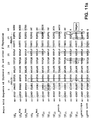
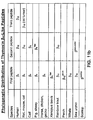
- Such isoforms include, for example, T ⁇ 4 ala , T ⁇ 9, T ⁇ 10, T ⁇ 11, T ⁇ 12, T ⁇ 13, T ⁇ 14 and T ⁇ 15 (Fig. 11; see also, Mihelic et al., (1994) Amino Acids, 6:1-13, which describes the amino acid sequence of other T ⁇ 4 isoforms, and is incorporated herein by reference). Similar to T ⁇ 4, the T ⁇ 10 and T ⁇ 15 isoforms have been shown to sequester actin.
- T ⁇ 4, T ⁇ 10 and T ⁇ 15, as well as these other isoforms share an amino acid sequence, LKKTET, that appears to be involved in mediating actin sequestration or binding.
- the wound healing activity of T ⁇ 4 and T ⁇ 4 isoforms may be due, in part, to the ability to polymerize actin.
- T ⁇ 4 can modulate actin polymerization in wounds to promote healing (e.g. , ⁇ -thymosins appear to depolymerize F-actin by sequestering free G-actin).
- T ⁇ 4's ability to modulate actin polymerization may therefore be due to all, or in part, its ability to bind to or sequester actin via the LKKTET sequence.
- T ⁇ 4 other proteins which bind or sequester actin, or modulate actin polymerization, including T ⁇ 4 isoforms having the amino acid sequence LKKTET, are likely to promote wound healing alone, or in a combination with T ⁇ 4, as set forth herein.
- T ⁇ 4 isoforms such as T ⁇ 4 ala , T ⁇ 9, T ⁇ 10, T ⁇ 11, T ⁇ 12, T ⁇ 13, T ⁇ 14, and T ⁇ 15, as well as T ⁇ 4 isoforms not yet identified, will be useful in the methods of the invention.
- T ⁇ 4 isoforms are useful in the methods of the invention, including the methods practiced in a subject, the invention therefore further provides pharmaceutical compositions comprising T ⁇ 4 isoforms T ⁇ 4 ala , T ⁇ 9, T ⁇ 10, T ⁇ 11, T ⁇ 12, T ⁇ 13, T ⁇ 14, and T ⁇ 15 and a pharmaceutically acceptable carrier.
- proteins having actin sequestering or binding capability or that can mobilize actin or modulate actin polymerization, as demonstrated in an appropriate sequestering, binding, mobilization or polymerization assay, or identified by the presence of an amino acid sequence that mediates actin binding, such as LKKTET, for example, can similarly be employed in the methods of the invention.
- proteins include gelsolin, vitamin D binding protein (DBP), profilin, cofilin, depactin, DNaseI, vilin, fragmin, severin, capping protein, ⁇ -actinin and acumentin, for example.
- the invention further provides pharmaceutical compositions comprising gelsolin, vitamin D binding protein (DBP), profilin, cofilin, depactin, DNaseI, vilin, fragmin, severin, capping protein, ⁇ -actinin and acumentin as set forth herein.
- DBP vitamin D binding protein
- profilin cofilin
- depactin DNaseI
- vilin fragmin
- severin capping protein
- ⁇ -actinin and acumentin as set forth herein.
- the invention includes the use of wound healing polypeptide comprising the amino acid sequence LKKTET and conservative variants thereof.
- conservative variant or grammatical variations thereof denotes the replacement of an amino acid residue by another, biologically similar residue.
- conservative variations include the replacement of a hydrophobic residue such as isoleucine, valine, leucine or methionine for another, the replacement of a polar residue for another, such as the substitution of arginine for lysine, glutamic for aspartic acids, or glutamine for asparagine, and the like.
- T ⁇ 4 has been localized to a number of tissue and cell types and thus, agents which stimulate the production of T ⁇ 4 can be added to a composition to effect T ⁇ 4 production from a tissue and/or a cell.
- agents that effect wound repair can also be included in such a composition to augment the wound healing process.
- agents include members of the family of growth factors, such as insulin-like growth factor (IGF-1), platelet derived growth factor (PDGF), epidermal growth factor (EGF), transforming growth factor beta (TGF- ⁇ ), basic fibroblast growth factor (bFGF), thymosin ⁇ 1 (T ⁇ 1) and vascular endothelial growth factor (VEGF).
- IGF-1 insulin-like growth factor
- PDGF platelet derived growth factor
- EGF- ⁇ epidermal growth factor
- TGF- ⁇ transforming growth factor beta
- bFGF basic fibroblast growth factor
- T ⁇ 1 thymosin ⁇ 1
- VEGF vascular endothelial growth factor
- the agent is transforming growth factor beta (TGF- ⁇ ) or other members of the TGF- ⁇ superfamily.
- TGF- ⁇ transforming growth factor beta
- T ⁇ 4 compositions of the invention aid in wound healing by effectuating growth of the connective tissue through extracellular matrix deposition, cellular migration and vascularization of the wound bed.
- agents that assist or stimulate the wound healing process may be added to a composition along with T ⁇ 4 or a T ⁇ 4 isoform to further modulate the wound healing process.
- agents include angiogenic agents, growth factors, agents that direct differentiation of cells, agents that promote migration of cells and agents that stimulate the provision of extracellular matrix materials in the wound bed.
- T ⁇ 4 or a T ⁇ 4 isoform alone or in combination can be added in combination with any one or more of the following agents: VEGF, KGF, FGF, PDGF, TGF ⁇ , IGF-1, IGF-2, IL-1, prothymosin ⁇ and thymosin ⁇ 1 in a wound-healing effective amount.
- the invention is useful for repair of tissue resulting from injuries due to surgical procedures, irradiation, laceration, toxic chemicals, viral infections, bacterial infections or burns. Additionally, the invention is useful for revitalizing scar tissue resulting from any number of procedures, accidents or trauma.
- scar tissue means fibrotic or collagenous tissue formed during the healing of a wound or other morbid process.
- T ⁇ 4 can be included in a controlled release matrix which can be positioned in proximity to damaged tissue thereby promoting regeneration, repair and/or revascularization of such tissue.
- controlled release matrix means any composition that allows for the release of a bioactive substance which is mixed or admixed therein.
- the matrix can be a solid composition, a porous material (such as a scaffold, mesh, or sponge), or a semi-solid, gel or liquid suspension containing bioactive substances.
- bioactive material means any composition that modulates tissue repair when used in accordance with the method of the present invention.
- the bioactive materials or matrix can be introduced by means of injection, surgery, catheters or any other means suitable for modulating tissue repair.
- the uses and compositions of the invention can be used to aid wound healing and repair in guided tissue regeneration (GTR) procedures. Such procedures are currently used by those skilled in the medical arts to accelerate wound healing. Typically, nonresorbable or bioabsorbable materials are used to accelerate wound healing by promoting the repopulation of the wound area with cells which form the architectural and structural matrix of the tissue.
- GTR guided tissue regeneration
- the uses and compositions of the invention can be used in aiding tissue repair or regeneration at an ulcer site in a human or other subject by placing a composition containing a bioreasorbable polymer and T ⁇ 4 at the site in need of tissue repair or regeneration such that the composition is effective for aiding tissue regeneration by releasing a wound-healing effective amount of T ⁇ 4 at the site.
- the invention is useful for the purposes of promoting tissue growth during the process of tissue engineering.
- tissue engineering is defined as the creation, design, and fabrication of biological prosthetic devices, in combination with synthetic or natural materials, for the creation, augmentation or replacement of body tissues and organs.
- the present method can be used to augment the design and growth of human tissues outside the body, for later implantation inside the body, or augment the design and growth of a tissue inside the body to repair or replace diseased or damaged tissue.
- T ⁇ 4 may be useful in promoting the growth of skin graft replacements which are used as a therapy in the treatment of burns and ulcers.
- T ⁇ 4 can be included in external or internal devices containing human tissue designed to replace the function of a diseased internal tissue. This approach involves cells isolated from the body, placing them on or within a three-dimensional matrices and implanting the new system inside the body or using the system outside the body. The uses and compositions of the invention can be used and included in such matrices to promote the growth of tissues contained in the matrices.
- T ⁇ 4 can be included in a tissue engineered construct to promote the growth of the cells contained in the construct.
- the use of the invention can be used to augment tissue repair, regeneration and engineering in endothelial cell-related products which may contain cartilage, cartilage-bone composites, bone, central nervous system tissues, muscle, liver, pancreatic islet (insulin-producing) cells, urogenital tissues, breast and tissues for gene therapy applications.
- the present invention further provides uses and compositions for modulating female reproductive tract function.
- Growth factors have been shown to play a role in cyclic mitosis and differentiation of endometrial cellular components, recruitment of macrophages in decidualizing the endometrium, endometrial-trophoblast interactions, early pregnancy maintenance, and endometrial functional regeneration.
- modulate denotes a modification of an existing condition or biologic state. Modulation of a condition as defined herein, encompasses both an increase or a decrease in the determinants affecting the existing condition. For example, administration of T ⁇ 4 could be used to augment uterine functions in a condition where the promotion of endothelial cell growth is desired.
- the uterus may be treated with T ⁇ 4 to promote the growth and development of placental membranes or endometrial growth or the repair of these tissue following tissue injury.
- treatment with T ⁇ 4 may be used to promote and maintain a pregnancy by facilitating endometrial-trophoblast interaction.
- antagonist to T ⁇ 4 could be administered to modulate conditions of excessive endometrial growth in which the level of T ⁇ 4 is excessive in comparison to a normal biological condition.
- T ⁇ 4 in combination with other agents, such as thymosin ⁇ 1, may be desirable for treating disorders of the reproductive tract.
- the therapeutic approaches described herein involve various routes of administration or delivery of reagents or compositions comprising the T ⁇ 4 of the invention including any conventional administration techniques (for example, but not limited to, topical administration, local injection, inhalation, or systemic administration), to a subject with a wound or tissue in need of healing or repair.
- Administration of T ⁇ 4, as described above, can accelerate wound healing, increase cell migration into a wound site, induce the formation of tissue repair or regeneration, or promote the growth and development of the endometrium.
- the reagent, formulation or composition may also be targeted to specific cells or receptors by any method described herein or by any method known in the art of delivering, targeting T ⁇ 4 polypeptides and expressing genes encoding T ⁇ 4.
- compositions using or containing T ⁇ 4 of the invention may be formulated into pharmaceutical compositions by admixture with pharmaceutically acceptable nontoxic excipients or carriers.
- Such compositions may be prepared for parenteral administration, particularly in the form of liquid solutions or suspensions in aqueous physiological buffer solutions; for oral administration, particularly in the form of tablets or capsules; or for intranasal administration, particularly in the form of powders, nasal drops, or aerosols. Sustained release compositions are also encompassed by the present invention.
- Compositions for other routes of administration may be prepared as desired using standard methods.
- a composition of the invention containing T ⁇ 4 may be conveniently administered in unit dosage form, and may be prepared by any of the methods well known in the pharmaceutical art, for example, as described in Remington's Pharmaceutical Sciences (Mack Pub. Co., Easton, PA, 1990).
- Formulations for parenteral administration may contain as common excipients sterile water or saline, polyalkylene glycols such as polyethylene glycol, oils of vegetable origin, hydrogenated naphtalenes, and the like.
- biocompatible, biodegradable lactide polymer, lactide/glycolide copolymer, or polyoxethylene-polyoxypropylene copolymers are examples of excipients for controlling the release of a compound of the invention in vivo .
- parenteral delivery systems include ethylenevinyl acetate copolymer particles, osmotic pumps, implantable infusion systems, and liposomes.
- Formulations for inhalation administration may contain excipients such as lactose, if desired.
- Inhalation formulations may be aqueous solutions containing, for example, polyoxyethylene-9-lauryl ether, glycocholate and deoxycholate, or they may be oily solutions for administration in the form of nasal drops. If desired, the compounds can be formulated as a gel to be applied intranasally.
- Formulations for parenteral administration may also include glycocholate for buccal administration.
- the composition of the liposome is usually a combination of phospholipids, particularly high-phase-transition-temperature phospholipids, usually in combination with steroids, especially cholesterol. Other phospholipids or other lipids may also be used.
- the physical characteristics of liposomes depend on pH, ionic strength, and the presence of divalent cations.
- lipids useful in liposome production include phosphatidyl compounds, such as phosphatidylglycerol, phosphatidylcholine, phosphatidylserine, phosphatidylethanolamine, sphingolipids, cerebrosides, and gangliosides. Particularly useful are diacylphosphatidylglycerols, where the lipid moiety contains from 14-18 carbon atoms, particularly from 16-18 carbon atoms, and is saturated.
- Illustrative phospholipids include egg phosphatidylcholine, dipalmitoylphosphatidylcholine and distearoylphosphatidyl-choline.
- the targeting of liposomes has been classified based on anatomical and mechanistic factors.
- Anatomical classification is based on the level of selectivity, for example, organ-specific, cell-specific, and organelle-specific.
- Mechanistic targeting can be distinguished based upon whether it is passive or active. Passive targeting utilizes the natural tendency of liposomes to distribute to cells of the reticulo-endothelial system (RES) in organs which contain sinusoidal capillaries.
- RES reticulo-endothelial system
- Active targeting involves alteration of the liposome by coupling the liposome to a specific ligand such as a monoclonal antibody, sugar, glycolipid, or protein, or by changing the composition or size of the liposome in order to achieve targeting to organs and cell types other than the naturally occurring sites of localization.
- a specific ligand such as a monoclonal antibody, sugar, glycolipid, or protein
- the surface of the targeted delivery system may be modified in a variety of ways.
- lipid groups can be incorporated into the lipid bilayer of the liposome in order to maintain the targeting ligand in stable association with the liposomal bilayer.
- Various linking groups can be used for joining the lipid chains to the targeting ligand.
- the compounds bound to the surface of the targeted delivery system will be ligands and receptors which will allow the targeted delivery system to find and "home in" on the desired cells.
- a ligand may be any compound of interest which will bind to another compound, such as a receptor.
- the therapeutic agents useful in the use of the invention can be administered parenterally by injection or by gradual perfusion over time. Administration may be intravenously, intraperitoneally, intramuscularly, subcutaneously, intracavity, or transdermally.
- Preparations for parenteral administration include sterile aqueous or non-aqueous solutions, suspensions, and emulsions.
- non-aqueous solvents are propylene glycol, polyethylene glycol, vegetable oils such as olive oil, and injectable organic esters such as ethyl oleate.
- Aqueous carriers include water, alcoholic/aqueous solutions, emulsions or suspensions, including saline and buffered media.
- Parenteral vehicles include sodium chloride solution, Ringer's dextrose, dextrose and sodium chloride
- lactated Ringer's intravenous vehicles include fluid and nutrient replenishers, electrolyte replenishers (such as those based on Ringer's dextrose), and the like.
- Preservatives and other additives may also be present such as, for example, antimicrobials, anti-oxidants, chelating agents and inert gases and the like.
- the invention also includes a pharmaceutical composition comprising a therapeutically effective amount of T ⁇ 4 or a T ⁇ 4 isoform in a pharmaceutically acceptable carrier.
- a pharmaceutically acceptable carrier include those listed above with reference to parenteral administration.
- the actual dosage or reagent, formulation or composition that modulates a tissue repair process, fibrotic disorder, a sclerotic disorder, a cell proliferative disorder, or wound healing depends on many factors, including the size and health of a subject.
- one of ordinary skill in the art can use the following teachings describing the methods and techniques for determining clinical dosages (Spilker B., Guide to Clinical Studies and Developing Protocols, Raven Press Books, Ltd., New York, 1984, pp. 7-13, 54-60; Spilker B., Guide to Clinical Trials, Raven Press, Ltd., New York, 1991, pp. 93-101; Craig C., and R.
- Antibodies to T ⁇ 4 peptide or fragments could be valuable as diagnostic tools to aid in the detection of diseases in which T ⁇ 4 is a pathological factor. Further, use of antibodies which bind to T ⁇ 4 and inhibit or prevent the actions of T ⁇ 4 are included in the present invention. Therapeutically, antibodies or fragments of the antibody molecule could also be used to neutralize the biological activity of T ⁇ 4 in diseases where T ⁇ 4 is over expressed. Such antibodies can recognize an epitope of T ⁇ 4 or fragments thereof suitable for antibody recognition and neutralization of T ⁇ 4 activity.
- epitope refers to an antigenic determinant on an antigen, such as a T ⁇ 4 peptide, to which the paratope of an antibody, such as an T ⁇ 4-specific antibody, binds.
- Antigenic determinants usually consist of chemically active surface groupings of molecules, such as amino acids or sugar side chains, and can have specific three-dimensional structural characteristics, as well as specific charge characteristics.
- substantially purified moiety that can provide an antigenic determinant.
- substantially pure refers to T ⁇ 4, or variants thereof, which is substantially free of other proteins, lipids, carbohydrates or other materials with which it is naturally associated.
- substantially purified or isolated refers to molecules, either nucleic or amino acid sequences, that are removed from their natural environment, isolated or separated, and are at least 60% free, preferably 75% free, and most preferably 90% free from other components with which they are naturally associated.
- One skilled in the art can isolate T ⁇ 4 or a T ⁇ 4 isoform using standard techniques for protein purification. The substantially pure peptide will yield a single major band on a non-reducing polyacrylamide gel.
- T ⁇ 4 or a T ⁇ 4 isoform peptide includes functional fragments of the peptide, as long as the activity of T ⁇ 4 or a T ⁇ 4 isoform remains. Smaller peptides containing the biological activity of T ⁇ 4 or a T ⁇ 4 isoform are included in the invention.
- antibody includes, in addition to conventional antibodies, such protein fragments that have the ability to recognize specifically and bind the T ⁇ 4 protein or variants thereof. Regions of the gene that differ at the protein level are well defined. A protein can be raised by expression of the wild type (wt) gene or of the variants, or, preferably, fractions therefore.
- the nucleic acid sequence can be cloned into expression vectors.
- the sequence of interest can first be obtained by employing PCR, as described above, or from a synthetic gene construction with overlapping and ligated synthetic oligonucleotides. Another alternative would involve synthesis of a short peptide. All those methodologies are well known to one skilled in the art. See, for example, Ausubel et al., CURRENT PROTOCOLS IN MOLECULAR BIOLOGY, Volumes 1 and 2 (1987), with supplements, and Maniatis et al., MOLECULAR CLONING, A LABORATORY MANUAL, Cold Spring Harbor Laboratory, all of which are incorporated herein by reference.
- the invention provides a method for detecting T ⁇ 4, or variants thereof, which includes contacting an anti-T ⁇ 4 antibody with a sample suspected of containing T ⁇ 4, (e.g. , cell or protein) and detecting binding to the antibody.
- a sample suspected of containing T ⁇ 4, e.g. , cell or protein
- An antibody which binds to T ⁇ 4 peptide is labeled with a compound which allows detection of binding to T ⁇ 4.
- labels and methods of labeling known to those of ordinary skill in the art. Examples of the types of labels which can be used in the present invention include enzymes, radioisotopes, fluorescent compounds, colloidal metals, chemiluminescent compounds, phosphorescent compounds, and bioluminescent compounds.
- an antibody specific for T ⁇ 4 peptide may be used to detect the level of T ⁇ 4 in biological fluids and tissues. Any specimen containing a detectable amount of antigen can be used. The level of T ⁇ 4 in the suspect cell can be compared with the level in a normal cell to determine whether the subject is predisposed to a T ⁇ 4 associated increase in angiogenesis or wound healing.
- antibodies for the diagnostic methods of the invention includes, for example, immunoassays in which the antibodies can be utilized in liquid phase or bound to a solid phase carrier.
- the antibodies in these immunoassays can be detectably labeled in various ways.
- types of immunoassays which can utilize antibodies of the invention are competitive and non-competitive immunoassays in either a direct or indirect format.
- Examples of such immunoassays are the radioimmunoassay (RIA) and the sandwich (immunometric) assay.
- Detection of the antigens using the antibodies of the invention can be done utilizing immunoassays which are run in either the forward, reverse, or simultaneous modes, including immunohistochemical assays on physiological samples. Those of skill in the art will know, or can readily discern, other immunoassay formats without undue experimentation.
- T ⁇ 4 antibodies can be bound to many different carriers and used to detect the presence of an antigen comprising the peptide of the invention.
- carriers include glass, polystyrene, polypropylene, polyethylene, dextran, nylon, amylases, natural and modified celluloses, polyacrylamides, agaroses and magnetite.
- the nature of the carrier can be either soluble or insoluble for purposes of the invention. Those skilled in the art will know of other suitable carriers for binding antibodies, or will be able to ascertain such, using routine experimentation.
- Another technique which may also result in greater sensitivity consists of coupling the antibodies to low molecular weight haptens. These haptens can then be specifically detected by means of a second reaction. For example, it is common to use such haptens as biotin, which reacts with avidin, or dinitrophenyl, puridoxal, and fluorescein, which can react with specific antihapten antibodies.
- the invention includes use of antibodies immunoreactive with T ⁇ 4 peptide or functional fragments thereof.
- Antibody which consists essentially of pooled monoclonal antibodies with different epitopic specificities, as well as distinct monoclonal antibody preparations are provided.
- Monoclonal antibodies are made from antigen containing fragments of the protein by methods well known to those skilled in the art (Kohler, et al., Nature, 256 :495, 1975).
- the term antibody as used in this invention is meant to include intact molecules as well as fragments thereof, such as Fab and F(ab') 2 , Fv and SCA fragments which are capable of binding an epitopic determinant on T ⁇ 4.
- a therapeutically or diagnostically useful anti-T ⁇ 4 antibody may be derived from a "humanized" monoclonal antibody.
- Humanized monoclonal antibodies are produced by transferring mouse complementary determining regions from heavy and light variable chains of the mouse immunoglobulin into a human variable domain, and then substituting human residues in the framework regions of the murine counterparts.
- the use of antibody components derived from humanized monoclonal antibodies obviates potential problems associated with the immunogenicity of murine constant regions.
- General techniques for cloning murine immunoglobulin variable domains are described, for example, by Orlandi et al., Proc. Natl. Acad. Sci. USA 86 : 3833 (1989), which is hereby incorporated in its entirety by reference.
- Antibodies of the invention also may be derived from human antibody fragments isolated from a combinatorial immunoglobulin library. See, for example, Barbas et al., METHODS: A COMPANION TO METHODS IN ENZYMOLOGY, VOL. 2, page 119 (1991); Winter et al., Ann. Rev. Immunol. 12 : 433 (1994), which are hereby incorporated by reference.
- Cloning and expression vectors that are useful for producing a human immunoglobulin phage library can be obtained, for example, from STRATAGENE Cloning Systems (La Jolla, CA).
- means for diagnosing a pathological state in a subject suspected of having a pathology characterized by a disorder associated with T ⁇ 4 are provided.
- the use includes determining the level of T ⁇ 4 in a sample suspected of containing T ⁇ 4 from the subject, and comparing the level of T ⁇ 4 in the sample to the level of T ⁇ 4 in a normal standard sample.
- Such conditions include, but are not limited to subjects having cell proliferative disorders, recurrent wounds, tissue repair disorders, fibrotic tissue disorders, chronic ulcers and other disorders described herein.
- Such disorders further include those associated with the various T ⁇ 4 isoforms, known or not yet identified.
- cell-proliferative disorder denotes malignant as well as non-malignant cell populations which often appear to differ from the surrounding tissue both morphologically and genotypically.
- Malignant cells i.e. cancer
- Such disorders may be detected using the methods of the current invention.
- a sample suspected of containing T ⁇ 4 is obtained from a subject, the level of T ⁇ 4 peptide is determined and compared with the level of T ⁇ 4 peptide in a normal tissue sample.
- the level of T ⁇ 4 can be determined by any number of methods including, for example, immunoassay using anti-T ⁇ 4 peptide antibodies. Other variations of such assays include radioimmunoassay (RIA), ELISA and immunofluorescence.
- nucleic acid probes can be used to detect and quantify T ⁇ 4 peptide mRNA for the same purpose. Such detection methods are standard in the art.
- the invention provides means for ameliorating a wound healing disorder associated with T ⁇ 4 or a T ⁇ 4 isoform, using a composition that regulates T ⁇ 4 activity.
- ameliorate denotes a lessening of the detrimental effect of the disease-inducing response in the subject receiving therapy.
- an agent such as an antagonist of T ⁇ 4 activity
- the administration of T ⁇ 4 or an agent that increases T ⁇ 4 activity, such as an agonist may be effective in increasing the amount of T ⁇ 4 activity.
- the invention provides a means for treating a subject having a wound healing disorder characterized by recurrent or slow to heal wounds or wounds that are chronic non-healing wounds associated with altered T ⁇ 4 or T ⁇ 4 isoform gene expression in a subject.
- a wound-healing effective amount of an agent which modulates T ⁇ 4 gene expression is to be administered to a subject having the disorder, thereby treating the disorder.
- modulate refers to inhibition or suppression of T ⁇ 4 expression when T ⁇ 4 is over expressed, and induction of expression when T ⁇ 4 is under expressed.
- wound-healing effective amount means that amount of T ⁇ 4 agent which is effective in modulating T ⁇ 4 gene expression resulting in reducing the symptoms of the T ⁇ 4 associated wound healing disorder.
- An agent which modulates T ⁇ 4 or T ⁇ 4 isoform gene expression may be a polynucleotide for example.
- the polynucleotide may be an antisense, a triplex agent, or a ribozyme.
- an antisense may be directed to the structural gene region or to the promoter region of T ⁇ 4 may be utilized.
- an antisense nucleic acid or a ribozyme can be used to bind to the T ⁇ 4 RNA or to cleave it.
- Antisense RNA or DNA molecules bind specifically with a targeted gene's RNA message, interrupting the expression of that gene's protein product.
- the antisense binds to the mRNA forming a double stranded molecule which cannot be translated by the cell.
- Antisense oligonucleotides of about 15-25 nucleotides are preferred since they are easily synthesized and have an inhibitory effect just like antisense RNA molecules.
- EDTA-Fe iron-linked ethylenediaminetetraacetic acid
- Antisense nucleic acids are DNA or RNA molecules that are complementary to at least a portion of a specific mRNA molecule (Weintraub, Scientific American, 262 :40, 1990). In the cell, the antisense nucleic acids hybridize to the corresponding mRNA, forming a double-stranded molecule. The antisense nucleic acids interfere with the translation of the mRNA, since the cell will not translate a mRNA that is double-stranded. Antisense oligomers of about 15 nucleotides are preferred, since they are easily synthesized and are less likely to cause problems than larger molecules when introduced into the target T ⁇ 4 producing cell. The use of antisense methods to inhibit the in vitro translation of genes is well known in the art (Marcus-Sakura, Anal.Biochem., 172 :289, 1988).
- triplex strategy Use of an oligonucleotide to stall transcription is known as the triplex strategy since the oligomer winds around double-helical DNA, forming a three-strand helix. Therefore, these triplex compounds can be designed to recognize a unique site on a chosen gene (Maher, et al., Antisense Res. and Dev., 1(3) :227, 1991; Helene, C., Anticancer Drug Design, 6(6) :569, 1991).
- Ribozymes are RNA molecules possessing the ability to specifically cleave other single-stranded RNA in a manner analogous to DNA restriction endonucleases. Through the modification of nucleotide sequences which encode these RNAs, it is possible to engineer molecules that recognize specific nucleotide sequences in an RNA molecule and cleave it (Cech, J.Amer.Med. Assn., 260 :3030, 1988). A major advantage of this approach is that, because they are sequence-specific, only mRNAs with particular sequences are inactivated.
- ribozymes There are two basic types of ribozymes namely, tetrahymena- type (Hasselhoff, Nature, 334 :585, 1988) and "hammerhead"-type. Tetrahymena -type ribozymes recognize sequences which are four bases in length, while “hammerhead”-type ribozymes recognize base sequences 11-18 bases in length. The longer the recognition sequence, the greater the likelihood that the sequence will occur exclusively in the target mRNA species.
- a recombinant expression vector such as a chimeric virus or a colloidal dispersion system.
- viral vectors which can be utilized for gene therapy as taught herein include adenovirus, herpes virus, vaccinia, or, preferably, an RNA virus such as a retrovirus.
- the retroviral vector is a derivative of a murine or avian retrovirus.
- retroviral vectors in which a single foreign gene can be inserted include, but are not limited to: Moloney murine leukemia virus (MoMuLV), Harvey murine sarcoma virus (HaMuSV), murine mammary tumor virus (MuMTV), and Rous Sarcoma Virus (RSV).
- MoMuLV Moloney murine leukemia virus
- HaMuSV Harvey murine sarcoma virus
- MuMTV murine mammary tumor virus
- RSV Rous Sarcoma Virus
- retroviral vectors can incorporate multiple genes. All of these vectors can transfer or incorporate a gene for a selectable marker so that transduced cells can be identified and generated.
- Retroviral vectors can be made target specific by inserting, for example, a polynucleotide encoding a sugar, a glycolipid, or a protein. Preferred targeting is accomplished by using an antibody to target the retroviral vector. Those of skill in the art will know of, or can readily ascertain without undue experimentation, specific polynucleotide sequences which can be inserted into the retroviral genome to allow target specific delivery of the retroviral vector containing the antisense polynucleotide.
- helper cell lines that contain plasmids encoding all of the structural genes of the retrovirus under the control of regulatory sequences within the LTR. These plasmids are missing a nucleotide sequence which enables the packaging mechanism to recognize an RNA transcript for encapsidation.
- Helper cell lines which have deletions of the packaging signal include but are not limited to ⁇ 2, PA317 and PA 12, for example. These cell lines produce empty virions, since no genome is packaged. If a retroviral vector is introduced into such cells in which the packaging signal is intact, but the structural genes are replaced by other genes of interest, the vector can be packaged and vector virion produced.
- NIH 3T3 or other tissue culture cells can be directly transfected with plasmids encoding the retroviral structural genes gag, pol and env , by conventional calcium phosphate transfection. These cells are then transfected with the vector plasmid containing the genes of interest. The resulting cells release the retroviral vector into the culture medium.
- a targeted delivery system for delivery of nucleic acids as described herein includes a colloidal dispersion system.
- Colloidal dispersion systems include macromolecule complexes, nanocapsules, microspheres, beads, gene activated matrices and lipid-based systems including oil-in-water emulsions, micelles, mixed micelles, and liposomes.
- the preferred colloidal system of this invention is a liposome.
- Liposomes are artificial membrane vesicles which are useful as delivery vehicles in vitro and in vivo . It has been shown that large unilamellar vesicles (LUV), which range in size from 0.2-4.0 ⁇ m can encapsulate a substantial percentage of an aqueous buffer containing large macromolecules.
- LUV large unilamellar vesicles
- RNA, DNA and intact virions can be encapsulated within the aqueous interior and be delivered to cells in a biologically active form (Fraley, et al., Trends Biochem. Sci., 6 :77, 1981).
- liposomes In addition to mammalian cells, liposomes have been used for delivery of polynucleotides in plant, yeast and bacterial cells.
- a liposome In order for a liposome to be an efficient gene transfer vehicle, the following characteristics should be present: (1) encapsulation of the genes of interest at high efficiency while not compromising their biological activity; (2) preferential and substantial binding to a target cell in comparison to non-target cells; (3) delivery of the aqueous contents of the vesicle to the target cell cytoplasm at high efficiency; and (4) accurate and effective expression of genetic information (Mannino, et al., Biotechniques, 6 :682, 1988).
- T ⁇ 4 may be involved in diseases in which there is an overgrowth of blood vessels, such as cancer, tumor formation and growth, diabetic retinopathy, neovascular glaucoma, rheumatoid arthritis and psoriasis.
- capillaries and ancillary blood vessels are essential for growth of solid tumors and is thus an unwanted physiological response which facilitates the spread of malignant tissue and metastases. Inhibition of angiogenesis and the resultant growth of capillaries and blood vessels is therefore a component of effective treatment of malignancy in use of treatment of cancer patients.
- the invention provides a means inhibiting angiogenesis in a subject, using composition containing an agent which regulates T ⁇ 4 activity.
- the composition may include agents that regulate angiogenesis, for example agents that affect thymosin ⁇ 1, PDGF, VEGF, IGF, FGF and TGF ⁇ .
- agents that regulate angiogenesis for example agents that affect thymosin ⁇ 1, PDGF, VEGF, IGF, FGF and TGF ⁇ .
- the inhibition of angiogenesis and endothelial cell migration can be beneficial in controlling the growth of solid tumors.
- T ⁇ 4 inhibiting agent may be administered orally, parenterally, topically, intravenously, or systemically.
- the agent may be administered locally directly to the tumor or as a part of a deposited slow release formulation. Administration may be on a daily basis for as long as needed to inhibit angiogenesis, endothelial cell proliferation, tumor cell proliferation or tumor growth.
- a slow release formulation may continue for as long as needed to control tumor growth.
- This dosage regimen may be adjusted to provide the optimum therapeutic response. For example, several divided doses may be administered daily or the dose may be proportionally reduced as indicated by the exigencies of the therapeutic situation.
- compositions of this invention that are useful as inhibitors of angiogenesis, endothelial cell proliferation, tumor cell proliferation and tumor growth contain a pharmaceutically acceptable carrier and an amount of T ⁇ 4 modulating agent effective to inhibit tumor or endothelial cell proliferation.
- Such compositions may also include preservatives, antioxidants, immunosuppressants and other biologically and pharmaceutically effective agents which do have effects on tumor growth but which do not exert a detrimental effect on the T ⁇ 4 modulating agent.
- the composition may include a chemotherapeutic agent, for example an anti-cancer agent which selectively kills the faster replicating tumor cells, many of which are known and clinically used.
- exemplary anticancer agents include mephalan, cyclophosphamide, methotrexate, adriamycin and bleomycin.
- the invention provides a method for identifying a compound that modulates T ⁇ 4 activity, angiogenesis activity or wound healing activity.
- the method includes incubating components including the compound and T ⁇ 4 under conditions sufficient to allow the components to interact and determining the effect of the compound on T ⁇ 4 activity before and after incubating in the presence of the compound.
- Compounds that affect T ⁇ 4 activity include peptides, peptidomimetics, polypeptides, chemical compounds, minerals such as zincs, and biological agents. T ⁇ 4 activity can be assayed using the methodology as described in the present Examples.
- T ⁇ 4 whether administered topically or intraperitoneal, significantly accelerated wound healing as compared to untreated wounds (Fig. 2 and 3).
- Full thickness 8 mm punch biopsy wounds were made on the dorsal surface of rats as previously reported (Bhartiya et al., J. Cell. Physiol. 150 :312, 1992; Sihhu et al., J. Cell. Physiol. 169 :108, 1996) and T ⁇ 4 was given topically at the time of wounding (5 ⁇ g in 50 ⁇ l) and again after 48 hours. Controls for the topical treatment received identical amounts of saline at the time of wounding and at 48 hours.
- Additional rats received intraperitoneal injections at the time of wounding (60 ⁇ g in 300 ⁇ l) and again every other day ( e.g. , days 0, 2, 4, and 6). Controls for these animals received identical amounts of saline intra-peritoneally on the same injection schedule. On days 4 and 7 post-wounding, measurements were made on the wound size. At days 8 and 9 post-wounding, tissue was collected and fixed in 10% buffered formalin. The samples were sectioned and stained with H&E and Masson's Trichrome (American Histolabs, Gaithersburg, MD).
- Epidermal migration was determined by measuring the lengths of the tongues of epithelium migrating form either side of the wound over the wound bed from the zone of proliferation at the margin of the uninjured and wounded skin. Epidermal thickness was also measured beginning at the junction of the uninjured and proliferating epidermis. The thickness was measured vertically from the basement membrane to the most superficial layer of the migrating epidermis at every 200 microns. The mean epidermal thickness of each migrating tongue of epidermis was then computed from each wound. Vessel counts were performed by first identifying vascular spaces by their endothelial lining. All such vessels in the wound bed were counted including those at the junction of the dermis and the subcutis, since angiogenesis into the wounds occurs to a great extent from these vessels. The numbers were averaged into vessel counts per 10 high powered fields (40x).
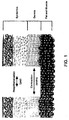
- FIG. 1 shows a diagram of the wound site that extends form the epidermis to the fat/muscle layer. This model allowed measurement of two parameters: the re-epithelialization (gap) and the contraction (width) of the wound. Wounds treated topically with T ⁇ 4 showed about a 15% decrease in width and about 15% decrease in gap in the treated versus controls (FIG. 2 and 3, respectively).
- FIG. 2 shows a 15% decrease in wound width as compared to the saline controls as early as 4 days after wounding and continued until day 7.
- Intraperitoneal injection of T ⁇ 4 resulted in a 18% decrease in wound width relative to saline treated controls at day 4 and 11% decrease at day 7. This trend was observed on the 4th day post wounding and continued through day 7 (*P ⁇ 0.0001, **P ⁇ 0.08, significant difference from media alone, student's t-test).
- T ⁇ 4 when given either topically or systemically, increases wound re-epithelialization and contraction. Both topical and systemic treatment are equally effective.
- Lower doses of T ⁇ 4 were tested including 2.5 ⁇ g and 0.5 ⁇ g in 50 ⁇ l for topical and 30 ⁇ g and 6 ⁇ g in 300 ⁇ l for intraperitoneal injection but reduced or no effect, respectively, was observed on wound healing.
- Figure 3 shows an 18% decease in gap length as compared to saline controls when T ⁇ 4 is administered topically, as early as 4 days after wounding. This trend continued to termination at day 7 (*P ⁇ 0.04, student's t-test). Intraperitoneal injections resulted in a 42% decrease in gap size relative to saline treated controls. This decrease was observed on the 4th day post wounding and continued through day 7 (**P ⁇ 0.0007, student's t-test). The increase in re-epithelialization was observed in wounds treated for 7 days and the rate of gap closure was slightly accelerated over that observed at day 4. A 62% decrease in gap size was observed in the T ⁇ 4-treated wounds.
- Topical Epidermal Migration ( ⁇ m) 2403.3 ⁇ 9.7 3168.3 ⁇ 38.4 3668.7 ⁇ 56.6
- Epidermal Thickness ( ⁇ m) 128.2 ⁇ 19.3 135.0 ⁇ 11.7 142.3 ⁇ 19.8 Vessels/10 HPF 1364.0 ⁇ 15.0 2415.0 ⁇ 24.3 2186.0 ⁇ 11.8 HPF: high power field.
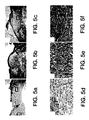
- FIG. 4 shows a comparison of typical control (D) and T ⁇ 4-treated (E and F) sections of 7 day wounds.
- Treatment with T ⁇ 4 resulted in considerable capillary ingrowth (FIG 4E and F, arrows).
- Vessel counts showed a significant (about 2 fold) increase in the number of vessels in T ⁇ 4 treated wounds (Table 1). No increases in the number of macrophages in the wounds were observed.
- There was no apparent increase in the accumulation/biosynthesis of collagen in treated -T ⁇ 4 wounds (Fig. 5B and C vs A) supporting a decreased wound width and supporting a role for T ⁇ 4 in wound contraction. Both the topical and systemically treated wound appeared similar although the wound contraction proceeded slightly more quickly with the topical treatment.
- keratinocytes were prepared from either Balb/c or CD-1 newborn mice as described previously (Dlugosz et al ., 1995). Cells were plated in calcium- and magnesium-free Eagle's Minimal Essential Medium (EMEM) containing 8% fetal calf serum treated with 8% Chelex (Bio-Rad Laboratories, Hercules, CA), 20 units/ml penicillin-streptomycin, and the calcium concentration was adjusted to 0.25 mM.
- EMEM calcium- and magnesium-free Eagle's Minimal Essential Medium
- Keratinocyte migration assays were carried out in Boyden chamber using 12 ⁇ m pore polyester membranes (Poretics, Livermore, CA) coated with a 0.1 mg/ml solution of collagen IV in dH 2 O (Trevigen, Gaithersburg, MD). Filters were then dried at least 1 h. Cells were harvested using Versene or Trypsin (Life Technologies, Gaithersburg, MD) and resuspended in Eagle's minimal essential medium with 0.05 mM Ca 2+ . The bottom chamber was loaded with EMEM containing 0.01, 0.1, 10, 100, and 1000 ng/ml of synthetic T ⁇ 4.
- Conditioned medium from primary dermal fibroblasts and/or keratinocyte growth factor was added to several wells as a positive control.
- Cells were added to the upper chamber at a concentration of 50,000 cells per well. Chambers were incubated at 35 C/7% CO 2 for 4-5 hours and the filters were then fixed and stained using Diff-Quik (Baxter Healthcare Corporation, McGraw Park, IL). The cells that migrated through the filter were quantitated by counting the center of each well at 10x using an Olympus CK2 microscope. Each condition was assayed in triplicate wells and each experiment was repeated four times with different preparations of cells.
- Corneal Epithelial Cell migration assays were carried out in Boyden chamber using 12 ⁇ m pore polyester membranes (Poretics, Livermore, CA) coated with a 0.1 mg/ml solution of collagen IV in dH20 (Trevigen, Gaithersburg, MD). Filters were then dried at least 1 h. Cells were cultured and resuspended in Eagle's Minimal Essential Medium with 0.05 mM Ca 2+ . The bottom chamber was loaded with EMEM containing 0.01, 0.1, 10, 100, and 1000 ng/ml of synthetic T ⁇ 4. Conditioned medium from primary dermal fibroblasts and/or keratinocyte growth factor was added to several wells as a positive control.
- T ⁇ 4 corneal re-epithelialization
- Rat corneas were de-epithelialized and treated with T ⁇ 4. Filters were soaked in heptanol, applied to the eye for 30 seconds, and then the epithelium was scraped. Various concentration of T ⁇ 4 in saline was applied to the eye and at 24 hours the rats were sacrificed. The eyes were fixed, sectioned and the degree of corneal epithelial migration (as measured in pixels) was determined using a microscope with an internal caliper by a masked observer. The results demonstrate that re-epithelialization of the cornea was increased 2-fold over untreated control in the presence of about 1 to 25 ⁇ g of T ⁇ 4 (FIG. 8 and 9). In addition, it was noted that T ⁇ 4 treated eyes had reduced inflammation compared to the non-treated corneas.
- Thymosin ⁇ 4 also enhanced wound healing in an impaired model.
- Steroid treatment reduces the rate of wound repair in mammals.
- Rats treated with steroids such as hydrocortisone serve as a model of impaired wound healing due to the delay observed in wound closure.
- Animals were injected intramuscularly everyday with hydrocortisone.
- Steroid treated rats showed a significant increase in the level of healing when T ⁇ 4 was added topically or injected intraperitoneally.
- Intraperitoneal injection resulted in a 28% decrease in3 gap size and a 14% decrease in wound width.
- a response was observed with both topical treatment and intraperitoneal injection.
- T ⁇ 4 is useful to treat chronic, as well as, acute wounds.
Landscapes
- Health & Medical Sciences (AREA)
- Life Sciences & Earth Sciences (AREA)
- Veterinary Medicine (AREA)
- Public Health (AREA)
- General Health & Medical Sciences (AREA)
- Chemical & Material Sciences (AREA)
- Animal Behavior & Ethology (AREA)
- Pharmacology & Pharmacy (AREA)
- Medicinal Chemistry (AREA)
- Bioinformatics & Cheminformatics (AREA)
- Engineering & Computer Science (AREA)
- Epidemiology (AREA)
- Proteomics, Peptides & Aminoacids (AREA)
- Gastroenterology & Hepatology (AREA)
- Immunology (AREA)
- Zoology (AREA)
- Nuclear Medicine, Radiotherapy & Molecular Imaging (AREA)
- Organic Chemistry (AREA)
- General Chemical & Material Sciences (AREA)
- Chemical Kinetics & Catalysis (AREA)
- Endocrinology (AREA)
- Cardiology (AREA)
- Heart & Thoracic Surgery (AREA)
- Ophthalmology & Optometry (AREA)
- Dermatology (AREA)
- Urology & Nephrology (AREA)
- Rheumatology (AREA)
- Vascular Medicine (AREA)
- Pain & Pain Management (AREA)
- Medicines That Contain Protein Lipid Enzymes And Other Medicines (AREA)
- Silicon Polymers (AREA)
- Medicinal Preparation (AREA)
Claims (29)
- Verwendung einer Zusammensetzung, umfassend ein Polypeptid, umfassend die Aminosäuresequenz LKKTET oder eine konservative Variante davon, wobei das Polypeptid die Eigenschaft einer Epithelzellen-Migrationsstimulationsaktivität hat, zur Herstellung eines Medikamentes zur Förderung der Epithelzellmigration.
- Verwendung einer Zusammensetzung, umfassend ein Polypeptid, umfassend die Aminosäuresequenz LKKTET oder eine konservative Variante davon, wobei das Polypeptid die Eigenschaften einer Aktin-Sequestrierungs- oder Aktin-Bindefähigkeit und Wundheilungsaktivität hat, zur Herstellung eines Medikamentes zur Förderung der Wundheilung, wobei die Zusammensetzung für eine topische Zuführung, Inhalation, systemische Verabreichung, orale Verabreichung, intranasale Verabreichung, intravenöse Verabreichung, intraperitoneale Verabreichung, intramuskuläre Verabreichung, intrakavitäre Verabreichung oder transdermale Verabreichung geeignet ist.
- Verwendung einer Zusammensetzung, umfassend:zur Herstellung eines Medikamentes zur Förderung der Wundheilungsaktivität.(i) ein Polypeptid, umfassend die Aminosäuresequenz LKKTET oder eine konservative Variante davon, wobei das Polypeptid die Eigenschaften einer Aktin-Sequestrierungs- oder Aktin-Bindefähigkeit und Wundheilungsaktivität hat, und(ii) ein zweites Mittel, das die Wundheilungsaktivität unterstützen oder stimulieren kann, wobei das zweite Mittel ausgewählt ist aus der Gruppe bestehend aus angiogenen Mitteln, Wachstumsfaktoren, Mitteln, die die Differenzierung von Zellen lenken, Mitteln, die die Migration von Zellen fördern, und Mitteln, die die Bereitstellung extrazellulärer Matrixmaterialien im Wundbett stimulieren,
- Verwendung einer Zusammensetzung, umfassend:zur Herstellung eines Medikamentes zur Förderung der Wundheilungsaktivität.(i) ein Polypeptid, umfassend die Aminosäuresequenz LKKTET oder eine konservative Variante davon, wobei das Polypeptid die Eigenschaften einer Aktin-Sequestrierungs- oder Aktin-Bindefähigkeit und Wundheilungsaktivität hat, und(ii) ein zweites Mittel, das die Produktion von Thymosin β4 stimulieren kann, wobei das zweite Mittel ausgewählt ist aus der Gruppe bestehend aus Insulinähnlichem Wachstumsfaktor (IGF-1), aus Blutplättchen gewonnenem Wachstumsfaktor (PDGF), epidermalem Wachstumsfaktor (EGF), von transformierten Zellen gebildetem Wachstumsfaktor Beta (TGF-β), basischem Fibroblastenwachstumsfaktor (bFGF), Thymosin α1 (T α1) und vaskulärem Endothelwachstumsfaktor (VEGF),
- Verwendung einer Zusammensetzung, umfassend ein Polypeptid, umfassend die Aminosäuresequenz LKKTET oder eine konservative variante davon, wobei das Polypeptid die Eigenschaften einer Aktin-Sequestrierungs- oder Aktin-Bindefähigkeit und entzündungshemmenden Aktivität hat, zur Herstellung eines Medikamentes zur Reduzierung einer Augenentzündung eines Patienten.
- Verwendung einer Zusammensetzung, umfassend ein Polypeptid, umfassend die Aminosäuresequenz LKKTET oder eine konservative Variante davon, wobei das Polypeptid nicht Thymosin β4 ist, wobei das genannte Polypeptid die Eigenschaften einer Aktin-Sequestrierungs- oder Aktin-Bindefähigkeit und Wundheilungsaktivität hat, zur Herstellung eines Medikamentes zur Förderung der Wundheilung.
- Verwendung einer Zusammensetzung, umfassend ein Polypeptid, ausgewählt aus Gelsolin, Vitamin-D-Bindeprotein (DBP), Profilin, Cofilin, Depactin, DnaseI, Vilin, Fragmin, Severin, Capping-Protein, Beta-Aktinin, Akumentin, Tβ4ala, Tβ9, Tβ11, Tβ12, Tβ13, Tβ14 und Tβ15, wobei das genannte Polypeptid die Eigenschaften einer Aktin-Sequestrierungs- oder Aktin-Bindefähigkeit und Wundheilungsaktivität hat, zur Herstellung eines Medikamentes zur Förderung der Wundheilung.
- Verwendung nach den Ansprüchen 1 bis 5, wobei das Polypeptid Thymosin β4 oder eine Isoform von Thymosin β4 umfasst.
- Verwendung nach einem der vorherigen Ansprüche, wobei die Zusammensetzung zur topischen Zuführung geeignet ist.
- Verwendung nach einem der vorherigen Ansprüche, wobei die Zusammensetzung in einer topischen Formulierung enthalten ist, ausgewählt aus einem Gel, einer Creme, Paste, Lotion, einem Spray, einer Suspension, Dispersion, einem Balsam, Hydrogel und einer Salbe.
- Verwendung nach Anspruch 1 bis 8, wobei die Zusammensetzung zur systemischen Zuführung geeignet ist.
- Verwendung nach einem der vorherigen Ansprüche, wobei das Polypeptid rekombinant oder synthetisch ist.
- Verwendung nach einem der Ansprüche 1 bis 5, wobei das Polypeptid eine Isoform von Thymosin β4 ist, die zu wenigstens 70 % homolog zu Thymosin β4 Peptid ist, das als SEQ ID Nr. 1 in Fig. 10 dargestellt ist.
- Verwendung nach einem der Ansprüche 1 bis 5, wobei das Polypeptid eine Isoform von Thymosin β4 ist, ausgewählt aus Tβ4ala, Tβ9, Tβ10, Tβ11, Tβ12, Tβ13, Tβ14 und Tβ15.
- Verwendung nach einem der Ansprüche 1 bis 5, wobei das Polypeptid ausgewählt ist aus der Gruppe bestehend aus Gelsolin, Vitamin-D-Bindeprotein (DBP), Profilin, Cofilin, Depactin, DnaseI, Vilin, Fragmin, Severin, Capping-Protein, β-Aktinin und Akumentin.
- Verwendung nach den Ansprüchen 1-4 und 6-15, wobei die Zusammensetzung zur Wundheilung in einem Gewebe geeignet ist.
- Verwendung nach Anspruch 16, wobei das Gewebe ausgewählt ist aus epidermalem, Augen-, urogenitalem, gastrointestinalem, kardiovaskulärem, Muskel-, Binde- oder Nervengewebe.
- Verwendung nach Anspruch 17, wobei das Gewebe Hautgewebe ist.
- Verwendung nach Anspruch 4, wobei das Mittel von transformierten Zellen gebildeter Wachstumsfaktor Beta (TGF-b) ist.
- Verwendung nach den Ansprüchen 1 bis 3, wobei die Zusammensetzung ferner ein Mittel enthält, das die Produktion von Thymosin β4 Peptid stimuliert.
- Verwendung nach Anspruch 20, wobei das Mittel Zink ist.
- Pharmazeutische Zusammensetzung, umfassend ein Wundheilungsfragment eines Polypeptids, umfassend die Aminosäuresequenz LKKTET oder eine konservative Variante davon, wobei das genannte Fragment die Eigenschaften einer Aktin-Sequestrierungs- oder Aktin-Bindefähigkeit und Wundheilungsaktivität hat, wobei die Zusammensetzung ferner einen pharmazeutisch akzeptablen Träger umfasst.
- Pharmazeutische Zusammensetzung nach Anspruch 22, wobei das Wundheilungspolypeptid ein Fragment von Thymosin β4 oder eine Isoform von Thymosin β4 ist.
- Pharmazeutische Zusammensetzung nach Anspruch 22 in einer Formulierung mit kontrollierter Freisetzung.
- Pharmazeutische Zusammensetzung nach Anspruch 22 in einer liposomalen Form.
- Pharmazeutische Zusammensetzung nach Anspruch 22 in einer lyophilisierten Form.
- Pharmazeutische Zusammensetzung nach Anspruch 22 in einer Einheitsdosisform.
- Pharmazeutische Zusammensetzung nach Anspruch 22 in Kombination mit einem Mittel zur Förderung der Wundheilung.
- Pharmazeutische Zusammensetzung nach Anspruch 28, wobei das Mittel ausgewählt ist aus VEGF, KGF, FGF, PDGF, TGFβ, IGF, IGF-1, IGF-2, IL-1, Prothymosin α und Thymosin α1 oder Kombinationen davon.
Priority Applications (2)
| Application Number | Priority Date | Filing Date | Title |
|---|---|---|---|
| EP04078459A EP1591128A1 (de) | 1998-07-30 | 1999-07-29 | Thymosin beta 4 stimuliert Wundheilung |
| EP10186120A EP2311485A1 (de) | 1998-07-30 | 1999-07-29 | Thymosin beta 4 stimuliert Wundheilung |
Applications Claiming Priority (3)
| Application Number | Priority Date | Filing Date | Title |
|---|---|---|---|
| US9469098P | 1998-07-30 | 1998-07-30 | |
| US94690P | 1998-07-30 | ||
| PCT/US1999/017282 WO2000006190A1 (en) | 1998-07-30 | 1999-07-29 | THYMOSIN β4 PROMOTES WOUND REPAIR |
Related Child Applications (3)
| Application Number | Title | Priority Date | Filing Date |
|---|---|---|---|
| EP04078459A Division EP1591128A1 (de) | 1998-07-30 | 1999-07-29 | Thymosin beta 4 stimuliert Wundheilung |
| EP04077891.2 Division-Into | 2004-10-22 | ||
| EP04078459.7 Division-Into | 2004-12-20 |
Publications (3)
| Publication Number | Publication Date |
|---|---|
| EP1100529A1 EP1100529A1 (de) | 2001-05-23 |
| EP1100529B1 true EP1100529B1 (de) | 2005-04-06 |
| EP1100529B2 EP1100529B2 (de) | 2010-08-25 |
Family
ID=22246605
Family Applications (3)
| Application Number | Title | Priority Date | Filing Date |
|---|---|---|---|
| EP04078459A Withdrawn EP1591128A1 (de) | 1998-07-30 | 1999-07-29 | Thymosin beta 4 stimuliert Wundheilung |
| EP10186120A Withdrawn EP2311485A1 (de) | 1998-07-30 | 1999-07-29 | Thymosin beta 4 stimuliert Wundheilung |
| EP99937654A Expired - Lifetime EP1100529B2 (de) | 1998-07-30 | 1999-07-29 | Thymosin beta 4 stimuliert wundheilung |
Family Applications Before (2)
| Application Number | Title | Priority Date | Filing Date |
|---|---|---|---|
| EP04078459A Withdrawn EP1591128A1 (de) | 1998-07-30 | 1999-07-29 | Thymosin beta 4 stimuliert Wundheilung |
| EP10186120A Withdrawn EP2311485A1 (de) | 1998-07-30 | 1999-07-29 | Thymosin beta 4 stimuliert Wundheilung |
Country Status (11)
| Country | Link |
|---|---|
| US (6) | US20070111931A9 (de) |
| EP (3) | EP1591128A1 (de) |
| AT (1) | ATE292473T1 (de) |
| AU (1) | AU766826B2 (de) |
| CA (1) | CA2338928A1 (de) |
| DE (1) | DE69924615T3 (de) |
| DK (1) | DK1100529T4 (de) |
| ES (1) | ES2239846T5 (de) |
| MX (1) | MXPA01001041A (de) |
| PT (1) | PT1100529E (de) |
| WO (1) | WO2000006190A1 (de) |
Cited By (4)
| Publication number | Priority date | Publication date | Assignee | Title |
|---|---|---|---|---|
| US7268118B2 (en) | 1998-07-30 | 2007-09-11 | United States Of America As Represented By The Secretary Of Health | Thymosin β4 compositions |
| US9035037B2 (en) | 2007-12-21 | 2015-05-19 | Coda Therapeutics, Inc. | Medical devices |
| US10406174B2 (en) | 2006-11-15 | 2019-09-10 | Ocunexus Therapeutics, Inc. | Methods and compositions for wound healing |
| US10465188B2 (en) | 2014-08-22 | 2019-11-05 | Auckland Uniservices Limited | Channel modulators |
Families Citing this family (139)
| Publication number | Priority date | Publication date | Assignee | Title |
|---|---|---|---|---|
| US20070015698A1 (en) * | 1998-07-30 | 2007-01-18 | United States Of America As Represented By The Secretary Of Health | Treatment of skin, and wound repair, with thymosin beta 4 |
| US20040170625A1 (en) * | 1998-07-30 | 2004-09-02 | Regenerx Biopharmaceuticals, Inc. | Methods of treating Epidermolysis Bullosa and associated dermatological indications with thymosin beta 4, analogues, isoforms and other derivatives |
| US20070191275A1 (en) * | 1998-07-30 | 2007-08-16 | Regenerx Biopharmaceuticals, Inc. | Method of treating, preventing, inhibiting or reducing damage to cardiac tissue with thymosin beta 4 fragments |
| US20080096817A1 (en) * | 1998-07-30 | 2008-04-24 | Regenerx Biopharmaceuticals, Inc. | METHODS OF TREATING DISORDERS OF THE EYE AND SURROUNDING TISSUE WITH THYMOSIN BETA 4 (Tbeta4), ANALOGUES, ISOFORMS AND OTHER DERIVATIVES |
| US20040131626A1 (en) * | 2001-03-15 | 2004-07-08 | Goldstein Allan L. | Methods of treating disorders of the eye and surrounding tissue with thymosin beta4 (tb4) analogues, isoforms and other derivatives |
| US6992170B2 (en) | 1999-10-15 | 2006-01-31 | Curagen Corporation | Polypeptides and polynucleotides homologous to thymosin, ephrin a receptors, and fibromodulin |
| US6855806B1 (en) | 1999-10-15 | 2005-02-15 | Curagen Corporation | Thymosin beta 10-like proteins and nucleic acids encoding same |
| DE10030149A1 (de) * | 2000-06-20 | 2002-01-10 | Switch Biotech Ag | Verwendung von Polypeptiden oder diese kodierende Nukleinsäuren zur Diagnose oder Behandlung von Hauterkrankungen oder Wundheilung sowie ihre Verwendung zur Identifizierung von pharmakologisch aktiven Substanzen |
| EP1176200A3 (de) | 2000-06-20 | 2005-01-12 | Switch Biotech Aktiengesellschaft | Verwendung von Polypeptiden oder diese kodierende Nukleinsäuren zur Diagnose oder Behandlung von Hauterkrankung oder Wundheilung sowie ihre Verwendung zur Indentifizierung von pharmakologisch aktiven Substanzen |
| FR2814076B1 (fr) | 2000-09-21 | 2002-12-20 | Centre Nat Rech Scient | Agent angiogenique et ses utilisations |
| ATE452647T1 (de) | 2000-11-02 | 2010-01-15 | Regenerx Biopharmaceuticals | Hemmung oder umkehrung der hautalterung durch actin-sequestrierende peptide |
| US6855345B2 (en) * | 2001-11-02 | 2005-02-15 | Morinda, Inc. | Preventative and treatment effects of Morinda citrifolia on diabetes and its related conditions |
| US20110171333A1 (en) * | 2000-12-05 | 2011-07-14 | Bryant Wadsworth | Morinda Citrifolia Based Antioxidant and Antimicrobial Formulations for Improved Color Stability and Increased Shelf Life of Various Meat Products |
| US20110217394A1 (en) * | 2000-12-05 | 2011-09-08 | Brett Justin West | Iridoid Based Formulations |
| US20070196527A1 (en) * | 2006-02-23 | 2007-08-23 | Jensen Claude J | Preventative and treatment effects of Morinda citrifolia on Osteoarthritis and its related conditions |
| US7244463B2 (en) * | 2005-10-18 | 2007-07-17 | Tahitian Noni International, Inc. | Garcinia mangostana L. enhanced animal food product |
| US8790727B2 (en) * | 2000-12-05 | 2014-07-29 | Tahitian Noni International, Inc. | Morinda citrifolia and iridoid based formulations |
| US20040192761A1 (en) * | 2003-03-25 | 2004-09-30 | Palu Afa Kehaati | Preventative and treatment effects of morinda citrifolia as an aromatase inhibitor |
| US8574642B2 (en) | 2000-12-05 | 2013-11-05 | Tahitian Noni International, Inc. | Antiviral Morinda citrifolia L. based formulations and methods of administration |
| US8652546B2 (en) | 2007-09-06 | 2014-02-18 | Tahitian Noni International, Inc. | Morinda citrifolia based formulations for regulating T cell immunomodulation in neonatal stock animals |
| AU2006233251B2 (en) * | 2001-03-15 | 2008-10-02 | Regenerx Biopharmaceuticals, Inc. | Methods for Treating Disorders of the Eye and Surrounding Tissue with Thymosin Beta4 (TBeta4), Analogues, Isoforms and Other Derivatives |
| EP1389124A4 (de) * | 2001-04-17 | 2004-12-15 | Morinda Inc | Palliative wirkungen von öl und saft von morinda citrifolia |
| CN1241636C (zh) * | 2001-05-17 | 2006-02-15 | 雷金纳克斯生物制药公司 | 用胸腺素β4治疗大疱性表皮松解症 |
| JP2005502672A (ja) * | 2001-08-29 | 2005-01-27 | リジェナークス・バイオファーマスーティカルズ・インコーポレイテッド | サイモシンβ4、類似体、アイソフォームおよびその他の誘導体を用いて心筋障害の発生前、発生中または発生後に発生する炎症、損傷およびその他の変化を治癒または予防する方法 |
| US7070813B2 (en) * | 2001-11-02 | 2006-07-04 | Morinda, Inc. | Preventative and treatment effects of morinda citrifolia as a colon cancer cell growth inhibitor |
| US20110160057A1 (en) * | 2001-11-14 | 2011-06-30 | Bryant Wadsworth | Morinda Citrifolia Based Antimicrobial Formulations |
| US7442395B2 (en) * | 2002-11-14 | 2008-10-28 | Tahitian Noni International, Inc. | Formulation for treating candidiasis using Morinda citrifolia |
| GB0130608D0 (en) | 2001-12-21 | 2002-02-06 | Psimedica Ltd | Medical fibres and fabrics |
| TWI353849B (en) * | 2002-01-25 | 2011-12-11 | Us Gov Health & Human Serv | Methods and compositions for the promotion of hair |
| US7202066B2 (en) * | 2002-01-29 | 2007-04-10 | Carrington Laboratories, Inc. | Combination of a growth factor and a protease enzyme |
| AU2008201749B2 (en) * | 2002-02-06 | 2010-05-13 | Regenerx Biopharmaceuticals, Inc. | Treatment of Infections and Other Disorders |
| CA2475053A1 (en) * | 2002-02-06 | 2004-04-29 | Regenerx Biopharmaceuticals, Inc. | Treatment of microbial infections and associated gastrointestinal disorders with thymosin .beta.4 |
| WO2003086449A1 (en) * | 2002-04-12 | 2003-10-23 | Yale University | ANTI-INFLAMMATORY AND WOUND HEALING EFFECTS OF LYMPHOID THYMOSIN β 4 |
| US6821524B2 (en) * | 2002-06-03 | 2004-11-23 | Jan Marini Skin Research, Inc. | Cosmetic skin care compositions |
| US20060263360A1 (en) * | 2003-03-31 | 2006-11-23 | Regenerx Biopharmaceuticals, Inc. | Compositions and methods for delivering thymosin beta 4, analogues, isoforms and other derivatives |
| US20060269630A1 (en) * | 2003-04-16 | 2006-11-30 | Palu Afa K | Morinda citrifolia as a 5-Lipoxygenase inhibitor |
| JP4073826B2 (ja) * | 2003-06-04 | 2008-04-09 | タヒチアン ノニ インターナショナル インコーポレーテッド | ヤエヤマアオキの抽出物を含む農業用活力剤 |
| CN1822850A (zh) * | 2003-07-18 | 2006-08-23 | 雷根内克斯生物制药有限公司 | 由放射线照射引起的损伤的治疗或预防 |
| US20070259060A1 (en) * | 2003-08-12 | 2007-11-08 | Mian-Ying Wang | Formulations and Methods for Treating Breast Cancer with Morinda Citrifolia and Methylsulfonymethane |
| CN1897965A (zh) * | 2003-12-22 | 2007-01-17 | 雷金纳克斯生物制药公司 | 反应性的化学剂、生物剂或毒素引起的生物反应或免疫反应的治疗方法或预防方法 |
| AU2005222085B2 (en) | 2004-03-05 | 2011-01-06 | Regenerx Biopharmaceuticals, Inc. | Treating or preventing extracellular matrix build-up |
| EP1784204A4 (de) * | 2004-08-20 | 2008-11-05 | Univ Texas | Verfahren zur herstellung, prävention, hemmung oder verringerung von schäden an herzgewebe |
| US7531318B2 (en) | 2004-08-20 | 2009-05-12 | Board Of Regents, The University Of Texas System | Screening of agents for activity against ischemic myocardial insults |
| CN101102784A (zh) * | 2005-01-13 | 2008-01-09 | 雷金纳克斯生物制药公司 | 对由神经退行性疾病、肌肉退行性疾病、或神经-肌肉退行性疾病所致的组织退化、伤害或损伤进行治疗或预防的方法、或对受到所述疾病的不利影响的组织进行恢复的方法 |
| US20060204601A1 (en) * | 2005-03-09 | 2006-09-14 | Palu Afa K | Formulations and methods for preventing and treating substance abuse and addiction |
| US20070122507A1 (en) * | 2005-05-26 | 2007-05-31 | Palu Afa K | Histone deacetylase and tumor necrosis factor converting enzyme inhibition |
| US20060280818A1 (en) * | 2005-05-26 | 2006-12-14 | Palu Afa K | Nicotinic acetylcholine receptor antagonist |
| JP2008543878A (ja) * | 2005-06-17 | 2008-12-04 | リジェナークス・バイオファーマスーティカルズ・インコーポレイテッド | 凍結乾燥したかまたは凍結乾燥させることができる形態であるlkktetおよび/またはlkktntペプチド組成物 |
| CN100582121C (zh) * | 2005-07-15 | 2010-01-20 | 北京诺思兰德生物技术有限责任公司 | 胸腺素β4衍生物及其应用 |
| WO2007014253A2 (en) * | 2005-07-26 | 2007-02-01 | Regenerx Biopharmaceuticals, Inc. | Method of treating or preventing tissue deterioration, injury or damage due to congestive heart failure |
| US20070184137A1 (en) * | 2005-11-29 | 2007-08-09 | Palu Afa K | Morinda Citrifolia L. Based Formulations for Inhibiting Matrix Metalloproteinase Enzymes |
| US20070166417A1 (en) * | 2005-11-29 | 2007-07-19 | Palu Afa K | Formulation and Methods for Use of Morinda Citrifolia Seed Oil |
| US20070154579A1 (en) * | 2005-11-29 | 2007-07-05 | Palu Afa K | Morinda Citrifolia Based Formulation And Methods For Weight Management |
| DK2347775T3 (da) | 2005-12-13 | 2020-07-13 | Harvard College | Skabeloner til celletransplantation |
| US20090169538A1 (en) * | 2006-01-17 | 2009-07-02 | Regenerx Biopharmaceuticals, Inc. | Methods of Treating or Preventing Tissue Damage Caused by Increased Blood Flow |
| US20070281903A1 (en) * | 2006-05-04 | 2007-12-06 | Palu Afa K | Morinda Citrifolia-Based Formulation 5-LOX And 15-LOX |
| US8025910B2 (en) | 2006-05-12 | 2011-09-27 | Tahitian Noni International, Inc. | Method and composition for administering bioactive compounds derived from Morinda citrifolia |
| US8535741B2 (en) | 2006-05-12 | 2013-09-17 | Morinda, Inc. | Method and composition for administering bioactive compounds derived from Morinda citrifolia |
| KR20090049605A (ko) * | 2006-08-18 | 2009-05-18 | 리지너크스 바이오 파마소티컬스, 인코포레이티드 | 이식용 장기 또는 조직을 보존 및/또는 준비하기 위한 방법과 조성물 |
| US8399412B2 (en) * | 2006-10-06 | 2013-03-19 | Regenerx Biopharmaceuticals, Inc. | Method of treating or preventing tissue deterioration, injury or damage due to periodontal disease or disease of oral mucosa, and/or downregulating NF-kappabeta or supressing NF-kappabeta-mediated actions |
| CA2621452A1 (en) * | 2007-02-21 | 2008-08-21 | Innovational Holdings, Llc | Stent and method for reducing tissue damage after ischemic injury with thymosin b4 |
| US9770535B2 (en) * | 2007-06-21 | 2017-09-26 | President And Fellows Of Harvard College | Scaffolds for cell collection or elimination |
| US20080317890A1 (en) * | 2007-06-21 | 2008-12-25 | Claude Jarakae Jensen | Method for treating visual impairment through the prophylactic administration of a morinda citrifolia-based naturaceutical |
| AU2008297426A1 (en) * | 2007-09-11 | 2009-03-19 | Mondobiotech Laboratories Ag | Use of the peptide combination thymosin beta 4 and delta sleep inducing peptide as a therapeutic agent |
| WO2009033816A2 (en) * | 2007-09-11 | 2009-03-19 | Mondobiotech Laboratories Ag | Use of the combination of thymosin beta 10 and thymosin alpha 1 peptides as a therapeutic agent |
| RU2010114018A (ru) * | 2007-09-11 | 2011-10-20 | Мондобайотек Лабораториз Аг (Li) | Применение пептид тимозина бета 4 индивидуально или в сочетании с цекропином а в качестве терапевтического средства |
| US20090196944A1 (en) * | 2008-02-01 | 2009-08-06 | Brad Rawson | Methods of Manufacture of Morinda Citrifolia Based Compositions for Treatment of Anti-Inflammatory Diseases through Inhibition of Cox-1, Cox-2, Interleukin -1beta, Interleukin-6, TNF-alpha, HLE, and iNOS |
| EP2254602B1 (de) | 2008-02-13 | 2018-11-21 | President and Fellows of Harvard College | Kontinuierliche zellprogrammiervorrichtungen |
| US9370558B2 (en) | 2008-02-13 | 2016-06-21 | President And Fellows Of Harvard College | Controlled delivery of TLR agonists in structural polymeric devices |
| WO2009146456A1 (en) | 2008-05-30 | 2009-12-03 | President And Fellows Of Harvard College | Controlled release of growth factors and signaling molecules for promoting angiogenesis |
| CN101297965B (zh) * | 2008-06-16 | 2011-01-05 | 浙江省中医药研究院 | 胸腺肽β4在制备防治支气管哮喘药物中的应用 |
| WO2010025177A1 (en) | 2008-08-26 | 2010-03-04 | City Of Hope | Method and compositions for enhanced anti-tumor effector functioning of t cells |
| JP2012522005A (ja) * | 2009-03-26 | 2012-09-20 | ヘンリー フォード ヘルス システム | 神経損傷および神経変性疾患後の神経学的転帰を改善する方法 |
| WO2010120749A2 (en) | 2009-04-13 | 2010-10-21 | President And Fellow Of Harvard College | Harnessing cell dynamics to engineer materials |
| US8230654B2 (en) | 2009-06-10 | 2012-07-31 | Comc, Llc | Medallion insert for modular flooring assemblies |
| US8782989B2 (en) | 2009-06-11 | 2014-07-22 | Comc, Llc | Narrow lined modular flooring assemblies |
| US8728456B2 (en) | 2009-07-31 | 2014-05-20 | President And Fellows Of Harvard College | Programming of cells for tolerogenic therapies |
| GB2476789A (en) | 2009-11-10 | 2011-07-13 | Gl Holdings Inc Bv | Use of thymosin for treatment of type 2 diabetes |
| US20110206786A1 (en) * | 2010-02-23 | 2011-08-25 | Brett Justin West | Acai and Iridoid Based Formulations |
| EP2542230A4 (de) * | 2010-03-05 | 2013-08-28 | Harvard College | Förderung des anwachsens von skelettmuskel-stammzellen durch gleichzeitige verabreichung von vegf und igf-1 |
| KR101297037B1 (ko) * | 2010-03-26 | 2013-08-14 | 숙명여자대학교산학협력단 | 혈관신생촉진용 펩타이드 및 이의 용도 |
| US9693954B2 (en) | 2010-06-25 | 2017-07-04 | President And Fellows Of Harvard College | Co-delivery of stimulatory and inhibitory factors to create temporally stable and spatially restricted zones |
| US9504730B2 (en) | 2010-09-30 | 2016-11-29 | Regenerx Biopharmaceuticals, Inc. | Method of achieving a thymosin beta 4 concentration in a human patient |
| PL2624873T3 (pl) | 2010-10-06 | 2020-12-14 | President And Fellows Of Harvard College | Nadające się do wstrzykiwania hydrożele tworzące pory do terapii komórkowych opartych na materiałach |
| US9603894B2 (en) | 2010-11-08 | 2017-03-28 | President And Fellows Of Harvard College | Materials presenting notch signaling molecules to control cell behavior |
| WO2012126047A1 (en) * | 2011-03-18 | 2012-09-27 | Adistem Ltd | Agent and method for treating pain and reducing inflammation |
| EP2701753B1 (de) | 2011-04-27 | 2018-12-26 | President and Fellows of Harvard College | Zellfreundliche inverse und opake hydrogele zur zelleinkapselung, zur arzneimittel- und proteinabgabe sowie für funktionelle nanopartikeleinkapselung |
| ES2685327T3 (es) | 2011-04-28 | 2018-10-08 | President And Fellows Of Harvard College | Armazones tridimensionales macroscópicos preformados inyectables para administración mínimamente invasiva |
| US9675561B2 (en) | 2011-04-28 | 2017-06-13 | President And Fellows Of Harvard College | Injectable cryogel vaccine devices and methods of use thereof |
| JP6062426B2 (ja) | 2011-06-03 | 2017-01-18 | プレジデント・アンド・フェロウズ・オブ・ハーバード・カレッジ | インサイチュー抗原生成癌ワクチン |
| US20130022687A1 (en) | 2011-07-19 | 2013-01-24 | Fitzgerald Jr John James | Topical transdermal method for delivering nutrients through the skin for expedited wound healing |
| US8632827B2 (en) * | 2011-12-13 | 2014-01-21 | Avon Products, Inc | Modulation of thymosin beta-4 in skin |
| WO2013096773A2 (en) * | 2011-12-23 | 2013-06-27 | Henry Ford Health System | Methods, systems, and compositions for promoting recovery of peripheral neuropathy |
| PL2838515T3 (pl) | 2012-04-16 | 2020-06-29 | President And Fellows Of Harvard College | Kompozycje mezoporowatego krzemu do modulowania odpowiedzi odpornościowych |
| US8871254B2 (en) | 2012-09-19 | 2014-10-28 | Transdermal Biotechnology, Inc. | Systems and methods for treatment of acne vulgaris and other conditions with a topical nitric oxide delivery system |
| US9808654B2 (en) | 2013-02-11 | 2017-11-07 | Jan Marini Skin Research | Post procedure skin care gel and methods of use thereof |
| US9750787B2 (en) | 2013-03-13 | 2017-09-05 | Transdermal Biotechnology, Inc. | Memory or learning improvement using peptide and other compositions |
| US9849160B2 (en) | 2013-03-13 | 2017-12-26 | Transdermal Biotechnology, Inc. | Methods and systems for treating or preventing cancer |
| US9393264B2 (en) | 2013-03-13 | 2016-07-19 | Transdermal Biotechnology, Inc. | Immune modulation using peptides and other compositions |
| US20140271937A1 (en) | 2013-03-13 | 2014-09-18 | Transdermal Biotechnology, Inc. | Brain and neural treatments comprising peptides and other compositions |
| US20140271938A1 (en) | 2013-03-13 | 2014-09-18 | Transdermal Biotechnology, Inc. | Systems and methods for delivery of peptides |
| US9314433B2 (en) | 2013-03-13 | 2016-04-19 | Transdermal Biotechnology, Inc. | Methods and systems for treating or preventing cancer |
| US9314422B2 (en) | 2013-03-13 | 2016-04-19 | Transdermal Biotechnology, Inc. | Peptide systems and methods for metabolic conditions |
| US9320758B2 (en) | 2013-03-13 | 2016-04-26 | Transdermal Biotechnology, Inc. | Brain and neural treatments comprising peptides and other compositions |
| US9339457B2 (en) | 2013-03-13 | 2016-05-17 | Transdermal Biotechnology, Inc. | Cardiovascular disease treatment and prevention |
| US9320706B2 (en) | 2013-03-13 | 2016-04-26 | Transdermal Biotechnology, Inc. | Immune modulation using peptides and other compositions |
| US9295637B2 (en) | 2013-03-13 | 2016-03-29 | Transdermal Biotechnology, Inc. | Compositions and methods for affecting mood states |
| US9393265B2 (en) | 2013-03-13 | 2016-07-19 | Transdermal Biotechnology, Inc. | Wound healing using topical systems and methods |
| US9724419B2 (en) | 2013-03-13 | 2017-08-08 | Transdermal Biotechnology, Inc. | Peptide systems and methods for metabolic conditions |
| US9314417B2 (en) | 2013-03-13 | 2016-04-19 | Transdermal Biotechnology, Inc. | Treatment of skin, including aging skin, to improve appearance |
| US9295636B2 (en) * | 2013-03-13 | 2016-03-29 | Transdermal Biotechnology, Inc. | Wound healing using topical systems and methods |
| US9387159B2 (en) | 2013-03-13 | 2016-07-12 | Transdermal Biotechnology, Inc. | Treatment of skin, including aging skin, to improve appearance |
| US20140271731A1 (en) | 2013-03-13 | 2014-09-18 | Transdermal Biotechnology, Inc. | Cardiovascular disease treatment and prevention |
| US9687520B2 (en) | 2013-03-13 | 2017-06-27 | Transdermal Biotechnology, Inc. | Memory or learning improvement using peptide and other compositions |
| US9241899B2 (en) | 2013-03-13 | 2016-01-26 | Transdermal Biotechnology, Inc. | Topical systems and methods for treating sexual dysfunction |
| US9295647B2 (en) | 2013-03-13 | 2016-03-29 | Transdermal Biotechnology, Inc. | Systems and methods for delivery of peptides |
| US9314423B2 (en) | 2013-03-13 | 2016-04-19 | Transdermal Biotechnology, Inc. | Hair treatment systems and methods using peptides and other compositions |
| DE102013017203A1 (de) * | 2013-10-16 | 2015-04-16 | Isa Atay | Thymustherapie |
| CN107073090A (zh) | 2014-04-30 | 2017-08-18 | 哈佛学院董事会 | 结合的疫苗装置和杀死癌细胞的方法 |
| KR101530278B1 (ko) * | 2014-09-04 | 2015-06-24 | 부산대학교 산학협력단 | 심근전환유전자 및 심혈관재생유전자를 포함하는 아데노부속바이러스를 유효성분으로 포함하는, 허혈성 심장질환 예방 또는 치료용 조성물 |
| AU2015317351B2 (en) | 2014-09-19 | 2020-07-02 | City Of Hope | Costimulatory chimeric antigen receptor T cells targeting IL3Ra2 |
| US10406208B2 (en) | 2014-10-22 | 2019-09-10 | G-Treebnt Co., Ltd. | Composition containing thymosin beta 4, and pharmaceutical formulation comprising same |
| EP3242677A4 (de) * | 2015-01-06 | 2018-09-26 | CardioVascular BioTherapeutics, Inc. | Therapeutische angiogenese für wundheilung |
| EP3242605A4 (de) | 2015-01-06 | 2018-08-29 | CardioVascular BioTherapeutics, Inc. | Angiogene behandlung von ischämischer herzkrankheit |
| WO2016123573A1 (en) | 2015-01-30 | 2016-08-04 | President And Fellows Of Harvard College | Peritumoral and intratumoral materials for cancer therapy |
| CA2976675A1 (en) | 2015-02-16 | 2016-08-25 | Cardiovascular Biotherapeutics, Inc. | Therapeutic angiogenesis for treating erectile conditions |
| JP7094533B2 (ja) | 2015-04-10 | 2022-07-04 | プレジデント アンド フェローズ オブ ハーバード カレッジ | 免疫細胞捕捉デバイスおよびその製造および使用方法 |
| CA2997426A1 (en) | 2015-09-10 | 2017-03-16 | Comc, Llc | Modular flooring assemblies |
| KR102487614B1 (ko) * | 2015-10-06 | 2023-01-12 | 에이치엘비테라퓨틱스 주식회사 | 티모신 β4를 포함하는 안약의 제조방법 |
| US11752238B2 (en) | 2016-02-06 | 2023-09-12 | President And Fellows Of Harvard College | Recapitulating the hematopoietic niche to reconstitute immunity |
| KR102449167B1 (ko) * | 2016-05-06 | 2022-09-28 | 파세비오 파마수티컬스 인코포레이티드 | 제어된 지속 방출을 위한 elp 융합 단백질 |
| JP2019522486A (ja) | 2016-07-13 | 2019-08-15 | プレジデント アンド フェローズ オブ ハーバード カレッジ | 抗原提示細胞模倣足場およびそれを作製および使用するための方法 |
| KR102638898B1 (ko) | 2016-08-02 | 2024-02-22 | 프레지던트 앤드 펠로우즈 오브 하바드 칼리지 | 면역 반응을 조정하기 위한 생체재료 |
| KR102340750B1 (ko) | 2017-03-03 | 2021-12-21 | 에이치엘비테라퓨틱스 주식회사 | 티모신 베타 4를 유효성분으로 포함하는 안정화된 외용 제제 |
| WO2020061129A1 (en) | 2018-09-19 | 2020-03-26 | President And Fellows Of Harvard College | Compositions and methods for labeling and modulation of cells in vitro and in vivo |
| CN110585055B (zh) * | 2019-08-26 | 2023-06-13 | 武汉贝缇安卡医疗健康投资有限公司 | AcSDKP在增加成纤维细胞分泌Ⅲ型胶原蛋白含量的应用 |
| CN111249534B (zh) * | 2020-01-16 | 2021-06-15 | 中国人民解放军总医院 | 可用于促进创面组织同步修复再生的生物活性支架及其制备方法 |
| WO2021207282A2 (en) * | 2020-04-07 | 2021-10-14 | Combangio, Inc. | Lyophilized mesenchymal stem cell derived secretome and uses thereof |
| CN111888462B (zh) * | 2020-08-10 | 2022-08-26 | 中国人民解放军军事科学院军事医学研究院 | 胸腺素β4在制备微生态平衡调节剂中的应用 |
Citations (4)
| Publication number | Priority date | Publication date | Assignee | Title |
|---|---|---|---|---|
| EP0450240A1 (de) * | 1988-10-05 | 1991-10-09 | Gen-Ichiro Soma | Anti-Aids Zubereitung |
| JPH04234325A (ja) * | 1990-12-27 | 1992-08-24 | Hoechst Japan Ltd | 脳および神経障害治療予防剤 |
| WO1994023739A1 (en) * | 1993-04-22 | 1994-10-27 | The George Washington University | METHOD OF DECREASING THE TOXICITY OF THERAPEUTIC COMPOSITIONS USING THYMOSIN β¿4? |
| WO1995009646A1 (en) * | 1993-10-07 | 1995-04-13 | The George Washington University Medical Center | METHOD OF TREATING SEPTIC SHOCK USING THYMOSIN β¿4? |
Family Cites Families (51)
| Publication number | Priority date | Publication date | Assignee | Title |
|---|---|---|---|---|
| US4261982A (en) * | 1977-11-09 | 1981-04-14 | The Procter & Gamble Company | Therapeutic composition |
| US4297276A (en) * | 1979-03-23 | 1981-10-27 | Hoffman-La Roche Inc. | Thymosin beta 3 and beta 4 |
| US4444757A (en) | 1981-11-16 | 1984-04-24 | Research Corporation | Use of thymosin as an anti-diabetes and anti-hypertensive disease agent |
| US4389343A (en) * | 1981-12-24 | 1983-06-21 | Hoffmann-La Roche Inc. | Immunopotentiating peptides from thymus |
| US4388234A (en) * | 1981-12-28 | 1983-06-14 | Hoffmann-La Roche Inc. | Peptide isolation |
| FR2530466A1 (fr) | 1982-07-21 | 1984-01-27 | Hecmati Michel | Gel anti-ride, produit et procede |
| WO1984002274A1 (en) | 1982-12-09 | 1984-06-21 | Hafsten Raymond J Jr | Activated, stabilized enzymes useful for wound healing |
| WO1984003437A1 (fr) | 1983-03-01 | 1984-09-13 | Rudolf Trensch | Produit pour traiter les cheveux et procede de traitement des cheveux |
| US4543340A (en) * | 1983-04-07 | 1985-09-24 | George Washington University | Radioimmunoassay of thymosin β4 |
| GB8330969D0 (en) * | 1983-11-21 | 1983-12-29 | Wellcome Found | Promoting healing |
| JPS60142908A (ja) | 1983-12-29 | 1985-07-29 | Kanebo Ltd | 養毛化粧料 |
| GB8517402D0 (en) * | 1985-07-10 | 1985-08-14 | Wellcome Found | Treatment of viral infections |
| US4713394A (en) | 1986-01-17 | 1987-12-15 | Thornfeldt Carl R | Treatment of nonacne inflammatory and infectious dermatoses and hair loss |
| JPS62252711A (ja) | 1986-04-24 | 1987-11-04 | Hideharu Tamaki | 養毛剤 |
| US4983581A (en) * | 1988-05-20 | 1991-01-08 | Institute Of Molecular Biology, Inc. | Wound healing composition of IGF-I and TGF-β |
| US5055447A (en) * | 1988-07-28 | 1991-10-08 | Genentech, Inc. | Method and compositions for the treatment and prevention of septic shock |
| JPH02142717A (ja) | 1988-11-22 | 1990-05-31 | Kanebo Ltd | 養毛化粧料 |
| US5654267A (en) * | 1988-12-20 | 1997-08-05 | La Jolla Cancer Research Center | Cooperative combinations of ligands contained within a matrix |
| EP0410348A1 (de) | 1989-07-26 | 1991-01-30 | G.D. Searle & Co. | Topische Spironolakton-Zusammensetzung |
| US5068315A (en) | 1990-04-12 | 1991-11-26 | University Of Dundee | Composition for the regulation of hair growth |
| GB9014221D0 (en) | 1990-06-26 | 1990-08-15 | Janssen Pharmaceutica Nv | Method of treating alopecia |
| CN1701814A (zh) * | 1992-11-13 | 2005-11-30 | 马克斯普朗克科学促进协会 | 作为血管内皮生长因子受体的f1k-1 |
| US6124259A (en) | 1993-01-28 | 2000-09-26 | Celtrix Pharmaceuticals, Inc. | Method for treating ophthalmic disorders with IGFBP |
| CA2156735A1 (en) * | 1993-02-22 | 1994-09-01 | Ulrich-Christoph Von Arnim | Pharmaceutical compositions for the treatment of inflammatory or immunological diseases and a method for the treatment of said diseases |
| US5358703A (en) * | 1993-09-27 | 1994-10-25 | Mcw Research Foundation, Inc. | Method for the detection of nitric oxide |
| US5593964A (en) * | 1993-10-07 | 1997-01-14 | The George Washington University Medical Center | Method of treating septic shock by preventing actin polymerization |
| US5578570A (en) * | 1993-10-07 | 1996-11-26 | The George Washington University Medical Center | Method of treating septic shock using thymosin β4 |
| FR2711060B1 (fr) | 1993-10-13 | 1995-11-17 | Oreal | Procédé pour modifier la pousse des poils et/ou des cheveux et compositions utilisables à cet effet. |
| US5591716A (en) * | 1993-11-19 | 1997-01-07 | New York University | Beneficial wound healing applications of calreticulin and other hyaluronan-associated proteins |
| CA2139385C (en) * | 1994-02-04 | 2001-12-25 | Gottfried Alber | Products containing g-csf and tnf binding protein |
| US5652209A (en) | 1994-04-29 | 1997-07-29 | University Of Miami | Use of secretory products of human lacrimal gland acinar epithelia for tear replacement therapy |
| FR2719481B1 (fr) | 1994-05-05 | 1996-05-31 | Oreal | Composition à base de composés antifongiques et de composés antibactériens halogènes pour diminuer la chute des cheveux. |
| JPH07316022A (ja) | 1994-05-24 | 1995-12-05 | Kyowa Hakko Kogyo Co Ltd | 育毛剤 |
| JP3202135B2 (ja) | 1994-08-10 | 2001-08-27 | カネボウ株式会社 | 頭髪化粧料 |
| DE19509354A1 (de) * | 1994-12-08 | 1996-06-13 | Klett Loch Lore M | Kombinationspräparat zur Förderung des Haarwachstums und ggf. des Haut- und Nagelwachstums sowie zur Verhinderung bzw. zur Beseitigung von Haarausfall |
| FR2741076B1 (fr) * | 1995-11-15 | 1998-01-30 | Rech De Pathologie Appliquee S | Conjugues peptidiques derives des hormones thymiques, leur utilisation a titre de medicament et compositions les contenant |
| DE19622422A1 (de) * | 1996-06-04 | 1997-12-11 | Sanorell Pharma Gmbh & Co | Lagerungsstabile pharmazeutische Zusammensetzung mit immun - modulierenden und antiinflammatorischen Eigenschaften sowie ein Verfahren zu dessen Herstellung |
| US5663071A (en) * | 1996-06-17 | 1997-09-02 | Children's Medical Center Corporation | Human thymosin β 15 gene, protein and uses thereof |
| JP3128203B2 (ja) | 1997-02-10 | 2001-01-29 | 一男 坪田 | 分泌腺細胞とリンパ球との接着阻害剤 |
| DE19711939A1 (de) * | 1997-03-21 | 1998-09-24 | Bosch Gmbh Robert | Vorrichtung zur Erfassung des Drucks und der Temperatur im Saugrohr einer Brennkraftmaschine |
| DE19731420A1 (de) * | 1997-07-22 | 1999-01-28 | Bosch Gmbh Robert | Vorrichtung zur Erfassung des Drucks und der Temperatur im Saugrohr einer Brennkraftmaschine und Verfahren zu ihrer Herstellung |
| US6030948A (en) | 1997-12-19 | 2000-02-29 | Mann; Morris A. | Hair regeneration compositions for treatment of alopecia and methods of application related thereto |
| GB9806632D0 (en) * | 1998-03-28 | 1998-05-27 | Stevenson Robert | Peptide factor |
| US20040067227A1 (en) * | 2001-11-02 | 2004-04-08 | Goldstein Allan L. | Inhibition or reversal of skin aging by actin-sequestering peptides |
| EP1591128A1 (de) | 1998-07-30 | 2005-11-02 | The Government of the United States of America, as repres. by the Secretary of Health and Human Services, Nat. Inst. of Health | Thymosin beta 4 stimuliert Wundheilung |
| US6586403B1 (en) * | 2000-07-20 | 2003-07-01 | Salpep Biotechnology, Inc. | Treating allergic reactions and inflammatory responses with tri-and dipeptides |
| ATE452647T1 (de) | 2000-11-02 | 2010-01-15 | Regenerx Biopharmaceuticals | Hemmung oder umkehrung der hautalterung durch actin-sequestrierende peptide |
| US7560280B2 (en) * | 2000-11-03 | 2009-07-14 | Kourion Therapeutics Gmbh | Human cord blood derived unrestricted somatic stem cells (USSC) |
| US6821524B2 (en) * | 2002-06-03 | 2004-11-23 | Jan Marini Skin Research, Inc. | Cosmetic skin care compositions |
| JP3870918B2 (ja) * | 2002-10-23 | 2007-01-24 | 株式会社デンソー | 温度センサ一体型圧力センサ装置 |
| RU2295963C1 (ru) | 2005-10-18 | 2007-03-27 | Закрытое акционерное общество Научно-производственное предприятие "Тринита" | Способ получения иммуностимулятора |
-
1999
- 1999-07-29 EP EP04078459A patent/EP1591128A1/de not_active Withdrawn
- 1999-07-29 MX MXPA01001041A patent/MXPA01001041A/es active IP Right Grant
- 1999-07-29 ES ES99937654T patent/ES2239846T5/es not_active Expired - Lifetime
- 1999-07-29 PT PT99937654T patent/PT1100529E/pt unknown
- 1999-07-29 CA CA002338928A patent/CA2338928A1/en not_active Abandoned
- 1999-07-29 EP EP10186120A patent/EP2311485A1/de not_active Withdrawn
- 1999-07-29 DK DK99937654.4T patent/DK1100529T4/da active
- 1999-07-29 AT AT99937654T patent/ATE292473T1/de active
- 1999-07-29 DE DE69924615T patent/DE69924615T3/de not_active Expired - Lifetime
- 1999-07-29 AU AU52443/99A patent/AU766826B2/en not_active Ceased
- 1999-07-29 WO PCT/US1999/017282 patent/WO2000006190A1/en not_active Ceased
- 1999-07-29 EP EP99937654A patent/EP1100529B2/de not_active Expired - Lifetime
-
2001
- 2001-01-29 US US09/772,445 patent/US20070111931A9/en not_active Abandoned
-
2004
- 2004-05-26 US US10/853,505 patent/US7268118B2/en not_active Expired - Fee Related
-
2005
- 2005-11-22 US US11/284,430 patent/US8143218B2/en not_active Expired - Fee Related
-
2007
- 2007-03-09 US US11/715,997 patent/US20090023663A1/en not_active Abandoned
-
2010
- 2010-11-02 US US12/938,228 patent/US20110124550A1/en not_active Abandoned
-
2017
- 2017-05-12 US US15/594,045 patent/US20170326207A1/en not_active Abandoned
Patent Citations (4)
| Publication number | Priority date | Publication date | Assignee | Title |
|---|---|---|---|---|
| EP0450240A1 (de) * | 1988-10-05 | 1991-10-09 | Gen-Ichiro Soma | Anti-Aids Zubereitung |
| JPH04234325A (ja) * | 1990-12-27 | 1992-08-24 | Hoechst Japan Ltd | 脳および神経障害治療予防剤 |
| WO1994023739A1 (en) * | 1993-04-22 | 1994-10-27 | The George Washington University | METHOD OF DECREASING THE TOXICITY OF THERAPEUTIC COMPOSITIONS USING THYMOSIN β¿4? |
| WO1995009646A1 (en) * | 1993-10-07 | 1995-04-13 | The George Washington University Medical Center | METHOD OF TREATING SEPTIC SHOCK USING THYMOSIN β¿4? |
Non-Patent Citations (1)
| Title |
|---|
| DATABASE WPI Week 199240, Derwent World Patents Index; Class B04, AN 1992-327505 * |
Cited By (8)
| Publication number | Priority date | Publication date | Assignee | Title |
|---|---|---|---|---|
| US7268118B2 (en) | 1998-07-30 | 2007-09-11 | United States Of America As Represented By The Secretary Of Health | Thymosin β4 compositions |
| US8143218B2 (en) | 1998-07-30 | 2012-03-27 | Regenerx Biopharmaceuticals, Inc. | Treatment of skin, and wound repair, with thymosin beta 4 |
| US10406174B2 (en) | 2006-11-15 | 2019-09-10 | Ocunexus Therapeutics, Inc. | Methods and compositions for wound healing |
| US9035037B2 (en) | 2007-12-21 | 2015-05-19 | Coda Therapeutics, Inc. | Medical devices |
| US9561311B2 (en) | 2007-12-21 | 2017-02-07 | Coda Therapeutics, Inc. | Medical devices |
| US10251929B2 (en) | 2007-12-21 | 2019-04-09 | Ocunexus Theraprutics, Inc. | Medical devices |
| US10465188B2 (en) | 2014-08-22 | 2019-11-05 | Auckland Uniservices Limited | Channel modulators |
| US11401516B2 (en) | 2014-08-22 | 2022-08-02 | Auckland Uniservices Limited | Channel modulators |
Also Published As
| Publication number | Publication date |
|---|---|
| AU766826B2 (en) | 2003-10-23 |
| US8143218B2 (en) | 2012-03-27 |
| EP1100529A1 (de) | 2001-05-23 |
| DE69924615T2 (de) | 2006-02-02 |
| US20030060405A1 (en) | 2003-03-27 |
| ATE292473T1 (de) | 2005-04-15 |
| WO2000006190A1 (en) | 2000-02-10 |
| US20070111931A9 (en) | 2007-05-17 |
| EP1100529B2 (de) | 2010-08-25 |
| EP2311485A1 (de) | 2011-04-20 |
| MXPA01001041A (es) | 2002-06-04 |
| EP1591128A1 (de) | 2005-11-02 |
| US7268118B2 (en) | 2007-09-11 |
| DE69924615T3 (de) | 2011-05-05 |
| CA2338928A1 (en) | 2000-02-10 |
| US20070009469A1 (en) | 2007-01-11 |
| ES2239846T3 (es) | 2005-10-01 |
| US20170326207A1 (en) | 2017-11-16 |
| US20040220111A1 (en) | 2004-11-04 |
| DK1100529T3 (da) | 2005-12-19 |
| AU5244399A (en) | 2000-02-21 |
| DE69924615D1 (de) | 2005-05-12 |
| DK1100529T4 (da) | 2010-12-20 |
| US20110124550A1 (en) | 2011-05-26 |
| US20090023663A1 (en) | 2009-01-22 |
| PT1100529E (pt) | 2005-10-31 |
| ES2239846T5 (es) | 2011-03-04 |
| HK1038307A1 (en) | 2002-03-15 |
Similar Documents
| Publication | Publication Date | Title |
|---|---|---|
| EP1100529B1 (de) | Thymosin beta 4 stimuliert wundheilung | |
| US20070015698A1 (en) | Treatment of skin, and wound repair, with thymosin beta 4 | |
| AU670770B2 (en) | Inhibiting transforming growth factor beta to prevent accumulation of extracellular matrix | |
| CA2065860C (en) | Inhibiting transforming growth factor .beta. to prevent accumulation of extracellular matrix | |
| US5436228A (en) | Chemotactic wound healing peptides | |
| US9056087B2 (en) | Methods of healing or preventing inflammation, damage and other changes that occur prior to, during or immediately after a myocardial event with thymosin beta 4, analogues, isoforms and other derivatives | |
| AU5958296A (en) | Connective tissue growth factor | |
| AU2002336408A1 (en) | Methods of healing or preventing inflammation, damage and other changes that occur prior to, during or immediately after a myocardial event with thymosin beta 4, analogues, isoforms and other derivatives | |
| US6197751B1 (en) | Thymosin α1 promotes tissue repair, angiogenesis and cell migration | |
| US5824647A (en) | Chemotactic wound healing peptides | |
| JP2009046502A (ja) | 皮膚状態の改善を促進するための組成物の製造のための、アミノ酸配列lkktetを含む皮膚変性阻害ポリペプチドの使用 | |
| EP0827407A1 (de) | Posttranslationale aktivierung von tgf-betal bei der tsp-i-rezeptor cd36 eine rolle spielt | |
| HK1038307B (en) | Thymosin beta 4 promotes wound repair | |
| FI81365B (fi) | Foerfarande foer framstaellning av biologiskt aktiva polypeptider. | |
| HK1084880A (en) | Thymosin beta 4 promotes wound repair | |
| HK1163494A (en) | Thymosin beta 4 promotes wound repair | |
| AU2002213513A1 (en) | Inhibition or reversal of skin aging by actin-sequestering peptides | |
| US20040067227A1 (en) | Inhibition or reversal of skin aging by actin-sequestering peptides | |
| US20040170625A1 (en) | Methods of treating Epidermolysis Bullosa and associated dermatological indications with thymosin beta 4, analogues, isoforms and other derivatives |
Legal Events
| Date | Code | Title | Description |
|---|---|---|---|
| PUAI | Public reference made under article 153(3) epc to a published international application that has entered the european phase |
Free format text: ORIGINAL CODE: 0009012 |
|
| 17P | Request for examination filed |
Effective date: 20010228 |
|
| AK | Designated contracting states |
Kind code of ref document: A1 Designated state(s): AT BE CH CY DE DK ES FI FR GB GR IE IT LI LU MC NL PT SE |
|
| AX | Request for extension of the european patent |
Free format text: AL;LT;LV;MK;RO;SI |
|
| 17Q | First examination report despatched |
Effective date: 20010628 |
|
| GRAP | Despatch of communication of intention to grant a patent |
Free format text: ORIGINAL CODE: EPIDOSNIGR1 |
|
| RIC1 | Information provided on ipc code assigned before grant |
Ipc: 7A 61P 17/02 B Ipc: 7A 61K 39/395 B Ipc: 7A 61K 38/22 A |
|
| RAP1 | Party data changed (applicant data changed or rights of an application transferred) |
Owner name: THE GOVERNMENT OF THE UNITED STATES OF AMERICA, AS |
|
| RIN1 | Information on inventor provided before grant (corrected) |
Inventor name: SOSNE, GABRIEL Inventor name: MALINDA, KATHERINE, M.,BUILDING 30, ROOM 433 Inventor name: GOLDSTEIN, ALLAN,GEORGE WASHINGTON UNIVERSITY Inventor name: KLEINMAN, HYNDA, K.,BUILDING 30, ROOM 433 |
|
| GRAS | Grant fee paid |
Free format text: ORIGINAL CODE: EPIDOSNIGR3 |
|
| GRAA | (expected) grant |
Free format text: ORIGINAL CODE: 0009210 |
|
| AK | Designated contracting states |
Kind code of ref document: B1 Designated state(s): AT BE CH CY DE DK ES FI FR GB GR IE IT LI LU MC NL PT SE |
|
| PG25 | Lapsed in a contracting state [announced via postgrant information from national office to epo] |
Ref country code: BE Free format text: LAPSE BECAUSE OF FAILURE TO SUBMIT A TRANSLATION OF THE DESCRIPTION OR TO PAY THE FEE WITHIN THE PRESCRIBED TIME-LIMIT Effective date: 20050406 |
|
| REG | Reference to a national code |
Ref country code: GB Ref legal event code: FG4D |
|
| REG | Reference to a national code |
Ref country code: CH Ref legal event code: EP |
|
| REG | Reference to a national code |
Ref country code: IE Ref legal event code: FG4D |
|
| REF | Corresponds to: |
Ref document number: 69924615 Country of ref document: DE Date of ref document: 20050512 Kind code of ref document: P |
|
| PG25 | Lapsed in a contracting state [announced via postgrant information from national office to epo] |
Ref country code: GR Free format text: LAPSE BECAUSE OF FAILURE TO SUBMIT A TRANSLATION OF THE DESCRIPTION OR TO PAY THE FEE WITHIN THE PRESCRIBED TIME-LIMIT Effective date: 20050706 |
|
| REG | Reference to a national code |
Ref country code: SE Ref legal event code: TRGR |
|
| PG25 | Lapsed in a contracting state [announced via postgrant information from national office to epo] |
Ref country code: CY Free format text: LAPSE BECAUSE OF FAILURE TO SUBMIT A TRANSLATION OF THE DESCRIPTION OR TO PAY THE FEE WITHIN THE PRESCRIBED TIME-LIMIT Effective date: 20050729 |
|
| REG | Reference to a national code |
Ref country code: CH Ref legal event code: NV Representative=s name: BOGENSBERGER PATENT- & MARKENBUERO DR. BURKHARD BO |
|
| REG | Reference to a national code |
Ref country code: HK Ref legal event code: GR Ref document number: 1038307 Country of ref document: HK |
|
| REG | Reference to a national code |
Ref country code: ES Ref legal event code: FG2A Ref document number: 2239846 Country of ref document: ES Kind code of ref document: T3 |
|
| REG | Reference to a national code |
Ref country code: PT Ref legal event code: SC4A Effective date: 20050818 |
|
| REG | Reference to a national code |
Ref country code: DK Ref legal event code: EGE |
|
| REG | Reference to a national code |
Ref country code: DK Ref legal event code: T3 |
|
| PLBI | Opposition filed |
Free format text: ORIGINAL CODE: 0009260 |
|
| PLAX | Notice of opposition and request to file observation + time limit sent |
Free format text: ORIGINAL CODE: EPIDOSNOBS2 |
|
| 26 | Opposition filed |
Opponent name: GRANNUS BIOSCIENCES LIMITED Effective date: 20060106 |
|
| ET | Fr: translation filed | ||
| NLR1 | Nl: opposition has been filed with the epo |
Opponent name: GRANNUS BIOSCIENCES LIMITED |
|
| PLAF | Information modified related to communication of a notice of opposition and request to file observations + time limit |
Free format text: ORIGINAL CODE: EPIDOSCOBS2 |
|
| PLBB | Reply of patent proprietor to notice(s) of opposition received |
Free format text: ORIGINAL CODE: EPIDOSNOBS3 |
|
| REG | Reference to a national code |
Ref country code: CH Ref legal event code: PFA Owner name: THE GOVERNMENT OF THE UNITED STATES OF AMERICA, A Free format text: THE GOVERNMENT OF THE UNITED STATES OF AMERICA, AS REPRES. BY THE SECRETARY OF HEALTH AND HUMAN SERVICES, NAT. INST. OF HEALTH#OFFICE OF TECHNOLOGY TRANSFER SUITE 325 6011 EXECUTIVE BOULEVARD#ROCKVILLE, MD 20852-3804 (US) -TRANSFER TO- THE GOVERNMENT OF THE UNITED STATES OF AMERICA, AS REPRES. BY THE SECRETARY OF HEALTH AND HUMAN SERVICES, NAT. INST. OF HEALTH#OFFICE OF TECHNOLOGY TRANSFER SUITE 325 6011 EXECUTIVE BOULEVARD#ROCKVILLE, MD 20852-3804 (US) |
|
| RIC2 | Information provided on ipc code assigned after grant |
Ipc: A61P 17/02 20060101ALI20091214BHEP Ipc: A61K 39/395 20060101ALI20091214BHEP Ipc: A61K 38/22 20060101AFI20091214BHEP |
|
| PUAH | Patent maintained in amended form |
Free format text: ORIGINAL CODE: 0009272 |
|
| STAA | Information on the status of an ep patent application or granted ep patent |
Free format text: STATUS: PATENT MAINTAINED AS AMENDED |
|
| 27A | Patent maintained in amended form |
Effective date: 20100825 |
|
| AK | Designated contracting states |
Kind code of ref document: B2 Designated state(s): AT BE CH CY DE DK ES FI FR GB GR IE IT LI LU MC NL PT SE |
|
| REG | Reference to a national code |
Ref country code: CH Ref legal event code: AEN Free format text: AUFRECHTERHALTUNG DES PATENTES IN GEAENDERTER FORM |
|
| REG | Reference to a national code |
Ref country code: NL Ref legal event code: T3 |
|
| REG | Reference to a national code |
Ref country code: SE Ref legal event code: RPEO |
|
| REG | Reference to a national code |
Ref country code: DK Ref legal event code: T4 |
|
| REG | Reference to a national code |
Ref country code: ES Ref legal event code: DC2A Effective date: 20110222 |
|
| PGFP | Annual fee paid to national office [announced via postgrant information from national office to epo] |
Ref country code: MC Payment date: 20110629 Year of fee payment: 13 |
|
| PGFP | Annual fee paid to national office [announced via postgrant information from national office to epo] |
Ref country code: LU Payment date: 20110718 Year of fee payment: 13 |
|
| PGFP | Annual fee paid to national office [announced via postgrant information from national office to epo] |
Ref country code: DK Payment date: 20110712 Year of fee payment: 13 |
|
| PGFP | Annual fee paid to national office [announced via postgrant information from national office to epo] |
Ref country code: PT Payment date: 20110729 Year of fee payment: 13 Ref country code: SE Payment date: 20110712 Year of fee payment: 13 Ref country code: AT Payment date: 20110628 Year of fee payment: 13 Ref country code: FI Payment date: 20110712 Year of fee payment: 13 |
|
| PGFP | Annual fee paid to national office [announced via postgrant information from national office to epo] |
Ref country code: NL Payment date: 20110715 Year of fee payment: 13 Ref country code: IT Payment date: 20110721 Year of fee payment: 13 |
|
| REG | Reference to a national code |
Ref country code: PT Ref legal event code: MM4A Free format text: LAPSE DUE TO NON-PAYMENT OF FEES Effective date: 20130129 |
|
| REG | Reference to a national code |
Ref country code: NL Ref legal event code: V1 Effective date: 20130201 |
|
| PG25 | Lapsed in a contracting state [announced via postgrant information from national office to epo] |
Ref country code: MC Free format text: LAPSE BECAUSE OF NON-PAYMENT OF DUE FEES Effective date: 20120731 |
|
| REG | Reference to a national code |
Ref country code: SE Ref legal event code: EUG |
|
| REG | Reference to a national code |
Ref country code: AT Ref legal event code: MM01 Ref document number: 292473 Country of ref document: AT Kind code of ref document: T Effective date: 20120729 |
|
| REG | Reference to a national code |
Ref country code: DK Ref legal event code: EBP |
|
| PG25 | Lapsed in a contracting state [announced via postgrant information from national office to epo] |
Ref country code: FI Free format text: LAPSE BECAUSE OF NON-PAYMENT OF DUE FEES Effective date: 20120729 Ref country code: SE Free format text: LAPSE BECAUSE OF NON-PAYMENT OF DUE FEES Effective date: 20120730 Ref country code: NL Free format text: LAPSE BECAUSE OF NON-PAYMENT OF DUE FEES Effective date: 20130201 |
|
| PGFP | Annual fee paid to national office [announced via postgrant information from national office to epo] |
Ref country code: FR Payment date: 20130219 Year of fee payment: 14 Ref country code: CH Payment date: 20130130 Year of fee payment: 14 Ref country code: GB Payment date: 20130130 Year of fee payment: 14 Ref country code: DE Payment date: 20130124 Year of fee payment: 14 Ref country code: IE Payment date: 20130130 Year of fee payment: 14 Ref country code: ES Payment date: 20130130 Year of fee payment: 14 |
|
| PG25 | Lapsed in a contracting state [announced via postgrant information from national office to epo] |
Ref country code: PT Free format text: LAPSE BECAUSE OF NON-PAYMENT OF DUE FEES Effective date: 20130129 |
|
| REG | Reference to a national code |
Ref country code: CH Ref legal event code: PCAR Free format text: NEW ADDRESS: FALLSGASSE 7, 9492 ESCHEN (LI) |
|
| PG25 | Lapsed in a contracting state [announced via postgrant information from national office to epo] |
Ref country code: AT Free format text: LAPSE BECAUSE OF NON-PAYMENT OF DUE FEES Effective date: 20120729 |
|
| PG25 | Lapsed in a contracting state [announced via postgrant information from national office to epo] |
Ref country code: DK Free format text: LAPSE BECAUSE OF NON-PAYMENT OF DUE FEES Effective date: 20120731 |
|
| REG | Reference to a national code |
Ref country code: CH Ref legal event code: PL |
|
| GBPC | Gb: european patent ceased through non-payment of renewal fee |
Effective date: 20130729 |
|
| REG | Reference to a national code |
Ref country code: IE Ref legal event code: MM4A |
|
| REG | Reference to a national code |
Ref country code: FR Ref legal event code: ST Effective date: 20140331 |
|
| PG25 | Lapsed in a contracting state [announced via postgrant information from national office to epo] |
Ref country code: DE Free format text: LAPSE BECAUSE OF NON-PAYMENT OF DUE FEES Effective date: 20140201 Ref country code: LI Free format text: LAPSE BECAUSE OF NON-PAYMENT OF DUE FEES Effective date: 20130731 Ref country code: CH Free format text: LAPSE BECAUSE OF NON-PAYMENT OF DUE FEES Effective date: 20130731 Ref country code: GB Free format text: LAPSE BECAUSE OF NON-PAYMENT OF DUE FEES Effective date: 20130729 |
|
| REG | Reference to a national code |
Ref country code: DE Ref legal event code: R119 Ref document number: 69924615 Country of ref document: DE Effective date: 20140201 |
|
| PG25 | Lapsed in a contracting state [announced via postgrant information from national office to epo] |
Ref country code: LU Free format text: LAPSE BECAUSE OF NON-PAYMENT OF DUE FEES Effective date: 20120729 Ref country code: FR Free format text: LAPSE BECAUSE OF NON-PAYMENT OF DUE FEES Effective date: 20130731 Ref country code: IT Free format text: LAPSE BECAUSE OF NON-PAYMENT OF DUE FEES Effective date: 20130729 |
|
| PG25 | Lapsed in a contracting state [announced via postgrant information from national office to epo] |
Ref country code: IE Free format text: LAPSE BECAUSE OF NON-PAYMENT OF DUE FEES Effective date: 20130729 |
|
| REG | Reference to a national code |
Ref country code: ES Ref legal event code: FD2A Effective date: 20150408 |
|
| PG25 | Lapsed in a contracting state [announced via postgrant information from national office to epo] |
Ref country code: ES Free format text: LAPSE BECAUSE OF NON-PAYMENT OF DUE FEES Effective date: 20130730 |