EP1097251B1 - System and method for reducing particles in epitaxial reactors - Google Patents
System and method for reducing particles in epitaxial reactors Download PDFInfo
- Publication number
- EP1097251B1 EP1097251B1 EP99932209A EP99932209A EP1097251B1 EP 1097251 B1 EP1097251 B1 EP 1097251B1 EP 99932209 A EP99932209 A EP 99932209A EP 99932209 A EP99932209 A EP 99932209A EP 1097251 B1 EP1097251 B1 EP 1097251B1
- Authority
- EP
- European Patent Office
- Prior art keywords
- gas
- throttle valve
- chamber
- pressure
- wafer transport
- Prior art date
- Legal status (The legal status is an assumption and is not a legal conclusion. Google has not performed a legal analysis and makes no representation as to the accuracy of the status listed.)
- Expired - Lifetime
Links
- 238000000034 method Methods 0.000 title claims description 25
- 239000002245 particle Substances 0.000 title description 49
- 235000012431 wafers Nutrition 0.000 claims description 128
- 239000004065 semiconductor Substances 0.000 claims description 54
- 238000002955 isolation Methods 0.000 claims description 24
- 230000001105 regulatory effect Effects 0.000 claims description 9
- 230000004044 response Effects 0.000 claims description 6
- 238000011068 loading method Methods 0.000 claims description 3
- 230000001276 controlling effect Effects 0.000 claims 2
- 239000007789 gas Substances 0.000 description 89
- 238000010926 purge Methods 0.000 description 30
- 238000004519 manufacturing process Methods 0.000 description 23
- 230000007547 defect Effects 0.000 description 15
- 230000008569 process Effects 0.000 description 15
- 239000000758 substrate Substances 0.000 description 9
- IJGRMHOSHXDMSA-UHFFFAOYSA-N Atomic nitrogen Chemical compound N#N IJGRMHOSHXDMSA-UHFFFAOYSA-N 0.000 description 7
- XUIMIQQOPSSXEZ-UHFFFAOYSA-N Silicon Chemical compound [Si] XUIMIQQOPSSXEZ-UHFFFAOYSA-N 0.000 description 6
- 238000010586 diagram Methods 0.000 description 6
- 230000000717 retained effect Effects 0.000 description 6
- 229910052710 silicon Inorganic materials 0.000 description 6
- 239000010703 silicon Substances 0.000 description 6
- 238000000151 deposition Methods 0.000 description 5
- 230000008021 deposition Effects 0.000 description 4
- 238000005516 engineering process Methods 0.000 description 4
- 239000000463 material Substances 0.000 description 4
- 230000008030 elimination Effects 0.000 description 3
- 238000003379 elimination reaction Methods 0.000 description 3
- 229910052757 nitrogen Inorganic materials 0.000 description 3
- 238000005229 chemical vapour deposition Methods 0.000 description 2
- 230000001419 dependent effect Effects 0.000 description 2
- 238000005530 etching Methods 0.000 description 2
- 239000012530 fluid Substances 0.000 description 2
- 230000005484 gravity Effects 0.000 description 2
- 238000001459 lithography Methods 0.000 description 2
- 238000012423 maintenance Methods 0.000 description 2
- 238000003756 stirring Methods 0.000 description 2
- 239000000725 suspension Substances 0.000 description 2
- 238000005411 Van der Waals force Methods 0.000 description 1
- 238000009825 accumulation Methods 0.000 description 1
- QVGXLLKOCUKJST-UHFFFAOYSA-N atomic oxygen Chemical compound [O] QVGXLLKOCUKJST-UHFFFAOYSA-N 0.000 description 1
- 230000008901 benefit Effects 0.000 description 1
- 239000012159 carrier gas Substances 0.000 description 1
- 230000008859 change Effects 0.000 description 1
- 238000004140 cleaning Methods 0.000 description 1
- 239000004035 construction material Substances 0.000 description 1
- 238000011109 contamination Methods 0.000 description 1
- 238000000354 decomposition reaction Methods 0.000 description 1
- 229910001873 dinitrogen Inorganic materials 0.000 description 1
- 238000009826 distribution Methods 0.000 description 1
- 230000000694 effects Effects 0.000 description 1
- 238000000407 epitaxy Methods 0.000 description 1
- 230000037406 food intake Effects 0.000 description 1
- 238000010438 heat treatment Methods 0.000 description 1
- 238000007689 inspection Methods 0.000 description 1
- 230000014759 maintenance of location Effects 0.000 description 1
- 230000007246 mechanism Effects 0.000 description 1
- 239000001301 oxygen Substances 0.000 description 1
- 229910052760 oxygen Inorganic materials 0.000 description 1
- 239000013618 particulate matter Substances 0.000 description 1
- 230000035699 permeability Effects 0.000 description 1
- 238000000197 pyrolysis Methods 0.000 description 1
- 230000009467 reduction Effects 0.000 description 1
- 150000003377 silicon compounds Chemical class 0.000 description 1
- 238000012421 spiking Methods 0.000 description 1
- 239000007858 starting material Substances 0.000 description 1
- 230000003068 static effect Effects 0.000 description 1
Images


Classifications
-
- C—CHEMISTRY; METALLURGY
- C30—CRYSTAL GROWTH
- C30B—SINGLE-CRYSTAL GROWTH; UNIDIRECTIONAL SOLIDIFICATION OF EUTECTIC MATERIAL OR UNIDIRECTIONAL DEMIXING OF EUTECTOID MATERIAL; REFINING BY ZONE-MELTING OF MATERIAL; PRODUCTION OF A HOMOGENEOUS POLYCRYSTALLINE MATERIAL WITH DEFINED STRUCTURE; SINGLE CRYSTALS OR HOMOGENEOUS POLYCRYSTALLINE MATERIAL WITH DEFINED STRUCTURE; AFTER-TREATMENT OF SINGLE CRYSTALS OR A HOMOGENEOUS POLYCRYSTALLINE MATERIAL WITH DEFINED STRUCTURE; APPARATUS THEREFOR
- C30B29/00—Single crystals or homogeneous polycrystalline material with defined structure characterised by the material or by their shape
- C30B29/10—Inorganic compounds or compositions
- C30B29/14—Phosphates
-
- C—CHEMISTRY; METALLURGY
- C23—COATING METALLIC MATERIAL; COATING MATERIAL WITH METALLIC MATERIAL; CHEMICAL SURFACE TREATMENT; DIFFUSION TREATMENT OF METALLIC MATERIAL; COATING BY VACUUM EVAPORATION, BY SPUTTERING, BY ION IMPLANTATION OR BY CHEMICAL VAPOUR DEPOSITION, IN GENERAL; INHIBITING CORROSION OF METALLIC MATERIAL OR INCRUSTATION IN GENERAL
- C23C—COATING METALLIC MATERIAL; COATING MATERIAL WITH METALLIC MATERIAL; SURFACE TREATMENT OF METALLIC MATERIAL BY DIFFUSION INTO THE SURFACE, BY CHEMICAL CONVERSION OR SUBSTITUTION; COATING BY VACUUM EVAPORATION, BY SPUTTERING, BY ION IMPLANTATION OR BY CHEMICAL VAPOUR DEPOSITION, IN GENERAL
- C23C16/00—Chemical coating by decomposition of gaseous compounds, without leaving reaction products of surface material in the coating, i.e. chemical vapour deposition [CVD] processes
- C23C16/44—Chemical coating by decomposition of gaseous compounds, without leaving reaction products of surface material in the coating, i.e. chemical vapour deposition [CVD] processes characterised by the method of coating
- C23C16/4401—Means for minimising impurities, e.g. dust, moisture or residual gas, in the reaction chamber
-
- C—CHEMISTRY; METALLURGY
- C23—COATING METALLIC MATERIAL; COATING MATERIAL WITH METALLIC MATERIAL; CHEMICAL SURFACE TREATMENT; DIFFUSION TREATMENT OF METALLIC MATERIAL; COATING BY VACUUM EVAPORATION, BY SPUTTERING, BY ION IMPLANTATION OR BY CHEMICAL VAPOUR DEPOSITION, IN GENERAL; INHIBITING CORROSION OF METALLIC MATERIAL OR INCRUSTATION IN GENERAL
- C23C—COATING METALLIC MATERIAL; COATING MATERIAL WITH METALLIC MATERIAL; SURFACE TREATMENT OF METALLIC MATERIAL BY DIFFUSION INTO THE SURFACE, BY CHEMICAL CONVERSION OR SUBSTITUTION; COATING BY VACUUM EVAPORATION, BY SPUTTERING, BY ION IMPLANTATION OR BY CHEMICAL VAPOUR DEPOSITION, IN GENERAL
- C23C16/00—Chemical coating by decomposition of gaseous compounds, without leaving reaction products of surface material in the coating, i.e. chemical vapour deposition [CVD] processes
- C23C16/44—Chemical coating by decomposition of gaseous compounds, without leaving reaction products of surface material in the coating, i.e. chemical vapour deposition [CVD] processes characterised by the method of coating
- C23C16/4401—Means for minimising impurities, e.g. dust, moisture or residual gas, in the reaction chamber
- C23C16/4408—Means for minimising impurities, e.g. dust, moisture or residual gas, in the reaction chamber by purging residual gases from the reaction chamber or gas lines
-
- C—CHEMISTRY; METALLURGY
- C23—COATING METALLIC MATERIAL; COATING MATERIAL WITH METALLIC MATERIAL; CHEMICAL SURFACE TREATMENT; DIFFUSION TREATMENT OF METALLIC MATERIAL; COATING BY VACUUM EVAPORATION, BY SPUTTERING, BY ION IMPLANTATION OR BY CHEMICAL VAPOUR DEPOSITION, IN GENERAL; INHIBITING CORROSION OF METALLIC MATERIAL OR INCRUSTATION IN GENERAL
- C23C—COATING METALLIC MATERIAL; COATING MATERIAL WITH METALLIC MATERIAL; SURFACE TREATMENT OF METALLIC MATERIAL BY DIFFUSION INTO THE SURFACE, BY CHEMICAL CONVERSION OR SUBSTITUTION; COATING BY VACUUM EVAPORATION, BY SPUTTERING, BY ION IMPLANTATION OR BY CHEMICAL VAPOUR DEPOSITION, IN GENERAL
- C23C16/00—Chemical coating by decomposition of gaseous compounds, without leaving reaction products of surface material in the coating, i.e. chemical vapour deposition [CVD] processes
- C23C16/44—Chemical coating by decomposition of gaseous compounds, without leaving reaction products of surface material in the coating, i.e. chemical vapour deposition [CVD] processes characterised by the method of coating
- C23C16/455—Chemical coating by decomposition of gaseous compounds, without leaving reaction products of surface material in the coating, i.e. chemical vapour deposition [CVD] processes characterised by the method of coating characterised by the method used for introducing gases into reaction chamber or for modifying gas flows in reaction chamber
-
- C—CHEMISTRY; METALLURGY
- C30—CRYSTAL GROWTH
- C30B—SINGLE-CRYSTAL GROWTH; UNIDIRECTIONAL SOLIDIFICATION OF EUTECTIC MATERIAL OR UNIDIRECTIONAL DEMIXING OF EUTECTOID MATERIAL; REFINING BY ZONE-MELTING OF MATERIAL; PRODUCTION OF A HOMOGENEOUS POLYCRYSTALLINE MATERIAL WITH DEFINED STRUCTURE; SINGLE CRYSTALS OR HOMOGENEOUS POLYCRYSTALLINE MATERIAL WITH DEFINED STRUCTURE; AFTER-TREATMENT OF SINGLE CRYSTALS OR A HOMOGENEOUS POLYCRYSTALLINE MATERIAL WITH DEFINED STRUCTURE; APPARATUS THEREFOR
- C30B25/00—Single-crystal growth by chemical reaction of reactive gases, e.g. chemical vapour-deposition growth
- C30B25/02—Epitaxial-layer growth
- C30B25/08—Reaction chambers; Selection of materials therefor
-
- Y—GENERAL TAGGING OF NEW TECHNOLOGICAL DEVELOPMENTS; GENERAL TAGGING OF CROSS-SECTIONAL TECHNOLOGIES SPANNING OVER SEVERAL SECTIONS OF THE IPC; TECHNICAL SUBJECTS COVERED BY FORMER USPC CROSS-REFERENCE ART COLLECTIONS [XRACs] AND DIGESTS
- Y10—TECHNICAL SUBJECTS COVERED BY FORMER USPC
- Y10S—TECHNICAL SUBJECTS COVERED BY FORMER USPC CROSS-REFERENCE ART COLLECTIONS [XRACs] AND DIGESTS
- Y10S414/00—Material or article handling
- Y10S414/135—Associated with semiconductor wafer handling
- Y10S414/139—Associated with semiconductor wafer handling including wafer charging or discharging means for vacuum chamber
Definitions
- the invention relates to the process of forming films of material on semiconductor wafers through the use of carrier gases within a reactor chamber.
- the present invention relates to the epitaxial deposition of specific materials onto a silicon wafer and to a system and method for reducing or eliminating particulate matter and the resulting particle-related defects on the finished wafer.
- the wafers are loaded in one or multiple load locks and transported through a wafer handling chamber to a reactor, where the actual material is deposited onto the semiconductor wafers by means of gases or vapors.
- the gas in the load lock, wafer handling chamber and reactor must be as particle-free as possible in order to reduce the number of defects on the semiconductor wafer surface.
- Epitaxial depositions in general and silicon epitaxial deposition in particular are integral parts of VLSI processing, especially for the advanced bipolar, NMOS and CMOS technologies, since many of the components of the individual transistors and devices are formed in an epitaxial layer.
- the parent substrate is substantially defect-free (the introduction of substantially defect-free silicon wafer starting material in the mid 1970's offered this possibility)
- the growth of defect-free epitaxial layers requires the elimination of particles on the surface of the parent substrate wafer.
- the elimination or substantial decrease in unwanted particles and the associated achievement of very low particle-related defect densities are accomplished by extensive runs and wafer inspection resulting in very low wafer yields.
- particles may enter the semiconductor manufacturing equipment by other means, such as when semiconductor wafers are put into a load lock, during equipment maintenance or through some other indirect source. Particles generated during the process are removed by the laminar flow of the purge gas. The particles may be transported to the inner surfaces of the equipment and adhere thereon. If particles are present in the gas, or suddenly released from the inner surfaces of the equipment, the particles may be transported to the surface of the semiconductor wafer and cause defects. Undesirable particles including the particles that are to be deposited on the semiconductor wafer during the manufacturing process can be attracted to, deposited and retained on the inner surfaces of the semiconductor manufacturing equipment.
- Capillary force is reduced by the reduction of moisture in the equipment.
- the moisture is reduced by use of construction materials with low moisture permeability and the use of a particle and moisture free gas flow through the equipment.
- a dry particle-free gas purge such as dry nitrogen evaporates moisture and purges particles that are only being retained by the capillary force on the inner surfaces of the equipment.
- U.S. Patent Number 5,373,806 to Logar is an example of an attempt to solve the problem of retained particles.
- electrostatic charges are reduced by heating the substrate to a specific temperature lower than the processing temperature prior to production deposition by the use of a radiant source of energy. This is an extra step that must be taken in the manufacturing process; increasing production time and cost.
- particles are removed from the inner surface of the wafer handling chamber and the load locks by purging the wafer handling chamber with a particle-free gas.
- the semiconductor wafers are transported through the wafer handling chamber and load locks.
- a laminar flow of gas is provided so that particles can be picked up and carried with the purge gas through an exhaust outlet located within the wafer handling chamber and load locks.
- the gas flow becomes turbulent, causing particles to be stirred up and transported to the surface of any semiconductor wafer that happen to be in the wafer handling chamber.
- Another problem with the existing system occurs when a gate valve that isolates the wafer handling chamber from the load lock or processing chamber is opened. If there is a pressure difference between the two chamber, the gas flow in one chamber is diverted to the second chamber, which results in turbulence within the both chambers. Because the single stage back pressure regulators do not completely open, particles, vapors and gases back stream from the exhaust outlet into both chambers.
- United States Patent No. 4,747,367 discloses an apparatus for producing a constant flow, constant pressure chemical vapor deposition including a manifold having inlet valves for simultaneously switching equal flows of reactive and nonreactive gas between a process chamber and a vent chamber.
- WO 98/02683 discloses a pneumatically servoed gas pressure regulator providing a wide range of gas flow rates with outlet pressure control.
- the regulator includes a dome loaded gas pressure regulator and a pressure sensor controller integrated in a single unit.
- Japan Patent Application No. 61 272918A discloses a method for making uniform the distribution of reactive gas flow on the surface of a semiconductor wafer wherein a reactive gas exhaust hole is provided both on the outer furnace wall and the inner furnace wall respectively.
- the present invention relates to a method and apparatus for reducing particles in an epitaxial reactor used in processing of semiconductor wafers.
- an apparatus for processing semiconductor wafers comprising: a reactor chamber for processing semiconductor wafers; and a wafer transport chamber having a gas outlet and means for unloading and loading semiconductor wafers from and to the reactor chamber; the apparatus further comprises:
- a method of processing semiconductor wafers in a semiconductor reactor having a wafer transport chamber having a gas outlet and a reactor chamber the method comprises:
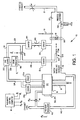
- figure 1 includes a diagram of a piece of semiconductor manufacturing equipment (an epitaxial reactor 10), illustrating a gas purge system 12 that is associated with a wafer transport chamber that includes load locks 14 and 15, and a wafer handling chamber 16.
- the epitaxial reactor 10 is partitioned into the wafer handling chamber 16, load locks 14 and 15, and a process chamber 20 that is isolated from the load locks 14 and 15 and the wafer handling chamber 16 by isolation gate valve 18.
- the load locks 14 and 15 and wafer handling chamber 16 Prior to processing any semiconductor wafers, the load locks 14 and 15 and wafer handling chamber 16 are purged by purge gas from the gas source 22 that includes a control system. This purge gas flows from the source 22 through the pipes 24 and 26 into the load locks 14 and 15 and wafer handling chamber 16.
- cassettes of semiconductor wafers are placed in the load locks 14 and 15 through load lock portals 32 and 34.
- the load lock portals 32 and 34 are closed to isolate the wafers from the surrounding atmosphere.
- the load locks are purged by the purge gas from the gas source 22.
- the purge gas such as dry nitrogen flows through the pipes 24 into the load locks 14 and 15.
- the purge gas purges out oxygen, moisture and undesirable particles that enters the load locks 14 and 15 when the load lock portals 32 and 34 are opened to receive the wafer cassettes.
- the load locks 14 and 15 are opened to the wafer handling chamber by the lowering of the cassette by an elevator 8 which breaks the air tight seal typically located at edge 6, and the wafers are transported sequentially from the cassettes to the process chamber 20 by a transfer arm 29 that has a Bernoulli wan 36 end affecter. While the wafers are transported through the wafer handling chamber 16, the wafer handling chamber 16 is purged by a gas from the gas source 22.
- the purge gas from the gas source is made slightly conductive by passing it through ionizer 21a which is connected to load lock 14, ionizer 21b which is connected to load lock 15, ionizer 21c which is connected to the wafer handling chamber 16 and ionizer 21d which is connected to the Bernoulli wand 36 by a flexible tube 30 that is connected to the robotic arm 29.
- the gas is the same as the purge gas.
- the ionizers 21a, 21b, 21c, and 21d reduces or removes electrostatic forces from inside the epitaxial reactor 10.
- the slightly conductive purge gas can discharge any particles from the wafers or inner surfaces of the chamber subject to the purge.
- the ionizers may be devices such as Model 2201 ss (alpha particle ionizer manufactured by NRD, Inc. of Grand Island, New York or preferably an electronic ionizer, such as the model 4210 manufactured by Ion Systems of Berkeley, California.
- the purge gas flows, under pressure, through the ionizers 21a, 21b, 22c, and 21d.
- the flow rate of the nitrogen purge gas is measured at 15 standard liters per minute (slm), as a Low Flow rate and at 50 slm per minute as a High Flow rate.
- the flow rate is dependent on the volume of chambers and is selected to be as high as possible without creating turbulence.
- a flow rate of 15 slm is common because a higher rate of flow causes turbulence and may stir up and drive particles into suspension with the purge gas.
- a High Flow rate is only used during maintenance mode when there are no wafers in the epitaxial reactor 10, because it stirs up particles and facilitates the cleaning of the equipment.
- the purge gas is slightly conductive, any static in the equipment is reduced or eliminated so that the particles are not attracted to surfaces by electrostatic force, such as the semiconductor wafers (not shown).
- the ionizers 21a, 21 b, 21c and 21d are located as close to the load locks 14 and 15 and the wafer handling chamber 16 as possible. Additionally, there should be no bends in the piping that connects the ionizers 21a 21 b, 21c and 21d to the load locks 14 and 15 and the wafer handling chamber 16.
- the transfer arm 29 is used to move the wafers from the load lock 14 or 15 into the process chamber 20 for wafer processing.
- the transfer arm 29, including a low ingestion Bernoulli wand 36, is within the wafer handling chamber 16.
- the Bernoulli wand 36 picks up the semiconductor wafers one at a time from the cassettes (not shown) in one of the load locks 14 and 15.
- Each wafer is then transported through an open isolation gate valve 18 to a susceptor 38 within the process chamber 20.
- the Bernoulli wand 36 is used to reduce particle accumulation within the epitaxial reactor 10 by avoiding contact with the top and bottom surfaces of the wafers.
- the Bernoulli wand 36 utilizes a novel non-spiking gas system and uses nitrogen gas, through wand gas supply line 28. However, when the Bernoulli wand 36 picks up a wafer and releases it onto the susceptor 38 in the process chamber 20, the resulting impulse of gas released into the wafer handling chamber 16 causes a pressure spike and a resulting turbulence of gas in the wafer handling chamber 16. Any turbulence causes particles that are present within the wafer handling chamber 16 to be disturbed and lifted into suspension in the purging gas. The particles thus can be transported to a wafer surface, however the presence of a damper 44 that dampers the pressure spikes generated from the operation of the Bernoulli wand 36 and prevents the generating of a pressure spike and the resulting turbulence.
- the gas flow is turned off to drop a wafer at its destination, the remaining gas is vented into the wafer handling chamber 16.
- This sudden burst of gas flow causes a sudden pressure rise.
- the damper 44 and orifice 46 is utilized to reduce the pressure spike in the wafer handling chamber 16.
- the dome regulator 90 is shut off and, simultaneously, valve 95 is opened to release the remaining gas flow into the damper 44 and flow resisting orifice 46.
- the size of the damper 44 and the size of the orifice 46 are properly sized, the gas flow increase is gradually released into the wafer handling chamber 16 to compensate for the sudden burst.
- the orifice 46 is sized to provide a tuning mechanism for regulating pressure bursts into the wafer handling chamber 16.
- the damper 44 and orifice 46 is used in conjunction with the back pressure regulator 40 that is located in the exhaust line 42 that is connected to the wafer handling chamber 16.
- the back pressure regulator 40 maintains a constant pressure in the wafer handling chamber 16 and the load locks 14 and 15.
- the valve 41 is opened so that the gas load locks 14 and 15 can be vented.
- the isolation gate valve includes a valve assembly 80 that is constructed to allow the isolation gate valve 18 to open only a minute amount to allow the pressure to equalize between the wafer handling chamber 16 and the process chamber 20.
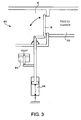
- Figure 3 is a schematic of the isolation gate valve assembly 80.
- the isolation gate valve assembly 80 includes an actuator 82 which is mechanically connected with the isolation gate valve 18, enabling the isolation gate valve 18 to open. Additionally, the isolation gate valve 18 is mechanically connected with a second actuator 84, that actuates the initial opening of the isolation gate valve 18 in a controlled way, allowing the equalization of pressure between the wafer handling chamber 16 and the process chamber 20. The actuator 84 also may control the final closing of the isolation gate valve in a controlled manner.
- This isolation gate valve assembly 80 provides a multispeed isolation gate valve, which can reduce or eliminate gas flow bursts which occur in the initial stage of prior art isolation gate valves.
- the isolation gate valve 18 is opened and the Bernoulli wand 36 retrieves the processed wafer and loads the wafer into a cassette within one of the load locks (14 or 15). After all of the wafers have been processed, the cassette located within the load lock is removed through one of the portals (32 or 34).
- a dome loaded regulator circuit 90 is utilized to feed gas into the semiconductor manufacturing equipment.
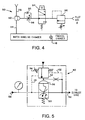
- Figure 4 is a schematic diagram illustrating the dome loaded regulator circuit 90 and includes a dome loaded regulator 92, a valve 94, a pressure regulator 96 and a needle valve 98.
- the gas flow into the equipment is increased incrementally by the dome loaded regulator 92 which is pneumatically actuated by the valve 94, which controls a restricted gas flow.
- the gas flow originates from the pressure regulator 96.
- the needle valve 98 controls the amount of restriction of the gas flow.
- the needle valve 98 may be a plurality of needle valves and check valves, to regulate different ramp-up and ramp-down flow rates of the purge gas.
- FIG. 5 is a schematic diagram of the pilot operated back pressure regulator 40 in the preferred embodiment of the present invention.
- the pilot operated back pressure regulator 40 includes a pneumatically actuated throttle valve 50 which is actuated by a pressure relay system 52.
- the pressure relay system 52 is normally a 22:1 ratio pressure relay that adjusts the opening of the pneumatically actuated throttle valve 50 from the sensed pressure across the throttle valve 50 and conduits 101 and 102.
- the pilot operated back pressure regulator 40 also includes a variable load springs 54 and a throttle valve actuator 56. Additionally, the pilot operated back pressure regulator 40 includes a throttle valve input 58.
- FIG. 6 is a cross sectional side view of the pilot operated back pressure regulator 40 in the preferred embodiment of the present invention.
- the pilot operated back pressure regulator 40 uses the pneumatically actuated throttle valve 50 to regulated the pressure.
- the pilot operated back pressure regulator 40 includes the pressure relay system 52, which is a 22:1 pressure relay in the preferred embodiment, and the pneumatically actuated throttle valve 50.
- the pressure relay system 52 includes a large piston 58 which drives a small pressure reducing regulator 60.
- a high pressure pilot supply 80 PSI in the preferred embodiment
- the variable load spring 54 opens the small pressure regulator 60.
- the opening of the small pressure regulator 60 allows a dynamic flow from a chamber 64 to enter a chamber 68 via a passage 66.
- the dynamic flow then flows through a bleed passage 70 to a passage 72.
- the dynamic flow is exhausted through an output 74 of the pilot operated back pressure regulator 40.
- This dynamic flow creates a bias pressure on the throttle valve actuator 56 at a level just below the pressure required to drive the throttle valve 50 open.
- the size of the bleed passage 70, chamber 68, and a chamber 57 determines the response time and pressure differential necessary to drive the throttle valve 50 open. The smaller the bleed passage 70 and chamber 57, the faster the response of the pilot operated back pressure regulator 40.
- a small increase in pressure at an input 76 for the pilot operated back pressure regulator 40 is transmitted, via a channel 78, to the top of the large piston 58 through the passage 66 driving the small regulator 60 to a higher pressure that is multiplied by the ratio of the pressure relay.
- This increases the pressure at the top of throttle valve actuator 56 and drives the throttle valve 50 open, relieving the pressure at the input 76 of the pilot operated back pressure regulator 40 and thereby regulating the pressure at the throttle valve input 58.
Landscapes
- Chemical & Material Sciences (AREA)
- Engineering & Computer Science (AREA)
- Materials Engineering (AREA)
- Metallurgy (AREA)
- Organic Chemistry (AREA)
- Chemical Kinetics & Catalysis (AREA)
- General Chemical & Material Sciences (AREA)
- Crystallography & Structural Chemistry (AREA)
- Mechanical Engineering (AREA)
- Inorganic Chemistry (AREA)
- Container, Conveyance, Adherence, Positioning, Of Wafer (AREA)
- Chemical Vapour Deposition (AREA)
Priority Applications (1)
| Application Number | Priority Date | Filing Date | Title |
|---|---|---|---|
| EP08006163A EP1956112A3 (en) | 1998-07-10 | 1999-06-30 | System and method for reducing particles in epitaxial reactors |
Applications Claiming Priority (3)
| Application Number | Priority Date | Filing Date | Title |
|---|---|---|---|
| US113934 | 1993-08-30 | ||
| US09/113,934 US6161311A (en) | 1998-07-10 | 1998-07-10 | System and method for reducing particles in epitaxial reactors |
| PCT/US1999/015070 WO2000003056A1 (en) | 1998-07-10 | 1999-06-30 | System and method for reducing particles in epitaxial reactors |
Related Child Applications (1)
| Application Number | Title | Priority Date | Filing Date |
|---|---|---|---|
| EP08006163A Division EP1956112A3 (en) | 1998-07-10 | 1999-06-30 | System and method for reducing particles in epitaxial reactors |
Publications (3)
| Publication Number | Publication Date |
|---|---|
| EP1097251A1 EP1097251A1 (en) | 2001-05-09 |
| EP1097251A4 EP1097251A4 (en) | 2005-01-12 |
| EP1097251B1 true EP1097251B1 (en) | 2008-12-10 |
Family
ID=22352390
Family Applications (2)
| Application Number | Title | Priority Date | Filing Date |
|---|---|---|---|
| EP08006163A Withdrawn EP1956112A3 (en) | 1998-07-10 | 1999-06-30 | System and method for reducing particles in epitaxial reactors |
| EP99932209A Expired - Lifetime EP1097251B1 (en) | 1998-07-10 | 1999-06-30 | System and method for reducing particles in epitaxial reactors |
Family Applications Before (1)
| Application Number | Title | Priority Date | Filing Date |
|---|---|---|---|
| EP08006163A Withdrawn EP1956112A3 (en) | 1998-07-10 | 1999-06-30 | System and method for reducing particles in epitaxial reactors |
Country Status (7)
| Country | Link |
|---|---|
| US (2) | US6161311A (enExample) |
| EP (2) | EP1956112A3 (enExample) |
| JP (1) | JP2002520832A (enExample) |
| KR (1) | KR20010071820A (enExample) |
| DE (1) | DE69940064D1 (enExample) |
| TW (1) | TW445304B (enExample) |
| WO (1) | WO2000003056A1 (enExample) |
Families Citing this family (40)
| Publication number | Priority date | Publication date | Assignee | Title |
|---|---|---|---|---|
| US6153044A (en) * | 1998-04-30 | 2000-11-28 | Euv Llc | Protection of lithographic components from particle contamination |
| TW513617B (en) * | 1999-04-21 | 2002-12-11 | Asml Corp | Lithographic projection apparatus and method of manufacturing a device using a lithographic projection apparatus |
| TW472296B (en) * | 1999-05-25 | 2002-01-11 | Ebara Corp | Substrate treating apparatus and method of operating the same |
| US6279249B1 (en) | 1999-12-30 | 2001-08-28 | Intel Corporation | Reduced particle contamination manufacturing and packaging for reticles |
| JP3955724B2 (ja) * | 2000-10-12 | 2007-08-08 | 株式会社ルネサステクノロジ | 半導体集積回路装置の製造方法 |
| JP4916070B2 (ja) * | 2001-09-26 | 2012-04-11 | アプライド マテリアルズ インコーポレイテッド | 基板処理装置 |
| JP2003109994A (ja) * | 2001-09-26 | 2003-04-11 | Applied Materials Inc | 基板処理装置 |
| DE10203833B4 (de) * | 2002-01-31 | 2007-02-08 | Siltronic Ag | Verfahren und Vorrichtung zur Differenzdruckregelung an Epitaxiereaktoren |
| JP4531557B2 (ja) * | 2002-05-21 | 2010-08-25 | エーエスエム アメリカ インコーポレイテッド | 半導体処理ツール内チャンバ間の相互汚染の減少 |
| DE10247051A1 (de) * | 2002-10-09 | 2004-04-22 | Polymer Latex Gmbh & Co Kg | Latex und Verfahren zu seiner Herstellung |
| US7100954B2 (en) * | 2003-07-11 | 2006-09-05 | Nexx Systems, Inc. | Ultra-thin wafer handling system |
| KR101089394B1 (ko) * | 2003-09-11 | 2011-12-07 | 파나소닉 주식회사 | 시각 처리 장치, 시각 처리 방법, 시각 처리 프로그램 및 반도체 장치 |
| US8608422B2 (en) * | 2003-10-08 | 2013-12-17 | Tokyo Electron Limited | Particle sticking prevention apparatus and plasma processing apparatus |
| DE10358275A1 (de) * | 2003-12-11 | 2005-07-21 | Wiessner Gmbh | Vorrichtung und Verfahren zum Reinigen wenigstens einer Prozesskammer zum Beschichten wenigstens eines Substrats |
| US7416370B2 (en) * | 2005-06-15 | 2008-08-26 | Lam Research Corporation | Method and apparatus for transporting a substrate using non-Newtonian fluid |
| US20060174835A1 (en) * | 2005-02-10 | 2006-08-10 | Misako Saito | Vacuum processing apparatus and method of using the same |
| KR100745966B1 (ko) * | 2005-12-29 | 2007-08-02 | 동부일렉트로닉스 주식회사 | 플라즈마 처리장치 및 이의 세정 방법 |
| US20080067368A1 (en) * | 2006-04-19 | 2008-03-20 | Mks Instruments Inc | Ionizing system for vacuum process and metrology equipment |
| KR100774711B1 (ko) * | 2006-07-19 | 2007-11-08 | 동부일렉트로닉스 주식회사 | 반도체 제조용 에피택셜 장비의 파티클 제거 장치 및 제거방법 |
| US7972961B2 (en) * | 2008-10-09 | 2011-07-05 | Asm Japan K.K. | Purge step-controlled sequence of processing semiconductor wafers |
| US20100119351A1 (en) * | 2008-11-13 | 2010-05-13 | Wafertech, Llc | Method and system for venting load lock chamber to a desired pressure |
| US8216380B2 (en) * | 2009-01-08 | 2012-07-10 | Asm America, Inc. | Gap maintenance for opening to process chamber |
| US8287648B2 (en) * | 2009-02-09 | 2012-10-16 | Asm America, Inc. | Method and apparatus for minimizing contamination in semiconductor processing chamber |
| JP5719546B2 (ja) * | 2009-09-08 | 2015-05-20 | 東京応化工業株式会社 | 塗布装置及び塗布方法 |
| JP5639816B2 (ja) * | 2009-09-08 | 2014-12-10 | 東京応化工業株式会社 | 塗布方法及び塗布装置 |
| JP5469966B2 (ja) * | 2009-09-08 | 2014-04-16 | 東京応化工業株式会社 | 塗布装置及び塗布方法 |
| JP5439097B2 (ja) * | 2009-09-08 | 2014-03-12 | 東京応化工業株式会社 | 塗布装置及び塗布方法 |
| US8416552B2 (en) * | 2009-10-23 | 2013-04-09 | Illinois Tool Works Inc. | Self-balancing ionized gas streams |
| KR20130139844A (ko) * | 2010-07-02 | 2013-12-23 | 매티슨 트라이-개스, 인크. | Si-함유 재료 및 치환적으로 도핑된 결정성 si-함유 재료의 선택적 에피택시 |
| US9031700B2 (en) | 2011-10-11 | 2015-05-12 | Intermolecular, Inc. | Facilities manifold with proximity sensor |
| US9082608B2 (en) | 2012-12-03 | 2015-07-14 | Intermolecular, Inc. | Pneumatic clamping mechanism for cells with adjustable height |
| US9269567B2 (en) | 2013-12-17 | 2016-02-23 | Intermolecular, Inc. | High productivity combinatorial processing using pressure-controlled one-way valves |
| JP2018532890A (ja) * | 2015-10-25 | 2018-11-08 | アプライド マテリアルズ インコーポレイテッドApplied Materials,Incorporated | 基板上での真空堆積のための装置及び真空堆積中に基板をマスキングするための方法 |
| CN106876299B (zh) * | 2015-12-11 | 2019-08-23 | 北京北方华创微电子装备有限公司 | 半导体加工设备 |
| CN107761165A (zh) * | 2016-08-15 | 2018-03-06 | 上海新昇半导体科技有限公司 | 一种基于伯努利效应的底座及外延设备 |
| US10872804B2 (en) | 2017-11-03 | 2020-12-22 | Asm Ip Holding B.V. | Apparatus and methods for isolating a reaction chamber from a loading chamber resulting in reduced contamination |
| US10872803B2 (en) | 2017-11-03 | 2020-12-22 | Asm Ip Holding B.V. | Apparatus and methods for isolating a reaction chamber from a loading chamber resulting in reduced contamination |
| WO2021257773A1 (en) * | 2020-06-17 | 2021-12-23 | Applied Materials, Inc. | High temperature chemical vapor deposition lid |
| US11864299B2 (en) | 2022-05-10 | 2024-01-02 | Applied Materials, Inc. | System and method for dissipating workpiece charge build up |
| US12460863B2 (en) * | 2022-05-26 | 2025-11-04 | Semes Co., Ltd. | Apparatus for treating a substrate |
Family Cites Families (36)
| Publication number | Priority date | Publication date | Assignee | Title |
|---|---|---|---|---|
| JPS59222922A (ja) * | 1983-06-01 | 1984-12-14 | Nippon Telegr & Teleph Corp <Ntt> | 気相成長装置 |
| US5373806A (en) * | 1985-05-20 | 1994-12-20 | Applied Materials, Inc. | Particulate-free epitaxial process |
| JPS61272918A (ja) | 1985-05-29 | 1986-12-03 | Hitachi Electronics Eng Co Ltd | ガス流分布を改良したcvd装置 |
| US4747367A (en) * | 1986-06-12 | 1988-05-31 | Crystal Specialties, Inc. | Method and apparatus for producing a constant flow, constant pressure chemical vapor deposition |
| US5080549A (en) * | 1987-05-11 | 1992-01-14 | Epsilon Technology, Inc. | Wafer handling system with Bernoulli pick-up |
| US4828224A (en) * | 1987-10-15 | 1989-05-09 | Epsilon Technology, Inc. | Chemical vapor deposition system |
| US5092728A (en) * | 1987-10-15 | 1992-03-03 | Epsilon Technology, Inc. | Substrate loading apparatus for a CVD process |
| US5020475A (en) * | 1987-10-15 | 1991-06-04 | Epsilon Technology, Inc. | Substrate handling and transporting apparatus |
| US4793283A (en) * | 1987-12-10 | 1988-12-27 | Sarkozy Robert F | Apparatus for chemical vapor deposition with clean effluent and improved product yield |
| US5683072A (en) * | 1988-11-01 | 1997-11-04 | Tadahiro Ohmi | Thin film forming equipment |
| US4976610A (en) * | 1988-12-05 | 1990-12-11 | Cryco Twenty-Two, Inc. | Purge cantilevered wafer loading system for LP CVD processes |
| US5207835A (en) * | 1989-02-28 | 1993-05-04 | Moore Epitaxial, Inc. | High capacity epitaxial reactor |
| US5094885A (en) * | 1990-10-12 | 1992-03-10 | Genus, Inc. | Differential pressure cvd chuck |
| US5212116A (en) * | 1990-06-18 | 1993-05-18 | At&T Bell Laboratories | Method for forming planarized films by preferential etching of the center of a wafer |
| US5200232A (en) * | 1990-12-11 | 1993-04-06 | Lam Research Corporation | Reaction chamber design and method to minimize particle generation in chemical vapor deposition reactors |
| JPH04297025A (ja) * | 1991-01-10 | 1992-10-21 | Nec Corp | 半導体製造装置 |
| US5228208A (en) * | 1991-06-17 | 1993-07-20 | Applied Materials, Inc. | Method of and apparatus for controlling thermal gradient in a load lock chamber |
| JPH05218176A (ja) * | 1992-02-07 | 1993-08-27 | Tokyo Electron Tohoku Kk | 熱処理方法及び被処理体の移載方法 |
| US5534072A (en) * | 1992-06-24 | 1996-07-09 | Anelva Corporation | Integrated module multi-chamber CVD processing system and its method for processing subtrates |
| JPH0629367A (ja) * | 1992-07-07 | 1994-02-04 | Nec Yamagata Ltd | 真空装置のバルブ制御方法 |
| JP2825172B2 (ja) * | 1992-07-10 | 1998-11-18 | 東京エレクトロン株式会社 | 減圧処理装置および減圧処理方法 |
| US5316794A (en) * | 1992-12-11 | 1994-05-31 | Applied Materials, Inc. | Method for servicing vacuum chamber using non-reactive gas-filled maintenance enclosure |
| DE59406900D1 (de) * | 1993-02-08 | 1998-10-22 | Sez Semiconduct Equip Zubehoer | Träger für scheibenförmige Gegenstände |
| US5363872A (en) * | 1993-03-16 | 1994-11-15 | Applied Materials, Inc. | Low particulate slit valve system and method for controlling same |
| JP2852843B2 (ja) * | 1993-04-02 | 1999-02-03 | 株式会社ベンカン | スローベントバルブ |
| KR100327716B1 (ko) * | 1994-01-11 | 2002-06-27 | 노만 에이취. 폰드 | 진공처리시스템및진공처리시스템내에서의기판조작방법 |
| US5614247A (en) * | 1994-09-30 | 1997-03-25 | International Business Machines Corporation | Apparatus for chemical vapor deposition of aluminum oxide |
| DE69520687T2 (de) * | 1994-11-09 | 2001-08-23 | R.R. Street & Co., Inc. | Verfahren und system zur aufbereitung von unter druck stehenden flüssigen lösungsmitteln zur reinigung von substraten |
| JP3553204B2 (ja) * | 1995-04-28 | 2004-08-11 | アネルバ株式会社 | Cvd装置 |
| US5997588A (en) * | 1995-10-13 | 1999-12-07 | Advanced Semiconductor Materials America, Inc. | Semiconductor processing system with gas curtain |
| KR100189981B1 (ko) * | 1995-11-21 | 1999-06-01 | 윤종용 | 진공 시스템을 구비한 반도체 소자 제조장치 |
| US5793050A (en) * | 1996-02-16 | 1998-08-11 | Eaton Corporation | Ion implantation system for implanting workpieces |
| US5787925A (en) | 1996-07-15 | 1998-08-04 | Veriflo Corporation | Pneumatically servoed gas pressure regulator |
| US5871813A (en) * | 1997-03-05 | 1999-02-16 | Applied Materials, Inc. | Apparatus and method for controlling process chamber pressure |
| US6067728A (en) * | 1998-02-13 | 2000-05-30 | G.T. Equipment Technologies, Inc. | Supercritical phase wafer drying/cleaning system |
| US6086678A (en) * | 1999-03-04 | 2000-07-11 | Memc Electronic Materials, Inc. | Pressure equalization system for chemical vapor deposition reactors |
-
1998
- 1998-07-10 US US09/113,934 patent/US6161311A/en not_active Expired - Lifetime
-
1999
- 1999-06-30 JP JP2000559270A patent/JP2002520832A/ja active Pending
- 1999-06-30 EP EP08006163A patent/EP1956112A3/en not_active Withdrawn
- 1999-06-30 KR KR1020017000387A patent/KR20010071820A/ko not_active Abandoned
- 1999-06-30 WO PCT/US1999/015070 patent/WO2000003056A1/en not_active Ceased
- 1999-06-30 DE DE69940064T patent/DE69940064D1/de not_active Expired - Fee Related
- 1999-06-30 EP EP99932209A patent/EP1097251B1/en not_active Expired - Lifetime
- 1999-07-08 TW TW088111373A patent/TW445304B/zh not_active IP Right Cessation
-
2000
- 2000-12-01 US US09/727,736 patent/US6550158B2/en not_active Expired - Lifetime
Also Published As
| Publication number | Publication date |
|---|---|
| JP2002520832A (ja) | 2002-07-09 |
| WO2000003056A1 (en) | 2000-01-20 |
| EP1097251A1 (en) | 2001-05-09 |
| TW445304B (en) | 2001-07-11 |
| EP1956112A3 (en) | 2008-10-22 |
| EP1097251A4 (en) | 2005-01-12 |
| US20010000759A1 (en) | 2001-05-03 |
| KR20010071820A (ko) | 2001-07-31 |
| US6161311A (en) | 2000-12-19 |
| DE69940064D1 (de) | 2009-01-22 |
| US6550158B2 (en) | 2003-04-22 |
| EP1956112A2 (en) | 2008-08-13 |
Similar Documents
| Publication | Publication Date | Title |
|---|---|---|
| EP1097251B1 (en) | System and method for reducing particles in epitaxial reactors | |
| US11328938B2 (en) | Substrate processing apparatus and methods with factory interface chamber filter purge | |
| US5820366A (en) | Dual vertical thermal processing furnace | |
| KR100453090B1 (ko) | 처리장치및처리장치내의기체의제어방법 | |
| US7647886B2 (en) | Systems for depositing material onto workpieces in reaction chambers and methods for removing byproducts from reaction chambers | |
| US7915165B2 (en) | Substrate treating apparatus and method for manufacturing semiconductor device | |
| EP1218926B1 (en) | Wafer atmospheric transport module having a controlled mini-environment | |
| WO2004007800A1 (en) | Thermal processing apparatus and method for evacuating a process chamber | |
| KR20080075202A (ko) | 진공 처리 장치 및 진공 처리 방법 | |
| JPH11186363A (ja) | 半導体製造装置 | |
| TWI674622B (zh) | 磊晶晶圓的製造裝置及製造方法 | |
| US6843809B2 (en) | Vacuum/purge operation of loadlock chamber and method of transferring a wafer using said operation | |
| JPH05304099A (ja) | 流量制御装置 | |
| KR20220056807A (ko) | 기판 상에 실리콘을 증착하기 위한 방법 및 장치 | |
| US20230307255A1 (en) | Systems and methods for controlling accretion in semiconductor processing system exhaust arrangements | |
| JP4414869B2 (ja) | 真空処理装置 | |
| US6086678A (en) | Pressure equalization system for chemical vapor deposition reactors | |
| US6448180B2 (en) | Deposition of in-situ doped semiconductor film and undoped semiconductor film in the same reaction chamber | |
| US20230131451A1 (en) | Method and device to regulate purge into a container | |
| JP7575317B2 (ja) | 気相成長装置における反応炉蓋開放時の装置制御方法 | |
| KR0137968Y1 (ko) | 상압 화학기상증착 장비의 반응로 내부압력 조절장치 | |
| KR20230052247A (ko) | 막 증착 동안 에천트로 반응기 하부 챔버를 퍼지하기 위한 시스템 및 방법 | |
| KR101677591B1 (ko) | 기판 적재 유닛 그리고 그것을 갖는 클러스터 설비 |
Legal Events
| Date | Code | Title | Description |
|---|---|---|---|
| PUAI | Public reference made under article 153(3) epc to a published international application that has entered the european phase |
Free format text: ORIGINAL CODE: 0009012 |
|
| 17P | Request for examination filed |
Effective date: 20010131 |
|
| AK | Designated contracting states |
Kind code of ref document: A1 Designated state(s): DE FR GB IT |
|
| RIN1 | Information on inventor provided before grant (corrected) |
Inventor name: AGGARWAL, RAVINDER Inventor name: RODRIGUEZ, DAVID Inventor name: VRIJBURG, GERBEN Inventor name: O'NEILL, KENNETH Inventor name: GOODWIN, DENNIS, L. Inventor name: DOLEY, ALLAN, D. |
|
| A4 | Supplementary search report drawn up and despatched |
Effective date: 20041124 |
|
| 17Q | First examination report despatched |
Effective date: 20060523 |
|
| GRAP | Despatch of communication of intention to grant a patent |
Free format text: ORIGINAL CODE: EPIDOSNIGR1 |
|
| GRAS | Grant fee paid |
Free format text: ORIGINAL CODE: EPIDOSNIGR3 |
|
| GRAA | (expected) grant |
Free format text: ORIGINAL CODE: 0009210 |
|
| AK | Designated contracting states |
Kind code of ref document: B1 Designated state(s): DE FR GB IT |
|
| REG | Reference to a national code |
Ref country code: GB Ref legal event code: FG4D |
|
| REF | Corresponds to: |
Ref document number: 69940064 Country of ref document: DE Date of ref document: 20090122 Kind code of ref document: P |
|
| PLBE | No opposition filed within time limit |
Free format text: ORIGINAL CODE: 0009261 |
|
| STAA | Information on the status of an ep patent application or granted ep patent |
Free format text: STATUS: NO OPPOSITION FILED WITHIN TIME LIMIT |
|
| 26N | No opposition filed |
Effective date: 20090911 |
|
| GBPC | Gb: european patent ceased through non-payment of renewal fee |
Effective date: 20090630 |
|
| REG | Reference to a national code |
Ref country code: FR Ref legal event code: ST Effective date: 20100226 |
|
| PG25 | Lapsed in a contracting state [announced via postgrant information from national office to epo] |
Ref country code: FR Free format text: LAPSE BECAUSE OF NON-PAYMENT OF DUE FEES Effective date: 20090630 |
|
| PG25 | Lapsed in a contracting state [announced via postgrant information from national office to epo] |
Ref country code: GB Free format text: LAPSE BECAUSE OF NON-PAYMENT OF DUE FEES Effective date: 20090630 |
|
| PG25 | Lapsed in a contracting state [announced via postgrant information from national office to epo] |
Ref country code: DE Free format text: LAPSE BECAUSE OF NON-PAYMENT OF DUE FEES Effective date: 20100101 |
|
| PG25 | Lapsed in a contracting state [announced via postgrant information from national office to epo] |
Ref country code: IT Free format text: LAPSE BECAUSE OF FAILURE TO SUBMIT A TRANSLATION OF THE DESCRIPTION OR TO PAY THE FEE WITHIN THE PRESCRIBED TIME-LIMIT Effective date: 20081210 |