EP1094137B1 - Polyesterfasern mit verminderter Pillingneigung sowie Verfahren zu ihrer Herstellung - Google Patents
Polyesterfasern mit verminderter Pillingneigung sowie Verfahren zu ihrer Herstellung Download PDFInfo
- Publication number
- EP1094137B1 EP1094137B1 EP00121979A EP00121979A EP1094137B1 EP 1094137 B1 EP1094137 B1 EP 1094137B1 EP 00121979 A EP00121979 A EP 00121979A EP 00121979 A EP00121979 A EP 00121979A EP 1094137 B1 EP1094137 B1 EP 1094137B1
- Authority
- EP
- European Patent Office
- Prior art keywords
- polyester
- polyester fibers
- fibers according
- silicone oil
- melt
- Prior art date
- Legal status (The legal status is an assumption and is not a legal conclusion. Google has not performed a legal analysis and makes no representation as to the accuracy of the status listed.)
- Expired - Lifetime
Links
- 229920000728 polyester Polymers 0.000 title claims description 110
- 238000004519 manufacturing process Methods 0.000 title description 20
- 230000015572 biosynthetic process Effects 0.000 title description 4
- 239000000835 fiber Substances 0.000 claims description 95
- LYCAIKOWRPUZTN-UHFFFAOYSA-N Ethylene glycol Chemical compound OCCO LYCAIKOWRPUZTN-UHFFFAOYSA-N 0.000 claims description 91
- VYPSYNLAJGMNEJ-UHFFFAOYSA-N Silicium dioxide Chemical compound O=[Si]=O VYPSYNLAJGMNEJ-UHFFFAOYSA-N 0.000 claims description 44
- 239000000654 additive Substances 0.000 claims description 44
- 229920002545 silicone oil Polymers 0.000 claims description 44
- 238000000034 method Methods 0.000 claims description 36
- 238000009987 spinning Methods 0.000 claims description 36
- -1 polyethylene terephthalate units Polymers 0.000 claims description 30
- 239000000377 silicon dioxide Substances 0.000 claims description 19
- RLSSMJSEOOYNOY-UHFFFAOYSA-N m-cresol Chemical compound CC1=CC=CC(O)=C1 RLSSMJSEOOYNOY-UHFFFAOYSA-N 0.000 claims description 18
- 229920000139 polyethylene terephthalate Polymers 0.000 claims description 17
- 239000005020 polyethylene terephthalate Substances 0.000 claims description 17
- 125000002887 hydroxy group Chemical group [H]O* 0.000 claims description 16
- 239000000155 melt Substances 0.000 claims description 15
- MTHSVFCYNBDYFN-UHFFFAOYSA-N diethylene glycol Chemical compound OCCOCCO MTHSVFCYNBDYFN-UHFFFAOYSA-N 0.000 claims description 13
- 239000008187 granular material Substances 0.000 claims description 12
- 235000012239 silicon dioxide Nutrition 0.000 claims description 12
- 229920000642 polymer Polymers 0.000 claims description 11
- 239000000843 powder Substances 0.000 claims description 11
- 150000002009 diols Chemical class 0.000 claims description 10
- 229920000435 poly(dimethylsiloxane) Polymers 0.000 claims description 9
- 235000013870 dimethyl polysiloxane Nutrition 0.000 claims description 8
- 239000004205 dimethyl polysiloxane Substances 0.000 claims description 7
- 238000005299 abrasion Methods 0.000 claims description 6
- 230000004048 modification Effects 0.000 claims description 6
- 238000012986 modification Methods 0.000 claims description 6
- 239000004594 Masterbatch (MB) Substances 0.000 claims description 5
- 239000007788 liquid Substances 0.000 claims description 4
- 229920002521 macromolecule Polymers 0.000 claims description 4
- 239000002245 particle Substances 0.000 claims description 4
- 239000011164 primary particle Substances 0.000 claims description 4
- 230000003068 static effect Effects 0.000 claims description 4
- ZIBGPFATKBEMQZ-UHFFFAOYSA-N triethylene glycol Chemical compound OCCOCCOCCO ZIBGPFATKBEMQZ-UHFFFAOYSA-N 0.000 claims description 4
- 229910052681 coesite Inorganic materials 0.000 claims description 3
- 229910052906 cristobalite Inorganic materials 0.000 claims description 3
- 229910052682 stishovite Inorganic materials 0.000 claims description 3
- 229910052905 tridymite Inorganic materials 0.000 claims description 3
- 125000001931 aliphatic group Chemical group 0.000 claims description 2
- 239000012141 concentrate Substances 0.000 claims description 2
- 239000000463 material Substances 0.000 claims description 2
- 238000002844 melting Methods 0.000 claims description 2
- 230000008018 melting Effects 0.000 claims description 2
- 229920006294 polydialkylsiloxane Polymers 0.000 claims description 2
- KPUWHANPEXNPJT-UHFFFAOYSA-N disiloxane Chemical class [SiH3]O[SiH3] KPUWHANPEXNPJT-UHFFFAOYSA-N 0.000 claims 2
- 239000012803 melt mixture Substances 0.000 claims 2
- 229910021426 porous silicon Inorganic materials 0.000 claims 1
- 229910004298 SiO 2 Inorganic materials 0.000 description 37
- 230000008569 process Effects 0.000 description 21
- 230000000996 additive effect Effects 0.000 description 17
- 239000006187 pill Substances 0.000 description 17
- 230000000694 effects Effects 0.000 description 14
- 239000004753 textile Substances 0.000 description 11
- 238000006068 polycondensation reaction Methods 0.000 description 9
- 229920004935 Trevira® Polymers 0.000 description 8
- LIVNPJMFVYWSIS-UHFFFAOYSA-N silicon monoxide Inorganic materials [Si-]#[O+] LIVNPJMFVYWSIS-UHFFFAOYSA-N 0.000 description 8
- 239000000126 substance Substances 0.000 description 8
- KKEYFWRCBNTPAC-UHFFFAOYSA-N Terephthalic acid Chemical compound OC(=O)C1=CC=C(C(O)=O)C=C1 KKEYFWRCBNTPAC-UHFFFAOYSA-N 0.000 description 6
- 230000032050 esterification Effects 0.000 description 6
- 238000005886 esterification reaction Methods 0.000 description 6
- 230000007062 hydrolysis Effects 0.000 description 6
- 238000006460 hydrolysis reaction Methods 0.000 description 6
- 239000000203 mixture Substances 0.000 description 6
- 239000003607 modifier Substances 0.000 description 6
- 229920001296 polysiloxane Polymers 0.000 description 6
- 230000009467 reduction Effects 0.000 description 6
- WGCNASOHLSPBMP-UHFFFAOYSA-N hydroxyacetaldehyde Natural products OCC=O WGCNASOHLSPBMP-UHFFFAOYSA-N 0.000 description 5
- XLYOFNOQVPJJNP-UHFFFAOYSA-N water Substances O XLYOFNOQVPJJNP-UHFFFAOYSA-N 0.000 description 5
- 238000007385 chemical modification Methods 0.000 description 4
- 230000003749 cleanliness Effects 0.000 description 4
- WOZVHXUHUFLZGK-UHFFFAOYSA-N dimethyl terephthalate Chemical compound COC(=O)C1=CC=C(C(=O)OC)C=C1 WOZVHXUHUFLZGK-UHFFFAOYSA-N 0.000 description 4
- 238000012545 processing Methods 0.000 description 4
- 238000012360 testing method Methods 0.000 description 4
- PEDCQBHIVMGVHV-UHFFFAOYSA-N Glycerine Chemical compound OCC(O)CO PEDCQBHIVMGVHV-UHFFFAOYSA-N 0.000 description 3
- BOTDANWDWHJENH-UHFFFAOYSA-N Tetraethyl orthosilicate Chemical compound CCO[Si](OCC)(OCC)OCC BOTDANWDWHJENH-UHFFFAOYSA-N 0.000 description 3
- ZJCCRDAZUWHFQH-UHFFFAOYSA-N Trimethylolpropane Chemical compound CCC(CO)(CO)CO ZJCCRDAZUWHFQH-UHFFFAOYSA-N 0.000 description 3
- 239000002253 acid Substances 0.000 description 3
- 238000005452 bending Methods 0.000 description 3
- 239000006085 branching agent Substances 0.000 description 3
- 230000015556 catabolic process Effects 0.000 description 3
- 238000006731 degradation reaction Methods 0.000 description 3
- 238000005516 engineering process Methods 0.000 description 3
- 230000006872 improvement Effects 0.000 description 3
- 238000010348 incorporation Methods 0.000 description 3
- 239000000314 lubricant Substances 0.000 description 3
- 238000002074 melt spinning Methods 0.000 description 3
- WXZMFSXDPGVJKK-UHFFFAOYSA-N pentaerythritol Chemical compound OCC(CO)(CO)CO WXZMFSXDPGVJKK-UHFFFAOYSA-N 0.000 description 3
- 238000006116 polymerization reaction Methods 0.000 description 3
- 239000000047 product Substances 0.000 description 3
- 229910002016 Aerosil® 200 Inorganic materials 0.000 description 2
- OKTJSMMVPCPJKN-UHFFFAOYSA-N Carbon Chemical compound [C] OKTJSMMVPCPJKN-UHFFFAOYSA-N 0.000 description 2
- NBIIXXVUZAFLBC-UHFFFAOYSA-N Phosphoric acid Chemical compound OP(O)(O)=O NBIIXXVUZAFLBC-UHFFFAOYSA-N 0.000 description 2
- GWEVSGVZZGPLCZ-UHFFFAOYSA-N Titan oxide Chemical compound O=[Ti]=O GWEVSGVZZGPLCZ-UHFFFAOYSA-N 0.000 description 2
- 230000009471 action Effects 0.000 description 2
- QMKYBPDZANOJGF-UHFFFAOYSA-N benzene-1,3,5-tricarboxylic acid Chemical compound OC(=O)C1=CC(C(O)=O)=CC(C(O)=O)=C1 QMKYBPDZANOJGF-UHFFFAOYSA-N 0.000 description 2
- 229920001400 block copolymer Polymers 0.000 description 2
- WERYXYBDKMZEQL-UHFFFAOYSA-N butane-1,4-diol Chemical compound OCCCCO WERYXYBDKMZEQL-UHFFFAOYSA-N 0.000 description 2
- 239000003795 chemical substances by application Substances 0.000 description 2
- 238000004040 coloring Methods 0.000 description 2
- 238000009833 condensation Methods 0.000 description 2
- 230000005494 condensation Effects 0.000 description 2
- 230000003750 conditioning effect Effects 0.000 description 2
- 238000010036 direct spinning Methods 0.000 description 2
- 150000002148 esters Chemical class 0.000 description 2
- 230000007717 exclusion Effects 0.000 description 2
- 238000002474 experimental method Methods 0.000 description 2
- QQVIHTHCMHWDBS-UHFFFAOYSA-N isophthalic acid Chemical compound OC(=O)C1=CC=CC(C(O)=O)=C1 QQVIHTHCMHWDBS-UHFFFAOYSA-N 0.000 description 2
- 239000011159 matrix material Substances 0.000 description 2
- 238000005259 measurement Methods 0.000 description 2
- 238000005201 scrubbing Methods 0.000 description 2
- 150000003377 silicon compounds Chemical class 0.000 description 2
- 229920002050 silicone resin Polymers 0.000 description 2
- 239000002904 solvent Substances 0.000 description 2
- ZQZCOBSUOFHDEE-UHFFFAOYSA-N tetrapropyl silicate Chemical compound CCCO[Si](OCCC)(OCCC)OCCC ZQZCOBSUOFHDEE-UHFFFAOYSA-N 0.000 description 2
- 238000005809 transesterification reaction Methods 0.000 description 2
- 238000005406 washing Methods 0.000 description 2
- PXGZQGDTEZPERC-UHFFFAOYSA-N 1,4-cyclohexanedicarboxylic acid Chemical compound OC(=O)C1CCC(C(O)=O)CC1 PXGZQGDTEZPERC-UHFFFAOYSA-N 0.000 description 1
- 229910002012 Aerosil® Inorganic materials 0.000 description 1
- 229910002014 Aerosil® 130 Inorganic materials 0.000 description 1
- 229910002018 Aerosil® 300 Inorganic materials 0.000 description 1
- 229920001634 Copolyester Polymers 0.000 description 1
- 229920005682 EO-PO block copolymer Polymers 0.000 description 1
- OFOBLEOULBTSOW-UHFFFAOYSA-N Malonic acid Chemical compound OC(=O)CC(O)=O OFOBLEOULBTSOW-UHFFFAOYSA-N 0.000 description 1
- 102100037681 Protein FEV Human genes 0.000 description 1
- 101710198166 Protein FEV Proteins 0.000 description 1
- 229910018557 Si O Inorganic materials 0.000 description 1
- XUIMIQQOPSSXEZ-UHFFFAOYSA-N Silicon Chemical compound [Si] XUIMIQQOPSSXEZ-UHFFFAOYSA-N 0.000 description 1
- 229910010413 TiO 2 Inorganic materials 0.000 description 1
- 230000002411 adverse Effects 0.000 description 1
- 150000001298 alcohols Chemical class 0.000 description 1
- 229910000147 aluminium phosphate Inorganic materials 0.000 description 1
- 238000013459 approach Methods 0.000 description 1
- 230000008901 benefit Effects 0.000 description 1
- 238000007664 blowing Methods 0.000 description 1
- 150000001735 carboxylic acids Chemical class 0.000 description 1
- 239000012876 carrier material Substances 0.000 description 1
- 239000003054 catalyst Substances 0.000 description 1
- 230000008859 change Effects 0.000 description 1
- 238000006243 chemical reaction Methods 0.000 description 1
- 239000008119 colloidal silica Substances 0.000 description 1
- 229940075614 colloidal silicon dioxide Drugs 0.000 description 1
- 239000013065 commercial product Substances 0.000 description 1
- 230000000052 comparative effect Effects 0.000 description 1
- 150000001875 compounds Chemical class 0.000 description 1
- 238000010924 continuous production Methods 0.000 description 1
- 230000007423 decrease Effects 0.000 description 1
- 230000006866 deterioration Effects 0.000 description 1
- OLLFKUHHDPMQFR-UHFFFAOYSA-N dihydroxy(diphenyl)silane Chemical compound C=1C=CC=CC=1[Si](O)(O)C1=CC=CC=C1 OLLFKUHHDPMQFR-UHFFFAOYSA-N 0.000 description 1
- IJKVHSBPTUYDLN-UHFFFAOYSA-N dihydroxy(oxo)silane Chemical compound O[Si](O)=O IJKVHSBPTUYDLN-UHFFFAOYSA-N 0.000 description 1
- 239000002270 dispersing agent Substances 0.000 description 1
- 238000004043 dyeing Methods 0.000 description 1
- 238000010891 electric arc Methods 0.000 description 1
- 125000004185 ester group Chemical group 0.000 description 1
- 238000007380 fibre production Methods 0.000 description 1
- 230000004992 fission Effects 0.000 description 1
- 229910021485 fumed silica Inorganic materials 0.000 description 1
- 239000000499 gel Substances 0.000 description 1
- 238000005469 granulation Methods 0.000 description 1
- 230000003179 granulation Effects 0.000 description 1
- 238000000227 grinding Methods 0.000 description 1
- 230000002209 hydrophobic effect Effects 0.000 description 1
- 230000001771 impaired effect Effects 0.000 description 1
- 238000011835 investigation Methods 0.000 description 1
- 238000010409 ironing Methods 0.000 description 1
- 239000006224 matting agent Substances 0.000 description 1
- 230000007246 mechanism Effects 0.000 description 1
- ZJBHFQKJEBGFNL-UHFFFAOYSA-N methylsilanetriol Chemical compound C[Si](O)(O)O ZJBHFQKJEBGFNL-UHFFFAOYSA-N 0.000 description 1
- 238000002156 mixing Methods 0.000 description 1
- 239000000178 monomer Substances 0.000 description 1
- 150000003014 phosphoric acid esters Chemical class 0.000 description 1
- 229920001921 poly-methyl-phenyl-siloxane Polymers 0.000 description 1
- 229920001515 polyalkylene glycol Polymers 0.000 description 1
- 238000012667 polymer degradation Methods 0.000 description 1
- 230000002028 premature Effects 0.000 description 1
- 230000001698 pyrogenic effect Effects 0.000 description 1
- 238000011084 recovery Methods 0.000 description 1
- 150000003839 salts Chemical class 0.000 description 1
- 230000035945 sensitivity Effects 0.000 description 1
- 229940089952 silanetriol Drugs 0.000 description 1
- 150000004760 silicates Chemical class 0.000 description 1
- 229910052710 silicon Inorganic materials 0.000 description 1
- 239000010703 silicon Substances 0.000 description 1
- YXTFRJVQOWZDPP-UHFFFAOYSA-M sodium;3,5-dicarboxybenzenesulfonate Chemical compound [Na+].OC(=O)C1=CC(C(O)=O)=CC(S([O-])(=O)=O)=C1 YXTFRJVQOWZDPP-UHFFFAOYSA-M 0.000 description 1
- 239000003381 stabilizer Substances 0.000 description 1
- 239000000725 suspension Substances 0.000 description 1
- 230000002195 synergetic effect Effects 0.000 description 1
- 239000002562 thickening agent Substances 0.000 description 1
- 239000004408 titanium dioxide Substances 0.000 description 1
- OGIDPMRJRNCKJF-UHFFFAOYSA-N titanium oxide Inorganic materials [Ti]=O OGIDPMRJRNCKJF-UHFFFAOYSA-N 0.000 description 1
- 230000007704 transition Effects 0.000 description 1
- QXJQHYBHAIHNGG-UHFFFAOYSA-N trimethylolethane Chemical compound OCC(C)(CO)CO QXJQHYBHAIHNGG-UHFFFAOYSA-N 0.000 description 1
Images


Classifications
-
- D—TEXTILES; PAPER
- D01—NATURAL OR MAN-MADE THREADS OR FIBRES; SPINNING
- D01F—CHEMICAL FEATURES IN THE MANUFACTURE OF ARTIFICIAL FILAMENTS, THREADS, FIBRES, BRISTLES OR RIBBONS; APPARATUS SPECIALLY ADAPTED FOR THE MANUFACTURE OF CARBON FILAMENTS
- D01F1/00—General methods for the manufacture of artificial filaments or the like
- D01F1/02—Addition of substances to the spinning solution or to the melt
- D01F1/10—Other agents for modifying properties
-
- D—TEXTILES; PAPER
- D01—NATURAL OR MAN-MADE THREADS OR FIBRES; SPINNING
- D01F—CHEMICAL FEATURES IN THE MANUFACTURE OF ARTIFICIAL FILAMENTS, THREADS, FIBRES, BRISTLES OR RIBBONS; APPARATUS SPECIALLY ADAPTED FOR THE MANUFACTURE OF CARBON FILAMENTS
- D01F6/00—Monocomponent artificial filaments or the like of synthetic polymers; Manufacture thereof
- D01F6/58—Monocomponent artificial filaments or the like of synthetic polymers; Manufacture thereof from homopolycondensation products
- D01F6/62—Monocomponent artificial filaments or the like of synthetic polymers; Manufacture thereof from homopolycondensation products from polyesters
Definitions
- the present invention relates to so-called pilling-resistant or low-pill polyester fibers, especially low-pill types with a greatly reduced tendency to pilling.
- the invention further relates to a method for producing the aforementioned polyester staple fibers with reduced tendency to pilling.
- Resistance to buckling is usually used to characterize the pilling behavior of fibers determined in the so-called wire scrub test. In doing so, individual Moving fibers back and forth over a thin wire under defined tension i.e. scrubbed until they break. Since the wire diameter is of the order of one Fiber diameter (20 - 40 ⁇ m) results in a strong bending stress combined with a grinding effect (see also "Textile tests” by Stefan Kleinheinz, June 1991, 4th edition, Akzo Fiber Division. Wuppertal; US Patent 5,858,529, Column 3, lines 54 to 65). Conventional polyethylene terephthalate fibers that are not are pilling resistant, usually have wire scrubbing tours of 3000 to 5000, while low-pill fibers reach values of ⁇ 2000.
- Polyester fibers are used for the manufacture of garments such as suits, Shirts or sweaters are advantageous because they have excellent wearing properties, Characterize dimensional stability, crease recovery and no ironing.
- a known method is to use a low molecular weight polyester, i.e. low solution viscosity (relative viscosity) to spin.
- the use of Glycol as an additive in the spinning extruder is described, for example, in US Pat. No. 4,359,557.
- the connection between the Number average molecular weight of a polyester and resistance to buckling the fibers are approximately linear (Melliand Textilber. 1970, p. 181; chemical fibers + text. Application technology. Text.-Ind. 23 (1973), p. 811).
- polyester is included polyvalent carboxylic acids or alcohols, e.g. Trimethylolpropane (textile practice International 1993, p.29; DE-OS-2 046 121), pentaerythritol (Canad. Pat. No. 901716) or other branching agents modified.
- This chemical modification can while maintaining a high weight average molecular weight due to high melt viscosity the length of the macromolecules can be reduced what a reduction in the abrasion and bending resistance of the fibers and thus a Reduction in the tendency to pilling.
- branching agents is described in a number of patents, such as FR-A-1 603 030.
- polyester to the polymer chain special chemical bonds, mostly -Si-O- (hereinafter referred to as SiO bonds), to be installed, which are resistant to spinning and only in the later treatment be hydrolyzed in the presence of water or steam.
- SiO bonds -Si-O-
- This approach allows polyester with a necessary for melt spinning and good manufacture melt melt viscosity, the reduction of Molecular weight with the resulting reduction in the pilling tendency only after Spinning is done by hydrolysis.
- organic silicon compounds as modifiers, such as tetraethyl silicate or esters of silanetriol phosphoric acid be used.
- US-A-3,335,211 describes the production of polyester staple fibers with improved Pilling resistance, whereby one of anhydrous polyethylene terephthalate with a Melt viscosity starts from 100 - 600 Pas (at 275 ° C), which 0.10 to 0.75 g Contains Si atoms per mole of glycol.
- Silicate esters such as tetraethyl silicate, which in Glycol are dissolved, are condensed into the polymer chain.
- EP-A-0 262 824 also recommends the modification of polyester fibers with the help of tetraethyl silicate followed by treatment in the presence of water.
- DE-A-17 20 647 also recommends esters and / or salts of compounds such as Silanetriolethanphosphonklare and especially of trimethoxysilanethanephosphonklathylester condense into the polyester chain.
- DE-A-27 13 508 and DE-A-24 53 231 recommend 0.008 to 2% by weight of diphenylsilanediol, based on dimethyl terephthalate, as a co-component in the polyethylene terephthalate exigresieren.
- DE-A-41 11 066 describes a process for producing SiO groups modified polyethylene terephthalate according to the continuous direct esterification process described starting from terephthalic acid.
- methoxyethyl or Propyl silicate added in such an amount that 300 to 700 ppm in the polymer Silicon content results.
- the duration of the reaction between silicate and prepolymer is at least 5 min.
- pill-free fibers are made according to the process described Condensation of hydrolysis-sensitive silicon compounds during polycondensation manufactured. Because of the sensitivity to hydrolysis was in practice So far almost exclusively the transesterification process was one of the continuous processes starting from dimethyl terephthalate, while the use of direct esterification process more widely used today for the purpose described is extremely difficult due to the water generated during the esterification. The There are other problems associated with the manufacturing process. To a certain level of melt viscosity of the polyester and in the finished fiber to obtain a relative final viscosity reduced by a certain amount, the Polyester set to a defined degree of polymerization before spinning and at the same time a defined number of hydrolysis sensitive SiO bonds in the Polyester can be installed.
- the number of SiO bonds condensed in based on the The number of macromolecules determines the degradation of the relative viscosity after Spinning. This requires a very exact management of the process parameters and one precise control of the amount of modifier added during polyester production. In addition, the polyester must be kept absolutely water-free before spinning. The Polyesters containing SiO bonds can therefore often only be produced using the direct spinning process (i.e. without intermediate granulation), or an additional one must be processed specific work step can be applied.
- a disadvantage of all the methods described above is that they are either a special one Modification of the polyester or special post-treatment processes of the fiber or of the tissue.
- DD 104 089 describes that the addition of silicone resins (methyl-phenyl-polysiloxanes) with molar masses ⁇ 4000 g / mol to increase the melt viscosity leads what should allow the trouble-free spinning of low molecular weight polyester and thereby the production of low-pill polyester fibers at a DST level of approx. 900 allows.
- DD 104 089 describes silicone resins with several esterifiable substances OH groups added in the polycondensation, which leads to the formation of branched Structures and thus an increase in the weight average molecular weight of the Leads macromolecules. The effect of reducing the pilling tendency described in DD 104 089 is therefore on the effects already described above during the introduction branched modification agents attributable.
- Polysiloxanes without OH groups capable of esterification have the considerable disadvantage that that they are purely inert additives in the course of further processing on the fiber surface can migrate and interfere with the dyeing process, for example impact. In addition, washing out the additive and thus losing the Antipillig effect cannot be prevented.
- Ramifications through use polyfunctional silicone oils i.e. with more than 2 esterifiable OH groups have an adverse effect, since branching devices, as described above, cause problems with regard to of spinning security and spinning cleanliness.
- polyester Another well-known additive for polyester is silicon dioxide, which has not yet been described as a means of reducing the tendency to pilling without further measures.
- synthetic SiO 2 powder is usually used for thixotropy, as a dispersant, thickener (increase in melt viscosity) and antiblocking agent (for films).
- silicon dioxide or colloidal silica particles with a diameter of 1 to 100 nm can be incorporated in polyester in order to Fix unevenness in the spun polyester fiber.
- silicon dioxide (silica; particle size ⁇ 80 nm) in Amounts of 0.5 to 10 wt .-% are used, whereby the pilling tendency of special co-polyester fibers in which 0.1-10% of the ester bonds are phosphoric acid esters are reduced.
- an aftertreatment of the Polyester fiber with hot water, steam and / or a solvent required.
- SiO 2 powder is added directly to the polyester melt or, alternatively, to the polyester granulate without the exclusion of moisture, in order thereby to obtain low-pill polyester fibers.
- the use of SiO 2 powder in pure form for the modification of standard polyester with the aim of reducing the tendency to pilling is described for the first time in the present invention.
- the use of SiO 2 of the Aerosil® type described in DE-A-4041042 was used exclusively for the purpose of increasing the spinning speed in POY spinning.
- the object of the invention is an economical process for the production of low pill or pill-free polyester fibers, in particular commercially available Standard polyesters, especially those based on terephthalic acid and ethylene glycol, by adding small amounts of suitable additives during the spinning process are to be modified in an advantageous manner so that the spun from it Polyester fibers are largely pill-free.
- the manufacturing process of the fiber is said to be deviate only slightly from the usual procedure, i.e. such fibers are said to easily with the usual machine equipment of a fiber manufacturer can be produced.
- the object is achieved according to the invention by providing pill-resistant or low-pill polyester fibers, especially fibers of high-pillar type (with strong reduced pilling tendency) according to claim 1 and their production according Claim 14.
- the polyester fibers according to the invention with a reduced tendency to pilling have the composition defined in claim 1. Essential here is that by using three modifiers in combination in unexpected resistance to pilling can be significantly improved.
- Trevira®350 fiber can be seen as a benchmark for an anti-pilling fiber.
- the quality level of Trevira®350 fiber with regard to resistance to pilling which is below 700 DST values, was achieved for the first time in an advantageous and economical way simply by adding additives to standard polyester. This indicates different mechanisms of action of the additives silicone oil and SiO 2 , which therefore achieve a synergistic effect.
- a low-pill DST level was achieved both with a titer of 2.4 dtex and with the finer titer 1.7 dtex, as shown in Table 1 (Examples 16 and 18 from Table 5 below): Fineness (titer) 2.35 dtex 1.69 dtex strength 2.92 cN / dtex 2.90 cN / dtex strain 52% 48% DST 618 696
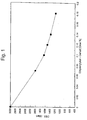
- ethylene glycol as the only additive, there is an improvement in pilling resistance to DST values of maximum 1200 possible, considering the limit of spinnability reached.
- the DST value depends on the amount of ethylene glycol (EG) introduced approximately linear from (Fig. 1).
- silicone oils are known, primarily as lubricants and lubricants Find use.
- Common silicone oils are e.g. Polydialkylsiloxanes, polydiarylsiloxanes and Polyalkylarylsiloxanes.
- these are silicone oils preferably polydimethylsiloxane, e.g. Baysilon®M1000.
- Preferred are further Silicone oils with terminal esterifiable hydroxyl groups, especially preferably polydimethylsiloxanes with terminal esterifiable OH groups.
- Variant silicone oil preferably polydimethysiloxane, with two esterifiable OH groups, particularly preferably used with two terminal OH groups.
- Silicone oil of this type is Struktol®Polydis3999, a dihydroxy-terminated polydimethylsiloxane by Schill & Seilacher, Hamburg.
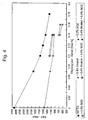
- the examples shown in Fig. 2 set the increased effect of this silicone oil on the pilling resistance of the polyester fiber in the Comparison to the use of a polydimethysiloxane without OH groups Struktol® silicone oil was also added compared to other silicone oil types achieved an improvement in spinning security and spinning cleanliness. Furthermore was found that when using silicone oils alone or together with glycol as an addition to the polyester, the effect on the tendency to pilling and the DST value increasing amount of silicone oil decreases drastically (Fig. 2).
- silicone oil of the type particularly preferred according to the invention e.g. Struktol®
- DST values ethylene glycol wire scrubbing tours
- the level of the DST values is not less than approx. 1000. This level, which can only be achieved by large amounts of SiO 2 , does not yet meet the requirements of a low-pill fiber.
- the use of large amounts of SiO 2 has the disadvantage that it is difficult to incorporate large amounts in the necessary finely divided form into the polyester. This can lead to increased pressure build-up on the spinneret and thus to shorter nozzle life or problems with spinneret clogging. It is therefore preferred according to the invention to keep the amount of SiO 2 below 1% by weight, preferably in the range between 0.05 and 0.3% by weight, and for very good incorporation of the SiO 2 powder into the To ensure polyester through appropriate mixing elements.
- the above object is further achieved by the method according to the invention Production of these polyester fibers with reduced tendency to pilling according to claim 14 solved.
- the invention therefore also relates to a method in which the production homo- or copolyesters commonly used by normal textile fibers suitable introduction of modifiers into the polyester melt or suitable Application of the additives to the dry granulate before melting in one Extruder, is modified so that a low-pill or pill-free polyester fiber results.
- late addition technology was also introduced for such a process (see US-A-5,858,529).
- the polyester fibers of the invention typically have one relative viscosity from 1.37 to 1.58, preferably from 1.40 to 1.55, particularly preferred from 1.42 to 1.48 (1% in m-cresol).
- a relative viscosity RV 1.65, which is obtained by adding a diol such as ethylene glycol, Diethylene glycol or triethylene glycol, to the desired relative viscosity of the fiber is broken down.
- a diol such as ethylene glycol, Diethylene glycol or triethylene glycol
- ethylene glycol Depending on the initial viscosity of the polyester, the amounts used are usually in Range between 0.03 and 0.28% by weight.
- the diol is used when granules are used in the Extruder feed zone or metered into the melt line during direct spinning.
- ethylene glycol (EG) is ethylene glycol (EG) as the diol used.
- the polyester in addition to the diol used, the polyester is as follows 2. and 3. Additive components added:
- silicone oil for the second additive: addition of 0.003 to 2.0% by weight, preferably 0.05 to 0.5% by weight, of a silicone oil, based on the mass of the polyester used.
- a commercially available silicone oil without ester groups capable of esterification is, for example, Baysilon® M 1000 from Bayer with a dynamic viscosity of 1400 mPas at 20 ° C.
- silicone oil with two terminally esterifiable OH groups is preferably used in the present invention.
- the polymer degradation caused by the addition of such a silicone oil is negligible low.
- esterifying at least part of the esterifiable Hydroxyl groups with the polymer matrix is achieved in that it is too pure Do not migrate inert polysiloxanes to the surface during further processing and have no disruptive effect, for example on the coloring of the fibers. Also the This eliminates the risk of washing out the additives.
- the 3rd additive addition of 0.003 to 1.0% by weight, preferably 0.05 to 0.3% by weight, finely dispersed SiO 2 powder, with primary particle sizes of ⁇ 30 ⁇ m.
- These are synthetic, porous SiO 2 powders, which are produced either by pyrogenic processes (flame hydrolysis, electric arc, plasma) or by wet processes (precipitated silicas, silica gels). Fumed silica with a primary particle size of ⁇ 100 nm is particularly preferred.
- a particularly preferred commercially available product is, for example, Aerosil®200, or Aerosil® 300, or Aerosil®130 from Degussa, Frankfurt, which is produced by flame hydrolysis.
- Another commercial product is Syloid® from Grace, a micronized synthetic silica (average primary particle size 3-4 ⁇ m).
- Syloid® from Grace, a micronized synthetic silica (average primary particle size 3-4 ⁇ m).
- the mode of action of SiO 2 in the present invention is not, as described and used so far, an increase in the melt viscosity, but rather the formation of predetermined breaking points within the fiber, which lead to breakage under tensile and torsional stress.
- a masterbatch with 1-20% by weight SiO 2 , preferably 5-15% by weight, can also be used.
- the masterbatch and the additives are advantageously metered into the extruder or into the polyester melt using suitable devices, or are added to the granulate in advance.
- the SiO 2 powder can be added to the PET, for example, using the so-called “melt conditioning” process for the continuous modification of polyester melts (DE 40 39 857 C2).
- the "melt conditioning” process part of the melt, which can come directly from the polycondensation or from a melt, is branched off from the main melt stream. This partial stream is fed into a side-stream extruder, where it is charged with the SiO 2 additive and then dispersed. The dispersed and mixed melt concentrate is then fed into the main melt line and there diluted to the final concentration using a static mixer. Silicone oil and ethylene glycol are added in liquid form. The two liquid additives can be metered into the main melt line before the static mixer.
- the additive or the additive combination according to the invention can both as a pure substance or mixture of substances and also in Masterbatch form can be added.
- other additives can also be used and additives are incorporated and spun.
- the polyethylene terephthalate itself can also use conventional additives such as matting agents (titanium dioxide), stabilizers, Contain catalysts etc.
- PET Polyethylene terephthalate
- polyyester polyester which is at least 90 mol% Contain polyethylene terephthalate units and a maximum of 10 mol% units by a diol other than ethylene glycol, such as diethylene glycol, Tetramethylene glycol or a dicarboxylic acid other than terephthalic acid, for example Isophthalic acid, hexahydroterephthalic acid, dibenzoic acid are derived.
- a diol other than ethylene glycol such as diethylene glycol, Tetramethylene glycol or a dicarboxylic acid other than terephthalic acid, for example Isophthalic acid, hexahydroterephthalic acid, dibenzoic acid are derived.
- the starting polyester can also contain known additives to the Ability to modify the coloring, e.g. Sodium 3,5-dicarboxybenzenesulfonate.
- the process according to the invention also has the great advantage that the polycondensation plant are always operated with the same standard settings can. It can be standard textile granulate according to the direct esterification process or Transesterification processes can be used. The necessary for the special requirement Additives are only added after the polycondensation, before spinning, what allows a high degree of flexibility and economy. According to the invention found such additives that lead to the desired effect within a short time Residence time in which highly viscous polyester melt can be incorporated, none Polycondensation conditions (vacuum to remove low molecular weight fission products) require and do not affect the spinnability. The additives are also stable and will not be washed out.
- Standard PET granules matted with 0.3% TiO 2 and having a relative viscosity of 1.65 (1% in m-cresol / 20 ° C.) were melted on a melt spinning machine and mixed with the indicated additives in accordance with Table 2. Threads were pressed out at a melt temperature of 258 ° C with a throughput of 599 g / min from a nozzle plate with 845 holes and 0.35 mm hole diameter, cooled by central blowing, drawn off at 891 m / min and placed in a jug. The spun cables were then stretched about 3.2 times on a fiber line, crimped, heat-set and cut into staple fibers.
- the liquid components (silicone oil and EG) were dosed directly into the granulate inlet of the spinning extruder.
- the SiO 2 powder was mixed with the granules using a metering device (from Koch Maschinentechnik GmbH, D-Ispringen / Pforzheim). In most variants, the SiO 2 was used as a masterbatch (10% by weight SiO 2 in polyester carrier material).
- Trevira® Trevira®350 fiber The main goal of the investigations was to achieve the quality level of Trevira® Trevira®350 fiber with regard to pilling resistance.
- the properties of this fiber are shown in Table 3 and serve as a benchmark for comparison with the fibers according to the invention measured using the same methods. Comparative values of the Trevira ® 350 fiber (measured according to the method as in Tab. 1) TREVIRA ® 350 TREVIRA ® 350 Titer [dtex] 2.36 1.64 Strength [cN / dtex] 2.69 2.64 Strain [%] 50.84 28.46 DST 545 655
- Viscosities (relative viscosity) of Examples 1 to 20 example RV, 1% measured in m-cresol 1 1,471 2 1,458 3 1,456 4 1,446 5 1.445 6 1,650 7 1.641 8th 1,630 9 1,500 10 1,497 11 1,493 12 1,490 13 1.479 14 1,440 15 1.436 16 1,432 17 1,467 18 1,427 19 1,638 20 1,631
- Example 6 shows a zero variant without any additive.
- Textile data of the finished fibers example Titer [dtex] Strength [cN / dtex] Strain % DST 1 2.34 3.38 48.37 1382 2 2.31 3.36 48.66 932 3 2.43 2.93 53.45 997 4 2.30 3.00 49,25 673 5 2.40 3.07 54.27 715 6 2.42 4.02 48.79 3008 7 2.41 3.98 54,50 1451 8th 2.41 4.00 52.27 1304 9 2.44 3.61 52.86 1649 10 2.31 3.68 53.01 990 11 2.47 3.60 51.33 905 12 2.35 3.36 52.15 1208 13 2.37 3.21 54.97 1140 14 2.31 2.90 53.01 622 15 2.47 2.69 55.33 511 16 2.35 2.92 52.15 618 17 2.43 3.09 54.72 1045 18 1.69 2.90 47.97 696 19 2.37 3.90 52.10 2170 20 2.41 3.95 51.89 2273
Landscapes
- Engineering & Computer Science (AREA)
- Chemical & Material Sciences (AREA)
- Chemical Kinetics & Catalysis (AREA)
- General Chemical & Material Sciences (AREA)
- Textile Engineering (AREA)
- Manufacturing & Machinery (AREA)
- Artificial Filaments (AREA)
Description
| Faserfeinheit (Titer) | 2,35 dtex | 1,69 dtex |
| Festigkeit | 2,92 cN/dtex | 2,90 cN/dtex |
| Dehnung | 52% | 48% |
| DST | 618 | 696 |
(n = Mittelwert der sich wiederholenden Monomereinheiten)
- Polyethylenterephthalat (PET):
- Standard PET in Textilqualität mit rel. Viskosität 1,65 (gemessen 1 % in m-Kresol bei 20°C) mit 0,3 % Ti02
- Siliconöl:
- Dihydroxyterminiertes Polydimethylsiloxan mit n = 40 (Handelsname Struktol® Polydis 3999 der Firma Schill und Seilacher, Hamburg) Polydimethylsiloxan ohne endständige OH-Grupen: Handelsname Baysilon® M 1000 der Firma Bayer, Leverkusen
- Diol:
- Ethylenglykol (EG)
- SiO2:
- Siliciumdioxid, (Aerosil® 200 der Firma Degussa)
- DST-Wert-Bestimmung:
- Die DST-Wert-Bestimmung erfolgte gemäß US-A-5,858,529, Sp. 3, Z. 54-65.
| Beispiele | Titer [dtexl | EG | Siliconöl | SiO2-Endkonzentration im PET |
| 1 | 2,40 | 0,14% | ||
| 2 | 2,40 | 0,14% | 0,40% Struktol® | |
| 3 | 2,40 | 0,14% | 0,50 % SiO2 | |
| 4 | 2,40 | 0,14% | 0,40% Struktol® | 0,50 % SiO2 |
| 5 | 2,40 | 0,14% | 0,40% Struktol® | 0,20 % SiO2 |
| 6 | 2,40 | |||
| 7 | 2,40 | 0,40% Struktol® | ||
| 8 | 2,40 | 0,90% Struktol® | ||
| 9 | 2,40 | 0,10% | ||
| 10 | 2,40 | 0,10% | 0,40% Struktol® | |
| 11 | 2,40 | 0,10% | 0,90% Struktol® | |
| 12 | 2,40 | 0,10% | 0,20% SiO2 | |
| 13 | 2,40 | 0,10% | 0,50 % SiO2 | |
| 14 | 2,40 | 0,14% | 0,40% Struktol® | 0,50 % SiO2 |
| 15 | 2,40 | 0,16% | 0,40% Struktol® | 0,50 % SiO2 |
| 16 | 2,40 | 0,16% | 0,40% Struktol® | 0,20 % SiO2 |
| 17 | 2,40 | 0,14% | 0,20 % SiO2 | |
| 18 | 1,67 | 0,16% | 0,40% Struktol® | 0,20 % SiO2 |
| 19 | 2,40 | 0,60% Baysilon® | ||
| 20 | 2,40 | 0,40% Baysilon® |
| Vergleichswerte der Faser Trevira ® 350 (gemessen gemäß Methode wie Tab. 1) | ||
| TREVIRA ® 350 | TREVIRA ® 350 | |
| Titer [dtex] | 2,36 | 1,64 |
| Festigkeit [cN/dtex] | 2,69 | 2,64 |
| Dehnung [%] | 50,84 | 28,46 |
| DST | 545 | 655 |
| Viskositäten (relative Viskosität) der Beispiele 1 bis 20 | |
| Beispiel | RV, 1%in m-Kresol gemessen |
| 1 | 1,471 |
| 2 | 1,458 |
| 3 | 1,456 |
| 4 | 1,446 |
| 5 | 1,445 |
| 6 | 1,650 |
| 7 | 1,641 |
| 8 | 1,630 |
| 9 | 1,500 |
| 10 | 1,497 |
| 11 | 1,493 |
| 12 | 1,490 |
| 13 | 1,479 |
| 14 | 1,440 |
| 15 | 1,436 |
| 16 | 1,432 |
| 17 | 1,467 |
| 18 | 1,427 |
| 19 | 1,638 |
| 20 | 1,631 |
| Textile Daten der fertigen Fasern | ||||
| Beispiel | Titer [dtex] | Festigkeit [cN/dtex] | Dehnung % | DST |
| 1 | 2,34 | 3,38 | 48,37 | 1382 |
| 2 | 2,31 | 3,36 | 48,66 | 932 |
| 3 | 2,43 | 2,93 | 53,45 | 997 |
| 4 | 2,30 | 3,00 | 49,25 | 673 |
| 5 | 2,40 | 3,07 | 54,27 | 715 |
| 6 | 2,42 | 4,02 | 48,79 | 3008 |
| 7 | 2,41 | 3,98 | 54,50 | 1451 |
| 8 | 2,41 | 4,00 | 52,27 | 1304 |
| 9 | 2,44 | 3,61 | 52,86 | 1649 |
| 10 | 2,31 | 3,68 | 53,01 | 990 |
| 11 | 2,47 | 3,60 | 51,33 | 905 |
| 12 | 2,35 | 3,36 | 52,15 | 1208 |
| 13 | 2,37 | 3,21 | 54,97 | 1140 |
| 14 | 2,31 | 2,90 | 53,01 | 622 |
| 15 | 2,47 | 2,69 | 55,33 | 511 |
| 16 | 2,35 | 2,92 | 52,15 | 618 |
| 17 | 2,43 | 3,09 | 54,72 | 1045 |
| 18 | 1,69 | 2,90 | 47,97 | 696 |
| 19 | 2,37 | 3,90 | 52,10 | 2170 |
| 20 | 2,41 | 3,95 | 51,89 | 2273 |
Claims (16)
- Polyesterfasern mit verminderter Pillingneigung, enthaltendwobei die Polyesterfasern eine relative Viskosität von 1,37 bis 1,58, gemessen 1%-ig in m-Kresol, aufweisen.(1) einen Polyester als fadenbildendes Polymer, das aus mindestens 90 Mol.-% Polyethylenterephthalat-Einheiten besteht, sowie(2) ein Diol aus der Gruppe Ethylenglykol, Diethylenglykol und Triethylenglykol in einer Menge, die den Polyester auf eine relative Viskosität im Bereich von 1,37 - 1,58 (gemessen 1%-ig in m-Kresol) abgebaut hat, und(3) 0,003 bis 1,0 Gew.-% in dem Polyestermaterial fein verteilte Siliciumdioxid- oder Kieselsäure-Teilchen, bezogen auf das fadenbildende Polymere, und(4) 0,003 bis 2,0 Gew.-% Siliconöl, bezogen auf das fadenbildende Polymere, wobei im Fall von im Siliconöl vorhandenen reaktiven Gruppen diese mindestens teilweise chemisch an die Polyester-Makromoleküle gebunden sind, und(5) wahlweise weitere übliche, bekannte verarbeitungs- oder verwendungsspezifische Additive,
- Polyesterfasern gemäß Patentanspruch 1, dadurch gekennzeichnet, dass das Siliciumdioxid ein feinteiliges, poröses Siliciumdioxid-Pulver ist.
- Polyesterfasern gemäß Anspruch 1, dadurch gekennzeichnet, dass das Siliciumdioxid Primärteilchengrössen von < 30 µm, vorzugsweise < 100 nm aufweist.
- Polyesterfasern nach einem der vorhergehenden Ansprüche, dadurch gekennzeichnet, dass das Siliciumdioxid in der Form eines Masterbatches auf Polyesterbasis mit 1 bis 20 Gew.-% SiO2, bevorzugt 5 bis 15 Gew.-% SiO2, verwendet wird.
- Polyesterfasern gemäß Anspruch 1, dadurch gekennzeichnet, dass das Siliconöl ein Polydialkylsiloxan, Polydiarylsiloxan oder Polyalkalarylsiloxan, vorzugsweise Polydimethylsiloxan ist.
- Polyesterfasern gemäss Anspruch 5, dadurch gekennzeichnet, dass Siliconöl verwendet wird, welches reaktive Hydroxylgruppen, vorzugsweise zwei endständige reaktive Hydroxylgruppen pro Molekül aufweist.
- Polyesterfasern gemäss Anspruch 5 oder 6, dadurch gekennzeichnet, dass es sich bei dem Siliconöl um ein Polydimethylsiloxan mit zwei endständigen Hydroxylgruppen handelt.
- Polyesterfasern gemäß einem der vorhergehenden Ansprüche, dadurch gekennzeichnet, dass sie Drahtscheuertouren-Werte von unter 700 aufweisen.
- Polyesterfasern gemäß einem der vorhergehenden Ansprüche, dadurch gekennzeichnet, dass sie Drahtscheuertouren-Werte von etwa 600 aufweisen.
- Polyesterfasern gemäß einem der vorhergegehenden Ansprüche, dadurch gekennzeichnet, dass als fadenbildendes Polymer Polyethylenterephthalat eingesetzt wird.
- Polyesterfasern gemäß einem der vorhergehenden Ansprüche, dadurch gekennzeichnet, dass die Siliciumdioxid- bzw. Kieselsäureteilchen, bezogen auf das fadenbildende Polymere, in Mengen von 0,05 bis 0,3 Gew.-% eingesetzt werden und daß das Siliconöl in Mengen von 0,05 bis 0,5 Gew.-% eingesetzt wird.
- Polyesterfasern gemäß einem der vorhergehenden Ansprüche, dadurch gekennzeichnet, dass die Polyesterfasern eine relative Viskosität von 1,40 bis 1,55 gemessen 1%-ig in m-Kresol, aufweisen.
- Polyesterfasern gemäß Anspruch 12, dadurch gekennzeichnet, dass sie eine relative Viskosität von 1,42 bis 1,48, gemessen 1%-ig in m-Kresol, aufweisen.
- Verfahren zur Herstellung von Polyesterfasern gemäß einem oder mehreren der vorhergehenden Ansprüche, dadurch gekennzeichnet, dass man die Kombination der Additive (2), (3) und (4) dem Polyestergranulat vor dem Aufschmelzen bzw. in der Schmelze vor dem Verspinnen zudosiert und darin vermischt bzw. dispergiert und anschließend die Schmelzemischung verspinnt.
- Verfahren gemäß Anspruch 14, dadurch gekennzeichnet, dass man zur kontinuierlichen Modifizierung der Polyesterschmelze einen Teil der Schmelze aus dem Hauptschmelzstrom abzweigt, diesen Teilstrom in einen Seitenstrom einspeist, dort mit dem Siliciumdioxid oder Kieselsäurepulver beaufschlagt und dieses darin dispergiert, das dispergierte und gemischte Schmelzekonzentrat aus dem Seitenstrom zurück in die Hauptschmelzeleitung führt und dort über einen statischen Mischer auf die Endkonzentration verdünnt, das Diol und das Siliconöl flüssig vor dem statischen Mischer dosiert werden, und man anschließend die Schmelzemischung verspinnt.
- Polyesterfaser gemäss Anspruch 1, dadurch gekennzeichnet, dass man von einem Polyester mit relativer Viskosität von> 1,55 ausgeht, der durch Zugabe eines aliphatischen oder alicyclischen Diols auf die gewünschte Zielviskosität (relative Viskosität, gemessen 1%-ig in m-Kresol) im Bereich von 1,40 bis 1,55, bevorzugt auf 1,42 bis 1,48, abgebaut wird.
Applications Claiming Priority (2)
| Application Number | Priority Date | Filing Date | Title |
|---|---|---|---|
| DE19951067 | 1999-10-22 | ||
| DE19951067A DE19951067B4 (de) | 1999-10-22 | 1999-10-22 | Polyesterfasern mit verminderter Pillingneigung sowie Verfahren zu ihrer Herstellung |
Publications (2)
| Publication Number | Publication Date |
|---|---|
| EP1094137A1 EP1094137A1 (de) | 2001-04-25 |
| EP1094137B1 true EP1094137B1 (de) | 2003-04-02 |
Family
ID=7926616
Family Applications (1)
| Application Number | Title | Priority Date | Filing Date |
|---|---|---|---|
| EP00121979A Expired - Lifetime EP1094137B1 (de) | 1999-10-22 | 2000-10-09 | Polyesterfasern mit verminderter Pillingneigung sowie Verfahren zu ihrer Herstellung |
Country Status (5)
| Country | Link |
|---|---|
| EP (1) | EP1094137B1 (de) |
| CN (1) | CN1302923A (de) |
| DE (2) | DE19951067B4 (de) |
| ID (1) | ID27708A (de) |
| TR (1) | TR200003080A1 (de) |
Families Citing this family (9)
| Publication number | Priority date | Publication date | Assignee | Title |
|---|---|---|---|---|
| MXPA04001857A (es) | 2001-09-20 | 2005-03-07 | Teijin Ltd | Proceso para producir resina de ester de polietilencarboxilato aromatico y producto de resina. |
| CN100395400C (zh) * | 2005-09-29 | 2008-06-18 | 上海交通大学 | 可用于深染色纤维的聚酯纳米复合材料制备方法 |
| JP5553607B2 (ja) * | 2006-11-03 | 2014-07-16 | ビーエーエスエフ ソシエタス・ヨーロピア | 低放出ポリマー成形材料 |
| DE102011114237A1 (de) * | 2011-09-23 | 2013-03-28 | Trevira Gmbh | Pillarme Polyesterfaser |
| CN104651972A (zh) * | 2015-03-17 | 2015-05-27 | 江苏江南高纤股份有限公司 | 直接纺丝低起球聚酯毛型纤维长丝束的制造方法 |
| CN111575809A (zh) * | 2020-04-22 | 2020-08-25 | 周华 | 一种抗起球的聚酯长丝的生产方法 |
| CN114086269B (zh) * | 2021-11-10 | 2023-11-28 | 浙江正堂实业股份有限公司 | 一种超细旦多孔涤纶拉伸变形丝及其加工工艺 |
| CN116082614A (zh) * | 2022-10-25 | 2023-05-09 | 宜昌中盈科技发展有限公司 | 一种循环再生抗起球阳离子可染聚酯切片的制备方法 |
| CN120099787B (zh) * | 2025-04-09 | 2026-02-27 | 上海上阳流体科技有限公司 | 一种过滤袋抗微生物菌膜粘附的高分子材料及其制备方法 |
Family Cites Families (18)
| Publication number | Priority date | Publication date | Assignee | Title |
|---|---|---|---|---|
| CA901716A (en) * | 1972-05-30 | Fiber Industries | Polyester fibers for use in fabrics susceptible to pilling | |
| DE1237727B (de) * | 1959-05-26 | 1967-03-30 | Du Pont | Verfahren zum Herstellen von Polyesterfaeden |
| US3335211A (en) * | 1959-06-26 | 1967-08-08 | Du Pont | Process for melt spinning linear polyester modified with an oxysilicon compound |
| GB941493A (en) * | 1961-01-30 | 1963-11-13 | Ici Ltd | Melt spinning polyester filaments |
| DE1720697B2 (de) * | 1967-08-16 | 1976-10-21 | Bayer Ag, 5090 Leverkusen | Verfahren zur herstellung von lacken |
| FR1603030A (de) * | 1968-06-04 | 1971-03-15 | ||
| BE756413A (fr) * | 1969-09-22 | 1971-03-22 | Montedison Spa | Procede de preparation de fibres de polyester presentant des caracteristiques ameliorees |
| DD104089A1 (de) * | 1973-04-17 | 1974-02-20 | ||
| DE2453231A1 (de) * | 1974-11-09 | 1976-05-13 | Bayer Ag | Pillingarme polyesterfasern |
| DE2713508A1 (de) * | 1977-03-26 | 1978-09-28 | Bayer Ag | Pillingarme polyesterfasern |
| DE2804608A1 (de) * | 1978-02-03 | 1979-08-09 | Bayer Ag | Pillarme polyesterfasern |
| JPS54120728A (en) * | 1978-03-08 | 1979-09-19 | Kuraray Co Ltd | Fine synthetic fiber having complicatedly roughened surface and its production |
| US4359557A (en) * | 1980-09-11 | 1982-11-16 | Eastman Kodak Company | Process for producing low pilling textile fiber and product of the process |
| JPS62263357A (ja) * | 1986-05-08 | 1987-11-16 | 株式会社クラレ | 編地およびその製法 |
| US4833032A (en) * | 1986-09-12 | 1989-05-23 | E. I. Du Pont De Nemours And Company | Texturing polyester yarns |
| FR2660663B1 (fr) * | 1990-04-05 | 1993-05-21 | Rhone Poulenc Fibres | Procede pour l'obtention de polyterephtalate d'ethylene modifie, fibres exemptes de boulochage issues du polymere ainsi modifie. |
| JP3043414B2 (ja) * | 1991-01-29 | 2000-05-22 | イー・アイ・デユポン・ドウ・ヌムール・アンド・カンパニー | ポリエステルの細いフィラメントの製造法 |
| DE19507111C1 (de) * | 1995-03-02 | 1996-10-02 | Akzo Nobel Nv | Polyesterfasern oder -fäden mit hoher Pillingresistenz und Verfahren zu deren Herstellung |
-
1999
- 1999-10-22 DE DE19951067A patent/DE19951067B4/de not_active Expired - Fee Related
-
2000
- 2000-10-09 EP EP00121979A patent/EP1094137B1/de not_active Expired - Lifetime
- 2000-10-09 DE DE50001598T patent/DE50001598D1/de not_active Expired - Fee Related
- 2000-10-20 TR TR2000/03080A patent/TR200003080A1/xx unknown
- 2000-10-23 ID IDP20000908A patent/ID27708A/id unknown
- 2000-10-23 CN CN00131668A patent/CN1302923A/zh active Pending
Also Published As
| Publication number | Publication date |
|---|---|
| DE50001598D1 (de) | 2003-05-08 |
| DE19951067B4 (de) | 2004-04-08 |
| ID27708A (id) | 2001-04-26 |
| DE19951067A1 (de) | 2001-05-23 |
| TR200003080A1 (tr) | 2001-05-21 |
| EP1094137A1 (de) | 2001-04-25 |
| CN1302923A (zh) | 2001-07-11 |
Similar Documents
| Publication | Publication Date | Title |
|---|---|---|
| DE69637284T2 (de) | Verbesserungen von sulfonatgruppen enthaltenden polyestern, die mit basischen farbstoffen färbbar sind | |
| EP0503421B1 (de) | Mit Carbodiimiden modifizierte Polyesterfasern und Verfahren zu ihrer Herstellung | |
| DE60122508T2 (de) | Polyesterfaser | |
| DD297670A5 (de) | Mit carbodiimden modifizierte polyesterfasern und verfahren zu ihrer herstellung | |
| DE3334070C2 (de) | ||
| DE19951067B4 (de) | Polyesterfasern mit verminderter Pillingneigung sowie Verfahren zu ihrer Herstellung | |
| AT399350B (de) | Verfahren zur herstellung von pet-fäden mit verbesserter produktivität | |
| EP0985752A1 (de) | Copolyesterfaser | |
| DE69709344T2 (de) | Silikone und/oder silikoncopolymere enthaltende nichtkreisförmige polyesterfasern mit verbesserter querschnittstabilität und verfahren zu ihrer herstellung | |
| EP0860524B1 (de) | Polymermischungen und Verfahren zur Verarbeitung von Polymermischungen zu Filamenten | |
| DE69031949T2 (de) | Polyesterfaser | |
| DE69028693T2 (de) | Kautschuk verstärkende polyesterfaser und verfahren zu ihrer herstellung | |
| DE10129688C1 (de) | Pillarme Polyesterfaser | |
| DE19805153A1 (de) | Biologisch abbaubare Beschichtungsmittel | |
| DE69830164T2 (de) | Polyethylennaphthalatfaser | |
| EP0630995B1 (de) | Multifilament-Garn aus Polyäthylennaphthalat und Verfahren zu seiner Herstellung | |
| EP0779382B1 (de) | Hydrolysebeständige Polyesterfasern und -filamente, Masterbatches und Verfahren zur Herstellung von Polyesterfasern und -filamenten | |
| EP1177233B1 (de) | Fadenbildende polyester und copolyester und verfahren zu deren herstellung | |
| EP0987353B1 (de) | Polyesterfasern und -filamente sowie Verfahren zu deren Herstellung | |
| EP0393422B1 (de) | Verspinnung von segmentierten Polyurethanharnstoff-Elastomeren in Dampfatmosphäre | |
| EP0823500B1 (de) | POY-Polyesterfaser für Strecktexturierung und Verfahren zu deren Herstellung | |
| DE19935145C2 (de) | Polyesterfasern und -filamente sowie Verfahren zu deren Herstellung | |
| DE2521352C2 (de) | Mehrkomponenten-stapelfasern | |
| DE19507111C1 (de) | Polyesterfasern oder -fäden mit hoher Pillingresistenz und Verfahren zu deren Herstellung | |
| DE19915683A1 (de) | Polyesterfasern und -filamente und Verfahren zu deren Herstellung |
Legal Events
| Date | Code | Title | Description |
|---|---|---|---|
| PUAI | Public reference made under article 153(3) epc to a published international application that has entered the european phase |
Free format text: ORIGINAL CODE: 0009012 |
|
| AK | Designated contracting states |
Kind code of ref document: A1 Designated state(s): DE IT |
|
| AX | Request for extension of the european patent |
Free format text: AL;LT;LV;MK;RO;SI |
|
| 17P | Request for examination filed |
Effective date: 20010822 |
|
| AKX | Designation fees paid |
Free format text: DE IT |
|
| GRAH | Despatch of communication of intention to grant a patent |
Free format text: ORIGINAL CODE: EPIDOS IGRA |
|
| GRAH | Despatch of communication of intention to grant a patent |
Free format text: ORIGINAL CODE: EPIDOS IGRA |
|
| GRAA | (expected) grant |
Free format text: ORIGINAL CODE: 0009210 |
|
| AK | Designated contracting states |
Designated state(s): DE IT |
|
| REF | Corresponds to: |
Ref document number: 50001598 Country of ref document: DE Date of ref document: 20030508 Kind code of ref document: P |
|
| RAP2 | Party data changed (patent owner data changed or rights of a patent transferred) |
Owner name: INVENTA-FISCHER AG |
|
| PLBE | No opposition filed within time limit |
Free format text: ORIGINAL CODE: 0009261 |
|
| STAA | Information on the status of an ep patent application or granted ep patent |
Free format text: STATUS: NO OPPOSITION FILED WITHIN TIME LIMIT |
|
| 26N | No opposition filed |
Effective date: 20040105 |
|
| PGFP | Annual fee paid to national office [announced via postgrant information from national office to epo] |
Ref country code: DE Payment date: 20081022 Year of fee payment: 9 |
|
| PGFP | Annual fee paid to national office [announced via postgrant information from national office to epo] |
Ref country code: IT Payment date: 20081025 Year of fee payment: 9 |
|
| PG25 | Lapsed in a contracting state [announced via postgrant information from national office to epo] |
Ref country code: DE Free format text: LAPSE BECAUSE OF NON-PAYMENT OF DUE FEES Effective date: 20100501 |
|
| PG25 | Lapsed in a contracting state [announced via postgrant information from national office to epo] |
Ref country code: IT Free format text: LAPSE BECAUSE OF NON-PAYMENT OF DUE FEES Effective date: 20091009 |