EP1050574A2 - Minz- und/oder Fruchtaromakompositionen - Google Patents
Minz- und/oder Fruchtaromakompositionen Download PDFInfo
- Publication number
- EP1050574A2 EP1050574A2 EP00109007A EP00109007A EP1050574A2 EP 1050574 A2 EP1050574 A2 EP 1050574A2 EP 00109007 A EP00109007 A EP 00109007A EP 00109007 A EP00109007 A EP 00109007A EP 1050574 A2 EP1050574 A2 EP 1050574A2
- Authority
- EP
- European Patent Office
- Prior art keywords
- oils
- mint
- methyl
- fruit
- ocimenyl
- Prior art date
- Legal status (The legal status is an assumption and is not a legal conclusion. Google has not performed a legal analysis and makes no representation as to the accuracy of the status listed.)
- Withdrawn
Links
Classifications
-
- C—CHEMISTRY; METALLURGY
- C11—ANIMAL OR VEGETABLE OILS, FATS, FATTY SUBSTANCES OR WAXES; FATTY ACIDS THEREFROM; DETERGENTS; CANDLES
- C11B—PRODUCING, e.g. BY PRESSING RAW MATERIALS OR BY EXTRACTION FROM WASTE MATERIALS, REFINING OR PRESERVING FATS, FATTY SUBSTANCES, e.g. LANOLIN, FATTY OILS OR WAXES; ESSENTIAL OILS; PERFUMES
- C11B9/00—Essential oils; Perfumes
- C11B9/0007—Aliphatic compounds
- C11B9/0015—Aliphatic compounds containing oxygen as the only heteroatom
- C11B9/0019—Aliphatic compounds containing oxygen as the only heteroatom carbocylic acids; Salts or esters thereof
-
- A—HUMAN NECESSITIES
- A23—FOODS OR FOODSTUFFS; TREATMENT THEREOF, NOT COVERED BY OTHER CLASSES
- A23L—FOODS, FOODSTUFFS OR NON-ALCOHOLIC BEVERAGES, NOT OTHERWISE PROVIDED FOR; PREPARATION OR TREATMENT THEREOF
- A23L27/00—Spices; Flavouring agents or condiments; Artificial sweetening agents; Table salts; Dietetic salt substitutes; Preparation or treatment thereof
- A23L27/88—Taste or flavour enhancing agents
Definitions
- the invention relates to mint and / or fruit aroma compositions, the 8-ocimenyl ester contain and their use in food and beverages or for oral hygiene.
- Such fabrics are particularly interesting if they are not only outstanding have organoleptic (i.e. perceptible only with the senses) properties, but if they are notable for their strength and productivity Get effects at the lowest dosages.
- the 8-ocimenyl esters surprisingly reinforce in mint and / or fruit aroma compositions the sense of smell and taste.
- the process is preferably carried out in an organic solvent, especially in a dipolar aprotic solvent.
- a dipolar aprotic solvent As such come for example in question dimethylformamide, dimethyl sulfoxide, N-methylpyrrolidone, diethylene glycol dimethyl ether as well as their mixtures.
- the implementation takes place preferably at a temperature of 50 to 150 ° C, in particular at 90 to 120 ° C, possibly under pressure.
- the process starting from the compounds of formula (II) is preferred in the presence of an alkali metal iodide or elemental iodine, especially in Presence of NaI carried out, this addition preferably in catalytic Amounts, in particular in an amount of 0.01 to 10% by weight, based on II, is used.
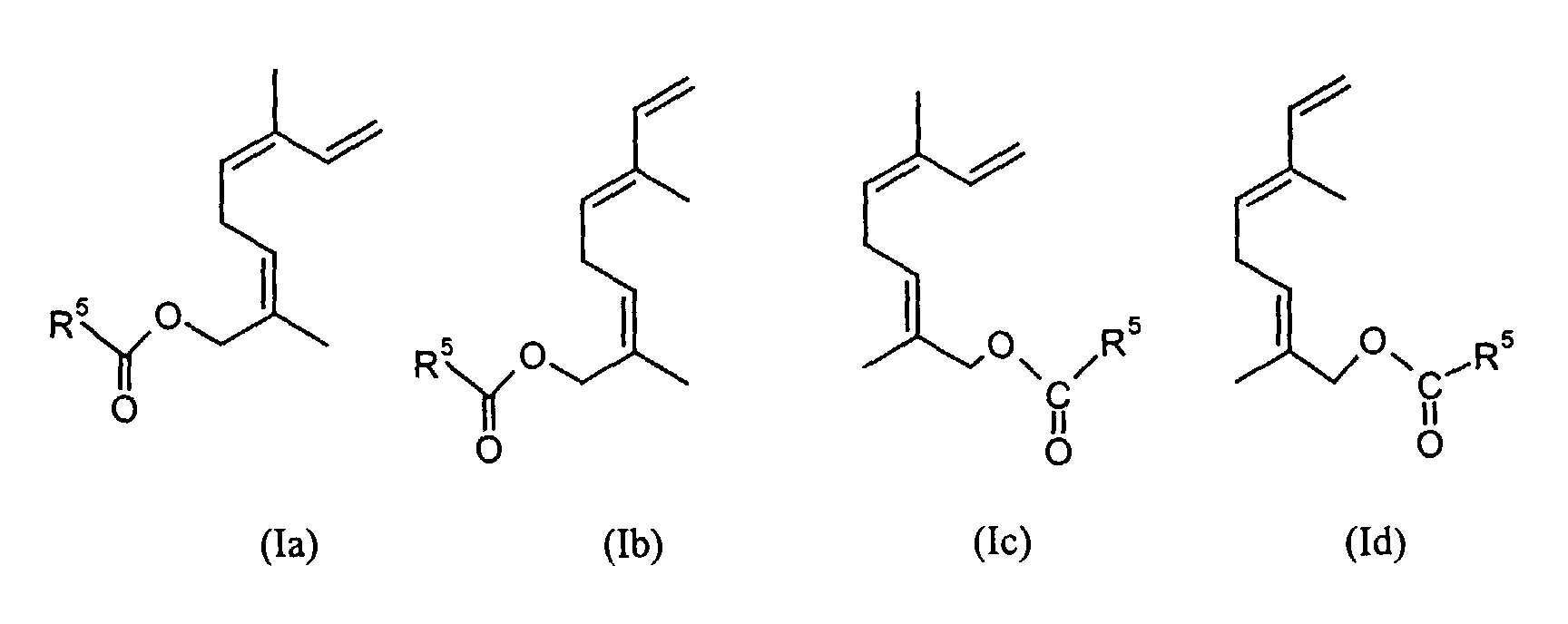
- E / Z mixture of the formula (II) that is to say a mixture of a compound (II) in which R 1 is methyl and R 2 is vinyl and a compound (II) in which R 1 is vinyl and R 2 is When methyl is present, a mixture is obtained containing the compounds of the formulas (Ia) - (Id).
- the method is particularly preferred when using sodium acetate as the salt an aliphatic carboxylic acid.
- hypochlorous acid For reactions with hypochlorous acid, this is usually done in situ Salting the hypochlorous acid produced by acidification.
- hypochlorous acid For the production of 6-ocimenyl chloride (II) It has proven to be advantageous to use hypochlorous acid Release sodium hypochlorite solution by acidification with acetic acid.
- the reaction with Ocimen then runs in a two-phase system; the presence of a No solvent is required.
- the reaction temperature can be between 0 and 50 ° C; a temperature range from 10 to 20 ° C. is preferred.
- the chlorination is preferably carried out in the presence of a sulfuryl chloride Base performed, particularly preferably in the presence of an alkali metal carbonate such as sodium or potassium carbonate, especially in excess, based on Sulfuryl chloride, is used.
- a sulfuryl chloride Base performed, particularly preferably in the presence of an alkali metal carbonate such as sodium or potassium carbonate, especially in excess, based on Sulfuryl chloride, is used.
- an alkali metal carbonate such as sodium or potassium carbonate
- solvents serve against sulfuryl chloride inert compounds such as hydrocarbons, preferably n-hexane or n-heptane, such as halogenated hydrocarbons, preferably dichloromethane or carbon tetrachloride or like ether, preferably methyl tert-butyl ether.
- the Reaction temperature is in particular 0 to 50 ° C, a range of is preferred 20 to 30 ° C.
- the ocimene can be cis-ocimene, trans-ocimene or a cis / trans mixture be used.
- An ocimen-cis / trans mixture is preferably used, a content of 50 to 90% by weight of trans isomers and 50 to 10% by weight of cis isomers is preferred, from which an E / Z mixture of the compound of 6-ocimenylchloride (II) and therefrom again a mixture of isomeric 8-ocimenyl esters of the formulas (Ia) - (Id) was prepared can be.
- Mint compositions according to the invention contain mint flavor components and 8-ocimenyl ester.
- Mint flavor components can be, for example: Essential oils such as, for example, peppermint oils, spearmint oils, mentha arvensis oils, clove oils, citrus oils, cinnamon bark oils, wintergreen oils, cassia oils, davan oils, spruce needle oils, eucalyptus oils, fennel oils, geranium oils, rose oils, camomile oils, ginger oils, camel oils, ginger oils, camel oils, ginger oils, camel oils, ginger oils, camel oils, ginger oils, camel oils, ginger oils, camel oils, ginger oils, camel oils, ginger oils, camel oils, ginger oils, camel oils, ginger oils, camel oils , Thyme oils, juniper berry oils, angelica root oils, and the fractions of these oils.
- Essential oils such as, for example, peppermint oils, spearmint oils, mentha arvensis oils, clove oils, citrus oils, cinnamon bark oils, wintergreen oils, cassia oils, davan oils, spruce needle oils,
- Uniform flavoring substances in the case of chiral compounds as a racemate or as a single Enantiomeric or as an enantiomerically enriched mixture
- Menthol menthone, isomenthone, menthyl acetate, menthofuran, mint lactone, Eucalyptol, limonene, eugenol, pinene, sabine hydrate, 3-octanol, carvone, gamma-octalactone, gamma-nonalactone, Germacren-D, viridiflorol, 1,3E, 5Z-undecatriene, Isopulegol, piperiton, 3-octyl acetate, isoamyl isovalerate, hexanol, hexanal, cis-3-hexenol, Linalool, alpha-terpineol, cis and trans carvy acetate, p-cymol
- Compounds with a physiological cooling effect such as, for example, menthol, menthone glycerol acetal, Menthyl lactate, substituted menthyl 3-carboxamides (e.g. Menthyl-3-carboxylic acid-N-ethylamide), 2-isopropyl-N, 2,3-trimethylbutanamide Cyclohexane carboxamides, 3-menthoxypropane-1,2-diol, 2-hydroxyethylmenthyl carbonate, 2-hydroxypropyl methyl carbonate, N-acetylglycine methyl ester, Menthyl hydroxycarboxylic acid esters (e.g. menthyl 3-hydroxybutyrate), menthyl succinic acid esters, 2-mercaptocyclodecanone, 2-isopropyl-5-methylcyclohexyl-5-oxo-2-pyrrolidinecarboxylic acid.
- menthol menthone glycerol acetal
- Sweeteners such as aspartame, saccharin, acesulfame-K, sorbitol; Xylitol, Cyclamate (e.g. sodium cyclamate), sucralose, alitame, neotame, thaumatin, Neohesperidin DC, maltitol, laughs.
- Preferred mint flavor components are: Essential oils such as, for example, peppermint oils, spearmint oils, mentha arvensis oils, clove oils, citrus oils, wintergreen oils, cassia oils, davana oils, spruce needle oils, eucalyptus oils, fennel oils, galbanum oils, starch oils, scheleo oils, geranium oils, cumin oils, cumin oils, cumin oils, Angelica root oils, and the fractions of these oils.
- Essential oils such as, for example, peppermint oils, spearmint oils, mentha arvensis oils, clove oils, citrus oils, wintergreen oils, cassia oils, davana oils, spruce needle oils, eucalyptus oils, fennel oils, galbanum oils, starch oils, scheleo oils, geranium oils, cumin oils, cumin oils, cumin oils, Angelica root oils, and the fractions of these oils.
- Uniform flavoring substances in the case of chiral compounds as a racemate or as a single Enantiomeric or as an enantiomerically enriched mixture
- Menthol menthone, isomenthone, menthyl acetate, menthofuran, mint lactone, Eucalyptol, limonene, eugenol, pinene, sabine hydrate, 3-octanol, carvone, isopulegol, Piperiton, 3-octyl acetate, hexanol, hexanal, cis-3-hexenol, linalool, alpha-terpineol, cis and trans carvy acetate, p-cymene, dimethyl sulfide, cis-4-heptenal, Isobutyraldehyde, isovaleraldehyde, cis-jasmon, anisaldehyde,
- Compounds with a physiological cooling effect such as menthol, Menthone glycerol acetal, menthyl lactate, menthyl 3-carboxylic acid N-ethylamide, 2-isopropyl-N, 2,3-trimethylbutanamide, 3-menthoxypropane-1,2-diol, 2-hydroxyethylmenthyl carbonate, 2-hydroxypropyl methyl carbonate, N-acetylglycine methyl ester, Menthyl 3-hydroxybutyrate, menthyl succinate, 2-isopropyl-5-methylcyclohexyl-5-oxo-2-pyrrolidinecarboxylic acid.
- Sweeteners such as aspartame, saccharin, acesulfame-K, sorbitol; Xylitol, Cyclamate (e.g. sodium cyclamate), sucralose, alitame.
- mint flavor components are particularly preferred: Essential oils such as peppermint oils, spearmint oils, mentha arvensis oils, wintergreen oils, and the fractions of these oils.
- Uniform flavorings in the case of chiral compounds as racemate or as a single enantiomer or as an enantiomer-enriched mixture) such as, for example, menthol, menthone, isomenthone, menthyl acetate, menthofuran, mint lactone, eucalyptol, limonene, sabine hydrate, carvone, isopulegol, piperiton, hexanol, 3-octyl acetate Hexanal, cis-3-hexenol, linalool, alpha-terpineol, cis and trans carvy acetate, p-cymene, dimethyl sulfide, cis-4-heptenal, isobutyraldehyde, isovaler
- Compounds with a physiological cooling effect such as, for example, menthol, menthone glycerol acetal, Menthyl lactate, menthyl 3-carboxylic acid N-ethylamide, 3-menthoxypropane-1,2-diol, 2-hydroxyethyl methyl carbonate, 2-hydroxypropyl methyl carbonate, 2-isopropyl-5-methylcyclohexyl-5-oxo-2-pyrrolidinecarboxylic acid.
- menthol menthone glycerol acetal
- Menthyl lactate Menthyl 3-carboxylic acid N-ethylamide
- 3-menthoxypropane-1,2-diol 2-hydroxyethyl methyl carbonate
- 2-hydroxypropyl methyl carbonate 2-isopropyl-5-methylcyclohexyl-5-oxo-2-pyrrolidinecarboxylic acid.
- Sweeteners such as aspartame, saccharin, acesulfame-K, sorbitol; Xylitol, Cyclamate (e.g. sodium cyclamate), sucralose, alitame, neotame.
- Fruit aroma compositions according to the invention contain fruit aroma components and 8-ocimenyl ester.
- Fruit aroma components can be, for example: Essential oils such as, for example, citrus oils, bucco leaf oils, davana oils, cassia oils, cedarwood oils, geranium oils, comfort oils, lemongrass oils, musk grain oils, rose oils, cinnamon bark oils, clove oils, carrot seed oils, macis oils and froth oils, sandoir oils, froth oils.
- Extracts such as fruit juice concentrates from all common fruits, guarana extracts, elderflower extracts, iris absolute, gorse absolute, jasmine absolute, liquorice extract, osmanthus absolute, iris root extract, vanilla extracts, chicory extracts, cinnamon extracts, boronia absolute. Distillates from all common fruits.
- Uniform flavorings in the case of chiral compounds as a racemate or as a single enantiomer or as an enantiomer-enriched mixture
- Uniform flavorings such as, for example, all common saturated and unsaturated fruit esters from the lower aliphatic acids C 1 -C 12 and the lower alcohols C 1 -C 12 , the aliphatic saturated and unsaturated acids C 1 -C 14 , the aliphatic saturated and unsaturated alcohols C 3 -C 14 , the aliphatic saturated and unsaturated aldehydes C 2 -C 14 , the saturated and unsaturated gamma-lactones C 5 -C 14 , damascenone, alpha-ionone , beta-Jonon, raspberry ketone, 2,5-dimethyl-4-hydroxy-3 (2H) -furanon, limonene, linalool, linalool oxide, phenylacetaldehyde, phenylacetic acid,
- Preferred fruit aroma components are: Essential oils such as, for example, citrus oils, bucco leaf oils, davana oils, cassia oils, cedarwood oils, lemongrass oils, rose oils, cinnamon bark oils, clove oils, carrot seed oils, mace oils, Massoirinden oils, sandalwood oils, and fractions thereof. Extracts such as fruit juice concentrates from all common fruits. Distillates from all common fruits.
- Uniform flavorings in the case of chiral compounds as a racemate or as a single enantiomer or as an enantiomer-enriched mixture
- Uniform flavorings such as, for example, all common saturated and unsaturated fruit esters from the lower aliphatic acids C 1 -C 12 and the lower alcohols C 1 -C 12 , the aliphatic saturated and unsaturated acids C 1 -C 14 , the aliphatic saturated and unsaturated alcohols C 3 -C 14 , the aliphatic saturated and unsaturated aldehydes C 2 -C 14 , the saturated and unsaturated gamma-lactones C 5 -C 14 , damascenone, alpha-ionone , beta-Jonon, raspberry ketone, 2,5-dimethyl-4-hydroxy-3 (2H) -furanon, limonene, linalool, linalool oxide, phenylacetaldehyde, phenylacetic acid,
- Essential oils such as citrus oils, bucco leaf oils, cassia oils, cedarwood oils, lemongrass oils, carrot seed oils, mace oils, Massoirinden oils, sandalwood oils, and fractions thereof. Extracts such as fruit juice concentrates from all common fruits. Distillates from all common fruits.
- Uniform flavorings in the case of chiral compounds as a racemate or as a single enantiomer or as an enantiomer-enriched mixture
- Uniform flavorings such as, for example, all common saturated and unsaturated fruit esters from the lower aliphatic acids C 1 -C 12 and the lower alcohols C 1 -C 12 , the aliphatic saturated and unsaturated acids C 1 -C 14 , the aliphatic saturated and unsaturated alcohols C 3 -C 14 , the aliphatic saturated and unsaturated aldehydes C 2 -C 14 , the saturated and unsaturated gamma-lactones C 5 -C 14 , damascenone, alpha-ionone , beta-Jonon, raspberry ketone, 2,5-dimethyl-4-hydroxy-3 (2H) -furanone, limonene, linalool, phenylacetaldehyde, 2-phenylethanol, maltol, vanillin,
- Amount of 8-ocimenyl ester generally from 0.01 part by weight to 10 parts by weight, especially at 0.1 part by weight to 5 parts by weight.
- mint and / or fruit aroma compositions according to the invention and Ready-to-use flavors can be in liquid, spray-dried or in encapsulated form.
- the spray-dried form is produced from the liquid compositions by preparing an emulsion with the addition of certain amounts of a carrier, preferably biopolymers such as starch, maltodextrin and gum arabic.
- a carrier preferably biopolymers such as starch, maltodextrin and gum arabic.
- This emulsion is dried in spray dryers by very fine distribution with simultaneous use of temperature. The result is a powder with the desired loading of liquid aroma.
- the encapsulated form is also made from the liquid compositions by adding a carrier.
- There are various technologies with which aroma capsules can be produced The most common are extrusion, spray granulation and coacervation. The particle sizes usually range from 10 ⁇ m to 5 mm.
- the most common capsule materials are different starches, maltodextrin, gelatin.
- the liquid or solid aroma is enclosed in these capsules and can be released by various mechanisms such as the application of heat, pH shift or chewing pressure.
- Such flavors can be found in the entire food and beverage sector as well as in Oral hygiene products are used. In particular, they can be used for Flavoring of fat masses, baked goods, yoghurt, ice cream, confectionery, chewing gum, alcoholic and non-alcoholic beverages, tobacco, toothpaste and Mouthwashes can be used.
- the dosage of such flavors is preferably at 0.0005 to 2 wt .-%, in particular at 0.01 to 1 wt .-%, based on the finished food or luxury food or the products for oral hygiene.
- a focus of the use of these flavors according to the invention is their use in confectionery, chewing gum and products for oral hygiene (toothpaste, mouthwashes).
- the mint flavors usually consist of peppermint oils ( Mentha piperita ), mentha arvensis oils and / or spearmint oils ( Mentha spicata and Mentha cardiaca ) and their fractions with the addition of synthetic and natural flavors and other natural extracts or essential oils.
- peppermint oils Mentha piperita
- mentha arvensis oils and / or spearmint oils Mentha spicata and Mentha cardiaca
- These mint flavors give the correspondingly flavored foods and oral care products a minty smell and taste and ensure freshness in the mouth and breath.
- the mint flavors according to the invention can produce extremely intensifying taste effects. While the 8-ocimenyl esters (Ia) - (Id) in pure form have the odor and taste properties described above fresh, fruity, galbanum-like, green, pineapple, estrig and flowery ", they are able in mint compositions that sweet "and Today's "grades significantly. In addition, it was repeatedly found that the test person's comment the taste was given the impression of naturalness ". Another finding is that the compounds mentioned are able to reduce bitter notes.
- the invention was worked out in systematic sensory experiments with the synthetic mint flavor compositions of the formula exemplified below, in which the 8-ocimenyl esters (Ia) - (Id) were added once and left out of the composition once.
- 1-menthol 350 Menthon / Isomenthon 280 1-menthyl acetate 40 Eucalyptol 30th Piperiton 30th Alpha Terpineol 5 Linalool 5 Myrtenyl acetate 2nd Sabine hydrate 2nd Eugenol 1 Mint lactone 1 Cis-Jasmon 0.5 Cis-3-hexenol 0.3 Dimethyl sulfide 0.2 3-octanol 0.2 Isovaleraldehyde 0.2 Alcohol, 96% v / v 252.6 Total 1000
- the mint flavors were found in chewing gum bases containing sugar and non-sugar incorporated in practical concentrations (1 to 1.5% by weight) and after about 4 Weeks of storage time tasted.
- the comparison of mint flavors with and without 8-ocimenyl ester led to the result that the compounds in the invention Aromas have a reinforcing effect and in particular "reinforce the sweetness that Increase the naturalness of the taste, strengthen the hay notes, the menthol cover, round off and cover the slight bitterness of the base help ".
- the sensory chewing tests were carried out for up to 30 minutes.
- Mint flavors with the compounds have a flavor-enhancing effect and in particular that Increase impact, increase sweetness, increase the naturalness of taste, strengthen the herbiness, cover the sharpness of the menthol, round off as well as masking the slight bitterness of the base.
- Mint composition has a taste-prolonging effect.
Landscapes
- Chemical & Material Sciences (AREA)
- Engineering & Computer Science (AREA)
- Life Sciences & Earth Sciences (AREA)
- Oil, Petroleum & Natural Gas (AREA)
- Organic Chemistry (AREA)
- Food Science & Technology (AREA)
- Polymers & Plastics (AREA)
- Chemical Kinetics & Catalysis (AREA)
- Health & Medical Sciences (AREA)
- Wood Science & Technology (AREA)
- Nutrition Science (AREA)
- Fats And Perfumes (AREA)
- Cosmetics (AREA)
- Seasonings (AREA)
- Medicines Containing Plant Substances (AREA)
- Saccharide Compounds (AREA)
- Confectionery (AREA)
- Organic Low-Molecular-Weight Compounds And Preparation Thereof (AREA)
Abstract
Description

und
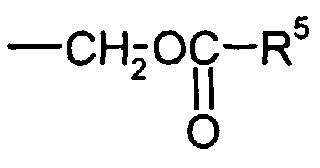
- R5
- Wasserstoff, Alkyl oder Alkenyl, insbesondere C1-C6-Alkyl oder C2-C6-Alkenyl bedeutet,
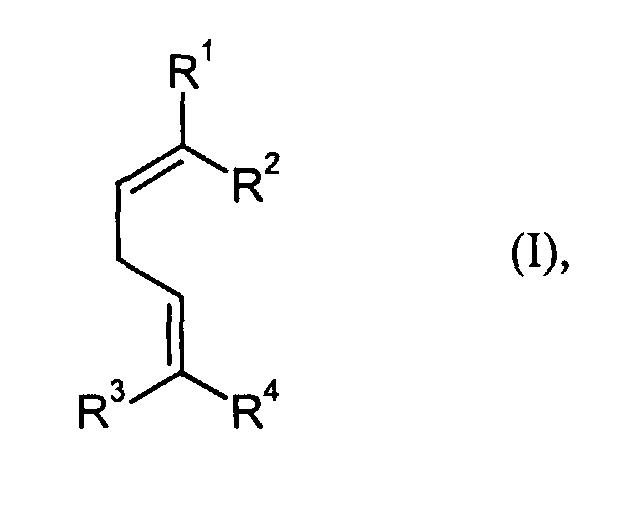
und

wobei
- R5
- Wasserstoff, Methyl, Ethyl, n-Propyl, Iso-Propyl, n-Butyl, sek.-Butyl, iso-Butyl, tert.-Butyl oder 2-Butenyl bedeutet,
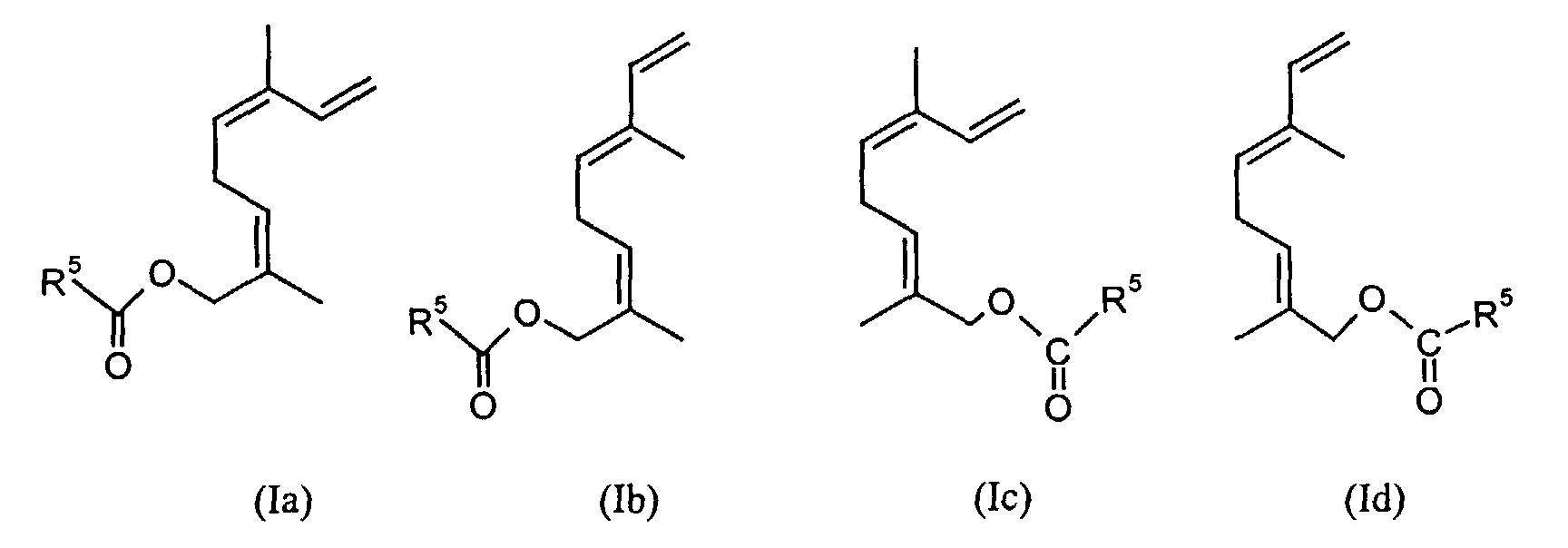
- R5
- Wasserstoff, Methyl oder Ethyl bedeutet,

- R1 und R2
- die oben angegebenen Bedeutungen haben,

- R1 und R2
- die oben angegebenen Bedeutungen haben,
Etherische Öle wie zum Beispiel Pfefferminzöle, Krauseminzöle, Mentha-Arvensis-Öle, Nelkenöle, Citrusöle, Zimtrindenöle, Wintergrünöle, Cassiaöle, Davanödle, Fichtennadelöle, Eucalyptusöle, Fenchelöle, Galbanumöle, Ingweröle, Kamillenöle, Kümmelöle, Rosenöle, Geraniumöle, Salbeiöle, Schafgarbenöle, Stemanisöle, Thymianöle, Wacholderbeeröle, Angelikawurzelöle, und die Fraktionen dieser Öle.
Etherische Öle wie zum Beispiel Pfefferminzöle, Krauseminzöle, Mentha-Arvensis-Öle, Nelkenöle, Citrusöle, Wintergrünöle, Cassiaöle, Davanaöle, Fichtennadelöle, Eucalyptusöle, Fenchelöle, Galbanumöle, Ingweröle, Kamillenöle, Kümmelöle, Geraniumöle, Salbeiöle, Schafgarbenöle, Sternanisöle, Thymianöle, Wacholderbeeröle, Angelikawurzelöle, und die Fraktionen dieser Öle.
Etherische Öle wie zum Beispiel Pfefferminzöle, Krauseminzöle, Mentha-Arvensis-Öle, Wintergrünöle, und die Fraktionen dieser Öle.
Einheitliche Aromastoffe (bei chiralen Verbindungen als Racemat oder als einzelnes Enantiomer oder als enantiomerenangereichertes Gemisch) wie zum Beispiel Menthol, Menthon, Isomenthon, Menthylacetat, Menthofuran, Mintlacton, Eucalyptol, Limonen, Sabinenhydrat, Carvon, Isopulegol, Piperiton, 3-Octylacetat, Hexanol, Hexanal, cis-3-Hexenol, Linalool, alpha-Terpineol, cis und trans Carvylacetat, p-Cymol, Dimethylsulfid, cis-4-Heptenal, Isobutyraldehyd, Isovaleraldehyd, cis-Jasmon, Anisaldehyd, Methylsalicylat, 2-Phenylethylalkohol, Zimtaldehyd.
Etherische Öle wie zum Beispiel Citrusöle, Buccoblätteröle, Davanaöle, Cassiaöle, Cedernholzöle, Geraniumöle, Komfuselöle, Lemongrasöle, Moschuskörneröle, Rosenöle, Zimtrindenöle, Nelkenöle, Karottensamenöle, Macisöle, Massoirindenöle, Sandelholzöle, und Fraktionen davon. Extrakte wie zum Beispiel Fruchtsaftkonzentrate aus allen gängigen Früchten, Guaranaextrakte, Holunderblütenextrakte, Iris Absolues, Ginster Absolues, Jasmin Absolues, Lakritzauszug, Osmanthus Absolues, Iriswurzelauszug, Vanilleextrakte, Zichorienextrakte, Zimtextrakte, Boronia Absolues.
Destillate aus allen gängigen Früchten.
Einheitliche Aromastoffe (bei chiralen Verbindungen als Racemat oder als einzelnes Enantiomer oder als enantiomerenangereichertes Gemisch) wie zum Beispiel alle gängigen gesättigten und ungesättigten Fruchtester aus den niedrigen aliphatischen Säuren C1-C12 und den niedrigen Alkoholen C1-C12, die aliphatischen gesättigten und ungesättigten Säuren C1-C14, die aliphatischen gesättigten und ungesättigten Alkohole C3-C14, die aliphatischen gesättigten und ungesättigten Aldehyde C2-C14, die gesättigten und ungesättigten gamma-Lactone C5-C14, Damascenon, alpha-Jonon, beta-Jonon, Himbeerketon, 2,5-Dimethyl-4-hydroxy-3(2H)-furanon, Limonen, Linalool, Linalooloxid, Phenylacetaldehyd, Phenylessigsäure, 2-Phenylethanol, Maltol, Vanillin, Eugenol, 2-Methyl-4-propyl-1,3-oxathian, 3-Methylthiohexanol, 4-Methyl-4-mercapto-2-pentanon, Methyleugenol, Anethol, Anisalkohol, Anisaldehyd, Guajakol, Zimtalkohol, Zimtaldehyd, Citral, Citronellal, Citronellol, Nerol, Geraniol, Ethylvanillin, Benzylalkohol, alle gängigen Cinnamylester, alle gängigen Benzylester, Damascone, Diacetyl, Diethylmalonat, Dihydrocumarin, beta-7,8-Dihydrojonon, Dimethylanthranilat, Methylanthranilat, 2(5)-Ethyl-5(2)-methyl-4-hydroxy-3(2H)-furanon, Ethylmaltol, Eucalyptol, Farnesal, Famesol, Heliotropin, alle gängigen cis-3-Hexenylester, alpha-Iron, Menthol, Menthylacetat, Ethyldecadienoat, Methyldihydrojasmonat, Methylcinnamat, Ethylcinnamat, Methylsalicylat, Milchsäure, Myrcen, Nerylacetat, Geranylacetat, Nootkaton, 2,3-Pentandion, alle gängigen 2-Alkanone, 3-Thiohexanol, 8-Thiomenthan-3-on, Rosenoxid, 4-Ketoisophoron.
Etherische Öle wie zum Beispiel Citrusöle, Buccoblätteröle, Davanaöle, Cassiaöle, Cedernholzöle, Lemongrasöle, Rosenöle, Zimtrindenöle, Nelkenöle, Karottensamenöle, Macisöle, Massoirindenöle, Sandelholzöle, und Fraktionen davon.
Extrakte wie zum Beispiel Fruchtsaftkonzentrate aus allen gängigen Früchten.
Destillate aus allen gängigen Früchten.
Einheitliche Aromastoffe (bei chiralen Verbindungen als Racemat oder als einzelnes Enantiomer oder als enantiomerenangereichertes Gemisch) wie zum Beispiel alle gängigen gesättigten und ungesättigten Fruchtester aus den niedrigen aliphatischen Säuren C1-C12 und den niedrigen Alkoholen C1-C12, die aliphatischen gesättigten und ungesättigten Säuren C1-C14, die aliphatischen gesättigten und ungesättigten Alkohole C3-C14, die aliphatischen gesättigten und ungesättigten Aldehyde C2-C14, die gesättigten und ungesättigten gamma-Lactone C5-C14, Damascenon, alpha-Jonon, beta-Jonon, Himbeerketon, 2,5-Dimethyl-4-hydroxy-3(2H)-furanon, Limonen, Linalool, Linalooloxid, Phenylacetaldehyd, Phenylessigsäure, 2-Phenylethanol, Maltol, Vanillin, Eugenol, 2-Methyl-4-propyl-1,3-oxathian, 3-Methylthiohexanol, 4-Methyl-4-mercapto-2-pentanon, Methyleugenol, Anethol, Anisalkohol, Anisaldehyd, Guajakol, Zimtalkohol, Zimtaldehyd, Citral, Citronellal, Citronellol, Nerol, Geraniol, Ethylvanillin, Benzylalkohol, alle gängigen Cinnamylester, alle gängigen Benzylester, Damascone, Diacetyl, Diethylmalonat, Dihydrocumarin, beta-Dihydrojonon, Dimethylanthranilat, Methylanthranilat, 2(5)-Ethyl-5(2)-methyl-4-hydroxy-3(2H)-furanon, Ethylmaltol, Heliotropin, alle gängigen cis-3-Hexenylester, alpha-Iron, Ethyldecadienoat, Methyldihydrojasmonat, Methylcinnamat, Ethylcinnamat, Methylsalicylat, Nootkaton, 8-Thiomenthanon-3, Rosenoxid, Ketoisophoron.
Etherische Öle wie zum Beispiel Citrusöle, Buccoblätteröle, Cassiaöle, Cedernholzöle, Lemongrasöle, Karottensamenöle, Macisöle, Massoirindenöle, Sandelholzöle, und Fraktionen davon.
Extrakte wie zum Beispiel Fruchtsaftkonzentrate aus allen gängigen Früchten. Destillate aus allen gängigen Früchten.
Einheitliche Aromastoffe (bei chiralen Verbindungen als Racemat oder als einzelnes Enantiomer oder als enantiomerenangereichertes Gemisch) wie zum Beispiel alle gängigen gesättigten und ungesättigten Fruchtester aus den niedrigen aliphatischen Säuren C1-C12 und den niedrigen Alkoholen C1-C12, die aliphatischen gesättigten und ungesättigten Säuren C1-C14, die aliphatischen gesättigten und ungesättigten Alkohole C3-C14, die aliphatischen gesättigten und ungesättigten Aldehyde C2-C14, die gesättigten und ungesättigten gamma-Lactone C5-C14, Damascenon, alpha-Jonon, beta-Jonon, Himbeerketon, 2,5-Dimethyl-4-hydroxy-3(2H)-furanon, Limonen, Linalool, Phenylacetaldehyd, 2-Phenylethanol, Maltol, Vanillin, Eugenol, 2-Methyl-4-propyl-1,3-oxathian, 3-Methylthiohexanol, 4-Methyl-4-mercapto-2-pentanon, Anethol, Anisalkohol, Anisaldehyd, Guajakol, Zimtalkohol, Zimtaldehyd, Citral, Citronellal, Citronellol, Nerol, Geraniol, Ethylvanillin, Benzylalkohol, Anisaldehyd, alle gängigen Cinnamylester, alle gängigen Benzylester, Damascone, Diacetyl, Dihydrocumarin, beta-Dihydrojonon, Dimethylanthranilat, Methylanthranilat, 2(5)-Ethyl-5(2)-methyl-4-hydroxy-3(2H)-furanon, Ethylmaltol, Heliotropin, alle gängigen cis-3-Hexenylester, alpha-Iron, Ethyldecadienoat, Methyldihydrojasmonat, Methylcinnamat, Ethylcinnamat, Nootkaton, 8-Thiomenthanon-3, Rosenoxid, Ketoisophoron.
Es ist auch möglich, Minz- und Fruchtaromakompositionen sowie die verschiedenen Aromakomponenten gemeinsam einzusetzen.
Die verkapselte Form wird ebenfalls aus den flüssigen Kompositionen durch Zugabe eines Trägerstoffs hergestellt. Es gibt verschiedenen Technologien, mit denen Aromakapseln hergestellt werden können. Die gängigsten sind die Extrusion, die Sprühgranulation und die Coazervation. Die Partikelgrößen reichen üblicherweise von 10 µm bis 5 mm. Die gängigsten Kapselmaterialien sind verschiedene Stärken, Maltodextrin, Gelatine. In diesen Kapseln ist das flüssige oder feste Aroma eingeschlossen und kann durch verschiedene Mechanismen wie Wärmeanwendung, ph-Verschiebung oder Kaudruck freigesetzt werden.
| Geschmacksprofil | Intensität (1-10) |
| Impact | 6 |
| Fülle | 8 |
| Frische | 6 |
| Kühle | 6 |
| Eukalyptus | 5 |
| Menthol | 5 |
| Menthon | 4 |
| Grün | 2 |
| Würzig | 6 |
| Tee | 8 |
| Heuig | 7 |
| Kamille | 5 |
| Blütig | 4 |
| Cumarin | 5 |
| Süß | 7 |
| Weich | 8 |
| Erdig | 1 |
| Pilzig | 1 |

| 1-Menthol | 350 |
| Menthon/Isomenthon | 280 |
| 1-Menthylacetat | 40 |
| Eucalyptol | 30 |
| Piperiton | 30 |
| Alpha-Terpineol | 5 |
| Linalool | 5 |
| Myrtenylacetat | 2 |
| Sabinenhydrat | 2 |
| Eugenol | 1 |
| Mintlacton | 1 |
| Cis-Jasmon | 0,5 |
| Cis-3-Hexenol | 0,3 |
| Dimethylsulfid | 0,2 |
| 3-Octanol | 0,2 |
| Isovaleraldehyd | 0,2 |
| Alkohol, 96 % v/v | 252,6 |
| Total | 1000 |
- Verstärkung der süßen, heuigen Noten
- Verstärkung der Natürlichkeit
- Verstärkung des Impacts
- Verminderung der Bitterkeit
- Geschmacksverlängerung des Pfefferminzgeschmacks
- Maskierung von unangenehmem Nachgeschmack.
- Verstärkung der Natürlichkeit
- Verstärkung des Impacts
- Verminderung der Bitterkeit
- Abrundung der Menthol-Schärfe
Claims (9)
- Minz-und/oder Fruchtaromakompositionen, enthaltend 8-Ocimenylester der Formelworin
 einer der beiden Reste R1 und R2 für Methyl und der andere für Vinyl steht
undeiner der beiden Reste R3 und R4 für Methyl und der andere fürsteht, wobei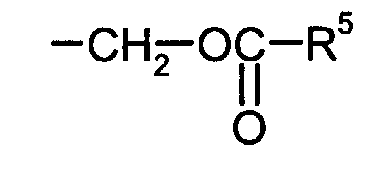
- R5
- Wasserstoff, Alkyl oder Alkenyl, insbesondere C1-C6-Alkyl oder C2-C6-Alkenyl bedeutet.
- Minz- und/oder Fruchtaromakompositionen nach Anspruch 1, enthaltend 8-Ocimenylester der Formelworin
 einer der beiden Reste R1 und R2 für Methyl und der andere für Vinyl steht
undeiner der beiden Reste R3 und R4 für Methyl und der andere fürwobei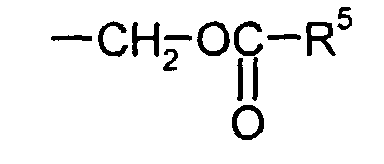
- R5
- Wasserstoff, Methyl, Ethyl, n-Propyl, Iso-Propyl, n-Butyl, sek.-Butyl, iso -Butyl, tert.-Butyl oder 2-Butenyl bedeutet.
- Minz- und/oder Fruchtaromakompositionen nach den Ansprüchen 1 und 2, enthaltend 8-Ocimenylester der Formelnworin
- R5
- Wasserstoff, Methyl oder Ethyl bedeutet.
- Minz- und/oder Fruchtaromakompositionen nach den Ansprüchen 1 bis 3, enthaltend 0,01 bis 10 Gew.-% 8-Ocimenylester bezogen auf die Komposition.
- Verwendung der Minz- und Fruchtaromakompositionen nach den Ansprüchen 1 und 4 für Minz- und/oder Fruchtaromen in Nahrungsmitteln.
- Verwendung der Minz- und Fruchtaromakompositionen nach den Ansprüchen 1 und 4 für Minz- und/oder Fruchtaromen in Genußmitteln.
- Verwendung der Minz- und Fruchtaromakompositionen nach den Ansprüchen 1 und 4 für Minz- und/oder Fruchtaromen zur Mundhygiene.
- Nahrungsmittel und/oder Genußmittel und/oder Mittel zur Mundhygiene enthaltend Minz und/oder Fruchtaromen nach Ansprüchen 1 bis 4.
- Nahrungsmittel- und/oder Genußmittel und/oder Mittel zur Mundhygiene nach Anspruch 8 enthaltend 0,0005 bis 2 Gew.% Minz und/oder Fruchtaroma bezogen auf fertige Nahrungsmittel, Genußmittel oder Mittel zur Mundhygiene.
Applications Claiming Priority (2)
| Application Number | Priority Date | Filing Date | Title |
|---|---|---|---|
| DE19920147 | 1999-05-03 | ||
| DE19920147A DE19920147A1 (de) | 1999-05-03 | 1999-05-03 | Minz- und/oder Fruchtaromakompositionen |
Publications (2)
| Publication Number | Publication Date |
|---|---|
| EP1050574A2 true EP1050574A2 (de) | 2000-11-08 |
| EP1050574A3 EP1050574A3 (de) | 2003-05-02 |
Family
ID=7906711
Family Applications (1)
| Application Number | Title | Priority Date | Filing Date |
|---|---|---|---|
| EP00109007A Withdrawn EP1050574A3 (de) | 1999-05-03 | 2000-04-26 | Minz- und/oder Fruchtaromakompositionen |
Country Status (4)
| Country | Link |
|---|---|
| EP (1) | EP1050574A3 (de) |
| JP (1) | JP2000351988A (de) |
| CA (1) | CA2307078A1 (de) |
| DE (1) | DE19920147A1 (de) |
Cited By (2)
| Publication number | Priority date | Publication date | Assignee | Title |
|---|---|---|---|---|
| EP2098586A4 (de) * | 2006-11-27 | 2010-03-31 | Takasago Perfumery Co Ltd | Geschmackszusammensetzung oder duftzusammensetzung, produkt, das die geschmackszusammensetzung oder duftzusammensetzung enthält, und neue esterverbindung |
| WO2017190789A1 (de) * | 2016-05-05 | 2017-11-09 | Symrise Ag | Kühlstoffmischungen |
Families Citing this family (12)
| Publication number | Priority date | Publication date | Assignee | Title |
|---|---|---|---|---|
| US7763238B2 (en) * | 2002-01-16 | 2010-07-27 | Monell Chemical Senses Center | Olfactory adaptation and cross-adapting agents to reduce the perception of body odors |
| EP1973421A2 (de) * | 2005-12-23 | 2008-10-01 | Cadbury Adams USA LLC | Zusammensetzungen, die ein gefühl verleihen, das im wesentlichen dem von menthol vermittelten gefühl ähnlich ist |
| JP5493730B2 (ja) * | 2009-11-06 | 2014-05-14 | ライオン株式会社 | 歯磨組成物 |
| JP5493732B2 (ja) * | 2009-11-06 | 2014-05-14 | ライオン株式会社 | 口腔用組成物 |
| WO2011115034A1 (ja) * | 2010-03-19 | 2011-09-22 | ライオン株式会社 | 液体口腔用組成物及びその製造方法 |
| EP2407146A1 (de) * | 2010-07-15 | 2012-01-18 | Nutrinova Nutrition Specialties & Food Ingredients GmbH | Verwendung von Acesulfam K als Geschmacksmodulator |
| RU2592351C2 (ru) * | 2012-01-25 | 2016-07-20 | Джапан Тобакко Инк. | Ароматизирующая композиция для улучшения табачного запаха выдыхаемого воздуха |
| JP6230780B2 (ja) * | 2012-09-28 | 2017-11-15 | サッポロビール株式会社 | 非アルコール飲料及びその製造方法 |
| BR112019023827A2 (pt) * | 2017-05-15 | 2020-06-09 | Firmenich & Cie | composições que compreendem óleos essenciais |
| JP7377647B2 (ja) * | 2019-08-14 | 2023-11-10 | サッポロビール株式会社 | ビールテイスト飲料、ビールテイスト飲料の製造方法、及び、ビールテイスト飲料の香味向上方法 |
| CN121336912A (zh) * | 2020-05-01 | 2026-01-16 | 宝洁公司 | 薄荷风味物组合物 |
| JP2025017588A (ja) * | 2023-07-25 | 2025-02-06 | 高砂香料工業株式会社 | 香料組成物 |
Family Cites Families (4)
| Publication number | Priority date | Publication date | Assignee | Title |
|---|---|---|---|---|
| US4510319A (en) * | 1982-07-01 | 1985-04-09 | Fritzsche Dodge & Olcott Inc. | Functionalization of terminal trisubstituted alkenes and derivatives thereof |
| JPH07145398A (ja) * | 1993-11-24 | 1995-06-06 | Lotte Co Ltd | ミント系香料の香味改善方法及びミント系香料組成物 |
| DE19532886A1 (de) * | 1995-09-06 | 1997-03-13 | Haarmann & Reimer Gmbh | Offenkettige olefinisch ungesättigte Verbindungen, Verfahren zu ihrer Herstellung und ihre Verwendung als Riechstoffe |
| DE19748774A1 (de) * | 1997-11-05 | 1999-05-06 | Haarmann & Reimer Gmbh | 8-Ocimenylester und ihre Verwendung als Riech- und Aromastoffe |
-
1999
- 1999-05-03 DE DE19920147A patent/DE19920147A1/de not_active Withdrawn
-
2000
- 2000-04-26 EP EP00109007A patent/EP1050574A3/de not_active Withdrawn
- 2000-04-28 CA CA002307078A patent/CA2307078A1/en not_active Abandoned
- 2000-05-01 JP JP2000132530A patent/JP2000351988A/ja active Pending
Cited By (5)
| Publication number | Priority date | Publication date | Assignee | Title |
|---|---|---|---|---|
| EP2098586A4 (de) * | 2006-11-27 | 2010-03-31 | Takasago Perfumery Co Ltd | Geschmackszusammensetzung oder duftzusammensetzung, produkt, das die geschmackszusammensetzung oder duftzusammensetzung enthält, und neue esterverbindung |
| WO2017190789A1 (de) * | 2016-05-05 | 2017-11-09 | Symrise Ag | Kühlstoffmischungen |
| CN109310130A (zh) * | 2016-05-05 | 2019-02-05 | 西姆莱斯股份公司 | 清凉物质混合物 |
| US10933039B2 (en) | 2016-05-05 | 2021-03-02 | Symrise Ag | Coolant mixtures |
| CN109310130B (zh) * | 2016-05-05 | 2022-05-17 | 西姆莱斯股份公司 | 清凉物质混合物 |
Also Published As
| Publication number | Publication date |
|---|---|
| JP2000351988A (ja) | 2000-12-19 |
| DE19920147A1 (de) | 2000-11-09 |
| CA2307078A1 (en) | 2000-11-03 |
| EP1050574A3 (de) | 2003-05-02 |
Similar Documents
| Publication | Publication Date | Title |
|---|---|---|
| EP1248532B1 (de) | Aromen und aromakompositionen enthaltend 4,8-dimethyl-3,7-nonadien-2-on | |
| US6322838B1 (en) | Mint and/or fruit flavor compositions | |
| DE69808126T2 (de) | Mentholderivate und ihre anwendung als erfrischungsmittel | |
| EP1341512B1 (de) | Rhinologica | |
| DE2427609C3 (de) | 4-Isopropenylcyclohexyl-methylester bzw. -methyläther und 4-Isopropylcyclohexyl-methylester bzw.-methyläther sowie die Verwendung dieser Verbindungen als Riechstoff bzw. Riechstoffkomponente und als Geschmacksstoffe oder Geschmacksstoffzusätze | |
| DE2808710C3 (de) | 1- [3-(Methylthio)- butyryl] -2,6,6trimethylcyclohexen und das 13-Cyclohexadien-Analoge, Verfahren zu deren Herstellung und deren Verwendung | |
| DE3307869A1 (de) | Methylsubstituierte 1-((3-methylthio)-1-oxo-butyl)-cyclohex-2-ene, verfahren zu deren herstellung und deren verwendung als riech- und aromastoffe | |
| DE19920147A1 (de) | Minz- und/oder Fruchtaromakompositionen | |
| DE2611160A1 (de) | Stereoisomere 2-(2,2,6-trimethyl-1- cyclo-hexen-1-yl)aethen-1-ole, verfahren zu deren herstellung und ihre verwendung | |
| DE2540624C3 (de) | Würz- und Aromastoff und Verfahren zu dessen Herstellung | |
| EP1409621B1 (de) | 8-tetradecenal als duft- oder aromastoff | |
| DE2338680A1 (de) | Aliphatische oder cycloaliphatische merkaptoderivate, deren herstellung und verwendung | |
| DE2840823A1 (de) | Trans, trans- delta -damascon und dessen verwendung als wuerzstoff | |
| DE2008254C3 (de) | Menthonthiole, Verfahren zu deren Herstellung und deren Verwendung als Geschmacksstoffe | |
| EP0513627B1 (de) | Tetrahydro-alpha-pyronderivat, Verfahren zu seiner Herstellung und dieses enthaltende Riech- und/oder Geschmackstoffkompositionen | |
| DE60107317T2 (de) | Organoleptische Zusammensetzung | |
| EP0953294B1 (de) | Verwendung von 3,6-Dimethyl-2-(3H)-benzofuranon als Aromastoff; Nahrungs-, Genuss- und Mundpflegemittel enthaltend 3,6-Dimethyl-2-(3H)-benzofuranon | |
| DE69024650T3 (de) | Aroma-Zusammensetzung enthaltende Gamma-Jasmolactone, die Verwendung solch einer Aromazusammensetzung oder Gamma-lactone für die Aromatisierung von Nahrungsmitteln, und die aromatisierte Nahrungsmitteln | |
| EP0915079A1 (de) | 8-Ocimenylester und ihre Verwendung als Riech- und Aromastoffe | |
| JPH0141623B2 (de) | ||
| DE2700688A1 (de) | Carbonylverbindungen, verfahren zu deren herstellung sowie deren verwendung als wuerzstoffe zur beeinflussung des aromas und geschmacks von lebensmitteln, tabak, getraenken und fuer parfuems und parfuemierte artikel | |
| DE2423363A1 (de) | Verfahren zur veraenderung der organoleptischen eigenschaften von verbrauchbaren materialien | |
| DE2446826A1 (de) | Verfahren zur herstellung von aromaund duftzusammensetzungen | |
| EP0773209B1 (de) | Ungesättigter Ester | |
| DE69922273T2 (de) | Verwendung des 2,5,6-Trimethyl-2-heptanol als Riech- und Geschmacksstoff |
Legal Events
| Date | Code | Title | Description |
|---|---|---|---|
| PUAI | Public reference made under article 153(3) epc to a published international application that has entered the european phase |
Free format text: ORIGINAL CODE: 0009012 |
|
| AK | Designated contracting states |
Kind code of ref document: A2 Designated state(s): AT BE CH CY DE DK ES FI FR GB GR IE IT LI LU MC NL PT SE |
|
| AX | Request for extension of the european patent |
Free format text: AL;LT;LV;MK;RO;SI |
|
| PUAL | Search report despatched |
Free format text: ORIGINAL CODE: 0009013 |
|
| AK | Designated contracting states |
Designated state(s): AT BE CH CY DE DK ES FI FR GB GR IE IT LI LU MC NL PT SE |
|
| AX | Request for extension of the european patent |
Extension state: AL LT LV MK RO SI |
|
| RAP1 | Party data changed (applicant data changed or rights of an application transferred) |
Owner name: SYMRISE GMBH & CO. KG |
|
| AKX | Designation fees paid | ||
| REG | Reference to a national code |
Ref country code: DE Ref legal event code: 8566 |
|
| STAA | Information on the status of an ep patent application or granted ep patent |
Free format text: STATUS: THE APPLICATION IS DEEMED TO BE WITHDRAWN |
|
| 18D | Application deemed to be withdrawn |
Effective date: 20031104 |