EP1007206B1 - Verfahren zur herstellung eines phosphor/vanadium-katalysators - Google Patents
Verfahren zur herstellung eines phosphor/vanadium-katalysators Download PDFInfo
- Publication number
- EP1007206B1 EP1007206B1 EP98938043A EP98938043A EP1007206B1 EP 1007206 B1 EP1007206 B1 EP 1007206B1 EP 98938043 A EP98938043 A EP 98938043A EP 98938043 A EP98938043 A EP 98938043A EP 1007206 B1 EP1007206 B1 EP 1007206B1
- Authority
- EP
- European Patent Office
- Prior art keywords
- catalyst
- vanadium
- sulfoxide
- organic
- dmso
- Prior art date
- Legal status (The legal status is an assumption and is not a legal conclusion. Google has not performed a legal analysis and makes no representation as to the accuracy of the status listed.)
- Expired - Lifetime
Links
Images
Classifications
-
- B—PERFORMING OPERATIONS; TRANSPORTING
- B01—PHYSICAL OR CHEMICAL PROCESSES OR APPARATUS IN GENERAL
- B01J—CHEMICAL OR PHYSICAL PROCESSES, e.g. CATALYSIS OR COLLOID CHEMISTRY; THEIR RELEVANT APPARATUS
- B01J27/00—Catalysts comprising the elements or compounds of halogens, sulfur, selenium, tellurium, phosphorus or nitrogen; Catalysts comprising carbon compounds
- B01J27/14—Phosphorus; Compounds thereof
- B01J27/186—Phosphorus; Compounds thereof with arsenic, antimony, bismuth, vanadium, niobium, tantalum, polonium, chromium, molybdenum, tungsten, manganese, technetium or rhenium
- B01J27/195—Phosphorus; Compounds thereof with arsenic, antimony, bismuth, vanadium, niobium, tantalum, polonium, chromium, molybdenum, tungsten, manganese, technetium or rhenium with vanadium, niobium or tantalum
- B01J27/198—Vanadium
-
- C—CHEMISTRY; METALLURGY
- C07—ORGANIC CHEMISTRY
- C07C—ACYCLIC OR CARBOCYCLIC COMPOUNDS
- C07C51/00—Preparation of carboxylic acids or their salts, halides or anhydrides
- C07C51/16—Preparation of carboxylic acids or their salts, halides or anhydrides by oxidation
- C07C51/21—Preparation of carboxylic acids or their salts, halides or anhydrides by oxidation with molecular oxygen
- C07C51/215—Preparation of carboxylic acids or their salts, halides or anhydrides by oxidation with molecular oxygen of saturated hydrocarbyl groups
-
- B—PERFORMING OPERATIONS; TRANSPORTING
- B01—PHYSICAL OR CHEMICAL PROCESSES OR APPARATUS IN GENERAL
- B01J—CHEMICAL OR PHYSICAL PROCESSES, e.g. CATALYSIS OR COLLOID CHEMISTRY; THEIR RELEVANT APPARATUS
- B01J2523/00—Constitutive chemical elements of heterogeneous catalysts
Definitions
- the present invention relates to an improved method for the preparation of vanadium/phosphorus mixed oxide catalysts, using an additive such as dimethyl sulfoxide during the preparation, the catalyst having special utility in the production of maleic anhydride.
- Catalysts containing vanadium and phosphorus oxides have been used in the oxidation of 4-carbon atom hydrocarbons, such as n-butane, with molecular oxygen or oxygen containing gas to produce maleic anhydride.
- Conventional methods of preparing these catalysts involve reducing a pentavalent vanadium compound, and if desired, promoter element compounds under conditions which will provide or maintain vanadium in a valence state below +5 to form catalyst precursors which are recovered and calcined.
- Hydrogen chloride has been used as a reducing agent for vanadium compounds where vanadium has a +5 valence.
- gaseous HCl as a reducing agent is disclosed in U.S. Patent No. 4,002,650 where the vanadium and phosphorus components are reacted in an aqueous solution.
- gaseous HCl as a reducing agent for vanadium compounds such as V 2 O 5 is also described in U.S. Patent No. 4,043,943 where the vanadium and phosphorus components are reacted in liquid organic medium.
- U.S. Patent No. 5,137,860 provides a comprehensive description of the prior art in this area.
- the patent shows the use of organic reducing agents as well as hydrogen chloride and teaches the use of activation procedures whereby the catalyst precursor is contacted at prescribed conditions with oxygen and steam mixtures and finally with a non-oxidizing steam atmosphere to produce an active catalyst.
- U.S. Patent No. 4,569,925 describes the preparation of vanadium/phosphorus mixed oxide catalysts by an organic solution method using anhydrous hydrogen chloride as an agent for the solubilization of the vanadium component, and teaches an activation procedure whereby the catalyst precursor is contacted not with air alone but with a mixture of air and a hydrocarbon such as methane, ethane, propane, butane and the like.
- VPO catalysts can be carried out both in aqueous and in organic solvent media.
- Anhydrous conditions are preferred in the organic solvent method.
- the synthesis in organic solvents is presently the preferred method due to the better performance of the catalyst. This is attributed to greater surface areas of the catalyst when prepared in organic solvent than in aqueous media (G. J. Hutchings, Applied Catalysis, 72(1991), 1-32 and references therein).
- anhydrous HCl has been used as reducing agent for the V 2 O 5 .
- Other reducing agents have been used such as oxalic acid or organic alcohols such as allyl alcohol, benzyl alcohol and isobutanol which can be both the solvent and reducing agent.
- HCl the V 2 O 5 is converted to an IBA (isobutyl alcohol) soluble material (VOCl 2 ) prior to the addition of phosphoric acid.
- VOCl 2 isobutyl alcohol soluble material
- the V 2 O 5 is not solubilized and the formation of the VPO catalyst is done heterogeneously on the suspended V 2 O 5 in the organic solvent.
- the use of HCl has produced excellent catalysts but the residual chloride in the catalyst results in a chloride release during catalyst activation which is undesirable. This difficulty can be overcome by removing the chlorides through an additional step during the catalyst manufacturing.
- Synthesis of VPO catalyst without HCl eliminates the use of this corrosive gas during production, reduces costs associated with waste disposal and eliminates the need to remove the residual chloride from the catalyst.
- a mixed vanadium/phosphorus oxide catalyst is prepared in an organic solvent procedure which involves the use of an additive such as dimethyl sulfoxide; especially good results are achieved where a bismuth catalyst promoter is also employed.
- the invention provides a process for the preparation of a V/P/O catalyst useful for the production of maleic anhydride, wherein a pentavalent vanadium compound in organic solvent solution is reduced to form a catalyst precursor, concentrated phosphoric acid is added to the organic solvent solution either before or after reduction of the pentavalent vanadium compound, and finally the catalyst precursor is activated by conventional means to form the V/P/O catalyst, characterised in that the pentavalent vanadium compound is reduced in the presence of an organic sulfoxide having the formula: wherein R and R 1 are the same or different groups having 1-8 carbon atoms selected from alkyl, substituted alkyl, aryl and substituted aryl groups. Further, the invention provides a V/P/O catalyst useful for the production of maleic anhydride, obtainable by said process.
- the present invention provides a method for the preparation of a phosphorus/vanadium/oxygen catalyst which is especially useful in the oxidation of n-butane to maleic anhydride wherein a vanadium compound in the +5 valence state, eg. vanadium pentoxide, is reduced in an organic medium which contains an organic sulfoxide additive which participates in vanadium reduction and is reacted with concentrated phosphoric acid.
- the invention can be carried out in a single step, thus greatly simplifying catalyst preparation. After formation of the catalyst precursor, the precursor can be converted to the active form in accordance with known procedures.
- Organic sulfoxide modifying agents which are employed in the invention have the formula: wherein R and R 1 are the same or different groups having 1-8 carbon atoms selected from alkyl, substituted alkyl, aryl and substituted aryl groups. Preferred are sulfoxides wherein each of R and R 1 are alkyl groups having 1-4 carbon atoms and especially preferred are sulfoxides wherein each of R and R 1 is an alkyl group having 1-2 carbon atoms.
- Dimethyl sulfoxide is preferred, other illustrative sulfoxides are methyl ethyl sulfoxide, diethyl sulfoxide, di-isopropyl sulfoxide, di-n-butyl sulfoxide, and the like.
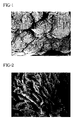
- Figures 1 and 2 are scanning electron micrographs at 10,000 times enlargement comparing surface morphology of catalysts prepared by the invention (Figure 1) with comparable catalyst prepared in accordance with conventional procedures ( Figure 2). Examination of these Figures 1 and 2 demonstrates that there is considerably greater spacing between platelet layers of the conventional catalyst and that the preparation procedure of the invention where dimethyl sulfoxide was used resulted in a much denser platelet layer packing and in the formation of spool shaped morphology.
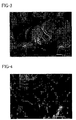
- Figures 3 and 4 present a similar comparison with catalysts comprised of bismuth promoter.
- the catalyst prepared according to the invention ( Figure 3) also has denser platelet layer packing and spool shaped morphology as compared with a similar catalyst prepared by conventional procedures ( Figure 4).
- vanadium pentoxide in finely divided form is added to an organic solvent medium to which is also added an effective amount of the organic sulfoxide reducing agent.
- Suitable solvents are alcohols known in this art such as, for example, a primary or secondary alcohol including methanol, ethanol, 1-propanol, 2-propanol, butanol, 2-butanol, 2, methyl-1-propanol, 3-methyl-2-butanol, 2, 2-dimethyl-1-propanol, 1-hexanol, 4-methyl-1-pentanol, 1-heptanol, 4-methyl-1-hexanol, 4-methyl-1-heptanol, benzyl alcohol, 1,2-ethanediol, glycerol, trimethylopropane, 4-methyl, 2-pentanone, diethylene glycol and trimethylene glycol or mixtures thereof.
- the alcohols can also function as reducing agents for the vanadium +5 compound.
- the organic sulfoxide is used in an amount which corresponds to a ratio of mols sulfoxide to atoms of vanadium of 0.001 to 1 and preferably 0.001 to 0.5 mols sulfoxide per atom of vanadium.
- catalyst promoters or modifiers can be conveniently added to the organic solvent mixture initially or at a later stage after 'the catalyst precursor has been formed.
- Any of the known promoters can be used although it is especially advantageous to use a combination of Zn, Li and Mo promoters which are conveniently added as soluble compounds to the organic solvent. Especially outstanding results are achieved where a bismuth promoter is used.
- Other promoters include those described in U.S. 3,980,585, 4,056,487, 4,515,904, 4,147,661, 4,418,003, and the like the disclosures of which are incorporated herein by references.
- concentrated phosphoric acid is added to the vanadium containing organic solvent solution which also contains the dialkyl sulfoxide and optionally the promoter compound or compounds, and the resulting mixture is digested at about 20 to 200°C for a period of 1 to 24 hours.
- the phosphoric acid can be added after the vanadium pentoxide has been reduced in the organic solvent solution and the resulting mixture then digested to form the catalyst precursor.
- VPO catalyst complex which is characterized as a mixed oxide; however, the structure of the complex has not been determined but may be conveniently represented by a formula such as VP a Me y O x , 'a' being 0.90 to 1.3.
- Me is a metal such as Bi, Zn or Mo, an alkali metal or alkaline earth metal as known in the art as modifiers for catalysts of this type.
- This representation is not an empirical formula and has no significance other than representing the atom ratio of the components of the catalyst.
- the 'x' and 'y' in fact, have no determinant value and can vary widely depending on the combinations within the complex. That there is oxygen present is known, and the O x is representative of this.
- phosphoric acid of approximately 100% H 3 PO 4 (98 to 101%) is added.
- Superphosphoric acid 105-115%) can also be used while maintaining the desired P/V rate. Digestion of the vanadium compound is discerned by a change in the color of the reaction mixture to a dark blue green, the alcohol can be partially stripped or not and the precursor recovered by filtration and thereafter dried to produce the dried catalyst precursors.
- the digestion of the vanadium compound in the phosphoric acid is normally conducted at reflux until the color change indicates transformation to the VPO precursor during the digestion.
- the final removal of alcohol and sulfoxide or derivative is carried out in a drying step in an oven at a temperature in the range of 100 to 180°C for 1-24 hours. Lower temperatures and longer times can be used. Reduced pressure can also be applied during the drying step.
- calcination of the dried catalyst precursor is carried out at a temperature in the range of about 200 to 300° for a sufficient period to improve the catalytic properties of the composition and remove volatile materials, usually 1-15 hours.
- the catalyst powder after the calcination step or even after the drying step is mixed with a lubricant such as graphite and fabricated to the desired geometric shape.
- the catalyst precursor is activated by contact with a gas containing a mixture of Air/N 2 /steam. This contact takes place at 350-550°C, for about 1-10 hours and results in the formation of catalyst which can then be used in the production of maleic anhydride.
- Preferred catalyst complexes are characterized as a mixed oxide, however, the structure of the complex has not been determined but may be conveniently represented in the case of Zn, Mo and Li promoters by a formula such as VP a Zn b Mo c Li d O x where 'a' is 0.9 to 1.3, 'b' is 0.001 to 0.15, 'c' is 0.005 to 0.10 and 'd' is 0.001 to 0.15.
- the catalyst can, of course, contain promoters in addition to those indicated in the above formula.
- Zn promoter When Zn promoter is used, generally the atomic ratio of Zn to vanadium is in the range of 0.001 to 0.15:1, however it has been found that lower ratios of zinc/vanadium produce the most active catalyst and compositions containing Zn/V mole ratio in the range of 0.01 to 0.07 are preferred.
- the phosphorus is generally present in these catalysts as well as those of the prior art in the mole ratio of P/V 0.9-1.3/1. Optimum P/V ratios are found to be below 1.25/1 and above 1.0/1. Where lithium is used, lithium component is present at an atomic ratio of 0.001 to 0.15/1, Li/V. Where molybdenum is used, the Mo/V atomic ratio is suitably 0.005 to 0.10, Mo/V.
- Bismuth promoted catalyst complexes can be characterized by the formula VP a Bi e O x where 'a' and 'x' are as above described and 'e' is 0.001 to 0.15, preferably 0.005 to 0.07.
- the catalyst can, of course, contain promoters in addition to the bismuth.
- Bismuth is a preferred promoter and is conveniently used in an atomic ratio of B/V in the range 0.001 to 0.15/1, preferably 0.005 to 0.07/1.
- the modifier components are added as the compound thereof such as acetates, acetylacetonates, carbonates, chlorides, bromides, oxides, hydroxides, phosphates and the like, e.g. a bismuth salt of an organic acid or mixture of organic acids such as bismuth ethyl hexanoate, zinc acetyl acetonate, zinc acetate, lithium acetate, lithium carbonate, lithium oxide, or lithium orthophosphate and the like.
- a bismuth salt of an organic acid or mixture of organic acids such as bismuth ethyl hexanoate, zinc acetyl acetonate, zinc acetate, lithium acetate, lithium carbonate, lithium oxide, or lithium orthophosphate and the like.
- the molybdenum compound may be dissolved in an organic solvent, as described above or water and added to the reaction mixture.
- the solvent containing the molybdenum compound may be added with the other modifiers or at different times.
- a soluble molybdenum compound dissolved in a solvent according to the present invention for addition to the reaction mixture has been found to be particularly effective in dispersing the molybdenum throughout the mixture and the final dried catalyst.
- suitable soluble molybdenum catalyst include phosphomolybdic acid, ammonium molybdate (VI) tetrahydrate, lithium molybdate, molybdenum tetrabromide, molybdenum trioxyhexachloride and the like.
- the catalyst may be employed as pellets, disc, flakes, wafers, or any other convenient shape which will facilitate its use in the tubular reactors employed for this type of vapor phase reaction.
- the catalyst may be prepared as tablets having a hole or bore therethrough as disclosed in U.S. Patent 4,283,307 which is incorporated herein.
- the material can be deposited on a carrier.
- fixed bed tubular reactors are standard for this type of reaction, fluidized beds are frequently used for oxidation reactions, in which case the catalyst particle size would be on the order of about 10 to 150 microns.
- oxidation of the n-C 4 hydrocarbon to maleic anhydride may be accomplished by contacting e.g. n-butane in low concentrations in oxygen with the described catalyst.
- Air is entirely satisfactory as a source of oxygen, but synthetic mixtures of oxygen and diluent gases, such as nitrogen also may be employed. Air enriched with oxygen may be employed.
- the gaseous feed stream to the standard tubular oxidation reactors normally will contain air and about 0.5 to about 3.0 mole percent hydrocarbons such as n-butane. About 1.0 to about 2.5 mole percent of the n-C 4 hydrocarbon are satisfactory for optimum yield of product for the process of this invention. Although higher concentrations may be employed, explosive hazards may be encountered except in fluidized bed reactors where concentrations of up to about 4 or 5 mole percent can be used without explosive hazard. Lower concentrations of C 4 , less than about one percent, or course, will reduce the total productivity obtained at equivalent flow rates and thus are not normally economically employed.
- the flow rate of the gaseous stream through the reactor may be varied within rather wide limits but a preferred range of operations is at the rate of about 10 to 300 grams of C 4 per liter of catalyst per hour and more preferably about 50 to about 250 grams of C 4 per liter of catalyst per hour. Residence times of the gas stream will normally be less than about 4 seconds, more preferably less than about one second, and down to a rate where less efficient operations are obtained.
- a preferred feed for the catalyst of the present invention for conversion to maleic anhydride is a n-c 4 hydrocarbon comprising a predominant amount of n-butane and more preferably at least 90 mole percent n-butane.
- reactors will be found to be useful and multiple tube heat exchanger type reactors are quite satisfactory.
- the tubes of such reactors may vary in diameter from about 0.64 cm to about 7.62 cm (about 1/4" to about 3"), and the length may be varied from about 0.91 to about 5,49 or more m (about 3 to about 18 or more feet).
- the oxidation reaction is an exothermic reaction and, therefore, relatively close control of the reaction temperature should be maintained. It is desirable to have the surface of the reactors at a relatively constant temperature and some medium to conduct heat from the reactors is necessary to aid temperature control.
- Such media may be Woods metal, molten sulfur, mercury, molten lead, and the like, but it has been found that eutectic salt baths are completely satisfactory.
- One such salt bath is a sodium nitrate-sodium nitrite-potassium nitrite eutectic constant temperature mixture.
- An additional method of temperature control is to use a metal block reactor whereby the metal surrounding the tube acts as a temperature regulating body.
- the heat exchange medium may be kept at the proper temperature by heat exchangers and the like.
- the reactor or reaction tubes may be iron, stainless steel, carbon steel, nickel, glass tubes have excellent long life under the conditions for the reactions described herein. Normally, the reactors contain a preheat zone of an inert material such as 1/4' Alundum pellets, inert ceramic balls, nickel balls or chips and the like, present at about 1/2 to 1/10 the volume of the active catalyst present.
- the temperature of reaction may be varied within some limits, but normally the reaction should be conducted at temperatures within a rather critical range.
- the oxidation reaction is exothermic and once reaction is underway, the main purpose of the salt bath or other media is to conduct heat away from the walls of the reactor and control the reaction. Better operations are normally obtained when the reaction temperature employed is no greater than about 100°C above the salt bath temperature.
- the temperature in the reactor will also depend to some extent upon the size of the reactor and the C 4 concentration. Under usual operating conditions in a preferred procedure, the temperature in the center of the reactor, measured by thermocouple, is about 365°C to about 550°C.
- the range of temperature preferably employed in the reactor, measured as above, should be from about 380°C to about 515°C and the best results are ordinarily obtained at temperatures from about 380°C to about 475°C. Described another way, in terms of salt bath reactors with carbon steel reactor tubes about 2.54 cm (1.0") in diameter, the salt bath temperature will usually be controlled between about 350°C to about 550°C. Under normal conditions, the temperature in the reactor ordinarily should not be allowed to go above about 475°C for extended lengths of time because of decreased yields and possible deactivation of the catalyst.
- the reaction may be conducted at atmospheric, super atmospheric or below atmospheric pressure.
- the exit pressure will be at least slightly higher than the ambient pressure to insure a positive flow from the reaction.
- the pressure of the gases must be sufficiently high to overcome the pressure drop through the reactor.
- The.maleic anhydride may be recovered in a number of ways well known to those skilled in the art.
- the recovery may be by direct condensation or by absorption in suitable media, with subsequent separation and purification of the maleic anhydride.
- the reaction mixture was brought to reflux which was continued overnight. Thereafter, about 4032 ml distillate were removed and the reaction mixture was cooled down and filtered.
- the product cake was divided into two parts and each part was washed with about 700-1000 cc of fresh isobutanol.
- the product was then dried in the oven at 110°C for 10 hours and finally at 150°C for 16 hours.
- the dry cake was then crushed and calcined at 220°C for 3 hours and then at 260°C for another 3 hours.
- the calcined powder was mixed with 4% graphite and was formed into 0.48 cm x 0.48 cm (3/16" x 3/16") tablets with a 0.16 cm (1/16") I.D hole struck therethrough.
- the catalyst in the pellet form was than activated in an oven with 3/1 volume mixture of steam/air at about 425°C for 1 hour followed by 6 hours in which the air was replaced with nitrogen.
- the catalytic activity is shown in Table 1.
- the performance test is done in a 1.52 m (5 foot) stainless steel reactor tube, 2.54 cm (1 inch) O.D. packed with a 1.07 m (3.5 feet) catalyst bed. Air in the feed is balanced with the % butane used in the reaction to a total of 100%.
- Example 1 The synthesis of example 1 was generally repeated except that DMSO/V was increased to 0.1.
- the catalytic activity is shown in Table 1.
- Example 1 The synthesis of example 1 was generally repeated except that DMSO/V was increased to 0.2.
- the catalytic activity is shown in Table 1.
- example 1 The synthesis of example 1 was generally repeated except that DMSO/V was increased to 0.35.
- the catalytic activity is shown in Table 1. Effect of DMSO/V ratio in 20% benzyl alcohol in IBA EXAMPLE 1 2 3 4 DMSO/V 0.05 0.1 0.2 0.35 HOURS 1026 514 940 943 SALT °C 404 401 410 391 HOT SPOT °C 438 459 446 459 % BUTANE 1.31 1.19 1.29 1.29 % CONVERSION 78.9 79.2 79.7 79.5 % SELECTIVITY 69.9 71.0 66.0 65.5 Wt% YIELD 93.4 95.0 88.9 88.1
- Example 5 The synthesis of example 5 was generally repeated except that the dimethyl sulfoxide reducing agent was used; the DMSO/V ratio was 0.1.
- the catalytic activity is shown in Table 2.
- the catalyst was prepared as shown in example 6 except that the steam: air was changed to 1:1 during activation.
- the catalytic activity is shown in Table 2. Performance of Catalyst Prepared With & Without DMSO EXAMPLE 5 6 7 DMSO/V 0 0.1 0.1 HOURS 992 1001 1109 SALT °C 406 405 408 HOT SPOT °C 465 453 455 % BUTANE 1.22 1.21 1.30 % CONVERSION 80.3 80.2 80.0 % SELECTIVITY 69.0 69.8 69.3 Wt% YIELD 93.6 94.6 93.5
- the catalysts prepared in accordance with the invention have a lower hot spot as well as improved selectivity and yield after extended use when compared to a catalyst prepared without the use of the dimethyl sulfoxide.
- This catalyst was prepared as shown in example 7 except that the reflux step wa.s reduced to 4 hours time and the drying step was done under vacuum. The catalyst was activated as in example 7. The catalytic activity is shown in Table 3.
- This catalyst was prepared as shown in example 7 except that the drying step was done under vacuum and the catalyst was pelletized without a calcination step.
- the catalyst was activated as in example 7 except that it was first held at 200°C under nitrogen for 90 minutes.
- the catalytic activity is shown in Table 3.
- catalysts were prepared in accordance with procedures shown in various references.
- the purpose of the comparative example is for the comparison of the wet end synthesis step.
- the procedures of example 7 (catalyst #12) of U.S. 5,364,824 were repeated.
- the catalyst shape was as in example 1.
- the catalyst was activated as in example 7.
- the catalytic activity is shown in Table 4.
- the purpose of the comparative example is for the comparison of the wet end synthesis step.
- the procedure of example 12 of U.S. 5,506,187 were repeated except that the catalyst shape was as in example 1.
- the catalytic activity is shown in Table 4.
- the purpose of the comparative example is to show the effect of using oxalic acid in the presence of Mo instead of DMSO.
- the reaction mixture was brought to reflux which was continued overnight. Thereafter, about 4032 ml distillate were removed and the reaction mixture was cooled down and filtered.
- the product cake was divided into 2 and each part was washed with about 700-1000 cc of fresh IBA.
- the product was then dried in the oven at 110°C for 10 hours and finally at 150°C for 16 hours.
- the dry cake was then crushed and calcined at 220°C for 3 hours and then at 260°C for another 3 hours.
- the calcined powder was mixed with 4% graphite and was formed into 0.48 cm x 0.48 cm (3/16" x 3/16") tablets with a 0.16 cm (1/16") I.D hole struck therethrough.
- the catalyst in the pellet form was than activated in an oven with 3/1 volume ratio of steam/air at about 425°C for 1 hour followed by 6 hours in which the air was replaced with nitrogen.
- the catalytic activity is shown in Table 4. Performance of Comparative Catalysts COMPARATIVE EXAMPLE A B C HOURS 1121 988 530 SALT °C 403 387 424 HOT SPOT °C 450 422 464 % BUTANE 1.31 1.20 1.11 % CONVERSION 80.0 80.9 79.6 % SELECTIVITY 66.7 62.0 68.8 Wt% YIELD 90.3 84.8 92.4 (1) 2.54 cm x 1.52 m (1" X 5') Reactor; 1.07 m (3.5') bed with thermowell; 0.48 cm x 0.48 cm (3/16" x 3/16") with 0.16 cm (1/16") hole in center.
- the space velocity in examples A-B was 2500h -1 and only 2000h -1 in example C.
- the reaction mixture was brought to reflux which was continued overnight. Thereafter, about 4032 ml distillate were removed and the reaction mixture was cooled down and filtered.
- the product cake was divided in two and each part was washed with about 700-1000 cc of fresh IBA.
- the product was then dried in an oven at 110°C for 10 hours and finally at 150°C for 16 hours.
- the dry cake was then crushed and calcined at 220°C for 3 hours and then at 260°C for another 3 hours.
- the calcined powder was mixed with 4% graphite and was formed into 0.48 cm x 0.48 cm (3/16" x 3/16") tablets with a 0.16 cm (1/16") I.D. hole struck there through.
- the catalyst in the pellet form was than activated in an oven with 50% steam/50% air at about 425°C for 1 hour followed by 6 hours in which the air was replaced with nitrogen.
- the catalytic activity is shown in Table 5.
- the performance test is done in a 1.52 m (5 foot) stainless steel reactor tube, 2.54 cm (1 inch) O.D. packed with a 1.07 m (3.5 feet) catalyst bed. Air in the feed is balanced with the % butane used in the reaction to a total of 100%.
- example 10 The synthesis of example 10 was generally repeated except that no DMSO was present.
- the catalytic activity is shown in Table 5.
- example 12 The synthesis of example 12 was generally repeated except that the filtered cake was not rinsed as described in example 10.
- the catalytic activity is shown in Table 5.
- Example 12 The synthesis of example 12 was generally repeated except that after the reaction mixture was cooled down, 80 ml of 30% hydrogen peroxide were added while stirring. After about 30 minutes of stirring, the reaction mixture was filtered and the remaining procedures of Example 13 were followed.
- the catalytic activity is shown in Table 6.
- sulfur compound odor normally associated with the product, was eliminated.
- other peroxidic oxidizing agent can be used to obviate sulfur compound odor including hydroperoxide.s, peroxides and the like as illustrated by t-butyl hydroperoxide, t-butyl peroxide, benzyl peroxide, and the like.
- example 13 The synthesis of example 13 was generally repeated except that the amount of benzyl alcohol was reduced by half while maintaining the total volume of alcohols the same.
- the catalytic activity is shown in Table 6.
- Example 10 A large composite of catalyst prepared as shown in Example 10 was tested in a commercial size reactor 2.54 cm x 3.66 m (1 x 12 ft). with a catalyst bed height of 3.20 m (10.5 ft). Test results are shown in Table 7.
- the purpose of the comparative example is for the comparison of the wet end synthesis step.
- the procedures of example 7 (catalyst #12) of U.S. 5,364,824 were repeated.
- the vanadium pentoxide particle size used was mostly greater that 150 microns.
- the catalyst shape was as in example 10.
- the catalyst was activated as in example 10 and tested in a commercial size reactor as in Example 18.
- the catalytic activity is shown in Table 7.
- Example 14 15 Hours 352 445 Salt °C 376 386 Hot Spot °C 434 448 % Butane 1.30 1.30 % Conversion 79.5 79.8 % Selectivity 70.7 70.1 Wt % Yield 95.0 94.5 (1) 2.54 cm x 1.52 m (1" x 5') Reactor; 1.07 m (3.5') bed with thermowell; 0.48 cm x 0.48 cm (3/16" x 3/16") with 0.16 cm (1/16") hole in center. The space velocity was 2500 h -1 .
- Example 10 The catalyst prepared in Example 10 (with DMSO) showed both higher selectivity and yield than the catalyst in Example 11 prepared without DMSO.
- the catalyst in Examples 12 and 13 illustrate that the processes of preparing the catalyst can be simplified by removing the distillation step shown in both Examples 12 and 13 and with an additional further simplification in Example 13 where the rinse step was also eliminated.
- Example 15 illustrates a preparation procedure where the amount of benzyl alcohol was reduced while maintaining good catalytic activity.
- Example 7 catalyst #12 The results in Table 7 summarize the performance of a catalyst prepared according to Example 10 which was tested in a commercial size reactor with a comparative catalyst prepared according to U.S. 5,364,824 (Example 7 catalyst #12). Both catalysts were prepared with the same particle size vanadium pentoxide which was mostly greater than 150 microns.
- the catalyst in Example 16 had higher selectivity and yield and showed lower salt bath temperature illustrating higher activity than the Comparative Example D.
- the catalyst performed very well at high butane feed concentration of 2.4%.
- the catalyst according to the present invention had better performance that a comparative catalyst prepared also under non corrosive conditions.
Landscapes
- Chemical & Material Sciences (AREA)
- Organic Chemistry (AREA)
- Engineering & Computer Science (AREA)
- Materials Engineering (AREA)
- Chemical Kinetics & Catalysis (AREA)
- Oil, Petroleum & Natural Gas (AREA)
- Catalysts (AREA)
- Organic Low-Molecular-Weight Compounds And Preparation Thereof (AREA)
- Furan Compounds (AREA)
- Low-Molecular Organic Synthesis Reactions Using Catalysts (AREA)
Claims (6)
- Verfahren zur Herstellung eines V/P/O Katalysators, nützlich für die Produktion von Maleinanhydrid, wobei eine pentavalente Vanadiumverbindung in organischer Solvenslösung reduziert wird, um einen Katalysatorvorläufer zu bilden, wobei der organischen Solvenslösung eine konzentrierte Phosphorsäure zugefügt wird entweder vor oder nach der Reduzierung der pentavalenten Vanadiumverbindung und schließlich der Katalysatorvorläufer durch konventionelle Mittel aktiviert wird, um den V/P/O Katalysator zu bilden dadurch gekennzeichnet, daß die pentavalente Vadiumverbindung reduziert wird in der Anwesenheit eines organischen Sulfoxids mit der Formel:wobei R und R1 dieselbe oder verschiedene Gruppen sind, mit 1-8 Kohlenstoffatomen aus Alkyl, Ersatzalkyl, Aryl und Ersatzarylgruppen ausgewählt.

- Verfahren nach Anspruch 1, wobei die pentavalente Vadiumverbindung V2O5 ist.
- Verfahren nach Anspruch 1, wobei das organische Sulfoxid die Formel:hat, wobei R und R1 jede eine Alkylgruppe sind mit 1-2 Kohlenstoffatomen.

- Verfahren nach Anspruch 1, wobei das organische Sulfoxid Dimethylsulfoxid ist.
- V/P/O Katalysator nützlich für die Produktion von Maleinanhydrid, durch das Verfahren nach Anspruch 1 erhältlich.
- Katalysator nach Anspruch 5, welcher auch Bismutförderer umfaßt.
Applications Claiming Priority (5)
| Application Number | Priority Date | Filing Date | Title |
|---|---|---|---|
| US903163 | 1986-09-03 | ||
| US90316397A | 1997-07-30 | 1997-07-30 | |
| US09/108,223 US5885919A (en) | 1997-07-30 | 1998-07-01 | Phosphorus/vanadium catalyst preparation |
| US108223 | 1998-07-01 | ||
| PCT/US1998/015581 WO1999006143A1 (en) | 1997-07-30 | 1998-07-24 | Phosphorus/vanadium catalyst preparation |
Publications (3)
| Publication Number | Publication Date |
|---|---|
| EP1007206A1 EP1007206A1 (de) | 2000-06-14 |
| EP1007206A4 EP1007206A4 (de) | 2002-05-15 |
| EP1007206B1 true EP1007206B1 (de) | 2004-11-17 |
Family
ID=26805668
Family Applications (1)
| Application Number | Title | Priority Date | Filing Date |
|---|---|---|---|
| EP98938043A Expired - Lifetime EP1007206B1 (de) | 1997-07-30 | 1998-07-24 | Verfahren zur herstellung eines phosphor/vanadium-katalysators |
Country Status (12)
| Country | Link |
|---|---|
| US (1) | US5885919A (de) |
| EP (1) | EP1007206B1 (de) |
| JP (1) | JP4164231B2 (de) |
| KR (1) | KR100525629B1 (de) |
| CN (1) | CN1147357C (de) |
| AT (1) | ATE282471T1 (de) |
| AU (1) | AU734294B2 (de) |
| BR (1) | BR9811576B1 (de) |
| CA (1) | CA2299463C (de) |
| DE (1) | DE69827643T2 (de) |
| ES (1) | ES2229526T3 (de) |
| WO (1) | WO1999006143A1 (de) |
Families Citing this family (12)
| Publication number | Priority date | Publication date | Assignee | Title |
|---|---|---|---|---|
| FR2782087B1 (fr) * | 1998-08-06 | 2000-09-08 | Rhodia Chimie Sa | Utilisation d'acetylacetonate de zinc monohydrate comme stabilisant de polymeres halogenes et son procede de preparation |
| US6107234A (en) * | 1999-01-29 | 2000-08-22 | Scientific Design Company, Inc. | Phosphorus/vanadium maleic anhydride catalyst preparation |
| US6300505B1 (en) | 1999-05-19 | 2001-10-09 | Huntsman Petrochemical Corporation | Method and apparatus for improving the uniformity of distribution of a phosphorus-containing agent throughout a maleic anhydride catalytic reactor |
| US6194587B1 (en) | 1999-08-19 | 2001-02-27 | Scientific Design Company, Inc. | Production of maleic anhydride |
| US6495486B1 (en) | 1999-11-10 | 2002-12-17 | Tonen Chemical Corporation | Intercalation compound and a vanadium phosphorus mixed oxide and a process for the preparation thereof |
| US6858561B2 (en) * | 2003-05-15 | 2005-02-22 | Scientific Design Company, Inc. | Phosphorus/vanadium catalyst preparation |
| EP2162721B1 (de) | 2007-05-30 | 2019-10-30 | Vestas Wind Systems A/S | Verfahren zum testen von windradflügeln |
| TWI438033B (zh) * | 2007-10-22 | 2014-05-21 | Huntsman Spec Chem Corp | 用於順丁烯二酸酐之生產的改良氧化觸媒 |
| CN101157048B (zh) * | 2007-11-20 | 2010-04-07 | 吐哈石油勘探开发指挥部石油天然气化工厂 | 一种具有纳米结构的高性能钒磷氧催化剂的制备方法 |
| JP5642707B2 (ja) * | 2008-12-30 | 2014-12-17 | ビーエーエスエフ ソシエタス・ヨーロピアBasf Se | 使用済み酸化ルテニウム含有触媒からルテニウムを回収する方法 |
| DE102014004786B4 (de) | 2014-04-02 | 2021-09-30 | Clariant International Ltd. | Alkalimetall-modifizierter Vanadium-Phosphor-Oxid (VPO)-Katalysator |
| DE102019100983A1 (de) * | 2019-01-16 | 2020-07-16 | Clariant International Ltd | Verfahren zur herstellung eines vpo-katalysators |
Family Cites Families (4)
| Publication number | Priority date | Publication date | Assignee | Title |
|---|---|---|---|---|
| GB1505458A (en) * | 1975-02-24 | 1978-03-30 | Monsanto Co | Catalyst precursor preparation |
| GB1601121A (en) * | 1977-05-23 | 1981-10-28 | Ici Ltd | Production of acid anhydrides by oxidation and catalysts therefor |
| US4454342A (en) * | 1982-07-13 | 1984-06-12 | Atlantic Richfield Company | Preparation of dialkyl oxalates using a heterogeneous Pd-V-P catalyst for the oxidative carbonylation of alcohols |
| US5364824A (en) * | 1992-12-08 | 1994-11-15 | Huntsman Specialty Chemicals Corporation | Catalysis for the production of maleic anhydride containing vanadium-phosphorus oxide with selected promoter elements |
-
1998
- 1998-07-01 US US09/108,223 patent/US5885919A/en not_active Expired - Lifetime
- 1998-07-24 CA CA002299463A patent/CA2299463C/en not_active Expired - Lifetime
- 1998-07-24 JP JP2000504946A patent/JP4164231B2/ja not_active Expired - Lifetime
- 1998-07-24 WO PCT/US1998/015581 patent/WO1999006143A1/en not_active Ceased
- 1998-07-24 AU AU86655/98A patent/AU734294B2/en not_active Expired
- 1998-07-24 CN CNB988077353A patent/CN1147357C/zh not_active Expired - Lifetime
- 1998-07-24 ES ES98938043T patent/ES2229526T3/es not_active Expired - Lifetime
- 1998-07-24 BR BRPI9811576-6A patent/BR9811576B1/pt not_active IP Right Cessation
- 1998-07-24 EP EP98938043A patent/EP1007206B1/de not_active Expired - Lifetime
- 1998-07-24 DE DE69827643T patent/DE69827643T2/de not_active Expired - Lifetime
- 1998-07-24 KR KR10-2000-7000858A patent/KR100525629B1/ko not_active Expired - Lifetime
- 1998-07-24 AT AT98938043T patent/ATE282471T1/de active
Also Published As
| Publication number | Publication date |
|---|---|
| DE69827643T2 (de) | 2006-03-02 |
| CA2299463C (en) | 2006-10-03 |
| DE69827643D1 (de) | 2004-12-23 |
| EP1007206A4 (de) | 2002-05-15 |
| CA2299463A1 (en) | 1999-02-11 |
| AU8665598A (en) | 1999-02-22 |
| BR9811576B1 (pt) | 2010-07-13 |
| US5885919A (en) | 1999-03-23 |
| WO1999006143A1 (en) | 1999-02-11 |
| BR9811576A (pt) | 2000-08-29 |
| CN1147357C (zh) | 2004-04-28 |
| EP1007206A1 (de) | 2000-06-14 |
| ES2229526T3 (es) | 2005-04-16 |
| ATE282471T1 (de) | 2004-12-15 |
| KR20010022283A (ko) | 2001-03-15 |
| JP4164231B2 (ja) | 2008-10-15 |
| JP2003523813A (ja) | 2003-08-12 |
| AU734294B2 (en) | 2001-06-07 |
| KR100525629B1 (ko) | 2005-11-03 |
| CN1265608A (zh) | 2000-09-06 |
Similar Documents
| Publication | Publication Date | Title |
|---|---|---|
| US4524236A (en) | Process for oxydehydrogenation of ethane to ethylene | |
| EP0166438B1 (de) | Verfahren zur oxidativen Dehydrierung von Äthan zu Äthen | |
| US5885919A (en) | Phosphorus/vanadium catalyst preparation | |
| CN108025290A (zh) | 用于将正丁烷氧化为马来酸酐的改进的催化剂 | |
| US6107234A (en) | Phosphorus/vanadium maleic anhydride catalyst preparation | |
| US5530144A (en) | Process for producing a phosphorus-vanadium oxide catalyst precursor, process for producing a phosphorus-vanadium oxide catalyst, and process for producing maleic anhydride by vapor phase oxidation using the catalyst | |
| MXPA05012261A (es) | Preparacion de catalizador de fosforo/vanadio. | |
| US5498731A (en) | Oxide catalyst and process for producing maleic anhydride by using oxide catalyst | |
| US5480853A (en) | Phosphorus/vanadium catalyst preparation | |
| JP2895142B2 (ja) | 触媒先駆体および対応する触媒の製造法 | |
| JP4331433B2 (ja) | 不飽和アルデヒドを酸化してカルボン酸を生成するための触媒、その製造方法および使用方法 | |
| JPS6033539B2 (ja) | 酸化用触媒およびその調製法 | |
| US4127591A (en) | Method of producing maleic anhydride | |
| JP3974651B2 (ja) | V/p/o触媒の▲か▼焼/活性化のための改良方法 | |
| EP0221876B1 (de) | Durch Eisen/Lithium promovierte Katalysatoren zur Herstellung von Maleinsäureanhydrid und Verfahren zu ihrer Herstellung | |
| US5446000A (en) | Treatment for virgin phosphorous/vanadium oxidation catalysts | |
| MXPA00001008A (en) | Phosphorus/vanadium catalyst preparation | |
| JP3603352B2 (ja) | リン−バナジウム酸化物触媒の製造方法 | |
| JPH10167711A (ja) | バナジウム−リン系酸化物、その製造方法、該酸化物からなる気相酸化用触媒および炭化水素類の部分気相酸化方法 | |
| JPH0637484B2 (ja) | 無水マレイン酸の製造法 |
Legal Events
| Date | Code | Title | Description |
|---|---|---|---|
| PUAI | Public reference made under article 153(3) epc to a published international application that has entered the european phase |
Free format text: ORIGINAL CODE: 0009012 |
|
| 17P | Request for examination filed |
Effective date: 20000105 |
|
| AK | Designated contracting states |
Kind code of ref document: A1 Designated state(s): AT BE CH CY DE DK ES FI FR GB GR IE IT LI LU MC NL PT SE |
|
| A4 | Supplementary search report drawn up and despatched |
Effective date: 20020404 |
|
| AK | Designated contracting states |
Kind code of ref document: A4 Designated state(s): AT BE CH CY DE DK ES FI FR GB GR IE IT LI LU MC NL PT SE |
|
| RIC1 | Information provided on ipc code assigned before grant |
Free format text: 7B 01J 27/198 A, 7B 01J 37/00 B, 7B 01J 37/16 B, 7C 07C 51/215 B, 7C 07C 57/145 B |
|
| 17Q | First examination report despatched |
Effective date: 20030829 |
|
| GRAP | Despatch of communication of intention to grant a patent |
Free format text: ORIGINAL CODE: EPIDOSNIGR1 |
|
| GRAS | Grant fee paid |
Free format text: ORIGINAL CODE: EPIDOSNIGR3 |
|
| GRAA | (expected) grant |
Free format text: ORIGINAL CODE: 0009210 |
|
| AK | Designated contracting states |
Kind code of ref document: B1 Designated state(s): AT BE CH CY DE DK ES FI FR GB GR IE IT LI LU MC NL PT SE |
|
| PG25 | Lapsed in a contracting state [announced via postgrant information from national office to epo] |
Ref country code: NL Free format text: LAPSE BECAUSE OF FAILURE TO SUBMIT A TRANSLATION OF THE DESCRIPTION OR TO PAY THE FEE WITHIN THE PRESCRIBED TIME-LIMIT Effective date: 20041117 Ref country code: LI Free format text: LAPSE BECAUSE OF FAILURE TO SUBMIT A TRANSLATION OF THE DESCRIPTION OR TO PAY THE FEE WITHIN THE PRESCRIBED TIME-LIMIT Effective date: 20041117 Ref country code: FI Free format text: LAPSE BECAUSE OF FAILURE TO SUBMIT A TRANSLATION OF THE DESCRIPTION OR TO PAY THE FEE WITHIN THE PRESCRIBED TIME-LIMIT Effective date: 20041117 Ref country code: CH Free format text: LAPSE BECAUSE OF FAILURE TO SUBMIT A TRANSLATION OF THE DESCRIPTION OR TO PAY THE FEE WITHIN THE PRESCRIBED TIME-LIMIT Effective date: 20041117 |
|
| REG | Reference to a national code |
Ref country code: GB Ref legal event code: FG4D |
|
| REG | Reference to a national code |
Ref country code: CH Ref legal event code: EP |
|
| REG | Reference to a national code |
Ref country code: IE Ref legal event code: FG4D |
|
| REF | Corresponds to: |
Ref document number: 69827643 Country of ref document: DE Date of ref document: 20041223 Kind code of ref document: P |
|
| PG25 | Lapsed in a contracting state [announced via postgrant information from national office to epo] |
Ref country code: SE Free format text: LAPSE BECAUSE OF FAILURE TO SUBMIT A TRANSLATION OF THE DESCRIPTION OR TO PAY THE FEE WITHIN THE PRESCRIBED TIME-LIMIT Effective date: 20050217 Ref country code: GR Free format text: LAPSE BECAUSE OF FAILURE TO SUBMIT A TRANSLATION OF THE DESCRIPTION OR TO PAY THE FEE WITHIN THE PRESCRIBED TIME-LIMIT Effective date: 20050217 Ref country code: DK Free format text: LAPSE BECAUSE OF FAILURE TO SUBMIT A TRANSLATION OF THE DESCRIPTION OR TO PAY THE FEE WITHIN THE PRESCRIBED TIME-LIMIT Effective date: 20050217 |
|
| REG | Reference to a national code |
Ref country code: ES Ref legal event code: FG2A Ref document number: 2229526 Country of ref document: ES Kind code of ref document: T3 |
|
| NLV1 | Nl: lapsed or annulled due to failure to fulfill the requirements of art. 29p and 29m of the patents act | ||
| REG | Reference to a national code |
Ref country code: CH Ref legal event code: PL |
|
| PG25 | Lapsed in a contracting state [announced via postgrant information from national office to epo] |
Ref country code: LU Free format text: LAPSE BECAUSE OF NON-PAYMENT OF DUE FEES Effective date: 20050724 Ref country code: GB Free format text: LAPSE BECAUSE OF NON-PAYMENT OF DUE FEES Effective date: 20050724 Ref country code: CY Free format text: LAPSE BECAUSE OF FAILURE TO SUBMIT A TRANSLATION OF THE DESCRIPTION OR TO PAY THE FEE WITHIN THE PRESCRIBED TIME-LIMIT Effective date: 20050724 |
|
| PG25 | Lapsed in a contracting state [announced via postgrant information from national office to epo] |
Ref country code: IE Free format text: LAPSE BECAUSE OF NON-PAYMENT OF DUE FEES Effective date: 20050725 |
|
| PG25 | Lapsed in a contracting state [announced via postgrant information from national office to epo] |
Ref country code: MC Free format text: LAPSE BECAUSE OF NON-PAYMENT OF DUE FEES Effective date: 20050731 |
|
| ET | Fr: translation filed | ||
| PLBE | No opposition filed within time limit |
Free format text: ORIGINAL CODE: 0009261 |
|
| STAA | Information on the status of an ep patent application or granted ep patent |
Free format text: STATUS: NO OPPOSITION FILED WITHIN TIME LIMIT |
|
| 26N | No opposition filed |
Effective date: 20050818 |
|
| GBPC | Gb: european patent ceased through non-payment of renewal fee |
Effective date: 20050724 |
|
| REG | Reference to a national code |
Ref country code: IE Ref legal event code: MM4A |
|
| PG25 | Lapsed in a contracting state [announced via postgrant information from national office to epo] |
Ref country code: PT Free format text: LAPSE BECAUSE OF NON-PAYMENT OF DUE FEES Effective date: 20050417 |
|
| REG | Reference to a national code |
Ref country code: FR Ref legal event code: PLFP Year of fee payment: 19 |
|
| REG | Reference to a national code |
Ref country code: FR Ref legal event code: PLFP Year of fee payment: 20 |
|
| PGFP | Annual fee paid to national office [announced via postgrant information from national office to epo] |
Ref country code: DE Payment date: 20170727 Year of fee payment: 20 Ref country code: ES Payment date: 20170801 Year of fee payment: 20 Ref country code: FR Payment date: 20170726 Year of fee payment: 20 Ref country code: IT Payment date: 20170725 Year of fee payment: 20 |
|
| PGFP | Annual fee paid to national office [announced via postgrant information from national office to epo] |
Ref country code: BE Payment date: 20170727 Year of fee payment: 20 Ref country code: AT Payment date: 20170705 Year of fee payment: 20 |
|
| REG | Reference to a national code |
Ref country code: DE Ref legal event code: R071 Ref document number: 69827643 Country of ref document: DE |
|
| REG | Reference to a national code |
Ref country code: AT Ref legal event code: MK07 Ref document number: 282471 Country of ref document: AT Kind code of ref document: T Effective date: 20180724 |
|
| REG | Reference to a national code |
Ref country code: BE Ref legal event code: MK Effective date: 20180724 |
|
| REG | Reference to a national code |
Ref country code: ES Ref legal event code: FD2A Effective date: 20200902 |
|
| PG25 | Lapsed in a contracting state [announced via postgrant information from national office to epo] |
Ref country code: ES Free format text: LAPSE BECAUSE OF EXPIRATION OF PROTECTION Effective date: 20180725 |