EP0983248B1 - Analogs of duocarmycin and cc-1065 - Google Patents
Analogs of duocarmycin and cc-1065 Download PDFInfo
- Publication number
- EP0983248B1 EP0983248B1 EP98924851A EP98924851A EP0983248B1 EP 0983248 B1 EP0983248 B1 EP 0983248B1 EP 98924851 A EP98924851 A EP 98924851A EP 98924851 A EP98924851 A EP 98924851A EP 0983248 B1 EP0983248 B1 EP 0983248B1
- Authority
- EP
- European Patent Office
- Prior art keywords
- alkylation
- dna
- dsa
- equiv
- agents
- Prior art date
- Legal status (The legal status is an assumption and is not a legal conclusion. Google has not performed a legal analysis and makes no representation as to the accuracy of the status listed.)
- Expired - Lifetime
Links
- VQNATVDKACXKTF-XELLLNAOSA-N duocarmycin Chemical compound COC1=C(OC)C(OC)=C2NC(C(=O)N3C4=CC(=O)C5=C([C@@]64C[C@@H]6C3)C=C(N5)C(=O)OC)=CC2=C1 VQNATVDKACXKTF-XELLLNAOSA-N 0.000 title abstract description 62
- 229960005501 duocarmycin Drugs 0.000 title abstract description 9
- 229930184221 duocarmycin Natural products 0.000 title abstract description 9
- 150000001875 compounds Chemical class 0.000 claims description 40
- 125000002496 methyl group Chemical group [H]C([H])([H])* 0.000 claims description 13
- UOWVMDUEMSNCAV-WYENRQIDSA-N rachelmycin Chemical compound C1([C@]23C[C@@H]2CN1C(=O)C=1NC=2C(OC)=C(O)C4=C(C=2C=1)CCN4C(=O)C1=CC=2C=4CCN(C=4C(O)=C(C=2N1)OC)C(N)=O)=CC(=O)C1=C3C(C)=CN1 UOWVMDUEMSNCAV-WYENRQIDSA-N 0.000 abstract description 20
- 229960005532 CC-1065 Drugs 0.000 abstract description 17
- 230000000694 effects Effects 0.000 abstract description 17
- 239000003242 anti bacterial agent Substances 0.000 abstract description 6
- 230000000259 anti-tumor effect Effects 0.000 abstract description 6
- 229940088710 antibiotic agent Drugs 0.000 abstract description 6
- 238000005804 alkylation reaction Methods 0.000 description 193
- 230000029936 alkylation Effects 0.000 description 162
- 239000003795 chemical substances by application Substances 0.000 description 160
- 230000007118 DNA alkylation Effects 0.000 description 135
- HBAQYPYDRFILMT-UHFFFAOYSA-N 8-[3-(1-cyclopropylpyrazol-4-yl)-1H-pyrazolo[4,3-d]pyrimidin-5-yl]-3-methyl-3,8-diazabicyclo[3.2.1]octan-2-one Chemical class C1(CC1)N1N=CC(=C1)C1=NNC2=C1N=C(N=C2)N1C2C(N(CC1CC2)C)=O HBAQYPYDRFILMT-UHFFFAOYSA-N 0.000 description 80
- 150000001408 amides Chemical class 0.000 description 75
- 230000027455 binding Effects 0.000 description 70
- VYPSYNLAJGMNEJ-UHFFFAOYSA-N Silicium dioxide Chemical compound O=[Si]=O VYPSYNLAJGMNEJ-UHFFFAOYSA-N 0.000 description 67
- 230000009257 reactivity Effects 0.000 description 60
- GFFGJBXGBJISGV-UHFFFAOYSA-N Adenine Chemical compound NC1=NC=NC2=C1N=CN2 GFFGJBXGBJISGV-UHFFFAOYSA-N 0.000 description 59
- 108020004414 DNA Proteins 0.000 description 55
- 239000007787 solid Substances 0.000 description 55
- 238000003797 solvolysis reaction Methods 0.000 description 49
- 238000006555 catalytic reaction Methods 0.000 description 46
- 125000000956 methoxy group Chemical group [H]C([H])([H])O* 0.000 description 43
- 239000000243 solution Substances 0.000 description 43
- 238000005160 1H NMR spectroscopy Methods 0.000 description 40
- 229930024421 Adenine Natural products 0.000 description 40
- 229960000643 adenine Drugs 0.000 description 40
- 238000006243 chemical reaction Methods 0.000 description 40
- 239000011541 reaction mixture Substances 0.000 description 39
- 230000021615 conjugation Effects 0.000 description 38
- 238000007792 addition Methods 0.000 description 36
- 229910052681 coesite Inorganic materials 0.000 description 33
- 229910052906 cristobalite Inorganic materials 0.000 description 33
- 239000000377 silicon dioxide Substances 0.000 description 33
- 229910052682 stishovite Inorganic materials 0.000 description 33
- 229910052905 tridymite Inorganic materials 0.000 description 33
- HEDRZPFGACZZDS-MICDWDOJSA-N Trichloro(2H)methane Chemical compound [2H]C(Cl)(Cl)Cl HEDRZPFGACZZDS-MICDWDOJSA-N 0.000 description 28
- BIXZHMJUSMUDOQ-UHFFFAOYSA-N dichloran Chemical compound NC1=C(Cl)C=C([N+]([O-])=O)C=C1Cl BIXZHMJUSMUDOQ-UHFFFAOYSA-N 0.000 description 27
- XEKOWRVHYACXOJ-UHFFFAOYSA-N Ethyl acetate Chemical compound CCOC(C)=O XEKOWRVHYACXOJ-UHFFFAOYSA-N 0.000 description 26
- 239000000047 product Substances 0.000 description 26
- VQNATVDKACXKTF-UHFFFAOYSA-N Duocarmycin SA Natural products COC1=C(OC)C(OC)=C2NC(C(=O)N3C4=CC(=O)C5=C(C64CC6C3)C=C(N5)C(=O)OC)=CC2=C1 VQNATVDKACXKTF-UHFFFAOYSA-N 0.000 description 25
- 229960005510 duocarmycin SA Drugs 0.000 description 25
- 230000004568 DNA-binding Effects 0.000 description 24
- UIIMBOGNXHQVGW-UHFFFAOYSA-M Sodium bicarbonate Chemical compound [Na+].OC([O-])=O UIIMBOGNXHQVGW-UHFFFAOYSA-M 0.000 description 24
- 230000001472 cytotoxic effect Effects 0.000 description 21
- LVZWSLJZHVFIQJ-UHFFFAOYSA-N Cyclopropane Chemical compound C1CC1 LVZWSLJZHVFIQJ-UHFFFAOYSA-N 0.000 description 20
- 239000000203 mixture Substances 0.000 description 20
- 238000004587 chromatography analysis Methods 0.000 description 19
- MVEAAGBEUOMFRX-UHFFFAOYSA-N ethyl acetate;hydrochloride Chemical compound Cl.CCOC(C)=O MVEAAGBEUOMFRX-UHFFFAOYSA-N 0.000 description 19
- -1 palladium hydride Chemical class 0.000 description 19
- OKKJLVBELUTLKV-UHFFFAOYSA-N Methanol Chemical compound OC OKKJLVBELUTLKV-UHFFFAOYSA-N 0.000 description 18
- ZMANZCXQSJIPKH-UHFFFAOYSA-N Triethylamine Chemical compound CCN(CC)CC ZMANZCXQSJIPKH-UHFFFAOYSA-N 0.000 description 18
- 230000008859 change Effects 0.000 description 18
- 238000005935 nucleophilic addition reaction Methods 0.000 description 18
- 230000006641 stabilisation Effects 0.000 description 18
- 238000011105 stabilization Methods 0.000 description 18
- QTBSBXVTEAMEQO-UHFFFAOYSA-N acetic acid Substances CC(O)=O QTBSBXVTEAMEQO-UHFFFAOYSA-N 0.000 description 17
- 125000002915 carbonyl group Chemical group [*:2]C([*:1])=O 0.000 description 17
- 230000003389 potentiating effect Effects 0.000 description 17
- 238000006049 ring expansion reaction Methods 0.000 description 17
- 230000015572 biosynthetic process Effects 0.000 description 16
- OAYLNYINCPYISS-UHFFFAOYSA-N ethyl acetate;hexane Chemical compound CCCCCC.CCOC(C)=O OAYLNYINCPYISS-UHFFFAOYSA-N 0.000 description 16
- 230000004913 activation Effects 0.000 description 15
- 230000002829 reductive effect Effects 0.000 description 15
- 238000006265 spirocyclization reaction Methods 0.000 description 15
- 238000003776 cleavage reaction Methods 0.000 description 14
- 238000000034 method Methods 0.000 description 14
- VLKZOEOYAKHREP-UHFFFAOYSA-N n-Hexane Chemical compound CCCCCC VLKZOEOYAKHREP-UHFFFAOYSA-N 0.000 description 14
- 230000007017 scission Effects 0.000 description 14
- FPQQSJJWHUJYPU-UHFFFAOYSA-N 3-(dimethylamino)propyliminomethylidene-ethylazanium;chloride Chemical compound Cl.CCN=C=NCCCN(C)C FPQQSJJWHUJYPU-UHFFFAOYSA-N 0.000 description 13
- LFQSCWFLJHTTHZ-UHFFFAOYSA-N Ethanol Chemical compound CCO LFQSCWFLJHTTHZ-UHFFFAOYSA-N 0.000 description 13
- CSCPPACGZOOCGX-WFGJKAKNSA-N acetone d6 Chemical compound [2H]C([2H])([2H])C(=O)C([2H])([2H])[2H] CSCPPACGZOOCGX-WFGJKAKNSA-N 0.000 description 13
- 235000019439 ethyl acetate Nutrition 0.000 description 13
- LMDZBCPBFSXMTL-UHFFFAOYSA-N 1-Ethyl-3-(3-dimethylaminopropyl)carbodiimide Substances CCN=C=NCCCN(C)C LMDZBCPBFSXMTL-UHFFFAOYSA-N 0.000 description 12
- 238000001644 13C nuclear magnetic resonance spectroscopy Methods 0.000 description 12
- VEXZGXHMUGYJMC-UHFFFAOYSA-N Hydrochloric acid Chemical compound Cl VEXZGXHMUGYJMC-UHFFFAOYSA-N 0.000 description 12
- 229910052799 carbon Inorganic materials 0.000 description 12
- 238000003818 flash chromatography Methods 0.000 description 12
- PUPKPAZSFZOLOR-UHFFFAOYSA-N n,n-dimethylformamide;toluene Chemical compound CN(C)C=O.CC1=CC=CC=C1 PUPKPAZSFZOLOR-UHFFFAOYSA-N 0.000 description 12
- 229910000030 sodium bicarbonate Inorganic materials 0.000 description 12
- 238000005119 centrifugation Methods 0.000 description 11
- 230000036515 potency Effects 0.000 description 11
- QCQCHGYLTSGIGX-GHXANHINSA-N 4-[[(3ar,5ar,5br,7ar,9s,11ar,11br,13as)-5a,5b,8,8,11a-pentamethyl-3a-[(5-methylpyridine-3-carbonyl)amino]-2-oxo-1-propan-2-yl-4,5,6,7,7a,9,10,11,11b,12,13,13a-dodecahydro-3h-cyclopenta[a]chrysen-9-yl]oxy]-2,2-dimethyl-4-oxobutanoic acid Chemical compound N([C@@]12CC[C@@]3(C)[C@]4(C)CC[C@H]5C(C)(C)[C@@H](OC(=O)CC(C)(C)C(O)=O)CC[C@]5(C)[C@H]4CC[C@@H]3C1=C(C(C2)=O)C(C)C)C(=O)C1=CN=CC(C)=C1 QCQCHGYLTSGIGX-GHXANHINSA-N 0.000 description 10
- XOLBXXZZQLVKRU-UHFFFAOYSA-N C1CC1.[C] Chemical compound C1CC1.[C] XOLBXXZZQLVKRU-UHFFFAOYSA-N 0.000 description 10
- WMFOQBRAJBCJND-UHFFFAOYSA-M Lithium hydroxide Chemical compound [Li+].[OH-] WMFOQBRAJBCJND-UHFFFAOYSA-M 0.000 description 10
- CSNNHWWHGAXBCP-UHFFFAOYSA-L Magnesium sulfate Chemical compound [Mg+2].[O-][S+2]([O-])([O-])[O-] CSNNHWWHGAXBCP-UHFFFAOYSA-L 0.000 description 10
- 238000005859 coupling reaction Methods 0.000 description 10
- WQPDQJCBHQPNCZ-UHFFFAOYSA-N cyclohexa-2,4-dien-1-one Chemical compound O=C1CC=CC=C1 WQPDQJCBHQPNCZ-UHFFFAOYSA-N 0.000 description 10
- 239000002904 solvent Substances 0.000 description 10
- 238000003786 synthesis reaction Methods 0.000 description 10
- IAZDPXIOMUYVGZ-UHFFFAOYSA-N Dimethylsulphoxide Chemical compound CS(C)=O IAZDPXIOMUYVGZ-UHFFFAOYSA-N 0.000 description 9
- SIKJAQJRHWYJAI-UHFFFAOYSA-N Indole Chemical compound C1=CC=C2NC=CC2=C1 SIKJAQJRHWYJAI-UHFFFAOYSA-N 0.000 description 9
- HEMHJVSKTPXQMS-UHFFFAOYSA-M Sodium hydroxide Chemical compound [OH-].[Na+] HEMHJVSKTPXQMS-UHFFFAOYSA-M 0.000 description 9
- 230000008878 coupling Effects 0.000 description 9
- 238000010168 coupling process Methods 0.000 description 9
- 239000012038 nucleophile Substances 0.000 description 9
- 230000002441 reversible effect Effects 0.000 description 9
- 125000001424 substituent group Chemical group 0.000 description 9
- OKKJLVBELUTLKV-MZCSYVLQSA-N Deuterated methanol Chemical compound [2H]OC([2H])([2H])[2H] OKKJLVBELUTLKV-MZCSYVLQSA-N 0.000 description 8
- 238000007171 acid catalysis Methods 0.000 description 8
- 231100000433 cytotoxic Toxicity 0.000 description 8
- 230000000269 nucleophilic effect Effects 0.000 description 8
- 238000002360 preparation method Methods 0.000 description 8
- 239000000126 substance Substances 0.000 description 8
- 239000000758 substrate Substances 0.000 description 8
- 239000000725 suspension Substances 0.000 description 8
- 125000000999 tert-butyl group Chemical group [H]C([H])([H])C(*)(C([H])([H])[H])C([H])([H])[H] 0.000 description 8
- KJLFFCRGGGXQKE-UHFFFAOYSA-N 1h-indole-6-carboxamide Chemical compound NC(=O)C1=CC=C2C=CNC2=C1 KJLFFCRGGGXQKE-UHFFFAOYSA-N 0.000 description 7
- 150000001336 alkenes Chemical class 0.000 description 7
- 230000002152 alkylating effect Effects 0.000 description 7
- 150000001721 carbon Chemical class 0.000 description 7
- 238000010511 deprotection reaction Methods 0.000 description 7
- 230000007246 mechanism Effects 0.000 description 7
- AZVARJHZBXHUSO-DZQVEHCYSA-N methyl (1R,4R,12S)-4-methyl-3,7-dioxo-10-(5,6,7-trimethoxy-1H-indole-2-carbonyl)-5,10-diazatetracyclo[7.4.0.01,12.02,6]trideca-2(6),8-diene-4-carboxylate Chemical compound COC1=C(OC)C(OC)=C2NC(C(=O)N3C[C@H]4C[C@]44C5=C(C(C=C43)=O)N[C@@](C5=O)(C)C(=O)OC)=CC2=C1 AZVARJHZBXHUSO-DZQVEHCYSA-N 0.000 description 7
- 230000004048 modification Effects 0.000 description 7
- 238000012986 modification Methods 0.000 description 7
- 229920006395 saturated elastomer Polymers 0.000 description 7
- WEVYAHXRMPXWCK-UHFFFAOYSA-N Acetonitrile Chemical compound CC#N WEVYAHXRMPXWCK-UHFFFAOYSA-N 0.000 description 6
- IJGRMHOSHXDMSA-UHFFFAOYSA-N Atomic nitrogen Chemical compound N#N IJGRMHOSHXDMSA-UHFFFAOYSA-N 0.000 description 6
- KFZMGEQAYNKOFK-UHFFFAOYSA-N Isopropanol Chemical compound CC(C)O KFZMGEQAYNKOFK-UHFFFAOYSA-N 0.000 description 6
- FAPWRFPIFSIZLT-UHFFFAOYSA-M Sodium chloride Chemical compound [Na+].[Cl-] FAPWRFPIFSIZLT-UHFFFAOYSA-M 0.000 description 6
- 230000008901 benefit Effects 0.000 description 6
- KRKNYBCHXYNGOX-UHFFFAOYSA-N citric acid Chemical compound OC(=O)CC(O)(C(O)=O)CC(O)=O KRKNYBCHXYNGOX-UHFFFAOYSA-N 0.000 description 6
- 125000001559 cyclopropyl group Chemical group [H]C1([H])C([H])([H])C1([H])* 0.000 description 6
- 238000010828 elution Methods 0.000 description 6
- 230000001747 exhibiting effect Effects 0.000 description 6
- 238000004128 high performance liquid chromatography Methods 0.000 description 6
- 238000000338 in vitro Methods 0.000 description 6
- 239000002773 nucleotide Substances 0.000 description 6
- 125000003729 nucleotide group Chemical group 0.000 description 6
- 108091029792 Alkylated DNA Proteins 0.000 description 5
- 230000006181 N-acylation Effects 0.000 description 5
- 239000007984 Tris EDTA buffer Substances 0.000 description 5
- 239000002253 acid Substances 0.000 description 5
- 230000002860 competitive effect Effects 0.000 description 5
- 230000000295 complement effect Effects 0.000 description 5
- 239000013078 crystal Substances 0.000 description 5
- 230000001419 dependent effect Effects 0.000 description 5
- 230000001687 destabilization Effects 0.000 description 5
- 230000003292 diminished effect Effects 0.000 description 5
- 238000002330 electrospray ionisation mass spectrometry Methods 0.000 description 5
- 230000005283 ground state Effects 0.000 description 5
- 230000003993 interaction Effects 0.000 description 5
- 229910052943 magnesium sulfate Inorganic materials 0.000 description 5
- 150000004702 methyl esters Chemical class 0.000 description 5
- CZFNISFYDPIDNM-UHFFFAOYSA-N n,n-dimethylformamide;oxolane Chemical compound CN(C)C=O.C1CCOC1 CZFNISFYDPIDNM-UHFFFAOYSA-N 0.000 description 5
- KDLHZDBZIXYQEI-UHFFFAOYSA-N palladium Substances [Pd] KDLHZDBZIXYQEI-UHFFFAOYSA-N 0.000 description 5
- 239000002243 precursor Substances 0.000 description 5
- 230000005588 protonation Effects 0.000 description 5
- 238000007142 ring opening reaction Methods 0.000 description 5
- UMZWUNCRVVJFQE-UHFFFAOYSA-N 2,3,4-trimethoxy-1h-indole Chemical class C1=CC(OC)=C2C(OC)=C(OC)NC2=C1 UMZWUNCRVVJFQE-UHFFFAOYSA-N 0.000 description 4
- HEDRZPFGACZZDS-UHFFFAOYSA-N Chloroform Chemical compound ClC(Cl)Cl HEDRZPFGACZZDS-UHFFFAOYSA-N 0.000 description 4
- AZVARJHZBXHUSO-UHFFFAOYSA-N Duocarmycin A Natural products COC1=C(OC)C(OC)=C2NC(C(=O)N3CC4CC44C5=C(C(C=C43)=O)NC(C5=O)(C)C(=O)OC)=CC2=C1 AZVARJHZBXHUSO-UHFFFAOYSA-N 0.000 description 4
- ZHNUHDYFZUAESO-UHFFFAOYSA-N Formamide Chemical compound NC=O ZHNUHDYFZUAESO-UHFFFAOYSA-N 0.000 description 4
- 239000007983 Tris buffer Substances 0.000 description 4
- 238000002441 X-ray diffraction Methods 0.000 description 4
- 230000002159 abnormal effect Effects 0.000 description 4
- 230000001133 acceleration Effects 0.000 description 4
- 150000001412 amines Chemical class 0.000 description 4
- 230000003466 anti-cipated effect Effects 0.000 description 4
- 238000003556 assay Methods 0.000 description 4
- UORVGPXVDQYIDP-UHFFFAOYSA-N borane Chemical compound B UORVGPXVDQYIDP-UHFFFAOYSA-N 0.000 description 4
- 239000000872 buffer Substances 0.000 description 4
- 239000012230 colorless oil Substances 0.000 description 4
- 150000001942 cyclopropanes Chemical class 0.000 description 4
- 230000003247 decreasing effect Effects 0.000 description 4
- 230000000368 destabilizing effect Effects 0.000 description 4
- 238000001035 drying Methods 0.000 description 4
- 229960005519 duocarmycin A Drugs 0.000 description 4
- UYTPUPDQBNUYGX-UHFFFAOYSA-N guanine Chemical compound O=C1NC(N)=NC2=C1N=CN2 UYTPUPDQBNUYGX-UHFFFAOYSA-N 0.000 description 4
- 239000000543 intermediate Substances 0.000 description 4
- JXDYKVIHCLTXOP-UHFFFAOYSA-N isatin Chemical compound C1=CC=C2C(=O)C(=O)NC2=C1 JXDYKVIHCLTXOP-UHFFFAOYSA-N 0.000 description 4
- XMJHPCRAQCTCFT-UHFFFAOYSA-N methyl chloroformate Chemical compound COC(Cl)=O XMJHPCRAQCTCFT-UHFFFAOYSA-N 0.000 description 4
- JRZJOMJEPLMPRA-UHFFFAOYSA-N olefin Natural products CCCCCCCC=C JRZJOMJEPLMPRA-UHFFFAOYSA-N 0.000 description 4
- 239000008363 phosphate buffer Substances 0.000 description 4
- 125000002467 phosphate group Chemical group [H]OP(=O)(O[H])O[*] 0.000 description 4
- 238000002264 polyacrylamide gel electrophoresis Methods 0.000 description 4
- 238000001556 precipitation Methods 0.000 description 4
- 230000035484 reaction time Effects 0.000 description 4
- 238000001953 recrystallisation Methods 0.000 description 4
- 230000009467 reduction Effects 0.000 description 4
- ITMCEJHCFYSIIV-UHFFFAOYSA-N triflic acid Chemical compound OS(=O)(=O)C(F)(F)F ITMCEJHCFYSIIV-UHFFFAOYSA-N 0.000 description 4
- LENZDBCJOHFCAS-UHFFFAOYSA-N tris Chemical compound OCC(N)(CO)CO LENZDBCJOHFCAS-UHFFFAOYSA-N 0.000 description 4
- 238000002211 ultraviolet spectrum Methods 0.000 description 4
- UHOVQNZJYSORNB-UHFFFAOYSA-N Benzene Chemical compound C1=CC=CC=C1 UHOVQNZJYSORNB-UHFFFAOYSA-N 0.000 description 3
- KXDHJXZQYSOELW-UHFFFAOYSA-M Carbamate Chemical compound NC([O-])=O KXDHJXZQYSOELW-UHFFFAOYSA-M 0.000 description 3
- 239000012359 Methanesulfonyl chloride Substances 0.000 description 3
- 238000002835 absorbance Methods 0.000 description 3
- WEVYAHXRMPXWCK-FIBGUPNXSA-N acetonitrile-d3 Chemical compound [2H]C([2H])([2H])C#N WEVYAHXRMPXWCK-FIBGUPNXSA-N 0.000 description 3
- 238000000376 autoradiography Methods 0.000 description 3
- XYOVOXDWRFGKEX-UHFFFAOYSA-N azepine Chemical compound N1C=CC=CC=C1 XYOVOXDWRFGKEX-UHFFFAOYSA-N 0.000 description 3
- 229910000085 borane Inorganic materials 0.000 description 3
- 230000007423 decrease Effects 0.000 description 3
- WGLUMOCWFMKWIL-UHFFFAOYSA-N dichloromethane;methanol Chemical compound OC.ClCCl WGLUMOCWFMKWIL-UHFFFAOYSA-N 0.000 description 3
- 238000004992 fast atom bombardment mass spectroscopy Methods 0.000 description 3
- 239000000706 filtrate Substances 0.000 description 3
- 238000001914 filtration Methods 0.000 description 3
- 239000000499 gel Substances 0.000 description 3
- QKGYJVXSKCDGOK-UHFFFAOYSA-N hexane;propan-2-ol Chemical compound CC(C)O.CCCCCC QKGYJVXSKCDGOK-UHFFFAOYSA-N 0.000 description 3
- 230000007062 hydrolysis Effects 0.000 description 3
- 238000006460 hydrolysis reaction Methods 0.000 description 3
- KCKIKSJECTZLJA-UHFFFAOYSA-N indol-4-one Chemical compound O=C1C=CC=C2N=CC=C12 KCKIKSJECTZLJA-UHFFFAOYSA-N 0.000 description 3
- QARBMVPHQWIHKH-UHFFFAOYSA-N methanesulfonyl chloride Chemical compound CS(Cl)(=O)=O QARBMVPHQWIHKH-UHFFFAOYSA-N 0.000 description 3
- SPAKMVQVTSVXES-UHFFFAOYSA-N methanol;oxolane;hydrate Chemical compound O.OC.C1CCOC1 SPAKMVQVTSVXES-UHFFFAOYSA-N 0.000 description 3
- 229930014626 natural product Natural products 0.000 description 3
- 229910052757 nitrogen Inorganic materials 0.000 description 3
- 230000036961 partial effect Effects 0.000 description 3
- 230000035515 penetration Effects 0.000 description 3
- 108091033319 polynucleotide Proteins 0.000 description 3
- 239000002157 polynucleotide Substances 0.000 description 3
- 102000040430 polynucleotide Human genes 0.000 description 3
- 238000007154 radical cyclization reaction Methods 0.000 description 3
- 238000007363 ring formation reaction Methods 0.000 description 3
- 239000011780 sodium chloride Substances 0.000 description 3
- 238000003860 storage Methods 0.000 description 3
- 0 CC(N(C[C@@](*1)C11C2=C3*C(C(C=*)=O)=C2)C1=CC3=O)=O Chemical compound CC(N(C[C@@](*1)C11C2=C3*C(C(C=*)=O)=C2)C1=CC3=O)=O 0.000 description 2
- OKTJSMMVPCPJKN-UHFFFAOYSA-N Carbon Chemical compound [C] OKTJSMMVPCPJKN-UHFFFAOYSA-N 0.000 description 2
- VEXZGXHMUGYJMC-UHFFFAOYSA-M Chloride anion Chemical compound [Cl-] VEXZGXHMUGYJMC-UHFFFAOYSA-M 0.000 description 2
- 108091035707 Consensus sequence Proteins 0.000 description 2
- YMWUJEATGCHHMB-UHFFFAOYSA-N Dichloromethane Chemical compound ClCCl YMWUJEATGCHHMB-UHFFFAOYSA-N 0.000 description 2
- QMMFVYPAHWMCMS-UHFFFAOYSA-N Dimethyl sulfide Chemical compound CSC QMMFVYPAHWMCMS-UHFFFAOYSA-N 0.000 description 2
- KCXVZYZYPLLWCC-UHFFFAOYSA-N EDTA Chemical compound OC(=O)CN(CC(O)=O)CCN(CC(O)=O)CC(O)=O KCXVZYZYPLLWCC-UHFFFAOYSA-N 0.000 description 2
- 238000006617 Intramolecular Heck reaction Methods 0.000 description 2
- UFWIBTONFRDIAS-UHFFFAOYSA-N Naphthalene Chemical compound C1=CC=CC2=CC=CC=C21 UFWIBTONFRDIAS-UHFFFAOYSA-N 0.000 description 2
- 229910019142 PO4 Inorganic materials 0.000 description 2
- ISWSIDIOOBJBQZ-UHFFFAOYSA-N Phenol Chemical compound OC1=CC=CC=C1 ISWSIDIOOBJBQZ-UHFFFAOYSA-N 0.000 description 2
- 235000018734 Sambucus australis Nutrition 0.000 description 2
- 244000180577 Sambucus australis Species 0.000 description 2
- DTQVDTLACAAQTR-UHFFFAOYSA-N Trifluoroacetic acid Chemical compound OC(=O)C(F)(F)F DTQVDTLACAAQTR-UHFFFAOYSA-N 0.000 description 2
- XSQUKJJJFZCRTK-UHFFFAOYSA-N Urea Chemical compound NC(N)=O XSQUKJJJFZCRTK-UHFFFAOYSA-N 0.000 description 2
- 230000010933 acylation Effects 0.000 description 2
- 238000005917 acylation reaction Methods 0.000 description 2
- 238000013459 approach Methods 0.000 description 2
- VJGNLOIQCWLBJR-UHFFFAOYSA-M benzyl(tributyl)azanium;chloride Chemical compound [Cl-].CCCC[N+](CCCC)(CCCC)CC1=CC=CC=C1 VJGNLOIQCWLBJR-UHFFFAOYSA-M 0.000 description 2
- 230000004071 biological effect Effects 0.000 description 2
- 150000001732 carboxylic acid derivatives Chemical class 0.000 description 2
- 239000007795 chemical reaction product Substances 0.000 description 2
- 238000001816 cooling Methods 0.000 description 2
- 238000001514 detection method Methods 0.000 description 2
- 238000011161 development Methods 0.000 description 2
- 230000003467 diminishing effect Effects 0.000 description 2
- BNIILDVGGAEEIG-UHFFFAOYSA-L disodium hydrogen phosphate Chemical compound [Na+].[Na+].OP([O-])([O-])=O BNIILDVGGAEEIG-UHFFFAOYSA-L 0.000 description 2
- 229910000397 disodium phosphate Inorganic materials 0.000 description 2
- 125000000623 heterocyclic group Chemical group 0.000 description 2
- 125000000814 indol-3-yl group Chemical group [H]C1=C([H])C([H])=C2N([H])C([H])=C([*])C2=C1[H] 0.000 description 2
- 150000002475 indoles Chemical class 0.000 description 2
- 230000003287 optical effect Effects 0.000 description 2
- 230000001590 oxidative effect Effects 0.000 description 2
- BSCHIACBONPEOB-UHFFFAOYSA-N oxolane;hydrate Chemical compound O.C1CCOC1 BSCHIACBONPEOB-UHFFFAOYSA-N 0.000 description 2
- 239000008188 pellet Substances 0.000 description 2
- NBIIXXVUZAFLBC-UHFFFAOYSA-K phosphate Chemical compound [O-]P([O-])([O-])=O NBIIXXVUZAFLBC-UHFFFAOYSA-K 0.000 description 2
- 239000010452 phosphate Substances 0.000 description 2
- 125000002924 primary amino group Chemical group [H]N([H])* 0.000 description 2
- 230000008569 process Effects 0.000 description 2
- 238000012163 sequencing technique Methods 0.000 description 2
- 241000894007 species Species 0.000 description 2
- 239000007858 starting material Substances 0.000 description 2
- 238000006467 substitution reaction Methods 0.000 description 2
- 125000005931 tert-butyloxycarbonyl group Chemical group [H]C([H])([H])C(OC(*)=O)(C([H])([H])[H])C([H])([H])[H] 0.000 description 2
- 238000012546 transfer Methods 0.000 description 2
- 239000003039 volatile agent Substances 0.000 description 2
- 238000010792 warming Methods 0.000 description 2
- 238000010626 work up procedure Methods 0.000 description 2
- IUSARDYWEPUTPN-OZBXUNDUSA-N (2r)-n-[(2s,3r)-4-[[(4s)-6-(2,2-dimethylpropyl)spiro[3,4-dihydropyrano[2,3-b]pyridine-2,1'-cyclobutane]-4-yl]amino]-3-hydroxy-1-[3-(1,3-thiazol-2-yl)phenyl]butan-2-yl]-2-methoxypropanamide Chemical compound C([C@H](NC(=O)[C@@H](C)OC)[C@H](O)CN[C@@H]1C2=CC(CC(C)(C)C)=CN=C2OC2(CCC2)C1)C(C=1)=CC=CC=1C1=NC=CS1 IUSARDYWEPUTPN-OZBXUNDUSA-N 0.000 description 1
- UGOUFGFCPZDETB-NWVWQQAFSA-N (2s)-2-[[(2s)-2-[[(2s)-2-(2,4-dioxo-1h-quinazolin-3-yl)-3-phenylpropanoyl]amino]-3-phenylpropanoyl]amino]propanoic acid Chemical compound C([C@@H](C(=O)N[C@@H](C)C(O)=O)NC(=O)[C@H](CC=1C=CC=CC=1)N1C(C2=CC=CC=C2NC1=O)=O)C1=CC=CC=C1 UGOUFGFCPZDETB-NWVWQQAFSA-N 0.000 description 1
- ODIGIKRIUKFKHP-UHFFFAOYSA-N (n-propan-2-yloxycarbonylanilino) acetate Chemical compound CC(C)OC(=O)N(OC(C)=O)C1=CC=CC=C1 ODIGIKRIUKFKHP-UHFFFAOYSA-N 0.000 description 1
- XMRPTNRKUASSHW-UHFFFAOYSA-N 1-o-tert-butyl 2-o-methyl 5-aminoindole-1,2-dicarboxylate Chemical compound NC1=CC=C2N(C(=O)OC(C)(C)C)C(C(=O)OC)=CC2=C1 XMRPTNRKUASSHW-UHFFFAOYSA-N 0.000 description 1
- BFBSSBFJUKZRSC-UHFFFAOYSA-N 11-(5,6,7-trimethoxy-1H-indole-2-carbonyl)-11-azatetracyclo[8.6.0.01,15.02,7]hexadeca-2,4,6,9-tetraen-8-one Chemical compound C1CCC2CC22C3=CC=CC=C3C(=O)C=C2N1C(=O)C1=CC(C=C(C(=C2OC)OC)OC)=C2N1 BFBSSBFJUKZRSC-UHFFFAOYSA-N 0.000 description 1
- UYVQGUKPAXFUFS-UHFFFAOYSA-N 11-azatetracyclo[8.6.0.01,15.02,7]hexadeca-2,4,6,9-tetraen-8-one Chemical compound N1CCCC2CC32C2=CC=CC=C2C(=O)C=C31 UYVQGUKPAXFUFS-UHFFFAOYSA-N 0.000 description 1
- AJUMGSLQADLWKL-UHFFFAOYSA-N 1h-azepine;hydrochloride Chemical compound Cl.N1C=CC=CC=C1 AJUMGSLQADLWKL-UHFFFAOYSA-N 0.000 description 1
- VFHUJFBEFDVZPJ-UHFFFAOYSA-N 1h-indole-2-carboxamide Chemical compound C1=CC=C2NC(C(=O)N)=CC2=C1 VFHUJFBEFDVZPJ-UHFFFAOYSA-N 0.000 description 1
- CTTBWOYQWBFKOK-UHFFFAOYSA-N 2,3,4,5-tetrahydro-1h-benzo[g][1]benzazepine Chemical class N1CCCCC2=C1C=CC1=CC=CC=C21 CTTBWOYQWBFKOK-UHFFFAOYSA-N 0.000 description 1
- OSBLTNPMIGYQGY-UHFFFAOYSA-N 2-amino-2-(hydroxymethyl)propane-1,3-diol;2-[2-[bis(carboxymethyl)amino]ethyl-(carboxymethyl)amino]acetic acid;boric acid Chemical compound OB(O)O.OCC(N)(CO)CO.OC(=O)CN(CC(O)=O)CCN(CC(O)=O)CC(O)=O OSBLTNPMIGYQGY-UHFFFAOYSA-N 0.000 description 1
- JZMUJQGIASARGH-UHFFFAOYSA-N 5,6,7-trimethoxy-1h-indole-2-carboxylic acid Chemical compound COC1=C(OC)C(OC)=CC2=C1NC(C(O)=O)=C2 JZMUJQGIASARGH-UHFFFAOYSA-N 0.000 description 1
- UMNXRJKQZFKDNR-UHFFFAOYSA-N 5-[(2-methylpropan-2-yl)oxycarbonylamino]-1h-indole-2-carboxylic acid Chemical compound CC(C)(C)OC(=O)NC1=CC=C2NC(C(O)=O)=CC2=C1 UMNXRJKQZFKDNR-UHFFFAOYSA-N 0.000 description 1
- VEEYIEPLTXTQLZ-UHFFFAOYSA-N 5-oxopyrrolo[3,2-e]indole-3-carboxylic acid Chemical compound C1=CN=C2C1=C3C=CN(C3=CC2=O)C(=O)O VEEYIEPLTXTQLZ-UHFFFAOYSA-N 0.000 description 1
- JLDLLLFQYFAMHX-UHFFFAOYSA-N 6,11-dihydroxy-3,3,12-trimethyl-5-(3-methylbut-2-enyl)pyrano[2,3-c]acridin-7-one Chemical compound CN1C2=C(O)C=CC=C2C(=O)C(C(O)=C2CC=C(C)C)=C1C1=C2OC(C)(C)C=C1 JLDLLLFQYFAMHX-UHFFFAOYSA-N 0.000 description 1
- OZAIFHULBGXAKX-VAWYXSNFSA-N AIBN Substances N#CC(C)(C)\N=N\C(C)(C)C#N OZAIFHULBGXAKX-VAWYXSNFSA-N 0.000 description 1
- HRPVXLWXLXDGHG-UHFFFAOYSA-N Acrylamide Chemical compound NC(=O)C=C HRPVXLWXLXDGHG-UHFFFAOYSA-N 0.000 description 1
- 102000053602 DNA Human genes 0.000 description 1
- 108020005124 DNA Adducts Proteins 0.000 description 1
- ZGTMUACCHSMWAC-UHFFFAOYSA-L EDTA disodium salt (anhydrous) Chemical compound [Na+].[Na+].OC(=O)CN(CC([O-])=O)CCN(CC(O)=O)CC([O-])=O ZGTMUACCHSMWAC-UHFFFAOYSA-L 0.000 description 1
- 238000007341 Heck reaction Methods 0.000 description 1
- AFVFQIVMOAPDHO-UHFFFAOYSA-N Methanesulfonic acid Chemical compound CS(O)(=O)=O AFVFQIVMOAPDHO-UHFFFAOYSA-N 0.000 description 1
- 239000011837 N,N-methylenebisacrylamide Substances 0.000 description 1
- 238000007126 N-alkylation reaction Methods 0.000 description 1
- 239000007832 Na2SO4 Substances 0.000 description 1
- 108091036333 Rapid DNA Proteins 0.000 description 1
- PMZURENOXWZQFD-UHFFFAOYSA-L Sodium Sulfate Chemical compound [Na+].[Na+].[O-]S([O-])(=O)=O PMZURENOXWZQFD-UHFFFAOYSA-L 0.000 description 1
- VMHLLURERBWHNL-UHFFFAOYSA-M Sodium acetate Chemical compound [Na+].CC([O-])=O VMHLLURERBWHNL-UHFFFAOYSA-M 0.000 description 1
- 239000008051 TBE buffer Substances 0.000 description 1
- UOWVMDUEMSNCAV-AOSSJETFSA-N ac1l7bgn Chemical compound C1([C@@]23C[C@H]2CN1C(=O)C=1NC=2C(OC)=C(O)C4=C(C=2C=1)CCN4C(=O)C1=CC=2C=4CCN(C=4C(O)=C(C=2N1)OC)C(N)=O)=CC(=O)C1=C3C(C)=CN1 UOWVMDUEMSNCAV-AOSSJETFSA-N 0.000 description 1
- AUALQMFGWLZREY-UHFFFAOYSA-N acetonitrile;methanol Chemical compound OC.CC#N AUALQMFGWLZREY-UHFFFAOYSA-N 0.000 description 1
- WETWJCDKMRHUPV-UHFFFAOYSA-N acetyl chloride Chemical compound CC(Cl)=O WETWJCDKMRHUPV-UHFFFAOYSA-N 0.000 description 1
- 239000012346 acetyl chloride Substances 0.000 description 1
- 125000002777 acetyl group Chemical group [H]C([H])([H])C(*)=O 0.000 description 1
- 230000021736 acetylation Effects 0.000 description 1
- 238000006640 acetylation reaction Methods 0.000 description 1
- 210000005221 acidic domain Anatomy 0.000 description 1
- 230000002378 acidificating effect Effects 0.000 description 1
- 230000003213 activating effect Effects 0.000 description 1
- 239000013543 active substance Substances 0.000 description 1
- 125000002252 acyl group Chemical group 0.000 description 1
- 238000007259 addition reaction Methods 0.000 description 1
- 150000001298 alcohols Chemical class 0.000 description 1
- 238000004458 analytical method Methods 0.000 description 1
- 229940054051 antipsychotic indole derivative Drugs 0.000 description 1
- 239000012062 aqueous buffer Substances 0.000 description 1
- 239000008346 aqueous phase Substances 0.000 description 1
- 239000007864 aqueous solution Substances 0.000 description 1
- 150000005840 aryl radicals Chemical class 0.000 description 1
- 125000005605 benzo group Chemical group 0.000 description 1
- 125000001797 benzyl group Chemical group [H]C1=C([H])C([H])=C(C([H])=C1[H])C([H])([H])* 0.000 description 1
- 230000002051 biphasic effect Effects 0.000 description 1
- 239000012455 biphasic mixture Substances 0.000 description 1
- KGBXLFKZBHKPEV-UHFFFAOYSA-N boric acid Chemical compound OB(O)O KGBXLFKZBHKPEV-UHFFFAOYSA-N 0.000 description 1
- 239000004327 boric acid Substances 0.000 description 1
- 239000004202 carbamide Substances 0.000 description 1
- VZGDMQKNWNREIO-UHFFFAOYSA-N carbon tetrachloride Substances ClC(Cl)(Cl)Cl VZGDMQKNWNREIO-UHFFFAOYSA-N 0.000 description 1
- 150000007942 carboxylates Chemical class 0.000 description 1
- 239000003054 catalyst Substances 0.000 description 1
- 238000012512 characterization method Methods 0.000 description 1
- 239000002131 composite material Substances 0.000 description 1
- 229940125807 compound 37 Drugs 0.000 description 1
- 238000012790 confirmation Methods 0.000 description 1
- 239000007819 coupling partner Substances 0.000 description 1
- 238000005947 deacylation reaction Methods 0.000 description 1
- 238000000354 decomposition reaction Methods 0.000 description 1
- 230000002950 deficient Effects 0.000 description 1
- 239000005546 dideoxynucleotide Substances 0.000 description 1
- 239000003085 diluting agent Substances 0.000 description 1
- QFCTWXQBJQCORY-UHFFFAOYSA-N dimethyl 8-(chloromethyl)-4-hydroxy-7,8-dihydro-3h-pyrrolo[3,2-e]indole-2,6-dicarboxylate Chemical compound COC(=O)N1CC(CCl)C2=C1C=C(O)C1=C2C=C(C(=O)OC)N1 QFCTWXQBJQCORY-UHFFFAOYSA-N 0.000 description 1
- 238000001962 electrophoresis Methods 0.000 description 1
- 239000003480 eluent Substances 0.000 description 1
- 238000010931 ester hydrolysis Methods 0.000 description 1
- 150000002148 esters Chemical class 0.000 description 1
- 238000011156 evaluation Methods 0.000 description 1
- 239000006260 foam Substances 0.000 description 1
- 230000036541 health Effects 0.000 description 1
- 125000001072 heteroaryl group Chemical group 0.000 description 1
- 238000006197 hydroboration reaction Methods 0.000 description 1
- 238000007327 hydrogenolysis reaction Methods 0.000 description 1
- JBFYUZGYRGXSFL-UHFFFAOYSA-N imidazolide Chemical compound C1=C[N-]C=N1 JBFYUZGYRGXSFL-UHFFFAOYSA-N 0.000 description 1
- 230000005918 in vitro anti-tumor Effects 0.000 description 1
- 238000010348 incorporation Methods 0.000 description 1
- 238000011534 incubation Methods 0.000 description 1
- 125000004531 indol-5-yl group Chemical group [H]N1C([H])=C([H])C2=C([H])C(*)=C([H])C([H])=C12 0.000 description 1
- 238000007689 inspection Methods 0.000 description 1
- 150000002500 ions Chemical class 0.000 description 1
- 238000002955 isolation Methods 0.000 description 1
- 238000006317 isomerization reaction Methods 0.000 description 1
- 238000012933 kinetic analysis Methods 0.000 description 1
- 230000000670 limiting effect Effects 0.000 description 1
- 238000011068 loading method Methods 0.000 description 1
- 238000012423 maintenance Methods 0.000 description 1
- 230000014759 maintenance of location Effects 0.000 description 1
- 238000004519 manufacturing process Methods 0.000 description 1
- 230000001404 mediated effect Effects 0.000 description 1
- 229910052987 metal hydride Inorganic materials 0.000 description 1
- 150000004681 metal hydrides Chemical class 0.000 description 1
- GBMDVOWEEQVZKZ-UHFFFAOYSA-N methanol;hydrate Chemical compound O.OC GBMDVOWEEQVZKZ-UHFFFAOYSA-N 0.000 description 1
- 238000006140 methanolysis reaction Methods 0.000 description 1
- MIDKWSYDMKVYSM-UHFFFAOYSA-N methyl 1-(hydroxymethyl)-7-phenylmethoxy-2,3,4,5-tetrahydrobenzo[i][1]benzazepine-5-carboxylate Chemical compound COC(=O)C1CCCN(CO)C(C2=CC=CC=C22)=C1C=C2OCC1=CC=CC=C1 MIDKWSYDMKVYSM-UHFFFAOYSA-N 0.000 description 1
- DOGYXJLDUTYAOB-UHFFFAOYSA-N methyl 1-(methylsulfonyloxymethyl)-7-phenylmethoxy-2,3,4,5-tetrahydrobenzo[i][1]benzazepine-5-carboxylate Chemical compound COC(=O)C1CCCN(COS(C)(=O)=O)C(C2=CC=CC=C22)=C1C=C2OCC1=CC=CC=C1 DOGYXJLDUTYAOB-UHFFFAOYSA-N 0.000 description 1
- CHSIJUDGFYBQFL-UHFFFAOYSA-N methyl 5-[(5-amino-1h-indole-2-carbonyl)amino]-1h-indole-2-carboxylate Chemical compound NC1=CC=C2NC(C(=O)NC=3C=C4C=C(NC4=CC=3)C(=O)OC)=CC2=C1 CHSIJUDGFYBQFL-UHFFFAOYSA-N 0.000 description 1
- KRPDKDKJKIBCBX-UHFFFAOYSA-N methyl 5-amino-1h-indole-2-carboxylate Chemical compound NC1=CC=C2NC(C(=O)OC)=CC2=C1 KRPDKDKJKIBCBX-UHFFFAOYSA-N 0.000 description 1
- HNUNYFPBLWJWOZ-UHFFFAOYSA-N methyl 6-acetyl-8-(chloromethyl)-4-hydroxy-7,8-dihydro-3h-pyrrolo[3,2-e]indole-2-carboxylate Chemical compound OC1=C2NC(C(=O)OC)=CC2=C2C(CCl)CN(C(C)=O)C2=C1 HNUNYFPBLWJWOZ-UHFFFAOYSA-N 0.000 description 1
- IJTKFAYQYQEEKG-UHFFFAOYSA-N methyl 7-hydroxy-1-(methylsulfonyloxymethyl)-2,3,4,5-tetrahydrobenzo[i][1]benzazepine-5-carboxylate Chemical compound COC(=O)C1CCCN(COS(C)(=O)=O)C2=C1C=C(O)C1=CC=CC=C21 IJTKFAYQYQEEKG-UHFFFAOYSA-N 0.000 description 1
- MOEGMHDKYLEVOO-UHFFFAOYSA-N methyl 8-(chloromethyl)-4-hydroxy-6-[5-(1h-indole-2-carbonylamino)-1h-indole-2-carbonyl]-7,8-dihydro-3h-pyrrolo[3,2-e]indole-2-carboxylate Chemical compound C1=CC=C2NC(C(=O)NC=3C=C4C=C(NC4=CC=3)C(=O)N3CC(CCl)C4=C5C=C(NC5=C(O)C=C43)C(=O)OC)=CC2=C1 MOEGMHDKYLEVOO-UHFFFAOYSA-N 0.000 description 1
- FWOKUROPXFSFIR-UHFFFAOYSA-N methyl 8-oxo-11-azatetracyclo[8.6.0.01,15.02,7]hexadeca-2,4,6,9-tetraene-11-carboxylate Chemical compound COC(=O)N1CCCC2CC22C3=CC=CC=C3C(=O)C=C12 FWOKUROPXFSFIR-UHFFFAOYSA-N 0.000 description 1
- GDOPTJXRTPNYNR-UHFFFAOYSA-N methyl-cyclopentane Natural products CC1CCCC1 GDOPTJXRTPNYNR-UHFFFAOYSA-N 0.000 description 1
- 238000002156 mixing Methods 0.000 description 1
- 125000000896 monocarboxylic acid group Chemical group 0.000 description 1
- ZIUHHBKFKCYYJD-UHFFFAOYSA-N n,n'-methylenebisacrylamide Chemical compound C=CC(=O)NCNC(=O)C=C ZIUHHBKFKCYYJD-UHFFFAOYSA-N 0.000 description 1
- XOOMNEFVDUTJPP-UHFFFAOYSA-N naphthalene-1,3-diol Chemical compound C1=CC=CC2=CC(O)=CC(O)=C21 XOOMNEFVDUTJPP-UHFFFAOYSA-N 0.000 description 1
- XLYOFNOQVPJJNP-UHFFFAOYSA-O oxonium Chemical compound [OH3+] XLYOFNOQVPJJNP-UHFFFAOYSA-O 0.000 description 1
- 229910052763 palladium Inorganic materials 0.000 description 1
- NFHFRUOZVGFOOS-UHFFFAOYSA-N palladium;triphenylphosphane Chemical compound [Pd].C1=CC=CC=C1P(C=1C=CC=CC=1)C1=CC=CC=C1.C1=CC=CC=C1P(C=1C=CC=CC=1)C1=CC=CC=C1.C1=CC=CC=C1P(C=1C=CC=CC=1)C1=CC=CC=C1.C1=CC=CC=C1P(C=1C=CC=CC=1)C1=CC=CC=C1 NFHFRUOZVGFOOS-UHFFFAOYSA-N 0.000 description 1
- LQAVWYMTUMSFBE-UHFFFAOYSA-N pent-4-en-1-ol Chemical compound OCCCC=C LQAVWYMTUMSFBE-UHFFFAOYSA-N 0.000 description 1
- OFTHSKYOGOJVQF-UHFFFAOYSA-N pent-4-enyl methanesulfonate Chemical compound CS(=O)(=O)OCCCC=C OFTHSKYOGOJVQF-UHFFFAOYSA-N 0.000 description 1
- 239000008194 pharmaceutical composition Substances 0.000 description 1
- 239000012071 phase Substances 0.000 description 1
- 239000011148 porous material Substances 0.000 description 1
- CHKVPAROMQMJNQ-UHFFFAOYSA-M potassium bisulfate Chemical compound [K+].OS([O-])(=O)=O CHKVPAROMQMJNQ-UHFFFAOYSA-M 0.000 description 1
- 229910000343 potassium bisulfate Inorganic materials 0.000 description 1
- 239000000843 powder Substances 0.000 description 1
- 238000012746 preparative thin layer chromatography Methods 0.000 description 1
- 230000002035 prolonged effect Effects 0.000 description 1
- 238000000746 purification Methods 0.000 description 1
- YLZWEPNHBVOIBC-UHFFFAOYSA-N pyrrolo[3,2-e]indole Chemical compound C1=CC2=NC=CC2=C2C=CN=C21 YLZWEPNHBVOIBC-UHFFFAOYSA-N 0.000 description 1
- 230000006340 racemization Effects 0.000 description 1
- 238000011084 recovery Methods 0.000 description 1
- 150000003839 salts Chemical class 0.000 description 1
- 238000000926 separation method Methods 0.000 description 1
- 229910052938 sodium sulfate Inorganic materials 0.000 description 1
- 239000011877 solvent mixture Substances 0.000 description 1
- 238000003756 stirring Methods 0.000 description 1
- 239000006228 supernatant Substances 0.000 description 1
- IWXWSEVOXVCQAD-UHFFFAOYSA-N tert-butyl 1-(hydroxymethyl)-7-phenylmethoxy-2,3,4,5-tetrahydrobenzo[i][1]benzazepine-5-carboxylate Chemical compound CC(C)(C)OC(=O)C1CCCN(CO)C(C2=CC=CC=C22)=C1C=C2OCC1=CC=CC=C1 IWXWSEVOXVCQAD-UHFFFAOYSA-N 0.000 description 1
- FKKCWGHQXYOQKR-UHFFFAOYSA-N tert-butyl 1-(methylsulfonyloxymethyl)-7-phenylmethoxy-2,3,4,5-tetrahydrobenzo[i][1]benzazepine-5-carboxylate Chemical compound CC(C)(C)OC(=O)C1CCCN(COS(C)(=O)=O)C(C2=CC=CC=C22)=C1C=C2OCC1=CC=CC=C1 FKKCWGHQXYOQKR-UHFFFAOYSA-N 0.000 description 1
- IGNDOPKGZRVVJA-UHFFFAOYSA-N tert-butyl 7-hydroxy-1-(methylsulfonyloxymethyl)-2,3,4,5-tetrahydrobenzo[i][1]benzazepine-5-carboxylate Chemical compound CC(C)(C)OC(=O)C1CCCN(COS(C)(=O)=O)C2=C1C=C(O)C1=CC=CC=C21 IGNDOPKGZRVVJA-UHFFFAOYSA-N 0.000 description 1
- FWTJZLUGVUMCMJ-UHFFFAOYSA-N tert-butyl 8-oxo-11-azatetracyclo[8.6.0.01,15.02,7]hexadeca-2,4,6,9-tetraene-11-carboxylate Chemical compound CC(C)(C)OC(=O)N1CCCC2CC22C3=CC=CC=C3C(=O)C=C12 FWTJZLUGVUMCMJ-UHFFFAOYSA-N 0.000 description 1
- FLNTWIAGHYVPKR-UHFFFAOYSA-N tert-butyl n-(1-iodo-4-phenylmethoxynaphthalen-2-yl)-n-pent-4-enylcarbamate Chemical compound C=12C=CC=CC2=C(I)C(N(CCCC=C)C(=O)OC(C)(C)C)=CC=1OCC1=CC=CC=C1 FLNTWIAGHYVPKR-UHFFFAOYSA-N 0.000 description 1
- CNMDREPWSZVYGL-UHFFFAOYSA-N tert-butyl n-(1-iodo-4-phenylmethoxynaphthalen-2-yl)carbamate Chemical compound C=12C=CC=CC2=C(I)C(NC(=O)OC(C)(C)C)=CC=1OCC1=CC=CC=C1 CNMDREPWSZVYGL-UHFFFAOYSA-N 0.000 description 1
- 238000001149 thermolysis Methods 0.000 description 1
- 238000006257 total synthesis reaction Methods 0.000 description 1
- 230000009466 transformation Effects 0.000 description 1
- 238000000844 transformation Methods 0.000 description 1
- 238000001665 trituration Methods 0.000 description 1
- 238000003260 vortexing Methods 0.000 description 1
- 239000003643 water by type Substances 0.000 description 1
- 238000012982 x-ray structure analysis Methods 0.000 description 1
Images








Classifications
-
- C—CHEMISTRY; METALLURGY
- C07—ORGANIC CHEMISTRY
- C07D—HETEROCYCLIC COMPOUNDS
- C07D487/00—Heterocyclic compounds containing nitrogen atoms as the only ring hetero atoms in the condensed system, not provided for by groups C07D451/00 - C07D477/00
- C07D487/02—Heterocyclic compounds containing nitrogen atoms as the only ring hetero atoms in the condensed system, not provided for by groups C07D451/00 - C07D477/00 in which the condensed system contains two hetero rings
- C07D487/04—Ortho-condensed systems
-
- A—HUMAN NECESSITIES
- A61—MEDICAL OR VETERINARY SCIENCE; HYGIENE
- A61P—SPECIFIC THERAPEUTIC ACTIVITY OF CHEMICAL COMPOUNDS OR MEDICINAL PREPARATIONS
- A61P35/00—Antineoplastic agents
-
- A—HUMAN NECESSITIES
- A61—MEDICAL OR VETERINARY SCIENCE; HYGIENE
- A61P—SPECIFIC THERAPEUTIC ACTIVITY OF CHEMICAL COMPOUNDS OR MEDICINAL PREPARATIONS
- A61P43/00—Drugs for specific purposes, not provided for in groups A61P1/00-A61P41/00
-
- C—CHEMISTRY; METALLURGY
- C07—ORGANIC CHEMISTRY
- C07D—HETEROCYCLIC COMPOUNDS
- C07D223/00—Heterocyclic compounds containing seven-membered rings having one nitrogen atom as the only ring hetero atom
- C07D223/14—Heterocyclic compounds containing seven-membered rings having one nitrogen atom as the only ring hetero atom condensed with carbocyclic rings or ring systems
-
- C—CHEMISTRY; METALLURGY
- C07—ORGANIC CHEMISTRY
- C07D—HETEROCYCLIC COMPOUNDS
- C07D223/00—Heterocyclic compounds containing seven-membered rings having one nitrogen atom as the only ring hetero atom
- C07D223/14—Heterocyclic compounds containing seven-membered rings having one nitrogen atom as the only ring hetero atom condensed with carbocyclic rings or ring systems
- C07D223/32—Heterocyclic compounds containing seven-membered rings having one nitrogen atom as the only ring hetero atom condensed with carbocyclic rings or ring systems containing carbocyclic rings other than six-membered
-
- C—CHEMISTRY; METALLURGY
- C07—ORGANIC CHEMISTRY
- C07D—HETEROCYCLIC COMPOUNDS
- C07D225/00—Heterocyclic compounds containing rings of more than seven members having one nitrogen atom as the only ring hetero atom
- C07D225/04—Heterocyclic compounds containing rings of more than seven members having one nitrogen atom as the only ring hetero atom condensed with carbocyclic rings or ring systems
-
- C—CHEMISTRY; METALLURGY
- C07—ORGANIC CHEMISTRY
- C07D—HETEROCYCLIC COMPOUNDS
- C07D487/00—Heterocyclic compounds containing nitrogen atoms as the only ring hetero atoms in the condensed system, not provided for by groups C07D451/00 - C07D477/00
- C07D487/02—Heterocyclic compounds containing nitrogen atoms as the only ring hetero atoms in the condensed system, not provided for by groups C07D451/00 - C07D477/00 in which the condensed system contains two hetero rings
- C07D487/10—Spiro-condensed systems
Definitions
- the field of this invention is antitumor antibiotics. More particularly, the present invention relates to analogs of duocarmycin and CC-1065, which analogs have antitumor antibiotics activity.
- Duocarmycin SA ( 1 ) and duocarmycin A ( 2 ) constitute the parent members of a class of potent antitumor antibiotics related to CC-1065 ( 3 ) that derive their properties through a sequence selective alkylation of duplex DNA (FIG. 1). Since their disclosure. substantial efforts have been devoted to defining the characteristics of their DNA alkylation reactions, to determining the origin of their DNA alkylation selectivity, and to defining fundamental relationships between structure, functional reactivity, and biological properties.
- a third model is based on the premise that distinct alkylation selectivities are controlled by the AT-rich noncovalent binding selectivity of the agents and their steric accessibility to the adenine N3 alkylation site.
- the present invention provides analog compounds of duocarmycin SA, duocarmycin A and CC-1065 as set out in the accompanying claims.
- the present invention provides a pharmaceutical composition containing a compound of formula I together with a physiologically acceptable diluent.
- the present invention provides a process of alkylating DNA, the process including the step of exposing DNA to a compound or composition of this invention.
- the present invention provides compounds that are analogs or derivatives of duocarmycin A, duocarmycin SA and CC-1065, compositions containing those compounds and the use of those compounds and compositions for alkylating DNA.
- Duocarmycin SA (1) contains a C6 methyl ester that complements the right-hand side linking amide. This provides the opportunity to introduce DNA binding subunits on either side of the alkylation subunit.
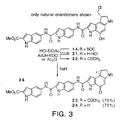
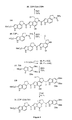
- coupling of a DNA binding subunit through the C6 carboxylate provides a novel class of agents referred to herein as reversed analogs.
- the reversed compounds ( 17-20, 23, 24 FIG 2-3) exhibit an AT-rich alkylation selectivity that extends in the atypical reverse direction from an alkylation site.
- the predicted alkylation sites for the natural enantiomers coincide with those of the unnatural enantiomers of the typical extended agents.
- the predicted alkylation sites for the unnatural enantiomers of the reversed agents coincide with those of the natural enantiomers of the extended agents.
- a complete switch in the enantiomeric alkylation selectivity would be observed with the reversed analogs if it is controlled by the AT-rich binding selectivity.
- the alkylation site model would require that natural enantiomers of both the extended and reversed agents alkylate the same sites rather than exhibit this switch.
- N -BOC-DSA Resolution of N -BOC-DSA.
- Optically active agents were prepared through chromatographic resolution of the bis- ( R )- O -acetylmandelate ester of 37 or, more conveniently, through a new protocol of direct chromatographic resolution of N -BOC-DSA ( 39 ).
- Substitutions for the DNA Binding Subunit Extended Analogs.
- Three additional DNA binding subunits have proven representative and important to examine. These include CDPI 1 , CDPI 2 , and indole 2 .
- the former typically provides agents analogous to 1-2 while the latter two derivatives are representative of the larger agents which exhibit a more extended 5 base-pair AT-rich DNA alkylation selectivity analogous to CC-1065 ( 3 ).
- the indole 2 derivatives maintain the cytotoxic potency of 1-3 , but typically exhibit more efficacious in vitro antitumor activity.
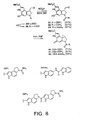
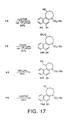
- the agents were prepared by acid-catalyzed deprotection of 39 (4 N HCl-EtOAc, 25 °C, 15-20 min) followed by immediate coupling (3 equiv EDCI, DMF, 12-24 h, 25 °C) of 37 with CDPI 1 (67%), CDPI 2 (67%), and indole 2 (81 %) conducted in the absence of added base (FIG. 8). Spirocyclization to provide 60-62 was effected by treatment with NaH.
- the successful approach to the preparation of the CNA nucleus rested on the implementation of an alternative intramolecular Heck reaction.
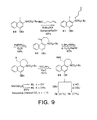
- the starting material for both the Heck reaction and the radical cyclization attempts was prepared by N -alkylation of N -( tert -butyloxy-carbonyl)-4-(benzyloxy)-1-iodo-2-naphthylamine ( 80 ), readily available in three steps (60% overall) from 1,3-dihydroxynaphthalene, with the mesylate of 4-penten-1-ol to provide 81 (FIG. 9).
- a full two molar equivalents of benzyltributylammonium chloride was required to provide high yields of the alkylated product using phase transfer conditions.
- Winstein Ar-3' spirocyclization was effected by treatment of 85 with DBU (3 equiv, CH 3 CN) and smoothly provided 78 (87%). Due to its unusual reactivity, careful chromatographic conditions were required and pretreatment of the chromatographic support (SiO 2 ) with Et 3 N resulted in much higher yields ( i.e ., 87% versus 40-50%). Treatment of 85 with 3.9 M HCl-EtOAc removed the BOC group to afford the unstable amine hydrochloride which was taken directly into the subsequent cyclization step. Addition of 10 equiv of DBU as a dilute solution in CH 3 CN resulted in good conversion to 79 (77%). Conventional chromatography provided the relatively stable CNA which gave crystals suitable for X-ray analysis (CH 3 CN-CH 3 OH).
- N -CO 2 Me-CNA ( 97 ) proved to be a crystalline solid and recrystallization from 10% EtOAc-hexanes gave X-ray quality crystals.
- Spirocyclization of TMI derivative 96 gave a lower yield of ring closed product 96 (48%) due to its high reactivity and more challenging chromatography requirements for purification (FIG. 10).
- (+)- 78 was confirmed and unambiguously established by X-ray structure analysis 24 of the resolved seco -derivative (-)-(1 R )- 87 bearing a heavy atom and subsequent conversion to (+)- 78 .
- compositions containing a compound of the invention as set forth above are an aqueous composition.
- Compounds of this invention alkylate selective sequences in DNA target molecules.
- the compounds thus have cytotoxic activity and can be used as antitumor antibiotics. Details of the activity of particular compounds are set forth below.
- (+)-CDPI 2 -DSA The natural enantiomer of the reversed agent, (+)-CDPI 2 -DSA ( 20 ), was found to alkylate the same sites and to exhibit the same sequence selectivity as the unnatural enantiomer of CC-1065 and the extended agent, ent -(-)-DSA-CDPI 2 . Thus, a complete reversal of the enantiomeric alkylation selectivity was observed with (+)- 20 and these results are only consistent with the noncovalent binding model.
- the unnatural enantiomer of the extended agent ent -(-)-DSA-CDPI 2
- ent -(-)-DSA-CDPI 2 does not alkylate the terminal 5' adenine, but does alkylate the following four 5' adenines.
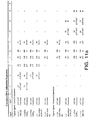
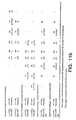
- the consensus alkylation sequence of (+)-CDPI 2 -DSA ( 20 ) is summarized in FIGs 11a and 11b. All alkylation sites were found to be adenine and essentially each adenine N3 alkylation site was flanked by a 5' and 3' A or T base. The preference for this three-base sequence followed the order: 5'-A A A > 5'-A A T ⁇ 5'-T A A > 5'-T A T). There was also a strong preference for the second and third 3' base to be A or T and the preferences distinguished the high affinity versus lower affinity alkylation sites.
- (+)-CDPI 2 -DSA exhibits a 5 base-pair AT-rich alkylation selectivity that corresponds to 5' ⁇ 3' binding in the minor groove starting at the 5' base preceding the alkylation site and extending over the alkylated adenine in the 3' direction covering the three adjacent 3' bases, e.g . 5'-A A AAA.
- (-)-CDPI 2 -DSA exhibits a 5 base-pair AT-rich alkylation selectivity starting at the alkylated adenine and extending in the 3' ⁇ 5' direction across the four adjacent 5' bases, e.g. 5'-AAAA A .
- (+)- and ent -(-)- 30 exhibited identical alkylation profiles within the stretch of six adenines and alkylated those central to the sequence rather than the 3' or 5' terminal adenines characteristic of (+)- or ent -(-)-DSA-CDPI 2 .
- Models of alkylation at the high affinity w794 DNA site by the natural enantiomer of the extended agent (+)-DSA-CDPI 2 and the unnatural enantiomer of the reversed agent ent -(-)-CDPI 2 -DSA highlight the origin of the switch in the inherent enantiomeric alkylation selectivity with the reversed analogs.
- the natural enantiomer, (+)-DSA-CDPI 2 alkylates the 3' adenine and extends in the typical 3' ⁇ 5' direction over the adjacent four 5' bases (5'-AATT A ).
- the natural enantiomer of DSA-CDPI 2 and the unnatural enantiomer of the reversed analog CDPI 2 -DSA bind and cover the exact same AT-rich 5 base-pair region surrounding the adenine N3 alkylation site.
- the unnatural enantiomer of the typical agent alkylates adenine N3 and binds across a 5 base region in the 5' ⁇ 3' direction in the minor groove which is opposite that of the typical natural enantiomers. Because of the diastereomeric nature of the adducts and analogous to ent -(-)- N -BOC-DSA, the binding site starts at the 5' site adjacent to the alkylation site and extends in the 5' ⁇ 3' direction covering the adenine N3 alkylation site and the following three 3' bases (5'-A A TTT).
- the 5 base-pair AT-rich binding site surrounding the alkylation site for ent -(-)-DSA-CDPI 2 is analogous to that of the natural enantiomer except that it extends in the reverse direction in the minor groove relative to the alkylated adenine and is offset by one base-pair.
- the natural enantiomer of the reversed analog, (+)-CDPI 2 -DSA covers the same 5 base-pair AT-rich region surrounding the alkylated adenine but with the reversed orientation of the alkylation subunit and with the DNA binding subunits extending in the atypical 5' ⁇ 3' direction.
- the natural enantiomer CDPI-DSA-CDPI ( 30 ) binds in the minor groove with the alkylation subunit extending in the 3' ⁇ 5' direction with the binding subunits covering 2 base-pairs on both the 5' and 3' side of the alkylation site.
- the binding extends slightly farther to the 5' side (2.5 base-pairs) than the 3' side (2 base-pairs) and this accounts nicely for the stronger and slightly extended AT preference on the 5' side of the alkylation site.
- the unnatural enantiomer of 30 exhibits identical characteristics except that the alkylation subunit binds in the minor groove with the alkylation subunit extending in the reverse 5' ⁇ 3' direction relative to the alkylation strand covering the same 5 base AT-rich site surrounding the central alkylated adenine.
- This unusual feature of the two enantiomers binding and alkylating the same 5 base-pair AT-rich sites is analogous to (+)- and ent -(-)- N -BOC-DSA except that the latter smaller agents only cover 2 base-pairs.
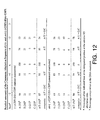
- Cytotoxic Activity The in vitro cytotoxic activity of the agents is summarized in FIG. 14.
- the natural enantiomers of the reversed analogs were 100-1000 ⁇ less potent than the corresponding extended analogs while the two sandwiched analogs 30 and 31 were essentially equipotent with the typical agents.
- the reversed analogs proved essentially indistinguishable ( 17, 18, 23 ) or less than 10 ⁇ more potent ( 19, 20 ) than the simple derivatives, N -BOC-DSA ( 4 ) and N -Ac-DSA, that lack DNA binding subunits altogether.
- the unnatural enantiomers of the reversed agents were also much less potent than the corresponding unnatural enantiomers of the extended analogs although the magnitude of the differences was somewhat smaller (20-100 ⁇ versus 100-1000 ⁇ ). However, they proved to be even more comparable in potency to the unnatural enantiomers of N -BOC-DSA ( 4 ) and N -Ac-DSA lacking the attached DNA binding subunits. The nature of the terminal N 2 acyl substituent did not alter these observations in a substantial manner. The corresponding natural and unnatural enantiomers of 18 and 23 proved essentially indistinguishable while 24 was noticeably less potent.
- the potent cytotoxic activity of the sandwiched analogs is observed with a class of agents that exhibit a significantly different selectivity of DNA alkylation than preceding agents and one which is the same for both the natural and unnatural enantiomers. Since both enantiomers are essentially equipotent and exhibit the same DNA alkylation selectivity, this could permit the use of the more readily available racemic agents in the development of potential clinical candidates with confidence that both enantiomers contribute productively and equivalently to the expression of the resulting properties.
- cytotoxic activities of the more potent, extended derivatives plateau at 3-4 pM and closely follow established trends relating chemical stability and cytotoxic potency. Since the duocarmycin SA alkylation subunit is among the most stable examined to date, the cytotoxic activity of such analogs is among the most potent yet described.
- the seco precursor agents e.g. 13-16, 22, 28 and 29 , exhibited cytotoxic activity that was not distinguishable from the corresponding cyclopropane containing agents 17-20, 23, 30 and 31 , respectively, indicating that their spirocyclization to the biologically potent agents under the conditions of assay is not limiting.
- the reaction constitutes nucleophilic addition of the most sterically accessible of the two most nucleophilic sites in the minor groove (adenine N3 versus guanine N3).
- the clean regioselectivity for exclusive addition to the least substituted cyclopropane carbon represents the stereoelectronically-preferred site of attack which is further reinforced by the destabilizing torsional and steric interactions that would accompany addition to the more substituted carbon with ring expansion and is characteristic of S N 2 addition of a hindered nucleophile.
- the length-dependent AT-rich alkylation selectivity is derived from the preferential noncovalent binding selectivity of the agents in the deeper, narrower AT-rich minor groove.
- the reverse and offset AT-rich alkylation selectivity of the enantiomers and the switch in the inherent enantiomeric alkylation selectivity of the reversed analogs establish that both enantiomers are subject to the same polynucleotide recognition features.
- a DNA binding-induced conformational change in the agent induces a twist in the linking N 2 amide resulting in loss of the alkylation subunit vinylogous amide stabilization catalyzing the DNA alkylation reaction.
- binding-induced conformational change is greatest within the narrower, deeper AT-rich minor groove, this leads to selective catalysis within the preferred binding sites.
- An important ramification of the binding-induced substrate ground state destabilization is that it further serves to stabilize the inherently reversible DNA alkylation reaction.
- This shape selective catalysis coincides within the preferred noncovalent binding sites. That the sequence selectivity is controlled by the noncovalent binding selectivity is defined by the fact that the identical selectivities are observed with agents not subject to this source of catalysis including the reversed analogs albeit with alkylation at much slower rates.
- DNA Alkylation Efficiency and Selectivity The DNA alkylation properties of the agents were examined within five 145-155 base-pair segments of DNA.
- the five clones of phage M13mp10 contain SV40 nucleosomal DNA inserts: w794 (nucleotide no. 5238-138) and its complement w836 (nucleotide no. 5189-91), c988 (nucleotide no. 4359-4210) and its complement c820 (nucleotide no. 4196-4345), and c1346 (nucleotide no. 1632-1782).
- the alkylation site identification and the assessment of the relative selectivity among the available sites were obtained by thermally-induced strand cleavage of the singly 5' end-labeled duplex DNA after exposure to the agents.
- a statistical treatment of the alkylation sites proved more revealing than a conventional analysis that considers only the observed alkylation sites. This evaluation that includes the consideration of sites not alkylated helped define the composite consensus sequence and highlighted subtle features not apparent from a simple consideration only of the alkylated sites.
- the factors controlling the alkylation selectivity are simply reaction at the sterically most accessible of the two most nucleophilic minor groove sites (adenine N3 versus guanine N3) and the depth of minor groove penetration available to the agent at the binding region surrounding the alkylation site. For simple derivatives including 39-41 , this is possible only when the adjacent 5' base is A or T.
- the unnatural enantiomers of 40 and 41 were approximately 10 ⁇ less effective at alkylating DNA while the relative distinctions between (+)- and ent -(-)- N -BOC-DSA were smaller.
- the C7 and C6 methoxy groups which lie on the outer face of the DNA-agent complex, individually contribute little (C6 > C7) to the properties of duocarmycin SA.
- the C5 methoxy group that is deeply imbedded in the minor groove contributes prominently to its properties.
- the agent containing a single C5 methoxy substituent proved essentially indistinguishable from duocarmycin SA indicating that it alone is sufficient for observation of the full potency of the natural product. This is consistent with a role in which the C5 methoxy group provides further noncovalent binding stabilization for the inherently reversible DNA alkylation reaction by virtue of its placement deep in the minor groove.
- the C5 methoxy group of duocarmycin SA extends the rigid length of the DNA binding subunit. Its presence results in an increase in the inherent twist in the helical conformation of the DNA bound agent with the helical rise of the agent adjusted at the site of linking amide. This alters the vinylogous amide conjugation in the alkylation subunit and increases the inherent reactivity of the agent contributing to the catalysis of the DNA alkylation reaction. Removing the C5 methoxy substituent shortens the length of the right-hand subunit, decreases the inherent twist in the linking amide in the DNA bound conformation, and results in less effective activation of the agent for DNA alkylation.
- each adenine alkylation site was flanked by at least two 5' A or T bases with a preference that follows the order of 5'-AA A > 5'-TT A > 5'-TA A ⁇ 5'-AT A .
- the fourth and fifth 5' bases was also a strong preference for the fourth and fifth 5' bases to be A or T. and this preference distinguished the high affinity versus low affinity alkylation sites.
- (+)- and ent -(-)-DSA-CDPI 2 exhibited a 5 base-pair AT-rich DNA alkylation selectivity identical to those of (+)- and ent -(-)-CC-1065 and distinguishable from the shorter 3.5 base-pair AT-rich selectivity of duocarmycin SA. Similar observations were made with (+)-DSA-indole 2 . The relative selectivity of alkylation among the available sites proved to be greater with (+)-DSA-CDPI 2 than (+)-DSA-CDPI 1 .
- (+)-DSA-CDPI 2 failed to alkylate the minor w794 site (5'-CAA A G) while (+)-DSA-CDPI 1 prominently alkylates this minor site, requiring concentrations only 10 ⁇ that for alkylation at the major 5'-AATT A site.
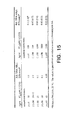
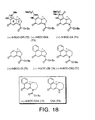
- the alkylation profiles of the unnatural enantiomers 60-62 are very distinct from those of the natural enantiomers. Without exception, all alkylation sites proved to be adenine under the conditions of the assay and nearly all of the 3' and 5' bases flanking the adenine N3 alkylation site proved to be A or T (FIG. 16). There proved to be a preference for the following three base-pair sequences: 5'-A A A > 5'-A A T ⁇ 5'-T A A > 5'-T A T.
- the high affinity alkylation sites e.g .
- the results show that the depth of minor groove penetration by the agent and steric accessibility to the alkylation site are likely important features contributing to the observed selectivity of DNA alkylation.
- sufficient minor groove access to the reacting center is possible with a single 5' A or T base adjacent to the alkylation site.
- the extended agents including 60-62.
- sufficient minor groove penetration may be possible only when two or more adjacent bases are A or T and this AT-rich selectivity nicely corresponds to the size of the agent (FIG. 16).
- Further contributing to this AT-rich alkylation selectivity of the longer agents is their preferential noncovalent binding within the narrower, deeper AT-rich groove.
- Rate of DNA Alkylation pH Dependence. The effects of pH on the DNA alkylation rate were studied by establishing the (+)-duocarmycin SA relative and first order rate constants ( k obs ) for alkylation of the single w794 high affinity alkylation site (5'-AATT A ,) at the pH of 6.0, 6.6, 7.1, 7.6, and 8.1 (10 -6 M, 25 °C, 10 mM phosphate buffer, 0--3 h). Because this was conducted using w794 DNA additionally containing >7000 base-pairs and multiple binding sites within the unlabeled portion of the DNA, the comparisons were conducted at concentrations that provide saturated binding and restrict the kinetic analysis to the pseudo-first order rate constant for alkylation.
- Catalysis DNA Binding Induced Conformational Change in the Agent Results in Activation.
- catalysis for the DNA alkylation reaction is derived from a DNA binding-induced conformational change in the agent that disrupts the vinylogous amide stabilization of the alkylation subunit and activates the agent for nucleophilic addition.
- This conformational change results from adoption of a helical bound conformation that follows the curvature and pitch of the DNA minor groove.
- the helical rise in the bound conformation of the rigid agents is adjusted by twisting the linking N 2 amide which is the only available flexible site.
- the twisting of the ⁇ 1 dihedral angle of the linking amide diminishes the N 2 lone pair conjugation with the cyclohexadienone, disrupts the vinylogous amide stabilization of the alkylation subunit, and increases its inherent reactivity.
- An alternative possibility involves a twisting of the ⁇ 2 dihedral angle diminishing the amide conjugation and increasing the N 2 vinylogous amide conjugation. This would increase the basicity of the C4 carbonyl leading to more effective protonation. There is evidence to suggest this can result in both increased or decreased reactivity depending on the extent of the vinylogous amide conjugation and all studies concur that even subtle perturbations can result in large changes in reactivity.
- N -Acylation of the nitrogen reduces the vinylogous amide conjugation, lengthens bond c, and results in a substantial increase in inherent reactivity.
- this reduction in the vinylogous amide conjugation is an increase in the length of the reacting cyclopropane bond.
- One interpretation of this is that both the cyclopropane conjugation and its inherent reactivity increase as the cross-conjugated vinylogous amide ⁇ -overlap is diminished.
- Additional features including the alignment of the cyclopropane may further contribute to the cyclopropane conjugation (CBQ aligned but CBI offset by 20°) and the cyclopropane bond lengths and reactivity of CBQ versus CBI also reflect this effect on the relative degree of conjugation. More importantly, within the series of N -acyl derivatives, both the length of bond c diagnostic of the extent of vinylogous amide conjugation and the reactivity smoothly increase as the ⁇ 1 dihedral angle increases. The reactivity of N -CO 2 Me-CNA (or N -BOC-CNA) is extraordinary exhibiting a t 1/2 of only 2.1 h at pH 7 in the absence of deliberate added acid catalysis.
- N -BOC-DSA 10 3 -10 4 ⁇ more reactive than N -BOC-DSA and represents an agent that benefits from little, if any, vinylogous amide stabilization.
- This level of reactivity is greater than that required. In fact, it is the reactivity and ⁇ 1 dihedral angle of N -BOC-CBQ that may more closely approximate that required for the DNA alkylation catalysis provided by the DNA binding induced conformational change in 1-3 .
- N -BOC-CBI ( ⁇ 20:1) versus N-BOC-DSA (6-4:1) versus N-BOC-CNA ( ⁇ 1:20).
- the selectivity more accurately reflects the relative degree of stereoelectronic alignment of the two available cyclopropane bonds and this alone accounts for the reaction regioselectivity.
- the EtOH precipitations were carried out by adding t -RNA as a carrier (1 ⁇ L, 10 ⁇ g/ ⁇ L), 3 M NaOAc (0.1 volume) and -20 °C EtOH (2.5 volumes). The solutions were mixed and chilled at -78 °C in a REVCO freezer for 1 h or longer. The DNA was reduced to a pellet by centrifugation at 4 °C for 15 min and washed with -20 °C 70% EtOH (in TE containing 0.2 M NaCl). The pellets were dried in a Savant Speed Vac concentrator and resuspended in TE buffer (10 ⁇ L).
- Polyacrylamide gel electrophoresis was run on an 8% sequencing gel under denaturing conditions (19:1 acrylamide: N,N -methylenebisacrylamide, 8 M urea) in TBE buffer (100 mM Tris, 100 mM boric acid, 0.2 mM Na 2 EDTA). PAGE was pre-run for 30 min with formamide dye solution prior to loading the samples. Autoradiography of dried gels was carried out at -78 °C using Kodak X-Omat AR film and a Picker SpectraTM intensifying screen.
- duocarmycin SA is chemically the most stable and biologically the most potent. It exhibits the greatest inherent reaction regioselectivity and participates most effectively in the characteristic DNA alkylation reaction.
- the comparison of six X-rays structures suggest that the relative degree of stereoelectronic alignment of the two available cyclopropane bonds alone may account for the solvolysis regioselectivity.
- the exclusive DNA alkylation regioselectivity of the adenine N3 addition reaction exceeds that of the typical acid-catalyzed reactions for all agents examined to date.
- the advanced analogs of 1-3 exhibited a different and larger 3.5 or 5 base-pair AT-rich adenine N3 alkylation selectivity that corresponds nicely to the length or size of the agent.
- the alkylation sites correspond to 3' adenine N3 alkylation with agent binding in the 3' ⁇ 5' direction across a 3.5 or 5 base-pair AT-rich sequence, e.g . 5'-AAAA A .
- the alkylation sites correspond to 5' adenine N3 alkylation with agent binding in the reverse 5' ⁇ 3' direction across a 3.5 or 5 base-pair AT-rich sequence that starts with the 5' base that precedes the alkylated adenine and extends over the alkylation site to the adjacent 3' side, e.g . 5'-A A AAA.
- shape-selective binding selectivity and shape-dependent catalysis combine to restrict S N 2 alkylation to accessible adenine N3 nucleophilic sites within the preferred 3.5-5 base-pair AT-rich binding sites.
- the agents exhibited cytotoxic potencies consistent with the trends observed in the relative DNA alkylation efficiencies and each of the analog classes was found to follow a well-established relationship between chemical stability and cytotoxic potency. Since the duocarmycin SA alkylation subunit is the most stable of the naturally occurring alkylation subunits, its derivative analogs are the most potent disclosed to date. These studies are summarized in the accompanying article.
- the preferred nucleophilic addition sites appear to be dictated by the relative stereoelectronic alignment of the scissile cyclopropyl bonds with the cyclohexadienone ⁇ -system but may be influenced by the relative reactivity.
- both S N 2 and S N 1 mechanisms have been advanced to account for the generation of the abnormal ring expansion solvolysis products.
- the clean generation of single DNA alkylation products derived from adenine N3 addition exclusively to the least substituted cyclopropane carbon indicates that additional subtle features inherent in the reaction contribute to its regioselectivity.
- pH 7 50% CH 3 OH-H 2 O
- CNA ( 79 ) was considerably more stable than N -BOC-CNA ( 78 ). Both were sufficiently reactive to undergo rapid solvolysis even at pH 7.
- N -BOC-CNA exhibited a first-order rate constant for the solvolysis at pH 7 which is of the same order of magnitude as the characteristically rapid DNA alkylation reactions of 1-3 without deliberate added catalysis.
- the addition of HCl still cleanly provided the typical addition product derived from attack at the least substituted carbon rather than the ring expansion addition observed with the generation of 102 .
- the clean addition of HCl to 78 to provide the ring expansion product 102 illustrates that the stereoelectronic control of the addition directs even the larger nucleophiles to the more hindered cyclopropyl carbon.
- racemic and optically active (+)- 78 were subjected to acid-catalyzed solvolysis (0.12 equiv of CF 3 SO 3 H, H 2 O-THF, 25 °C, 5 min) to provide 99 .
- Acid-catalyzed solvolysis (0.12 equiv of CF 3 SO 3 H, H 2 O-THF, 25 °C, 5 min) to provide 99 .
- Resolution on a Diacel Chiracel OG analytical HPLC column separated both enantiomers of the reaction product.
- the product derived from optically active (+)- 78 provided one enantiomer of the ring expanded product.
- the cyclopropane bond extending to the more substituted carbon is less effectively aligned and nearly orthogonal to the ⁇ -system. Reflecting this relative alignment, the cleaved C8b-C9 bond is the longest (1.544 versus 1.521 ⁇ ) and weakest of these two bonds.
- the cyclopropane cleavage occurs under stereoelectronic control with preferential addition of the nucleophile at the least substituted carbon (>20:1). This stereoelectronic control overrides any intrinsic electronic preference for ring expansion ring opening with partial positive charge development on the more substituted cyclopropane carbon but may also benefit from the characteristic preference for S N 2 nucleophilic attack to occur at the least substituted carbon.
- N -CO 2 Me-CNA Inspection of the X-ray crystal structure of N -CO 2 Me-CNA reveals that the cyclopropane possesses alignment features of both N -CO 2 Me-CBI and N -BOC-CBQ. Like N -CO 2 Me-CBI, the cyclopropane is nonideally conjugated with the ⁇ -system hut rises above rather than dips below the plane of the cyclohexadienone such that now the bond to the more substituted cyclopropane carbon enjoys the better stereoelectronic alignment.
- the smooth reversal of solvolysis regioselectivity with N -BOC-CNA may be attributed to the relative stereoelectronic alignment of the breaking C10b-C11a bond combined with any intrinsic electronic stabilization inherent in its greater substitution.
- this combination of stereoelectronic and electronic features is sufficient to overcome the destabilizing steric interactions that must accompany S N 2 addition at the more substituted center.
- Diagnostic of the regioselectivity of nucleophilic addition the cleaved C10b-C11a bond is longer (1.565 ⁇ versus 1.525 ⁇ ) and weaker than the C10b-CI 1 bond extending to the less substituted cyclopropane carbon.
- N -CO 2 Me-CNA possesses a near perfect geometric orientation with respect to the plane bisecting the cyclohexadienone, deviating little from a perfect backside alignment.
- the solvolysis reaction regioselectivity accurately reflects the relative stereoelectronic alignment of the two available cyclopropane bonds. This is beautifully illustrated with the clean, smooth, and complete reversal of the reaction regioselectivity as one progresses through the series N -BOC-CBI (>20:1), N -BOC-CBQ (3:2), and N -BOC-CNA ( ⁇ 1:20).
- N -acylation e.g ., N -CO 2 Me-CBI versus CBI
- Typical C-N bond lengths for a fully conjugated vinylogous amide are 1.312-1.337 ⁇ .
- the ⁇ 1 dihedral angle of N -CO 2 Me-CNA is so large that the acyl group is nearly perpendicular to the plane of the cyclohexadienone ⁇ -system and the agent benefits from little, if any, vinylogous amide conjugation. This is reflected in its bond c length of 1.428 ⁇ .
- the ⁇ 2 dihedral angle is maintained at ca . 0° illustrating the preferential maintenance of the N carbamate conjugation versus that of the vinylogous amide.
- N -BOC-CBQ exhibits a slightly larger ⁇ 2 dihedral angle suggesting some carbamate distortion in efforts to maintain the vinylogous amide conjugation.
- CBI has bond lengths of 1.508 ⁇ and 1.532 ⁇ for the C8b-C9a and C8b-C9 bonds, respectively, while those of CBQ are 1.525 ⁇ and 1.539 ⁇ . In turn, this may be attributed to the perfect geometrical (backside) alignment of the CBQ cyclopropane not accessible to CBI.
- CBQ and CNA have similar cyclopropyl alignments but substantially different ⁇ 1 dihedral angles and different c bond lengths of 1.336 versus 1.376 ⁇ , respectively.
- This difference diagnostic of the extent of vinylogous amide conjugation, is accompanied by a large increase in the CNA scissile cyclopropane bond lengths indicative of a much greater degree of conjugation and accounts for over a hundred-fold difference in reactivity.
- the degree of cyclopropane conjugation and its resulting reactivity is not only related to its geometrical alignment but also to the extent of the cross-conjugated vinylogous amide stabilization.
- the geometrical constraints imposed by the fused five-membered C-ring found in the natural products dictate the regioselectivity of cleavage of the cyclopropane ring.
- the agents display a beautiful interplay between the cross-conjugated stability provided by the vinylogous amide and the extent of cyclopropane conjugation that is central to their functional reactivity.
- Structural perturbations that diminish the vinylogous amide conjugation increase the cyclopropyl conjugation and its inherent reactivity.
- One particularly important structural perturbation is the ⁇ 1 dihedral angle of the linking amide of the N -acyl derivatives of the alkylation subunits.
- the helical rise in the bound conformation of the rigid agents is adjusted by twisting the linking N 2 amide which is the only available flexible site.
- the twisting of the ⁇ 1 dihedral angle of the linking amide diminishes the N 2 lone pair conjugation with the cyclohexadienone, disrupts the vinylogous amide stabilization of the alkylation subunit, and increases its inherent reactivity.
- An alternative possibility involves a twisting of the ⁇ 2 dihedral angle diminishing the amide conjugation and increasing the N 2 vinylogous amide conjugation. This would increase the basicity of the C4 carbonyl leading to more effective protonation.
- N -BOC-DSA 10 3 -10 4 ⁇ more reactive than N -BOC-DSA and represents an agent that benefits from little, if any, vinylogous amide stabilization.
- This level of reactivity is greater than that required. In fact, it is the reactivity and ⁇ 1 dihedral angle of N -BOC-CBQ that may more closely approximate that required for the DNA alkylation catalysis provided by the DNA binding induced conformational change in 1-3 .
- the in vitro cytotoxic activity of the agents proved to be consistent with past observations that have illustrated a direct correlation between solvolysis stability and cytotoxic potency.
- the CNA-based agents exhibited cytotoxic activity that was less potent than the corresponding duocarmycin based agents but more potent than the corresponding CI-based agents (FIGs. 19 and 20).
- the natural enantiomers of the CNA-based agents were found to be more potent than the unnatural enantiomers.
- Samples of 78 (150 ⁇ g) and 79 (150 ⁇ g) were dissolved in CH 3 OH (1.5 mL) and the resulting solutions were mixed with aqueous buffer (pH 3, 1.5 mL, 4:1:20 (v:v:v) 0.1 M citric acid, 0.2 M Na 2 HPO 4 , and deionized H 2 O respectively).
- a solution of 78 (150 ⁇ g) in CH 3 OH (1.5 mL) was mixed with deionized H 2 O (pH 7, 1.5 mL).
- the UV spectra of the solutions were measured immediately after mixing with the appropriate aqueous solution.
- the blank and the solvolysis reaction solutions were stoppered, protected from light, and allowed to stand at 25 °C.
- the total reaction times reflect those required to observe no further change in absorbance.
- the UV spectrum was taken every 30 s for 10 min and then every 3 min for the next 40 min.
- the decrease of the absorbance at 319 nm was monitored.
- the UV spectrum was monitored every 5 min for 19 h.
- the UV spectrum was monitored every 2 min for the first 110 min and then every 10 min for the next 4 h. The decrease in the absorbance at 345 nm was recorded.
- the rate of DNA alkylation was found to increase with decreasing pH in both cases, the rate change was remarkably small ( ⁇ 3 ⁇ over 2 pH units) and inconsistent with a first-order dependence of acid concentration.
- (+)-CCBI-TMI was shown to alkylate the w794 high affinity alkylation site 1.9-2.5 ⁇ faster than (+) -1 , corresponding nicely with earlier studies 9 in which CCBI-TMI proved to exhibit the fastest relative rate at this same site: CCBI-TMI (2.5 ⁇ ) > MCBI-TMI (1.9 ⁇ ) > CBI-TMI (1.0 ⁇ ) > DSA (0.9 ⁇ ) (pH 7.5, Table X).
- the rate of DNA alkylation did not correlate with the relative reactivity of the agents toward acid-catalyzed solvolysis (MCBI > CBI > CCBI) suggesting that other factors are responsible for the catalysis of the DNA alkylation reaction.
- catalysis for the DNA alkylation reaction is derived from a DNA binding induced conformational change in the agent that disrupts the N 2 vinylogous amide stabilization of the alkylation subunit and activates the agent for nucleophilic addition.
- This conformational change results from adoption of a helical bound conformation that follows the curvature and pitch of the DNA minor groove.
- the helical rise in the bound conformation of the rigid agents is adjusted by twisting the linking N 2 amide which is the only available flexible site.
- the yellow reaction mixture was stirred at 25 °C for 30 min and was concentrated under a stream of N 2 .
- the resultant yellow residue containing 8 was dissolved in DMF (0.17 mL) and treated sequentially with 11 (1.7 mg, 7.9 ⁇ mol, 0.9 equiv) and EDCI (3.4 mg, 17.6 ⁇ mol, 2.0 equiv).
- the reaction mixture was stirred for 2 h at 25 °C before the solvent was removed under reduced pressure and the residual solid was slurried in 0.5 mL H 2 O.
- the solid was collected by centrifugation and washed with 1% aqueous HCl (1 ⁇ 0.5 mL) and H 2 O (1 ⁇ 0.5 mL).
- Method B 6-[(Methyl 1,2-Dihydro-3 H -pyrrolo[3,2- e ]indole-3-yl)carbonyl-7-carboxylate]-2-(( tert -butyloxy)carbonyl)-1,2,8,8a-tetrahydrocyclopropa[ c ]-pyrrolo[3,2- e ]indol-4-one (19, CDPI 1 -DSA).
- reaction mixture was concentrated and the residue of 21 was taken up in DMF (0.1 mL) and treated sequentially with CH 3 COOH (16 ⁇ l., 0.175 M in DMF, 1.2 equiv) and EDCl (1.3 mg. 6.9 ⁇ mol, 3.0 equiv).
- the reaction mixture was stirred for 15 h at 25 °C.
- the solvent was removed under reduced pressure and the residual solid was slurried in 0.4 mL H 2 O.
- the solid was collected by centrifugation and washed with 1% aqueous HCl (0.4 mL) and H 2 O (0.4 mL) to afford crude 22 .
- the crude hydrochloride salt 25 was taken up in DMF (0.17 mL) and treated sequentially with CDPI 1 30 ( 26 , 2.0 mg, 8.34 ⁇ mol, 0.95 equiv) and EDCI (3.4 mg, 17.6 ⁇ mol, 2 equiv).
- the reaction mixture was stirred for 15 h at 25 °C.
- the solvent was removed under reduced pressure and the residual solid was slurried in 0.5 mL H 2 O and collected by centrifugation.
- the solid was washed with 1% aqueous HCl (1 ⁇ 0.5 mL) and H 2 O (1 ⁇ 0.5 mL) and dried under reduced pressure.
- the crude hydrochloride salt 25 was taken up in DMF (0.11 mL) and treated sequentially with 27 12 (1.3 mg, 5.38 ⁇ mol, 0.95 equiv) and EDCI (2.2 mg, 11.32 ⁇ mol, 2 equiv).
- the reaction mixture was stirred for 6 h at 25 °C.
- the solvent was removed under reduced pressure and the residual solid was slurried in 0.5 mL H 2 O and collected by centrifugation.
- the solid was washed with 1% aqueous HCl (1 ⁇ 0.5 mL) and H 2 O (1 ⁇ 0.5 mL) and dried under reduced pressure.
- the hydrochloride salt was taken up in DMF (0.12 mL) and treated sequentially with EDCI (3.5 mg, 15.75 ⁇ mol, 3.3 equiv) and indole 2 (1.9 mg, 6.04 ⁇ mol, 1.1 equiv).
- the reaction mixture was stirred for 12 h at 25 °C before the solvent was removed under reduced pressure.
- the residual solid was slurried in 0.1 mL H 2 O and the solid was collected by centrifugation.
- the hydrochloride salt was taken up in THF (80 ⁇ L) and treated sequentially with NaHCO 3 (1.6 mg, 19.2 ⁇ mol, 3.0 equiv) and ClCOCH 3 (50 ⁇ L, 0.26 M in THF, 2.0 equiv) at 0 °C under Ar.
- Methyl 2-Acetyl-1,2,8,8a-tetrahydrocyclopropa[ c ]pyrrolo[3,2- e ]indol-4-one-6-carboxylate (40, N -Ac-DSA).
- a suspension of NaH (0.7 mg, 60%, 18.6 ⁇ mol, 3.0 equiv) in THF (0.12 mL) at 0 °C under Ar was treated with a solution of 42 (2.0 mg, 6.2 ⁇ mol, 1.0 equiv) in 50% THF-DMF (0.3 mL), and the reaction mixture was stirred for 30 min at 0 °C.
- the resulting biphasic mixture was stirred vigorously at 25 °C for 12 h.
- the layers were allowed to separate and the aqueous portion was extracted with EtOAc (2 ⁇ 30 mL).
- the combined organic portions were washed with H 2 O (2 ⁇ 100 mL) and saturated aqueous NaCl (50 mL).
- Oxidative workup was accomplished by the addition of 2.5 M aqueous NaOH (0.605 mL, 3 equiv) followed by 30% H 2 O 2 (0.514 mL, 9 equiv) and the resulting heterogeneous solution was stirred rapidly at 25 °C (1 h) and 50 °C (1 h).
- the cooled reaction mixture was treated with saturated aqueous NaCl (0.5 mL) and the layers separated.
- the aqueous portion was extracted with EtOAc (2 ⁇ 5 mL) and the combined organic portions were dried (MgSO 4 ), filtered, and concentrated.
- the cooling bath was removed after 5 min and the mixture was stirred at 25 °C for 1 h.
- the reaction was quenched with the addition of saturated aqueous NaHCO 3 (0.5 mL) and the layers were separated.
- the aqueous portion was extracted with EtOAc (2 ⁇ 5 mL) and the combined organic portions were dried (MgSO 4 ), filtered, and concentrated.
- N -( tert -Butyloxycarbonyl)-1,2,3,4,11,11a-hexahydrocyclopropa[ c ]naphtho[2,1- b ]azepin-6-one N -BOC-CNA, 78.
- a sample of 85 (0.025 g, 0.059 mmol, 1 equiv) was suspended in CH 3 CN (1.0 mL) and treated with DBU ( 0.027 mL, 0.178 mmol, 3 equiv) at 25 °C to instantly afforded a homogeneous pale yellow solution. The solvent was removed with a gentle stream of N 2 after 5 min.
- reaction was quenched with the addition of saturated aqueous NaHCO 3 (0.5 mL) and the resulting layers were separated. The aqueous portion was extracted with EtOAc (2 ⁇ 2 mL) and the combined organic portions were dried (MgSO 4 ), filtered, and concentrated.
- N -(Methoxycarbonyl)-1,2,3,4,11,11a-hexahydrocyclopropa[ c ]naphtho[2,1- b ]azepin-6-one N -CO 2 Me-CNA, 97.
- 95 (0.0071 g, 0.019 mmol, 1 equiv) was treated with DBU ( 0.008 mL, 0.057 mmol, 3 equiv). Flash chromatography (SiO 2 , 1 ⁇ 7 cm, 50% EtOAc-hexane with 5% Et 3 N) furnished 97 as a colorless oil (0.0048 g. 0.0052 g theoretical, 90%).
Landscapes
- Chemical & Material Sciences (AREA)
- Organic Chemistry (AREA)
- Health & Medical Sciences (AREA)
- Chemical Kinetics & Catalysis (AREA)
- General Chemical & Material Sciences (AREA)
- Medicinal Chemistry (AREA)
- Nuclear Medicine, Radiotherapy & Molecular Imaging (AREA)
- Pharmacology & Pharmacy (AREA)
- Life Sciences & Earth Sciences (AREA)
- Animal Behavior & Ethology (AREA)
- General Health & Medical Sciences (AREA)
- Public Health (AREA)
- Veterinary Medicine (AREA)
- Engineering & Computer Science (AREA)
- Bioinformatics & Cheminformatics (AREA)
- Pharmaceuticals Containing Other Organic And Inorganic Compounds (AREA)
- Other In-Based Heterocyclic Compounds (AREA)
- Nitrogen Condensed Heterocyclic Rings (AREA)
- Plural Heterocyclic Compounds (AREA)
- Compounds Of Unknown Constitution (AREA)
Applications Claiming Priority (3)
| Application Number | Priority Date | Filing Date | Title |
|---|---|---|---|
| US4850597P | 1997-05-22 | 1997-05-22 | |
| US48505P | 1997-05-22 | ||
| PCT/US1998/010535 WO1998052925A1 (en) | 1997-05-22 | 1998-05-22 | Analogs of duocarmycin and cc-1065 |
Publications (3)
| Publication Number | Publication Date |
|---|---|
| EP0983248A1 EP0983248A1 (en) | 2000-03-08 |
| EP0983248A4 EP0983248A4 (en) | 2000-09-13 |
| EP0983248B1 true EP0983248B1 (en) | 2004-07-14 |
Family
ID=21954939
Family Applications (1)
| Application Number | Title | Priority Date | Filing Date |
|---|---|---|---|
| EP98924851A Expired - Lifetime EP0983248B1 (en) | 1997-05-22 | 1998-05-22 | Analogs of duocarmycin and cc-1065 |
Country Status (9)
| Country | Link |
|---|---|
| US (1) | US6281354B1 (enExample) |
| EP (1) | EP0983248B1 (enExample) |
| JP (1) | JP2002503228A (enExample) |
| AT (1) | ATE271041T1 (enExample) |
| AU (1) | AU754083B2 (enExample) |
| CA (1) | CA2290789A1 (enExample) |
| DE (1) | DE69825048D1 (enExample) |
| NZ (1) | NZ500789A (enExample) |
| WO (1) | WO1998052925A1 (enExample) |
Families Citing this family (48)
| Publication number | Priority date | Publication date | Assignee | Title |
|---|---|---|---|---|
| ATE378328T1 (de) * | 2001-02-22 | 2007-11-15 | Univ London Pharmacy | Pyrrolo-indol- und pyrrolo-chinolin-derivate als prodrugs zur tumorbehandlung |
| PT1392359E (pt) | 2001-05-11 | 2010-01-27 | Ludwig Inst For Cancer Res Ltd | Proteínas de ligação específica e suas utilizações |
| US20100056762A1 (en) | 2001-05-11 | 2010-03-04 | Old Lloyd J | Specific binding proteins and uses thereof |
| US6989452B2 (en) | 2001-05-31 | 2006-01-24 | Medarex, Inc. | Disulfide prodrugs and linkers and stabilizers useful therefor |
| DE10147672A1 (de) * | 2001-09-27 | 2003-04-10 | Bayer Ag | Substituierte 2,5-Diamidoindole und ihre Verwendung |
| EP1554271A1 (en) * | 2002-10-15 | 2005-07-20 | Rigel Pharmaceuticals, Inc. | Substituted indoles and their use as hcv inhibitors |
| US20060167271A1 (en) * | 2002-11-14 | 2006-07-27 | Mark Ginsberg | Purified compounds that inhibit intracellular alphax4/paxillin binding |
| AU2005221959C1 (en) * | 2004-03-13 | 2010-06-17 | Kyoto University | Novel indole derivative for alkylating specific base sequence of DNA and alkylating agent and drug each comprising the same |
| RU2402548C2 (ru) * | 2004-05-19 | 2010-10-27 | Медарекс, Инк. | Химические линкеры и их конъюгаты |
| MXPA06013413A (es) | 2004-05-19 | 2007-01-23 | Medarex Inc | Enlazadores quimicos y conjugados de los mismos. |
| US7714016B2 (en) * | 2005-04-08 | 2010-05-11 | Medarex, Inc. | Cytotoxic compounds and conjugates with cleavable substrates |
| JP5290756B2 (ja) * | 2005-09-26 | 2013-09-18 | メダレックス インコーポレイテッド | 抗体−薬剤コンジュゲート及びその使用 |
| CA2623236A1 (en) | 2005-09-26 | 2007-04-05 | Medarex, Inc. | Human monoclonal antibodies to cd70 |
| EP1940789B1 (en) | 2005-10-26 | 2011-11-23 | Medarex, Inc. | Methods and compounds for preparing cc-1065 analogs |
| WO2007059404A2 (en) | 2005-11-10 | 2007-05-24 | Medarex, Inc. | Duocarmycin derivatives as novel cytotoxic compounds and conjugates |
| WO2007067992A2 (en) | 2005-12-08 | 2007-06-14 | Medarex, Inc. | Human monoclonal antibodies to fucosyl-gm1 and methods for using anti-fucosyl-gm1 |
| EA017812B1 (ru) | 2005-12-08 | 2013-03-29 | Медарекс, Инк. | Выделенное моноклональное антитело или его антигенсвязывающий участок, которые связываются с протеинтирозинкиназой 7 ( ptk7) человека, и их применение |
| ES2396569T3 (es) | 2006-01-17 | 2013-02-22 | Medarex, Inc. | Anticuerpos monoclonales contra CD30 que carecen de restos fucosilo y xilosilo |
| WO2008030611A2 (en) | 2006-09-05 | 2008-03-13 | Medarex, Inc. | Antibodies to bone morphogenic proteins and receptors therefor and methods for their use |
| CN103172743B (zh) | 2006-12-01 | 2015-04-08 | 梅达雷克斯有限责任公司 | 结合cd22的人抗体及其用途 |
| CL2007003622A1 (es) | 2006-12-13 | 2009-08-07 | Medarex Inc | Anticuerpo monoclonal humano anti-cd19; composicion que lo comprende; y metodo de inhibicion del crecimiento de celulas tumorales. |
| US20100150950A1 (en) | 2006-12-14 | 2010-06-17 | Medarex, Inc. | Human antibodies that bind cd70 and uses thereof |
| TWI412367B (zh) | 2006-12-28 | 2013-10-21 | Medarex Llc | 化學鏈接劑與可裂解基質以及其之綴合物 |
| WO2008091701A2 (en) | 2007-01-25 | 2008-07-31 | Dana-Farber Cancer Institute | Use of anti-egfr antibodies in treatment of egfr mutant mediated disease |
| JP2010519310A (ja) | 2007-02-21 | 2010-06-03 | メダレックス インコーポレイテッド | 単一のアミノ酸を有する化学リンカーおよびその複合体 |
| CA2680854C (en) | 2007-03-15 | 2017-02-14 | Ludwig Institute For Cancer Research | Treatment method using egfr antibodies and src inhibitors and related formulations |
| US9901567B2 (en) | 2007-08-01 | 2018-02-27 | Syntarga B.V. | Substituted CC-1065 analogs and their conjugates |
| MX2010001757A (es) | 2007-08-14 | 2010-09-14 | Ludwig Inst Cancer Res | Anticuerpo monoclonal 175 que activa el receptor egf y derivados y usos del mismo. |
| AU2009320481C1 (en) | 2008-11-03 | 2016-12-08 | Syntarga B.V. | Novel CC-1065 analogs and their conjugates |
| BRPI1009232B1 (pt) | 2009-03-05 | 2022-05-03 | E.R. Squibb & Sons, Llc. | Anticorpo monoclonal isolado ou uma porção de ligação de antígeno do mesmo, ou um fragmento de anticorpo, composição que os compreende, molécula de ácido nucleico, hibridoma e métodos para a preparação de um anticorpo anti-cadm1 |
| US9181339B2 (en) | 2009-04-20 | 2015-11-10 | Oxford Bio Therapeutics Ltd. | Antibodies specific to cadherin-17 |
| US20120231004A1 (en) | 2009-10-13 | 2012-09-13 | Oxford Biotherapeutic Ltd. | Antibodies |
| US9173961B2 (en) | 2010-02-10 | 2015-11-03 | Immunogen, Inc. | CD20 antibodies and uses thereof |
| PT3056203T (pt) | 2010-04-21 | 2018-02-15 | Syntarga Bv | Conjugados de análogos de cc-1065 e ligantes bifuncionais |
| PL2726508T3 (pl) | 2011-06-28 | 2017-12-29 | Oxford Biotherapeutics Ltd | Przeciwciała przeciwko cyklazie ADP-rybozylowej 2 |
| EP2922818B1 (en) | 2012-11-24 | 2018-09-05 | Hangzhou Dac Biotech Co., Ltd | Hydrophilic linkers and their uses for conjugation of drugs to cell binding molecules |
| US9089614B2 (en) | 2012-12-21 | 2015-07-28 | Bioalliance C.V. | Hydrophilic self-immolative linkers and conjugates thereof |
| WO2015050959A1 (en) | 2013-10-01 | 2015-04-09 | Yale University | Anti-kit antibodies and methods of use thereof |
| EP3092010B1 (en) | 2014-01-10 | 2018-07-11 | Synthon Biopharmaceuticals B.V. | Method for purifying cys-linked antibody-drug conjugates |
| AU2014384434B2 (en) | 2014-02-28 | 2016-11-03 | Hangzhou Dac Biotech Co., Ltd | Charged linkers and their uses for conjugation |
| JP2017528418A (ja) | 2014-06-20 | 2017-09-28 | バイオアライアンス コマンディテール フェンノートシャップ | 抗葉酸受容体アルファ(fra)抗体−薬物コンジュゲート及びその使用方法 |
| NZ739830A (en) | 2015-07-12 | 2021-12-24 | Hangzhou Dac Biotech Co Ltd | Bridge linkers for conjugation of cell-binding molecules |
| US9839687B2 (en) | 2015-07-15 | 2017-12-12 | Suzhou M-Conj Biotech Co., Ltd. | Acetylenedicarboxyl linkers and their uses in specific conjugation of a cell-binding molecule |
| ES2880731T3 (es) | 2016-01-08 | 2021-11-25 | Altrubio Inc | Anticuerpos anti-PSGL-1 tetravalentes y usos de los mismos |
| KR102493853B1 (ko) | 2016-08-19 | 2023-01-30 | 브리스톨-마이어스 스큅 컴퍼니 | 세코-시클로프로파피롤로인돌 화합물, 그의 항체-약물 접합체, 및 제조 및 사용 방법 |
| WO2018064094A1 (en) | 2016-09-28 | 2018-04-05 | Bristol-Myers Squibb Company | Enantioselective synthesis of pyrroloindole compounds |
| KR102345175B1 (ko) | 2016-11-14 | 2021-12-31 | 항저우 디에이씨 바이오테크 씨오, 엘티디 | 결합 링커, 그러한 결합 링커를 함유하는 세포 결합 분자-약물 결합체, 링커를 갖는 그러한 결합체의 제조 및 사용 |
| CA3236930A1 (en) | 2021-11-03 | 2022-04-21 | Hangzhou Dac Biotech Co., Ltd. | Specific conjugation of an antibody |
Family Cites Families (5)
| Publication number | Priority date | Publication date | Assignee | Title |
|---|---|---|---|---|
| CA1238907A (en) * | 1984-02-21 | 1988-07-05 | Robert C. Kelly | 1,2,8,8a-tetrahydrocyclopropa¬c|pyrrolo(3,2-e)- indol-4(5h)-ones and related compounds |
| US5084468A (en) * | 1988-08-11 | 1992-01-28 | Kyowa Hakko Kogyo Co., Ltd. | Dc-88a derivatives |
| US5008271A (en) * | 1988-10-21 | 1991-04-16 | Kyowa Hakko Kogyo Co., Ltd. | DC-88A derivatives |
| US5214065A (en) * | 1990-06-11 | 1993-05-25 | Kyowa Hakko Kogyo Co., Ltd. | Dc-89 derivatives |
| US6060608A (en) * | 1996-05-31 | 2000-05-09 | The Scripps Research Institute | Analogs of CC-1065 and the duocarmycins |
-
1998
- 1998-05-22 CA CA002290789A patent/CA2290789A1/en not_active Abandoned
- 1998-05-22 AT AT98924851T patent/ATE271041T1/de not_active IP Right Cessation
- 1998-05-22 WO PCT/US1998/010535 patent/WO1998052925A1/en not_active Ceased
- 1998-05-22 DE DE69825048T patent/DE69825048D1/de not_active Expired - Lifetime
- 1998-05-22 AU AU76927/98A patent/AU754083B2/en not_active Ceased
- 1998-05-22 EP EP98924851A patent/EP0983248B1/en not_active Expired - Lifetime
- 1998-05-22 NZ NZ500789A patent/NZ500789A/en unknown
- 1998-05-22 JP JP55069798A patent/JP2002503228A/ja not_active Ceased
-
1999
- 1999-11-09 US US09/423,576 patent/US6281354B1/en not_active Expired - Fee Related
Non-Patent Citations (1)
| Title |
|---|
| BOGER D.L.: "SYNTHESIS AND EVALUATION OF CC-1065 AND DUOCARMYCIN ANALOGS", JOURNAL OF ORGANIC CHEMISTRY, vol. 62, 1997, pages 5849 - 5863 * |
Also Published As
| Publication number | Publication date |
|---|---|
| EP0983248A1 (en) | 2000-03-08 |
| AU754083B2 (en) | 2002-11-07 |
| NZ500789A (en) | 2002-05-31 |
| US6281354B1 (en) | 2001-08-28 |
| JP2002503228A (ja) | 2002-01-29 |
| EP0983248A4 (en) | 2000-09-13 |
| AU7692798A (en) | 1998-12-11 |
| ATE271041T1 (de) | 2004-07-15 |
| CA2290789A1 (en) | 1998-11-26 |
| DE69825048D1 (de) | 2004-08-19 |
| WO1998052925A1 (en) | 1998-11-26 |
Similar Documents
| Publication | Publication Date | Title |
|---|---|---|
| EP0983248B1 (en) | Analogs of duocarmycin and cc-1065 | |
| EP2620428B1 (en) | Asymmetric auxiliary group | |
| JP6228130B2 (ja) | 治療活性化合物およびそれらの使用方法 | |
| EP1208104B1 (en) | Tricyclic inhibitors of poly(adp-ribose) polymerases | |
| EP3833438B1 (en) | Substituted benzimidazoles as pad4 inhibitors | |
| JP2001519412A (ja) | Cc−1065およびデュオカルマイシンのイソ−cbiおよびイソ−ci類似体 | |
| JPH11513391A (ja) | Cc−1065 及びズオカーマイシンのcbi 類縁体 | |
| EP0444451A2 (en) | 3-Arylcarbonyl-1H-indoles useful as therapeutic agents | |
| CA1336975C (en) | Benzazepine and benzothiazepine derivatives | |
| ZA200402720B (en) | Succinic acid salts of 5,8,14-triazatetracyclo'10.3.10<2,11>.0<4,9>-hexadeca-2(11),3,5,7,9-pentaene and pharmaceutical compositions thereof. | |
| JP2022533147A (ja) | 芳香族アミン類のar及びbetを標的とするタンパク質分解キメラ化合物及び使用 | |
| TWI472525B (zh) | 喹啉酮化合物及藥學組成物 | |
| US20240383920A1 (en) | Synthesis of ras inhibitors | |
| HUP0200133A2 (en) | Piperidine and piperazine derivatives as inhibitors of the abetha fibril formation, process for their preparation and pharmaceutical compositions containing them | |
| Faul et al. | Strategies for the synthesis of N-(azacycloalkyl) bisindolylmaleimides: selective inhibitors of PKCβ | |
| JP3057828B2 (ja) | 1−(ピリジニルアルキル)−1h−インドール類、インドリン類および関連類似体 | |
| KR20070041514A (ko) | 5-하이드록시트립타민-6 리간드로서의 인돌릴알킬아민대사산물 | |
| DE10255343B4 (de) | N,N-Verbrückte, Stickstoff-Substituierte Carbacyclische Indolocarbazole als Proteinkinase-Inhibitoren | |
| HK1182703A (en) | Asymmetric auxiliary group | |
| NZ239327A (en) | Substituted carbamoyl-(pyridinylalkyl)-1h-indole or indoline derivative, preparation and pharmaceutical compositions thereof |
Legal Events
| Date | Code | Title | Description |
|---|---|---|---|
| PUAI | Public reference made under article 153(3) epc to a published international application that has entered the european phase |
Free format text: ORIGINAL CODE: 0009012 |
|
| 17P | Request for examination filed |
Effective date: 19991222 |
|
| AK | Designated contracting states |
Kind code of ref document: A1 Designated state(s): AT BE CH CY DE DK ES FI FR GB GR IE IT LI LU MC NL PT SE |
|
| AX | Request for extension of the european patent |
Free format text: AL PAYMENT 19991222;LT PAYMENT 19991222;LV PAYMENT 19991222;MK PAYMENT 19991222;RO PAYMENT 19991222;SI PAYMENT 19991222 |
|
| RIC1 | Information provided on ipc code assigned before grant |
Free format text: 7C 07D 223/32 A, 7C 07D 487/04 B, 7C 07D 487/10 B, 7C 07D 223/14 B, 7C 07D 225/04 B, 7A 61K 31/40 B, 7C 07D 487/04 J, 7C 07D 209:00 J, 7C 07D 209:00 J, 7C 07D 487/10 K, 7C 07D 209:00 K, 7C 07D 209:00 K |
|
| A4 | Supplementary search report drawn up and despatched |
Effective date: 20000726 |
|
| AK | Designated contracting states |
Kind code of ref document: A4 Designated state(s): AT BE CH CY DE DK ES FI FR GB GR IE IT LI LU MC NL PT SE |
|
| 17Q | First examination report despatched |
Effective date: 20020319 |
|
| GRAP | Despatch of communication of intention to grant a patent |
Free format text: ORIGINAL CODE: EPIDOSNIGR1 |
|
| GRAS | Grant fee paid |
Free format text: ORIGINAL CODE: EPIDOSNIGR3 |
|
| GRAA | (expected) grant |
Free format text: ORIGINAL CODE: 0009210 |
|
| AK | Designated contracting states |
Kind code of ref document: B1 Designated state(s): AT BE CH CY DE DK ES FI FR GB GR IE IT LI LU MC NL PT SE |
|
| AX | Request for extension of the european patent |
Extension state: AL LT LV MK RO SI |
|
| PG25 | Lapsed in a contracting state [announced via postgrant information from national office to epo] |
Ref country code: NL Free format text: LAPSE BECAUSE OF FAILURE TO SUBMIT A TRANSLATION OF THE DESCRIPTION OR TO PAY THE FEE WITHIN THE PRESCRIBED TIME-LIMIT Effective date: 20040714 Ref country code: LI Free format text: LAPSE BECAUSE OF FAILURE TO SUBMIT A TRANSLATION OF THE DESCRIPTION OR TO PAY THE FEE WITHIN THE PRESCRIBED TIME-LIMIT Effective date: 20040714 Ref country code: IT Free format text: LAPSE BECAUSE OF FAILURE TO SUBMIT A TRANSLATION OF THE DESCRIPTION OR TO PAY THE FEE WITHIN THE PRE;WARNING: LAPSES OF ITALIAN PATENTS WITH EFFECTIVE DATE BEFORE 2007 MAY HAVE OCCURRED AT ANY TIME BEFORE 2007. THE CORRECT EFFECTIVE DATE MAY BE DIFFERENT FROM THE ONE RECORDED.SCRIBED TIME-LIMIT Effective date: 20040714 Ref country code: FR Free format text: LAPSE BECAUSE OF FAILURE TO SUBMIT A TRANSLATION OF THE DESCRIPTION OR TO PAY THE FEE WITHIN THE PRESCRIBED TIME-LIMIT Effective date: 20040714 Ref country code: FI Free format text: LAPSE BECAUSE OF FAILURE TO SUBMIT A TRANSLATION OF THE DESCRIPTION OR TO PAY THE FEE WITHIN THE PRESCRIBED TIME-LIMIT Effective date: 20040714 Ref country code: CH Free format text: LAPSE BECAUSE OF FAILURE TO SUBMIT A TRANSLATION OF THE DESCRIPTION OR TO PAY THE FEE WITHIN THE PRESCRIBED TIME-LIMIT Effective date: 20040714 Ref country code: BE Free format text: LAPSE BECAUSE OF FAILURE TO SUBMIT A TRANSLATION OF THE DESCRIPTION OR TO PAY THE FEE WITHIN THE PRESCRIBED TIME-LIMIT Effective date: 20040714 Ref country code: AT Free format text: LAPSE BECAUSE OF FAILURE TO SUBMIT A TRANSLATION OF THE DESCRIPTION OR TO PAY THE FEE WITHIN THE PRESCRIBED TIME-LIMIT Effective date: 20040714 |
|
| REG | Reference to a national code |
Ref country code: GB Ref legal event code: FG4D |
|
| REG | Reference to a national code |
Ref country code: CH Ref legal event code: EP |
|
| REF | Corresponds to: |
Ref document number: 69825048 Country of ref document: DE Date of ref document: 20040819 Kind code of ref document: P |
|
| REG | Reference to a national code |
Ref country code: IE Ref legal event code: FG4D |
|
| PG25 | Lapsed in a contracting state [announced via postgrant information from national office to epo] |
Ref country code: SE Free format text: LAPSE BECAUSE OF FAILURE TO SUBMIT A TRANSLATION OF THE DESCRIPTION OR TO PAY THE FEE WITHIN THE PRESCRIBED TIME-LIMIT Effective date: 20041014 Ref country code: GR Free format text: LAPSE BECAUSE OF FAILURE TO SUBMIT A TRANSLATION OF THE DESCRIPTION OR TO PAY THE FEE WITHIN THE PRESCRIBED TIME-LIMIT Effective date: 20041014 Ref country code: DK Free format text: LAPSE BECAUSE OF FAILURE TO SUBMIT A TRANSLATION OF THE DESCRIPTION OR TO PAY THE FEE WITHIN THE PRESCRIBED TIME-LIMIT Effective date: 20041014 |
|
| PG25 | Lapsed in a contracting state [announced via postgrant information from national office to epo] |
Ref country code: DE Free format text: LAPSE BECAUSE OF FAILURE TO SUBMIT A TRANSLATION OF THE DESCRIPTION OR TO PAY THE FEE WITHIN THE PRESCRIBED TIME-LIMIT Effective date: 20041015 |
|
| PG25 | Lapsed in a contracting state [announced via postgrant information from national office to epo] |
Ref country code: ES Free format text: LAPSE BECAUSE OF FAILURE TO SUBMIT A TRANSLATION OF THE DESCRIPTION OR TO PAY THE FEE WITHIN THE PRESCRIBED TIME-LIMIT Effective date: 20041025 |
|
| LTIE | Lt: invalidation of european patent or patent extension |
Effective date: 20040714 |
|
| NLV1 | Nl: lapsed or annulled due to failure to fulfill the requirements of art. 29p and 29m of the patents act | ||
| REG | Reference to a national code |
Ref country code: CH Ref legal event code: PL |
|
| PLBE | No opposition filed within time limit |
Free format text: ORIGINAL CODE: 0009261 |
|
| STAA | Information on the status of an ep patent application or granted ep patent |
Free format text: STATUS: NO OPPOSITION FILED WITHIN TIME LIMIT |
|
| PG25 | Lapsed in a contracting state [announced via postgrant information from national office to epo] |
Ref country code: LU Free format text: LAPSE BECAUSE OF NON-PAYMENT OF DUE FEES Effective date: 20050522 Ref country code: GB Free format text: LAPSE BECAUSE OF NON-PAYMENT OF DUE FEES Effective date: 20050522 Ref country code: CY Free format text: LAPSE BECAUSE OF FAILURE TO SUBMIT A TRANSLATION OF THE DESCRIPTION OR TO PAY THE FEE WITHIN THE PRESCRIBED TIME-LIMIT Effective date: 20050522 |
|
| PG25 | Lapsed in a contracting state [announced via postgrant information from national office to epo] |
Ref country code: IE Free format text: LAPSE BECAUSE OF NON-PAYMENT OF DUE FEES Effective date: 20050523 |
|
| PG25 | Lapsed in a contracting state [announced via postgrant information from national office to epo] |
Ref country code: MC Free format text: LAPSE BECAUSE OF NON-PAYMENT OF DUE FEES Effective date: 20050531 |
|
| 26N | No opposition filed |
Effective date: 20050415 |
|
| EN | Fr: translation not filed | ||
| GBPC | Gb: european patent ceased through non-payment of renewal fee |
Effective date: 20050522 |
|
| REG | Reference to a national code |
Ref country code: IE Ref legal event code: MM4A |
|
| PG25 | Lapsed in a contracting state [announced via postgrant information from national office to epo] |
Ref country code: PT Free format text: LAPSE BECAUSE OF NON-PAYMENT OF DUE FEES Effective date: 20041214 |