EP0972762B1 - Novel structural analogues of vitamin D - Google Patents
Novel structural analogues of vitamin D Download PDFInfo
- Publication number
- EP0972762B1 EP0972762B1 EP99203513A EP99203513A EP0972762B1 EP 0972762 B1 EP0972762 B1 EP 0972762B1 EP 99203513 A EP99203513 A EP 99203513A EP 99203513 A EP99203513 A EP 99203513A EP 0972762 B1 EP0972762 B1 EP 0972762B1
- Authority
- EP
- European Patent Office
- Prior art keywords
- mmol
- ring
- solution
- hexane
- compound
- Prior art date
- Legal status (The legal status is an assumption and is not a legal conclusion. Google has not performed a legal analysis and makes no representation as to the accuracy of the status listed.)
- Expired - Lifetime
Links
- 0 CC*(C)(C)CC[C@@](C(C)O[C@](CCC(C)(C)C)C(C)C)OO[C@@](C[C@@](CC1=CC=C(CCC2)C[C@@]2(C)[C@](C)[C@](C)*)O)C1=C Chemical compound CC*(C)(C)CC[C@@](C(C)O[C@](CCC(C)(C)C)C(C)C)OO[C@@](C[C@@](CC1=CC=C(CCC2)C[C@@]2(C)[C@](C)[C@](C)*)O)C1=C 0.000 description 8
Images



Classifications
-
- C—CHEMISTRY; METALLURGY
- C07—ORGANIC CHEMISTRY
- C07C—ACYCLIC OR CARBOCYCLIC COMPOUNDS
- C07C47/00—Compounds having —CHO groups
- C07C47/02—Saturated compounds having —CHO groups bound to acyclic carbon atoms or to hydrogen
- C07C47/198—Saturated compounds having —CHO groups bound to acyclic carbon atoms or to hydrogen containing ether groups, groups, groups, or groups
-
- A—HUMAN NECESSITIES
- A61—MEDICAL OR VETERINARY SCIENCE; HYGIENE
- A61P—SPECIFIC THERAPEUTIC ACTIVITY OF CHEMICAL COMPOUNDS OR MEDICINAL PREPARATIONS
- A61P11/00—Drugs for disorders of the respiratory system
- A61P11/06—Antiasthmatics
-
- A—HUMAN NECESSITIES
- A61—MEDICAL OR VETERINARY SCIENCE; HYGIENE
- A61P—SPECIFIC THERAPEUTIC ACTIVITY OF CHEMICAL COMPOUNDS OR MEDICINAL PREPARATIONS
- A61P13/00—Drugs for disorders of the urinary system
- A61P13/12—Drugs for disorders of the urinary system of the kidneys
-
- A—HUMAN NECESSITIES
- A61—MEDICAL OR VETERINARY SCIENCE; HYGIENE
- A61P—SPECIFIC THERAPEUTIC ACTIVITY OF CHEMICAL COMPOUNDS OR MEDICINAL PREPARATIONS
- A61P17/00—Drugs for dermatological disorders
-
- A—HUMAN NECESSITIES
- A61—MEDICAL OR VETERINARY SCIENCE; HYGIENE
- A61P—SPECIFIC THERAPEUTIC ACTIVITY OF CHEMICAL COMPOUNDS OR MEDICINAL PREPARATIONS
- A61P17/00—Drugs for dermatological disorders
- A61P17/02—Drugs for dermatological disorders for treating wounds, ulcers, burns, scars, keloids, or the like
-
- A—HUMAN NECESSITIES
- A61—MEDICAL OR VETERINARY SCIENCE; HYGIENE
- A61P—SPECIFIC THERAPEUTIC ACTIVITY OF CHEMICAL COMPOUNDS OR MEDICINAL PREPARATIONS
- A61P17/00—Drugs for dermatological disorders
- A61P17/06—Antipsoriatics
-
- A—HUMAN NECESSITIES
- A61—MEDICAL OR VETERINARY SCIENCE; HYGIENE
- A61P—SPECIFIC THERAPEUTIC ACTIVITY OF CHEMICAL COMPOUNDS OR MEDICINAL PREPARATIONS
- A61P17/00—Drugs for dermatological disorders
- A61P17/10—Anti-acne agents
-
- A—HUMAN NECESSITIES
- A61—MEDICAL OR VETERINARY SCIENCE; HYGIENE
- A61P—SPECIFIC THERAPEUTIC ACTIVITY OF CHEMICAL COMPOUNDS OR MEDICINAL PREPARATIONS
- A61P17/00—Drugs for dermatological disorders
- A61P17/14—Drugs for dermatological disorders for baldness or alopecia
-
- A—HUMAN NECESSITIES
- A61—MEDICAL OR VETERINARY SCIENCE; HYGIENE
- A61P—SPECIFIC THERAPEUTIC ACTIVITY OF CHEMICAL COMPOUNDS OR MEDICINAL PREPARATIONS
- A61P19/00—Drugs for skeletal disorders
- A61P19/02—Drugs for skeletal disorders for joint disorders, e.g. arthritis, arthrosis
-
- A—HUMAN NECESSITIES
- A61—MEDICAL OR VETERINARY SCIENCE; HYGIENE
- A61P—SPECIFIC THERAPEUTIC ACTIVITY OF CHEMICAL COMPOUNDS OR MEDICINAL PREPARATIONS
- A61P19/00—Drugs for skeletal disorders
- A61P19/08—Drugs for skeletal disorders for bone diseases, e.g. rachitism, Paget's disease
- A61P19/10—Drugs for skeletal disorders for bone diseases, e.g. rachitism, Paget's disease for osteoporosis
-
- A—HUMAN NECESSITIES
- A61—MEDICAL OR VETERINARY SCIENCE; HYGIENE
- A61P—SPECIFIC THERAPEUTIC ACTIVITY OF CHEMICAL COMPOUNDS OR MEDICINAL PREPARATIONS
- A61P25/00—Drugs for disorders of the nervous system
-
- A—HUMAN NECESSITIES
- A61—MEDICAL OR VETERINARY SCIENCE; HYGIENE
- A61P—SPECIFIC THERAPEUTIC ACTIVITY OF CHEMICAL COMPOUNDS OR MEDICINAL PREPARATIONS
- A61P29/00—Non-central analgesic, antipyretic or antiinflammatory agents, e.g. antirheumatic agents; Non-steroidal antiinflammatory drugs [NSAID]
-
- A—HUMAN NECESSITIES
- A61—MEDICAL OR VETERINARY SCIENCE; HYGIENE
- A61P—SPECIFIC THERAPEUTIC ACTIVITY OF CHEMICAL COMPOUNDS OR MEDICINAL PREPARATIONS
- A61P3/00—Drugs for disorders of the metabolism
- A61P3/08—Drugs for disorders of the metabolism for glucose homeostasis
- A61P3/10—Drugs for disorders of the metabolism for glucose homeostasis for hyperglycaemia, e.g. antidiabetics
-
- A—HUMAN NECESSITIES
- A61—MEDICAL OR VETERINARY SCIENCE; HYGIENE
- A61P—SPECIFIC THERAPEUTIC ACTIVITY OF CHEMICAL COMPOUNDS OR MEDICINAL PREPARATIONS
- A61P3/00—Drugs for disorders of the metabolism
- A61P3/12—Drugs for disorders of the metabolism for electrolyte homeostasis
- A61P3/14—Drugs for disorders of the metabolism for electrolyte homeostasis for calcium homeostasis
-
- A—HUMAN NECESSITIES
- A61—MEDICAL OR VETERINARY SCIENCE; HYGIENE
- A61P—SPECIFIC THERAPEUTIC ACTIVITY OF CHEMICAL COMPOUNDS OR MEDICINAL PREPARATIONS
- A61P31/00—Antiinfectives, i.e. antibiotics, antiseptics, chemotherapeutics
- A61P31/12—Antivirals
- A61P31/14—Antivirals for RNA viruses
- A61P31/18—Antivirals for RNA viruses for HIV
-
- A—HUMAN NECESSITIES
- A61—MEDICAL OR VETERINARY SCIENCE; HYGIENE
- A61P—SPECIFIC THERAPEUTIC ACTIVITY OF CHEMICAL COMPOUNDS OR MEDICINAL PREPARATIONS
- A61P35/00—Antineoplastic agents
-
- A—HUMAN NECESSITIES
- A61—MEDICAL OR VETERINARY SCIENCE; HYGIENE
- A61P—SPECIFIC THERAPEUTIC ACTIVITY OF CHEMICAL COMPOUNDS OR MEDICINAL PREPARATIONS
- A61P35/00—Antineoplastic agents
- A61P35/02—Antineoplastic agents specific for leukemia
-
- A—HUMAN NECESSITIES
- A61—MEDICAL OR VETERINARY SCIENCE; HYGIENE
- A61P—SPECIFIC THERAPEUTIC ACTIVITY OF CHEMICAL COMPOUNDS OR MEDICINAL PREPARATIONS
- A61P35/00—Antineoplastic agents
- A61P35/04—Antineoplastic agents specific for metastasis
-
- A—HUMAN NECESSITIES
- A61—MEDICAL OR VETERINARY SCIENCE; HYGIENE
- A61P—SPECIFIC THERAPEUTIC ACTIVITY OF CHEMICAL COMPOUNDS OR MEDICINAL PREPARATIONS
- A61P37/00—Drugs for immunological or allergic disorders
-
- A—HUMAN NECESSITIES
- A61—MEDICAL OR VETERINARY SCIENCE; HYGIENE
- A61P—SPECIFIC THERAPEUTIC ACTIVITY OF CHEMICAL COMPOUNDS OR MEDICINAL PREPARATIONS
- A61P37/00—Drugs for immunological or allergic disorders
- A61P37/02—Immunomodulators
- A61P37/04—Immunostimulants
-
- A—HUMAN NECESSITIES
- A61—MEDICAL OR VETERINARY SCIENCE; HYGIENE
- A61P—SPECIFIC THERAPEUTIC ACTIVITY OF CHEMICAL COMPOUNDS OR MEDICINAL PREPARATIONS
- A61P37/00—Drugs for immunological or allergic disorders
- A61P37/02—Immunomodulators
- A61P37/06—Immunosuppressants, e.g. drugs for graft rejection
-
- A—HUMAN NECESSITIES
- A61—MEDICAL OR VETERINARY SCIENCE; HYGIENE
- A61P—SPECIFIC THERAPEUTIC ACTIVITY OF CHEMICAL COMPOUNDS OR MEDICINAL PREPARATIONS
- A61P43/00—Drugs for specific purposes, not provided for in groups A61P1/00-A61P41/00
-
- A—HUMAN NECESSITIES
- A61—MEDICAL OR VETERINARY SCIENCE; HYGIENE
- A61P—SPECIFIC THERAPEUTIC ACTIVITY OF CHEMICAL COMPOUNDS OR MEDICINAL PREPARATIONS
- A61P5/00—Drugs for disorders of the endocrine system
-
- A—HUMAN NECESSITIES
- A61—MEDICAL OR VETERINARY SCIENCE; HYGIENE
- A61P—SPECIFIC THERAPEUTIC ACTIVITY OF CHEMICAL COMPOUNDS OR MEDICINAL PREPARATIONS
- A61P5/00—Drugs for disorders of the endocrine system
- A61P5/18—Drugs for disorders of the endocrine system of the parathyroid hormones
-
- C—CHEMISTRY; METALLURGY
- C07—ORGANIC CHEMISTRY
- C07C—ACYCLIC OR CARBOCYCLIC COMPOUNDS
- C07C35/00—Compounds having at least one hydroxy or O-metal group bound to a carbon atom of a ring other than a six-membered aromatic ring
- C07C35/22—Compounds having at least one hydroxy or O-metal group bound to a carbon atom of a ring other than a six-membered aromatic ring polycyclic, at least one hydroxy group bound to a condensed ring system
- C07C35/23—Compounds having at least one hydroxy or O-metal group bound to a carbon atom of a ring other than a six-membered aromatic ring polycyclic, at least one hydroxy group bound to a condensed ring system with hydroxy on a condensed ring system having two rings
- C07C35/27—Compounds having at least one hydroxy or O-metal group bound to a carbon atom of a ring other than a six-membered aromatic ring polycyclic, at least one hydroxy group bound to a condensed ring system with hydroxy on a condensed ring system having two rings the condensed ring system containing six carbon atoms
-
- C—CHEMISTRY; METALLURGY
- C07—ORGANIC CHEMISTRY
- C07C—ACYCLIC OR CARBOCYCLIC COMPOUNDS
- C07C401/00—Irradiation products of cholesterol or its derivatives; Vitamin D derivatives, 9,10-seco cyclopenta[a]phenanthrene or analogues obtained by chemical preparation without irradiation
-
- C—CHEMISTRY; METALLURGY
- C07—ORGANIC CHEMISTRY
- C07C—ACYCLIC OR CARBOCYCLIC COMPOUNDS
- C07C47/00—Compounds having —CHO groups
- C07C47/02—Saturated compounds having —CHO groups bound to acyclic carbon atoms or to hydrogen
- C07C47/19—Saturated compounds having —CHO groups bound to acyclic carbon atoms or to hydrogen containing hydroxy groups
- C07C47/192—Saturated compounds having —CHO groups bound to acyclic carbon atoms or to hydrogen containing hydroxy groups containing rings
-
- C—CHEMISTRY; METALLURGY
- C07—ORGANIC CHEMISTRY
- C07C—ACYCLIC OR CARBOCYCLIC COMPOUNDS
- C07C47/00—Compounds having —CHO groups
- C07C47/28—Saturated compounds having —CHO groups bound to carbon atoms of rings other than six—membered aromatic rings
- C07C47/36—Saturated compounds having —CHO groups bound to carbon atoms of rings other than six—membered aromatic rings containing hydroxy groups
-
- C—CHEMISTRY; METALLURGY
- C07—ORGANIC CHEMISTRY
- C07C—ACYCLIC OR CARBOCYCLIC COMPOUNDS
- C07C47/00—Compounds having —CHO groups
- C07C47/28—Saturated compounds having —CHO groups bound to carbon atoms of rings other than six—membered aromatic rings
- C07C47/37—Saturated compounds having —CHO groups bound to carbon atoms of rings other than six—membered aromatic rings containing ether groups, groups, groups, or groups
-
- C—CHEMISTRY; METALLURGY
- C07—ORGANIC CHEMISTRY
- C07C—ACYCLIC OR CARBOCYCLIC COMPOUNDS
- C07C49/00—Ketones; Ketenes; Dimeric ketenes; Ketonic chelates
- C07C49/20—Unsaturated compounds containing keto groups bound to acyclic carbon atoms
- C07C49/24—Unsaturated compounds containing keto groups bound to acyclic carbon atoms containing hydroxy groups
- C07C49/242—Unsaturated compounds containing keto groups bound to acyclic carbon atoms containing hydroxy groups containing rings other than six-membered aromatic rings
-
- C—CHEMISTRY; METALLURGY
- C07—ORGANIC CHEMISTRY
- C07C—ACYCLIC OR CARBOCYCLIC COMPOUNDS
- C07C49/00—Ketones; Ketenes; Dimeric ketenes; Ketonic chelates
- C07C49/385—Saturated compounds containing a keto group being part of a ring
- C07C49/517—Saturated compounds containing a keto group being part of a ring containing ether groups, groups, groups, or groups
-
- C—CHEMISTRY; METALLURGY
- C07—ORGANIC CHEMISTRY
- C07C—ACYCLIC OR CARBOCYCLIC COMPOUNDS
- C07C49/00—Ketones; Ketenes; Dimeric ketenes; Ketonic chelates
- C07C49/587—Unsaturated compounds containing a keto groups being part of a ring
- C07C49/687—Unsaturated compounds containing a keto groups being part of a ring containing halogen
-
- C—CHEMISTRY; METALLURGY
- C07—ORGANIC CHEMISTRY
- C07C—ACYCLIC OR CARBOCYCLIC COMPOUNDS
- C07C49/00—Ketones; Ketenes; Dimeric ketenes; Ketonic chelates
- C07C49/587—Unsaturated compounds containing a keto groups being part of a ring
- C07C49/703—Unsaturated compounds containing a keto groups being part of a ring containing hydroxy groups
- C07C49/743—Unsaturated compounds containing a keto groups being part of a ring containing hydroxy groups having unsaturation outside the rings, e.g. humulones, lupulones
-
- C—CHEMISTRY; METALLURGY
- C07—ORGANIC CHEMISTRY
- C07C—ACYCLIC OR CARBOCYCLIC COMPOUNDS
- C07C49/00—Ketones; Ketenes; Dimeric ketenes; Ketonic chelates
- C07C49/587—Unsaturated compounds containing a keto groups being part of a ring
- C07C49/753—Unsaturated compounds containing a keto groups being part of a ring containing ether groups, groups, groups, or groups
- C07C49/755—Unsaturated compounds containing a keto groups being part of a ring containing ether groups, groups, groups, or groups a keto group being part of a condensed ring system with two or three rings, at least one ring being a six-membered aromatic ring
-
- C—CHEMISTRY; METALLURGY
- C07—ORGANIC CHEMISTRY
- C07C—ACYCLIC OR CARBOCYCLIC COMPOUNDS
- C07C57/00—Unsaturated compounds having carboxyl groups bound to acyclic carbon atoms
- C07C57/26—Unsaturated compounds having carboxyl groups bound to acyclic carbon atoms containing rings other than six-membered aromatic rings
-
- C—CHEMISTRY; METALLURGY
- C07—ORGANIC CHEMISTRY
- C07C—ACYCLIC OR CARBOCYCLIC COMPOUNDS
- C07C59/00—Compounds having carboxyl groups bound to acyclic carbon atoms and containing any of the groups OH, O—metal, —CHO, keto, ether, groups, groups, or groups
- C07C59/01—Saturated compounds having only one carboxyl group and containing hydroxy or O-metal groups
Definitions
- This invention describes a hitherto unknown and therefore new class of compounds which are analogues of 1 ⁇ ,25-(OH) 2 D 3 and show selective activity on cell functions.
- Vitamin D of either nutritional (vitamin D 2 or D 3 ) origin or produced in the skin under the influence of ultraviolet light is metabolized in several tissues to produce firstly 25-hydroxyvitamin D 3 [25-OHD 3 ] and later 1 ⁇ ,25-dihydroxyvitamin D 3 [1 ⁇ ,25-(OH) 2 D 3 ] and numerous other vitamin D metabolites (1-6).
- Several hydroxylases present in different tissues e.g. liver, kidney, placenta, keratinocytes, fibroblasts, monocytes, lymphocytes, bone cells.
- 1 ⁇ ,25-(OH) 2 D 3 behaves as a classical steroid hormone as its synthesis is feedback controlled by several hormones, ions and humoral factors to maintain a normal body homeostasis of plasma and bone minerals.
- the vitamin D hormone(s) act via binding and activation of specific vitamin D receptors, present in most tissues and cells.
- the steroid-receptor complex then functions as a transactivating factor by binding to specific DNA sequences known as vitamin D responsive elements so that transcription of numerous genes is either activated or inactivated (7,8). This gene (in)activation occurs in collaboration with other nuclear accessory factor(s) of which the vitamin A receptor (RXR) is part of (9,10).
- Vitamin D has potent effects on calcium and phosphate metabolism, and therefore they can be used for prevention and therapy of vitamin D deficiency and other disorders of plasma and bone mineral homeostasis (e.g. osteomalacia, osteoporosis, renal osteodystrophy, disorders of the parathyroid function).
- vitamin D receptors are found in numerous tissues and cells that do not belong to the target tissues responsible for the just mentioned calcium homeostasis.
- Such cells include most cells belonging to the endocrine system and vitamin D, its metabolites and analogues are capable of influencing the hormonal secretion of these glands or tissues (e.g. insulin, parathyroid, calcitonin, pituitary hormones).
- Vitamin D receptors and vitamin D activity have also been documented in calcium transporting tissues other than the intestine and bone (e.g. placenta and mammary glands).
- vitamin D receptors and vitamin D action have been observed in most other cells (e.g. cells belonging to the immune system, skin cells). These cells or tissues can be of a benign, adenomatous or of a malignant type.
- vitamin D vitamin D
- its metabolites and analogues create the possibility to use such compounds for various therapeutic applications such as modification of the immune system, modification of hormone secretion, altering calcium transport in several tissues, modification of intracellular calcium concentration, induction of cell differentiation or inhibition of cell proliferation (14,15).
- such compounds may be useful in the therapy of disorders characterized by increased cell proliferation (e.g. psoriasis, cancer) (16-18).
- analogues can be synthesized with increased potency for a specific action and reduction of another type of action.
- an anti-psoriasis drug analogues can be synthesized with an increased activity on keratinocytes and lymphocytes present in the affected skin areas but with decreased effects on serum, urinary or bone calcium (19-23).
- analogues can have an increased potency to inhibit proliferation of cancer cells (e.g. leukemia or breast cancer cells) and/or increase the differentiation of such cells, either alone by their intrinsic potency or enhance such effects in combination with other drugs (e.g.
- analogues with increased activity on specific hormone secretion e.g. parathyroid hormone, insulin
- Analogues with increased activity on non-malignant cells belonging to the immune system could be used for the treatment of immune disorders (e.g. autoimmnune disorders, AIDS, prevention of graft rejection or graft versus host reaction) especially if their effect on other systems (e.g. calcium and phosphate metabolism) would be relatively weakened.
- analogues can be developed with increased activity on bone forming cells without a simultaneous potency on bone resorbing cells or vice versa and such analogues could be useful in the treatment of bone disorders.
- the present invention relates to the synthesis and biological evaluation of original compounds which still maintain some of the essential characteristics of vitamin D action but with a more selective pattern, (i.e. not all the actions of the physiological vitamin D hormone are maintained with the same relative potency) and with a structure that can be thoroughly modified in the central part. Indeed within the structure of vitamin D one may distinguish three different parts: (i) a central part consisting of the bicyclic CD-ring system; (ii) an upper part, consisting of the side-chain which is connected to position 17 of the D-ring; (iii) a lower part, consisting of the A-ring and the ⁇ (5,7)-diene (the so-called seco B-ring), which is connected to position 8 of the C-ring.
- One aim of the present invention is to bring about substantial structural modifications in the central part of vitamin D.
- the present invention relates to analogues of vitamin D, which lack the combined presence of the trans-fused six-membered C-ring and of five-membered D-ring, but still possess a central part consisting of a substituted chain of five atoms, atoms which correspond to positions 8, 14, 13, 17 and 20 of vitamin D, and at the ends of which are connected, at position 20 a structural moiety representing part of the side-chain of vitamin D or of an analogue of vitamin D, and at position 8 the ⁇ (5,7)-diene moiety connected to the A-ring of the active 1-alpha-hydroxy metabolite or of an established vitamin D analogue.
- alkyl group indicates a straight or branched saturated or unsaturated carbon chain containing from 1 to 7 carbon atoms
- alkylidene group indicates a straight or branched saturated or unsaturated carbon chain containing from 1 to 7 carbon atoms, which is connected to one of the main chain atoms 14, 13, 17 and/or 20 through a double bond.
- part of the side-chain of vitamin D or of one of its established analogue stands for a 2 to 15 carbon atom substituted alkyl chain especially as present in vitamin D 2 (C-22 to C-28) or D3 (C-22 to C-27) or partially modified as shown below with the vitamin D numbering, especially :
- the invention relates to a series of analogues with widely varying structures as exemplified in Table 1 where some specific examples of compounds with formula I are shown and which are referred to by number in the preparations and examples.
- cyclic derivatives of type C, D, E, and, CE that correspond to structures IIIa , IIIb , IIIc , and IIId , respectively, wherein:
- All compounds of the invention can be prepared using reactions that are well-known in the art of synthetic organic chemistry.
- the lower part of the structure can be introduced following the method of Lythgoe (24) whereby the anion of a protected phosphine oxide IV is reacted with the appropriate carbonyl derivative VII , in which the various reactive functional groups are preferentially protected and in which the groups X, Y, Y', W, W', Z, P, R 1 , R 2 , ... R' 5 have the same meaning as previously, whereafter the reactive functional groups are deprotected.
- the synthesis of derivatives as IV has been reported in the literature (25).
- Alternative constructions involve (a) coupling of an appropriate vinylic carbanion (from VIII) with V followed by acid catalyzed solvolysis and (b) reaction of the alkynyl anion of VI with an appropriate carbonyl derivative VII followed by partial triple bond reduction and acid catalyzed solvolysis (26). It should also be possible to adapt the route so that alternative coupling methods can be used such as the sulfone way (27a) or Okamura's coupling (27b).
- the compounds with structure VII can be obtained following various routes as will be shown with several examples. It is important to note that those derivatives will generally be obtained following synthetic routes that are shorter and more efficient than those that are usually used in the preparation of analogues of vitamin D.
- Analogues with the six-membered structure IIIa can be synthesized according to a strategy which involves as a key-step the Ireland-Claisen rearrangement of a substrate obtained from an ester of which the alcohol part consists of (R)-3-methyl-2-cyclohexenol (31). Two examples of this strategy are shown in scheme 1.
- Analogues of type IIIa with inverted configuration at C-13 can also be obtained via Ireland-Claisen strategy. This is illustrated in scheme 2.
- the acetate of (S)-3-methyl-2-cyclohexenol ( 3.1 ; 86 % ee) can be directly deprotonated, and the corresponding enol silylether rearranged to the acid 3.2 .
- a further enrichment of the desired enantiomer can be realized via resolution with R-(+)- ⁇ -methylbenzyl amine.
- the subsequent sequence involves reduction of acid 3.2 , and protection of the resulting primary alcohol to 3.3 .
- the latter can be oxidized using 9-BBN and hydrogen peroxide to alcohol 3.4 .
- the primary alcohol is used to build up an oxa side-chain. This is performed by reaction of the anion with 1-chloro-3-methyl-2-butene. After hydrolysis and oxidation cyclohexanone 3.6 is obtained. The final introduction of the 25-hydroxy group involves the mercuric acetate-hydride reduction method.
- the obtained carbonylderivative 3.7 serves as a precursor for analogue 9 characterized by a 22-oxa sidechain and an epimeric configuration at C-13.
- the usual Horner-Wittig coupling also leads in this case to the formation of the isomer with a (Z)-7,8-double bond (ratio 4:1).
- P SiPh 2 tBu
- the necessary homochiral cuprate reagent is obtained following a sequence starting from methyl (S)-3-hydroxy-2-methylpropanoate ( 4.1 ). After protection of the alcohol, the ester is reduced and the resulting aldehyde 4.3 treated with the anion derived from methyl diazomethyl phosphonate (35). The resulting alkyne 4.4 , obtained in 90 % yield from 4.2 , is subsequently transformed into the vinyl bromide derivative 4.5 . From the fatter an appropriate cuprate reagent is obtained via treatment with tert-butyllithium and Cut at -120°C. The 1,4-addition to 3-methyl-2-cyclohexenone is performed in ether in the presence of borontrifluoride (36).
- cyclohexanone 4.6 is obtained together with its C13-epimer.
- desired alcohol 4.7 can be separated from its C13-epimer (configurational assignment according to CD), and is further transformed into iodide 4.8 .
- This carbonyl derivative serves as the substrate for appending the A-ring.
- a group of analogues with a five-membered ring can readily be obtained starting from the known 6.1 (38). Cleavage of the ether bond in 6.1 with sodium iodide leads to the key-intermediate, the iodide 6.2 .
- the iodo-compound 6.2 can be coupled under sonication conditions with methyl-vinyl ketone and ethyl-vinyl ketone to yield respectively 6.8 and 6.9 .
- Ketone 6.8 upon reaction with methyl magnesiumbromide gives the corresponding tertiary alcohol.
- Oxidation of the primary alcohol and 1-C homologation of the resulting aldehyde 6.10 with methoxy-triphenylphosphonium-methylide and subsequent hydrolysis leads to the aldehyde 6.12 required for coupling with the A ring.
- reaction of 6.9 with ethyl magnesium bromide and subsequent transformation gave 6.13 .
- the mixture is subjected to a Williamson ether synthesis affording the allylic ethers 6.17 ⁇ and 6.17 ⁇ .
- HPLC hexane-aceton 9:1
- the respective structures of both epimers were established by nOe measurements. 1-C homologation as already described for 6.10 leads to the intermediates 6.21 ⁇ and 6.21 ⁇ .
- reaction of the mixture of the anions of 6.4 and 6.5 with allyl bromide yields the mixture of 6.18 ( ⁇ + ⁇ ).
- a sequence involving hydroboration of the terminal double bond, oxidation and treatment with diazomethane leads to the corresponding carboxylic methyl ester which is reacted with ethyl magnesium bromide.
- Subsequent hydrolysis of the MOM ether and oxidation of the primary alcohol gives the epimeric aldehydes which are separated by HPLC.
- the iodo-compound 6.2 is coupled under sonication conditions with the ethyl ester of trans-2,4-pentadionic acid. Subsequent to hydrogenation of 6.28 , the resulting alcohol 6.29 is homologated to precursor 6.30 as already described.
- analogues of type IIIc has an aromatic ring and can easily be constructed from 3-hydroxyphenethyl alcohol 7.1 (scheme 6) and involves construction of the side chain via the phenolic hydroxyl group and oxidation of the primary alcohol to an aldehyde function suitable for coupling with the A ring part.
- Ether formation with the tosylate 7.2 gives 7.3.
- Still another method for obtaining analogues of general formula IIIc can be illustrated starting from compound 8.19 , a ketone described in the literature (41). It involves side chain construction making use of the carbonyl function. Reaction with diethyl(isocyanomethyl)phosphonate followed by acid hydrolysis gives the aldehyde 8.21 . Wittig homologation introduces the side chain. Reaction of methyllithium on 8.22 leads to the tertiary alcohol. The double bond is hydrogenated with concomitant cleavage of the benzyl ether. Finally oxidation of the primary hydroxyl group in 8.23 gives the precursor aldehyde 8.24 .
- analogues of general formula IIIe whereby one of the rings of the bicyclic system is a heterocyclic ring are also shown in scheme 8.
- the synthesis starts from the known enone 9.5 (28) and proceeds via conjugate addition, heterocyclic ring formation and Wittig condensation as shown in the scheme.
- Various carbonyl derivatives were obtained that were condensed with the A-ring in the usual way.
- the synthesis starts from the t-butyldimethylsilyl ether 11.1 of the commercially available 5-(hydroxymethyl)furfural.
- Wittig reaction with the ylid 11.2 yields the ester 11.3 which is easily transformed into the tertiary alcohol 11.4 .
- deprotection and oxidation of the primary hydroxyl group affords the precursor 11.5 .
- the precursor 11.11 can be obtained from the known 11.6 (46) and involves hydroboration of the double bond after reductive removal of the bromo-atom and formation of the tosylate.
- the epimers 11.9 are then coupled with the side chain. Oxidation yields the epimeric aldehydes 11.11 ⁇ + 11.11 ⁇ .
- a closely related precursor can be obtained from (-)-camphoric acid ( 11.12 ). Subsequent to reduction, SAM II lipase catalyzed mono-ester formation allows for the requisite differentiation of the two hydroxyl functions. From 11.13 , subsequent to oxidation to the corresponding aldehyde, the side chain can be introduced. This leads to intermediate 11.14 .
- Another D-ring analogue of type IIb namely 8,9-seco-1 ⁇ , 25-(OH) 2 vitamin D 3 is available from 11.22 (from 12.1 shown below).
- Formation of an enol derivative e.g. the triflate
- Reduction of the corresponding tosylate 11.25 and subsequent oxidation of the primary hydroxyl group in 11.26 affords the 8,9-seco C/D ring precursor 11.27 .
- the rings may also be substituted with one or more substituents selected from the group comprising alkyl, alkenyl, alkynyl, aryl, halogen, hydroxy and functional groups derived therefrom such as ethers and esters, and amine and functional groups therefrom such as N-alkylated amines and amides.
- vitamin D derivatives possessing the natural triene system are known to rearrange readily into the so-called previtamin D derivatives (scheme 13).
- previtamin D derivatives (scheme 13).
- a substantial change in the CD-ring part of the molecule may, however, affect considerably this equilibrium composition.
- the conversion of the vitamin form into the previtamin form may occur more readily than in the natural derivatives.
- the carbonyl derivative 2.7 was found to lead, after the usual Wittig-Horner coupling and a somewhat difficult hydrolysis of silylprotective groups (40°C, 40 h; TBAF in THF) to a mixture of analogue 5 and its corresponding previtamin form, compound 58 .
- Ketones, of type VII when used as precursors of 19-nor analogues can be coupled, using the Lythgoe procedure, with 13.2 , an example of phosphine oxide IV , or alternatively with alkynes of type VI . It is also possible to transform ketones VII into vinylic bromide VIII which can react with the carbonyl function in V .
- the 19-Nor-A ring precursors V and VI are alternatives for 13.2 can be obtained from (-)-quinic acid 16.1 .
- the method is based on the "cyclovitamin" strategy for which there are examples in the case of the natural series (19 methylene).
- the two essential features are the simultaneous removal of the 1- and 4-hydroxyl functions in 16.1 and formation of the bicyclo[3.1.0]hexane skeleton.
- the 5-hydroxyl group in lactone 16.2 is protected, for instance as a t-butyldimethyl silyl ether; 16.3 can be separated from the minor regioisomer.
- the two hydroxyl groups are removed by the Barton-McCombie deoxygenation via the bis-thiocarbonyl imidazolide 16.4 , as one of the several potential methods (29). Solvolysis of the resulting 16.5 gave 16.6 . Transformation of the hydroxyl function into a suitable leaving group and subsequent base-induced cyclopropane formation gave ester 16.8 .
- analogues of vitamin D related to this invention are characterized by a central part whose structure has been thoroughly modified, and yet maintain a biological activity similar to vitamin D.
- those derivatives which lack the combined presence of the six- and of the five-membered ring typical of the vitamin D skeleton, and which can be considered as non steroidal analogues of vitamin D constitute the first examples of an entirely novel series of vitamin D analogues.
- the compounds described above and belonging to a new class of drugs have a selective activity on cell function, such as inhibition of cell proliferation (non-malignant cells such as keratinocytes as well as malignant cell such as breast carcinoma, osteo-sarcoma and leukemia cells) and also have a high potency for induction of cell differentiation (e.g. cell types as just mentioned) but on the other hand have strikingly lower effect on calcium and bone homeostasis as evaluated in rachitic chicks (by measuring serum and bone calcium, and by measurement of two vitamin D-dependent proteins, serum osteocalcin and duodenal calbindin D) as well as in vitamin D repleted normal mice (using similar end points).
- cell function such as inhibition of cell proliferation (non-malignant cells such as keratinocytes as well as malignant cell such as breast carcinoma, osteo-sarcoma and leukemia cells) and also have a high potency for induction of cell differentiation (e.g. cell types as just mentioned) but on the other hand have strikingly lower
- the new drugs do not have the same toxic effect on calcium and bone homeostasis.
- the central part of the classical vitamin D structure known as the CD ring
- the CD ring is not essential for all actions of the vitamin D hormone and that on the contrary modifications in this part express selective activities of the spectrum of vitamin D activity that can he used therapeutically for several disorders.
- the new drugs can be used for the therapy or prevention of
- the amount of the new compounds necessary for their therapeutic effect can vary according to its indication, route of administration and species (animal/man) treated.
- the compounds can be administered by enteral, parenteral or local topical route.
- a topical application as ointment, cream or lotion is to be preferred over systemic treatment, preferably in a dose of 0.1 to 500 ⁇ g/g.
- the systemic administration as tablets, capsules, liquid or as sterile preparation in an appropriate carrier, diluent and/or solvent for parenteral injection will use microgram quantities of the compounds per day depending on the indication and the clinical/veterinary situation.
- the advantage of the new compounds over the natural or existing vitamin D metabolites or analogues is due to their intrinsic activity in induction of cell differentiation, inhibition of cell proliferation and modulation of the cellular activity in general, while nevertheless displaying reduced calcemic effects in vivo. Indeed such calcemic effects, present in other vitamin D metabolites or analogues are to be considered as undesired side effects since the doses required for to above mentioned indications are sometimes supraphysiologic and would result in serious calcemic abnormalities when other vitamin D metabolites or analogues would be used.
- the methods used to evaluate the binding properties of the new analogues are examples of the state of the art techniques used for steroid hormone (including vitamin D) binding assays as described previously.
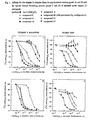
- the relative affinity of the analogues was calculated from their concentration needed to displace 50 % of [ 3 H]1 ⁇ ,25-(OH) 2 D 3 from its receptor compared with 1 ⁇ ,25-(OH) 2 D 3 (assigned a 100 % value). (Table 2).
- the relative affinity for hDBP was measured by incubating [ 3 H]1 ⁇ ,25-(OH) 2 D 3 and increasing concentrations of 1 ⁇ ,25-(OH) 2 D 3 or its analogues with purified hDBP (0.2 ⁇ M) in 1 ml (0.01 M Tris-HCl, 0.154 M NaCI, pH 7.4) for 3 h at 4° C, followed by phase separation by addition of cold dextran-coated charcoal (22,23).
- a suspension of benzeneselenic acid (9.6 g, 0.05 mol) in a mixture of THF (50 ml) and phosphate buffer (0.1M, pH 7, 25 ml) was treated with ca. 30 % hydrogen peroxide (88 g, 0.4 mol) at room temperature.
- reaction mixture was allowed to warm until -30°C and was kept at this temperature for 1 h.
- the reaction mixture was cooled to -78°C and TBDMS-CI (168 mg, 1.12 mmol) was added.
- the reaction mixture was stirred at -78°C for 10 min then was warmed to room temperature very slowly within 1 hour.
- the reaction mixture was refluxed under argon for 17 hours and was then cooled down to room temperature. After dilution with ether, the reaction mixture was washed with 2.5 % HCI aq. solution and water. The organic phase was dried over anhydrous MgSO 4 and concentrated in vacuo.
- reaction mixture is allowed to warm gradually to -78°C, is further stirred for 1 h and then treated with freshly distilled BF 3 .OEt 2 (310 mg, 2.2 mmol), followed by the dropwise addition of 3-methyl-cyclohexenone (116 mg, 1 mmol) in dry ether (2.5 ml).
- the reaction mixture is warmed to -20°C and left at this temperature for 10 h.
- the above solution is poured into aqueous NH 4 Cl/6N HCI (4:1 by volume) and extracted with ether (2x50 ml).
- Aldehyde 6.26 is coupled with 13.1 as described for analogue 11 from 6.12 (yield 91 % with Rf 0.73, Et 2 O:hexane 1:1).
- ozone is passed through a solution of 10.5 (565 mg, 2.121 mmol) in dichloromethane (16.8 ml) and a 2.5M solution of sodium hydroxide in methanol (4.24 ml), until a light blue color is retained.
- the reaction mixture is diluted with diethyl ether and water. After the temperature has raised to room temperature, the organic phase is washed with brine, dried (Na 2 SO 4 ) and the solvent is evaporated. Purification of the residue by column chromatography (hexane:acetone 9:1) and HPLC (hexane:acetone 97:3) gives the ester (405 mg, 64 %).
- reaction mixture was immediately filtered through a silica gel column (EtOAc:Hex 1:30) and the crude product (74 mg) was further purified by HPLC (EtOAc:Hex 1:200) yielding 45.-0 mg (92 %) of coupling product.
- reaction mixture was immediately filtered through a silica gel column (EtOAc:Hex 1:20) and the crude product (117 mg) was further purified by HPLC (EtOAc:Hex 1:200) yielding 66.0 mg (93 %) of coupling product.
- reaction mixture was immediately filtered through a silica gel column (EtOAc:Hex 1:20) and the crude product 44 mg) was further purified by HPLC (EtOAc:Hex 1:140) yielding 32.0 mg (88 %) of coupling product.
- UV : ⁇ max 249.5 nm.
- the 7,8-Z-isomer 40Z is formed (ratio 34:34' 4:1). They can be separated y column chromatography on silver nitrate impregnated silica gel (eluent MeOH:CH2Cl2 1:24 ⁇ . 1:6). 40 : Rf : 0.14 (MeOH:CH 2 Cl 2 1:14 on AgNO 3 -silica gel).
- Tributyltin hydride (0.42 ml, 1.58 mmol) is added dropwise to a solution of 16.4 (200 mg, 0.395 mmol) and AIBN (8 mg) in degassed dry toluene (5 ml).
Landscapes
- Chemical & Material Sciences (AREA)
- Organic Chemistry (AREA)
- Health & Medical Sciences (AREA)
- Life Sciences & Earth Sciences (AREA)
- Animal Behavior & Ethology (AREA)
- General Health & Medical Sciences (AREA)
- General Chemical & Material Sciences (AREA)
- Medicinal Chemistry (AREA)
- Nuclear Medicine, Radiotherapy & Molecular Imaging (AREA)
- Chemical Kinetics & Catalysis (AREA)
- Pharmacology & Pharmacy (AREA)
- Veterinary Medicine (AREA)
- Public Health (AREA)
- Bioinformatics & Cheminformatics (AREA)
- Engineering & Computer Science (AREA)
- Immunology (AREA)
- Diabetes (AREA)
- Dermatology (AREA)
- Rheumatology (AREA)
- Endocrinology (AREA)
- Physical Education & Sports Medicine (AREA)
- Oncology (AREA)
- Orthopedic Medicine & Surgery (AREA)
- Hematology (AREA)
- Virology (AREA)
- Pulmonology (AREA)
- Obesity (AREA)
- Transplantation (AREA)
- Urology & Nephrology (AREA)
- Molecular Biology (AREA)
- Biomedical Technology (AREA)
- Communicable Diseases (AREA)
- Pain & Pain Management (AREA)
- Tropical Medicine & Parasitology (AREA)
- Neurosurgery (AREA)
- AIDS & HIV (AREA)
- Emergency Medicine (AREA)
- Neurology (AREA)
- Pharmaceuticals Containing Other Organic And Inorganic Compounds (AREA)
- Organic Low-Molecular-Weight Compounds And Preparation Thereof (AREA)
Priority Applications (1)
| Application Number | Priority Date | Filing Date | Title |
|---|---|---|---|
| EP99203513A EP0972762B1 (en) | 1993-07-09 | 1994-07-07 | Novel structural analogues of vitamin D |
Applications Claiming Priority (4)
| Application Number | Priority Date | Filing Date | Title |
|---|---|---|---|
| EP93202037 | 1993-07-09 | ||
| EP93202037 | 1993-07-09 | ||
| EP94924749A EP0707566B1 (en) | 1993-07-09 | 1994-07-07 | Novel structural analogues of vitamin d |
| EP99203513A EP0972762B1 (en) | 1993-07-09 | 1994-07-07 | Novel structural analogues of vitamin D |
Related Parent Applications (1)
| Application Number | Title | Priority Date | Filing Date |
|---|---|---|---|
| EP94924749A Division EP0707566B1 (en) | 1993-07-09 | 1994-07-07 | Novel structural analogues of vitamin d |
Publications (3)
| Publication Number | Publication Date |
|---|---|
| EP0972762A2 EP0972762A2 (en) | 2000-01-19 |
| EP0972762A3 EP0972762A3 (en) | 2000-02-23 |
| EP0972762B1 true EP0972762B1 (en) | 2003-10-01 |
Family
ID=8213977
Family Applications (2)
| Application Number | Title | Priority Date | Filing Date |
|---|---|---|---|
| EP99203513A Expired - Lifetime EP0972762B1 (en) | 1993-07-09 | 1994-07-07 | Novel structural analogues of vitamin D |
| EP94924749A Expired - Lifetime EP0707566B1 (en) | 1993-07-09 | 1994-07-07 | Novel structural analogues of vitamin d |
Family Applications After (1)
| Application Number | Title | Priority Date | Filing Date |
|---|---|---|---|
| EP94924749A Expired - Lifetime EP0707566B1 (en) | 1993-07-09 | 1994-07-07 | Novel structural analogues of vitamin d |
Country Status (16)
| Country | Link |
|---|---|
| US (2) | US6017907A (enExample) |
| EP (2) | EP0972762B1 (enExample) |
| JP (2) | JP4235256B2 (enExample) |
| CN (1) | CN1103755C (enExample) |
| AT (2) | ATE191712T1 (enExample) |
| AU (1) | AU699200B2 (enExample) |
| CA (1) | CA2166898C (enExample) |
| DE (2) | DE69433220T2 (enExample) |
| DK (2) | DK0972762T3 (enExample) |
| ES (2) | ES2209327T3 (enExample) |
| GR (1) | GR3033856T3 (enExample) |
| NO (1) | NO314142B1 (enExample) |
| NZ (1) | NZ271332A (enExample) |
| PT (2) | PT707566E (enExample) |
| RU (1) | RU2153491C2 (enExample) |
| WO (1) | WO1995001960A1 (enExample) |
Families Citing this family (59)
| Publication number | Priority date | Publication date | Assignee | Title |
|---|---|---|---|---|
| NZ271332A (en) * | 1993-07-09 | 2001-03-30 | Theramex | Vitamin D analogues and pharmaceutical use |
| US5661140A (en) * | 1994-11-21 | 1997-08-26 | Wisconsin Alumni Research Foundation | 18-nor-vitamin D compounds |
| AU4235696A (en) * | 1994-11-21 | 1996-06-17 | Wisconsin Alumni Research Foundation | 18,19-dinor-vitamin d compounds |
| ATE189812T1 (de) * | 1995-10-30 | 2000-03-15 | Hoffmann La Roche | 1-alpha, 26-dihydroxy-d-homo-vitamin d3 |
| AU7297496A (en) * | 1995-10-31 | 1997-05-22 | F. Hoffmann-La Roche Ag | 24-homo-26,27-hexafluoro-cholecalciferols |
| US5716946A (en) * | 1996-02-13 | 1998-02-10 | Wisconsin Alumni Research Foundation | Multiple sclerosis treatment |
| DE19619036A1 (de) | 1996-04-30 | 1997-11-13 | Schering Ag | Neue Vitamin D-Derivate mit carbo- oder heterocyclischen Substituenten an C-25, Verfahren zu ihrer Herstellung und die Verwendung zur Herstellung von Arzneimitteln |
| ES2173586T3 (es) * | 1997-05-23 | 2002-10-16 | Basilea Pharmaceutica Ag | Derivados de ciclohexandiol. |
| AU735676B2 (en) * | 1997-06-10 | 2001-07-12 | Mrc Holdings Pty Limited | Method of treatment of liver tumours and pharmaceutical compositions for use therein |
| AUPO727097A0 (en) * | 1997-06-10 | 1997-07-03 | Unisearch Limited | Method of treatment of hepatoma and pharmaceutical compositions for use therein |
| CA2303248A1 (en) | 1997-09-08 | 1999-03-18 | F. Hoffmann-La Roche Ag | 1,3-dihydroxy-20,20-dialkyl-vitamin d3 analogs |
| US5919986A (en) * | 1997-10-17 | 1999-07-06 | Hoffmann-La Roche Inc. | D-homo vitamin D3 derivatives |
| AU2549099A (en) * | 1998-02-24 | 1999-09-15 | Chugai Seiyaku Kabushiki Kaisha | 24-hydroxyvitamin d derivatives |
| US6184422B1 (en) * | 1998-02-26 | 2001-02-06 | Hoffman-La Roche Inc. | Cyclohexanediol derivatives |
| JP2002509888A (ja) * | 1998-03-27 | 2002-04-02 | オレゴン ヘルス サイエンシーズ ユニバーシティー | 腫瘍および他の過増殖性疾患の治療におけるビタミンdおよびその類似体 |
| US5962707A (en) * | 1998-08-18 | 1999-10-05 | Wisconsin Alumni Research Foundation | 19-nor-vitamin D3 compounds with calcemic activity |
| US6479474B2 (en) | 1999-07-08 | 2002-11-12 | Wisconsin Alumni Research Foundation | Dietary calcium as a supplement to vitamin D compound treatment of multiple sclerosis |
| DE19935771A1 (de) * | 1999-07-23 | 2001-02-01 | Schering Ag | Neue Vitamin D-Derivate mit cyclischen Substrukturen in den Seitenketten, Verfahren und Zwischenprodukte zu ihrer Herstellung und die Verwendung zur Herstellung von Arzneimitteln |
| US6310262B1 (en) * | 1999-10-18 | 2001-10-30 | Basilea Pharmaceutica Ag | Process for preparing retiferol derivatives |
| US6191292B1 (en) * | 1999-12-08 | 2001-02-20 | Laboratoire Theramex | Precursors of the A-ring of vitamin D and method and intermediates for the preparation thereof |
| JP4970682B2 (ja) * | 1999-12-08 | 2012-07-11 | ラボラトワール テラメックス | ビタミンd前駆物質、方法及び中間体 |
| US7632518B2 (en) * | 2002-01-15 | 2009-12-15 | Dsm Ip Assets B.V. | 25-hydroxy vitamin D3 compositions |
| GB0305332D0 (en) * | 2003-03-10 | 2003-04-09 | Leuven K U Res & Dev | Biological evaluation of novel vitamin D analogues |
| JP2007501864A (ja) * | 2003-06-11 | 2007-02-01 | ノバセア インコーポレイティッド | 活性ビタミンd化合物単独または他の治療薬との併用による、免疫介在疾患の治療法 |
| US20050074443A1 (en) * | 2003-10-03 | 2005-04-07 | Treadwell Benjamin V. | Methods of attenuating autoimmune disease and compositions useful therefor |
| GB0422929D0 (en) * | 2004-10-15 | 2004-11-17 | Leuven K U Res & Dev | Bioactive vitamin D analogues |
| US7713951B2 (en) * | 2004-04-09 | 2010-05-11 | Wisconsin Alumni Research Foundation | 2-alkylidene-18,19-dinor-vitamin D compounds |
| GB0423091D0 (en) * | 2004-10-19 | 2004-11-17 | Leuven K U Res & Dev | Bioactive vitamin d analogues |
| US20080069814A1 (en) * | 2005-01-05 | 2008-03-20 | Novacea, Inc. | Prevention of Thrombotic Disorders with Active Vitamin D Compounds or Mimics Thereof |
| AU2006239883A1 (en) * | 2005-04-22 | 2006-11-02 | Novacea, Inc. | Treatment, prevention and amelioration of pulmonary disorders associated with chemotherapy or radiotherapy with active vitamin D compounds or mimics thereof |
| AU2009206449B2 (en) * | 2008-01-22 | 2014-04-24 | Wisconsin Alumni Research Foundation | 13,13-Dimethyl-des-C,D analogs of 1alpha, 25-dihydroxy-19-nor-vitamin D3 compounds and topical composition dosage forms and methods of treating skin conditions |
| US8109466B2 (en) * | 2008-06-23 | 2012-02-07 | Rohr, Inc. | Thrust reverser cascade assembly and AFT cascade ring with flow deflector portion |
| SG2014006324A (en) * | 2009-01-27 | 2014-03-28 | Berg Llc | Vitamin d3 and analogs thereof for alleviating side effects associated with chemotherapy |
| SI2263677T1 (sl) | 2009-05-20 | 2011-07-29 | Hybrigenics Sa | Nove terapevtske uporabe inecalcitola |
| CN106265695B (zh) | 2009-08-14 | 2021-05-07 | 博格有限责任公司 | 用于治疗脱发的维生素d3及其类似物 |
| DK2360145T3 (da) * | 2010-01-26 | 2012-07-09 | Hybrigenics Sa | Hidtil ukendt fremgangsmåde til isomerisering af kondenserede bicykliske strukturer og fremstilling af D-vitaminanaloger, der omfatter disse |
| PL2572204T3 (pl) | 2010-05-20 | 2018-05-30 | F.Hoffmann-La Roche Ag | Odczynnik do uwalniania dla związków witaminy d |
| EP2407152A1 (en) | 2010-07-15 | 2012-01-18 | Hybrigenics S.A. | Formulations of 14-epi-analogues of vitamin D |
| US20120015913A1 (en) | 2010-07-15 | 2012-01-19 | Delansorne Remi | Formulations of 14-EPI-Analogues of Vitamin D |
| EP2407155B1 (en) * | 2010-07-15 | 2012-12-26 | Hybrigenics S.A. | Formulations of inecalcitol |
| EP2780720A1 (en) | 2011-11-18 | 2014-09-24 | F.Hoffmann-La Roche Ag | Release reagent for vitamin d compounds |
| EP2785687B1 (en) * | 2011-11-30 | 2019-02-20 | Sandoz AG | Process for preparation of (3r)-2,4-di-leaving group-3-methylbut-1-ene |
| JP2015501818A (ja) | 2011-12-16 | 2015-01-19 | アルフォラ リサーチ インコーポレイテッドAlphora Research Inc. | 3−((2s,5s)−4−メチレン−5−(3−オキソプロピル)テトラヒドロフラン−2−イル)プロパノール誘導体およびそれらの有用な中間体を調製する方法 |
| JP6300030B2 (ja) | 2011-12-29 | 2018-03-28 | サンド アクツィエンゲゼルシャフト | 2−((2s,3s,4r,5r)−5−((s)−3−アミノ−2−ヒドロキシプロプ−1−イル)−4−メトキシ−3−(フェニルスルホニルメチル)テトラヒドロフラン−2−イル)アセトアルデヒド誘導体およびこれらを調製するためのプロセス |
| CA2868627C (en) | 2012-03-30 | 2021-02-16 | Alphora Research Inc. | Synthetic process for preparation of macrocyclic c1-keto analogs of halichondrin b and intermediates useful therein |
| MX2015011280A (es) | 2013-03-14 | 2016-03-03 | Aquinox Pharmaceuticals Canada Inc | Moduladores de ship1 y metodos relacionados con los mismos. |
| US9765085B2 (en) | 2013-03-14 | 2017-09-19 | Aquinox Pharmaceuticals (Canada) Inc. | SHIP1 modulators and methods related thereto |
| CN105492081A (zh) | 2013-05-29 | 2016-04-13 | 博格有限责任公司 | 使用维生素d预防或减轻化疗诱发的脱发 |
| GB2515128B (en) | 2013-06-10 | 2015-05-27 | Givaudan Sa | Improvements in or relating to organic compounds |
| US9682914B2 (en) | 2014-01-13 | 2017-06-20 | P2 Science, Inc. | Terpene-derived acids and esters and methods for preparing and using same |
| EP3157898B1 (en) | 2014-06-20 | 2022-08-10 | P2 Science, Inc. | Film ozonolysis in a tubular or multitubular reactor |
| WO2016022803A2 (en) * | 2014-08-06 | 2016-02-11 | P2 Science, Inc. | Fragrances from the esters of fatty acids |
| GB201421855D0 (en) * | 2014-12-09 | 2015-01-21 | Givaudan Sa | Improvements in or relating to organic compounds |
| AU2016281658A1 (en) | 2015-06-26 | 2017-12-07 | Aquinox Pharmaceuticals (Canada) Inc. | Crystalline solid forms of the acetate salt of (1s,3s,4r)-4-((3as,4r,5s,7as)-4-(aminomethyl)-7a-methyl-1-methyleneoctahydro-1h-inden-5-yl)-3-(hydroxymethyl)-4-methylcyclohexanol |
| AU2017209430A1 (en) | 2016-01-20 | 2018-07-12 | Aquinox Pharmaceuticals (Canada) Inc. | Synthesis of a substituted indene derivative |
| WO2017223220A1 (en) | 2016-06-21 | 2017-12-28 | P2 Science, Inc. | Flow-through reactors for the continuous quenching of peroxide mixtures and methods comprising the same |
| US10696605B2 (en) | 2016-09-16 | 2020-06-30 | P2 Science, Inc. | Uses of vanadium to oxidize aldehydes and ozonides |
| CA3114469A1 (en) | 2018-10-19 | 2020-04-23 | P2 Science, Inc. | New methods for disproportionation quenching of ozonides |
| CN110330522A (zh) * | 2019-07-29 | 2019-10-15 | 南京海融医药科技股份有限公司 | 一种帕立骨化醇异构体杂质py5的制备方法 |
Family Cites Families (8)
| Publication number | Priority date | Publication date | Assignee | Title |
|---|---|---|---|---|
| JPS61501146A (ja) * | 1984-01-30 | 1986-06-12 | ウイスコンシン アラムナイ リサ−チ フォンデ−ション | 側鎖不飽和1−ヒドロキシビタミンd化合物 |
| NZ232734A (en) * | 1989-03-09 | 1991-11-26 | Wisconsin Alumni Res Found | 19-nor vitamin d derivatives and pharmaceutical compositions |
| CA1333616C (en) * | 1989-03-09 | 1994-12-20 | Hector F. Deluca | 19-nor-vitamin d compounds |
| DE3913310A1 (de) * | 1989-04-20 | 1990-10-25 | Schering Ag | Spirocyclopropane in der vitamin d-reihe |
| AU650751B2 (en) * | 1991-05-28 | 1994-06-30 | Wisconsin Alumni Research Foundation | Novel synthesis of 19-nor vitamin D compounds |
| AU666563B2 (en) * | 1992-08-07 | 1996-02-15 | Wisconsin Alumni Research Foundation | Preparation of 19-nor-vitamin D compounds |
| IL107185A (en) * | 1992-10-06 | 1998-02-22 | Schering Ag | Vitamin d, 25-carboxylic acid derivatives and pharmaceutical compositions containing the same |
| NZ271332A (en) * | 1993-07-09 | 2001-03-30 | Theramex | Vitamin D analogues and pharmaceutical use |
-
1994
- 1994-07-07 NZ NZ271332A patent/NZ271332A/en not_active IP Right Cessation
- 1994-07-07 DE DE69433220T patent/DE69433220T2/de not_active Expired - Lifetime
- 1994-07-07 PT PT94924749T patent/PT707566E/pt unknown
- 1994-07-07 EP EP99203513A patent/EP0972762B1/en not_active Expired - Lifetime
- 1994-07-07 EP EP94924749A patent/EP0707566B1/en not_active Expired - Lifetime
- 1994-07-07 CA CA002166898A patent/CA2166898C/en not_active Expired - Lifetime
- 1994-07-07 DK DK99203513T patent/DK0972762T3/da active
- 1994-07-07 AT AT94924749T patent/ATE191712T1/de active
- 1994-07-07 WO PCT/EP1994/002294 patent/WO1995001960A1/en not_active Ceased
- 1994-07-07 ES ES99203513T patent/ES2209327T3/es not_active Expired - Lifetime
- 1994-07-07 AT AT99203513T patent/ATE251133T1/de active
- 1994-07-07 AU AU74927/94A patent/AU699200B2/en not_active Expired
- 1994-07-07 JP JP50383595A patent/JP4235256B2/ja not_active Expired - Lifetime
- 1994-07-07 ES ES94924749T patent/ES2147238T3/es not_active Expired - Lifetime
- 1994-07-07 DE DE69423966T patent/DE69423966T2/de not_active Expired - Lifetime
- 1994-07-07 RU RU96104272/04A patent/RU2153491C2/ru active
- 1994-07-07 PT PT99203513T patent/PT972762E/pt unknown
- 1994-07-07 CN CN94193323A patent/CN1103755C/zh not_active Expired - Lifetime
- 1994-07-07 DK DK94924749T patent/DK0707566T3/da active
- 1994-07-07 US US08/571,887 patent/US6017907A/en not_active Expired - Lifetime
-
1996
- 1996-01-09 NO NO19960099A patent/NO314142B1/no not_active IP Right Cessation
-
1999
- 1999-10-28 US US09/428,927 patent/US6548715B1/en not_active Expired - Fee Related
-
2000
- 2000-06-30 GR GR20000401558T patent/GR3033856T3/el unknown
-
2005
- 2005-09-01 JP JP2005253297A patent/JP4312183B2/ja not_active Expired - Fee Related
Also Published As
Similar Documents
| Publication | Publication Date | Title |
|---|---|---|
| US6548715B1 (en) | Structural analogues of vitamin D | |
| JP4035143B2 (ja) | 2−アルキル−19−ノル−ビタミンd化合物 | |
| US7531527B2 (en) | 2-Propylidene-19-nor-vitamin D compounds | |
| MXPA06005887A (es) | Analogos de vitamina d para la prevencion y el tratamiento de la obesidad. | |
| JP2004500414A (ja) | 26,27−同族体化−20−エピ−2−アルキル−19−ノルビタミンd化合物 | |
| AU5693096A (en) | New vitamin D derivatives with substituents at C-25, process for their production, intermediate products and use for the production of pharmaceutical agents | |
| US20100179344A1 (en) | 2-Alkylidene-18,19-Dinor-Vitamin D Compounds | |
| AU2011232633B2 (en) | (20S)-2-methylene-19-nor-22-dimethyl-1alpha,25- dihydroxyvitamin D3 and (20R)-2-methylene-19-nor-22- dimethyl-1alpha,25-hydroxyvitamin D3 | |
| AU2006230296B2 (en) | 2-methylene-19-nor-(23s)-25-dehydro-1alpha-hydroxyvitamin D3-26,23-lactone and 2-methylene-19-nor-(23R)-25-dehydro-1alpha-hydroxyvitamin D3-26,23-lactone | |
| AU2012262174A1 (en) | (22E)-2-methylene-26,27-cyclo-22-dehydro-1alpha-hydroxy-19-norvitamin D3 derivatives | |
| DE69818673T2 (de) | Dihomo-seco-cholestan-verbindungen mit zwei ungesättigten bindungen in der seitenkette | |
| AU2010324596A1 (en) | 2-methylene-19,26-nor-(20S)-1alpha-hydroxyvitamin D3 | |
| JP5814247B2 (ja) | 1−デソキシ−2−メチレン−19−ノル−ビタミンd類似体及びそれらの使用 | |
| JPH10509716A (ja) | 18−ノルビタミンd化合物 | |
| AU2011232562A1 (en) | Diastereomers of 2-methylene-19-nor-22-methyl-1alpha,25- dihydroxyvitamin D3 |
Legal Events
| Date | Code | Title | Description |
|---|---|---|---|
| PUAI | Public reference made under article 153(3) epc to a published international application that has entered the european phase |
Free format text: ORIGINAL CODE: 0009012 |
|
| PUAL | Search report despatched |
Free format text: ORIGINAL CODE: 0009013 |
|
| AC | Divisional application: reference to earlier application |
Ref document number: 707566 Country of ref document: EP |
|
| AK | Designated contracting states |
Kind code of ref document: A2 Designated state(s): AT BE CH DE DK ES FR GB GR IE IT LI LU MC NL PT SE |
|
| AK | Designated contracting states |
Kind code of ref document: A3 Designated state(s): AT BE CH DE DK ES FR GB GR IE IT LI LU MC NL PT SE |
|
| RIN1 | Information on inventor provided before grant (corrected) |
Inventor name: DE CLERCQ, PIERRE, JEAN Inventor name: VANDEWALLE, MAURITS Inventor name: BOUILLON, ROGER |
|
| RIN1 | Information on inventor provided before grant (corrected) |
Inventor name: DE CLERCQ, PIERRE JEAN Inventor name: VANDEWALLE, MAURITS Inventor name: BOUILLON, ROGER |
|
| 17P | Request for examination filed |
Effective date: 20000602 |
|
| AKX | Designation fees paid |
Free format text: AT BE CH DE DK ES FR GB GR IE IT LI LU MC NL PT SE |
|
| 17Q | First examination report despatched |
Effective date: 20020517 |
|
| GRAH | Despatch of communication of intention to grant a patent |
Free format text: ORIGINAL CODE: EPIDOS IGRA |
|
| GRAH | Despatch of communication of intention to grant a patent |
Free format text: ORIGINAL CODE: EPIDOS IGRA |
|
| GRAA | (expected) grant |
Free format text: ORIGINAL CODE: 0009210 |
|
| AC | Divisional application: reference to earlier application |
Ref document number: 0707566 Country of ref document: EP Kind code of ref document: P |
|
| AK | Designated contracting states |
Kind code of ref document: B1 Designated state(s): AT BE CH DE DK ES FR GB GR IE IT LI LU MC NL PT SE |
|
| PG25 | Lapsed in a contracting state [announced via postgrant information from national office to epo] |
Ref country code: BE Free format text: LAPSE BECAUSE OF FAILURE TO SUBMIT A TRANSLATION OF THE DESCRIPTION OR TO PAY THE FEE WITHIN THE PRESCRIBED TIME-LIMIT Effective date: 20031001 |
|
| REG | Reference to a national code |
Ref country code: GB Ref legal event code: FG4D |
|
| REG | Reference to a national code |
Ref country code: CH Ref legal event code: EP |
|
| REG | Reference to a national code |
Ref country code: IE Ref legal event code: FG4D |
|
| REF | Corresponds to: |
Ref document number: 69433220 Country of ref document: DE Date of ref document: 20031106 Kind code of ref document: P |
|
| REG | Reference to a national code |
Ref country code: CH Ref legal event code: NV Representative=s name: BOVARD AG PATENTANWAELTE |
|
| REG | Reference to a national code |
Ref country code: GR Ref legal event code: EP Ref document number: 20030405271 Country of ref document: GR |
|
| REG | Reference to a national code |
Ref country code: SE Ref legal event code: TRGR |
|
| REG | Reference to a national code |
Ref country code: DK Ref legal event code: T3 |
|
| REG | Reference to a national code |
Ref country code: ES Ref legal event code: FG2A Ref document number: 2209327 Country of ref document: ES Kind code of ref document: T3 |
|
| ET | Fr: translation filed | ||
| PG25 | Lapsed in a contracting state [announced via postgrant information from national office to epo] |
Ref country code: MC Free format text: LAPSE BECAUSE OF NON-PAYMENT OF DUE FEES Effective date: 20040731 |
|
| PLBE | No opposition filed within time limit |
Free format text: ORIGINAL CODE: 0009261 |
|
| STAA | Information on the status of an ep patent application or granted ep patent |
Free format text: STATUS: NO OPPOSITION FILED WITHIN TIME LIMIT |
|
| 26N | No opposition filed |
Effective date: 20040702 |
|
| REG | Reference to a national code |
Ref country code: CH Ref legal event code: PUE Owner name: UNIVERSITEIT GENT Free format text: LABORATOIRE THERAMEX#IMMEUBLE DES INDUSTRIES, 6, AVENUE DU PRINCE HEREDITAIRE ALBERT#98000 MONACO (MC) -TRANSFER TO- UNIVERSITEIT GENT#SINT-PIETERSNIEUWSTRAAT 25#9000 GENT (BE) $ K.U. LEUVEN RESEARCH & DEVELOPMENT#MINDERBROEDERSTRAAT 8A - BUS 5105#3000 LEUVEN (BE) $ ROGER BOUILLON#SCHOONZICHTLAAN 22#3020 HERENT (BE) |
|
| REG | Reference to a national code |
Ref country code: PT Ref legal event code: TE4A Owner name: DOMPE` PHA.R.MA S.P.A., IT Effective date: 20070601 Ref country code: PT Ref legal event code: PC4A Owner name: K.U.LEUVEN RESEARCH & DEVELOPMENT, BE Effective date: 20070601 Ref country code: PT Ref legal event code: PC4A Owner name: UNIVERSITEIT GENT, BE Effective date: 20070601 Ref country code: PT Ref legal event code: PC4A Owner name: ROGER BOUILLON, BE Effective date: 20070601 |
|
| NLS | Nl: assignments of ep-patents |
Owner name: UNIVERSITEIT GENT Effective date: 20070507 Owner name: R. BOUILLON Effective date: 20070507 Owner name: K.U. LEUVEN RESEARCH & DEVELOPMENT Effective date: 20070507 |
|
| REG | Reference to a national code |
Ref country code: FR Ref legal event code: TQ |
|
| REG | Reference to a national code |
Ref country code: CH Ref legal event code: PFA Owner name: UNIVERSITEIT GENT Free format text: UNIVERSITEIT GENT#SINT-PIETERSNIEUWSTRAAT 25#9000 GENT (BE) $ K.U. LEUVEN RESEARCH & DEVELOPMENT#MINDERBROEDERSTRAAT 8A - BUS 5105#3000 LEUVEN (BE) $ ROGER BOUILLON#SCHOONZICHTLAAN 22#3020 HERENT (BE) -TRANSFER TO- UNIVERSITEIT GENT#SINT-PIETERSNIEUWSTRAAT 25#9000 GENT (BE) $ K.U. LEUVEN RESEARCH & DEVELOPMENT#MINDERBROEDERSTRAAT 8A - BUS 5105#3000 LEUVEN (BE) $ ROGER BOUILLON#SCHOONZICHTLAAN 22#3020 HERENT (BE) |
|
| PGFP | Annual fee paid to national office [announced via postgrant information from national office to epo] |
Ref country code: PT Payment date: 20110627 Year of fee payment: 18 |
|
| PGFP | Annual fee paid to national office [announced via postgrant information from national office to epo] |
Ref country code: LU Payment date: 20110728 Year of fee payment: 18 |
|
| PGFP | Annual fee paid to national office [announced via postgrant information from national office to epo] |
Ref country code: DK Payment date: 20110722 Year of fee payment: 18 Ref country code: CH Payment date: 20110715 Year of fee payment: 18 Ref country code: FR Payment date: 20110715 Year of fee payment: 18 Ref country code: IE Payment date: 20110725 Year of fee payment: 18 |
|
| PGFP | Annual fee paid to national office [announced via postgrant information from national office to epo] |
Ref country code: ES Payment date: 20110830 Year of fee payment: 18 Ref country code: DE Payment date: 20110713 Year of fee payment: 18 Ref country code: AT Payment date: 20110720 Year of fee payment: 18 Ref country code: GB Payment date: 20110722 Year of fee payment: 18 Ref country code: GR Payment date: 20110726 Year of fee payment: 18 Ref country code: SE Payment date: 20110726 Year of fee payment: 18 |
|
| PGFP | Annual fee paid to national office [announced via postgrant information from national office to epo] |
Ref country code: IT Payment date: 20110727 Year of fee payment: 18 Ref country code: NL Payment date: 20110727 Year of fee payment: 18 Ref country code: BE Payment date: 20110727 Year of fee payment: 18 |
|
| REG | Reference to a national code |
Ref country code: PT Ref legal event code: MM4A Free format text: LAPSE DUE TO NON-PAYMENT OF FEES Effective date: 20130107 |
|
| BERE | Be: lapsed |
Owner name: *UNIVERSITEIT GENT Effective date: 20120731 Owner name: ROGER *BOUILLON Effective date: 20120731 Owner name: *KU LEUVEN RESEARCH & DEVELOPMENT Effective date: 20120731 |
|
| REG | Reference to a national code |
Ref country code: NL Ref legal event code: V1 Effective date: 20130201 |
|
| REG | Reference to a national code |
Ref country code: CH Ref legal event code: PL |
|
| REG | Reference to a national code |
Ref country code: GR Ref legal event code: ML Ref document number: 20030405271 Country of ref document: GR Effective date: 20130104 |
|
| REG | Reference to a national code |
Ref country code: SE Ref legal event code: EUG |
|
| REG | Reference to a national code |
Ref country code: AT Ref legal event code: MM01 Ref document number: 251133 Country of ref document: AT Kind code of ref document: T Effective date: 20120707 |
|
| GBPC | Gb: european patent ceased through non-payment of renewal fee |
Effective date: 20120707 |
|
| REG | Reference to a national code |
Ref country code: DK Ref legal event code: EBP |
|
| REG | Reference to a national code |
Ref country code: FR Ref legal event code: ST Effective date: 20130329 |
|
| PG25 | Lapsed in a contracting state [announced via postgrant information from national office to epo] |
Ref country code: NL Free format text: LAPSE BECAUSE OF NON-PAYMENT OF DUE FEES Effective date: 20130201 Ref country code: DE Free format text: LAPSE BECAUSE OF NON-PAYMENT OF DUE FEES Effective date: 20130201 Ref country code: GB Free format text: LAPSE BECAUSE OF NON-PAYMENT OF DUE FEES Effective date: 20120707 Ref country code: LI Free format text: LAPSE BECAUSE OF NON-PAYMENT OF DUE FEES Effective date: 20120731 Ref country code: SE Free format text: LAPSE BECAUSE OF NON-PAYMENT OF DUE FEES Effective date: 20120708 Ref country code: FR Free format text: LAPSE BECAUSE OF NON-PAYMENT OF DUE FEES Effective date: 20120731 Ref country code: CH Free format text: LAPSE BECAUSE OF NON-PAYMENT OF DUE FEES Effective date: 20120731 |
|
| REG | Reference to a national code |
Ref country code: IE Ref legal event code: MM4A |
|
| REG | Reference to a national code |
Ref country code: DE Ref legal event code: R119 Ref document number: 69433220 Country of ref document: DE Effective date: 20130201 |
|
| PG25 | Lapsed in a contracting state [announced via postgrant information from national office to epo] |
Ref country code: GR Free format text: LAPSE BECAUSE OF NON-PAYMENT OF DUE FEES Effective date: 20130204 Ref country code: PT Free format text: LAPSE BECAUSE OF NON-PAYMENT OF DUE FEES Effective date: 20130107 Ref country code: IT Free format text: LAPSE BECAUSE OF NON-PAYMENT OF DUE FEES Effective date: 20120707 Ref country code: BE Free format text: LAPSE BECAUSE OF FAILURE TO SUBMIT A TRANSLATION OF THE DESCRIPTION OR TO PAY THE FEE WITHIN THE PRESCRIBED TIME-LIMIT Effective date: 20120731 |
|
| PG25 | Lapsed in a contracting state [announced via postgrant information from national office to epo] |
Ref country code: AT Free format text: LAPSE BECAUSE OF NON-PAYMENT OF DUE FEES Effective date: 20120707 |
|
| PG25 | Lapsed in a contracting state [announced via postgrant information from national office to epo] |
Ref country code: DK Free format text: LAPSE BECAUSE OF NON-PAYMENT OF DUE FEES Effective date: 20120731 Ref country code: IE Free format text: LAPSE BECAUSE OF NON-PAYMENT OF DUE FEES Effective date: 20120707 |
|
| REG | Reference to a national code |
Ref country code: ES Ref legal event code: FD2A Effective date: 20131021 |
|
| PG25 | Lapsed in a contracting state [announced via postgrant information from national office to epo] |
Ref country code: ES Free format text: LAPSE BECAUSE OF NON-PAYMENT OF DUE FEES Effective date: 20120708 |
|
| PG25 | Lapsed in a contracting state [announced via postgrant information from national office to epo] |
Ref country code: LU Free format text: LAPSE BECAUSE OF NON-PAYMENT OF DUE FEES Effective date: 20120707 |