EP0832136B1 - Polymerer trägerkatalysator zur olefinpolymerisation - Google Patents
Polymerer trägerkatalysator zur olefinpolymerisation Download PDFInfo
- Publication number
- EP0832136B1 EP0832136B1 EP96913363A EP96913363A EP0832136B1 EP 0832136 B1 EP0832136 B1 EP 0832136B1 EP 96913363 A EP96913363 A EP 96913363A EP 96913363 A EP96913363 A EP 96913363A EP 0832136 B1 EP0832136 B1 EP 0832136B1
- Authority
- EP
- European Patent Office
- Prior art keywords
- supported metallocene
- metallocene catalyst
- cyclopentadienyl
- zirconium
- borate
- Prior art date
- Legal status (The legal status is an assumption and is not a legal conclusion. Google has not performed a legal analysis and makes no representation as to the accuracy of the status listed.)
- Expired - Lifetime
Links
- 238000006116 polymerization reaction Methods 0.000 title claims abstract description 31
- 239000003054 catalyst Substances 0.000 title claims description 44
- 229920000642 polymer Polymers 0.000 title claims description 35
- 150000001336 alkenes Chemical class 0.000 title claims description 6
- JRZJOMJEPLMPRA-UHFFFAOYSA-N olefin Natural products CCCCCCCC=C JRZJOMJEPLMPRA-UHFFFAOYSA-N 0.000 title description 4
- 239000012968 metallocene catalyst Substances 0.000 claims abstract description 62
- 229920001577 copolymer Polymers 0.000 claims abstract description 60
- 239000004711 α-olefin Substances 0.000 claims abstract description 30
- 239000000463 material Substances 0.000 claims abstract description 18
- WYURNTSHIVDZCO-UHFFFAOYSA-N Tetrahydrofuran Chemical compound C1CCOC1 WYURNTSHIVDZCO-UHFFFAOYSA-N 0.000 claims description 64
- 239000002245 particle Substances 0.000 claims description 49
- -1 ethylene, propylene Chemical group 0.000 claims description 42
- 150000001875 compounds Chemical class 0.000 claims description 38
- 238000000034 method Methods 0.000 claims description 38
- 239000000843 powder Substances 0.000 claims description 36
- YLQBMQCUIZJEEH-UHFFFAOYSA-N tetrahydrofuran Natural products C=1C=COC=1 YLQBMQCUIZJEEH-UHFFFAOYSA-N 0.000 claims description 32
- 229920006225 ethylene-methyl acrylate Polymers 0.000 claims description 29
- BTBUEUYNUDRHOZ-UHFFFAOYSA-N Borate Chemical compound [O-]B([O-])[O-] BTBUEUYNUDRHOZ-UHFFFAOYSA-N 0.000 claims description 22
- NFHFRUOZVGFOOS-UHFFFAOYSA-N palladium;triphenylphosphane Chemical compound [Pd].C1=CC=CC=C1P(C=1C=CC=CC=1)C1=CC=CC=C1.C1=CC=CC=C1P(C=1C=CC=CC=1)C1=CC=CC=C1.C1=CC=CC=C1P(C=1C=CC=CC=1)C1=CC=CC=C1.C1=CC=CC=C1P(C=1C=CC=CC=1)C1=CC=CC=C1 NFHFRUOZVGFOOS-UHFFFAOYSA-N 0.000 claims description 22
- 230000008569 process Effects 0.000 claims description 22
- 125000000538 pentafluorophenyl group Chemical group FC1=C(F)C(F)=C(*)C(F)=C1F 0.000 claims description 21
- NIXOWILDQLNWCW-UHFFFAOYSA-M Acrylate Chemical compound [O-]C(=O)C=C NIXOWILDQLNWCW-UHFFFAOYSA-M 0.000 claims description 18
- 125000004432 carbon atom Chemical group C* 0.000 claims description 18
- 229910052751 metal Inorganic materials 0.000 claims description 17
- 239000002184 metal Substances 0.000 claims description 17
- 150000003623 transition metal compounds Chemical class 0.000 claims description 17
- 239000002685 polymerization catalyst Substances 0.000 claims description 13
- 239000002904 solvent Substances 0.000 claims description 13
- 229910052723 transition metal Inorganic materials 0.000 claims description 13
- RTZKZFJDLAIYFH-UHFFFAOYSA-N Diethyl ether Chemical compound CCOCC RTZKZFJDLAIYFH-UHFFFAOYSA-N 0.000 claims description 12
- VGGSQFUCUMXWEO-UHFFFAOYSA-N Ethene Chemical compound C=C VGGSQFUCUMXWEO-UHFFFAOYSA-N 0.000 claims description 12
- 239000005977 Ethylene Substances 0.000 claims description 12
- 150000003624 transition metals Chemical class 0.000 claims description 12
- 125000000058 cyclopentadienyl group Chemical group C1(=CC=CC1)* 0.000 claims description 11
- 239000000203 mixture Substances 0.000 claims description 11
- 125000000217 alkyl group Chemical group 0.000 claims description 10
- 230000000737 periodic effect Effects 0.000 claims description 10
- 230000000379 polymerizing effect Effects 0.000 claims description 10
- 229920000089 Cyclic olefin copolymer Polymers 0.000 claims description 9
- BAPJBEWLBFYGME-UHFFFAOYSA-N Methyl acrylate Chemical group COC(=O)C=C BAPJBEWLBFYGME-UHFFFAOYSA-N 0.000 claims description 8
- ZSWFCLXCOIISFI-UHFFFAOYSA-N endo-cyclopentadiene Natural products C1C=CC=C1 ZSWFCLXCOIISFI-UHFFFAOYSA-N 0.000 claims description 8
- 239000003607 modifier Substances 0.000 claims description 8
- YBYIRNPNPLQARY-UHFFFAOYSA-N 1H-indene Chemical group C1=CC=C2CC=CC2=C1 YBYIRNPNPLQARY-UHFFFAOYSA-N 0.000 claims description 7
- 125000003118 aryl group Chemical group 0.000 claims description 7
- 125000003983 fluorenyl group Chemical group C1(=CC=CC=2C3=CC=CC=C3CC12)* 0.000 claims description 7
- 125000003454 indenyl group Chemical group C1(C=CC2=CC=CC=C12)* 0.000 claims description 7
- 239000000155 melt Substances 0.000 claims description 7
- 239000011148 porous material Substances 0.000 claims description 7
- DUNKXUFBGCUVQW-UHFFFAOYSA-J zirconium tetrachloride Chemical compound Cl[Zr](Cl)(Cl)Cl DUNKXUFBGCUVQW-UHFFFAOYSA-J 0.000 claims description 7
- DGAQECJNVWCQMB-PUAWFVPOSA-M Ilexoside XXIX Chemical compound C[C@@H]1CC[C@@]2(CC[C@@]3(C(=CC[C@H]4[C@]3(CC[C@@H]5[C@@]4(CC[C@@H](C5(C)C)OS(=O)(=O)[O-])C)C)[C@@H]2[C@]1(C)O)C)C(=O)O[C@H]6[C@@H]([C@H]([C@@H]([C@H](O6)CO)O)O)O.[Na+] DGAQECJNVWCQMB-PUAWFVPOSA-M 0.000 claims description 6
- WHXSMMKQMYFTQS-UHFFFAOYSA-N Lithium Chemical compound [Li] WHXSMMKQMYFTQS-UHFFFAOYSA-N 0.000 claims description 6
- 229910052744 lithium Inorganic materials 0.000 claims description 6
- 229910052708 sodium Inorganic materials 0.000 claims description 6
- 239000011734 sodium Substances 0.000 claims description 6
- 229910052726 zirconium Inorganic materials 0.000 claims description 6
- 239000012298 atmosphere Substances 0.000 claims description 5
- 239000001257 hydrogen Substances 0.000 claims description 5
- 229910052739 hydrogen Inorganic materials 0.000 claims description 5
- LCGLNKUTAGEVQW-UHFFFAOYSA-N Dimethyl ether Chemical compound COC LCGLNKUTAGEVQW-UHFFFAOYSA-N 0.000 claims description 4
- 125000003545 alkoxy group Chemical group 0.000 claims description 4
- 125000004122 cyclic group Chemical group 0.000 claims description 4
- USIUVYZYUHIAEV-UHFFFAOYSA-N diphenyl ether Chemical compound C=1C=CC=CC=1OC1=CC=CC=C1 USIUVYZYUHIAEV-UHFFFAOYSA-N 0.000 claims description 4
- 239000005043 ethylene-methyl acrylate Substances 0.000 claims description 4
- 150000004820 halides Chemical group 0.000 claims description 4
- 125000001183 hydrocarbyl group Chemical group 0.000 claims description 4
- 125000004435 hydrogen atom Chemical group [H]* 0.000 claims description 4
- 230000003647 oxidation Effects 0.000 claims description 4
- 238000007254 oxidation reaction Methods 0.000 claims description 4
- OHUVHDUNQKJDKW-UHFFFAOYSA-N sodium;cyclopenta-1,3-diene Chemical compound [Na+].C=1C=C[CH-]C=1 OHUVHDUNQKJDKW-UHFFFAOYSA-N 0.000 claims description 4
- JFWBIRAGFWPMTI-UHFFFAOYSA-N [Zr].[CH]1C=CC=C1 Chemical compound [Zr].[CH]1C=CC=C1 JFWBIRAGFWPMTI-UHFFFAOYSA-N 0.000 claims description 3
- 150000008282 halocarbons Chemical class 0.000 claims description 3
- 150000004678 hydrides Chemical class 0.000 claims description 3
- 125000002496 methyl group Chemical group [H]C([H])([H])* 0.000 claims description 3
- 150000002902 organometallic compounds Chemical class 0.000 claims description 3
- OSCBARYHPZZEIS-UHFFFAOYSA-N phenoxyboronic acid Chemical class OB(O)OC1=CC=CC=C1 OSCBARYHPZZEIS-UHFFFAOYSA-N 0.000 claims description 3
- 125000004178 (C1-C4) alkyl group Chemical group 0.000 claims description 2
- RYHBNJHYFVUHQT-UHFFFAOYSA-N 1,4-Dioxane Chemical compound C1COCCO1 RYHBNJHYFVUHQT-UHFFFAOYSA-N 0.000 claims description 2
- DURPTKYDGMDSBL-UHFFFAOYSA-N 1-butoxybutane Chemical compound CCCCOCCCC DURPTKYDGMDSBL-UHFFFAOYSA-N 0.000 claims description 2
- QLZJUIZVJLSNDD-UHFFFAOYSA-N 2-(2-methylidenebutanoyloxy)ethyl 2-methylidenebutanoate Chemical compound CCC(=C)C(=O)OCCOC(=O)C(=C)CC QLZJUIZVJLSNDD-UHFFFAOYSA-N 0.000 claims description 2
- XJCVRTZCHMZPBD-UHFFFAOYSA-N 3-nitroaniline Chemical compound NC1=CC=CC([N+]([O-])=O)=C1 XJCVRTZCHMZPBD-UHFFFAOYSA-N 0.000 claims description 2
- ATVJXMYDOSMEPO-UHFFFAOYSA-N 3-prop-2-enoxyprop-1-ene Chemical compound C=CCOCC=C ATVJXMYDOSMEPO-UHFFFAOYSA-N 0.000 claims description 2
- 238000004438 BET method Methods 0.000 claims description 2
- GITMDWVUBQTFQD-UHFFFAOYSA-N CO[Ti](OC)(OC)OC.[Ti] Chemical compound CO[Ti](OC)(OC)OC.[Ti] GITMDWVUBQTFQD-UHFFFAOYSA-N 0.000 claims description 2
- OAEWLULEWYPRGF-UHFFFAOYSA-K Cl[Hf](Cl)(Cl)C1C=CC=C1 Chemical compound Cl[Hf](Cl)(Cl)C1C=CC=C1 OAEWLULEWYPRGF-UHFFFAOYSA-K 0.000 claims description 2
- ZAFNJMIOTHYJRJ-UHFFFAOYSA-N Diisopropyl ether Chemical compound CC(C)OC(C)C ZAFNJMIOTHYJRJ-UHFFFAOYSA-N 0.000 claims description 2
- AFBPFSWMIHJQDM-UHFFFAOYSA-N N-methylaniline Chemical compound CNC1=CC=CC=C1 AFBPFSWMIHJQDM-UHFFFAOYSA-N 0.000 claims description 2
- PQBAWAQIRZIWIV-UHFFFAOYSA-N N-methylpyridinium Chemical compound C[N+]1=CC=CC=C1 PQBAWAQIRZIWIV-UHFFFAOYSA-N 0.000 claims description 2
- ZLMJMSJWJFRBEC-UHFFFAOYSA-N Potassium Chemical compound [K] ZLMJMSJWJFRBEC-UHFFFAOYSA-N 0.000 claims description 2
- QYKIQEUNHZKYBP-UHFFFAOYSA-N Vinyl ether Chemical compound C=COC=C QYKIQEUNHZKYBP-UHFFFAOYSA-N 0.000 claims description 2
- MOJAODGMTBYHIE-UHFFFAOYSA-K [Br-].[Br-].[Br-].C1(C=CC=C1)[Zr+3] Chemical compound [Br-].[Br-].[Br-].C1(C=CC=C1)[Zr+3] MOJAODGMTBYHIE-UHFFFAOYSA-K 0.000 claims description 2
- HVBGBVXHGSELCT-UHFFFAOYSA-N [Ca](C1C=CC=C1)C1C=CC=C1 Chemical compound [Ca](C1C=CC=C1)C1C=CC=C1 HVBGBVXHGSELCT-UHFFFAOYSA-N 0.000 claims description 2
- INFIEBBLRDHFRQ-UHFFFAOYSA-L [Cl-].[Cl-].C1(C=CC=C1)[Zr+2]N(C)C Chemical compound [Cl-].[Cl-].C1(C=CC=C1)[Zr+2]N(C)C INFIEBBLRDHFRQ-UHFFFAOYSA-L 0.000 claims description 2
- USZGMDQWECZTIQ-UHFFFAOYSA-N [Mg](C1C=CC=C1)C1C=CC=C1 Chemical compound [Mg](C1C=CC=C1)C1C=CC=C1 USZGMDQWECZTIQ-UHFFFAOYSA-N 0.000 claims description 2
- 150000001350 alkyl halides Chemical class 0.000 claims description 2
- QOXHZZQZTIGPEV-UHFFFAOYSA-K cyclopenta-1,3-diene;titanium(4+);trichloride Chemical compound Cl[Ti+](Cl)Cl.C=1C=C[CH-]C=1 QOXHZZQZTIGPEV-UHFFFAOYSA-K 0.000 claims description 2
- CVEQRUADOXXBRI-UHFFFAOYSA-N cyclopentadienylthallium Chemical compound [Tl+].C=1C=C[CH-]C=1 CVEQRUADOXXBRI-UHFFFAOYSA-N 0.000 claims description 2
- SULDCQJIUCVYOB-UHFFFAOYSA-K cyclopentane;trichlorozirconium Chemical compound Cl[Zr](Cl)Cl.[CH]1[CH][CH][CH][CH]1 SULDCQJIUCVYOB-UHFFFAOYSA-K 0.000 claims description 2
- GOVWJRDDHRBJRW-UHFFFAOYSA-N diethylazanide;zirconium(4+) Chemical compound [Zr+4].CC[N-]CC.CC[N-]CC.CC[N-]CC.CC[N-]CC GOVWJRDDHRBJRW-UHFFFAOYSA-N 0.000 claims description 2
- 125000000118 dimethyl group Chemical group [H]C([H])([H])* 0.000 claims description 2
- POLCUAVZOMRGSN-UHFFFAOYSA-N dipropyl ether Chemical compound CCCOCCC POLCUAVZOMRGSN-UHFFFAOYSA-N 0.000 claims description 2
- 229920006244 ethylene-ethyl acrylate Polymers 0.000 claims description 2
- 239000005042 ethylene-ethyl acrylate Substances 0.000 claims description 2
- 239000007789 gas Substances 0.000 claims description 2
- PDPJQWYGJJBYLF-UHFFFAOYSA-J hafnium tetrachloride Chemical compound Cl[Hf](Cl)(Cl)Cl PDPJQWYGJJBYLF-UHFFFAOYSA-J 0.000 claims description 2
- DBKDYYFPDRPMPE-UHFFFAOYSA-N lithium;cyclopenta-1,3-diene Chemical compound [Li+].C=1C=C[CH-]C=1 DBKDYYFPDRPMPE-UHFFFAOYSA-N 0.000 claims description 2
- 229910052987 metal hydride Inorganic materials 0.000 claims description 2
- 150000004681 metal hydrides Chemical class 0.000 claims description 2
- DYFFAVRFJWYYQO-UHFFFAOYSA-O methyl(diphenyl)azanium Chemical compound C=1C=CC=CC=1[NH+](C)C1=CC=CC=C1 DYFFAVRFJWYYQO-UHFFFAOYSA-O 0.000 claims description 2
- CPOFMOWDMVWCLF-UHFFFAOYSA-N methyl(oxo)alumane Chemical group C[Al]=O CPOFMOWDMVWCLF-UHFFFAOYSA-N 0.000 claims description 2
- PAYRUJLWNCNPSJ-UHFFFAOYSA-O phenylazanium Chemical compound [NH3+]C1=CC=CC=C1 PAYRUJLWNCNPSJ-UHFFFAOYSA-O 0.000 claims description 2
- 229910052700 potassium Inorganic materials 0.000 claims description 2
- 239000011591 potassium Substances 0.000 claims description 2
- JUJWROOIHBZHMG-UHFFFAOYSA-O pyridinium Chemical compound C1=CC=[NH+]C=C1 JUJWROOIHBZHMG-UHFFFAOYSA-O 0.000 claims description 2
- 239000012798 spherical particle Substances 0.000 claims description 2
- USFPINLPPFWTJW-UHFFFAOYSA-N tetraphenylphosphonium Chemical compound C1=CC=CC=C1[P+](C=1C=CC=CC=1)(C=1C=CC=CC=1)C1=CC=CC=C1 USFPINLPPFWTJW-UHFFFAOYSA-N 0.000 claims description 2
- XJDNKRIXUMDJCW-UHFFFAOYSA-J titanium tetrachloride Chemical compound Cl[Ti](Cl)(Cl)Cl XJDNKRIXUMDJCW-UHFFFAOYSA-J 0.000 claims description 2
- YONPGGFAJWQGJC-UHFFFAOYSA-K titanium(iii) chloride Chemical compound Cl[Ti](Cl)Cl YONPGGFAJWQGJC-UHFFFAOYSA-K 0.000 claims description 2
- ZMANZCXQSJIPKH-UHFFFAOYSA-O triethylammonium ion Chemical compound CC[NH+](CC)CC ZMANZCXQSJIPKH-UHFFFAOYSA-O 0.000 claims description 2
- NRZWQKGABZFFKE-UHFFFAOYSA-N trimethylsulfonium Chemical compound C[S+](C)C NRZWQKGABZFFKE-UHFFFAOYSA-N 0.000 claims description 2
- ODHXBMXNKOYIBV-UHFFFAOYSA-O triphenylazanium Chemical compound C1=CC=CC=C1[NH+](C=1C=CC=CC=1)C1=CC=CC=C1 ODHXBMXNKOYIBV-UHFFFAOYSA-O 0.000 claims description 2
- RIOQSEWOXXDEQQ-UHFFFAOYSA-O triphenylphosphanium Chemical compound C1=CC=CC=C1[PH+](C=1C=CC=CC=1)C1=CC=CC=C1 RIOQSEWOXXDEQQ-UHFFFAOYSA-O 0.000 claims description 2
- 229960000834 vinyl ether Drugs 0.000 claims description 2
- SPEUIVXLLWOEMJ-UHFFFAOYSA-N 1,1-dimethoxyethane Chemical compound COC(C)OC SPEUIVXLLWOEMJ-UHFFFAOYSA-N 0.000 claims 1
- OVZGXUNJFGLYDE-UHFFFAOYSA-N CCN(CC)CC.O[As](O)(F)=O.O[As](O)(F)=O.O[As](O)(F)=O.O[As](O)(F)=O.O[As](O)(F)=O.O[As](O)(F)=O Chemical compound CCN(CC)CC.O[As](O)(F)=O.O[As](O)(F)=O.O[As](O)(F)=O.O[As](O)(F)=O.O[As](O)(F)=O.O[As](O)(F)=O OVZGXUNJFGLYDE-UHFFFAOYSA-N 0.000 claims 1
- 239000003849 aromatic solvent Substances 0.000 claims 1
- QYMGIIIPAFAFRX-UHFFFAOYSA-N butyl prop-2-enoate;ethene Chemical compound C=C.CCCCOC(=O)C=C QYMGIIIPAFAFRX-UHFFFAOYSA-N 0.000 claims 1
- 239000013256 coordination polymer Substances 0.000 claims 1
- HBGGXOJOCNVPFY-UHFFFAOYSA-N diisononyl phthalate Chemical compound CC(C)CCCCCCOC(=O)C1=CC=CC=C1C(=O)OCCCCCCC(C)C HBGGXOJOCNVPFY-UHFFFAOYSA-N 0.000 claims 1
- DWCMDRNGBIZOQL-UHFFFAOYSA-N dimethylazanide;zirconium(4+) Chemical compound [Zr+4].C[N-]C.C[N-]C.C[N-]C.C[N-]C DWCMDRNGBIZOQL-UHFFFAOYSA-N 0.000 claims 1
- 229920001038 ethylene copolymer Polymers 0.000 claims 1
- 238000006243 chemical reaction Methods 0.000 description 23
- IMNFDUFMRHMDMM-UHFFFAOYSA-N N-Heptane Chemical compound CCCCCCC IMNFDUFMRHMDMM-UHFFFAOYSA-N 0.000 description 16
- 239000006185 dispersion Substances 0.000 description 16
- 229910052809 inorganic oxide Inorganic materials 0.000 description 15
- 239000000243 solution Substances 0.000 description 14
- XLYOFNOQVPJJNP-UHFFFAOYSA-N water Substances O XLYOFNOQVPJJNP-UHFFFAOYSA-N 0.000 description 13
- 239000000047 product Substances 0.000 description 12
- IAYPIBMASNFSPL-UHFFFAOYSA-N Ethylene oxide Chemical compound C1CO1 IAYPIBMASNFSPL-UHFFFAOYSA-N 0.000 description 11
- 238000009826 distribution Methods 0.000 description 11
- 239000007788 liquid Substances 0.000 description 9
- 239000000178 monomer Substances 0.000 description 9
- 238000002360 preparation method Methods 0.000 description 8
- 239000003446 ligand Substances 0.000 description 7
- 239000002002 slurry Substances 0.000 description 7
- 238000003756 stirring Methods 0.000 description 7
- IJGRMHOSHXDMSA-UHFFFAOYSA-N Atomic nitrogen Chemical compound N#N IJGRMHOSHXDMSA-UHFFFAOYSA-N 0.000 description 6
- 229920002359 Tetronic® Polymers 0.000 description 6
- YXFVVABEGXRONW-UHFFFAOYSA-N Toluene Chemical compound CC1=CC=CC=C1 YXFVVABEGXRONW-UHFFFAOYSA-N 0.000 description 6
- 239000002270 dispersing agent Substances 0.000 description 6
- 238000000227 grinding Methods 0.000 description 6
- 239000002736 nonionic surfactant Substances 0.000 description 6
- GOOHAUXETOMSMM-UHFFFAOYSA-N Propylene oxide Chemical compound CC1CO1 GOOHAUXETOMSMM-UHFFFAOYSA-N 0.000 description 5
- 239000012190 activator Substances 0.000 description 5
- 230000008901 benefit Effects 0.000 description 5
- 230000015572 biosynthetic process Effects 0.000 description 5
- 238000002844 melting Methods 0.000 description 5
- 230000008018 melting Effects 0.000 description 5
- 229920001451 polypropylene glycol Polymers 0.000 description 5
- 229910007932 ZrCl4 Inorganic materials 0.000 description 4
- 229910052782 aluminium Inorganic materials 0.000 description 4
- 239000002815 homogeneous catalyst Substances 0.000 description 4
- 229920001519 homopolymer Polymers 0.000 description 4
- NNPPMTNAJDCUHE-UHFFFAOYSA-N isobutane Chemical compound CC(C)C NNPPMTNAJDCUHE-UHFFFAOYSA-N 0.000 description 4
- 238000005259 measurement Methods 0.000 description 4
- 229920000098 polyolefin Polymers 0.000 description 4
- 239000004094 surface-active agent Substances 0.000 description 4
- SMZOUWXMTYCWNB-UHFFFAOYSA-N 2-(2-methoxy-5-methylphenyl)ethanamine Chemical compound COC1=CC=C(C)C=C1CCN SMZOUWXMTYCWNB-UHFFFAOYSA-N 0.000 description 3
- UHOVQNZJYSORNB-UHFFFAOYSA-N Benzene Chemical compound C1=CC=CC=C1 UHOVQNZJYSORNB-UHFFFAOYSA-N 0.000 description 3
- VEXZGXHMUGYJMC-UHFFFAOYSA-M Chloride anion Chemical compound [Cl-] VEXZGXHMUGYJMC-UHFFFAOYSA-M 0.000 description 3
- YMWUJEATGCHHMB-UHFFFAOYSA-N Dichloromethane Chemical compound ClCCl YMWUJEATGCHHMB-UHFFFAOYSA-N 0.000 description 3
- CERQOIWHTDAKMF-UHFFFAOYSA-N Methacrylic acid Chemical compound CC(=C)C(O)=O CERQOIWHTDAKMF-UHFFFAOYSA-N 0.000 description 3
- OKKJLVBELUTLKV-UHFFFAOYSA-N Methanol Chemical compound OC OKKJLVBELUTLKV-UHFFFAOYSA-N 0.000 description 3
- VYPSYNLAJGMNEJ-UHFFFAOYSA-N Silicium dioxide Chemical compound O=[Si]=O VYPSYNLAJGMNEJ-UHFFFAOYSA-N 0.000 description 3
- 238000013019 agitation Methods 0.000 description 3
- 125000005250 alkyl acrylate group Chemical group 0.000 description 3
- 238000004458 analytical method Methods 0.000 description 3
- 230000003197 catalytic effect Effects 0.000 description 3
- 125000000524 functional group Chemical group 0.000 description 3
- 239000004615 ingredient Substances 0.000 description 3
- 239000013067 intermediate product Substances 0.000 description 3
- 229910052757 nitrogen Inorganic materials 0.000 description 3
- 230000000704 physical effect Effects 0.000 description 3
- QQONPFPTGQHPMA-UHFFFAOYSA-N propylene Natural products CC=C QQONPFPTGQHPMA-UHFFFAOYSA-N 0.000 description 3
- 125000004805 propylene group Chemical group [H]C([H])([H])C([H])([*:1])C([H])([H])[*:2] 0.000 description 3
- 239000011949 solid catalyst Substances 0.000 description 3
- 239000000126 substance Substances 0.000 description 3
- SOGAXMICEFXMKE-UHFFFAOYSA-N Butylmethacrylate Chemical compound CCCCOC(=O)C(C)=C SOGAXMICEFXMKE-UHFFFAOYSA-N 0.000 description 2
- 239000004215 Carbon black (E152) Substances 0.000 description 2
- 229920005682 EO-PO block copolymer Polymers 0.000 description 2
- JIGUQPWFLRLWPJ-UHFFFAOYSA-N Ethyl acrylate Chemical compound CCOC(=O)C=C JIGUQPWFLRLWPJ-UHFFFAOYSA-N 0.000 description 2
- 239000000940 FEMA 2235 Substances 0.000 description 2
- 229930194542 Keto Natural products 0.000 description 2
- CPLXHLVBOLITMK-UHFFFAOYSA-N Magnesium oxide Chemical compound [Mg]=O CPLXHLVBOLITMK-UHFFFAOYSA-N 0.000 description 2
- MZRVEZGGRBJDDB-UHFFFAOYSA-N N-Butyllithium Chemical compound [Li]CCCC MZRVEZGGRBJDDB-UHFFFAOYSA-N 0.000 description 2
- RVGRUAULSDPKGF-UHFFFAOYSA-N Poloxamer Chemical compound C1CO1.CC1CO1 RVGRUAULSDPKGF-UHFFFAOYSA-N 0.000 description 2
- 239000004698 Polyethylene Substances 0.000 description 2
- 239000004743 Polypropylene Substances 0.000 description 2
- 230000009471 action Effects 0.000 description 2
- XAGFODPZIPBFFR-UHFFFAOYSA-N aluminium Chemical compound [Al] XAGFODPZIPBFFR-UHFFFAOYSA-N 0.000 description 2
- QVGXLLKOCUKJST-UHFFFAOYSA-N atomic oxygen Chemical compound [O] QVGXLLKOCUKJST-UHFFFAOYSA-N 0.000 description 2
- CQEYYJKEWSMYFG-UHFFFAOYSA-N butyl acrylate Chemical compound CCCCOC(=O)C=C CQEYYJKEWSMYFG-UHFFFAOYSA-N 0.000 description 2
- 125000002915 carbonyl group Chemical group [*:2]C([*:1])=O 0.000 description 2
- 125000003178 carboxy group Chemical group [H]OC(*)=O 0.000 description 2
- 239000003795 chemical substances by application Substances 0.000 description 2
- 238000007334 copolymerization reaction Methods 0.000 description 2
- GLWPONUVCJSKES-UHFFFAOYSA-N cyclopenta-2,4-dien-1-one Chemical class O=C1C=CC=[C-]1 GLWPONUVCJSKES-UHFFFAOYSA-N 0.000 description 2
- 230000007812 deficiency Effects 0.000 description 2
- 230000000694 effects Effects 0.000 description 2
- 125000004185 ester group Chemical group 0.000 description 2
- 150000002148 esters Chemical class 0.000 description 2
- 239000000499 gel Substances 0.000 description 2
- 125000005843 halogen group Chemical group 0.000 description 2
- 238000010438 heat treatment Methods 0.000 description 2
- 239000002638 heterogeneous catalyst Substances 0.000 description 2
- 229930195733 hydrocarbon Natural products 0.000 description 2
- 150000002430 hydrocarbons Chemical class 0.000 description 2
- 239000001282 iso-butane Substances 0.000 description 2
- 125000000468 ketone group Chemical group 0.000 description 2
- 239000007791 liquid phase Substances 0.000 description 2
- 239000012299 nitrogen atmosphere Substances 0.000 description 2
- 125000002524 organometallic group Chemical group 0.000 description 2
- 125000006353 oxyethylene group Chemical group 0.000 description 2
- 239000001301 oxygen Substances 0.000 description 2
- 229910052760 oxygen Inorganic materials 0.000 description 2
- PNJWIWWMYCMZRO-UHFFFAOYSA-N pent‐4‐en‐2‐one Natural products CC(=O)CC=C PNJWIWWMYCMZRO-UHFFFAOYSA-N 0.000 description 2
- 239000012071 phase Substances 0.000 description 2
- 125000001997 phenyl group Chemical group [H]C1=C([H])C([H])=C(*)C([H])=C1[H] 0.000 description 2
- 239000002574 poison Substances 0.000 description 2
- 231100000614 poison Toxicity 0.000 description 2
- 229920001983 poloxamer Polymers 0.000 description 2
- 229920000573 polyethylene Polymers 0.000 description 2
- 229920001155 polypropylene Polymers 0.000 description 2
- 229920005989 resin Polymers 0.000 description 2
- 239000011347 resin Substances 0.000 description 2
- 238000010008 shearing Methods 0.000 description 2
- 238000001694 spray drying Methods 0.000 description 2
- 229910001220 stainless steel Inorganic materials 0.000 description 2
- 239000010935 stainless steel Substances 0.000 description 2
- 238000010998 test method Methods 0.000 description 2
- HJUGFYREWKUQJT-UHFFFAOYSA-N tetrabromomethane Chemical compound BrC(Br)(Br)Br HJUGFYREWKUQJT-UHFFFAOYSA-N 0.000 description 2
- VZGDMQKNWNREIO-UHFFFAOYSA-N tetrachloromethane Chemical compound ClC(Cl)(Cl)Cl VZGDMQKNWNREIO-UHFFFAOYSA-N 0.000 description 2
- SWGJCIMEBVHMTA-UHFFFAOYSA-K trisodium;6-oxido-4-sulfo-5-[(4-sulfonatonaphthalen-1-yl)diazenyl]naphthalene-2-sulfonate Chemical compound [Na+].[Na+].[Na+].C1=CC=C2C(N=NC3=C4C(=CC(=CC4=CC=C3O)S([O-])(=O)=O)S([O-])(=O)=O)=CC=C(S([O-])(=O)=O)C2=C1 SWGJCIMEBVHMTA-UHFFFAOYSA-K 0.000 description 2
- 150000003755 zirconium compounds Chemical class 0.000 description 2
- PSGCQDPCAWOCSH-UHFFFAOYSA-N (4,7,7-trimethyl-3-bicyclo[2.2.1]heptanyl) prop-2-enoate Chemical compound C1CC2(C)C(OC(=O)C=C)CC1C2(C)C PSGCQDPCAWOCSH-UHFFFAOYSA-N 0.000 description 1
- UOCLXMDMGBRAIB-UHFFFAOYSA-N 1,1,1-trichloroethane Chemical compound CC(Cl)(Cl)Cl UOCLXMDMGBRAIB-UHFFFAOYSA-N 0.000 description 1
- IJLJDZOLZATUFK-UHFFFAOYSA-N 2,2-dimethylpropyl prop-2-enoate Chemical compound CC(C)(C)COC(=O)C=C IJLJDZOLZATUFK-UHFFFAOYSA-N 0.000 description 1
- GOXQRTZXKQZDDN-UHFFFAOYSA-N 2-Ethylhexyl acrylate Chemical compound CCCCC(CC)COC(=O)C=C GOXQRTZXKQZDDN-UHFFFAOYSA-N 0.000 description 1
- NIXOWILDQLNWCW-UHFFFAOYSA-N 2-Propenoic acid Natural products OC(=O)C=C NIXOWILDQLNWCW-UHFFFAOYSA-N 0.000 description 1
- HPSGLFKWHYAKSF-UHFFFAOYSA-N 2-phenylethyl prop-2-enoate Chemical compound C=CC(=O)OCCC1=CC=CC=C1 HPSGLFKWHYAKSF-UHFFFAOYSA-N 0.000 description 1
- MIDXCONKKJTLDX-UHFFFAOYSA-N 3,5-dimethylcyclopentane-1,2-dione Chemical compound CC1CC(C)C(=O)C1=O MIDXCONKKJTLDX-UHFFFAOYSA-N 0.000 description 1
- VXEGSRKPIUDPQT-UHFFFAOYSA-N 4-[4-(4-methoxyphenyl)piperazin-1-yl]aniline Chemical compound C1=CC(OC)=CC=C1N1CCN(C=2C=CC(N)=CC=2)CC1 VXEGSRKPIUDPQT-UHFFFAOYSA-N 0.000 description 1
- NQSLZEHVGKWKAY-UHFFFAOYSA-N 6-methylheptyl 2-methylprop-2-enoate Chemical compound CC(C)CCCCCOC(=O)C(C)=C NQSLZEHVGKWKAY-UHFFFAOYSA-N 0.000 description 1
- COCLLEMEIJQBAG-UHFFFAOYSA-N 8-methylnonyl 2-methylprop-2-enoate Chemical compound CC(C)CCCCCCCOC(=O)C(C)=C COCLLEMEIJQBAG-UHFFFAOYSA-N 0.000 description 1
- 238000012935 Averaging Methods 0.000 description 1
- CPELXLSAUQHCOX-UHFFFAOYSA-M Bromide Chemical compound [Br-] CPELXLSAUQHCOX-UHFFFAOYSA-M 0.000 description 1
- QQTGJVBUIOTPGZ-UHFFFAOYSA-N CCC[Zn]CCC Chemical compound CCC[Zn]CCC QQTGJVBUIOTPGZ-UHFFFAOYSA-N 0.000 description 1
- PESQUIIEWGLHGG-UHFFFAOYSA-N C[N-]C.C[N-]C.C[N-]C.C[N-]C.CO[Zr+](OC)OC.C1(C=CC=C1)[Zr+3] Chemical compound C[N-]C.C[N-]C.C[N-]C.C[N-]C.CO[Zr+](OC)OC.C1(C=CC=C1)[Zr+3] PESQUIIEWGLHGG-UHFFFAOYSA-N 0.000 description 1
- CURLTUGMZLYLDI-UHFFFAOYSA-N Carbon dioxide Chemical compound O=C=O CURLTUGMZLYLDI-UHFFFAOYSA-N 0.000 description 1
- XTHFKEDIFFGKHM-UHFFFAOYSA-N Dimethoxyethane Chemical compound COCCOC XTHFKEDIFFGKHM-UHFFFAOYSA-N 0.000 description 1
- 101100326341 Drosophila melanogaster brun gene Proteins 0.000 description 1
- LFQSCWFLJHTTHZ-UHFFFAOYSA-N Ethanol Chemical compound CCO LFQSCWFLJHTTHZ-UHFFFAOYSA-N 0.000 description 1
- PIICEJLVQHRZGT-UHFFFAOYSA-N Ethylenediamine Chemical class NCCN PIICEJLVQHRZGT-UHFFFAOYSA-N 0.000 description 1
- KRHYYFGTRYWZRS-UHFFFAOYSA-M Fluoride anion Chemical compound [F-] KRHYYFGTRYWZRS-UHFFFAOYSA-M 0.000 description 1
- 238000005033 Fourier transform infrared spectroscopy Methods 0.000 description 1
- UFHFLCQGNIYNRP-UHFFFAOYSA-N Hydrogen Chemical compound [H][H] UFHFLCQGNIYNRP-UHFFFAOYSA-N 0.000 description 1
- CERQOIWHTDAKMF-UHFFFAOYSA-M Methacrylate Chemical compound CC(=C)C([O-])=O CERQOIWHTDAKMF-UHFFFAOYSA-M 0.000 description 1
- VVQNEPGJFQJSBK-UHFFFAOYSA-N Methyl methacrylate Chemical compound COC(=O)C(C)=C VVQNEPGJFQJSBK-UHFFFAOYSA-N 0.000 description 1
- CTQNGGLPUBDAKN-UHFFFAOYSA-N O-Xylene Chemical compound CC1=CC=CC=C1C CTQNGGLPUBDAKN-UHFFFAOYSA-N 0.000 description 1
- 229920003171 Poly (ethylene oxide) Polymers 0.000 description 1
- 239000004793 Polystyrene Substances 0.000 description 1
- 239000004372 Polyvinyl alcohol Substances 0.000 description 1
- 229910007928 ZrCl2 Inorganic materials 0.000 description 1
- 125000002252 acyl group Chemical group 0.000 description 1
- 230000002411 adverse Effects 0.000 description 1
- 150000001298 alcohols Chemical class 0.000 description 1
- AZDRQVAHHNSJOQ-UHFFFAOYSA-N alumane Chemical class [AlH3] AZDRQVAHHNSJOQ-UHFFFAOYSA-N 0.000 description 1
- PNEYBMLMFCGWSK-UHFFFAOYSA-N aluminium oxide Inorganic materials [O-2].[O-2].[O-2].[Al+3].[Al+3] PNEYBMLMFCGWSK-UHFFFAOYSA-N 0.000 description 1
- 238000010923 batch production Methods 0.000 description 1
- 125000001797 benzyl group Chemical group [H]C1=C([H])C([H])=C(C([H])=C1[H])C([H])([H])* 0.000 description 1
- GCTPMLUUWLLESL-UHFFFAOYSA-N benzyl prop-2-enoate Chemical compound C=CC(=O)OCC1=CC=CC=C1 GCTPMLUUWLLESL-UHFFFAOYSA-N 0.000 description 1
- 229920001400 block copolymer Polymers 0.000 description 1
- 238000000071 blow moulding Methods 0.000 description 1
- 125000004106 butoxy group Chemical group [*]OC([H])([H])C([H])([H])C(C([H])([H])[H])([H])[H] 0.000 description 1
- 125000000484 butyl group Chemical group [H]C([*])([H])C([H])([H])C([H])([H])C([H])([H])[H] 0.000 description 1
- 235000013736 caramel Nutrition 0.000 description 1
- 235000011089 carbon dioxide Nutrition 0.000 description 1
- 230000015556 catabolic process Effects 0.000 description 1
- 238000005119 centrifugation Methods 0.000 description 1
- 230000008859 change Effects 0.000 description 1
- 238000003508 chemical denaturation Methods 0.000 description 1
- 239000003153 chemical reaction reagent Substances 0.000 description 1
- 229910052681 coesite Inorganic materials 0.000 description 1
- 238000004737 colorimetric analysis Methods 0.000 description 1
- 239000000470 constituent Substances 0.000 description 1
- 238000001816 cooling Methods 0.000 description 1
- 229910052593 corundum Inorganic materials 0.000 description 1
- 229910052906 cristobalite Inorganic materials 0.000 description 1
- 230000001186 cumulative effect Effects 0.000 description 1
- KBLWLMPSVYBVDK-UHFFFAOYSA-N cyclohexyl prop-2-enoate Chemical compound C=CC(=O)OC1CCCCC1 KBLWLMPSVYBVDK-UHFFFAOYSA-N 0.000 description 1
- BMTKGBCFRKGOOZ-UHFFFAOYSA-K cyclopenta-1,3-diene;zirconium(4+);trichloride Chemical compound [Cl-].[Cl-].[Cl-].[Zr+4].C=1C=C[CH-]C=1 BMTKGBCFRKGOOZ-UHFFFAOYSA-K 0.000 description 1
- 230000009849 deactivation Effects 0.000 description 1
- 238000010908 decantation Methods 0.000 description 1
- 125000002704 decyl group Chemical group [H]C([H])([H])C([H])([H])C([H])([H])C([H])([H])C([H])([H])C([H])([H])C([H])([H])C([H])([H])C([H])([H])C([H])([H])* 0.000 description 1
- FWLDHHJLVGRRHD-UHFFFAOYSA-N decyl prop-2-enoate Chemical compound CCCCCCCCCCOC(=O)C=C FWLDHHJLVGRRHD-UHFFFAOYSA-N 0.000 description 1
- 238000006731 degradation reaction Methods 0.000 description 1
- 230000018044 dehydration Effects 0.000 description 1
- 238000006297 dehydration reaction Methods 0.000 description 1
- 238000013461 design Methods 0.000 description 1
- 239000003599 detergent Substances 0.000 description 1
- YEMJITXWLIHJHJ-UHFFFAOYSA-N di(propan-2-yloxy)silane Chemical compound CC(C)O[SiH2]OC(C)C YEMJITXWLIHJHJ-UHFFFAOYSA-N 0.000 description 1
- FJBFPHVGVWTDIP-UHFFFAOYSA-N dibromomethane Chemical compound BrCBr FJBFPHVGVWTDIP-UHFFFAOYSA-N 0.000 description 1
- MROCJMGDEKINLD-UHFFFAOYSA-N dichlorosilane Chemical compound Cl[SiH2]Cl MROCJMGDEKINLD-UHFFFAOYSA-N 0.000 description 1
- ZXPDYFSTVHQQOI-UHFFFAOYSA-N diethoxysilane Chemical compound CCO[SiH2]OCC ZXPDYFSTVHQQOI-UHFFFAOYSA-N 0.000 description 1
- YNLAOSYQHBDIKW-UHFFFAOYSA-M diethylaluminium chloride Chemical compound CC[Al](Cl)CC YNLAOSYQHBDIKW-UHFFFAOYSA-M 0.000 description 1
- HQWPLXHWEZZGKY-UHFFFAOYSA-N diethylzinc Chemical compound CC[Zn]CC HQWPLXHWEZZGKY-UHFFFAOYSA-N 0.000 description 1
- 239000003085 diluting agent Substances 0.000 description 1
- YQGOWXYZDLJBFL-UHFFFAOYSA-N dimethoxysilane Chemical compound CO[SiH2]OC YQGOWXYZDLJBFL-UHFFFAOYSA-N 0.000 description 1
- ZMXPNWBFRPIZFV-UHFFFAOYSA-M dipropylalumanylium;chloride Chemical compound [Cl-].CCC[Al+]CCC ZMXPNWBFRPIZFV-UHFFFAOYSA-M 0.000 description 1
- 239000004815 dispersion polymer Substances 0.000 description 1
- GMSCBRSQMRDRCD-UHFFFAOYSA-N dodecyl 2-methylprop-2-enoate Chemical compound CCCCCCCCCCCCOC(=O)C(C)=C GMSCBRSQMRDRCD-UHFFFAOYSA-N 0.000 description 1
- SUPCQIBBMFXVTL-UHFFFAOYSA-N ethyl 2-methylprop-2-enoate Chemical compound CCOC(=O)C(C)=C SUPCQIBBMFXVTL-UHFFFAOYSA-N 0.000 description 1
- FKIRSCKRJJUCNI-UHFFFAOYSA-N ethyl 7-bromo-1h-indole-2-carboxylate Chemical compound C1=CC(Br)=C2NC(C(=O)OCC)=CC2=C1 FKIRSCKRJJUCNI-UHFFFAOYSA-N 0.000 description 1
- 125000001495 ethyl group Chemical group [H]C([H])([H])C([H])([H])* 0.000 description 1
- MGDOJPNDRJNJBK-UHFFFAOYSA-N ethylaluminum Chemical compound [Al].C[CH2] MGDOJPNDRJNJBK-UHFFFAOYSA-N 0.000 description 1
- JFICPAADTOQAMU-UHFFFAOYSA-L ethylaluminum(2+);dibromide Chemical compound CC[Al](Br)Br JFICPAADTOQAMU-UHFFFAOYSA-L 0.000 description 1
- UAIZDWNSWGTKFZ-UHFFFAOYSA-L ethylaluminum(2+);dichloride Chemical compound CC[Al](Cl)Cl UAIZDWNSWGTKFZ-UHFFFAOYSA-L 0.000 description 1
- 238000001125 extrusion Methods 0.000 description 1
- 239000000706 filtrate Substances 0.000 description 1
- 239000010419 fine particle Substances 0.000 description 1
- 238000005187 foaming Methods 0.000 description 1
- 238000010528 free radical solution polymerization reaction Methods 0.000 description 1
- 125000003187 heptyl group Chemical group [H]C([*])([H])C([H])([H])C([H])([H])C([H])([H])C([H])([H])C([H])([H])C([H])([H])[H] 0.000 description 1
- LNCPIMCVTKXXOY-UHFFFAOYSA-N hexyl 2-methylprop-2-enoate Chemical compound CCCCCCOC(=O)C(C)=C LNCPIMCVTKXXOY-UHFFFAOYSA-N 0.000 description 1
- 125000004051 hexyl group Chemical group [H]C([H])([H])C([H])([H])C([H])([H])C([H])([H])C([H])([H])C([H])([H])* 0.000 description 1
- LNMQRPPRQDGUDR-UHFFFAOYSA-N hexyl prop-2-enoate Chemical compound CCCCCCOC(=O)C=C LNMQRPPRQDGUDR-UHFFFAOYSA-N 0.000 description 1
- XMBWDFGMSWQBCA-UHFFFAOYSA-N hydrogen iodide Chemical compound I XMBWDFGMSWQBCA-UHFFFAOYSA-N 0.000 description 1
- 125000002887 hydroxy group Chemical group [H]O* 0.000 description 1
- 238000011065 in-situ storage Methods 0.000 description 1
- 239000011261 inert gas Substances 0.000 description 1
- 238000001746 injection moulding Methods 0.000 description 1
- 150000002484 inorganic compounds Chemical group 0.000 description 1
- 229910010272 inorganic material Inorganic materials 0.000 description 1
- 230000010354 integration Effects 0.000 description 1
- 150000002500 ions Chemical class 0.000 description 1
- 125000000959 isobutyl group Chemical group [H]C([H])([H])C([H])(C([H])([H])[H])C([H])([H])* 0.000 description 1
- 125000001972 isopentyl group Chemical group [H]C([H])([H])C([H])(C([H])([H])[H])C([H])([H])C([H])([H])* 0.000 description 1
- 238000002356 laser light scattering Methods 0.000 description 1
- 238000011068 loading method Methods 0.000 description 1
- 238000004519 manufacturing process Methods 0.000 description 1
- 150000002736 metal compounds Chemical class 0.000 description 1
- 125000000956 methoxy group Chemical group [H]C([H])([H])O* 0.000 description 1
- 230000005012 migration Effects 0.000 description 1
- 238000013508 migration Methods 0.000 description 1
- 238000003801 milling Methods 0.000 description 1
- 238000002156 mixing Methods 0.000 description 1
- 230000000877 morphologic effect Effects 0.000 description 1
- 125000001400 nonyl group Chemical group [H]C([*])([H])C([H])([H])C([H])([H])C([H])([H])C([H])([H])C([H])([H])C([H])([H])C([H])([H])C([H])([H])[H] 0.000 description 1
- FSAJWMJJORKPKS-UHFFFAOYSA-N octadecyl prop-2-enoate Chemical compound CCCCCCCCCCCCCCCCCCOC(=O)C=C FSAJWMJJORKPKS-UHFFFAOYSA-N 0.000 description 1
- NZIDBRBFGPQCRY-UHFFFAOYSA-N octyl 2-methylprop-2-enoate Chemical compound CCCCCCCCOC(=O)C(C)=C NZIDBRBFGPQCRY-UHFFFAOYSA-N 0.000 description 1
- 125000002347 octyl group Chemical group [H]C([*])([H])C([H])([H])C([H])([H])C([H])([H])C([H])([H])C([H])([H])C([H])([H])C([H])([H])[H] 0.000 description 1
- 229920000620 organic polymer Polymers 0.000 description 1
- 239000010412 oxide-supported catalyst Substances 0.000 description 1
- 125000000913 palmityl group Chemical group [H]C([*])([H])C([H])([H])C([H])([H])C([H])([H])C([H])([H])C([H])([H])C([H])([H])C([H])([H])C([H])([H])C([H])([H])C([H])([H])C([H])([H])C([H])([H])C([H])([H])C([H])([H])C([H])([H])[H] 0.000 description 1
- GYDSPAVLTMAXHT-UHFFFAOYSA-N pentyl 2-methylprop-2-enoate Chemical compound CCCCCOC(=O)C(C)=C GYDSPAVLTMAXHT-UHFFFAOYSA-N 0.000 description 1
- WRAQQYDMVSCOTE-UHFFFAOYSA-N phenyl prop-2-enoate Chemical compound C=CC(=O)OC1=CC=CC=C1 WRAQQYDMVSCOTE-UHFFFAOYSA-N 0.000 description 1
- 238000000053 physical method Methods 0.000 description 1
- 229920003229 poly(methyl methacrylate) Polymers 0.000 description 1
- 239000002952 polymeric resin Substances 0.000 description 1
- 230000037048 polymerization activity Effects 0.000 description 1
- 239000004926 polymethyl methacrylate Substances 0.000 description 1
- 229920005862 polyol Polymers 0.000 description 1
- 150000003077 polyols Chemical class 0.000 description 1
- 229920002223 polystyrene Polymers 0.000 description 1
- 229920002451 polyvinyl alcohol Polymers 0.000 description 1
- 230000001376 precipitating effect Effects 0.000 description 1
- 238000001556 precipitation Methods 0.000 description 1
- 239000002243 precursor Substances 0.000 description 1
- QTECDUFMBMSHKR-UHFFFAOYSA-N prop-2-enyl prop-2-enoate Chemical compound C=CCOC(=O)C=C QTECDUFMBMSHKR-UHFFFAOYSA-N 0.000 description 1
- LYBIZMNPXTXVMV-UHFFFAOYSA-N propan-2-yl prop-2-enoate Chemical compound CC(C)OC(=O)C=C LYBIZMNPXTXVMV-UHFFFAOYSA-N 0.000 description 1
- NHARPDSAXCBDDR-UHFFFAOYSA-N propyl 2-methylprop-2-enoate Chemical compound CCCOC(=O)C(C)=C NHARPDSAXCBDDR-UHFFFAOYSA-N 0.000 description 1
- 125000001436 propyl group Chemical group [H]C([*])([H])C([H])([H])C([H])([H])[H] 0.000 description 1
- 239000012429 reaction media Substances 0.000 description 1
- 230000035484 reaction time Effects 0.000 description 1
- 230000003134 recirculating effect Effects 0.000 description 1
- 238000011084 recovery Methods 0.000 description 1
- 230000009467 reduction Effects 0.000 description 1
- 239000003507 refrigerant Substances 0.000 description 1
- 238000011160 research Methods 0.000 description 1
- 238000001175 rotational moulding Methods 0.000 description 1
- 229920006395 saturated elastomer Polymers 0.000 description 1
- 239000000741 silica gel Substances 0.000 description 1
- 229910002027 silica gel Inorganic materials 0.000 description 1
- 239000000377 silicon dioxide Substances 0.000 description 1
- 239000005049 silicon tetrachloride Substances 0.000 description 1
- 238000001179 sorption measurement Methods 0.000 description 1
- 230000003595 spectral effect Effects 0.000 description 1
- 229910052682 stishovite Inorganic materials 0.000 description 1
- 239000006228 supernatant Substances 0.000 description 1
- 230000008961 swelling Effects 0.000 description 1
- 229920003002 synthetic resin Polymers 0.000 description 1
- ISXSCDLOGDJUNJ-UHFFFAOYSA-N tert-butyl prop-2-enoate Chemical compound CC(C)(C)OC(=O)C=C ISXSCDLOGDJUNJ-UHFFFAOYSA-N 0.000 description 1
- LFQCEHFDDXELDD-UHFFFAOYSA-N tetramethyl orthosilicate Chemical compound CO[Si](OC)(OC)OC LFQCEHFDDXELDD-UHFFFAOYSA-N 0.000 description 1
- 125000003944 tolyl group Chemical group 0.000 description 1
- ZDHXKXAHOVTTAH-UHFFFAOYSA-N trichlorosilane Chemical compound Cl[SiH](Cl)Cl ZDHXKXAHOVTTAH-UHFFFAOYSA-N 0.000 description 1
- 239000005052 trichlorosilane Substances 0.000 description 1
- 229910052905 tridymite Inorganic materials 0.000 description 1
- VOITXYVAKOUIBA-UHFFFAOYSA-N triethylaluminium Chemical compound CC[Al](CC)CC VOITXYVAKOUIBA-UHFFFAOYSA-N 0.000 description 1
- LALRXNPLTWZJIJ-UHFFFAOYSA-N triethylborane Chemical compound CCB(CC)CC LALRXNPLTWZJIJ-UHFFFAOYSA-N 0.000 description 1
- ORYGRKHDLWYTKX-UHFFFAOYSA-N trihexylalumane Chemical compound CCCCCC[Al](CCCCCC)CCCCCC ORYGRKHDLWYTKX-UHFFFAOYSA-N 0.000 description 1
- MCULRUJILOGHCJ-UHFFFAOYSA-N triisobutylaluminium Chemical compound CC(C)C[Al](CC(C)C)CC(C)C MCULRUJILOGHCJ-UHFFFAOYSA-N 0.000 description 1
- YUYCVXFAYWRXLS-UHFFFAOYSA-N trimethoxysilane Chemical compound CO[SiH](OC)OC YUYCVXFAYWRXLS-UHFFFAOYSA-N 0.000 description 1
- JLTRXTDYQLMHGR-UHFFFAOYSA-N trimethylaluminium Chemical compound C[Al](C)C JLTRXTDYQLMHGR-UHFFFAOYSA-N 0.000 description 1
- 229930195735 unsaturated hydrocarbon Natural products 0.000 description 1
- 238000005406 washing Methods 0.000 description 1
- 239000008096 xylene Substances 0.000 description 1
- 125000005023 xylyl group Chemical group 0.000 description 1
- 229910001845 yogo sapphire Inorganic materials 0.000 description 1
Classifications
-
- C—CHEMISTRY; METALLURGY
- C08—ORGANIC MACROMOLECULAR COMPOUNDS; THEIR PREPARATION OR CHEMICAL WORKING-UP; COMPOSITIONS BASED THEREON
- C08F—MACROMOLECULAR COMPOUNDS OBTAINED BY REACTIONS ONLY INVOLVING CARBON-TO-CARBON UNSATURATED BONDS
- C08F10/00—Homopolymers and copolymers of unsaturated aliphatic hydrocarbons having only one carbon-to-carbon double bond
-
- C—CHEMISTRY; METALLURGY
- C08—ORGANIC MACROMOLECULAR COMPOUNDS; THEIR PREPARATION OR CHEMICAL WORKING-UP; COMPOSITIONS BASED THEREON
- C08F—MACROMOLECULAR COMPOUNDS OBTAINED BY REACTIONS ONLY INVOLVING CARBON-TO-CARBON UNSATURATED BONDS
- C08F4/00—Polymerisation catalysts
- C08F4/42—Metals; Metal hydrides; Metallo-organic compounds; Use thereof as catalyst precursors
- C08F4/44—Metals; Metal hydrides; Metallo-organic compounds; Use thereof as catalyst precursors selected from light metals, zinc, cadmium, mercury, copper, silver, gold, boron, gallium, indium, thallium, rare earths or actinides
- C08F4/60—Metals; Metal hydrides; Metallo-organic compounds; Use thereof as catalyst precursors selected from light metals, zinc, cadmium, mercury, copper, silver, gold, boron, gallium, indium, thallium, rare earths or actinides together with refractory metals, iron group metals, platinum group metals, manganese, rhenium technetium or compounds thereof
- C08F4/62—Refractory metals or compounds thereof
- C08F4/639—Component covered by group C08F4/62 containing a transition metal-carbon bond
- C08F4/6392—Component covered by group C08F4/62 containing a transition metal-carbon bond containing at least one cyclopentadienyl ring, condensed or not, e.g. an indenyl or a fluorenyl ring
-
- C—CHEMISTRY; METALLURGY
- C08—ORGANIC MACROMOLECULAR COMPOUNDS; THEIR PREPARATION OR CHEMICAL WORKING-UP; COMPOSITIONS BASED THEREON
- C08F—MACROMOLECULAR COMPOUNDS OBTAINED BY REACTIONS ONLY INVOLVING CARBON-TO-CARBON UNSATURATED BONDS
- C08F210/00—Copolymers of unsaturated aliphatic hydrocarbons having only one carbon-to-carbon double bond
- C08F210/16—Copolymers of ethene with alpha-alkenes, e.g. EP rubbers
-
- C—CHEMISTRY; METALLURGY
- C08—ORGANIC MACROMOLECULAR COMPOUNDS; THEIR PREPARATION OR CHEMICAL WORKING-UP; COMPOSITIONS BASED THEREON
- C08F—MACROMOLECULAR COMPOUNDS OBTAINED BY REACTIONS ONLY INVOLVING CARBON-TO-CARBON UNSATURATED BONDS
- C08F4/00—Polymerisation catalysts
- C08F4/42—Metals; Metal hydrides; Metallo-organic compounds; Use thereof as catalyst precursors
- C08F4/44—Metals; Metal hydrides; Metallo-organic compounds; Use thereof as catalyst precursors selected from light metals, zinc, cadmium, mercury, copper, silver, gold, boron, gallium, indium, thallium, rare earths or actinides
- C08F4/60—Metals; Metal hydrides; Metallo-organic compounds; Use thereof as catalyst precursors selected from light metals, zinc, cadmium, mercury, copper, silver, gold, boron, gallium, indium, thallium, rare earths or actinides together with refractory metals, iron group metals, platinum group metals, manganese, rhenium technetium or compounds thereof
- C08F4/62—Refractory metals or compounds thereof
- C08F4/639—Component covered by group C08F4/62 containing a transition metal-carbon bond
- C08F4/63908—Component covered by group C08F4/62 containing a transition metal-carbon bond in combination with an ionising compound other than alumoxane, e.g. (C6F5)4B-X+
-
- C—CHEMISTRY; METALLURGY
- C08—ORGANIC MACROMOLECULAR COMPOUNDS; THEIR PREPARATION OR CHEMICAL WORKING-UP; COMPOSITIONS BASED THEREON
- C08F—MACROMOLECULAR COMPOUNDS OBTAINED BY REACTIONS ONLY INVOLVING CARBON-TO-CARBON UNSATURATED BONDS
- C08F4/00—Polymerisation catalysts
- C08F4/42—Metals; Metal hydrides; Metallo-organic compounds; Use thereof as catalyst precursors
- C08F4/44—Metals; Metal hydrides; Metallo-organic compounds; Use thereof as catalyst precursors selected from light metals, zinc, cadmium, mercury, copper, silver, gold, boron, gallium, indium, thallium, rare earths or actinides
- C08F4/60—Metals; Metal hydrides; Metallo-organic compounds; Use thereof as catalyst precursors selected from light metals, zinc, cadmium, mercury, copper, silver, gold, boron, gallium, indium, thallium, rare earths or actinides together with refractory metals, iron group metals, platinum group metals, manganese, rhenium technetium or compounds thereof
- C08F4/62—Refractory metals or compounds thereof
- C08F4/639—Component covered by group C08F4/62 containing a transition metal-carbon bond
- C08F4/63912—Component covered by group C08F4/62 containing a transition metal-carbon bond in combination with an organoaluminium compound
-
- C—CHEMISTRY; METALLURGY
- C08—ORGANIC MACROMOLECULAR COMPOUNDS; THEIR PREPARATION OR CHEMICAL WORKING-UP; COMPOSITIONS BASED THEREON
- C08F—MACROMOLECULAR COMPOUNDS OBTAINED BY REACTIONS ONLY INVOLVING CARBON-TO-CARBON UNSATURATED BONDS
- C08F4/00—Polymerisation catalysts
- C08F4/42—Metals; Metal hydrides; Metallo-organic compounds; Use thereof as catalyst precursors
- C08F4/44—Metals; Metal hydrides; Metallo-organic compounds; Use thereof as catalyst precursors selected from light metals, zinc, cadmium, mercury, copper, silver, gold, boron, gallium, indium, thallium, rare earths or actinides
- C08F4/60—Metals; Metal hydrides; Metallo-organic compounds; Use thereof as catalyst precursors selected from light metals, zinc, cadmium, mercury, copper, silver, gold, boron, gallium, indium, thallium, rare earths or actinides together with refractory metals, iron group metals, platinum group metals, manganese, rhenium technetium or compounds thereof
- C08F4/62—Refractory metals or compounds thereof
- C08F4/639—Component covered by group C08F4/62 containing a transition metal-carbon bond
- C08F4/63916—Component covered by group C08F4/62 containing a transition metal-carbon bond supported on a carrier, e.g. silica, MgCl2, polymer
-
- C—CHEMISTRY; METALLURGY
- C08—ORGANIC MACROMOLECULAR COMPOUNDS; THEIR PREPARATION OR CHEMICAL WORKING-UP; COMPOSITIONS BASED THEREON
- C08F—MACROMOLECULAR COMPOUNDS OBTAINED BY REACTIONS ONLY INVOLVING CARBON-TO-CARBON UNSATURATED BONDS
- C08F110/00—Homopolymers of unsaturated aliphatic hydrocarbons having only one carbon-to-carbon double bond
- C08F110/02—Ethene
-
- C—CHEMISTRY; METALLURGY
- C08—ORGANIC MACROMOLECULAR COMPOUNDS; THEIR PREPARATION OR CHEMICAL WORKING-UP; COMPOSITIONS BASED THEREON
- C08F—MACROMOLECULAR COMPOUNDS OBTAINED BY REACTIONS ONLY INVOLVING CARBON-TO-CARBON UNSATURATED BONDS
- C08F4/00—Polymerisation catalysts
- C08F4/42—Metals; Metal hydrides; Metallo-organic compounds; Use thereof as catalyst precursors
- C08F4/44—Metals; Metal hydrides; Metallo-organic compounds; Use thereof as catalyst precursors selected from light metals, zinc, cadmium, mercury, copper, silver, gold, boron, gallium, indium, thallium, rare earths or actinides
- C08F4/60—Metals; Metal hydrides; Metallo-organic compounds; Use thereof as catalyst precursors selected from light metals, zinc, cadmium, mercury, copper, silver, gold, boron, gallium, indium, thallium, rare earths or actinides together with refractory metals, iron group metals, platinum group metals, manganese, rhenium technetium or compounds thereof
- C08F4/619—Component covered by group C08F4/60 containing a transition metal-carbon bond
- C08F4/61908—Component covered by group C08F4/60 containing a transition metal-carbon bond in combination with an ionising compound other than alumoxane, e.g. (C6F5)4B-X+
-
- C—CHEMISTRY; METALLURGY
- C08—ORGANIC MACROMOLECULAR COMPOUNDS; THEIR PREPARATION OR CHEMICAL WORKING-UP; COMPOSITIONS BASED THEREON
- C08F—MACROMOLECULAR COMPOUNDS OBTAINED BY REACTIONS ONLY INVOLVING CARBON-TO-CARBON UNSATURATED BONDS
- C08F4/00—Polymerisation catalysts
- C08F4/42—Metals; Metal hydrides; Metallo-organic compounds; Use thereof as catalyst precursors
- C08F4/44—Metals; Metal hydrides; Metallo-organic compounds; Use thereof as catalyst precursors selected from light metals, zinc, cadmium, mercury, copper, silver, gold, boron, gallium, indium, thallium, rare earths or actinides
- C08F4/60—Metals; Metal hydrides; Metallo-organic compounds; Use thereof as catalyst precursors selected from light metals, zinc, cadmium, mercury, copper, silver, gold, boron, gallium, indium, thallium, rare earths or actinides together with refractory metals, iron group metals, platinum group metals, manganese, rhenium technetium or compounds thereof
- C08F4/619—Component covered by group C08F4/60 containing a transition metal-carbon bond
- C08F4/61912—Component covered by group C08F4/60 containing a transition metal-carbon bond in combination with an organoaluminium compound
-
- C—CHEMISTRY; METALLURGY
- C08—ORGANIC MACROMOLECULAR COMPOUNDS; THEIR PREPARATION OR CHEMICAL WORKING-UP; COMPOSITIONS BASED THEREON
- C08F—MACROMOLECULAR COMPOUNDS OBTAINED BY REACTIONS ONLY INVOLVING CARBON-TO-CARBON UNSATURATED BONDS
- C08F4/00—Polymerisation catalysts
- C08F4/42—Metals; Metal hydrides; Metallo-organic compounds; Use thereof as catalyst precursors
- C08F4/44—Metals; Metal hydrides; Metallo-organic compounds; Use thereof as catalyst precursors selected from light metals, zinc, cadmium, mercury, copper, silver, gold, boron, gallium, indium, thallium, rare earths or actinides
- C08F4/60—Metals; Metal hydrides; Metallo-organic compounds; Use thereof as catalyst precursors selected from light metals, zinc, cadmium, mercury, copper, silver, gold, boron, gallium, indium, thallium, rare earths or actinides together with refractory metals, iron group metals, platinum group metals, manganese, rhenium technetium or compounds thereof
- C08F4/619—Component covered by group C08F4/60 containing a transition metal-carbon bond
- C08F4/61916—Component covered by group C08F4/60 containing a transition metal-carbon bond supported on a carrier, e.g. silica, MgCl2, polymer
-
- C—CHEMISTRY; METALLURGY
- C08—ORGANIC MACROMOLECULAR COMPOUNDS; THEIR PREPARATION OR CHEMICAL WORKING-UP; COMPOSITIONS BASED THEREON
- C08F—MACROMOLECULAR COMPOUNDS OBTAINED BY REACTIONS ONLY INVOLVING CARBON-TO-CARBON UNSATURATED BONDS
- C08F4/00—Polymerisation catalysts
- C08F4/42—Metals; Metal hydrides; Metallo-organic compounds; Use thereof as catalyst precursors
- C08F4/44—Metals; Metal hydrides; Metallo-organic compounds; Use thereof as catalyst precursors selected from light metals, zinc, cadmium, mercury, copper, silver, gold, boron, gallium, indium, thallium, rare earths or actinides
- C08F4/60—Metals; Metal hydrides; Metallo-organic compounds; Use thereof as catalyst precursors selected from light metals, zinc, cadmium, mercury, copper, silver, gold, boron, gallium, indium, thallium, rare earths or actinides together with refractory metals, iron group metals, platinum group metals, manganese, rhenium technetium or compounds thereof
- C08F4/619—Component covered by group C08F4/60 containing a transition metal-carbon bond
- C08F4/6192—Component covered by group C08F4/60 containing a transition metal-carbon bond containing at least one cyclopentadienyl ring, condensed or not, e.g. an indenyl or a fluorenyl ring
-
- Y—GENERAL TAGGING OF NEW TECHNOLOGICAL DEVELOPMENTS; GENERAL TAGGING OF CROSS-SECTIONAL TECHNOLOGIES SPANNING OVER SEVERAL SECTIONS OF THE IPC; TECHNICAL SUBJECTS COVERED BY FORMER USPC CROSS-REFERENCE ART COLLECTIONS [XRACs] AND DIGESTS
- Y10—TECHNICAL SUBJECTS COVERED BY FORMER USPC
- Y10S—TECHNICAL SUBJECTS COVERED BY FORMER USPC CROSS-REFERENCE ART COLLECTIONS [XRACs] AND DIGESTS
- Y10S526/00—Synthetic resins or natural rubbers -- part of the class 520 series
- Y10S526/904—Monomer polymerized in presence of transition metal containing catalyst at least part of which is supported on a polymer, e.g. prepolymerized catalysts
-
- Y—GENERAL TAGGING OF NEW TECHNOLOGICAL DEVELOPMENTS; GENERAL TAGGING OF CROSS-SECTIONAL TECHNOLOGIES SPANNING OVER SEVERAL SECTIONS OF THE IPC; TECHNICAL SUBJECTS COVERED BY FORMER USPC CROSS-REFERENCE ART COLLECTIONS [XRACs] AND DIGESTS
- Y10—TECHNICAL SUBJECTS COVERED BY FORMER USPC
- Y10S—TECHNICAL SUBJECTS COVERED BY FORMER USPC CROSS-REFERENCE ART COLLECTIONS [XRACs] AND DIGESTS
- Y10S526/00—Synthetic resins or natural rubbers -- part of the class 520 series
- Y10S526/943—Polymerization with metallocene catalysts
Definitions
- the present invention relates to a supported metallocene catalyst useful for polymerizing or copolymerizing ⁇ -olefins. More particularly, the instant invention is directed to a supported metallocene catalyst which is prepared by tethering a metallocene catalyst component to a functionalized copolymeric support material. The instant invention also relates to a process for polymerizing or copolymerizing ⁇ -olefins using the supported metallocene catalysts of the present invention.
- ethylene and 1-olefins have been polymerized or copolymerized in the presence of hydrocarbon insoluble catalyst systems which comprise a transition metal component and an aluminum alkyl. More recently, active homogeneous catalyst systems comprising a bis(cyclopentadienyl)-transition metal dialkyl, an aluminum alkyl, and water have been found to be useful for the polymerization of ethylene. Such catalyst systems containing a cyclopentadienyl moiety are referred to in the art as "metallocenes”.
- An advantage of the metallocene aluminoxane homogeneous catalyst system is the very high activity obtained for ethylene polymerization. Another significant advantage is, unlike olefin polymers produced in the presence of conventional heterogeneous Ziegler catalysts, terminal unsaturation is present in polymers produced in the presence of these homogeneous catalysts. Nevertheless, the homogeneous metallocene catalysts suffer from a disadvantage, that is, the ratio of alumoxane to metallocene is high, for example, in the order of 1,000 to 1 or greater. Such voluminous amounts of alumoxane would require extensive treatment of polymer product obtained in order to remove the undesirable aluminum.
- a second disadvantage of the homogeneous catalyst system a disadvantage also associated with traditional heterogeneous Ziegler catalysts, is the multiple delivery systems required for introducing the individual catalyst components into the polymerization reactor.
- the heterogeneous metallocene catalyst system comprises supporting a metallocene catalyst component on refractory inorganic oxide supports, such as SiO 2 , Al 2 O 3 , and MgO.
- refractory inorganic oxide supports such as SiO 2 , Al 2 O 3 , and MgO.
- inorganic oxide supports which may be used in concert with an organoaluminum compound, are available in a variety of particle sizes and porosities.
- One such heterogeneous catalyst system using a refractory oxide support is described in U.S. Patent No. 5,086,025 to Chang.
- the Chang reference discloses a process for preparing a supported metallocene alumoxane catalyst for use in liquid or slurry phase polymerization of ⁇ -olefins.
- the preparation of the supported heterogeneous catalyst involves initially reacting silica gel with an aluminum trialkyl solution to form a support material for the metallocene component. The metallocene component is then adsorbed onto the surface of the support material.
- inorganic oxide supports have several deficiencies.
- inorganic oxide supports must be calcined at high temperatures or chemically treated with appropriate reagents to remove physically adsorbed water from the surface of the support.
- the presence of water on the surface of inorganic oxide supports is well known in the art as being a catalytic poison which can adversely affect the catalytic activity of the catalyst.
- inorganic oxide supports have a limited maximum pore size which also can restrict the catalytic performance of the catalyst. Although large pore size inorganic oxides are available, these materials may be friable and the use thereof as catalyst supports may, through attrition, lead to the formation of unwanted fine particles.
- inorganic oxides not only adsorb water but other commonly occurring catalyst poisons, such as oxygen.
- catalyst poisons such as oxygen.
- the supported metallocene catalyst disclosed in this Japanese reference is prepared by reacting a ligand leader of a transition metal component having halogen atoms or an OR group, wherein R is a C 1 -C 16 hydrocarbon, with an organometallic compound containing a metal from Groups I-III of the Periodic Table of Elements.
- the polymeric support material having a substitute group, such as a halogen atom, an ester group, a carboxyl group or a hydroxy group is reacted and the ligand is chemically bonded to the polymeric support.
- the transition-metal compound precursor obtained above is then coordinated to the ligand chemically bonded to the polymeric support material.
- polymeric supports employed in the prior art are organic polymers such as polyethylene, polypropylene, polystyrene, polyvinyl alcohol and poly(styrene-divinylbenzene), poly(methylmethacrylate).
- polymeric supports usually require no dehydration prior to the use thereof; they can be easily functionalized which afford more opportunities to prepare tailor-made catalysts; they are inert; they can be prepared with a wide range of physical properties, via chemical and mechanical means to intentionally give porosity, morphology and size control to the catalyst; and they offer a cost advantage over inorganic oxide supports.
- JP-A-06056928 discloses a solid catalyst for olefin polymerization wherein at least one ligand of a Group IV or V transition metal compound is bonded to an inorganic compound carrier or an organic high polymer compound carrier.
- the organic high polymer compound carrier possesses preferably a functional group, e.g. an ester group or a carboxyl group, in its side chain and is formed by chemical denaturation of the homopolymer or copolymer of an ⁇ -olenn or a homopolymer or copolymer of acrylic acid, methacrylic acid.
- the transition metal can inter alia be Zr and bears a cyclic unsaturated hydrocarbon group such as fluorenyl, indenyl or cyclopentadienyl as a ligand which forms a metal compound by being coordinated in said transition metal and undergoing chemical bonding with said carrier.
- a cyclic unsaturated hydrocarbon group such as fluorenyl, indenyl or cyclopentadienyl as a ligand which forms a metal compound by being coordinated in said transition metal and undergoing chemical bonding with said carrier.
- the present invention provides also
- the present invention is also directed to
- the present invention is directed to a supported metallocene catalyst that is useful in the homopolymerization or copolymerization of ⁇ -olefins which is prepared by tethering a metallocene catalyst component to a particulate functionalized copolymeric support material as described above.
- the particulate functionalized copolymeric supports of the instant invention include copolymers of an ⁇ -olefin and an acrylate, the latter being used in a generic sense to include esters of acrylic as well as methacrylic acid.
- the supported metallocene catalyst of the instant invention in combination with suitable cocatalysts, provides an ⁇ -olefin polymerization catalyst system which produces polymers comprised predominantly of ethylene and/or propylene with densities ranging from 0.90 to 0.97 and having a desirable balance of rheological and physical properties making them useful in a wide range of applications.
- the particulate functionalized copolymeric support is a microfine powder comprised of particles that are spherical or substantially spherical.
- microfine means that the particles of the support material have a median particle size of from 1 to 500 ⁇ m (microns).
- the microfine powders which are employed in the present invention are prepared by heating a copolymer to a temperature above the melting point of the copolymer in the presence of a nonionic surfactant; dispersing the mixture produced in the heating step in a dispersant to produce droplets of a desired size; and cooling the dispersion to a temperature below the melting point of the copolymer.
- the present invention is also directed to a process for polymerizing one or more ⁇ -olefins.
- at least one ⁇ -olefin is polymerized under olefin polymerization conditions utilizing the catalyst system of the present invention which includes the tethered metallocene as the solid catalyst component, along with a suitable cocatalyst component(s).
- the particulate functionalized copolymeric supports of the instant invention are copolymers of an ⁇ -olefin and an acrylate.
- acrylate being used in the generic sense to encompass esters of both acrylic and methacrylic acid.
- the copolymers, from which the particulate functionalized supports of the present invention are obtained are produced by copolymerizing an ⁇ -olefin, especially ethylene and/or propylene, with one or more monomers selected from the group consisting of lower alkyl acrylates, arylacrylates and methacrylate monomers or by grafting one or more of the aforementioned acrylate monomers to a polyolefin, particularly a polypropylene or polyethylene, backbone.
- Copolymerizations of ⁇ -olefins and the above monomers are well known and are generally carried out at pressures of up to 206.8 MPa (30, 000 psi) and temperatures of from 150°C to 250°C in the presence of suitable catalysts.
- pressures of up to 206.8 MPa (30, 000 psi) and temperatures of from 150°C to 250°C in the presence of suitable catalysts are well known and are generally carried out at pressures of up to 206.8 MPa (30, 000 psi) and temperatures of from 150°C to 250°C in the presence of suitable catalysts.
- a typical process for copolymerizing ethylene and lower alkyl acrylates is described in U.S. Patent No. 2,200,429.
- Grafting of the above acrylate monomers onto a polyolefin backbone may be conducted by using techniques that are well known in the art. Typical grafting processes that may be used in the present invention to graft the acrylate monomer to a polyolefin backbone are described in U.S. Patent Nos. 2,987,501; 3,027,346 and 3,882,194.
- the above-mentioned copolymers have an ⁇ -olefin as the major constituent.
- the copolymers of the invention have from 50.1 to 99.9 weight percent of ethylene, propylene or mixtures thereof copolymerized with from 0.1 to 49.9 weight percent of the acrylate.
- the copolymers will contain from 70 to 99 weight percent ethylene, propylene or mixtures thereof and from 1 to 30 weight percent of one of the above-identified acrylate monomers.
- the copolymer supports comprise from 80 to 95 weight percent ethylene and 5 to 20 weight percent acrylate.
- the acrylate monomer utilized in the present invention has the formula where R is hydrogen or methyl and R 1 is an alkyl group having from 1 to 12 carbon atoms or an aryl group having from 6 to 12 carbon atoms.
- Alkyl groups may be straight chain or branched and can be saturated or unsaturated.
- Aryl groups can be unsubstituted, e.g., phenyl, or can contain one or more hydrocarbyl substituents, e.g., benzyl, tolyl, xylyl.
- acrylate comonomers which can be used for the copolymer include: methyl acrylate, ethyl acrylate, isopropyl acrylate, allyl acrylate, n-butyl acrylate, t-butyl acrylate, neopentyl acrylate, n-hexyl acrylate, cyclohexyl acrylate, benzyl acrylate, phenyl acrylate, tolyl acrylate, xylyl acrylate, 2-ethylhexyl acrylate, 2-phenylethyl acrylate, n-decyl acrylate, isobornyl acrylate, n-octadecyl acrylate, methyl methacrylate, ethyl methacrylate, propyl methacrylate, n-butyl methacrylate, sec-butyl methacrylate, n-pentyl methacrylate,
- alkyl acrylate comonomers having the above structural formula where R is hydrogen and R 1 is a C 1-4 alkyl group are particularly useful. Of these, methyl acrylate, ethyl acrylate and n-butyl acrylate are especially preferred.
- the particulate supports are ethylene-methyl acrylate, ethylene-ethyl acrylate and ethylene-n-butyl acrylate copolymers. An ethylene-methyl acrylate particulate support is particularly preferred.
- the melt index of the copolymers is in the range of from 0.1 up to 400 g/10 min.
- the melt index is in the range of from 1 up to 125, and more preferably, from 1 up to 60. All melt indexes referred to herein are determined at 190°C in accordance with ASTM D 1238, Condition E, and are expressed in grams per 10 minutes.
- the copolymers used to form the supported metallocene catalysts of the invention are particulate products comprised of discrete particles whose median particle size can range from 1 up to 1500 ⁇ m (microns), and more preferably, from 1 to 1000 ⁇ m (microns).
- the particulate support material of the present invention is further characterized as having a pore volume of less than 0.1 cm 3 /g and a surface area which is less than about 15m 2 /g.
- the copolymer powders can be obtained by spray drying or the copolymer can be precipitated from solution by the addition of a suitable precipitating agent, e.g., methanol.
- a suitable precipitating agent e.g., methanol.
- the particulate supports obtained by spray drying the copolymer or copolymers may also be ground or milled to produce powders within the acceptable size range. Mechanical grinding may be carried out under ambient conditions if the copolymer has a sufficiently high melting point and does not degrade under the grinding conditions; however, it is more customary to cryogenically grind the copolymers. After grinding, the powders can be sieved to recover particles of the desired size and particle size distribution. Suitable particulate supports can also be produced using other conventional solution and dispersion processes.
- the supports are "microfine" powders of functionalized copolymers obtained by dispersion processes. Particles produced by these processes are spheroidal or substantially spheroidal in shape. Microfine powders produced using dispersion processes, in addition to being spheroidally shaped particles, also have substantially narrower particle size distributions than reactor powders or powders produced by precipitation, grinding or milling.
- Preferred microfine functionalized copolymeric supports are comprised of discrete particles which are spheroidally or substantially spheroidally shaped and have a median particle size (diameter) of from 1 to 500 ⁇ m (microns). More preferably, the median particle size is from 5 to 300 ⁇ m (microns) and in an especially useful embodiment the median particle size is from 20 to 200 ⁇ m (microns). Median diameters as used herein are obtained from the particle volume distribution curve.
- copolymers of the present invention are converted to microfine powders using the dispersion technique of U.S. Patent Nos. 3,422,049, 3,432,483 and 3,746,681.
- the copolymer is charged to the reactor with a polar liquid medium and nonionic surfactant and a dispersion is formed in accordance with conventional dispersing procedures described in the art.
- the dispersing apparatus may be any device capable of delivering sufficient shearing action to the mixture at elevated temperature and pressure. Conventional propeller stirrers designed to impart high shear can be used for this purpose.
- the vessel may also be equipped with baffles to assist in dispersing the copolymer. Particle size and particle size distribution will vary depending on the shearing action which, in turn, is related to the stirrer design and rate of stirring.
- Agitation rates can vary over wide limits but the speed of the stirrer will usually be controlled so that the tip speed is between 2 to 20.3 ms -1 (400 and 4000 ft/min) and, more commonly, 4.1 to 17.8 ms -1 (800 and 3500 ft/min). Higher tip speeds are generally used for batch operation, usually 12.7 to 17.8 ms -1 (2500-3500 ft/min). Tip speeds for continuous procedures most generally range between 4.1 to 15.2 ms -1 (800 and 3000 ft/min).
- the dispersion process is typically carried out in a vessel which enables the powder-forming process to be conducted at elevated temperature and pressure.
- all of the ingredients are charged to the vessel and the mixture is heated to a temperature above the melt point of the copolymer. While the temperature will vary depending on the specific polymer being used, it will typically range from 175°C to 250°C. Since the fluidity of polymers is temperature related, it may be desirable to carry out the process at temperatures substantially above the melt point of the copolymer to facilitate formation of the dispersion; however, the temperature should not exceed the thermal degradation temperature of the polymer.
- Stirring is commenced after the desired temperature is reached and continued until a dispersion of the desired droplet size is produced. This will vary depending on the particular copolymer being used, temperature, amount and type of surfactant, and other process variables, but generally will range from 5 minutes to 2 hours. Stirring is most commonly maintained for a period of from 10 to 30 minutes.
- a polar liquid medium which is not a solvent for the copolymer is employed as the dispersant in the formation of the microfine powder support.
- These polar media are hydroxylic compounds and can include water, alcohols, polyols and mixtures thereof.
- the weight ratio of polar liquid medium to polymer ranges from 0.8:1 to 9:1 and, more preferably, from 1:1 to 5:1. It is particularly advantageous to use water as the dispersing medium or a liquid medium where water is the major component.
- the pressure of the process is not critical so long as a liquid phase is maintained.
- the pressure can range from 0.101 to 25.25 MPa (1 to 250) atmospheres).
- the process can be conducted at autogenous pressure or the pressure can be adjusted to exceed the vapor pressure of the liquid medium at the operating temperature. Most generally, with aqueous dispersions, the pressure will range from 0.505.to 12.12 MPa (5 to 120 atmospheres).
- dispersing agents are nonionic surfactants which are block copolymers of ethylene oxide and propylene oxide.
- these nonionic surfactants are water-soluble block copolymers of ethylene oxide and propylene oxide and have molecular weights greater than 3500. Most will contain a major portion by weight of ethylene oxide and are obtained by polymerizing ethylene oxide onto preformed polyoxypropylene segments.
- the amount of nonionic surfactant employed can range from 4 to 50 percent, based on the weight of the copolymer. Most preferably, the nonionic surfactant is present in a concentration of from 7 to 45 percent, based on the weight of the copolymer.
- Useful nonionic surface active agents of the above type are manufactured and sold by BASF Corporation, Chemicals division under the trademark Pluronic. These products are obtained by polymerizing ethylene oxide onto the ends of a preformed polyoxypropylic base. Both the molecular weight of the polyoxypropylene base and the polyoxyethylene segments can be varied to yield a wide variety of products.
- One such compound found to be suitable in the practice of the process of this invention is the product designated as F-98 wherein a polyoxypropylene of average molecular weight of 2,700 is polymerized with ethylene oxide to give a product of molecular weight averaging about 13,500. This product contains 20 weight percent propylene oxide and 80 weight percent ethylene oxide.
- Other effective Pluronic® surfactants include F-88 (M.W.
- Tetronic® 707 and Tetronic® 908 are most effective for the present purposes.
- Tetronic® 707 has a 30 weight percent polyoxypropylene portion of 2,700 molecular weight polymerized with a 70 weight percent oxyethylene portion to give an overall molecular weight of 12,000.
- Tetronic® 908, on the other hand has a 20 weight percent polyoxypropylene portion of 2,900 molecular weight polymerized with an 80 weight percent oxyethylene portion to give an overall molecular weight of 27,000.
- useful Tetronic® surfactants have molecular weights above 10,000 and contain a major portion by weight of ethylene oxide.
- the powder-forming process may also be conducted in a continuous manner. If continuous operation is employed, the ingredients are continuously introduced to the system while removing the dispersion from another part of the system. The ingredients may be separately charged or may be combined for introduction to the autoclave.
- the particulate copolymer supports and especially the microfine spheroidal powders described hereinabove are then used to prepare the supported metallocene catalysts of the instant invention.
- the particulate copolymer is reacted with a metallated compound under conditions sufficient to form a metallated keto intermediate and an associate alcohol.
- metallated compounds employed in the present invention are well known to those skilled in the art and they include substituted or unsubstituted cyclopentadienylide, indenylide or fluorenylide compounds which contain a metal from Groups I-III of the Periodic Table of Elements.
- Illustrated examples of such compounds include, sodium cyclopentadienylide, lithium cyclopentadienylide, potassium cyclopentadienylide, cyclopentadienylthallium, sodium pentamethyl cyclopentadienylide, lithium pentamethyl cyclopentadienylide, bis-(cyclopentadienyl) magnesium, bis-(cyclopentadienyl) calcium, sodium indenylide, lithium indenylide, sodium fluorenylide and lithium fluorenylide.
- the cyclopentadienylide compounds are particularly preferred.
- Sodium cyclopentadienylide is the most preferred metallated compound employed in the present invention.
- metallized compound per gram of particulate copolymeric support
- This may mean that there is an excess amount of a metallated compound present relative to the amount of functional groups present on the copolymeric support.
- the maximum amount of metallated compound is determined by the number of functional groups present on the copolymer support. More preferably, from 0.01 to 2 mmol metallated compound per gram of particulate support is employed in foregoing reaction step.
- the above reaction of the particulate copolymer support and the metallated compound is carried out in an inert atmosphere, such as N 2 or Ar, and in the presence of an ether solvent such as tetrahydrofuran (THF), dimethyl ether , diethyl ether, di-n-propyl ether, diisopropyl ether, di-n-butyl ether, divinyl ether, diallyl ether, diphenyl ether, 1,4-dioxane and dimethoxyethane.
- THF tetrahydrofuran
- the foregoing reaction is carried out in a N 2 atmosphere, and THF is used as the solvent.
- Solvents such as toluene, benzene and xylene are also contemplated in the present invention.
- the aforementioned reaction of the particulate copolymer support and the metallated compound is conducted at a temperature of from 0° to 100°C for a period of time from one hour to five days. More preferably, the above reaction is conducted at a temperature of from 15° to 75°C for a period of time from one day to four days. Most preferably, the above reaction which results in the formation of the metallated keto- intermediate is conducted at a temperature of from 20°C to 30°C for up to three days.
- All or a portion of the solvent may be removed after this reaction and the intermediate product produced may be washed, if desired. While it is not necessary, it is possible to wash and/or dry the intermediate product before contacting with the transition metal compound. Polymeric resins of high bulk density may be produced using catalysts which have been prepared without washing between contacting steps. If all or part of the solvent is removed from the intermediate product, it will be redispersed in fresh solvent prior to contacting with the transition metal compound.
- the metallated keto intermediate is then contacted with a transition metal compound under conditions sufficient to bind the transition metal to the cyclopentadienyl, indenyl or fluorenyl ring which is bound through the keto-bridge to the particulate copolymer support material.
- This reaction provides the tethered metallocene solid catalyst composition of the instant invention.
- Suitable transition metal compounds that are employed in the present invention are represented by general formula (Cp) a MR" b X c wherein Cp is a substituted or unsubstituted cyclopentadienyl, indenyl or fluorenyl ring; M is a metal from Group IVB, VB or VIB of the Periodic Table of Elements; R" is a hydride, a hydrocarbyl group having from 1 to 20 carbon atoms, an alkoxy group having from 1 to 12 carbon atoms, a substituted or unsubstituted aryl group containing from 6 to 12 carbon atoms , or NR"' , wherein R"' is an alkyl containing from 1 to 12 carbon atoms; X is a halide; a is a 0 or 1; b is 0-4; c is 0-4; and the sum of a, b and c is equal to the oxidation state of M.
- Cp is a
- hydrocarbyl radicals are methyl, ethyl, propyl, butyl, acyl, isoamyl, hexyl, isobutyl, heptyl, octyl, nonyl, decyl, cetyl and 2-ethylhexyl, phenyl.
- alkoxys are methoxy, ethoxy, propoxy and butoxy. Of these, methoxy is most particularly preferred.
- Exemplary halides include chloride, bromide, fluoride and iodide. Of these , chloride is most particularly preferred.
- Suitable transition metal compounds that encompass the above formula include titanium trichloride, titanium tetrachloride, zirconium tetrachloride, hafnium tetrachloride, (cyclopentadienyl)titanium trichloride, (cyclopentadienyl)zirconium trichloride, (cyclopentadienyl)hafnium trichloride, zirconium tetramethyl, zirconium tetramethoxy, zirconium tetraethoxy, titanium tetramethyl, titanium tetramethoxy, titanium tetraethoxy, (cyclopentadienyl)zirconium tribromide, (cyclopentadienyl)zirconium trimethyl, (cyclopentadienyl)zirconium triphenyl, (cyclopentadienyl)zirconium trimethoxy, zirconium tetra((
- zirconium compounds are particularly preferred.
- the most preferred zirconium compounds are zirconium tetrachloride and cyclopentadienyl zirconium trichloride.
- the transition metal compounds may be associated with a suitable solvent.
- An example of such a compound is ZrCl 4 (THF) 2 where tetrahydrofuran is utilized as the solvent.
- the above reaction is carried out in the presence of a solvent mentioned hereinabove under an inert gas atmosphere. Moreover, the reaction is conducted at a temperature of from 0°C to 100°C for a period of time up to five days. More preferably, the reaction of the intermediate compound and the transition metal compound is carried out at a temperature of from 15°C to 75°C for a period of 30 minutes to two days. Most preferably, the reaction is conducted at a temperature of from 20°C to 30°C for a period of time up to 24 hours.
- the supported metallocene catalyst of the present invention may be washed and dried after recovery. After the transition metal is reacted with the intermediate compound, the supported metallocene catalyst is recovered using conventional procedures, such as decantation and centrifugation, and is ready for use in polymerizations.
- Supported metallocene catalysts obtained in this manner are fine, free-flowing powders having particles not differing substantially in size, shape and particle size distribution from that of the copolymer support material used for their preparation.
- the supported metallocene catalysts of the instant invention contain from 0.01 up to 10 weight percent transition metal based on the total weight of said supported catalyst. More typically, transition metal contents will range from 0.1 to 2.0.
- the supported metallocene catalysts of this invention are generally employed with a cocatalyst, sometimes also referred to as a catalyst promoter or catalyst activator.
- the cocatalyst employed in the present invention contains at least one metal selected from Groups IA, IIA, IIB, IIIB, and IVB of the Periodic Table of Elements.
- cocatalysts are known and widely used in the polymerization art and can include metal alkyls, metal hydrides, metal alkylhydrides, and metal alkylhalides, such as alkyllithium compounds, dialkylzinc compounds, trialkylboron compounds, trialkylaluminum compounds, alkylaluminum halides and alkylaluminum hydrides. Mixtures of cocatalytic agents can also be employed.
- Illustrative organometallic compounds which can be used as cocatalyst include n-butyllithium, diethylzinc, di-n-propylzinc, triethylboron, trimethylaluminum, triethylaluminum, triisobutylaluminum, tri-n-hexylaluminum, ethylaluminum dichloride, ethylaluminum dibromide, ethylaluminum dihydride, diethylaluminum chloride and di- n-propylaluminum chloride.
- Linear or cyclic aluminoxanes which are preferred, such as those described in U. S. Patent Nos.
- cocatalysts are the linear or cyclic aluminoxanes and the dimeric aluminum compounds described above.
- Methylaluminoxanes (MAO) are highly useful cocatalysts for the supported metallocene catalysts of the invention and is particularly preferred.
- Cocatalysts are employed in amounts effective to promote (increase) the polymerization activity of the supported metallocene catalyst.
- the amount of cocatalyst used can vary widely but most generally the molar ratio of the metal of the cocatalyst, based on the transition metal compound, ranges from 1:1 to 10,000:1 and, more preferably, from 50:1 to 5,000:1.
- the catalyst may be activated in-situ by adding the cocatalyst and supported catalyst separately to the polymerization or the supported catalyst and activator may be pre-contacted before introduction to the polymerization reactor.
- Cocatalysts for polymerization may be employed singly in the manner described, or in concert with other such modifiers, activators or promoters to enhance activity or influence resin properties.
- cocatalyst modifiers is described, e.g. in U.S. Patent No. 5,334,567 to Menon et al. regarding halosilanes; U.S. Patent Nos. 4,559,318 to Smith et al., 4,866,021 to Miro et al., 5,006,618 to Miro et al. regarding halocarbons; U.S. Patent No. 4,250,287 to Matlack regarding aromatic esters; U.S. Patent Nos. 3,786,032 to Jennings et al. and 4,611,038 to Brun et al. regarding additional organometallic activators, and U.S. Patent No. 5,275,991 to Buehler et al. regarding alkoxysilanes.
- Preferred compounds which may be employed as cocatalyst modifiers include halocarbons such as carbon tetrachloride, carbon tetrabromide, dichloromethane, dibromomethane, 1,1,1-trichloroethane and a number of commonly available chlorofluorocarbons (CFC's) and hydro-chlorofluoracarbons (HCFC's); halosilanes such as silicon tetrachloride, trichlorosilane, dichlorosilane; and alkoxysilanes such as dimethoxysilane, diethoxysilane, diisopropoxysilane, trimethoxysilane and tetramethoxysilane.
- halocarbons such as carbon tetrachloride, carbon tetrabromide, dichloromethane, dibromomethane, 1,1,1-trichloroethane and a number of commonly available chlorofluorocarbons (
- a highly preferred class of cocatalyst modifiers that may be used in the present invention are the phenylborate salts.
- This class of cocatalyst modifier is well known to those skilled in this art. Suitable examples of such modifiers include triethylammonium tetraphenylborate, tri(n-butyl)ammonium tetraphenylborate, trimethylammonium tetraphenylborate, dimethyldiphenylammonium tetraphenylborate, methylpyridinium tetraphenylborate, benzylpyridinium tetraphenylborate, trimethylsulfonium tetraphenylborate, triethylammonium tetrakis(pentafluorophenyl) borate, triphenylammonium tetrakis(pentafluorophenyl) borate, methyldiphenylammonium tetra
- the catalyst of the invention can be used in virtually any polymerization procedure where supported metallocene catalysts have heretofore been utilized.
- the catalysts are equally effective for use in particle form (slurry) processes which are also described in the prior art.
- These polymerizations are carried out in a liquid organic medium in which the catalyst is suspended. A pressure sufficient to maintain the organic diluent and at least a portion of the monomer in the liquid phase is maintained.
- the supported metallocene catalysts of the invention are useful for the preparation of homopolymers and copolymers of alpha-olefins containing from 2 to 8 carbon atoms. Most preferably, they are used to produce polymers comprised predominantly of ethylene and/or propylene with densities ranging from 0.90 to 0.97 and having a desirable balance of rheological and physical properties making such polymers useful in applications such as blow molding, injection molding rotomolding, rotolining, extrusion, coextrusion and film forming.
- the polymers produced herein have the same morphology as the supported catalyst used in the polymerization process. That is, the polymers produced by the instant process have substantially spherical particles and a median particle size which depends on both the median particle size of the catalyst particles and the amount of polymer produced per unit amount of catalyst employed in the polymerization. The median particle size can thus range from 10 to 5000 ⁇ m (microns). Prepolymerization methods may be used to further improve upon the particle size of the polymer produced. Such prepolymerization methods are well known to those skilled in the art. Furthermore, the polymer particles produced in the present invention are compatible with the functionalized copolymeric supports. Thus, no residual gels are formed during the polymerization process which are attributable to the catalyst support.
- EMA ethylene-methyl acrylate copolymer
- the autoclave was equipped with an agitator and a Strahman [trademark] valve to permit rapid discharge of the hot polymer dispersion into a 19 L (5 gallon) stainless steel discharge tank which was connected to the reactor via a 2.54 cm (1") diameter stainless steel line.
- the hot dispersion was rapidly discharged into this tank containing approximately 6.5 liters of 20-23°C water at the completion of each run.
- the hot dispersion was introduced below the surface of the water.
- the autoclave agitator used had three, six-bladed, impellers and was driven by a 2 HP DC variable speed motor.
- the powder produced in this operation was analyzed using laser light scattering to measure the size distribution thereof by volume. This technique used the principle of diffraction of the particles as the measurement means.
- a Model 2600C Malvern Particle Size Analyzer with proper lens configuration for the expected particle size interfaced with a computer was used. It read the diffraction pattern and digitally performed the necessary integrations.
- water was charged to the water bath and circulated through the sample measuring chamber. After obtaining the baseline measurement, the agitator and sonic vibrator were activated and the copolymer powder was added to the water bath until the obscuration reading was 0.3. Mixing and circulation were controlled to obtain acceptable dispersion without excessive foaming. A drop of liquid detergent was added to facilitate dispersion.
- a particulate microfine support was produced from an ethylene-methyl acrylate copolymer containing 16.5 wt.% methyl acrylate having a density of 0.939, a melt index of 6.0, a melting point, as determined by Differential Scanning Colorimetry using the procedures of ASTM Test Procedures D-3417 and D-3418, of 86°C, and a VICAT Softening Point, as determined by ASTM Test Procedure D-155, Condition B, of 57°C.
- the powder thus prepared had a median particle size, D(v,0,5) of about 32.4 ⁇ m (microns) and a particle size range (in ⁇ m (microns) for 80% of the volume distribution curve) of 14.3 - 61.6 ⁇ m (microns).
- the EMA support prepared from the above procedure was a free-flowing powder comprised of discrete particles having spherical morphology, i.e., the individual particles were spherical or substantially spherical in shape.
- the EMA copolymer support used in the following examples was also more fully characterized and was found to have a surface area of about 2.1 m 2 /g, a pore volume of 0.021 cm 3 /g and an average pore radius of 20.3 nm (203 ⁇ ) as determined by the Brunauer, Emmett, Teller (BET) method. These measurements were carried out using an AUTOSORB-6 [trademark] instrument and the physical measurements were determined using techniques described in S. Lowel et al., "Powder Surface Area and Porosity", 2nd Ed., Chapman and Hall, London, 1984. Furthermore, the copolymer support had a weight average molecular weight (M w ) of 110,400, number average molecular weight (M n ) of 24,700 and MWD (M w /M n ) of 4.50.
- M w weight average molecular weight
- M n number average molecular weight
- MWD MWD
- a particulate support was obtained by cryogenically grinding EMA. Cryogenic grinding of this sample was conducted by mechanical means, using a Wiley mill which was equipped with a recirculating refrigerant.
- the polymer sample i.e. EMA
- the polymer was also ground so as to pass through a 20 mesh screen size.
- the resulting ground powder has an average particle size of about 590 ⁇ m (microns) and a particle size distribution of 297 to 840 ⁇ m (microns).
- microfine EMA copolymer support and the cryogenic ground support were employed in the preparation of the supported tethered metallocene catalysts in the examples which follow.
- the intermediate was analyzed using a Nicole 60SXR FTIR. Upon spectral subtraction of the EMA support, a small peak at 1650 cm -1 corresponding to a carbonyl stretch was identified. This stretch was in agreement with values reported in the literature for related keto-cyclopentadienides, and thus suggested that a unique carbonyl species, i.e. a ketocyclopentadienide intermediate, had been formed on the polymer backbone.
- the intermediate (“EMA/NaCp"), was isolated, washed free of excess NaCp with heptane, and then dried in vacuo. The dried intermediate was then reslurried in fresh THF.
- a THF solution of ZrCl 4 (THF) 2 (0.377g; 0.999 mmol) was added via cannula at a target loading of about 0.2 mmol Zr/g EMA.
- the reaction proceeded for about two hours after which the product was filtered and washed with fresh THF (100 ml) to remove any unreacted ZrCl 4 and possibly any unbound Cp 2 ZrCl 2 .
- the washed product was then dried in vacuo to give a metallocene catalyst supported through one or both of its cyclopentadienyl rings.
- the catalyst was used to prepare ethylene homopolymers.
- the polymerization was conducted in a one liter autoclave reactor which was charged with 500 ml dried, deoxygenated isobutane. Hydrogen was added to control the molecular weight and a modified methylaluminoxane, obtained from Texas Alkyls as a 2.24M Al concentrated solution in heptane (MMAO-3A), was used as the cocatalyst.
- MMAO-3A modified methylaluminoxane
- a supported metallocene catalyst containing the ground EMA support of Example I was prepared as follows:
- a brackish brown supernatant was decanted off via cannula and discarded.
- the treated polymer was washed a second time with 200 ml heptane and decanted.
- a golden brown material remained which was dried in vacuo.
- the catalyst was used to polymerize ethylene.
- the details of the polymerization in isobutane are provided in Table 1 whereas the polymerization data in toluene are tabulated in Table 2.
- a supported metallocene catalyst containing the aforementioned particulate microfine EMA copolymer support was prepared and used for the polymerization of ethylene in this example. Specifically, the supported metallocene catalyst was prepared as follows:
- the dried intermediate was again slurried in a 20 ml of THF, then a solution of 0.153 grams CpZrCl 3 (0.582 mmol) in 30 ml of THF was added to the slurry. Upon addition of the solution, the polymer reverted to a caramel color. The reaction was stirred overnight at room temperature, then was filtered. The powder was washed twice with heptane and dried in vacuo. 4.53 Grams of a light purple-grey powder was recovered.
- the resulting catalyst contained 0.44% Zr (0.048 mmol Zr/g).
- the polymerization details are tabulated in Table 1.
- a supported metallocene catalyst containing the particulate microfine EMA support material was prepared as follows:
- the dried intermediate was again slurried in 50 ml of THF, then a solution of 1.0 grams ZrCl 4 (thf) 2 (2.65 mmol) in 50 ml of THF was added to the slurry. Upon addition of the solution, the polymer changed to a flaxen-yellow color. The reaction was stirred for one hour at room temperature, then the THF was filtered off, leaving a grayish polymer powder. The filtrate, which had a yellowish tint, was discarded. The powder was washed once with heptane, then filtered and dried in vacuo. 4.80 Grams of a light purple-grey powder were recovered.
- the catalyst contained 0.72% Zr (0.079 mmol Zr/g).
Landscapes
- Chemical & Material Sciences (AREA)
- Health & Medical Sciences (AREA)
- Chemical Kinetics & Catalysis (AREA)
- Medicinal Chemistry (AREA)
- Polymers & Plastics (AREA)
- Organic Chemistry (AREA)
- Crystallography & Structural Chemistry (AREA)
- Engineering & Computer Science (AREA)
- Materials Engineering (AREA)
- Transition And Organic Metals Composition Catalysts For Addition Polymerization (AREA)
Claims (29)
- Metallocen-Trägerkatalysator, der zum Polymerisieren von Olefinen brauchbar ist, umfassend ein Produkt, das erhalten werden kann durch:(a) Umsetzeneines partikulären Olefincopolymerträgers, umfassend einzelne Teilchen mit einer mittleren Teilchengröße im Bereich von 1 bis 1500 µm (Mikrometer), einem Porenvolumen von weniger als 0,1 cm3/g und einer Oberfläche von weniger als ungefähr 15 m2/g, bestimmt durch das BET-Verfahren, wobei das Olefincopolymer einen Schmelzindex, bestimmt bei 190°C gemäß ASTM D 1288, Condition E, von 0,1 bis 400 Gramm pro 10 min aufweist und 50,1 bis 99,9 Gewichtsprozent Ethylen, Propylen oder Mischungen davon und 0,1 bis 49,9 Gewichtsprozent eines Acrylats enthält, miteiner metallierten Verbindung, welche ausgewählt ist aus der Gruppe, bestehend aus substituierten oder unsubstituierten Cyclopentadienylid-, Indenylid- und Fluorenylid-Verbindungen, und ein Metall aus den Gruppen I bis III des Periodensystems der Elemente enthält,unter Bedingungen, die für die Bildung eines metallierten Keto-Zwischenprodukts ausreichen;(b) in Kontakt bringen des metallierten Keto-Zwischenprodukts von Schritt (a) mit einer Übergangsmetallverbindung mit der folgenden Formel, um das Übergangsmetall an den Cyclopentadienyl-, Indenyl- oder Fluorenyl-Ring zu binden, welcher über eine Keto-Brücke an das partikuläre Copolymerträgermaterial gebunden ist(c) Gewinnen des Kontaktprodukts von Schritt (b).
- Metallocen-Trägerkatalysator nach Anspruch 1, wobei das Acrylat die Formelaufweist, wobei R Wasserstoff oder Methyl ist und R1 eine Alkylgruppe mit 1 bis 12 Kohlenstoffatomen oder eine Arylgruppe mit 6 bis 12 Kohlenstoffatomen ist.
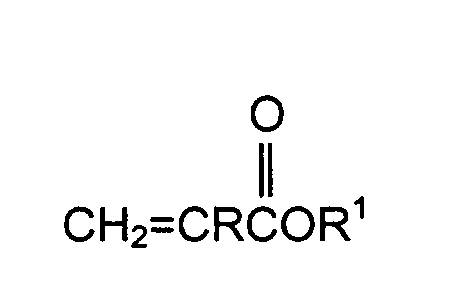
- Metallocen-Trägerkatalysator nach Anspruch 2, wobei R Wasserstoff ist und R1 eine C1-4-Alkylgruppe ist.
- Metallocen-Trägerkatalysator nach einem der Ansprüche 1 bis 3, wobei das Acrylat Methylacrylat ist.
- Metallocen-Trägerkatalysator nach einem der Ansprüche 1 bis 4, wobei die Größe der Teilchen im Bereich von 1 bis 1000 µm (Mikrometer) liegt und das Olefincopolymer 70 bis 99 Gewichtsprozent Ethylen, Propylen oder Mischungen davon und 1 bis 30 Gewichtsprozent des Acrylats enthält.
- Metallocen-Trägerkatalysator nach einem der Ansprüche 1 bis 5, wobei das Olefincopolymer 80 bis 95 Gewichtsprozent Ethylen und 5 bis 20 Gewichtsprozent des Acrylats enthält.
- Metallocen-Trägerkatalysator nach einem der Ansprüche 1 bis 6, wobei das Olefincopolymer ausgewählt ist aus der Gruppe bestehend aus einem Ethylen-Methylacrylat-Copolymer, einem Ethylen-Ethylacrylat-Copolymer und einem Ethylen-n-Butylacrylat-Copolymer.
- Metallocen-Trägerkatalysator nach einem der Ansprüche 1 bis 7, wobei das Olefincopolymer Ethylen-Methylacrylat ist.
- Metallocen-Trägerkatalysator nach einem der Ansprüche 1 bis 8, wobei der Träger ein mikrofeines Pulver ist, das Teilchen umfasst, welche eine kugelförmige oder im Wesentlichen kugelförmige Gestalt haben und eine mittlere Teilchengröße im Bereich von 1 bis 500 µm (Mikrometer), von 5 bis 300 µm (Mikrometer) oder von 20 bis 200 µm (Mikrometer) aufweisen.
- Metallocen-Trägerkatalysator nach einem der Ansprüche 1 bis 9, wobei die metallierte Verbindung eine Verbindung ist, ausgewählt aus der Gruppe bestehend aus Natriumcyclopentadienylid, Lithiumcyclopentadienylid, Kaliumcyclopentadienylid, Lithiumpentamethylcyclopentadienylid, Bis-(cyclopentadienyl)magnesium, Bis-(cyclopentadienyl)calcium, Cyclopentadienylthallium, Natriumpentamethylcyclopentadienylid, Natriumindenylid, Lithiumindenylid, Natriumfluorenylid und Lithiumfluorenylid.
- Metallocen-Trägerkatalysator nach einem der Ansprüche 1 bis 10, wobei 0,001 bis 10 mmol metallierte Verbindung pro Gramm des partikulären Olefincopolymerträgers in Schritt (a) eingesetzt werden.
- Metallocen-Trägerkatalysator nach einem der Ansprüche 1 bis 11, wobei die Schritte (a) und (b) in einer inerten Atmosphäre in Gegenwart eines Etherlösemittels oder eines aromatischen Lösemittels durchgeführt werden.
- Metallocen-Trägerkatalysator nach Anspruch 12, wobei die inerte Atmosphäre eine N2- oder eine Ar-Gasatmosphäre ist.
- Metallocen-Trägerkatalysator nach Anspruch 12, wobei das Etherlösemittel ausgewählt ist aus der Gruppe bestehend aus Tetrahydrofuran, Dimethylether, Diethylether, Di-n-propylether, Diisopropylether, Di-n-butylether, Divinylether, Diallylether, Diphenylether, Dimethoxyethan und 1,4-Dioxan.
- Metallocen-Trägerkatalysator nach einem der Ansprüche 1 bis 14, wobei Schritt (a) bei einer Temperatur von 0°C bis 100°C während eines Zeitraums von 1 h bis 5 Tagen durchgeführt wird.
- Metallocen-Trägerkatalysator nach einem der Ansprüche 1 bis 15, wobei das Zwischenprodukt von Schritt (a) gegebenenfalls vor dem Durchführen von Schritt (b) gewaschen und getrocknet werden kann.
- Metallocen-Trägerkatalysator nach einem der Ansprüche 1 bis 16, wobei die Übergangsmetallverbindung ausgewählt ist aus der Gruppe bestehend aus Titantrichlorid, Titantetrachlorid, Zirconiumtetrachlorid, Hafniumtetrachlorid, (Cyclopentadienyl)titantrichlorid, (Cyclopentadienyl)zirconiumtrichlorid, (Cyclopentadienyl)hafniumtrichlorid, Tetramethylzirconium, Tetramethoxyzirconium, Tetraethoxyzirconium, Tetramethyltitan, Tetramethoxytitan, Tetraethoxytitan, (Cyclopentadienyl)zirconiumtribromid, (Cyclopentadienyl)trimethylzirconium, (Cyclopentadienyl)triphenylzirconium, Zirconiumtetra((dimethyl)amid), Zirconiumtetra((diethyl)amid), Cyclopentadienylzirconiumdimethylamiddichlorid und (Cyclopentadienyl)trimethoxyzirconium.
- Metallocen-Trägerkatalysator nach einem der Ansprüche 1 bis 17, wobei Schritt (b) bei einer Temperatur von 0°C bis 100°C während eines Zeitraums bis zu ungefähr 5 Tagen durchgeführt wird.
- Metallocen-Trägerkatalysator nach einem der Ansprüche 1 bis 18, wobei das auf einen Träger aufgebrachte Metallocen 0,01 bis 10 Gewichtsprozent des Übergangmetalls, bezogen auf das Gesamtgewicht des Katalysators, enthält.
- alpha-Olefin-Polymerisationskatalysatorsystem, umfassend den Metallocen-Trägerkatalysator nach einem der Ansprüche 1 bis 19 und mindestens eine Cokatalysatorverbindung, enthaltend ein Metall aus den Gruppen IA, IIA, IIB, IIIB oder IVB des Periodensystems der Elemente.
- alpha-Olefin-Polymerisationskatalysatorsystem nach Anspruch 20, wobei der Cokatalysator ein Metallalkyl, Metallhydrid, Metallalkylhydrid oder Metallalkylhalogenid ist.
- alpha-Olefin-Polymerisationskatalysatorsystem nach Anspruch 20 oder 21, wobei der Cokatalysator ein cyclisches oder lineares Aluminoxan ist.
- alpha-Olefin-Polymerisationskatalysatorsystem nach einem der Ansprüche 20 bis 22, wobei der Cokatalysator Methylaluminoxan ist.
- alpha-Olefin-Polymerisationskatalysatorsystem nach einem der Ansprüche 20 bis 23, wobei der Cokatalysator in einem Molverhältnis von 1:1 bis 10000:1, bezogen auf die Übergangsmetallverbindung des Katalysators, zugegeben wird.
- alpha-Olefin-Polymerisationskatalysatorsystem nach einem der Ansprüche 20 bis 24, außerdem umfassend einen Cokatalysator-Modifikator.
- alpha-Olefin-Polymerisationskatalysatorsystem nach Anspruch 25, wobei der Cokatalysator-Modifikator ein Halogensilan, ein Halogenkohlenwasserstoff, ein aromatischer Ester, eine Organometallverbindung, ein Alkoxysilan oder ein Phenylboratsalz ist.
- alpha-Olefin-Polymerisationskatalysatorsystem nach Anspruch 26, wobei das Phenylboratsalz Triethylammoniumtetraphenylborat, Tri(n-butyl)ammoniumtetraphenylborat, Trimethylammoniumtetraphenylborat, Dimethyldiphenylammoniumtetraphenylborat, Methylpyridiniumtetraphenylborat, Benzylpyridiniumtetraphenylborat, Trimethylsulfoniumtetraphenylborat, Triethylammoniumtetrakis(pentafluorphenyl)borat, Triphenylammoniumtetrakis(pentafluorphenyl)borat, Methyldiphenylammoniumtetrakis(pentafluorphenyl)borat, Aniliniumtetrakis(pentafluorphenyl)borat, Methylanlliniumtetrakis(pentafluorphenyl)borat, Dimethyl(m-nitroanilinium)tetrakis (pentafluorphenyl)borat, Pyridiniumtetrakis(pentafluorphenyl)borat, N-Methylpyridiniumtetrakis(pentafluorphenyl)borat, Trimethylsulfoniumtetrakis(pentafluorphenyl)borat, Tetraphenylphosphoniumtetrakls(pentafluorphenyl)borat, Triphenylphosphoniumtetrakis(pentafluorphenyl)borat und Hexafluorarsensäuretriethylammonium.
- Verfahren zum (Co)-Polymerisieren von α-Olefinen, umfassend das Polymerisieren von mindestens einem C2-C8-α-Olefin unter Polymerisationsbedingungen in Gegenwart des Polymerisationskatalysatorsystems nach einem der Ansprüche 20 bis 27, wobei der Cokatalysator in einem Molverhältnis von 1:1 bis 10000:1, bezogen auf die Übergangsmetallverbindung des Katalysators, zugegeben wird.
- Verfahren nach Anspruch 28, wobei das α-Olefin zu einem Polymer oder Copolymer mit im Wesentlichen kugelförmigen Teilchen (co)polymerisiert wird, deren mittlere Teilchengrößen im Bereich von 10 bis 5000 µm (Mikrometer) liegen.
Applications Claiming Priority (3)
| Application Number | Priority Date | Filing Date | Title |
|---|---|---|---|
| US08/439,810 US5587439A (en) | 1995-05-12 | 1995-05-12 | Polymer supported catalyst for olefin polymerization |
| US439810 | 1995-05-12 | ||
| PCT/US1996/006447 WO1996035726A1 (en) | 1995-05-12 | 1996-05-08 | Polymer supported catalyst for olefin polymerization |
Publications (3)
| Publication Number | Publication Date |
|---|---|
| EP0832136A1 EP0832136A1 (de) | 1998-04-01 |
| EP0832136A4 EP0832136A4 (de) | 1998-09-30 |
| EP0832136B1 true EP0832136B1 (de) | 2002-03-20 |
Family
ID=23746224
Family Applications (1)
| Application Number | Title | Priority Date | Filing Date |
|---|---|---|---|
| EP96913363A Expired - Lifetime EP0832136B1 (de) | 1995-05-12 | 1996-05-08 | Polymerer trägerkatalysator zur olefinpolymerisation |
Country Status (9)
| Country | Link |
|---|---|
| US (1) | US5587439A (de) |
| EP (1) | EP0832136B1 (de) |
| JP (1) | JP2001505228A (de) |
| KR (1) | KR19990014714A (de) |
| AT (1) | ATE214713T1 (de) |
| CA (1) | CA2214690A1 (de) |
| DE (1) | DE69619981T2 (de) |
| ES (1) | ES2171668T3 (de) |
| WO (1) | WO1996035726A1 (de) |
Cited By (1)
| Publication number | Priority date | Publication date | Assignee | Title |
|---|---|---|---|---|
| CN104558265A (zh) * | 2013-10-29 | 2015-04-29 | 中国石油天然气股份有限公司 | 一种茂金属催化剂体系及其制备方法 |
Families Citing this family (45)
| Publication number | Priority date | Publication date | Assignee | Title |
|---|---|---|---|---|
| BR9604776A (pt) * | 1995-03-10 | 1998-06-23 | Dow Chemical Co | Componente de catalisador sustentado catalisador sustentado processo para preparar um componente de catalisador sustentado e um catalisador sustentado aduto de um composto organometálico processo de polimerizaçao por adiç o composto complexo e método para preparar um composto complexo |
| US6218331B1 (en) * | 1995-03-29 | 2001-04-17 | Equistar Chemicals, L.P. | Polymer-supported catalyst for olefin polymerization |
| US6063725A (en) * | 1995-11-07 | 2000-05-16 | Mitsui Chemicals, Inc. | Olefin polymerization catalyst system |
| JP3529921B2 (ja) | 1995-12-05 | 2004-05-24 | 三井化学株式会社 | オレフィン重合用固体触媒およびオレフィン重合用予備重合触媒 |
| US5789333A (en) * | 1997-03-05 | 1998-08-04 | Iowa State University Research Foundation, Inc. | Catalyst system comprising a first catalyst system tethered to a supported catalyst |
| US6100214A (en) * | 1997-06-05 | 2000-08-08 | Exxon Chemical Patents Inc. | Polymeric supported catalysts for olefin polymerization |
| US6426313B2 (en) | 1997-06-05 | 2002-07-30 | Exxon Mobil Chemical Patents Inc. | Polymeric supported catalysts for olefin polymerization |
| US6511936B1 (en) | 1998-02-12 | 2003-01-28 | University Of Delaware | Catalyst compounds with β-diminate anionic ligands and processes for polymerizing olefins |
| KR100430438B1 (ko) * | 1998-10-22 | 2004-07-19 | 대림산업 주식회사 | 담지메탈로센촉매,그제조방법및이를이용한폴리올레핀의중합방법 |
| US6486088B1 (en) | 1998-10-23 | 2002-11-26 | Exxonmobil Chemical Patents Inc. | High activity carbenium-activated polymerization catalysts |
| GB9826874D0 (en) * | 1998-12-07 | 1999-01-27 | Borealis As | Process |
| US6197714B1 (en) * | 1999-03-23 | 2001-03-06 | Cryovac, Inc. | Supported catalysts and olefin polymerization processes utilizing same |
| US6197715B1 (en) * | 1999-03-23 | 2001-03-06 | Cryovac, Inc. | Supported catalysts and olefin polymerization processes utilizing same |
| US6040261A (en) * | 1999-04-15 | 2000-03-21 | Equistar Chemicals, Lp | Supported single-site catalyst and olefin polymerization process |
| RU2264860C2 (ru) * | 1999-11-05 | 2005-11-27 | Джонсон Мэтью Плс | Иммобилизованные ионные жидкости |
| US6281155B1 (en) | 1999-11-19 | 2001-08-28 | Equistar Chemicals, L.P. | Supported olefin polymerization catalysts |
| US6489480B2 (en) | 1999-12-09 | 2002-12-03 | Exxonmobil Chemical Patents Inc. | Group-15 cationic compounds for olefin polymerization catalysts |
| US6822057B2 (en) | 1999-12-09 | 2004-11-23 | Exxon Mobil Chemical Patents Inc. | Olefin polymerization catalysts derived from Group-15 cationic compounds and processes using them |
| KR100436494B1 (ko) * | 1999-12-14 | 2004-06-24 | 삼성아토피나주식회사 | 에틸렌 중합 및 에틸렌/알파-올레핀 공중합용 담지촉매의제조방법 |
| KR100436493B1 (ko) * | 1999-12-14 | 2004-06-24 | 삼성아토피나주식회사 | 에틸렌 중합 및 에틸렌/알파-올레핀 공중합용 담지촉매의제조방법 |
| GB0021301D0 (en) * | 2000-08-30 | 2000-10-18 | Borealis Tech Oy | Supported catalyst |
| US6583082B2 (en) | 2000-12-01 | 2003-06-24 | The Governors Of The University Of Alberta | Functional organic particles for catalyst supports |
| JP2002265507A (ja) * | 2001-03-09 | 2002-09-18 | Sumitomo Chem Co Ltd | オレフィンの気相流動床式重合反応におけるシーティング防止 |
| FR2824066B1 (fr) * | 2001-04-30 | 2004-02-06 | Atofina | Composante catalytique solide de type metallocene et son procede d'obtention |
| WO2002098934A1 (de) * | 2001-06-01 | 2002-12-12 | Borealis Technology Oy | Verfahren zur reaktivierung von inaktivierten koordinationskatalysatoren und vorrichtung zur durchführung des verfahrens |
| KR100443383B1 (ko) * | 2001-07-09 | 2004-08-09 | 한국과학기술원 | 올레핀 중합용 고활성 고분자 담지 메탈로센 촉매의제조방법 |
| WO2003037937A1 (en) * | 2001-10-18 | 2003-05-08 | The Dow Chemical Company | Diene functionalized catalyst supports and supported catalyst compositions |
| CA2423921A1 (en) | 2003-03-28 | 2004-09-28 | Nova Chemicals Corporation | Halogenated organic particles for catalyst supports |
| US9410009B2 (en) | 2005-03-17 | 2016-08-09 | Dow Global Technologies Llc | Catalyst composition comprising shuttling agent for tactic/ atactic multi-block copolymer formation |
| EP3424966B1 (de) * | 2005-03-17 | 2020-05-27 | Dow Global Technologies Llc | Katalysatorzusammensetzung mit transportwirkstoff zur taktischen/ataktischen multiblock-copolymer-formierung |
| JP2009502907A (ja) * | 2005-07-26 | 2009-01-29 | エルジー・ケム・リミテッド | 環状オレフィン重合体製造用ホスホニウム化合物の製造方法 |
| US8097229B2 (en) * | 2006-01-17 | 2012-01-17 | Headwaters Technology Innovation, Llc | Methods for manufacturing functionalized inorganic oxides and polymers incorporating same |
| JP2009539237A (ja) | 2006-06-02 | 2009-11-12 | レール・リキード−ソシエテ・アノニム・プール・レテュード・エ・レクスプロワタシオン・デ・プロセデ・ジョルジュ・クロード | 新規なチタン、ジルコニウムおよびハフニウム前駆体をベースとするhigh−k誘電体フィルムを形成する方法および半導体製造におけるそれらの使用 |
| KR100804413B1 (ko) * | 2006-06-21 | 2008-02-20 | (주)디엔에프 | 지르코늄 산화물 박막 증착용 유기금속 선구물질 및 이의제조 방법 |
| WO2008109628A1 (en) * | 2007-03-07 | 2008-09-12 | Dow Global Technologies Inc. | Tethered supported transition metal complex |
| EP2070953A1 (de) * | 2007-12-11 | 2009-06-17 | Total Petrochemicals Research Feluy | Träger zur Aktivierung auf der Basis von Phosphoniumkomplexen |
| US9565866B2 (en) * | 2008-07-03 | 2017-02-14 | D.D. Williamson & Co., Inc. | Method of preparing acid stable caramel |
| KR101339474B1 (ko) * | 2011-11-24 | 2013-12-10 | 삼성토탈 주식회사 | 올레핀 중합 및 공중합용 촉매 및 이를 사용하는 올레핀 중합 또는 공중합 방법 |
| KR101495423B1 (ko) * | 2013-05-14 | 2015-02-24 | 삼성토탈 주식회사 | 올레핀 중합 및 공중합용 촉매 및 이를 사용하는 올레핀 중합 또는 공중합 방법 |
| CN107915795B (zh) * | 2016-10-09 | 2020-07-21 | 中国石油化工股份有限公司 | 烯烃聚合催化剂载体及制备方法及烯烃聚合催化剂组分和烯烃聚合催化剂以及它们的应用 |
| CN115073627B (zh) * | 2021-03-15 | 2023-09-26 | 中国石油天然气股份有限公司 | 多孔有机聚合物载体型茂金属催化剂体系及其制备方法与应用 |
| CN115073628B (zh) * | 2021-03-15 | 2023-09-26 | 中国石油天然气股份有限公司 | 多孔有机聚合物载体负载的茂金属催化剂体系及其制备方法与应用 |
| CN117624420A (zh) * | 2022-08-12 | 2024-03-01 | 中国石油天然气股份有限公司 | 一种茂金属催化剂 |
| CN117624422A (zh) * | 2022-08-12 | 2024-03-01 | 中国石油天然气股份有限公司 | 一种用于熔喷工艺的聚乙烯树脂及其制备方法 |
| CN117624421A (zh) * | 2022-08-12 | 2024-03-01 | 中国石油天然气股份有限公司 | 茂金属催化剂的制备方法 |
Family Cites Families (13)
| Publication number | Priority date | Publication date | Assignee | Title |
|---|---|---|---|---|
| US3422049A (en) * | 1961-12-20 | 1969-01-14 | Nat Distillers Chem Corp | Process of preparing finely divided thermoplastic resins |
| US4147664A (en) * | 1975-10-24 | 1979-04-03 | Pomogailo Anatoly D | Catalyst of polymerization, copolymerization and oligomerization of olefins and drolefins |
| KR910008277B1 (ko) * | 1986-12-03 | 1991-10-12 | 미쓰이 세끼유 가가꾸 고오교오 가부시끼가이샤 | 올레핀 중합용 고체촉매 및 그 제조법 |
| US5292840A (en) * | 1987-03-13 | 1994-03-08 | Minnesota Mining And Manufacturing Company | Polymeric supports |
| US5336742A (en) * | 1987-03-13 | 1994-08-09 | Minnesota Mining And Manufacturing Company | Polymeric supports |
| JP2538588B2 (ja) * | 1987-04-03 | 1996-09-25 | 三井石油化学工業株式会社 | オレフイン重合用固体触媒の製法 |
| US5206199A (en) * | 1987-04-20 | 1993-04-27 | Mitsui Petrochemical Industries, Ltd. | Catalyst for polymerizing an olefin and process for polymerizing an olefin |
| EP0522581B1 (de) * | 1991-07-11 | 1997-10-15 | Idemitsu Kosan Company Limited | Verfahren zur Herstellung von Polymeren auf Olefinbasis und Olefin-Polymerisationskatalysatoren |
| DE69224600T2 (de) * | 1991-11-12 | 1998-08-27 | Nippon Oil Co Ltd | Katalysatorbestandteile für Olefinpolymerisation |
| FI112233B (fi) * | 1992-04-01 | 2003-11-14 | Basell Polyolefine Gmbh | Katalyytti olefiinipolymerointia varten, menetelmä sen valmistamiseksi ja sen käyttö |
| JPH0656928A (ja) * | 1992-08-07 | 1994-03-01 | Ube Ind Ltd | オレフィン重合用固体触媒 |
| DE69307472T2 (de) * | 1992-11-10 | 1997-05-15 | Mitsubishi Chem Corp | Verfahren zur Herstellung von Alpha-Olefinpolymeren |
| US5473020A (en) * | 1994-06-30 | 1995-12-05 | Phillips Petroleum Company | Polymer bound ligands, polymer bound metallocenes, catalyst systems, preparation, and use |
-
1995
- 1995-05-12 US US08/439,810 patent/US5587439A/en not_active Expired - Fee Related
-
1996
- 1996-05-08 KR KR1019970708056A patent/KR19990014714A/ko not_active Ceased
- 1996-05-08 JP JP53420396A patent/JP2001505228A/ja active Pending
- 1996-05-08 DE DE69619981T patent/DE69619981T2/de not_active Expired - Fee Related
- 1996-05-08 CA CA002214690A patent/CA2214690A1/en not_active Abandoned
- 1996-05-08 AT AT96913363T patent/ATE214713T1/de not_active IP Right Cessation
- 1996-05-08 EP EP96913363A patent/EP0832136B1/de not_active Expired - Lifetime
- 1996-05-08 WO PCT/US1996/006447 patent/WO1996035726A1/en not_active Ceased
- 1996-05-08 ES ES96913363T patent/ES2171668T3/es not_active Expired - Lifetime
Cited By (1)
| Publication number | Priority date | Publication date | Assignee | Title |
|---|---|---|---|---|
| CN104558265A (zh) * | 2013-10-29 | 2015-04-29 | 中国石油天然气股份有限公司 | 一种茂金属催化剂体系及其制备方法 |
Also Published As
| Publication number | Publication date |
|---|---|
| WO1996035726A1 (en) | 1996-11-14 |
| ATE214713T1 (de) | 2002-04-15 |
| EP0832136A4 (de) | 1998-09-30 |
| US5587439A (en) | 1996-12-24 |
| DE69619981T2 (de) | 2002-07-25 |
| DE69619981D1 (de) | 2002-04-25 |
| ES2171668T3 (es) | 2002-09-16 |
| EP0832136A1 (de) | 1998-04-01 |
| KR19990014714A (ko) | 1999-02-25 |
| JP2001505228A (ja) | 2001-04-17 |
| CA2214690A1 (en) | 1996-11-14 |
Similar Documents
| Publication | Publication Date | Title |
|---|---|---|
| US5587439A (en) | Polymer supported catalyst for olefin polymerization | |
| CA2105015C (en) | Catalyst compositions and process for preparing polyolefins | |
| WO1987002991A1 (en) | Supported polymerization catalyst | |
| EP1392738B1 (de) | Aktivierung von "single site" polymerisationskatalysatoren durch (dialkylalumino)broronsäureester | |
| JP2001527133A (ja) | パラフィン可溶性アルキルアルモキサンで活性化されたエチレン重合反応のためのバイメタル触媒 | |
| US6255415B1 (en) | Ethylene polymerization process | |
| JP2004511634A (ja) | 触媒系の製造方法及びそれの重合方法への使用 | |
| WO1996030122A1 (en) | Polymer-supported catalyst for olefin polymerization | |
| US6310150B1 (en) | Supported olefin polymerization catalysts | |
| JPH0859731A (ja) | オレフィン重合触媒の製造方法 | |
| US6303714B1 (en) | Catalyst component for olefin polymerization catalyst for olefin polymerization, and process for preparing polyolefin | |
| US6228959B1 (en) | Single-site catalysts containing homoaromatic ligands | |
| JP3779016B2 (ja) | プロピレン共重合用触媒およびプロピレン共重合体の製造方法 | |
| EP0641809A1 (de) | Ethylencopolymere | |
| EP1335925A1 (de) | Katalysatoren zur olefinpolymerisation | |
| KR20030076671A (ko) | 올레핀 중합에 유용한 지지된 단일-부위 촉매 | |
| JPH0832735B2 (ja) | オレフインの重合方法 | |
| JPH10168114A (ja) | オレフィン重合用触媒およびポリオレフィンの製造方法 | |
| JP2530624C (de) | ||
| JPH10182721A (ja) | オレフィン重合用触媒およびポリオレフィンの製造方法 | |
| JPH05331227A (ja) | ポリオレフィンの製造方法 |
Legal Events
| Date | Code | Title | Description |
|---|---|---|---|
| PUAI | Public reference made under article 153(3) epc to a published international application that has entered the european phase |
Free format text: ORIGINAL CODE: 0009012 |
|
| 17P | Request for examination filed |
Effective date: 19970904 |
|
| AK | Designated contracting states |
Kind code of ref document: A1 Designated state(s): AT BE CH DE DK ES FI FR GB GR IE IT LI LU MC NL PT SE |
|
| RIN1 | Information on inventor provided before grant (corrected) |
Inventor name: DIMAIO, ANTHONY-J. |
|
| A4 | Supplementary search report drawn up and despatched |
Effective date: 19980813 |
|
| AK | Designated contracting states |
Kind code of ref document: A4 Designated state(s): AT BE CH DE DK ES FI FR GB GR IE IT LI LU MC NL PT SE |
|
| RAP1 | Party data changed (applicant data changed or rights of an application transferred) |
Owner name: EQUISTAR CHEMICALS, LP |
|
| 17Q | First examination report despatched |
Effective date: 19990628 |
|
| GRAG | Despatch of communication of intention to grant |
Free format text: ORIGINAL CODE: EPIDOS AGRA |
|
| GRAG | Despatch of communication of intention to grant |
Free format text: ORIGINAL CODE: EPIDOS AGRA |
|
| GRAH | Despatch of communication of intention to grant a patent |
Free format text: ORIGINAL CODE: EPIDOS IGRA |
|
| GRAH | Despatch of communication of intention to grant a patent |
Free format text: ORIGINAL CODE: EPIDOS IGRA |
|
| REG | Reference to a national code |
Ref country code: GB Ref legal event code: IF02 |
|
| GRAA | (expected) grant |
Free format text: ORIGINAL CODE: 0009210 |
|
| AK | Designated contracting states |
Kind code of ref document: B1 Designated state(s): AT BE CH DE DK ES FI FR GB GR IE IT LI LU MC NL PT SE |
|
| PG25 | Lapsed in a contracting state [announced via postgrant information from national office to epo] |
Ref country code: LI Free format text: LAPSE BECAUSE OF FAILURE TO SUBMIT A TRANSLATION OF THE DESCRIPTION OR TO PAY THE FEE WITHIN THE PRESCRIBED TIME-LIMIT Effective date: 20020320 Ref country code: GR Free format text: LAPSE BECAUSE OF FAILURE TO SUBMIT A TRANSLATION OF THE DESCRIPTION OR TO PAY THE FEE WITHIN THE PRESCRIBED TIME-LIMIT Effective date: 20020320 Ref country code: FI Free format text: LAPSE BECAUSE OF FAILURE TO SUBMIT A TRANSLATION OF THE DESCRIPTION OR TO PAY THE FEE WITHIN THE PRESCRIBED TIME-LIMIT Effective date: 20020320 Ref country code: CH Free format text: LAPSE BECAUSE OF FAILURE TO SUBMIT A TRANSLATION OF THE DESCRIPTION OR TO PAY THE FEE WITHIN THE PRESCRIBED TIME-LIMIT Effective date: 20020320 Ref country code: AT Free format text: LAPSE BECAUSE OF FAILURE TO SUBMIT A TRANSLATION OF THE DESCRIPTION OR TO PAY THE FEE WITHIN THE PRESCRIBED TIME-LIMIT Effective date: 20020320 |
|
| REF | Corresponds to: |
Ref document number: 214713 Country of ref document: AT Date of ref document: 20020415 Kind code of ref document: T |
|
| REG | Reference to a national code |
Ref country code: CH Ref legal event code: EP |
|
| PGFP | Annual fee paid to national office [announced via postgrant information from national office to epo] |
Ref country code: FR Payment date: 20020417 Year of fee payment: 7 |
|
| PGFP | Annual fee paid to national office [announced via postgrant information from national office to epo] |
Ref country code: SE Payment date: 20020418 Year of fee payment: 7 Ref country code: NL Payment date: 20020418 Year of fee payment: 7 |
|
| REF | Corresponds to: |
Ref document number: 69619981 Country of ref document: DE Date of ref document: 20020425 |
|
| PGFP | Annual fee paid to national office [announced via postgrant information from national office to epo] |
Ref country code: GB Payment date: 20020501 Year of fee payment: 7 |
|
| PG25 | Lapsed in a contracting state [announced via postgrant information from national office to epo] |
Ref country code: MC Free format text: LAPSE BECAUSE OF NON-PAYMENT OF DUE FEES Effective date: 20020508 Ref country code: LU Free format text: LAPSE BECAUSE OF NON-PAYMENT OF DUE FEES Effective date: 20020508 Ref country code: IE Free format text: LAPSE BECAUSE OF NON-PAYMENT OF DUE FEES Effective date: 20020508 |
|
| PGFP | Annual fee paid to national office [announced via postgrant information from national office to epo] |
Ref country code: DE Payment date: 20020520 Year of fee payment: 7 |
|
| PGFP | Annual fee paid to national office [announced via postgrant information from national office to epo] |
Ref country code: BE Payment date: 20020527 Year of fee payment: 7 |
|
| PGFP | Annual fee paid to national office [announced via postgrant information from national office to epo] |
Ref country code: ES Payment date: 20020606 Year of fee payment: 7 |
|
| PG25 | Lapsed in a contracting state [announced via postgrant information from national office to epo] |
Ref country code: PT Free format text: LAPSE BECAUSE OF FAILURE TO SUBMIT A TRANSLATION OF THE DESCRIPTION OR TO PAY THE FEE WITHIN THE PRESCRIBED TIME-LIMIT Effective date: 20020620 Ref country code: DK Free format text: LAPSE BECAUSE OF FAILURE TO SUBMIT A TRANSLATION OF THE DESCRIPTION OR TO PAY THE FEE WITHIN THE PRESCRIBED TIME-LIMIT Effective date: 20020620 |
|
| ET | Fr: translation filed | ||
| REG | Reference to a national code |
Ref country code: ES Ref legal event code: FG2A Ref document number: 2171668 Country of ref document: ES Kind code of ref document: T3 |
|
| REG | Reference to a national code |
Ref country code: CH Ref legal event code: PL |
|
| PLBE | No opposition filed within time limit |
Free format text: ORIGINAL CODE: 0009261 |
|
| STAA | Information on the status of an ep patent application or granted ep patent |
Free format text: STATUS: NO OPPOSITION FILED WITHIN TIME LIMIT |
|
| 26N | No opposition filed |
Effective date: 20021223 |
|
| REG | Reference to a national code |
Ref country code: IE Ref legal event code: MM4A |
|
| PG25 | Lapsed in a contracting state [announced via postgrant information from national office to epo] |
Ref country code: GB Free format text: LAPSE BECAUSE OF NON-PAYMENT OF DUE FEES Effective date: 20030508 |
|
| PG25 | Lapsed in a contracting state [announced via postgrant information from national office to epo] |
Ref country code: SE Free format text: LAPSE BECAUSE OF NON-PAYMENT OF DUE FEES Effective date: 20030509 Ref country code: ES Free format text: LAPSE BECAUSE OF NON-PAYMENT OF DUE FEES Effective date: 20030509 |
|
| PG25 | Lapsed in a contracting state [announced via postgrant information from national office to epo] |
Ref country code: BE Free format text: LAPSE BECAUSE OF NON-PAYMENT OF DUE FEES Effective date: 20030531 |
|
| BERE | Be: lapsed |
Owner name: *EQUISTAR CHEMICALS LP Effective date: 20030531 |
|
| PG25 | Lapsed in a contracting state [announced via postgrant information from national office to epo] |
Ref country code: NL Free format text: LAPSE BECAUSE OF NON-PAYMENT OF DUE FEES Effective date: 20031201 |
|
| PG25 | Lapsed in a contracting state [announced via postgrant information from national office to epo] |
Ref country code: DE Free format text: LAPSE BECAUSE OF NON-PAYMENT OF DUE FEES Effective date: 20031202 |
|
| GBPC | Gb: european patent ceased through non-payment of renewal fee |
Effective date: 20030508 |
|
| EUG | Se: european patent has lapsed | ||
| PG25 | Lapsed in a contracting state [announced via postgrant information from national office to epo] |
Ref country code: FR Free format text: LAPSE BECAUSE OF NON-PAYMENT OF DUE FEES Effective date: 20040130 |
|
| NLV4 | Nl: lapsed or anulled due to non-payment of the annual fee |
Effective date: 20031201 |
|
| REG | Reference to a national code |
Ref country code: FR Ref legal event code: ST |
|
| REG | Reference to a national code |
Ref country code: ES Ref legal event code: FD2A Effective date: 20030509 |
|
| PG25 | Lapsed in a contracting state [announced via postgrant information from national office to epo] |
Ref country code: IT Free format text: LAPSE BECAUSE OF NON-PAYMENT OF DUE FEES Effective date: 20050508 |