EP0790872B1 - Basic inorganic binders - Google Patents
Basic inorganic binders Download PDFInfo
- Publication number
- EP0790872B1 EP0790872B1 EP96905171A EP96905171A EP0790872B1 EP 0790872 B1 EP0790872 B1 EP 0790872B1 EP 96905171 A EP96905171 A EP 96905171A EP 96905171 A EP96905171 A EP 96905171A EP 0790872 B1 EP0790872 B1 EP 0790872B1
- Authority
- EP
- European Patent Office
- Prior art keywords
- hydrotalcite
- inorganic
- sheet
- water
- mole percent
- Prior art date
- Legal status (The legal status is an assumption and is not a legal conclusion. Google has not performed a legal analysis and makes no representation as to the accuracy of the status listed.)
- Expired - Lifetime
Links
- 239000011230 binding agent Substances 0.000 title abstract description 25
- 238000000034 method Methods 0.000 claims abstract description 45
- 239000000463 material Substances 0.000 claims abstract description 41
- XLYOFNOQVPJJNP-UHFFFAOYSA-N water Substances O XLYOFNOQVPJJNP-UHFFFAOYSA-N 0.000 claims abstract description 38
- 239000000203 mixture Substances 0.000 claims abstract description 25
- 229910010272 inorganic material Inorganic materials 0.000 claims abstract description 24
- 239000011147 inorganic material Substances 0.000 claims abstract description 23
- 150000001450 anions Chemical class 0.000 claims abstract description 22
- 150000001768 cations Chemical class 0.000 claims abstract description 19
- 238000001354 calcination Methods 0.000 claims description 13
- 238000001035 drying Methods 0.000 claims description 11
- 229910003471 inorganic composite material Inorganic materials 0.000 claims description 9
- MYLBTCQBKAKUTJ-UHFFFAOYSA-N 7-methyl-6,8-bis(methylsulfanyl)pyrrolo[1,2-a]pyrazine Chemical compound C1=CN=CC2=C(SC)C(C)=C(SC)N21 MYLBTCQBKAKUTJ-UHFFFAOYSA-N 0.000 claims description 5
- 229910052804 chromium Inorganic materials 0.000 claims description 4
- 229910052802 copper Inorganic materials 0.000 claims description 4
- 229910052742 iron Inorganic materials 0.000 claims description 4
- 229910052748 manganese Inorganic materials 0.000 claims description 4
- 229910003455 mixed metal oxide Inorganic materials 0.000 claims description 4
- 229910052759 nickel Inorganic materials 0.000 claims description 4
- 229910052725 zinc Inorganic materials 0.000 claims description 4
- VYPSYNLAJGMNEJ-UHFFFAOYSA-N Silicium dioxide Chemical compound O=[Si]=O VYPSYNLAJGMNEJ-UHFFFAOYSA-N 0.000 claims description 3
- 238000001125 extrusion Methods 0.000 claims description 3
- 229910052751 metal Inorganic materials 0.000 claims description 3
- 239000002184 metal Substances 0.000 claims description 3
- 229910044991 metal oxide Inorganic materials 0.000 claims description 3
- 150000004706 metal oxides Chemical class 0.000 claims description 3
- 150000002739 metals Chemical class 0.000 claims description 2
- 239000006069 physical mixture Substances 0.000 claims description 2
- 229910052723 transition metal Inorganic materials 0.000 claims description 2
- 150000003624 transition metals Chemical class 0.000 claims description 2
- 238000005453 pelletization Methods 0.000 claims 1
- 239000000377 silicon dioxide Substances 0.000 claims 1
- 229910052596 spinel Inorganic materials 0.000 claims 1
- 239000011029 spinel Substances 0.000 claims 1
- GDVKFRBCXAPAQJ-UHFFFAOYSA-A dialuminum;hexamagnesium;carbonate;hexadecahydroxide Chemical compound [OH-].[OH-].[OH-].[OH-].[OH-].[OH-].[OH-].[OH-].[OH-].[OH-].[OH-].[OH-].[OH-].[OH-].[OH-].[OH-].[Mg+2].[Mg+2].[Mg+2].[Mg+2].[Mg+2].[Mg+2].[Al+3].[Al+3].[O-]C([O-])=O GDVKFRBCXAPAQJ-UHFFFAOYSA-A 0.000 abstract description 64
- 229910001701 hydrotalcite Inorganic materials 0.000 abstract description 62
- 229960001545 hydrotalcite Drugs 0.000 abstract description 62
- 239000003054 catalyst Substances 0.000 abstract description 19
- 239000011777 magnesium Substances 0.000 abstract description 15
- 230000015572 biosynthetic process Effects 0.000 abstract description 13
- 238000003786 synthesis reaction Methods 0.000 abstract description 13
- -1 aluminum cations Chemical class 0.000 abstract description 12
- 229910052782 aluminium Inorganic materials 0.000 abstract description 11
- 229910052749 magnesium Inorganic materials 0.000 abstract description 9
- 239000002002 slurry Substances 0.000 abstract description 9
- FYYHWMGAXLPEAU-UHFFFAOYSA-N Magnesium Chemical compound [Mg] FYYHWMGAXLPEAU-UHFFFAOYSA-N 0.000 abstract description 8
- XAGFODPZIPBFFR-UHFFFAOYSA-N aluminium Chemical compound [Al] XAGFODPZIPBFFR-UHFFFAOYSA-N 0.000 abstract description 7
- 239000007921 spray Substances 0.000 abstract description 7
- QTBSBXVTEAMEQO-UHFFFAOYSA-N Acetic acid Chemical compound CC(O)=O QTBSBXVTEAMEQO-UHFFFAOYSA-N 0.000 description 15
- 238000006243 chemical reaction Methods 0.000 description 12
- GWEVSGVZZGPLCZ-UHFFFAOYSA-N Titan oxide Chemical compound O=[Ti]=O GWEVSGVZZGPLCZ-UHFFFAOYSA-N 0.000 description 10
- XLOMVQKBTHCTTD-UHFFFAOYSA-N Zinc monoxide Chemical compound [Zn]=O XLOMVQKBTHCTTD-UHFFFAOYSA-N 0.000 description 10
- 230000000052 comparative effect Effects 0.000 description 10
- 239000013078 crystal Substances 0.000 description 10
- RWGFKTVRMDUZSP-UHFFFAOYSA-N cumene Chemical compound CC(C)C1=CC=CC=C1 RWGFKTVRMDUZSP-UHFFFAOYSA-N 0.000 description 10
- 239000002131 composite material Substances 0.000 description 6
- CPLXHLVBOLITMK-UHFFFAOYSA-N Magnesium oxide Chemical class [Mg]=O CPLXHLVBOLITMK-UHFFFAOYSA-N 0.000 description 5
- VXAUWWUXCIMFIM-UHFFFAOYSA-M aluminum;oxygen(2-);hydroxide Chemical compound [OH-].[O-2].[Al+3] VXAUWWUXCIMFIM-UHFFFAOYSA-M 0.000 description 5
- JGDFBJMWFLXCLJ-UHFFFAOYSA-N copper chromite Chemical compound [Cu]=O.[Cu]=O.O=[Cr]O[Cr]=O JGDFBJMWFLXCLJ-UHFFFAOYSA-N 0.000 description 5
- 238000002425 crystallisation Methods 0.000 description 5
- 230000008025 crystallization Effects 0.000 description 5
- 238000002156 mixing Methods 0.000 description 5
- 239000004408 titanium dioxide Substances 0.000 description 5
- 239000011787 zinc oxide Substances 0.000 description 5
- 238000002441 X-ray diffraction Methods 0.000 description 4
- 230000005540 biological transmission Effects 0.000 description 4
- XLYOFNOQVPJJNP-UHFFFAOYSA-M hydroxide Chemical compound [OH-] XLYOFNOQVPJJNP-UHFFFAOYSA-M 0.000 description 4
- 239000004615 ingredient Substances 0.000 description 4
- 150000002762 monocarboxylic acid derivatives Chemical class 0.000 description 4
- 150000003839 salts Chemical class 0.000 description 4
- 239000002253 acid Substances 0.000 description 3
- 230000002378 acidificating effect Effects 0.000 description 3
- 230000003197 catalytic effect Effects 0.000 description 3
- 150000001875 compounds Chemical class 0.000 description 3
- 239000008367 deionised water Substances 0.000 description 3
- 229910021641 deionized water Inorganic materials 0.000 description 3
- 239000000395 magnesium oxide Substances 0.000 description 3
- AXZKOIWUVFPNLO-UHFFFAOYSA-N magnesium;oxygen(2-) Chemical compound [O-2].[Mg+2] AXZKOIWUVFPNLO-UHFFFAOYSA-N 0.000 description 3
- 239000008188 pellet Substances 0.000 description 3
- 238000012360 testing method Methods 0.000 description 3
- UFHFLCQGNIYNRP-UHFFFAOYSA-N Hydrogen Chemical compound [H][H] UFHFLCQGNIYNRP-UHFFFAOYSA-N 0.000 description 2
- ANBBXQWFNXMHLD-UHFFFAOYSA-N aluminum;sodium;oxygen(2-) Chemical compound [O-2].[O-2].[Na+].[Al+3] ANBBXQWFNXMHLD-UHFFFAOYSA-N 0.000 description 2
- 150000001449 anionic compounds Chemical class 0.000 description 2
- 125000000129 anionic group Chemical group 0.000 description 2
- 239000007864 aqueous solution Substances 0.000 description 2
- 239000000440 bentonite Substances 0.000 description 2
- 229910000278 bentonite Inorganic materials 0.000 description 2
- SVPXDRXYRYOSEX-UHFFFAOYSA-N bentoquatam Chemical compound O.O=[Si]=O.O=[Al]O[Al]=O SVPXDRXYRYOSEX-UHFFFAOYSA-N 0.000 description 2
- 238000006555 catalytic reaction Methods 0.000 description 2
- 239000010949 copper Substances 0.000 description 2
- 239000006185 dispersion Substances 0.000 description 2
- 229910052739 hydrogen Inorganic materials 0.000 description 2
- 239000001257 hydrogen Substances 0.000 description 2
- 229910001412 inorganic anion Inorganic materials 0.000 description 2
- 229910052500 inorganic mineral Inorganic materials 0.000 description 2
- KQNPFQTWMSNSAP-UHFFFAOYSA-N isobutyric acid Chemical compound CC(C)C(O)=O KQNPFQTWMSNSAP-UHFFFAOYSA-N 0.000 description 2
- 150000002681 magnesium compounds Chemical class 0.000 description 2
- YIXJRHPUWRPCBB-UHFFFAOYSA-N magnesium nitrate Chemical compound [Mg+2].[O-][N+]([O-])=O.[O-][N+]([O-])=O YIXJRHPUWRPCBB-UHFFFAOYSA-N 0.000 description 2
- 238000004519 manufacturing process Methods 0.000 description 2
- 239000011707 mineral Substances 0.000 description 2
- 235000010755 mineral Nutrition 0.000 description 2
- 150000007524 organic acids Chemical class 0.000 description 2
- 235000005985 organic acids Nutrition 0.000 description 2
- 150000002891 organic anions Chemical class 0.000 description 2
- 239000000843 powder Substances 0.000 description 2
- 238000007086 side reaction Methods 0.000 description 2
- 229910001388 sodium aluminate Inorganic materials 0.000 description 2
- 239000007787 solid Substances 0.000 description 2
- 239000000725 suspension Substances 0.000 description 2
- 239000010457 zeolite Substances 0.000 description 2
- 239000011701 zinc Substances 0.000 description 2
- PNEYBMLMFCGWSK-UHFFFAOYSA-N Alumina Chemical compound [O-2].[O-2].[O-2].[Al+3].[Al+3] PNEYBMLMFCGWSK-UHFFFAOYSA-N 0.000 description 1
- 238000012935 Averaging Methods 0.000 description 1
- 238000004438 BET method Methods 0.000 description 1
- 239000004215 Carbon black (E152) Substances 0.000 description 1
- BVKZGUZCCUSVTD-UHFFFAOYSA-L Carbonate Chemical compound [O-]C([O-])=O BVKZGUZCCUSVTD-UHFFFAOYSA-L 0.000 description 1
- 229910020038 Mg6Al2 Inorganic materials 0.000 description 1
- 229910021536 Zeolite Inorganic materials 0.000 description 1
- 239000011149 active material Substances 0.000 description 1
- 239000003463 adsorbent Substances 0.000 description 1
- XYLMUPLGERFSHI-UHFFFAOYSA-N alpha-Methylstyrene Chemical compound CC(=C)C1=CC=CC=C1 XYLMUPLGERFSHI-UHFFFAOYSA-N 0.000 description 1
- AZDRQVAHHNSJOQ-UHFFFAOYSA-N alumane Chemical class [AlH3] AZDRQVAHHNSJOQ-UHFFFAOYSA-N 0.000 description 1
- JLDSOYXADOWAKB-UHFFFAOYSA-N aluminium nitrate Chemical class [Al+3].[O-][N+]([O-])=O.[O-][N+]([O-])=O.[O-][N+]([O-])=O JLDSOYXADOWAKB-UHFFFAOYSA-N 0.000 description 1
- INJRKJPEYSAMPD-UHFFFAOYSA-N aluminum;silicic acid;hydrate Chemical compound O.[Al].[Al].O[Si](O)(O)O INJRKJPEYSAMPD-UHFFFAOYSA-N 0.000 description 1
- 238000013459 approach Methods 0.000 description 1
- 230000009286 beneficial effect Effects 0.000 description 1
- 125000004432 carbon atom Chemical group C* 0.000 description 1
- 150000001732 carboxylic acid derivatives Chemical class 0.000 description 1
- 230000015556 catabolic process Effects 0.000 description 1
- 125000002091 cationic group Chemical group 0.000 description 1
- 230000005465 channeling Effects 0.000 description 1
- 238000012512 characterization method Methods 0.000 description 1
- 239000003795 chemical substances by application Substances 0.000 description 1
- 239000002734 clay mineral Substances 0.000 description 1
- 238000000975 co-precipitation Methods 0.000 description 1
- 238000004939 coking Methods 0.000 description 1
- 230000006835 compression Effects 0.000 description 1
- 238000007906 compression Methods 0.000 description 1
- 230000001143 conditioned effect Effects 0.000 description 1
- 238000005336 cracking Methods 0.000 description 1
- 230000003247 decreasing effect Effects 0.000 description 1
- 238000006731 degradation reaction Methods 0.000 description 1
- 230000018044 dehydration Effects 0.000 description 1
- 238000006297 dehydration reaction Methods 0.000 description 1
- 239000000551 dentifrice Substances 0.000 description 1
- 238000000151 deposition Methods 0.000 description 1
- 150000001991 dicarboxylic acids Chemical class 0.000 description 1
- HNPSIPDUKPIQMN-UHFFFAOYSA-N dioxosilane;oxo(oxoalumanyloxy)alumane Chemical compound O=[Si]=O.O=[Al]O[Al]=O HNPSIPDUKPIQMN-UHFFFAOYSA-N 0.000 description 1
- 238000009826 distribution Methods 0.000 description 1
- 238000002474 experimental method Methods 0.000 description 1
- 239000012530 fluid Substances 0.000 description 1
- 238000004108 freeze drying Methods 0.000 description 1
- 239000011521 glass Substances 0.000 description 1
- 238000010438 heat treatment Methods 0.000 description 1
- 229930195733 hydrocarbon Natural products 0.000 description 1
- 150000002430 hydrocarbons Chemical class 0.000 description 1
- 238000010335 hydrothermal treatment Methods 0.000 description 1
- 238000005470 impregnation Methods 0.000 description 1
- 150000002484 inorganic compounds Chemical class 0.000 description 1
- 239000011229 interlayer Substances 0.000 description 1
- 239000010410 layer Substances 0.000 description 1
- 239000007791 liquid phase Substances 0.000 description 1
- JCCNYMKQOSZNPW-UHFFFAOYSA-N loratadine Chemical compound C1CN(C(=O)OCC)CCC1=C1C2=NC=CC=C2CCC2=CC(Cl)=CC=C21 JCCNYMKQOSZNPW-UHFFFAOYSA-N 0.000 description 1
- UEGPKNKPLBYCNK-UHFFFAOYSA-L magnesium acetate Chemical compound [Mg+2].CC([O-])=O.CC([O-])=O UEGPKNKPLBYCNK-UHFFFAOYSA-L 0.000 description 1
- 239000011654 magnesium acetate Substances 0.000 description 1
- 235000011285 magnesium acetate Nutrition 0.000 description 1
- 229940069446 magnesium acetate Drugs 0.000 description 1
- VTHJTEIRLNZDEV-UHFFFAOYSA-L magnesium dihydroxide Chemical compound [OH-].[OH-].[Mg+2] VTHJTEIRLNZDEV-UHFFFAOYSA-L 0.000 description 1
- 239000000347 magnesium hydroxide Substances 0.000 description 1
- 229910001862 magnesium hydroxide Inorganic materials 0.000 description 1
- GMDNUWQNDQDBNQ-UHFFFAOYSA-L magnesium;diformate Chemical compound [Mg+2].[O-]C=O.[O-]C=O GMDNUWQNDQDBNQ-UHFFFAOYSA-L 0.000 description 1
- 239000011572 manganese Substances 0.000 description 1
- 230000007935 neutral effect Effects 0.000 description 1
- PXHVJJICTQNCMI-UHFFFAOYSA-N nickel Substances [Ni] PXHVJJICTQNCMI-UHFFFAOYSA-N 0.000 description 1
- 239000002245 particle Substances 0.000 description 1
- 230000037361 pathway Effects 0.000 description 1
- 238000001935 peptisation Methods 0.000 description 1
- 230000000737 periodic effect Effects 0.000 description 1
- 239000012071 phase Substances 0.000 description 1
- 230000000704 physical effect Effects 0.000 description 1
- 239000011148 porous material Substances 0.000 description 1
- 239000011541 reaction mixture Substances 0.000 description 1
- 230000035484 reaction time Effects 0.000 description 1
- 230000000717 retained effect Effects 0.000 description 1
- 238000005096 rolling process Methods 0.000 description 1
- 238000010079 rubber tapping Methods 0.000 description 1
- 238000004626 scanning electron microscopy Methods 0.000 description 1
- 229910000029 sodium carbonate Inorganic materials 0.000 description 1
- 238000001179 sorption measurement Methods 0.000 description 1
- 229910052566 spinel group Inorganic materials 0.000 description 1
- 238000001694 spray drying Methods 0.000 description 1
- 239000000758 substrate Substances 0.000 description 1
- 230000008961 swelling Effects 0.000 description 1
- 230000002194 synthesizing effect Effects 0.000 description 1
- 229920002994 synthetic fiber Polymers 0.000 description 1
- 230000008646 thermal stress Effects 0.000 description 1
- 230000001131 transforming effect Effects 0.000 description 1
Images


Classifications
-
- C—CHEMISTRY; METALLURGY
- C04—CEMENTS; CONCRETE; ARTIFICIAL STONE; CERAMICS; REFRACTORIES
- C04B—LIME, MAGNESIA; SLAG; CEMENTS; COMPOSITIONS THEREOF, e.g. MORTARS, CONCRETE OR LIKE BUILDING MATERIALS; ARTIFICIAL STONE; CERAMICS; REFRACTORIES; TREATMENT OF NATURAL STONE
- C04B35/00—Shaped ceramic products characterised by their composition; Ceramics compositions; Processing powders of inorganic compounds preparatory to the manufacturing of ceramic products
- C04B35/622—Forming processes; Processing powders of inorganic compounds preparatory to the manufacturing of ceramic products
- C04B35/626—Preparing or treating the powders individually or as batches ; preparing or treating macroscopic reinforcing agents for ceramic products, e.g. fibres; mechanical aspects section B
- C04B35/63—Preparing or treating the powders individually or as batches ; preparing or treating macroscopic reinforcing agents for ceramic products, e.g. fibres; mechanical aspects section B using additives specially adapted for forming the products, e.g.. binder binders
- C04B35/6303—Inorganic additives
-
- B—PERFORMING OPERATIONS; TRANSPORTING
- B01—PHYSICAL OR CHEMICAL PROCESSES OR APPARATUS IN GENERAL
- B01J—CHEMICAL OR PHYSICAL PROCESSES, e.g. CATALYSIS OR COLLOID CHEMISTRY; THEIR RELEVANT APPARATUS
- B01J20/00—Solid sorbent compositions or filter aid compositions; Sorbents for chromatography; Processes for preparing, regenerating or reactivating thereof
- B01J20/02—Solid sorbent compositions or filter aid compositions; Sorbents for chromatography; Processes for preparing, regenerating or reactivating thereof comprising inorganic material
- B01J20/04—Solid sorbent compositions or filter aid compositions; Sorbents for chromatography; Processes for preparing, regenerating or reactivating thereof comprising inorganic material comprising compounds of alkali metals, alkaline earth metals or magnesium
- B01J20/041—Oxides or hydroxides
-
- B—PERFORMING OPERATIONS; TRANSPORTING
- B01—PHYSICAL OR CHEMICAL PROCESSES OR APPARATUS IN GENERAL
- B01J—CHEMICAL OR PHYSICAL PROCESSES, e.g. CATALYSIS OR COLLOID CHEMISTRY; THEIR RELEVANT APPARATUS
- B01J20/00—Solid sorbent compositions or filter aid compositions; Sorbents for chromatography; Processes for preparing, regenerating or reactivating thereof
- B01J20/02—Solid sorbent compositions or filter aid compositions; Sorbents for chromatography; Processes for preparing, regenerating or reactivating thereof comprising inorganic material
- B01J20/06—Solid sorbent compositions or filter aid compositions; Sorbents for chromatography; Processes for preparing, regenerating or reactivating thereof comprising inorganic material comprising oxides or hydroxides of metals not provided for in group B01J20/04
- B01J20/08—Solid sorbent compositions or filter aid compositions; Sorbents for chromatography; Processes for preparing, regenerating or reactivating thereof comprising inorganic material comprising oxides or hydroxides of metals not provided for in group B01J20/04 comprising aluminium oxide or hydroxide; comprising bauxite
-
- B—PERFORMING OPERATIONS; TRANSPORTING
- B01—PHYSICAL OR CHEMICAL PROCESSES OR APPARATUS IN GENERAL
- B01J—CHEMICAL OR PHYSICAL PROCESSES, e.g. CATALYSIS OR COLLOID CHEMISTRY; THEIR RELEVANT APPARATUS
- B01J20/00—Solid sorbent compositions or filter aid compositions; Sorbents for chromatography; Processes for preparing, regenerating or reactivating thereof
- B01J20/28—Solid sorbent compositions or filter aid compositions; Sorbents for chromatography; Processes for preparing, regenerating or reactivating thereof characterised by their form or physical properties
- B01J20/28002—Solid sorbent compositions or filter aid compositions; Sorbents for chromatography; Processes for preparing, regenerating or reactivating thereof characterised by their form or physical properties characterised by their physical properties
- B01J20/28011—Other properties, e.g. density, crush strength
-
- B—PERFORMING OPERATIONS; TRANSPORTING
- B01—PHYSICAL OR CHEMICAL PROCESSES OR APPARATUS IN GENERAL
- B01J—CHEMICAL OR PHYSICAL PROCESSES, e.g. CATALYSIS OR COLLOID CHEMISTRY; THEIR RELEVANT APPARATUS
- B01J20/00—Solid sorbent compositions or filter aid compositions; Sorbents for chromatography; Processes for preparing, regenerating or reactivating thereof
- B01J20/28—Solid sorbent compositions or filter aid compositions; Sorbents for chromatography; Processes for preparing, regenerating or reactivating thereof characterised by their form or physical properties
- B01J20/28014—Solid sorbent compositions or filter aid compositions; Sorbents for chromatography; Processes for preparing, regenerating or reactivating thereof characterised by their form or physical properties characterised by their form
-
- B—PERFORMING OPERATIONS; TRANSPORTING
- B01—PHYSICAL OR CHEMICAL PROCESSES OR APPARATUS IN GENERAL
- B01J—CHEMICAL OR PHYSICAL PROCESSES, e.g. CATALYSIS OR COLLOID CHEMISTRY; THEIR RELEVANT APPARATUS
- B01J20/00—Solid sorbent compositions or filter aid compositions; Sorbents for chromatography; Processes for preparing, regenerating or reactivating thereof
- B01J20/28—Solid sorbent compositions or filter aid compositions; Sorbents for chromatography; Processes for preparing, regenerating or reactivating thereof characterised by their form or physical properties
- B01J20/28014—Solid sorbent compositions or filter aid compositions; Sorbents for chromatography; Processes for preparing, regenerating or reactivating thereof characterised by their form or physical properties characterised by their form
- B01J20/28016—Particle form
- B01J20/28019—Spherical, ellipsoidal or cylindrical
-
- B—PERFORMING OPERATIONS; TRANSPORTING
- B01—PHYSICAL OR CHEMICAL PROCESSES OR APPARATUS IN GENERAL
- B01J—CHEMICAL OR PHYSICAL PROCESSES, e.g. CATALYSIS OR COLLOID CHEMISTRY; THEIR RELEVANT APPARATUS
- B01J20/00—Solid sorbent compositions or filter aid compositions; Sorbents for chromatography; Processes for preparing, regenerating or reactivating thereof
- B01J20/28—Solid sorbent compositions or filter aid compositions; Sorbents for chromatography; Processes for preparing, regenerating or reactivating thereof characterised by their form or physical properties
- B01J20/28014—Solid sorbent compositions or filter aid compositions; Sorbents for chromatography; Processes for preparing, regenerating or reactivating thereof characterised by their form or physical properties characterised by their form
- B01J20/2803—Sorbents comprising a binder, e.g. for forming aggregated, agglomerated or granulated products
-
- B—PERFORMING OPERATIONS; TRANSPORTING
- B01—PHYSICAL OR CHEMICAL PROCESSES OR APPARATUS IN GENERAL
- B01J—CHEMICAL OR PHYSICAL PROCESSES, e.g. CATALYSIS OR COLLOID CHEMISTRY; THEIR RELEVANT APPARATUS
- B01J20/00—Solid sorbent compositions or filter aid compositions; Sorbents for chromatography; Processes for preparing, regenerating or reactivating thereof
- B01J20/28—Solid sorbent compositions or filter aid compositions; Sorbents for chromatography; Processes for preparing, regenerating or reactivating thereof characterised by their form or physical properties
- B01J20/28014—Solid sorbent compositions or filter aid compositions; Sorbents for chromatography; Processes for preparing, regenerating or reactivating thereof characterised by their form or physical properties characterised by their form
- B01J20/28033—Membrane, sheet, cloth, pad, lamellar or mat
-
- B—PERFORMING OPERATIONS; TRANSPORTING
- B01—PHYSICAL OR CHEMICAL PROCESSES OR APPARATUS IN GENERAL
- B01J—CHEMICAL OR PHYSICAL PROCESSES, e.g. CATALYSIS OR COLLOID CHEMISTRY; THEIR RELEVANT APPARATUS
- B01J20/00—Solid sorbent compositions or filter aid compositions; Sorbents for chromatography; Processes for preparing, regenerating or reactivating thereof
- B01J20/30—Processes for preparing, regenerating, or reactivating
- B01J20/3007—Moulding, shaping or extruding
-
- B—PERFORMING OPERATIONS; TRANSPORTING
- B01—PHYSICAL OR CHEMICAL PROCESSES OR APPARATUS IN GENERAL
- B01J—CHEMICAL OR PHYSICAL PROCESSES, e.g. CATALYSIS OR COLLOID CHEMISTRY; THEIR RELEVANT APPARATUS
- B01J20/00—Solid sorbent compositions or filter aid compositions; Sorbents for chromatography; Processes for preparing, regenerating or reactivating thereof
- B01J20/30—Processes for preparing, regenerating, or reactivating
- B01J20/3078—Thermal treatment, e.g. calcining or pyrolizing
-
- B—PERFORMING OPERATIONS; TRANSPORTING
- B01—PHYSICAL OR CHEMICAL PROCESSES OR APPARATUS IN GENERAL
- B01J—CHEMICAL OR PHYSICAL PROCESSES, e.g. CATALYSIS OR COLLOID CHEMISTRY; THEIR RELEVANT APPARATUS
- B01J23/00—Catalysts comprising metals or metal oxides or hydroxides, not provided for in group B01J21/00
- B01J23/007—Mixed salts
-
- C—CHEMISTRY; METALLURGY
- C01—INORGANIC CHEMISTRY
- C01B—NON-METALLIC ELEMENTS; COMPOUNDS THEREOF; METALLOIDS OR COMPOUNDS THEREOF NOT COVERED BY SUBCLASS C01C
- C01B13/00—Oxygen; Ozone; Oxides or hydroxides in general
- C01B13/14—Methods for preparing oxides or hydroxides in general
- C01B13/145—After-treatment of oxides or hydroxides, e.g. pulverising, drying, decreasing the acidity
-
- C—CHEMISTRY; METALLURGY
- C01—INORGANIC CHEMISTRY
- C01F—COMPOUNDS OF THE METALS BERYLLIUM, MAGNESIUM, ALUMINIUM, CALCIUM, STRONTIUM, BARIUM, RADIUM, THORIUM, OR OF THE RARE-EARTH METALS
- C01F7/00—Compounds of aluminium
- C01F7/78—Compounds containing aluminium, with or without oxygen or hydrogen, and containing two or more other elements
- C01F7/784—Layered double hydroxide, e.g. comprising nitrate, sulfate or carbonate ions as intercalating anions
- C01F7/785—Hydrotalcite
-
- C—CHEMISTRY; METALLURGY
- C07—ORGANIC CHEMISTRY
- C07F—ACYCLIC, CARBOCYCLIC OR HETEROCYCLIC COMPOUNDS CONTAINING ELEMENTS OTHER THAN CARBON, HYDROGEN, HALOGEN, OXYGEN, NITROGEN, SULFUR, SELENIUM OR TELLURIUM
- C07F5/00—Compounds containing elements of Groups 3 or 13 of the Periodic Table
- C07F5/06—Aluminium compounds
- C07F5/069—Aluminium compounds without C-aluminium linkages
-
- B—PERFORMING OPERATIONS; TRANSPORTING
- B01—PHYSICAL OR CHEMICAL PROCESSES OR APPARATUS IN GENERAL
- B01J—CHEMICAL OR PHYSICAL PROCESSES, e.g. CATALYSIS OR COLLOID CHEMISTRY; THEIR RELEVANT APPARATUS
- B01J23/00—Catalysts comprising metals or metal oxides or hydroxides, not provided for in group B01J21/00
- B01J23/70—Catalysts comprising metals or metal oxides or hydroxides, not provided for in group B01J21/00 of the iron group metals or copper
- B01J23/76—Catalysts comprising metals or metal oxides or hydroxides, not provided for in group B01J21/00 of the iron group metals or copper combined with metals, oxides or hydroxides provided for in groups B01J23/02 - B01J23/36
- B01J23/84—Catalysts comprising metals or metal oxides or hydroxides, not provided for in group B01J21/00 of the iron group metals or copper combined with metals, oxides or hydroxides provided for in groups B01J23/02 - B01J23/36 with arsenic, antimony, bismuth, vanadium, niobium, tantalum, polonium, chromium, molybdenum, tungsten, manganese, technetium or rhenium
- B01J23/85—Chromium, molybdenum or tungsten
- B01J23/86—Chromium
- B01J23/868—Chromium copper and chromium
-
- B—PERFORMING OPERATIONS; TRANSPORTING
- B01—PHYSICAL OR CHEMICAL PROCESSES OR APPARATUS IN GENERAL
- B01J—CHEMICAL OR PHYSICAL PROCESSES, e.g. CATALYSIS OR COLLOID CHEMISTRY; THEIR RELEVANT APPARATUS
- B01J37/00—Processes, in general, for preparing catalysts; Processes, in general, for activation of catalysts
- B01J37/0009—Use of binding agents; Moulding; Pressing; Powdering; Granulating; Addition of materials ameliorating the mechanical properties of the product catalyst
-
- C—CHEMISTRY; METALLURGY
- C01—INORGANIC CHEMISTRY
- C01P—INDEXING SCHEME RELATING TO STRUCTURAL AND PHYSICAL ASPECTS OF SOLID INORGANIC COMPOUNDS
- C01P2002/00—Crystal-structural characteristics
- C01P2002/01—Crystal-structural characteristics depicted by a TEM-image
-
- C—CHEMISTRY; METALLURGY
- C01—INORGANIC CHEMISTRY
- C01P—INDEXING SCHEME RELATING TO STRUCTURAL AND PHYSICAL ASPECTS OF SOLID INORGANIC COMPOUNDS
- C01P2002/00—Crystal-structural characteristics
- C01P2002/20—Two-dimensional structures
- C01P2002/22—Two-dimensional structures layered hydroxide-type, e.g. of the hydrotalcite-type
-
- C—CHEMISTRY; METALLURGY
- C01—INORGANIC CHEMISTRY
- C01P—INDEXING SCHEME RELATING TO STRUCTURAL AND PHYSICAL ASPECTS OF SOLID INORGANIC COMPOUNDS
- C01P2002/00—Crystal-structural characteristics
- C01P2002/70—Crystal-structural characteristics defined by measured X-ray, neutron or electron diffraction data
- C01P2002/72—Crystal-structural characteristics defined by measured X-ray, neutron or electron diffraction data by d-values or two theta-values, e.g. as X-ray diagram
-
- C—CHEMISTRY; METALLURGY
- C01—INORGANIC CHEMISTRY
- C01P—INDEXING SCHEME RELATING TO STRUCTURAL AND PHYSICAL ASPECTS OF SOLID INORGANIC COMPOUNDS
- C01P2004/00—Particle morphology
- C01P2004/01—Particle morphology depicted by an image
- C01P2004/03—Particle morphology depicted by an image obtained by SEM
-
- C—CHEMISTRY; METALLURGY
- C01—INORGANIC CHEMISTRY
- C01P—INDEXING SCHEME RELATING TO STRUCTURAL AND PHYSICAL ASPECTS OF SOLID INORGANIC COMPOUNDS
- C01P2004/00—Particle morphology
- C01P2004/01—Particle morphology depicted by an image
- C01P2004/04—Particle morphology depicted by an image obtained by TEM, STEM, STM or AFM
-
- C—CHEMISTRY; METALLURGY
- C01—INORGANIC CHEMISTRY
- C01P—INDEXING SCHEME RELATING TO STRUCTURAL AND PHYSICAL ASPECTS OF SOLID INORGANIC COMPOUNDS
- C01P2004/00—Particle morphology
- C01P2004/20—Particle morphology extending in two dimensions, e.g. plate-like
-
- C—CHEMISTRY; METALLURGY
- C01—INORGANIC CHEMISTRY
- C01P—INDEXING SCHEME RELATING TO STRUCTURAL AND PHYSICAL ASPECTS OF SOLID INORGANIC COMPOUNDS
- C01P2004/00—Particle morphology
- C01P2004/54—Particles characterised by their aspect ratio, i.e. the ratio of sizes in the longest to the shortest dimension
-
- C—CHEMISTRY; METALLURGY
- C01—INORGANIC CHEMISTRY
- C01P—INDEXING SCHEME RELATING TO STRUCTURAL AND PHYSICAL ASPECTS OF SOLID INORGANIC COMPOUNDS
- C01P2006/00—Physical properties of inorganic compounds
- C01P2006/10—Solid density
-
- C—CHEMISTRY; METALLURGY
- C01—INORGANIC CHEMISTRY
- C01P—INDEXING SCHEME RELATING TO STRUCTURAL AND PHYSICAL ASPECTS OF SOLID INORGANIC COMPOUNDS
- C01P2006/00—Physical properties of inorganic compounds
- C01P2006/21—Attrition-index or crushing strength of granulates
Definitions
- This invention relates to a process of making binders made from hydrotalcite-like compounds.
- hydrotalcite-like compounds have a unique sheet-like morphology, defined as broad and thin crystals having a breadth to thickness ratio of more than 50, and may be used for the production of catalysts, catalyst supports, and adsorbers.
- the hydrotalcite-like materials are mixed with inorganic materials, and water. The resulting mixture is formed into various shapes which are, after drying or calcining, mechanically strong.
- the present invention relates to a process of using a unique hydrotalcite material as a binder for different inorganic materials such as oxide, hydroxide, spinels, and zeolites to form extrudates, spheres, or tablets which are stable and possess good mechanical strength. These inorganic materials can then be used in their respective applications as catalysts, catalyst supports or adsorbers.
- inorganic materials such as oxide, hydroxide, spinels, and zeolites to form extrudates, spheres, or tablets which are stable and possess good mechanical strength.
- the catalysts or adsorbers are loaded into a fixed bed reactor in preformed shapes.
- the formed shapes offer the advantages of lower pressure drop and efficient fluid distribution. In these applications it is beneficial to prevent the breakup and degradation of the formed shapes under the specific process conditions. Otherwise, the result will be an increase in the pressure drop and channeling which leads to inefficient contacting.
- the forming of an active component to be used as a catalyst or adsorber is accomplished with the aid of a binder.
- binders are pseudoboehmite and cationic clays such as bentonite. These materials are fairly easy to extrude and provide extrudates having excellent physical strength. Pseudoboehmite, upon calcination, converts to a gamma alumina which is a well-known acidic support. Bentonite, and other such clays, are also known to catalyze reactions via the acidic pathway. In many cases it is crucial to suppress the undesirable side reactions catalyzed by the acidic nature of the support by adding alkaline components.
- the acidity generated by the binder can lead to cracking reactions in catalytic applications for hydrocarbon conversion. This can lead to coking of the catalyst, and decreased catalyst cycle length (see U.S. Patent 5,182,242). In such cases, a binder with neutral or basic properties can inhibit undesirable side reactions.
- Hydrotalcite is a naturally occurring mineral having the formula: Mg 6 Al 2 (OH) 16 CO 3 .4H 2 O
- Hydrotalcite-like materials or anionic clay minerals have similar structures and have the general formula: [M II 1-x M III x ](OH) 2 . x / y A y- . mH 2 O where M II and M III are divalent and trivalent cations, respectively, and A is an anion.
- M II and M III are divalent and trivalent cations, respectively, and A is an anion.
- hydrotalcites prepared by the above procedures have a hexagonal plate-like crystal habit (Reichle, W. T., Chemtech, 1986, 58).
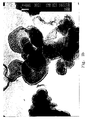
- the crystallites When crystallized at room temperature, the crystallites have a diameter of approximately 0.01 to 0.1 ⁇ m (microns) and can be grown to about 1 to 5 ⁇ m (microns) by hydrothermal treatment. In all cases, the ratio of the diameter to thickness of the hexagonal crystals in such synthetic materials of the prior art is in the range of about 5 to 10. Scanning and transmission electron microscope (TEM) pictures of hydrotalcite with the hexagonal plate-like crystal morphology are shown in Figures 1a and 1b, respectively.
- TEM transmission electron microscope
- hydrotalcite-like is recognized in the art. It is defined and used in a manner consistent with usage herein in the comprehensive literature survey of the above-referenced Cavani et al article.
- the crush strength of a typical 1.6 mm (1/16") extrudate would have to be at least in excess of 218 g/mm (0.5 lb/mm), preferably in excess of 435 g/mm (1 lb/mm) and most preferably in excess of 870 g/mm (2 lb/mm).
- the formed shapes prepared from the previously known synthetic hydrotalcites have strength of less than 44.9/mm (0.1 lb/mm).
- Patent 4,656,156 has mentioned that "Activated hydrotalcite is difficult to form in shapes, such as spheres, pellets and extrudates which are commonly used for adsorption and for catalyst substrates" (page 4, lines 7-10), and these hydrotalcites are clearly not suitable as binders for other inorganic materials.
- EP-A-269966 discloses a granular composition for dentifrices which is made using water insoluble inorganic compounds, such as synthetic hydrotalcite, as binders.
- WO-A-93/22237 discloses methods for producing synthetic hydrotalcite having a platelet-like morphology with an average size of less than 2 ⁇ m.
- the object of the present invention is to provide a process of making inorganic composite materials having good mechanical strength which may be used as catalysts, catalyst supports, and adsorbents.
- the present invention provides a process of making inorganic composite materials having good mechanical strength, comprising:
- the basic formula of the materials is Mg 1-x Al x (OH) 2 .xA - .mH 2 O.
- the mono carboxylic anion A - may be substituted by one or more different anions having an average valence of n, up to 90 mole percent.
- sheet hydrotalcites hydrotalcite-like materials with a sheet-like morphology
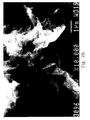
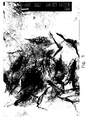
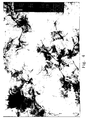
- Electron microscope photographs of the materials are shown in Figures 2a, 2b, 3 and 4. Interestingly dicarboxylic acids and other polycarboxylic acid compounds will not operate to make the sheet hydrotalcite-like materials used in our invention.
- hydrotalcite materials can be easily produced by a commercially advantageous process.
- the crystal morphology could also be formed when magnesium was partially (up to 50 mole percent) substituted from a family of cations consisting of Ni, Co, Zn, Cu, Mn; and aluminum was partially (up to 50 mole percent) substituted from a family of cations consisting of Cr and Fe.
- the sheet hydrotalcite has several useful characteristics arising from the sheet crystal habit with crystal broadness to thickness ratio of greater than 50. These sheet hydrotalcites can be mixed with any inorganic material and an appropriate amount of water to prepare a plasticized mixture which can be formed into shapes with good mechanical strength. These shapes retained their mechanical strength arter calcination when exposed to the high temperatures used in most catalytic applications and also when subjected to steam.
- FIG. 1a A comparison of Figures 1a with 2a and 2b shows that the hydrotalcite used in this invention differs from the conventional hydrotalcite having a hexagonal plate-like structure.
- the hydrotalcite used in the present invention also differs from the needle-like hydrotalcite described in U.S. Patent 4,351,814.
- the longitudinal dimension of the sheet is much larger than the thickness. The ratio is so large that the sheets are pliable and are crumpled.
- the longitudinal dimensions of the sheets can be measured with relative accuracy from SEM pictures ( Figures 2a, 2b).
- the ratio of the maximum longitudinal dimension to the minimum longitudinal dimension is less than 5. More often the ratio is very close to unity.
- the breadth of the sheets will refer to the maximum longitudinal dimension. The breadth was calculated by averaging the maximum longitudinal dimension of at least ten different sheet crystallites.
- the sheet hydrotalcite used in the present invention has sheets where the breadth ranges from 5-500 ⁇ m (microns).
- the thickness of the sheets is estimated from the specific surface area and the density.
- the skeletal densities calculated for hydrotalcite-like material having the Mg, Al cation pair in a molar ratio of 2.0:1 of Mg/Al, dried overnite at 60°C, with different anions in the interlayer, are listed in the table below.
- the thickness of the sheet hydrotalcite-like material used in the present invention is calculated to be 0.005 to 0.1 ⁇ m (microns). Therefore the ratio of breadth to thickness of the sheet hydrotalcite-like materials used in the present invention is at least 50, generally up to 5000, and more typically of the order of 500-1500.
- the sheet hydrotalcites used in the present invention are made by contacting an aluminum compound with a magnesium compound in water, together with a carboxylic acid having up to 6 carbon atoms.
- the aluminum source can be in the form of a reactive oxide, hydroxide, anionic salt or a mono carboxylic acid salt, the preferred source of aluminum is sodium aluminate or pseudoboehmite, with pseudoboehmite being the most preferred.
- Inorganic salts of the trivalent cation e.g. aluminum nitrates, are not preferred for use as a source for the present invention.
- the magnesium source may be in the form of oxide, hydroxide or a mono carboxylic acid salt.
- Inorganic salts of the divalent cation e.g.
- magnesium nitrate are not preferred for use as a source for the present invention.
- the magnesium source is added such that the molar ratio of divalent to trivalent metal is 1:1 to 10:1; preferably between 2:1 and 3:1.
- the preferred source of Mg is either magnesium oxide or magnesium hydroxide, mono carboxylic salts of magnesium such as magnesium acetate or magnesium formate, the most preferred source being magnesium oxide.
- the amount of water soluble mono carboxylic acid equivalents is added such that the ratio of organic acid anion to trivalent cation is preferably 1:1 on a molar basis, but may vary from 0.1:1 to 1.2:1. In cases where the ratio is less than unity the rest of the charge is balanced by hydroxyl anions present in the synthesis medium.
- an inorganic anion or a combination of inorganic anions is present in the synthesis mixture, and is incorporated into the layers instead of the hydroxyl ions.
- at least 10 mole percent of the anions in the synthesis mixture be monocarboxylic anions.
- the mono carboxylic acid equivalents are added either in the form of the acid or as salts of any of the combination of cations being used.
- the final pH of the synthesis mixture should be between 7 and 12 but preferably between 8 and 9. Heating and mixing the above reaction mixture will facilitate the crystallization reaction.
- the reaction time can extend from 0.5 h to several hours, i.e. as much as 72 h or more depending on the reaction temperature and mixing.
- the crystallization is carried out at a temperature of at least 40°C and atmospheric pressure.
- the rate of crystallization can be accelerated by increasing the temperature.
- the synthesis can also be carried out at higher than atmospheric pressures in a closed system, in which case the temperature can exceed 100°C and the time of reaction is further shortened.
- the preferred crystallization temperature is 60 to 100°C, but more preferably between 85 and 95°C and atmospheric pressure. After the crystallization period, the product consists of a thick homogeneous slurry.
- hydrotalcites used in the present invention could also be synthesized starting from the hexagonal hydrotalcites. It is known in the literature that calcined hydrotalcite-like materials have the capacity to reconstitute the original layered structure upon exposure to water (U.S. Patent 5,079,203). The temperature of calcination is critical and should not exceed 500°C. If the calcined hexagonal hydrotalcite-like material is recrystallized in a aqueous solution containing a monocarboxylic organic anion of the form RCOO - , where R is C n H 2n+1 and n is an integer from 0 to 5, sheet hydrotalcite-like material is reconstituted. This route provides a method of transforming the hexagonal hydrotalcite made by other methods to the sheet hydrotalcite-like material used in the present invention.
- a dried sample of the slurry shows an X-ray diffraction pattern characteristic to hydrotalcite materials but with expanded d-spacing due to the larger size of the intercalated organic anions.
- Typical X-ray diffraction lines of a crystalline sheet hydrotalcite made with acetic acid have been identified and are shown in Table 1.
- the crystallinity of the material can vary depending on the reaction temperature, time and mixing. Most of the sheet hydrotalcites show diffraction patterns with strong 001 lines and weak and sometimes ill-defined hkO lines. Again this is the result of the unique morphology of the crystals.
- An easy characterization of crystallinity consists of depositing a few drops of synthesis suspension on a glass slide, drying and analyzing by X-ray diffraction. As commonly used with layered structures, this method orients the crystals and enhances the 001 lines. Several d(003) spacings, obtained with different mono carboxylate anions are shown in Table 2. Samples for scanning electron microscopy were prepared by freeze drying the slurry to prevent the rolling up of sheets as would normally occur in a regular drying process.
- the hydrotalcite after synthesis, may be washed (if necessary) and dried.
- the drying process can be carried out in an oven, but for the production of strong binder material it is preferable to spray dry the slurry.
- a typical solid particle made by spray drying has unexpected and unique properties which are characterized by dispersability and a swelling nature.
- the spray dried hydrotalcite when mixed with water, forms a homogenous gel due to rehydration and dispersion into the original crystallites.
- hydrotalcite like materials made by the above procedure which are dried in an oven and then ground, are difficult to rehydrate or disperse. In the forming steps described below greater mechanical strength is achieved if the hydrotalcite added forms a homogenous gel. Therefore, for the purpose of the present invention it is preferred that the hydrotalcite like material be used as a spray dried powder.
- the forming of different inorganic materials comprises one or more of the following steps: (1) The inorganic material(s) are mixed with the spray dried hydrotalcite and an effective amount of water to form a plasticized mixture.
- Applicants preferably use an inorganic material which is selected from the group consisting of single metal oxides, mixed metal oxides and physical mixture of metal oxides of metals chosen from groups IIA to IVA and the transition metal series.
- the CAS version of the periodic table is used for nomenclature. It is well known in literature (Cavani et al., "Catalysis Today", 11, 173(1991)) that hydrotalcites lose 35% of their weight upon calcination to temperatures of 350°C and above. Many catalytic applications necessitate pretreatment of the formed shapes at temperatures of 300°C or above.
- the weight percentage of hydrotalcite used as a binder will refer to the weight percentage on a calcined basis.
- the weight percentage of the hydrotalcite used as a binder must be an effective amount, but will vary depending on the application for which the final inorganic composite is used. Increasing the weight percentage of the hydrotalcite in the mix will increase the mechanical strength of the final composite.
- the lower limit of the weight percentage of hydrotalcite used will be determined by the final application of the composite, but in all cases for the purposes of the present invention hydrotalcite is a necessary ingredient of the final composite which, when formed into shapes, possesses good mechanical strength.
- the upper limit of the hydrotalcite content of the dry mixture in applicants' invention is about 50% by weight.
- Water is a necessary ingredient in helping the hydrotalcite form a homogenous gel due to rehydration and dispersion of the original crystallites. Rehydration and then the subsequent dehydration during the drying process is important for forming bonds between the hydrotalcite and the inorganic material resulting in good mechanical strength in the final composite. Water also facilitates homogenous mixing of the inorganic material(s) with hydrotalcite. In cases where the inorganic composite is subsequently formed, water helps in forming a plasticized mixture. The water content of the mixture will be governed by the degree of homogeneity, method of forming, etc., but in all cases for the purposes of the present invention, an effective amount of water is a necessary ingredient. The upper limit of water content of the plasticized mixture can be up to 50% by weight.
- the ranges for each of the three basic ingredients will vary widely. There are numerous combinations, each depending on the type of inorganic material and the physical properties (such as crush strength) desired. For example, once a specific minimal crush strength is determined and a specific inorganic material is chosen, the amount of hydrotalcite and water can easily be determined through minimal experimentation. The only restriction applicants place on the amount of hydrotalcite and water is that a minimal effective amount (but not more than the maximum amounts mentioned above) be added so that a formed product will possess good mechnical strength (i.e. have a crush strength for a 1.6 mm (1/16") extrudate of at least 218 g/mm (0.5 lb/mm)).
- the binder is characterized by the absence of a need for an acid for peptization, as is required by aluminas. It is also a characteristic property of the binder that no other agent is required to provide a formable mass.
- the plasticized mixture is formed into different shapes by tableting, extruding or spherodizing.
- the preferred forming method is extrusion since shapes of very small cross section can be prepared.
- the extrusion process involves the use of a screw or auger type extruder.
- a distinguishing feature of the present invention was the ability to extrude different inorganic materials without using high compression forces beyond the limits achievable by screw extruders.
- the formed shapes are gradually dried to remove all water without creating thermal stresses which can weaken the formed shapes. (4) The dried formed shape can then optionally be subjected to calcination at higher temperature, steam treatment, impregnation with other catalytically active materials or any other such operation known in the art.
- the examples described in this invention were typically formed into cylindrical shapes 1.6 mm (1/16") in diameter and 6.4 mm (1/4") long.
- the crush strength of the formed extrudates was determined by a single pellet crush strength tester and following a procedure similar to that described by the ASTM procedure D4179-88a. The strengths reported are the radial crush strengths. Typically, at least 15-20 extrudates were individually crushed and the average crush strength was reported on a g/mm (lb/mm) basis. Powder diffraction pattern of sheet hydrotalcite synthesized in Example 1 dried at room temperature. Spacings in nm ( ⁇ ).
- This example describes a procedure for the synthesis of a typical sheet hydrotalcite to be used as a binder.
- 15.5g of pseudoboehmite (versal 850) was slurried in 500 ml of deionized water.
- 13.7g of acetic acid was added to the slurry.
- the suspension was vigorously agitated and heated to 50-60°C for 0.5 h .
- 17.7g magnesium oxide (Magchem 10-325 from Martin Marietta) along with 1.51 of deionized water were added to the resulting mixture and heated to 85-95°C for 6 h .
- the ratio of magnesium to aluminum in the mixture is 2:1 and the ratio of carboxylic anion to aluminum was 1:1.
- a portion of the slurry was dried at 60°C and X-ray diffraction carried out to confirm the hydrotalcite phase.
- TEM was performed on another portion of the slurry to confirm the presence of sheet hydrotalcite.
- Surface area of a sample dried and conditioned at 150°C was about 35 m2/g, which corresponds to about 0.03 ⁇ m (micron)in thickness.
- the average breadth of the sheets was determined from SEM pictures to be 30 ⁇ m (microns), yielding a ratio of breadth to thickness of 1000.
- the slurry was then spray dried to generate sheet hydrotalcite binder.
- Titanium dioxide 201 g was mixed with water to yield a paste of extrudable consistency.
- the paste was extruded through 25.4 mm (1") laboratory extruder into 1.6 mm (1/16") extrudates.
- the extrudates were dried at 100°C overnight and calcined at 400°C for 2 h.
- the crush strength is shown in Table I.
- the extrudates had 20 weight percentage of hydrotalcite on a calcined basis.
- the crush strength after calcination is shown in Table II.
- (c) 274g of zinc oxide was mixed with 22g of hydrotalcite and extruded using the procedure in Example 3(a).
- the extrudates had a 5 weight percentage of hydrotalcite as a binder on a calcined basis.
- the crush strength after calcination is shown in Table II.
- Valfor 100 a commercial A zeolite obtained from PQ Corporation was mixed with 100 g of the sheet hydrotalcite for 5 minutes. 84 g of water was added to the mixer with vigorous mixing to obtain a paste of extrudable consistency. The resulting paste was extruded into 1.6 mm (1/16") extrudates, dried overnight and calcined at 400°C for 2 h . The crush strength of the extrudates is 305 g/mm (0.7 lb/mm).
- the crush strengths of the steam treated extrudates were determined by a bulk crush strength test as follows: 20 g of the test sample was placed in a die 38 mm (1.5") in diameter; the die was raised to appropriate pressure for 1 min with gentle tapping; the pressure was released and weight fraction less than 100 mesh sieve determined; the process was repeated with two different pressures and the results interpolated to determine the pressure required to generate 1 wt% fines. It is seen from Table V that these oxide(s) or hydroxide(s) bound with the sheet hydrotalcite maintain usable strength on exposure to steam at 600°C. Bulk Crush Strengths of Hydrotalcites After Steam Treatment Steam Treatment Temp.(C) Bulk Crush Strength in Kg (lb) Untreated 352 (810) 400 294 (677) 500 286 (657) 600 278 (638)
- Example 4(b) the material prepared in Example 4(b) was used to hydrogenate a stream containing 25% by weight of alpha methyl styrene(AMS) in cumene, to cumene in the liquid phase.
- the reaction was carried out in a jacketed 6.4mm (1/4") tubular fixed bed reactor heated via an oil bath. 41 g of the extruded material of Example 4(b) was first reduced in pure hydrogen stream at 150°C for 4 h . The temperature was then lowered and a stream of AMS and cumene fed along with hydrogen.
- the conditions and test results are shown in the Table VI below. AMS is hydrogenated to cumene under these conditions with a greater than 99% selectivity.
Landscapes
- Chemical & Material Sciences (AREA)
- Organic Chemistry (AREA)
- Chemical Kinetics & Catalysis (AREA)
- Analytical Chemistry (AREA)
- Inorganic Chemistry (AREA)
- Engineering & Computer Science (AREA)
- Materials Engineering (AREA)
- Ceramic Engineering (AREA)
- Manufacturing & Machinery (AREA)
- Thermal Sciences (AREA)
- Geology (AREA)
- Physics & Mathematics (AREA)
- Life Sciences & Earth Sciences (AREA)
- Structural Engineering (AREA)
- Catalysts (AREA)
- Compounds Of Alkaline-Earth Elements, Aluminum Or Rare-Earth Metals (AREA)
- Compositions Of Oxide Ceramics (AREA)
- Curing Cements, Concrete, And Artificial Stone (AREA)
- Organic Low-Molecular-Weight Compounds And Preparation Thereof (AREA)
- Inorganic Insulating Materials (AREA)
- Glass Compositions (AREA)
Applications Claiming Priority (3)
| Application Number | Priority Date | Filing Date | Title |
|---|---|---|---|
| US08/380,866 US5507980A (en) | 1993-07-06 | 1995-01-30 | Basic inorganic binders |
| US380866 | 1995-01-30 | ||
| PCT/US1996/000771 WO1996023611A1 (en) | 1995-01-30 | 1996-01-22 | Basic inorganic binders |
Publications (3)
| Publication Number | Publication Date |
|---|---|
| EP0790872A1 EP0790872A1 (en) | 1997-08-27 |
| EP0790872A4 EP0790872A4 (en) | 1998-11-18 |
| EP0790872B1 true EP0790872B1 (en) | 2004-09-22 |
Family
ID=23502762
Family Applications (1)
| Application Number | Title | Priority Date | Filing Date |
|---|---|---|---|
| EP96905171A Expired - Lifetime EP0790872B1 (en) | 1995-01-30 | 1996-01-22 | Basic inorganic binders |
Country Status (7)
| Country | Link |
|---|---|
| US (1) | US5507980A (enExample) |
| EP (1) | EP0790872B1 (enExample) |
| JP (1) | JPH09511211A (enExample) |
| AT (1) | ATE276847T1 (enExample) |
| CA (1) | CA2186525C (enExample) |
| DE (1) | DE69633437T2 (enExample) |
| WO (1) | WO1996023611A1 (enExample) |
Families Citing this family (49)
| Publication number | Priority date | Publication date | Assignee | Title |
|---|---|---|---|---|
| US5939353A (en) * | 1992-12-21 | 1999-08-17 | Bp Amoco Corporation | Method for preparing and using nickel catalysts |
| US5928496A (en) * | 1996-06-20 | 1999-07-27 | Contract Materials Processing, Inc. | Hydrotalcite sulfer oxide sorption |
| JP3380259B2 (ja) * | 1997-07-21 | 2003-02-24 | ビーピー・コーポレーション・ノース・アメリカ・インコーポレーテッド | 炭化水素改質法ならびにそのための触媒および触媒前駆体 |
| US6028023A (en) | 1997-10-20 | 2000-02-22 | Bulldog Technologies U.S.A., Inc. | Process for making, and use of, anionic clay materials |
| US5941037A (en) * | 1997-11-21 | 1999-08-24 | W. R. Grace & Co.-Conn | Oxygen scavenging hydrotalcite and compositions containing same |
| DE19753758A1 (de) * | 1997-12-04 | 1999-06-10 | Henkel Kgaa | Verfahren zur Herstellung kationischer Schichtverbindungen |
| US6333290B1 (en) | 1998-02-11 | 2001-12-25 | Akzo Nobel Nv | Process for producing anionic clays using magnesium acetate |
| US6376405B1 (en) | 1998-02-11 | 2002-04-23 | Akzo Nobel N.V. | Process for producing anionic clay using two types of alumina compounds |
| US6171991B1 (en) | 1998-02-11 | 2001-01-09 | Akzo Nobel Nv | Process for producing an anionic clay-containing composition |
| US6440887B1 (en) | 1998-02-11 | 2002-08-27 | Akzo Nobel Nv | Continuous process for producing anionic clay |
| NL1009934C2 (nl) * | 1998-08-24 | 2000-02-25 | Akcros Chemicals V O F | Anionische kleien, anionische kleien bevattende stabilisatoren, werkwijze voor het stabiliseren van samenstellingen van polymeren. |
| DE19840587A1 (de) * | 1998-09-05 | 2000-03-09 | Basf Ag | Katalysatoren zur Herstellung von Polyetherolen durch ringöffnende Polymerisation von Alkylenoxiden |
| US6800578B2 (en) | 1999-01-29 | 2004-10-05 | Akzo Nobel Nv | Process for producing anionic clay using boehmite which has been peptized with an acid |
| US6541409B1 (en) | 1999-01-29 | 2003-04-01 | Akzo Nobel N.V. | Process for producing anionic clay using non-peptized boemite and compositions produced therefrom |
| US6258883B1 (en) | 1999-05-06 | 2001-07-10 | Cryovac, Inc. | Oxygen scavenging system and compositions |
| US6387461B1 (en) | 1999-05-06 | 2002-05-14 | Cryovac, Inc. | Oxygen scavenger compositions |
| WO2001004053A1 (fr) * | 1999-07-08 | 2001-01-18 | Mizusawa Industrial Chemicals, Ltd. | Sel polybasique composite, procede de production de ce sel, et utilisation |
| US6652828B2 (en) | 1999-08-11 | 2003-11-25 | Akzo Nobel N.V. | Process for producing Mg-containing non-Al anionic clay |
| ES2211588T3 (es) | 1999-08-11 | 2004-07-16 | Akzo Nobel N.V. | Hidrotalcita de mg-ai politipica. |
| DE60038236T2 (de) | 1999-08-11 | 2009-03-19 | Albemarle Netherlands B.V. | Verfahren zur herstellung von nicht-aluminiumenthaltenden anionischen magnesiumtonerden |
| FR2803206A1 (fr) * | 1999-12-30 | 2001-07-06 | Aventis Pharma Sa | Composition comprenant des acides nucleiques, preparation et utilisation |
| NO316440B1 (no) † | 2000-05-18 | 2004-01-26 | Statoil Asa | Hydrotalcitt-basert materiale med forbedret styrke, anvendelse og fremgangsmåte derav, og katalysator omfattende dette materialet |
| EP1358129B1 (en) * | 2001-02-09 | 2017-10-11 | Albemarle Netherlands B.V. | Method of making doped anionic clays |
| WO2002068329A1 (en) * | 2001-02-09 | 2002-09-06 | Akzo Nobel N.V. | Process for the preparation of anionic clay |
| CN1304351C (zh) * | 2001-02-09 | 2007-03-14 | 阿克佐诺贝尔股份有限公司 | 准晶体水合羟基羧酸镁铝、其制备和用途 |
| JP4691263B2 (ja) * | 2001-04-06 | 2011-06-01 | 水澤化学工業株式会社 | 油中水型エマルジョン |
| US6846870B2 (en) * | 2001-08-23 | 2005-01-25 | Sunoco, Inc. (R&M) | Hydrotalcites, syntheses, and uses |
| US6979708B2 (en) * | 2001-08-23 | 2005-12-27 | Sunoco, Inc. (R&M) | Hydrotalcites, syntheses, and uses |
| GB0127517D0 (en) * | 2001-11-16 | 2002-01-09 | Statoil Asa | Catalysts |
| US6635789B2 (en) | 2002-03-06 | 2003-10-21 | General Electric Company | Production and purification of phenol |
| US6486365B1 (en) | 2002-04-04 | 2002-11-26 | General Electric Company | Production and purification of phenol: hydroxyacetone removal by hydrotalcite |
| MXPA05001840A (es) * | 2002-08-13 | 2005-09-30 | Intercat Inc | Tratamientos para gas de combustion para reducir las emisiones de nox y co. |
| US6998100B2 (en) * | 2003-11-19 | 2006-02-14 | Toll Processing And Consulting, Llc | Sulfur oxide sorption with layered chlorite-type contact solids |
| US7431825B2 (en) * | 2003-12-05 | 2008-10-07 | Intercat, Inc. | Gasoline sulfur reduction using hydrotalcite like compounds |
| ATE548110T1 (de) | 2003-12-05 | 2012-03-15 | Intercat Inc | Verfahren zur reduktion con sox-, nox- und co- emissionen in gasströmen |
| US20050221974A1 (en) * | 2004-03-31 | 2005-10-06 | Ngk Insulators, Ltd. | Ceramic clay, ceramic formed article, ceramic structure, and manufacturing methods thereof |
| EP1736457B1 (en) * | 2004-03-31 | 2011-09-14 | NGK Insulators, Ltd. | Ceramic clay, manufacturing methods thereof and manufacturing methods for ceramic formed article and ceramic structure, |
| US8366989B2 (en) * | 2004-04-22 | 2013-02-05 | Ngk Insulators, Ltd. | Method for producing porous honeycomb structure and porous honeycomb structure |
| TWI342335B (en) * | 2004-06-02 | 2011-05-21 | Intercat Inc | Mixed metal oxide additives |
| CN101111466B (zh) | 2004-12-22 | 2011-08-03 | 帝化株式会社 | 在水中剥离的层状多氢氧化物、其制备方法和用途 |
| US7968740B2 (en) * | 2005-12-06 | 2011-06-28 | Akzo Nobel N.V. | Process for preparing organically modified layered double hydroxide |
| JP5155568B2 (ja) * | 2007-01-29 | 2013-03-06 | テイカ株式会社 | 水中で剥離する層状複水酸化物、その製造方法および用途 |
| US8038981B2 (en) * | 2008-02-05 | 2011-10-18 | Air Products And Chemicals, Inc. | Hydrogen production using complex metal oxide pellets |
| JP5560081B2 (ja) * | 2010-03-30 | 2014-07-23 | 日本碍子株式会社 | セラミックス坏土、セラミックス成形体、セラミックス構造体及びこれらの製造方法 |
| US20120285721A1 (en) | 2011-05-11 | 2012-11-15 | Gallucci Robert R | Silicone polyetherimide copolymers |
| KR101757028B1 (ko) * | 2013-11-18 | 2017-07-12 | 주식회사 엘지화학 | 촉매 조성물 및 이의 제조방법 |
| KR102604873B1 (ko) | 2015-07-22 | 2023-11-23 | 바스프 코포레이션 | 아세트산비닐 단량체 생산을 위한 높은 기하학적 표면적 촉매 |
| US10138199B2 (en) * | 2016-03-17 | 2018-11-27 | Saudi Arabian Oil Company | High aspect ratio layered double hydroxide materials and methods for preparation thereof |
| CN114315384A (zh) * | 2021-12-28 | 2022-04-12 | 安徽宁火新材料有限公司 | 一种炉排炉用碳化硅可塑料 |
Citations (1)
| Publication number | Priority date | Publication date | Assignee | Title |
|---|---|---|---|---|
| US5399329A (en) * | 1993-07-06 | 1995-03-21 | Aristech Chemical Corporation | Hydrotalcite-like materials having a sheet-like morphology and process for production thereof |
Family Cites Families (22)
| Publication number | Priority date | Publication date | Assignee | Title |
|---|---|---|---|---|
| US3879523A (en) * | 1969-12-12 | 1975-04-22 | Kyowa Chem Ind Co Ltd | Composite metal hydroxides |
| US4904457A (en) * | 1974-03-30 | 1990-02-27 | Aluminum Company Of America | Synthetic hydrotalcite |
| US4351814A (en) * | 1980-12-18 | 1982-09-28 | Kyowa Chemical Industry Co., Ltd. | Hydrotalcites having a hexagonal needle-like crystal structure and process for production thereof |
| US4458026A (en) * | 1982-06-02 | 1984-07-03 | Union Carbide Corporation | Catalysts for aldol condensations |
| JPS6091962A (ja) * | 1983-10-24 | 1985-05-23 | Banyu Pharmaceut Co Ltd | 乾燥ビ−ル酵母の直接粉末圧縮打錠法 |
| JPS60161744A (ja) * | 1984-01-30 | 1985-08-23 | Kyowa Chem Ind Co Ltd | 原子炉冷却水用浄化剤及び浄化方法 |
| US4656156A (en) * | 1986-01-21 | 1987-04-07 | Aluminum Company Of America | Adsorbent and substrate products and method of producing same |
| US4871396A (en) * | 1986-11-25 | 1989-10-03 | Kao Corporation | Granular composition and dentifrice containing the same |
| US4774212A (en) * | 1987-12-22 | 1988-09-27 | Amoco Corporation | Pillared hydrotalcites |
| US4977123A (en) * | 1988-06-17 | 1990-12-11 | Massachusetts Institute Of Technology | Preparation of extrusions of bulk mixed oxide compounds with high macroporosity and mechanical strength |
| US5202496A (en) * | 1989-04-18 | 1993-04-13 | Aristech Chemical Corporation | Method of making isophorne |
| US4970191A (en) * | 1989-04-18 | 1990-11-13 | Aristech Chemical Corporation | Basic mixed oxide |
| US5153156A (en) * | 1989-04-18 | 1992-10-06 | Aristech Chemical Corporation | Process for making efficient anionic clay catalyst, catalysts made thereby, and method of making isophorone |
| US5055620A (en) * | 1989-04-18 | 1991-10-08 | Aristech Chemical Corporation | Process for aldol condensation |
| US5253991A (en) * | 1989-11-20 | 1993-10-19 | Sumitomo Cement Co., Ltd. | Apparatus for producing spheroidal inorganic particulate material |
| DE4010606A1 (de) * | 1990-04-02 | 1991-10-10 | Henkel Kgaa | Verwendung von hydrophobierten hydrotalciten als katalysatoren fuer die ethoxylierung bzw. propoxylierung |
| DE4034305A1 (de) * | 1990-10-29 | 1992-04-30 | Henkel Kgaa | Hydrophobierte doppelschichthydroxid-verbindungen, verfahren zur herstellung und ihre verwendung als alkoxylierungskatalysatoren |
| AU5155893A (en) * | 1992-04-30 | 1993-11-29 | J.M. Huber Corporation | Method for production of synthetic hydrotalcite |
| US5182242A (en) * | 1992-06-02 | 1993-01-26 | Mobil Oil Corp. | Catalysts bound with low acidity refractory oxide |
| JPH0648742A (ja) * | 1992-07-27 | 1994-02-22 | Nitto Chem Ind Co Ltd | 層間化合物 |
| TW321658B (enExample) * | 1992-09-17 | 1997-12-01 | Ciba Sc Holding Ag | |
| JPH08169813A (ja) * | 1994-10-18 | 1996-07-02 | Kao Corp | 歯磨組成物 |
-
1995
- 1995-01-30 US US08/380,866 patent/US5507980A/en not_active Expired - Lifetime
-
1996
- 1996-01-22 CA CA002186525A patent/CA2186525C/en not_active Expired - Lifetime
- 1996-01-22 DE DE69633437T patent/DE69633437T2/de not_active Expired - Lifetime
- 1996-01-22 JP JP8523585A patent/JPH09511211A/ja not_active Ceased
- 1996-01-22 WO PCT/US1996/000771 patent/WO1996023611A1/en not_active Ceased
- 1996-01-22 AT AT96905171T patent/ATE276847T1/de not_active IP Right Cessation
- 1996-01-22 EP EP96905171A patent/EP0790872B1/en not_active Expired - Lifetime
Patent Citations (1)
| Publication number | Priority date | Publication date | Assignee | Title |
|---|---|---|---|---|
| US5399329A (en) * | 1993-07-06 | 1995-03-21 | Aristech Chemical Corporation | Hydrotalcite-like materials having a sheet-like morphology and process for production thereof |
Also Published As
| Publication number | Publication date |
|---|---|
| DE69633437T2 (de) | 2005-03-03 |
| ATE276847T1 (de) | 2004-10-15 |
| DE69633437D1 (de) | 2004-10-28 |
| JPH09511211A (ja) | 1997-11-11 |
| CA2186525A1 (en) | 1996-08-08 |
| EP0790872A1 (en) | 1997-08-27 |
| WO1996023611A1 (en) | 1996-08-08 |
| EP0790872A4 (en) | 1998-11-18 |
| US5507980A (en) | 1996-04-16 |
| CA2186525C (en) | 2000-12-05 |
Similar Documents
| Publication | Publication Date | Title |
|---|---|---|
| EP0790872B1 (en) | Basic inorganic binders | |
| US5153156A (en) | Process for making efficient anionic clay catalyst, catalysts made thereby, and method of making isophorone | |
| US5399329A (en) | Hydrotalcite-like materials having a sheet-like morphology and process for production thereof | |
| DE60037519T2 (de) | Abriebfeste formkörper, die anionische, kristalline tonerden enthalten | |
| DE60007533T2 (de) | Polytypisches magnesiumaluminiumhydrotalcit | |
| EP0557764B1 (en) | Process for making anionic clay catalysts, catalysts made thereby, and method of making isophorone | |
| DE60205867T2 (de) | Verfahren zur herstellung von anionischem ton | |
| US7807128B2 (en) | Process for preparing multimetallic anionic clays and products thereof | |
| CA2190390C (en) | Nickel and cobalt containing hydrotalcite-like materials having a sheet-like morphology and process for production thereof | |
| RU2632197C2 (ru) | Способ получения катализатора для риформинга и риформинг метана | |
| CN109414686B (zh) | 高纵横比层状双氢氧化物材料和其制备方法 | |
| DE60015352T2 (de) | Verfahren zur Herstellung von quasikristallinen Böhmiten, die Additive enthalten | |
| DE60015138T2 (de) | Verfahren zur herstellung von quasi-kristallinen boehmiten aus preisgünstigen vorläufern | |
| JP2003517993A (ja) | アルミナ三水化物から生じさせた高い細孔容積と高い表面積を有する酸化アルミニウム複合体そしてこれの製造および使用方法 | |
| KR100683370B1 (ko) | 알루미늄을 함유하는 무-Mg 음이온성 클레이의 제조 방법 | |
| US6652828B2 (en) | Process for producing Mg-containing non-Al anionic clay | |
| CA2152815C (en) | Catalysts with fine-particle dispersion of the active component | |
| EP0325465A2 (en) | Zeolite l preparation |
Legal Events
| Date | Code | Title | Description |
|---|---|---|---|
| PUAI | Public reference made under article 153(3) epc to a published international application that has entered the european phase |
Free format text: ORIGINAL CODE: 0009012 |
|
| 17P | Request for examination filed |
Effective date: 19970204 |
|
| AK | Designated contracting states |
Kind code of ref document: A1 Designated state(s): AT BE CH DE FR GB IT LI LU NL |
|
| A4 | Supplementary search report drawn up and despatched |
Effective date: 19981002 |
|
| AK | Designated contracting states |
Kind code of ref document: A4 Designated state(s): AT BE CH DE FR GB IT LI LU NL |
|
| 17Q | First examination report despatched |
Effective date: 19990312 |
|
| GRAP | Despatch of communication of intention to grant a patent |
Free format text: ORIGINAL CODE: EPIDOSNIGR1 |
|
| GRAS | Grant fee paid |
Free format text: ORIGINAL CODE: EPIDOSNIGR3 |
|
| GRAA | (expected) grant |
Free format text: ORIGINAL CODE: 0009210 |
|
| AK | Designated contracting states |
Kind code of ref document: B1 Designated state(s): AT BE CH DE FR GB IT LI LU NL |
|
| REG | Reference to a national code |
Ref country code: GB Ref legal event code: FG4D |
|
| REG | Reference to a national code |
Ref country code: CH Ref legal event code: EP |
|
| REF | Corresponds to: |
Ref document number: 69633437 Country of ref document: DE Date of ref document: 20041028 Kind code of ref document: P |
|
| REG | Reference to a national code |
Ref country code: CH Ref legal event code: NV Representative=s name: ISLER & PEDRAZZINI AG |
|
| RAP2 | Party data changed (patent owner data changed or rights of a patent transferred) |
Owner name: INTERCAT, INC. |
|
| NLT2 | Nl: modifications (of names), taken from the european patent patent bulletin |
Owner name: INTERCAT, INC. |
|
| REG | Reference to a national code |
Ref country code: GB Ref legal event code: ERR Free format text: NOTIFICATION HAS NOW BEEN RECEIVED FROM THE EUROPEAN PATENT OFFICE THAT THE CORRECT NAME OF THE APPLICANT/PROPRIETOR IS: INTERCAT INC. THIS CORRECTION WAS PUBLISHED IN THE EUROPEAN PATENT BULLETIN 04/45 DATED 20041103 |
|
| PLBE | No opposition filed within time limit |
Free format text: ORIGINAL CODE: 0009261 |
|
| STAA | Information on the status of an ep patent application or granted ep patent |
Free format text: STATUS: NO OPPOSITION FILED WITHIN TIME LIMIT |
|
| ET | Fr: translation filed | ||
| 26N | No opposition filed |
Effective date: 20050623 |
|
| REG | Reference to a national code |
Ref country code: CH Ref legal event code: PCAR Free format text: ISLER & PEDRAZZINI AG;POSTFACH 1772;8027 ZUERICH (CH) |
|
| PGFP | Annual fee paid to national office [announced via postgrant information from national office to epo] |
Ref country code: LU Payment date: 20090121 Year of fee payment: 14 Ref country code: AT Payment date: 20081211 Year of fee payment: 14 |
|
| PGFP | Annual fee paid to national office [announced via postgrant information from national office to epo] |
Ref country code: CH Payment date: 20090122 Year of fee payment: 14 |
|
| PGFP | Annual fee paid to national office [announced via postgrant information from national office to epo] |
Ref country code: BE Payment date: 20090225 Year of fee payment: 14 |
|
| PGFP | Annual fee paid to national office [announced via postgrant information from national office to epo] |
Ref country code: IT Payment date: 20090114 Year of fee payment: 14 |
|
| BERE | Be: lapsed |
Owner name: *INTERCAT INC. Effective date: 20100131 |
|
| REG | Reference to a national code |
Ref country code: CH Ref legal event code: PL |
|
| REG | Reference to a national code |
Ref country code: FR Ref legal event code: ST Effective date: 20100930 |
|
| PG25 | Lapsed in a contracting state [announced via postgrant information from national office to epo] |
Ref country code: LI Free format text: LAPSE BECAUSE OF NON-PAYMENT OF DUE FEES Effective date: 20100131 Ref country code: FR Free format text: LAPSE BECAUSE OF NON-PAYMENT OF DUE FEES Effective date: 20100201 Ref country code: CH Free format text: LAPSE BECAUSE OF NON-PAYMENT OF DUE FEES Effective date: 20100131 |
|
| PG25 | Lapsed in a contracting state [announced via postgrant information from national office to epo] |
Ref country code: AT Free format text: LAPSE BECAUSE OF NON-PAYMENT OF DUE FEES Effective date: 20100122 |
|
| REG | Reference to a national code |
Ref country code: FR Ref legal event code: RN |
|
| REG | Reference to a national code |
Ref country code: FR Ref legal event code: FC |
|
| PG25 | Lapsed in a contracting state [announced via postgrant information from national office to epo] |
Ref country code: BE Free format text: LAPSE BECAUSE OF NON-PAYMENT OF DUE FEES Effective date: 20100131 |
|
| PG25 | Lapsed in a contracting state [announced via postgrant information from national office to epo] |
Ref country code: IT Free format text: LAPSE BECAUSE OF NON-PAYMENT OF DUE FEES Effective date: 20100122 |
|
| PG25 | Lapsed in a contracting state [announced via postgrant information from national office to epo] |
Ref country code: LU Free format text: LAPSE BECAUSE OF NON-PAYMENT OF DUE FEES Effective date: 20100122 |
|
| REG | Reference to a national code |
Ref country code: FR Ref legal event code: PLFP Year of fee payment: 20 |
|
| PGFP | Annual fee paid to national office [announced via postgrant information from national office to epo] |
Ref country code: NL Payment date: 20150129 Year of fee payment: 20 |
|
| PGFP | Annual fee paid to national office [announced via postgrant information from national office to epo] |
Ref country code: DE Payment date: 20150121 Year of fee payment: 20 |
|
| PGFP | Annual fee paid to national office [announced via postgrant information from national office to epo] |
Ref country code: GB Payment date: 20150121 Year of fee payment: 20 Ref country code: FR Payment date: 20150122 Year of fee payment: 20 |
|
| REG | Reference to a national code |
Ref country code: DE Ref legal event code: R071 Ref document number: 69633437 Country of ref document: DE |
|
| REG | Reference to a national code |
Ref country code: NL Ref legal event code: MK Effective date: 20160121 |
|
| REG | Reference to a national code |
Ref country code: GB Ref legal event code: PE20 Expiry date: 20160121 |
|
| PG25 | Lapsed in a contracting state [announced via postgrant information from national office to epo] |
Ref country code: GB Free format text: LAPSE BECAUSE OF EXPIRATION OF PROTECTION Effective date: 20160121 |