EP0760939B1 - Gerät und methode zur ereigniskorrelation und problemmeldung - Google Patents
Gerät und methode zur ereigniskorrelation und problemmeldung Download PDFInfo
- Publication number
- EP0760939B1 EP0760939B1 EP95920589A EP95920589A EP0760939B1 EP 0760939 B1 EP0760939 B1 EP 0760939B1 EP 95920589 A EP95920589 A EP 95920589A EP 95920589 A EP95920589 A EP 95920589A EP 0760939 B1 EP0760939 B1 EP 0760939B1
- Authority
- EP
- European Patent Office
- Prior art keywords
- causality
- symptoms
- values
- codebook
- events
- Prior art date
- Legal status (The legal status is an assumption and is not a legal conclusion. Google has not performed a legal analysis and makes no representation as to the accuracy of the status listed.)
- Expired - Lifetime
Links
Images




Classifications
-
- G—PHYSICS
- G06—COMPUTING OR CALCULATING; COUNTING
- G06F—ELECTRIC DIGITAL DATA PROCESSING
- G06F11/00—Error detection; Error correction; Monitoring
- G06F11/22—Detection or location of defective computer hardware by testing during standby operation or during idle time, e.g. start-up testing
- G06F11/2257—Detection or location of defective computer hardware by testing during standby operation or during idle time, e.g. start-up testing using expert systems
-
- G—PHYSICS
- G06—COMPUTING OR CALCULATING; COUNTING
- G06F—ELECTRIC DIGITAL DATA PROCESSING
- G06F11/00—Error detection; Error correction; Monitoring
- G06F11/22—Detection or location of defective computer hardware by testing during standby operation or during idle time, e.g. start-up testing
- G06F11/2273—Test methods
-
- G—PHYSICS
- G06—COMPUTING OR CALCULATING; COUNTING
- G06F—ELECTRIC DIGITAL DATA PROCESSING
- G06F11/00—Error detection; Error correction; Monitoring
- G06F11/30—Monitoring
- G06F11/34—Recording or statistical evaluation of computer activity, e.g. of down time, of input/output operation ; Recording or statistical evaluation of user activity, e.g. usability assessment
- G06F11/3466—Performance evaluation by tracing or monitoring
-
- G—PHYSICS
- G06—COMPUTING OR CALCULATING; COUNTING
- G06F—ELECTRIC DIGITAL DATA PROCESSING
- G06F2201/00—Indexing scheme relating to error detection, to error correction, and to monitoring
- G06F2201/86—Event-based monitoring
Definitions
- This invention relates to the field of event correlation and, more particularly, to a method and apparatus for efficiently determining the occurrence of and the source of problems in a complex system based on observable events.
- the invention has broad application to any type of complex system including computer networks, satellites, communication systems, weapons systems, complex vehicles such as spacecraft, medical diagnosis, and financial market analysis.
- Problems can include faults, performance degradation, intrusion attempts and other exceptional operational conditions requiring handling. Problems generate observable events, and these events can be monitored, detected, reported, analyzed and acted upon by humans or by programs. However, as systems have become more complex, the rate at which observable events occur has increased super-linearly, making problem management more difficult.
- Automated management systems can help to cope with this increase in the number and complexity of events by (1) automating the collection and reporting of events, thereby reducing the load on human operators or programs; (2) using event correlation techniques to group distinct events, thereby compressing the event stream into a form more easily managed by human operators; (3) mapping groups of events to their underlying causes, thus reducing the time between faults and repairs; and (4) automatically correcting diagnosed problems, thereby minimizing operator intervention.
- Event correlation and management techniques are a particularly important method of reducing the number of symptoms in a system which need to be analyzed and accurately determining the number and identity of discrete problems which need to be rectified. Unless events are correlated, a single problem in a single subsystem could result in multiple, uncoordinated corrective actions. This can lead to wasteful resources spent on duplicate efforts and inconsistent corrective actions which result in an escalation of problems.
- Event correlation and management approaches can be generally grouped into five categories: (1) rule-based reasoning; (2) case-based reasoning; (3) reasoning with generic models; (4) probability networks; and (5) model-based reasoning.
- rule-based reasoning (2) case-based reasoning
- reasoning with generic models (3) reasoning with generic models
- probability networks (4) probability networks
- model-based reasoning a number of different architectures have been considered to carry out event correlation and management.
- the following terminology is defined:
- Event correlation can take place in both the space and time dimensions. For example, two events whose sources are determined to be in the same protocol layer in the same network element may be related spatially. However, they may not be correlated if they occur on different days, because they would not be related temporally.
- Rule-based expert systems generally contain two components:
- Rule-based reasoning can proceed in one of two possible modes of operation.
- FORWARD CHAINING mode the working memory is constantly scanned for facts which can be used to satisfy the condition part of each rule. When a condition is found, the rule is executed. Executing a rule means that the working memory is updated based on the conclusion contained in the rule. These newly updated data can be used to satisfy the conditions of other rules, resulting in a "chain reaction" of rule executions.
- BACKWARD CHAINING mode the system is presented with a "goal" working memory datum, which it is asked to either confirm or deny.
- the system searches for rules whose action part could assert the goal; for each such rule, the condition corresponding to the action is checked against the working memory to see if it is satisfied.
- the conditions can be satisfied by either finding the appropriate working memory data or by finding other rules whose conditions are satisfied which could assert the desired working memory data.
- Rule-based expert systems benefit from straightforward knowledge acquisition because the "if-then" format of the rules often mimics the format of expert knowledge.
- the knowledge base can be incrementally modified because rules can be added or modified easily.
- attempts to automate knowledge acquisition for such systems have produced limited results.
- Rule-based expert systems can be used to perform event detection and event correlation by providing a link between the working memory and the event stream.
- the search associated with rule-based systems can be of exponential complexity in the number of rules (size of knowledge base). It is difficult to ensure that firing sequences of a complex rule-based system actually terminate.
- the complexity of the search is also exponential in the size of the working memory.
- the working memory includes the events to be correlated. If the system involves a large number of events, the working memory (and therefore the search) may be unbounded.
- a rule based system can be very sensitive to lost or spurious event data.
- a rule-based system can be sensitive even to the order in which input patterns are provided. Different orders may lead to different results and time to converge. There are no techniques to ensure that a rule based system contains sufficient rules to resolve correlations.
- an arbitrary set of rules may execute an indefinite or even infinite number of rules before completion; a rule-based algorithm can involve an arbitrarily long or even infinite cycle of rule firings.
- a minor defect in the knowledge base could render the system useless.
- the knowledge base is "brittle" in that if the problem domain changes in any way, the system will no longer perform.
- Case-based reasoning methods and systems involve storing knowledge as a repository of successful cases of solved problems called a case base.
- a case base When the system is presented with a problem, it searches the case base for similar cases. Once the similar cases are retrieved, various problem-solving strategies must be adapted to the case at hand. If the adapted strategy successfully solves the problem, then the newly solved problem can be added to the case base with the adapted solution.
- Determinators are a way of narrowing the similarity criteria to attributes of a problem which are relevant to solving the problem. For example, the solution to the problem "file transfer throughput is slow" could be determined by looking at bandwidth, network load, packet collision rate and packet deferment rate; these would constitute determinators. Parameterized adaptation such as interpolating among solutions to similar problems located in the case base can be used to provide solutions to new problems.
- case-based approaches have inherent disadvantages.
- the case base grows as problems are solved over a long period of time, and there may be more cases in the case base than is strictly necessary to solve the range of problems encountered.
- Effort must be expended not only on acquiring knowledge for storage in the case base, but also on identifying and creating appropriate determinators to operate the system effectively. It may be necessary for experts to directly enter cases into the system to fully capture their value, and it may be difficult to determine when the case base is sufficiently large to solve a prescribed range of problems. In some cases, the experts may even need to participate directly in knowledge acquisition while the system is operating. The system may not be usable until a large number of problems have been encountered and solved.
- case-based systems can involve significant and slow search, can be difficult to validate and may be sensitive to loss or spurious generation of symptoms (these may be seen as different cases).
- Generic models rely on generic algorithms, rather than expert knowledge, to correlate events based on an abstraction of the system architecture and its components.
- each event can be normalized to include a list of all possible faults which could have been responsible for the event. (This is an abstraction of a real event which could carry much more varied information). Then all the various events are collected and the intersection of their sources is determined and output as the diagnosis.
- a rule of the form "if A then B” can be augmented with a certainty factor: "if A then B with certainty 90%.”
- the element of a probability network is a proposition, which is a hypothesis about the state of the system being monitored. For example, the hypothesis "node A is faulty" is a proposition. A probability is associated with each proposition, which is its a priori probability of truth. Additionally, probabilities can be assigned to the relationships between propositions. For example, "the truth of proposition A causes the truth of proposition B with probability 90%.” When an event occurs, the probability of the proposition representing the occurrence of that event is updated to 100%, and this change is propagated to other propositions in the network based on the relationships. A diagnosis can be generated by simply listing those propositions having the highest probabilities.
- Probability networks may be advantageous in that they can produce hypotheses with a precise confidence level. However, in the worst case, every proposition has a causal relationship with every other proposition, in which case the number of connections in the probability network would be approximately equal to the square of the number of propositions in the network. Moreover, the complexity of an event correlation algorithm using probability networks is typically high.
- Fuzzy logic describes uncertain knowledge in terms of subintervals of [0,1]. For example, the likelihood of a problem can be represented as an interval [0,0.4]. The certainty (fuzziness) of the problem is given by 0.4. Fuzzy logic, in a manner similar to Boolean logic, defines operations in terms of intervals. The product of two intervals is their intersection, while the sum is their union.
- FBR can be used to model causality among problems and symptoms using a matrix R of fuzziness indicators.
- this approach has severe disadvantages. For example, there may be no solutions to the equation, or there may be many solutions to the equation.
- a small error in the model e.g., in the fuzziness indicators of R
- a small error can also transform an equation with multiple solutions into one with no solutions and vice versa, or yield completely different solutions. Lost or spurious symptoms may result in no solution to the equation rather than detecting the possible loss.
- the FBR approach does not permit simple reduction of symptoms to be observed (e.g., reducing a fuzziness matrix R to a much smaller matrix R').
- the complexity of FBR can be exponential in the number of problems, because it seeks to compute all possible combinations of problems that could yield a particular observation. In short, the FBR approach does not solve the problems outlined above with respect to complexity and performance.
- Model-based reasoning involves creating a model which represents the underlying system being monitored.
- a model is a finite state machine (FSM) for modelling possible states of the system. As messages are observed at any location in the system, the model is used to update the estimate of the current state of the system.
- FSM finite state machine
- an FSM representation can quickly grow to unmanageable size because of the simplicity of the model.
- the time complexity of an event correlation algorithm using an FSM is typically linear in the number of events at each machine.
- a number of different architectures have been proposed for carrying out event correlation and management along the principles discussed above. These can be generally grouped into: (A) blackboard architectures; (B) event detection architectures; (C) network modelling architectures; and (D) simulation architectures.
- a blackboard architecture generally comprises one or more knowledge sources (KS's), a blackboard, and a control shell.
- Each KS is a knowledge base which has a specific domain of expertise.
- the blackboard is a data structure which acts as a shared memory for the KS's; each KS can read from and write to the blackboard.
- the control shell coordinates the activities of the various KS's based on "triggering" blackboard events. Once a KS is scheduled by the control shell, it scans the blackboard for knowledge that it needs to perform its inference. The output of a scheduled KS may be further blackboard events (i.e., changes to the data on the blackboard).
- a basic system could have two knowledge sources: a protocol diagnoser and a hardware diagnoser.
- the protocol diagnoser KS could be implemented with model-based reasoning using an FSM model of the protocol, while the hardware diagnoser could use a rule-based system as outlined above.
- the protocol diagnoser KS could write a diagnosis to the blackboard indicating that a given router is not obeying the protocol specifications.
- the hardware diagnoser KS could then read this diagnosis from the blackboard and initiate a hardware diagnosis for the given router. To achieve this sequence, the control shell would be instructed to activate the hardware diagnoser KS whenever the protocol diagnoser indicates a hardware fault.
- blackboard architectures are modular (i.e., they allow the integration of many types of reasoning methods for a single system) and allow various KS's to be developed independently (i.e., knowledge can be acquired independently from experts of each domain and then assembled into a complete system), they also have disadvantages. For example, because the blackboard must act as a global memory for all KS's, all communication must be converted into a common format understandable by all other KS's. Thus, the integration task can be enormous. Furthermore, it may be impossible to decide which KS should be scheduled without special knowledge about what is contained in the KS's themselves.
- a rule-based system can be implemented for event detection whereby generated events are converted into working memory elements and inserted into the working memory of the rule-based system.
- the rule base would contain rules matching these memory elements, and would report a subset or summary of the events to an event correlator by inserting other working memory elements into the correlator's working memory.
- OVERLOAD event For example, suppose it is desired that an OVERLOAD event be generated when a delay on 20% of the communications links in a network exceeds 5 seconds.
- One approach would be to continuously insert all current delays on all communications links into the working memory of the event detector, and the event detector could define the OVERLOAD event. However, this would cause a large load on the system whether or not the OVERLOAD event was of interest.
- OVERLOAD event can be defined as a data pattern event which is generated whenever one of the event retrieval queries returns a value.
- One advantage of this approach is that new events can be defined in a declarative manner using a database query language. However, it may be difficult to implement because there must be a mapping from the query language to actual queries to the objects in the network. Moreover, when a new query is produced, it may be difficult to determine the cost of producing the event to which the query maps; not all queries which can be generated are capable of an efficient implementation. Therefore, the complexity of this approach could be difficult to predict.
- the system under observation can be modelled as an object-oriented hierarchy, where network elements are modelled as objects having associated functions for querying the values of the object's attributes. Calls to these functions would invoke a query to the database or return a value which was stored from a previous query. For example, GET_CPU_UTILIZATION would return the current CPU utilization rate for a particular CPU. Logical objects representing abstractions of other objects can be defined to further expand the model. Diagnostic knowledge may be derived and represented in an object-oriented fashion, thus providing a manageable database. However, as with other object-oriented approaches, the performance of the system can be poor. Moreover, this model only provides one component of an event correlation system (i.e., the knowledge base); it does not address how to correlate events and provide a problem diagnosis.
- an event correlation system i.e., the knowledge base
- Simulation can be used to help predict underlying problems in a system. If the simulator can be made to operate in real-time, then the performance of the system can be tested under realistic conditions. The simulation can be monitored more easily than a real system, so that hidden trends may be uncovered and added to an event correlation system. Simulation techniques, however, do not generally address the problem of correlating events and producing a diagnosis of underlying problems.
- the present invention overcomes the aforementioned problems by providing a method and apparatus for efficiently determining problem events from observable symptoms.
- the inventors of the present invention have discovered that by treating the detection and identification of exceptional events in a system as a coding problem, it can be performed extremely efficiently. More specifically, event correlation (correlating observed events to specific problems) can be split into two separate activities: (1) generating efficient codes (sets of symptom events) for problem identification, and (2) decoding the event stream. Detection and identification of problems in the system can be done efficiently because (1) redundant and inefficient data is eliminated during code generation, leaving a greatly reduced amount of data to be analyzed during the decoding phase, and (2) comparing codes against observed symptoms is of minimal computational complexity.
- An output such as a report is generated indicating the most likely problem or problems based on the observable events.
- the decoding step can occur very efficiently because (1) the codebook has a greatly reduced amount of information and (2) determination of the "best fit" codes for the observed symptoms can be carried out very quickly.
- An additional feature of the invention is the ability to handle "second-order" symptoms (artificial symptoms created by analyzing changes and patterns in existing symptoms). As an example, the rate at which a particular group of symptoms changes can be monitored itself as a "symptom”.
- the invention provides a method and apparatus for using a formal machine-compilable language to capture event information and event propagation information in a system based on classes of components in the system. This captured information may then be used to determine which symptoms can be most effectively monitored in order to achieve a selected degree of certainty with respect to problem identification and isolation. The captured information may also be selectively reduced to increase the efficiency of automated problem identification.
- the invention further provides a method and apparatus for generating a causality matrix for a dynamically changing system from static event information and event propagation information for component classes, and the dynamic specification of a particular system configuration.
- the causality matrix may be used to decode problems in the system based on observable symptoms with increased efficiency.
- the invention further provides a method and apparatus for detecting problems in a dynamically changing system through the use of efficient "codes” (sets of symptom events); the "codes” may be determined and optimized outside the critical real-time path, making it possible to optimize performance in the real-time path.
- the invention further provides a method and apparatus for decoding observed symptoms in a dynamically changing system to efficiently detect and identify problems in real-time by comparing vectors of observed symptoms to "codes" for the problems.
- a mismatch measure can be used to vary the degree of certainty required in reporting particular problems.
- FIG. 1A shows a networked computer system connected to apparatus 5 in accordance with the principles of the present invention.
- Three computer nodes 1, 2, and 3 are shown connected to a computer network N.
- the network N is interconnected with other networks (N1, N2, N3, N4) via communication nodes, a bridge node 17 and a router node 18.
- the phrase "network of computer nodes" as used herein and in the claims will be understood to refer to both a network which only includes computer nodes and to a network which further includes communication nodes.
- Each computer node may also be connected to peripherals such as 1a, 2a, and 3a-3c.
- two or more computer nodes may be connected via an interface 4.
- Each computer node may generate one or more signals on network N, or through other means, corresponding to symptoms in the system.
- symptoms for which signals may be generated could include power failure, peripheral failure, temperature limit exceeded, network interface error, adding a new address on the network, or the like.
- any conceivable type of symptom which can be detected could be generated.
- the networked computer system may be monitored and problems reported based on observed symptoms.
- Apparatus 5 which may be implemented on a computer of any of various types, is connected to network N, although it may be connected to the system through any other means such as direct I/O connections to the various computer nodes or by a wireless link.
- Apparatus 5 includes event detector 6 which receives and monitors events representing symptoms and determines that a particular event has occurred (for example, a power failure message received from one of the computer nodes). These events, generated by computer nodes 1-3, may be transmitted by any suitable means, such as sending data packets over an EthernetTM which are received by apparatus 5.
- Apparatus 5 also includes event decoder 10 which receives detected events from event detector 6 and, by way of codebook 11, determines one or more "best fit" problems corresponding to the detected event.
- Codebook 11 may be stored in a computer storage device such as a disk file or in computer memory, and event decoder 10 comprises means for reading values from codebook 11. After determining the best fit problem, event decoder 10 causes report generator 13 to generate a report 14 which provides an indication of a problem for which corrective action might be taken.
- Report 14 may be generated in any of various forms such as a message sent to computer systems responsible for automated handling of problems, a record of the problem logged in a storage device (such as a file or a database), a computer-generated printout, a computer display 15, data sent to a software client 16, indicators on a control panel, or the like. Additionally, the reported information may be displayed in alphanumeric or graphical form, or it may comprise a signal containing the reported information which may be further transmitted to another location.
- Codebook 11 may be generated by codebook generator 12 in accordance with the principles of the invention as outlined in more detail herein.
- file as used herein will be understood to include any computer-accessible storage including memory, disk, or the like.
- causality matrix 9 contains a mapping of system symptoms to likely problems, preferably with probabilities corresponding to each mapping.
- the likelihood that a reported power failure in one of the computer nodes is the result of a blown fuse might be assigned a probability of 0.25.
- causality matrix 9 may be generated by manual means, it may be generated automatically using event capture 7 and event validation 8 based on events which are observed over a period of time, or it may be generated by interpreting a formal specification of an event model and an event propagation model in a specific domain, both described in more detail herein.
- the latter may be performed by generating a causality matrix by compiling a formal language that specifies the event and propagation model into methods and data structures that interpret the models in a specific configuration. This process is described in more detail herein.
- Event capture 7 and event validation 8 may be controlled interactively by way of control means C1 and C2, respectively, such as through operator input using a suitable command stream.
- FIG. 1B illustrates a method for employing the principles of the present invention in various embodiments.
- a causality matrix is created, the matrix comprising a mapping of observable symptoms in the system to likely problems corresponding thereto.
- the causality matrix is made "well-formed” by eliminating redundant information in rows and columns.
- an optimal codebook is generated which further reduces the amount of information in the matrix; this optimal codebook may be tailored for a particular level of error tolerance or symptom loss as described in more detail herein.
- observable symptoms generated by the system are monitored, and at step 24 these monitored symptoms are decoded into problems, preferably using a mismatch measure to determine their closeness to the observable symptoms contained in the optimized codebook.
- a report is generated corresponding to the one or more likely problems decoded from the optimized codebook. The process may then either repeat at step 23, or the generated report can be fed to either step 20 or step 22 to refine the causality matrix or the codebook respectively.
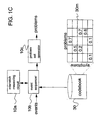
- FIG. 1C shows details of one possible embodiment for event decoder 10.
- Codebook 30 which represents the same element as codebook 11 of FIG. 1A, contains an illustrative set of numerical probability values shown as 30M.
- Event sequencer 10b receives events such as vectors of symptoms and, for each such vector, retrieves values from codebook 30.
- Mismatch measuring circuit 10a is used by event sequencer 10b to compare symptom vectors with values contained in codebook 30. The "best fit" matches between values contained in codebook 30 and incoming symptom vectors are provided to problem set generator 10c, which outputs a likely problem set.
- FIG. 1D shows details of one possible embodiment for codebook generator 12.
- Causality matrix 40 which represents the same element as causality matrix 9 in FIG. 1A, contains an illustrative set of discrete probability values shown as 40M.
- Optimized codebook 60 which represents the same element as codebook 11 in FIG. 1A, contains an illustrative set of discrete probability values shown as 60M.
- Well-formed matrix generator 12a reads values from causality matrix 40 and, through various operations described in more detail herein, removes redundant data from the matrix and generates well-formed causality matrix 50 as an intermediate product. In the illustrative example, rows 5 and 6 of causality matrix 40M have been deleted as shown in 50M.
- Optimizer 12b reads values from well-formed causality matrix 50 and, through the use of mismatch measuring circuit 12c and a desired radius R, reduces the amount of information in well-formed causality matrix 50 to a smaller set which meets a given set of desirable criteria.
- Optimizer 12b produces optimized codebook 60 as an output, having illustrative values shown as 60M.
- FIGs. 2A to 2G show one example of how codebook 11 can be generated from causality matrix 9.
- FIG. 2A shows a causality graph of events which may occur in the computer system being monitored by apparatus 5.
- the causality graph comprises a set of numbered nodes, each representing an event in the system, and directed edges (arrows) connecting these nodes, each representing a causality relationship between the events at the tail and head of the edge.
- event 1 causes event 3, which causes event 4, which in turn causes event 5, and so on.
- event 1 may be a disk drive failure in a peripheral attached to one of the computer nodes in FIG. 1A.
- Event 3, caused by event 1 may be an error message generated by the computer to which the failed disk drive is attached, the error message indicating the detected disk drive failure.
- event 1 can be classified as a problem (i.e., it can be fixed), while event 3 can be classified as a symptom caused by the problem.
- event 3 might have other causes, such as event 5, as indicated in FIG. 2A.
- FIG. 2B shows the same information in the causality graph of FIG. 2A in the form of an incidence matrix comprising a plurality of rows and columns which define a plurality of cells, each cell corresponding to an intersection of one row and one column.
- Each cell contains a value (in this example, either 0 or 1) indicating whether or not a particular event is caused by another event.
- event 3 third column
- events 3 four and 7 because these rows contain a "1" for the third column.
- the cell values can be any value which would indicate the probability that the given event causes a corresponding event.
- the information in the incidence matrix of FIG. 2B can be simplified by noting that certain events always occur in combination.
- the events ⁇ 3,4,5 ⁇ form a correlated set (i.e., one cannot occur without the other), and they can therefore be combined into a single event 3 as illustrated in FIG. 2C where nodes 4 and 5 have been deleted.
- This first simplification of the information is thus done by replacing "cycles" in the causality graph with single aggregate nodes.
- the information in FIGs. 2A to 2G may be stored in a computer memory or the like in various data structures, or it may be displayed graphically on a computer screen for manipulation by a human.
- this information may be represented and manipulated in various ways, and further elaboration is not required.
- Each node in the simplified causality graph of FIG. 2C may be designated as either a problem or a symptom.
- a problem is an event that requires handling, while a symptom is an event that may be observed.
- An event can be designated as both a problem and a symptom, or it may be neither.
- rectangles have been used to designate nodes which are problems, and triangles have been used to designate nodes which are symptoms.
- event 1 is a disk drive failure (problem)
- event 3 is an I/O error message generated by the computer connected to the failed disk drive (symptom of the problem).
- node 8 has been deleted from the causality graph of FIG. 2D in the simplified graph of FIG. 2E. All remaining nodes are now designated as either an observable symptom or a problem that requires handling.
- the information in the simplified graph of FIG. 2E can now be represented in a correlation matrix as shown in FIG. 2F.
- the matrix of FIG. 2F contains columns corresponding to the problems of FIG. 2E and rows corresponding to the observable symptoms of FIG. 2E.
- a symptom is correlated with a problem if there is a causal path leading from the problem to the symptom.
- problem 1 leads to (directly or indirectly) symptoms 3, 7, 9, and 10.
- these rows of column 1 are indicated with a "1" while remaining row 6 is indicated with a "0" because there is no causal relationship between problem 1 and symptom 6.
- the correlation matrix of FIG. 2F may contain symptoms which do not contribute useful information for detecting problems, or it may contain problems that cannot be distinguished by the given symptoms, it is desirable to further reduce the correlation matrix to eliminate such non-informative rows and columns.
- the first simplification is to eliminate identical rows, because such rows indicate that the respective sets of symptoms provide identical information about the problems. For example, rows 3, 7, 9, and 10 of the correlation matrix in FIG. 2F contain identical information, and these redundant symptoms may be eliminated as shown in FIG. 2G and replaced with row 3 only.
- the second simplification is to eliminate identical columns, because such columns indicate that the respective problems cannot be distinguished by the observed symptoms.
- Indistinguishable problems can be aggregated into a single abstract problem. This is particularly useful when a large collection of similar problems need to be handled in a similar manner. For example, various different problems with an EthernetTM interface card (e.g. loose connector, defective collision-detection circuits) all lead to similar symptoms.
- the problem can therefore be generally abstracted as an "interface problem" and the correlation process will only identify that such a problem exists, but will not determine which specific condition (loose connector or defective circuits) exists. Further resolution of the specific problem could then be pursued by running diagnostics. Where it is not acceptable to aggregate indistinguishable problems into abstract ones, new symptoms that yield distinct columns can be added.
- problems 1 and 11 in FIG. 2F have been aggregated into a "problem 1/11" in FIG. 2G.
- the correlation matrix of FIG. 2G is considered to be well formed because it has distinct rows and columns. Each column provides a distinct signature of the respective problem.
- a column vector will hereinafter be referred to as a "code" of the problem corresponding to the column representing the problem.
- a codebook is a set of symptoms whose respective rows in the correlation matrix provide a distinct code for every problem.
- the various data reductions described above can be used to convert a correlation matrix into such a codebook.
- the codebook may still contain a very large number of symptoms which contribute little to detecting or identifying problems (although the example outlined above is, of course, small). Therefore, additional mechanisms are needed to reduce the size of codebooks while providing optimal identification of problems.
- One approach for further reducing the size of codebooks is to develop a measure of distance among codes and use this measure to determine the distinguishability among the codes. A process can then be used to generate codebooks that accomplish a desired level of distinguishability using a minimal set of symptoms.
- the Hamming distance between two codes p and q is the number of coordinates where the two codes are not similar.
- This distance between problems p and q relative to a set of symptoms S (rows) is referred to as s (p,q), which measures the distinguishability between codes of the respective problems for a given set of symptoms.
- the distance of a problem p from an entire set of problems P relative to a set of symptoms S will be designated as d s (p,P), which is the minimal distance between p and members of P for the given set of symptoms S.
- d s (p, ⁇ ) i.e., the distance of a problem p from an empty set, is infinite.
- the radius of a set of problems P is the minimal distance between the codes of the set of problems P relative to a set of symptoms S.
- the radius measures the minimal (worst case) distinguishability between the codes of P.
- an optimal codebook can be generated by finding a minimal subset of the symptoms that provides an acceptable level of identification of the problems, where the radius provides a measure of the identification level.
- a codebook of a given radius is minimal if none of its symptoms can be eliminated without decreasing its radius.
- the objective is to find a minimal set of symptoms S' ⁇ S (codebook) such that r s ,(P) ⁇ d.
- the creation of an optimal codebook may be performed in a "preprocessing" stage, which allows one to trade off computation time in creating the codebook for faster execution time during a decoding stage using the optimized codebook.
- the process for generating an optimal codebook in accordance with the aforementioned objectives will now be described with reference to FIG. 3.
- step 302 a test is made to determine whether the problems covered by the codebook are identical to the problems covered by the well-formed correlation matrix. If all the problems are covered by the codebook S, the process continues to step 317 to generate the optimized codebook S by eliminating symptoms from S while maintaining the radius above the required one d. Accordingly, step 317 is executed in which the next symptom s (not already examined) is retrieved from S.
- step 318 if there are no more symptoms, i.e., all the symptoms in S have been examined, the codebook S is considered to be complete and minimal in step 303 and the process terminates and exits at step 304, the optimized codebook being represented by S. Otherwise, if there are more symptoms, the process continues to step 319, in which the radius of the set of problems P relative to codebook S minus the symptom s is compared to the required distance d. If the radius is not smaller than d, the symptom s is removed from S in step 320. In any case, the process iterates to step 317. If in step 302 not all problems are covered by the codebook S, the process continues to step 305.
- step 305 the next problem p is selected from the problem set P ⁇ Q, and the Hamming distance between this problem and the problem set Q covered by the optimized codebook is determined in step 306.
- Executing step 308 indicates that the codebook S already distinguishes p from Q by an appropriate distance.
- step 309 is executed, in which the next symptom s (not already covered in S) is retrieved from the well-formed correlation matrix.
- step 310 if there are no more symptoms, this indicates that all the symptoms not included in optimized codebook S have been examined, and step 311 is executed.
- step 313 the subset of problems Q' of Q is determined in step 313.
- Q' is the subset of problems of Q such that the Hamming distance of every problem q ⁇ Q' from p relative to the codebook S, d s (p,q), is equal to the Hamming distance of p from the entire set of problems Q, d s (p,q). Then, s can be a candidate only if by adding it to the codebook S the distance of p from a member of Q' increases.
- step 314 a search for a problem q ⁇ Q' such that d S ⁇ s ⁇ (p,q) > d s (p,q) is performed. If such q does not exist, the symptom s is ignored (step 315). Otherwise, s is considered to be a candidate for S in step 316, and processing resumes at step 309.
- the above process can be used to generate an optimal codebook from a well-formed correlation matrix.
- the process is finite due to the specified restriction r(P) ⁇ d.
- the set Q equals the set P and all problems are covered by the optimal codebook S.
- the optimal codebook S satisfies the distinguishing criterion d ⁇ r s (P) and is minimal.
- the complexity of the process is polynomial in the number of problems and symptoms.
- the process can be incrementally applied with minor variations to handle additional new problems by simply extending the codebook to cover the new problems. There is no need to regenerate the entire codebook. Similarly, if certain symptoms become unavailable, they may be replaced with new symptoms by extending the codebook rather than regenerating it. This flexibility to handle changes in the codebook may be important in an environment where the problems of interest and the observable symptoms can vary. Distance measures other than Hamming distances can, of course, be used, and the invention is not limited in this regard.
- mappings above can also be used to generate a codebook directly from a graph by mimicking the process for the causality matrix.
- direct generation of the codebook can be performed by the following steps:
- a probabilistic correlation model is a matrix which contains for each problem p (column) and each symptom s (row) the conditional probability that s will be caused by p. This is really just a special case of the general model outlined previously where the probabilities were 0 or 1. Where it is difficult to obtain accurate estimates of the probabilities, discrete probability values such as high (h), medium (m), or low (l) may be used to indicate relative probability levels. That is, the elements of the correlation matrix may take on values from the set ⁇ h,m,l ⁇ .
- Temporal correlations among events may also be indicated by values which represent a time period from the occurrence of the problem until generation of the symptom. Additionally, temporal correlations among symptoms may also be specified. In either case, a discrete measure from the set comprising ⁇ 1 (long), m (medium), s (short), 0 (never) ⁇ may be used.
- the correlation matrix may include pairs of the form ⁇ Pr, t) where Pr is a probability indication from ⁇ h,m,l ⁇ and t is a time indication from ⁇ l,m,s,0 ⁇ .
- Pr is a probability indication from ⁇ h,m,l ⁇
- t is a time indication from ⁇ l,m,s,0 ⁇ .
- the pair (h,s) in the correlation matrix would indicate that the respective problem may cause the symptom with high probability over a short time window.
- a generalized correlation model may be defined to include:
- the code of a problem p is the vector of indicator values of the respective correlation matrix column.
- p s is the coordinate of p corresponding to the symptom s, that is, the component of the correlation matrix in column p and row s.
- the distance between two codes, determined using ⁇ H in the table above is the number of coordinates where the vectors have different components.
- the factors 0 ⁇ ⁇ , ( ⁇ ) ⁇ 1 measure the similarity between medium and low probability (respectively, high and medium probability).
- the optimal codebook can be used to decode symptoms which occur during system operation and to generate reports indicating detected and/or identified problems (see FIG. 1A).
- the event decoder 10 of FIG. 1A classifies a vector of observed symptoms into the most appropriate code. Generally, symptoms are either observed or not observed, but the principles of the invention are easily applied to probabilistic determinations where observations are uncertain.
- a mismatch measure can be defined as a function ⁇ : ⁇ 0,1 ⁇ xI ⁇ which assigns to a symptom (1 if the symptom is observed, 0 if it is not observed) and a corresponding correlation indicator i, a measure of mismatch between the observation and a code.
- the value of ⁇ (1,i) measures the mismatch between an observation of a symptom and a code where it occurs with correlation i.
- ⁇ (0,i) measures the mismatch between the lack of observation of a symptom and a code where it occurs with correlation i.
- Mismatch measures may be described using tables in a manner similar to distance measures. Columns represent correlation symbols while rows represent observations ⁇ 0,1 ⁇ .
- the mismatch measure for the deterministic model is given below: ⁇ 0 1 0 0 ⁇ 1 ⁇ 0
- a possible mismatch measure is given by: ⁇ 1 m h 0 0 0 ⁇ 1 ⁇ 0 0
- This mismatch measure represents the degree to which the observed and absent symptoms of a match the code of p.
- mismatch measure can be more generally referred to as a correlation measure or correlation distance without limiting its application in the present invention. The above described tables can thus be replaced by measures of correlation (similarity) to produce the same results.
- a decoder for a correlation model over a codebook S can be defined as a process that maps an observation a to the set of problems whose codes have minimal mismatch with a.
- a codebook S a set of problems P with codes over S, and a mismatch measure m s , an input observation a over S will be decoded, and an output will be generated corresponding to all problems p that minimize m s over P.
- step 401 Q (the set of problems to be considered) is initialized to P, P* (the set of decoded problems) is initialized to the null set, and m* (the minimal mismatch) is initialized to infinity.
- step 402 a test is made to see if the set of problems to be considered has been exhausted. If so, step 403 is executed, in which all decoded problems are returned and the process exits in step 404.
- step 405 a problem is selected from Q and the problem is removed from Q.
- step 406 the mismatch m s (a,p) is determined between the observed vector a and the problem p as described previously.
- step 407 the determined mismatch is compared with the current minimal mismatch m*. If the newly determined mismatch is less than the current minimal mismatch, then step 408 is executed.
- step 408 a new value for m* is assigned corresponding to the newly determined mismatch, and the problem p corresponding thereto is inserted into P* (i.e., the decoded problem set). Processing then resumes at step 402.
- step 407 If, in step 407, the determined mismatch is not less than the current minimum mismatch value, a test is performed in step 409 to determine whether the determined mismatch is equal to the current minimum mismatch value. If they are equal, step 410 is executed, in which the problem p is added to the decoded problem set P*. It will be noted that multiple problems could have the same degree of mismatch and thus more than one problem could be inserted into P* in this instance. Finally, if the newly determined mismatch is not equal to the current minimal mismatch m* in step 409, the only remaining possibility is that it is greater than m* (step 411). In this case, processing resumes at step 402. When all problems have been considered, the decoded problem set P* is generated as an output in step 403.
- the complexity of the above process is determined by step 406.
- the mismatch measure requires additions of
- the process is suitable for executing in real-time and, due to the reduced complexity and amount of data in the optimized codebook, the amount of computation over other approaches is greatly reduced. Particularly in very large and complex systems, the increase in performance can be substantial.
- the decoding process can be modified slightly to identify, instead of "best fit" matches for a given observation, codes which match the observation up to a particular level of tolerance from the "best" mismatch. That is, a level of tolerance T can be set and all codes that are within a mismatch of T above the minimum mismatch will result in the corresponding problem being output as part of the decoded problem set P*. To accomplish this, steps 407 and 409 of FIG. 4 would be modified slightly to compare m s (a,p) with m* + T rather than m*.
- the steps in FIG. 4 determine the minimally mismatched codes that would explain a given observation vector.
- the measure of mismatch used can be selected to reflect a variety of considerations and sensitivities specific to a given system. Due to the simplicity of the decoding process (i.e., involving simple operations such as additions and comparisons), the process can be executed very fast and in real time.
- FIG. 5A shows a well-formed deterministic correlation matrix (i.e., all problems cause certain symptoms with certainty) for 6 problems P producing 20 symptoms S.
- codebook S 2 With the 5 symptoms shown in FIG. 5D, the number of possible non-trivial observations is 31, of which only 6 are exact codes. Considering first observations resulting from the loss of 1 symptom in the codes, since the distance among the codes in FIG. 5D is at least 2, none of these observations can be a code. This set includes the following 15 observations: ⁇ 11000, 10100, 01100, 00110, 01010, 01111, 10111, 11011, 11101, 11110, 10010, 00011, 00101, 00001, 10000 ⁇ . These observations will be decoded into the codes at distance 1 from which a symptom is lost. This means that at most two codes will be decoded from these observations.
- this set includes the 10 observations ⁇ 00100, 00010, 01000, 10101, 10011, 11001, 10110, 01110, 01101, 01011 ⁇ .
- the first 3 may be generated by multiple codes, while the remaining 7 may only be generated from the code for problem 3 by deleting two symptoms. That is, each of these 7 observations will be decoded as problem 3.
- FIG. 6 shows how the principles of the invention can be applied in a system which includes satellites communicating with a ground station.
- elements 606 to 613 perform functions identically or similar to those of elements 6 to 13 in FIG. 1A.
- a ground station 620 communicates with a plurality of satellites 621, 622 and 623 by way of radio wave propagation.
- Each satellite may typically comprise numerous processing components including sensors and devices which may generate symptoms such as low power, device failures, and the like. These symptoms can be transmitted to ground station 620, which is connected to event detector 606.
- the invention decodes events which occur during system operation and generates a report 614 corresponding to the one or more likely problems in the system. Because the number of events in the system of satellites can be quite large and the relationships among events complex, the data reduction principles of the present invention can result in significant performance advantages over conventional approaches.
- the satellites shown in FIG. 6 may comprise a telecommunication system, for example.
- elements 621-623 may instead comprise ground-based telecommunication nodes having switches and multiplexors which may generate symptoms.
- FIG. 7 shows how the principles of the present invention can be applied in medical diagnosis applications.
- Elements 706 to 713 perform the same or similar functions as elements 6 to 13 of FIG. 1.
- One or more sensors 720 may receive symptoms from a patient such as temperature, blood pressure, chemical levels, breathing rate, and the like.
- a doctor may manually enter other symptoms through input means 721, such as through a menu. These symptoms could include not only those directly observable such as skin color, pain locations and the like, but could also include derived symptoms such as partial diagnoses based on the doctor's own knowledge or suspicions.
- Symptoms from sensors 720 and input means 721 are fed to event detector 706 in a manner similar to that for other embodiments of the invention. Based on the observed symptoms, the invention produces a report 714 or other indication of the likely diagnosis, such as on a graphics display or the like.
- the apparatus of FIG. 7 may also be used to analyze financial market events by replacing sensors 720 with an appropriate data collection device (such as a computer program or other statistical filtering device) to compile prices, ratios, trends, etc. into events for event detector 706.
- an input device suitable for receiving human-observable events may be provided so that a market analyst may input such events.
- a perturbation analysis can be undertaken to divide all possible observations into appropriate classes. For each such perturbation, one can determine all codes from which it obtains.
- the decoding table may be generated in advance, and decoding becomes a simple and fast table lookup process. This is particularly useful when the code is efficient.
- the size of the lookup table could be 2
- the codes could admit significant perturbations while accomplishing unique decoding. This is entirely analogous to the design of error-correcting codes. With sufficient redundancy in the codebook, decoding can be very robust to lost or spuriously generated symptoms.
- causality matrices In addition to creating causality matrices manually, they may be generated through the use of a formalized language which verifies various data relationships and creates a matrix, or they may be created semi-automatically using statistical analysis and filtering using well-known techniques. Thus, event capture 7 and event validation 8 shown in FIG. 1A may be used to generate causality matrix 9 using either approach shown in FIG. 8, as described below.
- FIG. 8 shows how events which result from event detector 6 (see FIG. 1A) may be processed using elements 801 through 806 to generate causality matrix 807 (these elements also illustrate the process which may be used).
- the right side of FIG. 8 shows how causality matrix 807 may be generated from an event model 809, an event propagation model 810, and a configuration specification 812.
- the latter approach provides significant benefits in that a formal, automatable process is provided for generating causality matrix 807 for a dynamically changing system from static event knowledge associated with the types of components in the system and the dynamic specification of a particular configuration.
- Either approach may be implemented using computer software and corresponding data files; and the resulting causality matrix 807 may be stored in a storage device such as a computer disk for later access. Variations on the approach shown in FIG. 8 are possible, and the two illustrated are not intended to limit the scope of the invention.
- events received from event detector 6 are logged in event logger 801.
- This element may time-stamp the event and record "what happened"; for example, a disk drive error in one of the networked computer nodes illustrated in FIG. 1A.
- These events may be stored in an intermediate data file (not shown) for statistical analysis by element 802.
- Statistical analysis 802 analyzes the data produced by element 801 to identify correlations among events, and may be performed either in quasi-real time or in an off-line mode using historical data collected over a long period of time.
- Statistical analysis 802 may be performed using any well-known method, such as multiple linear regression analysis, and a detailed explanation of these well-known methods is not provided here.
- the purpose of element 802 is to identify correlations among events which are detected in the system (i.e., identify events that occur in pairs, where one event probably causes another event), and to store the correlation information into a data file 803.
- a filter 804 is applied to this data to remove weakly correlated data. This may be done by allowing a user to specify a particular correlation threshold or any other means to weed out weakly correlated events.
- the filtered data is then formatted into causality matrix 807 through the use of matrix generator 806 in accordance with the description of this matrix as previously described.
- Each of these operations can be programmed easily using a digital computer and any suitable computer language, such as C, FORTRAN, or LISP.
- the GDME specifications shown in FIG. 8 represent one possible embodiment of a formal language for specifying the event and propagation models. Such a language may be processed by a compiler 808, such as a GDME compiler which reads "statements" read from a file or entered by a user. Other possible embodiments include languages with a different syntax from that described herein, different data structures, graphical representations, or any other means of specifying the static information in event model 809 and propagation model 810.
- Any particular system monitored using the principles of the present invention can be characterized by a domain consisting of a set of objects (hardware, software, communications or others) which can generate events. These objects within the domain will be called event source objects (ESOs), indicating that each such object can be the source of one or more events.
- ESO event source objects
- Each ESO can be characterized as belonging to a particular class, and each can be related to other ESOs via certain relationships.
- a power supply object may be related to a CPU board object via the relationship "provides-power-to". Events may propagate among such relationships.
- a problem event in the power supply may cause symptom events (as well as problem events) at the CPU board and other objects to which it "provides-power-to".
- the information required to analyze events can be divided into two kinds:
- GDME specifications may be input to compiler 808 in FIG. 8 in various embodiments of the invention as described in more detail below.
- alternative forms of specifications may be used, such as graphical representations, and the invention is not intended to be limited in this regard.
- the GDME specifications may comprise the following compilable statements input to compiler 808:
- GDME specification statements specify event knowledge associated with each object class (EVENT statements); the events that may occur in objects of the class and the symptoms that each such problem may cause (CAUSALITY statements); the events that may propagate to objects of the class from other related objects (IMPORT statements), and the events that can be externally observed in objects of the class (EXPORT statements).
- EVENT statements the events that may occur in objects of the class and the symptoms that each such problem may cause
- CAUSALITY statements the events that may propagate to objects of the class from other related objects
- IMPORT statements the events that can be externally observed in objects of the class
- GDME statements comprising a plurality of the above statements are entered by a user into GDME compiler 808.
- the statements may be tailored for the particular system being monitored and the specific classes, attributes, probabilities and other parameters will be selected according to the particular type of system.
- GDME compiler 808, which may be constructed using the normal parsers and other well-known components in the software engineering field details of which are not provided here, generates event model 809 and propagation model 810 for each ESO class. These models are used by matrix generator 811 to analyze the events and causality associated with a specific domain described by the collection of entities and relationships stored in configuration specification 812.
- Event model 809 for an embodiment using a formal GDME event model, is a data structure comprising, in various preferred embodiments, three things:
- Propagation model 810 is a data structure comprising a list of all relationships associated with a class. It may additionally contain methods that are generated for determining the closure of the events that may propagate to other objects. This information may be generated by compiler 808 from the IMPORT statements.
- Matrix generator 811 which differs from matrix generator 806, generates causality matrix 807 from event model 809, propagation model 810, and configuration specification 812 using steps illustrated in FIG. 9.
- matrix generator 811 first determines the set of problems as the union of all the problems of all the ESOs in the domain. These are determined by the class of each ESO recorded in event model 809 and appearing in configuration specification 812 (FIG. 8).
- matrix generator 811 determines the set of symptoms in the domain as the union of all the symptoms of all the entities in the domain.
- each element of the causality matrix is generated using the direct causality stored in event model 809, and using the indirect causality (events imported from other objects via relationships) by using the transitive closure of causality propagation using propagation model 810.
- the transitive closure may be determined via methods generated by compiler 808, or by other means. These methods encapsulate the event propagation model and use the configuration specification to infer the possible paths for propagation of events required in computing the closure.
- the resulting causality matrix 904 is used to generate an efficient codebook as described previously with relation to FIG. 1A.
- the invention may be practiced by distributing the decoding process across a number of computers, such that a complex system domain is partitioned into smaller domains, each domain having a local event correlator.
- Event correlators for the different domains may operate concurrently and interact with one another to selectively import/export events from one another.
Landscapes
- Engineering & Computer Science (AREA)
- General Engineering & Computer Science (AREA)
- Theoretical Computer Science (AREA)
- Computer Hardware Design (AREA)
- Quality & Reliability (AREA)
- Physics & Mathematics (AREA)
- General Physics & Mathematics (AREA)
- Debugging And Monitoring (AREA)
- Alarm Systems (AREA)
- Mobile Radio Communication Systems (AREA)
Claims (80)
- Verfahren zum Erfassen von Problemen in einem System, das eine Vielzahl von Symptomen erzeugt, wobei es sich bei den Problemen um betriebliche Ausnahmezustände, die eine Behandlung erfordem, und bei der Vielzahl von Symptomen um von den Problemen erzeugte beobachtbare Ereignisse handelt, mit folgenden Schritten:(1) Erstellen eines für einen Rechner zugänglichen Codebuchs aus einer Vielzahl von Werten, die jeweils einer Abbildung eines der Vielzahl von Symptomen auf eines der Vielzahl wahrscheinlicher Probleme im System entspricht, wobei jede der Vielzahl von Wertegruppen einen unterscheidungskräftigen Code entsprechend jedem der Vielzahl wahrscheinlicher Probleme liefert,(2) Überwachen einer Vielzahl von Symptomdatenwerten, die die Vielzahl der vom System im Verlauf der Zeit erzeugten Symptome darstellen,(3) Bestimmen eines Fehlanpassungsmaßes zwischen allen Wertegruppen im Codebuch und den Symptomdatenwerten durch Verwendung eines Rechners und Auswahl eines der Vielzahl wahrscheinlicher Probleme, das einer der Vielzahl von Gruppen entspricht, die das kleinste Fehlanpassungsmaß aufweist, wobei das Fehlanpassungsmaß einen Grad der Korrelation zwischen jeder Gruppe und der Vielzahl von Symptomdatenwerten angibt, und(4) Erzeugen eines Berichts, der das eine gewählte wahrscheinliche Problem aus dem Codebuch aufweist.
- Verfahren nach Anspruch 1, bei dem der Schritt (3) den Schritt der Bestimmung einer Hamming-Distanz zwischen jeder der Vielzahl von Gruppen und der Vielzahl von Symptomdatenwerten aufweist.
- Verfahren nach Anspruch 1, bei dem der Schritt (3) den Schritte der Addition einzelner Fehlanpassungsmaße über eine Vielzahl von Paaren aufweist, wobei die Paare jeweils einen der Vielzahl von Symptomdatenwerte und einen der Vielzahl der genannten Wertenaufweisen.
- Verfahren nach Anspruch 3, bei dem der Schritt (3) den Schritt des Verwendens eines Fehlanpassungsmaßes aufweist, das das Fehlen eines Symptomdatenwerts anders gewichtet als das Vorliegen eines solchen.
- Verfahren nach Anspruch 3, bei dem der Schritt (3) den Schritt des Ausgebens aller wahrscheinlichen Probleme im Codebuch, die in einem vorbestimmten Toleranzbereich von einem "Best Fit" her liegen, als wahrscheinliches Problem aufweist.
- Verfahren nach Anspruch 1, bei dem der Anspruch (1) den Schritt eines Angebens jedes der genannten Werte als Wahrscheinlichkeitswert aufweist, wobei dieser eine Wahrscheinlichkeit wiedergibt, dass ein entsprechendes Symptom von einem entsprechendem Problem verursacht wurde.
- Verfahren nach Anspruch 6, bei dem der Schritt (1) den Schritt eines Angebens jedes der genannten Werte als Datenpaar aufweist, das jeweils ein erstes Datum, das die Wahrscheinlichkeit bezeichnet, sowie ein zweites Datum enthält, das einen Zeitindikator bezeichnet, der einem Zeitrahmen entspricht, innerhalb dessen die Wahrscheinlichkeit gilt.
- Verfahren nach Anspruch 6, bei dem der Schritt (1) den Schritt eines Angebens jedes der Wahrscheinlichkeitswerte als diskreten Wert aufweist.
- Verfahren nach Anspruch 1, bei dem das System ein Netz von Rechnerknoten und der Schritt (2) den Schritt des Empfangens von Meldungen aus den Rechnerknoten aufweist, wobei die Meldungen die Vielzahl von Symptomdatenwerten beinhalten.
- Verfahren nach Anspruch 1, bei dem das System ein Telekommunikationsnetz und der Schritt (2) den Schritt des Empfangens von Signalen aus Gerätschaften dieses Telekommunikationsnetzes aufweist, wobei die Signale die Vielzahl von Symptomdatenwerten beinhalten.
- Verfahren nach Anspruch 1, bei dem das System einen Rechner mit Peripherie und der Schritt (2) den Schritt des Empfangens von Signalen aus der Peripherie aufweist, wobei die Signale die Vielzahl von Symptomdatenwerten beinhalten.
- Verfahren nach Anspruch 1, bei dem das System eine Vielzahl von Satelliten und der Schritt (2) den Schritt des Empfangens von Signalen von den Satelliten aufweist, wobei die Signale die Vielzahl von Symptomdatenwerten beinhalten.
- Verfahren nach Anspruch 1, bei dem das System einen Humanpatienten und de Schritt (2) den Schritt des Empfangens von Signalen aus Sensoren aufweist, die mit dem Humanpatienten gekoppelt sind, wobei die Signale die Vielzahl von Symptomdatenwerten beinhalten.
- Verfahren nach Anspruch 1, bei dem der Schritt (3) den Schritt des Bestimmens des Fehlanpassungmaßes durch Aufsuchen eines vorbestimmten Maßes aus einer vorberechneten Tabelle aufweist.
- Verfahren nach Anspruch 1 weiterhin mit dem Schritt, vor dem Schritt (1) eine Kausalitätsmatrix mit einer größeren Wertemenge als das Codebuch zu erstellen, wobei die größere Wertemenge ebenfalls Abbildungen zwischen der Vielzahl von Symptomdatenwerten und der entsprechenden Vielzahl von wahrscheinlichen Problemen entspricht, und wobei der Schritt (1) den Schritt des Generierens des Codebuchs durch Reduzieren der in der Kausalitätsmatrix enthaltenen größeren Wertemenge zu dem Codebuch aufweist.
- Verfahren nach Anspruch 15, bei dem de Schritt (1) den Schritt des Eliminierens redundanter Zeilen und Spalten aus der Kausalitätsmatrix aufweist.
- Verfahren nach Anspruch 15, bei dem der Schritt (1) den Schritt des Reduzierens der Anzahl der Zeilen in der Kausalitätsmatrix entsprechend einem gewünschten Unterscheidungsgrad zwischen Gruppen der Vielzahl von Symptomen aufweist.
- Verfahren nach Anspruch 1 weiterhin mit dem Schritt, vor dem Schritt (1) einen Kausalitätsgraph mit einer Vielzahl von Knoten, die jeweils einem Ereignis entsprechen, und einer Vielzahl gerichteter Kanten zu erstellen, die jeweils von einem zu einem anderen der Vielzahl von Knoten weisen und einem Kausalzusammenhang zwischen zwei oder mehreren der Ereignisse entsprechen, wobei bestimmte der Knoten als Problemknoten und andere als Symptomknoten markiert sind, und bei dem der Schritt (1) den Schritt des Generierens des Codebuchs durch Durchlaufen der gerichteten Kanten, die von Problem- zu Symptomknoten verlaufen, aufweist.
- Verfahren nach Anspruch 18, bei dem der Schritt (1) folgende Schritte aufweist:Eliminieren redundanter Symptomknoten, die über gerichtete Kanten aus der gleichen Menge von Problemknoten erreichbar sind, aus dem Kausalitätsgraph undEliminieren nicht unterscheidbarer Problemknoten, die über gerichtete Kanten zur gleichen Menge von Symptomknoten führen.
- Verfahren nach Anspruch 18, bei dem der Schritt (1) den Schritt des Eliminierens von Symptomknoten entsprechend einem gewünschten Unterscheidungsgrad zwischen Gruppen der Vielzahl von Symptomen aus dem Kausalitätsgraph aufweist.
- Verfahren nach Anspruch 17 weiterhin mit dem Schritt des Wählens des gewünschten Unterscheidungsgrads zwischen allen Gruppen der Vielzahl von Symptomen, wobei jede Gruppe einem anderen wahrscheinlichen Problem entspricht und wobei der Schritt (1) den Schritt des Löschens von Werten aus der größeren Wertemenge aufweist, die den gewünschten Unterscheidungsgrad nicht erfüllen, und die Löschungen auf Grund von Vergleichen zwischen einem oder mehreren Werten der größeren Wertemenge des gewünschten Unterscheidungsgrads erfolgen.
- Verfahren nach Anspruch 21, bei dem die Vergleiche bezüglich einer Hamming-Distanz erfolgen, die bezüglich eines oder mehrerer Werte aus der ersten Matrix bestimmt wird.
- Verfahren zum Erzeugen eines Codebuchs zur Verwendung in einem Verfahren zum Erfassen von Problemen in einem System, das eine Vielzahl von Symptomen generiert, wobei es sich bei den Problemen um betriebliche Ausnahmezustände, die eine Behandlung erfordern, und bei der Vielzahl von Symptomen um von den Problemen verursache beobachtbare Ereignisse handelt, mit folgenden Schritten:(1) Erstellen einer Kausalitätsdarstellung, die Kausalzusammenhänge zwischen den Problemen und der Vielzahl von Symptomen beschreibt,(2) Löschen redundanter Informationen aus der Kausalitätsdarstellung, um diese wohlgeformt zu machen,(3) Auswählen eines gewünschten Unterscheidungsgrades zwischen Gruppen aus der Vielzahl von Symptomen, wobei die Gruppen jeweils einem anderen wahrscheinlichen Problem entsprechen, und Erstellen eines unterscheidungskräftigen Codes für jedes wahrscheinliche Problem,(4) Generieren eines optimalen Codebuchs aus der wohlgeformten Kausalitätsdarstellung auf Grund des gewünschten Unterscheidungsgrades unter Verwendung eines Rechners und(5) Speichern des optimalen Codebuchs in einer Rechner-Speichereinrichtung.
- Verfahren zum Generieren eines Codebuchs nach Anspruch 23, bei dem die Kausalitätsdarstellung eine Kausalitätsmatrix aus einer Matrix von Werten ist, die jeweils einer Abbildung zwischen einem der Vielzahl von Symptomen und einem einer Vielzahl von wahrscheinlichen Problemen im System sind,wobei der Schritt (2) den Schritt des Löschens redundanter Wertemengen aus der Wertematrix, um die Kausalitätsmatrix wohlgeformt zu machen, undwobei der Schritt (4) den Schritt des Generierens des optimalen Codebuchs aus der wohlgeformten Kausalitätsmatrix durch Auswahl von Minimalgruppen von Symptomen aus der wohlgeformten Kausalitätsmatrix aufweist derart, dass gewählte Symptomgruppen, die beliebigen zwei wahrscheinlichen Problemen entsprechen, den gewünschten Unterscheidungsgrad erfüllen.
- Verfahren nach Anspruch 24, bei dem der Schritt (1) den Schritt des Erstellens einer Formalspezifikation eines Ereignismodells aufweist, das Zusammenhänge zwischen Ereignissen im System und deren Ursachen definiert.
- Verfahren nach Anspruch 25, bei dem der Erstellungsschritt den Schritt des Eingebens kompilierbarer Anweisungen in einen Compiler aufweist, die zum Definieren der Zusammenhänge Wahrscheinlichkeitswerte benutzen.
- Verfahren nach Anspruch 26 weiterhin mit folgenden Schritten:Kompilieren der kompilierbaren Statements zu Methoden und Datenstrukturen undVerwenden der Methoden und Datenstrukturen zum Generieren der Kausalitätsmatrix durch Bestimmen eines Kausalitätsverschlusses ("causality closure") von Problemen, die in einer Konfigurations-Spezifikation enthalten sind.
- Verfahren nach Anspruch 24, bei dem der Schritt (1) folgende Schritte aufweist:(a) Protokollieren von im System über einen gewissen Zeitraum auftretenden Ereignissen in einer Rechner-Speichereinrichtung,(b) Analysieren der protokollierten Ereignisse auf statistische Korrelationen hin,(c) Filtern der analysierten Ereignisse auf Grund eines Korrelationsschwellenwerts und Erzeugen einer gefilterten Datenmenge, die Symptome und wahrscheinliche Probleme aufweist, und(d) Generieren der Kausalitätsmatrix unter Verwendung der gefilterten Datenmenge.
- Verfahren nach Anspruch 23 zum Generieren eines Codebuchs, bei dem es sich bei der Kausalitätsdarstellung um einen Kausalitätsgraphen mit einer Vielzahl von Knoten, die jeweils einem Problem oder einem Symptom entsprechen, und einer Vielzahl gerichteter Kanten handelt, die jeweils von einem zu einem anderen der Vielzahl von Knoten weisen und einem Kausalzusammenhang zwischen zwei oder mehr der Vielzahl von Knoten entsprechen, wobeider Schritt (2) den Schritt des Löschens redundanter Knoten, um den Kausalitätsgraphen wohlgeformt zu machen, undder Schritt (4) den Schritt des Generierens des optimalen Codebuchs aus dem wohlgeformten Kausalitätsgraph durch Auswahl einer Minimalmenge von Symptomknoten aufweist derart, dass die Symptomknoten der Minimalmenge, die von zwei beliebigen Problemknoten verursacht werden, den gewünschten Unterscheidungsgrad erfüllen.
- Verfahren nach Anspruch 29, bei dem der Schritt (1) den Schritt des Eingebens einer Formalspezifikation eines Ereignismodells in einen Rechner aufweist, wobei die Formalspezifikation Zusammenhänge zwischen Ereignissen im System und deren Ursachen definiert.
- Verfahren nach Anspruch 30, bei dem der Schritt (1) den Schritt des Eingebens kompilierbarer Statements in einen Compiler aufweist, wobei die kompilierbaren Statements zum Definieren der Zusammenhänge Wahrscheinlichkeiten beinhalten.
- Verfahren nach Anspruch 30 weiterhin mit folgenden Schritten:Kompilieren der Formalspezifikation zu Methoden und Datenstrukturen undVerwenden der Methoden und Datenstrukturen zum Generieren des Kausalitätsgraphen durch Bestimmen eines Kausalitätsverschlusses von Problemen in einer Konfigurationsspezifikation.
- Anordnung zum Erfassen von Problemen in einem System, das eine Vielzahl von Symptomen erzeugt, wobei des sich bei den Problemen um betriebliche Ausnahmezustände, die eine Behandlung erfordern, und bei der Vielzahl von Symptomen um von den Problemen verursachte beobachtbare Ereignisse handelt, wobei die Anordnung aufweist:eine Speichervorrichtung zum Speichern eines Codebuchs aus einer Vielzahl von Werten, die jeweils einer Abbildung zwischen einem der Vielzahl von Symptomen und einem einer Vielzahl wahrscheinlicher Probleme im System entsprechen, wobei jede einer Vielzahl von Wertegruppen einen unterscheidungskräftigen Code liefert, der einem der Vielzahl von wahrscheinlichen Problemen entspricht,Kontrolleinrichtungen zum Überwachen einer Vielzahl von Symptomdatenwerten, die die Vielzahl von Symptomen darstellen, die das System über eine gewissen Zeitspanne erzeugt,eine Einrichtung zum Bestimmen eines Fehlanpassungsmaßes zwischen jeder der Vielzahl von Wertegruppen im Codebuch und der Vielzahl von Symptomdatenwerten und zum Auswählen einer der Vielzahl wahrscheinlicher Probleme, die einer der Vielzahl von Gruppen mit dem kleinsten Fehlanpassungswert entspricht, wobei das Fehlanpassungsmaß einen Korrelationsgrad zwischen jeder Gruppe und der Vielzahl von Symptomdatenwerten angibt, undeine Einrichtung zum Generieren eines Berichts, der das eine gewählte Problem beinhaltet.
- Anordnung nach Anspruch 33, bei dem die Dekodiereinrichtung eine Einrichtung zum Bestimmen einer Hamming-Distanz zwischen allen der Vielzahl von Symptomdatenwerten aufweist.
- Anordnung nach Anspruch 33, bei der die Einrichtung zum Bestimmen eines Fehlanpassungsmaßes einzelne Fehlanpassungsmaßwerte über eine Vielzahl von Paaren addiert, wobei jedes Paar einen der Vielzahl von Symptomdatenwerten und einen der Vielzahl von Werten beinhaltet.
- Anordnung nach Anspruch 35, bei der der "Best fit"-Bestimmung ein Fehlanpassungsmaß verwendet, dass das Fehlen anders gewichtet als das Vorliegen eines Symptomdatenwerts.
- Anordnung nach Anspruch 35, bei dem die Dekodiereinrichtung als wahrscheinliche Probleme alle wahrscheinlichen Probleme im Codebuch ausgibt, die in einem vorbestimmten Toleranzbereich von einem "Best Fit" her liegen.
- Anordnung nach Anspruch 33, bei der jeder der Werte einen Wahrscheinlichkeitswert aufweist, der eine Wahrscheinlichkeit wiedergibt, dass ein entsprechendes Symptom von einem entsprechenden Problem verursacht wurde.
- Anordnung nach Anspruch 38, bei der jeder der Werte ein Datenpaar aufweist, das ein erstes Datum, das den Wahrscheinlichkeitswert angibt, und ein zweites Datum enthält, das einen Zeitindikator bezeichnet, der einem Zeitrahmen entspricht, innerhalb dessen der Wahrscheinlichkeitswert gilt.
- Anordnung nach Anspruch 38, bei der jeder der Wahrscheinlichkeitswerte als diskreter Wert spezifiziert ist.
- Anordnung nach Anspruch 33, bei der das System ein Netz von Rechnerknoten und die Kontrolleinrichtung eine Einrichtung zum Empfangen von Meldungen aus den Rechnerknoten aufweist, wobei die Meldungen die Vielzahl von Symptomdatenwerten beinhalten.
- Anordnung nach Anspruch 33, bei der das System ein Telekommunikationsnetz und die Kontrolleinrichtung eine Einrichtung zum Empfangen von Signalen aus Gerätschaften innerhalb des Netzes aufweisen, wobei die Signale die Vielzahl von Symptomdatenwerten beinhalten.
- Anordnung nach Anspruch 33, bei der das System einen Rechner mit Peripherie und die Konttrolleinrichtung eine Einrichtung zu Empfang von Signalen aus der Peripherie aufweisen, wobei die Signale die Vielzahl von Symptomdatenwerten beinhalten.
- Anordnung nach Anspruch 33, bei der das System eine Vielzahl von Satelliten und die Kontrolleinrichtung eine Einrichtung zum Empfang von Signale von den Satelliten aufweisen, wobei die Signale die Vielzahl von Symptomdatenwerten beinhalten.
- Anordnung nach Anspruch 33, bei dem das System einen Humanpatienten und die Kontrolleinrichtung eine Einrichtung zum Empfangen von Signalen aus Sensoren aufweisen, die mit dem Humanpatient gekoppelt sind, wobei die Signale die Vielzahl von Symptomdatenwerten beinhalten.
- Anordnung nach Anspruch 33, bei der das Fehlanpassungsmaß durch Suche in einer vorberechneten Tabelle nach einem vorbestimmten Maß bestimmt wird.
- Anordnung nach Anspruch 33, die weiterhin aufweist:eine Einrichtung zum Speichern einer Kausalitätsmatrix, die eine größere Wertemenge als das Codebuch aufweist, wobei die Werte auch Abbildungen zwischen den Symptomdatenwerten und der Vielzahl zugehöriger wahrscheinlicher Probleme entsprechen, undeine Einrichtung zum Generieren des Codebuchs durch Reduzieren der größeren Wertemenge der Kausalitätsmatrix zu Werten für das Codebuch.
- Anordnung nach Anspruch 47, bei der das Codebuch durch Elimineren redundanter Zeilen und Spalten aus der Kausalitätsmatrix generiert wird.
- Anordnung nach Anspruch 47, bei der das Codebuch durch Reduzieren der Anzahl der Zeilen in der Kausalitätsmatrix entsprechend einem gewünschten Unterscheidungsgrad zwischen Gruppen der Vielzahl von Symptomen generiert wird.
- Anordnung nach Anspruch 33 weiterhin mit einer Einrichtung zum Speichern eines Kausalitätsgraphen mit einer Vielzahl von Knoten, die jeweils einem Ereignis entsprechen, und einer Vielzahl gerichteter Kanten, die jeweils von einem zu einem anderen der Vielzahl von Knoten weisen und einem Kausalzusammenhang zwischen zweien der Ereignisse entsprechen, wobei
bestimmte Knoten als Probleme und andere als Symptome markiert sind, und wobei das Codebuch durch Durchlaufen der gerichteten Kanten im Kausalitätsgraph generiert wird, die von als Problem markierten Knoten zu als Symptome markierten Knoten führen. - Anordnung nach Anspruch 50, bei der das Codebuch generiert wird, indem man aus dem Kausalitätsgraph redundante Symptomknoten, die entlang gerichteter Kanten aus der gleichen Menge von Problemknoten erreichbar sind, sowie nicht unterscheidbare Problemknoten eliminiert, die entlang gerichteter Kanten zur gleichen Menge von Symptomknoten führen.
- Anordnung nach Anspruch 50, bei der das Codebuch generiert wird, indem man aus dem Kausalitätsgraph Symptomknoten entsprechend einem gewünschten Unterscheidungsgrad zwischen Gruppen der Vielzahl von Symptome eliminiert.
- Anordnung nach Anspruch 49 weiterhin mit einer Einrichtung zur Eingabe des gewünschten Unterscheidungsgrades zwischen den Gruppen der Vielzahl von Symptomen, wobei jede Gruppe einem anderen wahrscheinlichen Problem entspricht und das Codebuch generiert wird, indem man aus der größeren Wertemenge Werte löscht, die den gewünschten Unterscheidungsgrad nicht erfüllen, und wobei die Löschungen auf Grund von Vergleichen zwischen einem oder mehreren der Werte aus der größeren Wertemenge des gewünschten Unterscheidungsgrads erfolgen.
- Anordnung nach Anspruch 53, bei dem die Vergleiche bezüglich einer Hamming-Distanz erfolgen, die bezüglich eines oder mehrerer der Werte aus der ersten Matrix bestimmt wird.
- Anordnung zum Generieren eines Codebuchs zur Verwendung bei der Problemerfassung in einem System, das eine Vielzahl von Symptomen erzeugt, wobei es sich bei den Problemen um betrieblich Ausnahmezuständ, die eine Behandlung erfordern, und bei der Vielzahl von Symptomen um von den Problemen verursachte beobachtbare Ereignisse handelt, wobei die Anordnung aufweist:eine Erstellungseinrichtung zum Erstellen einer Kausalitätsdarstellung, die Kausalzusammenhänge zwischen den Problemen und der Vielzahl von Symptomen beschreibt,eine Einrichtung zum Löschen redundanter Informationen aus der Kausalitätsdarstellung, um diese wohlgeformt zu machen,eine Eingabeeinrichtung zum Eingeben eines gewünschten Unterscheidungsgrades zwischen Gruppen der Vielzahl von Symptomen, wobei jede Gruppe einem anderen wahrscheinlichen Problem entspricht,eine Generiereinrichtung zum Generieren eines für einen Rechner zugänglichen optimalen Codebuchs aus der wohlgeformten Kausalitätsdarstellung auf Grund des gewünschten Unterscheidungsgrades, wobei jede der Gruppen aus der Vielzahl von Symptomen im optimalen Codebuch einen unterscheidungskräftigen Code entsprechend den verschiedenen wahrscheinlichen Problemen liefert, undeine Speichereinrichtung zum Speichern des für einen Rechner zugänglichen Codebuchs.
- Anordnung nach Anspruch 55, bei der die Kausalitätsdarstellung eine Kausalitätsmatrix ist, die aus eine Matrix von Werten beinhaltet, die jeweils einer Abbildung zwischen einem der Vielzahl von Symptomen und einem einer Vielzahl von wahrscheinlichen Problemen im System entspricht,wobei die Einrichtung, mit der die Kausalitätsmatrix wohlformbar ist, redundante Wertemengen aus der Wertematrix löscht, undwobei die Generiereinrichtung aus der wohlgeformten Kausalitätsmatrix Minimalgruppen von Symptomen auswählt derart, dass die gewählten Symptomgruppen, die beliebigen zwei wahrscheinlichen Problemen entsprechen, den gewünschten Unterscheidungsgrad erfüllen.
- Anordnung nach Anspruch 56, bei der die Erstellungseinrichtung aufweist:eine Einrichtung zur Eingabe einer Spezifikation eines Ereignismodells, das Zusammenhänge zwischen Ereignissen im System und deren Ursachen definiert, sowieeinen Compiler zum Kompilieren der Spezifikation zu Datenstrukturen.
- Anordnung nach Anspruch 57, bei der die Spezifikation Anweisungen aufweist, die die Zusammenhänge unter Verwendung von Wahrscheinlichkeitswerten definieren.
- Anordnung nach Anspruch 57 weiterhin mit einem Matrix-Generator zum Umformen der Datenstrukturen zu der Kausalitätsmatrix, indem ein Kausalitätsverschluss von Problemen bestimmt wird, die in einer Konfigurations-Spezifikation enthalten sind.
- Anordnung nach Anspruch 56, bei der die Erstellungseinrichtung aufweist:eine Einrichtung zum Protokollieren von über einen gewissen Zeitraum im System auftretende Ereignisse auf einer Rechner-Speichereinrichtung,eine Einrichtung zum Analysieren der protokollierten Ereignisse auf statistische Korrelationen hin,eine Einrichtung zum Filtern der analysierten Ereignisse auf Grund eines Korrelationsschwellenwerts und zum Erzeugen eines gefilterten Datensatzes, der Symptome und wahrscheinliche Probleme aufweist, undeine Einrichtung zum Generieren der Kausalitätsmatrix unter Verwendung des gefilterten Datensatzes.
- Anordnung zum Generieren eines Codebuchs nach Anspruch 55, bei der die Kausalitätsdarstellung ein Kausalitätsgraph mit einer Vielzahl von Knoten, die jeweils ein Problem oder ein Symptom darstellen, und einer Vielzahl von gerichteten Kanten ist, die jeweils von einem zu einem anderen der Vielzahl von Knoten weisen und einem Kausalzusammenhang zwischen zwei oder mehreren der Vielzahl von Knoten ensprechen,wobei die Einrichtung, die den Kausalitätsgraph wohlgeformt macht, redundante Knoten löscht undwobei die Generiereinrichtung eine Minimalgruppe von Symptomknoten auswählt derart, dass die gewählten Gruppen den Unterscheidungsgrad erfüllen.
- Anordnung nach Anspruch 61, bei der die Erstellungseinrichtung Einrichtungen zum Eingeben einer Spezifikation eines Ereignismodells aufweist, das Zusammenhänge zwischen Ereignissen im System sowie deren Ursachen definiert.
- Anordnung nach Anspruch 62, bei der die Spezifikation kompilierbare Anweisungen aufweist, die zum Definieren der Zusammenhänge Wahrscheinlichkeitswerte verwenden.
- Anordnung nach Anspruch 62, bei der die Erstellungseinrichtung eine Einrichtung zum Kompilieren der Spezifikation zu Methoden und Datenstrukturen aufweist und die Methoden und Datenstrukturen dazu dienen, den Kausalitätsgraph zu generieren, indem ein Kausalitätsverschluss von in einer Konfigurationsspezifikation enthaltenen Problemen bestimmt wird.
- Anordnung nach Anspruch 61, bei der die Erstellungseinrichtung aufweist:eine Einrichtung zum Protokollieren von im System über einen gewissen Zeitraum auftretenden Ereignissen auf einer Rechner-Speichereinrichtung,eine Einrichtung zum Analysieren der protokollierten Ereignisse auf statistische Korrelationen hin,eine Einrichtung zum Filtern der analysierten Ereignisse auf Grund eines Korrelations-Schwellenwerts und zum Erzeugen einer gefilterten Datenmenge aus Symptomen und wahrscheinlichen Problemen undeine Einrichtung zum Generieren des Kausalitätsgraphen unter Verwendung des gefilterten Datensatzes.
- Anordnung nach Anspruch 1, bei dem der Schritt (1) den Schritt des Erstellens eines für einen Rechner zugänglichen Codebuchs aufweist und es sich bei dem Codebuch um eine Wertematrix handelt, die durch Eliminieren redundanter Information aus einer Kausalitätsmatrix generiert worden ist.
- Anordnung nach Anspruch 33, bei dem die Werte im Codebuch durch Eliminieren redundanter Informationen aus der Kausalitätsmatrix generiert worden sind.
- Optimales, nach dem Verfahren des Anspruch 24 generiertes Codebuch.
- Optimales, unter Verwendung der Anordnung nach Anspruch 56 generiertes Codebuch.
- Rechnerimplementiertes Verfahren zum Generieren einer Kausalitätsabbildung zwecks Analyse von Ereignissen in einem System mit einer Vielzahl von Systemkomponenten, die in einer bestimmen Konfiguration angeordnet sind, wobei das Verfahren folgende Schritte aufweist:(1) Definieren einer Menge von Ereignissen, die für jede Klasse von Komponenten im System unabhängig von der jeweiligen Systemkonfiguration auftreten können,(2) Definieren der Ausbreitung von Ereignissen über eine oder mehreren Klassen von Komponenten im System unabhängig von der jeweiligen Systemkonfiguration,(3) Erzeugen einer Konfigurationsspezifikation für das System, die für die Systemkonfiguration spezifische Vorkommensfälle von Systemkomponenten definiert, und(4) Umwandeln der ersten und der zweiten Definition in die Kausalitätsabbildung auf Grund der Konfigurationsspezifikation im Rechner, wobei die Kausalitätsabbildung eine Abbildung von Ereignissen im System auf wahrscheinliche Probleme im System beinhaltet.
- Verfahren nach Anspruch 70, bei dem der Schritt (4) folgende Schritte aufweist:(a) Bestimmen einer Menge von Ereignissen, die für die jeweilige Konfiguration des Systems auftreten können, indem man eine Vereinigungsmenge aller Ereignisse nimmt, die für jeden Vorkommensfall jeder Komponente über alle Komponentenklassen in der jeweiligen Konfiguration auftreten können, und(b) Bestimmen eines Kausalitätsverschlusses jedes im Schritt (a) bestimmten Ereignisses, indem man die Vereinigungsmenge aller beobachtbaren Ereignisse nimmt, die jedes Ereignis verursachen kann.
- Verfahren- nach Anspruch 71, bei dem der Schritt (b) für jedes Ereignis folgende Schritte aufweist:(i) Bestimmen, ob das Ereignis beobachtbar oder nicht und, falls die Bestimmung ergibt, dass das Ereignis beobachtbar ist, Ausgeben einer aus dem Ereignis bestehenden Menge als Kausalitätsverschluss,(ii) Bestimmen, ob das Ereignis eine Menge von Symptomen erzeugen kann, und, falls ja, Ausgabe einer Verbindungsmenge der Kausalitätsverschlüsse für jedes Symptom in der Symptommenge als Kausalitätsverschluss, und(iii) Bestimmen, ob das Ereignis sich über Klassen von Objekten fortpflanzen kann, und, falls ja, für jeden Vorkommensfall eines Objekts in der Konfigurations-Spezifikation, der das jeweilige Ereignis erzeugen kann, Ausgabe einer Vereinigungsmenge der Kausalitätsverschlüsse für alle Objektvorkommen, auf die das Ereignis sich fortpflanzen kann.
- Verfahren nach Anspruch 71, bei dem der Schritt (1) ein Ereignis definiert, das von jedem Vorkommensfall einer Komponente in einer Komponentenklasse im System generierbar ist.
- Verfahren nach Anspruch 71, bei dem der Schritt (2) ein oder mehrere Ereignisse definiert, die sich auf einen Vorkommensfall einer Komponente in einer der Komponentenklassen fortpflanzen kann.
- Nach dem Verfahren des Anspruchs 70 generierte Kausalitätsmatrix.
- Verfahren nach Anspruch 70 weiterhin mit dem Schritt (5) des Reduzierens der Kausalitätsmatrix zu einem Codebuch mit weniger Werten als diese durch Eliminieren von Duplikaten von Wertemengen aus der Kausalitätsmatrix.
- Verfahren nach Anspruch 76 weiterhin mit folgenden Schritten:(6) Überwachen einer Vielzahl von Symptomdatenwerten, die Symptome darstellen, die das System über eine gewisse Zeit generiert,(7) Bestimmen eines Fehlanpassungsmaßes zwischen jedem einer Vielzahl von Wertegruppen im Codebuch durch Verwendung eines Rechners und Auswahl eines wahrscheinlichen Problems, das einer der Vielzahl von Gruppen mit dem kleinsten Fehlanpassungsmaß entspricht, und(8) Berichten eines der gewählten wahrscheinlichen Probleme aus dem Codebuch.
- Verfahren nach Anspruch 76, bei dem der Schritt (5) folgende Schritte aufweist:(a) Auswählen eines gewünschten Unterscheidungsgrades zwischen Gruppen von Werten im Codebuch und(b) Erzeugen eines optimalen Codebuchs durch Auswählen von Minimalgruppen von Werten derart, dass gewählte Gruppen von Werten, die beliebigen zwei wahrscheinlichen Problemen entsprechen, den gewünschten Unterscheidungsgrad erfüllen.
- Rechner, der auf das Generieren einer Kausalitätsabbildung zur Verwendung bei der Analyse von Ereignissen in einem System programmiert ist, das eine Vielzahl von Komponenten aufweist, die in einer bestimmten Konfiguration angeordnet sind, wobei der Rechner programmiert ist, eine Menge von Ereignisse, die für jede Klasse von Komponenten im System unabhängig von der jeweiligen Systemkonfiguration auftreten können, eine Menge von Fortpflanzungen von Ereignissen über eine oder mehrere Klasse von Komponenten im System unabhängig von der jeweiligen System konfiguration sowie eine Konfigurations-Spezifikation für das System zu empfangen, die für die Systemkonfiguration spezifische Komponenten-Vorkommensfälle definiert, wobei der Rechner die Ereignismenge und die Menge von Ereignisfortpflanzungen zu der Kausalitätsabbildung auf Grund der jeweiligen Systemkonfiguration umwandelt, die Kausalitätsabbildung eine Abbildung von Ereignissen im System beinhaltet und es sich bei den Problemen um betriebliche Ausnahmezustände handelt, die eine Behandlung erfordern.
- Anordnung nach Anspruch 79, bei der der Rechner die Menge der Ereignisse und der Ereignisfortpflanzungen zu der Kausalitätsabbildung umsetzt, indem er nach einer vorbestimmten Syntax erstellte Anweisungen verarbeitet.
Applications Claiming Priority (3)
| Application Number | Priority Date | Filing Date | Title |
|---|---|---|---|
| US249282 | 1994-05-25 | ||
| US08/249,282 US5528516A (en) | 1994-05-25 | 1994-05-25 | Apparatus and method for event correlation and problem reporting |
| PCT/US1995/006426 WO1995032411A1 (en) | 1994-05-25 | 1995-05-24 | Apparatus and method for event correlation and problem reporting |
Publications (3)
| Publication Number | Publication Date |
|---|---|
| EP0760939A1 EP0760939A1 (de) | 1997-03-12 |
| EP0760939A4 EP0760939A4 (de) | 1997-12-03 |
| EP0760939B1 true EP0760939B1 (de) | 2001-10-31 |
Family
ID=22942800
Family Applications (1)
| Application Number | Title | Priority Date | Filing Date |
|---|---|---|---|
| EP95920589A Expired - Lifetime EP0760939B1 (de) | 1994-05-25 | 1995-05-24 | Gerät und methode zur ereigniskorrelation und problemmeldung |
Country Status (6)
| Country | Link |
|---|---|
| US (5) | US5528516A (de) |
| EP (1) | EP0760939B1 (de) |
| AT (1) | ATE208064T1 (de) |
| AU (1) | AU2599495A (de) |
| DE (1) | DE69523588T2 (de) |
| WO (1) | WO1995032411A1 (de) |
Cited By (1)
| Publication number | Priority date | Publication date | Assignee | Title |
|---|---|---|---|---|
| US10546239B2 (en) | 2014-02-14 | 2020-01-28 | Omron Corporation | Causal network generation system and data structure for causal relationship |
Families Citing this family (561)
| Publication number | Priority date | Publication date | Assignee | Title |
|---|---|---|---|---|
| US10361802B1 (en) | 1999-02-01 | 2019-07-23 | Blanding Hovenweep, Llc | Adaptive pattern recognition based control system and method |
| US5692186A (en) * | 1994-01-20 | 1997-11-25 | Fujitsu Limited | Production system, hierarchical network and method of node control of hierarchical network |
| US5528516A (en) * | 1994-05-25 | 1996-06-18 | System Management Arts, Inc. | Apparatus and method for event correlation and problem reporting |
| JPH0855029A (ja) * | 1994-08-09 | 1996-02-27 | Komatsu Ltd | 原因の推論装置 |
| JP3265131B2 (ja) * | 1994-08-29 | 2002-03-11 | 日本電気株式会社 | イベント生成分配方式 |
| US6925397B2 (en) | 1994-11-29 | 2005-08-02 | Warren Rogers Associates | Meter calibration accuracy |
| US5757664A (en) | 1996-06-04 | 1998-05-26 | Warren Rogers Associates, Inc. | Method and apparatus for monitoring operational performance of fluid storage systems |
| JPH08278890A (ja) * | 1995-04-05 | 1996-10-22 | Sharp Corp | 進化適応型推論知識抽出装置およびその装置を用いた販売時点データ解析装置 |
| US5765026A (en) * | 1995-06-16 | 1998-06-09 | International Business Machines Corporation | Method for implementing state machine using link lists by dividing each one of the combinations into an initial section, an immediate section, and a final section |
| US6122759A (en) * | 1995-10-10 | 2000-09-19 | Lucent Technologies Inc. | Method and apparatus for restoration of an ATM network |
| US5872911A (en) * | 1995-12-29 | 1999-02-16 | Mci Communications Corporations | Method and system of service impact analysis in a communications network |
| US6654697B1 (en) | 1996-03-28 | 2003-11-25 | Rosemount Inc. | Flow measurement with diagnostics |
| US6907383B2 (en) | 1996-03-28 | 2005-06-14 | Rosemount Inc. | Flow diagnostic system |
| US6539267B1 (en) | 1996-03-28 | 2003-03-25 | Rosemount Inc. | Device in a process system for determining statistical parameter |
| US7254518B2 (en) | 1996-03-28 | 2007-08-07 | Rosemount Inc. | Pressure transmitter with diagnostics |
| US8290721B2 (en) | 1996-03-28 | 2012-10-16 | Rosemount Inc. | Flow measurement diagnostics |
| US7085610B2 (en) | 1996-03-28 | 2006-08-01 | Fisher-Rosemount Systems, Inc. | Root cause diagnostics |
| US6704686B2 (en) * | 1999-02-08 | 2004-03-09 | Geoffrey M. Jacquez | Method for measuring a degree of association for dimensionally referenced data |
| US6017143A (en) * | 1996-03-28 | 2000-01-25 | Rosemount Inc. | Device in a process system for detecting events |
| AU2422797A (en) * | 1996-03-28 | 1997-10-17 | Bio-Analytics, Inc. Doing Business As Biomedware | Method for measuring a degree of association for dimensionally referenced data |
| US7630861B2 (en) | 1996-03-28 | 2009-12-08 | Rosemount Inc. | Dedicated process diagnostic device |
| US7623932B2 (en) | 1996-03-28 | 2009-11-24 | Fisher-Rosemount Systems, Inc. | Rule set for root cause diagnostics |
| US7949495B2 (en) | 1996-03-28 | 2011-05-24 | Rosemount, Inc. | Process variable transmitter with diagnostics |
| KR100274951B1 (ko) | 1996-05-16 | 2000-12-15 | 윤종용 | 디지털 셀룰라시스템의 기지국 장애 통보방법 및 장치 |
| US6909986B2 (en) * | 1996-06-04 | 2005-06-21 | Warren Rogers Associates, Inc. | Method and apparatus for monitoring operational performance of fluid storage systems |
| US6934644B2 (en) * | 1996-06-04 | 2005-08-23 | Warren Rogers Associates, Inc. | Method and apparatus for monitoring operational performance of fluid storage systems |
| US6691061B1 (en) | 1996-06-04 | 2004-02-10 | Warren Rogers Associates, Inc. | Method and apparatus for monitoring operational performance of fluid storage systems |
| FI104599B (fi) * | 1996-08-29 | 2000-02-29 | Nokia Networks Oy | Tapahtumien tallettaminen palvelutietokantajärjestelmässä |
| US5798950A (en) * | 1996-10-31 | 1998-08-25 | International Business Machines Corporation | Method and apparatus for estimating durations of activities in forming a current system, based on past durations of activities in forming past systems |
| US6434504B1 (en) | 1996-11-07 | 2002-08-13 | Rosemount Inc. | Resistance based process control device diagnostics |
| US6754601B1 (en) | 1996-11-07 | 2004-06-22 | Rosemount Inc. | Diagnostics for resistive elements of process devices |
| US6519546B1 (en) | 1996-11-07 | 2003-02-11 | Rosemount Inc. | Auto correcting temperature transmitter with resistance based sensor |
| US6449574B1 (en) | 1996-11-07 | 2002-09-10 | Micro Motion, Inc. | Resistance based process control device diagnostics |
| US6601005B1 (en) | 1996-11-07 | 2003-07-29 | Rosemount Inc. | Process device diagnostics using process variable sensor signal |
| JPH10222493A (ja) * | 1997-02-06 | 1998-08-21 | Kokusai Denshin Denwa Co Ltd <Kdd> | 相互因果関係解析システム |
| DE19707173C5 (de) * | 1997-02-22 | 2006-06-14 | Voith Siemens Hydro Power Generation Gmbh & Co. Kg | Maschinendiagnosesystem und Verfahren zur zustandsorientierten Betriebsüberwachung einer Maschine |
| DE19723079C1 (de) * | 1997-06-02 | 1998-11-19 | Bosch Gmbh Robert | Fehlerdiagnosevorrichtung und -verfahren |
| JPH1185853A (ja) * | 1997-09-01 | 1999-03-30 | Hitachi Ltd | 災害復旧対応システム |
| US6807583B2 (en) * | 1997-09-24 | 2004-10-19 | Carleton University | Method of determining causal connections between events recorded during process execution |
| DE19742448C1 (de) * | 1997-09-26 | 1998-12-17 | Daimler Benz Ag | Diagnosemodul zum Erstellen einer Diagnose für elektrisch ansteuerbare Systeme und Diagnoseeinrichtung zum Erstellen einer Gesamtsystemdiagnose |
| US6418469B1 (en) * | 1997-09-30 | 2002-07-09 | Compaq Information Technologies Group, L.P. | Managing conditions in a network |
| EP1023650B1 (de) | 1997-10-13 | 2003-09-24 | Rosemount Inc. | Übertragungstechnik für feldgeräte in industriellen prozessen |
| US6047279A (en) * | 1997-11-17 | 2000-04-04 | Objective Systems Integrators, Inc. | System and method for automatic network management support using artificial intelligence |
| JP3507681B2 (ja) * | 1998-01-08 | 2004-03-15 | インターナショナル・ビジネス・マシーンズ・コーポレーション | 情報処理方法及び情報処理装置、情報処理システム、情報処理装置を制御するプログラムを格納した記憶媒体 |
| US6108800A (en) * | 1998-02-10 | 2000-08-22 | Hewlett-Packard Company | Method and apparatus for analyzing the performance of an information system |
| US6393387B1 (en) | 1998-03-06 | 2002-05-21 | Perot Systems Corporation | System and method for model mining complex information technology systems |
| US6311175B1 (en) | 1998-03-06 | 2001-10-30 | Perot Systems Corp. | System and method for generating performance models of complex information technology systems |
| US6393386B1 (en) | 1998-03-26 | 2002-05-21 | Visual Networks Technologies, Inc. | Dynamic modeling of complex networks and prediction of impacts of faults therein |
| DE19850122A1 (de) * | 1998-04-17 | 1999-10-28 | Siemens Ag | System und Verfahren zur Konfiguration und/oder Parametrierung einer Diagnoseeinrichtung für Objekte |
| US6553403B1 (en) * | 1998-06-03 | 2003-04-22 | International Business Machines Corporation | System, method and computer program product for monitoring in a distributed computing environment |
| JP2000050123A (ja) * | 1998-07-27 | 2000-02-18 | Sony Corp | 撮像装置、ナビゲーション装置、icカード及び静止画像の表示方法 |
| DE19836347C2 (de) | 1998-08-11 | 2001-11-15 | Ericsson Telefon Ab L M | Fehlertolerantes Computersystem |
| US6321338B1 (en) * | 1998-11-09 | 2001-11-20 | Sri International | Network surveillance |
| US6615149B1 (en) | 1998-12-10 | 2003-09-02 | Rosemount Inc. | Spectral diagnostics in a magnetic flow meter |
| US6611775B1 (en) | 1998-12-10 | 2003-08-26 | Rosemount Inc. | Electrode leakage diagnostics in a magnetic flow meter |
| US6018732A (en) * | 1998-12-22 | 2000-01-25 | Ac Properties B.V. | System, method and article of manufacture for a runtime program regression analysis tool for a simulation engine |
| US6550055B1 (en) * | 1998-12-29 | 2003-04-15 | Intel Corp. | Method and apparatus for cheating an information report resulting from a diagnostic session |
| US6724729B1 (en) * | 1998-12-30 | 2004-04-20 | Finisar Corporation | System analyzer and method for synchronizing a distributed system |
| US6446136B1 (en) * | 1998-12-31 | 2002-09-03 | Computer Associates Think, Inc. | System and method for dynamic correlation of events |
| US6393586B1 (en) | 1999-02-04 | 2002-05-21 | Dell Usa, L.P. | Method and apparatus for diagnosing and conveying an identification code in post on a non-booting personal computer |
| US6629106B1 (en) * | 1999-02-26 | 2003-09-30 | Computing Services Support Solutions, Inc. | Event monitoring and correlation system |
| NO315100B1 (no) | 1999-12-03 | 2003-07-07 | Ericsson Telefon Ab L M | Analyse av datanett |
| US6622264B1 (en) | 1999-10-28 | 2003-09-16 | General Electric Company | Process and system for analyzing fault log data from a machine so as to identify faults predictive of machine failures |
| US6336065B1 (en) | 1999-10-28 | 2002-01-01 | General Electric Company | Method and system for analyzing fault and snapshot operational parameter data for diagnostics of machine malfunctions |
| US6636771B1 (en) * | 1999-04-02 | 2003-10-21 | General Electric Company | Method and system for analyzing continuous parameter data for diagnostics and repairs |
| US6947797B2 (en) * | 1999-04-02 | 2005-09-20 | General Electric Company | Method and system for diagnosing machine malfunctions |
| US6463528B1 (en) * | 1999-04-20 | 2002-10-08 | Covad Communications Group, Inc. | Method and apparatus for simplifying the configuration of several models of customer premise equipment |
| US6707795B1 (en) * | 1999-04-26 | 2004-03-16 | Nortel Networks Limited | Alarm correlation method and system |
| US6393559B1 (en) | 1999-04-30 | 2002-05-21 | Dell Usa, L.P. | Method and computer for self-healing BIOS initialization code |
| US6785636B1 (en) * | 1999-05-14 | 2004-08-31 | Siemens Corporate Research, Inc. | Fault diagnosis in a complex system, such as a nuclear plant, using probabilistic reasoning |
| US6615259B1 (en) | 1999-05-20 | 2003-09-02 | International Business Machines Corporation | Method and apparatus for scanning a web site in a distributed data processing system for problem determination |
| US7725570B1 (en) * | 1999-05-24 | 2010-05-25 | Computer Associates Think, Inc. | Method and apparatus for component to service mapping in service level management (SLM) |
| US6654914B1 (en) * | 1999-05-28 | 2003-11-25 | Teradyne, Inc. | Network fault isolation |
| US6467052B1 (en) | 1999-06-03 | 2002-10-15 | Microsoft Corporation | Method and apparatus for analyzing performance of data processing system |
| US6356191B1 (en) | 1999-06-17 | 2002-03-12 | Rosemount Inc. | Error compensation for a process fluid temperature transmitter |
| US7010459B2 (en) | 1999-06-25 | 2006-03-07 | Rosemount Inc. | Process device diagnostics using process variable sensor signal |
| EP1247268B2 (de) | 1999-07-01 | 2009-08-05 | Rosemount Inc. | Zweidraht-temperaturübertrager mit selbstprüfung und niedriger leistung |
| US6910135B1 (en) * | 1999-07-07 | 2005-06-21 | Verizon Corporate Services Group Inc. | Method and apparatus for an intruder detection reporting and response system |
| DE60016465D1 (de) * | 1999-07-09 | 2005-01-05 | Warren Rogers Associates Inc | Methode und vorrichtung zur überwachung der betriebsleistung von flüssigkeitslagerungssystemen |
| US6505517B1 (en) | 1999-07-23 | 2003-01-14 | Rosemount Inc. | High accuracy signal processing for magnetic flowmeter |
| US6263265B1 (en) | 1999-10-01 | 2001-07-17 | General Electric Company | Web information vault |
| US20110208567A9 (en) * | 1999-08-23 | 2011-08-25 | Roddy Nicholas E | System and method for managing a fleet of remote assets |
| US7783507B2 (en) * | 1999-08-23 | 2010-08-24 | General Electric Company | System and method for managing a fleet of remote assets |
| US7046929B1 (en) * | 1999-08-24 | 2006-05-16 | Ciena Corporation | Fault detection and isolation in an optical network |
| US6701274B1 (en) | 1999-08-27 | 2004-03-02 | Rosemount Inc. | Prediction of error magnitude in a pressure transmitter |
| US7263558B1 (en) | 1999-09-15 | 2007-08-28 | Narus, Inc. | Method and apparatus for providing additional information in response to an application server request |
| US6556145B1 (en) | 1999-09-24 | 2003-04-29 | Rosemount Inc. | Two-wire fluid temperature transmitter with thermocouple diagnostics |
| US6898185B1 (en) * | 1999-10-20 | 2005-05-24 | Broadcom Corporation | Diagnostics of cable and link performance for a high-speed communication system |
| US6324659B1 (en) | 1999-10-28 | 2001-11-27 | General Electric Company | Method and system for identifying critical faults in machines |
| US6959235B1 (en) * | 1999-10-28 | 2005-10-25 | General Electric Company | Diagnosis and repair system and method |
| US6543007B1 (en) | 1999-10-28 | 2003-04-01 | General Electric Company | Process and system for configuring repair codes for diagnostics of machine malfunctions |
| US6338152B1 (en) | 1999-10-28 | 2002-01-08 | General Electric Company | Method and system for remotely managing communication of data used for predicting malfunctions in a plurality of machines |
| US6286479B1 (en) | 1999-10-28 | 2001-09-11 | General Electric Company | Method and system for predictably assessing performance of a fuel pump in a locomotive |
| EP1228490A1 (de) | 1999-10-28 | 2002-08-07 | General Electric Company | Fernverwaltungsverfahren und -anlage von kommunikationsdaten zur voraussage von fehlfunktionen in einer vielzahl von maschinen |
| US6795935B1 (en) | 1999-10-28 | 2004-09-21 | General Electric Company | Diagnosis of faults in a complex system |
| US6446026B1 (en) | 1999-10-28 | 2002-09-03 | General Electric Company | Method and system for identifying performance degradation of a cooling subsystem in a locomotive |
| US6625589B1 (en) | 1999-10-28 | 2003-09-23 | General Electric Company | Method for adaptive threshold computation for time and frequency based anomalous feature identification in fault log data |
| US6651034B1 (en) * | 1999-10-28 | 2003-11-18 | General Electric Company | Apparatus and method for performance and fault data analysis |
| US6643801B1 (en) | 1999-10-28 | 2003-11-04 | General Electric Company | Method and system for estimating time of occurrence of machine-disabling failures |
| US6405108B1 (en) | 1999-10-28 | 2002-06-11 | General Electric Company | Process and system for developing predictive diagnostics algorithms in a machine |
| US6615367B1 (en) | 1999-10-28 | 2003-09-02 | General Electric Company | Method and apparatus for diagnosing difficult to diagnose faults in a complex system |
| US6725190B1 (en) | 1999-11-02 | 2004-04-20 | International Business Machines Corporation | Method and system for speech reconstruction from speech recognition features, pitch and voicing with resampled basis functions providing reconstruction of the spectral envelope |
| US6532554B1 (en) | 1999-11-29 | 2003-03-11 | Sun Microsystems, Inc. | Network event correlation system using formally specified models of protocol behavior |
| DE19959526A1 (de) | 1999-12-09 | 2001-06-13 | Bosch Gmbh Robert | Verfahren zum Erkennen von Fehlern eines Kraftfahrzeuges |
| US6651242B1 (en) * | 1999-12-14 | 2003-11-18 | Novell, Inc. | High performance computing system for distributed applications over a computer |
| US6891930B1 (en) * | 1999-12-17 | 2005-05-10 | Sbc Properties, Lp | Method and system of providing cataloging and detecting network faults |
| US6567935B1 (en) * | 1999-12-22 | 2003-05-20 | Qwest Communications International Inc. | Performance linking methodologies |
| US6516288B2 (en) | 1999-12-22 | 2003-02-04 | Curtis A. Bagne | Method and system to construct action coordination profiles |
| US6604093B1 (en) | 1999-12-27 | 2003-08-05 | International Business Machines Corporation | Situation awareness system |
| US6694362B1 (en) * | 2000-01-03 | 2004-02-17 | Micromuse Inc. | Method and system for network event impact analysis and correlation with network administrators, management policies and procedures |
| US6883101B1 (en) * | 2000-02-08 | 2005-04-19 | Harris Corporation | System and method for assessing the security posture of a network using goal oriented fuzzy logic decision rules |
| US7096502B1 (en) * | 2000-02-08 | 2006-08-22 | Harris Corporation | System and method for assessing the security posture of a network |
| US7788631B2 (en) * | 2000-02-24 | 2010-08-31 | General Dynamics Advanced Information Systems, Inc. | Process automation system |
| US6792562B1 (en) * | 2000-03-06 | 2004-09-14 | Pc-Doctor, Inc. | Format for extensible error and event codes |
| US6691244B1 (en) | 2000-03-14 | 2004-02-10 | Sun Microsystems, Inc. | System and method for comprehensive availability management in a high-availability computer system |
| US6553289B2 (en) * | 2000-04-28 | 2003-04-22 | Denso Corporation | Control apparatus having object-oriented self-diagnosis program |
| GB2362536B (en) * | 2000-05-17 | 2002-05-15 | 3Com Corp | Network management apparatus and method for identifying events on a network |
| US6983362B1 (en) | 2000-05-20 | 2006-01-03 | Ciena Corporation | Configurable fault recovery policy for a computer system |
| US6708291B1 (en) * | 2000-05-20 | 2004-03-16 | Equipe Communications Corporation | Hierarchical fault descriptors in computer systems |
| US7917647B2 (en) * | 2000-06-16 | 2011-03-29 | Mcafee, Inc. | Method and apparatus for rate limiting |
| US20030121027A1 (en) * | 2000-06-23 | 2003-06-26 | Hines Kenneth J. | Behavioral abstractions for debugging coordination-centric software designs |
| US7113988B2 (en) * | 2000-06-29 | 2006-09-26 | International Business Machines Corporation | Proactive on-line diagnostics in a manageable network |
| WO2002005061A2 (en) * | 2000-07-06 | 2002-01-17 | David Paul Felsher | Information record infrastructure, system and method |
| IL137305A (en) * | 2000-07-13 | 2005-08-31 | Clicksoftware Technologies Ld | Method and system for sharing knowledge |
| CA2355771C (en) * | 2000-08-18 | 2010-10-12 | Hermedus Inc. | Medical information system, method and article of manufacture |
| US6681344B1 (en) * | 2000-09-14 | 2004-01-20 | Microsoft Corporation | System and method for automatically diagnosing a computer problem |
| US7222268B2 (en) * | 2000-09-18 | 2007-05-22 | Enterasys Networks, Inc. | System resource availability manager |
| US6735484B1 (en) | 2000-09-20 | 2004-05-11 | Fargo Electronics, Inc. | Printer with a process diagnostics system for detecting events |
| US7016809B1 (en) * | 2000-09-26 | 2006-03-21 | Intel Corporation | Method and system for automatically interpreting computer system performance measurements |
| US6985845B1 (en) * | 2000-09-26 | 2006-01-10 | Koninklijke Philips Electronics N.V. | Security monitor of system runs software simulator in parallel |
| US20050157654A1 (en) * | 2000-10-12 | 2005-07-21 | Farrell Craig A. | Apparatus and method for automated discovery and monitoring of relationships between network elements |
| US7043661B2 (en) | 2000-10-19 | 2006-05-09 | Tti-Team Telecom International Ltd. | Topology-based reasoning apparatus for root-cause analysis of network faults |
| US6968540B2 (en) * | 2000-10-25 | 2005-11-22 | Opnet Technologies Inc. | Software instrumentation method and apparatus |
| US20020146129A1 (en) * | 2000-11-09 | 2002-10-10 | Kaplan Ari D. | Method and system for secure wireless database management |
| US7383191B1 (en) * | 2000-11-28 | 2008-06-03 | International Business Machines Corporation | Method and system for predicting causes of network service outages using time domain correlation |
| US6859770B2 (en) * | 2000-11-30 | 2005-02-22 | Hewlett-Packard Development Company, L.P. | Method and apparatus for generating transaction-based stimulus for simulation of VLSI circuits using event coverage analysis |
| US7086403B2 (en) * | 2000-12-05 | 2006-08-08 | Church & Dwight Co., Inc. | Condom with male genital desensitizer lubricant |
| US7814194B2 (en) * | 2000-12-07 | 2010-10-12 | International Business Machines Corporation | Method and system for machine-aided rule construction for event management |
| US7017185B1 (en) | 2000-12-21 | 2006-03-21 | Cisco Technology, Inc. | Method and system for maintaining network activity data for intrusion detection |
| US6931644B2 (en) | 2000-12-21 | 2005-08-16 | International Business Machines Corporation | Hierarchical connected graph model for implementation of event management design |
| WO2002054556A1 (en) * | 2000-12-29 | 2002-07-11 | Pitney Bowes Inc. | System and method for recognizing faults in machines |
| US20020152185A1 (en) * | 2001-01-03 | 2002-10-17 | Sasken Communication Technologies Limited | Method of network modeling and predictive event-correlation in a communication system by the use of contextual fuzzy cognitive maps |
| US20020099584A1 (en) * | 2001-01-24 | 2002-07-25 | United States Air Force | System management tool and method |
| US6907545B2 (en) * | 2001-03-02 | 2005-06-14 | Pitney Bowes Inc. | System and method for recognizing faults in machines |
| US6970003B2 (en) | 2001-03-05 | 2005-11-29 | Rosemount Inc. | Electronics board life prediction of microprocessor-based transmitters |
| CA2438903C (en) * | 2001-03-08 | 2008-10-21 | California Institute Of Technology | Exception analysis for multimissions |
| US6966015B2 (en) * | 2001-03-22 | 2005-11-15 | Micromuse, Ltd. | Method and system for reducing false alarms in network fault management systems |
| US7181017B1 (en) | 2001-03-23 | 2007-02-20 | David Felsher | System and method for secure three-party communications |
| US6945780B2 (en) * | 2001-04-02 | 2005-09-20 | United Defense, L.P. | Integrated performance simulation system for military weapon systems |
| US6697791B2 (en) | 2001-05-04 | 2004-02-24 | International Business Machines Corporation | System and method for systematic construction of correlation rules for event management |
| US6629059B2 (en) | 2001-05-14 | 2003-09-30 | Fisher-Rosemount Systems, Inc. | Hand held diagnostic and communication device with automatic bus detection |
| US6744739B2 (en) * | 2001-05-18 | 2004-06-01 | Micromuse Inc. | Method and system for determining network characteristics using routing protocols |
| US6839655B2 (en) | 2001-05-25 | 2005-01-04 | University Of Chicago | System for monitoring non-coincident, nonstationary process signals |
| US7043727B2 (en) * | 2001-06-08 | 2006-05-09 | Micromuse Ltd. | Method and system for efficient distribution of network event data |
| US7516208B1 (en) | 2001-07-20 | 2009-04-07 | International Business Machines Corporation | Event database management method and system for network event reporting system |
| AU2002329611A1 (en) | 2001-07-20 | 2003-03-03 | Altaworks Corporation | System and method for adaptive threshold determination for performance metrics |
| US20030028353A1 (en) * | 2001-08-06 | 2003-02-06 | Brian Gventer | Production pattern-recognition artificial neural net (ANN) with event-response expert system (ES)--yieldshieldTM |
| US20050286685A1 (en) * | 2001-08-10 | 2005-12-29 | Nikola Vukovljak | System and method for testing multiple dial-up points in a communications network |
| US6772036B2 (en) | 2001-08-30 | 2004-08-03 | Fisher-Rosemount Systems, Inc. | Control system using process model |
| US7219034B2 (en) | 2001-09-13 | 2007-05-15 | Opnet Technologies, Inc. | System and methods for display of time-series data distribution |
| US7076564B2 (en) * | 2001-09-17 | 2006-07-11 | Micromuse Ltd. | Method and apparatus for determining and resolving missing topology features of a network for improved topology accuracy |
| US20070129988A1 (en) * | 2001-09-28 | 2007-06-07 | Business Objects, S.A. | Apparatus and method for supplementing a data report with a highlighted exception trend |
| JP3901484B2 (ja) * | 2001-10-05 | 2007-04-04 | 株式会社ジェイテクト | 電動パワーステアリング装置 |
| US7631058B2 (en) * | 2001-10-12 | 2009-12-08 | International Business Machines Corporation | Systems and methods for validation, completion and construction of event relationship networks |
| US20030074439A1 (en) * | 2001-10-12 | 2003-04-17 | International Business Machines Corporation | Systems and methods for providing off-line decision support for correlation analysis |
| EP1461927B1 (de) * | 2001-10-25 | 2006-04-12 | General Dynamics Government Systems Corporation | Verfahren und system zur modellierung, analyse und anzeige von netzsicherheitsereignissen |
| US20030135749A1 (en) * | 2001-10-31 | 2003-07-17 | Gales George S. | System and method of defining the security vulnerabilities of a computer system |
| US20030084318A1 (en) * | 2001-10-31 | 2003-05-01 | Schertz Richard L. | System and method of graphically correlating data for an intrusion protection system |
| US7107257B2 (en) * | 2001-11-05 | 2006-09-12 | Lenovo (Singapore) Pte. Ltd. | Consolidated monitoring system and method using the internet for diagnosis of an installed product set on a computing device |
| GB0127551D0 (en) * | 2001-11-16 | 2002-01-09 | Abb Ab | Analysing events |
| US7000154B1 (en) * | 2001-11-28 | 2006-02-14 | Intel Corporation | System and method for fault detection and recovery |
| US7930756B1 (en) | 2001-12-12 | 2011-04-19 | Crocker Steven Toye | Multi-level cryptographic transformations for securing digital assets |
| US7921288B1 (en) | 2001-12-12 | 2011-04-05 | Hildebrand Hal S | System and method for providing different levels of key security for controlling access to secured items |
| US8006280B1 (en) | 2001-12-12 | 2011-08-23 | Hildebrand Hal S | Security system for generating keys from access rules in a decentralized manner and methods therefor |
| US10033700B2 (en) | 2001-12-12 | 2018-07-24 | Intellectual Ventures I Llc | Dynamic evaluation of access rights |
| US10360545B2 (en) | 2001-12-12 | 2019-07-23 | Guardian Data Storage, Llc | Method and apparatus for accessing secured electronic data off-line |
| US7921450B1 (en) | 2001-12-12 | 2011-04-05 | Klimenty Vainstein | Security system using indirect key generation from access rules and methods therefor |
| US8065713B1 (en) | 2001-12-12 | 2011-11-22 | Klimenty Vainstein | System and method for providing multi-location access management to secured items |
| US7260555B2 (en) | 2001-12-12 | 2007-08-21 | Guardian Data Storage, Llc | Method and architecture for providing pervasive security to digital assets |
| US7178033B1 (en) | 2001-12-12 | 2007-02-13 | Pss Systems, Inc. | Method and apparatus for securing digital assets |
| US7565683B1 (en) | 2001-12-12 | 2009-07-21 | Weiqing Huang | Method and system for implementing changes to security policies in a distributed security system |
| US7921284B1 (en) | 2001-12-12 | 2011-04-05 | Gary Mark Kinghorn | Method and system for protecting electronic data in enterprise environment |
| US7380120B1 (en) | 2001-12-12 | 2008-05-27 | Guardian Data Storage, Llc | Secured data format for access control |
| US7225193B2 (en) * | 2001-12-21 | 2007-05-29 | Honeywell International Inc. | Method and apparatus for retrieving event data related to an activity |
| US7950066B1 (en) | 2001-12-21 | 2011-05-24 | Guardian Data Storage, Llc | Method and system for restricting use of a clipboard application |
| US7027954B2 (en) * | 2001-12-21 | 2006-04-11 | Honeywell International Inc. | Method and apparatus for retrieving activity data related to an activity |
| US7363368B2 (en) | 2001-12-24 | 2008-04-22 | International Business Machines Corporation | System and method for transaction recording and playback |
| US6651187B2 (en) | 2001-12-31 | 2003-11-18 | Globespanvirata Inc. | System and method for determining fault path behavior |
| US7127441B2 (en) * | 2002-01-03 | 2006-10-24 | Scott Abram Musman | System and method for using agent-based distributed case-based reasoning to manage a computer network |
| US8176334B2 (en) | 2002-09-30 | 2012-05-08 | Guardian Data Storage, Llc | Document security system that permits external users to gain access to secured files |
| US7024600B2 (en) * | 2002-02-19 | 2006-04-04 | Agilent Technologies, Inc. | Diagnosis of data transfer faults using constraints |
| US7249345B2 (en) * | 2002-02-28 | 2007-07-24 | Hewlett-Packard Development Company, L.P. | Method and system for automatically generating source code based on a mark-up language message definition |
| US7051240B2 (en) * | 2002-03-14 | 2006-05-23 | Agilent Technologies, Inc. | Diagnosis of data packet transfer faults using constraints |
| AU2003228512A1 (en) * | 2002-04-10 | 2003-10-27 | Instasolv, Inc. | Method and system for managing computer systems |
| US6922656B2 (en) | 2002-04-18 | 2005-07-26 | Caterpillar Inc | Method and system of identifying a problem prone part |
| DE10218812A1 (de) * | 2002-04-26 | 2003-11-20 | Siemens Ag | Generische Datenstrombeschreibung |
| US7899893B2 (en) * | 2002-05-01 | 2011-03-01 | At&T Intellectual Property I, L.P. | System and method for proactive management of a communication network through monitoring a user network interface |
| AU2003242223A1 (en) * | 2002-06-07 | 2003-12-22 | Arkray, Inc. | Trouble countermeasure support system and terminal device connected to the same |
| US7464132B1 (en) * | 2002-06-12 | 2008-12-09 | Emc Corporation | Method and apparatus for reference model change generation in managed systems |
| US7680753B2 (en) * | 2002-07-10 | 2010-03-16 | Satyam Computer Services Limited | System and method for fault identification in an electronic system based on context-based alarm analysis |
| US20040010733A1 (en) * | 2002-07-10 | 2004-01-15 | Veena S. | System and method for fault identification in an electronic system based on context-based alarm analysis |
| US7080287B2 (en) * | 2002-07-11 | 2006-07-18 | International Business Machines Corporation | First failure data capture |
| US7007200B2 (en) * | 2002-07-11 | 2006-02-28 | International Business Machines Corporation | Error analysis fed from a knowledge base |
| US7190718B2 (en) * | 2002-07-17 | 2007-03-13 | Broadcom Corporation | Method and apparatus for determining a receiver sampling phase for use in diagnosing a channel |
| US7239680B2 (en) * | 2002-07-17 | 2007-07-03 | Broadcom Corporation | Methods for performing channel diagnostics |
| GB0216858D0 (en) * | 2002-07-19 | 2002-08-28 | Bae Systems Plc | Fault diagnosis system |
| US20040017779A1 (en) * | 2002-07-25 | 2004-01-29 | Moxa Technologies Co., Ltd. | Remote equipment monitoring system with active warning function |
| US6993675B2 (en) * | 2002-07-31 | 2006-01-31 | General Electric Company | Method and system for monitoring problem resolution of a machine |
| US20040025077A1 (en) * | 2002-07-31 | 2004-02-05 | International Business Machines Corporation | Method and apparatus for the dynamic tuning of recovery actions in a server by modifying hints and symptom entries from a remote location |
| US7096459B2 (en) * | 2002-09-11 | 2006-08-22 | International Business Machines Corporation | Methods and apparatus for root cause identification and problem determination in distributed systems |
| JP2004118693A (ja) * | 2002-09-27 | 2004-04-15 | Toshiba Corp | プラントの制御系異常診断システム及び異常診断方法 |
| US6810312B2 (en) * | 2002-09-30 | 2004-10-26 | General Electric Company | Method for identifying a loss of utilization of mobile assets |
| US20040066747A1 (en) * | 2002-10-02 | 2004-04-08 | Ben Jorgensen | Methods and structure for automated troubleshooting of a virtual private network connection |
| US7055062B2 (en) * | 2002-10-31 | 2006-05-30 | General Electric Company | Method, system and program product for establishing a self-diagnosing and self-repairing automated system |
| US7840856B2 (en) * | 2002-11-07 | 2010-11-23 | International Business Machines Corporation | Object introspection for first failure data capture |
| US7103610B2 (en) * | 2002-11-25 | 2006-09-05 | General Electric Company | Method, system and computer product for integrating case based reasoning data and failure modes, effects and corrective action data |
| US7171651B1 (en) * | 2002-11-26 | 2007-01-30 | Microsoft Corporation | Method and system for remotely controlling the reporting of events occurring within a computer system |
| US7457864B2 (en) * | 2002-11-27 | 2008-11-25 | International Business Machines Corporation | System and method for managing the performance of a computer system based on operational characteristics of the system components |
| US20040128295A1 (en) * | 2002-12-27 | 2004-07-01 | International Business Machines Corporation | Data structure depicting an event for use in a computer implemented situation manager and method and system for use therewith |
| US8250202B2 (en) * | 2003-01-04 | 2012-08-21 | International Business Machines Corporation | Distributed notification and action mechanism for mirroring-related events |
| US9818136B1 (en) | 2003-02-05 | 2017-11-14 | Steven M. Hoffberg | System and method for determining contingent relevance |
| US20040158626A1 (en) * | 2003-02-11 | 2004-08-12 | Douglas Christopher Paul | Method and apparatus for monitoring data flow to a router |
| WO2004079601A1 (ja) * | 2003-03-07 | 2004-09-16 | Justsystem Corporation | 設計支援装置、設計支援方法、ならびに、プログラム |
| US7340649B2 (en) * | 2003-03-20 | 2008-03-04 | Dell Products L.P. | System and method for determining fault isolation in an enterprise computing system |
| EP1611414A4 (de) * | 2003-03-31 | 2010-01-13 | System Man Arts Inc | Verfahren und vorrichtung zur systemverwaltung unter verwendung von codebuchkorrelation mit symptomexklusion |
| EP1614018A4 (de) * | 2003-04-14 | 2012-07-04 | Telchemy Inc | System zum identifizieren und finden von netzwerkproblemen |
| US7523443B2 (en) * | 2003-04-15 | 2009-04-21 | The Mathworks, Inc. | Programming language type system with automatic conversions |
| US7062683B2 (en) * | 2003-04-22 | 2006-06-13 | Bmc Software, Inc. | Two-phase root cause analysis |
| US8707034B1 (en) | 2003-05-30 | 2014-04-22 | Intellectual Ventures I Llc | Method and system for using remote headers to secure electronic files |
| US7137041B2 (en) * | 2003-06-20 | 2006-11-14 | International Business Machines Corporation | Methods, systems and computer program products for resolving problems in an application program utilizing a situational representation of component status |
| US7500144B2 (en) * | 2003-06-20 | 2009-03-03 | International Business Machines Corporation | Resolving problems in a business process utilizing a situational representation of component status |
| US6990431B2 (en) * | 2003-06-23 | 2006-01-24 | Municipal And Industrial Data Labs, Inc. | System and software to monitor cyclic equipment efficiency and related methods |
| RU2324171C2 (ru) | 2003-07-18 | 2008-05-10 | Роузмаунт Инк. | Диагностика процесса |
| US7634817B2 (en) * | 2003-07-22 | 2009-12-15 | Gateway, Inc. | Diagnostic authentication codes |
| US7018800B2 (en) | 2003-08-07 | 2006-03-28 | Rosemount Inc. | Process device with quiescent current diagnostics |
| US20050097146A1 (en) * | 2003-08-21 | 2005-05-05 | Konstantinou Alexander V. | Methods and systems for autonomously managing a network |
| US6961677B1 (en) * | 2003-08-25 | 2005-11-01 | Itt Manufacturing Enterprises, Inc. | Method and apparatus for categorizing unexplained residuals |
| US7519604B2 (en) * | 2003-08-29 | 2009-04-14 | Nokia Corporation | Troubleshooting engine and method for using same |
| JP4121125B2 (ja) * | 2003-09-10 | 2008-07-23 | インターナショナル・ビジネス・マシーンズ・コーポレーション | グラフィックス・イメージ生成装置及びその方法、データ解析装置及びその方法並びにプログラム |
| US7765175B2 (en) * | 2003-09-18 | 2010-07-27 | Optimum Power Technology, L.P. | Optimization expert system |
| US7454488B2 (en) * | 2003-09-23 | 2008-11-18 | Hewlett-Packard Development Company, L.P. | Method and system for managing a network of nodes |
| US20050075075A1 (en) * | 2003-09-23 | 2005-04-07 | Gabriel Wechter | Method and system for determining a network management scalability threshold of a network manager with respect to a network |
| WO2005031532A2 (en) * | 2003-09-25 | 2005-04-07 | System Management Arts, Inc. | Method and apparatus for modeling and analyzing mpls and virtual private networks |
| US8127366B2 (en) | 2003-09-30 | 2012-02-28 | Guardian Data Storage, Llc | Method and apparatus for transitioning between states of security policies used to secure electronic documents |
| US7703140B2 (en) | 2003-09-30 | 2010-04-20 | Guardian Data Storage, Llc | Method and system for securing digital assets using process-driven security policies |
| US7627441B2 (en) | 2003-09-30 | 2009-12-01 | Rosemount Inc. | Process device with vibration based diagnostics |
| GB2406741B (en) * | 2003-09-30 | 2006-04-12 | Siemens Ag | A method and apparatus for identifying faults in a network that has generated a plurality of fault alarms |
| US20050097396A1 (en) * | 2003-10-20 | 2005-05-05 | International Business Machines Corporation | System and method for root cause linking of trouble tickets |
| US20050091356A1 (en) * | 2003-10-24 | 2005-04-28 | Matthew Izzo | Method and machine-readable medium for using matrices to automatically analyze network events and objects |
| GB0325560D0 (en) * | 2003-10-31 | 2003-12-03 | Seebyte Ltd | Intelligent integrated diagnostics |
| US8639489B2 (en) * | 2003-11-10 | 2014-01-28 | Brooks Automation, Inc. | Methods and systems for controlling a semiconductor fabrication process |
| US20070282480A1 (en) | 2003-11-10 | 2007-12-06 | Pannese Patrick D | Methods and systems for controlling a semiconductor fabrication process |
| US7668953B1 (en) * | 2003-11-13 | 2010-02-23 | Cisco Technology, Inc. | Rule-based network management approaches |
| US7743420B2 (en) | 2003-12-02 | 2010-06-22 | Imperva, Inc. | Dynamic learning method and adaptive normal behavior profile (NBP) architecture for providing fast protection of enterprise applications |
| US7529979B2 (en) * | 2003-12-12 | 2009-05-05 | International Business Machines Corporation | Hardware/software based indirect time stamping methodology for proactive hardware/software event detection and control |
| US7542998B1 (en) | 2003-12-16 | 2009-06-02 | Precise Software Solutions Ltd. | Cause to effect methodology for monitoring database performance |
| US8272053B2 (en) * | 2003-12-18 | 2012-09-18 | Honeywell International Inc. | Physical security management system |
| US7793229B1 (en) * | 2003-12-19 | 2010-09-07 | Unisys Corporation | Recording relevant information in a GUI window of a panel dump browser tool |
| US7702909B2 (en) * | 2003-12-22 | 2010-04-20 | Klimenty Vainstein | Method and system for validating timestamps |
| US7523667B2 (en) | 2003-12-23 | 2009-04-28 | Rosemount Inc. | Diagnostics of impulse piping in an industrial process |
| US7624192B2 (en) * | 2003-12-30 | 2009-11-24 | Microsoft Corporation | Framework for user interaction with multiple network devices |
| US7210073B1 (en) | 2003-12-31 | 2007-04-24 | Precise Software Solutions Ltd. | Workflows for performance management methodology |
| US7260743B2 (en) * | 2004-01-13 | 2007-08-21 | International Business Machines Corporation | System and method for achieving autonomic computing self-healing, utilizing meta level reflection and reasoning |
| JP3922375B2 (ja) * | 2004-01-30 | 2007-05-30 | インターナショナル・ビジネス・マシーンズ・コーポレーション | 異常検出システム及びその方法 |
| US7546609B2 (en) | 2004-03-12 | 2009-06-09 | Emc Corporation | Method and apparatus for determining monitoring locations in distributed systems |
| US7949739B2 (en) * | 2004-03-12 | 2011-05-24 | Emc Corporation | Method and apparatus for determining causality mapping of distributed systems |
| US20060129998A1 (en) * | 2004-03-31 | 2006-06-15 | Danilo Florissi | Method and apparatus for analyzing and problem reporting in storage area networks |
| US7519504B2 (en) * | 2004-03-31 | 2009-04-14 | Emc Corporation | Method and apparatus for representing, managing and problem reporting in surveillance networks |
| US20050222810A1 (en) * | 2004-04-03 | 2005-10-06 | Altusys Corp | Method and Apparatus for Coordination of a Situation Manager and Event Correlation in Situation-Based Management |
| US8694475B2 (en) * | 2004-04-03 | 2014-04-08 | Altusys Corp. | Method and apparatus for situation-based management |
| US20050222895A1 (en) * | 2004-04-03 | 2005-10-06 | Altusys Corp | Method and Apparatus for Creating and Using Situation Transition Graphs in Situation-Based Management |
| US7788109B2 (en) * | 2004-04-03 | 2010-08-31 | Altusys Corp. | Method and apparatus for context-sensitive event correlation with external control in situation-based management |
| US6920799B1 (en) | 2004-04-15 | 2005-07-26 | Rosemount Inc. | Magnetic flow meter with reference electrode |
| US7046180B2 (en) | 2004-04-21 | 2006-05-16 | Rosemount Inc. | Analog-to-digital converter with range error detection |
| US7406199B2 (en) * | 2004-05-12 | 2008-07-29 | Northrop Grumman Corporation | Event capture and filtering system |
| US7552447B2 (en) * | 2004-05-26 | 2009-06-23 | International Business Machines Corporation | System and method for using root cause analysis to generate a representation of resource dependencies |
| US7340651B2 (en) * | 2004-05-28 | 2008-03-04 | International Business Machines Corporation | System and method for maintaining functionality during component failures |
| US7434099B2 (en) * | 2004-06-21 | 2008-10-07 | Spirent Communications Of Rockville, Inc. | System and method for integrating multiple data sources into service-centric computer networking services diagnostic conclusions |
| US7469239B2 (en) | 2004-06-21 | 2008-12-23 | Musman Scott A | System and method for using agent-based distributed reasoning to manage a computer network |
| US7379846B1 (en) | 2004-06-29 | 2008-05-27 | Sun Microsystems, Inc. | System and method for automated problem diagnosis |
| US7516025B1 (en) * | 2004-06-29 | 2009-04-07 | Sun Microsystems, Inc. | System and method for providing a data structure representative of a fault tree |
| CA2510556C (en) * | 2004-07-01 | 2013-02-19 | Cae Inc. | Method and system for simulation-based troubleshooting and fault verification in operator-controlled complex systems |
| US8880664B1 (en) | 2004-07-26 | 2014-11-04 | Cisco Technology, Inc. | Method and apparatus for generating a network profile and device profile |
| US7299385B2 (en) * | 2004-07-28 | 2007-11-20 | Hewlett-Packard Development Company, L.P. | Managing a fault tolerant system |
| US7860016B1 (en) * | 2004-08-25 | 2010-12-28 | Emc Corporation | Method and apparatus for configuration and analysis of network routing protocols |
| US7173539B2 (en) * | 2004-09-30 | 2007-02-06 | Florida Power And Light Company | Condition assessment system and method |
| US7289913B2 (en) * | 2004-10-08 | 2007-10-30 | Jentek Sensors, Inc. | Local feature characterization using quasistatic electromagnetic sensors |
| US20060094028A1 (en) * | 2004-11-04 | 2006-05-04 | Welch Allyn, Inc. | Rapid diagnostic assay |
| US7702435B2 (en) * | 2004-11-05 | 2010-04-20 | Honeywell International Inc. | Method and apparatus for system monitoring and maintenance |
| US20060156141A1 (en) * | 2004-12-07 | 2006-07-13 | Ouchi Norman K | Defect symptom repair system and methods |
| US7529181B2 (en) * | 2004-12-07 | 2009-05-05 | Emc Corporation | Method and apparatus for adaptive monitoring and management of distributed systems |
| US7996814B1 (en) | 2004-12-21 | 2011-08-09 | Zenprise, Inc. | Application model for automated management of software application deployments |
| EP1708064A1 (de) * | 2005-03-30 | 2006-10-04 | Ineos Europe Limited | Verfahren und System zur Auswahl von Variablen für die Feststellung von Ausfällen, Aufzeichnungsmedium und Progamm dafür |
| US7689455B2 (en) * | 2005-04-07 | 2010-03-30 | Olista Ltd. | Analyzing and detecting anomalies in data records using artificial intelligence |
| US20060229777A1 (en) * | 2005-04-12 | 2006-10-12 | Hudson Michael D | System and methods of performing real-time on-board automotive telemetry analysis and reporting |
| US8001297B2 (en) * | 2005-04-25 | 2011-08-16 | Microsoft Corporation | Dynamic adjusting send rate of buffered data |
| WO2007063419A2 (en) * | 2005-04-27 | 2007-06-07 | Leon Van Der Linde | Method for data processing and display for detecting and/or predicting possible trends |
| US8117058B2 (en) * | 2005-04-27 | 2012-02-14 | Van Der Linde Leon | Method for data processing and display for detecting and/or predicting possible trends |
| US20060248236A1 (en) * | 2005-04-28 | 2006-11-02 | Agere Systems Inc. | Method and apparatus for time correlating defects found on hard disks |
| US7634506B2 (en) * | 2005-05-11 | 2009-12-15 | Microsoft Corporation | Client-side sampling of reportable event information |
| JP2006331346A (ja) * | 2005-05-30 | 2006-12-07 | Omron Corp | 工程管理装置、工程管理プログラム、工程管理プログラムを記録した記録媒体、および工程管理方法 |
| EP1729147A1 (de) * | 2005-06-02 | 2006-12-06 | Northrop Grumman Corporation | System zur Ereigniserfassung und -filterung |
| US8112565B2 (en) | 2005-06-08 | 2012-02-07 | Fisher-Rosemount Systems, Inc. | Multi-protocol field device interface with automatic bus detection |
| US8149688B2 (en) * | 2005-07-06 | 2012-04-03 | Telecom Italia S.P.A. | Method and system for identifying faults in communication networks |
| JP4626852B2 (ja) * | 2005-07-11 | 2011-02-09 | 日本電気株式会社 | 通信網の障害検出システム、通信網の障害検出方法及び障害検出プログラム |
| US7698186B2 (en) * | 2005-07-26 | 2010-04-13 | International Business Machines Corporation | Multi-level transaction flow monitoring |
| CA2620369A1 (en) * | 2005-08-05 | 2007-02-15 | Vantos, Inc. | Determining event causality in a wavefront environment |
| EP1915743A1 (de) * | 2005-08-17 | 2008-04-30 | Honeywell International Inc. | Physisches sicherheitsverwaltungssystem |
| US7792045B1 (en) * | 2005-08-25 | 2010-09-07 | Emc Corporation | Method and apparatus for configuration and analysis of internal network routing protocols |
| US20070050318A1 (en) * | 2005-08-26 | 2007-03-01 | Tirri Seppo I | Graph rewriting based parallel system for automated problem solving |
| US7484121B2 (en) * | 2005-08-30 | 2009-01-27 | International Business Machines Corporation | Self-aware and self-healing computing system |
| JP4527642B2 (ja) * | 2005-09-29 | 2010-08-18 | 富士通株式会社 | ネットワーク障害診断装置、ネットワーク障害診断方法およびネットワーク障害診断プログラム |
| US20070068225A1 (en) | 2005-09-29 | 2007-03-29 | Brown Gregory C | Leak detector for process valve |
| US7774657B1 (en) * | 2005-09-29 | 2010-08-10 | Symantec Corporation | Automatically estimating correlation between hardware or software changes and problem events |
| US8874477B2 (en) | 2005-10-04 | 2014-10-28 | Steven Mark Hoffberg | Multifactorial optimization system and method |
| US7409654B2 (en) * | 2005-10-17 | 2008-08-05 | Freescale Semiconductor, Inc. | Method and apparatus for performing test pattern autograding |
| US7308658B2 (en) * | 2005-10-17 | 2007-12-11 | Freescale Semiconductor, Inc. | Method and apparatus for measuring test coverage |
| US7900183B2 (en) * | 2005-10-17 | 2011-03-01 | Freescale Semiconductor, Inc. | Vendor independent method to merge coverage results for different designs |
| US8352428B2 (en) * | 2005-10-17 | 2013-01-08 | Freescale Semiconductor, Inc. | Network file update mechanism with integrity assurance |
| US8161449B2 (en) * | 2005-10-17 | 2012-04-17 | Freescale Semiconductor, Inc. | Improving test pattern coverage through parallel discard, flow control, and quality metrics |
| US8255861B2 (en) * | 2005-10-17 | 2012-08-28 | Freescale Semiconductor, Inc. | Efficient replaying of autograded coverage regressions and performance verification with directed testcases |
| US20070088570A1 (en) * | 2005-10-18 | 2007-04-19 | Honeywell International, Inc. | System and method for predicting device deterioration |
| WO2007045051A1 (en) | 2005-10-21 | 2007-04-26 | Honeywell Limited | An authorisation system and a method of authorisation |
| US20070124265A1 (en) * | 2005-11-29 | 2007-05-31 | Honeywell International Inc. | Complex system diagnostics from electronic manuals |
| DE102006009585A1 (de) * | 2005-12-06 | 2007-06-14 | Volkswagen Ag | Diagnoseverfahren und Diagnosevorrichtung zur funktionsorientierten Diagnose eines Systems mit vernetzten Komponenten |
| US7500142B1 (en) * | 2005-12-20 | 2009-03-03 | International Business Machines Corporation | Preliminary classification of events to facilitate cause-based analysis |
| US7805482B2 (en) * | 2005-12-30 | 2010-09-28 | Senactive It-Dienstleistungs Gmbh | Method of correlating events in data packet streams |
| US7797420B1 (en) * | 2006-01-03 | 2010-09-14 | Emc Corporation | Method and apparatus for representing, managing and problem reporting in VoIP networks |
| GB2434461A (en) * | 2006-01-24 | 2007-07-25 | Hawkgrove Ltd | System for monitoring the performance of the components of a software system by detecting the messages between the components and decoding them |
| US7685092B2 (en) * | 2006-01-26 | 2010-03-23 | International Business Machines Corporation | Automatic problem-oriented transformation of database performance data |
| DE102006004582B4 (de) * | 2006-02-01 | 2010-08-19 | Siemens Ag | Verfahren zur Diagnose einer Verstopfung einer Impulsleitung bei einem Druckmessumformer und Druckmessumformer |
| JP4944454B2 (ja) * | 2006-02-20 | 2012-05-30 | 大陽日酸株式会社 | 窒素分析装置 |
| US7805136B1 (en) | 2006-04-06 | 2010-09-28 | Sprint Spectrum L.P. | Automated form-based feedback of wireless user experiences accessing content, e.g., web content |
| US8635596B2 (en) * | 2006-04-21 | 2014-01-21 | Microsoft Corporation | Model-based event processing |
| US7369932B2 (en) * | 2006-05-04 | 2008-05-06 | Honeywell International, Inc. | System and method for turbine engine fault detection using discrete event system modeling |
| US20070260342A1 (en) * | 2006-05-08 | 2007-11-08 | Standard Aero Limited | Method for inspection process development or improvement and parts inspection process |
| US8661113B2 (en) * | 2006-05-09 | 2014-02-25 | International Business Machines Corporation | Cross-cutting detection of event patterns |
| US8504679B2 (en) * | 2006-05-09 | 2013-08-06 | Netlq Corporation | Methods, systems and computer program products for managing execution of information technology (IT) processes |
| US20070272744A1 (en) * | 2006-05-24 | 2007-11-29 | Honeywell International Inc. | Detection and visualization of patterns and associations in access card data |
| US7454313B2 (en) * | 2006-05-30 | 2008-11-18 | Honeywell International Inc. | Hierarchical workload monitoring for optimal subordinate tasking |
| US7643916B2 (en) | 2006-06-14 | 2010-01-05 | Spx Corporation | Vehicle state tracking method and apparatus for diagnostic testing |
| US8423226B2 (en) * | 2006-06-14 | 2013-04-16 | Service Solutions U.S. Llc | Dynamic decision sequencing method and apparatus for optimizing a diagnostic test plan |
| US8428813B2 (en) | 2006-06-14 | 2013-04-23 | Service Solutions Us Llc | Dynamic decision sequencing method and apparatus for optimizing a diagnostic test plan |
| US7865278B2 (en) * | 2006-06-14 | 2011-01-04 | Spx Corporation | Diagnostic test sequence optimization method and apparatus |
| US8762165B2 (en) | 2006-06-14 | 2014-06-24 | Bosch Automotive Service Solutions Llc | Optimizing test procedures for a subject under test |
| US9081883B2 (en) | 2006-06-14 | 2015-07-14 | Bosch Automotive Service Solutions Inc. | Dynamic decision sequencing method and apparatus for optimizing a diagnostic test plan |
| US20070293998A1 (en) * | 2006-06-14 | 2007-12-20 | Underdal Olav M | Information object creation based on an optimized test procedure method and apparatus |
| US7801712B2 (en) * | 2006-06-15 | 2010-09-21 | Microsoft Corporation | Declaration and consumption of a causality model for probable cause analysis |
| US7653881B2 (en) | 2006-06-19 | 2010-01-26 | Microsoft Corporation | Failure handling and debugging with causalities |
| US7664997B2 (en) * | 2006-06-19 | 2010-02-16 | Microsoft Corporation | Failure handling and debugging with causalities |
| US7757120B2 (en) * | 2006-06-23 | 2010-07-13 | International Business Machines Corporation | Ignoring redundant symptoms in modular self-healing systems |
| US8326969B1 (en) * | 2006-06-28 | 2012-12-04 | Emc Corporation | Method and apparatus for providing scalability in resource management and analysis system- three way split architecture |
| US8868718B1 (en) * | 2006-06-28 | 2014-10-21 | Emc Corporation | Method and apparatus for providing scalability in resource management and analysis systems |
| US8051330B2 (en) * | 2006-06-30 | 2011-11-01 | Telecom Italia S.P.A. | Fault location in telecommunications networks using bayesian networks |
| US20100324376A1 (en) * | 2006-06-30 | 2010-12-23 | Spx Corporation | Diagnostics Data Collection and Analysis Method and Apparatus |
| WO2008009303A1 (de) * | 2006-07-20 | 2008-01-24 | Siemens Aktiengesellschaft | Verfahren zur diagnose einer verstopfung einer impulsleitung bei einem druckmessumformer sowie druckmessumformer |
| US8331430B2 (en) * | 2006-08-02 | 2012-12-11 | Broadcom Corporation | Channel diagnostic systems and methods |
| US20080062885A1 (en) * | 2006-09-12 | 2008-03-13 | Microsoft Corporation | Major problem review and trending system |
| US7953501B2 (en) | 2006-09-25 | 2011-05-31 | Fisher-Rosemount Systems, Inc. | Industrial process control loop monitor |
| JP4982303B2 (ja) * | 2006-09-25 | 2012-07-25 | 株式会社東芝 | 検査方法、検査システム、検査プログラム及び電子デバイスの製造方法 |
| US8788070B2 (en) | 2006-09-26 | 2014-07-22 | Rosemount Inc. | Automatic field device service adviser |
| CN101517377B (zh) | 2006-09-29 | 2012-05-09 | 罗斯蒙德公司 | 带有校验的磁流量计 |
| US7321846B1 (en) | 2006-10-05 | 2008-01-22 | Rosemount Inc. | Two-wire process control loop diagnostics |
| US20080188972A1 (en) * | 2006-10-11 | 2008-08-07 | Fisher-Rosemount Systems, Inc. | Method and System for Detecting Faults in a Process Plant |
| US20080140817A1 (en) * | 2006-12-06 | 2008-06-12 | Agarwal Manoj K | System and method for performance problem localization |
| US7430495B1 (en) * | 2006-12-13 | 2008-09-30 | Emc Corporation | Method and apparatus for representing, managing, analyzing and problem reporting in home networks |
| US7627551B2 (en) * | 2007-01-23 | 2009-12-01 | Gm Global Technology Operations, Inc. | Retrieving case-based reasoning information from archive records |
| DE102007006715A1 (de) * | 2007-02-10 | 2008-08-14 | Volkswagen Ag | Diagnosesystem und Diagnoseverfahren für ein elektrische Komponenten umfassendes elektrisches System, insbesondere ein Kraftfahrzeugsystem |
| EP2153573B1 (de) * | 2007-05-28 | 2018-04-25 | Honeywell International Inc. | Systeme und verfahren zum kommissionieren von zugangskontrolleinrichtungen |
| WO2008144803A1 (en) * | 2007-05-28 | 2008-12-04 | Honeywell International Inc | Systems and methods for configuring access control devices |
| US7937347B2 (en) * | 2007-06-13 | 2011-05-03 | International Business Machines Corporation | Method and apparatus for component association inference, failure diagnosis and misconfiguration detection based on historical failure data |
| US8711840B1 (en) * | 2007-06-29 | 2014-04-29 | Emc Corporation | Method and apparatus for management and analysis of services in VoIP networks |
| US7746844B1 (en) * | 2007-06-29 | 2010-06-29 | Emc Corporation | Method and apparatus for analysis of VoIP network performance |
| US8068104B2 (en) * | 2007-06-29 | 2011-11-29 | Carlyle Rampersad | Totally integrated intelligent dynamic systems display |
| US7877645B2 (en) * | 2007-07-30 | 2011-01-25 | Hewlett-Packard Development Company, L.P. | Use of operational configuration parameters to predict system failures |
| US8898036B2 (en) | 2007-08-06 | 2014-11-25 | Rosemount Inc. | Process variable transmitter with acceleration sensor |
| KR100923232B1 (ko) | 2007-09-11 | 2009-10-27 | 한국원자력연구원 | 인과관계 그래프 분석 장치 및 분석 방법 |
| US7590511B2 (en) | 2007-09-25 | 2009-09-15 | Rosemount Inc. | Field device for digital process control loop diagnostics |
| US20090125550A1 (en) * | 2007-11-08 | 2009-05-14 | Microsoft Corporation | Temporal event stream model |
| US8315990B2 (en) * | 2007-11-08 | 2012-11-20 | Microsoft Corporation | Consistency sensitive streaming operators |
| US10229026B1 (en) * | 2007-11-17 | 2019-03-12 | EMC IP Holding Company LLC | Method and apparatus for providing environmental management in distributed system data centers |
| US20090138153A1 (en) * | 2007-11-26 | 2009-05-28 | Honeywell International, Inc. | Advanced algorithm framework |
| US8107381B2 (en) * | 2007-11-27 | 2012-01-31 | At&T Intellectual Property I, Lp | Method of performing ethernet gateway switch trouble diagnostics |
| US8301755B2 (en) * | 2007-12-14 | 2012-10-30 | Bmc Software, Inc. | Impact propagation in a directed acyclic graph |
| US8051164B2 (en) * | 2007-12-14 | 2011-11-01 | Bmc Software, Inc. | Impact propagation in a directed acyclic graph having restricted views |
| US20090171876A1 (en) * | 2007-12-27 | 2009-07-02 | Seppo Ilari Tirri | Cover type controlled graph rewriting based parallel system for automated problem solving |
| JP5008006B2 (ja) * | 2007-12-27 | 2012-08-22 | インターナショナル・ビジネス・マシーンズ・コーポレーション | シンプトンの検証を可能にするためのコンピュータ・システム、方法及びコンピュータ・プログラム |
| JP5266764B2 (ja) * | 2008-01-15 | 2013-08-21 | 富士通株式会社 | 支援装置、支援プログラムおよび支援方法 |
| US7979371B2 (en) * | 2008-01-17 | 2011-07-12 | International Business Machines Corporation | Predictive monitoring for events at computer network resources |
| US8543356B2 (en) * | 2008-01-24 | 2013-09-24 | National Institute Of Standards And Technology | Low cost multi-channel data acquisition system |
| WO2009094731A1 (en) * | 2008-01-30 | 2009-08-06 | Honeywell International Inc. | Systems and methods for managing building services |
| US20090216584A1 (en) * | 2008-02-27 | 2009-08-27 | Fountain Gregory J | Repair diagnostics based on replacement parts inventory |
| US20090216401A1 (en) * | 2008-02-27 | 2009-08-27 | Underdal Olav M | Feedback loop on diagnostic procedure |
| US8010528B2 (en) * | 2008-03-03 | 2011-08-30 | International Business Machines Corporation | Problem isolation through weighted search of knowledge bases |
| US8599725B2 (en) | 2008-03-17 | 2013-12-03 | Comcast Cable Communications, Llc | Representing and searching network multicast trees |
| US8259594B2 (en) * | 2008-03-17 | 2012-09-04 | Comcast Cable Holding, Llc | Method for detecting video tiling |
| JP5141762B2 (ja) * | 2008-03-31 | 2013-02-13 | 富士通株式会社 | トラブル対処システム、方法およびそのためのプログラム |
| US8031634B1 (en) * | 2008-03-31 | 2011-10-04 | Emc Corporation | System and method for managing a virtual domain environment to enable root cause and impact analysis |
| US7836156B1 (en) | 2008-03-31 | 2010-11-16 | Emc Corporation | Method and apparatus for analyzing network infrastructure |
| US8239094B2 (en) * | 2008-04-23 | 2012-08-07 | Spx Corporation | Test requirement list for diagnostic tests |
| WO2010074772A2 (en) * | 2008-05-03 | 2010-07-01 | Eisenberg, Daniel | Method for detecting and predicting performance trends in stock markets |
| US9070086B2 (en) * | 2008-05-12 | 2015-06-30 | Microsoft Technology Licensing, Llc | Data driven component reputation |
| US8510149B1 (en) * | 2008-05-27 | 2013-08-13 | Abb Research Ltd. | Method of constructing causality network graphs and visual inference presentations for business rule applications |
| US7814369B2 (en) * | 2008-06-12 | 2010-10-12 | Honeywell International Inc. | System and method for detecting combinations of perfomance indicators associated with a root cause |
| US8631117B2 (en) * | 2008-08-19 | 2014-01-14 | Vmware, Inc. | System and method for correlating fingerprints for automated intelligence |
| WO2010026900A1 (ja) * | 2008-09-03 | 2010-03-11 | 日本電気株式会社 | 関係性発見装置、関係性発見方法および記録媒体 |
| WO2010062435A1 (en) * | 2008-09-04 | 2010-06-03 | Telcordia Technologies, Inc. | Computing diagnostic explanations of network faults from monitoring data |
| JP5237034B2 (ja) | 2008-09-30 | 2013-07-17 | 株式会社日立製作所 | イベント情報取得外のit装置を対象とする根本原因解析方法、装置、プログラム。 |
| US9704313B2 (en) | 2008-09-30 | 2017-07-11 | Honeywell International Inc. | Systems and methods for interacting with access control devices |
| US20100088325A1 (en) | 2008-10-07 | 2010-04-08 | Microsoft Corporation | Streaming Queries |
| KR101210275B1 (ko) * | 2008-12-22 | 2012-12-10 | 한국전자통신연구원 | 다계층 장비로 구성된 노드를 위한 통합 에이전트 장치 및 그의 장애 관리 방법 |
| US7996722B2 (en) * | 2009-01-02 | 2011-08-09 | International Business Machines Corporation | Method for debugging a hang condition in a process without affecting the process state |
| US8813025B1 (en) | 2009-01-12 | 2014-08-19 | Bank Of America Corporation | Customer impact predictive model and combinatorial analysis |
| US8832657B1 (en) * | 2009-01-12 | 2014-09-09 | Bank Of America Corporation | Customer impact predictive model and combinatorial analysis |
| US9632857B2 (en) * | 2009-01-15 | 2017-04-25 | International Business Machines Corporation | Intelligent dump suppression |
| US8280835B2 (en) * | 2009-01-29 | 2012-10-02 | Telcordia Technologies, Inc. | Method for automated distributed diagnostics for networks |
| US8224765B2 (en) * | 2009-02-05 | 2012-07-17 | Honeywell International Inc. | Method for computing the relative likelihood of failures |
| US8175846B2 (en) * | 2009-02-05 | 2012-05-08 | Honeywell International Inc. | Fault splitting algorithm |
| US7979747B2 (en) * | 2009-02-20 | 2011-07-12 | International Business Machines Corporation | Interactive problem resolution presented within the context of major observable application behaviors |
| US8878931B2 (en) | 2009-03-04 | 2014-11-04 | Honeywell International Inc. | Systems and methods for managing video data |
| EP2408984B1 (de) | 2009-03-19 | 2019-11-27 | Honeywell International Inc. | Systeme und verfahren zur verwaltung von zugangssteuerungsvorrichtungen |
| JP4981974B2 (ja) | 2009-03-24 | 2012-07-25 | 株式会社日立製作所 | 管理システム及び情報処理システム |
| US20100249551A1 (en) * | 2009-03-31 | 2010-09-30 | Nelicor Puritan Bennett LLC | System And Method For Generating Corrective Actions Correlated To Medical Sensor Errors |
| CN101510549B (zh) * | 2009-03-31 | 2010-12-01 | 电子科技大学 | 一种半导体横向器件 |
| US7921734B2 (en) | 2009-05-12 | 2011-04-12 | Rosemount Inc. | System to detect poor process ground connections |
| US8365019B2 (en) * | 2009-06-16 | 2013-01-29 | International Business Machines Corporation | System and method for incident management enhanced with problem classification for technical support services |
| US9286582B2 (en) | 2009-06-22 | 2016-03-15 | Johnson Controls Technology Company | Systems and methods for detecting changes in energy usage in a building |
| US8731724B2 (en) | 2009-06-22 | 2014-05-20 | Johnson Controls Technology Company | Automated fault detection and diagnostics in a building management system |
| US8788097B2 (en) | 2009-06-22 | 2014-07-22 | Johnson Controls Technology Company | Systems and methods for using rule-based fault detection in a building management system |
| US9606520B2 (en) | 2009-06-22 | 2017-03-28 | Johnson Controls Technology Company | Automated fault detection and diagnostics in a building management system |
| US8600556B2 (en) | 2009-06-22 | 2013-12-03 | Johnson Controls Technology Company | Smart building manager |
| US10739741B2 (en) | 2009-06-22 | 2020-08-11 | Johnson Controls Technology Company | Systems and methods for detecting changes in energy usage in a building |
| US11269303B2 (en) | 2009-06-22 | 2022-03-08 | Johnson Controls Technology Company | Systems and methods for detecting changes in energy usage in a building |
| US9753455B2 (en) * | 2009-06-22 | 2017-09-05 | Johnson Controls Technology Company | Building management system with fault analysis |
| US9196009B2 (en) | 2009-06-22 | 2015-11-24 | Johnson Controls Technology Company | Systems and methods for detecting changes in energy usage in a building |
| US8532839B2 (en) | 2009-06-22 | 2013-09-10 | Johnson Controls Technology Company | Systems and methods for statistical control and fault detection in a building management system |
| US8648700B2 (en) * | 2009-06-23 | 2014-02-11 | Bosch Automotive Service Solutions Llc | Alerts issued upon component detection failure |
| US9384080B2 (en) * | 2009-09-01 | 2016-07-05 | International Business Machines Corporation | Synchronizing problem resolution task status using awareness of current state and transaction history |
| JP5542398B2 (ja) | 2009-09-30 | 2014-07-09 | 株式会社日立製作所 | 障害の根本原因解析結果表示方法、装置、及びシステム |
| JP2011076292A (ja) * | 2009-09-30 | 2011-04-14 | Hitachi Ltd | 取得可能な機器情報に応じた障害原因解析ルールの設計方法及び計算機 |
| EP2490126B1 (de) * | 2009-10-15 | 2020-08-26 | Nec Corporation | Systembetriebsverwaltungsvorrichtung, systembetriebsverwaltungsverfahren und programmspeichermedium |
| US9158816B2 (en) | 2009-10-21 | 2015-10-13 | Microsoft Technology Licensing, Llc | Event processing with XML query based on reusable XML query template |
| US8413169B2 (en) * | 2009-10-21 | 2013-04-02 | Microsoft Corporation | Time-based event processing using punctuation events |
| WO2011056144A1 (en) * | 2009-11-06 | 2011-05-12 | Nanyang Polytechnic | Fault signature-based case library system and method for power system trouble-shooting and recovery |
| US8438000B2 (en) | 2009-11-29 | 2013-05-07 | International Business Machines Corporation | Dynamic generation of tests |
| US8849947B1 (en) | 2009-12-16 | 2014-09-30 | Emc Corporation | IT discovery of virtualized environments by scanning VM files and images |
| US9280365B2 (en) * | 2009-12-17 | 2016-03-08 | Honeywell International Inc. | Systems and methods for managing configuration data at disconnected remote devices |
| US8464279B2 (en) * | 2009-12-18 | 2013-06-11 | Hewlett-Packard Development Company, L.P. | Domain event correlation |
| US8707414B2 (en) * | 2010-01-07 | 2014-04-22 | Honeywell International Inc. | Systems and methods for location aware access control management |
| US8694836B2 (en) * | 2010-01-27 | 2014-04-08 | Telcordia Technologies, Inc. | Fault diagnosis employing probabilistic models and statistical learning |
| US8566823B2 (en) | 2010-02-05 | 2013-10-22 | Tripwire, Inc. | Systems and methods for triggering scripts based upon an alert within a virtual infrastructure |
| US8868987B2 (en) * | 2010-02-05 | 2014-10-21 | Tripwire, Inc. | Systems and methods for visual correlation of log events, configuration changes and conditions producing alerts in a virtual infrastructure |
| US8875129B2 (en) * | 2010-02-05 | 2014-10-28 | Tripwire, Inc. | Systems and methods for monitoring and alerting events that virtual machine software produces in a virtual infrastructure |
| WO2011100255A2 (en) | 2010-02-09 | 2011-08-18 | Johnson Controls Technology Company | Systems and methods for measuring and verifying energy savings in buildings |
| JP5419746B2 (ja) | 2010-02-23 | 2014-02-19 | 株式会社日立製作所 | 管理装置及び管理プログラム |
| US8862250B2 (en) * | 2010-05-07 | 2014-10-14 | Exxonmobil Research And Engineering Company | Integrated expert system for identifying abnormal events in an industrial plant |
| US8595553B2 (en) * | 2010-06-03 | 2013-11-26 | Siemens Aktiengesellschaft | Error pattern identification in an installed base of systems |
| JP5419819B2 (ja) * | 2010-07-16 | 2014-02-19 | 株式会社日立製作所 | 計算機システムの管理方法、及び管理システム |
| US9043761B2 (en) * | 2010-09-01 | 2015-05-26 | International Business Machines Corporation | Fault localization using condition modeling and return value modeling |
| US8787725B2 (en) | 2010-11-11 | 2014-07-22 | Honeywell International Inc. | Systems and methods for managing video data |
| US8464102B2 (en) * | 2010-12-23 | 2013-06-11 | GM Global Technology Operations LLC | Methods and systems for diagnosing hardware and software faults using time-stamped events |
| EP2602718A4 (de) * | 2011-03-08 | 2015-06-10 | Hitachi Ltd | Computersystemmanagementverfahren und -vorrichtung |
| US9207670B2 (en) | 2011-03-21 | 2015-12-08 | Rosemount Inc. | Degrading sensor detection implemented within a transmitter |
| US9262719B2 (en) | 2011-03-22 | 2016-02-16 | Patrick Soon-Shiong | Reasoning engines |
| WO2012138319A1 (en) * | 2011-04-04 | 2012-10-11 | Hewlett-Packard Development Company, L.P. | Creating a correlation rule defining a relationship between event types |
| US9894261B2 (en) | 2011-06-24 | 2018-02-13 | Honeywell International Inc. | Systems and methods for presenting digital video management system information via a user-customizable hierarchical tree interface |
| US8838931B1 (en) | 2012-03-30 | 2014-09-16 | Emc Corporation | Techniques for automated discovery and performing storage optimizations on a component external to a data storage system |
| US8868797B1 (en) | 2012-03-30 | 2014-10-21 | Emc Corporation | Techniques for automated discovery of storage devices and their performance characteristics |
| US8732302B2 (en) | 2011-07-15 | 2014-05-20 | Inetco Systems Limited | Method and system for monitoring performance of an application system |
| US11233709B2 (en) | 2011-07-15 | 2022-01-25 | Inetco Systems Limited | Method and system for monitoring performance of an application system |
| US9344684B2 (en) | 2011-08-05 | 2016-05-17 | Honeywell International Inc. | Systems and methods configured to enable content sharing between client terminals of a digital video management system |
| US10038872B2 (en) | 2011-08-05 | 2018-07-31 | Honeywell International Inc. | Systems and methods for managing video data |
| US10362273B2 (en) | 2011-08-05 | 2019-07-23 | Honeywell International Inc. | Systems and methods for managing video data |
| US8600992B2 (en) | 2011-08-17 | 2013-12-03 | International Business Machines Corporation | Coordinating problem resolution in complex systems using disparate information sources |
| WO2013046287A1 (ja) * | 2011-09-26 | 2013-04-04 | 株式会社日立製作所 | 根本原因を解析する管理計算機及び方法 |
| JP5751115B2 (ja) * | 2011-09-28 | 2015-07-22 | 富士通株式会社 | 試験支援プログラム、試験支援方法および試験支援装置 |
| US8719196B2 (en) | 2011-12-19 | 2014-05-06 | Go Daddy Operating Company, LLC | Methods for monitoring computer resources using a first and second matrix, and a feature relationship tree |
| US8600915B2 (en) | 2011-12-19 | 2013-12-03 | Go Daddy Operating Company, LLC | Systems for monitoring computer resources |
| US10311019B1 (en) * | 2011-12-21 | 2019-06-04 | EMC IP Holding Company LLC | Distributed architecture model and management |
| US8812542B1 (en) | 2012-03-30 | 2014-08-19 | Emc Corporation | On-the-fly determining of alert relationships in a distributed system |
| US9170951B1 (en) | 2012-03-30 | 2015-10-27 | Emc Corporation | Method and apparatus for event/alert enrichment |
| US8930773B2 (en) * | 2012-04-16 | 2015-01-06 | Hewlett-Packard Development Company, L.P. | Determining root cause |
| US9923787B2 (en) * | 2012-04-27 | 2018-03-20 | International Business Machines Corporation | Network configuration predictive analytics engine |
| CN103455313B (zh) | 2012-05-31 | 2017-03-22 | 国际商业机器公司 | 用于关联被测系统的输入消息与输出消息的方法和设备 |
| US9390388B2 (en) | 2012-05-31 | 2016-07-12 | Johnson Controls Technology Company | Systems and methods for measuring and verifying energy usage in a building |
| US9229800B2 (en) | 2012-06-28 | 2016-01-05 | Microsoft Technology Licensing, Llc | Problem inference from support tickets |
| US9298582B1 (en) | 2012-06-28 | 2016-03-29 | Emc Corporation | Method and apparatus for performance data transformation in a cloud computing system |
| US9413685B1 (en) | 2012-06-28 | 2016-08-09 | Emc Corporation | Method and apparatus for cross domain and cross-layer event correlation |
| US9262253B2 (en) * | 2012-06-28 | 2016-02-16 | Microsoft Technology Licensing, Llc | Middlebox reliability |
| US9052240B2 (en) | 2012-06-29 | 2015-06-09 | Rosemount Inc. | Industrial process temperature transmitter with sensor stress diagnostics |
| US8856257B1 (en) | 2012-06-29 | 2014-10-07 | Emc Corporation | Sending alerts from cloud computing systems |
| US8832498B1 (en) | 2012-07-30 | 2014-09-09 | Emc Corporation | Scalable codebook correlation for cloud scale topology |
| US9298538B2 (en) * | 2012-08-16 | 2016-03-29 | Vmware, Inc. | Methods and systems for abnormality analysis of streamed log data |
| US20140156539A1 (en) * | 2012-08-17 | 2014-06-05 | CrowdCare Corporation | Device Profile-Based Rule Making for Customer Care |
| CN103684816B (zh) | 2012-09-04 | 2017-12-22 | 华为技术有限公司 | 资源信息显示方法和装置 |
| US9053000B1 (en) * | 2012-09-27 | 2015-06-09 | Emc Corporation | Method and apparatus for event correlation based on causality equivalence |
| US9207129B2 (en) | 2012-09-27 | 2015-12-08 | Rosemount Inc. | Process variable transmitter with EMF detection and correction |
| US9602122B2 (en) | 2012-09-28 | 2017-03-21 | Rosemount Inc. | Process variable measurement noise diagnostic |
| WO2014065804A1 (en) | 2012-10-25 | 2014-05-01 | Hewlett-Packard Development Company, L.P. | Event correlation |
| US9071510B2 (en) * | 2012-10-25 | 2015-06-30 | Hewlett-Packard Development Company, L.P. | Determining root causes of network issues |
| CN103794006B (zh) * | 2012-10-31 | 2016-12-21 | 国际商业机器公司 | 用于处理多个传感器的时序数据的方法和装置 |
| US9565080B2 (en) | 2012-11-15 | 2017-02-07 | Microsoft Technology Licensing, Llc | Evaluating electronic network devices in view of cost and service level considerations |
| US9325748B2 (en) | 2012-11-15 | 2016-04-26 | Microsoft Technology Licensing, Llc | Characterizing service levels on an electronic network |
| US8893098B2 (en) * | 2012-12-14 | 2014-11-18 | Oracle International Corporation | Deferred type inference of generic type parameters in function calls to overloaded functions |
| US10438269B2 (en) | 2013-03-12 | 2019-10-08 | Mastercard International Incorporated | Systems and methods for recommending merchants |
| US20140317019A1 (en) * | 2013-03-14 | 2014-10-23 | Jochen Papenbrock | System and method for risk management and portfolio optimization |
| JP6114818B2 (ja) * | 2013-04-05 | 2017-04-12 | 株式会社日立製作所 | 管理システム及び管理プログラム |
| BR102013008594B1 (pt) | 2013-04-09 | 2021-06-01 | Companhia Hidro Elétrica Do São Francisco - Chesf | Sistema e método para diagnósticos automáticos e em tempo real em redes elétricas |
| US9736046B1 (en) | 2013-05-30 | 2017-08-15 | EMC IP Holding Company LLC | Path analytics using codebook correlation |
| US9350601B2 (en) | 2013-06-21 | 2016-05-24 | Microsoft Technology Licensing, Llc | Network event processing and prioritization |
| US9430311B2 (en) * | 2013-07-23 | 2016-08-30 | Halliburton Energy Services, Inc. | Cause and effect mapping for failure mode effect analysis creation and risk management |
| US9122605B2 (en) | 2013-09-23 | 2015-09-01 | Honeywell International Inc. | Methods for determining multiple simultaneous fault conditions |
| US10523903B2 (en) | 2013-10-30 | 2019-12-31 | Honeywell International Inc. | Computer implemented systems frameworks and methods configured for enabling review of incident data |
| US20150142677A1 (en) * | 2013-11-21 | 2015-05-21 | Cellco Partnership D/B/A Verizon Wireless | Method and apparatus for determining a metric for a predicted operational status of a product |
| US9619311B2 (en) * | 2013-11-26 | 2017-04-11 | International Business Machines Corporation | Error identification and handling in storage area networks |
| US9262465B1 (en) * | 2013-12-18 | 2016-02-16 | Amazon Technologies, Inc. | Detection of mismatch between book content and description |
| CN106255959B (zh) * | 2014-03-31 | 2019-04-19 | 庞巴迪公司 | 用于输出多个事件的剩余概率的报告的系统、方法及存储介质 |
| DE102014208034A1 (de) * | 2014-04-29 | 2015-10-29 | Siemens Aktiengesellschaft | Verfahren zum Bereitstellen von zuverlässigen Sensordaten |
| US10248508B1 (en) * | 2014-06-20 | 2019-04-02 | Amazon Technologies, Inc. | Distributed data validation service |
| FR3024567B1 (fr) * | 2014-07-31 | 2016-09-02 | Inria Inst Nat De Rech En Informatique Et En Automatique | Procede de determination automatique de causes de dysfonctionnement d'un systeme compose d'une pluralite de composants materiels ou logiciels |
| US9778639B2 (en) | 2014-12-22 | 2017-10-03 | Johnson Controls Technology Company | Systems and methods for adaptively updating equipment models |
| US20160292445A1 (en) | 2015-03-31 | 2016-10-06 | Secude Ag | Context-based data classification |
| US10176071B1 (en) | 2015-03-31 | 2019-01-08 | EMC IP Holding Company LLC | Methods and apparatus for systems determining a probable set of problems to explain symptoms |
| US9934326B1 (en) | 2015-03-31 | 2018-04-03 | EMC IP Holding Company LLC | Methods and apparatus for systems providing distributed expression evaluation over streams |
| US9652316B2 (en) * | 2015-03-31 | 2017-05-16 | Ca, Inc. | Preventing and servicing system errors with event pattern correlation |
| US9811588B1 (en) | 2015-03-31 | 2017-11-07 | EMC IP Holding Company LLC | Methods and apparatus for generating causality matrix and impacts using graph processing |
| US20250045778A1 (en) * | 2015-07-14 | 2025-02-06 | Mastercard International Incorporated | Generative artificial intelligence based systems and methods for merging networks of heterogeneous data while maintaining data security |
| US20170017806A1 (en) * | 2015-07-14 | 2017-01-19 | Mastercard International Incorporated | Systems and methods for merging networks of heterogeneous data |
| US9916194B2 (en) | 2015-10-01 | 2018-03-13 | International Business Machines Corporation | System component failure diagnosis |
| US10229368B2 (en) | 2015-10-19 | 2019-03-12 | International Business Machines Corporation | Machine learning of predictive models using partial regression trends |
| CN106934081B (zh) | 2015-12-29 | 2020-03-20 | 伊姆西Ip控股有限责任公司 | 磁盘驱动器模拟方法和装置 |
| EP3196798A1 (de) | 2016-01-19 | 2017-07-26 | Secude AG | Kontextsensitiver kopier- und einfügungsblock |
| CN107196780A (zh) * | 2016-03-15 | 2017-09-22 | 伊姆西公司 | 用于管理设备的故障的方法和装置 |
| US10552427B2 (en) | 2016-04-29 | 2020-02-04 | Nutanix, Inc. | Searching for information relating to virtualization environments |
| US10503413B1 (en) | 2016-06-01 | 2019-12-10 | EMC IP Holding Company LLC | Methods and apparatus for SAN having local server storage including SSD block-based storage |
| US20180025121A1 (en) * | 2016-07-20 | 2018-01-25 | Baidu Usa Llc | Systems and methods for finer-grained medical entity extraction |
| US11195128B2 (en) | 2016-08-02 | 2021-12-07 | Baidu Usa Llc | Systems and methods for estimating healthcare resource demand |
| US10402289B2 (en) * | 2016-09-07 | 2019-09-03 | Nec Corporation | Fine-grained causal anomaly inference for complex system fault diagnosis |
| TWI608365B (zh) * | 2016-09-23 | 2017-12-11 | 財團法人工業技術研究院 | 擾動源追溯方法 |
| US10061566B2 (en) * | 2016-10-05 | 2018-08-28 | Vmware, Inc. | Methods and systems to identify log write instructions of a source code as sources of event messages |
| US10902357B2 (en) | 2017-02-28 | 2021-01-26 | International Business Machines Corporation | Dynamic cognitive issue archiving and resolution insight |
| US10585737B2 (en) * | 2017-02-28 | 2020-03-10 | International Business Machines Corporation | Dynamic cognitive issue archiving and resolution insight |
| US10984352B2 (en) | 2017-02-28 | 2021-04-20 | International Business Machines Corporation | Dynamic cognitive issue archiving and resolution insight |
| US10643187B2 (en) * | 2017-06-09 | 2020-05-05 | Kidde Technologies, Inc. | Reporting and prioritizing faults for aircraft downtime reduction |
| US11195107B1 (en) * | 2017-09-13 | 2021-12-07 | Hrl Laboratories, Llc | Method of malicious social activity prediction using spatial-temporal social network data |
| US10528600B1 (en) * | 2017-09-13 | 2020-01-07 | Hrl Laboratories, Llc | System to identify unknown communication behavior relationships from time series |
| US20190138422A1 (en) * | 2017-11-03 | 2019-05-09 | Sap Se | Predictive insight analysis over data logs |
| US10635521B2 (en) * | 2017-12-15 | 2020-04-28 | International Business Machines Corporation | Conversational problem determination based on bipartite graph |
| US10785237B2 (en) * | 2018-01-19 | 2020-09-22 | General Electric Company | Learning method and system for separating independent and dependent attacks |
| CN110072287B (zh) * | 2018-01-24 | 2022-05-10 | 华为技术有限公司 | 基于加扰的数据传输方法 |
| US11023472B2 (en) | 2018-02-27 | 2021-06-01 | Nutanix, Inc. | System and method for troubleshooting in a virtual computing system |
| US10693711B1 (en) | 2018-03-15 | 2020-06-23 | EMC IP Holding Company LLC | Real-time event correlation in information networks |
| US11184327B2 (en) | 2018-07-05 | 2021-11-23 | Vmware, Inc. | Context aware middlebox services at datacenter edges |
| US10999220B2 (en) | 2018-07-05 | 2021-05-04 | Vmware, Inc. | Context aware middlebox services at datacenter edge |
| US11947413B2 (en) | 2018-08-25 | 2024-04-02 | International Business Machines Corporation | Dynamic system log preprocessing |
| US10977113B2 (en) * | 2019-01-29 | 2021-04-13 | Dell Products L.P. | System and method for fault identification, logging, and remediation |
| US11641305B2 (en) * | 2019-12-16 | 2023-05-02 | Vmware, Inc. | Network diagnosis in software-defined networking (SDN) environments |
| US12020163B2 (en) | 2020-02-04 | 2024-06-25 | Bank Of America Corporation | Knowledge persistent and structurally dynamic neural network |
| US11269706B2 (en) | 2020-07-15 | 2022-03-08 | Beijing Wodong Tianjun Information Technology Co., Ltd. | System and method for alarm correlation and aggregation in IT monitoring |
| CA3142131A1 (en) | 2020-12-15 | 2022-06-15 | Bagne-Miller Enterprises, Inc. | Complex adaptive systems metrology by computation methods and systems |
| US11856014B2 (en) * | 2021-04-23 | 2023-12-26 | Capital One Services, Llc | Anomaly detection in computing computing system events |
Family Cites Families (51)
| Publication number | Priority date | Publication date | Assignee | Title |
|---|---|---|---|---|
| US4632802A (en) | 1982-09-16 | 1986-12-30 | Combustion Engineering, Inc. | Nuclear plant safety evaluation system |
| JPH0618377B2 (ja) | 1983-09-08 | 1994-03-09 | 株式会社日立製作所 | 伝送系 |
| US4649515A (en) | 1984-04-30 | 1987-03-10 | Westinghouse Electric Corp. | Methods and apparatus for system fault diagnosis and control |
| US4633467A (en) | 1984-07-26 | 1986-12-30 | At&T Bell Laboratories | Computer system fault recovery based on historical analysis |
| US4642782A (en) | 1984-07-31 | 1987-02-10 | Westinghouse Electric Corp. | Rule based diagnostic system with dynamic alteration capability |
| US4730259A (en) * | 1985-03-01 | 1988-03-08 | Gallant Stephen I | Matrix controlled expert system producible from examples |
| JPS624663A (ja) | 1985-07-01 | 1987-01-10 | Nissan Motor Co Ltd | 車両用故障診断装置 |
| US4935882A (en) * | 1986-09-15 | 1990-06-19 | International Business Machines Corporation | Probability adaptation for arithmetic coders |
| US4885717A (en) | 1986-09-25 | 1989-12-05 | Tektronix, Inc. | System for graphically representing operation of object-oriented programs |
| US5101494A (en) | 1986-09-26 | 1992-03-31 | Bull Hn Information Systems Inc. | System for producing memory maps by interpreting a descriptor file which identifies and describes the data structures present in memory |
| US4995088A (en) * | 1987-04-09 | 1991-02-19 | Trustees Of The University Of Pennsylvania | Super resolution |
| US4847795A (en) * | 1987-08-24 | 1989-07-11 | Hughes Aircraft Company | System for diagnosing defects in electronic assemblies |
| US4881230A (en) * | 1987-10-05 | 1989-11-14 | Ibm Corporation | Expert system for processing errors in a multiplex communications system |
| US4817092A (en) | 1987-10-05 | 1989-03-28 | International Business Machines | Threshold alarms for processing errors in a multiplex communications system |
| US4866635A (en) | 1987-10-19 | 1989-09-12 | Carnegie Group Inc. | Domain independent shell for building a diagnostic expert system |
| US4965743A (en) * | 1988-07-14 | 1990-10-23 | The United States Of America As Represented By The Administrator Of The National Aeronautics And Space Administration | Discrete event simulation tool for analysis of qualitative models of continuous processing system |
| US4964125A (en) | 1988-08-19 | 1990-10-16 | Hughes Aircraft Company | Method and apparatus for diagnosing faults |
| US5099436A (en) * | 1988-11-03 | 1992-03-24 | Allied-Signal Inc. | Methods and apparatus for performing system fault diagnosis |
| US5067099A (en) | 1988-11-03 | 1991-11-19 | Allied-Signal Inc. | Methods and apparatus for monitoring system performance |
| US5351247A (en) * | 1988-12-30 | 1994-09-27 | Digital Equipment Corporation | Adaptive fault identification system |
| US5280565A (en) * | 1989-03-10 | 1994-01-18 | Mitsubishi Denki Kabushiki Kaisha | Fuzzy backward reasoning device |
| US5040134A (en) * | 1989-05-26 | 1991-08-13 | Intel Corporation | Neural network employing leveled summing scheme with blocked array |
| US5272704A (en) * | 1989-08-18 | 1993-12-21 | General Electric Company | Method and apparatus for generation of multi-branched diagnostic trees |
| JP3224226B2 (ja) | 1989-09-22 | 2001-10-29 | 株式会社リコー | 故障診断エキスパートシステム |
| US5161158A (en) | 1989-10-16 | 1992-11-03 | The Boeing Company | Failure analysis system |
| CA2027705C (en) * | 1989-10-17 | 1994-02-15 | Masami Akamine | Speech coding system utilizing a recursive computation technique for improvement in processing speed |
| US4977390A (en) | 1989-10-19 | 1990-12-11 | Niagara Mohawk Power Corporation | Real time method for processing alaarms generated within a predetermined system |
| US5224206A (en) | 1989-12-01 | 1993-06-29 | Digital Equipment Corporation | System and method for retrieving justifiably relevant cases from a case library |
| JPH0816956B2 (ja) * | 1990-01-18 | 1996-02-21 | 株式会社日立製作所 | フォールト・トリー表示方法、フォールト・トリー表示装置およびプロセス診断支援システム |
| EP0442809B1 (de) | 1990-02-15 | 1995-09-20 | Digital Equipment Corporation | Modellgestütztes deduktives System für Netzwerksfehlerdiagnose |
| US5255187A (en) | 1990-04-03 | 1993-10-19 | Sorensen Mark C | Computer aided medical diagnostic method and apparatus |
| US5157667A (en) | 1990-04-30 | 1992-10-20 | International Business Machines Corporation | Methods and apparatus for performing fault isolation and failure analysis in link-connected systems |
| US5216750A (en) * | 1990-06-07 | 1993-06-01 | Texas Instruments Incorporated | Computation system and method using hamming distance |
| JP2809497B2 (ja) * | 1990-09-10 | 1998-10-08 | 日立エンジニアリング株式会社 | ファジィ後向き推論装置 |
| US5130936A (en) * | 1990-09-14 | 1992-07-14 | Arinc Research Corporation | Method and apparatus for diagnostic testing including a neural network for determining testing sufficiency |
| DE69132280T2 (de) | 1990-09-17 | 2001-01-18 | Cabletron Systems, Inc. | System und Verfahren zur Modellierung eines Computer-Netzwerks |
| US5194864A (en) * | 1990-10-03 | 1993-03-16 | Olympus Optical Co., Ltd. | Vector quantization method and apparatus |
| EP0494709B1 (de) * | 1991-01-09 | 1998-05-27 | Philips Electronics Uk Limited | Signalübertragungssystem mit getrennter Baum-Kodierung eines jeden Parameters |
| US5301258A (en) * | 1991-03-11 | 1994-04-05 | Hitachi, Engineering Corp, Ltd. | Fuzzy backward reasoning system and expert system utilizing the same |
| WO1992020026A1 (en) | 1991-05-03 | 1992-11-12 | Storage Technology Corporation | Knowledge based resource management |
| JP2985505B2 (ja) * | 1991-07-08 | 1999-12-06 | 株式会社日立製作所 | 品質情報収集診断システム及びその方法 |
| JPH0546697A (ja) * | 1991-08-14 | 1993-02-26 | Nec Corp | 論理シミユレータ |
| US5398197A (en) * | 1991-10-06 | 1995-03-14 | Mitsubishi Denki Kabushiki Kaisha | Method of creating debug specification and test program creating specification |
| FR2684472A1 (fr) * | 1991-11-29 | 1993-06-04 | Cit Alcatel | Systeme expert supportant les contraintes du temps reel. |
| US5418889A (en) * | 1991-12-02 | 1995-05-23 | Ricoh Company, Ltd. | System for generating knowledge base in which sets of common causal relation knowledge are generated |
| IT1253921B (it) * | 1991-12-20 | 1995-08-31 | Gd Spa | Sistema di identificazione di guasti in impianti di confezionamento e di impacchettamento |
| US5309448A (en) * | 1992-01-03 | 1994-05-03 | International Business Machines Corporation | Methods and systems for alarm correlation and fault localization in communication networks |
| US5442555A (en) * | 1992-05-18 | 1995-08-15 | Argonne National Laboratory | Combined expert system/neural networks method for process fault diagnosis |
| JP3620860B2 (ja) * | 1992-06-05 | 2005-02-16 | 株式会社メガチップス | シミュレーション装置 |
| CA2154585C (en) | 1993-02-23 | 1999-08-10 | Andrew Grace | Event correlation |
| US5528516A (en) * | 1994-05-25 | 1996-06-18 | System Management Arts, Inc. | Apparatus and method for event correlation and problem reporting |
-
1994
- 1994-05-25 US US08/249,282 patent/US5528516A/en not_active Expired - Lifetime
-
1995
- 1995-05-24 AU AU25994/95A patent/AU2599495A/en not_active Abandoned
- 1995-05-24 EP EP95920589A patent/EP0760939B1/de not_active Expired - Lifetime
- 1995-05-24 AT AT95920589T patent/ATE208064T1/de not_active IP Right Cessation
- 1995-05-24 DE DE69523588T patent/DE69523588T2/de not_active Expired - Lifetime
- 1995-05-24 WO PCT/US1995/006426 patent/WO1995032411A1/en not_active Ceased
-
1996
- 1996-07-12 US US08/679,443 patent/US5661668A/en not_active Expired - Lifetime
-
1997
- 1997-07-15 US US08/893,263 patent/US6249755B1/en not_active Expired - Lifetime
-
2003
- 2003-03-27 US US10/400,718 patent/US6868367B2/en not_active Expired - Lifetime
-
2005
- 2005-01-12 US US11/034,192 patent/US7003433B2/en not_active Expired - Lifetime
Cited By (1)
| Publication number | Priority date | Publication date | Assignee | Title |
|---|---|---|---|---|
| US10546239B2 (en) | 2014-02-14 | 2020-01-28 | Omron Corporation | Causal network generation system and data structure for causal relationship |
Also Published As
| Publication number | Publication date |
|---|---|
| DE69523588T2 (de) | 2002-08-01 |
| WO1995032411A1 (en) | 1995-11-30 |
| US6249755B1 (en) | 2001-06-19 |
| US5528516A (en) | 1996-06-18 |
| EP0760939A1 (de) | 1997-03-12 |
| EP0760939A4 (de) | 1997-12-03 |
| DE69523588D1 (de) | 2001-12-06 |
| US20050137832A1 (en) | 2005-06-23 |
| US7003433B2 (en) | 2006-02-21 |
| US20030204370A1 (en) | 2003-10-30 |
| ATE208064T1 (de) | 2001-11-15 |
| AU2599495A (en) | 1995-12-18 |
| US6868367B2 (en) | 2005-03-15 |
| US5661668A (en) | 1997-08-26 |
Similar Documents
| Publication | Publication Date | Title |
|---|---|---|
| EP0760939B1 (de) | Gerät und methode zur ereigniskorrelation und problemmeldung | |
| US7107185B1 (en) | Apparatus and method for event correlation and problem reporting | |
| US7337090B1 (en) | Apparatus and method for event correlation and problem reporting | |
| Zhang et al. | Failure diagnosis in microservice systems: A comprehensive survey and analysis | |
| Bobbio et al. | Improving the analysis of dependable systems by mapping fault trees into Bayesian networks | |
| US6539337B1 (en) | Embedded diagnostic system and method | |
| Bobbio et al. | Comparing fault trees and bayesian networks for dependability analysis | |
| US20040010733A1 (en) | System and method for fault identification in an electronic system based on context-based alarm analysis | |
| Żurkowski et al. | Root cause analysis for cloud-native applications | |
| Guan et al. | Diagnostic reasoning with fault propagation digraph and sequential testing | |
| Menzies et al. | Adequacy of limited testing for knowledge based systems | |
| Strasser et al. | Diagnostic alarm sequence maturation in timed failure propagation graphs | |
| Mamoutova et al. | Ontological approach to automated analysis of enterprise data storage systems log files | |
| Hagit et al. | Wait-free n-set consensus when inputs are restricted | |
| Wang et al. | Cross-System Categorization of Abnormal Traces in Microservice-Based Systems via Meta-Learning | |
| Lee et al. | Optimal and efficient probabilistic distributed diagnosis schemes | |
| Hansen | Trend analysis and modeling of uni/multi-processor event logs | |
| Lin et al. | Location of a faulty module in a computing system | |
| Chen et al. | Proverr: System level statistical fault diagnosis using dependency model | |
| Brunet | Temporal alarm correlation in communication networks. | |
| Menzies et al. | On the sufficiency of limited testing for knowledge based systems | |
| Frakes et al. | CEST: An expert system function library and workbench for unix® System/C language | |
| Abreu et al. | Techniques for diagnosing software faults | |
| Patterson-Hine et al. | An integrated approach to system design, reliability, and diagnosis | |
| Sreenivasulu et al. | A Distributed Fault Analysis (DFA) |
Legal Events
| Date | Code | Title | Description |
|---|---|---|---|
| PUAI | Public reference made under article 153(3) epc to a published international application that has entered the european phase |
Free format text: ORIGINAL CODE: 0009012 |
|
| 17P | Request for examination filed |
Effective date: 19961227 |
|
| AK | Designated contracting states |
Kind code of ref document: A1 Designated state(s): AT BE CH DE DK ES FR GB GR IE IT LI LU MC NL PT SE |
|
| RHK1 | Main classification (correction) |
Ipc: G06F 11/22 |
|
| A4 | Supplementary search report drawn up and despatched |
Effective date: 19971016 |
|
| AK | Designated contracting states |
Kind code of ref document: A4 Designated state(s): AT BE CH DE DK ES FR GB GR IE IT LI LU MC NL PT SE |
|
| 17Q | First examination report despatched |
Effective date: 19981228 |
|
| GRAG | Despatch of communication of intention to grant |
Free format text: ORIGINAL CODE: EPIDOS AGRA |
|
| 17Q | First examination report despatched |
Effective date: 19981228 |
|
| GRAG | Despatch of communication of intention to grant |
Free format text: ORIGINAL CODE: EPIDOS AGRA |
|
| GRAH | Despatch of communication of intention to grant a patent |
Free format text: ORIGINAL CODE: EPIDOS IGRA |
|
| GRAH | Despatch of communication of intention to grant a patent |
Free format text: ORIGINAL CODE: EPIDOS IGRA |
|
| GRAA | (expected) grant |
Free format text: ORIGINAL CODE: 0009210 |
|
| AK | Designated contracting states |
Kind code of ref document: B1 Designated state(s): AT BE CH DE DK ES FR GB GR IE IT LI LU MC NL PT SE |
|
| PG25 | Lapsed in a contracting state [announced via postgrant information from national office to epo] |
Ref country code: NL Free format text: LAPSE BECAUSE OF FAILURE TO SUBMIT A TRANSLATION OF THE DESCRIPTION OR TO PAY THE FEE WITHIN THE PRESCRIBED TIME-LIMIT Effective date: 20011031 Ref country code: IT Free format text: LAPSE BECAUSE OF FAILURE TO SUBMIT A TRANSLATION OF THE DESCRIPTION OR TO PAY THE FEE WITHIN THE PRE;WARNING: LAPSES OF ITALIAN PATENTS WITH EFFECTIVE DATE BEFORE 2007 MAY HAVE OCCURRED AT ANY TIME BEFORE 2007. THE CORRECT EFFECTIVE DATE MAY BE DIFFERENT FROM THE ONE RECORDED.SCRIBED TIME-LIMIT Effective date: 20011031 |
|
| REF | Corresponds to: |
Ref document number: 208064 Country of ref document: AT Date of ref document: 20011115 Kind code of ref document: T |
|
| REG | Reference to a national code |
Ref country code: CH Ref legal event code: EP |
|
| REF | Corresponds to: |
Ref document number: 69523588 Country of ref document: DE Date of ref document: 20011206 |
|
| REG | Reference to a national code |
Ref country code: IE Ref legal event code: FG4D |
|
| REG | Reference to a national code |
Ref country code: GB Ref legal event code: IF02 |
|
| PG25 | Lapsed in a contracting state [announced via postgrant information from national office to epo] |
Ref country code: SE Free format text: LAPSE BECAUSE OF FAILURE TO SUBMIT A TRANSLATION OF THE DESCRIPTION OR TO PAY THE FEE WITHIN THE PRESCRIBED TIME-LIMIT Effective date: 20020131 Ref country code: PT Free format text: LAPSE BECAUSE OF FAILURE TO SUBMIT A TRANSLATION OF THE DESCRIPTION OR TO PAY THE FEE WITHIN THE PRESCRIBED TIME-LIMIT Effective date: 20020131 Ref country code: DK Free format text: LAPSE BECAUSE OF FAILURE TO SUBMIT A TRANSLATION OF THE DESCRIPTION OR TO PAY THE FEE WITHIN THE PRESCRIBED TIME-LIMIT Effective date: 20020131 |
|
| PG25 | Lapsed in a contracting state [announced via postgrant information from national office to epo] |
Ref country code: GR Free format text: LAPSE BECAUSE OF FAILURE TO SUBMIT A TRANSLATION OF THE DESCRIPTION OR TO PAY THE FEE WITHIN THE PRESCRIBED TIME-LIMIT Effective date: 20020201 |
|
| NLV1 | Nl: lapsed or annulled due to failure to fulfill the requirements of art. 29p and 29m of the patents act | ||
| PG25 | Lapsed in a contracting state [announced via postgrant information from national office to epo] |
Ref country code: ES Free format text: LAPSE BECAUSE OF FAILURE TO SUBMIT A TRANSLATION OF THE DESCRIPTION OR TO PAY THE FEE WITHIN THE PRESCRIBED TIME-LIMIT Effective date: 20020430 |
|
| REG | Reference to a national code |
Ref country code: CH Ref legal event code: NV Representative=s name: AMMANN PATENTANWAELTE AG BERN |
|
| PGFP | Annual fee paid to national office [announced via postgrant information from national office to epo] |
Ref country code: MC Payment date: 20020510 Year of fee payment: 8 |
|
| PGFP | Annual fee paid to national office [announced via postgrant information from national office to epo] |
Ref country code: LU Payment date: 20020604 Year of fee payment: 8 |
|
| PLBE | No opposition filed within time limit |
Free format text: ORIGINAL CODE: 0009261 |
|
| STAA | Information on the status of an ep patent application or granted ep patent |
Free format text: STATUS: NO OPPOSITION FILED WITHIN TIME LIMIT |
|
| 26N | No opposition filed | ||
| PG25 | Lapsed in a contracting state [announced via postgrant information from national office to epo] |
Ref country code: LU Free format text: LAPSE BECAUSE OF NON-PAYMENT OF DUE FEES Effective date: 20030524 |
|
| PG25 | Lapsed in a contracting state [announced via postgrant information from national office to epo] |
Ref country code: MC Free format text: LAPSE BECAUSE OF NON-PAYMENT OF DUE FEES Effective date: 20030531 |
|
| PGFP | Annual fee paid to national office [announced via postgrant information from national office to epo] |
Ref country code: AT Payment date: 20070502 Year of fee payment: 13 |
|
| PGFP | Annual fee paid to national office [announced via postgrant information from national office to epo] |
Ref country code: IE Payment date: 20070530 Year of fee payment: 13 Ref country code: CH Payment date: 20070530 Year of fee payment: 13 |
|
| PGFP | Annual fee paid to national office [announced via postgrant information from national office to epo] |
Ref country code: BE Payment date: 20070615 Year of fee payment: 13 |
|
| PGFP | Annual fee paid to national office [announced via postgrant information from national office to epo] |
Ref country code: GB Payment date: 20070525 Year of fee payment: 13 |
|
| PGFP | Annual fee paid to national office [announced via postgrant information from national office to epo] |
Ref country code: FR Payment date: 20070517 Year of fee payment: 13 |
|
| BERE | Be: lapsed |
Owner name: *SYSTEM MANAGEMENT ARTS INC. Effective date: 20080531 |
|
| REG | Reference to a national code |
Ref country code: CH Ref legal event code: PL |
|
| GBPC | Gb: european patent ceased through non-payment of renewal fee |
Effective date: 20080524 |
|
| PG25 | Lapsed in a contracting state [announced via postgrant information from national office to epo] |
Ref country code: LI Free format text: LAPSE BECAUSE OF NON-PAYMENT OF DUE FEES Effective date: 20080531 Ref country code: CH Free format text: LAPSE BECAUSE OF NON-PAYMENT OF DUE FEES Effective date: 20080531 |
|
| REG | Reference to a national code |
Ref country code: IE Ref legal event code: MM4A |
|
| PG25 | Lapsed in a contracting state [announced via postgrant information from national office to epo] |
Ref country code: AT Free format text: LAPSE BECAUSE OF NON-PAYMENT OF DUE FEES Effective date: 20080524 |
|
| REG | Reference to a national code |
Ref country code: FR Ref legal event code: ST Effective date: 20090119 |
|
| PG25 | Lapsed in a contracting state [announced via postgrant information from national office to epo] |
Ref country code: BE Free format text: LAPSE BECAUSE OF NON-PAYMENT OF DUE FEES Effective date: 20080531 |
|
| PG25 | Lapsed in a contracting state [announced via postgrant information from national office to epo] |
Ref country code: IE Free format text: LAPSE BECAUSE OF NON-PAYMENT OF DUE FEES Effective date: 20080526 Ref country code: FR Free format text: LAPSE BECAUSE OF NON-PAYMENT OF DUE FEES Effective date: 20080602 |
|
| PG25 | Lapsed in a contracting state [announced via postgrant information from national office to epo] |
Ref country code: GB Free format text: LAPSE BECAUSE OF NON-PAYMENT OF DUE FEES Effective date: 20080524 |
|
| PGFP | Annual fee paid to national office [announced via postgrant information from national office to epo] |
Ref country code: DE Payment date: 20140529 Year of fee payment: 20 |
|
| REG | Reference to a national code |
Ref country code: DE Ref legal event code: R071 Ref document number: 69523588 Country of ref document: DE |