EP0750747B1 - Identification of amino acids by mass spectrometry - Google Patents
Identification of amino acids by mass spectrometry Download PDFInfo
- Publication number
- EP0750747B1 EP0750747B1 EP95914051A EP95914051A EP0750747B1 EP 0750747 B1 EP0750747 B1 EP 0750747B1 EP 95914051 A EP95914051 A EP 95914051A EP 95914051 A EP95914051 A EP 95914051A EP 0750747 B1 EP0750747 B1 EP 0750747B1
- Authority
- EP
- European Patent Office
- Prior art keywords
- mass
- peptide
- sequences
- sequence
- spectrum
- Prior art date
- Legal status (The legal status is an assumption and is not a legal conclusion. Google has not performed a legal analysis and makes no representation as to the accuracy of the status listed.)
- Expired - Lifetime
Links
Images



Classifications
-
- G—PHYSICS
- G01—MEASURING; TESTING
- G01N—INVESTIGATING OR ANALYSING MATERIALS BY DETERMINING THEIR CHEMICAL OR PHYSICAL PROPERTIES
- G01N33/00—Investigating or analysing materials by specific methods not covered by groups G01N1/00 - G01N31/00
- G01N33/48—Biological material, e.g. blood, urine; Haemocytometers
- G01N33/50—Chemical analysis of biological material, e.g. blood, urine; Testing involving biospecific ligand binding methods; Immunological testing
- G01N33/68—Chemical analysis of biological material, e.g. blood, urine; Testing involving biospecific ligand binding methods; Immunological testing involving proteins, peptides or amino acids
- G01N33/6803—General methods of protein analysis not limited to specific proteins or families of proteins
- G01N33/6818—Sequencing of polypeptides
-
- C—CHEMISTRY; METALLURGY
- C07—ORGANIC CHEMISTRY
- C07K—PEPTIDES
- C07K1/00—General methods for the preparation of peptides, i.e. processes for the organic chemical preparation of peptides or proteins of any length
-
- C—CHEMISTRY; METALLURGY
- C07—ORGANIC CHEMISTRY
- C07K—PEPTIDES
- C07K1/00—General methods for the preparation of peptides, i.e. processes for the organic chemical preparation of peptides or proteins of any length
- C07K1/04—General methods for the preparation of peptides, i.e. processes for the organic chemical preparation of peptides or proteins of any length on carriers
- C07K1/047—Simultaneous synthesis of different peptide species; Peptide libraries
-
- C—CHEMISTRY; METALLURGY
- C12—BIOCHEMISTRY; BEER; SPIRITS; WINE; VINEGAR; MICROBIOLOGY; ENZYMOLOGY; MUTATION OR GENETIC ENGINEERING
- C12Q—MEASURING OR TESTING PROCESSES INVOLVING ENZYMES, NUCLEIC ACIDS OR MICROORGANISMS; COMPOSITIONS OR TEST PAPERS THEREFOR; PROCESSES OF PREPARING SUCH COMPOSITIONS; CONDITION-RESPONSIVE CONTROL IN MICROBIOLOGICAL OR ENZYMOLOGICAL PROCESSES
- C12Q1/00—Measuring or testing processes involving enzymes, nucleic acids or microorganisms; Compositions therefor; Processes of preparing such compositions
- C12Q1/68—Measuring or testing processes involving enzymes, nucleic acids or microorganisms; Compositions therefor; Processes of preparing such compositions involving nucleic acids
- C12Q1/6813—Hybridisation assays
- C12Q1/6816—Hybridisation assays characterised by the detection means
-
- G—PHYSICS
- G01—MEASURING; TESTING
- G01N—INVESTIGATING OR ANALYSING MATERIALS BY DETERMINING THEIR CHEMICAL OR PHYSICAL PROPERTIES
- G01N33/00—Investigating or analysing materials by specific methods not covered by groups G01N1/00 - G01N31/00
- G01N33/48—Biological material, e.g. blood, urine; Haemocytometers
- G01N33/50—Chemical analysis of biological material, e.g. blood, urine; Testing involving biospecific ligand binding methods; Immunological testing
- G01N33/66—Chemical analysis of biological material, e.g. blood, urine; Testing involving biospecific ligand binding methods; Immunological testing involving blood sugars, e.g. galactose
-
- G—PHYSICS
- G01—MEASURING; TESTING
- G01N—INVESTIGATING OR ANALYSING MATERIALS BY DETERMINING THEIR CHEMICAL OR PHYSICAL PROPERTIES
- G01N33/00—Investigating or analysing materials by specific methods not covered by groups G01N1/00 - G01N31/00
- G01N33/48—Biological material, e.g. blood, urine; Haemocytometers
- G01N33/50—Chemical analysis of biological material, e.g. blood, urine; Testing involving biospecific ligand binding methods; Immunological testing
- G01N33/68—Chemical analysis of biological material, e.g. blood, urine; Testing involving biospecific ligand binding methods; Immunological testing involving proteins, peptides or amino acids
- G01N33/6803—General methods of protein analysis not limited to specific proteins or families of proteins
- G01N33/6848—Methods of protein analysis involving mass spectrometry
-
- G—PHYSICS
- G16—INFORMATION AND COMMUNICATION TECHNOLOGY [ICT] SPECIALLY ADAPTED FOR SPECIFIC APPLICATION FIELDS
- G16B—BIOINFORMATICS, i.e. INFORMATION AND COMMUNICATION TECHNOLOGY [ICT] SPECIALLY ADAPTED FOR GENETIC OR PROTEIN-RELATED DATA PROCESSING IN COMPUTATIONAL MOLECULAR BIOLOGY
- G16B40/00—ICT specially adapted for biostatistics; ICT specially adapted for bioinformatics-related machine learning or data mining, e.g. knowledge discovery or pattern finding
- G16B40/10—Signal processing, e.g. from mass spectrometry [MS] or from PCR
-
- G—PHYSICS
- G16—INFORMATION AND COMMUNICATION TECHNOLOGY [ICT] SPECIALLY ADAPTED FOR SPECIFIC APPLICATION FIELDS
- G16B—BIOINFORMATICS, i.e. INFORMATION AND COMMUNICATION TECHNOLOGY [ICT] SPECIALLY ADAPTED FOR GENETIC OR PROTEIN-RELATED DATA PROCESSING IN COMPUTATIONAL MOLECULAR BIOLOGY
- G16B99/00—Subject matter not provided for in other groups of this subclass
-
- G—PHYSICS
- G16—INFORMATION AND COMMUNICATION TECHNOLOGY [ICT] SPECIALLY ADAPTED FOR SPECIFIC APPLICATION FIELDS
- G16C—COMPUTATIONAL CHEMISTRY; CHEMOINFORMATICS; COMPUTATIONAL MATERIALS SCIENCE
- G16C20/00—Chemoinformatics, i.e. ICT specially adapted for the handling of physicochemical or structural data of chemical particles, elements, compounds or mixtures
- G16C20/20—Identification of molecular entities, parts thereof or of chemical compositions
-
- H—ELECTRICITY
- H01—ELECTRIC ELEMENTS
- H01J—ELECTRIC DISCHARGE TUBES OR DISCHARGE LAMPS
- H01J49/00—Particle spectrometers or separator tubes
- H01J49/0027—Methods for using particle spectrometers
- H01J49/0036—Step by step routines describing the handling of the data generated during a measurement
-
- H—ELECTRICITY
- H01—ELECTRIC ELEMENTS
- H01J—ELECTRIC DISCHARGE TUBES OR DISCHARGE LAMPS
- H01J49/00—Particle spectrometers or separator tubes
- H01J49/004—Combinations of spectrometers, tandem spectrometers, e.g. MS/MS, MSn
-
- G—PHYSICS
- G01—MEASURING; TESTING
- G01N—INVESTIGATING OR ANALYSING MATERIALS BY DETERMINING THEIR CHEMICAL OR PHYSICAL PROPERTIES
- G01N30/00—Investigating or analysing materials by separation into components using adsorption, absorption or similar phenomena or using ion-exchange, e.g. chromatography or field flow fractionation
- G01N30/02—Column chromatography
- G01N30/62—Detectors specially adapted therefor
- G01N30/72—Mass spectrometers
- G01N30/7233—Mass spectrometers interfaced to liquid or supercritical fluid chromatograph
-
- Y—GENERAL TAGGING OF NEW TECHNOLOGICAL DEVELOPMENTS; GENERAL TAGGING OF CROSS-SECTIONAL TECHNOLOGIES SPANNING OVER SEVERAL SECTIONS OF THE IPC; TECHNICAL SUBJECTS COVERED BY FORMER USPC CROSS-REFERENCE ART COLLECTIONS [XRACs] AND DIGESTS
- Y10—TECHNICAL SUBJECTS COVERED BY FORMER USPC
- Y10T—TECHNICAL SUBJECTS COVERED BY FORMER US CLASSIFICATION
- Y10T436/00—Chemistry: analytical and immunological testing
- Y10T436/14—Heterocyclic carbon compound [i.e., O, S, N, Se, Te, as only ring hetero atom]
- Y10T436/142222—Hetero-O [e.g., ascorbic acid, etc.]
- Y10T436/143333—Saccharide [e.g., DNA, etc.]
-
- Y—GENERAL TAGGING OF NEW TECHNOLOGICAL DEVELOPMENTS; GENERAL TAGGING OF CROSS-SECTIONAL TECHNOLOGIES SPANNING OVER SEVERAL SECTIONS OF THE IPC; TECHNICAL SUBJECTS COVERED BY FORMER USPC CROSS-REFERENCE ART COLLECTIONS [XRACs] AND DIGESTS
- Y10—TECHNICAL SUBJECTS COVERED BY FORMER USPC
- Y10T—TECHNICAL SUBJECTS COVERED BY FORMER US CLASSIFICATION
- Y10T436/00—Chemistry: analytical and immunological testing
- Y10T436/24—Nuclear magnetic resonance, electron spin resonance or other spin effects or mass spectrometry
-
- Y—GENERAL TAGGING OF NEW TECHNOLOGICAL DEVELOPMENTS; GENERAL TAGGING OF CROSS-SECTIONAL TECHNOLOGIES SPANNING OVER SEVERAL SECTIONS OF THE IPC; TECHNICAL SUBJECTS COVERED BY FORMER USPC CROSS-REFERENCE ART COLLECTIONS [XRACs] AND DIGESTS
- Y10—TECHNICAL SUBJECTS COVERED BY FORMER USPC
- Y10T—TECHNICAL SUBJECTS COVERED BY FORMER US CLASSIFICATION
- Y10T436/00—Chemistry: analytical and immunological testing
- Y10T436/25—Chemistry: analytical and immunological testing including sample preparation
- Y10T436/25125—Digestion or removing interfering materials
Definitions
- Tandem mass spectrometry techniques have been particularly useful.
- the peptide or other input (commonly obtained from a chromatography device) is applied to a first mass spectrometer which serves to select, from a mixture of peptides, a target peptide of a particular mass.
- the target peptide is then activated or fragmented to produce a mixture of the "target" or parent peptide and various component fragments, typically peptides of smaller mass.
- This mixture is then transmitted to a second mass spectrometer which records a fragment spectrum.
- This fragment spectrum will typically be expressed in the form of a bar graph having a plurality of peaks, each peak indicating the mass-to-change ratio (m/z) of a detected fragment and having an intensity value.
- the bare fragment spectrum can be of some interest, it is often desired to use the fragment spectrum to identify the peptide (or the parent protein) which resulted in the fragment mixture.
- Previous approaches have typically involved using the fragment spectrum as a basis for hypothesizing one or more candidate amino acid sequences. This procedure has typically involved human analysis by a skilled researcher, although at least one automated procedure has been described. John Yates, III, et al., "Computer Aided Interpretation of Low Energy MS/MS Mass Spectra of Peptides" Techniques In Protein Chemistry II (1991), pp. 477-485,
- the candidate sequences can then be compared with known amino acid sequences of various proteins in the protein sequence libraries.
- Henzel et al Proc. Natl. Acad. (1993) 90 5011-5015 describe the identification of proteins separated by two dimensional gel electrophoresis by searching protein sequence databases using software to match the molecular masses of peptide fragments with multiple peptides from individual proteins.
- Yates III et al describe using a computer searching algorithm to identify sequences in the Protein Information Resource database with peptide mass information from proteolytic digests analyzed by microcapillary high performance liquid chromatography electrospray ionization mass spectrometry.
- known amino acid sequences e.g., in a protein sequence library
- the predicted fragment spectra are then compared with an experimentally-derived fragment spectrum to determine the best match or matches.
- the parent peptide, from which the fragment spectrum was derived has a known mass.
- Sub- sequences of the various sequences in the protein sequence library are analyzed to identify those sub-sequences corresponding to a peptide whose mass is equal to (or within a given tolerance of) the mass of the parent peptide in the fragment spectrum.
- a predicted fragment spectrum can be calculated, e.g., by calculating masses of various amino acid subsets of the candidate peptide.
- the result will be a plurality of candidate peptides, each with a predicted fragment spectrum.
- the predicted fragment spectra can then be compared with the fragment spectrum derived from the tandem mass spectrometer to identify one or more proteins having sub-sequences which are likely to be identical with the sequence of the peptide which resulted in the experimentally-derived fragment spectrum.
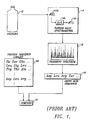
- the previous method is used for analysis of an unknown peptide 12.
- the peptide will be output from a chromatography column which has been used to separate a partially fractionated protein.
- the protein can be fractionated by, for example, gel filtration chromatography and/or high performance liquid chromatography (HPLC).
- HPLC high performance liquid chromatography
- the sample 12 is introduced to a tandem mass spectrometer 14 through an ionization method such as electrospray ionization (ES).
- ES electrospray ionization
- a peptide ion is selected, so that a targeted component of a specific mass, is separated from the rest of the sample 14a.
- the targeted component is then activated or decomposed.
- the result will be a mixture of the ionized parent peptide ("precursor ion") and component peptides of lower mass which are ionized to various states.
- a number of activation methods can be used including collisions with neutral gases (also referred to as collision induced dissolution).
- the parent peptide and its fragments are then provided to the second mass spectrometer 14c, which outputs an intensity and m/z for each of the plurality of fragments in the fragment mixture. This information can be output as a fragment mass spectrum 16.
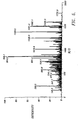
- Fig. 5 provides an example of such a spectrum 16.
- each fragment ion is represented as a bar graph whose abscissa value indicates the mass-to-charge ratio (m/z) and whose ordinate value represents intensity.
- a fragment sequence was converted into one or more amino acid sequences judged to correspond to the fragment spectrum.
- the weight of each of the amino acids is subtracted from the molecular weight of the parent ion to determine what might be the molecular weight of a fragment assuming, respectively, each amino acid is in the terminal position. It is determined if this fragment mass is found in the actual measured fragment spectrum.
- Scores are generated for each of the amino acids and the scores are sorted to generate a list of partial sequences for the next subtraction cycle. Cycles continue until subtraction of the mass of an amino acid leaves a difference of less than 0.5 and greater than -0.5.
- the result is one or more candidate amino acid sequences 18. This procedure can be automated as described, for example, in Yates III (1991) supra. One or more of the highest-scoring candidate sequences can then be compared 21 to sequences in a protein sequence library 20 to try to identify a protein having a sub-sequence similar or identical to the sequence believed to correspond to the peptide which generated the fragment spectrum 16.
- Fig. 2 shows an overview of a process according to the present invention.
- a fragment spectrum 16 is obtained in a manner similar to that described above for the fragment spectrum depicted in Fig. 1.
- the sample 12 is provided to a tandem mass spectrometer 14.
- Procedures described below use a two-step process to acquire ms/ms data.
- the present invention can also be used in connection with mass spectrometry approaches currently being developed which incorporate acquisition of ms/ms data with a single step.
- mass spectrometry approaches currently being developed which incorporate acquisition of ms/ms data with a single step.
- ms/ms spectra would be acquired at each mass.
- the first ms would separate the ions by mass-to-charge and the second would record the ms/ms spectrum.
- the second stage of ms/ms would acquire, e.g. 5 to 10 spectra at each mass transformed by the first ms.
- a number of mass spectrometers can be used including a triple-quadruple mass spectrometer, a Fourier-transform cyclotron resonance mass spectrometer, a tandem time-of-flight mass spectrometer and a quadrupole ion trap mass spectrometer.
- a triple-quadruple mass spectrometer a Fourier-transform cyclotron resonance mass spectrometer, a tandem time-of-flight mass spectrometer and a quadrupole ion trap mass spectrometer.
- sequence libraries can be used, including, for example, the Genpept database, the GenBank database (described in Burks, et al., “GenBank: Current status and future directions in Methods in Enzymology", 183:3 (1990)), EMBL data library (described in Kahn, et al., “EMBL Data Library,” Methods in Enzymology , 183:23 (1990)), the Protein Sequence Database (described in Barker, et al., “Protein Sequence Database,” Methods in Enzymology, 1983:31 (1990), SWISS-PROT (described in Bairoch, et al., "The SWISS-PROT protein sequence data bank, recent developments," Nucleic Acids Res. , 21:3093-3096 (1993)), and PIR-International (described in “Index of the Protein Sequence Database of the International Association of Protein Sequence Databanks (PIR-International)” Protein Seq Data Anal. 5:67-192 (1993).
- Genpept database the GenBank
- the predicted mass spectra 22 are compared 24 to the experimentally-derived fragment spectrum 16 to identify one or more of the predicted mass spectra which most closely match the experimentally-derived fragment spectrum 16.
- the comparison is done automatically by calculating a closeness-of-fit measure for each of the plurality of predicted mass spectra 22 (compared to the experimentally-derived fragment spectrum 16). It is believed that, in general, there is high probability that the peptide analyzed by the tandem mass spectrometer has an amino acid sequence identical to one of the sub-sequences taken from the protein sequence library 20 which resulted in a predicted mass spectrum 22 exhibiting a high closeness-of-fit with respect to the experimentally-derived fragment spectrum 16.
- the entire procedure can be performed automatically using, e.g, a computer to calculate predicted mass spectra 22 and/or to perform comparison 24 of the predicted mass spectra 22 with the experimentally-derived fragment spectrum 16.
- Fig. 3 is a flow diagram showing one method for predicting mass spectra 22 and performing the comparison 24.
- the experimentally-derived fragment spectrum 16 is first normalized 32.
- the experimentally-derived fragment spectrum 16 is converted to a list of masses and intensities.
- the values for the precursor ion are removed from the file.
- the square root of all the intensity values is calculated and normalized to a maximum intensity of 100.
- the 200 most intense ions are divided into ten mass regions and the maximum intensity is normalized to 100 within each region.
- Each ion which is within 3.0 daltons of its neighbor on either side is given the greater intensity value, if a neighboring intensity is greater than its own intensity.
- normalizing methods can be used and it is possible to perform analysis without performing normalization, although normalization is, in general, preferred.
- sub-sequences within each protein sequence are identified which have a mass which is within a tolerance amount of the mass of the unknown peptide.
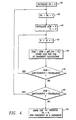
- the mass of the unknown peptide is known from the tandem mass spectrometer 34. Identification of candidate sub-sequences 34 is shown in greater detail in Fig. 4.
- the process of identifying candidate sub-sequences involves summing the masses of linear amino acid sequences until the sum is either within a tolerance of the mass of the unknown peptide (the "target" mass) or has exceeded the target mass (plus tolerance). If the mass of the sequence is within tolerance of the target mass, the sequence is marked as a candidate. If the mass of the linear sequence exceeds the mass of the unknown peptide, then the algorithm is repeated, beginning with the next amino acid position in the sequence.
- a variable m indicating the starting amino acid along the sequence is initialized to 0 and incremented by 1 (36, 38).
- the sum, representing the cumulative mass and a variable n representing the number of amino acids thus far calculated in the sum, are initially set to 0 (40) and variable n is incremented 42.
- the molecular weight of a peptide corresponding to a sub-sequence of a protein sequence is calculated in iterative fashion by steps 44 and 46. In each iteration, the sum is incremented by the molecular weight of the amino acid of the next (nth) amino acid in the sequence 44. Values of the sum 44 may be stored for use in calculating fragment masses for use in predicting a fragment mass spectrum as described below.
- n is incremented 42 and the process is repeated 44.
- a number of tolerance values can be used. In one embodiment, a tolerance value of ⁇ 0.05% of the mass of the unknown peptide was used. If the new sum is no longer less than a tolerance amount below the target mass, it is then determined if the new sum is greater than the target mass plus the tolerance amount. If the new sum is more than the tolerance amount in excess of the target mass, this particular sequence is not considered a candidate sequence and the process begins again, starting from a new starting point in the sequence (by incrementing the starting point value m (38)).
- the sum is not greater than the target mass plus the tolerance amount, it is known that the sum is within one tolerance amount of a target mass and, thus, that the sub-sequence beginning with mth amino and extending to the (m + n)th amino acid of the sequence is a candidate sequence.
- the candidate sequence is marked, e.g., by storing the values of m and n to define this sub-sequence.
- a fragment mass spectrum is predicted for each of the candidate sequences 52.
- the fragment mass spectrum is predicted by calculating the fragment ion masses for the type b- and y- ions for the amino acid sequence.
- the resulting ion is labelled as a b-type ion. If the charge is retained on the c-type terminal fragment, it is labelled a y-type ion.
- Masses for type b- ions were calculated by summing the amino acid masses and adding the mass of a proton.
- Type y- ions were calculated by summing, from the c-terminus, the masses of the amino acids and adding the mass of water and a proton to the initial amino acid. In this way, it is possible to calculate an m/z for each fragment. However, in order to provide a predicted mass spectrum, it is also necessary to assign an intensity value for each fragment. It might be possible to predict, on a theoretical basis, intensity value for each fragment. However, this procedure is difficult. It has been found useful to assign intensities in the following fashion. The value of 50.0 is assigned to each b and y ion. To masses of 1 dalton on either side of the fragment ion, an intensity of 25.0 is assigned.
- the two-step method includes calculating a preliminary closeness-of-fit score, referred to here as S p 56 and, for the highest-scoring amino acid sequences, calculating a correlation function 58.
- the factor, ⁇ evaluates the continuity of a fragment ion series. If there was a fragment ion match for the ion immediately preceding the current type b- or y-ion, ⁇ is incremented by 0.075 (from an initial value of 0.0).
- the factor ⁇ evaluates the presence of immonium ions in the low mass end of the mass spectrum. Immonium ions are diagnostic for the presence of some types of amino acids in the sequence. If immonium ions are present at 110.0, 120.0, or 136.0 Da ( ⁇ 1.0 Da) in the processed data file of the unknown peptide with normalized intensities greater than 40.0, indicating the presence of histidine, phenylalanine, and tyrosine respectively, then the sequence under evaluation is checked for the presence of the amino acid indicated by the immonium ion.
- the preliminary score, S p , for the peptide is either augmented or depreciated by a factor of (1 - ⁇ ) where ⁇ is the sum of the penalties for each of the three amino acids whose presence is indicated in the low mass region.
- ⁇ is the sum of the penalties for each of the three amino acids whose presence is indicated in the low mass region.
- Each individual ⁇ can take on the value of -0.15 if there is a corresponding low mass peak and the amino acid is not present in the sequence, +0.15 if there is a corresponding low mass peak and the amino acid is present in the sequence, or 0.0 if the low mass peak is not present.
- the total penalty can range from -0.45 (all three low mass peaks present in the spectrum yet none of the three amino acids are in the sequence) to +0.45 (all three low mass peaks are present in the spectrum and all three amino acids are in the sequence).
- those candidate predicted mass spectra having the highest S p scores are selected for further analysis using the correlation function 58.
- the number of candidate predicted mass spectra which are selected for further analysis will depend largely on the computational resources and time available. In one embodiment, 300 candidate peptide sequences with the highest preliminary score were selected.
- the experimentally-derived fragment spectrum is preprocessed in a fashion somewhat different from preprocessing 32 employed before calculating S p .
- the precursor ion was removed from the spectrum and the spectrum divided into 10 sections. Ions in each section were then normalized to 50.0. The sectionwise normalized spectra 60 were then used for calculating the correlation function.
- the discrete correlation between the two functions is calculated as: where r is a lag value.
- the discrete correlation theorem states that the discrete correlation of two real functions x and y is one member of the discrete Fourier transform pair R ⁇ ⁇ X ⁇ Y * ⁇ where X(t) and Y(t) are the discrete Fourier transforms of x(i) and y(i) and the Y* denotes complex conjugation. Therefore, the cross-correlations can be computed by Fourier transformation of the two data sets using the fast Fourier transform (FFT) algorithm, multiplication of one transform by the complex conjugate of the other, and inverse transformation of the resulting product.
- FFT fast Fourier transform
- all of the predicted spectra as well as the pre-processed unknown spectrum were zero-padded to 4096 data points since the MS/MS spectra are not periodic (as intended by the correlation theorem) and the FFT algorithm requires N to be an integer power of two, so the resulting end effects need to be considered.
- the final score attributed to each candidate peptide sequence is R(0) minus the mean of the cross-correlation function over the range -75 ⁇ t ⁇ 75.
- This modified "correlation parameter" described in Powell and Heiftje, Anal. Chim. Acta, Vol. 100, pp 313-327 (1978) shows better discrimination over just the spectral correlation coefficient R(0).
- the raw scores are normalized to 1.0.
- output 62 includes the normalized raw score, the candidate peptide mass, the unnormalized correlation coefficient, the preliminary score, the fragment ion continuity ⁇ , the immonium ion factor ⁇ , the number of type band y-ions matched out of the total number of fragment ions, their matched intensities, the protein accession number, and the candidate peptide sequence.
- the correlation function 58 can be used to automatically select one of the predicted mass spectra 22 as corresponding to the experimentally-derived fragment spectrum 16. Preferably, however, a number of sequences from the library 20 are output and final selection of a single sequence is done by a skilled operator.
- the present invention also includes predicting mass spectra based on nucleotide databases.
- the procedure involves the same algorithmic approach of cycling through the nucleotide sequence.
- the 3-base codons will be converted to a protein sequence and the mass of the amino acids summed in a fashion similar to the summing depicted in Fig. 4.
- To cycle through the nucleotide sequence a 1-base increment will be used for each cycle. This will allow the determination of an amino acid sequence for each of the three reading frames in one pass.
- the scoring and reporting procedures for the search can be the same as that described above for the protein sequence database.
- data-reduction techniques will emphasize the most informative ions in the spectrum while not unduly affecting search speed.
- One technique involves considering only some of the fragment ions in the MS/MS spectrum.
- a spectrum for a peptide may contain as many as 3,000 fragment ions.
- the ions are ranked by intensity and some fraction of the most intense ions (e.g., the top 200 most intense ions) will be used for comparison.
- Another approach involves subdividing the spectrum into, e.g., 4 or 5 regions and using the 50 most intense ions in each region as part of the data set.
- Yet another approach involves selecting ions based on the probability of those ions being sequence ions.
- ions could be selected which exist in mass windows of 57 through 186 daltons (range of mass increments for the 20 common amino acids from GLY to TRP) that contain diagnostic features of type b- or y- ions, such as losses of 17 or 18 daltons (NH 3 or H 2 O) or a loss of 28 daltons (CO).
- the techniques described above are, in general, applicable to spectra of peptides with charged states of +1 or +2, typically having a relatively short amino acid sequence. Using a longer amino acid sequence increases the probability of a unique match to a protein sequence. However, longer peptide sequences have a greater likelihood of containing more basic amino acids, and thus producing ions of higher charge state under electro-spray ionization conditions.
- algorithms are provided for searching a database with MS/MS spectra of highly charged peptides (+3, +4, +5, etc.).
- the search program will include an input for the charge state (N) of the precursor ion used in the MS/MS analysis. Predicted fragment ions will be generated for each charge state less than N. Thus, for peptide of +4, the charge states of +1, +2 and +3 will be generated for each fragment ion and compared to the MS/MS spectrum.
- the second strategy for use with multiply charged spectra is the use of mathematical deconvolution to convert the multiply charged fragment ions to their singly charged masses.
- the deconvoluted spectrum will then contain the fragment ions for the multiply charged fragment ions and their singly charged counterparts.
- a directed-search approach can be used. In cases where experiments are performed on specific organisms or specific types of proteins, it is not necessary to search the entire database on the first pass. Instead, a search sequence protein specific to a species or a class of proteins can be performed first. If the search does not provide reasonable answers, then the entire database is searched.
- scoring can be based on the percentage of continuous sequence coverage represented by the sequence ions in the spectrum. For example, a 10 residue peptide will potentially contain 9 each of b- and y-type sequence ions. If a set of ions extends from B 1 to B 9 , then a score of 100 is awarded, but if a discontinuity is observed in the middle of the sequence, such as missing the B 5 ion, a penalty is assessed. The maximum score is awarded for an amino acid sequence that contains a continuous ion series in both the b and y directions.
- an additional technique for spectral comparison can be used in which the database is initially searched with a molecular weight value and a reduced set of fragment ions. Initial filtering of the database occurs by matching sequence ions and generating a score with one of the methods described above. The resulting set of answers will then undergo a more rigorous inspection process using a modified full MS/MS spectrum.
- one of several spectral matching approaches developed for spectral library searching is used. This will require generating a "library spectrum" for the peptide sequence based on the sequence ions predicted for that amino acid sequence. Intensity values for sequence ions of the "library spectrum" will be obtained from the experimental spectrum.
- the predicted spectrum is identical to the "unknown" spectrum, it will represent an ideal spectrum.
- the spectra will then be compared using a correlation function. In general, it is believed that the majority of computational time for the above procedure is spent in the iterative search process. By multiplexing the analysis of multiple MS/MS spectra in one pass through the database, an overall improvement in efficiency will be realized.
- the mass tolerance used in the initial pre-filtering can affect search times by increasing or decreasing the number of sequences to analyze in subsequent steps.
- Another approach to speed up searches involves a binary encryption scheme where the mass spectrum is encoded as peak/no peak at every mass depending on whether the peak is above a certain threshold value. If intensive use of a protein sequence library is contemplated, it may be possible to calculate and store predicted mass values of all sub-sequences within a predetermined range of masses so that at least some of the analysis can be performed by table look-up rather than calculation.
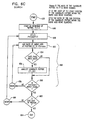
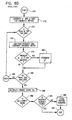
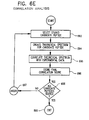
- Figs. 6A-6E are flow charts showing an analysis procedure according to one embodiment of the present invention.
- data is acquired from the tandem mass spectrometer, as described above 602, the data is saved to a file and converted to an ASCII format 604.
- a preprocessing procedure is started 606.
- the user enters information regarding the peptide mass in the precursor ion charge state 608.
- Mass/intensity values are loaded from the ASCII file, with the values being rounded to unit masses 610.
- the previously-identified precursor ion contribution of this data is removed 612.
- the remaining data is normalized to a maximum intensity of 100 614. At this point, different paths can be taken.
- the presence of any immonium ions is noted 616 and the peptide mass and immonium ion information is stored in a datafile 618.
- the 200 most intense peaks are selected 620. If two peaks are within a predetermined distance (e.g., 2 amu) of each other, the lower intensity peak is set equal to a greater intensity 622.
- the data is stored in a datafile for preliminary scoring 624.
- the data is divided into a number of windows, for example ten windows 626. Normalization is performed within each window, for example, normalizing to a maximum intensity of 50 628. This data is then stored in a datafile for final correlation scoring 630. This ends the preprocessing phase, according to this embodiment 632.
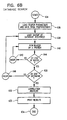
- the database search is started 634 and the search parameters and the data obtained from the preprocessing procedure (Fig. 6A) are loaded 636.
- a first batch of database sequences is loaded 638 and a search procedure is run on a particular protein 640.
- the search procedure is detailed in Fig. 6C.
- the index is incremented 642 and the search routine is repeated 640.
- the second index 646 is incremented and a new batch of database sequences is loaded 638.
- a correlation analysis is performed 630 (as detailed in Fig. 6E), the results are printed 632 and the procedure ends 634.
- an index I1 is set to zero 646 to indicate the start position of the candidate peptide within the amino acid being searched 640.
- a second index I2, indicating the end position of the candidate peptide within the amino acid being searched, is initially set equal to I1 and the variable Pmass, indicating the accumulated mass of the candidate peptide is initialized to zero 648.
- Pmass the mass of the amino acid at position I2 is added to Pmass 652. It is next determined whether the mass thus-far accumulated (Pmass) equals the input mass (i.e., the mass of the peptide) 654.
- this test may be performed as plus or minus a tolerance rather than requiring strict equality, as noted above. If there is equality (optionally within a tolerance) an analysis routine is started 656 (detailed in Fig. 6D). Otherwise, it is determined whether Pmass is less than the input mass (optionally within a tolerance). If not, the index I2 is incremented 658 and the mass of the amino acid at the next position (the incremented I2 position) is added to Pmass 652. If Pmass is greater than the input mass (optionally by more than a tolerance 660) it is determined whether index I1 is at the end of a protein 662. If so, the search routine exits 664. Otherwise, index I1 is 'incremented 666 so that the routine can start with a new start position of a candidate peptide and the search procedure returns to block 648.
- a stored candidate peptide is selected 693.
- a theoretical spectrum for the candidate peptide is created 694, correlated with experimental data 695 and a final correlation score is obtained 696, as described above.
- the index is incremented 697 and the process repeated from block 693 unless all candidate peptides have been scored 698, in which case the correlation analysis procedure exits 699.
- MHC complexes were isolated from HS-EBV cells transformed with HLA-DRB*0401 using antibody affinity chromatography. Bound peptides were released and isolated by filtration through a Centricon 10 spin column. The heavy chain of glycosaparginase from human leukocytes was isolated. Proteolytic digestions were performed by dissolving the protein in 50 mM ammonium bicarbonate containing 10 mM Ca ++ , pH 8.6. Trypsin was added in a ratio of 100/1 protein/enzyme.
- LC-MS and LC-MS/MS Analysis of the resulting peptide mixtures was performed by LC-MS and LC-MS/MS. Briefly, molecular weights of peptides were recorded by scanning Q3 or Q1 at a rate of 400 Da/sec over a mass range of 300 to 1600 throughout the HPLC gradient. Sequence analysis of peptides was performed during a second HPLC analysis by selecting the precursor ion with a 6 amu (FWHH) wide window in Q 1 and passing the ions into a collision cell filled with argon to a pressure of 3-5 mtorr. Collision energies were on the order of 20 to 50 eV.
- FWHH 6 amu
- the fragment ions produced in Q 2 were transmitted to Q 3 and a mass range of 50 Da to the molecular weight of the precursor ion was scanned at 500 Da/sec to record the fragment ions.
- the low energy spectra of 36 peptides were recorded and stored on disk.
- the genpept database contains protein sequences translated from nucleotide sequences. A text search of the database was performed to determine if the sequences for the peptide amino acid sequences used in the analysis were present in the database. Subsequently, a second database was created from the whole database by appending amino acid sequences for peptides not included.
- the spectrum data was converted to a list of masses and intensities and the values for the precursor ion were removed from the file.
- the square root of all the intensity values was calculated and normalized to a maximum intensity of 100.0. All ions except the 200 most intense ions were removed from the file. The remaining ions were divided into 10 mass regions and the maximum intensity normalized to 100.0 within each region. Each ion within 3.0 daltons of its neighbor on either side was given the greater intensity value, if the neighboring intensity was greater than its own intensity.
- This processed data was stored for comparison to the candidate sequences chosen from the database search.
- the MS/MS spectrum was modified in a different manner for calculation of a correlation function. The precursor ion was removed from the spectrum and the spectrum divided into 10 equal sections. Ions in each section were then normalized to 50.0. This spectrum was used to calculate the correlation coefficient against a predicted MS/MS spectrum for each amino acid sequence retrieved from the database.
- Amino acid sequences from each protein were generated by summing the masses, using average masses for the amino acids, of the linear amino acid sequence from the amino terminus (n). If the mass of the linear sequence exceeded the mass of the unknown peptide, then the algorithm returned to the amino terminal amino acid and began summing amino acid masses from the n+1 position. This process was repeated until every linear amino acid sequence combination had been evaluated. When the mass of the amino acid sequence was within ⁇ 0.05% (minimum of ⁇ 1 Da) of the mass of the unknown peptide, the predicted m/z values for the type b- and y-ions were generated and compared to the fragment ions of the unknown sequence.
- a preliminary score (S p ) was generated and the top 300 candidate peptide sequences with the highest preliminary score were ranked and stored.
- a final analysis of the top 300 candidate amino acid sequences was performed with a correlation function. Using this function a theoretical MS/MS spectrum for the candidate sequence was compared to the modified experimental MS/MS spectrum. Correlation coefficients were calculated, ranked and reported. The final results were ranked on the basis of the normalized correlation coefficient.
- the spectrum shown in Fig. 5 was obtained by LC-MS/MS analysis of a peptide bound to a DRB*0401 MHC class II complex.
- a search of the genpept database containing 74,938 protein sequences identified 384,398 peptides within a mass tolerance of ⁇ 0.05% (minimum of ⁇ 1Da) of the molecular weight of this peptide.
- fragment ion patterns predicted for each of these amino acid sequences was cutoff at 300.
- a correlation analysis was then performed with the predicted MS/MS spectra for each of these sequences and the modified experimental MS/MS spectrum.
- the MS/MS spectra presented in Table 1 were interpreted using the described database searching method. This method serves as a data pre-filter to match MS/MS spectra to previously determined amino acid sequences. Pre-filtering the data allows interpretation efforts to be focused on previously unknown amino acid sequences. Results for some of the MS/MS spectra are shown in Table 4. No pre-assigning of sequence ions or manual interpretation is required prior to the search. However, the sequences must exist in the database. The algorithm first pre-processed the MS/MS data and then compared all the amino acid sequences in the database within ⁇ 1 amu of the mass of the precursor ion of the MS/MS spectrum. The predicted fragmentation patterns of the amino acid sequences within the mass tolerance were compared to the experimental spectrum.
- the computer program described above has been modified to analyze the MS/MS spectra of phosphorylated peptides.
- all types of phosphorylation are considered such as Thr, Ser, and Tyr.
- Amino acid sequences are scanned in the database to find linear stretches of sequence that are multiples of 80 amu below the mass of the peptide under analysis. In the analysis each putative site of phosphorylation is considered and attempts to fit a reconstructed MS/MS spectrum to the experimental spectrum are made.
- nucleotide sequences Much of the information generated by the genome projects will be in the form of nucleotide sequences. Those stretches of nucleotide sequence that can be correlated to a gene will be translated to a protein sequence and stored in a specific database (genpept). The un-translated nucleotide sequences represent a wealth of data that may be relevant to protein sequences.
- the present invention will allow searching the nucleotide database in the same manner as the protein sequence databases. The procedure will involve the same algorithmic approach of cycling through the nucleotide sequence. The three-base codon will be converted to a protein sequence and the mass of the amino acids summed. To cycle through the nucleotide sequence, a one-base increment will be used for each cycle.
- the present invention permits correlating mass spectra of a protein, peptide or oligonucleotide with a nucleotide or protein sequence database in a fashion which is relatively accurate, rapid, and which is amenable to automation (i.e., to operation without the need for the exercise of human judgment).
- the present invention can be used to analyze peptides which are derived from a mixture of proteins and thus is not limited to analysis of intact homogeneous proteins such as those generated by specific and known proteolytic cleavage.
- the invention can be used in connection with a number of different proteins or peptide sources and it is believed applicable to any analysis using mass spectrometry and proteins.
- the present invention can be used for, for example, monitoring fermentation processes by collecting cells, lysing the cells to obtain the proteins, digesting the proteins, e.g. in an enzyme reactor, and analyzing by Mass spectrometry as noted above.
- the data could be interpreted using a search of the organism's database (e.g., a yeast database).
- the invention could be used to determine the species of organism from which a protein is obtained. The analysis would use a set of peptides derived from digestion of the total proteins.
- the cells from the organism would be lysed, the proteins collected and digested.
- Mass spectrometry data would be collected with the most abundant peptides.
- a collection of spectra e.g., 5 to 10 spectra
- the spectra should match known proteins of the species. Since this method would use the most abundant proteins in the cell, it is believed that there is a high likelihood the sequences for these organisms would be sequenced and in the database. In one embodiment, relatively few cells could be used for the analysis (e.g., on the order of 10 4 - 10 5 ).
- methods of the invention can be used to identify microorganisms, cell surface proteins and the like.
- the procedure can employ tandem mass spectra obtained from peptides produced by proteolytic digestion of the cellular proteins.
- the complex mixture of peptides produced is subjected to separation by HPLC on-line to a tandem mass spectrometer.
- peptides elute off the column tandem mass spectra are obtained by selecting a peptide ion in the first mass analyzer, sending it into a collision cell, and recording the mass-to-charge (m/z) ratios of the resulting fragment ions in the second mass analyzer.
- Each spectrum represents a peptide derived the microorganism's protein (gene) pool and thus the collection can be used to develop one or more family, genus, species, serotype or strain-specific markers of the microorganism, as desired.
- the identification of the microorganism is performed using one of at least three software related techniques.
- a database search the tandem mass spectra are used to search protein and nucleotide databases to identify an amino acid sequence which is represented by the spectrum. Identification of the organism is achieved when a preponderance of spectra obtained in the mass spectrometry analysis match to proteins previously identified as coming from a particular organism. Means for searching databases in this fashion are as described hereinabove.
- a library search can be performed, such as if no solid matches are observed using the database search described above.
- the data set is compared to a pre-defined library of spectra obtained from known organisms.
- a library of peptide spectra is created from known microorganisms.
- the library of tandem mass spectra for micro-organisms can be constructed by any of several methods which employ LC-MS/MS. The methods can be used to vary the location cellular proteins are obtained from, and the amount of pre-purification employed for the resulting peptide mixture prior to LC-MS/MS analysis.
- intact cells can be treated with a proteolytic enzyme such as trypsin, chymotrypsin, endoproteinase Glu-C, endoproteinase Lys-C, pepsin, etc. to digest the proteins exposed on the cell surface.
- a proteolytic enzyme such as trypsin, chymotrypsin, endoproteinase Glu-C, endoproteinase Lys-C, pepsin, etc.
- Pre-treatment of the intact cells with one or more glycosidases can be used to remove steric interference that may be created by the presence of carbohydrates on the cell surface.
- the pre-treatment with glycosidases may be used to obtain higher peptide yields during the proteolysis step.
- a second method to prepare peptides involves rupturing the cell membranes (e.g., by sonication, hypo-osmotic shock, freeze-thawing, glass beads, etc.) and collecting the total proteins by precipitation, e.g., using acetone or the like.
- the proteins are resuspended in a digestion buffer and treated with a protease such as trypsin, chymotrypsin, endoproteinase glu-C, endoproteinase lys-C, etc. to create a mixture of peptides.
- Partial simplification of this mixture of peptides such as by partitioning the mixture into acid and basic fractions or by separation using strong cation exchange chromatography, leads to several pools of peptides which can then be used in the mass spectrometry process.
- the peptide mixtures are analyzed by LC-MS/MS, creating a large set of spectra, each representing a unique peptide marker of the organism or cell type.
- the data are stored in the library in any of a variety of means, but conveniently in three sections, wherein one section is the peptide mass determined from the spectrum, a second section is information related to the organism, species, growth conditions, etc., and a third section contains the mass/intensity data.
- the data can be stored in a variety of formats, conveniently an ASCII format or in a binary format.
- To perform the library search spectra are compared by first determining whether the mass of the peptide is within a preset mass tolerance (typically about ⁇ 1-3 amu) of the library spectrum; a cross-correlation function as described hereinabove is used to obtain a quantitative value of the similarity or closeness-of-fit of the two spectra. The process is similar to the database searching algorithm except a spectrum is not reconstructed for the amino acid sequence.
- the tandem mass spectrum can be used to search a small (e.g., ⁇ 100 protein sequences) randomly generated sequence database. This provides a background against which similarity is compared and to generate a normalized score.
- a third related technique for identifying a microorganism or cell involves de novo interpretation to determine a set of amino acid sequences that have the same mass as the peptide represented by the spectrum.
- the set of amino acid sequences is limited by using the spectral preprocessing equation 1, above, to rank the sequences.
- This set of amino acid sequences then serves as the database for use in the searching method described hereinabove.
- An amino acid sequence is thereby derived for a tandem mass spectrum that is not contained in the organized databases.
- phylogenetic analysis of the determined amino acid sequences they can be placed within a species, genus or family and a classification of the microorganism is thereby accomplished.
- cDNA sequencing can be carried out using conventional means to obtain partial sequences of genes expressed in particular cell lines, tissue types or microorganisms. This information then serves as the database for the subsequent analyses.
- the approach described above for the digesting proteins exposed on the cell surface by enzymatic digestion can be used to generate a collection of peptides for LC-MS/MS analysis.
- the resulting spectra are used to search the nucleotide sequences in all 6 reading frames to match amino acid sequences to the MS/MS spectra.
- the amino acid sequences identified represent regions of the cell surface proteins exposed to the extracellular space. This method provides at least two additional pieces of information not directly obtainable from cDNA sequencing.
- the spectra identify the proteins residing on the membrane of the cells.
- sidedness information is obtained about the folding of the proteins on the cell surface.
- the peptide sequences matched to the nucleotide sequence information identifies those segments of the protein sequence exposed extracellularly.
- the methods can also be used to interpret the MS/MS spectra of carbohydrates.
- the carbohydrate(s) of interest is subjected to separation by HPLC on-line to a tandem mass spectrometer as with the peptides.
- the carbohydrates can be obtained from a complex mixture of carbohydrates or obtained from proteins, cells, etc. by chemical or enzymatic release.
- Tandem mass spectra are obtained by selecting a carbohydrate ion in the first mass analyzer, sending it into a collision cell, and recording the mass-to-charge (m/z) ratios of the resulting fragment ions in the second mass analyzer. This process is performed over the course of the HPLC analysis and produces a large collection of spectra (e.g., from 10 to 200 or more).
- the fragmentation patterns of the carbohydrate structures contained in the database can be predicted and a theoretical representation of the spectra can be compared to the pattern in the tandem mass spectrum by using the method described hereinabove.
- the carbohydrate structures analyzed by tandem mass spectrometry can thereby be identified. These methods can thus be used for characterization of the carbohydrate structures found on proteins, cell surfaces, etc.
- the present invention can be used in connection with diagnostic applications, such as described above and in Example 2.
- Another example involves identifying virally infected cells. Success of such an approach is believed to depend on the relative abundance of the viral proteins versus the cellular proteins, at least using present equipment. If an antibody were produced to a specific region of a protein common to certain pathogens, the mixture of proteins could be partially fractionated by passing the material over an immunoaffinity column. Bound proteins are eluted and digested. Mass spectrometry generates the data to search a database. One important element is finding a general handle to pull proteins from the cell. This approach could also be used to analyze specific diagnostic proteins.
- an antibody could be produced to a region of the protein that does not change.
- An immunoaffinity column could be constructed with the antibody to isolate the protein away from all the other cellular proteins.
- the protein would be digested and analyzed by tandem mass spectrometry.
- the database of all the possible mutations in the protein could be maintained and the experimental data analyzed against this database.
- cystic fibrosis This disease is characterized by multiple mutations in CFTR protein. One mutation is responsible for about 70% of the cases and the other 30% of the cases result from a wide variety of mutations. To analyze these mutations by genetic testing would require many different analyses and probes.
- the protein In the assay described above, the protein would be isolated and analyzed by tandem mass spectrometry. All the mutations in the protein could be identified in an assay based on structural information. The database used would preferably describe all the known mutations. Implementation of this approach is believed to involve significant difficulties. The amount of protein required could be so large that it would be impractical to obtain from a patient. This problem may be overcome as the sensitivity of mass spectrometry improves in the future.
- a protein such as CFTR is a transmembrane protein, which are typically very difficult to manipulate and digest. The approach described could be used for any diagnostic protein. The data would be highly specific and the data analysis essentially automated.
- the present invention can be used with any size peptide.
- the process requires that peptides be fragmented and there are methods for achieving fragmentation of very large proteins. Some such techniques are described in Smith et al., "Collisional Activation and Collision-Activated Dissociation of Large Multiply Charged Polypeptides and Proteins Produced by Electrospray Ionization" J. Amer. Soc. Mass Spect. I: 53-65 (1990).
- the present method can be used to analyze data derived from intact proteins, in that there is no theoretical or absolute practical limit to the size of peptides that can be analyzed according to this invention. Analysis using the present invention has been performed on peptides at least in the size range from about 400 amu (4 residues) to about 2500 amu (26 residues).
- candidate sub-sequences are identified and fragment spectra are predicted as they are needed, at the time of doing the analysis. If sufficient computational resources and storage facilities are available to perform some or all of the calculations needed for candidate sequence identification (such as calculation of sub-sequence masses) and/or spectra prediction (such as calculation of fragment masses), storage of these items in a database can be employed so that some or all of these items can be looked up rather than calculated each time they are needed.
Landscapes
- Life Sciences & Earth Sciences (AREA)
- Health & Medical Sciences (AREA)
- Chemical & Material Sciences (AREA)
- Engineering & Computer Science (AREA)
- Molecular Biology (AREA)
- Physics & Mathematics (AREA)
- Analytical Chemistry (AREA)
- General Health & Medical Sciences (AREA)
- Organic Chemistry (AREA)
- Bioinformatics & Cheminformatics (AREA)
- Immunology (AREA)
- Hematology (AREA)
- Urology & Nephrology (AREA)
- Proteomics, Peptides & Aminoacids (AREA)
- Biomedical Technology (AREA)
- Biophysics (AREA)
- Bioinformatics & Computational Biology (AREA)
- Biotechnology (AREA)
- Biochemistry (AREA)
- Medicinal Chemistry (AREA)
- Spectroscopy & Molecular Physics (AREA)
- Microbiology (AREA)
- Theoretical Computer Science (AREA)
- Medical Informatics (AREA)
- Genetics & Genomics (AREA)
- Pathology (AREA)
- General Physics & Mathematics (AREA)
- Cell Biology (AREA)
- Food Science & Technology (AREA)
- Evolutionary Biology (AREA)
- Zoology (AREA)
- Wood Science & Technology (AREA)
- Bioethics (AREA)
- Signal Processing (AREA)
- Software Systems (AREA)
- Data Mining & Analysis (AREA)
- Artificial Intelligence (AREA)
- Databases & Information Systems (AREA)
- Epidemiology (AREA)
- Computing Systems (AREA)
Priority Applications (1)
| Application Number | Priority Date | Filing Date | Title |
|---|---|---|---|
| EP02012695A EP1239288A1 (en) | 1994-03-14 | 1995-03-14 | Identification of nucleotides, amino acids, or carbohydrates by mass spectrometry |
Applications Claiming Priority (3)
| Application Number | Priority Date | Filing Date | Title |
|---|---|---|---|
| US212433 | 1994-03-14 | ||
| US08/212,433 US5538897A (en) | 1994-03-14 | 1994-03-14 | Use of mass spectrometry fragmentation patterns of peptides to identify amino acid sequences in databases |
| PCT/US1995/003239 WO1995025281A1 (en) | 1994-03-14 | 1995-03-14 | Identification of nucleotides, amino acids, or carbohydrates by mass spectrometry |
Related Child Applications (1)
| Application Number | Title | Priority Date | Filing Date |
|---|---|---|---|
| EP02012695A Division EP1239288A1 (en) | 1994-03-14 | 1995-03-14 | Identification of nucleotides, amino acids, or carbohydrates by mass spectrometry |
Publications (3)
| Publication Number | Publication Date |
|---|---|
| EP0750747A1 EP0750747A1 (en) | 1997-01-02 |
| EP0750747A4 EP0750747A4 (en) | 1997-06-25 |
| EP0750747B1 true EP0750747B1 (en) | 2003-05-28 |
Family
ID=22790986
Family Applications (2)
| Application Number | Title | Priority Date | Filing Date |
|---|---|---|---|
| EP95914051A Expired - Lifetime EP0750747B1 (en) | 1994-03-14 | 1995-03-14 | Identification of amino acids by mass spectrometry |
| EP02012695A Withdrawn EP1239288A1 (en) | 1994-03-14 | 1995-03-14 | Identification of nucleotides, amino acids, or carbohydrates by mass spectrometry |
Family Applications After (1)
| Application Number | Title | Priority Date | Filing Date |
|---|---|---|---|
| EP02012695A Withdrawn EP1239288A1 (en) | 1994-03-14 | 1995-03-14 | Identification of nucleotides, amino acids, or carbohydrates by mass spectrometry |
Country Status (9)
| Country | Link |
|---|---|
| US (2) | US5538897A (enExample) |
| EP (2) | EP0750747B1 (enExample) |
| JP (1) | JP3195358B2 (enExample) |
| AT (1) | ATE241809T1 (enExample) |
| CA (1) | CA2185574C (enExample) |
| DE (1) | DE69530915T2 (enExample) |
| DK (1) | DK0750747T3 (enExample) |
| ES (1) | ES2199986T3 (enExample) |
| WO (1) | WO1995025281A1 (enExample) |
Families Citing this family (287)
| Publication number | Priority date | Publication date | Assignee | Title |
|---|---|---|---|---|
| US5605798A (en) * | 1993-01-07 | 1997-02-25 | Sequenom, Inc. | DNA diagnostic based on mass spectrometry |
| US5538897A (en) * | 1994-03-14 | 1996-07-23 | University Of Washington | Use of mass spectrometry fragmentation patterns of peptides to identify amino acid sequences in databases |
| US5830655A (en) | 1995-05-22 | 1998-11-03 | Sri International | Oligonucleotide sizing using cleavable primers |
| US20020164818A1 (en) * | 1995-05-23 | 2002-11-07 | Gruber Karl F. | Mass spectrometric immunoassay analysis of specific proteins and variants present in various biological fluids |
| WO1996037777A1 (en) | 1995-05-23 | 1996-11-28 | Nelson Randall W | Mass spectrometric immunoassay |
| US20030027216A1 (en) * | 2001-07-02 | 2003-02-06 | Kiernan Urban A. | Analysis of proteins from biological fluids using mass spectrometric immunoassay |
| US5701256A (en) * | 1995-05-31 | 1997-12-23 | Cold Spring Harbor Laboratory | Method and apparatus for biological sequence comparison |
| GB2308917B (en) | 1996-01-05 | 2000-04-12 | Maxent Solutions Ltd | Reducing interferences in elemental mass spectrometers |
| CA2248084A1 (en) | 1996-03-04 | 1997-09-12 | Genetrace Systems, Inc. | Methods of screening nucleic acids using mass spectrometry |
| DE19624802A1 (de) | 1996-06-21 | 1998-01-02 | Forssmann Wolf Georg | Verfahren zum direkten diagnostischen Nachweis von pathogenen, genetisch bedingten Punktmutationen in Proteinen bei Herzerkrankungen durch chemische und physikalische Methoden, besonders der direkten und indirekten Kopplung der Hochdruck-Flüssigkeitschromatographie und der Massenspektrometrie |
| US5965363A (en) | 1996-09-19 | 1999-10-12 | Genetrace Systems Inc. | Methods of preparing nucleic acids for mass spectrometric analysis |
| EP1164203B1 (en) * | 1996-11-06 | 2007-10-10 | Sequenom, Inc. | DNA Diagnostics based on mass spectrometry |
| DE69735445T2 (de) | 1996-12-10 | 2006-08-10 | Sequenom, Inc., San Diego | Abspaltbare, nicht-flüchtige moleküle zur massenmarkierung |
| GB9710582D0 (en) * | 1997-05-22 | 1997-07-16 | Oxford Glycosciences Uk Ltd | A method for de novo peptide sequence determination |
| US5824556A (en) * | 1997-06-11 | 1998-10-20 | Tarr; George E. | Peptide mass ladders generated using carbon disulfide |
| NZ516848A (en) | 1997-06-20 | 2004-03-26 | Ciphergen Biosystems Inc | Retentate chromatography apparatus with applications in biology and medicine |
| EP0991930B1 (en) * | 1997-06-26 | 2004-06-16 | Perseptive Biosystems, Inc. | High density sample holder for analysis of biological samples |
| US6207370B1 (en) * | 1997-09-02 | 2001-03-27 | Sequenom, Inc. | Diagnostics based on mass spectrometric detection of translated target polypeptides |
| JP3179055B2 (ja) | 1997-09-18 | 2001-06-25 | 科学技術振興事業団 | タンパク質同定方法 |
| US6492491B1 (en) | 1997-10-31 | 2002-12-10 | University Of Florida Research Foundation | Method of making hypusine peptides |
| AU9109098A (en) * | 1997-11-21 | 1999-06-15 | University Of Florida Research Foundation, Inc. | Hypusine peptides |
| GB9800378D0 (en) * | 1998-01-08 | 1998-03-04 | Univ Liverpool | Proteome analysis |
| AU2583899A (en) | 1998-02-04 | 1999-08-23 | Invitrogen Corporation | Microarrays and uses therefor |
| US6379971B1 (en) * | 1998-02-24 | 2002-04-30 | Target Discovery, Inc. | Methods for sequencing proteins |
| US6191418B1 (en) | 1998-03-27 | 2001-02-20 | Synsorb Biotech, Inc. | Device for delivery of multiple liquid sample streams to a mass spectrometer |
| US6576478B1 (en) * | 1998-07-14 | 2003-06-10 | Zyomyx, Inc. | Microdevices for high-throughput screening of biomolecules |
| EP1105517B2 (en) | 1998-08-25 | 2009-09-30 | University Of Washington | Rapid quantitative analysis of proteins or protein function in complex mixtures |
| US6653076B1 (en) | 1998-08-31 | 2003-11-25 | The Regents Of The University Of Washington | Stable isotope metabolic labeling for analysis of biopolymers |
| US20120244594A9 (en) * | 1998-09-04 | 2012-09-27 | Cell Signaling Technology, Inc. | Immunoaffinity isolation of modified peptides from complex mixtures |
| GB9821393D0 (en) * | 1998-10-01 | 1998-11-25 | Brax Genomics Ltd | Protein profiling 2 |
| US6593084B2 (en) * | 1998-10-13 | 2003-07-15 | Robert E. Bird | Carcinogen assay |
| GB9824444D0 (en) * | 1998-11-06 | 1999-01-06 | Univ Manchester Metropolitan | Micro-Organism identification |
| WO2000029987A1 (en) * | 1998-11-17 | 2000-05-25 | University Of Maryland | Methods for identifying and classifying organisms by mass spectrometry and database searching |
| US7020559B1 (en) * | 1998-11-17 | 2006-03-28 | University Of Maryland | Methods for identifying and classifying organisms by mass spectrometry and database searching |
| EP1151296A4 (en) * | 1998-12-16 | 2005-01-26 | Sequel Genetics Inc | METHOD AND PRODUCTS FOR PEPTIDE-BASED CHARACTERIZATION AND ANALYSIS OF DNA SEQUENCES |
| US6258605B1 (en) | 1999-03-26 | 2001-07-10 | Neo Gen Screening, Inc. | Clinical method for the genetic screening of newborns using tandem mass spectrometry |
| US7297545B2 (en) * | 1999-01-30 | 2007-11-20 | Pediatrix Screening, Inc. | Clinical method for the genetic screening of newborns using tandem mass spectrometry and internal standards therefor |
| US7238531B2 (en) * | 1999-01-30 | 2007-07-03 | Pediatrix Screening, Inc. | Method for interpreting tandem mass spectrometry data for clinical diagnosis |
| US6629040B1 (en) | 1999-03-19 | 2003-09-30 | University Of Washington | Isotope distribution encoded tags for protein identification |
| US20020009394A1 (en) | 1999-04-02 | 2002-01-24 | Hubert Koster | Automated process line |
| CA2303758C (en) * | 1999-04-06 | 2004-01-06 | Micromass Limited | Improved methods of identifying peptides and proteins by mass spectrometry |
| US6489608B1 (en) | 1999-04-06 | 2002-12-03 | Micromass Limited | Method of determining peptide sequences by mass spectrometry |
| WO2000063683A1 (en) * | 1999-04-20 | 2000-10-26 | Target Discovery, Inc. | Polypeptide fingerprinting methods, metabolic profiling, and bioinformatics database |
| US6764817B1 (en) * | 1999-04-20 | 2004-07-20 | Target Discovery, Inc. | Methods for conducting metabolic analyses |
| US6716636B1 (en) * | 1999-04-20 | 2004-04-06 | Target Discovery, Inc. | Methods for sequencing proteins |
| US6937330B2 (en) | 1999-04-23 | 2005-08-30 | Ppd Biomarker Discovery Sciences, Llc | Disposable optical cuvette cartridge with low fluorescence material |
| WO2000073787A1 (en) * | 1999-05-27 | 2000-12-07 | Rockefeller University | An expert system for protein identification using mass spectrometric information combined with database searching |
| US6687395B1 (en) * | 1999-07-21 | 2004-02-03 | Surromed, Inc. | System for microvolume laser scanning cytometry |
| US7917301B1 (en) | 2000-09-19 | 2011-03-29 | Sequenom, Inc. | Method and device for identifying a biological sample |
| US7332275B2 (en) * | 1999-10-13 | 2008-02-19 | Sequenom, Inc. | Methods for detecting methylated nucleotides |
| US6528784B1 (en) | 1999-12-03 | 2003-03-04 | Thermo Finnigan Llc | Mass spectrometer system including a double ion guide interface and method of operation |
| CA2298181C (en) | 2000-02-02 | 2006-09-19 | Dayan Burke Goodnough | Non-targeted complex sample analysis |
| AU2001233321A1 (en) * | 2000-02-03 | 2001-08-14 | Nanoscale Combinatorial Synthesis, Inc. | Nonredundant split/pool synthesis of combinatorial libraries |
| AU2001253462A1 (en) * | 2000-04-13 | 2001-11-12 | Thermo Finnigan, Llc | Proteomic analysis by parallel mass spectrometry |
| JP2004511753A (ja) * | 2000-05-04 | 2004-04-15 | イエール ユニバーシティー | タンパク質活性のスクリーニング用タンパク質チップ |
| EP1303760A2 (en) * | 2000-05-09 | 2003-04-23 | DGI BioTechnologies, Inc. | Methods of identifying the activity of gene products |
| AU2001266894B2 (en) | 2000-06-12 | 2006-03-16 | University Of Washington | Selective labeling and isolation of phosphopeptides and applications to proteomeanalysis |
| US7158862B2 (en) * | 2000-06-12 | 2007-01-02 | The Arizona Board Of Regents On Behalf Of The University Of Arizona | Method and system for mining mass spectral data |
| US6660229B2 (en) * | 2000-06-13 | 2003-12-09 | The Trustees Of Boston University | Use of nucleotide analogs in the analysis of oligonucleotide mixtures and in highly multiplexed nucleic acid sequencing |
| GB0014342D0 (en) * | 2000-06-13 | 2000-08-02 | Scient Analysis Instr Limited | Method of analysis |
| SE517259C2 (sv) * | 2000-06-14 | 2002-05-14 | Jan Eriksson | System för molekylidentifiering |
| WO2002004628A2 (en) * | 2000-07-06 | 2002-01-17 | Genvec, Inc. | Method of identifying a binding partner of a gene product |
| US6958214B2 (en) | 2000-07-10 | 2005-10-25 | Sequenom, Inc. | Polymorphic kinase anchor proteins and nucleic acids encoding the same |
| US6680203B2 (en) | 2000-07-10 | 2004-01-20 | Esperion Therapeutics, Inc. | Fourier transform mass spectrometry of complex biological samples |
| DE10038694C2 (de) * | 2000-07-28 | 2003-09-25 | Anagnostec Ges Fuer Analytisch | Verfahren zur Identifizierung von Mikroorganismen mittels MALDI-TOF-MS |
| US6980674B2 (en) * | 2000-09-01 | 2005-12-27 | Large Scale Proteomics Corp. | Reference database |
| AU2001288501A1 (en) * | 2000-09-01 | 2002-03-22 | Large Scale Proteomics Corporation | Reference database |
| US6539102B1 (en) | 2000-09-01 | 2003-03-25 | Large Scale Proteomics | Reference database |
| US6963807B2 (en) | 2000-09-08 | 2005-11-08 | Oxford Glycosciences (Uk) Ltd. | Automated identification of peptides |
| WO2002025265A1 (en) * | 2000-09-20 | 2002-03-28 | Hitachi, Ltd. | Probing method using ion trap mass spectrometer and probing device |
| US6902938B1 (en) * | 2000-10-10 | 2005-06-07 | Jeol Usa, Inc. | Chemical analysis method for multiplexed samples |
| CA2425434A1 (en) * | 2000-10-11 | 2002-04-18 | Tina Morris | Methods for characterizing molecular interactions using affinity capture tandem mass spectrometry |
| IL138946A0 (en) * | 2000-10-11 | 2001-11-25 | Compugen Ltd | Method for the identification of peptides and proteins |
| AU2002246744B2 (en) * | 2000-10-19 | 2008-04-10 | Target Discovery, Inc. | Methods for determining protein and peptide terminal sequences |
| US6787761B2 (en) * | 2000-11-27 | 2004-09-07 | Surromed, Inc. | Median filter for liquid chromatography-mass spectrometry data |
| US20020095260A1 (en) * | 2000-11-28 | 2002-07-18 | Surromed, Inc. | Methods for efficiently mining broad data sets for biological markers |
| US20020120404A1 (en) * | 2000-12-21 | 2002-08-29 | Parker Kenneth C. | Methods and apparatus for mass fingerprinting of biomolecules |
| US20020090652A1 (en) * | 2000-12-22 | 2002-07-11 | Fu Emil Wei-Ming | Inverse labeling method for the rapid identification of marker/target proteins |
| US20020115056A1 (en) | 2000-12-26 | 2002-08-22 | Goodlett David R. | Rapid and quantitative proteome analysis and related methods |
| US20020119490A1 (en) * | 2000-12-26 | 2002-08-29 | Aebersold Ruedi H. | Methods for rapid and quantitative proteome analysis |
| US20030009293A1 (en) * | 2001-01-09 | 2003-01-09 | Anderson Norman G. | Reference database |
| US7166436B2 (en) | 2001-01-26 | 2007-01-23 | Syngenta Participations, Ag | Differential labeling for quantitative analysis of complex protein mixtures |
| US6969757B2 (en) * | 2001-01-26 | 2005-11-29 | Syngenta Participations Ag | Differential labeling for quantitative analysis of complex protein mixtures |
| JP2005504263A (ja) * | 2001-02-01 | 2005-02-10 | シファーゲン バイオシステムズ, インコーポレイテッド | タンデム質量分析によるタンパク質同定、特徴付けおよび配列決定のための改良された方法 |
| US7666588B2 (en) | 2001-03-02 | 2010-02-23 | Ibis Biosciences, Inc. | Methods for rapid forensic analysis of mitochondrial DNA and characterization of mitochondrial DNA heteroplasmy |
| US7226739B2 (en) * | 2001-03-02 | 2007-06-05 | Isis Pharmaceuticals, Inc | Methods for rapid detection and identification of bioagents in epidemiological and forensic investigations |
| US20030031350A1 (en) * | 2001-03-09 | 2003-02-13 | Pe Corporation (Ny) | Methods for large scale protein matching |
| JP4336771B2 (ja) * | 2001-03-09 | 2009-09-30 | モルフォシス アーゲー | 血清アルブミン結合部分 |
| US20020155587A1 (en) | 2001-04-20 | 2002-10-24 | Sequenom, Inc. | System and method for testing a biological sample |
| US7008800B2 (en) | 2001-04-30 | 2006-03-07 | Artemis Proteomics, Ltd. | Biopolymer marker indicative of disease state having a molecular weight of 1077 daltons |
| US6890763B2 (en) | 2001-04-30 | 2005-05-10 | Syn X Pharma, Inc. | Biopolymer marker indicative of disease state having a molecular weight of 1350 daltons |
| US6620786B2 (en) | 2001-04-30 | 2003-09-16 | Syn X Pharma, Inc. | Biopolymer marker indicative of disease state having molecular weight of 2937 daltons |
| US20020160418A1 (en) * | 2001-04-30 | 2002-10-31 | George Jackowski | Biopolymer marker indicative of disease state having a molecular weight of 1949 daltons |
| US6627607B2 (en) | 2001-04-30 | 2003-09-30 | Syn X Pharma, Inc. | Biopolymer marker indicative of disease state having a molecular weight of 1845 daltons |
| US20040198950A1 (en) * | 2001-04-30 | 2004-10-07 | George Jackowski | Biopolymer marker indicative of disease state having a molecular weight of 1518 daltons |
| US6627606B2 (en) | 2001-04-30 | 2003-09-30 | Syn X Pharma, Inc. | Biopolymer marker indicative of disease state having a molecular weight of 1465 daltons |
| US20020160434A1 (en) * | 2001-04-30 | 2002-10-31 | George Jackowski | Biopolymer marker indicative of disease state having a molecular weight of 1777 daltons |
| US7049397B2 (en) * | 2001-04-30 | 2006-05-23 | Syn X Pharma, Inc. | Biopolymer marker indicative of disease state having a molecular weight of 1211 daltons |
| US6617308B2 (en) * | 2001-04-30 | 2003-09-09 | Syn X Pharma, Inc. | Biopolymer marker indicative of disease state having a molecular weight of 1865 daltons |
| US6593298B2 (en) * | 2001-04-30 | 2003-07-15 | Syn X Pharma, Inc. | Biopolymer marker indicative of disease state having a molecular weight of 1690 daltons |
| US7087435B2 (en) * | 2001-04-30 | 2006-08-08 | Syn X Pharma, Inc. | Biopolymer marker indicative of disease state having a molecular weight of 2753 daltons |
| US7314717B2 (en) * | 2001-04-30 | 2008-01-01 | Nanogen Inc. | Biopolymer marker indicative of disease state having a molecular weight of 1562 daltons |
| US6677303B2 (en) | 2001-04-30 | 2004-01-13 | Syn X Pharma | Biopolymer marker indicative of disease state having a molecular weight of 1097 daltons |
| US20020160533A1 (en) * | 2001-04-30 | 2002-10-31 | George Jackowski | Biopolymer marker indicative of disease state having a molecular of weight of 1525 daltons |
| US7294688B2 (en) * | 2001-04-30 | 2007-11-13 | Nanogen Inc. | Biopolymer marker indicative of disease state having a molecular weight of 1348 daltons |
| US6756476B2 (en) * | 2001-04-30 | 2004-06-29 | Syn X Pharma, Inc. | Biopolymer marker indicative of disease state having a molecular weight of 2021 daltons |
| US6998243B2 (en) | 2001-04-30 | 2006-02-14 | Syn X Pharma, Inc. | Biopolymer marker indicative of disease state having a molecular weight of 1793 daltons |
| US6627608B2 (en) * | 2001-04-30 | 2003-09-30 | Syn X Pharma, Inc. | Biopolymer marker indicative of disease state having a molecular weight of 1206 daltons |
| US20040224423A1 (en) * | 2001-04-30 | 2004-11-11 | George Jackowski | Biopolymer marker indicative of disease state having a molecular weight of 2056 daltons |
| US6703366B2 (en) | 2001-04-30 | 2004-03-09 | George Jackowski | Biopolymer marker indicative of disease state having a molecular weight of 1,896 daltons |
| US20020160423A1 (en) * | 2001-04-30 | 2002-10-31 | George Jackowski | Biopolymer marker indicative of disease state having a molecular weight of 1536 daltons |
| US20020160532A1 (en) * | 2001-04-30 | 2002-10-31 | George Jackowski | Biopolymer marker indicative of disease state having a molecular weight of 1998 daltons |
| US6599877B2 (en) | 2001-04-30 | 2003-07-29 | Syn X Pharma, Inc. | Biopolymer marker indicative of disease state having a molecular weight of 1020 daltons |
| US6620787B2 (en) * | 2001-04-30 | 2003-09-16 | Syn X Pharma, Inc. | Biopolymer marker indicative of disease state having a molecular weight of 2267 daltons |
| US6602855B2 (en) * | 2001-04-30 | 2003-08-05 | Syn X Pharma, Inc. | Biopolymer marker indicative of disease state having a molecular weight of 1449 daltons |
| US20020160417A1 (en) * | 2001-04-30 | 2002-10-31 | George Jackowski | Biopolymer marker indicative of disease state having a molecular weight of 1424 daltons |
| US6693080B2 (en) | 2001-04-30 | 2004-02-17 | Syn X Pharma | Biopolymer marker indicative of disease state having a molecular weight of 1521 daltons |
| US20030040602A1 (en) * | 2001-04-30 | 2003-02-27 | George Jackowski | Biopolymer marker indicative of disease state having a molecular weight of 1406 daltons |
| US7045296B2 (en) * | 2001-05-08 | 2006-05-16 | Applera Corporation | Process for analyzing protein samples |
| GB0112428D0 (en) * | 2001-05-22 | 2001-07-11 | Secr Defence Brit | Identifying micro-organisms |
| AU2002305710A1 (en) * | 2001-05-25 | 2002-12-09 | Waters Investments Limited | Sample concentration maldi plates for maldi mass spectrometry |
| CA2349265A1 (en) * | 2001-05-30 | 2002-11-30 | Andrew Emili | Protein expression profile database |
| US20020194201A1 (en) * | 2001-06-05 | 2002-12-19 | Wilbanks John Thompson | Systems, methods and computer program products for integrating biological/chemical databases to create an ontology network |
| US20020194154A1 (en) * | 2001-06-05 | 2002-12-19 | Levy Joshua Lerner | Systems, methods and computer program products for integrating biological/chemical databases using aliases |
| WO2002101355A2 (en) * | 2001-06-12 | 2002-12-19 | Mds Proteomics, Inc. | Improved proteomic analysis |
| US20110111424A1 (en) * | 2001-06-21 | 2011-05-12 | Cell Signaling Technology, Inc. | Analysis of ubiquitinated polypeptides |
| WO2004094996A2 (en) * | 2001-07-12 | 2004-11-04 | Duke University | System and method for determining differential protein expression, diagnostic biomarker discovery system and method of using the same, and protein biomarkers and therapeutic and diagnostic uses thereof |
| EP1428019A4 (en) * | 2001-07-13 | 2006-04-26 | Syngenta Participations Ag | SYSTEM AND METHOD FOR DETERMINING PROTEOM DIFFERENCES |
| US6800449B1 (en) | 2001-07-13 | 2004-10-05 | Syngenta Participations Ag | High throughput functional proteomics |
| CA2453764A1 (en) * | 2001-07-13 | 2003-01-23 | Syngenta Participations Ag | System and method for storing mass spectrometry data |
| US7133864B2 (en) | 2001-08-23 | 2006-11-07 | Syngenta Participations Ag | System and method for accessing biological data |
| US6873915B2 (en) * | 2001-08-24 | 2005-03-29 | Surromed, Inc. | Peak selection in multidimensional data |
| AT410983B (de) * | 2001-09-14 | 2003-09-25 | Huber Christian G Dr | Verfahren zur ermittlung der sequenz von nukleinsäuren |
| DE10145904A1 (de) * | 2001-09-18 | 2003-04-10 | Bruker Daltonik Gmbh | Verfahren zur Aufklärung des Metabolismus |
| US20030064359A1 (en) * | 2001-09-21 | 2003-04-03 | Joel Lanoix | Preparation of highly-purified plasma membranes |
| US20030078739A1 (en) * | 2001-10-05 | 2003-04-24 | Surromed, Inc. | Feature list extraction from data sets such as spectra |
| AU2002347462A1 (en) * | 2001-11-01 | 2003-05-12 | Biobridge Computing Ab | A computer system and method using mass spectrometry data and a protein database for identifying unknown proteins |
| WO2003054772A1 (en) * | 2001-11-05 | 2003-07-03 | Irm, Llc | Methods and devices for proteomics data complexity reduction |
| US7842498B2 (en) | 2001-11-08 | 2010-11-30 | Bio-Rad Laboratories, Inc. | Hydrophobic surface chip |
| US7179605B2 (en) | 2001-11-23 | 2007-02-20 | Nanogen Inc. | Fibronectin precursor biopolymer markers indicative of alzheimer's disease |
| US6946653B2 (en) | 2001-11-27 | 2005-09-20 | Ciphergen Biosystems, Inc. | Methods and apparatus for improved laser desorption ionization tandem mass spectrometry |
| WO2003054549A2 (en) * | 2001-12-08 | 2003-07-03 | Micromass Uk Limited | Method of mass spectrometry |
| GB2395271B (en) * | 2001-12-08 | 2005-03-16 | Micromass Ltd | Method of mass spectrometry |
| EP1585984B1 (en) * | 2001-12-11 | 2009-04-01 | University Of Medicine And Dentistry Of New Jersey | Diagnostic methods for protein profiling |
| US6917036B2 (en) * | 2002-02-08 | 2005-07-12 | Ionalytics Corporation | FAIMS with non-destructive detection of selectively transmitted ions |
| CA2477151A1 (en) * | 2002-03-01 | 2003-09-12 | Applera Corporation | Method for protein identification using mass spectrometry data |
| KR100775659B1 (ko) | 2002-03-22 | 2007-11-15 | 페노미넘 디스커버리스 인코포레이티드 | 퓨리에 변환 이온 사이클로트론 공진 질량 분석계로부터 생성된 비표적 메타볼로믹 데이터의 시각화 방법 |
| CA2484676A1 (en) * | 2002-05-03 | 2003-11-13 | Sequenom, Inc. | Kinase anchor protein muteins, peptides thereof, and related methods |
| CN1665790A (zh) * | 2002-05-03 | 2005-09-07 | 莫莱丘莱尔探针公司 | 用于检测和分离磷酸化分子的组合物及方法 |
| US7445894B2 (en) * | 2002-05-03 | 2008-11-04 | Molecular Probes, Inc. | Compositions and methods for detection and isolation of phosphorylated molecules |
| US20040171034A1 (en) * | 2002-05-03 | 2004-09-02 | Brian Agnew | Compositions and methods for detection and isolation of phosphorylated molecules |
| US6989100B2 (en) * | 2002-05-09 | 2006-01-24 | Ppd Biomarker Discovery Sciences, Llc | Methods for time-alignment of liquid chromatography-mass spectrometry data |
| US8116981B2 (en) * | 2002-05-28 | 2012-02-14 | California Institute Of Technology | Detector using mass spectroscopy for characterization of biological community |
| US20040044481A1 (en) * | 2002-05-31 | 2004-03-04 | Halpern Benjamin R. | Method for protein identification using mass spectrometry data |
| EP1532173A4 (en) * | 2002-06-14 | 2006-03-08 | Dyax Corp | PROTEIN ANALYSIS |
| JP3743717B2 (ja) * | 2002-06-25 | 2006-02-08 | 株式会社日立製作所 | 質量分析データの解析方法および質量分析データの解析装置および質量分析データの解析プログラムならびにソリューション提供システム |
| GB0305796D0 (en) | 2002-07-24 | 2003-04-16 | Micromass Ltd | Method of mass spectrometry and a mass spectrometer |
| US7409296B2 (en) * | 2002-07-29 | 2008-08-05 | Geneva Bioinformatics (Genebio), S.A. | System and method for scoring peptide matches |
| AU2003262835A1 (en) * | 2002-08-23 | 2004-03-11 | Efeckta Technologies Corporation | Image processing of mass spectrometry data for using at multiple resolutions |
| US6891154B2 (en) * | 2002-08-30 | 2005-05-10 | Syn X Pharma, Inc. | Amino acid sequence pattern matching |
| FR2844357A1 (fr) * | 2002-09-10 | 2004-03-12 | Centre Nat Rech Scient | Procede de determination de molecules branchees a partir de donnees de masse |
| WO2004035742A2 (en) * | 2002-10-15 | 2004-04-29 | Abmetrix, Inc. | Sets of digital antibodies directed against short epitopes, and methods using same |
| US6944549B2 (en) * | 2002-10-25 | 2005-09-13 | Syngenta Participations Ag | Method and apparatus for automated detection of peaks in spectroscopic data |
| US20040096982A1 (en) * | 2002-11-19 | 2004-05-20 | International Business Machines Corporation | Methods and apparatus for analysis of mass spectra |
| EP1578399A4 (en) | 2002-12-06 | 2007-11-28 | Isis Pharmaceuticals Inc | Methods for rapid identification of pathogens in humans and animals |
| WO2004053370A1 (en) * | 2002-12-09 | 2004-06-24 | Waters Investments Limited | Peltier based freeze-thaw valves and method of use |
| JP3885020B2 (ja) * | 2002-12-09 | 2007-02-21 | 株式会社日立製作所 | 化合物構造解析システム,質量分析データ解析方法,質量分析データ解析装置及び質量分析データ解析プログラム |
| US20040121477A1 (en) * | 2002-12-20 | 2004-06-24 | Thompson Dean R. | Method for improving data dependent ion selection in tandem mass spectroscopy of protein digests |
| US20040234952A1 (en) * | 2003-01-07 | 2004-11-25 | Wibke Kallow | Process for identifying microoraganisms by means of mass spectrometry |
| US7422865B2 (en) * | 2003-01-13 | 2008-09-09 | Agilent Technologies, Inc. | Method of identifying peptides in a proteomic sample |
| AU2003290773A1 (en) * | 2003-02-05 | 2004-09-06 | Ciphergen Biosystems, Inc. | Non-invasive assessment of intra-amniotic environment |
| JP3817523B2 (ja) * | 2003-02-14 | 2006-09-06 | 株式会社日立製作所 | 質量分析データ解析システム |
| KR100496886B1 (ko) * | 2003-02-28 | 2005-06-23 | 삼성전자주식회사 | 확장된 플레이트 전극을 갖는 강유전체 기억소자 및 그제조방법 |
| US20070141570A1 (en) * | 2003-03-07 | 2007-06-21 | Sequenom, Inc. | Association of polymorphic kinase anchor proteins with cardiac phenotypes and related methods |
| US7457708B2 (en) * | 2003-03-13 | 2008-11-25 | Agilent Technologies Inc | Methods and devices for identifying related ions from chromatographic mass spectral datasets containing overlapping components |
| US8507285B2 (en) * | 2003-03-13 | 2013-08-13 | Agilent Technologies, Inc. | Methods and devices for identifying biopolymers using mass spectroscopy |
| AU2003212580A1 (en) * | 2003-03-25 | 2004-10-18 | Institut Suisse De Bioinformatique | Method for comparing proteomes |
| US7529629B2 (en) * | 2003-04-28 | 2009-05-05 | Cerno Bioscience Llc | Computational methods and systems for multidimensional analysis |
| US7425700B2 (en) | 2003-05-22 | 2008-09-16 | Stults John T | Systems and methods for discovery and analysis of markers |
| US20040236603A1 (en) * | 2003-05-22 | 2004-11-25 | Biospect, Inc. | System of analyzing complex mixtures of biological and other fluids to identify biological state information |
| WO2004109449A2 (en) * | 2003-05-30 | 2004-12-16 | Novatia, Llc | Analysis of data from a mass spectrometer |
| US20050164324A1 (en) * | 2003-06-04 | 2005-07-28 | Gygi Steven P. | Systems, methods and kits for characterizing phosphoproteomes |
| US20040248323A1 (en) * | 2003-06-09 | 2004-12-09 | Protometrix, Inc. | Methods for conducting assays for enzyme activity on protein microarrays |
| EP1648911A1 (en) * | 2003-06-11 | 2006-04-26 | Proteome Systems Intellectual Property Pty Ltd. | Method of identifying glycan structures using mass spectrometer data |
| US7072772B2 (en) * | 2003-06-12 | 2006-07-04 | Predicant Bioscience, Inc. | Method and apparatus for modeling mass spectrometer lineshapes |
| US20050255606A1 (en) * | 2004-05-13 | 2005-11-17 | Biospect, Inc., A California Corporation | Methods for accurate component intensity extraction from separations-mass spectrometry data |
| JP4058449B2 (ja) | 2003-06-23 | 2008-03-12 | 株式会社日立ハイテクノロジーズ | 質量分析方法および質量分析装置 |
| US20050267689A1 (en) * | 2003-07-07 | 2005-12-01 | Maxim Tsypin | Method to automatically identify peak and monoisotopic peaks in mass spectral data for biomolecular applications |
| US20050060652A1 (en) * | 2003-07-07 | 2005-03-17 | David Chazin | Interactive system for performing automated protein identification from mass spectrometry data |
| US20050074816A1 (en) * | 2003-07-07 | 2005-04-07 | Duncan Mark W. | Method for protein identification from tandem mass spectral employing both spectrum comparison and de novo sequencing for biomedical applications |
| WO2005011576A2 (en) * | 2003-07-25 | 2005-02-10 | Beyond Genomics, Inc. | Digital chromatography |
| GB2404981A (en) * | 2003-08-15 | 2005-02-16 | Univ Geneve | Diagnostic method for stroke |
| WO2005019831A2 (en) * | 2003-08-18 | 2005-03-03 | Tethys Bioscience, Inc. | Methods for reducing complexity of a sample using small epitope antibodies |
| WO2005024068A2 (en) | 2003-09-05 | 2005-03-17 | Sequenom, Inc. | Allele-specific sequence variation analysis |
| US20050133712A1 (en) * | 2003-12-18 | 2005-06-23 | Predicant Biosciences, Inc. | Scan pipelining for sensitivity improvement of orthogonal time-of-flight mass spectrometers |
| EP1695255B1 (en) * | 2003-12-19 | 2016-09-07 | Applied Biosystems, LLC | Methods and systems for protein and peptide evidence assembly |
| WO2005062034A1 (ja) * | 2003-12-19 | 2005-07-07 | Nec Corporation | 質量分析法を利用するタンパク質の同定方法 |
| DE602004010432T2 (de) * | 2003-12-23 | 2008-12-04 | Roche Diagnostics Gmbh | Verfahren zur beurteilung rheumatoider arthritis durch messen von anti-ccp und interleukin 6 |
| WO2005069934A2 (en) * | 2004-01-20 | 2005-08-04 | Mcw Research Foundation, Inc. | Peptide identification |
| US20050192755A1 (en) * | 2004-02-27 | 2005-09-01 | Srinivasa Nagalla | Methods and systems for identification of macromolecules |
| US20050196809A1 (en) * | 2004-03-05 | 2005-09-08 | Kelleher Neil L. | Identification and characterization of proteins using new database search modes |
| US6958473B2 (en) * | 2004-03-25 | 2005-10-25 | Predicant Biosciences, Inc. | A-priori biomarker knowledge based mass filtering for enhanced biomarker detection |
| CN101233240A (zh) | 2004-03-26 | 2008-07-30 | 斯昆诺有限公司 | 与质量分析结合的甲基化特异性扩增产物的碱基特异性切割 |
| US7608394B2 (en) | 2004-03-26 | 2009-10-27 | Sequenom, Inc. | Methods and compositions for phenotype identification based on nucleic acid methylation |
| US7248360B2 (en) * | 2004-04-02 | 2007-07-24 | Ppd Biomarker Discovery Sciences, Llc | Polychronic laser scanning system and method of use |
| US20050244973A1 (en) * | 2004-04-29 | 2005-11-03 | Predicant Biosciences, Inc. | Biological patterns for diagnosis and treatment of cancer |
| US7851742B2 (en) * | 2004-05-20 | 2010-12-14 | Waters Technologies Corporation | Method and apparatus for identifying proteins in mixtures |
| US7962489B1 (en) | 2004-07-08 | 2011-06-14 | Sage-N Research, Inc. | Indexing using contiguous, non-overlapping ranges |
| EP2299275B1 (en) | 2004-07-30 | 2018-03-07 | Adeza Biomedical Corporation | Classification of the oncofetal fibronection level for pregnancy-related indications |
| DE102004051016A1 (de) * | 2004-10-20 | 2006-05-04 | Protagen Ag | Verfahren und System zur Aufklärung der Primärstruktur von Biopolymeren |
| JP4541122B2 (ja) * | 2004-12-10 | 2010-09-08 | 株式会社メディカル・プロテオスコープ | 質量分析法を用いたアミノ酸配列同定方法 |
| US20060216760A1 (en) | 2004-12-22 | 2006-09-28 | California Institute Of Technology | Methods for proteomic profiling using non-natural amino acids |
| JP4620446B2 (ja) * | 2004-12-24 | 2011-01-26 | 株式会社日立ハイテクノロジーズ | 質量分析方法、質量分析システム、診断システム、検査システム及び質量分析プログラム |
| US7765068B2 (en) * | 2005-01-31 | 2010-07-27 | The Board Of Trustees Of The University Of Illinois | Identification and characterization of protein fragments |
| GB0503411D0 (en) * | 2005-02-18 | 2005-03-30 | Shimadzu Res Lab Europe Ltd | Mass spectrometry precursor ion selection |
| JP4505589B2 (ja) * | 2005-03-15 | 2010-07-21 | 独立行政法人産業技術総合研究所 | 周期判定装置、周期判定方法および周期判定プログラム |
| US9097723B2 (en) * | 2005-04-01 | 2015-08-04 | Caliper Life Sciences, Inc. | Method and apparatus for performing peptide digestion on a microfluidic device |
| TW200720653A (en) * | 2005-04-13 | 2007-06-01 | Nat Inst Of Advanced Ind Scien | Method of forecasting sugar chain structure |
| US7801684B2 (en) * | 2005-04-22 | 2010-09-21 | Syngenta Participations Ag | Methods, systems, and computer program products for producing theoretical mass spectral fragmentation patterns of chemical structures |
| US7297940B2 (en) * | 2005-05-03 | 2007-11-20 | Palo Alto Research Center Incorporated | Method, apparatus, and program product for classifying ionized molecular fragments |
| US20060249668A1 (en) * | 2005-05-05 | 2006-11-09 | Palo Alto Research Center Incorporated | Automatic detection of quality spectra |
| US7230235B2 (en) * | 2005-05-05 | 2007-06-12 | Palo Alto Research Center Incorporated | Automatic detection of quality spectra |
| JP4522910B2 (ja) | 2005-05-30 | 2010-08-11 | 株式会社日立ハイテクノロジーズ | 質量分析方法及び質量分析装置 |
| EP1886134B1 (en) * | 2005-06-03 | 2017-01-18 | Waters Technologies Corporation | Methods for fractionation-based chemical analyses |
| EP1889079B1 (en) * | 2005-06-03 | 2022-08-31 | Waters Technologies Corporation | Methods for performing retention-time matching |
| KR100805775B1 (ko) | 2005-08-08 | 2008-02-21 | 한국기초과학지원연구원 | 변형된 폴리펩티드(Modifiedpolypeptide)의 서열 및 변형 정보를 분석하는방법 |
| JP4644560B2 (ja) * | 2005-08-09 | 2011-03-02 | 株式会社日立ハイテクノロジーズ | 質量分析システム |
| WO2007030928A2 (en) | 2005-09-12 | 2007-03-22 | Phenomenome Discoveries Inc. | Method for the diagnosis of colorectal cancer and ovarian cancer by the measurement of vitamin e-related metabolites |
| EP1762629B1 (en) | 2005-09-12 | 2009-11-11 | Roche Diagnostics GmbH | Detection of biological DNA |
| US7662400B2 (en) * | 2005-10-14 | 2010-02-16 | Mayo Foundation For Medical Education And Research | Fungus-induced inflammation and eosinophil degranulation |
| DE102005050114A1 (de) * | 2005-10-18 | 2007-04-19 | Studiengesellschaft Kohle Mbh | Analyse von Stoffgemischen |
| US7781729B2 (en) * | 2006-05-26 | 2010-08-24 | Cerno Bioscience Llc | Analyzing mass spectral data |
| US7429727B2 (en) * | 2005-12-13 | 2008-09-30 | Palo Alto Research Center Incorporated | Method, apparatus, and program product for quickly selecting complex molecules from a data base of molecules |
| US8108153B2 (en) * | 2005-12-13 | 2012-01-31 | Palo Alto Research Center Incorporated | Method, apparatus, and program product for creating an index into a database of complex molecules |
| FR2895834B1 (fr) * | 2006-01-03 | 2012-11-02 | Physikron | Procede et systeme de spectrometrie de masse en tandem sans selection de masse primaire et a temps de vol,pour des ions multicharges |
| JP4782579B2 (ja) * | 2006-02-15 | 2011-09-28 | 株式会社日立ハイテクノロジーズ | タンデム型質量分析システム及び方法 |
| WO2008076139A1 (en) * | 2006-03-10 | 2008-06-26 | Tethys Bioscience, Inc. | Multiplex protein fractionation |
| US7736905B2 (en) | 2006-03-31 | 2010-06-15 | Biodesix, Inc. | Method and system for determining whether a drug will be effective on a patient with a disease |
| US8758991B2 (en) * | 2006-04-26 | 2014-06-24 | University Of Louisville Research Foundation, Inc. | Isolation of membrane vesicles from biological fluids and methods of using same |
| SG137718A1 (en) * | 2006-05-26 | 2007-12-28 | Nanyang Polytechnic | System and method for mass spectrometry data search using adapted quantum grover algorithm |
| US20070282537A1 (en) * | 2006-05-26 | 2007-12-06 | The Ohio State University | Rapid characterization of post-translationally modified proteins from tandem mass spectra |
| US8143572B2 (en) * | 2006-07-03 | 2012-03-27 | Physikron | Method and system of tandem mass spectrometry without primary mass selection for multicharged ions |
| JP5535622B2 (ja) * | 2006-07-03 | 2014-07-02 | フィジクロン | 多帯電イオンのための一次質量選択を行わないタンデム質量分光測定の方法および装置 |
| US20150232540A1 (en) | 2006-07-11 | 2015-08-20 | Cell Signaling Technology, Inc. | Analysis of ubiquitnated polypeptides |
| US20080073499A1 (en) * | 2006-07-25 | 2008-03-27 | George Yefchak | Peak finding in low-resolution mass spectrometry by use of chromatographic integration routines |
| US20080097183A1 (en) * | 2006-09-06 | 2008-04-24 | Donald Martin Monro | Passive in vivo substance spectroscopy |
| US8735806B2 (en) * | 2006-11-15 | 2014-05-27 | Shimadzu Corporation | Mass-analyzing method and mass spectrometer |
| US20110224104A1 (en) * | 2007-04-13 | 2011-09-15 | Science & Engineering Services, Inc. | Method and system for indentification of microorganisms |
| WO2008142170A1 (en) * | 2007-05-24 | 2008-11-27 | Physikron | Method and system of tandem mass spectrometry without primary mass selection with secondary ionization of dissociated neutral fragments. |
| US7555393B2 (en) * | 2007-06-01 | 2009-06-30 | Thermo Finnigan Llc | Evaluating the probability that MS/MS spectral data matches candidate sequence data |
| WO2009080833A2 (en) * | 2007-12-26 | 2009-07-02 | Physikron | Method and system of tandem mass spectrometry without primary mass selection for monocharged ions |
| US7698098B2 (en) * | 2008-02-18 | 2010-04-13 | Thermo Electron Scientific Instruments Llc | Efficient spectral matching, particularly for multicomponent spectra |
| US9671408B2 (en) * | 2008-11-18 | 2017-06-06 | Protein Metrics Inc. | Wild-card-modification search technique for peptide identification |
| US20100173791A1 (en) * | 2009-01-05 | 2010-07-08 | Bio-Rad Laboratories, Inc. | Process design using mass spectrometry |
| JP5782021B2 (ja) | 2009-04-02 | 2015-09-24 | ノボザイムス アクティーゼルスカブ | 乳由来タンパク質加水分解物の製法 |
| US8395113B2 (en) | 2009-05-08 | 2013-03-12 | Thermo Finnigan Llc | Methods and systems for matching product ions to precursor in tandem mass spectrometry |
| KR101114228B1 (ko) * | 2009-06-01 | 2012-03-05 | 한국기초과학지원연구원 | 데이터 비의존성 분석법과 데이터 의존성 분석법을 복합화한 단백질 분석방법 |
| CA2790928A1 (en) * | 2010-02-24 | 2011-09-01 | Biodesix, Inc. | Cancer patient selection for administration of therapeutic agents using mass spectral analysis |
| US8486707B2 (en) | 2010-04-26 | 2013-07-16 | Agilent Technologies, Inc. | Method of oligonucleotide sequencing by mass spectrometry |
| US9530633B2 (en) * | 2010-05-25 | 2016-12-27 | Agilent Technologies, Inc. | Method for isomer discrimination by tandem mass spectrometry |
| WO2011155308A1 (ja) * | 2010-06-09 | 2011-12-15 | 日本電気株式会社 | 契約違反予測システム、契約違反予測方法および契約違反予測プログラム |
| WO2012095948A1 (ja) * | 2011-01-11 | 2012-07-19 | 株式会社島津製作所 | 質量分析データ解析方法、質量分析データ解析装置、及び質量分析データ解析用プログラム |
| DE102012102875B4 (de) * | 2011-04-04 | 2024-04-18 | Wisconsin Alumni Research Foundation | Vorläuferauswahl mit einem Artificial-Intelligence-Algorithmus erhöht Abdeckung und Reproduzierbarkeit von proteomischen Proben |
| US8536524B2 (en) * | 2011-10-06 | 2013-09-17 | Schlumberger Technology Corporation | Fast mud gas logging using tandem mass spectroscopy |
| DE102012100781B4 (de) * | 2012-01-31 | 2013-08-14 | Eberhard-Karls-Universität Tübingen Universitätsklinikum | Forensisches Verfahren |
| RU2673551C2 (ru) * | 2012-11-12 | 2018-11-28 | Федеральное государственное бюджетное учреждение "Научно-исследовательский институт биомедицинской химии им. В.Н. Ореховича" Российской академии медицинских наук (ФГБУ "ИБМХ" РАМН) | Протеотипический пептид q9y4w6-02 и способ масс-спектрометрического анализа содержания afg3-подобного белка человека на его основе |
| CA2884929A1 (en) * | 2012-11-15 | 2014-05-22 | Dh Technologies Development Pte. Ltd. | Systems and methods for identifying compounds from ms/ms data without precursor ion information |
| US10141169B2 (en) | 2012-11-15 | 2018-11-27 | Dh Technologies Development Pte. Ltd. | Systems and methods for identifying compounds from MS/MS data without precursor ion information |
| JP6065652B2 (ja) * | 2013-03-01 | 2017-01-25 | 株式会社島津製作所 | 糖鎖構造解析方法及び装置 |
| CN103245714B (zh) * | 2013-03-25 | 2015-04-29 | 暨南大学 | 基于候选肽段区分度标记图谱的蛋白质二级质谱鉴定方法 |
| JP6079439B2 (ja) * | 2013-05-29 | 2017-02-15 | 株式会社島津製作所 | タンパク質又はペプチドの分析方法及び分析装置 |
| CN104182658B (zh) * | 2014-08-06 | 2017-05-03 | 中国科学院计算技术研究所 | 一种串联质谱谱图鉴定方法 |
| GB201417387D0 (en) | 2014-10-01 | 2014-11-12 | Micromass Ltd | Haemoglobin variant analysis using pseudo MS/MS/MS via atmospheric pressures elctron capture dissociation ("AP-ECD") and collision induced dissociation("CID") |
| DK3082056T4 (da) * | 2015-04-14 | 2022-05-02 | Peaccel | Fremgangsmåde og elektronisk system til forudsigelse af mindst en fitnessværdi af et protein, relateret computerprogramprodukt |
| CN105758928B (zh) * | 2016-02-26 | 2019-04-30 | 中国科学院计算技术研究所 | 一种糖结构鉴定方法及糖结构鉴定装置 |
| CN107271575B (zh) * | 2016-04-08 | 2020-01-14 | 株式会社岛津制作所 | 离子迁移谱和质谱并行分析的方法及装置 |
| CN109964300B (zh) * | 2016-10-07 | 2022-07-15 | 萨莫芬尼根有限责任公司 | 用于实时同位素识别的系统和方法 |
| WO2019173687A1 (en) * | 2018-03-08 | 2019-09-12 | The Trustees Of Indiana University | Constrained de novo sequencing of neo-epitope peptides using tandem mass spectrometry |
| GB2572319A (en) * | 2018-03-12 | 2019-10-02 | Imperial College Sci Tech & Medicine | Methods and systems for analysis |
| US10878944B2 (en) | 2018-03-23 | 2020-12-29 | Thermo Finnigan Llc | Methods for combining predicted and observed mass spectral fragmentation data |
| CN108572214B (zh) * | 2018-05-18 | 2020-06-05 | 西南大学 | 一种基于家蚕组织样品进行大规模蛋白质组学鉴定的方法 |
| WO2020128538A1 (en) | 2018-12-19 | 2020-06-25 | Rudjer Boskovic Institute | Novel method for identification of viruses and diagnostic kit using the same |
| IL303893B1 (en) | 2019-08-05 | 2026-08-01 | Seer Inc | Systems and methods for sample preparation, data generation, and coronavirus protein analysis |
| CN113851188A (zh) * | 2020-06-28 | 2021-12-28 | 上海易算生物科技有限公司 | 一种基于深度学习预测肽段串级质谱图和保留时间的方法 |
| CN116685259A (zh) * | 2020-10-19 | 2023-09-01 | 本-古里安大学B.G.内盖夫技术和应用公司 | 尿细菌对抗生素的敏感性的快速直接鉴定和确定 |
| JP2025521800A (ja) * | 2022-06-30 | 2025-07-10 | ワイワイゼット ファーマテック インコーポレイテッド | ペプチドを識別するためのシステム及び方法 |
| CN116825198B (zh) * | 2023-07-14 | 2024-05-10 | 湖南工商大学 | 基于图注意机制的肽序列标签鉴定方法 |
Family Cites Families (4)
| Publication number | Priority date | Publication date | Assignee | Title |
|---|---|---|---|---|
| JPS59137854A (ja) * | 1983-01-28 | 1984-08-08 | Jeol Ltd | マススペクトルライブラリ−のインバ−スサ−チ |
| JPS6391564A (ja) * | 1986-10-06 | 1988-04-22 | Agency Of Ind Science & Technol | ペプチドのアミノ酸配列推定方法 |
| US5240859A (en) * | 1991-02-22 | 1993-08-31 | B.R. Centre Limited | Methods for amino acid sequencing of a polypeptide |
| US5538897A (en) * | 1994-03-14 | 1996-07-23 | University Of Washington | Use of mass spectrometry fragmentation patterns of peptides to identify amino acid sequences in databases |
-
1994
- 1994-03-14 US US08/212,433 patent/US5538897A/en not_active Expired - Lifetime
- 1994-03-14 US US08/716,256 patent/US6017693A/en not_active Expired - Lifetime
-
1995
- 1995-03-14 EP EP95914051A patent/EP0750747B1/en not_active Expired - Lifetime
- 1995-03-14 AT AT95914051T patent/ATE241809T1/de active
- 1995-03-14 EP EP02012695A patent/EP1239288A1/en not_active Withdrawn
- 1995-03-14 ES ES95914051T patent/ES2199986T3/es not_active Expired - Lifetime
- 1995-03-14 DE DE69530915T patent/DE69530915T2/de not_active Expired - Lifetime
- 1995-03-14 WO PCT/US1995/003239 patent/WO1995025281A1/en not_active Ceased
- 1995-03-14 CA CA002185574A patent/CA2185574C/en not_active Expired - Lifetime
- 1995-03-14 JP JP52415795A patent/JP3195358B2/ja not_active Expired - Lifetime
- 1995-03-14 DK DK95914051T patent/DK0750747T3/da active
Also Published As
| Publication number | Publication date |
|---|---|
| JP3195358B2 (ja) | 2001-08-06 |
| US6017693A (en) | 2000-01-25 |
| EP1239288A1 (en) | 2002-09-11 |
| ES2199986T3 (es) | 2004-03-01 |
| DK0750747T3 (da) | 2003-09-29 |
| CA2185574A1 (en) | 1995-09-21 |
| CA2185574C (en) | 2003-06-03 |
| US5538897A (en) | 1996-07-23 |
| DE69530915T2 (de) | 2004-03-11 |
| WO1995025281A1 (en) | 1995-09-21 |
| DE69530915D1 (de) | 2003-07-03 |
| JPH09510780A (ja) | 1997-10-28 |
| ATE241809T1 (de) | 2003-06-15 |
| EP0750747A1 (en) | 1997-01-02 |
| EP0750747A4 (en) | 1997-06-25 |
Similar Documents
| Publication | Publication Date | Title |
|---|---|---|
| EP1239288A1 (en) | Identification of nucleotides, amino acids, or carbohydrates by mass spectrometry | |
| EP0887646B1 (en) | A method for de novo peptide sequence determination | |
| Tabb et al. | DirecTag: accurate sequence tags from peptide MS/MS through statistical scoring | |
| Fischer et al. | NovoHMM: a hidden Markov model for de novo peptide sequencing | |
| Eng et al. | An approach to correlate tandem mass spectral data of peptides with amino acid sequences in a protein database | |
| Swaney et al. | The value of using multiple proteases for large-scale mass spectrometry-based proteomics | |
| JP4988884B2 (ja) | 質量分析システム | |
| Lam et al. | Development and validation of a spectral library searching method for peptide identification from MS/MS | |
| Craig et al. | A method for reducing the time required to match protein sequences with tandem mass spectra | |
| Colinge et al. | Introduction to computational proteomics | |
| JP4515819B2 (ja) | 質量分析システム | |
| Bailey et al. | SLoMo: automated site localization of modifications from ETD/ECD mass spectra | |
| US6917037B2 (en) | Mass spectrum analyzing system | |
| Villén et al. | Evaluation of the utility of neutral‐loss‐dependent MS3 strategies in large‐scale phosphorylation analysis | |
| US8694264B2 (en) | Mass spectrometry system | |
| WO2009138179A2 (en) | Ms/ms data processing | |
| US7595485B1 (en) | Data analysis to provide a revised data set for use in peptide sequencing determination | |
| WO2005090963A1 (en) | Method of identifying sugar chain structure and apparatus for analyzing the same | |
| EP1457776B1 (en) | Methods and devices for identifying biopolymers using mass spectroscopy | |
| JPWO2004113905A1 (ja) | 質量分析方法および質量分析装置 | |
| JP2005519289A (ja) | 質量分析データを使用したタンパク質同定のための方法 | |
| EP1606757A1 (en) | Method for comparing proteomes | |
| KR100699437B1 (ko) | 아미노산 서열 분석 장치 및 방법 | |
| Fenyo et al. | Determining the overall merit of protein identification data sets: rho-diagrams and rho-scores | |
| Wu et al. | Peptide identification via tandem mass spectrometry |
Legal Events
| Date | Code | Title | Description |
|---|---|---|---|
| PUAI | Public reference made under article 153(3) epc to a published international application that has entered the european phase |
Free format text: ORIGINAL CODE: 0009012 |
|
| 17P | Request for examination filed |
Effective date: 19961004 |
|
| AK | Designated contracting states |
Kind code of ref document: A1 Designated state(s): AT BE CH DE DK ES FR GB GR IE IT LI LU MC NL PT SE |
|
| RHK1 | Main classification (correction) |
Ipc: G01N 33/68 |
|
| A4 | Supplementary search report drawn up and despatched |
Effective date: 19970507 |
|
| AK | Designated contracting states |
Kind code of ref document: A4 Designated state(s): AT BE CH DE DK ES FR GB GR IE IT LI LU MC NL PT SE |
|
| 17Q | First examination report despatched |
Effective date: 19990709 |
|
| RTI1 | Title (correction) |
Free format text: IDENTIFICATION OF AMINO ACIDS BY MASS SPECTROMETRY |
|
| GRAG | Despatch of communication of intention to grant |
Free format text: ORIGINAL CODE: EPIDOS AGRA |
|
| RTI1 | Title (correction) |
Free format text: IDENTIFICATION OF AMINO ACIDS BY MASS SPECTROMETRY |
|
| RTI1 | Title (correction) |
Free format text: IDENTIFICATION OF AMINO ACIDS BY MASS SPECTROMETRY |
|
| GRAG | Despatch of communication of intention to grant |
Free format text: ORIGINAL CODE: EPIDOS AGRA |
|
| GRAH | Despatch of communication of intention to grant a patent |
Free format text: ORIGINAL CODE: EPIDOS IGRA |
|
| GRAH | Despatch of communication of intention to grant a patent |
Free format text: ORIGINAL CODE: EPIDOS IGRA |
|
| RBV | Designated contracting states (corrected) |
Designated state(s): AT BE CH DE DK ES FR GB IT LI NL SE |
|
| GRAA | (expected) grant |
Free format text: ORIGINAL CODE: 0009210 |
|
| AK | Designated contracting states |
Designated state(s): AT BE CH DE DK ES FR GB IT LI NL SE |
|
| REG | Reference to a national code |
Ref country code: GB Ref legal event code: FG4D |
|
| REG | Reference to a national code |
Ref country code: CH Ref legal event code: EP |
|
| REG | Reference to a national code |
Ref country code: IE Ref legal event code: FG4D |
|
| REF | Corresponds to: |
Ref document number: 69530915 Country of ref document: DE Date of ref document: 20030703 Kind code of ref document: P |
|
| REG | Reference to a national code |
Ref country code: SE Ref legal event code: TRGR |
|
| REG | Reference to a national code |
Ref country code: DK Ref legal event code: T3 |
|
| REG | Reference to a national code |
Ref country code: ES Ref legal event code: FG2A Ref document number: 2199986 Country of ref document: ES Kind code of ref document: T3 |
|
| ET | Fr: translation filed | ||
| PLBE | No opposition filed within time limit |
Free format text: ORIGINAL CODE: 0009261 |
|
| STAA | Information on the status of an ep patent application or granted ep patent |
Free format text: STATUS: NO OPPOSITION FILED WITHIN TIME LIMIT |
|
| 26N | No opposition filed |
Effective date: 20040302 |
|
| REG | Reference to a national code |
Ref country code: IE Ref legal event code: MM4A |
|
| PGFP | Annual fee paid to national office [announced via postgrant information from national office to epo] |
Ref country code: FR Payment date: 20070928 Year of fee payment: 13 |
|
| REG | Reference to a national code |
Ref country code: FR Ref legal event code: ST Effective date: 20081125 |
|
| PG25 | Lapsed in a contracting state [announced via postgrant information from national office to epo] |
Ref country code: FR Free format text: LAPSE BECAUSE OF NON-PAYMENT OF DUE FEES Effective date: 20080331 |
|
| PGFP | Annual fee paid to national office [announced via postgrant information from national office to epo] |
Ref country code: CH Payment date: 20140312 Year of fee payment: 20 Ref country code: DK Payment date: 20140311 Year of fee payment: 20 Ref country code: NL Payment date: 20140308 Year of fee payment: 20 Ref country code: SE Payment date: 20140311 Year of fee payment: 20 |
|
| PGFP | Annual fee paid to national office [announced via postgrant information from national office to epo] |
Ref country code: ES Payment date: 20140211 Year of fee payment: 20 Ref country code: AT Payment date: 20140226 Year of fee payment: 20 Ref country code: IT Payment date: 20140319 Year of fee payment: 20 |
|
| PGFP | Annual fee paid to national office [announced via postgrant information from national office to epo] |
Ref country code: GB Payment date: 20140312 Year of fee payment: 20 |
|
| PGFP | Annual fee paid to national office [announced via postgrant information from national office to epo] |
Ref country code: BE Payment date: 20140312 Year of fee payment: 20 |
|
| PGFP | Annual fee paid to national office [announced via postgrant information from national office to epo] |
Ref country code: DE Payment date: 20140417 Year of fee payment: 20 |
|
| REG | Reference to a national code |
Ref country code: DE Ref legal event code: R071 Ref document number: 69530915 Country of ref document: DE |
|
| REG | Reference to a national code |
Ref country code: DK Ref legal event code: EUP Effective date: 20150314 |
|
| REG | Reference to a national code |
Ref country code: NL Ref legal event code: V4 Effective date: 20150314 |
|
| REG | Reference to a national code |
Ref country code: CH Ref legal event code: PL |
|
| REG | Reference to a national code |
Ref country code: GB Ref legal event code: PE20 Expiry date: 20150313 |
|
| REG | Reference to a national code |
Ref country code: SE Ref legal event code: EUG |
|
| REG | Reference to a national code |
Ref country code: AT Ref legal event code: MK07 Ref document number: 241809 Country of ref document: AT Kind code of ref document: T Effective date: 20150314 |
|
| PG25 | Lapsed in a contracting state [announced via postgrant information from national office to epo] |
Ref country code: GB Free format text: LAPSE BECAUSE OF EXPIRATION OF PROTECTION Effective date: 20150313 |
|
| REG | Reference to a national code |
Ref country code: ES Ref legal event code: FD2A Effective date: 20150826 |
|
| PG25 | Lapsed in a contracting state [announced via postgrant information from national office to epo] |
Ref country code: ES Free format text: LAPSE BECAUSE OF EXPIRATION OF PROTECTION Effective date: 20150315 |