EP0738969B1 - Startverfahren und Einrichtung - Google Patents
Startverfahren und Einrichtung Download PDFInfo
- Publication number
- EP0738969B1 EP0738969B1 EP95116293A EP95116293A EP0738969B1 EP 0738969 B1 EP0738969 B1 EP 0738969B1 EP 95116293 A EP95116293 A EP 95116293A EP 95116293 A EP95116293 A EP 95116293A EP 0738969 B1 EP0738969 B1 EP 0738969B1
- Authority
- EP
- European Patent Office
- Prior art keywords
- task
- tasks
- state
- termination
- execution
- Prior art date
- Legal status (The legal status is an assumption and is not a legal conclusion. Google has not performed a legal analysis and makes no representation as to the accuracy of the status listed.)
- Expired - Lifetime
Links
Images

Classifications
-
- G—PHYSICS
- G06—COMPUTING OR CALCULATING; COUNTING
- G06F—ELECTRIC DIGITAL DATA PROCESSING
- G06F9/00—Arrangements for program control, e.g. control units
- G06F9/06—Arrangements for program control, e.g. control units using stored programs, i.e. using an internal store of processing equipment to receive or retain programs
- G06F9/44—Arrangements for executing specific programs
- G06F9/4401—Bootstrapping
Definitions
- the present invention relates to a system starter unit and method, in particular to a system starter unit and method applied to a multi-tasking system.
- the present invention further relates to a computer program product executable by means of a computer and controlling the computer to execute the aforementioned system starter unit and method.
- Either of the conventional system starter units described above are constructed so that, the states of the tasks etc. at the time of system termination are stored. And the system is restarted, the system is restarted by reading out the stored states.
- the second system starter unit described in Japanese Patent Publication Hei. 6-35718 although it is constructed so that tasks in which defects exist are disengaged upon resetting, tasks which are terminated for whatever reason or tasks which are terminated by user instructions prior to resetting are restarted and thereby the started system becomes unstable. Also, where tasks which have been terminated by a user instruction are restarted, the user must again perform an instruction for terminating the relevant tasks, for which reason there is the disadvantage that this incurs extra time and effort.
- An object of the present invention is to provide a system starter unit and method in which, when a terminated system is restarted, as well as starting of the system being performed stably with the state prior to termination being accurately reflected, the content of the user's instructions prior to termination are maintained.
- Another object of the present invention is to provide a system starter unit and method in which, when the system is started, the starting time is shortened, starting irregularities are prevented, modifications of structural states according to the user's instructions after starting can be simplified, and modifications of structural states can be controlled based on modifications of the states of the tasks themselves during starting.
- Still another object of the present invention is to provide a computer program product executable by means of a computer and controlling the computer to execute the aforementioned system starter unit and method.
- a system starter unit for use in a multi-task system for simultaneously executing a plurality of tasks, comprising: task information memory means for storing the information of each of the plurality of tasks; task state memory means for storing the state relating to the execution and termination of each of the plurality of tasks; and an initialization task for, when starting the system, reading the stored information of the task information memory means and the stored state of the task state memory means, and executing tasks in the execution state and not executing tasks in the termination state, with reference to the state relating to the execution and termination during the previous system termination of each of the plurality of tasks necessary for the system and based on the information from the task information storing means.
- the system starter unit further comprises a control task for, after the system is started, controlling the tasks to be executed and editing the stored state of the task state memory means.
- control task receives the end notification from the tasks during execution and modifies the stored state of the task state memory means.
- control task receives an instruction from a client to execute or terminate each of the plurality of tasks, and as well as executing or terminating tasks according to the instruction, modifies the stored state of the task state memory means.
- a system starting method for use in a multi-task system for simultaneously executing a plurality of tasks comprising: a step of storing the information of each of the plurality of tasks; a step of storing the state relating to the execution and termination of each of the plurality of tasks; and an initialization step of, when starting the system, reading the stored information of the tasks and the stored state relating to the execution and termination of the tasks, and executing tasks in a execution state and not executing tasks in a termination state, with reference to the state relating to the execution and termination during the previous system termination of each of the plurality of tasks necessary for the system and based on the information of the tasks.
- a computer program product executable by means of a computer, for starting a multi-task system and controlling the computer, comprising program code means of: means for storing the information of each of the plurality of tasks; means for storing the state relating to the execution and termination of each of the plurality of tasks; and initialization means for, when starting the system, reading the stored information of the tasks and the stored state relating to the execution and termination of the tasks, and executing tasks in the execution state and not executing tasks in the termination state, with reference to the state relating to the execution and termination during the previous system termination of each of the plurality of tasks necessary for the system and based on the information of the tasks.
- the system comprising the system starter unit 11 according to the present embodiment, as shown in Fig. 1, is formed by the system starter unit 11, a task information memory section 12, a task state memory section 13 and a plurality of tasks 14 executed as applications.
- This system operates on a multi-task OS (operating system).
- the system shown in Fig. 1 can operate a maximum of, for example, four tasks 14 (tasks A to D) as applications.
- "A" to "D" are task identifiers relating to the tasks 14.
- the tasks which actually operate in an operation state of the system are determined based on state data stored in the task state memory section 13.
- This system also receives data for various requests from a user, i.e. client, 15. As examples of requests, there are execution and termination requests for each task 14.
- the system starter unit 11 is formed by an initialization task 16 and a control task 17.
- the initialization task 16 and control task 17 are processes which are executed at the beginning of the system start time.
- the initialization task 16 is formed by a task information read portion 19 for reading task information stored in the task information memory section 12, a task state read portion 20 for reading task states stored in the task state memory section 13, and an execution judgment portion 21.
- the information of each task (program name etc.) is read from the task information memory section 12 by the task information read portion 19, and a state specifying execution or termination of each task is read from the task state memory section 13 by the task state read portion 20.
- the execution judgment portion 21 judges the state of each task as read, and transmits a task execution request 22 to the control task 17 for executing only those tasks which it judges should be executed.
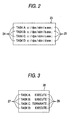
- the task information memory section 12 stores a task table 23 such as that shown in Fig. 2 for example.
- Task names 24 ("task A" to "task D") and program names 25 of processes to be actually executed in the task are stored in the task table 23 for each task.
- the task state memory section 13 stores a state table 26 such as that shown in Fig. 3 for example.
- Task names 27 and states 28 ("execution” and "termination") of the tasks are stored in the state table 26 for each task.
- the control task 17, as shown in Fig. 1, is formed by a task execution portion 29, a task termination portion 30, a task end detection portion 31, a task state edit portion 32, and a request receive portion 33.
- the request receive portion 33 receives an execution request or a termination request for each task from the client 15 after the system is started, and sends these requests to the task execution portion 29 or the task termination portion 30.
- the task execution portion 29 executes the tasks for which execution has been requested, based on the previously described task execution request 22 enacted from the execution judgment portion 21 of the initialization task 16 or the execution request from the request receive portion 33, and further, sends a task state modification request to the task state edit portion 32 to perform modification of task states only with respect to tasks which have been executed based on the execution request from the request receive portion 33.
- the task execution portion 29 executes tasks 14 only by means of the execution request enacted from the execution judgment portion 21 of the initialization task 16. Accordingly, when the system is started, the task 14 to be executed is determined based on the task states stored in the state table 26. In the present embodiment, as shown in Fig.
- the task termination portion 30 terminates tasks for which termination has been requested based on a termination request from the request receive portion 33, and sends a task state modification request to the task state edit portion 32 to perform modification of task states with respect to tasks which have been terminated based on the termination request from the request receive portion 33.
- the content of the task state memory section 13, i.e. content relating to the states of the state table 26, is modified via the task state edit portion 32.
- the task end detection portion 31 in cases where tasks occur among the tasks 14 which end during execution thereof, as well as detecting conclusion of such tasks based on an end notification 34, sends a task state modification request to the task state edit portion. After system start, with regard to tasks which end in task circumstances, it receives end notification thereof, and the content of the task state memory section 13, i.e. content relating to the states of the state table 26, is modified via the task state edit portion 32.
- the task state edit portion 32 receives task state modification requests from any one of the task execution portion 29, the task termination portion 30 and the task end detection portion 31, and modifies the state content of the state table 26 of the task state memory section 13 relating to tasks designated by the request based on the request content.
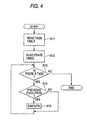
- step S11 the task table 23 of the task information memory section 12 is read by the task information read portion 19 of the initialization task 16 (step S11), and subsequently, the state table 26 of the task state memory section 13 is read by the task state read portion 20 of the initialization task 16 (step S12).
- step S13 the execution judgment portion 21 of the initialization task 16 the tasks to be executed are determined with reference to the read state table 26 and the determined tasks are executed based on the task table 23. In short, firstly it is judged whether or not tasks are included in the state table 26 (step S13). According to the state table 26 shown in Fig.
- step S13 since tasks A to D are included, this is determined as “tasks exist” and firstly task A is read and it is judged whether the state thereof is "execute” or “terminate” (step S13). Since according to the state table 26 task A is "execute”, the process of task A is executed according to the program name for task A in the information table 23 (step S15). The execution process for the process of task A in step S15 is executed by the task execution portion 29 which receives a task execution request 22 from the execution judgment portion 21. Next, steps S13 to S15 are executed with respect to task B in the same manner as for task A. Although tasks S13 and S14 are also executed for task C, since task C is "terminate", step S15 for execution is not executed and the operation returns to step S13. Steps S13 to S15 are executed similarly to tasks A and B with respect to task D. Thereafter, in the execution of step S13, since no more tasks exist in the state table 26, it is taken as "no tasks" and the end process is performed.
- the control task 17 enters a state where it awaits a request from the user.
- the request receive portion 33 awaits transmission of an execution request or termination request from the client 15.
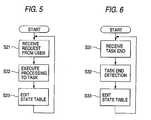
- the request receive portion 33 receives an execution request with respect to a given request (in the present embodiment, task C for example), as well as the request receive portion 33 sending an execution request to the task execution portion 29 and executing the relevant task (step S22), the task state edit portion 32 receives a task state modification request from the task execution portion 29 and changes the content of the above executed task in the state table 26 from "terminate” to "execute” (step S23). Then again the operation returns to S21 and waits for a new request from the client 15.
- a given request in the present embodiment, task C for example
- the request receive portion 33 sending an execution request to the task execution portion 29 and executing the relevant task
- the task state edit portion 32 receives a task state modification request from the task execution portion 29 and changes the content of the above executed task in the state table 26 from "terminate" to "execute” (step S23). Then again the operation returns to S21 and waits for a new request from the client 15.
- the task state edit portion 32 receives a task state modification request from the task termination portion 30 and changes the content of the above terminated task in the state table 26 from "execute" to "terminate” (step S23). Then the operation again returns to S21 and waits for a new request from the client 15.
- step S31 the task end detection portion 31 awaits transmission of a end notification 34 with respect to any of the tasks 14 under execution.
- the task end detection portion 31 receives an end notification output from any of the tasks (step S32)
- it sends a task state modification request to the task state edit portion 32.
- the task state edit portion 32 which receives the task state modification request changes the state of the corresponding task in the state table 26 from "execute” to "terminate”. Thereafter the operation returns to step S31 and awaits an end notification from the tasks 14 under execution.
- the system starter unit and method when a terminated system which is again started, as well as starting of the system being performed stably with the state prior to termination being accurately reflected, the content of the user's instructions prior to termination can be maintained, and further, when the system is started the starting time is shortened, starting irregularities are prevented, and in addition modifications of structural states according to the user's instructions after starting can be simplified and modifications of structural states can be controlled based on modifications of the states of the tasks themselves during starting.
- the present invention can be applied to a computer program product exectable by means of a computer.
- the aforementioned effects will be accomplished by using this computer program product.
Landscapes
- Engineering & Computer Science (AREA)
- Software Systems (AREA)
- Theoretical Computer Science (AREA)
- Computer Security & Cryptography (AREA)
- Physics & Mathematics (AREA)
- General Engineering & Computer Science (AREA)
- General Physics & Mathematics (AREA)
- Retry When Errors Occur (AREA)
- Debugging And Monitoring (AREA)
- Stored Programmes (AREA)
Claims (6)
- System-Starteinheit zum Einsatz in einem Multi-Prozess-System zum gleichzeitigen Ausführen einer Vielzahl von Prozessen, die umfasst:eine Prozessinformations-Speichereinrichtung zum Speichern der Informationen jeder der Vielzahl von Prozessen (14);eine Prozesszustand-Speichereinrichtung zum Speichern des Zustandes bezüglich der Ausführung und Beendigung jeder der Vielzahl von Prozessen (14); undeinen Initialisierungsprozess (16), der, wenn das System gestartet wird, die gespeicherten Informationen der Prozessinformations-Speichereinrichtung und den gespeicherten Zustand der Prozesszustand-Speichereinrichtung liest und unter Bezugnahme auf den Zustand bezüglich der Ausführung und Beendigung jeder der Vielzahl von für das System erforderlichen Prozessen (14), während der vorangegangenen Beendigung des Systems und auf Basis der Informationen von der Prozess-Informations-Speichereinrichtung Prozesse (14) in dem Ausführungszustand ausführt und Prozesse (14) in dem Beendigungszustand nicht ausführt.
- System-Starteinheit nach Anspruch 1, die des Weiteren einen Steuer-Prozess (17) umfasst, der, nachdem das System gestartet ist, die auszuführenden Prozesse (14) steuert und den gespeicherten Zustand (28) der Prozesszustand-Speichereinrichtung editiert.
- System-Starteinheit nach Anspruch 2, wobei der Steuer-Prozess die Beendigungs-Mitteilung (34) von den Prozessen (14) während der Ausführung empfängt und den gespeicherten Zustand (28) der Prozesszustand-Speichereinrichtung modifiziert.
- System-Starteinheit nach Anspruch 2, wobei die Steuer-Prozess (17) einen Befehl von einem Client (15) zum Ausführen oder Beenden jeder der Vielzahl von Prozessen (14) empfängt und neben dem Ausführen oder Beenden von Prozessen (14) gemäß dem Befehl den gespeicherten Zustand (28) der Prozesszustand-Speichereinrichtung modifiziert.
- System-Startverfahren zum Einsatz in einem Multi-Prozess-System zum gleichzeitigen Ausführen einer Vielzahl von Prozessen (14), das umfasst:einen Schritt des Speicherns der Informationen jeder der Vielzahl von Prozessen (14);einen Schritt des Speicherns des Zustandes (28) bezüglich der Ausführung und Beendigung jeder der Vielzahl von Prozessen (14); undeinen Initialisierungsschritt, mit dem, wenn das System gestartet wird, die gespeicherten Informationen (27) der Prozesse und der gespeicherte Zustand (28) bezüglich der Ausführung und Beendigung der Prozesse gelesen werden und unter Bezugnahme auf den Zustand (28) bezüglich der Ausführung und Beendigung jeder der Vielzahl von für das System erforderlichen Prozessen (14) während der vorangegangenen Beendigung des Systems und auf Basis der Informationen der Prozesse (14) Prozesse in einem Ausführungszustand ausgeführt werden und Prozesse in einem Beendigungszustand nicht ausgeführt werden.
- Computerprogrammerzeugnis, das mittels eines Computers ausgeführt werden kann, um ein Multi-Prozess-System zu starten und den Computer zu steuern, wobei es folgende Programmcodemittel umfasst:Mittel zum Speichern der Informationen jeder der Vielzahl von Prozessen (14);Mittel zum Speichern des Zustandes (28) bezüglich der Ausführung und Beendigung jeder der Vielzahl von Prozessen (14); undInitialisierungsmittel, mit denen, wenn das System gestartet wird, die gespeicherten Informationen (27) der Prozesse und der gespeicherte Zustand (28) bezüglich der Ausführung und Beendigung der Prozesse (14) gelesen werden und unter Bezugnahme auf den Zustand (28) bezüglich der Ausführung und Beendigung jeder der Vielzahl von für das System erforderlichen Prozessen (14) während der vorangegangenen Beendigung des Systems und auf Basis der Informationen der Prozesse (14) Prozesse in dem Ausführungszustand ausgeführt werden und Prozesse in dem Beendigungszustand nicht ausgeführt werden.
Applications Claiming Priority (2)
| Application Number | Priority Date | Filing Date | Title |
|---|---|---|---|
| JP116550/95 | 1995-04-18 | ||
| JP7116550A JP2830772B2 (ja) | 1995-04-18 | 1995-04-18 | システム起動装置 |
Publications (3)
| Publication Number | Publication Date |
|---|---|
| EP0738969A2 EP0738969A2 (de) | 1996-10-23 |
| EP0738969A3 EP0738969A3 (de) | 1997-07-02 |
| EP0738969B1 true EP0738969B1 (de) | 2007-06-13 |
Family
ID=14689899
Family Applications (1)
| Application Number | Title | Priority Date | Filing Date |
|---|---|---|---|
| EP95116293A Expired - Lifetime EP0738969B1 (de) | 1995-04-18 | 1995-10-16 | Startverfahren und Einrichtung |
Country Status (3)
| Country | Link |
|---|---|
| EP (1) | EP0738969B1 (de) |
| JP (1) | JP2830772B2 (de) |
| DE (1) | DE69535510T2 (de) |
Families Citing this family (2)
| Publication number | Priority date | Publication date | Assignee | Title |
|---|---|---|---|---|
| JP2005309495A (ja) * | 2004-04-16 | 2005-11-04 | Eastman Kodak Co | 電子装置、電子装置の制御方法及び電子装置の制御プログラム |
| WO2007037011A1 (ja) * | 2005-09-29 | 2007-04-05 | Fujitsu Limited | 情報処理装置、状態記憶及び復元プログラム及びコンピュータ読取可能情報記録媒体 |
Family Cites Families (2)
| Publication number | Priority date | Publication date | Assignee | Title |
|---|---|---|---|---|
| JPH0635718A (ja) * | 1992-07-15 | 1994-02-10 | Matsushita Electric Works Ltd | システム異常時のシステム縮退方式 |
| JPH06289948A (ja) | 1993-04-01 | 1994-10-18 | Matsushita Electric Ind Co Ltd | システム再起動装置 |
-
1995
- 1995-04-18 JP JP7116550A patent/JP2830772B2/ja not_active Expired - Fee Related
- 1995-10-16 EP EP95116293A patent/EP0738969B1/de not_active Expired - Lifetime
- 1995-10-16 DE DE69535510T patent/DE69535510T2/de not_active Expired - Lifetime
Non-Patent Citations (1)
| Title |
|---|
| None * |
Also Published As
| Publication number | Publication date |
|---|---|
| JPH08286936A (ja) | 1996-11-01 |
| DE69535510D1 (de) | 2007-07-26 |
| EP0738969A3 (de) | 1997-07-02 |
| EP0738969A2 (de) | 1996-10-23 |
| DE69535510T2 (de) | 2007-10-04 |
| JP2830772B2 (ja) | 1998-12-02 |
Similar Documents
| Publication | Publication Date | Title |
|---|---|---|
| EP0738971A2 (de) | System und Verfahren zur automatischen Wiederanlassung von Programmen | |
| EP0738969B1 (de) | Startverfahren und Einrichtung | |
| JPH1031562A (ja) | 情報処理システム | |
| JPH0764930A (ja) | Cpu間相互監視方法 | |
| JPH064364A (ja) | Cpu動作記録方式 | |
| JPS5941027A (ja) | 計算機システム | |
| JP2705522B2 (ja) | 業務実行管理方式 | |
| JP3545772B2 (ja) | 動作時間監視方法 | |
| JPH0955853A (ja) | 画像処理装置 | |
| JP3965678B2 (ja) | 情報処理装置 | |
| JPS6277645A (ja) | ローカルジョブ起動制御方法 | |
| JP3263987B2 (ja) | 自動iplの初期設定処理方法 | |
| JPH03225434A (ja) | ジョブ再起動方式 | |
| JPH11224126A (ja) | モーション制御装置 | |
| JPH11120007A (ja) | システム管理におけるプロセス制御方法と装置 | |
| JPH1027040A (ja) | 計算機のリセット方式 | |
| JPH08328887A (ja) | 入出力制御方式及び入出力制御方法 | |
| JPS63217436A (ja) | プログラムのアボ−トダンプ採取方式 | |
| JPH01144130A (ja) | ジョブ滞留時間監視方式 | |
| JPH025165A (ja) | 自動再起動方式 | |
| JPH06202892A (ja) | プログラムリスタート方式 | |
| JPH09305431A (ja) | デバッグ文取得方法 | |
| JPH02268323A (ja) | コンピュータ・システム | |
| JPH1173303A (ja) | プログラム管理方法及び装置 | |
| JPH052412A (ja) | プログラマブル・コントローラにおける制御プログラム実行方式 |
Legal Events
| Date | Code | Title | Description |
|---|---|---|---|
| PUAI | Public reference made under article 153(3) epc to a published international application that has entered the european phase |
Free format text: ORIGINAL CODE: 0009012 |
|
| AK | Designated contracting states |
Kind code of ref document: A2 Designated state(s): DE FR GB |
|
| PUAL | Search report despatched |
Free format text: ORIGINAL CODE: 0009013 |
|
| AK | Designated contracting states |
Kind code of ref document: A3 Designated state(s): DE FR GB |
|
| 17P | Request for examination filed |
Effective date: 19971223 |
|
| GRAP | Despatch of communication of intention to grant a patent |
Free format text: ORIGINAL CODE: EPIDOSNIGR1 |
|
| GRAS | Grant fee paid |
Free format text: ORIGINAL CODE: EPIDOSNIGR3 |
|
| GRAA | (expected) grant |
Free format text: ORIGINAL CODE: 0009210 |
|
| AK | Designated contracting states |
Kind code of ref document: B1 Designated state(s): DE FR GB |
|
| REG | Reference to a national code |
Ref country code: GB Ref legal event code: FG4D |
|
| REF | Corresponds to: |
Ref document number: 69535510 Country of ref document: DE Date of ref document: 20070726 Kind code of ref document: P |
|
| ET | Fr: translation filed | ||
| PLBE | No opposition filed within time limit |
Free format text: ORIGINAL CODE: 0009261 |
|
| STAA | Information on the status of an ep patent application or granted ep patent |
Free format text: STATUS: NO OPPOSITION FILED WITHIN TIME LIMIT |
|
| 26N | No opposition filed |
Effective date: 20080314 |
|
| PGFP | Annual fee paid to national office [announced via postgrant information from national office to epo] |
Ref country code: GB Payment date: 20131016 Year of fee payment: 19 Ref country code: FR Payment date: 20131009 Year of fee payment: 19 Ref country code: DE Payment date: 20131009 Year of fee payment: 19 |
|
| REG | Reference to a national code |
Ref country code: DE Ref legal event code: R119 Ref document number: 69535510 Country of ref document: DE |
|
| GBPC | Gb: european patent ceased through non-payment of renewal fee |
Effective date: 20141016 |
|
| PG25 | Lapsed in a contracting state [announced via postgrant information from national office to epo] |
Ref country code: GB Free format text: LAPSE BECAUSE OF NON-PAYMENT OF DUE FEES Effective date: 20141016 Ref country code: DE Free format text: LAPSE BECAUSE OF NON-PAYMENT OF DUE FEES Effective date: 20150501 |
|
| REG | Reference to a national code |
Ref country code: FR Ref legal event code: ST Effective date: 20150630 |
|
| PG25 | Lapsed in a contracting state [announced via postgrant information from national office to epo] |
Ref country code: FR Free format text: LAPSE BECAUSE OF NON-PAYMENT OF DUE FEES Effective date: 20141031 |