EP0718308A2 - Peptid Derivate mit bindendes Aktivität zu modifiziertem Lipoprotein mit niedriger Dichte (LDL) - Google Patents
Peptid Derivate mit bindendes Aktivität zu modifiziertem Lipoprotein mit niedriger Dichte (LDL) Download PDFInfo
- Publication number
- EP0718308A2 EP0718308A2 EP95103661A EP95103661A EP0718308A2 EP 0718308 A2 EP0718308 A2 EP 0718308A2 EP 95103661 A EP95103661 A EP 95103661A EP 95103661 A EP95103661 A EP 95103661A EP 0718308 A2 EP0718308 A2 EP 0718308A2
- Authority
- EP
- European Patent Office
- Prior art keywords
- peptide
- compound
- residue
- formula
- immobilized
- Prior art date
- Legal status (The legal status is an assumption and is not a legal conclusion. Google has not performed a legal analysis and makes no representation as to the accuracy of the status listed.)
- Granted
Links
Images


Classifications
-
- C—CHEMISTRY; METALLURGY
- C07—ORGANIC CHEMISTRY
- C07K—PEPTIDES
- C07K14/00—Peptides having more than 20 amino acids; Gastrins; Somatostatins; Melanotropins; Derivatives thereof
- C07K14/435—Peptides having more than 20 amino acids; Gastrins; Somatostatins; Melanotropins; Derivatives thereof from animals; from humans
- C07K14/705—Receptors; Cell surface antigens; Cell surface determinants
-
- A—HUMAN NECESSITIES
- A61—MEDICAL OR VETERINARY SCIENCE; HYGIENE
- A61P—SPECIFIC THERAPEUTIC ACTIVITY OF CHEMICAL COMPOUNDS OR MEDICINAL PREPARATIONS
- A61P3/00—Drugs for disorders of the metabolism
- A61P3/06—Antihyperlipidemics
-
- A—HUMAN NECESSITIES
- A61—MEDICAL OR VETERINARY SCIENCE; HYGIENE
- A61P—SPECIFIC THERAPEUTIC ACTIVITY OF CHEMICAL COMPOUNDS OR MEDICINAL PREPARATIONS
- A61P9/00—Drugs for disorders of the cardiovascular system
- A61P9/10—Drugs for disorders of the cardiovascular system for treating ischaemic or atherosclerotic diseases, e.g. antianginal drugs, coronary vasodilators, drugs for myocardial infarction, retinopathy, cerebrovascula insufficiency, renal arteriosclerosis
-
- C—CHEMISTRY; METALLURGY
- C07—ORGANIC CHEMISTRY
- C07K—PEPTIDES
- C07K7/00—Peptides having 5 to 20 amino acids in a fully defined sequence; Derivatives thereof
- C07K7/02—Linear peptides containing at least one abnormal peptide link
-
- A—HUMAN NECESSITIES
- A61—MEDICAL OR VETERINARY SCIENCE; HYGIENE
- A61K—PREPARATIONS FOR MEDICAL, DENTAL OR TOILETRY PURPOSES
- A61K38/00—Medicinal preparations containing peptides
Definitions
- the present invention relates to novel peptide derivatives which can specifically bind to an acetylated low density lipoprotein (hereinafter referred to as "LDL").
- LDL acetylated low density lipoprotein
- drugs for decreasing the cholesterol level have intensively been developed.
- Typical examples thereof include drugs for inhibiting in vivo synthesis of cholesterols (e.g. Compactin, Mevalotin, etc.) and drugs for inhibiting the absorption of cholesterol through enteric canal (e.g. Colestyramine, Cholestipol, etc.).
- drugs e.g. Probucol, etc. which do not decrease a LDL level in blood but depress the oxidation of LDL thereby preventing arterial sclerosis have already been put in practical use.
- a foamy macrophage are known to appear following the uptake of modified LDL such as oxidized or acetylated low density lipoprotein (AcLDL) and the like, which results in cholesterol deposition, in the initial lesions of arterial sclerosis.
- modified LDL such as oxidized or acetylated low density lipoprotein (AcLDL) and the like
- AcLDL acetylated low density lipoprotein
- modified LDL into macrophages
- a compound which has an affinity for the modified LDL and can bind to the same in competition with its natural receptors can inhibit the binding between modified LDL and receptors on macrophages thereby depressing and/or delaying the onset of diseases associated with modified LDL in blood, particularly circulatory diseases (e.g. arterial sclerosis, cardiac infarction, angina pectoris, cerebral hemorrhage, etc.) and relieving symptoms of patients.
- circulatory diseases e.g. arterial sclerosis, cardiac infarction, angina pectoris, cerebral hemorrhage, etc.
- Such a compound when immobilized on a suitable solid phase carrier and brought into contact with circulatory blood, can fix modified LDL onto the solid phase carrier.
- the immobilized-modified LDL is then removed from blood in order to clarify blood or diagnose diseases through the determination of a concentration of modified LDL in blood.
- the immobilized peptide would be useful for diagnosing, depressing or treating various diseases associated with modified LDL, e.g., arterial sclerosis, etc.
- the scavenger receptor is a membrane protein of a molecular weight of 70 KDa existing as a large molecule in the form of trimer (Kodama et al., Nature, 1990, 343 , 531-535), it is difficult to synthesize a peptide corresponding to the receptor molecule itself.
- the binding site of modified LDL on the scavenger receptor is present in a collagen-like domain comprising a repeating sequence of tripeptides, Gly-X-Y (X and Y are independently a variable amino acid), at its carboxy-terminus.
- Gly-X-Y X and Y are independently a variable amino acid
- the binding site is located within 22 residues at the carboxy-terminus of the collagen-like domain and that lysine at 327, 334, 337 and 340, in particular the one at 337 plays an important role (Doi et al., J. Biol. Chem., 1993, 268 , 2126-2133).
- the object above can be accomplished by synthesizing a peptide(s) having the same binding activity as that of the collagen-like domain of a scavenger receptor which part is responsible to the binding with modified LDL.
- the synthesis of such a peptide has been hindered because a natural collagen-like domain of scavenger receptor takes complicated structure wherein the amino-termini of three peptides chain are interacted and the identification of a given structure of a peptide having a binding activity was very difficult.
- the present inventors have now succeeded in identification of the site on the scavenger receptor molecule participating in the binding with a modified LDL and synthesized peptide derivatives having a binding activity to modified LDL.
- the present invention provided a compound of the formula (I): wherein: bAla is ⁇ -alanine; R1 is a group selected independently from peptide residues represented by the formula: (Gly-Pro-4Hyp) q -R2-(Gly-Pro-4Hyp) q -R3 wherein 4Hyp is 4-hydroxyproline, R2 is a peptide residue having 9 to 72 amino acids, R3 is an optionally modified glycine residue, and q is an integer selected independently from 0 to 10; n is an integer of 0 to 4; R is a peptide residue having 0 to 5 amino acids or a group represented by the formula: wherein Acp is 6-aminocaproic acid; and R' is a group selected from an optionally modified tyrosine residue, an optionally modified tryptophane residue and any compound residues usable in the quantitative determination of the peptide.
- R1 is a group selected independently from peptide residues represented by the formula: (Gly
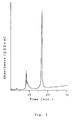
- Fig. 1 shows an elution pattern of a single-stranded peptide on high performance liquid chromatography (HPLC).
- HPLC was conducted by eluting with acetonitrile in 0.1% trifluoroacetic acid at a concentration gradient (10 to 30%) for 30 minutes (flow rate ; 1 ml/minute), using TOSOH TSK-GEL ODS120 as a column.
- the identification of the peptide was conducted by a peptide sequence analysis, amino acid analysis and mass spectrometric analysis.
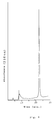
- Fig. 2 shows an elution pattern of a biotinated-branched peptide on HPLC in a similar manner to that mentioned in Fig. 1 above.
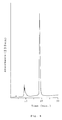
- Fig. 3 shows an elution pattern of a collagen model peptide wherein the amino-termini of 3 peptides are bound. HPLC was carried out in a similar manner to that mentioned above.
- Fig. 4 shows a CD spectrum of a triple-stranded peptide.
- the CD spectrum was measured using JASCO J-720.
- Fig. 5 is a graph showing a state of heat denaturation of a triple-stranded peptide on the basis of the CD spectrum.
- Fig. 6 is a graph showing an amount of AcLDL bound to a peptide resin.
- Fig. 7 shows an elution pattern of a non-biotinated-branched peptide.
- Fig. 8 shows an elution pattern of a non-biotinated collagen model peptide wherein the amino-termini of 3 peptides are bound.
- the compounds (I) of the present invention advantageously contains 3 peptides represented by R1 which, when bind together, give a collagen-like structure analogous to that of scavenger receptor.
- a peptide of this structure is known to be stabilized when several repeating units of a tripeptide represented by Gly-Pro-4Hyp (4Hyp indicates 4-hydroxyproline) are contained in amino- and/or carboxy-terminal regions of said peptide moieties R1 (Thakur. S. et al., Biopolymers, 1986, 25 , 1081-1086).
- the repeating unit can be inserted by more than one times, preferably 2-8 times, more preferably 4 times at the amino-terminus, and more than one times, preferably 2 to 8 times, more preferably 3 times at the carboxy-terminus.
- an amino acid(s) other than lysine contained in amino acid sequence of R2 can be replaced with other amino acid(s) to convert a partial sequence to Gly-Pro-R.
- an optionally modified glycine residue in the definition of R3 means that a carboxyl group of the glycine residue may be in a free state, or amidated or esterified.
- ester include methyl, ethyl, butyl, benzyl ester and the like.
- a group selected from an optionally modified tyrosine residue, an optionally modified tryptophane residue and any compounds usable in the quantitative determination of the peptide in the definition of R' means that a carboxyl group of the amino acid residue may be in a free state, or amidated or esterified, similar to the above definition.
- ester include methyl, ethyl, butyl, benzyl ester and the like.
- halogen means chloro, bromo and iodo, and bromo is preferred.
- the peptide derivative (I) of the present invention specifically binds to AcLDL and is, therefor, considered to be a receptor of modified LDL, as is described in detail in Examples below.
- the compound (I) of the present invention can be administered to persons who are liable to suffer from various diseases associated with modified LDL (e.g. arterial sclerosis, etc.) or patients who have already been suffered from these diseases to prevent or treat such diseases through the inhibition or depression of uptake of modified LDL by macrophages.
- modified LDL e.g. arterial sclerosis, etc.
- the compound of the formula (I) having a biotin moiety can be optionally immobilized onto a solid phase carrier through the biotin moiety to give an immobilized peptide.
- the resulting immobilized peptide can be useful in the prevention or treatment of diseases by bringing it into contact with circulating blood to remove modified LDL in blood. It can be also used to determine the concentration of modified LDL in blood thereby contributing to the diagnosis, treatment or prophylaxis of diseases.
- the immobilized peptide can be advantageously provided in the form of a kit for the purpose of diagnosing and treating.
- the present invention also provides a pharmaceutical composition containing the compounds (I) for inhibiting the incorporation of modified LDL in blood by macrophages.
- the pharmaceutical composition can be useful for preventing or treating various diseases associated with modified LDL, e.g. arterial sclerosis, etc.
- the present invention also provides an immobilized peptide having a binding activity to a modified LDL, wherein the compounds (I) are immobilized on a suitable solid phase carrier.
- the peptide compounds (I) of the present invention can be immobilized on solid phase carriers via any functional groups including amino, carboxyl, hydroxyl and sulfhydryl groups.
- the immobilization can be established advantageously using compounds (I) containing a biotin moiety which easily binds to an avidin moiety of a resin as the solid phase carrier.
- a suitable distance between the carrier and peptide is required. This can be accomplished by adjusting the number of bAla of the formula (I), which serves as a spacer.
- solid phase carrier usable in the present invention examples include those generally used in the pharmaceutical fields such as agarose, acrylic beads, sepharose, dyna beads, latex, cellulose and the like. Among them, a resin bound to avidin, e.g. streptoavidin dyna beads M-280 (manufactured by Dynal Co.) is preferred.
- the immobilized peptide of the present invention can be provided in the form of a kit in combination with a suitable device used in the medical fields. For example, it can be charged into a column to obtain a kit to be used as a hemocatharsis apparatus for clarifying circulating blood. Such an apparatus also falls within the scope of the present invention.
- the immobilization of the peptide derivatives of the present invention to a solid phase carrier can be conducted in a conventional manner known to persons skilled in the art, for example, by mixing a compound of the formula (III) with Cys-R1 in a buffer of an appropriate pH of about 7.5.
- the compounds (I) of the present invention can be prepared according to any methods known in the art, they are preferably obtained by the following method. However, the present invention is never limited to the compounds (I) obtained by the following method but includes any compounds prepared by other known methods.
- the compounds of the present invention can be prepared by reacting a compound represented by the formula (II): Cys-R1 wherein R1 is as defined above with a compound represented by the formula (III).
- the present invention provides a process for synthesizing a part of a collagen-like structure of a scavenger receptor, which serves as a modified LDL binding site, while remaining all or a part of 4 lysins associated with binding, or a derivative thereof.
- the compound of the present invention has a structure wherein 3 peptides are bound at their amino-termini in a similar manner to that of a natural collagen-like structure wherein amino-termini are considered to be bound.
- this specific structure is constructed by synthesizing and purifying a single peptide Cys-R1 (II), reacting the peptide (II) with a tri-branched peptide (III), and allowing the respective amino-terminal region of the product bind together into a triple-stranded form.
- the peptide (II) of high purity is synthesized conventionally by means of a commercially available automatic peptide synthesizer, which peptide (II) in turn gives the objective triple-stranded peptide (I) with high purity in high yield.
- the starting compound (II) is synthesized using an automatic peptide synthesizer, Model 430A, manufactured by Applied Biosystems Co.
- the another starting compound i.e., the branched peptide (III)
- the coupling reaction between compound (II) and compound (III) is conducted by reacting them in an aqueous solution of 3 M guanidine hydrochloride and 0.1 M sodium bicarbonate for 6 to 15 hours.
- the reaction product is purified by subjecting to HPLC, etc.
- a therapeutically effective amount of a compound (I) can be administered to a patient who requires reduction of blood concentration of modified LDL.
- the compound (I) can be administered through oral or parenteral route, preferably parenteral route.
- the compound of the present invention may be mixed with any of conventional pharmaceutically acceptable carriers, diluents or vehicles and formulated into an appropriate dosage form such as capsules, tablets, powders, granules or the like.
- parenteral administration they may be formulated into, for example, solutions or suspensions suitable for subcutaneous injection, intravenous injection, intraperitoneal injection, intramuscular injection or the like.
- peptides derivatives (I) are immobilized on suitable solid phase carriers, which can be brought into contact with circulating blood of a patient to be treated at a flow rate of 50 to 70 ml/minute.
- the novel peptide derivatives (I) of the present invention may have affinity for the modified LDL in blood and can bind selectively to the same in competition with its natural receptors on macrophages, thereby inhibiting the incorporation of modified LDL into macrophages and/or decreasing the concentration of modified LDL in blood.
- the peptide derivatives (I) of the present invention are useful for preventing or treating various circulatory diseases associated with modified LDL, particularly arterial sclerosis.
- the compounds (I) immobilized on solid phase carriers such as resin, etc. can be used to fix modified LDL in blood onto the solid phase carriers in order to remove the substance or determine the blood level thereof.
- the immobilized compound (I) can provide a means of diagnosing, inhibiting or treating arterial sclerosis.
- the immobilized peptides (I) of the present invention can be used to detect a peptide capable of binding to the peptide (I) in a mixture of peptides of various amino acid sequences. Accordingly, the present invention can provide a means of screening a peptide capable of binding strongly to a scavenger receptor of a macrophage in competition with modified LDL, thereby contributing to the development of drugs for inhibiting the incorporation of modified LDL into macrophages.
- the peptide 4 was synthesized according to Fmoc method using an automatic peptide synthesizer, Model 430A, manufactured by Applied Biosystems in accordance with the manufacture's instructions. The synthesis was carried out using Rink resins (0.2 mmole, manufactured by Nova Biochem Co.) and a protected amino acid (1 mmole). When the synthesis completed, a resin to which the peptide was bound was removed from the synthesizer.
- the resin (100 mg) to which the peptide was bound was reacted with ethanedithiol (0.0125 ml, manufactured by Wako Junyaku Co., Ltd.), anisole (0.0375 ml, manufactured by Wako Junyaku Co., Ltd.) and trifluoroacetic acid (0.95 ml, manufactured by Wako Junyaku Co., Ltd.) at room temperature (approximately 25°C) for 1.5 hours.
- the reaction solution was poured to cold ether (10 ml) to precipitate a peptide.
- the precipitated peptide was washed three times with ether (10 ml), dried, dissolved in aqueous acetic acid (5 ml), and subjected to HPLC for purification and lyophilized.
- An elution pattern of liquid chromatography after purification is shown in Fig. 1.
- the HPLC was conducted by eluting with acetonitrile in 0.1% trifluoroacetic acid at a concentration gradient of 10 to 30% for 30 minutes, using TOSOH TSK-GEL ODS120 as a column. A flow rate is 1 ml/minute.
- a peptide-attached resin was synthesized by a method shown in the above reaction scheme, using 4-methylbenzhydrylamine resin 5 (manufactured by Peptide Laboratory). The synthesis was conducted by Fmoc method using an automatic peptide synthesizer, Model 430A, manufactured by Applied Biosystems Co in accordance with the manufacture's instructions. The procedures below were conducted manually after removing resin from the synthesizer.
- the compound 7 was subjected to an automatic peptide synthesizer to synthesize the compound 8 by Fmoc method.
- the compound 8 was deprotected by reacting with 50 % trifluoroacetic acid in methylene chloride as a solvent for 15 minutes to give the compound 9 .
- the compound 9 was subjected to an automatic peptide synthesizer to synthesize the compound 10 according to the above reaction scheme.
- the resultant peptide-attached resin 10 (100 mg) was reacted with m-cresol (0.1 ml, manufactured by Wako Junyaku Co., Ltd.), trifluoroacetic acid (0.9 ml, manufactured by Wako Junyaku Co., Ltd.) and trifluoromethanesulfonic acid (0.1 ml, manufactured by Applied Biosystems Co.) for 1.5 hours.
- the reaction solution was ice-cooled, partitioned between water (2 ml) and ether (2 ml) to collect the aqueous phase.
- the aqueous solution was washed three times with ether (2 ml), purified with HPLC and lyophilized to give the compound 11 .
- FIG. 2 An elution pattern of liquid chromatography after purification is shown in Fig. 2.
- the HPLC was conducted by eluting with acetonitrile in 0.1% trifluoroacetic acid at a concentration gradient of 15 to 30% for 30 minutes, using TOSOH TSK-GEL ODS120 as a column. A flow rate is 1 ml/minute.
- the identification of this compound was conducted by mass spectrometry using FAB Mass JEOL JMX-HX100. FAB mass spectrum: found value (M+H)+, 1803.61; and theoretical value for C73H117O18N18SBr3, 1802.61.
- the peptide 4 (2.37 ⁇ mole) prepared in (1) above and branched peptide 11 (0.59 ⁇ mole) prepared in (2) above were dissolved in 3M guanidine hydrochloride (2 ml). To the solution was added an aqueous 1M sodium bicarbonate solution (0.2 ml) and reacted for 6 hours. The reaction mixture was acidified with an aqueous 1% trifluoroacetic acid solution, purified with HPLC and lyophilized. An elution pattern of liquid chromatography after purification is shown in Fig. 3.
- the HPLC was conducted by eluting with acetonitrile in 0.1% trifluoroacetic acid at a concentration gradient of 10 to 30% for 30 minutes, using TOSOH TSK-GEL ODS120 as a column. A flow rate is 1 ml/minute.
- the identification of this compound was conducted by amino acid analysis and mass spectrometry.
- the peptide obtained above was dissolved in 5 mM phosphate buffer (pH 7) to obtain a 10 ⁇ M solution, which was subjected to the determination of CD spectrum using JASCO J-720.
- the CD spectrum is characterized by a positive peak at 224 nm and a negative peak at 198 nm (Fig. 4), demonstrating that the peptide takes a collagen structure.
- the stability against heat was determined by measuring the value at 224 nm, which revealed that the midpoint of the denaturation is about 30°C (Fig. 5).
- Streptavidin-dyna beads M-280 (0.2 ml, manufactured by Dynal Co.) were washed twice with 5 mM phosphate buffer (pH 7.5) containing 150 mM NaCl. To the beads was added a peptide solution prepared by dissolving 1 nmole of the peptide obtained above in 0.1 ml of the same phosphate buffer and the mixture was reacted at room temperature for 30 minutes. The resin was washed with the same phosphate buffer. As a result, about 250 pmole of the peptide was bound to the resin.
- a peptide-attached resin was synthesized by a method shown in the above reaction scheme, using 4-methylbenzhydrylamine resin 5 (manufactured by Peptide Laboratory). The reaction was conducted by Fmoc method using an automatic peptide synthesizer, Model 430A, manufactured by Applied Biosystems Co. according to the manufacture's instructions.
- the compound 12 was removed from the synthesizer and deprotected by reacting with 50 % trifluoroacetic acid in methylene chloride for 15 minutes to give a compound 13 .
- the compound 13 was re-charged in the automatic peptide synthesizer to synthesize a compound 14 according to the reaction scheme above.
- the peptide-attached resin 14 (100 mg) was treated substantially in accordance with the manner that described in (2) 7) of Example 1 to prepare a compound 15 .
- An elution pattern of liquid chromatography after purification is shown in Fig. 7.
- the elution was conducted by a concentration gradient of acetonitrile in 0.1% trifluoroacetic acid (10 to 30%) for 30 minutes.
- FAB mass spectrum found value (M+H)+, 1280.21; theoretical value for C47H72O14N13Br3, 1279.29.
- a triple-stranded peptide (I) was prepared by reacting the peptide 4 (2.0 ⁇ mole) prepared in Example 1, (1) and the branched peptide 11 (0.5 ⁇ mole) prepared in Example 2, (1) substantial in accordance with the manner that described in Example 1, (3).
- An elution pattern of HPLC after purification is shown in Fig. 8. The elution was conducted by a concentration gradient of acetonitrile in 0.1% trifluoroacetic acid (10 to 30%) for 30 minutes. Ion mass spectrum: found value, 12570.0 ⁇ 0.4; and theoretical value for C542H855O176N163S3, 12566.9.
Landscapes
- Health & Medical Sciences (AREA)
- Chemical & Material Sciences (AREA)
- Organic Chemistry (AREA)
- Life Sciences & Earth Sciences (AREA)
- Medicinal Chemistry (AREA)
- General Health & Medical Sciences (AREA)
- Genetics & Genomics (AREA)
- Molecular Biology (AREA)
- Biophysics (AREA)
- Biochemistry (AREA)
- Proteomics, Peptides & Aminoacids (AREA)
- Bioinformatics & Cheminformatics (AREA)
- Engineering & Computer Science (AREA)
- Public Health (AREA)
- Immunology (AREA)
- Pharmacology & Pharmacy (AREA)
- Nuclear Medicine, Radiotherapy & Molecular Imaging (AREA)
- Veterinary Medicine (AREA)
- General Chemical & Material Sciences (AREA)
- Chemical Kinetics & Catalysis (AREA)
- Gastroenterology & Hepatology (AREA)
- Zoology (AREA)
- Toxicology (AREA)
- Cell Biology (AREA)
- Animal Behavior & Ethology (AREA)
- Diabetes (AREA)
- Hematology (AREA)
- Obesity (AREA)
- Urology & Nephrology (AREA)
- Vascular Medicine (AREA)
- Cardiology (AREA)
- Heart & Thoracic Surgery (AREA)
- Peptides Or Proteins (AREA)
- Medicines That Contain Protein Lipid Enzymes And Other Medicines (AREA)
Applications Claiming Priority (3)
| Application Number | Priority Date | Filing Date | Title |
|---|---|---|---|
| JP288465/94 | 1994-11-22 | ||
| JP6288465A JP2680552B2 (ja) | 1994-11-22 | 1994-11-22 | 修飾低密度リポ蛋白質に対する結合活性を有するペプチド誘導体 |
| JP28846594 | 1994-11-22 |
Publications (3)
| Publication Number | Publication Date |
|---|---|
| EP0718308A2 true EP0718308A2 (de) | 1996-06-26 |
| EP0718308A3 EP0718308A3 (de) | 1997-03-26 |
| EP0718308B1 EP0718308B1 (de) | 1999-12-08 |
Family
ID=17730564
Family Applications (1)
| Application Number | Title | Priority Date | Filing Date |
|---|---|---|---|
| EP95103661A Expired - Lifetime EP0718308B1 (de) | 1994-11-22 | 1995-03-14 | Peptid Derivate mit bindendes Aktivität zu modifiziertem Lipoprotein mit niedriger Dichte (LDL) |
Country Status (5)
| Country | Link |
|---|---|
| US (1) | US5747451A (de) |
| EP (1) | EP0718308B1 (de) |
| JP (1) | JP2680552B2 (de) |
| CA (1) | CA2144104C (de) |
| DE (1) | DE69513788T2 (de) |
Families Citing this family (3)
| Publication number | Priority date | Publication date | Assignee | Title |
|---|---|---|---|---|
| AU2002339227B2 (en) | 2001-07-12 | 2007-12-06 | Holmdahl, Rikard Mr | Triple polypeptide complexes |
| WO2010053115A1 (ja) * | 2008-11-07 | 2010-05-14 | 大日本住友製薬株式会社 | 新規アフィニティー担体 |
| JP6017194B2 (ja) * | 2012-06-20 | 2016-10-26 | 新田ゼラチン株式会社 | 骨、軟骨または皮膚に関連する疾患の治療もしくは予防剤 |
-
1994
- 1994-11-22 JP JP6288465A patent/JP2680552B2/ja not_active Expired - Lifetime
-
1995
- 1995-02-28 US US08/395,816 patent/US5747451A/en not_active Expired - Fee Related
- 1995-03-07 CA CA002144104A patent/CA2144104C/en not_active Expired - Fee Related
- 1995-03-14 DE DE69513788T patent/DE69513788T2/de not_active Expired - Fee Related
- 1995-03-14 EP EP95103661A patent/EP0718308B1/de not_active Expired - Lifetime
Non-Patent Citations (2)
| Title |
|---|
| BIOPOLYMERS, vol. 33, no. 11, 1993, pages 1695-707, XP002022376 CYNTHIA G. FIELDS ET AL.: "Solid- Phase Synthesis and Stability of Triple- Helical Peptides Incorporating Native Collagen Sequences" * |
| FEBS LETT., vol. 334, no. 3, 1993, pages 727-26, XP002022375 TOSHIKI TANAKA ET AL.: "A synthetic model of collagen structure taken from bovine macrophage scavenger receptor" * |
Also Published As
| Publication number | Publication date |
|---|---|
| JP2680552B2 (ja) | 1997-11-19 |
| DE69513788T2 (de) | 2000-06-21 |
| CA2144104A1 (en) | 1996-05-23 |
| CA2144104C (en) | 2001-10-16 |
| DE69513788D1 (de) | 2000-01-13 |
| EP0718308B1 (de) | 1999-12-08 |
| JPH08143591A (ja) | 1996-06-04 |
| EP0718308A3 (de) | 1997-03-26 |
| US5747451A (en) | 1998-05-05 |
Similar Documents
| Publication | Publication Date | Title |
|---|---|---|
| US5200397A (en) | Use of peptide analogs of thrombospondin for the inhibition of angiogenic activity | |
| US5583108A (en) | Vasonatrin peptide and analogs thereof | |
| US5449662A (en) | Atrial natriuretic peptide clearance inhibitors which resist degradation | |
| WO2005025616A1 (ja) | 抗体の用途 | |
| JPH06501938A (ja) | ペプチドよりなるhiv複製阻害剤 | |
| JPH08225595A (ja) | 環状ペプチドおよびその用途 | |
| US5834431A (en) | Des-Arg9 -BK antagonists | |
| EP0478101A2 (de) | Peptide mit Thrombospondin - ähnlicher Aktivität und ihre therapeutische Verwendung | |
| US5106834A (en) | Linear free-sulfhydryl-containing oligopeptide derivatives as antihypertensive agents | |
| KR20010052713A (ko) | 치료용 및 진단용 도메인 1 b2gpi 폴리펩티드 및그것의 사용방법 | |
| WO1993005011A1 (en) | Novel immunosuppressants | |
| JPH08509960A (ja) | 骨原性成長オリゴペプチドおよびそれを含む医薬組成物 | |
| PT87111B (pt) | Processo para a preparacao de peptidos ciclicos e de composicoes farmaceuticas que os contem | |
| US5747451A (en) | Peptide derivatives having binding activity to modified low density lipoprotein | |
| Baker et al. | Cardiac and vascular actions of decapeptide angiotensin analogs. | |
| WO2001064716A1 (fr) | Composes antiviraux | |
| JP2001524826A (ja) | 全身性紅斑性狼瘡を治療するためのペプチド | |
| JP3728494B2 (ja) | 新規な血清コレステロール低下ペプチド | |
| CA2610496A1 (en) | Synthetic peptide inhibitors of thrombin and thrombin activation of protease activated receptors 1 and 4 | |
| JP4505336B2 (ja) | ペプチドおよびhiv感染の治療のためのその使用 | |
| JPS60105697A (ja) | ペプチド及びその製造方法並びに該ペプチドを含有する医薬 | |
| US5371071A (en) | Peptide and pseudopeptide compounds which are therapeutically active in the blood coagulation cascade | |
| JP3660978B2 (ja) | 抗健忘症ペプチド | |
| JP2001226371A (ja) | ダイオキシン誘導体およびこれを使用した測定法 | |
| JPH10182479A (ja) | ペプチド誘導体類からなる薬剤 |
Legal Events
| Date | Code | Title | Description |
|---|---|---|---|
| PUAI | Public reference made under article 153(3) epc to a published international application that has entered the european phase |
Free format text: ORIGINAL CODE: 0009012 |
|
| AK | Designated contracting states |
Kind code of ref document: A2 Designated state(s): CH DE FR GB LI SE |
|
| PUAL | Search report despatched |
Free format text: ORIGINAL CODE: 0009013 |
|
| AK | Designated contracting states |
Kind code of ref document: A3 Designated state(s): CH DE FR GB LI SE |
|
| 17P | Request for examination filed |
Effective date: 19970807 |
|
| 17Q | First examination report despatched |
Effective date: 19971024 |
|
| GRAG | Despatch of communication of intention to grant |
Free format text: ORIGINAL CODE: EPIDOS AGRA |
|
| GRAG | Despatch of communication of intention to grant |
Free format text: ORIGINAL CODE: EPIDOS AGRA |
|
| GRAH | Despatch of communication of intention to grant a patent |
Free format text: ORIGINAL CODE: EPIDOS IGRA |
|
| GRAH | Despatch of communication of intention to grant a patent |
Free format text: ORIGINAL CODE: EPIDOS IGRA |
|
| GRAA | (expected) grant |
Free format text: ORIGINAL CODE: 0009210 |
|
| AK | Designated contracting states |
Kind code of ref document: B1 Designated state(s): CH DE FR GB LI SE |
|
| REG | Reference to a national code |
Ref country code: CH Ref legal event code: EP |
|
| REF | Corresponds to: |
Ref document number: 69513788 Country of ref document: DE Date of ref document: 20000113 |
|
| REG | Reference to a national code |
Ref country code: CH Ref legal event code: NV Representative=s name: BOVARD AG PATENTANWAELTE |
|
| ET | Fr: translation filed | ||
| PLBE | No opposition filed within time limit |
Free format text: ORIGINAL CODE: 0009261 |
|
| STAA | Information on the status of an ep patent application or granted ep patent |
Free format text: STATUS: NO OPPOSITION FILED WITHIN TIME LIMIT |
|
| 26N | No opposition filed | ||
| PGFP | Annual fee paid to national office [announced via postgrant information from national office to epo] |
Ref country code: FR Payment date: 20010130 Year of fee payment: 7 |
|
| PGFP | Annual fee paid to national office [announced via postgrant information from national office to epo] |
Ref country code: SE Payment date: 20010205 Year of fee payment: 7 |
|
| PGFP | Annual fee paid to national office [announced via postgrant information from national office to epo] |
Ref country code: GB Payment date: 20010302 Year of fee payment: 7 |
|
| PGFP | Annual fee paid to national office [announced via postgrant information from national office to epo] |
Ref country code: CH Payment date: 20010305 Year of fee payment: 7 |
|
| PGFP | Annual fee paid to national office [announced via postgrant information from national office to epo] |
Ref country code: DE Payment date: 20010323 Year of fee payment: 7 |
|
| REG | Reference to a national code |
Ref country code: GB Ref legal event code: IF02 |
|
| PG25 | Lapsed in a contracting state [announced via postgrant information from national office to epo] |
Ref country code: GB Free format text: LAPSE BECAUSE OF NON-PAYMENT OF DUE FEES Effective date: 20020314 |
|
| PG25 | Lapsed in a contracting state [announced via postgrant information from national office to epo] |
Ref country code: SE Free format text: LAPSE BECAUSE OF NON-PAYMENT OF DUE FEES Effective date: 20020315 |
|
| PG25 | Lapsed in a contracting state [announced via postgrant information from national office to epo] |
Ref country code: LI Free format text: LAPSE BECAUSE OF NON-PAYMENT OF DUE FEES Effective date: 20020331 Ref country code: CH Free format text: LAPSE BECAUSE OF NON-PAYMENT OF DUE FEES Effective date: 20020331 |
|
| PG25 | Lapsed in a contracting state [announced via postgrant information from national office to epo] |
Ref country code: DE Free format text: LAPSE BECAUSE OF NON-PAYMENT OF DUE FEES Effective date: 20021001 |
|
| EUG | Se: european patent has lapsed |
Ref document number: 95103661.5 |
|
| GBPC | Gb: european patent ceased through non-payment of renewal fee |
Effective date: 20020314 |
|
| REG | Reference to a national code |
Ref country code: CH Ref legal event code: PL |
|
| PG25 | Lapsed in a contracting state [announced via postgrant information from national office to epo] |
Ref country code: FR Free format text: LAPSE BECAUSE OF NON-PAYMENT OF DUE FEES Effective date: 20021129 |
|
| REG | Reference to a national code |
Ref country code: FR Ref legal event code: ST |