EP0705846B1 - Hochmolekulare und niedermolekulare Fraktionen des von Willebrand-Faktors - Google Patents
Hochmolekulare und niedermolekulare Fraktionen des von Willebrand-Faktors Download PDFInfo
- Publication number
- EP0705846B1 EP0705846B1 EP95115442A EP95115442A EP0705846B1 EP 0705846 B1 EP0705846 B1 EP 0705846B1 EP 95115442 A EP95115442 A EP 95115442A EP 95115442 A EP95115442 A EP 95115442A EP 0705846 B1 EP0705846 B1 EP 0705846B1
- Authority
- EP
- European Patent Office
- Prior art keywords
- vwf
- molecular
- molecular weight
- factor viii
- molecules
- Prior art date
- Legal status (The legal status is an assumption and is not a legal conclusion. Google has not performed a legal analysis and makes no representation as to the accuracy of the status listed.)
- Expired - Lifetime
Links
- 108010047303 von Willebrand Factor Proteins 0.000 title claims abstract description 205
- 102100036537 von Willebrand factor Human genes 0.000 title abstract description 158
- 229960001134 von willebrand factor Drugs 0.000 title abstract description 157
- 150000003839 salts Chemical class 0.000 claims abstract description 31
- 102000004169 proteins and genes Human genes 0.000 claims abstract description 21
- 108090000623 proteins and genes Proteins 0.000 claims abstract description 21
- 230000000694 effects Effects 0.000 claims abstract description 15
- 239000000539 dimer Substances 0.000 claims abstract description 14
- 208000010110 spontaneous platelet aggregation Diseases 0.000 claims abstract description 7
- FAPWRFPIFSIZLT-UHFFFAOYSA-M Sodium chloride Chemical compound [Na+].[Cl-] FAPWRFPIFSIZLT-UHFFFAOYSA-M 0.000 claims description 104
- 229960000301 factor viii Drugs 0.000 claims description 61
- 108010054218 Factor VIII Proteins 0.000 claims description 60
- 102000001690 Factor VIII Human genes 0.000 claims description 60
- 239000011780 sodium chloride Substances 0.000 claims description 53
- 238000000034 method Methods 0.000 claims description 33
- 239000000203 mixture Substances 0.000 claims description 29
- 238000000926 separation method Methods 0.000 claims description 24
- 239000000872 buffer Substances 0.000 claims description 23
- 229960002897 heparin Drugs 0.000 claims description 21
- 229920000669 heparin Polymers 0.000 claims description 21
- HTTJABKRGRZYRN-UHFFFAOYSA-N Heparin Chemical compound OC1C(NC(=O)C)C(O)OC(COS(O)(=O)=O)C1OC1C(OS(O)(=O)=O)C(O)C(OC2C(C(OS(O)(=O)=O)C(OC3C(C(O)C(O)C(O3)C(O)=O)OS(O)(=O)=O)C(CO)O2)NS(O)(=O)=O)C(C(O)=O)O1 HTTJABKRGRZYRN-UHFFFAOYSA-N 0.000 claims description 20
- 230000008569 process Effects 0.000 claims description 20
- 238000001042 affinity chromatography Methods 0.000 claims description 14
- 239000007853 buffer solution Substances 0.000 claims description 14
- 239000007983 Tris buffer Substances 0.000 claims description 9
- 239000012141 concentrate Substances 0.000 claims description 9
- 201000003542 Factor VIII deficiency Diseases 0.000 claims description 8
- 239000012228 culture supernatant Substances 0.000 claims description 8
- 238000002360 preparation method Methods 0.000 claims description 7
- 229920000642 polymer Polymers 0.000 claims description 5
- 208000027276 Von Willebrand disease Diseases 0.000 claims description 4
- 230000006641 stabilisation Effects 0.000 claims description 4
- 239000000126 substance Substances 0.000 claims description 4
- 208000012137 von Willebrand disease (hereditary or acquired) Diseases 0.000 claims description 4
- 229920002684 Sepharose Polymers 0.000 claims description 3
- 230000004931 aggregating effect Effects 0.000 claims description 3
- 238000012217 deletion Methods 0.000 claims description 3
- 230000037430 deletion Effects 0.000 claims description 3
- 239000000825 pharmaceutical preparation Substances 0.000 claims description 3
- 238000003860 storage Methods 0.000 claims description 3
- 239000008363 phosphate buffer Substances 0.000 claims description 2
- 239000007981 phosphate-citrate buffer Substances 0.000 claims description 2
- 239000003814 drug Substances 0.000 claims 1
- 238000010828 elution Methods 0.000 abstract description 13
- 235000002639 sodium chloride Nutrition 0.000 description 72
- 210000002381 plasma Anatomy 0.000 description 13
- 102100026735 Coagulation factor VIII Human genes 0.000 description 12
- 101000911390 Homo sapiens Coagulation factor VIII Proteins 0.000 description 12
- QKNYBSVHEMOAJP-UHFFFAOYSA-N 2-amino-2-(hydroxymethyl)propane-1,3-diol;hydron;chloride Chemical compound Cl.OCC(N)(CO)CO QKNYBSVHEMOAJP-UHFFFAOYSA-N 0.000 description 9
- 210000004027 cell Anatomy 0.000 description 9
- 238000005571 anion exchange chromatography Methods 0.000 description 8
- 238000004587 chromatography analysis Methods 0.000 description 8
- LENZDBCJOHFCAS-UHFFFAOYSA-N tris Chemical compound OCC(N)(CO)CO LENZDBCJOHFCAS-UHFFFAOYSA-N 0.000 description 8
- 150000001450 anions Chemical class 0.000 description 7
- 238000004140 cleaning Methods 0.000 description 7
- 238000000746 purification Methods 0.000 description 6
- 239000007858 starting material Substances 0.000 description 6
- 238000002965 ELISA Methods 0.000 description 5
- 208000009292 Hemophilia A Diseases 0.000 description 5
- 238000004113 cell culture Methods 0.000 description 5
- 210000001772 blood platelet Anatomy 0.000 description 4
- 201000010099 disease Diseases 0.000 description 4
- 208000037265 diseases, disorders, signs and symptoms Diseases 0.000 description 4
- 238000012360 testing method Methods 0.000 description 4
- 238000009010 Bradford assay Methods 0.000 description 3
- LYCAIKOWRPUZTN-UHFFFAOYSA-N Ethylene glycol Chemical compound OCCO LYCAIKOWRPUZTN-UHFFFAOYSA-N 0.000 description 3
- 208000007536 Thrombosis Diseases 0.000 description 3
- 238000010521 absorption reaction Methods 0.000 description 3
- 230000023555 blood coagulation Effects 0.000 description 3
- 239000011575 calcium Substances 0.000 description 3
- 238000006243 chemical reaction Methods 0.000 description 3
- 238000011156 evaluation Methods 0.000 description 3
- 238000000855 fermentation Methods 0.000 description 3
- 230000004151 fermentation Effects 0.000 description 3
- 238000004519 manufacturing process Methods 0.000 description 3
- 238000005259 measurement Methods 0.000 description 3
- 239000008194 pharmaceutical composition Substances 0.000 description 3
- 230000001766 physiological effect Effects 0.000 description 3
- 229920002959 polymer blend Polymers 0.000 description 3
- 238000011105 stabilization Methods 0.000 description 3
- 208000032843 Hemorrhage Diseases 0.000 description 2
- 101000782195 Homo sapiens von Willebrand factor Proteins 0.000 description 2
- CERQOIWHTDAKMF-UHFFFAOYSA-M Methacrylate Chemical compound CC(=C)C([O-])=O CERQOIWHTDAKMF-UHFFFAOYSA-M 0.000 description 2
- 239000000654 additive Substances 0.000 description 2
- 230000004520 agglutination Effects 0.000 description 2
- 150000001413 amino acids Chemical class 0.000 description 2
- 230000015572 biosynthetic process Effects 0.000 description 2
- 230000000740 bleeding effect Effects 0.000 description 2
- 159000000007 calcium salts Chemical class 0.000 description 2
- 238000009826 distribution Methods 0.000 description 2
- 210000003918 fraction a Anatomy 0.000 description 2
- 239000012634 fragment Substances 0.000 description 2
- 239000000499 gel Substances 0.000 description 2
- 239000001963 growth medium Substances 0.000 description 2
- 229920001477 hydrophilic polymer Polymers 0.000 description 2
- 238000001802 infusion Methods 0.000 description 2
- 239000000543 intermediate Substances 0.000 description 2
- 238000004255 ion exchange chromatography Methods 0.000 description 2
- 239000000463 material Substances 0.000 description 2
- 238000005497 microtitration Methods 0.000 description 2
- 238000002156 mixing Methods 0.000 description 2
- 238000012261 overproduction Methods 0.000 description 2
- 239000011148 porous material Substances 0.000 description 2
- 125000002924 primary amino group Chemical group [H]N([H])* 0.000 description 2
- 239000000047 product Substances 0.000 description 2
- 239000000243 solution Substances 0.000 description 2
- 238000001228 spectrum Methods 0.000 description 2
- 239000003381 stabilizer Substances 0.000 description 2
- 208000011580 syndromic disease Diseases 0.000 description 2
- 238000005406 washing Methods 0.000 description 2
- JKMHFZQWWAIEOD-UHFFFAOYSA-N 2-[4-(2-hydroxyethyl)piperazin-1-yl]ethanesulfonic acid Chemical compound OCC[NH+]1CCN(CCS([O-])(=O)=O)CC1 JKMHFZQWWAIEOD-UHFFFAOYSA-N 0.000 description 1
- YYPNJNDODFVZLE-UHFFFAOYSA-N 3-methylbut-2-enoic acid Chemical compound CC(C)=CC(O)=O YYPNJNDODFVZLE-UHFFFAOYSA-N 0.000 description 1
- 208000030507 AIDS Diseases 0.000 description 1
- 229940124718 AIDS vaccine Drugs 0.000 description 1
- 229920000936 Agarose Chemical class 0.000 description 1
- 102000009027 Albumins Human genes 0.000 description 1
- 108010088751 Albumins Proteins 0.000 description 1
- 241000894006 Bacteria Species 0.000 description 1
- 102000015081 Blood Coagulation Factors Human genes 0.000 description 1
- 108010039209 Blood Coagulation Factors Proteins 0.000 description 1
- 102000004506 Blood Proteins Human genes 0.000 description 1
- 108010017384 Blood Proteins Proteins 0.000 description 1
- 241000282693 Cercopithecidae Species 0.000 description 1
- KRKNYBCHXYNGOX-UHFFFAOYSA-K Citrate Chemical compound [O-]C(=O)CC(O)(CC([O-])=O)C([O-])=O KRKNYBCHXYNGOX-UHFFFAOYSA-K 0.000 description 1
- 229920002307 Dextran Polymers 0.000 description 1
- 239000012983 Dulbecco’s minimal essential medium Substances 0.000 description 1
- 239000006144 Dulbecco’s modified Eagle's medium Substances 0.000 description 1
- KCXVZYZYPLLWCC-UHFFFAOYSA-N EDTA Chemical compound OC(=O)CN(CC(O)=O)CCN(CC(O)=O)CC(O)=O KCXVZYZYPLLWCC-UHFFFAOYSA-N 0.000 description 1
- 108010014173 Factor X Proteins 0.000 description 1
- 102000003886 Glycoproteins Human genes 0.000 description 1
- 108090000288 Glycoproteins Proteins 0.000 description 1
- 239000007995 HEPES buffer Substances 0.000 description 1
- 108060003951 Immunoglobulin Proteins 0.000 description 1
- -1 NaCl Anion Chemical class 0.000 description 1
- 108091005804 Peptidases Proteins 0.000 description 1
- 229920001213 Polysorbate 20 Polymers 0.000 description 1
- 239000004365 Protease Substances 0.000 description 1
- 102100037486 Reverse transcriptase/ribonuclease H Human genes 0.000 description 1
- 241000700618 Vaccinia virus Species 0.000 description 1
- 206010046865 Vaccinia virus infection Diseases 0.000 description 1
- 241000700605 Viruses Species 0.000 description 1
- 230000002159 abnormal effect Effects 0.000 description 1
- 238000009825 accumulation Methods 0.000 description 1
- 230000004913 activation Effects 0.000 description 1
- 238000000246 agarose gel electrophoresis Methods 0.000 description 1
- 238000004458 analytical method Methods 0.000 description 1
- 210000004102 animal cell Anatomy 0.000 description 1
- 239000000427 antigen Substances 0.000 description 1
- 108091007433 antigens Proteins 0.000 description 1
- 102000036639 antigens Human genes 0.000 description 1
- 230000008901 benefit Effects 0.000 description 1
- 239000003114 blood coagulation factor Substances 0.000 description 1
- 238000005119 centrifugation Methods 0.000 description 1
- 238000012512 characterization method Methods 0.000 description 1
- 239000007795 chemical reaction product Substances 0.000 description 1
- 239000003795 chemical substances by application Substances 0.000 description 1
- 210000004978 chinese hamster ovary cell Anatomy 0.000 description 1
- 238000013375 chromatographic separation Methods 0.000 description 1
- 229940105778 coagulation factor viii Drugs 0.000 description 1
- 230000003247 decreasing effect Effects 0.000 description 1
- 238000000326 densiometry Methods 0.000 description 1
- 230000001419 dependent effect Effects 0.000 description 1
- 230000029087 digestion Effects 0.000 description 1
- 238000001962 electrophoresis Methods 0.000 description 1
- 238000005516 engineering process Methods 0.000 description 1
- 238000002474 experimental method Methods 0.000 description 1
- 238000001914 filtration Methods 0.000 description 1
- 238000001502 gel electrophoresis Methods 0.000 description 1
- 239000011521 glass Substances 0.000 description 1
- 230000023597 hemostasis Effects 0.000 description 1
- 239000008241 heterogeneous mixture Substances 0.000 description 1
- 102000018358 immunoglobulin Human genes 0.000 description 1
- 208000015181 infectious disease Diseases 0.000 description 1
- 238000012482 interaction analysis Methods 0.000 description 1
- 239000013067 intermediate product Substances 0.000 description 1
- 238000001990 intravenous administration Methods 0.000 description 1
- 238000011835 investigation Methods 0.000 description 1
- 238000002955 isolation Methods 0.000 description 1
- 210000003292 kidney cell Anatomy 0.000 description 1
- 230000001404 mediated effect Effects 0.000 description 1
- 239000002609 medium Substances 0.000 description 1
- 239000012528 membrane Substances 0.000 description 1
- 239000000178 monomer Substances 0.000 description 1
- 230000001717 pathogenic effect Effects 0.000 description 1
- 229940127557 pharmaceutical product Drugs 0.000 description 1
- 239000002504 physiological saline solution Substances 0.000 description 1
- 239000000256 polyoxyethylene sorbitan monolaurate Substances 0.000 description 1
- 235000010486 polyoxyethylene sorbitan monolaurate Nutrition 0.000 description 1
- 229920001184 polypeptide Polymers 0.000 description 1
- 102000004196 processed proteins & peptides Human genes 0.000 description 1
- 108090000765 processed proteins & peptides Proteins 0.000 description 1
- 230000002035 prolonged effect Effects 0.000 description 1
- 230000009467 reduction Effects 0.000 description 1
- 238000011160 research Methods 0.000 description 1
- 238000010561 standard procedure Methods 0.000 description 1
- 239000011593 sulfur Substances 0.000 description 1
- 229910052717 sulfur Inorganic materials 0.000 description 1
- 239000006228 supernatant Substances 0.000 description 1
- 238000002198 surface plasmon resonance spectroscopy Methods 0.000 description 1
- 239000004094 surface-active agent Substances 0.000 description 1
- 230000001225 therapeutic effect Effects 0.000 description 1
- 208000007089 vaccinia Diseases 0.000 description 1
- 210000003501 vero cell Anatomy 0.000 description 1
- 238000001262 western blot Methods 0.000 description 1
Images





Classifications
-
- C—CHEMISTRY; METALLURGY
- C07—ORGANIC CHEMISTRY
- C07K—PEPTIDES
- C07K14/00—Peptides having more than 20 amino acids; Gastrins; Somatostatins; Melanotropins; Derivatives thereof
- C07K14/435—Peptides having more than 20 amino acids; Gastrins; Somatostatins; Melanotropins; Derivatives thereof from animals; from humans
- C07K14/745—Blood coagulation or fibrinolysis factors
- C07K14/755—Factors VIII, e.g. factor VIII C (AHF), factor VIII Ag (VWF)
-
- A—HUMAN NECESSITIES
- A61—MEDICAL OR VETERINARY SCIENCE; HYGIENE
- A61P—SPECIFIC THERAPEUTIC ACTIVITY OF CHEMICAL COMPOUNDS OR MEDICINAL PREPARATIONS
- A61P7/00—Drugs for disorders of the blood or the extracellular fluid
- A61P7/04—Antihaemorrhagics; Procoagulants; Haemostatic agents; Antifibrinolytic agents
-
- A—HUMAN NECESSITIES
- A61—MEDICAL OR VETERINARY SCIENCE; HYGIENE
- A61K—PREPARATIONS FOR MEDICAL, DENTAL OR TOILETRY PURPOSES
- A61K38/00—Medicinal preparations containing peptides
Definitions
- the invention relates to a method for the separation of Willebrand factor into a high molecular and low molecular weight Fraction.
- the invention further relates to compositions for medical use containing a low molecular weight fraction of von Willebrand factor (vWF) Molecules, a high molecular weight fraction of von Willebrand factor Molecules, as well as a mixture of vWF molecules low molecular and high molecular fraction.
- vWF von Willebrand factor
- the von Willebrand factor come in the normal way Blood clotting direct and indirect tasks too. He ties in a complex to factor VIII. This complex is used for Stabilization of factor VIII. This stabilized factor VIII then has an essential cofactor function in the Activation of factor X. The von Willebrand factor takes effect but also directly into the blood coagulation by the Platelet aggregation mediated on injured vessels.
- the vWF circulates in plasma at a concentration of 5-10 mg / l in the form of a non-covalent complex with the Factor VIII.
- the vWF is a glycoprotein, which in different cells of the human body are formed and is later released into the circulation. It is in the Cells starting from a polypeptide chain with a Molecular weight of about 220,000 (vWF monomer) by Formation of several sulfur bridges a vWF dimer (primary vWF dimer) with a molecular weight of approx. 550,000 formed.
- the vWF dimers then become Linking other polymers of the vWF with ever higher ones Molecular weights up to approximately 20 million are produced.
- Von Willebrand syndrome can be divided into several Manifest manifestations. All shapes stand out characterized by an extended bleeding period, which is either due to absolute lack of a functional vWF or by a abnormal spectrum in the multimer composition of the vWF is justified. Both forms of von Willebrand Diagnosed with disease in which multimer formation is reduced, as well as forms in which the low molecular weight vWF molecules are hardly present. Other In turn, forms show high and low molecular weight vWF molecules, their concentration or their relationship to each other is drastic compared to a healthy person decreased or changed.
- vWF can also cause haemophilia A because
- the vWF is an integral part of the functional factor VIII is. In these cases it is Half-life of factor VIII reduced so that it its special functions in the blood coagulation cascade can't perceive.
- the object of the present invention is a preparative Process for the separation of von Willebrand factor (vWF) in a high molecular and low molecular fraction of von To develop the Willebrand factor.
- vWF von Willebrand factor
- vWF in particular of recombinant von Willebrand factor, in high molecular weight vWF and low molecular weight vWF, the is characterized in that the vWF on one Affinity bearer binds and then with different Salt concentrations eluted.
- Preferred embodiments are in subclaims 2 to 13 described.
- the separation is carried out in a Ca 2+ -free buffer system.
- a Ca 2+ -free buffer system high molecular weight vWF fractions or high molecular weight rvWF fractions which have a particularly high physiological activity can be obtained with good yields.
- Another object of the present invention is a composition containing for medical use low molecular weight fraction of vWF molecules, the dimers and Contains tetramers, the dimers and tetramers consisting of identical vWF subunits exist.
- Preferred embodiments are in subclaims 15 and 16 to 20 described.
- the present invention also relates to compositions for medical use containing a high molecular weight fraction of vWF molecules that a um at least 50%, preferably 60% improved activity per Has ⁇ g protein in the platelet aggregation compared with the physiological mixture of high molecular and low molecular weight vWF molecules.
- the activity per ⁇ g protein can according to the invention be further increased.
- the invention also relates to the use of the medical composition containing the low molecular weight fraction of vWF molecules or the high molecular fraction of vWF molecules to Treatment of hemophilia A or various forms of Willebrand disease.
- the method according to the invention is equally suitable for both plasmatic and recombinant vWF (rvWF).
- Starting material for the separation of high and low molecular weight Fractions is either a vWF enriched plasma fraction or a cell-free culture medium after fermentation of animal Cells isolated from the recombinant vWF and pre-purified has been.
- the vWF used for the separation can be done with the help of any known method can be pre-cleaned.
- vWF is bound to an affinity carrier by fractions and then eluted at different salt concentrations.
- the separation is carried out in a Ca 2+ -free buffer system.
- the low molecular weight vWF fractions can be lower salt concentration than the high molecular vWF fractures elute.
- Soluble mono- and divalent salts are used for elution usable. NaCl is preferably used. calcium salts are not suitable for elution.
- the vWF is used in a Salt concentration of ⁇ 150 mM on the affinity carrier bound.
- a salt concentration between 150 and 250 mM, and in particular at 160 mM, are then the small molecular aggregates of the vWF, and then at a salt concentration of> 250 mM and especially at ⁇ 270 mM the high molecular aggregates eluted.
- NaCl is preferably used as the salt.
- Calcium salts are not suitable.
- the method according to the invention is preferably carried out on a Heparin affinity chromatography column performed.
- Affinity chromatography can be carried out on any carrier on which heparin can be used.
- AF-Heparin-Toyopearl® a synthetic, large pore, hydrophilic polymer on the Based on methacrylate (Tosohaas)
- heparin EMD-Fraktogel® a synthetic, hydrophilic polymer based on Ethylene glycol, methacrylate and dimethylacrylate
- Heparin Sepharose Fast Flow® containing natural dextran or agarose derivatives
- Affinity chromatography is preferably in a pH range from 6.0 to 8.5, and especially at pH of 7.4.
- a buffer solution consisting of buffer substances, in particular Tris / HCl buffer, phosphate buffer or citrate buffer, and optionally salt, is used as the buffer system, which is preferably free of stabilizers, amino acids and other additives. It has been shown that with a vWF solution treated with EDTA in a Ca 2+ -free buffer system, a particularly good separation of low molecular weight and high molecular weight vWF protein aggregates can be achieved. In this way, the high-molecular vWF fractions or high-molecular rvWF fractions, which have a particularly high physiological activity, can be obtained with good yields.
- buffer substances in particular Tris / HCl buffer, phosphate buffer or citrate buffer, and optionally salt
- a is preferably used recombinant vWF concentrate from cell-free culture supernatants transformed cells used.
- vWF in high molecular and low molecular fractions can be in an efficient and simple way with low molecular weight and high molecular weight vWF obtained.
- this separation process can therefore be the physiologically particularly active and thus for the treatment of hemophilia A and various Forms of the von Willebrand Disease excellently suitable high molecular or low molecular fraction of vWF with produce good yields.
- vWF in high molecular weight vWF and low molecular weight vWF separated.
- the vWF used for the separation can be used with any known method can be pre-cleaned.
- the purified von Willebrand factor is particularly preferred obtainable by a process comprising the stages that one by von Willebrand plasmatic factor Anion exchange chromatography on an anion exchanger of the quaternary amino type and an affinity chromatography of immobilized heparin in a buffer solution from buffer substances and, if necessary, salt chromatographically cleaned.
- the cleaned by Willebrand factor after a procedure available which includes the levels that one recombinant von Willebrand factor by one Anion exchange chromatography on an anion exchanger of the quaternary amino type and an affinity chromatography of immobilized heparin in a buffer solution from buffer substances and possibly table salt chromatographically cleans.
- the purified von Willebrand factor is particularly preferred obtainable by a process in which an rvWF concentrate from cell-free culture supernatants from transformed cells is cleaned.
- a is preferred as a buffer solution free of stabilizers, amino acids and other additives Buffer system used.
- the one in anion exchange chromatography on the Anion exchangers and in affinity chromatography immobilized heparin bound by Willebrand factor can be eluted by increasing the salt concentration.
- the quaternary anion exchanger is preferably a fractogel with tentacle structure, especially an EMD-TMAE fractogel.
- the vWF is passed on to the Anion exchanger with a salt concentration of ⁇ 270 mM NaCl bound, and at a salt concentration> 270 mM NaCl, and preferably> 280 mM NaCl eluted.
- Affinity chromatography is used to purify the vWF preferably on a support with heparin bound to it carried out, preferably AF-Heparin-Toyopearl® (Tosohaas), Heparin EMD-Fraktogel® (Merck) and Heparin Sepharose Fast Flow® (Pharmacia) are equally suitable.
- AF-Heparin-Toyopearl® Tosohaas
- Heparin EMD-Fraktogel® Merck
- Heparin Sepharose Fast Flow® Pharmacia
- vWF molecules The low molecular weight fraction of vWF molecules is thereby characterized that they are predominantly dimers and tetramers contains, which consist of identical vWF subunits.
- the proportion of dimers is in the low molecular weight fraction and tetramers higher than in the physiological Composition of the vWF.
- the low molecular weight fraction of vWF molecules is after one Method according to one of claims 1 to 13 obtainable.
- the low molecular weight fraction of vWP molecules contains at least 83% Dimers and a maximum of 16% tetramers and a maximum of 1% higher Polymers.
- the low molecular weight fraction is free of Platelet aggregating effect, binds factor VIII, carries to stabilize factor VIII and influence the Storage stability of factor VIII positive.
- the low molecular fraction of vWF molecules exists preferably from recombinant vWF.
- the high molecular weight fraction of vWF molecules reveals one improved at least 50%, preferably at least 60% Activity per ⁇ g protein in platelet aggregation compared to the physiological mix of high molecular and low molecular vWF molecules.
- the high molecular weight fraction of vWF molecules is after one Method according to one of claims 1 to 13 obtainable.
- the high molecular fraction of vWF molecules exists preferably from recombinant vWF.
- Another object of the present invention is thus Using the low molecular weight fraction of vWF molecules or the high molecular fraction of vWF molecules for the treatment of hemophilia A or various forms of von Willebrand Disease.
- the end products (high molecular weight and low molecular weight fraction, and mixtures of the two Fractions in any mixing ratio) free of Plasma proteins and free of factor VIII and free of are pathogenic viruses.
- This can be used in the manufacture of pharmaceutical products as mentioned above for certain medical indications can be of great advantage.
- the present invention also relates to a medical Composition that is the low molecular weight Fraction of vWF molecules or the high molecular fraction of vWF molecules in a physiological contains acceptable carrier.
- the pharmaceutical composition preferably contains Factor VIII or functional deletion mutant (s) of factor VIII, the vWF molecules being the high molecular weight fraction or the low molecular weight fraction or a mixture thereof Factor VIII or functional deletion mutant (s) of factor VIII stabilize.
- the respective fractions or their mixtures preferably concentrated and the concentrate processed.
- the preparation of the pharmaceutical compositions can take place in a manner known and customary.
- the products low molecular weight and high molecular weight Fractions
- these containing concentrates with a suitable physiological compatible carrier mixed.
- a suitable physiological compatible carrier Preferably serves as a carrier a physiological saline solution.
- compositions can be used in a Treatment of hemophilia A and various forms of Willebrand Disease usual and common Pharmaceutical form available; preferably they are in shape a preparation suitable for infusion:
- Example 1 the separation of high molecular weight and low molecular weight vWF polymers using heparin affinity chromatography shown.
- Example 1 Separation of high and low molecular forms von Willebrand factor
- Buffer Tris buffer, pH 7.4, was applied to a glass column which was filled with AF Heparin Toyopearl® (Tosohaas) with a flow rate of 1 ml / min / cm 2 .
- the column was first rinsed with Tris buffer to remove non-specifically bound proteins.
- the column was then eluted with 160 mM NaCl in Tris buffer and subsequently with 270 mM NaCl in Tris buffer. During the chromatography the protein absorption was monitored in the usual way at 280 nm. After chromatography, the protein concentration was determined using the Bradford method (M. Bradford, Anal. Biochem. 72: 248-254, 1976).
- the rvWF content was determined using a commercially available ELISA system (Boehringer Mannheim).
- the distribution of the multimer structures of the recombinant von Willebrand factor in the individual purification fractions was examined in a customary manner by SDS agarose gel electrophoresis and quantitatively evaluated by densitometry.
- the ability to mediate blood platelet mediation was examined using a commercially available test system (from Willebrand Reagens, Behring Maschinene).
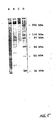
- Figure 1 shows the multimer spectrum of each fractions obtained. At a salt concentration of 160 mM NaCl became predominantly low molecular weight rvWF of the primary dimer type, eluted. In contrast, one Salt concentration of 270 mM NaCl rvWF with high Molecular weight eluted.
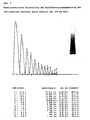
- Figure 2 shows a densitometric evaluation of the Distribution of the multimers of that obtained at 160 mM NaCl recombinant von Willebrand factor. This evaluation showed that the rvWF polymer mixture thus obtained is 84.4% from the primary dimers (molecular weight approx. 440,000) and 14.9% consists of the tetramer (molecular weight approx. 880000).
- Table 1 shows the results of the chromatography and first functional analyzes of the rvWF fractions compiled. The results show that almost the entire rvWF was bound to the carrier. That eluted with 160 mM NaCl rvWF polymer blend (low molecular weight) showed no ability for agglutination of platelets. The at 270 mM NaCl obtained fraction (high molecular weight) had a high activity in terms of platelet aggregation. Compared to the Starting material was not by separating the aggregating, low molecular weight rvWF forms the specific Agglutination activity increased 69%.
- the purity of the rvWF was at the same time significantly increased by the chromatography of the rvWF on the affinity carrier described in Example 1.
- rvWF of the 160 mM NaCl fraction showed a double, and rvWF of the 270 mM NaCl fraction a 6 times higher purity compared to the starting material.
- vWF samples were found used: Human vWF (Diagnostika Stago), rvWF (Starting material from Example 1), low molecular weight rvWF (160 mM NaCl elution fraction from Example 1), high molecular weight rvWF (270 mM NaCl elution fraction Example 1).
- the microtitration plates were then washed 3 times for 3 minutes with TBS, and each reaction vessel was then filled with 25 ⁇ l recombinant factor VIII (Miles) overlaid in TBS and Incubated for 1 hour at room temperature.
- the concentration of factor VIII was in the range from 100 mU / ml to 7.12 mU / ml varies. After that, the reaction vessels Washed 3 times for 3 minutes with 200 ⁇ l TBS each.
- the immobilized vWF bound amount of factor VIII using a commercially available Test system (Chromogenix Coatest VIII: C / 4) determined.
- Figure 4 shows the binding of factor VIII to that of Willebrand factor depending on the offered Factor VIII amount.
- the results show that everyone vWF fractions examined factor VIII in one bind concentration-dependent manner, where rvWF almost identical to human vWF Factor VIII showed binding.
- rvWF the 270 mM NaCl. fraction from example 1 showed an increased binding of factor VIII
- rvWF from the 160 mM NaCl fraction a slight lower binding of factor VIII.
- Example 3 Stabilization of Recombinant Factor VIII by recombinant von Willebrand factor.
- Factor VIII becomes physiological in the human body bound by the von Willebrand factor and is in this Shape stable. In contrast, unbound factor VIII in proteolytically inactivated for a few minutes.
- Example 4 Stabilization of factor VIII by recombinant von Willebrand factor
- Example 5 Purification of rvWF from culture supernatants by anion exchange chromatography
- vWF Recombinant vWF was made according to standard procedures Infection of Vero cells (monkey kidney cells) with Vaccinia virus obtained in cell culture technology. Vero / Vaccinia expression systems and cell culture conditions are in F.G. Falkner et al., Thrombosis and Haemostasis 68 (1992) 119-124, N. Barrett et al., AIDS Res. 5 (1989) 159-171 and F. Dorner et al., AIDS Vaccine Research and Clinical Trials, Marcel Dekker, Inc, New York (1990) described in detail. RvWF was expressed in synthetic DMEM standard medium (Dulbeccos minimal essential medium).
- the Culture medium separated, and cells and cell fragments were removed by centrifugation. More smaller ones Components, such as membrane fragments or bacteria, by filtration through filters with a pore size of 0.4 ⁇ m away.
- the rvWF was then with 280 mM NaCl in 20 mM Tris-HCl buffer (pH 7.4) from Carrier eluted. Eventually, with 1 M NaCl existing residual material eluted from the column. While the protein absorption in the chromatography usually tracked at 280 nm. After chromatography was the protein concentration according to Bradford Method (Bradford M., Anal. Biochem. 72 (1976) 248-254) certainly. The rvWF content was determined using a commercially available ELISA systems (Boehringer Mannheim) certainly.
- the cleaning described in this example enriched the rvWF by 6 times.
- sample Volume (ml) Total protein ( ⁇ g / ml) rvWF ( ⁇ g / ml) rvWF / total protein
- Cell-free culture supernatant 770 113 7.9 0,069 Elution with 200 mM NaCl 95 147 0.0016 0.00001 Elution with 280 mM NaCl 75 168 61 0.36 Elution with 1 M NaCl 50 196 6 0.03
- rvWF was purified by 270 mM NaCl in 20 mM Tris-HCl Buffer (pH 7.4) eluted from the carrier. Finally was eluted from the column with 1 M NaCl residual material. While the protein absorption in the chromatography usually tracked at 280 nm. After Chromatography was used to determine the protein concentration Bradford method (M. Bradford, l.c.). The salary rvWF was analyzed using a commercially available ELISA system (Boehringer Mannheim).
- sample Volume (ml) Total protein ( ⁇ g / ml) rvWP ( ⁇ g / ml) rvWF / total protein rvWF concentrate 225 50 13.9 0.27 Elution with 270 mM NaCl 43 70 60 0.86 Elution with 1 M NaCl 32 25 2 0.08
- r-vWF von Willebrand factor
- p-vWF Willebrand factor from human plasma
- k-vWF Willebrand factor from plasma cryoprecipitate
- r-vWF fermentation supernatant recombinant CHO cells
- p-vWF human citrate plamsa
- k-vWF Plasma cryoprecipitate
- r-vWF fermentation supernatant recombinant CHO cells
- p-vWF human citrate plamsa
- k-vWF Plasma cryoprecipitate
- Receive 20 mM Tris / HCl buffer, pH 7.0, 280 mM NaCl The preparations were then by adding 20 mM Tris / HCl buffer to a salt concentration of 90 mM diluted and on a Fractogel EMD heparin column (Fa. Merck) applied.
- vWF has been gradually upgraded Elution eluted with increasing salt concentration.
- vWF antigen vWF: Ag
- vWF antigen vWF: Ag
- the binding of coagulation factor VIII to both p-vWF, k-vWF and r-vWF was determined using 'real-time biospecific interaction analysis', based on measurements of surface plasmon resonance technology (Malmqvist M, Natur 1993; 361: 186- 187).
- the stoichiometric ratio of vWF subunits to bound factor VIII was determined: A monoclonal antihuman von Willebrand antibody (AvW82) was covalently bound to the sensor chip CM5 (Pharmacia Biosensor AB) (O'Shannessy DJ et al, 1993, Anal. Biochem 212: 457-468; Karlsson R, 1994, Anal. Biochem. 221: 142-151).
- the measurement of the resonance units (RU) corresponds to the baseline (RU BL ).
- p-vWF, k-vWF and r-vWF were in 10 mM HEPES, pH 7.4, 105 mM NaCl, 1 mM CaCl 2 , 0.05% surfactant P 20 (HBS buffer) to a concentration of 20 ⁇ g / ml solved.
- HBS buffer 0.05% surfactant P 20
- 50 ⁇ l samples of the vWF were applied over the sensor chip at a flow rate of 5 ⁇ l / min to enable AvW8 / 2 to bind to the vWF (phase A). Unbound vWF is removed by rinsing with HBS buffer ( Phase B).
- vWF resonance unit RU vWF
- FVIII recombinant FVIII
- Factor VIII was dissociated from the vWF again by rinsing with HBS buffer (phase D).
- Fig. 6 shows the sensogram of the addition of r-factor VIII to r-vWF.
- Determination of the stoichiometry of the vWF factor VIII complex example Stoichiometry vWF subunit: FVIII r-vWF 120 mM eluate 2.25: 1 r-vWF 160 mM eluate 2.5: 1 r-vWF 190 mM eluate 2.0: 1 r-vWF 230 mM eluate 2.0: 1 r-vWF 280 mM eluate 2.0: 1 k-vWF 280 mM eluate 2.6: 1 P-VWF 280 mM eluate 3: 1
- Table 6 shows the stoichiometry of vWF:: factor VIII of low and high molecular weight fractions of plasma and recombinant vWF.
- the data show that both the low molecular weight and the high molecular fractions of r-vWF a higher Have binding capacity to factor VIII as p-vWF.
- Example 8 Purification and separation of plasma vWF, vWF from cryoprecipitate and recombinant vWF
- Plasma vWF (p-vWF), vWF made from cryoprecipitate (k-vWF) and recombinant vWF (r-vWF) were determined using heparin affinity chromatography cleaned and the low molecular and high molecular fractions according to Example 1 separately.
Landscapes
- Health & Medical Sciences (AREA)
- Chemical & Material Sciences (AREA)
- Life Sciences & Earth Sciences (AREA)
- Organic Chemistry (AREA)
- Medicinal Chemistry (AREA)
- General Health & Medical Sciences (AREA)
- Hematology (AREA)
- Biophysics (AREA)
- Molecular Biology (AREA)
- Proteomics, Peptides & Aminoacids (AREA)
- Genetics & Genomics (AREA)
- Biochemistry (AREA)
- Gastroenterology & Hepatology (AREA)
- Zoology (AREA)
- Toxicology (AREA)
- Engineering & Computer Science (AREA)
- Chemical Kinetics & Catalysis (AREA)
- Bioinformatics & Cheminformatics (AREA)
- Animal Behavior & Ethology (AREA)
- Diabetes (AREA)
- Pharmacology & Pharmacy (AREA)
- Veterinary Medicine (AREA)
- General Chemical & Material Sciences (AREA)
- Public Health (AREA)
- Nuclear Medicine, Radiotherapy & Molecular Imaging (AREA)
- Peptides Or Proteins (AREA)
- Medicines That Contain Protein Lipid Enzymes And Other Medicines (AREA)
- Medicines Containing Material From Animals Or Micro-Organisms (AREA)
- Polymers With Sulfur, Phosphorus Or Metals In The Main Chain (AREA)
- Compounds Of Unknown Constitution (AREA)
Description

| Probe 15 µg/ml | Faktor VIII Aktivität nach 24 Stunden U/ml |
| Kontrolle | 0,5 |
| rvWF Ausgang | 1,8 |
| rvWF-160 mM NaCl Eluat | 0,8 |
| rvWF-270 mM NaCl Eluat | 2,4 |
| Probe 15 µg/ml | Faktor VIII Aktivität (mU/ml) | ||
| t=0 | t=6 Tage | %Verlust | |
| Kontrolle | 500 | 150 | 70 |
| rvWF Ausgang | 1800 | 1300 | 28 |
| rvWF-160 mM NaCl Eluat | 800 | 600 | 25 |
| rvWF-270 mM NaCl Eluat | 2400 | 1800 | 25 |
| Probe | Volumen (ml) | Gesamtprotein (µg/ml) | rvWF (µg/ml) | rvWF/ Gesamtprotein |
| Zellfreier Kulturüberstand | 770 | 113 | 7,9 | 0,069 |
| Elution mit 200 mM NaCl | 95 | 147 | 0,0016 | 0,00001 |
| Elution mit 280 mM NaCl | 75 | 168 | 61 | 0,36 |
| Elution mit 1 M NaCl | 50 | 196 | 6 | 0,03 |
| Probe | Volumen (ml) | Gesamtprotein (µg/ml) | rvWP (µg/ml) | rvWF/ Gesamtprotein |
| rvWF-Konzentrat | 225 | 50 | 13,9 | 0,27 |
| Elution mit 270 mM NaCl | 43 | 70 | 60 | 0,86 |
| Elution mit 1 M NaCl | 32 | 25 | 2 | 0,08 |
| Bestimmung der Stöchiometrie des vWF-Faktor VIII-Komplexes | |
| Beispiel | Stöchiometrie vWF-Untereinheit : FVIII |
| r-vWF 120 mM Eluat | 2,25 : 1 |
| r-vWF 160 mM Eluat | 2,5 : 1 |
| r-vWF 190 mM Eluat | 2,0 : 1 |
| r-vWF 230 mM Eluat | 2,0 : 1 |
| r-vWF 280 mM Eluat | 2,0 : 1 |
| k-vWF 280 mM Eluat | 2,6 : 1 |
| P-VWF 280 mM Eluat | 3 : 1 |
Claims (21)
- Verfahren zur Trennung von vWF in hochmolekularen vWF und niedermolekularen vWF, dadurch gekennzeichnet, dass man den vWF an einem Affinitätsträger bindet und dann bei unterschiedlichen Salzkonzentrationen eluiert.
- Verfahren zur Trennung von vWF nach Anspruch 1, dadurch gekennzeichnet, dass der zu trennende vWF in einer an vWF angereicherten Plasmafraktion vorliegt.
- Verfahren zur Trennung nach Anspruch 1, dadurch gekennzeichnet, dass der zu trennende vWF rekombinanter vWF ist, der in einem rekombinanten vWF Konzentrat aus zellfreien Kulturüberständen transformierter Zellen vorliegt.
- Verfahren zur Trennung von vWF nach Anspruch 1, dadurch gekennzeichnet, dass man gereinigten vWF in hochmolekularen vWF und niedermolekularen vWF auftrennt.
- Verfahren zur Trennung von vWF in hochmolekularen vWF und niedermolekularen vWF nach einem der Ansprüche 1 bis 4, dadurch gekennzeichnet, dass man die Trennung in einem Ca2+-freien Puffersystem vornimmt.
- Verfahren zur Trennung von vWF nach einem der Ansprüche 1 bis 5, dadurch gekennzeichnet, dass der Affinitätsträger ein Träger mit daran gebundenem Heparin ist, wobei sich bevorzugt AF-Heparin Toyopearl® (Tosohaas) , Heparin EMD-Fraktogel® (Merck) und Heparin Sepharose Fast Flow® (Pharmacia) gleichermassen eignen.
- Verfahren zur Trennung von vWF nach einem der Ansprüche 1 bis 6, dadurch gekennzeichnet, dass als Puffersystem für die Affinitätschromatographie eine Pufferlösung, bestehend aus Puffersubstanzen und ggf. Salz verwendet wird.
- Verfahren zur Trennung von vWF nach Anspruch 7, dadurch gekennzeichnet, dass als Puffersystem eine Pufferlösung, bestehend aus Tris/HCl-Puffer, Phosphatpuffer oder Citratpuffer, und ggf. Kochsalz verwendet wird.
- Verfahren zur Trennung von vWF nach einem der Ansprüche 1 bis 8, dadurch gekennzeichnet, dass die Affinitätschromatographie in einem pH-Bereich von 6,0 bis 8,5, vorzugsweise bei einem pH-Wert von 7,4 durchgeführt wird.
- Verfahren nach einem der Ansprüche 1 bis 9, dadurch gekennzeichnet, dass niedermolekularer vWF bei einer geringeren Salzkonzentration als hochmolekularer vWF eluiert wird.
- Verfahren nach einem der Ansprüche 1 bis 10, dadurch gekennzeichnet, dass man den vWF bei einer Salzkonzentration < 150 mM an den Affinitätsträger bindet, bei einer Salzkonzentration zwischen 150 und 250 mM, vorzugsweise bei 160 mM, niedermolekulare Aggregate des vWF eluiert, und danach bei einer Salzkonzentration von > 250 mM vorzugsweise ≥ 270 mM, hochmolekulare Aggregate des vWF eluiert.
- Verfahren nach einem der Ansprüche 1 bis 11, dadurch gekennzeichnet, dass als Salze lösliche ein- und zweiwertige Salze verwendet werden.
- Verfahren nach Anspruch 12, dadurch gekennzeichnet, dass als Salz NaCl verwendet wird.
- Zusammensetzung zur medizinischen Verwendung, dadurch gekennzeichnet, dass sie eine vWF-Präparation von gereinigten niedermolekularen vWF-Molekülen mit mindestens 83% vWF-Dimeren und maximal 16% vWF-Tetrameren und maximal 1% höheren Polymeren enthält, und einen physiologisch annehmbaren Träger.
- Zusammensetzung zur medizinischen Verwendung nach Anspruch 14, dadurch gekennzeichnet, dass sie rekombinanten vWF enthält, der aus identischen vWF-Untereinheiten besteht.
- Zusammensetzung zur medizinischen Verwendung nach einem der Ansprüche 14 oder 15, dadurch gekennzeichnet, dass die vWF-Präparation frei ist von Plättchen aggregierender Wirkung und Faktor VIII bindet, zur Stabilisierung von Faktor VIII beiträgt, und die Lagerstabilität von Faktor VIII positiv beeinflusst.
- Zusammensetzung zur medizinischen Verwendung dadurch gekennzeichnet, dass sie eine vWF-Präparation von gereinigten hochmolekularen vWF-Molekülen enthält, wobei hochmolekulare vWF-Moleküle solche sind, die eine um mindestens 50%, vorzugsweise mindestens 60% verbesserte Aktivität verglichen mit der physiologischen Mischung von hochmolekularen und niedermolekularen vWF-Molekülen pro µg Protein in der Plättchenaggregation, aufweisen, enthält und einen physiologisch annehmbaren Träger.
- Zusammensetzung zur medizinischen Verwendung nach Anspruch 17, dadurch gekennzeichnet, dass sie rekombinanten vWF enthält, der aus identischen vWF-Untereinheiten besteht.
- Zusammensetzung zur medizinischen Verwendung nach einem der Ansprüche 14 bis 18, dadurch gekennzeichnet, dass sie einen Faktor VIII oder funktionelle Deletionsmutante(n) von Faktor VIII enthält.
- Verwendung einer medizinischen Zusammensetzung nach einem der Ansprüche 14 bis 19, zur Herstellung eines Arzneimittels zur Behandlung von Hämöphilie A oder verschiedener Formen der von Willebrand-Disease.
- Verwendung einer niedermolekularen Fraktion von vWF-Molekülen, wobei diese vorwiegend Dimere und Tetramere enthält, oder einer hochmolekularen Fraktion von vWF-Molekülen, wobei diese eine um mindestens 50%, vorzugsweise mindestens 60% verbesserte Aktivität pro µg Protein in der Plättchenaggregation aufweist, verglichen mit der physiologischen Mischung von hochmolekularen und niedermolekularen vWF-Molekülen zur Herstellung einer pharmazeutischen Zubereitung zur Behandlung von Hämophilie A oder verschiedener Formen der von Willebrand-Disease.
Applications Claiming Priority (2)
| Application Number | Priority Date | Filing Date | Title |
|---|---|---|---|
| DE4435392A DE4435392B4 (de) | 1994-10-04 | 1994-10-04 | Verfahren zur Trennung von vWF in hochmolekularen vWF und niedermolekularen vWF |
| DE4435392 | 1994-10-04 |
Publications (3)
| Publication Number | Publication Date |
|---|---|
| EP0705846A1 EP0705846A1 (de) | 1996-04-10 |
| EP0705846B1 true EP0705846B1 (de) | 2004-05-26 |
| EP0705846B2 EP0705846B2 (de) | 2008-10-29 |
Family
ID=6529892
Family Applications (1)
| Application Number | Title | Priority Date | Filing Date |
|---|---|---|---|
| EP95115442A Expired - Lifetime EP0705846B2 (de) | 1994-10-04 | 1995-09-29 | Hochmolekulare und niedermolekulare Fraktionen des von Willebrand-Faktors |
Country Status (8)
| Country | Link |
|---|---|
| US (3) | US5869617A (de) |
| EP (1) | EP0705846B2 (de) |
| JP (1) | JP3110292B2 (de) |
| AT (2) | ATE267841T1 (de) |
| CA (1) | CA2159702C (de) |
| DE (2) | DE4435392B4 (de) |
| DK (1) | DK0705846T4 (de) |
| ES (1) | ES2221926T5 (de) |
Families Citing this family (23)
| Publication number | Priority date | Publication date | Assignee | Title |
|---|---|---|---|---|
| US6005077A (en) * | 1995-11-10 | 1999-12-21 | Immuno Aktiengesellschaft | Use of von willebrand factor and pharmaceutical formulation |
| AT403764B (de) | 1996-03-15 | 1998-05-25 | Immuno Ag | Stabiler faktor viii/vwf-komplex |
| AT403765B (de) * | 1996-04-12 | 1998-05-25 | Immuno Ag | Verfahren zur herstellung einer präparation enthaltend einen hochgereinigten komplex |
| AT405403B (de) | 1997-02-27 | 1999-08-25 | Immuno Ag | Reinigung von von willebrand-faktor durch kationenaustauscherchromatographie |
| AT406867B (de) * | 1997-02-27 | 2000-10-25 | Immuno Ag | Verfahren zur gewinnung von hochreinem vwf oder faktor viii/vwf-komplex |
| AT406373B (de) | 1997-02-27 | 2000-04-25 | Immuno Ag | Verfahren zur reinigung von faktor viii/vwf-komplex mittels kationenaustauscherchromatographie |
| US6531577B1 (en) | 1997-12-15 | 2003-03-11 | Hemasure Denmark A/S | von Willebrand factor (vWF)-containing preparation, process for preparing vWF-containing preparations, and use of such preparations |
| FR2772381B1 (fr) | 1997-12-15 | 2001-06-08 | Lab Francais Du Fractionnement | Procede de preparation par filtration d'une solution de facteur viii securisee viralement |
| EP1148063A1 (de) * | 2000-04-18 | 2001-10-24 | Octapharma AG | Haemostatisch aktives vWF enthaltendes Präparat und Verfahren zu seiner Herstellung |
| DE10246125A1 (de) | 2002-10-01 | 2004-04-15 | Aventis Behring Gmbh | Konzentrat eines Faktor VIII:C-haltigen von-Willebrand-Faktors und das dazu gehörige Verfahren |
| EP1593388A1 (de) * | 2004-05-05 | 2005-11-09 | ZLB Behring GmbH | Therapeutische Plasmaproteinkonzentrate mit von-Willebrand-Faktor als Multimere mit hohem Molekulargewicht |
| TW201731488A (zh) | 2007-12-28 | 2017-09-16 | 巴克斯歐塔公司 | 重組vwf調配物 |
| AU2014202595A1 (en) * | 2007-12-28 | 2014-06-05 | Baxalta GmbH | Recombinant VWF Formulations |
| US11197916B2 (en) | 2007-12-28 | 2021-12-14 | Takeda Pharmaceutical Company Limited | Lyophilized recombinant VWF formulations |
| HRP20130414T1 (en) | 2008-10-21 | 2013-06-30 | Baxter International Inc. | Lyophilized recombinant vwf formulations |
| AU2011343813B2 (en) | 2010-12-15 | 2015-05-21 | Takeda Pharmaceutical Company Limited | Eluate collection using conductivity gradient |
| SG10201810439SA (en) | 2012-06-15 | 2018-12-28 | Commw Scient Ind Res Org | Production of long chain polyunsaturated fatty acids in plant cells |
| ES2693380T3 (es) * | 2013-11-08 | 2018-12-11 | Csl Limited | Nuevo método para concentrar el factor de von Willebrand o complejos de este |
| CA2933909C (en) | 2013-12-18 | 2024-07-02 | Commonwealth Scientific And Industrial Research Organisation | Lipid comprising long chain polyunsaturated fatty acids |
| PL3158055T3 (pl) * | 2014-06-13 | 2020-03-31 | Csl Limited | Ulepszone wytwarzanie rekombinowanego czynnika von Willebranda w bioreaktorze |
| EP3160482A4 (de) | 2014-06-27 | 2018-02-14 | Commonwealth Scientific and Industrial Research Organisation | Lipid mit docosapentensäure |
| US10626164B2 (en) * | 2014-07-25 | 2020-04-21 | Csl Limited | Purification of VWF |
| DE102020132156B4 (de) | 2020-12-03 | 2022-11-03 | Welbilt Deutschland GmbH | Gargerät, insbesondere gewerbliches Gargerät |
Family Cites Families (16)
| Publication number | Priority date | Publication date | Assignee | Title |
|---|---|---|---|---|
| JPS5874266A (ja) | 1981-10-29 | 1983-05-04 | Honda Motor Co Ltd | エンジンのシリンダヘツドの製造方法 |
| JPS5874265A (ja) | 1981-10-29 | 1983-05-04 | Honda Motor Co Ltd | エンジンのシリンダヘツドの製造方法 |
| US5149787A (en) * | 1984-05-22 | 1992-09-22 | The Blood Center Research Foundation | Method for maintaining intact, non-degraded factor VIII/von-Willebrand factor during blood processing |
| NL8500961A (nl) * | 1985-04-01 | 1986-11-03 | Stichting Vrienden Van De Stic | Cdna-codering voor de humane von willebrand-factor, plasmiden met een dergelijke cdna-codering respektievelijk fragmenten ervan, alsmede micro-organismen, welke dergelijke plasmiden bevatten. |
| US5198349A (en) * | 1986-01-03 | 1993-03-30 | Genetics Institute, Inc. | Method for producing factor VIII:C and analogs |
| US5200510A (en) * | 1987-06-16 | 1993-04-06 | Zymogenetics, Inc. | Method for purifying factor viii:c, von willebrand factor and complexes thereof |
| US5006642A (en) * | 1987-06-29 | 1991-04-09 | Rhone-Poulenc Rorer Pharmaceuticals Inc. | Purification of von Willebrand Factor by affinity chromatography |
| JPS6418261A (en) | 1987-07-14 | 1989-01-23 | Sanyo Electric Co | Multigate-type metal insulator semiconductor device |
| DE3904354A1 (de) * | 1989-02-14 | 1990-08-16 | Behringwerke Ag | Pasteurisiertes, gereinigtes von willebrand-faktor-konzentrat und verfahren zu seiner herstellung |
| FR2665449B1 (fr) * | 1990-08-02 | 1995-04-14 | Aquitaine Developp Transf Sang | Procede de fabrication de facteur von willebrand ayant une tres haute purete, depourvu en majeure partie de facteur antihemophilique (fviiic), et facteur von willebrand ainsi obtenu, ainsi qu'une composition pharmaceutique le contenant. |
| US5198423A (en) * | 1989-05-26 | 1993-03-30 | Takara Shuzo Co., Ltd. | Functional polypeptide containing a cell binding domain and a heparin binding domain of fibronectin |
| US5110907A (en) * | 1989-08-01 | 1992-05-05 | Alpha Therapeutic Corporation | Factor viii complex purification using heparin affinity chromatography |
| JPH03210961A (ja) | 1990-01-12 | 1991-09-13 | Toyota Motor Corp | シリンダヘッドの製造方法 |
| FR2673632A1 (fr) * | 1991-03-08 | 1992-09-11 | Lille Transfusion Sanguine | Procede de preparation de concentre de facteur von willebrand humain de tres haute purete, approprie a un usage therapeutique. |
| JP3270937B2 (ja) | 1992-04-08 | 2002-04-02 | ヤマハ発動機株式会社 | エンジンのシリンダヘッド構造 |
| JPH05332106A (ja) | 1992-05-29 | 1993-12-14 | Nissan Motor Co Ltd | 内燃機関のバルブシート |
-
1994
- 1994-10-04 DE DE4435392A patent/DE4435392B4/de not_active Expired - Lifetime
-
1995
- 1995-09-29 EP EP95115442A patent/EP0705846B2/de not_active Expired - Lifetime
- 1995-09-29 DK DK95115442T patent/DK0705846T4/da active
- 1995-09-29 ES ES95115442T patent/ES2221926T5/es not_active Expired - Lifetime
- 1995-09-29 AT AT95115442T patent/ATE267841T1/de active
- 1995-09-29 DE DE59510905T patent/DE59510905D1/de not_active Expired - Lifetime
- 1995-10-02 CA CA002159702A patent/CA2159702C/en not_active Expired - Fee Related
- 1995-10-03 AT AT0163595A patent/AT406866B/de not_active IP Right Cessation
- 1995-10-04 US US08/538,889 patent/US5869617A/en not_active Expired - Lifetime
- 1995-10-04 JP JP07257467A patent/JP3110292B2/ja not_active Expired - Fee Related
-
1996
- 1996-12-19 US US08/769,999 patent/US5872099A/en not_active Expired - Lifetime
- 1996-12-19 US US08/770,000 patent/US5892005A/en not_active Expired - Lifetime
Non-Patent Citations (2)
| Title |
|---|
| BURNOUF-RADOSEVICH; BURNOUF: "Chromatographic preparation of a therapeutic highly purified von Willebrand Factor concentrate from human cryoprecipitate", VOX SANG, vol. 62, 1992, pages 1 - 11, XP009045809 * |
| CHOPEK M. ET AL: "Human von Willebrand Factor: a multivalent protein composed of identical subunits", BIOCHEMISTRY, vol. 25, 1986, pages 3146 - 3155 * |
Also Published As
| Publication number | Publication date |
|---|---|
| US5892005A (en) | 1999-04-06 |
| CA2159702A1 (en) | 1996-04-05 |
| JPH08119997A (ja) | 1996-05-14 |
| JP3110292B2 (ja) | 2000-11-20 |
| US5872099A (en) | 1999-02-16 |
| DE4435392A1 (de) | 1996-04-11 |
| CA2159702C (en) | 2010-03-09 |
| DK0705846T4 (da) | 2009-01-19 |
| AT406866B (de) | 2000-10-25 |
| ES2221926T3 (es) | 2005-01-16 |
| DK0705846T3 (da) | 2004-09-27 |
| EP0705846A1 (de) | 1996-04-10 |
| DE4435392B4 (de) | 2008-02-07 |
| ES2221926T5 (es) | 2009-04-16 |
| ATA163595A (de) | 2000-02-15 |
| DE59510905D1 (de) | 2004-07-01 |
| EP0705846B2 (de) | 2008-10-29 |
| US5869617A (en) | 1999-02-09 |
| ATE267841T1 (de) | 2004-06-15 |
Similar Documents
| Publication | Publication Date | Title |
|---|---|---|
| EP0705846B1 (de) | Hochmolekulare und niedermolekulare Fraktionen des von Willebrand-Faktors | |
| EP0784632B1 (de) | Verfahren zur gewinnung von hochreinem von willebrand-faktor | |
| DE69017050T2 (de) | Verfahren zur isolierung von faktor viii. | |
| AT407115B (de) | Verfahren zur herstellung eines konzentrates von standardisiertem, menschlichem von willebrand-faktor | |
| DE69032600T3 (de) | Rekombinanter abkömmling des menschlichen faktors iii | |
| EP1005492B1 (de) | Reinigung von von willebrand-faktor durch kationenaustauscherchromatographie | |
| EP0774261A2 (de) | Verwendung von von Willebrand-Faktor und pharmazeutische Zubereitung | |
| EP1012191B1 (de) | VERFAHREN ZUR GEWINNUNG VON HOCHREINEM vWF ODER FACTOR VIII/vWF-KOMPLEX | |
| DE69333738T2 (de) | Therapeutische domänen des von willebrand-faktor | |
| EP1789445B1 (de) | Verfahren zur entfernung von fibronektin aus plasmafraktionen | |
| EP0971958A1 (de) | Verfahren zur reinigung von faktor viii/vwf-komplex mittels kationenaustauscherchromatographie | |
| AT403765B (de) | Verfahren zur herstellung einer präparation enthaltend einen hochgereinigten komplex | |
| DE10246125A1 (de) | Konzentrat eines Faktor VIII:C-haltigen von-Willebrand-Faktors und das dazu gehörige Verfahren | |
| DE102004044421B4 (de) | Verfahren zur Trennung eines von Willebrand Faktors mit einer spezifischen VWF-Aktivität von wenigstens 50 E/mg VWF-Antigen von einem von Willebrand Faktor mit niedriger Aktivität und Verwendung von Hydroxylapatit dafür | |
| AT404358B (de) | Verfahren zur chromatographischen reinigung bzw. fraktionierung von von willebrand-faktor aus einem vwf-hältigen ausgangsmaterial | |
| EP1789444B1 (de) | Herstellung eines von willebrand faktor-präparates unter verwendung von hydroxylapatit | |
| EP0954533A1 (de) | Von willebrand-faktor-derivat sowie ein verfahren zur isolierung von proteinen | |
| DE19616540A1 (de) | Verwendung von von Willebrand-Faktor und pharmazeutische Zubereitung | |
| DE19616540A9 (de) | Verwendung von von Willebrand-Faktor und pharmazeutische Zubereitung |
Legal Events
| Date | Code | Title | Description |
|---|---|---|---|
| PUAI | Public reference made under article 153(3) epc to a published international application that has entered the european phase |
Free format text: ORIGINAL CODE: 0009012 |
|
| AK | Designated contracting states |
Kind code of ref document: A1 Designated state(s): AT BE CH DE DK ES FR GB IE IT LI NL SE |
|
| 17P | Request for examination filed |
Effective date: 19960513 |
|
| RAP1 | Party data changed (applicant data changed or rights of an application transferred) |
Owner name: BAXTER AKTIENGESELLSCHAFT |
|
| 17Q | First examination report despatched |
Effective date: 20010709 |
|
| GRAP | Despatch of communication of intention to grant a patent |
Free format text: ORIGINAL CODE: EPIDOSNIGR1 |
|
| GRAS | Grant fee paid |
Free format text: ORIGINAL CODE: EPIDOSNIGR3 |
|
| GRAA | (expected) grant |
Free format text: ORIGINAL CODE: 0009210 |
|
| AK | Designated contracting states |
Kind code of ref document: B1 Designated state(s): AT BE CH DE DK ES FR GB IE IT LI NL SE |
|
| REG | Reference to a national code |
Ref country code: GB Ref legal event code: FG4D Free format text: NOT ENGLISH |
|
| RIN1 | Information on inventor provided before grant (corrected) |
Inventor name: DORNER, FRIEDRICH, PROF. DR. Inventor name: MITTERER, ARTUR, DR. Inventor name: FISCHER, BERNHARD, DR. |
|
| REG | Reference to a national code |
Ref country code: CH Ref legal event code: EP |
|
| GBT | Gb: translation of ep patent filed (gb section 77(6)(a)/1977) |
Effective date: 20040526 |
|
| REG | Reference to a national code |
Ref country code: IE Ref legal event code: FG4D Free format text: GERMAN |
|
| REF | Corresponds to: |
Ref document number: 59510905 Country of ref document: DE Date of ref document: 20040701 Kind code of ref document: P |
|
| REG | Reference to a national code |
Ref country code: CH Ref legal event code: NV Representative=s name: NOVAGRAAF INTERNATIONAL SA |
|
| REG | Reference to a national code |
Ref country code: SE Ref legal event code: TRGR |
|
| REG | Reference to a national code |
Ref country code: DK Ref legal event code: T3 |
|
| ET | Fr: translation filed | ||
| REG | Reference to a national code |
Ref country code: ES Ref legal event code: FG2A Ref document number: 2221926 Country of ref document: ES Kind code of ref document: T3 |
|
| PLAQ | Examination of admissibility of opposition: information related to despatch of communication + time limit deleted |
Free format text: ORIGINAL CODE: EPIDOSDOPE2 |
|
| PLBQ | Unpublished change to opponent data |
Free format text: ORIGINAL CODE: EPIDOS OPPO |
|
| PLBI | Opposition filed |
Free format text: ORIGINAL CODE: 0009260 |
|
| PLAQ | Examination of admissibility of opposition: information related to despatch of communication + time limit deleted |
Free format text: ORIGINAL CODE: EPIDOSDOPE2 |
|
| PLAR | Examination of admissibility of opposition: information related to receipt of reply deleted |
Free format text: ORIGINAL CODE: EPIDOSDOPE4 |
|
| PLBQ | Unpublished change to opponent data |
Free format text: ORIGINAL CODE: EPIDOS OPPO |
|
| PLAB | Opposition data, opponent's data or that of the opponent's representative modified |
Free format text: ORIGINAL CODE: 0009299OPPO |
|
| PLAX | Notice of opposition and request to file observation + time limit sent |
Free format text: ORIGINAL CODE: EPIDOSNOBS2 |
|
| 26 | Opposition filed |
Opponent name: ZLB BEHRING GMBH Effective date: 20050224 |
|
| R26 | Opposition filed (corrected) |
Opponent name: ZLB BEHRING GMBH Effective date: 20050224 |
|
| NLR1 | Nl: opposition has been filed with the epo |
Opponent name: ZLB BEHRING GMBH |
|
| PLAF | Information modified related to communication of a notice of opposition and request to file observations + time limit |
Free format text: ORIGINAL CODE: EPIDOSCOBS2 |
|
| PLBB | Reply of patent proprietor to notice(s) of opposition received |
Free format text: ORIGINAL CODE: EPIDOSNOBS3 |
|
| PLAB | Opposition data, opponent's data or that of the opponent's representative modified |
Free format text: ORIGINAL CODE: 0009299OPPO |
|
| APBP | Date of receipt of notice of appeal recorded |
Free format text: ORIGINAL CODE: EPIDOSNNOA2O |
|
| R26 | Opposition filed (corrected) |
Opponent name: CSL BEHRING GMBH Effective date: 20050224 |
|
| APAH | Appeal reference modified |
Free format text: ORIGINAL CODE: EPIDOSCREFNO |
|
| APBQ | Date of receipt of statement of grounds of appeal recorded |
Free format text: ORIGINAL CODE: EPIDOSNNOA3O |
|
| NLR1 | Nl: opposition has been filed with the epo |
Opponent name: CSL BEHRING GMBH |
|
| APBU | Appeal procedure closed |
Free format text: ORIGINAL CODE: EPIDOSNNOA9O |
|
| PLAB | Opposition data, opponent's data or that of the opponent's representative modified |
Free format text: ORIGINAL CODE: 0009299OPPO |
|
| PUAH | Patent maintained in amended form |
Free format text: ORIGINAL CODE: 0009272 |
|
| STAA | Information on the status of an ep patent application or granted ep patent |
Free format text: STATUS: PATENT MAINTAINED AS AMENDED |
|
| 27A | Patent maintained in amended form |
Effective date: 20081029 |
|
| AK | Designated contracting states |
Kind code of ref document: B2 Designated state(s): AT BE CH DE DK ES FR GB IE IT LI NL SE |
|
| REG | Reference to a national code |
Ref country code: CH Ref legal event code: AEN Free format text: AUFRECHTERHALTUNG DES PATENTES IN GEAENDERTER FORM |
|
| NLR2 | Nl: decision of opposition |
Effective date: 20081029 |
|
| REG | Reference to a national code |
Ref country code: SE Ref legal event code: RPEO |
|
| REG | Reference to a national code |
Ref country code: DK Ref legal event code: T4 |
|
| NLR3 | Nl: receipt of modified translations in the netherlands language after an opposition procedure | ||
| REG | Reference to a national code |
Ref country code: ES Ref legal event code: DC2A Date of ref document: 20090121 Kind code of ref document: T5 |
|
| REG | Reference to a national code |
Ref country code: CH Ref legal event code: PFA Owner name: BAXTER AKTIENGESELLSCHAFT Free format text: BAXTER AKTIENGESELLSCHAFT#INDUSTRIESTRASSE 67#1221 WIEN (AT) -TRANSFER TO- BAXTER AKTIENGESELLSCHAFT#INDUSTRIESTRASSE 67#1221 WIEN (AT) |
|
| PGFP | Annual fee paid to national office [announced via postgrant information from national office to epo] |
Ref country code: DK Payment date: 20140925 Year of fee payment: 20 Ref country code: CH Payment date: 20140929 Year of fee payment: 20 Ref country code: IE Payment date: 20140929 Year of fee payment: 20 |
|
| PGFP | Annual fee paid to national office [announced via postgrant information from national office to epo] |
Ref country code: GB Payment date: 20140929 Year of fee payment: 20 Ref country code: AT Payment date: 20140904 Year of fee payment: 20 Ref country code: SE Payment date: 20140929 Year of fee payment: 20 Ref country code: FR Payment date: 20140917 Year of fee payment: 20 Ref country code: ES Payment date: 20140926 Year of fee payment: 20 |
|
| PGFP | Annual fee paid to national office [announced via postgrant information from national office to epo] |
Ref country code: IT Payment date: 20140924 Year of fee payment: 20 |
|
| PGFP | Annual fee paid to national office [announced via postgrant information from national office to epo] |
Ref country code: DE Payment date: 20140929 Year of fee payment: 20 |
|
| PGFP | Annual fee paid to national office [announced via postgrant information from national office to epo] |
Ref country code: NL Payment date: 20140926 Year of fee payment: 20 |
|
| PGFP | Annual fee paid to national office [announced via postgrant information from national office to epo] |
Ref country code: BE Payment date: 20140929 Year of fee payment: 20 |
|
| REG | Reference to a national code |
Ref country code: DE Ref legal event code: R071 Ref document number: 59510905 Country of ref document: DE |
|
| REG | Reference to a national code |
Ref country code: NL Ref legal event code: MK Effective date: 20150928 |
|
| REG | Reference to a national code |
Ref country code: DK Ref legal event code: EUP Effective date: 20150929 |
|
| REG | Reference to a national code |
Ref country code: CH Ref legal event code: PL |
|
| REG | Reference to a national code |
Ref country code: GB Ref legal event code: PE20 Expiry date: 20150928 |
|
| PG25 | Lapsed in a contracting state [announced via postgrant information from national office to epo] |
Ref country code: GB Free format text: LAPSE BECAUSE OF EXPIRATION OF PROTECTION Effective date: 20150928 |
|
| REG | Reference to a national code |
Ref country code: IE Ref legal event code: MK9A |
|
| REG | Reference to a national code |
Ref country code: AT Ref legal event code: MK07 Ref document number: 267841 Country of ref document: AT Kind code of ref document: T Effective date: 20150929 |
|
| REG | Reference to a national code |
Ref country code: SE Ref legal event code: EUG |
|
| REG | Reference to a national code |
Ref country code: ES Ref legal event code: FD2A Effective date: 20160108 |
|
| PG25 | Lapsed in a contracting state [announced via postgrant information from national office to epo] |
Ref country code: IE Free format text: LAPSE BECAUSE OF EXPIRATION OF PROTECTION Effective date: 20150929 |
|
| PG25 | Lapsed in a contracting state [announced via postgrant information from national office to epo] |
Ref country code: ES Free format text: LAPSE BECAUSE OF EXPIRATION OF PROTECTION Effective date: 20150930 |