EP0698539B1 - Système hydraulique - Google Patents
Système hydraulique Download PDFInfo
- Publication number
- EP0698539B1 EP0698539B1 EP95305741A EP95305741A EP0698539B1 EP 0698539 B1 EP0698539 B1 EP 0698539B1 EP 95305741 A EP95305741 A EP 95305741A EP 95305741 A EP95305741 A EP 95305741A EP 0698539 B1 EP0698539 B1 EP 0698539B1
- Authority
- EP
- European Patent Office
- Prior art keywords
- fluid
- passageway
- valve
- working fluid
- spool
- Prior art date
- Legal status (The legal status is an assumption and is not a legal conclusion. Google has not performed a legal analysis and makes no representation as to the accuracy of the status listed.)
- Expired - Lifetime
Links
Images





Classifications
-
- B—PERFORMING OPERATIONS; TRANSPORTING
- B60—VEHICLES IN GENERAL
- B60T—VEHICLE BRAKE CONTROL SYSTEMS OR PARTS THEREOF; BRAKE CONTROL SYSTEMS OR PARTS THEREOF, IN GENERAL; ARRANGEMENT OF BRAKING ELEMENTS ON VEHICLES IN GENERAL; PORTABLE DEVICES FOR PREVENTING UNWANTED MOVEMENT OF VEHICLES; VEHICLE MODIFICATIONS TO FACILITATE COOLING OF BRAKES
- B60T13/00—Transmitting braking action from initiating means to ultimate brake actuator with power assistance or drive; Brake systems incorporating such transmitting means, e.g. air-pressure brake systems
- B60T13/10—Transmitting braking action from initiating means to ultimate brake actuator with power assistance or drive; Brake systems incorporating such transmitting means, e.g. air-pressure brake systems with fluid assistance, drive, or release
- B60T13/12—Transmitting braking action from initiating means to ultimate brake actuator with power assistance or drive; Brake systems incorporating such transmitting means, e.g. air-pressure brake systems with fluid assistance, drive, or release the fluid being liquid
- B60T13/16—Transmitting braking action from initiating means to ultimate brake actuator with power assistance or drive; Brake systems incorporating such transmitting means, e.g. air-pressure brake systems with fluid assistance, drive, or release the fluid being liquid using pumps directly, i.e. without interposition of accumulators or reservoirs
-
- F—MECHANICAL ENGINEERING; LIGHTING; HEATING; WEAPONS; BLASTING
- F16—ENGINEERING ELEMENTS AND UNITS; GENERAL MEASURES FOR PRODUCING AND MAINTAINING EFFECTIVE FUNCTIONING OF MACHINES OR INSTALLATIONS; THERMAL INSULATION IN GENERAL
- F16H—GEARING
- F16H61/00—Control functions within control units of change-speed- or reversing-gearings for conveying rotary motion ; Control of exclusively fluid gearing, friction gearing, gearings with endless flexible members or other particular types of gearing
- F16H61/38—Control of exclusively fluid gearing
- F16H61/40—Control of exclusively fluid gearing hydrostatic
- F16H61/4157—Control of braking, e.g. preventing pump over-speeding when motor acts as a pump
-
- B—PERFORMING OPERATIONS; TRANSPORTING
- B60—VEHICLES IN GENERAL
- B60T—VEHICLE BRAKE CONTROL SYSTEMS OR PARTS THEREOF; BRAKE CONTROL SYSTEMS OR PARTS THEREOF, IN GENERAL; ARRANGEMENT OF BRAKING ELEMENTS ON VEHICLES IN GENERAL; PORTABLE DEVICES FOR PREVENTING UNWANTED MOVEMENT OF VEHICLES; VEHICLE MODIFICATIONS TO FACILITATE COOLING OF BRAKES
- B60T13/00—Transmitting braking action from initiating means to ultimate brake actuator with power assistance or drive; Brake systems incorporating such transmitting means, e.g. air-pressure brake systems
- B60T13/10—Transmitting braking action from initiating means to ultimate brake actuator with power assistance or drive; Brake systems incorporating such transmitting means, e.g. air-pressure brake systems with fluid assistance, drive, or release
- B60T13/12—Transmitting braking action from initiating means to ultimate brake actuator with power assistance or drive; Brake systems incorporating such transmitting means, e.g. air-pressure brake systems with fluid assistance, drive, or release the fluid being liquid
- B60T13/22—Brakes applied by springs or weights and released hydraulically
-
- F—MECHANICAL ENGINEERING; LIGHTING; HEATING; WEAPONS; BLASTING
- F15—FLUID-PRESSURE ACTUATORS; HYDRAULICS OR PNEUMATICS IN GENERAL
- F15B—SYSTEMS ACTING BY MEANS OF FLUIDS IN GENERAL; FLUID-PRESSURE ACTUATORS, e.g. SERVOMOTORS; DETAILS OF FLUID-PRESSURE SYSTEMS, NOT OTHERWISE PROVIDED FOR
- F15B11/00—Servomotor systems without provision for follow-up action; Circuits therefor
- F15B11/08—Servomotor systems without provision for follow-up action; Circuits therefor with only one servomotor
-
- F—MECHANICAL ENGINEERING; LIGHTING; HEATING; WEAPONS; BLASTING
- F16—ENGINEERING ELEMENTS AND UNITS; GENERAL MEASURES FOR PRODUCING AND MAINTAINING EFFECTIVE FUNCTIONING OF MACHINES OR INSTALLATIONS; THERMAL INSULATION IN GENERAL
- F16H—GEARING
- F16H61/00—Control functions within control units of change-speed- or reversing-gearings for conveying rotary motion ; Control of exclusively fluid gearing, friction gearing, gearings with endless flexible members or other particular types of gearing
- F16H61/38—Control of exclusively fluid gearing
- F16H61/40—Control of exclusively fluid gearing hydrostatic
- F16H61/4035—Control of circuit flow
-
- F—MECHANICAL ENGINEERING; LIGHTING; HEATING; WEAPONS; BLASTING
- F16—ENGINEERING ELEMENTS AND UNITS; GENERAL MEASURES FOR PRODUCING AND MAINTAINING EFFECTIVE FUNCTIONING OF MACHINES OR INSTALLATIONS; THERMAL INSULATION IN GENERAL
- F16H—GEARING
- F16H61/00—Control functions within control units of change-speed- or reversing-gearings for conveying rotary motion ; Control of exclusively fluid gearing, friction gearing, gearings with endless flexible members or other particular types of gearing
- F16H61/38—Control of exclusively fluid gearing
- F16H61/40—Control of exclusively fluid gearing hydrostatic
- F16H61/42—Control of exclusively fluid gearing hydrostatic involving adjustment of a pump or motor with adjustable output or capacity
- F16H61/423—Motor capacity control by fluid pressure control means
Definitions
- the present invention relates to a hydraulic system, and more particularly to a hydraulic system comprising a hydraulic motor and a mechanical brake assembly for braking the hydraulic motor and adapted, for example, to a driving device of a crawler vehicle.
- a conventional hydraulic system is disclosed, for example, in Japanese patent laid-open publication No. 4-138960 and shown in Fig. 9 as comprising a hydraulic pump 210, a hydraulic motor 220, a mechanical brake assembly 230, a directional control valve 240, a counterbalance valve 250, a pilot hydraulic circuit 260, a reservoir tank 271, a relief valve 272, check valves 273 to 277 and restrictors 278 and 279.
- the hydraulic pump 210 sucks in working fluid reserved by the reservoir tank 271 to increase in pressure and deliver the working fluid.
- the hydraulic motor 220 is a fixed displacement axial piston motor and has an output rotation shaft (not shown) mechanically connected to driving axle (not shown) of a crawler vehicle.
- the hydraulic motor 220 includes a motor casing (not shown) formed with first and second inlet/outlet ports 221 and 222.
- the working fluid is supplied from the hydraulic pump 210 to one of the first and second inlet/outlet ports 221 and 222 through one of first and second fluid supply/discharge passageways 281 and 282 and discharged from the other of the first and second inlet/outlet ports 221 and 222 to the reservoir tank 271 through the other of the first and second fluid supply/discharge passageways 281 and 282.
- the output rotation shaft of the hydraulic motor 220 is rotated in a direction.
- the output rotation shaft of the hydraulic motor 220 is rotated in the opposite direction.
- the mechanical brake assembly 230 comprises a brake piston 231 engageable with the output rotation shaft of the hydraulic motor 220 through a pair of friction pads which are respectively fixed to the motor casing of the hydraulic motor 220 and the output rotation shaft of the hydraulic motor 220
- the mechanical brake assembly 230 further comprises a cylindrical casing 232 for having the brake piston 231 slidably received therein and a brake spring 233 for resiliently urging the brake piston 231 to engage with the output rotation shaft of the hydraulic motor 220.
- the brake piston 231 and the cylindrical casing 232 of the mechanical brake assembly 230 collectively define a hydraulic chamber 234 to which the working fluid is supplied through a release fluid passageway 283 and from which the working fluid is discharged through the release fluid passageway 283.
- the pressure of the working fluid in the hydraulic chamber 234 is exerted on an effective area of the brake piston 231 to disengage the brake piston 23 1 from the output rotation shaft of the hydraulic motor 220 against resilient force of the brake spring 233.
- the output rotation shaft of the hydraulic motor 220 is mechanically braked by the resilient force of the brake spring 233 through the brake piston 231 when the working fluid is discharged from the hydraulic chamber 234 through the release fluid passageway 283.
- the rotation shaft of the hydraulic motor 220 is released from the brake piston 231 by the pressure of working fluid in the hydraulic chamber 234 and consequently freely rotatable both in the different directions.
- the directional control valve 240 is provided on the first and second fluid supply/discharge passageways 281 and 282 and operative to assume three different valve positions in accordance with manual operation by a crawler vehicle driver.
- the three different valve positions consist of a first directional control valve position 240a in which the working fluid is permitted to be supplied from the hydraulic pump 210 to the first fluid supply/discharge passageway 281 and to be discharged from the second fluid supply/discharge passageway 282 to the reservoir tank 271, a second directional control valve position 240b in which the working fluid is permitted to be discharged from the first and second fluid supply/discharge fluid passageways 281 and 282 to the reservoir tank 271, and a third directional control valve position 240c in which the working fluid is permitted to be supplied from the hydraulic pump 210 to the second fluid supply/discharge passageway 282 and to be discharged from the first fluid supply/discharge passageway 281.
- the counterbalance valve 250 is provided on the release fluid passageway 283, and the first and second fluid supply/discharge passageways 281 and 282 between the hydraulic pump 210 and the directional control valve 240.
- the counterbalance valve 250 is arranged in parallel with the check valve 273 that is adapted to permit the working fluid to flow only from the directional control valve 240 toward the hydraulic motor 220.
- the counterbalance valve 250 is arranged in parallel with the check valve 274 that is adapted to permit the working fluid to flow only from the directional control valve 240 toward the hydraulic motor 220.
- the counterbalance valve 250 is operative to three different counterbalance valve positions in accordance with difference in pressure between pilot hydraulic chambers 251 and 252.
- the counterbalance valve positions consist of a first and second counterbalance valve positions 250a and 250b in each of which the working fluid is permitted to flow in the first fluid supply/discharge passageway 281 between the hydraulic motor 220 and the directional control valve 240 and in the second fluid supply/discharge passageway 282 between the hydraulic motor 220 and the directional control valve 240, and a third counterbalance valve position 250c in which the working fluid is interrupted from flowing in the first fluid supply/discharge passageway 281 between the hydraulic motor 220 and the directional control valve 240 and in the second fluid supply/discharge passageway 282 between the hydraulic motor 220 and the directional control valve 240.
- the release fluid passageway 283 is brought into fluid communication with the first fluid supply/discharge passageway 281 when the counterbalance valve 250 is shifted to assume the first counterbalance valve position 250a.
- the release fluid passageway 283 is brought into fluid communication with the second fluid supply/discharge passageway 281.
- the release fluid passageway 283 is brought into fluid communication with a fluid drain passageway 284.
- the pilot hydraulic chamber 251 of the counterbalance valve 250 is held in fluid communication with the first fluid supply/discharge passageway 281 by way of the restrictor 278 and the check valve 276 arranged in parallel with each other.
- pilot hydraulic chamber 252 is held in fluid communication with the second fluid supply/discharge passageway 282 by way of the restrictor 279 and the check valve 277 arranged in parallel with each other.
- the pilot hydraulic circuit 260 comprises a check valve 261 and a restrictor 262 provided on the release fluid passageway 283 in parallel relationship to each other.
- the conventional hydraulic system thus constructed is operated as described below. If the directional control valve 240 is operated to assume the first directional control valve position 240a, the counterbalance valve 250 is shifted to assume the first counterbalance valve 250a and as a consequence the working fluid of high pressure is supplied from the hydraulic pump 210 to the inlet/outlet port of the hydraulic motor 220. At the same time, the working fluid of high pressure is supplied from the hydraulic pump 210 to the hydraulic chamber 234 of the mechanical brake 230 by way of the restrictor 262 of the pilot hydraulic circuit 260 and accordingly causes the brake piston 231 to disengage from the output rotation shaft of the hydraulic motor 220 against the resilient force of the brake spring 233 of the mechanical brake assembly 230.
- the output rotation shaft of the hydraulic motor 220 is rotated to provide the drive axle of the crawler vehicle with driving force.
- the directional control valve 240 is operated to assume the second directional control valve position 240b, the working fluid in the first and second fluid supply/discharge passageways 281 and 282 are discharged to the reservoir tank 271 and decreased in pressure.
- the working fluid in the hydraulic chamber 234 of the mechanical brake assembly 230 is discharged to the reservoir tank 271 through the release fluid passageway 283 and the first fluid supply/discharge passageway 281, and accordingly the output rotation shaft of the hydraulic motor 220 is braked by and brought into a halt by the brake spring 233 of the mechanical brake assembly 230.
- the hydraulic motor 220 serves as a hydraulic pump.
- the counterbalance valve 250 is shifted to assume the third counterbalance valve 250 due to the pressure of the working fluid in the pilot hydraulic chamber 251 held at high level in comparison with that in the pilot hydraulic chamber 252 by the restrictor 278 for a while.
- the working fluid is interrupted by the check valve 273 and the counterbalance valve 250 from flowing in the first fluid supply/discharge passageway 281 between the hydraulic motor 220 and the counterbalance valve 250, thereby furnishing the hydraulic motor 220 with hydraulic resistance. Consequently, the output rotation shaft of the hydraulic motor 220 is braked by a mechanical brake force depending upon the brake spring 233 of the mechanical brake assembly 230 and the hydraulic brake force generated by the operation of the counterbalance valve 250.
- the foregoing conventional control apparatus entails a drawback that the crawler vehicle incurs a mighty shock represented by deceleration exceeding, for example, 0.4g at the time when the crawler vehicle is stopped.
- the mechanical brake assembly 230 is used as a brake system for holding the crawler vehicle in a halt as well as for bringing the crawler vehicle into a halt.
- the brake spring 233 of the mechanical brake assembly 230 is required to have an extremely powerful resilience.
- the brake spring 233 therefore, has the crawler vehicle decelerated extremely rapidly when the mechanical brake 30 is at work, thereby causing the crawler vehicle to incur the extremely mighty shock.
- the present invention contemplates provision of a hydraulic system overcoming a drawback of prior-art hydraulic system of the described general natures.
- a hydraulic system comprising a reservoir tank reserving working fluid, a hydraulic pump sucking in the working fluid from the reservoir tank to increase in pressure and deliver the working fluid, a hydraulic motor having first and second inlet/outlet ports and having an output rotation shaft, the working fluid being supplied from the hydraulic pump to one of the first and second inlet/outlet ports through one of first and second fluid supply/discharge passageways and discharged from the other of the first and second inlet/outlet ports to the reservoir tank through the other of the first and second fluid supply/discharge passageways, the output rotation shaft being rotated in a direction when the working fluid from the hydraulic pump is received by the first inlet/outlet port, and the output rotation shaft being rotated in the opposite direction when the working fluid from the hydraulic pump is received by the second inlet/outlet port, a mechanical brake assembly having a brake piston engageable with the output rotation shaft of the hydraulic motor, a cylindrical-casing having the brake piston slidably received therein and a brake spring resilient
- a hydraulic system comprising a reservoir tank reserving working fluid, a hydraulic pump sucking in the working fluid from said reservoir tank to increase in pressure and deliver the working fluid, a hydraulic motor having first and second inlet/outlet ports and having an output rotation shaft, the working fluid being supplied from said hydraulic pump to one of said first and second inlet/outlet ports through one of first and second fluid supply/discharge passageways and discharged from the other of said first and second inlet/outlet ports to said reservoir tank through the other of said first and second fluid supply/discharge passageways, said output rotation shaft being rotated in a direction when the working fluid from said hydraulic pump is received by said first inlet/outlet port, and said output rotation shaft being rotated in the opposite direction when the working fluid from said hydraulic pump is received by said second inlet/outlet port, a mechanical brake assembly having a brake piston engageable with said output rotation shaft of said hydraulic motor, a cylindrical casing having said brake piston slidably received therein and a brake spring resiliently
- a hydraulic system comprising a reservoir tank reserving working fluid, a hydraulic pump sucking in the working fluid from the reservoir tank to increase in pressure and deliver the working fluid, a hydraulic motor having first and second inlet/outlet ports and having an output rotation shaft, the working fluid being supplied from the hydraulic pump to one of the first and second inlet/outlet ports through one of first and second fluid supply/discharge passageways and discharged from the other of the first and second inlet/outlet ports to the reservoir tank through the other of the first and second fluid supply/discharge passageways, the output rotation shaft being rotated in a direction when the working fluid from the hydraulic pump is received by the first inlet/outlet port, and the output rotation shaft being rotated in the opposite direction when the working fluid from the hydraulic pump is received by the second inlet/outlet port, a mechanical brake assembly having a brake piston engageable with the output rotation shaft of the hydraulic motor, a cylindrical casing having the brake piston slidably received therein and a brake spring
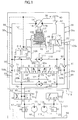
- a hydraulic system embodying the present invention comprises a reservoir tank 56 reserving working fluid and a hydraulic pump 54 sucking in the working fluid from the reservoir tank 56 by way of a fluid suck passageway 63 to increase in pressure and deliver the working fluid.
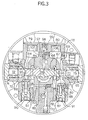
- the hydraulic system is shown in Fig. 2 as comprising a casing 11 fixedly attached to a frame member of a crawler vehicle not shown and including a cylindrical casing 12 and a valve casing 13 tightly connected to each other.
- the cylindrical casing 12 accommodates a cam plate type hydraulic motor 14 for driving the crawler vehicle.
- the cam plate type hydraulic motor 14 comprises an output rotation shaft 17 rotatably supported by the cylindrical casing 12 and the valve casing 13 by way of bearings 15 and 16.
- the output rotation shaft 17 has one end portion protruded from the cylindrical casing 12and securely connected to a sprocket held in mesh with a crawler, neither of the sprocket and crawler being shown.
- the hydraulic motor 14 is shown in Fig. 1 as having first and second inlet/outlet ports 14a and 14b.
- the working fluid is supplied from the hydraulic pump 54 to one of the first and second inlet/outlet ports 14a and 14b through one of first and second fluid supply/discharge passageways 58 and 59 and discharged from the other of the first and second inlet/outlet ports 14a and 14b to the reservoir tank 56 through the other of the first and second fluid supply/discharge passageways 58 and 59.
- the output rotation shaft 17 of the hydraulic motor 14 is rotated in a direction at the time when the working fluid from the hydraulic pump 54 is received by the first inlet/outlet port 14a, rotated in the opposite direction at the time when the working fluid from the hydraulic pump 54 is received by the second inlet/outlet port 14b.
- a reference numeral 20 denotes a cylinder block in which the other end of the rotation shaft 17 is housed and to which the other end of the rotation shaft 17 is connected through a spline connection.
- the cylinder block 20 is formed with a plurality of cylinder through bores 21 arranged in circumferentially equiangularly spaced relationship to each other and axially extending from one end of the cylinder block 20 to the other end portion of the cylinder block 20 in a parallel relation ship to the rotation shaft 17.
- the cylinder block 20 have a plurality of projection plungers 23 slidably received in the cylinder through bores 21, respectively, each of the projection plungers 23 being formed with a globular portion 22 each capable of being protruded from one end portion of the cylinder block 20.
- a reference numeral 24 denotes a timing plate that is fixedly connected to the valve casing 13 and intervenes between the cylinder block 20 and the valve casing 13.
- the timing plate 24 is formed with a pair of arched through bores 25 symmetrically arranged with respect to an axis of the cylinder block 20 and each brought alternatively into fluid communication with and into fluid discommunication with the cylinder through bores 21 in accordance with the rotation of the cylinder block 21 about the output rotation shaft 17 with respect to the timing plate 20.
- the camp plate 28 has a slant surface 29 that is slanted with respect to an imaginary plane intersecting the output rotation shaft 17 of the hydraulic motor 14 at a right angle and as a consequence the cam plate 28 is divided into a thin plate portion 30 and a thick plate portion 31 by an imaginary plane on which the rotation axis of the output rotation shaft 17 of the hydraulic motor 14 extends.
- the cam plate 28 further has a back surface 32 comprising a first flat surface 33 that is parallel to the imaginary plane intersecting the output rotation shaft 17 at a right angle and partially forms a surface of the thin plate portion 30 of the cam plate 28, and a second flat surface 34 that is slanted with respect to the first flat surface 33 at a predetermined little angle and partially forms a surface of the thick plate portion 31 of the cam plate 28.
- the cam plate 28 is adapted to be pivotable with respect to a fulcrum member 35 disposed on a boundary between the first and second flat surfaces 33 and 34 to assume two different cam plate positions consisting of a first cam plate position in which the first flat surface 33 of the cam plate 28 is held in contact with an inner flat surface of the cylindrical casing 12, and a second cam plate position in which the second flat surface 34 of the cam plate 28 is held in contact with the inner flat surface of the cylindrical casing 12.
- the slant surface 29 of the cam plate 28 is slidably engaged with a plurality of shoe members 38 which is equal in number to the projection plungers 23, and each which has a recess and is connected to each of the projection plungers 23 in such a way that the recess of each of the shoe members 38 has the globular portion 22 of each of the projection plungers 23 pivotably received therein.
- the cylindrical casing 12 is formed with a cylinder chamber 40 which is opened at the inner surface of the cylindrical casing 12 facing to the first flat surface 33 of the cam plate 28 and in which a press piston 41 is slidably received.
- the cylindrical casing 12 is further formed with a speed change fluid passageway 42 on which a restrictor 124 is provided and which is held in fluid communication with the cylinder chamber 40.
- the cam plate 28 When, on the other hand, the working fluid of high pressure is interrupted to be supplied to the cylinder chamber 40 by the way of the speed change fluid passageway 42, the cam plate 28 is shifted to assume the second plate position to the first plate position.
- the cam plate 23 thus shiftable to assume the first and second cam plate positions enables the projection plungers 23 contained in the cylinder block 20 to axially move with different strokes, thereby making it possible to change the rotation speed of the output rotation shaft 17 between different speed conditions.
- the speed change fluid passageway 42 is connectable to a control fluid passageway 112 and a fluid drain passageway 101 through a speed control valve 113.
- the speed control valve 113 is shown in Fig.
- control valve spool 120 as comprising a control valve spool 120 slidably received by the valve casing 13, and a helical spring 121 engaged with one end portion of the control valve spool 120 and urging the control valve spool 120 to move axially against pilot pressure of the working fluid which is supplied to a pilot hydraulic chamber 120a and is exerted on the other end portion of the control valve spool 120.
- the speed control valve 113 thus constructed is operative to assume two different control valve positions in accordance with the pilot pressure of the working fluid exerted on the other end portion of the control valve spool 120 Turning back to Fig.
- control valve positions of the speed control valve 113 consist of a first control valve position G in which the speed change fluid passageway 42 is held in fluid communication with the control fluid passageway 112, and a second control valve position I in which the speed change fluid passageway 42 is held in fluid communication with the fluid drain passageway 101.
- the working fluid in the pilot hydraulic chamber 120a of the control spool valve 120 is supplied from a hydraulic pump 114 through a pilot fluid passageways 119 and a fluid feed passageway 116 from a hydraulic pump 114.
- the pilot fluid passageway 119 is connectable not only to the fluid feed passageway 116 but to a fluid drain passageway 123 through a two-position switching valve 117.
- the switching valve 117 is operated to assume two different switching valve positions in accordance with manual operation by the crawler vehicle driver.
- the valve positions of the two-position switching valve 117 consist of a first switching valve position F in which the pilot fluid passageway 119 is held in fluid communication with the fluid feed passageway 116, and a second switching valve position H in which the pilot fluid passageway 119 is held in fluid communication with the fluid drain passageway 123.
- the hydraulic pump 114 sucks the working fluid from the reservoir tank 56 through a fluid suck passageway 115 in order to force the working fluid into the fluid feed passageway 116.
- On the fluid feed passageway 116 is provided a relief valve 122 that prevents pressure of the working fluid in the fluid passageway 116 from exceeding a predetermine pressure level.
- a reference numeral 111 denotes a shuttle valve that has the control fluid passageway 112 brought into fluid communication selectively with a first selection fluid passageway 81 and a second selection fluid passageway 82.
- the first and selection fluid passageways 81 and 82 are respectively held in fluid communication with a hydraulic motor side passageway portion 58a of a first supply/discharge fluid passageway 58 and a hydraulic motor side passageway portion 59a of a second supply/discharge fluid passageway 59 described hereinlater in detail.
- the working fluid in one of the first and second selection fluid passageways 81 and 82 to be brought into fluid communication with the control fluid passageway 112 has a fluid pressure higher than that ofthe other of the first and second selection fluid passageways 81 and 82.
- a reference numeral 45 denotes a plurality of first friction ring plates arranged in axially spaced and coaxial relationship to one another and securely connected to an outer peripheral surface portion of the cylinder block 20 of the hydraulic motor 14, while a reference numeral 46 denotes a plurality of second friction ring plates securely connected to an inner peripheral surface portion of the cylindrical casing 12 and arranged in alternate and coaxial relationship to the first friction ring plates 45.
- the first and second friction ring plates 45 and 46 as a whole form a friction plate assembly.
- the cylindrical casing 12 slidably receives a brake piston 47 which is located between the valve casing 13 and the friction plate assembly and surrounds the cylinder block 20.
- the brake piston 47 defines a main chamber 48 in cooperation with the cylindrical casing 12.
- a plurality of brake springs 49 each urging the brake piston 47 to push the first friction ring plates 45 to the second friction ring plates 46 in turn.
- the brake springs 49 collectively force the brake piston 47 to push the first friction ring plates 45 to the second friction ring plates 46.
- the first and second friction ring plates 45 and 46 are caused by the resilient forces of the brake springs 49 to be engaged with one another and generate a large friction force therebetween, and accordingly the output rotation shaft 17 is mechanically braked by the large friction force transmitted through the cylinder block 20 from the friction plate assembly.
- the brake piston 47 When the working fluid of high pressure is supplied to the main hydraulic chamber 48, the brake piston 47 is forced by the working fluid pressure in the main hydraulic chamber 48 to axially move against the resilient forces of the brake springs 49. At this time, there is no friction force between the first and second friction ring pates 45 and 46 and as a consequence the output rotation shaft 17 as well as the cylinder block 20 is released from the mechanical brake force based on the brake springs 49.
- the above-mentioned first and second friction ring plates 45 and 46, brake piston 47 and brake springs 49 collectively form a mechanical brake assembly 50.
- the hydraulic system further comprises a shuttle valve 98 provided on the first and second fluid supply/discharge passageways 58 and 59 for having the release fluid passageway 99 brought into fluid communication selectively with the first and second fluid supply/discharge passageways 58 and 59.
- the working fluid in one of the first and second fluid supply/discharge passageways 58 and 59 brought into fluid communication with the release fluid passageway 99 is higher in pressure than that in the other of the first and second fluid supply/discharge passageways 58 and 59.
- the hydraulic system further is shown in Fig. 1 as further comprises a control valve 100 which is provided on the release fluid passageway 99 and operative to assume two different control valve positions in accordance with the fluid pressure in the release fluid passageway 99.
- the control valve positions of the control valve 100 consist of a first control valve position D in which the working fluid is permitted to flow the release fluid passageway 99 between the shuttle valve 98 and the main hydraulic chamber 48, and a second control valve position E in which the working fluid is discharged from the main hydraulic chamber 48 to the reservoir tank 56 through the fluid drain passageway 101.
- the hydraulic system further comprises a directional control valve 53 of three-position switching type which is provided on the first and second fluid supply/discharge passageways 58 and 59 and communicates with a hydraulic pump 54 and a reservoir tank 56 through a fluid feed passageway 55 and a fluid drain passageway 57, respectively.
- the directional control valve 53 is operative to assume three different directional control valve positions in accordance with manual operation by the crawler vehicle driver.
- the directional control valve positions consist of a first directional control valve position L in which the working fluid is permitted to be supplied from the hydraulic pump 54 to the first fluid supply/discharge passageway 58 through the fluid feed passageway 55 and to be discharged from the second fluid supply/discharge passageway 59 to the reservoir tank 56 through the fluid drain passageway 55, a second directional control valve position K in which the working fluid is permitted to be discharged from the first and second fluid supply/discharge passageways 58 and 59 to the reservoir tank 56 through the fluid drain passageway 57, and a third directional control valve position J in which the working fluid is permitted to be supplied from the hydraulic pump 54 to the second supply/discharge fluid passageway 59 through the fluid feed passageway 55 and to be discharged from the first supply/discharge fluid passageway 58 through the fluid drain passageway 57.
- On the fluid feed passageway 55 is provided a relief valve 62 that prevents pressure of the working fluid in the fluid feed passageway 55 from exceeding a predetermine pressure level.
- the brake piston 47 and the cylindrical casing 12 further defines a secondary hydraulic chamber 105 held in fluid communication with the release fluid passageway 99 through a fluid feed/return passageway 106.
- a brake resistance restrictor 107 on the fluid feed/return passageway 106 for restricting flow of the working fluid in the fluid feed/return passageway 106.
- the brake piston 47 further has a second piston area portion on which the fluid pressure in the secondary hydraulic chamber 105 is exerted so as to disengage the brake piston 47 from the output rotation shaft 17 of the hydraulic motor 14 against resilient force of the brake springs 49.
- the second piston area portion of the brake piston 47 has an effective area smaller than that of the first piston area portion of the brake piston 47.
- the hydraulic system further comprises a counterbalance valve 65 provided on the first and second fluid supply/discharge passageways 58 and 59 between the hydraulic pump 14 and the directional control valve 53.
- the counterbalance valve 65 is designed to prevent the working fluid from being forced by the hydraulic motor 14 into one of the first and second fluid supply/discharge passageways 58 and 59 when the hydraulic motor 14 is still at work under condition that the directional control valve 53 is shifted to assume the second directional control valve position K.
- the hydraulic system further comprises a first check valve 90 provided on the first fluid supply/discharge passageway 58 and a second check valve 91 provided on the second fluid supply/discharge passageway 59.
- the first fluid supply/discharge passageway 58 is divided by the first check valve 90 into a hydraulic motor side passageway portion 58a and a directional control valve side passageway portion 58b.
- the second fluid supply/discharge passageway 59 is divided by the second check valve 91 into a hydraulic motor side passageway portion 59a and a directional control valve side passageway portion 59b.
- the counterbalance valve 65 comprises first and second valve spools 68 and 69 arranged into alignment with each other, and respectively having inner end portions 68a and 69a facing to each other and outer end portions 68b and 69b remote from each other.
- the first and second valve spools 68 and 69 are slidably received by the valve casing 13.
- the inner end portions 68a and 69a of the first and second valve spools 68 and 69 and the valve casing 13 collectively define a median hydraulic chamber 76 held in fluid communication with the fluid feed/return passageway 106 between the secondary hydraulic chamber 105 and the brake resistance restrictor 107.
- the outer end portion 68b of the first valve spool 68 defines, in cooperation with the valve casing 13, a first side hydraulic chamber 72 held in fluid communication with the directional control valve side passageway portion 58a of the first fluid support/discharge passageway 58.
- the outer end portion 69b of the second valve spool 69 defines, in cooperation with the valve casing 13, a second side hydraulic chamber 73 held in fluid communication with the directional control valve side passageway portion 59b of the second fluid support/discharge passageway 59.
- the first valve spool 68 of the counterbalance valve 65 is formed with a through bore of small diameter serving as a first restrictor 95 which is provided between the first side hydraulic chamber 72 and the directional control valve side passageway portion 58b of the first fluid support/discharge passageway 58 for restricting flow of the working fluid between the first side hydraulic chamber 72 and the directional control valve side passageway portion 58b of the first fluid supply/discharge passageway 58.
- the second spool 69 of the counterbalance valve 65 is formed with a through bore of small diameter serving as a second restrictor 96 which is provided between the second side hydraulic chamber 73 and the directional control valve side passageway portion 59b of the second fluid supply/discharge passageway 59 for restricting flow of the working fluid between the second side hydraulic chamber 73 and the directional control valve side passageway portion 59b of the second supply/discharge fluid passageway 59.
- the counterbalance valve 65 further comprises first and second return springs 74 and 75 received in the first and second side hydraulic chambers 72 and 73 and urging the first and second valve spools 68 and 69 to move inward, respectively.
- the first valve spool 68 of the counterbalance valve 65 is axially movable to assume a first spool position C in which the working fluid is permitted to flow between the hydraulic motor side passageway portion 58a of the first fluid support/discharge passageway 58 and the directional control valve side passageway portion 58b of the first fluid supply/discharge passageway 58, and a second spool position A in which the working fluid is interrupted from flowing between the hydraulic motor side passageway portion 58a of the first fluid supply/discharge passageway 58 and the directional control valve side passageway portion 58b of the first fluid supply/discharge passageway 58.
- the second valve spool 69 of the counterbalance valve 65 is axially movable to assume a first spool position C in which the working fluid is permitted to flow between the hydraulic motor side passageway portion 59a of the second fluid supply/discharge passageway 59 and the directional control valve side passageway portion 59b of the second fluid supply/discharge passageway 59 and a second spool position A in which the working fluid is interrupted from flowing between the hydraulic motor side passageway portion 59a of the second fluid supply/discharge passageway 59 and the directional control valve side passageway portion 59b of the second fluid supply/discharge passageway 59.
- the working fluid is further permitted by the counterbalance valve 65 to flow between the hydraulic motor side passageway portion 58a of the first fluid supply/discharge passageway 58 and the motor side passageway portion 59a of the second fluid supply/discharge passageway 59.
- the working fluid is interrupted from flowing between the hydraulic motor side passageway portion 58a of the first fluid supply/discharge passageway 58 and the hydraulic motor side passageway portion 59a of the second fluid supply/discharge passageway 59.
- the first valve spool 68 of the counterbalance valve 65 further assumes a third spool position B between the first spool position C and the second spool position A of the first valve spool 68.
- the second valve spool 69 of the counterbalance valve 65 further assumes a third spool position B between the first spool position C and the second spool position A of the second valve spool 69.
- the directional control valve 53 is shifted to assume the first directional control valve position L or the third directional control valve position J.
- the directional control valve 53 is shifted to assume the third directional control valve position J, the following description will be made.
- the directional control valve 53 is shifted to assume the third directional control valve position J, the working fluid of high pressure is supplied to the second fluid supply/discharge passageway 59 from the hydraulic pump 54.
- the second fluid supply/discharge passageway 59, the second selection fluid passageway 82, the fluid feed/return passageway 106, the release fluid passageway 99 and the control fluid passageway 112 serve as high pressure fluid passageways.
- the working fluid of high pressure is supplied from the hydraulic pump 54 to about half of the cylinder through bores 21 through the fluid feed passageway 55, the second fluid supply/discharge passageway 59 and the arched through bores 25, and accordingly the globular portions of the projection plungers 23 are protruded in turn from the cylinder block 20 to push the slant surface 29 of the cam plate 28.
- the projection plungers 23 and the shoe members 38 are forced by component of the push force exerted on the projection plungers 23 to move from the thick plate portion 31 of the cam plate 28 toward the thin plate portion 30 of the cam plate 28, thereby rotating the output rotation shaft 17 of the hydraulic motor 14 with the projection plungers 23 and cylinder block 20 to drive the crawler vehicle.
- the working fluid of high pressure in the second fluid supply/discharge passageway 59 is permitted by the shuttle valve 98 to be supplied to the release fluid passageway 99.
- the working fluid of high pressure in the release fluid passageway 99 causes the control valve 100 to assume the first control valve position D and is supplied to the main hydraulic chamber 48 of the mechanical brake assembly 50.
- the working fluid of high pressure in the release fluid passageway 99 is supplied to the secondary hydraulic chamber 105 of the mechanical brake assembly 50 through the fluid feed/return passageway 106.
- the brake piston 47 of the mechanical brake assembly 50 is forced to be disengaged by the fluid pressure both in the main hydraulic chamber 48 and the secondary hydraulic chamber 105 from the first and second friction ring plates 45 and 46 against the resilient force of the brake springs 49 and as a result the output rotation shaft 17 of the hydraulic motor 14 is released from the friction force generated between the first and second friction ring plates 45 and 46, i.e., the mechanical brake force generated by the brake springs 49, thereby permitting the output rotation shaft 17 of the hydraulic motor 14 to rotate freely.
- the working fluid of high pressure is further supplied not only from the fluid feed/return passageway 106 to the median hydraulic chamber 76 of the counterbalance valve 65 but also from the release fluid passageway 99 to the second side hydraulic chamber 73 of the counterbalance valve 65.
- the first side hydraulic chamber 72 of the counterbalance valve 65 is held in fluid communication with the first fluid supply/discharge passageway 58 serving as a drain passageway, so that the first valve spool 68 of the counterbalance valve 65 is moved to assume the first spool valve position C.
- the working fluid in the cylinder through bores 21 is discharged to the reservoir tank 56 through the hydraulic motor side passageway portion 58a of the first fluid supply/discharge passageway 58, the fluid passageway 81 and the directional control valve side passageway portion 58b of the first fluid supply/discharge passageway 58 and the fluid drain passageway 57.
- the two-position switching valve 117 is shifted to assume the first switching valve position F in which the working fluid of high pressure is supplied from the hydraulic pump 114 to the pilot hydraulic chamber 120a of the speed control valve 113 through the pilot fluid passageway 119.
- the speed control valve 113 is operated by the pilot fluid pressure in the pilot hydraulic chamber 120a to assume the first speed control valve position G and accordingly the working fluid of high pressure selected by the shuttle valve 111 is supplied to the cylinder chamber 40 through the control fluid passageway 112 and the speed change fluid passageway 42.
- the working fluid of high pressure in the cylinder chamber 40 causes the press piston 41 to be protruded from the inner surface of the cylindrical casing 12 so that the cam plate 28 is pivoted on the fulcrum member 35 to assume the second position in which the second flat surface 34 of the cam plate 28 is in contact with the inner surface of the cylindrical casing 12.
- the two-position switching valve 117 is shifted to assume the second switching valve position H in which the working fluid is discharged from the pilot hydraulic chamber 120a of the control valve 113 to the reservoir tank 56 through the pilot fluid passageway 119 and the fluid drain passageway 123.
- the speed control valve 113 is operated by the helical spring 121 to assume the second speed control valve position I in which the working fluid in the cylinder chamber 40 is discharged to the reservoir tank 56 through the speed change fluid passageway 42 and the fluid drain passageway 101.
- the cam plate 28 is forced by the projection plungers 23 to be pivoted on the fulcrum member 35 and accordingly assumes the first position in which the first flat surface 33 of the cam plate 28 is in contact with the inner surface of the cylindrical casing 12.
- the directional control valve 53 is changed from the third directional control valve position J to the second directional control valve position K in which the first and second fluid supply/discharge passageways 58 and 59 are brought into fluid communication with each other and serve as low pressure fluid passageways.
- the release fluid passageway 99 serves as a low pressure fluid passageway so that the working fluid of high pressure is stopped from being supplied to the main hydraulic chamber 48 of the mechanical brake 50.
- the control valve 100 is shifted to assume the second valve position E in which the working fluid in the main hydraulic chamber 48 is discharged to the reservoir tank 56 through the fluid drain passageway 101.
- the fluid pressure in the secondary hydraulic chamber 105 is gradually decreased to the extent of a predetermined pressure level larger than the low pressure level of the reservoir tank 56 for the short time between the points T1 and T2 because of the fact that the brake resistance restrictor 107 is provided on the fluid feed/return passageway 106 for restricting the flow of the working fluid in the fluid feed/return passageway 106.
- the fluid pressure in the secondary hydraulic chamber 105 smaller than delivery pressure of the hydraulic pump 54 and gradually decreased is exerted on the second piston area portion of the brake piston 47 of the mechanical brake assembly 50 to prevent the brake piston 47 from being immediately engaged with the first and second friction ring plates 45 and 46.
- the first friction ring plates 45 are engaged with the second friction ring plates 46 by turns at the point T2, thereby applying the mechanical brake force of the mechanical brake 50 to the output rotation shaft 17 of the hydraulic motor 14. Since part of the resilient forces of the brake springs 49 are canceled by the fluid pressure in the secondary hydraulic chamber 105, the mechanical brake force based on the resilient force of the brake springs 49 and the fluid pressure in the secondary hydraulic chamber 105 becomes considerably small in comparison with that based only on the brake springs 49.
- the rotation speed of the rotation shaft 17 of the hydraulic motor 14, i.e., the driving speed of the crawler vehicle is gradually reduced at deceleration represented by 0.4g or less, so that the crawler vehicle can be effectively prevented from incurring the mighty shock at the time when the crawler vehicle is decelerated and stopped.
- the fluid pressure in the secondary hydraulic chamber 105 of the mechanical brake assembly 50 is substantially held at a constant low pressure level during a time between the points T2 and T3 as understood from Fig. 5.
- the reason is described as follows.
- the second valve spool 69 of the counterbalance valve 65 is moving from the second spool position A toward the first spool position C, and consequently the working fluid which is equal in quantity to that discharged through the brake resistance restrictor 107 is continuously supplied from the median hydraulic chamber 76 of the counterbalance valve 65 to the fluid feed/return passageway 106 between the secondary hydraulic chamber 105 and the brake resistance restrictor 107.
- the fluid pressure in the secondary hydraulic chamber 105 as well as in the fluid feed/return fluid passageway 106 between the secondary hydraulic chamber 105 and the brake resistance restrictor 107 is held at a constant low pressure level. Therefore, the mechanical brake force applied by the mechanical brake assembly 50 to the output rotation shaft 17 of the hydraulic motor 14 is held at a constant small force level during a certain time, thereby making it possible to more effectively prevent the crawler vehicle from incurring the mighty shock at the time when the crawler vehicle is decelerated and stopped.
- the first valve spool 68 of the counterbalance valve 65 is, however, returned to the second spool position A from the third spool position B to disconnect the hydraulic motor side passageway portion 58a of the first fluid supply/discharge passageway 58 from the directional control valve side passageway portion 58b of the first fluid supply/discharge passageway 58 at the point T3, and accordingly the working fluid in the hydraulic motor side passageway portion 58a of the first fluid supply/discharge passageway 58 is increased in pressure, thereby applying a fluid brake force to the hydraulic motor 14. Therefore, the output rotation shaft 17 of the hydraulic motor 14 is braked and stopped both by the mechanical brake force generated by the mechanical brake assembly 50 and by the fluid brake force based on the operation of the counterbalance valve 65.
- the brake force applied by the mechanical brake assembly 50 to the hydraulic motor 14 is based on only the mechanical brake force and consequently becomes large in comparison with that based on the mechanical brake force partially canceled by the fluid pressure in the secondary hydraulic chamber 105 because of the fact that the fluid pressure in the secondary hydraulic chamber 105 is reduced to the extent of the low pressure level of the reservoir tank 56.
- the hydraulic motor 14 is completely stopped at a point T4 shown in Fig. 5
- the mechanical brake force based on the static friction force generated between the first and second friction ring plates 45 and 46 is applied to the output rotation shaft 17 of the hydraulic motor 14. If the hydraulic motor 14 is completely stopped before the point T3, there is provided no fluid brake force applied to the hydraulic motor 14.
- the output rotation shaft 17 of the hydraulic motor 14 continues to rotate in the same direction for an extremely short time. At this time, the hydraulic motor 14 tries to suck the working fluid from the second fluid supply/discharge passageway 59 serving as a low pressure passageway and force the working fluid into the first fluid supply/discharge fluid passageway 58 serving as a high pressure passageway.
- the working fluid in the first side hydraulic chamber 72 of the counterbalance valve 65 is increased in pressure to the extent of high pressure level equal to the fluid pressure in the first fluid supply/discharge passageway 58, while the working fluid in the second side hydraulic chamber 73 of the counterbalance valve 65 is reduced in pressure to the extent of the low pressure level of the reservoir tank 56.
- the first valve spool 68 of the counterbalance valve 65 is moved from the first spool position C to the second spool position A, while the second valve spool 69 of the counterbalance valve 65 is moved from the second spool position A to the first spool position C.
- the fluid pressure in the median hydraulic chamber 76 between the first and second valve spools 69 and 69 is held at the high pressure level and there is no working fluid supplied to and discharged from the median hydraulic chamber 76 of the counterbalance valve 65.
- the first and second valve spools 68 and 69 are axially moved at the same speeds in invariably spaced relationship to each other, so that the first and second valve spools 68 and 69 simultaneously assume the third spool positions B in which the first selection fluid passageway 81 is brought into fluid communication with the second selection fluid passageway through the connection fluid passageway 83.
- the working fluid of high pressure is, therefore, discharged from the first fluid supply/discharge passageway 58 to the second fluid supply/discharge passageway 59 containing the working fluid of low pressure therein, thereby preventing surge pressure from arising in the first fluid supply/discharge passageway 58 and preventing cavitation from being caused to the second fluid supply/discharge passageway 59.
- first and second valve spools 68 and 69 of the counterbalance valve 65 are formed by different parts, respectively, the first and second valve spools 68 and 69 may be integrally formed with each other.
- a pair of hydraulic chambers in place of the median hydraulic chamber 76 can be defined, in cooperation with the valve casing, by one end portion and the other end portion, respectively, of one spool body collectively formed by the first and second spools.
- the median hydraulic chamber 76 of the counterbalance valve 65 is held in fluid communication with the fluid feed/return passageway 106 in order to the replenish the fluid feed/return passageway 106 with the working fluid contained in the median hydraulic chamber 76, the median hydraulic chamber 76 can be disconnected to the fluid feed/return passageway 106.
- the fluid pressure in the secondary hydraulic chamber 105 of the mechanical brake assembly 50 is relatively quickly reduced to the extent of the low pressure level of the reservoir tank 56.
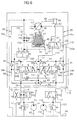
- Fig.6 shows a second preferred embodiment of a hydraulic system according to the present invention.
- the second embodiment herein shown is a modification of the first embodiment shown in Figs.1 to 5 and comprises a hydraulic motor 14, a hydraulic mechanical brake assembly 50, a control valve 100, a speed control valve 113, a shuttle valve 111, a first check valve 90, a second check valve 91, a counterbalance valve 65, a shuttle valve 98, a directional control valve 53, a relief valve 62, a hydraulic pump 54, a two-position switching valve 117, a hydraulic pump 54, a relief valve 122 and a reservoir tank 56 which are entirely similar to their respective counterparts in the first embodiment of Figs.1 to 4.
- the hydraulic system as shown in Fig.6 differs from the first embodiment of Figs.1 to 5 simply in a hydraulic circuit held in fluid communication with the secondary hydraulic chamber 105, and only the difference between the first and second embodiments will be described hereinlater in order to avoid the repeated recitation.
- the secondary hydraulic chamber 105 of the mechanical brake assembly 50 is held in fluid communication with the reservoir tank 56 through a fluid feed/return passageway 156 that is held in fluid communication with the fluid drain passageway 101.
- the brake resistance restrictor 157 for restricting flow of the working fluid in the fluid feed/return passageway 156.
- the fluid drain passageway 101 is held in fluid communication with the fluid feed/return passageway 156 between the brake resistance restrictor 157 and the secondary hydraulic chamber 105 through another fluid feed/return passageway 158 on which a check valve 159 provided for permitting the working fluid to flow only from the reservoir tank to the secondary hydraulic chamber 105 through the fluid drain passageway 101 and the another fluid feed/return passageway 158.
- the hydraulic system shown in Fig. 6 is advantageous in that the crawler vehicle can be effectively prevented from incurring the mighty shock at the time when the crawler vehicle is decelerated and stopped.
- the secondary hydraulic chamber 105 of the mechanical brake assembly 50 is not held in fluid communication with the release fluid passageway 99. Since there is no working fluid supplied to the fluid feed/return passageway 156 between the secondary hydraulic chamber 105 and the brake resistance restrictor 157 during the brake operation of the mechanical brake assembly 50, the hydraulic system shown in Fig. 6 differs from the first embodiment shown in Figs. 1 to 5 in that the fluid pressure in the secondary hydraulic chamber 105 of the mechanical brake assembly 50 is relatively quickly reduced to the extent of the low pressure level of the reservoir tank 56.
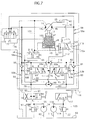
- Figs. 7 and 8 show a third preferred embodiment of a hydraulic system according to the present invention.
- the third embodiment herein shown is a modification of the first embodiment shown in Figs.1 to 5 and comprises a hydraulic motor 14, a hydraulic mechanical brake assembly 50, a control valve 100, a speed control valve 113, a shuttle valve 111, a first check valve 90, a second check valve 91, a counterbalance valve 65, a shuttle valve 98, a directional control valve 53, a relief valve 62, a hydraulic pump 54, a two-position switching valve 117, a hydraulic pump 54, a relief valve 122 and a reservoir tank 56 which are entirely similar to their respective counterparts in the first embodiment of Figs. 1 to 4.
- the hydraulic system as shown in Fig. 7 differs from the first embodiment of Figs. 1 to 5 simply in a hydraulic circuit held in fluid communication with the secondary hydraulic chamber 105, and only the difference between the first and third embodiments will be described hereinlater in order to avoid the repeated
- a selection valve 173 on the first and second fluid supply/discharge passageways 58 and 59.
- the selection valve 173 is operative to assume three different selection valve positions in accordance with the difference in pressure between the working fluid in the first fluid supply/discharge passageway 58 and the working fluid in the second fluid supply/discharge passageway 59
- the selection valve positions consist of a first selection valve position P in which the working fluid is permitted to flow between the first fluid supply/discharge passageway 58 and the secondary hydraulic chamber 105 through a fluid feed/return passageway 176 and interrupted from flowing between the second fluid supply/discharge passageway 59 and the secondary hydraulic chamber 105 through the fluid feed/return passageway 136, a second selection valve position Q in which the working fluid is interrupted from flowing between the first fluid supply/discharge passageway 58 and the secondary hydraulic chamber 105 and between the second fluid supply/discharge passageway 59 and the secondary hydraulic chamber 105 through the fluid feed/return passageway 136, and a third selection valve
- the selection valve 173 is operated to assume the first selection valve position P when the pressure of the working fluid in the first fluid supply/discharge passageway 58 is smaller than that in the second fluid supply/discharge passageway 59.
- the selection valve 173 is operated to assume the second selection valve position Q.
- the selection valve 173 is operated to assume the third selection valve position R.
- a brake resistance restrictor 177 for restricting flow of the working fluid in the fluid feed/return passageway 176.
- the selection valve 173 is shown in Fig. 8 as comprising a cylindrical member 178 formed with a cylinder bore 178, a valve spool 179 slidably received by the cylindrical member 178, and a plug member 180 having an opening of the cylinder bore 178a hermetically sealed therewith.
- the cylindrical member 178 is further formed with a first fluid port 178b having the cylinder bore 178a held in fluid communication with the first fluid supply/discharge passageway 58, a second fluid port 178c having the cylinder bore 178a held in fluid communication with the second fluid supply/discharge passageway 58, a third fluid port 178d having the cylinder bore 178a held in fluid communication with the fluid feed/return passageway 176.
- a first fluid port 178b having the cylinder bore 178a held in fluid communication with the first fluid supply/discharge passageway 58
- a second fluid port 178c having the cylinder bore 178a held in fluid communication with the second fluid supply/discharge passageway 58
- a third fluid port 178d having the cylinder bore 178a held in fluid communication with the fluid feed/return passageway 176.
- the selection valve 173 assumes the first selection valve position P in which the fluid feed/return passageway 176 is held in fluid communication with the first fluid supply/discharge fluid passageway 58 through the third fluid port 178d, cylinder bore 178a and first fluid port 178b of the selection valve 173.
- the selection valve 173 assumes the second selection valve position Q in which the fluid feed/return passageway 176 is held in fluid disconnection with the first and second fluid supply/discharge fluid passageways 58 and 59.
- the selection valve 173 assumes the third selection valve position R in which the fluid feed/return passageway 176 is held in fluid communication with the second fluid supply/discharge passageway 59 through the third fluid port 178d, cylinder bore 178a and second fluid port 178c of the selection valve 173.
- the hydraulic system shown in Figs. 7 and 8 is advantageous in that the crawler vehicle can be effectively prevented from incurring the mighty shock at the time when the crawler vehicle is decelerated and stopped.
Landscapes
- Engineering & Computer Science (AREA)
- General Engineering & Computer Science (AREA)
- Mechanical Engineering (AREA)
- Physics & Mathematics (AREA)
- Fluid Mechanics (AREA)
- Transportation (AREA)
- Fluid-Pressure Circuits (AREA)
- Operation Control Of Excavators (AREA)
- Braking Systems And Boosters (AREA)
Claims (14)
- Un système hydraulique comprenant :une cuve-réservoir (56) qui contient du fluide de travail ;une pompe hydraulique (54) qui aspire le fluide de travail depuis ladite cuve-réservoir (56) afin de faire monter la pression et de débiter le fluide de travail;un moteur hydraulique (14) possédant un premier et un second orifice d'admission/d'évacuation (14a et 14b) et possédant un arbre rotatif de débit (17), le fluide de travail étant fourni depuis ladite pompe hydraulique (54) à l'un des dits premier et second orifices d'admission/d'évacuation (14a et 14b) au travers d'un couloir parmi un premier et un second couloir d'alimentation/de déversement de fluide (58 et 59) et déversé depuis l'autre des dits premier et second orifices d'admission/d'évacuation (14a et 14b) dans ladite cuve-réservoir (56) au travers de l'autre des dits premier et second couloirs d'alimentation/de déversement de fluide (58 et 59), ledit arbre rotatif de débit (17) étant tourné dans un sens lorsque le fluide de travail provenant de ladite pompe hydraulique (54) est reçu par ledit premier orifice d'admission/d'évacuation (14a), et ledit arbre rotatif de débit (17) étant tourné dans le sens opposé lorsque le fluide de travail provenant de ladite pompe hydraulique (54) est reçu par ledit second orifice d'admission/d'évacuation (14b);un assemblage de frein mécanique (50) possédant un piston de frein (47) pouvant se mettre en prise avec ledit arbre rotatif de débit (17) du dit moteur hydraulique (14), un boítier cylindrique (12) dans lequel ledit piston de frein (47) peut entrer en glissant et un ressort de frein (49) qui pousse de façon élastique ledit piston de frein (47) à se mettre en prise avec ledit arbre rotatif de débit (17) du dit moteur hydraulique (14), ledit piston de frein (47) et ledit boítier cylindrique (12) définissant ensemble une chambre hydraulique principale (48) à laquelle le fluide de travail est fourni au travers d'un couloir de libération de fluide (99) et de laquelle le fluide de travail est déversé au travers du dit couloir de libération de fluide (99), ledit piston de frein (47) possédant une première portion de zone de piston sur laquelle s'exerce la pression du fluide de travail dans ladite chambre hydraulique principale (48) de façon à dégager ledit piston de frein (47) du dit arbre rotatif de débit (17) du dit moteur hydraulique (14) contre la force élastique du dit ressort de frein (49), ledit arbre rotatif de débit (17) du dit moteur hydraulique (14) étant freiné de façon mécanique par la force élastique du dit ressort de frein (49) à travers ledit piston de frein (47) lorsque le fluide de travail est déversé depuis ladite chambre hydraulique principale (48) du dit assemblage de frein mécanique (50), et ledit arbre rotatif de débit (17) du dit moteur hydraulique (14) étant libéré du dit piston de frein (47) par la pression de fluide du fluide de travail dans ladite chambre hydraulique principale (48) lorsque le fluide de travail est fourni à ladite chambre hydraulique principale (48) du dit assemblage de frein mécanique (50);un distributeur de commande de sens (53) prévu sur lesdits premier et second couloirs d'alimentation/de déversement de fluide (58 et 59), et pouvant prendre trois positions de distributeur de commande de sens différentes consistant en une première position de distributeur de commande de sens (L) dans laquelle le fluide de travail peut passer depuis ladite pompe hydraulique (54) jusqu'au dit premier couloir d'alimentation/de déversement de fluide (58) et se déverser du dit second couloir d'alimentation/de déversement de fluide (59) dans ladite cuve-réservoir (56), une seconde position de distributeur de commande de sens (K) dans laquelle le fluide de travail peut se déverser des dits premier et second couloirs d'alimentation/de déversement de fluide (58 et 59) dans ladite cuve-réservoir (56), et une troisième position de distributeur de commande de sens (J) dans laquelle le fluide de travail peut passer depuis ladite pompe hydraulique (54) au dit second couloir d'alimentation/de déversement de fluide (59) et se déverser du dit premier couloir d'alimentation/de déversement de fluide (58) ; etune valve d'équilibre (65) prévue sur lesdits premier et second couloirs d'alimentation/de déversement de fluide (58 et 59) entre ledit moteur hydraulique (14) et ledit distributeur de commande de sens (53), ladite valve d'équilibre (65) agissant pour empêcher le fluide de travail d'être poussé par ledit moteur hydraulique (14) dans l'un des dits premier et second couloirs d'alimentation/de déversement de fluide (58 et 59) lorsque ledit moteur hydraulique (14) est encore en marche à condition que ledit distributeur de commande de sens (53) soit décalé pour prendre ladite seconde position de distributeur de commande de sens (K) ;
caractérisé en ce que :une valve navette (98) est prévue sur les dits premier et second couloirs d'alimentation/de déversement de fluide (58 et 59) pour maintenir de façon sélective ledit couloir de libération de fluide (99) en communication de fluide avec les premier et second couloirs d'alimentation/de déversement de fluide (58 et 59), le fluide de travail dans l'un des dits premier et second couloirs d'alimentation/de déversement de fluide (58 et 59) maintenu en communication de fluide avec ledit couloir de libération de fluide (99) possédant une pression supérieure à celle de l'autre des dits premier et second couloirs d'alimentation/de déversement de fluide (58 et 59) ;en ce que ledit piston de frein (47) et ledit boítier cylindrique (12) définissent de plus une chambre hydraulique secondaire (105) maintenue en communication de fluide avec ledit couloir de libération de fluide (99) au travers d'un couloir de débit/de retour de fluide (106), ledit piston de frein possédant une seconde portion de zone de piston sur laquelle s'exerce la pression du fluide de travail dans ladite chambre hydraulique secondaire de façon à résister à la force élastique du dit ressort de frein, eten ce que ledit système hydraulique comprend de plus un restricteur de résistance de freinage (107) prévu sur ledit couloir de débit/de retour de fluide (106) pour réduire le flux du fluide de travail dans ledit couloir de débit/de retour de fluide (106). - Un système hydraulique selon la revendication 1, dans lequel ladite première portion de zone de piston du dit piston de frein (47) possède une surface effective plus grande que ladite seconde portion de zone de piston du dit piston de frein (47).
- Un système hydraulique selon la revendication 1, comprenant de plus un distributeur de commande (100) prévu sur ledit couloir de libération de fluide (99) et pouvant prendre deux positions de distributeur de commande différentes consistant en une première position de distributeur de commande (D) dans laquelle le fluide de travail peut traverser en coulant ledit couloir de libération de fluide (99) entre ladite valve navette (98) et ladite chambre hydraulique principale (48), et une seconde position de distributeur de commande (E) dans laquelle le fluide de travail peut se déverser de ladite chambre hydraulique principale (48) à ladite cuve-réservoir (56) au travers du dit couloir de libération de fluide (99).
- Un système hydraulique selon la revendication 1, comprenant de plus un premier clapet de retenue (90) prévu sur ledit premier couloir d'alimentation/de déversement de fluide (58) pour permettre au fluide de travail de s'écouler seulement depuis le distributeur de commande de sens (53) au dit premier orifice d'admission/d'évacuation (14a) du dit moteur hydraulique (14) et un second clapet de retenue (91) prévu sur ledit second couloir d'alimentation/de déversement de fluide (59) pour permettre au fluide de travail de s'écouler seulement depuis le distributeur de commande de sens (53) au dit second orifice d'admission/d'évacuation (14b) du dit moteur hydraulique (14), ledit premier couloir d'alimentation/de déversement de fluide (58) étant divisé par ledit premier clapet de retenue (90) en une portion de couloir latérale de moteur hydraulique (58a) et une portion de couloir latérale de distributeur de commande de sens (58b), ledit second couloir d'alimentation/de déversement de fluide (59) étant divisé par ledit second clapet de retenue (91) en une portion de couloir latérale de moteur hydraulique (59a) et une portion de couloir latérale de distributeur de commande de sens (59b),ladite valve d'équilibre (65) comprenant :des premier et second tiroirs de valve (68 et 69) alignés l'un en face de l'autre et possédant respectivement des portions de bout internes se faisant face et des portions de bout externes éloignées l'une de l'autre ;un boítier de valve (13) possédant des premier et second tiroirs de valve (68 et 69) dans lequel ils peuvent entrer en glissant, les portions de bout internes des dits premier et second tiroirs de valve (68 et 69) et ledit boítier de valve (13) définissant ensemble une chambre hydraulique médiane (76) maintenue en communication de fluide avec ledit couloir de débit/de retour de fluide (106) entre ladite chambre hydraulique secondaire (105) et ledit restricteur de résistance de frein (107), la portion de bout externe du dit premier tiroir de valve (68) et ledit boítier de valve (13) définissant ensemble une première chambre hydraulique latérale (72) maintenue en communication de fluide avec la portion de couloir latérale de distributeur de commande de sens (58b) du dit premier couloir d'alimentation/de déversement de fluide (58), et la portion de bout externe du dit second tiroir de valve (69) et ledit boítier de valve (13) définissant ensemble une seconde chambre hydraulique latérale (73) maintenue en communication de fluide avec la portion de couloir latérale de distributeur de commande de sens (59b) du dit second couloir d'alimentation/de déversement de fluide (59),un premier ressort de rappel (74) poussant ledit premier tiroir de valve (68) à se déplacer en direction du dit second tiroir de valve (69),un second ressort de rappel (75) poussant ledit second tiroir de valve (69) à se déplacer en direction du dit premier tiroir de valve (68),un premier restricteur (95) prévu entre ladite première chambre hydraulique latérale (72) et la portion de couloir latérale de distributeur de commande de sens (58b) du dit premier couloir d'alimentation/de déversement de fluide (58) pour réduire le flux du fluide de travail entre ladite première chambre hydraulique latérale (72) et la portion de couloir latérale de distributeur de commande de sens (58b) du dit premier couloir d'alimentation/de déversement de fluide (58),un second restricteur (96) prévu entre ladite seconde chambre hydraulique latérale (73) et la portion de couloir latérale de distributeur de commande de sens (59b) du dit second couloir d'alimentation/de déversement de fluide (59) pour réduire le flux du fluide de travail entre ladite seconde chambre hydraulique latérale (73) et la portion de couloir latérale de distributeur de commande de sens (59b) du dit second couloir d'alimentation/de déversement de fluide (59),ledit premier tiroir de valve (68) de ladite valve d'équilibre (65) pouvant se déplacer de façon axiale pour prendre deux positions de tiroir différentes consistant en une première position de tiroir (C) dans laquelle le fluide de travail peut s'écouler entre la portion de couloir latérale de moteur hydraulique (58a) du dit premier couloir d'alimentation/de déversement de fluide (58) et la portion de couloir latérale de distributeur de commande de sens (58b) du dit premier couloir d'alimentation/de déversement de fluide (58), et une seconde position de tiroir (A) dans laquelle le fluide de travail ne peut pas s'écouler entre la portion de couloir latérale de moteur hydraulique (58a) du dit premier couloir d'alimentation/de déversement de fluide (58) et la portion de couloir latérale de distributeur de commande de sens (58b) du dit premier couloir d'alimentation/de déversement de fluide (58),ledit second tiroir de valve (69) de ladite valve d'équilibre (65) pouvant se déplacer de façon axiale pour prendre deux positions de tiroir différentes consistant en une première position de tiroir (C) dans laquelle le fluide de travail peut s'écouler entre la portion de couloir latérale de moteur hydraulique (59a) du dit second couloir d'alimentation/de déversement de fluide (59) et la portion de couloir latérale de distributeur de commande de sens (59b) du dit second couloir d'alimentation/de déversement de fluide (59), et une seconde position de tiroir (A) dans laquelle le fluide de travail ne peut pas s'écouler entre la portion de couloir latérale de moteur hydraulique (59a) du dit second couloir d'alimentation/de déversement de fluide (59) et la portion de couloir latérale de distributeur de commande de sens (59b) du dit second couloir d'alimentation/de déversement de fluide (59),ladite valve d'équilibre (65) permettant au fluide de travail de s'écouler entre la portion de couloir latérale de moteur hydraulique (58a) du dit premier couloir d'alimentation/de déversement de fluide (58) et la portion de couloir latérale de moteur (59a) du dit second couloir d'alimentation/de déversement de fluide (59) lorsque lesdits premier et second tiroirs de valve (68) et (69) se déplacent pour prendre les premières positions de tiroir (C), respectivement, ladite valve d'équilibre (65) empêchant le fluide de travail de s'écouler entre la portion de couloir latérale de moteur hydraulique (58a) du dit premier couloir d'alimentation/de déversement de fluide (58) et la portion de couloir latérale de moteur hydraulique (59a) du dit second couloir d'alimentation/de déversement de fluide (59) lorsque lesdits premier et second tiroirs de valve (68) et (69) se déplacent pour prendre les secondes positions de tiroir (A), respectivement,ledit premier tiroir de valve (68) de ladite valve d'équilibre (65) se déplaçant pour prendre ladite première position de tiroir (C) lorsque la force hydraulique du fluide de travail exercée sur la portion de bout interne du dit premier tiroir de valve (68) est supérieure à la somme de la force hydraulique du fluide de travail exercée sur la portion de bout externe dudit premier tiroir de valve (68) et de la force élastique du dit premier ressort de rappel (74), ledit premier tiroir de valve (68) de ladite valve d'équilibre (65) se déplaçant pour prendre ladite seconde position de tiroir (A) lorsque la force hydraulique du fluide de travail exercée sur la portion de bout interne du dit premier tiroir de valve (68) est inférieure à la somme de la force hydraulique du fluide de travail exercée sur la portion de bout externe du dit premier tiroir (68) et de la force élastique du dit premier ressort de rappel (74),le second tiroir de valve (69) de ladite valve d'équilibre (65) se déplaçant pour prendre ladite seconde position de tiroir (C) lorsque la force hydraulique du fluide de travail exercée sur la portion de bout interne du dit second tiroir de valve (69) est supérieure à la somme de la force hydraulique du fluide de travail exercée sur la portion de bout externe du dit second tiroir de valve (69) et de la force élastique du dit second ressort de rappel (75), et le second tiroir de valve (69) de ladite valve d'équilibre (65) se déplaçant pour prendre ladite seconde position de tiroir (A) lorsque la force hydraulique du fluide de travail exercée sur la portion de bout interne du dit second tiroir de valve (69) est inférieure à la somme de la force hydraulique du fluide de travail exercée sur la portion de bout externe du dit second tiroir de valve (69) et de la force élastique du dit second ressort de rappel (75).
- Un système hydraulique selon dans la revendication 4, dans lequel ledit premier tiroir de valve (68) de ladite valve d'équilibre (65) prend de plus une troisième position de tiroir (B) entre la première position de tiroir (C) et la seconde position de tiroir (A) du dit premier tiroir de valve (68),ledit second tiroir de valve (69) de ladite valve d'équilibre (65) prenant de plus une troisième position de tiroir (B) entre la première position de tiroir (C) et la seconde position de tiroir (A) du dit second tiroir de valve (69), etle fluide de travail pouvant s'écouler entre la portion de couloir latérale de moteur (58a) du dit premier couloir d'alimentation/de déversement de fluide (58) et la portion de couloir latérale de moteur (59a) du dit second couloir d'alimentation/de déversement de fluide (59) lorsque lesdits premier et second tiroirs de valve (68) et (69) se déplacent pour prendre les troisièmes positions de tiroir (B), respectivement.
- Un système hydraulique comprenant :une cuve-réservoir (56) qui contient du fluide de travail ;une pompe hydraulique (54) qui aspire le fluide de travail de ladite cuve-réservoir (56) afin de faire monter la pression et de débiter le fluide de travail ;un moteur hydraulique (14) possédant un premier et un second orifice d'admission/d'évacuation (14a et 14b) et possédant un arbre rotatif de débit (17), le fluide de travail étant fourni depuis ladite pompe hydraulique (54) à l'un des dits premier et second orifices d'admission/d'évacuation (14a et 14b) au travers d'un couloir parmi un premier et un second couloir d'alimentation/de déversement de fluide (58 et 59) et déversé depuis l'autre des dits premier et second orifices d'admission/d'évacuation (14a et 14b) dans ladite cuve-réservoir (56) au travers de l'autre des dits premier et second couloirs d'alimentation/de déversement de fluide (58 et 59), ledit arbre rotatif de débit (17) étant tourné dans un sens lorsque le fluide de travail provenant de ladite pompe hydraulique (54) est reçu par ledit premier orifice d'admission/d'évacuation (14a), et ledit arbre rotatif de débit (17) étant tourné dans le sens opposé lorsque le fluide de travail provenant de ladite pompe hydraulique (54) est reçu par ledit second orifice d'admission/d'évacuation (14b);un assemblage de frein mécanique (50) possédant un piston de frein (47) pouvant se mettre en prise avec ledit arbre rotatif de débit (17) du dit moteur hydraulique (14), un boítier cylindrique (12) dans lequel ledit piston de frein (47) peut entrer en glissant et un ressort de frein (49) qui pousse de façon élastique ledit piston de frein (47) à se mettre en prise avec ledit arbre rotatif de débit (17) du dit moteur hydraulique (14), ledit piston de frein (47) et ledit boítier cylindrique (12) définissant ensemble une chambre hydraulique principale (48) à laquelle le fluide de travail est fourni au travers d'un couloir de libération de fluide (99) et de laquelle le fluide de travail est déversé au travers du dit couloir de libération de fluide (99), ledit piston de frein (47) possédant une première portion de zone de piston sur laquelle s'exerce la pression du fluide de travail dans ladite chambre hydraulique principale (48) de façon à dégager ledit piston de frein (47) du dit arbre rotatif de débit (17) du dit moteur hydraulique (14) contre la force élastique du dit ressort de frein (49), ledit arbre rotatif de débit (17) du dit moteur hydraulique (14) étant freiné de façon mécanique par la force élastique du dit ressort de frein (49) à travers ledit piston de frein (47) lorsque le fluide de travail est déversé de ladite chambre hydraulique principale (48) du dit assemblage de frein mécanique (50), et ledit arbre rotatif de débit (17) du dit moteur hydraulique (14) étant libéré du dit piston de frein (47) par la pression de fluide du fluide de travail dans ladite chambre hydraulique principale (48) lorsque le fluide de travail est fourni à ladite chambre hydraulique principale (48) du dit assemblage de frein mécanique (50);un distributeur de commande de sens (53) prévu sur lesdits premier et second couloirs d'alimentation/de déversement de fluide (58 et 59), et pouvant prendre trois positions de distributeur de commande de sens différentes consistant en une première position de distributeur de commande de sens (L) dans laquelle le fluide de travail peut passer depuis ladite pompe hydraulique (54) jusqu'au dit premier couloir d'alimentation/de déversement de fluide (58) et se déverser du dit second couloir d'alimentation/de déversement de fluide (59) dans ladite cuve-réservoir (56), une seconde position de distributeur de commande de sens (K) dans laquelle le fluide de travail peut se déverser des dits premier et second couloirs d'alimentation/de déversement de fluide (58 et 59) dans ladite cuve-réservoir (56), et une troisième position de distributeur de commande de sens (J) dans laquelle le fluide de travail peut passer depuis ladite pompe hydraulique (54) au dit second couloir d'alimentation/de déversement de fluide (59) et se déverser du dit premier couloir d'alimentation/de déversement de fluide (58) ; etune valve d'équilibre (65) prévue sur lesdits premier et second couloirs d'alimentation/de déversement de fluide (58 et 59) entre ledit moteur hydraulique (14) et ledit distributeur de commande de sens (53), ladite valve d'équilibre (65) agissant pour empêcher le fluide de travail d'être poussé par ledit moteur hydraulique (14) dans l'un des dits premier et second couloirs d'alimentation/de déversement de fluide (58 et 59) lorsque ledit moteur hydraulique (14) est encore en marche à condition que ledit distributeur de commande de sens (53) soit décalé pour prendre ladite seconde position de distributeur de commande de sens (K);
caractérisé en ce que :une valve navette (98) est prévue sur les dits premier et second couloirs d'alimentation/de déversement de fluide (58 et 59) pour maintenir de façon sélective ledit couloir de libération de fluide (99) en communication de fluide avec lesdits premier et second couloirs d'alimentation/de déversement de fluide (58 et 59), le fluide de travail dans l'un des dits premier et second couloirs d'alimentation/de déversement de fluide (58 et 59) maintenu en communication de fluide avec ledit couloir de libération de fluide (99) possédant une pression supérieure à celle de l'autre des dits premier et second couloirs d'alimentation/de déversement de fluide (58 et 59) ;en ce que ledit piston de frein (47) et ledit boítier cylindrique (12) définissent de plus une chambre hydraulique secondaire (105) maintenue en communication de fluide avec ladite cuve-réservoir (56) à travers un couloir de débit/de retour de fluide (156), ledit piston de frein (47) possédant une seconde portion de zone de piston sur laquelle s'exerce la pression du fluide de travail dans ladite chambre hydraulique secondaire (105) de façon à résister à la force élastique du dit ressort de frein (49), eten ce que ledit système hydraulique comprend de plus un restricteur de résistance de freinage (157) prévu sur ledit couloir de débit/de retour de fluide (156) pour réduire le flux du fluide de travail dans ledit couloir de débit/de retour de fluide (156). - Un système hydraulique selon la revendication 6, dans lequel ladite chambre hydraulique secondaire (105) est maintenue en communication de fluide avec ladite cuve-réservoir (56) à travers un autre couloir de débit/de retour de fluide (158),ledit système hydraulique comprenant de plus un clapet de retenue (159) prévu sur ce dit autre couloir de débit/de retour de fluide (158) pour permettre au fluide de travail de s'écouler seulement depuis ladite cuve-réservoir (56) à ladite chambre hydraulique secondaire (105).
- Un système hydraulique selon la revendication 6, comprenant de plus un distributeur de commande (100) prévu sur ledit couloir de libération de fluide (99) et pouvant prendre deux positions de distributeur de commande différentes consistant en une première position de distributeur de commande (D) dans laquelle le fluide de travail peut traverser en coulant ledit couloir de libération de fluide (99) entre ladite valve navette (98) et ladite chambre hydraulique principale (48), et une seconde position de distributeur de commande (E) dans laquelle le fluide de travail peut se déverser depuis ladite chambre hydraulique principale (48) dans ladite cuve-réservoir (56) au travers du dit couloir de libération de fluide (99).
- Un système hydraulique selon la revendication 6, comprenant de plus un premier clapet de retenue (90) prévu sur ledit premier couloir d'alimentation/de déversement de fluide (58) pour permettre au fluide de travail de s'écouler seulement depuis le distributeur de commande de sens (53) au dit premier orifice d'admission/d'évacuation (14a) du dit moteur hydraulique (14) et un second clapet de retenue (91) prévu sur ledit second couloir d'alimentation/de déversement de fluide (59) pour permettre au fluide de travail de s'écouler seulement depuis le distributeur de commande de sens (53) au dit second orifice d'admission/d'évacuation (14b) du dit moteur hydraulique (14), ledit premier couloir d'alimentation/de déversement de fluide (58) étant divisé par ledit premier clapet de retenue (90) en une portion de couloir latérale de moteur hydraulique (58a) et une portion de couloir latérale de distributeur de commande de sens (58b), ledit second couloir d'alimentation/de déversement de fluide (59) étant divisé par ledit second clapet de retenue (91) en une portion de couloir latérale de moteur hydraulique (59a) et une portion de couloir latérale de distributeur de commande de sens (59b),ladite valve d'équilibre (65) comprenant :des premier et second tiroirs de valve (68 et 69) alignés l'un en face de l'autre et possédant respectivement des portions de bout internes se faisant face et des portions de bout externes éloignées l'une de l'autre ;un boítier de valve (13) possédant des premier et second tiroirs de valve (68 et 69) dans lequel ils peuvent entrer en glissant, les portions de bout internes des dits premier et second tiroirs de valve (68 et 69) et ledit boítier de valve (13) définissant ensemble une chambre hydraulique médiane (76) maintenue en communication de fluide avec ledit couloir de libération de fluide (99), la portion de bout externe du dit premier tiroir de valve (68) et ledit boítier de valve (13) définissant ensemble une première chambre hydraulique latérale (72) maintenue en communication de fluide avec la portion de couloir latérale de distributeur de commande de sens (58b) du dit premier couloir d'alimentation/de déversement de fluide (58), et la portion de bout externe du dit second tiroir de valve (69) et ledit boítier de valve (13) définissant ensemble une seconde chambre hydraulique latérale (73) maintenue en communication de fluide avec la portion de couloir latérale de distributeur de commande de sens (59b) du dit second couloir d'alimentation/de déversement de fluide (59),un premier ressort de rappel (74) poussant ledit premier tiroir de valve (68) à se déplacer en direction du dit second tiroir de valve (69),un second ressort de rappel (75) poussant ledit second tiroir de valve (69) à se déplacer en direction du dit premier tiroir de valve (68),un premier restricteur (95) prévu entre ladite première chambre hydraulique latérale (72) et la portion de couloir latérale de distributeur de commande de sens (58b) du dit premier couloir d'alimentation/de déversement de fluide (58) pour réduire le flux du fluide de travail entre ladite première chambre hydraulique latérale (72) et la portion de couloir latérale de distributeur de commande de sens (58b) du dit premier couloir d'alimentation/de déversement de fluide (58),un second restricteur (96) prévu entre ladite seconde chambre hydraulique latérale (73) et la portion de couloir latérale de distributeur de commande de sens (59b) du dit second couloir d'alimentation/de déversement de fluide (59) pour réduire le flux du fluide de travail entre ladite seconde chambre hydraulique latérale (73) et la portion de couloir latérale de distributeur de commande de sens (59b) du dit second couloir d'alimentation/de déversement de fluide (59),un troisième restricteur (107) prévu entre la chambre hydraulique médiane (76) et ledit couloir de libération de fluide (99) pour réduire le flux du fluide de travail entre ladite chambre hydraulique médiane (76) de ladite valve d'équilibre et ledit couloir de libération de fluide (99),ledit premier tiroir de valve (68) de ladite valve d'équilibre (65) pouvant se déplacer de façon axiale pour prendre deux positions de tiroir différentes consistant en une première position de tiroir (C) dans laquelle le fluide de travail peut s'écouler entre la portion de couloir latérale de moteur hydraulique (58a) du dit premier couloir d'alimentation/de déversement de fluide (58) et la portion de couloir latérale de distributeur de commande de sens (58b) du dit premier couloir d'alimentation/de déversement de fluide (58), et une seconde position de tiroir (A) dans laquelle le fluide de travail ne peut pas s'écouler entre la portion de couloir latérale de moteur hydraulique (58a) du dit premier couloir d'alimentation/de déversement de fluide (58) et la portion de couloir latérale de distributeur de commande de sens (58b) du dit premier couloir d'alimentation/de déversement de fluide (58),ledit second tiroir de valve (69) de ladite valve d'équilibre (65) pouvant se déplacer de façon axiale pour prendre deux positions de tiroir différentes consistant en une première position de tiroir (C) dans laquelle le fluide de travail peut s'écouler entre la portion de couloir latérale de moteur hydraulique (59a) du dit second couloir d'alimentation/de déversement de fluide (59) et la portion de couloir latérale de distributeur de commande de sens (59b) du dit second couloir d'alimentation/de déversement de fluide (59), et une seconde position de tiroir (A) dans laquelle le fluide de travail ne peut pas s'écouler entre la portion de couloir latérale de moteur hydraulique (59a) du dit second couloir d'alimentation/de déversement de fluide (59) et la portion de couloir latérale de distributeur de commande de sens (59b) du dit second couloir d'alimentation/de déversement de fluide (59),ladite valve d'équilibre (65) permettant au fluide de travail de s'écouler entre la portion de couloir latérale de moteur hydraulique (58a) du dit premier couloir d'alimentation/de déversement de fluide (58) et la portion de couloir latérale de moteur (59a) du dit second couloir d'alimentation/de déversement de fluide (59) lorsque lesdits premier et second tiroirs de valve (68) et (69) se déplacent pour prendre les premières positions de tiroir (C), respectivement, ladite valve d'équilibre (65) empêchant le fluide de travail de s'écouler entre la portion de couloir latérale de moteur hydraulique (58a) du dit premier couloir d'alimentation/de déversement de fluide (58) et la portion de couloir latérale de moteur hydraulique (59a) du dit second couloir d'alimentation/de déversement de fluide (59) lorsque lesdits premier et second tiroirs de valve (68) et (69) se déplacent pour prendre les secondes positions de tiroir (A), respectivement,ledit premier tiroir de valve (68) de ladite valve d'équilibre (65) se déplaçant pour prendre ladite première position de tiroir (C) lorsque la force hydraulique du fluide de travail exercée sur la portion de bout interne du dit premier tiroir de valve (68) est supérieure à la somme de la force hydraulique du fluide de travail exercée sur la portion de bout externe du dit premier tiroir de valve (68) et de la force élastique du dit premier ressort de rappel (74), ledit premier tiroir de valve (68) de ladite valve d'équilibre (65) se déplaçant pour prendre ladite seconde position de tiroir (A) lorsque la force hydraulique du fluide de travail exercée sur la portion de bout interne du dit premier tiroir de valve (68) est inférieure à la somme de la force hydraulique du fluide de travail exercée sur la portion de bout externe du dit premier tiroir (68) et de la force élastique du dit premier ressort de rappel (74),le second tiroir de valve (69) de ladite valve d'équilibre (65) se déplaçant pour prendre ladite seconde position de tiroir (C) lorsque la force hydraulique du fluide de travail exercée sur la portion de bout interne du dit second tiroir de valve (69) est supérieure à la somme de la force hydraulique du fluide de travail exercée sur la portion de bout externe du dit second tiroir de valve (69) et de la force élastique du dit second ressort de rappel (75), et le second tiroir de valve (69) de ladite valve d'équilibre (65) se déplaçant pour prendre ladite seconde position de tiroir (A) lorsque la force hydraulique du fluide de travail exercée sur la portion de bout interne du dit second tiroir de valve (69) est inférieure à la somme de la force hydraulique du fluide de travail exercée sur la portion de bout externe du dit second tiroir de valve (69) et de la force élastique du dit second ressort de rappel (75).
- Un système hydraulique selon la revendication 9, dans lequel ledit premier tiroir de valve (68) de ladite valve d'équilibre (65) prend de plus une troisième position de tiroir (B) entre la première position de tiroir (C) et la seconde position de tiroir (A) du dit premier tiroir de valve (68), ledit second tiroir de valve (69) de ladite valve d'équilibre (65) prenant de plus une troisième position de tiroir (B) entre la première position de tiroir (C) et la seconde position de tiroir (A) du dit second tiroir de valve (69), etle fluide de travail pouvant s'écouler entre la portion de couloir latérale de moteur (58a) du dit premier couloir d'alimentation/de déversement de fluide (58) et la portion de couloir latérale de moteur (59a) du dit second couloir d'alimentation/de déversement de fluide (59) lorsque lesdits premier et second tiroirs de valve (68) et (69) se déplacent pour prendre les troisièmes positions de tiroir (B), respectivement.
- Un système hydraulique comprenant :une cuve-réservoir (56) qui contient du fluide de travail ;une pompe hydraulique (54) qui aspire le fluide de travail de ladite cuve-réservoir (56) afin de faire monter la pression et de débiter le fluide de travail ;un moteur hydraulique (14) possédant un premier et un second orifice d'admission/d'évacuation (14a et 14b) et possédant un arbre rotatif de débit (17), le fluide de travail étant fourni depuis ladite pompe hydraulique (54) à l'un des dits premier et second orifices d'admission/d'évacuation (14a et 14b) au travers d'un couloir parmi un premier et un second couloir d'alimentation/de déversement de fluide (58 et 59) et déversé depuis l'autre des dits premier et second orifices d'admission/d'évacuation (14a et 14b) à ladite cuve-réservoir (56) au travers de l'autre des dits premier et second couloirs d'alimentation/de déversement de fluide (58 et 59), ledit arbre rotatif de débit (17) étant tourné dans un sens lorsque le fluide de travail provenant de ladite pompe hydraulique (54) est reçu par ledit premier orifice d'admission/d'évacuation (14a), et ledit arbre rotatif de débit (17) étant tourné dans le sens opposé lorsque le fluide de travail provenant de ladite pompe hydraulique (54) est reçu par ledit second orifice d'admission/d'évacuation (14b) ;un assemblage de frein mécanique (50) possédant un piston de frein (47) pouvant se mettre en prise avec ledit arbre rotatif de débit (17) du dit moteur hydraulique (14), un boítier cylindrique (12) dans lequel ledit piston de frein (47) peut entrer en glissant et un ressort de frein (49) qui pousse de façon élastique ledit piston de frein (47) à se mettre en prise avec ledit arbre rotatif de débit (17) du dit moteur hydraulique (14), ledit piston de frein (47) et ledit boítier cylindrique (12) définissant ensemble une chambre hydraulique principale (48) à laquelle le fluide de travail est fourni au travers d'un couloir de libération de fluide (99) et de laquelle le fluide de travail est déversé au travers du dit couloir de libération de fluide (99), ledit piston de frein (47) possédant une première portion de zone de piston sur laquelle s'exerce la pression du fluide de travail dans ladite chambre hydraulique principale (48) de façon à dégager ledit piston de frein (47) du dit arbre rotatif de débit (17) du dit moteur hydraulique (14) contre la force élastique du dit ressort de frein (49), ledit arbre rotatif de débit (17) du dit moteur hydraulique (14) étant freiné de façon mécanique par la force élastique du dit ressort de frein (49) à travers ledit piston de frein (47) lorsque le fluide de travail est déversé depuis ladite chambre hydraulique principale (48) du dit assemblage de frein mécanique (50), et ledit arbre rotatif de débit (17) du dit moteur hydraulique (14) étant libéré du dit piston de frein (47) par la pression de fluide du fluide de travail dans ladite chambre hydraulique principale (48) lorsque le fluide de travail est fourni à ladite chambre hydraulique principale (48) du dit assemblage de frein mécanique (50) ;un distributeur de commande de sens (53) prévu sur lesdits premier et second couloirs d'alimentation/de déversement de fluide (58 et 59), et pouvant prendre trois positions de distributeur de commande de sens différentes consistant en une première position de distributeur de commande de sens (L) dans laquelle le fluide de travail peut passer de ladite pompe hydraulique (54) au dit premier couloir d'alimentation/de déversement de fluide (58) et se déverser du dit second couloir d'alimentation/de déversement de fluide (59) dans ladite cuve-réservoir (56), une seconde position de distributeur de commande de sens (K) dans laquelle le fluide de travail peut se déverser des dits premier et second couloirs d'alimentation/de déversement de fluide (58 et 59) dans ladite cuve-réservoir (56), et une troisième position de distributeur de commande de sens (J) dans laquelle le fluide de travail peut passer de ladite pompe hydraulique (54) au dit second couloir d'alimentation/de déversement de fluide (59) et se déverser du dit premier couloir d'alimentation/de déversement de fluide (58) ; etune valve d'équilibre (65) prévue sur lesdits premier et second couloirs d'alimentation/de déversement de fluide (58 et 59) entre ledit moteur hydraulique (14) et ledit distributeur de commande de sens (53), ladite valve d'équilibre (65) agissant pour empêcher le fluide de travail d'être poussé par ledit moteur hydraulique (14) dans l'un des dits premier et second couloirs d'alimentation/de déversement de fluide (58 et 59) lorsque ledit moteur hydraulique (14) est encore en marche à condition que ledit distributeur de commande de sens (53) soit décalé pour prendre ladite seconde position de distributeur de commande de sens (K) ;
caractérisé en ce que :une valve navette (98) est prévue sur les dits premier et second couloirs d'alimentation/de déversement de fluide (58 et 59) pour maintenir ledit couloir de libération de fluide (99) en communication de fluide de façon sélective avec lesdits premier et second couloirs d'alimentation/de déversement de fluide (58 et 59), le fluide de travail dans l'un des dits premier et second couloirs d'alimentation/de déversement de fluide (58 et 59) maintenu en communication de fluide avec ledit couloir de libération de fluide (99) possédant une pression supérieure à celle dans l'autre des dits premier et second couloirs d'alimentation/de déversement de fluide (58 et 59) ;en ce que ledit piston de frein (47) et ledit boítier (12) définissent de plus une chambre hydraulique secondaire (105), ledit piston de frein (47) possédant une seconde portion de zone de piston sur laquelle s'exerce la pression du fluide de travail dans ladite seconde chambre hydraulique secondaire (105) de façon à résister à la force élastique du dit ressort de frein (49),en ce que ledit système hydraulique comprend de plus une valve de sélection (173) prévue sur lesdits premier et second couloirs d'alimentation/de déversement de fluide (58 et 59) et pouvant prendre trois positions de valve différentes consistant en une première position de valve de sélection (P) dans laquelle le fluide peut s'écouler entre ledit premier couloir d'alimentation/de déversement de fluide (58) et ladite chambre hydraulique secondaire (105) au travers d'un couloir de débit/de retour (176) et dans laquelle le fluide ne peut pas s'écouler entre ledit second couloir d'alimentation/de déversement de fluide (59) et ladite chambre hydraulique secondaire (105) au travers du dit couloir de débit/de retour de fluide (176), une seconde position de valve de sélection (Q) dans laquelle le fluide de travail ne peut pas s'écouler entre ledit premier couloir d'alimentation/de déversement de fluide (58) et ladite chambre hydraulique secondaire (105) et entre ledit second couloir d'alimentation/de déversement de fluide (59) et ladite chambre hydraulique secondaire (105) au travers du dit couloir de débit/de retour de fluide (176), et une troisième position de valve de sélection (R) dans laquelle le fluide de travail peut s'écouler entre ledit second couloir d'alimentation/de déversement de fluide (59) et ladite chambre hydraulique secondaire (105) au travers du dit couloir de débit/de retour de fluide (176) et dans laquelle le fluide de travail ne peut pas s'écouler entre ledit premier couloir d'alimentation/de déversement de fluide (58) et ladite chambre hydraulique secondaire (105) au travers du dit couloir de débit/de retour de fluide (176),en ce que ladite valve de sélection (173) peut prendre ladite première position de valve de sélection (P) lorsque la pression du fluide de travail dans ledit premier couloir d'alimentation/de déversement de fluide (58) est inférieure à celle dans ledit second couloir d'alimentation/de déversement de fluide (59), ladite valve de sélection (173) pouvant prendre ladite seconde position de valve de sélection (Q) lorsque la pression du fluide de travail dans ledit premier couloir d'alimentation/de déversement de fluide (58) est égale à celle dans ledit second couloir d'alimentation/de déversement de fluide (59), ladite valve de sélection (173) pouvant prendre ladite troisième position de valve de sélection (R) lorsque la pression du fluide de travail dans ledit premier couloir d'alimentation/de déversement de fluide (58) est supérieure à celle dans ledit second couloir d'alimentation/de déversement de fluide (59), eten ce que ledit système hydraulique comprend de plus un restricteur de résistance de freinage (177) prévu sur ledit couloir de débit/de retour de fluide (176) pour réduire le flux du fluide de travail dans ledit couloir de débit/de retour de fluide (176). - Un système hydraulique selon la revendication 11, comprenant de plus un distributeur de commande (100) prévu sur ledit couloir de libération de fluide (99) et pouvant prendre deux positions de distributeur de commande différentes consistant en une première position de distributeur de commande (D) dans laquelle le fluide de travail peut s'écouler au travers du dit couloir de libération de fluide (99) entre ladite valve navette (98) et ladite chambre hydraulique principale (48), et une seconde position de distributeur de commande (E) dans laquelle le fluide de travail peut se déverser depuis ladite chambre hydraulique principale (48) dans ladite cuve-réservoir (56) au travers du dit couloir de libération de fluide (99).
- Un système hydraulique selon la revendication 11, comprenant de plus un premier clapet de retenue (90) prévu sur ledit premier couloir d'alimentation/de déversement de fluide (58) pour permettre au fluide de travail de s'écouler seulement depuis le distributeur de commande de sens (53) jusqu'au premier orifice d'admission/d'évacuation (14a) du dit moteur hydraulique (14) et un second clapet de retenue (91) prévu sur ledit second couloir d'alimentation/de déversement de fluide (59) pour permettre au fluide de travail de s'écouler seulement depuis le distributeur de commande de sens (53) jusqu'au second orifice d'admission/d'évacuation (14b) du dit moteur hydraulique (14), ledit premier couloir d'alimentation/de déversement de fluide (58) étant divisé par ledit premier clapet de retenue (90) en une portion de couloir latérale de moteur hydraulique (58a) et une portion de couloir latérale de distributeur de commande de sens (58b), ledit second couloir d'alimentation/de déversement de fluide (59) étant divisé par ledit second clapet de retenue (91) en une portion de couloir latérale de moteur hydraulique (59a) et une portion de couloir latérale de distributeur de commande de sens (59b),ladite valve d'équilibre (65) comprenant :des premier et second tiroirs de valve (68 et 69) alignés l'un en face de l'autre et possédant respectivement des portions de bout internes se faisant face et des portions de bout externes éloignées l'une de l'autre ;un boítier de valve (13) possédant des premier et second tiroirs de valve (68 et 69) dans lequel ils peuvent entrer en glissant, les portions de bout internes des dits premier et second tiroirs de valve (68 et 69) et ledit boítier de valve (13) définissant ensemble une chambre hydraulique médiane (76) maintenue en communication de fluide avec ledit couloir de libération de fluide (99), la portion de bout externe du dit premier tiroir de valve (68) et ledit boítier de valve (13) définissant ensemble une première chambre hydraulique latérale (72) maintenue en communication de fluide avec la portion de couloir latérale de distributeur de commande de sens (58b) du dit premier couloir d'alimentation/de déversement de fluide (58), et la portion de bout externe du dit second tiroir de valve (69) et ledit boítier de valve (13) définissant ensemble une seconde chambre hydraulique latérale (73) maintenue en communication de fluide avec la portion de couloir latérale de distributeur de commande de sens (59b) du dit second couloir d'alimentation/de déversement de fluide (59),un premier ressort de rappel (74) poussant ledit premier tiroir de valve (68) à se déplacer en direction du dit second tiroir de valve (69),un second ressort de rappel (75) poussant ledit second tiroir de valve (69) à se déplacer en direction du dit premier tiroir de valve (68),un premier restricteur (95) prévu entre ladite première chambre hydraulique latérale (72) et la portion de couloir latérale de distributeur de commande de sens (58b) du dit premier couloir d'alimentation/de déversement de fluide (58) pour réduire le flux du fluide de travail entre ladite première chambre hydraulique latérale (72) et la portion de couloir latérale de distributeur de commande de sens (58b) du dit premier couloir d'alimentation/de déversement de fluide (58),un second restricteur (96) prévu entre ladite seconde chambre hydraulique latérale (73) et la portion de couloir latérale de distributeur de commande de sens (59b) du dit second couloir d'alimentation/de déversement de fluide (59) pour réduire le flux du fluide de travail entre ladite seconde chambre hydraulique latérale (73) et la portion de couloir latérale de distributeur de commande de sens (59b) du dit second couloir d'alimentation/de déversement de fluide (59),un troisième restricteur (107) prévu entre la chambre hydraulique médiane (76) et ledit couloir de libération de fluide (99) pour réduire le flux du fluide de travail entre ladite chambre hydraulique médiane (76) de ladite valve d'équilibre et ledit couloir de libération de fluide (99),ledit premier tiroir de valve (68) de ladite valve d'équilibre (65) pouvant se déplacer de façon axiale pour prendre deux positions de tiroirs différentes consistant en une première position de tiroir (C) dans laquelle le fluide de travail peut s'écouler entre la portion de couloir latérale de moteur hydraulique (58a) du dit premier couloir d'alimentation/de déversement de fluide (58) et la portion de couloir latérale de distributeur de commande de sens (58b) du dit premier couloir d'alimentation/de déversement de fluide (58), et une seconde position de tiroir (A) dans laquelle le fluide de travail ne peut pas s'écouler entre la portion de couloir latérale de moteur hydraulique (58a) du dit premier couloir d'alimentation/de déversement de fluide (58) et la portion de couloir latérale de distributeur de commande de sens (58b) du dit premier couloir d'alimentation/de déversement de fluide (58),ledit second tiroir de valve (69) de ladite valve d'équilibre (65) pouvant se déplacer de façon axiale pour prendre deux positions de tiroir différentes consistant en une première position de tiroir (C) dans laquelle le fluide de travail peut s'écouler entre la portion de couloir latérale de moteur hydraulique (59a) du dit second couloir d'alimentation/de déversement de fluide (59) et la portion de couloir latérale de distributeur de commande de sens (59b) du dit second couloir d'alimentation/de déversement de fluide (59), et une seconde position de tiroir (A) dans laquelle le fluide de travail ne peut pas s'écouler entre la portion de couloir latérale de moteur hydraulique (59a) du dit second couloir d'alimentation/de déversement de fluide (59) et la portion de couloir latérale de distributeur de commande de sens (59b) du dit second couloir d'alimentation/de déversement de fluide (59),ladite valve d'équilibre (65) permettant au fluide de travail de s'écouler entre la portion de couloir latérale de moteur hydraulique (58a) du dit premier couloir d'alimentation/de déversement de fluide (58) et la portion de couloir latérale de moteur (59a) du dit second couloir d'alimentation/de déversement de fluide (59) lorsque lesdits premier et second tiroirs de valve (68) et (69) se déplacent pour prendre les premières positions de tiroir (C), respectivement, ladite valve d'équilibre (65) empêchant le fluide de travail de s'écouler entre la portion de couloir latérale de moteur hydraulique (58a) du dit premier couloir d'alimentation/de déversement de fluide (58) et la portion de couloir latérale de moteur hydraulique (59a) du dit second couloir d'alimentation/de déversement de fluide (59) lorsque lesdits premier et second tiroirs de valve (68) et (69) se déplacent pour prendre les secondes positions de tiroir (A), respectivement,ledit premier tiroir de valve (68) de ladite valve d'équilibre (65) se déplaçant pour prendre ladite première position de tiroir (C) lorsque la force hydraulique du fluide de travail exercée sur la portion de bout interne du dit premier tiroir de valve (68) est supérieure à la somme de la force hydraulique du fluide de travail exercée sur la portion de bout externe du dit premier tiroir de valve (68) et de la force élastique du dit premier ressort de rappel (74), ledit premier tiroir de valve (68) de ladite valve d'équilibre (65) se déplaçant pour prendre ladite seconde position de tiroir (A) lorsque la force hydraulique du fluide de travail exercée sur la portion de bout interne du dit premier tiroir de valve (68) est inférieure à la somme de la force hydraulique du fluide de travail exercée sur la portion de bout externe du dit premier tiroir (68) et de la force élastique du dit premier ressort de rappel (74),le second tiroir de valve (69) de ladite valve d'équilibre (65) se déplaçant pour prendre ladite seconde position de tiroir (C) lorsque la force hydraulique du fluide de travail exercée sur la portion de bout interne du dit second tiroir de valve (69) est supérieure à la somme de la force hydraulique du fluide de travail exercée sur la portion de bout externe du dit second tiroir de valve (69) et de la force élastique du dit second ressort de rappel (75), et le second tiroir de valve (69) de ladite valve d'équilibre (65) se déplaçant pour prendre ladite seconde position de tiroir (A) lorsque la force hydraulique du fluide de travail exercée sur la portion de bout interne du dit second tiroir de valve (69) est inférieure à la somme de la force hydraulique du fluide de travail exercée sur la portion de bout externe du dit second tiroir de valve (69) et de la force élastique du dit second ressort de rappel (75).
- Un système hydraulique selon la revendication 13, dans lequel ledit premier tiroir de valve (68) de ladite valve d'équilibre (65) prend de plus une troisième position de tiroir (B) entre la première position de tiroir (C) et la seconde position de tiroir (A) du dit premier tiroir de valve (68),ledit second tiroir de valve (69) de ladite valve d'équilibre (65) prenant de plus une troisième position de tiroir (B) entre la première position de tiroir (C) et la seconde position de tiroir (A) du dit second tiroir de valve (69), etle fluide de travail pouvant s'écouler entre la portion de couloir latérale de moteur (58a) du premier couloir d'alimentation/de déversement de fluide (58) et la portion de couloir latérale de moteur (59a) du dit second couloir d'alimentation/de déversement de fluide (59) lorsque lesdits premier et second tiroirs de valve (68) et (69) se déplacent pour prendre les troisièmes positions de tiroir (B), respectivement.
Applications Claiming Priority (3)
| Application Number | Priority Date | Filing Date | Title |
|---|---|---|---|
| JP21946094 | 1994-08-22 | ||
| JP21946094A JP3449797B2 (ja) | 1994-08-22 | 1994-08-22 | 流体装置 |
| JP219460/94 | 1994-08-22 |
Publications (3)
| Publication Number | Publication Date |
|---|---|
| EP0698539A2 EP0698539A2 (fr) | 1996-02-28 |
| EP0698539A3 EP0698539A3 (fr) | 1996-10-16 |
| EP0698539B1 true EP0698539B1 (fr) | 1999-12-01 |
Family
ID=16735780
Family Applications (1)
| Application Number | Title | Priority Date | Filing Date |
|---|---|---|---|
| EP95305741A Expired - Lifetime EP0698539B1 (fr) | 1994-08-22 | 1995-08-17 | Système hydraulique |
Country Status (5)
| Country | Link |
|---|---|
| US (1) | US5531071A (fr) |
| EP (1) | EP0698539B1 (fr) |
| JP (1) | JP3449797B2 (fr) |
| KR (1) | KR100349992B1 (fr) |
| DE (1) | DE69513585T2 (fr) |
Families Citing this family (23)
| Publication number | Priority date | Publication date | Assignee | Title |
|---|---|---|---|---|
| JP3355572B2 (ja) * | 1994-08-23 | 2002-12-09 | 新日本石油株式会社 | オレフィン類重合触媒およびそれを用いたポリオレフィンの製造方法 |
| EP0897036A1 (fr) * | 1996-03-27 | 1999-02-17 | Komatsu Ltd. | Dispositif de freinage pour moteur hydraulique a huile |
| KR19980057539A (ko) * | 1996-12-30 | 1998-09-25 | 추호석 | 산업용 차량의 유압식 브레이크 해제장치 |
| JPH10220405A (ja) * | 1997-02-07 | 1998-08-21 | Teijin Seiki Co Ltd | リリーフ機構およびリリーフ機構付き流体回路 |
| FR2778703B1 (fr) * | 1998-05-13 | 2006-11-24 | Poclain Hydraulics Ind | Circuit de fluide hydraulique ayant un moteur hydraulique et un selecteur a trois positions pour selectionner la circulation de fluide |
| JP2001020847A (ja) * | 1999-07-08 | 2001-01-23 | Teijin Seiki Co Ltd | 流体モータの制動装置 |
| WO2001083992A1 (fr) | 2000-04-27 | 2001-11-08 | Sauer Inc. | Correction d'avance ou de vitesse neutre pour unites hydrostatiques asservies |
| JP2002106711A (ja) * | 2000-10-02 | 2002-04-10 | Teijin Seiki Co Ltd | 走行用流体回路 |
| JP3794960B2 (ja) * | 2001-03-15 | 2006-07-12 | ナブテスコ株式会社 | 流体モータの駆動回路 |
| US6826909B2 (en) * | 2001-11-08 | 2004-12-07 | Parker-Hannifin Corp. | Hydraulic gerotor motor with integral shuttle valve |
| DE20208697U1 (de) | 2002-06-05 | 2002-08-29 | Bümach Engineering International B.V., Emmen | Hydraulische Antriebsmaschine mit integrierter Bremse |
| US7249806B1 (en) * | 2004-05-21 | 2007-07-31 | White Drive Products, Inc. | Hydraulic motor and brake control system and method of controlling the same |
| US20070210643A1 (en) * | 2004-05-21 | 2007-09-13 | White Hydraulics, Inc. | Hydraulic Motor and Brake Control System and Method of Controlling the Same |
| US7222370B2 (en) * | 2004-12-22 | 2007-05-29 | Rawlings Sporting Goods Company, Inc. | Protective eyewear with metal lenses |
| DE102005056981B4 (de) * | 2005-11-30 | 2007-09-27 | Sauer-Danfoss Aps | Arbeitsmaschine, insbesondere Minibagger |
| JP2007303543A (ja) * | 2006-05-11 | 2007-11-22 | Nabtesco Corp | 可変油圧モータ駆動装置 |
| US7431124B2 (en) * | 2006-10-06 | 2008-10-07 | White Drive Products, Inc. | Hydraulic transmission assembly |
| US7845919B2 (en) * | 2007-03-30 | 2010-12-07 | Eaton Corporation | Brake releasing mechanism and brake system |
| KR101309391B1 (ko) * | 2008-07-24 | 2013-09-17 | 가부시키가이샤 고도부키 | 노크식 필기구 |
| US9873325B1 (en) | 2014-10-22 | 2018-01-23 | Hydro-Gear Limited Partnership | Drive apparatus |
| CN104386087B (zh) * | 2014-11-27 | 2017-02-22 | 平遥同妙机车有限公司 | 架线式工矿电机车的制动系统 |
| CN106438322B (zh) * | 2016-10-10 | 2017-09-29 | 长春市科意试验仪器有限公司 | 一种基于岩石室内实验的双岩芯驱替泵吸排液控制系统 |
| KR102343033B1 (ko) * | 2021-04-19 | 2021-12-27 | 주식회사 모트롤 | 유압 시스템 |
Family Cites Families (10)
| Publication number | Priority date | Publication date | Assignee | Title |
|---|---|---|---|---|
| US4330051A (en) * | 1975-12-18 | 1982-05-18 | Teijin Seiki Company Limited | Drive controlling mechanism |
| DE2934269A1 (de) * | 1979-08-24 | 1981-03-26 | Zahnradfabrik Friedrichshafen | Automatische regeleinrichtung eines durch eine brennkraftmaschine angetriebenen, stufenlos einstellbaren uebersetzungsgetriebes, insbesondere fuer fahrzeuge |
| JPS57107666U (fr) * | 1980-12-24 | 1982-07-02 | ||
| JPS57110855A (en) * | 1980-12-27 | 1982-07-09 | Hitachi Constr Mach Co Ltd | Controller of oil hydraulic device |
| JPS5893624A (ja) * | 1981-11-30 | 1983-06-03 | Komatsu Ltd | 油圧駆動車の制御装置 |
| US4543786A (en) | 1983-07-14 | 1985-10-01 | Caterpillar Tractor Co. | Control system for hydrostatic transmission |
| US4557109A (en) | 1983-07-22 | 1985-12-10 | Kabushiki Kaisha Komatsu Seisakusho | Brake for a hydraulic motor |
| GB2204652B (en) * | 1987-05-09 | 1991-05-15 | Kubota Ltd | Fluid pressure control circuit for working vehicle having transmission operable by fluid pressure |
| FR2644210B1 (fr) * | 1989-03-07 | 1994-06-03 | Poclain Hydraulics Sa | Dispositif d'immobilisation mutuelle de deux elements montes a rotation relative |
| JP2808356B2 (ja) | 1990-09-28 | 1998-10-08 | 株式会社ナブコ | クローラ車両のブレーキ作動方法 |
-
1994
- 1994-08-22 JP JP21946094A patent/JP3449797B2/ja not_active Expired - Fee Related
-
1995
- 1995-08-15 US US08/515,528 patent/US5531071A/en not_active Expired - Fee Related
- 1995-08-17 EP EP95305741A patent/EP0698539B1/fr not_active Expired - Lifetime
- 1995-08-17 DE DE69513585T patent/DE69513585T2/de not_active Expired - Fee Related
- 1995-08-22 KR KR1019950025878A patent/KR100349992B1/ko not_active Expired - Fee Related
Also Published As
| Publication number | Publication date |
|---|---|
| US5531071A (en) | 1996-07-02 |
| DE69513585T2 (de) | 2000-05-11 |
| KR960007334A (ko) | 1996-03-22 |
| DE69513585D1 (de) | 2000-01-05 |
| JP3449797B2 (ja) | 2003-09-22 |
| EP0698539A2 (fr) | 1996-02-28 |
| EP0698539A3 (fr) | 1996-10-16 |
| KR100349992B1 (ko) | 2002-11-08 |
| JPH0861305A (ja) | 1996-03-08 |
Similar Documents
| Publication | Publication Date | Title |
|---|---|---|
| EP0698539B1 (fr) | Système hydraulique | |
| US5226349A (en) | Variable displacement hydrostatic pump and improved gain control thereof | |
| EP0232053A2 (fr) | Système hydraulique du type à disque en mutation | |
| KR100742253B1 (ko) | 유압펌프의 용량제어장치 및 유압모터의 브레이크 제어장치 | |
| US6151895A (en) | Hydrostatic transmission system | |
| EP0097210B1 (fr) | Mécanisme de commande hydraulique | |
| GB2098282A (en) | Swashplate with slipper cavitation erosion control and impact reduction | |
| EP0768478B1 (fr) | Système d'embrayage automatique pour transmission à variation continue de vitesse | |
| JP4381528B2 (ja) | 自動二輪車用伝動装置 | |
| EP0648959B1 (fr) | Transmission hydrostatique à variation continue | |
| EP1366652B1 (fr) | Système de freinage pour véhicule agricole | |
| US5335495A (en) | Brake valve | |
| US6158969A (en) | Hydrostatic pump and disable control therefor | |
| EP1219871B1 (fr) | Mecanisme de commande d'angle de plateau incline de transmission hydraulique a variation continue | |
| JPH04284180A (ja) | 可変容量ピストンポンプ | |
| US3243025A (en) | Control valve for hydraulically actuated clutches | |
| JPH09177663A (ja) | 可変容量ポンプ | |
| EP0821163A1 (fr) | Dispositif de commande d'une pompe et d'un moteur a disque en nutation | |
| JP2567810Y2 (ja) | 油圧システム | |
| JPH08219004A (ja) | 液圧回転機の容量制御装置 | |
| JP2868746B2 (ja) | 可変容量形油圧モータの油圧駆動装置 | |
| JPH03186600A (ja) | 産業車両の油圧装置 | |
| JPH085395Y2 (ja) | 2輪駆動―4輪駆動切換制御機構 | |
| JP3739518B2 (ja) | 油圧走行装置のブレーキ装置 | |
| JP2915604B2 (ja) | 可変容量型ピストンポンプモータ |
Legal Events
| Date | Code | Title | Description |
|---|---|---|---|
| PUAI | Public reference made under article 153(3) epc to a published international application that has entered the european phase |
Free format text: ORIGINAL CODE: 0009012 |
|
| AK | Designated contracting states |
Kind code of ref document: A2 Designated state(s): DE GB IT |
|
| PUAL | Search report despatched |
Free format text: ORIGINAL CODE: 0009013 |
|
| AK | Designated contracting states |
Kind code of ref document: A3 Designated state(s): DE GB IT |
|
| 17P | Request for examination filed |
Effective date: 19961212 |
|
| 17Q | First examination report despatched |
Effective date: 19980608 |
|
| GRAG | Despatch of communication of intention to grant |
Free format text: ORIGINAL CODE: EPIDOS AGRA |
|
| GRAG | Despatch of communication of intention to grant |
Free format text: ORIGINAL CODE: EPIDOS AGRA |
|
| GRAH | Despatch of communication of intention to grant a patent |
Free format text: ORIGINAL CODE: EPIDOS IGRA |
|
| GRAH | Despatch of communication of intention to grant a patent |
Free format text: ORIGINAL CODE: EPIDOS IGRA |
|
| GRAA | (expected) grant |
Free format text: ORIGINAL CODE: 0009210 |
|
| AK | Designated contracting states |
Kind code of ref document: B1 Designated state(s): DE GB IT |
|
| REF | Corresponds to: |
Ref document number: 69513585 Country of ref document: DE Date of ref document: 20000105 |
|
| ITF | It: translation for a ep patent filed | ||
| PLBE | No opposition filed within time limit |
Free format text: ORIGINAL CODE: 0009261 |
|
| STAA | Information on the status of an ep patent application or granted ep patent |
Free format text: STATUS: NO OPPOSITION FILED WITHIN TIME LIMIT |
|
| 26N | No opposition filed | ||
| REG | Reference to a national code |
Ref country code: GB Ref legal event code: IF02 |
|
| PGFP | Annual fee paid to national office [announced via postgrant information from national office to epo] |
Ref country code: GB Payment date: 20040811 Year of fee payment: 10 |
|
| PGFP | Annual fee paid to national office [announced via postgrant information from national office to epo] |
Ref country code: DE Payment date: 20040826 Year of fee payment: 10 |
|
| PG25 | Lapsed in a contracting state [announced via postgrant information from national office to epo] |
Ref country code: IT Free format text: LAPSE BECAUSE OF NON-PAYMENT OF DUE FEES Effective date: 20050817 Ref country code: GB Free format text: LAPSE BECAUSE OF NON-PAYMENT OF DUE FEES Effective date: 20050817 |
|
| PG25 | Lapsed in a contracting state [announced via postgrant information from national office to epo] |
Ref country code: DE Free format text: LAPSE BECAUSE OF NON-PAYMENT OF DUE FEES Effective date: 20060301 |
|
| GBPC | Gb: european patent ceased through non-payment of renewal fee |
Effective date: 20050817 |