EP0640972B1 - Recording of video information - Google Patents
Recording of video information Download PDFInfo
- Publication number
- EP0640972B1 EP0640972B1 EP94305928A EP94305928A EP0640972B1 EP 0640972 B1 EP0640972 B1 EP 0640972B1 EP 94305928 A EP94305928 A EP 94305928A EP 94305928 A EP94305928 A EP 94305928A EP 0640972 B1 EP0640972 B1 EP 0640972B1
- Authority
- EP
- European Patent Office
- Prior art keywords
- information
- recording
- video information
- recorded
- packet
- Prior art date
- Legal status (The legal status is an assumption and is not a legal conclusion. Google has not performed a legal analysis and makes no representation as to the accuracy of the status listed.)
- Expired - Lifetime
Links
Images






Classifications
-
- G—PHYSICS
- G11—INFORMATION STORAGE
- G11B—INFORMATION STORAGE BASED ON RELATIVE MOVEMENT BETWEEN RECORD CARRIER AND TRANSDUCER
- G11B27/00—Editing; Indexing; Addressing; Timing or synchronising; Monitoring; Measuring tape travel
- G11B27/10—Indexing; Addressing; Timing or synchronising; Measuring tape travel
- G11B27/19—Indexing; Addressing; Timing or synchronising; Measuring tape travel by using information detectable on the record carrier
- G11B27/28—Indexing; Addressing; Timing or synchronising; Measuring tape travel by using information detectable on the record carrier by using information signals recorded by the same method as the main recording
-
- G—PHYSICS
- G11—INFORMATION STORAGE
- G11B—INFORMATION STORAGE BASED ON RELATIVE MOVEMENT BETWEEN RECORD CARRIER AND TRANSDUCER
- G11B27/00—Editing; Indexing; Addressing; Timing or synchronising; Monitoring; Measuring tape travel
- G11B27/02—Editing, e.g. varying the order of information signals recorded on, or reproduced from, record carriers
-
- G—PHYSICS
- G11—INFORMATION STORAGE
- G11B—INFORMATION STORAGE BASED ON RELATIVE MOVEMENT BETWEEN RECORD CARRIER AND TRANSDUCER
- G11B15/00—Driving, starting or stopping record carriers of filamentary or web form; Driving both such record carriers and heads; Guiding such record carriers or containers therefor; Control thereof; Control of operating function
- G11B15/02—Control of operating function, e.g. switching from recording to reproducing
- G11B15/05—Control of operating function, e.g. switching from recording to reproducing by sensing features present on or derived from record carrier or container
- G11B15/06—Control of operating function, e.g. switching from recording to reproducing by sensing features present on or derived from record carrier or container by sensing auxiliary features on record carriers or containers, e.g. to stop machine near the end of a tape
- G11B15/07—Control of operating function, e.g. switching from recording to reproducing by sensing features present on or derived from record carrier or container by sensing auxiliary features on record carriers or containers, e.g. to stop machine near the end of a tape on containers
-
- G—PHYSICS
- G11—INFORMATION STORAGE
- G11B—INFORMATION STORAGE BASED ON RELATIVE MOVEMENT BETWEEN RECORD CARRIER AND TRANSDUCER
- G11B23/00—Record carriers not specific to the method of recording or reproducing; Accessories, e.g. containers, specially adapted for co-operation with the recording or reproducing apparatus ; Intermediate mediums; Apparatus or processes specially adapted for their manufacture
- G11B23/02—Containers; Storing means both adapted to cooperate with the recording or reproducing means
- G11B23/04—Magazines; Cassettes for webs or filaments
- G11B23/08—Magazines; Cassettes for webs or filaments for housing webs or filaments having two distinct ends
- G11B23/087—Magazines; Cassettes for webs or filaments for housing webs or filaments having two distinct ends using two different reels or cores
- G11B23/08707—Details
- G11B23/08714—Auxiliary features
-
- G—PHYSICS
- G11—INFORMATION STORAGE
- G11B—INFORMATION STORAGE BASED ON RELATIVE MOVEMENT BETWEEN RECORD CARRIER AND TRANSDUCER
- G11B27/00—Editing; Indexing; Addressing; Timing or synchronising; Monitoring; Measuring tape travel
- G11B27/02—Editing, e.g. varying the order of information signals recorded on, or reproduced from, record carriers
- G11B27/022—Electronic editing of analogue information signals, e.g. audio or video signals
- G11B27/029—Insert-editing
-
- G—PHYSICS
- G11—INFORMATION STORAGE
- G11B—INFORMATION STORAGE BASED ON RELATIVE MOVEMENT BETWEEN RECORD CARRIER AND TRANSDUCER
- G11B27/00—Editing; Indexing; Addressing; Timing or synchronising; Monitoring; Measuring tape travel
- G11B27/02—Editing, e.g. varying the order of information signals recorded on, or reproduced from, record carriers
- G11B27/031—Electronic editing of digitised analogue information signals, e.g. audio or video signals
- G11B27/036—Insert-editing
-
- G—PHYSICS
- G11—INFORMATION STORAGE
- G11B—INFORMATION STORAGE BASED ON RELATIVE MOVEMENT BETWEEN RECORD CARRIER AND TRANSDUCER
- G11B27/00—Editing; Indexing; Addressing; Timing or synchronising; Monitoring; Measuring tape travel
- G11B27/10—Indexing; Addressing; Timing or synchronising; Measuring tape travel
- G11B27/11—Indexing; Addressing; Timing or synchronising; Measuring tape travel by using information not detectable on the record carrier
-
- G—PHYSICS
- G11—INFORMATION STORAGE
- G11B—INFORMATION STORAGE BASED ON RELATIVE MOVEMENT BETWEEN RECORD CARRIER AND TRANSDUCER
- G11B27/00—Editing; Indexing; Addressing; Timing or synchronising; Monitoring; Measuring tape travel
- G11B27/10—Indexing; Addressing; Timing or synchronising; Measuring tape travel
- G11B27/11—Indexing; Addressing; Timing or synchronising; Measuring tape travel by using information not detectable on the record carrier
- G11B27/13—Indexing; Addressing; Timing or synchronising; Measuring tape travel by using information not detectable on the record carrier the information being derived from movement of the record carrier, e.g. using tachometer
-
- G—PHYSICS
- G11—INFORMATION STORAGE
- G11B—INFORMATION STORAGE BASED ON RELATIVE MOVEMENT BETWEEN RECORD CARRIER AND TRANSDUCER
- G11B27/00—Editing; Indexing; Addressing; Timing or synchronising; Monitoring; Measuring tape travel
- G11B27/36—Monitoring, i.e. supervising the progress of recording or reproducing
-
- A—HUMAN NECESSITIES
- A61—MEDICAL OR VETERINARY SCIENCE; HYGIENE
- A61B—DIAGNOSIS; SURGERY; IDENTIFICATION
- A61B5/00—Measuring for diagnostic purposes; Identification of persons
- A61B5/103—Measuring devices for testing the shape, pattern, colour, size or movement of the body or parts thereof, for diagnostic purposes
- A61B5/11—Measuring movement of the entire body or parts thereof, e.g. head or hand tremor or mobility of a limb
- A61B5/1112—Global tracking of patients, e.g. by using GPS
-
- G—PHYSICS
- G11—INFORMATION STORAGE
- G11B—INFORMATION STORAGE BASED ON RELATIVE MOVEMENT BETWEEN RECORD CARRIER AND TRANSDUCER
- G11B2220/00—Record carriers by type
- G11B2220/60—Solid state media
- G11B2220/65—Solid state media wherein solid state memory is used for storing indexing information or metadata
- G11B2220/652—Solid state media wherein solid state memory is used for storing indexing information or metadata said memory being attached to the recording medium
- G11B2220/655—Memory in cassette [MIC]
-
- G—PHYSICS
- G11—INFORMATION STORAGE
- G11B—INFORMATION STORAGE BASED ON RELATIVE MOVEMENT BETWEEN RECORD CARRIER AND TRANSDUCER
- G11B2220/00—Record carriers by type
- G11B2220/90—Tape-like record carriers
-
- G—PHYSICS
- G11—INFORMATION STORAGE
- G11B—INFORMATION STORAGE BASED ON RELATIVE MOVEMENT BETWEEN RECORD CARRIER AND TRANSDUCER
- G11B27/00—Editing; Indexing; Addressing; Timing or synchronising; Monitoring; Measuring tape travel
- G11B27/02—Editing, e.g. varying the order of information signals recorded on, or reproduced from, record carriers
- G11B27/022—Electronic editing of analogue information signals, e.g. audio or video signals
- G11B27/024—Electronic editing of analogue information signals, e.g. audio or video signals on tapes
-
- G—PHYSICS
- G11—INFORMATION STORAGE
- G11B—INFORMATION STORAGE BASED ON RELATIVE MOVEMENT BETWEEN RECORD CARRIER AND TRANSDUCER
- G11B27/00—Editing; Indexing; Addressing; Timing or synchronising; Monitoring; Measuring tape travel
- G11B27/02—Editing, e.g. varying the order of information signals recorded on, or reproduced from, record carriers
- G11B27/031—Electronic editing of digitised analogue information signals, e.g. audio or video signals
- G11B27/032—Electronic editing of digitised analogue information signals, e.g. audio or video signals on tapes
Definitions
- This invention relates to the recording of video information, for example in a memory mounted on a tape cassette of a video cassette recorder (VCR).
- VCR video cassette recorder
- US Patents Nos US-A-4 338 644 and US-A-4 383 285 describe arrangements in which a memory is mounted on a tape cassette of a VCR and video information is recorded in this memory.
- a starting track No. (number) and an ending track No. can be recorded in a ganged relation to operation of a recording operation switch each time recording of video information is implemented.
- the memory capacity is 4Kbits
- about 30 data can be recorded on the memory together with only the starting track No. and the ending track No.
- character information or the like is recorded in the memory together with video information, then about 10 data can be recorded in the memory.
- the starting track No. and the ending track No. are recorded in the memory by the VCR of the single-unit video camera-recorder type each time a recording of video information is implemented, there is then the risk that the number of recorded video data will exceed 30.
- the number of video data to be recorded can be increased if the capacity of the memory is increased, the capacity of the memory cannot be increased too much because such memory should be capable of being mounted on mass-produced tape cassettes.
- a video information recording method for recording video information describing a recorded video signal to form a video information packet, said video information comprising at least a recording starting track number, a recording ending track number and further information describing said recorded video signal, said method comprising the steps of:
- An embodiment of the invention described hereinbelow provides a video information recording method in which video information can be recorded in a memory of a small capacity for a long period of time.
- FIG. 1 shows data recorded in a memory.
- data are recorded in the memory in the form of a so-called tree structure (i.e., hierarchic structure) composed of a plurality of hierarchic packets.
- a route directory 50 is followed by a recording medium information directory 51 and a recording content information directory 52.
- the recording medium information directory 51 includes tape thickness data 511, tape kind data 512, tape length data 513, tape grade data 514 and tape maker data 515.
- the tape maker data 515 is followed by arbitrary data that is determined based on the tape maker data 515.
- the recording medium information directory is indispensable for each tape cassette.
- the recording content information directory 52 is provided in the form of a hierarchic structure, and composed of a highest-order hierarchic packet 521, a title hierarchic packet 522 and a program hierarchic packet 523.
- the highest-order hierarchic packet 521 includes cassette title information and cassette No. information.
- the highest-order hierarchic packet 521 also is indispensable for each tape cassette.
- a title hierarchic packet 522 is provided under the highest-order hierarchic packet 521. There are provided a plurality of title hierarchic packets 522. Titles, such as "MOVIE 1" and “MOVIE 2" are recorded on respective title hierarchic packets 522a, 522b.
- a program hierarchic packet 523 is provided under the title hierarchic packet 522.
- the program hierarchic packet 523 is composed of a plurality of program hierarchic packets, i.e., program hierarchic packets 523a1 to 523a3 and 523b1 to 523b4.
- Each of the program hierarchic packets 523a1 to 523a3; and 523b1 to 523b4 includes a recording start track No. BTN, a recording ending track No. ETN of the recording unit and arbitrary data associated with the program packets at every arbitrary recording unit of each title.
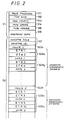
- FIG. 2 shows an arrangement used when data shown in FIG. 1 are stored in the addresses of the memory in actual practice.
- the recording medium information directory 51 composed of the tape thickness data 511, the tape kind data 512, the tape length data 513, the tape grade data 514, the tape maker data 515 and the arbitrary data 516 from the small memory address, in that order.
- the recording medium information directory 51 is followed by the recording content information directory 52.
- the recording content information directory 52 includes the highest-order hierarchic packet 521 formed of a cassette title and a cassette No..
- the highest-order hierarchic packet 521 is followed by the title hierarchic packet 522a, the program hierarchic packets 523a1 to 523a3, the title hierarchic packet 522b and the program hierarchic packets 523b1 to 523b4, in that order.
- the title hierarchic packet 522a representing "MOVIE 1”, for example, is followed by the program hierarchic packets 523a1 to 523a3 representing every arbitrary unit of the "MOVIE 1" and the program hierarchic packets 523b1 to 523b4 representing every arbitrary unit of the "MOVIE 2", in that order.
- the titles of the recorded contents and the recording information (recording content information), such as the recording starting track No. BTN and the recording ending track No. ETN of every recording unit of the title can be recorded on the memory mounted on the tape cassette of the VCR.
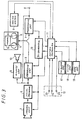
- FIG. 3 is a block diagram showing a hardware arrangement used when a video information recording method embodying the present invention is realized by the VCR of the single-unit video camera-recorder type, for example.
- a video signal from an imaging unit 1 is supplied through a signal processor 2 to a recording circuit 3 and thereby recorded on a magnetic tape 5 incorporated within a tape cassette 4.
- a driver system 6 transports the magnetic tape 5 and drives a rotary magnetic head (not shown).
- specific mechanisms, etc., used upon recording are not shown, they are substantially the same as those of the conventional VCR and therefore need not be described.
- a signal reproduced from the magnetic tape 5 by a rotary magnetic head (not shown) is supplied to a reproducing circuit 7 and a signal from the reproducing circuit 7 is developed at an output terminal 8.
- the signal from the signal processor 2 or the reproducing circuit 7 is supplied through a display circuit 9 to a viewfinder 10 which displays thereon a picked-up or reproduced video signal.
- the above-mentioned mechanism and circuits are controlled by a system controller 11 formed of a microcomputer, for example.
- a recording operation switch start/stop switch
- the above-mentioned mechanism and circuits are set to the recording mode so that the video signal from the imaging unit 1 is recorded on the magnetic tape 5.
- a second signal is entered and supplied to the system controller 11
- the above-mentioned mechanism and circuits are set to the stop mode. Therefore, each time the first or second signal is entered and supplied to the system controller 11 by the operation switch 13, the above-mentioned mechanism and circuits are alternately placed in the recording or stop mode.
- So-called consumer digital VCRs record consecutive track Nos. (TN) from the recording starting end of the magnetic tape 5 at every track.
- the track No. (TN) reproduced by the reproducing circuit 7 is supplied to a track No. generator (simply referred to as "TN generator) 15, and track No. (TN) data generated by the TN generator 15 is supplied to the recording circuit 3.
- TN generator track No. generator
- TN data generated by the TN generator 15 is supplied to the recording circuit 3.
- the consecutive track Nos. (TN) are recorded on the magnetic tape 5 at every track.
- the TN generator 15 generates the track No. (TN) data from a predetermined reference value when the magnetic tape 5 is recorded from its recording starting end.
- the TN generator 15 generates the track No. (TN) continued from the track No. value reproduced from the immediately-preceding track when the magnetic tape 5 is recorded from its intermediate portion. Further, when the immediately-preceding track is not reproduced while the magnetic tape 5 is recorded from its intermediate portion, the tape wound diameter of the magnetic tape 5 housed within the tape cassette 4 is detected and the TN generator 15 generates a track No. (TN) calculated from the detected value of the tape wound diameter of the magnetic tape 5.
- the memory 16 is mounted on the tape cassette 4 and video information is recorded on the memory 16. Specifically, the recording of data on the memory 16 is implemented by the system controller 11 that is formed by a microcomputer.
- the system controller 11 is supplied with date information from a calendar circuit 17 which generates date information, clock information from a clock circuit 18 which generates clock information, place information from a GPS (global positioning system) circuit 19 which generates place information and scene setting information from a scene setting switch 20 of the operation unit 12.
- a calendar circuit 17 which generates date information
- clock information from a clock circuit 18 which generates clock information
- place information from a GPS (global positioning system) circuit 19 which generates place information and scene setting information from a scene setting switch 20 of the operation unit 12.
- GPS global positioning system
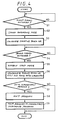
- the system controller 11 When video information is recorded by using date information, for example, the system controller 11 carries out the processing in a flowchart shown in FIG. 4 to record video information on the memory 16.
- decision step S1 it is determined in decision step S1 whether or not the first signal is entered and supplied to the system controller 11 by the recording operation switch 13. If a YES is output at decision step S1, then the processing proceeds to step S2, whereat the recording mode is started. If on the other hand a NO is output at decision step S1, then the decision step S1 is repeated. In the next step S3, a starting track No. BTN of a new program is generated.
- step S4 It is determined in decision step S4 whether or not a second signal is entered and supplied to the system controller 11 by the recording operation switch 13. If a YES is output at decision step S4, then the processing proceeds to step S5, whereat the above-mentioned mechanism and circuits are placed in the stop mode and the recording is ended. If a NO is output at decisions step S4, then the decision step S4 is repeated. Then, the processing proceeds to step S6, wherein an ending track No. ETN of a new program is generated and date information representing that very day is read out from the calendar circuit 17.
- step S7 It is determined in decision step S7 whether or not date information of immediately-preceding program and date information of program that precedes the immediately-preceding information are agreed with each other. If the date information are not agreed with each other as represented by a NO at decision step S7, then the processing is ended. If on the other hand the date information are agreed with each other as represented by a YES at decision step S7, then the processing proceeds to step S8, whereat the immediately-preceding program and the program preceding the immediately-preceding program are edited. Then, the processing proceeds to the next step S9, whereat the new program is moved to the immediately-preceding program. Then, the processing is ended.
- the program hierarchic packet 1 of date X is recorded in the starting track No. TN1 and the ending track No. TN2; and the program hierarchic packets 2, 3 of date Y are recorded in the starting track No. TN3, the ending track No. TN4, the starting track No. TN5, the ending track No. TN6.
- date data Y are the same (“YES") so that the immediately-preceding program hierarchic packet 3 and the program hierarchic packet 2 which precedes the immediately-preceding program hierarchic packet 3 are edited.
- the recording starting track No. TN3 of the program hierarchic packet 2 the recording ending track No. TN6 of the program hierarchic packet 3 and the date data Y are memorized in the program hierarchic packet 2. Further, the content of the program hierarchic packet 4 is moved to the program hierarchic packet 3, whereby the recording shown in FIG. 5D is carried out.
- the recording starting track No. TN3 of the program hierarchic packet 2 the recording ending track No. TN10 of the program hierarchic packet 3 and the date data Y , for example, are memorized in the program hierarchic packet 2. Further, the content of the program hierarchic packet 4 is moved to the program hierarchic packet 3. Therefore, the recording shown in FIG. 6D is carried out.
- the recording starting track No. N11 of the program hierarchic packet 3, the recording ending track No. TN14 of the program hierarchic packet 4 and the date data Z are memorized in the program hierarchic packet 3. Further, the content of the program hierarchic packet 5 is moved to the program hierarchic packet 4. Thus, a recording shown in FIG. 6I, for example, is effected.
- the video information recording method embodying the invention since arbitrary information in the recorded video information are compared with each other and the video information is edited and recorded in response to the compared result, it is possible to record video information by the memory of small capacity in a long period of time.
- video information is recorded by using the date data from the calendar circuit 17 as described above, the present invention is not limited thereto and the video information can be recorded by using clock information from the clock circuit 18 or place information from the GPS circuit 19.
- step S6 in the flowchart shown in FIG. 4 instead of the date data from the calendar circuit 17, the clock information from the clock circuit 18 and the place information from the GPS circuit 19 are read out.
- step S7 in the flowchart shown in FIG. 4 it is determined whether or not the clock data of the immediately-preceding program hierarchic packet and the program hierarchic packet that precedes the immediately-preceding program hierarchic packet fall within a predetermined time or whether or not the place data thereof fall within a predetermined range.
- the video information can be used satisfactorily.
- latest video information is recorded separately.
- the edit concerning the video information that is separately recorded is carried out. Therefore, the latest video information is preserved until the next recording is started, whereby the recorded content can be confirmed at any time smoothly.
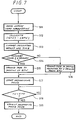
- FIG. 7 is a flowchart showing operation executed when the recorded content is confirmed during a time period of 5 seconds at maximum.
- operation is started when the signal from the recording confirming operation switch 14 is supplied to the system controller 11.
- step S11 latest video information is read out at step S11.
- step S12 (ending track No. ETN) - (starting track No. BTN) is calculated.
- step S13 a calculated result obtained from step S12 is changed into a time. It is determined in the next decision step S14 whether or not the changed value is shorter than 5 seconds.
- step S14 If the changed value is shorter than 5 seconds as represented by a YES at decision step S14, then the processing proceeds to step S15, whereat the magnetic tape 5 is rewound to the position of the starting track No. BTN of the latest video information. If on the other hand the changed value is longer than 5 seconds as represented by a NO at decision step S14, then the processing proceeds to step S16, whereat the magnetic tape 5 is rewound to the position that is advanced by 5 seconds from the ending track No. ETN of the latest video information.
- step S17 the reproducing mode is started. Then, it is determined in the next decision step S18 whether or not the track No. TN reproduced at step S17 coincides with the ending track No. ETN of the latest video information. If a YES is output at decision step S18, then the processing proceeds to step S19, wherein the VCR is set in the recording pause mode. Then, the processing is ended. If a NO is output at decision step S18, the step S18 is repeated.
- the memory capacity of the memory 16 becomes insufficient even during the edit, the following operation is carried out. Specifically, when the capacity of the video information recording medium (memory 16) is insufficient, arbitrary recorded video information is edited after an alarm sound or alarm message was generated.
- FIG. 8 show a flowchart of an example of such operation.
- the step S2 in the flowchart shown in FIG. 4 is followed by a decision step S21, whereat it is determined whether or not the capacity of the memory 16 is sufficient. If the capacity of the memory 16 is not sufficient as represented by a NO at decision step S21, step S3 and the following steps in the flowchart shown in FIG. 4 are executed.
- step S22 If the capacity of the memory 16 is sufficient as represented by a YES at decision step S21, then the processing proceeds to step S22, whereat an alarm sound or alarm message is generated. Further, it is determined in decision step S22 whether or not the second signal is entered. If a NO is output at decision step S23, then the VCR is set in the standby mode until the second signal is entered and supplied to the system controller 11 from the recording operation switch 13. If a YES is output at decision step S23, then the processing proceeds to the next step S24, whereat the VCR is set in the stop mode and the recording is completed. In step S25, an ending track No. of the final program is corrected by the ending track No. ETN of the new program and date data of that very day is read out from the calendar circuit 17.
- decision step S26 It is determined in decision step S26 whether or not the read date data and the date data of the final program are agreed with each other. If date data are agreed with each other as represented by a YES at decision step S26, then the processing is ended. If date data are not agreed with each other as represented by a NO at decision step S26, then the processing proceeds to the next step S27, whereat the date data is made invalid. Then, the processing is ended.
- the date data can be made invalid by recording impossible data, such as when binary values constructing data, for example, are all set to "1".
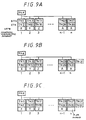
- the new recording starting track No. TN31 is generated as shown in FIG. 9B at a timing point at which the new recording is started.
- a new recording starting ending track No. TN32 is generated.
- the ending track No. of the final program hierarchic packet n is corrected by the ending track No. TN32.
- FIG. 10 is a flowchart showing other example of operation executed when the capacity of the recording medium (memory 16) is not sufficient.
- the step S2 in the flowchart shown in FIG. 4 is followed by decision step S31, whereat it is determined whether or not the capacity of the memory 16 is sufficient. If the capacity of the memory 16 is not sufficient as represented by a NO at decision step S31, the step S3 and the following steps in the flowchart shown in FIG. 4 are implemented.
- step S31 If on the other hand the capacity of the memory 16 is sufficient as represented by a YES at decision step S31, then the processing proceeds to step S32, wherein an alarm sound or alarm message is generated.
- step S33 the ending track No. of the immediately-preceding program is corrected by the ending track No. ETN of the final program. It is determined in the next decision step S34 whether or not date data of the final program and date data of the immediately-preceding program are agreed with each other.
- step S34 If date data are not agreed with each other as represented by a NO at decision step S34, then the processing proceeds to step S35, whereat data representative of date of the immediately-preceding program is made invalid. If date data are agreed with each other as represented by a YES at decision step S34, data representative of the date of the immediately-preceding program is not changed.
- step S36 data of the final program is erased.
- step S36 data of the final program is erased.
- the starting track No. BTN of the new program is generated and recorded in the starting track No. of the final program. Thereafter, the processing returns to the step S4 of the flowchart shown in FIG. 4.
- the ending track No. TN26 of the immediately-preceding program hierarchic packet n-1 is corrected by the ending track No. TN30 of the final program hierarchic packet n and the new recording starting track No. TN31 is recorded on the starting track No. BTN of the final program.
- a new recording ending track No. TN32 is generated, and this ending track No. TN32 is recorded on the ending track No. ETN of the final program hierarchic packet n . Also, data representative of date read out from the calendar circuit 17 is recorded on the final program hierarchic packet n .
- the processing to be executed when the capacity of the recording medium (memory 16) is insufficient can smoothly be carried out by editing the arbitrary previously-recorded video information.
- the processing to be executed when the capacity of the video information recording medium (memory 16) can be implemented in accordance with the clock information from the clock circuit 18, the place information from the GPS circuit 19 and the information from the scene setting switch 20 of the operation unit 12 instead of the date information from the calendar circuit 17.
- the edit can be carried out by generating video information composed of a recording starting track No. of previously-recorded video information and a recording ending track No. of video information recorded later.
Landscapes
- Engineering & Computer Science (AREA)
- Multimedia (AREA)
- Management Or Editing Of Information On Record Carriers (AREA)
- Indexing, Searching, Synchronizing, And The Amount Of Synchronization Travel Of Record Carriers (AREA)
- Television Signal Processing For Recording (AREA)
Applications Claiming Priority (2)
| Application Number | Priority Date | Filing Date | Title |
|---|---|---|---|
| JP20962293A JP3339123B2 (ja) | 1993-08-24 | 1993-08-24 | 録画情報記録方法 |
| JP209622/93 | 1993-08-24 |
Publications (3)
| Publication Number | Publication Date |
|---|---|
| EP0640972A2 EP0640972A2 (en) | 1995-03-01 |
| EP0640972A3 EP0640972A3 (en) | 1996-08-21 |
| EP0640972B1 true EP0640972B1 (en) | 1999-06-02 |
Family
ID=16575848
Family Applications (1)
| Application Number | Title | Priority Date | Filing Date |
|---|---|---|---|
| EP94305928A Expired - Lifetime EP0640972B1 (en) | 1993-08-24 | 1994-08-10 | Recording of video information |
Country Status (7)
| Country | Link |
|---|---|
| US (1) | US5852528A (mo) |
| EP (1) | EP0640972B1 (mo) |
| JP (1) | JP3339123B2 (mo) |
| KR (1) | KR100331004B1 (mo) |
| CN (1) | CN1087554C (mo) |
| DE (1) | DE69418794T2 (mo) |
| TW (1) | TW277197B (mo) |
Cited By (1)
| Publication number | Priority date | Publication date | Assignee | Title |
|---|---|---|---|---|
| US7075874B2 (en) | 2001-07-17 | 2006-07-11 | Hewlett-Packard Development Company, L.P. | Data storage device monitoring system, method and removable data carrier use with data storage systems |
Families Citing this family (10)
| Publication number | Priority date | Publication date | Assignee | Title |
|---|---|---|---|---|
| CN1173225C (zh) * | 1997-01-27 | 2004-10-27 | 富士写真胶片株式会社 | 记录全球定位系统装置的测位信息的摄像机 |
| GB9805325D0 (en) | 1998-03-13 | 1998-05-06 | Hewlett Packard Co | Tape data storage cartridge with memory |
| US7123444B1 (en) | 1998-05-22 | 2006-10-17 | Tanberg Data Asa | Tape cassette having an optical signal receiver and a memory for storing information optically transmitted into the cassette |
| JP3696498B2 (ja) * | 2000-11-24 | 2005-09-21 | パイオニア株式会社 | 情報編集装置 |
| JP2003091971A (ja) * | 2001-09-19 | 2003-03-28 | Sony Corp | 記録再生装置および方法 |
| JP3700850B2 (ja) | 2002-12-19 | 2005-09-28 | ソニー株式会社 | 光ディスク装置、光ディスクの記録方法及び光ディスクの記録方法のプログラム |
| US6952573B2 (en) * | 2003-09-17 | 2005-10-04 | Motorola, Inc. | Wireless receiver with stacked, single chip architecture |
| US7504965B1 (en) | 2005-08-05 | 2009-03-17 | Elsag North America, Llc | Portable covert license plate reader |
| US7688971B2 (en) | 2006-08-01 | 2010-03-30 | Inventec Multimedia & Telecom Corporation | Network telephone expansion seat |
| KR101255341B1 (ko) | 2011-04-08 | 2013-04-16 | 도시바삼성스토리지테크놀러지코리아 주식회사 | 디스크 드라이브 |
Family Cites Families (19)
| Publication number | Priority date | Publication date | Assignee | Title |
|---|---|---|---|---|
| JPS6014430B2 (ja) * | 1978-05-08 | 1985-04-13 | ソニー株式会社 | 記録再生装置 |
| AT356916B (de) * | 1978-09-01 | 1980-06-10 | Philips Nv | Aufzeichnungssystem und kassette fuer ein solches aufzeichnungssystem |
| BE871690R (fr) * | 1978-10-27 | 1979-02-15 | Staar Sa | Dispositif de memorisation de la position instantanee d'une bande magnetique contenue dans une cassette |
| BE885102R (fr) * | 1978-10-27 | 1980-12-31 | Staar Sa | Dispositif de memorisation de la position instantanee d'une bande magnetique contenue dans une cassette |
| US4723181A (en) * | 1986-09-24 | 1988-02-02 | Eastman Kodak Company | Tape memory with integral disk index on reel |
| EP0266101B1 (en) * | 1986-10-16 | 1991-05-15 | Hitachi Maxell Ltd. | Composite memory device |
| JPS63273292A (ja) * | 1987-04-30 | 1988-11-10 | Nec Corp | 光デイスク装置 |
| EP0370021A1 (en) * | 1987-07-14 | 1990-05-30 | Bellas, Inc. | Method and apparatus for pulse heating and cooking food products |
| US5132947A (en) * | 1988-03-08 | 1992-07-21 | Matsushita Electric Industrial Co., Ltd. | Combined memory medium, drive apparatus and method therefor and playback apparatus therefor |
| GB8809223D0 (en) * | 1988-04-19 | 1988-05-25 | British Broadcasting Corp | Cassette for sequential access recording medium & apparatus for use therewith |
| US4991040A (en) * | 1988-08-16 | 1991-02-05 | Pioneer Electronic Corporation | Tape recorder which displays unrecorded time on magnetic tapes |
| JP2762545B2 (ja) * | 1989-04-19 | 1998-06-04 | ソニー株式会社 | カセット式記録再生装置 |
| JP3147358B2 (ja) * | 1990-02-23 | 2001-03-19 | ミノルタ株式会社 | 撮影地データを記録できるカメラ |
| JP3005242B2 (ja) * | 1990-05-21 | 2000-01-31 | 株式会社リコー | ファクシミリ装置 |
| KR930012193B1 (ko) * | 1991-07-08 | 1993-12-24 | 삼성전자 주식회사 | Vtr의 블럭별 프로그램 예약 녹화방법 |
| HUT76499A (en) * | 1991-08-19 | 1997-09-29 | Kwoh | Method and apparatus for creating program directory for a video tape cassette |
| JPH05165935A (ja) * | 1991-10-18 | 1993-07-02 | Konica Corp | 画像撮影装置及び画像ファイル装置 |
| JPH0756652B2 (ja) * | 1992-03-24 | 1995-06-14 | インターナショナル・ビジネス・マシーンズ・コーポレイション | 動画像のフレーム列の検索 |
| JPH06309842A (ja) * | 1993-04-26 | 1994-11-04 | Sony Corp | 編集装置 |
-
1993
- 1993-08-24 JP JP20962293A patent/JP3339123B2/ja not_active Expired - Fee Related
-
1994
- 1994-08-02 TW TW083107068A patent/TW277197B/zh active
- 1994-08-10 EP EP94305928A patent/EP0640972B1/en not_active Expired - Lifetime
- 1994-08-10 DE DE69418794T patent/DE69418794T2/de not_active Expired - Fee Related
- 1994-08-18 KR KR1019940020340A patent/KR100331004B1/ko not_active Expired - Fee Related
- 1994-08-24 CN CN94115757A patent/CN1087554C/zh not_active Expired - Fee Related
-
1996
- 1996-12-27 US US08/774,898 patent/US5852528A/en not_active Expired - Fee Related
Cited By (1)
| Publication number | Priority date | Publication date | Assignee | Title |
|---|---|---|---|---|
| US7075874B2 (en) | 2001-07-17 | 2006-07-11 | Hewlett-Packard Development Company, L.P. | Data storage device monitoring system, method and removable data carrier use with data storage systems |
Also Published As
| Publication number | Publication date |
|---|---|
| KR950006834A (ko) | 1995-03-21 |
| EP0640972A2 (en) | 1995-03-01 |
| EP0640972A3 (en) | 1996-08-21 |
| CN1087554C (zh) | 2002-07-10 |
| CN1109240A (zh) | 1995-09-27 |
| KR100331004B1 (ko) | 2002-09-09 |
| US5852528A (en) | 1998-12-22 |
| DE69418794T2 (de) | 1999-12-09 |
| JP3339123B2 (ja) | 2002-10-28 |
| TW277197B (mo) | 1996-06-01 |
| DE69418794D1 (de) | 1999-07-08 |
| JPH0765548A (ja) | 1995-03-10 |
Similar Documents
| Publication | Publication Date | Title |
|---|---|---|
| US7231130B2 (en) | Magnetic recording/reproducing apparatus for searching programs recorded on magnetic tape | |
| JP3392867B2 (ja) | ビデオ・テープ・カセット・プレーヤの動作の強化 | |
| EP0665551B1 (en) | Video signal recording/reproducing device | |
| CA2115771C (en) | Program directory for a video tape cassette | |
| EP0580434B1 (en) | Recording medium cartridge | |
| JP3528183B2 (ja) | 編集システム及び方法、記録装置、並びに編集装置 | |
| EP0640972B1 (en) | Recording of video information | |
| JPWO1998036566A1 (ja) | 編集システム及び方法、映像記録装置、編集装置、並びに記録媒体 | |
| EP0280573B1 (en) | Device for reproducing still pictures with an audio portion | |
| US7194191B2 (en) | Information recording and reproducing apparatus | |
| KR0135081B1 (ko) | 재생화상의 고속 로크방식 | |
| JPH0944524A (ja) | 画像音声蓄積装置および画像音声蓄積方法 | |
| GB2248336A (en) | Checking for abnormal operation of a video cassette recorder | |
| JP3358320B2 (ja) | 記録再生装置及びタイマー予約方法 | |
| JPH0684329A (ja) | カセット自動交換装置 | |
| JP2001052469A (ja) | 記録再生情報管理装置および記録再生情報管理方法 | |
| JPH0636532A (ja) | 磁気記録再生装置 | |
| JPH10261285A (ja) | 記録再生装置 | |
| JP3182771B2 (ja) | 映像信号記録再生装置及びその映像記録内容表示方法 | |
| JP2000067490A (ja) | 記録再生装置及び記録再生方法 | |
| JPWO1997010673A1 (ja) | ビデオカメラを用いた映像音声情報取材システムとその編集システム | |
| JPH0676541A (ja) | Vcrの表題自動挿入方法及び装置 | |
| JPH03205676A (ja) | デジタルデータ記録再生装置 | |
| JPH07220323A (ja) | ビデオテープレコーダ | |
| JPH09237484A (ja) | 磁気記録再生装置 |
Legal Events
| Date | Code | Title | Description |
|---|---|---|---|
| PUAI | Public reference made under article 153(3) epc to a published international application that has entered the european phase |
Free format text: ORIGINAL CODE: 0009012 |
|
| AK | Designated contracting states |
Kind code of ref document: A2 Designated state(s): DE FR GB IT NL |
|
| PUAL | Search report despatched |
Free format text: ORIGINAL CODE: 0009013 |
|
| AK | Designated contracting states |
Kind code of ref document: A3 Designated state(s): DE FR GB IT NL |
|
| 17P | Request for examination filed |
Effective date: 19970107 |
|
| 17Q | First examination report despatched |
Effective date: 19970213 |
|
| GRAG | Despatch of communication of intention to grant |
Free format text: ORIGINAL CODE: EPIDOS AGRA |
|
| GRAG | Despatch of communication of intention to grant |
Free format text: ORIGINAL CODE: EPIDOS AGRA |
|
| GRAH | Despatch of communication of intention to grant a patent |
Free format text: ORIGINAL CODE: EPIDOS IGRA |
|
| GRAH | Despatch of communication of intention to grant a patent |
Free format text: ORIGINAL CODE: EPIDOS IGRA |
|
| GRAA | (expected) grant |
Free format text: ORIGINAL CODE: 0009210 |
|
| AK | Designated contracting states |
Kind code of ref document: B1 Designated state(s): DE FR GB IT NL |
|
| REF | Corresponds to: |
Ref document number: 69418794 Country of ref document: DE Date of ref document: 19990708 |
|
| ET | Fr: translation filed | ||
| PLBE | No opposition filed within time limit |
Free format text: ORIGINAL CODE: 0009261 |
|
| STAA | Information on the status of an ep patent application or granted ep patent |
Free format text: STATUS: NO OPPOSITION FILED WITHIN TIME LIMIT |
|
| 26N | No opposition filed | ||
| REG | Reference to a national code |
Ref country code: GB Ref legal event code: IF02 |
|
| PGFP | Annual fee paid to national office [announced via postgrant information from national office to epo] |
Ref country code: NL Payment date: 20080803 Year of fee payment: 15 Ref country code: DE Payment date: 20080821 Year of fee payment: 15 |
|
| PGFP | Annual fee paid to national office [announced via postgrant information from national office to epo] |
Ref country code: IT Payment date: 20080827 Year of fee payment: 15 Ref country code: FR Payment date: 20080818 Year of fee payment: 15 |
|
| PGFP | Annual fee paid to national office [announced via postgrant information from national office to epo] |
Ref country code: GB Payment date: 20080820 Year of fee payment: 15 |
|
| REG | Reference to a national code |
Ref country code: NL Ref legal event code: V1 Effective date: 20100301 |
|
| GBPC | Gb: european patent ceased through non-payment of renewal fee |
Effective date: 20090810 |
|
| REG | Reference to a national code |
Ref country code: FR Ref legal event code: ST Effective date: 20100430 |
|
| PG25 | Lapsed in a contracting state [announced via postgrant information from national office to epo] |
Ref country code: NL Free format text: LAPSE BECAUSE OF NON-PAYMENT OF DUE FEES Effective date: 20100301 Ref country code: FR Free format text: LAPSE BECAUSE OF NON-PAYMENT OF DUE FEES Effective date: 20090831 Ref country code: DE Free format text: LAPSE BECAUSE OF NON-PAYMENT OF DUE FEES Effective date: 20100302 |
|
| PG25 | Lapsed in a contracting state [announced via postgrant information from national office to epo] |
Ref country code: GB Free format text: LAPSE BECAUSE OF NON-PAYMENT OF DUE FEES Effective date: 20090810 |
|
| PG25 | Lapsed in a contracting state [announced via postgrant information from national office to epo] |
Ref country code: IT Free format text: LAPSE BECAUSE OF NON-PAYMENT OF DUE FEES Effective date: 20090810 |