EP0586657B1 - Receptor for the glucagon-like-peptide-1 (glp-1) - Google Patents
Receptor for the glucagon-like-peptide-1 (glp-1) Download PDFInfo
- Publication number
- EP0586657B1 EP0586657B1 EP93906589A EP93906589A EP0586657B1 EP 0586657 B1 EP0586657 B1 EP 0586657B1 EP 93906589 A EP93906589 A EP 93906589A EP 93906589 A EP93906589 A EP 93906589A EP 0586657 B1 EP0586657 B1 EP 0586657B1
- Authority
- EP
- European Patent Office
- Prior art keywords
- glp
- receptor
- amide
- binding
- analogue
- Prior art date
- Legal status (The legal status is an assumption and is not a legal conclusion. Google has not performed a legal analysis and makes no representation as to the accuracy of the status listed.)
- Expired - Lifetime
Links
Images


Classifications
-
- C—CHEMISTRY; METALLURGY
- C07—ORGANIC CHEMISTRY
- C07K—PEPTIDES
- C07K14/00—Peptides having more than 20 amino acids; Gastrins; Somatostatins; Melanotropins; Derivatives thereof
- C07K14/435—Peptides having more than 20 amino acids; Gastrins; Somatostatins; Melanotropins; Derivatives thereof from animals; from humans
- C07K14/705—Receptors; Cell surface antigens; Cell surface determinants
- C07K14/72—Receptors; Cell surface antigens; Cell surface determinants for hormones
-
- G—PHYSICS
- G01—MEASURING; TESTING
- G01N—INVESTIGATING OR ANALYSING MATERIALS BY DETERMINING THEIR CHEMICAL OR PHYSICAL PROPERTIES
- G01N2333/00—Assays involving biological materials from specific organisms or of a specific nature
- G01N2333/435—Assays involving biological materials from specific organisms or of a specific nature from animals; from humans
- G01N2333/575—Hormones
- G01N2333/605—Glucagons
-
- G—PHYSICS
- G01—MEASURING; TESTING
- G01N—INVESTIGATING OR ANALYSING MATERIALS BY DETERMINING THEIR CHEMICAL OR PHYSICAL PROPERTIES
- G01N2333/00—Assays involving biological materials from specific organisms or of a specific nature
- G01N2333/435—Assays involving biological materials from specific organisms or of a specific nature from animals; from humans
- G01N2333/705—Assays involving receptors, cell surface antigens or cell surface determinants
- G01N2333/72—Assays involving receptors, cell surface antigens or cell surface determinants for hormones
Definitions
- the present invention relates to a recombinant glucagon-like peptide-1 (GLP-1) receptor, to a DNA construct which comprises a DNA sequence encoding a GLP-1 receptor, to recombinant expression vectors carrying such DNA constructs, cells containing such recombinant expression vectors, to methods of screening for agonists of GLP-1 activity, and to the use of the GLP-1 receptor for screening for agonists of GLP-1 activity.
- GLP-1 glucagon-like peptide-1
- GLP-1 comprises GLP-1(7-37) as well as GLP-1(7-36)amide.
- Glucose-induced insulin secretion is modulated by a number of hormones and neurotransmitters.
- GLP-1 glucagon-like peptide-1
- GIP gastric inhibitory peptide
- Glucagon-like peptide-1 is a gluco-incretin both in rat and in man (Dupre and Ebert and Creutzfeld, vide supra , and Kreymann et al. (Lancet 2 (1987), 1300)). It is part of the preproglucagon molecule (Bell et al. Nature 304 (1983), 368) which is proteolytically processed in intestinal L cells to GLP-1(1-37) and GLP-1(7-36)amide or GLP-1(7-37) (Mojsov et al. (J.Biol.Chem. 261 (1986), 11880) and Habener et al.: The Endocrine Pancreas E. Samois Ed.
- GLP-1 GLP-1 truncated forms of GLP-1 are biologically active and both have identical effects on insulin secretion in beta cells (Mojsov et al. J.Clin.Invest 79 (1987), 616) and Weir et al. (Diabetes 38 (1989), 338). They are the most potent gluco-incretins so far described and are active at concentrations as low as one to ten picomolar.
- the stimulatory effect of these gluco-incretin hormones requires the presence of glucose at or above the normal physiological concentration of about 5 mM and is mediated by activation of adenylate cyclase and a rise in the intracellular concentration of cyclic AMP (Drucker et al. Proc.Natl.Acad.Sci. USA 84 (1987), 3434) and Göke et al. (Am.J.Physiol. 257 (1989), G397).
- GLP-1 has also a stimulatory effect on insulin gene transcription (Drucker et al. Proc.Natl.Acad.Sci. USA 84 (1987), 3434).
- NIDDM non-insulin-dependent diabetes mellitus
- the present invention relates to a recombinant glucagon-like peptide-1 (GLP-1) receptor which comprises the amino acid sequence shown in SEQ ID No. 1 or in SEQ ID No. 3, or an analogue thereof binding GLP-1(7-37) and GLP-1 (7-36) amide with an affinity constant, K D , below 100 nM, preferably below 10 nM.
- GLP-1 glucagon-like peptide-1
- analogue is intended to indicate a naturally occurring variant (including one expressed in other animal species, in particular human) of the receptor or a "derivative" i.e. a polypeptide which is derived from the native GLP-1 receptor by suitably modifying the DNA sequence coding for the variant, resulting in the addition of one or more amino acids at either or both the C- and N-terminal ends of the native amino acid sequence, substitution of one or more amino acids at one or more sites in the native amino acid sequence, deletion of one or more amino acids at either or both ends of the native sequence or at one or more sites within the native sequence, or insertion of one or more amino acids in the native sequence.
- the present invention relates to a DNA construct which comprises a DNA sequence encoding the GLP-1 receptor of the invention, as well as a recombinant expression vector carrying the DNA construct and a cell containing said recombinant expression vector.
- the GLP-1 receptor molecule is present in detergent-solubilised membrane preparations or solubilised in the presence of essential cofactors, e.g. G-protein.
- the receptor may be in a reconstituted micellar form.
- the DNA construct of the invention encoding the GLP-1 receptor comprises the DNA sequence shown in SEQ ID No. 1 or in SEQ ID No. 3, or at least a DNA sequence coding for a functional analogue thereof binding GLP-1 with an affinity below 100 nM, preferably below 10 nM or a suitable modification thereof.
- suitable modifications of the DNA sequence are nucleotide substitutions which do not give rise to another amino acid sequence of the GLP-1 receptor, but which may correspond to the codon usage of the host organism into which the DNA construct is introduced or nucleotide substitutions which do give rise to a different amino acid sequence and therefore, possibly, a different protein structure without, however, impairing the properties of the native variant.
- Other examples of possible modifications are insertion of one or several nucleotides into the sequence, addition of one or several nucleotides at either end of the sequence, or deletion of one or several nucleotides at either end or within the sequence.
- DNA construct of the invention is one which encodes a GLP-1 receptor variant particularly suitable for solubilisation and reconstitution.
- the DNA construct of the invention encoding the present GLP-1 receptor may be prepared synthetically by established standard methods, e.g. the phosphoamidite method described by Beaucage and Caruthers, Tetrahedron Letters 22 (1981), 1859 - 1869, or the method described by Matthes et al., EMBO Journal 3 (1984), 801 - 805.
- phosphoamidite method oligonucleotides are synthesized, e.g. in an automatic DNA synthesizer, purified, annealed, ligated and cloned in suitable vectors.
- the DNA construct of the invention may also be of genomic or cDNA origin, for instance obtained by preparing a genomic or cDNA library and screening for DNA sequences coding for all or part of the GLP-1 receptor of the invention by hybridization using synthetic oligonucleotide probes in accordance with standard techniques (cf. Sambrook et al., Molecular Cloning: A Laboratory Manual, 2nd Ed., Cold Spring Harbor, 1989).
- a genomic or cDNA sequence encoding the GLP-1 receptor may be modified at a site corresponding to the site(s) at which it is desired to introduce amino acid substitutions, e.g. by site-directed mutagenesis using synthetic oligonucleotides encoding the desired amino acid sequence for homologous recombination in accordance with well-known procedures.
- the DNA construct may be of mixed synthetic and genomic, mixed synthetic and cDNA or mixed genomic and cDNA origin prepared by ligating fragments of synthetic, genomic or cDNA origin (as appropriate), the fragments corresponding to various parts of the entire DNA construct, in accordance with standard techniques.
- the DNA construct may also be prepared by polymerase chain reaction using specific primers, for instance as described in US 4,683,202 or Saiki et al., Science 239 (1988), 487 - 491.
- the recombinant expression vector into which the DNA construct of the invention is inserted may be any vector which may conveniently be subjected to recombinant DNA procedures, and the choice of vector will often depend on the host cell into which it is to be introduced.
- the vector may be an autonomously replicating vector, i.e. a vector which exists as an extrachromosomal entity, the replication of which is independent of chromosomal replication, e.g. a plasmid.
- the vector may be one which, when introduced into a host cell, is integrated into the host cell genome and replicated together with the chromosome(s) into which it has been integrated.
- the DNA sequence encoding the GLP-1 receptor of the invention should be operably connected to a suitable promoter sequence.
- the promoter may be any DNA sequence which shows transcriptional activity in the host cell of choice and may be derived from genes encoding proteins either homologous or heterologous to the host cell.
- suitable promoters for directing the transcription of the DNA encoding the GLP-1 receptor of the invention in mammalian cells are the SV40 promoter (Subramani et al., Mol. Cell Biol. 1 (1981), 854 -864), the MT-1 (metallothionein gene) promoter (Palmiter et al., Science 222 (1983), 809 - 814) or the adenovirus 2 major late promoter.
- a suitable promoter for use in insect cells is the polyhedrin promoter (Vasuvedan et al., FEBS Lett. 311, (1992) 7 - 11).
- Suitable promoters for use in yeast host cells include promoters from yeast glycolytic genes (Hitzeman et al., J. Biol. Chem. 255 (1980), 12073 -12080; Alber and Kawasaki, J. Mol. Appl. Gen.
- Suitable promoters for use in filamentous fungus host cells are, for instance, the ADH3 promoter (McKnight et al., The EMBO J. 4 (1985), 2093 - 2099) or the tpi A promoter.
- the DNA sequence encoding the GLP-1 receptor of the invention may also be operably connected to a suitable terminator, such as the human growth hormone terminator (Palmiter et al., op. cit.) or (for fungal hosts) the TPI1 (Alber and Kawasaki, op. cit.) or ADH3 (McKnight et al., op. cit.) terminators.
- the vector may further comprise elements such as polyadenylation signals (e.g. from SV40 or the adenovirus 5 Elb region), transcriptional enhancer sequences (e.g. the SV40 enhancer) and translational enhancer sequences (e.g. the ones encoding adenovirus VA RNAs).
- the recombinant expression vector of the invention may further comprise a DNA sequence enabling the vector to replicate in the host cell in question.
- a DNA sequence enabling the vector to replicate in the host cell in question.
- An example of such a sequence is the SV40 origin of replication.
- the vector may also comprise a selectable marker, e.g. a gene the product of which complements a defect in the host cell, such as the gene coding for dihydrofolate reductase (DHFR) or one which confers resistance to a drug, e.g. neomycin, hygromycin or methotrexate.
- DHFR dihydrofolate reductase
- the host cell into which the expression vector of the invention is introduced may be any cell which is capable of producing the GLP-1 receptor of the invention and is preferably a eukaryotic cell, such as invertebrate (insect) cells or vertebrate cells, e.g. Xenopus laevis oocytes or mammalian cells, in particular insect and mammalian cells.
- a eukaryotic cell such as invertebrate (insect) cells or vertebrate cells, e.g. Xenopus laevis oocytes or mammalian cells, in particular insect and mammalian cells.
- suitable mammalian cell lines are the COS (ATCC CRL 1650), BHK (ATCC CRL 1632, ATCC CCL 10), CHL (ATCC CCL39) or CHO (ATCC CCL 61) cell lines.
- fungal cells may be used as host cells of the invention.
- suitable yeasts cells include cells of Saccharomyces spp. or Schizosaccharomyces spp., in particular strains of Saccharomyces cerevisiae.
- Other fungal cells are cells of filamentous fungi, e.g. Aspergillus spp. or Neurospora spp., in particular strains of Aspergillus oryzae or Aspergillus niger.
- Aspergillus spp. for the expression of proteins is described in, e.g., EP 272 277.
- the GLP-1 receptor according to the invention may be produced by a method which comprises culturing a cell as described above in a suitable nutrient medium under conditions which are conducive to the expression of the GLP-1 receptor, and recovering the GLP-1 receptor from the culture.
- the medium used to culture the cells may be any conventional medium suitable for growing mammalian cells, such as a serum-containing or serum-free medium containing appropriate supplements. Suitable media are available from commercial suppliers or may be prepared according to published recipes (e.g. in catalogues of the American Type Culture Collection).
- the GLP-1 receptor has retained the transmembrane and (possibly) the cytoplasmic region of the native variant, it will be anchored in the membrane of the host cell, and the cells carrying the GLP-1 receptor may be used as such in the screening or diagnostic assay.
- the receptor may be a component of membrane preparations, e.g. in solubilised and/or reconstituted form as defined above.
- the present invention relates to a method of screening for agonists or enhancers of activity of GLP-1(7-37) and GLP-1(7-36) amide, the method comprising incubating a GLP-1 receptor according to any of claims 1 - 3 with a substance suspected to be an agonist of activity of GLP-1(7-37) and GLP-1(7-36) amide and subsequently with a GLP-1(7-37) and GLP-1(7-36) amide or an analogue thereof, and detecting any effect from the suspected agonist on the binding of GLP-1(7-37) and GLP-1(7-36) amide to the GLP-1 receptor.
- An enhancer being defined as a compound capable of stabilizing interaction between a high-affinity form of the receptor and the corresponding ligand, as described e.g. for the adenosin receptor (Bruns et al. Molecular Pharmacology 38 (1990), 939).
- An alternative method of screening for agonists of activity of GLP-1(7-37) and GLP-1(7-36) amide comprises incubating GLP-1(7-37) and GLP-1(7-36) amide or an analogue thereof with a substance suspected to be an agonist of activity of GLP-1(7-37) and GLP-1(7-36) amide and subsequently with a GLP-1 receptor of the invention, and detecting any effect on the binding to the GLP-1 receptor.
- Such agonists of activity of GLP-1(7-37) and GLP-1(7-36) amide will be substances stimulating glucose-induced insulin secretion and may be used in the treatment of NIDDM.
- the GLP-1 receptor may be immobilized on a solid support and may, as such, be used as a reagent in the screening methods of the invention.
- the GLP-1 receptor may be used in membrane-bound form, i.e. bound to whole cells or as a component of membrane preparations immobilised on a solid support.
- the solid support employed in the screening methods of the invention preferably comprises a polymer.
- the support may in itself be composed of the polymer or may be composed of a matrix coated with the polymer.
- the matrix may be of any suitable material such as glass, paper or plastic.
- the polymer may be selected from the group consisting of a plastic (e.g. latex, a polystyrene, polyvinylchloride, polyurethane, polyacrylamide, polyvinylalcohol, nylon, polyvinylacetate, and any suitable copolymer thereof), cellulose (e.g. various types of paper, such as nitrocellulose paper and the like), a silicon polymer (e.g. siloxane), a polysaccharide (e.g. agarose or dextran), an ion exchange resin (e.g. conventional anion or cation exchange resins), a polypeptide such as polylysine, or a ceramic material such as glass (e.g. controlled pore glass).
- a plastic
- the physical shape of the solid support is not critical, although some shapes may be more convenient than others for the present purpose.
- the solid support may be in the shape of a plate, e.g. a thin layer or microtiter plate, or a film, strip, membrane (e.g. a nylon membrane or a cellulose filter) or solid particles (e.g. latex beads or dextran or agarose beads).
- the solid support is in the form of wheat germ agglutinin-coated SPA beads (cf. US 4,568,649).
- screening for agonists of activity of GLP-1(7-37) and GLP-1 (7-36) amide can also be carried out using a cell line expressing the cloned GLP-1 receptor functionally coupled to a G-protein.
- a cell line expressing the cloned GLP-1 receptor functionally coupled to a G-protein.
- the cAMP concentration can then be measured directly. Changes in cAMP levels may also be monitored indirectly using appropriate cell lines in which a measurable signal is generated in response to an increase in intracellular cAMP.
- the ligand-binding site on the GLP-1 receptor of the invention, for instance by preparing deletion or substitution derivatives of the native GLP-1 receptor (as described above) and incubating these with ligands known to bind the full-length GLP-1 receptor and detecting any binding of the ligand to the GLP-1 receptor deletion derivative. Once the ligand-binding site has been located, this may be used to aquire further information about the three-dimensional structure of the ligand-binding site. Such three-dimensional structures may, for instance, be established by means of protein engineering, computer modelling, NMR technology and/or crystallographic techniques. Based on the three-dimensional structure of the ligand-binding site, it may be possible to design substances which are agonists to the GLP-1 molecule.
- the characterization of the GLP-1 receptor is of considerable physiological and pathological importance. It will help study a fundamental aspect of the entero-insular axis (Unger and Eisentraut, Arch.Int.Med. 123 (1969), 261): the potentiating effect of gut hormones on glucose-induced insulin secretion, the role of these hormones in the control of glucose homeostasis and also the possible therapeutic use of GLP-1 to stimulate insulin secretion in NIDDM patients (Mathan et al. Diabetes Care 15 (1992), 270). Investigation of the regulated expression and desensitization of the receptor in the normal state and during the development of diabetes will contribute to a better understanding of the modulation of insulin secretion in normal and pathological situations.
- Availability of antibodies against this receptor may also allow an analysis of the surface localization of this receptor and its distribution relative to the beta cell glucose transporter GLUT2 (Thorens et al. Cell 55 (1988), 281 and Orci et al. Science 245 (1989), 295).
- This aspect pertains to the hypothesis that the beta cell membrane has a "regulatory" domain which contains hormone receptors (Bonner-Weir Diabetes 37 (1988), 616), and which may be distinct from GLUT2-containing membrane domains previously identified (Thorens et al. Cell 55 (1988), 281 and Orci et al. Science 245 (1989), 295).
- the identification of an additional member of this new family of G-coupled receptors will help design experiments to probe the structure-function relationship of these new molecules.
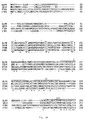
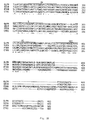
- Fig. 1A and Fig. 1B which is a continuation of Fig. 1A together show the amino acid sequence of the rat GLP-1 receptor in a comparison with the sequence of the rat secretin receptor (SECR), the opossium parathyroid hormone receptor (PTHR) and the porcine calcitonin receptor (CTR1).
- SECR rat secretin receptor
- PTHR opossium parathyroid hormone receptor
- CTR1 porcine calcitonin receptor
- the GLP-1 receptor has three N glycosylation sites in the extracellular domain (arrows). Four cysteines are conserved at identical places in the four receptor (boxes). Note the otherwise very divergent sequences in this part of the molecules as well as in the COOH-terminal cytoplasmic tail. Sequence identities are denoted by stars and homologies by dots. The location of the putative transmembrane domains are indicated by horizontal bars above the sequences.
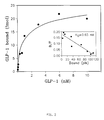
- Fig. 2 shows binding of 125 I-GLP-1 to COS cells transfected with the pGLPR-16 plasmid. Specific binding reaches saturation at 1 to 10 nM GLP-1. Insert: Scatchard analysis of GLP-1 binding.
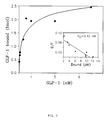
- Fig. 3 shows binding of 125 I-GLP-1 to INS-1 cells. Specific binding reaches saturation at 1 to 10 nM GLP-1. Insert: Scatchard analysis of GLP-1 binding.
- Fig. 4 shows displacement of 125 I-GLP-1 binding to COS cells transfected with the rat GLP-1 receptor cDNA. Transfected cells were incubated with 20 pM 125 I-GLP-1 in the presence of increasing concentrations of cold peptides. Each point was measured in duplicate and the experiments repeated three times for GLP-1, GIP and glucagon and once for VIP and secretin.
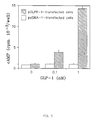
- Fig. 5 shows stimulation of cyclic AMP formation in COS cells transfected with the rat GLP-1 receptor cDNA.
- COS cells were transfected with the pcDNA-1 vector alone (open bars) or the pGLPR-1 plasmid (stripped bar) and incubated in the absence or the presence of GLP-1 at the indicated concentration.
- cAMP production was measured in triplicate with a radioimmunoassay (Amersham).
- Fig. 6 shows tissue specificity of GLP-1 receptor expression assessed by Northern blotting of RNA from different tissues and from the INS-1 cell line. Ten micrograms of total RNA was analyzed on each lane. Two major RNA species of 2.7 and 3.6 kb were detected in all tissues in which the receptor was detected. The position of the migration of the ribosomal RNAs is indicated to the left of the picture.
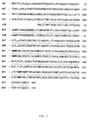
- Fig. 7 is a comparison of the rat GLP-1 receptor amino acid sequence (rat) and a partial amino acid sequence of the human GLP-1 receptor (human).
- a rat pancreatic islet cDNA library was constructed in the pcDNA-1 expression vector (Rat pancreatic islets were prepared according to Gotoh et al. (Transplantation 43 (1985), 725). PolyA+ RNA was prepared and the cDNA library was constructed in the pcDNA-1 vector (In Vitrogen) as described by Aruffo and Seed (Proc.Natl.Acad.Sci. USA 84 (1987), 8573) and Lin et al. (Proc.Natl.Acad.Sci. USA 88 (1991), 3185). Plasmid DNA was prepared from pools of five to eight thousands bacterial clones (Maniatis et al., Molecular Cloning. A Laboratory Manual.
- GLP-1 receptor expressed in COS cells was assessed by binding of the radioiodinated peptide followed by photographic emulsion autoradiography and screening by dark field microscopy (Gearing et al. EMBO J. 8 (1989), 3667). GLP-1(7-36)amide, as well as the other peptides, were purchased from Peninsula Laboratories. Iodination was performed by the iodine monochloride method (Contreras et al. Meth.Enzymol.
- GLP-1 gastric inhibitory peptide
- VIP vasoactive intestinal peptide
- Glucagon could displace the binding by 50 percent but only at a concentration of one micromolar (Fig. 4).
- the addition of subnanomolar concentrations of GLP-1 to transfected COS cells stimulated the production of cyclic AMP indicating that the receptor was functionally coupled to activation of adenylate cyclase (Fig. 5).
- each receptor The carboxyl terminal, cytoplasmic, ends of each receptor are also very different. These receptors all stimulate the production of cyclic AMP in response to ligand binding (Ishihara et al. EMBO J. 10 (1991), 1635), Jüppner et al. (Science 254 (1991), 1024) and Lin et al. Science 254 (1991), 1022) and are presumably coupled to the cyclase via Gs ⁇ .
- a sequence motif present in the third cytoplasmic loop of the GLP-1 receptors (RLAK, present just before the sixth transmembrane domain) is very similar to a motif of the beta2 adrenergic receptor (KALK) present at the same location and whose basic amino acids have been shown to be important in the coupling of the receptor to Gs ⁇ (Okamoto et al. Cell 67 (1991), 723).
- this motif is preceeded by a basic amino acid located twelve amino acid toward the amino-terminal end. This basic amino acid is also required at this particular distance for efficient coupling to Gs ⁇ .
- a lysine residue is also present at a similar location. This suggests that, despite the very low overall sequence identity, a structural feature may have been conserved in the third cytoplasmic loop between the two receptors which, may be required for the coupling of receptor to the Gs ⁇ protein.
- RNA distribution of the GLP-1 receptor was performed by Northern blot analysis.
- Northern blot analysis was performed with 10 ⁇ g of total RNA (Chomczynski and Sacchi, Anal.Biochem. 126 (1987), 156) denatured with glyoxal (McMaster and Carmichael, Proc.Natl.Acad.Sci. USA 74 (1977), 4835) separated on a 1% agarose gel and transferred to Nylon membranes (Thomas, Proc.Natl.Acad.Sci. USA 77 (1980), 5201). Hybridization was performed with the random primed labelled (Feinberg and Vogelstein, Anal.Biochem.
- a stable cell line expressing the cloned rat GLP-1 receptor was established by Ca-phosphate mediated transfection (Maniatis et al., Molecular Cloning. A Laboratory Manual. Cold Spring Harbour Laboratory, 1989) of the CHL cell line (ATCC CCL39).
- the plasmid, pGLPR-1 which contains a 1.6 kb rat GLP-1 receptor cDNA insert cloned in the pCDNA-1 vector, was cotransfected with the pWL-neo plasmid (Stratagene, La Jolla, CA) into CHL cells.
- the pWL-neo plasmid contains the neomycin resistance gene.
- Stable clones were selected in medium containing 0.8 mg/ml G418.
- a stable transformant expressing an estimate of 70.000 rat GLP-1 receptors pr cell was selected by this scheme and further propagated in the presence of 80 ⁇ M G418.
- Membranes from this transformant was subsequently used in the high-volume-throughput-screening (HVTS) assay as described in Example 3. Characterization of the receptor expressed by the GLP-1 R/CHL cell line led to an estimated Kd of 0.8 nM for whole cells, 2.3 nM for cell membranes using 125 1-GLP-1(7-36)amide as radioligand.
- a human islet cDNA library was constructed in the ⁇ ZAPII vector from Stratagene (La Jolla, CA) . Briefly, double stranded cDNA was synthesized as previously described (Aruffo and Seed, 84 (1987), 8573 - 8577; Thorens, Proc. Natl. Acad. Sci., USA 89 (1992), 8641 - 8645), and Eco RI/ Not I adaptors (Stratagene, La Jolla, CA) were added with T 4 DNA ligase.
- cDNA molecules were phosphorylated with T 4 polynucleotide kinase before size fractionation on potassium acetate gradients (Aruffo and Seed, 84 (1987), 8573 - 8577).
- Double stranded cDNA with a size above 1.6 kb was ligated into ⁇ ZAPII arms (Stratagene, La Jolla, CA), packaged in ⁇ phage and grown on a lawn of XL-1 Blue E. coli cells as described in protocols from Stratagene.
- the cDNA library was screened by hybridization to a 32 P labelled DNA fragment from the rat GLP-1 receptor cDNA by previously described methods (Maniatis et al., Molecular Cloning. A Laboratory Manual. Cold Spring Harbour Laboratory, 1982).
- the reduced stringency conditions used were: prehybridization and hybridization in 30 % formamide, 5 * SSC, 5 * Denhardt, 50 mM phosphate buffer pH 6.8, 5 mM EDTA, 0.2 % SDS and 100 ⁇ g/ml salmon sperm DNA at 42°C. Washings were 4 * 30 min in 2 * SSC, 0.2 % SDS at 42°C (Maniatis et al., Molecular Cloning. A Laboratory Manual. Cold Spring Harbour Laboratory, 1982).
- the isolated human GLP-1 cDNA does not contain the entire open reading frame at the 5' end. However, a full length clone can easily be obtained by methods well known to persons skilled in the art. Among the alternative methods of choice, the following examples should be mentioned: 1) The human islet cDNA library can either be rescreened with a probe from the 5' end of the already cloned sequence. 2) Anchor-PCR or RACE ( R apid A mplification of c DNA E nds) (Kriangkum et al., Nucleic Acids Res. 20 (1992) 3793 - 3794; Troutt et al., Proc. Natl. Acad.
- the remaining 5' part can be isolated from human genomic libraries, and DNA fragments considered to represent introns can be identified based on homology to the cDNA of the rat receptor and deleted by mutagenesis.
- this part of the cDNA can be fused to the remaining 3' part of the human GLP-1 receptor cDNA by the use of PCR or through fusion at appropriate restriction enzyme recognition sequences identified in both the 5' and the 3' parts.
- the cDNA encoding the full length open reading frame can be cloned in suitable mammalian expression vectors and transfected into mammalian cell lines for expression.
- suitable mammalian expression vectors are the CHO and CHL cells, but other mammalian cells will also express receptors of this type.
- insect cells Vasudevan et al. FEBS Lett. 311 (1992), 7 - 11
- microorganisms like e.g. yeast
- yeast King et al., Science 250 (1990), 121 - 123
- microorganisms like Aspergillus, Bacillus, E. coli might be able to express these receptors after appropriate genetic engineering and selection.
- the rat as well as the human GLP-1 receptor can be used in screening assays for detection of new potential agonist lead structures.
- Membranes used in the screening assay were prepared from a CHL (ATTC CCL39) cell line expressing the cloned rat GLP-1 receptor as described in in Example 1. Membranes were prepared essentially as decribed by Unden et al (Eur.J.Biochem. 145 (1984), 525-530). The binding of 125 I-GLP-1(7-36)amide to such immobilized receptors brings the tracer in close proximity to the scintillant present within the SPA beads resulting in the emission of light. Any unbound ligand will not generate a signal. Thus under assay conditions a microbial extract - containing a component capable of binding to the GLP-1 receptor and thereby displacing the tracer - may be identified by virtue of a reduction in signal intensity.
Landscapes
- Health & Medical Sciences (AREA)
- Chemical & Material Sciences (AREA)
- Life Sciences & Earth Sciences (AREA)
- Organic Chemistry (AREA)
- Biophysics (AREA)
- Medicinal Chemistry (AREA)
- Zoology (AREA)
- Gastroenterology & Hepatology (AREA)
- Immunology (AREA)
- Biochemistry (AREA)
- Cell Biology (AREA)
- General Health & Medical Sciences (AREA)
- Genetics & Genomics (AREA)
- Toxicology (AREA)
- Molecular Biology (AREA)
- Proteomics, Peptides & Aminoacids (AREA)
- Endocrinology (AREA)
- Peptides Or Proteins (AREA)
- Preparation Of Compounds By Using Micro-Organisms (AREA)
- Medicines That Contain Protein Lipid Enzymes And Other Medicines (AREA)
- Micro-Organisms Or Cultivation Processes Thereof (AREA)
- Measuring Or Testing Involving Enzymes Or Micro-Organisms (AREA)
Applications Claiming Priority (4)
| Application Number | Priority Date | Filing Date | Title |
|---|---|---|---|
| DK92398A DK39892D0 (da) | 1992-03-25 | 1992-03-25 | Peptid |
| DK398/92 | 1992-03-25 | ||
| DK39892 | 1992-03-25 | ||
| PCT/EP1993/000697 WO1993019175A1 (en) | 1992-03-25 | 1993-03-23 | Receptor for the glucagon-like-peptide-1 (glp-1) |
Publications (2)
| Publication Number | Publication Date |
|---|---|
| EP0586657A1 EP0586657A1 (en) | 1994-03-16 |
| EP0586657B1 true EP0586657B1 (en) | 1999-09-15 |
Family
ID=8093079
Family Applications (1)
| Application Number | Title | Priority Date | Filing Date |
|---|---|---|---|
| EP93906589A Expired - Lifetime EP0586657B1 (en) | 1992-03-25 | 1993-03-23 | Receptor for the glucagon-like-peptide-1 (glp-1) |
Country Status (10)
| Country | Link |
|---|---|
| US (2) | US5670360A (enExample) |
| EP (1) | EP0586657B1 (enExample) |
| JP (1) | JP3371379B2 (enExample) |
| AT (1) | ATE184648T1 (enExample) |
| AU (1) | AU3751293A (enExample) |
| DE (2) | DE69326405T2 (enExample) |
| DK (1) | DK39892D0 (enExample) |
| ES (1) | ES2070801T1 (enExample) |
| GR (1) | GR950300031T1 (enExample) |
| WO (1) | WO1993019175A1 (enExample) |
Families Citing this family (91)
| Publication number | Priority date | Publication date | Assignee | Title |
|---|---|---|---|---|
| US5614492A (en) * | 1986-05-05 | 1997-03-25 | The General Hospital Corporation | Insulinotropic hormone GLP-1 (7-36) and uses thereof |
| US6849708B1 (en) | 1986-05-05 | 2005-02-01 | The General Hospital Corporation | Insulinotropic hormone and uses thereof |
| US7138486B2 (en) | 1986-05-05 | 2006-11-21 | The General Hospital Corporation | Insulinotropic hormone derivatives and uses thereof |
| US5846747A (en) * | 1992-03-25 | 1998-12-08 | Novo Nordisk A/S | Method for detecting glucagon-like peptide-1 antagonists and agonists |
| DK39892D0 (da) * | 1992-03-25 | 1992-03-25 | Bernard Thorens | Peptid |
| WO1993025579A1 (en) * | 1992-06-15 | 1993-12-23 | Pfizer Inc. | Glucagon-like peptide and insulinotropin derivatives |
| PL178685B1 (pl) * | 1992-08-28 | 2000-06-30 | Zymogenetics Inc | Cząsteczka DNA kodująca receptor glukagonu lub peptyd receptora glukagonu, konstrukty DNA, komórka gospodarza zawierająca konstrukty DNA, peptyd receptora glukagonu i sposoby wytwarzania receptora glukagonu lub peptydu receptora glukagonu |
| US6284727B1 (en) | 1993-04-07 | 2001-09-04 | Scios, Inc. | Prolonged delivery of peptides |
| WO1995004821A1 (en) * | 1993-08-09 | 1995-02-16 | Merck & Co., Inc. | Human glucagon-like 1 peptide receptor |
| GB9502830D0 (en) * | 1995-02-14 | 1995-04-05 | Ecole Polytech | Regulation of polypeptide production in cells |
| US7048906B2 (en) | 1995-05-17 | 2006-05-23 | Cedars-Sinai Medical Center | Methods of diagnosing and treating small intestinal bacterial overgrowth (SIBO) and SIBO-related conditions |
| EP0946591B1 (en) * | 1996-12-13 | 2007-04-04 | Allelix Biopharmaceuticals Inc. | Cloned glucagon-like peptide-2 receptors |
| US8592553B2 (en) | 1996-12-13 | 2013-11-26 | Nps Pharmaceuticals, Inc. | Cloned glucagon-like peptide-2 receptors |
| ATE251465T1 (de) | 1998-07-31 | 2003-10-15 | Novo Nordisk As | In-vitro stimulation von beta zellen vermehrung |
| AU1229000A (en) * | 1998-10-23 | 2000-05-15 | Glaxo Group Limited | Assays for ligands for nuclear receptors |
| EP1634605A3 (en) | 2000-03-08 | 2006-10-11 | Novo Nordisk A/S | treatment of dyslipidemia in a patient having type 2 diabetes |
| US6448045B1 (en) * | 2000-03-10 | 2002-09-10 | The Regents Of The University Of California | Inducing insulin gene expression in pancreas cells expressing recombinant PDX-1 |
| US20020123071A1 (en) * | 2000-12-04 | 2002-09-05 | Knudsen Sanne Moller | Method of identifying compounds capable of acting as agonists or antagonists of G-protein coupled receptors |
| US6642003B2 (en) | 2001-08-02 | 2003-11-04 | Cedars-Sinai Medical Center | Human glucose-dependent insulin-secreting cell line |
| CN100350968C (zh) | 2001-09-24 | 2007-11-28 | 皇家创新有限公司 | 饮食行为的改进 |
| US6911324B2 (en) | 2001-10-18 | 2005-06-28 | The Regents Of The University Of California | Induction of beta cell differentiation in human cells |
| EP2329839B1 (en) | 2002-01-10 | 2015-09-16 | Imperial Innovations Limited | Modification of feeding behavior by GLP-1 and PYY |
| US7141240B2 (en) * | 2002-03-12 | 2006-11-28 | Cedars-Sinai Medical Center | Glucose-dependent insulin-secreting cells transfected with a nucleotide sequence encoding GLP-1 |
| EP1525219B1 (en) | 2002-07-04 | 2009-05-27 | Zealand Pharma A/S | Glp-1 and methods for treating diabetes |
| RU2376314C2 (ru) * | 2002-10-02 | 2009-12-20 | Зилэнд Фарма А/С | Стабилизированные соединения эксендина-4 |
| US20040209803A1 (en) * | 2002-12-19 | 2004-10-21 | Alain Baron | Compositions for the treatment and prevention of nephropathy |
| US7790681B2 (en) * | 2002-12-17 | 2010-09-07 | Amylin Pharmaceuticals, Inc. | Treatment of cardiac arrhythmias with GLP-1 receptor ligands |
| GB0300571D0 (en) | 2003-01-10 | 2003-02-12 | Imp College Innovations Ltd | Modification of feeding behaviour |
| WO2004071393A2 (en) * | 2003-02-13 | 2004-08-26 | Bayer Healthcare Ag | Diagnostics and therapeutics for diseases associated with glucagon-like peptide 1 receptor (glp1r) |
| WO2005018536A2 (en) * | 2003-05-23 | 2005-03-03 | Human Genome Sciences, Inc. | Agonist antibodies that specifically bind the glucagon like peptide-1 receptor |
| CA2545034C (en) | 2003-11-20 | 2013-03-05 | Novo Nordisk A/S | Propylene glycol-containing peptide formulations which are optimal for production and for use in injection devices |
| DE602004031455D1 (de) | 2003-12-09 | 2011-03-31 | Novo Nordisk As | Regulierung der nahrungspräferenz mit glp-1-agonisten |
| US8410047B2 (en) | 2004-06-11 | 2013-04-02 | Novo Nordisk A/S | Counteracting drug-induced obesity using GLP-1 agonists |
| US20100119489A1 (en) | 2005-06-07 | 2010-05-13 | Markus Stoffel | Stimulation of Pancreatic Beta Cell Proliferation |
| TWI428346B (zh) | 2006-12-13 | 2014-03-01 | Imp Innovations Ltd | 新穎化合物及其等對進食行為影響 |
| WO2009126709A1 (en) * | 2008-04-09 | 2009-10-15 | Transtech Pharma, Inc. | Ligands for the glp-1 receptor and methods for discovery thereof |
| PT3677275T (pt) | 2008-10-17 | 2024-09-05 | Sanofi Aventis Deutschland | Combinação de uma insulina e um agonista de glp-1 |
| CN105535943A (zh) | 2009-07-06 | 2016-05-04 | 赛诺菲-安万特德国有限公司 | 含有甲硫氨酸的水性胰岛素制备物 |
| KR101836070B1 (ko) | 2009-11-13 | 2018-03-09 | 사노피-아벤티스 도이칠란트 게엠베하 | Glp-1 작용제, 인슐린 및 메티오닌을 포함하는 약제학적 조성물 |
| LT2498801T (lt) | 2009-11-13 | 2018-05-10 | Sanofi-Aventis Deutschland Gmbh | Farmacinė kompozicija, apimanti despro36eksendin-4(1-39)-lys6-nh2 ir metioniną |
| WO2011123943A1 (en) | 2010-04-09 | 2011-10-13 | Mount Sinai Hospital | Methods for treating disorders of the gastrointestinal tract using a glp-1 agonist |
| JP5969461B2 (ja) | 2010-04-27 | 2016-08-17 | ジーランド ファーマ アクティーゼルスカブ | Glp−1受容体作動薬とガストリンとのペプチド複合体及びその使用 |
| SG187904A1 (en) | 2010-08-30 | 2013-04-30 | Sanofi Aventis Deutschland | Use of ave0010 for the manufacture of a medicament for the treatment of diabetes mellitus type 2 |
| ES2661676T3 (es) | 2010-12-16 | 2018-04-03 | Novo Nordisk A/S | Composiciones sólidas que comprenden un agonista de GLP-1 y una sal del ácido N-(8-(2-hidroxibenzoil)amino)caprílico |
| US9821032B2 (en) | 2011-05-13 | 2017-11-21 | Sanofi-Aventis Deutschland Gmbh | Pharmaceutical combination for improving glycemic control as add-on therapy to basal insulin |
| CN108079281A (zh) | 2011-08-29 | 2018-05-29 | 赛诺菲-安万特德国有限公司 | 用于2型糖尿病患者中的血糖控制的药物组合 |
| AR087744A1 (es) | 2011-09-01 | 2014-04-16 | Sanofi Aventis Deutschland | Composicion farmaceutica para uso en el tratamiento de una enfermedad neurodegenerativa |
| AU2012331053A1 (en) | 2011-11-03 | 2014-05-29 | Zealand Pharma A/S | GLP-1 receptor agonist peptide gastrin conjugates |
| US20150038417A1 (en) | 2011-12-09 | 2015-02-05 | Novo Nordisk A/S | GLP-1 Agonists |
| CN111494323B (zh) | 2012-03-22 | 2023-03-28 | 诺和诺德股份有限公司 | 包含递送剂的组合物及其制备 |
| PL3488857T3 (pl) | 2012-03-22 | 2023-12-11 | Novo Nordisk A/S | Kompozycje peptydów GLP-1 i ich otrzymywanie |
| RS60432B1 (sr) | 2012-07-01 | 2020-07-31 | Novo Nordisk As | Upotreba glp-1 peptida sa dugim dejstvom |
| BR112015001451B1 (pt) | 2012-07-23 | 2022-03-29 | Zealand Pharma A/S | Composto, construção de ácido nucleico, vetor de expressão, célula hospedeira, composição farmacêutica, utilização de um composto ou de seu sal ou solvato farmaceuticamente aceitável |
| TWI608013B (zh) | 2012-09-17 | 2017-12-11 | 西蘭製藥公司 | 升糖素類似物 |
| CN104717972A (zh) | 2012-10-17 | 2015-06-17 | 诺和诺德A/S(股份有限公司) | 用于口服肽递送的脂肪酸酰化氨基酸 |
| TWI780236B (zh) | 2013-02-04 | 2022-10-11 | 法商賽諾菲公司 | 胰島素類似物及/或胰島素衍生物之穩定化醫藥調配物 |
| CN105745222B (zh) | 2013-10-17 | 2024-09-13 | 西兰制药公司 | 酰化胰高血糖素类似物 |
| US9988429B2 (en) | 2013-10-17 | 2018-06-05 | Zealand Pharma A/S | Glucagon analogues |
| US10093713B2 (en) | 2013-11-06 | 2018-10-09 | Zealand Pharma A/S | GIP-GLP-1 dual agonist compounds and methods |
| EA035688B1 (ru) | 2013-11-06 | 2020-07-27 | Зилэнд Фарма А/С | Соединения, которые представляют собой тройные агонисты глюкагона, glp-1 и gip |
| EP3091965A1 (en) | 2014-01-09 | 2016-11-16 | Sanofi | Stabilized glycerol free pharmaceutical formulations of insulin analogues and/or insulin derivatives |
| AU2015205624A1 (en) | 2014-01-09 | 2016-07-14 | Sanofi | Stabilized pharmaceutical formulations of insulin analogues and/or insulin derivatives |
| KR20160101195A (ko) | 2014-01-09 | 2016-08-24 | 사노피 | 인슐린 아스파트의 안정화된 약제학적 제형 |
| DK3006045T3 (en) | 2014-10-07 | 2017-07-17 | Cyprumed Gmbh | Pharmaceutical formulations for oral administration of peptide or protein drugs |
| CN107001439B (zh) | 2014-10-29 | 2021-12-21 | 西兰制药公司 | Gip激动剂化合物及方法 |
| SI3229828T1 (sl) | 2014-12-12 | 2023-06-30 | Sanofi-Aventis Deutschland Gmbh | Formulacija s fiksnim razmerjem inzulin glargin/liksisenatid |
| TWI748945B (zh) | 2015-03-13 | 2021-12-11 | 德商賽諾菲阿凡提斯德意志有限公司 | 第2型糖尿病病患治療 |
| TW201705975A (zh) | 2015-03-18 | 2017-02-16 | 賽諾菲阿凡提斯德意志有限公司 | 第2型糖尿病病患之治療 |
| ES2763329T3 (es) | 2015-04-16 | 2020-05-28 | Zealand Pharma As | Análogo de glucagón acilado |
| CN108135962A (zh) | 2015-10-07 | 2018-06-08 | 塞浦路迈德有限责任公司 | 用于口服递送肽类药物的药物制剂 |
| WO2018065634A1 (en) | 2016-10-07 | 2018-04-12 | Cyprumed Gmbh | Pharmaceutical compositions for the nasal delivery of peptide or protein drugs |
| WO2018104561A1 (en) | 2016-12-09 | 2018-06-14 | Zealand Pharma A/S | Acylated glp-1/glp-2 dual agonists |
| WO2019038412A1 (en) | 2017-08-24 | 2019-02-28 | Novo Nordisk A/S | GLP-1 COMPOSITIONS AND USES THEREOF |
| RS64643B1 (sr) | 2018-02-02 | 2023-10-31 | Novo Nordisk As | Čvrste kompozicije koje sadrže glp-1 agonist i so n-(8-(2-hidroksibenzoil)amino)kaprilne kiseline i lubrikant |
| JP7442823B2 (ja) | 2018-04-06 | 2024-03-05 | シプルメット・ゲーエムベーハー | 治療用ペプチド及び治療用タンパク質の経粘膜送達のための薬学的組成物 |
| TWI829687B (zh) | 2018-05-07 | 2024-01-21 | 丹麥商諾佛 儂迪克股份有限公司 | 包含glp-1促效劑與n-(8-(2-羥基苯甲醯基)胺基)辛酸之鹽的固體組成物 |
| CN111423506B (zh) * | 2019-11-08 | 2023-06-27 | 成都奥达生物科技有限公司 | 一种glp-1化合物 |
| CN121668282A (zh) | 2020-02-18 | 2026-03-17 | 诺和诺德股份有限公司 | 药物制剂 |
| US11478533B2 (en) | 2020-04-27 | 2022-10-25 | Novo Nordisk A/S | Semaglutide for use in medicine |
| CN115461044B (zh) | 2020-04-29 | 2025-06-10 | 诺和诺德股份有限公司 | 包含glp-1激动剂和组氨酸的固体组合物 |
| CN116419750A (zh) | 2020-09-07 | 2023-07-11 | 西普鲁梅有限公司 | 改进的glp-1受体激动剂的药物制剂 |
| WO2023012263A1 (en) | 2021-08-04 | 2023-02-09 | Novo Nordisk A/S | Solid oral peptide formulations |
| CN121001710A (zh) | 2022-12-30 | 2025-11-21 | 阿尔吉法玛公司 | 提高口服多肽治疗剂的全身生物利用度的组合物和方法 |
| WO2024165571A2 (en) | 2023-02-06 | 2024-08-15 | E-Therapeutics Plc | Inhibitors of expression and/or function |
| WO2025125576A2 (en) | 2023-12-15 | 2025-06-19 | E-Therapeutics Plc | Inhibitors of expression and/or function |
| EP4686757A1 (en) | 2024-07-31 | 2026-02-04 | e-therapeutics PLC | Inhibitors of expression and/or function |
| WO2025133348A1 (en) | 2023-12-22 | 2025-06-26 | E-Therapeutics Plc | Inhibitors of expression and/or function |
| WO2025196502A1 (en) | 2024-03-20 | 2025-09-25 | North Carolina Agricultural & Technical State University | Choline kinase inhibitors as a therapeutic treatment for obesity |
| GB202418172D0 (en) | 2024-12-11 | 2025-01-22 | Algipharma As | Compositions and methods |
| GB202418179D0 (en) | 2024-12-11 | 2025-01-22 | Algipharma As | Compositions and methods |
| US20260199436A1 (en) | 2025-01-16 | 2026-07-16 | Novo Nordisk A/S | Semaglutide in medical therapy including weight management |
Family Cites Families (1)
| Publication number | Priority date | Publication date | Assignee | Title |
|---|---|---|---|---|
| DK39892D0 (da) * | 1992-03-25 | 1992-03-25 | Bernard Thorens | Peptid |
-
1992
- 1992-03-25 DK DK92398A patent/DK39892D0/da not_active Application Discontinuation
-
1993
- 1993-03-23 EP EP93906589A patent/EP0586657B1/en not_active Expired - Lifetime
- 1993-03-23 ES ES93906589T patent/ES2070801T1/es not_active Ceased
- 1993-03-23 US US08/142,439 patent/US5670360A/en not_active Expired - Lifetime
- 1993-03-23 JP JP51628793A patent/JP3371379B2/ja not_active Expired - Lifetime
- 1993-03-23 AT AT93906589T patent/ATE184648T1/de not_active IP Right Cessation
- 1993-03-23 AU AU37512/93A patent/AU3751293A/en not_active Abandoned
- 1993-03-23 DE DE69326405T patent/DE69326405T2/de not_active Expired - Lifetime
- 1993-03-23 WO PCT/EP1993/000697 patent/WO1993019175A1/en not_active Ceased
- 1993-03-23 DE DE0586657T patent/DE586657T1/de not_active Ceased
-
1995
- 1995-06-30 GR GR950300031T patent/GR950300031T1/el unknown
-
1997
- 1997-09-22 US US08/935,317 patent/US6051689A/en not_active Expired - Lifetime
Also Published As
| Publication number | Publication date |
|---|---|
| DE69326405D1 (de) | 1999-10-21 |
| DE586657T1 (de) | 1996-01-18 |
| US5670360A (en) | 1997-09-23 |
| DK39892D0 (da) | 1992-03-25 |
| US6051689A (en) | 2000-04-18 |
| JP3371379B2 (ja) | 2003-01-27 |
| ATE184648T1 (de) | 1999-10-15 |
| WO1993019175A1 (en) | 1993-09-30 |
| GR950300031T1 (en) | 1995-06-30 |
| DE69326405T2 (de) | 2000-03-23 |
| ES2070801T1 (es) | 1995-06-16 |
| AU3751293A (en) | 1993-10-21 |
| JPH06508765A (ja) | 1994-10-06 |
| EP0586657A1 (en) | 1994-03-16 |
Similar Documents
| Publication | Publication Date | Title |
|---|---|---|
| US5670360A (en) | Mammalian receptors for glucagon-like-peptide-1 (GLP-1), corresponding DNA and recombinant expression systems, and screening assays for GLP-1 agonists and enhancers | |
| US5846747A (en) | Method for detecting glucagon-like peptide-1 antagonists and agonists | |
| JP3438186B2 (ja) | 糖尿病治療剤スクリーニング方法 | |
| KR100643622B1 (ko) | 감각 정보 전달과 관련된 g-단백질 커플링된 수용체를암호화하는 핵산 | |
| Meyerhof | The elucidation of somatostatin receptor functions: a current view | |
| Patel et al. | The somatostatin receptor family | |
| JPH07503611A (ja) | ソマトスタチン受容体 | |
| KR100602857B1 (ko) | 감각 정보 전달과 관련된 g-단백질 커플링된 수용체를암호화하는 핵산 | |
| Houssami et al. | Isoforms of the rat calcitonin receptor: consequences for ligand binding and signal transduction | |
| Kline et al. | Characterization of a novel and functional human prolactin receptor isoform (ΔS1PRLr) containing only one extracellular fibronectin-like domain | |
| WO1994021665A1 (en) | Cloned receptors and methods for screening | |
| Sun et al. | Cloning and characterization of the chicken thyrotropin-releasing hormone receptor | |
| JP2003524370A (ja) | ヒト受容体gpr14、並びにヒトおよびラットgpr14に対するアゴニストおよびアンタゴニストの探索方法 | |
| Lin et al. | Molecular cloning and expression of two type one somatostatin receptors in goldfish brain | |
| Xia et al. | Predominant expression of type II vasoactive intestinal peptide receptors by human T lymphoblastoma cells: transduction of both Ca2+ and cyclic AMP signals | |
| US20060234282A1 (en) | Novel galanin receptor | |
| US20260217781A1 (en) | Peptide conjugates for labelling endogenous gipr and glp-1r | |
| Kraetke et al. | Photoaffinity cross-linking of the corticotropin-releasing factor receptor type 1 with photoreactive urocortin analogues | |
| Pham et al. | Photoaffinity scanning in the mapping of the peptide receptor interface of class II G protein—coupled receptors | |
| US6238873B1 (en) | Methods of screening for agonists and antagonists of the interaction between the human KIAA0001 receptor and ligands thereof | |
| Nachtergael et al. | Asn229 in the third helix of VPAC1 receptor is essential for receptor activation but not for receptor phosphorylation and internalization: comparison with Asn216 in VPAC2 receptor | |
| US20030059856A1 (en) | Methods of screening for agonists and agonists of the interaction between the AXOR8 and AXOR52 receptors and ligands thereof | |
| JP2001507571A (ja) | クローン化グルカゴン様ペプチド2受容体 | |
| Dong et al. | Use of photoaffinity labeling to understand the molecular basis of ligand binding to the secretin receptor | |
| US20040002114A1 (en) | Nucleic acids encoding a G-protein coupled receptor involved in islet cell signaling |
Legal Events
| Date | Code | Title | Description |
|---|---|---|---|
| PUAI | Public reference made under article 153(3) epc to a published international application that has entered the european phase |
Free format text: ORIGINAL CODE: 0009012 |
|
| 17P | Request for examination filed |
Effective date: 19931118 |
|
| AK | Designated contracting states |
Kind code of ref document: A1 Designated state(s): AT BE CH DE DK ES FR GB GR IT LI LU NL SE |
|
| TCAT | At: translation of patent claims filed | ||
| TCNL | Nl: translation of patent claims filed | ||
| ITCL | It: translation for ep claims filed |
Representative=s name: STUDIO BIANCHETTI |
|
| EL | Fr: translation of claims filed | ||
| RIN1 | Information on inventor provided before grant (corrected) |
Inventor name: THORENS, BERNARD, DR. |
|
| RAP1 | Party data changed (applicant data changed or rights of an application transferred) |
Owner name: NOVO NORDISK A/S |
|
| REG | Reference to a national code |
Ref country code: ES Ref legal event code: BA2A Ref document number: 2070801 Country of ref document: ES Kind code of ref document: T1 |
|
| DET | De: translation of patent claims | ||
| 17Q | First examination report despatched |
Effective date: 19971106 |
|
| GRAG | Despatch of communication of intention to grant |
Free format text: ORIGINAL CODE: EPIDOS AGRA |
|
| GRAG | Despatch of communication of intention to grant |
Free format text: ORIGINAL CODE: EPIDOS AGRA |
|
| GRAH | Despatch of communication of intention to grant a patent |
Free format text: ORIGINAL CODE: EPIDOS IGRA |
|
| GRAH | Despatch of communication of intention to grant a patent |
Free format text: ORIGINAL CODE: EPIDOS IGRA |
|
| GRAA | (expected) grant |
Free format text: ORIGINAL CODE: 0009210 |
|
| AK | Designated contracting states |
Kind code of ref document: B1 Designated state(s): AT BE CH DE DK ES FR GB GR IT LI LU NL SE |
|
| PG25 | Lapsed in a contracting state [announced via postgrant information from national office to epo] |
Ref country code: GR Free format text: LAPSE BECAUSE OF NON-PAYMENT OF DUE FEES Effective date: 19990915 Ref country code: AT Free format text: LAPSE BECAUSE OF FAILURE TO SUBMIT A TRANSLATION OF THE DESCRIPTION OR TO PAY THE FEE WITHIN THE PRESCRIBED TIME-LIMIT Effective date: 19990915 |
|
| REF | Corresponds to: |
Ref document number: 184648 Country of ref document: AT Date of ref document: 19991015 Kind code of ref document: T |
|
| REG | Reference to a national code |
Ref country code: CH Ref legal event code: EP |
|
| REG | Reference to a national code |
Ref country code: CH Ref legal event code: NV Representative=s name: R. A. EGLI & CO. PATENTANWAELTE |
|
| REF | Corresponds to: |
Ref document number: 69326405 Country of ref document: DE Date of ref document: 19991021 |
|
| ITF | It: translation for a ep patent filed | ||
| PG25 | Lapsed in a contracting state [announced via postgrant information from national office to epo] |
Ref country code: DK Free format text: LAPSE BECAUSE OF FAILURE TO SUBMIT A TRANSLATION OF THE DESCRIPTION OR TO PAY THE FEE WITHIN THE PRESCRIBED TIME-LIMIT Effective date: 19991215 |
|
| ET | Fr: translation filed | ||
| PG25 | Lapsed in a contracting state [announced via postgrant information from national office to epo] |
Ref country code: ES Free format text: LAPSE BECAUSE OF FAILURE TO SUBMIT A TRANSLATION OF THE DESCRIPTION OR TO PAY THE FEE WITHIN THE PRESCRIBED TIME-LIMIT Effective date: 20000316 |
|
| PG25 | Lapsed in a contracting state [announced via postgrant information from national office to epo] |
Ref country code: LU Free format text: LAPSE BECAUSE OF NON-PAYMENT OF DUE FEES Effective date: 20000323 |
|
| PLBE | No opposition filed within time limit |
Free format text: ORIGINAL CODE: 0009261 |
|
| STAA | Information on the status of an ep patent application or granted ep patent |
Free format text: STATUS: NO OPPOSITION FILED WITHIN TIME LIMIT |
|
| 26N | No opposition filed | ||
| REG | Reference to a national code |
Ref country code: GB Ref legal event code: IF02 |
|
| PGFP | Annual fee paid to national office [announced via postgrant information from national office to epo] |
Ref country code: CH Payment date: 20120313 Year of fee payment: 20 Ref country code: FR Payment date: 20120319 Year of fee payment: 20 |
|
| PGFP | Annual fee paid to national office [announced via postgrant information from national office to epo] |
Ref country code: IT Payment date: 20120317 Year of fee payment: 20 Ref country code: GB Payment date: 20120321 Year of fee payment: 20 Ref country code: BE Payment date: 20120328 Year of fee payment: 20 Ref country code: SE Payment date: 20120313 Year of fee payment: 20 |
|
| PGFP | Annual fee paid to national office [announced via postgrant information from national office to epo] |
Ref country code: NL Payment date: 20120321 Year of fee payment: 20 Ref country code: DE Payment date: 20120411 Year of fee payment: 20 |
|
| REG | Reference to a national code |
Ref country code: DE Ref legal event code: R071 Ref document number: 69326405 Country of ref document: DE |
|
| REG | Reference to a national code |
Ref country code: DE Ref legal event code: R071 Ref document number: 69326405 Country of ref document: DE |
|
| REG | Reference to a national code |
Ref country code: CH Ref legal event code: PL |
|
| BE20 | Be: patent expired |
Owner name: *NOVO NORDISK A/S Effective date: 20130323 |
|
| REG | Reference to a national code |
Ref country code: NL Ref legal event code: V4 Effective date: 20130323 |
|
| REG | Reference to a national code |
Ref country code: GB Ref legal event code: PE20 Expiry date: 20130322 |
|
| PG25 | Lapsed in a contracting state [announced via postgrant information from national office to epo] |
Ref country code: GB Free format text: LAPSE BECAUSE OF EXPIRATION OF PROTECTION Effective date: 20130322 Ref country code: DE Free format text: LAPSE BECAUSE OF EXPIRATION OF PROTECTION Effective date: 20130326 |
|
| REG | Reference to a national code |
Ref country code: SE Ref legal event code: EUG |