EP0504660A2 - Flüssigkristalline Verbindungen - Google Patents
Flüssigkristalline Verbindungen Download PDFInfo
- Publication number
- EP0504660A2 EP0504660A2 EP92103713A EP92103713A EP0504660A2 EP 0504660 A2 EP0504660 A2 EP 0504660A2 EP 92103713 A EP92103713 A EP 92103713A EP 92103713 A EP92103713 A EP 92103713A EP 0504660 A2 EP0504660 A2 EP 0504660A2
- Authority
- EP
- European Patent Office
- Prior art keywords
- liquid
- acid
- crystalline
- compounds
- crystalline compounds
- Prior art date
- Legal status (The legal status is an assumption and is not a legal conclusion. Google has not performed a legal analysis and makes no representation as to the accuracy of the status listed.)
- Granted
Links
- 150000001875 compounds Chemical class 0.000 title claims abstract description 68
- 239000004973 liquid crystal related substance Substances 0.000 title description 13
- 239000002253 acid Substances 0.000 claims abstract description 14
- 239000000126 substance Substances 0.000 claims abstract description 14
- 125000004432 carbon atom Chemical group C* 0.000 claims abstract description 12
- 239000007788 liquid Substances 0.000 claims abstract description 12
- 125000005842 heteroatom Chemical group 0.000 claims abstract description 11
- LFQSCWFLJHTTHZ-UHFFFAOYSA-N Ethanol Chemical compound CCO LFQSCWFLJHTTHZ-UHFFFAOYSA-N 0.000 claims abstract description 6
- 238000002360 preparation method Methods 0.000 claims description 23
- 239000001301 oxygen Substances 0.000 claims description 19
- 229910052760 oxygen Inorganic materials 0.000 claims description 19
- QVGXLLKOCUKJST-UHFFFAOYSA-N atomic oxygen Chemical compound [O] QVGXLLKOCUKJST-UHFFFAOYSA-N 0.000 claims description 16
- NINIDFKCEFEMDL-UHFFFAOYSA-N Sulfur Chemical compound [S] NINIDFKCEFEMDL-UHFFFAOYSA-N 0.000 claims description 15
- UHOVQNZJYSORNB-UHFFFAOYSA-N Benzene Chemical compound C1=CC=CC=C1 UHOVQNZJYSORNB-UHFFFAOYSA-N 0.000 claims description 13
- 239000000460 chlorine Substances 0.000 claims description 12
- 125000004093 cyano group Chemical group *C#N 0.000 claims description 12
- 229910052717 sulfur Inorganic materials 0.000 claims description 12
- 239000011593 sulfur Substances 0.000 claims description 12
- 229910052801 chlorine Inorganic materials 0.000 claims description 11
- 238000000034 method Methods 0.000 claims description 11
- WKBOTKDWSSQWDR-UHFFFAOYSA-N Bromine atom Chemical compound [Br] WKBOTKDWSSQWDR-UHFFFAOYSA-N 0.000 claims description 10
- ZAMOUSCENKQFHK-UHFFFAOYSA-N Chlorine atom Chemical compound [Cl] ZAMOUSCENKQFHK-UHFFFAOYSA-N 0.000 claims description 10
- GDTBXPJZTBHREO-UHFFFAOYSA-N bromine Substances BrBr GDTBXPJZTBHREO-UHFFFAOYSA-N 0.000 claims description 10
- 229910052794 bromium Inorganic materials 0.000 claims description 10
- 230000008569 process Effects 0.000 claims description 10
- 239000007787 solid Substances 0.000 claims description 10
- -1 carboxylic acid halide Chemical class 0.000 claims description 9
- 229910052731 fluorine Inorganic materials 0.000 claims description 8
- 239000011737 fluorine Substances 0.000 claims description 8
- 229910052736 halogen Inorganic materials 0.000 claims description 8
- 150000002367 halogens Chemical class 0.000 claims description 8
- 125000000449 nitro group Chemical group [O-][N+](*)=O 0.000 claims description 8
- PXGOKWXKJXAPGV-UHFFFAOYSA-N Fluorine Chemical compound FF PXGOKWXKJXAPGV-UHFFFAOYSA-N 0.000 claims description 7
- 125000001309 chloro group Chemical group Cl* 0.000 claims description 7
- 125000003545 alkoxy group Chemical group 0.000 claims description 6
- 125000001246 bromo group Chemical group Br* 0.000 claims description 6
- 239000001257 hydrogen Substances 0.000 claims description 6
- 229910052739 hydrogen Inorganic materials 0.000 claims description 6
- 125000002496 methyl group Chemical group [H]C([H])([H])* 0.000 claims description 6
- 239000000203 mixture Substances 0.000 claims description 6
- 125000002347 octyl group Chemical group [H]C([*])([H])C([H])([H])C([H])([H])C([H])([H])C([H])([H])C([H])([H])C([H])([H])C([H])([H])[H] 0.000 claims description 5
- 238000003860 storage Methods 0.000 claims description 5
- IJGRMHOSHXDMSA-UHFFFAOYSA-N Atomic nitrogen Chemical compound N#N IJGRMHOSHXDMSA-UHFFFAOYSA-N 0.000 claims description 4
- UFHFLCQGNIYNRP-UHFFFAOYSA-N Hydrogen Chemical compound [H][H] UFHFLCQGNIYNRP-UHFFFAOYSA-N 0.000 claims description 4
- 150000001732 carboxylic acid derivatives Chemical class 0.000 claims description 4
- MGFYIUFZLHCRTH-UHFFFAOYSA-N nitrilotriacetic acid Chemical compound OC(=O)CN(CC(O)=O)CC(O)=O MGFYIUFZLHCRTH-UHFFFAOYSA-N 0.000 claims description 4
- 125000001424 substituent group Chemical group 0.000 claims description 4
- 125000000008 (C1-C10) alkyl group Chemical group 0.000 claims description 3
- 125000004959 2,6-naphthylene group Chemical group [H]C1=C([H])C2=C([H])C([*:1])=C([H])C([H])=C2C([H])=C1[*:2] 0.000 claims description 3
- OAICVXFJPJFONN-UHFFFAOYSA-N Phosphorus Chemical compound [P] OAICVXFJPJFONN-UHFFFAOYSA-N 0.000 claims description 3
- 125000004423 acyloxy group Chemical group 0.000 claims description 3
- 150000007933 aliphatic carboxylic acids Chemical class 0.000 claims description 3
- 125000004453 alkoxycarbonyl group Chemical group 0.000 claims description 3
- 125000000217 alkyl group Chemical group 0.000 claims description 3
- 125000003118 aryl group Chemical group 0.000 claims description 3
- 229910052698 phosphorus Inorganic materials 0.000 claims description 3
- 239000011574 phosphorus Substances 0.000 claims description 3
- DNIAPMSPPWPWGF-GSVOUGTGSA-N (R)-(-)-Propylene glycol Chemical compound C[C@@H](O)CO DNIAPMSPPWPWGF-GSVOUGTGSA-N 0.000 claims description 2
- 125000004955 1,4-cyclohexylene group Chemical group [H]C1([H])C([H])([H])C([H])([*:1])C([H])([H])C([H])([H])C1([H])[*:2] 0.000 claims description 2
- 125000001140 1,4-phenylene group Chemical group [H]C1=C([H])C([*:2])=C([H])C([H])=C1[*:1] 0.000 claims description 2
- 150000001347 alkyl bromides Chemical class 0.000 claims description 2
- 125000003178 carboxy group Chemical group [H]OC(*)=O 0.000 claims description 2
- 125000004956 cyclohexylene group Chemical group 0.000 claims description 2
- 125000004786 difluoromethoxy group Chemical group [H]C(F)(F)O* 0.000 claims description 2
- 125000004785 fluoromethoxy group Chemical group [H]C([H])(F)O* 0.000 claims description 2
- 125000004051 hexyl group Chemical group [H]C([H])([H])C([H])([H])C([H])([H])C([H])([H])C([H])([H])C([H])([H])* 0.000 claims description 2
- 229910052757 nitrogen Inorganic materials 0.000 claims description 2
- 125000004433 nitrogen atom Chemical group N* 0.000 claims description 2
- 125000000876 trifluoromethoxy group Chemical group FC(F)(F)O* 0.000 claims description 2
- 125000002023 trifluoromethyl group Chemical group FC(F)(F)* 0.000 claims description 2
- 125000001153 fluoro group Chemical group F* 0.000 claims 1
- 230000003287 optical effect Effects 0.000 abstract description 9
- 238000004519 manufacturing process Methods 0.000 abstract description 3
- 150000003918 triazines Chemical class 0.000 abstract description 2
- 125000004209 (C1-C8) alkyl group Chemical group 0.000 abstract 1
- 150000001491 aromatic compounds Chemical class 0.000 abstract 1
- 239000000969 carrier Substances 0.000 abstract 1
- 239000012071 phase Substances 0.000 description 64
- PEDCQBHIVMGVHV-UHFFFAOYSA-N Glycerine Chemical compound OCC(O)CO PEDCQBHIVMGVHV-UHFFFAOYSA-N 0.000 description 35
- YXFVVABEGXRONW-UHFFFAOYSA-N Toluene Chemical compound CC1=CC=CC=C1 YXFVVABEGXRONW-UHFFFAOYSA-N 0.000 description 30
- HEDRZPFGACZZDS-MICDWDOJSA-N Trichloro(2H)methane Chemical compound [2H]C(Cl)(Cl)Cl HEDRZPFGACZZDS-MICDWDOJSA-N 0.000 description 22
- YMWUJEATGCHHMB-UHFFFAOYSA-N Dichloromethane Chemical compound ClCCl YMWUJEATGCHHMB-UHFFFAOYSA-N 0.000 description 21
- 238000005160 1H NMR spectroscopy Methods 0.000 description 17
- 239000010410 layer Substances 0.000 description 16
- 230000007704 transition Effects 0.000 description 16
- XEKOWRVHYACXOJ-UHFFFAOYSA-N Ethyl acetate Chemical compound CCOC(C)=O XEKOWRVHYACXOJ-UHFFFAOYSA-N 0.000 description 15
- 239000004990 Smectic liquid crystal Substances 0.000 description 13
- IAZDPXIOMUYVGZ-WFGJKAKNSA-N Dimethyl sulfoxide Chemical compound [2H]C([2H])([2H])S(=O)C([2H])([2H])[2H] IAZDPXIOMUYVGZ-WFGJKAKNSA-N 0.000 description 12
- OKKJLVBELUTLKV-UHFFFAOYSA-N Methanol Chemical compound OC OKKJLVBELUTLKV-UHFFFAOYSA-N 0.000 description 12
- KRKNYBCHXYNGOX-UHFFFAOYSA-N citric acid Chemical compound OC(=O)CC(O)(C(O)=O)CC(O)=O KRKNYBCHXYNGOX-UHFFFAOYSA-N 0.000 description 12
- 235000011187 glycerol Nutrition 0.000 description 12
- 150000003254 radicals Chemical class 0.000 description 11
- WXZMFSXDPGVJKK-UHFFFAOYSA-N pentaerythritol Chemical compound OCC(CO)(CO)CO WXZMFSXDPGVJKK-UHFFFAOYSA-N 0.000 description 10
- ZMXDDKWLCZADIW-UHFFFAOYSA-N N,N-Dimethylformamide Chemical compound CN(C)C=O ZMXDDKWLCZADIW-UHFFFAOYSA-N 0.000 description 9
- NLKNQRATVPKPDG-UHFFFAOYSA-M potassium iodide Chemical compound [K+].[I-] NLKNQRATVPKPDG-UHFFFAOYSA-M 0.000 description 9
- 150000008064 anhydrides Chemical class 0.000 description 8
- FBSFWRHWHYMIOG-UHFFFAOYSA-N methyl 3,4,5-trihydroxybenzoate Chemical compound COC(=O)C1=CC(O)=C(O)C(O)=C1 FBSFWRHWHYMIOG-UHFFFAOYSA-N 0.000 description 8
- BWHMMNNQKKPAPP-UHFFFAOYSA-L potassium carbonate Chemical compound [K+].[K+].[O-]C([O-])=O BWHMMNNQKKPAPP-UHFFFAOYSA-L 0.000 description 8
- 229920000642 polymer Polymers 0.000 description 7
- FBPFZTCFMRRESA-KVTDHHQDSA-N D-Mannitol Chemical compound OC[C@@H](O)[C@@H](O)[C@H](O)[C@H](O)CO FBPFZTCFMRRESA-KVTDHHQDSA-N 0.000 description 6
- 229930195725 Mannitol Natural products 0.000 description 6
- JUJWROOIHBZHMG-UHFFFAOYSA-N Pyridine Chemical compound C1=CC=NC=C1 JUJWROOIHBZHMG-UHFFFAOYSA-N 0.000 description 6
- 238000006243 chemical reaction Methods 0.000 description 6
- 239000000594 mannitol Substances 0.000 description 6
- 235000010355 mannitol Nutrition 0.000 description 6
- DCKVNWZUADLDEH-UHFFFAOYSA-N sec-butyl acetate Chemical compound CCC(C)OC(C)=O DCKVNWZUADLDEH-UHFFFAOYSA-N 0.000 description 6
- JOXIMZWYDAKGHI-UHFFFAOYSA-N toluene-4-sulfonic acid Chemical compound CC1=CC=C(S(O)(=O)=O)C=C1 JOXIMZWYDAKGHI-UHFFFAOYSA-N 0.000 description 6
- VYPSYNLAJGMNEJ-UHFFFAOYSA-N Silicium dioxide Chemical compound O=[Si]=O VYPSYNLAJGMNEJ-UHFFFAOYSA-N 0.000 description 5
- 230000003098 cholesteric effect Effects 0.000 description 5
- 238000004587 chromatography analysis Methods 0.000 description 5
- 238000001816 cooling Methods 0.000 description 5
- 239000003480 eluent Substances 0.000 description 5
- 239000011521 glass Substances 0.000 description 5
- 239000000741 silica gel Substances 0.000 description 5
- 229910002027 silica gel Inorganic materials 0.000 description 5
- XLYOFNOQVPJJNP-UHFFFAOYSA-N water Substances O XLYOFNOQVPJJNP-UHFFFAOYSA-N 0.000 description 5
- ILYSAKHOYBPSPC-UHFFFAOYSA-N 2-phenylbenzoic acid Chemical compound OC(=O)C1=CC=CC=C1C1=CC=CC=C1 ILYSAKHOYBPSPC-UHFFFAOYSA-N 0.000 description 4
- JPYHHZQJCSQRJY-UHFFFAOYSA-N Phloroglucinol Natural products CCC=CCC=CCC=CCC=CCCCCC(=O)C1=C(O)C=C(O)C=C1O JPYHHZQJCSQRJY-UHFFFAOYSA-N 0.000 description 4
- 150000001298 alcohols Chemical class 0.000 description 4
- 150000007942 carboxylates Chemical class 0.000 description 4
- 150000001735 carboxylic acids Chemical class 0.000 description 4
- LQNUZADURLCDLV-UHFFFAOYSA-N nitrobenzene Chemical compound [O-][N+](=O)C1=CC=CC=C1 LQNUZADURLCDLV-UHFFFAOYSA-N 0.000 description 4
- QCDYQQDYXPDABM-UHFFFAOYSA-N phloroglucinol Chemical compound OC1=CC(O)=CC(O)=C1 QCDYQQDYXPDABM-UHFFFAOYSA-N 0.000 description 4
- 229910000027 potassium carbonate Inorganic materials 0.000 description 4
- 239000000047 product Substances 0.000 description 4
- 238000001953 recrystallisation Methods 0.000 description 4
- 125000006850 spacer group Chemical group 0.000 description 4
- FYSNRJHAOHDILO-UHFFFAOYSA-N thionyl chloride Chemical compound ClS(Cl)=O FYSNRJHAOHDILO-UHFFFAOYSA-N 0.000 description 4
- KQTIIICEAUMSDG-UHFFFAOYSA-N tricarballylic acid Chemical compound OC(=O)CC(C(O)=O)CC(O)=O KQTIIICEAUMSDG-UHFFFAOYSA-N 0.000 description 4
- ZWEHNKRNPOVVGH-UHFFFAOYSA-N 2-Butanone Chemical compound CCC(C)=O ZWEHNKRNPOVVGH-UHFFFAOYSA-N 0.000 description 3
- QTBSBXVTEAMEQO-UHFFFAOYSA-N Acetic acid Chemical compound CC(O)=O QTBSBXVTEAMEQO-UHFFFAOYSA-N 0.000 description 3
- CSCPPACGZOOCGX-UHFFFAOYSA-N Acetone Chemical compound CC(C)=O CSCPPACGZOOCGX-UHFFFAOYSA-N 0.000 description 3
- MYMOFIZGZYHOMD-UHFFFAOYSA-N Dioxygen Chemical compound O=O MYMOFIZGZYHOMD-UHFFFAOYSA-N 0.000 description 3
- ZMANZCXQSJIPKH-UHFFFAOYSA-N Triethylamine Chemical compound CCN(CC)CC ZMANZCXQSJIPKH-UHFFFAOYSA-N 0.000 description 3
- 150000001805 chlorine compounds Chemical class 0.000 description 3
- 239000012043 crude product Substances 0.000 description 3
- 230000005684 electric field Effects 0.000 description 3
- 230000032050 esterification Effects 0.000 description 3
- 238000005886 esterification reaction Methods 0.000 description 3
- ANSXAPJVJOKRDJ-UHFFFAOYSA-N furo[3,4-f][2]benzofuran-1,3,5,7-tetrone Chemical compound C1=C2C(=O)OC(=O)C2=CC2=C1C(=O)OC2=O ANSXAPJVJOKRDJ-UHFFFAOYSA-N 0.000 description 3
- 238000010438 heat treatment Methods 0.000 description 3
- 125000004435 hydrogen atom Chemical group [H]* 0.000 description 3
- 239000000178 monomer Substances 0.000 description 3
- UMJSCPRVCHMLSP-UHFFFAOYSA-N pyridine Natural products COC1=CC=CN=C1 UMJSCPRVCHMLSP-UHFFFAOYSA-N 0.000 description 3
- 238000010992 reflux Methods 0.000 description 3
- 239000002904 solvent Substances 0.000 description 3
- RDJUHLUBPADHNP-UHFFFAOYSA-N 1,2,3,5-tetrahydroxybenzene Chemical compound OC1=CC(O)=C(O)C(O)=C1 RDJUHLUBPADHNP-UHFFFAOYSA-N 0.000 description 2
- ARXKVVRQIIOZGF-UHFFFAOYSA-N 1,2,4-butanetriol Chemical compound OCCC(O)CO ARXKVVRQIIOZGF-UHFFFAOYSA-N 0.000 description 2
- AZUYLZMQTIKGSC-UHFFFAOYSA-N 1-[6-[4-(5-chloro-6-methyl-1H-indazol-4-yl)-5-methyl-3-(1-methylindazol-5-yl)pyrazol-1-yl]-2-azaspiro[3.3]heptan-2-yl]prop-2-en-1-one Chemical compound ClC=1C(=C2C=NNC2=CC=1C)C=1C(=NN(C=1C)C1CC2(CN(C2)C(C=C)=O)C1)C=1C=C2C=NN(C2=CC=1)C AZUYLZMQTIKGSC-UHFFFAOYSA-N 0.000 description 2
- NGNBDVOYPDDBFK-UHFFFAOYSA-N 2-[2,4-di(pentan-2-yl)phenoxy]acetyl chloride Chemical compound CCCC(C)C1=CC=C(OCC(Cl)=O)C(C(C)CCC)=C1 NGNBDVOYPDDBFK-UHFFFAOYSA-N 0.000 description 2
- WLPATYNQCGVFFH-UHFFFAOYSA-N 2-phenylbenzonitrile Chemical compound N#CC1=CC=CC=C1C1=CC=CC=C1 WLPATYNQCGVFFH-UHFFFAOYSA-N 0.000 description 2
- VHYFNPMBLIVWCW-UHFFFAOYSA-N 4-Dimethylaminopyridine Chemical compound CN(C)C1=CC=NC=C1 VHYFNPMBLIVWCW-UHFFFAOYSA-N 0.000 description 2
- NNOQCJPKDMBNFR-UHFFFAOYSA-N 6-[4-(4-cyanophenyl)phenoxy]hexanoic acid Chemical compound C1=CC(OCCCCCC(=O)O)=CC=C1C1=CC=C(C#N)C=C1 NNOQCJPKDMBNFR-UHFFFAOYSA-N 0.000 description 2
- NVRVNSHHLPQGCU-UHFFFAOYSA-N 6-bromohexanoic acid Chemical compound OC(=O)CCCCCBr NVRVNSHHLPQGCU-UHFFFAOYSA-N 0.000 description 2
- SBOQRBMRELRJRI-UHFFFAOYSA-N 8-[4-(4-cyanophenyl)phenoxy]octanoyl chloride Chemical compound C1=CC(OCCCCCCCC(=O)Cl)=CC=C1C1=CC=C(C#N)C=C1 SBOQRBMRELRJRI-UHFFFAOYSA-N 0.000 description 2
- JHGJURXAOMDIBR-UHFFFAOYSA-N 8-bromooctanoyl chloride Chemical compound ClC(=O)CCCCCCCBr JHGJURXAOMDIBR-UHFFFAOYSA-N 0.000 description 2
- RTZKZFJDLAIYFH-UHFFFAOYSA-N Diethyl ether Chemical compound CCOCC RTZKZFJDLAIYFH-UHFFFAOYSA-N 0.000 description 2
- UNXHWFMMPAWVPI-UHFFFAOYSA-N Erythritol Natural products OCC(O)C(O)CO UNXHWFMMPAWVPI-UHFFFAOYSA-N 0.000 description 2
- WYURNTSHIVDZCO-UHFFFAOYSA-N Tetrahydrofuran Chemical compound C1CCOC1 WYURNTSHIVDZCO-UHFFFAOYSA-N 0.000 description 2
- WNLRTRBMVRJNCN-UHFFFAOYSA-L adipate(2-) Chemical compound [O-]C(=O)CCCCC([O-])=O WNLRTRBMVRJNCN-UHFFFAOYSA-L 0.000 description 2
- 150000001408 amides Chemical class 0.000 description 2
- VERMEZLHWFHDLK-UHFFFAOYSA-N benzene-1,2,3,4-tetrol Chemical compound OC1=CC=C(O)C(O)=C1O VERMEZLHWFHDLK-UHFFFAOYSA-N 0.000 description 2
- UJMDYLWCYJJYMO-UHFFFAOYSA-N benzene-1,2,3-tricarboxylic acid Chemical compound OC(=O)C1=CC=CC(C(O)=O)=C1C(O)=O UJMDYLWCYJJYMO-UHFFFAOYSA-N 0.000 description 2
- GGNQRNBDZQJCCN-UHFFFAOYSA-N benzene-1,2,4-triol Chemical compound OC1=CC=C(O)C(O)=C1 GGNQRNBDZQJCCN-UHFFFAOYSA-N 0.000 description 2
- QMKYBPDZANOJGF-UHFFFAOYSA-N benzene-1,3,5-tricarboxylic acid Chemical compound OC(=O)C1=CC(C(O)=O)=CC(C(O)=O)=C1 QMKYBPDZANOJGF-UHFFFAOYSA-N 0.000 description 2
- 239000000706 filtrate Substances 0.000 description 2
- LNTHITQWFMADLM-UHFFFAOYSA-N gallic acid Chemical compound OC(=O)C1=CC(O)=C(O)C(O)=C1 LNTHITQWFMADLM-UHFFFAOYSA-N 0.000 description 2
- FUZZWVXGSFPDMH-UHFFFAOYSA-N hexanoic acid Chemical compound CCCCCC(O)=O FUZZWVXGSFPDMH-UHFFFAOYSA-N 0.000 description 2
- CDAISMWEOUEBRE-UHFFFAOYSA-N inositol Chemical compound OC1C(O)C(O)C(O)C(O)C1O CDAISMWEOUEBRE-UHFFFAOYSA-N 0.000 description 2
- ZFSLODLOARCGLH-UHFFFAOYSA-N isocyanuric acid Chemical compound OC1=NC(O)=NC(O)=N1 ZFSLODLOARCGLH-UHFFFAOYSA-N 0.000 description 2
- 238000005259 measurement Methods 0.000 description 2
- 239000000155 melt Substances 0.000 description 2
- 125000000956 methoxy group Chemical group [H]C([H])([H])O* 0.000 description 2
- WWZKQHOCKIZLMA-UHFFFAOYSA-N octanoic acid Chemical compound CCCCCCCC(O)=O WWZKQHOCKIZLMA-UHFFFAOYSA-N 0.000 description 2
- 239000012074 organic phase Substances 0.000 description 2
- 230000010287 polarization Effects 0.000 description 2
- BBNQQADTFFCFGB-UHFFFAOYSA-N purpurin Chemical compound C1=CC=C2C(=O)C3=C(O)C(O)=CC(O)=C3C(=O)C2=C1 BBNQQADTFFCFGB-UHFFFAOYSA-N 0.000 description 2
- WQGWDDDVZFFDIG-UHFFFAOYSA-N pyrogallol Chemical compound OC1=CC=CC(O)=C1O WQGWDDDVZFFDIG-UHFFFAOYSA-N 0.000 description 2
- CYIDZMCFTVVTJO-UHFFFAOYSA-N pyromellitic acid Chemical compound OC(=O)C1=CC(C(O)=O)=C(C(O)=O)C=C1C(O)=O CYIDZMCFTVVTJO-UHFFFAOYSA-N 0.000 description 2
- 238000003756 stirring Methods 0.000 description 2
- XOLBLPGZBRYERU-UHFFFAOYSA-N tin dioxide Chemical compound O=[Sn]=O XOLBLPGZBRYERU-UHFFFAOYSA-N 0.000 description 2
- 229910001887 tin oxide Inorganic materials 0.000 description 2
- ARCGXLSVLAOJQL-UHFFFAOYSA-N trimellitic acid Chemical compound OC(=O)C1=CC=C(C(O)=O)C(C(O)=O)=C1 ARCGXLSVLAOJQL-UHFFFAOYSA-N 0.000 description 2
- WZRRRFSJFQTGGB-UHFFFAOYSA-N 1,3,5-triazinane-2,4,6-trithione Chemical compound S=C1NC(=S)NC(=S)N1 WZRRRFSJFQTGGB-UHFFFAOYSA-N 0.000 description 1
- KPWKTPMKPOPKHO-UHFFFAOYSA-N 1-methylcyclohexa-3,5-diene-1,2,3-triol Chemical compound CC1(O)C=CC=C(O)C1O KPWKTPMKPOPKHO-UHFFFAOYSA-N 0.000 description 1
- XFGANBYCJWQYBI-UHFFFAOYSA-N 11-bromoundecan-1-ol Chemical compound OCCCCCCCCCCCBr XFGANBYCJWQYBI-UHFFFAOYSA-N 0.000 description 1
- QWHOIFRYXGBPRO-UHFFFAOYSA-N 11-bromoundecanoyl chloride Chemical compound ClC(=O)CCCCCCCCCCBr QWHOIFRYXGBPRO-UHFFFAOYSA-N 0.000 description 1
- QKGQHTCUNGPCIA-UHFFFAOYSA-N 2,4,5-Trihydroxytoluene Chemical compound CC1=CC(O)=C(O)C=C1O QKGQHTCUNGPCIA-UHFFFAOYSA-N 0.000 description 1
- BPHYZRNTQNPLFI-UHFFFAOYSA-N 2,4,6-trihydroxytoluene Chemical compound CC1=C(O)C=C(O)C=C1O BPHYZRNTQNPLFI-UHFFFAOYSA-N 0.000 description 1
- SMZOUWXMTYCWNB-UHFFFAOYSA-N 2-(2-methoxy-5-methylphenyl)ethanamine Chemical compound COC1=CC=C(C)C=C1CCN SMZOUWXMTYCWNB-UHFFFAOYSA-N 0.000 description 1
- NIXOWILDQLNWCW-UHFFFAOYSA-N 2-Propenoic acid Natural products OC(=O)C=C NIXOWILDQLNWCW-UHFFFAOYSA-N 0.000 description 1
- RLHGFJMGWQXPBW-UHFFFAOYSA-N 2-hydroxy-3-(1h-imidazol-5-ylmethyl)benzamide Chemical compound NC(=O)C1=CC=CC(CC=2NC=NC=2)=C1O RLHGFJMGWQXPBW-UHFFFAOYSA-N 0.000 description 1
- HVVSJTJDYZGFHB-UHFFFAOYSA-N 2-methylcyclopentane-1,2,3-tricarboxylic acid Chemical compound OC(=O)C1(C)C(C(O)=O)CCC1C(O)=O HVVSJTJDYZGFHB-UHFFFAOYSA-N 0.000 description 1
- WSTMKVCIZYFCNZ-UHFFFAOYSA-N 3-methylcyclopentane-1,2,4-tricarboxylic acid Chemical compound CC1C(C(O)=O)CC(C(O)=O)C1C(O)=O WSTMKVCIZYFCNZ-UHFFFAOYSA-N 0.000 description 1
- NYUABOGYMWADSF-UHFFFAOYSA-N 5-methylbenzene-1,2,3-triol Chemical compound CC1=CC(O)=C(O)C(O)=C1 NYUABOGYMWADSF-UHFFFAOYSA-N 0.000 description 1
- MCJMHADDQYSCQH-UHFFFAOYSA-N 6-[4-(4-cyanophenyl)phenoxy]hexanoyl chloride Chemical compound C1=CC(OCCCCCC(=O)Cl)=CC=C1C1=CC=C(C#N)C=C1 MCJMHADDQYSCQH-UHFFFAOYSA-N 0.000 description 1
- MMVCPQAMOBTGOH-UHFFFAOYSA-N 8-[4-(4-cyanophenyl)phenoxy]octanoic acid Chemical compound C1=CC(OCCCCCCCC(=O)O)=CC=C1C1=CC=C(C#N)C=C1 MMVCPQAMOBTGOH-UHFFFAOYSA-N 0.000 description 1
- BKJFDZSBZWHRNH-UHFFFAOYSA-N 8-bromooctanoic acid Chemical compound OC(=O)CCCCCCCBr BKJFDZSBZWHRNH-UHFFFAOYSA-N 0.000 description 1
- ZPAKUZKMGJJMAA-UHFFFAOYSA-N Cyclohexane-1,2,4,5-tetracarboxylic acid Chemical compound OC(=O)C1CC(C(O)=O)C(C(O)=O)CC1C(O)=O ZPAKUZKMGJJMAA-UHFFFAOYSA-N 0.000 description 1
- FBPFZTCFMRRESA-FSIIMWSLSA-N D-Glucitol Natural products OC[C@H](O)[C@H](O)[C@@H](O)[C@H](O)CO FBPFZTCFMRRESA-FSIIMWSLSA-N 0.000 description 1
- FBPFZTCFMRRESA-JGWLITMVSA-N D-glucitol Chemical compound OC[C@H](O)[C@@H](O)[C@H](O)[C@H](O)CO FBPFZTCFMRRESA-JGWLITMVSA-N 0.000 description 1
- VEXZGXHMUGYJMC-UHFFFAOYSA-N Hydrochloric acid Chemical compound Cl VEXZGXHMUGYJMC-UHFFFAOYSA-N 0.000 description 1
- 229920000877 Melamine resin Polymers 0.000 description 1
- 241000751065 Monotropa hypopitys Species 0.000 description 1
- YJLYANLCNIKXMG-UHFFFAOYSA-N N-Methyldioctylamine Chemical compound CCCCCCCCN(C)CCCCCCCC YJLYANLCNIKXMG-UHFFFAOYSA-N 0.000 description 1
- CTQNGGLPUBDAKN-UHFFFAOYSA-N O-Xylene Chemical compound CC1=CC=CC=C1C CTQNGGLPUBDAKN-UHFFFAOYSA-N 0.000 description 1
- 239000004642 Polyimide Substances 0.000 description 1
- PMZURENOXWZQFD-UHFFFAOYSA-L Sodium Sulfate Chemical compound [Na+].[Na+].[O-]S([O-])(=O)=O PMZURENOXWZQFD-UHFFFAOYSA-L 0.000 description 1
- GSEJCLTVZPLZKY-UHFFFAOYSA-N Triethanolamine Chemical compound OCCN(CCO)CCO GSEJCLTVZPLZKY-UHFFFAOYSA-N 0.000 description 1
- SLINHMUFWFWBMU-UHFFFAOYSA-N Triisopropanolamine Chemical compound CC(O)CN(CC(C)O)CC(C)O SLINHMUFWFWBMU-UHFFFAOYSA-N 0.000 description 1
- ZJCCRDAZUWHFQH-UHFFFAOYSA-N Trimethylolpropane Chemical compound CCC(CO)(CO)CO ZJCCRDAZUWHFQH-UHFFFAOYSA-N 0.000 description 1
- TVXBFESIOXBWNM-UHFFFAOYSA-N Xylitol Natural products OCCC(O)C(O)C(O)CCO TVXBFESIOXBWNM-UHFFFAOYSA-N 0.000 description 1
- PWAXUOGZOSVGBO-UHFFFAOYSA-N adipoyl chloride Chemical compound ClC(=O)CCCCC(Cl)=O PWAXUOGZOSVGBO-UHFFFAOYSA-N 0.000 description 1
- 230000001476 alcoholic effect Effects 0.000 description 1
- 238000006136 alcoholysis reaction Methods 0.000 description 1
- 125000002947 alkylene group Chemical group 0.000 description 1
- OBETXYAYXDNJHR-UHFFFAOYSA-N alpha-ethylcaproic acid Natural products CCCCC(CC)C(O)=O OBETXYAYXDNJHR-UHFFFAOYSA-N 0.000 description 1
- LHIJANUOQQMGNT-UHFFFAOYSA-N aminoethylethanolamine Chemical compound NCCNCCO LHIJANUOQQMGNT-UHFFFAOYSA-N 0.000 description 1
- SLOLMTWBBAFOKJ-UHFFFAOYSA-N anthracene-1,2,3-triol Chemical compound C1=CC=C2C=C(C(O)=C(C(O)=C3)O)C3=CC2=C1 SLOLMTWBBAFOKJ-UHFFFAOYSA-N 0.000 description 1
- AHKDJQYHVWSRLT-UHFFFAOYSA-N anthragallol Chemical compound O=C1C2=CC=CC=C2C(=O)C2=C1C=C(O)C(O)=C2O AHKDJQYHVWSRLT-UHFFFAOYSA-N 0.000 description 1
- KHFQPAMXJRRXJD-UHFFFAOYSA-N anthragallol Natural products O=C1C2=CC=CC=C2C(=O)C2=C1C=C(OC)C(OC)=C2O KHFQPAMXJRRXJD-UHFFFAOYSA-N 0.000 description 1
- WATWJIUSRGPENY-UHFFFAOYSA-N antimony atom Chemical compound [Sb] WATWJIUSRGPENY-UHFFFAOYSA-N 0.000 description 1
- 229910000410 antimony oxide Inorganic materials 0.000 description 1
- UYQMSQMCIYSXOW-UHFFFAOYSA-N benzene-1,2,4,5-tetrol Chemical compound OC1=CC(O)=C(O)C=C1O UYQMSQMCIYSXOW-UHFFFAOYSA-N 0.000 description 1
- VWPUAXALDFFXJW-UHFFFAOYSA-N benzenehexol Chemical compound OC1=C(O)C(O)=C(O)C(O)=C1O VWPUAXALDFFXJW-UHFFFAOYSA-N 0.000 description 1
- 150000001555 benzenes Chemical class 0.000 description 1
- 125000001231 benzoyloxy group Chemical class C(C1=CC=CC=C1)(=O)O* 0.000 description 1
- 230000015572 biosynthetic process Effects 0.000 description 1
- 238000009835 boiling Methods 0.000 description 1
- ICFZVGUJHMPRKR-UHFFFAOYSA-N butane-1,1,4-tricarboxylic acid Chemical compound OC(=O)CCCC(C(O)=O)C(O)=O ICFZVGUJHMPRKR-UHFFFAOYSA-N 0.000 description 1
- 239000006227 byproduct Substances 0.000 description 1
- 230000008859 change Effects 0.000 description 1
- 150000001860 citric acid derivatives Chemical class 0.000 description 1
- 239000000470 constituent Substances 0.000 description 1
- 238000002425 crystallisation Methods 0.000 description 1
- 230000008025 crystallization Effects 0.000 description 1
- GKUMPROEFQNEEP-UHFFFAOYSA-N cyclohexane-1,1,3,3,5-pentacarboxylic acid Chemical compound OC(=O)C1CC(C(O)=O)(C(O)=O)CC(C(O)=O)(C(O)=O)C1 GKUMPROEFQNEEP-UHFFFAOYSA-N 0.000 description 1
- COMXXJXZSXJCFT-UHFFFAOYSA-N cyclohexane-1,1,3,3-tetracarboxylic acid Chemical compound OC(=O)C1(C(O)=O)CCCC(C(O)=O)(C(O)=O)C1 COMXXJXZSXJCFT-UHFFFAOYSA-N 0.000 description 1
- LTQWNCCBEZQEFG-UHFFFAOYSA-N cyclohexane-1,1,4,4-tetracarboxylic acid Chemical compound OC(=O)C1(C(O)=O)CCC(C(O)=O)(C(O)=O)CC1 LTQWNCCBEZQEFG-UHFFFAOYSA-N 0.000 description 1
- BYASUSVUBRBYJD-UHFFFAOYSA-N cyclohexane-1,1,4-tricarboxylic acid Chemical compound OC(=O)C1CCC(C(O)=O)(C(O)=O)CC1 BYASUSVUBRBYJD-UHFFFAOYSA-N 0.000 description 1
- DTGRIEIJTWNZQF-UHFFFAOYSA-N cyclohexane-1,2,3,4,5,6-hexacarboxylic acid Chemical compound OC(=O)C1C(C(O)=O)C(C(O)=O)C(C(O)=O)C(C(O)=O)C1C(O)=O DTGRIEIJTWNZQF-UHFFFAOYSA-N 0.000 description 1
- IMPKVMRTXBRHRB-UHFFFAOYSA-N cyclohexane-1,2,3,4,5-pentol Chemical compound OC1CC(O)C(O)C(O)C1O IMPKVMRTXBRHRB-UHFFFAOYSA-N 0.000 description 1
- SMEJCQZFRMVYGC-UHFFFAOYSA-N cyclohexane-1,2,3,4-tetracarboxylic acid Chemical compound OC(=O)C1CCC(C(O)=O)C(C(O)=O)C1C(O)=O SMEJCQZFRMVYGC-UHFFFAOYSA-N 0.000 description 1
- WESBWDZFWNIVRV-UHFFFAOYSA-N cyclohexane-1,2,3,4-tetrol Chemical compound OC1CCC(O)C(O)C1O WESBWDZFWNIVRV-UHFFFAOYSA-N 0.000 description 1
- SNGBOMOBDFAYFR-UHFFFAOYSA-N cyclohexane-1,2,3,5-tetrol Chemical compound OC1CC(O)C(O)C(O)C1 SNGBOMOBDFAYFR-UHFFFAOYSA-N 0.000 description 1
- IZSANPWSFUSNMY-UHFFFAOYSA-N cyclohexane-1,2,3-triol Chemical compound OC1CCCC(O)C1O IZSANPWSFUSNMY-UHFFFAOYSA-N 0.000 description 1
- RDIDGZFQASQXBU-UHFFFAOYSA-N cyclohexane-1,2,4,5-tetrol Chemical compound OC1CC(O)C(O)CC1O RDIDGZFQASQXBU-UHFFFAOYSA-N 0.000 description 1
- WTNDADANUZETTI-UHFFFAOYSA-N cyclohexane-1,2,4-tricarboxylic acid Chemical compound OC(=O)C1CCC(C(O)=O)C(C(O)=O)C1 WTNDADANUZETTI-UHFFFAOYSA-N 0.000 description 1
- ZHMPXIDAUXCKIQ-UHFFFAOYSA-N cyclohexane-1,2,4-triol Chemical compound OC1CCC(O)C(O)C1 ZHMPXIDAUXCKIQ-UHFFFAOYSA-N 0.000 description 1
- FSDSKERRNURGGO-UHFFFAOYSA-N cyclohexane-1,3,5-triol Chemical compound OC1CC(O)CC(O)C1 FSDSKERRNURGGO-UHFFFAOYSA-N 0.000 description 1
- STZIXLPVKZUAMV-UHFFFAOYSA-N cyclopentane-1,1,2,2-tetracarboxylic acid Chemical compound OC(=O)C1(C(O)=O)CCCC1(C(O)=O)C(O)=O STZIXLPVKZUAMV-UHFFFAOYSA-N 0.000 description 1
- WQHXDDNWKSASHE-UHFFFAOYSA-N cyclopentane-1,1,2,4-tetracarboxylic acid Chemical compound OC(=O)C1CC(C(O)=O)C(C(O)=O)(C(O)=O)C1 WQHXDDNWKSASHE-UHFFFAOYSA-N 0.000 description 1
- NLSICQVSTIXEQG-UHFFFAOYSA-N cyclopentane-1,1,3,3-tetracarboxylic acid Chemical compound OC(=O)C1(C(O)=O)CCC(C(O)=O)(C(O)=O)C1 NLSICQVSTIXEQG-UHFFFAOYSA-N 0.000 description 1
- ZGFPEYUIFUSQTR-UHFFFAOYSA-N cyclopentane-1,2,3,4,5-pentacarboxylic acid Chemical compound OC(=O)C1C(C(O)=O)C(C(O)=O)C(C(O)=O)C1C(O)=O ZGFPEYUIFUSQTR-UHFFFAOYSA-N 0.000 description 1
- WOSVXXBNNCUXMT-UHFFFAOYSA-N cyclopentane-1,2,3,4-tetracarboxylic acid Chemical compound OC(=O)C1CC(C(O)=O)C(C(O)=O)C1C(O)=O WOSVXXBNNCUXMT-UHFFFAOYSA-N 0.000 description 1
- DNVIZCLYSNCBKS-UHFFFAOYSA-N cyclopentane-1,2,3,4-tetrol Chemical compound OC1CC(O)C(O)C1O DNVIZCLYSNCBKS-UHFFFAOYSA-N 0.000 description 1
- LKOYKBQSXXXKSV-UHFFFAOYSA-N cyclopentane-1,2,3-tricarboxylic acid Chemical compound OC(=O)C1CCC(C(O)=O)C1C(O)=O LKOYKBQSXXXKSV-UHFFFAOYSA-N 0.000 description 1
- XIECTETUPIYSLZ-UHFFFAOYSA-N cyclopentane-1,2,4-tricarboxylic acid Chemical compound OC(=O)C1CC(C(O)=O)C(C(O)=O)C1 XIECTETUPIYSLZ-UHFFFAOYSA-N 0.000 description 1
- 125000002704 decyl group Chemical group [H]C([H])([H])C([H])([H])C([H])([H])C([H])([H])C([H])([H])C([H])([H])C([H])([H])C([H])([H])C([H])([H])C([H])([H])* 0.000 description 1
- WGLUMOCWFMKWIL-UHFFFAOYSA-N dichloromethane;methanol Chemical compound OC.ClCCl WGLUMOCWFMKWIL-UHFFFAOYSA-N 0.000 description 1
- 238000009826 distribution Methods 0.000 description 1
- 150000002148 esters Chemical class 0.000 description 1
- 238000006266 etherification reaction Methods 0.000 description 1
- 230000007717 exclusion Effects 0.000 description 1
- 238000005227 gel permeation chromatography Methods 0.000 description 1
- 230000005484 gravity Effects 0.000 description 1
- YWGHUJQYGPDNKT-UHFFFAOYSA-N hexanoyl chloride Chemical compound CCCCCC(Cl)=O YWGHUJQYGPDNKT-UHFFFAOYSA-N 0.000 description 1
- 229910003437 indium oxide Inorganic materials 0.000 description 1
- PJXISJQVUVHSOJ-UHFFFAOYSA-N indium(iii) oxide Chemical compound [O-2].[O-2].[O-2].[In+3].[In+3] PJXISJQVUVHSOJ-UHFFFAOYSA-N 0.000 description 1
- 230000003993 interaction Effects 0.000 description 1
- 230000009878 intermolecular interaction Effects 0.000 description 1
- 238000002955 isolation Methods 0.000 description 1
- 230000007774 longterm Effects 0.000 description 1
- JDSHMPZPIAZGSV-UHFFFAOYSA-N melamine Chemical compound NC1=NC(N)=NC(N)=N1 JDSHMPZPIAZGSV-UHFFFAOYSA-N 0.000 description 1
- 238000002844 melting Methods 0.000 description 1
- 230000008018 melting Effects 0.000 description 1
- HEBKCHPVOIAQTA-UHFFFAOYSA-N meso ribitol Natural products OCC(O)C(O)C(O)CO HEBKCHPVOIAQTA-UHFFFAOYSA-N 0.000 description 1
- 125000005397 methacrylic acid ester group Chemical group 0.000 description 1
- 230000004048 modification Effects 0.000 description 1
- 238000012986 modification Methods 0.000 description 1
- PYNVYLAZKQQFLK-UHFFFAOYSA-N naphthalene-1,2,3,4-tetrol Chemical compound C1=CC=CC2=C(O)C(O)=C(O)C(O)=C21 PYNVYLAZKQQFLK-UHFFFAOYSA-N 0.000 description 1
- REEZZSHJLXOIHL-UHFFFAOYSA-N octanoyl chloride Chemical compound CCCCCCCC(Cl)=O REEZZSHJLXOIHL-UHFFFAOYSA-N 0.000 description 1
- 150000002894 organic compounds Chemical class 0.000 description 1
- 239000003208 petroleum Substances 0.000 description 1
- 150000002989 phenols Chemical class 0.000 description 1
- 229920001721 polyimide Polymers 0.000 description 1
- 238000000746 purification Methods 0.000 description 1
- 239000011541 reaction mixture Substances 0.000 description 1
- 230000035484 reaction time Effects 0.000 description 1
- 230000036633 rest Effects 0.000 description 1
- 239000002356 single layer Substances 0.000 description 1
- 150000003384 small molecules Chemical class 0.000 description 1
- 239000000600 sorbitol Substances 0.000 description 1
- 235000010356 sorbitol Nutrition 0.000 description 1
- 230000002269 spontaneous effect Effects 0.000 description 1
- 125000000547 substituted alkyl group Chemical group 0.000 description 1
- 238000004781 supercooling Methods 0.000 description 1
- 239000000725 suspension Substances 0.000 description 1
- YLQBMQCUIZJEEH-UHFFFAOYSA-N tetrahydrofuran Natural products C=1C=COC=1 YLQBMQCUIZJEEH-UHFFFAOYSA-N 0.000 description 1
- 238000004809 thin layer chromatography Methods 0.000 description 1
- 230000009466 transformation Effects 0.000 description 1
- 238000000844 transformation Methods 0.000 description 1
- QXJQHYBHAIHNGG-UHFFFAOYSA-N trimethylolethane Chemical compound OCC(C)(CO)CO QXJQHYBHAIHNGG-UHFFFAOYSA-N 0.000 description 1
- 239000012808 vapor phase Substances 0.000 description 1
- 239000008096 xylene Substances 0.000 description 1
- 239000000811 xylitol Substances 0.000 description 1
- 235000010447 xylitol Nutrition 0.000 description 1
- HEBKCHPVOIAQTA-SCDXWVJYSA-N xylitol Chemical compound OC[C@H](O)[C@@H](O)[C@H](O)CO HEBKCHPVOIAQTA-SCDXWVJYSA-N 0.000 description 1
- 229960002675 xylitol Drugs 0.000 description 1
Classifications
-
- C—CHEMISTRY; METALLURGY
- C09—DYES; PAINTS; POLISHES; NATURAL RESINS; ADHESIVES; COMPOSITIONS NOT OTHERWISE PROVIDED FOR; APPLICATIONS OF MATERIALS NOT OTHERWISE PROVIDED FOR
- C09K—MATERIALS FOR MISCELLANEOUS APPLICATIONS, NOT PROVIDED FOR ELSEWHERE
- C09K19/00—Liquid crystal materials
- C09K19/04—Liquid crystal materials characterised by the chemical structure of the liquid crystal components, e.g. by a specific unit
- C09K19/06—Non-steroidal liquid crystal compounds
- C09K19/08—Non-steroidal liquid crystal compounds containing at least two non-condensed rings
- C09K19/10—Non-steroidal liquid crystal compounds containing at least two non-condensed rings containing at least two benzene rings
- C09K19/20—Non-steroidal liquid crystal compounds containing at least two non-condensed rings containing at least two benzene rings linked by a chain containing carbon and oxygen atoms as chain links, e.g. esters or ethers
-
- C—CHEMISTRY; METALLURGY
- C07—ORGANIC CHEMISTRY
- C07C—ACYCLIC OR CARBOCYCLIC COMPOUNDS
- C07C255/00—Carboxylic acid nitriles
- C07C255/49—Carboxylic acid nitriles having cyano groups bound to carbon atoms of six-membered aromatic rings of a carbon skeleton
- C07C255/54—Carboxylic acid nitriles having cyano groups bound to carbon atoms of six-membered aromatic rings of a carbon skeleton containing cyano groups and etherified hydroxy groups bound to the carbon skeleton
-
- C—CHEMISTRY; METALLURGY
- C07—ORGANIC CHEMISTRY
- C07C—ACYCLIC OR CARBOCYCLIC COMPOUNDS
- C07C69/00—Esters of carboxylic acids; Esters of carbonic or haloformic acids
- C07C69/76—Esters of carboxylic acids having a carboxyl group bound to a carbon atom of a six-membered aromatic ring
- C07C69/94—Esters of carboxylic acids having a carboxyl group bound to a carbon atom of a six-membered aromatic ring of polycyclic hydroxy carboxylic acids, the hydroxy groups and the carboxyl groups of which are bound to carbon atoms of six-membered aromatic rings
-
- C—CHEMISTRY; METALLURGY
- C09—DYES; PAINTS; POLISHES; NATURAL RESINS; ADHESIVES; COMPOSITIONS NOT OTHERWISE PROVIDED FOR; APPLICATIONS OF MATERIALS NOT OTHERWISE PROVIDED FOR
- C09K—MATERIALS FOR MISCELLANEOUS APPLICATIONS, NOT PROVIDED FOR ELSEWHERE
- C09K19/00—Liquid crystal materials
- C09K19/04—Liquid crystal materials characterised by the chemical structure of the liquid crystal components, e.g. by a specific unit
- C09K19/06—Non-steroidal liquid crystal compounds
- C09K19/08—Non-steroidal liquid crystal compounds containing at least two non-condensed rings
- C09K19/10—Non-steroidal liquid crystal compounds containing at least two non-condensed rings containing at least two benzene rings
- C09K19/12—Non-steroidal liquid crystal compounds containing at least two non-condensed rings containing at least two benzene rings at least two benzene rings directly linked, e.g. biphenyls
-
- C—CHEMISTRY; METALLURGY
- C09—DYES; PAINTS; POLISHES; NATURAL RESINS; ADHESIVES; COMPOSITIONS NOT OTHERWISE PROVIDED FOR; APPLICATIONS OF MATERIALS NOT OTHERWISE PROVIDED FOR
- C09K—MATERIALS FOR MISCELLANEOUS APPLICATIONS, NOT PROVIDED FOR ELSEWHERE
- C09K19/00—Liquid crystal materials
- C09K19/04—Liquid crystal materials characterised by the chemical structure of the liquid crystal components, e.g. by a specific unit
- C09K19/06—Non-steroidal liquid crystal compounds
- C09K19/08—Non-steroidal liquid crystal compounds containing at least two non-condensed rings
- C09K19/10—Non-steroidal liquid crystal compounds containing at least two non-condensed rings containing at least two benzene rings
- C09K19/20—Non-steroidal liquid crystal compounds containing at least two non-condensed rings containing at least two benzene rings linked by a chain containing carbon and oxygen atoms as chain links, e.g. esters or ethers
- C09K19/2007—Non-steroidal liquid crystal compounds containing at least two non-condensed rings containing at least two benzene rings linked by a chain containing carbon and oxygen atoms as chain links, e.g. esters or ethers the chain containing -COO- or -OCO- groups
-
- C—CHEMISTRY; METALLURGY
- C09—DYES; PAINTS; POLISHES; NATURAL RESINS; ADHESIVES; COMPOSITIONS NOT OTHERWISE PROVIDED FOR; APPLICATIONS OF MATERIALS NOT OTHERWISE PROVIDED FOR
- C09K—MATERIALS FOR MISCELLANEOUS APPLICATIONS, NOT PROVIDED FOR ELSEWHERE
- C09K19/00—Liquid crystal materials
- C09K19/04—Liquid crystal materials characterised by the chemical structure of the liquid crystal components, e.g. by a specific unit
- C09K19/06—Non-steroidal liquid crystal compounds
- C09K19/08—Non-steroidal liquid crystal compounds containing at least two non-condensed rings
- C09K19/10—Non-steroidal liquid crystal compounds containing at least two non-condensed rings containing at least two benzene rings
- C09K19/20—Non-steroidal liquid crystal compounds containing at least two non-condensed rings containing at least two benzene rings linked by a chain containing carbon and oxygen atoms as chain links, e.g. esters or ethers
- C09K19/2007—Non-steroidal liquid crystal compounds containing at least two non-condensed rings containing at least two benzene rings linked by a chain containing carbon and oxygen atoms as chain links, e.g. esters or ethers the chain containing -COO- or -OCO- groups
- C09K19/2021—Compounds containing at least one asymmetric carbon atom
-
- C—CHEMISTRY; METALLURGY
- C09—DYES; PAINTS; POLISHES; NATURAL RESINS; ADHESIVES; COMPOSITIONS NOT OTHERWISE PROVIDED FOR; APPLICATIONS OF MATERIALS NOT OTHERWISE PROVIDED FOR
- C09K—MATERIALS FOR MISCELLANEOUS APPLICATIONS, NOT PROVIDED FOR ELSEWHERE
- C09K19/00—Liquid crystal materials
- C09K19/04—Liquid crystal materials characterised by the chemical structure of the liquid crystal components, e.g. by a specific unit
- C09K19/06—Non-steroidal liquid crystal compounds
- C09K19/34—Non-steroidal liquid crystal compounds containing at least one heterocyclic ring
- C09K19/3441—Non-steroidal liquid crystal compounds containing at least one heterocyclic ring having nitrogen as hetero atom
- C09K19/3475—Non-steroidal liquid crystal compounds containing at least one heterocyclic ring having nitrogen as hetero atom the heterocyclic ring being a six-membered aromatic ring containing at least three nitrogen atoms
-
- C—CHEMISTRY; METALLURGY
- C09—DYES; PAINTS; POLISHES; NATURAL RESINS; ADHESIVES; COMPOSITIONS NOT OTHERWISE PROVIDED FOR; APPLICATIONS OF MATERIALS NOT OTHERWISE PROVIDED FOR
- C09K—MATERIALS FOR MISCELLANEOUS APPLICATIONS, NOT PROVIDED FOR ELSEWHERE
- C09K19/00—Liquid crystal materials
- C09K19/04—Liquid crystal materials characterised by the chemical structure of the liquid crystal components, e.g. by a specific unit
- C09K19/38—Polymers
- C09K19/3833—Polymers with mesogenic groups in the side chain
- C09K19/3842—Polyvinyl derivatives
- C09K19/3852—Poly(meth)acrylate derivatives
Definitions
- the present description relates to liquid-crystalline compounds of the general formulas I and II Z1- (X1-R1-YM) m I Z2- (X2-R1-YM) n II.
- the invention also relates to processes for the preparation of the compounds I and II and their use in the form of solid or liquid-crystalline optically anisotropic media for the display and storage of information.
- Liquid-crystalline compounds are optically anisotropic substances which, in contrast to liquids, have a long-range order of the molecules, whereby they can be regularly arranged in one or two dimensions and form liquid-crystalline mesophases.
- the spatial arrangement of the molecular building blocks within the liquid crystal there are essentially 3 phases: the nematic, the cholesteric and the smectic phase.
- nematic phases the individual molecules are aligned one-dimensionally. Their structural feature is a parallel orientation of the molecular axes along with a statistical distribution of the molecular centers.
- the molecules lack the lateral cohesion, so that there is no layered structure as in the smectic phases described below.
- the molecules can be shifted with respect to one another with regard to their long axes, ie they can slide freely past one another, which is due to their low viscosity. Therefore, nematic phases are much thinner than smectic phases.
- the structure of the cholesteric phase which can only be achieved with optically active molecules, is closely related to the nematic phase. It is therefore often referred to as the chiral nematic phase.
- the molecular longitudinal axes of the liquid-crystalline compounds are arranged parallel to one another, but the preferred direction of the molecular longitudinal axes changes regularly from layer to layer by a certain angle.
- a single preferred direction exists within a single layer, which is rotated in the same direction in relation to that within the adjacent layer by a constant angle. In this way, a screw-like arrangement of the longitudinal axes of the molecules is formed over several layers.
- the helix structure is caused by the chiral structure of the molecules involved.
- the smectic phases are based on a two-dimensional structure. By means of intermolecular interactions, the elongated, rod-shaped, parallel aligned molecules are put together to form layers and these are stacked at equal intervals. Various modifications can occur here, which differ in the arrangement of the molecules within the layers.
- the smectic phases S A to S I are known .
- the centers of gravity of the molecules can be arranged statistically (S A and S C phase) or regularly (S B phase) within a layer.
- the molecular longitudinal axes can lie parallel or inclined to the perpendicular on the layer plane. The molecules cannot leave the layer plane because there are hardly any interaction forces between the ends of the molecules.
- the layers can still be easily shifted against each other as a result, the viscosity of smectic phases is higher than that of nematic phases due to the higher state of order (two-dimensional structure).
- ferroelectric smectic liquid-crystalline phases which have an electrical spontaneous polarization in the absence of an external electrical field. This polarization can be reoriented by applying an external electric field, which is why these phases are referred to as ferroelectric smectic liquid-crystalline phases.
- a typical example is the chiral S C phase (S C * phase). Due to their anisotropic optical and dielectric properties, they can be used for electro-optical display elements - called displays for short. With ferroelectric displays based on S C * phases, characters can be written and deleted extremely quickly.
- a smectic phase is initially formed as the liquid-crystalline phase, for example, which, when the temperature increases further at the phase transition temperature characteristic of each compound, either changes into another, for example nematic, liquid-crystalline phase or at the clearing point into the optically isotropic melt.
- the melt cools down, the liquid crystalline phases and finally the crystalline liquid crystal form again at the corresponding transition temperatures.
- This mutual conversion of the liquid crystalline compound is called the enantiotropic conversion.
- liquid crystals there are compounds in which it is possible to freeze the liquid-crystalline phase once it has been cooled.
- the liquid-crystalline melt is cooled below a certain temperature, so that an optically anisotropic solid results, which is not crystalline but glass-like.
- Liquid-crystalline compounds which exhibit glass-like solidifying properties can be found both in the area of low-molecular organic and in the area of polymeric organic compounds.
- polymeric liquid crystals i.a. Polyacrylic and polymethacrylic chains as polymer main chains. Structural elements of low molecular weight liquid crystalline compounds are linked as side groups to the backbone of these polymers via polymer-analogous reactions.
- EP-B 90 282 discloses liquid-crystalline phase-forming polymers based on acrylic acid and methacrylic acid esters and amides.
- the side chains linked to the main polymer chain via the ester and amide function, consisting of a flexible, spacing, long-chain part of the molecule - also called a spacer - and a mesogenic group or a pleochroic dye influence the formation of liquid-crystalline phases.
- Suitable spacers are alkylene groups with 2 to 12 carbon atoms, which can be linear or branched and can be interrupted by oxygen, sulfur and / or R6-N ⁇ groups, where R6 is hydrogen or optionally a substituted alkyl.
- the polymers can form liquid-crystalline phases and can be used as such and with low-molecular liquid crystals in electro-optical displays.
- the electro-optical displays are constructed from a 6 to 30 ⁇ m thick liquid-crystalline layer, which is located between two glass plates, each of which is covered on the inside with an electrode layer and at least one of which has to be transparent.
- Tin oxide layers doped with antimony and indium oxide layers doped with tin oxide are used as transparent, electrically conductive cover layers.
- DE-A 39 17 196 discloses monomers with the general formula V in which the radical R7 is a hydrogen or chlorine atom or a methyl group, the variable E is a flexible, spacing-apart molecular part, the variable F is a mesogenic molecular part composed of at least three aromatic nuclei which are linearly or approximately linearly linked together and which contains at least one 2,6-naphthylene group , and the variable G mean an optically active chiral part of the molecule. These monomers are used for the preparation of polymers with chiral mesogenic side groups which show ferroelectric smectic liquid-crystalline behavior.
- a disadvantage of the use of polymeric liquid crystals is that the switching processes take place only slowly. Another disadvantage is that the polymeric liquid crystals cannot be synthesized like the low molecular weight compounds with a uniform, defined molecular weight.
- liquid-crystalline compounds with glass phases which can be used in technology and electro-optics due to their characteristic phase properties.
- DE-A 37 03 640 describes glassy liquid-crystalline 2-substituted 1,4-bis (4-substituted-benzoyloxy) benzenes. They are used alone, in mixtures with one another or with other liquid-crystalline or non-liquid-crystalline substances as anisotropic solid optical media for the production of optical components and for thermo-electro-optical storage displays at room temperature.
- chiral, smectic liquid-crystalline compounds of the general formula VI are known, M1 * -K-M2 * VI where M1 * and M2 * are the same chiral, smectogenic groups and the bridge member -K- stands for a bivalent group. They show the property that they solidify glassy at the same time during the cooling process from the liquid crystalline phase.
- the previously known low molecular weight liquid-crystalline compounds with glass phases have the common property that their glass phases have no long-term stability and therefore assume a crystalline order state after a short time at room temperature. The information previously written is lost through this crystallization process.
- Another disadvantage is their low anisotropy of the dielectric constant ⁇ , which is decisive for the alignment of the molecules in the electric field.
- the dielectric anisotropy is the difference between the dielectric constants ⁇ measured parallel and perpendicular to the resulting preferred direction, which results from the alignment of the entire longitudinal axes of the molecules.
- the values for the dielectric constant ⁇ measured parallel to the preferred direction are denoted by ⁇ ⁇ and the values measured perpendicular to it are denoted by ⁇ ⁇ .
- the present invention was therefore based on the object to find liquid-crystalline compounds which have a high dielectric anisotropy, uniform substances with a defined molecular weight, low viscosity, reproducible in a pure form and can be switched quickly at the low temperatures occurring in practice, as well as by the Switch operations can save written information.
- liquid-crystalline compounds I and II defined at the outset were found.
- liquid-crystalline compounds I and II described in more detail below, were found and their use alone, in mixtures with one another and with other liquid-crystalline and / or non-liquid-crystalline compounds in the form of solid or liquid-crystalline optically anisotropic media for display and storage of information.
- variable Y in turn stands for a chemical bond or for hetero units and the variable M for mesogenic groups which are derived from compounds which in the liquid-crystalline phase have an anisotropy of the dielectric constant ⁇ with
- variable m means a number from 3 to 6, with the proviso that m is equal to or less than the number of C atoms in Z 1, the variable n means a number from 3 to 6.
- the central unit Z1 stands for residues which are derived, for example, from the following compounds: of aliphatic alcohols like Glycerin, 1,2,4-butanetriol, 2-methyl-2-hydroxymethyl-1,3-propanediol, 2-ethyl-2-hydroxymethyl-1,3-propanediol, 1,2,3,4-butanetetraol, Pentaerythritol, Xylitol, Mannitol and Sorbitol, of aliphatic carboxylic acids such as 1,2,3-propane tricarboxylic acid, 1,1,4-butane tricarboxylic acid, 1,2,3,4-butanetetracarboxylic acid, Citric acid and 2-hydroxy-nonadecyl-1,2,3-tricarboxylic acid, of cycloaliphatic alcohols with 5- or 6-ring members such as 1,2,3,4-tetrahydroxy-cyclopentane, 1,2,3-trihydroxy-cyclohexane,
- Central units Z 1 which are particularly suitable are glycerol, pentaerythritol, mannitol and citric acid.
- the central unit Z2 stands for n-valent radicals Z2 / 1 of a benzene, where R2 can be halogen, cyano, nitro, C1 to C10 alkyl, C1 to C10 alkoxy, C1 to C10 alkoxycarbonyl, C1 to C10 acyloxy or radicals which are connected in the vicinal position to form a ring , r stands for zero to 3 and the radicals R2 in the case r> 1 can be the same or different.
- the central unit Z2 stands for Z2 / 1 residues, which differ from the following compounds such as 1,2,3-trihydroxybenzene, 1,2,4-trihydroxybenzene, 1,3,5-trihydroxybenzene, 1,2,3,4-tetrahydroxybenzene, 1,2,3,5-tetrahydroxybenzene, 1,2,4,5-tetrahydroxybenzene, Hexahydroxybenzene, 1,2,3-benzenetricarboxylic acid, 1,2,4-benzenetricarboxylic acid, 1,3,5-benzenetricarboxylic acid, 3,4,5-trihydroxybenzoic acid, 3,4,5-trihydroxybenzoic acid methyl ester, 1,2,3-trihydroxytoluene, 2,4,5-trihydroxytoluene, 2,4,6-trihydroxytoluene, 3,4,5-trihydroxytoluene, Pyromellitic anhydride, 1,2,3,4-tetrahydroxynaphthalene, 2,3,4-trihydroxyanthracene, 1,2,3-trihydroxy
- variable Z2 stands for the multinuclear radical Z2 / 2 with the formula where R3 can be C1 to C4 alkyl, C1 to C4 alkoxy or halogen.
- the central unit Z2 / 3 can stand for the phosphorus-containing residue, where S can be zero or 1.
- Preferred compounds are 1,3,5-trihydroxybenzene, Pyromellitic anhydride and 3,4,5-trihydroxybenzoic acid methyl ester and the rest
- the variables X2 are essentially the hetero units Oxygen, sulfur, -CO-O-, -O-CO-, -SO2-, -SO2-O-, -O-SO2-O-, -NR4-, -CO-NR4-, -NR4-O- or -CO-N ⁇ , where R4 can be hydrogen or C1- to C8-alkyl, and the proviso that X2 in the case of the polynuclear radical Z2 / 2 means only -O- or -O-CO-.
- Oxygen, -CO-O- and -O-CO- are preferred.
- variable R1 stands for a C2 to C20 bridge with 2 to 12 bridge members, which can be interrupted by oxygen, sulfur or -NR4-, and these hetero units are each separated by at least 2 C atoms.
- bridge members R 1 are - (CH2) 2-, - (CH2) 3-, - (CH2) 4-, - (CH2) 5-, - (CH2) 6-, - (CH2) 7-, - (CH2) 8-, - (CH2) 10-, - (CH2) 12, - (CH2-O-CH2) 2-, - (CH2) 2-S- (CH2) 2-, and
- Particularly suitable bridge members R1 are - (CH2) 5-, - (CH2) 6-, - (CH2) 7- and - (CH2) 10-.
- variable Y denotes a chemical bond, oxygen, sulfur, -CO-O-, -O-CO-, -NR4-, -CO-NR4- or -NR4-CO-, where R4 is hydrogen or C1- to C8-alkyl can mean.
- Oxygen is particularly preferred.
- a preferred mesogenic group M is Other suitable mesogenic groups M are groups of the general formula IV -A- (BA-) t (D2) and IV in which D2 is one of the following enantiomeric groups: a linear C1- to C20 alkyl group, which is substituted on one or two carbon atoms by fluorine, chlorine, bromine, cyano, trifluoromethyl or methyl, and which is substituted once by the group -CO-O or up to twice by the group - O- can be interrupted or a linear C3- to C6-alkyl group by the grouping is interrupted with the proviso that these enantiomeric groups D2 can be linked to A by -O-, -CO-O- or -O-CO-.
- enantiomeric groups D2 are: of which the groups D2 / 6, D2 / 7, D2 / 11 D2 / 15, D2 / 17 to D2 / 21 and D2 / 24 are particularly suitable.
- a preferred mesogenic group is The principle for the preparation of the liquid-crystalline compounds I is generally that alcohols Z1 (H) m with carboxylic acid halides MY-R1-CO-Hal, where Hal is chlorine or bromine, or carboxylic acids Z (H) m or their derivatives such as acid chlorides Z1 ( Cl) m or anhydrides (Z1) 2O with alcohols MY-R1-OH to implement.
- the liquid-crystalline compounds I can be obtained by the following methods: One starts from a carboxylic acid MY-R1-COOH and converts this in a known manner with thionyl chloride in the presence of dimethylformamide to the carboxylic acid chloride MY-R1-CO-Cl. In the subsequent step, the compound I can be obtained by reacting the acid chloride MY-R 1 -CO-Cl with an alcohol Z 1 (H) m in the presence of pyridine.
- liquid-crystalline compound I Another possibility for the preparation of the liquid-crystalline compound I is the acid-catalyzed esterification of the carboxylic acids Z1 (H) m , the acid chlorides Z1 (Cl) m and the anhydrides (Z1) 2O with alcohols MY-R1-OH.
- the esterification is generally known in numerous configurations with regard to the acid, the temperature and the reaction time.
- a variant for the reaction of Z1 (H) m with carboxylic acid chlorides is the reaction of Z1 (H) m with ⁇ -bromocarboxylic acid chlorides Br-R1-CO-Cl and the subsequent etherification of the intermediate Z1-CO-R1-Br with an alcoholic compound HO -M represents compound I.
- phenolic compounds Z2 (OH) n with compounds which are derived from compounds of the type MY-R1-X2-H or their derivatives, or with an alkyl bromide MY-R1-Br to implement.
- the compounds II are obtained in a manner known per se by reacting the compound Z2 (OH) n with ⁇ -bromocarboxylic acid chloride Br-R1-CO-Cl via the step of an intermediate Z2 (-O-CO-R1-Br) n , which is then etherified with the compound HO-M.
- Another possibility for the preparation of the compounds II is the esterification of carboxylic acids Z2 (COOH) n , acid chlorides Z2 (COCl) n and anhydrides (Z2CO) 2 with compounds of the type MY-R1-OH, which is carried out in a conventional manner.
- liquid-crystalline compounds I and II according to the invention can be prepared in high purity with a uniform molecular weight, can be switched quickly and have a high dielectric anisotropy. In addition, they hardly tend to crystallize.
- liquid-crystalline compounds I and II according to the invention are outstandingly suitable on their own, in mixtures with one another and with other liquid-crystalline and / or non-liquid-crystalline compounds in the form of solid or liquid-crystalline optically anisotropic media for the display and storage of information. They are also suitable for the production of anisotropic solid optical media for optical components such as compensators, polarizers, prisms, plates with optical rotation and electro-optical memory displays.
- phase transitions were determined in a polarizing microscope (Leitz, Ortholux II Pol BK, Mettler heating table FP 82 HT, Mettler control unit FP 80), heating rate 10 ° C / min, and by DSC measurements (Perkin-Elmer, DSC-7), heating rate 20 ° C / min, determined.
- Phloroglucin-tri- ( ⁇ - (4'-cyanbiphenyl-4-oxy) heptyl carboxylate)
Landscapes
- Chemical & Material Sciences (AREA)
- Organic Chemistry (AREA)
- Crystallography & Structural Chemistry (AREA)
- Engineering & Computer Science (AREA)
- Materials Engineering (AREA)
- Organic Low-Molecular-Weight Compounds And Preparation Thereof (AREA)
- Liquid Crystal Substances (AREA)
Abstract
Z¹-(X¹-R¹-Y-M)m I
Z²-(X²-R¹-Y-M)n II
in denen die Variablen die folgende Bedeutung haben:
Z¹ = Rest eines m-wertigen Alkohols, einer m-wertigen Säure oder bestimmter dreiwertiger Triazinderivate; Z² = n-wertiger Rest einer ein- oder mehrkernigen aromatischen Verbindung; X¹ = chemische Bindung oder -CO-; X² = -O-, -S-, -CO-O-, -O-CO-, -SO₂-, -SO₂-O-, -O-SO₂-O-, -NR⁴-, -CO-NR⁴-, -NR⁴-O- oder -CO-N₁, wobei R⁴ = H oder C₁-C₈-Alkyl; m, n = 3 bis 6; R¹ = C₂-C₂₀-Brücke mit 2 bis 12 Brückengliedern, die durch -O-, -S-oder -NR⁴- unterbrochen sein können, und wobei diese Heteroeinheiten jeweils durch mindestens 2 C-Atome getrennt sind; Y = chemische Bindung, -O-, -S-, -CO-O-, -O-CO-, -NR⁴-, -CO-NR⁴- oder -NR⁴-CO; M = mesogene Gruppe.
Description
- Die vorliegende Beschreibung betrifft flüssigkristalline Verbindungen der allgemeinen Formeln I und II
Z¹-(X¹-R¹-Y-M)m I
Z²-(X²-R¹-Y-M)n II.
- Die Variablen haben folgende Bedeutung:
- Z¹
- der Alkoholat- oder Säurerest Z¹/1 eines m-wertigen aliphatischen Alkohols bzw. einer m-wertigen aliphatischen Carbonsäure mit 3 bis 30 C-Atomen;
der Alkoholat- oder Säurerest Z¹/2 eines m-wertigen cycloaliphatischen Alkohols bzw. einer m-wertigen cycloaliphatischen Carbonsäure mit 5- oder 6-Ringgliedern;
für den Fall m = 3 der stickstoffhaltige Rest Z¹/3,
für den Fall m = 3 ein Rest der Strukturen Z¹/4a-d
der Rest Z¹/6
- Z²
- der n-wertige Rest Z²/1 eines Benzols,

der mehrkernige Rest Z²/2,
für den Fall n = 3 der phosphorhaltige Rest Z²/3,
- X¹
- eine chemische Bindung oder eine -CO- Gruppe;
- X²
- Sauerstoff, Schwefel, -CO-O-, -O-CO-, -SO₂-, -SO₂-O-, -O-SO₂-O-, -NR⁴-, -CO-NR⁴-, -NR⁴-O- oder -CO-N〈,
wobei R⁴ Wasserstoff oder C₁- bis C₈-Alkyl bedeuten kann, und die Maßgabe gilt, daß X² im Falle des mehrkernigen Restes Z²/2 nur -O- oder -O-CO- bedeutet; - m
- 3 bis 6, mit der Maßgabe, daß m gleich oder kleiner der Anzahl der C-Atome in Z¹ ist;
- n
- 3 bis 6;
- R¹
- eine C₂- bis C₂₀-Brücke mit 2 bis 12 Brückengliedern, die durch Sauerstoff, Schwefel oder -NR⁴- unterbrochen sein können, und wobei diese Heteroeinheiten jeweils durch mindestens 2 C-Atome getrennt sind;
- Y
- eine chemische Bindung, Sauerstoff, Schwefel, -CO-O-, -O-CO-, -NR⁴-, -CO-NR⁴- oder -NR⁴-CO-;
- M
- eine mesogene Gruppe, die sich von einer Verbindung ableitet, welche in der flüssigkristallinen Phase eine Anisotropie der Dielektrizitätskonstanten ε mit |Δε| > 0,3 aufweist und/oder welche optisch aktiv ist.
- Außerdem betrifft die Erfindung Verfahren zur Herstellung der Verbindungen I und II sowie deren Verwendung in Form fester oder flüssigkristalliner optisch anisotroper Medien für die Darstellung und Speicherung von Informationen.
- Flüssigkristalline Verbindungen sind optisch anisotrope Stoffe, die im Gegensatz zu Flüssigkeiten eine Fernordnung der Moleküle aufweisen, wobei sie regelmäßig ein- oder zweidimensional angeordnet sein können und flüssigkristalline Mesophasen bilden. Im Hinblick auf die räumliche Anordnung der molekularen Bausteine innerhalb des Flüssigkristalls unterscheidet man im wesentlichen 3 Phasen:
die nematische, die cholesterische und die smektische Phase. - In nematischen Phasen sind die Einzelmoleküle eindimensional ausgerichtet. Ihr strukturelles Merkmal ist eine Parallelorientierung der Moleküllängsachsen bei statistischer Verteilung der Molekülschwerpunkte. Den Molekülen fehlt die laterale Kohäsion, so daß es nicht zu einem schichtenförmigen Aufbau wie bei den im folgenden beschriebenen smektischen Phasen kommt. Die Moleküle sind hinsichtlich ihrer langen Achsen zueinander verschiebbar, d.h. sie können frei aneinander vorbeigleiten, was ihre niedrige Viskosität bedingt. Daher sind nematische Phasen sehr viel dünnflüssiger als smektische Phasen.
- Die Struktur der cholesterischen Phase, die nur mit optisch aktiven Molekülen realisierbar ist, ist eng verwandt mit der nematischen Phase. Sie wird daher auch häufig als chiral nematische Phase bezeichnet. Entsprechend der nematischen Phase sind die Moleküllängsachsen der flüssigkristallinen Verbindungen parallel zueinander angeordnet, jedoch ändert sich die Vorzugsrichtung der Moleküllängsachsen von Schicht zu Schicht regelmäßig um einen bestimmten Winkel. Innerhalb einer einzelnen Schicht existiert eine einheitliche Vorzugsrichtung, die gegenüber derjenigen innerhalb der benachbarten Schicht um einen konstanten Winkel gleichsinnig gedreht ist. So bildet sich über mehrere Schichten eine schraubenähnliche Anordnung der Moleküllängsachsen aus. Die Helixstruktur wird durch den chiralen Aufbau der beteiligten Moleküle hervorgerufen.
- Den smektischen Phasen liegt ein zweidimensionaler Aufbau zugrunde. Durch intermolekulare Wechselwirkungen werden die langgestreckten, stäbchenförmigen, parallel ausgerichteten Moleküle zu Schichten zusammengefügt und diese mit jeweils gleichen Abständen gestapelt. Hierbei können verschiedene Modifikationen auftreten, die sich in der Anordnung der Moleküle innerhalb der Schichten unterscheiden. Bekannt sind die smektischen Phasen SA bis SI. Beispielsweise können die Schwerpunkte der Moleküle innerhalb einer Schicht statistisch (SA- und SC-Phase) oder regelmäßig (SB-Phase) angeordnet sein. Die Moleküllängsachsen können parallel oder geneigt zur Senkrechten auf der Schichtebene liegen. Die Moleküle können die Schichtebene nicht verlassen, da zwischen den Molekülenden kaum Wechselwirkungskräfte bestehen. Obwohl sich dadurch die Schichten noch leicht gegeneinander verschieben lassen, ist aufgrund des höheren Ordnungszustandes (zweidimensionaler Aufbau) die Viskosität smektischer Phasen höher als die nematischer Phasen.
- Ferner sind smektisch flüssigkristalline Phasen bekannt, die in Abwesenheit eines äußeren elektrischen Feldes eine elektrische Spontanpolarisation aufweisen. Durch Anlegen eines äußeren elektrischen Feldes kann diese Polarisation umorientiert werden, weswegen diese Phasen als ferroelektrisch smektisch flüssigkristalline Phasen bezeichnet werden. Ein typisches Beispiel ist die chirale SC-Phase (SC*-Phase). Aufgrund ihrer anisotropen optischen und dielektrischen Eigenschaften lassen sie sich für elektrooptische Anzeigeelemente - kürzer Displays genannt - nutzen. So ist mit ferroelektrischen Displays auf der Basis von SC*-Phasen ein extrem schnelles Einschreiben und Löschen von Zeichen möglich.
- Die folgende Symbolik dient zur Kennzeichnung der flüssigkristallinen Phasen oder des flüssigkristallinen Verhaltens:
- S
- symbolisiert eine smektisch flüssigkristalline Phase oder das smektisch flüssigkristalline Verhalten;
- N
- symbolisiert eine nematisch flüssigkristalline Phase oder das nematisch flüssigkristalline Verhalten;
- N*
- symbolisiert eine cholesterisch (chiral nematisch) flüssigkristalline Phase oder das cholesterisch (chiral nematisch) flüssigkristalline Verhalten, wobei
- *
- bedeutet, daß die flüssigkristalline Verbindung ein chirales, d.h. optisch aktives Zentrum enthält und sich daher auch optisch aktive flüssigkristalline Phasen bilden können.
- Beim Schmelzen einer festen flüssigkristallinen Verbindung entsteht zunächst als flüssigkristalline Phase beispielsweise eine smektische Phase, die bei weiterer Temperaturerhöhung bei der für jede Verbindung charakteristischen Phasenübergangstemperatur entweder in eine weitere, beispielsweise nematisch flüssigkristalline Phase oder am Klärpunkt in die optisch isotrope Schmelze übergeht. Beim Abkühlen der Schmelze bilden sich bei den entsprechenden Umwandlungstemperaturen die flüssigkristallinen Phasen und schließlich der kristalline Flüssigkristall wieder aus. Diese wechselseitige Umwandlung der flüssigkristallinen Verbindung bezeichnet man als enantiotrope Umwandlung.
- Unter den Flüssigkristallen existieren Verbindungen, bei denen es möglich ist, die einmal erzeugte flüssigkristalline Phase beim Abkühlen einzufrieren. Dazu wird die flüssigkristalline Schmelze unter eine bestimmte Temperatur abgekühlt, so daß ein optisch anisotroper Festkörper resultiert, der nicht kristallin, sondern glasartig ist.
- Flüssigkristalline Verbindungen, die glasartig erstarrende Eigenschaften zeigen, finden sich sowohl im Bereich der niedermolekularen organischen als auch im Bereich der polymeren organischen Verbindungen. Bei den bekannten polymeren Flüssigkristallen dienen u.a. Polyacryl- und Polymethacrylketten als polymere Hauptketten. Über polymeranaloge Umsetzungen werden Strukturelemente von niedermolekularen flüssigkristallinen Verbindungen als Seitengruppen an das Rückgrat dieser Polymeren geknüpft.
- Aus der EP-B 90 282 sind flüssigkristalline Phasen bildende Polymere auf der Basis von Acrylsäure- und Methacrylsäureestern und -amiden bekannt. Die über die Ester- und Amidfunktion an die Polymerhauptkette abgeknüpften Seitenketten, bestehend aus einem flexiblen, abstandhaltenden, langkettigen Molekülteil - auch Spacer genannt - und einer mesogenen Gruppe oder eines pleochroitischen Farbstoffs, nehmen Einfluß auf die Bildung von flüssigkristallinen Phasen.
- Als Spacer kommen Alkylengruppen mit 2 bis 12 C-Atomen in Betracht, die linear oder verzweigt und durch Sauerstoff, Schwefel und/oder R⁶-N〈-Gruppen unterbrochen sein können, wobei R⁶ Wasserstoff oder gegebenenfalls ein substituiertes Alkyl ist.
- Als mesogene Gruppen sind beispielsweise die in Kelker und Hatz, Handbook of Liquid Crystals, Verlag Chemie 1980, Seite 87 bis 113, genannten Gruppen möglich.
- In Abhängigkeit von den Spacern und/oder den mesogenen Gruppen können die Polymeren flüssigkristalline Phasen bilden und als solche sowie mit niedermolekularen Flüssigkristallen in elektrooptischen Anzeigen eingesetzt werden.
- Prinzipiell sind die elektrooptischen Anzeigen aus einer 6 bis 30 µm dicken flüssigkristallinen Schicht, welche sich zwischen zwei Glasplatten befindet, von denen jede auf ihrer Innenseite mit einer Elektrodenschicht bedeckt ist, und mindestens eine transparent sein muß, aufgebaut. Als transparente, elektrisch leitende Deckschichten werden vor allem mit Antimon dotierte Zinnoxidschichten und mit Zinnoxid dotierte Indiumoxidschichten verwendet.
- Aus der DE-A 39 17 196 gehen Monomere mit der allgemeinen Formel V hervor,

worin der Rest R⁷ ein Wasserstoff- oder Chloratom oder eine Methylgruppe, die Variable E einen flexiblen, abstandhaltenden Molekülteil, die Variable F einen aus mindestens drei linear oder angenähert linear miteinander verknüpften aromatischen Kernen aufgebauten mesogenen Molekülteil, welcher zumindest eine 2,6-Naphthylengruppe enthält, und die Variable G einen optisch aktiven chiralen Molekülteil bedeuten. Diese Monomeren finden Verwendung zur Herstellung von Polymerisaten mit chiralen mesogenen Seitengruppen, welche ferroelektrisch smektisch flüssigkristallines Verhalten zeigen. - Nachteilig bei der Verwendung von polymeren Flüssigkristallen sind die nur langsam ablaufenden Schaltvorgänge. Ein weiterer Nachteil ist, daß die polymeren Flüssigkristalle nicht wie die niedermolekularen Verbindungen mit einem einheitlichen, definierten Molekulargewicht synthetisierbar sind.
- Im Bereich der niedermolekularen Flüssigkristalle sind flüssigkristalline Verbindungen mit Glasphasen bekannt, die aufgrund ihrer charakteristischen Phaseneigenschaften in Technik und Elektrooptik anwendbar sind.
- In der DE-A 37 03 640 werden glasartige flüssigkristalline 2-substituierte 1,4-Bis-(4-substituierte-benzoyloxy)-benzole beschrieben. Sie werden allein, in Gemischen untereinander oder mit anderen flüssigkristallinen oder nicht flüssigkristallinen Stoffen als anisotrope feste optische Medien zur Herstellung optischer Bauteile sowie für thermoelektrooptische Speicherdisplays bei Zimmertemperatur eingesetzt.
- Entsprechende Anwendungsbereiche existieren für die aus der DE-A 38 30 968 bekannten 1,4-Bis-(2,3,4-substituierten benzoyloxy)-benzole, die glasartig erstarrende nematische Phasen bilden.
- Nach der Lehre von DE-A 38 27 603 sind chirale, smektische flüssigkristalline Verbindungen der allgemeinen Formel VI bekannt,
M₁*-K-M₂* VI
wobei M₁* und M₂* gleiche chirale, smektogene Gruppen sind und das Brückenglied -K- für eine bivalente Gruppe steht. Sie zeigen die Eigenschaft, daß sie gleichzeitig beim Abkühlungsprozeß aus der flüssigkristallinen Phase glasartig erstarren. - Die bislang bekannten niedermolekularen flüssigkristallinen Verbindungen mit Glasphasen haben die gemeinsame Eigenschaft, daß ihre Glasphasen keine lang andauernde Stabilität aufweisen und daher bei Raumtemperatur nach kurzer Zeit einen kristallinen Ordnungszustand einnehmen. Die zuvor eingeschriebene Information geht durch diesen Kristallisationsprozeß verloren. Nachteilig ist ferner ihre niedrige Anisotropie der Dielektrizitätskonstanten Δε, die für die Ausrichtung der Moleküle im elektrischen Feld maßgebend ist. Die dielektrische Anisotropie ist die Differenz zwischen den parallel und senkrecht zur resultierenden Vorzugsrichtung, die sich aus der Ausrichtung der gesamten Moleküllängsachsen ergibt, gemessenen Dielektrizitätskonstanten ε. Die parallel zur Vorzugsrichtung gemessenen Werte für die Dielektrizitätskonstante ε werden mit ε∥ und die senkrecht dazu gemessenen Werte werden mit ε⊥ bezeichnet. Die DK-Anisotropie (Δε = ε∥ - ε⊥) kann sowohl positiv als auch negativ sein. Ist ε∥ größer als ε⊥ und somit Δε positiv, dann stellt sich der Flüssigkristall so ein, daß seine optische Achse parallel zum Feld liegt. Ist Δε negativ, stellt sich die optische Achse senkrecht zum Feld ein.
- Der vorliegenden Erfindung lag daher die Aufgabe zugrunde, flüssigkristalline Verbindungen zu finden, die eine hohe dielektrische Anisotropie aufweisen, einheitliche Substanzen mit einem definierten Molekulargewicht, niedrigviskos, in reiner Form reproduzierbar und bei den in der Praxis vorkommenden tiefen Temperaturen schnell schaltbar sind sowie die durch die Schaltvorgänge geschriebenen Informationen speichern können.
- Demgemäß wurden die eingangs definierten flüssigkristallinen Verbindungen I und II gefunden.
- Ferner wurden verschiedene, im folgenden näher beschriebene Verfahren für die Herstellung der flüssigkristallinen Verbindungen I und II gefunden sowie deren Verwendung allein, in Mischungen untereinander und mit anderen flüssigkristallinen und/oder nicht flüssigkristallinen Verbindungen in Form fester oder flüssigkristalliner optisch anisotroper Medien für die Darstellung und Speicherung von Informationen.
- Den durch die allgemeinen Formeln I und II
Z¹-(X¹-R¹-Y-M)m I
Z²-(X²-R¹-Y-M)n II
beschriebenen flüssigkristallinen Verbindungen liegen zentrale Molekülteile - auch Zentraleinheiten genannt - zugrunde, die durch die Variablen Z¹ und Z² symbolisiert werden. Die Variable X¹ bezeichnet eine chemische Bindung oder eine -CO-Gruppe, die Variable X² steht ganz allgemein für Heteroeinheiten, die wie X¹ an eine C₂- bis C₂₀-Brücke gebunden ist, welche durch die Variable R¹ gekennzeichnet und als Spacer bezeichnet wird. Die Variable Y steht wiederum für eine chemische Bindung oder für Heteroeinheiten und die Variable M für mesogene Gruppen, die sich von Verbindungen ableiten, welche in der flüssigkristallinen Phase eine Anisotropie der Dielektrizitätskonstanten ε mit |Δε| > 0,3 aufweisen und/oder welche optisch aktiv sind. - Die Variable m bedeutet eine Zahl von 3 bis 6, mit der Maßgabe, daß m gleich oder kleiner der Anzahl der C-Atome in Z¹ ist, die Variable n bedeutet eine Zahl von 3 bis 6.
- Die Zentraleinheit Z¹ steht für Reste, die sich beispielsweise von folgenden Verbindungen ableiten:
von aliphatischen Alkoholen wie
Glycerin,
1,2,4-Butantriol,
2-Methyl-2-hydroxymethyl-1,3-propandiol,
2-Ethyl-2-hydroxymethyl-1,3-propandiol,
1,2,3,4-Butantetraol,
Pentaerythrit,
Xylit,
Mannit und
Sorbit,
von aliphatischen Carbonsäuren wie
1,2,3-Propantricarbonsäure,
1,1,4-Butantricarbonsäure,
1,2,3,4-Butantetracarbonsäure,
Zitronensäure und
2-Hydroxy-nonadecyl-1,2,3-tricarbonsäure,
von cycloaliphatischen Alkoholen mit 5- oder 6-Ringgliedern wie
1,2,3,4-Tetrahydroxy-cyclopentan,
1,2,3-Trihydroxy-cyclohexan,
1,2,4-Trihydroxy-cyclohexan,
1,3,5-Trihydroxy-cyclohexan,
1,2,3,4-Tetrahydroxy-cyclohexan,
1,2,3,5-Tetrahydroxy-cyclohexan,
1,2,4,5-Tetrahydroxy-cyclohexan,
1,2,3,4,5-Pentahydroxy-cyclohexan und
1,2,3,4,5,6-Hexahydroxy-cyclohexan,
von cycloaliphatischen Carbonsäuren mit 5- oder 6-Ringgliedern wie
1,2,3-Cyclopentantricarbonsäure,
1,2,4-Cyclopentantricarbonsäure,
2-Methyl-1,2,3-cyclopentantricarbonsäure,
3-Methyl-1,2,4-cyclopentantricarbonsäure,
1,1,2,2-Cyclopentantetracarbonsäure,
1,2,2,4-Cyclopentantetracarbonsäure,
1,1,3,3-Cyclopentantetracarbonsäure,
1,2,3,4-Cyclopentantetracarbonsäure,
1,2,3,4,5-Cyclopentanpentacarbonsäure,
1,1,4-Cyclohexantricarbonsäure,
1,2,4-Cyclohexantricarbonsäure,
1,3,5-Cyclohexantricarbonsäure,
1,1,3,3-Cyclohexantetracarbonsäure,
1,1,4,4-Cyclohexantetracarbonsäure,
1,2,3,4-Cyclohexantetracarbonsäure,
1,2,4,5-Cyclohexantetracarbonsäure,
1,1,3,3,5-Cyclohexanpentacarbonsäure und
1,2,3,4,5,6-Cyclohexanhexacarbonsäure,
von Alkoholaminen wie
Triethanolamin,
Triisopropanolamin und
Aminoethylethanolamin,
von Triazinderivaten wie
Cyanursäure,
Thiocyanursäure,
Melamin und
Trishydroxyethylisocyanurat,
von Nitrilotriessigsäure und Ethylendiaminotetraessigsäure,
und von dem Rest,
wobei q 2 oder 3 sein kann. - Besonders gut geeignete Zentraleinheiten Z¹ sind Glycerin, Pentaerythrit, Mannit und Zitronensäure.
- Die Zentraleinheit Z² steht für n-wertige Reste Z²/1 eines Benzols,

wobei R² Halogen, Cyano, Nitro, C₁- bis C₁₀-Alkyl, C₁- bis C₁₀-Alkoxy, C₁- bis C₁₀-Alkoxycarbonyl, C₁- bis C₁₀-Acyloxy oder Reste, die in vicinaler Stellung zu einem Ring verbunden sind, bedeuten kann, r für Null bis 3 steht und die Reste R² im Falle r > 1 gleich oder verschieden sein können. - Beispielsweise steht die Zentraleinheit Z² für Reste Z²/1, die sich von folgenden Verbindungen wie
1,2,3-Trihydroxybenzol,
1,2,4-Trihydroxybenzol,
1,3,5-Trihydroxybenzol,
1,2,3,4-Tetrahydroxybenzol,
1,2,3,5-Tetrahydroxybenzol,
1,2,4,5-Tetrahydroxybenzol,
Hexahydroxybenzol,
1,2,3-Benzoltricarbonsäure,
1,2,4-Benzoltricarbonsäure,
1,3,5-Benzoltricarbonsäure,
3,4,5-Trihydroxybenzoesäure,
3,4,5-Trihydroxybenzoesäuremethylester,
1,2,3-Trihydroxytoluol,
2,4,5-Trihydroxytoluol,
2,4,6-Trihydroxytoluol,
3,4,5-Trihydroxytoluol,
Pyromellitsäureanhydrid,
1,2,3,4-Tetrahydroxynaphthalin,
2,3,4-Trihydroxyanthracen,
1,2,3-Trihydroxy-9,10-anthrachinon und
1,2,4-Trihydroxy-9,10-anthrachinon
ableiten. - Ferner steht die Variable Z² für den mehrkernigen Rest Z²/2 mit der Formel,
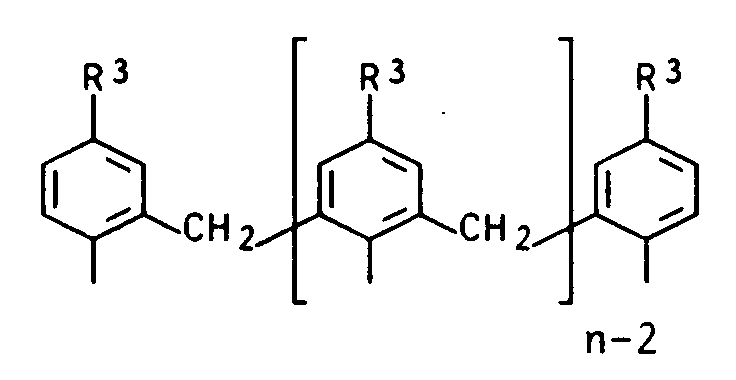
wobei R³ C₁- bis C₄-Alkyl, C₁- bis C₄-Alkoxy oder Halogen bedeuten kann. - Für den Fall n = 3 kann die Zentraleinheit Z²/3 für den phosphorhaltigen Rest stehen,

wobei S Null oder 1 sein kann. - Bevorzugte Verbindungen sind
1,3,5-Trihydroxybenzol,
Pyromellitsäureanhydrid und
3,4,5-Trihydroxybenzoesäuremethylester sowie
der Rest
- Bei den Variablen X² handelt es sich im wesentlichen um die Heteroeinheiten
Sauerstoff, Schwefel, -CO-O-, -O-CO-, -SO₂-, -SO₂-O-, -O-SO₂-O-, -NR⁴-, -CO-NR⁴-, -NR⁴-O- oder -CO-N〈,
wobei R⁴ Wasserstoff oder C₁- bis C₈-Alkyl bedeuten kann, und die Maßgabe gilt, daß X² im Falle des mehrkernigen Restes Z²/2 nur -O- oder -O-CO-bedeutet. - Bevorzugt sind Sauerstoff, -CO-O- und -O-CO-.
- Die Variable R¹ steht für eine C₂- bis C₂₀-Brücke mit 2 bis 12 Brückengliedern, die durch Sauerstoff, Schwefel oder -NR⁴- unterbrochen sein können, und wobei diese Heteroeinheiten jeweils durch mindestens 2 C-Atome getrennt sind.
- Gut geeignete Brückenglieder R¹ sind beispielsweise
-(CH₂)₂-, -(CH₂)₃-, -(CH₂)₄-, -(CH₂)₅-, -(CH₂)₆-, -(CH₂)₇-, -(CH₂)₈-, -(CH₂)₁₀-, -(CH₂)₁₂, -(CH₂-O-CH₂)₂-, -(CH₂)₂-S-(CH₂)₂-,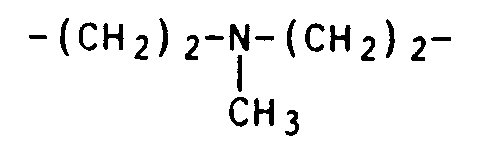
und
- Besonders gut geeignete Brückenglieder R¹ sind -(CH₂)₅-, -(CH₂)₆-, -(CH₂)₇- und -(CH₂)₁₀-.
- Die Variable Y kennzeichnet eine chemische Bindung, Sauerstoff, Schwefel, -CO-O-, -O-CO-, -NR⁴-, -CO-NR⁴- oder -NR⁴-CO-, wobei R⁴ Wasserstoff oder C₁- bis C₈-Alkyl bedeuten kann.
- Besonders bevorzugt ist Sauerstoff.
- Gut geeignete mesogene Gruppen M sind Gruppen der allgemeinen Formel III,
-A-(B-A-)t (D¹)u III
in der die Variable A
eine 1,4-Phenylen- oder 2,6-Naphthylengruppe, die bis zu zwei Stickstoffatome als Heteroatome enthalten kann, und die bis zu zwei der folgenden Substituenten Fluor, Chlor, Brom, Nitro oder Cyano tragen kann, oder eine 1,4-Cyclohexylengruppe, die bis zu zwei der folgenden Heteroatome Sauerstoff, Schwefel oder Stickstoff in jeweils nicht benachbarter Stellung enthalten kann,
die Variable B
eine chemische Bindung oder eine der folgenden Brückenglieder
-CO-O-, -O-CO-, -CH₂-CH₂-, -CH₂-O-, -O-CH₂-, -CH₂-S-, -S-CH₂-, -C≡C- -CH=CH-, -CH=N-, -N=CH-, -N=N-,
-CH=CH-CO-O- oder -O-CO-CH=CH-,
die Variable D¹
eine der folgenden Substituenten Fluor, Chlor, Brom, Nitro, Cyano, -OCFH₂, -OCF₂H, -OCF₃, -O-CO-R⁵ oder -CO-O-R⁵, wobei R⁵ ein linearer C₁- bis C₂₀-Alkylrest, der durch Sauerstoff unterbrochen sein kann, und der durch Fluor, Chlor, Brom, Cyano oder Methyl asymmetrisch substituiert sein kann, bedeutet,
die Variable t
eine Zahl von 1 bis 4, mit der Maßgabe, daß die Gruppen A und B verschieden sein können, und
die Variable u
1, wenn D¹ mit einem aromatischen Ring verknüpft, und
1 oder 2, wenn D¹ mit einem Cyclohexylenring verknüpft ist,
bedeuten. - Eine bevorzugte mesogene Gruppe M ist

Weitere gut geeignete mesogene Gruppen M sind Gruppen der allgemeinen Formel IV
-A-(B-A-)t (D²)u IV
in der D² eine der folgenden enantiomeren Gruppen ist:
eine lineare C₁- bis C₂₀-Alkylgruppe, die an ein oder zwei Kohlenstoffatomen durch Fluor, Chlor, Brom, Cyano, Trifluormethyl oder Methyl asymmetrisch substituiert ist, und die einmal durch die Gruppierung -CO-O-oder bis zu zweimal durch die Gruppierung -O- unterbrochen sein kann,
oder
eine lineare C₃- bis C₆-Alkylgruppe, die durch die Gruppierung
unterbrochen ist,
mit der Maßgabe, daß diese enantiomeren Gruppen D² durch -O-, -CO-O- oder -O-CO- mit A verknüpft sein können. - Beispiele gut geeigneter enantiomerer Gruppen D² sind:

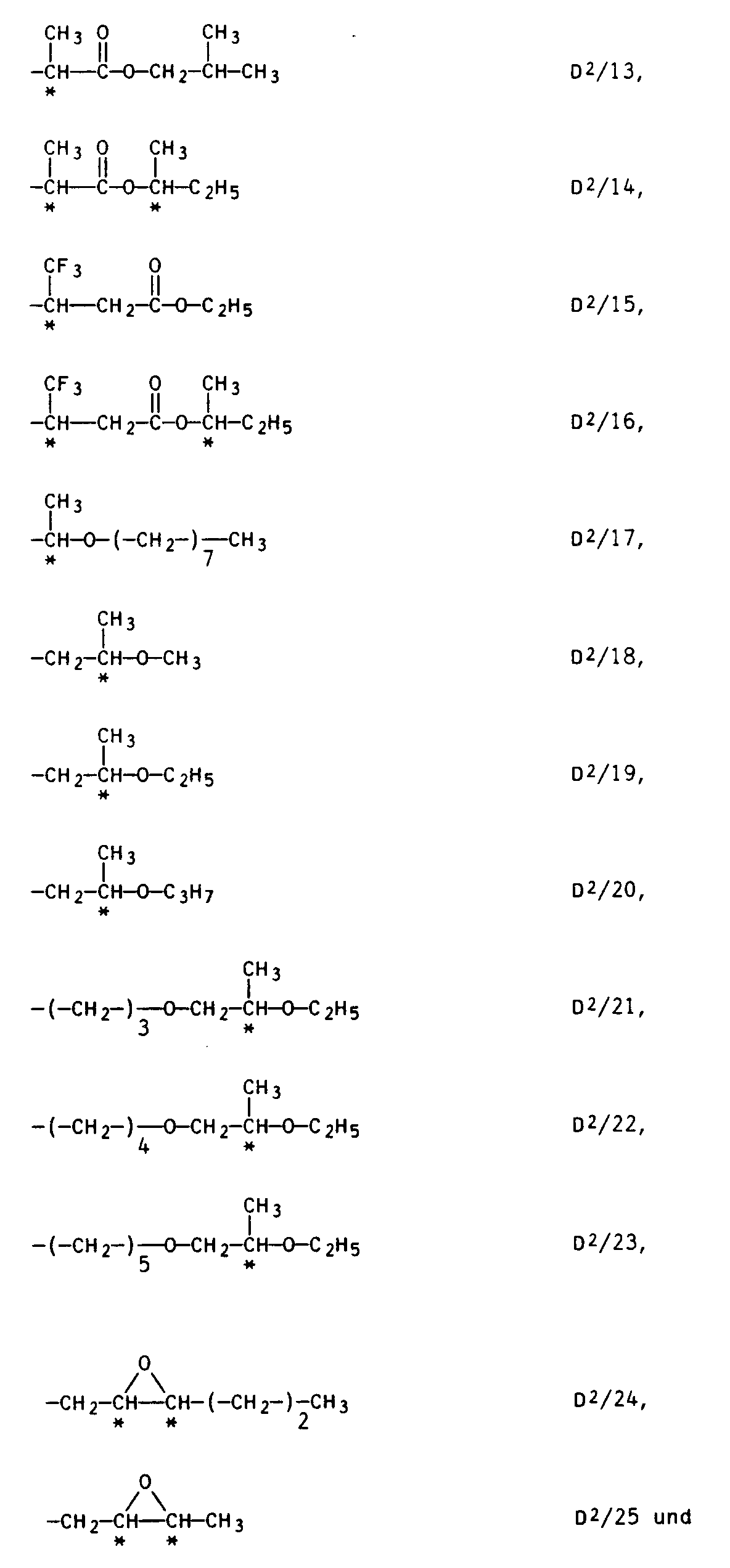

von denen die Gruppen D²/6, D²/7, D²/11 D²/15, D²/17 bis D²/21 und D²/24 besonders gut geeignet sind. - Eine bevorzugte mesogene Gruppe ist
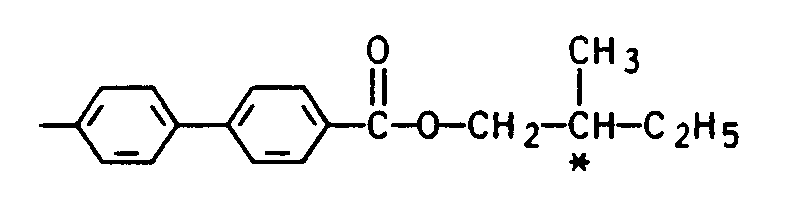
Für die Herstellung der flüssigkristallinen Verbindungen I gilt allgemein das Prinzip, Alkohole Z¹(H)m mit Carbonsäurehalogeniden M-Y-R¹-CO-Hal, wobei Hal für Chlor oder Brom steht, oder Carbonsäuren Z(H)m oder deren Derivate wie Säurechloride Z¹(Cl)m oder Anhydride (Z¹)₂O mit Alkoholen M-Y-R¹-OH umzusetzen. - Im einzelnen sind die flüssigkristallinen Verbindungen I nach folgenden Methoden erhältlich:
Man geht von einer Carbonsäure M-Y-R¹-COOH aus und setzt diese in bekannter Weise mit Thionylchlorid in Gegenwart von Dimethylformamid zum Carbonsäurechlorid M-Y-R¹-CO-Cl um. Im nachfolgenden Schritt ist durch Umsetzung des Säurechlorids M-Y-R¹-CO-Cl mit einem Alkohol Z¹(H)m in Gegenwart von Pyridin die Verbindung I erhältlich. - Die Alkoholyse von Carbonsäurechloriden ist in zahlreichen Ausgestaltungen allgemein bekannt, so daß sich nähere Ausführungen hierzu erübrigen. Es ist lediglich hinzuzufügen, daß es sich meistens empfiehlt, das Säurechlorid im Überschuß einzusetzen, um den Alkohol quantitativ umzusetzen. Nach der Isolierung des Produktes I kann eine zusätzliche Reinigung mittels Gelchromatographie und anschließende Umkristallisation vorgenommen werden, wozu sich meistens Methylenchlorid-Methanol-Gemische eignen.
- Eine weitere Möglichkeit zur Herstellung der flüssigkristallinen Verbindung I besteht in der sauer katalysierten Veresterung der Carbonsäuren Z¹(H)m, der Säurechloride Z¹(Cl)m und der Anhydride (Z¹)₂O mit Alkoholen M-Y-R¹-OH.
- Die Veresterung ist in zahlreichen Ausgestaltungen hinsichtlich der Säure, der Temperatur und der Reaktionszeit allgemein bekannt.
- Eine Variante zur Umsetzung von Z¹(H)m mit Carbonsäurechloriden stellt die Umsetzung von Z¹(H)m mit ω-Bromcarbonsäurechloriden Br-R¹-CO-Cl und die anschließende Veretherung des Zwischenproduktes Z¹-CO-R¹-Br mit einer alkoholischen Verbindung HO-M zur Verbindung I dar.
- Für die Herstellung der flüssigkristallinen Verbindungen II gilt allgemein das Prinzip, phenolische Verbindungen Z²(OH)n mit Verbindungen, die sich von Verbindungen des Typs M-Y-R¹-X²-H ableiten oder deren Derivate sind, oder mit einem Alkylbromid M-Y-R¹-Br umzusetzen.
- Ferner erhält man die Verbindungen II in an sich bekannter Weise durch Umsetzung der Verbindung Z²(OH)n mit ω-Bromcarbonsäurechlorid Br-R¹-CO-Cl über die Stufe eines Zwischenproduktes Z²(-O-CO-R¹-Br)n, welches anschließend mit der Verbindung HO-M verethert wird.
- Eine weitere Möglichkeit zur Herstellung der Verbindungen II stellt die Veresterung von Carbonsäuren Z²(COOH)n, Säurechloriden Z²(COCl)n und Anhydriden (Z²CO)₂ mit Verbindungen des Typs M-Y-R¹-OH dar, die auf übliche Weise durchgeführt wird.
- Die erfindungsgemäßen flüssigkristallinen Verbindungen I und II sind in hoher Reinheit mit einem einheitlichen Molekulargewicht herstellbar, schnell schaltbar und besitzen eine hohe dielektrische Anisotropie. Außerdem neigen sie kaum zur Kristallisation.
- Die erfindungsgemäßen flüssigkristallinen Verbindungen I und II eignen sich hervorragend allein, in Mischungen untereinander und mit anderen flüssigkristallinen und/oder nicht flüssigkristallinen Verbindungen in Form fester oder flüssigkristalliner optisch anisotroper Medien für die Darstellung und Speicherung von Informationen. Darüber hinaus eignen sie sich zur Herstellung anisotroper fester optischer Medien für optische Bauteile wie Kompensatoren, Polarisatoren, Prismen, Platten mit optischer Drehung und elektrooptischen Speicherdisplays.
- Die Phasenübergänge wurden im Polarisationsmikroskop (Leitz, Ortholux II Pol BK, Mettler-Heiztisch FP 82 HT, Mettler-Steuergerät FP 80), Heizrate 10°C/min, und durch DSC-Messungen (Perkin-Elmer, DSC-7), Heizrate 20°C/min, bestimmt.
- Die folgende Symbolik kennzeichnet die Phasen. Ein Phasenwechsel findet bei den gemessenen Phasenumwandlungstemperaturen statt.
- k
- = kristallin
- g
- = Glasstufe
- n
- = nematisch
- ch
- = cholesterisch
- s
- = smektisch
- i
- = isotrop
-
- a) 6-(4'-Cyanbiphenyl-4-oxy)-capronsäure
Ein Gemisch, bestehend aus 41,3 g (212 mmol) 4-(4'-Hydroxybiphenyl)-carbonitril, 49,5 g (254 mmol) 6-Bromcapronsäure, 42,1 g (254 mmol) Kaliumjodid, 70,1 g (508 mmol) Kaliumcarbonat und 400 ml 2-Butanon, wurde 32 Stunden unter Rückfluß erhitzt. Der nach dem Abkühlen angefallene Rückstand wurde abgetrennt, mit 2-Butanon gewaschen, in verd. Salzsäure aufgenommen, einige Minuten gerührt, isoliert und mit Wasser gewaschen. Schließlich wurde das Produkt zweimal aus Toluol umkristallisiert.- Ausbeute:
- 30 %
- Schmp.:
- 168°C
- b) 6-(4'-Cyanbiphenyl-4-oxy)-capronsäurechlorid
Eine Lösung, bestehend aus 16,3 g (52,7 mmol) 6-(4' -Cyanbiphenyl-4-oxy)-capronsäure, 7,5 g (63,3 mmol) Thionylchlorid und 3 Tropfen Dimethylformamid in 160 ml Toluol, wurde 1,5 Stunden zum Sieden erhitzt. Nach Entfernung der leicht flüchtigen Bestandteile im Vakuum bei 80°C wurde der Rückstand bei Raumtemperatur im Vakuum getrocknet.- Ausbeute: 90 %
- c) Pentaerythrit-tetra-(ω-(4'-cyanbiphenyl-4-oxy)-pentylcarboxylat)
Zu einer Lösung, bestehend aus 0,9 g (6,7 mmol) Pentaerythrit, 3,2 g (40 mmol) Pyridin und 90 ml Methylenchlorid, wurden 10,9 g (33,3 mmol) 6-(4'-Cyanbiphenyl-4-oxy)-capronsäurechlorid zugegeben, die dann unter Feuchtigkeitsausschluß bei Raumtemperatur über Nacht gerührt wurde. Nach der Aufarbeitung wurden 8,3 g Rohprodukt erhalten, die durch Chromatographie über Kieselgel (Elutionsmittel:Toluol/Essigester=3/1) und Umkristallisation aus Methylenchlorid/Methanol gereinigt wurden.- Ausbeute:
- 40 %
- ¹H-NMR (CDCl₃, TMS):
- δ (ppm):
- 1,4-1,9 (m,24H,CH₂); 2,37 (t,8H,CH₂); 4,0 (t,8H,CH₂); 4,2 (s,8H,CH₂); 6,95 (d,8H,Arom.-H); 7,5 (d,8H,Arom.-H); 7,55-7,8 (m,16H,Arom.-H)
- Phasenübergäng:
- g - n 25°C
n - i 90°C
-
- a) 8-(4'-Cyanbiphenyl-4-oxy)-octansäure
Die Herstellung erfolgte gemäß Beispiel 1a). Anstelle von 6-Bromcapronsäure wurde 8-Bromoctansäure eingesetzt.- Ausbeute:
- 30 %
- Schmp.:
- 147 - 148°C
- b) 8-(4'-Cyanbiphenyl-4-oxy)-octansäurechlorid
Die Herstellung erfolgte gemäß Beispiel 1b). Anstelle von 6-(4'-Cyanbiphenyl-4-oxy)-capronsäure wurde 8-(4'-Cyanbiphenyl-4-oxy)-octansäure eingesetzt.- Ausbeute:
- 95 %
- Schmp.:
- 57 - 58°C
- c) Pentaerythrit-tetra-(ω-(4'-cyanbiphenyl-4-oxy)-heptylcarboxylat
Die Herstellung erfolgt gemäß Beispiel 1c). Anstelle von 6-(4'-Cyanbiphenyl-4-oxy)-capronsäurechlorid wurde 8-(4'-Cyanbiphenyl-4-oxy)-octansäurechlorid eingesetzt.- Ausbeute:
- 38 %
- ¹H-NMR (CDCl₃, TMS):
- δ (ppm):
- 1,1-1,93 (m,40H,CH₂); 2,3 (t,8H,CH₂); 4,0 (t,8H,CH₂); 4,12 (s,8H,CH₂); 7,0 (d,8H,Arom.-H); 7,53 (d,8H, Arom.-H); 7,6-7,8 (m,16H,Arom.-H)
- Phasenübergänge:
- g - s 20°C
s - n 80°C
n - i 95°C
- Die Herstellung erfolgte gemäß Beispiel 1a), 1b) und 1c). Anstelle von Pentaerythrit wurde Mannit eingesetzt.
- Ausbeute:
- 35 %
- ¹H-NMR (CDCl₃, TMS):
- δ (ppm):
- 1,38-1,9 (m,36H,CH₂); 2,27-2,52 (m,12H,CH₂); 3,88-4,1 (m,14H,CH₂); 4,2-4,38 (m,2H,CH₂); 5,0-5,2 (m,2H,CH); 5,43-5,55 (m,2H,CH); 6,9-7,07 (m,12H,Arom.-H); 7,4-7,75 (m,36H,Arom.-H)
- Phasenübergänge:
- g - ch 34°C
ch - i 115°C - Die Herstellung erfolgte gemäß Beispiel 2a), 2b) und 2c). Anstelle von Pentaerythrit wurde Mannit eingesetzt.
- Ausbeute:
- 36 %
- ¹H-NMR (DMSO-d₆, TMS):
- δ (ppm):
- 1,0-1,8 (m,60H,CH₂); 2,1-2,4 (m,12H,CH₂); 3,7-4,1 (m, 14H,CH₂); 4,2-4,32 (m,2H,CH₂); 4,9-5,1 (m,2H,CH); 5,35-5,5 (m,2H,CH); 6,8-7,1 (m,12H,Arom.-H); 7,5-8,0 (m,36H,Arom.-H)
- Phasenübergänge:
- g - s 27°C
S - ch 116°C
ch - i 117°C -
- a) 4-(4'-ω-Hydroxyundecyloxy)-biphenylcarbonsäure(S-2-methyl-)butylester
36,1 g (127 mmol) 4-(4'-Hydroxybiphenyl)-carbonsäure-(S-2-methyl-)-butylester, 32 g (127 mmol) 11-Brom-1-undecanol und 20 g (145 mmol) wasserfreies Kaliumcarbonat wurden in 500 ml Dimethylformamid bei 100°C bis zur vollständigen Umsetzung des Hydroxybiphenylcarbonsäureesters gerührt, die dünnschichtchromtographisch festgestellt wurde. Nach dem Abkühlen auf Raumtemperatur wurde festes Nebenprodukt abgetrennt und verworfen. Aus dem Filtrat wurde das Lösungsmittel entfernt und das feste Rohprodukt zweimal aus Aceton umkristallisiert.- Ausbeute:
- 45 %
- b) 2-Hydroxy-1,2,3-propantricarbonsäuretri-(4-(4'-undecyloxy)-biphenylcarbonsäure-(S-2-methyl-)butylester-)yl-ester
0,8 g (3,6 mmol) Citronensäure, 5 g (11 mmol) 4-(4'-ω-Hydroxyundecyloxy)-biphenylcarbonsäure-(S-2-methyl-)butylester und 1 g p-Toluolsulfonsäure wurden in 150 ml wasserfreiem Toluol unter Rückfluß erhitzt. Die Dampfphase wurde kondensiert, von darin enthaltenem Wasser befreit, und die Toluolphase wurde zurückgeführt. Nach vollständiger Umsetzung wurden Lösungsmittel und p-Toluolsulfonsäure entfernt und der Rückstand durch Chromatographie über Kieselgel (Elutionsmittel:Toluol/Essigester=5/1) und Umkristallisation aus Methanol gereinigt.- Ausbeute:
- 30 %
- c) Bis-1,2,3-propantricarbonsäuretri-(4-(4'-undecyloxy)-biphenylcarbonsäure-(S-2-methyl-)butylester)-yl-adipat
3,5 g (2,3 mmol) 2-Hydroxy-1,2,3-propantricarbonsäuretri-(4-(4'-undecyloxy)-biphenylcarbonsäure-(S-2-methyl-)butylester)-yl-ester, 0,3 ml Triethylamin und 50 mg 4-Dimethylaminopyridin wurden in 100 ml Methylenchlorid bei einer Temperatur von -5 bis -10°C mit 0,27 ml (1,2 mmol) Adipinsäuredichlorid versetzt, 30 Minuten bei dieser Temperatur gerührt, auf Raumtemperatur erwärmt und bis zur vollständigen Umsetzung des Citronensäurederivates gerührt.
Anschließend wurde die Reaktionsmischung mit Wasser versetzt, die organische Phase abgetrennt, mit wasserfreiem Natriumsulfat getrocknet und das Lösungsmittel entfernt. Der Rückstand wurde in Tetrahydrofuran gelöst und mit Petrolether ausgefällt.- Ausbeute:
- 82 %
- ¹H-NMR (CDCl₃, TMS):
- δ (ppm):
- 0,95-1,95 (m,CH,CH₂,CH₃); 2,75-2,95 (m,CH₂); 3,95-4,30 (m,OCH₂); 6,90-8,10 (m,Arom.-H)
-
- a) Glycerin-tri-(ω-bromheptylcarboxylat)
Zu einer Lösung, bestehend aus 9 g (100 mmol) Glycerin, 26 g (330 mmol) Pyridin und 300 ml Methylenchlorid, wurden 80 g (330 mmol) 8-Bromoctansäurechlorid - gelöst in 80 ml Methylenchlorid - zugegeben, die dann unter Feuchtigkeitsausschluß bei Raumtemperatur 24 Stunden gerührt wurde. Nach der Aufarbeitung wurden 68 g Produkt erhalten.- Ausbeute:
- 96 %
- b) Glycerin-tri-(ω-(4'-cyanbiphenyl-4-oxy)-heptylcarboxylat)
7,1 g (10 mmol) Glycerin-tri-(ω-bromheptylcarboxylat), 6,2 g (32 mmol) 4-(4'-Hydroxybiphenyl)-carbonitril, 4,4 g (32 mmol) frisch gemahlenes und geglühtes Kaliumcarbonat sowie 0,5 g Kaliumjodid wurden in 70 ml 2-Butanon 48 Stunden unter Rückfluß erhitzt. Danach wurde die Lösung auf Wasser gegeben, die organische Phase mit Essigester extrahiert und aufgearbeitet. Es wurden 8 g Rohprodukt erhalten, die durch Chromatographie über Kieselgel (Elutionsmittel: Toluol/Essigester = 1/1) gereinigt wurden.- Ausbeute:
- 17 %
- ¹H-NMR (CDCl₃, TMS):
- δ (ppm):
- 1,2-1,35 (m,18H,CH₂); 1,55-1,7 (m,6H,CH₂); 1,7-1,9 (m,6H,CH₂); 2,33(t,6H,CH₂); 3,97 (t,6H,CH₂); 4,1-4,25 (m,2H,CH₂); 4,25-4,4 (m,2H,CH₂); 5,3 (m, 1H, CH); 6,93 (d,6H,Arom.-H); 7,5 (d,6H,Arom.-H); 7,57-7,8 (m,12H,Arom.-H)
- Phasenübergänge:
- g - n 13°C
n - i 91°C
-
- a) Glycerin-tri-(ω-bromdecylcarboxylat)
Die Herstellung erfolgte gemäß Beispiel 6a). Anstelle von 8-Bromoctansäurechlorid wurde 11-Bromundecansäurechlorid eingesetzt. - b) Glycerin-tri-(ω-(4'-cyanbiphenyl-4-oxy)-decylcarboxylat)
Die Herstellung erfolgte gemäß Beispiel 6b). Anstelle von Glycerin-tri-(ω-bromheptylcarboxylat) wurde Glycerin-tri-(ω-bromdecylcarboxylat) eingesetzt.- Ausbeute:
- 15 %
- ¹H-NMR (CDCl₃, TMS):
- δ (ppm):
- 1,2-1,4 (m,30H,CH₂); 1,4-1,5 (m,6H,CH₂); 1,5-1,7 (m,6H,CH₂); 1,7-1,9 (m,6H,CH₂); 2,3 (t,6H,CH₂); 4,0 (t,6H,CH₂); 4,1-4,2 (m,2H,CH₂); 4,26-4,35 (m,2H,CH₂); 5,28 (m,1H,CH); 6,95 (d,6H,Arom.-H); 7,53 (d,6H,Arom.-H); 7,55-7,8 (m,12H,Arom.-H)
- Phasenübergänge:
- g - s 8°C
s - n 84°C
n - i 90°C
- 1,8 g (10 mmol) 3,4,5-Trihydroxybenzoesäuremethylester, 10,7 g (30 mmol) 4-(4'-ω-Bromhexyloxy)-biphenylcarbonitril, 4,1 g (30 mmol) frisch gemahlenes und geglühtes Kaliumcarbonat, 5 g (30 mmol) Kaliumiodid und 50 ml wasserfreies Nitrobenzol wurden unter Rühren 8 Stunden auf 150°C erhitzt. Nach dem Abkühlen auf Raumtemperatur wurde die Suspension abfiltriert, Nitrobenzol aus dem Filtrat destilliert und der Rückstand durch Chromatographie über Kieselgel (Elutionsmittel: Toluol/Essigester = 2/1) gereinigt. Anschließend wurde die Hauptfraktion in 30 ml Methylenchlorid gelöst und unter Rühren in 200 ml kaltes Methanol getropft. Das ausgefallene Produkt wurde abfiltriert, mit kaltem Methanol gewaschen und getrocknet.
- Ausbeute:
- 39 %
- ¹H-NMR (CDCl₃, TMS):
- δ (ppm):
- 1,4-1,5 (m,12H,CH₂); 1,5-2,1 (m,12H,CH₂); 3,92 (s,3H,OCH₃); 3,8-4,2 (m,12H,CH₂-O); 6,8-7,1 (m,6H,Arom.-H); 7,28 (s,2H,Arom.-H); 7,3-7,8 (m,18H,Arom.-H)
- Phasenübergänge:
- k - g 127°C
g - n (27°C)
n - i (125°C) - Die Herstellung erfolgte gemäß Beispiel 8. Anstelle von 3,4,5-Trihydroxybenzoesäuremethylester wurde 1,3,5-Trihydroxybenzol eingesetzt.
- Ausbeute:
- 35 %
- ¹H-NMR (CDCl₃, TMS):
- δ (ppm):
- 1,36-1,7 (m,12H,CH₂); 1,7-2,1 (m,12H,CH₂); 3,93 (t,6H,CH₂-O); 4,02 (t,6H,CH₂-O); 6,09 (s,3H,Arom.-H); 7,0 (d,6H,Arom.-H); 7,4-7,8 (m,18H,Arom.-H)
- Phasenübergänge:
- g - n 25°C
n - i 116°C - Die Herstellung erfolgte gemäß Beispiel 2c). Anstelle von Pentaerythrit wurde 1,3,5-Trihydroxybenzol mit 8-(4'-Cyanbiphenyl-4-oxy)-octansäurechlorid umgesetzt.
- Ausbeute:
- 35 %
- ¹H-NMR (DMSO-d₆, TMS):
- δ (ppm):
- 1,1-1,55 (m,18H,CH₂); 1,55-1,9 (m,12H,CH₂); 2,52 (t,6H,CH₂); 4,0 (t,6H,CH₂); 6,9 (s,3H,Arom.-H); 7,03 (d,6H,Arom.-H); 7,66 (d,6H,Arom.-H); 7,72-8,0 (m,12H,Arom.-H)
- Phasenübergänge:
- k - g 114°C
g - n 22°C
n - i 98°C - 1,1 g (5 mmol) Pyromellitsäureanhydrid, 5,2 g (20 mmol) 4-(4'-ω-Hydroxyhexyloxy)-biphenylcarbonitril, 0,2 g p-Toluolsulfonsäure und 50 ml xylol wurden 12 Stunden unter Rückfluß am Wasserabscheider erhitzt. Nach dem Abkühlen wurden 100 ml Methylenchlorid zugegeben. Der nach der Aufarbeitung verbleibende Rückstand wurde durch Chromatographie über Kieselgel (Elutionsmittel: Toluol/Essigsäure = 4/1) und die Hauptfraktion durch Umkristallisation aus Toluol gereinigt.
- Ausbeute:
- 32 %
- ¹H-NMR (DMSO-d₆, TMS):
- δ (ppm):
- 1,3-1,52 (m,16H,CH₂); 1,6-1,8 (m,16H,CH₂); 3,97 (t,8H,CH₂); 4,3 (t,8H,CH₂); 7,0 (d,8H,Arom.-H); 7,65 (d,8H, Arom.-H); 7,72-7,9 (m,16H,Arom.-H); 8,1 (s,2H,Arom.-H);
- Phasenübergänge:
- k - n 140°C
n - i (98°C) - Es wurden die schnellsten Schaltzeiten τ von drei flüssigkristallinen Verbindungen (Beispiele 7, 8 und 9) sowie eines polymeren Flüssigkristalls, das aus der Monomereinheit

aufgebaut ist, bestimmt. - Für die Messungen wurden jeweils 2 µm-Zellen mit angeriebener Polyimidschicht der Firma EHC Co. Ltd. verwendet. Die Schaltversuche wurden alle mit einer Rechteckspannung von ±15 V und 1 kHz durchgeführt.
Tabelle Flüssigkristall Klärpunkt (T/°C) Schaltbereich (°C) schnellste Schaltzeit (τ/ms) Beispiel 7 90,0 78 - 89,5 1,98 (89,5°C) Beispiel 8 125,7 65 - 125,5 0,70 (125,5°C) Beispiel 9 117,5 65 - 116,0 2,24 (116°C) Polymer 124,5 116 - 124,0 20,20 (145°C)
Claims (9)
- Flüssigkristalline Verbindungen der allgemeinen Formeln I und II,
Z¹-(X¹-R¹-Y-M)m I
Z²-(X²-R¹-Y-M)n II
in denen die Variablen folgende Beutung haben:Z¹ der Alkoholat- oder Säurerest Z¹/1 eines m-wertigen aliphatischen Alkohols bzw. einer m-wertigen aliphatischen Carbonsäure mit 3 bis 30 C-Atomen;
der Alkoholat- oder Säurerest Z¹/2 eines m-wertigen cycloaliphatischen Alkohols bzw. einer m-wertigen cycloaliphatischen Carbonsäure mit 5- oder 6-Ringgliedern;
für den Fall m = 3 der stickstoffhaltige Rest Z¹/3,
für den Fall m = 3 ein Rest der Strukturen Z¹/4a-d
der Rest Z¹/6 Z² der n-wertige Rest Z²/1 eines Benzols,
der mehrkernige Rest Z²/2
für den Fall n = 3 der phosphorhaltige Rest Z²/3, X¹ eine chemische Bindung oder eine -CO- Gruppe;X² Sauerstoff, Schwefel, -CO-O-, -O-CO-, -SO₂-, -SO₂-O-, -O-SO₂-O-, -NR⁴-, -CO-NR⁴-, -NR⁴-O- oder -CO-N〈,
wobei R⁴ Wasserstoff oder C₁- bis C₈-Alkyl bedeuten kann und die Maßgabe gilt, daß X² im Falle des mehrkernigen Restes Z²/2 nur -O- oder -O-CO- bedeutet;m 3 bis 6, mit der Maßgabe, daß m gleich oder kleiner der Anzahl der C-Atome in Z¹ ist;n 3 bis 6;R¹ eine C₂- bis C₂₀-Brücke mit 2 bis 12 Brückengliedern, die durch Sauerstoff, Schwefel oder -NR⁴- unterbrochen sein können, und wobei diese Heteroeinheiten jeweils durch mindestens 2 C-Atome getrennt sind;Y eine chemische Bindung, Sauerstoff, Schwefel, -CO-O-, -O-CO-, -NR⁴-, -CO-NR⁴- oder -NR⁴-CO-;M eine mesogene Gruppe, die sich von einer Verbindung ableitet, welche in der flüssigkristallinen Phase eine Anisotropie der Dielektrizitätskonstanten ε mit |Δε| > 0,3 aufweist und/oder welche optisch aktiv ist. - Flüssigkristalline Verbindungen nach Anspruch 1, in denen die mesogene Gruppe M eine Gruppe der allgemeinen Formel III ist,
-A-(B-A-)t (D¹)u III
in der die Variablen die folgende Bedeutung haben:A eine 1,4-Phenylen- oder 2,6-Naphthylengruppe, die bis zu zwei Stickstoffatome als Heteroatome enthalten kann, und die bis zu zwei der folgenden Substituenten tragen kann: Fluor, Chlor, Brom, Nitro oder Cyano;
eine 1,4-Cyclohexylengruppe, die bis zu zwei der folgenden Heteroatome in jeweils nicht benachbarter Stellung enthalten kann: Sauerstoff, Schwefel oder Stickstoff;B eine chemische Bindung oder eines der folgenden Brückenglieder:
-CO-O-, -O-CO-, -CH₂-CH₂-, -CH₂-O-, -O-CH₂-, -CH₂-S-, -S-CH₂ -C≡C-, -CH=CH-, -CH=N-, -N=CH-, -N=N-,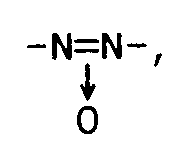 D¹ einer der folgenden Substituenten:
Fluor, Chlor, Brom, Nitro, Cyano, -OCFH₂, -OCF₂H, -OCF₃, -O-CO-R⁵ oder -CO-O-R⁵,
wobei R⁵ ein linearer C₁- bis C₂₀-Alkylrest, der durch Sauerstoff unterbrochen sein kann, und der durch Fluor, Chlor, Brom, Cyano oder Methyl asymmetrisch substituiert sein kann, bedeutet;t 1 bis 4, mit der Maßgabe, daß die Gruppen A und B verschieden sein können;u 1, wenn D¹ mit einem aromatischen Ring verknüpft ist, und 1 oder 2, wenn D¹ mit einem Cyclohexylenring verknüpft ist. - Flüssigkristalline Verbindungen nach Anspruch 1, in denen die mesogene Gruppe M eine Gruppe der allgemeinen Formel IV ist,
-A-(B-A-)t (D²)u IV
in der D² eine der folgenden enantiomeren Gruppen ist:
eine lineare C₁- bis C₂₀-Alkylgruppe, die an ein oder zwei Kohlenstoffatomen durch Fluor, Chlor, Brom, Cyano, Trifluormethyl oder Methyl asymmetrisch substituiert ist, und die einmal durch die Gruppierung -CO-O- oder bis zu zweimal durch die Gruppierung -O- unterbrochen sein kann, oder
eine lineare C₃- bis C₆-Alkylgruppe, die durch die Gruppierung
mit der Maßgabe, daß diese enantiomeren Gruppen D² auch durch -O-, -CO-O- oder -O-CO- mit A verknüpft sein können. - Verfahren zur Herstellung der flüssigkristallinen Verbindungen I gemäß den Ansprüchen 1 bis 3, dadurch gekennzeichnet, daß man die Verbindungen Z¹(H)m, Z¹(C1)m oder (Z¹)₂O in an sich bekannter Weise mit einem Carbonsäurehalogenid M-Y-R¹-CO-Hal bzw. einem Alkohol M-Y-R¹-O-H umsetzt, wobei Hal für Chlor oder Brom steht.
- Verfahren zur Herstellung der flüssigkristallinen Verbindungen I gemäß den Ansprüchen 1 bis 3, dadurch gekennzeichnet, daß man die Verbindung Z¹(H)m in an sich bekannter Weise mit einem ω-Bromcarbonsäurechlorid Br-R¹-CO-Cl umsetzt und das Zwischenprodukt Z¹-CO-R¹-Br mit der Verbindung HO-M verethert.
- Verfahren zur Herstellung der flüssigkristallinen Verbindungen II gemäß den Ansprüchen 1 bis 3, dadurch gekennzeichnet, daß man die Verbindung Z²(OH)n in an sich bekannter Weise mit Verbindungen, die sich von der Verbindung M-Y-R¹-X²-H ableiten, bzw. einem Alkylbromid M-Y-R¹-Br umsetzt.
- Verfahren zur Herstellung der flüssigkristallinen Verbindungen II gemäß den Ansprüchen 1 bis 3, dadurch gekennzeichnet, daß man die Verbindung Z²(OH)n in an sich bekannter Weise mit ω-Bromcarbonsäurechlorid Br-R¹-CO-Cl umsetzt und das Zwischenprodukt Z²-O-CO-R¹-Br mit der Verbindung HO-M verethert.
- Verfahren zur Herstellung der flüssigkristallinen Verbindungen II gemäß den Ansprüchen 1 bis 3, dadurch gekennzeichnet, daß man die Verbindungen Z²(COOH)n, Z²(COCl)n und (Z²-CO)₂O in an sich bekannter Weise mit einer Verbindung M-Y-R¹-OH umsetzt.
- Verwendung der flüssigkristallinen Verbindungen I und 11 gemäß den Ansprüchen 1 bis 3 allein, in Mischungen untereinander und mit anderen flüssigkristallinen und/oder nicht flüssigkristallinen Verbindungen in Form fester oder flüssigkristalliner optisch anisotroper Medien für die Darstellung und Speicherung von Informationen.
Applications Claiming Priority (2)
| Application Number | Priority Date | Filing Date | Title |
|---|---|---|---|
| DE4108627 | 1991-03-16 | ||
| DE4108627A DE4108627A1 (de) | 1991-03-16 | 1991-03-16 | Fluessigkristalline verbindungen |
Publications (3)
| Publication Number | Publication Date |
|---|---|
| EP0504660A2 true EP0504660A2 (de) | 1992-09-23 |
| EP0504660A3 EP0504660A3 (de) | 1994-03-23 |
| EP0504660B1 EP0504660B1 (de) | 1998-08-19 |
Family
ID=6427475
Family Applications (1)
| Application Number | Title | Priority Date | Filing Date |
|---|---|---|---|
| EP92103713A Expired - Lifetime EP0504660B1 (de) | 1991-03-16 | 1992-03-05 | Flüssigkristalline Verbindungen |
Country Status (4)
| Country | Link |
|---|---|
| US (1) | US5417882A (de) |
| EP (1) | EP0504660B1 (de) |
| JP (1) | JPH04346964A (de) |
| DE (2) | DE4108627A1 (de) |
Cited By (3)
| Publication number | Priority date | Publication date | Assignee | Title |
|---|---|---|---|---|
| EP0583605A1 (de) * | 1992-07-22 | 1994-02-23 | BASF Aktiengesellschaft | Definierte, oligomere flüssigkristalline Verbindungen mit smektisch flüssigkristallinen Phasen |
| WO1995008604A1 (de) * | 1993-09-25 | 1995-03-30 | Basf Aktiengesellschaft | Flüssigkristalline verbindungen |
| WO1996030352A1 (de) * | 1995-03-24 | 1996-10-03 | Basf Aktiengesellschaft | Flüssigkristalline verbindungen |
Families Citing this family (8)
| Publication number | Priority date | Publication date | Assignee | Title |
|---|---|---|---|---|
| DE19520704A1 (de) * | 1995-06-09 | 1996-12-12 | Basf Ag | Polymerisierbare chirale Verbindungen und deren Verwendung |
| US6558572B2 (en) * | 1999-12-22 | 2003-05-06 | University Of Rochester | Glass-forming liquid crystalline compositions and optical devices formed therefrom |
| US6534038B2 (en) | 2000-04-07 | 2003-03-18 | Bristol-Myers Squibb Pharma Company | Ternary ligand complexes useful as radiopharmaceuticals |
| JP4368140B2 (ja) * | 2002-08-19 | 2009-11-18 | 尚武 中村 | 液晶性化合物及びそれを用いた電気粘性流体 |
| WO2004083335A2 (en) * | 2003-03-21 | 2004-09-30 | University Of Rochester | Glassy chiral-nematic liquid crystals and optical devices containing same |
| JP4618716B2 (ja) * | 2005-02-08 | 2011-01-26 | 日東電工株式会社 | 液晶化合物 |
| US8294332B2 (en) * | 2007-07-02 | 2012-10-23 | Schlumberger Technology Corporation | Pressure transducer |
| TWI851482B (zh) * | 2023-11-17 | 2024-08-01 | 淡江大學學校財團法人淡江大學 | 具有聚集誘導放光性質之液晶分子及包含其之液晶顯示器、光學感測元件 |
Family Cites Families (8)
| Publication number | Priority date | Publication date | Assignee | Title |
|---|---|---|---|---|
| US4728547A (en) * | 1985-06-10 | 1988-03-01 | General Motors Corporation | Liquid crystal droplets dispersed in thin films of UV-curable polymers |
| DD247227A1 (de) * | 1986-03-05 | 1987-07-01 | Univ Halle Wittenberg | Glasartige nematische fluessigkristalle |
| DD265155A1 (de) * | 1987-09-24 | 1989-02-22 | Univ Halle Wittenberg | Nematische fluessigkristalle mit glasphasen |
| US4891152A (en) * | 1987-12-28 | 1990-01-02 | Hughes Aircraft Company | Dispersion of liquid crystal droplets in a photopolymerized matrix and devices made therefrom |
| DE3827603A1 (de) * | 1988-08-13 | 1990-03-15 | Hoechst Ag | Chirale smektische fluessigkristalle und diese enthaltende glasartige materialien zur darstellung und speicherung von information |
| US5021188A (en) * | 1989-09-22 | 1991-06-04 | General Motors Corporation | Polymer dispersed liquid crystal films formed by electron beam curing |
| US4971719A (en) * | 1989-09-22 | 1990-11-20 | General Motors Corporation | Polymer dispersed liquid crystal films formed by electron beam curing |
| DE4011812A1 (de) * | 1990-04-12 | 1991-10-17 | Consortium Elektrochem Ind | Tetrasubstituierte methane mit fluessigkristallinen eigenschaften |
-
1991
- 1991-03-16 DE DE4108627A patent/DE4108627A1/de not_active Withdrawn
-
1992
- 1992-03-05 DE DE59209461T patent/DE59209461D1/de not_active Expired - Lifetime
- 1992-03-05 EP EP92103713A patent/EP0504660B1/de not_active Expired - Lifetime
- 1992-03-06 JP JP4049637A patent/JPH04346964A/ja active Pending
- 1992-03-11 US US07/849,565 patent/US5417882A/en not_active Expired - Fee Related
Cited By (5)
| Publication number | Priority date | Publication date | Assignee | Title |
|---|---|---|---|---|
| EP0583605A1 (de) * | 1992-07-22 | 1994-02-23 | BASF Aktiengesellschaft | Definierte, oligomere flüssigkristalline Verbindungen mit smektisch flüssigkristallinen Phasen |
| US5417884A (en) * | 1992-07-22 | 1995-05-23 | Basf Aktiengesellschaft | Defined oligomeric liquid-crystalline compounds having smectic liquid-crystalline phases |
| WO1995008604A1 (de) * | 1993-09-25 | 1995-03-30 | Basf Aktiengesellschaft | Flüssigkristalline verbindungen |
| WO1996030352A1 (de) * | 1995-03-24 | 1996-10-03 | Basf Aktiengesellschaft | Flüssigkristalline verbindungen |
| WO1996030351A1 (de) * | 1995-03-24 | 1996-10-03 | Basf Aktiengesellschaft | Flüssigkristalline verbindungen |
Also Published As
| Publication number | Publication date |
|---|---|
| EP0504660B1 (de) | 1998-08-19 |
| DE4108627A1 (de) | 1992-09-17 |
| US5417882A (en) | 1995-05-23 |
| DE59209461D1 (de) | 1998-09-24 |
| JPH04346964A (ja) | 1992-12-02 |
| EP0504660A3 (de) | 1994-03-23 |
Similar Documents
| Publication | Publication Date | Title |
|---|---|---|
| EP0755918B1 (de) | Photovernetzbare flüssigkristalline 1,2-Phenylen-Derivate | |
| DE3789740T2 (de) | Fluorenthaltende chirale smektische Flüssigkristalle. | |
| US6733690B1 (en) | Laterally substituted curable liquid crystals | |
| EP0739403A1 (de) | Polymerisierbare chirale verbindungen und deren verwendung | |
| WO1995024455A1 (de) | Neue polymerisierbare flüssigkristalline verbindungen | |
| DE3801799A1 (de) | Ferroelektrische fluessigkristalle | |
| DE19520704A1 (de) | Polymerisierbare chirale Verbindungen und deren Verwendung | |
| CH642651A5 (de) | Kristallin-fluessige substituierte 1,3-dioxane und diese enthaltende gemische. | |
| DD244352A5 (de) | Fluessigkristallmaterialien | |
| EP0504660B1 (de) | Flüssigkristalline Verbindungen | |
| DE69427829T2 (de) | Chirale nematische flüssigkristallzusammensetzungen | |
| DE3701629C2 (de) | ||
| DD274040A5 (de) | Fluessig-kristallines gemisch, welches zur verwendung in der vorrichtung fuer die verbildlichung von informationen bestimmt ist | |
| WO1995008604A1 (de) | Flüssigkristalline verbindungen | |
| DE68902443T2 (de) | Fluorinierte oligophenylderivate. | |
| EP0275522B1 (de) | Verwendung von optisch aktiven 1-Acylprolinestern als Dotierstoffe in Flüssigkristallmischungen und neue optisch aktive 1-Acyl-prolinester | |
| EP0583605A1 (de) | Definierte, oligomere flüssigkristalline Verbindungen mit smektisch flüssigkristallinen Phasen | |
| CH670639A5 (de) | ||
| DE19640618A1 (de) | Chirale Verbindungen | |
| DE69010147T2 (de) | Esterverbindungen und sie enthaltende flüssigkristalline Zusammensetzungen. | |
| EP0743971B1 (de) | Phenanthridin-derivate und ihre verwendung in flüssigkristallinen mischungen | |
| EP0755929B1 (de) | Photovernetzbare flüssigkristalline 1,4-Dioxan-2,3-diyl-Derivate | |
| KR930004586B1 (ko) | 광학적 할성화합물과 액정조성물 및 그 액정장치. | |
| CH651822A5 (de) | Biphenylesterderivate und fluessigkristallmischungen mit diesen. | |
| JP2848471B2 (ja) | 光学活性化合物およびそれを含む液晶組成物 |
Legal Events
| Date | Code | Title | Description |
|---|---|---|---|
| PUAI | Public reference made under article 153(3) epc to a published international application that has entered the european phase |
Free format text: ORIGINAL CODE: 0009012 |
|
| AK | Designated contracting states |
Kind code of ref document: A2 Designated state(s): BE DE FR GB IT NL |
|
| PUAL | Search report despatched |
Free format text: ORIGINAL CODE: 0009013 |
|
| AK | Designated contracting states |
Kind code of ref document: A3 Designated state(s): BE DE FR GB IT NL |
|
| 17P | Request for examination filed |
Effective date: 19940212 |
|
| 17Q | First examination report despatched |
Effective date: 19940805 |
|
| GRAG | Despatch of communication of intention to grant |
Free format text: ORIGINAL CODE: EPIDOS AGRA |
|
| GRAG | Despatch of communication of intention to grant |
Free format text: ORIGINAL CODE: EPIDOS AGRA |
|
| GRAH | Despatch of communication of intention to grant a patent |
Free format text: ORIGINAL CODE: EPIDOS IGRA |
|
| GRAH | Despatch of communication of intention to grant a patent |
Free format text: ORIGINAL CODE: EPIDOS IGRA |
|
| GRAA | (expected) grant |
Free format text: ORIGINAL CODE: 0009210 |
|
| AK | Designated contracting states |
Kind code of ref document: B1 Designated state(s): BE DE FR GB IT NL |
|
| PG25 | Lapsed in a contracting state [announced via postgrant information from national office to epo] |
Ref country code: IT Free format text: LAPSE BECAUSE OF FAILURE TO SUBMIT A TRANSLATION OF THE DESCRIPTION OR TO PAY THE FEE WITHIN THE PRE;WARNING: LAPSES OF ITALIAN PATENTS WITH EFFECTIVE DATE BEFORE 2007 MAY HAVE OCCURRED AT ANY TIME BEFORE 2007. THE CORRECT EFFECTIVE DATE MAY BE DIFFERENT FROM THE ONE RECORDED.SCRIBED TIME-LIMIT Effective date: 19980819 Ref country code: GB Free format text: LAPSE BECAUSE OF FAILURE TO SUBMIT A TRANSLATION OF THE DESCRIPTION OR TO PAY THE FEE WITHIN THE PRESCRIBED TIME-LIMIT Effective date: 19980819 Ref country code: NL Free format text: LAPSE BECAUSE OF FAILURE TO SUBMIT A TRANSLATION OF THE DESCRIPTION OR TO PAY THE FEE WITHIN THE PRESCRIBED TIME-LIMIT Effective date: 19980819 Ref country code: FR Free format text: LAPSE BECAUSE OF FAILURE TO SUBMIT A TRANSLATION OF THE DESCRIPTION OR TO PAY THE FEE WITHIN THE PRESCRIBED TIME-LIMIT Effective date: 19980819 |
|
| REF | Corresponds to: |
Ref document number: 59209461 Country of ref document: DE Date of ref document: 19980924 |
|
| EN | Fr: translation not filed | ||
| NLV1 | Nl: lapsed or annulled due to failure to fulfill the requirements of art. 29p and 29m of the patents act | ||
| GBV | Gb: ep patent (uk) treated as always having been void in accordance with gb section 77(7)/1977 [no translation filed] |
Effective date: 19980819 |
|
| PG25 | Lapsed in a contracting state [announced via postgrant information from national office to epo] |
Ref country code: BE Free format text: LAPSE BECAUSE OF NON-PAYMENT OF DUE FEES Effective date: 19990331 |
|
| PLBE | No opposition filed within time limit |
Free format text: ORIGINAL CODE: 0009261 |
|
| STAA | Information on the status of an ep patent application or granted ep patent |
Free format text: STATUS: NO OPPOSITION FILED WITHIN TIME LIMIT |
|
| 26N | No opposition filed | ||
| BERE | Be: lapsed |
Owner name: BASF A.G. Effective date: 19990331 |
|
| PGFP | Annual fee paid to national office [announced via postgrant information from national office to epo] |
Ref country code: DE Payment date: 19991223 Year of fee payment: 9 |
|
| PG25 | Lapsed in a contracting state [announced via postgrant information from national office to epo] |
Ref country code: DE Free format text: LAPSE BECAUSE OF THE APPLICANT RENOUNCES Effective date: 20010316 |