EP0494368B1 - Supertwist-Flüssigkristallanzeige - Google Patents
Supertwist-Flüssigkristallanzeige Download PDFInfo
- Publication number
- EP0494368B1 EP0494368B1 EP91120211A EP91120211A EP0494368B1 EP 0494368 B1 EP0494368 B1 EP 0494368B1 EP 91120211 A EP91120211 A EP 91120211A EP 91120211 A EP91120211 A EP 91120211A EP 0494368 B1 EP0494368 B1 EP 0494368B1
- Authority
- EP
- European Patent Office
- Prior art keywords
- pch
- ccp
- trans
- eccp
- pyp
- Prior art date
- Legal status (The legal status is an assumption and is not a legal conclusion. Google has not performed a legal analysis and makes no representation as to the accuracy of the status listed.)
- Expired - Lifetime
Links
- 0 Cc1cc(*C2CCCCC2)ccc1C#N Chemical compound Cc1cc(*C2CCCCC2)ccc1C#N 0.000 description 25
- DHXVGJBLRPWPCS-UHFFFAOYSA-N C1CCOCC1 Chemical compound C1CCOCC1 DHXVGJBLRPWPCS-UHFFFAOYSA-N 0.000 description 1
Classifications
-
- C—CHEMISTRY; METALLURGY
- C09—DYES; PAINTS; POLISHES; NATURAL RESINS; ADHESIVES; COMPOSITIONS NOT OTHERWISE PROVIDED FOR; APPLICATIONS OF MATERIALS NOT OTHERWISE PROVIDED FOR
- C09K—MATERIALS FOR MISCELLANEOUS APPLICATIONS, NOT PROVIDED FOR ELSEWHERE
- C09K19/00—Liquid crystal materials
- C09K19/02—Liquid crystal materials characterised by optical, electrical or physical properties of the components, in general
- C09K19/0208—Twisted Nematic (T.N.); Super Twisted Nematic (S.T.N.); Optical Mode Interference (O.M.I.)
-
- C—CHEMISTRY; METALLURGY
- C09—DYES; PAINTS; POLISHES; NATURAL RESINS; ADHESIVES; COMPOSITIONS NOT OTHERWISE PROVIDED FOR; APPLICATIONS OF MATERIALS NOT OTHERWISE PROVIDED FOR
- C09K—MATERIALS FOR MISCELLANEOUS APPLICATIONS, NOT PROVIDED FOR ELSEWHERE
- C09K19/00—Liquid crystal materials
- C09K19/04—Liquid crystal materials characterised by the chemical structure of the liquid crystal components, e.g. by a specific unit
- C09K19/42—Mixtures of liquid crystal compounds covered by two or more of the preceding groups C09K19/06 - C09K19/40
-
- C—CHEMISTRY; METALLURGY
- C09—DYES; PAINTS; POLISHES; NATURAL RESINS; ADHESIVES; COMPOSITIONS NOT OTHERWISE PROVIDED FOR; APPLICATIONS OF MATERIALS NOT OTHERWISE PROVIDED FOR
- C09K—MATERIALS FOR MISCELLANEOUS APPLICATIONS, NOT PROVIDED FOR ELSEWHERE
- C09K19/00—Liquid crystal materials
- C09K19/04—Liquid crystal materials characterised by the chemical structure of the liquid crystal components, e.g. by a specific unit
- C09K19/42—Mixtures of liquid crystal compounds covered by two or more of the preceding groups C09K19/06 - C09K19/40
- C09K19/46—Mixtures of liquid crystal compounds covered by two or more of the preceding groups C09K19/06 - C09K19/40 containing esters
Definitions
- the invention relates to supertwist liquid crystal displays (SFA) with very short switching times and good slopes and Angular dependencies and the new nematic used in them Liquid crystal mixtures.
- SFA supertwist liquid crystal displays
- SFA according to the preamble are known, e.g. from EP 0 131 216 B1; DE 34 23 993 A1; EP 0 098 070 A2; M. Schadt and F. Leenhouts, 17th Koch working conference on liquid crystals (April 8-10, 1987); K. Kawasaki et al., SID 87 Digest 391 (20.6); M. Schadt and F. Leenhouts, SID 87 Digest 372 (20.1); K. Katoh et al., Japanese Journal of Applied Physics, Vol. 26, No. 11, L 1784-L 1786 (1987); F. Leenhouts et al., Appl. Phys. Lett. 50 (21), 1468 (1987); HA.
- SFA includes everything here higher twisted display element with a twist angle the amount between 160 ° and 360 °, such as the display elements according to Waters et al. (C.M. Waters et al., Proc.
- SFA stand out in comparison to standard TN displays due to much better slopes of the electro-optical Characteristic curve and associated better contrast values as well as a significantly lower angle dependency of contrast.
- SFA are of particular interest with very short switching times, especially at lower ones Temperatures. To achieve short switching times so far in particular the viscosities of the liquid crystal mixtures optimized using mostly monotropic Additives with a relatively high vapor pressure. The switching times achieved however, were not sufficient for every application.
- liquid crystal mixtures described in WO-A-9100898 are based on two or three-ring compounds which are directly linked or linked by -CH 2 CH 2 - and / or -C ⁇ C- groups and which, as one of the terminal groups, contain a fluorine or a chlorine group. , contain a cyano, an isothiocyanato or a fluorine-substituted methyl, ethyl or ethoxy group.
- liquid crystal mixtures described in WO-A-9004622 are based on mixtures which contain 10 to 80% by weight of compounds with dielectrically neutral three-ring compounds, the rings of which are linked to one another directly or by a single and a —CH 2 CH 2 - bond a dielectric anisotropy of over +1.5 and additionally contain a further component which contains, for example, phenylpyrimidines.
- the liquid crystal mixtures should have relatively large values for K 3 / K 1 and relatively small values for ⁇ / ⁇ ⁇ .
- the object of the invention is to provide SFA, which does not have the disadvantages indicated above or only in less and at the same time very short switching times exhibit.
- the invention also relates to corresponding liquid crystal mixtures for use in SFA.
- the proportion of these connections, or the connections of the Formula BIV, is preferably about 5% to 40%, especially preferably about 10% to 35%.
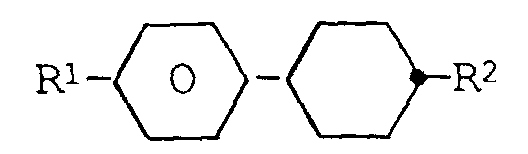
- the mixtures preferably contain compounds of the formula BIII, in particular those of the sub-formula
- R 1 and R 2 are each, independently of one another, n-alkyl with 1 to 7 C atoms or (trans) -n-alkenyl with 3 to 7 C atoms.
- Z 2 is preferably a single bond. BI is particularly preferred.
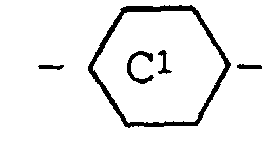
- Mixtures according to the invention which contain one or more compounds of the formula BIV in which means and R 1 and R 2 have one of the preferred meanings given above, particularly preferably n-alkyl having 1 to 7 carbon atoms.
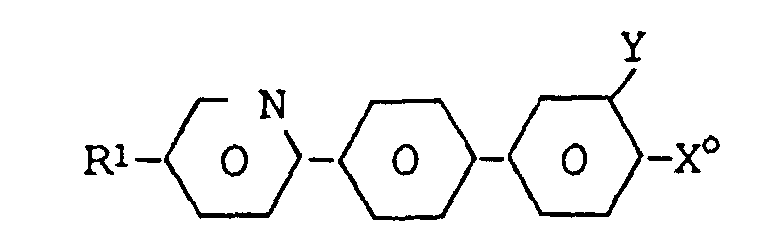
- R 1 is preferably n-alkyl with 1 to 7 C atoms or (trans) -n-alkenyl with 3 to 7 C atoms.
- Z 0 is preferably a single bond.
- R preferably has the preferred meaning given above for R 1 or is fluorine.
- Y is preferably fluorine.
- the mixtures according to the invention preferably contain one or several compounds selected from the group consisting of from BV3, BV2 and BV1 in a total proportion of approx. 5 to 35%.
- R 1 is preferably n-alkyl having 1 to 7 carbon atoms or (trans) -n-alkenyl having 3 to 7 carbon atoms, x 1 or 2, X ° F, Cl, CF 3 , -OCF 3 or -OCHF 3 , and YH or F.
- the total proportion of all terminally fluorinated compounds is preferably approximately 5% to 65%, in particular approximately 15% up to 40%.
- the proportion of the compounds from group B3 is preferably approximately 5% to 30%, particularly preferably approximately 10% to 20%.
- R 1 is preferably n-alkyl or n-alkoxy, each having 1 to 9 carbon atoms.
- R 2 is preferably n-alkyl having 1 to 9 carbon atoms.
- analogous compounds with alkenyl or alkenyloxy groups can also be used.
- Compounds of formula BVIII are preferred. is preferably 1,4-phenylene.
- the mixtures according to the invention contain compounds from at least one of groups B1, B2 and B3. Preferably they contain one or more compounds from group B1 and one or more compounds from group B2 and / or B3.
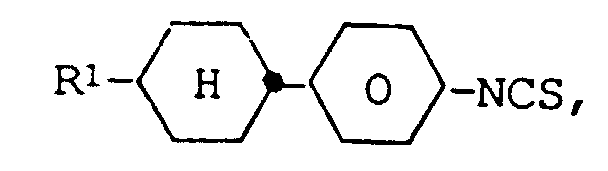
- Isothiocyanates for example of the formula, are also preferred wherein R 1 is n-alkyl having 1 to 7 carbon atoms or n-alkenyl having 3 to 7 carbon atoms.
- the mixtures according to the invention preferably contain approximately 5% to 20% of one or more compounds with a dielectric anisotropy of less than -1.5 (component C).
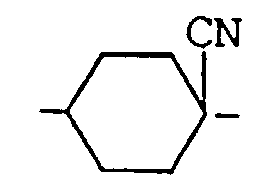
- Such compounds are known, for example derivatives of 2,3-dicyanohydroquinones or cyclohexane derivatives with the structural element according to DE-OS 32 31 707 or DE-OS 34 07 013.
- compounds with the structural element 2,3-difluoro-1,4-phenylene are preferably selected, for example compounds according to DE-OS 38 07 801, 38 07 861, 38 07 863, 38 07 864 or 38 07 908.
- Tolanes are particularly preferred with this structural element according to the international patent application PCT / DE 88/00133, in particular those of the formulas, wherein R 1 and R 2 each independently of one another preferably denote n-alkyl having 1 to 7 carbon atoms or n-alkenyl having 3 to 7 carbon atoms and Z 0 is -CH 2 CH 2 - or a single bond, and phenylpyrimidines of the formula according to DE-OS 38 07 871.
- Component A contains one or more, preferably 2, 3 or 4, compounds of the formula IIa, in particular in which R 1 and R 2 are n-alkyl having 1 to 8, preferably 1 to 5, carbon atoms, in particular in which the sum of the C - Atoms of the two radicals R 1 and R 2 is 4 to 8, in particular 4 to 7,
- Component A furthermore contains one or more, preferably 2, 3 or 4, compounds of formula IId, in particular wherein L H and R n-alkyl with 1 to 8, preferably 1 to 5 carbon atoms means.
- Component A furthermore contains one or more, preferably 2, 3 or 4 compounds of formula IIf, in particular wherein L H, n 1 Y F and R n-alkyl with 1 to 8, preferably 1 to 5 carbon atoms.
- Component A furthermore preferably contains, in addition to one or more compounds of the formula IIf, one or more, preferably 1, 2 or 3, compounds of the formula IIg, in particular in which L is H and XF or OCF 3 or in which L and XF are.
- the proportion of the compounds of the formula IIa based on component A is 10 to 40%, preferably 15 up to 30, in particular 20 to 25% by weight.
- the proportion of the compounds of the formula IId based on the Component A is 20 to 60, preferably 25 to 45, in particular 30 to 35% by weight.
- the proportion of the compounds of the formula IIf and IIg is 25 to 70, preferably 35 to 60, in particular 40 to 50% by weight.
- liquid crystal mixtures used in the SFAs according to the invention are dielectric positive with ⁇ ⁇ 1.
- Liquid crystal mixtures with ⁇ 3 3 are particularly preferred and especially those with ⁇ ⁇ 5.
- the liquid crystal mixtures according to the invention have favorable values for the threshold voltage V 10/0/20 and for the flow viscosity ⁇ . If the value for the optical path difference d. ⁇ n is specified, the value for the layer thickness d is determined by the optical anisotropy ⁇ n. In particular, in the case of relatively high values for d. ⁇ n, the use of liquid crystal mixtures according to the invention with a relatively high value for the optical anisotropy is generally preferred, since the value for d can then be chosen to be relatively small, which leads to more favorable values for the switching times. However, liquid crystal displays according to the invention which contain liquid crystal mixtures according to the invention with smaller values for ⁇ n are also characterized by advantageous values for the switching times.
- the liquid crystal mixtures according to the invention are further characterized by advantageous values for the steepness of the electro-optical characteristic curve and can be operated at high multiplex rates.
- the liquid crystal mixtures according to the invention have high stability and favorable values for the electrical resistance and the frequency dependence of the threshold voltage.
- the liquid crystal displays according to the invention have a large working temperature range and a good angle dependence of the contrast.
- the structure of the liquid crystal display elements according to the invention from polarizers, electrode base plates and Electrodes with such a surface treatment that the Preferential orientation (director) of the adjoining one Liquid crystal molecules from one electrode to the other usually rotated against each other by amounts of 160 ° to 361 ° is the same as for such display elements usual design.
- the term is the usual design here broadly and also includes all modifications and Modifications of the super twist cell, in particular also matrix display elements as well as the additional magnets Display elements according to DE-OS 2 748 738.
- the surface tilt angle on the two carrier plates can be the same or to be different. The same tilt angles are preferred.
- the nematic cell consists in the choice of the liquid crystal components the liquid crystal layer.
- the desired amount is less Amount of components used in the main ingredient constituent components solved, expedient at elevated Temperature. It is also possible to find solutions of the components in an organic solvent, e.g. in acetone, chloroform or methanol to mix and the solvent after mixing to remove again, for example by distillation.
- organic solvent e.g. in acetone, chloroform or methanol
- the dielectrics can also be further known to those skilled in the art and contain additives described in the literature. For example 0-15% pleochroic dyes can be added will.
- the media according to the invention in a particularly preferred embodiment by mixing so-called “multi-bottle systems” manufactured. Usually allows a “two or multi-bottle system” to adjust the required optical anisotropy according to the Layer thickness of the SFA ads.
- the “multi-bottle system” allows the slope and the switching behavior to be set at a predetermined threshold voltage by adjusting the elastic constants, in particular K 3 / K 1 .
- the subject of the invention is also a containing liquid crystalline medium based on component A.
- one or more compounds of the formula IIa, one or more compounds of the formulas IIc to IIe and one or more compounds of the formulas IIf to IIh where it in the form of a ready-to-use set of two or more, preferably four components with the same threshold voltage is present, one component of which is an optical one Has anisotropy of 0.100-0.110, and the other one has optical anisotropy from 0.170 to 0.180.
- a 4-component set is particularly preferred, with all 4 components having approximately the same threshold voltage and two components each having the same optical anisotropy but different K 3 / K 1 values.
- This "4-bottle system” specific mixtures with all parameters, ie with the same threshold voltage, optical anisotropy between 0.100 and 0.180 and K 3 / K 1 values between 1.0 and 1.6 can be produced.
- the SFA is controlled in multiplex mode (multiplex ratio 1: 240, bias 1:16, operating voltage 18.5 volts).
- An STN type SFA with the following parameters: Twist angle 240 ° Angle of attack 5 ° d 7.9 ⁇ m containing a liquid crystal mixture with the following parameters: Clearing point 70 ° ⁇ n 0.1098 and consisting of a basic mixture of: 5.0% PCH-2 20.0% PCH-3 5.0% PCH-4 4.0% PYP-2F 4.0% PYP-3F 2.0% PYP-31 3.0% PYP-32 4.0% PYP-33 4.0% PYP-34 3.0% CCH-3O3 7.0% CCP-2OCF3 7.0% CCP-3OCF3 7.0% CCP-4OCF3 7.0% CCP-5OCF3 7.0% ECCP-3F 7.0% ECCP-5F 4.0% CCPC-33 and a chiral component (see example 1) shows the following switching times: t on 300 ms t off 310 ms t on + t off 610 ms.
- a liquid crystal mixture consisting of: PCH-2 6.0% S ⁇ -20 N 71 I PCH-3 19.0% PCH-4 5.0% ⁇ n 0.1068 PCH-301 7.0% CCP-20CF3 8.0% Viscosity at 20 ° 15 mPa.s CCP-30CF3 8.0% CCP-40CF3 7.0% CCP-50CF3 7.0% PYP-2F 4.0% PYP-3F 4.0% PYP-31 3.0% PYP-33 4.0% ECCP-3F 7.0% ECCP-5F 7.0% CCPC-33 4.0% and a chiral component (cf. Example 1) results in a STN type SFA (parameter cf. Example 1) a threshold voltage of 1.89 V.
- a liquid crystal mixture consisting of: PCH-2 8.0% S ⁇ -40 N 73 I PCH-3 20.0% PCH-4 7.0% ⁇ n 0.1073 PCH-5 4.0% PYP-32 5.0% Viscosity at 20 ° 17 mPa.s PYP-33 4.0% CCP-20CF3 8.0% CCP-30CF3 8.0% CCP-40CF3 7.0% CCP-50CF3 7.0% ECCP-30CF3 5.0% ECCP-50CF3 5.0% ECCP-3F.F 6.0% ECCP-5F.F 6.0% and a chiral component (cf. Example 1) results in a STN type SFA (parameter cf. Example 1) a threshold voltage of 1.89 V.
- a liquid crystal mixture consisting of: PCH-3 10.0% S ⁇ -30 N 73 I K6 7.0% K9 8.0% ⁇ n 0.1720 PCH-301 11.0% PYP-31 4.0% Viscosity at 20 ° 19 mPa.s PYP-32 5.0% PYP-33 4.0% PTP-20F 6.0% PTP-40F 6.0% CCP-30CF3 6.0% CCP-50CF3 6.0% ECCP-30CF3 5.0% ECCP-50CF3 5.0% CPTP-30CF3 6.0% CPTP-50CF3 6.0% CPTP-302 5.0% and a chiral component (cf. Example 1) results in a SFA of type STN (parameters cf. Example 1) a threshold voltage of 1.91 V.
- a liquid crystal mixture consisting of PCH-3 20.0% Clear point +91 ° C PCH-5 8.0% ⁇ n + 0.1280 PYP-3F 3.0% PYP-5F 3.0% PYP-31 5.0% PYP-32 5.0% PYP-33 5.0% CCP-20CF3 6.0% CCP-30CF3 6.0% CCP-40CF3 6.0% CCP-50CF3 6.0% ECCP-30CF3 6.0% ECCP-50CF3 6.0% CBC-33F 5.0% CBC-53F 5.0% CBC-55F 5.0% and a chiral component (see example 1) results in a STN type SFA (parameter see example 1) a threshold voltage of 2.13 V.
- a liquid crystal mixture consisting of PCH-3 16.0% Clear point +85 ° C PCH-5 7.0% ⁇ n +0.1182 PYP-3F 5.0% PYP-5F 5.0% PCH-302 4.0% PYP-31 5.0% PYP-32 5.0% PYP-33 5.0% CCP-20CF3 6.0% CCP-30CF3 6.0% CCP-40CF3 6.0% CCP-50CF3 6.0% ECCP-30CF3 6.0% CCPC-33 4.0% CCPC-34 4.0% CCPC-35 4.0% and a chiral component (cf. Example 1) results in a STN type SFA (parameters cf. Example 1) a threshold voltage of 2.06 V.
- a liquid crystal mixture consisting of PCH-3 10.0% Clear point +82 ° C PYP-3F 10.0% ⁇ n +0.1185 PYP-5F 8.0% PCH-301 6.0% PYP-31 5.0% PYP-32 5.0% PYP-33 5.0% CCP-20CF3 6.0% CCP-30CF3 6.0% CCP-40CF3 6.0% CCP-50CF3 6.0% ECCP-30CF3 6.0% ECCP-50CF3 6.0% CCPC-33 5.0% CCPC-34 5.0% CCPC-35 5.0% and a chiral component (see example 1) results in a STFA type SFA (parameter see example 1) which gives a threshold voltage of 2.19 V.
- a liquid crystal mixture consisting of PCH-3 19.0% Clear point +88 ° C PCH-301 4.0% ⁇ n +0.1143 CCP-20CF3 6.0% CCP-30CF3 6.0% CCP-40CF3 6.0% CCP-50CF3 6.0% ECCP-30CF3 7.0% ECCP-50CF3 7.0% PYP-3F 8.0% PYP-5F 7.0% PYP-32 5.0% PYP-33 5.0% CCPC-33 5.0% CCPC-34 4.0% CCPC-35 5.0% and a chiral component (see Example 1).
- a liquid crystal mixture consisting of PCH-3 16.0% Clear point +84 ° C PYP-3F 5.0% ⁇ n +0.1774 K9 8.0% PCH-301 7.0% PYP-31 4.0% PYP-32 4.0% PYP-33 4.0% PTP-102 5.0% PTP-201 5.0% CCP-30CF3 6.0% CCP-50CF3 6.0% ECCP-30CF3 6.0% ECCP-50CF3 6.0% CPTP-301 6.0% CPTP-302 6.0% CPTP-303 6.0% and a chiral component (see Example 1).
- a “4-bottle system” is made up of components A, B, C and D.
- a B PCH-2 8.0% PCH-3 10.0% PCH-3 20.0% K6 7.0% PCH-4 7.0%% K9 8.0% PCH-5 4.0% PCH-301 11.0% PYP-32 5.0% PYP-31 4.0% PYP-33 4.0% PYP-32 5.0% CCP-20CF3 8.0% PYP-33 4.0% CCP-30CF3 8.0% PTP-20F 6.0% CCP-40CF3 7.0% PTP-40F 6.0% CCP-50CF3 7.0% CCP-30CF3 6.0% ECCP-30CF3 5.0% CCP-50CF3 6.0% ECCP-50CF3 5.0% ECCP-30CF3 5.0% ECCP-3F.F 6.0% ECCP-50CF3 5.0% ECCP-5F.F 6.0% CPTP-30CF3 6.0% CPTP-50CF3 6.0% CPTP-302 5.0% C.
- Mixing component A with B gives mixtures with the following parameters (measured in a 240 ° STN cell / layer thickness 6.5 ⁇ m).
- the new "4-bottle system” results in SFA with standard switching times ⁇ 250 ms at a layer thickness of 6 ⁇ m ⁇ 200 ms at 5 ⁇ m, ⁇ 400 ms at 7 ⁇ m and ⁇ 600 ms at 8 ⁇ m, as well as wide d / p fixed even at high twist angles.
- a "4-bottle system” is made up of components E, F, G and H: E F PCH-3 19.0% PCH-3 8.0% PCH-4 8.0% K6 8.0% PCH-5 8.0% K9 8.0% PCH-301 7.0% PCH-301 12.0% CCP-20CF3 6.0% PYP-31 5.0% CCP-30CF3 6.0% PYP-32 5.0% CCP-40CF3 6.0% PYP-33 5.0% CCP-50CF3 6.0% PTP-201 4.0% ECCP-30CF3 7.0% CCP-30CF3 7.0% ECCP-50CF3 7.0% CCP-50CF3 7.0% PYP-32 6.0% ECCP-30CF3 7.0% PYP-33 6.0% ECCP-50CF3 7.0% CCPC-33 4.0% CPTP-301 6.0% CCPC-34 4.0% CPTP-302 5.0% CPTP-303 6.0% G H PCH-3 29.0% PCH-3 17.0% PCH-4 9.0% K6 6.0% PCH-5 9.0% K9 7.0% PCH-301 15.0% PCH-
- Component E has the following parameters: S ⁇ N ⁇ - 40 ° C Clearing point + 83 ° C Viscosity (+20 ° C) 18 mm 2 / s ⁇ n + 0.1110 ⁇ + 8.8 V th 2.09 V
- Component F has the following parameters: S ⁇ N ⁇ - 30 ° C Clearing point + 86 ° C Viscosity (+20 ° C) 20 mm 2 / s ⁇ n + 0.1701 ⁇ + 8.3 Vth 2.09 V
- Component G has the following parameters: S ⁇ N ⁇ - 40 ° C Clearing point + 85 ° C Viscosity (+20 ° C) 17 mm 2 / s ⁇ n + 0.1076 ⁇ + 8.6 V th 2.18 V
- Component H has the following parameters: S ⁇ N ⁇ - 30 ° C Clearing point + 84 ° C Viscosity (+20 ° C) 16 mm 2 / s ⁇ n + 0.01705 ⁇ + 8.3 V th 2.12 V
Landscapes
- Chemical & Material Sciences (AREA)
- Crystallography & Structural Chemistry (AREA)
- Engineering & Computer Science (AREA)
- Materials Engineering (AREA)
- Organic Chemistry (AREA)
- Liquid Crystal Substances (AREA)
- Liquid Crystal (AREA)
Description
- eine oder mehrere Verbindungen der Formel IIa :

- eine oder mehrere Verbindungen der Formeln IIc bis
IIe:



- und eine oder mehrere Verbindungen der Formeln IIf
bis IIh:
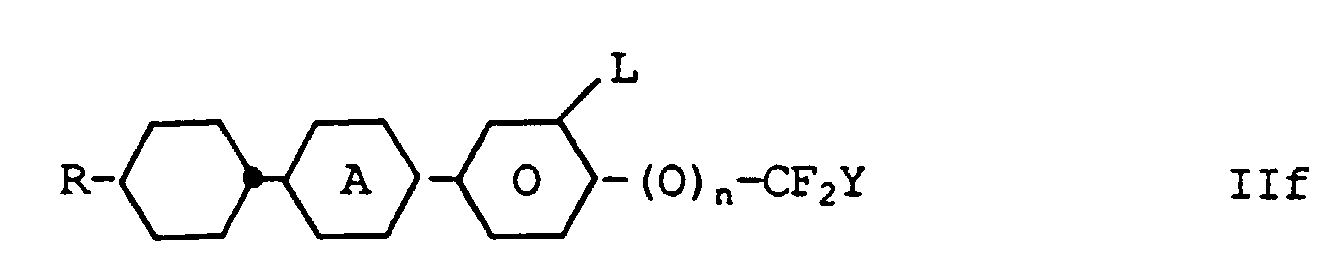
 enthält,
- R1 und R2
- jeweils n-Alkyl mit 1 bis 8 C-Atomen, worin die Summe der C-Atome der Reste R1 und R2 4 bis 8 beträgt,
- R
- n-Alkyl, Alkoxy oder n-Alkenyl mit bis zu 9
C-Atomen,
jeweils unabhängig voneinander
 bedeuten,
- L und Y
- jeweils H oder F,
- X
- F, Cl, -CF3, -CHF2, -OCF3, -OCHF2, -OCF2CF2H oder -OC2F5, und
- n
- 0 oder 1

worin
- R1 und R2
- jeweils unabhängig voneinander n-Alkyl, n-Alkoxy, n-Oxaalkyl, ω-Fluoralkyl oder n-Alkenyl mit bis zu 9 C-Atomen,
- A1, A2 und A3
- jeweils unabhängig voneinander 1,4-Phenylen, 2- oder 3-Fluor-1,4-phenylen, trans-1,4-Cyclohexylen oder 1,4-Cyclohexenylen,
- Z1 und Z2
- jeweils unabhängig voneinander -CH2CH2-, -C≡C- oder eine Einfachbindung, und
- m
- 0, 1 oder 2,
- zwei planparallelen Trägerplatten, die mit einer Umrandung eine Zelle bilden,
- einer in der Zelle befindlichen nematischen Flüssigkristallmischung mit positiver dielektrischer Anisotropie,
- Elektrodenschichten mit darüberliegenden Orientierungsschichten auf den Innenseiten der Trägerplatten,
- einem Anstellwinkel zwischen der Längsachse der Moleküle an der Oberfläche der Trägerplatten und den Trägerplatten von etwa 1 Grad bis 30 Grad, und
- einem Verdrillungswinkel der Flüssigkristallmischung in der Zelle von Orientierungsschicht zu Orientierungsschicht dem Betrag nach zwischen 100 und 600°, dadurch gekennzeichnet, daß die nematische Flüssigkristallmischung
- a) auf Komponente A basiert, welche
- eine oder mehrere Verbindungen der Formel IIa:
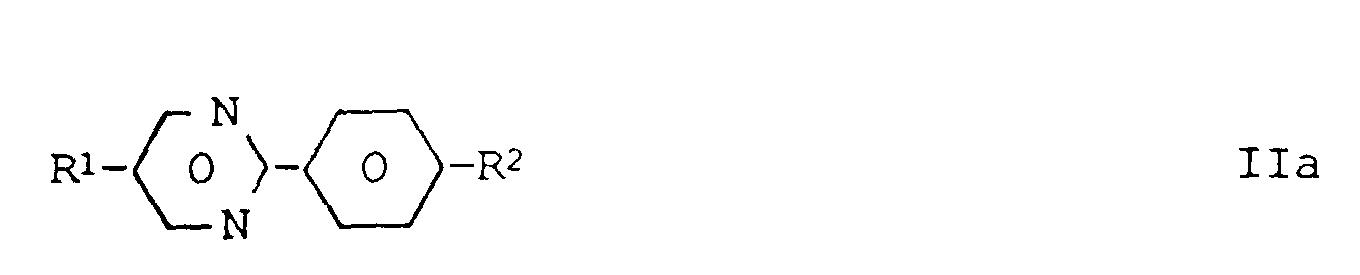
- eine oder mehrere Verbindungen der Formeln IIc bis
IIe:



- und eine oder mehrere Verbindungen der Formeln IIf
bis IIh

 enthält,
- R1 und R2
- jeweils n-Alkyl mit 1 bis 8 C-Atomen, worin die Summe der C-Atome der Reste R1 und R2 4 bis 8 beträgt,
- R
- n-Alkyl, Alkoxy oder n-Alkenyl mit bis zu 9
C-Atomen,
jeweils unabhängig voneinander
 bedeuten,
- L und Y
- jeweils H oder F,
- X
- F, Cl, -CF3, -CHF2, -OCF3, -OCHF2, -OCF2CF2H oder -OC2F5, und
- n
- 0 oder 1
- eine oder mehrere Verbindungen der Formel IIa:
- b) 0-40 Gew.% einer flüssigkristallinen Komponente B,
bestehend aus einer oder mehreren Verbindungen mit einer
dielektrischen Anisotropie von -1,5 bis +1,5 der allgemeinen
Formel I,
enthält,

worin- R1 und R2
- jeweils unabhängig voneinander n-Alkyl, n-Alkoxy, n-Oxaalkyl, ω-Fluoralkyl oder n-Alkenyl mit bis zu 9 C-Atomen,
- A1, A2 und A3
- jeweils unabhängig voneinander 1,4-Phenylen, 2- oder 3-Fluor-1,4-phenylen, trans-1,4-Cyclohexylen oder 1,4-Cyclohexenylen,
- Z1 und Z2
- jeweils unabhängig voneinander -CH2CH2-, -C≡C- oder eine Einfachbindung, und
- m
- 0, 1 oder 2,
- c) 0-20 Gew.% einer flüssigkristallinen Komponente C, bestehend aus einer oder mehreren Verbindungen mit einer dielektrischen Anisotropie von unter -1,5, enthält, und
- d) eine optisch aktive Komponente D in einer Menge enthält, daß das Verhältnis zwischen Schichtdicke (Abstand der planparallelen Trägerplatten) und natürlicher Ganghöhe der chiralen nematischen Flüssigkristallmischung etwa 0,2 bis 1,7 und insbesondere etwa 0,2 - 1,3 beträgt, und daß die nematische Flüssigkristallmischung einen nematischen Phasenbereich von mindestens 60 °C, eine Viskosität von nicht mehr als 35 mPa.s und eine dielektrische Anisotropie von mindestens +1 aufweist, wobei die dielektrischen Anisotropien der Verbindungen und die auf die nematische Flüssigkristallmischung bezogenen Parameter auf eine Temperatur von 20 °C bezogen sind.





- R
- Alkyl mit 1-12 C-Atomen ist, worin auch eine oder zwei nicht benachbarte CH2-Gruppen durch -O-, -CH=CH-, -CO-, -O-CO- oder -CO-O- ersetzt sein können,


und/oder mindestens eine Komponente, ausgewählt aus der Gruppe B2, bestehend aus den Verbindungen der Formeln BV bis BVII,



- Z0
- -CH2CH2- oder eine Einfachbindung ist, und
- Q
-

wobei n 1 bis 9 ist, X bedeutet CN oder F und Y ist H oder F,
und/oder mindestens eine Komponente, ausgewählt aus der Gruppe B3, bestehend aus den Verbindungen der Formel BVIII,




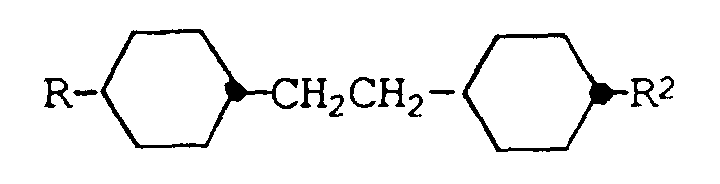
- R1
- CH3-(CH2)n-O-, CH3-(CH2)t-, trans-H-(CH2)r-CH=CH-(CH2CH2)s-CH2O- oder trans-H-(CH2)r-CH=CH-(CH2CH2)s-,
- R2
- CH3-(CH2)t-
- n
- 1, 2, 3 oder 4
- r
- 0, 1, 2 oder 3
- s
- 0 oder 1, und
- t
- 1, 2, 3 oder 4 ist.
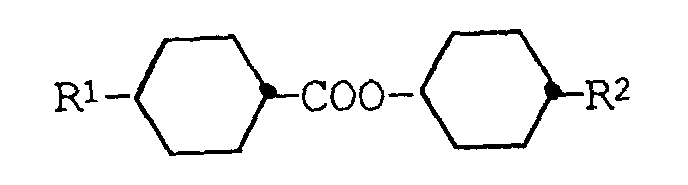
- R1
- CH3-(CH2)n-O- oder trans-H-(CH2)rO-CH=CH-(CH2CH2)s-CH2O- und R2 CH3-(CH2)t- ist, wobei
- n
- 1, 2, 3 oder 4,
- r
- 0, 1, 2 oder 3,
- s
- 0 oder 1, und
- t
- 1, 2, 3 oder 4 ist.


- BV
- ca. 5 % bis 30 %, vorzugsweise ca. 5 % bis 15 %
- Summe BVI und BVII:
- ca. 5 % bis 25 %, vorzugsweise ca. 10 % bis 20 %.


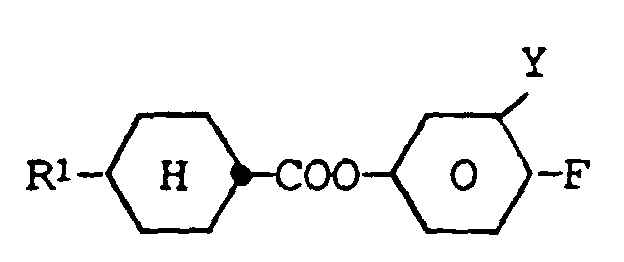

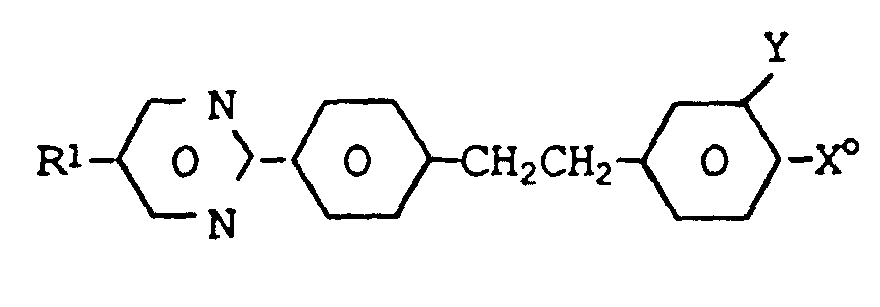
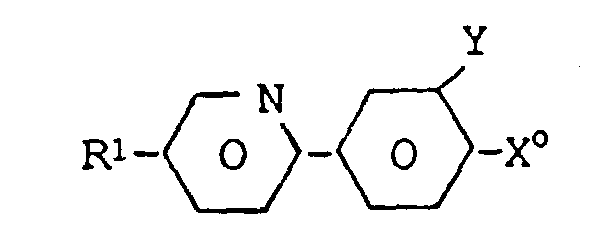
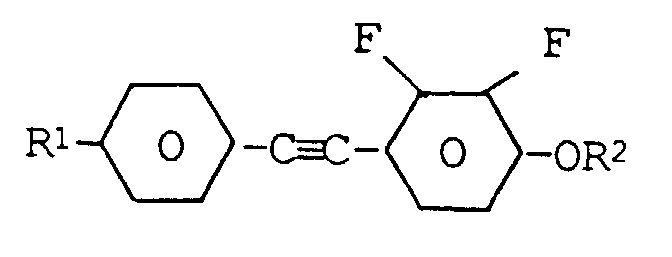
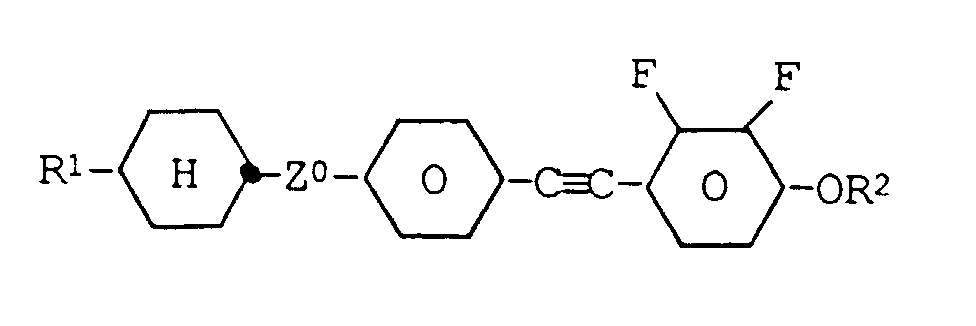



- R1
- ist vorzugsweise n-Alkyl oder n-Alkoxy mit 1 bis 7 C-Atomen,
- Z0
- ist -CH2CH2- oder eine Einfachbindung,
- Q
- ist
wobei

- X
- ist F, Cl oder OCF3, wobei
- R2
- n-Alkyl oder n-Alkoxy mit jeweils 1 bis 7 C-Atomen oder n-Alkenyl oder n-Alkenyloxy mit jeweils 3 bis 7 C-Atomen bedeutet.



- Komponente A enthält eine oder mehrere Verbindungen der
Formeln IIa1-IIa2,IId1-IId2, IIf1-IIf5 und/oder
IIg1-IIg5,



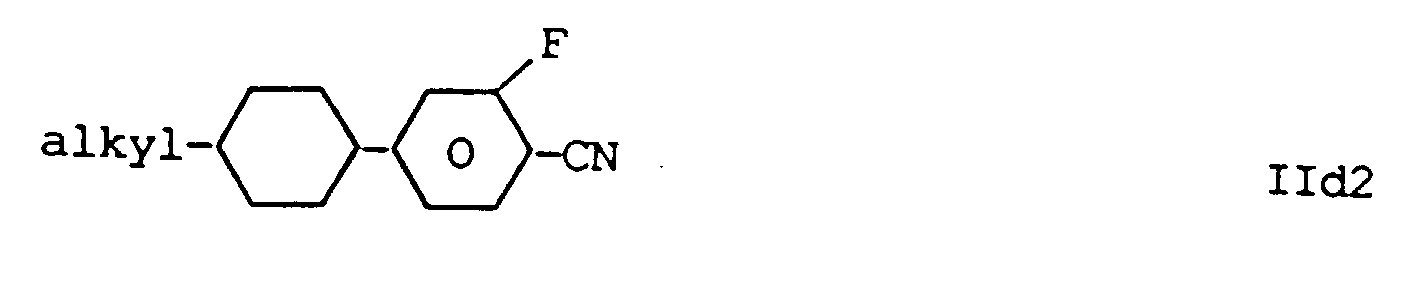








 worin alkyl n-Alkyl mit 1 bis 9 C-Atomen bedeutet.
- Komponente A enthält neben den Verbindungen der Formeln
IIa bis IIh eine oder mehrere Verbindungen der Formel
worin

- R
- n-Alkyl, n-Alkoxy oder n-Alkenyl mit 1-9 C-Atomen,
- Z
- -CH2CH2- oder eine Einfachbindung, und
bedeutet.
- X bedeutet F, Cl, CF3, -OCF3, OCHF2 oder CHF2.
- Komponente B enthält eine oder mehrere Verbindungen
ausgewählt aus der Gruppe bestehend aus II1 bis II7,





 worin R1 und R2 die in Anspruch 1 angegebene Bedeutung haben.
- Komponente B enthält zusätzlich eine oder mehrere Verbindungen
ausgewählt aus der Gruppe bestehend aus II8
bis II21,








 worin R1 und R2 die in Anspruch 1 angegebene Bedeutung haben und die 1,4-Phenylengruppen in II8 bis II17 und II21 jeweils unabhängig voneinander auch durch Fluor ein- oder mehrfach substituiert sein können.
- Komponente B enthält zusätzlich eine oder mehrere Verbindungen
ausgewählt aus der Gruppe bestehend aus II22
bis II27,




 worin R1 und R2 die in Anspruch 1 angegebene Bedeutung haben und die 1,4-Phenylengruppen in II22 bis II27 jeweils unabhängig voneinander auch durch Fluor ein- oder mehrfach substituiert sein können.
- Komponente B enthält eine oder mehrere Verbindungen
ausgewählt aus der Gruppe bestehend aus II28 und II29:
 worin CrH2r+1 eine geradkettige Alkylgruppe mit bis zu 7 C-Atomen ist.
- Die Flüssigkristallmischung enthält neben den Komponenten
A, B, C und D zusatzlich: eine oder mehrere Verbindungen
ausgewählt aus der Gruppe bestehend aus III und IV,
 worin R1 und R2 die in Anspruch 1 angegebene Bedeutung haben.
- Die Flüssigkristallmischung enthält neben den Komponenten
A, B, C und D zusätzlich eine oder mehrere Verbindungen
ausgewählt aus der Gruppe bestehend aus V und VI,
 worin R1 und R2 die in Anspruch 1 angegebene Bedeutung haben.
- Die Komponente C enthält eine oder mehrere Verbindungen
ausgewählt aus der Gruppe bestehend aus VII bis XI,



 worin R1 und R2 die in Anspruch 1 angegebene Bedeutung haben und s 0 oder 1 ist.
- Die Komponente B enthält eine oder mehrere Verbindungen
ausgewählt aus der Gruppe bestehend aus XII bis XIV,

 worin R1 und R2 die in Anspruch 1 angegebene Bedeutung haben.
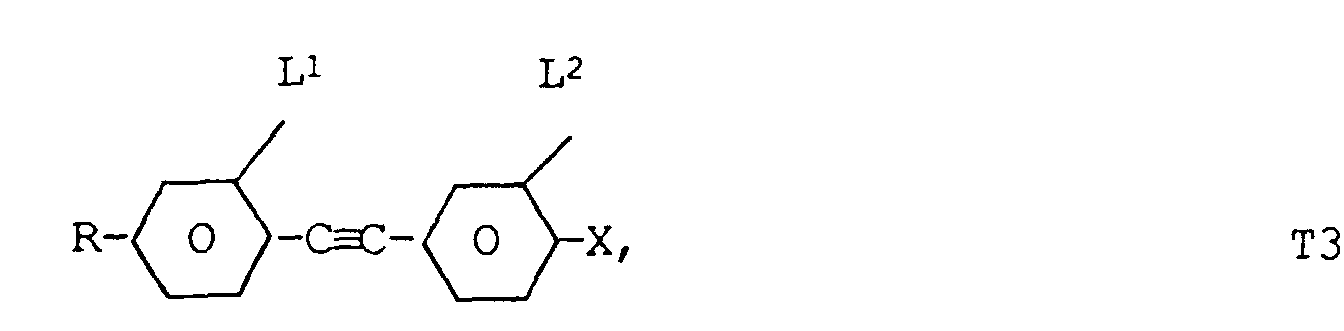
- R
- -CnH2n+1, -OCnH2n+1,
oder
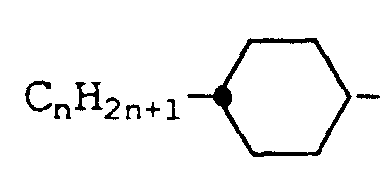
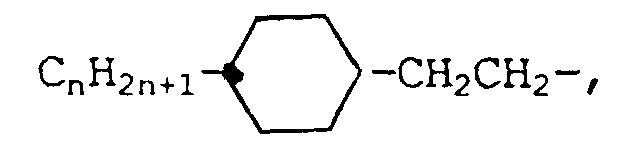
- n
- eine ganze Zahl von 1-15, und
- L1 und L2
- jeweils unabhängig voneinander H oder F, und
- X
- F, Cl oder OCF3
sind bevorzugt. Insbesondere solche Mischungen die eine Verbindung der Formel T3 und eine Verbindung der Formeln IId1-IId2, IIa1-IIa3 und IIf1-IIf3 enthalten, weisen günstige Werte für die Schwellenspannung V10/0/20 und die Fließviskosität η auf und sind durch relativ hohe oder hohe Werte für die optische Anisotropie gekennzeichnet. Da wegen des relativ hohen Wertes für Δn die Schichtdicke d relativ klein gewählt werden kann, sind mit diesen besonders bevorzugten Mischungen betriebene Displays i.a. durch günstige Werte für die Ein- und/oder Ausschaltzeiten ton und/ oder toff gekennzeichnet. Diese Mischungen sind bevorzugt.
- S-N
- Phasenübergangs-Temperatur smektisch-nematisch,
- N-I
- Phasenübergangs-Temperatur nematisch-isotrop,
- Klp.
- Klärpunkt,
- Visk.
- Viskosität (m Pa.s),
- Ton
- Zeit vom Einschalten bis zur Erreichung von 90 % des maximalen Kontrastes
- Toff
- Zeit vom Ausschalten bis zur Erreichung von 10 % des maximalen Kontrastes
| Verdrillungswinkel | 240° |
| Anstellwinkel | 5° |
| d | 7,7 µm |
| Klärpunkt | 72° |
| Δn | 0,1152 |
| 7,0 % | PCH-2 |
| 18,0 % | PCH-3 |
| 10,0 % | PCH-4 |
| 3,0 % | ME2N.F |
| 4,0 % | PYP-31 |
| 4,0 % | PYP-32 |
| 5,0 % | PYP-33 |
| 4,0 % | PYP-34 |
| 7,0 % | CCP-2OCF3 |
| 7,0 % | CCP-3OCF3 |
| 7,0 % | CCP-4OCF3 |
| 7,0 % | CCP-5OCF3 |
| 4,0 % | ECCP-33 |
| 5,0 % | ECCP-3F |
| 5,0 % | ECCP-5F |
| 3,0 % | CCPC-33 |
| ton | 260 ms |
| toff | 240 ms |
| ton + toff | 500 ms |
| Verdrillungswinkel | 240° |
| Anstellwinkel | 5° |
| d | 8,0 µm |
| Klärpunkt | 71° |
| Δn | 0,1126 |
| 7,0 % | PCH-2 | ||
| 18,0 % | PCH-3 | ||
| 5,0 % | PCH-4 | ||
| 4,0 % | PYP-2F | ||
| 4,0 % | PYP-3F | 7,0 % | ECCP-3F |
| 3,0 % | PYP-31 | 7,0 % | ECCP-5F |
| 3,0 % | PYP-32 | 4,0 % | CCPC-33 |
| 4,0 % | PYP-33 | ||
| 4,0 % | PYP-34 | ||
| 8,0 % | CCP-2OCF3 | ||
| 8,0 % | CCP-3OCF3 | ||
| 7,0 % | CCP-4OCF3 | ||
| 7,0 % | CCP-5OCF3 |
| ton | 260 ms |
| toff | 290 ms |
| ton + toff | 550 ms |
| Verdrillungswinkel | 240° |
| Anstellwinkel | 5° |
| d | 7, 9 µm |
| Klärpunkt | 70° |
| Δn | 0,1098 |
| 5,0 % | PCH-2 |
| 20,0 % | PCH-3 |
| 5,0 % | PCH-4 |
| 4,0 % | PYP-2F |
| 4,0 % | PYP-3F |
| 2,0 % | PYP-31 |
| 3,0 % | PYP-32 |
| 4,0 % | PYP-33 |
| 4,0 % | PYP-34 |
| 3,0 % | CCH-3O3 |
| 7,0 % | CCP-2OCF3 |
| 7,0 % | CCP-3OCF3 |
| 7,0 % | CCP-4OCF3 |
| 7,0 % | CCP-5OCF3 |
| 7,0 % | ECCP-3F |
| 7,0 % | ECCP-5F |
| 4,0 % | CCPC-33 |
| ton | 300 ms |
| toff | 310 ms |
| ton + toff | 610 ms. |
| PCH-2 | 6,0 % | S < -20 N 71 I |
| PCH-3 | 19,0 % | |
| PCH-4 | 5,0 % | Δn 0.1068 |
| PCH-301 | 7,0 % | |
| CCP-20CF3 | 8,0 % | Viskosität bei 20° 15 mPa.s |
| CCP-30CF3 | 8,0 % | |
| CCP-40CF3 | 7,0 % | |
| CCP-50CF3 | 7,0 % | |
| PYP-2F | 4,0 % | |
| PYP-3F | 4,0 % | |
| PYP-31 | 3,0 % | |
| PYP-33 | 4,0 % | |
| ECCP-3F | 7,0 % | |
| ECCP-5F | 7,0 % | |
| CCPC-33 | 4,0 % |
| PCH-2 | 8,0 % | S < -40 N 73 I |
| PCH-3 | 20,0 % | |
| PCH-4 | 7,0 % | Δn 0.1073 |
| PCH-5 | 4,0 % | |
| PYP-32 | 5,0 % | Viskosität bei 20° 17 mPa.s |
| PYP-33 | 4,0 % | |
| CCP-20CF3 | 8,0 % | |
| CCP-30CF3 | 8,0 % | |
| CCP-40CF3 | 7,0 % | |
| CCP-50CF3 | 7,0 % | |
| ECCP-30CF3 | 5,0 % | |
| ECCP-50CF3 | 5,0 % | |
| ECCP-3F.F | 6,0 % | |
| ECCP-5F.F | 6,0 % |
| PCH-3 | 10,0 % | S < -30 N 73 I |
| K6 | 7,0 % | |
| K9 | 8,0 % | Δn 0.1720 |
| PCH-301 | 11,0 % | |
| PYP-31 | 4,0 % | Viskosität bei 20° 19 mPa.s |
| PYP-32 | 5,0 % | |
| PYP-33 | 4,0 % | |
| PTP-20F | 6,0 % | |
| PTP-40F | 6,0 % | |
| CCP-30CF3 | 6,0 % | |
| CCP-50CF3 | 6,0 % | |
| ECCP-30CF3 | 5,0 % | |
| ECCP-50CF3 | 5,0 % | |
| CPTP-30CF3 | 6,0 % | |
| CPTP-50CF3 | 6,0 % | |
| CPTP-302 | 5,0 % |
| PCH-3 | 20,0 % | Klärpunkt +91 °C |
| PCH-5 | 8,0 % | Δn +0,1280 |
| PYP-3F | 3,0 % | |
| PYP-5F | 3,0 % | |
| PYP-31 | 5,0 % | |
| PYP-32 | 5,0 % | |
| PYP-33 | 5,0 % | |
| CCP-20CF3 | 6,0 % | |
| CCP-30CF3 | 6,0 % | |
| CCP-40CF3 | 6,0 % | |
| CCP-50CF3 | 6,0 % | |
| ECCP-30CF3 | 6,0 % | |
| ECCP-50CF3 | 6,0 % | |
| CBC-33F | 5,0 % | |
| CBC-53F | 5,0 % | |
| CBC-55F | 5,0 % |
| PCH-3 | 16,0 % | Klärpunkt +85 °C |
| PCH-5 | 7,0 % | Δn +0,1182 |
| PYP-3F | 5,0 % | |
| PYP-5F | 5,0 % | |
| PCH-302 | 4,0 % | |
| PYP-31 | 5,0 % | |
| PYP-32 | 5,0 % | |
| PYP-33 | 5,0 % | |
| CCP-20CF3 | 6,0 % | |
| CCP-30CF3 | 6,0 % | |
| CCP-40CF3 | 6,0 % | |
| CCP-50CF3 | 6,0 % | |
| ECCP-30CF3 | 6,0 % | |
| ECCP-50CF3 | 6,0 % | |
| CCPC-33 | 4,0 % | |
| CCPC-34 | 4,0 % | |
| CCPC-35 | 4,0 % |
| PCH-3 | 10,0 % | Klärpunkt +82 °C |
| PYP-3F | 10,0 % | Δn +0,1185 |
| PYP-5F | 8,0 % | |
| PCH-301 | 6,0 % | |
| PYP-31 | 5,0 % | |
| PYP-32 | 5,0 % | |
| PYP-33 | 5,0 % | |
| CCP-20CF3 | 6,0 % | |
| CCP-30CF3 | 6,0 % | |
| CCP-40CF3 | 6,0 % | |
| CCP-50CF3 | 6,0 % | |
| ECCP-30CF3 | 6,0 % | |
| ECCP-50CF3 | 6,0 % | |
| CCPC-33 | 5,0 % | |
| CCPC-34 | 5,0 % | |
| CCPC-35 | 5,0 % |
| PCH-3 | 19,0 % | Klärpunkt +88 °C |
| PCH-301 | 4,0 % | Δn +0,1143 |
| CCP-20CF3 | 6,0 % | |
| CCP-30CF3 | 6,0 % | |
| CCP-40CF3 | 6,0 % | |
| CCP-50CF3 | 6,0 % | |
| ECCP-30CF3 | 7,0 % | |
| ECCP-50CF3 | 7,0 % | |
| PYP-3F | 8,0 % | |
| PYP-5F | 7,0 % | |
| PYP-32 | 5,0 % | |
| PYP-33 | 5,0 % | |
| CCPC-33 | 5,0 % | |
| CCPC-34 | 4,0 % | |
| CCPC-35 | 5,0 % |
| PCH-3 | 16,0 % | Klärpunkt +84 °C |
| PYP-3F | 5,0 % | Δn +0,1774 |
| K9 | 8,0 % | |
| PCH-301 | 7,0 % | |
| PYP-31 | 4,0 % | |
| PYP-32 | 4,0 % | |
| PYP-33 | 4,0 % | |
| PTP-102 | 5,0 % | |
| PTP-201 | 5,0 % | |
| CCP-30CF3 | 6,0 % | |
| CCP-50CF3 | 6,0 % | |
| ECCP-30CF3 | 6,0 % | |
| ECCP-50CF3 | 6,0 % | |
| CPTP-301 | 6,0 % | |
| CPTP-302 | 6,0 % | |
| CPTP-303 | 6,0 % |
| A | B | ||
| PCH-2 | 8,0 % | PCH-3 | 10,0 % |
| PCH-3 | 20,0 % | K6 | 7,0 % |
| PCH-4 | 7,0 % % | K9 | 8,0 % |
| PCH-5 | 4,0 % | PCH-301 | 11,0 % |
| PYP-32 | 5,0 % | PYP-31 | 4,0 % |
| PYP-33 | 4,0 % | PYP-32 | 5,0 % |
| CCP-20CF3 | 8,0 % | PYP-33 | 4,0 % |
| CCP-30CF3 | 8,0 % | PTP-20F | 6,0 % |
| CCP-40CF3 | 7,0 % | PTP-40F | 6,0 % |
| CCP-50CF3 | 7,0 % | CCP-30CF3 | 6,0 % |
| ECCP-30CF3 | 5,0 % | CCP-50CF3 | 6,0 % |
| ECCP-50CF3 | 5,0 % | ECCP-30CF3 | 5,0 % |
| ECCP-3F.F | 6,0 % | ECCP-50CF3 | 5,0 % |
| ECCP-5F.F | 6,0 % | CPTP-30CF3 | 6,0 % |
| CPTP-50CF3 | 6,0 % | ||
| CPTP-302 | 5,0 % | ||
| C | D | ||
| PCH-2 | 5,0 % | PCH-3 | 18,0 % |
| PCH-3 | 20,0 % | PCH-5 | 7,0 % |
| PCH-5 | 8,0 % | K6 | 10,0 % |
| PCH-301 | 16,0 % | PCH-301 | 14,0 % |
| ME2N.F | 3,0 % | PCH-302 | 8,0 % |
| ME3N.F | 3,0 % | ME2N.F | 2,0 % |
| CCP-20CF3 | 5,0 % | ME3N.F | 2,0 % |
| CCP-30CF3 | 5,0 % | PTP-102 | 6,0 % |
| CCP-40CF3 | 5,0 % | PTP-201 | 6,0 % |
| CCP-50CF3 | 5,0 % | CPTP-301 | 6,0 % |
| ECCP-30CF3 | 5,0 % | CPTP-302 | 5,0 % |
| ECCP-50CF3 | 5,0 % | CPTP-303 | 6,0 % |
| ECCP-3F.F | 5,0 % | ECCP-3F | 3,0 % |
| ECCP-5F.F | 5,0 % | CCP-30CF3 | 4,0 % |
| CBC-53 | 5,0 % | CCP-50CF3 | 3,0 % |
| S < -40 K 73 I | |
| Viskosität (+20 °C) | 17 mm2/s |
| Δn | 0,1703 |
| Δε | 10,0 |
| Vth | 1,89 |
| Steilheit [= (Vth/V10 -1) · 100] | 10,05 % |
| S < -30 K 73 I | |
| Viskosität (20 °C) | 19 mm2/s |
| Δn | 0,1720 |
| Δε | 9,3 |
| Vth | 1,91 |
| Steilheit [= (Vth/V10 -1) · 100] | 13,09 % |
| Ton + Toff/2 | 85 ms |
| S < -40 K 74 I | |
| Viskosität (20 °C) | 17 mm2/s |
| Δn | 0,1063 |
| Δε | 10,5 |
| Vth | 1,86 |
| Steilheit [= (Vth/V10 -1) · 100] | 7,28 % |
| S < -20 K 73 I | |
| Viskosität (20 °C) | 18 mm2/s |
| Δn | 0,1708 |
| Δε | 9,9 |
| Vth | 1,85 |
| Steilheit [= (Vt/V10 -1) · 100] | 5,96 % |
| Ton + Toff/2 | 120 ms |
| Komponente (%) | Steilheit (%) | Vth (V) | Ton + Toff/2 (mS) | |
| B | D | |||
| 75 | 25 | 10,7 | 1,87 | 100 |
| 50 | 50 | 9,5 | 1,85 | 108 |
| 25 | 75 | 8,7 | 1,82 | 115 |
| Komponente (%) | Δn | Steilheit (%) | Vth (v) | Ton + Toff/2 (ms) | |
| A | B | ||||
| 37 | 63 | 0,13 | 1,88 | 11,1 | 183 |
| 50 | 50 | 0,13 | 1,90 | 11,3 | 150 |
| E | F | ||
| PCH-3 | 19,0 % | PCH-3 | 8,0 % |
| PCH-4 | 8,0 % | K6 | 8,0 % |
| PCH-5 | 8,0 % | K9 | 8,0 % |
| PCH-301 | 7,0 % | PCH-301 | 12,0 % |
| CCP-20CF3 | 6,0 % | PYP-31 | 5,0 % |
| CCP-30CF3 | 6,0 % | PYP-32 | 5,0 % |
| CCP-40CF3 | 6,0 % | PYP-33 | 5,0 % |
| CCP-50CF3 | 6,0 % | PTP-201 | 4,0 % |
| ECCP-30CF3 | 7,0 % | CCP-30CF3 | 7,0 % |
| ECCP-50CF3 | 7,0 % | CCP-50CF3 | 7,0 % |
| PYP-32 | 6,0 % | ECCP-30CF3 | 7,0 % |
| PYP-33 | 6,0 % | ECCP-50CF3 | 7,0 % |
| CCPC-33 | 4,0 % | CPTP-301 | 6,0 % |
| CCPC-34 | 4,0 % | CPTP-302 | 5,0 % |
| CPTP-303 | 6,0 % | ||
| G | H | ||
| PCH-3 | 29,0 % | PCH-3 | 17,0 % |
| PCH-4 | 9,0 % | K6 | 6,0 % |
| PCH-5 | 9,0 % | K9 | 7,0 % |
| PCH-301 | 15,0 % | PCH-301 | 20,0 % |
| CCP-20CF3 | 6,0 % | PTP-102 | 6,0 % |
| CCP-30CF3 | 6,0 % | PTP-201 | 6,0 % |
| CCP-40CF3 | 6,0 % | CCP-30CF3 | 6,0 % |
| CCP-50CF3 | 6,0 % | CCP-50CF3 | 6,0 % |
| ECCP-30CF3 | 7,0 % | ECCP-30CF3 | 5,0 % |
| ECCP-50CF3 | 7,0 % | ECCP-50CF3 | 5,0 % |
| CBC-33F | 4,0 % | CPTP-301 | 5,0 % |
| CBC-53F | 5,0 % | CPTP-302 | 6,0 % |
| CPTP-303 | 5,0 % |
| S →N | < - 40 °C |
| Klärpunkt | + 83 °C |
| Viskosität (+20 °C) | 18 mm2/s |
| Δn | + 0,1110 |
| Δε | + 8,8 |
| Vth | 2,09 V |
| S →N | < - 30 °C |
| Klärpunkt | + 86 °C |
| Viskosität (+20 °C) | 20 mm2/s |
| Δn | + 0,1701 |
| Δε | + 8,3 |
| Vth | 2,09 V |
| S →N | < - 40 °C |
| Klärpunkt | + 85 °C |
| Viskosität (+20 °C) | 17 mm2/s |
| Δn | + 0,1076 |
| Δε | + 8,6 |
| Vth | 2,18 V |
| S →N | < - 30 °C |
| Klärpunkt | + 84 °C |
| Viskosität (+20 °C) | 16 mm2/s |
| Δn | + 0,01705 |
| Δε | + 8,3 |
| Vth | 2,12 V |
| Komponente (%) | Viskosität (20 °C) [mm2/s] | Δn | Δε | Vth [V] | Ton + Toff / 2[ms] | |
| E | F | |||||
| 75 | 25 | 18,1 | 0,1255 | 8,7 | 2,09 | 215 |
| 50 | 50 | 18,7 | 0,1397 | 8,6 | 2,09 | 155 |
| 25 | 75 | 19,3 | 0,1546 | 8,5 | 2,09 | 125 |
| Komponente (%) | Viskosität (20 °C) [mm2/s] | Δn | Δε | Vth [V] | Ton + Toff / 2 [ms] | |
| F | H | |||||
| 75 | 25 | 18,6 | 0,1699 | 8,3 | 2,10 | 110 |
| 50 | 50 | 17,5 | 0,1697 | 8,3 | 2,12 | 115 |
| 25 | 75 | 17,o | 0,1701 | 8,3 | 2,12 | 130 |
- PCH-53:
- trans-1-p-Propylphenyl-4-pentylcyclohexan
- I-32:
- 1-(trans-4-Propylcyclohexyl)-2-(4'-ethyl-2'-fluorbiphenyl-4-yl)-ethan
- I-35:
- 1-(trans-4-Propylcyclohexyl)-2-(4'-pentyl-2'-fluorbiphenyl-4-yl)-ethan
- BCH-32:
- 4-Ethyl-4'-(trans-4-propylcyclohexyl)biphenyl
- BCH-52:
- 4-Ethyl-4'-(trans-4-pentylcylcohexyl)biphenyl
- CCH-303:
- trans,trans-4-Propoxy-4'-propylcyclohexylcyclohexan
- CCH-501:
- trans,trans-4-Methoxy-4'-pentylclyclohexylcyclohexan
- CH-35:
- trans,trans-4-Propylcyclohexylcyclohexancarbonsäure-trans-4-pentylcyclohexylester
- CH-43:
- trans,trans-4-Butylcyclohexylcyclohexancarbonsäure-trans-4-propylcyclohexylester
- CH-45:
- trans,trans-4-Butylcyclohexylcyclohexancarbonsäure-trans-4-pentylcyclohexylester
- PCH-302:
- trans-1-p-Ethoxyphenyl-4-propylcyclohexan
- PCH-303:
- trans-1-p-Propoxyphenyl-4-propylcyclohexan
- PCH-304:
- trans-1-p-Butoxyphenyl-4-propylcyclohexan
- CCH-502:
- trans,trans-4-Ethoxy-4'-pentylcyclohexylcyclohexan
- ECCP-32:
- 1-[trans-4-(trans-4-Propylcyclohexyl)-cyclohexyl]-2-(p-ethylphenyl)-ethan
- ECCP-31:
- 1-[trans-4-(trans-4-Propylcyclohexyl)-cyclohexyl]-2-(p-methylphenyl)-ethan
- ECCP-35:
- 1-[trans-4-(trans-4-Propylcyclohexyl)-cyclohexyl]-2-(p-pentylphenyl)-ethan
- PCH-501:
- trans-1-p-Methoxyphenyl-4-pentylcyclohexan
- PCH-502:
- trans-1-p-Ethoxyphenyl-4-pentylcyclohexan
- CP-33:
- trans,trans-4-Propylcyclohexylcyclohexancarbonsäure-p-propylphenylester
- CP-35:
- trans,trans-4-Propylcyclohexylcyclohexancarbonsäure-p-pentylphenylester
- CP-43:
- trans,trans-4-Butylcyclohexylcyclohexancarbonsäure-p-propylphenylester
- CP-45:
- trans,trans-4-Butylcyclohexylcyclohexancarbonsäure-p-pentylphenylester
- PTP-40F:
- 4-Butoxy-4'-fluortolan
- PTP-50F:
- 4-Pentoxy-4'-fluortolan
- PTP-20F:
- 4-Ethoxy-4'-fluortolan
- PCH-301:
- trans-1-p-Methoxyphenyl-4-propylcyclohexan
- CCH-301:
- trans,trans-4-Methoxy-4'-propylcyclohexylcyclohexan
- CBC-33F:
- 4,4'-Bis-(trans-4-propylcyclohexyl)-2-fluorbiphenyl
- CBC-55F:
- 4,4'-Bis-(trans-4-pentylcyclohexyl)-2-fluorbiphenyl
- CBC-53F:
- 4-(trans-4-Pentylcyclohexyl)-4'-(trans-4-propylcyclcohexyl)-2-fluorbiphenyl
- CBC-33:
- 4,4'-Bis-(trans-4-propylcyclohexyl)-biphenyl
- CBC-55:
- 4,4'-Bis-(trans-4-pentylcyclohexyl)-biphenyl
- CBC-53:
- 4-(trans-4-Pentylcyclohexyl)-4'-(trans-4-propylcyclohexyl)-biphenyl
- ECCP-33:
- 1-[trans-4-(trans-4-Propylcyclohexyl)-cyclohexyl]-2-(p-propylphenyl)-ethan
- CCH-51F:
- trans,trans-4-Fluormethyl-4'-pentylcyclohexylcyclohexan
- CCH-31F:
- trans,trans-4-Fluormethyl-4'-propylcyclohexylcyclohexan
- PTP-102:
- 4-Methyl-4'-ethoxy-tolan
- PTP-201:
- 4-Methoxy-4'-ethyl-tolan
- CPTP-301:
- 4-(trans-4-Propylcyclohexyl)-4'-methoxy-tolan
- CPTP-302:
- 4-(trans-4-Propylcyclohexyl)-4'-ethoxy-tolan
- CPTP-303:
- 4-(trans-4-Propylcyclohexyl)-4'-propoxy-tolan
- CPTP-30CF3:
- 4-(trans-4-Propylcyclohexyl)-4'-trifluormethoxy-tolan
- CPTP-50CF3:
- 4-(trans-4-Pentylcyclohexyl)-4'-trifluormethoxy-tolan
- PCH-5F:
- trans-1-p-Fluorphenyl-4-pentylcyclohexan
- PCH-6F:
- trans-1-p-Fluorphenyl-4-hexylcyclohexan
- PCH-7F:
- trans-1-p-Fluorphenyl-4-heptylcyclohexan
- EPCH-20CF3:
- 1-(trans-4-Ethylcyclohexyl)-2-(p-tri-fluormethoxyphenyl)-ethan
- EPCH-30CF3:
- 1-(trans-4-Propylcyclohexyl)-2-(p-tri-fluormethoxyphenyl)-ethan
- EPCH-50CF3:
- 1-(trans-4-Pentylcyclohexyl)-2-(p-tri-fluormethoxyphenyl)-ethan
- EPCH-70CF3:
- 1-(trans-4-Heptylcyclohexyl)-2-(p-tri-fluormethoxyphenyl)-ethan
- PCH-30CF3:
- trans-1-p-Trifluormethoxyphenyl-4-propylcyclohexan
- PCH-50CF3:
- trans-1-p-Trifluormethoxyphenyl-4-pentylcyclohexan
- ECCP-30CF3:
- 1-[trans-4-(trans-4-Propylcyclohexyl)-cyclohexyl]-2-(p-trifluormethoxyphenyl)-ethan
- ECCP-50CF3:
- 1-[trans-4-(trans-4-Pentylcyclohexyl)-cyclohexyl] -2-(p-trifluormethoxyphenyl)-ethan
- CCP-20CF3:
- p-trans-4-(trans-4-Ethylcyclohexyl)-cyclohexyl]-trifluormethoxybenzol
- CCP-30CF3:
- p-[trans-4-(trans-4-Propylcyclohexyl)-cyclohexyl]-trifluormethoxybenzol
- CCP-40CF3:
- p-[trans-4-(trans-4-Butylcyclohexyl)-cyclohexyl]-trifluormethoxybenzol
- CCP-50CF3:
- p-[trans-4-(trans-4-Pentylcyclohexyl)-cyclohexyl]-trifluormethoxybenzol
- BCH-30CF3:
- 4-Trifluormethoxy-4'-(trans-4-propylcyclohexyl)-biphenyl
- ECCP-3F.F:
- 1-[trans-4-(trans-4-Propylcyclohexyl)-cyclohexyl]-2-(3,4-difluorphenyl)-ethan
- ECCP-5F.F:
- 1-[trans-4-(trans-4-Pentylcyclohexyl)-cyclohexyl]-2-(3,4-difluorphenyl)-ethan
- CCP-3F.F:
- 4-[trans-4-(trans-4-Propylcyclohexyl)-cyclohexyl]-1,2-difluorbenzol
- CCP-5F.F:
- 4-[trans-4-(trans-4-Pentylcyclohexyl)-cyclohexyl]-1,2-difluorbenzol
- D-302FF:
- 2,3-Difluor-4-ethoxyphenyl-trans-4-propylcyclohexyl-carboxylat
- D-502FF:
- 2,3-Difluor-4-ethoxyphenyl-trans-4-pentylcyclohexyl-carboxylat
- CCP-3F:
- 4-[trans-4-(trans-4-Propylcyclohexyl)-cyclohexyl]-fluorbenzol
- ECCP-3F:
- 1-[trans-4-(trans-4-Propylcyclohexyl)-cyclohexyl]-2-(p-fluorphenyl)-ethan
- ECCP-5F:
- 1-[trans-4-(trans-4-Pentylcyclohexyl)-cyclohexyl]-2-(p-fluorphenyl)-ethan
- CP-3F:
- trans-4-(trans-4-Propylcyclohexyl)-cyclohexancarbonsäure-(p-fluorphenylester)
- CP-5F:
- trans-4-(trans-4-Pentylcyclohexyl)-cyclohexancarbonsäure-(p-fluorphenylester)
- PYP-31:
- 2-p-Methylphenyl-5-propylpyrimidin
- PYP-32:
- 2-p-Ethylphenyl-5-propylpyrimidin
- PYP-33:
- 2-p-Propylphenyl-5-propylpyrimidin
- PYP-34:
- 2-p-Butylphenyl-5-propylpyrimidin
- PYP-2F:
- 2-p-Fluorphenyl-5-ethylpyrimidin
- PYP-3F:
- 2-p-Fluorphenyl-5-propylpyrimidin
- PYP-5F:
- 2-p-Fluorphenyl-5-pentylpyrimidin
- PYP-6F:
- 2-p-Fluorphenyl-5-hexylpyrimidin
- PYP-7F:
- 2-p-Fluorphenyl-5-heptylpyrimidin
- PYP-30CF3:
- 2-p-Trifluormethoxyphenyl-5-propylpyrimidin
- PYP-50CF3:
- 2-p-Trifluormethoxyphenyl-5-pentylpyrimidin
- PYP-70CF3:
- 2-p-Trifluormethoxyphenyl-5-heptylpyrimidin
- PCH-3:
- p-trans-4-Propylcyclohexyl-benzonitril
- PCH-2:
- p-trans-4-Ethylcyclohexyl-benzonitril
- PCH-4:
- p-trans-4-Butylcyclohexyl-benzonitril
- PCH-5:
- p-trans-4-Pentylcyclohexyl-benzonitril
- ECCP-3:
- 1-trans-4-(trans-4-Propylcyclohexyl)-cyclohexyl-2-(p-cyanphenyl)-ethan
- ECCP-3CF3:
- 1-trans-4-(trans-4-Propylcyclohexyl)-cyclohexyl-2-(p-trifluormethylphenyl)-ethan
- PTP35:
- 4-Propyl-4'-pentyltolan
- PTP45:
- 4-Butyl-4'-pentyltolan
- BCH-52F:
- 4-(trans-4-Pentylcyclohexyl)-2-fluor-4'-ethylbiphenyl
- CP-302FF:
- trans-4-(trans-4-Propylcyclohexyl)-cyclohexancarbonsäure-(2, 3-difluor-4-ethoxyphenylester)
- PCH-301:
- trans-1-p-Methoxyphenyl-4-propylcyclohexan
- PCH-401:
- trans-1-p-Methoxyphenyl-4-butylcyclohexan
- D-302:
- 4-Ethoxyphenyl-trans-4-propylcyclohexylcarboxylat
- D-402:
- 4-Ethoxyphenyl-trans-4-butylcyclohexylcarboxylat
- CCPC-33:
- trans,trans-4-Propylcyclohexylcyclohexancarbonsäure (4-(4-trans-propylcyclohexyl)phenylester)
- CCPC-34:
- trans,trans-4-Propylcyclohexylcyclohexancarbonsäure (4-(4-trans-butylcyclohexyl)-phenylester)
- CCPC-35:
- trans,trans-4-Propylcyclohexylcyclohexancarbonsäure (4-(4-trans-pentylcyclohexyl)phenylester)
- K6:
- 4'-Ethyl-4-cyanobiphenyl
- K9:
- 4'-Propyl-4-cyanobiphenyl
Claims (15)
- Supertwist-Flüssigkristallanzeige mitzwei planparallelen Trägerplatten, die mit einer Umrandung eine Zelle bilden,einer in der Zelle befindlichen nematischen Flüssigkristallmischung mit positiver dielektrischer Anisotropie,Elektrodenschichten mit darüberliegenden Orientierungsschichten auf den Innenseiten der Trägerplatten,einem Anstellwinkel zwischen der Längsachse der Moleküle an der Oberfläche der Trägerplatten und den Trägerplatten von etwa 1 Grad bis 30 Grad, undeinem Verdrillungswinkel der Flüssigkristallmischung in der Zelle von Orientierungsschicht zu Orientierungsschicht dem Betrag nach zwischen 100 und 600°, dadurch gekennzeichnet, daß die nematische Flüssigkristallmischunga) auf Komponente A basiert, welcheeine oder mehrere Verbindungen der Formel IIa:
 eine oder mehrere Verbindungen der Formeln IIc bis IIe:

 und eine oder mehrere Verbindungen der Formeln llf bis IIh enthält,
 worin
worin
- R1 und R2
- jeweils n-Alkyl mit 1 bis 8 C-Atomen, worin die Summe der C-Atome der Reste R1 und R2 4 bis 8 beträgt
- R
- n-Alkyl, n-Alkoxy oder n-Alkenyl mit bis zu
9 C-Atomen, und
jeweils unabhängig voneinander


- Y und L
- jeweils H oder F
- X
- F, Cl, -CF3, -CHF2, -OCF3, -OCHF2, -OCF2CF2H oder -OC2F5, und
- n
- 0 oder 1 bedeuten,
b) 0-40 Gew.% einer flüssigkristallinen Komponente B bestehend aus einer oder mehreren Verbindungen mit einer dielektrischen Anisotropie von -1,5 bis +1,5 der allgemeinen Formel I enthält,worin
- R1 und R2
- jeweils unabhängig voneinander n-Alkyl, n-Alkoxy, n-Oxaalkyl, ω-Fluoralkyl oder n-Alkenyl mit bis zu 9 C-Atomen,
- A1, A2 und A3
- jeweils unabhängig voneinander 1,4-Phenylen, 2- oder 3-Fluor-1,4-phenylen, trans-1,4-Cyclohexylen oder 1,4-Cyclohexenylen,
- Z1 und Z2
- jeweils unabhängig voneinander -CH2CH2-, -C≡C- oder eine Einfachbindung, und
- m
- 0, 1 oder 2 bedeutet,
c) 0-20 Gew.% einer flüssigkristallinen komponente C bestehend aus einer oder mehreren Verbindungen mit einer dielektrischen Anisotropie von unter -1,5 enthält, undd) eine optisch aktive Komponente D in einer Menge enthält, daß das Verhältnis zwischen Schichtdicke (Abstand der planparallelen Trägerplatten) und natürlicher Ganghöhe der chiralen nematischen Flüssigkristallmischung etwa 0,2 bis 1,3 beträgt, und daß die nematische Flüssigkristallmischung einen nematischen Phasenbereich von mindestens 60 °C, eine Viskosität von nicht mehr als 35 mPa.s und eine dielektrische Anisotropie von mindestens +1 aufweist, wobei die dielektrischen Anisotropien der Verbindungen und die auf die nematische Flüssigkristallmischung bezogenen Parameter auf eine Temperatur von 20 °C bezogen sind. - Anzeige nach Anspruch 1, dadurch gekennzeichnet, daß Komponente A Verbindungen der Formeln IIg und IIh, worin X F bedeutet, und Verbindungen der Formel IIf, worin Y F bedeutet, enthält.
- Anzeige nach mindestens einem der Ansprüche 1 bis 2, dadurch gekennzeichnet, daß X F, Cl, CF3, -OCF3, OCHF2 oder -CHF2 bedeutet.
- Anzeige nach mindestens einem der Ansprüche 1 bis 3, dadurch gekennzeichnet, daß Komponente B eine oder mehrere Verbindungen ausgewählt aus der Gruppe bestehend aus II1 bis II7 enthält,




 worin R1 und R2 die in Anspruch 1 angegebene Bedeutung haben.
- Anzeige nach Anspruch 4, dadurch gekennzeichnet, daß Komponente B zusätzlich eine oder mehrere Verbindungen ausgewählt aus der Gruppe bestehend aus II8 bis II21 enthält,












 worin R1 und R2 die in Anspruch 1 angegebene Bedeutung haben und die 1,4-Phenylengruppen in II8 bis II17 und II21 jeweils unabhängig voneinander auch durch Fluor ein- oder mehrfach substituiert sein können.
- Anzeige nach Anspruch 4 oder 5, dadurch gekennzeichnet, daß Komponente B zusätzlich eine oder mehrere Verbindungen ausgewählt aus der Gruppe bestehend aus II22 bis II27 enthält,




 worin R1 und R2 die in Anspruch 1 angegebene Bedeutung haben und die 1,4-Phenylengruppen in II22 bis II27 jeweils unabhängig voneinander auch durch Fluor ein- oder mehrfach substituiert sein können.
- Anzeige nach mindestens einem der Ansprüche 1 bis 6, dadurch gekennzeichnet, daß Komponente B eine oder mehrere Verbindungen ausgewählt aus der Gruppe bestehend aus II28 und II29 enthält,
 worin CrH2r+1 eine geradkettige Alkylgruppe mit bis zu 7 C-Atomen ist.
- Anzeige nach mindestens einem der Ansprüche 1 bis 7, dadurch gekennzeichnet, daß die Flüssigkristallmischung neben den Komponenten A, B und C zusätzlich eine oder mehrere Verbindungen ausgewählt aus der Gruppe bestehend aus III und IV enthält,
 worin R1 und R2 die in Anspruch 1 angegebene Bedeutung haben.
- Anzeige nach mindestens einem der Ansprüche 1 bis 8, dadurch gekennzeichnet, daß die Komponente C eine oder mehrere Verbindungen ausgewählt aus der Gruppe bestehend aus VII bis XI enthält,



 worin R1 und R2 die in Anspruch 1 angegebene Bedeutung haben und s 0 oder 1 ist.
- Anzeige nach mindestens einem der Ansprüche 1 bis 9, dadurch gekennzeichnet, daß die Komponente B eine oder mehrere Verbindungen ausgewählt aus der Gruppe bestehend aus XII bis XIV enthält,

 worin R1 und R2 die in Anspruch 1 angegebene Bedeutung haben.
- Anzeige nach mindestens einem der Ansprüche 1 bis 10, dadurch gekennzeichnet, daß die Komponente A eine oder mehrere Verbindungen der Formel T3 enthält,worin
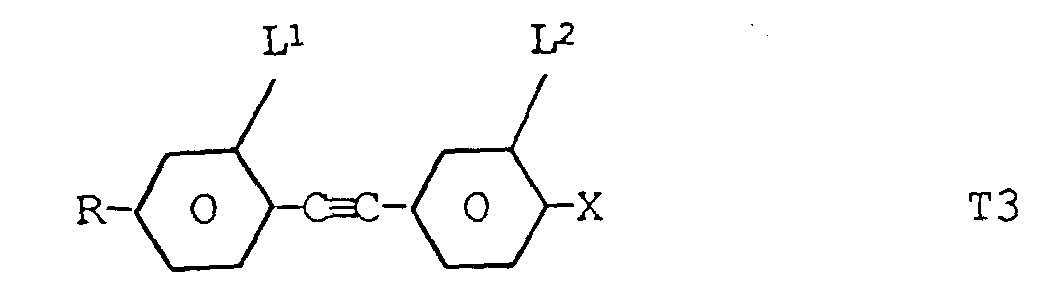
- R
- -CnH2n+1, -OCnH2n+1,
oder
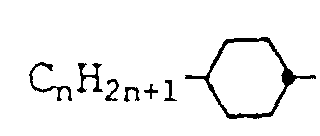
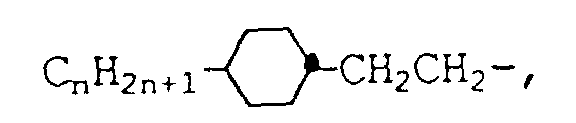
- n
- eine ganze Zahl von 1-15,
- L1 und L2
- jeweils unabhängig voneinander H oder F, und
- X
- F, Cl oder OCF3 bedeuten.
- Flüssigkristallmischung der in einem der Ansprüche 1 bis 11 definierten Zusammensetzung.
- Flüssigkristallmischung nach Anspruch 12, dadurch gekennzeichnet, daß es in Form eines gebrauchsfertigen Sets aus zwei oder mehreren Komponenten, mit gleicher Schwellenspannung, vorliegt, dessen eine Komponente eine optische Anisotropie von 0,100-0,110 aufweist und die andere Komponente eine optische Anisotropie von 0,170 bis 0,180 aufweist.
- Flüssigkristallmischung, hergestellt aus einem " 4-Bottle-System " mit den Komponenten A, B, C und D
A B PCH-2 8,0 % PCH-3 10,0 % PCH-3 20,0 % K6 7,0 % PCH-4 7,0 % K9 8,0 % PCH-5 4,0 % PCH-301 11,0 % PYP-32 5,0 % PYP-31 4,0 % PYP-33 4,0 % PYP-32 5,0 % CCP-20CF3 8,0 % PYP-33 4,0 % CCP-30CF3 8,0 % PTP-20F 6,0 % CCP-40CF3 7,0 % PTP-40F 6,0 % CCP-50CF3 7,0 % CCP-30CF3 6,0 % ECCP-30CF3 5,0 % CCP-50CF3 6,0 % ECCP-50CF3 5,0 % ECCP-30CF3 5,0 % ECCP-3F.F 6,0 % ECCP-50CF3 5,0 % ECCP-5F.F 6,0 % CPTP-30CF3 6,0 % CPTP-50CF3 6,0 % CPTP-302 5,0 % C D PCH-2 5,0 % PCH-3 18,0 % PCH-3 20,0 % PCH-5 7,0 % PCH-5 8,0 % K6 10,0 % PCH-301 16,0 % PCH-301 14,0 % ME2N.F 3,0 % PCH-302 8,0 % ME3N.F 3,0 % ME2N.F 2,0 % CCP-20CF3 5,0 % ME3N.F 2,0 % CCP-30CF3 5,0 % PTP-102 6,0 % CCP-40CF3 5,0 % PTP-201 6,0 % CCP-50CF3 5,0 % CPTP-301 6,0 % ECCP-30CF3 5,0 % CPTP-302 5,0 % ECCP-50CF3 5,0 % CPTP-303 6,0 % ECCP-3F.F 5,0 % ECCP-3F 3,0 % ECCP-5F.F 5,0 % CCP-30CF3 4,0 % CBC-53 5,0 % CCP-50CF3 3,0 % - Flüssigkristallmischung, hergestellt aus einem " 4-Bottle-System " mit den Komponenten E, F, G und H
E F PCH-3 19,0 % PCH-3 8,0 % PCH-4 8,0 % K6 8,0 % PCH-5 8,0 % K9 8,0 % PCH-301 7,0 % PCH-301 12,0 % CCP-20CF3 6,0 % PYP-31 5,0 % CCP-30CF3 6,0 % PYP-32 5,0 % CCP-40CF3 6,0 % PYP-33 5,0 % CCP-50CF3 6,0 % PTP-201 4,0 % ECCP-30CF3 7,0 % CCP-30CF3 7,0 % ECCP-50CF3 7,0 % CCP-50CF3 7,0 % PYP-32 6,0 % ECCP-30CF3 7,0 % PYP-33 6,0 % ECCP-50CF3 7,0 % CCPC-33 4,0 % CPTP-301 6,0 % CCPC-34 4,0 % CPTP-302 5,0 % CPTP-303 6,0 % G H PCM-3 29,0 % PCH-3 17,0 % PCM-4 9,0 % K6 6,0 % PCH-5 9,0 % K9 7,0 % PCH-301 15,0 % PCH-301 20,0 % CCP-20CF3 6,0 % PTP-102 6,0 % CCP-30CF3 6,0 % PTP-201 6,0 % CCP-40CF3 6,0 % CCP-30CF3 6,0 % CCP-50CF3 6,0 % CCP-50CF3 6,0 % ECCP-30CF3 7,0 % ECCP-30CF3 5,0 % ECCP-50CF3 7,0 % ECCP-50CF3 5,0 % CBC-33F 4,0 % CPTP-301 5,0 % CBC-53F 5,0 % CPTP-302 6,0 % CPTP-303 5,0 %
Applications Claiming Priority (6)
| Application Number | Priority Date | Filing Date | Title |
|---|---|---|---|
| DE4039052 | 1990-12-07 | ||
| DE4039052 | 1990-12-07 | ||
| DE4111964 | 1991-04-12 | ||
| DE4111964 | 1991-04-12 | ||
| DE4119292A DE4119292A1 (de) | 1991-04-12 | 1991-06-12 | Supertwist-fluessigkristallanzeige |
| DE4119292 | 1991-06-12 |
Publications (3)
| Publication Number | Publication Date |
|---|---|
| EP0494368A2 EP0494368A2 (de) | 1992-07-15 |
| EP0494368A3 EP0494368A3 (en) | 1992-08-05 |
| EP0494368B1 true EP0494368B1 (de) | 1999-01-20 |
Family
ID=27201954
Family Applications (1)
| Application Number | Title | Priority Date | Filing Date |
|---|---|---|---|
| EP91120211A Expired - Lifetime EP0494368B1 (de) | 1990-12-07 | 1991-11-26 | Supertwist-Flüssigkristallanzeige |
Country Status (5)
| Country | Link |
|---|---|
| US (1) | US5308538A (de) |
| EP (1) | EP0494368B1 (de) |
| JP (1) | JP3439776B2 (de) |
| KR (1) | KR100221092B1 (de) |
| DE (1) | DE59109091D1 (de) |
Families Citing this family (32)
| Publication number | Priority date | Publication date | Assignee | Title |
|---|---|---|---|---|
| US5387369A (en) * | 1988-10-20 | 1995-02-07 | Merck Patent Gesellschaft Mit Beschrankter Haftung | Supertwist liquid crystal display |
| DE3835804B4 (de) | 1988-10-20 | 2006-12-28 | Merck Patent Gmbh | Nematische Flüssigkristallmischung |
| DE59005187D1 (en) * | 1989-01-27 | 1994-05-05 | Merck Patent Gmbh | Biphenylylethane und flüssigkristalline phase. |
| US5516454A (en) * | 1989-07-13 | 1996-05-14 | Merck Patent Gesellschaft Mit Beschrankter Haftung | Supertwist liquid crystal display |
| WO1991015555A2 (en) * | 1990-04-02 | 1991-10-17 | MERCK Patent Gesellschaft mit beschränkter Haftung | Nematic liquid crystal mixtures and a matrix liquid crystal display |
| DE4032579A1 (de) * | 1990-10-13 | 1992-04-16 | Merck Patent Gmbh | Supertwist-fluessigkristallanzeige |
| JP3487613B2 (ja) * | 1992-07-24 | 2004-01-19 | メルク パテント ゲゼルシャフト ミット ベシュレンクテル ハフトング | キラル2,6−ジフルオロベンゼン誘導体 |
| GB2272704B (en) * | 1992-11-18 | 1996-04-24 | Merck Patent Gmbh | Liquid-crystalline mixture |
| JP2605249B2 (ja) * | 1993-07-23 | 1997-04-30 | 大日本インキ化学工業株式会社 | 液晶組成物及び液晶表示装置 |
| KR960704005A (ko) * | 1993-08-11 | 1996-08-31 | 크리스찬 플뢰미히 | 초비틀림 액정 표시장치(supertwist liquid-crystal display) |
| DE4333837B4 (de) * | 1993-10-05 | 2007-03-01 | Merck Patent Gmbh | 4-Fluorbenzole und ihre Verwendung in Flüssigkristallmischungen |
| KR100311921B1 (ko) * | 1993-10-13 | 2002-10-31 | 스미또모 가가꾸 고오교오 가부시끼가이샤 | 톨란화합물,그의제조방법,이화합물을유효성분으로하는액정조성물및이액정조성물을사용하여이루어진액정소자 |
| US5702640A (en) * | 1993-11-25 | 1997-12-30 | Merck Patent Gesellschaft Mit Beschrankter Haftung | High-multiplexed supertwist liquid-crystal display |
| JP3579698B2 (ja) * | 1994-09-06 | 2004-10-20 | チッソ株式会社 | 液晶組成物およびこれを用いた液晶表示素子 |
| JPH08199168A (ja) * | 1995-01-19 | 1996-08-06 | Chisso Corp | 液晶組成物および液晶表示素子 |
| CN1136067A (zh) * | 1995-02-22 | 1996-11-20 | 智索公司 | 酯衍生物、液晶组合物和液晶显示元件 |
| US5858271A (en) * | 1996-02-09 | 1999-01-12 | Chisso Corporation | Liquid crystal composition and liquid crystal display device |
| JP3537265B2 (ja) * | 1996-05-08 | 2004-06-14 | チッソ株式会社 | 液晶組成物および液晶表示素子 |
| DE19758941B4 (de) * | 1996-10-31 | 2009-07-16 | Merck Patent Gmbh | Flüssigkristallmischung und ihre Verwendung in TN- und STN-Flüssigkristallanzeigen |
| DE19750957A1 (de) * | 1996-11-30 | 1998-06-04 | Merck Patent Gmbh | Supertwist-Flüssigkristallanzeige |
| DE19707956A1 (de) * | 1997-02-27 | 1998-09-03 | Merck Patent Gmbh | TN- und STN-Flüssigkristallanzeige |
| DE19707941B4 (de) * | 1997-02-27 | 2007-04-26 | Merck Patent Gmbh | Flüssigkristallines Medium |
| DE19732502A1 (de) * | 1997-07-29 | 1999-02-04 | Merck Patent Gmbh | STN-Flüssigkristallanzeige |
| KR100544105B1 (ko) * | 1998-05-26 | 2006-03-24 | 삼성에스디아이 주식회사 | 네마틱 액정조성물 및 이를 이용한 액정표시소자 |
| KR100544104B1 (ko) * | 1998-05-26 | 2006-03-23 | 삼성에스디아이 주식회사 | 네마틱 액정조성물 및 이를 이용한 액정표시소자 |
| DE10020059A1 (de) * | 1999-05-04 | 2001-01-11 | Merck Patent Gmbh | STN-Flüssigkristallanzeige |
| DE10056323A1 (de) * | 1999-12-14 | 2001-06-21 | Merck Patent Gmbh | STN-Flüssigkristallanzeige |
| DE10114983B4 (de) * | 2000-06-23 | 2011-05-12 | Merck Patent Gmbh | Nematische Flüssigkristallmischungen und ihre Verwendung in TN-und STN-Flüssigkristallanzeigen |
| ES2509821T3 (es) * | 2008-10-10 | 2014-10-20 | Center For Abrasives And Refractories Research & Development C.A.R.R.D. Gmbh | Aglomerados de granos abrasivos, procedimiento para su producción así como su uso para la producción de agentes abrasivos |
| WO2012144321A1 (ja) * | 2011-04-18 | 2012-10-26 | Jnc株式会社 | 液晶組成物および液晶表示素子 |
| JP6319315B2 (ja) * | 2013-08-28 | 2018-05-09 | Jnc株式会社 | 液晶組成物および液晶表示素子 |
| CN113234448B (zh) * | 2021-03-31 | 2024-10-01 | 石家庄诚志永华显示材料有限公司 | 液晶组合物、液晶显示元件及液晶显示器 |
Family Cites Families (8)
| Publication number | Priority date | Publication date | Assignee | Title |
|---|---|---|---|---|
| JPS63167331A (ja) * | 1986-12-29 | 1988-07-11 | Sharp Corp | ツイステツド・ネマチツク型液晶表示素子 |
| DE3710069A1 (de) * | 1987-03-27 | 1988-10-06 | Merck Patent Gmbh | Ethinderivate |
| DE3835803A1 (de) * | 1988-03-10 | 1990-04-26 | Merck Patent Gmbh | Supertwist-fluessigkristallanzeigeelement und fluessigkristallmischung |
| DE3835804B4 (de) * | 1988-10-20 | 2006-12-28 | Merck Patent Gmbh | Nematische Flüssigkristallmischung |
| ES2058433T3 (es) * | 1988-10-20 | 1994-11-01 | Merck Patent Gmbh | Indicador matriz de cristal liquido. |
| EP0393443B1 (de) * | 1989-04-19 | 1999-12-15 | MERCK PATENT GmbH | Supertwist-Flüssigkristallanzeige |
| DE3923064B4 (de) * | 1989-07-13 | 2004-08-05 | Merck Patent Gmbh | Flüssigkristallmischung und sie enthaltende Supertwist-Flüssigkristallanzeige |
| US5171469A (en) * | 1989-08-22 | 1992-12-15 | Merck Patent Gesellschaft Mit Beschraenkter Haftung | Liquid-crystal matrix display |
-
1991
- 1991-11-26 DE DE59109091T patent/DE59109091D1/de not_active Expired - Lifetime
- 1991-11-26 EP EP91120211A patent/EP0494368B1/de not_active Expired - Lifetime
- 1991-12-05 JP JP34843391A patent/JP3439776B2/ja not_active Expired - Lifetime
- 1991-12-06 US US07/802,903 patent/US5308538A/en not_active Expired - Lifetime
- 1991-12-07 KR KR1019910022402A patent/KR100221092B1/ko not_active Expired - Lifetime
Also Published As
| Publication number | Publication date |
|---|---|
| EP0494368A3 (en) | 1992-08-05 |
| JPH0570777A (ja) | 1993-03-23 |
| KR930000652A (ko) | 1993-01-15 |
| JP3439776B2 (ja) | 2003-08-25 |
| US5308538A (en) | 1994-05-03 |
| KR100221092B1 (ko) | 1999-09-15 |
| EP0494368A2 (de) | 1992-07-15 |
| DE59109091D1 (de) | 1999-03-04 |
Similar Documents
| Publication | Publication Date | Title |
|---|---|---|
| EP0332005B1 (de) | Supertwist-Flüssigkristallanzeige | |
| EP0494368A2 (de) | Supertwist-Flüssigkristallanzeige | |
| EP0394419B1 (de) | Matrixanzeigeanordnung mit flüssigkristallen | |
| DE69407050T2 (de) | Supertwist-flüssigkristallanzeige | |
| EP0481293B1 (de) | Supertwist-Flüssigkristallanzeige | |
| EP0366985B1 (de) | Supertwist-Flüssigkristallanzeige | |
| EP0363451B1 (de) | Supertwist-flüssigkristallanzeige | |
| DE3923064B4 (de) | Flüssigkristallmischung und sie enthaltende Supertwist-Flüssigkristallanzeige | |
| DE69125055T2 (de) | Supertwist Flüssigkristallanzeige | |
| EP0562051B1 (de) | Supertwist-flüssigkristallanzeige | |
| EP0393443B1 (de) | Supertwist-Flüssigkristallanzeige | |
| EP0393442A2 (de) | Supertwist-Flüssigkristallanzeige | |
| DE4119292A1 (de) | Supertwist-fluessigkristallanzeige | |
| DE10030459B4 (de) | Nematische Flüssigkristallmischung und deren Verwendung in TN- und STN-Flüssigkristallanzeigen | |
| DE4219283A1 (de) | Supertwist-Flüssigkristallanzeige | |
| DE4010684A1 (de) | Supertwist-fluessigkristallanzeige | |
| DE4100288A1 (de) | Supertwist-fluessigkristallanzeige | |
| DD279327A5 (de) | Supertwist-fluessigkristallanzeige | |
| DE4010668A1 (de) | Supertwist-fluessigkristallanzeige | |
| DE4100287A1 (de) | Supertwist-fluessigkristallanzeigeelement | |
| DE10000870A1 (de) | TN- und STN-Flüssigkristallanzeigen | |
| DE10002689A1 (de) | TN- und STN-Flüssigkristallanzeigen | |
| DD288831A5 (de) | Fluessigkristallmischung |
Legal Events
| Date | Code | Title | Description |
|---|---|---|---|
| PUAI | Public reference made under article 153(3) epc to a published international application that has entered the european phase |
Free format text: ORIGINAL CODE: 0009012 |
|
| PUAL | Search report despatched |
Free format text: ORIGINAL CODE: 0009013 |
|
| AK | Designated contracting states |
Kind code of ref document: A2 Designated state(s): DE GB IT |
|
| AK | Designated contracting states |
Kind code of ref document: A3 Designated state(s): DE GB IT |
|
| 17P | Request for examination filed |
Effective date: 19921221 |
|
| 17Q | First examination report despatched |
Effective date: 19941130 |
|
| GRAG | Despatch of communication of intention to grant |
Free format text: ORIGINAL CODE: EPIDOS AGRA |
|
| GRAG | Despatch of communication of intention to grant |
Free format text: ORIGINAL CODE: EPIDOS AGRA |
|
| GRAH | Despatch of communication of intention to grant a patent |
Free format text: ORIGINAL CODE: EPIDOS IGRA |
|
| GRAH | Despatch of communication of intention to grant a patent |
Free format text: ORIGINAL CODE: EPIDOS IGRA |
|
| GRAA | (expected) grant |
Free format text: ORIGINAL CODE: 0009210 |
|
| AK | Designated contracting states |
Kind code of ref document: B1 Designated state(s): DE GB IT |
|
| REF | Corresponds to: |
Ref document number: 59109091 Country of ref document: DE Date of ref document: 19990304 |
|
| ITF | It: translation for a ep patent filed | ||
| GBT | Gb: translation of ep patent filed (gb section 77(6)(a)/1977) |
Effective date: 19990409 |
|
| PLBE | No opposition filed within time limit |
Free format text: ORIGINAL CODE: 0009261 |
|
| STAA | Information on the status of an ep patent application or granted ep patent |
Free format text: STATUS: NO OPPOSITION FILED WITHIN TIME LIMIT |
|
| 26N | No opposition filed | ||
| REG | Reference to a national code |
Ref country code: GB Ref legal event code: IF02 |
|
| PGFP | Annual fee paid to national office [announced via postgrant information from national office to epo] |
Ref country code: GB Payment date: 20041124 Year of fee payment: 14 |
|
| PG25 | Lapsed in a contracting state [announced via postgrant information from national office to epo] |
Ref country code: IT Free format text: LAPSE BECAUSE OF NON-PAYMENT OF DUE FEES;WARNING: LAPSES OF ITALIAN PATENTS WITH EFFECTIVE DATE BEFORE 2007 MAY HAVE OCCURRED AT ANY TIME BEFORE 2007. THE CORRECT EFFECTIVE DATE MAY BE DIFFERENT FROM THE ONE RECORDED. Effective date: 20051126 Ref country code: GB Free format text: LAPSE BECAUSE OF NON-PAYMENT OF DUE FEES Effective date: 20051126 |
|
| GBPC | Gb: european patent ceased through non-payment of renewal fee |
Effective date: 20051126 |
|
| PGFP | Annual fee paid to national office [announced via postgrant information from national office to epo] |
Ref country code: DE Payment date: 20101124 Year of fee payment: 20 |
|
| REG | Reference to a national code |
Ref country code: DE Ref legal event code: R071 Ref document number: 59109091 Country of ref document: DE |
|
| REG | Reference to a national code |
Ref country code: DE Ref legal event code: R071 Ref document number: 59109091 Country of ref document: DE |
|
| PG25 | Lapsed in a contracting state [announced via postgrant information from national office to epo] |
Ref country code: DE Free format text: LAPSE BECAUSE OF EXPIRATION OF PROTECTION Effective date: 20111127 |