EP0488381B1 - Polyhydroxyphenylenetherharzzusammensetzung und Verfahren zu ihrer Herstellung - Google Patents
Polyhydroxyphenylenetherharzzusammensetzung und Verfahren zu ihrer Herstellung Download PDFInfo
- Publication number
- EP0488381B1 EP0488381B1 EP91120556A EP91120556A EP0488381B1 EP 0488381 B1 EP0488381 B1 EP 0488381B1 EP 91120556 A EP91120556 A EP 91120556A EP 91120556 A EP91120556 A EP 91120556A EP 0488381 B1 EP0488381 B1 EP 0488381B1
- Authority
- EP
- European Patent Office
- Prior art keywords
- group
- carbon atoms
- resin
- propyl
- methylphenol
- Prior art date
- Legal status (The legal status is an assumption and is not a legal conclusion. Google has not performed a legal analysis and makes no representation as to the accuracy of the status listed.)
- Expired - Lifetime
Links
- IOHSOVIMYUVUKJ-UHFFFAOYSA-N CCCC(C)(C(C)(C)c(cc1C)cc(C)c1OC(C)C)Oc1c(CCCSCCO)cc(C(CC)CC)cc1C Chemical compound CCCC(C)(C(C)(C)c(cc1C)cc(C)c1OC(C)C)Oc1c(CCCSCCO)cc(C(CC)CC)cc1C IOHSOVIMYUVUKJ-UHFFFAOYSA-N 0.000 description 1
Images
Classifications
-
- C—CHEMISTRY; METALLURGY
- C08—ORGANIC MACROMOLECULAR COMPOUNDS; THEIR PREPARATION OR CHEMICAL WORKING-UP; COMPOSITIONS BASED THEREON
- C08L—COMPOSITIONS OF MACROMOLECULAR COMPOUNDS
- C08L51/00—Compositions of graft polymers in which the grafted component is obtained by reactions only involving carbon-to-carbon unsaturated bonds; Compositions of derivatives of such polymers
- C08L51/06—Compositions of graft polymers in which the grafted component is obtained by reactions only involving carbon-to-carbon unsaturated bonds; Compositions of derivatives of such polymers grafted on to homopolymers or copolymers of aliphatic hydrocarbons containing only one carbon-to-carbon double bond
-
- C—CHEMISTRY; METALLURGY
- C08—ORGANIC MACROMOLECULAR COMPOUNDS; THEIR PREPARATION OR CHEMICAL WORKING-UP; COMPOSITIONS BASED THEREON
- C08G—MACROMOLECULAR COMPOUNDS OBTAINED OTHERWISE THAN BY REACTIONS ONLY INVOLVING UNSATURATED CARBON-TO-CARBON BONDS
- C08G65/00—Macromolecular compounds obtained by reactions forming an ether link in the main chain of the macromolecule
- C08G65/34—Macromolecular compounds obtained by reactions forming an ether link in the main chain of the macromolecule from hydroxy compounds or their metallic derivatives
- C08G65/38—Macromolecular compounds obtained by reactions forming an ether link in the main chain of the macromolecule from hydroxy compounds or their metallic derivatives derived from phenols
- C08G65/44—Macromolecular compounds obtained by reactions forming an ether link in the main chain of the macromolecule from hydroxy compounds or their metallic derivatives derived from phenols by oxidation of phenols
-
- C—CHEMISTRY; METALLURGY
- C08—ORGANIC MACROMOLECULAR COMPOUNDS; THEIR PREPARATION OR CHEMICAL WORKING-UP; COMPOSITIONS BASED THEREON
- C08L—COMPOSITIONS OF MACROMOLECULAR COMPOUNDS
- C08L71/00—Compositions of polyethers obtained by reactions forming an ether link in the main chain; Compositions of derivatives of such polymers
- C08L71/08—Polyethers derived from hydroxy compounds or from their metallic derivatives
- C08L71/10—Polyethers derived from hydroxy compounds or from their metallic derivatives from phenols
- C08L71/12—Polyphenylene oxides
- C08L71/126—Polyphenylene oxides modified by chemical after-treatment
-
- C—CHEMISTRY; METALLURGY
- C08—ORGANIC MACROMOLECULAR COMPOUNDS; THEIR PREPARATION OR CHEMICAL WORKING-UP; COMPOSITIONS BASED THEREON
- C08L—COMPOSITIONS OF MACROMOLECULAR COMPOUNDS
- C08L63/00—Compositions of epoxy resins; Compositions of derivatives of epoxy resins
-
- Y—GENERAL TAGGING OF NEW TECHNOLOGICAL DEVELOPMENTS; GENERAL TAGGING OF CROSS-SECTIONAL TECHNOLOGIES SPANNING OVER SEVERAL SECTIONS OF THE IPC; TECHNICAL SUBJECTS COVERED BY FORMER USPC CROSS-REFERENCE ART COLLECTIONS [XRACs] AND DIGESTS
- Y10—TECHNICAL SUBJECTS COVERED BY FORMER USPC
- Y10S—TECHNICAL SUBJECTS COVERED BY FORMER USPC CROSS-REFERENCE ART COLLECTIONS [XRACs] AND DIGESTS
- Y10S525/00—Synthetic resins or natural rubbers -- part of the class 520 series
- Y10S525/905—Polyphenylene oxide
Definitions
- This invention relates to a novel polyhydroxyphenylene ether resin having an optional number of hydroxyl group(s) which is a reactive functional group in the molecule and a process for preparing the same.
- this invention relates to a process for preparing a novel polyhydroxyphenylene ether resin which comprises subjecting a phenol-substituted compound having hydroxyl group as a substituent with another phenol-substituted compound to oxidation copolymerization, and a novel polyhydroxyphenylene ether resin excellent in coating property, plating property, adhesion property and gas barrier property, and useful for lamination and further as a compatibilizing agent of a polymer alloy.
- PPE polyphenylene ether
- a method of functionalizing a polyphenylene ether there has been known examples of introducing various functional groups using a terminal phenolic hydroxyl group as a reaction site.
- a terminal carboxylic anhydride-modified PPE disclosed in Japanese Provisional Patent Publication No. 199754/1988 or Japanese Provisional PCT Patent Publication No. 500456/1987
- a terminal alcoholic hydroxyl-modified PPE disclosed in U.S. Patent No. 4,746,708
- a terminal glycidyl-modified PPE disclosed in U.S. Patent No. 4,732, 937.
- each number of a reaction site and a functional group is one at most per one molecule of a polymer, said examples cannot be said to be satisfactory in the point of optimum number of functional groups.
- DE-US-1961 603 discloses polyphenylene oxides having no H0-substituents.
- One of the effective methods of introducing a functional group is copolymerization with a monomer compound having a functional group.
- a substituent of a main chain benzene ring is confined only to an alkyl group, an alkenyl group, an aromatic group, an oxyalkyl group and a halogen atom.
- An object of the present invention is to provide a novel PPE, namely a polyhydroxyphenylene ether resin, having an optional number of hydroxyl group(s) which is a reactive functional group in the molecule and a process for preparing the same.
- the present invention relates to a poly-hydroxyphenylene ether resin obtainable by a process which comprises copolymerizing at least one phenol-substituted compound having hydroxyl group as a substituent, represented by the formula (I): wherein n represents an integer satisfying the formula 1 + n ⁇ 4; a and b each represents an integer of 1 to 6; and R 1 and R 2 each represents an unsubstituted or halogen-substituted alkylene group having 1 to 20 carbon atoms, an alkenylene group having 1 to 20 carbon atoms or an arylene group having up to 20 carbon atoms or an unsubstituted or halogen-substituted alkylene group having 1 to 20 carbon atoms which has an ether linkage; K represents a halogen atom, a primary or secondary alkyl group, an alkenyl group, phenyl group, an aminoalkyl group, a haloalkyl group, a hydrocarbonoxy group or
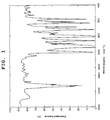
- Fig. 1 shows an infrared absorption spectrum of a polyhydroxyphenylene ether resin obtained in Example 2.
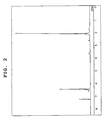
- Fig. 2 is a 1 H-NMR chart of a polyhydroxyphenylene ether resin obtained in Example 2.
- the phenol-substituted compound having hydroxyl group as a substituent to be used in the present invention is represented by the formula (I): wherein n and K each have the same meanings as described above.
- 2,6-dimethylphenol a combination of a large amount of 2,6-dimethylphenol with a small amount of at least one monomer compound selected from 2,3,6-trimethylphenol, o-cresol and p-cresol, 2,6-diallylphenol, 2-allyl-6-methylphenol, 2-allyl-6-ethylphenol and 2-geranyl-6-methylphenol are preferred. Particularly preferred is 2,6-dimethylphenol.
- a polyvalent hydroxy aromatic compound such as bisphenol A, tetrabromobisphenol A, resorcin, hydroquinone, 2,2-bis(3',5'-dimethyl-4'-hydroxyphenyl)propane, bis(3,5-dimethyl-4-hydroxyphenyl)methane and 3,3',5,5'-tetramethyl-4,4'-dihydroxybiphenyl as a
- Said polymer can be prepared in the same manner as in the conventional oxidation polymerization of PPE.
- the method is disclosed in, for example, U.S. Patents No. 3,422,062, No. 3,306,874, No. 3,306,875, and No. 3,257,358.
- the catalyst to be used in the oxidation polymerization is not particularly limited, but may be any catalyst by which a desired polymerization degree can be obtained. In this field of the art, there have been known many catalysts comprising cuprous salt-amine, cupric salt-amine-alkali metal hydroxide or manganese salt-primary amine.
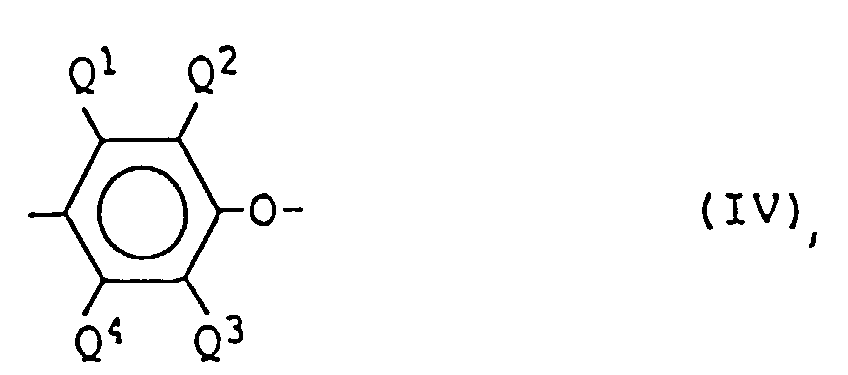
- the polyhydroxyphenylene ether resin of the present invention obtained by oxidation copolymerization of one or more phenol-substituted compound having hydroxyl group as a substituent represented by the formula (I) and, if necessary, one or more phenol-substituted compound represented by the formula (II) is a polyhydroxyphenylene ether resin comprising p constitutional units represented by the following formula (III) and q constitutional units represented by the following formula (IV), having a number average polymerization degree of 25 to 400 and satisfying 0.2 ⁇ 100p/(p+q) ⁇ 100: wherein n represents an integer of 0 to 3; a represents an integer of 1 to 6; R 1 represents an unsubstituted or halogen-substituted aliphatic polyvalent hydrocarbon group having 1 to 20 carbon atoms which may have an ether,linkage or an aromatic polyvalent hydrocarbon group having up to 20 carbon atoms; and R 2 represents an alkylene group having 1 to 20 carbon atoms; Ks
- the particularly preferred polyhydroxyphenylene ether resin is a polyhydroxyphenylene ether having a number average polymerization degree of 25 to 400, represented by the formula (V): wherein 0.2 ⁇ 100p/(p+q) ⁇ 100.
- the polyhydroxypheylene ether may be a homopolymer, a random polymer or a block polymer.
- the number average polymerization degree is 25 to 400. If the value is less than 25, mechanical characteristics of the composition are not good, while if it exceeds 400, molding workability is lowered due to increase in melting viscosity, whereby handling becomes difficult.
- a random copolymer containing 0.5 to 50 mole %, preferably 1 to 40 mole % of 2-(3-(2-hydroxyethylthio)propyl)-6-methylphenol and 99.5 to 50 mole %, preferably 99 to 60 mole % of 2,6-dimethylphenol.
- the molecular weight is preferably 3,000 to 50,000, more preferably 5,000 to 30,000 in terms of number average molecular weight.
- thermoplastic resin composition containing 10 to 90 % by weight of the polyhydroxyphenylene ether (A) and 90 to 10 % by weight of an epoxy group-containing olefin resin (B) is useful as an engineering plastic which provides industrial materials such as automobile components and electrical components excellent in solvent resistance, heat resistant stiffness including a connector, an ignition manifold, a sealing material of a coil, a gear and a crank.
- the epoxy group-containing olefin resin which is Component (B) can be prepared by a method of randum, block or graft copolymerization of an unsaturated monomer having an epoxy group with an olefin resin.
- the olefin type resin comprises at least one ⁇ -olefin having 2 to 10 carbon atoms, and may preferably have a crystallization degree at room temperature measured by X ray diffraction of 10 % or more, more preferably 20 % or more and a melting point of 40 °C or higher. When the crystallization degree is lowered, the modulus of elasticity of a final composition is lowered. Further, the olefin type resin should have a sufficient molecular weight as a resin at ordinary temperature.
- melt flow rate measured according to JIS-K-6758 is a molecular weight corresponding to 0.01 to 500 g/10 min, preferably 0.05 to 100 g/10 min, and the modulus of elasticity measured according to JIS-K-7203 is 500 kg/cm 2 or more.
- ⁇ -olefin which is a constitutional component of the olefin type resin
- ethylene propylene
- butene-1 pentene-1, hexene-1, 3-methylbutene-1
- 4-methylpentene-1 3,3-dimethylpentene-1, 3-methylhexene-1
- 4-methylhexene-1, 4,4-dimethylhexene-1 5-methylhexene-1, allylcyclopentane, allylcyclohexane, allylbenzene, 3-cyclohexylbutene-1
- vinylcyclopropane vinylcyclohexane
- 2-vinylbicyclo(2,2,1)-heptane heptene-1 and octene-1.
- ethylene, propylene, butene-1, pentene-1, hexene-1, 3-methylbutene-1, 4-methylpentene-1 and 3-methylhexene-1 are particularly preferred.
- One or more of these ⁇ -olefins may be used as a polymerization component.
- the unsaturated monomer having an epoxy group to be used in copolymerization there may be mentioned, for example, glycidyl methacrylate, butylglycidyl maleate, butylglycidyl fumarate, propylglycidyl maleate and glycidyl acrylate.
- glycidyl methacrylate is particularly preferred.
- a monomer other than the above unsaturated monomer having an epoxy group for example, methyl acrylate, methyl methacrylate or vinyl acetate may be also copolymerized in an amount which does not exceed a half amount of the total monomer amount.
- the olefin resin (B) of the present invention can be also obtained by graft copolymerization of an olefin type resin with the above unsaturated monomer having an epoxy group under radical polymerization condition.
- the method for effecting the radical reaction there may be mentioned a method in which radiation such as ⁇ -ray and electron ray is irradiated in the coexistence of the above olefin type resin and the above polymerizable monomer, a method in which the olefin type resin is irradiated with radiation and then a polymerizable monomer is coexisted and a method in which the olefin polymer and a polymerizable monomer are coexisted and heated in the presence or absence of a radical initiator. Any state such as solution state, melting state and suspended state may be employed.
- radical initiator there may be used organic and inorganic peroxides such as benzoyl peroxide, t-butyl peroxybenzoate, t-butyl hydroperoxide, t-butyl peroxyacetate, diisopropyl peroxydicarbonate, 2,2-bis(t-butylperoxy)octane, methyl ethyl ketone peroxide, potassium peroxide and hydrogen peroxide; and an azo compound such as ⁇ , ⁇ '-azobisisobutyronitrile.
- the peroxide may be used as a redox by combining with a reducing agent.
- a combination of hydrogen peroxide and a ferrous salt there may be mentioned a combination of hydrogen peroxide and a ferrous salt.
- radical initiators may be selected suitably in relation to a modifier and reaction system. Further, two or more radical initiators may be used in combination.
- the amount of the radical initiator to be used is 0 to 100 parts by weight, preferably in the range of 0 to 30 parts by weight based on 100 parts by weight of the above olefin type resin.
- the temperature at the time of graft copolymerization is generally 30 to 350 °C, preferably in the range of 50 to 300 °C.
- the modification reaction time is 50 hours or shorter, preferably in the range of 1 minute to 24 hours.
- the composition ratio of the polyhydroxyphenylene ether (A) to the epoxy group-containing olefin resin (B) in a two component-system is in the range of from 10:90 to 90:10, preferably in the range of from 20:80 to 80:20, more preferably in the range of from 30:70 to 70:30 in terms of the weight ratio of Component (A) to Component (B) from the standpoint of balance of mechanical strength, molding property and solvent resistance.
- the polyhydroxyphenylene ether (A) is less than 10 % by weight, the effects of improving heat resistance and stiffness property are small as compared with those of the olefin resin, while if it exceeds 90 % by weight, the effects of improving molding property and solvent resistance are small as compared with those of the polyphenylene ether resin.
- the thermoplastic resin composition of the present invention may contain components other than Components (A) and (B) described above.
- a part (up to 80 % by weight) of the polyhydroxyphenylene ether (A) may be replaced with an unmodified polyphenylene ether.
- a part (up to 85 % by weight if the epoxy group content in the olefin resin is 0.1 mole % or more) of the epoxy-group containing olefin resin (B) may be replaced with an unmodified olefin type resin.
- an antioxicant 20 % by weight or less of an antioxicant, a weatherability improving agent, a nucleating agent, a flame-retardant, a plasticizer and a flowability improving agent may be contained. Further, 50 % by weight or less of an organic or inorganic filler such as glass fiber, mica, talc, wallastonite, potassium titanate, calcium carbonate and silica, and 5 % by weight or less of a dispersant of a coloring agent may be also contained.
- an organic or inorganic filler such as glass fiber, mica, talc, wallastonite, potassium titanate, calcium carbonate and silica
- an impact strength modifier for example, a styrene-butadiene copolymer rubber and a hydride thereof, an ethyelene-propylene-(diene) copolymer rubber and also ⁇ , ⁇ -unsaturated carboxylic anhydride-modified compounds of these may be contained.
- thermoplastic resin composition of the present invention there may be used suitably a kneading method generally used practically in a thermoplastic resin.
- a kneading method generally used practically in a thermoplastic resin.
- the respective powdery or granular components, if necessary, together with additives mentioned in the description of the additive components can be mixed uniformly by using a Henschel mixer, a ribbon blender or a V-shaped blender, and then kneaded by a single axis or plural axis kneading extruder, a roll or a Banbury mixer.
- the molding method of the thermoplastic resin composition of the present invention is not particularly limited, and there may be applied suitably a molding method generally used in a thermoplastic resin, namely, injection molding, blow molding, extrusion molding, sheet molding, thermal molding, rotational molding, laminate molding and press molding.
- part and % mean “part by weight” and “% by weight”, respectively.
- the amount of hydroxyl group contained in the resin was represented in mole % based on a recurring unit of the main chain phenylene ring, and calculated from integrated strength of a signal derived from a methylene group bonded to hydroxyl group at around 3.6 ppm by 1 H-NMR.
- Mn number average molecular weight
- Q value molecular weight distribution value
- the reaction was carried out while maintaining a temperature at 30 °C and introducing oxygen gas at a flow rate of 0.8 liter/min and nitrogen gas at a flow rate of 8 liter/min, until precipitation of the polymer was terminated.
- the polymer was washed with methanol which was made acidic with hydrochloric acid to deactivate the catalyst, the desired polyhydroxyphenylene ether resin was obtained.
- Example 2 The procedures were carried out under the same conditions as in Example 1 except for using 192 parts of the phenol-substituted compound obtained in Synthetic example 1 and 900 parts of 2,6-xylenol.
- the infrared absorption spectrum of the polyhydroxyphenylene ether resin obtained is shown in Fig. 1, and the 1 H-NMR chart is shown in Fig. 2.
- the polymerization reaction was divided into two steps. In the former step, the reaction was carried out while maintaining a temperature at 40 °C and introducing oxygen gas at a flow rate of 0.8 liter/min, until solids were precipitated. In the latter step, the reaction was carried out while maintaining a temperature at 30 °C and introducing oxygen gas at a flow rate of 0.8 liter/min and nitrogen gas at a flow rate of 8 liter/min, until precipitation of the polymer was terminated.
- the product formed had a yield of 93 %, a hydroxyl group content of 4.6 mole %, a number average molecular weight of 14,930 and a Q value of 2.79.
- the amount of hydroxyl group contained in the resin was represented in mole % based on a recurring unit of the main chain phenylene ring, and calculated from integrated strength of a signal derived from a methylene group bonded to hydroxyl group at around 3.6 ppm by 1 H-NMR.
- the number average molecular weight and the Q value are values calculated on polystyrene measured according to GPC method.
- the resin obtained was called Modified PPE-1.
- the yield was 91 %, the hydroxyl group content 1.5 mole %, the number average molecular weight 10,300 and the Q value 1.81, respectively.
- the resin obtained was called Modified PPE-2.
- the yield was 87 %, the hydroxyl group content 4.9 mole %, the number average molecular weight 5,620 and the Q value 1.84, respectively.
- the resin obtained was called Modified PPE-3.
- Epoxy group-containing olefin resin
- the constitutional unit amount of the epoxy group-containing polypropylene based on glycidyl methacrylate was found to be 1.6 % by weight by the infrared spectral analysis. MFR was 5.1 g/10 min.
- the resin obtained was called Epoxy-modified PP.
- Epoxy group-containing polyethylene
- An ethylene-glycidyl methacrylate copolymer (trade name: Bond Fast Resist-E) produced by Sumitomo Kagaku Kogyo K.K. was used.
- Bond Fast Resist-E ethylene-glycidyl methacrylate copolymer
- Table 1 the above copolymer is abbreviated as Epoxy-modified PE.
- a polypropylene (trade name: Mitsubishi Polypro MA3, MFR measured at 230 °C: 10 g/10 min (abbreviated as PP in Table 1)) and a low density polyethylene (trade name: Mitsubishi Polyethy ZF-60, MFR measured at 190 °C: 1 g /10 min (abbreviated as "PE” in Table 1)) produced by Mitsubishi Petrochemical Co., Ltd. were used.
- Poly(2,6-dimethyl-1,4-phenylene ether) produced by Nippon Polyether K.K. having a intrinsic viscosity measured in chloroform at 30 °C of 0.31 dl/g was used (abbreviated as "PPE” in Table 1).
Landscapes
- Chemical & Material Sciences (AREA)
- Health & Medical Sciences (AREA)
- Chemical Kinetics & Catalysis (AREA)
- Medicinal Chemistry (AREA)
- Polymers & Plastics (AREA)
- Organic Chemistry (AREA)
- General Chemical & Material Sciences (AREA)
- Polyethers (AREA)
Claims (6)
- Ein Polyhydroxyphenylenetherharz, das durch ein Verfahren erhältlich ist, welches die Copolymerisation mindestens einer phenolsubstituierten Verbindung, welche eine Hydroxylgruppe als Substituenten aufweist und durch die Formel (I) dargestellt wird:


- Das Polyhydroxyphenylenetherharz gemäß Anspruch 1, worin die durch die Formel (I) dargestellte phenolsubstituierte Verbindung eine Verbindung ist, welche ausgewählt ist aus der Gruppe, die aus 2-[3-(2-Hydroxyethylthio)propyl]-6-methylphenol, 2-[3-(2-Hydroxy-1-methylpropylthio)propyl]-6-methylphenol, 2-[3-(2,3-Dihydroxypropylthio)propyl]-6-methylphenol, und 2-[3-(2-Hydroxypropylthio)propyl]-6-methylphenol besteht.
- Das Polyhydroxyphenylenetherharz gemäß Anspruch 1, welches aus p durch die allgemeine Formel (III) dargestellte konstitutionelle Einheiten


- Das Polyhydroxyphenylenetherharz gemäß Anspruch 1, welches ein Polyhydroxyphenylenetherharz mit einem Polymerisationsgrad im Zahlenmittel von 25 bis 400 ist, das durch die Formel (V) dargestellt wird:

- Eine Harzzusammensetzung, welche 10 bis 90 Gew.-% eines im folgenden als Komponente (A) bezeichneten Polyhydroxyphenylenäthers und 90 bis 10 Gew.-% eines im folgenden als Komponente (B) bezeichneten, Epoxygruppen enthaltenen Olefinharzes beinhaltet, wobei die Komponente (A) ein Polyhydroxyphenylenether ist, der p durch die allgemeine Formel (III) dargestellte konstitutionelle Einheiten

- Die Zusammensetzung gemäß Anspruch 5, worin das Polyhydroxyphenylenetherharz der Komponente (A) ein Polyhydroxyphenylenetherharz mit einem Polymerisationsgrad im Zahlenmittel von 25 bis 400 ist, das durch die Formel (V) dargestellt wird:

Applications Claiming Priority (4)
| Application Number | Priority Date | Filing Date | Title |
|---|---|---|---|
| JP325793/90 | 1990-11-29 | ||
| JP32579390A JPH04202223A (ja) | 1990-11-29 | 1990-11-29 | ポリヒドロキシフェニレンエーテル樹脂の製造方法 |
| JP218290/91 | 1991-08-29 | ||
| JP21829091A JPH0559271A (ja) | 1991-08-29 | 1991-08-29 | 熱可塑性樹脂組成物 |
Publications (2)
| Publication Number | Publication Date |
|---|---|
| EP0488381A1 EP0488381A1 (de) | 1992-06-03 |
| EP0488381B1 true EP0488381B1 (de) | 1997-01-29 |
Family
ID=26522490
Family Applications (1)
| Application Number | Title | Priority Date | Filing Date |
|---|---|---|---|
| EP91120556A Expired - Lifetime EP0488381B1 (de) | 1990-11-29 | 1991-11-29 | Polyhydroxyphenylenetherharzzusammensetzung und Verfahren zu ihrer Herstellung |
Country Status (3)
| Country | Link |
|---|---|
| US (1) | US5202409A (de) |
| EP (1) | EP0488381B1 (de) |
| DE (1) | DE69124481T2 (de) |
Families Citing this family (6)
| Publication number | Priority date | Publication date | Assignee | Title |
|---|---|---|---|---|
| DE69329136T2 (de) * | 1992-10-14 | 2001-06-07 | Mitsubishi Chemical Corp., Tokio/Tokyo | Verfahren zur Herstellung einer thermoplastischen Harzzusammensetzung |
| US6576800B2 (en) * | 2000-07-17 | 2003-06-10 | National Institute Of Advanced Industrial Science And Technology | Oxidation polymer of a substituted phenol |
| US20080085989A1 (en) * | 2006-10-05 | 2008-04-10 | Gary William Yeager | Poly(arylene ether) copolymer |
| US20080076884A1 (en) * | 2006-09-21 | 2008-03-27 | Gary William Yeager | Poly(arylene ether) composition and method |
| US20080076885A1 (en) * | 2006-09-21 | 2008-03-27 | Gary William Yeager | Poly(arylene ether) composition and method |
| US10995182B2 (en) | 2018-04-30 | 2021-05-04 | Shpp Global Technologies B.V. | Phenylene ether oligomer, curable composition comprising the phenylene ether oligomer, and thermoset composition derived therefrom |
Family Cites Families (25)
| Publication number | Priority date | Publication date | Assignee | Title |
|---|---|---|---|---|
| US3378505A (en) * | 1961-11-29 | 1968-04-16 | Gen Electric | Substituted polyphenylene ethers |
| BE635350A (de) * | 1962-07-24 | |||
| BE635349A (de) * | 1962-07-24 | |||
| US3257358A (en) * | 1963-07-02 | 1966-06-21 | Du Pont | 2, 6-dichloro-1, 4-polyphenylene ether |
| US3262892A (en) * | 1963-11-29 | 1966-07-26 | Gen Electric | Substituted polyphenylene ethers |
| US3422062A (en) * | 1963-11-29 | 1969-01-14 | North American Rockwell | Copolymers of alkenyl phenol |
| US3546170A (en) * | 1968-12-23 | 1970-12-08 | Gen Electric | Stabilized methylthio and methylthiomethylene substituted poly(phenylene oxide) copolymers |
| US3657167A (en) * | 1969-12-10 | 1972-04-18 | Cpc International Inc | Sugar dithioacetal polydisulfides and process of making |
| US4042564A (en) * | 1975-11-11 | 1977-08-16 | General Electric Company | Method for preparing polyphenylene ethers |
| JPS57108153A (en) * | 1980-12-25 | 1982-07-06 | Sumitomo Chem Co Ltd | Resin composition |
| US4820768A (en) * | 1981-08-13 | 1989-04-11 | Asahi Kasei Kogyo Kabushiki Kaisha | Modified block copolymer composition |
| DE3280421T2 (de) * | 1981-08-13 | 1993-07-01 | Asahi Chemical Ind | Modifiziertes block-copolymer. |
| US4578449A (en) * | 1983-03-25 | 1986-03-25 | General Electric Company | Two-stage process for preparation of polyphenylene oxides |
| US4477650A (en) * | 1983-03-25 | 1984-10-16 | General Electric Company | Process for polyphenylene oxide preparation including catalyst pre-mixing |
| DE3313864A1 (de) * | 1983-04-16 | 1984-10-18 | Chemische Werke Hüls AG, 4370 Marl | Verfahren zur herstellung von polyphenylenoxiden |
| GB8419036D0 (en) * | 1984-07-26 | 1984-08-30 | Thiokol Chemicals Ltd | Liquid copolymers |
| US4642358A (en) * | 1984-09-27 | 1987-02-10 | General Electric Company | Acyl modified polyphenylene ether composition |
| US4841018A (en) * | 1984-10-25 | 1989-06-20 | Phillips Petroleum Company | Catalytic preparation of poly(arylene sulfide) from halothiophenol |
| JPS63500039A (ja) * | 1985-06-11 | 1988-01-07 | プロダクツ リサ−チ アンド ケミカル コ−ポレ−シヨン | 反応性が大きく臭気の少ないメルカプタン末端重合体の製造方法 |
| JPH0819318B2 (ja) * | 1986-11-19 | 1996-02-28 | 三菱瓦斯化学株式会社 | 耐溶剤性ポリフエニレンエ−テル系樹脂組成物 |
| US4745157A (en) * | 1986-12-18 | 1988-05-17 | General Electric Company | Impact modification of polyphenylene ether-polyamide compositions |
| US5096979A (en) * | 1988-06-23 | 1992-03-17 | General Electric Company | Epoxytriazine-capped polyphenylene ethers and method of preparation |
| US5068310A (en) * | 1990-08-23 | 1991-11-26 | General Electric Co. | Polyphenylene ether process, catalyst and resin composition |
| US5084551A (en) * | 1990-12-12 | 1992-01-28 | General Electric Co. | Polyphenylene ether process and resin composition |
| US5037943A (en) * | 1990-12-18 | 1991-08-06 | General Electric Co. | Polyphenylene ether process and resin composition |
-
1991
- 1991-11-29 EP EP91120556A patent/EP0488381B1/de not_active Expired - Lifetime
- 1991-11-29 DE DE69124481T patent/DE69124481T2/de not_active Expired - Fee Related
- 1991-11-29 US US07/799,967 patent/US5202409A/en not_active Expired - Fee Related
Also Published As
| Publication number | Publication date |
|---|---|
| US5202409A (en) | 1993-04-13 |
| DE69124481D1 (de) | 1997-03-13 |
| EP0488381A1 (de) | 1992-06-03 |
| DE69124481T2 (de) | 1997-06-12 |
Similar Documents
| Publication | Publication Date | Title |
|---|---|---|
| EP0472960B1 (de) | Thermoplastische Harzzusammensetzung | |
| US5128421A (en) | Method for preparing hydroxyalkyl-functionalized polyphenylene ether with epoxy compound reactant | |
| EP0488381B1 (de) | Polyhydroxyphenylenetherharzzusammensetzung und Verfahren zu ihrer Herstellung | |
| EP0579276A1 (de) | Thermoplastische Harzzusammensetzung | |
| EP0530442A1 (de) | Verfahren zur Herstellung von Hydroxyl-substitutierten Polyphenylenetherharz | |
| JP2522715B2 (ja) | ポリマ―組成物 | |
| JP3099433B2 (ja) | 熱可塑性樹脂組成物 | |
| JPH0559271A (ja) | 熱可塑性樹脂組成物 | |
| JPH0559270A (ja) | 熱可塑性樹脂組成物 | |
| JPH0586281A (ja) | 熱可塑性樹脂組成物 | |
| JPH0525358A (ja) | 熱可塑性樹脂組成物 | |
| JPH05194831A (ja) | 熱可塑性樹脂組成物 | |
| EP0476619A2 (de) | Verfahren zur Herstellung von Polyphenylenethern mit Aminoendgruppe | |
| JPH0586280A (ja) | 熱可塑性樹脂組成物 | |
| JPH0578470A (ja) | 官能基を有するポリフエニレンエーテルの製造方法 | |
| JPH05194832A (ja) | 熱可塑性樹脂組成物 | |
| JPH0625527A (ja) | 熱可塑性樹脂組成物 | |
| JPH06200015A (ja) | アルコキシシリル化ポリフェニレンエーテルの製造方法 | |
| JPH05295105A (ja) | アルコール性水酸基を有するポリフェニレンエーテルの製造方法 | |
| JPH0625490A (ja) | 熱可塑性樹脂組成物 | |
| JPH0559272A (ja) | 熱可塑性樹脂組成物 | |
| JPH0559269A (ja) | 樹脂組成物 | |
| JPH05132553A (ja) | ポリヒドロキシフエニレンエーテル樹脂の製造方法 | |
| JPH0539395A (ja) | 熱可塑性樹脂組成物 | |
| EP0517017A2 (de) | Thermoplastische Harzzusammensetzung |
Legal Events
| Date | Code | Title | Description |
|---|---|---|---|
| PUAI | Public reference made under article 153(3) epc to a published international application that has entered the european phase |
Free format text: ORIGINAL CODE: 0009012 |
|
| AK | Designated contracting states |
Kind code of ref document: A1 Designated state(s): DE FR GB IT NL |
|
| 17P | Request for examination filed |
Effective date: 19920612 |
|
| 17Q | First examination report despatched |
Effective date: 19941207 |
|
| RAP1 | Party data changed (applicant data changed or rights of an application transferred) |
Owner name: MITSUBISHI CHEMICAL CORPORATION |
|
| GRAH | Despatch of communication of intention to grant a patent |
Free format text: ORIGINAL CODE: EPIDOS IGRA |
|
| GRAH | Despatch of communication of intention to grant a patent |
Free format text: ORIGINAL CODE: EPIDOS IGRA |
|
| GRAA | (expected) grant |
Free format text: ORIGINAL CODE: 0009210 |
|
| AK | Designated contracting states |
Kind code of ref document: B1 Designated state(s): DE FR GB IT NL |
|
| ITF | It: translation for a ep patent filed | ||
| REF | Corresponds to: |
Ref document number: 69124481 Country of ref document: DE Date of ref document: 19970313 |
|
| ET | Fr: translation filed | ||
| PLBE | No opposition filed within time limit |
Free format text: ORIGINAL CODE: 0009261 |
|
| STAA | Information on the status of an ep patent application or granted ep patent |
Free format text: STATUS: NO OPPOSITION FILED WITHIN TIME LIMIT |
|
| 26N | No opposition filed | ||
| PGFP | Annual fee paid to national office [announced via postgrant information from national office to epo] |
Ref country code: FR Payment date: 19991028 Year of fee payment: 9 |
|
| PGFP | Annual fee paid to national office [announced via postgrant information from national office to epo] |
Ref country code: NL Payment date: 19991130 Year of fee payment: 9 |
|
| PGFP | Annual fee paid to national office [announced via postgrant information from national office to epo] |
Ref country code: GB Payment date: 19991206 Year of fee payment: 9 |
|
| PGFP | Annual fee paid to national office [announced via postgrant information from national office to epo] |
Ref country code: DE Payment date: 19991216 Year of fee payment: 9 |
|
| PG25 | Lapsed in a contracting state [announced via postgrant information from national office to epo] |
Ref country code: GB Free format text: LAPSE BECAUSE OF NON-PAYMENT OF DUE FEES Effective date: 20001129 |
|
| PG25 | Lapsed in a contracting state [announced via postgrant information from national office to epo] |
Ref country code: NL Free format text: LAPSE BECAUSE OF NON-PAYMENT OF DUE FEES Effective date: 20010601 |
|
| GBPC | Gb: european patent ceased through non-payment of renewal fee |
Effective date: 20001129 |
|
| PG25 | Lapsed in a contracting state [announced via postgrant information from national office to epo] |
Ref country code: FR Free format text: LAPSE BECAUSE OF NON-PAYMENT OF DUE FEES Effective date: 20010731 |
|
| NLV4 | Nl: lapsed or anulled due to non-payment of the annual fee |
Effective date: 20010601 |
|
| PG25 | Lapsed in a contracting state [announced via postgrant information from national office to epo] |
Ref country code: DE Free format text: LAPSE BECAUSE OF NON-PAYMENT OF DUE FEES Effective date: 20010801 |
|
| REG | Reference to a national code |
Ref country code: FR Ref legal event code: ST |
|
| PG25 | Lapsed in a contracting state [announced via postgrant information from national office to epo] |
Ref country code: IT Free format text: LAPSE BECAUSE OF NON-PAYMENT OF DUE FEES;WARNING: LAPSES OF ITALIAN PATENTS WITH EFFECTIVE DATE BEFORE 2007 MAY HAVE OCCURRED AT ANY TIME BEFORE 2007. THE CORRECT EFFECTIVE DATE MAY BE DIFFERENT FROM THE ONE RECORDED. Effective date: 20051129 |