EP0341903A2 - Programmierungsschnittstelle und Verfahren für ein Hörgerät - Google Patents
Programmierungsschnittstelle und Verfahren für ein Hörgerät Download PDFInfo
- Publication number
- EP0341903A2 EP0341903A2 EP89304487A EP89304487A EP0341903A2 EP 0341903 A2 EP0341903 A2 EP 0341903A2 EP 89304487 A EP89304487 A EP 89304487A EP 89304487 A EP89304487 A EP 89304487A EP 0341903 A2 EP0341903 A2 EP 0341903A2
- Authority
- EP
- European Patent Office
- Prior art keywords
- hearing aid
- program data
- signal processing
- program
- processing means
- Prior art date
- Legal status (The legal status is an assumption and is not a legal conclusion. Google has not performed a legal analysis and makes no representation as to the accuracy of the status listed.)
- Granted
Links
Images


Classifications
-
- H—ELECTRICITY
- H04—ELECTRIC COMMUNICATION TECHNIQUE
- H04R—LOUDSPEAKERS, MICROPHONES, GRAMOPHONE PICK-UPS OR LIKE ACOUSTIC ELECTROMECHANICAL TRANSDUCERS; ELECTRIC HEARING AIDS; PUBLIC ADDRESS SYSTEMS
- H04R25/00—Electric hearing aids
- H04R25/55—Electric hearing aids using an external connection, either wireless or wired
- H04R25/556—External connectors, e.g. plugs or modules
-
- G—PHYSICS
- G05—CONTROLLING; REGULATING
- G05B—CONTROL OR REGULATING SYSTEMS IN GENERAL; FUNCTIONAL ELEMENTS OF SUCH SYSTEMS; MONITORING OR TESTING ARRANGEMENTS FOR SUCH SYSTEMS OR ELEMENTS
- G05B19/00—Program-control systems
- G05B19/02—Program-control systems electric
- G05B19/04—Program control other than numerical control, i.e. in sequence controllers or logic controllers
-
- H—ELECTRICITY
- H04—ELECTRIC COMMUNICATION TECHNIQUE
- H04R—LOUDSPEAKERS, MICROPHONES, GRAMOPHONE PICK-UPS OR LIKE ACOUSTIC ELECTROMECHANICAL TRANSDUCERS; ELECTRIC HEARING AIDS; PUBLIC ADDRESS SYSTEMS
- H04R25/00—Electric hearing aids
- H04R25/50—Customised settings for obtaining desired overall acoustical characteristics
- H04R25/505—Customised settings for obtaining desired overall acoustical characteristics using digital signal processing
Definitions
- the present invention relates to hearing aid devices, and particularly to an interface and method or protocol for programming a programmable hearing aid.
- Programmable hearing aids such as the hearing aid disclosed in U.S. Patent No. 4,425,481 (Mangold et al., 1984) can store a number of distinct programs, or sets of parameter values, each designed for use in different audio environments. For instance, a hearing aid that stores eight distinct programs can have programs for a variety of situations, such as conversing with one person in a quiet room, conversing with several persons in an otherwise fairly quiet environment, conversing with one or more persons in settings with increasing levels of background noise, walking or commuting environments with large noise variations, listening to music in a quiet room, and listening to music in a noisy environment.
- U.S. Patent No. 4,425,481 is hereby incorporated by reference.
- a programmable hearing aid must be customized to compensate for an individual's particular hearing deficiencies.
- some aspects of hearing aid programming are inherently subjective on the part of the user - and therefore hearing aids often must be reprogrammed several times before an optimal set of programs is found.
- a person's hearing characteristics may change over time, requiring adjustment of the programs stored in a programmable hearing aid.
- programmable hearing aids should be easily reprogrammed.
- a copending application, No. EP89302689.8, entitled AUDITORY PROSTHESIS WITH DATALOGGING CAPABILITY, filed on March 17, 1989 discloses a datalogging system for generating a record of the frequency of usage of each of the programs in a programmable hearing aid.
- a programmable hearing aid When a programmable hearing aid is programmed with new data, or when a multiple-memory hearing aid is loaded with a new set of data, several considerations must be taken into account. In particular, the programming process should be as fast as possible while being verifiably error free.
- the signal processor in the hearing aid may be temporarily placed into an indeterminate state. This indeterminate state is caused by the fact that it takes a finite amount of time to load a new set of program data into the signal processor, and that the program characteristics of the signal processor during the loading of the program data will be unpredictable.
- Another problem with the loading of new program data while the hearing aid is still mounted in the user's ear is that the programming process may generate digital noise that affects the operation of the hearing aid.
- the present invention automatically mutes the hearing aids amplification functions during the loading of new program data. Muting is automatically terminated only when the newly loaded program data has been verified as error free. The muting function is also temporarily activated whenever the user switches programs so that the hearing aid's amplification functions are disabled until the new program has been fully loaded into the hearing aid's amplification control circuitry.
- the present invention is system and method for programming a programmable hearing aid.
- the programmable hearing aid has a serial data interface for receiving data transmissions, a decoder for decoding data transmissions, a program memory which stores program data values received via the serial interface, and read control logic that transmits the program data stored in the program memory when the decoder detects the receipt of a predefined read signal.
- Programming begins with the sending a set of program data values to the programmable hearing aid, preceded by a predefined write signal.
- the hearing aid automatically mutes its operation upon receiving the write signal.
- a first checksum value corresponding to the program data values sent to the programmable hearing aid is calculated.
- the data stored in the hearing aid is checked by sending a predefined read signal to the hearing aid, causing the hearing aid to transmit the program data stored in its program memory.
- a second checksum value corresponding to the program data transmitted by the hearingaid is calculated and compared with the first checksum value. If the first and second checksum values do not match an error signal is generated and the hearing aid remains muted. If the checksum values do match, an unlock signal is sent to the hearing aid, causing the hearing aid to cease the muting of its operation.
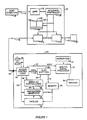
- a programmable hearing aid 20 is coupled to a host computer 25 by an interface unit 30.
- the system shown in Figure 1 is used to load new programs into the hearing aid 20. It can also be used to read the programs and other data stored inside the hearing aid 20.
- the hearing aid 20 also known as an auditory prosthesis, can store a number of distinct programs, or sets of parameter values, each designed for use in different audio environments. See U.S. Patent No. 4,425,481 (Mangold et al., 1984).
- hearing aid programs and “program data” are used herein to mean: specific settings of a predefined set of hearing aid parameters, selection of a signal processing configuration or strategy, selection of a particular algorithm or set of microprocessor instructions, modification of a hearing aid control program, and/or settings of coefficients in a auditory signal processing program.
- the hearing aid 20 stores a multiplicity of programs for controlling an analog signal processor 32, which amplifies and shapes input audio signals frcm microphone 34.
- a speaker 36 audibly transmits the resulting processing signals to the user.
- Programs or program data are stored in a memory buffer 38 which is also used to store datalogging information, as described in application serial no. 175,233, supra .
- each program is represented by sixty-eight bits of program data and 24 bits of datalogging data, and the memory 38 is used to store eight programs - for a total of 736 bits of program and datalogging data.
- the memory 38 which stores a total of 896 bits of data, is also used to store additional datalogging data not relevant to the present invention.
- the eight programs stored in memory 38 are linearly arranged in order of sensitivity.
- program selection buttons 42 and 44 the user can select new programs, with one button 42 being used to select programs with increasing sensitivity and the other button 44 being used to select programs with decreasing sensitivity.
- An access control circuit 48 and a serial I/O control circuit 50 together control several aspects of the hearing aid's operation, including the loading of newly selected programs into the signal processor 32, and communications via a serial input/output port 52.
- address generator 54 generates the address signals necessary for accessing the program data and datalogging data in the memory 38.
- the access control circuit 48 detects that the user has selected a new program, and sends a program selection signal on line 56 to the address generator 54. (This same signal is also used by the datalogging circuit 40 for datalogging purposes.)
- the access control circuit 48 also generates a muting signal XOFF on line 57 which causes the signal processor to stop its normal amplification functions. This prevents the hearing aid from generating loud and unpredictable sounds while new parameters are being loaded into the the signal processor 32. XOFF is disabled when the newly selected program is fully loaded into the signal processor 32. In other words, whenever a new program is selected, the hearing aid automatically stops amplifying audio input signals until the new program is fully loaded into the signal processor 32.
- the address generator 54 responds to the program selection signal on line 56 by loading the initial address for the selected program into its X and Y address buffers (not shown).
- the access control circuit 48 When a new program is selected, the access control circuit 48 also sends a program load signal on line 58 to the serial I/O control logic circuit 50.
- the serial I/O control logic circuit 50 controls the process of transmitting four sixteen-bit words from the memory 38 into a slave memory in the signal processor 32, four bits of program data to a tele-coil control circuit (not shown) and twenty-four bits of datalogging data to the datalog circuit 40.
- the serial logic circuit 50 For each of the sixteen-bit words to be transmitted through the shift register 62 to the signal processor 32, the serial logic circuit 50 generates a load signal on line 60 to load the currently addressed contents of the memory 38 in parallel into the sixteen-bit shift register 62, and then transmits a series of shift signals to shift the contents of the shift register 62 into the slave memory in the signal processor 32. In addition, after loading each sixteen-bit word into the shift register 62, the serial control circuit 50 sends a signal on line 64 to the address generator 54, causing the address generator to increment its internal address counter so as to point to the next word of the selected program.
- muting and “locking” are used in this description to mean inhibiting the signal processing (i.e., amplification and filtering) functions of the hearing aid 20.
- Terms such as “unlocking” and “to disable muting” mean the resumption of normal operation of the amplification and filtering functions of the hearing aid.
- FIG. 2 there is shown a more detailed diagram of the signal processor 32.
- the ccmponents outside the dashed boundaries of the signal processor 32 correspond to the items with like reference numerals in Figure 1.
- a telephone pickup 70 for assisting the user during telephone conversations.
- the signal processor 32 is a programmable processor whose function is controlled by the parameters stored in a sixty-four bit shift register slave memory 80. The process for loading the slave memory 80 with program data, using shift register 62, is described above. Eight of the parameters stored in the slave memory 80 are labelled TEL, MIC, FILTR, AGC LP, AGC HP, ATT LP, ATT HP, and OUTPUT AMP. For each of these parameters there is a corresponding circuit block shown in Figure 2, the function of which is controlled or modified in accordance with the current value of the corresponding parameter.
- the input signals from each of the input devices, microphone 34 and telephone pickup 70 are passed through preamplifiers 82 and 84 and digitally controlled attenuators ATT MIC 86 and ATT TEL 88.
- the resulting signals are then summed by summer 90.
- the output from summer 90 is passed through filter 92, which splits the signal into low and high pass signals LP and HP.
- the crossover frequency between the low- and high-pass channels can be varied digitally from 500 Hz to 4 KHz, in accordance with the value of the FILTR parameter stored in the slave memory 80.
- the low- and high-pass signals are processed in parallel by automatic-gain-controlled amplifiers 94 and 96 and then digitally controlled attenuators ATT HP 98 and ATT LP 100 before being summed together by summer SUM2 102.
- the thresholds of the automatic-gain-controlled amplifiers 94 and 96 are digitally controlled by threshold setting parameters AGC HP and AGC LP stored in the slave memory 80.
- An output amplifier 104 is provided for receiving the summed output of 102 and driving a speaker 36.
- an external output amplifier can be used to perform the driving function.
- a number of the components of the signal processor 32 are coupled to XOFF line 57. These components include the digitally controlled attenuators ATT MIC 86 and ATT TEL 88, summer 90, the automatic-gain-controlled amplifiers 94 and 96, and summer 102. All of these components are either disabled, or generate substantially attenuated and muted signals whenever the XOFF signal on line 57 is enabled. As a result, the signal processor's operation is substantially inhibited or muted when XOFF is enabled so as to protect the user's ears during program selection and the loading of new program data.
- the function of the access control logic circuit 48 is twofold: (1) to initiate the loading of selected programs when the user uses switches 42 and 44, and (2) to monitor the serial port 52 for "read” and "write” commands. This part of the discussion concerns how the hearing aid responds to read and write commands.
- a write command is a four bit signal having a value of "1100", followed by a two millisecond pause, followed by 896 bits of program data.
- the access control logic circuit 48 detects a write command bit sequence "1100" on the serial port 52, it prepares for receiving new program data by generating an XOFF signal on line 57 (to mute the hearing aid during the programming process), and by signaling the serial I/O control logic 64 and address generator circuit 54 to prepare for loading program data. More particularly, the address generator 54 resets its internal address counters to point at the beginning of the hearing aid's memory 38, and the serial I/O control logic 64 synchronizes its internal timer with the beginning of the program data.
- serial I/O control logic 64 shifts each bit of received data into the sixteen-bit shift register 62. Each set of sixteen bits of data is then loaded in parallel into the memory buffer 38. This process continues until all 896 bits (sixty four sets of sixteen-bit words) of program data have been received and loaded into the program memory 38.
- the hearing aid 20 remains muted at the end of the program loading process because it is possible that the program data may have been corrupted during the data transmission process.
- the memory interface unit 30 is programmed to read and verify the data stored in the hearing aid 20 immediately after new program data has been loaded into the hearing aid 20. Finally, after the interface unit has confirmed that the data read from the hearing aid matches the data it sent to the hearing aid, it sends an "Unlock" signal to the hearing aid.
- An unlock signal is a four bit signal having a value of "1101".
- a read command is a four bit signal having a value of "1110".
- the access control logic circuit 48 detects a read command on the serial port 52, it prepares for transmitting the entire ccntents of its memory buffer 38 by commanding the address generator 54 to reset its internal address counters to point at the beginning of the hearing aid's memory 38, and commanding the serial I/O control logic 64 to read and transmit all of the data in the memory 38.
- the entire programming process including the write, read and Unlock steps, takes almost exactly two seconds.
- the host computer 25 communicates with the hearing aid 20 through a memory interface unit 30.
- the interface unit 30 may be considered a slave-like extension of the host computer 25 in that its sole function is to perform tasks corresponding to commands sent to it by the host computer 25 via a serial communications line 110.
- the host computer is an IBM Model 50
- the memory interface unit 30 is one of the computer's peripheral devices.
- the serial interface line 110 is a single standard RS-232 serial line over which data is transmitted at a rate of 19200 baud.
- the memory interface unit 30 includes three communications circuits 112, 114 and 116 for communications over three data channels.
- Circuit 112 handles data transmissions with the host computer 25 over serial line 110.
- circuit 112 is a standard UART device.
- Circuits 114 and 116 handle data transmissions over two serial communication lines 118 and 120 to two hearing aids 20 and 20′.
- the hearing aid programs for each ear will often be different. It is therefore important that the program data for a person's left-side hearing aid not be loaded into the person's right-side hearing aid, and vice versa. For this reason the memory interface unit 30 has two distinct hearing aid communications ports or lines 118 and 120. In the preferred embodiments these ports are distinctly labelled "Left Ear” and "Right Ear” so that the user will have the correct program data loaded into each hearing aid to.
- Additional components of the memory interface unit 30 include a microprocessor (model Z80 made by Zilog) based controller 125 and a memory buffer 128.
- the memory buffer 128 is partitioned for convenience into three segments: segment 130 for storing program data received from the host computer, segment 132 for storing data received from a hearing aid 20, and segment 134 for storeing program parameters, data values, checksum values and other miscellaneous information needed by the controller 125.
- the memory interface unit 30 acts as a memory buffer for programs being loaded into a programmable hearing aid 20.
- the interface unit 30 also facilitates programming by automatically performing a program verification procedure that checks to see whether the program data stored in the hearing aid 20 is identical to the program data that was transmitted to the hearing aid.
- the interface unit 30 When the host computer 25 sends a command to the memory interface unit 30, the interface unit 30 performs the requested task and then repcrts back to the host, via the serial communications line 110, with a message, or data, or both, depending on the nature of the command.
- Communications between the memory interface and the hearing aids 20 and 20′ occur asynchronously at half duplex using pulse width modulation.
- Data flows at a rate of 1000 baud over communications lines 118 and 120, with each bit frame being 1 millisecond in duration.
- a bit frame starts with the communication line dropping from a high state to a low state, where the high state is a voltage potential of +1.3 volts and the low state is a voltage potential of - 1.3 volts.
- a data or bit value of "1" is encoded as a pulse with a width of 0.5 milliseccnd, while a bit value of "0" is encoded as a pulse with a width of just 0.25 millisecond.
- the software for the controller 125 is downloaded from the host computer 25 by a resident loader program in the interface unit 30.
- the software for the controller 125 can be stored in a read only memory.
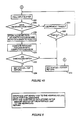
- Figures 3-10 are flow charts of the procedures used by the controller 125 in the memory interface unit 30 during the hearing aid programming process.
- the interface unit 30 can both program and interrogate the hearing aid 20 in response to corresponding commands from the host computer 25.
- the host computer 25 sends a command to the interface unit, it sends either a "hearing aid (HA) write” ccmmand or a "hearing aid (HA) read” command, along with a designation of either the left or right hearing aid port 118 or 120.
- the interface unit responds (box 150 in Figure 3) by selecting or enabling its Data I/O Card and selecting the left or right hearing aid port. The remainder of the interface unit's response to the host computer's command depends on whether the host sent a write or read command (box 152).
- Data I/O Card is a physically separate board in the memory interface unit 30 which has the contrcl circuitry for communicating with the hearing aid 20.
- the Data I/O Card corresponds to communication circuits 114 and 116 in Figure 1.
- the interface unit When the host sends a write command to the interface unit, the interface unit sets an internal counter called # _ATTEMPTS to a value of three, and calls a subroutine named READ_FROM_PC to receive a set of program data from the host.
- the READ_FROM_PC routine is described in more detail below with reference to Figures 4A-4B.
- the interface unit deselects its Data I/O Card, sends and error code "ERR602" to the host, and exits (box 158). Error code "ERR602" indicates a transmission problem between the host and the interface unit. When this happens the interface unit does not attempt to send the program data to the hearing aid 20.
- the interface unit After successfully receiving the program data from the host computer, the interface unit sends the received program data to the selected hearing aid, pauses briefly, reads the program data stored in the hearing aid, and then compares the program data received from the hearing aid with the program data sent (box 160). If the data received and the data sent match (box 162), an Unlock signal is sent to the hearing aid after a brief pause, the Data I/O Card is deselected, an "OK" message is sent to the host computer to indicate that the hearing aid was successfully programmed, and the routine exits (box 164).
- the #_ATTEMPTS variable is decremented (box 166). If less then three attempts have been made to program the hearing aid (i.e., if #_ATTEMPTS is greater than zero) (box 168), the hearing aid programming process is repeated beginning at box 160. After three unsuccessful attempts to program the hearing aid, the interface unit deselects the Data I/O Card, sends and error code "ERR601" to the host, and exits (box 170). Error code "ERR601" indicates a transmission problem between the interface unit 30 and the hearing aid 20.
- the interface unit When the host sends a read command (box 152), the interface unit reads the program data stored in the hearing aid (box 172). If all 896 bits of the hearing aid data are successfully received (box 174), an Unlock command is sent to the hearing aid (box 176). Then the hearing aid data is sent to the host computer, the Data I/O Card is deselected, and the routine exits (box 178).
- the interface unit If the hearing aid data is not successfully received (box 174), the interface unit overwrites the received data in its memory buffer 132 with "all ones" or "FF's" (box 180) and then sends this data to the host computer (indicating that it failed to read the hearing aid's memory), the Data I/O Card is deselected, and the routine exits (box 178).
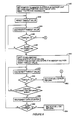
- Figures 4A-4B show the detailed procedure for receiving program data from the host computer.
- the interface indicates that it is ready to receive data from the host by sending a carriage return signal to the host, setting an internal counter for 112 bytes of data, and setting a timeout counter to a predefined delay value (box 190).
- the procedure for receiving the 112 bytes of program data is as follows.
- the interface unit polls its input buffer (box 192). If data has been not received from the host (box 194) the timeout counter is decremented (box 196) and the timeout counter is tested (box 198) to determine if communications with the host computer have failed. If timeout has not occurred the input buffer is polled once again (box 192). If timeout has occurred, however, the internal status of the interface unit is set to "ERROR" and the procedure aborts (see box 200 in Figure 4B).
- the host computer After 112 bytes of data have been sent by the host and received by the interface unit (box 204), the host computer sends a two byte checksum value corresponding to the program data that it just sent.
- a standard checksum formula is used to compute the checksums used in the preferred embodiment. As is well known to those skilled in the art, checksum values are often computed in a cumulative fashion as data is received, and the purpose of the checksum value is to detect data transmission errors.
- the interface unit polls its input buffer (box 210) and a timeout procedure (boxes 212, 214 and 216) is followed which is identical to the timeout procedure described above (boxes 194, 196 and 198).
- the procedure for receiving the most significant byte of the checksum (the checksum MSB) (boxes 220 - 228) is identical to the procedure for receiving the checksum LSB.
- checksum LSB and the checksum MSB After the checksum LSB and the checksum MSB have both been received from the host, these checksum values are compared with the checksum values ccmputed by the interface unit as it received the data from the host computer (box 230). If the checksum values match (box 232), the data from the host computer has been successfully received and interface sets its internal status to "OK” and exits from this procedure (box 234); otherwise, interface sets its status to "ERROR” (box 200) before exiting.
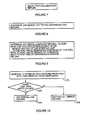
- the interface unit 30 sends data to the hearing aid 20 by sending a write command (i.e., a predefined four bit code, "1100"), waiting for two milliseconds, and then sending the 112 bytes of program data stored in its memory buffer 128 to the hearing aid.
- a write command i.e., a predefined four bit code, "1100”
- the program data is transmitted at a rate of 1000 bits per second, using pulse width modulation.
- the interface unit prepares for reading the 112 bytes of data stored in the hearing aid's memory 38 (shown in Figure 1) by setting a pointer to the portion 132 of its own memory 128 for storing data received from the hearing aid, setting a data counter for 112 bytes of data, and sending a read command to the hearing aid (box 240).
- a read command is a four bit signal having a binary value of "1110".
- the remainder of this subroutine is a loop (boxes 242 through 260) which is repeatedly executed, once for each bit of data received from the hearing aid. To receive 112 bytes of data, this loop is executed 896 times. The purpose of the instructions in the loop is to detect the falling edge, and then the rising edge of each pulse width encoded bit of data. As described above, each bit frame starts with the communication line 118 dropping from a high state to a low state. A data or bit value of "1" is encoded as a pulse with a width of 0.5 millisecond, while a bit value of "0" is encoded as a pulse with a width of just 0.25 millisecond.
- the first part of the data reading loop sets a timeout counter (e.g., to a value of 0.75 milliseconds) (box 242) and then waits for a low voltage level to be detected on the hearing aid communication line (boxes 244, 246 and 248).
- a low voltage level on the line marks the falling edge of a pulse, which is the beginning a new data bit. If a falling edge is not detected within the timeout period, there is a communications problem and the interface unit sets its internal status to "ERROR" (box 262) and exits back to the main routine (see Figure 3).
- the routine waits for 1/3 millisecond and then reads the state of the hearing aid ccmmunication line 118 to determine whether the data bit being read is a "1" or a "0" (box 250). If the line 118 is still low, the data bit being read is a "1" because the pulse width of data bits with a value of "1" is 0.5 millisecond. If the line 118 is high, the data bit being read is a "0" because "0" data bits have a pulse width of 0.25 millisecond.
- the state of the line is read as a "0" if the line is at a low voltage and is read as "1” if the line is at a high voltage. Therefore, to obtain the binary value of the data bit being read, the binary "value" of the data line 1/3 millisecond after the beginning of the pulse is inverted and stored in the interface unit's memory buffer.
- the routine looks for the end of the current data pulse by resetting the timeout counter (box 250) and waiting (boxes 252, 254 and 256) until the hearing aid communication line is found to be at a high voltage (i.e., +1.3 volts). If a high voltage is not detected within the timeout period, there is a communications problem and the interface unit sets its internal status to "ERROR" (box 262) and exits back to the main routine (see Figure 3).
- a high voltage i.e., +1.3 volts
- the PAUSE subroutine used by the main program is simply a four millisecond delay which enables the hearing aid to recover from a previously executed read or write command.
- the UNLOCK subroutine is used by the main program (see box 164) to "unlock the hearing aid” by sending an unlock command (a four bit signal having a value of "1101") to the hearing aid.
- the unlock command causes the hearing aid to turn off its XOFF signal so that the hearing aid can resume normal operation.
- the WRITE _TO_PC subroutine is used by the main program (see box 178) to send data read from a hearing aid 20 to the host computer 25.
- the interface 30 indicates that it is ready to send data to the host by sending a carriage return signal to the host. It then sends the 112 bytes of hearing aid data to the host computer (at 19200 baud using standard RS-232 communication protocols) while computing a checksum for this data. As noted above, the checksum is sent so that the host computer can determine whether the data sent by the interface unit has been corrupted by noise. Finally, the two bytes of the checksum are sent to the host before this subroutine exits back to the main routine.
- the COMPARE_DATA subroutine used by the main program compares the 112 bytes of data sent by the host computer with the 112 bytes of data received from the hearing aid after the hearing aid has been programmed with the data from the host computer (box 270). If the host data and hearing aid data match (box 272) the interface sets its internal status to "OK” (box 274) and exits back to the main routine (see Figure 3). Otherwise the interface sets its internal status to "ERROR"(box 276) before exiting back to the main routine.
Landscapes
- Engineering & Computer Science (AREA)
- Physics & Mathematics (AREA)
- General Health & Medical Sciences (AREA)
- Health & Medical Sciences (AREA)
- Neurosurgery (AREA)
- Otolaryngology (AREA)
- Computer Networks & Wireless Communication (AREA)
- Acoustics & Sound (AREA)
- Signal Processing (AREA)
- General Physics & Mathematics (AREA)
- Automation & Control Theory (AREA)
- Stored Programmes (AREA)
- Storage Device Security (AREA)
- Computer And Data Communications (AREA)
- Techniques For Improving Reliability Of Storages (AREA)
Applications Claiming Priority (2)
| Application Number | Priority Date | Filing Date | Title |
|---|---|---|---|
| US192259 | 1988-05-10 | ||
| US07/192,259 US4989251A (en) | 1988-05-10 | 1988-05-10 | Hearing aid programming interface and method |
Publications (3)
| Publication Number | Publication Date |
|---|---|
| EP0341903A2 true EP0341903A2 (de) | 1989-11-15 |
| EP0341903A3 EP0341903A3 (de) | 1991-05-08 |
| EP0341903B1 EP0341903B1 (de) | 1994-11-09 |
Family
ID=22708923
Family Applications (1)
| Application Number | Title | Priority Date | Filing Date |
|---|---|---|---|
| EP89304487A Expired - Lifetime EP0341903B1 (de) | 1988-05-10 | 1989-05-04 | Programmierungsschnittstelle und Verfahren für ein Hörgerät |
Country Status (6)
| Country | Link |
|---|---|
| US (1) | US4989251A (de) |
| EP (1) | EP0341903B1 (de) |
| JP (1) | JP2965995B2 (de) |
| AU (1) | AU610391B2 (de) |
| CA (1) | CA1331651C (de) |
| DE (1) | DE68919270T2 (de) |
Cited By (21)
| Publication number | Priority date | Publication date | Assignee | Title |
|---|---|---|---|---|
| EP0537026A3 (de) * | 1991-10-11 | 1994-01-05 | Unitron Ind Ltd | |
| WO1997017819A1 (en) * | 1995-11-07 | 1997-05-15 | Siemens Hearing Instruments, Inc. | System for programming programmable hearing aids and updating database of patient information |
| DE19625639A1 (de) * | 1996-06-26 | 1998-01-02 | Siemens Audiologische Technik | Programmierbare Schaltung zur Verwendung von Hörgeräten |
| FR2767247A1 (fr) * | 1997-08-11 | 1999-02-12 | Siemens Audiologische Technik | Procede ainsi qu'appareil numerique de correction auditive a reconnaissance et a elimination d'erreurs se produisant lors de la transmission et de la memorisation de donnees |
| US5909497A (en) * | 1996-10-10 | 1999-06-01 | Alexandrescu; Eugene | Programmable hearing aid instrument and programming method thereof |
| WO2000016589A1 (en) * | 1998-09-17 | 2000-03-23 | Sonic Innovations, Inc. | Two line variable word length serial interface |
| US6313773B1 (en) | 2000-01-26 | 2001-11-06 | Sonic Innovations, Inc. | Multiplierless interpolator for a delta-sigma digital to analog converter |
| EP1206163A1 (de) * | 2000-11-14 | 2002-05-15 | GN ReSound as | Hörhilfegerät mit fehlerbeschutzter Datenspeicherung |
| US6408318B1 (en) | 1999-04-05 | 2002-06-18 | Xiaoling Fang | Multiple stage decimation filter |
| US6556686B1 (en) | 1999-04-14 | 2003-04-29 | Siemens Audiologische Technik Gmbh | Programmable hearing aid device and method for operating a programmable hearing aid device |
| US6574342B1 (en) | 1998-03-17 | 2003-06-03 | Sonic Innovations, Inc. | Hearing aid fitting system |
| EP1320279A1 (de) * | 2002-06-10 | 2003-06-18 | Phonak Ag | Verfahren zum Handhaben von Daten eines Hörgerätes und Hörgerät |
| US6885752B1 (en) | 1994-07-08 | 2005-04-26 | Brigham Young University | Hearing aid device incorporating signal processing techniques |
| US6895345B2 (en) | 1998-01-09 | 2005-05-17 | Micro Ear Technology, Inc. | Portable hearing-related analysis system |
| US7054957B2 (en) | 1997-01-13 | 2006-05-30 | Micro Ear Technology, Inc. | System for programming hearing aids |
| US7715576B2 (en) | 2001-04-27 | 2010-05-11 | Dr. Ribic Gmbh | Method for controlling a hearing aid |
| US7787647B2 (en) | 1997-01-13 | 2010-08-31 | Micro Ear Technology, Inc. | Portable system for programming hearing aids |
| US8300862B2 (en) | 2006-09-18 | 2012-10-30 | Starkey Kaboratories, Inc | Wireless interface for programming hearing assistance devices |
| US8965016B1 (en) | 2013-08-02 | 2015-02-24 | Starkey Laboratories, Inc. | Automatic hearing aid adaptation over time via mobile application |
| US9344817B2 (en) | 2000-01-20 | 2016-05-17 | Starkey Laboratories, Inc. | Hearing aid systems |
| US10284978B2 (en) | 2005-10-18 | 2019-05-07 | Widex A/S | Equipment for programming a hearing aid and a hearing aid |
Families Citing this family (55)
| Publication number | Priority date | Publication date | Assignee | Title |
|---|---|---|---|---|
| DE3834962A1 (de) * | 1988-10-13 | 1990-04-19 | Siemens Ag | Digitales programmiergeraet fuer hoergeraete |
| DE3900588A1 (de) * | 1989-01-11 | 1990-07-19 | Toepholm & Westermann | Fernsteuerbares, programmierbares hoergeraetesystem |
| US5226086A (en) * | 1990-05-18 | 1993-07-06 | Minnesota Mining And Manufacturing Company | Method, apparatus, system and interface unit for programming a hearing aid |
| US5197332A (en) * | 1992-02-19 | 1993-03-30 | Calmed Technology, Inc. | Headset hearing tester and hearing aid programmer |
| DE4321788C1 (de) * | 1993-06-30 | 1994-08-18 | Siemens Audiologische Technik | Interface für serielle Datenübertragung zwischen einem Hörgerät und einem Steuergerät |
| US5608803A (en) * | 1993-08-05 | 1997-03-04 | The University Of New Mexico | Programmable digital hearing aid |
| EP0676909A1 (de) * | 1994-03-31 | 1995-10-11 | Siemens Audiologische Technik GmbH | Programmierbares Hörgerät |
| US5502769A (en) * | 1994-04-28 | 1996-03-26 | Starkey Laboratories, Inc. | Interface module for programmable hearing instrument |
| US5500902A (en) * | 1994-07-08 | 1996-03-19 | Stockham, Jr.; Thomas G. | Hearing aid device incorporating signal processing techniques |
| US8085959B2 (en) * | 1994-07-08 | 2011-12-27 | Brigham Young University | Hearing compensation system incorporating signal processing techniques |
| US5581747A (en) * | 1994-11-25 | 1996-12-03 | Starkey Labs., Inc. | Communication system for programmable devices employing a circuit shift register |
| US5862238A (en) * | 1995-09-11 | 1999-01-19 | Starkey Laboratories, Inc. | Hearing aid having input and output gain compression circuits |
| US5822442A (en) * | 1995-09-11 | 1998-10-13 | Starkey Labs, Inc. | Gain compression amplfier providing a linear compression function |
| DK0814634T3 (da) * | 1996-06-21 | 2003-02-03 | Siemens Audiologische Technik | Programmerbart høreapparatsystem og fremgangsmåde til fastsættelse af optimale parametersæt i et høreapparat |
| US6058197A (en) * | 1996-10-11 | 2000-05-02 | Etymotic Research | Multi-mode portable programming device for programmable auditory prostheses |
| US6424722B1 (en) * | 1997-01-13 | 2002-07-23 | Micro Ear Technology, Inc. | Portable system for programming hearing aids |
| US6236731B1 (en) | 1997-04-16 | 2001-05-22 | Dspfactory Ltd. | Filterbank structure and method for filtering and separating an information signal into different bands, particularly for audio signal in hearing aids |
| JPH1169499A (ja) * | 1997-07-18 | 1999-03-09 | Koninkl Philips Electron Nv | 補聴器、リモート制御装置及びシステム |
| JP3626328B2 (ja) * | 1997-07-24 | 2005-03-09 | 三菱電機株式会社 | 車両用制御装置 |
| JPH1136974A (ja) * | 1997-07-24 | 1999-02-09 | Mitsubishi Electric Corp | 車両用制御装置 |
| US6094492A (en) * | 1999-05-10 | 2000-07-25 | Boesen; Peter V. | Bone conduction voice transmission apparatus and system |
| DE59906049D1 (de) * | 1999-07-29 | 2003-07-24 | Phonak Ag Staefa | Anlage zur anpassung mindestens eines hörgerätes |
| US6379314B1 (en) | 2000-06-19 | 2002-04-30 | Health Performance, Inc. | Internet system for testing hearing |
| DE10038118A1 (de) * | 2000-08-04 | 2002-02-21 | Optikom Gmbh | Verfahren und Vorrichtung zum Einstellen von Hörgeräten |
| DE10046938A1 (de) * | 2000-09-21 | 2002-04-25 | Implex Ag Hearing Technology I | Mindestens teilimplantierbares Hörsystem mit direkter mechanischer Stimulation eines lymphatischen Raums des Innenohres |
| DK1251714T4 (en) * | 2001-04-12 | 2015-07-20 | Sound Design Technologies Ltd | Digital hearing aid system |
| US6633202B2 (en) | 2001-04-12 | 2003-10-14 | Gennum Corporation | Precision low jitter oscillator circuit |
| ATE318062T1 (de) * | 2001-04-18 | 2006-03-15 | Gennum Corp | Mehrkanal hörgerät mit übertragungsmöglichkeiten zwischen den kanälen |
| ATE380347T1 (de) * | 2001-04-18 | 2007-12-15 | Gennum Corp | Digitaler quasi-mittelwertdetektor |
| US20020191800A1 (en) * | 2001-04-19 | 2002-12-19 | Armstrong Stephen W. | In-situ transducer modeling in a digital hearing instrument |
| EP1284587B1 (de) * | 2001-08-15 | 2011-09-28 | Sound Design Technologies Ltd. | Rekonfigurierbare Hörhilfevorrichtung mit niedrigem Leistungsverbrauch |
| US20040171965A1 (en) * | 2001-10-02 | 2004-09-02 | Fischer-Zoth Gmbh | Portable handheld hearing screening device and method with internet access and link to hearing screening database |
| DE10152197B4 (de) * | 2001-10-23 | 2009-07-09 | Siemens Audiologische Technik Gmbh | Verfahren zum Programmieren eines Hörgerätes, Programmiergerät sowie Fernbedienung für das Hörgerät |
| US7499559B2 (en) * | 2002-12-18 | 2009-03-03 | Bernafon Ag | Hearing device and method for choosing a program in a multi program hearing device |
| JP4173139B2 (ja) * | 2003-03-19 | 2008-10-29 | ヴェーデクス・アクティーセルスカプ | プログラミング装置によって補聴器をプログラムする方法 |
| US7945065B2 (en) * | 2004-05-07 | 2011-05-17 | Phonak Ag | Method for deploying hearing instrument fitting software, and hearing instrument adapted therefor |
| CA2619028A1 (en) | 2005-08-23 | 2007-03-01 | Widex A/S | Hearing aid with increased acoustic bandwidth |
| US7496695B2 (en) * | 2005-09-29 | 2009-02-24 | P.A. Semi, Inc. | Unified DMA |
| US7933419B2 (en) * | 2005-10-05 | 2011-04-26 | Phonak Ag | In-situ-fitted hearing device |
| AU2006303651B2 (en) * | 2005-10-17 | 2010-04-01 | Widex A/S | Hearing aid having selectable programmes, and method for changing the programme in a hearing aid |
| WO2007057837A1 (en) * | 2005-11-18 | 2007-05-24 | Koninklijke Philips Electronics N.V. | Signal processing system, for example a sound signal processing system or a hearing aid device |
| US7747030B2 (en) * | 2006-02-17 | 2010-06-29 | Zounds Hearing, Inc. | Method for identifying a hearing aid |
| US7986790B2 (en) | 2006-03-14 | 2011-07-26 | Starkey Laboratories, Inc. | System for evaluating hearing assistance device settings using detected sound environment |
| JP4860748B2 (ja) | 2006-03-31 | 2012-01-25 | ヴェーデクス・アクティーセルスカプ | 補聴器のフィッティング方法,補聴器のフィッティング・システム,および補聴器 |
| US7966309B2 (en) | 2007-01-17 | 2011-06-21 | Google Inc. | Providing relevance-ordered categories of information |
| US8571244B2 (en) * | 2008-03-25 | 2013-10-29 | Starkey Laboratories, Inc. | Apparatus and method for dynamic detection and attenuation of periodic acoustic feedback |
| US9729976B2 (en) | 2009-12-22 | 2017-08-08 | Starkey Laboratories, Inc. | Acoustic feedback event monitoring system for hearing assistance devices |
| US8917891B2 (en) | 2010-04-13 | 2014-12-23 | Starkey Laboratories, Inc. | Methods and apparatus for allocating feedback cancellation resources for hearing assistance devices |
| US9654885B2 (en) | 2010-04-13 | 2017-05-16 | Starkey Laboratories, Inc. | Methods and apparatus for allocating feedback cancellation resources for hearing assistance devices |
| US8942398B2 (en) | 2010-04-13 | 2015-01-27 | Starkey Laboratories, Inc. | Methods and apparatus for early audio feedback cancellation for hearing assistance devices |
| KR101836219B1 (ko) * | 2013-07-26 | 2018-04-19 | 인텔 코포레이션 | 비휘발성 메모리 인터페이스 |
| EP3388980B1 (de) * | 2017-04-14 | 2020-06-10 | Nxp B.V. | Integrierte rfid-schaltung |
| CN110651485B (zh) * | 2017-05-31 | 2021-05-28 | 唯听助听器公司 | 操作助听器装配系统的方法和助听器装配系统 |
| US10681459B1 (en) | 2019-01-28 | 2020-06-09 | Sonova Ag | Hearing devices with activity scheduling for an artifact-free user experience |
| CN115361642B (zh) * | 2022-08-22 | 2025-02-07 | 杭州惠耳听力技术设备有限公司 | 基于机器学习的可编程助听器探测方法 |
Family Cites Families (9)
| Publication number | Priority date | Publication date | Assignee | Title |
|---|---|---|---|---|
| DE2716336B1 (de) * | 1977-04-13 | 1978-07-06 | Siemens Ag | Verfahren und Hoergeraet zur Kompensation von Gehoerdefekten |
| SE428167B (sv) * | 1981-04-16 | 1983-06-06 | Mangold Stephan | Programmerbar signalbehandlingsanordning, huvudsakligen avsedd for personer med nedsatt horsel |
| DE3205685A1 (de) * | 1982-02-17 | 1983-08-25 | Robert Bosch Gmbh, 7000 Stuttgart | Hoergeraet |
| JPS6028310A (ja) * | 1983-07-26 | 1985-02-13 | Nec Corp | 電子ボリユ−ム |
| US4622440A (en) * | 1984-04-11 | 1986-11-11 | In Tech Systems Corp. | Differential hearing aid with programmable frequency response |
| US4548082A (en) * | 1984-08-28 | 1985-10-22 | Central Institute For The Deaf | Hearing aids, signal supplying apparatus, systems for compensating hearing deficiencies, and methods |
| US4596902A (en) * | 1985-07-16 | 1986-06-24 | Samuel Gilman | Processor controlled ear responsive hearing aid and method |
| GB2184629B (en) * | 1985-12-10 | 1989-11-08 | Colin David Rickson | Compensation of hearing |
| US4731850A (en) * | 1986-06-26 | 1988-03-15 | Audimax, Inc. | Programmable digital hearing aid system |
-
1988
- 1988-05-10 US US07/192,259 patent/US4989251A/en not_active Expired - Lifetime
-
1989
- 1989-05-04 EP EP89304487A patent/EP0341903B1/de not_active Expired - Lifetime
- 1989-05-04 AU AU34057/89A patent/AU610391B2/en not_active Ceased
- 1989-05-04 DE DE68919270T patent/DE68919270T2/de not_active Expired - Lifetime
- 1989-05-09 CA CA000599069A patent/CA1331651C/en not_active Expired - Lifetime
- 1989-05-10 JP JP1117187A patent/JP2965995B2/ja not_active Expired - Lifetime
Cited By (29)
| Publication number | Priority date | Publication date | Assignee | Title |
|---|---|---|---|---|
| EP0537026A3 (de) * | 1991-10-11 | 1994-01-05 | Unitron Ind Ltd | |
| US6885752B1 (en) | 1994-07-08 | 2005-04-26 | Brigham Young University | Hearing aid device incorporating signal processing techniques |
| WO1997017819A1 (en) * | 1995-11-07 | 1997-05-15 | Siemens Hearing Instruments, Inc. | System for programming programmable hearing aids and updating database of patient information |
| DE19625639A1 (de) * | 1996-06-26 | 1998-01-02 | Siemens Audiologische Technik | Programmierbare Schaltung zur Verwendung von Hörgeräten |
| DE19625639C2 (de) * | 1996-06-26 | 2002-07-18 | Siemens Audiologische Technik | Hörgerät |
| US6130950A (en) * | 1996-06-26 | 2000-10-10 | Siemans Augiologische Technik Gmbh | Hearing aid which allows non-computerized individual adjustment of signal processing stages |
| US5909497A (en) * | 1996-10-10 | 1999-06-01 | Alexandrescu; Eugene | Programmable hearing aid instrument and programming method thereof |
| US7054957B2 (en) | 1997-01-13 | 2006-05-30 | Micro Ear Technology, Inc. | System for programming hearing aids |
| US7787647B2 (en) | 1997-01-13 | 2010-08-31 | Micro Ear Technology, Inc. | Portable system for programming hearing aids |
| US7929723B2 (en) | 1997-01-13 | 2011-04-19 | Micro Ear Technology, Inc. | Portable system for programming hearing aids |
| US6782110B1 (en) | 1997-08-11 | 2004-08-24 | Siemens Audiologische Technik Gmbh | Method and digital hearing device for detecting and/or removing errors arising in the transmission and storage of data |
| FR2767247A1 (fr) * | 1997-08-11 | 1999-02-12 | Siemens Audiologische Technik | Procede ainsi qu'appareil numerique de correction auditive a reconnaissance et a elimination d'erreurs se produisant lors de la transmission et de la memorisation de donnees |
| US6895345B2 (en) | 1998-01-09 | 2005-05-17 | Micro Ear Technology, Inc. | Portable hearing-related analysis system |
| US6574342B1 (en) | 1998-03-17 | 2003-06-03 | Sonic Innovations, Inc. | Hearing aid fitting system |
| US6240193B1 (en) | 1998-09-17 | 2001-05-29 | Sonic Innovations, Inc. | Two line variable word length serial interface |
| WO2000016589A1 (en) * | 1998-09-17 | 2000-03-23 | Sonic Innovations, Inc. | Two line variable word length serial interface |
| US6408318B1 (en) | 1999-04-05 | 2002-06-18 | Xiaoling Fang | Multiple stage decimation filter |
| US6556686B1 (en) | 1999-04-14 | 2003-04-29 | Siemens Audiologische Technik Gmbh | Programmable hearing aid device and method for operating a programmable hearing aid device |
| US9357317B2 (en) | 2000-01-20 | 2016-05-31 | Starkey Laboratories, Inc. | Hearing aid systems |
| US9344817B2 (en) | 2000-01-20 | 2016-05-17 | Starkey Laboratories, Inc. | Hearing aid systems |
| US6313773B1 (en) | 2000-01-26 | 2001-11-06 | Sonic Innovations, Inc. | Multiplierless interpolator for a delta-sigma digital to analog converter |
| EP1206163A1 (de) * | 2000-11-14 | 2002-05-15 | GN ReSound as | Hörhilfegerät mit fehlerbeschutzter Datenspeicherung |
| EP2273801A3 (de) * | 2000-11-14 | 2012-09-26 | GN Resound A/S | Hörhilfegerät mit Fehlerschutz bei der Datenspeicherung |
| US7715576B2 (en) | 2001-04-27 | 2010-05-11 | Dr. Ribic Gmbh | Method for controlling a hearing aid |
| US7251338B2 (en) | 2002-06-10 | 2007-07-31 | Phonak Ag | Method for handling data of a hearing device and hearing device |
| EP1320279A1 (de) * | 2002-06-10 | 2003-06-18 | Phonak Ag | Verfahren zum Handhaben von Daten eines Hörgerätes und Hörgerät |
| US10284978B2 (en) | 2005-10-18 | 2019-05-07 | Widex A/S | Equipment for programming a hearing aid and a hearing aid |
| US8300862B2 (en) | 2006-09-18 | 2012-10-30 | Starkey Kaboratories, Inc | Wireless interface for programming hearing assistance devices |
| US8965016B1 (en) | 2013-08-02 | 2015-02-24 | Starkey Laboratories, Inc. | Automatic hearing aid adaptation over time via mobile application |
Also Published As
| Publication number | Publication date |
|---|---|
| DE68919270T2 (de) | 1995-09-14 |
| EP0341903A3 (de) | 1991-05-08 |
| AU3405789A (en) | 1989-11-16 |
| US4989251A (en) | 1991-01-29 |
| JPH0257100A (ja) | 1990-02-26 |
| JP2965995B2 (ja) | 1999-10-18 |
| DE68919270D1 (de) | 1994-12-15 |
| CA1331651C (en) | 1994-08-23 |
| EP0341903B1 (de) | 1994-11-09 |
| AU610391B2 (en) | 1991-05-16 |
Similar Documents
| Publication | Publication Date | Title |
|---|---|---|
| EP0341903B1 (de) | Programmierungsschnittstelle und Verfahren für ein Hörgerät | |
| JP2664466B2 (ja) | 聴覚代行機器 | |
| EP1363473B1 (de) | Hörgerät mit zeitvariantem Verhalten | |
| US6240194B1 (en) | Hearing aid with external frequency control | |
| CN102522961B (zh) | 提供对音频音量参数的自动控制以保护听觉的便携式音频设备 | |
| US5808575A (en) | Gain varying device capable of varying each gain of analog and digital signals | |
| US5604812A (en) | Programmable hearing aid with automatic adaption to auditory conditions | |
| US5710820A (en) | Programmable hearing aid | |
| US7853028B2 (en) | Hearing aid and method for its adjustment | |
| CA2150220C (en) | Remotely controlled, especially remotely programmable hearing aid system | |
| US4972487A (en) | Auditory prosthesis with datalogging capability | |
| JPH1169499A (ja) | 補聴器、リモート制御装置及びシステム | |
| EP2273801B1 (de) | Hörhilfegerät mit Fehlerschutz bei der Datenspeicherung | |
| KR20080096988A (ko) | 청력도 기반의 음질보정 음향출력장치 | |
| US7283639B2 (en) | Hearing instrument with data transmission interference blocking | |
| EP3843424B1 (de) | Kopfhörerlautstärkekontrolle und kopfhörer | |
| EP0940007B1 (de) | Schnittstelle für kopfhörer | |
| JPH10313224A (ja) | 音響装置および音響装置における音量調整方法 | |
| KR20030054112A (ko) | 디스플레이장치의 사운드제어시스템 및 사운드제어방법 | |
| JPH06233374A (ja) | 音響システム機器 | |
| JPH0518117U (ja) | 電子機器の音量調節装置 | |
| HK1022571B (en) | Headset interface |
Legal Events
| Date | Code | Title | Description |
|---|---|---|---|
| PUAI | Public reference made under article 153(3) epc to a published international application that has entered the european phase |
Free format text: ORIGINAL CODE: 0009012 |
|
| AK | Designated contracting states |
Kind code of ref document: A2 Designated state(s): DE FR GB NL SE |
|
| PUAL | Search report despatched |
Free format text: ORIGINAL CODE: 0009013 |
|
| AK | Designated contracting states |
Kind code of ref document: A3 Designated state(s): DE FR GB NL SE |
|
| 17P | Request for examination filed |
Effective date: 19910919 |
|
| 17Q | First examination report despatched |
Effective date: 19930419 |
|
| GRAA | (expected) grant |
Free format text: ORIGINAL CODE: 0009210 |
|
| AK | Designated contracting states |
Kind code of ref document: B1 Designated state(s): DE FR GB NL SE |
|
| REF | Corresponds to: |
Ref document number: 68919270 Country of ref document: DE Date of ref document: 19941215 |
|
| ET | Fr: translation filed | ||
| EAL | Se: european patent in force in sweden |
Ref document number: 89304487.5 |
|
| REG | Reference to a national code |
Ref country code: FR Ref legal event code: CD |
|
| NLT1 | Nl: modifications of names registered in virtue of documents presented to the patent office pursuant to art. 16 a, paragraph 1 |
Owner name: 3M HEARING HEALTH AKTIEBOLAG TE GOTENBURG, ZWEDEN. |
|
| PLBI | Opposition filed |
Free format text: ORIGINAL CODE: 0009260 |
|
| 26 | Opposition filed |
Opponent name: TOPHOLM & WESTERMANN APS Effective date: 19950725 |
|
| NLR1 | Nl: opposition has been filed with the epo |
Opponent name: TOPHOLM & WESTERMANN APS |
|
| RAP2 | Party data changed (patent owner data changed or rights of a patent transferred) |
Owner name: 3M HEARING HEALTH AKTIEBOLAG |
|
| PLBF | Reply of patent proprietor to notice(s) of opposition |
Free format text: ORIGINAL CODE: EPIDOS OBSO |
|
| NLT2 | Nl: modifications (of names), taken from the european patent patent bulletin |
Owner name: 3M HEARING HEALTH AKTIEBOLAG |
|
| PLBF | Reply of patent proprietor to notice(s) of opposition |
Free format text: ORIGINAL CODE: EPIDOS OBSO |
|
| PLBL | Opposition procedure terminated |
Free format text: ORIGINAL CODE: EPIDOS OPPC |
|
| PLBM | Termination of opposition procedure: date of legal effect published |
Free format text: ORIGINAL CODE: 0009276 |
|
| STAA | Information on the status of an ep patent application or granted ep patent |
Free format text: STATUS: OPPOSITION PROCEDURE CLOSED |
|
| 27C | Opposition proceedings terminated |
Effective date: 19961124 |
|
| PGFP | Annual fee paid to national office [announced via postgrant information from national office to epo] |
Ref country code: SE Payment date: 19970520 Year of fee payment: 9 |
|
| NLR2 | Nl: decision of opposition | ||
| NLS | Nl: assignments of ep-patents |
Owner name: K/S HIMPP;RESOUND CORPORATION |
|
| REG | Reference to a national code |
Ref country code: FR Ref legal event code: TP |
|
| PG25 | Lapsed in a contracting state [announced via postgrant information from national office to epo] |
Ref country code: SE Free format text: LAPSE BECAUSE OF NON-PAYMENT OF DUE FEES Effective date: 19980505 |
|
| REG | Reference to a national code |
Ref country code: GB Ref legal event code: 732E |
|
| EUG | Se: european patent has lapsed |
Ref document number: 89304487.5 |
|
| REG | Reference to a national code |
Ref country code: FR Ref legal event code: CL |
|
| REG | Reference to a national code |
Ref country code: GB Ref legal event code: IF02 |
|
| PGFP | Annual fee paid to national office [announced via postgrant information from national office to epo] |
Ref country code: DE Payment date: 20080630 Year of fee payment: 20 Ref country code: NL Payment date: 20080524 Year of fee payment: 20 |
|
| PGFP | Annual fee paid to national office [announced via postgrant information from national office to epo] |
Ref country code: GB Payment date: 20080529 Year of fee payment: 20 |
|
| REG | Reference to a national code |
Ref country code: GB Ref legal event code: PE20 Expiry date: 20090503 |
|
| NLV7 | Nl: ceased due to reaching the maximum lifetime of a patent |
Effective date: 20090504 |
|
| PG25 | Lapsed in a contracting state [announced via postgrant information from national office to epo] |
Ref country code: NL Free format text: LAPSE BECAUSE OF EXPIRATION OF PROTECTION Effective date: 20090504 |
|
| PG25 | Lapsed in a contracting state [announced via postgrant information from national office to epo] |
Ref country code: GB Free format text: LAPSE BECAUSE OF EXPIRATION OF PROTECTION Effective date: 20090503 |
|
| PGFP | Annual fee paid to national office [announced via postgrant information from national office to epo] |
Ref country code: FR Payment date: 20080519 Year of fee payment: 20 |