EP0268615B2 - System für einen tragbaren datenträger - Google Patents
System für einen tragbaren datenträger Download PDFInfo
- Publication number
- EP0268615B2 EP0268615B2 EP87903155A EP87903155A EP0268615B2 EP 0268615 B2 EP0268615 B2 EP 0268615B2 EP 87903155 A EP87903155 A EP 87903155A EP 87903155 A EP87903155 A EP 87903155A EP 0268615 B2 EP0268615 B2 EP 0268615B2
- Authority
- EP
- European Patent Office
- Prior art keywords
- data carrier
- file
- portable data
- data
- card
- Prior art date
- Legal status (The legal status is an assumption and is not a legal conclusion. Google has not performed a legal analysis and makes no representation as to the accuracy of the status listed.)
- Expired - Lifetime
Links
Images





Classifications
-
- G—PHYSICS
- G07—CHECKING-DEVICES
- G07F—COIN-FREED OR LIKE APPARATUS
- G07F7/00—Mechanisms actuated by objects other than coins to free or to actuate vending, hiring, coin or paper currency dispensing or refunding apparatus
- G07F7/08—Mechanisms actuated by objects other than coins to free or to actuate vending, hiring, coin or paper currency dispensing or refunding apparatus by coded identity card or credit card or other personal identification means
- G07F7/10—Mechanisms actuated by objects other than coins to free or to actuate vending, hiring, coin or paper currency dispensing or refunding apparatus by coded identity card or credit card or other personal identification means together with a coded signal, e.g. in the form of personal identification information, like personal identification number [PIN] or biometric data
- G07F7/1008—Active credit-cards provided with means to personalise their use, e.g. with PIN-introduction/comparison system
-
- G—PHYSICS
- G06—COMPUTING OR CALCULATING; COUNTING
- G06Q—INFORMATION AND COMMUNICATION TECHNOLOGY [ICT] SPECIALLY ADAPTED FOR ADMINISTRATIVE, COMMERCIAL, FINANCIAL, MANAGERIAL OR SUPERVISORY PURPOSES; SYSTEMS OR METHODS SPECIALLY ADAPTED FOR ADMINISTRATIVE, COMMERCIAL, FINANCIAL, MANAGERIAL OR SUPERVISORY PURPOSES, NOT OTHERWISE PROVIDED FOR
- G06Q20/00—Payment architectures, schemes or protocols
- G06Q20/30—Payment architectures, schemes or protocols characterised by the use of specific devices or networks
- G06Q20/34—Payment architectures, schemes or protocols characterised by the use of specific devices or networks using cards, e.g. integrated circuit [IC] cards or magnetic cards
- G06Q20/341—Active cards, i.e. cards including their own processing means, e.g. including an IC or chip
-
- G—PHYSICS
- G06—COMPUTING OR CALCULATING; COUNTING
- G06Q—INFORMATION AND COMMUNICATION TECHNOLOGY [ICT] SPECIALLY ADAPTED FOR ADMINISTRATIVE, COMMERCIAL, FINANCIAL, MANAGERIAL OR SUPERVISORY PURPOSES; SYSTEMS OR METHODS SPECIALLY ADAPTED FOR ADMINISTRATIVE, COMMERCIAL, FINANCIAL, MANAGERIAL OR SUPERVISORY PURPOSES, NOT OTHERWISE PROVIDED FOR
- G06Q20/00—Payment architectures, schemes or protocols
- G06Q20/30—Payment architectures, schemes or protocols characterised by the use of specific devices or networks
- G06Q20/34—Payment architectures, schemes or protocols characterised by the use of specific devices or networks using cards, e.g. integrated circuit [IC] cards or magnetic cards
- G06Q20/355—Personalisation of cards for use
- G06Q20/3555—Personalisation of two or more cards
-
- G—PHYSICS
- G06—COMPUTING OR CALCULATING; COUNTING
- G06Q—INFORMATION AND COMMUNICATION TECHNOLOGY [ICT] SPECIALLY ADAPTED FOR ADMINISTRATIVE, COMMERCIAL, FINANCIAL, MANAGERIAL OR SUPERVISORY PURPOSES; SYSTEMS OR METHODS SPECIALLY ADAPTED FOR ADMINISTRATIVE, COMMERCIAL, FINANCIAL, MANAGERIAL OR SUPERVISORY PURPOSES, NOT OTHERWISE PROVIDED FOR
- G06Q20/00—Payment architectures, schemes or protocols
- G06Q20/30—Payment architectures, schemes or protocols characterised by the use of specific devices or networks
- G06Q20/34—Payment architectures, schemes or protocols characterised by the use of specific devices or networks using cards, e.g. integrated circuit [IC] cards or magnetic cards
- G06Q20/357—Cards having a plurality of specified features
- G06Q20/3576—Multiple memory zones on card
- G06Q20/35765—Access rights to memory zones
Definitions
- This invention relates to a system for operation of portable data carriers such as smart cards, and more particular to a system for the transfer and exchange of data between a carrier and an associated station.
- the use of credit cards for purchases and for banking and other transactions has become so popular that most travelers today do so with very little cash.
- the card typically made of plastic embossed with an account number and the name of the account owner, semes solely to identify an authorized account at a bank or credit house to be charged for a transaction.
- a magnetic stripe on the back of some cards contains the same information, but is machine-readable to speed the transaction. All accounting information is stored at the bank or credit house.
- the card could carry the account numbers of all of the owner's charge accounts, the balances of all of the accounts, the credit limits of all of the accounts and be updated with each transaction.
- the card could also carry other such personal data as, for example, the sizes of family members for clothing purchases, personal telephone directories, etc. The types of personal data are limited only by one's imagination.
- W0-A-8707060 which forms part of the state of the art by virtue of Article 54(3)EPC, discloses an IC card system that includes a programmed micro-processor and a nonvolatile read/write memory (EPROM) embedded in an information card which is employed in the system.
- EPROM nonvolatile read/write memory
- the data storage portion of the memory in the card is segmentable into one or more data zones, each requiring either no access code or one or more access codes to be entered in the card in order to access (read and/or write) that zone. Segmentation of the card memory and the assignment of required access codes is achieved by writing a zone definition table and one or more access codes into the card memory using a special access code that is fixed in the microprocessor program.
- the access codes for the data zones are thus stored on the information card and the programmed microprocessor in the card compares incoming codes to the stored codes to determine whether access to a particular data zone is permissible.
- the access codes for the data zones of the card memory are stored in a second card designated as a control card. This control card and the information card are interfaced in a two card reader/writer. In this manner, the required access codes are transferred from the control card to the information card when access of a data zone therein is required, and the access codes stored in the control card need not become known to any individual.
- Such a high security portable data carrier system may be used in a variety of applications, from custom repertory dialing to storage of individual medical and/or banking records.
- a portable data carrier or smart card which looks and feels much like an ordinary credit card.
- the card includes a computer, an electrically erasable programmable read-only memory (EEPROM), and also circuitry for receiving a combined power and timing signal from a card reader/writer colocated with an associated station.
- EEPROM electrically erasable programmable read-only memory
- circuitry for receiving a combined power and timing signal from a card reader/writer colocated with an associated station.
- These card components and circuitry also receive and transmit data signals between the card and, via the reader/writer, the associated station.
- the card runs an executive operating system that is accessed from the station via a set of commonly understood command primitives. These command primitives manipulate the card file system in accord with rules required by card security. Use of the executive operating system prevents an intruder from gaining access to the data base in the card. In addition, encryption of data as it is provided to the card is also available for those particular sensitive applications.
- a customer's personal information resides in multiple files in the EEPROM on the card.
- Appropriate application software residing in the station when accompanied by an appropriate password, enables the retrieval and modification of these files.
- Security for the card is provided by requiring a separate password for gaining access to each of designated levels of interaction between the card and the associated station. The number of consecutive unsuccessful login attempts is limited to a specified number for each security level. When this number is exceeded the card can be configured either to lock at that security level, or to erase the database of the entire card. If the card is configured to lock, any level above the locked level is able to unlock it. This permits a dispersal of card maintenance to the lowest level possible above the locked level. And security is further enhanced since the card also requires a user to provide an optional password before access to certain designated files is permitted.
- each one of the multiple files may have its own file security on the card, multiple applications or separate accounts may exist in these files without conflict or confusion.
- the maximum number of files permitted on the card is limited only by the memory available on the card.
- a user logged on at a particular security level is allowed to change the password at that level or any level below it.
- a password is lost or forgotten, it can be re-written by logging into the card at a higher security level and accessing a password command. In this way the lost password need not be recovered.
- a high level software library is provided to support all interactions between the station and the reader/writer or card. As a result, an application programmer does not need to be familiar with the tedious details of the card internals or communication protocol. His code interfaces directly with the library and the library interfaces with the card.
- the library is divided into four sections: a card library section which provides for direct mapping of card commands, a card reader/writer library section which provides for direct mapping of reader/writer commands, a compound library section which contains card and/or reader/writer commands, and finally a control section which contains common control functions located on the station. These functions include details of initialization, termination and control of ports and logical devices.
- This library thus functions as a software interface and provides a way to access devices and files that closely resembles typical computer protocols and eases the burden on the application programmer.
- a portable data carrier (PDC) system which for ease of understanding may be divided into three subsystems.
- the first of these is a portable data carrier or card 10 which contains a memory capable of storing and updating information for a user.
- the second subsystem is a card reader/writer 15 which links the card with a station 18, the third subsystem.
- This last subsystem is a suitably configured application station which comprises a computer or dedicated workstation that runs application software necessary for accessing the memory in the card.
- the application software resides in the station and enables the retrieval and modification of information stored in the memory of the card 10.
- the card 10 runs an executive operating system that is accessed via a set of operating system command primitives. These command primitives manipulate a file system on the card in accordance with rules required by card security.
- a microcomputer 110 an electrical erasable programmable read-only memory (EEPROM) 115, an analog interface circuit 130, the secondary winding 121 of a transformer 120, and capacitive plates 125 through 128.
- EEPROM electrical erasable programmable read-only memory
- the microcomputer 110 includes a central processing unit and memory units in the form of random-access memory and read-only memory. Operating under firmware control provided by its internal read-only memory, the microcomputer 110 formats data that is transferred directly to the EEPROM 115 and via the reader/writer 15 to the station 18. The entire EEPROM or a portion of it may be an integral part of the microcomputer, or it may be a separate element. The microcomputer 110 also interprets the command primitives from the station 18 received through the reader/writer 15.
- EEPROM 115 By employing EEPROM 115 in the card 10, an authorized user has the ability to reprogram certain application files in the memory section of the card while at an authorized associated application station with new and different data as desired. Data may be written to and read or erased from an EEPROM repeatedly while operating power is being applied. When operating power is removed, any changes made to the data in the EEPROM remain and are retrievable whenever the card 10 is again powered.
- the analog interface circuit 130 provides a means for interfacing the memory card 10 to the reader/writer 15.
- This interface performs a multitude of functions including providing operating power from magnetic energy coupled from the reader/writer 15 to the card 10, and also coupling data between the reader/writer 15 and the microcomputer 110 in the card 10.
- Power for operating the card 10 is provided to the analog interface circuit 130 via an inductive interface provided by the secondary winding 121 of a transformer 120. This transformer is formed when this secondary winding in the card 10 is mated to a primary winding 122 in the reader/writer 15.
- the station 18 provides the source of power for operation of both the reader/writer 15 and the card 10.
- the transformer 120 may advantageously include a ferrite core 123 in the reader/writer for increased coupling between the transformer primary winding 122 and secondary winding 121.
- a second such core 124 may also be included in the transformer 120 and associated with the secondary winding 121 in the card for a further increase in coupling efficiency. In those arrangements where ample power is available and efficiency is not a consideration, one or both of these cores may be omitted.
- a capacitive interface connected to the analog interface 130.
- This capacitive interface comprises four capacitors formed when electrodes or plates 125 through 128 on the card 10 are mated with corresponding electrodes or plates 155 through 158 in the reader/writer 15. Two of these capacitors are used to transfer data to the card 10 from the reader/writer 15 and the remaining two are used to transfer data to the reader/writer 15 from the card 10.
- the combination of the inductive interface and the capacitive interface provides the complete communication interface between the reader/writer 15 and the memory card 10.
- the reader/writer 15 functionally mirror those in the card 10. Such components are, for example, an analog interface circuit 140 and a microcomputer 150.
- the reader/writer 15 also includes a power supply 162 and an input/output interface 160.
- the power supply 162 is used to provide power and also to couple a clock signal from the reader/writer 15 to the card 10 through the transformer 120.
- the input/output interface 160 is principally a universal asynchronous receiver transmitter (UART) and may be advantageously included in the microcomputer 150. This UART communicates with the application station 18, which could be an office editing station, factory editing station, issuer editing station, public telephone station or other suitably configured station.
- UART universal asynchronous receiver transmitter
- the security concerns for the PDC system is divided into two broad areas.
- the first area is directed to aspects of identification and authentication, to insure that the station is both (1) communicating with an authentic card and (2) communicating with an authentic application file on the card.
- the second area is directed to controlling access to files on the card and limiting the exercise of card commands by an application at the station, an application being an account, or the like, which accesses specific data in a file on the card.
- a method of insuring that the station is communicating with an authentic file on an authentic card is achieved by assigning each card a unique serial number and using this number, or subset thereof, along with a concealed application password residing in the station. These numbers are manipulated algorithmically to produce an authentication code which is stored in the application file on the card at the time of creation. During subsequent transactions, this code must be favorably compared to a similar code generated independently by the station.
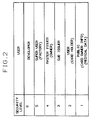
- the card In order to provide security protection for the card file system and the card commands, and yet allow for flexibility in handling different types of applications, the card employs six different security levels. These security levels enable the card to protect two types of resources: the card file system and the card commands. Access to any of these resources is a function of the authorized login level, the command requested, the file to be accessed, and such additional restrictions as are imposed by the owner of the card.
- the first four lower levels are placed in a Normal Security Class category and are available for use in a public environment.
- the first and lowest level in the hierarchical security level is a PUBLIC login level for general information and does not require a password for access.
- Medical information and insurance identification numbers or library card information are examples of public data that a person might want to include at this level.
- the card is initialized on power-up or reset at a station, it comes up at the PUBLIC login level.
- the second level is the USER level and requires a user's password for access. A user may have certain credit and debit accounts at this level.
- the third level is the SUB ISSUER level which also requires a password for access and is generally the level used in an application licensed by the MASTER ISSUER or the owner of the card.
- the fourth level of security is that retained by the MASTER ISSUER. It is at this level that the card is formatted and from which it is issued.
- An example of how these levels may be utilized is as follows: a bank issues cards containing credit or debit accounts. This bank also licenses the use of its card to retail vendors who establish their own credit or debit accounts on the card. The bank in this example is the MASTER ISSUER and the vendors are SUB ISSUERS. The card holder, of course, is the USER. Each account in this example is handled by a separate file on the card and only persons or programs with the proper credentials for a particular file may access that file at an appropriate application station.
- the two top security levels, DEVELOPER and SUPER USER are placed in an Extended Security Class category which permits the use of commands that are not available to the levels in the Normal Security Class category.
- the fifth level or SUPER USER level is the factory which is responsible for construction, testing, and initializing blank cards in such a way that security is facilitated and misappropriated blank cards may not be used.
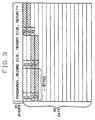
- FIG. 3 there is shown the card file system which is segmented into two regions, the header which is the administration portion and the data segment that contains the application files.
- the high security header 35 contains information such as the card serial number, the passwords for each login level, the number of unsuccessful password attempts for each level, a lock byte for indicating login levels are locked, size of the fixed records in the database and memory size in kilobytes of the EEPROM 115. Direct access to the header section is available only to the two top security levels.
- the data segment 30 of the card is divided into fixed records whose lengths of n bytes are set by the MASTER ISSUER. Each utilized record 31, 32, 33 is assigned to a particular file. Identification of the appropriate file is through the first byte of each record which is assigned that file identification number.
- the card has no file Directory and there are no pointers between the different records of the same file.
- File data order is indicated not by contiguous records but by linear order.
- the operating system of the card scans the address in the EEPROM from the lowest to the highest address.
- the first record located with a particular file identification number is the first record in that file, and the last record located with that file identification number is the last record in that file.
- the card operating system reads the records of a file as each record in the particular file is encountered.
- the maximum size and number of files permitted on the card is limited only by the size of the memory in the EEPROM.
- Station application software reading a file sees only a contiguous stream of bytes which is independent of the card internal file structure.
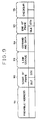
- a prefix section 41 which is located in the first record of each file contains the file identification number 42 and protection bytes 43, 44 and 45.
- the file identification number is a number between between 1 and hex FE, inclusive. Hex number 0 and hex number FF are reserved for respectively indicating an unused record and the end of available memory in the EEPROM.
- the protection bytes 43 through 45 specify the file permissions.
- the first byte 43 represents read permission designating the minimal level at which the file may be read, and the second byte 44 represents read/write permission designating the minimal level at which the file may be both read and written into.
- read permission for a file is separable from read/write permission for a file.
- Different security levels may also be specified for the read versus the read/write access.
- the read permission for a file may be at PUBLIC level allowing public access to public information, but the write permission could be specified at USER level which prohibits writing to the file without the user's consent.
- each file on the card may include in its protection bytes a requirement that an optional password be provided before allowing access to a particular file. This is in addition to the requirement that a user has to be at the required security level of the card operating system for gaining access to a file protected to that level.
- a file with read/write permissions for a user which includes an optional write password requires (1) logging into the card at user level and (2) opening the file in order to read it.
- the user To write to this file, however, the user must (1) log into the card at user level and (2) open the file for 'write' by providing the optional password. This does not apply to a person logging in at a higher level than the access permissions of a file require. A person logging in at such a level may gain access to that file even though an optional password is required at the designated security level.
- the hierarchical structure of the Normal Security Class levels is such that the MASTER ISSUER is able to read and write to any file at and beneath its level; the SUB ISSUER is able to read and write to any file at and beneath its level. Similarly, the card holder is able to read and write to any file at its level or the public level.
- the protection byte 45 in FIG. 4 may be set to implement an 'append-only' mode which permits the user to only add data to a file but not overwrite existing data. Records reflecting the appropriate application file are created for accepting this data as it is entered. Thus a file may be designated for read/append permission as well as read/write permission.
- An information section 46 of a file contains the actual data located in each record of that file.
- a suffix section 47 with a number M in the last byte 48 of the last record N indicates the number of application data bytes in that last record.
- the executive operating system on the card is accessed by the Normal Security Class levels through use of the commonly understood command primitives shown in FIG. 6. These command primitives control the security access for the card, file creation and access and also administrative and testing activities. Additional command primitives are available for the SUPER USER or DEVELOPER login levels.
- Operation of these command primitives may be illustrated through a description of the operation of the 'login' command.
- the user In order to log into the card, the user is required to specify a login level and a password. This password is checked internally by the card algorithmically against the appropriate password at the same login level in the card header. If a card user is attempting to gain access to a file with a login level lower than that required by the file, permission to open the file either for read or for read/write is denied.
- the passwords for each security level are placed in the card header when the card is manufactured.
- the password command allows the user at a logged on security level to change the password of its level or any level below it. Thus, if a password is lost or forgotten, it can be re-written by logging into the card at a higher security level and using the password command. In this way the lost password need not be recovered.
- the number of consecutive unsuccessful 'login' attempts per security level is limited to a specified number. When this number is exceeded the card can be configured either to lock at that security level, or to erase the database of the entire card. If the card is configured to lock, any level above the locked level is able to unlock it. This permits a dispersal of card maintenance to the lowest level possible above the locked level.
- the number of failures is recorded in the header portion of the EEPROM, in an appropriate "password failure counter".
- Files may be individually protected in the same manner as the card by setting a bit for erasing that file in the file protection bytes, if desired. Thus a person attempting to open a file which requires an optional password will only have a certain number of attempts before locking of the card or erasure of the data in that file occurs.
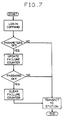
- FIG. 7 there is shown a flow diagram of that part of the operating system on the card which aids in preventing unauthorized logins into the card.
- the password failure counter is first updated to reflect a password failure.
- the given password is checked against the password in the card header. If the proper password is given, the password counter is cleared. This feature prevents sophisticated brute force attacks on the password by equipment which could remove power from the card after unsuccessful login attempts but before the failure counter could be updated to reflect the failure.
- the library is divided into four sections: a card library section which provides for direct mapping of card commands such as those shown in FIG. 6, a reader/writer library section which provides for direct mapping of reader/writer commands, a compound library section which contains card and/or reader/writer commands, and finally a control section which contains common control functions located on the station. These functions include details of initialization, termination and control of ports and logical devices.
- This library thus functions as a software interface and provides a way to access devices and files that closely resembles typical computer protocols and eases the burden on the application programmer.
- Allocation of records, deallocation of records and garbage collection are provided for in the operating system of the card.
- the card When information is deleted from a file, the card returns any released records to the available pool of records and arranges in linear order the utilized records by performing a garbage collection. Through this garbage collection, all unused records on the card are collected at the end of the card memory. Allocation of additional records, as required, is automatically performed when a write goes beyond the last record of a file. By always maintaining the available records at the end of the card, new records for a file are always allocated past the previous end of the file thereby maintaining the linear order of the records of each file.
- Information as to the allocation and deallocation of records is not available to the application at the station. Security is enhanced since the application merely sees contiguous data without any implementation details. Nor is direct access to the application files in raw format permitted to users having access to those commands found in the Normal Security Class level. Access to the entire card is permitted only to the users having access to the commands found in the Extended Security Class level to insure tight security during card production and testing.
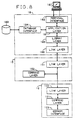
- FIG. 8 there is shown the software hierarchy arranged for operation in the communications protocol of the PDC system.
- An application layer 181 within the station 18 interfaces with the card 10 and also with the user at a terminal 187 through a terminal interface 182 or to an optional database through a database interface 184.
- the application layer 180 interfaces with the library layer 185 discussed herein above. This in turn interfaces with the link layer 186 which handles the actual transactions with the reader/writer 15 and the card 10.
- the station 18 is connected through a serial port to the reader/writer 15, it communicates directly with the card 10 as well as with the reader/writer 15. Every message which is intended for the card 10 is therefore transparently forwarded through the reader/writer 15 to the card 10. The destination address is found in the preamble section of the message.
- a message format suitable for use in the present invention is shown in FIG. 9 and described in greater detail later herein.
- the reader/writer 15 and the card 10 both implement the same half-duplex communication protocol with the station at the data link layer 186.
- the card 10 is fully passive and not able to initiate any transaction with the station 18.
- the reader/writer 15 differs, in one aspect, in that it is able to signal 'attention' to the station via a carrier detect lead in the serial port connecting the two.
- the station 18 responds to the 'attention' signal after completing any present transaction in which it is then involved.
- the station next interrogates the reader/writer 15 to determine the reason for the 'attention' signal.
- An example of when the reader/writer 15 would provide such an attention signal is when the card 10 is inserted in an accommodating slot (not shown) on the reader/writer 15 and in position for communicating with the station 18.
- a second example would be when the card 10 is removed from slot in the reader/writer 15.
- the reader/writer has two layers, a link layer 151 and a command layer 152.
- the link layer 151 acts as the transparent medium between the station 18 and card 10 passing commands or responses therebetween.
- the link layer 151 in the reader/writer 15 also provides buffering and baud rate conversion, as necessary.
- the transmission rate between the card 10 and the reader/writer 15 is maintained at 19200 baud. If the baud rate between the station 18 and the reader/writer 15 is slower than the baud rate between the reader/writer 15 and the card 10, the reader/writer 15 provides the baud rate conversion and buffers the message such that it is sent to the card as a block of contiguous data.
- the second layer in the reader/writer is the command layer. This layer is in the reader/writer for responding to those commands specifically addressed to the reader/writer from the station 18.
- Data in the protocol is sent over the communication link in a serial manner, character by character.
- a character is framed with one start bit and one stop bit. Messages of contiguous blocks of characters are initiated at any time within the constraints of the half-duplex protocol.
- the station 18 and the reader/writer 15 or the card 10 exchange information in a predefined message packet.
- a packet contains control information as to where the data begins and ends in the packet and also contains information for checking the message data integrity.
- the message format consists of a preamble 91 for addressing the reader/writer 15 or card 10 and a start-of-frame control sequence 92 for marking the beginning of the message (DLE STX).
- the link status 93 contains information as to either acknowledgment (ACK) or negative acknowledgment (NAK) of the message transmitted, information as to whether an error occurred during transmission, and a sequence number (tag) of the current message. Every message is assigned a sequence number.
- a modulus 8 scheme is employed in the message format using the three least significant bits in the link status byte.
- command and data field 94 which contains the transmitted data followed by an end-of-frame control sequence 95 marking the end of a message (DLE ETX).
- end-of-frame control sequence 95 marking the end of a message (DLE ETX).
- a two byte checksum 96 is generated by applying an algorithm described in an article entitled "An Arithmetic Checksum for Serial Transmissions," J. G. Fletcher, IEEE Transactions on Communications, Volume Com-30, Jan. 1982. pp. 247-252.
- a message packet response provided back to the station 18 from the reader/writer 15 or from the card 10 is identical to the message packet generated by the station.
- the message format depicted in FIG. 9 is thus applicable to communications between all of the sub-systems.
- the preamble of a message transmitted from the station 18 consists of 8 bytes.
- a message is considered received correctly by the station 18 if at least three of these consecutive preamble characters are detected by the sub-system to which it is then attempting to communicate.
- the station 18 sends a 'link reset' message. Communication fails if the station receives a NAK or a predetermined time expires before a response is received.
- the reader/writer 15 informs the station 18 when the card 10 is inserted or if the card is already present. After the card 10 is inserted, the reader/writer 15 signals 'attention' to the station 18.
- the station determines that the inserted card is a smart card rather than, for example, a card having only a magnetic stripe, the station sends a link reset message to the card to initialize it.
- the card awaits commands from the application layer 181 in the station 18. When a request is received, it is processed by a command layer 101 in the card 10 and a response is sent back to the station 18 while the card 10 waits for the next command.
- the station 18 can arbitrarily choose which subsystem to address and what message to send, i. e. either link reset or a command.
- FIG. 10 is a flow chart illustrating the link layer decision making process for the station 18.
- the station 18 In communicating with the reader/writer 15 or the card 10 during a normal transaction, the station 18 sends a message and sets up a timer. Next, the station either receives a response from the subsystem it is then attempting to communicate with or the timer expires. If the link status byte in the message response to the station contains an ACK, this reflects that the transaction has been completed successfully and the tag value is incremented to modulus 8. The response is then provided to the application layer 181 in the station 18.
- FIG. 11 is a flow chart illustrating the link layer decision making process for both the reader/writer 15 and the card 10.
- the reader/writer 15 or the card 10 in communicating back to the station during a normal transaction, the reader/writer 15 or the card 10 observes the tag for each message it receives to decide if the current request is a new transaction, or a retransmit request for the previous one. If the current tag value is different from the tag value of the previous transaction then the incoming message is treated as a new transaction. If the current tag value equals the previous tag value then a retransmission is being requested by the station 18.
- the reader/writer 15 or card 10 always responds with the tag associated with the last valid command it has processed. Thus if a present transmission fails i.e.
- NAK negative acknowledge
- a 'null' command causes the reader/writer 15 or card 10 to reset it's sequencing tag to the tag it receives. On reset, the reader/writer 15 or card 10 initiates the tag to an invalid value to insure that the incoming message is treated as a new one.
- Termination of a session with a card 10 may be initiated by the station 18 requesting the reader/writer 15 to turn off power to the card 10 or by the user pulling out the card 10. In the latter case, the reader/writer 15 automatically stops powering the empty card slot and signals 'attention' to the station 18. The station then sends a 'status request' command to the reader/writer 15. In its response, the reader/writer 15 notifies the station 18 that the card 10 has been pulled out and the link layer reports communication errors to the application layer after the three unsuccessful attempts to communicate with the card 10. This is necessary since only the application layer can declare the reader/writer as inactive.
Landscapes
- Engineering & Computer Science (AREA)
- Business, Economics & Management (AREA)
- General Physics & Mathematics (AREA)
- Physics & Mathematics (AREA)
- Accounting & Taxation (AREA)
- Strategic Management (AREA)
- Computer Networks & Wireless Communication (AREA)
- General Business, Economics & Management (AREA)
- Microelectronics & Electronic Packaging (AREA)
- Theoretical Computer Science (AREA)
- Storage Device Security (AREA)
- Radar Systems Or Details Thereof (AREA)
- Cash Registers Or Receiving Machines (AREA)
- Financial Or Insurance-Related Operations Such As Payment And Settlement (AREA)
- Credit Cards Or The Like (AREA)
- Control Of Vending Devices And Auxiliary Devices For Vending Devices (AREA)
- Selective Calling Equipment (AREA)
- Information Retrieval, Db Structures And Fs Structures Therefor (AREA)
Claims (13)
- Tragbares Datenträgersystem miteinem tragbaren Datenträger (10) zur Speicherung und Verarbeitung änderbarer Daten, wobei der tragbare Datenträger einen Rechner (110) zur Bereitstellung eines Ausführungsbetriebssystems auf dem tragbaren Datenträger und einen änderbaren Speicher (115) zur Bereitstellung von Daten für den Rechner zur Verarbeitung durch das Ausführungsbetriebssystem aufweist, wobei das Ausführungsbetriebssystem mehrere Dateien (31 bis 33) in einer Datensegmentzone (30) des änderbaren Speichers erzeugt, um die jeder Datei zugeordneten änderbaren Daten zu speichern, wobei die Anordnung der Daten für jede Datei in der Datensegmentzone vom Ausführungsbetriebssystem gesteuert wird, wobei neue Datensätze für jede Datei an Orten in der Datensegmentzone mit höheren Adressen als das vorherige Dateiende angeordnet sind, wobei nicht benutzte Datensätze am oberen Adressende der Datensegmentzone derart angeordnet sind, dass jede Datei eine Vielzahl von vorbestimmten Datensätzen mit fester Länge umfasst, welche in der Datensegmentzone verteilt sind, wobei jeder Datensatz eine Dateikennung umfasst, welche für eine der Dateien spezifisch ist, wobei das Ausführungsbetriebssystem die Datensegmentzone von der niedrigsten zur höchsten Adresse durchsucht, um auf eine ausgewählte Datei der mehreren Dateien zuzugreifen, Datensätze gewinnt, welche für die Dateikennung enthalten, welche die ausgewählte Datei spezifisch ist, und die ausgewählte Datei als Folge von gewonnenen Datensätzen festlegt,einer Anwendungsstabion (18) zur Verarbeitung von Daten von dem Datenträger, wobei das Ausführungsbetriebssystem eine Eingangs-/Ausgangs-Datenschnittstelle auf dem Datenträger für einen Nachrichtenverkehr mit der Anwendungsstation bereitstellt und die Daten zwischen dem Datenträger und der Anwendungsstation über eine kontaktlose Schnittstelleneinrichtung (125 bis 128, 152 bis 158) gekoppelt werden, undeiner Nachrichtenübertragungseinrichtung (15, 102, 151, 186) zur Bereitstellung Nachrichtenübertragungen zwischen der Anwendungsstation und dem Datenträger über die Nachrichtenübermittlungseinrichtung durch Befehlsfolgen in Verbindung tritt und das Ausführungsbetriebssystem unter Ansprechen auf die Befehlsfolgen auf die änderbaren Daten zum Lesen bzw. Schreiben zugreift und diese Daten über die Nachrichtenübertragungseinrichtung an die Anwendungsstation gibt.
- Tragbares Datenträgersystem nach Anspruch 1, bei dem die Nachrichtenübertragungseinrichtung einen tragbaren Datenträger-Lese-/Schreibeinrichtung (15) umfaßt, die eine Nachrichtenübertragungsschnittstelle zum Koppeln von Daten zwischen der Anwendungsstation und dem tragbaren Datenträger bereitstellt.
- Tragbares Datenträgersystem nach Anspruch 2, bei dem die kontaktlose Schnittstelleneinrichtung eine kapazitive Koppeleinrichtung zur Übertragung von Daten von der Lese-/Schreibeinrichtung zum tragbaren Datenträger und vom tragbaren Datenträger zu der Lese-/Schreibeinrichtung enthält.
- Tragbares Datenträgersystem nach Anspruch 1, bei dein der änderbare Speicher im tragbaren Datenträger weiterhin eine Kopfzone (35) enthält, wobei die Kopfzone ein erstes Paßwort zur Prüfung der Identität einer Person enthält, die versucht, auf die Daten im tragbaren Datenträger zuzugreifen.
- Tragbares Datenträgersystem nach Anspruch 4, bei dem ein Zugriff zu jeder Datei zum Zweck einer gewünschten Transaktion durch ein zweites Paßwort gesteuert wird, das einer Person zugeordnet ist, die zur Durchführung von Transaktionen im tragbaren Datenträger autorisiert ist.
- Tragbares Datenträgersystem nach Anspruch 5, bei dem jede Datei (41) im tragbaren Datenträger Datei-Zugangsinformationen enthält, um den für eine Person zugelassenen Zugriffstyp zu definieren.
- Tragbares Datenträgersystem nach Anspruch 6, bei dem die Datei-Zugangsinformationen in dem tragbaren Datenträger einen Schreibzugang, einen Lesezugang und einen Anfügungszugang umfassen, eine erste Datei (43) mit einem Lesezugang einer Person nur erlaubt, Daten in der Datei zu lesen, eine zweite Datei (44) mit einem Schreibzugang einer Person erlaubt, Daten in der Datei zu lesen und Daten in die Datei zu schreiben, und eine dritte Datei (45) mit einem, Lese- und einem Schreibzugang einer Person nur erlaubt, Daten in der Datei zu lesen und Daten an die Datei anzufügen.
- Tragbares Datenträgersystem nach Anspruch 7, mit ferner mehreren Sicherheitsstufen, die hierarchisch so angeordnet sind, dass sie einen niedrigste Sicherheitsstufe, eine höchste Sicherheitsstute und mehrere zwischengelegene Sicherheitsstufen umfassen, wobei der Zugriff zu jeder Sicherheitsstufe durch ein entsprechendes Paßwort gesteuert wird, das nur einer Person zugeordnet ist, die für einen Zugriff auf die Daten dieser Sicherheitsstufe autorisiert ist.
- Tragbares Datenträgersystem nach Anspruch 8, bei dem die Datei-Zugangsinformationen entsprechend der Sicherheitsstufe zugeordnet werden können, wobei eine erste Sicherheitsstufe höherer Ordnung die Erlaubnis hat, Daten in der zweiten Datei zu lesen und Daten in diese Datei zu schreiben und eine zweite niedrigere Sicherheitsstufe nur die Erlaubnis hat, Daten in der zweiten Datei zu lesen.
- Tragbares Datenträgersystem nach Anspruch 8, bei dem die Datei-Zugangsinformationen entsprechend der Sicherheitsstufe zugeordnet werden können, wobei eine erste Sicherheitsstufe höherer Ordnung die Erlaubnis hat, Daten in der zweiten Datei zu lesen und Daten in diese Datei zu schreiben und eine zweite niedrigere Sicherheitsstufe nur die Erlaubnis hat, Daten in der zweiten Datei zu lesen und Daten an die Daten in der zweiten Datei anzufügen.
- Tragbares Datenträgersystem nach Anspruch 1, bei dem der tragbare Datenträger Daten und einen besonderen Zugriffscode zur Überprüfung der Identität einer Person enthält, die versucht, auf die Daten im tragbaren Datenträger zurückzugreifen, und der tragbare Datenträger aufweist:eine Zähleinrichtung zur Aufzeichnung aller Zugriffsversuche, wobei die Zähleinrichtung einen Zählwert jedesmal dann weiterschaltet, wenn ein Code dem tragbaren Datenträger extern dargeboten wird,Prüfeinrichtung, die eine Anzeige liefert, wenn der extern bereitgestellte Code unter Übereinstimmung mit dem im tragbaren Datenträger gespeicherten Code verglichen wird, undeine Zählrückstelleinrichtung zur Rückstellung des durch die Zähleinrichtung weitergeschalteten Zählwertes auf den vorhergehenden Zählwert, wobei die Zählrückstelleinrichtung unter Ansprechen darauf aktiviert wird, dass die Prüfeinrichtung einen übereinstimmenden Vergleich anzeigt, und ein Datenzugriff gestattet wird, und die Zählrückstelleinrichtung inaktiv bleibt, wenn die Prüfeinrichtung keinen übereinstimmenden Vergleich anzeigt.
- Tragbares Datenträgersystem nach Anspruch 11, bei dem die Zähleinrichtung bis zu einer vorbestimmten Zahl zählt und bei Erreichen dieser Zahl alle Daten aus dem tragbaren Datenträger gelöscht werden.
- Tragbares Datenträgersystem nach Anspruch 11, bei dem die Zähleinrichtung bis zu einer vorbestimmten Zahl zählt und bei Erreichen dieser Zahl sich sperrt, wodurch weitere Zugriffsversuche verhindert werden.
Priority Applications (1)
| Application Number | Priority Date | Filing Date | Title |
|---|---|---|---|
| AT87903155T ATE77706T1 (de) | 1986-05-16 | 1987-04-20 | System fuer einen tragbaren datentraeger. |
Applications Claiming Priority (3)
| Application Number | Priority Date | Filing Date | Title |
|---|---|---|---|
| US863973 | 1986-05-16 | ||
| US06/863,973 US4816654A (en) | 1986-05-16 | 1986-05-16 | Improved security system for a portable data carrier |
| PCT/US1987/000912 WO1987007062A1 (en) | 1986-05-16 | 1987-04-20 | System for a portable data carrier |
Publications (3)
| Publication Number | Publication Date |
|---|---|
| EP0268615A1 EP0268615A1 (de) | 1988-06-01 |
| EP0268615B1 EP0268615B1 (de) | 1992-06-24 |
| EP0268615B2 true EP0268615B2 (de) | 2000-07-26 |
Family
ID=25342234
Family Applications (1)
| Application Number | Title | Priority Date | Filing Date |
|---|---|---|---|
| EP87903155A Expired - Lifetime EP0268615B2 (de) | 1986-05-16 | 1987-04-20 | System für einen tragbaren datenträger |
Country Status (8)
| Country | Link |
|---|---|
| US (1) | US4816654A (de) |
| EP (1) | EP0268615B2 (de) |
| JP (1) | JP2795435B2 (de) |
| KR (1) | KR910009297B1 (de) |
| AT (1) | ATE77706T1 (de) |
| CA (1) | CA1293325C (de) |
| DE (1) | DE3780002T3 (de) |
| WO (1) | WO1987007062A1 (de) |
Families Citing this family (110)
| Publication number | Priority date | Publication date | Assignee | Title |
|---|---|---|---|---|
| FR2589268B1 (fr) * | 1985-10-28 | 1991-04-19 | Toshiba Kk | Dispositif electronique portatif sous forme d'une carte |
| US4800520A (en) * | 1985-10-29 | 1989-01-24 | Kabushiki Kaisha Toshiba | Portable electronic device with garbage collection function |
| FR2591008B1 (fr) * | 1985-11-30 | 1991-05-17 | Toshiba Kk | Dispositif electronique portatif |
| DE58909106D1 (de) * | 1988-07-20 | 1995-04-20 | Syspatronic Ag Spa | Datenträger-gesteuertes Endgerät in einem Datenaustauschsystem. |
| JP2750704B2 (ja) * | 1988-08-29 | 1998-05-13 | 日立マクセル株式会社 | Icカードの情報書込み方式及びicカード |
| US5200600A (en) * | 1988-08-29 | 1993-04-06 | Hitachi Maxell, Ltd. | IC card and method for writing information therein |
| US5247164A (en) * | 1989-01-26 | 1993-09-21 | Hitachi Maxell, Ltd. | IC card and portable terminal |
| US5442645A (en) * | 1989-06-06 | 1995-08-15 | Bull Cp8 | Method for checking the integrity of a program or data, and apparatus for implementing this method |
| JPH0314083A (ja) * | 1989-06-12 | 1991-01-22 | Toshiba Corp | 携帯可能電子装置 |
| FR2654237B1 (fr) * | 1989-11-03 | 1992-01-17 | Europ Rech Electr Lab | Procede de protection contre l'inhibition non autorisee d'ecriture de certaines zones de memoire d'une carte a microprocesseur, et dispositif de mise en óoeuvre. |
| EP0449242A3 (en) * | 1990-03-28 | 1992-10-28 | National Semiconductor Corporation | Method and structure for providing computer security and virus prevention |
| JP2993158B2 (ja) * | 1990-04-05 | 1999-12-20 | 三菱電機株式会社 | 数値制御装置 |
| EP0466969B1 (de) * | 1990-07-20 | 1994-01-12 | Siemens Nixdorf Informationssysteme Aktiengesellschaft | Verfahren zur Verhinderung unzulässiger Abweichungen vom Ablaufprotokoll einer Anwendung bei einem Datenaustauschsystem |
| JPH04143881A (ja) * | 1990-10-05 | 1992-05-18 | Toshiba Corp | 相互認証方式 |
| US5326476A (en) | 1991-04-19 | 1994-07-05 | Althin Medical, Inc. | Method and apparatus for kidney dialysis using machine with programmable memory |
| WO1993007565A1 (en) * | 1991-10-01 | 1993-04-15 | Motorola, Inc. | Memory write protection method and apparatus |
| JP3329496B2 (ja) * | 1992-11-04 | 2002-09-30 | 富士通株式会社 | Icカード |
| US5493665A (en) * | 1992-12-21 | 1996-02-20 | Base 10 Systems, Inc. | Portable memory device and method of securing the integrity of stored data therein utilizing a starting address and a stored memory cycle number |
| EP0624851A1 (de) * | 1993-05-13 | 1994-11-17 | Angewandte Digital Elektronik GmbH | Anwender-Verbindungsteil zwischen Karten- und Systemebene |
| EP1317153B1 (de) | 1993-06-15 | 2011-07-27 | Celltrace LLC | Telekommunikationssystem |
| US5544246A (en) * | 1993-09-17 | 1996-08-06 | At&T Corp. | Smartcard adapted for a plurality of service providers and for remote installation of same |
| FR2713803B1 (fr) * | 1993-12-07 | 1996-01-12 | Gemplus Card Int | Carte à mémoire et procédé de fonctionnement. |
| US5578808A (en) * | 1993-12-22 | 1996-11-26 | Datamark Services, Inc. | Data card that can be used for transactions involving separate card issuers |
| ATE152539T1 (de) * | 1994-02-08 | 1997-05-15 | Belle Gate Invest Bv | Datenauswechselsystem mit tragbaren datenverarbeitungseinheiten |
| US5572441A (en) * | 1994-04-04 | 1996-11-05 | Lucent Technologies Inc. | Data connector for portable devices |
| US6019394A (en) * | 1994-04-28 | 2000-02-01 | Ncr Corporation | Multiple function interactive product label |
| JPH0854951A (ja) * | 1994-08-10 | 1996-02-27 | Fujitsu Ltd | ソフトウェア使用量管理装置 |
| JP3531978B2 (ja) * | 1994-08-10 | 2004-05-31 | 富士通株式会社 | ソフトウエアの課金方式 |
| JP3439838B2 (ja) * | 1994-08-10 | 2003-08-25 | 富士通株式会社 | ソフトウエア従量課金・再生装置 |
| JP3519134B2 (ja) * | 1994-08-10 | 2004-04-12 | 富士通株式会社 | ソフトウェア使用量測定装置およびマルチメディア情報出力装置 |
| JP3395863B2 (ja) * | 1994-08-10 | 2003-04-14 | 富士通株式会社 | ソフトウエア管理モジュール、ソフトウエア再生管理装置およびソフトウエア再生管理システム |
| JPH0855164A (ja) * | 1994-08-10 | 1996-02-27 | Fujitsu Ltd | ソフトウェア配送システム、中継装置およびユーザ端末装置 |
| JPH0855021A (ja) * | 1994-08-10 | 1996-02-27 | Fujitsu Ltd | 鍵認証方式 |
| JPH0856356A (ja) * | 1994-08-10 | 1996-02-27 | Fujitsu Ltd | 符号化装置および復号化装置 |
| MY125706A (en) | 1994-08-19 | 2006-08-30 | Thomson Consumer Electronics | High speed signal processing smart card |
| JP3647907B2 (ja) * | 1994-09-09 | 2005-05-18 | 富士通株式会社 | 暗号化ソフトウェアの解凍システム |
| JP3542088B2 (ja) * | 1994-09-09 | 2004-07-14 | 富士通株式会社 | データコンテンツ利用システム |
| JPH0877263A (ja) | 1994-09-09 | 1996-03-22 | Fujitsu Ltd | ソフトウェア処理装置 |
| JPH0883232A (ja) * | 1994-09-09 | 1996-03-26 | Fujitsu Ltd | ファイルサーバシステム |
| US5675627A (en) * | 1994-11-29 | 1997-10-07 | Lucent Technologies Inc. | Integrated pager and calling card |
| US6636970B2 (en) | 1995-02-14 | 2003-10-21 | Fujitsu Limited | Software encoding using a combination of two types of encoding and encoding type identification information |
| DK0819287T3 (da) | 1995-02-17 | 2002-10-14 | Europay Internat S A | Transaktionsstyringssystem styret af et integreret kredsløb |
| JPH08272924A (ja) * | 1995-03-29 | 1996-10-18 | Mitsubishi Electric Corp | Icカード |
| JPH08287653A (ja) * | 1995-04-12 | 1996-11-01 | Fujitsu Ltd | 光記録媒体 |
| JPH08305662A (ja) * | 1995-05-02 | 1996-11-22 | Fujitsu Ltd | クライアント認証システムおよび方法 |
| DE19522527A1 (de) * | 1995-06-23 | 1997-01-02 | Ibm | Verfahren zur Vereinfachung der Kommunikation mit Chipkarten |
| JP3150575B2 (ja) * | 1995-07-18 | 2001-03-26 | 沖電気工業株式会社 | タグ装置及びその製造方法 |
| US6001211A (en) * | 1995-07-18 | 1999-12-14 | Oki Electric Industry Co., Ltd. | Method of producing a tag device with IC capacitively coupled to antenna |
| ES2153455T3 (es) * | 1995-08-04 | 2001-03-01 | Belle Gate Invest B V | Sistema de intercambio de datos que incluye unidades portatiles de procesamiento de datos. |
| US6385645B1 (en) | 1995-08-04 | 2002-05-07 | Belle Gate Investments B.V. | Data exchange system comprising portable data processing units |
| US6035037A (en) * | 1995-08-04 | 2000-03-07 | Thomson Electronic Consumers, Inc. | System for processing a video signal via series-connected high speed signal processing smart cards |
| US5852290A (en) * | 1995-08-04 | 1998-12-22 | Thomson Consumer Electronics, Inc. | Smart-card based access control system with improved security |
| US5936542A (en) * | 1995-09-11 | 1999-08-10 | Nomadix, Llc | Convention ID badge system |
| JPH09106329A (ja) * | 1995-10-12 | 1997-04-22 | Mitsubishi Electric Corp | メモリカード |
| US6194992B1 (en) | 1997-04-24 | 2001-02-27 | Nomadix, Llc | Mobile web |
| DE19705301C1 (de) * | 1997-02-13 | 1998-10-01 | V W B Gmbh | Einrichtung zur berührungslosen Informations- und Energieübertragung |
| US6575372B1 (en) | 1997-02-21 | 2003-06-10 | Mondex International Limited | Secure multi-application IC card system having selective loading and deleting capability |
| US6317832B1 (en) | 1997-02-21 | 2001-11-13 | Mondex International Limited | Secure multiple application card system and process |
| AU2204997A (en) * | 1997-03-12 | 1998-09-29 | Nomadix, Llc | Convention id badge system |
| US6220510B1 (en) | 1997-05-15 | 2001-04-24 | Mondex International Limited | Multi-application IC card with delegation feature |
| US6328217B1 (en) | 1997-05-15 | 2001-12-11 | Mondex International Limited | Integrated circuit card with application history list |
| US6164549A (en) * | 1997-05-15 | 2000-12-26 | Mondex International Limited | IC card with shell feature |
| US6488211B1 (en) | 1997-05-15 | 2002-12-03 | Mondex International Limited | System and method for flexibly loading in IC card |
| US6385723B1 (en) | 1997-05-15 | 2002-05-07 | Mondex International Limited | Key transformation unit for an IC card |
| US6230267B1 (en) | 1997-05-15 | 2001-05-08 | Mondex International Limited | IC card transportation key set |
| US6736325B1 (en) | 1998-01-22 | 2004-05-18 | Mondex International Limited | Codelets |
| US6357665B1 (en) | 1998-01-22 | 2002-03-19 | Mondex International Limited | Configuration of IC card |
| FR2774195A1 (fr) * | 1998-01-27 | 1999-07-30 | Gemplus Card Int | Carte a microprocesseur comportant un circuit de communication cable |
| US6742120B1 (en) | 1998-02-03 | 2004-05-25 | Mondex International Limited | System and method for controlling access to computer code in an IC card |
| EP1053536B1 (de) * | 1998-02-03 | 2003-09-10 | Mondex International Limited | System und verfahren zur kontrolle des zugangs zu dem computercode in einer chipkarte |
| US6793143B2 (en) * | 1998-03-12 | 2004-09-21 | Giesecke & Devrient Gmbh | Data carrier |
| US6920468B1 (en) * | 1998-07-08 | 2005-07-19 | Ncr Corporation | Event occurrence detection method and apparatus |
| US6996213B1 (en) | 1998-09-29 | 2006-02-07 | Sun Microsystems, Inc. | Superposition of data over voice |
| US7194554B1 (en) | 1998-12-08 | 2007-03-20 | Nomadix, Inc. | Systems and methods for providing dynamic network authorization authentication and accounting |
| US8266266B2 (en) | 1998-12-08 | 2012-09-11 | Nomadix, Inc. | Systems and methods for providing dynamic network authorization, authentication and accounting |
| US8713641B1 (en) | 1998-12-08 | 2014-04-29 | Nomadix, Inc. | Systems and methods for authorizing, authenticating and accounting users having transparent computer access to a network using a gateway device |
| US6922835B1 (en) | 1999-01-22 | 2005-07-26 | Sun Microsystems, Inc. | Techniques for permitting access across a context barrier on a small footprint device using run time environment privileges |
| US6823520B1 (en) | 1999-01-22 | 2004-11-23 | Sun Microsystems, Inc. | Techniques for implementing security on a small footprint device using a context barrier |
| US6907608B1 (en) | 1999-01-22 | 2005-06-14 | Sun Microsystems, Inc. | Techniques for permitting access across a context barrier in a small footprint device using global data structures |
| US7093122B1 (en) | 1999-01-22 | 2006-08-15 | Sun Microsystems, Inc. | Techniques for permitting access across a context barrier in a small footprint device using shared object interfaces |
| US6633984B2 (en) | 1999-01-22 | 2003-10-14 | Sun Microsystems, Inc. | Techniques for permitting access across a context barrier on a small footprint device using an entry point object |
| US8636648B2 (en) | 1999-03-01 | 2014-01-28 | West View Research, Llc | Endoscopic smart probe |
| US10973397B2 (en) | 1999-03-01 | 2021-04-13 | West View Research, Llc | Computerized information collection and processing apparatus |
| US8068897B1 (en) | 1999-03-01 | 2011-11-29 | Gazdzinski Robert F | Endoscopic smart probe and method |
| US7914442B1 (en) | 1999-03-01 | 2011-03-29 | Gazdzinski Robert F | Endoscopic smart probe and method |
| ATE475139T1 (de) | 1999-06-10 | 2010-08-15 | Belle Gate Invest B V | Vorrichtung zum speichern unterschiedlicher versionen von datensätzen in getrennten datenbereichen und verfahren zur aktualisierung eines datensatzes in einem speicher |
| JP2001056848A (ja) * | 1999-08-19 | 2001-02-27 | Nec Corp | Icコードのコマンド実行制御方法、icカード、icカードプログラムを記録した記録媒体 |
| US7178031B1 (en) * | 1999-11-08 | 2007-02-13 | International Business Machines Corporation | Wireless security access management for a portable data storage cartridge |
| AU1586500A (en) | 1999-12-06 | 2001-06-12 | Sun Microsystems, Inc. | Computer arrangement using non-refreshed dram |
| US7080261B1 (en) | 1999-12-07 | 2006-07-18 | Sun Microsystems, Inc. | Computer-readable medium with microprocessor to control reading and computer arranged to communicate with such a medium |
| US6883716B1 (en) | 1999-12-07 | 2005-04-26 | Sun Microsystems, Inc. | Secure photo carrying identification device, as well as means and method for authenticating such an identification device |
| AUPQ585100A0 (en) | 2000-02-25 | 2000-03-16 | Canon Kabushiki Kaisha | Customisable filter interface |
| AU764748B2 (en) * | 2000-02-25 | 2003-08-28 | Canon Kabushiki Kaisha | Customisable filter interface |
| US6362972B1 (en) | 2000-04-13 | 2002-03-26 | Molex Incorporated | Contactless interconnection system |
| US6612852B1 (en) | 2000-04-13 | 2003-09-02 | Molex Incorporated | Contactless interconnection system |
| CN1191552C (zh) * | 2000-09-19 | 2005-03-02 | 皇家菲利浦电子有限公司 | 具有可选装置的数据载体 |
| US6700076B2 (en) * | 2000-09-28 | 2004-03-02 | Eic Corporation | Multi-layer interconnect module and method of interconnection |
| US7310734B2 (en) | 2001-02-01 | 2007-12-18 | 3M Innovative Properties Company | Method and system for securing a computer network and personal identification device used therein for controlling access to network components |
| US7079652B1 (en) * | 2001-05-01 | 2006-07-18 | Harris Scott C | Login renewal based on device surroundings |
| US6814285B1 (en) | 2001-07-13 | 2004-11-09 | Chip B. Stroup | Credit information storage and transferring device |
| US7822703B1 (en) * | 2001-12-31 | 2010-10-26 | Aol Llc | Automatic verification of a user |
| US7478248B2 (en) * | 2002-11-27 | 2009-01-13 | M-Systems Flash Disk Pioneers, Ltd. | Apparatus and method for securing data on a portable storage device |
| EP1467565A1 (de) * | 2003-04-07 | 2004-10-13 | STMicroelectronics Limited | Integrierter Schaltkreis zur Entschlüsselung von Rundfunksignalen |
| JP4682498B2 (ja) * | 2003-04-09 | 2011-05-11 | ソニー株式会社 | 通信装置及び通信装置のメモリ管理方法 |
| JP4624732B2 (ja) * | 2003-07-16 | 2011-02-02 | パナソニック株式会社 | アクセス方法 |
| US20050261970A1 (en) * | 2004-05-21 | 2005-11-24 | Wayport, Inc. | Method for providing wireless services |
| EP2016535A4 (de) * | 2006-04-19 | 2010-06-23 | Stepnexus Holdings | Verfahren und systeme zum laden einer ic-card-anwendung |
| EP2026530A1 (de) | 2007-07-12 | 2009-02-18 | Wayport, Inc. | Vorrichtungsspezifische Autorisierung an verteilten Standorten |
| US8695087B2 (en) * | 2008-04-04 | 2014-04-08 | Sandisk Il Ltd. | Access control for a memory device |
| US11610188B2 (en) | 2020-04-15 | 2023-03-21 | Capital One Services, Llc | Systems and methods for ATM integrated card fabricator |
Citations (5)
| Publication number | Priority date | Publication date | Assignee | Title |
|---|---|---|---|---|
| DE2738113A1 (de) † | 1976-09-06 | 1978-03-09 | Juergen Dethloff | Vorrichtung zur durchfuehrung von bearbeitungsvorgaengen mit einem in eine aufnahmeeinrichtung der vorrichtung eingebbaren identifikanden |
| DE2837201A1 (de) † | 1977-08-26 | 1979-03-01 | Cii Honeywell Bull | Transportierbarer informationstraeger mit einem mikroprozessor und einem programmierbaren totspeicher |
| DE2852941A1 (de) † | 1977-12-30 | 1979-07-05 | Ibm | Tragbare datenstation |
| WO1987006747A1 (en) † | 1986-04-28 | 1987-11-05 | American Telephone & Telegraph Company | Personal memory card |
| EP0128362B1 (de) † | 1983-05-18 | 1988-11-23 | Siemens Aktiengesellschaft | Schaltungsanordnung mit einem Speicher und einer Zugriffskontrolleinheit |
Family Cites Families (16)
| Publication number | Priority date | Publication date | Assignee | Title |
|---|---|---|---|---|
| US3941977A (en) * | 1972-09-01 | 1976-03-02 | The Mosler Safe Company | Off-line cash dispenser and banking system |
| US3906460A (en) * | 1973-01-11 | 1975-09-16 | Halpern John Wolfgang | Proximity data transfer system with tamper proof portable data token |
| FR2304965A2 (fr) * | 1974-03-25 | 1976-10-15 | Innovation Ste Int | Procede et dispositif de commande electronique |
| FR2392447A1 (fr) * | 1977-05-26 | 1978-12-22 | Cii Honeywell Bull | Systeme de traitement d'informations protegeant le secret d'informations confidentielles |
| US4095739A (en) * | 1977-08-26 | 1978-06-20 | A-T-O Inc. | System for limiting access to security system program |
| FR2471000B1 (fr) * | 1979-11-30 | 1985-06-28 | Dassault Electronique | Procede et dispositif de controle du nombre de tentatives d'acces a une memoire electronique, notamment celle d'un circuit integre d'un objet comme une carte de credit ou une carte d'achat |
| GB2092353B (en) * | 1981-01-30 | 1984-05-31 | Halpern John Wolfgang | Token |
| US4532507A (en) * | 1981-08-25 | 1985-07-30 | American District Telegraph Company | Security system with multiple levels of access |
| JPS60160491A (ja) * | 1984-01-31 | 1985-08-22 | Toshiba Corp | Icカードとicカード発行装置 |
| JPS60176186A (ja) * | 1984-02-23 | 1985-09-10 | Omron Tateisi Electronics Co | Icカ−ドシステム |
| US4660168A (en) * | 1984-03-14 | 1987-04-21 | Grant Elwyn E | Apparatus for completing a customer initiated ATM transaction |
| JPH0614326B2 (ja) * | 1984-03-31 | 1994-02-23 | 株式会社東芝 | Icカ−ド |
| DE3412663A1 (de) * | 1984-04-04 | 1985-10-17 | Siemens AG, 1000 Berlin und 8000 München | Chipkartensystem |
| US4650975A (en) * | 1984-08-30 | 1987-03-17 | Casio Computer Co., Ltd. | IC card and an identification system thereof |
| US4692604A (en) * | 1984-10-25 | 1987-09-08 | American Telephone And Telegraph Company, At&T Bell Laboratories | Flexible inductor |
| JPS61177585A (ja) * | 1985-02-04 | 1986-08-09 | Toshiba Corp | 携帯用電子装置密封体 |
-
1986
- 1986-05-16 US US06/863,973 patent/US4816654A/en not_active Expired - Lifetime
-
1987
- 1987-04-20 DE DE3780002T patent/DE3780002T3/de not_active Expired - Lifetime
- 1987-04-20 WO PCT/US1987/000912 patent/WO1987007062A1/en not_active Ceased
- 1987-04-20 EP EP87903155A patent/EP0268615B2/de not_active Expired - Lifetime
- 1987-04-20 KR KR1019880700037A patent/KR910009297B1/ko not_active Expired
- 1987-04-20 AT AT87903155T patent/ATE77706T1/de not_active IP Right Cessation
- 1987-04-20 JP JP62502799A patent/JP2795435B2/ja not_active Expired - Lifetime
- 1987-04-29 CA CA000535967A patent/CA1293325C/en not_active Expired - Lifetime
Patent Citations (5)
| Publication number | Priority date | Publication date | Assignee | Title |
|---|---|---|---|---|
| DE2738113A1 (de) † | 1976-09-06 | 1978-03-09 | Juergen Dethloff | Vorrichtung zur durchfuehrung von bearbeitungsvorgaengen mit einem in eine aufnahmeeinrichtung der vorrichtung eingebbaren identifikanden |
| DE2837201A1 (de) † | 1977-08-26 | 1979-03-01 | Cii Honeywell Bull | Transportierbarer informationstraeger mit einem mikroprozessor und einem programmierbaren totspeicher |
| DE2852941A1 (de) † | 1977-12-30 | 1979-07-05 | Ibm | Tragbare datenstation |
| EP0128362B1 (de) † | 1983-05-18 | 1988-11-23 | Siemens Aktiengesellschaft | Schaltungsanordnung mit einem Speicher und einer Zugriffskontrolleinheit |
| WO1987006747A1 (en) † | 1986-04-28 | 1987-11-05 | American Telephone & Telegraph Company | Personal memory card |
Non-Patent Citations (1)
| Title |
|---|
| UNIX, Concepts and Applications. Th. Kreifelts and P. Schnupp, B.G. Teubner, Stuttgart 1983 † |
Also Published As
| Publication number | Publication date |
|---|---|
| KR910009297B1 (ko) | 1991-11-09 |
| US4816654A (en) | 1989-03-28 |
| DE3780002D1 (de) | 1992-07-30 |
| DE3780002T3 (de) | 2000-11-23 |
| ATE77706T1 (de) | 1992-07-15 |
| DE3780002T2 (de) | 1993-01-28 |
| CA1293325C (en) | 1991-12-17 |
| EP0268615B1 (de) | 1992-06-24 |
| WO1987007062A1 (en) | 1987-11-19 |
| JPH01500379A (ja) | 1989-02-09 |
| EP0268615A1 (de) | 1988-06-01 |
| KR880701422A (ko) | 1988-07-27 |
| JP2795435B2 (ja) | 1998-09-10 |
Similar Documents
| Publication | Publication Date | Title |
|---|---|---|
| EP0268615B1 (de) | System für einen tragbaren datenträger | |
| EP0267259B1 (de) | Sicherheitssystem für den datenbestand eines tragbaren datenträgers | |
| EP0270571B1 (de) | Anlage für einen tragbaren datenträger mit mehreren anwendungsdatenbeständen | |
| US4742215A (en) | IC card system | |
| US8949608B2 (en) | Field programmable smart card terminal and token device | |
| JP4240851B2 (ja) | 暗証コード識別装置及び暗証コード識別方法 | |
| CN100349083C (zh) | 在数据存储阅读器产品中存储秘密信息的实施方法 | |
| WO2012140249A1 (en) | A dual interface device for access control and a method therefor | |
| WO2004055680A1 (ja) | メモリデバイスとそれを使用する電子機器 | |
| US6126078A (en) | Identification medium with passive electronic data carrier storing a plurality of independent applications | |
| KR20000068073A (ko) | 전자회로를 가지는 기억매체와 그 관리방법 | |
| CN1370311A (zh) | 卡存储设备 | |
| US6516999B1 (en) | Method of protecting data stored in the memory device of a computer system and equipment to carry out this method | |
| KR100238416B1 (ko) | 스마트카드의 단계별 운용방법 | |
| JPS62154190A (ja) | Icカ−ド | |
| JP2683341B2 (ja) | Icカード | |
| JPH0530203Y2 (de) | ||
| JPH1153263A (ja) | メモリ管理方式 | |
| EP1204080A1 (de) | System und Verfahren zum Hinzufügen eines Dienstes an einem einen Speicher und einen Prozessor umfassenden Apparat | |
| JPS61196369A (ja) | 暗証番号登録方式 | |
| JPS63244192A (ja) | Icカ−ド装置 |
Legal Events
| Date | Code | Title | Description |
|---|---|---|---|
| PUAI | Public reference made under article 153(3) epc to a published international application that has entered the european phase |
Free format text: ORIGINAL CODE: 0009012 |
|
| AK | Designated contracting states |
Kind code of ref document: A1 Designated state(s): AT BE CH DE FR GB IT LI NL SE |
|
| 17P | Request for examination filed |
Effective date: 19880509 |
|
| 17Q | First examination report despatched |
Effective date: 19900807 |
|
| GRAA | (expected) grant |
Free format text: ORIGINAL CODE: 0009210 |
|
| AK | Designated contracting states |
Kind code of ref document: B1 Designated state(s): AT BE CH DE FR GB IT LI NL SE |
|
| PG25 | Lapsed in a contracting state [announced via postgrant information from national office to epo] |
Ref country code: NL Free format text: LAPSE BECAUSE OF FAILURE TO SUBMIT A TRANSLATION OF THE DESCRIPTION OR TO PAY THE FEE WITHIN THE PRESCRIBED TIME-LIMIT Effective date: 19920624 |
|
| REF | Corresponds to: |
Ref document number: 77706 Country of ref document: AT Date of ref document: 19920715 Kind code of ref document: T |
|
| REF | Corresponds to: |
Ref document number: 3780002 Country of ref document: DE Date of ref document: 19920730 |
|
| ET | Fr: translation filed | ||
| ITF | It: translation for a ep patent filed | ||
| PLBI | Opposition filed |
Free format text: ORIGINAL CODE: 0009260 |
|
| 26 | Opposition filed |
Opponent name: GAO GESELLSCHAFT FUER AUTOMATION UND ORGANISATION Effective date: 19930329 |
|
| NLR1 | Nl: opposition has been filed with the epo |
Opponent name: GAO GESELLSCHAFT FUR AUTOMATION UND ORGANISATION M |
|
| PLAB | Opposition data, opponent's data or that of the opponent's representative modified |
Free format text: ORIGINAL CODE: 0009299OPPO |
|
| R26 | Opposition filed (corrected) |
Opponent name: GAO GESELLSCHAFT FUER AUTOMATION UND ORGANISATION Effective date: 19930329 |
|
| RAP4 | Party data changed (patent owner data changed or rights of a patent transferred) |
Owner name: AT&T CORP. |
|
| EAL | Se: european patent in force in sweden |
Ref document number: 87903155.7 |
|
| APAC | Appeal dossier modified |
Free format text: ORIGINAL CODE: EPIDOS NOAPO |
|
| PLAW | Interlocutory decision in opposition |
Free format text: ORIGINAL CODE: EPIDOS IDOP |
|
| PGFP | Annual fee paid to national office [announced via postgrant information from national office to epo] |
Ref country code: SE Payment date: 20000327 Year of fee payment: 14 Ref country code: CH Payment date: 20000327 Year of fee payment: 14 |
|
| PGFP | Annual fee paid to national office [announced via postgrant information from national office to epo] |
Ref country code: NL Payment date: 20000331 Year of fee payment: 14 |
|
| PGFP | Annual fee paid to national office [announced via postgrant information from national office to epo] |
Ref country code: BE Payment date: 20000403 Year of fee payment: 14 Ref country code: AT Payment date: 20000403 Year of fee payment: 14 |
|
| PUAH | Patent maintained in amended form |
Free format text: ORIGINAL CODE: 0009272 |
|
| STAA | Information on the status of an ep patent application or granted ep patent |
Free format text: STATUS: PATENT MAINTAINED AS AMENDED |
|
| 27A | Patent maintained in amended form |
Effective date: 20000726 |
|
| AK | Designated contracting states |
Kind code of ref document: B2 Designated state(s): AT BE CH DE FR GB IT LI NL SE |
|
| REG | Reference to a national code |
Ref country code: CH Ref legal event code: AEN Free format text: MAINTIEN DU BREVET DONT L'ETENDUE A ETE MODIFIEE |
|
| ITF | It: translation for a ep patent filed | ||
| NLR2 | Nl: decision of opposition | ||
| ET3 | Fr: translation filed ** decision concerning opposition | ||
| PG25 | Lapsed in a contracting state [announced via postgrant information from national office to epo] |
Ref country code: AT Free format text: LAPSE BECAUSE OF FAILURE TO SUBMIT A TRANSLATION OF THE DESCRIPTION OR TO PAY THE FEE WITHIN THE PRESCRIBED TIME-LIMIT Effective date: 20001026 |
|
| NLV1 | Nl: lapsed or annulled due to failure to fulfill the requirements of art. 29p and 29m of the patents act | ||
| REG | Reference to a national code |
Ref country code: CH Ref legal event code: PL |
|
| PG25 | Lapsed in a contracting state [announced via postgrant information from national office to epo] |
Ref country code: SE Free format text: THE PATENT HAS BEEN ANNULLED BY A DECISION OF A NATIONAL AUTHORITY Effective date: 20010429 |
|
| PG25 | Lapsed in a contracting state [announced via postgrant information from national office to epo] |
Ref country code: LI Free format text: LAPSE BECAUSE OF FAILURE TO SUBMIT A TRANSLATION OF THE DESCRIPTION OR TO PAY THE FEE WITHIN THE PRESCRIBED TIME-LIMIT Effective date: 20010430 Ref country code: CH Free format text: LAPSE BECAUSE OF FAILURE TO SUBMIT A TRANSLATION OF THE DESCRIPTION OR TO PAY THE FEE WITHIN THE PRESCRIBED TIME-LIMIT Effective date: 20010430 Ref country code: BE Free format text: LAPSE BECAUSE OF NON-PAYMENT OF DUE FEES Effective date: 20010430 |
|
| REG | Reference to a national code |
Ref country code: GB Ref legal event code: IF02 |
|
| APAH | Appeal reference modified |
Free format text: ORIGINAL CODE: EPIDOSCREFNO |
|
| PGFP | Annual fee paid to national office [announced via postgrant information from national office to epo] |
Ref country code: FR Payment date: 20060410 Year of fee payment: 20 |
|
| PGFP | Annual fee paid to national office [announced via postgrant information from national office to epo] |
Ref country code: DE Payment date: 20060413 Year of fee payment: 20 |
|
| PGFP | Annual fee paid to national office [announced via postgrant information from national office to epo] |
Ref country code: GB Payment date: 20060419 Year of fee payment: 20 |
|
| PGFP | Annual fee paid to national office [announced via postgrant information from national office to epo] |
Ref country code: IT Payment date: 20060430 Year of fee payment: 20 |
|
| REG | Reference to a national code |
Ref country code: GB Ref legal event code: PE20 |
|
| PG25 | Lapsed in a contracting state [announced via postgrant information from national office to epo] |
Ref country code: GB Free format text: LAPSE BECAUSE OF EXPIRATION OF PROTECTION Effective date: 20070419 |