EP0258945B1 - System zum Versorgen eines Fernübertragungsanschlusses mit einem Rechner - Google Patents
System zum Versorgen eines Fernübertragungsanschlusses mit einem Rechner Download PDFInfo
- Publication number
- EP0258945B1 EP0258945B1 EP87201641A EP87201641A EP0258945B1 EP 0258945 B1 EP0258945 B1 EP 0258945B1 EP 87201641 A EP87201641 A EP 87201641A EP 87201641 A EP87201641 A EP 87201641A EP 0258945 B1 EP0258945 B1 EP 0258945B1
- Authority
- EP
- European Patent Office
- Prior art keywords
- terminal
- computer
- exchange
- connection
- call
- Prior art date
- Legal status (The legal status is an assumption and is not a legal conclusion. Google has not performed a legal analysis and makes no representation as to the accuracy of the status listed.)
- Expired
Links
Images

Classifications
-
- G—PHYSICS
- G06—COMPUTING OR CALCULATING; COUNTING
- G06F—ELECTRIC DIGITAL DATA PROCESSING
- G06F21/00—Security arrangements for protecting computers, components thereof, programs or data against unauthorised activity
- G06F21/30—Authentication, i.e. establishing the identity or authorisation of security principals
- G06F21/31—User authentication
- G06F21/313—User authentication using a call-back technique via a telephone network
-
- H—ELECTRICITY
- H04—ELECTRIC COMMUNICATION TECHNIQUE
- H04L—TRANSMISSION OF DIGITAL INFORMATION, e.g. TELEGRAPHIC COMMUNICATION
- H04L63/00—Network architectures or network communication protocols for network security
- H04L63/10—Network architectures or network communication protocols for network security for controlling access to devices or network resources
- H04L63/101—Access control lists [ACL]
Definitions
- the invention relates to a method for providing a telecommunication connection with a computer, the connection comprising a telecommunication exchange, terminals to be connected with this exchange and a security unit for safeguarding the terminal-access to the computer connected to the system, the method comprising:
- a data terminal can be connected to a computer, even though the distance between the computer and the terminal may be large. This connection can then be achieved via a telecommunication network (public or private), and a plurality of terminals can be connected to the computer via a telecommunication exchange comprised in this telecommunication network.
- a telecommunication network public or private
- a problem which may arise here is that unauthorized users may try to gain access to the computer.
- a security system is known under the name of "call-back system".
- a person who wants to start using the computer dials a telephone number to an access port of the computer. Subsequently, this person provides the access port with an identification code, to be compared to the identification codes stored in its memory. If it appears that the provided identification code matches a stored identification code, the computer will select a telecommunication number (for example a telephone number) which is linked inside the computer memory with the stored identification code. This will generally be the telephone number of the person who wants to start using the computer, thus of the requesting terminal.
- a telecommunication number for example a telephone number
- the known system has two disadvantages.
- a first disadvantage is that signalling information available in the exchange is not readily available in the communication connection; consequently, this signalling information cannot be used to advantage with the access control to the computer.
- a second disadvantage is that the known system requires a separate arrangement, whose complexity, this is the price, increases with a rising number of users and computer ports.
- the invention has for its object to provide a method of the type mentioned in the preamble wherein besides the usual equipment in such as terminals, exchange and computer no additional equipment is required and wherein for the benefit of access control the signalling information available in the exchange is used to full advantage.
- the invention also provides a system in which the above method operates, wherein the security unit in the system comprises:
- the security unit forms part of the exchange, safeguarding the access to the computer with a modern electronic telecommunication exchange can be designed as a software system. Thereto the processor and memory capacity already available in the exchange can be used to advantage, being far less expensive than separate security equipment.
- the aforesaid preventing means prevent unauthorized callers who happen to have the subscriber number of one of the subscriber lines to the computer, from dodging the access-control by dialling the number directly.
- a further advantage of the method in accordance with the invention is gained as the signalling information already available in the exchange is used therein.
- the terminals connected to the exchange can comprise both pulse dialling and tone dialling equipment. In either case the access to the desired computer port can be achieved by means of a code to be entered by the user. This is in contrast with the known system, wherein the security unit can merely receive tone dialling signals.
- Modern electronic exchanges can offer the associated users rerouting facilities known as "follow-me”, “call-forwarding” or "chief-secretary facilities".
- the user of a terminal (the original destination terminal) can then make known to the exchange that the calls meant for him should be transferred to another terminal (the divert terminal).
- the exchange comprises rerouting means for rerouting a call intended for an original destination terminal connected to the exchange, to a divert terminal connected to the exchange.
- such a method in accordance with the invention is characterized in that in the exchange the connection between the computer and the original destination terminal is switched through under the control of the security unit irrespective of the requested rerouting.
- An advantageous embodiment of the method is characterized in that the identification code forms part of the telephone number to be dialled by the user of the requesting terminal for requesting the connection with the computer.
- the aforesaid measures simplify requesting a connection to the computer. If such a facility with a separate security unit were to be inserted between the exchange and the computer, as many subscriber lines would be required between the exchange and the security unit as there have been issued identification codes.
- a first possibility is identification of the terminal by means of which an unauthorized person tries to gain access to the computer. This is particularly important to private exchanges if the terminal is connected to that exchange.
- a second possibility is using the so-called "repeated call-back" facility, enabling repeated calling back of the authorized terminal if it appears to be busy at a first calling-back.
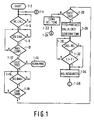
- the request part of the "call-back" procedure starts with a check as to whether there is an incoming call (block 1-6). It is assumed that the number sent by the user to the exchange consists of two parts: a prefix indicating that the user wishes to gain access to the computer and an identification code in combination with the prefix amongst others indicating with which authorized terminal the connection is desired.
- the request is not processed any further by the exchange; this can be made known to the sender by means of a reject signal (1-22). If the identification code is valid the sender will receive a confirm signal, the telephone number of the authorized terminal will likewise be fetched and the line circuit of the desired computer port will be reserved for connection to the terminal (1-26).
- the call-back part of a "call-back" procedure is started by determining whether the authorized terminal belongs to the exchange network or has to be reached through another exchange (private or public) (2-4).
- V is the terminal connected direct to the exchange
- attempts will be made to set up a connection between the terminal and the reserved line circuit (2-6,2-8), upon which a ringing signal will be sent to the terminal (2-12) if the attempt is successful.
- the exchange will go back to its initial position while releasing the used equipment and programming units (2-14, 2-16, 2-20, 2-22).
- the terminal answers the call within the predetermined time T2
- the requested computer port will be called by means of a ringing signal (2-32). If this call is answered a communication channel will be established between the authorized terminal and the computer upon which the exchange will start following the usual procedure for further handling this connection (2-34, 2-48, 2-50). If the computer port does not answer the ringing signal within a predetermined time T4 (for example because the computer is congested) an engaged-signal will be sent to the terminal (2-36, 2-38).
- the connection can now be released by the terminal (2-40) or by the exchange after a predetermined time T5 (2-42), after which all equipment and programming units associated with the exchange are released (2-44). Subsequently, the exchange will go back to its initial position (2-46).
- the terminal If the terminal is not connected direct to the exchange it will be tried to set up an external connection with this terminal (2-24). If this attempt is successful and if the terminal replies within the predetermined time T3 before the connection is released (2-28, 2-30), a ringing signal will be sent to the computer port (2-32) after which the process has the same course as described in the case of a terminal associated with the exchange.
Landscapes
- Engineering & Computer Science (AREA)
- Computer Security & Cryptography (AREA)
- Theoretical Computer Science (AREA)
- Computer Hardware Design (AREA)
- Software Systems (AREA)
- Physics & Mathematics (AREA)
- General Engineering & Computer Science (AREA)
- General Physics & Mathematics (AREA)
- Sub-Exchange Stations And Push- Button Telephones (AREA)
- Telephonic Communication Services (AREA)
- Data Exchanges In Wide-Area Networks (AREA)
Claims (4)
- Verfahren zum Verschaffen einer Telekommunikationsverbindung mit einem Computer, welche Verbindung eine Telekommunikationsvermittlungsstelle umfaßt, mit dieser Vermittlungsstelle zu verbindende Endstationen und eine Sicherheitseinheit zur Absicherung des Zugangs der Endstationen zu dem mit dem System verbundenen Computer, wobei das Verfahren die folgenden Schritte enthält:* Empfang eines Identifkationscodes von einer anfordernden Endstation, der die Nummer einer mit dem Computer zu verbindenden Endstation angibt (1-12),* Speichern der Nummern der Endstationen, die zum Aufbauen einer Verbindung mit dem Computer berechtigt sind (1-20),* Vergleich der von dem Identifikationscode angegebenen Nummer mit den gespeicherten Nummern,* Sorgen, daß im Falle einer Übereinstimmung ein Rufsignal an die mit dem Computer zu verbindende Endstation ausgeht (2-12),* Aufbau einer Telekommunikationsverbindung zwischen der letzteren Endstation und dem Computer als Reaktion auf ein von dieser Endstation empfangenes Antwortsignal (2-48),
dadurch gekennzeichnet, daß :* die Sicherheitseinheit in der Vermittlungsstelle enthalten ist und außerdem in der Vermittlungsstelle vorgesehene Mittel den Aufbau einer Verbindung zwischen einer Endstation und einer mit der Vermittlungsstelle verbundenen und Zugang zu dem Computer gebenden Telekommunikationsleitung ohne Beteiligung der Sicherheitseinheit verhindern, wobei das Verhinderungsverfahren die folgenden Schritte enthält:* während der Anforderungsphase reserviert das verhindernde Mittel die Teilnehmerschaltung einer mit dem Computer verbundenen Teilnehmerleitung (1-26), und diese Teilnehmerschaltung wird in dem reservierten Zustand gehalten, wenn der Anruf getrennt und alle anderen Betriebsmittel am Ende der Anforderungsphase freigegeben werden (1-34) und* während der Rückrufphase versucht das verhindernde Mittel eine Verbindung zwischen der berechtigten Endstation und der schon belegten Teilnehmerschaltung aufzubauen (2-6, 2-24), gefolgt von einer Überprüfung durch das verhindernde Mittel, ob die berechtigte Endstation den Ruf beantwortet (2-14, 2-30). - Verfahren nach Anspruch 1, in dem in der Vermittlungsstelle ein für eine ursprüngliche, mit der Vermittlungsstelle verbundene Bestimmungsendstation bestimmter Ruf zu einer mit der Vermittlungsstelle verbundenen Umleitungsendstation umgeleitet wird, dadurch gekennzeichnet, daß in der Vermittlungsstelle, ungeachtet der angefragten Umleitung, die Verbindung zwischen dem Computer und der ursprünglichen Bestimmungsendstation, unter Überwachung durch die Sicherheitseinheit, durchgeschaltet wird.
- Verfahren nach Anspruch 1 oder 2, dadurch gekennzeichnet, daß der Identifikationscode einen Teil der Telefonnummer bildet, die von dem Benutzer der anfordernden Endstation zur Anforderung der Verbindung mit dem Computer zu wählen ist.
- System zum Verschaffen einer Telekommunikationsverbindung mit einem Computer, welche Verbindung eine Telekommunikationsvermittlungsstelle umfaßt, mit dieser Vermittlungsstelle zu verbindende Endstationen und eine Sicherheitseinheit zur Absicherung des Zugangs der Endstationen zu dem mit dem System verbundenen Computer, wobei die Sicherheitseinheit die folgenden Elemente enthält:* Empfangsspeicher zum Empfang eines Identifkationscodes von einer anfordernden Endstation, der die Nummer einer mit dem Computer zu verbindenden Endstation angibt (1-12),* Autorisationsspeicher zum Speichern der Nummern der Endstationen, die für den Aufbau einer Verbindung mit dem Computer berechtigt sind (1-20),* Komparatormittel zum Vergleich der von dem Identifikationscode angegebenen Nummer mit den gespeicherten Nummern,* Wählmittel, um dafür zu sorgen, daß im Falle einer Übereinstimmung ein Rufsignal an die mit dem Computer zu verbindende Endstation ausgeht (2-12), und* Verbindungsmittel zum Aufbau einer Telekommunikationsverbindung zwischen der letzteren Endstation und dem Computer als Reaktion auf ein von dieser Endstation empfangenes Antwortsignal (2-48),
dadurch gekennzeichnet, daß:* die Sicherheitseinheit in der Vermittlungsstelle enthalten ist und außerdem in der Vermittlungsstelle vorgesehene Mittel den Aufbau einer Verbindung zwischen einer Endstation und einer mit der Vermittlungsstelle verbundenen und Zugang zu dem Computer gebenden Telekommunikationsleitung ohne Beteiligung der Sicherheitseinheit verhindern, wobei:* das verhindernde Mittel während der Anforderungsphase die Teilnehmersehaltung einer mit dem Computer verbundenen Teilnehmerleitung (1-26) reserviert und diese Teilnehmerschaltung in dem reservierten Zustand gehalten wird, wenn der Anruf getrennt und alle anderen Betriebsmittel am Ende der Anforderungsphase freigegeben werden (1-34) und* das verhindernde Mittel während der Rückrufphase versucht, eine Verbindung zwischen der berechtigten Endstation und der schon besetzten Teilnehmerschaltung aufzubauen (2-6, 2-24), gefolgt von einer Überprüfung durch das verhindernde Mittel, ob die berechtigte Endstation den Ruf beantwortet (2-14, 2-30).
Applications Claiming Priority (2)
| Application Number | Priority Date | Filing Date | Title |
|---|---|---|---|
| NL8602245A NL8602245A (nl) | 1986-09-05 | 1986-09-05 | Stelsel voor het verschaffen van een telecommunicatieverbinding met een computer. |
| NL8602245 | 1986-09-05 |
Publications (2)
| Publication Number | Publication Date |
|---|---|
| EP0258945A1 EP0258945A1 (de) | 1988-03-09 |
| EP0258945B1 true EP0258945B1 (de) | 1992-11-04 |
Family
ID=19848505
Family Applications (1)
| Application Number | Title | Priority Date | Filing Date |
|---|---|---|---|
| EP87201641A Expired EP0258945B1 (de) | 1986-09-05 | 1987-08-31 | System zum Versorgen eines Fernübertragungsanschlusses mit einem Rechner |
Country Status (6)
| Country | Link |
|---|---|
| US (1) | US4922521A (de) |
| EP (1) | EP0258945B1 (de) |
| JP (1) | JPS6364441A (de) |
| CN (1) | CN1011108B (de) |
| DE (1) | DE3782473T2 (de) |
| NL (1) | NL8602245A (de) |
Families Citing this family (45)
| Publication number | Priority date | Publication date | Assignee | Title |
|---|---|---|---|---|
| GB8922473D0 (en) * | 1989-10-05 | 1989-11-22 | Avant Guardian Ltd | A method of controlling access to restricted access data and communication system therefor |
| JPH03187660A (ja) * | 1989-12-18 | 1991-08-15 | Fujitsu Ltd | ファクシミリ装置 |
| US5222120A (en) * | 1990-04-23 | 1993-06-22 | Mci Communications Corporation | Long distance telephone switching system with enhanced subscriber services |
| EP0532102B1 (de) * | 1991-09-11 | 1998-04-22 | Lucent Technologies Inc. | System zur Kontrolle des Zugriffs auf die Daten eines Datengerätes |
| GB2268602A (en) * | 1992-06-25 | 1994-01-12 | Mitac Ltd | Enhancing security of data transfer |
| CA2085280C (en) * | 1992-12-14 | 2000-08-15 | Carole Quirk | Delayed cancel call waiting |
| US5495521A (en) * | 1993-11-12 | 1996-02-27 | At&T Corp. | Method and means for preventing fraudulent use of telephone network |
| US5606604A (en) * | 1993-12-13 | 1997-02-25 | Lucent Technologies Inc. | System and method for preventing fraud upon PBX through a remote maintenance or administration port |
| WO1995016971A1 (en) * | 1993-12-16 | 1995-06-22 | Open Market, Inc. | Digital active advertising |
| US5497411A (en) * | 1994-03-14 | 1996-03-05 | Pellerin; Joseph C. E. | Telecommunications card-access system |
| JP3454947B2 (ja) * | 1994-06-07 | 2003-10-06 | 富士通株式会社 | パーソナル通信サービス分散制御システム |
| US5715314A (en) * | 1994-10-24 | 1998-02-03 | Open Market, Inc. | Network sales system |
| US5638424A (en) * | 1994-11-30 | 1997-06-10 | Texas Instruments Incorporated | Telephone voice mail delivery system |
| US7702540B1 (en) | 1995-04-26 | 2010-04-20 | Ebay Inc. | Computer-implement method and system for conducting auctions on the internet |
| US7937312B1 (en) | 1995-04-26 | 2011-05-03 | Ebay Inc. | Facilitating electronic commerce transactions through binding offers |
| US7272639B1 (en) | 1995-06-07 | 2007-09-18 | Soverain Software Llc | Internet server access control and monitoring systems |
| US5790677A (en) | 1995-06-29 | 1998-08-04 | Microsoft Corporation | System and method for secure electronic commerce transactions |
| US5794221A (en) | 1995-07-07 | 1998-08-11 | Egendorf; Andrew | Internet billing method |
| US5774670A (en) | 1995-10-06 | 1998-06-30 | Netscape Communications Corporation | Persistent client state in a hypertext transfer protocol based client-server system |
| US7647243B2 (en) * | 1995-11-07 | 2010-01-12 | Ebay Inc. | Electronic marketplace system and method for creation of a two-tiered pricing scheme |
| US5799290A (en) * | 1995-12-27 | 1998-08-25 | Pitney Bowes Inc. | Method and apparatus for securely authorizing performance of a function in a distributed system such as a postage meter |
| US5809118A (en) | 1996-05-30 | 1998-09-15 | Softell | System and method for triggering actions at a host computer by telephone |
| US8229844B2 (en) | 1996-06-05 | 2012-07-24 | Fraud Control Systems.Com Corporation | Method of billing a purchase made over a computer network |
| US20030195847A1 (en) | 1996-06-05 | 2003-10-16 | David Felger | Method of billing a purchase made over a computer network |
| US7555458B1 (en) | 1996-06-05 | 2009-06-30 | Fraud Control System.Com Corporation | Method of billing a purchase made over a computer network |
| US6239881B1 (en) * | 1996-12-20 | 2001-05-29 | Siemens Information And Communication Networks, Inc. | Apparatus and method for securing facsimile transmissions |
| US7403922B1 (en) | 1997-07-28 | 2008-07-22 | Cybersource Corporation | Method and apparatus for evaluating fraud risk in an electronic commerce transaction |
| US7096192B1 (en) * | 1997-07-28 | 2006-08-22 | Cybersource Corporation | Method and system for detecting fraud in a credit card transaction over a computer network |
| US6029154A (en) * | 1997-07-28 | 2000-02-22 | Internet Commerce Services Corporation | Method and system for detecting fraud in a credit card transaction over the internet |
| US6178510B1 (en) * | 1997-09-04 | 2001-01-23 | Gtech Rhode Island Corporation | Technique for secure network transactions |
| US7222087B1 (en) * | 1997-09-12 | 2007-05-22 | Amazon.Com, Inc. | Method and system for placing a purchase order via a communications network |
| US5960411A (en) * | 1997-09-12 | 1999-09-28 | Amazon.Com, Inc. | Method and system for placing a purchase order via a communications network |
| US9900305B2 (en) * | 1998-01-12 | 2018-02-20 | Soverain Ip, Llc | Internet server access control and monitoring systems |
| US5905778A (en) * | 1998-02-06 | 1999-05-18 | Shires; Mark Richard | Notification apparatus for outbound data communication system |
| US6144988A (en) * | 1998-07-23 | 2000-11-07 | Experian Marketing Solutions, Inc. | Computer system and method for securely formatting and mapping data for internet web sites |
| US6876991B1 (en) | 1999-11-08 | 2005-04-05 | Collaborative Decision Platforms, Llc. | System, method and computer program product for a collaborative decision platform |
| US20010037383A1 (en) * | 2000-02-02 | 2001-11-01 | Sabal Leonard E. | Methods and apparatus for providing high-speed internet access to a device consecutively accessible to different people at different times |
| US6456701B1 (en) | 2000-06-16 | 2002-09-24 | Bell Canada | Network-centric control of access to transceivers |
| US8145567B2 (en) | 2000-10-31 | 2012-03-27 | Wells Fargo Bank, N.A. | Transaction ID system and process |
| US7333953B1 (en) | 2000-10-31 | 2008-02-19 | Wells Fargo Bank, N.A. | Method and apparatus for integrated payments processing and decisioning for internet transactions |
| US7865427B2 (en) | 2001-05-30 | 2011-01-04 | Cybersource Corporation | Method and apparatus for evaluating fraud risk in an electronic commerce transaction |
| EP1517524A1 (de) * | 2003-09-18 | 2005-03-23 | Mox Telecom AG | Verfahren und Vermittlungsanlage zum Aufbauen einer Telekommunikationsverbindung zwischen zwei Endgeräten |
| US7631086B2 (en) * | 2003-09-30 | 2009-12-08 | Onlex Technologies, Inc. | Virtual dedicated connection system and method |
| US7856090B1 (en) * | 2005-08-08 | 2010-12-21 | Symantec Corporation | Automatic spim detection |
| JP4381405B2 (ja) * | 2006-09-29 | 2009-12-09 | 株式会社東芝 | 電話交換システム |
Family Cites Families (6)
| Publication number | Priority date | Publication date | Assignee | Title |
|---|---|---|---|---|
| US4096356A (en) * | 1977-07-26 | 1978-06-20 | Bell Telephone Laboratories, Incorporated | Call restriction arrangement |
| US4154988A (en) * | 1977-10-21 | 1979-05-15 | Wescom Switching, Inc. | Method and means for accessing program memory of a common control telecommunications switching system |
| US4531023A (en) * | 1982-08-13 | 1985-07-23 | Hlf Corporation | Computer security system for a time shared computer accessed over telephone lines |
| DE3329571A1 (de) * | 1983-08-16 | 1985-03-07 | Telefonbau Und Normalzeit Gmbh, 6000 Frankfurt | Verfahren zum betreiben von bildschirmtextanschluessen |
| US4785408A (en) * | 1985-03-11 | 1988-11-15 | AT&T Information Systems Inc. American Telephone and Telegraph Company | Method and apparatus for generating computer-controlled interactive voice services |
| JPS6253061A (ja) * | 1985-09-02 | 1987-03-07 | Nec Corp | 不正アクセス防止方法 |
-
1986
- 1986-09-05 NL NL8602245A patent/NL8602245A/nl not_active Application Discontinuation
-
1987
- 1987-08-31 EP EP87201641A patent/EP0258945B1/de not_active Expired
- 1987-08-31 DE DE8787201641T patent/DE3782473T2/de not_active Expired - Fee Related
- 1987-09-02 CN CN87106153A patent/CN1011108B/zh not_active Expired
- 1987-09-02 JP JP62218068A patent/JPS6364441A/ja active Pending
-
1989
- 1989-03-08 US US07/320,728 patent/US4922521A/en not_active Expired - Fee Related
Also Published As
| Publication number | Publication date |
|---|---|
| JPS6364441A (ja) | 1988-03-22 |
| EP0258945A1 (de) | 1988-03-09 |
| DE3782473T2 (de) | 1993-05-27 |
| DE3782473D1 (de) | 1992-12-10 |
| US4922521A (en) | 1990-05-01 |
| NL8602245A (nl) | 1988-04-05 |
| CN1011108B (zh) | 1991-01-02 |
| CN87106153A (zh) | 1988-03-23 |
Similar Documents
| Publication | Publication Date | Title |
|---|---|---|
| EP0258945B1 (de) | System zum Versorgen eines Fernübertragungsanschlusses mit einem Rechner | |
| US4799255A (en) | Communication facilities access control arrangement | |
| US5018194A (en) | Electronic switching system having call-forwarding function | |
| US5099511A (en) | Exchange system for incoming calls from direct-in lines | |
| EP0622936A1 (de) | Zugriff auf Merkmale anderer Fernsprechstellen | |
| US5701340A (en) | AD-HOC conferencing method | |
| CA2456171A1 (en) | Local exchange subscriber line conferencing method | |
| US6748071B2 (en) | Method and apparatus for treating externally-originated calls as coming from internal switch extensions | |
| US20030059007A1 (en) | System and method for automatic mailbox owner and caller identification integration | |
| US7239690B2 (en) | System and method for identifying redirected calls | |
| EP1093279A2 (de) | Verfahren und Gerät zum Schutz der Anrufgeheimhaltung über Telekommunikationsnetze | |
| JPH1084340A (ja) | 不正アクセス防止コールバック方式 | |
| JP3399503B2 (ja) | 通信接続方法および通信インタフェース装置 | |
| AU751585B2 (en) | Method and device in telecommunications system | |
| JPS6259496A (ja) | 接続規制方式 | |
| JPH01255349A (ja) | Isdnの端末着信方式 | |
| JP3252760B2 (ja) | Cug呼制御方法 | |
| JP3422217B2 (ja) | 呼生起情報の通知方式 | |
| JP3669478B2 (ja) | 局番号別プリトランスレーション方式 | |
| JPH04127652A (ja) | 追い掛け電話サービスシステムの転送制御方法 | |
| JPS60102054A (ja) | 自動構内交換装置の着信制限方式 | |
| JPH114465A (ja) | 交換装置におけるセキュリティチェック方式 | |
| JPH05130231A (ja) | 発信者による抑止機能を持つコールピツクアツプサービス方式 | |
| JP2002223295A (ja) | 発信者番号による着信制限方式 | |
| JPH0413350A (ja) | 個人番号による通信接続制御方式 |
Legal Events
| Date | Code | Title | Description |
|---|---|---|---|
| PUAI | Public reference made under article 153(3) epc to a published international application that has entered the european phase |
Free format text: ORIGINAL CODE: 0009012 |
|
| AK | Designated contracting states |
Kind code of ref document: A1 Designated state(s): DE FR GB IT NL SE |
|
| 17P | Request for examination filed |
Effective date: 19880907 |
|
| 17Q | First examination report despatched |
Effective date: 19900626 |
|
| GRAA | (expected) grant |
Free format text: ORIGINAL CODE: 0009210 |
|
| AK | Designated contracting states |
Kind code of ref document: B1 Designated state(s): DE FR GB IT NL SE |
|
| PG25 | Lapsed in a contracting state [announced via postgrant information from national office to epo] |
Ref country code: NL Effective date: 19921104 |
|
| ITF | It: translation for a ep patent filed | ||
| REF | Corresponds to: |
Ref document number: 3782473 Country of ref document: DE Date of ref document: 19921210 |
|
| ET | Fr: translation filed | ||
| NLV1 | Nl: lapsed or annulled due to failure to fulfill the requirements of art. 29p and 29m of the patents act | ||
| PLBE | No opposition filed within time limit |
Free format text: ORIGINAL CODE: 0009261 |
|
| STAA | Information on the status of an ep patent application or granted ep patent |
Free format text: STATUS: NO OPPOSITION FILED WITHIN TIME LIMIT |
|
| 26N | No opposition filed | ||
| EAL | Se: european patent in force in sweden |
Ref document number: 87201641.5 |
|
| ITPR | It: changes in ownership of a european patent |
Owner name: CAMBIO RAGIONE SOCIALE;PHILIPS ELECTRONICS N.V. |
|
| REG | Reference to a national code |
Ref country code: FR Ref legal event code: CD |
|
| PGFP | Annual fee paid to national office [announced via postgrant information from national office to epo] |
Ref country code: GB Payment date: 19950731 Year of fee payment: 9 |
|
| PGFP | Annual fee paid to national office [announced via postgrant information from national office to epo] |
Ref country code: SE Payment date: 19950825 Year of fee payment: 9 |
|
| PGFP | Annual fee paid to national office [announced via postgrant information from national office to epo] |
Ref country code: FR Payment date: 19950830 Year of fee payment: 9 |
|
| PGFP | Annual fee paid to national office [announced via postgrant information from national office to epo] |
Ref country code: DE Payment date: 19951024 Year of fee payment: 9 |
|
| PG25 | Lapsed in a contracting state [announced via postgrant information from national office to epo] |
Ref country code: GB Effective date: 19960831 |
|
| PG25 | Lapsed in a contracting state [announced via postgrant information from national office to epo] |
Ref country code: SE Effective date: 19960901 |
|
| GBPC | Gb: european patent ceased through non-payment of renewal fee |
Effective date: 19960831 |
|
| PG25 | Lapsed in a contracting state [announced via postgrant information from national office to epo] |
Ref country code: FR Effective date: 19970430 |
|
| PG25 | Lapsed in a contracting state [announced via postgrant information from national office to epo] |
Ref country code: DE Effective date: 19970501 |
|
| EUG | Se: european patent has lapsed |
Ref document number: 87201641.5 |
|
| REG | Reference to a national code |
Ref country code: FR Ref legal event code: ST |
|
| PG25 | Lapsed in a contracting state [announced via postgrant information from national office to epo] |
Ref country code: IT Free format text: LAPSE BECAUSE OF NON-PAYMENT OF DUE FEES;WARNING: LAPSES OF ITALIAN PATENTS WITH EFFECTIVE DATE BEFORE 2007 MAY HAVE OCCURRED AT ANY TIME BEFORE 2007. THE CORRECT EFFECTIVE DATE MAY BE DIFFERENT FROM THE ONE RECORDED. Effective date: 20050831 |