EP0249078A2 - Optisch aktive Adsorbentien - Google Patents
Optisch aktive Adsorbentien Download PDFInfo
- Publication number
- EP0249078A2 EP0249078A2 EP87107532A EP87107532A EP0249078A2 EP 0249078 A2 EP0249078 A2 EP 0249078A2 EP 87107532 A EP87107532 A EP 87107532A EP 87107532 A EP87107532 A EP 87107532A EP 0249078 A2 EP0249078 A2 EP 0249078A2
- Authority
- EP
- European Patent Office
- Prior art keywords
- silica gel
- optically active
- meth
- acrylic acid
- bound
- Prior art date
- Legal status (The legal status is an assumption and is not a legal conclusion. Google has not performed a legal analysis and makes no representation as to the accuracy of the status listed.)
- Granted
Links
Classifications
-
- B—PERFORMING OPERATIONS; TRANSPORTING
- B01—PHYSICAL OR CHEMICAL PROCESSES OR APPARATUS IN GENERAL
- B01J—CHEMICAL OR PHYSICAL PROCESSES, e.g. CATALYSIS OR COLLOID CHEMISTRY; THEIR RELEVANT APPARATUS
- B01J20/00—Solid sorbent compositions or filter aid compositions; Sorbents for chromatography; Processes for preparing, regenerating or reactivating thereof
- B01J20/281—Sorbents specially adapted for preparative, analytical or investigative chromatography
- B01J20/282—Porous sorbents
- B01J20/285—Porous sorbents based on polymers
-
- B—PERFORMING OPERATIONS; TRANSPORTING
- B01—PHYSICAL OR CHEMICAL PROCESSES OR APPARATUS IN GENERAL
- B01D—SEPARATION
- B01D15/00—Separating processes involving the treatment of liquids with solid sorbents; Apparatus therefor
- B01D15/08—Selective adsorption, e.g. chromatography
- B01D15/26—Selective adsorption, e.g. chromatography characterised by the separation mechanism
- B01D15/38—Selective adsorption, e.g. chromatography characterised by the separation mechanism involving specific interaction not covered by one or more of groups B01D15/265 and B01D15/30 - B01D15/36, e.g. affinity, ligand exchange or chiral chromatography
- B01D15/3833—Chiral chromatography
-
- B—PERFORMING OPERATIONS; TRANSPORTING
- B01—PHYSICAL OR CHEMICAL PROCESSES OR APPARATUS IN GENERAL
- B01J—CHEMICAL OR PHYSICAL PROCESSES, e.g. CATALYSIS OR COLLOID CHEMISTRY; THEIR RELEVANT APPARATUS
- B01J20/00—Solid sorbent compositions or filter aid compositions; Sorbents for chromatography; Processes for preparing, regenerating or reactivating thereof
- B01J20/22—Solid sorbent compositions or filter aid compositions; Sorbents for chromatography; Processes for preparing, regenerating or reactivating thereof comprising organic material
- B01J20/26—Synthetic macromolecular compounds
- B01J20/261—Synthetic macromolecular compounds obtained by reactions only involving carbon to carbon unsaturated bonds
-
- B—PERFORMING OPERATIONS; TRANSPORTING
- B01—PHYSICAL OR CHEMICAL PROCESSES OR APPARATUS IN GENERAL
- B01J—CHEMICAL OR PHYSICAL PROCESSES, e.g. CATALYSIS OR COLLOID CHEMISTRY; THEIR RELEVANT APPARATUS
- B01J20/00—Solid sorbent compositions or filter aid compositions; Sorbents for chromatography; Processes for preparing, regenerating or reactivating thereof
- B01J20/281—Sorbents specially adapted for preparative, analytical or investigative chromatography
- B01J20/29—Chiral phases
-
- B—PERFORMING OPERATIONS; TRANSPORTING
- B01—PHYSICAL OR CHEMICAL PROCESSES OR APPARATUS IN GENERAL
- B01J—CHEMICAL OR PHYSICAL PROCESSES, e.g. CATALYSIS OR COLLOID CHEMISTRY; THEIR RELEVANT APPARATUS
- B01J20/00—Solid sorbent compositions or filter aid compositions; Sorbents for chromatography; Processes for preparing, regenerating or reactivating thereof
- B01J20/30—Processes for preparing, regenerating, or reactivating
- B01J20/32—Impregnating or coating ; Solid sorbent compositions obtained from processes involving impregnating or coating
- B01J20/3202—Impregnating or coating ; Solid sorbent compositions obtained from processes involving impregnating or coating characterised by the carrier, support or substrate used for impregnation or coating
- B01J20/3204—Inorganic carriers, supports or substrates
-
- B—PERFORMING OPERATIONS; TRANSPORTING
- B01—PHYSICAL OR CHEMICAL PROCESSES OR APPARATUS IN GENERAL
- B01J—CHEMICAL OR PHYSICAL PROCESSES, e.g. CATALYSIS OR COLLOID CHEMISTRY; THEIR RELEVANT APPARATUS
- B01J20/00—Solid sorbent compositions or filter aid compositions; Sorbents for chromatography; Processes for preparing, regenerating or reactivating thereof
- B01J20/30—Processes for preparing, regenerating, or reactivating
- B01J20/32—Impregnating or coating ; Solid sorbent compositions obtained from processes involving impregnating or coating
- B01J20/3231—Impregnating or coating ; Solid sorbent compositions obtained from processes involving impregnating or coating characterised by the coating or impregnating layer
- B01J20/3242—Layers with a functional group, e.g. an affinity material, a ligand, a reactant or a complexing group
- B01J20/3268—Macromolecular compounds
- B01J20/327—Polymers obtained by reactions involving only carbon to carbon unsaturated bonds
-
- C—CHEMISTRY; METALLURGY
- C08—ORGANIC MACROMOLECULAR COMPOUNDS; THEIR PREPARATION OR CHEMICAL WORKING-UP; COMPOSITIONS BASED THEREON
- C08F—MACROMOLECULAR COMPOUNDS OBTAINED BY REACTIONS ONLY INVOLVING CARBON-TO-CARBON UNSATURATED BONDS
- C08F220/00—Copolymers of compounds having one or more unsaturated aliphatic radicals, each having only one carbon-to-carbon double bond, and only one being terminated by only one carboxyl radical or a salt, anhydride ester, amide, imide or nitrile thereof
- C08F220/02—Monocarboxylic acids having less than ten carbon atoms; Derivatives thereof
- C08F220/52—Amides or imides
- C08F220/54—Amides, e.g. N,N-dimethylacrylamide or N-isopropylacrylamide
Definitions
- the invention relates to adsorbents based on optically active poly (meth) acrylic acid amides, which can be used to separate racemic mixtures into their optical antipodes, in which these amides are present in a form bound to silica gel.
- Such amides are available, for example, from polymerizable compounds of the formula I. wherein R1 is H or methyl, an optically active, sec. or tert. Amine or an optically active amine acid ester with up to 15 C atoms in the main chain which is bonded via nitrogen and R2 is H or methyl.
- These polymers bound to silica gel can be used as adsorbents for the separation of racemic mixtures, in particular in chromatography, preferably in high pressure chromatography.
- the problem is in particular to find optically active adsorbents which enable the separation of a large number of chemically different racemates and are therefore universally applicable.
- the object of the present invention was to produce and make available adsorbents which enable the separation of racemic mixtures of the most varied structure with a high separation effect and which can also be used universally for high pressure liquid chromatography with gradient elution.
- optically active polyamides to a support such as silica gel, particularly advantageous, optically active adsorbents for resolving racemates are obtained which are outstandingly suitable for high pressure liquid chromatography and / or gradient elution.
- the invention therefore relates to adsorbents based on optically active poly (meth) acrylic amides, in which these amides are bound to silica gel.
- the invention further relates to adsorbents in which the optically active acrylic acid amides or methacrylic acid amides are obtainable from polymerizable compounds of the formula I and where the optically active polyamides are anchored directly or via (meth) acryloyl groups on the silica gel.
- the invention furthermore relates to a process for the preparation of optically active polymers, characterized in that a hydrophilic silica gel, optionally at least partially modified with (meth) acrylic acid, reacted with optically active monomers of the formula I under the conditions of a polymerization reaction.
- the invention also relates to the use of the polymer according to the invention bound to silica gel for the chromatographic separation of racemic mixtures into the optical antipodes.
- Any optically active acrylic or methacrylic acid amides can generally be used as monomers. However, the monomers of the formula I are preferred
- the preferred monomers of formula I are those in which R1 is H or methyl.
- the group preferably means an optically active, sec. or tert. Amine such as (S) -phenylethylamine, (S) -cyclohexylphenylmethylamine, (S) -naphthylethylamine, (S) -cyclohexylethylamine or (1S, 2R) -phenylcyclopropylamine.
- the group means preferably an optically active amino acid ester with up to 15 carbon atoms in the main chain, ie without the ester group.
- Alkyl esters in particular ethyl esters, and also aryl esters are preferred. Particularly preferred are, for example, alkyl esters of (S) -phenylalanine, in particular the ethyl ester, and also, for example, the esters of leucine or valine.
- R2 preferably means H. both in the amine and in the amino acid derivatives.
- the monomers of the formula I can be obtained, for example, by reacting (S) -phenylalanine ethyl ester with acrylic acid chloride or (S) -cyclohexylethylamine with methacrylic acid chloride or generally by reacting the optically active amines or amino acid esters with methacrylic acid or acrylic acid derivatives, preferably in the presence of a polymerization inhibitor such as 4-tert-butyl catechol at temperatures between about -5 ° and 60 ° C.
- a polymerization inhibitor such as 4-tert-butyl catechol
- the procedure is advantageously carried out at room temperature using an inert organic solvent, in particular a halogenated hydrocarbon such as methylene chloride or chloroform.
- the reaction times are between about 30 minutes and 4 hours and depend essentially on the reaction temperature.
- the reaction conditions are widely described in the literature.
- the optically active polyamides are preferably bound to hydrophilic silica gels.
- Silica gels modified with diol, NH 2 or cyano groups are preferred.
- the diol group-containing silica gels are preferred.
- Silica gels modified in this way are known and commercially available.
- carrier materials e.g. B. aluminum oxides or titanium oxides can be used.
- the (meth) acrylic acid ester bound to silica gel is then copolymerized in suspension with a monomer of the formula I.
- the polymerization is carried out in a manner known per se in the presence of a radical generator, for example a peroxide such as dibenzoyl peroxide, dilauroyl peroxide, di-o-tolyl peroxide or an azo compound such as azoisobutyronitrile.
- a radical generator for example a peroxide such as dibenzoyl peroxide, dilauroyl peroxide, di-o-tolyl peroxide or an azo compound such as azoisobutyronitrile.
- the reaction components are suspended in an inert organic solvent, preferably an aromatic hydrocarbon such as benzene or toluene, or also a hydrocarbon such as cyclohexane, or a halogenated hydrocarbon such as methylene chloride, chloroform or 1,2-dichloroethan
- the stirred mixture is heated under an inert gas atmosphere, preferably under nitrogen, to temperatures between + 40 ° and +100 ° C, preferably between 70 ° and 90 °.
- the polymer sation time is between about 10 and 60 minutes, preferably between 15 and 30 minutes.
- the polymerization is carried out by adding an inhibitor, such as. B. tert-butyl catechol, canceled.
- the polyamide obtained in this way which is covalently bound to the silica gel, is separated off by filtration, washed thoroughly and dried in vacuo.
- Another process variant is that a hydrophilic silica gel is reacted directly with monomers of the formula I under the usual conditions of a polymerization reaction. This also results in the polyamides being anchored to the silica gel, and materials are obtained which are also suitable for direct enantiomer separation by means of high-pressure liquid chromatography. The polymerization is carried out in the manner described above.
- the ratio of silica gel to monomer can be varied between 1: 0.05 and 1:10 in the reactions described, preferably in the range from 1: 0.1 to 1: 0.5, in particular 1: 0.25.
- the loading of the silica gel with poly (meth) acrylamides can therefore be in the range of 0.5-8.0 ⁇ mol / m2, preferably between 2.0-4.0 ⁇ mol / m2.
- the materials according to the invention enable the separation of racemic mixtures with high optical yields by means of high pressure liquid chromatography, which is impossible in the case of the polymers which are not anchored to the silica gel.
- the working method of high pressure liquid chromatography for the preparative separation of racemic mixtures into their optical antipodes is familiar to the person skilled in the art.
- the adsorbent is usually suspended in the eluent and filled under pressure with a filling device in steel columns.
- the racemate to be separated, dissolved in an appropriate eluent, is added to the column.
- eluents optionally with gradient elution, are used for elution and detection at a specific flow rate.
- the advantages of the enantiomer separations which are carried out by means of high-pressure liquid chromatography using the adsorbent according to the invention, are compared to separations on non-anchored polymers by means of low-pressure liquid chromatography in a significantly shorter separation time and a higher separation performance.
- the flow agent used is advantageously hydrocarbons, in particular aromatic hydrocarbons and ethers or mixtures of these solvents. Mixtures of dioxane and hexane are particularly suitable. With the aid of the polymers according to the invention, racemates of the most varied classes of compounds can be separated.
- silica gel-bound polymethacrylamide is obtained from silica gel-bound methacrylic acid ester (prepared according to Example 1a) and (S) -phenylethyl methacrylamide, but the polymerization time is 30 minutes.
- the adsorbents are filled as suspension in 30 ml isopropanol at a pressure of 450-500 bar in steel columns (250 ⁇ 4 mm).
- Solutions of 3-15 ⁇ g of a racemate in dioxane are each chromatographed with a flow rate of 0.5-2.0 ml, a pressure of 20-100 bar being established depending on the flow agent and rate.
- a flow cell at 254 nm is used for detection.
Landscapes
- Chemical & Material Sciences (AREA)
- Analytical Chemistry (AREA)
- Chemical Kinetics & Catalysis (AREA)
- Organic Chemistry (AREA)
- Health & Medical Sciences (AREA)
- Medicinal Chemistry (AREA)
- Polymers & Plastics (AREA)
- Inorganic Chemistry (AREA)
- Solid-Sorbent Or Filter-Aiding Compositions (AREA)
- Organic Low-Molecular-Weight Compounds And Preparation Thereof (AREA)
- Polymerisation Methods In General (AREA)
- Addition Polymer Or Copolymer, Post-Treatments, Or Chemical Modifications (AREA)
Abstract
Description
- Die Erfindung betrifft Adsorbentien auf Basis optisch aktiver Poly(meth)acrylsäureamide, die zur Trennung von racemischen Gemischen in ihre optischen Antipoden verwendet werden können, bei denen diese Amide in an Kieselgel gebundener Form vorliegen.
- Erhältlich sind solche Amide beispielsweise aus polymerisationsfähigen Verbindungen der Formel I
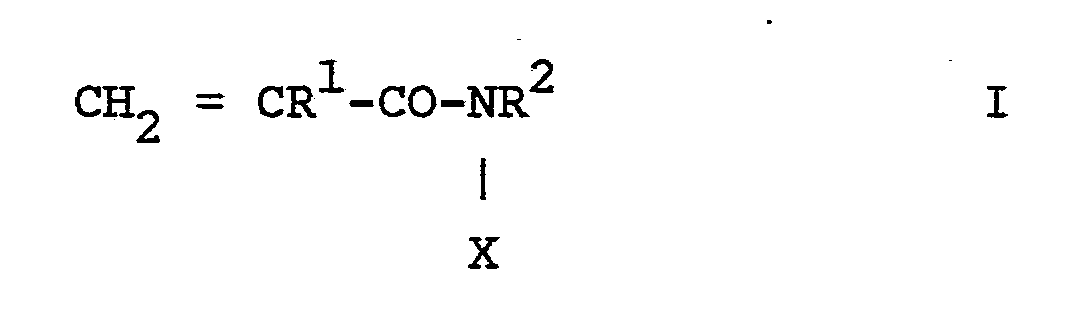
R¹ H oder Methyl,
und
R² H oder Methyl bedeuten. - Diese an Kieselgel gebundenen Polymerisate können als Adsorbentien zur Trennung von racemischen Gemischen insbesondere in der Chromatographie verwendet werden, bevorzugt in der Hochdruckchromatographie.
- Die Trennung racemischer Gemische in optische Antipoden ist ein sehr wesentliches Problem der präparativen Chemie. Neben den klassischen Methoden durch Umwandlung des racemischen Gemisches in ein Gemisch von Diastereomeren und deren Trennung aufgrund unterschiedlicher physikalischer Eigenschaften hat man sich in den letzten Jahren hauptsächlich mit chromatographischen Methoden zur Trennung racemischer Gemische beschäftigt. Dabei werden vor allem optisch aktive Adsorbentien als stationäre Phase verwendet.
- Das Problem besteht insbesondere darin, optisch aktive Adsorbentien zu finden, welche die Trennung einer Vielzahl chemisch unterschiedlicher Racemate ermöglichen und damit universell anwendbar sind.
- Es ist z. B. bekannt, optisch aktive Acrylsäure- und Methacrylsäureamide in Gegenwart eines Vernetzers in Suspension zu polymerisieren, diese vernetzten Polyamide in entsprechenden Fließmitteln quellen zu lassen und zur Trennung von Enantiomeren einzusetzen (beschrieben in der DE-PS 25 00 523). Ein großer Nachteil besteht jedoch darin, daß diese Materialien nur für die Niederdruckflüssigkeitschromatograhie einsetzbar sind. Bei Drucken größer 5 bar werden diese vernetzten Polyamide komprimiert und für das Fließmittel undurchlässig, d. h. die Fließgeschwindigkeit nimmt stark ab. Ferner ist ihr Quellungsgrad von der Fließmittelzusammensetzung abhängig.
- Hochdruckflüssigkeitschromatographie oder Gradientenelution ist an diesen Gelen nicht möglich.
- Aufgabe der vorliegenden Erfindung war es, Adsorbentien herzustellen und zur Verfügung zu stellen, welche die Trennung von racemischen Gemischen unterschiedlichster Struktur mit hohem Trenneffekt ermöglichen und universell auch für Hochdruckflüssigkeitschromatographie mit Gradientenelution verwendbar sind.
- Es wurde nun überraschenderweise gefunden, daß durch die Bindung der optisch aktiven Polyamide an einen Träger wie Kieselgel besonders vorteilhafte, optisch aktive Adsorbentien zur Racematspaltung erhalten werden, die hervorragend für Hochdruckflüssigkeitschromatographie und/oder Gradientenelution geeignet sind.
- Gegenstand der Erfindung sind daher Adsorbentien auf Basis optisch aktiver Poly(meth)acrylsäureamide, bei denen diese Amide an Kieselgel gebunden sind.
- Gegenstand der Erfindung sind weiterhin Adsorbentien, bei denen die optisch aktiven Acrylsäureamide oder Methacrylsäureamide erhältlich sind aus polymerisationsfähigen Verbindungen der Formel I und wobei die optisch aktiven Polyamide direkt oder über (Meth)Acryloylgruppen am Kieselgel verankert sind.
- Weiterhin ist Gegenstand der Erfindung ein Verfahren zur Herstellung von optisch aktiven Polymerisaten, dadurch gekennzeichnet, daß man ein hydrophiles Kieselgel, gegebenenfalls mindestens partiell modifiziert mit (Meth)Acrylsäure, mit optisch aktiven Monomeren der Formel I unter den Bedingungen einer Polymerisationsreaktion umsetzt.
- Schließlich ist auch Gegenstand der Erfindung die Verwendung des erfindungsgemäßen, an Kieselgel gebundenen Polymerisats zur chromatographischen Trennung von racemischen Gemischen in die optischen Antipoden. Es können allgemein beliebige optisch aktive Acryl- oder Methacrylsäureamide als Monomere eingesetzt werden. Bevorzugt sind jedoch die Monomeren der Formel I.
- Die bevorzugten Monomere der Formel I sind solche, in denen R¹ H oder Methyl bedeutet.
Die Gruppe
- Ferner bedeutet die Gruppe

- R² bedeutet sowohl bei den Amin-, als auch bei den Aminosäurederivaten vorzugsweise H.
- Es können beide Antipoden der optisch aktiven Verbindungen eingesetzt werden.
- Die Monomeren der Formel I sind erhältlich beispielsweise durch Umsetzen von (S)-Phenylalaninethylester mit Acrylsäurechlorid oder von (S)-Cyclohexylethylamin mit Methacrylsäurechlorid oder allgemein durch Umsetzen der optisch aktiven Amine oder Aminosäureester

- Vorzugsweise sind die optisch aktiven Polyamide an hydrophile Kieselgele gebunden. Dabei sind mit Diol-, NH²- oder Cyano-Gruppen modifizierte Kieselgele bevorzugt. Insbesondere sind die Diolgruppen-haltigen Kieselgele bevorzugt. Derartig modifizierte Kieselgele sind bekannt und im Handel erhältlich. Es sind jedoch auch andere Trägermaterialien, z. B. Aluminiumoxide oder Titanoxide, einsetzbar.
- Zur Herstellung dieser an Kieselgel gebundenen Polyamide gibt es vorzugsweise zwei Varianten. Zunächst kann man ein mit z. B. Diolgruppen modifiziertes Kieselgel in bekannter Weise mit (Meth)Acrylsäure verestern. Dabei arbeitet man vorzugsweise in einem inerten Lösungsmittel, vorzugsweise z. B. Dioxan oder Tetrahydrofuran, bei Temperaturen zwischen -20° und 80 °C, vorzugsweise bei Raumtemperatur. Die Veresterungsreaktionen sind in der Regel zwischen 15 Minuten bis 48 Stunden beendet. Bevorzugt eingesetzt wird ein reaktionsfähiges Derivat der (Meth)Acrylsäure, wie z. B. (Meth)Acrylsäureanhydrid. Diese Modifizierung sollte mindestens partiell erfolgen. Vorteilhafterweise wird ein Veresterungsgrad von über 50 %, insbesondere von über 70 % angestrebt. Die Beladung des Kieselgels mit (Meth)Acrylsäureester-Gruppen beträgt 0,5-4,0 µmol/m², insbesondere 2,0-3,0 µmol/m².
- Anschließend wird der an Kieselgel gebundene (Meth)Acrylsäureester in Suspension mit einem Monomeren der Formel I copolymerisiert. Die Polymerisation wird in an sich bekannter Weise in Gegenwart eines Radikalbildners, beispielsweise eines Peroxids wie Dibenzoylperoxid, Dilauroylperoxid, Di-o-tolylperoxid oder einer Azoverbindung wie Azoisobutyronitril durchgeführt. Die Reaktionskomponenten werden in einem inerten organischen Lösungsmittel, vorzugsweise einem aromatischen Kohlenwasserstoff wie Benzol oder Toluol, oder auch einem Kohlenwasserstoff wie Cyclohexan, oder einem Halogenkohlenwasserstoff wie Methylenchlorid, Chloroform oder 1,2-Dichlorethan, suspendiert. Das gerührte Gemisch wird unter einer Inertgas-Atmosphäre, vorzugsweise unter Stickstoff, auf Temperaturen zwischen +40° und +100 °C, vorzugsweise zwischen 70° und 90° erhitzt. Die Polymeri sationsdauer liegt zwischen etwa 10 und 60 Minuten, vorzugsweise zwischen 15 und 30 Minuten. Die Polymerisation wird durch Zugabe eines Inhibitors, wie z. B. tert.-Butylbrenzcatechin, abgebrochen. Das auf diese Weise erhaltene Polyamid, das kovalent an das Kieselgel gebunden ist, wird durch Filtration abgetrennt, gründlich gewaschen und im Vakuum getrocknet.
- Genauso ist es möglich, anstelle von mit Diolgruppen modifiziertem Kieselgel ein mit Aminogruppen modifiziertes Kieselgel mit einem (Meth)acrylsäurederivat umzusetzen und mit monomeren (Meth)acrylsäureamiden einer Copolymerisation zu unterwerfen. Dabei erhält man Materialien, die ebenfalls für die Enantiomerentrennung geeignet sind.
- Eine andere Verfahrensvariante besteht darin, daß man direkt ein hydrophiles Kieselgel mit Monomeren der Formel I unter den üblichen Bedingungen einer Polymerisationsreaktion umsetzt. Dabei resultiert ebenfalls eine Verankerung der Polyamide am Kieselgel, und man erhält Materialien, die ebenfalls zur direkten Enantiomerentrennung mittels Hochdruckflüssigkeitschromatographie geeignet sind. Die Polymerisation wird dabei in der oben beschriebenen Weise durchgeführt.
- Das Verhältnis von Kieselgel zu Monomer (in Gewichtsteilen) kann bei den beschriebenen Umsetzungen variiert werden zwischen 1:0,05 bis 1:10, vorzugsweise liegt es im Bereich von 1:0,1 bis 1:0,5, insbesondere bei 1:0,25.
- Die Beladung des Kieselgels mit Poly(meth)acrylamiden kann daher im Bereich von 0,5-8,0 µmol/m², vorzugsweise zwischen 2,0-4,0 µmol/m² liegen.
- Die erfindungsgemäßen Materialien ermöglichen die Trennung von racemischen Gemischen mit hohen optischen Ausbeuten mittels Hochdruckflüssigkeitschromatographie, was bei den Polymerisaten, die nicht am Kieselgel verankert sind, unmöglich ist. Die Arbeitmethodik der Hochdruckflüssigkeitschromatographie zur präparativen Trennung von racemischen Gemischen in ihre optischen Antipoden ist dem Fachmann vertraut. Üblicherweise wird das Adsorbens im Fließmittel suspendiert und unter Druck mit einem Füllgerät in Stahlsäulen gefüllt. Das zu trennende Racemat wird, gelöst in einem entsprechenden Fließmittel, auf die Säule gegeben. Schließlich wird mit Fließmitteln, gegebenenfalls mit Gradientenelution, mit einer bestimmten Fließgeschwindigkeit eluiert und detektiert.
- Die Vorteile der Enantiomerentrennungen, die mittels Hochdruckflüssigkeitschromatographie unter Verwendung des erfindungsgemäßen Adsorbens durchgeführt werden, liegen im Vergleich zu Trennungen an nicht-verankerten Polymerisaten mittels Niederdruckflüssigkeitschromatographie in einer wesentlich kürzeren Trennzeit und einer höheren Trennleistung. Als Fließmittel verwendet man vorteilhafterweise Kohlenwasserstoffe, insbesondere aromatische Kohlenwasserstoffe und Ether oder Gemische dieser Lösungsmittel. Besonders geeignet sind Gemische aus Dioxan und Hexan. Mit Hilfe der erfindungsgemäßen Polymerisate lassen sich Trennungen von Racematen der unterschiedlichsten Verbindungsklassen durchführen.
- Im folgenden werden Herstellungs- und Trennungsbeispiele die erfindungsgemäßen Polymerisate näher erläutern.
-
- a. Eine Suspension von 2,5 g Diolphase (Kieselgel LiChrosorbR Diol 5 µm, E. Merck) in 20 ml Dioxan wird im Stickstoffstrom mit einer Lösung von 1,5 g Methacrylsäureanhydrid in 10 ml sowie 0,8 g Diisopropylethylamin in 30 ml Dioxan versetzt, bei Raumtemperatur 30 Minuten gerührt, 24 Stunden 54stehengelassen, abgesaugt, mit Dioxan gewaschen und getrocknet. Man erhält so ein weißes Präparat (C = 8,27 %, H = 1,76 %).
- b. Eine Suspension von 2,5 g des Kieselgel-gebundenen Methacrylsäureesters, hergestellt nach Beispiel 1a, in 10 ml Toluol wird unter Stickstoff mit einer Lösung von 7,5 g (S)-N-Acryloylphenylalaninethylester in 20 ml Toluol sowie einer Lösung von 22 mg Azo-bis-isobutyronitril in 10 ml Toluol versetzt und unter Rühren 15 Minuten bei 80 °C gehalten. Man bricht die Polymerisation durch Zugabe einer Lösung von 200 mg tert.-Butylbrenzcatechin in 10 ml Toluol ab, filtriert, wäscht und trocknet. Man erhält 3,0 g eines weißen Adsorbens (C = 21,35 %, H = 3,1 %, N = 1,16 %), das eine Beladung von etwa 20 Gewichtsprozent Polyacrylamid aufweist.
- Analog Beispiel 1b erhält man aus Kieselgel-gebundenem Methacrylsäureester (hergestellt nach Beispiel 1a) und (S)-Phenylethylmethacrylamid das entsprechende Kieselgel-gebundene Polymethacrylamid, wobei jedoch die Polymerisationsdauer 30 Minuten beträgt.
- Auf gleiche Weise erhält man ausgehend von (S)-Cyclohexylethylmethacrylamid und Kieselgel-gebundenem Methacrylsäureester ein an Kieselgel gebundenes (S)-Cyclohexylethylpolymethacrylamid.
- Man erhitzt eine Suspension von 2,5 g Kieselgel (LiChrosorbR Diol 5 µm, E. Merck) unter Rühren in einer Stickstoffatmosphäre in einer Lösung von 7,5 g (S)-N-Acryloylphenylalaninethylester und 22 mg Azo-bis-isobutyronitril in 40 ml Toluol 15 Minuten auf 80 °C, bricht die Reaktion ab, wäscht und trocknet. Man erhält 2,8 g eines weißen Adsorbens (C = 12,48 %, H = 2,06 %, N = 0,65 %).
- Man erhitzt eine Suspension von 5,0 g Kieselgel (LiChrosorbR Diol 5 µm, E. Merck) unter Rühren in einer Stickstoffatmosphäre in einer Lösung von 1,25 g (S)-Acryloylphenylalaninethylester und 44 mg Azo-bis-isobutyronitril in 100 ml Cyclohexan 15 Minuten auf 80 °C, bricht die Reaktion ab, wäscht und trocknet.
- Die Adsorbentien werden als Suspension in 30 ml Isopropanol bei einem Durck von 450-500 bar in Stahlsäulen (250 × 4 mm) gefüllt.
- Chromatographiert werden jeweils Lösungen von 3-15 µg eines Racemats in Dioxan mit einer Fließgeschwindigkeit von 0,5-2,0 ml, wobei sich je nach Fließmittel und -geschwindigkeit ein Druck von 20-100 bar einstellt. Detektiert wird mit einer Durchflußzelle bei 254 nm.
- In der folgenden Tabelle sind die Ergebnisse der chromatographischen Trennungsversuche von verschiedenen Racematen wiedergegeben.

- Aus diesen Ergebnisse ist deutlich zu sehen, daß die erfindungsgemäßen Materialien hervorragend zur Enantiomerentrennung mittels Hochdruckflüssigkeitschromatographie geeignet sind. Die Elutionsvolumina der Enantiomeren liegen genügend weit auseinander, und man erhält überwiegend eine sehr gute Basislinientrennung.
Claims (5)

R¹ H oder Methyl,

und
R² H oder Methyl bedeuten,
dadurch gekennzeichnet, daß die optisch aktiven Poly(meth)acrylsäureamide direkt oder über (Meth)Acryloylgruppen am Kieselgel verankert sind.
Applications Claiming Priority (2)
| Application Number | Priority Date | Filing Date | Title |
|---|---|---|---|
| DE3619303 | 1986-06-07 | ||
| DE19863619303 DE3619303A1 (de) | 1986-06-07 | 1986-06-07 | Optisch aktive adsorbentien |
Publications (3)
| Publication Number | Publication Date |
|---|---|
| EP0249078A2 true EP0249078A2 (de) | 1987-12-16 |
| EP0249078A3 EP0249078A3 (en) | 1988-08-10 |
| EP0249078B1 EP0249078B1 (de) | 1991-02-20 |
Family
ID=6302581
Family Applications (1)
| Application Number | Title | Priority Date | Filing Date |
|---|---|---|---|
| EP87107532A Expired - Lifetime EP0249078B1 (de) | 1986-06-07 | 1987-05-23 | Optisch aktive Adsorbentien |
Country Status (8)
| Country | Link |
|---|---|
| US (1) | US4882048A (de) |
| EP (1) | EP0249078B1 (de) |
| JP (1) | JP2665513B2 (de) |
| CN (1) | CN1009058B (de) |
| CA (1) | CA1303594C (de) |
| CS (1) | CS274614B2 (de) |
| DD (1) | DD263711A5 (de) |
| DE (2) | DE3619303A1 (de) |
Cited By (7)
| Publication number | Priority date | Publication date | Assignee | Title |
|---|---|---|---|---|
| FR2631849A1 (fr) * | 1988-05-30 | 1989-12-01 | Centre Nat Rech Scient | Support pour la separation des proteines, procede pour sa preparation et application en chromatographie |
| EP0464487A1 (de) * | 1990-07-03 | 1992-01-08 | Bayer Ag | Optische aktive Alpha-Fluoracrylsäureamide, ihre Herstellung, ihre Polymerisation zu optisch aktiven Polymeren und deren Verwendung zur Trennung von Racematen |
| WO1992016274A1 (de) * | 1991-03-14 | 1992-10-01 | Bayer Aktiengesellschaft | Verfahren zur trennung von enantiomeren an chiralen trennphasen mit hilfe eines kontinuierlichen gegenstrom-chromatographieverfahrens |
| EP0545168A1 (de) * | 1991-12-03 | 1993-06-09 | Bayer Ag | Füllstoffhaltige, optisch aktive Perlpolymerisate |
| WO1994012275A1 (en) * | 1992-12-03 | 1994-06-09 | Eka Nobel Ab | Chiral adsorbents and preparation thereof as well as compounds on which the adsorbents are based and preparation of these compounds |
| US5453186A (en) * | 1988-03-31 | 1995-09-26 | Merck Patent Gesellschaft Mit Beschrankter Haftung | Separating materials |
| WO2003079002A3 (en) * | 2002-03-20 | 2003-12-24 | Univ Roma | Polymeric composite chiral stationary phases of brush type |
Families Citing this family (28)
| Publication number | Priority date | Publication date | Assignee | Title |
|---|---|---|---|---|
| US5164427A (en) * | 1989-10-12 | 1992-11-17 | Macherey, Nagel & Co. | Column-packing material for gel-permation chromatography method for preparation, and applications |
| DE3934068A1 (de) * | 1989-10-12 | 1991-04-18 | Macherey Nagel & Co Chem | Mit polymergelen gefuellte poroese partikel fuer die gelpermeationschromatographie und verfahren zu deren herstellung |
| DE4005868A1 (de) * | 1990-02-24 | 1991-08-29 | Merck Patent Gmbh | Trennmaterialien |
| US5906734A (en) * | 1992-06-19 | 1999-05-25 | Biosepra Inc. | Passivated porous polymer supports and methods for the preparation and use of same |
| US5268097A (en) * | 1992-06-19 | 1993-12-07 | Sepracor Inc. | Passivated and stabilized porous mineral oxide supports and method for the preparation and use of same |
| US5445732A (en) * | 1992-06-19 | 1995-08-29 | Sepracor Inc. | Passivated porous polymer supports and methods for the preparation and use of same |
| US5470463A (en) * | 1992-06-19 | 1995-11-28 | Sepracor Inc. | Passivated porous supports and methods for the preparation and use of same |
| DE4228135A1 (de) | 1992-08-25 | 1994-03-03 | Bayer Ag | Polymerisierbare Dipeptide, Synthese, Polymerisation und Verwendung der Polymere zur chromatographischen Enantiomerentrennung |
| JP3583429B2 (ja) * | 1993-07-16 | 2004-11-04 | メルク パテント ゲゼルシャフト ミット ベシュレンクテル ハフトング | 疎水クロマトグラフィーのための分離剤 |
| DE4333674A1 (de) * | 1993-10-02 | 1995-04-06 | Merck Patent Gmbh | Nukleotidhaltiges Sorbens für die Affinitätschromatographie |
| DE4333821A1 (de) * | 1993-10-04 | 1995-04-06 | Merck Patent Gmbh | Ionenaustauscher |
| DE4334353A1 (de) * | 1993-10-08 | 1995-04-13 | Merck Patent Gmbh | Verfahren und Träger für die Gelpermeationschromatographie |
| US5443824A (en) * | 1994-03-14 | 1995-08-22 | Piacquadio; Daniel J. | Topical thalidomide compositions for surface or mucosal wounds, ulcerations, and lesions |
| DE4413319A1 (de) * | 1994-04-18 | 1994-09-08 | Daub Joachim Dipl Geooek | Verfahren zur Herstellung einer festen stationären Phase für die Flüssigkeitschromatographie |
| US5906747A (en) * | 1995-11-13 | 1999-05-25 | Biosepra Inc. | Separation of molecules from dilute solutions using composite chromatography media having high dynamic sorptive capacity at high flow rates |
| US5858910A (en) * | 1997-11-25 | 1999-01-12 | Uop Llc | Chiral stationary phase based on yohimbine |
| EP0937497B9 (de) * | 1997-12-25 | 2003-10-29 | Tosoh Corporation | Magnetischer Träger, seine Herstellung, und Verfahren zum Extrahieren von Nukleinsäuren |
| WO2004002618A1 (en) * | 2002-06-27 | 2004-01-08 | Akzo Nobel N.V. | Adsorbent material and method of preparing an adsorbent material |
| US6994791B2 (en) * | 2002-06-27 | 2006-02-07 | Akzo Nobel N.V. | Adsorbent material and method of preparing an adsorbent material |
| CN100369920C (zh) * | 2003-03-31 | 2008-02-20 | 特瓦药厂私人有限公司 | 大环内酯物质的结晶与纯化 |
| WO2005080500A1 (ja) | 2004-02-23 | 2005-09-01 | Japan Science And Technology Agency | 水系剛直主鎖型液晶組成物、及びこれを利用したキラルセンサー |
| MY195756A (en) * | 2012-09-17 | 2023-02-09 | Grace W R & Co | Functionalized Particulate Support Material and Methods of Making and Using the Same |
| IN2015DN02055A (de) | 2012-09-17 | 2015-08-14 | Grace W R & Co | |
| EP3094390B1 (de) | 2014-01-16 | 2021-07-07 | W.R. Grace & CO. - CONN. | Affinitätschromatographiemedien und chromatographievorrichtungen |
| EP3137209B1 (de) | 2014-05-02 | 2022-10-05 | W.R. Grace & CO. - CONN. | Funktionalisiertes trägermaterial und verfahren zur herstellung und verwendung eines funktionalisierten trägermaterials |
| SG10201911134QA (en) | 2015-06-05 | 2020-01-30 | Grace W R & Co | Adsorbent bioprocessing clarification agents and methods of making and using the same |
| CN110256796B (zh) * | 2019-07-18 | 2021-06-29 | 广东一龙新材料科技有限公司 | 一种交通专用高反光pmma母粒及其制备方法 |
| CN112029041B (zh) * | 2020-09-07 | 2021-05-18 | 哈尔滨工程大学 | 一种负载聚炔丙基螺旋聚合物多孔硅基微球的制备方法和应用 |
Family Cites Families (30)
| Publication number | Priority date | Publication date | Assignee | Title |
|---|---|---|---|---|
| DE1442446C3 (de) * | 1965-06-18 | 1974-03-14 | Merck Patent Gmbh, 6100 Darmstadt | Sorptionsmittel für die Schichtchromatographie: |
| US3808125A (en) * | 1972-08-25 | 1974-04-30 | Phillips Petroleum Co | Chromatographic apparatus |
| US4127730A (en) * | 1972-08-31 | 1978-11-28 | Dynamit Nobel Aktiengesellschaft | Method of preparing polymers analogous to enzymes |
| US4111863A (en) * | 1972-08-31 | 1978-09-05 | Dynamit Nobel Aktiengesellschaft | Method of preparing polymers analogous to enzymes |
| DE2313073C2 (de) * | 1973-03-16 | 1984-11-29 | Istvan Prof. Dr. 6600 Saarbruecken Halasz | Verfahren zur chemischen Modifizierung von Oberflächen anorganischer Festkörper und deren Verwendung |
| DE2500523C2 (de) * | 1975-01-08 | 1985-03-14 | Merck Patent Gmbh, 6100 Darmstadt | Vernetzte Polymerisate, Verfahren zu ihrer Herstellung und ihre Verwendung |
| US4194051A (en) * | 1975-08-25 | 1980-03-18 | Monsanto Company | Asymmetric catalysis |
| US4165765A (en) * | 1976-06-17 | 1979-08-28 | Owens-Corning Fiberglas Corporation | Glass fiber reinforced thermosetting resin pipe wall construction |
| SE7712058L (sv) * | 1976-11-12 | 1978-05-13 | Ceskoslovenska Akademie Ved | Tredimensionell berare av oorganiskt, porost material och en reaktiv polymer och ett forfarande for framstellning derav |
| US4330440A (en) * | 1977-02-08 | 1982-05-18 | Development Finance Corporation Of New Zealand | Activated matrix and method of activation |
| DE2709094C2 (de) * | 1977-03-02 | 1984-11-22 | Boehringer Mannheim Gmbh, 6800 Mannheim | Adsorbens für die affinitätsspezifische Trennung von Nukleinsäuren, Verfahren zu seiner Herstellung und seine Verwendung |
| DE2722956A1 (de) * | 1977-05-20 | 1978-11-30 | Basf Ag | Polymerisate mit 2-(4-methyl-cyclohexen-(3)-yl-1-)-propyl-n-acryl- bzw. -n-methacrylamidgruppen |
| JPS56142216A (en) * | 1980-02-19 | 1981-11-06 | Daicel Chem Ind Ltd | Optical resolution of racemate by optically active polymer |
| US4324681A (en) * | 1980-06-12 | 1982-04-13 | Uop Inc. | Chiral supports for resolution of racemates |
| ATE15378T1 (de) * | 1980-06-27 | 1985-09-15 | Akzo Nv | Mit einer unbeweglichen organischen phase ueberzogenes anorganisches poroeses traegermaterial, anwendung fuer die chromatographie und sein herstellungsverfahren. |
| JPH0691956B2 (ja) * | 1981-03-11 | 1994-11-16 | ダイセル化学工業株式会社 | 光学活性な高分子を担持させた分離用吸着剤 |
| US4431546A (en) * | 1981-04-27 | 1984-02-14 | The Public Health Laboratory Services Board | Affinity chromatography using metal ions |
| JPS591509A (ja) * | 1982-05-21 | 1984-01-06 | Daicel Chem Ind Ltd | 重合性高分子の製造方法 |
| US4599274A (en) * | 1983-03-11 | 1986-07-08 | Denki Kagaku Kogyo Kabushiki Kaisha | Photo-curable adhesive composition for glass lamination and laminated glass and process for its production |
| HU190910B (en) * | 1983-08-16 | 1986-12-28 | Reanal Finomvegyszergyar,Hu | Method for producing glue suitable for fixing sorbent layer of pressurized one and multiple layer chromatography |
| US4724207A (en) * | 1984-02-02 | 1988-02-09 | Cuno Incorporated | Modified siliceous chromatographic supports |
| US4694044A (en) * | 1984-03-09 | 1987-09-15 | Research Development Corp. Of Japan | Adsorbent |
| JPS60196663A (ja) * | 1984-03-19 | 1985-10-05 | Daicel Chem Ind Ltd | 分離剤 |
| AU571979B2 (en) * | 1984-07-06 | 1988-04-28 | Ciba-Geigy Ag | Ionically modified polysaccharides |
| US4687820A (en) * | 1984-08-22 | 1987-08-18 | Cuno Incorporated | Modified polypeptide supports |
| US4544485A (en) * | 1984-08-31 | 1985-10-01 | Purdue Research Foundation | Chromatographic method and means |
| JPS6177760A (ja) * | 1984-09-26 | 1986-04-21 | Daicel Chem Ind Ltd | 分離剤 |
| JP2840801B2 (ja) * | 1992-12-01 | 1998-12-24 | セイコーインスツルメンツ株式会社 | 座標変換係数の自動設定方法 |
| JPH0711544B2 (ja) * | 1992-12-04 | 1995-02-08 | 日本電気計器検定所 | 電子式移相回路及び電子式無効電力量計 |
| JPH06187640A (ja) * | 1992-12-18 | 1994-07-08 | Hitachi Ltd | 光記録方法およびその装置 |
-
1986
- 1986-06-07 DE DE19863619303 patent/DE3619303A1/de not_active Withdrawn
-
1987
- 1987-05-23 EP EP87107532A patent/EP0249078B1/de not_active Expired - Lifetime
- 1987-05-23 DE DE8787107532T patent/DE3768052D1/de not_active Expired - Lifetime
- 1987-06-05 JP JP62140159A patent/JP2665513B2/ja not_active Expired - Fee Related
- 1987-06-05 DD DD87303574A patent/DD263711A5/de not_active IP Right Cessation
- 1987-06-05 CN CN87104030A patent/CN1009058B/zh not_active Expired
- 1987-06-05 CA CA000538905A patent/CA1303594C/en not_active Expired - Fee Related
- 1987-06-05 CS CS414387A patent/CS274614B2/cs unknown
-
1989
- 1989-02-21 US US07/313,319 patent/US4882048A/en not_active Expired - Lifetime
Cited By (10)
| Publication number | Priority date | Publication date | Assignee | Title |
|---|---|---|---|---|
| US5453186A (en) * | 1988-03-31 | 1995-09-26 | Merck Patent Gesellschaft Mit Beschrankter Haftung | Separating materials |
| FR2631849A1 (fr) * | 1988-05-30 | 1989-12-01 | Centre Nat Rech Scient | Support pour la separation des proteines, procede pour sa preparation et application en chromatographie |
| EP0464487A1 (de) * | 1990-07-03 | 1992-01-08 | Bayer Ag | Optische aktive Alpha-Fluoracrylsäureamide, ihre Herstellung, ihre Polymerisation zu optisch aktiven Polymeren und deren Verwendung zur Trennung von Racematen |
| WO1992016274A1 (de) * | 1991-03-14 | 1992-10-01 | Bayer Aktiengesellschaft | Verfahren zur trennung von enantiomeren an chiralen trennphasen mit hilfe eines kontinuierlichen gegenstrom-chromatographieverfahrens |
| EP0545168A1 (de) * | 1991-12-03 | 1993-06-09 | Bayer Ag | Füllstoffhaltige, optisch aktive Perlpolymerisate |
| US5348656A (en) * | 1991-12-03 | 1994-09-20 | Bayer Aktiengesellschaft | Optically active bead polymers containing fillers |
| WO1994012275A1 (en) * | 1992-12-03 | 1994-06-09 | Eka Nobel Ab | Chiral adsorbents and preparation thereof as well as compounds on which the adsorbents are based and preparation of these compounds |
| US6277782B1 (en) | 1992-12-03 | 2001-08-21 | Eka Nobel Ab | Chiral adsorbents and preparation thereof as well as compounds on which the adsorbents are based and preparation of these compounds |
| US6333426B1 (en) | 1992-12-03 | 2001-12-25 | Eka Nobel Ab | Chiral adsorbents and preparation thereof as well as compounds on which the absorbents are based and preparation of the compounds |
| WO2003079002A3 (en) * | 2002-03-20 | 2003-12-24 | Univ Roma | Polymeric composite chiral stationary phases of brush type |
Also Published As
| Publication number | Publication date |
|---|---|
| EP0249078A3 (en) | 1988-08-10 |
| DE3768052D1 (de) | 1991-03-28 |
| CN1009058B (zh) | 1990-08-08 |
| CA1303594C (en) | 1992-06-16 |
| EP0249078B1 (de) | 1991-02-20 |
| JP2665513B2 (ja) | 1997-10-22 |
| CN87104030A (zh) | 1987-12-16 |
| CS274614B2 (en) | 1991-09-15 |
| DD263711A5 (de) | 1989-01-11 |
| JPS631446A (ja) | 1988-01-06 |
| DE3619303A1 (de) | 1987-12-10 |
| US4882048A (en) | 1989-11-21 |
| CS414387A2 (en) | 1990-11-14 |
Similar Documents
| Publication | Publication Date | Title |
|---|---|---|
| EP0249078B1 (de) | Optisch aktive Adsorbentien | |
| EP0282770B1 (de) | Optisch aktive (Meth)acrylamide, Verfahren zu ihrer Herstellung und ihre Verwendung zur Racematspaltung | |
| EP0379917B1 (de) | Optisch aktive (Meth)Acrylsäure-Derivate, ihre Herstellung, ihre Polymerisation zu optisch aktiven Polymeren und deren Verwendung | |
| EP0780408A2 (de) | Chirale stationäre Phasen für die chromatographische Trennung von optischen Isomeren | |
| DE60009452T2 (de) | Acrylamid derivative und deren polymere | |
| DE69319922T2 (de) | Chirale adsorbentien und deren herstellung, sowie verbindungen auf welche die adsorbetntien sich gründen und die herstellung dieser verbindungen | |
| DE69827926T2 (de) | Ein verfahren zur herstellung von polymeren mikrogelen | |
| DE2517511A1 (de) | Mischpolymerisate auf der basis n-substituierter acrylamide, n-substituierter methacrylamide und n,n-disubstituierter acrylamide sowie ihr herstellungsverfahren | |
| EP0445604A2 (de) | Trennmaterialien für die Chromatographie | |
| DE4114482A1 (de) | Polymere farbstoffe, verfahren zu deren herstellung und deren verwendung | |
| EP1053258B1 (de) | Vorrichtung zur herstellung von trägerpolymermaterialien in form von porösen polymerperlen | |
| DE102012200235A1 (de) | Photoinduzierte Vernetzung von Doppelbindungen-enthaltenden Polymeren mittels pericyclischer Reaktion | |
| DE2500523C2 (de) | Vernetzte Polymerisate, Verfahren zu ihrer Herstellung und ihre Verwendung | |
| DE19855173C2 (de) | Verfahren zur Herstellung derivatisierter Polymere und Derivate von funktionelle Gruppen aufweisende Polymere sowie Verfahren zur Substratbindung | |
| EP0464488A2 (de) | Optisch aktive N-aplha-Fluoracryloylaminosäure-Derivate, ihre Herstellung, die daraus hergestellten optisch aktiven Polymeren und deren Verwendung zur Spaltung von Racematen | |
| EP0576949A1 (de) | Optisch aktive Aminosäuresulfoxid- und -sulfon-Derivate, ihre Herstellung, ihre Polymerisation und Verwendung als Adsorbentien für die chromatographische Racematspaltung | |
| AT404099B (de) | Polymeres trennmaterial | |
| WO2006000008A1 (de) | Verfahren zur herstellung von polymeren trägermaterialien auf basis von kohlenhydrat-bis- (meth)acrylamiden | |
| DE60315440T2 (de) | Trennmittel für optische isomere und verfahren zu dessen herstellung | |
| EP0108246A2 (de) | Verfahren zur Herstellung von perlförmigen Biokatalysatoren und ihre Verwendung | |
| EP1149118B1 (de) | Verfahren zur herstellung derivatisierter polymere | |
| WO2000061288A1 (de) | Funktionalisierte trägermaterialien erhältlich durch metathesepfropfpolymerisation | |
| WO2006084490A1 (de) | Makroporöses kunststoffperlenmaterial | |
| DE19624813A1 (de) | Polymerisationsfähige Derivate von Polyamiden | |
| EP0464487A1 (de) | Optische aktive Alpha-Fluoracrylsäureamide, ihre Herstellung, ihre Polymerisation zu optisch aktiven Polymeren und deren Verwendung zur Trennung von Racematen |
Legal Events
| Date | Code | Title | Description |
|---|---|---|---|
| PUAI | Public reference made under article 153(3) epc to a published international application that has entered the european phase |
Free format text: ORIGINAL CODE: 0009012 |
|
| AK | Designated contracting states |
Kind code of ref document: A2 Designated state(s): BE CH DE FR GB IT LI NL SE |
|
| PUAL | Search report despatched |
Free format text: ORIGINAL CODE: 0009013 |
|
| AK | Designated contracting states |
Kind code of ref document: A3 Designated state(s): BE CH DE FR GB IT LI NL SE |
|
| 17P | Request for examination filed |
Effective date: 19881126 |
|
| 17Q | First examination report despatched |
Effective date: 19891227 |
|
| ITF | It: translation for a ep patent filed | ||
| GRAA | (expected) grant |
Free format text: ORIGINAL CODE: 0009210 |
|
| AK | Designated contracting states |
Kind code of ref document: B1 Designated state(s): BE CH DE FR GB IT LI NL SE |
|
| GBT | Gb: translation of ep patent filed (gb section 77(6)(a)/1977) | ||
| REF | Corresponds to: |
Ref document number: 3768052 Country of ref document: DE Date of ref document: 19910328 |
|
| ET | Fr: translation filed | ||
| PLBI | Opposition filed |
Free format text: ORIGINAL CODE: 0009260 |
|
| 26 | Opposition filed |
Opponent name: DAICEL CHEMICAL INDUSTRIES, LTD. Effective date: 19911121 |
|
| NLR1 | Nl: opposition has been filed with the epo |
Opponent name: DAICEL CHEMICAL INDUSTRIES, LTD. |
|
| PGFP | Annual fee paid to national office [announced via postgrant information from national office to epo] |
Ref country code: NL Payment date: 19920531 Year of fee payment: 6 |
|
| PGFP | Annual fee paid to national office [announced via postgrant information from national office to epo] |
Ref country code: BE Payment date: 19920616 Year of fee payment: 6 |
|
| PG25 | Lapsed in a contracting state [announced via postgrant information from national office to epo] |
Ref country code: BE Effective date: 19930531 |
|
| BERE | Be: lapsed |
Owner name: MERCK PATENT G.M.B.H. Effective date: 19930531 |
|
| PG25 | Lapsed in a contracting state [announced via postgrant information from national office to epo] |
Ref country code: NL Effective date: 19931201 |
|
| NLV4 | Nl: lapsed or anulled due to non-payment of the annual fee | ||
| EAL | Se: european patent in force in sweden |
Ref document number: 87107532.1 |
|
| APAC | Appeal dossier modified |
Free format text: ORIGINAL CODE: EPIDOS NOAPO |
|
| PLBN | Opposition rejected |
Free format text: ORIGINAL CODE: 0009273 |
|
| STAA | Information on the status of an ep patent application or granted ep patent |
Free format text: STATUS: OPPOSITION REJECTED |
|
| 27O | Opposition rejected |
Effective date: 19951220 |
|
| PGFP | Annual fee paid to national office [announced via postgrant information from national office to epo] |
Ref country code: GB Payment date: 19970514 Year of fee payment: 11 |
|
| PGFP | Annual fee paid to national office [announced via postgrant information from national office to epo] |
Ref country code: SE Payment date: 19970516 Year of fee payment: 11 |
|
| PGFP | Annual fee paid to national office [announced via postgrant information from national office to epo] |
Ref country code: CH Payment date: 19970610 Year of fee payment: 11 |
|
| PG25 | Lapsed in a contracting state [announced via postgrant information from national office to epo] |
Ref country code: GB Free format text: LAPSE BECAUSE OF NON-PAYMENT OF DUE FEES Effective date: 19980523 |
|
| PG25 | Lapsed in a contracting state [announced via postgrant information from national office to epo] |
Ref country code: SE Free format text: LAPSE BECAUSE OF NON-PAYMENT OF DUE FEES Effective date: 19980524 |
|
| PG25 | Lapsed in a contracting state [announced via postgrant information from national office to epo] |
Ref country code: LI Free format text: LAPSE BECAUSE OF NON-PAYMENT OF DUE FEES Effective date: 19980531 Ref country code: CH Free format text: LAPSE BECAUSE OF NON-PAYMENT OF DUE FEES Effective date: 19980531 |
|
| GBPC | Gb: european patent ceased through non-payment of renewal fee |
Effective date: 19980523 |
|
| REG | Reference to a national code |
Ref country code: CH Ref legal event code: PL |
|
| EUG | Se: european patent has lapsed |
Ref document number: 87107532.1 |
|
| PGFP | Annual fee paid to national office [announced via postgrant information from national office to epo] |
Ref country code: FR Payment date: 20030508 Year of fee payment: 17 |
|
| PG25 | Lapsed in a contracting state [announced via postgrant information from national office to epo] |
Ref country code: FR Free format text: LAPSE BECAUSE OF NON-PAYMENT OF DUE FEES Effective date: 20050131 |
|
| REG | Reference to a national code |
Ref country code: FR Ref legal event code: ST |
|
| PG25 | Lapsed in a contracting state [announced via postgrant information from national office to epo] |
Ref country code: IT Free format text: LAPSE BECAUSE OF NON-PAYMENT OF DUE FEES;WARNING: LAPSES OF ITALIAN PATENTS WITH EFFECTIVE DATE BEFORE 2007 MAY HAVE OCCURRED AT ANY TIME BEFORE 2007. THE CORRECT EFFECTIVE DATE MAY BE DIFFERENT FROM THE ONE RECORDED. Effective date: 20050523 |
|
| APAH | Appeal reference modified |
Free format text: ORIGINAL CODE: EPIDOSCREFNO |
|
| PGFP | Annual fee paid to national office [announced via postgrant information from national office to epo] |
Ref country code: DE Payment date: 20060518 Year of fee payment: 20 |