EP0204239A2 - Positive Sammlerelektrode für Akkumulatoren mit alkalischem Elektrolyten - Google Patents
Positive Sammlerelektrode für Akkumulatoren mit alkalischem Elektrolyten Download PDFInfo
- Publication number
- EP0204239A2 EP0204239A2 EP86107097A EP86107097A EP0204239A2 EP 0204239 A2 EP0204239 A2 EP 0204239A2 EP 86107097 A EP86107097 A EP 86107097A EP 86107097 A EP86107097 A EP 86107097A EP 0204239 A2 EP0204239 A2 EP 0204239A2
- Authority
- EP
- European Patent Office
- Prior art keywords
- double hydroxide
- collector electrode
- positive collector
- hydroxide
- electrode according
- Prior art date
- Legal status (The legal status is an assumption and is not a legal conclusion. Google has not performed a legal analysis and makes no representation as to the accuracy of the status listed.)
- Withdrawn
Links
Classifications
-
- C—CHEMISTRY; METALLURGY
- C01—INORGANIC CHEMISTRY
- C01G—COMPOUNDS CONTAINING METALS NOT COVERED BY SUBCLASSES C01D OR C01F
- C01G51/00—Compounds of cobalt
- C01G51/80—Compounds containing cobalt, with or without oxygen or hydrogen, and containing one or more other elements
- C01G51/82—Compounds containing cobalt, with or without oxygen or hydrogen, and containing two or more other elements
-
- C—CHEMISTRY; METALLURGY
- C01—INORGANIC CHEMISTRY
- C01G—COMPOUNDS CONTAINING METALS NOT COVERED BY SUBCLASSES C01D OR C01F
- C01G53/00—Compounds of nickel
- C01G53/80—Compounds containing nickel, with or without oxygen or hydrogen, and containing one or more other elements
- C01G53/82—Compounds containing nickel, with or without oxygen or hydrogen, and containing two or more other elements
-
- H—ELECTRICITY
- H01—ELECTRIC ELEMENTS
- H01M—PROCESSES OR MEANS, e.g. BATTERIES, FOR THE DIRECT CONVERSION OF CHEMICAL ENERGY INTO ELECTRICAL ENERGY
- H01M4/00—Electrodes
- H01M4/02—Electrodes composed of, or comprising, active material
- H01M4/24—Electrodes for alkaline accumulators
- H01M4/26—Processes of manufacture
- H01M4/28—Precipitating active material on the carrier
-
- H—ELECTRICITY
- H01—ELECTRIC ELEMENTS
- H01M—PROCESSES OR MEANS, e.g. BATTERIES, FOR THE DIRECT CONVERSION OF CHEMICAL ENERGY INTO ELECTRICAL ENERGY
- H01M4/00—Electrodes
- H01M4/02—Electrodes composed of, or comprising, active material
- H01M4/36—Selection of substances as active materials, active masses, active liquids
-
- C—CHEMISTRY; METALLURGY
- C01—INORGANIC CHEMISTRY
- C01P—INDEXING SCHEME RELATING TO STRUCTURAL AND PHYSICAL ASPECTS OF SOLID INORGANIC COMPOUNDS
- C01P2002/00—Crystal-structural characteristics
- C01P2002/20—Two-dimensional structures
- C01P2002/22—Two-dimensional structures layered hydroxide-type, e.g. of the hydrotalcite-type
-
- C—CHEMISTRY; METALLURGY
- C01—INORGANIC CHEMISTRY
- C01P—INDEXING SCHEME RELATING TO STRUCTURAL AND PHYSICAL ASPECTS OF SOLID INORGANIC COMPOUNDS
- C01P2002/00—Crystal-structural characteristics
- C01P2002/50—Solid solutions
- C01P2002/52—Solid solutions containing elements as dopants
-
- C—CHEMISTRY; METALLURGY
- C01—INORGANIC CHEMISTRY
- C01P—INDEXING SCHEME RELATING TO STRUCTURAL AND PHYSICAL ASPECTS OF SOLID INORGANIC COMPOUNDS
- C01P2002/00—Crystal-structural characteristics
- C01P2002/70—Crystal-structural characteristics defined by measured X-ray, neutron or electron diffraction data
- C01P2002/78—Crystal-structural characteristics defined by measured X-ray, neutron or electron diffraction data by stacking-plane distances or stacking sequences
-
- C—CHEMISTRY; METALLURGY
- C01—INORGANIC CHEMISTRY
- C01P—INDEXING SCHEME RELATING TO STRUCTURAL AND PHYSICAL ASPECTS OF SOLID INORGANIC COMPOUNDS
- C01P2006/00—Physical properties of inorganic compounds
- C01P2006/40—Electric properties
-
- C—CHEMISTRY; METALLURGY
- C01—INORGANIC CHEMISTRY
- C01P—INDEXING SCHEME RELATING TO STRUCTURAL AND PHYSICAL ASPECTS OF SOLID INORGANIC COMPOUNDS
- C01P2006/00—Physical properties of inorganic compounds
- C01P2006/80—Compositional purity
-
- Y—GENERAL TAGGING OF NEW TECHNOLOGICAL DEVELOPMENTS; GENERAL TAGGING OF CROSS-SECTIONAL TECHNOLOGIES SPANNING OVER SEVERAL SECTIONS OF THE IPC; TECHNICAL SUBJECTS COVERED BY FORMER USPC CROSS-REFERENCE ART COLLECTIONS [XRACs] AND DIGESTS
- Y02—TECHNOLOGIES OR APPLICATIONS FOR MITIGATION OR ADAPTATION AGAINST CLIMATE CHANGE
- Y02E—REDUCTION OF GREENHOUSE GAS [GHG] EMISSIONS, RELATED TO ENERGY GENERATION, TRANSMISSION OR DISTRIBUTION
- Y02E60/00—Enabling technologies; Technologies with a potential or indirect contribution to GHG emissions mitigation
- Y02E60/10—Energy storage using batteries
-
- Y—GENERAL TAGGING OF NEW TECHNOLOGICAL DEVELOPMENTS; GENERAL TAGGING OF CROSS-SECTIONAL TECHNOLOGIES SPANNING OVER SEVERAL SECTIONS OF THE IPC; TECHNICAL SUBJECTS COVERED BY FORMER USPC CROSS-REFERENCE ART COLLECTIONS [XRACs] AND DIGESTS
- Y10—TECHNICAL SUBJECTS COVERED BY FORMER USPC
- Y10T—TECHNICAL SUBJECTS COVERED BY FORMER US CLASSIFICATION
- Y10T29/00—Metal working
- Y10T29/49—Method of mechanical manufacture
- Y10T29/49002—Electrical device making
- Y10T29/49108—Electric battery cell making
Definitions
- the invention relates to a positive collector electrode for batteries with alkaline electrolytes.
- the active material of the positive plates of an alkaline battery is formed by nickel hydroxide.
- the active material of the negative plates is - when charged - cadmium or iron.
- the alkaline accumulator is also referred to as a steel accumulator, which expresses the fact that iron plays a predominant role, at least in its characteristic construction elements. This is because not only the negative battery plates, but also the positive nickel electrodes owe their special mechanical robustness to the reinforcement by means of a perforated nickel-plated steel band, which also has the role of mass carrier.
- the steel band reinforcements are the main source of iron contamination with a detrimental effect on the function of the nickel electrode.
- the iron spill is caused by non-pore-free plated or damaged areas of the strip surface and can assume a considerable extent, in particular in the case of electrodes with a fiber metal structure, which have recently been used a lot.
- the harmful effect of iron is seen in a reduction in the charging efficiency of the nickel electrode or in an oxidation state which does not correspond to the full charge, caused by the iron hydroxide reducing the oxygen overvoltage on the electrode surface.
- colloidally dissolved iron aquoxide particles in the electrolyte can be detected analytically and with the help of the Tyndall effect. Due to a negative surface charge and its, as W. Böhnstedt, D.H. Buss, E. Häusler and O. Glemser (Electrochim. Acta 19, 941 (1974)) have found, superparamagnetic behavior, the particles are drawn into an inhomogeneous magnetic field, as possessed by every current-carrying electrode. There is an accumulation of iron aquoxide near the anode and electrophoretic deposition on the nickel hydroxide surface during the charging process.
- the invention is therefore based on the object of specifying a positive collector electrode for alkaline batteries, which can be combined with any negative electrodes of alkaline systems, but in particular an iron or zinc electrode, and is insensitive to iron contamination with regard to its electrochemical function.
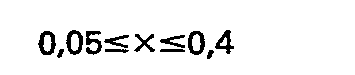
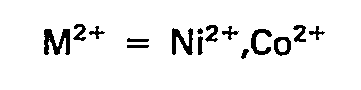
- Mass in the uncharged state a double hydroxide of the general formula in which the running parameter x can assume values between 0.05 and 0.4, where M 2+ is an oxidizable and reducible cation and X n- is at least any type of anion for charge compensation of the complex double hydroxide cation.
- the anion X n- should advantageously be N0 3 -, S0 4 2 - or CO 3 2 -.
- the double-layer structure of the mineral pyroaurite can be assigned to such a double hydroxide, which contains magnesium instead of the Ni or Co according to the invention for M 2+ and instead of the N0 3 - for 1 / n X n 1/2 C0 3 2- .
- the excess charge introduced into the main layers by the uploaded trivalent metal cations is removed by the Anions X- balanced.
- This charge balance is favored by the hydroxyl ions of a main layer originally provided with a charge -1 in that, due to the changed environment of M 2 + and M 3 + ions, they experience a reduction in their bond strength corresponding to a charge ⁇ 1, which enables them to charge> 1 to compensate, wherein the H atom of an M-OH bond is partially bound by another strongly negative atom X.
- the result is the formation of hydrogen bonds OH ... X.
- X ions together with H 2 0 molecules are pushed between the original brucite layers, so that an ionic structure with a succession of main layers is formed (hence "double layer structure").
- a collector electrode with an M 2+ , Fe 3+ double hydroxide according to the invention as an active material is electrochemically immune to iron impurities. This surprising property predestines it especially for use in Ni / Fe batteries, which is to be expressed by the name "siderophilic electrode”.
- the preparative preparation of a Ni, Fe double hydroxide is carried out by simultaneous precipitation of Ni 2+ and Fe 3+ ions from an acidified salt solution using potassium hydroxide solution at a pH of 12.5 and at a temperature of 304 K to 306 K.
- an acidic solution of Ni (NO 3 ) 2 x 6 H 2 0 and Fe (N0 3 ) 3 x 9 H 2 0 is used, for example which are in a molar ratio between 19: 1 and 1.5: 1 to each other. Accordingly, an atomic ratio Ni / Fe in the double hydroxide is set between the limits 95/5 and 60/40.
- a multi-neck glass flask thermostatted to 305 K is used for the practical implementation of the precipitation, in which there is an aqueous KOH solution with the pH value provided for the precipitation.
- carbonate-free 1 to 3 molar KOH solution is injected simultaneously with the metal salt solution with stirring using membrane pumps.
- Deviations in the pH from the setpoint 12.5 are automatically corrected to a tolerance range of +/- 0.1 pH units with dilute potassium hydroxide solution or 1 molar nitric acid.
- a variant of the precipitation conditions for a double hydroxide according to the invention is that the precipitation of the metal salts at the pH of the isoelectric point of the hydroxide is carried out by the respective M 2 + ion.
- a thermostat ensures the preferred reaction temperature of 304 K to 306 K against temperature fluctuations that exceed +/- 1 K.
- Porous sintered bodies as electrode support structures can also be impregnated with the double hydroxide according to the invention as an active positive material.
- collector electrodes are also obtained here by soaking the sintered structure once or several times with the acidified metal salt solution containing Ni 2+ or Co 2+ and Fe 3+ and then immersing it in an alkali metal hydroxide solution.
- impregnation with aqueous metal salt solutions also makes it possible to carry out the precipitation in sintered electrodes in an electrochemical manner.
- the porous sintered body is connected as the cathode.
- hydrogen ions are consumed and the cations in the pores are precipitated in the form of the double hydroxide.
- a high alkali combination electrode (type HA-K05-NS, Ingold) was used in the laboratory to produce various test samples, which aimed at specific atomic ratios Ni / Fe, namely 95/5, 85/15, 80/20 and 70/30 in the precipitation product. as a measurer in controlling the precipitation bass tion used.
- the liquid volumes to be combined in each case were determined with the aid of a small computer (type AIM-65, Rockwell) and their inflow rate adapted to the pH value was regulated by the latter via the action on the diaphragm pumps.
- the total metal ion concentration of the salt solution used was always 0.5 mol / L
- the suspension was stirred for a further 8 to 10 hours.
- the reaction product then came via a hose line directly into a nitrogen-flushed glove box, where it was filled in closable centrifuge beakers made of polypropylene and outside the box in a laboratory centrifuge at 3000 rpm. Centrifuged for 10 minutes. After washing the samples about four times with KOH solution of the pH value of the precipitation reaction or, if appropriate, with double-distilled water, the cleaned product was placed in a desiccator inside the box and dried for three days at room temperature and 10 mbar. All finished samples were stored under an N 2 atmosphere until further electrochemical examination.
- Table 1 summarizes some chemical analysis results.
- the reference substance is ⁇ -Ni (OH) 2 .
- the analysis values if one neglects an insignificant water content, are in good agreement with the formula Ni 4 Fe (OH) l oN0 3 .
- Electrochemical measurements for detecting the iron resistance of Ni / Fe double hydroxides according to the invention were carried out during cyclic charges and discharges.
- Test tubes of approximately 10 cm in length and 1 cm in diameter were used as test electrodes, in which there was a mixture of 2.9 g of test substance and 7 g of nickel powder as the lead material with a nickel rod as the lead.
- These test electrodes were placed in the center of a plexiglass cylinder, which was lined with oversized negative counter electrodes on the inside.
- the counter electrode was either an already heavily corroded Fe / Fe (OH) 2 electrode to force iron poisoning, or a Cd / Cd (OH) 2 electrode of the sintered foil type. 30% KOH solution was used as the electrolyte.
- the current conditions were always: charge at 100 mA for 600 or 700 minutes, discharge at 100 mA until a cell voltage of 1 V or a potential of 0.1 V against Hg / Hg0 was reached.
- Table 2 shows the capacities removed from selected 80/20 samples for the 5th and 30th cycle of an incomplete cycle test and with those of a Ni (OH) 2 electrode (content of the test tube also 2.9 g ß -Ni (OH) 2 + 7 g nickel powder) compared.
- the current yields given for the Ni 4 Fe (OH) 10 N0 3 double hydroxide are mean values from two parallel test series.
- the numerical values enclosed in brackets are current yields which are calculated if the actual current yields obtained correspond to an analytically determined Ni (OH) 2 content of only 70.9% by weight in the double hydroxide (see Table 1), extrapolated to an iron-free hydroxide (100% by weight Ni (OH) 2 ). That these numerical values almost reach the theoretical Faraday yield of 289 mAh / g for the transition Ni (OH) 2 ⁇ Ni O OH at least in the initial phase of the cycle test, gives an indication that the nickel is charged beyond the trivalent level in the presence of the iron not involved in the redox processes themselves.
- the choice of the counterelectrode for a "siderophile" nickel electrode according to the invention - Cd / CdOH 2 or Fe / Fe (OH) 2 - during cyclical charging / discharging operation remains at least until the 30th cycle without any specific influence the mass exploitability. In both cases there is a uniform and expected decrease in capacity given the cylindrical electrode geometry that does not correspond to ideal discharge conditions.
- the charge processes can be formulated as follows using the example of the Ni / Fe double hydroxide:
- the main advantage of the "siderophile" collector electrode according to the invention lies in its surprising insensitivity to iron contamination, which is of particular importance because in many practical applications the use of Cd / Cd (OH) 2 electrodes in favor of more environmentally friendly iron electrodes is dispensed with can.
- the siderophilic nickel electrode can be used particularly advantageously in a nickel / zinc accumulator, for which a special separator is proposed according to DE-PS 31 17 660, the iron aquoxide particles distributed over its surface are reduced to electrocatalytically active, separate iron particles by direct contact with zinc cause a spontaneous evolution of hydrogen, which in this way interrupts the dendrite growth feared by zinc electrodes.
- a special separator is proposed according to DE-PS 31 17 660
- the iron aquoxide particles distributed over its surface are reduced to electrocatalytically active, separate iron particles by direct contact with zinc cause a spontaneous evolution of hydrogen, which in this way interrupts the dendrite growth feared by zinc electrodes.
- the advantage of in this case the targeted, expedient introduction of iron impurities into the cell would not come into play in connection with an iron-sensitive conventional nickel electrode.
- the electrode has a hard discharge characteristic.
- the electrode material according to the invention can be used in button cells or pocket electrodes without design changes.
- the siderophilic behavior of the collector electrode makes membrane separators superfluous and allows relatively low loss high current densities when charging and discharging.
- the saving of nickel by iron does not result in a reduction in the charging capacity compared to a commercially available nickel electrode.
- a further saving of nickel in the framework material by iron is possible.
- the overall energy efficiency of the siderophilic nickel electrode is more favorable than that of pure nickel hydroxide, since the charging potential is lower and the discharge potential is higher than that of pure nickel hydroxide.
Landscapes
- Chemical & Material Sciences (AREA)
- Organic Chemistry (AREA)
- Inorganic Chemistry (AREA)
- Chemical Kinetics & Catalysis (AREA)
- Electrochemistry (AREA)
- General Chemical & Material Sciences (AREA)
- Engineering & Computer Science (AREA)
- Manufacturing & Machinery (AREA)
- Battery Electrode And Active Subsutance (AREA)
- Secondary Cells (AREA)
Abstract


Description
- Die Erfindung betrifft eine positive Sammlerelektrode für Akkumulatoren mit alkalischem Elektrolyten.
- Im allgemeinen wird das aktive Material der positiven Platten eines alkalischen Akkumulators von Nickelhydroxid gebildet. Das aktive Material der negativen Platten ist - im geladenen Zustand - Cadmium oder Eisen. Unabhängig vom Typ der negativen Elektrode wird der alkalische Akkumulator auch als Stahlakkumulator bezeichnet, worin zum Ausdruck kommt, daß zumindest in seinen charakteristischen Konstruktionselementen Eisen eine vorherrschende Rolle spielt. So verdanken nämlich nicht nur die negativen Akkumulatorplatten, sondern gerade auch die positiven Nickelelektroden ihre besondere mechanische Robustheit der Armierung durch ein perforiertes nickelplattiertes Stahlband, dem auch die Rolle des Masseträgers zufällt. Bei den bekannten Röhrchenplatten, die auf Edison zurückgehen und seither kaum verändert worden sind, wird ein solches Stahlband auf den Dorn einer Ziehmaschine spiralig aufgewickelt und das entstandene Röhrchen nach Verfalzen seiner Ränder mit abwechselnden Lagen aus Nickel(II)-hydroxid und Nickelflocken als Leitmaterial gefüllt. Den positiven Sinterfolienplatten liegt ebenfalls als Einlage ein sehr dünnes perforiertes, vernickeltes Stahlband zugrunde, auf welches im Durchlaufverfahren beidseitig Nickelpulver aufpastiert und aufgesintert wird. Das gleiche Trägergerüst besitzen übrigens auch die negativen Cadmiumsinterelektroden.
- In alkalischen Akkumulatoren bilden, sofern man einmal von der negativen Eisen/Eisenhydroxidelektrode des Edison-Akkumulators selbst absieht, die Stahlbandarmierungen die Hauptquelle für Eisenverunreinigungen mit schädlicher Auswirkung auf die Funktion der Nickelelektrode. Die Eisenausschüttung wird durch nicht porenfrei plattierte oder beschädigte Stellen der Bandoberfläche verursacht und kann insbesondere bei Elektroden mit einem Fasermetallgerüst, die neuerdings viel eingesetzt werden, einen erheblichen Umfang annehmen.
- S.U. Falk und A.J. Salkind (AlkaIine Storage Batteries, John Wiley & Sons, Inc., New York, London, Sidney, Toronto 1969, S. 630/31) nehmen an, daß das Eisen durch anodische Oxidation in KOH primär als Ferrat gelöst wird, welches aber nicht stabil ist, sondern unter Sauerstoffabspaltung dreiwertiges Eisenhydroxid bildet.
- Der schädliche Effekt des Eisens wird in einer Verringerung des Ladewirkungsgrads der Nickelelektrode bzw. in einem nicht der Volladung entsprechenden Oxidationszustand gesehen, dadurch verursacht, daß das Eisenhydroxid die Sauerstoffüberspannung an der Elektrodenoberfläche herabsetzt.
- Tatsächlich lassen sich analytisch und mit Hilfe des Tyndall-Effektes kolloidal gelöste Eisenaquoxidpartikel im Elektrolyten nachweisen. Aufgrund einer negativen Oberflächenladung sowie ihres, wie W. Böhnstedt, D.H. Buss, E. Häusler und O. Glemser (Electrochim. Acta 19, 941 (1974)) festgestellt haben, superparamagnetischen Verhaltens werden die Partikel in ein inhomogenes Magnetfeld, wie es jede stromdurchflossene Elektrode besitzt, hineingezogen. Es kommt zu einer Anreicherung von Eisenaquoxid in Anodennähe und zur elektrophoretischen Abscheidung an der Nickelhydroxidoberfläche beim Ladungsvorgang.
- Im Einklang mit diesen Befunden nehmen Mlynarek et al. (J. Appl. Electrochem. 14, 145 (1984)) an, daß der beim Zyklisieren der Elektrode überschrittene Potentialbereich zur Magnetitbildung ausreicht, die sie als Ursache für den von ihnen volumetrisch nachgewiesenen erhöhten Sauerstoffanteil beim Laden in Anwesenheit von Eisenverunreinigungen betrachten. Magnetit ist als guter elektronischer Leiter mit kleiner Sauerstoffüberspannung bekannt
- Gegen die erwähnten kolloiden Eisenaquoxidpartikel ließ sich die Nickelelektrode bisher nur mittels dichter Membranseparatoren schützen. Diese Maßnahme stellt aber wegen der kostenaufwendigen Herstellung des Membranmaterials und wegen seines relativ hohen Widerstandes, der die zulässigen maximalen Lade- und Entladestromdichten stark einschränkt, keine entschiedene Abhilfe dar.
- Der Erfindung liegt daher die Aufgabe zugrunde, eine positive Sammlerelektrode für alkalische Akkumulatoren anzugeben, die mit beliebigen negativen Elektroden alkalischer Systeme, insbesondere aber einer Eisen- oder Zinkelektrode, kombiniert werden kann und hinsichtlich ihrer elektrochemischen Funktion unempfindlich gegen Eisenverunreinigungen ist.
- Die Aufgabe wird erfindungsgemäß dadurch gelöst, daß ihre aktive
- Masse im ungeladenen Zustand ein Doppelhydroxid der allgemeinen Formel

- Eine besonders günstige Zusammensetzung liegt vor, wenn x = 0,2 und M2+ = Ni2+ oder Co2+ ist. Das Anion Xn- sollte vorteilhaft N03-, S04 2- oder CO3 2- sein.
- Normiert man die oben angegebene Formel für den Fall x = 0,2 auf 1 Atom Fe und geht davon aus, daß das Doppelhydroxid aus einer Ni2+- und Fe3+-Ionen enthaltenden Nitratlösung gefällt wurde, erhält man z.B.

- Einem solchen Doppelhydroxid läßt sich die Doppelschichtstruktur des Minerals Pyroaurit zuordnen, welches anstelle des erfindungsgemäßen Ni oder Co für M2+ Magnesium und anstelle des N03- für 1/n Xn- 1/2 C03 2- enthält. Die Pyroauritstruktur, die bei R. Allmann (Chimia 24, 99 - 108 (1970)) beschrieben wird, leitet sich vom Brucitgitter des ß-Ni(OH)2 dadurch ab, daß die Nickellagen in den M(OH)2-Schichten (M = Ni) auch von anderen Kationen M2+ und M3+, sofern diese annähernd gleich groß sind, in statistischer Verteilung eingenommen werden können. Dabei wird der durch die hochgeladenen 3wertigen Metallkationen in die Hauptschichten eingebrachte Ladungsüberschuß von den Anionen X- ausgeglichen. Diesen Ladungsausgleich begünstigen die ursprünglich mit einer Ladung -1 versehenen Hydroxylionen einer Hauptschicht dadurch, daß sie aufgrund der veränderten Umgebung von M2+- und M3+-Ionen eine Verringerung ihrer Bindungsstärke entsprechend einer Ladung < 1 erfahren, was sie befähigt, Ladungen >1 zu kompensieren, wobei das H-Atom einer M-OH-Bindung teilweise durch ein anderes stark negatives Atom X gebunden wird. Das Ergebnis ist die Bildung von Wasserstoffbrücken O-H...X. Auf diese Weise werden X--Ionen zusammen mit H20-Molekülen zwischen die ursprünglichen Brucitschichten geschoben, so daß sich eine ionische Struktur mit einer Aufeinanderfolge von Hauptschichten aus


- Bei einem erfindungsgemäßen Ni, Fe-Doppelhydroxid beispielsweise beträgt der Abstand zwischen zwei Hauptschichten ca.790 pm ( = 7,9 Å).
- Wie noch gezeigt wird, verhält sich eine Sammlerelektrode mit einem M2+, Fe3+-Doppelhydroxid gemäß der Erfindung als aktivem Material gegenüber Eisenverunreinigungen elektrochemisch immun. Diese überraschende Eigenschaft prädestiniert sie besonders für den Einsatz in Ni/Fe-Akkumulatoren, was durch die Benennung "siderophile Elektrode" zum Ausdruck gebracht werden soll.
- Die präparative Darstellung eines Ni, Fe-Doppelhydroxids beispielsweise erfolgt durch Simultanfällung von Ni2+- und Fe3+-Ionen aus einer angesäuerten Salzlösung mittels Kalilauge bei einem pH-Wert von 12,5 und bei einer Temperatur von 304 K bis 306 K. Je nach gewünschter Zusammensetzung des Fällungsprodukts (0,05 < x ≤ 0,4) kommt z.B. eine saure Lösung von Ni(NO3)2 x 6 H20 und Fe (N03)3 x 9 H20 zum Einsatz, bei welcher die Salzmengen in einem Molverhältnis zwischen 19:1 und 1,5:1 zueinander stehen. Entsprechend stellt sich ein Atomverhältnis Ni/Fe im Doppelhydroxid zwischen den Grenzen 95/5 und 60/40 ein.
- Zur praktischen Durchführung der Fällung dient ein auf 305 K thermostatisierter Mehrhalsglaskolben, In dem sich eine wäßrige KOH-Lösung mit dem für die Fällung vorgesehenen pH-Wert befindet. In diesen wird gleichzeitig mit der Metallsalzlösung carbonatfreie 1- bis 3molare KOH-Lösung unter Rühren mit Hilfe von Membranpumpen gespritzt. Abweichungen des pH-Werts vom Sollwert 12,5 werden automatisch mit verdünnter Kalilauge oder 1 molarer Salpetersäure auf einen Toleranzbereich +/- 0,1 pH-Einheiten korrigiert.
- Eine Variante der Fällungsbedingungen für ein erfindungsgemäßes Doppelhydroxid besteht darin, daß die Fällung der Metallsalze am pH-Wert des isoelektrischen Punktes des Hydroxids vom jeweiligen M2+-Ion durchgeführt wird. Auch in diesem Fall sichert ein Thermostat die bevorzugte Reaktionstemperatur von 304 K bis 306 K gegen Temperaturschwankungen, die +/- 1 K übersteigen, ab.
- Poröse Sinterkörper als Elektrodenträgergerüste sind einer Imprägnierung mit dem erfindungsgemäßen Doppelhydroxid als aktivem positiven Material ebenfalls zugänglich. In Anlehnung an die bekannte Verfahrenstechnologie bei der Herstellung von Sinterfolienelektroden werden auch hier Sammlerelektroden durch ein- oder mehrmaliges Tränken des Sintergerüstes mit der angesäuerten, Ni2+ bzw. Co2+ und Fe3+ enthaltenden Metallsalzlösung und anschließendes Tauchen in Alkalilauge erhalten.
- Es liegt weiterhin im Rahmen der Erfindung, die Tränkung mit einer Schmelze beider Metallsalze durchzuführen und das Doppelhydroxid nach dem Erstarren der Schmelze durch Alkalisieren zur Ausfällung zu bringen.
- Die Imprägnierung mittels wässriger Metallsalzlösungen erlaubt es schließlich auch, die Fällung in Sinterelektroden auf elektrochemische Weise vorzunehmen. Bei dem Elektrolyseprozeß ist der poröse Sinterkörper als Kathode geschaltet. Dadurch werden Wasserstoffionen verbraucht und die in den Poren befindlichen Kationen in Form des Doppelhydroxids niedergeschlagen.
- Bei der laboratoriumsmäßigen Herstellung verschiedener Versuchsproben, welche auf bestimmte Atomverhältnisse Ni/Fe, nämlich 95/5, 85/15, 80/20 und 70/30 im Fällungsprodukt abzielte, wurde eine Hochalkali-Einstabmeßkette (Typ HA-K05-NS, Ingold) als Meßnehmer bei der Steuerung der Fällungsreaktion benutzt. Die jeweils zusammenzugebenden Flüssigkeitsvolumina wurden mit Hilfe eines Kleinrechners (Typ AIM-65, Rockwell) ermittelt und deren dem pH-Wert angepaßte Zuflußrate von diesem über die Einwirkung auf die Membranpumpen geregelt. Dabei betrug die Gesamtmetallionenkonzentration der eingesetzten Salzlösung stets 0,5 Mol/L
- Nach dem Ende jeder Fällung wurde die Suspension noch 8 bis 10 Stunden gerührt. Anschließend kam das Reaktionsprodukt über eine Schlauchleitung direkt in eine mit Stickstoff durchspülte Glove-Box und wurde dort in verschließbaren Zentrifugenbechern aus Polypropylen eingefüllt und außerhalb der Box in einer Laborzentrifuge bei 3000 U/min. 10 Minuten lang zentrifugiert. Nach etwa viermaligem Waschen der Proben mit KOH-Lösung vom pH-Wert der Fällungsreaktion oder ggfs. mit doppelt destiliertem Wasser wurde das gereinigte Produkt innerhalb der Box in einen Exsikkator gebracht und drei Tage lang bei Raumtemperatur und 10mbar getrocknet. Die Aufbewahrung aller fertigen Proben bis zu ihrer elektrochemischen Weiteruntersuchung geschah unter N2-Atmosphäre.
- In der nachstehenden Tabelle 1 sind einige Ergebnisse der chemischen Analyse zusammengestellt. Vergleichssubstanz ist β-Ni(OH)2.

- Außer durch die chemische Analyse ist eine Charakterisierung der erfindungsgemäßen Doppelhydroxide durch ihre Röntgendiagramme möglich. Pulveraufnahmen nach Debye-Scherrer (Cu Kα -Strahlung) zeigen im Gegensatz zu solchen von ß-Ni(OH)2 verbreiterte Linien, was auf gestörte Strukturen schließen läßt. Diese können jedoch einer Doppelschichtverbindung vom Pyroaurit-Typ zugeordnet werden. Während mit zunehmendem Fe-Gehalt im Doppelhydroxid die charakteristischen Brucit-Reflexe verschwinden, treten neue Reflexe auf, welche von einer wesentlich größeren Elementarzelle herrühren. Für diese lassen sich beispielsweise bei dem Präparat Ni/Fe = 80/20 vorbehaltlich einer gewissen Fehlerhaftigkeit wegen der Linienbreite Netzebenenabstände d = 789 pm, d = 2370 pm (003), d = 394 pm (006), d = 274 pm (1012) und d = 232 pm (1015) ermitteln. Bei höheren Fe-Gehalten, etwa bei dem Präparat Ni/Fe = 70/30 erwiesen sich die Proben als röntgenamorph.
- Elektrochemische Messungen zum Nachweis der Eisenresistenz erfindungsgemäßer Ni/Fe-Doppelhydroxide wurden während zyklischer Ladungen und Entladungen durchgeführt. Als Versuchselektroden dienten dabei Teströhrchen von ca. 10 cm Länge und 1 cm Durchmesser, in denen sich ein Gemisch von jeweils 2,9 g Probesubstanz und 7 g Nickelpulver als Leitmaterial mit einem Nickelstab als Ableitung befand. Diese Versuchselektroden wurden im Zentrum eines Plexiglaszylinders plaziert, der an seiner Innenseite mit überdimensionierten negativen Gegenelektroden ausgekleidet war. Gegenelektrode war entweder eine bereits stark korrodierte Fe/Fe(OH)2-Elektrode, um eine Eisenvergiftung zu forcieren, oder eine Cd/Cd(OH)2-Elektrode vom Sinterfolientyp. Als Elektrolyt diente 30%ige KOH-Lösung. Die Strombedingungen waren stets: 600 oder 700 Minuten lang mit 100 mA laden, mit 100 mA bis zum Erreichen einer Zellspannung von 1 V bzw. bis zu einem Potential von 0,1 V gegen Hg/Hg0 entladen.
- In der Tabelle 2 sind die bei ausgewählten 80/20-Proben jeweils beim 5. und beim 30. Zyklus eines nicht abgeschlossenen Zyklentests entnommenen Kapazitäten festgehalten und mit denen einer Ni(OH)2-Elektrode (Inhalt des Teströhrchens ebenfalls 2,9 g ß-Ni(OH)2 + 7 g Nickelpulver) verglichen.

- Die für das Ni4Fe(OH)10 N03-Doppelhydroxid angegebenen Stromausbeuten sind Mittelwerte aus zwei parallelen Testreihen. Die in Klammern beigefügten Zahlenwerte sind Stromausbeuten, die sich rechnerisch ergeben, wenn man die tatsächlich erhaltenen Stromausbeuten, welche mit einem analytisch ermittelten Ni(OH)2-Gehalt von nur 70,9 Gew.% im Doppelhydroxid (vergl. Tabelle 1) korrespondieren, auf ein eisenfreies Hydroxid (100 Gew.% Ni(OH)2 extrapoliert. Daß diese Zahlenwerte die theoretische Faraday-Ausbeute von 289 mAh/g für den Übergang Ni(OH)2→ Ni O OH zumindest in der Anfangsphase des Zyklentests nahezu erreichen, gibt einen Hinweis darauf, daß das Nickel in Gegenwart des an den Redox-Vorgängen selbst nicht beteiligten Eisens über die 3wertige Stufe hinaus aufgeladen wird.
- Wie aus der Tabelle 2 weiter ersichtlich, bleibt für eine erfindungsgemäße "siderophile" Nickelelektrode die Wahl der Gegenelektrode - Cd/CdOH2 oder Fe/Fe(OH)2 - beim zyklischen Lade-/Entladebetrieb zumindest bis zum 30. Zyklus ohne spezifischen Einfluß auf die Masseausnutzbarkeit. Es zeigt sich in beiden Fällen ein gleichmäßiger und bei der vorliegenden zylindrischen Elektrodengeometrie, die nicht idealen Entladebedingungen entspricht, durchaus zu erwartender Kapazitätsabfall.
- In auffallendem Gegensatz dazu steht der Kapazitätsverlauf bei der nur reines β-Ni(OH)2 enthaltenden und mit der Fe/Fe(OH)2-Gegenelektrode zyklisierten Vergleichselektrode. Nach einem Konditionsmaximum beim 2. Zyklus ist bereits nach dem 7. Zyklus durch Eisenaufnahme ein totaler Kapazitätsverlust eingetreten.
- Tatsächlich wird durch den Einbau von 3wertigem Eisen in das Wirtsgitter des Ni(OH)2 bzw. Co(OH)2 beim erfindungsgemäßen Doppelhydroxid ein großer Teil des 2wertigen Metalls beim Laden in die 4wertige Oxidationsstufe übergeführt. Für eine Sammlerelektrode gemäß der Erfindung bedeutet dies, daß ein mit dem aufgenommenen Eisen verknüpfter Energiedichte-Verlust - da es zur Stromlieferung nicht beiträgt -, über die Erhöhung der spezifischen Kapazität des 2wertigen Metallhydroxids voll ausgeglichen wird.
- Die Ladungsvorgänge lassen sich am Beispiel des Ni/Fe-Doppelhydroxids wie folgt formulieren:


- Hierbei werden, während der Oxidationsgrad des Nickels zunimmt, Protonen abdissoziiert, was zu einer erhöhten Azidität der Hauptschichten und ersatzweisen Einlagerung hydratisierter K+- bzw. Li+-Ionen aus dem alkalischen Elektrolyten führt.
- Durch die Anwesenheit der Fe3+-Ionen in der Hauptschicht bleiben jedoch selbst bei vollständiger Oxidation des Ni2+ zu Ni4+ die beiden formal zu jedem Fe3+-Ion gehörenden Protonen erhalten. Ein gewisser Restbetrag ist für die Protonendiffusion erforderlich und kann zur Ladungskompeneation der nach außen negativ polarisierten Hauptschichten beitragen. Dies begünstigt die elektrochemische Oxidation der Nickelionen bis zu Ni4+, was sich im Vergleich zu reinem Nickelhydroxid in einer viel höheren Ladekapazität äußert.
- Im Einklang mit der Entstehung von 4wertigem Nickel steht auch der Befund, daß eine erfindungsgemäße Elektrode bei einer um ca. 60 mV höheren Potentiallage im Vergleich zu reinem Nickelhydroxid entlädt. Darüber hinaus konnte im zeitlichen Ladungsverlauf ein scharfer Übergang vom Potential der eigentlichen Ladungsphase zum Potential der Sauerstoffentwicklung beobachtet werden.
- Der wesentliche Vorteil der "siderophilen" Sammlerelektrode gemäß der Erfindung liegt jedoch in ihrer überraschenden Unempfindlichkeit gegen Eisenverunreinigungen, die dadurch besondere Bedeutung erlangt, daß in vielen Anwendungsfällen der Praxis auf den Einsatz von Cd/Cd(OH)2-Elektroden zugunsten umweltfreundlicherer Eisenelektroden verzichtet werden kann.
- Ganz besonders vorteilhaft läßt sich die siderophile Nickelelektrode in einem Nickel/Zink-Akkumulator verwenden, für den gemäß DE-PS 31 17 660 ein spezieller Separator vorgeschlagen wird, dessen über seine Oberfläche verteilten Eisenaquoxidpartikel durch direkte Berührung mit Zink zu elektrokatalytisch aktiven, separaten Eisenpartikeln reduziert werden, wodurch eine spontane Wasserstoffentwicklung ausgelöst wird, welche auf diese Weise das bei Zinkelektroden gefürchtete Dendritenwachstum unterbricht. Der Vorteil der in diesem Fall gezielten, zweckdienlichen Einbringung von Eisenverunreinigungen in die Zelle käme in Verbindung mit einer eisenempfindlichen konventionellen Nickelelektrode nicht zum Tragen.
- Zusammengefaßt besitzt die Sammlerelektrode gemäß der Erfindung die nachstehenden Vorteile:
- Zwischen Ladungsphase und Sauerstoffentwicklung liegt ein ausgeprägter Potentialsprung. Dieser ermöglicht als Spannungssignal eine Ladebegrenzung und macht überflüssige HzO-Zersetzung vermeidbar.
- Die Elektrode besitzt eine harte Entladecharakteristik.
- Bei optimaler Zusammensetzung des gefällten Doppelhydroxids ist die Ladekapazität, bezogen auf die Gesamtmasse, besser als der Stand der Technik bei einer nur aus M(OH)2 (M = Ni, Co) gebildeten positiven Elektrode.
- Das erfindungsgemäße Elektrodenmaterial ist ohne konstruktive Änderungen in Knopfzellen oder Taschenelektroden verwendbar.
- Das siderophile Verhalten der Sammlerelektrode macht Membranseparatoren überflüssig und erlaubt relativ verlustfrei hohe Stromdichten beim Laden und Entladen.
- Das Einsparen von Nickel durch Eisen hat nicht eine Verminderung der Ladekapazität im Vergleich zu einer handelsüblichen Nickelelektrode zur Folge. Außer in der aktiven Masse ist ein weiteres Einsparen von Nickel im Gerüstmaterial durch Eisen möglich.
- Der Gesamtenergie-Wirkungsgrad ist bei der siderophilen Nickelelektrode günstiger als bei reinem Nickelhyroxid, da das Ladepotential niedriger und das Entladepotential höher als bei reinem Nickelhydroxid liegt.
Claims (16)


Applications Claiming Priority (2)
| Application Number | Priority Date | Filing Date | Title |
|---|---|---|---|
| DE19853520108 DE3520108A1 (de) | 1985-06-05 | 1985-06-05 | Positive sammlerelektrode fuer akkumulatoren mit alkalischem elektrolyten |
| DE3520108 | 1985-06-05 |
Publications (2)
| Publication Number | Publication Date |
|---|---|
| EP0204239A2 true EP0204239A2 (de) | 1986-12-10 |
| EP0204239A3 EP0204239A3 (de) | 1989-11-15 |
Family
ID=6272465
Family Applications (1)
| Application Number | Title | Priority Date | Filing Date |
|---|---|---|---|
| EP86107097A Withdrawn EP0204239A3 (de) | 1985-06-05 | 1986-05-26 | Positive Sammlerelektrode für Akkumulatoren mit alkalischem Elektrolyten |
Country Status (4)
| Country | Link |
|---|---|
| US (2) | US4696875A (de) |
| EP (1) | EP0204239A3 (de) |
| JP (1) | JPS61285661A (de) |
| DE (1) | DE3520108A1 (de) |
Cited By (2)
| Publication number | Priority date | Publication date | Assignee | Title |
|---|---|---|---|---|
| EP0336245A3 (de) * | 1988-04-08 | 1989-11-08 | VARTA Batterie Aktiengesellschaft | Positive Sammlerelektrode für Akkumulatoren mit alkalischem Elektrolyten |
| EP0390677A1 (de) * | 1989-03-29 | 1990-10-03 | Centre National D'etudes Spatiales | Verfahren zur Herstellung eines Kobalt-substituierten Nickerhydroxids mit alpha-Struktur, stabil in alkalinem Medium, und seine Verwendung in einem elektrochemischen Generator |
Families Citing this family (20)
| Publication number | Priority date | Publication date | Assignee | Title |
|---|---|---|---|---|
| US5348822A (en) * | 1992-11-12 | 1994-09-20 | Ovonic Battery Company, Inc. | Chemically and compositionally modified solid solution disordered multiphase nickel hydroxide positive electrode for alkaline rechargeable electrochemical cells |
| US5344728A (en) * | 1992-11-12 | 1994-09-06 | Ovonic Battery Company, Inc. | Compositionally and structurally disordered multiphase nickel hydroxide positive electrode for alkaline rechargeable electrochemical cells |
| DE4439987C2 (de) * | 1994-11-09 | 1997-02-27 | Starck H C Gmbh Co Kg | Verfahren zur Herstellung von Mangan (III)-haltigem Nickelhydroxid sowie dessen Verwendung |
| US5905003A (en) * | 1995-06-26 | 1999-05-18 | Energy Conversion Devices, Inc. | Beta to gamma phase cycleable electrochemically active nickel hydroxide material |
| JP2001509300A (ja) * | 1996-11-07 | 2001-07-10 | エナージー コンバーション デバイセス インコーポレイテッド | ベータ相からガンマ相まで反復相変化する電気化学的に活性なニッケル水酸化物材料 |
| GB9720061D0 (en) * | 1997-09-19 | 1997-11-19 | Crosfield Joseph & Sons | Metal compounds as phosphate binders |
| DE19957456A1 (de) * | 1999-11-29 | 2001-05-31 | Starck H C Gmbh Co Kg | Aktivmaterial für wiederaufladbare Batterien |
| CN100521302C (zh) * | 2003-08-18 | 2009-07-29 | 鲍尔热尼系统公司 | 制造镍锌电池的方法 |
| US8703330B2 (en) | 2005-04-26 | 2014-04-22 | Powergenix Systems, Inc. | Nickel zinc battery design |
| MY157620A (en) | 2006-01-31 | 2016-06-30 | Cytochroma Dev Inc | A granular material of a solid water-soluble mixed metal compound capable of binding phosphate |
| GB0714670D0 (en) * | 2007-07-27 | 2007-09-05 | Ineos Healthcare Ltd | Use |
| GB0720220D0 (en) * | 2007-10-16 | 2007-11-28 | Ineos Healthcare Ltd | Compound |
| GB0913525D0 (en) | 2009-08-03 | 2009-09-16 | Ineos Healthcare Ltd | Method |
| EP2489086B1 (de) * | 2009-10-13 | 2021-12-08 | ZincFive Power, Inc. | Zylindrischer nickel-zink-akkumulator mit positiver hülse |
| GB201001779D0 (en) | 2010-02-04 | 2010-03-24 | Ineos Healthcare Ltd | Composition |
| JP6977989B2 (ja) * | 2017-02-17 | 2021-12-08 | 国立大学法人 名古屋工業大学 | 正極及び二次電池 |
| WO2018150898A1 (ja) * | 2017-02-17 | 2018-08-23 | 国立大学法人名古屋工業大学 | ニッケル亜鉛電池 |
| US20240106008A1 (en) * | 2020-12-16 | 2024-03-28 | Technische Universiteit Delft | Energy Apparatus |
| CN113809325B (zh) * | 2021-08-30 | 2023-06-20 | 常州大学 | 基于电活性共价有机框架聚合物的碱性水系二次电池及应用 |
| CN117712515B (zh) * | 2024-01-04 | 2025-03-28 | 德之昭科技(苏州)有限公司 | 一种碱性铁锰蓄电池 |
Family Cites Families (6)
| Publication number | Priority date | Publication date | Assignee | Title |
|---|---|---|---|---|
| DE646006C (de) * | 1932-12-19 | 1937-06-07 | Uno Axel Traegaardh Dr | Verfahren zur Herstellung von aktivem Material fuer positive Elektroden bei alkalischen Akkumulatoren |
| DE1173155B (de) * | 1958-10-08 | 1964-07-02 | Varta Ag | Staendig gasdicht verschlossene alkalische Akkumulatorenzelle und Verfahren zu ihrer Herstellung |
| SE324391B (de) * | 1969-01-31 | 1970-06-01 | Svenska Ackumulator Ab | |
| US4224392A (en) * | 1977-12-16 | 1980-09-23 | Oswin Harry G | Nickel-oxide electrode structure and method of making same |
| DE3117660C2 (de) * | 1981-05-05 | 1984-08-02 | Dieter H. Dr. 3400 Göttingen Buss | Wiederaufladbare elektrochemische Zelle |
| DE3486180T2 (de) * | 1983-07-05 | 1993-12-16 | Japan Storage Battery Co Ltd | Alkalische Sammlerbatterie. |
-
1985
- 1985-06-05 DE DE19853520108 patent/DE3520108A1/de not_active Withdrawn
-
1986
- 1986-05-26 EP EP86107097A patent/EP0204239A3/de not_active Withdrawn
- 1986-06-04 US US06/870,759 patent/US4696875A/en not_active Expired - Fee Related
- 1986-06-05 JP JP61129360A patent/JPS61285661A/ja active Pending
-
1987
- 1987-06-15 US US07/062,730 patent/US4735629A/en not_active Expired - Fee Related
Cited By (3)
| Publication number | Priority date | Publication date | Assignee | Title |
|---|---|---|---|---|
| EP0336245A3 (de) * | 1988-04-08 | 1989-11-08 | VARTA Batterie Aktiengesellschaft | Positive Sammlerelektrode für Akkumulatoren mit alkalischem Elektrolyten |
| EP0390677A1 (de) * | 1989-03-29 | 1990-10-03 | Centre National D'etudes Spatiales | Verfahren zur Herstellung eines Kobalt-substituierten Nickerhydroxids mit alpha-Struktur, stabil in alkalinem Medium, und seine Verwendung in einem elektrochemischen Generator |
| FR2645142A1 (fr) * | 1989-03-29 | 1990-10-05 | Centre Nat Etd Spatiales | Procede de preparation d'un hydroxyde de nickel substitue au cobalt de structure (alpha), stable en milieu alcalin et son utilisation dans un generateur electrochimique |
Also Published As
| Publication number | Publication date |
|---|---|
| DE3520108A1 (de) | 1986-12-11 |
| US4735629A (en) | 1988-04-05 |
| US4696875A (en) | 1987-09-29 |
| JPS61285661A (ja) | 1986-12-16 |
| EP0204239A3 (de) | 1989-11-15 |
Similar Documents
| Publication | Publication Date | Title |
|---|---|---|
| EP0204239A2 (de) | Positive Sammlerelektrode für Akkumulatoren mit alkalischem Elektrolyten | |
| DE68917045T2 (de) | Nickelelektrode für eine alkalische Batterie. | |
| DE69324610T2 (de) | In alkalischer Speicherbatterie verwendete positive Nickelelektrode. | |
| DE69708838T2 (de) | Alkalische Speicherbatterie | |
| DE69721136T2 (de) | Nicht gesinterte Nickelelektrode für alkalische Speicherbatterie, diese enthaltende alkalische Speicherbatterie und Herstellungsverfahren für solch eine Elektrode. | |
| DE69203229T2 (de) | Verfahren zur herstellung von wiederaufladbarem abgeändertem mangandioxid-material und ähnliche verbindungen sowie elektrodenmaterial. | |
| DE69232392T2 (de) | Verfahren zur herstellung einer nickelplatte und einer alkalibatterie | |
| DE69800223T2 (de) | Nickelhydroxid enthaltende positive Elektrode für alkalische Akkumulatoren und Verfahren zu ihrer Herstellung | |
| DE60028725T2 (de) | Pastöse positive Elektrode für alkalische Speicherbatterie und Nickel-Metallhydrid Speicherbatterie | |
| DE112013004139B4 (de) | Elektrodenzelle und Batterie, die dieselbe umfasst | |
| DE69713932T2 (de) | Aktives Material und Positivelektrode für alkalischen Akkumulator | |
| DE4439989C2 (de) | Mangan-haltige Nickel(II)-hydroxid-Pulver, Verfahren zu ihrer Herstellung sowie deren Verwendung | |
| EP0302206A2 (de) | Galvanisches Element | |
| DE3586223T2 (de) | Herstellungsmethode einer gasdichtverschlossenen metalloxid-wasserstoffspeicherzelle. | |
| DE2118541C3 (de) | Alkalischer Sammler mit einer nega tiven Elektrode auf Zink Calziumhydroxid Basis | |
| DE69607808T2 (de) | Nickel-Positivelektrode und alkalische Speicherbatterie diese verwendend | |
| DE3486180T2 (de) | Alkalische Sammlerbatterie. | |
| DE69837739T2 (de) | Nickelhydroxid aktives Material für alkalische Speicherzelle und Herstellungsverfahren | |
| DE19939025A1 (de) | Nickel-Mischydroxid, Verfahren zu dessen Herstellung und dessen Verwendung als Kathodenmaterial in alkalischen Batterien | |
| DE69923141T2 (de) | Positives aktives Material für einen verschlossenen alkalischen Akkumulator | |
| DE69835938T2 (de) | Positives aktives Material für alkalische Speicherbatterie | |
| DE69837121T2 (de) | Nickel/Metalhydrid Speicherbatterie | |
| DE69908123T2 (de) | Nickelelektrode für alkalispeicherbatterien, verfahren zu deren herstellung und alkalispeicherbatterie | |
| DE69736718T2 (de) | Alkalische speicherbatterie und verfahren zum laden dieser batterie | |
| DE1292711B (de) | Verfahren zur Herstellung von Cadmiumelektroden fuer Akkumulatoren |
Legal Events
| Date | Code | Title | Description |
|---|---|---|---|
| PUAI | Public reference made under article 153(3) epc to a published international application that has entered the european phase |
Free format text: ORIGINAL CODE: 0009012 |
|
| AK | Designated contracting states |
Kind code of ref document: A2 Designated state(s): DE FR GB SE |
|
| PUAL | Search report despatched |
Free format text: ORIGINAL CODE: 0009013 |
|
| AK | Designated contracting states |
Kind code of ref document: A3 Designated state(s): DE FR GB SE |
|
| 17P | Request for examination filed |
Effective date: 19900308 |
|
| 17Q | First examination report despatched |
Effective date: 19910225 |
|
| STAA | Information on the status of an ep patent application or granted ep patent |
Free format text: STATUS: THE APPLICATION HAS BEEN WITHDRAWN |
|
| 18W | Application withdrawn |
Withdrawal date: 19910608 |
|
| R18W | Application withdrawn (corrected) |
Effective date: 19910608 |
|
| RIN1 | Information on inventor provided before grant (corrected) |
Inventor name: BUSS, DIETER H., DR. Inventor name: GLEMSER, OSKAR, PROF. DR. DRES. E.H. H.C. Inventor name: BAUER, JUERGEN, DR. |