EP0200362B1 - Verfahren zur Amplifikation, zum Nachweis und/oder zur Klonierung von Nukleinsäuresequenzen - Google Patents
Verfahren zur Amplifikation, zum Nachweis und/oder zur Klonierung von Nukleinsäuresequenzen Download PDFInfo
- Publication number
- EP0200362B1 EP0200362B1 EP86302298A EP86302298A EP0200362B1 EP 0200362 B1 EP0200362 B1 EP 0200362B1 EP 86302298 A EP86302298 A EP 86302298A EP 86302298 A EP86302298 A EP 86302298A EP 0200362 B1 EP0200362 B1 EP 0200362B1
- Authority
- EP
- European Patent Office
- Prior art keywords
- nucleic acid
- sequence
- primer
- primers
- strands
- Prior art date
- Legal status (The legal status is an assumption and is not a legal conclusion. Google has not performed a legal analysis and makes no representation as to the accuracy of the status listed.)
- Expired - Lifetime
Links
- 0 CC(C1OC(C)=C(C)C1C=C1C(*)C2)[C@]1OC2OC Chemical compound CC(C1OC(C)=C(C)C1C=C1C(*)C2)[C@]1OC2OC 0.000 description 1
Images





Classifications
-
- B—PERFORMING OPERATIONS; TRANSPORTING
- B01—PHYSICAL OR CHEMICAL PROCESSES OR APPARATUS IN GENERAL
- B01L—CHEMICAL OR PHYSICAL LABORATORY APPARATUS FOR GENERAL USE
- B01L7/00—Heating or cooling apparatus; Heat insulating devices
- B01L7/52—Heating or cooling apparatus; Heat insulating devices with provision for submitting samples to a predetermined sequence of different temperatures, e.g. for treating nucleic acid samples
-
- C—CHEMISTRY; METALLURGY
- C07—ORGANIC CHEMISTRY
- C07K—PEPTIDES
- C07K14/00—Peptides having more than 20 amino acids; Gastrins; Somatostatins; Melanotropins; Derivatives thereof
- C07K14/795—Porphyrin- or corrin-ring-containing peptides
- C07K14/805—Haemoglobins; Myoglobins
-
- C—CHEMISTRY; METALLURGY
- C12—BIOCHEMISTRY; BEER; SPIRITS; WINE; VINEGAR; MICROBIOLOGY; ENZYMOLOGY; MUTATION OR GENETIC ENGINEERING
- C12N—MICROORGANISMS OR ENZYMES; COMPOSITIONS THEREOF; PROPAGATING, PRESERVING, OR MAINTAINING MICROORGANISMS; MUTATION OR GENETIC ENGINEERING; CULTURE MEDIA
- C12N15/00—Mutation or genetic engineering; DNA or RNA concerning genetic engineering, vectors, e.g. plasmids, or their isolation, preparation or purification; Use of hosts therefor
- C12N15/09—Recombinant DNA-technology
- C12N15/10—Processes for the isolation, preparation or purification of DNA or RNA
-
- C—CHEMISTRY; METALLURGY
- C12—BIOCHEMISTRY; BEER; SPIRITS; WINE; VINEGAR; MICROBIOLOGY; ENZYMOLOGY; MUTATION OR GENETIC ENGINEERING
- C12Q—MEASURING OR TESTING PROCESSES INVOLVING ENZYMES, NUCLEIC ACIDS OR MICROORGANISMS; COMPOSITIONS OR TEST PAPERS THEREFOR; PROCESSES OF PREPARING SUCH COMPOSITIONS; CONDITION-RESPONSIVE CONTROL IN MICROBIOLOGICAL OR ENZYMOLOGICAL PROCESSES
- C12Q1/00—Measuring or testing processes involving enzymes, nucleic acids or microorganisms; Compositions therefor; Processes of preparing such compositions
- C12Q1/68—Measuring or testing processes involving enzymes, nucleic acids or microorganisms; Compositions therefor; Processes of preparing such compositions involving nucleic acids
- C12Q1/6813—Hybridisation assays
- C12Q1/6827—Hybridisation assays for detection of mutation or polymorphism
-
- C—CHEMISTRY; METALLURGY
- C12—BIOCHEMISTRY; BEER; SPIRITS; WINE; VINEGAR; MICROBIOLOGY; ENZYMOLOGY; MUTATION OR GENETIC ENGINEERING
- C12Q—MEASURING OR TESTING PROCESSES INVOLVING ENZYMES, NUCLEIC ACIDS OR MICROORGANISMS; COMPOSITIONS OR TEST PAPERS THEREFOR; PROCESSES OF PREPARING SUCH COMPOSITIONS; CONDITION-RESPONSIVE CONTROL IN MICROBIOLOGICAL OR ENZYMOLOGICAL PROCESSES
- C12Q1/00—Measuring or testing processes involving enzymes, nucleic acids or microorganisms; Compositions therefor; Processes of preparing such compositions
- C12Q1/68—Measuring or testing processes involving enzymes, nucleic acids or microorganisms; Compositions therefor; Processes of preparing such compositions involving nucleic acids
- C12Q1/6844—Nucleic acid amplification reactions
- C12Q1/6853—Nucleic acid amplification reactions using modified primers or templates
-
- C—CHEMISTRY; METALLURGY
- C12—BIOCHEMISTRY; BEER; SPIRITS; WINE; VINEGAR; MICROBIOLOGY; ENZYMOLOGY; MUTATION OR GENETIC ENGINEERING
- C12Q—MEASURING OR TESTING PROCESSES INVOLVING ENZYMES, NUCLEIC ACIDS OR MICROORGANISMS; COMPOSITIONS OR TEST PAPERS THEREFOR; PROCESSES OF PREPARING SUCH COMPOSITIONS; CONDITION-RESPONSIVE CONTROL IN MICROBIOLOGICAL OR ENZYMOLOGICAL PROCESSES
- C12Q1/00—Measuring or testing processes involving enzymes, nucleic acids or microorganisms; Compositions therefor; Processes of preparing such compositions
- C12Q1/68—Measuring or testing processes involving enzymes, nucleic acids or microorganisms; Compositions therefor; Processes of preparing such compositions involving nucleic acids
- C12Q1/6844—Nucleic acid amplification reactions
- C12Q1/6858—Allele-specific amplification
-
- C—CHEMISTRY; METALLURGY
- C12—BIOCHEMISTRY; BEER; SPIRITS; WINE; VINEGAR; MICROBIOLOGY; ENZYMOLOGY; MUTATION OR GENETIC ENGINEERING
- C12Q—MEASURING OR TESTING PROCESSES INVOLVING ENZYMES, NUCLEIC ACIDS OR MICROORGANISMS; COMPOSITIONS OR TEST PAPERS THEREFOR; PROCESSES OF PREPARING SUCH COMPOSITIONS; CONDITION-RESPONSIVE CONTROL IN MICROBIOLOGICAL OR ENZYMOLOGICAL PROCESSES
- C12Q1/00—Measuring or testing processes involving enzymes, nucleic acids or microorganisms; Compositions therefor; Processes of preparing such compositions
- C12Q1/68—Measuring or testing processes involving enzymes, nucleic acids or microorganisms; Compositions therefor; Processes of preparing such compositions involving nucleic acids
- C12Q1/6844—Nucleic acid amplification reactions
- C12Q1/686—Polymerase chain reaction [PCR]
-
- B—PERFORMING OPERATIONS; TRANSPORTING
- B01—PHYSICAL OR CHEMICAL PROCESSES OR APPARATUS IN GENERAL
- B01J—CHEMICAL OR PHYSICAL PROCESSES, e.g. CATALYSIS OR COLLOID CHEMISTRY; THEIR RELEVANT APPARATUS
- B01J2219/00—Chemical, physical or physico-chemical processes in general; Their relevant apparatus
- B01J2219/00274—Sequential or parallel reactions; Apparatus and devices for combinatorial chemistry or for making arrays; Chemical library technology
- B01J2219/00277—Apparatus
- B01J2219/00495—Means for heating or cooling the reaction vessels
-
- B—PERFORMING OPERATIONS; TRANSPORTING
- B01—PHYSICAL OR CHEMICAL PROCESSES OR APPARATUS IN GENERAL
- B01J—CHEMICAL OR PHYSICAL PROCESSES, e.g. CATALYSIS OR COLLOID CHEMISTRY; THEIR RELEVANT APPARATUS
- B01J2219/00—Chemical, physical or physico-chemical processes in general; Their relevant apparatus
- B01J2219/00274—Sequential or parallel reactions; Apparatus and devices for combinatorial chemistry or for making arrays; Chemical library technology
- B01J2219/00583—Features relative to the processes being carried out
- B01J2219/0059—Sequential processes
-
- B—PERFORMING OPERATIONS; TRANSPORTING
- B01—PHYSICAL OR CHEMICAL PROCESSES OR APPARATUS IN GENERAL
- B01J—CHEMICAL OR PHYSICAL PROCESSES, e.g. CATALYSIS OR COLLOID CHEMISTRY; THEIR RELEVANT APPARATUS
- B01J2219/00—Chemical, physical or physico-chemical processes in general; Their relevant apparatus
- B01J2219/00274—Sequential or parallel reactions; Apparatus and devices for combinatorial chemistry or for making arrays; Chemical library technology
- B01J2219/00718—Type of compounds synthesised
- B01J2219/0072—Organic compounds
- B01J2219/00722—Nucleotides
-
- C—CHEMISTRY; METALLURGY
- C12—BIOCHEMISTRY; BEER; SPIRITS; WINE; VINEGAR; MICROBIOLOGY; ENZYMOLOGY; MUTATION OR GENETIC ENGINEERING
- C12Q—MEASURING OR TESTING PROCESSES INVOLVING ENZYMES, NUCLEIC ACIDS OR MICROORGANISMS; COMPOSITIONS OR TEST PAPERS THEREFOR; PROCESSES OF PREPARING SUCH COMPOSITIONS; CONDITION-RESPONSIVE CONTROL IN MICROBIOLOGICAL OR ENZYMOLOGICAL PROCESSES
- C12Q1/00—Measuring or testing processes involving enzymes, nucleic acids or microorganisms; Compositions therefor; Processes of preparing such compositions
- C12Q1/68—Measuring or testing processes involving enzymes, nucleic acids or microorganisms; Compositions therefor; Processes of preparing such compositions involving nucleic acids
- C12Q1/6876—Nucleic acid products used in the analysis of nucleic acids, e.g. primers or probes
- C12Q1/6883—Nucleic acid products used in the analysis of nucleic acids, e.g. primers or probes for diseases caused by alterations of genetic material
-
- C—CHEMISTRY; METALLURGY
- C12—BIOCHEMISTRY; BEER; SPIRITS; WINE; VINEGAR; MICROBIOLOGY; ENZYMOLOGY; MUTATION OR GENETIC ENGINEERING
- C12Q—MEASURING OR TESTING PROCESSES INVOLVING ENZYMES, NUCLEIC ACIDS OR MICROORGANISMS; COMPOSITIONS OR TEST PAPERS THEREFOR; PROCESSES OF PREPARING SUCH COMPOSITIONS; CONDITION-RESPONSIVE CONTROL IN MICROBIOLOGICAL OR ENZYMOLOGICAL PROCESSES
- C12Q1/00—Measuring or testing processes involving enzymes, nucleic acids or microorganisms; Compositions therefor; Processes of preparing such compositions
- C12Q1/68—Measuring or testing processes involving enzymes, nucleic acids or microorganisms; Compositions therefor; Processes of preparing such compositions involving nucleic acids
- C12Q1/6876—Nucleic acid products used in the analysis of nucleic acids, e.g. primers or probes
- C12Q1/6883—Nucleic acid products used in the analysis of nucleic acids, e.g. primers or probes for diseases caused by alterations of genetic material
- C12Q1/6886—Nucleic acid products used in the analysis of nucleic acids, e.g. primers or probes for diseases caused by alterations of genetic material for cancer
-
- C—CHEMISTRY; METALLURGY
- C12—BIOCHEMISTRY; BEER; SPIRITS; WINE; VINEGAR; MICROBIOLOGY; ENZYMOLOGY; MUTATION OR GENETIC ENGINEERING
- C12Q—MEASURING OR TESTING PROCESSES INVOLVING ENZYMES, NUCLEIC ACIDS OR MICROORGANISMS; COMPOSITIONS OR TEST PAPERS THEREFOR; PROCESSES OF PREPARING SUCH COMPOSITIONS; CONDITION-RESPONSIVE CONTROL IN MICROBIOLOGICAL OR ENZYMOLOGICAL PROCESSES
- C12Q1/00—Measuring or testing processes involving enzymes, nucleic acids or microorganisms; Compositions therefor; Processes of preparing such compositions
- C12Q1/68—Measuring or testing processes involving enzymes, nucleic acids or microorganisms; Compositions therefor; Processes of preparing such compositions involving nucleic acids
- C12Q1/6876—Nucleic acid products used in the analysis of nucleic acids, e.g. primers or probes
- C12Q1/6888—Nucleic acid products used in the analysis of nucleic acids, e.g. primers or probes for detection or identification of organisms
- C12Q1/689—Nucleic acid products used in the analysis of nucleic acids, e.g. primers or probes for detection or identification of organisms for bacteria
-
- C—CHEMISTRY; METALLURGY
- C40—COMBINATORIAL TECHNOLOGY
- C40B—COMBINATORIAL CHEMISTRY; LIBRARIES, e.g. CHEMICAL LIBRARIES
- C40B40/00—Libraries per se, e.g. arrays, mixtures
- C40B40/04—Libraries containing only organic compounds
- C40B40/06—Libraries containing nucleotides or polynucleotides, or derivatives thereof
-
- C—CHEMISTRY; METALLURGY
- C40—COMBINATORIAL TECHNOLOGY
- C40B—COMBINATORIAL CHEMISTRY; LIBRARIES, e.g. CHEMICAL LIBRARIES
- C40B60/00—Apparatus specially adapted for use in combinatorial chemistry or with libraries
- C40B60/14—Apparatus specially adapted for use in combinatorial chemistry or with libraries for creating libraries
Definitions
- the present invention relates to a process for amplifying existing nucleic acid sequences if they are present in a test sample and detecting them if present by using a probe. More specifically, it relates to a process for producing any particular nucleic acid sequence from a given sequence of DNA or RNA in amounts which are large compared to the amount initially present so as to facilitate detection of the sequences.
- the DNA or RNA may be single- or double-stranded, and may be a relatively pure species or a component of a mixture of nucleic acids.
- the process of the invention utilizes a repetitive reaction to accomplish the amplification of the desired nucleic acid sequence.
- the target nucleic acid sequence may be only a small portion of the DNA or RNA in question, so that it may be difficult to detect its presence using nonisotopically labeled or end-labeled oligonucleotide probes.
- Much effort is being expended in increasing the sensitivity of the probe detection systems, but little research has been conducted on amplifying the target sequence so that it is present in quantities sufficient to be readily detectable using currently available methods.
- One known method for synthesizing nucleic acids de novo involves the organic synthesis of a nucleic acid from nucleoside derivatives. This synthesis may be performed in solution or on a solid support.
- One type of organic synthesis is the phosphotriester method, which has been utilized to prepare gene fragments or short genes. In the phosphotriester method, oligonucleotides are prepared which can then be joined together to form longer nucleic acids.
- this method see Narang, S.A., et al., Meth. Enzymol. , 68 , 90 (1979) and U.S. Patent No. 4,356,270. The patent describes the synthesis and cloning of the somatostatin gene.
- a second type of organic synthesis is the phosphodiester method, which has been utilized to prepare a tRNA gene. See Brown, E.L., et al., Meth. Enzymol. , 68 , 109 (1979) for a description of this method.
- the phosphodiester method involves synthesis of oligonucleotides which are subsequently joined together to form the desired nucleic acid.
- nucleic acids in large amounts from small amounts of the initial existing nucleic acid. These methods involve the cloning of a nucleic acid in the appropriate host system, where the desired nucleic acid is inserted into an appropriate vector which is used to transform the host. When the host is cultured the vector is replicated, and hence more copies of the desired nucleic acid are produced.
- appropriate vector which is used to transform the host.
- the vector is replicated, and hence more copies of the desired nucleic acid are produced.
- subcloning nucleic acid fragements see Maniatis, T., et al., Molecular Cloning: A Laboratory Manual , Cold Spring Harbor Laboratory, pp. 390-401 (1982). See also the techniques described in U.S. Patent Nos. 4,416,988 and 4,403,036.
- a third method for synthesizing nucleic acids is a hybrid of the above-described organic synthesis and molecular cloning methods.
- the appropriate number of oligonucleotides to make up the desired nucleic acid sequence is organically synthesized and inserted sequentially into a vector which is amplified by growth prior to each succeeding insertion.
- the present invention bears some similarity to the molecular cloning method; however, it does not involve the propagation of any organism and thereby avoids the possible hazards or inconvenience which this entails.
- the present invention also does not require synthesis of nucleic acid sequences unrelated to the desired sequence, and thereby the present invention obviates the need for extensive purification of the product from a complicated biological mixture.
- the present invention resides in a process for amplifying one or more specific nucleic acid sequences present in a nucleic acid or mixture thereof using primers and agents for polymerization and then detecting the amplified sequence.
- the extension product of one primer when hybridized to the other becomes a template for the production of the desired specific nucleic acid sequence, and vice versa, and the process is repeated as often as is necessary to produce the desired amount of the sequence.
- This method is expected to be more efficient than the methods described above for producing large amounts of nucleic acid from a target sequence and to produce such nucleic acid in a comparatively short period of time.
- the present method is especially useful for amplifying rare species of nucleic acid present in a mixture of nucleic acids for effective detection of such species.
- the present invention provides a process for detecting the presence or absence of at least one specific double-stranded nucleic acid sequence in a sample, or distinguishing between two different double-stranded nucleic acid sequences in said sample, which process comprises first exponentially amplifying the specific sequence or sequences (if present) by the following steps, and then detecting the thus-amplified sequence or sequences (if present):
- the invention further provides a process wherein a single-stranded nucleic acid sequence which it is desired to detect is first treated under hybirdizing conditions with a primer, inducing agent for polymerization and the different nucleotides, to form a complementary strand thereto thereby to provide a starting double-stranded nucleic acid sequence and to permit detection of said single-stranded sequence.
- steps (a) to (c) may be conducted sequentially or simultaneously.
- kits for the detection of at least one specific nucleic acid sequence in a sample which kit comprises, in packaged form, a multicontainer unit having:
- the invention provides a process for cloning into a vector a specific double-stranded nucleic acid sequence or sequences contained in a nucleic acid or a mixture of nucleic acids, which process comprises first amplifying said sequence or sequences, by the following steps:
- the invention herein relates to a process for synthesizing a nucleic acid fragment from an existing double-stranded nucleic acid sequence having fewer nucleotides than the fragment being synthesized and two oligonucleotide primers, wherein the nucleic acid being synthesized is comprised of a left segment, a core segment and a right segment, and wherein the core segment represents at least substantially the nucleotide sequence of said existing nucleic acid sequence, and the right and left segments represent the nucleotide sequence present at one end of each of the two primers, the other ends of which are complementary or substantially complementary to ends of the single strands produced by separating the strands of said existing nucleic acid sequence, which process comprises:
- Co-pending European Application No. 201184 discloses processes for amplifying nucleic acid sequences.
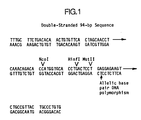
- Figure 1 illustrates a 94 base pair length sequence of human ⁇ -globin desired to be amplified.
- the single base pair change which is associated with sickle cell anemia is depicted beneath the 94-mer.
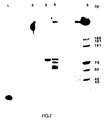
- Figure 2 illustrates a photograph of an ethidium bromide-stained polyacrylamide gel demonstrating amplification of the 94-mer contained in human wild-type DNA and in a plasmid containing a 1.9 kb Bam HI fragment of the normal ⁇ -globin gene (designated pBR328:HbA).
- Figure 3 illustrates a photograph of an ethidium bromide-stained polyacrylamide gel demonstrating amplification of any of the specific target 94-mer sequence present in pBR328:HbA, a plasmid containing a 1.9 kb Bam HI fragment of the sickle cell allele of ⁇ -globin (designated pBR328:HbS), pBR328:HbA where the sequence to be amplified is cleaved with Mst II, and pBR328:HbS where the sequence to be amplified has been treated but not cleaved with Mst II.
- pBR328:HbS plasmid containing a 1.9 kb Bam HI fragment of the sickle cell allele of ⁇ -globin
- Figure 4 illustrates in detail the steps and products of the polymerase chain reaction for amplification of the desired 94-mer sequence of human ⁇ -globin for three cycles using two oligonucleotide primers.
- Figure 5 represents a photograph of an ethidium bromide-stained polyacrylamide gel demonstrating amplification after four cycles of a 240-mer sequence in pBR328:HbA, where the aliquots are digested with Nco I (Lane 3), Mst II (Lane 4) or Hin fI (Lane 5). Lane 1 is the molecular weight standard and Lane 2 contains the intact 240-bp product.
- Figure 6 illustrates the sequence of the normal ( ⁇ A ) and sickle cell ( ⁇ S ) ⁇ -globin genes in the region of the Dde I and Hin fI restriction sites, where the single lines for ⁇ A mark the position of the Dde I site (CTGAG) and the double bars for ⁇ A and ⁇ S mark the position of the Hin fI site (GACTC).
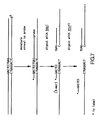
- Figure 7 illustrates the results of sequential digestion of normal ⁇ -globin using a 40-mer probe and Dde I followed by Hin fI restriction enzymes.
- Figure 8 illustrates the results of sequential digestion of sickle ⁇ -globin using the same 40-mer probe as in Figure 7 and Dde I followed by Hin fI restriction enzymes.
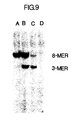
- Figure 9 illustrates a photograph of an ethidium bromide-stained polyacrylamide gel demonstrating the use of the same 40-mer probe as in Figure 7 to specifically characterize the beta-globin alleles present in samples of whole human DNA which have been subjected to amplification, hybridization with the probe, and sequential digestion with Dde I and Hin fI.
- Figure 10 illustrates a photograph of a 6% NuSieve agarose gel visualized using ethidium bromide and UV light. This photograph demonstrates amplification of a sub-fragment of 110-bp amplification product which sub-fragment is an inner nested set within the 110-bp fragment.
- oligonucleotide as used herein in referring to primers, probes, oligomer fragments to be detected, oligomer controls and unlabeled blocking oligomers is defined as a molecule comprised of two or more deoxyribonucleotides or ribonucleotides, preferably more than three. Its exact size will depend on many factors, which in turn depend on the ultimate function or use of the oligonucleotide.
- primer refers to an oligonucleotide whether occurring naturally as in a purified restriction digest or produced synthetically, which is capable of acting as a point of initiation of synthesis when placed under conditions in which synthesis of a primer extension product which is complementary to a nucleic acid strand is induced, i.e., in the presence of nucleotides and an agent for polymerization such as DNA polymerase and at a suitable temperature and pH.
- the primer is preferably single stranded for maximum efficiency in amplification, but may alternatively be double stranded. If double stranded, the primer is first treated to separate its strands before being used to prepare extension products.
- the primer is an oligodeoxyribonucleotide.
- the primer must be sufficiently long to prime the synthesis of extension products in the presence of the agent for polymerization.
- the exact lengths of the primers will depend on many factors, including temperature and source of primer.
- the oligonucleotide primer typically contains 15-25 or more nucleotides, although it may contain fewer nucleotides. Short primer molecules generally require cooler temperatures to form sufficiently stable hybrid complexes with template.
- the primers herein are selected to be “substantially" complementary to the different strands of each specific sequence to be amplified. This means that the primers must be sufficiently complementary to hybridize with their respective strands. Therefore, the primer sequence need not reflect the exact sequence of the template. For example, a non-complementary nucleotide fragment may be attached to the 5' end of the primer, with the remainder of the primer sequence being complementary to the strand. Alternatively, non-complementary bases or longer sequences can be interspersed into the primer, provided that the primer sequence has sufficient complementarity with the sequence of the strand to be amplified to hybridize therewith and thereby form a template for synthesis of the extension product of the other primer.
- restriction endonucleases and “restriction enzymes” refer to bacterial enzymes each of which cut double-stranded DNA at or near a specific nucleotide sequence.
- DNA polymorphism refers to the condition in which two or more different nucleotide sequences can exist at a particular site in DNA.
- restriction fragment length polymorphism refers to the differences among individuals in the lengths of restriction fragments formed by digestion with a particular restriction endonuclease.
- the present invention is directed to a process for amplifying any one or more desired specific nucleic acid sequences suspected of being in a nucleic acid. Because large amounts of a specific sequence may be produced by this process, the present invention may be used for improving the efficiency of cloning DNA or messenger RNA and for amplifying a target sequence to facilitate detection thereof.
- the present process involves a chain reaction for producing, in exponential quantities relative to the number of reaction steps involved, at least one specific nucleic acid sequence given (a) that the ends of the required sequence are known in sufficient detail that oligonucleotides can be synthesized which will hybridize to them, and (b) that a small amount of the sequence is available to initiate the chain reaction.
- the product of the chain reaction will be a discrete nucleic acid duplex with termini corresponding to the ends of the specific primers employed.
- nucleic acid in purified or nonpurified form, can be utilized as the starting nucleic acid or acids, provided it is suspected of containing the specific nucleic acid sequence desired.
- the process may employ, for example, DNA or RNA, including messenger RNA, which DNA or RNA may be single stranded or double stranded.
- a DNA-RNA hybrid which contains one strand of each may be utilized.
- a mixture of any of these nucleic acids may also be employed, or the nucleic acids produced from a previous amplification reaction herein using the same or different primers may be so utilized.
- the specific nucleic acid sequence to be amplified may be only a fraction of a larger molecule or can be present initially as a discrete molecule, so that the specific sequence constitutes the entire nucleic acid. It is not necessary that the sequence to be amplified be present initially in a pure form; it may be a minor fraction of a complex mixture, such as a portion of the ⁇ -globin gene contained in whole human DNA or a portion of nucleic acid sequence due to a particular microorganism which organism might constitute only a very minor fraction of a particular biological sample.
- the starting nucleic acid may contain more than one desired specific nucleic acid sequence which may be the same or different. Therefore, the present process is useful not only for producing large amounts of one specific nucleic acid sequence, but also for amplifying simultaneously more than one different specific nucleic acid sequence located on the same or different nucleic acid molecules.
- the nucleic acid or acids may be obtained from any source, for example, from plasmids such as pBR322, from cloned DNA or RNA, or from natural DNA or RNA from any source, including bacterial, yeast, viruses, and higher organisms such as plants or animals.
- DNA or RNA may be extracted from blood, tissue material such as chorionic villi or amniotic cells by a variety of techniques such as that described by Maniatis et al., Molecular Cloning (1982), 280-281.
- any specific nucleic acid sequence can be produced by the present process. It is only necessary that a sufficient number of bases at both ends of the sequence be known in sufficient detail so that two oligonucleotide primers can be prepared which will hybridize to different strands of the desired sequence and at relative positions along the sequence such that an extension product synthesized from one primer, when it is separated from its template (complement), can serve as a template for extension of the other primer into a nucleic acid of defined length.
- the greater the knowledge about the bases at both ends of the sequence the greater can be the specificity of the primers for the target nucleic acid sequence, and thus the greater the efficiency of the process.
- primer as used hereinafter may refer to more than one primer, particularly in the case where there is some ambiguity in the information regarding the terminal sequence(s) of the fragment to be amplified. For instance, in the case where a nucleic acid sequence is inferred from protein sequence information a collection of primers containing sequences representing all possible codon variations based on degeneracy of the genetic code will be used for each strand. One primer from this collection will be homologous with the end of the desired sequence to be amplified.
- the oligonucleotide primers may be prepared using any suitable method, such as, for example, the phosphotriester and phosphodiester methods described above, or automated embodiments thereof.
- diethylphosphoramidites are used as starting materials and may be synthesized as described by Beaucage et al., Tetrahedron Letters (1981), 22:1859-1862.
- One method for synthesizing oligonucleotides on a modified solid support is described in U.S. Patent No. 4,458,066. It is also possible to use a primer which has been isolated from a biological source (such as a restriction endonuclease digest).
- the specific nucleic acid sequence is produced by using the nucleic acid containing that sequence as a template. If the nucleic acid contains two strands, it is necessary to separate the strands of the nucleic acid before it can be used as the template, either as a separate step or simultaneously with the synthesis of the primer extension products. This strand separation can be accomplished by any suitable denaturing methods including physical, chemical or enzymatic means.
- One physical method of separating the strands of the nucleic acid involves heating the nucleic acid until it is completely (>99%) denatured. Typical heat denaturation may involve temperatures ranging from about 80 to 105°C for times ranging from about 1 to 10 minutes.
- Strand separation may also be induced by an enzyme from the class of enzymes known as helicases or the enzyme RecA, which has helicase activity and in the presence of riboATP is known to denature DNA.
- the reaction conditions suitable for separating the strands of nucleic acids with helicases are described by Kuhn Hoffmann-Berling, CSH-Quantitative Biology , 43 :63 (1978), and techniques for using RecA are reviewed in C. Radding, Ann. Rev. Genetics , 16 :405-37 (1982).
- the original nucleic acid containing the sequence to be amplified is single stranded, its complement is synthesized by adding one or two oligonucleotide primers thereto. If an appropriate single primer is added, a primer extension product is synthesized in the presence of the primer, an agent for polymerization and the four nucleotides described below. The product will be partially complementary to the single-stranded nucleic acid and will hybridize with the nucleic acid strand to form a duplex of unequal length strands that may then be separated into single strands as described above to produce two single separated complementary strands. Alternatively, two appropriate primers may be added to the single-stranded nucleic acid and the reaction carried out.
- the primer extension product(s) produced will be completely complementary to the strands of the original nucleic acid and will hybridize therewith to form a duplex of equal length strands to be separated into single-stranded molecules.
- the strands are ready to be used as a template for the synthesis of additional nucleic acid strands.
- This synthesis can be performed using any suitable method. Generally it occurs in a buffered aqueous solution, preferably at a pH of 7-9, most preferably about 8.
- a molar excess for cloned nucleic acid, usually about 1000:1 primer:template, and for genomic nucleic acid, usually about 106:1 primer:template
- a molar excess for cloned nucleic acid, usually about 1000:1 primer:template, and for genomic nucleic acid, usually about 106:1 primer:template
- the amount of complementary strand may not be known if the process herein is used for diagnostic applications, so that the amount of primer relative to the amount of complementary strand cannot be determined with certainty.
- the amount of primer added will generally be in molar excess over the amount of complementary strand (template) when the sequence to be amplified is contained in a mixture of complicated long-chain nucleic acid strands. A large molar excess is preferred to improve the efficiency of the process.
- the deoxyribonucleoside triphosphates dATP, dCTP, dGTP and TTP are also added to the synthesis mixture in adequate amounts and the resulting solution is heated to about 90-100°C for from about 1 to 10 minutes, preferably from 1 to 4 minutes. After this heating period the solution is allowed to cool to from 20-40°C, which is preferable for the primer hybridization.
- an agent for polymerization To the cooled mixture is added an agent for polymerization, and the reaction is allowed to occur under conditions known in the art. This synthesis reaction may occur at from room temperature up to a temperature above which the agent for polymerization no longer functions efficiently. Thus, for example, if DNA polymerase is used as the agent for polymerization, the temperature is generally no greater than about 45°C.
- DMSO dimethylsulfoxide
- an effective amount e.g., 10% by volume
- DMSO is added to the amplification mixture, and the reaction is carried at 35-40°C, to obtain detectable results or to enable cloning.
- the agent for polymerization may be any compound or system which will function to accomplish the synthesis of primer extension products, including enzymes.
- Suitable enzymes for this purpose include, for example, E. coli DNA polymerase I, Klenow fragment of E. coli DNA polymerase I, T4 DNA polymerase, other available DNA polymerases, reverse transcriptase, and other enzymes, including heat-stable enzymes, which will facilitate combination of the nucleotides in the proper manner to form the primer extension products which are complementary to each nucleic acid strand.
- the synthesis will be initiated at the 3' end of each primer and proceed in the 5' direction along the template strand, until synthesis terminates, producing molecules of different lengths.
- the newly synthesized strand and its complementary nucleic acid strand form a double-stranded molecule which is used in the succeeding steps of the process.
- the strands of the double-stranded molecule are separated using any of the procedures described about to provide single-stranded molecules.
- New nucleic acid is synthesized on the single-stranded molecules. Additional inducing agent, nucleotides and primers may be added if necessary for the reaction to proceed under the conditions prescribed above. Again, the synthesis will be initiated at one end of the oligonucleotide primers and will proceed along the single strands of the template to produce additional nucleic acid. After this step, half of the extension product will consist of the specific nucleic acid sequence bounded by the two primers.
- the steps of strand separation and extension product synthesis can be repeated as often as needed to produce the desired quantity of the specific nucleic acid sequence. As will be described in further detail below, the amount of the specific nucleic acid sequence produced will accumulate in an exponential fashion.
- the appropriate number of different oligonucleotide primers are utilized. For example, if two different specific nucleic acid sequences are to be produced, four primers are utilized. Two of the primers are specific for one of the specific nucleic acid sequences and the other two primers are specific for the second specific nucleic acid sequence. In this manner, each of the two different specific sequences can be produced exponentially by the present process.
- the present invention can be performed in a step-wise fashion where after each step new reagents are added, or simultaneously, where all reagents are added at the initial step, or partially step-wise and partially simultaneous, where fresh reagent is added after a given number of steps.
- a method of strand separation such as heat, is employed which will inactivate the agent for polymerization, as in the case of a heat-labile enzyme, then it is necessary to replenish the agent for polymerization after every strand separation step.
- the simultaneous method may be utilized when a number of purified components, including an enzymatic means such as helicase, is used for the strand separation step.
- the reaction mixture may contain, in addition to the nucleic acid strand(s) containing the desired sequence, the strand-separating enzyme (e.g., helicase), an appropriate energy source for the strand-separating enzyme, such as rATP, the four nucleotides, the oligonucleotide primers in molar excess, and the inducing agent, e.g., Klenow fragment of E. coli DNA polymerase I.
- the strand-separating enzyme e.g., helicase
- an appropriate energy source for the strand-separating enzyme such as rATP
- the four nucleotides such as rATP
- the oligonucleotide primers in molar excess
- the inducing agent e.g., Klenow fragment of E. coli DNA polymerase I.
- a heat-stable inducing agent such as a thermostable polymerase may be employed which will operate at an elevated temperature, preferably 65-90°C depending on the inducing agent, at which temperature the nucleic acid will consist of single and double strands in equilibrium. For smaller lengths of nucleic acid, lower temperatures of about 50°C may be employed. The upper temperature will depend on the temperature at which the enzyme will degrade or the temperature above which an insufficient level of primer hybridization will occur.
- a heat-stable enzyme is described, e.g., by A. S. Kaledin et al., Biokhimiya , 45 , 644-651 (1980).
- reaction may be halted by inactivating the enzymes in any known manner or separating the components of the reaction.
- the process of the present invention may be conducted continuously.
- the reaction may be cycled through a denaturing region, a reagent addition region, and a reaction region.
- the enzyme used for the synthesis of primer extension products can be immobilized in a column.
- the other reaction components can be continuously circulated by a pump through the column and a heating coil in series, thus the nucleic acids produced can be repeatedly denatured without inactivating the enzyme.
- the long products thus produced will act as templates for one or the other of the oligonucleotide primers during subsequent cycles and will produce molecules of the desired sequence [S+] or [S ⁇ ] These molecules will also function as templates for one or the other of the oligonucleotide primers, producing further [S+] and [S ⁇ ], and thus a chain reaction can be sustained which will result in the accumulation of [S] at an exponential rate relative to the number of cycles.
- [S] The specific sequence to be amplified, [S], can be depicted diagrammatically as:
- the appropriate oligonucleotide primers would be: so that if DNA containing [S] is separated into single strands and its single strands are hybridized to Primers 1 and 2, the following extension reactions can be catalyzed by DNA polymerase in the presence of the four deoxyribonucleoside triphosphates: On denaturation of the two duplexes formed, the products are: If these four strands are allowed to rehybridize with Primers 1 and 2 in the next cycle, agent for polymerization will catalyze the following reactions: If the strands of the above four duplexes are separated, the following strands are found:
- each strand which terminates with the oligonucleotide sequence of one primer and the complementary sequence of the other is the specific nucleic acid sequence [S] that is desired to be produced.
- the steps of this process can be repeated indefinitely, being limited only by the amount of Primers 1 and 2, the agent for polymerization and nucleotides present.
- the number of cycles used is that required to produce a detectable signal, an amount which will depend, e.g., on the nature of the sample. For example, if the sample is pure or diluted, fewer cycles may be required than if it is a complex mixture. If the sample is human genomic DNA, preferably the number of cycles is from about 10-30.
- the amount of original nucleic acid remains constant in the entire process, because it is not replicated.
- the amount of the long products increases linearly because they are produced only from the original nucleic acid.
- the amount of the specific sequence increases exponentially. Thus, the specific sequence will become the predominant species. This is illustrated in the following table, which indicates the relative amounts of the species theoretically present after n cycles, assuming 100% efficiency at each cycle: When a single-stranded nucleic acid is utilized as the template, only one long product is formed per cycle.
- the method herein may be utilized to clone a particular nucleic acid sequence for insertion into a suitable expression vector.
- the vector may then be used to transform an appropriate host organism to produce the gene product of the sequence by standard methods of recombinant DNA technology.
- the amplification process herein may yield a mixture of nucleic acids, resulting from the original template nucleic acid, the expected target amplified products, and various background non-target products.
- the amplified product can also be a mixture if the original template DNA contains multiple target sequences, such as in a heterozygous diploid genome or when there is a family of related genes.
- the primers herein may be modified to assist the rapid and specific cloning of the mixture of DNAs produced by the amplification reaction.
- the same or different restriction sites are incorporated at the 5' ends of the primers to result in restriction sites at the two ends of the amplified product.
- the amplified product can then be easily inserted into plasmid or vial vectors and cloned. This cloning allows the analysis or expression of individual amplified products, not a mixture.
- the same restriction site can be used for both primers, the use of different sites allows the insertion of the product into the vector with a specific orientation and suppresses multiple insertions as well as insertions arising from amplifications based on only one of the two primers.
- the specific orientation is useful when cloning into single-strand sequencing vectors, when single-strand hybridization probes are used, or when the cloned product is being expressed.
- One method to prepare the primers is to choose a primer sequence which differs minimally from the target sequence. Regions in which each of the primers is to be located are screened for homology to restriction sites appropriate to the desired vector. For example, the target sequence "CAGTATCCGA" differs by only one base from one containing a Bam HI site. A primer sequence is chosen to match the target exactly at its 3' end, and to contain the altered sequence and restriction site near its 5' end (for example, CAGgATCCGA, where the lower case letter symbolizes a mismatch with the target sequence). This minimally altered sequence will not interfere with the ability of the primer to hybridize to the original target sequence and to initiate polymerization.
- the primer is copied, becomes the target, and matches exactly with new primers.
- the products are cleaved with the appropriate restriction enzymes, optionally separated from inhibitors of ligation such as the nucleotide triphosphates and salts by passing over a desalting column or molecular weight chromatography column, and inserted by ligation into a cloning vector such as bacteriophage M13.
- the gene may then be sequenced and/or expressed using well known techniques.
- the second method for preparing the primers involves taking the 3' end of the primers from the target sequence and adding the desired restriction site(s) to the 5' end of the primer.
- a Hin dIII site could be added to make the sequence "cgaagcttCAGTATCCGA", where lower case letters are as described above.
- the added bases would not contribute to the hybridization in the first cycle of amplification, but would match in subsequent cycles.
- the final amplified products are then cut with restriction enzyme(s) and cloned and expressed as described above.
- the gene being amplified may be, for example, human beta-hemoglobin or the human HLA DQ, DR or DP- ⁇ and - ⁇ genes.
- the process herein can be used for in vitro mutagenesis.
- the oligodeoxyribonucleotide primers need not be exactly complementary to the DNA sequence which is being amplified. It is only necessary that they be able to hybridize to the sequence sufficiently well to be extended by the polymerase enzyme or by whatever other inducing agent is employed.
- the product of a polymerase chain reaction wherein the primers employed are not exactly complementary to the original template will contain the sequence of the primer rather than the template, thereby introducing an in vitro mutation. In further cycles this mutation will be amplified with an undiminished efficiency because no further mispaired primings are required.
- the mutant thus produced may be inserted into an appropriate vector by standard molecular biological techniques and might confer mutant properties on this vector such as the potential for production of an altered protein.
- the primer can contain as part of its sequence a non-complementary sequence provided that a sufficient amount of the primer contains a sequence which is complementary to the strand to be amplified.
- a nucleotide sequence which is not complementary to the template sequence such as, e.g., a promoter, linker, coding sequence, etc.
- a nucleotide sequence which is not complementary to the template sequence such as, e.g., a promoter, linker, coding sequence, etc.
- sufficient cycles are run to achieve the desired amount of new template containing the non-complementary nucleotide insert. This allows production of large quantities of the combined fragments in a relatively short period of time (e.g., two hours or less) using a simple technique.
- the process herein may be used to synthesize a nucleic acid fragment from an existing nucleic acid fragment which is shorter than its product (called the core segment) using certain primers the 3' ends of which are complementary to or substantially complementary to the 3' ends of the single strands produced by separating the strands of the original shorter nucleic acid fragments, and the 5' ends of which primers contain sequence information to be appended to the core segment.
- This process comprises:
- Steps (b) and (c) are repeated as often as necessary, usually at least 5 times, to produce the required amount of the full-length double-stranded product to synthesize the final product (i.e., the effective amount).
- the core segment may be obtained as the product of a previous amplification cycle.
- the product produced in step (d) may be purified before a new cycle of extension and amplification, or used directly by employing the reaction mixture containing the product.
- mutants of the original nucleic acid may be made by using primers which are substantially complementary at their 3' ends to the 3' ends of the single strands of the original shorter nucleic acid.
- the amplified double-stranded products can be digested with the appropriate restriction enzymes and ligated directly into an M13 vector for rapid cloning and sequencing.
- the M13 plaques containing the specific amplified target sequences can be identified by hybridizing plaque lift filters with a probe specific for the target sequence.
- the method herein may also be used to enable detection and/or characterization of specific nucleic acid sequences associated with infectious diseases, genetic disorders or cellular disorders such as cancer, e.g., oncogenes.
- Amplification is useful when the amount of nucleic acid available for analysis is very small, as, for example, in the prenatal diagnosis of sickle cell anemia using DNA obtained from fetal cells. Amplification is particularly useful if such an analysis is to be done on a small sample using non-radioactive detection techniques which may be inherently insensitive, or where radioactive techniques are being employed but where rapid detection is desirable.
- genetic diseases may include specific deletions and/or mutations in genomic DNA from any organism, such as, e.g., sickle cell anemia, cystic fibrosis, ⁇ -thalassemia, ⁇ -thalassemia, and the like.
- Sickle cell anemia can be readily detected via oligomer restriction analysis or a RFLP-like analysis following amplification of the appropriate DNA sequence by the present method.
- ⁇ -Thalassemia can be detected by the absence of a sequence
- ⁇ -thalassemia can be detected by the presence of a polymorphic restriction site closely linked to a mutation which causes the disease.
- All of these genetic diseases may be detected by amplifying the appropriate sequence and analyzing it by Southern blots without using radioactive probes.
- a small sample of DNA from, e.g., amniotic fluid containing a very low level of the desired sequence is amplified, cut with a restriction enzyme, and analyzed via a Southern blotting technique.
- the use of non-radioactive probes is facilitated by the high level of the amplified signal.
- a small sample of DNA may be amplified to a convenient level and then a further cycle of extension reactions performed wherein nucleotide derivatives which are readily detectable (such as 32 ⁇ -labeled or biotin labeled nucleoside triphosphates) are incorporated directly into the final DNA product, which may be analyzed by restriction and electrophoretic separation or any other appropriate method.
- nucleotide derivatives which are readily detectable such as 32 ⁇ -labeled or biotin labeled nucleoside triphosphates
- the nucleic acid may be exposed to a particular restriction endonuclease prior to amplification. Since a sequence which has been cut cannot be amplified, the appearance of an amplified fragment, despite prior restriction of the DNA sample, implies the absence of a site for the endonuclease within the amplified sequence. The presence or absence of an amplified sequence can be detected by an appropriate method.
- Sickle cell anemia is a hemoglobin disease which is caused by a single base pair change in the sixth codon of the ⁇ -globin gene.
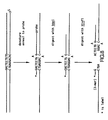
- Figure 6 illustrates the sequences of normal and sickle cell ⁇ -globin genes in the region of their polymorphism, where the single bars mark the location of a Dde I site present only in the normal gene and where the double bars mark the location of a Hin fI site which is non-polymorphic and thus present in both the normal and sickle cell alleles.
- Figure 7 illustrates the process of oligomer restriction of normal ⁇ -globin DNA using a probe spanning both restriction sites and labeled where the asterisk appears.
- the probe is preferably labeled at the end which is fewer base pairs from the restriction site than the other end of the probe.
- the DNA amplified as provided herein, is denatured and annealed to the labeled probe.
- the amplification may be carried out at elevated temperatures (35-40°C) in the presence of dimethyl sulfoxide to minimize formation of secondary structure.
- the enzyme Dde I cleaves the DNA at the reformed Dde I site and generates a labeled octamer.
- FIG. 8 illustrates the same process applied to the sickle cell allele of ⁇ -globin DNA.
- the enzyme Dde I cannot cleave the duplex formed by the amplified DNA and the labeled probe because of the A-A base pair mismatch.
- the enzyme Hin fI does restrict the hybrid and a labeled trimer is produced.
- the method can diagnose the DNA of an individual as being either homozygous for the wild type, homozygous for the sickle type or a heterozygous carrier of the sickle cell trait, since a specific signal is associated with the presence of either allele.
- Use of this above-described method to amplify the pertinent sequence allows for a rapid analysis or a single copy gene using a probe with only a single 32 ⁇ label.
- Various infectious diseases can be diagnosed by the presence in clinical samples of specific DNA sequences characteristic of the causative microorganism. These include bacteria, such as Salmonella, Chlamydia, Neisseria; viruses, such as the hepatitis viruses, and parasites, such as the Plasmodium responsible for malaria.
- U.S. Patent 4,358,535 issued to Falkow describes the use of specific DNA hybridization probes for the diagnosis of infectious diseases.
- a problem inherent in the Falkow procedure is that a relatively small number of pathogenic organisms may be present in a clinical sample from an infected patient and the DNA extracted from these may constitute only a very small fraction of the total DNA in the sample. Specific amplification of suspected sequences prior to immobilization and hybridization detection of the DNA samples could greatly improve the sensitivity and specificity of these procedures.
- the probe may be a biotinylated probe in which the biotin is attached to a spacer arm of the formula: where Y is 0, NH or N-CHO, x is a number from 1 to 4, and y is a number from 2 to 4.
- the spacer arm is in turn attached to a psoralen moiety of the formula: The psoralen moiety intercalates into and crosslinks a "gapped circle" probe as described by Courage-Tebbe et al., Biochim. Biophys. Acta , 697 (1982) 1-5, wherein the single-stranded hybridization region of the gapped circle spans the region contained in the primers.
- the amplification process can also be utilized to produce sufficient quantities of DNA from a single copy human gene such that detection by a simple non-specific DNA stain such as ethidium bromide can be employed so as to make a DNA diagnosis directly.
- a simple non-specific DNA stain such as ethidium bromide
- the process herein can also be used to detect DNA polymorphism which may not be associated with any pathological state.
- a 25 base pair sequence having the nucleotide sequence contained on a 47 base pair Fok I restriction fragment of pBR322 obtainable from ATCC was prepared as follows.
- a Fok I digest of pBR322 containing the 47-bp fragment was produced by digesting pBR322 with Fok I in accordance with the conditions suggested by the supplier, New England Biolabs Inc.
- the primers which were utilized were 5' d(CCTCGGCACCG) 3' and 5' d(AGCATCCAGGGTG) 3', and were prepared using conventional techniques.
- the mixture was heated to 85°C for five minutes and allowed to cool to ambient temperature. Five units of the Klenow fragment of E. coli DNA polymerase 1 were added and the temperature was maintained for 15 minutes. After that time, the mixture was again heated to 85°C for five minutes and allowed to cool. Five units of the Klenow fragment were again added and the reaction was carried out for 15 minutes. The heating, cooling and synthesis steps were repeated eleven more times.
- the desired sequence to be amplified was a 94 base pair sequence contained within the human beta-globin gene and spanning the Mst II site involved in sickle cell anemia.
- the sequence has the nucleotide sequence shown in Figure 1.
- oligodeoxyribonucleotide primers were prepared by the method described below: 5' CACAGGGCAGTAACG 3' Primer A and 5' TTTGCTTCTGACACA 3' Primer B
- Oligodeoxyribonucleotide Deprotection and Purification Procedures The solid support was removed from the column and exposed to 1 ml concentrated ammonium hydroxide at room temperature for four hours in a closed tube. The support was then removed by filtration and the solution containing the partially protected oligodeoxynucleotide was brought to 55°C for five hours. Ammonia was removed and the residue was applied to a preparative polyacrylamide gel. Electrophoresis was carried out at 30 volts/cm for 90 minutes after which the band containing the product was identified by UV shadowing of a fluorescent plate. The band was excised and eluted with 1 ml distilled water overnight at 4°C.
- Oligodeoxyribonucleotides Test aliquots of the purified oligonucleotides were 32 ⁇ labeled with polynucleotide kinase and ⁇ -32 ⁇ -ATP. The labeled compounds were examined by autoradiography of 14-20% polyacrylamide gels after electrophoresis for 45 minutes at 50 volts/cm. This procedure verifies the molecular weight.
- Base composition was determined by digestion of the oligodeoxyribonucleotide to nucleosides by use of venom diesterase and bacterial alkaline phosphatase and subsequent separation and quantitation of the derived nucleosides using a reverse phase HPLC column and a 10% acetonitrile, 1% ammonium acetate mobile phase.
- Human genomic DNA homozygous for normal ⁇ -globin was extracted from the cell line Molt4 (obtained from Human Genetic Mutant Cell Repository and identified as Gm2219c) using the technique described by Stetler et al., Proc. Nat. Acad. Sci. (1982), 79:5966-5970.
- a 1.9 kb Bam HI fragment of the normal ⁇ -globin gene was isolated from the cosmid pFCII and inserted into the Bam HI site of pBR328 (Soberon, et al., Gene (1980) 9 :287-305).
- This fragment which encompasses the region that hybridizes to the synthetic 40-mer probe, includes the first and second exons, first intron, and 5' flanking sequences of the gene (Lawn et al., Cell (1978), 15:1157-1174).
- This clone was designated pBR328:HbA and deposited under ATCC No. 39,698 on May 25, 1984.
- the corresponding 1.9 kb Bam HI fragment of the sickle cell allele of ⁇ -globin was isolated from the cosmid pFC12 and cloned as described above. This clone was designated pBR328:HbS and deposited under ATCC No. 39,699 on May 25, 1984.
- Each recombinant plasmid was transformed into and propagated in E. coli MM294 (ATCC No. 39,607).
- a total of 100 ⁇ g each of pBR328:HbA and pBR328:HbS were individually digested with 20 units of Mst II (New England Biolabs) for 16 hours at 37°C in 200 ⁇ l of 150 mM NaCl, 12 mM Tris HCl (pH 7.5), 12 mM MgCl2, 1 mM dithiothreitol (DTT), and 100 ⁇ g/ml bovine serum albumin (BSA).
- the products are designated pBR328:HbA/ Mst II and pBR328:HbS/ Mst II, respectively.
- Lane 1 is 0.1 picomole of a 58-bp synthetic fragment control one strand of which is complementary to the above probe.
- Lane 2 is 4 ⁇ l of Reaction I prior to the first amplification cycle.
- Lane 3 is 4 ⁇ l of Reaction I after the 20th amplification cycle.
- Lane 4 is 4 ⁇ l of Reaction II after five amplification cycles.
- Lane 5 is a molecular weight standard consisting of a Fok I (New England Biolabs) digest of pBR322 (New England Biolabs) labeled with alpha-32 ⁇ -dNTPs and polymerase.
- Lane 3 shows that after twenty cycles the reaction mixture I contained a large amount of the specific sequence of the proper molecular weight and no other detectable products.
- Reaction mixture II after five cycles also contained this product, as well as the starting nucleic acid and other products, as shown by Lane 4.
- Figure 3 is an autoradiograph of the electrophoresis.
- Lane 1 is a molecular weight standard
- Lane 2 is Reaction II
- Lane 3 is Reaction III
- Lane 4 is Reaction IV
- Lane 5 is Reaction V.
- Another lane for Reaction VI with no DNA as control had no images in any of the lanes. It can be seen from the figure that the 94-bp fragment predicted from the target DNA was present only where intact ⁇ -globin DNA sequences were available for amplification, i.e., pBR328:HbA (Lane 2), pBR328:HbS (Lane 3) and pBR328:HbS/ Mst II (Lane 5).
- Mst II digestion cuts pBR328:HbA in the 94-mer sequence rendering it incapable of being amplified, and the 94-mer band does not appear in Lane 4.
- the 94-mer sequence in pBR328:HbS does not cut when the plasmid is digested with Mst II and thus is available for amplification as shown in Lane 5.
- Figure 4 illustrates the chain reaction for three cycles in amplifying the 94-bp sequence.
- PCO1 and PCO2 are Primers A and B. The numbers on the right indicate the cycles, whereas the numbers on the left indicates the cycle number in which a particular molecule was produced.
- This example illustrates amplification of 110 bp sequence spanning the allelic Mst II site in the human hemoglobin gene.
- This example illustrates amplification of a 240 bp sequence spanning the allelic Mst II site in the human hemoglobin gene. This sequence contains Nco I, Hin fI and Mst II restriction sites.
- reaction was allowed to proceed for 10 minutes after which the cycle of solution A addition, heating, cooling, adding polymerase, and reacting was repeated three times.
- To a 5.0 ⁇ l aliquot of the reactions was added 5 picomoles of each oligonucleotide primer described above.
- the solution was heated to 100°C for four minutes and allowed to come to ambient temperature, after which 3 picomoles each of the alpha-32 ⁇ -labeled deoxyribonucleoside triphosphates and 4 units Klenow fragment were added.
- the reaction in a final volume of 10 ⁇ l and at the salt concentrations given above, was allowed to proceed for 10 minutes.
- the polymerase activity was terminated by heating for 20 minutes at 60°C.
- FIG. 5 illustrates the autoradiograph of the electrophoresis, where Lane 1 is the molecular weight standard, Lane 2 is without digestion with enzyme (240 bp intact), Lane 3 is digestion with Nco I (131 and 109 bp), Lane4 is digestion with Mst II (149 and 91 bp), and Lane 5 is digestion with Hin fI (144 and 96 bp). The autoradiograph is consistent with the amplification of the 240 bp sequence.
- This example illustrates use of the process herein to detect sickle cell anemia by sequential digestion.
- a labeled DNA probe, RS06, of the sequence where * indicates the label, and an unlabeled blocking oligomer, RS10, of the sequence which has three base pair mismatches with RS06 were synthesized according to the procedures provided in Example 2(1)
- the probe RS06 was labeled by contacting five pmole thereof with 4 units of T4 polynucleotide kinase (New England Biolabs) and 50 pmole ⁇ 32 ⁇ -ATP (New England Nuclear, about 7200 Ci/mmole) in a 40 ⁇ l reaction volume containing 70 mM Tris buffer (pH 7.6), 10 mM MgCl2, 1.5 mM spermine, and 2.5 mM dithiothreitol for 90 minutes at 37°C.
- the total volume was then adjusted to 100 ⁇ l with 25 mM EDTA and purified according to the procedure of Maniatis et al., Molecular Cloning (1982), 464-465 over a 1 ml Bio Gel P-4 spin dialysis column from BioRad equilibrated with Tris-EDTA (TE) buffer (10 mM Tris buffer, 0.1 mM EDTA, pH 8.0).
- TE Tris-EDTA
- the labeled probe was further purified by electrophoresis on a 18% polyacrylamide gel (19:1 acrylamide:BIS, BioRad) in Tris-boric acid-EDTA (TBE) buffer (89 mM Tris, 89 mM boric acid, 2.5 mM EDTA, pH 8.3) for 500 vhr. After localization by autoradiography, the portion of the gel containing the labeled probe was excised, crushed and eluted into 0.2 ml TE buffer overnight at 4°C. TCA precipitation of the reaction product indicated that the specific activity was 4.9 Ci/mmole and the final concentration was 20 pmole/ml.
- the unlabeled RS10 blocking oligomer was used at a concentration of 200 pmole/ml.
- High molecular weight genomic DNA was isolated from the lymphoid cell lines Molt4, SC-1 and Gm2064 using essentially the method of Stetler et al., PNAS (1982), 79 , 5966-5970 (for Molt4) and Maniatis et al., Molecular Cloning (1982), 280-281.
- Molt4 (Human Mutant Cell Repository, GM2219C) is a T cell line homozygous for normal ⁇ -globin, and SC-1, deposited with ATCC on March 19, 1985, is an EBV-transformed B cell line homozygous for the sickle cell allele.
- GM2064 Human Mutant Cell Repository, GM2064 was originally isolated from an individual homozygous for hereditary persistance of fetal hemoglobin (HPFH) and contains no beta- or delta-globin gene sequences. All cell lines were maintained in RPMI-1640 with 10% fetal calf serum.
- a clinical blood sample designated CH12 from a known sickle cell carrier (AS) was obtained from Dr. Bertram Lubin of Children's Hospital in Oakland, California.
- Genomic DNA was prepared from the buffy coat fraction, which is composed primarily of peripheral blood lymphocytes, using a modification of the procedure described by Nunberg et al., Proc. Nat. Acad. Sci. , 75 , 5553-5556 (1978).
- the cells were resuspended in 5 ml Tris-EDTA-NaCl (TEN) buffer (10 mM Tris buffer pH 8, 1 mM EDTA, 10 mM NaCl) and adjusted to 0.2 mg/ml proteinase K, 0.5% SDS, and incubated overnight at 37°C. Sodium perchlorate was then added to 0.7 M and the lysate gently shaken for 1-2 hours at room temperature. The lysate was extracted with 30 ml phenol/chloroform (1:1), then with 30 ml chloroform, and followed by ethanol precipitation of the nucleic acids. The pellet was resuspended in 2 ml of TE buffer and RNase A added to 0.005 mg/ml.
- TEN Tris-EDTA-NaCl
- the DNA was extracted once each with equal volumes of phenol, phenol/chloroform, and chloroform, and ethanol precipitated.
- the DNA was resuspended in 0.5 ml TE buffer and the concentration was determined by absorbance at 260 nm.
- genomic DNA Two micrograms of genomic DNA was amplified in an initial 100 ⁇ l reaction volume containing 10 mM Tris buffer (pH 7.5), 50 mM NaCl, 10 mM MgCl2, 150 pmole of Primer A of the sequence d(CACAGGGCACTAACG), and 150 pmole of Primer B of the sequence d(CTTTGCTTCTGACACA) and overlayed with about 100 ⁇ l mineral oil to prevent evaporation.
- reaction was terminated by heating at 95°C for two minutes.
- the mineral oil was extracted with 0.2 ml of chloroform and discarded.
- the final reaction volume was 130 ⁇ l.
- the mineral oil was extracted with 0.2 ml chloroform, and 18 ⁇ l of the reaction mixture (45 ng genomic DNA) was loaded onto a 30% polyacrylamide mini-gel (19:1, Bio Rad) in a Hoeffer SE200 apparatus.
- the gel was electrophoresed at approximately 300 volts for one hour until the bromphenol blue dye front migrated to 3.0 cm off-origin.
- the top 1.5 cm of the gel was removed and the remaining gel was exposed for four days with one intensification screen at -70°C.
- Lane A contains Molt4 DNA
- Lane B CH12
- Lane C SC-1
- Lane D GM2064.
- Molt4 represents the genotype of a normal individual with two copies of the ⁇ A gene per cell (AA)
- CH12 is a clinical sample from a sickle cell carrier with one ⁇ A and one ⁇ S gene per cell (AS)
- SC-1 represents the genotype of a sickle cell individual with two copies of the ⁇ S gene per cell (SS).
- GM2064 which contains no beta- or delta-globin sequences, is present as a negative control.
- the Dde I-cleaved, ⁇ A -specific octamer is present only in those DNA's containing the ⁇ A gene (Lanes A and B) and the Hin fI-cleaved, ⁇ S -specific trimer is present only in those DNA's containing the ⁇ S (Lanes B and C).
- the presence of both trimer and octamer is diagnostic for a sickle cell carrier and is distinguishable from a normal individual (Lane A) with only octamer and a sickle cell afflicted individual (Lane C) with only trimer.
- This example illustrates direct detection of a totally unpurified single copy gene in whole human DNA on gels without the need for a labeled probe.
- Example 3 Using the technique described in Example 3, a 110-bp fragment from a sequence in the first exon of the beta-globin gene was amplified from 10 micrograms of whole human DNA after 20 cycles. This 110-bp fragment produced after 20 cycles was easily visualized on gels stained with ethidium bromide.
- the sequence was not amplified when it was first cut with the restriction enzyme Dde I unless, as in the beta-globin S allele, the sequence does not contain the restriction site recognized by the enzyme.
- This example illustrates the use of different primers to amplify various fragments of pBR328 and 322.
- This example illustrates the invention process wherein an in vitro mutation is introduced into the amplified segment.
- a primer which is not a perfect match to the template sequence but which is nonetheless able to hybridize sufficiently to be enzymatically extended produces a long product which contains the sequence of the primer rather than the corresponding sequence of the original template.
- the long product serves as a template for the second primer to introduce an in vitro mutation. In further cycles this mutation is amplified with an undiminished efficiency, because no further mispaired primings are required.
- a primer which carries a non-complementary extension on its 5' end was used to insert a new sequence in the product adjacent to the template sequence being copied.
- This example illustrates employing nested sets of primers to decrease the background in the amplification of single copy genes.
- a ten- ⁇ l aliquot was removed from the reaction mixture and subjected to a further ten cycles of amplification using each of the primers: which amplify a 58-bp fragment contained within the 110-bp fragment produced above.
- This final ten cycles of amplification was accomplished by diluting the 10- ⁇ l aliquot into 90 ⁇ l of the fresh Tris-acetate buffer described above containing 100 nanomoles each dNTP and 200 pmoles of each primer. Reaction conditions were as above. After ten cycles a 10- ⁇ l aliquot (corresponding to 100 nanograms of the original DNA) was applied to a 6% NuSieve (FMC Corp.) agarose gel and visualized using ethidium bromide.
- Figure 10 illustrates this gel illuminated with UV light and photographed through a red filter as is known in the art.
- Lane 1 is molecular weight markers.
- Lane 2 is an aliquot of the reaction described above.
- Lane 3 is an aliquot of a reaction identical to that described above, except that the original wild-type DNA was cleaved with Dde I prior to amplification.
- Lane 4 is an aliquot of a reaction identical to that described above, except that human DNA homozygous for the sickle betaglobin allele was treated with Dde I prior to amplification (the sickle allele does not contain a Dde I site in the fragment being amplified here).
- Lane 5 is an aliquot of a reaction identical to that described above, except that salmon sperm DNA was substituted for human DNA.
- Lane 6 is an aliquot of a reaction identical to that described above, except that the aliquot was treated with Dde I after amplification ( Dde I should convert the 58-bp wild-type product into 27-and 31-bp fragments).
- Lane 7 is an aliquot of the Lane 4 material treated with Dde I after amplification (the 58-bp sickle product contains no Dde I site).
- Detection of a 58-bp fragment representative of a single-copy gene from one microgram of human DNA using only ethidium bromide staining of an agarose gel requires an amplification of about 500,000-fold. This was accomplished by using the two nested sets of oligonucleotide primers herein. The first set amplifies the 110-bp fragment and the inner nested set amplifies a sub-fragment of this product up to the level of convenient detection shown in Figure 10.
- This procedure of using primers amplifying a smaller sequence contained within the sequence being amplified in the previous amplification process and contained in the extension products of the other primers allows one to distinguish the wild-type from the sickle allele at the beta-globin locus without resorting to either radioisotopic or non-radioisotopic probe hybridization methodology such as that of Conner et al., PNAS (USA), 80 :278 (1983) and Leary et al., PNAS (USA), 80 :4045 (1983).
- the present process is expected to be useful in detecting, in a patient DNA sample, a specific sequence associated with an infectious disease such as, e.g., Chlamydia using a biotinylated hybridization probe spanning the desired amplified sequence and using the process described in U.S. 4,358,535, supra .
- the biotinylated hybridization probe may be prepared by intercalation and irradiation of a partially double-stranded DNA with a 4'-methylene substituted 4,5'-8-trimethylpsoralen attached to biotin via a spacer arm of the formula: where Y is O, NH or N-CHO, x is a number from 1 to 4, and y is a number from 2 to 4.
- Detection of the biotinyl groups on the probe may be accomplished using a streptavidin-acid phosphatase complex commercially obtainable from Enzo Biochem Inc. using the detection procedures suggested by the manufacturer in its brochure.
- the hybridized probe is seen as a spot of precipitated stain due to the binding of the detection complex, and the subsequent reaction catalyzed by acid phosphatase, which produces a precipitable dye.
- Example 7 the process of Example 7 was basically used to amplify a 119 base pair fragment on the human ⁇ -hemoglobin gene using the primers: where lower case letters denote mismatches from wild-type sequence to create restriction enzyme sites.
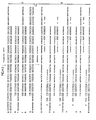
- Table I illustrates a diagram of the primers GH18 and GH19 which are used for cloning and sequencing a 119-base pair fragment of the human ⁇ -globin gene and which are designed to contain internal restriction sites.
- the start codon ATG is underlined.
- GH18 is a 26-base oligonucleotide complementary to the negative strand and contains an internal Pst I site.
- GH19 is a 23-base oligonucleotide complementary to the plus strand and contains an internal Hind III recognition sequence. Arrows indicate the direction of extension by DNA polymerase I. The boxed sequences indicate the restriction enzyme recognition sequences of each primer. These primers were selected by first screening the regions of the gene for homology to the Pst I and Hind III restriction sites of bacteriophage M13. The primers were then prepared as described in previous examples.
- the amplified product was ethanol precipitated to desalt and concentrate the sample, redissolved in a restriction buffer of 10 mM Tris pH 8, 10 mM MgCl2, 1 mM DTT, 100 mM NaCl2, and simultaneously digested with Pst I and Hind III. After digestion the sample was desalted with a Centricon 10 concentrator and ligated overnight at 12°C with 0.3 micrograms of the Pst I/ Hind III digested vector M13mp10w, which is publicly available from Boehringer-Mannheim.
- E. coli strain JM103 which is publicly available from BRL in Bethesda, MD.
- the procedure followed for preparing the transformed strain is described in Messing, J. (1981) Third Cleveland Symposium on Macro-molecules:Recombinant DNA , ed. A. Walton, Elsevier, Amsterdam, 143-153.
- the transformation mixture was plated onto x-gal media for screening via plaque hybridization with nylon filters.
- the filters were probed with a ⁇ -globin-specific oligonucleotide probe RS24 of the sequence 5'-CCCACAGGGCAGTAACGGCAGACTTCTCCTCAGGAGTCAG-3' to determine the number of ⁇ -globin inserts.
- the filters were then reprobed with the primer PC04 to determine the total number of inserts.
- Table II summarizes the plating and plaque hybridization data.
- the filters were probed with the primer PC04 to determine the percentage of inserts resulting from amplification and cloning: 1206 clear plaques (90% of total number of clear plaques) hybridized to the primer. Fifteen plaques hybridized to the ⁇ -globin specific probe RS24. The percentage of ⁇ -globin positive plaques among the amplified primer-positive plaques is approximately 1%.
- DNA from phage DNA minipreparation of three ⁇ -globin positive and two ⁇ -globin negative (but PC04 primer positive) plaques were analyzed by restriction enzyme analysis. Mst II digestion of DNA from M13 clones containing the amplified ⁇ -globin fragment should generate a characteristic 283 base-pair fragment. Following Mst II digestion, the three ⁇ -globin positive clones all produced the predicted 283 base pair fragment, while the two clones which were positive only with the primer produced larger fragments.
- the gel from this analysis was transferred to a MSI nylon filter and hybridized with a radiolabeled nick-translated ⁇ -globin probe prepared by standard nick translation methods as described by Rigby et al., J. Mol. Biol. (1977), 113 :237-51.
- the only bands which hybridized to the ⁇ -globin probe were the three ⁇ -globin positive clones. The two other clones had inserts which did not hybridize to the ⁇ -globin probe.
- the modified linker primers were nearly as efficient as the unmodified primers in amplifying the ⁇ -globin sequence.
- the primers were able to facilitate insertion of amplified DNA into cloning vectors. Due to the amplification of other segments of the genome, only 1% of the clones contained hemoglobin sequences.
- Restriction site-modified primers were also used to amplify and clone and partially sequence the human N-ras oncogene and to clone 240-base pair segments of the HLA DQ- ⁇ and DQ- ⁇ genes. All of these amplifications were carried out in the presence of 10% by volume dimethylsulfoxide at 37°C.
- the primers for amplifying HLA DQ- ⁇ and DQ- ⁇ genes were much more specific for their intended targets than were the ⁇ -globin and DR- ⁇ primers, which, rather than giving a discrete band on an ethidium bromide stained agarose gel, produced only a smear.
- the HLA DQ- ⁇ primers produced up to 20% of clones, with amplified inserts which contained the desired HLA target fragment, whereas 1% of the ⁇ -globin clones contained the target sequence.
- the HLA DQ- ⁇ and DQ- ⁇ gene cloning was only effective when the DMSO was present and the temperature was elevated.
- This example illustrates the use of the process herein to prepare the TNF gene of 494 base pairs starting from two oligonucleotides of 74 base pairs each.
- the primers employed were prepared by the method described in Example 2 and are identified below, each being 74 mers.
- Each reaction contained 100 ⁇ l of: 2 mM of each of dATP, dCTP, dGTP and dTTP 3 ⁇ M of each of the primers used at that step 1 x polymerase buffer, (30 mM Tris-acetate, 60 mM Na-acetate, 10 mM Mg-acetate, 2.5 mM dithiothreitol)
- Each cycle constituted:
- the present invention is seen to provide a process for detecting sequences in nucleic acids by first amplifying one or more specific nucleic acid sequences using a chain reaction in which primer extension products are produced which can subsequently act as templates for further primer extension reactions.
- the process is especially useful in detecting nucleic acid sequences which are initially present in only very small amounts.
- the amplification process can be used for molecular cloning.
Landscapes
- Chemical & Material Sciences (AREA)
- Life Sciences & Earth Sciences (AREA)
- Organic Chemistry (AREA)
- Health & Medical Sciences (AREA)
- Engineering & Computer Science (AREA)
- Wood Science & Technology (AREA)
- Zoology (AREA)
- Proteomics, Peptides & Aminoacids (AREA)
- Genetics & Genomics (AREA)
- General Health & Medical Sciences (AREA)
- Biochemistry (AREA)
- Molecular Biology (AREA)
- General Engineering & Computer Science (AREA)
- Biotechnology (AREA)
- Biophysics (AREA)
- Bioinformatics & Cheminformatics (AREA)
- Microbiology (AREA)
- Physics & Mathematics (AREA)
- Chemical Kinetics & Catalysis (AREA)
- Analytical Chemistry (AREA)
- Immunology (AREA)
- Biomedical Technology (AREA)
- Crystallography & Structural Chemistry (AREA)
- Plant Pathology (AREA)
- Gastroenterology & Hepatology (AREA)
- Medicinal Chemistry (AREA)
- Clinical Laboratory Science (AREA)
- Measuring Or Testing Involving Enzymes Or Micro-Organisms (AREA)
- Saccharide Compounds (AREA)
- Macromolecular Compounds Obtained By Forming Nitrogen-Containing Linkages In General (AREA)
- Immobilizing And Processing Of Enzymes And Microorganisms (AREA)
- Preparation Of Compounds By Using Micro-Organisms (AREA)
- Peptides Or Proteins (AREA)
- Micro-Organisms Or Cultivation Processes Thereof (AREA)
- Detergent Compositions (AREA)
- Aiming, Guidance, Guns With A Light Source, Armor, Camouflage, And Targets (AREA)
Claims (13)
- Verfahren zum Nachweis der An- oder Abwesenheit von mindestens einer spezifischen doppelsträngigen Nucleinsäuresequenz in einer Probe oder zur Unterscheidung zwischen zwei verschiedenen doppelsträngigen Nucleinsäuresequenzen in der Probe, wobei das Verfahren zuerst ein exponentielles Amplifizieren der spezifischen Sequenz oder Sequenzen (wenn vorhanden) durch die nachfolgenden Schritte und dann ein Nachweisen der so amplifizierten Sequenz oder Sequenzen (wenn vorhanden) umfaßt:(a) Trennen der Nucleinsäurestränge in der Probe und Behandeln der Probe mit einem molaren Überschuß eines Paares von Oligonucleotid-Primern für jede unterschiedliche nachzuweisende spezifische Sequenz, mit einem Primer für jeden Strang, unter Hybridisierungsbedingungen und in Gegenwart eines induzierenden Agens für die Polymerisation und der verschiedenen Nucleosidtriphosphate, so daß von dem betreffenden Primer für jeden der Stränge ein zum Strang komplementäres Verlängerungsprodukt synthetisiert wird, wobei die Primer so ausgewählt werden, daß jeder im wesentlichen komplementär zu einem Ende der zu amplifizierenden Sequenz auf einem der Stränge ist, damit das von einem Primer synthetisierte Verlängerungsprodukt, wenn es von seinem Komplement abgetrennt wird, als Matrize zur Synthese eines Verlängerungsproduktes des anderen Primers des Paares dienen kann;(b) Behandeln der aus (a) hervorgehenden Probe unter Denaturierungsbedingungen, um die Primer-Verlängerungsprodukte von ihren Matrizen zu trennen;(c) Behandeln der aus (b) hervorgehenden Probe, wie in (a) mit Oligonucleotid-Primern, so daß unter Verwendung aller im Schritt (b) produzierten Einzelstränge als Matrize ein Primer-Verlängerungsprodukt synthetisiert wird; und, falls gewünscht,(d) ein mindestens einmaliges Wiederholen der Schritte (b) und (c), wodurch sich eine exponentielle Amplifikation der Nucleinsäuresequenz oder -sequenzen (wenn vorhanden) ergibt, und somit deren Nachweis erlaubt; und, falls gewünscht,(e) Zugeben einer markierten Oligonucleotid-Sonde zum Produkt von Schritt (c) oder (d), die fähig ist, mit der nachzuweisenden Sequenz zu hybridisieren; und(f) Bestimmen, ob die Hybridisierung stattgefunden hat.
- Verfahren nach Anspruch 1, wobei eine zu amplifizierende und nachzuweisende Sequenz innerhalb einer größeren Sequenz enthalten ist.
- Verfahren nach einem der Ansprüche 1 oder 2, wobei das Agens für die Polymerisation E. coli-DNA-Polymerase I, Klenow-Fragment von E. coli-DNA-Polymerase I, T4-DNA-Polymerase, Reverse Transkriptase oder ein hitzestabiles Enzym ist.
- Verfahren nach einem der Ansprüche 1 bis 3, wobei die Nucleinsäure DNA ist, und die Primer Oligodesoxyribonucleotide sind.
- Verfahren nach einem der Ansprüche 1 bis 4, wobei jeder der verwendeten Primer eine Restriktionsstelle enthält, die mit der Restriktionsstelle des anderen Primers gleich oder von ihr verschieden ist und das Produkt von Schritt (c) oder (gegebenenfalls) (d) nach Schritt (c) oder (d) und vor Schritt (e) mit einem für jede der Restriktionsstellen spezifischen Restriktionsenzym gespalten wird, und die gespaltenen Produkte von den ungespaltenen Produkten abgetrennt und in Schritt (e) verwendet werden.
- Verfahren nach einem der Ansprüche 1 bis 5, wobei eine zu amplifizierende und nachzuweisende Sequenz mit einer genetischen, einer Krebs- oder Infektionskrankheit assoziiert ist.
- Verfahren nach einem der Ansprüche 1 bis 6, wobei eine einzelsträngige Nucleinsäuresequenz, die man nachweisen möchte, zunächst unter Hybridisierungsbedingungen mit einem Primer, einem induzierenden Agens für die Polymerisation und den verschiedenen Nucleosidtriphosphaten behandelt wird, um einen dazu komplementären Strang zu erzeugen, um so die doppelsträngige Ausgangs-Nucleinsäuresequenz bereitzustellen und den Nachweis der einzelsträngigen Sequenz zu erlauben.
- Verfahren zur Clonierung in einem Vektor einer spezifischen doppelsträngigen Nucleinsäuresequenz oder -sequenzen, die in einer Nucleinsäure oder in einem Gemisch von Nucleinsäuren enthalten ist/sind, wobei das Verfahren zuerst das Amplifizieren der Sequenz oder Sequenzen durch die nachfolgenden Schritte umfaßt:(a) Trennen der Nucleinsäurestränge und Behandeln der Nucleinsäure(n) mit einem molaren Überschuß eines Paares von Oligonucleotid-Primern für jede zu amplifizierende und zu clonierende unterschiedliche spezifische Sequenz, jeweils einer für jeden Strang, unter Hybridisierungsbedingungen und in Gegenwart eines induzierenden Agens für die Polymerisation und der verschiedenen Nucleosidtriphosphate, so daß für jeden der Stränge ein Verlängerungsprodukt von jedem Primer synthetisiert wird, das zu seinem betreffenden Strang komplementär ist, wobei die genannten Primer so ausgewählt sind, daß jeder im wesentlichen zu einem Ende der zu amplifizierenden Sequenz auf einem der Stränge komplementär ist, so daß das von einem Primer synthetisierte Verlängerungsprodukt, wenn es von seinem Komplement getrennt ist, als eine Matrize zur Synthese des Verlängerungsproduktes des anderen Primers des Paares dienen kann, und wobei jeder der Primer eine Restriktionsstelle enthält, die gleich oder verschieden von der Restriktionsstelle (den Restriktionsstellen) auf dem anderen Primer (den anderen Primern) ist;(b) Trennen der Primer-Verlängerungsprodukte von den Matrizen, an denen sie synthetisiert worden sind, um einzelsträngige Moleküle zu produzieren;(c) Behandeln der einzelsträngigen in Schritt (b) erzeugten Moleküle wie in (a) mit Oligonucleotid-Primern, so daß unter Verwendung aller in Schritt (b) produzierten Einzelstränge als Matrize ein Primer-Verlängerungsprodukt synthetisiert wird; und, falls gewünscht,(d) ein mindestens einmaliges Wiederholen der Schritte (b) und (c) wodurch sich eine exponentielle Amplifikation der Nucleinsäuresequenz oder -sequenzen ergibt;(e) Zugeben eines Restriktionsenzyms für jede der genannten Restriktionsstellen zum Produkt von Schritt(c) oder (d), um in einem Restriktionsverdaugespaltene Produkte zu erhalten; und(f) Ligieren des (der) gespaltenen Produktes (Produkte) mit einem oder mehreren Clonierungsvektoren.
- Verfahren zur Synthese eines Nucleinsäurefragments aus einer vorhandenen doppelsträngigen weniger Nucleotide als das in der Synthese befindliche Fragment aufweisenden Nucleinsäuresequenz und zwei Oligonucleotid-Primern, wobei die in der Synthese befindliche Nucleinsäure einen linken Abschnitt, einen Kernabschnitt und einen rechten Abschnitt enthält und wobei der Kernabschnitt mindestens im wesentlichen die Nucleotidsequenz der vorhandenen Nucleinsäuresequenz darstellt und der rechte und der linke Abschnitt die Nucleotidsequenz darstellt, die an einem Ende von jedem der beiden Primer vorhanden ist, deren andere Enden komplementär oder im wesentlichen komplementär zu den Enden der durch Strangtrennung der bestehenden Nucleinsäuresequenz produzierten Einzelstränge ist, wobei das Verfahren die nachfolgenden Schritte umfaßt:(a) Behandeln der Stränge des vorhandenen Fragments mit einem molaren Überschuß zweier Oligonucleotid-Primer - einer für jeden der Stränge - unter Hybridisierungsbedingungen und in Gegenwart eines induzierenden Agens für die Polymerisation und der verschiedenen Nucleosidtriphosphate, so daß für jeden Strang von dem betreffenden Primer ein zu dem Strang komplementäres Verlängerungsprodukt synthetisiert wird, wobei die Primer so ausgewählt sind, daß jeder im wesentlichen komplementär zu einem Ende eines Stranges der vorhandenen Sequenz ist, damit das von einem Primer synthetisierte Verlängerungsprodukt, wenn es von seinem Komplement getrennt worden ist, als Matrize zur Synthese eines Verlängerungsproduktes des anderen Primers dienen kann, und wobei jeder Primer ebenfalls eine Nucleotidsequenz enthält, die zur vorhandenen Sequenz nicht komplementär ist und mit den beiden Enden des in der Synthese befindlichen Nucleinsäurefragments korrespondiert;(b) Trennen der Primer-Verlängerungsprodukte von den Matrizen, an denen sie synthetisiert worden sind, um einzelsträngige Moleküle zu produzieren; und(c) Behandeln der in Schritt (b) erzeugten einzelsträngigen Moleküle mit den Primern aus Schritt (a) unter solchen Bedingungen, daß unter Verwendung einer der in Schritt (b) produzierten Einzelstränge als Matrize ein Primer-Verlängerungsprodukt synthetisiert wird, so daß zwei doppelsträngige intermediäre Nucleinsäuremoleküle, in die jeweils die an einem Ende des Oligonucleotid-Primers vorhandene Nucleinsäuresequenz eingebaut worden ist, und zwei doppelsträngige Nucleinsäuremoleküle mit voller Länge, in die jeweils die an einem Ende jedes der beiden Oligonucleotid-Primer vorhandene Nucleotidsequenz eingebaut worden ist, produziert werden;(d) ausreichend häufiges Wiederholen der Schritte (b) und (c), um die doppelsträngigen Moleküle mit voller Länge in einer wirksamen Menge zu produzieren.
- Verfahren nach Anspruch 9, wobei das Produkt von Schritt (d) dann verwendet wird, um eine noch weiter verlängerte Nucleinsäuresequenz durch dessen Verlängerung nach einem in Anspruch 9 definierten Verfahren zu produzieren.
- Verfahren nach Anspruch 9 oder 10, wobei man die vorhandene Nucleinsäuresequenz erhält durch Behandeln zweier Oligonucleotide, von denen jedes an einem Ende eine zu einem Ende des anderen Oligonucleotids komplementäre Nucleotidsequenz aufweist, und die an ihren anderen Enden zueinander nicht-komplementär sind, mit einem Agens für die Polymerisation und den verschiedenen Nucleosidtriphosphaten unter solchen Bedingungen, daß von jedem Oligonucleotid ein Verlängerungsprodukt synthetisiert wird, das zu dem anderen resultierenden Verlängerungsprodukt komplementär ist.
- Verfahren nach einem der Ansprüche 8 bis 10, wobei zuerst eine einzelsträngige Nucleinsäuresequenz unter Hybridisierungsbedingungen mit einem Primer, einem induzierenden Agens für die Polymerisation und den verschiedenen Nucleosidtriphosphaten behandelt wird, um so zur Bereitstellung der doppelsträngigen Ausgangs-Nucleotidsequenz einen dazu komplementären Strang zu erzeugen.
- Kit zum Nachweis von mindestens einer spezifischen Nucleinsäuresequenz in einer Probe, wobei der Kit in einer gepackten Form eine Vielfachbehälter-Einheit umfaßt, aufweisend:(a) je zwei Oligonucleotid-Primer für jede unterschiedliche nachzuweisende Sequenz, wobei(i) falls die nachzuweisende spezifische Nucleinsäuresequenz einzelsträngig ist, ein Primer im wesentlichen komplementär zu einem Ende des Stranges ist, so daß ein unter Hybridisierungsbedingungen und in Gegenwart eines induzierenden Agens für die Polymerisation und der verschiedenen Nucleosidtriphosphate erzeugtes Verlängerungsprodukt des einen Primers im wesentlichen komplementär zu dem Strang ist, und der andere Primer im wesentlichen zu einem Ende des Verlängerungsproduktes komplementär ist und unter Hybridisierungsbedingungen und in Gegenwart eines induzierenden Agens für die Polymerisation und der verschiedenen Nucleosidtriphosphate zur Synthese eines anderen Verlängerungsproduktes verwendet werden kann, wobei das Verlängerungsprodukt des erstgenannten Primers als eine Matrize verwendet wird, wodurch eine aus zwei Strängen bestehende Nucleinsäure bereitgestellt wird; oder(ii) falls die nachzuweisende spezifische Nucleinsäuresequenz doppelsträngig ist, die Primer so beschaffen sind, daß jeder im wesentlichen komplementär zu einem Ende eines der Stränge ist, und ein von je einem Primer unter Verwendung seines komplementären Stranges als Matrize unter Hybridisierungsbedingungen und in Gegenwart eines induzierenden Agens für die Polymerisation und der verschiedenen Nucleosidtriphosphate syntetisiertes Verlängerungsprodukt, wenn es von seinem Komplement getrennt ist, unter Hybridisierungsbedingungen und in Gegenwart eines induzierenden Agens für die Polymerisation und der verschiedenen Nucleosidtriphosphate als eine Matrize zur Synthese eines Verlängerungsproduktes des anderen Primers dienen kann;(b) ein Agens für die Polymerisation;(c) jedes der verschiedenen Nucleosidtriphosphate;(d) eine Oligonucleotid-Sonde, die fähig ist, mit der genannten Sequenz, wenn sie in der Probe anwesend ist, zu hybridisieren; und(e) Hilfsmittel für den Nachweis von Hybriden aus der Sonde und der Sequenz.
Priority Applications (3)
| Application Number | Priority Date | Filing Date | Title |
|---|---|---|---|
| AT86302298T ATE84822T1 (de) | 1985-03-28 | 1986-03-27 | Verfahren zur amplifikation, zum nachweis und/oder zur klonierung von nukleinsaeuresequenzen. |
| EP92201243A EP0509612B1 (de) | 1985-03-28 | 1986-03-27 | Verfahren zur Amplifizierung und zum Nachweis von Nukleinsäuresequenzen |
| EP92201245A EP0502589B1 (de) | 1985-03-28 | 1986-03-27 | Kit zur Verwendung bei der Amplifizierung und beim Nachweis von Nukleinsäuresequenzen |
Applications Claiming Priority (6)
| Application Number | Priority Date | Filing Date | Title |
|---|---|---|---|
| US71697585A | 1985-03-28 | 1985-03-28 | |
| US716975 | 1985-03-28 | ||
| US791308 | 1985-10-25 | ||
| US06/791,308 US4683202A (en) | 1985-03-28 | 1985-10-25 | Process for amplifying nucleic acid sequences |
| US06/828,144 US4683195A (en) | 1986-01-30 | 1986-02-07 | Process for amplifying, detecting, and/or-cloning nucleic acid sequences |
| US828144 | 1997-03-24 |
Related Child Applications (4)
| Application Number | Title | Priority Date | Filing Date |
|---|---|---|---|
| EP92201243A Division EP0509612B1 (de) | 1985-03-28 | 1986-03-27 | Verfahren zur Amplifizierung und zum Nachweis von Nukleinsäuresequenzen |
| EP92201245.5 Division-Into | 1986-03-27 | ||
| EP92201243.0 Division-Into | 1986-03-27 | ||
| EP92201245A Division EP0502589B1 (de) | 1985-03-28 | 1986-03-27 | Kit zur Verwendung bei der Amplifizierung und beim Nachweis von Nukleinsäuresequenzen |
Publications (3)
| Publication Number | Publication Date |
|---|---|
| EP0200362A2 EP0200362A2 (de) | 1986-11-05 |
| EP0200362A3 EP0200362A3 (en) | 1987-02-25 |
| EP0200362B1 true EP0200362B1 (de) | 1993-01-20 |
Family
ID=27418965
Family Applications (1)
| Application Number | Title | Priority Date | Filing Date |
|---|---|---|---|
| EP86302298A Expired - Lifetime EP0200362B1 (de) | 1985-03-28 | 1986-03-27 | Verfahren zur Amplifikation, zum Nachweis und/oder zur Klonierung von Nukleinsäuresequenzen |
Country Status (12)
| Country | Link |
|---|---|
| EP (1) | EP0200362B1 (de) |
| JP (1) | JP2546576B2 (de) |
| AT (3) | ATE206168T1 (de) |
| AU (1) | AU591104B2 (de) |
| CA (2) | CA1340121E (de) |
| DE (5) | DE502589T1 (de) |
| DK (3) | DK171161B1 (de) |
| ES (3) | ES8706823A1 (de) |
| HK (1) | HK84994A (de) |
| IE (1) | IE61304B1 (de) |
| IL (1) | IL78284A (de) |
| SG (1) | SG111293G (de) |
Cited By (95)
| Publication number | Priority date | Publication date | Assignee | Title |
|---|---|---|---|---|
| EP0202688A3 (en) * | 1985-05-24 | 1987-09-02 | Enzo Biochem, Inc. | Method and composition for detecting analyte moieties |
| EP0194545A3 (en) * | 1985-03-15 | 1988-01-13 | Molecular Diagnostics, Inc. | Labelling of oligonucleotides |
| GB2202328A (en) * | 1987-03-11 | 1988-09-21 | Orion Yhtymae Oy | An improved method for assaying of nucleic acids, a reagent combination and a kit therefore |
| WO1988010315A1 (en) * | 1987-06-19 | 1988-12-29 | Siska Diagnostics, Inc. | Transcription-based nucleic acid amplification/detection systems |
| EP0301968A1 (de) * | 1987-07-31 | 1989-02-01 | La Region Wallonne | Menschliche Papillomavirusnukleinsäureproben |
| US4808520A (en) * | 1985-03-15 | 1989-02-28 | Molecular Diagnostics, Inc. | Labelling of oligonucleotides |
| EP0303155A3 (de) * | 1987-08-13 | 1989-03-29 | MERCK PATENT GmbH | Verfahren zum Nachweis von Nukleinsäure-Sequenzen |
| EP0310229A1 (de) * | 1987-07-31 | 1989-04-05 | The Board Of Trustees Of The Leland Stanford Junior University | Selektive Amplifikation von Oligonukleotiden-Zielsequenzen |
| EP0297379A3 (en) * | 1987-06-30 | 1989-07-26 | Molecular Diagnostics, Inc. | Assay of sequences using amplified genes |
| WO1989009281A1 (en) * | 1988-03-25 | 1989-10-05 | Akzo N.V. | Method for amplifying and detecting nucleic acid in a test liquid |
| EP0258017A3 (de) * | 1986-08-22 | 1989-10-11 | F. Hoffmann-La Roche Ag | Gereinigtes thermostabiles Enzym und Verfahren zur Verstärkung, zum Nachweis und/oder zur Klonierung von Nukleinsäuresequenzen durch Verwendung dieses Enzyms |
| EP0317239A3 (de) * | 1987-11-13 | 1990-01-17 | Native Plants Incorporated | Verfahren und Vorrichtung zum Nachweis von Restriktionsfragmentlängenpolymorphien |
| GB2221909A (en) * | 1988-07-28 | 1990-02-21 | Ici Plc | A method for the amplification of nucleotide sequences. |
| EP0229701A3 (en) * | 1986-01-10 | 1990-03-07 | Cetus Corporation | Detection of viruses by amplification and hybridization detection of viruses by amplification and hybridization |
| WO1990003443A1 (en) * | 1988-09-23 | 1990-04-05 | Cetus Corporation | Structure-independent dna amplification by the polymerase chain reaction |
| FR2637612A1 (fr) * | 1988-10-06 | 1990-04-13 | Pasteur Institut | Sequences de nucleotides codant pour une proteine a activite ureasique |
| WO1990004649A1 (de) * | 1988-10-24 | 1990-05-03 | MAX-PLANCK-Gesellschaft zur Förderung der Wissenschaften e.V. | Verfahren zur direkten sequenzierung von nukleinsäureketten mit verwendung von der polymerasekettenreaktion und deoxynukleosid-thio-triphosphaten |
| EP0272098A3 (de) * | 1986-12-15 | 1990-06-06 | City Of Hope National Medical Center | Verfahren zur Vergrösserung und zum Nachweis von RNS-Sequenzen |
| EP0329822A3 (en) * | 1988-02-24 | 1990-08-01 | Cangene Corporation | Nucleic acid amplification process |
| WO1990009456A1 (de) * | 1989-02-16 | 1990-08-23 | Viktor Balazs | Malignitätstest (krebs-test) mit verwendung von der polymerasekettenreaktion |
| WO1990010064A1 (en) * | 1989-03-03 | 1990-09-07 | Genentech, Inc. | Improved methods for in vitro dna amplification and genomic cloning and mapping |
| EP0328829A3 (en) * | 1987-12-21 | 1990-09-19 | Amoco Corporation | Method for affinity assays using target amplification |
| EP0236069A3 (de) * | 1986-02-25 | 1990-10-03 | The Perkin-Elmer Corporation | Vorrichtung und Verfahren zur Durchführung der automatischen Amplifizierung von Nukleinsäuresequenzen und Assays mit Heiz- und Kühlschritten |
| FR2645878A1 (fr) * | 1989-04-17 | 1990-10-19 | Inst Nat Sante Rech Med | Sequences nucleotidiques d'actinomycetales, applications a la synthese ou a la detection d'acides nucleiques, produits d'expression de ces sequences et application en tant que compositions immunogenes |
| US4965188A (en) * | 1986-08-22 | 1990-10-23 | Cetus Corporation | Process for amplifying, detecting, and/or cloning nucleic acid sequences using a thermostable enzyme |
| US4994368A (en) * | 1987-07-23 | 1991-02-19 | Syntex (U.S.A.) Inc. | Amplification method for polynucleotide assays |
| FR2651007A1 (fr) * | 1989-08-18 | 1991-02-22 | Pasteur Institut | Fragments d'acides nucleiques et reactifs de diagnostic derives du genome de hhv6/sie et procede de diagnostic des infections a hhv6 |
| GB2235689A (en) * | 1989-09-06 | 1991-03-13 | Ici Plc | Amplification of a target nucleotide sequence |
| WO1990006045A3 (en) * | 1988-11-21 | 1991-03-21 | Holmes Michael John | Nucleic acid probes |
| WO1991007505A1 (en) * | 1989-11-21 | 1991-05-30 | Dynal A.S. | Cloning method and kit |
| WO1991008306A1 (en) * | 1989-12-01 | 1991-06-13 | The Blood Center Of Southeastern Wisconsin, Inc. | Polymorphism of human platelet membrane glycoprotein iib and diagnostic and therapeutic applications thereof |
| WO1991008304A1 (en) * | 1989-11-24 | 1991-06-13 | Isis Innovation Limited | Prenatal genetic determination |
| EP0357011A3 (de) * | 1988-08-30 | 1991-06-26 | Abbott Laboratories | Vermehrung und Nachweis von Nukleinsauresequenzen |
| EP0437774A1 (de) * | 1990-01-17 | 1991-07-24 | Roche Diagnostics GmbH | Verfahren zur Herstellung von modifizierten Nukleinsäuren |
| EP0336412A3 (de) * | 1988-04-08 | 1991-07-31 | SCLAVO S.p.A. | Synthetische Oligonucleotide zum Nachweis von Chlamydia trachomatis in einer biologischen Probe |
| EP0443748A3 (en) * | 1990-02-06 | 1991-09-11 | National University Of Singapore | Human leukocyte antigen typing |
| EP0401037A3 (de) * | 1989-06-01 | 1991-09-18 | Life Technologies Inc. | Verfahren zur Beherrschung von Kontamination der Nukleinsäure-Amplifikation |
| EP0418960A3 (en) * | 1989-09-22 | 1991-09-18 | Eastman Kodak Company | Nucleic acid detection method using unequal primer concentrations in polymerase chain reaction |
| EP0438292A3 (en) * | 1990-01-17 | 1991-09-18 | Nihon Chemical Research Kabushiki Kaisha Also Known As Jcr Pharmaceuticals Co., Ltd. | Method of preparing primers for polymerase chain reaction and dna amplification using said primers |
| WO1991017262A1 (en) * | 1990-04-30 | 1991-11-14 | The University Of British Columbia | Method of establishing identity |
| EP0378224A3 (de) * | 1989-01-13 | 1991-11-27 | The General Hospital Corporation | Verfahren zum Nachweis von kleinzelligem Carzinom und die Verwendung von Sequenzen, die Acylpeptid-Hydrolase codieren, für diesen zweck |
| EP0461496A1 (de) * | 1990-06-08 | 1991-12-18 | BEHRINGWERKE Aktiengesellschaft | Verfahren zur quantitativen Bestimmung von DNS-Sequenzen |
| US5077192A (en) * | 1988-10-25 | 1991-12-31 | The General Hospital Corporation | Method of detecting antigenic, nucleic acid-containing macromolecular entities |
| WO1992007957A1 (en) * | 1990-10-31 | 1992-05-14 | Cimino George D | Methods and compositions for minimizing inhibition of nucleic acid amplification |
| EP0487218A1 (de) * | 1990-10-31 | 1992-05-27 | Tosoh Corporation | Verfahren zum Nachweis oder Quantifizierung von Zielnukleinsäuren |
| US5130238A (en) * | 1988-06-24 | 1992-07-14 | Cangene Corporation | Enhanced nucleic acid amplification process |
| US5133940A (en) * | 1987-12-23 | 1992-07-28 | Orion Corporation Ltd. | Apparatus, for amplification of nucleic acids |
| EP0348529A4 (en) * | 1987-12-25 | 1992-07-29 | Wakunaga Seiyaku Kabushiki Kaisha | Method for detecting target nucleic acid in specimen |
| EP0500224A3 (en) * | 1991-01-31 | 1992-11-04 | Becton Dickinson And Company | Exonuclease mediated strand displacement amplification |
| EP0512334A3 (en) * | 1991-05-02 | 1993-03-03 | F. Hoffmann-La Roche Ag | Methods for detecting a target nucleic acid in a sample |
| US5213961A (en) * | 1989-08-31 | 1993-05-25 | Brigham And Women's Hospital | Accurate quantitation of RNA and DNA by competetitive polymerase chain reaction |
| EP0543612A3 (en) * | 1991-11-19 | 1993-07-14 | Becton, Dickinson & Company | Nucleic acid target generation |
| US5348853A (en) * | 1991-12-16 | 1994-09-20 | Biotronics Corporation | Method for reducing non-specific priming in DNA amplification |
| US5356774A (en) * | 1986-04-16 | 1994-10-18 | The Trustees Of Columbia University In The City Of New York | Replicative RNA-based amplification/detection systems |
| US5369003A (en) * | 1991-09-26 | 1994-11-29 | Boehringer Mannheim Gmbh | Process for the specific production of ribonucleic acids |
| US5397698A (en) * | 1987-07-23 | 1995-03-14 | Syntex (U.S.A.) Inc. | Amplification method for polynucleotide detection assays |
| US5468613A (en) * | 1986-03-13 | 1995-11-21 | Hoffmann-La Roche Inc. | Process for detecting specific nucleotide variations and genetic polymorphisms present in nucleic acids |
| US5474916A (en) * | 1991-09-26 | 1995-12-12 | Boehringer Mannheim Gmbh | Promotor controlled specific amplification of nucleic acid sequences |
| US5489513A (en) * | 1992-10-30 | 1996-02-06 | Bayer Akteingesellschaft | Specific gene probes and processes for the diagnostic investigation of Candida albicans |
| US5504007A (en) * | 1989-05-19 | 1996-04-02 | Becton, Dickinson And Company | Rapid thermal cycle apparatus |
| US5547860A (en) * | 1993-01-29 | 1996-08-20 | Bayer Aktiengesellschaft | Sulphocoumarin-containing nucleotides and their use in processes for detecting nucleic acids |
| US5567583A (en) * | 1991-12-16 | 1996-10-22 | Biotronics Corporation | Methods for reducing non-specific priming in DNA detection |
| US5574141A (en) * | 1991-08-28 | 1996-11-12 | Boehringer Mannheim Gmbh | Functionalized carrier materials for the simultaneous synthesis and direct labeling of oligonucleotides as primers for template-dependent enzymatic nucleic acid syntheses |
| US5604099A (en) * | 1986-03-13 | 1997-02-18 | Hoffmann-La Roche Inc. | Process for detecting specific nucleotide variations and genetic polymorphisms present in nucleic acids |
| US5605794A (en) * | 1991-09-06 | 1997-02-25 | Boehringer Mannheim Gmbh | Method of detecting variant nucleic acids |
| US5612199A (en) * | 1991-10-11 | 1997-03-18 | Behringwerke Ag | Method for producing a polynucleotide for use in single primer amplification |
| US5679512A (en) * | 1992-07-31 | 1997-10-21 | Behringwerke Ag | Method for introducing defined sequences at the 3'end of polynucleotides |
| US5683896A (en) * | 1989-06-01 | 1997-11-04 | Life Technologies, Inc. | Process for controlling contamination of nucleic acid amplification reactions |
| US5710381A (en) * | 1990-11-29 | 1998-01-20 | The Perkin-Elmer Corporation | Two piece holder for PCR sample tubes |
| US5766847A (en) * | 1988-10-11 | 1998-06-16 | Max-Planck-Gesellschaft Zur Forderung Der Wissenschaften E.V. | Process for analyzing length polymorphisms in DNA regions |
| US5819842A (en) * | 1991-12-05 | 1998-10-13 | Potter; Derek Henry | Method and apparatus for temperature control of multiple samples |
| US6015666A (en) * | 1994-06-23 | 2000-01-18 | Bayer Aktiengesellschaft | Rapid DNA test for detecting quinolone-resistant Staphylococcus aureus pathogens in clinical material |
| US6066455A (en) * | 1992-04-15 | 2000-05-23 | Roche Diagnostics Gmbh | Method of detecting nucleic acids |
| US6090591A (en) * | 1987-07-31 | 2000-07-18 | The Board Of Trustees Of The Leland Stanford Junior University | Selective amplification of target polynucleotide sequences |
| US6103468A (en) * | 1997-10-07 | 2000-08-15 | Labatt Brewing Company Limited | Rapid two-stage polymerase chain reaction method for detection of lactic acid bacteria in beer |
| US6214587B1 (en) | 1994-03-16 | 2001-04-10 | Gen-Probe Incorporated | Isothermal strand displacement nucleic acid amplification |
| US6248516B1 (en) | 1988-11-11 | 2001-06-19 | Medical Research Council | Single domain ligands, receptors comprising said ligands methods for their production, and use of said ligands and receptors |
| US6368826B1 (en) | 1998-12-03 | 2002-04-09 | Hoffmann-La Roche Inc. | IGF-1 receptor interacting proteins |
| US6368797B1 (en) | 1998-10-01 | 2002-04-09 | Variagenics, Inc. | Methods for treating or identifying a subject at risk for a neurological disease by determining the presence of a variant GPIIIa and/or variant BPIIb allele |
| US6369207B1 (en) | 1990-12-31 | 2002-04-09 | Promega Corporation | Nucleic acid amplification with DNA-dependent RNA polymerase activity of RNA replicases |
| US6410721B1 (en) | 1993-07-29 | 2002-06-25 | The Regents Of The University Of California | Polynucleotide decoys that inhibit MHC-II expression and uses thereof |
| USRE37891E1 (en) | 1986-10-23 | 2002-10-22 | Vysis, Inc. | Target and background capture methods with amplification for affinity assays |
| USRE37984E1 (en) | 1988-10-11 | 2003-02-11 | Max-Planck-Gesellschaft Zur Forderung Der Wissenschaften E.V. | Process for analyzing length polymorphisms in DNA regions |
| US6579682B1 (en) | 1998-03-10 | 2003-06-17 | The Regents Of University Of California | Methods and tools for identifying compounds which modulate atherosclerosis by impacting LDL-proteoglycan binding |
| US6680192B1 (en) | 1989-05-16 | 2004-01-20 | Scripps Research Institute | Method for producing polymers having a preselected activity |
| US7141377B2 (en) | 1990-08-06 | 2006-11-28 | Roche Molecular Systems, Inc. | Process for discrimination of nucleic acid sequence variants |
| US7413855B2 (en) | 2003-01-29 | 2008-08-19 | Roche Molecular Systems, Inc. | Method for bisulfite treatment |
| US7425423B1 (en) | 1996-10-03 | 2008-09-16 | Roche Diagnostics Gmbh | Thermostable nucleic acid polymerase from Thermococcus gorgonarius |
| US7501240B2 (en) | 2003-12-02 | 2009-03-10 | Roche Molecular Systems, Inc. | Method for bisulfite treatment |
| US7785788B2 (en) | 2002-12-13 | 2010-08-31 | New Lab Clinical Research Inc. | Method for the detection of risk factors associated with myocardial infarction |
| US7919063B2 (en) | 2005-09-06 | 2011-04-05 | Roche Molecular Systems, Inc. | Device with a compressible matrix having homogeneous flow profile |
| US7981606B2 (en) | 2005-12-21 | 2011-07-19 | Roche Molecular Systems, Inc. | Control for nucleic acid testing |
| US7989169B2 (en) | 2004-09-03 | 2011-08-02 | Roche Molecular Systems, Inc. | Selective amplification of methylated nucleic acids |
| EP3018215A1 (de) | 2006-02-13 | 2016-05-11 | Fluidigm Canada Inc. | Durch elementaranalyse durchgeführte genexpressionsassays |
| US9394332B2 (en) | 2002-08-29 | 2016-07-19 | Epigenomics Ag | Method for bisulfite treatment |
Families Citing this family (64)
| Publication number | Priority date | Publication date | Assignee | Title |
|---|---|---|---|---|
| AU632857C (en) * | 1986-08-22 | 2003-10-09 | F. Hoffmann-La Roche Ag | Purified thermostable enzyme |
| US5079351A (en) * | 1986-11-26 | 1992-01-07 | Cetus Corporation | Oligonucleotides and kits for detection of htlvi and htlvii viruses by hybridization |
| WO1988006634A1 (en) * | 1987-02-26 | 1988-09-07 | The University Of Sydney | A method of detection of carcinogenic human papillomavirus |
| AU618965B2 (en) * | 1987-07-31 | 1992-01-16 | Board Of Trustees Of The Leland Stanford Junior University | Selective amplification of target polynucleotide sequences |
| US8148065B1 (en) * | 1988-04-06 | 2012-04-03 | City Of Hope | Ligation amplification of nucleic acid sequences |
| ZA899593B (en) | 1988-12-16 | 1990-09-26 | Siska Diagnostics Inc | Self-sustained,sequence replication system |
| GB8902689D0 (en) * | 1989-02-07 | 1989-03-30 | Ici Plc | Assay method |
| US6291161B1 (en) * | 1989-05-16 | 2001-09-18 | Scripps Research Institute | Method for tapping the immunological repertiore |
| US6969586B1 (en) | 1989-05-16 | 2005-11-29 | Scripps Research Institute | Method for tapping the immunological repertoire |
| US6291159B1 (en) | 1989-05-16 | 2001-09-18 | Scripps Research Institute | Method for producing polymers having a preselected activity |
| US6291160B1 (en) * | 1989-05-16 | 2001-09-18 | Scripps Research Institute | Method for producing polymers having a preselected activity |
| US6291158B1 (en) | 1989-05-16 | 2001-09-18 | Scripps Research Institute | Method for tapping the immunological repertoire |
| ES2275451T3 (es) | 1989-06-02 | 2009-02-16 | Institut Pasteur | Secuencias nucleotidicas procedentes del genoma de los retrovirus del tipo vih-1,vih-2 y siv, y sus aplicaciones especialmente para la amplificacion de los genomas de estos retrovirus y para el diagnostico in vitro de las infecciones debidas a estos virus. |
| WO1991001384A1 (en) * | 1989-07-11 | 1991-02-07 | Gen-Probe, Incorporated | Nucleic acid sequence amplification methods utilizing a transcription complex |
| US7049102B1 (en) | 1989-09-22 | 2006-05-23 | Board Of Trustees Of Leland Stanford University | Multi-gene expression profile |
| WO1991015599A1 (en) * | 1990-04-05 | 1991-10-17 | Amrad Corporation Limited | A method for detecting dna |
| ES2112302T3 (es) | 1991-10-11 | 1998-04-01 | Behringwerke Ag | Metodo para producir un polinucleotido para uso en amplificacion con un unico cebador y oligonucleotidos que contienen fosforotioato como cebadores para la amplificacion de acidos nucleicos. |
| US6033854A (en) * | 1991-12-16 | 2000-03-07 | Biotronics Corporation | Quantitative PCR using blocking oligonucleotides |
| WO1993022461A1 (en) * | 1992-05-06 | 1993-11-11 | Gen-Probe Incorporated | Nucleic acid sequence amplification method, composition and kit |
| US6294323B1 (en) | 1993-04-14 | 2001-09-25 | Behringwerke Ag | Self initiating single primer amplification of nucleic acids |
| US5491086A (en) * | 1993-05-14 | 1996-02-13 | Hoffmann-La Roche Inc. | Purified thermostable nucleic acid polymerase and DNA coding sequences from pyrodictium species |
| DE4420732A1 (de) | 1994-06-15 | 1995-12-21 | Boehringer Mannheim Gmbh | Vorrichtung zur Behandlung von Nukleinsäuren aus einer Probe |
| EP0752474A1 (de) | 1995-07-07 | 1997-01-08 | Boehringer Mannheim Gmbh | Nukleinsäure, die eine CMP-N-Acetyl-Neuraminsäure kodiert und ihre Verwendung zur Herstellung von modifizierten Glykoproteine |
| ES2153807T3 (es) | 1997-08-08 | 2005-06-16 | Biomerieux B.V. | Secuencias de acido nucleico que se pueden utilizar como cebadores y sondas en la amplificacion y deteccion de todos los subtipos de vih-1. |
| JPH11146799A (ja) * | 1997-09-10 | 1999-06-02 | Snow Brand Milk Prod Co Ltd | 新規プライマー及びその利用 |
| DE19848665A1 (de) * | 1998-10-22 | 2000-04-27 | Bayer Ag | Ein automatisierbarer Schnelltest zum direkten Nachweis der APC Resistenz Mutation mit spezifischen Primern und Probes |
| US20020146728A1 (en) | 1998-12-03 | 2002-10-10 | Tanja Ligensa | IGF-1 receptor interacting proteins |
| DE19916929A1 (de) | 1999-04-15 | 2000-10-19 | Bayer Ag | Ein automatisierbarer Schnelltest zum Nachweis von Krebserkrankungen auf der Basis von Telomerase(hTC) mRNA mit spezifischen Primern und Sonden |
| US20020025519A1 (en) | 1999-06-17 | 2002-02-28 | David J. Wright | Methods and oligonucleotides for detecting nucleic acid sequence variations |
| EP1099757B1 (de) | 1999-11-11 | 2010-02-24 | F. Hoffmann-La Roche Ag | Verfahren zur Bestimmung von CTp11 sowie zur Bestimmung des metastatischen Potentials einer Tumor Probe |
| US7108977B2 (en) | 2000-05-19 | 2006-09-19 | Hoffmann-La Roche Inc. | Process for determining the tumoricidal potential of a sample the use of a nucleic acid which is downregulated in human tumor cells |
| JP3489053B2 (ja) | 2000-08-28 | 2004-01-19 | 日本航空電子工業株式会社 | ケーブルコネクタ |
| WO2002031197A1 (en) | 2000-10-10 | 2002-04-18 | Wunderink Richard G | Method for identifying increased risk of death from community acquired pneumonia |
| CN1306272C (zh) | 2000-11-17 | 2007-03-21 | 罗切斯特大学 | 筛选编码抗原特异性免疫球蛋白分子或其抗原特异性片段的方法 |
| EP1666150B1 (de) | 2004-11-20 | 2015-01-07 | Roche Diagnostics GmbH | Präparieren von Nucleinsäuren |
| EP1862804B1 (de) | 2005-03-14 | 2010-05-05 | Link Genomics, Inc. | Verfahren zur diagnose von prostatakrebs |
| ATE545701T1 (de) | 2005-05-17 | 2012-03-15 | Ozgene Pty Ltd | Sequentielles klonierungssystem |
| EP1748081A1 (de) | 2005-07-28 | 2007-01-31 | Roche Diagnostics GmbH | Analyseverfahren und -Vorrichtung |
| EP1798542A1 (de) | 2005-12-19 | 2007-06-20 | Roche Diagnostics GmbH | Analytisches Verfahren und Gerät |
| EP1798650A1 (de) | 2005-12-19 | 2007-06-20 | Roche Diagnostics GmbH | Analytisches Verfahren und Instrument |
| EP1962084A1 (de) | 2007-02-21 | 2008-08-27 | Roche Diagnostics GmbH | Gerät zur Emission und Detektion von Lichtstrahlen |
| EP2232245A1 (de) | 2007-12-06 | 2010-09-29 | Agency for Science, Technology And Research | Integrierte vorrichtung zur durchführung und überwachung chemischer reaktionen |
| EP2263092A4 (de) | 2008-03-31 | 2014-01-22 | Agency Science Tech & Res | Fluidaufarbeitung und -transport unter verwendung einer zusammengeschalteten mehrkammervorrichtung |
| EP2127751B1 (de) | 2008-05-19 | 2012-05-16 | Roche Diagnostics GmbH | Verbesserte Kühl-/Wärmeanordnung mit Trockenschicht-Gleitmittel |
| CN103396904B (zh) | 2008-11-11 | 2015-12-23 | 宝洁公司 | 包含丝氨酸蛋白酶变体的组合物和方法 |
| BRPI0922083A2 (pt) | 2008-11-11 | 2017-05-30 | Danisco Us Inc | proteases compreendendo uma ou mais mutações combináveis |
| US20110236900A1 (en) | 2008-11-27 | 2011-09-29 | Riken | Novel muts protein and method for determing mutation using the same |
| RU2011144134A (ru) | 2009-04-01 | 2013-05-10 | ДАНИСКО ЮЭс ИНК. | Композиции и способы, включающие варианты альфа-амилазы с измененными свойствами |
| CN102762222B (zh) | 2009-12-09 | 2015-11-25 | 丹尼斯科美国公司 | 包含蛋白酶变体的组合物和方法 |
| WO2011140316A1 (en) | 2010-05-06 | 2011-11-10 | The Procter & Gamble Company | Consumer products with protease variants |
| CA3194062A1 (en) | 2011-05-05 | 2012-11-08 | Danisco Us Inc. | Compositions and methods comprising serine protease variants |
| EP3845641A1 (de) | 2011-10-28 | 2021-07-07 | Danisco US Inc. | Alpha-amylase-varianten zur bildung von varianter maltohexaosevariante |
| EP2794867A1 (de) | 2011-12-22 | 2014-10-29 | Danisco US Inc. | Alpha-amylasevariante und anwendungsverfahren dafür |
| ES2909509T3 (es) | 2012-06-08 | 2022-05-06 | Danisco Us Inc | Variante de alfa-amilasas con mayor actividad en polímeros de almidón |
| CN110093330B (zh) | 2012-10-12 | 2023-11-28 | 丹尼斯科美国公司 | 包含脂解酶变体的组合物和方法 |
| US10450595B2 (en) | 2013-03-15 | 2019-10-22 | Theranos Ip Company, Llc | Nucleic acid amplification |
| SG11201507261WA (en) | 2013-03-15 | 2015-10-29 | Theranos Inc | Nucleic acid amplification |
| WO2014145296A2 (en) | 2013-03-15 | 2014-09-18 | Theranos, Inc. | Nuclei acid amplification |
| AU2014233145A1 (en) * | 2013-03-15 | 2015-09-17 | Theranos Ip Company, Llc | Nucleic acid amplification |
| CN105917235A (zh) | 2013-09-06 | 2016-08-31 | 赛拉诺斯股份有限公司 | 用于检测感染性疾病的系统和方法 |
| EP2889382A1 (de) | 2013-12-30 | 2015-07-01 | Centrum Badan DNA Sp. z o.o. | Oligonukleotiden, deren Verwendung, Verfahren und Kit zur DNS Detektion von Borrelia burgdorferi, Bartonella henselae, Babesia divergens, Anaplasma phagocytophilum |
| US11016084B2 (en) * | 2015-10-05 | 2021-05-25 | The University Of North Carolina At Chapel Hill | Decoding methods for multiplexing assays and associated fluidic devices, kits, and solid supports |
| JP7181522B2 (ja) * | 2018-09-18 | 2022-12-01 | 国立研究開発法人農業・食品産業技術総合研究機構 | プライマーセット、及びそれを用いた標的ヌクレオチド配列の増幅方法 |
| CN114729346B (zh) | 2019-09-13 | 2025-07-11 | 丹尼斯科美国公司 | 热稳定的葡萄糖异构酶变体 |
Family Cites Families (5)
| Publication number | Priority date | Publication date | Assignee | Title |
|---|---|---|---|---|
| US4351901A (en) * | 1980-03-24 | 1982-09-28 | Cetus Corporation | Method for single nucleotide alteration |
| ZA811368B (en) * | 1980-03-24 | 1982-04-28 | Genentech Inc | Bacterial polypedtide expression employing tryptophan promoter-operator |
| EP0138242A1 (de) * | 1983-09-07 | 1985-04-24 | Duphar International Research B.V | Verfahren zur Herstellung von DNS,die Komplementär zum Genom von Coronaviren ist |
| JPS61501186A (ja) * | 1983-10-11 | 1986-06-19 | インターナシヨナル ジネテイツク エンジニアリング インコーポレイテツド | タウマチン(Thaumatin)遺伝子の作製と発現 |
| US4711848A (en) * | 1984-03-14 | 1987-12-08 | Zymogenetics, Inc. | Site specific mutagenesis in alpha-1-antitrypsin |
-
1986
- 1986-03-26 DK DK144986A patent/DK171161B1/da not_active IP Right Cessation
- 1986-03-26 ES ES553468A patent/ES8706823A1/es not_active Expired
- 1986-03-27 IL IL78284A patent/IL78284A/xx unknown
- 1986-03-27 DE DE199292201245T patent/DE502589T1/de active Pending
- 1986-03-27 DE DE198686302298T patent/DE200362T1/de active Pending
- 1986-03-27 IE IE84386A patent/IE61304B1/en not_active IP Right Cessation
- 1986-03-27 AT AT92201245T patent/ATE206168T1/de not_active IP Right Cessation
- 1986-03-27 EP EP86302298A patent/EP0200362B1/de not_active Expired - Lifetime
- 1986-03-27 AU AU55323/86A patent/AU591104B2/en not_active Expired
- 1986-03-27 DE DE8686302298T patent/DE3687537T2/de not_active Expired - Lifetime
- 1986-03-27 DE DE3650762T patent/DE3650762T2/de not_active Expired - Lifetime
- 1986-03-27 CA CA000617031A patent/CA1340121E/en not_active Expired - Fee Related
- 1986-03-27 AT AT86302298T patent/ATE84822T1/de not_active IP Right Cessation
- 1986-03-27 DE DE3650763T patent/DE3650763D1/de not_active Expired - Lifetime
- 1986-03-27 CA CA000505395A patent/CA1291429C/en not_active Expired - Lifetime
- 1986-03-27 AT AT92201243T patent/ATE206169T1/de not_active IP Right Cessation
-
1987
- 1987-01-09 ES ES557288A patent/ES8800357A1/es not_active Expired
- 1987-01-09 ES ES557287A patent/ES8800356A1/es not_active Expired
-
1992
- 1992-06-12 JP JP4177761A patent/JP2546576B2/ja not_active Expired - Lifetime
-
1993
- 1993-10-02 SG SG111293A patent/SG111293G/en unknown
-
1994
- 1994-08-18 HK HK84994A patent/HK84994A/en not_active IP Right Cessation
-
1995
- 1995-03-17 DK DK026595A patent/DK171871B1/da not_active IP Right Cessation
-
1996
- 1996-02-09 DK DK13296A patent/DK175469B1/da not_active IP Right Cessation
Non-Patent Citations (1)
| Title |
|---|
| Kleppe et al (1971), J. Mol. Biol., 56, pages 341-361 * |
Cited By (142)
| Publication number | Priority date | Publication date | Assignee | Title |
|---|---|---|---|---|
| EP0194545A3 (en) * | 1985-03-15 | 1988-01-13 | Molecular Diagnostics, Inc. | Labelling of oligonucleotides |
| US4808520A (en) * | 1985-03-15 | 1989-02-28 | Molecular Diagnostics, Inc. | Labelling of oligonucleotides |
| EP0202688A3 (en) * | 1985-05-24 | 1987-09-02 | Enzo Biochem, Inc. | Method and composition for detecting analyte moieties |
| EP0229701A3 (en) * | 1986-01-10 | 1990-03-07 | Cetus Corporation | Detection of viruses by amplification and hybridization detection of viruses by amplification and hybridization |
| EP0236069A3 (de) * | 1986-02-25 | 1990-10-03 | The Perkin-Elmer Corporation | Vorrichtung und Verfahren zur Durchführung der automatischen Amplifizierung von Nukleinsäuresequenzen und Assays mit Heiz- und Kühlschritten |
| US5604099A (en) * | 1986-03-13 | 1997-02-18 | Hoffmann-La Roche Inc. | Process for detecting specific nucleotide variations and genetic polymorphisms present in nucleic acids |
| US5468613A (en) * | 1986-03-13 | 1995-11-21 | Hoffmann-La Roche Inc. | Process for detecting specific nucleotide variations and genetic polymorphisms present in nucleic acids |
| US5620851A (en) * | 1986-04-16 | 1997-04-15 | The Trustees Of Columbia University In The City Of New York | Replicative RNA-based amplification/detection systems |
| US5356774A (en) * | 1986-04-16 | 1994-10-18 | The Trustees Of Columbia University In The City Of New York | Replicative RNA-based amplification/detection systems |
| EP0258017A3 (de) * | 1986-08-22 | 1989-10-11 | F. Hoffmann-La Roche Ag | Gereinigtes thermostabiles Enzym und Verfahren zur Verstärkung, zum Nachweis und/oder zur Klonierung von Nukleinsäuresequenzen durch Verwendung dieses Enzyms |
| US4965188A (en) * | 1986-08-22 | 1990-10-23 | Cetus Corporation | Process for amplifying, detecting, and/or cloning nucleic acid sequences using a thermostable enzyme |
| USRE37891E1 (en) | 1986-10-23 | 2002-10-22 | Vysis, Inc. | Target and background capture methods with amplification for affinity assays |
| EP0272098A3 (de) * | 1986-12-15 | 1990-06-06 | City Of Hope National Medical Center | Verfahren zur Vergrösserung und zum Nachweis von RNS-Sequenzen |
| BE1003990A5 (fr) * | 1987-03-11 | 1992-07-28 | Orion Yhtymae Oy | Methode pour le dosage d'acides nucleiques, combinaison de reactifs et trousse pour doser ces acides. |
| GB2202328B (en) * | 1987-03-11 | 1991-07-03 | Orion Yhtymae Oy | Method for assaying nucleic acids, reagent combination and kit therefor |
| FR2613077A1 (fr) * | 1987-03-11 | 1988-09-30 | Orion Yhtymae Oy | Methode pour le dosage d'acides nucleiques, combinaison de reactifs et trousse pour doser ces acides |
| GB2202328A (en) * | 1987-03-11 | 1988-09-21 | Orion Yhtymae Oy | An improved method for assaying of nucleic acids, a reagent combination and a kit therefore |
| GR880100396A (el) * | 1987-06-19 | 1989-03-08 | Siska Diagnostics Inc | Συστηματα πολλαπλασιασμου ανιχνευσης νουκλεινικων οξεων βασισμενα σε μεταγραφη |
| WO1988010315A1 (en) * | 1987-06-19 | 1988-12-29 | Siska Diagnostics, Inc. | Transcription-based nucleic acid amplification/detection systems |
| EP0297379A3 (en) * | 1987-06-30 | 1989-07-26 | Molecular Diagnostics, Inc. | Assay of sequences using amplified genes |
| US5397698A (en) * | 1987-07-23 | 1995-03-14 | Syntex (U.S.A.) Inc. | Amplification method for polynucleotide detection assays |
| US4994368A (en) * | 1987-07-23 | 1991-02-19 | Syntex (U.S.A.) Inc. | Amplification method for polynucleotide assays |
| US6090591A (en) * | 1987-07-31 | 2000-07-18 | The Board Of Trustees Of The Leland Stanford Junior University | Selective amplification of target polynucleotide sequences |
| EP0310229A1 (de) * | 1987-07-31 | 1989-04-05 | The Board Of Trustees Of The Leland Stanford Junior University | Selektive Amplifikation von Oligonukleotiden-Zielsequenzen |
| EP0301968A1 (de) * | 1987-07-31 | 1989-02-01 | La Region Wallonne | Menschliche Papillomavirusnukleinsäureproben |
| US6410276B1 (en) | 1987-07-31 | 2002-06-25 | The Board Of Trustees Of The Leland Stanford Junior University | Selective amplification of target polynucleotide sequences |
| EP0303155A3 (de) * | 1987-08-13 | 1989-03-29 | MERCK PATENT GmbH | Verfahren zum Nachweis von Nukleinsäure-Sequenzen |
| US5512467A (en) * | 1987-08-21 | 1996-04-30 | The General Hospital Corporation | Acyl-peptide hydrolase and methods of production and use |
| EP0317239A3 (de) * | 1987-11-13 | 1990-01-17 | Native Plants Incorporated | Verfahren und Vorrichtung zum Nachweis von Restriktionsfragmentlängenpolymorphien |
| EP0328829A3 (en) * | 1987-12-21 | 1990-09-19 | Amoco Corporation | Method for affinity assays using target amplification |
| US5133940A (en) * | 1987-12-23 | 1992-07-28 | Orion Corporation Ltd. | Apparatus, for amplification of nucleic acids |
| US5601976A (en) * | 1987-12-25 | 1997-02-11 | Wakunaga Seiyaku Kabushiki Kaisha | Method for detecting target nucleic acid in specimen |
| EP0348529A4 (en) * | 1987-12-25 | 1992-07-29 | Wakunaga Seiyaku Kabushiki Kaisha | Method for detecting target nucleic acid in specimen |
| EP0329822A3 (en) * | 1988-02-24 | 1990-08-01 | Cangene Corporation | Nucleic acid amplification process |
| WO1989009281A1 (en) * | 1988-03-25 | 1989-10-05 | Akzo N.V. | Method for amplifying and detecting nucleic acid in a test liquid |
| EP0336412A3 (de) * | 1988-04-08 | 1991-07-31 | SCLAVO S.p.A. | Synthetische Oligonucleotide zum Nachweis von Chlamydia trachomatis in einer biologischen Probe |
| US5130238A (en) * | 1988-06-24 | 1992-07-14 | Cangene Corporation | Enhanced nucleic acid amplification process |
| GB2221909B (en) * | 1988-07-28 | 1992-11-11 | Ici Plc | A method for the amplification of nucleotide sequences |
| AU635212B2 (en) * | 1988-07-28 | 1993-03-18 | Zeneca Limited | A method for the amplification of nucleotide sequences |
| GB2221909A (en) * | 1988-07-28 | 1990-02-21 | Ici Plc | A method for the amplification of nucleotide sequences. |
| EP0356021A3 (de) * | 1988-07-28 | 1991-10-09 | Zeneca Limited | Verfahren zur Amplifikation von Nucleotidsequenzen |
| EP0357011A3 (de) * | 1988-08-30 | 1991-06-26 | Abbott Laboratories | Vermehrung und Nachweis von Nukleinsauresequenzen |
| WO1990003443A1 (en) * | 1988-09-23 | 1990-04-05 | Cetus Corporation | Structure-independent dna amplification by the polymerase chain reaction |
| US5849295A (en) * | 1988-10-06 | 1998-12-15 | Institut Pasteur | Nucleotide sequences coding for a protein with urease activity |
| FR2637612A1 (fr) * | 1988-10-06 | 1990-04-13 | Pasteur Institut | Sequences de nucleotides codant pour une proteine a activite ureasique |
| WO1990004030A1 (fr) * | 1988-10-06 | 1990-04-19 | Institut Pasteur | Sequences de nucleotides codant pour une proteine a activite ureasique |
| EP0367644A1 (de) * | 1988-10-06 | 1990-05-09 | Institut Pasteur | Nukleotidesequenzen, die ein Protein mit Ureareaktivität kodieren |
| US5695931A (en) * | 1988-10-06 | 1997-12-09 | Institut Pasteur | Nucleotide sequences coding for a protein with urease activity |
| US6146634A (en) * | 1988-10-06 | 2000-11-14 | Institut Pasteur And Institut National De Le Sante Et De La Recherche Medicale | Proteins with urease activity |
| US5837472A (en) * | 1988-10-06 | 1998-11-17 | Institut Pasteur | Nucleotide sequences coding for a protein with urease activity |
| USRE37984E1 (en) | 1988-10-11 | 2003-02-11 | Max-Planck-Gesellschaft Zur Forderung Der Wissenschaften E.V. | Process for analyzing length polymorphisms in DNA regions |
| US5766847A (en) * | 1988-10-11 | 1998-06-16 | Max-Planck-Gesellschaft Zur Forderung Der Wissenschaften E.V. | Process for analyzing length polymorphisms in DNA regions |
| WO1990004649A1 (de) * | 1988-10-24 | 1990-05-03 | MAX-PLANCK-Gesellschaft zur Förderung der Wissenschaften e.V. | Verfahren zur direkten sequenzierung von nukleinsäureketten mit verwendung von der polymerasekettenreaktion und deoxynukleosid-thio-triphosphaten |
| US5077192A (en) * | 1988-10-25 | 1991-12-31 | The General Hospital Corporation | Method of detecting antigenic, nucleic acid-containing macromolecular entities |
| US6248516B1 (en) | 1988-11-11 | 2001-06-19 | Medical Research Council | Single domain ligands, receptors comprising said ligands methods for their production, and use of said ligands and receptors |
| US6545142B1 (en) | 1988-11-11 | 2003-04-08 | Medical Research Council Of The United Kingdom | Single domain ligands, receptors comprising said ligands, methods for their production, and use of said ligands and receptors |
| WO1990006045A3 (en) * | 1988-11-21 | 1991-03-21 | Holmes Michael John | Nucleic acid probes |
| EP0378224A3 (de) * | 1989-01-13 | 1991-11-27 | The General Hospital Corporation | Verfahren zum Nachweis von kleinzelligem Carzinom und die Verwendung von Sequenzen, die Acylpeptid-Hydrolase codieren, für diesen zweck |
| WO1990009456A1 (de) * | 1989-02-16 | 1990-08-23 | Viktor Balazs | Malignitätstest (krebs-test) mit verwendung von der polymerasekettenreaktion |
| WO1990010064A1 (en) * | 1989-03-03 | 1990-09-07 | Genentech, Inc. | Improved methods for in vitro dna amplification and genomic cloning and mapping |
| US5817459A (en) * | 1989-04-17 | 1998-10-06 | Institut National De La Sante Et De La Recherche Mediale-Inserm | Nucleotide sequences of actinomycetales, oligonucleotides of said sequences and their use for detecting the presence of actinomycetales |
| FR2645878A1 (fr) * | 1989-04-17 | 1990-10-19 | Inst Nat Sante Rech Med | Sequences nucleotidiques d'actinomycetales, applications a la synthese ou a la detection d'acides nucleiques, produits d'expression de ces sequences et application en tant que compositions immunogenes |
| US5877273A (en) * | 1989-04-17 | 1999-03-02 | Institut National De La Sante Et De La Recherche Mediale-Inserm & Institute Pasteur | Peptides encoded by nuclease sequences of actinomycetales and application as immunogenic compositions |
| WO1990012875A1 (fr) * | 1989-04-17 | 1990-11-01 | Institut National De La Sante Et De La Recherche Medicale (Inserm) | Sequences nucleotidiques d'actinomycetales, applications a la synthese ou a la detection d'acides nucleiques, produits d'expression de ces sequences et application en tant que compositions immunogenes |
| US6680192B1 (en) | 1989-05-16 | 2004-01-20 | Scripps Research Institute | Method for producing polymers having a preselected activity |
| US5504007A (en) * | 1989-05-19 | 1996-04-02 | Becton, Dickinson And Company | Rapid thermal cycle apparatus |
| US5945313A (en) * | 1989-06-01 | 1999-08-31 | Life Technologies, Inc. | Process for controlling contamination of nucleic acid amplification reactions |
| EP0401037A3 (de) * | 1989-06-01 | 1991-09-18 | Life Technologies Inc. | Verfahren zur Beherrschung von Kontamination der Nukleinsäure-Amplifikation |
| US5683896A (en) * | 1989-06-01 | 1997-11-04 | Life Technologies, Inc. | Process for controlling contamination of nucleic acid amplification reactions |
| US6287823B1 (en) | 1989-06-01 | 2001-09-11 | Invitrogen Corporation | Process for controlling contamination of nucleic acid amplification reactions |
| FR2651007A1 (fr) * | 1989-08-18 | 1991-02-22 | Pasteur Institut | Fragments d'acides nucleiques et reactifs de diagnostic derives du genome de hhv6/sie et procede de diagnostic des infections a hhv6 |
| US5213961A (en) * | 1989-08-31 | 1993-05-25 | Brigham And Women's Hospital | Accurate quantitation of RNA and DNA by competetitive polymerase chain reaction |
| GB2235689A (en) * | 1989-09-06 | 1991-03-13 | Ici Plc | Amplification of a target nucleotide sequence |
| GB2235689B (en) * | 1989-09-06 | 1993-10-20 | Ici Plc | Amplification of a target nucleotide sequence |
| EP0418960A3 (en) * | 1989-09-22 | 1991-09-18 | Eastman Kodak Company | Nucleic acid detection method using unequal primer concentrations in polymerase chain reaction |
| US5525493A (en) * | 1989-11-21 | 1996-06-11 | Dynal A/S | Cloning method and kit |
| WO1991007505A1 (en) * | 1989-11-21 | 1991-05-30 | Dynal A.S. | Cloning method and kit |
| WO1991008304A1 (en) * | 1989-11-24 | 1991-06-13 | Isis Innovation Limited | Prenatal genetic determination |
| WO1991008306A1 (en) * | 1989-12-01 | 1991-06-13 | The Blood Center Of Southeastern Wisconsin, Inc. | Polymorphism of human platelet membrane glycoprotein iib and diagnostic and therapeutic applications thereof |
| US5436163A (en) * | 1989-12-01 | 1995-07-25 | The Blood Center Of Southeastern Wisconsin | Polymorphism of human platelet membrane glycoprotein IIb and diagnostic applications thereof |
| US5741637A (en) * | 1990-01-17 | 1998-04-21 | Boehringer Mannheim Gmbh | Process for the production of modified nucleic acids |
| EP0438292A3 (en) * | 1990-01-17 | 1991-09-18 | Nihon Chemical Research Kabushiki Kaisha Also Known As Jcr Pharmaceuticals Co., Ltd. | Method of preparing primers for polymerase chain reaction and dna amplification using said primers |
| EP0437774A1 (de) * | 1990-01-17 | 1991-07-24 | Roche Diagnostics GmbH | Verfahren zur Herstellung von modifizierten Nukleinsäuren |
| US5552275A (en) * | 1990-02-06 | 1996-09-03 | National University Of Singapore | Human leukocyte antigen typing |
| EP0443748A3 (en) * | 1990-02-06 | 1991-09-11 | National University Of Singapore | Human leukocyte antigen typing |
| GB2249627B (en) * | 1990-04-30 | 1994-08-03 | Univ British Columbia | Method of establishing identity |
| WO1991017262A1 (en) * | 1990-04-30 | 1991-11-14 | The University Of British Columbia | Method of establishing identity |
| GB2249627A (en) * | 1990-04-30 | 1992-05-13 | Univ British Columbia | Method of establishing identity |
| EP0461496A1 (de) * | 1990-06-08 | 1991-12-18 | BEHRINGWERKE Aktiengesellschaft | Verfahren zur quantitativen Bestimmung von DNS-Sequenzen |
| US6337182B1 (en) | 1990-06-08 | 2002-01-08 | Dade Behring Marburg Gmbh | Method for the quantitative determination of DNA sequences |
| US7445900B2 (en) | 1990-08-06 | 2008-11-04 | Roche Molecular Systems, Inc. | Homogeneous assay system |
| US7141377B2 (en) | 1990-08-06 | 2006-11-28 | Roche Molecular Systems, Inc. | Process for discrimination of nucleic acid sequence variants |
| WO1992007957A1 (en) * | 1990-10-31 | 1992-05-14 | Cimino George D | Methods and compositions for minimizing inhibition of nucleic acid amplification |
| EP0487218A1 (de) * | 1990-10-31 | 1992-05-27 | Tosoh Corporation | Verfahren zum Nachweis oder Quantifizierung von Zielnukleinsäuren |
| US5710381A (en) * | 1990-11-29 | 1998-01-20 | The Perkin-Elmer Corporation | Two piece holder for PCR sample tubes |
| US6015534A (en) * | 1990-11-29 | 2000-01-18 | The Perkin-Elmer Corporation | PCR sample tube |
| US6369207B1 (en) | 1990-12-31 | 2002-04-09 | Promega Corporation | Nucleic acid amplification with DNA-dependent RNA polymerase activity of RNA replicases |
| US6677140B2 (en) | 1990-12-31 | 2004-01-13 | Promega Corporation | Nucleic acid amplification with DNA-dependent RNA polymerase activity of RNA replicases |
| EP0500224A3 (en) * | 1991-01-31 | 1992-11-04 | Becton Dickinson And Company | Exonuclease mediated strand displacement amplification |
| AU665185B2 (en) * | 1991-05-02 | 1995-12-21 | F. Hoffmann-La Roche Ag | Homogeneous methods for nucleic acid amplification and detection |
| EP0512334A3 (en) * | 1991-05-02 | 1993-03-03 | F. Hoffmann-La Roche Ag | Methods for detecting a target nucleic acid in a sample |
| US6171785B1 (en) | 1991-05-02 | 2001-01-09 | Roche Molecular Systems, Inc. | Methods and devices for hemogeneous nucleic acid amplification and detector |
| US6814934B1 (en) | 1991-05-02 | 2004-11-09 | Russell Gene Higuchi | Instrument for monitoring nucleic acid amplification |
| US5574141A (en) * | 1991-08-28 | 1996-11-12 | Boehringer Mannheim Gmbh | Functionalized carrier materials for the simultaneous synthesis and direct labeling of oligonucleotides as primers for template-dependent enzymatic nucleic acid syntheses |
| US5728530A (en) * | 1991-09-06 | 1998-03-17 | Boehringer Mannheim Gmbh | Method of detecting variant nucleic acids using extension oligonucleotides which differ from each other at both a position corresponding to the variant nucleic acids and one or more additional positions |
| US5605794A (en) * | 1991-09-06 | 1997-02-25 | Boehringer Mannheim Gmbh | Method of detecting variant nucleic acids |
| US5474916A (en) * | 1991-09-26 | 1995-12-12 | Boehringer Mannheim Gmbh | Promotor controlled specific amplification of nucleic acid sequences |
| US5369003A (en) * | 1991-09-26 | 1994-11-29 | Boehringer Mannheim Gmbh | Process for the specific production of ribonucleic acids |
| US5612199A (en) * | 1991-10-11 | 1997-03-18 | Behringwerke Ag | Method for producing a polynucleotide for use in single primer amplification |
| EP0543612A3 (en) * | 1991-11-19 | 1993-07-14 | Becton, Dickinson & Company | Nucleic acid target generation |
| US5270184A (en) * | 1991-11-19 | 1993-12-14 | Becton, Dickinson And Company | Nucleic acid target generation |
| US5819842A (en) * | 1991-12-05 | 1998-10-13 | Potter; Derek Henry | Method and apparatus for temperature control of multiple samples |
| US5712386A (en) * | 1991-12-16 | 1998-01-27 | Biotronics Corporation | Kits for detecting a target nucleic acid with blocking oligonucleotides |
| US5567583A (en) * | 1991-12-16 | 1996-10-22 | Biotronics Corporation | Methods for reducing non-specific priming in DNA detection |
| US5348853A (en) * | 1991-12-16 | 1994-09-20 | Biotronics Corporation | Method for reducing non-specific priming in DNA amplification |
| US6066455A (en) * | 1992-04-15 | 2000-05-23 | Roche Diagnostics Gmbh | Method of detecting nucleic acids |
| US5683879A (en) * | 1992-07-31 | 1997-11-04 | Behringwerke Ag | Methods for producing a single stranded polydeoxynucleotide having two different defined sequences and kits |
| US5679512A (en) * | 1992-07-31 | 1997-10-21 | Behringwerke Ag | Method for introducing defined sequences at the 3'end of polynucleotides |
| US5489513A (en) * | 1992-10-30 | 1996-02-06 | Bayer Akteingesellschaft | Specific gene probes and processes for the diagnostic investigation of Candida albicans |
| US5547860A (en) * | 1993-01-29 | 1996-08-20 | Bayer Aktiengesellschaft | Sulphocoumarin-containing nucleotides and their use in processes for detecting nucleic acids |
| US6410721B1 (en) | 1993-07-29 | 2002-06-25 | The Regents Of The University Of California | Polynucleotide decoys that inhibit MHC-II expression and uses thereof |
| US6214587B1 (en) | 1994-03-16 | 2001-04-10 | Gen-Probe Incorporated | Isothermal strand displacement nucleic acid amplification |
| US6015666A (en) * | 1994-06-23 | 2000-01-18 | Bayer Aktiengesellschaft | Rapid DNA test for detecting quinolone-resistant Staphylococcus aureus pathogens in clinical material |
| US7759107B2 (en) | 1996-10-03 | 2010-07-20 | Roche Diagnostics Gmbh | Thermostable nucleic acid polymerase from Thermococcus gorgonarius |
| US8008054B2 (en) | 1996-10-03 | 2011-08-30 | Roche Molecular Systems, Inc. | Thermostable nucleic acid polymerase from Thermococcus gorgonarius |
| US7425423B1 (en) | 1996-10-03 | 2008-09-16 | Roche Diagnostics Gmbh | Thermostable nucleic acid polymerase from Thermococcus gorgonarius |
| US6103468A (en) * | 1997-10-07 | 2000-08-15 | Labatt Brewing Company Limited | Rapid two-stage polymerase chain reaction method for detection of lactic acid bacteria in beer |
| US6933284B2 (en) | 1998-03-10 | 2005-08-23 | The Regents Of The University Of California | Methods and tools for identifying compounds which modulate atherosclerosis by impacting LDL-proteoglycan binding |
| US7038011B2 (en) | 1998-03-10 | 2006-05-02 | The Regents Of The University Of California | Methods and tools for identifying compounds which modulate atherosclerosis by impacting LDL-proteoglycan binding |
| US6579682B1 (en) | 1998-03-10 | 2003-06-17 | The Regents Of University Of California | Methods and tools for identifying compounds which modulate atherosclerosis by impacting LDL-proteoglycan binding |
| US6368797B1 (en) | 1998-10-01 | 2002-04-09 | Variagenics, Inc. | Methods for treating or identifying a subject at risk for a neurological disease by determining the presence of a variant GPIIIa and/or variant BPIIb allele |
| US6368826B1 (en) | 1998-12-03 | 2002-04-09 | Hoffmann-La Roche Inc. | IGF-1 receptor interacting proteins |
| US9868756B2 (en) | 2002-08-29 | 2018-01-16 | Epigenomics Ag | Method for bisulfite treatment |
| US9394332B2 (en) | 2002-08-29 | 2016-07-19 | Epigenomics Ag | Method for bisulfite treatment |
| US7785788B2 (en) | 2002-12-13 | 2010-08-31 | New Lab Clinical Research Inc. | Method for the detection of risk factors associated with myocardial infarction |
| US7413855B2 (en) | 2003-01-29 | 2008-08-19 | Roche Molecular Systems, Inc. | Method for bisulfite treatment |
| US7501240B2 (en) | 2003-12-02 | 2009-03-10 | Roche Molecular Systems, Inc. | Method for bisulfite treatment |
| US7989169B2 (en) | 2004-09-03 | 2011-08-02 | Roche Molecular Systems, Inc. | Selective amplification of methylated nucleic acids |
| US7919063B2 (en) | 2005-09-06 | 2011-04-05 | Roche Molecular Systems, Inc. | Device with a compressible matrix having homogeneous flow profile |
| US7981606B2 (en) | 2005-12-21 | 2011-07-19 | Roche Molecular Systems, Inc. | Control for nucleic acid testing |
| EP3018215A1 (de) | 2006-02-13 | 2016-05-11 | Fluidigm Canada Inc. | Durch elementaranalyse durchgeführte genexpressionsassays |
| EP3561071A1 (de) | 2006-02-13 | 2019-10-30 | Fluidigm Canada Inc. | Durch elementaranalyse durchgeführte genexpressionsassays |
Also Published As
Similar Documents
| Publication | Publication Date | Title |
|---|---|---|
| EP0502589B1 (de) | Kit zur Verwendung bei der Amplifizierung und beim Nachweis von Nukleinsäuresequenzen | |
| US4683195A (en) | Process for amplifying, detecting, and/or-cloning nucleic acid sequences | |
| CA1340121E (en) | Process for amplifying, detecting and/or cloning nucleic acid sequences | |
| US4800159A (en) | Process for amplifying, detecting, and/or cloning nucleic acid sequences | |
| US6040166A (en) | Kits for amplifying and detecting nucleic acid sequences, including a probe | |
| US6197563B1 (en) | Kits for amplifying and detecting nucleic acid sequences | |
| HK1010791B (en) | Oligonucleotides for amplifying nucleic acid sequences and attaching a promoter sequence | |
| US4965188A (en) | Process for amplifying, detecting, and/or cloning nucleic acid sequences using a thermostable enzyme | |
| US5629178A (en) | Method for enhancing amplification in the polymerase chain reaction employing peptide nucleic acid (PNA) | |
| EP0237362B1 (de) | Verfahren und Ausstattung zur Bestimmung von spezifischen Nukleotid-Variationen und genetischen Polymorphismen in Nukleinsäuren | |
| WO1996013611A9 (en) | A method for enhancing amplification in the polymerase chain reaction employing peptide nucleic acid (pna) | |
| JPH0467960B2 (de) | ||
| IE83456B1 (en) | Kit for use in amplifying and detecting nucleic acid sequences | |
| IE83464B1 (en) | Process for amplifying and detecting nucleic acid sequences | |
| DK175248B1 (da) | Et förste og andet oligonukleotid og anvendelse deraf til eksponentiel multiplicering ved polymerase-kædereaktion af en specifik nukleinsyresekvens indeholdt i en enkelt- eller dobbeltstrenget nukleinsyre eller i en blanding af sådanne nukleinsyrer | |
| IE19930227A1 (en) | Kit for use in amplifying and detecting nucleic acid sequences |
Legal Events
| Date | Code | Title | Description |
|---|---|---|---|
| PUAI | Public reference made under article 153(3) epc to a published international application that has entered the european phase |
Free format text: ORIGINAL CODE: 0009012 |
|
| AK | Designated contracting states |
Kind code of ref document: A2 Designated state(s): AT BE CH DE FR GB IT LI LU NL SE |
|
| PUAB | Information related to the publication of an a document modified or deleted |
Free format text: ORIGINAL CODE: 0009199EPPU |
|
| PUAL | Search report despatched |
Free format text: ORIGINAL CODE: 0009013 |
|
| RA1 | Application published (corrected) |
Date of ref document: 19861210 Kind code of ref document: A2 |
|
| AK | Designated contracting states |
Kind code of ref document: A3 Designated state(s): AT BE CH DE FR GB IT LI LU NL SE |
|
| 17P | Request for examination filed |
Effective date: 19870216 |
|
| 17Q | First examination report despatched |
Effective date: 19880531 |
|
| ITCL | It: translation for ep claims filed |
Representative=s name: BARZANO' E ZANARDO MILANO S.P.A. |
|
| TCAT | At: translation of patent claims filed | ||
| TCNL | Nl: translation of patent claims filed | ||
| EL | Fr: translation of claims filed | ||
| DET | De: translation of patent claims | ||
| RAP1 | Party data changed (applicant data changed or rights of an application transferred) |
Owner name: F. HOFFMANN-LA ROCHE AG |
|
| GRAA | (expected) grant |
Free format text: ORIGINAL CODE: 0009210 |
|
| AK | Designated contracting states |
Kind code of ref document: B1 Designated state(s): AT BE CH DE FR GB IT LI LU NL SE |
|
| REF | Corresponds to: |
Ref document number: 84822 Country of ref document: AT Date of ref document: 19930215 Kind code of ref document: T |
|
| XX | Miscellaneous (additional remarks) |
Free format text: TEILANMELDUNG 92201243.0 EINGEREICHT AM 27/03/86. |
|
| ITF | It: translation for a ep patent filed | ||
| REF | Corresponds to: |
Ref document number: 3687537 Country of ref document: DE Date of ref document: 19930304 |
|
| ET | Fr: translation filed | ||
| PLBI | Opposition filed |
Free format text: ORIGINAL CODE: 0009260 |
|
| PLBI | Opposition filed |
Free format text: ORIGINAL CODE: 0009260 |
|
| PLAB | Opposition data, opponent's data or that of the opponent's representative modified |
Free format text: ORIGINAL CODE: 0009299OPPO |
|
| 26 | Opposition filed |
Opponent name: RHONE POULENC AGRICULTURE LIMITED Effective date: 19931019 Opponent name: CIS BIO INTERNATIONAL Effective date: 19931018 Opponent name: APPLIGENE S.A. Effective date: 19931018 Opponent name: ORION CORP.LTD.PATENT DEPT. Effective date: 19931015 |
|
| 26 | Opposition filed |
Opponent name: PASTEUR SANOFI DIAGNOSTICS Effective date: 19931020 Opponent name: ABBOTT LABORATORIES Effective date: 19931020 Opponent name: RHONE POULENC AGRICULTURE LIMITED Effective date: 19931019 Opponent name: CIS BIO INTERNATIONAL Effective date: 19931018 Opponent name: APPLIGENE S.A. Effective date: 19931018 Opponent name: ORION CORP.LTD.PATENT DEPT. Effective date: 19931015 |
|
| R26 | Opposition filed (corrected) |
Opponent name: ORION CORP.LTD.PATENT DEPT. * 931018 APPLIGENE S.A Effective date: 19931015 |
|
| NLR1 | Nl: opposition has been filed with the epo |
Opponent name: RHONE POULENC AGRICULTURE LIMITED Opponent name: CIS BIO INTERNATIONAL Opponent name: APPLIGENE S.A. Opponent name: ORION CORP.LTD.PATENT DEPT. |
|
| NLR1 | Nl: opposition has been filed with the epo |
Opponent name: PASTEUR SANOFI DIAGNOSTICS Opponent name: ABBOTT LABORATORIES |
|
| EPTA | Lu: last paid annual fee | ||
| EAL | Se: european patent in force in sweden |
Ref document number: 86302298.4 |
|
| PLBO | Opposition rejected |
Free format text: ORIGINAL CODE: EPIDOS REJO |
|
| PLBI | Opposition filed |
Free format text: ORIGINAL CODE: 0009260 |
|
| PLBO | Opposition rejected |
Free format text: ORIGINAL CODE: EPIDOS REJO |
|
| PLBQ | Unpublished change to opponent data |
Free format text: ORIGINAL CODE: EPIDOS OPPO |
|
| 26 | Opposition filed |
Opponent name: ORGANON TEKNIKA N.V. Effective date: 19951113 Opponent name: PASTEUR SANOFI DIAGNOSTICS Effective date: 19931020 Opponent name: ABBOTT LABORATORIES Effective date: 19931020 Opponent name: RHONE POULENC AGRICULTURE LIMITED Effective date: 19931019 Opponent name: CIS BIO INTERNATIONAL Effective date: 19931018 Opponent name: APPLIGENE S.A. Effective date: 19931018 Opponent name: ORION CORP.LTD.PATENT DEPT. Effective date: 19931015 |
|
| APAC | Appeal dossier modified |
Free format text: ORIGINAL CODE: EPIDOS NOAPO |
|
| APAA | Appeal reference recorded |
Free format text: ORIGINAL CODE: EPIDOS REFN |
|
| NLR1 | Nl: opposition has been filed with the epo |
Opponent name: ORGANON TEKNIKA N.V. Opponent name: PASTEUR SANOFI DIAGNOSTICS Opponent name: ABBOTT LABORATORIES Opponent name: RHONE POULENC AGRICULTURE LIMITED Opponent name: CIS BIO INTERNATIONAL Opponent name: APPLIGENE S.A. Opponent name: ORION CORP.LTD.PATENT DEPT. |
|
| APCC | Communication from the board of appeal sent |
Free format text: ORIGINAL CODE: EPIDOS OBAPO |
|
| XX | Miscellaneous (additional remarks) |
Free format text: TEILANMELDUNGEN 92201243.0 UND 92201245.5 EINGEREICHT AM 04.05.92. |
|
| APCC | Communication from the board of appeal sent |
Free format text: ORIGINAL CODE: EPIDOS OBAPO |
|
| PLBQ | Unpublished change to opponent data |
Free format text: ORIGINAL CODE: EPIDOS OPPO |
|
| PLAB | Opposition data, opponent's data or that of the opponent's representative modified |
Free format text: ORIGINAL CODE: 0009299OPPO |
|
| R26 | Opposition filed (corrected) |
Opponent name: ORION CORP.LTD.PATENT DEPT. * 19931018 APPLIGENE S Effective date: 19931015 |
|
| NLR1 | Nl: opposition has been filed with the epo |
Opponent name: ORGANON TEKNIKA N.V. Opponent name: PASTEUR SANOFI DIAGNOSTICS Opponent name: ABBOTT LABORATORIES Opponent name: RHONE POULENC AGRICULTURE LIMITED Opponent name: CIS BIO INTERNATIONAL Opponent name: APPLIGENE S.A. Opponent name: ORION CORP.LTD.PATENT DEPT. |
|
| REG | Reference to a national code |
Ref country code: GB Ref legal event code: IF02 |
|
| APBU | Appeal procedure closed |
Free format text: ORIGINAL CODE: EPIDOSNNOA9O |
|
| PLBN | Opposition rejected |
Free format text: ORIGINAL CODE: 0009273 |
|
| STAA | Information on the status of an ep patent application or granted ep patent |
Free format text: STATUS: OPPOSITION REJECTED |
|
| 27O | Opposition rejected |
Effective date: 20031107 |
|
| NLR2 | Nl: decision of opposition |
Effective date: 20031107 |
|
| PGFP | Annual fee paid to national office [announced via postgrant information from national office to epo] |
Ref country code: LU Payment date: 20041220 Year of fee payment: 20 |
|
| PGFP | Annual fee paid to national office [announced via postgrant information from national office to epo] |
Ref country code: GB Payment date: 20050207 Year of fee payment: 20 Ref country code: AT Payment date: 20050207 Year of fee payment: 20 |
|
| PGFP | Annual fee paid to national office [announced via postgrant information from national office to epo] |
Ref country code: NL Payment date: 20050209 Year of fee payment: 20 |
|
| PGFP | Annual fee paid to national office [announced via postgrant information from national office to epo] |
Ref country code: FR Payment date: 20050302 Year of fee payment: 20 |
|
| PGFP | Annual fee paid to national office [announced via postgrant information from national office to epo] |
Ref country code: SE Payment date: 20050303 Year of fee payment: 20 |
|
| PGFP | Annual fee paid to national office [announced via postgrant information from national office to epo] |
Ref country code: IT Payment date: 20050311 Year of fee payment: 20 |
|
| PGFP | Annual fee paid to national office [announced via postgrant information from national office to epo] |
Ref country code: CH Payment date: 20050317 Year of fee payment: 20 |
|
| PGFP | Annual fee paid to national office [announced via postgrant information from national office to epo] |
Ref country code: DE Payment date: 20050331 Year of fee payment: 20 |
|
| PGFP | Annual fee paid to national office [announced via postgrant information from national office to epo] |
Ref country code: BE Payment date: 20050412 Year of fee payment: 20 |
|
| APAH | Appeal reference modified |
Free format text: ORIGINAL CODE: EPIDOSCREFNO |
|
| PG25 | Lapsed in a contracting state [announced via postgrant information from national office to epo] |
Ref country code: GB Free format text: LAPSE BECAUSE OF EXPIRATION OF PROTECTION Effective date: 20060326 |
|
| PG25 | Lapsed in a contracting state [announced via postgrant information from national office to epo] |
Ref country code: NL Free format text: LAPSE BECAUSE OF EXPIRATION OF PROTECTION Effective date: 20060327 |
|
| REG | Reference to a national code |
Ref country code: GB Ref legal event code: PE20 |
|
| EUG | Se: european patent has lapsed | ||
| NLV7 | Nl: ceased due to reaching the maximum lifetime of a patent |
Effective date: 20060327 |
|
| BE20 | Be: patent expired |
Owner name: F. *HOFFMANN-LA ROCHE A.G. Effective date: 20060327 |
|
| PLAB | Opposition data, opponent's data or that of the opponent's representative modified |
Free format text: ORIGINAL CODE: 0009299OPPO |
|
| PLAB | Opposition data, opponent's data or that of the opponent's representative modified |
Free format text: ORIGINAL CODE: 0009299OPPO |
|
| PLAB | Opposition data, opponent's data or that of the opponent's representative modified |
Free format text: ORIGINAL CODE: 0009299OPPO |
|
| PLAB | Opposition data, opponent's data or that of the opponent's representative modified |
Free format text: ORIGINAL CODE: 0009299OPPO |
|
| PLAB | Opposition data, opponent's data or that of the opponent's representative modified |
Free format text: ORIGINAL CODE: 0009299OPPO |