EP0099235B1 - Novel lactobacillus - Google Patents
Novel lactobacillus Download PDFInfo
- Publication number
- EP0099235B1 EP0099235B1 EP83303929A EP83303929A EP0099235B1 EP 0099235 B1 EP0099235 B1 EP 0099235B1 EP 83303929 A EP83303929 A EP 83303929A EP 83303929 A EP83303929 A EP 83303929A EP 0099235 B1 EP0099235 B1 EP 0099235B1
- Authority
- EP
- European Patent Office
- Prior art keywords
- lactobacillus
- bacteria
- medium
- growth
- vitamin
- Prior art date
- Legal status (The legal status is an assumption and is not a legal conclusion. Google has not performed a legal analysis and makes no representation as to the accuracy of the status listed.)
- Expired - Lifetime
Links
Images

Classifications
-
- A—HUMAN NECESSITIES
- A23—FOODS OR FOODSTUFFS; TREATMENT THEREOF, NOT COVERED BY OTHER CLASSES
- A23C—DAIRY PRODUCTS, e.g. MILK, BUTTER OR CHEESE; MILK OR CHEESE SUBSTITUTES; PREPARATION THEREOF
- A23C9/00—Milk preparations; Milk powder or milk powder preparations
- A23C9/12—Fermented milk preparations; Treatment using microorganisms or enzymes
- A23C9/123—Fermented milk preparations; Treatment using microorganisms or enzymes using only microorganisms of the genus lactobacteriaceae; Yoghurt
- A23C9/1238—Fermented milk preparations; Treatment using microorganisms or enzymes using only microorganisms of the genus lactobacteriaceae; Yoghurt using specific L. bulgaricus or S. thermophilus microorganisms; using entrapped or encapsulated yoghurt bacteria; Physical or chemical treatment of L. bulgaricus or S. thermophilus cultures; Fermentation only with L. bulgaricus or only with S. thermophilus
-
- A—HUMAN NECESSITIES
- A23—FOODS OR FOODSTUFFS; TREATMENT THEREOF, NOT COVERED BY OTHER CLASSES
- A23C—DAIRY PRODUCTS, e.g. MILK, BUTTER OR CHEESE; MILK OR CHEESE SUBSTITUTES; PREPARATION THEREOF
- A23C9/00—Milk preparations; Milk powder or milk powder preparations
- A23C9/12—Fermented milk preparations; Treatment using microorganisms or enzymes
- A23C9/123—Fermented milk preparations; Treatment using microorganisms or enzymes using only microorganisms of the genus lactobacteriaceae; Yoghurt
- A23C9/1234—Fermented milk preparations; Treatment using microorganisms or enzymes using only microorganisms of the genus lactobacteriaceae; Yoghurt characterised by using a Lactobacillus sp. other than Lactobacillus Bulgaricus, including Bificlobacterium sp.
-
- C—CHEMISTRY; METALLURGY
- C12—BIOCHEMISTRY; BEER; SPIRITS; WINE; VINEGAR; MICROBIOLOGY; ENZYMOLOGY; MUTATION OR GENETIC ENGINEERING
- C12N—MICROORGANISMS OR ENZYMES; COMPOSITIONS THEREOF; PROPAGATING, PRESERVING, OR MAINTAINING MICROORGANISMS; MUTATION OR GENETIC ENGINEERING; CULTURE MEDIA
- C12N1/00—Microorganisms; Compositions thereof; Processes of propagating, maintaining or preserving microorganisms or compositions thereof; Processes of preparing or isolating a composition containing a microorganism; Culture media therefor
- C12N1/20—Bacteria; Culture media therefor
- C12N1/205—Bacterial isolates
-
- A—HUMAN NECESSITIES
- A23—FOODS OR FOODSTUFFS; TREATMENT THEREOF, NOT COVERED BY OTHER CLASSES
- A23L—FOODS, FOODSTUFFS OR NON-ALCOHOLIC BEVERAGES, NOT OTHERWISE PROVIDED FOR; PREPARATION OR TREATMENT THEREOF
- A23L2/00—Non-alcoholic beverages; Dry compositions or concentrates therefor; Preparation or treatment thereof
- A23L2/38—Other non-alcoholic beverages
- A23L2/382—Other non-alcoholic beverages fermented
-
- A—HUMAN NECESSITIES
- A23—FOODS OR FOODSTUFFS; TREATMENT THEREOF, NOT COVERED BY OTHER CLASSES
- A23L—FOODS, FOODSTUFFS OR NON-ALCOHOLIC BEVERAGES, NOT OTHERWISE PROVIDED FOR; PREPARATION OR TREATMENT THEREOF
- A23L29/00—Foods or foodstuffs containing additives; Preparation or treatment thereof
- A23L29/065—Microorganisms
-
- A—HUMAN NECESSITIES
- A23—FOODS OR FOODSTUFFS; TREATMENT THEREOF, NOT COVERED BY OTHER CLASSES
- A23L—FOODS, FOODSTUFFS OR NON-ALCOHOLIC BEVERAGES, NOT OTHERWISE PROVIDED FOR; PREPARATION OR TREATMENT THEREOF
- A23L33/00—Modifying nutritive qualities of foods; Dietetic products; Preparation or treatment thereof
- A23L33/10—Modifying nutritive qualities of foods; Dietetic products; Preparation or treatment thereof using additives
- A23L33/135—Bacteria or derivatives thereof, e.g. probiotics
-
- A—HUMAN NECESSITIES
- A61—MEDICAL OR VETERINARY SCIENCE; HYGIENE
- A61P—SPECIFIC THERAPEUTIC ACTIVITY OF CHEMICAL COMPOUNDS OR MEDICINAL PREPARATIONS
- A61P1/00—Drugs for disorders of the alimentary tract or the digestive system
- A61P1/12—Antidiarrhoeals
-
- C—CHEMISTRY; METALLURGY
- C12—BIOCHEMISTRY; BEER; SPIRITS; WINE; VINEGAR; MICROBIOLOGY; ENZYMOLOGY; MUTATION OR GENETIC ENGINEERING
- C12N—MICROORGANISMS OR ENZYMES; COMPOSITIONS THEREOF; PROPAGATING, PRESERVING, OR MAINTAINING MICROORGANISMS; MUTATION OR GENETIC ENGINEERING; CULTURE MEDIA
- C12N1/00—Microorganisms; Compositions thereof; Processes of propagating, maintaining or preserving microorganisms or compositions thereof; Processes of preparing or isolating a composition containing a microorganism; Culture media therefor
- C12N1/20—Bacteria; Culture media therefor
-
- A—HUMAN NECESSITIES
- A23—FOODS OR FOODSTUFFS; TREATMENT THEREOF, NOT COVERED BY OTHER CLASSES
- A23V—INDEXING SCHEME RELATING TO FOODS, FOODSTUFFS OR NON-ALCOHOLIC BEVERAGES AND LACTIC OR PROPIONIC ACID BACTERIA USED IN FOODSTUFFS OR FOOD PREPARATION
- A23V2400/00—Lactic or propionic acid bacteria
- A23V2400/11—Lactobacillus
- A23V2400/127—Clearans
-
- A—HUMAN NECESSITIES
- A23—FOODS OR FOODSTUFFS; TREATMENT THEREOF, NOT COVERED BY OTHER CLASSES
- A23V—INDEXING SCHEME RELATING TO FOODS, FOODSTUFFS OR NON-ALCOHOLIC BEVERAGES AND LACTIC OR PROPIONIC ACID BACTERIA USED IN FOODSTUFFS OR FOOD PREPARATION
- A23V2400/00—Lactic or propionic acid bacteria
- A23V2400/11—Lactobacillus
- A23V2400/185—Sulfurica
-
- C—CHEMISTRY; METALLURGY
- C12—BIOCHEMISTRY; BEER; SPIRITS; WINE; VINEGAR; MICROBIOLOGY; ENZYMOLOGY; MUTATION OR GENETIC ENGINEERING
- C12R—INDEXING SCHEME ASSOCIATED WITH SUBCLASSES C12C - C12Q, RELATING TO MICROORGANISMS
- C12R2001/00—Microorganisms ; Processes using microorganisms
- C12R2001/01—Bacteria or Actinomycetales ; using bacteria or Actinomycetales
- C12R2001/225—Lactobacillus
-
- Y—GENERAL TAGGING OF NEW TECHNOLOGICAL DEVELOPMENTS; GENERAL TAGGING OF CROSS-SECTIONAL TECHNOLOGIES SPANNING OVER SEVERAL SECTIONS OF THE IPC; TECHNICAL SUBJECTS COVERED BY FORMER USPC CROSS-REFERENCE ART COLLECTIONS [XRACs] AND DIGESTS
- Y10—TECHNICAL SUBJECTS COVERED BY FORMER USPC
- Y10S—TECHNICAL SUBJECTS COVERED BY FORMER USPC CROSS-REFERENCE ART COLLECTIONS [XRACs] AND DIGESTS
- Y10S435/00—Chemistry: molecular biology and microbiology
- Y10S435/8215—Microorganisms
- Y10S435/822—Microorganisms using bacteria or actinomycetales
- Y10S435/853—Lactobacillus
Definitions
- the present invention relates to Lactobacillus bacteria and, more particularly to Lactobacillus clearans, Lactobacillus sulfurica and Lactobacillus nitrosus which are characterized by not having growth accelerated by Na 2 S - 9H 2 0 and/or NH 3 , but instead reduce those two materials under specified conditions.
- Lactobacilli are gram-positive, anaerobic or slightly aerobic, asporogenic rods and, depending upon the strain, Lactobacilli are in a cocci or bacilli form, curved form, coryneform, filiform, etc. They are non-motile, catalase-negative and do not reduce nitrates. Further, they do not decompose gelatin and do not produce indole or hydrogen sulfide. Some strains exhibit staining at their terminals.
- growth pH range is variable to a certain extent, depending upon adaptability of the bacteria; and optical rotation is an issue relating to commercial products rather than relating to in vivo characteristics.
- characterization items for evaluation relating to the intestine, oral cavity and vagina habitats of the bacteria saccharolysis is relevant only in relation to feed decomposition by the bacteria. Therefore, the relation of bacteria to its habitat and further to its function therein are not shown with a high correlation.
- the aforesaid bacterial classification is very distantly related to a classification based on the activities of the bacteria in their natural habitat which is filled with putrid substances, and which inhibits invasion by antibacterial agents, and where an order of 5x10 8 cells/g survive.
- putrid material is greatly dependent on enteric putrid bacteria.
- the putrid substance is also absorbed through blood vessels surrounding the intestinal tube and directly threatens the intestine and blood vessels in that area. For example, it has been reported that for repair of an intestinal tube injured due to ammonia produced in the intestinal tube, 4% of the energy in food is consumed.
- Lactobacilli having properties previously quite unknown. These bacteria can be found from auxotrophic bacteria which can grow in a medium comprising Stephenson-Wetham medium+vitamins+casamino acid in which commercially available Lactobacilli well known in the art, as well as the poorly auxotrophic bacteria disclosed in Japanese Patents 938,917 and 936,213 and Japanese Patent Application 134773/74, will grow. In addition, the properties of the novel bacteria are all consistent with the definitions of Lactobacilli observed in conventional Lactobacilli described above.
- lactobacilli have the properties that no growth acceleration is exhibited either in the presence of either of Na 2 S - 9H 2 0 and NH 3 or in the presence of both, but will reduce either Na 2 S . 9H20 or NH 3 , or both of these compounds, under growth survival environmental conditions. Further, it has been confirmed that notwithstanding that most of the novel lactobacilli are not as poor in auxotrophy as conventionally well known Lactobacilli, their capability of digesting noxious materials is inherent to the bacteria per se since variation of titer due to transfer is extremely small and stable.
- the present inventors have named the novel bacteria in accordance with the present invention to be Lactobacillus clearans for bacteria reducing Na 2 S - 9H 2 0 and NH 3 , Lactobacillus sulfurica for bacteria reducing Na 2 S - 9H 2 0 and Lactobacillus nitrosus for bacteria reducing NH 3 .
- Mechinikov (1845-1916), proposed a toxicity theory, alleging that a major cause for the aging of the human body is due to noxious materials produced by putrefactive fermentation in the intestine and, as a countermeasure, he proposed that it is helpful to drink yogurt to prevent aging.
- the present inventors have come to find a group of bacteria which can clearly reduce noxious materials and it can be said that a food containing the bacteria of the present invention would follow Mechinikov's theory.
- the present inventors have disclosed bacteria, the growth of which is accelerated by Na 2 S - 9H20 and NH 3 in Japanese Patents 938,917 and 936,213 and Japanese Patent Application 134773/74.
- the inventors have made extensive investigations on utilization of those bacteria and maintenance of a potent titer thereof, rather than investigations in the historical sense. Since their early work approximately 10 years has passed, but the inventors have not noted any article or report relating hereto, not disclosing utilization of the industrially high significant bacteria of the present invention.
- isolation technique is of importance. It is possible to isolate bacteria belonging to the species L. clearans, L. sulfurica or L. nitrosus of the present invention from many strains over a short period of time.
- Bacteria having a function of reducing noxious materials in the intestine a high rate can easily be isolated and obtained, notwithstanding that those bacteria are otherwise characterized as Lactobacillus well known in the art.
- the bacteria of the present invention are isolated from the bacteria, among which are Lactobacilli which reside in the intestine, so that the bacteria of this invention have already been adapted by nature to cohabit with other enteric bacteria. Accordingly, the bacteria of the present invention hardly cause disturbance to the bacterial flora of the intestine, when administered to the human body.
- the method for measuring the decreased amount of Na 2 S - 9H 2 0 comprises dropwise addition of a 0.1% lead acetate solution, with the dropwise addition amount being suitably 1 vol.% of the medium, thoroughly shaking immediately after completion of the dropwise addition, and measuring the color tone (black-grey-white) of the residual Na 2 S with a colorimeter or by an absorptionmetric method using Methylene Blue [L. Gustafsion, Talanta, 4,227 (1960)].
- the method for measuring a decreased amount of NH 3 comprises dropwise addition of a 10% solution of commercially available Nessler's reagent (mercuric iodate-2 WN%) with the dropwise addition amount being 1% by volume of the medium, thoroughly shaking immediately after completion of the dropwise addition and measuring color tone (orange-yellow) of the residue with a colorimeter or an absorptiometer using indophenol method.
- the 6 strains as in Table 2-(2) were inoculated on a medium consisting of 5 g of meat extract, 5 g of peptone, 1 g of glucose, 1 g of CaC0 3 , 0.5 ml of NH 3 (calculated as 100%), 0.5 g of Na 2 S . 9H 2 0 and 1 liter of water (pH, neutral). After culturing at 37°C, reductions of Na 2 S . 9H 2 0 and NH 3 were examined 24, 48 and 72 hours later, respectively. The results are shown in Table 2-(2).
- Isolation of the bacteria group in accordance with the present invention is carried out as follows:
- the bacteria group of the present invention is markedly different from strains well known heretofore in that the members thereof have a capability of decreasing Na 2 S ⁇ 9H 2 0 and NH 3 or, hydrogen sulfide, ammonium sulfide, methylmercaptan, ethylmercaptan, dimethyl sulfide, diethyl sulfide, acetaldehyde, skatol, methylamine, ethylamine, diethylamine, triethylamine (see Example 2), etc., but still possess all of the various properties of conventional Lactobacillus. At present, any difference other than described above cannot be recognized.
- IFO No. 14254 can grow only with inorganic materials+glucose+cystine. Further, IFO Nosx. 14256, 14257 and 14258 further requires the presence of vitamin B 1 .
- IFO No. 14253 and 14255 cannot grow with any one of vitamin B 1 , vitamin C and pantothenic acid but can grow with the combination of two of them.
- any of strains belonging to the clearans species cannot grow with (S-W)+vitamins but can grow with (S-W)+vitamins+casamino acids. This property of growth with these three nutrients is the same as those of Lactobacilli which are commercially available.
- Lactobacilli which reside in the intestine and which are well known heretofore, are compared with the bacteria of the present invention, which comparison is set forth below.
- Lactobacilli, acidophilus, brevis, fermentum and the like are said to be generally of enteric- habitat. It is extremely notable how these bacteria behave against Na 2 S . 9H 2 0 and NH 3 since these two materials (Na 2 S . 9H 2 0 and NH 3 ) are considered to be representative of enteric feculence.
- the bacteria of the present invention may have a resistance of Na 2 S ⁇ 9H 2 0 and/or NH 3 .
- Culture to obtain resistance is carried out at 37°C for 72 hours on 1 liter of medium (pH 6.0 to 7.0), as a basal medium, consisting of 10 g of meat extract, 10 of peptone, 2 g of NaCI, 1 g of glucose, g of CaCO 3 and 0.1 g of yeast extract, to which Na 2 S . 9H 2 0 and/or NH 3 are added. Resistance of each of the bacteria to Na 2 S - 9H 2 0 and NH 3 is thus examined.
- Any one of the bacteria of the present invention is incorporated in cream which is inherently liable to undergo putrefaction, further followed by fermentation and enrichment. The extension of the time period of putrefaction and relation to the bacterial count formed were examined.
- Cream used in the experiments and the composition are as follows:
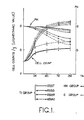
- Lactobacillus acidophilus Lactobacillus brevis, Lactobacillus fermentum, etc. which are well known heretofore are collectively termed HW Group hereafter; Lactobacillus bacteria sufficiently finished so as to be suited for mass production, which are commercially available, termed C group, and the bacteria group L clearans of the present invention termed TI Group.
- Bacteria belonging to the aforesaid HW group, C and TI group were injected into aseptic castered cream at 50,000,000 cell counts/g, respctively.
- the degree of the growth of the bacteria measured 38, 72 and 96 hours after inoculation when allowed to stand at 37°C is shown in Fig. 1 in the form of a graph.
- E. coli, Staphylococcus and B. subtilis can be regarded as representatives of potent bacteria among general bacteria and putrefactive bacteria. Accordingly, progress of putrefaction and thus storability of cream were studied by examining the growth of these three in cream.
- Staphylococcus 209 P, E. coli ATCC 25922 and B. subtilis ATCC 6633 were incorporated in castered cream at 5,10,000 and 50,000,000 cell counts/g, respectively and the manner of their growth examined.
- Staphylococcus is most potent in growth and the growth of this strain is noted to a destructive extent in the infections of 10,000 cell counts and further 50,000,000 cell counts and, the data indicates that it is dangerous for whipped cream to be stored for more than 1 day.
- the Lactobacilli belonging to the HW and C groups showed a bacterial count reduced by 10 to 30%, whereas the TI group was not affected.
- the grown bacterial counts were generally doubled as compared to the cases of 5 cells; that is, no change in the HW group; 1/2 to 1/10 by the C group and 1/20 to 1/150 by the Ti group.
- E. coli hardly affected the growth of the Lactobacillus in any cases of adding 5 cells and 10,000 cells.
- the bacterial count showed 1/2 to 1/20 that of the case where the addition was simultaneous. Particularly where the bacteria belonging to the TI group was previously cultured, the bacterial count was slightly 1 x 10 2 or less. Also where 10,000 cells were added, the bacterial count was about 1/2 to about 1/10 that of the simultaneous addition.
- a raw material consisting of 10 g of skim milk, 10 g of sugar, 0.2 g of agar and 100 ml of water was sterilized and the bacteria in accordance with the present invention was aseptically added thereto followed by fermentation for 24 hours.
- the thus prepared yogurt was administered to a human subject twice a day (morning and evening) at about 400,000,000,000 cells in total and the relation between the bacteria and the human body was examined.
- the retention time is expressed as a time period required for the amount of the bacteria excreted being reduced to 1/10 of the amount of the bacteria given. Also in this case, the fecal excretion amount was made 300 g a day. For example, in the 6587 bacteria, the number of days from 150,000,000,000 cells excretion daily due to administration of 400,000,000,000 cells daily to the excretion being decreased to less than 40,000,000,000 after the discontinuation of the administration was from 2 to 3 days with the 5 volunteers.
- the reduced amount (%) of the Table 10 is the arithmetic mean of the reduced amounts of each bad-smelling substance.
- the L. sulfurica reduces the amount of bad-smelling S-compound, the L. nitrosus the amount of bad-smelling N-compound, and the L. clearans the amount of both bad-smelling compounds.
- the reduced amounts (%) in Table 10 are results of analysis in excrement 7 days after a beginning of administration. Continuous administration, for example for 20 days, leads to better result than that of the Table 10 by a factor of about twice.
- L. sulfurica and L. nitrosus have activites only to reduce amounts of S-compounds and N-compounds respectively.
- the combination thereof has the same activity as that of L. clearans. Therefore, the combination thereof may be useful for Lactobacillus preparation, Lactobacillus drinks, etc., instead of L. clearans.
- enteric bacteria With respect to enteric bacteria the normal enteric bacterial floras of 8 bacterial types, including Lactobacillus, inherently possessed by the volunteers, were traced one by one. As shown in Table 10, the results indicate that no species were omitted and slight change was noted either during the administration or after the discontinuation of the administration.
- Lactobacillus With respect to Lactobacillus, the best possible efforts have been made to prove that Lactobacillus is non-toxic and non-pathogenic. In these days, however, it has been made clear that it is necessary and indispensable for maintaining health that more than certain amounts of Lactobacilli inhabit the living body, in particular, the mucous membrane. In light of such a finding, it is understood that according to the present invention, injection of bacteria having strong autogrowth power and strong exclusion power such as the bacteria of the present invention into edible cream (as a very easily putrified material) and further allowing them to grow there are not only useful for extending the time period of putrefaction of cream but are also effective for reducing putrid substances in the intestine and regulating the intestinal movements, etc.
- Antibiotics which are being developed recently have extremely potent effects and wide antibacterial spectrum; accordingly, these antibiotics often cause considerable disturbance of enteric bacterioflora, when administered to the human body.
- the bacteria of the present invention is administered at large doses in such a case, it assists to repair bacterioflora after the discontinulation of drug administration and recovery of health.
- the present invention has an extremely significant utility from an industrial view point.
- the present bacteria are surely Lactobacilli these have properties of well known Lactobacilli, and thus have a strong affinity to mucous membrane. Activity, nutrient requirement and p-value are very large and the fixing ability to the mucous membrane etc. is thus much larger than that of other well known Lactobacillus bacteria. Therefore, the present bacteria are useful for intestine, oral cavity, vaginal suppository etc.
- the present invention has an extremely significant utility, especially in the sanitary industry.
- the bacteria of the present invention reduce the amounts of bad-smelling S-compounds and/or N-compounds, while well known bacteria, such as Lactobacillus acidophilus cause no influence on these compounds.
- the bacteria of the present invention merely reduce the amounts of bad-smelling compounds, while bacteria previously patented (Lactobacillus deodorans) in Japanase Patent 49193/82 and UK Patent 1,584,694 reduce them completely to a degree that the remaining bad-smelling compounds are not measurable.
- Lactobacillus deodorans to assimilate bad-smelling compounds in preference to glucose, i.e., assimilating whole bad-smelling compounds
- the present bacteria such as Lactobacillus clearans, does not assimilate bad-smelling compound completely, to leave bad-smelling compounds without assimilation.
- the present bacteria is discriminated from Lactobacillus deodorans in view of that, in the former, larger amounts of long periods of administration, or abrupt suspension of administration causes no disturbance of intestine bacteria in the living body and, while, in the latter, those administrations sometimes cause disturbance on intestine bacteria.
Landscapes
- Life Sciences & Earth Sciences (AREA)
- Chemical & Material Sciences (AREA)
- Engineering & Computer Science (AREA)
- Health & Medical Sciences (AREA)
- Organic Chemistry (AREA)
- Bioinformatics & Cheminformatics (AREA)
- Microbiology (AREA)
- Wood Science & Technology (AREA)
- Zoology (AREA)
- Biotechnology (AREA)
- Genetics & Genomics (AREA)
- Food Science & Technology (AREA)
- Polymers & Plastics (AREA)
- Medicinal Chemistry (AREA)
- General Health & Medical Sciences (AREA)
- Tropical Medicine & Parasitology (AREA)
- Biochemistry (AREA)
- Virology (AREA)
- Biomedical Technology (AREA)
- Nutrition Science (AREA)
- General Engineering & Computer Science (AREA)
- Animal Behavior & Ethology (AREA)
- Nuclear Medicine, Radiotherapy & Molecular Imaging (AREA)
- Pharmacology & Pharmacy (AREA)
- Veterinary Medicine (AREA)
- Public Health (AREA)
- General Chemical & Material Sciences (AREA)
- Chemical Kinetics & Catalysis (AREA)
- Mycology (AREA)
- Micro-Organisms Or Cultivation Processes Thereof (AREA)
- Medicines Containing Material From Animals Or Micro-Organisms (AREA)
- Grain Derivatives (AREA)
- Dairy Products (AREA)
Applications Claiming Priority (2)
| Application Number | Priority Date | Filing Date | Title |
|---|---|---|---|
| JP119890/82 | 1982-07-12 | ||
| JP57119890A JPS5911177A (ja) | 1982-07-12 | 1982-07-12 | 新規乳酸桿菌 |
Publications (3)
| Publication Number | Publication Date |
|---|---|
| EP0099235A2 EP0099235A2 (en) | 1984-01-25 |
| EP0099235A3 EP0099235A3 (en) | 1985-06-05 |
| EP0099235B1 true EP0099235B1 (en) | 1990-09-26 |
Family
ID=14772760
Family Applications (1)
| Application Number | Title | Priority Date | Filing Date |
|---|---|---|---|
| EP83303929A Expired - Lifetime EP0099235B1 (en) | 1982-07-12 | 1983-07-06 | Novel lactobacillus |
Country Status (9)
| Country | Link |
|---|---|
| US (1) | US4579734A (https=) |
| EP (1) | EP0099235B1 (https=) |
| JP (1) | JPS5911177A (https=) |
| KR (1) | KR910003307B1 (https=) |
| AU (1) | AU556996B2 (https=) |
| BR (1) | BR8303725A (https=) |
| CA (1) | CA1204686A (https=) |
| DE (1) | DE3381903D1 (https=) |
| PH (1) | PH19244A (https=) |
Families Citing this family (22)
| Publication number | Priority date | Publication date | Assignee | Title |
|---|---|---|---|---|
| JPS587297B2 (ja) * | 1976-05-21 | 1983-02-09 | 秦 興世 | 脱臭剤とその製造方法及び保存法 |
| JPS60149527A (ja) * | 1984-01-17 | 1985-08-07 | Seikenkai | 生体内脱臭剤 |
| SE463598B (sv) * | 1984-11-08 | 1990-12-17 | Chemical Dynamics Sweden Ab | Preparat, avsett att oeka vidhaeftningen av bakterier till mag-tarmkanalen hos maenniskor och djur, samt ett framstaellningsfoerfarande foer detta |
| US5804179A (en) * | 1985-12-31 | 1998-09-08 | Research Corporation Technologies, Inc. | Lactobacillus compositions and methods for treating urinary tract infections |
| SE8603420L (sv) * | 1986-08-14 | 1988-02-15 | Tetra Pak Ab | Sett att reducera helsoriskerna vid hantering av forpackade, icke-steriliserade livsmedel |
| US4883673A (en) * | 1987-02-09 | 1989-11-28 | Microlife Technics, Inc. | Method for inhibiting bacterial spoilage and resulting compositions |
| US4985258A (en) * | 1988-12-22 | 1991-01-15 | Cultured Foods Corporation | Pickling kit and process |
| US5296221A (en) * | 1990-01-31 | 1994-03-22 | Sani-Ei Sucrochemical Co., Ltd. | Lactobacillus johnsonii ferm bp-2680 lactic acid bacteria preparations using the same and a process of manufacturing the preparations |
| GB2261372A (en) * | 1991-11-15 | 1993-05-19 | Gregor Reid | Lactobacillus and skim milk compositions for prevention of urogenital infection |
| US5840318A (en) * | 1993-05-11 | 1998-11-24 | Immunom Technologies, Inc. | Methods and compositions for modulating immune systems of animals |
| UA39965C2 (uk) * | 1993-12-03 | 2001-07-16 | Лайфор Леборетріз Лтд | Вірусоцидний, бактерицидний та руйнуючий сперматозоїди вагінальний засіб і вагінальний супозиторій ( варіанти ) |
| US5733568A (en) * | 1993-12-03 | 1998-03-31 | Lafor Laboratories Limited | Micro-encapsulated lactobacilli for medical applications |
| JP2000217566A (ja) * | 1999-01-25 | 2000-08-08 | Bhph Co Ltd | ラクトバチラスクリアランスを培養するための培養基および該菌種の保存方法 |
| JP4193269B2 (ja) * | 1999-03-04 | 2008-12-10 | ビーエイチピーエイチ カンパニーリミテッド | 新規な生体浄化活性型乳酸菌製剤 |
| US7214370B2 (en) | 2000-12-18 | 2007-05-08 | Probiohealth, Llc | Prebiotic and preservative uses of oil-emulsified probiotic encapsulations |
| KR20040018319A (ko) * | 2000-12-18 | 2004-03-03 | 프로비오헬쓰 엘엘씨 | 락토바실러스 카제이 균주 κε01에서 유래된 정장제 화합물 |
| WO2004009031A2 (en) * | 2002-07-22 | 2004-01-29 | Agtech Products, Inc. | Lactobacillus strains and uses therefor |
| US7384628B2 (en) * | 2003-06-23 | 2008-06-10 | Agtech Products, Inc. | Lactic acid bacteria and its use in direct-fed microbials |
| RU2014119583A (ru) | 2011-08-24 | 2015-11-20 | ДЮПОНТ НЬЮТРИШЭН БАЙОСАЙНСИЗ ЭйПиЭс | Штамм бацилл и содержащая его композиция |
| CA3008794C (en) | 2012-03-29 | 2021-03-16 | Therabiome, Llc | Gastrointestinal site-specific oral vaccination formulations active on the ileum and appendix |
| AU2014239883B2 (en) | 2013-03-14 | 2019-01-17 | Therabiome, Llc | Targeted gastrointestinal tract delivery of probiotic organisms and/or therapeutic agents |
| DE102015211640B4 (de) | 2015-06-24 | 2017-09-21 | Organon eG Frankfurt | Stoff zum mikrobiologischen Behandeln von Gegenständen oder deren Oberflächen |
Family Cites Families (10)
| Publication number | Priority date | Publication date | Assignee | Title |
|---|---|---|---|---|
| US3193391A (en) * | 1961-10-06 | 1965-07-06 | Swift & Co | Use of bacteria in cured meats |
| US3899594A (en) * | 1971-09-13 | 1975-08-12 | Dirigo Corp | Food preservation |
| JPS5048386A (https=) * | 1973-08-31 | 1975-04-30 | ||
| US3900572A (en) * | 1974-03-20 | 1975-08-19 | Ferma Gro Corp | Nutrient composition for plants and animals |
| US3957974A (en) * | 1974-11-05 | 1976-05-18 | Seikenkai | Method for deodorization of excrements |
| JPS5173136A (en) * | 1974-11-20 | 1976-06-24 | Seikenkai | Funbenno datsushuhoho |
| JPS52102419A (en) * | 1976-02-23 | 1977-08-27 | Seikenkai | Lactic acid producing bacillus preparation |
| JPS52154590A (en) * | 1976-05-21 | 1977-12-22 | Seikenkai | Cultivating and preserving method of deodorising lactobucillus and liling cell preparation |
| US4160038A (en) * | 1976-08-09 | 1979-07-03 | Microlife Technics, Inc. | Lactic acid fermentate flavored pet food |
| JPH1073136A (ja) * | 1996-08-29 | 1998-03-17 | Aisin Seiki Co Ltd | ディスクブレ−キ用ベンチレ−テッドディスクロ−タ |
-
1982
- 1982-07-12 JP JP57119890A patent/JPS5911177A/ja active Granted
-
1983
- 1983-07-06 DE DE8383303929T patent/DE3381903D1/de not_active Expired - Fee Related
- 1983-07-06 EP EP83303929A patent/EP0099235B1/en not_active Expired - Lifetime
- 1983-07-07 PH PH29186A patent/PH19244A/en unknown
- 1983-07-07 US US06/511,805 patent/US4579734A/en not_active Expired - Lifetime
- 1983-07-08 CA CA000432113A patent/CA1204686A/en not_active Expired
- 1983-07-12 BR BR8303725A patent/BR8303725A/pt unknown
- 1983-07-12 KR KR1019830003199A patent/KR910003307B1/ko not_active Expired
- 1983-07-12 AU AU16765/83A patent/AU556996B2/en not_active Ceased
Also Published As
| Publication number | Publication date |
|---|---|
| KR840005485A (ko) | 1984-11-14 |
| US4579734A (en) | 1986-04-01 |
| DE3381903D1 (de) | 1990-10-31 |
| AU1676583A (en) | 1984-01-19 |
| EP0099235A2 (en) | 1984-01-25 |
| BR8303725A (pt) | 1984-02-14 |
| JPH04632B2 (https=) | 1992-01-08 |
| AU556996B2 (en) | 1986-11-27 |
| PH19244A (en) | 1986-02-14 |
| CA1204686A (en) | 1986-05-20 |
| EP0099235A3 (en) | 1985-06-05 |
| KR910003307B1 (ko) | 1991-05-27 |
| JPS5911177A (ja) | 1984-01-20 |
Similar Documents
| Publication | Publication Date | Title |
|---|---|---|
| EP0099235B1 (en) | Novel lactobacillus | |
| Jordan et al. | Inhibition of experimental caries by sodium metabisulfite and its effect on the growth and metabolism of selected bacteria | |
| Meurman et al. | Effect of Lactobacillus rhamnosus strain GG (ATCC 53103) on the growth of Streptococcus sobrinus in vitro | |
| DE60127731T2 (de) | Probiotica zur Verwendung als Futter für Haustiere | |
| Buchanan et al. | Microbial competition: effect of culture conditions on the suppression of Listeria monocytogenes Scott A by Carnobacterium piscicola | |
| AU736681B2 (en) | Competitive exclusion culture for swine | |
| US4746512A (en) | Anticariogenic or antiperiodontitic agent | |
| EP0443543A2 (en) | Novel lactic acid bacteria, antibacterial substance produced by the bacteria, fermented milk starter containing the bacteria, and process for producing fermented milk by using the starter | |
| MXPA02007018A (es) | Composicion alimenticia para mascotas para tratamiento de la especie helicobacter en mascotas. | |
| KR100471631B1 (ko) | 비피도박테리움 브레베 및 이를 이용한 발효두유 | |
| CN110100899B (zh) | 一种由发酵乳杆菌制备发酵豆乳粉的方法及制备出的发酵豆乳粉与应用 | |
| Canganella et al. | Survival of undesirable micro-organisms in fruit yoghurts during storage at different temperatures | |
| Noorda et al. | Monobacterial and mixed bacterial plaques of Streptococcus mutans and Veillonella alcalescens in an artificial mouth: development, metabolism, and effect on human dental enamel | |
| US5179020A (en) | Antibiotic resistant strain of lactobacillus acidophilus | |
| US11484040B2 (en) | Ampicillin resistant texturizing lactic acid bacteria strains | |
| DE60037343T2 (de) | Bifidobakterien mit der fähigkeit diarrhoe zu verhindern | |
| Parker et al. | Interactions of Lactobacillus and Propionibacterium in mixed culture | |
| EP0112020B1 (en) | A new microorganism belonging to streptococcus thermophilus and a composition containing said microorganism | |
| AU616242B2 (en) | Method for making sour-milk products | |
| Rada | Effect of Kluyveromyces marxianus on the growth and survival of bifidobacteria in milk | |
| KR970002254B1 (ko) | 비피도박테리아의 대량배양을 위한 배양배지 조성물 | |
| NZ206792A (en) | An edible food composition containing lactobacillus species | |
| KR900001433B1 (ko) | 충치억제용 조성물 및 음료의 제조방법 | |
| CN114521608B (zh) | 一种乳酸菌和芽孢杆菌的发酵增效组合物 | |
| KR100206454B1 (ko) | 신규한 락토바실러스 속 디에스-12균주와 이를 이용한 어류용 프로바이오틱스 |
Legal Events
| Date | Code | Title | Description |
|---|---|---|---|
| PUAI | Public reference made under article 153(3) epc to a published international application that has entered the european phase |
Free format text: ORIGINAL CODE: 0009012 |
|
| AK | Designated contracting states |
Designated state(s): DE FR GB IT NL |
|
| PUAL | Search report despatched |
Free format text: ORIGINAL CODE: 0009013 |
|
| AK | Designated contracting states |
Designated state(s): DE FR GB IT NL |
|
| 17P | Request for examination filed |
Effective date: 19850827 |
|
| 17Q | First examination report despatched |
Effective date: 19861120 |
|
| GRAA | (expected) grant |
Free format text: ORIGINAL CODE: 0009210 |
|
| AK | Designated contracting states |
Kind code of ref document: B1 Designated state(s): DE FR GB IT NL |
|
| REF | Corresponds to: |
Ref document number: 3381903 Country of ref document: DE Date of ref document: 19901031 |
|
| ET | Fr: translation filed | ||
| ITF | It: translation for a ep patent filed | ||
| PLBE | No opposition filed within time limit |
Free format text: ORIGINAL CODE: 0009261 |
|
| STAA | Information on the status of an ep patent application or granted ep patent |
Free format text: STATUS: NO OPPOSITION FILED WITHIN TIME LIMIT |
|
| ITTA | It: last paid annual fee | ||
| 26N | No opposition filed | ||
| PGFP | Annual fee paid to national office [announced via postgrant information from national office to epo] |
Ref country code: GB Payment date: 19980629 Year of fee payment: 16 |
|
| PGFP | Annual fee paid to national office [announced via postgrant information from national office to epo] |
Ref country code: FR Payment date: 19980709 Year of fee payment: 16 |
|
| PGFP | Annual fee paid to national office [announced via postgrant information from national office to epo] |
Ref country code: DE Payment date: 19980713 Year of fee payment: 16 |
|
| PG25 | Lapsed in a contracting state [announced via postgrant information from national office to epo] |
Ref country code: GB Free format text: LAPSE BECAUSE OF NON-PAYMENT OF DUE FEES Effective date: 19990706 |
|
| PG25 | Lapsed in a contracting state [announced via postgrant information from national office to epo] |
Ref country code: FR Free format text: THE PATENT HAS BEEN ANNULLED BY A DECISION OF A NATIONAL AUTHORITY Effective date: 19990731 |
|
| GBPC | Gb: european patent ceased through non-payment of renewal fee |
Effective date: 19990706 |
|
| PG25 | Lapsed in a contracting state [announced via postgrant information from national office to epo] |
Ref country code: DE Free format text: LAPSE BECAUSE OF NON-PAYMENT OF DUE FEES Effective date: 20000503 |
|
| REG | Reference to a national code |
Ref country code: FR Ref legal event code: ST |
|
| PGFP | Annual fee paid to national office [announced via postgrant information from national office to epo] |
Ref country code: NL Payment date: 20010730 Year of fee payment: 19 |
|
| PG25 | Lapsed in a contracting state [announced via postgrant information from national office to epo] |
Ref country code: NL Free format text: LAPSE BECAUSE OF NON-PAYMENT OF DUE FEES Effective date: 20030201 |
|
| NLV4 | Nl: lapsed or anulled due to non-payment of the annual fee |
Effective date: 20030201 |