EP0073635B1 - Expressionsvektoren - Google Patents
Expressionsvektoren Download PDFInfo
- Publication number
- EP0073635B1 EP0073635B1 EP82304460A EP82304460A EP0073635B1 EP 0073635 B1 EP0073635 B1 EP 0073635B1 EP 82304460 A EP82304460 A EP 82304460A EP 82304460 A EP82304460 A EP 82304460A EP 0073635 B1 EP0073635 B1 EP 0073635B1
- Authority
- EP
- European Patent Office
- Prior art keywords
- yeast
- fragment
- expression
- pgk
- sequence
- Prior art date
- Legal status (The legal status is an assumption and is not a legal conclusion. Google has not performed a legal analysis and makes no representation as to the accuracy of the status listed.)
- Expired
Links
- 239000013604 expression vector Substances 0.000 title claims description 29
- 240000004808 Saccharomyces cerevisiae Species 0.000 claims description 100
- 108090000623 proteins and genes Proteins 0.000 claims description 37
- WQZGKKKJIJFFOK-GASJEMHNSA-N Glucose Natural products OC[C@H]1OC(O)[C@H](O)[C@@H](O)[C@@H]1O WQZGKKKJIJFFOK-GASJEMHNSA-N 0.000 claims description 21
- 239000008103 glucose Substances 0.000 claims description 21
- 238000000034 method Methods 0.000 claims description 19
- 101150047627 pgk gene Proteins 0.000 claims description 17
- 229910052799 carbon Inorganic materials 0.000 claims description 14
- OKTJSMMVPCPJKN-UHFFFAOYSA-N Carbon Chemical compound [C] OKTJSMMVPCPJKN-UHFFFAOYSA-N 0.000 claims description 13
- 229920001184 polypeptide Polymers 0.000 claims description 12
- 102000004196 processed proteins & peptides Human genes 0.000 claims description 12
- 108090000765 processed proteins & peptides Proteins 0.000 claims description 12
- 239000003550 marker Substances 0.000 claims description 10
- 108020005091 Replication Origin Proteins 0.000 claims description 9
- 238000004519 manufacturing process Methods 0.000 claims description 7
- 125000002791 glucosyl group Chemical group C1([C@H](O)[C@@H](O)[C@H](O)[C@H](O1)CO)* 0.000 claims description 2
- 235000015097 nutrients Nutrition 0.000 claims description 2
- 235000014680 Saccharomyces cerevisiae Nutrition 0.000 description 88
- 239000012634 fragment Substances 0.000 description 82
- 239000013612 plasmid Substances 0.000 description 42
- 239000013598 vector Substances 0.000 description 29
- 102000011755 Phosphoglycerate Kinase Human genes 0.000 description 26
- 101001099217 Thermotoga maritima (strain ATCC 43589 / DSM 3109 / JCM 10099 / NBRC 100826 / MSB8) Triosephosphate isomerase Proteins 0.000 description 26
- 101710163881 5,6-dihydroxyindole-2-carboxylic acid oxidase Proteins 0.000 description 24
- 102100030310 5,6-dihydroxyindole-2-carboxylic acid oxidase Human genes 0.000 description 24
- 239000002773 nucleotide Substances 0.000 description 23
- 125000003729 nucleotide group Chemical group 0.000 description 23
- 210000004027 cell Anatomy 0.000 description 21
- 108020004414 DNA Proteins 0.000 description 18
- 102000014150 Interferons Human genes 0.000 description 16
- 108010050904 Interferons Proteins 0.000 description 16
- 229940079322 interferon Drugs 0.000 description 16
- 230000010076 replication Effects 0.000 description 16
- 241000588724 Escherichia coli Species 0.000 description 15
- QTBSBXVTEAMEQO-UHFFFAOYSA-M Acetate Chemical compound CC([O-])=O QTBSBXVTEAMEQO-UHFFFAOYSA-M 0.000 description 14
- 102000004169 proteins and genes Human genes 0.000 description 14
- 108091026890 Coding region Proteins 0.000 description 13
- 238000012217 deletion Methods 0.000 description 13
- 230000037430 deletion Effects 0.000 description 13
- 108091081024 Start codon Proteins 0.000 description 10
- 150000001413 amino acids Chemical group 0.000 description 9
- 108091008146 restriction endonucleases Proteins 0.000 description 9
- 238000010276 construction Methods 0.000 description 8
- 101150006914 TRP1 gene Proteins 0.000 description 7
- 102000037865 fusion proteins Human genes 0.000 description 7
- 108020001507 fusion proteins Proteins 0.000 description 7
- 230000004927 fusion Effects 0.000 description 6
- 238000009396 hybridization Methods 0.000 description 6
- 239000000523 sample Substances 0.000 description 6
- 108020004705 Codon Proteins 0.000 description 5
- ROHFNLRQFUQHCH-YFKPBYRVSA-N L-leucine Chemical compound CC(C)C[C@H](N)C(O)=O ROHFNLRQFUQHCH-YFKPBYRVSA-N 0.000 description 5
- 239000011543 agarose gel Substances 0.000 description 5
- 244000061176 Nicotiana tabacum Species 0.000 description 4
- 230000001580 bacterial effect Effects 0.000 description 4
- 239000013613 expression plasmid Substances 0.000 description 4
- 230000001105 regulatory effect Effects 0.000 description 4
- 238000010561 standard procedure Methods 0.000 description 4
- 108091032973 (ribonucleotides)n+m Proteins 0.000 description 3
- ROHFNLRQFUQHCH-UHFFFAOYSA-N Leucine Natural products CC(C)CC(N)C(O)=O ROHFNLRQFUQHCH-UHFFFAOYSA-N 0.000 description 3
- 229960000723 ampicillin Drugs 0.000 description 3
- AVKUERGKIZMTKX-NJBDSQKTSA-N ampicillin Chemical compound C1([C@@H](N)C(=O)N[C@H]2[C@H]3SC([C@@H](N3C2=O)C(O)=O)(C)C)=CC=CC=C1 AVKUERGKIZMTKX-NJBDSQKTSA-N 0.000 description 3
- 238000004458 analytical method Methods 0.000 description 3
- 238000010586 diagram Methods 0.000 description 3
- 238000002474 experimental method Methods 0.000 description 3
- 239000000499 gel Substances 0.000 description 3
- 230000000977 initiatory effect Effects 0.000 description 3
- 238000000746 purification Methods 0.000 description 3
- 230000003362 replicative effect Effects 0.000 description 3
- 238000002415 sodium dodecyl sulfate polyacrylamide gel electrophoresis Methods 0.000 description 3
- 230000009466 transformation Effects 0.000 description 3
- 238000013519 translation Methods 0.000 description 3
- KDCGOANMDULRCW-UHFFFAOYSA-N 7H-purine Chemical compound N1=CNC2=NC=NC2=C1 KDCGOANMDULRCW-UHFFFAOYSA-N 0.000 description 2
- 108090000790 Enzymes Proteins 0.000 description 2
- LFQSCWFLJHTTHZ-UHFFFAOYSA-N Ethanol Chemical compound CCO LFQSCWFLJHTTHZ-UHFFFAOYSA-N 0.000 description 2
- 108091092195 Intron Proteins 0.000 description 2
- 102000003960 Ligases Human genes 0.000 description 2
- 108090000364 Ligases Proteins 0.000 description 2
- 108091028043 Nucleic acid sequence Proteins 0.000 description 2
- ISWSIDIOOBJBQZ-UHFFFAOYSA-N Phenol Chemical compound OC1=CC=CC=C1 ISWSIDIOOBJBQZ-UHFFFAOYSA-N 0.000 description 2
- 241000710961 Semliki Forest virus Species 0.000 description 2
- 239000004098 Tetracycline Substances 0.000 description 2
- 238000003556 assay Methods 0.000 description 2
- WQZGKKKJIJFFOK-VFUOTHLCSA-N beta-D-glucose Chemical compound OC[C@H]1O[C@@H](O)[C@H](O)[C@@H](O)[C@@H]1O WQZGKKKJIJFFOK-VFUOTHLCSA-N 0.000 description 2
- 230000002414 glycolytic effect Effects 0.000 description 2
- 108020004999 messenger RNA Proteins 0.000 description 2
- 239000000203 mixture Substances 0.000 description 2
- 150000007523 nucleic acids Chemical class 0.000 description 2
- 239000013600 plasmid vector Substances 0.000 description 2
- 239000002243 precursor Substances 0.000 description 2
- 238000012163 sequencing technique Methods 0.000 description 2
- ATHGHQPFGPMSJY-UHFFFAOYSA-N spermidine Chemical compound NCCCCNCCCN ATHGHQPFGPMSJY-UHFFFAOYSA-N 0.000 description 2
- 230000003019 stabilising effect Effects 0.000 description 2
- 229960002180 tetracycline Drugs 0.000 description 2
- 229930101283 tetracycline Natural products 0.000 description 2
- 235000019364 tetracycline Nutrition 0.000 description 2
- 150000003522 tetracyclines Chemical class 0.000 description 2
- 238000013518 transcription Methods 0.000 description 2
- 230000035897 transcription Effects 0.000 description 2
- 230000002103 transcriptional effect Effects 0.000 description 2
- 210000005253 yeast cell Anatomy 0.000 description 2
- 108020005029 5' Flanking Region Proteins 0.000 description 1
- HRPVXLWXLXDGHG-UHFFFAOYSA-N Acrylamide Chemical compound NC(=O)C=C HRPVXLWXLXDGHG-UHFFFAOYSA-N 0.000 description 1
- 241000283690 Bos taurus Species 0.000 description 1
- 102100028991 Cytochrome c1, heme protein, mitochondrial Human genes 0.000 description 1
- 101100010343 Drosophila melanogaster lobo gene Proteins 0.000 description 1
- 102100031780 Endonuclease Human genes 0.000 description 1
- 108010042407 Endonucleases Proteins 0.000 description 1
- 102000004190 Enzymes Human genes 0.000 description 1
- 241000206602 Eukaryota Species 0.000 description 1
- 101000916041 Homo sapiens Cytochrome c1, heme protein, mitochondrial Proteins 0.000 description 1
- QIVBCDIJIAJPQS-VIFPVBQESA-N L-tryptophane Chemical compound C1=CC=C2C(C[C@H](N)C(O)=O)=CNC2=C1 QIVBCDIJIAJPQS-VIFPVBQESA-N 0.000 description 1
- 101150007280 LEU2 gene Proteins 0.000 description 1
- 239000000020 Nitrocellulose Substances 0.000 description 1
- 101710163270 Nuclease Proteins 0.000 description 1
- 108010076504 Protein Sorting Signals Proteins 0.000 description 1
- 108020004511 Recombinant DNA Proteins 0.000 description 1
- 101000947508 Saccharomyces cerevisiae (strain ATCC 204508 / S288c) Cytochrome c isoform 1 Proteins 0.000 description 1
- 238000012300 Sequence Analysis Methods 0.000 description 1
- 238000002105 Southern blotting Methods 0.000 description 1
- 108020005038 Terminator Codon Proteins 0.000 description 1
- QIVBCDIJIAJPQS-UHFFFAOYSA-N Tryptophan Natural products C1=CC=C2C(CC(N)C(O)=O)=CNC2=C1 QIVBCDIJIAJPQS-UHFFFAOYSA-N 0.000 description 1
- 108020000999 Viral RNA Proteins 0.000 description 1
- 125000000539 amino acid group Chemical group 0.000 description 1
- 238000000376 autoradiography Methods 0.000 description 1
- 230000033228 biological regulation Effects 0.000 description 1
- 230000015572 biosynthetic process Effects 0.000 description 1
- 230000015556 catabolic process Effects 0.000 description 1
- 238000006243 chemical reaction Methods 0.000 description 1
- 239000013611 chromosomal DNA Substances 0.000 description 1
- 238000003776 cleavage reaction Methods 0.000 description 1
- 239000002299 complementary DNA Substances 0.000 description 1
- 238000006731 degradation reaction Methods 0.000 description 1
- 238000013461 design Methods 0.000 description 1
- 230000000694 effects Effects 0.000 description 1
- 108010092809 exonuclease Bal 31 Proteins 0.000 description 1
- 239000000284 extract Substances 0.000 description 1
- 238000000605 extraction Methods 0.000 description 1
- 238000005194 fractionation Methods 0.000 description 1
- 239000012737 fresh medium Substances 0.000 description 1
- 230000002068 genetic effect Effects 0.000 description 1
- 239000006481 glucose medium Substances 0.000 description 1
- 238000011534 incubation Methods 0.000 description 1
- 230000006698 induction Effects 0.000 description 1
- 239000002054 inoculum Substances 0.000 description 1
- 238000013507 mapping Methods 0.000 description 1
- 230000001404 mediated effect Effects 0.000 description 1
- 239000002609 medium Substances 0.000 description 1
- 230000021121 meiosis Effects 0.000 description 1
- 230000011278 mitosis Effects 0.000 description 1
- 238000012986 modification Methods 0.000 description 1
- 230000004048 modification Effects 0.000 description 1
- 229920001220 nitrocellulos Polymers 0.000 description 1
- 108020004707 nucleic acids Proteins 0.000 description 1
- 102000039446 nucleic acids Human genes 0.000 description 1
- 239000000825 pharmaceutical preparation Substances 0.000 description 1
- 229940127557 pharmaceutical product Drugs 0.000 description 1
- 229920002401 polyacrylamide Polymers 0.000 description 1
- 238000002360 preparation method Methods 0.000 description 1
- 125000002924 primary amino group Chemical group [H]N([H])* 0.000 description 1
- 230000002797 proteolythic effect Effects 0.000 description 1
- 230000001698 pyrogenic effect Effects 0.000 description 1
- 239000007320 rich medium Substances 0.000 description 1
- 230000007017 scission Effects 0.000 description 1
- 230000035945 sensitivity Effects 0.000 description 1
- 238000011451 sequencing strategy Methods 0.000 description 1
- 229940063673 spermidine Drugs 0.000 description 1
- 238000003786 synthesis reaction Methods 0.000 description 1
- 231100000331 toxic Toxicity 0.000 description 1
- 230000002588 toxic effect Effects 0.000 description 1
- 238000012546 transfer Methods 0.000 description 1
- 230000014621 translational initiation Effects 0.000 description 1
Images





Classifications
-
- C—CHEMISTRY; METALLURGY
- C07—ORGANIC CHEMISTRY
- C07K—PEPTIDES
- C07K14/00—Peptides having more than 20 amino acids; Gastrins; Somatostatins; Melanotropins; Derivatives thereof
- C07K14/435—Peptides having more than 20 amino acids; Gastrins; Somatostatins; Melanotropins; Derivatives thereof from animals; from humans
- C07K14/52—Cytokines; Lymphokines; Interferons
- C07K14/555—Interferons [IFN]
- C07K14/56—IFN-alpha
-
- C—CHEMISTRY; METALLURGY
- C12—BIOCHEMISTRY; BEER; SPIRITS; WINE; VINEGAR; MICROBIOLOGY; ENZYMOLOGY; MUTATION OR GENETIC ENGINEERING
- C12N—MICROORGANISMS OR ENZYMES; COMPOSITIONS THEREOF; PROPAGATING, PRESERVING, OR MAINTAINING MICROORGANISMS; MUTATION OR GENETIC ENGINEERING; CULTURE MEDIA
- C12N15/00—Mutation or genetic engineering; DNA or RNA concerning genetic engineering, vectors, e.g. plasmids, or their isolation, preparation or purification; Use of hosts therefor
- C12N15/09—Recombinant DNA-technology
- C12N15/63—Introduction of foreign genetic material using vectors; Vectors; Use of hosts therefor; Regulation of expression
- C12N15/79—Vectors or expression systems specially adapted for eukaryotic hosts
- C12N15/80—Vectors or expression systems specially adapted for eukaryotic hosts for fungi
- C12N15/81—Vectors or expression systems specially adapted for eukaryotic hosts for fungi for yeasts
-
- Y—GENERAL TAGGING OF NEW TECHNOLOGICAL DEVELOPMENTS; GENERAL TAGGING OF CROSS-SECTIONAL TECHNOLOGIES SPANNING OVER SEVERAL SECTIONS OF THE IPC; TECHNICAL SUBJECTS COVERED BY FORMER USPC CROSS-REFERENCE ART COLLECTIONS [XRACs] AND DIGESTS
- Y10—TECHNICAL SUBJECTS COVERED BY FORMER USPC
- Y10S—TECHNICAL SUBJECTS COVERED BY FORMER USPC CROSS-REFERENCE ART COLLECTIONS [XRACs] AND DIGESTS
- Y10S930/00—Peptide or protein sequence
- Y10S930/01—Peptide or protein sequence
- Y10S930/14—Lymphokine; related peptides
- Y10S930/142—Interferon
Definitions
- This invention relates to the field of molecular biology and in particular to plasmid vectors suitable for the expression, at various levels, of genetic material in yeasts.
- Yeast replication vectors are capable of autonomous replication within a yeast host organism and are therefore suitable for introducing foreign DNA into yeasts.
- the vectors have also been used to isolate a portion of yeast DNA for further analysis. Whilst such known systems are capable of reliable replication within a yeast host organism they are not, to a significant extent, themselves capable of expression of inserted DNA.
- E. coli may prove to be unsuitable as a host/vector system.
- E. coli contains a number of toxic pyrogenic factors that must be eliminated from any potentially useful pharmaceutical product.
- the efficiency with which purification can be achieved will, of course, vary with the product.
- the proteolytic activities in E. coli may seriously limit yields of some useful products (e.g. Itakura et al (1977) Science 198 1056).
- These and other considerations have led to increased interest in- alternative host/vector systems, in particular the use of eukaryotic systems for the production of eukaryotic products is appealing.
- yeast Saccharomyces cerevisiae Yeast is cheap, easy to grow in large quantities and it has a highly developed genetic system.
- a yeast expression vector comprising a yeast selective marker, a yeast replication origin and a yeast promoter positioned relative to a unique restriction site in such a way that expression may be obtained of a polypeptide coding sequence inserted at the restriction site characterised in that the yeast promoter comprises at least a functionally active promoter portion of the 5' region of the yeast PGK gene.
- the expression vector should include at least a portion of a bacterial plasmid. This enables the yeast expression vector to be manipulated in a bacterial host system (e.g. E. coli).
- yeast replication origin and selective marker which are known to the art of yeast replication vector construction.
- the first is based on the replication region of the natural yeast plasmid 2 ⁇ (2 micron).
- This plasmid is cryptic, that is it confers no readily detectable phenotype and it is present in about 100 copies per cell.
- a 3.25 kb fragment from a 2u plasmid derivative pJDB219 (Beggs (1978) Nature 275 104) has been used.
- the fragment concerned comprises two EcoRl fragments (2.5 kb and 0.75 kb) as follows: (not to scale).
- the LEU2 selective marker surrounds the internal EcoRl site and may be disrupted by cleavage at this site.
- the 2 ⁇ sequences have been described in detail (Hartley and Donelson (1980) Nature 286 560) and the LEU2 region has also been the subject of study (Dobson et al (1981) Gene 16 133).
- the 3.25 kb EcoRl fragment shown above has been used in the expression vectors of the present invention as a selection/replication module.
- Expression vectors of the present invention including the fragment may be stably maintained in yeast with a copy number of about 50-100 plasmids per cell.
- the second type of yeast replication origin and marker sequence depends upon autonomous replicating sequences (ARS) derived from yeast chromosomal DNA.
- ARS autonomous replicating sequences
- the best characterised of these sequences is 1.45 kbp EcoRl fragment which contains both the yeast TRP1 gene and an ARS (ARS1) (Kingsman eta/(1979) Gene 7141 and Struhl etal(1979) P.N.A.S. 761035).
- This fragment has been inserted into pBR322 (a bacterial vector) to give the plasmid known as YRp7, which is capable of replication in both E. coli and yeast host systems.
- ARS-based plasmids are extremely unstable, being lost almost entirely in the absence of selection and being maintained at only about 50% in the presence of selection, unless a second sequence, an ARS stabilising sequence (or ASS) is covalently joined to the ARS sequence. It now seems likely that an ASS is a centromeric DNA sequence (L. Clarke and J. Carbon (1980) Nature 287 504). A useful fragment is the 1.45 kb TRP1:
- ARS EcoRl fragment modified to contain a 627 Sau3a fragment which contains an ASS: (not to scale).
- the EcoRl fragment.shown immediately above has been used in the expression vectors of the present invention as a selection/replication module.
- Expression vectors of the present invention containing this fragment may be stably maintained in yeast with a copy number of about 1 plasmid per cell. They segregate in an ordered fashion at mitosis and meiosis.
- Yeast expression vectors which include at least a portion of the 5' region of a yeast glycolytic enzyme are susceptible to expression control by varying the level of a fermentable carbon source in the nutrient medium of a yeast transformed with such a vector.
- a preferred fermentable carbon source is glucose.
- the expression vectors of the present invention include a yeast replication origin and a yeast selective marker.
- these may comprise a fragment containing at least a portion of the yeast plasmid 2 ⁇ replication origin and at least a portion of the LEU2 yeast selective marker.
- these may comprise a fragment containing at least a portion of an autonomous replicating sequence and at least a portion of an autonomous replicating sequence stabilising sequence.
- a gene inserted into a yeast expression vector of the present invention may be expressed as a fusion protein in the correct reading frame depending upon the vector chosen.
- yeast expression vector containing at least a portion of a gene coding for a polypeptide, preferably human interferon-a.
- a process for the production of a polypeptide comprising expressing the said polypeptide in a yeast host organism transformed by a yeast expression vector containing a gene coding for the said polypeptide.
- the kit may comprise four or more different yeast expression vectors.
- kits comprising four or more different yeast expression vectors wherein the four vectors comprise all four pairwise combinations of the TRP1:ARS1:ASS or LEU2:2p replication origin selective marker and replication systems and at least a portion of either of the TRP1 or PGK 5' region yeast promoters.
- restriction endonuclease maps are not drawn to scale.
- the restriction sites are in some cases abbreviated as follows:
- yeast expression vectors to be described are based on the bacterial plasmid pBR322 and use one or other of the yeast replication origin/selective marker modules described above. Both modules are EcoRI fragments and are therefore readily manipulated.
- pMA3 which is composed of the E. coli vector pBR322 and the EcoRI fragment containing part of the 2 ⁇ yeast plasmid as described above.
- This plasmid in contrast to many known chimaeric yeast plasmids appears to be relatively stable and is maintained in yeast at a high copy number of about 50-100 plasmids per cell.
- pMA91 which is composed of the E. coli vector pBR322 and the ARS:ASS EcoRI fragment described above. This plasmid is again stable in yeast but is present at a copy number of 1.
- the two vectors pMA3 and pMA91 are described by partial maps in Figure 1. They are not vectors falling within the ambit of the present invention but rather important precursors in the production of vectors of this invention.
- the thick line indicates the sequence derived from yeast DNA.
- pMA3 and pMA91 DNAs were prepared by standard procedures (Chinault and Carbon (1979) Gene 5 111).
- pMA3 was partially digested with EcoRl and the products separated on a 1% agarose gel.
- the 3.25 kb double EcoRI fragment containing the 2 ⁇ origin of replication and the LEU2 gene was purified by the method of Tabak and Flavell (1978) Nucleic Acids Res. 5 2321).
- pMA91 was digested to completion with EcoRl and the 1.0 kb fragment containing the TRP1 gene, ARS1 and an ASS was purified.
- Two DNA fragments were therefore available as replication/selection system modules. These are referred to hereinafter as the 2 ⁇ :LEU2 module and the TRP1:ARS1:ASS module respectively.
- the 1.45 kb EcoRI fragment containing the yeast TRP1 gene and the ARS1 has been completely sequenced (Tschumper and Carbon (1980) Gene 10 157).
- the organisation of the fragment is shown in Figure 2 in which the shaded area to the left of the TRP1 coding sequence is the 5' region of the gene.
- the 5' control region has considerable homology with the analogous regions of the iso-1-cytochrome C and GPD genes from yeast (Smith et al (1979) Cell 16759) Holland & Holland (1979) JBC 254 5466). In each case there is a region containing purine rich strand of about 30 nucleotides which terminates 48-76 nucleotides up-stream from the initiation codon.
- CACACA sequence 10-15 nucleotides up-stream from the initiation codon. This hexanucleotide has been seen only in yeast and its proximity to the initiation codon may implicate it in translation, possibly ribosome binding, although the existence of ribosome binding sites other than the 5' CAP-structure in eukaryotes seems in doubt (Naksishima et al (1980) Nature 156 226; Stiles et al (1981) Cell 25 277). That signals necessary for TRPI expression are within the 5' flanking region on the 1.45 kb fragment in plasmid YRp7 ( Figure 2) is certain since the gene is expressed with the fragment in both orientations in pBR322.
- a 95 bp EcoRI-Alul fragment at the very left end of the 1.45 kb EcoRI fragment should contain signals sufficient for TRP1 expression since the Alul site is only 8 nucleotides away from the initiating A TG.
- This fragment therefore provides a potentially useful "mobile promoter" although additional sequences up-stream from this fragment may be necessary for maximal expression.
- the level of expression from the promoter is expected to be relatively low since TRP1 mRNA is present in about 0.1 ⁇ 0.01% of total mRNA.
- the second available yeast promoter sequence is that of the phosphoglycerate kinase (PGK) gene isolated originally by Hitzeman et al (1979), ICN-UCLA SYMP. 14 57).
- the cloned PGK gene is less well characterised than TRP1 but is potentially more useful for higher levels of expression in yeast as the single structural PGK gene produces 1-5% of total polyA-mRNA and protein.
- the glycolytic enzyme genes of yeast are regulated by carbon source (Maitra and Lobo (1981) JBC 246 475) giving the potential of developing a simple control system for the production of heterologous proteins in yeast. Analysis of protein and nucleic acid sequences have enabled us to define the co-ordinates of the PGK coding sequence.
- two plasmids, high and low copy number, and two promoter sequences, high and low expression are available for use in a yeast expression system. It is one aim of the invention to provide a set of vectors suitable for the expression, at various levels, of "useful" genes in yeast so that expression characteristics for a given heterologous protein can be determined quite simply by selecting the appropriate plasmid.
- This set comprises all four pairwise combinations of the two promoters, TRP1 and PGK and the TRP1:ARS1:ASS and LEU2:2 p replication origin, selective marker and replication systems.
- the kit contains molecules based on the PGK expression system which will permit fusion of useful polypeptides to the amino-terminal amino acids of yeast phosphoglycerate kinase in all three codon reading frames.
- expression can be regulated by the availability of glucose. The kit will, therefore, cover all possible expression, selection and replication requirements so that any polypeptide coding sequence, complete or partial, can be expressed under almost any control condition.
- Table 1 lists the designations of the plasmids in the kit and lists their basic properties.
- yeast expression vectors based on the 5' region of the yeast TRP1 gene were constructed.
- the scheme for the construction of yeast expression plasmid designated pMA103 is shown in Figures 3a) 3b). Partial restriction endonuclease site maps and sequence information are shown; detailed information is in Tschumper and Carbon (1980) Gene 10 157 Hartly and Donelson (1980) Nature 286 860 and Sutcliffe (1979) C.S.H.S.Q.B.43 79).
- T4 ligase and Bam HI linkers is according to Maniatis et al (1978) Cell 15 687 and restriction fragment purification from polyacrylamide gels was by the method of Maxam and Gilbert (1980) Methods in Enz 65 499.
- E. coli transformation was as described in Cameron et al P.N.A.S. (1975) 72 3416.
- the Alul site which defines one terminus of the EcoRI-Alul fragment at the 5' end of the TRP1 gene is located only 8 nucleotides up-stream from the ATG initiation codon. Therefore any sequence inserted at this Alul site should be efficiently transcribed from the TRP1 promoter. If the sequence also contains an ATG initiation codon close to the 5' end we would also expect efficient translation.
- the EcoRI-Alul fragment (93 bp) was purified from other restriction fragments produced by an EcoRI and Alul digest of YRp7 after fractionation on a 7% acrylamide gel.
- Transformant colonies containing plasmid which had the small EcoRI-BamHI fragment of pBR322 replaced by the 93 bp EcoRI-Alul fragment from YRp7 with a BamHI linker attached to the Alul terminus were identified on the basis of their tetracycline sensitivity, their positive signal in a "Grunstein and Hogness" hybridisation ((1975) P.N.A.S. 72 3961) with the 1.45 kb TRP1:ARS1 fragment as probe and subsequently by a detailed restriction analysis of their plasmid DNA.
- the plasmid thus formed is pMA101 Figure 3b).
- pMA101 was then cleaved at its unique EcoRI site, mixed with the 2u:LEU2 replication/selection module, ligated and used to transform E. coli AKEC 28 selecting for ampicillin resistance and leucine prototrophy. All transformants of this phenotype contained molecules with the same map as that shown as pMA103 Figure 4 or with the 2 ⁇ :LEU2 module in the other orientation.
- the expression site in pMA103 is BamHI and if transforms yeast at a frequency of 10 5 / ⁇ g.
- TRP1:ARS1:ASS module was inserted into the EcoRlsite of pMA101 to construct pMA113 but in this case selection was for ampicillin resistance and tryptophan prototrophy.
- a partial map of pMA113 is shown in Figure 5.
- the yeast transformation frequency is 10 4 / ⁇ g with pMA113.
- Hind III digested total yeast DNA was then distributed in a 1% agarose gel and all the DNA in the size range 1.5-2.5 kb was purified by the method of Tabak & Flavell (1978) NAR 5 2321) and ligated with Hind III digested pTR262 (Roberts et al (1980) Gene 12 123). 700 Tetracycline resistant colonies were then screened by the "Grunstein-Hogness" procedure using the purified 1.45 kb EcoRI:TRP1 fragment as a probe. A single colony showed hybridisation with this probe and plasmid DNA was prepared from this clone.
- the plasmid contained a 2.2 kb Hind III fragment which hybridised specifically to the smaller of the EcoRl-Hind III fragments from the 1.45 kb EcoRI TRP1 fragment.
- the nucleotide sequence of the region up-stream from the EcoRl site at position -103 was determined by standard M13/dideoxy sequencing procedures (Sanger et al (1977) P.N.A.S. 74 6463) and is shown in Figure 6. In this Figure the nucleotide sequence from 169 to 275 was after Tschumper and Carbon (1980) Gene 10 157. Potentially important features are underlined. New sequence data includes all sequences not overlined.
- a set of constructions was performed as outlined in Figure 7. (In this Figure the thick lines indicate DNA derived from yeast).
- the 2.2 kb Hind III fragment was purified by the method of Tabak & Flavell (1978) NAR 5 2321) and inserted into the Hind III site of pBR322 to form plasmid pMA33.
- the small EcoRI fragment from pMA33 was purified and then inserted into the unique EcoRI site of pMA101 (see Figure 3(b)). The orientation of the fragment was checked to ensure reconstitution of the TRP1 5' region.
- the resulting plasmid is designated pMA35.
- pMA35 was then cleaved partially with EcoRI and the 2u:LEU2 module inserted. Recombinant molecules were screend for the presence of the 2 ⁇ :LEU2 fragment at the pBR322 EcoRI site rather than the EcoRI site at -103. Such a molecule is pMA36 ( Figure 7).
- yeast expression vectors based on the 5' region of the yeast PGK gene were constructed.
- the yeast PGK gene exists on a 2.95 kb Hind III fragment in the yeast-E. coli vector, pMA3, ( Figure 1).
- a partial restriction map of this molecule is shown in Figure 8(a).
- the PGK Hind III fragment was isolated from a Hind III fragment collection inserted into ⁇ 762 (Murray et al (1977) Molec.gen.Genet 150 53) using a 32 P labelled cDNA prepared from yeast poly-A RNA.
- the fragment is identical to the "3.1 kb" fragment described by Hitzeman et al (1980) JBC. 255, 12073 in plasmid pB1 and in hybrid selection translation experiments (Ricciardi et al (1979) P.N.A.S. 76 4927) the fragment was shown to encode a protein of identical mobility to pure PGK in SDS-PAGE.
- a restriction map of the 1.95 kb fragment is shown in Figure 8(b).
- FIG. 9(a) The amino acid sequence of residues 270-400 of yeast PGK is shown in Figure 9(a). The sequence was determined by manual and automated Edman degradation. The amino acid sequence data allowed us to match restriction sites on the 2.95 kb Hind III fragment with groups of two or three amino acids in the protein sequence.
- Figure 9(b) shows the relevant restriction sites and those sites are marked on the amino acid sequence in Figure 9(a). The positions of the four sites on the restriction map and the protein seqeunce are congruent allowing us to orientate the gene with respect to the sites on the 1.95 kb Hind III fragment.
- the molecular weight of PGK is 40 Kd (415 amino acid residues) and assuming that there are no large introns we can also predict the positions of the 5' and 3' ends of the coding sequence.
- the position of the 5' end of the PGK transcipt was located by the S1 protection method (Berk and Sharp (1978) P.N.A.S. 75 1274).
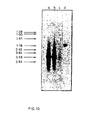
- the 1.2 kb Hae III fragment spanning the 5' end of the coding sequence ( Figure 8(b) was purified from an agarose gel and hybridised to total yeast RNA. The hybrids were treated with various concentrations of S1 nuclease and the products were analysed on a 1.5% agarose gel by Southern hybridisation using the 1.95 kb Hind III fragment as probe.
- Figure 10 shows that the size of the single protected fragment was 680 bp. In this Figure the concentrations of S1 in each lane are as follows a) 25 units b) 50 units c) 100 units.
- Lane d has the 1.2 kb Hae III fragment untreated. On the basis of our previous mapping data this would place the 5' end of the PGK transcript about 960 bp to the left of the EcoRI site on the 2.95 kb Hind III fragment. This agrees well with our estimate of the position of the initiation codon and suggests that if there are any introns between the 5' end of the transcript and the Bgl // site then they are very small.
- the 5' "control" region of the PGK gene is in a region that contains very few convenient restriction sites, making the design of a sequencing strategy relatively difficult.
- Plasmid pMA3-PGK was digested with Sal / ( Figure 8) and then with exonuclease BAL 31 to remove about 500 bp from each end. This resulted in the loss of the two small SaIl fragments and the creation of a series of deletions starting at the leftmost Sail site in the PGK sequence and the Sal site in pBR322 and ending around the initiation codon in PGK and nucleotide 1150 in pBR322 respectively.
- the small EcoRI-Bam HI fragments from these molecules were purified and cloned in M13mp701 and sequenced by the dideoxy-chain termination method Sanger et al (1977) P.N.A.S. 74 5463, starting in each case at the Bam HI site and elongating towards the EcoRI site.
- the nucleotide sequence of 226 nucleotides up-stream from the initiation codon and the first seven codons are shown in Figure 12. (In this Figure the box marks the approximate position of the 5' end of the transcript). The sequence was confirmed by sequencing four other deletions with overlapping end-points (data not shown).
- the pMA22a deletion series constitutes a collection of molecules amongst which are many potential PGK based expression vectors. Each with a different sized small EcoRI-Bam HI fragment and therefore each with a different "amount" of the PGK 5' region. They all have unique Bam HI sites at which genes may be inserted and expressed.
- Figure 13 shows the sequence of the PGK gene from -226 to +624 with the positions of various deletion end-points marked.
- the deletion end point numbers ( Figure 13) are carried through to the name of the plasmid that bears that deletion e.g. plasmid pMA279 is a pMA22a deletion with the deletion end-points between the codons for amino acids 32 and 33.
- pMA278 and pMA301 will produce transcriptional fusions with any coding sequence inserted at their expression sites and are therefore of the pMA200p type in Table 1, whereas all the others will produce both transcriptional and translational fusions (i.e. fusion proteins will be made).
- pMA230 is a +1 (reading frame) fusion vector
- pMA283 is an in frame (+3) fusion vector.
- the molecules are of the pMA200f1, f2 and f3 type in Table 1.
- PGK based expression vector designated pMA3013 which comprises both 5' and 3' regions from the yeast PGK gene.
- Figure 15 shows the scheme for constructing pMA3013. Plasmid pMA3-PGK was cut with Bgl II and Pst I and the fragment containing the 3' end of the PGK gene (shown as a wavy line in Figure 15) was purified by the method of Tabak and Flavell (1978) NAR 5 2321). This fragment was then ligated with Bgl II and Pst I cleaved pMA301 and the mix was used to transform E. coli strain AKEC28 to ampicillin resistance and leucine prototrophy.
- pMA3013 has a unique Bgl II expression site flanked by the PGK 5' and 3' regions.
- the various yeast expression vectors described have been tested using a human interferon-a as a heterologous, potentially useful coding sequence.
- the sequence is contained on a Bam HI fragment that is a derivative of plasmid N5H8 originally constructed by Prof. D. C. Burke, University of Warwick. Our modification places a Bam HI site followed by an ATG at a position corresponding to amino acid S15 in the interferon signal sequence.
- the nucleotide sequence of this 8am HI fragment is given in Figure 16.
- the 8am HI fragment can be used in transcription fusion constructions because it has its own translation initiation codon and it can also be used in vectors designated to produce fusion proteins.
- This fragment was inserted into the expression sites of a variety of molecules the general structure of which is shown in Figure 17.
- Table 2 shows levels of interferon produced in yeast cells containing various recombinant molecules.
- All interferon producing plasmids are maintained stably for at least 40 generations as measured by the proportion of cells in the population with the phenotype conferred by the expressing plasmid.
- PGK in yeast is "induced" by glucose, therefore it was of interest to determine whether the structures necessary for the recognition of this regulatory system are present on the 1500 nucleotide PGK fragment in for example pMA230 and if so whether human interferon-a expression could be regulated by glucose.
- Yeast strain MD40-4c containing pMA230 with the interferon-a sequence inserted at the 8am HI site was grown in rich medium with acetate as carbon source for twelve generations to a density of 2x10 6 cells/ml. These cells were used as inocula for two flasks of fresh medium. One containing glucose as carbon source and the other acetate. A second batch of cells grown on glucose was used to inoculate a fresh glucose culture. Therefore there were three inoculum/culture conditions: acetate/acetate; acetate/glucose; glucose/glucose. Aliquots of these cultures were taken at various intervals, extracts were prepared and interferon levels were assayed.
Landscapes
- Life Sciences & Earth Sciences (AREA)
- Health & Medical Sciences (AREA)
- Genetics & Genomics (AREA)
- Chemical & Material Sciences (AREA)
- Organic Chemistry (AREA)
- Engineering & Computer Science (AREA)
- Zoology (AREA)
- Wood Science & Technology (AREA)
- Biochemistry (AREA)
- General Engineering & Computer Science (AREA)
- Molecular Biology (AREA)
- Mycology (AREA)
- Bioinformatics & Cheminformatics (AREA)
- Biotechnology (AREA)
- Biophysics (AREA)
- Biomedical Technology (AREA)
- General Health & Medical Sciences (AREA)
- Microbiology (AREA)
- Physics & Mathematics (AREA)
- Plant Pathology (AREA)
- Toxicology (AREA)
- Gastroenterology & Hepatology (AREA)
- Medicinal Chemistry (AREA)
- Proteomics, Peptides & Aminoacids (AREA)
- Micro-Organisms Or Cultivation Processes Thereof (AREA)
- Preparation Of Compounds By Using Micro-Organisms (AREA)
- Medicines That Contain Protein Lipid Enzymes And Other Medicines (AREA)
- Saccharide Compounds (AREA)
- Peptides Or Proteins (AREA)
Claims (12)
Priority Applications (1)
| Application Number | Priority Date | Filing Date | Title |
|---|---|---|---|
| AT82304460T ATE33676T1 (de) | 1981-08-25 | 1982-08-24 | Expressionsvektoren. |
Applications Claiming Priority (6)
| Application Number | Priority Date | Filing Date | Title |
|---|---|---|---|
| GB8125934 | 1981-08-25 | ||
| GB8125934 | 1981-08-25 | ||
| GB8208422 | 1982-03-23 | ||
| GB8208422 | 1982-03-23 | ||
| GB8217496 | 1982-06-16 | ||
| GB8217496 | 1982-06-16 |
Publications (4)
| Publication Number | Publication Date |
|---|---|
| EP0073635A2 EP0073635A2 (de) | 1983-03-09 |
| EP0073635A3 EP0073635A3 (en) | 1984-05-16 |
| EP0073635B1 true EP0073635B1 (de) | 1988-04-20 |
| EP0073635B2 EP0073635B2 (de) | 1992-09-30 |
Family
ID=27261280
Family Applications (1)
| Application Number | Title | Priority Date | Filing Date |
|---|---|---|---|
| EP82304460A Expired EP0073635B2 (de) | 1981-08-25 | 1982-08-24 | Expressionsvektoren |
Country Status (9)
| Country | Link |
|---|---|
| US (1) | US4615974A (de) |
| EP (1) | EP0073635B2 (de) |
| JP (1) | JP2666800B2 (de) |
| AU (1) | AU560472B2 (de) |
| CA (1) | CA1263942A (de) |
| DE (1) | DE3278365D1 (de) |
| DK (1) | DK368882A (de) |
| ES (1) | ES515241A0 (de) |
| IE (1) | IE54046B1 (de) |
Families Citing this family (122)
| Publication number | Priority date | Publication date | Assignee | Title |
|---|---|---|---|---|
| NZ199722A (en) * | 1981-02-25 | 1985-12-13 | Genentech Inc | Dna transfer vector for expression of exogenous polypeptide in yeast;transformed yeast strain |
| JPS58146281A (ja) * | 1981-10-19 | 1983-08-31 | Suntory Ltd | 酵母細胞の形質転換法 |
| US4775622A (en) * | 1982-03-08 | 1988-10-04 | Genentech, Inc. | Expression, processing and secretion of heterologous protein by yeast |
| ATE42338T1 (de) * | 1982-05-19 | 1989-05-15 | Unilever Nv | Hefe des genus kluyveromyces, modifiziert zur expression von preprothaumatin oder seinen verschiedenen allelischen und modifizierten formen oder maturationsformen. |
| GB2125047B (en) * | 1982-08-09 | 1986-02-19 | Ciba Geigy Ag | Yeast hybrid vectors and their use for the production of polypeptides |
| AU577259B2 (en) * | 1982-08-13 | 1988-09-22 | Zymogenetics Inc. | Glycolytic promters for regulated protein expression protease inhibitor |
| JPS5931799A (ja) * | 1982-08-16 | 1984-02-20 | Science & Tech Agency | B型肝炎ウイルス遺伝子を組込んだ組換えプラスミド |
| US4977092A (en) * | 1985-06-26 | 1990-12-11 | Amgen | Expression of exogenous polypeptides and polypeptide products including hepatitis B surface antigen in yeast cells |
| DE3382547D1 (de) * | 1983-01-12 | 1992-05-27 | Chiron Corp | Sekretorische expression in eukaryoten. |
| US4876197A (en) * | 1983-02-22 | 1989-10-24 | Chiron Corporation | Eukaryotic regulatable transcription |
| US5089398A (en) * | 1983-02-22 | 1992-02-18 | Chiron Corporation | Enhanced yeast transcription employing hybrid GAPDH promoter region constructs |
| WO1984004330A1 (en) * | 1983-04-22 | 1984-11-08 | Amgen | Secretion of exogenous polypeptides from yeast |
| WO1984004538A1 (fr) * | 1983-05-19 | 1984-11-22 | Unilever Nv | Ameliorations apportees a l'expression de genes fraichement introduits dans des cellules de levure |
| FR2561662B2 (fr) * | 1984-03-22 | 1986-08-22 | Transgene Sa | Bloc d'expression de la catechol 2,3-oxygenase dans les levures et souche marquee par ce bloc d'expression |
| EP0143821A1 (de) * | 1983-05-19 | 1985-06-12 | Transgene S.A. | Verfahren zur herstellung von catechol 2,3-oxygenase durch hefe, plasmid für dessen herstellung und verwendung |
| GB8314961D0 (en) * | 1983-05-31 | 1983-07-06 | Kingsman A J | Dna sequence |
| US4870008A (en) * | 1983-08-12 | 1989-09-26 | Chiron Corporation | Secretory expression in eukaryotes |
| GB8325043D0 (en) * | 1983-09-19 | 1983-10-19 | Kingsman A J | Vector |
| EP0140762A1 (de) * | 1983-10-03 | 1985-05-08 | Transgene S.A. | Vektoren zur Expression eines antigenischen Tollwutproteins in eukaryotischen Zellen und ihre Verwendung zur Herstellung eines Vakzins |
| FR2552776B1 (fr) * | 1983-10-03 | 1986-05-09 | Transgene Sa | Vecteurs d'expression d'une proteine antigenique de la rage dans les cellules eucaryotes et leur application a la preparation d'un vaccin |
| FR2562090B2 (fr) * | 1984-03-27 | 1988-04-08 | Transgene Sa | Proteine antigenique de la rage glycosylee |
| GB8334261D0 (en) * | 1983-12-22 | 1984-02-01 | Bass Plc | Fermentation processes |
| AU587176B2 (en) * | 1984-02-14 | 1989-08-10 | Mycogen Plant Science, Inc. | Transfer vector |
| FR2559782B1 (fr) * | 1984-02-16 | 1986-07-18 | Transgene Sa | Vecteur d'expression dans les levures de l'interleukine-2, levures transformees et procede de preparation de l'interleukine-2 |
| FI841500A0 (fi) * | 1984-04-13 | 1984-04-13 | Valtion Teknillinen | Foerfarande foer uppbygnande av cellulolytiska jaeststammar. |
| FR2564106B1 (fr) * | 1984-05-09 | 1988-04-22 | Transgene Sa | Vecteurs d'expression du facteur ix, cellules transformees par ces vecteurs et procede de preparation du facteur ix. |
| US4880734A (en) * | 1984-05-11 | 1989-11-14 | Chiron Corporation | Eukaryotic regulatable transcription |
| DK58285D0 (da) * | 1984-05-30 | 1985-02-08 | Novo Industri As | Peptider samt fremstilling og anvendelse deraf |
| SU1364343A1 (ru) * | 1984-07-13 | 1988-01-07 | Всесоюзный научно-исследовательский институт генетики и селекции промышленных микроорганизмов | Способ получени человеческого лейкоцитарного интерферона альфа-2 |
| US4762786A (en) * | 1984-09-27 | 1988-08-09 | Eli Lilly And Company | Vectors and conditions which allow genetic transformation of cephalosporium |
| US4855231A (en) * | 1984-10-30 | 1989-08-08 | Phillips Petroleum Company | Regulatory region for heterologous gene expression in yeast |
| US4885242A (en) * | 1984-10-30 | 1989-12-05 | Phillips Petroleum Company | Genes from pichia histidine pathway and uses thereof |
| US7285271B1 (en) | 1984-10-31 | 2007-10-23 | Novartis Vaccines And Diagnostics, Inc. | Antigenic composition comprising an HIV gag or env polypeptide |
| US7273695B1 (en) | 1984-10-31 | 2007-09-25 | Novartis Vaccines And Diagnostics, Inc. | HIV immunoassays using synthetic envelope polypeptides |
| CA1341482C (en) | 1984-10-31 | 2005-05-10 | Paul A. Luciw | Process for preparing fragments of aids-associated retroviruses |
| JPS61268184A (ja) * | 1984-11-05 | 1986-11-27 | Green Cross Corp:The | 組換えプラスミド及び当該プラスミドによる形質転換株 |
| EP0184576B1 (de) * | 1984-12-06 | 1990-06-27 | Fina Research S.A. | Promotoren für die Expression von fremden Genen in Hefe, Plasmide, die diese Promotoren enthalten, sowie deren Verwendung zur Herstellung von Polypeptiden |
| JPS61141890A (ja) * | 1984-12-15 | 1986-06-28 | Suntory Ltd | アルコ−ルの製造法 |
| GB8513645D0 (en) * | 1985-05-30 | 1985-07-03 | Kingsman A J | Expression vector |
| US4882282A (en) * | 1985-08-16 | 1989-11-21 | Immunex Corporation | DNA sequences encoding bovine interleukin-2 |
| WO1987002037A1 (en) * | 1985-09-26 | 1987-04-09 | Genetics Institute, Inc. | Pulmonary surfactant proteins |
| WO1987003008A1 (en) * | 1985-11-13 | 1987-05-21 | International Genetic Engineering, Inc. | Shortened phosphoglycerate kinase promoter |
| US5104795A (en) * | 1985-11-13 | 1992-04-14 | Zoma Corporation | Shortened phosphoglycerate kinase promoter |
| GB8620926D0 (en) * | 1986-08-29 | 1986-10-08 | Delta Biotechnology Ltd | Yeast promoter |
| DE3635867A1 (de) * | 1986-10-22 | 1988-05-11 | Boehringer Ingelheim Int | Neue hefeexpressionsvektoren fuer ifn-omega, verfahren zu ihrer herstellung und deren verwendung |
| US5378603A (en) * | 1987-03-30 | 1995-01-03 | Board Of Regents, The University Of Texas System | Method and composition for identifying substances which activate transcription of the LDL receptor gene |
| JPS6463395A (en) | 1987-05-04 | 1989-03-09 | Oncogen | Oncostatin m and novel composition having antitumor activity |
| US4966841A (en) * | 1987-05-22 | 1990-10-30 | The Board Of Regents Of The University Of Washington | Enhanced vector production and expression of recombinant DNA products |
| ES2093606T3 (es) | 1987-06-23 | 1997-01-01 | Univ Leland Stanford Junior | Gen del receptor de celulas t localizado en el locus alfa y estructuras artificiales de adn. |
| US5063154A (en) * | 1987-06-24 | 1991-11-05 | Whitehead Institute For Biomedical Research | Pheromone - inducible yeast promoter |
| WO1988010308A1 (en) * | 1987-06-24 | 1988-12-29 | Whitehead Institute For Biomedical Research | Pheromone-inducible yeast promoter |
| US5591603A (en) * | 1987-08-28 | 1997-01-07 | Novo Nordisk A/S | Process for preparing aprotinin and aprotinin analogs in yeast cells |
| US5049493A (en) * | 1987-10-23 | 1991-09-17 | California Institute Of Technology | Enhancement of cell growth by expression of a cloned hemoglobin gene |
| US7442525B1 (en) | 1987-12-24 | 2008-10-28 | Novartis Vaccines And Diagnostics, Inc. | Method for expressing HIV polypeptides |
| FR2628750B1 (fr) | 1988-03-21 | 1991-11-08 | Pasteur Institut | Vecteur modifie par une sequence codant pour une sequence d'acides amines contenue dans une proteine de mammifere ayant une activite biologique de recepteur membranaire |
| US5258502A (en) * | 1989-01-30 | 1993-11-02 | Massachusetts Institute Of Technology | Immobilization and purification of fusion proteins using chitin-binding ability |
| US6172039B1 (en) | 1990-04-16 | 2001-01-09 | Apex Bioscience, Inc. | Expression of recombinant hemoglobin and hemoglobin variants in yeast |
| US5206153A (en) * | 1990-06-27 | 1993-04-27 | Snow Brand Milk Products Co., Ltd. | Method of producing human α-fetoprotein and product produced thereby |
| ATE199391T1 (de) * | 1990-09-13 | 2001-03-15 | Univ Duke | Expression von an g-protein gekoppelten rezeptoren in hefe |
| US6027722A (en) * | 1990-10-25 | 2000-02-22 | Nature Technology Corporation | Vectors for gene transfer |
| DK0506945T3 (da) * | 1990-10-25 | 1999-04-26 | Clague Pitman Hodgson | Fremgangsmåde til genoverførsel under anvendelse af retrotransposoner |
| EP0501914A1 (de) * | 1991-02-25 | 1992-09-02 | Ciba-Geigy Ag | Verbesserte Hefe-Vektorer |
| US20100267023A1 (en) * | 1992-09-24 | 2010-10-21 | Keygene N.V. | Selective restriction fragment amplification: fingerprinting |
| US5422254A (en) * | 1992-02-14 | 1995-06-06 | Oy Alko Ab | Method to increase the trehalose content of organisms by transforming them with the structural genes for the short and long chains of yeast trehalose synthase |
| JPH08507687A (ja) | 1993-03-12 | 1996-08-20 | クレイトン ユニバーシティ | 遺伝子治療用の改良されたベクター |
| US20030190753A1 (en) * | 1995-11-09 | 2003-10-09 | Nature Technology Corporation | Vectors for gene transfer |
| PT931148E (pt) | 1996-10-16 | 2006-06-30 | Zymogenetics Inc | Homologos do factor de crescimento fibroblastico |
| US6017694A (en) * | 1997-12-19 | 2000-01-25 | American Cyanamid Company | Methods of screening for modulators of respiratory syncytial virus matrix protein interaction |
| JP4704565B2 (ja) | 1998-09-23 | 2011-06-15 | ザイモジェネティクス, インコーポレイテッド | サイトカインレセプターzalpha11 |
| WO2000034474A2 (en) | 1998-12-07 | 2000-06-15 | Zymogenetics, Inc. | Growth factor homolog zvegf3 |
| EP1354598A3 (de) | 1999-01-07 | 2003-11-19 | ZymoGenetics, Inc. | Verfahren zur therapeutischen Verwendung von löslichen rezeptoren BR43X2 |
| US7833529B1 (en) | 1999-01-07 | 2010-11-16 | Zymogenetics, Inc. | Methods for inhibiting B lymphocyte proliferation with soluble ztnf4 receptor |
| MXPA01009074A (es) | 1999-03-09 | 2002-03-27 | Zymogenetics Inc | Nuevo ligando zalfa11 de citocina. |
| CA2378519C (en) | 1999-07-07 | 2011-01-25 | Zymogenetics, Inc. | Human cytokine receptor |
| EP2194130A1 (de) | 1999-12-23 | 2010-06-09 | ZymoGenetics, L.L.C. | Zytokin ZCYT018 |
| DE60142511D1 (de) | 2000-05-11 | 2010-08-19 | Zymogenetics Inc | Zsig33-ähnliche peptide |
| JP2004501628A (ja) | 2000-06-26 | 2004-01-22 | ザイモジェネティクス,インコーポレイティド | サイトカイン受容体zcytor17 |
| DK1717316T3 (da) | 2000-06-30 | 2008-12-08 | Zymogenetics Inc | Allelisk variant af interferon-lignende protein Zcyto21 |
| EP1736545A3 (de) | 2000-08-08 | 2007-03-28 | ZymoGenetics, Inc. | Lösliche Zcyctor 11 Cytokinrezeptoren |
| US20030012783A1 (en) | 2001-02-20 | 2003-01-16 | Wayne Kindsvogel | Antibodies that bind both BCMA and TACI |
| FR2821625B1 (fr) * | 2001-03-01 | 2003-05-16 | Genodyssee | Nouveaux polynucleotides comportant un polymorphisme de type snp fonctionnel dans la sequence nucleotidique du gene ifn-alpha-2 ainsi que de nouveaux polypeptides codes par ces polynucleotides et leurs utilisations therapeutiques |
| FR2823220B1 (fr) * | 2001-04-04 | 2003-12-12 | Genodyssee | Nouveaux polynucleotides et polypeptides de l'erythropoietine (epo) |
| ATE446771T1 (de) | 2001-05-24 | 2009-11-15 | Zymogenetics Inc | Taci-immunoglobulin-fusionsproteine |
| US6645739B2 (en) | 2001-07-26 | 2003-11-11 | Phoenix Pharmacologies, Inc. | Yeast expression systems, methods of producing polypeptides in yeast, and compositions relating to same |
| AU2002336517B2 (en) | 2001-09-13 | 2008-09-11 | California Institute Of Technology | Method for producing transgenic animals |
| US7732193B2 (en) | 2001-09-13 | 2010-06-08 | California Institute Of Technology | Method for expression of small RNA molecules within a cell |
| AU2002336676A1 (en) | 2001-11-05 | 2003-05-19 | Zymogenetics, Inc | Il-21 antagonists |
| ES2377188T3 (es) | 2002-01-18 | 2012-03-23 | Zymogenetics, Inc. | Nuevo ligando de citocina ZCYTOR17 |
| ATE547430T1 (de) | 2002-01-18 | 2012-03-15 | Zymogenetics Inc | Multimere des cytokinrezeptors zcytor17 |
| EP1497415B1 (de) | 2002-04-19 | 2010-12-29 | ZymoGenetics, L.L.C. | Verfahren zum nachweis oder zur modulierung der wechselwirkung eines cytokinrezeptors mit seinem ligand |
| ES2303132T3 (es) | 2003-08-07 | 2008-08-01 | Zymogenetics, Inc. | Preparaciones homogeneas de il-29. |
| US7381794B2 (en) | 2004-03-08 | 2008-06-03 | Zymogenetics, Inc. | Dimeric fusion proteins and materials and methods for producing them |
| CN101829318B (zh) | 2004-07-29 | 2012-07-04 | 津莫吉尼蒂克斯有限责任公司 | Il-28和il-29治疗癌症和自身免疫性疾病的用途 |
| EP2166103B1 (de) | 2004-08-02 | 2013-05-22 | BASF Plant Science GmbH | Verfahren zur Isolierung von Transkriptionsabschlusssequenzen |
| EP1856156A2 (de) | 2005-02-08 | 2007-11-21 | ZymoGenetics, Inc. | Anti-il-20-, anti-il-22- und anti-il-22ra-antikörper und bindungspartner sowie verwendungsverfahren bei entzündungen |
| ATE515512T1 (de) | 2005-05-12 | 2011-07-15 | Zymogenetics Inc | Zusammensetzungen und verfahren zur modulierung von immunreaktionen |
| UA93516C2 (ru) * | 2005-08-09 | 2011-02-25 | Займоджинетикс, Инк. | Способы лечения b-клеточных злокачественных образований c помощью слитой молекулы taci-ig |
| AR059025A1 (es) | 2005-08-09 | 2008-03-12 | Zymogenetics Inc | Metodos para el tratamiento y prevencion de proliferacion de celulas anormales utilizando moleculas de fusion taci |
| AR060935A1 (es) * | 2006-05-15 | 2008-07-23 | Ares Trading Sa | Metodos para tratar enfermedades autoinmunes utilizando una molecula de fusion taci- ig |
| WO2008157263A2 (en) | 2007-06-15 | 2008-12-24 | Arkansas State University | Methods of delivery of molecules to cells using a ricin subunit and compositions relating to same |
| WO2009065415A1 (en) | 2007-11-21 | 2009-05-28 | Roskilde Universitet | Polypeptides comprising an ice-binding activity |
| CN101952309A (zh) * | 2007-12-21 | 2011-01-19 | Ifxa有限公司 | 蛋白酶抑制剂 |
| WO2009092806A2 (en) * | 2008-01-25 | 2009-07-30 | Aarhus Universitet | Selective exosite inhibition of papp-a activity against igfbp-4 |
| AU2009228158B2 (en) | 2008-03-27 | 2014-02-27 | Zymogenetics, Inc. | Compositions and methods for inhibiting PDGFRbeta and VEGF-A |
| CN102131517B (zh) | 2008-06-27 | 2014-12-17 | 津莫吉尼蒂克斯公司 | 可溶性杂合Fc γ受体和相关的方法 |
| RU2422504C2 (ru) * | 2008-11-07 | 2011-06-27 | Учреждение Российской академии наук Институт микробиологии им. С.Н. Виноградского РАН | СПОСОБ ПОЛУЧЕНИЯ ЭКСПРЕССИОННОГО ПЛАЗМИДНОГО ВЕКТОРА, ОБЛАДАЮЩЕГО ПОВЫШЕННОЙ СТАБИЛЬНОСТЬЮ НАСЛЕДОВАНИЯ В КЛЕТКАХ Escherichia coli |
| CN103168048B (zh) | 2010-06-09 | 2017-02-15 | 酶原遗传学有限公司 | 二聚vstm3融合蛋白和相关的组合物和方法 |
| US9771576B2 (en) | 2012-02-01 | 2017-09-26 | Synthetic Genomics, Inc. | Materials and methods for the synthesis of error-minimized nucleic acid molecules |
| WO2014202089A2 (en) | 2013-06-18 | 2014-12-24 | Roskilde Universitet | Variants of anti-freeze polypeptides |
| AU2016321146C1 (en) | 2015-09-08 | 2021-10-28 | Theripion, Inc. | ApoA-1 fusion polypeptides and related compositions and methods |
| CN108367004B (zh) | 2015-09-21 | 2022-09-13 | 阿帕特夫研究和发展有限公司 | Cd3结合多肽 |
| WO2018136163A2 (en) | 2016-12-09 | 2018-07-26 | Theripion, Inc. | Tandem apoa-1 fusion polypeptides |
| JP7369113B2 (ja) | 2017-07-20 | 2023-10-25 | アプティーボ リサーチ アンド デベロップメント エルエルシー | 癌胎児性抗原結合タンパク質、関連する化合物および方法 |
| ES2965187T3 (es) | 2017-12-20 | 2024-04-11 | Harbour Biomed Shanghai Co Ltd | Anticuerpos que unen CTLA-4 y sus usos |
| ES3039238T3 (en) | 2017-12-27 | 2025-10-20 | Imunami Laboratories Pte Ltd | Recombinant polypeptides and methods of use thereof |
| US10150801B1 (en) | 2017-12-27 | 2018-12-11 | Imunami Laboratories Pte. Ltd. | Recombinant polypeptides and methods of use thereof |
| US10675332B1 (en) | 2019-08-26 | 2020-06-09 | Imunami Laboratories Pte. Ltd. | Recombinant polypeptides and methods of use thereof |
| EP4021512A1 (de) | 2019-08-26 | 2022-07-06 | Imunami Laboratories Pte. Ltd. | Rekombinante polypeptide und verfahren zur verwendung davon |
| EP4168034B1 (de) | 2020-06-22 | 2025-11-26 | Imunami Laboratories Pte. Ltd. | Rekombinantes alpha-a-crystallin und kombinationen zur verwendung bei der behandlung von krebs |
| EP4294827A1 (de) | 2021-02-19 | 2023-12-27 | Theripion, Inc. | Paraoxonasefusionspolypeptide sowie zugehörige zusammensetzungen und verfahren |
| WO2024148328A2 (en) | 2023-01-06 | 2024-07-11 | Aptevo Research And Development Llc | Bispecific pd-l1 and cd40 binding molecules and uses thereof |
| WO2024259220A1 (en) | 2023-06-15 | 2024-12-19 | Theripion, Inc. | Pon3 and evolved pon1 fusion polypeptides |
Family Cites Families (4)
| Publication number | Priority date | Publication date | Assignee | Title |
|---|---|---|---|---|
| FR2441659A1 (fr) * | 1978-11-14 | 1980-06-13 | Anvar | Nouveaux plasmides hybrides et microorganismes les contenant |
| GB2068969B (en) * | 1980-02-05 | 1983-07-27 | Upjohn Co | Gene expression |
| US4666847A (en) * | 1981-01-16 | 1987-05-19 | Collaborative Research, Inc. | Recombinant DNA means and method |
| NZ201705A (en) * | 1981-08-31 | 1986-03-14 | Genentech Inc | Recombinant dna method for production of hepatitis b surface antigen in yeast |
-
1982
- 1982-08-17 US US06/408,826 patent/US4615974A/en not_active Expired - Lifetime
- 1982-08-17 AU AU87238/82A patent/AU560472B2/en not_active Ceased
- 1982-08-17 DK DK368882A patent/DK368882A/da not_active Application Discontinuation
- 1982-08-17 IE IE1985/82A patent/IE54046B1/en not_active IP Right Cessation
- 1982-08-24 DE DE8282304460T patent/DE3278365D1/de not_active Expired
- 1982-08-24 EP EP82304460A patent/EP0073635B2/de not_active Expired
- 1982-08-24 CA CA000409980A patent/CA1263942A/en not_active Expired
- 1982-08-25 ES ES515241A patent/ES515241A0/es active Granted
- 1982-08-25 JP JP57147499A patent/JP2666800B2/ja not_active Expired - Lifetime
Also Published As
| Publication number | Publication date |
|---|---|
| IE821985L (en) | 1983-02-25 |
| IE54046B1 (en) | 1989-05-24 |
| AU8723882A (en) | 1983-03-24 |
| EP0073635A3 (en) | 1984-05-16 |
| ES8308361A1 (es) | 1983-08-16 |
| DE3278365D1 (en) | 1988-05-26 |
| EP0073635A2 (de) | 1983-03-09 |
| JP2666800B2 (ja) | 1997-10-22 |
| ES515241A0 (es) | 1983-08-16 |
| EP0073635B2 (de) | 1992-09-30 |
| CA1263942A (en) | 1989-12-19 |
| US4615974A (en) | 1986-10-07 |
| JPS5877896A (ja) | 1983-05-11 |
| DK368882A (da) | 1983-02-26 |
| AU560472B2 (en) | 1987-04-09 |
Similar Documents
| Publication | Publication Date | Title |
|---|---|---|
| EP0073635B1 (de) | Expressionsvektoren | |
| CA1291428C (en) | Yeast promoter | |
| Mellor et al. | Factors affecting heterologous gene expression in Saccharomyces cerevisiae | |
| EP0123544A2 (de) | Verfahren zur Expression von heterologen Proteinen in Hefe, Expressionsvektoren und Hefe-Organismen dafür | |
| CA1205026A (en) | Expression of polypeptides in yeast | |
| USRE37343E1 (en) | Expression and secretion of heterologous proteins in yeast employing truncated alpha-factor leader sequences | |
| US4588684A (en) | a-Factor and its processing signals | |
| EP0073657A1 (de) | Herstellung von Oberflächen-Hepatitis-B-Antigen in Hefe | |
| AU6543286A (en) | Method of using bar1 for secreting foreign proteins | |
| GB2116567A (en) | Expression processing and secretion of heterologous protein by yeast | |
| Dobson et al. | Expression in Saccharomyces cerevisiae of human interferon-alpha directed by the TRP1 5′ region | |
| EP1114865B1 (de) | Herstellung von humanem Parathormon | |
| Yamamoto et al. | Activation of a human cK-ras oncogeoe | |
| US7198919B1 (en) | Use of alpha factor sequences in yeast expression systems | |
| EP0220689B1 (de) | Verfahren zur Verwendung von BAR1 für die Fremdproteinsekretion | |
| Bowen et al. | Expression of Ty-lacZ fusions in Saccharomyces cerevisiae | |
| US5981227A (en) | Process for the production of proteins | |
| EP0343388A2 (de) | Expression von Gamma-Interferon in methylotrophischen Hefen | |
| PT716705E (pt) | Processo para a preparacao por recombinacao de proteinas na levedura hansenula | |
| LEE et al. | LYMPHOKINES, VOL. 15 |
Legal Events
| Date | Code | Title | Description |
|---|---|---|---|
| PUAI | Public reference made under article 153(3) epc to a published international application that has entered the european phase |
Free format text: ORIGINAL CODE: 0009012 |
|
| AK | Designated contracting states |
Designated state(s): AT BE CH DE FR GB IT LI NL SE |
|
| PUAL | Search report despatched |
Free format text: ORIGINAL CODE: 0009013 |
|
| AK | Designated contracting states |
Designated state(s): AT BE CH DE FR GB IT LI NL SE |
|
| 17P | Request for examination filed |
Effective date: 19841018 |
|
| 17Q | First examination report despatched |
Effective date: 19860214 |
|
| RAP1 | Party data changed (applicant data changed or rights of an application transferred) |
Owner name: CELLTECH LIMITED |
|
| RIN1 | Information on inventor provided before grant (corrected) |
Inventor name: KINGSMAN, SUSAN MARY Inventor name: KINGSMAN, ALAN JOHN |
|
| R17C | First examination report despatched (corrected) |
Effective date: 19870209 |
|
| GRAA | (expected) grant |
Free format text: ORIGINAL CODE: 0009210 |
|
| AK | Designated contracting states |
Kind code of ref document: B1 Designated state(s): AT BE CH DE FR GB IT LI NL SE |
|
| REF | Corresponds to: |
Ref document number: 33676 Country of ref document: AT Date of ref document: 19880515 Kind code of ref document: T |
|
| REF | Corresponds to: |
Ref document number: 3278365 Country of ref document: DE Date of ref document: 19880526 |
|
| ET | Fr: translation filed | ||
| ITF | It: translation for a ep patent filed | ||
| PLBI | Opposition filed |
Free format text: ORIGINAL CODE: 0009260 |
|
| 26 | Opposition filed |
Opponent name: DELTA BIOTECHNOLOGY LIMITED Effective date: 19890120 |
|
| NLR1 | Nl: opposition has been filed with the epo |
Opponent name: DELTA BIOTECHNOLOGY LIMITED |
|
| ITTA | It: last paid annual fee | ||
| PUAH | Patent maintained in amended form |
Free format text: ORIGINAL CODE: 0009272 |
|
| STAA | Information on the status of an ep patent application or granted ep patent |
Free format text: STATUS: PATENT MAINTAINED AS AMENDED |
|
| 27A | Patent maintained in amended form |
Effective date: 19920930 |
|
| AK | Designated contracting states |
Kind code of ref document: B2 Designated state(s): AT BE CH DE FR GB IT LI NL SE |
|
| ITF | It: translation for a ep patent filed | ||
| REG | Reference to a national code |
Ref country code: CH Ref legal event code: AEN |
|
| ET3 | Fr: translation filed ** decision concerning opposition | ||
| NLR2 | Nl: decision of opposition | ||
| NLR3 | Nl: receipt of modified translations in the netherlands language after an opposition procedure | ||
| PGFP | Annual fee paid to national office [announced via postgrant information from national office to epo] |
Ref country code: NL Payment date: 19930831 Year of fee payment: 12 |
|
| PGFP | Annual fee paid to national office [announced via postgrant information from national office to epo] |
Ref country code: SE Payment date: 19940126 Year of fee payment: 12 Ref country code: CH Payment date: 19940126 Year of fee payment: 12 |
|
| PGFP | Annual fee paid to national office [announced via postgrant information from national office to epo] |
Ref country code: AT Payment date: 19940128 Year of fee payment: 12 |
|
| PGFP | Annual fee paid to national office [announced via postgrant information from national office to epo] |
Ref country code: BE Payment date: 19940202 Year of fee payment: 12 |
|
| PG25 | Lapsed in a contracting state [announced via postgrant information from national office to epo] |
Ref country code: AT Effective date: 19940824 |
|
| PG25 | Lapsed in a contracting state [announced via postgrant information from national office to epo] |
Ref country code: SE Effective date: 19940825 |
|
| PG25 | Lapsed in a contracting state [announced via postgrant information from national office to epo] |
Ref country code: LI Effective date: 19940831 Ref country code: CH Effective date: 19940831 Ref country code: BE Effective date: 19940831 |
|
| EAL | Se: european patent in force in sweden |
Ref document number: 82304460.7 |
|
| BERE | Be: lapsed |
Owner name: CELLTECH LTD Effective date: 19940831 |
|
| PG25 | Lapsed in a contracting state [announced via postgrant information from national office to epo] |
Ref country code: NL Effective date: 19950301 |
|
| NLV4 | Nl: lapsed or anulled due to non-payment of the annual fee | ||
| REG | Reference to a national code |
Ref country code: CH Ref legal event code: PL |
|
| REG | Reference to a national code |
Ref country code: FR Ref legal event code: TP |
|
| EUG | Se: european patent has lapsed |
Ref document number: 82304460.7 |
|
| PGFP | Annual fee paid to national office [announced via postgrant information from national office to epo] |
Ref country code: FR Payment date: 19980814 Year of fee payment: 17 |
|
| PGFP | Annual fee paid to national office [announced via postgrant information from national office to epo] |
Ref country code: GB Payment date: 19980817 Year of fee payment: 17 |
|
| PGFP | Annual fee paid to national office [announced via postgrant information from national office to epo] |
Ref country code: DE Payment date: 19980831 Year of fee payment: 17 |
|
| PG25 | Lapsed in a contracting state [announced via postgrant information from national office to epo] |
Ref country code: GB Free format text: LAPSE BECAUSE OF NON-PAYMENT OF DUE FEES Effective date: 19990824 |
|
| GBPC | Gb: european patent ceased through non-payment of renewal fee |
Effective date: 19990824 |
|
| PG25 | Lapsed in a contracting state [announced via postgrant information from national office to epo] |
Ref country code: FR Free format text: LAPSE BECAUSE OF NON-PAYMENT OF DUE FEES Effective date: 20000428 |
|
| PG25 | Lapsed in a contracting state [announced via postgrant information from national office to epo] |
Ref country code: DE Free format text: LAPSE BECAUSE OF NON-PAYMENT OF DUE FEES Effective date: 20000601 |
|
| REG | Reference to a national code |
Ref country code: FR Ref legal event code: ST |