EP0069685B1 - Compositions d'enregistrement thermographique les contenant et supports correspondants - Google Patents
Compositions d'enregistrement thermographique les contenant et supports correspondants Download PDFInfo
- Publication number
- EP0069685B1 EP0069685B1 EP82420083A EP82420083A EP0069685B1 EP 0069685 B1 EP0069685 B1 EP 0069685B1 EP 82420083 A EP82420083 A EP 82420083A EP 82420083 A EP82420083 A EP 82420083A EP 0069685 B1 EP0069685 B1 EP 0069685B1
- Authority
- EP
- European Patent Office
- Prior art keywords
- benzotriazole
- developer
- compositions
- generator
- thermographic
- Prior art date
- Legal status (The legal status is an assumption and is not a legal conclusion. Google has not performed a legal analysis and makes no representation as to the accuracy of the status listed.)
- Expired
Links
- 239000000203 mixture Substances 0.000 title claims description 50
- 239000000463 material Substances 0.000 title description 2
- 239000012964 benzotriazole Substances 0.000 claims description 58
- QRUDEWIWKLJBPS-UHFFFAOYSA-N benzotriazole Chemical compound C1=CC=C2N[N][N]C2=C1 QRUDEWIWKLJBPS-UHFFFAOYSA-N 0.000 claims description 56
- -1 spiro-pyrans Chemical class 0.000 claims description 17
- 150000001875 compounds Chemical class 0.000 claims description 13
- 239000000975 dye Substances 0.000 claims description 12
- 150000003839 salts Chemical class 0.000 claims description 12
- 125000000217 alkyl group Chemical group 0.000 claims description 9
- 125000003118 aryl group Chemical group 0.000 claims description 8
- 230000000694 effects Effects 0.000 claims description 4
- 229910052736 halogen Inorganic materials 0.000 claims description 4
- 150000002367 halogens Chemical class 0.000 claims description 4
- LRUDIIUSNGCQKF-UHFFFAOYSA-N 5-methyl-1H-benzotriazole Chemical compound C1=C(C)C=CC2=NNN=C21 LRUDIIUSNGCQKF-UHFFFAOYSA-N 0.000 claims description 3
- 150000008371 chromenes Chemical class 0.000 claims description 3
- 229910052802 copper Inorganic materials 0.000 claims description 3
- 125000000896 monocarboxylic acid group Chemical group 0.000 claims description 3
- 125000005506 phthalide group Chemical group 0.000 claims description 3
- AAAQKTZKLRYKHR-UHFFFAOYSA-N triphenylmethane Chemical compound C1=CC=CC=C1C(C=1C=CC=CC=1)C1=CC=CC=C1 AAAQKTZKLRYKHR-UHFFFAOYSA-N 0.000 claims description 3
- 239000001993 wax Substances 0.000 claims description 3
- TZMSYXZUNZXBOL-UHFFFAOYSA-N 10H-phenoxazine Chemical compound C1=CC=C2NC3=CC=CC=C3OC2=C1 TZMSYXZUNZXBOL-UHFFFAOYSA-N 0.000 claims description 2
- 125000000218 acetic acid group Chemical group C(C)(=O)* 0.000 claims description 2
- 239000000654 additive Substances 0.000 claims description 2
- 150000001450 anions Chemical class 0.000 claims description 2
- 229910052793 cadmium Inorganic materials 0.000 claims description 2
- 239000000945 filler Substances 0.000 claims description 2
- 229910052748 manganese Inorganic materials 0.000 claims description 2
- 238000002844 melting Methods 0.000 claims description 2
- 230000008018 melting Effects 0.000 claims description 2
- VNWKTOKETHGBQD-UHFFFAOYSA-N methane Chemical class C VNWKTOKETHGBQD-UHFFFAOYSA-N 0.000 claims description 2
- 229910052759 nickel Inorganic materials 0.000 claims description 2
- 229950000688 phenothiazine Drugs 0.000 claims description 2
- 229910052725 zinc Inorganic materials 0.000 claims description 2
- RTWBENFDEWLDLI-UHFFFAOYSA-N 5,6-dimethylbenzotriazole Chemical compound C1=C(C)C(C)=CC2=NN=N[C]21 RTWBENFDEWLDLI-UHFFFAOYSA-N 0.000 claims 1
- AOCDQWRMYHJTMY-UHFFFAOYSA-N 5-nitro-2h-benzotriazole Chemical compound C1=C([N+](=O)[O-])C=CC2=NNN=C21 AOCDQWRMYHJTMY-UHFFFAOYSA-N 0.000 claims 1
- MDFFNEOEWAXZRQ-UHFFFAOYSA-N aminyl Chemical compound [NH2] MDFFNEOEWAXZRQ-UHFFFAOYSA-N 0.000 claims 1
- 150000001843 chromanes Chemical class 0.000 claims 1
- 239000013078 crystal Substances 0.000 claims 1
- 125000000686 lactone group Chemical group 0.000 claims 1
- CPRRHERYRRXBRZ-SRVKXCTJSA-N methyl n-[(2s)-1-[[(2s)-1-hydroxy-3-[(3s)-2-oxopyrrolidin-3-yl]propan-2-yl]amino]-4-methyl-1-oxopentan-2-yl]carbamate Chemical compound COC(=O)N[C@@H](CC(C)C)C(=O)N[C@H](CO)C[C@@H]1CCNC1=O CPRRHERYRRXBRZ-SRVKXCTJSA-N 0.000 claims 1
- 150000004682 monohydrates Chemical class 0.000 claims 1
- 125000000449 nitro group Chemical group [O-][N+](*)=O 0.000 claims 1
- 125000001484 phenothiazinyl group Chemical class C1(=CC=CC=2SC3=CC=CC=C3NC12)* 0.000 claims 1
- 229920005596 polymer binder Polymers 0.000 claims 1
- 239000002491 polymer binding agent Substances 0.000 claims 1
- 238000001035 drying Methods 0.000 description 15
- 229910000040 hydrogen fluoride Inorganic materials 0.000 description 13
- 238000006243 chemical reaction Methods 0.000 description 11
- 238000003490 calendering Methods 0.000 description 10
- KRHYYFGTRYWZRS-UHFFFAOYSA-N Fluorane Chemical compound F KRHYYFGTRYWZRS-UHFFFAOYSA-N 0.000 description 9
- 150000001565 benzotriazoles Chemical class 0.000 description 9
- 239000000126 substance Substances 0.000 description 9
- 238000004040 coloring Methods 0.000 description 7
- PPBRXRYQALVLMV-UHFFFAOYSA-N Styrene Chemical compound C=CC1=CC=CC=C1 PPBRXRYQALVLMV-UHFFFAOYSA-N 0.000 description 6
- 239000003795 chemical substances by application Substances 0.000 description 6
- 239000011248 coating agent Substances 0.000 description 5
- 238000000576 coating method Methods 0.000 description 5
- 239000000839 emulsion Substances 0.000 description 5
- 229920000298 Cellophane Polymers 0.000 description 4
- 229920001577 copolymer Polymers 0.000 description 4
- 235000014113 dietary fatty acids Nutrition 0.000 description 4
- 239000000194 fatty acid Substances 0.000 description 4
- 229930195729 fatty acid Natural products 0.000 description 4
- 150000004665 fatty acids Chemical class 0.000 description 4
- 229910052751 metal Inorganic materials 0.000 description 4
- 239000002184 metal Substances 0.000 description 4
- 239000000047 product Substances 0.000 description 4
- 230000005855 radiation Effects 0.000 description 4
- 239000011230 binding agent Substances 0.000 description 3
- 230000015572 biosynthetic process Effects 0.000 description 3
- 239000001913 cellulose Substances 0.000 description 3
- 229920002678 cellulose Polymers 0.000 description 3
- 239000000470 constituent Substances 0.000 description 3
- 239000003112 inhibitor Substances 0.000 description 3
- 238000000034 method Methods 0.000 description 3
- WXSBVEKBZGNSDY-UHFFFAOYSA-N 5-phenyl-2h-benzotriazole Chemical compound C1=CC=CC=C1C1=CC2=NNN=C2C=C1 WXSBVEKBZGNSDY-UHFFFAOYSA-N 0.000 description 2
- 239000005995 Aluminium silicate Substances 0.000 description 2
- KAKZBPTYRLMSJV-UHFFFAOYSA-N Butadiene Chemical compound C=CC=C KAKZBPTYRLMSJV-UHFFFAOYSA-N 0.000 description 2
- 0 CC*c1c(C)c(*)c(*)c2c1*=*=*2* Chemical compound CC*c1c(C)c(*)c(*)c2c1*=*=*2* 0.000 description 2
- RYGMFSIKBFXOCR-UHFFFAOYSA-N Copper Chemical compound [Cu] RYGMFSIKBFXOCR-UHFFFAOYSA-N 0.000 description 2
- OKKJLVBELUTLKV-UHFFFAOYSA-N Methanol Chemical class OC OKKJLVBELUTLKV-UHFFFAOYSA-N 0.000 description 2
- 229920002472 Starch Polymers 0.000 description 2
- XTXRWKRVRITETP-UHFFFAOYSA-N Vinyl acetate Chemical compound CC(=O)OC=C XTXRWKRVRITETP-UHFFFAOYSA-N 0.000 description 2
- 239000002671 adjuvant Substances 0.000 description 2
- 230000032683 aging Effects 0.000 description 2
- 235000012211 aluminium silicate Nutrition 0.000 description 2
- 150000001412 amines Chemical class 0.000 description 2
- 150000008064 anhydrides Chemical class 0.000 description 2
- IISBACLAFKSPIT-UHFFFAOYSA-N bisphenol A Chemical compound C=1C=C(O)C=CC=1C(C)(C)C1=CC=C(O)C=C1 IISBACLAFKSPIT-UHFFFAOYSA-N 0.000 description 2
- 125000003016 chromanyl group Chemical class O1C(CCC2=CC=CC=C12)* 0.000 description 2
- 239000010949 copper Substances 0.000 description 2
- 238000005260 corrosion Methods 0.000 description 2
- 238000011161 development Methods 0.000 description 2
- 230000018109 developmental process Effects 0.000 description 2
- 239000002270 dispersing agent Substances 0.000 description 2
- 238000010438 heat treatment Methods 0.000 description 2
- NLYAJNPCOHFWQQ-UHFFFAOYSA-N kaolin Chemical compound O.O.O=[Al]O[Si](=O)O[Si](=O)O[Al]=O NLYAJNPCOHFWQQ-UHFFFAOYSA-N 0.000 description 2
- 150000003951 lactams Chemical class 0.000 description 2
- 150000002596 lactones Chemical class 0.000 description 2
- FPYJFEHAWHCUMM-UHFFFAOYSA-N maleic anhydride Chemical compound O=C1OC(=O)C=C1 FPYJFEHAWHCUMM-UHFFFAOYSA-N 0.000 description 2
- 239000011159 matrix material Substances 0.000 description 2
- ISWSIDIOOBJBQZ-UHFFFAOYSA-N phenol group Chemical group C1(=CC=CC=C1)O ISWSIDIOOBJBQZ-UHFFFAOYSA-N 0.000 description 2
- 239000000049 pigment Substances 0.000 description 2
- 229920000642 polymer Polymers 0.000 description 2
- 238000010944 pre-mature reactiony Methods 0.000 description 2
- 239000002243 precursor Substances 0.000 description 2
- 238000001454 recorded image Methods 0.000 description 2
- 230000033458 reproduction Effects 0.000 description 2
- 238000012552 review Methods 0.000 description 2
- 241000894007 species Species 0.000 description 2
- 239000008107 starch Substances 0.000 description 2
- 235000019698 starch Nutrition 0.000 description 2
- 125000001424 substituent group Chemical group 0.000 description 2
- 239000000454 talc Substances 0.000 description 2
- 229910052623 talc Inorganic materials 0.000 description 2
- XLYOFNOQVPJJNP-UHFFFAOYSA-N water Substances O XLYOFNOQVPJJNP-UHFFFAOYSA-N 0.000 description 2
- XZIUKEJTWSKJBW-UHFFFAOYSA-N 1-(2h-benzotriazol-5-yl)ethanone Chemical compound CC(=O)C1=CC=C2N=NNC2=C1 XZIUKEJTWSKJBW-UHFFFAOYSA-N 0.000 description 1
- XKZQKPRCPNGNFR-UHFFFAOYSA-N 2-(3-hydroxyphenyl)phenol Chemical compound OC1=CC=CC(C=2C(=CC=CC=2)O)=C1 XKZQKPRCPNGNFR-UHFFFAOYSA-N 0.000 description 1
- OEPOKWHJYJXUGD-UHFFFAOYSA-N 2-(3-phenylmethoxyphenyl)-1,3-thiazole-4-carbaldehyde Chemical compound O=CC1=CSC(C=2C=C(OCC=3C=CC=CC=3)C=CC=2)=N1 OEPOKWHJYJXUGD-UHFFFAOYSA-N 0.000 description 1
- KFJDQPJLANOOOB-UHFFFAOYSA-N 2h-benzotriazole-4-carboxylic acid Chemical compound OC(=O)C1=CC=CC2=NNN=C12 KFJDQPJLANOOOB-UHFFFAOYSA-N 0.000 description 1
- ABJAMKKUHBSXDS-UHFFFAOYSA-N 3,3-bis(6-amino-1,4-dimethylcyclohexa-2,4-dien-1-yl)-2-benzofuran-1-one Chemical compound C1=CC(C)=CC(N)C1(C)C1(C2(C)C(C=C(C)C=C2)N)C2=CC=CC=C2C(=O)O1 ABJAMKKUHBSXDS-UHFFFAOYSA-N 0.000 description 1
- MQJTWPAGXWPEKU-UHFFFAOYSA-N 3-[4-(dimethylamino)phenyl]-3-(1,2-dimethylindol-3-yl)-2-benzofuran-1-one Chemical compound C1=CC(N(C)C)=CC=C1C1(C=2C3=CC=CC=C3N(C)C=2C)C2=CC=CC=C2C(=O)O1 MQJTWPAGXWPEKU-UHFFFAOYSA-N 0.000 description 1
- ZKUWHPNJONEJEE-UHFFFAOYSA-N 3-[4-(dimethylamino)phenyl]-3-(2-methyl-1h-indol-3-yl)-2-benzofuran-1-one Chemical compound C1=CC(N(C)C)=CC=C1C1(C=2C3=CC=CC=C3NC=2C)C2=CC=CC=C2C(=O)O1 ZKUWHPNJONEJEE-UHFFFAOYSA-N 0.000 description 1
- XQCJDEIARXXJRB-UHFFFAOYSA-N 4,7-diethoxy-2H-benzotriazole Chemical compound CCOC1=CC=C(C2=NNN=C12)OCC XQCJDEIARXXJRB-UHFFFAOYSA-N 0.000 description 1
- DWXOSTUFIBKQND-UHFFFAOYSA-N 4,7-dimethyl-5-nitro-2H-benzotriazole Chemical compound [N+](=O)([O-])C1=C(C2=C(NN=N2)C(=C1)C)C DWXOSTUFIBKQND-UHFFFAOYSA-N 0.000 description 1
- XHEQRTLWDNRPDC-UHFFFAOYSA-N 4-chloro-2H-benzotriazol-5-amine Chemical compound NC1=C(C2=C(NN=N2)C=C1)Cl XHEQRTLWDNRPDC-UHFFFAOYSA-N 0.000 description 1
- ZKIANJBTYMAVTC-UHFFFAOYSA-N 5-(dimethylamino)-3,3-bis(2-phenyl-1h-indol-3-yl)-2-benzofuran-1-one Chemical compound C12=CC(N(C)C)=CC=C2C(=O)OC1(C=1C2=CC=CC=C2NC=1C=1C=CC=CC=1)C(C1=CC=CC=C1N1)=C1C1=CC=CC=C1 ZKIANJBTYMAVTC-UHFFFAOYSA-N 0.000 description 1
- BQCIJWPKDPZNHD-UHFFFAOYSA-N 5-bromo-2h-benzotriazole Chemical compound C1=C(Br)C=CC2=NNN=C21 BQCIJWPKDPZNHD-UHFFFAOYSA-N 0.000 description 1
- PZBQVZFITSVHAW-UHFFFAOYSA-N 5-chloro-2h-benzotriazole Chemical compound C1=C(Cl)C=CC2=NNN=C21 PZBQVZFITSVHAW-UHFFFAOYSA-N 0.000 description 1
- UJEYPGIFRHXEJE-UHFFFAOYSA-N 6-Chloro-5-methyl-1H-1,2,3-benzotriazole Chemical compound C1=C(Cl)C(C)=CC2=NNN=C21 UJEYPGIFRHXEJE-UHFFFAOYSA-N 0.000 description 1
- 244000215068 Acacia senegal Species 0.000 description 1
- QTBSBXVTEAMEQO-UHFFFAOYSA-M Acetate Chemical compound CC([O-])=O QTBSBXVTEAMEQO-UHFFFAOYSA-M 0.000 description 1
- QTBSBXVTEAMEQO-UHFFFAOYSA-N Acetic acid Chemical class CC(O)=O QTBSBXVTEAMEQO-UHFFFAOYSA-N 0.000 description 1
- QYLJIYOGHRGUIH-CIUDSAMLSA-N Arg-Ile Chemical compound CC[C@H](C)[C@@H](C(O)=O)NC(=O)[C@@H](N)CCCNC(N)=N QYLJIYOGHRGUIH-CIUDSAMLSA-N 0.000 description 1
- LSNNMFCWUKXFEE-UHFFFAOYSA-M Bisulfite Chemical compound OS([O-])=O LSNNMFCWUKXFEE-UHFFFAOYSA-M 0.000 description 1
- IPAJDLMMTVZVPP-UHFFFAOYSA-N Crystal violet lactone Chemical compound C1=CC(N(C)C)=CC=C1C1(C=2C=CC(=CC=2)N(C)C)C2=CC=C(N(C)C)C=C2C(=O)O1 IPAJDLMMTVZVPP-UHFFFAOYSA-N 0.000 description 1
- 108010010803 Gelatin Proteins 0.000 description 1
- 229920000084 Gum arabic Polymers 0.000 description 1
- 239000004354 Hydroxyethyl cellulose Substances 0.000 description 1
- 229920000663 Hydroxyethyl cellulose Polymers 0.000 description 1
- 240000007817 Olea europaea Species 0.000 description 1
- 229920001744 Polyaldehyde Polymers 0.000 description 1
- 239000004372 Polyvinyl alcohol Substances 0.000 description 1
- BQCADISMDOOEFD-UHFFFAOYSA-N Silver Chemical compound [Ag] BQCADISMDOOEFD-UHFFFAOYSA-N 0.000 description 1
- 229920001807 Urea-formaldehyde Polymers 0.000 description 1
- ZKURGBYDCVNWKH-UHFFFAOYSA-N [3,7-bis(dimethylamino)phenothiazin-10-yl]-phenylmethanone Chemical compound C12=CC=C(N(C)C)C=C2SC2=CC(N(C)C)=CC=C2N1C(=O)C1=CC=CC=C1 ZKURGBYDCVNWKH-UHFFFAOYSA-N 0.000 description 1
- 239000002250 absorbent Substances 0.000 description 1
- 230000002745 absorbent Effects 0.000 description 1
- 239000000205 acacia gum Substances 0.000 description 1
- 235000010489 acacia gum Nutrition 0.000 description 1
- 150000001242 acetic acid derivatives Chemical class 0.000 description 1
- NIXOWILDQLNWCW-UHFFFAOYSA-N acrylic acid group Chemical group C(C=C)(=O)O NIXOWILDQLNWCW-UHFFFAOYSA-N 0.000 description 1
- 230000000996 additive effect Effects 0.000 description 1
- 150000001298 alcohols Chemical class 0.000 description 1
- 150000001408 amides Chemical class 0.000 description 1
- 230000002528 anti-freeze Effects 0.000 description 1
- 239000002518 antifoaming agent Substances 0.000 description 1
- 239000003963 antioxidant agent Substances 0.000 description 1
- JPNZKPRONVOMLL-UHFFFAOYSA-N azane;octadecanoic acid Chemical class [NH4+].CCCCCCCCCCCCCCCCCC([O-])=O JPNZKPRONVOMLL-UHFFFAOYSA-N 0.000 description 1
- 230000005540 biological transmission Effects 0.000 description 1
- YXVFYQXJAXKLAK-UHFFFAOYSA-N biphenyl-4-ol Chemical compound C1=CC(O)=CC=C1C1=CC=CC=C1 YXVFYQXJAXKLAK-UHFFFAOYSA-N 0.000 description 1
- 230000003139 buffering effect Effects 0.000 description 1
- 239000001768 carboxy methyl cellulose Substances 0.000 description 1
- 235000010948 carboxy methyl cellulose Nutrition 0.000 description 1
- 239000008112 carboxymethyl-cellulose Substances 0.000 description 1
- 229940105329 carboxymethylcellulose Drugs 0.000 description 1
- 239000005018 casein Substances 0.000 description 1
- BECPQYXYKAMYBN-UHFFFAOYSA-N casein, tech. Chemical compound NCCCCC(C(O)=O)N=C(O)C(CC(O)=O)N=C(O)C(CCC(O)=N)N=C(O)C(CC(C)C)N=C(O)C(CCC(O)=O)N=C(O)C(CC(O)=O)N=C(O)C(CCC(O)=O)N=C(O)C(C(C)O)N=C(O)C(CCC(O)=N)N=C(O)C(CCC(O)=N)N=C(O)C(CCC(O)=N)N=C(O)C(CCC(O)=O)N=C(O)C(CCC(O)=O)N=C(O)C(COP(O)(O)=O)N=C(O)C(CCC(O)=N)N=C(O)C(N)CC1=CC=CC=C1 BECPQYXYKAMYBN-UHFFFAOYSA-N 0.000 description 1
- 235000021240 caseins Nutrition 0.000 description 1
- 239000007795 chemical reaction product Substances 0.000 description 1
- 239000004927 clay Substances 0.000 description 1
- 239000008199 coating composition Substances 0.000 description 1
- 238000004891 communication Methods 0.000 description 1
- 238000009833 condensation Methods 0.000 description 1
- 230000005494 condensation Effects 0.000 description 1
- 239000007859 condensation product Substances 0.000 description 1
- MHDVGSVTJDSBDK-UHFFFAOYSA-N dibenzyl ether Chemical compound C=1C=CC=CC=1COCC1=CC=CC=C1 MHDVGSVTJDSBDK-UHFFFAOYSA-N 0.000 description 1
- 239000006185 dispersion Substances 0.000 description 1
- 238000002565 electrocardiography Methods 0.000 description 1
- 150000002148 esters Chemical class 0.000 description 1
- 150000002170 ethers Chemical class 0.000 description 1
- 150000002193 fatty amides Chemical class 0.000 description 1
- 230000004927 fusion Effects 0.000 description 1
- 239000008273 gelatin Substances 0.000 description 1
- 229920000159 gelatin Polymers 0.000 description 1
- 235000019322 gelatine Nutrition 0.000 description 1
- 235000011852 gelatine desserts Nutrition 0.000 description 1
- 238000000227 grinding Methods 0.000 description 1
- 125000004435 hydrogen atom Chemical group [H]* 0.000 description 1
- 125000002887 hydroxy group Chemical group [H]O* 0.000 description 1
- 235000019447 hydroxyethyl cellulose Nutrition 0.000 description 1
- 239000013067 intermediate product Substances 0.000 description 1
- 229910052742 iron Inorganic materials 0.000 description 1
- 230000002427 irreversible effect Effects 0.000 description 1
- 125000000654 isopropylidene group Chemical group C(C)(C)=* 0.000 description 1
- 239000004816 latex Substances 0.000 description 1
- 229920000126 latex Polymers 0.000 description 1
- 230000007774 longterm Effects 0.000 description 1
- 229910000021 magnesium carbonate Inorganic materials 0.000 description 1
- 229920000609 methyl cellulose Polymers 0.000 description 1
- 239000001923 methylcellulose Substances 0.000 description 1
- 235000010981 methylcellulose Nutrition 0.000 description 1
- JRNGUTKWMSBIBF-UHFFFAOYSA-N naphthalene-2,3-diol Chemical compound C1=CC=C2C=C(O)C(O)=CC2=C1 JRNGUTKWMSBIBF-UHFFFAOYSA-N 0.000 description 1
- UFWIBTONFRDIAS-UHFFFAOYSA-N naphthalene-acid Natural products C1=CC=CC2=CC=CC=C21 UFWIBTONFRDIAS-UHFFFAOYSA-N 0.000 description 1
- 229920003986 novolac Polymers 0.000 description 1
- 150000002894 organic compounds Chemical class 0.000 description 1
- 239000012860 organic pigment Substances 0.000 description 1
- 239000003960 organic solvent Substances 0.000 description 1
- 239000012188 paraffin wax Substances 0.000 description 1
- 235000019809 paraffin wax Nutrition 0.000 description 1
- 230000002688 persistence Effects 0.000 description 1
- 235000019271 petrolatum Nutrition 0.000 description 1
- 150000002989 phenols Chemical class 0.000 description 1
- 150000002990 phenothiazines Chemical class 0.000 description 1
- 125000001997 phenyl group Chemical group [H]C1=C([H])C([H])=C(*)C([H])=C1[H] 0.000 description 1
- 150000003017 phosphorus Chemical class 0.000 description 1
- 229920003023 plastic Polymers 0.000 description 1
- 239000004033 plastic Substances 0.000 description 1
- 239000004014 plasticizer Substances 0.000 description 1
- 229920000728 polyester Polymers 0.000 description 1
- 229920000307 polymer substrate Polymers 0.000 description 1
- ODGAOXROABLFNM-UHFFFAOYSA-N polynoxylin Chemical compound O=C.NC(N)=O ODGAOXROABLFNM-UHFFFAOYSA-N 0.000 description 1
- 229920000098 polyolefin Polymers 0.000 description 1
- 229920002451 polyvinyl alcohol Polymers 0.000 description 1
- 235000019422 polyvinyl alcohol Nutrition 0.000 description 1
- 238000002360 preparation method Methods 0.000 description 1
- 238000004321 preservation Methods 0.000 description 1
- 230000009257 reactivity Effects 0.000 description 1
- 229920005989 resin Polymers 0.000 description 1
- 239000011347 resin Substances 0.000 description 1
- 230000035945 sensitivity Effects 0.000 description 1
- 229910052710 silicon Inorganic materials 0.000 description 1
- 239000010703 silicon Substances 0.000 description 1
- 229910052709 silver Inorganic materials 0.000 description 1
- 239000004332 silver Substances 0.000 description 1
- 235000002639 sodium chloride Nutrition 0.000 description 1
- 239000002904 solvent Substances 0.000 description 1
- 230000000087 stabilizing effect Effects 0.000 description 1
- 150000005846 sugar alcohols Polymers 0.000 description 1
- 239000004094 surface-active agent Substances 0.000 description 1
- 235000012222 talc Nutrition 0.000 description 1
- 238000012360 testing method Methods 0.000 description 1
- 125000000391 vinyl group Chemical group [H]C([*])=C([H])[H] 0.000 description 1
- 229920002554 vinyl polymer Polymers 0.000 description 1
- 230000003313 weakening effect Effects 0.000 description 1
Classifications
-
- C—CHEMISTRY; METALLURGY
- C07—ORGANIC CHEMISTRY
- C07D—HETEROCYCLIC COMPOUNDS
- C07D249/00—Heterocyclic compounds containing five-membered rings having three nitrogen atoms as the only ring hetero atoms
- C07D249/16—Heterocyclic compounds containing five-membered rings having three nitrogen atoms as the only ring hetero atoms condensed with carbocyclic rings or ring systems
- C07D249/18—Benzotriazoles
-
- B—PERFORMING OPERATIONS; TRANSPORTING
- B41—PRINTING; LINING MACHINES; TYPEWRITERS; STAMPS
- B41M—PRINTING, DUPLICATING, MARKING, OR COPYING PROCESSES; COLOUR PRINTING
- B41M5/00—Duplicating or marking methods; Sheet materials for use therein
- B41M5/26—Thermography ; Marking by high energetic means, e.g. laser otherwise than by burning, and characterised by the material used
- B41M5/30—Thermography ; Marking by high energetic means, e.g. laser otherwise than by burning, and characterised by the material used using chemical colour formers
- B41M5/333—Colour developing components therefor, e.g. acidic compounds
- B41M5/3333—Non-macromolecular compounds
- B41M5/3335—Compounds containing phenolic or carboxylic acid groups or metal salts thereof
-
- B—PERFORMING OPERATIONS; TRANSPORTING
- B41—PRINTING; LINING MACHINES; TYPEWRITERS; STAMPS
- B41M—PRINTING, DUPLICATING, MARKING, OR COPYING PROCESSES; COLOUR PRINTING
- B41M5/00—Duplicating or marking methods; Sheet materials for use therein
- B41M5/26—Thermography ; Marking by high energetic means, e.g. laser otherwise than by burning, and characterised by the material used
- B41M5/30—Thermography ; Marking by high energetic means, e.g. laser otherwise than by burning, and characterised by the material used using chemical colour formers
- B41M5/333—Colour developing components therefor, e.g. acidic compounds
- B41M5/3333—Non-macromolecular compounds
Definitions
- Thermographic recording compositions containing a color developer and corresponding supports.
- the present invention relates to new thermographic recording compositions, as well as the thermographic recording media obtained from these compositions.
- X represents H, -OH, (CH 2
- thermoreactive compositions All these uses have nothing to do with the use which is the subject of the present invention: developer of color generators in thermoreactive compositions.
- thermoreactive systems know a very important effort and this for several reasons: - the process of image formation is simple and allows to obtain reproductions of good quality with regard to color and contrast, - the devices used are often easy to maintain and use, - the thermal recording sheet, in addition to its remarkable technical performance, has a relatively low cost.
- thermoreactive compositions an entirely different family of compounds could be used as a developer in association with conventional dye precursors.
- metal salts which most readily lead to benzotriazole complexes are the following metal salts: Cu, Cd, Co, Fe (II), Ni, Mn, Zn.
- All these different constituents are ground, emulsified or dissolved in the medium and coated in one or more layers on a paper or other support (plastic for example).
- the color generator and the color developer are ground separately so as to avoid any premature reaction; the two dispersions being mixed before coating in the case of a coating in one layer.
- the nature, the grammage of the support, as well as the number and the thickness of the layers and their method of coating depend on the intended use, as well as on the desired effect, and are easily determined by a person skilled in the art. .
- compositions are ground separately:
- compositions are mixed in the 1/1 ratio, then coated on a paper of 55 g / m 2 at a rate of 5 g / m 2 sec. After drying and possibly calendering, this paper is used on an office calculating machine with thermal printer OLIVETTI Logos n ° 7; the blue trace has a density of 1.1 (measured using a GAM RD 144 densitometer equipped with a Wratten filter No. 106); the paper reaction threshold is very marked and is around 85 ° C.
- composition is dispersed in a homogeneous manner: this layer is deposited at a rate of 5 g / m 2 on a paper support of 55 g / m 2 then, it is deposited over the following composition, at a rate of 1 g / m 2 sec. about:
- this paper After drying and possibly calendering, this paper is used in an apparatus for recording EKGs of the "Cardiopan 571" type from PHILIPS and makes it possible to obtain a very finely resolved black line, whatever the speed of movement of the paper 50, 25 or 10 mm / s.
- the density of the trace is 1.15 (measured using a GAM RD 144 densitometer equipped with a Wratten filter No. 106).
- Composition identical to Example 2, except that one adds in layer 1: ZnCl 2 2.6 g which allows to intensify the black traces obtained thermally (D 1.25) and further improve its characteristics; in particular, we obtain remarkable light stability; thus, after exposure for 30 hours in an accelerated aging apparatus SUNTEST 7011 from HANAU (illuminance 90,000 lux), the density of the trace increased from 1.25 to 1.15; the background, meanwhile, went from 0.08 to 0.120.
- composition is dispersed in a homogeneous manner:
- compositions are ground in a homogeneous manner:
- This layer is deposited at a rate of 5 g / m 2 sec on a 55 g / m 2 paper support, then, after drying, the following composition is deposited over it at a rate of approximately 1 g / m 2 :
- thermoreactive paper After drying and possibly calendering, this thermoreactive paper is used on a CANON FAX 601 W fax machine; in fast speed, we get black densities of 0.90 and in slow speed densities of 1.0.
- the reactivity threshold for this type of paper is around 75 ° C.
- compositions are ground in a homogeneous manner:
- This layer is deposited at a rate of 5 g / m 2 sec on a paper support of approximately 55 g / m 2 ; then the following composition is coated over at a rate of approximately 1 g / m 2 sec:
- this paper used on an ANDERSON-JACOBSON AJ 630 thermal printer (10 characters per inch and 6 lines per inch), allows us to obtain blue records of '' a density of 0.95 to 0.80 depending on the speed selected: 10, 15 or 30 characters per second (GAM RD 144 densitometer with Wratten filter No. 106).
- the paper reaction threshold is very marked and is around 85 ° C.
- compositions are dispersed in a homogeneous manner:
- This layer is deposited at a rate of 5 g / m 2 sec on a 55 g / m 2 paper support; then the following composition is coated over at a rate of approximately 1 g / m 2 sec:
- this paper After drying and possibly calendering, this paper is used in an apparatus for recording electrocardiograms of the "Cardiopan 571" type from PHILIPS, and makes it possible to obtain a red brown brown plot of density 0.80 (GAM RD 144 densitometer with Wratten n filter ° 106).
- compositions are dispersed in a homogeneous manner:
- This layer is deposited at a rate of approximately 5 g / m 2 sec on a paper support of approximately 55 g / m 2 , then, after drying, the following composition is deposited over it at a rate of approximately 1 g / m 2 :
- this paper After drying and possibly calendering, this paper is used on an office calculating machine with thermal printer OLIVETTI Logos n ° 7; the red trace has a density of 1.4 (GAM RD 144 densitometer with green Wratten filter n ° 581). The reaction threshold for this type of paper is well marked and is around 80 ° C.
- compositions are ground in a homogeneous manner:
- This layer is deposited at a rate of 5 g / m 2 sec on a paper support of approximately 55 g / m 2 , then, after drying, the following composition is deposited over it at the rate of approximately 1 g / m 2 dry:
- thermoreactive paper After drying and possibly calendering, this thermoreactive paper is tested on a THERMOTEST device from the company SETARAM (LYON); we obtain coloring densities (yellow-orange) of 1.4 (GAM RD 144 densitometer with Wratten blue filter n ° 47); the reaction threshold for these thermoreactive papers is around 95 ° C.
- compositions are homogeneously ground:
- This layer is deposited at a rate of 5 g / m 2 sec on a paper support of approximately 55 g / m 2 ; then, after drying, the following composition is deposited over it at a rate of approximately 1 g / m 2 sec:
- thermoreactive paper After drying and possibly calendering, this thermoreactive paper is tested on a THERMOTEST device from the company SETARAM (LYON); we get coloring densities (green- olive) of 1.2 (GAM RD 144 densitometer - Wratten filter n ° 106). The reaction threshold is around 85 ° C.
- compositions are homogeneously ground:
- This layer is deposited at a rate of 5 g / m 2 sec on a paper support of approximately 55 g / m 2 ; then, after drying, the following composition is deposited over it at a rate of approximately 1 g / m 2 sec:
- thermoreactive paper After drying and possibly calendering, this thermoreactive paper is tested on an ANDERSON-JACOBSON AJ 630 thermal printer (thermal head dot matrix 5 x 8); we obtain black density records from 1.10 to 0.90 depending on the speed selected: 10, 15 or 30 characters per second (GAM RD 144 densitometer with Wratten filter n ° 106). The reaction threshold for these papers is around 85 ° C.
- the humidity resistance is good; indeed, when storing images thermally recorded at 75% relative humidity and 23 ° C for three months, the loss of density is less than 3%.
Landscapes
- Chemical & Material Sciences (AREA)
- Organic Chemistry (AREA)
- Chemical Kinetics & Catalysis (AREA)
- General Chemical & Material Sciences (AREA)
- Physics & Mathematics (AREA)
- Optics & Photonics (AREA)
- Heat Sensitive Colour Forming Recording (AREA)
- Color Printing (AREA)
Description
- Compositions d'enregistrement thermographique contenant un développeur de couleur et supports correspondants.
- La présente invention concerne de nouvelles compositions d'enregistrement thermographique, ainsi que les supports d'enregistrement thermographique obtenus à partir de ces compositions. L'invention est caractérisée par l'utilisation de dérivés du benzotriazole de formule


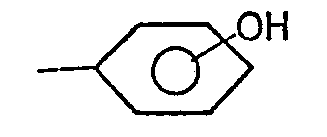
- OH étant en position méta ou para l'atome d'hydrogène étant particulièrement préféré. Lors d'une élévation de température, ces dérivés de benzotriazole ou leurs sels réagissent avec le générateur de couleur pour donner une coloration irréversible. Ces deux types de produits sont conditionnés sur un support (papier ou autre) qui peut être utilisé dans tous les appareils ayant un système de visualisation thermique des informations: par exemple imprimantes de calculateurs, appareils de veille médicaux et industriels, télécopieurs...
- Dans le brevet japonais 5 555 891 on a décrit un papier pour la reproduction, sensible à la chaleur, caractérisé en ce qu'il contient un 3-diéthylamino-7 (2-chloroamilino)- fluorane comme formateur de couleur et un composé triazole de formule

- Actuellement, les utilisations industrielles du benzotriazole et de ses dérivés sont les suivantes:
- - additif utilisé en faible quantité comme agent anti-corrosion (principalement du cuivre) dans les antigels et les saumures réfrigérantes; pour cette application c'est surtout le benzotriazole qui est utilisé;
- - en photographie, le benzotriazole et ses dérivés sont utilisés comme «fog-inhibitor» (inhibiteur de voile); ils agissent également comme retardateur de développement; ces effets sont vraisemblablement obtenus par une réaction avec l'halogénure d'argent présent dans le film photographique;
- - en photographie et également dans l'industrie des polymères et des plastiques, les dérivés du benzotriazole sont utilisés comme anti-UV. Les dérivés N-substitués du benzotriazole sont, dans ce cas, principalement utilisés, par exemple le Tinuvin 328 de formule

- Toutes ces utilisations n'ont rien à voir avec l'utilisation objet de la présente invention: développeur de générateurs de couleur dans des compositions thermoréactives.
- L'augmentation récente des besoins en information et en communication a fait progresser l'utilisation et la demande de systèmes d'enregistrements, de transmission et de restitution de données. Parmi ceux-ci, les systèmes thermoréactifs connaissent un essort très important et cela pour plusieurs raisons: - le processus de formation de l'image est simple et permet d'obtenir des reproductions de bonne qualité en ce qui concerne la couleur et le contraste, - les appareils utilisés sont souvent faciles à entretenir et à utiliser, - la feuille d'enregistrement thermique, en plus de ses performances techniques remarquables, a un coût relativement faible.
- Comme feuilles d'enregistrement sensibles à la chaleur pouvant être utilisées pour ces applications, on connaît celles décrites initialement dans le brevet français n° 1 440 892 (National Cash Re- gister Company) et par la suite, dans la cascade de brevets dérivant de ce système principal, ainsi par exemple les brevets US 3 539 375 (NCR Company) et US 3 746 675 (NCR Company).
- Tous ces brevets ont trait au système suivant: le chauffage induit la réaction à l'état fondu d'un leuco-colorant chromogène incolore ou de couleur pâle (générateur de couleur) et d'une substance phénolique (développeur) et conduit à la formation d'une espèce colorée.
- Différents couples leuco-colorants - composés phénoliques ont été décrits pour ces applications thermographiques; pour les premiers, on peut citer: les spiropyrannes indoliniques, les lactones de colorants triphényl-méthane, des composés de la famille des fluoranes, des phtalides, les spirodi- hydropyrannes (brevet français n° 2 272 082), les chromènes ou chromanes... Pour les seconds, on peut citer: le bisphénol A (isopropylidène -4,4' diphénol), le p-tertiobutylphénol, le p-phénylphé- nol, le p,p' (méthyl-1 -n-hexylidène) diphénol, les résines novolaques phénoliques...
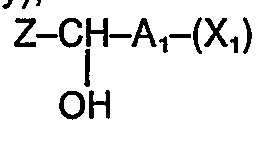
- On connaît également, comme compositions d'enregistrement thermo-réactif, celles contenant d'autres développeurs des leuco-colorants décrits ci-dessus, à la place des composés phénoliques, comme par exemple:
- - des sels métalliques d'acides organiques et de préférence gras (résinates, acétates, phénates, stéarates, ricinoléates, oléates...). Brevet suisse n° 406 257 (NCR Companv).
- - des composés de structure
- - des carbonates ou éthers dérivés de dihydroxy-2,3 naphtalène. Demande de brevet en FRANCE 2 427 210 (7 816 954) (LA CELLOPHANE),
- - des dérivés siliciés et phosphorés du dihydroxy-2,3 naphtalène. Demande de brevet en FRANCE n° 2427209 (7 816 953) (LA CELLOPHANE),
- - des monoaldéhydes ou polyaldéhydes substitués électro-négativement et/ou leurs produits de réaction avec un composé organique contenant des groupes hydroxyle ou bien les produits intermédiaires. Demande de brevet en FRANCE n° 2 391 858 (7 815 806) (CIBA-GEIGY A.G.).
- Tous ces procédés ont bien sûr leurs qualités propres; il n'en demeure pas moins qu'ils ont pour la plupart des imperfections, notamment, en ce qui concerne la stabilité et la persistance à long terme de l'image enregistrée; en effet, la plupart de celles-ci présentent un affaiblissement plus ou moins marqué des colorations enregistrées sous l'effet de la lumière ambiante, ainsi qu'une montée du voile de fond à l'humidité et à la chaleur.
- Cette stabilité de l'image enregistrée et du fond non coloré dépend bien évidemment de la nature et de la structure du générateur de couleur leuco-colorant utilisé, mais également du développeur choisi en combinaison avec lui. La combinaison retenue entre le précurseur de colorant et le révélateur a donc une grande importance sur les qualités de conservation du papier et de l'image enregistrée.
- Il a été découvert selon l'invention que, dans des compositions thermoréactives, une famille tout-à-fait différente de composés, pouvait être utilisée comme développeur en association avec des précurseurs de colorants classiques.
- Cette famille est constituée par les dérivés du benzotriazole de structure


- Comme exemples non limitatifs on peut citer le benzotriazole, le méthyl-5 benzotriazole,
- le méthyl-6 benzotriazole,
- le phényl-5 benzotriazole,
- le phényl-6 benzotriazole,
- le chloro-5 benzotriazole,
- le chloro-5 méthyl-6 benzotriazole,
- le chloro-5 isopropyl-7 méthyl-4 benzotriazole,
- le bromo-5 benzotriazole,
- le nitro-4 (ou 7) benzotriazole,
- le nitro-5 (ou 6) benzotriazole,
- le nitro-5 diméthyl-4,7 benzotriazole,
- le dinitro-4,6 (ou 5,7) benzotriazole,
- l'amino-4 (ou 7) benzotriazole,
- l'amino-5 (ou 6) benzotriazole,
- l'amino-5 (ou 6) méthyl-6 (ou 5) benzotriazole,
- l'amino-5 (ou 6) méthyl-7 (ou 4) benzotriazole,
- l'amino-5 (ou 6) diméthyl-4,7 benzotriazole,
- l'amino-5 chloro-4 benzotriazole,
- l'amino-4 hydroxy-7 benzotriazole,
- l'amino-7 carboxy-5 benzotriazole,
- le diamino-4,5 (ou 6,7) benzotriazole,
- l'hydroxy-4 (ou 7) benzotriazole,
- l'hydroxy-5 (ou 6) benzotriazole,
- le diéthoxy-4,7 benzotriazole,
- l'acide dihydroxy-4,5 benzotriazolyl-7 sulfonique, acétyl-5 benzotriazole,
- acide benzotriazole-carboxylique-5 (ou 6) et les composés analogues.
- De plus amples renseignements sur ces composés, en tant que produits chimiques, peuvent être obtenus dans les publications suivantes:
- -Traité de Chimie Organique de V. GRIGNARD, tome XXI, p. 737 et suivantes,
- - F. BENSON et W. SAVELL, Chemical Reviews, 1950, 46, 1-68.
- Ces composés dérivés du benzotriazole non N-substitués sont utilisés, selon l'invention, soit tels quels, soit sous forme de sels.

- Ces sels sont obtenus par réaction directe du dérivé du benzotriazole avec un sel métallique adéquat. Les sels métalliques conduisant le plus facilement à des complexes de benzotriazole sont les sels des métaux suivants: Cu, Cd, Co, Fe (II), Ni, Mn, Zn.
- Comme littérature concernant les sels métalliques de benzotriazole en tant que produits chimiques, nous pouvons citer:
- -J.A. CURTIS, Ind. Eng. Chem, Anal. Ed., 1941, 13, 349,
- - JE. FAGEL and G.W. EWING, J. Am. Chem. Soc. 73, 4360 (1951).
- Les compositions d'enregistrement thermographique selon l'invention contiennent donc les constituants suivants:
- - un ou plusieurs générateurs de couleur («color-former»):
- ce produit peut appartenir à diverses familles chimiques classiquement utilisées en thermoréactif comme par exemple les lactones de colorants triphényl méthane, les fluoranes, les phtalides, les leuco-colorants de triaryl méthanes, les spiropyrannes, les chromènes, les chromanes, les leuco-colorants de phénoxazine ou phénothiazine substituée. Comme générateurs de couleur, on mentionne à titre d'exemples non limitatifs les composés suivants:
- 3,3-bis (p-diméthylaminophényl)-6-diméthyl- aminophtalide (CVL),
- 3,3-bis-(p-diméthylaminophényl) phtalide,
- 3-(p-diméthylaminophényl)-3-(1,2-diméthyl- indole-3-yl) phtalide,
- 3-(p-diméthylaminophényl)-3-(2-méthylindole-3-yl)phtalide,
- 3,3-bis-(1,2-diméthylindole-3-yl)-5-diméthyl- aminophtalide,
- 3,3-bis-(1,2-diméthylindole-3-yl)-6-diméthyl- aminophtalide,
- 3,3-bis-(9-éthylcarbazole-3-yl)-5-diméthyl- aminophtalide,
- 3,3-bis (2-phénylindole-3-yl)-5-diméthylamino- phtalide,
- 3-p-diméthylaminophényl-3-(1-méthylpyrrole-2-yl)-6-diméthylaminophtalide,
- éther benzylique de 4,4'-bis-diméthylaminobenz- hydrine,
- N-halogénophényl-leuco-auramine,
- N-2,4,5-trichlorophényl-leuco-auramine,
- rhodamine-B-anilinolactame,
- rhodamine-(p-nitro-anilino) lactame,
- rhodamine-(p-chloranilino) lactame,
- 7-diméthylamino-2-méthoxyfluorane,
- 7-diéthylamino-2-méthoxyfluorane,
- 7-diéthylamino-3-méthoxyfluorane,
- 7-diéthylamino-3-chlorofluorane,
- 7-diéthylamino-3-chloro-2-méthylfluorane,
- 7-diéthylamino-2, 3-diméthylfluorane,
- 7-diéthylamino-(3-acétylméthylamino)fluorane,
- 7-diéthylamino-(3-méthylamino)fluorane,
- 3,7-diéthylaminofluorane,
- 7-diéthylamino-3-(dibenzylamino)fluorane,
- 7-diéthylamino-3-(méthylbenzylamino)fluorane,
- 7-diéthylamino-3-(chloréthylméthyl-amino)-fluorane,
- 7-diéthylamino-3-(diathylamino)fluorane,
- 2-phénylamino-3-méthyl-6-(N-éthyl-N-p-toluyl)-amino-fluorane,
- bleu de benzoyl-leucométhylène,
- bleu de p-nitrobenzyl-leucométhylène,
- 3-méthyl-spiro-dinaphtopyrane,
- 3-éthyl-spiro-dinaphtopyrane,
- 3,3'-dichloro-spiro-dinaphtopyrane,
- 3-benzyl-spiro-dinaphtopyrane,
- 3-méthyl-naphto-(3-méthoxybenzo)-spiro-pyrane et 3-propyl-spiro-dibenzopyrane.
- Les substances chromogènes incolores mentionnées ci-dessus peuvent être utilisées individuellement ou en mélange.
- Les benzotriazoles utilisés selon l'invention permettent de développer d'une manière optimale tous les générateurs de couleur connus. Ce développement est optimal compte tenu du générateur de couleur utilisé. Toutefois, un certain nombre de qualités de la trace formée: couleur, stabilité, intensité ... dépendent principalement de la nature du générateur de couleur, et en particulier de la structure chimique de la famille à laquelle il appartient. Dans notre cas, le développeur de couleur de la famille du benzotriazole renforce certaines de ces qualités: intensité, stabilité à la lumière, à l'humidité, mais ne les modifie pas radicalement; ainsi par exemple, un générateur de couleur conduisant, par l'action d'un développeur de couleur classique, à un colorant peu stable à la lumière verra, par l'utilisation de dérivés du benzotriazole, sa tenue à la lumière un peu améliorée mais elle n'en deviendra pas pour autant excellente.
- - un développeur de couleur, caractéristique de l'invention, appartenant à la famille des dérivés du benzotriazole:

- Ces compositions contiennent en outre toutes les espèces nécessaires à la formation d'une couche de bonne qualité sur le support.
- - un liant polymérique dont le principal rôle est d'assurer la cohésion de l'ensemble de l'émulsion, ainsi que son accrochage sur le support; il peut intervenir également par ses caractéristiques propres sur le ramolissement de la couche. Ces liants sont soit solubles dans l'eau (le générateur de couleur et le développeur étant insolubles ou très faiblement solubles dans l'eau), dans ce cas, on peut opérer en une couche, soit solubles dans des solvants organiques, dans ce cas, il vaut mieux opérer en deux couches quand le solvant utilisé solubilise le générateur de couleur ou le développeur pour éviter toute réaction prématurée entre ces deux composés. Le générateur de couleur et le développeur sont alors placés dans des couches différentes. Ces liants peuvent être choisis dans les familles suivantes: polymères ou latex acryliques, vinyliques, cellulosiques, styré- niques, halogénés, maléiques ... Comme exemples non limitatifs, nous pouvons citer: l'amidon, l'alcool polyvinylique, l'hydroxyéthyl cellulose, la méthyl cellulose, la carboxy-méthyl cellulose, la gélatine, la caséine, la gomme arabique, des sels de copolymères de styrène et d'anhydride maléique, une émulsion d'un copolymère de styrène et de butadiène, une émulsion d'un copolymère d'acétate de vinyle et d'anhydride maléique, un copolymère de chlorure de vinylidène ...
- - des cires ou composés à bas point de fusion qui servent à ajuster la température de réaction du milieu à une valeur désirée, à empêcher l'adhésion à la tête chauffante, à éviter la salissure par friction; par exemple, cires paraffiniques, cires polyoléfiniques, amides gras et leurs dérivés de méthylol, acides gras supérieurs et leurs sels métalliques, les produits de condensation d'un acide gras supérieur et d'un amine, des esters de polyalcools et d'acides gras supérieurs, des alcools supérieurs ...
- - une charge pigmentaire destinée à donner une meilleure consistance à la composition de couchage, à améliorer la blancheur du fond, à réduire les problèmes de poissage de la couche et les phénomènes d'encrassement et d'usure des appareils utilisant ces émulsions; par exemple: CaCOg, kaolin, talc, amidon, Ti02, ZnO, MgC03, AI (OH)3, argile calcinée, pigments organiques comme des polymérisats urée-formaldéhyde (par exemple «Pergopak» de CIBA-GEIGY).
- - différents adjuvants couramment utilisés pour la préparation et le couchage des émulsions: dispersants, azurants, tensio-actifs, anti-mousse, plastifiants, antioxydants, anti UV, agents tamponnant le pH du milieu et stabilisant la composition comme NaHCOa ou NH4HCO3. Le choix et la nature de chacun de ces produits étant aisément effectués par un homme de l'art.
- Tous ces différents constituants sont broyés, émulsionnés ou dissouts dans le milieu et couchés en une ou plusieurs couches sur un support papier ou autre (plastique par exemple). De préférence, le générateur de couleur et le développeur de couleur sont broyés séparément de manière à éviter toute réaction prématurée; les deux dispersions étant mélangées avant le couchage dans le cas d'une enduction en une couche. La nature, le grammage du support, ainsi que le nombre et l'épaisseur des couches et leur mode d'enduction dépendent de l'utilisation prévue, ainsi que de l'effet recherché, et sont aisément déterminés par un homme de l'art.
- Les différents exemples donnés ci-après le sont pour illustration et ne sont en aucun cas limitatifs.
- On broie séparément les compositions suivantes:
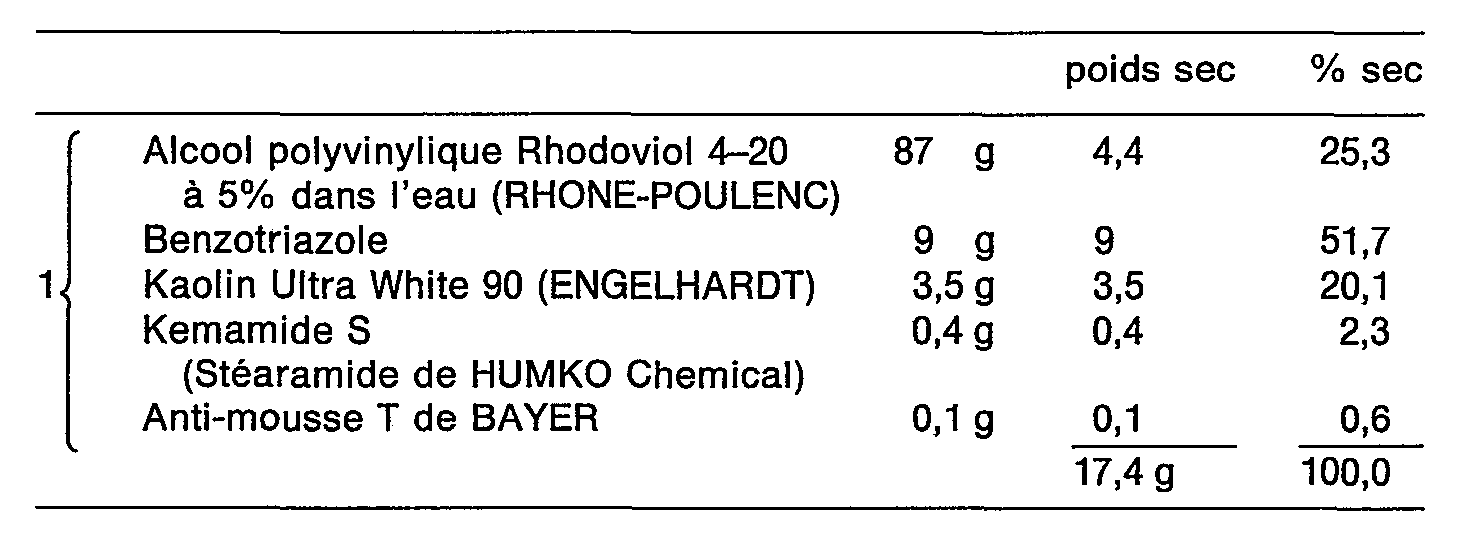

- Ces deux compositions sont mélangées dans le rapport 1/1, puis couchées sur un papier de 55 g/m2 à raison de 5 g/m2 sec. Après séchage et éventuellement calandrage, ce papier est utilisé sur une machine à calculer de bureau à imprimante thermique OLIVETTI Logos n° 7; la trace bleue a une densité de 1,1 (mesurée à l'aide d'un densitomètre GAM RD 144 équipé d'un filtre Wratten n° 106); le seuil de réaction du papier est très marqué et se situe à 85°C environ.
- On disperse d'une manière homogène la composition suivante:


- Après séchage et éventuellement calandrage, ce papier est utilisé dans un appareil pour enregistrement d'électrocardiogrammes du type «Cardiopan 571» de PHILIPS et permet d'obtenir un tracé noir très finement résolu, quelle que soit la vitesse de défilement du papier 50, 25 ou 10 mm/s. La densité de la trace est de 1,15 (mesurée à l'aide d'un densitomètre GAM RD 144 équipé d'un filtre Wratten n° 106).
- Composition identique à l'exemple 2, si ce n'est que l'on ajoute dans la couche 1: ZnCl2 2,6 g ce qui permet d'intensifier les traces noires obtenues thermiquement (D = 1,25) et d'en améliorer encore les caractéristiques; en particulier, nous obtenons une stabilité à la lumière remarquable; ainsi, après exposition pendant 30 heures dans un appareil de vieillissement accéléré SUNTEST 7011 de HANAU (éclairement 90000 lux), la densité de trace est passée de 1,25 à 1,15; le fond, quant à lui, est passé de 0,08 à 0,120.
- On disperse, d'une manière homogène, la composition suivante:

- On broie séparément, puis on mélange avant le couchage d'une part le benzotriazole + ZnCl2, et d'autre part le «color former" noir, les autres constituants étant répartis équitablement entre les deux broyages. On dépose cette couche à raison de 5 g/m2 sur un support polyester de 100 µ d'épaisseur; après séchage et éventuellement calandrage, ce film thermoréactif est testé sur un appareil «THERMOTEST» de la Société SETARAM (LYON). Nous obtenons des densités de coloration de 1,20 (réflection) (Densitomètre GAM RD 144, filtre Wratten n° 106) et un seuil de réaction très marqué se situant à 85°C environ.
- On broie d'une manière homogène les compositions suivantes:

- On dépose cette couche à raison de 5 g/m2 sec sur un support papier de 55 g/m2, puis, après séchage, on dépose par dessus la composition suivante à raison de 1 g/m2 sec environ:

- Après séchage et éventuellement calandrage, ce papier thermoréactif est utilisé sur un télécopieur CANON FAX 601 W; en vitesse rapide, nous obtenons des densités de noir de 0,90 et en vitesse lente des densités de 1,0. Le seuil de réactivité de ce type de papier se trouve à 75 °C environ.
- On broie d'une manière homogène les compositions suivantes:

- On dépose cette couche à raison de 5 g/m2 sec sur un support papier d'environ 55 g/m2; puis, on couche par dessus la composition suivante à raison de 1 g/m2 sec environ:

- Après séchage et éventuellement calandrage, ce papier utilisé sur une imprimante thermique ANDERSON-JACOBSON AJ 630 (tête thermique à matrice de points 5 x 8) (10 caractères par inch et 6 lignes par inch), nous permet d'obtenir des enregistrements bleus d'une densité de 0,95 à 0,80 suivant la vitesse sélectionnée: 10, 15 ou 30 caractères par seconde (densitomètre GAM RD 144 avec filtre Wratten n° 106). Le seuil de réaction du papier est très marqué et se situe à 85°C environ.
- On disperse d'une manière homogène les compositions suivantes:

- On dépose cette couche à raison de 5 g/m2 sec sur un support papier de 55 g/m2; puis, on couche par dessus la composition suivante à raison de 1 g/m2 sec environ:

- Après séchage et éventuellement calandrage, ce papier est utilisé dans un appareil pour enregistrements d'électrocardiogrammes du type «Cardiopan 571» de PHILIPS, et permet d'obtenir un tracé brun rouge de densité 0,80 (densitomètre GAM RD 144 avec filtre Wratten n° 106).
- On disperse d'une manière homogène les compositions suivantes:

- On dépose cette couche à raison de 5 g/m2 sec environ sur un support papier de 55 g/m2 environ, puis, après séchage, on dépose par dessus la composition suivante à raison de 1 g/m2 sec environ:

- Après séchage et éventuellement calandrage, ce papier est utilisé sur une machine à calculer de bureau à imprimante thermique OLIVETTI Logos n° 7; la trace rouge a une densité de 1,4 (Densitomètre GAM RD 144 avec filtre Wratten vert n° 581). Le seuil de réaction de ce type de papier est bien marqué et se situe à 80°C environ.
- Les rapports des différents composés décrits dans ces exemples peuvent bien évidemment être modifiés en fonction des caractéristiques requises (sensibilité, conservation, contraste, couleur) pour le support d'enregistrement thermique, sans pour cela sortir du cadre de l'invention.
- Cet exemple est identique à l'exemple 5 mais on remplace dans la couche 1 le Benzotriazole (40,9 g) par:
- - Méthyl-6 Benzotriazole 45,7 g
- Les résultats obtenus avec un tel papier sont quasiment identiques à ceux obtenus à l'exemple 5.
- On broie d'une manière homogène les compositions suivantes:

- On dépose cette couche à raison de 5 g/m2 sec sur un support papier de 55 g/m2 environ, puis, après séchage, on dépose par dessus la composition suivante à raison de 1 g/m2 sec environ:
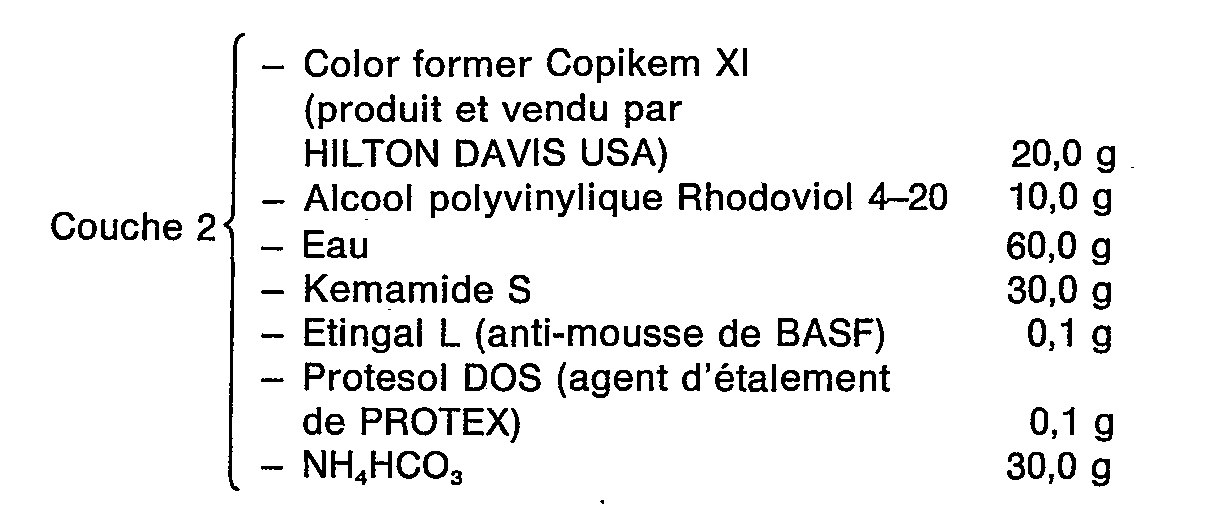
- Après séchage et éventuellement calandrage, ce papier thermoréactif est testé sur un appareil THERMOTEST de la Société SETARAM (LYON); nous obtenons des densités de coloration (jaune- orangé) de 1,4 (Densitomètre GAM RD 144 avec filtre bleu Wratten n° 47); le seuil de réaction de ces papiers thermoréactifs se situe aux environs de 95°C.
- On broie de manière homogène les compositions suivantes:

- On dépose cette couche à raison de 5 g/m2 sec sur un support papier de 55 g/m2 environ; puis, après séchage, on dépose par dessus la composition suivante à raison de 1 g/m2 sec environ:
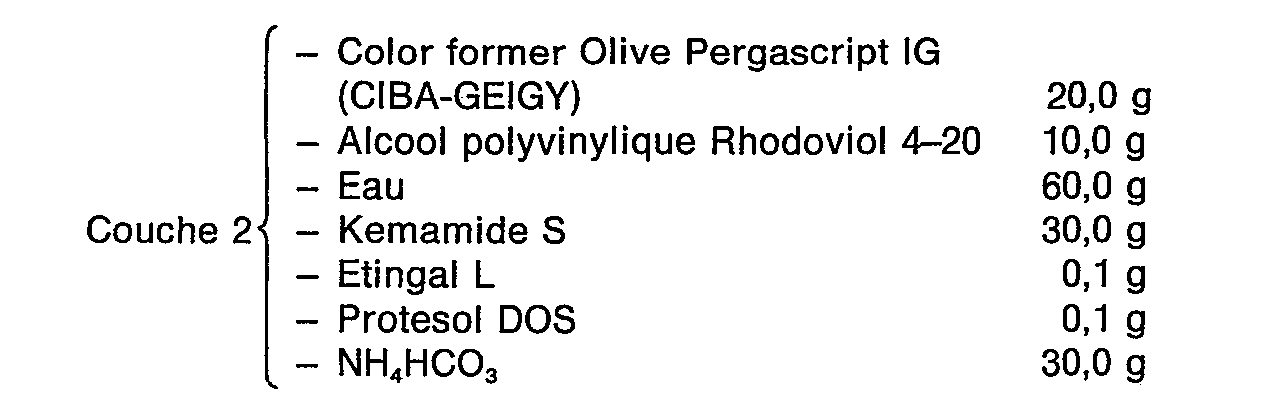
- Après séchage et éventuellement calandrage, ce papier thermoréactif est testé sur un appareil THERMOTEST de la Société SETARAM (LYON); nous obtenons des densités de coloration (vert- olive) de 1,2 (Densitomètre GAM RD 144 - filtre Wratten n° 106). Le seuil de réaction se situe aux environs de 85°C.
- On broie de manière homogène les compositions suivantes:

- On dépose cette couche à raison de 5 g/M 2 sec sur un support papier de 55 g/m2 environ; puis, après séchage, on dépose par dessus la composition suivante à raison de 1 g/m2 sec environ:

- Après séchage et éventuellement calandrage, ce papier thermoréactif est testé sur une imprimante thermique ANDERSON-JACOBSON AJ 630 (tête thermique matrice de points 5 x 8); nous obtenons des enregistrements noirs de densité de 1,10 à 0,90 suivant la vitesse sélectionnée: 10, 15 ou 30 caractères par seconde (densitomètre GAM RD 144 avec filtre Wratten n° 106). Le seuil de réaction de ces papiers se situe aux alentours de 85 °C.
- En outre, pour toutes les compositions des exemples, la tenue à l'humidité est bonne; en effet, lors de stockage d'images enregistrées thermiquement à 75% d'humidité relative et 23°C pendant trois mois, la perte de densité est inférieure à 3%.
- Les propriétés des papiers exemplifiés dans les exemples ci-dessus sont rassemblées dans le tableau ci-après.
- Dans ce tableau:
- - DO signifie: densité mesurée du support non enregistré,
- - Dmax signifie: densité mesurée de la trace.
- Les tests de vieillissement accéléré ont été menés avec un appareil connu sous le nom de «SUNTEST 7011 fabriqué par la Société HANAU selon des conditions identiques comme dit pour l'exemple 3.


Claims (11)


Applications Claiming Priority (2)
| Application Number | Priority Date | Filing Date | Title |
|---|---|---|---|
| FR8112910A FR2508384B1 (fr) | 1981-06-24 | 1981-06-24 | Nouveaux developpeurs de couleur, compositions d'enregistrement thermographique les contenant et supports correspondants |
| FR8112910 | 1981-06-24 |
Publications (2)
| Publication Number | Publication Date |
|---|---|
| EP0069685A1 EP0069685A1 (fr) | 1983-01-12 |
| EP0069685B1 true EP0069685B1 (fr) | 1986-09-17 |
Family
ID=9260058
Family Applications (1)
| Application Number | Title | Priority Date | Filing Date |
|---|---|---|---|
| EP82420083A Expired EP0069685B1 (fr) | 1981-06-24 | 1982-06-23 | Compositions d'enregistrement thermographique les contenant et supports correspondants |
Country Status (5)
| Country | Link |
|---|---|
| US (1) | US4482378A (fr) |
| EP (1) | EP0069685B1 (fr) |
| JP (1) | JPS585289A (fr) |
| DE (1) | DE3273324D1 (fr) |
| FR (1) | FR2508384B1 (fr) |
Families Citing this family (9)
| Publication number | Priority date | Publication date | Assignee | Title |
|---|---|---|---|---|
| US4608579A (en) * | 1984-05-25 | 1986-08-26 | Ricoh Company, Ltd. | Thermosensitive recording material |
| JPH0667671B2 (ja) * | 1985-02-01 | 1994-08-31 | 株式会社リコー | 感熱記録材料 |
| US4921832A (en) * | 1988-04-22 | 1990-05-01 | Adair Paul C | Developer compositions having reduced yellowing |
| US4941685A (en) * | 1988-11-17 | 1990-07-17 | Moore Business Forms, Inc. | Multiple part facsimile form |
| RU2185378C1 (ru) * | 2001-06-22 | 2002-07-20 | Ярославский государственный технический университет | Гетероциклические о-дикарбонитрилы |
| RU2183628C1 (ru) * | 2001-06-22 | 2002-06-20 | Ярославский государственный технический университет | Гетероциклические о-дикарбонитрилы |
| US7937149B2 (en) * | 2003-12-03 | 2011-05-03 | Medtronic, Inc. | Method and apparatus for detecting change in physiologic parameters |
| RU2326873C1 (ru) * | 2006-12-18 | 2008-06-20 | Государственное образовательное учреждение высшего профессионального образования "Ивановский государственный химико-технологический университет" (ИГХТУ) | 4-(1-бензотриазолил)-5-(нафтокси)фталодинитрилы |
| US8871994B2 (en) | 2010-12-10 | 2014-10-28 | Kimberly-Clark Worldwide, Inc. | Wetness sensor for use in an absorbent article |
Family Cites Families (15)
| Publication number | Priority date | Publication date | Assignee | Title |
|---|---|---|---|---|
| FR1296048A (fr) * | 1960-05-07 | 1962-06-15 | Fisons Pest Control Ltd | Composés chimiques et compositions ayant un effet fongicide à usage industriel |
| BE623057A (fr) * | 1961-10-05 | |||
| FR1440892A (fr) * | 1964-05-11 | 1966-06-03 | Ncr Co | Matérau d'enregistrement |
| US3413138A (en) * | 1965-10-13 | 1968-11-26 | Interchem Corp | Thermosensitive copy sheet |
| GB1135540A (en) * | 1966-06-01 | 1968-12-04 | Ncr Co | Temperature responsive record material |
| US3746675A (en) * | 1970-07-15 | 1973-07-17 | Ncr | Heat sensitive record material |
| FR2272082B1 (fr) * | 1974-05-24 | 1978-08-11 | Issec | |
| JPS5323205A (en) * | 1976-08-16 | 1978-03-03 | Nakayo Telecommunications | Low current telephone control system |
| FI781627A7 (fi) * | 1977-05-28 | 1978-11-29 | Ciba Geigy Ag | Vaermekaensligt upptecknings- eller kopieringsmaterial |
| FR2427209A1 (fr) * | 1978-05-31 | 1979-12-28 | Cellophane Sa | Materiaux de reprographie contenant des derives silicies et phosphores du dihydroxy 2,3 naphtalene |
| FR2427210A1 (fr) * | 1978-05-31 | 1979-12-28 | Cellophane Sa | Materiaux de reprographie contenant un carbonate ou un ether derives du dihydroxy 2,3 naphtalene |
| JPS5926477B2 (ja) * | 1978-10-19 | 1984-06-27 | 保土谷化学工業株式会社 | 感熱記録紙 |
| US4291901A (en) * | 1978-11-23 | 1981-09-29 | Ciba-Geigy Corporation | Pressure-sensitive or heat-sensitive recording material |
| US4275206A (en) * | 1979-03-05 | 1981-06-23 | Appleton Papers Inc. | Lactone compounds containing an indolizine radical |
| JPH104908A (ja) * | 1996-06-21 | 1998-01-13 | Shoji Asakura | オカラを主材とするふりかけの製造方法 |
-
1981
- 1981-06-24 FR FR8112910A patent/FR2508384B1/fr not_active Expired
-
1982
- 1982-06-15 US US06/388,690 patent/US4482378A/en not_active Expired - Lifetime
- 1982-06-23 EP EP82420083A patent/EP0069685B1/fr not_active Expired
- 1982-06-23 DE DE8282420083T patent/DE3273324D1/de not_active Expired
- 1982-06-24 JP JP57107694A patent/JPS585289A/ja active Granted
Also Published As
| Publication number | Publication date |
|---|---|
| JPS585289A (ja) | 1983-01-12 |
| US4482378A (en) | 1984-11-13 |
| JPH0250875B2 (fr) | 1990-11-05 |
| DE3273324D1 (en) | 1986-10-23 |
| FR2508384A1 (fr) | 1982-12-31 |
| EP0069685A1 (fr) | 1983-01-12 |
| FR2508384B1 (fr) | 1986-06-20 |
Similar Documents
| Publication | Publication Date | Title |
|---|---|---|
| US4436920A (en) | Image recording members | |
| EP0106772B1 (fr) | Compositions thermographiques et matériaux d'enregistrement thermographique | |
| CH628574A5 (fr) | Support thermosensible d'enregistrement. | |
| JPH074986B2 (ja) | 感熱記録材料 | |
| EP0069685B1 (fr) | Compositions d'enregistrement thermographique les contenant et supports correspondants | |
| LU82044A1 (fr) | Composition chromogene et son procede de preparation | |
| US4598150A (en) | Chromogenic 1-(3-methoxy-4-alkoxyphenyl)-2-(2'-quinolyl)ethylene compounds | |
| JPS6113999B2 (fr) | ||
| JPS58188689A (ja) | 感熱記録紙 | |
| JPS59214686A (ja) | 記録材料 | |
| LU82045A1 (fr) | Feuille receptrice d'enregistrement et son procede de fabrication | |
| US4289535A (en) | Heat sensitive coating | |
| JPS62243653A (ja) | ジビニル化合物及びそれを使用した発色性記録材料 | |
| US4864024A (en) | Leuco dyes | |
| US4341403A (en) | Fluoran compounds, process for preparation thereof, and recording sheets using same | |
| LU82043A1 (fr) | Matiere chromogene | |
| JPS5834319B2 (ja) | 感熱記録材料 | |
| FR2526717A1 (fr) | Feuille d'enregistrement sensible a la chaleur | |
| FR2530190A1 (fr) | Papier pour copie sensible a la pression du type " transfert sur papier ordinaire " | |
| FR2598352A1 (fr) | Materiau de reproduction sensible a la chaleur | |
| JPH0825335B2 (ja) | 感熱記録材料 | |
| JPH0698836B2 (ja) | 感熱記録材料 | |
| JPS62261479A (ja) | 感熱記録材料 | |
| FR2489751A1 (fr) | Feuille d'enregistrement thermographique | |
| BE880765A (fr) | Composition chromogene contenant du bleu de pyridyle et son emploi |
Legal Events
| Date | Code | Title | Description |
|---|---|---|---|
| PUAI | Public reference made under article 153(3) epc to a published international application that has entered the european phase |
Free format text: ORIGINAL CODE: 0009012 |
|
| AK | Designated contracting states |
Designated state(s): BE CH DE GB IT LI |
|
| 17P | Request for examination filed |
Effective date: 19830315 |
|
| GRAA | (expected) grant |
Free format text: ORIGINAL CODE: 0009210 |
|
| AK | Designated contracting states |
Kind code of ref document: B1 Designated state(s): BE CH DE GB IT LI |
|
| ITF | It: translation for a ep patent filed | ||
| REF | Corresponds to: |
Ref document number: 3273324 Country of ref document: DE Date of ref document: 19861023 |
|
| PLBE | No opposition filed within time limit |
Free format text: ORIGINAL CODE: 0009261 |
|
| STAA | Information on the status of an ep patent application or granted ep patent |
Free format text: STATUS: NO OPPOSITION FILED WITHIN TIME LIMIT |
|
| 26N | No opposition filed | ||
| ITTA | It: last paid annual fee | ||
| PGFP | Annual fee paid to national office [announced via postgrant information from national office to epo] |
Ref country code: GB Payment date: 19980616 Year of fee payment: 17 |
|
| PGFP | Annual fee paid to national office [announced via postgrant information from national office to epo] |
Ref country code: DE Payment date: 19980617 Year of fee payment: 17 |
|
| PGFP | Annual fee paid to national office [announced via postgrant information from national office to epo] |
Ref country code: CH Payment date: 19980701 Year of fee payment: 17 |
|
| PGFP | Annual fee paid to national office [announced via postgrant information from national office to epo] |
Ref country code: BE Payment date: 19980709 Year of fee payment: 17 |
|
| PG25 | Lapsed in a contracting state [announced via postgrant information from national office to epo] |
Ref country code: GB Free format text: LAPSE BECAUSE OF NON-PAYMENT OF DUE FEES Effective date: 19990623 |
|
| PG25 | Lapsed in a contracting state [announced via postgrant information from national office to epo] |
Ref country code: LI Free format text: LAPSE BECAUSE OF NON-PAYMENT OF DUE FEES Effective date: 19990630 Ref country code: CH Free format text: LAPSE BECAUSE OF NON-PAYMENT OF DUE FEES Effective date: 19990630 Ref country code: BE Free format text: LAPSE BECAUSE OF NON-PAYMENT OF DUE FEES Effective date: 19990630 |
|
| BERE | Be: lapsed |
Owner name: AUSSEDAT-REY Effective date: 19990630 |
|
| GBPC | Gb: european patent ceased through non-payment of renewal fee |
Effective date: 19990623 |
|
| REG | Reference to a national code |
Ref country code: CH Ref legal event code: PL |
|
| PG25 | Lapsed in a contracting state [announced via postgrant information from national office to epo] |
Ref country code: DE Free format text: LAPSE BECAUSE OF NON-PAYMENT OF DUE FEES Effective date: 20000503 |