EP0057349B1 - Neues Peptid-Antibiotikum Komponente B, Verfahren zu seiner Herstellung sowie seine Verwendung in Arzneimitteln - Google Patents
Neues Peptid-Antibiotikum Komponente B, Verfahren zu seiner Herstellung sowie seine Verwendung in Arzneimitteln Download PDFInfo
- Publication number
- EP0057349B1 EP0057349B1 EP82100121A EP82100121A EP0057349B1 EP 0057349 B1 EP0057349 B1 EP 0057349B1 EP 82100121 A EP82100121 A EP 82100121A EP 82100121 A EP82100121 A EP 82100121A EP 0057349 B1 EP0057349 B1 EP 0057349B1
- Authority
- EP
- European Patent Office
- Prior art keywords
- iron
- compound
- water
- process according
- antibiotic
- Prior art date
- Legal status (The legal status is an assumption and is not a legal conclusion. Google has not performed a legal analysis and makes no representation as to the accuracy of the status listed.)
- Expired
Links
- 238000002360 preparation method Methods 0.000 title claims abstract description 6
- 238000000034 method Methods 0.000 title claims description 14
- 239000003814 drug Substances 0.000 title claims description 4
- 229940079593 drug Drugs 0.000 title 1
- 239000003910 polypeptide antibiotic agent Substances 0.000 title 1
- 150000001875 compounds Chemical class 0.000 claims abstract description 44
- XEEYBQQBJWHFJM-UHFFFAOYSA-N Iron Chemical compound [Fe] XEEYBQQBJWHFJM-UHFFFAOYSA-N 0.000 claims abstract description 19
- 230000003115 biocidal effect Effects 0.000 claims abstract description 12
- 239000000203 mixture Substances 0.000 claims abstract description 12
- 229910052742 iron Inorganic materials 0.000 claims abstract description 8
- 238000000855 fermentation Methods 0.000 claims abstract description 7
- 230000004151 fermentation Effects 0.000 claims abstract description 7
- 239000003242 anti bacterial agent Substances 0.000 claims abstract description 4
- 208000035143 Bacterial infection Diseases 0.000 claims abstract 2
- 208000022362 bacterial infectious disease Diseases 0.000 claims abstract 2
- XLYOFNOQVPJJNP-UHFFFAOYSA-N water Substances O XLYOFNOQVPJJNP-UHFFFAOYSA-N 0.000 claims description 25
- KRKNYBCHXYNGOX-UHFFFAOYSA-N citric acid Chemical compound OC(=O)CC(O)(C(O)=O)CC(O)=O KRKNYBCHXYNGOX-UHFFFAOYSA-N 0.000 claims description 22
- OKKJLVBELUTLKV-UHFFFAOYSA-N Methanol Chemical compound OC OKKJLVBELUTLKV-UHFFFAOYSA-N 0.000 claims description 21
- 235000015097 nutrients Nutrition 0.000 claims description 17
- IJGRMHOSHXDMSA-UHFFFAOYSA-N Atomic nitrogen Chemical class N#N IJGRMHOSHXDMSA-UHFFFAOYSA-N 0.000 claims description 16
- MTCFGRXMJLQNBG-REOHCLBHSA-N (2S)-2-Amino-3-hydroxypropansäure Chemical compound OC[C@H](N)C(O)=O MTCFGRXMJLQNBG-REOHCLBHSA-N 0.000 claims description 13
- AHLPHDHHMVZTML-BYPYZUCNSA-N L-Ornithine Chemical compound NCCC[C@H](N)C(O)=O AHLPHDHHMVZTML-BYPYZUCNSA-N 0.000 claims description 12
- 239000000126 substance Substances 0.000 claims description 11
- 238000001179 sorption measurement Methods 0.000 claims description 9
- OKTJSMMVPCPJKN-UHFFFAOYSA-N Carbon Chemical class [C] OKTJSMMVPCPJKN-UHFFFAOYSA-N 0.000 claims description 8
- RTZKZFJDLAIYFH-UHFFFAOYSA-N Diethyl ether Chemical compound CCOCC RTZKZFJDLAIYFH-UHFFFAOYSA-N 0.000 claims description 8
- AHLPHDHHMVZTML-UHFFFAOYSA-N Orn-delta-NH2 Natural products NCCCC(N)C(O)=O AHLPHDHHMVZTML-UHFFFAOYSA-N 0.000 claims description 8
- 229910052757 nitrogen Inorganic materials 0.000 claims description 8
- 229960003104 ornithine Drugs 0.000 claims description 8
- 229960001153 serine Drugs 0.000 claims description 8
- 239000011347 resin Substances 0.000 claims description 7
- 229920005989 resin Polymers 0.000 claims description 7
- 150000003839 salts Chemical class 0.000 claims description 7
- HEDRZPFGACZZDS-UHFFFAOYSA-N Chloroform Chemical compound ClC(Cl)Cl HEDRZPFGACZZDS-UHFFFAOYSA-N 0.000 claims description 6
- XEKOWRVHYACXOJ-UHFFFAOYSA-N Ethyl acetate Chemical compound CCOC(C)=O XEKOWRVHYACXOJ-UHFFFAOYSA-N 0.000 claims description 6
- 241000187747 Streptomyces Species 0.000 claims description 6
- 229910052799 carbon Inorganic materials 0.000 claims description 6
- ZMXDDKWLCZADIW-UHFFFAOYSA-N N,N-Dimethylformamide Chemical compound CN(C)C=O ZMXDDKWLCZADIW-UHFFFAOYSA-N 0.000 claims description 5
- UTJLXEIPEHZYQJ-UHFFFAOYSA-N Ornithine Natural products OC(=O)C(C)CCCN UTJLXEIPEHZYQJ-UHFFFAOYSA-N 0.000 claims description 5
- MTCFGRXMJLQNBG-UHFFFAOYSA-N Serine Natural products OCC(N)C(O)=O MTCFGRXMJLQNBG-UHFFFAOYSA-N 0.000 claims description 5
- 229940024606 amino acid Drugs 0.000 claims description 5
- 235000001014 amino acid Nutrition 0.000 claims description 5
- 150000001413 amino acids Chemical class 0.000 claims description 5
- 238000004587 chromatography analysis Methods 0.000 claims description 5
- 239000012138 yeast extract Substances 0.000 claims description 5
- IAZDPXIOMUYVGZ-UHFFFAOYSA-N Dimethylsulphoxide Chemical compound CS(C)=O IAZDPXIOMUYVGZ-UHFFFAOYSA-N 0.000 claims description 4
- 229940041514 candida albicans extract Drugs 0.000 claims description 4
- 229910052500 inorganic mineral Chemical class 0.000 claims description 4
- 239000011707 mineral Chemical class 0.000 claims description 4
- 238000010521 absorption reaction Methods 0.000 claims description 3
- -1 iron salts Chemical class 0.000 claims description 3
- 238000002211 ultraviolet spectrum Methods 0.000 claims description 3
- 150000001768 cations Chemical class 0.000 claims description 2
- 239000003795 chemical substances by application Substances 0.000 claims description 2
- 150000002505 iron Chemical class 0.000 claims description 2
- 230000003287 optical effect Effects 0.000 claims description 2
- 239000003960 organic solvent Substances 0.000 claims description 2
- 239000003208 petroleum Substances 0.000 claims description 2
- VTLYFUHAOXGGBS-UHFFFAOYSA-N Fe3+ Chemical compound [Fe+3] VTLYFUHAOXGGBS-UHFFFAOYSA-N 0.000 claims 3
- ODKSFYDXXFIFQN-BYPYZUCNSA-N L-arginine Chemical compound OC(=O)[C@@H](N)CCCN=C(N)N ODKSFYDXXFIFQN-BYPYZUCNSA-N 0.000 claims 2
- 229930064664 L-arginine Natural products 0.000 claims 2
- 235000014852 L-arginine Nutrition 0.000 claims 2
- 239000007788 liquid Substances 0.000 claims 2
- 229920002134 Carboxymethyl cellulose Polymers 0.000 claims 1
- 244000068988 Glycine max Species 0.000 claims 1
- 235000010469 Glycine max Nutrition 0.000 claims 1
- VJHCJDRQFCCTHL-UHFFFAOYSA-N acetic acid 2,3,4,5,6-pentahydroxyhexanal Chemical compound CC(O)=O.OCC(O)C(O)C(O)C(O)C=O VJHCJDRQFCCTHL-UHFFFAOYSA-N 0.000 claims 1
- 239000002253 acid Substances 0.000 claims 1
- 238000005903 acid hydrolysis reaction Methods 0.000 claims 1
- 238000001460 carbon-13 nuclear magnetic resonance spectrum Methods 0.000 claims 1
- 238000000354 decomposition reaction Methods 0.000 claims 1
- 229960001760 dimethyl sulfoxide Drugs 0.000 claims 1
- 235000013312 flour Nutrition 0.000 claims 1
- 159000000014 iron salts Chemical class 0.000 claims 1
- 238000000425 proton nuclear magnetic resonance spectrum Methods 0.000 claims 1
- 230000000845 anti-microbial effect Effects 0.000 abstract description 4
- 239000008194 pharmaceutical composition Substances 0.000 abstract description 2
- 239000000243 solution Substances 0.000 description 16
- QTBSBXVTEAMEQO-UHFFFAOYSA-N Acetic acid Chemical compound CC(O)=O QTBSBXVTEAMEQO-UHFFFAOYSA-N 0.000 description 9
- LFQSCWFLJHTTHZ-UHFFFAOYSA-N Ethanol Chemical compound CCO LFQSCWFLJHTTHZ-UHFFFAOYSA-N 0.000 description 9
- LRHPLDYGYMQRHN-UHFFFAOYSA-N N-Butanol Chemical compound CCCCO LRHPLDYGYMQRHN-UHFFFAOYSA-N 0.000 description 8
- 238000004519 manufacturing process Methods 0.000 description 8
- QGZKDVFQNNGYKY-UHFFFAOYSA-N Ammonia Chemical compound N QGZKDVFQNNGYKY-UHFFFAOYSA-N 0.000 description 6
- FAPWRFPIFSIZLT-UHFFFAOYSA-M Sodium chloride Chemical compound [Na+].[Cl-] FAPWRFPIFSIZLT-UHFFFAOYSA-M 0.000 description 6
- HEMHJVSKTPXQMS-UHFFFAOYSA-M Sodium hydroxide Chemical compound [OH-].[Na+] HEMHJVSKTPXQMS-UHFFFAOYSA-M 0.000 description 6
- ZXEKIIBDNHEJCQ-UHFFFAOYSA-N isobutanol Chemical compound CC(C)CO ZXEKIIBDNHEJCQ-UHFFFAOYSA-N 0.000 description 6
- VEXZGXHMUGYJMC-UHFFFAOYSA-N Hydrochloric acid Chemical compound Cl VEXZGXHMUGYJMC-UHFFFAOYSA-N 0.000 description 5
- 229920005654 Sephadex Polymers 0.000 description 5
- 238000003756 stirring Methods 0.000 description 5
- 239000008030 superplasticizer Substances 0.000 description 5
- 229920001817 Agar Polymers 0.000 description 4
- 239000012507 Sephadex™ Substances 0.000 description 4
- 229960000583 acetic acid Drugs 0.000 description 4
- 239000013543 active substance Substances 0.000 description 4
- 239000008272 agar Substances 0.000 description 4
- 239000007864 aqueous solution Substances 0.000 description 4
- 239000001913 cellulose Substances 0.000 description 4
- 229920002678 cellulose Polymers 0.000 description 4
- 239000012043 crude product Substances 0.000 description 4
- 230000001954 sterilising effect Effects 0.000 description 4
- 238000004659 sterilization and disinfection Methods 0.000 description 4
- 241000588724 Escherichia coli Species 0.000 description 3
- PEDCQBHIVMGVHV-UHFFFAOYSA-N Glycerine Chemical compound OCC(O)CO PEDCQBHIVMGVHV-UHFFFAOYSA-N 0.000 description 3
- 241001465754 Metazoa Species 0.000 description 3
- 235000019764 Soybean Meal Nutrition 0.000 description 3
- 240000008042 Zea mays Species 0.000 description 3
- 235000005824 Zea mays ssp. parviglumis Nutrition 0.000 description 3
- 235000002017 Zea mays subsp mays Nutrition 0.000 description 3
- 229910021529 ammonia Inorganic materials 0.000 description 3
- 235000005822 corn Nutrition 0.000 description 3
- 230000000694 effects Effects 0.000 description 3
- 238000000605 extraction Methods 0.000 description 3
- 239000012362 glacial acetic acid Substances 0.000 description 3
- 230000007062 hydrolysis Effects 0.000 description 3
- 238000006460 hydrolysis reaction Methods 0.000 description 3
- 230000002401 inhibitory effect Effects 0.000 description 3
- FEMOMIGRRWSMCU-UHFFFAOYSA-N ninhydrin Chemical compound C1=CC=C2C(=O)C(O)(O)C(=O)C2=C1 FEMOMIGRRWSMCU-UHFFFAOYSA-N 0.000 description 3
- 238000000655 nuclear magnetic resonance spectrum Methods 0.000 description 3
- 229920001296 polysiloxane Polymers 0.000 description 3
- 102000004196 processed proteins & peptides Human genes 0.000 description 3
- 108090000765 processed proteins & peptides Proteins 0.000 description 3
- BDERNNFJNOPAEC-UHFFFAOYSA-N propan-1-ol Chemical compound CCCO BDERNNFJNOPAEC-UHFFFAOYSA-N 0.000 description 3
- 238000000926 separation method Methods 0.000 description 3
- 239000011780 sodium chloride Substances 0.000 description 3
- 239000004455 soybean meal Substances 0.000 description 3
- 239000008399 tap water Substances 0.000 description 3
- 235000020679 tap water Nutrition 0.000 description 3
- SRBFZHDQGSBBOR-IOVATXLUSA-N D-xylopyranose Chemical compound O[C@@H]1COC(O)[C@H](O)[C@H]1O SRBFZHDQGSBBOR-IOVATXLUSA-N 0.000 description 2
- WQZGKKKJIJFFOK-GASJEMHNSA-N Glucose Natural products OC[C@H]1OC(O)[C@H](O)[C@@H](O)[C@@H]1O WQZGKKKJIJFFOK-GASJEMHNSA-N 0.000 description 2
- PXHVJJICTQNCMI-UHFFFAOYSA-N Nickel Chemical compound [Ni] PXHVJJICTQNCMI-UHFFFAOYSA-N 0.000 description 2
- ISWSIDIOOBJBQZ-UHFFFAOYSA-N Phenol Chemical compound OC1=CC=CC=C1 ISWSIDIOOBJBQZ-UHFFFAOYSA-N 0.000 description 2
- 239000004793 Polystyrene Substances 0.000 description 2
- JUJWROOIHBZHMG-UHFFFAOYSA-N Pyridine Chemical compound C1=CC=NC=C1 JUJWROOIHBZHMG-UHFFFAOYSA-N 0.000 description 2
- ISAKRJDGNUQOIC-UHFFFAOYSA-N Uracil Chemical compound O=C1C=CNC(=O)N1 ISAKRJDGNUQOIC-UHFFFAOYSA-N 0.000 description 2
- 238000000862 absorption spectrum Methods 0.000 description 2
- 239000004480 active ingredient Substances 0.000 description 2
- 238000005273 aeration Methods 0.000 description 2
- 238000002814 agar dilution Methods 0.000 description 2
- WQZGKKKJIJFFOK-VFUOTHLCSA-N beta-D-glucose Chemical compound OC[C@H]1O[C@@H](O)[C@H](O)[C@@H](O)[C@@H]1O WQZGKKKJIJFFOK-VFUOTHLCSA-N 0.000 description 2
- 150000001735 carboxylic acids Chemical class 0.000 description 2
- OPTASPLRGRRNAP-UHFFFAOYSA-N cytosine Chemical compound NC=1C=CNC(=O)N=1 OPTASPLRGRRNAP-UHFFFAOYSA-N 0.000 description 2
- 238000009826 distribution Methods 0.000 description 2
- 238000000921 elemental analysis Methods 0.000 description 2
- 239000000284 extract Substances 0.000 description 2
- 239000008103 glucose Substances 0.000 description 2
- 238000000338 in vitro Methods 0.000 description 2
- 238000001727 in vivo Methods 0.000 description 2
- 150000002823 nitrates Chemical class 0.000 description 2
- 229920005862 polyol Polymers 0.000 description 2
- 150000003077 polyols Chemical class 0.000 description 2
- 229920002223 polystyrene Polymers 0.000 description 2
- 239000000047 product Substances 0.000 description 2
- 238000010186 staining Methods 0.000 description 2
- UCSJYZPVAKXKNQ-HZYVHMACSA-N streptomycin Chemical compound CN[C@H]1[C@H](O)[C@@H](O)[C@H](CO)O[C@H]1O[C@@H]1[C@](C=O)(O)[C@H](C)O[C@H]1O[C@@H]1[C@@H](NC(N)=N)[C@H](O)[C@@H](NC(N)=N)[C@H](O)[C@H]1O UCSJYZPVAKXKNQ-HZYVHMACSA-N 0.000 description 2
- 239000006228 supernatant Substances 0.000 description 2
- 238000004809 thin layer chromatography Methods 0.000 description 2
- 238000005406 washing Methods 0.000 description 2
- BJEPYKJPYRNKOW-REOHCLBHSA-N (S)-malic acid Chemical compound OC(=O)[C@@H](O)CC(O)=O BJEPYKJPYRNKOW-REOHCLBHSA-N 0.000 description 1
- RYHBNJHYFVUHQT-UHFFFAOYSA-N 1,4-Dioxane Chemical compound C1COCCO1 RYHBNJHYFVUHQT-UHFFFAOYSA-N 0.000 description 1
- OWEGMIWEEQEYGQ-UHFFFAOYSA-N 100676-05-9 Natural products OC1C(O)C(O)C(CO)OC1OCC1C(O)C(O)C(O)C(OC2C(OC(O)C(O)C2O)CO)O1 OWEGMIWEEQEYGQ-UHFFFAOYSA-N 0.000 description 1
- WZIMSXIXZTUBSO-UHFFFAOYSA-N 2-[[bis(carboxymethyl)amino]methyl-(carboxymethyl)amino]acetic acid Chemical compound OC(=O)CN(CC(O)=O)CN(CC(O)=O)CC(O)=O WZIMSXIXZTUBSO-UHFFFAOYSA-N 0.000 description 1
- 239000004925 Acrylic resin Substances 0.000 description 1
- 241000203809 Actinomycetales Species 0.000 description 1
- 239000004475 Arginine Substances 0.000 description 1
- 241000894006 Bacteria Species 0.000 description 1
- 0 CC(C(C(C(C(C(C(O)=O)N*C(CO)N*C(CCC*(C(C)=O)O)N*C(CCCN(C(C)=O)O)N*C(CCCN(C(C)=O)O)N)O)S)O)O)N(C=CC(N1C)=NC(N)=O)C1=O Chemical compound CC(C(C(C(C(C(C(O)=O)N*C(CO)N*C(CCC*(C(C)=O)O)N*C(CCCN(C(C)=O)O)N*C(CCCN(C(C)=O)O)N)O)S)O)O)N(C=CC(N1C)=NC(N)=O)C1=O 0.000 description 1
- OYPRJOBELJOOCE-UHFFFAOYSA-N Calcium Chemical compound [Ca] OYPRJOBELJOOCE-UHFFFAOYSA-N 0.000 description 1
- KRKNYBCHXYNGOX-UHFFFAOYSA-K Citrate Chemical compound [O-]C(=O)CC(O)(CC([O-])=O)C([O-])=O KRKNYBCHXYNGOX-UHFFFAOYSA-K 0.000 description 1
- RYGMFSIKBFXOCR-UHFFFAOYSA-N Copper Chemical compound [Cu] RYGMFSIKBFXOCR-UHFFFAOYSA-N 0.000 description 1
- FBPFZTCFMRRESA-KVTDHHQDSA-N D-Mannitol Chemical compound OC[C@@H](O)[C@@H](O)[C@H](O)[C@H](O)CO FBPFZTCFMRRESA-KVTDHHQDSA-N 0.000 description 1
- GSNUFIFRDBKVIE-UHFFFAOYSA-N DMF Natural products CC1=CC=C(C)O1 GSNUFIFRDBKVIE-UHFFFAOYSA-N 0.000 description 1
- 229920001353 Dextrin Polymers 0.000 description 1
- 239000004375 Dextrin Substances 0.000 description 1
- 241000588921 Enterobacteriaceae Species 0.000 description 1
- 241000644323 Escherichia coli C Species 0.000 description 1
- WHUUTDBJXJRKMK-UHFFFAOYSA-N Glutamic acid Natural products OC(=O)C(N)CCC(O)=O WHUUTDBJXJRKMK-UHFFFAOYSA-N 0.000 description 1
- DGAQECJNVWCQMB-PUAWFVPOSA-M Ilexoside XXIX Chemical compound C[C@@H]1CC[C@@]2(CC[C@@]3(C(=CC[C@H]4[C@]3(CC[C@@H]5[C@@]4(CC[C@@H](C5(C)C)OS(=O)(=O)[O-])C)C)[C@@H]2[C@]1(C)O)C)C(=O)O[C@H]6[C@@H]([C@H]([C@@H]([C@H](O6)CO)O)O)O.[Na+] DGAQECJNVWCQMB-PUAWFVPOSA-M 0.000 description 1
- 238000002768 Kirby-Bauer method Methods 0.000 description 1
- ODKSFYDXXFIFQN-BYPYZUCNSA-P L-argininium(2+) Chemical compound NC(=[NH2+])NCCC[C@H]([NH3+])C(O)=O ODKSFYDXXFIFQN-BYPYZUCNSA-P 0.000 description 1
- CKLJMWTZIZZHCS-REOHCLBHSA-N L-aspartic acid Chemical compound OC(=O)[C@@H](N)CC(O)=O CKLJMWTZIZZHCS-REOHCLBHSA-N 0.000 description 1
- WHUUTDBJXJRKMK-VKHMYHEASA-N L-glutamic acid Chemical compound OC(=O)[C@@H](N)CCC(O)=O WHUUTDBJXJRKMK-VKHMYHEASA-N 0.000 description 1
- KDXKERNSBIXSRK-YFKPBYRVSA-N L-lysine Chemical compound NCCCC[C@H](N)C(O)=O KDXKERNSBIXSRK-YFKPBYRVSA-N 0.000 description 1
- OUYCCCASQSFEME-QMMMGPOBSA-N L-tyrosine Chemical compound OC(=O)[C@@H](N)CC1=CC=C(O)C=C1 OUYCCCASQSFEME-QMMMGPOBSA-N 0.000 description 1
- KDXKERNSBIXSRK-UHFFFAOYSA-N Lysine Natural products NCCCCC(N)C(O)=O KDXKERNSBIXSRK-UHFFFAOYSA-N 0.000 description 1
- 239000004472 Lysine Substances 0.000 description 1
- FYYHWMGAXLPEAU-UHFFFAOYSA-N Magnesium Chemical compound [Mg] FYYHWMGAXLPEAU-UHFFFAOYSA-N 0.000 description 1
- GUBGYTABKSRVRQ-PICCSMPSSA-N Maltose Natural products O[C@@H]1[C@@H](O)[C@H](O)[C@@H](CO)O[C@@H]1O[C@@H]1[C@@H](CO)OC(O)[C@H](O)[C@H]1O GUBGYTABKSRVRQ-PICCSMPSSA-N 0.000 description 1
- PWHULOQIROXLJO-UHFFFAOYSA-N Manganese Chemical compound [Mn] PWHULOQIROXLJO-UHFFFAOYSA-N 0.000 description 1
- 229930195725 Mannitol Natural products 0.000 description 1
- ZOKXTWBITQBERF-UHFFFAOYSA-N Molybdenum Chemical compound [Mo] ZOKXTWBITQBERF-UHFFFAOYSA-N 0.000 description 1
- GXCLVBGFBYZDAG-UHFFFAOYSA-N N-[2-(1H-indol-3-yl)ethyl]-N-methylprop-2-en-1-amine Chemical compound CN(CCC1=CNC2=C1C=CC=C2)CC=C GXCLVBGFBYZDAG-UHFFFAOYSA-N 0.000 description 1
- 229910019142 PO4 Inorganic materials 0.000 description 1
- 108010087702 Penicillinase Proteins 0.000 description 1
- 239000001888 Peptone Substances 0.000 description 1
- 108010080698 Peptones Proteins 0.000 description 1
- ZLMJMSJWJFRBEC-UHFFFAOYSA-N Potassium Chemical compound [K] ZLMJMSJWJFRBEC-UHFFFAOYSA-N 0.000 description 1
- KWYUFKZDYYNOTN-UHFFFAOYSA-M Potassium hydroxide Chemical compound [OH-].[K+] KWYUFKZDYYNOTN-UHFFFAOYSA-M 0.000 description 1
- VYPSYNLAJGMNEJ-UHFFFAOYSA-N Silicium dioxide Chemical compound O=[Si]=O VYPSYNLAJGMNEJ-UHFFFAOYSA-N 0.000 description 1
- 229920002472 Starch Polymers 0.000 description 1
- 229910000831 Steel Inorganic materials 0.000 description 1
- 241000187392 Streptomyces griseus Species 0.000 description 1
- 241000204060 Streptomycetaceae Species 0.000 description 1
- 241001655322 Streptomycetales Species 0.000 description 1
- CZMRCDWAGMRECN-UGDNZRGBSA-N Sucrose Chemical compound O[C@H]1[C@H](O)[C@@H](CO)O[C@@]1(CO)O[C@@H]1[C@H](O)[C@@H](O)[C@H](O)[C@@H](CO)O1 CZMRCDWAGMRECN-UGDNZRGBSA-N 0.000 description 1
- 229930006000 Sucrose Natural products 0.000 description 1
- 239000004098 Tetracycline Substances 0.000 description 1
- HCHKCACWOHOZIP-UHFFFAOYSA-N Zinc Chemical compound [Zn] HCHKCACWOHOZIP-UHFFFAOYSA-N 0.000 description 1
- 230000002378 acidificating effect Effects 0.000 description 1
- 239000000654 additive Substances 0.000 description 1
- 238000001042 affinity chromatography Methods 0.000 description 1
- BJEPYKJPYRNKOW-UHFFFAOYSA-N alpha-hydroxysuccinic acid Natural products OC(=O)C(O)CC(O)=O BJEPYKJPYRNKOW-UHFFFAOYSA-N 0.000 description 1
- 150000003863 ammonium salts Chemical class 0.000 description 1
- 238000004458 analytical method Methods 0.000 description 1
- 150000001450 anions Chemical class 0.000 description 1
- 229940088710 antibiotic agent Drugs 0.000 description 1
- 239000002518 antifoaming agent Substances 0.000 description 1
- 239000004599 antimicrobial Substances 0.000 description 1
- PYMYPHUHKUWMLA-UHFFFAOYSA-N arabinose Natural products OCC(O)C(O)C(O)C=O PYMYPHUHKUWMLA-UHFFFAOYSA-N 0.000 description 1
- ODKSFYDXXFIFQN-UHFFFAOYSA-N arginine Natural products OC(=O)C(N)CCCNC(N)=N ODKSFYDXXFIFQN-UHFFFAOYSA-N 0.000 description 1
- 235000009697 arginine Nutrition 0.000 description 1
- 235000003704 aspartic acid Nutrition 0.000 description 1
- 230000001580 bacterial effect Effects 0.000 description 1
- 239000002585 base Substances 0.000 description 1
- 239000003637 basic solution Substances 0.000 description 1
- 238000010923 batch production Methods 0.000 description 1
- 239000003782 beta lactam antibiotic agent Substances 0.000 description 1
- SRBFZHDQGSBBOR-UHFFFAOYSA-N beta-D-Pyranose-Lyxose Natural products OC1COC(O)C(O)C1O SRBFZHDQGSBBOR-UHFFFAOYSA-N 0.000 description 1
- OQFSQFPPLPISGP-UHFFFAOYSA-N beta-carboxyaspartic acid Natural products OC(=O)C(N)C(C(O)=O)C(O)=O OQFSQFPPLPISGP-UHFFFAOYSA-N 0.000 description 1
- GUBGYTABKSRVRQ-QUYVBRFLSA-N beta-maltose Chemical compound OC[C@H]1O[C@H](O[C@H]2[C@H](O)[C@@H](O)[C@H](O)O[C@@H]2CO)[C@H](O)[C@@H](O)[C@@H]1O GUBGYTABKSRVRQ-QUYVBRFLSA-N 0.000 description 1
- 230000037396 body weight Effects 0.000 description 1
- 239000001058 brown pigment Substances 0.000 description 1
- 239000011575 calcium Substances 0.000 description 1
- 229910052791 calcium Inorganic materials 0.000 description 1
- 150000001720 carbohydrates Chemical class 0.000 description 1
- 235000014633 carbohydrates Nutrition 0.000 description 1
- 150000004649 carbonic acid derivatives Chemical class 0.000 description 1
- 239000000969 carrier Substances 0.000 description 1
- 238000005277 cation exchange chromatography Methods 0.000 description 1
- 229920001429 chelating resin Polymers 0.000 description 1
- 239000003153 chemical reaction reagent Substances 0.000 description 1
- 229960005091 chloramphenicol Drugs 0.000 description 1
- WIIZWVCIJKGZOK-RKDXNWHRSA-N chloramphenicol Chemical compound ClC(Cl)C(=O)N[C@H](CO)[C@H](O)C1=CC=C([N+]([O-])=O)C=C1 WIIZWVCIJKGZOK-RKDXNWHRSA-N 0.000 description 1
- 150000001805 chlorine compounds Chemical class 0.000 description 1
- 239000010941 cobalt Substances 0.000 description 1
- 229910017052 cobalt Inorganic materials 0.000 description 1
- GUTLYIVDDKVIGB-UHFFFAOYSA-N cobalt atom Chemical compound [Co] GUTLYIVDDKVIGB-UHFFFAOYSA-N 0.000 description 1
- 239000008139 complexing agent Substances 0.000 description 1
- 238000007796 conventional method Methods 0.000 description 1
- 229910052802 copper Inorganic materials 0.000 description 1
- 239000010949 copper Substances 0.000 description 1
- 239000012228 culture supernatant Substances 0.000 description 1
- 229940104302 cytosine Drugs 0.000 description 1
- 239000008367 deionised water Substances 0.000 description 1
- 229910021641 deionized water Inorganic materials 0.000 description 1
- 238000001212 derivatisation Methods 0.000 description 1
- 238000003795 desorption Methods 0.000 description 1
- 235000019425 dextrin Nutrition 0.000 description 1
- IJKVHSBPTUYDLN-UHFFFAOYSA-N dihydroxy(oxo)silane Chemical compound O[Si](O)=O IJKVHSBPTUYDLN-UHFFFAOYSA-N 0.000 description 1
- 239000003085 diluting agent Substances 0.000 description 1
- AIUDWMLXCFRVDR-UHFFFAOYSA-N dimethyl 2-(3-ethyl-3-methylpentyl)propanedioate Chemical class CCC(C)(CC)CCC(C(=O)OC)C(=O)OC AIUDWMLXCFRVDR-UHFFFAOYSA-N 0.000 description 1
- 150000002016 disaccharides Chemical class 0.000 description 1
- 239000012153 distilled water Substances 0.000 description 1
- 239000000706 filtrate Substances 0.000 description 1
- 239000011521 glass Substances 0.000 description 1
- 235000013922 glutamic acid Nutrition 0.000 description 1
- 239000004220 glutamic acid Substances 0.000 description 1
- 150000004676 glycans Chemical class 0.000 description 1
- 230000005484 gravity Effects 0.000 description 1
- XMBWDFGMSWQBCA-UHFFFAOYSA-N hydrogen iodide Chemical compound I XMBWDFGMSWQBCA-UHFFFAOYSA-N 0.000 description 1
- 229940071870 hydroiodic acid Drugs 0.000 description 1
- 238000011534 incubation Methods 0.000 description 1
- 208000015181 infectious disease Diseases 0.000 description 1
- PNDPGZBMCMUPRI-UHFFFAOYSA-N iodine Chemical compound II PNDPGZBMCMUPRI-UHFFFAOYSA-N 0.000 description 1
- FBAFATDZDUQKNH-UHFFFAOYSA-M iron chloride Chemical compound [Cl-].[Fe] FBAFATDZDUQKNH-UHFFFAOYSA-M 0.000 description 1
- 238000002955 isolation Methods 0.000 description 1
- 235000018977 lysine Nutrition 0.000 description 1
- 239000011777 magnesium Substances 0.000 description 1
- 229910052749 magnesium Inorganic materials 0.000 description 1
- 239000001630 malic acid Substances 0.000 description 1
- 235000011090 malic acid Nutrition 0.000 description 1
- 229910052748 manganese Inorganic materials 0.000 description 1
- 239000011572 manganese Substances 0.000 description 1
- 239000000594 mannitol Substances 0.000 description 1
- 235000010355 mannitol Nutrition 0.000 description 1
- 235000013372 meat Nutrition 0.000 description 1
- 230000000813 microbial effect Effects 0.000 description 1
- 230000002906 microbiologic effect Effects 0.000 description 1
- 244000005700 microbiome Species 0.000 description 1
- 229910052750 molybdenum Inorganic materials 0.000 description 1
- 239000011733 molybdenum Substances 0.000 description 1
- 150000002772 monosaccharides Chemical class 0.000 description 1
- 229930014626 natural product Natural products 0.000 description 1
- 229910052759 nickel Inorganic materials 0.000 description 1
- 231100000252 nontoxic Toxicity 0.000 description 1
- 230000003000 nontoxic effect Effects 0.000 description 1
- 239000002777 nucleoside Substances 0.000 description 1
- 150000003833 nucleoside derivatives Chemical class 0.000 description 1
- 229950009506 penicillinase Drugs 0.000 description 1
- 235000019319 peptone Nutrition 0.000 description 1
- 229940066779 peptones Drugs 0.000 description 1
- 239000000546 pharmaceutical excipient Substances 0.000 description 1
- 239000000825 pharmaceutical preparation Substances 0.000 description 1
- 235000021317 phosphate Nutrition 0.000 description 1
- 150000003013 phosphoric acid derivatives Chemical class 0.000 description 1
- 239000000049 pigment Substances 0.000 description 1
- 229920001282 polysaccharide Polymers 0.000 description 1
- 239000005017 polysaccharide Substances 0.000 description 1
- 239000011591 potassium Substances 0.000 description 1
- 229910052700 potassium Inorganic materials 0.000 description 1
- 239000012286 potassium permanganate Substances 0.000 description 1
- 239000002244 precipitate Substances 0.000 description 1
- 239000003531 protein hydrolysate Substances 0.000 description 1
- 235000018102 proteins Nutrition 0.000 description 1
- 108090000623 proteins and genes Proteins 0.000 description 1
- 102000004169 proteins and genes Human genes 0.000 description 1
- UMJSCPRVCHMLSP-UHFFFAOYSA-N pyridine Natural products COC1=CC=CN=C1 UMJSCPRVCHMLSP-UHFFFAOYSA-N 0.000 description 1
- 238000010791 quenching Methods 0.000 description 1
- 230000000171 quenching effect Effects 0.000 description 1
- 239000013049 sediment Substances 0.000 description 1
- 239000000741 silica gel Substances 0.000 description 1
- 229910002027 silica gel Inorganic materials 0.000 description 1
- 229910052710 silicon Inorganic materials 0.000 description 1
- 239000010703 silicon Substances 0.000 description 1
- 229910052708 sodium Inorganic materials 0.000 description 1
- 239000011734 sodium Substances 0.000 description 1
- 239000007787 solid Substances 0.000 description 1
- 239000002904 solvent Substances 0.000 description 1
- 238000009331 sowing Methods 0.000 description 1
- 235000012424 soybean oil Nutrition 0.000 description 1
- 239000003549 soybean oil Substances 0.000 description 1
- 238000001228 spectrum Methods 0.000 description 1
- 239000007921 spray Substances 0.000 description 1
- 235000019698 starch Nutrition 0.000 description 1
- 239000008107 starch Substances 0.000 description 1
- 239000010959 steel Substances 0.000 description 1
- 229960005322 streptomycin Drugs 0.000 description 1
- 229960004793 sucrose Drugs 0.000 description 1
- 150000005846 sugar alcohols Chemical class 0.000 description 1
- 150000003467 sulfuric acid derivatives Chemical class 0.000 description 1
- 235000019364 tetracycline Nutrition 0.000 description 1
- 229940040944 tetracyclines Drugs 0.000 description 1
- 150000003522 tetracyclines Chemical class 0.000 description 1
- 238000002560 therapeutic procedure Methods 0.000 description 1
- OUYCCCASQSFEME-UHFFFAOYSA-N tyrosine Natural products OC(=O)C(N)CC1=CC=C(O)C=C1 OUYCCCASQSFEME-UHFFFAOYSA-N 0.000 description 1
- 229940035893 uracil Drugs 0.000 description 1
- 238000002255 vaccination Methods 0.000 description 1
- 239000011701 zinc Substances 0.000 description 1
- 229910052725 zinc Inorganic materials 0.000 description 1
- 239000002132 β-lactam antibiotic Substances 0.000 description 1
- 229940124586 β-lactam antibiotics Drugs 0.000 description 1
Images
Classifications
-
- C—CHEMISTRY; METALLURGY
- C07—ORGANIC CHEMISTRY
- C07K—PEPTIDES
- C07K7/00—Peptides having 5 to 20 amino acids in a fully defined sequence; Derivatives thereof
- C07K7/04—Linear peptides containing only normal peptide links
- C07K7/06—Linear peptides containing only normal peptide links having 5 to 11 amino acids
-
- A—HUMAN NECESSITIES
- A61—MEDICAL OR VETERINARY SCIENCE; HYGIENE
- A61P—SPECIFIC THERAPEUTIC ACTIVITY OF CHEMICAL COMPOUNDS OR MEDICINAL PREPARATIONS
- A61P31/00—Antiinfectives, i.e. antibiotics, antiseptics, chemotherapeutics
- A61P31/04—Antibacterial agents
-
- C—CHEMISTRY; METALLURGY
- C07—ORGANIC CHEMISTRY
- C07K—PEPTIDES
- C07K9/00—Peptides having up to 20 amino acids, containing saccharide radicals and having a fully defined sequence; Derivatives thereof
- C07K9/001—Peptides having up to 20 amino acids, containing saccharide radicals and having a fully defined sequence; Derivatives thereof the peptide sequence having less than 12 amino acids and not being part of a ring structure
- C07K9/003—Peptides being substituted by heterocyclic radicals, e.g. bleomycin, phleomycin
-
- C—CHEMISTRY; METALLURGY
- C12—BIOCHEMISTRY; BEER; SPIRITS; WINE; VINEGAR; MICROBIOLOGY; ENZYMOLOGY; MUTATION OR GENETIC ENGINEERING
- C12N—MICROORGANISMS OR ENZYMES; COMPOSITIONS THEREOF; PROPAGATING, PRESERVING, OR MAINTAINING MICROORGANISMS; MUTATION OR GENETIC ENGINEERING; CULTURE MEDIA
- C12N1/00—Microorganisms, e.g. protozoa; Compositions thereof; Processes of propagating, maintaining or preserving microorganisms or compositions thereof; Processes of preparing or isolating a composition containing a microorganism; Culture media therefor
- C12N1/20—Bacteria; Culture media therefor
- C12N1/205—Bacterial isolates
-
- A—HUMAN NECESSITIES
- A61—MEDICAL OR VETERINARY SCIENCE; HYGIENE
- A61K—PREPARATIONS FOR MEDICAL, DENTAL OR TOILETRY PURPOSES
- A61K38/00—Medicinal preparations containing peptides
-
- C—CHEMISTRY; METALLURGY
- C12—BIOCHEMISTRY; BEER; SPIRITS; WINE; VINEGAR; MICROBIOLOGY; ENZYMOLOGY; MUTATION OR GENETIC ENGINEERING
- C12R—INDEXING SCHEME ASSOCIATED WITH SUBCLASSES C12C - C12Q, RELATING TO MICROORGANISMS
- C12R2001/00—Microorganisms ; Processes using microorganisms
- C12R2001/01—Bacteria or Actinomycetales ; using bacteria or Actinomycetales
- C12R2001/465—Streptomyces
-
- Y—GENERAL TAGGING OF NEW TECHNOLOGICAL DEVELOPMENTS; GENERAL TAGGING OF CROSS-SECTIONAL TECHNOLOGIES SPANNING OVER SEVERAL SECTIONS OF THE IPC; TECHNICAL SUBJECTS COVERED BY FORMER USPC CROSS-REFERENCE ART COLLECTIONS [XRACs] AND DIGESTS
- Y02—TECHNOLOGIES OR APPLICATIONS FOR MITIGATION OR ADAPTATION AGAINST CLIMATE CHANGE
- Y02A—TECHNOLOGIES FOR ADAPTATION TO CLIMATE CHANGE
- Y02A50/00—TECHNOLOGIES FOR ADAPTATION TO CLIMATE CHANGE in human health protection, e.g. against extreme weather
- Y02A50/30—Against vector-borne diseases, e.g. mosquito-borne, fly-borne, tick-borne or waterborne diseases whose impact is exacerbated by climate change
-
- Y—GENERAL TAGGING OF NEW TECHNOLOGICAL DEVELOPMENTS; GENERAL TAGGING OF CROSS-SECTIONAL TECHNOLOGIES SPANNING OVER SEVERAL SECTIONS OF THE IPC; TECHNICAL SUBJECTS COVERED BY FORMER USPC CROSS-REFERENCE ART COLLECTIONS [XRACs] AND DIGESTS
- Y10—TECHNICAL SUBJECTS COVERED BY FORMER USPC
- Y10S—TECHNICAL SUBJECTS COVERED BY FORMER USPC CROSS-REFERENCE ART COLLECTIONS [XRACs] AND DIGESTS
- Y10S435/00—Chemistry: molecular biology and microbiology
- Y10S435/8215—Microorganisms
- Y10S435/822—Microorganisms using bacteria or actinomycetales
- Y10S435/886—Streptomyces
- Y10S435/897—Streptomyces griseus
-
- Y—GENERAL TAGGING OF NEW TECHNOLOGICAL DEVELOPMENTS; GENERAL TAGGING OF CROSS-SECTIONAL TECHNOLOGIES SPANNING OVER SEVERAL SECTIONS OF THE IPC; TECHNICAL SUBJECTS COVERED BY FORMER USPC CROSS-REFERENCE ART COLLECTIONS [XRACs] AND DIGESTS
- Y10—TECHNICAL SUBJECTS COVERED BY FORMER USPC
- Y10S—TECHNICAL SUBJECTS COVERED BY FORMER USPC CROSS-REFERENCE ART COLLECTIONS [XRACs] AND DIGESTS
- Y10S930/00—Peptide or protein sequence
- Y10S930/01—Peptide or protein sequence
- Y10S930/19—Antibiotic
Definitions
- the present invention relates to the new compound component B (component A, cf. EP-A-0 057 812), a microbiological process for its production from a Streptomyces strain and its use as a medicament, in particular as an antimicrobial agent in human and Veterinary medicine.
- the new compound has a strong antimicrobial effect. It can be iron-free or iron-containing. Both forms can be successfully used as antibacterial agents.
- the compound according to the invention is produced by submerged culture of a Streptomycetes strain in suitable nutrient solutions under suitable physical conditions. It is separated from the culture solution by extraction or by adsorption and enriched by other suitable methods.
- This strain was isolated from a marine sediment sample from the Ibero-Canary Sea. It was deposited under the number DSM 1692 on December 7, 1979 at the German Collection for Microorganisms, Göttingen.
- the summarized features identify the strain WS-116 as belonging to the species Streptomyces griseus Waksman et Henrici.
- nutrient media which contain the usual sources of carbon and nitrogen and the necessary salts.
- the following carbon sources can be used: carbohydrates, in particular polysaccharides, such as starch or dextrins, disaccharides, such as maltose or cane sugar, monosaccharides, such as glucose or xylose, sugar alcohols, such as mannitol or glycerol, carboxylic acids, such as citric acid, malic acid, acetic acid or mixtures thereof, also naturally occurring mixtures such as malt extracts.
- carboxylic acids such as citric acid, malic acid, acetic acid or mixtures thereof, also naturally occurring mixtures such as malt extracts.
- the usual nitrogen sources can be used as a nitrogen source, e.g. B. proteins, protein hydrolyzates, amino acids such as glutamic acid, aspartic acid, arginine, lysine, ornithine or serine, as well as nucleoside bases such as cytosine or uracil, ammonium salts, nitrates, naturally occurring complex substances such as peptones, corn steep liquor, soybean meal and yeast extracts, meat extracts Mixtures of the same.
- Particularly high yields of active ingredients are obtained if L-ornithine and L-serine in a ratio of 3: 1, e.g. B. 0.3% and 0.1%, added in sterile filtered form to the medium.
- Mineral salts are required as auxiliary substances in the nutrient medium, e.g. B. phosphates, sulfates, carbonates, nitrates or chlorides of sodium, potassium, calcium, magnesium, iron, zinc, copper, molybdenum, cobalt, nickel and manganese.
- B. phosphates, sulfates, carbonates, nitrates or chlorides of sodium, potassium, calcium, magnesium, iron, zinc, copper, molybdenum, cobalt, nickel and manganese The presence of about 0.01% FeCl 3 proved to be significant.
- Some of the mineral salts, including FeC1 3 are contained in the necessary concentrations in the above-mentioned carbon or nitrogen sources or in the water used.
- Antifoams of the most varied types can also be used as auxiliaries, such as. B. soybean oil, polyols or silicones.
- Water is the most important diluent for the nutrient media.
- the manufacturing process is carried out under aerobic or microaerophilic conditions; the culture can according to conventional methods, such. B. using shake cultures or aerated fermenter cultures in the usual batch or fed batch process.
- the percentages (in each case percentages by weight) of the nutrient solution components can vary within wide ranges, in general the carbon sources make up a total of 0.5-8%, preferably 0.6-6%, the nitrogen sources a total of 0.1 to 4%, preferably 0.5 up to 2%; the salts are present in conventional concentrations, preferably in the range between 0.001 to 0.5% by weight.
- the anti-foaming agents are present in a 0 to 1% concentration.
- the temperatures used for sterilization are 100 to 140 ° C, preferably 120 to 130 ° C, sensitive substances such as amino acids are sterile filtered.
- the pH values of the growing cultures are between 5 and 10, preferably between 6 and 9.5.
- the cultivation temperature can be between 15 and 35 ° C., preferably between 20 and 30 ° C. It has been found that the amount of the antibiotic which accumulates in the culture broth generally reaches its maximum about 1 to 10, preferably about 2 to 6 days after The end point of the fermentation is determined with the help of biological tests (action against E. coli in a conventional agar diffusion test.)
- the compound according to the invention is isolated from the culture filtrate by extraction with mixtures of phenol / chloroform or by adsorption on activated carbon or on suitable resins. It is advantageous to bind the compound according to the invention to non-specific adsorber resins based on polystyrene (e.g. Amberlite® XAD from Rohm & Haas or Lewatit® OC 103 1 from Bayer). Surprisingly, it was found that the compound according to the invention is particularly firmly bound by such resins if, before the adsorption process, iron salt, in particular iron chloride, is added in a concentration of 0.05 to 0.2, in particular approximately 0.1 g / liter of culture broth.
- iron salt in particular iron chloride
- the adsorption is carried out in the pH range 3-9, in particular in the range 5-7.
- the desorption of the compound according to the invention is carried out fractionally by mixtures of water and organic solvents, in particular water / methanol.
- the active fractions are pooled, concentrated to a small volume and lyophilized.
- a 0.5-3% crude product is obtained which contains the compound according to the invention in addition to other substances.
- the further enrichment of the compound according to the invention can be carried out by a combination of anion (e.g. DEAE-Sephadex® A25, Pharmacia) or cation-exchange chromatography (e.g. SP or CM-Sephadex® C 25 , Pharmacia) will.
- anion e.g. DEAE-Sephadex® A25, Pharmacia
- cation-exchange chromatography e.g. SP or CM-Sephadex® C 25 , Pharmacia
- the active substances are then eluted from the column with the same buffer, but with the addition of 0.05 m-ethylenediaminetetraacetic acid or another iron complexing agent (e.g. citrate).
- the active fractions are combined and passed over a column with non-specific adsorption resin (e.g. Lewatit® OC 1031, Bayer), the active substances being bound. It is eluted with methanol, concentrated and lyophilized.
- the pure presentation of the product according to the invention is furthermore achieved by simple chromatography of the active substance mixture on a CM cellulose column in the H + form with dist. Water carried out without any additives. The active eluate, collected in fractions, is lyophilized.
- the new component B can be used in conventional pharmaceutical compositions.
- the pharmaceutical preparations contain the active ingredient according to the invention and customary, suitable, non-toxic carriers and auxiliaries.
- the minimum inhibitory concentration (MIC) was determined using an inoculator in the agar dilution method with a sowing density of 10 4 per vaccination point.
- the MIC is the concentration at which no bacterial colony n grows.
- the animals were infected with an amount of bacteria which led to the death of the control animals within 24 hours.
- the ED 100 is the dose that allows all infected and treated animals to survive.
- the nutrient solution in which the production strain Streptomyces spec. WS 116 is cultivated in the pre-cultures consists of 1% by weight glucose, 1.3% yeast extract, 0.05% polyol and tap water. The pH is adjusted to 7.0 before sterilization. 4 x 1000 ml Erlenmeyer flasks, each containing 150 ml of this nutrient solution, are inoculated with the production strain and incubated for 4 days at 28 ° C on a rotary shaker at 220 revolutions / min.
- a second preculture a laboratory fermenter, which inoculates 20 l of the nutrient solution mentioned above, is inoculated, incubated for 2 days at 200 revolutions / min, 10 air / min and 28 ° C.
- 20 l of this culture is used to inoculate a production fermenter containing 600 l of nutrient solution with the following composition: 0.7% by weight citric acid, 0.8% yeast extract, 0.2% defatted soybean meal, 0.2% corn steep liquor and 0.05 % Silicone in tap water.
- the pH of this nutrient solution is adjusted to 6.4 with potassium hydroxide solution before sterilization.
- the production culture is incubated for 2-4 days at 26 ° C with a stirring of 50 revolutions / min and aeration of only 90 l air / min.
- the fermentation is stopped with optimal antibiotic inhibitory activity of the culture.
- the incubation of the production culture takes place over 2-4 days at 26 ° C with a stirring of 200 revolutions / min and an aeration of only 1.5 air / min.
- the fermentation is stopped with optimal antibiotic inhibitory activity of the culture supernatant.
- the above raw substance was dissolved with 6 liters of H 2 0 and 25 ml of 50% FeCl 3 solution were added with stirring.
- the precipitate which formed was centrifuged off after stirring for 15 min (Hettich Rota Magna centrifuge, 1.5 l beaker, 30 min, 4000 rpm).
- the supernatant was passed by gravity over an 8 x 45 cm high column filled with SP-Sephadex® C 25 Fe +++ .
- the flow rate was 4 (per hour.)
- the black-colored column was washed with 51 distilled H 2 0 and then 10 0.2 m NaH 2 P0 4 / 0.3 NaCl buffer were added.
- the flow and wash water contained less than 5%
- the now only light brown colored column was eluted with 0.2 m NaH 2 PO 4 / 0.3 m NaCl / 0.05 m AeDTA (flow rate 2-3 l / h), the column eluate fractionated in The active fractions 6-14 were combined and passed through a 5 ⁇ 10 column filled with Lewatit® OC 1031.
- the flow rate was 3 l / h, followed by washing with distilled water until no AgN0 3 was used - Was to be detected in the column eluate (approx. 6 liters, flow rate 5 l / h).
- the column was then eluted with 3 liters of 90% methanol, which were collected in a batch, concentrated and lyophilized. Yield: 6.74 g, 82.6% Components A and B.
- CM cellulose C 52 from Whatmann.
- CM cellulose C 52 from Whatmann.
- the forerun (inactive) was 980 mg
Landscapes
- Chemical & Material Sciences (AREA)
- Organic Chemistry (AREA)
- Health & Medical Sciences (AREA)
- Life Sciences & Earth Sciences (AREA)
- Genetics & Genomics (AREA)
- Medicinal Chemistry (AREA)
- General Health & Medical Sciences (AREA)
- Engineering & Computer Science (AREA)
- Biochemistry (AREA)
- Bioinformatics & Cheminformatics (AREA)
- Wood Science & Technology (AREA)
- Zoology (AREA)
- Biotechnology (AREA)
- Biophysics (AREA)
- Molecular Biology (AREA)
- Proteomics, Peptides & Aminoacids (AREA)
- Biomedical Technology (AREA)
- Microbiology (AREA)
- Virology (AREA)
- General Engineering & Computer Science (AREA)
- Tropical Medicine & Parasitology (AREA)
- Oncology (AREA)
- Public Health (AREA)
- Chemical Kinetics & Catalysis (AREA)
- General Chemical & Material Sciences (AREA)
- Nuclear Medicine, Radiotherapy & Molecular Imaging (AREA)
- Pharmacology & Pharmacy (AREA)
- Animal Behavior & Ethology (AREA)
- Communicable Diseases (AREA)
- Veterinary Medicine (AREA)
- Preparation Of Compounds By Using Micro-Organisms (AREA)
- Peptides Or Proteins (AREA)
- Pharmaceuticals Containing Other Organic And Inorganic Compounds (AREA)
- Saccharide Compounds (AREA)
- Medicines That Contain Protein Lipid Enzymes And Other Medicines (AREA)
Description
- Die vorliegende Erfindung betrifft die neue Verbindung Komponente B (Komponente A, vgl. EP-A-0 057 812), ein mikrobiologisches Verfahren zu ihrer Herstellung aus einem Streptomyces-Stamm sowie ihre Verwendung als Arzneimittel, insbesondere als antimikrobielles Mittel in der Human- und Tiermedizin.
- Es ist bereits bekanntgeworden, daß eine Reihe von Verbindungen mikrobieller Herkunft antimikrobielle Wirkungen besitzen. Diese Antibiotika sind teilweise in ihren Wirkungsspektren nicht voll befriedigend. Sie weisen häufig noch weitere Nachteile auf. β-Lactamantibiotika werden oft durch Penicillinase inaktiviert, Chloramphenicol, Tetracycline und Streptomycin zeigen in vielen Fällen erhebliche unerwünschte Nebenwirkungen (vgl. Walter, Heilmeyer, Antibiotika Fibel, Georg Thieme Verlag, Stuttgart, 3. Auflage, 1969, Seiten 248,278-280 und 311-319).
- Es wurde nun gefunden, daß man eine neue antibiotisch wirksame Verbindung erhält, wenn man den Stamm Streptomyces spec. WS 116 in einem Nährmedium züchtet und die Verbindung aus dem Nährmedium isoliert.
- Die neue Verbindung weist starke antimikrobielle Wirkung auf. Sie kann eisenfrei oder eisenhaltig sein. Beide Formen können erfolgreich als antibakterielles Mittel eingesetzt werden.
- Die neue Verbindung in der eisenfreien Form wird durch folgende Eigenschaften charakterisiert:
-
- 1. Die Elementaranalyse C 42,3%; H 6,2%; N 15.7%; 0 31,4%; S 3,6%. Es muß hier darauf hingewiesen werden, daß bei höhermolekularen Naturstoffen die Fehlerbreite der Elementaranalyse größer sein kann, als allgemein üblich, daher ist eine genaue Bestimmung der Summenformel oft nicht möglich (R. B. Woodward, Angew. Chem. 69, S. 50-51 [1957]).
- 2. Die gefriergetrocknete Verbindung zersetzt sich bei etwa 185" C.
- 3. Ultraviolettabsorptionsspektrum:
- Das UV-Spektrum wurde an einer wäßrigen Lösung der Verbindung (c= 1,786 mg in 25 ml H20) aufgenommen. Die Spektren in saurer (bzw. basischer Lösung) wurden an einer Lösung gemessen, die durch Zusatz von 100 Mikrolitern 1 n-Salzsäure (bzw. Natronlauge) zu 3 ml der obigen Lösung hergestellt wurde.

- Das UV-Spektrum wurde an einer wäßrigen Lösung der Verbindung (c= 1,786 mg in 25 ml H20) aufgenommen. Die Spektren in saurer (bzw. basischer Lösung) wurden an einer Lösung gemessen, die durch Zusatz von 100 Mikrolitern 1 n-Salzsäure (bzw. Natronlauge) zu 3 ml der obigen Lösung hergestellt wurde.
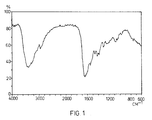
- 4. Das IR-Absorptionsspektrum der Verbindung wird in Figur 1 wiedergegeben. (Abszisse: Wellenzahl in cm-', Ordinate: Absorption)
- Es zeigt, wenn die Substanz zu KBr Preßlingen verpreßt wird, bei folgenden Wellenlängen (ausgedrückt in cm 1) Absorptionsbanden:
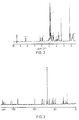
- 5. Das 1H-Kernresonanzspektrum gibt die Signallage in Teilen pro Million (ppm) und Schwingungen pro Sekunde gemäß Figur 2 an. Es wurde an einer wäßrigen Lösung der Verbindung mit TMS-Na-Salz als Standard (extern) an einem WH-360-Spektrometer der Firma Bruker bei einer Feldstärke von 360 MHz aufgenommen.

- 6. Das 13-C-Kernresonanzspektrum wurde an einem WM-250-Spektrometer der Fa. Bruker bei einer Feldstärke von 62,71 MHz an einer wäßrigen Lösung der Verbindung aufgenommen, wobei auf Dioxan als externen Standard (Shiftlage 67.400 ppm rel. zu TMS =0) umgerechnet wurde.
- Das 13-C-Kernresonanzspektrum gemäß Figur 3 zeigt die folgenden Signale angegeben in Teilen pro Million (ppm) und Schwingungen pro Sekunde (Hz) in ihren relativen Intensitäten an:

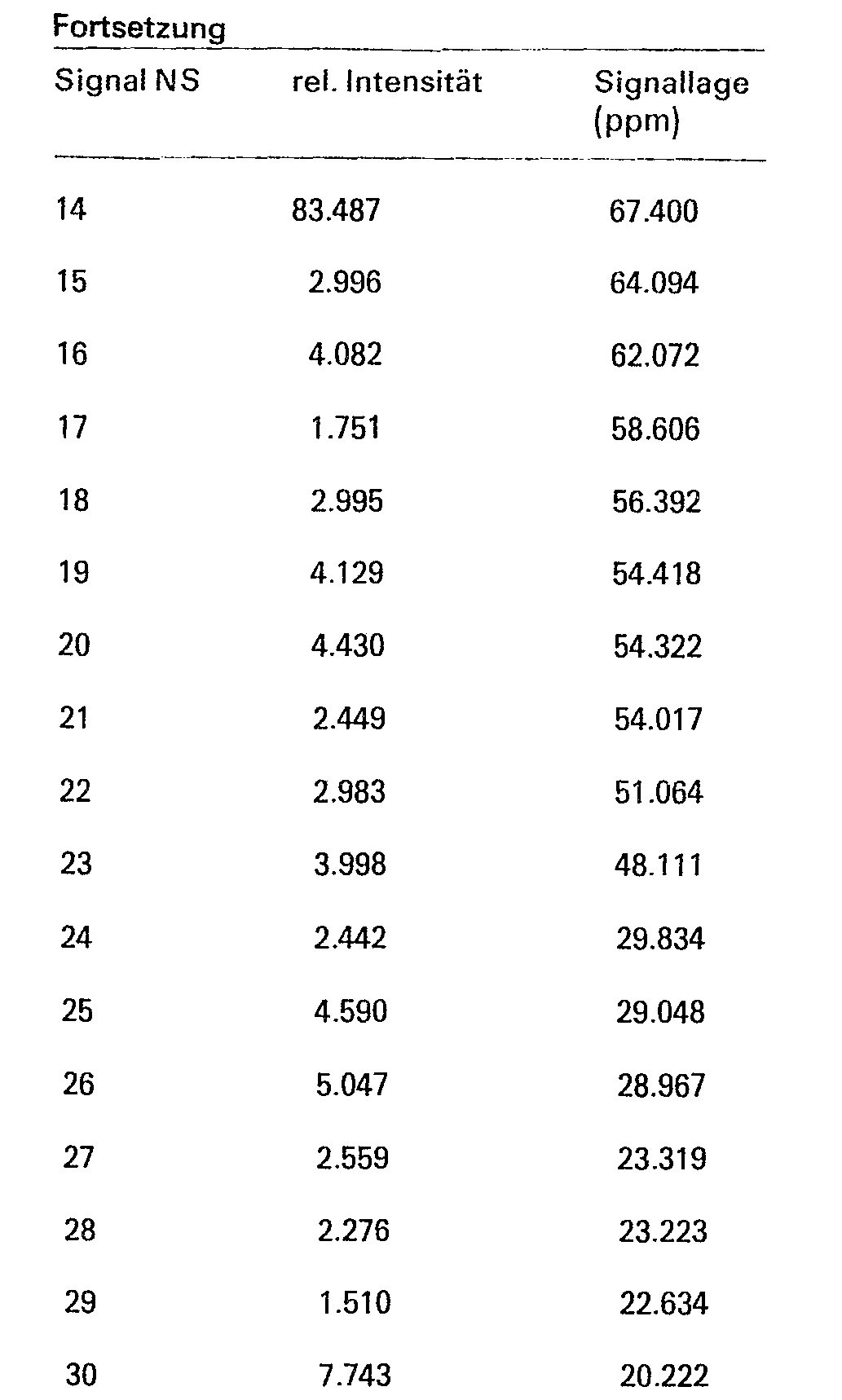
- Das 13-C-Kernresonanzspektrum gemäß Figur 3 zeigt die folgenden Signale angegeben in Teilen pro Million (ppm) und Schwingungen pro Sekunde (Hz) in ihren relativen Intensitäten an:
- 7. Der optische Drehwert beträgt sofort nach dem Lösen

- 8. Die Verbindung ist unbeschränkt in Wasser löslich, löst sich etwas in Methanol, DMF und DMSO und ist schwerlöslich in Chloroform, Ether, Essigester und Petrolether.
- 9. Die Verbindung ist ein farbloser, amorpher Feststoff, dessen wäßrige Lösung neutral reagiert.
- 10. Die Rf-Werte der Verbindung in der eisenfreien und eisenhaltigen Form im Vergleich mit anderen Verbindungen in verschiedenen Laufmitteln gibt Tabelle 4.
- a) DC-Fertigplatten Kieselgel 60 F 254 (Merck) Anfärbung: 1. Ninhydrin; 2. 5% FeCl3 x 6 H20 in 0,5 n-HCI
- Fließmittel (FM 1): Isobutanol/Ethanol/Ammoniak = 9/1/5 (Volumenteile)
- Fließmittel 2 (FM 2): Isobutanol/Ethanol/Ammoniak = 4/1/5 (Volumenteile)
- 10 cm Laufstrecke/Auftrag 50 µg in dest. Wasser

- b) DC-Fertigplatten Cellulose F (Merck)
- Anfärbung: 1. Ninhydrin; 2. 5% FeCl3 x 6 HCI
- Fließmittel 1 (FM 1): 1-Butanol/Eisessig/dest. Wasser = 4/1/5
- Fließmittel 2 (FM 2): 1-Butanol/Eisessig/dest. Wasser = 4/1/2
- Fließmittel 3 (FM 3): 1-Propanol/Pyridin/Eisessig/dest. Wasser = 15/10/3/12
- 10 cm Laufstrecke/Auftrag 50 µg in dest. Wasser

- a) DC-Fertigplatten Kieselgel 60 F 254 (Merck) Anfärbung: 1. Ninhydrin; 2. 5% FeCl3 x 6 H20 in 0,5 n-HCI
- 11. Die neue Verbindung läßt sich in ihrer eisenfreien Form auf der Dünnschichtplatte mit FeCl3*), alk. Kaliumpermanganat, Jod, Ninhydrin und im UV-Licht bei 254 oder 280 nm durch Fluoreszenzlöschung sichtbar machen.
- 12. Die Totalhydrolyse der Verbindung mit wäßriger 57%iger Jodwasserstoffsäure zeigt bei der Aminosäureanalyse, wenn im verschlossenen Glas bei 110"C 24 Stunden hydrolysiert wird, daß die Substanz drei Einheiten Ornithin neben einer Einheit Serin enthält. Daneben wurden nur Spuren anderer natürlicher Aminosäuren gefunden.
- Durch Derivatisierung, Isolierung von Hydrolyseprodukten und deren Derivaten konnte die Konstitution der erfindungsgemäßen Verbindung Komponente B aufgelöst werden- Danach hat Komponente B folgende Konstitution:

- Durch Derivatisierung, Isolierung von Hydrolyseprodukten und deren Derivaten konnte die Konstitution der erfindungsgemäßen Verbindung Komponente B aufgelöst werden- Danach hat Komponente B folgende Konstitution:
- Die erfindungsgemäße Verbindung wird durch submerse Kultur eines Streptomyceten-Stammes in geeigneten Nährlösungen unter geeigneten physikalischen Bedingungen erzeugt. Sie wird aus der Kulturlösung durch Extraktion oder durch Adsorption abgetrennt und durch weitere geeignete Methoden angereichert.
- Für das Herstellungsverfahren kann der neue Stamm Streptomyces spec. WS 116 aus der Ordnung der Actinomycetales, Familie Streptomycetaceae, Gattung Streptomyces oder von ihm abstammende Varianten und Mutanten eingesetzt werden. Dieser Stamm wurde aus einer marinen Bodensedimentprobe der Ibero-Canarischen See isoliert. Er wurde unter der Nummer DSM 1692 am 7. 12. 1979 bei der Deutschen Sammlung für Mikroorganismen, Göttingen hinterlegt.
- *) Die Sprühreagentien wurden nach den üblichen Vorschriften (z. B. E. Stahl, Dünnschichtchromatographie, 2. Auflage, Springer Verlag, Berlin) hergestellt.
- a) Die Sporen sind ellipsoid. Sie haben die Größe von 0,4-0,7 x 0,7-1,2 µm und eine glatte Oberfläche.
- b) Die Farbe des Luftmycels ist zu Anfang kreideweiß, im ausgereiften Zustand gelblich (Griseus-Typ).
- c) Die Sporenketten sind gerade oder gewellt (Rectus-Flexibilis-Typ) und monopodial verzweigt.
- d) Auf Pepton-Eisen-Agar sowie auf Tyrosin-Agar wurde kein schwarzbraunes Pigment gebildet. Der Stamm ist nicht chromogen.
- Die zusammengefaßten Bestimmungsmerkmale identifizieren den Stamm WS-116 als zur Art Streptomyces griseus Waksman et Henrici gehörend.
- Für das Verfahren zur Herstellung der erfindungsgemäßen Verbindung verwendet man Nährmedien, die die üblichen Kohlenstoff- und Stickstoffquellen und die notwendigen Salze enthalten. Als Kohlenstoffquelle können verwendet werden: Kohlehydrate, insbesondere Polysaccharide, wie Stärke oder Dextrine, Disaccharide wie Maltose oder Rohrzucker, Monosaccharide, wie Glucose oder Xylose, Zuckeralkohole, wie Mannit oder Glycerin, Carbonsäuren, wie Citronensäure, Äpfe!säure, Essigsäure oder deren Gemische, außerdem auch natürlich vorkommende Gemische wie Malzextrakte. Überraschenderweise wurden mit Carbonsäuren, insbesondere mit Citronensäure als Haupt-C-Quelle die höchsten Wirkstoffausbeuten erzielt. Als Stickstoffquelle können die üblichen Stickstoffquellen Verwendung finden, so z. B. Eiweißstoffe, Eiweißhydrolysate, Aminosäuren wie Glutaminsäure, Asparaginsäure, Arginin, Lysin, Ornithin oder Serin, außerdem Nucleosidbasen wie Cytosin oder Uracil, Ammonium-Salze, Nitrate, natürlich vorkommende komplexe Stoffe, wie Peptone, Maisquellwasser, Sojabohnenmehl, Fleischextrakte, Hefeextrakte und geeignete Mischungen derselben. Besonders hohe Wirkstoffausbeuten erhält man, wenn zu den üblichen komplexen N-Quellen L-Ornithin und L-Serin im Verhältnis 3 : 1, z. B. 0,3% und 0,1%, in sterilfiltrierter Form dem Medium zugesetzt werden.
- Als Hilfsstoffe werden im Nährmedium Mineralsalze benötigt, z. B. Phosphate, Sulfate, Carbonate, Nitrate oder Chloride des Natriums, Kaliums, Calciums, Magnesiums, Eisens, Zinks, Kupfers, Molybdäns, Kobalts, Nickels und Mangans. Als bedeutsam erwies sich die Anwesenheit von etwa 0,01% FeCl3. Zum Teil sind die Mineralsalze, auch das FeC13, in den notwendigen Konzentrationen in den obengenannten Kohlenstoff- oder Stickstoffquellen oder im verwendeten Wasser als Bestandteile enthalten.
- Weiterhin können als Hilfsstoffe noch Antischaummittel der verschiedensten Art Verwendung finden, wie z. B. Sojaöl, Polyole oder Silikone.
- Als wichtigstes Verdünnungsmittel für die Nährmedien ist Wasser zu nennen.
- Bei der Durchführung des Herstellungsverfahrens wird unter aeroben bzw. mikroaerophilen Bedingungen gearbeitet; die Kultur kann gemäß üblicher Methoden, so z. B. unter Verwendung von Schüttelkulturen oder von belüfteten Fermenterkulturen, im üblichen Batch- oder Fedbatch-Verfahren durchgeführt werden. Die Prozentverhältnisse (jeweils Gewichtsprozente) der Nährlösungsbestandteile können in weiten Bereichen schwanken, im allgemeinen machen die Kohlenstoffquellen insgesamt 0,5-8%, vorzugsweise 0,6―6% aus, die Stickstoffquellen insgesamt 0,1 bis 4%, vorzugsweise 0,5 bis 2% aus; die Salze liegen in üblichen Konzentrationen vor, vorzugsweise im Bereich zwischen 0,001 bis 0,5 Gew.-%. Die Antischaummittel liegen in 0- bis 1%iger Konzentration vor. Die zur Sterilisation angewandten Temperaturen liegen bei 100 bis 140' C, vorzugsweise bei 120 bis 130"C, empfindliche Substanzen wie Aminosäuren werden sterilfiltriert.
- Die pH-Werte der wachsenden Kulturen liegen zwischen 5 und 10, vorzugsweise zwischen 6 und 9,5. Die Züchtungstemperatur kann zwischen 15 und 35" C, vorzugsweise zwischen 20 und 30° C liegen. Es hat sich herausgestellt, daß die Menge des sich in der Kulturbrühe anreichernden Antibioticums im allgemeinen ihr Maximum etwa 1 bis 10, vorzugsweise etwa 2 bis 6 Tage nach Züchtungsbeginn erreicht. Der Endpunkt der Fermentation wird mit Hilfe von biologischen Tests ermittelt. (Wirkung gegen E. coli in einem üblichen Agardiffusionstest.)
- Die erfindungsgemäße Verbindung wird aus dem Kulturfiltrat durch Extraktion mit Mischungen aus Phenol/Chloroform oder aber durch Adsorption an Aktivkohle bzw. an geeignete Harze isoliert. Vorteilhaft ist die Bindung der erfindungsgemäßen Verbindung an unspezifische Adsorberharze auf Polystyrolbasis (z. B. Amberlite® XAD der Fa. Rohm & Haas oder Lewatit® OC 1031 der Fa. Bayer). Überraschenderweise wurde gefunden, daß die erfindungsgemäße Verbindung besonders fest von derartigen Harzen gebunden wird, wenn man vor dem Adsorptionsvorgang Eisensalz insbesondere Eisenchlorid in Konzentration von 0,05 bis 0,2, insbesondere ca. 0,1 g/Liter Kulturbrühe, hinzugibt. Die Adsorption führt man im pH-Bereich 3-9, insbesondere im Bereich 5-7 durch. Die Desorption der erfindungsgemäßen Verbindung wird fraktioniert durch Mischungen aus Wasser und organischen Lösungsmitteln, insbesondere Wasser/Methanol, vorgenommen. Die aktiven Fraktionen werden vereinigt, auf ein kleines Volumen eingeengt und lyophilisiert. Man erhält ein 0,5-3%iges Rohprodukt, daß die erfindungsgemäße Verbindung neben anderen Substanzen enthält.
- Ausgehend von diesem Rohprodukt kann die weitere Anreicherung der erfindungsgemäßen Verbindung durch eine Kombination von Anionen- (z. B. DEAE-Sephadex® A25, Fa. Pharmacia) bzw. Kationen-Austauschchromatographie (z B. SP- oder CM-Sephadex® C 25, Fa. Pharmacia) durchgeführt werden. Man erhält dadurch ein 30-50%iges Präparat, da begleitende Peptide nicht abgetrennt werden. Die Abtrennung dieser Peptide und damit die Darstellung der reinen Verbindung gelingt durch Adsorptions- bzw. Verteilungschromatografie der ca. 30-50%igen Verbindung an Kieselgel im System Isobutanol/Ethanol/25% konz. Ammoniak = 9/1/5 (Volumenteile).
- Dieses Trennverfahren ist jedoch mit Substanzverlusten verbunden.
- Wesentlich einfacher gelingt die Trennung durch Affinitätschromatografie an einer Fe+++ -haltigen Säule. Dazu überführt man einen Kationenaustauscher auf Polystyrol oder -acrylatharzbasis (z. B. Dowex0 50 WX 4, Fa. DOW Chemical) oder auf Polydextranbasis (z. B. Sephadex@ C 25, Fa. Pharmacia) mit FeC13-Lösung in die Fe+++-Form. Auf das Harz in der Fe++ '-Form wird nun die Lösung des Rohproduktes aufgetragen und anschließend mit Wasser nachgewaschen. Dann eluiert man mit einem Puffer hoher lonenstärke, z. B. 0,2 m-NaH2P04/0,3 m-NaCI. Dieser Puffer eluiert die Hauptmenge der inaktiven Begleitpeptide. Anschließend eluiert man die wirksamen Substanzen von der Säule mit dem gleichen Puffer, jedoch unter Zusatz von 0,05 m-Ethylendiamintetraessigsäure oder einem anderen Eisenkomplexbildner (z. B. Citrat). Die aktiven Fraktionen werden vereinigt und über eine Säule mit unspezifischem Adsorptionsharz (z. B. Lewatit® OC 1031, Fa. Bayer) gegeben, wobei die wirksamen Substanzen gebunden werden. Man eluiert mit Methanol, engt ein und lyophilisiert.
- Die erfindugnsgemäße Verbindung wird durch Verteilungschromatographie an Sephadex® G 25 in nBuOH/iso BuOH/0,2 m (NH4)2S04 = 2/1/1 rein erhalten. Die Reindarstellung des erfindungsgemäßen Produktes wird ferner durch einfache Chromatographie des Wirkstoffgemisches an einer CM-Cellulose-Säule in der H+-Form mit dest. Wasser ohne irgendwelche Zusätze durchgeführt. Das aktive Eluat, in Fraktionen aufgefangen, wird lyophilisiert.
- Die gute antimikrobielle Wirksamkeit der erfindungsgemäßen Verbindung wird durch in vitro- und in vivo-Versuche demonstriert.
- In vitro wird im Agar-Verdünnungstest nach dem international üblichen Test (American National Committee for Clinical Laboratory Standards = NCCLS) Wirksamkeit gegen Enterobacteriaceae, z. B. E. coli 14 und E. coli C 165 gefunden.
- In vivo wird an der weißen Maus eine ED100 (vollständige Heilung) bei Infizierung mit E. coli Neumann bei 3 mg Antibiotikum/kg Körpergewicht gefunden; Therapie: einmalig 30 Minuten nach Infektion subcutan.
- Die neue Verbindung Komponente B kann in üblichen pharmazeutischen Zusammensetzungen angewendet werden. Die pharmazeutischen Zubereitungen enthalten den erfindungsgemäßen Wirkstoff und übliche, geeignete, nicht-toxische Träger- und Hilfsstoffe.
- Geeignete Zubereitungen und die dazu notwendigen Hilfs- und Trägerstoffe sind beispielsweise aus der deutschen Offenlegungsschrift 25 10 161 bekannt.

- Die Bestimmung der minimalen Hemmkonzentration (MHK) erfolgte mit einem Inoculator im Agarverdünnungsverfahren mit einer Einsaatdichte von 104 pro Impf-Punkt. Die MHK ist die Konzentration, bei der keine Bakterienkolonie,n wachsen.

- Die Tiere waren mit einer Bakterienmenge infiziert, welche innerhalb von 24 Std. zum Tod der Kontrolltiere führte. Die ED100 ist die Dosis, die alle infizierten und behandelten Tiere überleben läßt.
- Die Nährlösung in der der Produktionsstamm Streptomyces spec. WS 116 in den Vorkulturen kultiviert wird, setzt sich aus 1 Gew.-% Glucose, 1,3% Hefeextrakt, 0,05% Polyol und Leitungswasser zusammen. Der pH wird vor dem Sterilisieren auf 7,0 eingestellt. 4 x 1000-ml-Erlenmeyerkolben, die je 150 ml dieser Nährlösung enthalten, werden mit dem Produktionsstamm beimpft und 4 Tage bei 28°C auf einer Rundschüttelmaschine bei 220 Umdrehungen/min inkubiert. Mit diesen Vorkulturen wird eine zweite Vorkultur, ein Labor-Fermenter, der 20 I der oben erwähnten Nährlösung enthält, beimpft, bei 200 Umdrehungen/min, 10 Luft/min und 28°C 2 Tage inkubiert. Mit 20 I dieser Kultur wird ein Produktionsfermenter beimpft, der 600 I Nährlösung mit folgender Zusammensetzung enthält: 0,7 Gew.-% Citronensäure, 0,8% Hefeextrakt, 0,2% entfettetes Sojabohnenmehl, 0,2% Maisquellwasser und 0,05% Silicon in Leitungswasser. Der pH dieser Nährlösung wird mit Kalilauge auf 6,4 vor der Sterilisation eingestellt. Die Inkubation der Produktionskultur erfolgt über 2-4 Tage bei 26° C bei einer Rührung von 50 Umdrehungen/min und einer Belüftung von nur 90 I Luft/min. Die Fermentation wird bei optimaler antibiotischer Hemmaktivität der Kultur abgestoppt.
- 2 x 150 ml Vorkultur werden wie im Beispiel 1 angegeben, angezogen. Mit diesen Vorkulturen wird ein 10-I-Produktionsfermenter beimpft, dessen Nährlösung, in Leitungswasser angesetzt, folgende Zusammensetzung enthält:
- 0,7 Gew.-% Citronensäure,
- 0,8 Gew.-% Hefeextrakt,
- 0,2 Gew.-% entfettetes Sojabohnenmehl,
- 0,2 Gew.-% Maisquellwasser,
- 0,3 Gew.-% L-Ornithin,
- 0,1 Gew.-% L-Serin und
- 0,05 Gew.-% Silicon.
- Alle Bestandteile außer Ornithin und Serin werden wie üblich im Kulturgefäß sterilisiert. Es wird ein pH-Wert von 6,4 vor der Sterilisation eingestellt. Ornithin und Serin werden in H2O dest. gelöst dem Ansatz sterilfiltriert zugesetzt.
- Die Inkubation der Produktionskultur erfolgt über 2-4 Tage bei 26°C mit einer Rührung von 200 Umdrehungen/min und einer Belüftung von nur 1,5 Luft/min. Die Fermentation wird bei optimaler antibiotischer Hemmaktivität des Kulturüberstandes abgestoppt.
- 4000 I Kuiturbrühe (pH=9,06) wurden mit 50 I1: 1 verdünnter HCI auf pH 6,2 eingestellt. Man setzte 400 g FeCl3 - 6 H20 hinzu, rührte und gab dann 25 I verdünnte NaOH bis pH 7 unter Rühren hinzu. Dann wurde mit 200-250 I/h im Westfalia-Separator separiert. Der Überstand wurde durch eine 30 x70 cm mit Lewatit® OC 1031 (=unsp. Adsorptionsharz der BAYER AG) gefüllte Säule gegeben, der Durchlauf kanalisiert, da inaktiv Die Säule wurde mit 1000 I entionisiertem Wasser gewaschen, das Waschwasser war inaktiv und wurde verworfen. Die Säule wurde nun mit 1000 15% Methanol gewaschen, dieses inaktive Waschwasser wurde ebenfalls verworfen. Man eluierte die Aktivität nun mit 50% Methanol von der Säule und sammelte 100-1-Fraktionen. Die aktiven Eluate 2 und 3 wurden vereinigt, eingeengt im Dünnschichtverdampfer auf ca. 20 I und dann lyophilisiert. Man erhielt 342 g Rohprodukt der erfindungsgemäßen Verbindung mit einem Gehalt von ca. 2,5% (Komponenten A und B; Komponente A vgl. EP-A-0 057 812).
- Man löste die obige Rohsubstanz mit 6 Litern H20 und versetzte unter Rühren mit 25 ml 50%iger FeCl3-Lösung. Der sich bildende Niederschlag wurde nach 15 min Rühren abzentrifugiert (Hettich Rota Magna Zentrifuge, 1,5 I Becher, 30 min, 4000 UpM). Der Überstand wurde mit Schwerkraft über eine 8 x 45 cm hoch mit SP-Sephadex® C 25 Fe+++ gefüllte Säule gegeben. Die Fließrate betrug 4 (pro Stunde. Man wusch die schwarz gefärbte Säule mit 51 dest. H20 nach und schloß dann 10 0,2 m NaH2P04/0,3 NaCI Puffer an. Durchlauf und Waschwasser enthielten weniger als 5% der eingesetzten antibiotischen Aktivität. Die jetzt nur noch hellbraun gefärbte Säule wurde nun mit 0,2 m NaH2P04/0,3 m NaCI/0,05 m AeDTA eluiert (Fließrate 2-3 I/h), das Säuleneluat fraktioniert in 500-ml-Portionen aufgefangen. Die aktiven Fraktionen 6-14 wurden vereinigt und über eine 5 x 10 mit Lewatit® OC 1031 gefüllte Säule gegeben. Die Fließrate betrug 3 I/h. Man wusch anschließend mit destilliertem Wasser bis mit AgN03 keine CI- im Säuleneluat nachzuweisen war (ca. 6 Liter, Fließrate 5I/h). Anschließend eluierte man die Säule mit 3 Liter 90% Methanol, die im batch aufgefangen, eingeengt und lyophilisiert wurden. Ausbeute: 6,74 g, 82,6% Komponente A und B.
- Die halbe Ausbeute aus Beispiel 2 = 3,37 g wurden in 100 ml dest. H20 gelöst. Die Leitfähigkeit betrug 210 µS.
- Die Lösung wurde auf eine 5× 30cm mit CM-Cellulose in der H+-Form (CM-Cellulose C 52, Fa. Whatmann) gefüllte Säule aufgetragen. Man entwickelte mit dest. Wasser bei einer Fließrate von 840 ml/H. Das Eluat wurde an Hand der Refrakraktions-, Leitfähigkeits- und Extraktionskurve geschnitten. Man erhielt Vorlauf (inaktiv) 980 mg
-

Claims (13)

Priority Applications (1)
| Application Number | Priority Date | Filing Date | Title |
|---|---|---|---|
| AT82100121T ATE8132T1 (de) | 1981-01-23 | 1982-01-11 | Neues peptid-antibiotikum komponente b, verfahren zu seiner herstellung sowie seine verwendung in arzneimitteln. |
Applications Claiming Priority (2)
| Application Number | Priority Date | Filing Date | Title |
|---|---|---|---|
| DE19813102137 DE3102137A1 (de) | 1981-01-23 | 1981-01-23 | Neue antibiotisch wirksame verbindung, komponente b, mikrobiologisches verfahren zu ihrer herstellung sowie ihre verwendung als arzneimittel |
| DE3102137 | 1981-01-23 |
Publications (3)
| Publication Number | Publication Date |
|---|---|
| EP0057349A2 EP0057349A2 (de) | 1982-08-11 |
| EP0057349A3 EP0057349A3 (en) | 1982-09-01 |
| EP0057349B1 true EP0057349B1 (de) | 1984-06-27 |
Family
ID=6123195
Family Applications (1)
| Application Number | Title | Priority Date | Filing Date |
|---|---|---|---|
| EP82100121A Expired EP0057349B1 (de) | 1981-01-23 | 1982-01-11 | Neues Peptid-Antibiotikum Komponente B, Verfahren zu seiner Herstellung sowie seine Verwendung in Arzneimitteln |
Country Status (6)
| Country | Link |
|---|---|
| US (2) | US4415557A (de) |
| EP (1) | EP0057349B1 (de) |
| JP (1) | JPS57143000A (de) |
| AT (1) | ATE8132T1 (de) |
| DE (2) | DE3102137A1 (de) |
| ES (1) | ES8301274A1 (de) |
Families Citing this family (8)
| Publication number | Priority date | Publication date | Assignee | Title |
|---|---|---|---|---|
| DE3126389A1 (de) * | 1981-07-03 | 1983-02-10 | Bayer Ag, 5090 Leverkusen | Neue antibiotisch wirksame verbindungen, verfahren zu ihrer herstellung sowie ihre verwendung als arzneimittel |
| DE3236389A1 (de) * | 1982-10-01 | 1984-04-05 | Bayer Ag, 5090 Leverkusen | Neue nucleosidverbindungen, verfahren zu ihrer herstellung sowie ihre verwendung als arzneimittel |
| DE3341571A1 (de) * | 1983-11-17 | 1985-05-30 | Bayer Ag, 5090 Leverkusen | Neue antibiotika, verfahren zu ihrer herstellung, ihre verwendung als arzneimittel und zwischenprodukte zu ihrer herstellung |
| US6410056B1 (en) * | 1984-03-16 | 2002-06-25 | The United States Of America As Represented By The Secretary Of The Army | Chemotherapeutic treatment of bacterial infections with an antibiotic encapsulated within a biodegradable polymeric matrix |
| US4835104A (en) * | 1987-06-16 | 1989-05-30 | Ajinomoto Co., Inc., Patent & Licensing Department | Process for producing and purifying 2',3'-dideoxynucleosides, and process for producing 2',3'-dideoxy-2',3'-didehydronucleosides |
| US6306647B1 (en) | 1987-06-16 | 2001-10-23 | Ajinomoto Co., Inc. | Process for producing and purifying 2′,3′-dideoxynucleosides, and process for producing 2′,3′-dideoxy-2′,3′-didehydronucleosides |
| US5869679A (en) * | 1997-11-10 | 1999-02-09 | Transcend Therapeutics, Inc. | Methods for preparing l-2-oxothiazolidine-4-carboxylate and its carboxylic acid |
| CN113149990B (zh) * | 2020-01-23 | 2024-04-02 | 嘉圣生物医药(嘉兴)有限公司 | 铁载体-二氢叶酸还原酶抑制剂偶联物及其应用 |
Family Cites Families (3)
| Publication number | Priority date | Publication date | Assignee | Title |
|---|---|---|---|---|
| GB639943A (en) * | 1947-02-17 | 1950-07-12 | Upjohn Co | Improved method of producing bio-synthetic antimicrobial substances |
| US4158608A (en) * | 1975-08-20 | 1979-06-19 | Bayer Aktiengesellschaft | Fungicidally active antibiotic from Streptomyces tendae Ettlinger |
| DE3020722A1 (de) * | 1980-05-31 | 1981-12-10 | Bayer Ag, 5090 Leverkusen | Verfahren zur anreicherung von nikkomycin-gemischen |
-
1981
- 1981-01-23 DE DE19813102137 patent/DE3102137A1/de not_active Withdrawn
-
1982
- 1982-01-11 AT AT82100121T patent/ATE8132T1/de not_active IP Right Cessation
- 1982-01-11 EP EP82100121A patent/EP0057349B1/de not_active Expired
- 1982-01-11 DE DE8282100121T patent/DE3260277D1/de not_active Expired
- 1982-01-18 US US06/340,449 patent/US4415557A/en not_active Expired - Fee Related
- 1982-01-22 ES ES508985A patent/ES8301274A1/es not_active Expired
- 1982-01-22 JP JP57007732A patent/JPS57143000A/ja active Pending
-
1983
- 1983-05-31 US US06/499,653 patent/US4546079A/en not_active Expired - Fee Related
Also Published As
| Publication number | Publication date |
|---|---|
| DE3260277D1 (en) | 1984-08-02 |
| US4546079A (en) | 1985-10-08 |
| DE3102137A1 (de) | 1982-08-19 |
| EP0057349A3 (en) | 1982-09-01 |
| JPS57143000A (en) | 1982-09-03 |
| ES508985A0 (es) | 1982-11-16 |
| ES8301274A1 (es) | 1982-11-16 |
| ATE8132T1 (de) | 1984-07-15 |
| EP0057349A2 (de) | 1982-08-11 |
| US4415557A (en) | 1983-11-15 |
Similar Documents
| Publication | Publication Date | Title |
|---|---|---|
| DE2855409A1 (de) | Neue aminozucker und verfahren zu ihrer gewinnung | |
| EP0366060B1 (de) | Glykosidase-Inhibitor Salbostatin, Verfahren zu seiner Herstellung und seine Verwendung | |
| DE2532568A1 (de) | Aclacinomycine a und b und verfahren zu ihrer herstellung | |
| DE68902670T2 (de) | Ks-506 verbindungen und verfahren zu deren herstellung. | |
| EP0057349B1 (de) | Neues Peptid-Antibiotikum Komponente B, Verfahren zu seiner Herstellung sowie seine Verwendung in Arzneimitteln | |
| EP0057812B1 (de) | Neues Peptid-Antibiotikum Komponente A, Verfahren zu seiner Herstellung sowie seine Verwendung in Arzneimitteln | |
| CH640246A5 (de) | Antibiotische anthracyclinglycoside. | |
| DE2340005A1 (de) | Beta-lactamaseinhibitoren und verfahren zu ihrer herstellung | |
| DE2715255B2 (de) | Anthracyclinglykoside MA 144-M1 und MA 144-M2 und deren Salze, Verfahren zu deren Herstellung und diese Verbindungen enthaltende pharmazeutische Zubereitungen | |
| DE2638766C2 (de) | Antibiotika,Verfahren zu ihrer Herstellung und diese enthaltende Arzneimittel | |
| DE2556043C3 (de) | Antibiotikum Bu-2183, Verfahren zu seiner Herstellung und Arzneimittel | |
| DE2455683A1 (de) | Verfahren zur herstellung von deacetoxycephalosporin c | |
| EP0069882B1 (de) | Neue antibiotisch wirksame Verbindungen, Verfahren zu ihrer Herstellung sowie ihre Verwendung als Arzneimittel | |
| EP0236894B1 (de) | Efomycin G, seine Herstellung und seine Verwendung als Leistungsförderer bei Tieren | |
| EP0197360B1 (de) | Verwendung von Efomycinen als Leistungsförderer bei Tieren, Efomycine und ihre Herstellung | |
| EP0304400B1 (de) | Phenanthridinderivate, Verfahren zu ihrer Herstellung und Mittel zur Ausführung des Verfahrens | |
| DE3136675A1 (de) | Neues peptid und dessen herstellung | |
| DE69129924T2 (de) | Antibiotikum und Verfahren zu seiner Herstellung | |
| CA2007895A1 (en) | Janthinocin | |
| DE2738656C2 (de) | ||
| DE2946793C2 (de) | 4-O-Desmethyl-11-desoxy-anthracyclinglycoside, Verfahren zu deren Herstellung sowie diese Verbindungen enthaltende pharmazeutische Zusammensetzungen | |
| DE2510868C3 (de) | Nanaomycin A und Verfahren zur Herstellung der Antibiorica Nanaomycin A und Nanaomycin B | |
| AT220293B (de) | Verfahren zur Herstellung eines neuen Antibiotikums | |
| DE2326943C3 (de) | Xylostatsin Verfahren zu dessen Herstellung und Xylostatsin enthaltende Arzneimittel | |
| DE1767846C3 (de) | Verfahren zur Gewinnung des Antibiotikums NK-1003 bestehend aus 4-O-(6-Amino-6-deoxy-ct-D-glucosyl)- deoxystreptamin |
Legal Events
| Date | Code | Title | Description |
|---|---|---|---|
| PUAI | Public reference made under article 153(3) epc to a published international application that has entered the european phase |
Free format text: ORIGINAL CODE: 0009012 |
|
| PUAL | Search report despatched |
Free format text: ORIGINAL CODE: 0009013 |
|
| 17P | Request for examination filed |
Effective date: 19820111 |
|
| AK | Designated contracting states |
Designated state(s): AT BE CH DE FR GB IT NL SE |
|
| AK | Designated contracting states |
Designated state(s): AT BE CH DE FR GB IT NL SE |
|
| ITF | It: translation for a ep patent filed | ||
| GRAA | (expected) grant |
Free format text: ORIGINAL CODE: 0009210 |
|
| AK | Designated contracting states |
Designated state(s): AT BE CH DE FR GB IT LI NL SE |
|
| REF | Corresponds to: |
Ref document number: 8132 Country of ref document: AT Date of ref document: 19840715 Kind code of ref document: T |
|
| REF | Corresponds to: |
Ref document number: 3260277 Country of ref document: DE Date of ref document: 19840802 |
|
| ET | Fr: translation filed | ||
| PGFP | Annual fee paid to national office [announced via postgrant information from national office to epo] |
Ref country code: DE Payment date: 19841218 Year of fee payment: 4 |
|
| PG25 | Lapsed in a contracting state [announced via postgrant information from national office to epo] |
Ref country code: AT Effective date: 19850111 |
|
| PG25 | Lapsed in a contracting state [announced via postgrant information from national office to epo] |
Ref country code: SE Effective date: 19850112 |
|
| PG25 | Lapsed in a contracting state [announced via postgrant information from national office to epo] |
Ref country code: BE Effective date: 19850131 |
|
| PLBE | No opposition filed within time limit |
Free format text: ORIGINAL CODE: 0009261 |
|
| STAA | Information on the status of an ep patent application or granted ep patent |
Free format text: STATUS: NO OPPOSITION FILED WITHIN TIME LIMIT |
|
| 26N | No opposition filed | ||
| BERE | Be: lapsed |
Owner name: BAYER A.G. Effective date: 19850111 |
|
| PG25 | Lapsed in a contracting state [announced via postgrant information from national office to epo] |
Ref country code: NL Effective date: 19850801 |
|
| NLV4 | Nl: lapsed or anulled due to non-payment of the annual fee | ||
| PG25 | Lapsed in a contracting state [announced via postgrant information from national office to epo] |
Ref country code: FR Free format text: LAPSE BECAUSE OF NON-PAYMENT OF DUE FEES Effective date: 19850930 |
|
| REG | Reference to a national code |
Ref country code: FR Ref legal event code: ST |
|
| GBPC | Gb: european patent ceased through non-payment of renewal fee | ||
| PG25 | Lapsed in a contracting state [announced via postgrant information from national office to epo] |
Ref country code: LI Effective date: 19870131 Ref country code: CH Effective date: 19870131 |
|
| REG | Reference to a national code |
Ref country code: CH Ref legal event code: PL |
|
| PG25 | Lapsed in a contracting state [announced via postgrant information from national office to epo] |
Ref country code: DE Effective date: 19871001 |
|
| PG25 | Lapsed in a contracting state [announced via postgrant information from national office to epo] |
Ref country code: GB Effective date: 19881121 |
|
| EUG | Se: european patent has lapsed |
Ref document number: 82100121.1 Effective date: 19860129 |