EP0030331B1 - Neue C-3-verzweigte Cardenolid-glykoside, ihre Herstellung und Verwendung - Google Patents
Neue C-3-verzweigte Cardenolid-glykoside, ihre Herstellung und Verwendung Download PDFInfo
- Publication number
- EP0030331B1 EP0030331B1 EP80107413A EP80107413A EP0030331B1 EP 0030331 B1 EP0030331 B1 EP 0030331B1 EP 80107413 A EP80107413 A EP 80107413A EP 80107413 A EP80107413 A EP 80107413A EP 0030331 B1 EP0030331 B1 EP 0030331B1
- Authority
- EP
- European Patent Office
- Prior art keywords
- methanol
- card
- methyl
- carbon atoms
- acetyl
- Prior art date
- Legal status (The legal status is an assumption and is not a legal conclusion. Google has not performed a legal analysis and makes no representation as to the accuracy of the status listed.)
- Expired
Links
- 238000002360 preparation method Methods 0.000 title claims abstract description 7
- -1 cardenolide glycosides Chemical class 0.000 title description 19
- 229930182470 glycoside Natural products 0.000 title description 8
- TYYDXNISHGVDGA-UHFFFAOYSA-N Corotoxigenin Natural products CC12CCC3C(CCC4CC(O)CCC34C=O)C1CCC2C5=CC(=O)OC5 TYYDXNISHGVDGA-UHFFFAOYSA-N 0.000 title description 5
- 125000004432 carbon atom Chemical group C* 0.000 claims abstract description 16
- 150000001875 compounds Chemical class 0.000 claims abstract description 13
- 125000002252 acyl group Chemical group 0.000 claims abstract description 9
- 125000002887 hydroxy group Chemical group [H]O* 0.000 claims abstract description 9
- 239000002253 acid Substances 0.000 claims abstract description 5
- 125000004423 acyloxy group Chemical group 0.000 claims abstract description 5
- 238000000034 method Methods 0.000 claims abstract description 5
- 239000004215 Carbon black (E152) Substances 0.000 claims abstract description 4
- 229930195733 hydrocarbon Natural products 0.000 claims abstract description 4
- 125000001997 phenyl group Chemical group [H]C1=C([H])C([H])=C(*)C([H])=C1[H] 0.000 claims abstract description 4
- 229910052739 hydrogen Inorganic materials 0.000 claims abstract 8
- 239000001257 hydrogen Substances 0.000 claims abstract 8
- UFHFLCQGNIYNRP-UHFFFAOYSA-N Hydrogen Chemical compound [H][H] UFHFLCQGNIYNRP-UHFFFAOYSA-N 0.000 claims abstract 6
- 229910052799 carbon Inorganic materials 0.000 claims abstract 2
- 125000004435 hydrogen atom Chemical group [H]* 0.000 claims description 5
- OKKJLVBELUTLKV-UHFFFAOYSA-N Methanol Chemical compound OC OKKJLVBELUTLKV-UHFFFAOYSA-N 0.000 description 153
- YMWUJEATGCHHMB-UHFFFAOYSA-N Dichloromethane Chemical compound ClCCl YMWUJEATGCHHMB-UHFFFAOYSA-N 0.000 description 92
- RTZKZFJDLAIYFH-UHFFFAOYSA-N Diethyl ether Chemical compound CCOCC RTZKZFJDLAIYFH-UHFFFAOYSA-N 0.000 description 64
- HEDRZPFGACZZDS-UHFFFAOYSA-N Chloroform Chemical compound ClC(Cl)Cl HEDRZPFGACZZDS-UHFFFAOYSA-N 0.000 description 48
- VLKZOEOYAKHREP-UHFFFAOYSA-N n-Hexane Chemical compound CCCCCC VLKZOEOYAKHREP-UHFFFAOYSA-N 0.000 description 30
- 239000002904 solvent Substances 0.000 description 17
- 239000000243 solution Substances 0.000 description 10
- 239000003480 eluent Substances 0.000 description 9
- CSCPPACGZOOCGX-UHFFFAOYSA-N Acetone Chemical compound CC(C)=O CSCPPACGZOOCGX-UHFFFAOYSA-N 0.000 description 8
- 238000010828 elution Methods 0.000 description 7
- WFDIJRYMOXRFFG-UHFFFAOYSA-N Acetic anhydride Chemical compound CC(=O)OC(C)=O WFDIJRYMOXRFFG-UHFFFAOYSA-N 0.000 description 6
- VYPSYNLAJGMNEJ-UHFFFAOYSA-N Silicium dioxide Chemical compound O=[Si]=O VYPSYNLAJGMNEJ-UHFFFAOYSA-N 0.000 description 6
- FQGYCXFLEQVDJQ-UHFFFAOYSA-N mercury dicyanide Chemical compound N#C[Hg]C#N FQGYCXFLEQVDJQ-UHFFFAOYSA-N 0.000 description 6
- 239000000741 silica gel Substances 0.000 description 6
- 229910002027 silica gel Inorganic materials 0.000 description 6
- XLYOFNOQVPJJNP-UHFFFAOYSA-N water Substances O XLYOFNOQVPJJNP-UHFFFAOYSA-N 0.000 description 6
- 230000001225 therapeutic effect Effects 0.000 description 5
- WSLDOOZREJYCGB-UHFFFAOYSA-N 1,2-Dichloroethane Chemical compound ClCCCl WSLDOOZREJYCGB-UHFFFAOYSA-N 0.000 description 4
- IJGRMHOSHXDMSA-UHFFFAOYSA-N Atomic nitrogen Chemical compound N#N IJGRMHOSHXDMSA-UHFFFAOYSA-N 0.000 description 4
- LFQSCWFLJHTTHZ-UHFFFAOYSA-N Ethanol Natural products CCO LFQSCWFLJHTTHZ-UHFFFAOYSA-N 0.000 description 4
- JUJWROOIHBZHMG-UHFFFAOYSA-N Pyridine Chemical compound C1=CC=NC=C1 JUJWROOIHBZHMG-UHFFFAOYSA-N 0.000 description 4
- PMZURENOXWZQFD-UHFFFAOYSA-L Sodium Sulfate Chemical compound [Na+].[Na+].[O-]S([O-])(=O)=O PMZURENOXWZQFD-UHFFFAOYSA-L 0.000 description 4
- UIIMBOGNXHQVGW-UHFFFAOYSA-M Sodium bicarbonate Chemical compound [Na+].OC([O-])=O UIIMBOGNXHQVGW-UHFFFAOYSA-M 0.000 description 4
- WYURNTSHIVDZCO-UHFFFAOYSA-N Tetrahydrofuran Chemical compound C1CCOC1 WYURNTSHIVDZCO-UHFFFAOYSA-N 0.000 description 4
- 238000006243 chemical reaction Methods 0.000 description 4
- 150000002338 glycosides Chemical class 0.000 description 4
- 239000000203 mixture Substances 0.000 description 4
- 229910000028 potassium bicarbonate Inorganic materials 0.000 description 4
- 235000015497 potassium bicarbonate Nutrition 0.000 description 4
- 239000011736 potassium bicarbonate Substances 0.000 description 4
- TYJJADVDDVDEDZ-UHFFFAOYSA-M potassium hydrogencarbonate Chemical compound [K+].OC([O-])=O TYJJADVDDVDEDZ-UHFFFAOYSA-M 0.000 description 4
- 229940086066 potassium hydrogencarbonate Drugs 0.000 description 4
- 239000000126 substance Substances 0.000 description 4
- WEVYAHXRMPXWCK-UHFFFAOYSA-N Acetonitrile Chemical compound CC#N WEVYAHXRMPXWCK-UHFFFAOYSA-N 0.000 description 3
- UHOVQNZJYSORNB-UHFFFAOYSA-N Benzene Chemical compound C1=CC=CC=C1 UHOVQNZJYSORNB-UHFFFAOYSA-N 0.000 description 3
- 206010019280 Heart failures Diseases 0.000 description 3
- XZTUSOXSLKTKJQ-CESUGQOBSA-N digitoxigenin Chemical compound C1([C@H]2CC[C@]3(O)[C@H]4[C@@H]([C@]5(CC[C@H](O)C[C@H]5CC4)C)CC[C@@]32C)=CC(=O)OC1 XZTUSOXSLKTKJQ-CESUGQOBSA-N 0.000 description 3
- NLKNQRATVPKPDG-UHFFFAOYSA-M potassium iodide Chemical compound [K+].[I-] NLKNQRATVPKPDG-UHFFFAOYSA-M 0.000 description 3
- 230000035484 reaction time Effects 0.000 description 3
- 229910052938 sodium sulfate Inorganic materials 0.000 description 3
- 235000011152 sodium sulphate Nutrition 0.000 description 3
- 239000007858 starting material Substances 0.000 description 3
- 150000003431 steroids Chemical class 0.000 description 3
- 238000003756 stirring Methods 0.000 description 3
- NLXLAEXVIDQMFP-UHFFFAOYSA-N Ammonia chloride Chemical compound [NH4+].[Cl-] NLXLAEXVIDQMFP-UHFFFAOYSA-N 0.000 description 2
- LTMHDMANZUZIPE-AMTYYWEZSA-N Digoxin Natural products O([C@H]1[C@H](C)O[C@H](O[C@@H]2C[C@@H]3[C@@](C)([C@@H]4[C@H]([C@]5(O)[C@](C)([C@H](O)C4)[C@H](C4=CC(=O)OC4)CC5)CC3)CC2)C[C@@H]1O)[C@H]1O[C@H](C)[C@@H](O[C@H]2O[C@@H](C)[C@H](O)[C@@H](O)C2)[C@@H](O)C1 LTMHDMANZUZIPE-AMTYYWEZSA-N 0.000 description 2
- 241000282326 Felis catus Species 0.000 description 2
- OCEDEAQHBIGPTE-UHFFFAOYSA-N Gitoxin Natural products CC1OC(CC(O)C1O)OC2C(O)CC(OC3C(O)CC(OC4CCC5(C)C(CCC6C5CCC7(C)C(C(O)CC67O)C8=CCOC8=O)C4)OC3C)OC2C OCEDEAQHBIGPTE-UHFFFAOYSA-N 0.000 description 2
- VEXZGXHMUGYJMC-UHFFFAOYSA-N Hydrochloric acid Chemical compound Cl VEXZGXHMUGYJMC-UHFFFAOYSA-N 0.000 description 2
- XZTUSOXSLKTKJQ-UHFFFAOYSA-N Uzarigenin Natural products CC12CCC(C3(CCC(O)CC3CC3)C)C3C1(O)CCC2C1=CC(=O)OC1 XZTUSOXSLKTKJQ-UHFFFAOYSA-N 0.000 description 2
- CYAYKKUWALRRPA-RGDJUOJXSA-N [(2r,3r,4s,5r,6r)-3,4,5-triacetyloxy-6-bromooxan-2-yl]methyl acetate Chemical compound CC(=O)OC[C@H]1O[C@H](Br)[C@H](OC(C)=O)[C@@H](OC(C)=O)[C@@H]1OC(C)=O CYAYKKUWALRRPA-RGDJUOJXSA-N 0.000 description 2
- CBHOOMGKXCMKIR-UHFFFAOYSA-N azane;methanol Chemical compound N.OC CBHOOMGKXCMKIR-UHFFFAOYSA-N 0.000 description 2
- 238000004587 chromatography analysis Methods 0.000 description 2
- 238000002425 crystallisation Methods 0.000 description 2
- 230000008025 crystallization Effects 0.000 description 2
- QONQRTHLHBTMGP-UHFFFAOYSA-N digitoxigenin Natural products CC12CCC(C3(CCC(O)CC3CC3)C)C3C11OC1CC2C1=CC(=O)OC1 QONQRTHLHBTMGP-UHFFFAOYSA-N 0.000 description 2
- 229960005156 digoxin Drugs 0.000 description 2
- LTMHDMANZUZIPE-PUGKRICDSA-N digoxin Chemical compound C1[C@H](O)[C@H](O)[C@@H](C)O[C@H]1O[C@@H]1[C@@H](C)O[C@@H](O[C@@H]2[C@H](O[C@@H](O[C@@H]3C[C@@H]4[C@]([C@@H]5[C@H]([C@]6(CC[C@@H]([C@@]6(C)[C@H](O)C5)C=5COC(=O)C=5)O)CC4)(C)CC3)C[C@@H]2O)C)C[C@@H]1O LTMHDMANZUZIPE-PUGKRICDSA-N 0.000 description 2
- LTMHDMANZUZIPE-UHFFFAOYSA-N digoxine Natural products C1C(O)C(O)C(C)OC1OC1C(C)OC(OC2C(OC(OC3CC4C(C5C(C6(CCC(C6(C)C(O)C5)C=5COC(=O)C=5)O)CC4)(C)CC3)CC2O)C)CC1O LTMHDMANZUZIPE-UHFFFAOYSA-N 0.000 description 2
- KQTXIZHBFFWWFW-UHFFFAOYSA-L disilver;carbonate Chemical compound [Ag]OC(=O)O[Ag] KQTXIZHBFFWWFW-UHFFFAOYSA-L 0.000 description 2
- 239000003814 drug Substances 0.000 description 2
- 239000012467 final product Substances 0.000 description 2
- LKRDZKPBAOKJBT-CNPIRKNPSA-N gitoxin Chemical compound C1[C@H](O)[C@H](O)[C@@H](C)O[C@H]1O[C@@H]1[C@@H](C)O[C@@H](O[C@@H]2[C@H](O[C@@H](O[C@@H]3C[C@@H]4[C@]([C@@H]5[C@H]([C@]6(C[C@H](O)[C@@H]([C@@]6(C)CC5)C=5COC(=O)C=5)O)CC4)(C)CC3)C[C@@H]2O)C)C[C@@H]1O LKRDZKPBAOKJBT-CNPIRKNPSA-N 0.000 description 2
- 229950000974 gitoxin Drugs 0.000 description 2
- 230000007062 hydrolysis Effects 0.000 description 2
- 238000006460 hydrolysis reaction Methods 0.000 description 2
- 231100000636 lethal dose Toxicity 0.000 description 2
- 238000004519 manufacturing process Methods 0.000 description 2
- UKWHYYKOEPRTIC-UHFFFAOYSA-N mercury(ii) oxide Chemical compound [Hg]=O UKWHYYKOEPRTIC-UHFFFAOYSA-N 0.000 description 2
- DVSDBMFJEQPWNO-UHFFFAOYSA-N methyllithium Chemical compound C[Li] DVSDBMFJEQPWNO-UHFFFAOYSA-N 0.000 description 2
- 229910052757 nitrogen Inorganic materials 0.000 description 2
- LYGJENNIWJXYER-UHFFFAOYSA-N nitromethane Chemical compound C[N+]([O-])=O LYGJENNIWJXYER-UHFFFAOYSA-N 0.000 description 2
- UMJSCPRVCHMLSP-UHFFFAOYSA-N pyridine Natural products COC1=CC=CN=C1 UMJSCPRVCHMLSP-UHFFFAOYSA-N 0.000 description 2
- 239000011541 reaction mixture Substances 0.000 description 2
- 229920006395 saturated elastomer Polymers 0.000 description 2
- 229910000030 sodium bicarbonate Inorganic materials 0.000 description 2
- 235000017557 sodium bicarbonate Nutrition 0.000 description 2
- 230000003637 steroidlike Effects 0.000 description 2
- YLQBMQCUIZJEEH-UHFFFAOYSA-N tetrahydrofuran Natural products C=1C=COC=1 YLQBMQCUIZJEEH-UHFFFAOYSA-N 0.000 description 2
- 238000002560 therapeutic procedure Methods 0.000 description 2
- TWCMVXMQHSVIOJ-UHFFFAOYSA-N Aglycone of yadanzioside D Natural products COC(=O)C12OCC34C(CC5C(=CC(O)C(O)C5(C)C3C(O)C1O)C)OC(=O)C(OC(=O)C)C24 TWCMVXMQHSVIOJ-UHFFFAOYSA-N 0.000 description 1
- 206010002091 Anaesthesia Diseases 0.000 description 1
- PLMKQQMDOMTZGG-UHFFFAOYSA-N Astrantiagenin E-methylester Natural products CC12CCC(O)C(C)(CO)C1CCC1(C)C2CC=C2C3CC(C)(C)CCC3(C(=O)OC)CCC21C PLMKQQMDOMTZGG-UHFFFAOYSA-N 0.000 description 1
- VAOXFWKIKXQTRU-UHFFFAOYSA-K Br[Hg](Br)Br Chemical compound Br[Hg](Br)Br VAOXFWKIKXQTRU-UHFFFAOYSA-K 0.000 description 1
- CPELXLSAUQHCOX-UHFFFAOYSA-M Bromide Chemical compound [Br-] CPELXLSAUQHCOX-UHFFFAOYSA-M 0.000 description 1
- 206010007558 Cardiac failure chronic Diseases 0.000 description 1
- JOYRKODLDBILNP-UHFFFAOYSA-N Ethyl urethane Chemical compound CCOC(N)=O JOYRKODLDBILNP-UHFFFAOYSA-N 0.000 description 1
- 150000008065 acid anhydrides Chemical class 0.000 description 1
- 235000019270 ammonium chloride Nutrition 0.000 description 1
- 230000037005 anaesthesia Effects 0.000 description 1
- 206010003119 arrhythmia Diseases 0.000 description 1
- 230000006793 arrhythmia Effects 0.000 description 1
- 150000001652 bufadienolides Chemical class 0.000 description 1
- 239000002775 capsule Substances 0.000 description 1
- JIUWTCXNUNHEGP-GJHPUSIBSA-N cardenolide Chemical compound C1([C@H]2CC[C@@H]3[C@H]4[C@@H]([C@]5(CCCCC5CC4)C)CC[C@@]32C)=CC(=O)OC1 JIUWTCXNUNHEGP-GJHPUSIBSA-N 0.000 description 1
- 230000000747 cardiac effect Effects 0.000 description 1
- 229940097217 cardiac glycoside Drugs 0.000 description 1
- 239000002368 cardiac glycoside Substances 0.000 description 1
- 239000003054 catalyst Substances 0.000 description 1
- 239000003795 chemical substances by application Substances 0.000 description 1
- OJYGBLRPYBAHRT-IPQSZEQASA-N chloralose Chemical compound O1[C@H](C(Cl)(Cl)Cl)O[C@@H]2[C@@H](O)[C@@H]([C@H](O)CO)O[C@@H]21 OJYGBLRPYBAHRT-IPQSZEQASA-N 0.000 description 1
- 229950009941 chloralose Drugs 0.000 description 1
- 238000004440 column chromatography Methods 0.000 description 1
- 238000001816 cooling Methods 0.000 description 1
- 239000012043 crude product Substances 0.000 description 1
- 230000001186 cumulative effect Effects 0.000 description 1
- 230000006196 deacetylation Effects 0.000 description 1
- 238000003381 deacetylation reaction Methods 0.000 description 1
- 230000020176 deacylation Effects 0.000 description 1
- 238000005947 deacylation reaction Methods 0.000 description 1
- 230000000694 effects Effects 0.000 description 1
- 230000007717 exclusion Effects 0.000 description 1
- 239000000706 filtrate Substances 0.000 description 1
- 239000006260 foam Substances 0.000 description 1
- 150000004820 halides Chemical class 0.000 description 1
- WQZGKKKJIJFFOK-UHFFFAOYSA-N hexopyranose Chemical group OCC1OC(O)C(O)C(O)C1O WQZGKKKJIJFFOK-UHFFFAOYSA-N 0.000 description 1
- PFOARMALXZGCHY-UHFFFAOYSA-N homoegonol Natural products C1=C(OC)C(OC)=CC=C1C1=CC2=CC(CCCO)=CC(OC)=C2O1 PFOARMALXZGCHY-UHFFFAOYSA-N 0.000 description 1
- 239000012442 inert solvent Substances 0.000 description 1
- QSHDDOUJBYECFT-UHFFFAOYSA-N mercury Chemical compound [Hg] QSHDDOUJBYECFT-UHFFFAOYSA-N 0.000 description 1
- NGYIMTKLQULBOO-UHFFFAOYSA-L mercury dibromide Chemical compound Br[Hg]Br NGYIMTKLQULBOO-UHFFFAOYSA-L 0.000 description 1
- 239000002808 molecular sieve Substances 0.000 description 1
- 239000012299 nitrogen atmosphere Substances 0.000 description 1
- 239000012074 organic phase Substances 0.000 description 1
- 125000004430 oxygen atom Chemical group O* 0.000 description 1
- 238000007911 parenteral administration Methods 0.000 description 1
- 239000012071 phase Substances 0.000 description 1
- CHKVPAROMQMJNQ-UHFFFAOYSA-M potassium bisulfate Chemical compound [K+].OS([O-])(=O)=O CHKVPAROMQMJNQ-UHFFFAOYSA-M 0.000 description 1
- 229910000343 potassium bisulfate Inorganic materials 0.000 description 1
- 239000000047 product Substances 0.000 description 1
- 238000000926 separation method Methods 0.000 description 1
- LKZMBDSASOBTPN-UHFFFAOYSA-L silver carbonate Substances [Ag].[O-]C([O-])=O LKZMBDSASOBTPN-UHFFFAOYSA-L 0.000 description 1
- VFWRGKJLLYDFBY-UHFFFAOYSA-N silver;hydrate Chemical compound O.[Ag].[Ag] VFWRGKJLLYDFBY-UHFFFAOYSA-N 0.000 description 1
- URGAHOPLAPQHLN-UHFFFAOYSA-N sodium aluminosilicate Chemical compound [Na+].[Al+3].[O-][Si]([O-])=O.[O-][Si]([O-])=O URGAHOPLAPQHLN-UHFFFAOYSA-N 0.000 description 1
- 238000001228 spectrum Methods 0.000 description 1
- 239000008174 sterile solution Substances 0.000 description 1
- 229930002534 steroid glycoside Natural products 0.000 description 1
- 150000008143 steroidal glycosides Chemical class 0.000 description 1
- 150000004044 tetrasaccharides Chemical group 0.000 description 1
- 231100000331 toxic Toxicity 0.000 description 1
- 230000002588 toxic effect Effects 0.000 description 1
- 150000004043 trisaccharides Chemical class 0.000 description 1
Classifications
-
- C—CHEMISTRY; METALLURGY
- C07—ORGANIC CHEMISTRY
- C07J—STEROIDS
- C07J19/00—Normal steroids containing carbon, hydrogen, halogen or oxygen, substituted in position 17 by a lactone ring
-
- A—HUMAN NECESSITIES
- A61—MEDICAL OR VETERINARY SCIENCE; HYGIENE
- A61P—SPECIFIC THERAPEUTIC ACTIVITY OF CHEMICAL COMPOUNDS OR MEDICINAL PREPARATIONS
- A61P9/00—Drugs for disorders of the cardiovascular system
- A61P9/06—Antiarrhythmics
-
- C—CHEMISTRY; METALLURGY
- C07—ORGANIC CHEMISTRY
- C07J—STEROIDS
- C07J19/00—Normal steroids containing carbon, hydrogen, halogen or oxygen, substituted in position 17 by a lactone ring
- C07J19/005—Glycosides
Definitions
- the present invention relates to new C-3 branched cardenolide glycosides, a process for their preparation and medicaments containing these compounds, and their use in the treatment of heart failure.
- the cardiac glycosides used hitherto for therapeutic purposes are derived from steroids of the cardenolide or bufadienolide series which have a ⁇ -secondary hydroxyl group at the C-3.
- the steroidal aglycone is bound to a mono-, di-, tri- or tetrasaccharide residue in the glycosides via the oxygen atom of this group.
- all compounds of this class of substances have in common a narrow therapeutic breadth which makes their practical application difficult.
- DE-OS No. 2517293 describes C-3-branched glycosides which are derived from digitoxigenin and have a greater therapeutic breadth in comparison with the glycosides known to date. Substances have now been found which have an improved spectrum of action.
- reaction of the steroidal aglycones of the general formula II is expediently carried out with an excess of the acylated 1-halohexopyranose (3 to 5 mol) at room temperature in an inert solvent, such as e.g. Methylene chloride, 1,2-dichloroethane, ether, tetrahydrofuran, benzene, acetonitrile or nitromethane, but preferably in 1,2-dichloroethane or nitromethane.
- an inert solvent such as e.g. Methylene chloride, 1,2-dichloroethane, ether, tetrahydrofuran, benzene, acetonitrile or nitromethane, but preferably in 1,2-dichloroethane or nitromethane.
- the reaction time is usually 12 to 48 hours.
- Silver (I) oxide, silver (I) carbonate, mercury (II) oxide, mercury (II) cyanide, optionally also mixtures of mercury (II) cyanide and mercury (II) bromide, can be used as the acid acceptor.
- Mercury (II) cyanide is preferred.
- Weak bases are suitable for deacylation, e.g. methanolic ammonia or potassium hydrogen carbonate in aqueous methanol. Due to the high resistance to hydrolysis of the O-acyl groups on the steroid core in the 12- or 16-position compared to the acyl groups of the sugar, the hydrolysis can be controlled so that the monoacyl compounds or the completely deacylated products are formed selectively.
- the reaction temperature is preferably 20 to 70 ° C, the reaction time 2 h to 20 d.
- the compounds of the formula II can be prepared from the corresponding 3-oxo compounds analogously to the process given in DE-OS No. 2336445.
- the introduction of an acyl group in the 12- or 16-position must be done before the introduction of the hexopyranose residue.
- the steroid is reacted with an acid halide or acid anhydride in the presence of a basic catalyst at room temperature.
- Acetic anhydride / pyridine is preferably used as the acylating agent.
- the invention further relates to medicaments containing a compound of the formula 1 and the use of the compounds of the formula in the treatment of heart failure.
- the new compounds increase the contractility of the heart and are suitable for the therapy of heart failure.
- the therapeutic range of the new substances was determined in the cat under urethane / chloralose anesthesia. During continuous glycoside supply, the change in cardiac pressure versus time was recorded as dp / dt. The maximum inotropically effective dose (MID), arrhythmia dose (AD) and lethal dose (LD) were compared. The values obtained are significantly better than those of digoxin or gitoxin, which served as comparison substances.
- duration of action was determined via the cumulative toxic effect at i.v. Application to cats determined.
- Digoxin and Gitoxin have a lower enteral activity and duration of action than the corresponding digitoxigenin derivatives, primarily due to the polar character of the aglycones compared to digitoxigenin.
- the compounds according to the invention have a sufficiently long duration of action with an improved therapeutic range and are orally active.
- the compounds are therefore extremely suitable for the therapy of chronic heart failure. They should preferably be administered orally in the usual forms of administration such as tablets, capsules or coated tablets. Sterile solutions are suitable for parenteral administration.
- the dosage range is approximately 0.5 to 5.0 mg per patient (80 kg) per day when administered orally.
Landscapes
- Organic Chemistry (AREA)
- Chemical & Material Sciences (AREA)
- Health & Medical Sciences (AREA)
- General Health & Medical Sciences (AREA)
- Pharmacology & Pharmacy (AREA)
- Animal Behavior & Ethology (AREA)
- Chemical Kinetics & Catalysis (AREA)
- General Chemical & Material Sciences (AREA)
- Medicinal Chemistry (AREA)
- Life Sciences & Earth Sciences (AREA)
- Engineering & Computer Science (AREA)
- Cardiology (AREA)
- Nuclear Medicine, Radiotherapy & Molecular Imaging (AREA)
- Heart & Thoracic Surgery (AREA)
- Bioinformatics & Cheminformatics (AREA)
- Public Health (AREA)
- Veterinary Medicine (AREA)
- Steroid Compounds (AREA)
- Saccharide Compounds (AREA)
- Pharmaceuticals Containing Other Organic And Inorganic Compounds (AREA)
- Fats And Perfumes (AREA)
- Detergent Compositions (AREA)
Description
- Die vorliegende Erfindung betrifft neue C-3- verzweigte Cardenolidglykoside, ein Verfahren zu deren Herstellung sowie Arzneimittel, die diese Verbindungen enthalten, und deren Verwendung bei der Behandlung von Herzinsuffizienz.
- Die bislang therapeutisch verwendeten Herzglykoside leiten sich von Steroiden der Cardenolid- oder der Bufadienolidreihe ab, die am C-3 eine β-ständige, sekundäre Hydroxylgruppe tragen. Über das Sauerstoffatom dieser Gruppe ist in den Glykosiden das steroidale Aglykon an einen Mono-, Di-, Tri- oder Tetrasaccharidrest gebunden. Trotz beträchtlicher Unterschiede im pharmakokinetischen Verhalten ist allen Verbindungen dieser Substanzklasse eine geringe therapeutische Breite gemeinsam, die ihre praktischeAnwendung erschwert.
- In der DE-OS Nr. 2517293 sind C-3-verzweigte Glykoside beschrieben, die sich vom Digitoxigenin ableiten und im Vergleich zu den bisher bekannten Glykosiden eine grössere therapeutische Breite aufweisen. Es wurden nun Substanzen gefunden, die ein verbessertes Wirkungsspektrum besitzen.
- Die vorliegende Erfindung betrifft neue C-3- verzweigte Cardenolidglykoside der allgemeinen Formel 1

- R' ein Kohlenwasserstoffrest mit bis zu 4 Kohlenstoffatomen oder eine Phenylgruppe ist,
- R2 ein Wasserstoffatom oder eine Hydroxylgruppe bedeutet, und
- R3 und R4 voneinander verschieden sind und ein Wasserstoffatom oder eine gegebenenfalls acylierte Hydroxylgruppe, wobei der Acylrest bis zu 7 Kohlenstoffatomen enthalten kann, darstellen.
- Gegenstand der Erfindung ist ferner ein Verfahren zur Herstellung der C-3-verzweigten Cardenolidglykoside der Formel I, welches darin besteht, dass man eine Verbindung der Formel II

- R1, R3 und R4 die oben angegebene Bedeutung besitzen, mit einer acylierten 1-Halogenhexopyranose der Formel III

- R6 ein Wasserstoffatom oder eine Acyloxygruppe mit 2 bis 8 Kohlenstoffatomen, und R6 eine Acylgruppe mit 2 bis 7 Kohlenstoffatomen bedeuten, in Gegenwart eines Säureakzeptors umsetzt und anschliessend die Acylgruppen am Hexopyranoserest und gegebenenfalls am C-12 oder C-16 abspaltet.
- Die Umsetzung der steroidalen Aglykone der allgemeinen Formel II erfolgt zweckmässig mit einem Überschuss der acylierten 1-Halogenhexopyranose (3 bis 5 mol) bei Raumtemperatur in einem inerten Lösungsmittel, wie z.B. Methylenchlorid, 1,2-Dichloräthan, Äther, Tetrahydrofuran, Benzol, Acetonitril oder Nitromethan, vorzugsweise aber in 1,2-Dichloräthan oder Nitromethan.
- Die Reaktionszeit beträgt in der Regel 12 bis 48 h. Als Säureakzeptor können Silber(I)oxid, Silber(I)carbonat, Quecksilber(II)oxid, Quecksilber(II)cyanid, gegebenenfalls auch Gemische aus Quecksilber(II)cyanid und Quecksilber(II)-bromid, verwendet werden. Bevorzugt wird Quecksilber(II)cyanid.
- Zur Entacylierung eignen sich schwache Basen, wie z.B. methanolisches Ammoniak oder Kaliumhydrogencarbonat in wässerigem Methanol. Aufgrund der grossen Hydrolysebeständigkeit der sich am Steroidkern befindlichen O-Acylgruppen in 12- bzw. 16-Stellung im Vergleich zu den Acylgruppen des Zuckers, kann die Hydrolyse so gesteuert werden, dass selektiv die Monoacylverbindungen oder die vollständig entacylierten Produkte entstehen. Die Reaktionstemperatur liegt vorzugsweise bei 20 bis 70° C, die Reaktionsdauer bei 2 h bis 20 d.
- Die Verbindungen der Formel II lassen sich analog dem in der DE-OS Nr. 2336445 angegebenen Verfahren aus den entsprechenden 3-Oxoverbindungen herstellen. Die Einführung einer Acylgruppe in der 12- oder 16-Stellung muss vor der Einführung des Hexopyranoserests erfolgen. Hierzu wird das Steroid mit einem Säurehalogenid oder Säureanhydrid in Gegenwart eines basischen Katalysators bei Raumtemperatur umgesetzt. Als Acylierungsmittel dient vorzugsweise Acetanhydrid/Pyridin.
- Gegenstand der Erfindung sind weiter Arzneimittel enthaltend eine Verbindung der Formel 1 sowie die Verwendung der Verbindungen der Formel bei der Behandlung der Herzinsuffizienz.
- Die neuen Verbindungen steigern die Kontraktionskraft des Herzens und sind für die Therapie der Herzinsuffizienz geeignet.
- Die therapeutische Breite der neuen Substanzen wurde an der Katze in Urethan/Chloralose-Narkose bestimmt. Während kontinuierlicher Glykosidzufuhr wurde aus der Veränderung des Herzinnendrucks gegen die Zeit dp/dt registriert. Die maximal inotrop wirksame Dosis (MID), Arrhythmiedosis (AD) und Letaldosis (LD) wurden zueinander ins Verhältnis gesetzt. Die dabei erhaltenen Werte liegen deutlich besser als die von Digoxin oder Gitoxin, die als Vergleichssubstanzen dienten.
- Weiter wurde die Wirkdauer (Abklingquote) über die kumulativ toxische Wirkung bei i.v. Applikation an Katzen ermittelt.
- Digoxin und Gitoxin weisen - in erster Linie bedingt durch den polaren Charakter der Aglykone im Vergleich zu Digitoxigenin - eine geringere enterale Wirksamkeit und Wirkdauer als die entsprechenden Digitoxigeninderivate auf. Überraschenderweise hat sich gezeigt, dass die erfindungsgemässen Verbindungen bei verbesserter therapeutischer Breite eine ausreichend lange Wirkdauer besitzen und oral wirksam sind. Die Verbindungen sind daher zur Therapie der chronischen Herzinsuffizienz hervorragend geeignet. Sie sollen vorzugsweise oral in den gängigen Applikationsformen wie Tabletten, Kapseln oder Dragees verabfolgt werden. Zur parenteralen Verabfolgung eignen sich sterile Lösungen. Der Dosierungsbereich liegt bei etwa 0,5 bis 5,0 mg pro Patient (80 kg) und Tag bei oraler Gabe.
- Die nachstehenden Beispiele erläutern die Erfindung. Die Rf-Wertewurden an Kieselgelfertigplatten F 254 der Firma Merck, Darmstadt, mit Methylenchlorid/Aceton 5:1 (Laufmittel A), Methylenchlorid/Methanol 5:1 (Laufmittel B) oder Methylenchlorid/Methanol 10:1 (Laufmittel C) bestimmt.
- a) Zu 5,6 g (14,4 mmol) 12ß,14-Dihydroxy-3-oxo-5ß,14ß-card-20(22)-enolid in 350 ml abs. Tetrahydrofuran werden bei -60° C unter Rühren in einer Stickstoffatmosphäre langsam 80 ml (158 mmol) einer 1,6N Lösung von Methyllithium in Äther zugegeben. Man lässt das Reaktionsgemisch innerhalb von 2 h langsam auf 0° C kommen. Nach 2 h bei 0° C und weiteren 2 h bei Raumtemperatur wird die Reaktion durch Zugabe von 250 ml einer gesättigten wässerigen Ammoniumchloridlösung beendet. Es wird in 2000 ml Methylenchlorid aufgenommen, die organische Phase wird mit gesättigter wässeriger Natriumhydrogencarbonatlösung und Wasser gewaschen, über Natriumsulfat getrocknet und i. Vak. eingedampft.
- Das Rohprodukt (6,8 g) wird durch Chromatographie an einer Kieselgelsäule mit Methylenchlorid/Methanol (20:1 ) aufgetrennt. In der Reihenfolge steigender Polarität werden zuerst 1,2 g Ausgangsmaterial isoliert. Weitere Elution gibt 2,8 g (65%d.Th.) 3β,12,14-Trihydroxy-3-methyl-5β,14β-card-20(22)-enolid:
- Fp. = 220-240° C (Methylenchlorid/Äther)
-

- Rf-Wert: 0,55 (Laufmittel B)und 1,3 g (30% d.Th.) 3a,12ß,14-Trihydroxy-3-methyl-5β,14β-card-20(22)-enolid:

- Fp. = 250-265° C (Aceton/Äther)
-

- Rf-Wert: 0,48 (Laufmittel B)

- b) 1,5 g (3,7 mmol) 3ß,12ß,14-Trihydroxy-3-methyl-5ß,14ß-card-20(22)-enolid in 30 ml Pyridin werden mit 2,1 ml (22 mmol) Essigsäureanhydrid versetzt und 24 h bei Raumtemperatur stehengelassen. Das Reaktionsgemisch wurde unter Eiskühlung mit 2 ml Methanol versetzt und anschliessend i. Vak. eingedampft. Der Rückstand wurde in Methylenchlorid aufgenommen, und die Lösung nacheinander mit Kaliumhydrogensulfatlösung, Wasser, Natriumhydrogencarbonatlösung und Wasser gewaschen, über Natriumsulfat getrocknet und eingedampft. Kristallisation des Rückstandes aus Methylenchlorid/Äther/Hexan gab 1,3 g (79% d.Th.) 12ß-Acetyi-3ß,14-dihy- droxy-3-methyl-5ß,14ß-card-20(22)-enolid:
- Fp. = 180-184° C
- [a] D = +61,5° (c = 0,3, Chloroform)
- Rf-Wert: 0,65 (Laufmittel B)

- Entsprechend erhält man aus 1,05 g (2,6 mmol) 3α,12β,14-Trihydroxy-3-methyl-5β,14β-card-20(22)-enolid, 0,83 g (71% d.Th.) 12ß-Acetyl-3α,14-dihydroxy-3-methyl-5β,14β-card-20(22)-enolid:
- Fp. = 140-145° C (Methylenchlorid/Äther/ Hexan)
- [α]D = +59° (c = 0,4, Chloroform)
- Rf-Wert: 0,63 (Laufmittel B)

- B. Herstellung des Endproduktes
- a) 0,5 g (1,1 mmol) 12β-Acetyl-3β,14-dihy- droxy-3-methyl-5β,14β-card-20(22)-enolid in 20 ml wasserfreiem 1,2-Dichloräthan werden mit 2,5 g Acetobromglucose, 2,0 g Quecksilber(II)cyanid und 0,05 g Quecksilber(III)bromid versetzt. Unter Ausschluss von Luftfeuchtigkeit und Durchleiten eines leichten Stickstoffstroms wird 16 h bei Raumtemperatur unter Rühren umgesetzt. Es wird filtriert, das Filtrat wird mit 800 ml Methylenchlorid versetzt und mit 20%iger wässeriger Kaliumiodidlösung (2 x 50 ml) und Wasser (2 x 50 ml) gewaschen, über Natriumsulfat getrocknet und eingedampft. Der Rückstand wird an einer Kieselgelsäule (Elution mit Methylenchlorid/Aceton 15:1) gereinigt. Man erhält 0,69 g (79% d.Th.) 12ß-Acetyl-14-hydroxy-3-methyl-3β-[(2,3,4,6-tetra-O-acetyl-β-D-glycopyrano- syl)oxy] -5ß,14ß-card-20(22) -enolid:
- Fp. = 187-189° C
- [a] D = +19,4° (c = 0,75, Chloroform)
- Rf-Wert: 0,27 (Laufmittel A)

- a) 0,5 g (1,1 mmol) 12β-Acetyl-3β,14-dihy- droxy-3-methyl-5β,14β-card-20(22)-enolid in 20 ml wasserfreiem 1,2-Dichloräthan werden mit 2,5 g Acetobromglucose, 2,0 g Quecksilber(II)cyanid und 0,05 g Quecksilber(III)bromid versetzt. Unter Ausschluss von Luftfeuchtigkeit und Durchleiten eines leichten Stickstoffstroms wird 16 h bei Raumtemperatur unter Rühren umgesetzt. Es wird filtriert, das Filtrat wird mit 800 ml Methylenchlorid versetzt und mit 20%iger wässeriger Kaliumiodidlösung (2 x 50 ml) und Wasser (2 x 50 ml) gewaschen, über Natriumsulfat getrocknet und eingedampft. Der Rückstand wird an einer Kieselgelsäule (Elution mit Methylenchlorid/Aceton 15:1) gereinigt. Man erhält 0,69 g (79% d.Th.) 12ß-Acetyl-14-hydroxy-3-methyl-3β-[(2,3,4,6-tetra-O-acetyl-β-D-glycopyrano- syl)oxy] -5ß,14ß-card-20(22) -enolid:
- Entsprechend erhält man aus 0,76 g (1,7 mmol) 12β-Acetyl-3α,14-dihydroxy-3-methyl-5β,14β-card-20(22)-enolid 0,9 g (68% d.Th.) 12ß-Acetyl-14-hydroxy-3-methyl-3α-[(2,3,4,6-tetra-O-acetyl-β-D-glucopyranosyl)oxy] -5β,14β-card-20(22)-enolid:
- Fp. = 267-280° C (Methylenchlorid/Äther/ Hexan)
- [α]D = +38,3° (c = 0,5 in Chloroform)
- Rf-Wert: 0,27 (Laufmittel A)

- b) 1,0 g (1,3 mmol) 12ß-Acetyl-14-hydroxy-3-methyl-3β-[(2,3,4,6-tetra-O-acetyl-β-D-glu- copyranosyl)oxy] -5ß,14ß-card-20(22) -enolid werden mit 50 ml methanolischem Ammoniak versetzt. Nach 4 h bei Raumtemperatur wird i. Vak. eingedampft und der Rückstand an Kieselgel (Elution mit Methylenchlorid/Methanol 5:1) chromatographiert. Nach Kristallisation aus Methanol/ Äther werden 0,53 g (68% d.Th.) 12ß-Acetyl-14-hydroxy-3-methyl-3β-[(β-D-glucopyranosyl)-oxy]-5β,14β-card-20(22)-enolid erhalten:
- Fp. = 178-180° C
- [α]D = +31,5° (c = 0,35 in Methanol)
- Rf-Wert: 0,13 (Laufmittel C)

- Entsprechend erhält man 12ß-Acetyl-14-hy- droxy-3-methyl-3α-[(β-D-glucopyranosyl)oxy]-5β,14β-card-20(22) -enolid :
- Fp. = 170-175° C (Methanol/Äther)
- [a]D = +48° (c = 0,35 in Methanol)
- Rf-Wert: 0,12 (Laufmittel C)

- Analog Beispiel 1 erhält man 16ß-Acetyl-14-hydroxy-3-methyl-3ß- [(β-D-glucopyranosyl)-oxy]-5β,14β-card-20(22)-enolid:
- Fp. = 162-167°C (Methanol/Äther)
- Rf-Wert: 0,16 (Laufmittel C)

- 16β-Acetyl-14-hydroxy-3-methyl-3α-[(β-D-glucopyranosyl)oxy] -5β,14β-card-20(22) -en - olid:
- Fp. = 168-170° C (Methanol/Äther)
- Rf-Wert: 0,17 (Laufmittel C)

- a) Zu 0,5 g (1,1 mmol) 12ß-Acetyl-3ß,14-di- hydroxy-3-methyl-5β,14β-card-20(22)-enolid in 20 ml 1,2-Dichloräthan werden 2,5 g Tri-O-benzoyl-a-L-rhamnopyranosylbromid (vgl. Beispiel 1A, b), 2,0 g Quecksilber(II)cyanid und etwa 3 g Molekularsieb A 4 zugegeben. Unter Ausschluss von Luftfeuchtigkeit und Durchleiten eines leichten Stickstoffstroms wird 16 h bei Raumtemperatur unter Rühren umgesetzt. Nach Aufarbeitung wie in Beispiel 1 angegeben, werden 0,87 g (86% d.Th.) 12ß-Acetyl-14-hydroxy-3-methyl-3ß-[(2,3,4-tri-O-benzoyl-a-L-rhamnopyranos- yl)oxy]-5ß,14ß-card-20(22)-enolid als Schaum erhalten :
- Rf-Wert: 0,48 (Laufmittel A)

- b) 0,87 g (0,96 mmol) 12ß-Acetyl-14-hy- droxy-3-methyl-3ß-[(2,3,4-tri-0-benzoyl-a-L-rhamnopyranosyl)oxy]-5ß,14ß-card-20(22)-enolid in 20 ml Methanol werden mit 4 ml 20%iger wässeriger Kaliumhydrogencarbonatlösung versetzt. Nach 4 d bei Raumtemperatur wird mit verdünnter Salzsäure neutralisiert und i. Vak. eingedampft. Chromatographie an einer Kieselgelsäule (Elution mit Methylenchlorid/Methanol 15:1) gab 0,11 g (19% d.Th.) 12ß-Acetyl-14-hydroxy-3-methyl-3ß-[(a-L-rhamnopyronosyl)oxy]-5ß,14ß-card-20(22)-enolid:
- Fp. = 214-218°C (Methanol/Äther)
- [α] = + 13° (c = 0,3 in Methanol)
- Rf-Wert: 0,38 (Laufmittel B)

- Anschliessend werden mit Methylenchlorid/ Methanol 5:1 3,0 g (56% d.Th.) 12ß,14-Dihy- droxy-3-methyl-3ß-[(a-L-rhamnopyranosyl)o-xy]-5ß,14ß-card-20(22)-enolid erhalten:
- Fp. = 255-260° C (Methanol/Äther)
- [a] D = -8° (c = 0,4 in Methanol)
- Rf-Wert: 0,25 (Laufmittel B)

- 1,0 g (1,3 mmol) 12ß-Acetyl-14-hydroxy-3-methyl-3β-[(2,3,4,6-tetra-O-acetyl-β-D-gluco- pyranosyl)oxy]-5ß,14ß-card-20(22)-enolid (vgl. Beispiel 1 B, a) in 20 ml Methanol werden bei Raumtemperatur mit 4 ml 20%iger wässeriger Kaliumhydrogencarbonatlösung versetzt. Der Verlauf der Entacetylierung wird mittels DC (Laufmittel C) verfolgt. Nach 6 d werden nochmals 3 ml 20%ige wässerige Kaliumhydrogencarbonatlösung zugegeben. Nach insgesamt 10 d Reaktionsdauer wird mit verdünnter Salzsäure neutralisiert, i. Vak. eingedampft und der Rückstand an einer Kieselgelsäule (ElutionmitMethylenchlorid/-Methanol 5:1) chromatographiert. Man erhält 0,35 g (48% d.Th.) 12β,14-Dihydroxy-3-methyl-3β-[(β-D-glucopyranosyl)oxy]-5β,14β-card-20(22)-enolid:
- Fp. = 231-233° C (Methanol/Äther)
- [a] D = +12,5° (c = 0,4 in Methanol)
- Rf-Wert: 0,17 (Laufmittel B)

- Analog erhält man 12ß,14-Dihydroxy-3-methyl-3α-[(β-D-glucopyranosyl)oxy]-5β,14β-card-20(22)-enolid:
- Fp. = 174-179° C (Methanol/Äther)
- [α]D = +14° (c = 0,14 in Methanol)
- Rf-Wert: 0,17 (Laufmittel B)

- a) Ausgehend von 4,5 g (11,6 mmol) 14,16ß-Dihydroxy-3-oxo-5β,14β-card-20(22)-enolid werden durch Umsetzung mit Methyllithium und säulenchromatographische Trennung der beiden Isomeren analog wie in Beispiel 1 beschrieben zunächst 2,7 g (57% d.Th.) 3ß,14,16ß-Trihydroxy-3-methyl-5ß,14ß-card-20(22)-enolid erhalten: Fp. = 219-230° C (Methylenchlorid/Äther/ Hexan)
-

- Rf-Wert: 0,31 (Laufmittel C)
-
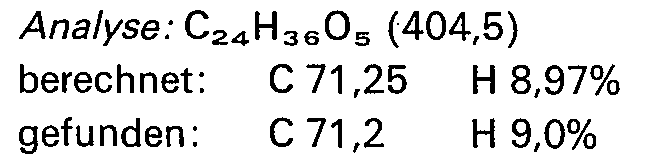
- Fp. = 208-220° C (Methylenchlorid/Äther/Hexan)
-

- Rf-Wert: 0,20 (Laufmittel C)

- Analog Beispiel 1 A, b, werden aus 1,4 g (3,5 mmol) 3ß,14,16ß-Trihydroxy-3-methyl-5ß,14ß-card-20(22)-enolid 1,2 g (79% d.Th.) 16β-Acetyl-3β,14-dihydroxy-3-methyl-5β,14β-card-20(22)-enolid erhalten:
- Fp. = 127-130° C (Methylenchlorid/Äther)
- [α]D = -3° (c = 0,6 in Chloroform)
- Rf-Wert: 0,45 (Laufmittel C)

- Entsprechend erhält man aus 0,7 g (1,7 mmol) 3α,14,16β-Trihydroxy-3-methyl-5β,14β-card-20(22)-enolid 0,55 g (72% d.Th.) 16ß-Acetyl-3α,14-dihydroxy-3-methyl-5β,14β-card-20(22)-enolid:
- Fp. = 230-238° C (Methylenchlorid/Äther/Hexan)
- [a] D = -12,8° (c = 0,55 in Chloroform)
- Rf-Wert: 0,55 (Laufmittel C)

- B. Herstellung des Endproduktes
- a) Wie in Beispiel 1 B, a, werden aus 0,42 g (0,95 mmol) 16ß-Acetyl-3a,14-dihydroxy-3-methyl-5ß,14ß-card-20(22)-enolid 0,49 g (67% d.Th.) 16ß-Acetyl-14-hydroxy-3-methyl-3a-[(2,3,4,6-tetra-O-acetyl-ß-D-glucopyranosyl)o-xy]-5ß,14ß-card-20(22)-enolid erhalten:
- Fp. 125-129° C (Methylenchlorid/Äther/Hexan)
- [α]D = -9° (c = 0,5 in Chloroform)
- Rf-Wert: 0,34 (Laufmittel A)

- Ebenso erhält man aus 1,1 g (2,46 mmol) 16ß-Acetyl-3β,14-dihydroxy-3-methyl-5β,14β-card-20(22)-enolid 1,2 g (63% d.Th.) 16ß-Acetyl-14-hydroxy-3-methyl-3ß- [(2,3,4,6-tetra-O-acetyl-β-D-glucopyranosyl)oxy]-5β,14β-card-20(22)-enolid:
- Fp. = 221-230° C (Methylenchlorid/Äther/Hexan)
- [α]D = -6° (c = 0,5 in Chloroform)
- Rf-Wert: 0,42 (Laufmittel A)

- b) Analog Beispiel 4 erhält man aus den unter a aufgeführten Verbindungen:
- 16β,14-Dihydroxy-3-methyl-3β-[(β-D-gluco- pyranosyl)oxy] -5ß,14ß-card-20(22) -enolid :
- Fp. = 240-246° C (Methanol/Äther)
- [α]D = +18° (c = 0,4 in Methanol)
- Rf-Wert: 0,17 (Laufmittel B)

- 16β,14-Dihydroxy-3-metyhl-3α-[(β-D-gluco- pyranosyl)oxy]-5β,14β-card-20(22)-enolid:
- Fp. = 166-168° C (Methanol/Äther)
- [α]D = +17° (c = 0,4 in Methanol)
- Rf-Wert: 0,16 (Laufmittel B)
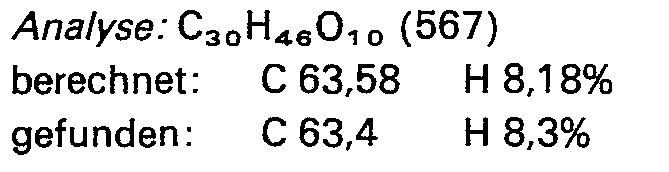
Claims (4)
- Verfahren zur Herstellung C-3-verzweigter Cardenolidglykoside der Formel (I)
 R1 ein Kohlenwasserstoffrest mit bis zu 4 Kohlenstoffatomen oder eine Phenylgruppe ist,R2 ein Wasserstoffatom oder eine Hydroxylgruppe bedeutet, undR3 und R4 voneinander verschieden sind und ein Wasserstoffatom oder eine gegebenenfalls acylierte Hydroxylgruppe, wobei der Acylrest bis zu 7 Kohlenstoffatomen enthalten kann, darstellen, dadurch gekennzeichnet, dass man eine Verbindung der Formel (11)
- worin R1, R3 und R4 die oben angegebene Bedeutung besitzen, mit einer acylierten 1 - Halogenhexopyranose der Formel (III)
 R5 ein Wasserstoffatom oder eine Acyloxygruppe mit 2 bis 8 Kohlenstoffatomen, undR6 eine Acyloxygruppe mit 2 bis 7 Kohlenstoffatomen
bedeuten, in Gegenwart eines Säureakzeptors umsetzt, und anschliessend die Acylgruppen am Hexopyranoserest und gegebenenfalls am C-12 oder C-16 abspaltet.
Priority Applications (1)
| Application Number | Priority Date | Filing Date | Title |
|---|---|---|---|
| AT80107413T ATE3984T1 (de) | 1979-12-05 | 1980-11-27 | Neue c-3-verzweigte cardenolid-glykoside, ihre herstellung und verwendung. |
Applications Claiming Priority (2)
| Application Number | Priority Date | Filing Date | Title |
|---|---|---|---|
| DE2948835 | 1979-12-05 | ||
| DE19792948835 DE2948835A1 (de) | 1979-12-05 | 1979-12-05 | Neue c-3-verzweigte cardenolid-glykoside, ihre herstellung und verwendung |
Publications (2)
| Publication Number | Publication Date |
|---|---|
| EP0030331A1 EP0030331A1 (de) | 1981-06-17 |
| EP0030331B1 true EP0030331B1 (de) | 1983-06-29 |
Family
ID=6087613
Family Applications (1)
| Application Number | Title | Priority Date | Filing Date |
|---|---|---|---|
| EP80107413A Expired EP0030331B1 (de) | 1979-12-05 | 1980-11-27 | Neue C-3-verzweigte Cardenolid-glykoside, ihre Herstellung und Verwendung |
Country Status (5)
| Country | Link |
|---|---|
| EP (1) | EP0030331B1 (de) |
| JP (1) | JPS5692300A (de) |
| AT (1) | ATE3984T1 (de) |
| DE (2) | DE2948835A1 (de) |
| DK (1) | DK518280A (de) |
Families Citing this family (1)
| Publication number | Priority date | Publication date | Assignee | Title |
|---|---|---|---|---|
| EP0530224A1 (de) * | 1990-05-07 | 1993-03-10 | The Board Of Regents Of The University Of Washington | Neue steroid-glykosiden, verwendbar bei der frühen entdeckung der hypertonie |
Family Cites Families (1)
| Publication number | Priority date | Publication date | Assignee | Title |
|---|---|---|---|---|
| DE2517293C2 (de) * | 1975-04-18 | 1984-02-16 | Knoll Ag, 6700 Ludwigshafen | Neue Cardenolid-β-Glykoside, ihre Herstellung und Verwendung |
-
1979
- 1979-12-05 DE DE19792948835 patent/DE2948835A1/de not_active Withdrawn
-
1980
- 1980-11-27 EP EP80107413A patent/EP0030331B1/de not_active Expired
- 1980-11-27 DE DE8080107413T patent/DE3063992D1/de not_active Expired
- 1980-11-27 AT AT80107413T patent/ATE3984T1/de active
- 1980-12-02 JP JP16920380A patent/JPS5692300A/ja active Pending
- 1980-12-04 DK DK518280A patent/DK518280A/da not_active Application Discontinuation
Also Published As
| Publication number | Publication date |
|---|---|
| EP0030331A1 (de) | 1981-06-17 |
| ATE3984T1 (de) | 1983-07-15 |
| JPS5692300A (en) | 1981-07-25 |
| DK518280A (da) | 1981-06-06 |
| DE2948835A1 (de) | 1981-06-11 |
| DE3063992D1 (en) | 1983-08-04 |
Similar Documents
| Publication | Publication Date | Title |
|---|---|---|
| DE3873870T2 (de) | Androstan-17-carbonsaeureester, verfahren zu ihrer herstellung und arzneimittel, die sie enthalten. | |
| DE2932607A1 (de) | Chlorambucilderivate, verfahren zur herstellung derselben und antitumormittel mit einem gehalt derselben | |
| DE2937267A1 (de) | 3'',4''-diacyltylosinderivate | |
| DE2735455C3 (de) | Daunomycinanaloga, Verfahren zu deren Herstellung und diese Verbindungen enthaltende Arzneimittel | |
| DE2517293C2 (de) | Neue Cardenolid-β-Glykoside, ihre Herstellung und Verwendung | |
| DE1568308A1 (de) | Verfahren zur Herstellung von delta4,9,11-Trienen der 19-Nor-androstanreihe | |
| EP0030331A1 (de) | Neue C-3-verzweigte Cardenolid-glykoside, ihre Herstellung und Verwendung | |
| EP4452996A1 (de) | Epoxysteroide | |
| DE2162594A1 (de) | 3 alpha-oxygenierte Pregnan-21-äther und Verfahren zu deren Herstellung | |
| DE3490749C2 (de) | 11-Desoxy-17alpha-hydroxycorticosteronester | |
| EP0047928B1 (de) | Neue Derivate von Cardenolid-bis-digitoxosiden, Verfahren zu ihrer Herstellung und ihre Verwendung als Arzneimittel | |
| DE3317702A1 (de) | Anthracyclinglykoside, verfahren zu deren herstellung und arzneimittel, welche diese enthalten | |
| DE1807585C3 (de) | 14,15beta-Epoxycardenolide, Verfahren zu deren Herstellung und diese enthaltende Mittel | |
| CH526527A (de) | Verfahren zur Herstellung eines neuen 6a-Methyl-19-nor-progesterons | |
| EP0432309B1 (de) | Neue Zuckerderivate, Verfahren zu ihrer Herstellung und ihre Verwendung | |
| DE1568924C (de) | Ketale des Proscillaridins und Verfahren zu deren Herstellung | |
| AT270882B (de) | Verfahren zur Herstellung von neuen, leicht resorbierbaren Proscillaridinketalen | |
| DE2833472A1 (de) | Digitoxigenin-monodigitoxosid-derivate und verfahren zu ihrer herstellung | |
| DE2409971B2 (de) | 5-cholestenderivate und verfahren zu ihrer herstellung | |
| DE1568308C3 (de) | 10.09.65 Schweiz 12624-65 Verfahren zur Herstellung von Delta hoch 4,9,11-Trienen der 19-Norandrostanreihe, 17-oxygenierte 3-Oxo-7 alpha-methyl-Delta hoch 4,9,11-19 norandrostatriene und diese enthaltende pharmazeutische Präparate sowie 3-Oxo-7 alpha -methyl-Delta hoch 5 (10), 9 (11) -19-norandrostadiene | |
| DE3722698A1 (de) | Zytostatisch wirksame anthracyclinderivate | |
| EP0272734A2 (de) | Neue 3-amino-3,4,6-tridesoxyglykale, Verfahren zu ihrer Herstellung und mittels dieser Glykale erhältliche Anthracycline | |
| CH505809A (de) | Verfahren zur Herstellung 1(10)-5-oxo-5,10-Seco-steroiden | |
| DD219489A1 (de) | Verfahren zur herstellung von carda-16,20(22)-dienoliden und carda-16,20(22)-dienolidglykosiden | |
| EP0207463A2 (de) | Neue Anthracyclin-Tetrasaccharide, ein Verfahren zu ihrer Herstellung und ihre Verwendung als Cytostatika |
Legal Events
| Date | Code | Title | Description |
|---|---|---|---|
| PUAI | Public reference made under article 153(3) epc to a published international application that has entered the european phase |
Free format text: ORIGINAL CODE: 0009012 |
|
| AK | Designated contracting states |
Kind code of ref document: A1 Designated state(s): AT BE CH DE FR GB IT NL Designated state(s): AT BE CH DE FR GB IT NL |
|
| 17P | Request for examination filed |
Effective date: 19810717 |
|
| ITF | It: translation for a ep patent filed | ||
| GRAA | (expected) grant |
Free format text: ORIGINAL CODE: 0009210 |
|
| AK | Designated contracting states |
Kind code of ref document: B1 Designated state(s): AT BE CH DE FR GB IT LI NL Designated state(s): AT BE CH DE FR GB IT LI NL |
|
| REF | Corresponds to: |
Ref document number: 3984 Country of ref document: AT Date of ref document: 19830715 Kind code of ref document: T |
|
| REF | Corresponds to: |
Ref document number: 3063992 Country of ref document: DE Date of ref document: 19830804 |
|
| ET | Fr: translation filed | ||
| KL | Correction list |
Free format text: 83/05 NEUDRUCK |
|
| PLBE | No opposition filed within time limit |
Free format text: ORIGINAL CODE: 0009261 |
|
| STAA | Information on the status of an ep patent application or granted ep patent |
Free format text: STATUS: NO OPPOSITION FILED WITHIN TIME LIMIT |
|
| 26N | No opposition filed | ||
| ITTA | It: last paid annual fee | ||
| PGFP | Annual fee paid to national office [announced via postgrant information from national office to epo] |
Ref country code: FR Payment date: 19921019 Year of fee payment: 13 |
|
| PGFP | Annual fee paid to national office [announced via postgrant information from national office to epo] |
Ref country code: CH Payment date: 19921020 Year of fee payment: 13 |
|
| PGFP | Annual fee paid to national office [announced via postgrant information from national office to epo] |
Ref country code: AT Payment date: 19921022 Year of fee payment: 13 |
|
| PGFP | Annual fee paid to national office [announced via postgrant information from national office to epo] |
Ref country code: BE Payment date: 19921110 Year of fee payment: 13 |
|
| PGFP | Annual fee paid to national office [announced via postgrant information from national office to epo] |
Ref country code: GB Payment date: 19921116 Year of fee payment: 13 |
|
| PGFP | Annual fee paid to national office [announced via postgrant information from national office to epo] |
Ref country code: DE Payment date: 19921119 Year of fee payment: 13 |
|
| PGFP | Annual fee paid to national office [announced via postgrant information from national office to epo] |
Ref country code: NL Payment date: 19921130 Year of fee payment: 13 |
|
| PG25 | Lapsed in a contracting state [announced via postgrant information from national office to epo] |
Ref country code: DE Effective date: 19931120 |
|
| PG25 | Lapsed in a contracting state [announced via postgrant information from national office to epo] |
Ref country code: GB Effective date: 19931127 Ref country code: AT Effective date: 19931127 |
|
| PG25 | Lapsed in a contracting state [announced via postgrant information from national office to epo] |
Ref country code: LI Effective date: 19931130 Ref country code: CH Effective date: 19931130 Ref country code: BE Effective date: 19931130 |
|
| BERE | Be: lapsed |
Owner name: BASF A.G. Effective date: 19931130 |
|
| PG25 | Lapsed in a contracting state [announced via postgrant information from national office to epo] |
Ref country code: NL Effective date: 19940601 |
|
| NLV4 | Nl: lapsed or anulled due to non-payment of the annual fee | ||
| GBPC | Gb: european patent ceased through non-payment of renewal fee |
Effective date: 19931127 |
|
| PG25 | Lapsed in a contracting state [announced via postgrant information from national office to epo] |
Ref country code: FR Effective date: 19940729 |
|
| REG | Reference to a national code |
Ref country code: CH Ref legal event code: PL |
|
| REG | Reference to a national code |
Ref country code: FR Ref legal event code: ST |