EP0207463A2 - Neue Anthracyclin-Tetrasaccharide, ein Verfahren zu ihrer Herstellung und ihre Verwendung als Cytostatika - Google Patents
Neue Anthracyclin-Tetrasaccharide, ein Verfahren zu ihrer Herstellung und ihre Verwendung als Cytostatika Download PDFInfo
- Publication number
- EP0207463A2 EP0207463A2 EP86108781A EP86108781A EP0207463A2 EP 0207463 A2 EP0207463 A2 EP 0207463A2 EP 86108781 A EP86108781 A EP 86108781A EP 86108781 A EP86108781 A EP 86108781A EP 0207463 A2 EP0207463 A2 EP 0207463A2
- Authority
- EP
- European Patent Office
- Prior art keywords
- roa
- rod
- formula
- acid
- compound
- Prior art date
- Legal status (The legal status is an assumption and is not a legal conclusion. Google has not performed a legal analysis and makes no representation as to the accuracy of the status listed.)
- Withdrawn
Links
- 238000000034 method Methods 0.000 title claims abstract description 7
- 238000002360 preparation method Methods 0.000 title claims abstract description 5
- 150000004044 tetrasaccharides Chemical class 0.000 title description 2
- 239000000824 cytostatic agent Substances 0.000 title 1
- 150000001875 compounds Chemical class 0.000 claims abstract description 22
- 230000001085 cytostatic effect Effects 0.000 claims abstract description 5
- 239000003814 drug Substances 0.000 claims abstract description 4
- QTBSBXVTEAMEQO-UHFFFAOYSA-N Acetic acid Chemical compound CC(O)=O QTBSBXVTEAMEQO-UHFFFAOYSA-N 0.000 claims description 10
- 239000002253 acid Substances 0.000 claims description 10
- VEXZGXHMUGYJMC-UHFFFAOYSA-N Hydrochloric acid Chemical compound Cl VEXZGXHMUGYJMC-UHFFFAOYSA-N 0.000 claims description 6
- 238000010306 acid treatment Methods 0.000 claims description 5
- NBIIXXVUZAFLBC-UHFFFAOYSA-N Phosphoric acid Chemical compound OP(O)(O)=O NBIIXXVUZAFLBC-UHFFFAOYSA-N 0.000 claims description 4
- QAOWNCQODCNURD-UHFFFAOYSA-N Sulfuric acid Chemical compound OS(O)(=O)=O QAOWNCQODCNURD-UHFFFAOYSA-N 0.000 claims description 4
- BDAGIHXWWSANSR-UHFFFAOYSA-N methanoic acid Natural products OC=O BDAGIHXWWSANSR-UHFFFAOYSA-N 0.000 claims description 4
- 125000001424 substituent group Chemical group 0.000 claims description 4
- ATPYMFXOZQEWIG-LFRDXLMFSA-N (2s,5r,6s)-5,6-dihydroxy-2-methyloxan-3-one Chemical compound C[C@@H]1O[C@H](O)[C@H](O)CC1=O ATPYMFXOZQEWIG-LFRDXLMFSA-N 0.000 claims description 2
- OSWFIVFLDKOXQC-UHFFFAOYSA-N 4-(3-methoxyphenyl)aniline Chemical compound COC1=CC=CC(C=2C=CC(N)=CC=2)=C1 OSWFIVFLDKOXQC-UHFFFAOYSA-N 0.000 claims description 2
- 229910000147 aluminium phosphate Inorganic materials 0.000 claims description 2
- 125000000600 disaccharide group Chemical group 0.000 claims description 2
- RTZKZFJDLAIYFH-UHFFFAOYSA-N ether Substances CCOCC RTZKZFJDLAIYFH-UHFFFAOYSA-N 0.000 claims description 2
- 235000019253 formic acid Nutrition 0.000 claims description 2
- 150000003839 salts Chemical class 0.000 claims description 2
- 150000004043 trisaccharides Chemical group 0.000 claims description 2
- XXIHHRIZGBRENI-WDSKDSINSA-N L-rhodinose Chemical compound C[C@H](O)[C@@H](O)CCC=O XXIHHRIZGBRENI-WDSKDSINSA-N 0.000 claims 1
- 238000004519 manufacturing process Methods 0.000 claims 1
- LMBFAGIMSUYTBN-MPZNNTNKSA-N teixobactin Chemical compound C([C@H](C(=O)N[C@@H]([C@@H](C)CC)C(=O)N[C@@H](CO)C(=O)N[C@H](CCC(N)=O)C(=O)N[C@H]([C@@H](C)CC)C(=O)N[C@@H]([C@@H](C)CC)C(=O)N[C@@H](CO)C(=O)N[C@H]1C(N[C@@H](C)C(=O)N[C@@H](C[C@@H]2NC(=N)NC2)C(=O)N[C@H](C(=O)O[C@H]1C)[C@@H](C)CC)=O)NC)C1=CC=CC=C1 LMBFAGIMSUYTBN-MPZNNTNKSA-N 0.000 claims 1
- 229940045799 anthracyclines and related substance Drugs 0.000 abstract description 5
- 230000000259 anti-tumor effect Effects 0.000 abstract 1
- OKKJLVBELUTLKV-UHFFFAOYSA-N Methanol Chemical compound OC OKKJLVBELUTLKV-UHFFFAOYSA-N 0.000 description 36
- HEDRZPFGACZZDS-UHFFFAOYSA-N Chloroform Chemical compound ClC(Cl)Cl HEDRZPFGACZZDS-UHFFFAOYSA-N 0.000 description 16
- XEKOWRVHYACXOJ-UHFFFAOYSA-N Ethyl acetate Chemical compound CCOC(C)=O XEKOWRVHYACXOJ-UHFFFAOYSA-N 0.000 description 15
- CSCPPACGZOOCGX-UHFFFAOYSA-N Acetone Chemical compound CC(C)=O CSCPPACGZOOCGX-UHFFFAOYSA-N 0.000 description 9
- HEMHJVSKTPXQMS-UHFFFAOYSA-M Sodium hydroxide Chemical compound [OH-].[Na+] HEMHJVSKTPXQMS-UHFFFAOYSA-M 0.000 description 9
- YXFVVABEGXRONW-UHFFFAOYSA-N Toluene Chemical compound CC1=CC=CC=C1 YXFVVABEGXRONW-UHFFFAOYSA-N 0.000 description 9
- 238000012360 testing method Methods 0.000 description 8
- XLYOFNOQVPJJNP-UHFFFAOYSA-N water Substances O XLYOFNOQVPJJNP-UHFFFAOYSA-N 0.000 description 8
- 239000000243 solution Substances 0.000 description 7
- 238000004992 fast atom bombardment mass spectroscopy Methods 0.000 description 6
- 239000000203 mixture Substances 0.000 description 6
- VLKZOEOYAKHREP-UHFFFAOYSA-N n-Hexane Chemical compound CCCCCC VLKZOEOYAKHREP-UHFFFAOYSA-N 0.000 description 6
- 239000012071 phase Substances 0.000 description 5
- 239000000126 substance Substances 0.000 description 5
- RGHNJXZEOKUKBD-SQOUGZDYSA-M D-gluconate Chemical compound OC[C@@H](O)[C@@H](O)[C@H](O)[C@@H](O)C([O-])=O RGHNJXZEOKUKBD-SQOUGZDYSA-M 0.000 description 4
- IQFYYKKMVGJFEH-XLPZGREQSA-N Thymidine Chemical compound O=C1NC(=O)C(C)=CN1[C@@H]1O[C@H](CO)[C@@H](O)C1 IQFYYKKMVGJFEH-XLPZGREQSA-N 0.000 description 4
- 241001465754 Metazoa Species 0.000 description 3
- PMZURENOXWZQFD-UHFFFAOYSA-L Sodium Sulfate Chemical compound [Na+].[Na+].[O-]S([O-])(=O)=O PMZURENOXWZQFD-UHFFFAOYSA-L 0.000 description 3
- ZMANZCXQSJIPKH-UHFFFAOYSA-N Triethylamine Chemical compound CCN(CC)CC ZMANZCXQSJIPKH-UHFFFAOYSA-N 0.000 description 3
- 229960000583 acetic acid Drugs 0.000 description 3
- 239000008346 aqueous phase Substances 0.000 description 3
- 238000006243 chemical reaction Methods 0.000 description 3
- 238000004587 chromatography analysis Methods 0.000 description 3
- 238000000605 extraction Methods 0.000 description 3
- 229940050410 gluconate Drugs 0.000 description 3
- 239000002609 medium Substances 0.000 description 3
- 238000000655 nuclear magnetic resonance spectrum Methods 0.000 description 3
- 239000000047 product Substances 0.000 description 3
- 229910052938 sodium sulfate Inorganic materials 0.000 description 3
- 235000011152 sodium sulphate Nutrition 0.000 description 3
- NWPIUETWDSWOKV-ZUOHIMJMSA-N (7s,9r,10r)-7,10-bis[[(2s,4s,5s,6s)-4-(dimethylamino)-5-hydroxy-6-methyloxan-2-yl]oxy]-9-ethyl-4,6,9,11-tetrahydroxy-8,10-dihydro-7h-tetracene-5,12-dione Chemical compound O([C@H]1C[C@]([C@@H](C2=C(O)C=3C(=O)C4=CC=CC(O)=C4C(=O)C=3C(O)=C21)O[C@@H]1O[C@@H](C)[C@@H](O)[C@H](C1)N(C)C)(O)CC)[C@H]1C[C@H](N(C)C)[C@H](O)[C@H](C)O1 NWPIUETWDSWOKV-ZUOHIMJMSA-N 0.000 description 2
- DWRXFEITVBNRMK-UHFFFAOYSA-N Beta-D-1-Arabinofuranosylthymine Natural products O=C1NC(=O)C(C)=CN1C1C(O)C(O)C(CO)O1 DWRXFEITVBNRMK-UHFFFAOYSA-N 0.000 description 2
- PHOQVHQSTUBQQK-SQOUGZDYSA-N D-glucono-1,5-lactone Chemical compound OC[C@H]1OC(=O)[C@H](O)[C@@H](O)[C@@H]1O PHOQVHQSTUBQQK-SQOUGZDYSA-N 0.000 description 2
- 206010028980 Neoplasm Diseases 0.000 description 2
- 239000012980 RPMI-1640 medium Substances 0.000 description 2
- VYPSYNLAJGMNEJ-UHFFFAOYSA-N Silicium dioxide Chemical compound O=[Si]=O VYPSYNLAJGMNEJ-UHFFFAOYSA-N 0.000 description 2
- 150000007513 acids Chemical class 0.000 description 2
- IQFYYKKMVGJFEH-UHFFFAOYSA-N beta-L-thymidine Natural products O=C1NC(=O)C(C)=CN1C1OC(CO)C(O)C1 IQFYYKKMVGJFEH-UHFFFAOYSA-N 0.000 description 2
- 230000037396 body weight Effects 0.000 description 2
- 230000004663 cell proliferation Effects 0.000 description 2
- IJKVHSBPTUYDLN-UHFFFAOYSA-N dihydroxy(oxo)silane Chemical compound O[Si](O)=O IJKVHSBPTUYDLN-UHFFFAOYSA-N 0.000 description 2
- 229940079593 drug Drugs 0.000 description 2
- 238000002474 experimental method Methods 0.000 description 2
- 239000012362 glacial acetic acid Substances 0.000 description 2
- 230000007062 hydrolysis Effects 0.000 description 2
- 238000006460 hydrolysis reaction Methods 0.000 description 2
- 238000011534 incubation Methods 0.000 description 2
- 150000002500 ions Chemical class 0.000 description 2
- VNWKTOKETHGBQD-UHFFFAOYSA-N methane Chemical compound C VNWKTOKETHGBQD-UHFFFAOYSA-N 0.000 description 2
- 239000000741 silica gel Substances 0.000 description 2
- 229910002027 silica gel Inorganic materials 0.000 description 2
- 239000011877 solvent mixture Substances 0.000 description 2
- 229940104230 thymidine Drugs 0.000 description 2
- OWEGMIWEEQEYGQ-UHFFFAOYSA-N 100676-05-9 Natural products OC1C(O)C(O)C(CO)OC1OCC1C(O)C(O)C(O)C(OC2C(OC(O)C(O)C2O)CO)O1 OWEGMIWEEQEYGQ-UHFFFAOYSA-N 0.000 description 1
- 241001136792 Alle Species 0.000 description 1
- GUBGYTABKSRVRQ-XLOQQCSPSA-N Alpha-Lactose Chemical compound O[C@@H]1[C@@H](O)[C@@H](O)[C@@H](CO)O[C@H]1O[C@@H]1[C@@H](CO)O[C@H](O)[C@H](O)[C@H]1O GUBGYTABKSRVRQ-XLOQQCSPSA-N 0.000 description 1
- WMUYJHSRMOORHK-BIIVOSGPSA-N C[C@H](O)[C@@H](O)[C@@H](N(C)C)CC=O Chemical compound C[C@H](O)[C@@H](O)[C@@H](N(C)C)CC=O WMUYJHSRMOORHK-BIIVOSGPSA-N 0.000 description 1
- WMUYJHSRMOORHK-UHFFFAOYSA-N L-Rhodosamin Natural products CC(O)C(O)C(N(C)C)CC=O WMUYJHSRMOORHK-UHFFFAOYSA-N 0.000 description 1
- GUBGYTABKSRVRQ-QKKXKWKRSA-N Lactose Natural products OC[C@H]1O[C@@H](O[C@H]2[C@H](O)[C@@H](O)C(O)O[C@@H]2CO)[C@H](O)[C@@H](O)[C@H]1O GUBGYTABKSRVRQ-QKKXKWKRSA-N 0.000 description 1
- GUBGYTABKSRVRQ-PICCSMPSSA-N Maltose Natural products O[C@@H]1[C@@H](O)[C@H](O)[C@@H](CO)O[C@@H]1O[C@@H]1[C@@H](CO)OC(O)[C@H](O)[C@H]1O GUBGYTABKSRVRQ-PICCSMPSSA-N 0.000 description 1
- 241000187410 Streptomyces purpurascens Species 0.000 description 1
- 239000008351 acetate buffer Substances 0.000 description 1
- 230000002378 acidificating effect Effects 0.000 description 1
- XAGFODPZIPBFFR-UHFFFAOYSA-N aluminium Chemical compound [Al] XAGFODPZIPBFFR-UHFFFAOYSA-N 0.000 description 1
- 229910052782 aluminium Inorganic materials 0.000 description 1
- 230000003698 anagen phase Effects 0.000 description 1
- 239000007864 aqueous solution Substances 0.000 description 1
- GUBGYTABKSRVRQ-QUYVBRFLSA-N beta-maltose Chemical compound OC[C@H]1O[C@H](O[C@H]2[C@H](O)[C@@H](O)[C@H](O)O[C@@H]2CO)[C@H](O)[C@@H](O)[C@@H]1O GUBGYTABKSRVRQ-QUYVBRFLSA-N 0.000 description 1
- 201000011510 cancer Diseases 0.000 description 1
- 239000000969 carrier Substances 0.000 description 1
- 238000004440 column chromatography Methods 0.000 description 1
- 201000010099 disease Diseases 0.000 description 1
- 208000037265 diseases, disorders, signs and symptoms Diseases 0.000 description 1
- 239000012153 distilled water Substances 0.000 description 1
- 239000002552 dosage form Substances 0.000 description 1
- 231100000673 dose–response relationship Toxicity 0.000 description 1
- 239000003937 drug carrier Substances 0.000 description 1
- 238000001035 drying Methods 0.000 description 1
- 230000000694 effects Effects 0.000 description 1
- 239000003480 eluent Substances 0.000 description 1
- 238000010828 elution Methods 0.000 description 1
- 239000002024 ethyl acetate extract Substances 0.000 description 1
- 239000000284 extract Substances 0.000 description 1
- 239000000706 filtrate Substances 0.000 description 1
- 239000012530 fluid Substances 0.000 description 1
- 239000011888 foil Substances 0.000 description 1
- 235000013305 food Nutrition 0.000 description 1
- 239000012737 fresh medium Substances 0.000 description 1
- 239000011521 glass Substances 0.000 description 1
- 238000004128 high performance liquid chromatography Methods 0.000 description 1
- 238000000338 in vitro Methods 0.000 description 1
- 238000010348 incorporation Methods 0.000 description 1
- 230000002401 inhibitory effect Effects 0.000 description 1
- 238000002347 injection Methods 0.000 description 1
- 239000007924 injection Substances 0.000 description 1
- 239000008101 lactose Substances 0.000 description 1
- 208000032839 leukemia Diseases 0.000 description 1
- 239000007788 liquid Substances 0.000 description 1
- 238000002483 medication Methods 0.000 description 1
- 230000007935 neutral effect Effects 0.000 description 1
- 231100000252 nontoxic Toxicity 0.000 description 1
- 230000003000 nontoxic effect Effects 0.000 description 1
- 235000015097 nutrients Nutrition 0.000 description 1
- 239000012074 organic phase Substances 0.000 description 1
- 239000003960 organic solvent Substances 0.000 description 1
- 239000008024 pharmaceutical diluent Substances 0.000 description 1
- 239000002504 physiological saline solution Substances 0.000 description 1
- 229920001467 poly(styrenesulfonates) Polymers 0.000 description 1
- 230000002285 radioactive effect Effects 0.000 description 1
- 239000012429 reaction media Substances 0.000 description 1
- 230000035484 reaction time Effects 0.000 description 1
- 239000012266 salt solution Substances 0.000 description 1
- 230000035945 sensitivity Effects 0.000 description 1
- 239000011734 sodium Substances 0.000 description 1
- 239000007858 starting material Substances 0.000 description 1
- 230000001225 therapeutic effect Effects 0.000 description 1
- YNJBWRMUSHSURL-UHFFFAOYSA-N trichloroacetic acid Chemical compound OC(=O)C(Cl)(Cl)Cl YNJBWRMUSHSURL-UHFFFAOYSA-N 0.000 description 1
Images


Classifications
-
- C—CHEMISTRY; METALLURGY
- C07—ORGANIC CHEMISTRY
- C07H—SUGARS; DERIVATIVES THEREOF; NUCLEOSIDES; NUCLEOTIDES; NUCLEIC ACIDS
- C07H15/00—Compounds containing hydrocarbon or substituted hydrocarbon radicals directly attached to hetero atoms of saccharide radicals
- C07H15/20—Carbocyclic rings
- C07H15/24—Condensed ring systems having three or more rings
- C07H15/252—Naphthacene radicals, e.g. daunomycins, adriamycins
-
- A—HUMAN NECESSITIES
- A61—MEDICAL OR VETERINARY SCIENCE; HYGIENE
- A61P—SPECIFIC THERAPEUTIC ACTIVITY OF CHEMICAL COMPOUNDS OR MEDICINAL PREPARATIONS
- A61P43/00—Drugs for specific purposes, not provided for in groups A61P1/00-A61P41/00
Definitions
- the present invention further relates to a process for the preparation of the compounds of the formula I, which is characterized in that one of the compounds of the formula II described in EP-A-0 131 181 (HOE 83 / F 103) wherein one of the two substituents R 3 and R.
- the strain Streptomyces purpurascens DSM 2658 is fermented in a nutrient medium in the usual way, with temperatures of approx. 24-40 ° C, a pH of 6.5 -8.5 and aerobic conditions be respected.
- the anthracycline compounds are extracted from the mycelium by extraction e.g. extracted with aqueous acetone at pH 3.5, the acetone removed and the aqueous phase extracted at pH 7.5 with ethyl acetate.
- the liquid is extracted at pH 7.5, preferably with ethyl acetate.
- the crude residue is dissolved in toluene and extracted with an acetate buffer (pH 3.5), whereby a toluene phase and an aqueous phase are obtained.
- the aqueous phase is worked up further in the following manner: after adjusting the pH to 7.5, the mixture is extracted again with ethyl acetate and the ethyl acetate phase is concentrated, giving a so-called raw cytorhodin mixture.
- anthracycline hexasaccharides of the formula 11 can be obtained from this crude mixture by chromatography.
- acids are such.
- the acid treatment can also be carried out with strongly acidic ion exchangers in the H Carry out a shape such as Dowex 50x8 (H + ). In this case, the desired product must be obtained by elution from the ion exchanger, for example with salt solutions.
- the acid treatment is carried out at room temperature or slightly elevated temperature, preferably 37 ° C.
- the reaction time can range from 0.5 to several hours, but is different for each compound, as has been established by reaction kinetics experiments.
- the desired compounds are isolated by extraction from the reaction medium and separated by column chromatography or preparative layer chromatography, preferably on silica gel.
- the cytorhodins according to the invention are distinguished by a high cytostatic activity and show the following effect in the cell proliferation test on L1210 leukemia cells: carried out as 4-fold determinations. After 65 hours, 50 ⁇ l of C14 thymidine (1.5 ⁇ C / ml) are added in order to radioactively label the DNA of the cell. After 7 hours of incubation, the cells are suctioned off, the DNA is precipitated with 5% trichloroacetic acid and washed successively with water or methanol. After drying at 50 ° C., the radioactivity built into the DNA is determined after adding 5 ml of scintillation fluid.
- the results will be given as ratios of the scintillation index after incubation with test substance in percent of the untreated control.
- the dose-response curve is determined from the measured values thus obtained and the IC 50 is graphically. ie the concentration which, under test conditions, reduces the incorporation of radioactive thymidine by 50% compared to the control.
- the compounds of the invention have cytostatic activity, i.e. therapeutic effect against tumors, especially malignant tumors in animals and humans.
- the compounds and the acid addition salts can therefore be used as drugs for the treatment of tumors.
- the compounds can be administered in various ways depending on the dosage form.
- the compounds are normally administered mixed with standard pharmaceutical carriers or diluents. So you can e.g. individually or in a mixture together with carriers such as maltose or lactose or as non-toxic complexes, e.g. be administered as a deoxyribobucleic acid complex.
- a typical mode of administration is the injection of a solution of the compound according to the invention in distilled water or in physiological saline.
- the solutions can be injected intraperitoneally, intravenously or intraarterially.
- Daily dose and unit dose can be determined from animal experiments and also from in vitro tests in such a way that the total dose, which is administered continuously or at intervals, does not exceed a predetermined range.
- the total dose for a treatment cycle is approximately 0.5-5 mg / kg body weight. This dose can be administered in appropriate fractions over a period of 7 days.
- cytorhodin F 1.1 g of cytorhodin F were dissolved in 250 ml of 0.1 N hydrochloric acid and stirred for 115 minutes at room temperature.
- a pH of 3 was set with 1N sodium hydroxide solution and extracted three times with 250 ml of chloroform each time.
- pH 5.5 and pH 7, which were also adjusted by adding 1N sodium hydroxide solution the extraction was carried out analogously with three times 250 ml of chloroform.
- the extracts at pH 3 and pH 7 contained unreacted starting material and ß-rhodomycin II, which is formed as a result of the hydrolysis and by Brockmann et al. has already been described (NaturBiben 42, 492 (1950); Chem Ber. 86, 261 (1953)).
- the solution extracted at pH 5.5 was dried over sodium sulfate and concentrated to a residue of 380 mg.
- the pure substances were converted into the corresponding readily water-soluble D-glugonates with gluconic acid lactone.
- cytorhodin P 100 mg were dissolved in 10 ml of 0.1 N HCl and stirred at room temperature for 3.5 hours, the reaction solution was then adjusted to pH 7.5 with 0.1 N NaOH and shaken three times with 10 ml of CHCl 3 . The combined organic phases were washed neutral with a little water, dried over sodium sulfate and evaporated in vacuo.
- the dry residue (68 mg), according to the thin-layer chromatogram, contained two less polar main products in addition to the polar ⁇ -rhodomycin II and was separated by preparative layer chromatography.
- 10 mg each of the residue in CHCl 3 dissolved in a DC aluminum foil silica gel 60, 0.2 mm, 20 cm ⁇ 20 cm, Merck, was applied and chromatographed with the lower phase of the solvent mixture CHCl 3 / methanol / water 130/40170 .
- Cytorhodin SD provided the easily water-soluble D-gluconate.
Landscapes
- Chemical & Material Sciences (AREA)
- Organic Chemistry (AREA)
- Health & Medical Sciences (AREA)
- Engineering & Computer Science (AREA)
- General Health & Medical Sciences (AREA)
- Life Sciences & Earth Sciences (AREA)
- Biochemistry (AREA)
- Biotechnology (AREA)
- Molecular Biology (AREA)
- Genetics & Genomics (AREA)
- General Chemical & Material Sciences (AREA)
- Animal Behavior & Ethology (AREA)
- Chemical Kinetics & Catalysis (AREA)
- Public Health (AREA)
- Veterinary Medicine (AREA)
- Bioinformatics & Cheminformatics (AREA)
- Nuclear Medicine, Radiotherapy & Molecular Imaging (AREA)
- Pharmacology & Pharmacy (AREA)
- Medicinal Chemistry (AREA)
- Pharmaceuticals Containing Other Organic And Inorganic Compounds (AREA)
- Saccharide Compounds (AREA)
Abstract
Description
- Die vorliegende Erfindung betrifft Anthracyclin-Derivate der Formel I

- worin R, und R2 verschieden sind und einer der beiden Reste den Zuckerbaustein L-Rhodosamin - (Roa) der Formel

- darstellt, während der andere die Zuckerkombination L-Rhodosamin-L-Rhodinose-L-Rhodinose (Roa-Rod-Rod) der Formel

- oder L-Rhodosamin-L-Rhodinose-L-Aculose (Roa-Rod-Acu) der Formel

- oder L-Rhodosamin-2-desoxy-L-Fucose-L-Cinerulose A (Roa-dF-Cin-A) der Formel

- Die vorliegende Erfindung betrifft femer ein Verfahren zur Herstellung der Verbindungen der Formel I, das dadurch gekennzeichnet ist, daß man in einer der in EP-A-0 131 181 (HOE 83/F 103) beschriebenen Verbindungen der Formel II

- Gemäß der EP-A-0 131 181 wird der Stamm Streptomyces purpurascens DSM 2658 in einem Nährmedium auf übliche Weise fermentiert, wobei Temperaturen von ca. 24-40°C, ein pH-Wert von 6,5 -8,5 und aerobe Bedingungen eingehalten werden. Aus dem Mycel werden die Anthracyclin-Verbindungen durch Extraktion z.B. mit wäßrigem Aceton bei pH 3,5 extrahiert, das Aceton entfernt und die wäßrige Phase bei einem pH-Wert von 7,5 mit Ethylacetat extrahiert. Die Kutturflüssigkeit extrahiert man bei einem pH-Wert von 7,5, vorzugsweise mit Ethylacetat. Die Ethylacetatextrakte aus dem Mycel und dem Kufturfiltrat werden vereinigt und ergeben, zur Trockne eingedampft, einen rohen Rückstand. Mann kann nun den so erhaltenen Rückstand, wie in der Europäischen Patentanmeldung EP-A-0 131 942 (HOE 83/F 139) beschrieben, einer Säurebehandlung unterziehen. Vorzugsweise arbeitet man jedoch den Rückstand weiter auf, wie in der EP-A-0 131 181 beschrieben.
- Demzufolge wird der rohe Rückstand in Toluol gelöst und mit einem Acetatpuffer (pH 3,5) extrahiert, wobei man eine Toluolphase und eine wäßrige Phase erhält. Die wäßrige Phase wird weiter aufgearbeitet in der folgenden Weise: Nach Einstellen des pH-Wertes auf 7,5 wird wiederum mit Ethylacetat extrahiert und die Ethyiacetatphase konzentriert, wobei man ein sogenanntes Cytorhodin-Roh-gemisch erhält. Gemäß der genannten Europäischen Patentammeldung können aus diesem Rohgemisch auf chromatographischem Wege Anthracyclin-Hexasaccharide der Formel 11 gewonnen werden.
- In der EP-A-0 131 142 (HOE 83/F 139) wird beschrieben, daß man zu neuen, ebenso wirksamen Anthracyclin-Tetrasacchariden gelangt, wenn man den oben beschriebenen rohen Rückstand von Anthracyclin-Hexasacchariden, das sogenannte Cytorhodin-Rohgemisch, mit Säure behandelt. Überraschenderweise gelingt es nun, bei der Säurebehandlung von isolierten reinen Komponenten, die in der EP-A 0 131 181 beschrieben wurden, weitere neue, bisher nicht bekannte Hydrolyseprodukte mit Anthracyclin-Tetrasaccharid-Struktur zu gewinnen.
- Als Säuren eignen sich z. B. verdünnte Salzsäure, Schwefelsäure, Phosphorsäure, Ameisensäure, Essigsäure und andere Säuren, gegebenenfalls auch nach Zusatz eines mit Wasser mischbaren organischen Lösungsmittels, z. B. Methanol oder Aceton. Man kann die Säurebehandlung auch mit stark sauren lonenaustauschem in der H-Form wie z.B. Dowex 50x8 (H+) durchführen. In diesem Fall muß das gewünschte Produkt durch Elution vom lonenaustauscher, z.B. mit Salzlösungen, gewonnen werden.
- Die Säurebehandlung wird bei Raumtemperatur oder leicht erhöhter Temperatur, vorzugsweise 37°C, durchgeführt. Die Reaktionszeit kann 0,5 bis mehrere Stunden betragen, ist jedoch für jede Verbindungen unterschiedlich, wie durch Versuche zur Reaktionskinetik festgestellt wurde. Nach erfolgter Reaktion werden die gewünschten Verbindungen durch Extraktion aus dem Reaktionsmedium isoliert und durch Säulenchromatographie oder präparative Schichtchromatographie, vorzugsweise an Kieselgel, getrennt.
- Man erhält durch das erfindungsgemäße Verfahren z.B. die folgenden Verbindungen, bei denen es sich um rote, amorphe Substanzen handelt, die leicht löslich in Methanol, Ethylacetat, Chloroform und Toluol, unlöslich hingegen in Wasser und Hexan sind und die dünnschichtchromatographisch an Kieselgel 60 F254, (Merck) vorzugsweise mit dem Laufmittelsystem Chloroform/Methanol = 8/2 nachgewiesen werden können.
- Rf-Wert im genannten System: 0,69
- UV-Maxima: 234, 252(Sch), 296 und 496 nm in Methanot/10% 1 N-HCI
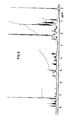
- NMR-Spektrum: Abb. 1
- C48H64N2O16 M ber. 924 (FAB-MS bestätigt)
- Cytorhodin SE besitzt die Formel I, worin R, = Roa und R2 = Roa-Rod-Acu bedeutet.
- Cytorhodin SE-Gluconat
- Cytorhodin TF-Gluconat
- Cytorhodin SD-Gluconat
- Die Bestimmung der Hemmwirkung - (Zellproliferationstest) erfolgte wie nachstehend beschrieben:
- L 1210 Zeilen in exponentieller Wachstumsphase (5x10'/ml in RPMI 1640) werden in einer Mikrotiterplatte 72 Stunden mit unterschiedlichen Konzentrationen der Testsubstanz inkubiert (37°C, 5 % CO2, 95 % relative Luftfeuchte). Kontrolle bestehen aus Zellen, die lediglich mit frischem Medium inkubiert werden. Alle Bestimmungen wer-Cytorhodin TF Rf-Wert im genannten System: 0,49
- UV-Maxima: 235, 252(Sch), 296 und 496 nm in Methanol/10% 1 N-HCI
- NMR-Spektrum: Abb. 2
- C48H64N2O16 M ber. 924 (FAB-MS bestätigt)
- Cytorhodin TF besitzt die Formel 1, worin R, = Roa-Rod-Acu und R2 = Roa bedeutet.
- Cytorhodin SD Rf-Wert im genannten System: 0,61
- UV-Maxima: 234, 235(Sch), 292 und 495 nm in Methanol/10% 1 N-HCI
- NMR-Spektrum: Abb. 3
- C48H66N2O17, M ber. 942 (FAB-MS bestätigt)
- Cytorhodin SD besitzt die Formel 1, worin R, = Roa und R2 = Roa-dF-CinA bedeutet.
- Die erfindungsgemäßen Cytorhodine zeichnen sich durch eine hohe cytostatische Wirksamkeit aus und zeigen im Zellproliferationstest an L1210-Leukämiezellen folgende Wirkung:

- Wie vorstehend ausgeführt, besitzen die erfindungsgemäßen Verbindungen zytostatische Wirksamkeit, d.h. therapeutische Wirkung gegen Tumoren, insbesondere maligne Tumoren bei Tieren und Menschen.
- Die Verbindungen und die Säureadditionssalze können daher als Medikamente zur Behandlung von Tumoren verwendet werden. Die Verbindungen können auf verschiedene Weise in Abhängigkeit von der Dosierungsform verabreicht werden. Normalerweise werden die Verbindungen mit pharmazeutisch üblichen Trägerstoffen oder Verdünnungsmitteln vermischt verabreicht. So können sie z.B. einzeln oder im Mischung zusammen mit Trägerstoffen wie Maltose oder Lactose oder als nicht-toxische Komplexe, z.B. als Desoxyribobukleinsäure-Komplex verabreicht werden.
- Eine typische Verabreichungsart ist die Injektion einer Lösung der erfindungsgemäßen Verbindung in destilliertem Wasser oder in physiologischer Kochsalzlösung. Die Lösungen können intraperitoneal, intravenös oder intraarteriell injiziert werden.
- Tagesdosis und Einheitsdosis können aus Tierversuchen und auch aus in vitro-Tests in der Weise festgesetzt werden, daß die Gesamtdosis, die kontinuierlich oder in Abständen verabreicht wird, einen vorher festgelegten Bereich nicht überschreitet. So beträgt die Gesamtdosis für einen Behandlungszyklus etwa, 0,5-5 mg/kg Körpergewicht. Diese Dosis kann in entsprechenden Bruchteilen über einen Zeitraum von 7 Tagen verabreicht wer-

- Die vereinigten Fraktionen wurden zur Gewinnung der Trockensubstanzen bis zur Abscheidung der Chloroformphase mit einer 5%igen wäßrigen Lösung von Na2HPO. versetzt, die Chloroformphase wurde mit einem Volumen Na2HPO4-Lösung und mit Wasser gewaschen, über Natriumsulfat getrocknet, im Vakuum eingeengt und mit Hexan gefällt.
- den. Es ist jedoch klar, daß konkrete Dosen für die Behandlung von Mensch oder Tier individuell festgelegt werden können in Abhängigkeit von der jeweiligen Situation, z.B. Alter, Körpergewicht, Geschlecht, Empfindlichkeit, Nahrung, Zeitpunkt der Verabreichung, weiteren verabreichten Medikamenten, körperlichem Zustand der Patienten und Schwere der Erkrankung.
- Die Herstellung der erfindungsgemäßen Verbindungen wird in nachfolgenden Beispielen beschrieben:
- 1,1 g Cytorhodin F wurden in 250 ml 0,1 N-Salzsäure gelöst und 115 Minuten bei Raumtemperatur gerührt. Mit 1 N-Natronlauge wurde ein pH-Wert von 3 eingestellt und dreimal mit je 250 ml Chloroform extrahiert. Bei pH 5,5 und pH 7, die ebenfalls durch Zusatz von 1 N-Natronlauge eingestellt wurden, erfolgte analog die Extraktion mit dreimal je 250 ml Chloroform. Die Extrakte bei pH 3 und pH 7 enthielten unumgesetztes Edukt sowie ß-Rhodomycin II, welches als Folgeprodukt der Hydrolyse gebildet wird und von Brockmann et al. bereits beschrieben wurde (Naturwissenschaften 42, 492 (1950); Chem Ber. 86 , 261 (1953)). Die bei pH 5,5 extrahierte Lösung wurde über Natriumsulfat getrocknet und zu einem Rückstand von 380 mg eingeengt.
- Der Rückstand wurde an 70 g Kieselgel (60, 15-40 um, Merck) über eine Mitteldrucksäule 102 ml (Labomatic) chromatographiert. Hierzu wurde das Lösungsmittelgemisch Chloroform/Methanol/Eisessig/Wasser = 70/20/10/2 verwendet. Bei einer Fließgeschwindigkeit von 2 ml/min wurden 190 Fraktionen ä 5 ml aufgefangen, die nach Prüfung über analytische HPLC - (UChrosorb Si60, 5u.m, Merck, mit dem System Chloroform/Methanol/ Eisessig/Wasser/Triethylamin = 750/100/100/20/0,5) folgendermaßen vereinigt wurden:
- Cytorhodin SE
- Cytorhodine SE und TF
- Cytorhodin TF
- Für die Testung der cytostatischen Aktivität wurden die Reinsubstanzen mit Gluconsäurelacton in die entsprechenden gut wasserlöslichen D-Glugonate überführt.
- 100 mg Cytorhodin P wurden in 10 ml, 0,1 N-HCI gelöst und bei Raumtemperatur 3,5 Stunden gerührt, die Reaktionslösung anschließend mit 0,1 N-NaOH auf pH 7,5 eingestellt und dreimal mit je 10 ml CHCl3 geschüttelt. Die vereinigten organischen Phasen wurden mit wenig Wasser neutral gewaschen, über Natriumsulfat getrocknet und im Vakuum eingedampft.
- Der trockene Rückstand (68 mg) enthielt nach Dünnschichtchromatogramm neben dem polaren β-Rhodomycin II zwei weniger polare Hauptprodukte und wurde durch präparative Schichtchromatographie aufgetrennt. Dazu wurden je 10 mg des Rückstandes in CHCl3, gelöst auf eine DC-Alufolie Kieselgel 60, 0,2 mm, 20 cm x 20 cm, Merck, aufgetragen und mit der Unterphase des Lösungsmittelgemisches CHCl3/Methanol/Wasser 130/40170 chromatographiert.
- Die herausgeschabten Banden wurden mit CHCl3/Methanol 1:1 eluiert, das Eluat i.V. eingedampft. Nach Aufnehmen in wenig CHCl3, wurde über eine Glasfritte filtriert und i.V. zur Trockne eingedampft. Es wurden 5 mg Cytorhodin SD und 2,5 mg Cytorhodin TF erhalten.
- Cytorhodin SD lieferte mit D-Gluconsäurelacton das gut wasserlösliche D-Gluconat.
Claims (11)


Applications Claiming Priority (2)
| Application Number | Priority Date | Filing Date | Title |
|---|---|---|---|
| DE19853524117 DE3524117A1 (de) | 1985-07-05 | 1985-07-05 | Neue anthracyclin-tetrasaccharide, ein verfahren zu ihrer herstellung und ihre verwendung als cytostatik |
| DE3524117 | 1985-07-05 |
Publications (2)
| Publication Number | Publication Date |
|---|---|
| EP0207463A2 true EP0207463A2 (de) | 1987-01-07 |
| EP0207463A3 EP0207463A3 (de) | 1987-05-27 |
Family
ID=6275079
Family Applications (1)
| Application Number | Title | Priority Date | Filing Date |
|---|---|---|---|
| EP86108781A Withdrawn EP0207463A3 (de) | 1985-07-05 | 1986-07-04 | Neue Anthracyclin-Tetrasaccharide, ein Verfahren zu ihrer Herstellung und ihre Verwendung als Cytostatika |
Country Status (8)
| Country | Link |
|---|---|
| US (1) | US4795808A (de) |
| EP (1) | EP0207463A3 (de) |
| JP (1) | JPS6284094A (de) |
| DE (1) | DE3524117A1 (de) |
| DK (1) | DK318486A (de) |
| ES (1) | ES2000916A6 (de) |
| GR (1) | GR861724B (de) |
| PT (1) | PT82916B (de) |
Cited By (1)
| Publication number | Priority date | Publication date | Assignee | Title |
|---|---|---|---|---|
| EP0283931A1 (de) * | 1987-03-21 | 1988-09-28 | Hoechst Aktiengesellschaft | Neue Anthracyclin-Glycoside, ein Verfahren zu ihrer Herstellung und ihre Verwendung als Cytostatika |
Family Cites Families (7)
| Publication number | Priority date | Publication date | Assignee | Title |
|---|---|---|---|---|
| CH637160A5 (fr) * | 1976-10-05 | 1983-07-15 | Microbial Chem Res Found | Procede de fabrication de glucosides anthracyclines. |
| JPS5731696A (en) * | 1980-08-01 | 1982-02-20 | Sanraku Inc | Anthracycline derivative |
| JPS57176995A (en) * | 1981-04-23 | 1982-10-30 | Sanraku Inc | Novel anthracyclinone glycoside and its preparation |
| DE3142860A1 (de) * | 1981-10-29 | 1983-05-11 | Italimpianti (Deutschland) Industrieanlagen GmbH, 4000 Düsseldorf | "verfahren und vorrichtung zum vorwaermen" |
| JPS5874694A (ja) * | 1981-10-29 | 1983-05-06 | Sanraku Inc | アントラサイクリン誘導体 |
| DE3323025A1 (de) * | 1983-06-25 | 1985-01-10 | Hoechst Ag, 6230 Frankfurt | Anthracyclin-derivate, ein mikrobiologisches verfahren zu ihrer herstellung und ihre verwendung als cytostatika |
| DE3325957A1 (de) * | 1983-07-19 | 1985-02-07 | Hoechst Ag, 6230 Frankfurt | Anthracyclin-derivate, ein verfahren zu ihrer herstellung und ihre verwendung als cytostatika |
-
1985
- 1985-07-05 DE DE19853524117 patent/DE3524117A1/de not_active Withdrawn
-
1986
- 1986-07-02 GR GR861724A patent/GR861724B/el unknown
- 1986-07-03 ES ES8600109A patent/ES2000916A6/es not_active Expired
- 1986-07-04 JP JP61156346A patent/JPS6284094A/ja active Pending
- 1986-07-04 DK DK318486A patent/DK318486A/da not_active Application Discontinuation
- 1986-07-04 EP EP86108781A patent/EP0207463A3/de not_active Withdrawn
- 1986-07-04 PT PT82916A patent/PT82916B/pt not_active IP Right Cessation
- 1986-11-24 US US06/933,885 patent/US4795808A/en not_active Expired - Fee Related
Cited By (1)
| Publication number | Priority date | Publication date | Assignee | Title |
|---|---|---|---|---|
| EP0283931A1 (de) * | 1987-03-21 | 1988-09-28 | Hoechst Aktiengesellschaft | Neue Anthracyclin-Glycoside, ein Verfahren zu ihrer Herstellung und ihre Verwendung als Cytostatika |
Also Published As
| Publication number | Publication date |
|---|---|
| DK318486A (da) | 1987-01-06 |
| PT82916B (pt) | 1989-01-30 |
| GR861724B (en) | 1986-10-31 |
| PT82916A (de) | 1986-08-01 |
| JPS6284094A (ja) | 1987-04-17 |
| EP0207463A3 (de) | 1987-05-27 |
| DK318486D0 (da) | 1986-07-04 |
| DE3524117A1 (de) | 1987-02-05 |
| US4795808A (en) | 1989-01-03 |
| ES2000916A6 (es) | 1988-04-01 |
Similar Documents
| Publication | Publication Date | Title |
|---|---|---|
| DE2510866C3 (de) | 4'-epi-Adriamycin a - und ß -Anomer, Verfahren zu deren Herstellung und diese enthaltende pharmazeutische Zusammensetzungen | |
| DE2618822C3 (de) | Anthracyclin-Glycoside und Verfahren zu deren Herstellung | |
| DE2743654C3 (de) | ||
| DE3881576T2 (de) | Anthracyclinderivate und ihre Verwendung. | |
| DE2831579C3 (de) | Tetrahydropyranylether von Daunomycin und Adriamycin, Verfahren zu ihrer Herstellung, sowie diese Verbindungen enthaltende pharmazeutische Zubereitungen | |
| DE2132445C2 (de) | Ester der Antibiotika B5050 und Tetrahydro-B-5050 und Verfahren zu ihrer Herstellung | |
| CH503037A (de) | Verfahren zur Herstellung von Pyrimidin-nucleosiden und -nucleotiden | |
| EP0131942B1 (de) | Anthracyclin-Derivate, ein Verfahren zu ihrer Herstellung und ihre Verwendung als Cytostatika | |
| DE1910207B2 (de) | Delta hoch 4.20.22 -bufatrienolidrhamnosidaether und verfahren zu deren herstellung | |
| AT392971B (de) | Verfahren zur herstellung neuer antitumor-antibiotika | |
| DE3634496C2 (de) | Glukosylmoranolinderivate und ihre Herstellung | |
| DE2343843C2 (de) | Verfahren zur Herstellung von 3-Vicianosyl-quercetin und diese Verbindungen enthaltende Arzneimittel | |
| DE68928127T2 (de) | 2'-Methylidenpyrimidinnukleosidverbindungen, ihre Verwendung und Verfahren zu ihrer Herstellung | |
| DE3712350A1 (de) | Semisynthetische rhodomycine, verfahren zu ihrer herstellung und ihre verwendung als zytostatika | |
| EP0167954B1 (de) | 1-Hydroxy-Cytorhodine, ein mikrobiologisches Verfahren zu ihrer Herstellung und ihre Verwendung als Cytostatika | |
| EP0345598B1 (de) | Zytostatisch wirksame Anthracyclinderivate | |
| EP0207463A2 (de) | Neue Anthracyclin-Tetrasaccharide, ein Verfahren zu ihrer Herstellung und ihre Verwendung als Cytostatika | |
| EP0196330B1 (de) | Verwendung von pyrrothinderivaten | |
| EP0432309B1 (de) | Neue Zuckerderivate, Verfahren zu ihrer Herstellung und ihre Verwendung | |
| CH507934A (de) | Verfahren zur Herstellung eines neuen Glucosids | |
| DE1493253C (de) | ||
| EP0257418A2 (de) | Oxiran-Pseudooligosaccharide, Verfahren zu deren Herstellung, deren Verwendung und pharmazeutische Präparate | |
| DE3306505C2 (de) | 4-Desmethoxy-13-dihydro-daunorubicin, Verfahren zu dessen Herstellung und diese Verbindung enthaltende Arzneimittel | |
| DE3008649A1 (de) | Neue spectinomycin-analoge und verfahren zu ihrer herstellung | |
| DE3722698A1 (de) | Zytostatisch wirksame anthracyclinderivate |
Legal Events
| Date | Code | Title | Description |
|---|---|---|---|
| PUAI | Public reference made under article 153(3) epc to a published international application that has entered the european phase |
Free format text: ORIGINAL CODE: 0009012 |
|
| AK | Designated contracting states |
Kind code of ref document: A2 Designated state(s): AT BE CH DE FR GB IT LI LU NL SE |
|
| PUAL | Search report despatched |
Free format text: ORIGINAL CODE: 0009013 |
|
| AK | Designated contracting states |
Kind code of ref document: A3 Designated state(s): AT BE CH DE FR GB IT LI LU NL SE |
|
| 17P | Request for examination filed |
Effective date: 19871111 |
|
| 17Q | First examination report despatched |
Effective date: 19880629 |
|
| STAA | Information on the status of an ep patent application or granted ep patent |
Free format text: STATUS: THE APPLICATION HAS BEEN WITHDRAWN |
|
| 18W | Application withdrawn |
Withdrawal date: 19880813 |
|
| RIN1 | Information on inventor provided before grant (corrected) |
Inventor name: BERSCHEID, HANS-GERD, DR. Inventor name: BOETTGER, DIRK, DR. Inventor name: KRAEMER, HANS PETER, DR. |