WO2025027851A1 - 金属粒子、金属粒子の製造方法、金属粒子の製造装置、及び金属粒子を含む分散体 - Google Patents
金属粒子、金属粒子の製造方法、金属粒子の製造装置、及び金属粒子を含む分散体 Download PDFInfo
- Publication number
- WO2025027851A1 WO2025027851A1 PCT/JP2023/028440 JP2023028440W WO2025027851A1 WO 2025027851 A1 WO2025027851 A1 WO 2025027851A1 JP 2023028440 W JP2023028440 W JP 2023028440W WO 2025027851 A1 WO2025027851 A1 WO 2025027851A1
- Authority
- WO
- WIPO (PCT)
- Prior art keywords
- metal particles
- reaction
- metal
- reaction liquid
- weight
- Prior art date
- Legal status (The legal status is an assumption and is not a legal conclusion. Google has not performed a legal analysis and makes no representation as to the accuracy of the status listed.)
- Pending
Links
Images



Classifications
-
- B—PERFORMING OPERATIONS; TRANSPORTING
- B22—CASTING; POWDER METALLURGY
- B22F—WORKING METALLIC POWDER; MANUFACTURE OF ARTICLES FROM METALLIC POWDER; MAKING METALLIC POWDER; APPARATUS OR DEVICES SPECIALLY ADAPTED FOR METALLIC POWDER
- B22F1/00—Metallic powder; Treatment of metallic powder, e.g. to facilitate working or to improve properties
- B22F1/05—Metallic powder characterised by the size or surface area of the particles
- B22F1/054—Nanosized particles
-
- B—PERFORMING OPERATIONS; TRANSPORTING
- B22—CASTING; POWDER METALLURGY
- B22F—WORKING METALLIC POWDER; MANUFACTURE OF ARTICLES FROM METALLIC POWDER; MAKING METALLIC POWDER; APPARATUS OR DEVICES SPECIALLY ADAPTED FOR METALLIC POWDER
- B22F1/00—Metallic powder; Treatment of metallic powder, e.g. to facilitate working or to improve properties
- B22F1/05—Metallic powder characterised by the size or surface area of the particles
- B22F1/054—Nanosized particles
- B22F1/0545—Dispersions or suspensions of nanosized particles
-
- B—PERFORMING OPERATIONS; TRANSPORTING
- B22—CASTING; POWDER METALLURGY
- B22F—WORKING METALLIC POWDER; MANUFACTURE OF ARTICLES FROM METALLIC POWDER; MAKING METALLIC POWDER; APPARATUS OR DEVICES SPECIALLY ADAPTED FOR METALLIC POWDER
- B22F1/00—Metallic powder; Treatment of metallic powder, e.g. to facilitate working or to improve properties
- B22F1/10—Metallic powder containing lubricating or binding agents; Metallic powder containing organic material
-
- B—PERFORMING OPERATIONS; TRANSPORTING
- B22—CASTING; POWDER METALLURGY
- B22F—WORKING METALLIC POWDER; MANUFACTURE OF ARTICLES FROM METALLIC POWDER; MAKING METALLIC POWDER; APPARATUS OR DEVICES SPECIALLY ADAPTED FOR METALLIC POWDER
- B22F7/00—Manufacture of composite layers, workpieces, or articles, comprising metallic powder, by sintering the powder, with or without compacting wherein at least one part is obtained by sintering or compression
- B22F7/06—Manufacture of composite layers, workpieces, or articles, comprising metallic powder, by sintering the powder, with or without compacting wherein at least one part is obtained by sintering or compression of composite workpieces or articles from parts, e.g. to form tipped tools
- B22F7/08—Manufacture of composite layers, workpieces, or articles, comprising metallic powder, by sintering the powder, with or without compacting wherein at least one part is obtained by sintering or compression of composite workpieces or articles from parts, e.g. to form tipped tools with one or more parts not made from powder
-
- B—PERFORMING OPERATIONS; TRANSPORTING
- B22—CASTING; POWDER METALLURGY
- B22F—WORKING METALLIC POWDER; MANUFACTURE OF ARTICLES FROM METALLIC POWDER; MAKING METALLIC POWDER; APPARATUS OR DEVICES SPECIALLY ADAPTED FOR METALLIC POWDER
- B22F9/00—Making metallic powder or suspensions thereof
-
- B—PERFORMING OPERATIONS; TRANSPORTING
- B22—CASTING; POWDER METALLURGY
- B22F—WORKING METALLIC POWDER; MANUFACTURE OF ARTICLES FROM METALLIC POWDER; MAKING METALLIC POWDER; APPARATUS OR DEVICES SPECIALLY ADAPTED FOR METALLIC POWDER
- B22F9/00—Making metallic powder or suspensions thereof
- B22F9/16—Making metallic powder or suspensions thereof using chemical processes
- B22F9/18—Making metallic powder or suspensions thereof using chemical processes with reduction of metal compounds
- B22F9/24—Making metallic powder or suspensions thereof using chemical processes with reduction of metal compounds starting from liquid metal compounds, e.g. solutions
-
- B—PERFORMING OPERATIONS; TRANSPORTING
- B22—CASTING; POWDER METALLURGY
- B22F—WORKING METALLIC POWDER; MANUFACTURE OF ARTICLES FROM METALLIC POWDER; MAKING METALLIC POWDER; APPARATUS OR DEVICES SPECIALLY ADAPTED FOR METALLIC POWDER
- B22F9/00—Making metallic powder or suspensions thereof
- B22F9/16—Making metallic powder or suspensions thereof using chemical processes
- B22F9/30—Making metallic powder or suspensions thereof using chemical processes with decomposition of metal compounds, e.g. by pyrolysis
Definitions
- the present invention relates to metal particles, a method for producing metal particles, an apparatus for producing metal particles, and a dispersion containing metal particles.
- Metal nanoparticles which can have different properties from bulk materials, are being used and investigated for a variety of applications, including as catalysts, ink materials, and electronic component parts.
- Patent Document 1 discloses a method for producing chromium nanoparticles with an average particle size of 5.6 nm by irradiating a raw material solution containing 50 mL of 1-decanol as a solvent and 5 mmol of chromium carbonyl powder as a raw material for chromium nanoparticles with ultrasonic waves of 50 kHz and 150 W at 40°C to thermally decompose the raw material for chromium nanoparticles.
- Patent Document 2 discloses a method for producing metal microparticles in which a reaction liquid containing a metal precursor is caused to flow through a flow tube while electromagnetic waves are uniformly and intensively irradiated into the flow tube along the length of the flow tube, thereby uniformly heating the electromagnetic wave-irradiated space within the flow tube along the flow direction to generate metal microparticles.
- metal nanoparticles In order to use metal nanoparticles in the electronics packaging field, it is desirable to reduce the particle size of the metal nanoparticles.
- the present invention aims to provide a method for efficiently producing metal particles, metal particles obtained by the production method, a production apparatus for carrying out the production method, and a dispersion containing metal particles obtained by the production method.
- the inventors discovered that in a method for producing metal particles by irradiating a reaction liquid with microwaves, by setting the microwave absorption power for the reaction liquid and the pressure applied to the reaction liquid to a certain level or higher, the reaction time can be shortened, metal particles having a small particle size and a low content of organic matter that can act as a dispersant and become an impurity can be produced, and the resulting metal particles have a low volumetric shrinkage rate, thus completing the present invention.
- the gist of the present invention is as follows.
- a method for producing metal particles comprising the step of irradiating a reaction solution with microwaves, (i) preparing a reaction liquid containing a metal particle precursor, an organic substance as a dispersant, and a solvent; (ii) irradiating the reaction solution with microwaves while the reaction solution is flowing,
- the relationship between the absorbed power E (unit: W/mL) of the microwave and the pressure P (unit: MPa) for the reaction solution is expressed by the following formula 1.
- step (i) the content of the organic substance in the reaction solution is 0.1% by weight to 2% by weight based on the total weight of the metal of the metal particle precursor.
- step (ii) the relationship between the absorbed power E (unit: W/mL) of the microwave and the pressure P (unit: MPa) for the reaction solution is expressed by the following formula 2: E ⁇ P ⁇ 30 (Equation 2)
- the median diameter (D50) measured by TEM is 20 nm or less.
- a metal particle dispersion comprising metal particles, an organic substance as a dispersant for the metal particles, and a solvent, the content of the metal particles is 1% by weight to 95% by weight based on the total weight of the metal particle dispersion, the content of the organic substance is 0.1% by weight to 2% by weight based on the total weight of the metal particles;
- the median diameter (D50) of the metal particles measured by TEM is 20 nm or less; The metal particle dispersion.
- a manufacturing apparatus for producing metal particles by irradiating a reaction solution with microwaves comprising: The manufacturing apparatus comprises: A pump for pumping the reaction liquid; an irradiation device that irradiates the reaction liquid, which is pumped from the pump and flows in the reaction tube, with the microwave together with the reaction tube; a pressure adjusting device downstream of the reaction tube for adjusting the pressure of the reaction liquid in the reaction tube; the reaction liquid pumped from the pump is stirred between the pump and the reaction tube.
- the present invention provides a method for efficiently producing metal particles, metal particles obtained by the production method, a production apparatus for carrying out the production method, and a dispersion containing metal particles obtained by the production method.
- FIG. 1 is a diagram showing an outline of an embodiment of a manufacturing apparatus of the present invention.
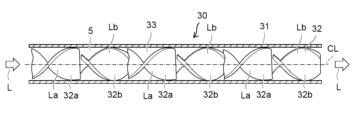
- FIG. 2 is a schematic diagram showing an embodiment of a stirring device in the production apparatus of the present invention.
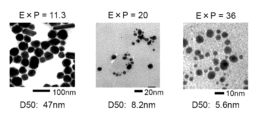
- TEM images of silver particles in Comparative Example 1 and Examples 1 and 4. 1 is a graph showing the particle size distribution of silver particles in Example 1.
- 1 is a graph showing the relationship between D50 and the value (E ⁇ P) obtained by multiplying the absorbed power E (W/mL) of microwaves in a reaction solution by the pressure P (MPa) applied to the reaction solution.
- E ⁇ P the value obtained by multiplying the absorbed power E (W/mL) of microwaves in a reaction solution by the pressure P (MPa) applied to the reaction solution.
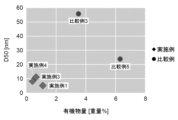
- 1 is a graph showing the relationship between the amount of organic matter and D50 in Examples and Comparative Examples.
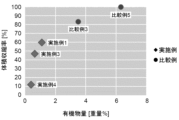
- 1 is a graph showing the relationship between the amount of organic matter and the volumetric shrinkage rate at 120° C. for 2 hours.
- FIG. 1 is a diagram showing a schematic diagram of a process from the formation of a nucleus of a metal particle (for example, a silver particle) to the growth of the particle in the conventional technology or when Ex ⁇ P is less than 20.
- FIG. 2 is a diagram showing a process from the formation of a nucleus of a metal particle (for example, a silver particle) to the growth of the particle when Ex ⁇ P is 20 or more in the present invention.
- ⁇ used in this specification means a range having the numerical values before and after it as the upper and lower limits.
- the upper or lower limit value described in one numerical range may be replaced with the upper or lower limit value described in another stage.
- the upper or lower limit value of the numerical ranges described in this specification may be replaced with the values shown in the examples.
- the present invention relates to a method for producing metal particles, which includes a step of irradiating a reaction solution with microwaves, and the method includes a step of (i) preparing a reaction solution containing a metal particle precursor, an organic substance, and a solvent, and a step of (ii) irradiating the reaction solution with microwaves while flowing the reaction solution.
- Step (i) Step of preparing a reaction liquid containing a metal particle precursor, an organic substance, and a solvent
- a reaction liquid containing a metal particle precursor, an organic substance, and a solvent is prepared.
- the solvent used in the reaction solution is not limited as long as it is a polar solvent or ionic liquid that can dissolve materials such as metal particle precursors, organic substances as dispersants, and reducing agents, and can also absorb microwaves.
- the solvent used in the reaction solution include low-boiling point solvents with a boiling point of 300°C or less.
- low-boiling point solvents include, but are not limited to, water, alcohols such as methanol and ethanol, polyhydric alcohol solvents such as ethylene glycol, ketone solvents such as acetone, dimethyl sulfoxide (DMSO), N,N-dimethylformamide (DMF), other organic solvents, or mixtures of two or more of these low-boiling point polar solvents.
- a mixture is used as a solvent, the ratio of each component contained in the mixture is not limited, and it is sufficient that the ratio is such that the components are miscible under the experimental conditions.
- the solvent becomes easier to handle and the burden on the environment can be reduced.
- the metal particle precursor is not limited as long as it dissolves in a solvent to generate metal ions, such as ions of precious metals, base metals, and alloys, such as gold, silver, platinum, copper, nickel, iron, cobalt, or ions of two or more of these metals.
- metal ions such as ions of precious metals, base metals, and alloys, such as gold, silver, platinum, copper, nickel, iron, cobalt, or ions of two or more of these metals.
- the metal particle precursor include inorganic salts of metals, such as metal halides, such as fluorides, chlorides, bromides, iodides, metal sulfates, metal nitrates, metal phosphates, and metal cyanides, organic salts of metals, such as metal carboxylates and metal sulfonates, and metal complexes, including metal complex salts.
- the metal particle precursor may be prepared, for example, by dissolving a material containing a metal or a metal salt with an acid, such as nitric acid, or a base, such as aqueous ammonia. It is preferable to use inexpensive metal nitrates, such as nickel nitrate and silver nitrate, as the metal particle precursor. In addition, a formate having reducing properties, such as nickel formate, can be used as the metal particle precursor. Therefore, in one embodiment, when a salt composed of a metal ion and a reducing organic anion, such as a formate ion, as a counter anion is used as the metal particle precursor, it is not necessary to use a reducing agent.
- a homogeneous reaction solution can be prepared by dissolving the metal particle precursor in a solvent.
- the concentration of metal ions in the reaction solution is not limited as long as it is equal to or less than the saturation concentration, but is usually 1 mmol/L (mM) or more, and in one embodiment 10 mM or more, and usually 600 mM or less, and in one embodiment 200 mM or less, for example, 1 mM to 600 mM, and in one embodiment 10 mM to 200 mM, and in one embodiment 20 mM to 180 mM, and in one embodiment 50 mM to 150 mM.
- mM 1 mmol/L
- metal particles can be produced efficiently at a high concentration, the amount of metal particles that can be produced and recovered at one time can be significantly increased, and the time, labor, and cost required for producing metal particles can be reduced.
- the variation in the resulting metal particles is reduced, in other words, the particle size distribution of the resulting metal particles is narrowed.
- the reaction liquid contains an organic substance as a dispersant.
- dispersants include, but are not limited to, one or more dispersants selected from polyvinylpyrrolidone (PVP), dodecylamine (DDA), thiol-based polymers, polyvinyl alcohol (PVA), polyacrylic acid, polyacrylates, cyclodextrin, aminopectin, methylcellulose, polyethyleneimine cellulose, aliphatic amines, aliphatic carboxylic acids, and tannic acid.
- PVP polyvinylpyrrolidone
- DDA dodecylamine
- thiol-based polymers polyvinyl alcohol (PVA)
- PVA polyacrylic acid
- polyacrylates cyclodextrin
- aminopectin aminopectin
- methylcellulose polyethyleneimine cellulose
- aliphatic amines aliphatic carboxylic acids
- tannic acid tannic acid
- the molecular weight of the dispersant is not limited, but is, for example, a weight average molecular weight (Mw) of usually 1000 or more, in one embodiment 8000 or more, in one embodiment 10000 or more, and usually 50000 or less, in one embodiment 40000 or less, for example 1000 to 50000, in one embodiment 8000 to 50000, and in one embodiment 10000 to 40000.
- Mw weight average molecular weight
- the amount of dispersant adsorbed to the metal particles is not limited, but is usually 2 wt% or less, and in one embodiment, 1 wt% or less, based on the total weight of the metal particles.
- the lower limit is not limited, but is usually 0.1 wt% or more, and in one embodiment, 0.2 wt% or more, and in one embodiment, 0.3 wt% or more, based on the total weight of the metal particles.
- the amount of organic matter required as a dispersant to control particle size during manufacturing was greater than the amount of organic matter required for dispersion. Furthermore, this organic matter could not be removed, so it remained in the final metal nanoparticles. According to the method of the present invention, it is possible to reduce the amount of organic matter required for particle size control during manufacturing, making it possible to manufacture metal particles with a reduced amount of organic matter, that is, containing only the amount of organic matter required for dispersion.
- reaction solution may contain a reducing agent.
- the reducing agent is a material that can reduce metal ions to a metal whose oxidation number is 0 through an oxidation-reduction reaction.
- the reducing agent is not limited.
- reducing agents include citric acid or citrates, such as trisodium citrate, disodium citrate, monosodium citrate, oxalic acid or oxalate, such as sodium oxalate, ascorbic acid or ascorbate, such as sodium ascorbate, formic acid or formate, such as sodium formate, DMF, and mixtures of two or more of these.
- the reducing agent for metal ions, particularly silver ions is DMF. Therefore, when DMF is used as a solvent for the reaction solution, DMF can also act as a reducing agent, so that a reducing agent other than DMF does not need to be used.
- the amount of the reducing agent is not limited as long as it can reduce the metal ion to a metal whose oxidation number is 0 by a redox reaction, but is usually 1.0 equivalent or more, in one embodiment 4.0 equivalent or more, and usually 20 equivalents or less, in one embodiment 15 equivalents or less, for example 1.0 equivalent to 20 equivalents, in one embodiment 4.0 equivalents to 15 equivalents.
- the reducing agent for metal ions may also act as a dispersant if it contains one or more functional groups capable of interacting with metals, such as a carboxy group, a hydroxy group, or an ether group.
- the reaction liquid may not contain the dispersant described above, and the amount of the reducing agent for metal ions may be an amount exceeding the amount necessary to reduce the metal ion to a metal whose oxidation number is 0 by a redox reaction.
- the reaction liquid may be composed of the metal particle precursor, solvent, dispersant, and optionally reducing agent described above, but in addition to these materials, it may further contain additives that are typically used in conventional methods for producing metal particles by irradiating microwaves, such as a chelating agent, for example, ethylenediaminetetraacetic acid (EDTA) and/or its salts.
- a chelating agent for example, ethylenediaminetetraacetic acid (EDTA) and/or its salts.
- the amount of additive is not limited, but is typically 10% by weight or less, and in one embodiment, 3% by weight or less, based on the total weight of the reaction liquid. Since additives do not have to be added, there is no lower limit for the additives.
- the pH of the reaction solution is not limited, but is usually between pH 3 and pH 12.
- the order of addition of each material, the addition temperature, the mixing method, the mixing time, etc., in preparing the reaction liquid are not limited, and the materials are mixed so as to prepare a homogeneous reaction liquid.
- the reaction is started after a homogeneous reaction liquid has been prepared.
- step (ii) Step of Irradiating with Microwaves While Flowing the Reaction Solution
- the reaction solution prepared in step (i) is irradiated with microwaves while flowing.
- step (ii) the absorbed power E (unit: W/mL) of the microwave to the reaction solution and the pressure P (unit: MPa) are expressed by the following formula 1.
- E ⁇ P ⁇ 20 (Equation 1) is adjusted to satisfy the relationship:
- the absorbed power E (unit: W/mL) of the microwave to the reaction solution and the pressure P (unit: MPa) are expressed by the following formula 2.
- E ⁇ P ⁇ 30 (Equation 2) is adjusted to satisfy the relationship:
- the absorbed power E (unit: W/mL) of the microwave to the reaction solution and the pressure P (unit: MPa) are expressed by the following formula 3.
- E ⁇ P ⁇ 35 (Equation 3) is adjusted to satisfy the relationship:
- the absorbed power E of the microwaves in the reaction liquid is calculated by dividing the intensity (W) of the microwaves absorbed in the reaction liquid, i.e., the value obtained by subtracting the reflected power irradiated to the reaction liquid and reflected from it from the output of the microwave irradiation source (output - reflected power), by the volume (mL) of the reaction liquid irradiated with that output.
- Pressure P is the pressure (MPa) applied to the reaction liquid, and is the pressure measured at the outlet of the reaction liquid after microwave irradiation.
- the reflected power can be measured by a power monitor in the microwave irradiation device.
- the formation of metal particle nuclei occurs simultaneously and uniformly, and the growth of the formed nuclei also occurs simultaneously and uniformly, resulting in the production of metal particles with small particle sizes.
- the method of flowing the reaction liquid is not limited as long as the reaction liquid flows in any direction.
- the reaction liquid can be flowed at a constant speed, for example, in a reaction tube, such as a straight tube or a spiral tube.
- the dimensions and shape are not limited as long as the microwaves are uniformly irradiated throughout the reaction tube.
- the inner diameter of the tube is typically 1 mm or more, in one embodiment 2 mm or more, in one embodiment 4 mm or more, and typically 20 mm or less, in one embodiment 10 mm or less, for example 1 mm to 20 mm, in one embodiment 2 mm to 10 mm, in one embodiment 4 mm to 10 mm.
- the reaction tube used when the cavity is a rectangular parallelepiped with a length of 100 mm, the reaction tube used has an inner diameter of 1 mm to 6 mm, an outer diameter of 3 mm to 8 mm (wall thickness: 1 mm), and a length of 100 mm.
- the pressure P applied to the reaction liquid is not limited as long as it satisfies the above formulas 1 to 3, but is usually 0.10 MPa or more and usually 1.0 MPa or less, for example 0.10 MPa to 1.0 MPa.
- the flow rate of the reaction liquid is not limited as long as the pressure P on the reaction liquid satisfies the above formulas 1 to 3, but is usually 1 m/min or more and usually 100 m/min or less, for example 1 m/min to 100 m/min.
- the reaction liquid By setting the flow rate of the reaction liquid within the above range, the reaction liquid can be circulated while applying a predetermined pressure to the reaction liquid, and small metal particles can be formed even with a small amount of organic matter used as a dispersant.
- the microwave absorption power (E) of the reaction liquid is not limited as long as it satisfies the above formulas 1 to 3, but is usually 20 W/mL or more and usually 500 W/mL or less relative to the volume of the reaction liquid, for example 20 W/mL to 500 W/mL.
- reaction solution being irradiated with microwaves is stirred while the reaction solution is being irradiated with microwaves.
- the reaction is allowed to proceed by irradiating the reaction liquid with microwaves using a microwave synthesis device so as to satisfy formulas 1 to 3 while the reaction liquid is flowing.
- the reaction liquid is irradiated with microwaves
- the polar solvent contained in the reaction liquid absorbs the microwaves and converts them into thermal energy, thereby generating heat. Therefore, in the reaction liquid irradiated with microwaves, a uniform and rapid temperature rise occurs in the irradiated parts, and a uniform and rapid reaction occurs in accordance with this temperature rise.
- microwaves are irradiated uniformly onto the target of the reaction, i.e., the part of the reaction solution where the reaction occurs.
- the material of the part of the container that holds the reaction liquid that is irradiated with microwaves is not limited as long as it can irradiate the reaction liquid uniformly with microwaves.
- the material of the part of the container that holds the reaction liquid that is irradiated with microwaves can be a material that transmits microwaves, i.e., does not absorb microwaves, such as ceramics, glass, quartz, Teflon (registered trademark, PTFE, etc.), silicone, or other non-conductive materials with small relative dielectric constant ⁇ and dielectric loss angle tan ⁇ .
- the housing that holds the microwave irradiation source and the reaction tube that irradiates microwaves is not limited as long as it is a material that does not leak or absorb microwaves, and examples of such materials include non-magnetic metal plates, such as aluminum plates.
- Microwaves are generated from a microwave radiation source (microwave oscillator (magnetron)), which can be either a single-mode system or a multi-mode system.
- a microwave radiation source microwave oscillator (magnetron)
- microwave oscillator microwave oscillator
- the frequency of the microwaves generated from the microwave irradiation source can be changed as appropriate and is not limited.
- the microwave frequency is usually 1 GHz or higher, and in one embodiment is 2 GHz or higher, and is usually 10 GHz or lower, for example, 1 GHz to 10 GHz.
- the microwaves are preferably uniform during irradiation, and the microwave irradiation conditions are preferably constant during microwave irradiation.
- the temperature of the reaction liquid that is heated by microwave irradiation is the reaction temperature, which can be changed appropriately depending on the reaction conditions (type of solvent, pressure during reaction, etc.) and is not limited, but is usually 25°C or higher, and in one embodiment, 80°C or higher.
- the upper limit of the reaction temperature is not limited, but is usually lower than the boiling point of the solvent.
- the reaction temperature is usually in the range of 25°C or higher and lower than 100°C at atmospheric pressure, and in one embodiment, 80°C to 90°C.
- the reaction temperature of the present invention can be higher than the boiling point of the solvent under atmospheric pressure.
- the boiling point of the solvent under the applied pressure can change depending on the pressure. Therefore, in one embodiment, the reaction temperature is higher than the boiling point of the solvent under atmospheric pressure and lower than the boiling point of the solvent under the applied pressure.
- the microwave irradiation time for the reaction solution is the time it takes for the temperature of the reaction solution to reach the reaction temperature, and is not limited and may be changed appropriately depending on the reaction conditions (microwave conditions, type of metal, type of solvent, pressure during the reaction, amount of reaction solution, reaction temperature, etc.).
- the reaction solution is circulated, and microwave irradiation of the reaction solution is usually continued until the reaction is completed.
- the reaction can be carried out at a high temperature by applying pressure to the reaction liquid. Therefore, the total reaction time required for the reaction can be significantly shortened compared to when pressure is not applied.
- the ratio of the reaction time in the method of the present invention to the reaction time in the method without applying pressure is usually 1.1 or more, in one embodiment 1.5 or more, in one embodiment 2.0 or more, and usually 10 or less, in one embodiment 8.0 or less, in one embodiment 6.0 or less, for example 1.1 to 10, in one embodiment 1.5 to 8.0, in one embodiment 2.0 to 6.0, for example 5.0. Therefore, by producing metal particles using the method of the present invention, it is possible to significantly shorten the time.
- the completion of the reaction can be determined by observing that the absorbance and other properties resulting from the metal particle precursor material or metal particles in the reaction solution no longer change. For example, when silver particles are used as the metal particle precursor material, the change in the absorbance of the reaction solution at 280 nm to 780 nm is observed, and the point at which the absorbance no longer changes is regarded as the completion of the reaction.
- the irradiation of the reaction solution with microwaves may be stopped, and the reaction solution may be kept warm using a heat-retaining device, such as a heater or cooler.
- the temperature at which the reaction liquid is kept warm by the warming device is not limited, but is usually equal to or lower than the reaction temperature.
- the lower limit of the warming temperature is not limited, but is usually equal to or higher than 25°C, and in one embodiment, equal to or higher than 80°C.
- the warming temperature is usually in the range of 25°C or higher and lower than 100°C, and in one embodiment, 80°C to 90°C, at atmospheric pressure.
- the warming device can adjust it to an appropriate warming temperature.
- the heat-retention device used to keep the reaction liquid warm is not limited as long as it can keep the temperature of the reaction liquid at the warming temperature, and any conventional heat-retention device can be used.
- heat-retention devices include heaters, such as mantle heaters, immersion heaters, water baths, oil baths, and coolers.
- the time for which the reaction liquid is kept warm by the warming device is not limited, but is usually at least 1 minute and usually not more than 15 minutes.
- the reaction liquid warm using a heat retention device, the growth of the nuclei of the metal particles in the reaction liquid produced can be promoted, and the metal particles can be further homogenized (aged).
- the dispersion liquid containing metal particles obtained by the present invention can be separated and purified (e.g., salting out or centrifugation) by methods known in the art, if necessary, to obtain the desired metal particles or a dispersion containing metal particles.
- the present invention also relates to a metal particle manufacturing apparatus for efficiently carrying out the method of the present invention.
- the manufacturing apparatus 1 is a manufacturing apparatus for producing metal particles by irradiating a reaction liquid L with microwaves M.
- the manufacturing apparatus 1 includes a storage tank 10 that stores reaction liquid L, and a pump 20 that sucks the reaction liquid L from the storage tank 10 and pumps it out.
- the reaction liquid L flows through a path 5 from the storage tank 10 to the reaction device 40.
- reaction liquid L before and after the reaction.
- the manufacturing apparatus 1 includes an agitator 30 and a reaction device 40, which will be described later.
- the reaction device 40 includes a housing 41 that houses a reaction tube 43 through which a reaction liquid L flows via the agitator 30, and an irradiation device 42 that irradiates microwaves M to the reaction tube 43 in the housing 41.
- the reaction liquid L which is pumped from the pump 20 and flows through the reaction tube 43, can be irradiated with microwaves M using the irradiation device 42 together with the reaction tube 43.
- the material of the reaction tube 43 may be the same as the material of the container that contains the reaction liquid described in the method of the present invention, and may be made of a ceramic material made of silicon oxide such as glass or quartz, or a resin material such as PTFE.
- the piping other than the path 5 that forms the reaction tube 43 may also be composed of these piping, or the piping other than the path 5 that forms the reaction tube 43 may be composed of metal, such as stainless steel or aluminum, since microwaves M are not irradiated.
- the reaction tube 43 may be a straight pipe, but may also be, for example, a spiral pipe. This can increase the irradiation efficiency of microwaves M compared to a straight pipe.
- the dimensions and shape are not limited as long as the irradiated microwaves M are uniformly irradiated throughout the reaction tube 43.
- the inner diameter of the tube is usually 1 mm or more, in one embodiment 2 mm or more, in one embodiment 4 mm or more, and usually 20 mm or less, in one embodiment 10 mm or less, for example 1 mm to 20 mm, in one embodiment 2 mm to 10 mm.
- the reaction tube 43 is preferably a reaction tube with an inner diameter of 1 mm to 6 mm, an outer diameter of 3 mm to 8 mm (wall thickness: 1 mm), and a length of 100 mm.
- the dimensions and shape of the reaction device 40 are also not limited.
- the manufacturing apparatus 1 is provided with a heat retention device 50 and a pressure adjustment device 60 in that order downstream of the reaction device 40.
- the heat retention device 50 is an optional device and does not have to be installed.
- the reaction liquid L (specifically, a slurry-like suspension containing metal particles) after the reaction flowing through the path 5 is heated in the reaction device 40, so the heat retention device 50 is a device that keeps this reaction liquid L at the heat retention temperature in the method of the present invention described above, that is, at a predetermined temperature between the reaction temperature and the reaction temperature.
- the reaction liquid L flowing through the path 5 is heated or cooled using the heat retention device, and the reaction liquid L maintained at the predetermined temperature is released to the pressure adjustment device 60.
- a cooler can also be used as the heat retention device 50.
- the pressure adjustment device 60 adjusts the pressure of the reaction liquid L in the reaction tube 43 downstream of the reaction device (reaction tube 43) 40, and in one embodiment, the pressure of the reaction liquid L in the path 5 from the pump 20 to the pressure adjustment device 60. Specifically, the pressure adjustment device 60 adjusts the pressure of the reaction liquid L in the path 5 by throttling the discharge rate of the reaction liquid L passing through it. This makes it possible to increase the pressure of the reaction liquid L in the reaction tube 43 to atmospheric pressure or higher, without exceeding the discharge pressure of the pump 20.
- the reaction liquid L pumped by the pressure adjustment device 60 is collected in a collection tank 70.
- reaction liquid L sent by the pump 20 is pumped into the reaction tube 43.
- the pressure of the pumped reaction liquid L is adjusted by the pressure adjustment device 60 while it is in a pressurized state.
- the boiling point of the reaction liquid L can be raised compared to atmospheric pressure, and the production rate of metal particles can be increased.
- the manufacturing apparatus 1 is provided with an agitation device 30 between the pump 20 and the reaction tube 43 of the reaction device 40, which agitates the reaction liquid L pumped from the pump 20.
- the device configuration, structure, and location of the stirring device 30 are not particularly limited.
- the stirring device 30 has a structure equivalent to that of the static mixer shown in Figure 2, as an example.
- the stirring device 30 has a straight pipe 31 through which the reaction liquid L flows, and a twisted blade 32 that is fixed within the pipe 31 and twisted around the axis CL of the pipe 31. With the twisted blade 32 disposed in the pipe 31, a flow path 33 (path 5) through which the reaction liquid L flows is formed within the pipe 31.
- the twisted blade 32 may be twisted in a spiral shape around the same axis CL, but in this embodiment, it has the following structure. Specifically, the twisted blade 32 is a blade in which twisted blade elements 32a, 32b with different twist directions around the axis are arranged alternately along the axial direction of the pipe 31.
- the twisted blade element 32a and the twisted blade element 32b are formed by twisting a flat plate material.
- the twisted blade element 32a is twisted in the opposite direction to the twisted direction of the twisted blade element 32a.
- Such twisted blade elements 32a and twisted blade elements 32b are alternately connected along the axial direction of the pipe 31.
- the reaction liquid L that has passed through the twisted blade 32 tends to generate a stable stirring flow along the axial direction of the pipe 31, which tends to reduce the segregation of metal particles in the reaction tube 43 and also tends to re-dissolve the segregated metal particles.
- the twisted blade is a blade in which twisted blade elements 32a, 32b with different twist directions around the axis are arranged alternately along the axial direction of the pipe 31.
- the material of the twisted blade 32 is not limited. When the twisted blade 32 is placed immediately before the reaction device 40, it is made of a non-conductive material that does not absorb or reflect microwaves.
- the materials exemplified for the reaction tube 43 are preferred, and examples of such materials include ceramic materials made of silicon oxide such as glass and quartz, or resin materials such as PTFE.
- the piping 31 is made of a similar material. In this way, by making the twisted blade 32 out of a non-conductive material, it is possible to prevent microwaves M from reaching the twisted blade from the reaction tube 43 via the reaction liquid L. This allows microwaves M to be efficiently irradiated to the reaction liquid in the reaction tube 43.
- the agitator 30 is preferably disposed in a position closer to the reactor 40 in the path 5 between the pump 20 and the reactor 40. More specifically, the agitator 30 is preferably disposed in a position where the agitation flow of the reaction liquid L that has passed through the agitator 30 is sustained in the reaction tube 43.
- the agitator 30 may be disposed near the inlet into which the reaction liquid L of the reactor 40 flows, and is not limited to this position as long as the agitation flow is sustained.
- the stirring flow of the reaction liquid L that has passed through the stirring device 30 is maintained within the reaction tube 43, so that local changes in the concentration and viscosity of the reaction liquid L can be suppressed when the metal particles are generated.
- the metal particle manufacturing device 1 of the present invention can efficiently carry out the metal particle manufacturing method of the present invention without causing changes in the physical properties of the reaction liquid L, such as the volume and viscosity, before and after the application of pressure, or a decrease in the absorption rate (uniformity) of the irradiated microwaves due to the changes in the physical properties, and furthermore, it can prevent segregation of the metal particles and re-dissolve the segregated metal particles.
- the present invention also relates to metal particles containing organic matter, which can be obtained by the method or manufacturing apparatus of the present invention, and which have a small particle size and a low organic matter content.
- organic matter refers to a compound that is attached to the metal particles in order to uniformly disperse the metal particles in a solvent or solvent, and is non-volatile and is distinguished from organic compounds used as a solvent or solvent.
- the metal particles are metal nanoparticles.
- metal nanoparticles refers to metal particles whose particle size is usually 1 nm to 100 nm. Therefore, when the metal particles of the present invention are metal nanoparticles, the metal particles of the present invention are metal particles whose Heywood diameter of the entire metal particle, including the main portion and auxiliary portion, is 1 nm to 100 nm.
- the metal particles are spherical.
- spherical refers not only to a perfect sphere when the metal particles are observed under a transmission electron microscope (TEM), but also to an approximately spherical shape, an oval sphere, a polygonal shape with approximately the same sides, and the like.
- the median diameter (D50) of the metal particles of the present invention measured by TEM is 20 nm or less, and in one embodiment, 10 nm or less. Since a smaller D50 is preferable, there is no lower limit, but it is usually 1.0 nm or more.
- the method for measuring D50 of metal particles using TEM is as follows:
- a TEM image of the metal particles is taken.
- 500 random metal particles are selected from the TEM image.
- the diameter value is measured for each selected metal particle when the projected surface area of the metal particle is converted into the area of a circle.
- these are used as particle diameters, and a graph is created with particle diameter (nm) on the x-axis and cumulative number (%) on the y-axis.
- the particle diameter at which the cumulative number is 50% can be calculated from the graph as D50.
- the particle size distribution of the metal particles of the present invention is narrow.
- the content of organic matter, particularly dispersant, contained in the metal particles of the present invention is 2% by weight or less, in one embodiment 1% by weight or less, and in one embodiment 0.8% by weight or less, based on the total weight of the metal particles. Since a lower content of the organic matter is preferable, there is no lower limit, but it is usually 0.1% by weight or more, in one embodiment 0.2% by weight or more, in one embodiment 0.3% by weight or more, and in one embodiment 0.4% by weight or more, based on the total weight of the metal particles.
- the method for measuring the amount of organic matter contained in metal particles is as follows.
- purified water such as ion-exchanged water is added to metal particles or a dispersion liquid containing metal particles, and a solid-liquid separator such as a centrifuge is used to purify the slurry until its electrical conductivity becomes several tens of ⁇ S/cm or less.
- a general-purpose handy type can be used to measure the electrical conductivity. This process is carried out for the purpose of removing impurities and water-soluble by-products that may be contained in the metal particles or the dispersion liquid containing metal particles. Note that organic matter that is added as a dispersant during production and is adsorbed to the metal particles is not removed in this process.
- the purified metal particles are dispersed in a low-boiling point solvent (alcohol-based, for example, methanol or ethanol) to prepare a metal particle-containing slurry.
- a low-boiling point solvent alcohol-based, for example, methanol or ethanol
- the slurry is applied to a glass surface to form a film.
- the formed film is then dried in an oven at 80°C for about an hour, peeled off from the glass, and collected as a sample for measuring the amount of organic matter.
- the collected organic matter measurement sample is powdered and the amount of C (weight %), which is an organic matter, is measured using a CS meter (combustion method).
- the metal particles of the present invention are metal particles with a small particle size and low organic matter content, and have excellent low-temperature sintering properties. Furthermore, the sintered body formed from the metal particles has a low volume resistivity and a small volume shrinkage rate during sintering.
- the metal particles of the present invention have a low organic matter content and a small median diameter.
- the metal particles of the present invention have a low volumetric shrinkage rate during sintering, for example, a volumetric shrinkage rate of typically 60% or less, in one embodiment 50% or less, and in one embodiment 15% or less, relative to the volume of the metal particles in a pressure-processed state before sintering. Note that since it is preferable for the volumetric shrinkage rate of the metal particles of the present invention due to sintering to be small, there is no lower limit.
- the metal particles of the present invention contain an organic substance as a minimum dispersant necessary to disperse the metal particles in a solvent, they can be sufficiently dispersed in a solvent without further addition of a dispersant. This is because in the metal particles of the present invention, the dispersant adheres to the metal particles immediately after the metal particles are formed, and is uniformly adhered throughout the metal particles. Even if the metal particles are once in a semi-dry or dry state, they can once again function as a dispersant if added to a solvent. Therefore, the metal particles of the present invention are redispersible metal particles.
- metal particles do not contain any dispersant, once they are in a semi-dry or dry state, it is difficult to redisperse them because the cohesive force of nano-sized metal particles is large. Also, when metal particles that do not contain any dispersant are mixed with a dispersant, once they are in a semi-dry or dry state, it is difficult to mix them uniformly due to the large cohesive force of the metal particles.
- the present invention also relates to a dispersion containing the metal particles of the present invention described above, an organic substance as a dispersant for the metal particles, and a solvent for dispersing the metal particles and the organic substance.
- the content of the metal particles is not limited. This is because the metal particles of the present invention contained in the dispersion of the present invention contain the minimum amount of dispersant necessary for dispersing the metal particles in the solvent.
- the content of the metal particles is usually 1% by weight or more, in one embodiment 5% by weight or more, in one embodiment 10% by weight or more, in one embodiment 20% by weight or more, in one embodiment 50% by weight or more, in one embodiment 70% by weight or more, and usually 95% by weight or less, in one embodiment 90% by weight or less, in one embodiment 85% by weight or less, in one embodiment 80% by weight or less, for example 1% by weight to 95% by weight, in one embodiment 5% by weight to 90% by weight, and in one embodiment 50% by weight to 80% by weight.
- the metal particle content of the dispersion of the present invention By increasing the metal particle content of the dispersion of the present invention, it is possible to reduce the cost of the solvent, the time, labor, and cost required for evaporating the solvent after application of the dispersion, as well as storage costs and transportation costs, thereby reducing the environmental impact.
- the content of the organic matter as a dispersant for the metal particles is 2% by weight or less, in one embodiment 1% by weight or less, and in one embodiment 0.8% by weight or less, relative to the total weight of the metal particles. Since a lower content of the organic matter is preferable, the lower limit is not limited, but is usually 0.1% by weight or more, in one embodiment 0.2% by weight or more, in one embodiment 0.3% by weight or more, and in one embodiment 0.4% by weight or more, relative to the total weight of the metal particles.
- the amount of dispersant is small, so that the sintered body formed from the dispersion can have a low volume resistivity and a low volume shrinkage rate.
- the solvent contained in the dispersion of the present invention may be any solvent known in the art, and may be selected from, but is not limited to, solvents that are liquid at 20°C, water, alcohols, aldehydes, carboxylic acids, ethers, esters, amines, monosaccharides, polysaccharides, straight-chain hydrocarbons, fatty acids, aromatics, etc., and two or more of the above-mentioned solvents may be used in combination.
- the boiling point of the solvent is not particularly limited, but is usually 100°C or higher, in one embodiment 130°C or higher, in one embodiment 150°C or higher, and usually 300°C or lower, in one embodiment 250°C or lower, in one embodiment 200°C or lower, for example 100°C to 300°C, in one embodiment 130°C to 250°C, in one embodiment 150°C to 200°C. If the boiling point of the solvent is 100°C or higher, for example, when the dispersion is used as an ink paste, the solvent can be prevented from volatilizing at room temperature, and as a result, the viscosity stability and coatability of the ink paste can be ensured.
- the solvent can be prevented from remaining in the metal sintered body without evaporating at the temperature at which the semiconductor element is connected to the support member during firing, particularly in a bonding process using non-pressure firing, and as a result, the characteristics of the metal sintered body can be better maintained.
- the solvent it is preferable to select a solvent suitable for dispersing silver particles from the above-mentioned solvents. Specifically, it is preferable to select a solvent having an alcohol structure, an ether structure, or an ester structure, in order to improve the thermal conductivity, electrical conductivity, and adhesive strength of the metal sintered body.
- Examples of the solvent contained in the dispersion of the present invention include butyl cellosolve, carbitol, butyl cellosolve acetate, carbitol acetate, ethylene glycol diethyl ether, dipropylene glycol methyl ether acetate, dipropylene glycol mono-n-butyl ether, dipropylene glycol mono-n-methyl ether, terpineol, ethylene glycol, isobornyl cyclohexanol, and tributyrin.
- ethylene glycol is preferable.
- the amount of solvent contained in the ink paste may vary depending on factors such as the content of metal particles in the dispersion, but is usually 5% by weight or more and usually 99% by weight or less, and in one embodiment 90% by weight or less, based on the total weight of the ink paste.
- the viscosity of the ink paste can be adjusted to an appropriate viscosity range described below. Furthermore, volumetric shrinkage caused by the evaporation of the solvent when the ink paste is sintered can be suppressed, improving the density of the silver sintered body that is formed.
- the dispersion of the present invention may further contain components other than the metal particles and solvent of the present invention, to the extent that the effects of the present invention are not impaired.
- Components that may be added other than the metal particles and solvent of the present invention include those known in the art, and are not limited to, for example, additives such as carboxylic acids that have a boiling point of 400°C or less under atmospheric pressure and are solid at 20°C, such as stearic acid, lauric acid, docosanoic acid, sebacic acid, and 1,16-octadecanedioic acid, metal particles other than the metal particles of the present invention, anti-settling agents for metal particles in the dispersion, and flux agents for promoting sintering of metal particles.
- the amount of components that may be added other than the metal particles and solvent of the present invention is usually 0% by weight or more and usually 10% by weight or less, and in one embodiment 1% by weight or less, for example 0% by weight to 10% by weight, and in one embodiment 0% by weight to 1% by weight.
- the viscosity of the ink paste is usually 10 mPa ⁇ s or more and usually 10,000 Pa ⁇ s or less when measured with a cone-plate viscometer.
- the viscosity can be appropriately adjusted by the aspect ratio and amount of the plate-like silver particles, the type and amount of the polymer used as a dispersant, the type and amount of the solvent, etc.
- the applicability of the ink paste can be improved and bleeding after application of the ink paste can be prevented.
- the metal particles or dispersions produced by the present invention can be used in fields such as catalysts, electronic component materials, and ink materials, as well as conductive wiring materials in the electronics packaging field, and can reduce the number of steps in the production of ink for use in wiring boards, etc.
- reaction tube configuration Inner diameter of tube: 1mm to 6mm ⁇ Pipe outer diameter: 3mm to 8mm (wall thickness: 1mm) Tube length: 100mm
- the total reaction time required in the example was approximately one-fifth of the total reaction time required when the reaction was carried out without applying pressure. This is because the boiling point of the reaction liquid when pressure was applied was higher than the boiling point of the reaction liquid under atmospheric pressure, allowing the temperature of the reaction liquid during the reaction to be higher.
- the particle size distribution was measured from the obtained TEM image.
- the particle size distribution was measured as follows. First, 500 random silver particles or nickel particles were selected from the TEM image. Next, the diameter value was measured for each selected silver or nickel particle when the projected surface area of the silver or nickel particle was converted into the area of a circle. Next, these were plotted as particle diameters, with the particle diameter (nm) on the x-axis and the cumulative number (%) on the y-axis.
- Figure 4 shows the particle size distribution of silver particles in Example 1 as an example. Finally, the particle diameter at which the cumulative number becomes 50% was calculated from the graph as D50. The results are shown in Table 4 and Figure 5.
- the amount of organic matter was measured for Examples 1, 3, and 4 and Comparative Examples 3 and 5, and the relationship with D50 was measured.
- the amount of organic matter was measured as follows.
- purified water such as ion-exchanged water was added to the dispersion liquid including the examples or comparative examples, and the slurry was purified using a solid-liquid separator such as a centrifuge until the electrical conductivity of the slurry was several tens of ⁇ S/cm or less.
- a handy general-purpose type was used to measure the electrical conductivity. This process was carried out for the purpose of eliminating impurities and water-soluble by-products contained in the dispersion liquid.
- the purified particles were dispersed in a low-boiling point solvent (alcohol-based, such as methanol or ethanol) to prepare a metal particle-containing slurry.
- the slurry was applied to a glass surface to form a film.
- the formed film was then dried in an oven at 80°C for about 1 hour, peeled off from the glass, and collected as a sample for measuring the amount of organic matter. Finally, the collected organic matter measurement sample was powdered, and the amount of C (weight %), which is an organic matter, was measured using a CS meter (combustion method). The results are shown in Figure 6.
- the metal particles produced by the method of the present invention can maintain a small D50 even if the amount of organic matter in the metal particles is reduced.
- volumetric shrinkage rate was measured when sintered at 120°C for 2 hours for Examples 1, 3, and 4 and Comparative Examples 3 and 5, in which the amount of organic matter was measured.
- the volumetric shrinkage rate was measured as follows.
- the film thickness was measured at five specified points using a micrometer, and the average value was taken as the film thickness.
- volume shrinkage rate is ⁇ (volume of paste before firing-volume of sintered body after firing)/(volume of paste before firing) ⁇ 100. It was calculated from the formula:
- Figure 7 shows that as the amount of organic matter in the metal particles decreases, the volumetric shrinkage rate also decreases.
- the semi-dry or dry silver particles and nickel particles produced and purified in the examples were redispersed in various solvents, such as aqueous solvents and non-polar solvents. As a result, it was confirmed that the metal particles of the examples can be redispersed in various solvents.
- Figures 8 and 9 show schematic diagrams of the generation of metal particles based on the results of the comparative example and the example.
- Figure 8 shows a schematic diagram of the process from the formation of nuclei to the growth of metal particles (silver particles, for example) in the conventional technology or when Ex x P is less than 20.
- metal particles silver particles, for example
- Figure 8 shows a schematic diagram of the process from the formation of nuclei to the growth of metal particles (silver particles, for example) in the conventional technology or when Ex x P is less than 20.
- the reaction temperature is low, nuclei are also generated unevenly, and the size of the nuclei varies.
- nuclei of different sizes exist in the reaction solution, and the smaller nuclei formed later attach to the larger nuclei formed earlier, resulting in larger particles.
- Figure 9 shows a schematic diagram of the process from the formation of nuclei to the growth of metal particles (silver particles, for example) when E x P in the present invention is 20 or more.
- metal particles silver particles, for example
- the reaction temperature becomes high, nuclei are generated uniformly, and there is no variation in the size of the nuclei.
- nuclei of the same size adhere to each other and grow, and small particles can be obtained.
- the dispersant required to disperse the metal particles present in the reaction liquid can be uniformly attached to the uniformly formed particles, and the amount of dispersant is minimal.
- the reaction time can be significantly shortened, for example to one-fifth.
- the method for forming metal particles of the present invention is characterized in that a certain level of microwave absorption power and pressure is applied to the reaction solution to raise the reaction temperature and instantly induce reduction of metal ions by microwave heating. Therefore, the type of metal particles produced by the method of the present invention may be any metal whose metal ions are reduced by microwave heating, and may include not only the above-mentioned metal particles, i.e., silver particles and nickel particles, but also particles of gold, platinum, copper, iron, cobalt, etc.
Landscapes
- Chemical & Material Sciences (AREA)
- Engineering & Computer Science (AREA)
- Nanotechnology (AREA)
- Chemical Kinetics & Catalysis (AREA)
- General Chemical & Material Sciences (AREA)
- Inorganic Chemistry (AREA)
- Dispersion Chemistry (AREA)
- Composite Materials (AREA)
- Manufacturing & Machinery (AREA)
- Materials Engineering (AREA)
- Mechanical Engineering (AREA)
- Manufacture Of Metal Powder And Suspensions Thereof (AREA)
Priority Applications (5)
| Application Number | Priority Date | Filing Date | Title |
|---|---|---|---|
| CN202380100908.7A CN121605014A (zh) | 2023-08-03 | 2023-08-03 | 金属粒子、金属粒子的制造方法、金属粒子的制造装置和包含金属粒子的分散体 |
| PCT/JP2023/028440 WO2025027851A1 (ja) | 2023-08-03 | 2023-08-03 | 金属粒子、金属粒子の製造方法、金属粒子の製造装置、及び金属粒子を含む分散体 |
| JP2025538165A JPWO2025027851A1 (https=) | 2023-08-03 | 2023-08-03 | |
| KR1020267005831A KR20260049229A (ko) | 2023-08-03 | 2023-08-03 | 금속 입자, 금속 입자의 제조 방법, 금속 입자의 제조 장치, 및 금속 입자를 포함하는 분산체 |
| TW113124867A TW202510982A (zh) | 2023-08-03 | 2024-07-03 | 金屬粒子、金屬粒子之製造方法、金屬粒子之製造裝置及包含金屬粒子之分散體 |
Applications Claiming Priority (1)
| Application Number | Priority Date | Filing Date | Title |
|---|---|---|---|
| PCT/JP2023/028440 WO2025027851A1 (ja) | 2023-08-03 | 2023-08-03 | 金属粒子、金属粒子の製造方法、金属粒子の製造装置、及び金属粒子を含む分散体 |
Publications (1)
| Publication Number | Publication Date |
|---|---|
| WO2025027851A1 true WO2025027851A1 (ja) | 2025-02-06 |
Family
ID=94394908
Family Applications (1)
| Application Number | Title | Priority Date | Filing Date |
|---|---|---|---|
| PCT/JP2023/028440 Pending WO2025027851A1 (ja) | 2023-08-03 | 2023-08-03 | 金属粒子、金属粒子の製造方法、金属粒子の製造装置、及び金属粒子を含む分散体 |
Country Status (5)
| Country | Link |
|---|---|
| JP (1) | JPWO2025027851A1 (https=) |
| KR (1) | KR20260049229A (https=) |
| CN (1) | CN121605014A (https=) |
| TW (1) | TW202510982A (https=) |
| WO (1) | WO2025027851A1 (https=) |
Citations (5)
| Publication number | Priority date | Publication date | Assignee | Title |
|---|---|---|---|---|
| JP2011137226A (ja) | 2009-12-05 | 2011-07-14 | National Institute Of Advanced Industrial Science & Technology | 金属微粒子の製造方法 |
| WO2012173187A1 (ja) * | 2011-06-16 | 2012-12-20 | 新日鉄住金化学株式会社 | 電子部品の接合材、接合用組成物、接合方法、及び電子部品 |
| JP2015129327A (ja) | 2014-01-08 | 2015-07-16 | 国立大学法人東北大学 | 機能性焼結緻密膜の形成方法、機能性焼結緻密膜、ナノ粒子合成方法およびナノ粒子 |
| JP2016008332A (ja) * | 2014-06-25 | 2016-01-18 | Dowaエレクトロニクス株式会社 | 接合材およびそれを用いた接合方法 |
| JP2017226916A (ja) * | 2016-06-20 | 2017-12-28 | 株式会社新光化学工業所 | 微粒子の製造方法及び製造装置ならびに微粒子 |
-
2023
- 2023-08-03 JP JP2025538165A patent/JPWO2025027851A1/ja active Pending
- 2023-08-03 WO PCT/JP2023/028440 patent/WO2025027851A1/ja active Pending
- 2023-08-03 CN CN202380100908.7A patent/CN121605014A/zh active Pending
- 2023-08-03 KR KR1020267005831A patent/KR20260049229A/ko active Pending
-
2024
- 2024-07-03 TW TW113124867A patent/TW202510982A/zh unknown
Patent Citations (6)
| Publication number | Priority date | Publication date | Assignee | Title |
|---|---|---|---|---|
| JP2011137226A (ja) | 2009-12-05 | 2011-07-14 | National Institute Of Advanced Industrial Science & Technology | 金属微粒子の製造方法 |
| JP2017218667A (ja) * | 2009-12-05 | 2017-12-14 | 国立研究開発法人産業技術総合研究所 | 金属微粒子の製造方法及び金属微粒子の製造装置 |
| WO2012173187A1 (ja) * | 2011-06-16 | 2012-12-20 | 新日鉄住金化学株式会社 | 電子部品の接合材、接合用組成物、接合方法、及び電子部品 |
| JP2015129327A (ja) | 2014-01-08 | 2015-07-16 | 国立大学法人東北大学 | 機能性焼結緻密膜の形成方法、機能性焼結緻密膜、ナノ粒子合成方法およびナノ粒子 |
| JP2016008332A (ja) * | 2014-06-25 | 2016-01-18 | Dowaエレクトロニクス株式会社 | 接合材およびそれを用いた接合方法 |
| JP2017226916A (ja) * | 2016-06-20 | 2017-12-28 | 株式会社新光化学工業所 | 微粒子の製造方法及び製造装置ならびに微粒子 |
Also Published As
| Publication number | Publication date |
|---|---|
| JPWO2025027851A1 (https=) | 2025-02-06 |
| KR20260049229A (ko) | 2026-04-13 |
| TW202510982A (zh) | 2025-03-16 |
| CN121605014A (zh) | 2026-03-03 |
Similar Documents
| Publication | Publication Date | Title |
|---|---|---|
| Mahbubul | Preparation, characterization, properties, and application of nanofluid | |
| Mukherjee et al. | Stability of heat transfer nanofluids–a review | |
| JP6436305B2 (ja) | 金属微粒子の製造方法および金属微粒子の製造装置 | |
| Patel et al. | Synthesis of nanosized silver colloids by microwave dielectric heating | |
| JP6303499B2 (ja) | 金属コア・酸化物シェルのコアシェル構造ナノ粒子の連続合成方法および連続合成装置 | |
| Imam et al. | Effect of experimental parameters on the fabrication of gold nanoparticles via laser ablation | |
| JP6216412B2 (ja) | 銀粉の製造方法 | |
| CN102672200A (zh) | 尺寸可调的球形银纳米颗粒的水相制备方法 | |
| JP2020183567A (ja) | 銀ナノ粒子の製造方法 | |
| CN105290417A (zh) | 一种可高度分散在有机体系中的纳米银的合成方法 | |
| CN105834450A (zh) | 银粉的制备方法 | |
| KR100956684B1 (ko) | 금속 나노입자의 제조장치 | |
| JP2008013798A (ja) | ナノワイヤ状金属物質の製造方法及びナノワイヤ状金属物質並びにナノワイヤ状金属物質含有組成物 | |
| WO2025027851A1 (ja) | 金属粒子、金属粒子の製造方法、金属粒子の製造装置、及び金属粒子を含む分散体 | |
| JP7711718B2 (ja) | マイクロ波照射装置及び金属ナノ粒子の製造方法 | |
| JP2021147684A (ja) | 銅および酸化銅含有微粒子及びその製造方法 | |
| JP5888804B2 (ja) | 金属微粒子の製造方法 | |
| JP2025162376A (ja) | 金属ナノ粒子の製造装置及び金属ナノ粒子の製造方法 | |
| JP6145601B2 (ja) | 金属微粒子の製造方法及びマイクロ波照射用金属微粒子含有溶媒 | |
| JP2019119893A (ja) | 金属ナノ粒子の製造方法 | |
| JP7683507B2 (ja) | 銀ナノ粒子の製造方法 | |
| JP2025162377A (ja) | 金属ナノ粒子の製造装置 | |
| JP2024087567A (ja) | 銀ナノ粒子及びその製造方法 | |
| JP7729241B2 (ja) | 金属ナノ粒子の製造方法 | |
| JP2024033912A (ja) | 銀ナノ粒子の製造方法 |
Legal Events
| Date | Code | Title | Description |
|---|---|---|---|
| 121 | Ep: the epo has been informed by wipo that ep was designated in this application |
Ref document number: 23947648 Country of ref document: EP Kind code of ref document: A1 |
|
| ENP | Entry into the national phase |
Ref document number: 2025538165 Country of ref document: JP Kind code of ref document: A |
|
| WWE | Wipo information: entry into national phase |
Ref document number: 2025538165 Country of ref document: JP |
|
| ENP | Entry into the national phase |
Ref document number: 1020267005831 Country of ref document: KR Free format text: ST27 STATUS EVENT CODE: A-0-1-A10-A15-NAP-PA0105 (AS PROVIDED BY THE NATIONAL OFFICE) |
|
| WWE | Wipo information: entry into national phase |
Ref document number: 2023947648 Country of ref document: EP |
|
| NENP | Non-entry into the national phase |
Ref country code: DE |