WO2024195370A1 - 機能性膜及び機能性膜の製造方法 - Google Patents
機能性膜及び機能性膜の製造方法 Download PDFInfo
- Publication number
- WO2024195370A1 WO2024195370A1 PCT/JP2024/005155 JP2024005155W WO2024195370A1 WO 2024195370 A1 WO2024195370 A1 WO 2024195370A1 JP 2024005155 W JP2024005155 W JP 2024005155W WO 2024195370 A1 WO2024195370 A1 WO 2024195370A1
- Authority
- WO
- WIPO (PCT)
- Prior art keywords
- functional film
- resin layer
- film
- mask
- layer
- Prior art date
- Legal status (The legal status is an assumption and is not a legal conclusion. Google has not performed a legal analysis and makes no representation as to the accuracy of the status listed.)
- Ceased
Links
Images




Classifications
-
- B—PERFORMING OPERATIONS; TRANSPORTING
- B32—LAYERED PRODUCTS
- B32B—LAYERED PRODUCTS, i.e. PRODUCTS BUILT-UP OF STRATA OF FLAT OR NON-FLAT, e.g. CELLULAR OR HONEYCOMB, FORM
- B32B27/00—Layered products comprising a layer of synthetic resin
- B32B27/18—Layered products comprising a layer of synthetic resin characterised by the use of special additives
-
- G—PHYSICS
- G02—OPTICS
- G02B—OPTICAL ELEMENTS, SYSTEMS OR APPARATUS
- G02B1/00—Optical elements characterised by the material of which they are made; Optical coatings for optical elements
- G02B1/10—Optical coatings produced by application to, or surface treatment of, optical elements
Definitions
- the present invention relates to a functional film and a method for manufacturing the functional film.
- the present invention relates to a functional film that is both anti-fogging and hydrophilic even under environmental conditions such as high temperature and high humidity, high temperature, thermal shock, and low temperature.
- Patent Document 1 discloses an anti-fogging layer containing specific silica particles, a specific copolymer, and a specific siloxane hydrolysis condensate, in which the outermost surface of the anti-fogging layer has irregularities due to the shape of the specific silica particles. This configuration improves the antistatic effect of the anti-fog layer surface and improves the function of preventing adhesion of dirt such as dust, etc.
- the specific silica particles also have the function of increasing the scratch resistance of the anti-fogging layer and exerting hydrophilicity, that is, the specific silica particles play a role as a hard filler, and the hydroxyl groups on the particle surfaces act to contribute to improving the hydrophilicity of the anti-fogging layer.
- the ratio of the area occupied by the silica particles to the total area of the anti-fogging layer is set to 60% or more in terms of area ratio, which is said to further improve the effect of suppressing dust adhesion during the production of the laminate, improve productivity, and improve water dripping resistance due to the presence of the specific silica particles.
- the film had hydrophilic properties initially, the hydrophilic and anti-fogging properties were reduced or not exhibited after rubbing tests and environmental tests such as high temperature and high humidity, high temperature, thermal shock, and low temperature.
- the present invention has been made in consideration of the above problems and circumstances.
- the problem to be solved by the present invention is to provide a functional film and a method for manufacturing the functional film that can achieve both anti-fogging properties and hydrophilicity even under environmental conditions such as high temperature and high humidity, high temperature, thermal shock, and low temperature.
- the present inventors discovered the importance of incorporating an anti-fogging agent in the resin layer and providing a resin-made uneven structure on the surface of the resin layer. That is, the above-mentioned problems of the present invention are solved by the following means.
- a functional film having a resin layer contains an antifogging agent, a concave-convex structure made of a resin containing the antifogging agent is provided on a surface of the resin layer; a ratio of carbon elements contained in the surface of the resin layer having the uneven structure, the ratio being less than 25 atomic % as measured by X-ray photoelectron spectroscopy (XPS).
- XPS X-ray photoelectron spectroscopy
- the resin layer is provided on a substrate, 2.
- a method for producing the functional film according to any one of items 1 to 8, comprising the steps of: a step of forming the uneven structure on the resin layer by processing the resin layer by dry etching using a gas containing fluorine.
- a functional film and a method for manufacturing the functional film which are capable of achieving both anti-fogging properties and hydrophilicity even under environmental conditions such as high temperature and high humidity, high temperature, thermal shock, and low temperature.
- anti-fogging property refers to the property of maintaining the surface of a film that functions as a transparent member, a reflective member, etc., in a non-fogging state.
- the anti-fogging property is deteriorated when moisture adheres to the surface of the functional film in the form of countless minute water droplets, causing diffuse reflection of light and reducing light transmittance.
- Techniques for improving anti-fogging properties include techniques for increasing hydrophilicity, or conversely, techniques for increasing water repellency, and further, methods for lowering the surface tension of water molecules by using surfactants, etc.
- these techniques include the following: (a) Making the surface of the functional film hydrophilic thereby turning water droplets adhering to the surface into a uniform water film and reducing light scattering. (b) Making the surface of the functional film hydrophobic thereby increasing the size of the water droplets. (c) Allowing larger droplets to fall off the surface under their own weight. (d) Giving the functional film water absorption properties thereby removing moisture from the surface. (e) Reducing the surface tension of water with a surfactant, turning water droplets adhering to the surface into a uniform water film and eliminating light scattering.
- the above techniques can improve anti-fogging properties.
- the present invention for example, it is considered to reduce the wet tension of the water attached to the surface of the resin layer. That is, as a method for reducing the contact angle of water to form a water film, it is considered to reduce the wet tension of water on at least the surface of the resin layer, specifically, to provide an uneven structure that enhances hydrophilicity.
- hydrophilic particles such as silica particles
- the resin layer of the functional film of the present invention contains an antifogging agent.
- the surface of the resin layer is provided with an uneven structure made of a resin containing the antifogging agent. Therefore, the antifogging agent contained in the resin layer provides antifogging properties, and the water contact angle can be changed by increasing the fine uneven structure made of a resin on the surface of the resin layer, i.e., by increasing the surface roughness.
- hydrophilic particles such as silica particles are contained
- the water contact angle can also be changed by removing the resin component covering the hydrophilic particles by a method such as etching to expose the hydrophilic particles.
- the water contact angle can also be changed by forming fine grooves by etching and arranging the hydrophilic particles so that they are exposed in the grooves.
- the present invention it is possible to adjust the antifogging properties and the hydrophilicity or water repellency.
- the present invention has a fine uneven structure made of a resin containing an anti-fogging agent, and the ratio of carbon elements contained in the surface of the resin layer having the uneven structure is less than 25 atomic %, so that the anti-fogging properties and hydrophilicity of the functional film can be maintained even when used under environmental conditions such as high temperature and high humidity, high temperature, thermal shock, and low temperature.
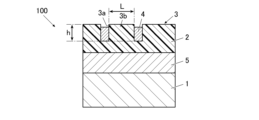
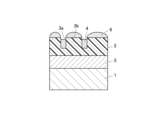
- FIG. 1 is a schematic cross-sectional view showing an example of the basic structure of a functional film of the present invention.
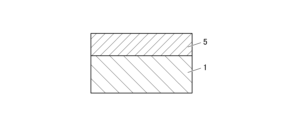
- 1 is a schematic cross-sectional view showing an example of a process for producing a functional film of the present invention.
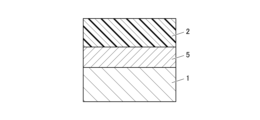
- 1 is a schematic cross-sectional view showing an example of a process for producing a functional film of the present invention.
- 1 is a schematic cross-sectional view showing an example of a process for producing a functional film of the present invention.
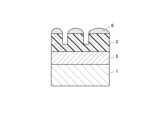
- 1 is a schematic cross-sectional view showing an example of a process for producing a functional film of the present invention.
- 1 is a schematic cross-sectional view showing an example of a process for producing a functional film of the present invention.
- FIG. 1 is a schematic cross-sectional view showing an example of a process for producing a functional film of the present invention.
- SEM image of functional film 1 (present invention)
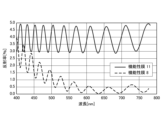
- SEM image of functional film 8 of the embodiment FIG. 11 is a diagram comparing the average light reflectance of the functional film 8 and the functional film 11 of the embodiment.
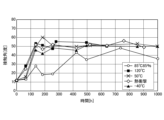
- FIG. 1 is a diagram for explaining hydrophilicity in the functional membrane 1 and the functional membrane 11 of the embodiment.
- FIG. 1 is a diagram for explaining hydrophilicity in the functional membrane 1 and the functional membrane 11 of the embodiment.
- the functional film of the present invention is a functional film having a resin layer, the resin layer containing an antifogging agent, a concave-convex structure made of a resin containing the antifogging agent is provided on a surface of the resin layer, and the ratio of carbon elements contained in the surface of the resin layer having the concave-convex structure as measured by X-ray photoelectron spectroscopy (XPS) is less than 25 atomic %.
- XPS X-ray photoelectron spectroscopy
- the uneven structure has a random structure without any regularity, which is preferable in that it prevents diffracted light, improves visibility, and enhances hydrophilicity and anti-fogging properties.
- the antifogging agent preferably contains a surfactant in terms of improving hydrophilicity or antifogging effect. It is preferable in terms of improving hydrophilicity that the ratio of elements contained in the resin layer having the uneven surface structure satisfies any one of the following 1) to 3). 1) Fluorine is less than 25 atomic %. 2) Silicon is 13 atomic % or more. 3) Oxygen is 35 atomic % or more.
- the surface roughness (Ra) of the resin layer is preferably within the range of 2 to 20 nm in order to enhance the hydrophilic and anti-fogging properties.
- the resin layer is provided on a substrate and has an adhesive layer between the substrate and the resin layer, as this improves adhesion between the substrate and the resin layer.
- the average light reflectance is preferably 3.5% or less in terms of improving visibility. It is preferable to have a hydrophilic film in the recesses of the uneven structure, since this can further increase the hydrophilicity of the functional film.
- the method for producing a functional film of the present invention includes an etching step of forming the uneven structure on the resin layer by processing the resin layer by dry etching using a gas containing fluorine. This makes it possible to achieve both antifogging properties and hydrophilicity.
- hydrophilic material contains silicon or sodium, since the hydrophilic performance can be maintained for a long period of time even in a harsh environment.
- the functional film of the present invention is a functional film having a resin layer, the resin layer containing an antifogging agent, a concave-convex structure made of a resin containing the antifogging agent is provided on a surface of the resin layer, and the ratio of carbon elements contained in the surface of the resin layer having the concave-convex structure as measured by X-ray photoelectron spectroscopy (XPS) is less than 25 atomic %.
- XPS X-ray photoelectron spectroscopy
- the term "hydrophilic” refers to a contact angle B1 of water being 30° or less when measured under the following conditions.
- the contact angle B1 is measured by leaving the functional film in a high-temperature, dry environment for 100 hours. After that, 10 ⁇ L of pure water is dropped onto the surface of the functional film in an environment of 23° C. and 50% RH using a contact angle measuring device, and the static contact angle is measured 5 seconds after the drop, and this is defined as the contact angle B1.
- the contact angle measuring device used is a contact angle measuring device G-1 manufactured by Elma.
- Anti-fogging refers to the property of maintaining the surface of a film that functions as a transparent member, a reflective member, etc., in a non-fogging state.
- techniques for improving anti-fogging properties can include techniques for increasing hydrophilicity and techniques for increasing water repellency.
- the hydrophilicity can be increased or the water repellency can be increased by selecting the resin and anti-fogging agent that constitute the resin layer.
- a technical means is described that can maintain both the anti-fogging properties and hydrophilicity of a functional film even when used under environmental conditions such as high temperature and high humidity, high temperature, thermal shock, and low temperature.
- the anti-fogging property in the present invention is evaluated by the following evaluation method. That is, the test piece was placed with the resin layer facing down at a height of 5 cm from the water surface of a hot water bath kept at 40° C. Steam from the hot water bath was continuously irradiated onto the resin layer, and the presence or absence of cloudiness 60 seconds after irradiation was visually evaluated. Details will be described later in the description of the examples.
- the functional film has a concave-convex structure.
- the concave-convex structure is preferably random and has no regularity.
- the concave-convex structure having randomness can prevent light diffraction.
- Randomness refers to a state in which the relative positions and shapes of the convex portions of the concave-convex structure are recognized as being random or unpredictable, with no regularity such as overall uniformity or periodicity. It also refers to a state in which no diffracted light is generated.
- the fine uneven structure is formed by an etching process using lithography or nanoimprinting using a mold, diffracted light occurs because the structure has a regular unevenness.
- the fine uneven structure is formed by dry film deposition, as described below. As a result, an irregular (random) fine structure is formed, which does not generate diffracted light.
- the presence or absence of diffracted light can be confirmed as follows. For example, a sample is placed between a helium-neon laser and a screen. Then, light is shone through the sample toward the screen. Diffracted light can be confirmed visually from the light shone on the screen.
- an "uneven structure” refers to a structure having multiple fine uneven shapes that can exert an effect of improving hydrophilicity or water repellency depending on whether the surface material is hydrophilic or hydrophobic due to the increase in surface area caused by the impartation of the uneven structure. It also refers to an uneven structure in which the average height of the convex parts is at least 1 ⁇ m or less, based on the lowest surface of the concave parts. In other words, it refers to an uneven structure in which the average depth of the concave parts is 1 ⁇ m or less.
- the fine uneven structure preferably has an arithmetic average roughness Ra of the convex portions in a vertical cross section within a range of 2 to 20 nm. More preferably, it is within a range of 2 to 6 nm. Also, it is preferable that the maximum height of the convex portions is within a range of 5 to 100 nm. Furthermore, it is preferable that the average diameter of the convex portions is within a range of 10 to 1000 nm.
- the arithmetic mean roughness Ra of the projections is preferably within a range of 2 to 20 nm, and particularly preferably within a range of 3.7 to 8.0 nm.
- the arithmetic mean roughness Ra of the protrusions is an average value obtained by measuring 10 or more protrusions using an atomic force microscope, and satisfies the above-mentioned condition.
- An example of the atomic force microscope is an L-Trace SII (manufactured by Nano Technology Corporation).
- the maximum height of the convex portions is more preferably within the range of 10 to 70 nm, and particularly preferably within the range of 15 to 50 nm.
- the "maximum height of a convex portion” refers to the distance h from the bottom surface to the top surface (top surface) of a convex portion 3b in a vertical cross section (cross section in the thickness direction) of the fine uneven structure, as shown in FIG. 1, for example.
- the maximum height of the convex portion satisfies the above-mentioned condition when the maximum height is measured for 10 or more convex portions using an atomic force microscope.
- An example of the atomic force microscope is L-Trace SII (manufactured by Nano Technology Corporation).
- the average diameter of the projections is more preferably within the range of 30 to 500 nm, and particularly preferably within the range of 50 to 200 nm.
- the "average diameter of the convex portions" refers to the average diameter of the convex portions when the fine concave-convex structure is viewed from above, i.e., when the entire fine concave-convex structure is photographed from above with an electron microscope and the photograph is observed.
- the average diameter L of the convex portions 3b of the fine concave-convex structure 3 refers to the average diameter L of the convex portions 3b.
- the average diameter of the protrusions can be determined using an electron microscope (S-4800, Hitachi High-Tech Corporation). Specifically, the average value obtained by measuring 10 or more protrusions satisfies the above-mentioned condition.
- Fig. 1 is a schematic cross-sectional view showing an example of the basic structure of the functional film of the present invention.
- Fig. 1 is an example of the functional film of the present invention, and the present invention is not limited to this layer structure.
- the functional film 100 has a resin layer 2 formed on a substrate 1.
- the resin layer 2 has a surface on which the above-mentioned uneven structure 3 is provided. It is preferable that a hydrophilic film 4 is formed on the recesses 3 a of the uneven structure 3 .
- the functional film 100 preferably has an adhesion layer 5 provided between the substrate 1 and the resin layer 2 .
- the resin layer is provided on the substrate and contains a resin as a main component and an antifogging agent.
- a resin as a main component means that the content of the resin is 50% by mass or more in the entire resin layer.
- the ratio of elements contained in the resin layer having a concave-convex structure satisfies any one of the following 1) to 3) when measured with an X-ray photoelectron spectroscopy (XPS).
- XPS X-ray photoelectron spectroscopy
- the ratio of the above elements is determined by composition analysis of the outermost surface of the resin layer having a concave-convex structure, and can be measured as follows. (Composition analysis of the outermost surface)
- composition of the outermost surface can be analyzed by measuring using an X-ray photoelectron spectroscopy (XPS) as described below.
- the resin layer more preferably satisfies two of the above conditions 1) to 3), and further preferably satisfies all of the above conditions 1) to 3).
- the above conditions 1) to 3) can be controlled by etching.
- the ratio of elements contained in the resin layer before etching, i.e., the resin layer not having a concave-convex structure, when measured in the same manner as described above, is preferably as follows. 1a) Fluorine is 20 to 40 atomic % 2a) Carbon is 30 to 50 atomic% 3a) Silicon is 0 to 8 atomic% 4a) Oxygen is 8 to 25 atomic%
- the resin layer is etched to form a resin layer having a concave-convex structure, so that the antifogging agent and hydrophilic compound contained inside the resin layer are exposed on the surface of the side of the convex portion, and the silicon and oxygen contents increase, while the functional groups contained in the surfactants present near the outermost surface of the resin layer are removed by etching, and the fluorine and carbon contents decrease.
- the method for adjusting the elemental composition on the resin layer surface as described above can be achieved by considering and selecting the composition of the resin for forming the resin layer, the surfactant, the silicon-containing compound or particles, etc., as described below.
- the materials used to form the anti-fogging layer disclosed in International Publication No. 2020/149189 (A1), JP-A No. 2016-37312, etc. can be used as reference.
- the resin is preferably a synthetic resin, but is not particularly limited thereto.
- Synthetic resins are broadly classified into thermoplastic resins, which soften when heated and can be melt-molded, and thermosetting resins, which become insoluble and infusible once heated.
- thermoplastic resins include polyolefins, polystyrene, methacrylic acid resins, acrylic acid resins, vinyl acetate resins, vinyl chloride resins, polyesters, aliphatic polyamides, aromatic polyimides, polyamideimides, aromatic polyamideimides, acetal resins, polycarbonates, and ethylene-vinyl alcohol copolymers.
- Thermosetting resins include phenol resins, xylene resins, melamine resins, urea resins, epoxy resins, and unsaturated polyester resins.
- the type of resin is preferably selected according to the desired effect. Resins having hydrophilic or hydrophobic groups can also be used.
- These synthetic resins can be synthesized from monomers (low molecular weight compounds) used as raw materials.
- Monomers include ⁇ -olefins, vinyl compounds, dienes, acetylenes, aldehydes, ketones, etc. that form polymers by opening double or triple bonds; cyclic ethers containing oxygen, sulfur, or nitrogen, cyclic acid anhydrides, lactams, lactones, etc. that serve as raw materials for ring-opening polymerization; diamines, dicarboxylic acids, dihydric alcohols, etc. that form polymers by condensation reactions; and diazomethane, etc., which are also called monomers. These monomers are merely examples, and the resin used in the present invention is not limited to these.
- At least one type of monomer may be used, and two or more types may be used in combination.
- a (meth)acrylate-based monomer is included, since it increases the hardness of the resin layer, provides excellent adhesion to the substrate, and has high transparency.
- the (meth)acrylate resin disclosed in JP 2020-164842 A can be used, that is, a (meth)acrylate copolymer obtained from a monomer mixture containing a copolymer, an N,N-dialkyl (meth)acrylamide monomer, an ⁇ -caprolactone-added hydroxyalkyl (meth)acrylate monomer, a (meth)acrylate monomer having a blocked isocyanate group, and a (meth)acrylate monomer having a hydrocarbon group.
- the hydrophilic resin disclosed in JP 2018-150470 A can also be used.
- the resin layer may be made of a single raw material, or may be made of multiple raw materials with different properties, such as molecular weight distribution.
- various additives such as antioxidants, antistatic agents, crystal nucleating agents, inorganic particles, organic particles, viscosity reducers, heat stabilizers, lubricants, infrared absorbers, ultraviolet absorbers, and doping agents for adjusting the refractive index, may also be added to the resin layer.
- the surfactant according to the present invention is a component for improving anti-fogging properties by lowering the surface tension of water adhering to the resin layer surface and forming a water film on the resin layer surface.
- the surfactant has a molecular structure consisting of a hydrophobic group (also called a "hydrophobic group” or “lipophilic group”) and a hydrophilic group (also called a "hydrophilic group”).
- the hydrophobic group is classified into fluorine-based, hydrocarbon-based, organosilicon-based, etc.
- the hydrophilic group is classified into ionic and nonionic.
- Ionic surfactants are further classified into three types: anionic, cationic, and amphoteric.
- anionic hydrophilic groups include sulfonate groups and sulfate ester groups, which give the surfactant a negative charge.
- examples of cationic hydrophilic groups include quaternary ammonium salts, and examples of amphoteric hydrophilic groups include amino acid salts.
- a surfactant such as an anionic surfactant, a cationic surfactant, an amphoteric surfactant, or a nonionic surfactant can be used.
- anionic surfactant examples include fatty acid salts such as fatty acid alkali metal salts, such as sodium oleate and potassium oleate; higher alcohol sulfates, such as sodium lauryl sulfate and ammonium lauryl sulfate; alkylbenzenesulfonates and alkylnaphthalenesulfonates, such as sodium dodecylbenzenesulfonate and sodium alkylnaphthalenesulfonate; polyoxyethylene sulfate salts, such as naphthalenesulfonate-formaldehyde condensates, dialkylsulfosuccinates, dialkylphosphate salts, and sodium polyoxyethylene alkylphenyl ether sulfate; and fluorine-containing anionic surfactants, such as perfluoroalkyl carboxylates, perfluoroalkyl sulfonates, and perfluoroalkyl phosphat
- cationic surfactants include amine salts such as ethanolamines, laurylamine acetate, triethanolamine monoformate, and stearamidoethyl diethylamine acetate; and quaternary ammonium salts such as lauryltrimethylammonium chloride, stearyltrimethylammonium chloride, dilauryldimethylammonium chloride, distearyldimethylammonium chloride, lauryldimethylbenzylammonium chloride, stearyldimethylbenzylammonium chloride, tetrabutylammonium bromide, and lauryltrimethylammonium bromide.
- amine salts such as ethanolamines, laurylamine acetate, triethanolamine monoformate, and stearamidoethyl diethylamine acetate
- quaternary ammonium salts such as lauryltrimethylammonium chloride, stearyltrimethylammonium chloride,
- amphoteric surfactants include fatty acid amphoteric surfactants such as dimethyl alkyl lauryl betaine, dimethyl alkyl stearyl betaine, lauryl dimethyl amino acetate betaine, and lauric acid amidopropyl dimethyl amino acetate betaine; sulfonic acid amphoteric surfactants such as dimethyl alkyl sulfobetaine; and alkyl glycine.
- fatty acid amphoteric surfactants such as dimethyl alkyl lauryl betaine, dimethyl alkyl stearyl betaine, lauryl dimethyl amino acetate betaine, and lauric acid amidopropyl dimethyl amino acetate betaine
- sulfonic acid amphoteric surfactants such as dimethyl alkyl sulfobetaine
- alkyl glycine alkyl glycine
- nonionic surfactants include polyoxyethylene higher alcohol ethers such as polyoxyethylene isodecyl ether, polyoxyethylene lauryl ether, and polyoxyethylene oleyl ether; polyoxyethylene alkylaryl ethers such as polyoxyethylene octylphenol and polyoxyethylene nonylphenol; polyoxyethylene acyl esters such as polyoxyethylene monolaurate and polyoxyethylene monostearate; polyoxyethylene sorbitan fatty acid esters such as polypropylene glycol ethylene oxide adduct, polyoxyethylene sorbitan monolaurate, and polyoxyethylene sorbitan monostearate; phosphate esters such as alkyl phosphate ester and polyoxyethylene alkyl ether phosphate ester; sugar esters, and cellulose ethers. These are merely examples, and the surfactant material is not necessarily limited to these. These surfactants may be used alone or in combination of two or more. By appropriately selecting the type of surfactant, the hydrophilicity and antif
- an anionic surfactant alone, a combination of an anionic surfactant and a cationic surfactant, or a combination of an anionic surfactant and a zwitterionic surfactant.
- the anionic surfactant is a fluorine-containing anionic surfactant, the surface tension of the resin layer with respect to water can be more effectively reduced, resulting in higher anti-fogging performance.
- the surfactant is preferably in the range of 0.5 to 20% by mass relative to 100% by mass of the resin. It is even more preferable that it is 3% by mass or more, and from the viewpoint of improving transparency, it is even more preferable that it is 10% by mass or less.
- the resin layer may contain, as an anti-fogging agent other than the surfactant, inorganic compounds such as zeolite, sepiolite, allophane, imogolite, montmorillonite, attapulgite, or xonotlite in order to adjust the water vapor permeability and the contact angle of water, within a range that does not impair the performance of the resin layer.
- inorganic compounds such as zeolite, sepiolite, allophane, imogolite, montmorillonite, attapulgite, or xonotlite in order to adjust the water vapor permeability and the contact angle of water, within a range that does not impair the performance of the resin layer.
- colloidal silica in addition to the surfactant.
- the colloidal silica is contained within the resin layer before etching the resin layer.
- the colloidal silica may be silica particles whose surfaces have been modified with a surface treatment agent such as a silane compound.
- the colloidal silica may be used alone or in combination of two or more kinds.
- the colloidal silica preferably has an average particle size in the range of 2 to 100 nm, more preferably in the range of 10 to 30 nm, and is preferably present in the range of 2 to 15% by mass relative to 100% by mass of the resin layer.
- Preferred commercial products of the colloidal silica include those with the trade names "Snowtex-O,” “Snowtex-O-40,” “Snowtex-OL,” and “Snowtex-OYL,” which have an average particle size of 10 to 100 nm and a particulate shape. More preferred are “Snowtex-O,” “Snowtex-O-40,” and the like, which have an average particle size of 10 to 30 nm and a particulate shape.
- the resin composition constituting the resin layer according to the present invention may contain an organic solvent in order to improve paintability.
- organic solvent alcohol-based solvents and alcohol ether-based solvents are preferred because they are relatively unlikely to cause solvent cracks, with propanol, isopropanol, diacetone alcohol, propylene glycol monomethyl ether, propylene glycol monoethyl ether, 3-methoxybutanol, and 3-methoxy-3-methylbutanol being more preferred, and propanol, isopropanol, diacetone alcohol, propylene glycol monomethyl ether, 3-methoxybutanol, and 3-methoxy-3-methylbutanol being even more preferred.
- the organic solvents may be used alone or in combination of two or more kinds.
- the resin layer composition of the present invention may contain a curing catalyst (curing accelerator) in order to enable heat curing at low temperatures in a short time.
- a curing catalyst curing accelerator
- the curing catalyst is preferably a fatty acid alkali metal salt, and is preferably sodium laurate, potassium laurate, calcium laurate, barium laurate, sodium oleate, potassium oleate, calcium oleate, barium oleate, sodium stearate, potassium stearate, calcium stearate, or barium stearate, and more preferably sodium laurate, potassium laurate, sodium oleate, potassium oleate, sodium stearate, or potassium stearate.
- the curing catalyst may be used alone or in combination of two or more kinds.
- the curing catalyst is present in an amount of 0.01 to 20% by mass relative to 100% by mass of the resin.
- the following compounds e.g., curing agents
- the compound include polyether-modified polydimethylsiloxane, polyether-modified polydimethylpolysiloxane, polyether macromer-modified acrylate, acrylic polymer, and acrylic silicone polymer.
- the amount of the surface conditioner is 0.01 to 5 parts by mass per 100% by mass of the resin.
- resin compositions containing an antifogging agent that are preferably used in the resin layer include a composition in which a polyester resin emulsion or an acrylic resin emulsion containing a nonionic surfactant having a polyalkylene glycol skeleton is contained, as disclosed in International Publication No. 2020/149189 (A1), and an ethylene-vinyl alcohol copolymer resin disclosed in Japanese Patent Application Laid-Open No. 2016-37312.
- a nonionic surfactant diglycerol monooleate, polyoxyethylene alkyl ether, etc. are contained.
- Commercially available products include, for example, Modiper (registered trademark) H2300, H2000, HM100, H1100, and the like (manufactured by NOF Corporation).
- Modiper H2300 is composed of an acrylic copolymer, a surfactant (a sulfo group-containing surfactant, a fluorine-containing surfactant), the curing agent and the curing accelerator, and a solvent such as propylene glycol monoethyl ether.
- a surfactant a sulfo group-containing surfactant, a fluorine-containing surfactant
- a solvent such as propylene glycol monoethyl ether.
- the content of the anti-fogging agent in the entire resin layer is preferably within the range of 0.5 to 20% by mass.
- the hydrophilic film is a film formed by depositing a hydrophilic material in the recesses of the uneven structure.
- the hydrophilic material is preferably a compound containing silicon (Si) or sodium (Na).
- the content of Si or Na is preferably 5 mass % or more, more preferably 10 mass % or more, and particularly preferably 20 mass % or more.
- the hydrophilic film is preferably formed by stacking a plurality of SiO2 layers, for example.
- the hydrophilic layer may be formed by interposing a metal-containing layer containing Na between a plurality of SiO2 layers.
- the hydrophilic layer may be formed by stacking a plurality of metal-containing layers containing Na.
- Examples of the metal-containing layer include a NaCl layer, a Na 5 Al 3 F 14 layer, and a Na 3 AlF 6 layer.
- examples of the hydrophilic film configuration include a configuration in which NaCl layers and SiO 2 layers are alternately laminated, a configuration in which 14 layers of Na 5 Al 3 F are provided between 2 SiO layers, and a configuration in which 6 layers of Na 3 AlF are provided between 2 SiO layers.
- the hydrophilic film may be a single layer, for example, a SiO 2 layer containing Na. Specifically, it may be formed by applying Excelpure S01 (manufactured by Chuo Motors Co., Ltd.) as a SiO 2 material containing Na.
- the total thickness of the hydrophilic film is preferably within the range of 5 to 5000 nm, and particularly preferably within the range of 50 to 500 nm.
- the thickness of each SiO 2 layer is preferably within the range of 5 to 50 nm, and SiO 2 layers of different thicknesses are preferably laminated alternately. In this case, it is preferable to laminate the SiO 2 layers so that the thinner SiO 2 layer is on the lower side and the thicker SiO 2 layer is on the upper side.
- the thickness of the NaCl layer, the Na 5 Al 3 F 14 layer, or the Na 3 AlF 6 layer interposed between a plurality of SiO 2 layers is preferably within a range of 0.1 to 10 nm.
- the hydrophilic film is preferably formed by a dry film formation method, for example, a vapor deposition method such as vacuum vapor deposition, ion beam vapor deposition, ion plating, ion-assisted vapor deposition (IAD) method, and a sputtering method such as sputtering, ion beam sputtering, magnetron sputtering, etc., among which the vacuum vapor deposition, IAD, or sputtering method is preferred.
- a vapor deposition method such as vacuum vapor deposition, ion beam vapor deposition, ion plating, ion-assisted vapor deposition (IAD) method
- a sputtering method such as sputtering, ion beam sputtering, magnetron sputtering, etc.
- the SiO 2 layer is formed by the IAD method
- the metal-containing layer containing Na is formed by a vacuum deposition method using a resistance heating system
- the IAD method uses the high kinetic energy of ions during film formation to create a dense film and increase the adhesion of the film.
- the ion beam method forms a film on the substrate surface by bombarding the deposition material with ionized plasma particles irradiated from an ion source.
- the functional film of the present invention preferably includes an adhesive layer between the substrate and the resin layer.
- the adhesion layer By providing the adhesion layer, the adhesion between the substrate and the resin layer is improved, and it is possible to achieve both abrasion resistance, antifogging properties, and hydrophilicity, and the film can be applied to optical device applications.
- the adhesive layer examples include Ta 2 O 5 —TiO 2 (Canon Optron product name: OA-600), Ta 2 O 5 , TiO 2 , SiC, Al 2 O 3 , HfO 2, a primer, and a hard coat material.
- a hard coat material for example, NSC-5508 manufactured by Nippon Fine Chemicals Co., Ltd. or HO3437U manufactured by Fujikura Kasei Co., Ltd.
- adhesion layer When an inorganic material is used as the adhesion layer, methods for forming the adhesion layer include, for example, the usual vacuum deposition method, as well as the ion-assisted deposition method (IAD method), sputtering method, CVD method, etc.
- the thickness of the adhesion layer formed in this way is preferably within the range of 0.1 to 20 nm.
- adhesion layer When an organic material is used as the adhesion layer, examples of the method for forming the adhesion layer include spin coating, spray coating, dip coating, bar coating, and screen printing.
- the thickness of the adhesion layer formed in this manner is preferably within the range of 0.1 nm to 20 ⁇ m.
- the substrate on which the functional film of the present invention is formed is not particularly limited, and is preferably made of, for example, an inorganic material, an organic material, or a combination thereof.
- inorganic materials include H-ZLAF55D glass, H-ZLAF55F glass, TaFD glass, fused silica glass, synthetic silica glass, glass lenses, silicon, chalcogenide, and chromium.
- organic materials include PET (polyethylene terephthalate), acrylic resin, polyvinyl chloride resin, cycloolefin polymer (COP), cycloolefin copolymer (COC), polymethyl methacrylate resin (PMMA), polycarbonate resin (PC), polypropylene (PP), and polyethylene (PE).
- PET polyethylene terephthalate
- acrylic resin polyvinyl chloride resin
- COP cycloolefin polymer
- COC cycloolefin copolymer
- PMMA polymethyl methacrylate resin
- PC polycarbonate resin
- PP polypropylene
- PE polyethylene
- ultraviolet-curable resins include radical polymerization type acrylate resins, urethane acrylates, polyester acrylates, polybutadiene acrylates, epoxy acrylates, silicon acrylates, amino resin acrylates, ene-thiol resins, cationic polymerization type vinyl ether resins, alicyclic epoxy resins, glycidyl ether epoxy resins, urethane vinyl ethers, and polyester vinyl ethers.
- the thermosetting resin include epoxy resin, phenol resin, unsaturated polyester resin, urea resin, melamine resin, silicone resin, polyurethane, etc.
- the substrate may be an inorganic material such as glass on which a film made of an organic material is formed.
- the functional film of the present invention when used in an optical device as described below, it is preferable to use glass or a transparent resin as the substrate from the viewpoint of transparency.
- the substrate according to the present invention preferably contains an alkali or alkaline earth metal element.
- the average light reflectance of the functional film of the present invention is preferably 3.5% or less, and more preferably 1.5% or less.
- the average light reflectance can be measured using a USPM-RU (manufactured by Olympus Corporation), which is a spectroscopic reflectance measuring device for a small area. Using this spectroscopic reflectance measuring device, the light reflectance of the functional film in the wavelength range of 400 to 780 nm is measured at one point, and this is defined as the average light reflectance.
- the functional film of the present invention preferably has a contact angle C1 on the surface of the functional film after storage for 1000 hours in an 85°C/85% RH (high temperature/high humidity) environment of 30° or less, and more preferably 10° or less.
- RH high temperature/high humidity
- the contact angle C1 was measured as follows. After leaving the functional film in an 85°C/85% RH environment for 100 hours, 10 ⁇ L of pure water was dropped onto the functional film surface in an environment of 23°C/50% RH using a contact angle measuring device G-1 manufactured by Elma Co., Ltd., and the static contact angle was measured 5 seconds after the drop, which was defined as the contact angle C1.
- the 85°C/85% RH environment can be adjusted by setting a small high temperature chamber SH-661 (manufactured by Espec Co., Ltd.) to an 85°C/85% RH environment.
- the functional film of the present invention preferably has a contact angle C2 of 30° or less, more preferably 10° or less, on the surface thereof after storage in a dry environment at 120° C. (high temperature) for 1000 hours.
- the contact angle C2 can be measured in the same manner as the contact angle C1, except that the temperature is changed to a dry environment at 120° C.
- the dry environment at 120° C. can be adjusted by setting the temperature to 120° C. using a small high-temperature chamber ST-120 (manufactured by Espec Corporation).
- the functional film of the present invention preferably has a contact angle C3 of 30° or less, more preferably 10° or less, on the surface thereof after storage in a dry environment at 50° C. (high temperature) for 1000 hours.
- the contact angle C3 can be measured in the same manner as the contact angle C1, except that the measurement is performed in a dry environment at 50° C.
- the dry environment at 50° C. can be adjusted by setting the temperature at 50° C. using a small high-temperature chamber ST-120 (manufactured by Espec Corporation).
- the functional film of the present invention preferably has a contact angle C4 of 30° or less, more preferably 10° or less, on the surface of the functional film after storage for 500 hours under repeated thermal shock environments of -40°C for 15 minutes and 120°C for 15 minutes.
- the contact angle C4 can be measured in the same manner as the contact angle C1, except that the measurement is performed under a repeated thermal shock environment of ⁇ 40° C. for 15 minutes and 120° C. for 15 minutes.
- the repeated thermal shock environment of ⁇ 40° C. for 15 minutes and 120° C. for 15 minutes can be adjusted by using a small high-temperature chamber TSE-11 (manufactured by Espec Corporation) and setting the settings to ⁇ 40° C. for 15 minutes and 120° C. for 15 minutes.
- the functional film of the present invention preferably has a contact angle C5 of 30° or less, more preferably 10° or less, on the surface thereof after storage for 1000 hours in a dry environment at ⁇ 40° C. (low temperature).
- the contact angle C5 can be measured in the same manner as the contact angle C1, except that the temperature is changed to ⁇ 40° C. (low temperature) and dry environment.
- the ⁇ 40° C. (low temperature) and dry environment can be adjusted by using a small high temperature chamber SH-661 (manufactured by Espec Corporation) and setting the temperature to ⁇ 40° C. (low temperature).
- the method for producing a functional film of the present invention includes an etching step of forming the uneven structure on the resin layer by processing the resin layer by dry etching using a gas containing fluorine.
- An example of the method for producing a functional film of the present invention will be described below, but the present invention is not limited thereto.
- the method for producing a functional film of the present invention it is preferable that a metal mask is formed on the resin layer and then the dry etching is performed.
- the method for producing a functional film of the present invention preferably includes a step of forming an adhesive layer between the substrate and the resin layer.
- the method for producing a functional film of the present invention preferably includes a step of forming a film of a hydrophilic material in the recesses of the uneven structure after the etching step.
- the hydrophilic material preferably contains silicon (Si) or sodium (Na).
- the method for producing a functional film of the present invention when forming a metal mask after forming a resin layer, it is preferable to optimize the structure of the metal mask by optimizing the temperature, film thickness, and film formation rate during film formation. Furthermore, if heat cannot be applied, it is preferable to include a step of arranging (applying) a compound that reacts with the metal, which is the main component of the mask, on the resin layer before forming the metal mask.
- this step is also referred to as a self-organization promotion compound arrangement step.
- the compound that reacts with the metal reacts chemically with the metal in the mask formed in the subsequent step.
- the metal in the mask moves and a mesh-like mask is formed by self-organization without heating or the like. Therefore, resins that cannot be heated at high temperatures can be used as the material of the substrate, leading to cost reduction. Furthermore, since heating is not required, it also leads to cost reduction and energy saving by shortening the time.
- the self-organization promoting compound disposing step does not have to be performed before the mask is formed, but rather the compound that reacts with the metal may be disposed on the mask after the mask is formed. In this case as well, the compound that reacts with the metal reacts with the metal in the mask, causing the metal in the mask to move, forming a mesh-like mask. As a result, the same effect can be obtained as when the self-organization promoting compound disposing step is performed before the mask is formed.
- the adhesion layer forming process, resin layer forming process, self-organization promoting compound arranging process, mask forming process, etching process, and hydrophilic film forming process are described below. Note that in the following description, an example is given in which the self-organization promoting compound arranging process is performed before the mask forming process, but the present invention is not limited to this. In addition, the method for manufacturing a functional film of the present invention does not require the mask forming process.
- FIG. 2A to FIG. 2F are process diagrams showing an example of a method for manufacturing a functional film. Note that FIG. 2A to FIG. 2F are only an example of the manufacturing method of the present invention, and the manufacturing method of the present invention is not limited thereto.
- Adhesion layer forming step As shown in FIG. 2A, an adhesive layer 5 is formed on a substrate 1 .
- the adhesive layer is preferably formed by a coating method.
- the coating film formation method include spin coating, spray coating, dip coating, bar coating, screen printing, etc. In particular, dip coating, spin coating, or spray coating is preferred in the present invention.
- the thickness of the adhesion layer is preferably within the range of 0.1 to 20 nm.
- a resin layer 2 is formed on an adhesion layer 5 .
- a resin layer containing an antifogging agent is formed on the adhesive layer by, for example, a coating method.
- a resin layer is formed on the substrate.
- coating method examples include spin coating, spray coating, dip coating, bar coating, and screen printing.
- dip coating, spin coating, and spray coating are preferred in the present invention.
- the thickness of the resin layer is preferably within the range of 0.1 nm to 20 ⁇ m.
- the resin and the anti-fogging agent contained in the resin layer have been described above and will not be described here.
- ⁇ (iii) Self-assembly promoting compound arrangement step> When forming a metal mask, it is preferable to optimize the structure of the metal mask by optimizing the temperature, film thickness, and film formation rate during film formation. However, if it is not possible to apply high temperatures, although not shown, it is preferable to place (apply) a compound that reacts with the metal that is the main component of the mask on the resin layer after the resin layer forming step and before the mask forming step. Compounds that react with certain metals are also called "self-organization promoting compounds.”
- the self-organization promoting compound may be formed in the form of a continuous layer (film), or the self-organization promoting compound may simply be scattered in the form of particles, or may be formed in the form of discontinuous layers.
- the self-organization promoting compound is disposed, and then in the subsequent mask forming step, the self-organization promoting compound is covered with the mask, whereby the mask containing the compound is understood to be a mesh-like mask.
- the self-organization promoting compound reacts chemically with the metal in the mask, causing the metal to move and forming the mask in a mesh-like shape. In this way, the mask is formed in a mesh-like shape without heating the mask to a high temperature. Therefore, the compound that reacts with the metal is also called a self-organization promoting compound.
- the self-organization promoting compound is a compound that reacts with the metal that is the main component of the mask.
- the self-organization promoting compound is a compound that easily causes migration of the metal, and preferably contains, for example, Na (sodium), I 2 (iodine), Cl 2 (chlorine), or the like.
- the self-organization promoting compound is preferably hygroscopic, so that after forming the self-organization promoting compound using a dry film formation method, the particles in the compound can be separated into a layer having a network or isolated particles (dots) by exposing the compound to an atmospheric environment containing moisture.
- Such a self-organization promoting compound preferably has a solubility of 0.5 g/100 mL or more in water at 20° C. By setting the solubility within this range, the mask can be formed in a mesh shape.
- the compound having a solubility of 0.5 g/100 mL or more include LiCl (solubility: 76.9 g/100 mL (20° C.)), NaCl (solubility: 35.9 g/100 mL (20° C.)), MgCl 2 ⁇ 6H 2 O (solubility: 54.3 g/100 mL (20° C.)), KCl (solubility: 34.0 g/100 mL (20° C.)), CaCl 2 (solubility: 74.5 g/100 mL (20° C.)), Na 2 CO 3 (solubility: 22 g/100 mL (20° C.)), NaF (solubility: 4.06 g/100 mL
- the self-organization promoting compound is preferably an inorganic salt, and it is preferable that at least a part of the inorganic salt contains an alkali metal, since this makes it easier to optimize the mask structure.
- inorganic salts that satisfy the above solubility range and are alkali metals, NaCl, NaF, MgCl 2 .6H 2 O, etc. are preferred. It is particularly preferred that the self-organization promoting compound contains Na.
- the average particle size of the particles constituting the self-organization promoting compound is preferably within the range of 10 to 1000 nm.
- the average particle size of the particles can be measured using an electron microscope (S-4800, Hitachi High-Tech Corporation).
- the self-organization promoting compound is applied onto the inorganic layer by, for example, a dry film forming method.
- the dry film formation method includes, for example, a vacuum deposition method, an ion beam deposition method, an ion plating method, an ion assisted deposition method (hereinafter, also referred to as an "IAD method" in the present invention) for a deposition system, and a sputtering method, an ion beam sputtering method, a magnetron sputtering method, etc. for a sputtering system, and among these, the vacuum deposition method, the IAD method, or the sputtering method is preferable.
- a vacuum deposition method using a resistance heating method is preferable.
- the thickness of the layer made of the self-organization promoting compound thus formed is preferably within the range of 0.1 to 100 nm.
- the self-organization promoting compound is disposed before the mask forming step, but this is not limiting.
- the self-organization promoting compound may be disposed on the mask after the mask forming step described below.
- a mask is formed on the self-organization promoting compound (not shown).
- a mask 6 is formed on the resin layer 2 as shown in Fig. 2C. It is preferable that the mask formation step is performed only once.
- the mask is preferably made of a metal as a main component and is preferably made of a metal mask including a metal portion and an exposed portion. Examples of metals that are the main components of the mask include silver (Ag), indium (In), and tin (Sn), with silver being particularly preferred.
- the thickness of the mask layer is preferably in the range of 2 to 100 nm.
- the self-organization promoting compound When the self-organization promoting compound is not used, it is better to optimize the mask structure by the film formation conditions such as the substrate temperature, the film formation rate, and the film thickness. Although it depends on the film formation conditions, for example, when a metal mask is formed by deposition at a substrate temperature of 370° C. and a rate of 3 ⁇ to a layer thickness of 2 nm, the metal mask becomes particulate. Also, for example, when a metal mask is formed by deposition at a substrate temperature of 170° C. and a rate of 3 ⁇ to a layer thickness of 12 to 15 nm, the metal mask tends to become mesh-like. Furthermore, for example, when a metal mask is formed by sputtering at a substrate temperature of 30° C.
- the metal mask tends to become porous.
- the average diameter, surface area ratio, and average height of the projections formed by etching are controlled by the film formation conditions of the metal mask, the substrate temperature, the film formation rate, and the film formation thickness.
- the film formation conditions of the present invention it is preferable to form a metal mask by forming a silver film of 3 nm thickness at a rate of 3 ⁇ with a substrate temperature of room temperature.
- the deposition temperature of the metal mask is preferably within the range of 20 to 400.degree.
- the average diameter L, the surface area ratio, and the average height h of the projections formed by etching are also controlled by the film formation temperature of the metal mask.
- the self-organization promoting compound absorbs moisture due to exposure to the atmosphere, etc.
- the self-organization promoting compound chemically reacts with the metal in the mask. This causes the metal in the mask to move, and a mesh-like mask is formed by self-organization without heating, etc.
- the metal mask was formed into a mesh-like shape by high-temperature heating, but by applying the self-organization promoting compound, high-temperature heating is no longer necessary. Therefore, resins that cannot be heated to high temperatures can be used as the material for the base material, leading to cost reduction. Furthermore, since heating is no longer necessary, time is saved, leading to energy savings.
- ⁇ (v) Etching step> 2D the resin layer 2 is etched. It is preferable to carry out the etching step at least once.
- the "number of etching steps" is counted as one step from placing the etching target in the etching device, starting etching, and opening to the atmosphere. Therefore, even if the etching conditions are changed during etching, if the etching is not opened to the atmosphere, the etching is counted as one step.
- Etching is preferably performed by applying a power source having a frequency within the range of 0.1 KHZ to 1 MHZ to the plasma electrode.
- the power density is preferably within a range of 0.01 to 1 W/cm 2 in order to increase the selection ratio of the metal mask.
- the etching time is preferably within a range of 1 minute to 2 hours.
- the temperature is preferably within the range of 5 to 30° C., and the initial vacuum degree is preferably within the range of 1 to 20 Pa.
- the etching is performed by reactive dry etching using an etching device.
- a gas containing fluorine is preferably used, for example, CHF 3 , CF 4 , COF 2 , SF 6 , etc.
- the flow rate of the etching gas during etching is preferably within the range of 5 to 100 sccm.
- a hydrophilic film 4 is formed on the recesses 3a of the formed fine uneven structure.
- a hydrophilic film is formed in the recess by a dry film forming method.
- the dry film formation method it is particularly preferable to use a vacuum deposition method, an IAD method or a sputtering method.
- the SiO2 layer is preferably formed by the IAD method, and the metal-containing layer containing Na is preferably formed by a vacuum deposition method using a resistance heating system.
- the film-forming material of the metal-containing layer preferably contains, for example, Li (lithium), K (potassium), Rb (rubidium), Cs (cesium), Fr (francium), Be (beryllium), Mg (magnesium), Ca (calcium), Sr (strontium), Ba (barium), Ra (radium), etc.
- film-forming materials include NaCl , NaF , MgCl2.6H2O , Na5Al3F14 , and Na3AlF6 .
- the metal-containing layer after forming the metal-containing layer, it is preferable to perform a process of exposing the metal-containing layer to a moisture-containing environment (aging process).
- aging process a process of exposing the metal-containing layer to a moisture-containing environment.
- This allows the film-forming material to absorb water in the environment and become particulate, making it easy to form a particulate metal-containing layer that is uniformly distributed.
- the properties of the resulting functional film are improved. That is, by allowing the formed inorganic salt to absorb moisture, the surface of the metal-containing layer becomes granular, and a finer uneven structure is formed.
- the aging time is preferably within the range of 1 minute to 300 hours.
- the SiO 2 layer is preferably formed by using the IAD method as described above. In this manner, a SiO2 layer is formed on a metal-containing layer containing Na, thereby making it possible to form a hydrophilic film.
- the mask 6 formed on the surface is removed.
- the metal mask is removed by wet etching using chemicals such as nitric acid, acetic acid, iodine, potassium iodide, etc.
- the metal mask may be removed by dry etching using, for example, Ar (argon) or O2 (oxygen) as an etching gas.
- Resin layer forming process As the material for the resin layer containing the antifogging agent, 2 g of the main agent of Modiper H2300 manufactured by NOF Corporation, 0.4 g of a curing agent, and 0.2 g of a curing accelerator were weighed and mixed. This mixed material was formed into a film on the substrate by spin coating at a rotation speed of 1000 rpm for 60 seconds. Then, it was cured for 12 hours in a thermostatic chamber at 90°C. The thickness of the resin layer after drying was 2 ⁇ m. The surface composition of the formed resin layer was 31% F, 43% C, 3% Si, and 17% O. The surface composition was measured by the method described below.
- the base agent is mainly composed of an acrylic copolymer and a surfactant (sulfo group-containing surfactant, fluorine-containing surfactant), etc.
- the hardener is composed of the above-mentioned general surface conditioner and an organic solvent, etc.
- the hardening accelerator is composed of the above-mentioned fatty acid alkali metal salt and an organic solvent, etc.
- An Ag mask was formed on the formed resin layer.
- a film forming apparatus (BMC-800T, manufactured by Shincron Co., Ltd.) was used for forming the Ag mask. Film forming was performed under the following conditions to form the Ag mask. The thickness of the Ag mask was 3 nm. Heating temperature: 30°C Starting vacuum degree: 1.33 ⁇ 10-3 Pa Film formation rate: 1 ⁇ /sec
- etching process The sample on which the Ag mask was formed was placed on a plasma electrode in an etching apparatus through which 20°C internal cooling water was flowing, and anisotropic etching was performed. Etching was performed for 10 minutes at an etching rate of 3.4 nm/min, forming an uneven shape with a depth of 34 nm and a surface roughness (Ra) of 4.8 nm.
- the etching conditions were: input power 300 W, gas flow rate 20 sccm, and vacuum degree 10 Pa. (Conditions inside the chamber) Equipment: BIG CUBE manufactured by U-Patenter Co., Ltd. Temperature: 20°C Starting vacuum degree: 10.0Pa (etching gas) CHF3 (etching gas flow rate) 20 sccm (Power Density) 0.035W/ cm2
- nitric acid density 1.38, 60% nitric acid manufactured by Hayashi Pure Chemical Industries for 60 seconds to dissolve the Ag mask and peel off the metal mask. In this way, a functional film 1 was produced.
- Functional film 2 was produced in the same manner as functional film 1, except that in the mask formation step, the thickness of the Ag mask was changed to 5 nm, and in the etching step, the etching rate was changed to 3.4 nm/min and the etching time was changed to 30 minutes.
- Functional film 3 was produced in the same manner as in the production of functional film 1, except that an adhesive layer was formed on the substrate as described below before the resin layer formation step, and the thickness of the Ag mask was changed to 5 nm.
- ⁇ Adhesion layer forming process> The substrate was set on a spin coater.
- a hard coat material NSC-508 manufactured by Nippon Fine Chemicals Co., Ltd. was used to form a film on the substrate by spin coating at a rotation speed of 1000 rpm for 60 seconds. Then, the film was provisionally cured at 85°C for 10 minutes, and then fully cured at 90°C for 12 hours to obtain an adhesive layer. The thickness of the adhesive layer after drying was 2 ⁇ m.
- a hydrophilic film of NaCl/ SiO2 was formed by the following process.
- the film was formed using an IAD vacuum deposition apparatus (BIS-1300DNN, manufactured by Shincron Co., Ltd.) under the following conditions.
- NaCl was deposited on the particle-containing layer (NaCl layer (thickness 5 nm)) at a film formation rate of The deposition was carried out at 1 ⁇ /sec to form a NaCl layer having a thickness of 1 nm.
- SiO2 was loaded into the first evaporation source as a film forming material, and deposition was performed at a film forming rate of 3 ⁇ /sec to form a SiO 2 layer with a thickness of 5 nm on the NaCl.
- the IAD conditions were an acceleration voltage of 1000 V, an acceleration current of 1000 mA, a suppressor voltage of 500 V, and a neutralization current of 1500 mA, and the IAD introduced gases were O 2 50 sccm, Ar gas 0 sccm, and neutral gas Ar 10 sccm.
- the base polycarbonate substrate was changed to a glass substrate TAFD5G (manufactured by HOYA Corporation) (refractive index: 1.84).
- the film forming material of the adhesion layer was changed from NSC-508 to OA600 (Ta 2 O 5 -TiO 2 , manufactured by Canon Optron Inc.), and formed as follows.
- functional film 5 was produced in the same manner, except that the mask formation process was changed as follows, an In mask was formed, and the etching time in the etching process was changed to 20 minutes.
- Heating temperature 30°C
- Starting vacuum degree 5.0 ⁇ 10 -3 Pa
- Electron gun (IAD ion source) Synchron RF ion source NIS-175-3
- Adhesion layer deposition material Ta 2 O 5 —TiO 2 (manufactured by Canon Optron, product name OA-600)
- the film-forming material was loaded into the second evaporation source of the IAD vacuum deposition apparatus, and evaporated at a film-forming rate of 4 ⁇ /sec to form an adhesive layer having a thickness of 5 nm on the substrate.
- the IAD conditions were an acceleration voltage of 1000 V, an acceleration current of 1000 mA, a suppressor voltage of 500 V, and a neutral current of 1500 mA, and the IAD introduced gases were O 2 50 sccm, Ar gas 0 sccm, and neutral gas Ar 10 sccm.
- O 2 gas was introduced from an auto pressure controller (hereinafter abbreviated as "APC") to control the gas and keep the chamber pressure at 2 ⁇ 10 ⁇ 2 Pa.
- APC auto pressure controller
- An In mask was formed on the formed resin layer.
- a film forming apparatus (BMC-800T, manufactured by Shincron Co., Ltd.) was used for forming the In mask. Film forming was performed under the following conditions to form the In mask. The thickness of the In mask was 3 nm. Heating temperature: 30°C Starting vacuum degree: 1.33 ⁇ 10-3 Pa Film formation rate: 1 ⁇ /sec
- a functional film 7 was produced in the same manner as in the production of the functional film 3, except that the mask formation step was changed as follows, a Sn mask was formed, and the etching time in the etching step was changed to 20 minutes.
- a Sn mask was formed on the formed resin layer.
- a film forming apparatus (BMC-800T, manufactured by Shincron Co., Ltd.) was used for forming the Sn mask. The film was formed under the following conditions to form the Sn mask. The thickness of the Sn mask was 5 nm. Heating temperature: 30°C Starting vacuum degree: 1.33 ⁇ 10-3 Pa Film formation rate: 1 ⁇ /sec
- a functional film 8 was produced in the same manner as in the production of the functional film 7, except that no metal mask was formed and the etching time in the etching step was changed to 10 minutes.
- a functional film 10 was produced in the same manner as in the production of the functional film 9, except that no metal mask was formed.
- a functional film 11 was produced in the same manner as in the production of the functional film 1, except that the mask forming step and the etching step were not carried out.
- composition analysis of the outermost surface The composition of the outermost surface can be analyzed by measuring using an X-ray photoelectron spectroscopy (XPS) as described below.
- XPS X-ray photoelectron spectroscopy
- ⁇ Surface roughness (Ra) of resin layer> The surface roughness (arithmetic mean roughness Ra) of the uneven structure of each functional film produced above was measured as follows.
- the arithmetic mean roughness Ra was calculated by measuring 10 or more convex portions using an atomic force microscope and averaging the measured values.
- the atomic force microscope used was an L-Trace SII (manufactured by Nano Technology Co., Ltd.).
- ⁇ Average light reflectance> The average light reflectance of the functional film produced above in the wavelength range of 400 to 780 nm was measured using a spectroscopic reflectance measuring device for a small area, USPM-RU manufactured by Olympus Corporation. The obtained average light reflectance was evaluated according to the following criteria: A, AA, and AAA were judged to be acceptable for practical use. (standard) AAA: Average light reflectance is 1.5% or less. AA: Average light reflectance is greater than 1.5% and less than 2.5%. A: Average light reflectance is greater than 2.5% and less than 3.5%. B: Average light reflectance is greater than 3.5%.
- Each functional film was placed as a test piece with the resin layer facing down at a height of 5 cm from the water surface of a hot water bath maintained at 40° C. Steam from the hot water bath was continuously irradiated onto the resin layer, and the presence or absence of fogging 60 seconds after irradiation was visually evaluated according to the following three-level scale. Ranks "AA" and "A” were deemed to have anti-fogging properties and were acceptable for practical use. (standard) AA: No clouding is observed for 60 seconds or more. A: Clouding was observed for 30 seconds or more and less than 60 seconds. B: Clouding was observed within 30 seconds.
- the contact angle C1 is 10° or less.
- ⁇ Hydrophilicity 120°C, dry environment, 1000 hours> Each functional film was stored for 1000 hours at 120°C (high temperature) and 20% RH or less (dry environment). Then, 10 ⁇ L of pure water was dropped onto the functional film surface in an environment of 23°C and 50% RH using a contact angle measuring device G-1 manufactured by Elma Co., Ltd. The static contact angle was measured 5 seconds after the drop and was designated as contact angle C2. The measured contact angle C2 was then ranked according to the following criteria: Ranks "AA" and "A" were deemed acceptable for practical use.
- the 120° C. dry environment can be adjusted by setting a small high temperature chamber ST-120 (manufactured by Espec Corp.) at 120° C.
- the contact angle C2 is 10° or less.
- ⁇ Hydrophilicity 50°C, dry environment, 1000 hours> Each functional film was stored for 1000 hours at 50°C (high temperature) and 20% RH or less (dry environment). Then, 10 ⁇ L of pure water was dropped onto the functional film surface in an environment of 23°C and 50% RH using a contact angle measuring device G-1 manufactured by Elma Co., Ltd. The static contact angle was measured 5 seconds after the drop and was designated as contact angle C3. Next, the measured contact angle C3 was ranked according to the following criteria: Ranks "AA" and "A" were deemed acceptable for practical use.
- the 50° C. dry environment can be achieved by setting a small high temperature chamber ST-120 (manufactured by Espec Corp.) at 50° C.
- the contact angle C3 is 10° or less.
- ⁇ Hydrophilicity (thermal shock, 500 hours) Each functional film was stored for 500 hours under repeated thermal shock conditions of -40°C for 15 minutes and 120°C for 15 minutes. After that, 10 ⁇ L of pure water was dropped onto the surface of the functional film under an environment of 23°C and 50% RH using a contact angle measuring device G-1 manufactured by Elma Co., Ltd. The static contact angle was measured 5 seconds after the drop and was designated as contact angle C4. Next, the measured contact angle C4 was ranked according to the following criteria: Ranks "AA" and "A" were deemed acceptable for practical use. The repeated thermal shock environment of ⁇ 40° C. for 15 minutes and 120° C.
- the contact angle C4 is 10° or less.
- the -40°C (low temperature) dry environment can be adjusted by using a small high temperature chamber SH-661 (manufactured by Espec Corp.) and setting the temperature to -40°C (low temperature).
- standard AA The contact angle C5 is 10° or less.
- the functional film of the present invention has better anti-fogging properties and hydrophilicity than the functional film of the comparative example.
- FIG. 3A is a SEM image of functional film 1 (the present invention)
- FIG. 3B is a graph comparing the average light reflectance of functional film 1 (the present invention) with that of functional film 11 (comparative example).
- FIG. 4A is a SEM image of functional film 8 (the present invention)
- FIG. 4B is a diagram comparing the average light reflectance of functional film 8 (the present invention) with that of functional film 11 (comparative example).
- the SEM images were observed at a magnification of 100,000 using an electron microscope (S-4800, Hitachi High-Tech Corporation).
- FIG. 5 and 6 are diagrams illustrating the methods for evaluating the hydrophilicity of the functional film 1 and the functional film 11, respectively. From the results shown in FIG. 5 and FIG. 6, it is recognized that the functional membrane of the present invention has higher reliability of hydrophilicity than the functional membrane of the comparative example.
- the present invention can be used in a functional film and a method for manufacturing the functional film that can achieve both anti-fogging properties and hydrophilicity even under environmental conditions such as high temperature and humidity, high temperature, thermal shock, and low temperature.
Landscapes
- Physics & Mathematics (AREA)
- General Physics & Mathematics (AREA)
- Optics & Photonics (AREA)
- Laminated Bodies (AREA)
Priority Applications (1)
| Application Number | Priority Date | Filing Date | Title |
|---|---|---|---|
| JP2025508222A JPWO2024195370A1 (https=) | 2023-03-23 | 2024-02-15 |
Applications Claiming Priority (2)
| Application Number | Priority Date | Filing Date | Title |
|---|---|---|---|
| JP2023-046705 | 2023-03-23 | ||
| JP2023046705 | 2023-03-23 |
Publications (1)
| Publication Number | Publication Date |
|---|---|
| WO2024195370A1 true WO2024195370A1 (ja) | 2024-09-26 |
Family
ID=92841331
Family Applications (1)
| Application Number | Title | Priority Date | Filing Date |
|---|---|---|---|
| PCT/JP2024/005155 Ceased WO2024195370A1 (ja) | 2023-03-23 | 2024-02-15 | 機能性膜及び機能性膜の製造方法 |
Country Status (2)
| Country | Link |
|---|---|
| JP (1) | JPWO2024195370A1 (https=) |
| WO (1) | WO2024195370A1 (https=) |
Citations (4)
| Publication number | Priority date | Publication date | Assignee | Title |
|---|---|---|---|---|
| WO1998005413A1 (en) * | 1996-08-05 | 1998-02-12 | Nippon Sheet Glass Co., Ltd. | Photocatalyst and process for the preparation thereof |
| US6974629B1 (en) * | 1999-08-06 | 2005-12-13 | Cardinal Cg Company | Low-emissivity, soil-resistant coating for glass surfaces |
| WO2021261225A1 (ja) * | 2020-06-23 | 2021-12-30 | コニカミノルタ株式会社 | 親水性膜の製造方法、親水性膜及び光学部材 |
| WO2022181283A1 (ja) * | 2021-02-25 | 2022-09-01 | コニカミノルタ株式会社 | 機能性膜、機能性膜の製造方法、光学デバイス、インクジェットヘッド及び金型 |
-
2024
- 2024-02-15 JP JP2025508222A patent/JPWO2024195370A1/ja active Pending
- 2024-02-15 WO PCT/JP2024/005155 patent/WO2024195370A1/ja not_active Ceased
Patent Citations (4)
| Publication number | Priority date | Publication date | Assignee | Title |
|---|---|---|---|---|
| WO1998005413A1 (en) * | 1996-08-05 | 1998-02-12 | Nippon Sheet Glass Co., Ltd. | Photocatalyst and process for the preparation thereof |
| US6974629B1 (en) * | 1999-08-06 | 2005-12-13 | Cardinal Cg Company | Low-emissivity, soil-resistant coating for glass surfaces |
| WO2021261225A1 (ja) * | 2020-06-23 | 2021-12-30 | コニカミノルタ株式会社 | 親水性膜の製造方法、親水性膜及び光学部材 |
| WO2022181283A1 (ja) * | 2021-02-25 | 2022-09-01 | コニカミノルタ株式会社 | 機能性膜、機能性膜の製造方法、光学デバイス、インクジェットヘッド及び金型 |
Also Published As
| Publication number | Publication date |
|---|---|
| JPWO2024195370A1 (https=) | 2024-09-26 |
Similar Documents
| Publication | Publication Date | Title |
|---|---|---|
| US9556338B2 (en) | Silica coating for enhanced hydrophilicity/transmittivity | |
| JP4801234B2 (ja) | 不規則性を有する改善された親水性または疎水性の支持体 | |
| Xiong et al. | A multifunctional nanoporous layer created on glass through a simple alkali corrosion process | |
| US20100035039A1 (en) | Acicular silica coating for enhanced hydrophilicity/transmittivity | |
| TWI838633B (zh) | 附防污層之光學膜 | |
| JP6422434B2 (ja) | 結露を遅延させるためのナノシリカコーティング | |
| TWI811736B (zh) | 附防汙層之光學膜 | |
| JP5109088B2 (ja) | 光学用易接着性ポリエステルフィルム及び光学用積層ポリエステルフィルム | |
| WO2022014569A1 (ja) | 防汚層付き光学フィルム | |
| WO2014061615A1 (ja) | 反射防止性を有するガラスの製造方法および反射防止性を有するガラス | |
| US20230146688A1 (en) | Functional film and production method of functional film | |
| WO2024195370A1 (ja) | 機能性膜及び機能性膜の製造方法 | |
| JP2018159800A (ja) | 透明スクリーン、映像表示システム、及び透明スクリーンの製造方法 | |
| JP3449070B2 (ja) | 汚れ防止処理方法 | |
| TW202426261A (zh) | 光學膜 | |
| JP4042196B2 (ja) | 防汚剤及び防汚層の形成方法 | |
| JPH1033321A (ja) | 防汚性ディスプレイ用透明板及びその成形品 | |
| JP2000009906A (ja) | 反射防止光学部材、防汚層の形成方法、光学機能性部材および表示装置 | |
| WO2025126699A1 (ja) | 機能性膜、機能性膜の製造方法及び積層体 | |
| Tanaka et al. | Fabrication of the durable low refractive index thin film with chitin-nanofiber by LBL method | |
| JP2000143300A (ja) | 防曇性薄膜及びその製造方法 | |
| JP7566150B2 (ja) | コーティング組成物、コーティング膜および物品、光学機器、照明機器 | |
| JP4438594B2 (ja) | コーティング材組成物及び塗装品 | |
| WO2023189686A1 (ja) | Abaトリブロックポリマー、組成物、表面処理剤、物品、及び物品の製造方法 | |
| TW202609353A (zh) | 抗反射膜及其製造方法 |
Legal Events
| Date | Code | Title | Description |
|---|---|---|---|
| 121 | Ep: the epo has been informed by wipo that ep was designated in this application |
Ref document number: 24774516 Country of ref document: EP Kind code of ref document: A1 |
|
| ENP | Entry into the national phase |
Ref document number: 2025508222 Country of ref document: JP Kind code of ref document: A |
|
| WWE | Wipo information: entry into national phase |
Ref document number: 2025508222 Country of ref document: JP |
|
| NENP | Non-entry into the national phase |
Ref country code: DE |
|
| 122 | Ep: pct application non-entry in european phase |
Ref document number: 24774516 Country of ref document: EP Kind code of ref document: A1 |