WO2024150763A1 - ガスバリア性積層体、包装容器および包装製品 - Google Patents
ガスバリア性積層体、包装容器および包装製品 Download PDFInfo
- Publication number
- WO2024150763A1 WO2024150763A1 PCT/JP2024/000302 JP2024000302W WO2024150763A1 WO 2024150763 A1 WO2024150763 A1 WO 2024150763A1 JP 2024000302 W JP2024000302 W JP 2024000302W WO 2024150763 A1 WO2024150763 A1 WO 2024150763A1
- Authority
- WO
- WIPO (PCT)
- Prior art keywords
- gas barrier
- barrier laminate
- layer
- mass
- film
- Prior art date
- Legal status (The legal status is an assumption and is not a legal conclusion. Google has not performed a legal analysis and makes no representation as to the accuracy of the status listed.)
- Ceased
Links
Images


Classifications
-
- B—PERFORMING OPERATIONS; TRANSPORTING
- B32—LAYERED PRODUCTS
- B32B—LAYERED PRODUCTS, i.e. PRODUCTS BUILT-UP OF STRATA OF FLAT OR NON-FLAT, e.g. CELLULAR OR HONEYCOMB, FORM
- B32B27/00—Layered products comprising a layer of synthetic resin
- B32B27/32—Layered products comprising a layer of synthetic resin comprising polyolefins
-
- B—PERFORMING OPERATIONS; TRANSPORTING
- B32—LAYERED PRODUCTS
- B32B—LAYERED PRODUCTS, i.e. PRODUCTS BUILT-UP OF STRATA OF FLAT OR NON-FLAT, e.g. CELLULAR OR HONEYCOMB, FORM
- B32B27/00—Layered products comprising a layer of synthetic resin
-
- B—PERFORMING OPERATIONS; TRANSPORTING
- B32—LAYERED PRODUCTS
- B32B—LAYERED PRODUCTS, i.e. PRODUCTS BUILT-UP OF STRATA OF FLAT OR NON-FLAT, e.g. CELLULAR OR HONEYCOMB, FORM
- B32B27/00—Layered products comprising a layer of synthetic resin
- B32B27/06—Layered products comprising a layer of synthetic resin as the main or only constituent of a layer, which is next to another layer of the same or of a different material
- B32B27/08—Layered products comprising a layer of synthetic resin as the main or only constituent of a layer, which is next to another layer of the same or of a different material of synthetic resin
-
- B—PERFORMING OPERATIONS; TRANSPORTING
- B32—LAYERED PRODUCTS
- B32B—LAYERED PRODUCTS, i.e. PRODUCTS BUILT-UP OF STRATA OF FLAT OR NON-FLAT, e.g. CELLULAR OR HONEYCOMB, FORM
- B32B7/00—Layered products characterised by the relation between layers; Layered products characterised by the relative orientation of features between layers, or by the relative values of a measurable parameter between layers, i.e. products comprising layers having different physical, chemical or physicochemical properties; Layered products characterised by the interconnection of layers
- B32B7/04—Interconnection of layers
- B32B7/12—Interconnection of layers using interposed adhesives or interposed materials with bonding properties
-
- B—PERFORMING OPERATIONS; TRANSPORTING
- B32—LAYERED PRODUCTS
- B32B—LAYERED PRODUCTS, i.e. PRODUCTS BUILT-UP OF STRATA OF FLAT OR NON-FLAT, e.g. CELLULAR OR HONEYCOMB, FORM
- B32B9/00—Layered products comprising a layer of a particular substance not covered by groups B32B11/00 - B32B29/00
-
- B—PERFORMING OPERATIONS; TRANSPORTING
- B65—CONVEYING; PACKING; STORING; HANDLING THIN OR FILAMENTARY MATERIAL
- B65D—CONTAINERS FOR STORAGE OR TRANSPORT OF ARTICLES OR MATERIALS, e.g. BAGS, BARRELS, BOTTLES, BOXES, CANS, CARTONS, CRATES, DRUMS, JARS, TANKS, HOPPERS, FORWARDING CONTAINERS; ACCESSORIES, CLOSURES, OR FITTINGS THEREFOR; PACKAGING ELEMENTS; PACKAGES
- B65D65/00—Wrappers or flexible covers; Packaging materials of special type or form
- B65D65/38—Packaging materials of special type or form
- B65D65/40—Applications of laminates for particular packaging purposes
-
- C—CHEMISTRY; METALLURGY
- C08—ORGANIC MACROMOLECULAR COMPOUNDS; THEIR PREPARATION OR CHEMICAL WORKING-UP; COMPOSITIONS BASED THEREON
- C08G—MACROMOLECULAR COMPOUNDS OBTAINED OTHERWISE THAN BY REACTIONS ONLY INVOLVING UNSATURATED CARBON-TO-CARBON BONDS
- C08G18/00—Polymeric products of isocyanates or isothiocyanates
- C08G18/06—Polymeric products of isocyanates or isothiocyanates with compounds having active hydrogen
- C08G18/28—Polymeric products of isocyanates or isothiocyanates with compounds having active hydrogen characterised by the compounds used containing active hydrogen
- C08G18/40—High-molecular-weight compounds
- C08G18/62—Polymers of compounds having carbon-to-carbon double bonds
- C08G18/6216—Polymers of alpha-beta ethylenically unsaturated carboxylic acids or of derivatives thereof
- C08G18/622—Polymers of esters of alpha-beta ethylenically unsaturated carboxylic acids
- C08G18/6225—Polymers of esters of acrylic or methacrylic acid
- C08G18/6229—Polymers of hydroxy groups containing esters of acrylic or methacrylic acid with aliphatic polyalcohols
-
- C—CHEMISTRY; METALLURGY
- C08—ORGANIC MACROMOLECULAR COMPOUNDS; THEIR PREPARATION OR CHEMICAL WORKING-UP; COMPOSITIONS BASED THEREON
- C08G—MACROMOLECULAR COMPOUNDS OBTAINED OTHERWISE THAN BY REACTIONS ONLY INVOLVING UNSATURATED CARBON-TO-CARBON BONDS
- C08G18/00—Polymeric products of isocyanates or isothiocyanates
- C08G18/06—Polymeric products of isocyanates or isothiocyanates with compounds having active hydrogen
- C08G18/70—Polymeric products of isocyanates or isothiocyanates with compounds having active hydrogen characterised by the isocyanates or isothiocyanates used
- C08G18/72—Polyisocyanates or polyisothiocyanates
- C08G18/74—Polyisocyanates or polyisothiocyanates cyclic
- C08G18/76—Polyisocyanates or polyisothiocyanates cyclic aromatic
- C08G18/7614—Polyisocyanates or polyisothiocyanates cyclic aromatic containing only one aromatic ring
- C08G18/7621—Polyisocyanates or polyisothiocyanates cyclic aromatic containing only one aromatic ring being toluene diisocyanate including isomer mixtures
-
- C—CHEMISTRY; METALLURGY
- C08—ORGANIC MACROMOLECULAR COMPOUNDS; THEIR PREPARATION OR CHEMICAL WORKING-UP; COMPOSITIONS BASED THEREON
- C08J—WORKING-UP; GENERAL PROCESSES OF COMPOUNDING; AFTER-TREATMENT NOT COVERED BY SUBCLASSES C08B, C08C, C08F, C08G or C08H
- C08J5/00—Manufacture of articles or shaped materials containing macromolecular substances
- C08J5/12—Bonding of a preformed macromolecular material to the same or other solid material such as metal, glass, leather, e.g. using adhesives
- C08J5/124—Bonding of a preformed macromolecular material to the same or other solid material such as metal, glass, leather, e.g. using adhesives using adhesives based on a macromolecular component
- C08J5/127—Aqueous adhesives
-
- C—CHEMISTRY; METALLURGY
- C09—DYES; PAINTS; POLISHES; NATURAL RESINS; ADHESIVES; COMPOSITIONS NOT OTHERWISE PROVIDED FOR; APPLICATIONS OF MATERIALS NOT OTHERWISE PROVIDED FOR
- C09D—COATING COMPOSITIONS, e.g. PAINTS, VARNISHES OR LACQUERS; FILLING PASTES; CHEMICAL PAINT OR INK REMOVERS; INKS; CORRECTING FLUIDS; WOODSTAINS; PASTES OR SOLIDS FOR COLOURING OR PRINTING; USE OF MATERIALS THEREFOR
- C09D175/00—Coating compositions based on polyureas or polyurethanes; Coating compositions based on derivatives of such polymers
- C09D175/04—Polyurethanes
-
- C—CHEMISTRY; METALLURGY
- C09—DYES; PAINTS; POLISHES; NATURAL RESINS; ADHESIVES; COMPOSITIONS NOT OTHERWISE PROVIDED FOR; APPLICATIONS OF MATERIALS NOT OTHERWISE PROVIDED FOR
- C09J—ADHESIVES; NON-MECHANICAL ASPECTS OF ADHESIVE PROCESSES IN GENERAL; ADHESIVE PROCESSES NOT PROVIDED FOR ELSEWHERE; USE OF MATERIALS AS ADHESIVES
- C09J1/00—Adhesives based on inorganic constituents
-
- C—CHEMISTRY; METALLURGY
- C09—DYES; PAINTS; POLISHES; NATURAL RESINS; ADHESIVES; COMPOSITIONS NOT OTHERWISE PROVIDED FOR; APPLICATIONS OF MATERIALS NOT OTHERWISE PROVIDED FOR
- C09J—ADHESIVES; NON-MECHANICAL ASPECTS OF ADHESIVE PROCESSES IN GENERAL; ADHESIVE PROCESSES NOT PROVIDED FOR ELSEWHERE; USE OF MATERIALS AS ADHESIVES
- C09J11/00—Features of adhesives not provided for in group C09J9/00, e.g. additives
- C09J11/02—Non-macromolecular additives
- C09J11/06—Non-macromolecular additives organic
-
- C—CHEMISTRY; METALLURGY
- C09—DYES; PAINTS; POLISHES; NATURAL RESINS; ADHESIVES; COMPOSITIONS NOT OTHERWISE PROVIDED FOR; APPLICATIONS OF MATERIALS NOT OTHERWISE PROVIDED FOR
- C09J—ADHESIVES; NON-MECHANICAL ASPECTS OF ADHESIVE PROCESSES IN GENERAL; ADHESIVE PROCESSES NOT PROVIDED FOR ELSEWHERE; USE OF MATERIALS AS ADHESIVES
- C09J129/00—Adhesives based on homopolymers or copolymers of compounds having one or more unsaturated aliphatic radicals, each having only one carbon-to-carbon double bond, and at least one being terminated by an alcohol, ether, aldehydo, ketonic, acetal, or ketal radical; Adhesives based on hydrolysed polymers of esters of unsaturated alcohols with saturated carboxylic acids; Adhesives based on derivatives of such polymers
- C09J129/02—Homopolymers or copolymers of unsaturated alcohols
- C09J129/04—Polyvinyl alcohol; Partially hydrolysed homopolymers or copolymers of esters of unsaturated alcohols with saturated carboxylic acids
-
- C—CHEMISTRY; METALLURGY
- C09—DYES; PAINTS; POLISHES; NATURAL RESINS; ADHESIVES; COMPOSITIONS NOT OTHERWISE PROVIDED FOR; APPLICATIONS OF MATERIALS NOT OTHERWISE PROVIDED FOR
- C09J—ADHESIVES; NON-MECHANICAL ASPECTS OF ADHESIVE PROCESSES IN GENERAL; ADHESIVE PROCESSES NOT PROVIDED FOR ELSEWHERE; USE OF MATERIALS AS ADHESIVES
- C09J175/00—Adhesives based on polyureas or polyurethanes; Adhesives based on derivatives of such polymers
- C09J175/04—Polyurethanes
- C09J175/14—Polyurethanes having carbon-to-carbon unsaturated bonds
-
- C—CHEMISTRY; METALLURGY
- C09—DYES; PAINTS; POLISHES; NATURAL RESINS; ADHESIVES; COMPOSITIONS NOT OTHERWISE PROVIDED FOR; APPLICATIONS OF MATERIALS NOT OTHERWISE PROVIDED FOR
- C09J—ADHESIVES; NON-MECHANICAL ASPECTS OF ADHESIVE PROCESSES IN GENERAL; ADHESIVE PROCESSES NOT PROVIDED FOR ELSEWHERE; USE OF MATERIALS AS ADHESIVES
- C09J7/00—Adhesives in the form of films or foils
- C09J7/20—Adhesives in the form of films or foils characterised by their carriers
- C09J7/29—Laminated material
-
- B—PERFORMING OPERATIONS; TRANSPORTING
- B32—LAYERED PRODUCTS
- B32B—LAYERED PRODUCTS, i.e. PRODUCTS BUILT-UP OF STRATA OF FLAT OR NON-FLAT, e.g. CELLULAR OR HONEYCOMB, FORM
- B32B2250/00—Layers arrangement
- B32B2250/02—2 layers
-
- B—PERFORMING OPERATIONS; TRANSPORTING
- B32—LAYERED PRODUCTS
- B32B—LAYERED PRODUCTS, i.e. PRODUCTS BUILT-UP OF STRATA OF FLAT OR NON-FLAT, e.g. CELLULAR OR HONEYCOMB, FORM
- B32B2250/00—Layers arrangement
- B32B2250/24—All layers being polymeric
- B32B2250/242—All polymers belonging to those covered by group B32B27/32
-
- B—PERFORMING OPERATIONS; TRANSPORTING
- B32—LAYERED PRODUCTS
- B32B—LAYERED PRODUCTS, i.e. PRODUCTS BUILT-UP OF STRATA OF FLAT OR NON-FLAT, e.g. CELLULAR OR HONEYCOMB, FORM
- B32B2255/00—Coating on the layer surface
- B32B2255/10—Coating on the layer surface on synthetic resin layer or on natural or synthetic rubber layer
-
- B—PERFORMING OPERATIONS; TRANSPORTING
- B32—LAYERED PRODUCTS
- B32B—LAYERED PRODUCTS, i.e. PRODUCTS BUILT-UP OF STRATA OF FLAT OR NON-FLAT, e.g. CELLULAR OR HONEYCOMB, FORM
- B32B2255/00—Coating on the layer surface
- B32B2255/20—Inorganic coating
-
- B—PERFORMING OPERATIONS; TRANSPORTING
- B32—LAYERED PRODUCTS
- B32B—LAYERED PRODUCTS, i.e. PRODUCTS BUILT-UP OF STRATA OF FLAT OR NON-FLAT, e.g. CELLULAR OR HONEYCOMB, FORM
- B32B2255/00—Coating on the layer surface
- B32B2255/26—Polymeric coating
-
- B—PERFORMING OPERATIONS; TRANSPORTING
- B32—LAYERED PRODUCTS
- B32B—LAYERED PRODUCTS, i.e. PRODUCTS BUILT-UP OF STRATA OF FLAT OR NON-FLAT, e.g. CELLULAR OR HONEYCOMB, FORM
- B32B2255/00—Coating on the layer surface
- B32B2255/28—Multiple coating on one surface
-
- B—PERFORMING OPERATIONS; TRANSPORTING
- B32—LAYERED PRODUCTS
- B32B—LAYERED PRODUCTS, i.e. PRODUCTS BUILT-UP OF STRATA OF FLAT OR NON-FLAT, e.g. CELLULAR OR HONEYCOMB, FORM
- B32B2307/00—Properties of the layers or laminate
- B32B2307/50—Properties of the layers or laminate having particular mechanical properties
- B32B2307/514—Oriented
- B32B2307/518—Oriented bi-axially
-
- B—PERFORMING OPERATIONS; TRANSPORTING
- B32—LAYERED PRODUCTS
- B32B—LAYERED PRODUCTS, i.e. PRODUCTS BUILT-UP OF STRATA OF FLAT OR NON-FLAT, e.g. CELLULAR OR HONEYCOMB, FORM
- B32B2307/00—Properties of the layers or laminate
- B32B2307/70—Other properties
- B32B2307/716—Degradable
- B32B2307/7166—Water-soluble, water-dispersible
-
- B—PERFORMING OPERATIONS; TRANSPORTING
- B32—LAYERED PRODUCTS
- B32B—LAYERED PRODUCTS, i.e. PRODUCTS BUILT-UP OF STRATA OF FLAT OR NON-FLAT, e.g. CELLULAR OR HONEYCOMB, FORM
- B32B2307/00—Properties of the layers or laminate
- B32B2307/70—Other properties
- B32B2307/724—Permeability to gases, adsorption
- B32B2307/7242—Non-permeable
- B32B2307/7244—Oxygen barrier
-
- B—PERFORMING OPERATIONS; TRANSPORTING
- B32—LAYERED PRODUCTS
- B32B—LAYERED PRODUCTS, i.e. PRODUCTS BUILT-UP OF STRATA OF FLAT OR NON-FLAT, e.g. CELLULAR OR HONEYCOMB, FORM
- B32B2307/00—Properties of the layers or laminate
- B32B2307/70—Other properties
- B32B2307/732—Dimensional properties
- B32B2307/737—Dimensions, e.g. volume or area
- B32B2307/7375—Linear, e.g. length, distance or width
- B32B2307/7376—Thickness
-
- B—PERFORMING OPERATIONS; TRANSPORTING
- B32—LAYERED PRODUCTS
- B32B—LAYERED PRODUCTS, i.e. PRODUCTS BUILT-UP OF STRATA OF FLAT OR NON-FLAT, e.g. CELLULAR OR HONEYCOMB, FORM
- B32B2439/00—Containers; Receptacles
- B32B2439/40—Closed containers
-
- B—PERFORMING OPERATIONS; TRANSPORTING
- B65—CONVEYING; PACKING; STORING; HANDLING THIN OR FILAMENTARY MATERIAL
- B65D—CONTAINERS FOR STORAGE OR TRANSPORT OF ARTICLES OR MATERIALS, e.g. BAGS, BARRELS, BOTTLES, BOXES, CANS, CARTONS, CRATES, DRUMS, JARS, TANKS, HOPPERS, FORWARDING CONTAINERS; ACCESSORIES, CLOSURES, OR FITTINGS THEREFOR; PACKAGING ELEMENTS; PACKAGES
- B65D2565/00—Wrappers or flexible covers; Packaging materials of special type or form
- B65D2565/38—Packaging materials of special type or form
- B65D2565/381—Details of packaging materials of special type or form
- B65D2565/387—Materials used as gas barriers
-
- C—CHEMISTRY; METALLURGY
- C08—ORGANIC MACROMOLECULAR COMPOUNDS; THEIR PREPARATION OR CHEMICAL WORKING-UP; COMPOSITIONS BASED THEREON
- C08J—WORKING-UP; GENERAL PROCESSES OF COMPOUNDING; AFTER-TREATMENT NOT COVERED BY SUBCLASSES C08B, C08C, C08F, C08G or C08H
- C08J2323/00—Characterised by the use of homopolymers or copolymers of unsaturated aliphatic hydrocarbons having only one carbon-to-carbon double bond; Derivatives of such polymers
- C08J2323/02—Characterised by the use of homopolymers or copolymers of unsaturated aliphatic hydrocarbons having only one carbon-to-carbon double bond; Derivatives of such polymers not modified by chemical after treatment
- C08J2323/10—Homopolymers or copolymers of propene
- C08J2323/12—Polypropene
-
- C—CHEMISTRY; METALLURGY
- C08—ORGANIC MACROMOLECULAR COMPOUNDS; THEIR PREPARATION OR CHEMICAL WORKING-UP; COMPOSITIONS BASED THEREON
- C08J—WORKING-UP; GENERAL PROCESSES OF COMPOUNDING; AFTER-TREATMENT NOT COVERED BY SUBCLASSES C08B, C08C, C08F, C08G or C08H
- C08J2429/00—Characterised by the use of homopolymers or copolymers of compounds having one or more unsaturated aliphatic radicals, each having only one carbon-to-carbon double bond, and at least one being terminated by an alcohol, ether, aldehydo, ketonic, acetal, or ketal radical; Hydrolysed polymers of esters of unsaturated alcohols with saturated carboxylic acids; Derivatives of such polymer
- C08J2429/02—Homopolymers or copolymers of unsaturated alcohols
- C08J2429/04—Polyvinyl alcohol; Partially hydrolysed homopolymers or copolymers of esters of unsaturated alcohols with saturated carboxylic acids
-
- C—CHEMISTRY; METALLURGY
- C08—ORGANIC MACROMOLECULAR COMPOUNDS; THEIR PREPARATION OR CHEMICAL WORKING-UP; COMPOSITIONS BASED THEREON
- C08J—WORKING-UP; GENERAL PROCESSES OF COMPOUNDING; AFTER-TREATMENT NOT COVERED BY SUBCLASSES C08B, C08C, C08F, C08G or C08H
- C08J2475/00—Characterised by the use of polyureas or polyurethanes; Derivatives of such polymers
- C08J2475/04—Polyurethanes
- C08J2475/14—Polyurethanes having carbon-to-carbon unsaturated bonds
-
- C—CHEMISTRY; METALLURGY
- C08—ORGANIC MACROMOLECULAR COMPOUNDS; THEIR PREPARATION OR CHEMICAL WORKING-UP; COMPOSITIONS BASED THEREON
- C08K—Use of inorganic or non-macromolecular organic substances as compounding ingredients
- C08K5/00—Use of organic ingredients
- C08K5/54—Silicon-containing compounds
- C08K5/541—Silicon-containing compounds containing oxygen
- C08K5/5415—Silicon-containing compounds containing oxygen containing at least one Si—O bond
-
- C—CHEMISTRY; METALLURGY
- C09—DYES; PAINTS; POLISHES; NATURAL RESINS; ADHESIVES; COMPOSITIONS NOT OTHERWISE PROVIDED FOR; APPLICATIONS OF MATERIALS NOT OTHERWISE PROVIDED FOR
- C09J—ADHESIVES; NON-MECHANICAL ASPECTS OF ADHESIVE PROCESSES IN GENERAL; ADHESIVE PROCESSES NOT PROVIDED FOR ELSEWHERE; USE OF MATERIALS AS ADHESIVES
- C09J2301/00—Additional features of adhesives in the form of films or foils
- C09J2301/30—Additional features of adhesives in the form of films or foils characterized by the chemical, physicochemical or physical properties of the adhesive or the carrier
- C09J2301/304—Additional features of adhesives in the form of films or foils characterized by the chemical, physicochemical or physical properties of the adhesive or the carrier the adhesive being heat-activatable, i.e. not tacky at temperatures inferior to 30°C
-
- C—CHEMISTRY; METALLURGY
- C09—DYES; PAINTS; POLISHES; NATURAL RESINS; ADHESIVES; COMPOSITIONS NOT OTHERWISE PROVIDED FOR; APPLICATIONS OF MATERIALS NOT OTHERWISE PROVIDED FOR
- C09J—ADHESIVES; NON-MECHANICAL ASPECTS OF ADHESIVE PROCESSES IN GENERAL; ADHESIVE PROCESSES NOT PROVIDED FOR ELSEWHERE; USE OF MATERIALS AS ADHESIVES
- C09J2301/00—Additional features of adhesives in the form of films or foils
- C09J2301/40—Additional features of adhesives in the form of films or foils characterized by the presence of essential components
- C09J2301/41—Additional features of adhesives in the form of films or foils characterized by the presence of essential components additives as essential feature of the carrier layer
-
- C—CHEMISTRY; METALLURGY
- C09—DYES; PAINTS; POLISHES; NATURAL RESINS; ADHESIVES; COMPOSITIONS NOT OTHERWISE PROVIDED FOR; APPLICATIONS OF MATERIALS NOT OTHERWISE PROVIDED FOR
- C09J—ADHESIVES; NON-MECHANICAL ASPECTS OF ADHESIVE PROCESSES IN GENERAL; ADHESIVE PROCESSES NOT PROVIDED FOR ELSEWHERE; USE OF MATERIALS AS ADHESIVES
- C09J2400/00—Presence of inorganic and organic materials
- C09J2400/10—Presence of inorganic materials
- C09J2400/12—Ceramic
- C09J2400/123—Ceramic in the substrate
-
- C—CHEMISTRY; METALLURGY
- C09—DYES; PAINTS; POLISHES; NATURAL RESINS; ADHESIVES; COMPOSITIONS NOT OTHERWISE PROVIDED FOR; APPLICATIONS OF MATERIALS NOT OTHERWISE PROVIDED FOR
- C09J—ADHESIVES; NON-MECHANICAL ASPECTS OF ADHESIVE PROCESSES IN GENERAL; ADHESIVE PROCESSES NOT PROVIDED FOR ELSEWHERE; USE OF MATERIALS AS ADHESIVES
- C09J2423/00—Presence of polyolefin
- C09J2423/10—Presence of homo or copolymers of propene
-
- C—CHEMISTRY; METALLURGY
- C09—DYES; PAINTS; POLISHES; NATURAL RESINS; ADHESIVES; COMPOSITIONS NOT OTHERWISE PROVIDED FOR; APPLICATIONS OF MATERIALS NOT OTHERWISE PROVIDED FOR
- C09J—ADHESIVES; NON-MECHANICAL ASPECTS OF ADHESIVE PROCESSES IN GENERAL; ADHESIVE PROCESSES NOT PROVIDED FOR ELSEWHERE; USE OF MATERIALS AS ADHESIVES
- C09J2423/00—Presence of polyolefin
- C09J2423/10—Presence of homo or copolymers of propene
- C09J2423/106—Presence of homo or copolymers of propene in the substrate
Definitions
- This disclosure relates to gas barrier laminates, packaging containers, and packaging products.
- packaging materials are recycled, for example, the collected packaging materials are crushed, the crushed material is fed into an extruder to melt the packaging material, and the molten material is pelletized for reuse.
- polypropylene resin is easily oxidized by heat, and can be oxidized and decomposed when melted at high temperatures. When this happens, the polypropylene resin is carbonized and colored brown or black. Such colored polypropylene resin is difficult to use as a recycled product.
- Patent Document 1 still has room for improvement in terms of recyclability.
- the laminate may also be used to manufacture packaging containers that require high-temperature sterilization treatment at 121°C or higher (hereinafter also referred to as "high retort treatment"). Therefore, even if a colorless recycled product can be obtained by melting the laminate described in Patent Document 1, the laminate is required to have excellent interlayer adhesion even after high-temperature sterilization treatment.
- the present disclosure has been made in consideration of the above problems, and aims to provide a gas barrier laminate, packaging container, and packaging product that are highly recyclable and have excellent interlayer adhesion even after high-speed retort processing.
- one aspect of the present disclosure provides a gas barrier laminate comprising a gas barrier film having a gas barrier layer on at least one side of a substrate comprising a first polypropylene film, and at least one second polypropylene film laminated to the gas barrier film, the gas barrier layer being obtained using a composition for forming a gas barrier layer comprising a resin and a first silicon compound, the first silicon compound being a hydrolysate of a silicon compound represented by the following general formula (1), and the amount of chlorine measured by combustion ion chromatography is more than 0.0008 mass% and not more than 0.0080 mass% based on the total amount of the gas barrier laminate: Si(OR 1 ) 4 ...(1) (In the above general formula (1), OR 1 represents a hydrolyzable group.)
- the amount of chlorine in the entire gas barrier laminate measured by combustion ion chromatography is 0.0080% by mass or less, so that when the gas barrier laminate is melted for recycling, chlorine is less likely to act as a catalyst for the oxidative decomposition reaction of the polypropylene resin derived from the first polypropylene film and the second polypropylene film, and the polypropylene resin is less likely to be oxidatively decomposed.
- the gas barrier laminate can be made to have excellent recyclability.
- the amount of chlorine in the entire gas barrier laminate measured by combustion ion chromatography is more than 0.0008% by mass, so that it is possible to have excellent interlayer adhesion even after high retort treatment.
- the amount of chlorine measured by combustion ion chromatography may be 0.0010% by mass or more and 0.0060% by mass or less based on the total amount of the gas barrier laminate.
- the chlorine content is within the above range, the gas barrier properties and interlayer adhesion of the gas barrier laminate after high-speed retort are further improved, and the recyclability is further improved.
- the amount of chlorine measured by combustion ion chromatography may be 0.0010% by mass or more and 0.0050% by mass or less based on the total amount of the gas barrier laminate.
- the product of the mass proportion of the first silicon compound in the total mass and the ratio of the thickness of the gas barrier layer to the thickness of the gas barrier laminate may be 0.35 or less. In this case, the recyclability of the gas barrier laminate is likely to be improved.
- the product of the mass proportion of the first silicon compound in the total mass of the resin and the first silicon compound in the composition for forming a gas barrier layer, where the total mass of the resin and the first silicon compound is taken as 100, and the ratio of the thickness of the gas barrier layer to the thickness of the gas barrier laminate may be greater than 0.04.
- the gas barrier properties and interlayer adhesion of the gas barrier laminate after high-speed retort tend to be further improved.
- the gas barrier film may further include an inorganic oxide layer between the substrate and the gas barrier layer.
- the gas barrier properties of the gas barrier laminate can be further improved.
- the resin in the composition for forming a gas barrier layer may be a water-soluble polymer
- the composition for forming a gas barrier layer may further contain a second silicon compound
- the second silicon compound may be at least one of a silane coupling agent represented by the following general formula (2) and a hydrolyzate thereof: ( R2Si ( OR3 ) 3 ) n ...(2)
- OR3 represents a hydrolyzable group
- R2 represents a monovalent organic group
- n is an integer of 1 or more.
- the gas barrier layer may have a thickness of 0.1 to 1.0 ⁇ m.
- the gas barrier properties of the gas barrier laminate can be improved even after high retort treatment, compared with a case where the thickness of the gas barrier layer is less than 0.1 ⁇ m.
- the gas barrier laminate is less likely to curl, making it easier to use as a gas barrier laminate for forming a packaging container.
- the gas barrier film may further include an anchor coat layer between the substrate and the inorganic oxide layer.
- the second polypropylene film may be a sealant layer.
- Another aspect of the present disclosure provides a packaging container obtained by using the gas barrier laminate described above.
- This packaging container is obtained using the gas barrier laminate described above, and the gas barrier laminate has excellent recyclability and can have excellent interlayer adhesion even after high retort treatment. Therefore, even after a packaged product containing contents in a packaging container is subjected to high retort treatment, delamination in the gas barrier laminate can be suppressed. In addition, after the contents are discharged from the packaged product, the packaging container has excellent recyclability.
- Yet another aspect of the present disclosure provides a packaging product including the packaging container described above and a content contained within the packaging container.
- This packaged product includes a packaging container obtained by using the gas barrier laminate described above, and the gas barrier laminate has excellent recyclability and can have excellent interlayer adhesion even after high retort treatment. Therefore, even after high retort treatment, delamination in the gas barrier laminate can be suppressed.
- the packaging container remaining after the contents are discharged from the packaged product has excellent recyclability.
- the present disclosure provides a gas barrier laminate, packaging container, and packaging product that are highly recyclable and have excellent interlayer adhesion even after high-speed retort processing.
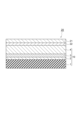
- FIG. 1 is a schematic cross-sectional view showing one embodiment of a gas barrier laminate according to the present disclosure.
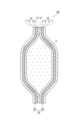
- FIG. 1 is a schematic cross-sectional view showing one embodiment of a packaging product of the present disclosure.
- FIG. 2 is a schematic cross-sectional view showing another embodiment of a gas barrier laminate according to the present disclosure.
- FIG. 2 is a schematic cross-sectional view showing another embodiment of the gas barrier laminate of the present disclosure.
- Fig. 1 is a schematic cross-sectional view showing one embodiment of the gas barrier laminate of the present disclosure.
- the gas barrier laminate 20 shown in FIG. 1 comprises a gas barrier film 10 having a gas barrier layer 4 on one side of a substrate 1 including a first polypropylene film, and a sealant layer 21 as a second polypropylene film laminated to the gas barrier film 10.
- the gas barrier layer 4 is disposed on the sealant layer 21 side of the substrate 1.
- the gas barrier layer 4 is obtained using a composition for forming a gas barrier layer containing a resin and a first silicon compound, and the first silicon compound is at least one of a silicon alkoxide represented by the following general formula (1) and a hydrolyzate thereof.
- Si(OR 1 ) 4 ...(1) (In the above general formula (1), OR 1 represents a hydrolyzable group.)
- OR 1 represents a hydrolyzable group.
- the gas barrier film 10 may further include an inorganic oxide layer 3 between the substrate 1 and the gas barrier layer 4.
- the gas barrier film 10 may further include an anchor coat layer 2 between the substrate 1 and the inorganic oxide layer 3.
- the gas barrier laminate 20 may further include an adhesive layer 22 between the gas barrier layer 4 and the sealant layer 21.
- the gas barrier laminate 20 has a chlorine content of 0.0080% by mass or less in the entire gas barrier laminate 20 as measured by combustion ion chromatography. This makes it difficult for chlorine to act as a catalyst for the oxidative decomposition reaction of the polypropylene resin derived from the sealant layer 21 as the first polypropylene film and the second polypropylene film contained in the substrate 1 when the gas barrier laminate 20 is melted for recycling, and the polypropylene resin is difficult to be oxidatively decomposed. This makes it difficult for the polypropylene resin to be carbonized and colored. As a result, the gas barrier laminate 20 has excellent recyclability. On the other hand, the chlorine content of the entire gas barrier laminate as measured by combustion ion chromatography is greater than 0.0008% by mass, making it possible to have excellent interlayer adhesion even after high retort treatment.
- the substrate 1, anchor coat layer 2, inorganic oxide layer 3, gas barrier layer 4, adhesive layer 22, and sealant layer 21 are described in detail below.
- the substrate 1 includes a first polypropylene film.
- the first polypropylene film includes a polypropylene resin.
- the polypropylene resin it is preferable to use homopolypropylene, which is a homopolymer of propylene.
- the polypropylene resin may be a propylene- ⁇ -olefin copolymer, which is a copolymer of propylene and an ⁇ -olefin, or a mixture of a propylene- ⁇ -olefin copolymer and a homopolypropylene, as long as the heat resistance is not impaired.
- the substrate 1 may further have a layer containing a propylene- ⁇ -olefin copolymer or a mixture of a propylene- ⁇ -olefin copolymer and a homopolypropylene on the surface of the first polypropylene film on the anchor coat layer 2 side, for the purpose of improving adhesion with the anchor coat layer 2.
- the polypropylene resin contained in the first polypropylene film may be a recycled polypropylene resin, or may be a polypropylene resin obtained by homopolymerizing or copolymerizing with other monomers propylene derived from biomass such as plants. These polypropylene resins may be used alone or in combination with polypropylene resins obtained by homopolymerizing or copolymerizing with other monomers propylene derived from ordinary fossil fuels.
- the first polypropylene film contained in the substrate 1 may be a stretched film or an unstretched film.
- a stretched film can be obtained by forming the above-mentioned polypropylene resin into a sheet and stretching the sheet by conventional means.
- the stretched film may be a uniaxially oriented film or a biaxially oriented film.
- the substrate 1 may further contain additives as necessary.
- additives include antioxidants, stabilizers, lubricants such as calcium stearate, fatty acid amides, and erucic acid amide, organic additives such as antistatic agents, and particulate lubricants such as silica, zeolite, syloid, hydrotalcite, and silicon particles.
- the surface of the substrate 1 may be subjected to a surface treatment such as plasma treatment or corona treatment in order to strengthen the adhesion between the substrate 1 and the anchor coat layer 2.
- the thickness of the substrate 1 is not particularly limited, but may be, for example, 15 to 100 ⁇ m.
- the anchor coat layer 2 is a layer that improves the adhesion between the substrate 1 and the inorganic oxide layer 3 after heat sterilization, and the gas barrier properties of the gas barrier film 10 .
- the material constituting the anchor coat layer 2 is not particularly limited as long as it can improve the adhesion between the substrate 1 and the inorganic oxide layer 3, and examples of such materials include a reaction product of an organosilane or organometallic compound, a polyol compound, and an isocyanate compound.
- the anchor coat layer 2 can also be said to be a urethane-based adhesive layer.
- the organosilane is, for example, a trifunctional organosilane or a hydrolysate of a trifunctional organosilane.
- the organometallic compound is, for example, a metal alkoxide or a hydrolysate of a metal alkoxide.
- the metal element contained in the organometallic compound is, for example, Al, Ti, Zr, etc.
- Each of the organosilane hydrolysate and the metal alkoxide hydrolysate may have at least one hydroxyl group.
- the polyol compound is preferably an acrylic polyol from the viewpoint of transparency.
- the isocyanate compound mainly functions as a crosslinking agent or a curing agent.
- the polyol compound and the isocyanate compound may be a monomer or a polymer.
- the thickness of the anchor coat layer 2 is not particularly limited as long as it is capable of improving the adhesion between the substrate 1 and the inorganic oxide layer 3, but is preferably greater than 50 nm. In this case, the gas barrier property can be improved even after high retort treatment, compared to when the thickness of the anchor coat layer 2 is 50 nm or less. The durability of the gas barrier laminate 20 can also be improved.
- the thickness of the anchor coat layer 2 is more preferably 70 nm or more, and even more preferably 80 nm or more. By increasing the thickness of the anchor coat layer 2, the deterioration of the water vapor barrier property when an external force such as stretching is applied can be further suppressed.
- the thickness of the anchor coat layer 2 is preferably less than 300 nm.
- the durability of the gas barrier laminate 20 can be improved even after high retort treatment, compared to when the thickness of the anchor coat layer 2 is 300 nm or more, and the gas barrier property can be improved even after high retort treatment.
- the thickness of the anchor coat layer 2 is more preferably 200 nm or less.
- the inorganic oxide layer 3 is a layer containing an inorganic oxide, and can further improve the gas barrier property of the gas barrier laminate 20.
- the inorganic oxide layer 3 may be transparent.
- the inorganic substance constituting the inorganic oxide includes at least one atom selected from the group consisting of Si, Al, Mg, Sn, Ti, and In.
- the inorganic oxide include aluminum oxide (AlO x ), silicon oxide (SiO x ), tin oxide, and magnesium oxide. These can be used alone or in combination of two or more. Among them, aluminum oxide or silicon oxide is preferred from the viewpoint of various sterilization resistance. In particular, silicon oxide is preferred as the inorganic oxide. In this case, the gas barrier laminate 20 can have better water vapor barrier properties.
- the inorganic oxide layer 3 may be composed of a single layer or multiple layers.
- the inorganic oxide layer 3 may be a vapor-deposited layer.
- the thickness of the inorganic oxide layer 3 varies depending on the type and composition of the inorganic oxide used, but is generally preferably 5 to 300 nm, and the value is appropriately selected from this range.
- the thickness of the inorganic oxide layer 3 is 5 nm or more, the inorganic oxide layer 3 tends to become a uniform film and tends to fully function as a gas barrier material.
- the thickness of the inorganic oxide layer 3 is 300 nm or less, the inorganic oxide layer 3 tends to retain flexibility, and the occurrence of cracks in the inorganic oxide layer 3 due to external factors such as bending or pulling the gas barrier laminate 20 is easily suppressed.
- the thickness of the inorganic oxide layer 3 is more preferably 10 to 150 nm.
- the gas barrier layer 4 is a layer having gas barrier properties, and is obtained by using a composition for forming a gas barrier layer.
- the composition for forming a gas barrier layer includes a resin and a first silicon compound.
- the first silicon compound is at least one of a silicon alkoxide represented by the following general formula (1) and a hydrolyzate thereof.
- the composition for forming a gas barrier layer may further include a second silicon compound.
- the second silicon compound is at least one of a silane coupling agent represented by the following general formula (2) and a hydrolyzate thereof.
- OR 1 represents a hydrolyzable group.
- R2Si ( OR3 ) 3 represents a hydrolyzable group, R2 represents a monovalent organic group, and n is an integer of 1 or more.
- a water-soluble polymer is used as the resin.
- the water-soluble polymer include polyvinyl alcohol resin, modified products thereof, and polyacrylic acid. These can be used alone or in combination of two or more. Among them, polyvinyl alcohol resin or modified products thereof is preferable as the water-soluble polymer.
- this composition can impart better gas barrier properties to the gas barrier film 10 by curing. Furthermore, even when cured, this composition can impart better flexibility to the gas barrier film 10, and can suppress the occurrence of cracks in the gas barrier layer 4 even during processes such as lamination.
- the degree of saponification of the water-soluble polymer is not particularly limited, but from the viewpoint of improving the gas barrier properties of the gas barrier film 10, it is preferably 95% or more, and may be 100%.
- the degree of polymerization of the water-soluble polymer is not particularly limited, but from the viewpoint of improving the gas barrier properties of the gas barrier film 10, it is preferable that the degree of polymerization is 300 or more.
- the degree of polymerization of the water-soluble polymer is preferably 450 to 2400.
- the content of the water-soluble polymer is not particularly limited, but is preferably 25% by mass or more, based on the total mass of the water-soluble polymer and the first silicon compound (100% by mass). In this case, curing can further improve the gas barrier properties and interlayer adhesion of the gas barrier laminate 20 even after high retort treatment.
- the content of the water-soluble polymer is preferably 26% by mass or more, more preferably 27% by mass or more, and particularly preferably 40% by mass or more, based on the total mass of the water-soluble polymer and the first silicon compound.
- the content of the water-soluble polymer is preferably 60% by mass or less, more preferably 58% by mass or less, and particularly preferably 55% by mass or less, based on the total mass of the water-soluble polymer and the first silicon compound (100% by mass). If the content of the water-soluble polymer is 60% by mass or less, the water resistance of the gas barrier layer 4 is improved, and the gas barrier properties and interlayer adhesion of the gas barrier laminate 20 can be further improved even after high retort treatment.
- the first silicon compound is at least one of silicon alkoxide and its hydrolyzate.
- the silicon alkoxide is represented by the following general formula (1).
- OR 1 represents a hydrolyzable group.
- R 1 include an alkyl group and -C 2 H 4 OCH 3.
- the alkyl group include a methyl group and an ethyl group. Among them, an ethyl group is preferable.
- TEOS tetraethoxysilane
- the content of the first silicon compound is not particularly limited, but is preferably 40% by mass or more, more preferably 42% by mass or more, and particularly preferably 45% by mass or more, based on the total mass of the water-soluble polymer and the first silicon compound (100% by mass).
- the gas barrier properties and interlayer adhesion of the gas barrier laminate 20 can be further improved even after high retort treatment, compared to when the content of the first silicon compound is less than 40% by mass.
- the content of the first silicon compound is preferably 75% by mass or less, more preferably 74% by mass or less, and particularly preferably 73% by mass or less, based on the total mass of the water-soluble polymer and the first silicon compound (100% by mass).
- the content of the first silicon compound is 75% by mass or less, the gas barrier layer 4 after curing does not become too hard, cracks in the gas barrier layer 4 are unlikely to occur, and the gas barrier properties are unlikely to deteriorate.
- the gas barrier properties and interlayer adhesion of the gas barrier laminate 20 can be further improved even after high retort treatment. Furthermore, it is possible to reduce the amount of hydrochloric acid required for hydrolysis, and the amount of chlorine in the gas barrier laminate 20 is unlikely to become excessive, which makes it easier to improve the recyclability of the gas barrier laminate 20.
- the second silicon compound is at least one of a silane coupling agent and a hydrolyzate thereof.
- the silane coupling agent is represented by the following general formula (2).
- R2Si ( OR3 ) 3 ) n ...(2)
- R2 represents a monovalent organic group
- OR3 represents a hydrolyzable group
- n represents an integer of 1 or more.
- Examples of the monovalent organic group represented by R2 include a monovalent organic group containing a vinyl group, an epoxy group, a mercapto group, an amino group, or an isocyanate group. Among them, the monovalent organic group is preferably a monovalent organic group having an isocyanate group.
- the composition for forming a gas barrier layer can have better hot water resistance by curing, and it is possible to impart stronger laminate strength to the gas barrier laminate 20 even after high retort treatment.
- R3 examples include an alkyl group and -C2H4OCH3 .
- the alkyl group examples include a methyl group and an ethyl group. Among these, a methyl group is preferable. In this case, the hydrolysis of the silane coupling agent is carried out quickly.
- R3 may be the same as or different from R2 . When n is an integer of 2 or more, R3 may be the same as or different from each other.
- n represents an integer of 1 or more.
- the silane coupling agent represents a monomer, whereas when n is 2 or more, the silane coupling agent represents a polymer.
- n is preferably 3. In this case, the hot water resistance of the gas barrier layer 4 can be further improved, and it is possible to impart stronger laminate strength to the gas barrier laminate 20 even after high retort treatment.
- Silane coupling agents include, for example, silane coupling agents having a vinyl group such as vinyltrimethoxysilane and vinyltriethoxysilane; silane coupling agents having an epoxy group such as 3-glycidoxypropyltrimethoxysilane, 3-glycidoxypropyltriethoxysilane, 3-glycidoxypropylmethyldimethoxysilane, and 3-glycidoxypropylethyldiethoxysilane; silane coupling agents having a mercapto group such as 3-mercaptopropyltrimethoxysilane and 3-mercaptopropylmethyldimethoxysilane; silane coupling agents having an amino group such as 3-aminopropyltrimethoxysilane and 3-aminopropyltriethoxysilane; and silane coupling agents having an isocyanate group such as 3-isocyanatepropyltriethoxysilane and 1,3,5-tris(3-methoxysilylpropy
- 1,3,5-tris(3-trialkoxysilylalkyl)isocyanurate represented by the general formula (NCO-R 4 Si(OR 3 ) 3 ) 3 (wherein R 4 is -(CH 2 ) n -, n is 1 or greater) is most preferred.
- This 1,3,5-tris(3-trialkoxysilylalkyl)isocyanurate is hydrophobic due to the polarity of the nurate moiety, and can impart high water resistance to the gas barrier layer 4.
- the content of the second silicon compound is not particularly limited, but is preferably 3% by mass or more, more preferably 5% by mass or more, and particularly preferably 7% by mass or more, based on the total mass of the water-soluble polymer and the first silicon compound (100% by mass).
- the curing can impart greater laminate strength to the gas barrier laminate 20 even after high retort processing, compared to when the content of the second silicon compound is less than 3% by mass.
- the content of the second silicon compound is preferably 20% by mass or less, more preferably 15% by mass or less, and particularly preferably 12% by mass or less, based on the total mass of the water-soluble polymer and the first silicon compound (100% by mass).
- the content of the water-soluble polymer and the first silicon compound in the gas barrier layer 4 is relatively higher than when the content of the second silicon compound exceeds 20% by mass, so that good gas barrier properties can be maintained.
- the calculation of each of the contents is performed after converting the mass of the first silicon compound to the mass of SiO2 and the mass of the second silicon compound to the mass of R2Si (OH) 3 .
- composition for forming the gas barrier layer may contain known additives such as isocyanate compounds, dispersants, stabilizers, viscosity adjusters, and colorants as necessary, provided that the gas barrier properties are not impaired.
- the thickness of the gas barrier layer 4 is preferably 0.1 ⁇ m or more.
- the gas barrier properties of the gas barrier laminate 20 can be further improved even after high retort processing, compared to when the thickness of the gas barrier layer 4 is less than 0.1 ⁇ m.
- the thickness of the gas barrier layer 4 is more preferably 0.15 ⁇ m or more, and particularly preferably 0.17 ⁇ m or more.
- the thickness of the gas barrier layer 4 is preferably 1.0 ⁇ m or less. Compared to when the thickness of the gas barrier layer 4 exceeds 1.0 ⁇ m, the gas barrier laminate 20 is less likely to curl, making it easier to use as a gas barrier laminate for forming a packaging container. From the viewpoint of further improving the flexibility of the gas barrier laminate 20, the thickness of the gas barrier layer 4 is more preferably 0.7 ⁇ m or less, and particularly preferably 0.5 ⁇ m or less.
- the adhesive layer 22 is a layer that bonds the gas barrier layer 4 and the sealant layer 21 of the gas barrier film 10.
- adhesives that form the adhesive layer 22 include polyurethane resins obtained by using an adhesive containing a base material such as polyester polyol, polyether polyol, acrylic polyol, or carbonate polyol and a bifunctional or higher isocyanate compound.
- the various polyols may be used alone or in combination of two or more. From the viewpoint of heat resistance (retort treatment resistance) during heat sterilization treatment, a two-liquid curing urethane adhesive can be preferably used.
- the adhesive may contain a carbodiimide compound, an oxazoline compound, an epoxy compound, a phosphorus compound, a silane coupling agent, or the like for the purpose of promoting adhesion.
- a carbodiimide compound an oxazoline compound, an epoxy compound, a phosphorus compound, a silane coupling agent, or the like for the purpose of promoting adhesion.
- an adhesive whose polymer component is derived from biomass or an adhesive having biodegradability may be used as the adhesive used to form the adhesive layer 22.
- the adhesive may also be an adhesive having barrier properties.
- the amount of adhesive applied may be, for example, 0.5 to 10 g/ m2 from the viewpoint of obtaining the desired adhesive strength, followability, processability, and the like.
- the adhesive layer 22 may be formed and laminated by known methods such as a dry lamination method and a non-solvent lamination method.
- a dry lamination method When the non-solvent lamination method is used, the amount of adhesive applied can be reduced to 0.5 to 3 g/ m2 compared to when the dry lamination method is used. This can further increase the polypropylene content in the entire gas barrier laminate 20.
- the heat conduction from the heat seal bar is improved, making it possible to reduce the sealing time and temperature, and suppress the occurrence of wrinkles and the like associated with heat sealing.
- the adhesive does not contain an organic solvent, so that the amount of residual solvent in the gas barrier laminate 20 can be reduced.
- the gas barrier laminate 20 contains a polypropylene film as the substrate 1 and the sealant layer 21. Therefore, when the gas barrier laminate 20 is produced using the dry lamination method, the temperature during drying must be lower than that of a polyester laminate in order to prevent the gas barrier laminate 20 from thermally shrinking. In this case, the solvent in the adhesive is not sufficiently volatilized and removed, and remains in the gas barrier laminate 20, and odor due to the residual solvent may remain. In contrast, when the non-solvent lamination method is used and a solvent-free adhesive is used, the amount of residual solvent in the adhesive layer 2 can be further reduced, and the amount of residual solvent in the gas barrier laminate 20 can be reduced.
- a gas barrier laminate 20 is suitable for producing a mono-material packaging container.
- the sealant layer 21 includes a second polypropylene film.
- the second polypropylene film includes a polypropylene resin.
- a homopolypropylene which is a homopolymer of propylene, a propylene- ⁇ -olefin copolymer which is a copolymer of propylene and an ⁇ -olefin, or a mixture thereof can be used.
- the polypropylene resin contained in the second polypropylene film may be a recycled polypropylene resin, or may be a polypropylene resin obtained by homopolymerizing or copolymerizing with other monomers propylene derived from biomass such as plants. These polypropylene resins may be used alone or in combination with polypropylene resins obtained by homopolymerizing or copolymerizing with other monomers propylene derived from ordinary fossil fuels.
- the second polypropylene film contained in the sealant layer 21 may be a stretched film or an unstretched film, but from the viewpoint of lowering the melting point and facilitating heat sealing, an unstretched film is preferred.
- the sealant layer 21 may further contain additives as necessary, such as antioxidants, stabilizers, lubricants such as calcium stearate, fatty acid amides, and erucic acid amide, organic additives such as antistatic agents, and particulate lubricants such as silica, zeolite, syloid, hydrotalcite, and silicon particles.
- the thickness of the sealant layer 21 is not particularly limited, and may be, for example, 15 ⁇ m or more, 30 ⁇ m or more, 50 ⁇ m or more, 60 ⁇ m or more, or 70 ⁇ m or more.
- the thickness of the sealant layer 21 is preferably 50 ⁇ m or more.
- the thickness of the sealant layer 21 is 50 ⁇ m or more, the amount of chlorine in the gas barrier laminate 20 is easily reduced, and the recyclability of the gas barrier laminate 20 can be further improved.
- the thickness of the sealant layer 21 is 50 ⁇ m or more, the rigidity of the sealant layer 21 can be increased, and the durability of the packaging bag obtained using the gas barrier laminate 20 when dropped can also be improved.
- the thickness of the sealant layer 21 may be 150 ⁇ m or less, 130 ⁇ m or less, 110 ⁇ m or less, or 100 ⁇ m or less.
- the amount of chlorine measured by combustion ion chromatography is more than 0.0008% by mass and not more than 0.0080% by mass based on the total amount of the gas barrier laminate 20.
- the amount of chlorine contained in the gas barrier laminate 20 is 0.0080% by mass or less, the high-temperature melting of the gas barrier laminate 20 during recycling makes it difficult for the polypropylene resin contained in the gas barrier laminate 20 to undergo oxidative decomposition reaction, and the gas barrier laminate 20 is less likely to be discolored, making it easier to use as a recycled product and achieving excellent recyclability.
- the amount of chlorine contained in the gas barrier laminate 20 is more than 0.0008% by mass, the gas barrier laminate 20 achieves excellent interlayer adhesion even after high-speed retort treatment.
- the amount of chlorine contained in the gas barrier laminate 20 is preferably 0.0010% by mass or more, more preferably 0.0015% by mass or more, even more preferably 0.0020% by mass or more, and particularly preferably 0.0025% by mass or more. If the amount of chlorine is 0.0010% by mass or more, the gas barrier properties and interlayer adhesion of the gas barrier laminate 20 after high retort are further improved.
- the amount of chlorine contained in the gas barrier laminate 20 may be, for example, 0.0070% by mass or less, preferably 0.0060% by mass or less, more preferably 0.0050% by mass or less, even more preferably 0.0040% by mass or less, and particularly preferably 0.0030% by mass or less. If the amount of chlorine is 0.0060% by mass or less, the gas barrier properties and interlayer adhesion of the gas barrier laminate 20 after high retort are further improved. In addition, recyclability is further improved.
- the melt mass flow rate (MFR, unit: g/10 min) of the molten material when the gas barrier laminate 20 is cut to an appropriate size and melt-extruded may be, for example, 2.0 g/10 min or more and 7.0 g/10 min or less.
- the MFR is preferably 2.0 g/10 min or more and 6.5 g/10 min or less, more preferably 3.0 g/10 min or more and 6.0 g/10 min or less, and particularly preferably 3.4 g/10 min or more and 5.0 g/10 min or less. If the MFR is 7.0 g/10 min or less, the decomposition of the recycled resin is not advanced, and it is preferable from the viewpoint that a recyclable laminate can be obtained.
- MFR is 2.0 g/10 min or more, the resin viscosity does not become too high, and the film-forming property is stable.
- MFR can be measured from the molten material when melt extruded at a temperature of 230°C and a force of 2.16 kgf using a melt viscosity measuring device (Melt Indexer F-F01 manufactured by Toyo Seiki Seisakusho Co., Ltd.) in accordance with the method specified in JIS K7210.
- the product P of the mass proportion C1 of the first silicon compound in the total mass and the ratio R1 of the thickness of the gas barrier layer 4 to the thickness of the gas barrier laminate 20 (hereinafter also referred to as the " SiO2 ratio") is not particularly limited, but is preferably 0.35 or less, more preferably 0.25 or less, and particularly preferably 0.24 or less.
- the SiO2 ratio P is 0.35 or less, the recyclability of the gas barrier laminate 20 is likely to be improved.
- the SiO2 ratio P is preferably greater than 0.04, more preferably greater than 0.10, and particularly preferably greater than 0.15.
- the SiO2 ratio P is greater than 0.04, the gas barrier properties and interlayer adhesion of the gas barrier laminate 20 after high retort tend to be improved.
- the thickness of the gas barrier laminate 20 is not particularly limited, but is preferably 200 ⁇ m or less. When the thickness of the gas barrier laminate 20 is 200 ⁇ m or less, the heat sealability is less likely to decrease when producing a packaging container, and the gas barrier laminate 20 is less likely to be curved, making it easier to use as a packaging container.
- the thickness of the gas barrier laminate 20 may be 180 ⁇ m or less, 160 ⁇ m or less, 140 ⁇ m or less, or 120 ⁇ m or less.
- the thickness of the gas barrier laminate 20 may be 40 ⁇ m or more, 60 ⁇ m or more, 80 ⁇ m or more, or 100 ⁇ m or more.
- a method for producing the gas barrier laminate 20 will be described. First, a substrate 1 is prepared.
- an anchor coat layer 2 is formed on the substrate 1.
- the anchor coat layer 2 can be obtained by applying an anchor coat layer forming composition onto the surface of the substrate 1 and drying it.
- the inorganic oxide layer 3 is formed on the anchor coat layer 2 .
- the inorganic oxide layer 3 can be formed by vacuum deposition, sputtering, ion plating, plasma vapor deposition (CVD), etc.
- the vacuum deposition method is the most preferable.
- the heating method used in the vacuum deposition method it is preferable to use any one of the electron beam heating method, the resistance heating method, and the induction heating method, but in consideration of the wide range of selectivity of the deposition material, it is more preferable to use the electron beam heating method.
- the deposition can be performed using a plasma assist method or an ion beam assist method in order to improve the adhesion between the inorganic oxide layer 3 and the substrate 1 and the denseness of the inorganic oxide layer 3.
- the deposition may be performed using a reactive deposition method in which various gases such as oxygen are blown in to increase the transparency of the deposition film.
- the gas barrier layer 4 is formed on the inorganic oxide layer 3 to obtain the gas barrier film 10 .
- the gas barrier layer 4 can be obtained by applying a composition for forming a gas barrier layer containing a resin and a first silicon compound onto the inorganic oxide layer 3 and drying it.
- the composition for forming a gas barrier layer may further contain hydrochloric acid.
- Hydrochloric acid is added as a catalyst to promote the hydrolysis reaction of silicon alkoxide, which has a low hydrolysis rate. Hydrochloric acid is preferably used because it has a high reaction rate, is easy to evaporate, and is inexpensive compared to other acids.
- the composition for forming a gas barrier layer further contains a second silicon compound, and when the silane coupling agent as the second silicon compound is a silane coupling agent having an epoxy group, hydrochloric acid can ring-open the epoxy group.
- coating methods include wet film formation methods such as gravure coating, dip coating, reverse coating, wire bar coating, and die coating.
- the amount of chlorine contained in the gas barrier laminate 20 can be adjusted by adjusting the content of the first silicon compound or hydrochloric acid in the gas barrier layer-forming composition, the film thickness of the gas barrier layer 4, and the application conditions (heating temperature, heating time) of the gas barrier layer-forming composition when forming the gas barrier layer 4.
- a sealant layer 21 is formed on the gas barrier layer 4 of the gas barrier film 10 via an adhesive layer 22. In this way, a gas barrier laminate 20 is obtained.
- Fig. 2 is a cross-sectional view showing one embodiment of the package product of the present disclosure.
- a packaged product 40 includes a packaging container 30 and a content C accommodated in the packaging container 30.
- the packaging container 30 shown in Fig. 2 is obtained by using a pair of gas barrier laminates 20 and heat-sealing the four peripheral edges of the gas barrier laminates 20 with the sealant layers 21 facing each other. Note that the adhesive layer 22 of the gas barrier laminate 20 is omitted in Fig. 2.
- This packaging product 40 includes a packaging container 30 obtained using a gas barrier laminate 20, which has excellent recyclability and can have excellent interlayer adhesion even after high retort processing. Therefore, delamination in the gas barrier laminate 20 can be suppressed even after high retort processing. In addition, the packaging container 30 remaining after the content C is discharged from the packaging product 40 has excellent recyclability.
- the packaging container 30 can also be obtained by folding one gas barrier laminate 20 and heat sealing the three peripheral edges of the gas barrier laminate 20 with the sealant layers 21 facing each other.
- Examples of the packaging container 30 include packaging bags, laminated tube containers, and liquid paper containers.
- Contents C are not particularly limited, and examples of contents C include food, liquids, medicines, electronic parts, etc.
- the gas barrier laminate of the present disclosure is not limited to the above embodiment.
- the sealant layer 21 in the gas barrier laminate 20, the sealant layer 21 is adhered to the gas barrier layer 4 of the gas barrier film 10, but the sealant layer 21 may be adhered to the substrate 1.
- the gas barrier laminate 20 includes the gas barrier film 10 and the sealant layer 21 as a second polypropylene film laminated on the gas barrier film 10.
- the gas barrier laminate may further include one or more outer layer films as the second polypropylene film in addition to the sealant layer.
- the gas barrier laminate 120 may include an outer layer film 121, a gas barrier film 10, and a sealant layer 21 in this order.
- the outer layer film 121 is bonded to the substrate 1 via an adhesive layer 22.
- the gas barrier layer 4 of the gas barrier film 10 is disposed on the sealant layer 21 side (inner surface side) with respect to the substrate 1, but the gas barrier layer 4 may be disposed on the outer layer film 121 side (outer surface side).
- This gas barrier laminate 120 has excellent recyclability and can maintain excellent interlayer adhesion even after high retort processing. In addition, it can impart rigidity to the packaging container, so that excessive stress is less likely to be applied to the gas barrier layer 4 even after high retort processing, and the occurrence of cracks in the gas barrier layer 4 is suppressed.
- the gas barrier laminate of the present disclosure may also include a gas barrier film 10, an outer layer film 121, and a sealant layer 21 in this order, as in a gas barrier laminate 220 shown in Fig. 4.
- the outer layer film 121 is adhered to the gas barrier layer 4 via an adhesive layer 22.
- the gas barrier layer 4 of the gas barrier film 10 is disposed on the sealant layer 21 side (inner surface side) with respect to the substrate 1, but the gas barrier layer 4 may also be disposed on the opposite side to the sealant layer 21 with respect to the substrate 1 (outer surface side).
- This gas barrier laminate 220 also has excellent recyclability and allows for excellent interlayer adhesion even after high retort treatment. In addition, it can impart rigidity to the packaging container, so that excessive stress is less likely to be applied to the gas barrier layer 4 even after high retort treatment, and the occurrence of cracks in the gas barrier layer 4 is suppressed.
- the outer layer film 121 is a layer provided to increase the rigidity of the packaging container, and therefore, the outer layer film 121 can be called a second base material layer.
- the outer layer film 121 is a second polypropylene film.
- the second polypropylene film contains a polypropylene resin.
- As the polypropylene resin it is preferable to use homopolypropylene, which is a homopolymer of propylene.
- the polypropylene resin may be a propylene- ⁇ -olefin copolymer, which is a copolymer of propylene and an ⁇ -olefin, or a mixture of a propylene- ⁇ -olefin copolymer and homopolypropylene, as long as the heat resistance is not impaired.
- a layer containing a propylene- ⁇ -olefin copolymer or a mixture of a propylene- ⁇ -olefin copolymer and homopolypropylene may be further provided on the surface of the second polypropylene film.
- the polypropylene resin contained in the second polypropylene film may be a recycled polypropylene resin, or may be a polypropylene resin obtained by homopolymerizing or copolymerizing with other monomers propylene derived from biomass such as plants. These polypropylene resins may be used alone or in combination with polypropylene resins obtained by homopolymerizing or copolymerizing with other monomers propylene derived from ordinary fossil fuels.
- the second polypropylene film included in the outer layer film 121 may be a stretched film or an unstretched film.
- a stretched film can be obtained by forming the above-mentioned polypropylene resin into a sheet and stretching the sheet by conventional means.
- the stretched film may be a uniaxially oriented film or a biaxially oriented film.
- the outer layer film 121 may further contain additives as necessary.
- additives include antioxidants, stabilizers, lubricants such as calcium stearate, fatty acid amides, and erucic acid amide, organic additives such as antistatic agents, and particulate lubricants such as silica, zeolite, syloid, hydrotalcite, and silicon particles.
- the outer film 121 may be the same as or different from the substrate 1 .
- the thickness of the outer film 121 is not particularly limited, but may be, for example, 15 to 100 ⁇ m.
- a gas barrier laminate comprising a gas barrier film having a gas barrier layer on at least one side of a substrate comprising a first polypropylene film, and at least one second polypropylene film laminated on the gas barrier film, the gas barrier layer being obtained using a composition for forming a gas barrier layer comprising a resin and a first silicon compound, the first silicon compound being at least one of a silicon alkoxide represented by the following general formula (1) and a hydrolysate thereof, and the amount of chlorine measured by combustion ion chromatography is more than 0.0008 mass% and not more than 0.0080 mass% based on the total amount of the gas barrier laminate.
- OR 1 represents a hydrolyzable group.
- the gas barrier laminate according to claim 1 wherein the amount of chlorine measured by combustion ion chromatography is 0.0010 mass% or more and 0.0060 mass% or less based on the total amount of the gas barrier laminate.
- the amount of chlorine measured by combustion ion chromatography is from 0.0010% by mass to 0.0050% by mass based on the total amount of the gas barrier laminate.
- Coating solutions 1 to 5 serving as compositions for forming a gas barrier layer used in the examples and comparative examples were prepared as follows.
- Coating Liquid 1 The following liquid A and liquid B were mixed so that polyvinyl alcohol (also referred to as "PVA”) and tetraethoxysilane (also referred to as "TEOS”) as a silicon alkoxide were respectively in mass ratios of 55 and 45, with the total mass of PVA and TEOS ( SiO2 equivalent) being the reference (100), and then liquid C was added to liquid A and liquid B in an amount of 10 mass% relative to the total of PVA and TEOS ( SiO2 equivalent) being 100 mass%, to obtain a coating liquid.
- Solution A a 5% by mass aqueous solution of PVA (product name: Kuraray Poval 60-98, manufactured by Kuraray Co., Ltd.).
- Solution B TEOS (product name: KBE04, solid content: 100%, manufactured by Shin-Etsu Chemical Co., Ltd.), methanol (manufactured by Kanto Chemical Co., Ltd.) and 0.1N hydrochloric acid (manufactured by Kanto Chemical Co., Ltd.) were mixed in a ratio of 17/10/73 (mass ratio), and the resulting mixture was stirred to hydrolyze TEOS (5 mass% ( SiO2 equivalent) hydrolyzed solution of TEOS).
- TEOS product name: KBE04, solid content: 100%, manufactured by Shin-Etsu Chemical Co., Ltd.
- methanol manufactured by Kanto Chemical Co., Ltd.
- 0.1N hydrochloric acid manufactured by Kanto Chemical Co., Ltd.
- the composition for forming the anchor coat layer was prepared as follows. Acrylic polyol and tolylene diisocyanate were mixed so that the number of NCO groups in tolylene diisocyanate was equal to the number of OH groups in the acrylic polyol, and the mixture was diluted with ethyl acetate so that the solid content (acrylic polyol and tolylene diisocyanate) was 5% by mass.
- ⁇ -(3,4-epoxycyclohexyl)trimethoxysilane was further added to the diluted mixture so that the amount was 5 parts by mass relative to 100 parts by mass of the total amount of the acrylic polyol and tolylene diisocyanate, and these were mixed to prepare a composition for forming an anchor coat layer (anchor coating agent).
- a SiOx film (inorganic oxide layer) was formed on the anchor coat layer to a thickness of 25 nm.
- the SiOx film was formed by evaporating silicon dioxide by electron beam heating using an electron beam heating vacuum deposition apparatus.
- a coating film was formed by applying a coating liquid of the type shown in Table 1 onto the SiOx film, and this coating film was dried by heating at 60° C. for 60 seconds to form a gas barrier layer so that the thickness after drying was the value (thickness a of the gas barrier layer) shown in Table 1.
- a gas barrier film consisting of the substrate, the anchor coat layer, the inorganic oxide layer, and the gas barrier layer was obtained.
- a 60 ⁇ m-thick unstretched polypropylene film (product name "Torayfan ZK207", manufactured by Toray Industries, Inc.) was attached as a sealant layer to the surface of the gas barrier layer of this gas barrier film by dry lamination using a two-component curing urethane adhesive (product name "A525/A52").
- SiO2 ratio P mass ratio of TEOS ( SiO2 equivalent) ⁇ thickness a ( ⁇ m) of gas barrier layer / thickness b ( ⁇ m) of gas barrier laminate (laminate)
- Example 6 A gas barrier laminate was obtained in the same manner as in Example 1, except that an unstretched polypropylene film (product name "CPP50") having a thickness of 50 ⁇ m was used as the sealant layer as shown in Table 1.
- the SiO2 ratio P of the obtained gas barrier laminate was determined in the same manner as in Example 1. The results are shown in Table 1.
- Example 7 A gas barrier laminate was obtained in the same manner as in Example 1, except that an unstretched polypropylene film (product name "CPP80") having a thickness of 80 ⁇ m was used as the sealant layer as shown in Table 1.
- the SiO2 ratio P of the obtained gas barrier laminate was determined in the same manner as in Example 1. The results are shown in Table 1.
- Example 8 A gas barrier laminate was obtained in the same manner as in Example 1, except that an unstretched polypropylene film (product name "CPP100") having a thickness of 100 ⁇ m was used as the sealant layer as shown in Table 1.
- the SiO2 ratio P of the obtained gas barrier laminate was determined in the same manner as in Example 1. The results are shown in Table 1.
- Example 9 A gas barrier laminate was obtained in the same manner as in Example 1, except that the sealant layer and the gas barrier layer were bonded by a non-solvent lamination method using a solventless adhesive ("TSN-4864A/TSN-4864B3", manufactured by Toyo-Morton Co., Ltd.) as the adhesive.
- TSN-4864A/TSN-4864B3 a solventless adhesive
- the SiO2 ratio P of the obtained gas barrier laminate was determined in the same manner as in Example 1. The results are shown in Table 1.
- Example 2 and Comparative Example 2 A gas barrier film was produced in the same manner as in Example 1, except that the mass ratios of PVA and TEOS (in terms of SiO2 ) in the coating liquid and the thickness a of the gas barrier layer were set to the values shown in Table 1.
- a 20 ⁇ m-thick biaxially oriented polypropylene film product name "ME-1", OPP, manufactured by Mitsui Chemicals Tocello Inc.
- ME-1 product name "ME-1", OPP, manufactured by Mitsui Chemicals Tocello Inc.
- a 60 ⁇ m-thick unstretched polypropylene film was attached as a sealant layer to the surface of the substrate of the gas barrier film prepared in Example 1 by dry lamination using a two-component curing urethane adhesive.
- a gas barrier laminate was obtained having the thickness b shown in Table 1, in which the sealant layer, adhesive layer, substrate, anchor coat layer, inorganic oxide layer, gas barrier layer, adhesive layer and outer layer film were laminated in this order.
- the SiO2 ratio P of the obtained gas barrier laminate was determined in the same manner as in Example 1. The results are shown in Table 1.
- the amount of chlorine contained in the gas barrier laminates obtained in the Examples and Comparative Examples was measured by combustion ion chromatography. Specifically, the gas barrier laminate was cut in the thickness direction to obtain a sample, which was then placed on a ceramic board and weighed to obtain a sample for combustion, with the weight of the sample being approximately 30 mg. Next, the combustion sample was combusted under the following condition 1 using an automatic sample combustion device (AQF-2100H manufactured by Nitto Seiko Analytech Co., Ltd.), and the generated gas was collected in 10 mL of an absorbing liquid.
- an automatic sample combustion device (AQF-2100H manufactured by Nitto Seiko Analytech Co., Ltd.
- test samples with a laminate strength of 2.0 N/15 mm or more were judged to pass in terms of interlayer adhesion after the high retort treatment, and test samples with a laminate strength of less than 2.0 N/15 mm were judged to fail in terms of interlayer adhesion after the high retort treatment.
- the gas barrier laminate of the present disclosure has excellent recyclability and is capable of maintaining excellent interlayer adhesion even after high-speed retort processing, making it possible to produce excellent packaging containers. After use, the packaging containers can be reused as recycled products, helping to resolve environmental and waste issues.
Landscapes
- Chemical & Material Sciences (AREA)
- Organic Chemistry (AREA)
- Engineering & Computer Science (AREA)
- Polymers & Plastics (AREA)
- Health & Medical Sciences (AREA)
- Chemical Kinetics & Catalysis (AREA)
- Medicinal Chemistry (AREA)
- Materials Engineering (AREA)
- Mechanical Engineering (AREA)
- Inorganic Chemistry (AREA)
- Manufacturing & Machinery (AREA)
- Wood Science & Technology (AREA)
- Life Sciences & Earth Sciences (AREA)
- Laminated Bodies (AREA)
- Wrappers (AREA)
Priority Applications (4)
| Application Number | Priority Date | Filing Date | Title |
|---|---|---|---|
| CN202480006635.4A CN120457030A (zh) | 2023-01-11 | 2024-01-10 | 阻气性层叠体、包装容器以及包装制品 |
| JP2024570197A JPWO2024150763A1 (https=) | 2023-01-11 | 2024-01-10 | |
| EP24741535.9A EP4650168A1 (en) | 2023-01-11 | 2024-01-10 | Gas barrier laminate, packaging container, and packaged product |
| US19/265,906 US20250340050A1 (en) | 2023-01-11 | 2025-07-10 | Gas barrier laminate, packaging container, and packaged product |
Applications Claiming Priority (2)
| Application Number | Priority Date | Filing Date | Title |
|---|---|---|---|
| JP2023-002691 | 2023-01-11 | ||
| JP2023002691 | 2023-01-11 |
Related Child Applications (1)
| Application Number | Title | Priority Date | Filing Date |
|---|---|---|---|
| US19/265,906 Continuation US20250340050A1 (en) | 2023-01-11 | 2025-07-10 | Gas barrier laminate, packaging container, and packaged product |
Publications (1)
| Publication Number | Publication Date |
|---|---|
| WO2024150763A1 true WO2024150763A1 (ja) | 2024-07-18 |
Family
ID=91896943
Family Applications (1)
| Application Number | Title | Priority Date | Filing Date |
|---|---|---|---|
| PCT/JP2024/000302 Ceased WO2024150763A1 (ja) | 2023-01-11 | 2024-01-10 | ガスバリア性積層体、包装容器および包装製品 |
Country Status (5)
| Country | Link |
|---|---|
| US (1) | US20250340050A1 (https=) |
| EP (1) | EP4650168A1 (https=) |
| JP (1) | JPWO2024150763A1 (https=) |
| CN (1) | CN120457030A (https=) |
| WO (1) | WO2024150763A1 (https=) |
Cited By (1)
| Publication number | Priority date | Publication date | Assignee | Title |
|---|---|---|---|---|
| WO2026029116A1 (ja) * | 2024-07-31 | 2026-02-05 | Toppanホールディングス株式会社 | 液体包装用ガスバリア性積層体、液体包装用フィルム、液体包装容器及び液体包装製品 |
Citations (4)
| Publication number | Priority date | Publication date | Assignee | Title |
|---|---|---|---|---|
| JP2020192699A (ja) * | 2019-05-27 | 2020-12-03 | 凸版印刷株式会社 | ガスバリア積層体 |
| WO2021020401A1 (ja) * | 2019-07-29 | 2021-02-04 | 凸版印刷株式会社 | ガスバリア積層体及びこれを用いた包装材 |
| WO2021220977A1 (ja) * | 2020-04-27 | 2021-11-04 | 凸版印刷株式会社 | ガスバリア積層体及び包装袋 |
| JP2022185386A (ja) * | 2021-06-02 | 2022-12-14 | 凸版印刷株式会社 | 包装材料および包装袋 |
Family Cites Families (1)
| Publication number | Priority date | Publication date | Assignee | Title |
|---|---|---|---|---|
| CN116529067A (zh) | 2021-02-25 | 2023-08-01 | 凸版印刷株式会社 | 阻隔膜及层叠体 |
-
2024
- 2024-01-10 JP JP2024570197A patent/JPWO2024150763A1/ja active Pending
- 2024-01-10 CN CN202480006635.4A patent/CN120457030A/zh active Pending
- 2024-01-10 WO PCT/JP2024/000302 patent/WO2024150763A1/ja not_active Ceased
- 2024-01-10 EP EP24741535.9A patent/EP4650168A1/en active Pending
-
2025
- 2025-07-10 US US19/265,906 patent/US20250340050A1/en active Pending
Patent Citations (4)
| Publication number | Priority date | Publication date | Assignee | Title |
|---|---|---|---|---|
| JP2020192699A (ja) * | 2019-05-27 | 2020-12-03 | 凸版印刷株式会社 | ガスバリア積層体 |
| WO2021020401A1 (ja) * | 2019-07-29 | 2021-02-04 | 凸版印刷株式会社 | ガスバリア積層体及びこれを用いた包装材 |
| WO2021220977A1 (ja) * | 2020-04-27 | 2021-11-04 | 凸版印刷株式会社 | ガスバリア積層体及び包装袋 |
| JP2022185386A (ja) * | 2021-06-02 | 2022-12-14 | 凸版印刷株式会社 | 包装材料および包装袋 |
Cited By (1)
| Publication number | Priority date | Publication date | Assignee | Title |
|---|---|---|---|---|
| WO2026029116A1 (ja) * | 2024-07-31 | 2026-02-05 | Toppanホールディングス株式会社 | 液体包装用ガスバリア性積層体、液体包装用フィルム、液体包装容器及び液体包装製品 |
Also Published As
| Publication number | Publication date |
|---|---|
| CN120457030A (zh) | 2025-08-08 |
| US20250340050A1 (en) | 2025-11-06 |
| JPWO2024150763A1 (https=) | 2024-07-18 |
| EP4650168A1 (en) | 2025-11-19 |
Similar Documents
| Publication | Publication Date | Title |
|---|---|---|
| KR101013370B1 (ko) | 가스 배리어 적층 필름 | |
| US20250340050A1 (en) | Gas barrier laminate, packaging container, and packaged product | |
| EP4245520A1 (en) | Gas barrier layer forming composition, gas barrier film, packaging film, and packaging bag using same, and, gas barrier film production method, packaging film production method, and packaging bag production method | |
| US20240391224A1 (en) | Gas barrier film and method for producing gas barrier film | |
| JP2024096178A (ja) | ガスバリアフィルム | |
| JP2020131676A (ja) | 高層間密着性ガスバリア蒸着フィルム | |
| WO2023054251A1 (ja) | ガスバリア性積層体、包装フィルム、包装容器及び包装製品 | |
| JP6947173B2 (ja) | 積層シート、包装材料、および成形品 | |
| WO2023243625A1 (ja) | ガスバリア性積層体、包装フィルム、包装容器及び包装製品 | |
| JP7269557B2 (ja) | バリアフィルム、積層体、包装製品及びバリアフィルムの製造方法 | |
| JP2016000464A (ja) | ガスバリア積層フィルム | |
| JP2008290406A (ja) | ガスバリア性フィルム及びガスバリア性積層体 | |
| US20250026550A1 (en) | Gas barrier laminate, packaging film, packaging container, and packaged product | |
| JP6433758B2 (ja) | ガスバリア性積層体 | |
| EP4446113A1 (en) | Barrier film, packaging material, packaging container, and packaged product | |
| JP6454130B2 (ja) | 積層フィルムおよび積層フィルムの製造方法 | |
| JP4449414B2 (ja) | ガスバリアフィルム積層体 | |
| WO2022181549A1 (ja) | バリアフィルム及び積層体 | |
| JP2024054520A (ja) | ガスバリア性フィルム用積層体、ガスバリア性フィルム、包装フィルム、包装容器及び包装製品 | |
| JP7416344B1 (ja) | 多層フィルムおよび包装フィルム | |
| EP4650167A1 (en) | Gas-barrier laminate, packaging container, and packaging product | |
| EP4691759A1 (en) | Barrier film, layered body, packaging container, and packaging product | |
| JP2024058265A (ja) | ガスバリア性フィルム用積層体、ガスバリア性フィルム、包装フィルム、包装容器及び包装製品 | |
| WO2023199753A1 (ja) | ガスバリア性積層体、包装フィルム、包装容器及び包装製品 | |
| JP2023179896A (ja) | 積層体、包装材料及び包装袋 |
Legal Events
| Date | Code | Title | Description |
|---|---|---|---|
| 121 | Ep: the epo has been informed by wipo that ep was designated in this application |
Ref document number: 24741535 Country of ref document: EP Kind code of ref document: A1 |
|
| WWE | Wipo information: entry into national phase |
Ref document number: 2024570197 Country of ref document: JP |
|
| WWE | Wipo information: entry into national phase |
Ref document number: 202480006635.4 Country of ref document: CN |
|
| WWP | Wipo information: published in national office |
Ref document number: 202480006635.4 Country of ref document: CN |
|
| NENP | Non-entry into the national phase |
Ref country code: DE |
|
| WWP | Wipo information: published in national office |
Ref document number: 2024741535 Country of ref document: EP |