WO2024057641A1 - 二次電池用負極および二次電池 - Google Patents
二次電池用負極および二次電池 Download PDFInfo
- Publication number
- WO2024057641A1 WO2024057641A1 PCT/JP2023/021492 JP2023021492W WO2024057641A1 WO 2024057641 A1 WO2024057641 A1 WO 2024057641A1 JP 2023021492 W JP2023021492 W JP 2023021492W WO 2024057641 A1 WO2024057641 A1 WO 2024057641A1
- Authority
- WO
- WIPO (PCT)
- Prior art keywords
- negative electrode
- active material
- electrode active
- alkali metal
- material layer
- Prior art date
- Legal status (The legal status is an assumption and is not a legal conclusion. Google has not performed a legal analysis and makes no representation as to the accuracy of the status listed.)
- Ceased
Links
Images


Classifications
-
- H—ELECTRICITY
- H01—ELECTRIC ELEMENTS
- H01M—PROCESSES OR MEANS, e.g. BATTERIES, FOR THE DIRECT CONVERSION OF CHEMICAL ENERGY INTO ELECTRICAL ENERGY
- H01M4/00—Electrodes
- H01M4/02—Electrodes composed of, or comprising, active material
- H01M4/62—Selection of inactive substances as ingredients for active masses, e.g. binders, fillers
-
- H—ELECTRICITY
- H01—ELECTRIC ELEMENTS
- H01M—PROCESSES OR MEANS, e.g. BATTERIES, FOR THE DIRECT CONVERSION OF CHEMICAL ENERGY INTO ELECTRICAL ENERGY
- H01M10/00—Secondary cells; Manufacture thereof
- H01M10/05—Accumulators with non-aqueous electrolyte
- H01M10/052—Li-accumulators
-
- H—ELECTRICITY
- H01—ELECTRIC ELEMENTS
- H01M—PROCESSES OR MEANS, e.g. BATTERIES, FOR THE DIRECT CONVERSION OF CHEMICAL ENERGY INTO ELECTRICAL ENERGY
- H01M10/00—Secondary cells; Manufacture thereof
- H01M10/05—Accumulators with non-aqueous electrolyte
- H01M10/052—Li-accumulators
- H01M10/0525—Rocking-chair batteries, i.e. batteries with lithium insertion or intercalation in both electrodes; Lithium-ion batteries
-
- H—ELECTRICITY
- H01—ELECTRIC ELEMENTS
- H01M—PROCESSES OR MEANS, e.g. BATTERIES, FOR THE DIRECT CONVERSION OF CHEMICAL ENERGY INTO ELECTRICAL ENERGY
- H01M10/00—Secondary cells; Manufacture thereof
- H01M10/05—Accumulators with non-aqueous electrolyte
- H01M10/056—Accumulators with non-aqueous electrolyte characterised by the materials used as electrolytes, e.g. mixed inorganic/organic electrolytes
- H01M10/0564—Accumulators with non-aqueous electrolyte characterised by the materials used as electrolytes, e.g. mixed inorganic/organic electrolytes the electrolyte being constituted of organic materials only
- H01M10/0566—Liquid materials
-
- H—ELECTRICITY
- H01—ELECTRIC ELEMENTS
- H01M—PROCESSES OR MEANS, e.g. BATTERIES, FOR THE DIRECT CONVERSION OF CHEMICAL ENERGY INTO ELECTRICAL ENERGY
- H01M10/00—Secondary cells; Manufacture thereof
- H01M10/42—Methods or arrangements for servicing or maintenance of secondary cells or secondary half-cells
- H01M10/4235—Safety or regulating additives or arrangements in electrodes, separators or electrolyte
-
- H—ELECTRICITY
- H01—ELECTRIC ELEMENTS
- H01M—PROCESSES OR MEANS, e.g. BATTERIES, FOR THE DIRECT CONVERSION OF CHEMICAL ENERGY INTO ELECTRICAL ENERGY
- H01M4/00—Electrodes
- H01M4/02—Electrodes composed of, or comprising, active material
- H01M4/13—Electrodes for accumulators with non-aqueous electrolyte, e.g. for lithium-accumulators; Processes of manufacture thereof
- H01M4/133—Electrodes based on carbonaceous material, e.g. graphite-intercalation compounds or CFx
-
- H—ELECTRICITY
- H01—ELECTRIC ELEMENTS
- H01M—PROCESSES OR MEANS, e.g. BATTERIES, FOR THE DIRECT CONVERSION OF CHEMICAL ENERGY INTO ELECTRICAL ENERGY
- H01M4/00—Electrodes
- H01M4/02—Electrodes composed of, or comprising, active material
- H01M4/13—Electrodes for accumulators with non-aqueous electrolyte, e.g. for lithium-accumulators; Processes of manufacture thereof
- H01M4/134—Electrodes based on metals, Si or alloys
-
- H—ELECTRICITY
- H01—ELECTRIC ELEMENTS
- H01M—PROCESSES OR MEANS, e.g. BATTERIES, FOR THE DIRECT CONVERSION OF CHEMICAL ENERGY INTO ELECTRICAL ENERGY
- H01M4/00—Electrodes
- H01M4/02—Electrodes composed of, or comprising, active material
- H01M4/13—Electrodes for accumulators with non-aqueous electrolyte, e.g. for lithium-accumulators; Processes of manufacture thereof
- H01M4/136—Electrodes based on inorganic compounds other than oxides or hydroxides, e.g. sulfides, selenides, tellurides, halogenides or LiCoFy
-
- H—ELECTRICITY
- H01—ELECTRIC ELEMENTS
- H01M—PROCESSES OR MEANS, e.g. BATTERIES, FOR THE DIRECT CONVERSION OF CHEMICAL ENERGY INTO ELECTRICAL ENERGY
- H01M4/00—Electrodes
- H01M4/02—Electrodes composed of, or comprising, active material
- H01M4/36—Selection of substances as active materials, active masses, active liquids
-
- H—ELECTRICITY
- H01—ELECTRIC ELEMENTS
- H01M—PROCESSES OR MEANS, e.g. BATTERIES, FOR THE DIRECT CONVERSION OF CHEMICAL ENERGY INTO ELECTRICAL ENERGY
- H01M4/00—Electrodes
- H01M4/02—Electrodes composed of, or comprising, active material
- H01M4/36—Selection of substances as active materials, active masses, active liquids
- H01M4/362—Composites
- H01M4/364—Composites as mixtures
-
- H—ELECTRICITY
- H01—ELECTRIC ELEMENTS
- H01M—PROCESSES OR MEANS, e.g. BATTERIES, FOR THE DIRECT CONVERSION OF CHEMICAL ENERGY INTO ELECTRICAL ENERGY
- H01M4/00—Electrodes
- H01M4/02—Electrodes composed of, or comprising, active material
- H01M4/36—Selection of substances as active materials, active masses, active liquids
- H01M4/38—Selection of substances as active materials, active masses, active liquids of elements or alloys
- H01M4/386—Silicon or alloys based on silicon
-
- H—ELECTRICITY
- H01—ELECTRIC ELEMENTS
- H01M—PROCESSES OR MEANS, e.g. BATTERIES, FOR THE DIRECT CONVERSION OF CHEMICAL ENERGY INTO ELECTRICAL ENERGY
- H01M4/00—Electrodes
- H01M4/02—Electrodes composed of, or comprising, active material
- H01M4/36—Selection of substances as active materials, active masses, active liquids
- H01M4/58—Selection of substances as active materials, active masses, active liquids of inorganic compounds other than oxides or hydroxides, e.g. sulfides, selenides, tellurides, halogenides or LiCoFy; of polyanionic structures, e.g. phosphates, silicates or borates
- H01M4/583—Carbonaceous material, e.g. graphite-intercalation compounds or CFx
- H01M4/587—Carbonaceous material, e.g. graphite-intercalation compounds or CFx for inserting or intercalating light metals
-
- H—ELECTRICITY
- H01—ELECTRIC ELEMENTS
- H01M—PROCESSES OR MEANS, e.g. BATTERIES, FOR THE DIRECT CONVERSION OF CHEMICAL ENERGY INTO ELECTRICAL ENERGY
- H01M4/00—Electrodes
- H01M4/02—Electrodes composed of, or comprising, active material
- H01M2004/026—Electrodes composed of, or comprising, active material characterised by the polarity
- H01M2004/027—Negative electrodes
-
- Y—GENERAL TAGGING OF NEW TECHNOLOGICAL DEVELOPMENTS; GENERAL TAGGING OF CROSS-SECTIONAL TECHNOLOGIES SPANNING OVER SEVERAL SECTIONS OF THE IPC; TECHNICAL SUBJECTS COVERED BY FORMER USPC CROSS-REFERENCE ART COLLECTIONS [XRACs] AND DIGESTS
- Y02—TECHNOLOGIES OR APPLICATIONS FOR MITIGATION OR ADAPTATION AGAINST CLIMATE CHANGE
- Y02E—REDUCTION OF GREENHOUSE GAS [GHG] EMISSIONS, RELATED TO ENERGY GENERATION, TRANSMISSION OR DISTRIBUTION
- Y02E60/00—Enabling technologies; Technologies with a potential or indirect contribution to GHG emissions mitigation
- Y02E60/10—Energy storage using batteries
Definitions
- the present technology relates to a negative electrode for a secondary battery and a secondary battery.
- secondary batteries are being developed as a power source that is small and lightweight and provides high energy density.
- This secondary battery includes a positive electrode, a negative electrode (negative electrode for a secondary battery), and an electrolyte, and various studies have been made regarding the configuration of the secondary battery.
- the negative electrode active material layer contains ceramic nanoparticles (MgO) together with the negative electrode active material (carbon material) (see, for example, Patent Document 1).
- the anode active material contains (CH 2 OCO 2 Li) 2 as a lithium ion conductive additive (see, for example, Patent Document 2).
- At least one of the positive electrode, the negative electrode, and the nonaqueous electrolyte contains a basic compound, and the basic compound contains an anion (NO 2 - ) and a cation (Mg 2+ ) (see, for example, Patent Document 3).
- the binder of the electrode contains a polymer compound, and the polymer compound contains an anion (NO 3 - or NO 2 - ) and a cation (Mg 2+ ) (see, for example, Patent Document 4).
- a negative electrode for a secondary battery and a secondary battery that can provide excellent battery characteristics are desired.
- a secondary battery according to an embodiment of the present technology includes a positive electrode, a negative electrode, and an electrolyte, and the negative electrode has the same configuration as the negative electrode for a secondary battery according to an embodiment of the present technology described above. .
- the negative electrode for a secondary battery includes a negative electrode active material layer, and the negative electrode active material layer contains an alkali metal carbonate compound and a magnesium compound. Since it contains, excellent battery characteristics can be obtained.
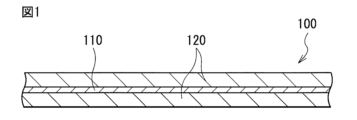
- FIG. 1 is a cross-sectional view showing the configuration of a negative electrode for a secondary battery in an embodiment of the present technology.
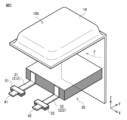
- FIG. 1 is a perspective view showing the configuration of a secondary battery in an embodiment of the present technology.
- 3 is a cross-sectional view showing the configuration of the battery element shown in FIG. 2.
- FIG. 4 is a plan view showing the configuration of the positive electrode shown in FIG. 3.
- FIG. 4 is a plan view showing the configuration of the negative electrode shown in FIG. 3.
- FIG. FIG. 2 is a perspective view for explaining a method for manufacturing a secondary battery.
- FIG. 2 is a block diagram showing the configuration of an application example of a secondary battery.
- Negative electrode for secondary batteries 1-1. Configuration 1-2. Operation 1-3. Manufacturing method 1-4. Action and effect 2. Secondary battery 2-1. Configuration 2-2. Operation 2-3. Manufacturing method 2-4. Action and effect 3. Modification example 4. Applications of secondary batteries
- Negative electrode for secondary batteries First, a negative electrode for a secondary battery (hereinafter simply referred to as a "negative electrode") according to an embodiment of the present technology will be described.
- the negative electrode described here is used in a secondary battery, which is an electrochemical device.
- the negative electrode may be used in electrochemical devices other than secondary batteries. Examples of other electrochemical devices include primary batteries and capacitors.
- This negative electrode occludes and releases an electrode reactant during an electrode reaction of an electrochemical device.
- the type of electrode reactant is not particularly limited, but specifically light metals such as alkali metals and alkaline earth metals.
- alkali metals include lithium, sodium, and potassium
- alkaline earth metals include beryllium, magnesium, and calcium.
- the electrode reactant is lithium
- the electrode reactant is lithium
- the negative electrode lithium is intercalated and released in an ionic state during an electrode reaction.
- FIG. 1 shows a cross-sectional configuration of a negative electrode 100, which is an example of a negative electrode.
- This negative electrode 100 includes a negative electrode active material layer 120, as shown in FIG.
- the negative electrode 100 further includes a negative electrode current collector 110 that supports a negative electrode active material layer 120.
- the negative electrode current collector 110 is a conductive support that supports the negative electrode active material layer 120, and has a pair of surfaces on which the negative electrode active material layer 120 is provided.
- This negative electrode current collector 110 includes one or more types of conductive materials such as metal materials, and a specific example of the conductive material is copper.
- the surface of the negative electrode current collector 110 is preferably roughened using an electrolytic method or the like. This is because the adhesion of the negative electrode active material layer 120 to the negative electrode current collector 110 is improved by utilizing the so-called anchor effect.
- the negative electrode current collector 110 may be omitted. That is, the negative electrode 100 may not include the negative electrode current collector 110 but only the negative electrode active material layer 120.
- Negative electrode active material layer 120 contains an alkali metal carbonate compound and a magnesium compound.
- the negative electrode active material layer 120 further includes a negative electrode active material that intercalates and extracts lithium.
- the negative electrode active material layer 120 may further contain one or more of other materials such as a negative electrode binder and a negative electrode conductive agent.
- the negative electrode active material layer 120 is provided on both sides of the negative electrode current collector 110.
- the negative electrode active material layer 120 may be provided only on one side of the negative electrode current collector 110.
- a method for forming the negative electrode active material layer 120 is not particularly limited, but specifically, a coating method is used.
- the type of negative electrode active material is not particularly limited, but specifically, it is one or more types of materials such as carbon materials and metal-based materials. That is, the negative electrode active material may be only a carbon material, only a metal material, or both a carbon material and a metal material. This is because high energy density can be obtained. However, the negative electrode active material may be made of materials other than carbon materials and metal materials.
- Carbon material is a general term for materials containing carbon as a constituent element. Since the crystal structure of the carbon material hardly changes during intercalation and deintercalation of lithium, high energy density can be stably obtained in the negative electrode active material layer 120. Furthermore, since the carbon material also functions as a negative electrode conductive agent, the conductivity of the negative electrode active material layer 120 is improved.
- carbon materials include easily graphitizable carbon, non-graphitizable carbon, and graphite.
- This graphite may be natural graphite, artificial graphite, or both.
- the spacing between the (002) planes of the non-graphitizable carbon is not particularly limited, but specifically, it is 0.37 nm or more.
- the spacing between the (002) planes of graphite is not particularly limited, but specifically, it is 0.34 nm or less.
- carbon materials include pyrolytic carbons, cokes, glassy carbon fibers, fired organic polymer compounds, activated carbon, and carbon blacks. These cokes include pitch coke, needle coke, petroleum coke, and the like.
- the fired organic polymer compound is a fired product obtained by firing (carbonizing) a polymer compound such as a phenol resin or a furan resin at an appropriate temperature.
- the carbon material may be low crystalline carbon heat-treated at a temperature of about 1000° C. or less, or may be amorphous carbon.
- the shape of the carbon material is not particularly limited, but specifically, it is any one or more of fibrous, spherical, granular, and scaly shapes.
- the metal-based material is a general term for materials that contain as a constituent element one or more of metal elements and metalloid elements that can form an alloy with lithium. Since the metal-based material has a higher energy density, a higher energy density can be obtained in the negative electrode active material layer 120.
- This metallic material may be a single substance, an alloy, a compound, a mixture of two or more thereof, or a material containing one or more of these phases.
- the "single substance” described here only means a general simple substance, and therefore, the simple substance may contain a trace amount of impurity. That is, the purity of a single substance is not necessarily limited to 100%.
- the "alloy” described here includes not only materials containing two or more types of metal elements as constituent elements, but also materials containing one or more types of metal elements and one or more types of metalloid elements. Also included are materials contained as constituent elements. Further, the “alloy” may contain one or more types of nonmetallic elements as constituent elements.
- the structure of the metallic material is not particularly limited, but specifically, any one or two types of solid solution, eutectic (eutectic mixture), intermetallic compound, coexistence of two or more thereof, etc. That's all.
- metal elements and metalloid elements include magnesium, boron, aluminum, gallium, indium, silicon, germanium, tin, lead, bismuth, cadmium, silver, zinc, hafnium, zirconium, yttrium, palladium, and platinum.
- the metal-based material is preferably a silicon-containing material. Since the silicon-containing material has an excellent ability to absorb and release lithium, a significantly high energy density can be obtained in the negative electrode active material layer 120.
- This silicon-containing material is a general term for materials containing silicon as a constituent element. That is, the silicon-containing material may be a simple substance of silicon, an alloy of silicon, a compound of silicon, a mixture of two or more thereof, or a phase of one or more of them. It may be a material containing
- Silicon alloys include any one of metal elements such as tin, nickel, copper, iron, cobalt, manganese, zinc, indium, silver, titanium, germanium, bismuth, antimony, and chromium as constituent elements other than silicon. Or contains two or more types. Further, the silicon compound contains one or more of nonmetallic elements such as carbon and oxygen as constituent elements other than silicon. However, the silicon compound may contain, as a constituent element other than silicon, one or more of the series of metal elements described in relation to the silicon alloy.
- silicon alloys include SiB4 , SiB6 , Mg2Si , Ni2Si, TiSi2 , MoSi2 , CoSi2 , NiSi2 , CaSi2 , CrSi2 , Cu5Si , FeSi2 , MnSi2 , These include NbSi 2 , TaSi 2 , VSi 2 , WSi 2 , ZnSi 2 and SiC.
- the composition of the silicon alloy (mixing ratio of silicon and metal elements) can be changed arbitrarily.
- silicon compounds include Si 3 N 4 , Si 2 N 2 O, SiO x (0 ⁇ x ⁇ 2), and LiSiO.
- the range of x may be 0.2 ⁇ x ⁇ 1.4.
- the negative electrode active material contains both a carbon material and a silicon-containing material. This is because damage to the negative electrode active material layer 120 is suppressed while battery capacity is maintained during electrode reaction (charging and discharging) of a secondary battery using the negative electrode 100.
- silicon-containing materials which are metallic materials, have the advantage of having a high theoretical capacity, but on the other hand, they have the concern that they tend to expand and contract violently during charging and discharging.
- carbon materials have the disadvantage of having a low theoretical capacity, but have the advantage of being difficult to expand and contract during charging and discharging. Therefore, by using a carbon material and a silicon-containing material in combination, expansion and contraction of the negative electrode active material layer 120 can be suppressed during charging and discharging while obtaining a high theoretical capacity. Thereby, as described above, damage to the negative electrode active material layer 120 is suppressed while ensuring battery capacity.
- specific examples of damage to the negative electrode active material layer 120 include cleavage of the negative electrode active material layer 120 and falling off of the negative electrode active material layer 120.
- alkali metal carbonate compound As described above, the alkali metal carbonate compound is contained in the negative electrode active material layer 120. Thereby, the alkali metal carbonate compound is dispersed in the negative electrode active material layer 120.
- the number of carbonate bonds may be only one, or two or more.
- Specific examples of the alkali metal elements include lithium, sodium, and potassium, as described above. Note that the number of types of alkali metal carbonate compounds may be only one, or two or more types.
- the negative electrode active material layer 120 contains the alkali metal carbonate compound is that a good film is formed on the surface of the negative electrode active material during charging and discharging.
- This coating is derived from an alkali metal carbonate compound and has a high-density pore structure. Therefore, the coating protects the surface of a highly reactive negative electrode active material by covering it, and thereby guarantees the input and output of lithium in the negative electrode active material. It has a function (barrier function) to protect the surface from electrolyte. In addition, the coating has a function (stress relaxation function) to suppress damage to the negative electrode active material in order to reinforce the physical strength of the negative electrode active material by following the expansion and contraction of the negative electrode active material during charging and discharging. have
- the type of alkali metal carbonate compound is not particularly limited, but among them, the alkali metal carbonate compound is any one of lithium carbonate (Li 2 CO 3 ), a first alkali metal carbonate compound, and a second alkali metal carbonate compound. Or it is preferable that two or more types are included. This is because the film derived from the alkali metal carbonate compound is more likely to be stably formed.
- the first alkali metal carbonate compound is any one or two or more of the compounds represented by formula (1).
- This first alkali metal carbonate compound has one carbonate bond, as is clear from formula (1).
- R1-OC( O)O-M1...(1) (R1 is an alkyl group. M1 is an alkali metal element.)
- alkyl group is not particularly limited, but specifically includes a methyl group, an ethyl group, a propyl group, and the like. However, the alkyl group may be linear or branched. Details regarding the alkali metal elements are as described above.
- the second alkali metal carbonate compound is any one type or two or more types of compounds represented by formula (2).
- This second alkali metal carbonate compound has two carbonate bonds, as is clear from formula (2).
- R2 is an alkylene group.
- M2 and M3 is an alkali metal element.
- alkylene group is not particularly limited, but specific examples include methylene group, ethylene group, and propylene group. However, the alkylene group may be linear or branched. Details regarding the alkali metal elements are as described above.
- the alkali metal element (M1) is preferably lithium
- the alkali metal element (M1) is preferably lithium
- the elements (M2 and M3) are lithium. This is because the film derived from the alkali metal carbonate compound is more likely to be stably formed.
- the content of the alkali metal carbonate compound in the negative electrode active material layer 120 is not particularly limited, but is preferably 0.2% by weight to 0.8% by weight. This is because the film derived from the alkali metal carbonate compound is more likely to be stably formed.
- the "content of the alkali metal carbonate compounds in the negative electrode active material layer 120" described here refers to the content of each alkali metal carbonate compound. It is the total content of compounds.
- the negative electrode active material layer 120 is recovered.
- the negative electrode 100 is recovered by disassembling the secondary battery.
- the negative electrode active material layer 120 is dried.
- the type of cleaning solvent is not particularly limited, but specifically, it is an organic solvent such as acetone.
- Environmental conditions during drying are not particularly limited, but specifically, an inert gas atmosphere using argon gas or the like or a dry environment may be used.
- the type of solution for extraction is not particularly limited, but specifically, a dimethyl sulfoxide-d 6 solution of bis(trifluoromethanesulfonyl)imide lithium (LiN(CF 3 SO 2 ) 2 ) (LiTFSI DMSO-d 6 ). etc. This yields an extract.
- the extract is then analyzed using nuclear magnetic resonance.
- nuclear magnetic resonance method proton nuclear magnetic resonance method ( 1 H NMR) and carbon-13 nuclear magnetic resonance method ( 13 C NMR) are used.
- 1 H NMR proton nuclear magnetic resonance method
- 13 C NMR carbon-13 nuclear magnetic resonance method
- the alkali metal carbonate compound is a primary alkali metal carbonate compound (lithium ethylene carbonate)
- peaks are detected at 3.44 ppm and 3.72 ppm in the proton nuclear magnetic resonance method
- carbon-13 Peaks are detected at 61.0 ppm, 65.8 ppm and 156.9 ppm in nuclear magnetic resonance.
- alkali metal carbonate compound is a secondary alkali metal carbonate compound (dilithium ethylene dicarbonate)
- a peak is detected at 3.63 ppm in proton nuclear magnetic resonance method, and a peak is detected in carbon-13 nuclear magnetic resonance method. Peaks are detected at 62.7 ppm and 166.2 ppm.
- the integrated value of the signal corresponding to the partial structure of the organic film component is compared with the integrated value of the signal of the internal standard substance. , calculate the weight of the partial structure (alkali metal carbonate compound) in the extract.
- the type of internal standard substance is not particularly limited, but specifically includes sodium d 3-(trimethylsilyl)propionate.
- the content of the alkali metal carbonate compound in the negative electrode active material layer 120 is calculated based on the weight of the negative electrode active material layer 120 and the weight of the alkali metal carbonate compound.
- infrared spectroscopy may be used instead of nuclear magnetic resonance.
- the alkali metal carbonate compound is a secondary alkali metal carbonate compound (dilithium ethylene dicarbonate)
- each of 1650 cm -1 , 1395 cm -1 , 1305 cm -1 , 1080 cm -1 and 820 cm -1 A peak is detected.
- magnesium compound As described above, the magnesium compound is contained in the negative electrode active material layer 120. Thereby, the magnesium compound is dispersed in the negative electrode active material layer 120. Therefore, the alkali metal carbonate compound and the magnesium compound are mixed and dispersed in the negative electrode active material layer 120.
- This magnesium compound contains magnesium as a constituent element.
- the type of element other than magnesium contained in the magnesium compound is not particularly limited and can be arbitrarily selected. Note that the number of types of magnesium compounds may be one, or two or more types.
- the negative electrode active material layer 120 contains a magnesium compound together with an alkali metal carbonate compound is that the magnesium compound acts in a self-sacrificing manner during charging and discharging, so that the magnesium compound reacts and decomposes more preferentially than the alkali metal carbonate compound. Because it does. Thereby, the magnesium compound is used to suppress the reaction and decomposition of the alkali metal carbonate compound. Therefore, even if charging and discharging are repeated, a film derived from the alkali metal carbonate compound is likely to be formed stably and continuously, and the functions of the film (barrier function and stress relaxation function) are likely to be maintained.
- the type of magnesium compound is not particularly limited, but specific examples of the magnesium compound include magnesium fluoride (MgF 2 ), magnesium oxide (MgO), magnesium nitride (Mg 3 N 2 ), and magnesium carbonate (MgCO 3 ). be. This is because the reaction and decomposition of the alkali metal carbonate compound can be sufficiently suppressed, making it easier to maintain the function of the coating.
- MgF 2 magnesium fluoride
- MgO magnesium oxide
- Mg 3 N 2 magnesium nitride
- MgCO 3 magnesium carbonate
- magnesium compound may already be included in the negative electrode active material layer 120 before the first charging and discharging of the secondary battery.
- the magnesium compound is not included in the negative electrode active material layer 120 before the first charging and discharging of the secondary battery, but is included in the negative electrode active material layer 120 for the first time after the secondary battery is charged and discharged.
- the magnesium compound does not yet exist in the negative electrode active material layer 120 before the first charge/discharge, but after the first charge/discharge, the magnesium compound is formed inside the negative electrode active material layer 120 using the charge/discharge reaction. Therefore, it may be present in the negative electrode active material layer 120.
- the types of materials that can form magnesium compounds using this charge/discharge reaction are not particularly limited, but specifically, magnesium nitrate (Mg(NO 3 ) 2 ) and magnesium carbonate (Mg(CO 3 ) 2 ) etc.
- the content of the magnesium compound in the negative electrode active material layer 120 is not particularly limited, but is preferably 0.01% by weight to 5% by weight. This is because the reaction and decomposition of the alkali metal carbonate compound can be sufficiently suppressed, making it easier to maintain the function of the coating.
- the "content of magnesium compounds in the negative electrode active material layer 120" described here is the sum of the contents of each magnesium compound. It is.
- the negative electrode active material layer 120 is recovered.
- the negative electrode 100 is recovered by disassembling the secondary battery.
- the negative electrode active material layer 120 is naturally dried.
- the type of cleaning solvent is not particularly limited, but specifically, it is an organic solvent such as dimethyl carbonate.
- the environmental conditions during drying are not particularly limited, but specifically, the inside of a glove box into which an inert gas such as argon gas is introduced.
- a sample for analysis was prepared using conductive carbon double-sided tape (Conductive carbon double-sided tape (8 mm x 20 m) model number 7311 manufactured by Nissin EM Co., Ltd.), and then subjected to X-ray photoelectron spectroscopy from inside the glove box. Move the sample inside the analysis (XPS) device. In this case, the sample is introduced into the interior of the XPS device while avoiding exposure of the sample to the atmosphere.
- conductive carbon double-sided tape Conductive carbon double-sided tape (8 mm x 20 m) model number 7311 manufactured by Nissin EM Co., Ltd.
- the sample is analyzed using an XPS device. Thereby, when a peak derived from a magnesium compound is detected, it is confirmed that the negative electrode active material layer 120 contains a magnesium compound.
- the magnesium compound when the magnesium compound is magnesium oxide, a peak is detected near the binding energy of about 50.4 eV, and when the magnesium compound is magnesium fluoride, a peak is detected around the binding energy of about 50.9 eV. A peak is detected near the binding energy.
- XPS device an X-ray photoelectron spectrometer PHI 5000 VersaProbe manufactured by ULVAC-PHI Co., Ltd. can be used.
- the area of the peak derived from the magnesium compound normalized based on the relative sensitivity and each component contained in the negative electrode active material layer 120 are calculated.
- the weight of the magnesium compound is calculated based on the ratio.
- the content of the magnesium compound in the negative electrode active material layer 120 is calculated based on the weight of the negative electrode active material layer 120 and the weight of the magnesium compound.
- content (wt%) of the magnesium compound in the negative electrode active material layer 120 (weight of the magnesium compound/weight of the negative electrode active material layer 120) ⁇ 100.
- the negative electrode binder contains one or more of materials such as synthetic rubber and polymer compounds.
- synthetic rubber include styrene butadiene rubber, fluorine rubber, and ethylene propylene diene.
- polymer compound include polyvinylidene fluoride, polyimide, and carboxymethyl cellulose.
- the negative electrode conductive agent contains one or more types of conductive materials such as carbon materials, and specific examples of the conductive materials include graphite, carbon black, acetylene black, and Ketjen black. be.
- the conductive material is not limited to a carbon material, and may also be a metal material, a polymer compound, or the like.
- the negative electrode 100 When manufacturing the negative electrode 100, first, a negative electrode active material, an alkali metal carbonate compound, and a magnesium compound are mixed together to form a negative electrode mixture.
- the negative electrode mixture may contain a negative electrode binder, a negative electrode conductive agent, and the like, if necessary.
- a paste-like negative electrode mixture slurry is prepared by adding the negative electrode mixture to a solvent.
- the type of solvent is not particularly limited, and may be an aqueous solvent or an organic solvent.
- the solvent containing the negative electrode mixture may be stirred using a stirring device such as a mixer.
- a negative electrode mixture slurry was prepared using the negative electrode mixture.
- an alkali metal carbonate compound and a magnesium compound are added to the negative electrode mixture slurry. good.
- a negative electrode active material layer 120 is formed by applying a negative electrode mixture slurry to both sides of the negative electrode current collector 110. Thereafter, the negative electrode active material layer 120 may be compression molded using a roll press machine or the like. In this case, the negative electrode active material layer 120 may be heated or compression molding may be repeated multiple times.
- the negative electrode active material layers 120 are formed on both sides of the negative electrode current collector 110, so that the negative electrode 100 is completed.
- the negative electrode active material layer 120 contains an alkali metal carbonate compound and a magnesium compound.
- the negative electrode active material layer 120 contains the alkali metal carbonate compound, as described above, during charging and discharging of the secondary battery using the negative electrode 100, a good coating derived from the alkali metal carbonate compound is formed. is formed on the surface of the negative electrode active material. As a result, the decomposition reaction of the electrolyte on the surface of the negative electrode active material is suppressed while ensuring input and output of lithium by utilizing the barrier function of the film. Furthermore, by utilizing the stress relaxation function of the coating, damage to the negative electrode active material due to expansion and contraction is suppressed.
- the negative electrode active material layer 120 contains a magnesium compound together with an alkali metal carbonate compound, as described above, the magnesium compound reacts and decomposes preferentially than the alkali metal carbonate compound during charging and discharging. , the reaction and decomposition of the alkali metal carbonate compound is suppressed. This makes it easier to form a film derived from the alkali metal carbonate compound stably and continuously even after repeated charging and discharging, making it easier to maintain the functions of the film (barrier function and stress relaxation function). Therefore, the decomposition reaction of the electrolyte on the surface of the negative electrode active material is continuously suppressed, and damage to the negative electrode active material due to expansion and contraction is continuously suppressed.
- the discharge capacity is less likely to decrease even after repeated charging and discharging, so that excellent battery characteristics can be obtained in the secondary battery using the negative electrode 100.
- the coating derived from the alkali metal carbonate compound is Since it is more likely to be stably formed, higher effects can be obtained.
- the alkali metal element (M1) is lithium
- formula (2) relating to the second alkali metal carbonate compound the alkali metal elements (M2 and M3 ) is lithium
- a film derived from the alkali metal carbonate compound is more likely to be stably formed, and therefore higher effects can be obtained.
- the magnesium compound contains any one or more of magnesium fluoride, magnesium oxide, magnesium nitride, and magnesium carbonate, the reaction and decomposition of the alkali metal carbonate compound can be sufficiently suppressed. Therefore, the function of the coating is easily maintained sufficiently, so that higher effects can be obtained.
- the content of the alkali metal carbonate compound in the negative electrode active material layer 120 is 0.2% by weight to 0.8% by weight, a film derived from the alkali metal carbonate compound is likely to be stably formed. You can get better results.
- the content of the magnesium compound in the negative electrode active material layer 120 is 0.01% to 5% by weight, the reaction and decomposition of the alkali metal carbonate compound can be sufficiently suppressed. Therefore, the function of the coating is easily maintained sufficiently, so that higher effects can be obtained.
- the negative electrode active material layer 120 contains a negative electrode active material and the negative electrode active material contains a carbon material and a silicon-containing material, damage to the negative electrode active material layer 120 can be suppressed while ensuring battery capacity. Therefore, higher effects can be obtained.
- the secondary battery described here is a secondary battery whose battery capacity is obtained by utilizing intercalation and desorption of electrode reactants, and includes an electrolytic solution along with a positive electrode and a negative electrode.
- the charging capacity of the negative electrode is larger than the discharge capacity of the positive electrode. That is, the electrochemical capacity per unit area of the negative electrode is preferably larger than the electrochemical capacity per unit area of the positive electrode. This is to prevent electrode reactants from depositing on the surface of the negative electrode during charging.
- a secondary battery whose battery capacity is obtained by utilizing intercalation and desorption of lithium is a so-called lithium ion secondary battery.
- lithium ion secondary battery lithium is intercalated and released in an ionic state.
- FIG. 2 shows a perspective configuration of the secondary battery
- FIG. 3 shows a cross-sectional configuration of the battery element 20 shown in FIG. 2.
- 4 shows a planar configuration of the positive electrode 21 shown in FIG. 3
- FIG. 5 shows a planar structure of the negative electrode 22 shown in FIG.
- FIG. 2 shows a state in which the exterior film 10 and the battery element 20 are separated from each other.
- this secondary battery includes an exterior film 10, a battery element 20, a plurality of positive terminals 31, a plurality of negative terminals 32, a positive lead 41, and a negative lead 42. , sealing films 51 and 52.
- the secondary battery described here is a so-called laminate film type secondary battery because the flexible or pliable exterior film 10 is used as the exterior member.
- the exterior film 10 is an exterior member that houses the battery element 20, and has a sealed bag-like structure with the battery element 20 housed inside. Thereby, the exterior film 10 accommodates an electrolyte together with a positive electrode 21 and a negative electrode 22, which will be described later.
- the exterior film 10 is a single film-like member, and is folded in the folding direction F.
- This exterior film 10 is provided with a recessed portion 10U (so-called deep drawn portion) for accommodating the battery element 20.
- the exterior film 10 is a three-layer laminate film in which a fusing layer, a metal layer, and a surface protection layer are laminated in this order from the inside, and when the exterior film 10 is folded, they face each other. The outer peripheral edges of the fusion layers are fused to each other.
- the adhesive layer contains a polymer compound such as polypropylene.
- the metal layer contains a metal material such as aluminum.
- the surface protective layer contains a polymer compound such as nylon.
- the structure (number of layers) of the exterior film 10 is not particularly limited and may be one or two layers, or four or more layers.
- the battery element 20 is a power generating element that includes a positive electrode 21, a negative electrode 22, a separator 23, and an electrolyte (not shown), and is housed inside the exterior film 10. has been done.
- the battery element 20 is a so-called laminated electrode body
- the positive electrode 21 and the negative electrode 22 are alternately laminated with the separator 23 in between.
- the numbers of positive electrodes 21, negative electrodes 22, and separators 23 are not particularly limited and can be set arbitrarily.
- the positive electrode 21 includes a positive electrode current collector 21A and a positive electrode active material layer 21B.
- the positive electrode active material layer 21B is shaded.
- the positive electrode current collector 21A has a pair of surfaces on which the positive electrode active material layer 21B is provided.
- the positive electrode current collector 21A includes a conductive material such as a metal material, and a specific example of the conductive material is aluminum.
- the positive electrode active material layer 21B includes one or more types of positive electrode active materials that intercalate and deintercalate lithium. However, the positive electrode active material layer 21B may further contain one or more of other materials such as a positive electrode binder and a positive electrode conductive agent.
- the positive electrode active material layer 21B is provided on both sides of the positive electrode current collector 21A.
- the positive electrode active material layer 21B may be provided only on one side of the positive electrode current collector 21A on the side where the positive electrode 21 faces the negative electrode 22.
- the method for forming the positive electrode active material layer 21B is not particularly limited, and specifically, a coating method or the like is used.
- the type of positive electrode active material is not particularly limited, but specifically includes a lithium-containing compound.
- This lithium-containing compound is a compound containing lithium and one or more transition metal elements as constituent elements, and may further contain one or more other elements as constituent elements.
- the type of other element is not particularly limited as long as it is an element other than lithium and transition metal elements, but specifically, it is an element belonging to Groups 2 to 15 in the long period periodic table.
- the type of lithium-containing compound is not particularly limited, but specifically includes oxides, phosphoric acid compounds, silicic acid compounds, and boric acid compounds.
- oxides include LiNiO 2 , LiCoO 2 , LiCo 0.98 Al 0.01 Mg 0.01 O 2 , LiNi 0.5 Co 0.2 Mn 0.3 O 2 , LiNi 0.8 Co 0.15 Al 0.05 O 2 , LiNi 0.33 Co 0.33 Mn 0.33 O 2 , Li 1.2 Mn 0.52 Co 0.175 Ni 0.1 O 2 , Li 1.15 (Mn 0.65 Ni 0.22 Co 0.13 )O 2 and LiMn 2 O 4 .
- phosphoric acid compounds include LiFePO 4 , LiMnPO 4 , LiFe 0.5 Mn 0.5 PO 4 and LiFe 0.3 Mn 0.7 PO 4 .
- each of the positive electrode binder and the positive electrode conductive agent are the same as the details regarding each of the negative electrode binder and the negative electrode conductive agent described above.
- the positive electrode current collector 21A since a part of the positive electrode current collector 21A protrudes, the positive electrode current collector 21A has a portion (hereinafter referred to as (referred to as "the protruding portion of the positive electrode current collector 21A"). Since the positive electrode active material layer 21B is not provided on the protruding portion of the positive electrode current collector 21A, the protruding portion of the positive electrode current collector 21A functions as the positive electrode terminal 31. Note that details of the positive electrode terminal 31 will be described later.
- the positive electrode active material layer 21B is provided only on a part of the positive electrode current collector 21A. Therefore, the portion of the positive electrode current collector 21A where the positive electrode active material layer 21B is not provided is not covered with the positive electrode active material layer 21B and is exposed.
- the positive electrode current collector 21A includes a covered portion 21AX and an uncoated portion 21AY, as shown in FIG.
- the covering portion 21AX is located at the center of the positive electrode current collector 21A, and is a portion where the positive electrode active material layer 21B is formed.
- the uncoated portion 21AY is located around the covered portion 21AX, and is a frame-shaped portion on which the positive electrode active material layer 21B is not formed.
- the covered portion 21AX is covered with the positive electrode active material layer 21B, whereas the uncovered portion 21AY is not covered with the positive electrode active material layer 21B and is exposed.
- Negative electrode 22 has a configuration similar to that of negative electrode 100. Specifically, the negative electrode 22 includes a negative electrode current collector 22A and a negative electrode active material layer 22B, as shown in FIGS. 3 and 5. In FIG. 5, the negative electrode active material layer 22B is shaded.
- the configuration of the negative electrode current collector 22A is similar to the configuration of the negative electrode current collector 110, and the configuration of the negative electrode active material layer 22B is similar to the configuration of the negative electrode active material layer 120. That is, the negative electrode active material layer 22B contains an alkali metal carbonate compound and a magnesium compound.
- the protruding portion of the negative electrode current collector 22A since a part of the negative electrode current collector 22A protrudes, the part of the negative electrode current collector 22A that protrudes outward from the negative electrode active material layer 22B (hereinafter referred to as (referred to as "the protruding portion of the negative electrode current collector 22A").
- the protruding direction of the protruding portion of this negative electrode current collector 22A is the same as the protruding direction of the protruding portion of the positive electrode current collector 21A. Further, the position of the protruding portion of the negative electrode current collector 22A is a position that does not overlap with the protruding portion of the positive electrode current collector 21A in a state where the positive electrode 21 and the negative electrode 22 are alternately stacked with the separator 23 in between.
- the protruding portion of the negative electrode current collector 22A functions as the negative electrode terminal 32. Note that details of the negative electrode terminal 32 will be described later.
- the negative electrode active material layer 22B is provided over the entire negative electrode current collector 22A. Therefore, the entire negative electrode current collector 22A is not exposed but is covered with the negative electrode active material layer 22B.
- the negative electrode active material layer 22B includes a facing portion 22BX and a non-facing portion 22BY.
- the facing portion 22BX is a portion facing the covering portion 21AX. That is, since the facing portion 22BX faces the positive electrode active material layer 21B, it is a portion that participates in the charge/discharge reaction.
- the unopposing portion 22BY is a portion facing the uncoated portion 21AY. That is, the non-facing portion 22BY does not face the positive electrode active material layer 21B but faces the positive electrode current collector 21A, and therefore is a portion that does not participate in the charge/discharge reaction.
- the formation range of the covering part 21AX (positive electrode active material layer 21B) is shown by a broken line. .
- the negative electrode active material layer 22B is provided on the entirety of both surfaces of the negative electrode current collector 22A, whereas the positive electrode active material layer 21B is provided only on a portion (covering portion 21AX) of both surfaces of the positive electrode current collector 21A. This is to prevent lithium released from the positive electrode active material layer 21B from being deposited on the surface of the negative electrode 22 during charging.
- the separator 23 is an insulating porous film interposed between the positive electrode 21 and the negative electrode 22, and prevents contact (short circuit) between the positive electrode 21 and negative electrode 22. Allows lithium ions to pass through.
- This separator 23 contains a high molecular compound such as polyethylene.
- electrolyte is a liquid electrolyte. This electrolytic solution is impregnated into each of the positive electrode 21, negative electrode 22, and separator 23, and contains a solvent and an electrolyte salt.
- the solvent contains one or more types of non-aqueous solvents (organic solvents), and the electrolytic solution containing the non-aqueous solvent is a so-called non-aqueous electrolytic solution.
- This nonaqueous solvent contains esters, ethers, and the like, and more specifically contains carbonate ester compounds, carboxylic acid ester compounds, lactone compounds, and the like. This is because the dissociability of the electrolyte salt is improved and the mobility of ions is also improved.
- Carbonate ester compounds include cyclic carbonate esters and chain carbonate esters. Specific examples of the cyclic carbonate include ethylene carbonate and propylene carbonate, and specific examples of the chain carbonate include dimethyl carbonate, diethyl carbonate, and ethylmethyl carbonate.
- the carboxylic acid ester compound is a chain carboxylic acid ester.
- chain carboxylic acid esters include ethyl acetate, ethyl propionate, propyl propionate, and ethyl trimethylacetate.
- Lactone compounds include lactones. Specific examples of lactones include ⁇ -butyrolactone and ⁇ -valerolactone.
- the ethers may include 1,2-dimethoxyethane, tetrahydrofuran, 1,3-dioxolane, and 1,4-dioxane.
- the electrolyte salt contains one or more light metal salts such as lithium salts.
- lithium salts include lithium hexafluorophosphate (LiPF 6 ), lithium tetrafluoroborate (LiBF 4 ), lithium trifluoromethanesulfonate (LiCF 3 SO 3 ), and lithium bis(fluorosulfonyl)imide (LiN).
- LiN(CF 3 SO 2 ) 2 lithium bis(trifluoromethanesulfonyl)imide
- LiC(CF 3 SO 2 ) 3 lithium tris(trifluoromethanesulfonyl)methide
- bis(oxalato)boro include lithium oxide (LiB(C 2 O 4 ) 2 ), lithium monofluorophosphate (Li 2 PFO 3 ), and lithium difluorophosphate (LiPF 2 O 2 ). This is because high battery capacity can be obtained.
- the content of the electrolyte salt is not particularly limited, but specifically, it is 0.3 mol/kg to 3.0 mol/kg relative to the solvent. This is because high ionic conductivity can be obtained.
- the electrolytic solution may further contain any one type or two or more types of additives.
- the types of additives are not particularly limited, but specifically include unsaturated cyclic carbonates, fluorinated cyclic carbonates, sulfonic esters, phosphoric esters, acid anhydrides, nitrile compounds, and isocyanate compounds.
- unsaturated cyclic carbonate esters include vinylene carbonate, vinylethylene carbonate, and methyleneethylene carbonate.
- fluorinated cyclic carbonate esters include monofluoroethylene carbonate and difluoroethylene carbonate.
- sulfonic acid esters include propane sultone and propene sultone.
- phosphoric acid esters include trimethyl phosphate and triethyl phosphate.
- acid anhydrides include succinic anhydride, 1,2-ethanedisulfonic anhydride, and 2-sulfobenzoic anhydride.
- nitrile compounds include succinonitrile.
- a specific example of the isocyanate compound is hexamethylene diisocyanate.
- the positive electrode terminal 31 is electrically connected to the positive electrode 21, and more specifically, to the positive electrode current collector 21A.
- the positive electrodes 21 and the negative electrodes 22 are alternately stacked with the separator 23 in between, so the battery element 20 includes a plurality of positive electrodes 21.
- the secondary battery is provided with a plurality of positive electrode terminals 31.
- the positive electrode terminal 31 includes a conductive material such as a metal material, and the type of the conductive material is not particularly limited. Specifically, the positive electrode terminal 31 contains the same material as the material forming the positive electrode current collector 21A.
- the protruding portion of the positive electrode current collector 21A functions as the positive electrode terminal 31
- the positive electrode terminal 31 is physically integrated with the positive electrode current collector 21A. This is because the connection resistance between the positive electrode current collector 21A and the positive electrode terminal 31 is reduced, so that the electrical resistance of the entire secondary battery is reduced.
- the plurality of positive electrode terminals 31 are joined to each other using a joining method such as a welding method, so as shown in FIG. 2, a single lead-shaped joint 31Z is formed. .
- the negative electrode terminal 32 is electrically connected to the negative electrode 22, and more specifically, to the negative electrode current collector 22A.
- the positive electrodes 21 and the negative electrodes 22 are alternately stacked with the separator 23 in between, so the battery element 20 includes a plurality of negative electrodes 22.
- the secondary battery is provided with a plurality of negative electrode terminals 32.
- the negative electrode terminal 32 includes a conductive material such as a metal material, and the type of the conductive material is not particularly limited. Specifically, the negative electrode terminal 32 contains the same material as the material forming the negative electrode current collector 22A.
- the protruding portion of the negative electrode current collector 22A functions as the negative electrode terminal 32
- the negative electrode terminal 32 is physically integrated with the negative electrode current collector 22A. This is because the connection resistance between the negative electrode current collector 22A and the negative electrode terminal 32 is reduced, so that the electrical resistance of the entire secondary battery is reduced.
- the plurality of negative electrode terminals 32 are joined to each other using a joining method such as a welding method, so as shown in FIG. 2, a single lead-shaped joint 32Z is formed. .
- the positive electrode lead 41 is connected to the joint portion 31Z and led out to the outside of the exterior film 10.
- This positive electrode lead 41 contains a conductive material such as a metal material, and specifically contains the same material as the material forming the positive electrode current collector 21A.
- the shape of the positive electrode lead 41 is not particularly limited, specifically, it is either a thin plate shape or a mesh shape.
- the negative electrode lead 42 is connected to the joint 32Z and led out to the outside of the exterior film 10.
- This negative electrode lead 42 contains a conductive material such as a metal material, and specifically contains the same material as the material forming the negative electrode current collector 22A. Note that the direction in which the negative electrode lead 42 is led out is the same as the direction in which the positive electrode lead 41 is led out. Further, the details regarding the shape of the negative electrode lead 42 are the same as the details regarding the shape of the positive electrode lead 41.
- the sealing film 51 is inserted between the exterior film 10 and the positive electrode lead 41, and the sealing film 52 is inserted between the exterior film 10 and the negative electrode lead 42.
- the sealing films 51 and 52 may be omitted.
- the sealing film 51 is a sealing member that prevents outside air from entering the exterior film 10.
- the sealing film 51 contains a polymer compound such as polyolefin that has adhesiveness to the positive electrode lead 41, and a specific example of the polymer compound is polypropylene.
- the structure of the sealing film 52 is the same as that of the sealing film 51 except that it is a sealing member that has adhesiveness to the negative electrode lead 42. That is, the sealing film 52 contains a polymer compound such as polyolefin that has adhesiveness to the negative electrode lead 42.
- lithium is released from the positive electrode 21, and at the same time, the lithium is inserted into the negative electrode 22 via the electrolyte.
- lithium is released from the negative electrode 22, and at the same time, the lithium is inserted into the positive electrode 21 via the electrolyte.
- lithium is intercalated and released in an ionic state.
- FIG. 6 shows a perspective configuration corresponding to FIG. 2 in order to explain a method for manufacturing a secondary battery.
- a laminate 20Z used for manufacturing the battery element 20 is shown. Note that details of the laminate 20Z will be described later.
- each of the positive electrode 21 and the negative electrode 22 is manufactured and an electrolytic solution is prepared according to the example procedure described below, and then the positive electrode 21, the negative electrode 22, and the electrolytic solution are used. Assemble the secondary battery and perform stabilization processing on the secondary battery. In the following, reference will be made from time to time to FIGS. 1 to 5, which have already been described.
- a paste-like positive electrode mixture slurry is prepared by adding a mixture of a positive electrode active material, a positive electrode binder, and a positive electrode conductive agent (positive electrode mixture) to a solvent.
- This solvent may be an aqueous solvent or an organic solvent.
- a positive electrode mixture slurry is applied to both surfaces of the positive electrode current collector 21A (excluding the positive electrode terminal 31) on which the positive electrode terminal 31 is integrated, thereby forming the positive electrode active material layer 21B.
- the positive electrode active material layer 21B is compression molded using a roll press machine or the like. In this case, the positive electrode active material layer 21B may be heated or compression molding may be repeated multiple times. Thereby, the positive electrode active material layers 21B are formed on both sides of the positive electrode current collector 21A, so that the positive electrode 21 is manufactured.
- the negative electrode 22 is formed by the same procedure as the negative electrode 100 described above. Specifically, first, a paste-like negative electrode mixture slurry is created by adding a mixture (negative electrode mixture) in which a negative electrode active material, an alkali metal carbonate compound, a magnesium compound, and a negative electrode binder are mixed together into a solvent. Prepare. Subsequently, a negative electrode active material layer 22B is formed by applying a negative electrode mixture slurry to both surfaces (excluding the negative electrode terminal 32) of the negative electrode current collector 22A in which the negative electrode terminal 32 is integrated. Finally, the negative electrode active material layer 22B is compression molded. Thereby, the negative electrode active material layers 22B are formed on both sides of the negative electrode current collector 22A, so that the negative electrode 22 is manufactured.
- a paste-like negative electrode mixture slurry is created by adding a mixture (negative electrode mixture) in which a negative electrode active material, an alkali metal carbonate compound, a magnesium compound, and a negative electrode binder are mixed together into a solvent.
- the positive electrode 21 and the negative electrode 22 are alternately laminated with the separator 23 in between, thereby producing a laminate 20Z as shown in FIG.
- This laminate 20Z has the same configuration as the battery element 20, except that the positive electrode 21, the negative electrode 22, and the separator 23 are not impregnated with an electrolytic solution.
- a joint portion 31Z is formed by joining the plurality of positive electrode terminals 31 to each other using a joining method such as a welding method, and then a positive electrode lead 41 is attached to the joint portion 31Z using a joining method such as a welding method. Connect. Further, after forming a joint portion 32Z by joining a plurality of negative electrode terminals 32 to each other using a joining method such as a welding method, the negative electrode lead 42 is attached to the joint portion 32Z using a joining method such as a welding method. Connect.
- the exterior films 10 (fusion layer/metal layer/surface protection layer) are folded to face each other. Subsequently, the outer peripheral edges of two sides of the fusion layers facing each other are adhered to each other using an adhesive method such as a heat fusion method, thereby forming the laminate 20Z inside the bag-shaped exterior film 10. to store.
- the outer peripheral edges of the remaining one side of the facing adhesive layers are bonded together using an adhesive method such as a heat fusion method. Glue them together.
- a sealing film 51 is inserted between the exterior film 10 and the positive electrode lead 41, and a sealing film 52 is inserted between the exterior film 10 and the negative electrode lead 42.
- the stacked body 20Z is impregnated with the electrolytic solution, so that the battery element 20, which is a stacked electrode body, is manufactured. Therefore, since the battery element 20 is sealed inside the bag-shaped exterior film 10, a secondary battery is assembled.
- the secondary battery is a lithium ion secondary battery
- a sufficient battery capacity can be stably obtained by utilizing intercalation and desorption of lithium, so higher effects can be obtained.
- the positive electrode terminal 31 is physically integrated with the positive electrode current collector 21A. However, since the positive electrode terminal 31 is physically separated from the positive electrode current collector 21A, it may be separate from the positive electrode current collector 21A. In this case, the positive electrode terminal 31 may be connected to the positive electrode current collector 21A using a joining method such as a welding method.
- the positive electrode terminal 31 is electrically connected to the positive electrode 21, the same effect can be obtained.
- the positive electrode terminal 31 is physically integrated with the positive electrode current collector 21A.
- the protruding portion of the negative electrode current collector 22A also serves as the negative electrode terminal 32, so that the negative electrode terminal 32 is physically integrated with the negative electrode current collector 22A.
- the negative electrode terminal 32 since the negative electrode terminal 32 is physically separated from the negative electrode current collector 22A, it may be separate from the negative electrode current collector 22A. In this case, the negative electrode terminal 32 may be connected to the negative electrode current collector 22A using a joining method such as a welding method.
- the negative electrode terminal 32 is electrically connected to the negative electrode 22.
- the negative electrode terminal 32 is physically integrated with the negative electrode current collector 22A.
- a battery element 20 which is a laminated electrode body is used.
- a battery element that is a wound electrode body may also be used.
- the positive electrode 21 has a band-like structure
- the positive electrode terminal 31 is electrically connected to the positive electrode current collector 21A
- the negative electrode 22 has a band-like structure
- the negative electrode A negative electrode terminal 32 is electrically connected to the electric body 22A.
- the positive electrode 21 and the negative electrode 22 are wound while facing each other with the separator 23 in between.
- the number of positive electrode terminals 31 may be only one, or may be two or more.
- the number of negative electrode terminals 32 may be only one, or may be two or more.
- the secondary battery can be charged and discharged using the battery element 20, so similar effects can be obtained.
- a separator 23 which is a porous membrane, was used. However, although not specifically illustrated here, a laminated separator including a polymer compound layer may also be used.
- the laminated separator includes a porous membrane having a pair of surfaces and a polymer compound layer provided on one or both sides of the porous membrane. This is because the adhesion of the separator to each of the positive electrode 21 and the negative electrode 22 is improved, so that displacement of the battery element 20 is suppressed. Thereby, even if a side reaction such as a decomposition reaction of the electrolyte occurs, swelling of the secondary battery is suppressed.
- the polymer compound layer contains a polymer compound such as polyvinylidene fluoride. This is because excellent physical strength and excellent electrochemical stability can be obtained.
- one or both of the porous membrane and the polymer compound layer may contain any one type or two or more types of the plurality of insulating particles. This is because the plurality of insulating particles promote heat dissipation when the secondary battery generates heat, thereby improving the safety (heat resistance) of the secondary battery.
- the insulating particles contain one or more of insulating materials such as inorganic materials and resin materials. Specific examples of inorganic materials include aluminum oxide, aluminum nitride, boehmite, silicon oxide, titanium oxide, magnesium oxide, and zirconium oxide. Specific examples of the resin material include acrylic resin and styrene resin.
- a precursor solution containing a polymer compound, a solvent, etc. is prepared, and then the precursor solution is applied to one or both sides of the porous membrane.
- a plurality of insulating particles may be added to the precursor solution, if necessary.
- positive electrodes 21 and negative electrodes 22 are alternately stacked with separators 23 and electrolyte layers in between.
- This electrolyte layer is interposed between the positive electrode 21 and the separator 23 and also between the negative electrode 22 and the separator 23.
- the electrolyte layer contains an electrolyte and a polymer compound, and the electrolyte is retained by the polymer compound. This is because electrolyte leakage is prevented.
- the structure of the electrolytic solution is as described above.
- the polymer compound includes polyvinylidene fluoride and the like.
- a secondary battery used as a power source may be a main power source or an auxiliary power source in electronic devices, electric vehicles, and the like.
- the main power source is a power source that is used preferentially, regardless of the presence or absence of other power sources.
- the auxiliary power source may be a power source used in place of the main power source, or may be a power source that can be switched from the main power source.
- the secondary battery uses of the secondary battery.
- Electronic devices such as video cameras, digital still cameras, mobile phones, notebook computers, headphone stereos, portable radios, and portable information terminals.
- Backup power supplies and storage devices such as memory cards.
- Power tools such as power drills and power saws.
- This is a battery pack installed in electronic devices.
- Medical electronic devices such as pacemakers and hearing aids.
- Electric vehicles such as electric vehicles (including hybrid vehicles). This is a power storage system such as a household or industrial battery system that stores power in case of an emergency. In these applications, one secondary battery or a plurality of secondary batteries may be used.
- the battery pack may use single cells or assembled batteries.
- An electric vehicle is a vehicle that runs using a secondary battery as a driving power source, and may be a hybrid vehicle that also includes a driving source other than the secondary battery.
- household electrical appliances and the like can be used by using the electric power stored in a secondary battery, which is a power storage source.
- FIG. 7 shows the block configuration of the battery pack.
- the battery pack described here is a battery pack (so-called soft pack) using one secondary battery, and is installed in electronic devices such as smartphones.
- this battery pack includes a power source 71 and a circuit board 72.
- This circuit board 72 is connected to a power source 71 and includes a positive terminal 73, a negative terminal 74, and a temperature detection terminal 75.
- the power source 71 includes one secondary battery.
- the positive electrode lead is connected to the positive electrode terminal 73
- the negative electrode lead is connected to the negative electrode terminal 74.
- This power source 71 can be connected to the outside via a positive terminal 73 and a negative terminal 74, and therefore can be charged and discharged.
- the circuit board 72 includes a control section 76 , a switch 77 , a heat sensitive resistance element (PTC element) 78 , and a temperature detection section 79 .
- the PTC element 78 may be omitted.
- the control unit 76 includes a central processing unit (CPU), memory, etc., and controls the operation of the entire battery pack. This control unit 76 detects and controls the usage status of the power source 71 as necessary.
- CPU central processing unit
- memory etc.
- the control unit 76 prevents the charging current from flowing in the current path of the power source 71 by cutting off the switch 77. Make it.
- the overcharge detection voltage is not particularly limited, specifically, it is 4.20V ⁇ 0.05V
- the overdischarge detection voltage is not particularly limited, but specifically, it is 2.40V ⁇ 0.1V. It is.
- the switch 77 includes a charging control switch, a discharging control switch, a charging diode, a discharging diode, and the like, and switches whether or not the power supply 71 is connected to an external device according to an instruction from the control unit 76.
- This switch 77 includes a field effect transistor (MOSFET) using a metal oxide semiconductor, and the charging/discharging current is detected based on the ON resistance of the switch 77.
- MOSFET field effect transistor
- the temperature detection section 79 includes a temperature detection element such as a thermistor.
- the temperature detection section 79 measures the temperature of the power supply 71 using the temperature detection terminal 75 and outputs the temperature measurement result to the control section 76 .
- the measurement result of the temperature measured by the temperature detection unit 79 is used when the control unit 76 performs charge/discharge control during abnormal heat generation and when the control unit 76 performs correction processing when calculating the remaining capacity.
- the secondary batteries (laminate film type lithium ion secondary batteries) shown in FIGS. 2 to 5 were manufactured according to the following procedure.
- a positive electrode active material LiNi 0.8 Co 0.15 Al 0.05 O 2 which is a lithium-containing compound (oxide)
- 3 parts by mass of a positive electrode binder polyvinylidene fluoride
- a positive electrode conductive agent an amorphous
- a positive electrode mixture was prepared by mixing 3 parts by mass of Ketjen black (carbon powder) with each other.
- the positive electrode mixture was added to a solvent (N-methyl-2-pyrrolidone, which is an organic solvent), and the organic solvent was stirred to prepare a paste-like positive electrode mixture slurry.
- a positive electrode mixture slurry is applied to both sides (excluding the positive electrode terminal 31) of the positive electrode current collector 21A (aluminum foil with a thickness of 20 ⁇ m) on which the positive electrode terminal 31 is integrated. Thereafter, the positive electrode mixture slurry was dried to form a positive electrode active material layer 21B. Finally, the positive electrode active material layer 21B was compression molded using a roll press machine. In this way, the positive electrode 21 was manufactured.
- a negative electrode active material artificial graphite which is a carbon material
- a negative electrode active material silicon oxide (SiO x ) which is a silicon-containing material
- a negative electrode binder styrene butadiene rubber
- lithium carbonate (Li 2 CO 3 ), a first alkali metal carbonate compound, and a second alkali metal carbonate compound were used.
- first alkali metal carbonate compounds lithium methyl carbonate (LMC), lithium ethyl carbonate (LEC), and lithium propyl carbonate (LPC) were used.
- second alkali metal carbonate compound dilithium ethylene dicarbonate (LEDC) and dilithium propylene dicarbonate (LPDC) were used.
- magnesium fluoride (MgF 2 ), magnesium oxide (MgO), magnesium nitride (Mg 3 N 2 ), and magnesium carbonate (MgCO 3 ) were used.
- a negative electrode mixture slurry is applied to both sides (excluding the negative electrode terminal 32) of the negative electrode current collector 22A (copper foil with a thickness of 15 ⁇ m) on which the negative electrode terminal 32 is integrated. Thereafter, the negative electrode mixture slurry was dried to form a negative electrode active material layer 22B. Finally, the negative electrode active material layer 22B was compression molded using a roll press machine. In this way, the negative electrode 22 was manufactured.
- a negative electrode 22 was produced using the same procedure except that neither the alkali metal carbonate compound nor the magnesium compound was used. Further, for comparison, a negative electrode 22 was produced by the same procedure except that only one of the alkali metal carbonate compound and the magnesium compound was used.
- an electrolyte salt LiPF 6
- the solvent a mixture of cyclic carbonates such as ethylene carbonate and propylene carbonate, chain carbonates such as dimethyl carbonate and ethylmethyl carbonate, and fluorinated cyclic carbonate ester monofluoroethylene carbonate was used.
- the content of the electrolyte salt was 1.5 mol/kg relative to the solvent.
- a laminate 20Z was produced by laminating the positive electrode 21 and the negative electrode 22 with each other with a separator 23 (a microporous polyethylene film having a thickness of 15 ⁇ m) interposed therebetween.
- a joint portion 31Z was formed by welding the plurality of positive electrode terminals 31 to each other, and then a positive electrode lead 41 (aluminum foil) was welded to the joint portion 31Z. Further, after a joint portion 32Z was formed by welding the plurality of negative electrode terminals 32 to each other, a negative electrode lead 42 (copper foil) was welded to the joint portion 32Z.
- the exterior film 10 includes a fusion layer (a polypropylene film with a thickness of 30 ⁇ m), a metal layer (an aluminum foil with a thickness of 40 ⁇ m), and a surface protection layer (a nylon film with a thickness of 25 ⁇ m). Aluminum laminate films were used that were laminated in this order from the inside.
- a sealing film 51 (a polypropylene film with a thickness of 5 ⁇ m) is inserted between the exterior film 10 and the positive electrode lead 41, and a sealing film 52 is inserted between the exterior film 10 and the negative electrode lead 42. (a polypropylene film with a thickness of 5 ⁇ m) was inserted.
- the stacked body 20Z was impregnated with the electrolytic solution, so that the battery element 20, which is a stacked electrode body, was manufactured.
- the content (weight %) of the alkali metal carbonate compound in the negative electrode active material layer 120 and the content (weight %) of the magnesium compound in the negative electrode active material layer 120 were calculated as follows. As shown in Table 1. Note that the details regarding the calculation procedure are as described above.
- constant current charging was performed with a current of 0.1C until the voltage reached 4.2V, and then constant voltage charging was performed with the voltage of 4.2V until the current reached 0.05C.
- constant current discharge was performed at a current of 0.1C until the voltage reached 2.5V.
- 0.1C is a current value that completely discharges the battery capacity (theoretical capacity) in 10 hours
- 0.05C is a current value that completely discharges the battery capacity in 20 hours.
- discharge capacity at the 300th cycle was measured by repeatedly charging and discharging the secondary battery in the same environment until the total number of cycles reached 300 cycles.
- capacity retention rate (%) (discharge capacity at 300th cycle/discharge capacity at 1st cycle) x 100. .
- constant current charging was performed at a current density of 3 mA/cm 2 until the voltage reached 4.2 V, and then constant voltage charging was performed at the voltage of 4.2 V until the current density reached 0.7 mA/cm 2 .
- constant current discharge was performed at a current density of 3 mA/cm 2 until the voltage reached 3.0 V.
- the negative electrode active material layer 22B contains both an alkali metal carbonate compound and a magnesium compound, the advantageous tendency that the capacity retention rate will be significantly high cannot be easily derived without actually verifying it. It is a special tendency that cannot be done.
- the negative electrode active material layer 22B contained both an alkali metal carbonate compound and a magnesium compound (Examples 1 to 17).
- a high capacity retention rate was obtained even when the type of alkali metal carbonate compound (lithium carbonate, first alkali metal carbonate compound, and second alkali metal carbonate compound) was changed.
- a high capacity retention rate was obtained even when the type of magnesium compound was changed.
- the content of the alkali metal carbonate compound in the negative electrode active material layer 22B was 0.2% by weight to 0.8% by weight, a high capacity retention rate was obtained.
- the content of the magnesium compound in the negative electrode active material layer 22B was 0.01% to 5% by weight, a high capacity retention rate was obtained.
- the battery structure of the secondary battery is a laminate film type.
- the battery structure of the secondary battery is not particularly limited, other battery structures such as a cylindrical shape, a square shape, a coin shape, and a button shape may be used.
- the element structure of the battery element is a laminated type or a wound type has been described.
- the element structure of the battery element is not particularly limited, other element structures such as a ninety-nine fold type may be used.
- a positive electrode and a negative electrode are folded in a zigzag pattern while facing each other with a separator in between.
- the electrode reactant is not particularly limited.
- the electrode reactants may be other alkali metals, such as sodium and potassium, or alkaline earth metals, such as beryllium, magnesium, and calcium, as described above.
- the electrode reactant may be other light metals such as aluminum.
- a positive electrode a negative electrode including a negative electrode active material layer; Equipped with an electrolyte and The negative electrode active material layer contains an alkali metal carbonate compound and a magnesium compound,
- the magnesium compound contains magnesium as a constituent element,
- Secondary battery ⁇ 2>
- the alkali metal carbonate compound contains at least one of lithium carbonate (Li 2 CO 3 ), a compound represented by formula (1), and a compound represented by formula (2).
- the magnesium compound includes at least one of magnesium fluoride, magnesium oxide, magnesium nitride, and magnesium carbonate. The secondary battery according to any one of ⁇ 1> to ⁇ 3>.
- the content of the alkali metal carbonate compound in the negative electrode active material layer is 0.2% by weight or more and 0.8% by weight or less, The secondary battery according to any one of ⁇ 1> to ⁇ 4>.
- the content of the magnesium compound in the negative electrode active material layer is 0.01% by weight or more and 5% by weight or less, The secondary battery according to any one of ⁇ 1> to ⁇ 5>.
- the negative electrode active material layer includes a negative electrode active material, The negative electrode active material includes a carbon material and a silicon-containing material.
- ⁇ 8> A lithium ion secondary battery, The secondary battery according to any one of ⁇ 1> to ⁇ 7>.
- the negative electrode active material layer contains an alkali metal carbonate compound and a magnesium compound,
- the magnesium compound contains magnesium as a constituent element, Negative electrode for secondary batteries.
Landscapes
- Chemical & Material Sciences (AREA)
- Chemical Kinetics & Catalysis (AREA)
- Electrochemistry (AREA)
- General Chemical & Material Sciences (AREA)
- Engineering & Computer Science (AREA)
- Materials Engineering (AREA)
- Manufacturing & Machinery (AREA)
- Inorganic Chemistry (AREA)
- Composite Materials (AREA)
- Physics & Mathematics (AREA)
- Condensed Matter Physics & Semiconductors (AREA)
- General Physics & Mathematics (AREA)
- Battery Electrode And Active Subsutance (AREA)
Priority Applications (3)
| Application Number | Priority Date | Filing Date | Title |
|---|---|---|---|
| CN202380057459.2A CN119547225A (zh) | 2022-09-12 | 2023-06-09 | 二次电池用负极以及二次电池 |
| JP2024546713A JP7845484B2 (ja) | 2022-09-12 | 2023-06-09 | 二次電池用負極および二次電池 |
| US18/984,586 US20250118754A1 (en) | 2022-09-12 | 2024-12-17 | Negative electrode for secondary battery, and secondary battery |
Applications Claiming Priority (2)
| Application Number | Priority Date | Filing Date | Title |
|---|---|---|---|
| JP2022144501 | 2022-09-12 | ||
| JP2022-144501 | 2022-09-12 |
Related Child Applications (1)
| Application Number | Title | Priority Date | Filing Date |
|---|---|---|---|
| US18/984,586 Continuation US20250118754A1 (en) | 2022-09-12 | 2024-12-17 | Negative electrode for secondary battery, and secondary battery |
Publications (1)
| Publication Number | Publication Date |
|---|---|
| WO2024057641A1 true WO2024057641A1 (ja) | 2024-03-21 |
Family
ID=90274531
Family Applications (1)
| Application Number | Title | Priority Date | Filing Date |
|---|---|---|---|
| PCT/JP2023/021492 Ceased WO2024057641A1 (ja) | 2022-09-12 | 2023-06-09 | 二次電池用負極および二次電池 |
Country Status (4)
| Country | Link |
|---|---|
| US (1) | US20250118754A1 (https=) |
| JP (1) | JP7845484B2 (https=) |
| CN (1) | CN119547225A (https=) |
| WO (1) | WO2024057641A1 (https=) |
Cited By (1)
| Publication number | Priority date | Publication date | Assignee | Title |
|---|---|---|---|---|
| WO2025220385A1 (ja) * | 2024-04-16 | 2025-10-23 | 株式会社村田製作所 | 電気化学デバイス |
Citations (3)
| Publication number | Priority date | Publication date | Assignee | Title |
|---|---|---|---|---|
| JP2013089337A (ja) * | 2011-10-14 | 2013-05-13 | Toyota Industries Corp | 非水電解質二次電池およびその製造方法 |
| JP2013110018A (ja) * | 2011-11-22 | 2013-06-06 | Nissan Motor Co Ltd | 負極の製造方法とその負極、および該負極を用いた電気デバイス |
| WO2020059145A1 (ja) * | 2018-09-21 | 2020-03-26 | 株式会社 東芝 | 非水電解質電池及び電池パック |
Family Cites Families (1)
| Publication number | Priority date | Publication date | Assignee | Title |
|---|---|---|---|---|
| CN110713186B (zh) * | 2019-08-26 | 2023-03-14 | 浙江工业大学 | 一种制备非晶硅/碳复合材料的方法 |
-
2023
- 2023-06-09 JP JP2024546713A patent/JP7845484B2/ja active Active
- 2023-06-09 WO PCT/JP2023/021492 patent/WO2024057641A1/ja not_active Ceased
- 2023-06-09 CN CN202380057459.2A patent/CN119547225A/zh active Pending
-
2024
- 2024-12-17 US US18/984,586 patent/US20250118754A1/en active Pending
Patent Citations (3)
| Publication number | Priority date | Publication date | Assignee | Title |
|---|---|---|---|---|
| JP2013089337A (ja) * | 2011-10-14 | 2013-05-13 | Toyota Industries Corp | 非水電解質二次電池およびその製造方法 |
| JP2013110018A (ja) * | 2011-11-22 | 2013-06-06 | Nissan Motor Co Ltd | 負極の製造方法とその負極、および該負極を用いた電気デバイス |
| WO2020059145A1 (ja) * | 2018-09-21 | 2020-03-26 | 株式会社 東芝 | 非水電解質電池及び電池パック |
Cited By (1)
| Publication number | Priority date | Publication date | Assignee | Title |
|---|---|---|---|---|
| WO2025220385A1 (ja) * | 2024-04-16 | 2025-10-23 | 株式会社村田製作所 | 電気化学デバイス |
Also Published As
| Publication number | Publication date |
|---|---|
| JPWO2024057641A1 (https=) | 2024-03-21 |
| US20250118754A1 (en) | 2025-04-10 |
| JP7845484B2 (ja) | 2026-04-14 |
| CN119547225A (zh) | 2025-02-28 |
Similar Documents
| Publication | Publication Date | Title |
|---|---|---|
| JP6561982B2 (ja) | 二次電池用電解液、二次電池、電池パック、電動車両、電力貯蔵システム、電動工具および電子機器 | |
| KR20180125142A (ko) | 전극, 이차 전지, 전지 팩, 전동 차량, 전력 저장 시스템, 전동 공구 및 전자 기기 | |
| JP7003394B2 (ja) | 二次電池用電解液、二次電池、電池パック、電動車両、電力貯蔵システム、電動工具および電子機器 | |
| WO2016056361A1 (ja) | 二次電池用電解液、二次電池、電池パック、電動車両、電力貯蔵システム、電動工具および電子機器 | |
| JP6831462B2 (ja) | バイポーラ型のリチウムイオン二次電池、ならびにそれを含む電池パック、電動車両、電力貯蔵システム、電動工具および電子機器 | |
| WO2016129384A1 (ja) | 二次電池、電池パック、電動車両、電力貯蔵システム、電動工具および電子機器 | |
| CN113169331B (zh) | 二次电池 | |
| US20250118754A1 (en) | Negative electrode for secondary battery, and secondary battery | |
| EP3236529A1 (en) | Secondary battery, battery pack, electric vehicle, power storage system, electric tool, and electronic apparatus | |
| JP7380841B2 (ja) | 二次電池 | |
| JP7351409B2 (ja) | 二次電池 | |
| JP7127692B2 (ja) | リチウムイオン二次電池用電解液およびリチウムイオン二次電池 | |
| JP7816566B2 (ja) | 二次電池用負極および二次電池 | |
| JP7302731B2 (ja) | 二次電池 | |
| JP7384291B2 (ja) | 二次電池 | |
| WO2023189762A1 (ja) | 二次電池 | |
| CN114631213B (zh) | 二次电池 | |
| JP7694802B2 (ja) | 二次電池用負極および二次電池 | |
| JP7435727B2 (ja) | 二次電池用電解液および二次電池 | |
| WO2016098508A1 (ja) | 二次電池用電解液、二次電池、電池パック、電動車両、電力貯蔵システム、電動工具および電子機器 | |
| JP7626195B2 (ja) | 二次電池用負極および二次電池 | |
| JP7648601B2 (ja) | 二次電池 | |
| JP7823777B2 (ja) | 二次電池用負極および二次電池 | |
| JP7207555B2 (ja) | 二次電池用電解液および二次電池 | |
| JP2024021739A (ja) | 二次電池用正極活物質、二次電池用正極および二次電池 |
Legal Events
| Date | Code | Title | Description |
|---|---|---|---|
| 121 | Ep: the epo has been informed by wipo that ep was designated in this application |
Ref document number: 23865005 Country of ref document: EP Kind code of ref document: A1 |
|
| WWE | Wipo information: entry into national phase |
Ref document number: 2024546713 Country of ref document: JP |
|
| WWE | Wipo information: entry into national phase |
Ref document number: 202380057459.2 Country of ref document: CN |
|
| WWP | Wipo information: published in national office |
Ref document number: 202380057459.2 Country of ref document: CN |
|
| NENP | Non-entry into the national phase |
Ref country code: DE |
|
| 122 | Ep: pct application non-entry in european phase |
Ref document number: 23865005 Country of ref document: EP Kind code of ref document: A1 |