WO2023233522A1 - マグネシウム空気電池およびその製造方法 - Google Patents
マグネシウム空気電池およびその製造方法 Download PDFInfo
- Publication number
- WO2023233522A1 WO2023233522A1 PCT/JP2022/022126 JP2022022126W WO2023233522A1 WO 2023233522 A1 WO2023233522 A1 WO 2023233522A1 JP 2022022126 W JP2022022126 W JP 2022022126W WO 2023233522 A1 WO2023233522 A1 WO 2023233522A1
- Authority
- WO
- WIPO (PCT)
- Prior art keywords
- magnesium
- positive electrode
- air
- negative electrode
- electrode
- Prior art date
- Legal status (The legal status is an assumption and is not a legal conclusion. Google has not performed a legal analysis and makes no representation as to the accuracy of the status listed.)
- Ceased
Links
Images





Classifications
-
- H—ELECTRICITY
- H01—ELECTRIC ELEMENTS
- H01M—PROCESSES OR MEANS, e.g. BATTERIES, FOR THE DIRECT CONVERSION OF CHEMICAL ENERGY INTO ELECTRICAL ENERGY
- H01M50/00—Constructional details or processes of manufacture of the non-active parts of electrochemical cells other than fuel cells, e.g. hybrid cells
- H01M50/50—Current conducting connections for cells or batteries
- H01M50/502—Interconnectors for connecting terminals of adjacent batteries; Interconnectors for connecting cells outside a battery casing
- H01M50/509—Interconnectors for connecting terminals of adjacent batteries; Interconnectors for connecting cells outside a battery casing characterised by the type of connection, e.g. mixed connections
- H01M50/51—Connection only in series
-
- H—ELECTRICITY
- H01—ELECTRIC ELEMENTS
- H01M—PROCESSES OR MEANS, e.g. BATTERIES, FOR THE DIRECT CONVERSION OF CHEMICAL ENERGY INTO ELECTRICAL ENERGY
- H01M12/00—Hybrid cells; Manufacture thereof
- H01M12/04—Hybrid cells; Manufacture thereof composed of a half-cell of the fuel-cell type and of a half-cell of the primary-cell type
- H01M12/06—Hybrid cells; Manufacture thereof composed of a half-cell of the fuel-cell type and of a half-cell of the primary-cell type with one metallic and one gaseous electrode
-
- H—ELECTRICITY
- H01—ELECTRIC ELEMENTS
- H01M—PROCESSES OR MEANS, e.g. BATTERIES, FOR THE DIRECT CONVERSION OF CHEMICAL ENERGY INTO ELECTRICAL ENERGY
- H01M12/00—Hybrid cells; Manufacture thereof
- H01M12/04—Hybrid cells; Manufacture thereof composed of a half-cell of the fuel-cell type and of a half-cell of the primary-cell type
- H01M12/06—Hybrid cells; Manufacture thereof composed of a half-cell of the fuel-cell type and of a half-cell of the primary-cell type with one metallic and one gaseous electrode
- H01M12/065—Hybrid cells; Manufacture thereof composed of a half-cell of the fuel-cell type and of a half-cell of the primary-cell type with one metallic and one gaseous electrode with plate-like electrodes or stacks of plate-like electrodes
-
- H—ELECTRICITY
- H01—ELECTRIC ELEMENTS
- H01M—PROCESSES OR MEANS, e.g. BATTERIES, FOR THE DIRECT CONVERSION OF CHEMICAL ENERGY INTO ELECTRICAL ENERGY
- H01M12/00—Hybrid cells; Manufacture thereof
- H01M12/08—Hybrid cells; Manufacture thereof composed of a half-cell of a fuel-cell type and a half-cell of the secondary-cell type
-
- H—ELECTRICITY
- H01—ELECTRIC ELEMENTS
- H01M—PROCESSES OR MEANS, e.g. BATTERIES, FOR THE DIRECT CONVERSION OF CHEMICAL ENERGY INTO ELECTRICAL ENERGY
- H01M4/00—Electrodes
- H01M4/02—Electrodes composed of, or comprising, active material
- H01M4/36—Selection of substances as active materials, active masses, active liquids
- H01M4/38—Selection of substances as active materials, active masses, active liquids of elements or alloys
- H01M4/381—Alkaline or alkaline earth metals elements
-
- H—ELECTRICITY
- H01—ELECTRIC ELEMENTS
- H01M—PROCESSES OR MEANS, e.g. BATTERIES, FOR THE DIRECT CONVERSION OF CHEMICAL ENERGY INTO ELECTRICAL ENERGY
- H01M4/00—Electrodes
- H01M4/02—Electrodes composed of, or comprising, active material
- H01M4/36—Selection of substances as active materials, active masses, active liquids
- H01M4/38—Selection of substances as active materials, active masses, active liquids of elements or alloys
- H01M4/46—Alloys based on magnesium or aluminium
-
- H—ELECTRICITY
- H01—ELECTRIC ELEMENTS
- H01M—PROCESSES OR MEANS, e.g. BATTERIES, FOR THE DIRECT CONVERSION OF CHEMICAL ENERGY INTO ELECTRICAL ENERGY
- H01M4/00—Electrodes
- H01M4/02—Electrodes composed of, or comprising, active material
- H01M4/36—Selection of substances as active materials, active masses, active liquids
- H01M4/38—Selection of substances as active materials, active masses, active liquids of elements or alloys
- H01M4/46—Alloys based on magnesium or aluminium
- H01M4/466—Magnesium based
-
- H—ELECTRICITY
- H01—ELECTRIC ELEMENTS
- H01M—PROCESSES OR MEANS, e.g. BATTERIES, FOR THE DIRECT CONVERSION OF CHEMICAL ENERGY INTO ELECTRICAL ENERGY
- H01M4/00—Electrodes
- H01M4/86—Inert electrodes with catalytic activity, e.g. for fuel cells
-
- H—ELECTRICITY
- H01—ELECTRIC ELEMENTS
- H01M—PROCESSES OR MEANS, e.g. BATTERIES, FOR THE DIRECT CONVERSION OF CHEMICAL ENERGY INTO ELECTRICAL ENERGY
- H01M4/00—Electrodes
- H01M4/86—Inert electrodes with catalytic activity, e.g. for fuel cells
- H01M4/88—Processes of manufacture
-
- H—ELECTRICITY
- H01—ELECTRIC ELEMENTS
- H01M—PROCESSES OR MEANS, e.g. BATTERIES, FOR THE DIRECT CONVERSION OF CHEMICAL ENERGY INTO ELECTRICAL ENERGY
- H01M4/00—Electrodes
- H01M4/86—Inert electrodes with catalytic activity, e.g. for fuel cells
- H01M4/88—Processes of manufacture
- H01M4/8878—Treatment steps after deposition of the catalytic active composition or after shaping of the electrode being free-standing body
- H01M4/8882—Heat treatment, e.g. drying, baking
-
- H—ELECTRICITY
- H01—ELECTRIC ELEMENTS
- H01M—PROCESSES OR MEANS, e.g. BATTERIES, FOR THE DIRECT CONVERSION OF CHEMICAL ENERGY INTO ELECTRICAL ENERGY
- H01M4/00—Electrodes
- H01M4/86—Inert electrodes with catalytic activity, e.g. for fuel cells
- H01M4/90—Selection of catalytic material
-
- H—ELECTRICITY
- H01—ELECTRIC ELEMENTS
- H01M—PROCESSES OR MEANS, e.g. BATTERIES, FOR THE DIRECT CONVERSION OF CHEMICAL ENERGY INTO ELECTRICAL ENERGY
- H01M4/00—Electrodes
- H01M4/86—Inert electrodes with catalytic activity, e.g. for fuel cells
- H01M4/96—Carbon-based electrodes
-
- H—ELECTRICITY
- H01—ELECTRIC ELEMENTS
- H01M—PROCESSES OR MEANS, e.g. BATTERIES, FOR THE DIRECT CONVERSION OF CHEMICAL ENERGY INTO ELECTRICAL ENERGY
- H01M50/00—Constructional details or processes of manufacture of the non-active parts of electrochemical cells other than fuel cells, e.g. hybrid cells
- H01M50/10—Primary casings; Jackets or wrappings
- H01M50/102—Primary casings; Jackets or wrappings characterised by their shape or physical structure
- H01M50/103—Primary casings; Jackets or wrappings characterised by their shape or physical structure prismatic or rectangular
-
- H—ELECTRICITY
- H01—ELECTRIC ELEMENTS
- H01M—PROCESSES OR MEANS, e.g. BATTERIES, FOR THE DIRECT CONVERSION OF CHEMICAL ENERGY INTO ELECTRICAL ENERGY
- H01M2300/00—Electrolytes
- H01M2300/0002—Aqueous electrolytes
-
- H—ELECTRICITY
- H01—ELECTRIC ELEMENTS
- H01M—PROCESSES OR MEANS, e.g. BATTERIES, FOR THE DIRECT CONVERSION OF CHEMICAL ENERGY INTO ELECTRICAL ENERGY
- H01M2300/00—Electrolytes
- H01M2300/0085—Immobilising or gelification of electrolyte
-
- Y—GENERAL TAGGING OF NEW TECHNOLOGICAL DEVELOPMENTS; GENERAL TAGGING OF CROSS-SECTIONAL TECHNOLOGIES SPANNING OVER SEVERAL SECTIONS OF THE IPC; TECHNICAL SUBJECTS COVERED BY FORMER USPC CROSS-REFERENCE ART COLLECTIONS [XRACs] AND DIGESTS
- Y02—TECHNOLOGIES OR APPLICATIONS FOR MITIGATION OR ADAPTATION AGAINST CLIMATE CHANGE
- Y02E—REDUCTION OF GREENHOUSE GAS [GHG] EMISSIONS, RELATED TO ENERGY GENERATION, TRANSMISSION OR DISTRIBUTION
- Y02E60/00—Enabling technologies; Technologies with a potential or indirect contribution to GHG emissions mitigation
- Y02E60/10—Energy storage using batteries
Definitions
- the present invention relates to a magnesium air battery and a method for manufacturing the same.
- the Chemical Substances Management Act is based on scientific knowledge regarding chemical substances and the situation regarding the manufacture, use, and other handling of chemical substances, while taking into account trends in international cooperation regarding the management of chemical substances related to environmental conservation. By taking measures to understand the amount of specific chemical substances released into the environment, etc., and providing information on the properties and handling of specific chemical substances by business operators, based on the understanding of the public and the public, The purpose is to promote improvements in voluntary management of chemical substances and prevent problems in environmental conservation.
- Laws governing chemical substance management include the Chemical Substances Examination and Regulation Law, the PRTR Law, the Pesticide Control Law, the Air Pollution Prevention Law, the Water Pollution Prevention Law, the Soil Contamination Countermeasures Law, the Waste Disposal Law, the Poisonous Poisons Law, and the Ozone Layer Protection Law. and fluorocarbon recovery and destruction methods are specified.
- Non-Patent Document 1 and Non-Patent Document 2 are classes 1 and 2 specified chemicals/monitoring chemicals/priority assessment chemicals, which are substances with high risks such as long-term toxicity and persistence, but the risks are less of concern.
- general chemicals are also general chemicals as general chemicals.
- Common chemical substances that exist in the city should not be designated as chemical substances that pose environmental concerns under these laws and regulations (Non-Patent Document 1 and Non-Patent Document 2).
- Zinc is used as a constituent element contained in the magnesium alloy of the negative electrode of commercially available magnesium-air batteries, or as a negative electrode material of commercially available dry batteries.
- zinc is designated as an influence in the form of a water-soluble compound of zinc in the list of Class 1 designated chemical substances in the Chemical Substance Emission Control Promotion Act (Non-Patent Document 3 and Non-Patent Document 4).
- metallic zinc, zinc oxide, etc. are soluble in acidic and basic aqueous solutions.
- air batteries are one of the batteries that are being researched and developed as next-generation batteries.
- oxygen in the air used as a positive electrode active material is supplied from outside the battery, so that the inside of the battery cell can be filled with a metal negative electrode.
- Metals such as magnesium, aluminum, or zinc can be used for the negative electrode.
- resource-rich materials it is possible to construct batteries with low cost and low environmental impact.
- zinc-air batteries that use zinc as the negative electrode are commercially available as power sources for hearing aids, and magnesium-air batteries that use magnesium as the negative electrode are being researched and developed as primary batteries with a low environmental impact.
- Non-Patent Document 5 a fluororesin is used as a binder.
- This fluorine is designated as a hazardous substance as fluorine and fluorine compounds under the Soil Contamination Countermeasures Act or the Water Pollution Control Act.
- metals containing lead and indium are used for the negative electrode, and the material composition is of concern for the impact on the natural environment, such as soil contamination.
- chlorine contained in sodium chloride which is easily and widely used as an electrolyte, can cause corrosion in the furnace and become a component of toxic substances such as dioxins when mixed into general waste incineration facilities.
- the present invention has been made in view of the above circumstances, and an object of the present invention is to provide a battery made of a material with low environmental impact.
- a magnesium air battery includes a positive electrode composed of an air electrode, and a magnesium alloy containing at least one of the group consisting of magnesium, iron, calcium, and aluminum. and an electrolyte disposed between the positive electrode and the negative electrode and made of a salt.
- a method for manufacturing a magnesium-air battery includes the steps of obtaining a positive electrode composed of an air electrode, and any one of magnesium or a group consisting of magnesium, iron, calcium, and aluminum. a step of obtaining a negative electrode made of a magnesium alloy containing the above, and a step of arranging an electrolyte made of a salt between the positive electrode and the negative electrode, the air electrode being integrally formed by a non-covalent bond.
- the step of obtaining the positive electrode is a freezing step of obtaining a frozen body by freezing a sol or gel in which the nanostructures are dispersed. , comprising a drying step of drying the frozen body in vacuum to obtain the co-continuum.
- a method for manufacturing a magnesium-air battery includes the steps of obtaining a positive electrode composed of an air electrode, and any one of magnesium or a group consisting of magnesium, iron, calcium, and aluminum. a step of obtaining a negative electrode made of a magnesium alloy containing the above, and a step of arranging an electrolyte made of a salt between the positive electrode and the negative electrode, the air electrode being integrally formed by a non-covalent bond.
- the step of obtaining the positive electrode involves injecting bacteria with nanofibers of iron oxide, manganese oxide, silicon, or cellulose.
- the method includes a production step of producing a dispersed gel, and a carbonization step of heating and carbonizing the gel in an inert gas atmosphere to obtain the co-continuum.
- FIG. 1 is a diagram schematically explaining a magnesium air battery according to an embodiment of the present invention.
- FIG. 2 is a diagram schematically illustrating the appearance of the magnesium air battery according to the first example.
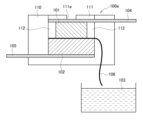
- FIG. 3 is a diagram schematically illustrating a cross section of the magnesium air battery according to the first example.
- FIG. 4 is a diagram illustrating the battery voltage and discharge capacity during discharge in the magnesium air battery according to the first example.
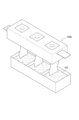
- FIG. 5 is a diagram schematically illustrating the appearance of a magnesium-air battery according to the second example.
- FIG. 6 is a diagram schematically illustrating a cross section of a magnesium air battery according to a second example.
- FIG. 7 is a diagram illustrating the battery voltage and discharge capacity during discharge in the magnesium air battery according to the second example.
- a magnesium air battery 100 includes a positive electrode 101, a negative electrode 102, an electrolyte 103, a positive current collector 104, a negative current collector 105, a separator 106, and a housing 110.
- the positive electrode 101 is composed of a gas diffusion type air electrode.
- the positive electrode 101 is composed of a co-continuum having a three-dimensional network structure consisting of a plurality of nanostructures integrated by non-covalent bonds.
- a binder, especially a fluororesin as a binder, is not used in the air electrode.
- the negative electrode 102 contains magnesium (Mg).
- the negative electrode 102 may be made of magnesium or a magnesium alloy containing one or more of the group consisting of magnesium, iron (Fe), calcium (Ca), aluminum (Al), and the like. However, magnesium alloys containing zinc components such as AZ31 are excluded.
- the electrolyte 103 is placed between the positive electrode 101 and the negative electrode 102, and is made of salt.
- Electrolyte 103 is an aqueous solution or gel containing magnesium acetate.
- the electrolyte 103 is preferably composed only of an aqueous solution or gel containing a salt such as magnesium acetate.
- the electrolyte 103 may be composed of, for example, an aqueous solution of a salt of magnesium acetate, potassium chloride, or sodium chloride, or a mixture of these salts. Since the electrolyte 103 is composed of salt, it is easy to dispose of, and there is no concern that it will affect the surrounding environment, and it is easy to handle.
- the electrolyte 103 may be either an electrolytic solution or a solid electrolyte.
- An electrolytic solution refers to a case where the electrolyte 103 is in a liquid form.
- a solid electrolyte refers to a case where the electrolyte 103 is in a gel form or a solid form.
- the solid electrolyte may be enclosed with agar, cellulose, water-absorbing polymer, etc. in order to have a water-retaining role.
- the electrolyte 103 may not be initially placed in a state where the magnesium air battery 100 is not operating as a battery. When operating as a battery, the electrolyte 103 may be supplied from the outside through the separator 106, for example.
- the positive electrode current collector 104 As the positive electrode current collector 104 , a known one can be used.
- a carbon sheet, carbon cloth, Fe, or Al plate may be used.
- a publicly known negative electrode current collector 105 can be used. When metal is used for the negative electrode 102, the terminal may be taken out directly from the negative electrode 102 without using the negative electrode current collector 105.
- the separator 106 is disposed between the positive electrode 101 and the negative electrode 102 to provide insulation between the positive electrode 101 and the negative electrode 102.
- the separator 106 may be any insulator that has water absorbing properties.
- a coffee filter, kitchen paper, or paper can be used as the separator 106. If a sheet made of a material that naturally decomposes while maintaining strength, such as a cellulose separator made from vegetable fibers, is used for the separator 106, it will have a low environmental impact. Note that the separator 106 does not need to be installed as long as insulation between the positive electrode and the negative electrode can be ensured.
- the positive electrode 101 is in contact with the positive electrode current collector 104. By exposing the positive electrode current collector 104 to the atmosphere, the positive electrode 101 is also exposed to the atmosphere. Further, the positive electrode 101 is in contact with the electrolyte 103 on a surface other than the surface in contact with the positive electrode current collector 104 .
- the negative electrode 102 is in contact with the negative electrode current collector 105.
- Negative electrode 102 is in contact with electrolyte 103 on a surface other than the surface in contact with negative electrode current collector 105 .
- a positive electrode current collector 104 and a negative electrode current collector 105 are provided, but the invention is not limited to this. If the strength of the positive electrode 101 and the negative electrode 102 is ensured during connection with an external load, the positive electrode current collector 104 and the negative electrode current collector 105 may be omitted.
- the housing 110 houses the positive electrode 101, the negative electrode 102, and the electrolyte 103.
- the electrolyte 103 may be housed inside the housing 110 when the magnesium air battery 100 is operated.
- the housing 110 has an air hole that exposes the positive electrode 101 (air electrode) to the atmosphere.
- the material and shape of the casing 110 are not particularly limited as long as the material can maintain the battery cells inside and does not contain regulated substances. However, a portion of the positive electrode current collector 104 and a portion of the negative electrode current collector 105 are exposed from the housing 110 for power supply.
- a known laminate film type can be used for the housing 110.
- the housing 110 is made of a naturally degradable material, it may be made of natural, microbial, or chemically synthesized materials, such as polylactic acid, polycaprolactone, polyhydroxyalkanoate, polyglycolic acid, It can be composed of modified starch or the like.
- chemically synthesized systems such as plant-derived polylactic acid are preferred.
- the processing means for the casing 110 can be formed by molding or cutting using a 3D printer, and the shape is not limited.
- the housing 110 may also be made of paper coated with a resin such as polyethylene used in milk cartons, agar film, or the like.
- the positive electrode 101 will be explained in detail.
- a conductive material used for the positive electrode of general well-known metal-air batteries can be used.
- a typical example is a carbon material, but the material is not limited thereto.
- the positive electrode 101 can be manufactured by a known process such as molding carbon powder with a binder. In a primary battery, it is important to generate a large amount of reaction sites inside the positive electrode, and it is desirable that the positive electrode 101 has a high specific surface area.
- a co-continuum having a three-dimensional network structure may be used as the positive electrode 101.
- a co-continuum having a three-dimensional network structure for the positive electrode 101, there is no need to use a binder, and the discharge capacity can be increased.
- a co-continuum is, for example, a three-dimensional network structure in which multiple nanostructures are integrated by non-covalent bonds.
- the co-continuum is a porous body and has an integral structure.
- Nanostructures are nanosheets or nanofibers.
- the nanosheet is a compound that contains carbon or iron oxide and is mainly composed of carbon or iron oxide.
- the nanosheet is composed of at least one of carbon and iron oxide. It is important that the nanosheet has electrical conductivity.
- a nanosheet is defined as a sheet-like material with a thickness of 1 nm to 1 um and a plane length and breadth of 100 times or more the thickness.
- graphene is a carbon nanosheet.
- the nanosheet may be rolled or waved, the nanosheet may be curved or bent, and may have any shape.
- Nanofibers are compounds that contain carbon, iron oxide, or cellulose, and are mainly composed of carbon, iron oxide, or cellulose. Nanofibers are composed of at least one of carbon, iron oxide, and cellulose. It is important that nanofibers also have electrical conductivity. Nanofibers are defined as fibrous substances with a diameter of 1 nm to 1 ⁇ m and a length of 100 times or more the diameter. Further, the nanofibers may be hollow or coiled, and may have any shape. Note that cellulose is used after being made conductive by carbonization, as described later.
- the manufacturing method includes a step of obtaining a positive electrode 101 composed of an air electrode, and a positive electrode 101 composed of magnesium or a magnesium alloy containing one or more of the group consisting of magnesium, iron, calcium, and aluminum.
- the method includes a step of obtaining a negative electrode 102 and a step of disposing an electrolyte 103 made of salt between the positive electrode 101 and the negative electrode 102.
- the positive electrode 101 is composed of a co-continuum having a three-dimensional network structure consisting of a plurality of nanostructures integrated by non-covalent bonds.
- the step of obtaining the positive electrode 101 includes a freezing step of freezing a sol or gel in which nanostructures are dispersed to obtain a frozen body, and a drying step of drying the frozen body in a vacuum to obtain a co-continuum.
- the positive electrode 101 is constructed from the co-continuum obtained in the drying process.
- any gel in which nanofibers made of iron oxide, manganese oxide, silicon, or cellulose are dispersed may be produced by specific bacteria.
- the process of obtaining the positive electrode 101 includes a production process in which bacteria produce a gel in which nanofibers of iron oxide, manganese oxide, silicon, and cellulose are dispersed, and the gel is heated in an inert gas atmosphere.
- a carbonization step is provided in which a co-continuum is obtained by carbonization.
- a positive electrode 101 is constructed from the co-continuum obtained in the carbonization process.
- the co-continuum constituting the positive electrode 101 preferably has an average pore diameter of 0.1 to 50 ⁇ m, more preferably 0.1 to 2 ⁇ m.
- the average pore diameter is a value determined by mercury intrusion method. In this case, there is no need to use additional materials such as a binder, unlike when using carbon powder, which is advantageous in terms of cost and environment.
- electrochemical reaction the electrochemical reaction at the positive electrode 101 and the negative electrode 102 will be explained using an example of a primary battery using magnesium metal for the negative electrode.
- the positive electrode reaction when oxygen in the air and the electrolyte come into contact with each other on the surface of the conductive positive electrode 101, a reaction shown as "1/2O2+H2O+2e- ⁇ 2OH-...(1)" progresses.
- the negative electrode reaction the reaction "Mg ⁇ Mg2++2e-...(2)" progresses at the negative electrode 102 in contact with the electrolyte 103, and the magnesium constituting the negative electrode 102 releases electrons, and the electrolyte dissolved as magnesium ions in
- the magnesium air battery 100 does not pollute waste treatment facilities or the natural environment, which is made of materials with low environmental impact. Furthermore, the magnesium air battery 100 is made of only materials that do not contain controlled substances specified by various laws and regulations. Such a magnesium air battery 100, for example, when used in a disposable device such as a soil moisture sensor, has an extremely low load on the living environment and the natural environment even when it is not collected or disposed of as general garbage.
- the first example is an example in which a co-continuum having a three-dimensional network structure consisting of a plurality of nanosheets integrated by non-covalent bonds is used as an air electrode (positive electrode 101).
- the magnesium air battery 100a includes a positive electrode 101, a negative electrode 102, an electrolyte 103, a positive current collector 104, a negative current collector 105, a separator 106, and a housing 110. , a housing lid 111 and a fixture 112.
- An air electrode which is the positive electrode 101, was synthesized as follows.
- a manufacturing method using graphene as a nanosheet will be shown as a representative example, but by changing graphene to nanosheets made of other materials, a cocontinuum having a three-dimensional network structure can be prepared.
- a commercially available carbon nanofiber sol [dispersion medium: water (H 2 O), 0.4% by weight, manufactured by Sigma-Aldrich] was placed in a test tube, and the test tube was immersed in liquid nitrogen for 30 minutes to form carbon nanofibers. The sol was completely frozen. After completely freezing the carbon nanofiber sol, take out the frozen carbon nanofiber sol into an eggplant flask and dry it in a vacuum of 10 Pa or less using a freeze dryer (manufactured by Tokyo Rika Kikai Co., Ltd.). A stretchable co-continuum with a three-dimensional network structure containing carbon nanosheets was obtained.
- the obtained co-continuum was subjected to X-ray diffraction (XRD) measurement, scanning electron microscopy (SEM) observation, porosity measurement, tensile test, and BET (Brunauer Emmett Teller) specific surface area measurement. was conducted and evaluated.
- the produced co-continuum was confirmed to be a single phase of carbon (C, PDF Card No. 01-075-0444) by XRD measurement.
- C PDF Card No. 01-075-0444
- the PDF card number is the card number of PDF (Powder Diffraction File), which is a database collected by the International Center for Diffraction Data (ICDD), and the same applies hereinafter.
- the obtained co-continuum was a co-continuum in which nanosheets (graphene pieces) were continuously connected and had an average pore diameter of 1 ⁇ m.
- the BET specific surface area of the co-continuum was measured by mercury porosimetry, it was found to be 510 m 2 /g.
- the porosity of the co-continuum was measured by mercury intrusion method, it was over 90%.
- the results of the tensile test it was confirmed that even if the obtained co-continuum was strained by 20% due to tensile stress, it did not exceed the elastic region and returned to its shape before the stress was applied.
- the co-continuum was cut out into a rectangular shape with a side of 9 mm using a punching blade or a laser cutter to obtain a gas diffusion type air electrode (positive electrode 101).
- a PLA (Poly-Lactic Acid) filament manufactured by Raise3D
- FFF Fluorescence FFF
- Raise3D Pro2 manufactured by Raise3D
- the positive electrode current collector 104 was processed into a convex shape for connection to an external load. Specifically, the portion in contact with the positive electrode 101 was processed into a square shape with a side of 10 mm, and the portion connected to the external load was processed into a rectangular shape with dimensions of 2 mm x 10 mm.
- the negative electrode 102 was obtained by cutting out a commercially available magnesium metal (100 ⁇ m thick, manufactured by Fuji Light Metal Co., Ltd.) into a rectangular shape with a side of 10 mm using a punching blade or a laser cutter.
- the negative electrode current collector 105 it was decided to use the same material as the negative electrode 102, which was processed into the same shape as the positive electrode current collector.
- the electrolyte 103 As the electrolyte 103, a solution of magnesium acetate tetrahydrate (manufactured by Kanto Kagaku) dissolved in pure water at a concentration of 1 mol/L was used.
- separator 106 a cellulose separator for batteries (manufactured by Nippon Kokoshi Kogyo) was used.
- the casing 110 has an inner dimension of 10.1 mm square and an outer dimension of 20 mm to accommodate each component, and has two spaces for positive and negative electrode current collectors for connection with an external load and a space at the bottom for placing a separator. I opened it in one place and formed it.
- the casing 110 was manufactured by melting and laminating PLA filaments (manufactured by Raise3D) using the FFF (Fused Filament Fabrication) method using Raise3D Pro2 (manufactured by Raise3D).
- the housing lid 111 is a lid of the housing 110.
- the housing lid 111 fixes the positive electrode current collector 104 from above.
- the housing lid 111 has an air hole 111a for supplying the atmosphere to the positive electrode current collector 104.
- the fixture 112 is used to fix the positive electrode 101.
- the fixture 112 has a rectangular shape with an inner dimension of 9 mm and an outer dimension of 10 mm, and is formed to be able to accommodate the positive electrode 101 therein.
- the negative electrode current collector 105, the negative electrode 102, and the separator 106 are installed in the housing 110.
- a part of the negative electrode current collector 105 is exposed outside the housing 110 through the gap for the negative electrode current collector in the housing 110, and a part of the separator 106 is exposed through the gap for the separator provided below the housing 110. It is exposed outside the housing 110.
- a fixture 112 for improving insulation and fixing the positive electrode is installed on the separator 106.
- the positive electrode 101 is stored inside the fixture 112, and the positive electrode current collector 104 is installed above it. At this time, a part of the positive electrode current collector 104 is exposed from the gap for the positive electrode current collector.
- the battery material was fixed with a case lid 111 from above, and the case 110 and the case cover 111 were fixed using heat generated by vibrations of an ultrasonic cutter or the like.
- Magnesium air battery 100a was produced by injecting electrolyte 103 into separator 106 exposed to the outside.
- the battery performance of the produced magnesium air battery 100a was measured.
- a discharge test was conducted.
- the air battery discharge test was conducted using a commercially available charge/discharge measurement system (manufactured by Hokuto Denko Co., Ltd., SD8 charge/discharge system).
- current was passed at a current density of 0.5 mA/cm 2 per effective area of the air electrode, and the battery voltage decreased from the open circuit voltage to 0 V in a thermostatic chamber at 25°C (the atmosphere was a normal living environment). (below).
- the discharge capacity was expressed as a value per weight (mAh/g) of the air electrode made of a co-continuum.
- FIG. 4 shows the initial discharge curve when the negative electrode is made of magnesium in the first example.
- the average discharge voltage is 1.15V and the discharge capacity is 1200mAh/g.
- the average discharge voltage is the battery voltage when the discharge capacity is 1/2 of the discharge capacity of the battery.
- the discharge capacity of the battery is 1200mAh/g
- the discharge capacity in the experiment is 600mAh/g.
- the magnesium air battery 100b according to the second embodiment is a multistage magnesium air battery in which a plurality of battery cells including a positive electrode 101, a negative electrode 102, and an electrolyte 103 are connected in series.
- the magnesium air battery 100 according to FIG. 2 is formed by connecting three battery cells in series.
- the co-continuum was cut out into a rectangular shape with a side of 9 mm using a punching blade or a laser cutter to obtain a gas diffusion type air electrode (positive electrode 101).
- the positive electrode current collector 104 was processed into a convex shape for connection to an external load. Specifically, the portion in contact with the positive electrode 101 was shaped into a rectangular shape with a side of 10 mm, and the portion connected to an adjacent battery or an external load was shaped into a rectangular shape of 2 mm x 10 mm.
- the casing 110 has an inner dimension of 10.1 mm square ( ⁇ 3 cells) and an outer dimension of 60 mm so as to store three battery cells, and has two gaps for positive and negative electrode current collectors for connecting external loads and other cells. A gap was created at the bottom to allow the separator to come out.
- the casing 110 was fabricated by melting and laminating PLA filaments (manufactured by Raise3D) using the FFF (Fused Filament Fabrication) method using Raise3D Pro2 (manufactured by Raise3D).
- the housing lid 111 is a lid of the housing 110.
- the housing lid 111 fixes the positive electrode current collector 104 from above.
- the housing lid 111 has an air hole 111a for supplying the atmosphere to the positive electrode current collector 104.
- the fixture 112 is used to fix the positive electrode 101.
- the fixture 112 has a rectangular shape with an inner dimension of 9 mm and an outer dimension of 10 mm, and is formed to be able to accommodate the positive electrode 101 therein.
- each of the negative electrode current collector 105, the negative electrode 102, and the separator 106 thereon are installed in the casing 110.
- a part of the negative electrode current collector 105 at one end (the back side in FIG. 5 and the left side in FIG. 6) of the negative electrode current collector 105 is exposed to the outside of the housing 110 through the gap for the negative electrode current collector in the housing 110.
- Parts of the three separators 106 are exposed to the outside of the casing 110 through the separator gaps provided below the casing 110.
- Three fixtures 112 are installed on each of the three separators 106 to improve insulation and to fix the positive electrode.
- Three positive electrodes 101 are housed inside each of the three fixtures 112, and three positive electrode current collectors 104 are respectively installed thereon.
- the positive electrode current collector 104 of the battery cell housed in the housing 110 and the negative electrode current collector 105 of the adjacent battery cell are connected.
- the three battery cells within the housing 110 are connected in series.
- the battery materials were each fixed with the top three casing lids 111, and the casing 110 and the casing lid 111 were fixed using heat generated by vibration of an ultrasonic cutter or the like.
- Magnesium air battery 100a was produced by injecting electrolyte 103 into separator 106 exposed to the outside.
- the electrolyte 103 is provided individually for each separator 106.
- the battery performance of the produced magnesium air battery 100b was measured.
- the discharge conditions were the same as in the first example.
- FIG. 7 it can be seen that when the negative electrode 102 is made of magnesium and a bicontinuum is used as the air electrode, the average discharge voltage is 3.39V and the discharge capacity is 1150mAh/g. From this result, it was found that good results were obtained also in the magnesium air battery 100b according to the second example.
- waste treatment facilities and the natural environment can be constructed using only materials with low environmental impact, without using regulated substances that may affect human health or the environment via the environment.
- a magnesium air battery 100 that does not pollute can be provided.
- Such a magnesium air battery 100 can be effectively used as a disposable battery for daily use, as well as various driving sources such as sensors used in soil.
Landscapes
- Chemical & Material Sciences (AREA)
- Chemical Kinetics & Catalysis (AREA)
- Electrochemistry (AREA)
- General Chemical & Material Sciences (AREA)
- Engineering & Computer Science (AREA)
- Manufacturing & Machinery (AREA)
- Physics & Mathematics (AREA)
- Thermal Sciences (AREA)
- Materials Engineering (AREA)
- Hybrid Cells (AREA)
Priority Applications (3)
| Application Number | Priority Date | Filing Date | Title |
|---|---|---|---|
| JP2024524023A JPWO2023233522A1 (https=) | 2022-05-31 | 2022-05-31 | |
| PCT/JP2022/022126 WO2023233522A1 (ja) | 2022-05-31 | 2022-05-31 | マグネシウム空気電池およびその製造方法 |
| US18/870,068 US20250343303A1 (en) | 2022-05-31 | 2022-05-31 | Magnesium Air Battery and Manufacturing Method of It |
Applications Claiming Priority (1)
| Application Number | Priority Date | Filing Date | Title |
|---|---|---|---|
| PCT/JP2022/022126 WO2023233522A1 (ja) | 2022-05-31 | 2022-05-31 | マグネシウム空気電池およびその製造方法 |
Publications (1)
| Publication Number | Publication Date |
|---|---|
| WO2023233522A1 true WO2023233522A1 (ja) | 2023-12-07 |
Family
ID=89025986
Family Applications (1)
| Application Number | Title | Priority Date | Filing Date |
|---|---|---|---|
| PCT/JP2022/022126 Ceased WO2023233522A1 (ja) | 2022-05-31 | 2022-05-31 | マグネシウム空気電池およびその製造方法 |
Country Status (3)
| Country | Link |
|---|---|
| US (1) | US20250343303A1 (https=) |
| JP (1) | JPWO2023233522A1 (https=) |
| WO (1) | WO2023233522A1 (https=) |
Citations (2)
| Publication number | Priority date | Publication date | Assignee | Title |
|---|---|---|---|---|
| WO2019220999A1 (ja) * | 2018-05-18 | 2019-11-21 | 日本電信電話株式会社 | 金属空気電池及び空気極製造方法 |
| WO2020137557A1 (ja) * | 2018-12-25 | 2020-07-02 | 日本電信電話株式会社 | 金属空気電池、及び、空気極製造方法 |
Family Cites Families (9)
| Publication number | Priority date | Publication date | Assignee | Title |
|---|---|---|---|---|
| JP2000200628A (ja) * | 1999-01-05 | 2000-07-18 | Shigezo Yamaguchi | 発電方法 |
| CN201142337Y (zh) * | 2007-12-17 | 2008-10-29 | 邹小恩 | 一种干电池 |
| KR101964895B1 (ko) * | 2011-04-18 | 2019-04-02 | 고쿠리츠다이가쿠호진 도호쿠다이가쿠 | 마그네슘 연료전지 |
| JP6673759B2 (ja) * | 2016-06-23 | 2020-03-25 | 日本電信電話株式会社 | マグネシウム空気電池の製造方法 |
| JP7008630B2 (ja) * | 2016-09-20 | 2022-01-25 | マクセル株式会社 | 空気電池およびパッチ |
| JP6695304B2 (ja) * | 2017-05-31 | 2020-05-20 | 日本電信電話株式会社 | マグネシウム空気電池およびその正極、負極ならびにセパレータの製造方法 |
| JP7068585B2 (ja) * | 2018-12-25 | 2022-05-17 | 日本電信電話株式会社 | バイポーラ型金属空気電池、空気極製造方法、及び、集電体製造方法 |
| WO2021106139A1 (ja) * | 2019-11-28 | 2021-06-03 | 日本電信電話株式会社 | 空気電池および検知装置 |
| US12080867B2 (en) * | 2019-12-02 | 2024-09-03 | Nippon Telegraph And Telephone Corporation | Air battery and manufacturing method of positive electrode of air battery |
-
2022
- 2022-05-31 US US18/870,068 patent/US20250343303A1/en active Pending
- 2022-05-31 WO PCT/JP2022/022126 patent/WO2023233522A1/ja not_active Ceased
- 2022-05-31 JP JP2024524023A patent/JPWO2023233522A1/ja active Pending
Patent Citations (2)
| Publication number | Priority date | Publication date | Assignee | Title |
|---|---|---|---|---|
| WO2019220999A1 (ja) * | 2018-05-18 | 2019-11-21 | 日本電信電話株式会社 | 金属空気電池及び空気極製造方法 |
| WO2020137557A1 (ja) * | 2018-12-25 | 2020-07-02 | 日本電信電話株式会社 | 金属空気電池、及び、空気極製造方法 |
Also Published As
| Publication number | Publication date |
|---|---|
| JPWO2023233522A1 (https=) | 2023-12-07 |
| US20250343303A1 (en) | 2025-11-06 |
Similar Documents
| Publication | Publication Date | Title |
|---|---|---|
| JP6830109B2 (ja) | 水分センサ | |
| Bi et al. | From sodium–oxygen to sodium–air battery: enabled by sodium peroxide dihydrate | |
| EP3518338B1 (en) | Battery and method for producing positive electrode for same | |
| JP6070671B2 (ja) | 空気電池 | |
| JP7025644B2 (ja) | 金属空気電池及び空気極製造方法 | |
| Wang et al. | Understanding moisture and carbon dioxide involved interfacial reactions on electrochemical performance of lithium–air batteries catalyzed by gold/manganese-dioxide | |
| WO2010082338A1 (ja) | 空気二次電池およびその製造方法 | |
| JP6951623B2 (ja) | マグネシウム水電池およびその正極の製造方法 | |
| Lin et al. | O2/O2–crossover-and dendrite-free hybrid solid-state Na–O2 batteries | |
| KR102041039B1 (ko) | 생분해성 2차 전지 | |
| WO2023233522A1 (ja) | マグネシウム空気電池およびその製造方法 | |
| JP7277831B2 (ja) | 空気電池および検知装置 | |
| JP7068585B2 (ja) | バイポーラ型金属空気電池、空気極製造方法、及び、集電体製造方法 | |
| WO2024150394A1 (ja) | マグネシウム空気電池およびその製造方法 | |
| WO2021111515A1 (ja) | 金属空気電池、金属空気電池の正極の製造方法および金属空気電池の製造方法 | |
| US8753759B2 (en) | Battery with chlorophyll electrode | |
| JP2019117785A (ja) | 空気電池用正極及び空気電池 | |
| JP2018195529A (ja) | 金属燃料電池 | |
| Soman et al. | Green Technologies and Sustainable Energy Materials | |
| Kishore et al. | Graphene-based nanocatalysts for oxygen reduction and evolution reactions in metal-oxygen batteries | |
| RU2578196C2 (ru) | Литий-воздушный аккумулятор и способ его изготовления | |
| WO2021240602A1 (ja) | 金属空気電池および空気極の製造方法 | |
| JP2019029248A (ja) | リチウム空気電池及びその製造方法 | |
| JP2015022873A (ja) | 円筒形空気電池の製造方法 |
Legal Events
| Date | Code | Title | Description |
|---|---|---|---|
| 121 | Ep: the epo has been informed by wipo that ep was designated in this application |
Ref document number: 22944810 Country of ref document: EP Kind code of ref document: A1 |
|
| WWE | Wipo information: entry into national phase |
Ref document number: 2024524023 Country of ref document: JP |
|
| WWE | Wipo information: entry into national phase |
Ref document number: 18870068 Country of ref document: US |
|
| NENP | Non-entry into the national phase |
Ref country code: DE |
|
| 122 | Ep: pct application non-entry in european phase |
Ref document number: 22944810 Country of ref document: EP Kind code of ref document: A1 |
|
| WWP | Wipo information: published in national office |
Ref document number: 18870068 Country of ref document: US |