WO2023085128A1 - 皮膚外用剤組成物 - Google Patents
皮膚外用剤組成物 Download PDFInfo
- Publication number
- WO2023085128A1 WO2023085128A1 PCT/JP2022/040437 JP2022040437W WO2023085128A1 WO 2023085128 A1 WO2023085128 A1 WO 2023085128A1 JP 2022040437 W JP2022040437 W JP 2022040437W WO 2023085128 A1 WO2023085128 A1 WO 2023085128A1
- Authority
- WO
- WIPO (PCT)
- Prior art keywords
- skin
- component
- preparation composition
- trimethylglycine
- eutectic
- Prior art date
- Legal status (The legal status is an assumption and is not a legal conclusion. Google has not performed a legal analysis and makes no representation as to the accuracy of the status listed.)
- Ceased
Links
Images



Classifications
-
- A—HUMAN NECESSITIES
- A61—MEDICAL OR VETERINARY SCIENCE; HYGIENE
- A61K—PREPARATIONS FOR MEDICAL, DENTAL OR TOILETRY PURPOSES
- A61K31/00—Medicinal preparations containing organic active ingredients
- A61K31/60—Salicylic acid; Derivatives thereof
-
- A—HUMAN NECESSITIES
- A61—MEDICAL OR VETERINARY SCIENCE; HYGIENE
- A61K—PREPARATIONS FOR MEDICAL, DENTAL OR TOILETRY PURPOSES
- A61K47/00—Medicinal preparations characterised by the non-active ingredients used, e.g. carriers or inert additives; Targeting or modifying agents chemically bound to the active ingredient
- A61K47/06—Organic compounds, e.g. natural or synthetic hydrocarbons, polyolefins, mineral oil, petrolatum or ozokerite
- A61K47/16—Organic compounds, e.g. natural or synthetic hydrocarbons, polyolefins, mineral oil, petrolatum or ozokerite containing nitrogen, e.g. nitro-, nitroso-, azo-compounds, nitriles, cyanates
- A61K47/18—Amines; Amides; Ureas; Quaternary ammonium compounds; Amino acids; Oligopeptides having up to five amino acids
-
- A—HUMAN NECESSITIES
- A61—MEDICAL OR VETERINARY SCIENCE; HYGIENE
- A61K—PREPARATIONS FOR MEDICAL, DENTAL OR TOILETRY PURPOSES
- A61K8/00—Cosmetics or similar toiletry preparations
- A61K8/18—Cosmetics or similar toiletry preparations characterised by the composition
- A61K8/30—Cosmetics or similar toiletry preparations characterised by the composition containing organic compounds
- A61K8/33—Cosmetics or similar toiletry preparations characterised by the composition containing organic compounds containing oxygen
- A61K8/36—Carboxylic acids; Salts or anhydrides thereof
- A61K8/368—Carboxylic acids; Salts or anhydrides thereof with carboxyl groups directly bound to carbon atoms of aromatic rings
-
- A—HUMAN NECESSITIES
- A61—MEDICAL OR VETERINARY SCIENCE; HYGIENE
- A61K—PREPARATIONS FOR MEDICAL, DENTAL OR TOILETRY PURPOSES
- A61K8/00—Cosmetics or similar toiletry preparations
- A61K8/18—Cosmetics or similar toiletry preparations characterised by the composition
- A61K8/30—Cosmetics or similar toiletry preparations characterised by the composition containing organic compounds
- A61K8/40—Cosmetics or similar toiletry preparations characterised by the composition containing organic compounds containing nitrogen
- A61K8/41—Amines
-
- A—HUMAN NECESSITIES
- A61—MEDICAL OR VETERINARY SCIENCE; HYGIENE
- A61K—PREPARATIONS FOR MEDICAL, DENTAL OR TOILETRY PURPOSES
- A61K8/00—Cosmetics or similar toiletry preparations
- A61K8/18—Cosmetics or similar toiletry preparations characterised by the composition
- A61K8/30—Cosmetics or similar toiletry preparations characterised by the composition containing organic compounds
- A61K8/40—Cosmetics or similar toiletry preparations characterised by the composition containing organic compounds containing nitrogen
- A61K8/44—Aminocarboxylic acids or derivatives thereof, e.g. aminocarboxylic acids containing sulfur; Salts; Esters or N-acylated derivatives thereof
-
- A—HUMAN NECESSITIES
- A61—MEDICAL OR VETERINARY SCIENCE; HYGIENE
- A61P—SPECIFIC THERAPEUTIC ACTIVITY OF CHEMICAL COMPOUNDS OR MEDICINAL PREPARATIONS
- A61P17/00—Drugs for dermatological disorders
-
- A—HUMAN NECESSITIES
- A61—MEDICAL OR VETERINARY SCIENCE; HYGIENE
- A61Q—SPECIFIC USE OF COSMETICS OR SIMILAR TOILETRY PREPARATIONS
- A61Q19/00—Preparations for care of the skin
- A61Q19/02—Preparations for care of the skin for chemically bleaching or whitening the skin
Definitions
- the present invention relates to an external skin preparation composition.
- Patent Document 1 discloses a topical skin care product containing one or more whitening agents selected from hydroquinone glycosides, alkoxysalicylic acids and salts thereof, a predetermined betaine derivative, a higher fatty acid, and a predetermined amino acid. agents are disclosed.
- the skin-improving ingredients themselves in order to improve the skin condition-improving action of the external skin preparation composition.
- the skin-improving ingredient may not sufficiently act on the skin tissue unless the applied ingredient is properly absorbed and penetrated into the skin. Therefore, it is important to improve the skin permeability of skin improving ingredients.
- an object of one aspect of the present invention is to improve the skin permeability of an external skin preparation composition.
- an external skin preparation composition containing a component (A) and a component (B), wherein the component (A) is 4-methoxysalicylic acid or a salt thereof and the component (B) is represented by the following formula (I)
- R is a hydroxyl group or carboxyl group-containing residue having 1 to 3 carbon atoms] and one or more compounds selected from the group consisting of trimethylammonium group-containing compounds and basic amino acids. and the ratio of the molar concentration of the component (A) to the molar concentration of the component (B) contained in the external composition for skin is 1:0.3 to 1:3.
- the skin permeability of the external skin composition can be improved.
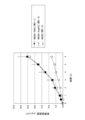
- Examples 1 is a graph showing the results of Examples 1-1 to 1-3.
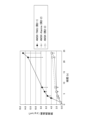
- 2 is a graph showing the results of Examples 2-1 to 2-3.
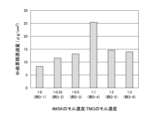
- 2 is a graph showing the results of Examples 3-1 to 3-6.
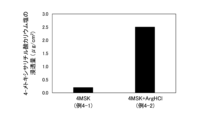
- 4 is a graph showing the results of Examples 4-1 and 4-2.
- 13 C-NMR spectrum used to verify the formation of a eutectic of 4-methoxysalicylate and trimethylglycine.
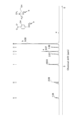
- 1 H-NMR spectrum used to verify the formation of a eutectic between 4-methoxysalicylate and trimethylglycine.
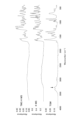
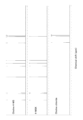
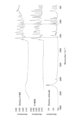
- 4 is an IR spectrum used to verify the formation of a eutectic between 4-methoxysalicylate and trimethylglycine; 13 C-NMR spectrum used to verify the formation of a eutectic between 4-methoxysalicylate and choline. 4 is an IR spectrum used to verify the formation of a eutectic between 4-methoxysalicylate and choline. 4 is an IR spectrum used to verify the formation of a eutectic between 4-methoxysalicylate and choline. 4 is a graph comparing the results of melting point measurements for verifying the formation of eutectic bodies.
- This form is an external skin preparation composition containing component (A) 4-methoxysalicylic acid or a salt thereof.
- Component (A) 4-methoxysalicylic acid or a salt thereof is known to have keratin exfoliating action, melanogenesis inhibitory action, turnover normalizing action, etc., and can be used as a skin whitening ingredient.
- the inventors have found that by combining component (A) 4-methoxysalicylic acid or a salt thereof with a predetermined trimethylammonium group-containing compound or basic amino acid, or both, of component (B), the skin penetration of 4-methoxysalicylic acid can be improved. found to improve performance.
- the salt of 4-methoxysalicylic acid is preferably an alkali metal salt of 4-methoxysalicylic acid, such as sodium salt, potassium salt, lithium salt and the like.
- potassium 4-methoxysalicylate potassium 2-hydroxy-4-methoxybenzoate is preferred.
- the component (A), 4-methoxysalicylic acid or its salt mainly has a whitening action as described above, but also has a positive effect on the appearance of the skin, such as a gloss-enhancing action.
- Component (A) 4-methoxysalicylic acid or a salt thereof may be contained as a potassium salt in an amount of 0.5% by mass or more and 5% by mass or less relative to the total amount of the external skin preparation composition. Within this range, 4-methoxysalicylic acid or a salt thereof can exert a sufficient skin condition improving action (whitening action, etc.) even in a small amount.
- the component (B) combined with the component (A) 4-methoxysalicylic acid or a salt thereof has the following formula (I)
- R is a hydroxyl group- or carboxyl group-containing residue having 1 to 3 carbon atoms.
- trimethylammonium group-containing compounds used as component (B) include choline, acetylcholine, trimethylglycine, carnitine, acetylcarnitine, ornithine, and the like.
- trimethylglycine is preferable because it can improve the moisturizing effect of the composition for external use on the skin.
- component (B) may be a basic amino acid.
- basic amino acids include arginine, lysine and histidine.
- component (B) above can be used singly or in combination of two or more. That is, one or two or more of the predetermined trimethylammonium group-containing compounds listed above may be used, one or two or more of the basic amino acids listed above may be used, or a predetermined trimethylammonium group-containing A compound and a basic amino acid may be used in combination.
- the component (B) may be contained in an amount of 0.2% by mass or more and 3% by mass or less relative to the total amount of the external skin preparation composition. Within this range, it is possible to allow the component (A) to exert a sufficient skin condition-improving action, and to provide a good feeling in use when the composition for external use for skin is applied to the skin.
- component (A) 4-methoxysalicylic acid or a salt thereof and component (B) a predetermined trimethylammonium group-containing compound and/or basic amino acid is mixed to form a eutectic ( eutectic mixture).
- component (A) and the component (B) form a eutectic body in the external skin preparation composition and/or form a eutectic body after the external skin preparation composition is applied to the skin.
- eutectic refers to a complex formed by mixing multiple components that has a lower melting point than the melting points of the components prior to mixing.
- the eutectic also includes forms called deep eutectic solvent (DES) and ionic liquid (IL), but the eutectic obtained by mixing is It is not limited to being liquid, and may be in a solid, semi-solid, or crystalline (eutectic) state. It is confirmed by nuclear magnetic resonance spectroscopy (NMR) and infrared spectroscopy (IR), or melting point measurement whether the combination of component (A) and component (B) in the present embodiment forms a eutectic. be able to.
- NMR nuclear magnetic resonance spectroscopy
- IR infrared spectroscopy
- the molar concentration ratio of component (A) to component (B) contained in the external skin preparation composition according to this embodiment may be 1:0.3 to 1:3, preferably 1:0. 45 to 1:2, more preferably 1:0.5 to 1:1.5, more preferably 1:0.8 to 1:1.2. Furthermore, it is preferable that component (A) and component (B) are contained in equimolar amounts. Within the above range, component (A) and component (B) can easily form a eutectic. Formation of the eutectic is thought to increase the skin permeability (transdermal absorbability) of the components in the composition. That is, when the composition is applied to the skin, the ingredients in the composition can be quickly taken up by the skin. The components that have been taken in easily diffuse into the skin, and are more likely to remain in the skin. In this embodiment, the combination of component (A) and component (B) preferably forms a crystalline eutectic.
- the skin external preparation composition according to this embodiment can be suitably used as a composition for skin permeation.
- skin permeation is used not for the purpose of supplying a predetermined component to body tissues inside the skin, but mainly for the purpose of allowing it to penetrate into the skin and act on the skin.
- skin permeation means that a predetermined component is taken into the skin and spreads throughout the skin.
- the skin external preparation composition according to this embodiment is suitably used as a cosmetic.
- cosmetics may be cosmetics or quasi-drugs, preferably in the form of skin care products or basic cosmetics such as lotions, milky lotions, and serums. It may also be in the form of personal care products (daily hygiene products) such as hair conditioners, hand creams, body creams, and body lotions. Cosmetics may be in the form of lotions, creams, emulsions, gels, or balms, or may be in the form of foams that are mixed with gas such as air or that are mixed and discharged. . In addition, in the case of an emulsion, it may be oil-in-water type, water-in-oil type, or other forms.
- the skin external preparation composition according to this embodiment may further contain water.
- the water may be ion-exchanged water, purified water, tap water, or the like.
- the content of water in the external skin preparation composition depends on the properties of the external skin preparation composition to be obtained, but is preferably 10% by mass or more and 99% by mass or less with respect to the total amount of the external skin preparation composition. , more preferably 30% by mass or more and 90% by mass or less.
- the skin external preparation composition may contain an aqueous component other than water or an oily component as a component other than the above components (A) and (B) within a range that does not impair the effects of the present embodiment.
- Water-soluble alcohols which may be water-soluble alcohols, aqueous phase thickeners, humectants, chelating agents, preservatives, neutralizers, dyes, etc., may be lower alcohols, such as ethanol, propanol, isopropanol, isobutyl alcohol. , t-butyl alcohol and the like.
- a polyhydric alcohol can be used as the moisturizing agent.
- oils contained in the skin external preparation composition include oily ingredients, water-soluble polymers, surfactants, inorganic powders, polymer powders, and the like.
- Oily components may be hydrocarbon oils, ester oils, higher fatty acids, higher alcohols, silicone oils, liquid oils, solid oils, waxes, fragrances, oil phase thickeners and the like.
- the skin external preparation composition may contain a component that improves skin conditions in addition to component (A) 4-methoxysalicylic acid or a salt thereof.
- Other skin condition improving ingredients include whitening, anti-aging, antioxidant, wrinkle improvement, blemish reduction, texture improvement, firmness improvement, gloss improvement, moisture content improvement, hue improvement, melanin amount reduction, blood circulation improvement, and moisturizing. , and components that have one or more effects of cell activation.
- the pH of the resulting external composition for skin can be in the range of 4 or more and 10 or less, preferably 5 or more and 9 or less. Therefore, the external skin preparation composition according to this embodiment is suitable as a cosmetic or as a cosmetic for pH-sensitive users.
- the skin external preparation composition according to the present embodiment is prepared by previously mixing component (A) and component (B) to form a eutectic body, and then adding other components (including water). be able to. Heating can be applied when mixing component (A) and component (B).
- the external skin preparation composition may be prepared by mixing component (A), component (B), and other components together.
- Example 1-1 4-Methoxysalicylic acid potassium salt (4MSK) and trimethylglycine (TMG) were dissolved in a citrate buffer (pH 5.5) prepared with ion-exchanged water to prepare a sample of Example 1-1.
- the above preparation was carried out so that the concentration of 4-methoxysalicylic acid potassium salt was 1% by mass, the concentration of trimethylglycine was 0.57% by mass, and the concentration of citrate buffer was 10 mM in the sample. Also, the ratio of the molar concentration of 4-methoxysalicylic acid potassium salt to the molar concentration of trimethylglycine in the sample was 1:1.
- Example 1-2 A sample of Example 1-2 was prepared in the same manner as in Example 1-1 except that arginine hydrochloride (ArgHCl) was used in place of trimethylglycine and its concentration was adjusted to 1.02% by mass. Also, the ratio of the molar concentration of 4-methoxysalicylic acid potassium salt to the molar concentration of arginine hydrochloride in the sample was 1:1.
- ArgHCl arginine hydrochloride
- Example 1-3 A sample of Example 1-3 was prepared in the same manner as Example 1-1, except that no trimethylglycine was added.
- composition containing 4-methoxysalicylic acid potassium salt (4MSK) and trimethylglycine (TMG) at a predetermined ratio (Example 1-1)
- 4-methoxysalicylic acid potassium salt (4MSK) and arginine hydrochloride A composition containing a salt (ArgHCl) at a predetermined ratio (Example 1-2) exhibits superior skin permeation action compared to a composition containing no trimethylglycine (TMG) (Example 1-3). I found out.
- Example 2-1 A liquid obtained by mixing 4-methoxysalicylic acid potassium salt (4MSK) and trimethylglycine (TMG) was diluted with a citric acid buffer (pH 5.5) prepared with ion-exchanged water, and the mixture of Example 2-1 was obtained. It was used as a sample. The above preparation was carried out so that the concentration of 4-methoxysalicylic acid potassium salt was 1% by mass, the concentration of trimethylglycine was 0.57% by mass, and the concentration of citrate buffer was 10 mM in the sample. The molar ratio of 4-methoxysalicylic acid potassium salt to trimethylglycine in the sample was 1:1.
- Example 2-2 A sample of Example 2-2 was prepared in the same manner as in Example 2-1 except that alanine was used in place of trimethylglycine and its concentration was adjusted to 0.22% by mass. The molar ratio of 4-methoxysalicylic acid potassium salt to the molar concentration of alanine in the sample was 1:1.
- Example 2-3 A sample of Example 2-3 was prepared in the same manner as Example 2-1, except that no trimethylglycine was added.
- the composition containing 4-methoxysalicylic acid potassium salt (4MSK) and trimethylglycine (TMG) at a predetermined ratio is different from the composition containing no trimethylglycine (TMG) (Example It was found to exhibit superior skin permeation action compared to 2-3).
- the composition containing alanine, which is another amino acid that is not basic to trimethylglycine did not show an improvement in skin permeation.
- Example preparation> A sample was prepared by diluting a liquid obtained by mixing 4-methoxysalicylic acid potassium salt (4MSK) and trimethylglycine (TMG) with citric acid buffer (pH 5.5) prepared with ion-exchanged water, 3-1 to Example 3-6.
- the concentration of 4-methoxysalicylic acid potassium salt in the sample of each example was 1% by mass, while the concentration of trimethylglycine in the sample was 0% by mass in Example 3-1 and 0.14% by mass in Example 3-2. , 0.28% by mass in Example 3-3, 0.57% by mass in Example 3-4, 0.71% by mass in Example 3-4, and 0.86% by mass in Example 3-6.
- the concentration of citrate buffer in each sample was 10 mM.
- the ratio of the molar concentration of 4-methoxysalicylic acid potassium salt to the molar concentration of trimethylglycine in the sample was 1:0 in Example 3-1, 1:0.33 in Example 3-2, and 1 in Example 3-3. : 0.5, 1:1 for Example 3-4, 1:2 for Example 3-5, and 1:3 for Example 3-6.
- the composition containing 4-methoxysalicylic acid potassium salt and trimethylglycine exhibits good skin penetration. Further, when the ratio of the molar concentration of 4-methoxysalicylic acid potassium salt (4MSK) to the molar concentration of trimethylglycine (TMG) is within the range of 1:0.3 to 3:1 (Examples 3-2 to 3 -6) was found to exhibit particularly excellent skin penetration.
- 4MSK 4-methoxysalicylic acid potassium salt
- TMG trimethylglycine
- transepidermal water loss was measured as an index of barrier function using a Vapometer (Delfin Technologies Ltd, Kuopio, Finland). Cells with a TEWL of less than 10 were judged to have sufficient barrier function and were used for testing.
- Example preparation> A 2 ⁇ L/cm 2 1% by mass aqueous solution of potassium 4-methoxysalicylate was used as Example 4-1, and an aqueous solution of 1% by mass of potassium 4-methoxysalicylate and 1.02% by mass of arginine hydrochloride was used as Example 4-2.
- FIG. 4 shows the 13 C-NMR spectrum of trimethylglycine 4-methoxysalicylate together with the spectra of 4-methoxysalicylic acid and trimethylglycine.
- FIG. 5 shows 1 H-NMR of trimethylglycine 4-methoxysalicylate.
- FIG. 6 shows the infrared absorption spectrum of trimethylglycine 4-methoxysalicylate together with the spectra of 4-methoxysalicylic acid and trimethylglycine.
- Example 2 4-methoxysalicylic acid and choline
- 4-Methoxysalicylic acid and choline chloride were pulverized and mixed in an equimolar ratio, kept at 80° C. for 3 hours, extracted with acetone, and filtered through a filter (Advantech, NP020AN). After the filtrate was air-dried, it was vacuum-dried and kept at 0° C. for 1 week to obtain yellow crystals of choline 4-methoxysalicylate. The crystals were analyzed by nuclear magnetic resonance spectroscopy (NMR) and infrared spectroscopy (IR). FIG.
- NMR nuclear magnetic resonance spectroscopy
- IR infrared spectroscopy
- FIG. 7 shows the 13 C-NMR spectrum of choline 4-methoxysalicylate together with the spectra of 4-methoxysalicylic acid and choline chloride.
- FIG. 8 shows the 1H-NMR spectrum of choline 4-methoxysalicylate.
- FIG. 9 shows the IR spectrum of choline 4-methoxysalicylate together with the spectra of 4-methoxysalicylic acid and choline chloride.
- Example 3 Measurement of melting point
- the melting points of 4-methoxysalicylic acid, choline, trimethylglycine, choline 4-methoxysalicylate obtained in the same manner as in Experimental Example 2, and trimethylglycine 4-methoxysalicylate obtained in the same manner as in Experimental Example 1 were measured. Results are shown in FIG. As is clear from FIG. 10, the melting point of choline 4-methoxysalicylate is lower than the melting point of 4-methoxysalicylic acid alone and the melting point of choline alone, and the melting point of trimethylglycine 4-methoxysalicylate is lower than that of 4-methoxysalicylic acid alone. and lower than the melting point of trimethylglycine alone. That is, it was confirmed that both choline 4-methoxysalicylate and trimethylglycine 4-methoxysalicylate were eutectic compounds.
Landscapes
- Health & Medical Sciences (AREA)
- Life Sciences & Earth Sciences (AREA)
- Animal Behavior & Ethology (AREA)
- Veterinary Medicine (AREA)
- Public Health (AREA)
- General Health & Medical Sciences (AREA)
- Epidemiology (AREA)
- Chemical & Material Sciences (AREA)
- Birds (AREA)
- Medicinal Chemistry (AREA)
- Pharmacology & Pharmacy (AREA)
- General Chemical & Material Sciences (AREA)
- Chemical Kinetics & Catalysis (AREA)
- Engineering & Computer Science (AREA)
- Dermatology (AREA)
- Oil, Petroleum & Natural Gas (AREA)
- Emergency Medicine (AREA)
- Proteomics, Peptides & Aminoacids (AREA)
- Bioinformatics & Cheminformatics (AREA)
- Nuclear Medicine, Radiotherapy & Molecular Imaging (AREA)
- Organic Chemistry (AREA)
- Cosmetics (AREA)
- Acyclic And Carbocyclic Compounds In Medicinal Compositions (AREA)
Abstract
Description


<試料の調製>
(例1-1)
4-メトキシサリチル酸カリウム塩(4MSK)と、トリメチルグリシン(TMG)とをイオン交換水で調製したクエン酸バッファー(pH5.5)で溶解し、例1-1の試料とした。上記調製は、試料中、4-メトキシサリチル酸カリウム塩の濃度が1質量%、トリメチルグリシンの濃度が0.57質量%、クエン酸バッファーの濃度が10mMとなるように行った。また、試料中の4-メトキシサリチル酸カリウム塩のモル濃度とトリメチルグリシンとのモル濃度との比は1:1であった。
トリメチルグリシンに代えてアルギニン塩酸塩(ArgHCl)を用い、その濃度が1.02質量%となるようにしたこと以外は例1-1と同様にして、例1-2の試料を調製した。また、試料中の4-メトキシサリチル酸カリウム塩のモル濃度とアルギニン塩酸塩のモル濃度との比は1:1であった。
トリメチルグリシンを添加しなかったこと以外は例1-1と同様にして、例1-3の試料を調製した。
静置型フランツ拡散セル(バイオコム・システムズ社製「縦型パームセル」、膜有効面積:1.77cm2、レセプタ容量:9.6mL)に、人工皮膚(Merck KGaAより入手したStrat-M(登録商標))を、角質層側がドナー側となるように装着し、ドナー側から試料を無限用量にて1.0mL適用した。レセプタにはリン酸緩衝生理食塩水(PBS)を満たし、膜表面温度温水循環部の温度は36℃に維持した。レセプタ液を30分後にサンプリングし、その後は1時間ごとにサンプリングして、4-メトキシサリチル酸カリウム塩の量をナノスペースLC(株式会社大阪ソーダ)によって測定し、累積透過量(μg/cm2)を求めた。結果を図1に示す。
<試料の調製>
(例2-1)
4-メトキシサリチル酸カリウム塩(4MSK)と、トリメチルグリシン(TMG)とを混合して得られた液を、イオン交換水で調製したクエン酸バッファー(pH5.5)で希釈し、例2-1の試料とした。上記調製は、試料中、4-メトキシサリチル酸カリウム塩の濃度が1質量%、トリメチルグリシンの濃度が0.57質量%、クエン酸バッファーの濃度が10mMとなるように行った。試料中の4-メトキシサリチル酸カリウム塩のモル濃度とトリメチルグリシンとのモル濃度との比は1:1であった。
トリメチルグリシンに代えてアラニンを用い、その濃度が0.22質量%となるようにしたこと以外は例2-1と同様にして、例2-2の試料を調製した。試料中の4-メトキシサリチル酸カリウム塩のモル濃度とアラニンのモル濃度との比は1:1であった。
トリメチルグリシンを添加しなかったこと以外は例2-1と同様にして、例2-3の試料を調製した。
静置型フランツ拡散セル(バイオコム・システムズ社製「縦型パームセル」、膜有効面積:1.77cm2、レセプタ容量:9.6mL)に、人工皮膚(Merck KGaAより入手したStrat-M(登録商標))を、角質層側がドナー側となるように装着し、ドナー側から試料を有限用量にて17.7μLで適用した。レセプタにはリン酸緩衝生理食塩水(PBS)を満たし、温水循環部の温度は36℃に維持した。レセプタ液を30分後にサンプリングし、その後は1時間ごとにサンプリングし、4-メトキシサリチル酸カリウム塩の量をナノスペースLC(株式会社大阪ソーダ)によって測定し、累積透過量(μg/cm2)を求めた。結果を図2に示す。
<試料の調製>
4-メトキシサリチル酸カリウム塩(4MSK)と、トリメチルグリシン(TMG)とを混合して得られた液を、イオン交換水で調製したクエン酸バッファー(pH5.5)で希釈した試料を準備し、例3-1~例3-6とした。各例の試料中、4-メトキシサリチル酸カリウム塩の濃度は1質量%とした一方、試料中のトリメチルグリシンの濃度は、例3-1で0質量%、例3-2で0.14質量%、例3-3で0.28質量%、例3-4で0.57質量%、例3-4で0.71質量%、例3-6で0.86質量%とした。各試料におけるクエン酸バッファーの濃度は10mMとした。試料中の4-メトキシサリチル酸カリウム塩のモル濃度とトリメチルグリシンとのモル濃度との比は、例3-1で1:0、例3-2で1:0.33、例3-3で1:0.5、例3-4で1:1、例3-5で1:2、例3-6で1:3であった。
静置型フランツ拡散セル(バイオコム・システムズ社製「縦型パームセル」、膜有効面積:1.77cm2、レセプタ容量:9.6mL)に、人工皮膚(Merck KGaAより入手したStrat-M(登録商標))を、角質層側がドナー側となるように装着し、ドナー側から試料を無限用量にて1.0mL適用した。レセプタにはリン酸緩衝生理食塩水(PBS)を満たし、温水循環部の温度は36℃に維持した。6時間後にレセプタ液をサンプリングし、4-メトキシサリチル酸カリウム塩の量をナノスペースLC(株式会社大阪ソーダ)によって測定し、累積透過量(μg/cm2)を求めた。結果を図3Aに示す。
透過膜として、米ABS社よりKAC社を介して購入した摘出ヒト皮膚(死後ドナー背部皮膚、49歳白人男性、感電により死亡、BMI:38.05)を用いた。このヒト皮膚を有効透過面積7.85cm2のディフュージョンセルアレイシステム(株式会社イントロテック、神奈川、日本)に装着し、レシーバー側(真皮側)にリン酸緩衝生理食塩水(PBS)2mLを適用した。皮膚の表面温度が32℃となるよう調整し、1時間水和させた。その後、バリア機能の指標として経皮水分蒸散量(TEWL)を、Vapometer(Delfin Technologies Ltd、Kuopio、Finland)を用いて測定した。TEWLが10未満のセルを、バリア機能が十分に保たれていると判定し、試験に使用した。
2μL/cm2の4-メトキシサリチル酸カリウム塩1質量%水溶液を例4-1とし、4-メトキシサリチル酸カリウム塩1質量%及びアルギニン塩酸塩1.02質量%の水溶液を例4-2とした。
例4-1及び例4-2の水溶液を、上記のディフュージョンセルアレイシステムのドナー側(角層側)に適用した。サンプルのpHは、10mMクエン酸バッファーにより5.5に保持した。透過時間1時間の後、角層、表皮、真皮を、水/メタノール=1/1混液に浸漬して15分間超音波処理を行った後、37℃の恒温槽にて一昼夜インキュベーションした。溶媒中に抽出された4-メトキシサリチル酸カリウム塩量(μg/cm2)を、LCMSにて測定した。結果を図3Bに示す。なお、本試験は、株式会社資生堂グローバルイノベーションセンター(GIC)のヒト試験倫理委員会の承認を得ている。
(実験例1:4-メトキシサリチル酸及びトリメチルグリシン)
4-メトキシサリチル酸(4MS)とトリメチルグリシン(TMG)とを等モル比で混合し、80℃で8時間保持して得られた黄色ペースト状の物質を0℃で1週間保持して、4-メトキシサリチル酸トリメチルグリシンを黄色結晶として得た。当該結晶を核磁気共鳴分光法(NMR)及び赤外分光法(IR)により分析した。図4に、4-メトキシサリチル酸トリメチルグリシンの13C-NMRスペクトルを、4-メトキシサリチル酸及びトリメチルグリシンのスペクトルと共に示す。図5に、4-メトキシサリチル酸トリメチルグリシンの1H-NMRを示す。さらに、図6に、4-メトキシサリチル酸トリメチルグリシンの赤外吸収スペクトルを、4-メトキシサリチル酸及びトリメチルグリシンのスペクトルと共に示す。
4-メトキシサリチル酸と塩化コリンとを等モル比で粉砕混合し、3時間、80℃で保持し、アセトンで抽出した後、フィルター(Advantech、 NP020AN)でろ過した。ろ液を風乾後、真空乾燥し、0℃で1週間保持して黄色結晶の4-メトキシサリチル酸コリンを得た。当該結晶を核磁気共鳴分光法(NMR)及び赤外分光法(IR)により分析した。図7に、4-メトキシサリチル酸コリンの13C-NMRスペクトルを、4-メトキシサリチル酸及び塩化コリンのスペクトルとともに示す。図8に、4-メトキシサリチル酸コリンの1H-NMRスペクトルを示す。さらに、図9に、4-メトキシサリチル酸コリンのIRスペクトルを、4-メトキシサリチル酸及び塩化コリンのスペクトルとともに示す。
4-メトキシサリチル酸、コリン、トリメチルグリシン、実験例2と同様にして得られた4-メトキシサリチル酸コリン、実験例1と同様にして得られた4-メトキシサリチル酸トリメチルグリシンの融点を測定した。結果を、図10に示す。図10から明らかであるように、4-メトキシサリチル酸コリンの融点は、4-メトキシサリチル酸単独の融点、及びコリン単独の融点より低く、また4-メトキシサリチル酸トリメチルグリシンの融点は、4-メトキシサリチル酸単独の融点、及びトリメチルグリシン単独の融点よりも低かった。すなわち、4-メトキシサリチル酸コリン、及び4-メトキシサリチル酸トリメチルグリシンが、いずれも共融化合物となっていることが確認された。
Claims (8)
- 成分(A)と成分(B)とを含有する皮膚外用剤組成物であって、
前記成分(A)が、4-メトキシサリチル酸又はその塩であり、
前記成分(B)が、下式(I)

前記皮膚外用剤組成物に含まれる前記成分(A)のモル濃度と前記成分(B)のモル濃度との比が1:0.3~1:3である、皮膚外用剤組成物。 - 前記トリメチルアンモニウム基含有化合物が、コリン、アセチルコリン、トリメチルグリシン、カルニチン、アセチルカルニチン、及びオルニチンからなる群から選ばれる1種または2種以上である、請求項1に記載の皮膚外用剤組成物。
- 前記塩基性アミノ酸が、アルギニン、リジン、及びヒスチジンからなる群から選ばれる1種又は2種以上である、請求項1に記載の皮膚外用剤組成物。
- 前記成分(A)と、前記成分(B)とが、共融体を形成している、請求項1に記載の皮膚外用剤組成物。
- 前記共融体の融点が、前記成分(A)の融点よりも低い、請求項4に記載の皮膚外用剤組成物。
- 前記共融体の融点が、前記成分(B)の融点よりも低い、請求項4に記載の皮膚外用剤組成物。
- 前記皮膚外用剤組成物中に、前記共融体を0.1~10質量%含有する、請求項4に記載の皮膚外用剤組成物。
- 皮膚浸透用である、請求項1乃至7のいずれか一項に記載の皮膚外用剤組成物。
Priority Applications (2)
| Application Number | Priority Date | Filing Date | Title |
|---|---|---|---|
| JP2023559559A JPWO2023085128A1 (ja) | 2021-11-11 | 2022-10-28 | |
| CN202280068675.2A CN118234475A (zh) | 2021-11-11 | 2022-10-28 | 皮肤外用剂组合物 |
Applications Claiming Priority (2)
| Application Number | Priority Date | Filing Date | Title |
|---|---|---|---|
| JP2021184147 | 2021-11-11 | ||
| JP2021-184147 | 2021-11-11 |
Publications (1)
| Publication Number | Publication Date |
|---|---|
| WO2023085128A1 true WO2023085128A1 (ja) | 2023-05-19 |
Family
ID=86335773
Family Applications (1)
| Application Number | Title | Priority Date | Filing Date |
|---|---|---|---|
| PCT/JP2022/040437 Ceased WO2023085128A1 (ja) | 2021-11-11 | 2022-10-28 | 皮膚外用剤組成物 |
Country Status (3)
| Country | Link |
|---|---|
| JP (1) | JPWO2023085128A1 (ja) |
| CN (1) | CN118234475A (ja) |
| WO (1) | WO2023085128A1 (ja) |
Cited By (1)
| Publication number | Priority date | Publication date | Assignee | Title |
|---|---|---|---|---|
| WO2024241918A1 (ja) * | 2023-05-24 | 2024-11-28 | 株式会社 資生堂 | 高周波電気刺激、ならびに高周波電気刺激および美容組成物の併用による色素産生抑制方法 |
Citations (8)
| Publication number | Priority date | Publication date | Assignee | Title |
|---|---|---|---|---|
| JPH08268866A (ja) * | 1995-03-31 | 1996-10-15 | Shiseido Co Ltd | 皮膚外用剤 |
| JP2005336134A (ja) * | 2004-05-28 | 2005-12-08 | Rohto Pharmaceut Co Ltd | 経皮吸収促進剤 |
| JP2009242326A (ja) * | 2008-03-31 | 2009-10-22 | Shiseido Co Ltd | 美白液状化粧料 |
| JP2010090069A (ja) * | 2008-10-09 | 2010-04-22 | Shiseido Co Ltd | 美白剤および皮膚外用剤 |
| JP2011001270A (ja) * | 2009-06-16 | 2011-01-06 | Shiseido Co Ltd | 経皮吸収促進剤及びこれを含有する皮膚外用剤 |
| JP2011126879A (ja) * | 2009-12-17 | 2011-06-30 | Johnson & Johnson Consumer Co Inc | マイルドなリーブオン・スキンケア組成物 |
| WO2016076313A1 (ja) * | 2014-11-10 | 2016-05-19 | 株式会社資生堂 | 皮膚のツヤの評価方法、皮膚のツヤ向上剤の探索方法及び皮膚のツヤ向上剤 |
| WO2019131892A1 (ja) * | 2017-12-27 | 2019-07-04 | ロート製薬株式会社 | アスコルビン酸及び/又はその塩を含有する外用組成物 |
-
2022
- 2022-10-28 CN CN202280068675.2A patent/CN118234475A/zh active Pending
- 2022-10-28 JP JP2023559559A patent/JPWO2023085128A1/ja active Pending
- 2022-10-28 WO PCT/JP2022/040437 patent/WO2023085128A1/ja not_active Ceased
Patent Citations (8)
| Publication number | Priority date | Publication date | Assignee | Title |
|---|---|---|---|---|
| JPH08268866A (ja) * | 1995-03-31 | 1996-10-15 | Shiseido Co Ltd | 皮膚外用剤 |
| JP2005336134A (ja) * | 2004-05-28 | 2005-12-08 | Rohto Pharmaceut Co Ltd | 経皮吸収促進剤 |
| JP2009242326A (ja) * | 2008-03-31 | 2009-10-22 | Shiseido Co Ltd | 美白液状化粧料 |
| JP2010090069A (ja) * | 2008-10-09 | 2010-04-22 | Shiseido Co Ltd | 美白剤および皮膚外用剤 |
| JP2011001270A (ja) * | 2009-06-16 | 2011-01-06 | Shiseido Co Ltd | 経皮吸収促進剤及びこれを含有する皮膚外用剤 |
| JP2011126879A (ja) * | 2009-12-17 | 2011-06-30 | Johnson & Johnson Consumer Co Inc | マイルドなリーブオン・スキンケア組成物 |
| WO2016076313A1 (ja) * | 2014-11-10 | 2016-05-19 | 株式会社資生堂 | 皮膚のツヤの評価方法、皮膚のツヤ向上剤の探索方法及び皮膚のツヤ向上剤 |
| WO2019131892A1 (ja) * | 2017-12-27 | 2019-07-04 | ロート製薬株式会社 | アスコルビン酸及び/又はその塩を含有する外用組成物 |
Non-Patent Citations (1)
| Title |
|---|
| OKABE, MIYOJI: "Relationship between moisturizing and moisturizer ingredients", FRAGRANCE JOURNAL, vol. 43, no. 2, 15 February 2015 (2015-02-15), pages 102 - 103, XP009542779 * |
Cited By (1)
| Publication number | Priority date | Publication date | Assignee | Title |
|---|---|---|---|---|
| WO2024241918A1 (ja) * | 2023-05-24 | 2024-11-28 | 株式会社 資生堂 | 高周波電気刺激、ならびに高周波電気刺激および美容組成物の併用による色素産生抑制方法 |
Also Published As
| Publication number | Publication date |
|---|---|
| JPWO2023085128A1 (ja) | 2023-05-19 |
| CN118234475A (zh) | 2024-06-21 |
Similar Documents
| Publication | Publication Date | Title |
|---|---|---|
| JP7590462B2 (ja) | ビタミンb3化合物の皮膚への浸透を改善する方法 | |
| CN104254315B (zh) | 包含环氧烷衍生物和n‑酰基氨基酸化合物的化妆品组合物 | |
| EP2763648B1 (en) | Hair care compositions and methods of use | |
| JP2025068132A (ja) | アスコルビン酸及び/又はその塩を含有する外用組成物 | |
| JP2008530126A (ja) | 皮膚バリア機能回復のための化粧品および薬用化粧品組成物 | |
| JP2007291125A (ja) | 皮膚をひきしめる効果のある化粧組成物 | |
| JP2012514004A (ja) | 色素過剰を治療するための組成物及び方法 | |
| JP2017511346A (ja) | 皮膚を水和させるための美容組成物 | |
| KR101939453B1 (ko) | 자극이 감소된 화장 조성물 | |
| MXPA04001137A (es) | Composicion topica para la entrega folicular de un inhibidor de la descarboxilasa de ornitina. | |
| WO2017085639A1 (en) | Transdermal technology for skin penetration of dermo-cosmetic active substances | |
| CN117295486A (zh) | 透明质酸盐的皮肤渗透用化妆料 | |
| CN118234475A (zh) | 皮肤外用剂组合物 | |
| JPH10212225A (ja) | 抗シワ剤 | |
| JP2005507895A (ja) | 洗浄調合物の選択性を得るか増強するための溶血値対変性指数の比が1以上の表面活性剤の使用 | |
| JP2016222645A (ja) | ラメラ構造改善剤、水分保持改善剤 | |
| PT1495753E (pt) | ''utilização de (2s,3r,4s)-4-hidroxiisoleucina em composições cosméticas para aplicação tópica'' | |
| WO2023145469A1 (ja) | 化粧料 | |
| Fujii et al. | Novel design of pyrrolidonecarboxylic acid and sodium dilauramidoglutamide lysine complex for targeted drug delivery to human stratum corneum | |
| JP2952016B2 (ja) | 浴用剤を除く化粧品 | |
| JP2006348000A (ja) | 皮膚外用剤 | |
| WO2023002872A1 (ja) | 皮膚浸透用化粧料 | |
| JPH11292751A (ja) | 皮膚化粧料 | |
| JP2006342351A (ja) | 皮膚水分含有量を調節および改善するためのスクレログルカン解重合物 | |
| JP5555161B2 (ja) | 皮膚外用剤及びシワ改善剤 |
Legal Events
| Date | Code | Title | Description |
|---|---|---|---|
| 121 | Ep: the epo has been informed by wipo that ep was designated in this application |
Ref document number: 22892627 Country of ref document: EP Kind code of ref document: A1 |
|
| ENP | Entry into the national phase |
Ref document number: 2023559559 Country of ref document: JP Kind code of ref document: A |
|
| WWE | Wipo information: entry into national phase |
Ref document number: 202280068675.2 Country of ref document: CN |
|
| 122 | Ep: pct application non-entry in european phase |
Ref document number: 22892627 Country of ref document: EP Kind code of ref document: A1 |