WO2023074535A1 - ポリアミド系ポリマー - Google Patents
ポリアミド系ポリマー Download PDFInfo
- Publication number
- WO2023074535A1 WO2023074535A1 PCT/JP2022/039171 JP2022039171W WO2023074535A1 WO 2023074535 A1 WO2023074535 A1 WO 2023074535A1 JP 2022039171 W JP2022039171 W JP 2022039171W WO 2023074535 A1 WO2023074535 A1 WO 2023074535A1
- Authority
- WO
- WIPO (PCT)
- Prior art keywords
- formula
- polyamide
- polymer
- represented
- repeating unit
- Prior art date
- Legal status (The legal status is an assumption and is not a legal conclusion. Google has not performed a legal analysis and makes no representation as to the accuracy of the status listed.)
- Ceased
Links
Images






Classifications
-
- D—TEXTILES; PAPER
- D01—NATURAL OR MAN-MADE THREADS OR FIBRES; SPINNING
- D01F—CHEMICAL FEATURES IN THE MANUFACTURE OF ARTIFICIAL FILAMENTS, THREADS, FIBRES, BRISTLES OR RIBBONS; APPARATUS SPECIALLY ADAPTED FOR THE MANUFACTURE OF CARBON FILAMENTS
- D01F6/00—Monocomponent artificial filaments or the like of synthetic polymers; Manufacture thereof
- D01F6/78—Monocomponent artificial filaments or the like of synthetic polymers; Manufacture thereof from copolycondensation products
- D01F6/80—Monocomponent artificial filaments or the like of synthetic polymers; Manufacture thereof from copolycondensation products from copolyamides
-
- C—CHEMISTRY; METALLURGY
- C08—ORGANIC MACROMOLECULAR COMPOUNDS; THEIR PREPARATION OR CHEMICAL WORKING-UP; COMPOSITIONS BASED THEREON
- C08G—MACROMOLECULAR COMPOUNDS OBTAINED OTHERWISE THAN BY REACTIONS ONLY INVOLVING UNSATURATED CARBON-TO-CARBON BONDS
- C08G69/00—Macromolecular compounds obtained by reactions forming a carboxylic amide link in the main chain of the macromolecule
- C08G69/02—Polyamides derived from amino-carboxylic acids or from polyamines and polycarboxylic acids
- C08G69/36—Polyamides derived from amino-carboxylic acids or from polyamines and polycarboxylic acids derived from amino acids, polyamines and polycarboxylic acids
-
- Y—GENERAL TAGGING OF NEW TECHNOLOGICAL DEVELOPMENTS; GENERAL TAGGING OF CROSS-SECTIONAL TECHNOLOGIES SPANNING OVER SEVERAL SECTIONS OF THE IPC; TECHNICAL SUBJECTS COVERED BY FORMER USPC CROSS-REFERENCE ART COLLECTIONS [XRACs] AND DIGESTS
- Y02—TECHNOLOGIES OR APPLICATIONS FOR MITIGATION OR ADAPTATION AGAINST CLIMATE CHANGE
- Y02W—CLIMATE CHANGE MITIGATION TECHNOLOGIES RELATED TO WASTEWATER TREATMENT OR WASTE MANAGEMENT
- Y02W30/00—Technologies for solid waste management
- Y02W30/50—Reuse, recycling or recovery technologies
- Y02W30/62—Plastics recycling; Rubber recycling
Definitions
- the present invention relates to polyamide-based polymers. More particularly, the present invention relates to a polyamide-based polymer expected to be used as a substitute for conventional nylon (trade name, hereinafter the same).
- Polyamide typified by nylon
- nylon is widely used not only for fibers, but also for parts around automobile engines, such as intake manifolds, due to its excellent properties such as heat resistance and oil resistance.
- nylon since nylon has high mechanical strength such as tensile strength, it is used for fishing gear such as fishing nets and fishing lines used in fishing.
- Plastic waste such as nylon is not degradable in the natural world and floats in the ocean without being decomposed. Problems include drinking and tangling of seabird wings and feet with nylon fishing line.
- the present invention has been made in view of the above-mentioned prior art, and itaconic acid, which can be obtained as a bio-based monomer, is used as a raw material, and has degradability in water, extensibility and toughness, and can be used as a substitute for nylon.
- An object of the present invention is to provide a polyamide-based polymer, a method for producing the same, a polyamide-based fiber containing the polyamide-based polymer, and a molding material containing the polyamide-based polymer.
- the present invention (1) A polyamide-based polymer of a dicarboxylic acid, a diamine, and an aminoalkylcarboxylic acid, wherein the dicarboxylic acid is itaconic acid, and the diamine is the formula (I): H 2 N—R 1 —NH 2 (I) (Wherein, R 1 represents an alkylene group having 4 to 12 carbon atoms)
- a diamine represented by the formula (II) is used as the aminoalkylcarboxylic acid: HOOC- R2 - NH2 (II) (Wherein, R 2 represents an alkylene group having 8 to 12 carbon atoms)
- itaconic acid which can be obtained as a bio-based monomer, is used as a raw material, and has both degradability in water, elongation and toughness, and can be substituted for nylon.
- a polyamide-based fiber containing the polyamide-based polymer and a molding material containing the polyamide-based polymer are provided.
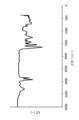
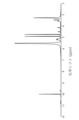
- FIG. 1 is a graph showing a nuclear magnetic resonance ( 1 H-NMR) spectrum of a polyamide-based polymer obtained in Example 1.
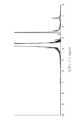
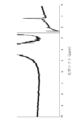
- FIG. 1 is a graph showing an infrared absorption spectrum of a polyamide-based polymer obtained in Example 1.
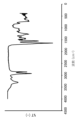
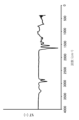
- FIG. 4 is a graph showing the nuclear magnetic resonance ( 1 H-NMR) spectrum of the polyamide-based polymer obtained in Example 2.
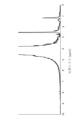
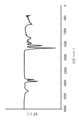
- FIG. 4 is a graph showing the infrared absorption spectrum of the polyamide-based polymer obtained in Example 2.
- FIG. 4 is a graph showing the nuclear magnetic resonance ( 1 H-NMR) spectrum of the polyamide-based polymer obtained in Example 3.
- FIG. 4 is a graph showing the infrared absorption spectrum of the polyamide-based polymer obtained in Example 3.
- FIG. 4 is a graph showing the nuclear magnetic resonance ( 1 H-NMR) spectrum of the polyamide-based polymer obtained in Example 4.
- FIG. 4 is a graph showing the infrared absorption spectrum of the polyamide-based polymer obtained in Example 4.
- FIG. 4 is a graph showing the nuclear magnetic resonance ( 1 H-NMR) spectrum of the polyamide-based polymer obtained in Example 5.
- FIG. 4 is a graph showing the infrared absorption spectrum of the polyamide-based polymer obtained in Example 5.
- FIG. 4 is a graph showing the nuclear magnetic resonance ( 1 H-NMR) spectrum of the polyamide-based polymer obtained in Example 6.
- FIG. 4 is a graph showing the infrared absorption spectrum of the polyamide-based polymer obtained in Example 6.
- FIG. 4 is a graph showing the nuclear magnetic resonance ( 1 H-NMR) spectrum of the polyamide-based polymer obtained in Example 7.
- FIG. 4 is a graph showing the infrared absorption spectrum of the polyamide-based polymer obtained in Example 7.
- the polyamide-based polymer of the present invention is a polyamide-based polymer of a dicarboxylic acid, a diamine, and an aminoalkylcarboxylic acid, and itaconic acid is used as the dicarboxylic acid, and the diamine is represented by the formula (I): H 2 N—R 1 —NH 2 (I) (Wherein, R 1 represents an alkylene group having 4 to 12 carbon atoms)
- a diamine represented by the formula (II) is used as the aminoalkylcarboxylic acid: HOOC- R2 - NH2 (II) (Wherein, R 2 represents an alkylene group having 8 to 12 carbon atoms)
- the aminoalkylcarboxylic acid represented by is used.
- the polyamide-based polymer of the present invention uses itaconic acid, a diamine represented by the formula (I), and an aminoalkylcarboxylic acid represented by the formula (II) as raw material monomers. Excellent toughness.
- the polyamide-based polymer of the present invention is prepared by reacting itaconic acid, a diamine represented by formula (I), and an aminoalkylcarboxylic acid represented by formula (II), and polymerizing the resulting reaction product. can be done.
- Itaconic acid is commercially available from, for example, Fuso Chemical Industry Co., Ltd., Iwata Chemical Industry Co., Ltd., Cargill Corporation, etc. Itaconic acid may be produced using bacteria such as Aspergillus terreus, or may be synthesized using petroleum as a raw material. Among these, itaconic acid produced using fungi such as Aspergillus terreus has the advantage of being more environmentally friendly than itaconic acid synthesized using petroleum as a raw material.
- R 1 is an alkylene group having 4 to 12 carbon atoms from the viewpoint of obtaining a polyamide-based polymer having degradability in water, extensibility and toughness.
- diamines having 4 to 8 carbon atoms in the alkylene group are preferable from the viewpoint of obtaining a polyamide polymer having excellent degradability in water, extensibility and toughness.
- a diamine having 6 to 8 carbon atoms is more preferable, and a diamine having an alkylene group having 6 carbon atoms is even more preferable.
- Diamines having 4 to 8 carbon atoms in the alkylene group include 1,4-butanediamine, 1,5-pentanediamine, 1,6-hexanediamine, 1,7-heptanediamine and 1,8-octanediamine. be done. These diamines may be used alone or in combination of two or more.
- the alkylene group has 10 to 10 carbon atoms.
- Diamines that are 12 are preferred.
- Diamines having 10 to 12 carbon atoms in the alkylene group include 1,10-decanediamine, 1,11-undecanediamine and 1,12-dodecanediamine. These diamines may be used alone or in combination of two or more.
- R 2 is an alkylene group having 8 to 12 carbon atoms from the viewpoint of obtaining a polyamide-based polymer having degradability in water, extensibility and toughness, but is preferably is an alkylene group having 10 to 12 carbon atoms, more preferably an alkylene group having 10 or 11 carbon atoms, and still more preferably an alkylene group having 11 carbon atoms.
- aminoalkylcarboxylic acids represented by formula (II) include 8-aminooctanoic acid, 9-aminononanoic acid, 10-aminodecanoic acid, 11-aminoundecanoic acid and 12-aminododecanoic acid. These aminoalkylcarboxylic acids may be used alone or in combination of two or more.
- aminoalkylcarboxylic acids represented by formula (II) 10-aminodecanoic acid, 11-aminoundecanoic acid and 12-aminododecanoic acid are used from the viewpoint of obtaining a polyamide-based polymer having degradability in water, elongation and toughness. is preferred, and 11-aminoundecanoic acid is more preferred.
- One of the features of the present invention is that the diamine represented by formula (I) and the aminoalkylcarboxylic acid represented by formula (II) are used in combination.
- the diamine represented by the formula (I) and the aminoalkylcarboxylic acid represented by the formula (II) are used in combination, it is possible to obtain a polyamide-based polymer having degradability in water, elongation and toughness. can.
- the molar ratio of the diamine represented by the formula (I) to the aminoalkylcarboxylic acid represented by the formula (II) [diamine represented by the formula (I)/aminoalkylcarboxylic acid represented by the formula (II)] is From the viewpoint of obtaining a polyamide-based polymer having degradability, elongation and toughness, preferably 10/90 to 60/40, more preferably 15/85 to 55/45, still more preferably 15/85 to 50/50, and further It is more preferably 20/80 to 45/55.
- amino group-containing compounds other than the diamine represented by formula (I) and the aminoalkylcarboxylic acid represented by formula (II) meet the object of the present invention. It may be used within a range that does not interfere.
- Other amino group-containing compounds include, for example, aromatic diamines such as phenylenediamine and xylylenediamine, but the present invention is not limited to such examples.
- the amount of the diamine represented by the formula (I) per 1 mol of itaconic acid is theoretically 1 mol.
- the amount of itaconic acid may be excessive with respect to the amount of diamine represented by formula (I), and the amount of diamine represented by formula (I) may be in excess relative to the amount of itaconic acid.
- the reaction of itaconic acid, the diamine represented by formula (I) and the aminoalkylcarboxylic acid represented by formula (II) can be carried out in an organic solvent.
- the organic solvent is capable of dissolving itaconic acid, the diamine represented by formula (I), and the aminoalkylcarboxylic acid represented by formula (II) in a temperature range of 20 to 90° C., and the itaconic acid and formula (I) It is preferably an organic solvent that hardly dissolves or does not dissolve the reaction product of the diamine represented by the formula (II) and the aminoalkylcarboxylic acid represented by the formula (II).
- organic solvent examples include aliphatic alcohols having 1 to 3 carbon atoms such as methanol, ethanol and propanol, ketone compounds such as acetone and methyl ethyl ketone, ethyl acetate, tetrahydrofuran, dioxane, chloroform, dichloromethane, chlorobenzene, phenol and cresol.
- aliphatic alcohols having 1 to 3 carbon atoms such as methanol, ethanol and propanol
- ketone compounds such as acetone and methyl ethyl ketone, ethyl acetate, tetrahydrofuran, dioxane, chloroform, dichloromethane, chlorobenzene, phenol and cresol.
- ketone compounds such as acetone and methyl ethyl ketone, ethyl acetate, tetrahydrofuran, dioxane, chloroform, dichloromethane,
- the amount of the organic solvent is not particularly limited as long as it can efficiently react the diamine represented by the formula (I) and the aminoalkylcarboxylic acid represented by the formula (II). , itaconic acid, the diamine represented by the formula (I) and the aminoalkylcarboxylic acid represented by the formula (II) in an amount of about 3 to 20 times the total amount (mass), preferably about 5 to 15 times Amount is more preferred.
- the reaction temperature for reacting itaconic acid, the diamine represented by the formula (I), and the aminoalkylcarboxylic acid represented by the formula (II) is not particularly limited, but is about 20 to 90° C. from the viewpoint of increasing the reaction efficiency. is preferred. Further, the reaction time for reacting itaconic acid, the diamine represented by the formula (I) and the aminoalkylcarboxylic acid represented by the formula (II) varies depending on the amount of the organic solvent used, the reaction temperature, etc. cannot be determined, but is usually about 2 to 6 hours.
- the atmosphere in which the itaconic acid, the diamine represented by the formula (I) and the aminoalkylcarboxylic acid represented by the formula (II) are reacted is not particularly limited, and may be air, such as nitrogen gas and argon gas. It may be an inert gas such as
- a reaction mixture is obtained by reacting itaconic acid, the diamine represented by formula (I), and the aminoalkylcarboxylic acid represented by formula (II) as described above.
- the reaction product can be recovered by crystallization from the reaction mixture.
- Methods for crystallizing the reaction product from the reaction mixture include, for example, a method of cooling the reaction mixture to a temperature of about 0 to 25° C., a method of dropping a poor solvent such as hexane, toluene, or xylene into the reaction mixture, and a method of However, the present invention is not limited to such methods.
- the crystallized reaction product can be recovered by a method such as filtration.
- the recovered reaction product may be washed with the above organic solvent having a temperature of about 0 to 25° C., if necessary.
- the reaction product obtained above may be dried by, for example, drying under reduced pressure.
- the polyamide-based polymer of the present invention is obtained by polymerizing the reaction product obtained above.
- Examples of methods for polymerizing the reaction product include bulk polymerization, solution polymerization, suspension polymerization, and emulsion polymerization, but the present invention is not limited to these examples.
- the bulk polymerization method is preferable from the viewpoint of efficiently preparing a polyamide-based polymer with a small amount of impurities.
- the polyamide-based polymer can be obtained by heating the reaction product obtained above to a polymerization temperature of about 150 to 250° C. and polymerizing it.
- the atmosphere in which the reaction product is polymerized is not particularly limited, and may be the air, for example, an inert gas such as nitrogen gas or argon gas. From the viewpoint of avoiding the influence of oxygen, the gas preferably has a low oxygen content, and more preferably an inert gas.
- the polymerization time of the reaction product is not particularly limited, but is usually about 2 to 24 hours.
- catalysts include lithium dihydrogen phosphate, dilithium hydrogen phosphate, trilithium phosphate, sodium dihydrogen phosphate, disodium hydrogen phosphate, trisodium phosphate, potassium dihydrogen phosphate, dihydrogen phosphate, Examples include potassium and tripotassium phosphate, but the present invention is not limited to these examples.
- sodium dihydrogen phosphate, disodium hydrogen phosphate and trisodium phosphate are preferred, with sodium dihydrogen phosphate being more preferred.
- a polyamide-based polymer can be obtained by polymerizing the reaction product as described above. If necessary, the polyamide-based polymer obtained above may be purified by, for example, dissolving it in a solvent such as N,N-dimethylformamide and then precipitating it with a ketone compound such as acetone. Moreover, the polyamide-based polymer obtained above may be dried by, for example, drying under reduced pressure.
- the polyamide-based polymer of the present invention obtained as described above is a polymer of itaconic acid, a diamine represented by the formula (I), and an aminoalkylcarboxylic acid represented by the formula (II). ):
- the polyamide-based polymer of the present invention is a polymer of itaconic acid, a diamine represented by formula (I), and an aminoalkylcarboxylic acid represented by formula (II), wherein a repeating unit represented by formula (IIIa) and a formula ( IIIb), it has excellent degradability in water, extensibility and toughness.
- the molar ratio of the repeating unit represented by the formula (IIIa) to the repeating unit represented by the formula (IIIb) [the repeating unit represented by the formula (IIIa)/the repeating unit represented by the formula (IIIb)] is the formula (I) is substantially the same as the molar ratio between the diamine represented by the formula and the aminoalkylcarboxylic acid represented by the formula (II) [diamine represented by the formula (I)/aminoalkylcarboxylic acid represented by the formula (II)].
- the molar ratio of the repeating unit represented by the formula (IIIa) to the repeating unit represented by the formula (IIIb) [the repeating unit represented by the formula (IIIa)/the repeating unit represented by the formula (IIIb)] is From the viewpoint of obtaining a polyamide-based polymer having degradability, elongation and toughness, preferably 10/90 to 60/40, more preferably 15/85 to 55/45, still more preferably 20/80 to 50/50, and further It is more preferably 25/75 to 45/55.
- the content of the repeating unit represented by the formula (IIIa) in the polyamide-based polymer of the present invention is preferably 10 to 60 mol%, more preferably from the viewpoint of obtaining a polyamide-based polymer having degradability in water, elongation and toughness. is 15 to 55 mol %, more preferably 15 to 50 mol %, even more preferably 25 to 45 mol %.
- the content of the repeating unit represented by the formula (IIIb) in the polyamide-based polymer of the present invention is degradable in water, from the viewpoint of obtaining a polyamide-based polymer having stretchability and toughness, preferably 40 to 90 mol%, More preferably 45 to 85 mol %, still more preferably 50 to 85 mol %, and even more preferably 55 to 75 mol %.
- repeating units represented by the formula (IIIa) and the repeating units represented by the formula (IIIb) are usually randomly present, but may be present alternately or blockwise. may exist in
- the polyamide-based polymer of the present invention may have the repeating unit represented by the formula (IIIa) and the repeating unit represented by the formula (IIIb), as well as the repeating unit represented by the formula (IIIc) :
- R 1 and R 2 are the same as above
- R 1 and R 2 may have a repeating unit represented by
- the polyamide-based polymer of the present invention contains not only repeating units represented by formula (IIIa) and repeating units represented by formula (IIIb) in one molecule, but also repeating units represented by formula (IIIc) and formula (IIId ) may have a repeating unit.
- the content of the oxopyrrolidine skeleton-containing repeating unit in the polyamide polymer of the present invention is degradable in water, from the viewpoint of obtaining a polyamide polymer having elongation and toughness, preferably 10 to 60 mol%, more preferably 15 to 55 mol %, more preferably 15 to 50 mol %, even more preferably 25 to 45 mol %.
- the content of the carbonylalkylamine skeleton-containing repeating unit in the polyamide-based polymer of the present invention is preferably 40 to 90 mol%, more preferably from the viewpoint of obtaining a polyamide-based polymer having degradability in water, elongation and toughness. is 45 to 85 mol %, more preferably 50 to 85 mol %, even more preferably 55 to 75 mol %.
- the repeating unit represented by formula (IIIa), the repeating unit represented by formula (IIIb), the repeating unit represented by formula (IIIc) and the repeating unit represented by formula (IIId) are Usually, they exist randomly, but they may exist alternately or may exist in blocks.
- the polyamide-based polymer of the present invention is a repeating unit represented by the formula (IIIa), a repeating unit represented by the formula (IIIb), and a repeating unit represented by the formula (IIIc), so long as the object of the present invention is not hindered. and repeating units other than the repeating units represented by formula (IIId) (hereinafter referred to as "other repeating units").
- the other repeating unit includes the formula (IIIa), which is inevitably by-produced when the itaconic acid, the diamine represented by the formula (I), and the aminoalkylcarboxylic acid represented by the formula (II) are polymerized.
- the use of a third monomer other than the diamine and aminoalkylcarboxylic acid represented by Formula (II) includes repeating units based on said third monomer.
- the third monomer can be used as long as the object of the present invention is not hindered.
- the number average molecular weight of the polyamide-based polymer of the present invention is not particularly limited, but from the viewpoint of obtaining a polyamide-based polymer having degradability in water, elongation and toughness, it is preferably 15000 to 800000, and 20000 to 500000. is more preferable, and 50,000 to 300,000 is even more preferable.
- the number average molecular weight of the polyamide-based polymer is a value measured according to the method described in Examples below.
- a solution obtained by heating and melting the polyamide-based polymer can be used as a spinning dope. Also, a solution obtained by dissolving the polyamide-based polymer of the present invention in an organic solvent can be used as a spinning dope.
- the spinning dope After the spinning dope is extruded from the pores of the spinneret of the melt spinning device, when a heated melt of a polyamide-based polymer is used as the spinning dope, the heated melt is cooled to obtain an organic solvent solution of the polyamide-based polymer.
- polyamide fibers can be produced by volatilizing and removing the organic solvent.
- Spinnerets are generally made of alloys such as gold and platinum alloys, platinum and iridium alloys, and platinum and palladium alloys.
- the hole diameter of the spinneret is appropriately determined according to the desired fineness of the polyamide fiber, but is usually about 0.05 to 0.1 mm. Although the number of holes provided in the spinneret is not particularly limited, it is usually about 1 to 20,000.
- the polyamide-based fiber may be a single fiber (filament), or may be a fiber (strand) in which a plurality of single fibers extruded from a plurality of holes are converged into one bundle.
- the polyamide-based fibers obtained as described above may be subjected to treatments such as washing with water, drying and crimping, if necessary.
- the fineness of the polyamide-based fiber obtained above varies depending on the use of the polyamide-based fiber, and cannot be determined unconditionally.
- An example of the fineness of polyamide fibers is 1 to 30 decitex, but the present invention is not limited by the fineness.
- the fineness of the polyamide-based fiber can be easily adjusted by adjusting the hole diameter of the spinneret or adjusting the draw ratio when drawing the polyamide-based fiber.
- the polyamide-based fibers obtained above may be drawn as necessary to increase the mechanical strength.
- the drawing of polyamide-based fibers is usually one-step drawing, but may be multi-step drawing in which the fibers are further drawn under different conditions such as temperature conditions.
- the polyamide-based fibers may be used in the form of long fibers, or may be cut to a desired fiber length and used as short fibers. Since the fiber length of the polyamide-based fiber varies depending on the use of the polyamide-based fiber, etc., it is preferable to appropriately determine the fiber length according to the use of the polyamide-based fiber.
- Polyamide-based fibers can be used, for example, in woven fabrics, non-woven fabrics, and knitted fabrics.
- Knitted fabrics can be produced using the above-mentioned polyamide fibers using a knitting machine or the like.
- the polyamide fiber may be used as it is, for example, a blend of the polyamide fiber with a synthetic fiber such as polyester fiber or acrylic fiber, or a fiber such as cotton yarn, woolen yarn, or raw silk. Thread may also be used.
- Knitted fabrics include, for example, plain knitted fabrics, rubber knitted fabrics, and pearl knitted fabrics, but the present invention is not limited to these examples.
- the woven fabric can be manufactured using a loom or the like using the polyamide fiber as warp, weft, or both warp and weft.
- the woven fabric may be a blended fabric in which blended yarns containing polyamide fibers are used in part or all of the warp yarns, and the composition of the warp and weft yarns is different, and the warp yarn and / or the polyamide yarn is used. It may be a union fabric in which fibers are used, or a high-weave fabric in which the polyamide-based fiber of the present invention is contained and warp and weft yarns having different fiber diameters are used.
- the texture of the woven fabric includes, for example, a plain weave, a twill weave, a twill weave, a satin weave, and a modified texture, but the present invention is not limited to these examples.
- the nonwoven fabric can be produced by a dry method or a wet method using fibers containing the polyamide fiber.
- the fibers used for the nonwoven fabric may be the polyamide-based fibers alone, or may be blended yarns of the polyamide-based fibers with synthetic fibers such as polyester fibers and acrylic fibers, and fibers such as cotton yarns, woolen yarns, and raw silks.
- the dry method includes, for example, a chemical bond method, a thermal bond method, a needle punch method, a mechanical bonding method represented by an air laid method, and the like, but the present invention is not limited to such examples.
- the wet method includes, for example, a hydroentanglement method, but the present invention is not limited to such examples.
- the polyamide-based polymer of the present invention is used in the polyamide-based fiber, it has excellent degradability, extensibility and toughness in water, so it is used for fishing nets in fisheries, fishing tools such as fishing lines, agricultural tools, etc.
- it can be suitably used for various applications such as clothing such as gloves, underwear, socks, shirts, and clothes, as well as face masks, materials for paper diapers, and cosmetic sheets such as wipes and lotion sheets. can be done.
- the polyamide-based polymer of the present invention can be used as an organic solvent solution because it dissolves in an organic solvent, and can be used as a melt melted by heating because it has thermoplasticity. Therefore, the polyamide-based polymer of the present invention can be suitably used for molding materials such as injection molding materials for moldings such as films and plate-like bodies. A molding material obtained by mixing the polyamide-based polymer of the present invention with fibers can also be used to produce a molded body with a three-dimensional (3D) printer.
- 3D three-dimensional
- Thermogravimetric Analysis (TGA), 5% Weight Loss Temperature and 10% Weight Loss Temperature It was carried out at a temperature of 25 to 800° C. at a rate of temperature increase of 10° C./min in the atmosphere.
- the 5% weight loss temperature or 10% weight loss temperature was also determined based on the results of thermogravimetric analysis.
- the 5% weight loss temperature means the temperature when the mass of the sample (polymer) decreases by 5%
- the 10% weight loss temperature means the temperature when the mass of the sample (polymer) decreases by 10%. do.
- Toughness Toughness is equal to the area of the region drawn when the filament breaks in the stress-strain curve obtained above, so the area was obtained by integrating the region.
- Example 1 1 mol of itaconic acid, 1 mol of hexamethylenediamine (1,6-hexanediamine) and 1 mol of 11-aminoundecanoic acid are mixed, the resulting mixture is dissolved in 200 mL of ethanol, and the resulting solution is stirred for 60 minutes under stirring. A mixed solution was obtained by reacting for 4 hours at a liquid temperature of °C.
- polymer A a polyamide-based polymer (hereinafter referred to as polymer A) was obtained.
- the nuclear magnetic resonance ( 1 H-NMR) spectrum of Polymer A is shown in FIG. 1, and the infrared absorption spectrum is shown in FIG.
- polymer A has a repeating unit represented by formula (IIIa) (wherein R 1 is a hexamethylene group) and a repeating unit represented by formula (IIIb) (wherein R 2 is a decyl group). and the molar ratio of the repeating unit represented by the formula (IIIa) to the repeating unit represented by the formula (IIIb) [the repeating unit represented by the formula (IIIa)/the repeating unit represented by the formula (IIIb)] is It was found to be a 50/50 polymer with a number average molecular weight of 270,000.
- the polymer A obtained above was heated to 80°C and melted, and the resulting melt was used as a melt spinning solution.
- the melt-spinning solution obtained above is adhered to a glass plate, a glass rod is brought into contact with the surface of the glass plate, and then the glass rod is pulled away from the glass plate and drawn to form filaments having a fiber diameter of 200 to 600 ⁇ m. I was able to get From this, it can be seen that fibers can be easily produced by using the polymer A in the melt spinning solution.
- Example 2 0.90 mol of itaconic acid, 0.90 mol of hexamethylenediamine (1,6-hexanediamine) and 1 mol of 11-aminoundecanoic acid were mixed, the resulting mixture was dissolved in 200 mL of ethanol, and the resulting solution was A mixed solution was obtained by reacting at a liquid temperature of 60° C. for 4 hours while stirring.
- polymer B a polyamide-based polymer (hereinafter referred to as polymer B) was obtained.
- the nuclear magnetic resonance ( 1 H-NMR) spectrum of polymer B is shown in FIG. 3, and the infrared absorption spectrum is shown in FIG.
- polymer B has a repeating unit represented by formula (IIIa) (wherein R 1 is a hexamethylene group) and a repeating unit represented by formula (IIIb) (wherein R 2 is a decyl group). and the molar ratio of the repeating unit represented by the formula (IIIa) to the repeating unit represented by the formula (IIIb) [the repeating unit represented by the formula (IIIa)/the repeating unit represented by the formula (IIIb)] is 47/53 with a number average molecular weight of 271,000.
- a filament could be obtained in the same manner as in Example 1 using the polymer B obtained above. From this, it can be seen that fibers can be easily produced by using the polymer B in the melt spinning solution.
- Example 3 0.80 mol of itaconic acid, 0.80 mol of hexamethylenediamine (1,6-hexanediamine) and 1 mol of 11-aminoundecanoic acid were mixed, the resulting mixture was dissolved in 200 mL of ethanol, and the resulting solution was A mixed solution was obtained by reacting at a liquid temperature of 60° C. for 4 hours while stirring.
- polymer C a polyamide-based polymer (hereinafter referred to as polymer C) was obtained.
- the nuclear magnetic resonance ( 1 H-NMR) spectrum of Polymer C is shown in FIG. 5, and the infrared absorption spectrum is shown in FIG.
- polymer C has a repeating unit represented by formula (IIIa) (wherein R 1 is a hexamethylene group) and a repeating unit represented by formula (IIIb) (wherein R 2 is a decyl group). and the molar ratio of the repeating unit represented by the formula (IIIa) to the repeating unit represented by the formula (IIIb) [the repeating unit represented by the formula (IIIa)/the repeating unit represented by the formula (IIIb)] is It was found to be a 44/56 polymer with a number average molecular weight of 2,720,000.
- a filament could be obtained in the same manner as in Example 1 using Polymer C obtained above. From this, it can be seen that fibers can be easily produced by using polymer C in the melt spinning solution.
- Example 4 0.60 mol of itaconic acid, 0.60 mol of hexamethylenediamine (1,6-hexanediamine) and 1 mol of 11-aminoundecanoic acid were mixed, the resulting mixture was dissolved in 200 mL of ethanol, and the resulting solution was A mixed solution was obtained by reacting at a liquid temperature of 60° C. for 4 hours while stirring.
- polymer D a polyamide-based polymer (hereinafter referred to as polymer D) was obtained.
- the nuclear magnetic resonance ( 1 H-NMR) spectrum of polymer D is shown in FIG. 7, and the infrared absorption spectrum is shown in FIG.
- polymer D has a repeating unit represented by formula (IIIa) (wherein R 1 is a hexamethylene group) and a repeating unit represented by formula (IIIb) (wherein R 2 is a decyl group). and the molar ratio of the repeating unit represented by the formula (IIIa) to the repeating unit represented by the formula (IIIb) [the repeating unit represented by the formula (IIIa)/the repeating unit represented by the formula (IIIb)] is It was found to be a 38/62 polymer with a number average molecular weight of 273,000.
- a filament could be obtained in the same manner as in Example 1 using Polymer D obtained above. From this, it can be seen that fibers can be easily produced by using polymer D in the melt spinning solution.
- Example 5 0.50 mol of itaconic acid, 0.50 mol of hexamethylenediamine (1,6-hexanediamine) and 1 mol of 11-aminoundecanoic acid were mixed, the resulting mixture was dissolved in 200 mL of ethanol, and the resulting solution was A mixed solution was obtained by reacting at a liquid temperature of 60° C. for 4 hours while stirring.
- polymer E a polyamide-based polymer (hereinafter referred to as polymer E) was obtained.
- the nuclear magnetic resonance ( 1 H-NMR) spectrum of Polymer E is shown in FIG. 9, and the infrared absorption spectrum is shown in FIG.
- polymer E has a repeating unit represented by formula (IIIa) (wherein R 1 is a hexamethylene group) and a repeating unit represented by formula (IIIb) (wherein R 2 is a decyl group). and the molar ratio of the repeating unit represented by the formula (IIIa) to the repeating unit represented by the formula (IIIb) [the repeating unit represented by the formula (IIIa)/the repeating unit represented by the formula (IIIb)] is It was found to be a 33/67 polymer with a number average molecular weight of 2,740,000.
- a filament could be obtained in the same manner as in Example 1 using Polymer E obtained above. From this, it can be seen that fibers can be easily produced by using the polymer E in the melt spinning solution.
- Example 6 0.30 mol of itaconic acid, 0.30 mol of hexamethylenediamine (1,6-hexanediamine) and 1 mol of 11-aminoundecanoic acid were mixed, the resulting mixture was dissolved in 200 mL of ethanol, and the resulting solution was A mixed solution was obtained by reacting at a liquid temperature of 60° C. for 4 hours while stirring.
- polymer F a polyamide-based polymer (hereinafter referred to as polymer F) was obtained.
- the nuclear magnetic resonance ( 1 H-NMR) spectrum of polymer F is shown in FIG. 11, and the infrared absorption spectrum is shown in FIG.
- polymer F has a repeating unit represented by formula (IIIa) (wherein R 1 is a hexamethylene group) and a repeating unit represented by formula (IIIb) (wherein R 2 is a decyl group). and the molar ratio of the repeating unit represented by the formula (IIIa) to the repeating unit represented by the formula (IIIb) [the repeating unit represented by the formula (IIIa)/the repeating unit represented by the formula (IIIb)] is It was found to be a 23/77 polymer with a number average molecular weight of 2,751,000.
- a filament could be obtained in the same manner as in Example 1 using Polymer F obtained above. From this, it can be seen that fibers can be easily produced by using the polymer F in the melt spinning solution.
- Example 7 0.20 mol of itaconic acid, 0.20 mol of hexamethylenediamine (1,6-hexanediamine) and 1 mol of 11-aminoundecanoic acid were mixed, the resulting mixture was dissolved in 200 mL of ethanol, and the resulting solution was A mixed solution was obtained by reacting at a liquid temperature of 60° C. for 4 hours while stirring.
- polymer G has a repeating unit represented by formula (IIIa) (wherein R 1 is a hexamethylene group) and a repeating unit represented by formula (IIIb) (wherein R 2 is a decyl group). and the molar ratio of the repeating unit represented by the formula (IIIa) to the repeating unit represented by the formula (IIIb) [the repeating unit represented by the formula (IIIa)/the repeating unit represented by the formula (IIIb)] is The polymer was found to be 17/83 with a number average molecular weight of 276,000.
- a filament could be obtained in the same manner as in Example 1 using the polymer G obtained above. From this, it can be seen that fibers can be easily produced by using the polymer G in the melt spinning solution.
- polymer H a polyamide-based polymer
- the polymer H obtained above was dissolved in N,N-dimethylformamide, the resulting solution was added to acetone to purify the polymer H, followed by washing with acetone, drying in a vacuum dryer at 120°C.
- the purified polymer H was obtained by drying at a temperature of about 24 hours.
- the Young's modulus of rubber is about 10 to 100 MPa
- the Young's modulus of fluororesin is about 500 MPa
- the Young's modulus of polyethylene is about 400 to 1300 MPa
- the Young's modulus of glass is about 80000 MPa.
- the polyamide-based polymers obtained in Examples have a Young's modulus in the range of 50 to 350 MPa and an elongation at break of 40% or more, indicating that they are excellent in extensibility.
- the polyamide-based polymer obtained in each example has a toughness of 10 MJ/m 3 , indicating that it is also excellent in rigidity.
- polymer I a polyamide-based polymer
- polymer I has a repeating unit represented by formula (IIIa) (wherein R 1 is a tetramethylene group) and formula ( IIIb) (wherein R 2 is a decyl group), and the molar ratio of the repeating unit represented by the formula (IIIa) to the repeating unit represented by the formula (IIIb) [formula (IIIa )/repeating units represented by the formula (IIIb)] is 50/50 and the number average molecular weight is 260,000.
- formula (IIIa) wherein R 1 is a tetramethylene group
- formula (IIIb) wherein R 2 is a decyl group
- a filament could be obtained in the same manner as in Example 1 using the polymer I obtained above. From this, it can be seen that fibers can be easily produced by using polymer I in the melt spinning solution.
- Example 9 0.20 mol of itaconic acid, 0.20 mol of tetramethylenediamine (1,4-butanediamine) and 1 mol of 11-aminoundecanoic acid were mixed, the resulting mixture was dissolved in 200 mL of ethanol, and the resulting solution was A mixed solution was obtained by reacting at a liquid temperature of 60° C. for 4 hours while stirring.
- polymer J a polyamide-based polymer
- polymer J has repeating units represented by formula (IIIa) (wherein R 1 is a tetramethylene group) and formula ( IIIb) (wherein R 2 is a decyl group), and the molar ratio of the repeating unit represented by the formula (IIIa) to the repeating unit represented by the formula (IIIb) [formula (IIIa )/repeating units represented by formula (IIIb)] is 17/83 and the number average molecular weight is 278,000.
- formula (IIIa) wherein R 1 is a tetramethylene group
- formula (IIIb) wherein R 2 is a decyl group
- a filament could be obtained in the same manner as in Example 1 using Polymer J obtained above. From this, it can be seen that fibers can be easily produced by using polymer J in the melt spinning solution.
- Example 10 1 mol of itaconic acid, 1 mol of octamethylenediamine (1,8-octanediamine) and 1 mol of 11-aminoundecanoic acid are mixed, the resulting mixture is dissolved in 200 mL of ethanol, and the resulting solution is stirred for 60 minutes under stirring. A mixed solution was obtained by reacting for 4 hours at a liquid temperature of °C.
- polymer K a polyamide-based polymer
- polymer K has a repeating unit represented by formula (IIIa) (wherein R 1 is an octamethylene group) and formula ( IIIb) (wherein R 2 is a decyl group), and the molar ratio of the repeating unit represented by the formula (IIIa) to the repeating unit represented by the formula (IIIb) [formula (IIIa )/repeating units represented by the formula (IIIb)] is 50/50 and the number average molecular weight is 270,000.
- formula (IIIa) wherein R 1 is an octamethylene group
- formula (IIIb) wherein R 2 is a decyl group
- a filament could be obtained in the same manner as in Example 1 using Polymer K obtained above. From this, it can be seen that fibers can be easily produced by using the polymer K in the melt spinning solution.
- Example 11 0.20 mol of itaconic acid, 0.20 mol of octamethylenediamine (1,8-octanediamine) and 1 mol of 11-aminoundecanoic acid were mixed, the resulting mixture was dissolved in 200 mL of ethanol, and the resulting solution was A mixed solution was obtained by reacting at a liquid temperature of 60° C. for 4 hours while stirring.
- polymer L a polyamide-based polymer
- the polymer L has a repeating unit represented by the formula (IIIa) (wherein R 1 is an octamethylene group) and the formula ( IIIb) (wherein R 2 is a decyl group), and the molar ratio of the repeating unit represented by the formula (IIIa) to the repeating unit represented by the formula (IIIb) [formula (IIIa )/repeating units represented by formula (IIIb)] is 17/83 and the number average molecular weight is 280,000.
- R 1 is an octamethylene group
- IIIb wherein R 2 is a decyl group
- a filament could be obtained in the same manner as in Example 1 using the polymer L obtained above. From this, it can be seen that fibers can be easily produced by using the polymer L in the melt spinning solution.
- Example 12 1 mol of itaconic acid, 1 mol of hexamethylenediamine (1,6-hexanediamine) and 1 mol of 10-aminodecanoic acid are mixed, the resulting mixture is dissolved in 200 mL of ethanol, and the resulting solution is heated to 60° C. under stirring. A mixed solution was obtained by reacting for 4 hours at a liquid temperature of .
- polymer M a polyamide-based polymer
- the polymer M has a repeating unit represented by the formula (IIIa) (wherein R 1 is a hexamethylene group) and the formula ( IIIb) (wherein R 2 is a nonyl group), and the molar ratio of the repeating unit represented by the formula (IIIa) to the repeating unit represented by the formula (IIIb) [formula (IIIa )/repeating units represented by the formula (IIIb)] is 50/50 and the number average molecular weight is 268,000.
- a filament could be obtained in the same manner as in Example 1 using the polymer M obtained above. From this, it can be seen that fibers can be easily produced by using the polymer M in the melt spinning solution.
- Example 13 0.20 mol of itaconic acid, 0.20 mol of hexamethylenediamine (1,6-hexanediamine) and 1 mol of 10-aminodecanoic acid are mixed, the resulting mixture is dissolved in 200 mL of ethanol, and the resulting solution is stirred. A mixed solution was obtained by reacting for 4 hours at a liquid temperature of 60°C.
- polymer N a polyamide-based polymer
- polymer N has repeating units represented by formula (IIIa) (wherein R 1 is a hexamethylene group) and formula ( IIIb) (wherein R 2 is a nonyl group), and the molar ratio of the repeating unit represented by the formula (IIIa) to the repeating unit represented by the formula (IIIb) [formula (IIIa )/repeating units represented by formula (IIIb)] is 17/83 and the number average molecular weight is 274,000.
- formula (IIIa) wherein R 1 is a hexamethylene group
- formula (IIIb) wherein R 2 is a nonyl group
- a filament could be obtained in the same manner as in Example 1 using the polymer N obtained above. From this, it can be seen that fibers can be easily produced by using the polymer N in the melt spinning solution.
- Example 14 1 mol of itaconic acid, 1 mol of hexamethylenediamine (1,6-hexanediamine) and 1 mol of 12-aminododecanoic acid are mixed, the resulting mixture is dissolved in 200 mL of ethanol, and the resulting solution is stirred for 60 minutes under stirring. A mixed solution was obtained by reacting for 4 hours at a liquid temperature of °C.
- the polymer O has a repeating unit represented by the formula (IIIa) (wherein R 1 is a hexamethylene group) and the formula ( IIIb) (wherein R 2 is an undecyl group), and the molar ratio of the repeating unit represented by the formula (IIIa) to the repeating unit represented by the formula (IIIb) [formula (IIIa )/repeating units represented by the formula (IIIb)] is 50/50 and the number average molecular weight is 270,000.
- a filament could be obtained in the same manner as in Example 1 using the polymer O obtained above. From this, it can be seen that fibers can be easily produced by using the polymer O in the melt spinning solution.
- Example 15 0.20 mol of itaconic acid, 0.20 mol of hexamethylenediamine (1,6-hexanediamine) and 1 mol of 12-aminododecanoic acid were mixed, the resulting mixture was dissolved in 200 mL of ethanol, and the resulting solution was A mixed solution was obtained by reacting at a liquid temperature of 60° C. for 4 hours while stirring.
- polymer P a polyamide-based polymer
- the polymer P has a repeating unit represented by the formula (IIIa) (wherein R 1 is a hexamethylene group) and the formula ( IIIb) (wherein R 2 is an undecyl group), and the molar ratio of the repeating unit represented by the formula (IIIa) to the repeating unit represented by the formula (IIIb) [formula (IIIa )/repeating units represented by formula (IIIb)] is 17/83 and the number average molecular weight is 274,000.
- a filament could be obtained in the same manner as in Example 1 using the polymer P obtained above. From this, it can be seen that fibers can be easily produced by using the polymer P in the melt spinning solution.
- Example 16 1 mol of itaconic acid, 1 mol of 1,10-decanediamine and 1 mol of 11-aminoundecanoic acid were mixed, the resulting mixture was dissolved in 200 mL of ethanol, and the resulting solution was heated to a liquid temperature of 60°C under stirring. A mixed solution was obtained by reacting for 4 hours.
- polymer Q a polyamide-based polymer
- polymer Q has repeating units represented by formula (IIIa) (wherein R 1 is a decyl group) and formula (IIIb ) (wherein R 2 is a decyl group), and the molar ratio of the repeating unit represented by the formula (IIIa) to the repeating unit represented by the formula (IIIb) [formula (IIIa) It was found that the ratio of the repeating unit represented by /the repeating unit represented by formula (IIIb)] was 50/50, and the polymer had a number average molecular weight of 272,000.
- a filament could be obtained in the same manner as in Example 1 using Polymer Q obtained above. From this, it can be seen that fibers can be easily produced by using the polymer Q in the melt spinning solution.
- Example 17 1 mol of itaconic acid, 1 mol of 1,11-undecanediamine and 1 mol of 11-aminoundecanoic acid were mixed, the resulting mixture was dissolved in 200 mL of ethanol, and the resulting solution was heated to a liquid temperature of 60° C. under stirring. A mixed solution was obtained by reacting for 4 hours.
- polymer R a polyamide-based polymer
- polymer R has repeating units represented by formula (IIIa) (wherein R 1 is an undecyl group) and formula (IIIb ) (wherein R 2 is a decyl group), and the molar ratio of the repeating unit represented by the formula (IIIa) to the repeating unit represented by the formula (IIIb) [formula (IIIa) It was found that the ratio of the repeating unit represented by /the repeating unit represented by formula (IIIb)] was 50/50, and the polymer had a number average molecular weight of 274,000.
- a filament could be obtained in the same manner as in Example 1 using the polymer R obtained above. From this, it can be seen that fibers can be easily produced by using the polymer R in the melt spinning solution.
- Example 18 1 mol of itaconic acid, 1 mol of 1,12-dodecanediamine and 1 mol of 11-aminoundecanoic acid were mixed, the resulting mixture was dissolved in 200 mL of ethanol, and the resulting solution was heated to a liquid temperature of 60° C. under stirring. A mixed solution was obtained by reacting for 4 hours.
- polymer S a polyamide-based polymer
- the polymer S has a repeating unit represented by the formula (IIIa) (wherein R 1 is a dodecyl group) and the formula (IIIb ) (wherein R 2 is a decyl group), and the molar ratio of the repeating unit represented by the formula (IIIa) to the repeating unit represented by the formula (IIIb) [formula (IIIa) It was found that the ratio of the repeating unit represented by /the repeating unit represented by formula (IIIb)] was 50/50, and the polymer had a number average molecular weight of 276,000.
- the polyamide-based polymers Q to S all have a 5% weight loss temperature of 400° C. or higher and a 10% weight loss temperature of 420° C. or higher, so they are excellent in heat resistance. I understand.
- the polyamide-based polymers Q to S have a Young's modulus in the range of 190 to 210 MPa and an elongation at break of 65% or more, indicating that they have excellent extensibility.
- filaments could be obtained in the same manner as in Example 1. From this, it can be seen that fibers can be easily produced by using polymers Q to S in the melt spinning solution.
- the solubility of 1 mg of the polyamide-based polymer obtained in each example in 1 mL of an organic solvent at 50°C was investigated.
- the polyamide-based polymers obtained in each example are all soluble in organic solvents such as dimethylsulfoxide, N,N-dimethylformamide, and trifluoroacetic acid, and the obtained solutions can be used as spinning solutions. was confirmed to be possible.
- the organic solvent solution of the polyamide-based polymer obtained in each example was cast on a glass plate, a film could be formed.
- the polyamide-based polymer obtained above can be used, for example, as a molding material for obtaining a molded article such as a film.
- % hydrochloric acid solution 10% hydrochloric acid solution containing 0.5% by weight pepsin, 10% hydrochloric acid solution containing 0.7% by weight pepsin, 10% hydrochloric acid solution containing 0.9% by weight pepsin, pepsin 1.0
- a 10% hydrochloric acid solution containing 0.5% by mass of pepsin or an aqueous solution containing 0.5% by mass of pepsin was added to 100 mL of each solution (water temperature: 25°C), stirred for 3 minutes, and then visually observed for the appearance of each solution. .
- the polyamide-based polymer obtained in each example became a viscous liquid in hydrochloric acid, completely dissolved and decomposed in a hydrochloric acid solution containing pepsin, and became cloudy in water containing pepsin. was done.
- the polyamide-based polymers obtained in each example can be easily decomposed by enzymes such as pepsin in a short period of time, and therefore have excellent degradability in water.
- the polyamide-based polymer of the present invention has degradability in water, extensibility and toughness, it can be used as a substitute for conventional nylon for fishing nets, fishing tools such as fishing lines, agricultural tools, etc. Since it can be used as a polyamide-based polymer having performance, it is expected that when applied to automobile parts, it will contribute to weight reduction of automobiles and, in turn, improvement of fuel efficiency.
- the polyamide-based polymer of the present invention has water-degradability, extensibility, and toughness, it is expected to be used for fibers such as sutures used in surgery on animals including humans. be.
Landscapes
- Chemical & Material Sciences (AREA)
- Chemical Kinetics & Catalysis (AREA)
- Polymers & Plastics (AREA)
- Health & Medical Sciences (AREA)
- Proteomics, Peptides & Aminoacids (AREA)
- Medicinal Chemistry (AREA)
- Life Sciences & Earth Sciences (AREA)
- Organic Chemistry (AREA)
- General Chemical & Material Sciences (AREA)
- Engineering & Computer Science (AREA)
- Textile Engineering (AREA)
- Polyamides (AREA)
- Artificial Filaments (AREA)
Priority Applications (2)
| Application Number | Priority Date | Filing Date | Title |
|---|---|---|---|
| EP22884765.3A EP4424746A4 (en) | 2020-10-29 | 2022-10-20 | POLYAMIDE POLYMER |
| CN202280030263.XA CN117203263B (zh) | 2020-10-29 | 2022-10-20 | 聚酰胺系聚合物 |
Applications Claiming Priority (3)
| Application Number | Priority Date | Filing Date | Title |
|---|---|---|---|
| JP2020181536 | 2020-10-29 | ||
| JP2021176612A JP7325777B2 (ja) | 2020-10-29 | 2021-10-28 | ポリアミド系ポリマー |
| JP2021-176612 | 2021-10-28 |
Publications (1)
| Publication Number | Publication Date |
|---|---|
| WO2023074535A1 true WO2023074535A1 (ja) | 2023-05-04 |
Family
ID=81604221
Family Applications (1)
| Application Number | Title | Priority Date | Filing Date |
|---|---|---|---|
| PCT/JP2022/039171 Ceased WO2023074535A1 (ja) | 2020-10-29 | 2022-10-20 | ポリアミド系ポリマー |
Country Status (4)
| Country | Link |
|---|---|
| EP (1) | EP4424746A4 (enExample) |
| JP (1) | JP7325777B2 (enExample) |
| CN (1) | CN117203263B (enExample) |
| WO (1) | WO2023074535A1 (enExample) |
Families Citing this family (1)
| Publication number | Priority date | Publication date | Assignee | Title |
|---|---|---|---|---|
| EP3945104A1 (en) | 2020-07-27 | 2022-02-02 | Andreas Stihl AG & Co. KG | A polymer and a product or article comprising or consisting of the polymer |
Citations (4)
| Publication number | Priority date | Publication date | Assignee | Title |
|---|---|---|---|---|
| JPS5114025A (en) * | 1974-07-24 | 1976-02-04 | Toyo Boseki | Jukikankozairyono zokangenzoho |
| US4418189A (en) * | 1980-12-01 | 1983-11-29 | Standard Oil Company (Indiana) | Polyamides from itaconic acid and diamines |
| JPH09505330A (ja) * | 1993-09-30 | 1997-05-27 | ビーエーエスエフ アクチェンゲゼルシャフト | ピロリドン基含有ポリエステル及びポリイミド |
| JP2012107122A (ja) * | 2010-11-17 | 2012-06-07 | Japan Advanced Institute Of Science & Technology Hokuriku | ポリアミドの製造方法 |
Family Cites Families (9)
| Publication number | Priority date | Publication date | Assignee | Title |
|---|---|---|---|---|
| US4420608A (en) * | 1980-12-01 | 1983-12-13 | Standard Oil Company (Indiana) | Polyamides from itaconic acid and diamines |
| FR2794465B1 (fr) * | 1999-05-21 | 2001-08-24 | Atofina | Polyamides hydrodispersibles a insaturations ethyleniques aux extremites |
| JP2003138013A (ja) * | 2001-11-08 | 2003-05-14 | Ube Ind Ltd | 延伸性に優れたポリアミド |
| EP2036939A1 (en) * | 2006-06-16 | 2009-03-18 | Ube Industries, Ltd. | Polyether polyamide elastomer |
| CN103014903B (zh) * | 2012-12-26 | 2014-12-31 | 北京服装学院 | 一种生物基聚酰胺纤维的制备方法 |
| CN104193989A (zh) * | 2014-07-27 | 2014-12-10 | 北京化工大学 | 一种生物基聚酰胺共聚物弹性体的制备方法 |
| KR101855556B1 (ko) * | 2015-08-31 | 2018-05-04 | 한양대학교 에리카산학협력단 | 3중 형상기억특성을 갖는 바이오 나일론, 및 그 제조 방법 |
| CN106046365A (zh) * | 2016-07-15 | 2016-10-26 | 珠海万通特种工程塑料有限公司 | 一种半芳香族共聚酰胺树脂和由其组成的聚酰胺模塑组合物 |
| EP3434714A1 (en) * | 2017-07-25 | 2019-01-30 | Henkel AG & Co. KGaA | Water-soluble polyamide polymer and use thereof as functional additive |
-
2021
- 2021-10-28 JP JP2021176612A patent/JP7325777B2/ja active Active
-
2022
- 2022-10-20 WO PCT/JP2022/039171 patent/WO2023074535A1/ja not_active Ceased
- 2022-10-20 EP EP22884765.3A patent/EP4424746A4/en active Pending
- 2022-10-20 CN CN202280030263.XA patent/CN117203263B/zh active Active
Patent Citations (5)
| Publication number | Priority date | Publication date | Assignee | Title |
|---|---|---|---|---|
| JPS5114025A (en) * | 1974-07-24 | 1976-02-04 | Toyo Boseki | Jukikankozairyono zokangenzoho |
| US4418189A (en) * | 1980-12-01 | 1983-11-29 | Standard Oil Company (Indiana) | Polyamides from itaconic acid and diamines |
| JPH09505330A (ja) * | 1993-09-30 | 1997-05-27 | ビーエーエスエフ アクチェンゲゼルシャフト | ピロリドン基含有ポリエステル及びポリイミド |
| JP2012107122A (ja) * | 2010-11-17 | 2012-06-07 | Japan Advanced Institute Of Science & Technology Hokuriku | ポリアミドの製造方法 |
| JP5777134B2 (ja) | 2010-11-17 | 2015-09-09 | 国立大学法人北陸先端科学技術大学院大学 | ポリアミドの製造方法 |
Non-Patent Citations (1)
| Title |
|---|
| See also references of EP4424746A4 |
Also Published As
| Publication number | Publication date |
|---|---|
| EP4424746A4 (en) | 2025-11-05 |
| JP7325777B2 (ja) | 2023-08-15 |
| CN117203263B (zh) | 2024-03-08 |
| CN117203263A (zh) | 2023-12-08 |
| JP2022074096A (ja) | 2022-05-17 |
| EP4424746A1 (en) | 2024-09-04 |
Similar Documents
| Publication | Publication Date | Title |
|---|---|---|
| TWI613229B (zh) | 聚醯胺組合物及方法 | |
| KR101872002B1 (ko) | 폴리아미드 수지 섬유, 폴리아미드 수지 섬유의 제조방법, 폴리아미드 수지 조성물, 직물 및 편물 | |
| JP5741434B2 (ja) | 吸湿性繊維およびその製造方法 | |
| CN105917039B (zh) | 聚酰胺纤维 | |
| CN110229512A (zh) | 呋喃基聚酰胺 | |
| JP7325777B2 (ja) | ポリアミド系ポリマー | |
| CN102465353B (zh) | 一种均聚半芳香族聚酰胺纤维及其制备方法 | |
| CN113906172A (zh) | 长丝及钓鱼线 | |
| WO2025057965A1 (ja) | ポリアミド系ポリマー | |
| WO2023127264A1 (ja) | ポリアミド系ポリマー | |
| JP2011202308A (ja) | パラ型全芳香族コポリアミド繊維およびその製造方法 | |
| CN116178707A (zh) | 一种生物基聚酰胺共聚物及其制备方法、聚酰胺全牵伸丝及其制备方法 | |
| JP7593612B2 (ja) | ポリアミド系ポリマー | |
| JPH042814A (ja) | 高収縮性ポリアミドマルチフィラメント糸、及びその製造方法 | |
| HK40096892B (en) | Polyamide polymer | |
| HK40096892A (en) | Polyamide polymer | |
| JP7794784B2 (ja) | ポリアミド系ポリマー | |
| TW201821477A (zh) | 尼龍聚合物 | |
| CN116324059B (zh) | 长丝、材料和材料的制造方法 | |
| JPH05125183A (ja) | 共重合ポリアミドとその製造法 | |
| JP3657552B2 (ja) | エチレン−ビニルアルコール系共重合体繊維 | |
| JP3728499B2 (ja) | 芯鞘型複合繊維 | |
| KR950013488B1 (ko) | 방향족 폴리아미드 세데니어 섬유 및 그 제조방법 | |
| CN117624588A (zh) | 一种改性聚酰胺56、纤维及其制备方法与应用 | |
| CN115960348A (zh) | 一种生物基聚酰胺树脂及其制备方法、聚酰胺工业用丝及其制备方法和应用 |
Legal Events
| Date | Code | Title | Description |
|---|---|---|---|
| 121 | Ep: the epo has been informed by wipo that ep was designated in this application |
Ref document number: 22884765 Country of ref document: EP Kind code of ref document: A1 |
|
| WWE | Wipo information: entry into national phase |
Ref document number: 202280030263.X Country of ref document: CN |
|
| WWE | Wipo information: entry into national phase |
Ref document number: 202417041155 Country of ref document: IN Ref document number: 2022884765 Country of ref document: EP |
|
| NENP | Non-entry into the national phase |
Ref country code: DE |
|
| ENP | Entry into the national phase |
Ref document number: 2022884765 Country of ref document: EP Effective date: 20240528 |