WO2023027111A1 - 発電システム及び情報処理装置 - Google Patents
発電システム及び情報処理装置 Download PDFInfo
- Publication number
- WO2023027111A1 WO2023027111A1 PCT/JP2022/031889 JP2022031889W WO2023027111A1 WO 2023027111 A1 WO2023027111 A1 WO 2023027111A1 JP 2022031889 W JP2022031889 W JP 2022031889W WO 2023027111 A1 WO2023027111 A1 WO 2023027111A1
- Authority
- WO
- WIPO (PCT)
- Prior art keywords
- heat
- power generation
- information processing
- fuel cell
- heat medium
- Prior art date
- Legal status (The legal status is an assumption and is not a legal conclusion. Google has not performed a legal analysis and makes no representation as to the accuracy of the status listed.)
- Ceased
Links
Images



Classifications
-
- G—PHYSICS
- G06—COMPUTING OR CALCULATING; COUNTING
- G06Q—INFORMATION AND COMMUNICATION TECHNOLOGY [ICT] SPECIALLY ADAPTED FOR ADMINISTRATIVE, COMMERCIAL, FINANCIAL, MANAGERIAL OR SUPERVISORY PURPOSES; SYSTEMS OR METHODS SPECIALLY ADAPTED FOR ADMINISTRATIVE, COMMERCIAL, FINANCIAL, MANAGERIAL OR SUPERVISORY PURPOSES, NOT OTHERWISE PROVIDED FOR
- G06Q30/00—Commerce
- G06Q30/02—Marketing; Price estimation or determination; Fundraising
- G06Q30/0283—Price estimation or determination
-
- G—PHYSICS
- G06—COMPUTING OR CALCULATING; COUNTING
- G06Q—INFORMATION AND COMMUNICATION TECHNOLOGY [ICT] SPECIALLY ADAPTED FOR ADMINISTRATIVE, COMMERCIAL, FINANCIAL, MANAGERIAL OR SUPERVISORY PURPOSES; SYSTEMS OR METHODS SPECIALLY ADAPTED FOR ADMINISTRATIVE, COMMERCIAL, FINANCIAL, MANAGERIAL OR SUPERVISORY PURPOSES, NOT OTHERWISE PROVIDED FOR
- G06Q50/00—Information and communication technology [ICT] specially adapted for implementation of business processes of specific business sectors, e.g. utilities or tourism
- G06Q50/06—Energy or water supply
-
- H—ELECTRICITY
- H01—ELECTRIC ELEMENTS
- H01M—PROCESSES OR MEANS, e.g. BATTERIES, FOR THE DIRECT CONVERSION OF CHEMICAL ENERGY INTO ELECTRICAL ENERGY
- H01M8/00—Fuel cells; Manufacture thereof
-
- H—ELECTRICITY
- H01—ELECTRIC ELEMENTS
- H01M—PROCESSES OR MEANS, e.g. BATTERIES, FOR THE DIRECT CONVERSION OF CHEMICAL ENERGY INTO ELECTRICAL ENERGY
- H01M8/00—Fuel cells; Manufacture thereof
- H01M8/04—Auxiliary arrangements, e.g. for control of pressure or for circulation of fluids
-
- H—ELECTRICITY
- H01—ELECTRIC ELEMENTS
- H01M—PROCESSES OR MEANS, e.g. BATTERIES, FOR THE DIRECT CONVERSION OF CHEMICAL ENERGY INTO ELECTRICAL ENERGY
- H01M8/00—Fuel cells; Manufacture thereof
- H01M8/04—Auxiliary arrangements, e.g. for control of pressure or for circulation of fluids
- H01M8/04007—Auxiliary arrangements, e.g. for control of pressure or for circulation of fluids related to heat exchange
- H01M8/04014—Heat exchange using gaseous fluids; Heat exchange by combustion of reactants
-
- H—ELECTRICITY
- H01—ELECTRIC ELEMENTS
- H01M—PROCESSES OR MEANS, e.g. BATTERIES, FOR THE DIRECT CONVERSION OF CHEMICAL ENERGY INTO ELECTRICAL ENERGY
- H01M8/00—Fuel cells; Manufacture thereof
- H01M8/04—Auxiliary arrangements, e.g. for control of pressure or for circulation of fluids
- H01M8/04007—Auxiliary arrangements, e.g. for control of pressure or for circulation of fluids related to heat exchange
- H01M8/04029—Heat exchange using liquids
-
- H—ELECTRICITY
- H01—ELECTRIC ELEMENTS
- H01M—PROCESSES OR MEANS, e.g. BATTERIES, FOR THE DIRECT CONVERSION OF CHEMICAL ENERGY INTO ELECTRICAL ENERGY
- H01M8/00—Fuel cells; Manufacture thereof
- H01M8/04—Auxiliary arrangements, e.g. for control of pressure or for circulation of fluids
- H01M8/04298—Processes for controlling fuel cells or fuel cell systems
- H01M8/04313—Processes for controlling fuel cells or fuel cell systems characterised by the detection or assessment of variables; characterised by the detection or assessment of failure or abnormal function
-
- H—ELECTRICITY
- H01—ELECTRIC ELEMENTS
- H01M—PROCESSES OR MEANS, e.g. BATTERIES, FOR THE DIRECT CONVERSION OF CHEMICAL ENERGY INTO ELECTRICAL ENERGY
- H01M8/00—Fuel cells; Manufacture thereof
- H01M8/04—Auxiliary arrangements, e.g. for control of pressure or for circulation of fluids
- H01M8/04298—Processes for controlling fuel cells or fuel cell systems
- H01M8/04313—Processes for controlling fuel cells or fuel cell systems characterised by the detection or assessment of variables; characterised by the detection or assessment of failure or abnormal function
- H01M8/0432—Temperature; Ambient temperature
-
- H—ELECTRICITY
- H01—ELECTRIC ELEMENTS
- H01M—PROCESSES OR MEANS, e.g. BATTERIES, FOR THE DIRECT CONVERSION OF CHEMICAL ENERGY INTO ELECTRICAL ENERGY
- H01M8/00—Fuel cells; Manufacture thereof
- H01M8/04—Auxiliary arrangements, e.g. for control of pressure or for circulation of fluids
- H01M8/04298—Processes for controlling fuel cells or fuel cell systems
- H01M8/04313—Processes for controlling fuel cells or fuel cell systems characterised by the detection or assessment of variables; characterised by the detection or assessment of failure or abnormal function
- H01M8/0438—Pressure; Ambient pressure; Flow
-
- H—ELECTRICITY
- H01—ELECTRIC ELEMENTS
- H01M—PROCESSES OR MEANS, e.g. BATTERIES, FOR THE DIRECT CONVERSION OF CHEMICAL ENERGY INTO ELECTRICAL ENERGY
- H01M8/00—Fuel cells; Manufacture thereof
- H01M8/04—Auxiliary arrangements, e.g. for control of pressure or for circulation of fluids
- H01M8/04298—Processes for controlling fuel cells or fuel cell systems
- H01M8/04313—Processes for controlling fuel cells or fuel cell systems characterised by the detection or assessment of variables; characterised by the detection or assessment of failure or abnormal function
- H01M8/0438—Pressure; Ambient pressure; Flow
- H01M8/04417—Pressure; Ambient pressure; Flow of the coolant
-
- H—ELECTRICITY
- H01—ELECTRIC ELEMENTS
- H01M—PROCESSES OR MEANS, e.g. BATTERIES, FOR THE DIRECT CONVERSION OF CHEMICAL ENERGY INTO ELECTRICAL ENERGY
- H01M8/00—Fuel cells; Manufacture thereof
- H01M8/04—Auxiliary arrangements, e.g. for control of pressure or for circulation of fluids
- H01M8/04298—Processes for controlling fuel cells or fuel cell systems
- H01M8/04313—Processes for controlling fuel cells or fuel cell systems characterised by the detection or assessment of variables; characterised by the detection or assessment of failure or abnormal function
- H01M8/04537—Electric variables
-
- H—ELECTRICITY
- H01—ELECTRIC ELEMENTS
- H01M—PROCESSES OR MEANS, e.g. BATTERIES, FOR THE DIRECT CONVERSION OF CHEMICAL ENERGY INTO ELECTRICAL ENERGY
- H01M8/00—Fuel cells; Manufacture thereof
- H01M8/04—Auxiliary arrangements, e.g. for control of pressure or for circulation of fluids
- H01M8/04298—Processes for controlling fuel cells or fuel cell systems
- H01M8/04694—Processes for controlling fuel cells or fuel cell systems characterised by variables to be controlled
- H01M8/04746—Pressure; Flow
-
- H—ELECTRICITY
- H01—ELECTRIC ELEMENTS
- H01M—PROCESSES OR MEANS, e.g. BATTERIES, FOR THE DIRECT CONVERSION OF CHEMICAL ENERGY INTO ELECTRICAL ENERGY
- H01M8/00—Fuel cells; Manufacture thereof
- H01M8/10—Fuel cells with solid electrolytes
-
- H—ELECTRICITY
- H02—GENERATION; CONVERSION OR DISTRIBUTION OF ELECTRIC POWER
- H02J—ELECTRIC POWER NETWORKS; CIRCUIT ARRANGEMENTS OR SYSTEMS FOR SUPPLYING OR DISTRIBUTING ELECTRIC POWER; SYSTEMS FOR STORING ELECTRIC ENERGY
- H02J3/00—Circuit arrangements for AC mains or AC distribution networks
- H02J3/38—Arrangements for feeding a single network from two or more generators or sources in parallel; Arrangements for feeding already energised networks from additional generators or sources in parallel
-
- H—ELECTRICITY
- H01—ELECTRIC ELEMENTS
- H01M—PROCESSES OR MEANS, e.g. BATTERIES, FOR THE DIRECT CONVERSION OF CHEMICAL ENERGY INTO ELECTRICAL ENERGY
- H01M8/00—Fuel cells; Manufacture thereof
- H01M8/10—Fuel cells with solid electrolytes
- H01M8/12—Fuel cells with solid electrolytes operating at high temperature, e.g. with stabilised ZrO2 electrolyte
- H01M2008/1293—Fuel cells with solid oxide electrolytes
-
- H—ELECTRICITY
- H01—ELECTRIC ELEMENTS
- H01M—PROCESSES OR MEANS, e.g. BATTERIES, FOR THE DIRECT CONVERSION OF CHEMICAL ENERGY INTO ELECTRICAL ENERGY
- H01M2250/00—Fuel cells for particular applications; Specific features of fuel cell system
- H01M2250/10—Fuel cells in stationary systems, e.g. emergency power source in plant
-
- H—ELECTRICITY
- H01—ELECTRIC ELEMENTS
- H01M—PROCESSES OR MEANS, e.g. BATTERIES, FOR THE DIRECT CONVERSION OF CHEMICAL ENERGY INTO ELECTRICAL ENERGY
- H01M2250/00—Fuel cells for particular applications; Specific features of fuel cell system
- H01M2250/40—Combination of fuel cells with other energy production systems
- H01M2250/405—Cogeneration of heat or hot water
-
- H—ELECTRICITY
- H02—GENERATION; CONVERSION OR DISTRIBUTION OF ELECTRIC POWER
- H02J—ELECTRIC POWER NETWORKS; CIRCUIT ARRANGEMENTS OR SYSTEMS FOR SUPPLYING OR DISTRIBUTING ELECTRIC POWER; SYSTEMS FOR STORING ELECTRIC ENERGY
- H02J2101/00—Supply or distribution of decentralised, dispersed or local electric power generation
- H02J2101/20—Dispersed power generation using renewable energy sources
- H02J2101/30—Fuel cells
-
- Y—GENERAL TAGGING OF NEW TECHNOLOGICAL DEVELOPMENTS; GENERAL TAGGING OF CROSS-SECTIONAL TECHNOLOGIES SPANNING OVER SEVERAL SECTIONS OF THE IPC; TECHNICAL SUBJECTS COVERED BY FORMER USPC CROSS-REFERENCE ART COLLECTIONS [XRACs] AND DIGESTS
- Y02—TECHNOLOGIES OR APPLICATIONS FOR MITIGATION OR ADAPTATION AGAINST CLIMATE CHANGE
- Y02E—REDUCTION OF GREENHOUSE GAS [GHG] EMISSIONS, RELATED TO ENERGY GENERATION, TRANSMISSION OR DISTRIBUTION
- Y02E60/00—Enabling technologies; Technologies with a potential or indirect contribution to GHG emissions mitigation
- Y02E60/30—Hydrogen technology
- Y02E60/50—Fuel cells
Definitions
- the present disclosure relates to a power generation system and an information processing device.
- Patent Literature 1 discloses a technique for evaluating the value of consumption of green power in a dwelling unit in order to reduce greenhouse gas emissions by promoting the use of green power.
- a power generation system includes: a power generator comprising a power generation unit including a fuel cell; and an information processing device, configured to provide heat generated by the fuel cell to a user, The information processing device calculates monetary value based on the amount of detected heat provided to the user.
- a monetary value is calculated based on a detected amount of heat provided to a user in a power generation system configured to provide the user with heat generated by a fuel cell included in a power generation unit included in the power generation device.
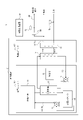
- FIG. 1 is a schematic diagram of a power generation system including an information processing device that calculates thermal environment points.
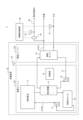
- FIG. 2 is a diagram illustrating a configuration example of a power generation system according to one embodiment.
- FIG. 3 is a diagram showing a configuration example of a power generation system according to another embodiment.
- FIG. 4 is a schematic diagram of a power generation system according to another embodiment.
- FIG. 5 is a diagram for explaining calculation of monetary value.
- FIG. 1 is a schematic diagram showing an example of a power generation system 1 including a power generation device 10 and an information processing device 40 that calculates a thermal environment point as a monetary value, which will be described later.
- the thermal environment point is numerical information that evaluates the value of the heat provided to the user (hereinafter “user”) among the heat generated by the fuel cell 11 (see FIG. 2) included in the power generation unit 101 .
- the thermal environment points are numerical information corresponding to the effect of reducing greenhouse gas emissions, and can be exchanged for monetary value.
- the monetary value is meant to include things that can be exchanged for monetary value, even if it is not direct monetary value.
- Thermal environment points are given to the user of the power generation device 10 by the information processing device 40 .
- the thermal environment points may be exchangeable for money or another point that can be used for product payment at a predetermined exchange rate.
- the power generation device 10 includes a power generation unit 101 including a fuel cell 11 .
- the power generator 10 may be a cogeneration system including both fuel cell equipment (power generation unit 101) and heat medium equipment (heat medium unit 102) as in the present embodiment.
- the power generation device 10 may be a monogeneration system that does not include heat medium equipment.
- the power generator 10 may be a pure hydrogen fuel cell that uses hydrogen directly as fuel.
- the power generation device 10 may be used together with, for example, a solar power generation device or the like, or may be used alone.
- the power generating device 10 may be for commercial and industrial use as well as for residential use.
- the fuel cell 11 generates heat when generating electricity. Part of the generated heat maintains the temperature of the fuel cell 11, for example, heats the heat medium circulating in the power generation unit 101, and is stored in the heat medium tank 18 (see FIG. 2) of the heat medium unit 102.
- the heat medium may be water or antifreeze.
- the heat medium unit 102 stores a heat medium that retains at least surplus heat.
- the heat medium unit 102 shown in FIG. 1 has a water supply heat exchanger 22 in addition to the heat medium tank 18 described above.
- the hot water heat exchanger 22 is supplied with the heat medium heated from the heat medium tank 18, and is also supplied with clean water from the incoming water side for heat exchange.
- the tap water (hot water) heated by heat exchange is supplied (hot water) from the hot water supply side and used for self-consumption through the hot water supply path.
- the heat medium cooled by heat exchange in the tap water heat exchanger 22 returns to the heat medium tank 18 .
- the hot water supply path may be a pipe for hot water supply in a house in which the power generator 10 is installed.
- a heat conduit 30 is connected to the hot water supply path to lead out heat.
- the heat conduit 30 may be directly connected to the heat medium tank 18 . Heated water (hot water) is supplied through heat conduit 30 as surplus heat not self-consumed.
- the heat conduit 30 may be a pipe different from the hot water supply channel of the house where the power generator 10 is installed (or a pipe branched from the hot water supply channel). Excess heat (hot water that is not self-consumed) is used for purposes such as hot water supply and heating in facilities and buildings other than the house in which the power generation device 10 is installed, for example, by the heat conduit 30, and the heat is used extensively. obtain.
- the excess heat of the fuel cell 11 supplied by the heat conduit 30 has a monetary value.
- the excess heat of the fuel cell 11 supplied by the heat conduit 30 is therefore of environmental value.
- the information processing device 40 acquires the detection result of the sensor or the like provided in the heat conduit 30 and calculates the value of the surplus heat of the fuel cell 11 supplied (utilized) by the heat conduit 30 . That is, the information processing device 40 calculates the thermal environment point based on the detected amount of heat provided to the user among the surplus heat. A formula for calculating the thermal environment point will be described later. When calculating the thermal environment point based on the detected amount of heat provided to the user, the information processing apparatus 40 calculates the following based on the heat actually used by the user of the surplus heat and the detected amount: A thermal environment point may be calculated.
- the information processing device 40 may be configured to include, for example, a communication section, a storage section, a control section, and a display section.
- the communication unit may be an interface for communicating with a sensor or the like provided in the heat conduit 30 by at least one of wired and wireless communication.
- the communication unit may include communication interfaces such as mobile communication standards such as 4G and 5G, wired and wireless LAN standards.
- a storage unit is one or more memories.
- the memory is, for example, a semiconductor memory, a magnetic memory, an optical memory, or the like, but is not limited to these and can be any memory.
- the control unit is one or more processors.
- the processor is, for example, a general-purpose processor or a dedicated processor specialized for specific processing, but is not limited to these and can be any processor.
- a dedicated processor may include an Application Specific Integrated Circuit (ASIC).
- the processor may include a programmable logic device (PLD).
- the PLD may include an FPGA (Field-Programmable Gate Array).
- the control unit may be either SoC (System-on-a-Chip) or SiP (System In a Package) in which one or more processors cooperate.
- SoC System-on-a-Chip
- SiP System In a Package
- the display unit displays the calculated thermal environment points to the user.
- the display unit may be a display such as a liquid crystal display or an OEL (Organic Electro-luminescence) display.
- the information processing device 40 may be realized by a computer, for example.
- a computer includes, for example, a communication device for connecting to a network, a storage device such as a memory, a CPU, and a display device such as a display.
- the communication unit, storage unit, control unit, and display unit of the information processing device 40 may be realized by, for example, a communication device, a storage device, a CPU, and a display device, respectively.
- the CPU may be configured to read the program stored in the storage device and execute processing for calculating the thermal environment point.
- the information processing device 40 may be located in the house where the power generation device 10 is installed, or may be located away from the house as long as information can be transmitted and received via a network to a sensor or the like provided in the heat pipe 30. . Further, when the information processing apparatus 40 is used as an application for a mobile phone, it is possible to improve operability, visibility, and complicated procedures.
- FIG. 2 is a diagram showing a configuration example of the power generation system 1 according to this embodiment. Details of the power generation system 1 will be described below with reference to FIG. 2 .
- the power generator 10 includes a fuel cell 11 , a heat exchanger 12 , a circulation path 13 , a liquid flow path 14 , a control section 15 , a reformed water tank 16 , a reformed water pump 17 , a heat medium tank 18 and a heat medium pump 19 .
- the heat medium unit 102 is configured to include a portion of the hot water supply path 21 of the liquid flow path 14, the water heat exchanger 22, and the heat medium tank 18, and the power generation unit 101 has a configuration other than these. Constructed with elements.
- the power generator 10 does not have to include all of the components shown in FIG.
- the power generator 10 may include components other than those shown in FIG. 2 .
- the fuel cell 11 generates electricity using the supplied gas, air and reformed water.
- the fuel cell 11 emits high-temperature exhaust gas during power generation.
- the fuel cell 11 has an exhaust path.
- the fuel cell 11 delivers exhaust gas to the heat exchanger 12 via an exhaust channel.
- the fuel cell 11 performs indirect heat exchange, in which clean water is heat-exchanged with the heat medium in the heat medium tank 18 in the clean water heat exchanger 22 to produce hot water.
- the fuel cell 11 may be of a type in which the tap water heat exchanger 22 is provided inside the heat medium tank 18 . Further, as will be described later, the fuel cell 11 may be of a direct heat exchange type that directly discharges the heat medium (hot water) stored in the heat medium tank 18 .
- the heat exchanger 12 exchanges the exhaust heat emitted by the fuel cell 11 through the exhaust gas with the heat medium.
- the heat medium may be water or antifreeze.
- the reformed water (condensed water) obtained by condensing the exhaust gas through heat exchange with the heat medium in the heat exchanger 12 is stored in the reformed water tank 16 . That is, reformed water (condensed water) produced by cooling the exhaust gas from the fuel cell 11 with water sent from the heat medium tank 18 of the heat medium unit 102 is sent to the reformed water tank 16 .
- the reformed water stored in the reformed water tank 16 is pressurized by the reformed water pump 17 and supplied to the fuel cell 11 .
- the circulation path 13 circulates the heat medium while passing through the heat exchanger 12 .
- the circulation path 13 may circulate the heat medium between the heat exchanger 12 and the heat medium tank 18 .
- the heat medium tank 18 may store the heat medium.
- a heating medium pump 19 may be provided in the circulation path 13 .
- the heat medium pump 19 circulates the circulation path 13 by increasing the pressure of the heat medium.
- the heat medium pump 19 may operate under the control of the controller 15 .
- the liquid flow path 14 is a liquid movement path other than the circulation path 13 related to the operation of the fuel cell 11 .
- the liquid channel 14 includes, for example, a supply channel 20 for supplying reformed water to the fuel cell 11 and a hot water supply channel 21 for supplying hot water using heat obtained from the heat medium.
- the supply line 20 is connected from the reformed water tank 16 to the fuel cell 11 via the reformed water pump 17 .
- the hot water supply passage 21 is supplied with clean water from the water inlet side, and when passing through the inside of the clean water heat exchanger 22, heat is exchanged with the heat medium of the heat medium tank 18, and the heat-exchanged water (hot water ) is discharged from the hot water outlet side.
- the heat conduit 30 is composed of a pipe branched from the hot water supply path 21 .
- Hot water is supplied to equipment other than the house in which the power generation device 10 is installed via the heat conduit 30, and can be used for hot water supply, heating, etc. in the equipment, and surplus heat ( hot water) is effectively utilized.
- surplus heat hot water
- the surplus heat can be provided to the user simply by connecting the heat conduit 30 to the hot water supply path, it is possible to provide the surplus heat to the user in a simple and inexpensive manner without the need to significantly change the existing equipment.
- a hot water supply passage for private consumption is connected to a mixing pipe for mixing clean water in order to adjust the temperature of the hot water supply.
- a higher temperature surplus heat can be provided by connecting to the upstream side of the unit.
- Heat conduit 30 may be connected to hot water supply path 21 via a three-way valve.
- the essential disadvantage of the fuel cell itself, which is necessary, can be improved.
- the fuel cell 11 can be easily applied even when the demand for heat is small compared to the demand for electric power, which can contribute to an increase in the diffusion rate of fuel cells.
- the flow rate sensor 50 detects the amount (flow rate) of hot water flowing through the heat conduit 30 .
- the first temperature sensor 51 is provided on the water inlet side of the hot water supply path 21 and detects the temperature of the water entering the heat medium tank 18 .
- a second temperature sensor 52 is provided in the heat conduit 30 to detect the temperature of the hot water flowing through the heat conduit 30 .
- the first temperature sensor 51 and the second temperature sensor 52 may be thermistors, but are not limited to this.
- the information processing device 40 uses the flow rate (F) detected by the flow sensor 50, the temperature (T1) detected by the first temperature sensor 51, and the second receive the temperature (T2) detected by the temperature sensor 52 of . Then, the information processing device 40 calculates the thermal environment point (P) using the following formula (1).
- a is a coefficient to correspond to the effect of reducing greenhouse gas emissions.
- the information processing device 40 may change “a” according to the operating conditions of the power generation device 10 .
- the control unit 15 includes one or more processors and memory.
- the processor may include a general-purpose processor that loads a specific program to execute a specific function, and a dedicated processor that specializes in specific processing.
- a dedicated processor may include an ASIC.
- a processor may include a PLD.
- a PLD may include an FPGA.
- Controller 15 may be either a SoC or a SiP with one or more processors working together.
- the control unit 15 controls each component of the power generation device 10 including the fuel cell 11 .
- the controller 15 operates or stops the fuel cell 11 .
- the control unit 15 may output information regarding the operation of the power generation device 10 to the information processing device 40, for example.
- the information regarding the operation of the power generation device 10 may include information that there is a reverse power flow when the power generation device 10 is used with a solar power generation device or the like, for example.
- the information about the operation of the power generation device 10 may include information that the power generation unit 101 has a function of virtual power plant or demand response. If you have reverse power flow, virtual power plant or demand response capabilities, this will increase user benefits. In addition, it can contribute to an increase in the diffusion rate of fuel cells having functions of reverse power flow, virtual power plant, or demand response, and can lead to stable supply of electric power.
- the control unit 15 may control the power generator 10 so that the clean water (hot water) heat-exchanged in the clean water heat exchanger 22 is discharged from the heat conduit 30 not only during a power outage but also during normal power generation.
- the power generation device 10 has a function of discharging the hot water in the heat medium tank 18 from the hot water outlet side in order to prevent power generation from being stopped at the time of a power failure.
- the clean water (hot water) heat-exchanged by the clean water heat exchanger 22 is discharged from the heat conduit 30, and the heat medium tank 18 is discharged from the clean water heat exchanger 22.
- the heat medium is heat-exchanged with tap water, and the cooled heat medium returns to the heat medium tank 18 .
- the temperature of the heat medium in the heat medium tank 18 can be lowered, and stoppage of power generation by the power generator 10 can be avoided.
- the continuous supply of hot water by the heat conduit 30 in this embodiment is effectively used as a heat medium and is not wasted.
- the radiator operates to lower the temperature of the heat storage unit.
- the control unit 15 controls the power generation device 10 so that the warm water heated in the tap water heat exchanger 22 is supplied by the heat conduit 30 before the heat medium tank 18 of the heat medium unit 102 becomes full. may be controlled. As a result, it is possible to more safely suppress the operation of the power generator 10 that is executed when the heat medium tank 18 is fully charged.
- the information processing device 40 adjusts “a” so that the number of thermal environment points increases if there is a reverse power flow when the power generation device 10 is used together with a solar power generation device, for example. good.
- the information processing device 40 changes "a" so as to increase the number of thermal environment points. can be adjusted.
- the power generation system 1 and the information processing device 40 according to the present embodiment can appropriately evaluate the value of the heat generated by the fuel cell 11 with the above configuration.
- FIG. 3 shows another embodiment (second embodiment). Descriptions of the same configurations as those described with reference to FIGS. 1 and 2 are omitted.
- the water inlet pipe and the hot water supply pipe of the hot water supply path 21 are attached to the heat medium tank 18 which is the heat medium unit 102 . That is, the heat medium in the heat medium tank 18 may be water, and the direct heat exchange type is shown in which the water stored in the heat medium tank 18 is directly discharged.
- clean water supplied from the water inlet side flows through the circulation path 13 and is heat-exchanged in the heat exchanger 12 .
- the heat-exchanged clean water is stored in the heat medium tank 18 .
- the heat medium tank 18 When the heat medium tank 18 is full, the water (hot water) in the heat medium tank 18 is discharged from the heat conduit 30, and the same amount of clean water is supplied to the heat medium tank 18. can lower the temperature of the heat transfer medium. This reduces the need to waste excess heat.
- heat can be effectively utilized as in the above-described embodiment.
- the information processing apparatus 40 detects the flow rate (F) detected by the flow rate sensor 50 and temperature (T2) and the temperature (T3) detected by the outside air temperature sensor 53 are received. Then, the information processing device 40 calculates the thermal environment point (P) using the following formula (2).
- b is a coefficient to correspond to the effect of reducing greenhouse gas emissions.
- the information processing device 40 may change “b” according to the operation status of the power generation device 10 .
- FIG. 3 and formula (2) may be applied, for example, when the fuel cell 11 is a PEFC (Polymer Electrolyte Fuel Cell).
- PEFC Polymer Electrolyte Fuel Cell
- the control of the control unit 15 described above avoids the stoppage of power generation, etc., increases the degree of freedom in power generation, and restricts the amount of power generation due to the amount of heat stored in the heat medium tank 18. disadvantages can be improved.
- the PEFC by supplying surplus heat from the heat conduit 30, the need to waste the surplus heat can be reduced, and the temperature of the heat medium in the heat medium tank 18 can be lowered. As a result, the PEFC can be operated continuously for a long period of time (for example, one month) without waste. Furthermore, it is possible to improve the inherent disadvantage of the PEFC itself that the self-sustained operation function does not work when a power failure occurs when power generation is stopped due to full storage.
- "a” and “b” may be adjusted according to the type of source gas so that the number of thermal environment points increases. For example, if hydrogen, which does not emit carbon dioxide, is used as the raw material gas, no greenhouse gas is generated, so a further environmental value may be added to the thermal environment point.
- the information processing device 40 may give thermal environment points by using draining water from the heat medium tank 18 as surplus heat when the user is absent for a long period of time. At this time, the thermal environment point may be calculated by Equation (2).
- FIG. 4 is a schematic diagram of a power generation system 1 according to another embodiment (third embodiment). Descriptions of the same configurations as those described with reference to FIGS. 1 to 3 are omitted.
- the information processing device 40 calculates the thermal environment points, but the monetary value may be calculated more directly without going through the points.
- water supply is mainly used as an example of surface utilization of heat. In this embodiment, area utilization of heat will be described by taking sewage as an example. In the following description, self-use of the heat generated by the fuel cell 11 is referred to as "self-consumption".
- gray water means domestic waste water, excluding night soil and waste water from flush toilets. Miscellaneous wastewater includes, for example, bathroom wastewater discharged from bathrooms, kitchen wastewater discharged from kitchens, and the like.
- the excess heat in the wastewater after self-consumption is led out through the heat conduit 30 .
- a hot water supply unit 201 is arranged between the fuel cell 11 and a facility 202 for self-consumption. Further, as will be described later, the flow rate of the waste water is used for calculating the monetary value, and the flow rate of the waste water is measured by the flow sensor 50 of the hot water supply unit 201 . Moreover, the surplus heat generated in the power generation device 10 and provided to the user is detected by the third temperature sensor 54 provided between the tap water heat exchanger 22 and the hot water supply unit 201 .
- the facilities 202 for self-consumption are, for example, bathrooms, kitchens, washrooms, and the like. Since the hot water (including water) used in the facility 202 for self-consumption passes through the hot water supply unit 201, the flow rate sensor 50 of the hot water supply unit 201 measures the flow rate of the waste water.
- a drainage facility 203 including a heat conduit 30 connecting the self-consumption facility 202 and the sewage pipe 204 is arranged between the self-consumption facility 202 and the sewage pipe 204 .
- the temperature of the effluent which is used in calculating the monetary value as described below, is measured in the heat conduit 30 included in the drainage system 203 . That is, in this embodiment, the second temperature sensor 52 is provided in the heat conduit 30 included in the drainage facility 203 and detects the temperature of hot water flowing through the heat conduit 30 .
- the excess heat provided by the power generator 10 is measured by the third temperature sensor 54 .
- the third temperature sensor 54 ⁇ the second temperature sensor 52 the value of the second temperature sensor 52 is regarded as the temperature discharged from the power generator 10, and the monetary value can be calculated. If the third temperature sensor 54 ⁇ the second temperature sensor 52, the value of the third temperature sensor 54 may be regarded as the temperature discharged from the power generator 10 and the monetary value may be calculated.
- the flow rate sensor is positioned closer to the power generation device 10 than the confluence point with the bypass flow path in the flow path connecting the power generation device 10 and the hot water supply unit 201. 50 and a third temperature sensor 54 may be provided.
- the flow rate sensor 50 and the third temperature sensor 54 may check the presence or absence of waste water from the power generator 10 and the temperature of the waste water. Moreover, it is possible to determine that there is no drainage from the power generator 10 even when the temperature of the third temperature sensor 54 does not change.
- the power generation system 1 may further include an outside air temperature sensor 53 so as to obtain temperature information.
- the waste water whose monetary value is to be calculated and whose temperature is measured is miscellaneous waste water.
- the wastewater whose temperature is measured includes at least bathroom wastewater. This is because a large amount of hot water is used in the bathroom, and hot waste water is often discharged, so heat is more likely to be used over the area than other miscellaneous waste water.
- a second temperature sensor 52 may be placed, for example, between the facility 202 where self-consumption takes place and the cesspool. However, in the case of collective housing, since a communal sewage basin is often installed, the second temperature sensor 52 may be installed downstream of gray water.
- the information processing device 40 aggregates the detected amount of heat (heat provided from the power generation device 10) provided to the user from each household and the amount of heat actually used by the user as a whole. A monetary value prorated according to the contribution of each of the power generation devices 10 may be calculated.
- FIG. 5 is a diagram for explaining the calculation of monetary value.
- the information processing device 40 receives the flow rate (F) detected by the flow rate sensor 50 , the temperature (T1) detected by the first temperature sensor 51 and the temperature (T2) detected by the second temperature sensor 52 . Then, the information processing device 40 may calculate the monetary value (V) by the following formula (3).
- ⁇ is a predetermined coefficient.
- the predetermined coefficient may be a value that serves as a reference for monetary value.
- T2 exhaust water temperature
- T1 incoming water temperature
- F flow rate
- a liter so the monetary value is 20 ⁇ a ⁇ .
- T2 exhaust water temperature
- T1 inlet water temperature
- F flow rate
- T2 exhaust water temperature
- T1 incoming water temperature
- F flow rate
- the predetermined coefficient ⁇ may be a value obtained by dividing Z by the total usage amount (y) when the heat user receives heat usage fee income (Z) from the consumer.
- y which is the total usage amount, can be calculated as a+b+c+.
- the monetary value for fuel cell A is 20*a*Z*[alpha]/y.
- the information processing device 40 receives the flow rate (F) detected by the flow sensor 50, the temperature (T2) detected by the second temperature sensor 52, and the temperature (T3) detected by the outside temperature sensor 53. . Then, the information processing device 40 may calculate the monetary value (V) by the following formula (4).
- the actual surface utilization of heat is not performed in such a wide range that the temperatures (T3) on the sides of the fuel cells A to C are significantly different, but for convenience of explanation, it is described as such.
- ⁇ is a predetermined coefficient. ⁇ may be the same as ⁇ above, or may be a different coefficient.
- T2 waste water temperature
- T3 air temperature
- F flow rate
- the monetary value is 20 x a x ⁇ .
- the reference temperature T0 instead of T3 in Equation (4), the reference temperature T0 may be used.
- the reference temperature T0 may be set to, for example, 20° C. regardless of the outside air temperature.
- the reference temperature T0 may be changed seasonally or monthly. Further, the sum of the temperature difference between the temperature (T2) detected by the second temperature sensor 52 and the reference temperature and F (flow rate) during a certain period of time may be aggregated to calculate the monetary value (V). .
- the description of the hot water supply unit is omitted.
- the monetary value may be calculated by
- Power Generation System 10 Power Generation Device 11 Fuel Cell 12 Heat Exchanger 13 Circulation Path 14 Liquid Flow Path 15 Controller 16 Reformed Water Tank 17 Reformed Water Pump 18 Heating Medium Tank 19 Heating Medium Pump 20 Supply Route 21 Hot Water Supply Route 22
Landscapes
- Engineering & Computer Science (AREA)
- Chemical & Material Sciences (AREA)
- Manufacturing & Machinery (AREA)
- Sustainable Development (AREA)
- Sustainable Energy (AREA)
- Life Sciences & Earth Sciences (AREA)
- Chemical Kinetics & Catalysis (AREA)
- Electrochemistry (AREA)
- General Chemical & Material Sciences (AREA)
- Business, Economics & Management (AREA)
- Economics (AREA)
- Strategic Management (AREA)
- Health & Medical Sciences (AREA)
- Development Economics (AREA)
- Theoretical Computer Science (AREA)
- Physics & Mathematics (AREA)
- Marketing (AREA)
- General Physics & Mathematics (AREA)
- General Business, Economics & Management (AREA)
- Finance (AREA)
- Accounting & Taxation (AREA)
- Water Supply & Treatment (AREA)
- Tourism & Hospitality (AREA)
- General Health & Medical Sciences (AREA)
- Public Health (AREA)
- Primary Health Care (AREA)
- Human Resources & Organizations (AREA)
- Power Engineering (AREA)
- Entrepreneurship & Innovation (AREA)
- Game Theory and Decision Science (AREA)
- Combustion & Propulsion (AREA)
- Fuel Cell (AREA)
- Heat-Pump Type And Storage Water Heaters (AREA)
Priority Applications (4)
| Application Number | Priority Date | Filing Date | Title |
|---|---|---|---|
| US18/686,640 US20250029154A1 (en) | 2021-08-27 | 2022-08-24 | Power generation system and information processor |
| CN202280058148.3A CN117916918A (zh) | 2021-08-27 | 2022-08-24 | 发电系统和信息处理器 |
| JP2023543957A JP7738077B2 (ja) | 2021-08-27 | 2022-08-24 | 発電システム及び情報処理装置 |
| EP22861399.8A EP4394954A1 (en) | 2021-08-27 | 2022-08-24 | Electricity generating system, and information processing device |
Applications Claiming Priority (4)
| Application Number | Priority Date | Filing Date | Title |
|---|---|---|---|
| JP2021-139424 | 2021-08-27 | ||
| JP2021139424 | 2021-08-27 | ||
| JP2022054361 | 2022-03-29 | ||
| JP2022-054361 | 2022-03-29 |
Publications (1)
| Publication Number | Publication Date |
|---|---|
| WO2023027111A1 true WO2023027111A1 (ja) | 2023-03-02 |
Family
ID=85322839
Family Applications (1)
| Application Number | Title | Priority Date | Filing Date |
|---|---|---|---|
| PCT/JP2022/031889 Ceased WO2023027111A1 (ja) | 2021-08-27 | 2022-08-24 | 発電システム及び情報処理装置 |
Country Status (4)
| Country | Link |
|---|---|
| US (1) | US20250029154A1 (https=) |
| EP (1) | EP4394954A1 (https=) |
| JP (1) | JP7738077B2 (https=) |
| WO (1) | WO2023027111A1 (https=) |
Citations (4)
| Publication number | Priority date | Publication date | Assignee | Title |
|---|---|---|---|---|
| JP2018057151A (ja) * | 2016-09-29 | 2018-04-05 | 大和ハウス工業株式会社 | エネルギー融通システム |
| JP2021057181A (ja) * | 2019-09-30 | 2021-04-08 | 大和ハウス工業株式会社 | 電力供給システム |
| JP2021061733A (ja) | 2019-10-03 | 2021-04-15 | 伊藤忠商事株式会社 | システム及びプログラム |
| JP2021099897A (ja) * | 2019-12-19 | 2021-07-01 | 株式会社アイシン | 燃料電池システム |
Family Cites Families (7)
| Publication number | Priority date | Publication date | Assignee | Title |
|---|---|---|---|---|
| JP2002286289A (ja) * | 2001-03-27 | 2002-10-03 | Osaka Gas Co Ltd | コージェネレーション装置およびそのユーザー支援システムならびにユーザー支援システム付きコージェネレーション装置 |
| JP2003229159A (ja) * | 2002-01-31 | 2003-08-15 | Toyota Motor Corp | 燃料電池発電システムおよびこれに用いる操作表示装置 |
| JP2005114344A (ja) * | 2003-09-18 | 2005-04-28 | Matsushita Electric Ind Co Ltd | コージェネレーション装置 |
| WO2014034141A1 (ja) * | 2012-08-30 | 2014-03-06 | パナソニック株式会社 | 発電システムおよびその運転方法 |
| WO2016189872A1 (ja) * | 2015-05-27 | 2016-12-01 | 京セラ株式会社 | 電力制御装置、燃料電池システム及び燃料ガス使用量算出方法 |
| JP2017220354A (ja) * | 2016-06-07 | 2017-12-14 | 株式会社東芝 | 運転計画装置、燃料電池装置、運転計画方法及び運転計画プログラム |
| US11192814B2 (en) * | 2017-11-13 | 2021-12-07 | Morrison Zhu Goodman Realty Group Llc | On-site generation of energy in a multi-unit building |
-
2022
- 2022-08-24 US US18/686,640 patent/US20250029154A1/en not_active Abandoned
- 2022-08-24 WO PCT/JP2022/031889 patent/WO2023027111A1/ja not_active Ceased
- 2022-08-24 JP JP2023543957A patent/JP7738077B2/ja active Active
- 2022-08-24 EP EP22861399.8A patent/EP4394954A1/en not_active Withdrawn
Patent Citations (4)
| Publication number | Priority date | Publication date | Assignee | Title |
|---|---|---|---|---|
| JP2018057151A (ja) * | 2016-09-29 | 2018-04-05 | 大和ハウス工業株式会社 | エネルギー融通システム |
| JP2021057181A (ja) * | 2019-09-30 | 2021-04-08 | 大和ハウス工業株式会社 | 電力供給システム |
| JP2021061733A (ja) | 2019-10-03 | 2021-04-15 | 伊藤忠商事株式会社 | システム及びプログラム |
| JP2021099897A (ja) * | 2019-12-19 | 2021-07-01 | 株式会社アイシン | 燃料電池システム |
Also Published As
| Publication number | Publication date |
|---|---|
| EP4394954A1 (en) | 2024-07-03 |
| JPWO2023027111A1 (https=) | 2023-03-02 |
| US20250029154A1 (en) | 2025-01-23 |
| JP7738077B2 (ja) | 2025-09-11 |
Similar Documents
| Publication | Publication Date | Title |
|---|---|---|
| DK2438358T3 (en) | Heating System | |
| CN107504552A (zh) | 一种太阳能地源热泵联合供能系统及其运行控制方法 | |
| JP6280788B2 (ja) | コージェネレーションシステム | |
| JP2015078797A (ja) | エネルギ融通マネジメントシステム、エネルギ融通マネジメント方法及びエネルギ融通マネジメントプログラム | |
| JPWO2015033435A1 (ja) | 蓄熱システム | |
| JP2015050826A (ja) | デマンドレスポンスシステム | |
| JP2011049020A (ja) | 燃料電池コージェネレーションシステム | |
| JP5658606B2 (ja) | 熱電併給システム | |
| JP4513754B2 (ja) | ハイブリッド給湯システム | |
| JP5759213B2 (ja) | 給湯システムの凍結予防装置及び給湯システム | |
| WO2023027111A1 (ja) | 発電システム及び情報処理装置 | |
| JP2018204819A (ja) | 貯湯式給湯機 | |
| CN216216765U (zh) | 一种光伏组件降温系统 | |
| JP6280787B2 (ja) | コージェネレーションシステム | |
| JP5506558B2 (ja) | コージェネレーション・システムの運転制御方法 | |
| JP2007003125A (ja) | 給湯システム | |
| CN117916918A (zh) | 发电系统和信息处理器 | |
| JP5745911B2 (ja) | 熱供給システム | |
| JP2019113235A (ja) | 貯湯式給湯装置 | |
| US20130322858A1 (en) | Power generation system | |
| JP2008066016A (ja) | 燃料電池システムの運転方法及び燃料電池システム | |
| KR102836695B1 (ko) | 건물용 연료전지의 배열 이용 장치 및 방법 | |
| JP4148819B2 (ja) | 給水設備 | |
| CN220169652U (zh) | 一种用于健身房的热水供应系统 | |
| JP6383589B2 (ja) | コージェネレーションシステム |
Legal Events
| Date | Code | Title | Description |
|---|---|---|---|
| 121 | Ep: the epo has been informed by wipo that ep was designated in this application |
Ref document number: 22861399 Country of ref document: EP Kind code of ref document: A1 |
|
| WWE | Wipo information: entry into national phase |
Ref document number: 18686640 Country of ref document: US Ref document number: 202280058148.3 Country of ref document: CN Ref document number: 2023543957 Country of ref document: JP |
|
| WWE | Wipo information: entry into national phase |
Ref document number: 2022861399 Country of ref document: EP |
|
| NENP | Non-entry into the national phase |
Ref country code: DE |
|
| ENP | Entry into the national phase |
Ref document number: 2022861399 Country of ref document: EP Effective date: 20240327 |
|
| WWW | Wipo information: withdrawn in national office |
Ref document number: 2022861399 Country of ref document: EP |