EP4394954A1 - Electricity generating system, and information processing device - Google Patents
Electricity generating system, and information processing device Download PDFInfo
- Publication number
- EP4394954A1 EP4394954A1 EP22861399.8A EP22861399A EP4394954A1 EP 4394954 A1 EP4394954 A1 EP 4394954A1 EP 22861399 A EP22861399 A EP 22861399A EP 4394954 A1 EP4394954 A1 EP 4394954A1
- Authority
- EP
- European Patent Office
- Prior art keywords
- heat
- power generation
- generation system
- heat medium
- power
- Prior art date
- Legal status (The legal status is an assumption and is not a legal conclusion. Google has not performed a legal analysis and makes no representation as to the accuracy of the status listed.)
- Withdrawn
Links
Images


Classifications
-
- G—PHYSICS
- G06—COMPUTING OR CALCULATING; COUNTING
- G06Q—INFORMATION AND COMMUNICATION TECHNOLOGY [ICT] SPECIALLY ADAPTED FOR ADMINISTRATIVE, COMMERCIAL, FINANCIAL, MANAGERIAL OR SUPERVISORY PURPOSES; SYSTEMS OR METHODS SPECIALLY ADAPTED FOR ADMINISTRATIVE, COMMERCIAL, FINANCIAL, MANAGERIAL OR SUPERVISORY PURPOSES, NOT OTHERWISE PROVIDED FOR
- G06Q30/00—Commerce
- G06Q30/02—Marketing; Price estimation or determination; Fundraising
- G06Q30/0283—Price estimation or determination
-
- G—PHYSICS
- G06—COMPUTING OR CALCULATING; COUNTING
- G06Q—INFORMATION AND COMMUNICATION TECHNOLOGY [ICT] SPECIALLY ADAPTED FOR ADMINISTRATIVE, COMMERCIAL, FINANCIAL, MANAGERIAL OR SUPERVISORY PURPOSES; SYSTEMS OR METHODS SPECIALLY ADAPTED FOR ADMINISTRATIVE, COMMERCIAL, FINANCIAL, MANAGERIAL OR SUPERVISORY PURPOSES, NOT OTHERWISE PROVIDED FOR
- G06Q50/00—Information and communication technology [ICT] specially adapted for implementation of business processes of specific business sectors, e.g. utilities or tourism
- G06Q50/06—Energy or water supply
-
- H—ELECTRICITY
- H01—ELECTRIC ELEMENTS
- H01M—PROCESSES OR MEANS, e.g. BATTERIES, FOR THE DIRECT CONVERSION OF CHEMICAL ENERGY INTO ELECTRICAL ENERGY
- H01M8/00—Fuel cells; Manufacture thereof
-
- H—ELECTRICITY
- H01—ELECTRIC ELEMENTS
- H01M—PROCESSES OR MEANS, e.g. BATTERIES, FOR THE DIRECT CONVERSION OF CHEMICAL ENERGY INTO ELECTRICAL ENERGY
- H01M8/00—Fuel cells; Manufacture thereof
- H01M8/04—Auxiliary arrangements, e.g. for control of pressure or for circulation of fluids
-
- H—ELECTRICITY
- H01—ELECTRIC ELEMENTS
- H01M—PROCESSES OR MEANS, e.g. BATTERIES, FOR THE DIRECT CONVERSION OF CHEMICAL ENERGY INTO ELECTRICAL ENERGY
- H01M8/00—Fuel cells; Manufacture thereof
- H01M8/04—Auxiliary arrangements, e.g. for control of pressure or for circulation of fluids
- H01M8/04007—Auxiliary arrangements, e.g. for control of pressure or for circulation of fluids related to heat exchange
- H01M8/04014—Heat exchange using gaseous fluids; Heat exchange by combustion of reactants
-
- H—ELECTRICITY
- H01—ELECTRIC ELEMENTS
- H01M—PROCESSES OR MEANS, e.g. BATTERIES, FOR THE DIRECT CONVERSION OF CHEMICAL ENERGY INTO ELECTRICAL ENERGY
- H01M8/00—Fuel cells; Manufacture thereof
- H01M8/04—Auxiliary arrangements, e.g. for control of pressure or for circulation of fluids
- H01M8/04007—Auxiliary arrangements, e.g. for control of pressure or for circulation of fluids related to heat exchange
- H01M8/04029—Heat exchange using liquids
-
- H—ELECTRICITY
- H01—ELECTRIC ELEMENTS
- H01M—PROCESSES OR MEANS, e.g. BATTERIES, FOR THE DIRECT CONVERSION OF CHEMICAL ENERGY INTO ELECTRICAL ENERGY
- H01M8/00—Fuel cells; Manufacture thereof
- H01M8/04—Auxiliary arrangements, e.g. for control of pressure or for circulation of fluids
- H01M8/04298—Processes for controlling fuel cells or fuel cell systems
- H01M8/04313—Processes for controlling fuel cells or fuel cell systems characterised by the detection or assessment of variables; characterised by the detection or assessment of failure or abnormal function
-
- H—ELECTRICITY
- H01—ELECTRIC ELEMENTS
- H01M—PROCESSES OR MEANS, e.g. BATTERIES, FOR THE DIRECT CONVERSION OF CHEMICAL ENERGY INTO ELECTRICAL ENERGY
- H01M8/00—Fuel cells; Manufacture thereof
- H01M8/04—Auxiliary arrangements, e.g. for control of pressure or for circulation of fluids
- H01M8/04298—Processes for controlling fuel cells or fuel cell systems
- H01M8/04313—Processes for controlling fuel cells or fuel cell systems characterised by the detection or assessment of variables; characterised by the detection or assessment of failure or abnormal function
- H01M8/0432—Temperature; Ambient temperature
-
- H—ELECTRICITY
- H01—ELECTRIC ELEMENTS
- H01M—PROCESSES OR MEANS, e.g. BATTERIES, FOR THE DIRECT CONVERSION OF CHEMICAL ENERGY INTO ELECTRICAL ENERGY
- H01M8/00—Fuel cells; Manufacture thereof
- H01M8/04—Auxiliary arrangements, e.g. for control of pressure or for circulation of fluids
- H01M8/04298—Processes for controlling fuel cells or fuel cell systems
- H01M8/04313—Processes for controlling fuel cells or fuel cell systems characterised by the detection or assessment of variables; characterised by the detection or assessment of failure or abnormal function
- H01M8/0438—Pressure; Ambient pressure; Flow
-
- H—ELECTRICITY
- H01—ELECTRIC ELEMENTS
- H01M—PROCESSES OR MEANS, e.g. BATTERIES, FOR THE DIRECT CONVERSION OF CHEMICAL ENERGY INTO ELECTRICAL ENERGY
- H01M8/00—Fuel cells; Manufacture thereof
- H01M8/04—Auxiliary arrangements, e.g. for control of pressure or for circulation of fluids
- H01M8/04298—Processes for controlling fuel cells or fuel cell systems
- H01M8/04313—Processes for controlling fuel cells or fuel cell systems characterised by the detection or assessment of variables; characterised by the detection or assessment of failure or abnormal function
- H01M8/0438—Pressure; Ambient pressure; Flow
- H01M8/04417—Pressure; Ambient pressure; Flow of the coolant
-
- H—ELECTRICITY
- H01—ELECTRIC ELEMENTS
- H01M—PROCESSES OR MEANS, e.g. BATTERIES, FOR THE DIRECT CONVERSION OF CHEMICAL ENERGY INTO ELECTRICAL ENERGY
- H01M8/00—Fuel cells; Manufacture thereof
- H01M8/04—Auxiliary arrangements, e.g. for control of pressure or for circulation of fluids
- H01M8/04298—Processes for controlling fuel cells or fuel cell systems
- H01M8/04313—Processes for controlling fuel cells or fuel cell systems characterised by the detection or assessment of variables; characterised by the detection or assessment of failure or abnormal function
- H01M8/04537—Electric variables
-
- H—ELECTRICITY
- H01—ELECTRIC ELEMENTS
- H01M—PROCESSES OR MEANS, e.g. BATTERIES, FOR THE DIRECT CONVERSION OF CHEMICAL ENERGY INTO ELECTRICAL ENERGY
- H01M8/00—Fuel cells; Manufacture thereof
- H01M8/04—Auxiliary arrangements, e.g. for control of pressure or for circulation of fluids
- H01M8/04298—Processes for controlling fuel cells or fuel cell systems
- H01M8/04694—Processes for controlling fuel cells or fuel cell systems characterised by variables to be controlled
- H01M8/04746—Pressure; Flow
-
- H—ELECTRICITY
- H01—ELECTRIC ELEMENTS
- H01M—PROCESSES OR MEANS, e.g. BATTERIES, FOR THE DIRECT CONVERSION OF CHEMICAL ENERGY INTO ELECTRICAL ENERGY
- H01M8/00—Fuel cells; Manufacture thereof
- H01M8/10—Fuel cells with solid electrolytes
-
- H—ELECTRICITY
- H02—GENERATION; CONVERSION OR DISTRIBUTION OF ELECTRIC POWER
- H02J—ELECTRIC POWER NETWORKS; CIRCUIT ARRANGEMENTS OR SYSTEMS FOR SUPPLYING OR DISTRIBUTING ELECTRIC POWER; SYSTEMS FOR STORING ELECTRIC ENERGY
- H02J3/00—Circuit arrangements for AC mains or AC distribution networks
- H02J3/38—Arrangements for feeding a single network from two or more generators or sources in parallel; Arrangements for feeding already energised networks from additional generators or sources in parallel
-
- H—ELECTRICITY
- H01—ELECTRIC ELEMENTS
- H01M—PROCESSES OR MEANS, e.g. BATTERIES, FOR THE DIRECT CONVERSION OF CHEMICAL ENERGY INTO ELECTRICAL ENERGY
- H01M8/00—Fuel cells; Manufacture thereof
- H01M8/10—Fuel cells with solid electrolytes
- H01M8/12—Fuel cells with solid electrolytes operating at high temperature, e.g. with stabilised ZrO2 electrolyte
- H01M2008/1293—Fuel cells with solid oxide electrolytes
-
- H—ELECTRICITY
- H01—ELECTRIC ELEMENTS
- H01M—PROCESSES OR MEANS, e.g. BATTERIES, FOR THE DIRECT CONVERSION OF CHEMICAL ENERGY INTO ELECTRICAL ENERGY
- H01M2250/00—Fuel cells for particular applications; Specific features of fuel cell system
- H01M2250/10—Fuel cells in stationary systems, e.g. emergency power source in plant
-
- H—ELECTRICITY
- H01—ELECTRIC ELEMENTS
- H01M—PROCESSES OR MEANS, e.g. BATTERIES, FOR THE DIRECT CONVERSION OF CHEMICAL ENERGY INTO ELECTRICAL ENERGY
- H01M2250/00—Fuel cells for particular applications; Specific features of fuel cell system
- H01M2250/40—Combination of fuel cells with other energy production systems
- H01M2250/405—Cogeneration of heat or hot water
-
- H—ELECTRICITY
- H02—GENERATION; CONVERSION OR DISTRIBUTION OF ELECTRIC POWER
- H02J—ELECTRIC POWER NETWORKS; CIRCUIT ARRANGEMENTS OR SYSTEMS FOR SUPPLYING OR DISTRIBUTING ELECTRIC POWER; SYSTEMS FOR STORING ELECTRIC ENERGY
- H02J2101/00—Supply or distribution of decentralised, dispersed or local electric power generation
- H02J2101/20—Dispersed power generation using renewable energy sources
- H02J2101/30—Fuel cells
-
- Y—GENERAL TAGGING OF NEW TECHNOLOGICAL DEVELOPMENTS; GENERAL TAGGING OF CROSS-SECTIONAL TECHNOLOGIES SPANNING OVER SEVERAL SECTIONS OF THE IPC; TECHNICAL SUBJECTS COVERED BY FORMER USPC CROSS-REFERENCE ART COLLECTIONS [XRACs] AND DIGESTS
- Y02—TECHNOLOGIES OR APPLICATIONS FOR MITIGATION OR ADAPTATION AGAINST CLIMATE CHANGE
- Y02E—REDUCTION OF GREENHOUSE GAS [GHG] EMISSIONS, RELATED TO ENERGY GENERATION, TRANSMISSION OR DISTRIBUTION
- Y02E60/00—Enabling technologies; Technologies with a potential or indirect contribution to GHG emissions mitigation
- Y02E60/30—Hydrogen technology
- Y02E60/50—Fuel cells
Definitions
- FIG. 1 illustrates the heat medium unit 102 including a clean water heat exchanger 22 in addition to the heat medium tank 18 mentioned above.
- the clean water heat exchanger 22 receives the heat medium thus heated from the heat medium tank 18 and clean water from a water entry side. The heat medium and the clean water thus received exchange heat.
- the clean water (hot water) heated through heat exchange is supplied from (exits) a hot water exit side and flows in a hot water supply path to be utilized for in-house consumption. Meanwhile, the heat medium cooled through heat exchange in the clean water heat exchanger 22 returns to the heat medium tank 18.
- Examples of the hot water supply path may include a hot water supply pipe in a residence equipped with the power generator 10.
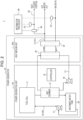
- the power generator 10 includes the fuel cell 11, a heat exchanger 12, a circulation path 13, a liquid flow path 14, a controller 15, a reformed water tank 16, a reformed water pump 17, the heat medium tank 18, and a heat medium pump 19.
- the heat medium unit 102 includes part of a hot water supply path 21 in the liquid flow path 14, the clean water heat exchanger 22, and the heat medium tank 18.
- the power generation unit 101 includes constituent elements other than the above.
- the power generator 10 is not limited to including all the constituent elements illustrated in FIG. 2 .
- the power generator 10 may include any constituent element other than the constituent elements illustrated in FIG. 2 .
- the fuel cell 11 generates power by using supplied gas, air, and reformed water.
- the fuel cell 11 emits exhaust gas at a high temperature upon power generation.
- the fuel cell 11 includes an exhaust path.
- the fuel cell 11 discharges the exhaust gas to the heat exchanger 12 via the exhaust path.
- the fuel cell 11 exemplifies a case where the clean water heat exchanger 22 causes indirect heat exchange such that clean water exchanges heat with the heat medium in the heat medium tank 18 and exits as hot water.
- the fuel cell 11 may be of a type in which the clean water heat exchanger 22 is provided in the heat medium tank 18. As to be described later, the fuel cell 11 may adopt a direct heat exchange scheme of directly discharging the heat medium (hot water) retained in the heat medium tank 18.
- the liquid flow path 14 is a path allowing movement of liquid, not including the circulation path 13, and relevant to operation of the fuel cell 11.
- the liquid flow path 14 includes, for example, a supply path 20 provided for supply of reformed water to the fuel cell 11, and the hot water supply path 21 provided for discharge of heated water through use of heat obtained from the heat medium.
- the supply path 20 extends from the reformed water tank 16 to be connected to the fuel cell 11 via the reformed water pump 17.
- the hot water supply path 21 is supplied with clean water from the water entry side.
- the clean water passing through the clean water heat exchanger 22 exchanges heat with the heat medium in the heat medium tank 18, and the water having exchanged heat (hot water) is discharged from the hot water exit side.
- Such control can suppress operation of the power generator 10 to be executed when the heat medium tank 18 becomes full.
- the fuel cell 11 is an SOFC (solid oxide fuel cell) and the heat medium tank 18 becomes full
- a radiator operates to decrease the temperature of a heat storage unit.
- the controller 15 described above performs control to reduce use of the radiator and achieve a noise reduction.
- the power generator 10 will further achieve a reduction in size and cost through elimination of the radiator.
- the controller 15 may control the power generator 10 such that the heat conduit 30 supplies heated water heated in the clean water heat exchanger 22 before the heat medium tank 18 in the heat medium unit 102 becomes full. This can more safely suppress operation of the power generator 10 to be executed when the heat medium tank 18 becomes full.
- the information processor 40 may adjust "a" such that the thermal environment score increases when power has a reverse power flow in an exemplary case where the power generator 10 is used with a photovoltaic generator or the like.
- the information processor 40 may adjust "a" such that the thermal environment score increases in an exemplary case where the power generation unit 101 has the function of a virtual power plant or demand response (participates in one of these schemes).
- the power generation system 1 and the information processor 40 are thus configured to achieve appropriate assessment of the value of heat generated in the fuel cell 11.
- FIG. 3 relates to another embodiment (the second embodiment). Configurations the same as the configurations described with reference to FIGs. 1 and 2 will not be described repeatedly.
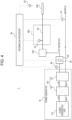
- the hot water supply path 21 includes a water entry pipe and a hot water supply pipe attached to the heat medium tank 18 in the heat medium unit 102. That is, the heat medium in the heat medium tank 18 may be water, and FIG. 3 illustrates a direct heat exchange type in which the water retained in the heat medium tank 18 is discharged directly.
- the heat medium tank 18 retains the clean water having exchanged heat.
- water (hot water) in the heat medium tank 18 is discharged from the heat conduit 30, and the heat medium tank 18 is supplied with clean water equal in volume to the discharged water to achieve a decrease in the temperature of the heat medium in the heat medium tank 18. This can decrease the necessity for wasteful disposal of surplus heat.
- the heat conduit 30 is connected to the heat conduit 30 provided for an area heat network and connected to a facility or a building other than a residence to enable effective utilization of heat as in the above embodiment.
- the information processor 40 receives, as a detected amount of available heat, of surplus heat, provided to the user, the flow rate (F) detected by the flow rate sensor 50, the temperature (T2) detected by the second temperature sensor 52, and a temperature (T3) detected by an outdoor air temperature sensor 53.
- the information processor 40 then calculates the thermal environment score (P) in accordance with expression (2) below.
- P T 2 ⁇ T 3 ⁇ F ⁇ b
- This expression includes "b” as a coefficient for correspondence with the effect of a reduction in the volume of greenhouse effect gas emission.
- the information processor 40 may vary “b” in accordance with operation condition of the power generator 10.
- FIG. 3 and expression (2) may be applied to an exemplary case where the fuel cell 11 is a PEFC (polymer electrolyte fuel cell).
- the PEFC stops power generation or decreases output when the heat medium tank 18 becomes full.
- the heat medium tank 18 is likely to become full during a time period in which power consumption is high and also in summer, in which hot water usage is lower.
- Power generation stoppage or a decrease in output in this case necessitates purchase of power from a power grid, resulting in failure of the fuel cell to exert merits such as a reduction in charges for heat and electricity.
- the controller 15 described above performs control to avoid power generation stoppage and the like and to enhance the flexibility of power generation. This improves an essential demerit of the PEFC whose power generation capacity is restricted depending on the heat storage capacity of the heat medium tank 18.
- surplus heat in the PEFC is supplied from the heat conduit 30 to decrease the necessity for wasteful disposal of the surplus heat, as well as to decrease the temperature of the heat medium in the heat medium tank 18. This also enables continuous operation of the PEFC with no waste for a long duration (e.g., one month). This further improves an essential demerit of the PEFC that cannot operate autonomously if power fails during power generation stoppage due to full storage.
- thermal environment score may be adjusted to increase the thermal environment score in accordance with a type of source gas.
- the source gas is hydrogen, which does not result in carbon dioxide emission
- the thermal environment score may have additional environmental value because of no generation of greenhouse effect gas.
- the information processor 40 may utilize, for provision of the thermal environment score, drainage of water from the heat medium tank 18 as surplus heat upon long-term absence.
- the thermal environment score may be calculated in accordance with expression (2).
- the present embodiment provides a drainage facility 203 disposed between the facility 202 for in-house consumption and a sewage pipe 204.
- the drainage facility 203 includes the heat conduit 30 coupling the facility 202 for in-house consumption and the sewage pipe 204.
- a monetary value is calculated in accordance with the temperature of drainage, and the temperature is measured at the heat conduit 30 included in the drainage facility 203.
- the second temperature sensor 52 is provided to the heat conduit 30 included in the drainage facility 203 and detects the temperature of hot water flowing in the heat conduit 30.
- the third temperature sensor 54 measures surplus heat provided by the power generator 10.
- the second temperature sensor 52 value may be regarded as the temperature of drainage from the power generator 10 for calculation of the monetary value.
- the third temperature sensor 54 value may be regarded as the temperature of drainage from the power generator 10 for calculation of the monetary value.
- the flow rate sensor 50 and the third temperature sensor 54 may be provided closer to the power generator 10 than a position at which the bypass flow path joins in a flow path connecting the power generator 10 and the hot water supply unit 201.
- the flow rate sensor 50 and the third temperature sensor 54 may check whether or not the power generator 10 discharges drainage and check the drainage temperature. In addition, when the third temperature sensor 54 detects no change in temperature, the power generator 10 can be determined as not discharging drainage.
- the following description refers to calculation of a monetary value, assuming the third temperature sensor 54 value ⁇ the second temperature sensor 52 value, and the second temperature sensor 52 value as the temperature of drainage from the power generator 10.
- the power generation system 1 may include the outdoor air temperature sensor 53 for further acquisition of air temperature information.
- the present embodiment exemplifies waste water as drainage that is a target of a monetary value calculation and has a temperature to be measured.
- the drainage having a temperature to be measured contains at least bath drainage.
- a bath typically uses a large amount of hot water and discharges hot drainage. Accordingly, an area heat network is more likely to be achieved compared with other waste water.
- the temperature of hot water flowing in the heat conduit 30 is preferably detected in each individual residence.
- the second temperature sensor 52 may be disposed between, for example, the facility 202 for in-house consumption and a dirty water storage. However, a multiple occupancy residence is often equipped with a common dirty water storage, and the second temperature sensor 52 may thus be disposed downstream of the waste water.
- the information processor 40 may thus totalize the detected amount of heat provided from respective residences to the user (heat provided by the power generators 10) and the amount of heat actually utilized by the user, to calculate the monetary value proportionally divided in accordance with a contribution degree of each of the power generators 10.
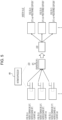
- FIG. 5 is an explanatory view illustrating calculation of the monetary value.
- This expression includes " ⁇ " as a predetermined coefficient.
- the predetermined coefficient may indicate a standard monetary value.
- FIG. 5 exemplifies a case where a residence including a fuel cell A has 40°C as T2 (drainage temperature), 20°C as T1 (entry water temperature), and a liters as F (flow rate).
- the monetary value is 20 ⁇ a ⁇ ⁇ in this case.
- a residence including a fuel cell B has 50°C as T2 (drainage temperature), 25°C as T1 (entry water temperature), and b liters as F (flow rate).
- the monetary value is 25 ⁇ b ⁇ ⁇ in this case.
- a residence including a fuel cell C has 45°C as T2 (drainage temperature), 15°C as T1 (entry water temperature), and c liters as F (flow rate).
- the monetary value is 30 ⁇ c ⁇ ⁇ in this case.
- the predetermined coefficient ⁇ may have a value obtained by dividing Z by a total usage amount (y).
- FIG. 5 exemplifies the total usage amount y that can be calculated as a + b + c + ....
- the monetary value for the fuel cell A is 20 ⁇ a ⁇ Z ⁇ ⁇ /y.
- the information processor 40 receives the flow rate (F) detected by the flow rate sensor 50, the temperature (T2) detected by the second temperature sensor 52, and the temperature (T3) detected by the outdoor air temperature sensor 53.
- the information processor 40 may then calculate the monetary value (V) in accordance with expression (4) below.
- FIG. 5 exemplifies the case where the residence including the fuel cell A has 40°C as T2 (drainage temperature), 20°C as T3 (temperature), and a liters as F (flow rate).
- the monetary value is 20 ⁇ a ⁇ ⁇ in this case.
- T3 may be replaced with a reference temperature T0.
- the reference temperature T0 may be set to 20°C or the like regardless of the outdoor air temperature.
- the reference temperature T0 may be changed every season or every month.
- the temperature difference between the temperature (T2) detected by the second temperature sensor 52 and the reference temperature may be cumulatively totalized, and F (flow rate) may be totalized in a certain period.
- the hot water supply unit is not described in the first and second embodiments.
- the monetary value may be calculated as in the third embodiment.
- the thermal environment score may have additional environmental value.
Landscapes
- Engineering & Computer Science (AREA)
- Chemical & Material Sciences (AREA)
- Manufacturing & Machinery (AREA)
- Sustainable Development (AREA)
- Sustainable Energy (AREA)
- Life Sciences & Earth Sciences (AREA)
- Chemical Kinetics & Catalysis (AREA)
- Electrochemistry (AREA)
- General Chemical & Material Sciences (AREA)
- Business, Economics & Management (AREA)
- Economics (AREA)
- Strategic Management (AREA)
- Health & Medical Sciences (AREA)
- Development Economics (AREA)
- Theoretical Computer Science (AREA)
- Physics & Mathematics (AREA)
- Marketing (AREA)
- General Physics & Mathematics (AREA)
- General Business, Economics & Management (AREA)
- Finance (AREA)
- Accounting & Taxation (AREA)
- Water Supply & Treatment (AREA)
- Tourism & Hospitality (AREA)
- General Health & Medical Sciences (AREA)
- Public Health (AREA)
- Primary Health Care (AREA)
- Human Resources & Organizations (AREA)
- Power Engineering (AREA)
- Entrepreneurship & Innovation (AREA)
- Game Theory and Decision Science (AREA)
- Combustion & Propulsion (AREA)
- Fuel Cell (AREA)
- Heat-Pump Type And Storage Water Heaters (AREA)
Applications Claiming Priority (3)
| Application Number | Priority Date | Filing Date | Title |
|---|---|---|---|
| JP2021139424 | 2021-08-27 | ||
| JP2022054361 | 2022-03-29 | ||
| PCT/JP2022/031889 WO2023027111A1 (ja) | 2021-08-27 | 2022-08-24 | 発電システム及び情報処理装置 |
Publications (1)
| Publication Number | Publication Date |
|---|---|
| EP4394954A1 true EP4394954A1 (en) | 2024-07-03 |
Family
ID=85322839
Family Applications (1)
| Application Number | Title | Priority Date | Filing Date |
|---|---|---|---|
| EP22861399.8A Withdrawn EP4394954A1 (en) | 2021-08-27 | 2022-08-24 | Electricity generating system, and information processing device |
Country Status (4)
| Country | Link |
|---|---|
| US (1) | US20250029154A1 (https=) |
| EP (1) | EP4394954A1 (https=) |
| JP (1) | JP7738077B2 (https=) |
| WO (1) | WO2023027111A1 (https=) |
Family Cites Families (11)
| Publication number | Priority date | Publication date | Assignee | Title |
|---|---|---|---|---|
| JP2002286289A (ja) * | 2001-03-27 | 2002-10-03 | Osaka Gas Co Ltd | コージェネレーション装置およびそのユーザー支援システムならびにユーザー支援システム付きコージェネレーション装置 |
| JP2003229159A (ja) * | 2002-01-31 | 2003-08-15 | Toyota Motor Corp | 燃料電池発電システムおよびこれに用いる操作表示装置 |
| JP2005114344A (ja) * | 2003-09-18 | 2005-04-28 | Matsushita Electric Ind Co Ltd | コージェネレーション装置 |
| WO2014034141A1 (ja) * | 2012-08-30 | 2014-03-06 | パナソニック株式会社 | 発電システムおよびその運転方法 |
| WO2016189872A1 (ja) * | 2015-05-27 | 2016-12-01 | 京セラ株式会社 | 電力制御装置、燃料電池システム及び燃料ガス使用量算出方法 |
| JP2017220354A (ja) * | 2016-06-07 | 2017-12-14 | 株式会社東芝 | 運転計画装置、燃料電池装置、運転計画方法及び運転計画プログラム |
| JP2018057151A (ja) * | 2016-09-29 | 2018-04-05 | 大和ハウス工業株式会社 | エネルギー融通システム |
| US11192814B2 (en) * | 2017-11-13 | 2021-12-07 | Morrison Zhu Goodman Realty Group Llc | On-site generation of energy in a multi-unit building |
| JP7386029B2 (ja) * | 2019-09-30 | 2023-11-24 | 大和ハウス工業株式会社 | 電力供給システム |
| JP7416663B2 (ja) | 2019-10-03 | 2024-01-17 | 伊藤忠商事株式会社 | システム及びプログラム |
| JP7358969B2 (ja) * | 2019-12-19 | 2023-10-11 | 株式会社アイシン | 燃料電池システム |
-
2022
- 2022-08-24 US US18/686,640 patent/US20250029154A1/en not_active Abandoned
- 2022-08-24 WO PCT/JP2022/031889 patent/WO2023027111A1/ja not_active Ceased
- 2022-08-24 JP JP2023543957A patent/JP7738077B2/ja active Active
- 2022-08-24 EP EP22861399.8A patent/EP4394954A1/en not_active Withdrawn
Also Published As
| Publication number | Publication date |
|---|---|
| WO2023027111A1 (ja) | 2023-03-02 |
| JPWO2023027111A1 (https=) | 2023-03-02 |
| US20250029154A1 (en) | 2025-01-23 |
| JP7738077B2 (ja) | 2025-09-11 |
Similar Documents
| Publication | Publication Date | Title |
|---|---|---|
| JP2013148287A (ja) | 貯湯式給湯システム | |
| JP5254500B1 (ja) | 分散型発電システム及び分散型発電システムの制御方法 | |
| JP6678347B2 (ja) | 電力管理システム | |
| JP6462369B2 (ja) | 電力供給システム | |
| EP4394954A1 (en) | Electricity generating system, and information processing device | |
| JP2003322407A (ja) | コジェネレーションシステムの制御方法 | |
| JP4660422B2 (ja) | エネルギ供給システム | |
| JP6678348B2 (ja) | 分散型発電システム、及び該システムの運転計画の少なくとも一部を該システムの外部に与える方法 | |
| JP2002298887A (ja) | 電力管理装置 | |
| JP2009206011A (ja) | 燃料電池発電システム | |
| JP5671694B2 (ja) | 燃料電池システム | |
| CN117916918A (zh) | 发电系统和信息处理器 | |
| JP2005056836A (ja) | 燃料電池コージェネレーションシステム | |
| JP5506558B2 (ja) | コージェネレーション・システムの運転制御方法 | |
| US20130322858A1 (en) | Power generation system | |
| JP2007107873A (ja) | コージェネレーションシステム | |
| JP7603508B2 (ja) | 燃料電池システム及び燃料電池制御システム | |
| JP2015190695A (ja) | コージェネレーションシステム | |
| JP4471544B2 (ja) | コジェネレーションシステム | |
| JP2011170985A (ja) | 燃料電池発電装置 | |
| JP4535392B2 (ja) | コージェネレーションシステム | |
| JP6300017B2 (ja) | コージェネレーションシステム | |
| JP7471186B2 (ja) | エネルギー量導出装置及び熱電併給システム | |
| JP4727680B2 (ja) | 給湯装置 | |
| JP2012119114A (ja) | 燃料電池システム |
Legal Events
| Date | Code | Title | Description |
|---|---|---|---|
| STAA | Information on the status of an ep patent application or granted ep patent |
Free format text: STATUS: THE INTERNATIONAL PUBLICATION HAS BEEN MADE |
|
| PUAI | Public reference made under article 153(3) epc to a published international application that has entered the european phase |
Free format text: ORIGINAL CODE: 0009012 |
|
| STAA | Information on the status of an ep patent application or granted ep patent |
Free format text: STATUS: REQUEST FOR EXAMINATION WAS MADE |
|
| 17P | Request for examination filed |
Effective date: 20240229 |
|
| AK | Designated contracting states |
Kind code of ref document: A1 Designated state(s): AL AT BE BG CH CY CZ DE DK EE ES FI FR GB GR HR HU IE IS IT LI LT LU LV MC MK MT NL NO PL PT RO RS SE SI SK SM TR |
|
| DAV | Request for validation of the european patent (deleted) | ||
| DAX | Request for extension of the european patent (deleted) | ||
| STAA | Information on the status of an ep patent application or granted ep patent |
Free format text: STATUS: THE APPLICATION HAS BEEN WITHDRAWN |
|
| 18W | Application withdrawn |
Effective date: 20250526 |