WO2022259293A1 - 空気調和システム - Google Patents
空気調和システム Download PDFInfo
- Publication number
- WO2022259293A1 WO2022259293A1 PCT/JP2021/021525 JP2021021525W WO2022259293A1 WO 2022259293 A1 WO2022259293 A1 WO 2022259293A1 JP 2021021525 W JP2021021525 W JP 2021021525W WO 2022259293 A1 WO2022259293 A1 WO 2022259293A1
- Authority
- WO
- WIPO (PCT)
- Prior art keywords
- person
- sensor
- image
- target area
- air
- Prior art date
- Legal status (The legal status is an assumption and is not a legal conclusion. Google has not performed a legal analysis and makes no representation as to the accuracy of the status listed.)
- Ceased
Links
Images


Classifications
-
- F—MECHANICAL ENGINEERING; LIGHTING; HEATING; WEAPONS; BLASTING
- F24—HEATING; RANGES; VENTILATING
- F24F—AIR-CONDITIONING; AIR-HUMIDIFICATION; VENTILATION; USE OF AIR CURRENTS FOR SCREENING
- F24F11/00—Control or safety arrangements
- F24F11/50—Control or safety arrangements characterised by user interfaces or communication
- F24F11/52—Indication arrangements, e.g. displays
-
- F—MECHANICAL ENGINEERING; LIGHTING; HEATING; WEAPONS; BLASTING
- F24—HEATING; RANGES; VENTILATING
- F24F—AIR-CONDITIONING; AIR-HUMIDIFICATION; VENTILATION; USE OF AIR CURRENTS FOR SCREENING
- F24F11/00—Control or safety arrangements
- F24F11/62—Control or safety arrangements characterised by the type of control or by internal processing, e.g. using fuzzy logic, adaptive control or estimation of values
- F24F11/63—Electronic processing
-
- F—MECHANICAL ENGINEERING; LIGHTING; HEATING; WEAPONS; BLASTING
- F24—HEATING; RANGES; VENTILATING
- F24F—AIR-CONDITIONING; AIR-HUMIDIFICATION; VENTILATION; USE OF AIR CURRENTS FOR SCREENING
- F24F2120/00—Control inputs relating to users or occupants
- F24F2120/10—Occupancy
- F24F2120/12—Position of occupants
Definitions
- the present disclosure relates to air conditioning systems.
- Patent Literature 1 considers a facility capable of ventilating a large indoor space.
- the air conditioning system of the present disclosure solves the above problems, and aims to automatically control the environment of a target area to a state preferred by people present in the target area.
- the air conditioning system of the present disclosure includes an air conditioner that air-conditions a target area, a control device that controls the air conditioner, an operation device that allows a person to operate setting information related to control of the control device, and a person existing in the target area. together with position information, and a second sensor that detects the state of the air at a specific position in the target area, and the control device detects the detection data of the first sensor, the detection data of the second sensor, and , based on the operation information of the operating device, learns the good environment information about the good environment preferred by the person existing in the target area.
- the environment of the target area can be automatically controlled to a state preferred by people present in the target area.
- FIG. 4 is a flow chart showing the flow of processing within the air conditioning system 100 when learning a favorable environment corresponding to a person's attributes. 4 is a flow chart showing the flow of processing within a control system for reproducing a favorable environment corresponding to a person's attributes in the air conditioning system 100.
- FIG. 7 is a display screen diagram showing an example of a management screen displayed on an image display unit 71 of the display device 7.
- FIG. 1 is a block diagram showing the configuration of an air conditioning system 100 according to an embodiment.
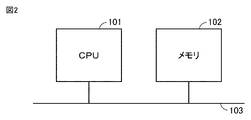
- FIG. 2 is a diagram showing the hardware configuration of control device 10 in air conditioning system 100. As shown in FIG. The configuration of the air conditioning system 100 will be described below with reference to FIGS. 1 and 2.
- FIG. 1 is a block diagram showing the configuration of an air conditioning system 100 according to an embodiment.
- FIG. 2 is a diagram showing the hardware configuration of control device 10 in air conditioning system 100. As shown in FIG. The configuration of the air conditioning system 100 will be described below with reference to FIGS. 1 and 2.
- FIG. 1 is a block diagram showing the configuration of an air conditioning system 100 according to an embodiment.
- FIG. 2 is a diagram showing the hardware configuration of control device 10 in air conditioning system 100. As shown in FIG. The configuration of the air conditioning system 100 will be described below with reference to FIGS. 1 and 2.
- FIG. 1 is a block diagram showing the configuration of an air conditioning system 100 according to an embodiment.
- FIG. 2 is a diagram showing the hardware configuration
- the air conditioning system 100 includes an air conditioner 2, a display device 7, an air quality sensor 8, a human sensor 9, and a control device 10.
- Control device 10 includes control instruction unit 1 , detection data totalization unit 3 , management data creation unit 4 , learning unit 5 , map data creation unit 6 , and floor data storage unit 50 .
- the air conditioner 2 includes an indoor unit and an outdoor unit, and measures the state of air such as air and humidity (hereinafter referred to as air quality or air quality).
- the air conditioner 2 also has a ventilating function to ventilate between the indoor and outdoor spaces by taking in and exhausting air between the indoor unit and the outdoor unit.
- the air conditioner 2 has a plurality of indoor units in the target area and one or a plurality of outdoor units outdoors.
- the plurality of indoor units are installed at appropriate intervals in the target area.
- the number of indoor units installed in the target area increases as the volume or area of the target area increases.
- the installation interval and the number of indoor units increase or decrease depending on the layout of the indoor space in the target area.
- the control device 10 includes a CPU (Central Processing Unit) 101 connected by a bus 103, a memory 102 such as ROM (Read Only Memory) and RAM (Random Access Memory), and input/output ports.
- a system controller composed of a microprocessor including
- FIG. 1 and 2 in control device 10, floor data storage unit 50 is configured by memory 102.
- FIG. The control instruction unit 1, the detection data totalization unit 3, the management data creation unit 4, the learning unit 5, and the map data creation unit 6 are implemented by software programs executed by the CPU 101.
- FIG. Part or all of the control instruction unit 1, the detected data aggregation unit 3, the management data creation unit 4, the learning unit 5, the map data creation unit 6, and the floor data storage unit 50 are configured by hardware circuits. good too.
- display device 7 is a touch panel type display device in which an image display unit 71, which is an image display device made of a liquid crystal display, and an operation unit 72, which is a position input device such as a touch pad, are combined.
- the image display section 71 has a function of displaying an image
- the operation section 72 has a function of receiving an operation of touching the surface of the image display section 71 by a person and detecting the operation.
- the operation unit 72 detects the operation and sends a detection signal to the control instruction unit 1 . send.
- the floor data storage unit 50 stores floor data, which is two-dimensional coordinate data indicating the layout based on the architectural data, for the floor that is the target area.
- the map data creation unit 6 reads floor data from the floor data storage unit 50 and creates map data of the floor that is the target area. Based on the created map data, the map data creation unit 6 sends image data for displaying a map image of the floor, which is the target area, to the display device 7 .
- the control device 10 Based on the image data created by the map data creation unit 6 , the control device 10 displays the map image of the floor, which is the target area, on the image display unit 71 of the display device 7 .
- the air quality sensor 8 includes a plurality of temperature sensors and a plurality of humidity sensors installed at appropriate intervals in a plurality of locations within the target area, and a temperature sensor and a humidity sensor installed outdoors outside the target area. It is a sensor that detects the state of Detection data obtained by a plurality of sensors in the air quality sensor 8 are sent to the detection data summarizing section 3 .
- the human sensor 9 is provided in the target area and is configured by a receiving device that receives radio waves transmitted from a radio wave transmitter 90 possessed by a person present in the target area.
- a radio wave transmitter 90 a portable terminal device that transmits radio waves, such as a smart phone or a beacon terminal, is used.
- the human sensor 9 receives radio waves emitted from a radio wave transmitter 90 possessed by a person present in the target area, and based on information contained in the received radio waves, detects the positional information of the person having the radio wave transmitter 90 and the radio wave transmission. Attribute information of the person who owns the machine 90 is detected. Detected data obtained by detection by the human sensor 9 is sent to the detected data totalizing section 3 and the control instructing section 1 .
- the owner of the radio wave transmitter 90 may be identified by the identification number such as the terminal number of the radio wave transmitter 90, for example.
- the profile of a person who may exist in the target area is registered in advance in the memory 102 together with the identification number of the radio wave transmitter 90, and based on the registered information, the person sensor 9 can identify the person from the radio wave received.
- the human sensor 9 may detect attributes such as the name and sex of the owner of the radio wave transmitter 90 .
- the detection data aggregation unit 3 aggregates the detection data of the air quality sensor 8 and the detection data of the human sensor 9.
- the detection data totaling unit 3 for example, associates the detection data of the air quality sensor 8 with the detection data of the air quality sensor 8 and totals them.
- the target area Create management data for managing air conditioning control Based on the created management data, the management data creation unit 4 adds a human image, which is an image showing a person detected by the human sensor 9, to the map image displayed on the image display unit 71, and the air quality sensor 8. Image data used for displaying an air condition image showing the condition of the air such as the temperature detected in is also created.
- the management data created by the management data creating unit 4 by associating the coordinates of the map image in the map data with the position information included in the detection data of the person sensor 9, the person detected by the person sensor 9 is displayed on the map image. It is specified at which position of .
- the management data creation unit 4 stores in advance where each of the plurality of sensors in the target area of the air quality sensor 8 exists in the map image in the map data, and from the plurality of sensors in the air quality sensor 8 It recognizes which position of the map image the sent detection data corresponds to.
- the coordinates of the map image in the map data and the position information included in the detection data of the air quality sensor 8 are associated with each other, so that the air quality detected by the air quality sensor 8 is It is specified where the state exists in the map image.
- the management data creation unit 4 is used to display a human image, which is an image showing a person detected by the human sensor 9, and an air condition image showing the condition of the air, such as temperature, detected by the air quality sensor 8.
- the image data is sent to the image display section 71 of the display device 7 .
- the image display section 71 displays a management screen displaying the person image and the air condition image on the map image.
- the learning unit 5 acquires the management data created by the management data creation unit 4 and the operation information of the operation unit 72 .
- the learning unit 5 learns the favorable environment regarding the air condition that the person prefers, detected by the human sensor 9, based on the acquired management data and operation information.
- the learning unit 5 uses learning data in which human attributes, outdoor temperature, indoor temperature, and temperature setting operation content are associated with each other based on the acquired management data and operation information, A trained model is generated that infers a good environment for a person's preferred temperature setting from the attributes of the person, the outdoor temperature, the indoor temperature, and the details of the temperature setting operation. In this way, the learning unit 5 generates and stores a learned model for each person's attribute.
- control instruction unit 1 Based on the detection data sent from the human sensor 9, the control instruction unit 1 detects that a person exists in the target area. Based on the learned model, a good environment with an air condition corresponding to the detected attribute of the person is inferred, based on the inference result, an instruction to control the air conditioner 2 is sent to the air conditioner 2, to control.
- control instruction unit 1 When the control instruction unit 1 recognizes that a person has been detected by the human sensor 9 in a state where such a learned model has been generated, the control instruction unit 1 uses the learned model generated by the learning unit 5 to 1 infers a favorable environment with respect to the air condition corresponding to the attributes of the person detected by the person sensor 9 . Then, the control instruction unit 1 determines the control contents of the air conditioner 2 for realizing the inferred good environment, and sends a control instruction to the air conditioner 2, such as outputting a control signal for temperature setting.
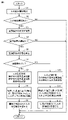
- FIG. 3 is a flow chart showing the flow of processing within the air conditioning system 100 when learning a favorable environment corresponding to a person's attributes.
- FIG. 3 illustrates an example of learning a favorable environment based on the temperature of a target area as an example of learning a favorable environment corresponding to a person's attribute in the air conditioning system 100.
- the CPU 101 of the control device 10 executes the following processing.
- step S1 based on the data detected by the human sensor 9, the human detection information is confirmed.
- step S2 it is determined whether or not there is human detection information based on the confirmation result of the human detection information in step S1. If it is determined in step S2 that there is no human detection information, the process returns. On the other hand, if it is determined in step S2 that there is human detection information, it is determined whether the air conditioner 2 is in operation based on the detection signal sent from the operation section 72 to the control instruction section 1. .
- step S4 If it is determined in step S4 that the air conditioner 2 is not in operation, return. On the other hand, if it is determined in step S4 that the air conditioner 2 is in operation, the state of the air conditioning operation is confirmed based on the detection signal sent from the operation section 72 to the control instruction section 1 in step S5.
- step S6 it is determined whether or not there has been an adjustment operation, such as an operation to adjust the set temperature, among the air conditioning operations. If it is determined in step S6 that an adjustment operation has been performed, in step S7, the attribute of the person who performed the adjustment operation is specified based on the detection information of the person confirmed in step S2. Furthermore, in step S7, the outdoor temperature when the adjustment operation is performed and the indoor temperature when the adjustment operation is performed are confirmed based on the detection data of the air quality sensor 8. FIG. Further, in step S7, the content of the operation such as the set value of the outdoor temperature adjusted when the adjustment operation is performed is confirmed based on the operation information of the operation unit 72. FIG.
- step S8 the environment based on the temperature confirmed in step S7 is determined as a favorable environment corresponding to the person whose attribute was specified in step S7.
- step S9 the temperature-based environment judged to be a good environment in step S8 is learned as a good environment corresponding to the person whose attributes are specified in step S7, and the process returns.
- step S9 for example, environmental information specified by the correlation between the outdoor temperature, indoor temperature, and operation content confirmed in step S7 is learned as a favorable environment corresponding to the person whose attributes are specified.
- a learned model is generated that infers a good environment for the temperature setting that the person prefers, from the outdoor temperature, the indoor temperature, and the details of the temperature setting operation corresponding to the person's attributes.
- step S10 the attribute of the person who performed the adjustment operation is specified based on the detection information of the person confirmed in step S2. Furthermore, in step S10, the outdoor temperature at the time step S10 is executed and the indoor temperature at the time step S10 is executed are checked based on the data detected by the air quality sensor 8.
- step S11 the environment based on the temperature confirmed in step S10 is determined to be a good environment for the person whose attribute was specified in step S10.
- step S12 the temperature-based environment judged to be a good environment in step S11 is learned as a good environment corresponding to the person whose attributes are specified in step S10, and the process returns.
- step S12 for example, the environmental information specified by the correlation between the outdoor temperature and the indoor temperature confirmed in step S10 is learned as a favorable environment corresponding to the person whose attributes are specified. As a result, a trained model is generated that is used for inferring a good environment for the temperature setting that the person prefers, from the outdoor temperature and the indoor temperature, corresponding to the person's attributes.
- Steps S7 to S9 are processing for learning a favorable environment for a person whose attributes are specified when he or she operates the air conditioning. This is because the reason why a person operates the air conditioning is that the person is likely to operate the air conditioning in order to make the surrounding environment favorable.
- steps S10 to S12 are processing for learning a favorable environment for a person whose attribute has been specified when he or she does not operate the air conditioning. This is because the reason why a person does not operate the air conditioning is that the percentage of people who perceive the surrounding environment to be a favorable environment is considered to be high.
- steps S7 to S9 if a plurality of people perform operations within a certain period of time, the average value of the operation details within the certain period of time may be learned as a favorable environment for the plurality of persons.
- the detected person performs the adjustment operation of the air conditioner 2, based on the attribute of the detected person, the detected indoor temperature, the detected outdoor temperature, and the details of the operation, , the attributes of the person, the outdoor temperature, the indoor temperature, and the details of the operation, the favorable environment that the person prefers is learned. Further, when the detected person adjusts the air conditioner 2, based on the detected person's attribute, the detected indoor temperature, and the detected outdoor temperature, the person's attribute, the outdoor temperature, Then, the favorable environment that the person prefers is learned from the room temperature. Through such learning, the environment of the target area can be automatically controlled to a state preferred by the person present in the target area.
- steps S1 to S5 have the functions of the detection data totalization unit 3 and the management data creation unit 4.
- steps S6 to S12 have the function of the learning section 5.
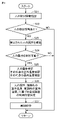
- FIG. 4 is a flow chart showing the flow of processing within the control system that reproduces a favorable environment corresponding to human attributes in the air conditioning system 100 .
- step S21 based on the data detected by the human sensor 9, the human detection information is confirmed.
- step S22 it is determined whether or not there is human detection information based on the confirmation result of the human detection information in step S21. If it is determined in step S22 that there is no human detection information, the process returns. On the other hand, if it is determined in step S22 that there is human detection information, the attributes of the person detected by the human sensor 9 are confirmed based on the data detected by the human sensor 9 in step S23.
- step S24 it is determined whether or not a person's attribute can be determined based on the confirmation result of the person's attribute in step S23. If it is determined in step S24 that the attribute of the person cannot be determined, the process returns. On the other hand, if it is determined in step S24 that the attribute of the person can be determined, the attribute of the person who performed the adjustment operation is specified in step S25 based on the detection information of the person determined to be identifiable in step S24. do. Furthermore, in step S25, the outdoor temperature at the time step S25 is executed and the indoor temperature at the time step S25 is executed are checked based on the detection data of the air quality sensor 8.
- step S26 a good environment corresponding to the attributes of the person detected by the human sensor 9 is inferred based on the learned model obtained by the learning in steps S9 and S12, and the inferred good environment Based on, the control content of the air conditioner 2 is determined.
- step S26 the attribute of the person identified in step S25, the room temperature confirmed in step S25, and the , from the outdoor temperature confirmed in step S25, a favorable environment with a set temperature corresponding to the specified attribute of the person is inferred, and the set temperature as the control content of the air conditioner 2 is determined based on the inference result.
- step S27 a control signal instructing the control content determined in step S26 is sent to the air conditioner 2, and the process returns.
- the air conditioner 2 is controlled to automatically adjust the air condition of the target area so as to create a favorable environment corresponding to the attribute of the person detected by the human sensor 9 .
- steps S21 to S27 a favorable environment with set temperatures corresponding to the attributes of a plurality of people is inferred. An inference is made, an average value of the set temperatures as an inference result is obtained, and the air conditioner 2 is controlled based on the average value.
- the attributes of the detected person when a person whose attributes can be identified in the target area is detected, the attributes of the detected person, A favorable environment preferred by the person is inferred from the detected indoor temperature and the detected outdoor temperature based on the detected attributes of the person, and an air conditioner is provided so as to create a favorable environment according to the result of the inference. 2 is controlled, the environment of the target area can be automatically controlled to a state preferred by the person present in the target area.
- FIG. 5 is a display screen diagram showing an example of a management screen displayed on the image display section 71 of the display device 7. As shown in FIG.
- the image display unit 71 displays the target area image 30 as a map image showing the actual indoor layout of the target area.
- a desk image 31 a private room image 32, an indoor unit image 33, an operation device image 34, a human image 35, a human presence area image 36, an air condition image 37 indicated by diagonal lines, and an air condition level index image. 41 is displayed.
- the desk image 31 is an image showing a desk arranged in the target area.
- the private room image 32 is an image showing private rooms separated by walls or the like in the target area.
- the indoor unit image 33 is an image showing the indoor unit of the air conditioner 2 .
- the operation device image 34 is an image showing the operation unit 72, which is the operation device.
- the operation device image 34 is basically not displayed, and when a person performs a touch operation on any of the indoor unit images 33, the operation device image 34 appears and is displayed in a display mode surrounding the touch-operated indoor unit image 33. be.
- the air conditioning system 100 can adjust the control details for each indoor unit.
- a display device 7 having an image display section 71 and an operation section 72 is attached to a predetermined position such as a wall within the target area.
- a person in the target area performs a touch operation to select one of the indoor unit images 33 displayed on the image display unit 71, thereby performing actual temperature control of the indoor unit corresponding to the selected indoor unit image 33. It is possible to adjust the control contents.
- the operation unit 72 detects the operation, and the operation unit 72 sends a detection signal to the control instruction unit 1 .
- the human image 35 is an image showing a person existing in the target area, and is displayed in the target area image 30 at a position corresponding to the position of the radio wave transmitter 90 detected by the human sensor 9 . Therefore, when a person moves, the position of the person image 35 moves according to the movement.
- a person presence area image 36 indicating an area where a person exists is displayed.
- an air condition image 37 is displayed as hatched in the drawing.
- the air condition image 37 is an image that indicates the level of the air condition, such as the height of the temperature, by color. In the drawing, for example, areas where the temperature is relatively high are indicated by oblique lines. Portions with different types of hatching indicate portions with different levels of air conditions as an example, and portions with different levels of air conditions are indicated in different colors in the actual image.
- the air condition level index image 41 is displayed at a position that does not interfere with the main image display, such as the edge of the target area image 30 .
- the air condition level index image 41 clearly shows the relationship between the color of the air condition image 37 and the height of the level of the air condition by means of a level gauge-like image. displayed as an indicator of the relationship between the height of the level of By displaying the air condition level index image 41, the height of the level of the air condition image 37 displayed in the target area image 30 can be easily confirmed.
- Modification (1) Part of the configuration of the control device 10 may exist on a cloud server.
- the management data creation unit 4 and the learning unit 5 may exist on a cloud server.
- the control device 10 may include a control section that controls the control instruction section 1, the detected data totalization section 3, the management data creation section 4, the learning section 5, and the map data creation section 6 in an integrated manner. .
- the radio wave transmitter 90 may be capable of detecting position information within the target area and transmitting it by radio waves, or simply transmitting the presence within the air conditioning target area by radio waves. good too. If the radio wave transmitter 90 can detect the positional information in the target area and transmit it by radio waves, the control device 10 specifies the positional information of the person based on the positional information transmitted by the radio wave transmitter 90. You should do it. Further, if the radio wave transmitter 90 can simply transmit the existence of the air conditioning target area by radio waves, the control device 10 specifies the position information based on the radio waves transmitted by the radio wave transmitter 90. Processing should be executed.
- Bluetooth (registered trademark) communication such as BLE (Bluetooth Low Energy) (registered trademark) may be used.
- Communication between the radio wave transmitter 90 and the human sensor 9 may use a communication method other than Bluetooth communication. In other words, any communication method may be used for communication between the radio wave transmitter 90 and the human sensor 9 as long as the radio wave from the radio wave transmitter 90 can be received within the harmonization target area.
- control instruction unit 1 may infer a favorable environment of the air condition corresponding to the detected attribute of the person based on the learned model created by the learning unit 5. .
- control instruction section 1 may not have such a function of inference, and a separately provided inference section may have a function of such inference.
- the floor data storage unit 50 is included in the control device 10 .
- the present invention is not limited to this, and the floor data storage unit 50 may be provided in a storage device provided separately from the control device 10 instead of being included in the control device 10 .
- Examples of learning a good environment based on the temperature of the target area include temperature, humidity, wind direction, and air volume, or a combination of any two, or a combination of three You may make it learn the favorable environment which added.
- the map data creation unit 6 creates map data.
- the map data creation section 6 may not be provided, and the management data creation section 4 may have the function of creating map data as well.
- the present disclosure relates to an air conditioning system 100.
- the air-conditioning system 100 includes an air-conditioning device 2 that air-conditions a target area, a control device 10 that controls the air-conditioning device 2, and an operation unit 72 that is an operation device that allows a person to operate setting information related to control of the control device 10. , a human sensor 9 that is a first sensor that detects a person present in the target area along with position information, and an air quality sensor 8 that is a second sensor that detects the air condition at a specific position in the target area.
- the device 10 exists in the target area based on the detection data of the human sensor 9 that is the first sensor, the detection data of the air quality sensor 8 that is the second sensor, and the operation information of the operation unit 72 that is the operation device. Good environmental information about good environments that people like is learned (steps S7 to S12 in FIG. 3).
- control device 10 detects the detection data of the human sensor 9 as the first sensor, the detection data of the air quality sensor 8 as the second sensor, and the operation of the operation unit 72 as the operation device.
- the environment of the target area can be automatically controlled to a state preferred by the person present in the target area by learning the good environment information about the good environment preferred by the person present in the target area based on the information.
- the control device 10 determines setting information necessary for realizing a favorable environment based on the learned favorable environment information. is determined, and the air conditioner is controlled based on the determined setting information (steps S21 to S27 in FIG. 4).
- the control device 10 when the human sensor 9, which is the first sensor, detects a person existing in the target area, the control device 10 performs settings necessary for realizing a favorable environment based on the learned favorable environment information. By determining the information and controlling the air conditioner 2 based on the determined setting information, it is possible to automatically control the environment of the target area to a state preferred by the person present in the target area.
- the human sensor 9, which is the first sensor further detects the attribute of the detected person, and the control device 10 learns favorable environment information for each human attribute, and the human sensor 9, which is the first sensor, is the object
- the human sensor 9, which is the first sensor is the object
- setting information corresponding to each attribute of the person is determined based on the learned favorable environment information, and the air conditioner 2 is controlled based on the determined setting information (see FIG. 3). Steps S7 to S12).
- the control device 10 learns good environment information for each person's attribute, and when the human sensor 9, which is the first sensor, detects a person in the target area, based on the learned good environment information, By determining the setting information necessary to reproduce a good environment for each attribute of the person, and controlling the air conditioner based on the determined setting information, the environment of the target area is reproduced in the target area for each attribute of the person. It can be automatically controlled to the state that the user prefers.
- the control device 10 detects the plurality of persons in the target area based on the environment-friendly information learned corresponding to the attributes of each of the plurality of persons. , determines setting information necessary to realize an average good environment, and controls the air conditioner 2 based on the determined setting information (a modification of steps S21 to S27 in FIG. 4).
- the control device 10 can detect a plurality of people based on the environment-friendly information learned corresponding to the attributes of each of the plurality of people. Based on the determined setting information, the air conditioner 2 is controlled so that more people prefer the environment of the target area. It can be automatically controlled according to the state.
- the human sensor 9 which is the first sensor, receives radio waves transmitted from a radio wave transmitter 90 as a transmitting device possessed by a person present in the target area, and detects the position of the person based on the received radio waves. to detect
- the human sensor 9 which is the first sensor, receives radio waves transmitted from the radio wave transmitter 90 as a transmitting device possessed by a person present in the target area, and based on the received radio waves, Since the position is detected, the position of the person can be detected more accurately.
- the control device 10 further includes an image display unit 71, which is an image display device, and the control device 10 displays coordinate data preset with respect to the target area, the human body, which is the first sensor, in the image display unit 71, which is the image display device.
- the control device 10 displays coordinate data preset with respect to the target area, the human body, which is the first sensor, in the image display unit 71, which is the image display device.
- a person image 35 which is the first image indicating the position of the detected person, is displayed on the map of the target area, and the state of the air.
- the operating device image 34 which is the third image corresponding to the operating device, are displayed (FIG. 5).
- control device 10 causes the image display unit 71, which is an image display device, to display the human image 35, which is the first image indicating the position of the detected person, and the second image, which indicates the state of the air, on the map of the target area.
- the image display unit 71 which is an image display device
- the human image 35 which is the first image indicating the position of the detected person
- the second image which indicates the state of the air
- the control device 10 causes the image display unit 71, which is an image display device, to display the human image 35, which is the first image indicating the position of the detected person, and the second image, which indicates the state of the air, on the map of the target area.
- control device 10 is configured so that the setting information can be changed based on the operation of the operation device image 34, which is the third image displayed on the image display unit 71 (FIG. 5).
- control device 10 can change the setting information based on the operation of the operation device image 34, which is the third image displayed on the image display unit 71, which is an image display device. It is possible to easily change the setting information of the air conditioner 2 .
- control device 10 moves the position of the human image 35, which is the first image, on the map based on the detection data of the human sensor 9, which is the first sensor (Fig. 5).
- control device 10 moves the position of the human image 35, which is the first image, on the map based on the detection data of the human sensor 9, which is the first sensor. can be easily verified.
- control device 10 displays the air condition in a color-visible image in the second image showing the air condition based on the detection data of the air quality sensor 8, which is the second sensor (Fig. 5 ).
- control device 10 displays the state of the air in a visually recognizable image in color in the second image showing the state of the air based on the data detected by the air quality sensor 8, which is the second sensor. , the air condition can be easily checked visually.
- the setting information can be changed by a person's touch operation of the operating device image 34, which is the third image, on the image display unit 71, which is an image display device (FIG. 5).
- the operation device image 34 which is the third image, on the image display unit 71, which is an image display device, is touch-operated by a person, whereby the setting information can be changed, thereby controlling the air conditioner 2. It is possible to facilitate the operation for
Landscapes
- Engineering & Computer Science (AREA)
- Signal Processing (AREA)
- Chemical & Material Sciences (AREA)
- Combustion & Propulsion (AREA)
- Mechanical Engineering (AREA)
- General Engineering & Computer Science (AREA)
- Physics & Mathematics (AREA)
- Fuzzy Systems (AREA)
- Mathematical Physics (AREA)
- Human Computer Interaction (AREA)
- Air Conditioning Control Device (AREA)
Priority Applications (2)
| Application Number | Priority Date | Filing Date | Title |
|---|---|---|---|
| PCT/JP2021/021525 WO2022259293A1 (ja) | 2021-06-07 | 2021-06-07 | 空気調和システム |
| JP2023527137A JPWO2022259293A1 (enExample) | 2021-06-07 | 2021-06-07 |
Applications Claiming Priority (1)
| Application Number | Priority Date | Filing Date | Title |
|---|---|---|---|
| PCT/JP2021/021525 WO2022259293A1 (ja) | 2021-06-07 | 2021-06-07 | 空気調和システム |
Publications (1)
| Publication Number | Publication Date |
|---|---|
| WO2022259293A1 true WO2022259293A1 (ja) | 2022-12-15 |
Family
ID=84424965
Family Applications (1)
| Application Number | Title | Priority Date | Filing Date |
|---|---|---|---|
| PCT/JP2021/021525 Ceased WO2022259293A1 (ja) | 2021-06-07 | 2021-06-07 | 空気調和システム |
Country Status (2)
| Country | Link |
|---|---|
| JP (1) | JPWO2022259293A1 (enExample) |
| WO (1) | WO2022259293A1 (enExample) |
Citations (4)
| Publication number | Priority date | Publication date | Assignee | Title |
|---|---|---|---|---|
| WO2017098589A1 (ja) * | 2015-12-08 | 2017-06-15 | 三菱電機株式会社 | 空気調和システム |
| WO2019021675A1 (ja) * | 2017-07-25 | 2019-01-31 | 三菱重工サーマルシステムズ株式会社 | 空調制御装置、空調システム、空調制御方法、及びプログラム |
| JP2019082312A (ja) * | 2017-10-30 | 2019-05-30 | ダイキン工業株式会社 | 空調制御装置 |
| JP2019207050A (ja) * | 2018-05-28 | 2019-12-05 | 株式会社大林組 | 環境条件制御装置、環境条件制御方法及び環境条件制御システム |
Family Cites Families (7)
| Publication number | Priority date | Publication date | Assignee | Title |
|---|---|---|---|---|
| JP3128156B2 (ja) * | 1991-11-29 | 2001-01-29 | 松下電器産業株式会社 | 空気調和機制御装置 |
| JP2007315631A (ja) * | 2006-05-23 | 2007-12-06 | Toshiba Corp | 空調制御装置 |
| JP2009103328A (ja) * | 2007-10-19 | 2009-05-14 | Daikin Ind Ltd | 空気調和装置 |
| JP6303731B2 (ja) * | 2014-03-31 | 2018-04-04 | ダイキン工業株式会社 | 温熱環境再現システム |
| WO2016129085A1 (ja) * | 2015-02-12 | 2016-08-18 | 三菱電機株式会社 | 空気調和システム |
| JP6836961B2 (ja) * | 2017-06-09 | 2021-03-03 | アズビル株式会社 | 人検知装置および方法 |
| JP7191244B2 (ja) * | 2019-10-07 | 2022-12-16 | 三菱電機株式会社 | 空気調和システム |
-
2021
- 2021-06-07 WO PCT/JP2021/021525 patent/WO2022259293A1/ja not_active Ceased
- 2021-06-07 JP JP2023527137A patent/JPWO2022259293A1/ja active Pending
Patent Citations (4)
| Publication number | Priority date | Publication date | Assignee | Title |
|---|---|---|---|---|
| WO2017098589A1 (ja) * | 2015-12-08 | 2017-06-15 | 三菱電機株式会社 | 空気調和システム |
| WO2019021675A1 (ja) * | 2017-07-25 | 2019-01-31 | 三菱重工サーマルシステムズ株式会社 | 空調制御装置、空調システム、空調制御方法、及びプログラム |
| JP2019082312A (ja) * | 2017-10-30 | 2019-05-30 | ダイキン工業株式会社 | 空調制御装置 |
| JP2019207050A (ja) * | 2018-05-28 | 2019-12-05 | 株式会社大林組 | 環境条件制御装置、環境条件制御方法及び環境条件制御システム |
Also Published As
| Publication number | Publication date |
|---|---|
| JPWO2022259293A1 (enExample) | 2022-12-15 |
Similar Documents
| Publication | Publication Date | Title |
|---|---|---|
| CN110910503B (zh) | 一种空调环境的仿真方法及装置 | |
| JP5535320B2 (ja) | 空調制御装置、空調制御方法及びプログラム | |
| CN108489040B (zh) | 立式空调器及其控制方法、以及计算机可读存储介质 | |
| WO2012101762A1 (ja) | 制御装置、制御方法及びプログラム | |
| US10365004B2 (en) | Control method and communication device | |
| WO2008066093A1 (en) | Position-dependent information representation system, position-dependent information representation controller, and position-dependent information representation method | |
| CN103245035A (zh) | 空调控制系统和方法 | |
| CN203810634U (zh) | 室内舒适性状态获取装置、空调器和移动终端 | |
| WO2014118909A1 (ja) | 制御装置、制御システム、制御方法及びプログラム | |
| JP7258701B2 (ja) | 制御装置、端末装置及び方法 | |
| JP2012172910A (ja) | 室内環境調整用機器の操作システム | |
| JP2010007887A (ja) | 建造物管理サーバ、建造物管理方法および建造物管理プログラム | |
| WO2016157675A1 (ja) | 制御システム、制御方法及び制御プログラム | |
| KR102206461B1 (ko) | 공기조화기 시스템 및 그 동작방법 | |
| JP6972371B2 (ja) | 空気調和システム | |
| WO2022259293A1 (ja) | 空気調和システム | |
| JP7004837B2 (ja) | 空気調和システム | |
| JP2018009739A (ja) | 制御装置、制御システム、制御方法及びプログラム | |
| CN111882651B (zh) | 一种空间光线的处理方法、装置、电子设备及存储介质 | |
| JP2015094540A (ja) | 環境制御装置、および環境制御システム | |
| JP2019207206A (ja) | 検出装置、見守りシステムおよび空調システム | |
| WO2022054201A1 (ja) | 空調システム、空調方法、および空調プログラム | |
| JP7523561B2 (ja) | 空気調和機、空気調和システム、および制御方法 | |
| WO2024150407A1 (ja) | 空調システム及び空調システムの制御方法 | |
| WO2025094236A1 (ja) | 管理サーバ、空調システム、提示方法、および、プログラム |
Legal Events
| Date | Code | Title | Description |
|---|---|---|---|
| 121 | Ep: the epo has been informed by wipo that ep was designated in this application |
Ref document number: 21944974 Country of ref document: EP Kind code of ref document: A1 |
|
| ENP | Entry into the national phase |
Ref document number: 2023527137 Country of ref document: JP Kind code of ref document: A |
|
| NENP | Non-entry into the national phase |
Ref country code: DE |
|
| 122 | Ep: pct application non-entry in european phase |
Ref document number: 21944974 Country of ref document: EP Kind code of ref document: A1 |