WO2022215427A1 - 延伸フィルム、延伸フィルムの製造方法、偏光板及び液晶表示装置 - Google Patents
延伸フィルム、延伸フィルムの製造方法、偏光板及び液晶表示装置 Download PDFInfo
- Publication number
- WO2022215427A1 WO2022215427A1 PCT/JP2022/010551 JP2022010551W WO2022215427A1 WO 2022215427 A1 WO2022215427 A1 WO 2022215427A1 JP 2022010551 W JP2022010551 W JP 2022010551W WO 2022215427 A1 WO2022215427 A1 WO 2022215427A1
- Authority
- WO
- WIPO (PCT)
- Prior art keywords
- film
- stretched film
- stretching
- range
- mass
- Prior art date
- Legal status (The legal status is an assumption and is not a legal conclusion. Google has not performed a legal analysis and makes no representation as to the accuracy of the status listed.)
- Ceased
Links
Images


Classifications
-
- B—PERFORMING OPERATIONS; TRANSPORTING
- B29—WORKING OF PLASTICS; WORKING OF SUBSTANCES IN A PLASTIC STATE IN GENERAL
- B29C—SHAPING OR JOINING OF PLASTICS; SHAPING OF MATERIAL IN A PLASTIC STATE, NOT OTHERWISE PROVIDED FOR; AFTER-TREATMENT OF THE SHAPED PRODUCTS, e.g. REPAIRING
- B29C55/00—Shaping by stretching, e.g. drawing through a die; Apparatus therefor
- B29C55/02—Shaping by stretching, e.g. drawing through a die; Apparatus therefor of plates or sheets
-
- C—CHEMISTRY; METALLURGY
- C08—ORGANIC MACROMOLECULAR COMPOUNDS; THEIR PREPARATION OR CHEMICAL WORKING-UP; COMPOSITIONS BASED THEREON
- C08J—WORKING-UP; GENERAL PROCESSES OF COMPOUNDING; AFTER-TREATMENT NOT COVERED BY SUBCLASSES C08B, C08C, C08F, C08G or C08H
- C08J5/00—Manufacture of articles or shaped materials containing macromolecular substances
- C08J5/18—Manufacture of films or sheets
-
- G—PHYSICS
- G02—OPTICS
- G02B—OPTICAL ELEMENTS, SYSTEMS OR APPARATUS
- G02B5/00—Optical elements other than lenses
- G02B5/30—Polarising elements
-
- G—PHYSICS
- G02—OPTICS
- G02F—OPTICAL DEVICES OR ARRANGEMENTS FOR THE CONTROL OF LIGHT BY MODIFICATION OF THE OPTICAL PROPERTIES OF THE MEDIA OF THE ELEMENTS INVOLVED THEREIN; NON-LINEAR OPTICS; FREQUENCY-CHANGING OF LIGHT; OPTICAL LOGIC ELEMENTS; OPTICAL ANALOGUE/DIGITAL CONVERTERS
- G02F1/00—Devices or arrangements for the control of the intensity, colour, phase, polarisation or direction of light arriving from an independent light source, e.g. switching, gating or modulating; Non-linear optics
- G02F1/01—Devices or arrangements for the control of the intensity, colour, phase, polarisation or direction of light arriving from an independent light source, e.g. switching, gating or modulating; Non-linear optics for the control of the intensity, phase, polarisation or colour
- G02F1/13—Devices or arrangements for the control of the intensity, colour, phase, polarisation or direction of light arriving from an independent light source, e.g. switching, gating or modulating; Non-linear optics for the control of the intensity, phase, polarisation or colour based on liquid crystals, e.g. single liquid crystal display cells
- G02F1/133—Constructional arrangements; Operation of liquid crystal cells; Circuit arrangements
- G02F1/1333—Constructional arrangements; Manufacturing methods
- G02F1/1335—Structural association of cells with optical devices, e.g. polarisers or reflectors
-
- G—PHYSICS
- G02—OPTICS
- G02F—OPTICAL DEVICES OR ARRANGEMENTS FOR THE CONTROL OF LIGHT BY MODIFICATION OF THE OPTICAL PROPERTIES OF THE MEDIA OF THE ELEMENTS INVOLVED THEREIN; NON-LINEAR OPTICS; FREQUENCY-CHANGING OF LIGHT; OPTICAL LOGIC ELEMENTS; OPTICAL ANALOGUE/DIGITAL CONVERTERS
- G02F1/00—Devices or arrangements for the control of the intensity, colour, phase, polarisation or direction of light arriving from an independent light source, e.g. switching, gating or modulating; Non-linear optics
- G02F1/01—Devices or arrangements for the control of the intensity, colour, phase, polarisation or direction of light arriving from an independent light source, e.g. switching, gating or modulating; Non-linear optics for the control of the intensity, phase, polarisation or colour
- G02F1/13—Devices or arrangements for the control of the intensity, colour, phase, polarisation or direction of light arriving from an independent light source, e.g. switching, gating or modulating; Non-linear optics for the control of the intensity, phase, polarisation or colour based on liquid crystals, e.g. single liquid crystal display cells
- G02F1/133—Constructional arrangements; Operation of liquid crystal cells; Circuit arrangements
- G02F1/1333—Constructional arrangements; Manufacturing methods
- G02F1/1335—Structural association of cells with optical devices, e.g. polarisers or reflectors
- G02F1/133528—Polarisers
-
- G—PHYSICS
- G02—OPTICS
- G02F—OPTICAL DEVICES OR ARRANGEMENTS FOR THE CONTROL OF LIGHT BY MODIFICATION OF THE OPTICAL PROPERTIES OF THE MEDIA OF THE ELEMENTS INVOLVED THEREIN; NON-LINEAR OPTICS; FREQUENCY-CHANGING OF LIGHT; OPTICAL LOGIC ELEMENTS; OPTICAL ANALOGUE/DIGITAL CONVERTERS
- G02F1/00—Devices or arrangements for the control of the intensity, colour, phase, polarisation or direction of light arriving from an independent light source, e.g. switching, gating or modulating; Non-linear optics
- G02F1/01—Devices or arrangements for the control of the intensity, colour, phase, polarisation or direction of light arriving from an independent light source, e.g. switching, gating or modulating; Non-linear optics for the control of the intensity, phase, polarisation or colour
- G02F1/13—Devices or arrangements for the control of the intensity, colour, phase, polarisation or direction of light arriving from an independent light source, e.g. switching, gating or modulating; Non-linear optics for the control of the intensity, phase, polarisation or colour based on liquid crystals, e.g. single liquid crystal display cells
- G02F1/133—Constructional arrangements; Operation of liquid crystal cells; Circuit arrangements
- G02F1/1333—Constructional arrangements; Manufacturing methods
- G02F1/1335—Structural association of cells with optical devices, e.g. polarisers or reflectors
- G02F1/13363—Birefringent elements, e.g. for optical compensation
-
- C—CHEMISTRY; METALLURGY
- C08—ORGANIC MACROMOLECULAR COMPOUNDS; THEIR PREPARATION OR CHEMICAL WORKING-UP; COMPOSITIONS BASED THEREON
- C08J—WORKING-UP; GENERAL PROCESSES OF COMPOUNDING; AFTER-TREATMENT NOT COVERED BY SUBCLASSES C08B, C08C, C08F, C08G or C08H
- C08J2323/00—Characterised by the use of homopolymers or copolymers of unsaturated aliphatic hydrocarbons having only one carbon-to-carbon double bond; Derivatives of such polymers
Definitions
- the present invention relates to a stretched film, a method for producing a stretched film, a polarizing plate, and a liquid crystal display device, and more particularly to a stretched film having a low-orientation surface, moderate moisture permeability, and excellent adhesiveness.
- cycloolefin resins are excellent in transparency, optical properties and durability, optical films whose retardation is adjusted using the cycloolefin resins can be suitably used in VA liquid crystal display devices.
- melt-casting film-forming methods and solution-casting film-forming methods are known as methods for producing optical films using cycloolefin resins.
- the films disclosed in Patent Documents 1 and 2 are laminated with a polarizer layer (also referred to as “polarizer film”, “polarizer film” and “polarizer film”)
- a polarizer layer also referred to as "polarizer film”, “polarizer film” and “polarizer film”
- the film was required to have an appropriate moisture permeability.
- the surface preferably has low orientation, and from the viewpoint of adhesion including the drying process after lamination with the polarizer layer, it is necessary to have moderate moisture permeability. It is
- the present invention has been made in view of the above problems and circumstances, and the problem to be solved is to provide a stretched film having a surface with low orientation, moderate moisture permeability, and excellent adhesiveness, and a method for producing the stretched film. That is.
- Another object of the present invention is to provide a polarizing plate and a liquid crystal display using the stretched film.
- the present inventors have discovered that the surface of a stretched film containing a cycloolefin resin having a polar group is irradiated with an X-ray at an angle of 0.1 degrees.
- the half-value width of the diffraction peak when irradiated is irradiated to a specific range and by controlling the amount of residual solvent, it is possible to provide a stretched film with a low-orientation surface, moderate moisture permeability, and excellent adhesiveness.
- the present inventors have found the following. That is, the above problems related to the present invention are solved by the following means.
- a stretched film containing a cycloolefin resin having a polar group The half width of the diffraction peak when the surface of the stretched film is irradiated with X-rays at an angle of 0.1 degree is in the range of 4.6 to 5.4 degrees, and A stretched film having a residual solvent content in the range of 5 to 500 mass ppm.
- a stretched film manufacturing method for manufacturing the stretched film according to any one of items 1 to 4 A method for producing a stretched film, wherein the stretched film is produced by a solution casting method.
- a polarizing plate comprising the stretched film according to any one of items 1 to 4.
- a liquid crystal display device comprising the polarizing plate according to item 8.
- the means of the present invention it is possible to provide a stretched film having a low-orientation surface, moderate moisture permeability, and excellent adhesiveness, and a method for producing the stretched film. Also, a polarizing plate and a liquid crystal display device using the stretched film can be provided.
- the half width of the diffraction peak when the surface of the stretched film containing the cycloolefin resin having a polar group is irradiated with X-rays at an angle of 0.1 degree is within the range of 4.6 to 5.4 degrees.
- the resin molecular chains on the surface become less oriented, and the adhesiveness with an ultraviolet curable adhesive is excellent when the polarizing plate is produced. Further, by setting the amount of residual solvent in the stretched film within the range of 5 to 500 ppm by mass, the orientation of the resin molecular chains on the surface becomes difficult to align, resulting in low orientation, and excellent adhesiveness in this respect as well. Furthermore, by making the resin molecular chains on the surface of the stretched film less oriented as described above, it is possible to secure appropriate moisture permeability, and as a result, the adhesiveness is excellent.
- the term "orientation" means that the molecular chains in the resin are arranged in a certain direction.
- a state in which the molecular chains in the resin are highly aligned in the direction perpendicular to the thickness of the film is referred to as "highly oriented.” Therefore, in a resin with a small interaction between resins, a highly oriented region is formed on the surface by stretching.
- the highly oriented region has a structure in which the main chain spacing is relatively uniform (high crystallinity). In the present invention, by making the surface low-orientation, the main chain spacing is random and the structure is less regular, thereby improving the adhesiveness.
- a diagram schematically showing the method for producing a stretched film of the present invention Schematic diagram showing an example of the configuration of the polarizing plate of the present invention
- the stretched film of the present invention is a stretched film containing a cycloolefin-based resin having a polar group, and the surface of the stretched film is irradiated with X-rays at an angle of 0.1 degrees, and the half width of the diffraction peak is is within the range of 4.6 to 5.4 degrees, and the residual solvent amount is within the range of 5 to 500 mass ppm.
- This feature is a technical feature common to or corresponding to each of the following embodiments.
- the oxygen transmission rate is in the range of 3000 to 5000 mL/(m 2 ⁇ 24 hr ⁇ atm) under the conditions of a temperature of 23 ° C. and a humidity of 0% RH. It is preferable in that it can be released moderately and a film that is less likely to deteriorate due to durable adhesion can be obtained. Further, it is preferable that the half-value width is in the range of 4.8 to 5.2 degrees, in that the surface has both low orientation and moderate moisture permeability. Furthermore, it is preferable that the stretched film of the present invention contain fine particles because the surface thereof can be inhibited from becoming highly oriented.
- the stretched film is manufactured by a solution casting method. Accordingly, by adjusting the amount of residual solvent, it is possible to control the stretching conditions in a wide range, and in particular, it is possible to control the stretching conditions in the low temperature region (Tg+30° C. or lower).
- the dope containing the cycloolefin resin having a polar group is cast on a support to form a web, and then the stretch ratio in the stretching step is an area ratio.
- the stretch ratio in the stretching step is an area ratio.
- the amount of residual solvent at the start of stretching in the stretching step is within the range of 700 to 30000 mass ppm. It is also preferable in that the half-value width can be set within the range, and the surface can be both low in orientation and moderate in moisture permeability.
- the stretched film of the present invention is suitably used for polarizing plates.
- the polarizing plate is suitably used for a liquid crystal display device.
- the stretched film of the present invention is a stretched film containing a cycloolefin-based resin having a polar group, and the surface of the stretched film is irradiated with X-rays at an angle of 0.1 degrees, and the half width of the diffraction peak is is within the range of 4.6 to 5.4 degrees, and the residual solvent amount is within the range of 5 to 500 mass ppm.
- an X-ray diffraction method is suitable for evaluating the orientation of the surface of the stretched film.
- a method called a thin film method is preferable, in which the incident angle ⁇ of incident X-rays is made small so that the information depth of X-rays detected by diffraction is shallow.
- the incident angle ⁇ of incident X-rays is fixed at about 0.1 degrees, and the X-ray intensity is measured while changing the angle of the detector.
- an X-ray diffractometer RINT-TTRII manufactured by Rigaku Denki Co., Ltd. was used as the X-ray diffractometer.
- the anticathode was Cu and operated at 50 kV-300 mA.
- the height limiting slit was set to 10 mm, the divergence slit was set to 2/3, and the optical system was adjusted so that the peak half width of Al (200) when measuring the aluminum foil was 0.35 degrees.
- the film was fixed, ⁇ was fixed at 0.1 degrees, 2 ⁇ was scanned from 5 to 35 degrees in steps of 0.02 degrees, and each step was integrated for 1 second to obtain a diffraction pattern. Background treatment was performed and the half width of the diffraction peak was determined.
- the half width of the diffraction peak is in the range of 4.6 to 5.4 degrees, preferably in the range of 4.8 to 5.2 degrees.
- the half width of the diffraction peak represents the distance between crystals, and the lower the orientation, the more random the spacing of the main chains in the resin.
- the residual solvent amount at the start of stretching in the stretching process As a means for making the half width of such a diffraction peak within the above range, the residual solvent amount at the start of stretching in the stretching process, the stretching ratio at the time of stretching, the heating temperature at the time of stretching, and the main drying after the stretching process. Controlling the drying time, drying time, and the like can be mentioned.
- the amount of residual solvent at the start of stretching is preferably in the range of 700 to 30000 mass ppm.
- the draw ratio is preferably in the range of 1.2 to 3.0 times in terms of area ratio (area ratio).
- the heating temperature during stretching is preferably in the range of 100 to 200°C.
- the amount of residual solvent at the start of stretching can be controlled by the drying temperature and drying time during preliminary drying before the stretching step, as will be described later.
- the amount of residual solvent in the stretched film of the present invention is in the range of 5 to 500 mass ppm, preferably in the range of 5 to 100 mass ppm.
- the amount of residual solvent in the stretched film is defined by the following formula (Z1) as long as it falls within the above range for any period of three months from the shipment of the stretched film.
- Formula (Z1): Residual solvent amount (ppm) (weight of stretched film before heat treatment - weight of stretched film after heat treatment) / (weight of stretched film after heat treatment) x 10 6
- the heat treatment for measuring the amount of residual solvent means heat treatment at 115° C. for 1 hour.
- the amount of residual solvent at the start of stretching in the stretching process includes controlling the magnification, the heating temperature during stretching, and the drying time and drying time during main drying after the stretching step.
- the oxygen permeability of the stretched film of the present invention is preferably in the range of 3000 to 5000 mL/(m 2 ⁇ 24 hr ⁇ atm) (1 atm is 1.01325 ⁇ 10 5 Pa). More preferably, it is within the range of 5000 mL/(m 2 ⁇ 24 hr ⁇ atm).
- the measurement of oxygen permeability is calculated as follows. Using an oxygen transmission rate measuring device (model name “Oxytran” (registered trademark) (“OXTRAN” 2/20), manufactured by MOCON, USA) at a temperature of 23 ° C. and a humidity of 0% RH, It is measured based on the B method (isobaric method) described in JIS K7126 (1987). In addition, each of the two test pieces was measured once, and the average value of the two measured values was taken as the value of the oxygen transmission rate.
- an oxygen transmission rate measuring device model name “Oxytran” (registered trademark) (“OXTRAN” 2/20), manufactured by MOCON, USA
- B method isobaric method
- the oxygen permeability is controlled by the orientation state of the surface of the stretched film, and by specifying the half width of the diffraction peak and the residual solvent amount of the stretched film within the above ranges, the surface becomes less oriented and the main chain spacing adopts a random and less regular structure, resulting in a film with low oxygen permeability.
- the stretched film of the present invention contains a cycloolefin resin having a polar group.
- the cycloolefin resin according to the present invention is a polymer of a cycloolefin monomer or a copolymer of a cycloolefin monomer and other copolymerizable monomers. Preferably.
- the cycloolefin monomer is preferably a cycloolefin monomer having a norbornene skeleton, and a cycloolefin monomer having a structure represented by the following general formula (A-1) or (A-2) It is more preferable to have
- R 1 to R 4 represents a polar group, and the others each independently represent a hydrogen atom or a hydrocarbon group having 1 to 30 carbon atoms.
- p represents an integer of 0 to 2; However, R 1 and R 2 do not represent a hydrogen atom at the same time, and R 3 and R 4 do not represent a hydrogen atom at the same time.
- the hydrocarbon group having 1 to 30 carbon atoms represented by R 1 to R 4 in general formula (A-1) is preferably, for example, a hydrocarbon group having 1 to 10 carbon atoms. 1 to 5 hydrocarbon groups are more preferred.
- a hydrocarbon group having 1 to 30 carbon atoms may further have a linking group containing, for example, a halogen atom, an oxygen atom, a nitrogen atom, a sulfur atom or a silicon atom. Examples of such linking groups include divalent polar groups such as carbonyl groups, imino groups, ether bonds, silyl ether bonds and thioether bonds. Examples of hydrocarbon groups having 1 to 30 carbon atoms include methyl, ethyl, propyl, butyl and the like.
- Examples of polar groups represented by R 1 to R 4 in general formula (A-1) include a carboxy group, a hydroxy group, an alkoxy group, an alkoxycarbonyl group, an aryloxycarbonyl group, an amino group, an amido group and a cyano group. is included. Among them, a carboxy group, a hydroxy group, an alkoxycarbonyl group and an aryloxycarbonyl group are preferred, and an alkoxycarbonyl group and an aryloxycarbonyl group are preferred from the viewpoint of ensuring solubility during solution film formation.
- p is preferably 1 or 2 from the viewpoint of increasing the heat resistance of the stretched film. This is because when p is 1 or 2, the resulting polymer becomes bulky and the glass transition temperature tends to be improved.
- R 5 represents a hydrogen atom, a hydrocarbon group having 1 to 5 carbon atoms, or an alkylsilyl group having an alkyl group having 1 to 5 carbon atoms.
- R6 represents a polar group, specifically a carboxy group, a hydroxy group, an alkoxycarbonyl group, an aryloxycarbonyl group, an amino group, an amide group, a cyano group, or a halogen atom (fluorine atom, chlorine atom, bromine atom or iodine atom).
- p represents an integer of 0 to 2;
- R 5 in general formula (A-2) preferably represents a hydrocarbon group having 1 to 5 carbon atoms, more preferably a hydrocarbon group having 1 to 3 carbon atoms.
- R 6 in general formula (A-2) preferably represents a carboxy group, a hydroxy group, an alkoxycarbonyl group and an aryloxycarbonyl group.
- An oxycarbonyl group is more preferred.
- p in the general formula (A-2) preferably represents 1 or 2 from the viewpoint of enhancing the heat resistance of the stretched film. This is because when p is 1 or 2, the resulting polymer becomes bulky and the glass transition temperature tends to be improved.
- a cycloolefin monomer having a structure represented by general formula (A-2) is preferable from the viewpoint of improving the solubility in organic solvents.
- breaking the symmetry of an organic compound lowers the crystallinity, thereby improving the solubility in an organic solvent.
- R 5 and R 6 in general formula (A-2) are substituted only on one ring-constituting carbon atom with respect to the symmetry axis of the molecule, the symmetry of the molecule is low, that is, general formula (A- Since the cycloolefin monomer having the structure represented by 2) is highly soluble, it is suitable for producing a stretched film by a solution casting method.
- the content of the cycloolefin monomer having the structure represented by the general formula (A-2) in the cycloolefin monomer polymer is based on the total of all cycloolefin monomers constituting the cycloolefin resin. For example, 70 mol % or more, preferably 80 mol % or more, more preferably 100 mol %.
- the cycloolefin monomer having the structure represented by the general formula (A-2) is contained in a certain amount or more, the orientation of the resin is enhanced, so that the retardation value tends to increase.
- cycloolefin monomer having the structure represented by the general formula (A-1) are shown below as Exemplary Compounds 2, 3, and 9 to 14, and the structure represented by the general formula (A-2)
- Illustrative compounds 15 to 34 show specific examples of cycloolefin monomers having
- copolymerizable monomers copolymerizable with cycloolefin monomers examples include copolymerizable monomers capable of ring-opening copolymerization with cycloolefin monomers, and addition copolymerization with cycloolefin monomers. possible copolymerizable monomers and the like.
- copolymerizable monomers capable of ring-opening copolymerization include cycloolefins such as cyclobutene, cyclopentene, cycloheptene, cyclooctene and dicyclopentadiene.
- addition-copolymerizable copolymerizable monomers include unsaturated double bond-containing compounds, vinyl-based cyclic hydrocarbon monomers, and (meth)acrylates.
- unsaturated double bond-containing compounds include olefinic compounds having 2 to 12 (preferably 2 to 8) carbon atoms, examples of which include ethylene, propylene and butene.
- vinyl-based cyclic hydrocarbon monomers examples include vinylcyclopentene-based monomers such as 4-vinylcyclopentene and 2-methyl-4-isopropenylcyclopentene.
- (meth)acrylates examples include alkyl (meth)acrylates having 1 to 20 carbon atoms such as methyl (meth)acrylate, 2-ethylhexyl (meth)acrylate and cyclohexyl (meth)acrylate.
- the content of the cycloolefin monomer in the copolymer of the cycloolefin monomer and the copolymerizable monomer is, for example, 20 to 80 mol% with respect to the total of all monomers constituting the copolymer. within the range, preferably within the range of 30 to 70 mol %.
- the cycloolefin resin is obtained by polymerizing or polymerizing a cycloolefin monomer having a norbornene skeleton, preferably a cycloolefin monomer having a structure represented by general formula (A-1) or (A-2). Polymers obtained by copolymerization, examples of which include polymers (1) to (7) below.
- a ring-opening polymer of a cycloolefin monomer (2) A ring-opening copolymer of a cycloolefin monomer and a copolymerizable monomer capable of ring-opening copolymerization thereof (3) Above (1) or a hydrogenated product of the ring-opening (co)polymer of (2) (4) the ring-opening (co)polymer of (1) or (2) above is cyclized by the Friedel-Crafts reaction and then hydrogen is added (Co)polymer (5) Saturated copolymer of a cycloolefin monomer and an unsaturated double bond-containing compound (6) Addition copolymerization of a cycloolefin monomer with a vinyl-based cyclic hydrocarbon monomer Coalescence and its hydrogenation product (7) Alternating copolymer of cycloolefin monomer and (meth)acrylate
- the above polymers (1) to (7) can all be obtained by known methods, for example, the methods described in JP-A-2008-107534 and JP-A-2005-227606.
- the catalyst and solvent used in the ring-opening copolymerization of (2) above can be those described in paragraphs 0019 to 0024 of JP-A-2008-107534.
- the catalyst used for the hydrogenated products of (3) and (6) above for example, those described in paragraphs 0025 to 0028 of JP-A-2008-107534 can be used.
- the acidic compound used in the Friedel-Crafts reaction of (4) above for example, those described in paragraph 0029 of JP-A-2008-107534 can be used.
- the catalyst used in the addition polymerization of (5) to (7) above for example, those described in paragraphs 0058 to 0063 of JP-A-2005-227606 can be used.
- the alternating copolymerization reaction (7) above can be carried out, for example, by the method described in paragraphs 0071 and 0072 of JP-A-2005-227606.
- the polymers (1) to (3) and (5) above are preferred, and the polymers (3) and (5) above are more preferred.
- the cycloolefin-based resin can increase the glass transition temperature of the obtained cycloolefin-based resin and can increase the light transmittance. It preferably contains at least one of the structural units represented by the following general formula (B-2), and contains only the structural unit represented by the general formula (B-2), or the general formula (B-1) It is more preferable to include both the structural unit represented by formula (B-2) and the structural unit represented by general formula (B-2).
- the structural unit represented by general formula (B-1) is a structural unit derived from the cycloolefin monomer represented by general formula (A-1) described above, and is represented by general formula (B-2). is a structural unit derived from the cycloolefin monomer represented by the general formula (A-2) described above.
- R 1 to R 4 and p have the same definitions as R 1 to R 4 and p in general formula (A-1), respectively.
- R 5 to R 6 and p have the same definitions as R 5 to R 6 and p in general formula (A-2), respectively.
- the cycloolefin resin according to the present invention may be a commercially available product.
- Examples of commercially available cycloolefin resins include JSR Corporation's Arton G (e.g. G7810), Arton F, Arton R (e.g. R4500, R4900 and R5000), and Arton RX. .
- the intrinsic viscosity [ ⁇ ]inh of the cycloolefin resin is preferably in the range of 0.2 to 5 cm 3 /g, more preferably in the range of 0.3 to 3 cm 3 /g when measured at 30°C. is more preferable, and more preferably within the range of 0.4 to 1.5 cm 3 /g.
- the number average molecular weight (Mn) of the cycloolefin resin is preferably within the range of 8000 to 100000, more preferably within the range of 10000 to 80000, and even more preferably within the range of 12000 to 50000. .
- the weight average molecular weight (Mw) of the cycloolefin resin is preferably within the range of 20000 to 300000, more preferably within the range of 30000 to 250000, and even more preferably within the range of 40000 to 200000. .
- the number average molecular weight and weight average molecular weight of the cycloolefin resin can be measured by gel permeation chromatography (GPC) in terms of polystyrene.
- the glass transition temperature (Tg) of the cycloolefin resin is usually 110° C. or higher, preferably in the range of 110 to 350° C., more preferably in the range of 120 to 250° C., and 120 to It is more preferably within the range of 220°C.
- the glass transition temperature (Tg) is 110°C or higher, it is easy to suppress deformation under high temperature conditions.
- the glass transition temperature (Tg) is 350° C. or less, the molding process becomes easy, and deterioration of the resin due to heat during the molding process can be easily suppressed.
- the content of the cycloolefin resin is preferably 70% by mass or more, more preferably 80% by mass or more, relative to the film.
- the stretched film of the present invention may contain the following as other additives in addition to the above cycloolefin resins.
- the stretched film of the invention preferably contains at least one plasticizer for the purpose of imparting workability to, for example, a polarizing plate protective film.
- the plasticizers are preferably used singly or in combination of two or more.
- plasticizers including at least one plasticizer selected from the group consisting of sugar esters, polyesters, and styrenic compounds is effective in controlling moisture permeability and compatibility with base resins such as cellulose esters. It is preferable from the viewpoint of compatibility with high solubility.
- the plasticizer preferably has a molecular weight of 15,000 or less, more preferably 10,000 or less, from the viewpoint of achieving both improvement in moist heat resistance and compatibility with the base resin such as cellulose ester.
- the weight average molecular weight (Mw) is preferably 10,000 or less.
- a preferred weight average molecular weight (Mw) range is 100 to 10,000, more preferably 400 to 8,000.
- the compound having a molecular weight of 1500 or less is preferably contained within the range of 6 to 40 parts by mass with respect to 100 parts by mass of the base resin, and 10 to 20 parts by mass. It is more preferable to contain within the range. By containing it within the above range, it is possible to achieve both effective control of moisture permeability and compatibility with the base resin, which is preferable.
- the stretched film of the present invention may contain a sugar ester compound for the purpose of preventing hydrolysis.
- a sugar ester compound for the purpose of preventing hydrolysis.
- the sugar ester compound it is possible to use a sugar ester having at least 1 to 12 pyranose structures or at least one furanose structure and esterifying all or part of the OH groups in the structure. can.
- the stretched film of the present invention can also contain polyester.
- the polyester is not particularly limited, but for example, a polymer (polyester polyol) having a terminal hydroxy group obtained by a condensation reaction between a dicarboxylic acid or an ester-forming derivative thereof and a glycol, or a terminal hydroxy group of the polyester polyol.
- a polymer whose groups are blocked with monocarboxylic acid (terminal-blocked polyester) can be used.
- esteer-forming derivative as used herein means an esterified product of dicarboxylic acid, a dicarboxylic acid chloride, and an anhydride of dicarboxylic acid.
- a styrene-based compound may be used in addition to or instead of the above sugar ester and polyester for the purpose of improving the water resistance of the stretched film.
- the styrene-based compound may be a homopolymer of a styrene-based monomer, or a copolymer of a styrene-based monomer and another copolymerizable monomer.
- the content of structural units derived from styrene-based monomers in the styrene-based compound is preferably in the range of 30 to 100 mol%, more preferably 50 to 100 mol%, in order for the molecular structure to have a certain or higher bulkiness. can be in range.
- styrenic monomers include styrene; alkyl-substituted styrenes such as ⁇ -methylstyrene, ⁇ -methylstyrene and p-methylstyrene; halogen-substituted styrenes such as 4-chlorostyrene and 4-bromostyrene; hydroxystyrenes such as styrene, ⁇ -methyl-p-hydroxystyrene, 2-methyl-4-hydroxystyrene, 3,4-dihydroxystyrene; vinylbenzyl alcohols; p-methoxystyrene, p-tert-butoxystyrene, m Alkoxy-substituted styrenes such as -tert-butoxystyrene; vinyl benzoic acids such as 3-vinylbenzoic acid and 4-vinylbenzoic acid; 4-vinylbenzyl acetate; 4-acetoxy
- the stretched film of the present invention may contain other optional components such as antioxidants, colorants, ultraviolet absorbers, matting agents, acrylic particles, hydrogen-bonding solvents, and ionic surfactants.
- matting agent fine particles
- the stretched film of the present invention can use commonly known antioxidants.
- lactone, sulfur, phenol, double bond, hindered amine, and phosphorus compounds can be preferably used.
- antioxidants and the like are added within the range of 0.05 to 20% by mass, preferably within the range of 0.1 to 1% by mass, based on the resin that is the main raw material of the stretched film.
- a synergistic effect can be obtained by using several kinds of compounds of different types in combination rather than using only one kind of these antioxidants. For example, combined use of lactone, phosphorus, phenol and double bond compounds is preferred.
- the stretched film of the present invention preferably contains a coloring agent for color adjustment within a range that does not impair the effects of the present invention.
- a coloring agent means a dye or a pigment, and in the present invention, refers to a substance that has the effect of making the color tone of the liquid crystal screen bluish, adjusting the yellow index, or reducing haze.
- dyes and pigments can be used as coloring agents, but anthraquinone dyes, azo dyes, phthalocyanine pigments, etc. are effective.
- the stretched film of the present invention can be used on the viewing side or the backlight side of the polarizing plate, it may contain an ultraviolet absorber for the purpose of imparting an ultraviolet absorption function.
- the ultraviolet absorber is not particularly limited, but includes, for example, benzotriazole-based, 2-hydroxybenzophenone-based, and salicylic acid phenyl ester-based ultraviolet absorbers.
- benzotriazole-based 2-hydroxybenzophenone-based
- salicylic acid phenyl ester-based ultraviolet absorbers for example 2-(5-methyl-2-hydroxyphenyl)benzotriazole, 2-[2-hydroxy-3,5-bis( ⁇ , ⁇ -dimethylbenzyl)phenyl]-2H-benzotriazole, 2-(3,5 -triazoles such as di-t-butyl-2-hydroxyphenyl)benzotriazole, 2-hydroxy-4-methoxybenzophenone, 2-hydroxy-4-octoxybenzophenone and 2,2'-dihydroxy-4-methoxybenzophenone, etc. benzophenones can be exemplified.
- the ultraviolet absorbers may be used singly or in combination of two or more.
- the amount of the ultraviolet absorber used varies depending on the type of ultraviolet absorber, the conditions of use, etc., but is generally in the range of 0.05 to 10% by mass, preferably 0.1%, based on the base resin. It is added within the range of ⁇ 5% by mass.
- the stretched film according to the present invention preferably contains a matting agent in order to impart unevenness to the film surface, ensure slipperiness, and achieve a stable roll-up shape when the film is formed.
- the matting agent can also function to prevent the produced film from being scratched or from being deteriorated in transportability when it is handled.
- matting agents include fine particles of inorganic compounds and fine particles of resin.
- fine particles of inorganic compounds include silicon dioxide, titanium dioxide, aluminum oxide, zirconium oxide, calcium carbonate, calcium carbonate, talc, clay, calcined kaolin, calcined calcium silicate, hydrated calcium silicate, aluminum silicate, silicic acid.
- Magnesium and calcium phosphate etc. can be mentioned. Fine particles containing silicon are preferable in terms of low turbidity, and silicon dioxide is particularly preferable.
- the average particle size of the primary particles of the fine particles is preferably in the range of 5 to 400 nm, more preferably in the range of 10 to 300 nm. These may be mainly contained as secondary aggregates having a particle size in the range of 0.05 to 0.3 ⁇ m. Also preferably included.
- the content of these fine particles in the film is preferably in the range of 0.01 to 1% by mass, more preferably in the range of 0.05 to 0.5% by mass. Further, in the case of a multi-layer structure by co-casting, it is preferable to contain fine particles in this amount on the surface.
- Fine particles of silicon dioxide are commercially available, for example, under the trade names of Aerosil R972, R972V, R974, R812, 200, 200V, 300, R202, OX50, and TT600 (manufactured by Nippon Aerosil Co., Ltd.), and can be used.
- Aerosil R972, R972V, R974, R812, 200, 200V, 300, R202, OX50, and TT600 manufactured by Nippon Aerosil Co., Ltd.
- Zirconium oxide fine particles are commercially available, for example, under the trade names of Aerosil R976 and R811 (manufactured by Nippon Aerosil Co., Ltd.), and can be used.
- fine resin particles examples include silicone resins, fluororesins, and acrylic resins. Silicone resins are preferred, and those having a three-dimensional network structure are particularly preferred. are commercially available and can be used. Among these, Aerosil 200V, Aerosil R972V, and Aerosil R812 are particularly preferably used because they are highly effective in lowering the coefficient of friction while keeping the haze of the base film low.
- the stretched film of the present invention is produced by a solution casting method.
- the method for producing a stretched film of the present invention includes: (1) a step of preparing a dope containing the cycloolefin resin having the polar group (dope preparation step); (3) a step of evaporating the solvent from the web on the support (solvent evaporation step); A step of peeling from the support (peeling step), (5) a step of drying the obtained film (hereinafter also referred to as "original film”) (first drying step), (6) a step of stretching the film ( stretching step), (7) further drying the stretched film (second drying step), and (8) winding up the obtained stretched film (winding step).
- stretching is performed at a stretching ratio in the range of 1.2 to 3.0 times in terms of area ratio. It can be within the scope of the invention, and it is preferable in that the surface can achieve both low orientation and moderate moisture permeability.
- the stretch ratio referred to in the present invention means the ratio (%) of the area of the film after stretching to the area of the original film before stretching. That is, the raw film is stretched in the range of 1.2 to 3.0 times the area ratio of the total stretch ratio of stretching in the vertical (longitudinal) direction and the horizontal (width) direction.
- the amount of residual solvent in the original film at the start of stretching is within the range of 700 to 30000 ppm by mass, and the half width of the diffraction peak and the amount of residual solvent of the stretched film obtained are It is preferable in that it can be within the scope of the present invention.
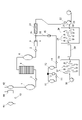
- FIG. 1 is a diagram schematically showing an example of the dope preparation process, the casting process, the drying process, and the winding process of the solution casting film forming method preferred for the present invention.
- a dispersion of fine particles in which a solvent and a matting agent are dispersed by a disperser is passed from a loading pot 61 through a filter 64 and stocked in a stock pot 62 .
- the cycloolefin resin which is the main dope
- the filter 6 added with additives through the confluence tube 20, mixed in the mixer 21, and fed to the pressure die 22.
- an additive for example, an ultraviolet absorber, etc.
- a solvent passed through the filter 12 from the additive feeding pot 10 and stocked in the stock pot 13 . After that, it is mixed with the main dope by a confluence tube 20 and a mixer 21 through a filter 15 and a conduit 16 .
- the main dope fed to the pressure die 22 is cast on a metal belt-shaped support 31 to form a web 32, which is dried and then peeled at a peeling position 33 to obtain a raw film.
- the peeled web 32 is passed through a number of transport rollers in the first drying device 34, dried to a predetermined amount of residual solvent, and then stretched in the longitudinal direction or the width direction by the stretching device 35. It is stretched so as to have a magnification and heated so as to have a predetermined amount of residual solvent. After stretching, the film is dried while being passed through a conveying roller 37 by a second drying device 36 until a predetermined amount of residual solvent is reached, and then wound into a roll by a winding device 38 . Each step will be described below.
- Dope preparation step To an organic solvent mainly composed of a good solvent for the cycloolefin resin, add the cycloolefin resin and, depending on the case, a retardation increasing agent, a matting agent (fine particles), or other compounds in a dissolution vessel. It is a step of preparing a dope by dissolving with stirring, or a step of mixing a retardation increasing agent, a matting agent or other compound solution into the cycloolefin resin solution to prepare a dope as a main solution.
- the organic solvent useful for forming the dope is used without limitation as long as it dissolves the cycloolefin resin and other compounds at the same time. be able to.
- organic solvents examples include chlorine solvents such as chloroform and dichloromethane; aromatic solvents such as toluene, xylene, benzene, and mixed solvents thereof; methanol, ethanol, isopropanol, n-butanol, 2-butanol, and the like.
- alcoholic solvents methyl cellosolve, ethyl cellosolve, butyl cellosolve, dimethylformamide, dimethyl sulfoxide, dioxane, cyclohexanone, tetrahydrofuran, acetone, methyl ethyl ketone (MEK), ethyl acetate, diethyl ether;
- MEK methyl ethyl ketone
- ethyl acetate diethyl ether
- the organic solvent used in the present invention is preferably a mixed solvent of a good solvent and a poor solvent
- the good solvent includes, for example, dichloromethane as a chlorinated organic solvent, methyl acetate as a non-chlorinated organic solvent, ethyl acetate, amyl acetate, acetone, methyl ethyl ketone, tetrahydrofuran, 1,3-dioxolane, 1,4-dioxane, cyclohexanone, ethyl formate, 2,2,2-trifluoroethanol, 2,2,3,3-hexafluoro- 1-propanol, 1,3-difluoro-2-propanol, 1,1,1,3,3,3-hexafluoro-2-methyl-2-propanol, 1,1,1,3,3,3-hexa fluoro-2-propanol, 2,2,3,3,3-pentafluoro-1-propanol, nitroethane, m
- the poor solvent is preferably an alcohol-based solvent
- the alcohol-based solvent is preferably selected from methanol, ethanol and butanol from the viewpoint of improving peelability and enabling high-speed casting.
- a high percentage of alcohol in the dope gels the web, making it easier to peel off from the metal support, and a low percentage of alcohol causes cycloolefin resins and other compounds in non-chlorine organic solvent systems. It also plays a role in promoting the dissolution of In the production of the stretched film according to the present invention, it is preferable to use a dope having an alcohol concentration in the range of 0.5 to 15.0% by mass in order to improve the flatness of the resulting stretched film. preferable.
- a method of performing at normal pressure a method of performing at the boiling point of the main solvent or less, a method of performing pressurization at the boiling point or higher of the main solvent, JP-A-9-95544, JP-A-95544, JP-A-95544, 9-95557, or a cooling dissolution method as described in JP-A-9-95538, a high-pressure method described in JP-A-11-21379, and various other dissolution methods can be used.
- the concentration of the cycloolefin resin in the dope is preferably in the range of 10-40 mass %.
- the dope is filtered with a filter medium, degassed, and sent to the next step by a liquid-sending pump.
- a filter medium having a 90% collection particle size of 10 to 100 times the average particle size of fine particles, preferably in a main filter 3 having a leaf disk filter.
- the filter medium used for filtration has a small absolute filtration accuracy. , there is a problem of lowering productivity. Therefore, in the present invention, the filter medium used for the cycloolefin resin dope preferably has an absolute filtration accuracy of 0.008 mm or less, more preferably 0.001 to 0.008 mm, and more preferably 0.003 to 0.003 mm. Filter media in the range of 006 mm are even more preferred.
- the material of the filter medium is not particularly limited, and a normal filter medium can be used. It is preferable because there is no
- the flow rate of the dope during filtration is preferably 10-80 kg/(h ⁇ m 2 ), preferably 20-60 kg/(h ⁇ m 2 ).
- the productivity becomes efficient, and the flow rate of the dope during filtration is within 80 kg/(h ⁇ m 2 ). If so, the pressure applied to the filter medium becomes appropriate and the filter medium is not damaged, which is preferable.
- the filtration pressure is preferably 3500 kPa or less, more preferably 3000 kPa or less, and even more preferably 2500 kPa or less.
- the filtration pressure can be controlled by appropriately selecting the filtration flow rate and filtration area.
- the main dope may contain about 10 to 50% by mass of returned materials.
- Returned material is, for example, finely pulverized cycloolefin resin film, which is generated when cycloolefin resin film is formed, such as cut off both sides of the film, scratches, etc., exceeding the specified value of the film.
- a raw cycloolefin resin film is used.
- pelletized cycloolefin resin and other compounds can be preferably used in advance.
- the metal support in the casting process preferably has a mirror-finished surface, and as the metal support, a stainless steel belt or a casting drum with a plated surface is preferably used.
- the width of the cast can be in the range 1-4 m, preferably in the range 1.3-3 m, more preferably in the range 1.5-2.8 m.
- the surface temperature of the metal support in the casting step is set in the range of -50.degree.
- a higher temperature is preferable because the drying speed of the web (a dope film formed by casting dope on a casting support is called a web) can be increased. Flatness may deteriorate.
- a preferable support temperature is appropriately determined in the range of 0 to 100°C, more preferably in the range of 5 to 30°C. Alternatively, it is also a preferred method to gel the web by cooling and remove it from the drum in a state containing a large amount of residual solvent.
- a method for controlling the temperature of the metal support is not particularly limited, but there are a method of blowing hot or cold air and a method of contacting the back side of the metal support with hot water. Heat transfer is more efficient when hot water is used, which is preferable because it takes less time for the temperature of the metal support to become constant.
- hot air considering the temperature drop of the web due to the latent heat of evaporation of the solvent, hot air above the boiling point of the solvent may be used while preventing foaming and using air with a temperature higher than the target temperature. .
- the die is preferably a pressurized die that can adjust the shape of the slit in the mouthpiece part of the die and makes it easy to achieve a uniform film thickness.
- the pressure die includes a coat hanger die, a T die, and the like, both of which are preferably used.
- the surface of the metal support is a mirror surface. In order to increase the film-forming speed, two or more pressurizing dies may be provided on the metal support, and the doping amount may be divided for lamination.
- the web on the support after casting is preferably dried on the support in an atmosphere of 30 to 100°C. In order to maintain the atmosphere at 30 to 100° C., it is preferable to apply hot air at this temperature to the upper surface of the web or heat it by means such as infrared rays.
- (2-3) Peeling Step This is a step of peeling off the web from which the solvent has evaporated on the metal support at the peeling position.
- the peeled web is sent to the next process as a raw film.
- the temperature at the peeling position on the metal support is preferably in the range of 10-40°C, more preferably in the range of 11-30°C.
- the solvent in the web is evaporated in the solvent evaporation step, and the amount of the solvent remaining in the web on the metal support at the time of peeling is preferably in the range of 15 to 100% by mass.
- the amount of residual solvent is preferably controlled by the drying temperature and drying time in the solvent evaporation step. If the web is peeled with a large amount of residual solvent, the web will be too soft and the flatness of the peeled web will be easily lost, and wrinkles and vertical streaks will easily occur due to peeling tension. A solvent amount is determined.
- the amount of residual solvent in the web or original film is defined by the following formula (Z2).
- Formula (Z2): Residual solvent amount (%) (mass of web or raw film before heat treatment - mass of web or raw film after heat treatment) / (mass of web or raw film after heat treatment) ⁇ 100 Note that the heat treatment for measuring the amount of residual solvent means heat treatment at 115° C. for 1 hour.
- the peel tension when peeling the web from the metal support to form the original film is usually in the range of 196 to 245 N / m, but if wrinkles are likely to occur during peeling, the tension is 190 N / m or less. It is preferable to peel with.
- the temperature at the peeling position on the metal support is preferably in the range of -50 to 40°C, more preferably in the range of 10 to 40°C, and in the range of 15 to 30°C. is most preferred.
- the drying process can be divided into a preliminary drying process (first drying process) and a main drying process (second drying process).
- Pre-drying step (first drying step) The original film obtained by web-peeling from the metal support is pre-dried in the first drying device 34 . Pre-drying of the raw film may be carried out while conveying the raw film with a number of rollers arranged vertically, or may be conveyed by fixing both ends of the raw film with clips as in a tenter dryer. It may be dried while
- the drying temperature in the pre-drying step of the web is preferably (Tg-5) ° C. or lower and (Tg + 30) ° C. or higher for 1 to 30 minutes when the glass transition temperature of the raw film is Tg. It is effective to perform heat treatment within the range. Specifically, the drying temperature is in the range of 40 to 150°C, more preferably in the range of 80 to 100°C.
- the amount of residual solvent in the original film during stretching is preferable to adjust the amount of residual solvent in the original film during stretching, which will be described later, in this drying step, but the amount of residual solvent may be adjusted in the initial stage of the stretching step.
- the residual solvent amount is preferably controlled by the drying temperature and drying time in the preliminary drying step.
- the amount of residual solvent in the raw film at the start of stretching is preferably within the range of 700 to 30000 ppm by mass, and within the range of 2000 to 20000 ppm by mass. is more preferable.
- the half width of the diffraction peak when the surface of the stretched film of the present invention after stretching is irradiated with X-rays at an angle of 0.1 degree is within the above-mentioned specific range,
- the amount of residual solvent in the stretched film can be controlled, and a stretched film having a low-orientation surface, moderate moisture permeability, and excellent adhesiveness can be obtained.
- the amount of residual solvent in the original film is within the above range even at least once.
- the amount of residual solvent in the original film at the start of stretching is defined by the following formula (Z3).
- Residual solvent amount (ppm) (mass of raw film before heat treatment - mass of raw film after heat treatment) / (mass of raw film after heat treatment) ⁇ 10 6
- the heat treatment for measuring the amount of residual solvent means heat treatment at 115° C. for 1 hour.
- the raw film according to the present invention is preferably stretched in the longitudinal direction (also referred to as the MD direction or casting direction) and/or the width direction (also referred to as the TD direction), and at least the width direction is stretched by a stretching device. It is preferable to stretch and manufacture.
- the stretching operation may be performed in multiple steps. Moreover, when performing biaxial stretching, simultaneous biaxial stretching may be performed and you may implement in steps. In this case, stepwise, for example, it is possible to sequentially perform stretching in different stretching directions, or to divide stretching in the same direction into multiple stages and add stretching in different directions to any of the stages. is also possible.
- ⁇ Stretching in the longitudinal direction ⁇ stretching in the width direction ⁇ stretching in the longitudinal direction ⁇ stretching in the longitudinal direction ⁇ Stretching in the width direction ⁇ stretching in the width direction ⁇ stretching in the longitudinal direction ⁇ stretching in the longitudinal direction also includes stretching in one direction and shrinking the other by relaxing the tension.
- the glass transition temperature of the raw film is Tg, in the longitudinal direction and / or in the width direction, preferably in the width direction, so that the film thickness after stretching is in the desired range, (Tg- 30) to (Tg+50)°C.
- Tg- 30 the half width of the diffraction peak and the residual solvent amount of the stretched film of the present invention can be controlled within the above range, and the stretched film has a low surface orientation and excellent adhesiveness. can get.
- it is easy to adjust the retardation, and the drawing stress can be reduced, so that the haze is lowered.
- the stretching temperature is preferably in the range of (Tg-40) to (Tg+40)°C. Drying is carried out at a stretching temperature of 100 to 200°C.
- the glass transition temperature Tg referred to here is the midpoint glass transition temperature (Tmg) measured using a commercially available differential scanning calorimeter at a heating rate of 20°C/min and determined according to JIS K7121 (1987). is.
- a specific method for measuring the glass transition temperature Tg of the stretched film is measured using a differential scanning calorimeter DSC220 manufactured by Seiko Instruments Inc. according to JIS K7121 (1987).
- the original film is stretched at a stretch ratio within the range of 1.2 to 3.0 times in terms of area ratio, so that the half width of the diffraction peak and the residual solvent amount of the stretched film obtained are It can be within the scope of the present invention, and it is preferable in that the surface can achieve both low orientation and moderate moisture permeability.
- the original film may be stretched in either the widthwise direction or the lengthwise direction, and is more preferably stretched in both the widthwise direction and the lengthwise direction. Stretching should be within the range of 0 times.
- the method of stretching in the longitudinal direction there is no particular limitation on the method of stretching in the longitudinal direction.
- these methods may be used in combination.
- the entire drying process or a part of the drying process as shown in Japanese Patent Application Laid-Open No. 46625/1987 is carried out by holding both widthwise ends of the web with clips or pins in the width direction.
- a method of drying while drying (called a tenter method), among which a tenter method using clips and a pin tenter method using pins are preferably used.
- the stretching rate is 250%/min or more, the flatness is improved and the film can be processed at high speed, which is preferable from the viewpoint of production suitability. If it is 500%/min or less, the film breaks. It is preferable because it can be processed without
- a preferred drawing speed is in the range of 300 to 400%/min, which is effective when drawing at a low magnification.
- the stretching speed is defined by Equation 1 below.
- Stretching speed (% / min) [(d1 / d2) -1] ⁇ 100 (%) / t (In formula 1, d1 is the width dimension in the stretching direction of the stretched film according to the present invention after stretching, d2 is the width dimension in the stretching direction of the original film before stretching, and t is the time required for stretching. (min).)
- the stretched film according to the present invention has a desired retardation value by stretching as described above.
- the in-plane retardation value Ro and the thickness direction retardation value Rt were measured using an automatic birefringence meter AxoScan (Axo Scan Mueller Matrix Polarimeter: manufactured by Axometrics) under an environment of 23°C and 55% RH. It can be calculated from the refractive indices nx, ny, and nz obtained by three-dimensional refractive index measurement at a wavelength of 590 nm.
- the retardation value Ro in the in-plane direction of the stretched film is within the range of 40 to 60 nm, represented by the following formulas (i) and (ii), and the retardation value in the film thickness direction It is preferable that Rt is in the range of 110 to 140 nm from the viewpoint of improving visibility such as viewing angle and contrast when it is provided in a VA type liquid crystal display device.
- the stretched film can be adjusted within the range of the above-mentioned retardation value by stretching while adjusting the stretch rate at least in the width direction.
- nx represents the refractive index in the direction x in which the refractive index is maximized in the in-plane direction of the film.
- ny represents the refractive index in the direction y perpendicular to the direction x in the in-plane direction of the film.
- nz represents the refractive index in the thickness direction z of the film.
- d represents the film thickness (nm).
- holding and relaxation are usually performed after stretching. That is, in this step, it is preferable to carry out, in this order, a stretching step of stretching the raw film, a holding step of holding the raw film in the stretched state, and a relaxing step of relaxing the raw film in the stretched direction.
- the stretching at the stretching ratio achieved in the stretching stage is held at the stretching temperature in the stretching stage.
- the relaxation stage the stretching in the stretching stage is held in the holding stage, and then the stretching is relaxed by releasing the tension for stretching.
- the relaxation stage may be performed at a temperature equal to or lower than the stretching temperature in the stretching stage.
- the second drying device 36 heats and dries the stretched film.
- This main drying step can also control the half-value width of the diffraction peak and the residual solvent amount of the stretched film of the present invention within the above ranges.
- a nozzle capable of exhausting used hot air (solvent-containing air or wetting air) to prevent the used hot air from being mixed.
- the hot air temperature is preferably in the range of (Tg-20) to (Tg+50) ° C., specifically, when the glass transition temperature of the original film is Tg, specifically in the range of 40 to 250 ° C. preferable.
- the drying time is preferably about 5 seconds to 60 minutes, more preferably 10 seconds to 30 minutes.
- the heating and drying means is not limited to hot air, and infrared rays, heating rollers, microwaves, flash lamp annealing, etc. can be used, for example. From the viewpoint of simplicity, it is preferable to dry the film with hot air or the like while transporting the film with transport rollers 37 arranged in a zigzag pattern.
- the drying temperature is more preferably in the range of 40 to 350° C. in consideration of the amount of residual solvent, the expansion ratio during transportation, and the like.
- flash lamp annealing it is preferable to irradiate within the range of 200 to 1000 V for 100 to 5000 ⁇ sec.
- the film is preferably dried until the amount of residual solvent is 100 ppm by mass or less.
- Winding Step (4-1) Knurling Processing After a predetermined heat treatment or cooling treatment, it is preferable to provide a slitter and cut off the ends before winding, in order to obtain a good winding shape. Furthermore, it is preferable to perform knurling processing on both widthwise end portions.
- the knurling process can be formed by pressing a heated embossing roller against the width edge of the film.
- the embossing roller has fine unevenness, and by pressing it against the film, unevenness is formed on the film, and the edges can be made bulky.
- the height of the knurling at both ends of the stretched film according to the present invention is preferably 4 to 20 ⁇ m and the width is preferably 5 to 20 mm. Further, in the present invention, the knurling process is preferably provided after drying and before winding in the film forming process.
- (4-2) Winding step This is a step of winding the stretched film after the amount of residual solvent in the stretched film reaches 500 ppm by mass or less. A good film can be obtained.
- a commonly used winding method may be used, and there are constant torque method, constant tension method, taper tension method, program tension control method with constant internal stress, etc., and they can be used properly.
- the stretch ratio in the stretching step is in the range of 1.2 to 3.0 times in terms of area ratio, and the amount of residual solvent at the start of stretching is 700.
- the half width of the diffraction peak when the surface of the stretched film of the present invention is irradiated with X-rays at an angle of 0.1 degree is 4.6 to 5.4 degrees. and the amount of residual solvent in the stretched film can be controlled within the range described above. As a result, the surface of the stretched film becomes less oriented, suitable moisture permeability can be secured, and adhesiveness is excellent.
- the moisture permeability (40° C., 95% RH) of the stretched film of the present invention is within the range of 1 to 500 g/(m 2 ⁇ 24 h) and within the range of 10 to 200 g/(m 2 ⁇ 24 h). is more preferred.
- the moisture permeability was measured by leaving the film to be measured under conditions of 40° C. and 95% RH for 24 hours based on the calcium chloride-cup method described in JIS Z 0208.
- the stretched film according to the present invention preferably has a long length, specifically, preferably has a length of about 100 to 10,000 m, and is wound into a roll.
- the width of the stretched film according to the present invention is preferably 1 m or more, more preferably 1.3 m or more, and particularly preferably 1.3 to 4 m.
- the thickness (thickness) of the film after stretching is preferably in the range of 10 to 50 ⁇ m from the viewpoint of thinning the display device and productivity. If the thickness is 10 ⁇ m or more, film strength and retardation above a certain level can be expressed. If the thickness is 50 ⁇ m or less, a desired retardation can be obtained, and the thickness can be reduced for polarizing plates and display devices. Preferably, it is in the range of 20-40 ⁇ m.
- the stretched film of the present invention is suitably used as a protective film for polarizing plates and the like, and can be used in various optical measurement devices and display devices such as liquid crystal display devices and organic electroluminescence display devices.
- the polarizing plate of the present invention comprises the above stretched film of the present invention.
- the polarizing plate 200 of the present invention comprises at least a polarizing plate protective film 300, a polarizer layer 400, a stretched film 100 of the present invention and an adhesive sheet 500 laminated in this order. is a board.
- the adhesive sheet has an adhesive layer formed from an adhesive composition.
- the pressure-sensitive adhesive sheet for example, a double-sided pressure-sensitive adhesive sheet having only a pressure-sensitive adhesive layer, a substrate, and pressure-sensitive adhesive layers formed on both sides of the substrate, at least one pressure-sensitive adhesive layer being formed from the pressure-sensitive adhesive composition.
- a double-sided pressure-sensitive adhesive sheet that is a pressure-sensitive adhesive layer formed on a substrate, a single-sided pressure-sensitive adhesive sheet that has the above-mentioned pressure-sensitive adhesive layer formed on one side of the substrate, and the pressure-sensitive adhesive layer of these pressure-sensitive adhesive sheets that are not in contact with the substrate A pressure-sensitive adhesive sheet having a separator attached to the surface can be used.
- the pressure-sensitive adhesive composition preferably comprises, for example, an acrylic pressure-sensitive adhesive main agent, a cross-linking agent, an antioxidant, and the like.
- acrylic pressure-sensitive adhesive base include 4-hydroxybutyl acrylate units (4-HBA), butyl acrylate units, and methyl acrylate units.
- cross-linking agent include tolylene diisocyanate-based compounds and xylylene diisocyanate.
- antioxidants examples include hindered phenolic antioxidants such as pentaerythritol-tetrakis(3-(3,5-di-t-butyl-4-hydroxyphenyl)propionate) (manufactured by BASF Japan, IRGANOX1010), Phosphorus antioxidants such as tris(2,4-di-t-butylphenyl)phosphite (IRGAFOS168, manufactured by BASF Japan).
- hindered phenolic antioxidants such as pentaerythritol-tetrakis(3-(3,5-di-t-butyl-4-hydroxyphenyl)propionate) (manufactured by BASF Japan, IRGANOX1010)
- Phosphorus antioxidants such as tris(2,4-di-t-butylphenyl)phosphite (IRGAFOS168, manufactured by BASF Japan).
- the acrylic pressure-sensitive adhesive main agent in the pressure-sensitive adhesive composition is preferably contained in the range of 10 to 90% by mass, and the cross-linking agent is contained in the range of 0.01 to 5.00% by mass.
- the content of the antioxidant is preferably within the range of 0.01 to 5.00% by mass.
- the pressure-sensitive adhesive sheet preferably has a low water content in order to suppress the occurrence of high-humidity shock. . Therefore, the moisture content of the pressure-sensitive adhesive sheet is preferably in the range of 3.0 to 10.0%, particularly preferably in the range of 3.5 to 5.5%.
- the moisture content of the adhesive sheet is determined by forming an adhesive layer on a polyester film with a thickness of 50 ⁇ m, cutting it to 60 mm ⁇ 130 mm, and then pasting the adhesive sheet on a polycarbonate having a thickness of 1 mm cut to 70 mm ⁇ 150 mm. It is obtained by standing in an environment of 40° C. and 95% RH for 48 hours and measuring the mass increase of the adhesive.
- the content of 4-hydroxybutyl acrylate units (4-HBA) in the pressure-sensitive adhesive composition is The content may be within the range of 4.0 to 25% by mass.
- polarizer layer refers to an element that transmits only light with a plane of polarization in a certain direction.
- a polarizing film (also referred to as a “polarizer film” and a “polarizer film”) constituting a typical polarizer layer known at present is a polyvinyl alcohol-based polarizing film.
- the polyvinyl alcohol-based polarizing film includes a polyvinyl alcohol-based film dyed with iodine and a polyvinyl alcohol-based film dyed with a dichroic dye.
- the polyvinyl alcohol-based polarizing film may be a film obtained by uniaxially stretching a polyvinyl alcohol-based film and then dyeing it with iodine or a dichroic dye (preferably a film further subjected to durability treatment with a boron compound); A film obtained by dyeing an alcohol-based film with iodine or a dichroic dye and then uniaxially stretching the film (preferably, a film further subjected to a durability treatment with a boron compound) may be used.
- the absorption axis of the polarizing film (polarizer layer) is generally parallel to the maximum stretching direction.
- JP 2003-248123, JP 2003-342322, etc. ethylene unit content 1 to 4 mol%, degree of polymerization 2000 to 4000, degree of saponification 99.0 to 99.99 mol% Ethylene modified polyvinyl alcohol is used.
- an ethylene-modified polyvinyl alcohol film having a hot water cutting temperature of 66 to 73° C. is preferably used.
- the thickness of the polarizer layer is preferably in the range of 5 to 30 ⁇ m, and more preferably in the range of 5 to 20 ⁇ m for thinning the polarizing plate.
- the angle formed by the in-plane slow axis of the stretched film of the present invention and the absorption axis of the polarizer layer is in the range of 20 to 70 degrees. It is preferably in the range of 30 to 60 degrees, more preferably in the range of 40 to 50 degrees.
- the stretched film of the present invention is used as a retardation film for VA, the in-plane slow axis of the stretched film of the present invention and the absorption axis of the polarizer layer can be substantially orthogonal.
- the polarizer layer and the stretched film are preferably bonded together via an adhesive or a pressure-sensitive adhesive.
- the adhesive may be a water-based adhesive containing polyvinyl alcohol resin or urethane resin as a main component, or a photocurable adhesive containing photocurable resin such as epoxy resin as a main component.
- the adhesive may contain acrylic polymers, silicone polymers, polyesters, polyurethanes, polyethers, etc. as base polymers. Among them, water-based adhesives are preferable because they have good affinity with the stretched film of the present invention and are less likely to be distorted due to water absorption.
- the bonding of the polarizer layer and the stretched film of the present invention can usually be carried out by roll-to-roll.
- a polarizing plate protective film is arranged on the surface of the polarizer layer opposite to the stretched film.
- polarizing plate protective films include commercially available cellulose acylate films (e.g., Konica Minolta Tack KC6UA, KC8UX, KC4UX, KC5UX, KC8UY, KC4UY, KC12UR, KC8UCR-3, KC8UCR-4, KC8UCR-5, KC4FR-1 , KC8UY-HA, KC8UX-RHA, KC8UE, KC4UE, KC4UE, KC4HR-1, KC4KR-1, KC4UA, KC6UA (manufactured by Konica Minolta Opto Co., Ltd.) and the like.
- the thickness of the polarizing plate protective film is not particularly limited, but is preferably in the range of 10 to 100 ⁇ m, more preferably in the range of 10 to 60 ⁇ m, and preferably in the range of 20 to 60 ⁇ m. Especially preferred.
- the liquid crystal display device of the present invention is a liquid crystal display device in which the polarizing plate is adhered to at least one surface of a liquid crystal cell, and the adhesive sheet is adjacent to the liquid crystal cell.
- FIG. 3 is a schematic diagram showing an example of the basic configuration of a liquid crystal display device.
- the liquid crystal display device 20 of the present invention includes a liquid crystal cell 30, a first polarizing plate 40 and a second polarizing plate 50 sandwiching it, and a backlight 60.
- FIG. 3 is a schematic diagram showing an example of the basic configuration of a liquid crystal display device.
- the liquid crystal display device 20 of the present invention includes a liquid crystal cell 30, a first polarizing plate 40 and a second polarizing plate 50 sandwiching it, and a backlight 60.
- FIG. 3 is a schematic diagram showing an example of the basic configuration of a liquid crystal display device.
- the liquid crystal display device 20 of the present invention includes a liquid crystal cell 30, a first polarizing plate 40 and a second polarizing plate 50 sandwiching it, and a backlight 60.
- FIG. 3 is a schematic diagram showing an example of the basic configuration of a liquid crystal display device.
- the liquid crystal display device 20 of the present invention includes a
- the display mode of the liquid crystal cell 30 may be any display mode such as TN (Twisted Nematic), VA (Visual Alignment), or IPS (InPlane Switching).
- TN Transmission Nematic
- VA Visual Alignment
- IPS InPlane Switching
- the IPS mode is preferable.
- the VA mode is preferable.
- the first polarizing plate 40 is arranged on the surface of the liquid crystal cell 30 on the viewing side, and is arranged on the first polarizer layer 41 and the surface of the first polarizer layer 41 opposite to the liquid crystal cell. and a protective film 45 (F2) disposed on the surface of the first polarizer layer 41 on the liquid crystal cell side.
- the second polarizing plate 50 is arranged on the backlight side surface of the liquid crystal cell 30 , the second polarizer layer 51 and the protective layer 51 arranged on the liquid crystal cell side surface of the second polarizer layer 51 . It includes a film 53 (F3) and a protective film 55 (F4) disposed on the side of the second polarizer layer 51 opposite to the liquid crystal cell.
- the absorption axis of the first polarizer layer 41 and the absorption axis of the second polarizer layer 51 are preferably orthogonal.
- the protective film 45 (F2) can be the stretched film of the present invention.
- the protective film 45 (F2) and the first polarizer layer 41 are directly laminated.
- the in-plane slow axis of the protective film 45 (F2) and the absorption axis of the first polarizer layer 41 can be substantially orthogonal.
- the protective film 45 (F2) and the liquid crystal cell 30 are adhered with an adhesive sheet 48 interposed therebetween.
- the protective films 43 (F1), 53 (F3) and 55 (F4) can be, for example, the polarizing plate protective films described above.
- FIG. 2 shows an example in which the protective film 45 (F2) is the stretched film of the present invention, it is not limited to this, and 53 (F3) may be the stretched film of the present invention.
- Cycloolefin resin As the cycloolefin resin used in the examples, the following cycloolefin resin was used. Cycloolefin resin: ARTON G7810 (manufactured by JSR)
- Finemet NF manufactured by Nippon Seisen Co., Ltd.
- a main dope having the following composition was prepared.
- Dichloromethane and ethanol were first added to the pressurized dissolution tank.
- a cycloolefin resin and a fine particle addition liquid were put into a pressurized dissolution tank containing dichloromethane while stirring. This is heated and stirred to dissolve the resin, which is passed through Azumi Filter Paper No. 1 (manufactured by Azumi Filter Paper Co., Ltd.). 244 was used to prepare the main dope.
- Cycloolefin resin (ARTON G7810 (manufactured by JSR)) 100 parts by mass Dichloromethane 200 parts by mass Ethanol 10 parts by mass Microparticle additive liquid 3 parts by mass
- the main dope was uniformly cast on a stainless steel belt support at a temperature of 31°C and a width of 1800 mm using an endless belt casting apparatus.
- the temperature of the stainless steel belt was controlled at 28°C.
- the conveying speed of the stainless steel belt was 20 m/min.
- the solvent was evaporated on a stainless steel belt support until the amount of residual solvent in the cast film reached 30.3% by mass.
- the optical film 101 was obtained by peeling (unstretched) from the stainless steel belt support with a peeling tension of 128 N/m.
- the optical film 101 was dried by heating at 100° C. in a belt dryer before stretching, and after controlling the amount of residual solvent at the start of stretching to be 1000 mass ppm, it was heated at Tg+25° C. (190). , at the draw ratios listed in Table I. After stretching, the film was dried for 30 minutes at Tg-20°C (145°C) in a belt dryer. Thus, a stretched film 101 having a film thickness shown in Table I below was obtained.
- the optical film 101 is dried by heating at 50°C in a belt dryer before stretching, and the amount of residual solvent at the start of stretching is controlled to 30000 ppm by mass. , Tg-30°C (135°C) and stretched at the draw ratio shown in Table I. After stretching, the film was dried at Tg-20°C (145°C) with a belt dryer. Thus, a stretched film 104 having a thickness shown in Table I below was obtained.
- the optical film 101 is dried by heating at 80° C. in a belt dryer before stretching, and the amount of residual solvent at the start of stretching is controlled to 2000 mass ppm. Then, the film was heated at Tg + 50°C (215°C) and stretched at the draw ratio shown in Table I. After stretching, the film was dried at Tg-20°C (145°C) with a belt dryer. Thus, a stretched film 106 having a film thickness shown in Table I below was obtained.
- a ZB film (a cycloolefin resin film having no polar group), which is a retardation film manufactured by Zeon Corporation, was used as the film 107 . Note that the ZB film is a stretched film that has been stretched without residual solvent.
- composition of main dope Methylene chloride 340 parts by mass Ethanol 64 parts by mass Cellulose acetate propionate (acetyl group substitution degree 1.88, propionyl group substitution degree 0.58) 100 parts by mass Carboxylic acid sugar ester compound (benzyl saccharose having an average substitution degree of 6.5) 9 parts by mass The following aromatic terminal polyester compound (5) 3 parts by mass
- the half width of the diffraction peak was measured as follows.
- the incident angle ⁇ of the incident X-ray was fixed at 0.1 degree, and the X-ray intensity was measured while changing the angle of the detector.
- an X-ray diffractometer RINT-TTRII manufactured by Rigaku Denki Co., Ltd.
- the anticathode was Cu and operated at 50 kV-300 mA.
- the height limiting slit was set to 10 mm, the divergence slit was set to 2/3, and the optical system was adjusted so that the peak half width of Al (200) when measuring the aluminum foil was 0.35 degrees.
- the film was fixed, ⁇ was fixed at 0.1 degrees, 2 ⁇ was scanned from 5 to 35 degrees in steps of 0.02 degrees, and each step was integrated for 1 second to obtain a diffraction pattern. Background treatment was performed and the half width of the diffraction peak was determined. The results are shown in Table I below.
- the oxygen permeability of each obtained film was measured as follows. Using an oxygen transmission rate measuring device (model name “Oxytran” (registered trademark) (“OXTRAN” 2/20), manufactured by MOCON, USA) at a temperature of 23 ° C. and a humidity of 0% RH, It was measured based on the B method (isobaric method) described in JIS K7126 (1987). In addition, each of the two test pieces was measured once, and the average value of the two measured values was taken as the value of the oxygen transmission rate, and the results are shown in Table I below.
- Preparation of polarizing plate ⁇ Preparation of polarizer layer> A polyvinyl alcohol film with a thickness of 70 ⁇ m was swollen with water at 35°C. The resulting film was immersed in an aqueous solution of 0.075 g of iodine, 5 g of potassium iodide and 100 g of water for 60 seconds, and further immersed in an aqueous solution of 3 g of potassium iodide, 7.5 g of boric acid and 100 g of water at 45°C. . The obtained film was uniaxially stretched under conditions of a stretching temperature of 55° C. and a stretching ratio of 5 times. This uniaxially stretched film was washed with water and then dried to obtain a polarizing film (polarizer layer) having a thickness of 20 ⁇ m.
- UV curable adhesive liquid UV glue
- defoaming was performed to prepare an ultraviolet curable adhesive liquid.
- the triarylsulfonium hexafluorophosphate was blended as a 50% propylene carbonate solution, and the solid content of the triarylsulfonium hexafluorophosphate is shown below.
- 3,4-epoxycyclohexylmethyl-3,4-epoxycyclohexane carboxylate 45 parts by mass Epolead GT-301 (alicyclic epoxy resin manufactured by Daicel Corporation) 40 parts by mass 1,4-butanediol diglycidyl ether 15 parts by mass Triarylsulfonium hexafluorophosphate 2.3 parts by mass 9,10-dibutoxyanthracene 0.1 parts by mass 1,4-diethoxynaphthalene 2.0 parts by mass
- the films 101 to 111 produced above were prepared, and their surfaces were subjected to corona discharge treatment.
- the conditions for the corona discharge treatment were a corona output intensity of 2.0 kW and a line speed of 18 m/min.
- the above ultraviolet curable adhesive was applied to the corona discharge-treated surface of the film with a bar coater so that the film thickness after curing was about 3 ⁇ m to form an adhesive layer.
- the polyvinyl alcohol-iodine polarizer layer was attached to the obtained adhesive layer.
- the films 101 to 111 were adhered to the other surface of the polarizer layer to prepare polarizing plates 101 to 111, respectively.
- ultraviolet rays are applied so that the integrated light amount is 750 mJ / cm 2 .
- the UV-curable adhesive layer was cured by irradiation.
- ⁇ Adhesive strength after durability of polarizing plate> The polarizing plate obtained above was stored in an environment of 0° C. and 0% RH for 100 hours and subjected to a durability test, and then subjected to a 0 degree peel test (JIS Z0237 : 2009) was measured using a 90-degree peel test jig (P90-200N) manufactured by Imada Co., Ltd. The ratio of the peel strength after the durability test to the peel strength before the durability test (the peel strength at the initial adhesive strength) was calculated. In addition, evaluation was made according to the following evaluation criteria, and if it was ⁇ or above, it was judged to be good. (Evaluation criteria) ⁇ : 95% or more ⁇ : 80% or more and less than 95% ⁇ : 50% or more and less than 80% XX: less than 50%
- the stretched film of the present invention has a lower surface orientation than the films of the comparative examples, and is superior in initial adhesive strength and adhesive strength after durability.
- the present invention can be used for a stretched film having a low-orientation surface, moderate moisture permeability, and excellent adhesiveness, a method for producing the stretched film, a polarizing plate, and a liquid crystal display device.
Landscapes
- Physics & Mathematics (AREA)
- Nonlinear Science (AREA)
- Chemical & Material Sciences (AREA)
- General Physics & Mathematics (AREA)
- Optics & Photonics (AREA)
- Mathematical Physics (AREA)
- Crystallography & Structural Chemistry (AREA)
- Engineering & Computer Science (AREA)
- Manufacturing & Machinery (AREA)
- Health & Medical Sciences (AREA)
- Medicinal Chemistry (AREA)
- Polymers & Plastics (AREA)
- Organic Chemistry (AREA)
- Chemical Kinetics & Catalysis (AREA)
- Materials Engineering (AREA)
- Mechanical Engineering (AREA)
- Polarising Elements (AREA)
- Shaping By String And By Release Of Stress In Plastics And The Like (AREA)
- Manufacture Of Macromolecular Shaped Articles (AREA)
Priority Applications (3)
| Application Number | Priority Date | Filing Date | Title |
|---|---|---|---|
| CN202280024758.1A CN117063101A (zh) | 2021-04-06 | 2022-03-10 | 拉伸膜、拉伸膜的制造方法、偏振片及液晶显示装置 |
| JP2023512878A JPWO2022215427A1 (https=) | 2021-04-06 | 2022-03-10 | |
| KR1020237033910A KR20230154938A (ko) | 2021-04-06 | 2022-03-10 | 연신 필름, 연신 필름의 제조 방법, 편광판 및 액정 표시 장치 |
Applications Claiming Priority (4)
| Application Number | Priority Date | Filing Date | Title |
|---|---|---|---|
| JP2021-064819 | 2021-04-06 | ||
| JP2021064819 | 2021-04-06 | ||
| JP2021-117285 | 2021-07-15 | ||
| JP2021117285 | 2021-07-15 |
Publications (1)
| Publication Number | Publication Date |
|---|---|
| WO2022215427A1 true WO2022215427A1 (ja) | 2022-10-13 |
Family
ID=83546044
Family Applications (1)
| Application Number | Title | Priority Date | Filing Date |
|---|---|---|---|
| PCT/JP2022/010551 Ceased WO2022215427A1 (ja) | 2021-04-06 | 2022-03-10 | 延伸フィルム、延伸フィルムの製造方法、偏光板及び液晶表示装置 |
Country Status (4)
| Country | Link |
|---|---|
| JP (1) | JPWO2022215427A1 (https=) |
| KR (1) | KR20230154938A (https=) |
| TW (1) | TWI861481B (https=) |
| WO (1) | WO2022215427A1 (https=) |
Families Citing this family (1)
| Publication number | Priority date | Publication date | Assignee | Title |
|---|---|---|---|---|
| TWI903999B (zh) * | 2025-02-07 | 2025-11-01 | 明基材料股份有限公司 | 液晶顯示器 |
Citations (4)
| Publication number | Priority date | Publication date | Assignee | Title |
|---|---|---|---|---|
| JP2009069693A (ja) * | 2007-09-14 | 2009-04-02 | Fujifilm Corp | フィルム、偏光板 |
| US8801978B2 (en) * | 2004-11-15 | 2014-08-12 | Lg Chem, Ltd. | Biaxial-optical polynorbornene-based film and method of manufacturing the same, integrated optical compensation polarizer having the film and method of manufacturing the polarizer, and liquid crystal display panel containing the film and/or polarizer |
| WO2017169257A1 (ja) * | 2016-03-30 | 2017-10-05 | 富士フイルム株式会社 | 転写フィルム、静電容量型入力装置の電極保護膜、積層体および静電容量型入力装置 |
| JP2019120879A (ja) * | 2018-01-10 | 2019-07-22 | コニカミノルタ株式会社 | 延伸フィルムおよびその製造方法 |
Family Cites Families (2)
| Publication number | Priority date | Publication date | Assignee | Title |
|---|---|---|---|---|
| JP5573707B2 (ja) | 2011-01-31 | 2014-08-20 | 日本ゼオン株式会社 | 位相差フィルムの製造方法 |
| JP2019028109A (ja) | 2017-07-26 | 2019-02-21 | 日本ゼオン株式会社 | 複層フィルム及びその製造方法 |
-
2022
- 2022-03-10 WO PCT/JP2022/010551 patent/WO2022215427A1/ja not_active Ceased
- 2022-03-10 JP JP2023512878A patent/JPWO2022215427A1/ja active Pending
- 2022-03-10 KR KR1020237033910A patent/KR20230154938A/ko active Pending
- 2022-03-31 TW TW111112550A patent/TWI861481B/zh active
Patent Citations (4)
| Publication number | Priority date | Publication date | Assignee | Title |
|---|---|---|---|---|
| US8801978B2 (en) * | 2004-11-15 | 2014-08-12 | Lg Chem, Ltd. | Biaxial-optical polynorbornene-based film and method of manufacturing the same, integrated optical compensation polarizer having the film and method of manufacturing the polarizer, and liquid crystal display panel containing the film and/or polarizer |
| JP2009069693A (ja) * | 2007-09-14 | 2009-04-02 | Fujifilm Corp | フィルム、偏光板 |
| WO2017169257A1 (ja) * | 2016-03-30 | 2017-10-05 | 富士フイルム株式会社 | 転写フィルム、静電容量型入力装置の電極保護膜、積層体および静電容量型入力装置 |
| JP2019120879A (ja) * | 2018-01-10 | 2019-07-22 | コニカミノルタ株式会社 | 延伸フィルムおよびその製造方法 |
Also Published As
| Publication number | Publication date |
|---|---|
| JPWO2022215427A1 (https=) | 2022-10-13 |
| KR20230154938A (ko) | 2023-11-09 |
| TW202304691A (zh) | 2023-02-01 |
| TWI861481B (zh) | 2024-11-11 |
Similar Documents
| Publication | Publication Date | Title |
|---|---|---|
| CN101855578B (zh) | 起偏振器的制造方法、起偏振器、偏振片、光学薄膜和图像显示装置 | |
| KR101399788B1 (ko) | 위상차 필름의 제조 방법, 위상차 필름, 편광판 및 액정 표시 장치 | |
| CN103596740A (zh) | 可剥离性层合膜、可剥离性层合膜卷、其制备方法、膜、光学膜、偏振板、偏振板的制备方法以及液晶显示装置 | |
| JPWO2015076101A1 (ja) | 偏光板およびこれを用いた液晶表示装置 | |
| US9523794B2 (en) | Optical film of cellulose ester and cellulose ether for vertical alignment liquid crystal displays | |
| JPWO2014175040A1 (ja) | 偏光板、その製造方法及び液晶表示装置 | |
| CN104755972B (zh) | 光学膜及光学膜的制造方法、偏振片及液晶显示装置 | |
| JP5980465B2 (ja) | 偏光板及びそれを用いた液晶表示装置 | |
| JPWO2010150577A1 (ja) | 偏光板、及び液晶表示装置 | |
| WO2022215427A1 (ja) | 延伸フィルム、延伸フィルムの製造方法、偏光板及び液晶表示装置 | |
| JP6081244B2 (ja) | 偏光板および液晶表示装置 | |
| CN112213809A (zh) | 偏振片的制造方法和偏振片 | |
| JP5463020B2 (ja) | 液晶パネル及び液晶表示装置 | |
| TWI834146B (zh) | 偏光板及液晶顯示裝置 | |
| JP7729378B2 (ja) | 偏光板保護フィルムの製造方法 | |
| CN117063101A (zh) | 拉伸膜、拉伸膜的制造方法、偏振片及液晶显示装置 | |
| KR102797596B1 (ko) | 필름 롤, 그 제조 방법, 편광판, 및 표시 장치 | |
| KR102827362B1 (ko) | 필름 롤, 그 제조 방법, 편광판, 및 표시 장치 | |
| JP5821850B2 (ja) | 偏光板長尺ロール及び光学表示装置の製造システム | |
| WO2025164148A1 (ja) | セルロースアシレートフィルム、セルロースアシレートフィルムの製造方法、偏光板及び液晶表示装置 | |
| JP5263299B2 (ja) | 光学フィルム、偏光板、液晶表示装置、および光学フィルムの製造方法 | |
| JP2015169677A (ja) | 偏光性積層フィルムの製造方法及び偏光板の製造方法 | |
| JP2014061643A (ja) | 光学フィルムの製造方法 |
Legal Events
| Date | Code | Title | Description |
|---|---|---|---|
| 121 | Ep: the epo has been informed by wipo that ep was designated in this application |
Ref document number: 22784412 Country of ref document: EP Kind code of ref document: A1 |
|
| WWE | Wipo information: entry into national phase |
Ref document number: 202280024758.1 Country of ref document: CN |
|
| WWE | Wipo information: entry into national phase |
Ref document number: 2023512878 Country of ref document: JP |
|
| ENP | Entry into the national phase |
Ref document number: 20237033910 Country of ref document: KR Kind code of ref document: A |
|
| WWE | Wipo information: entry into national phase |
Ref document number: 1020237033910 Country of ref document: KR |
|
| NENP | Non-entry into the national phase |
Ref country code: DE |
|
| 122 | Ep: pct application non-entry in european phase |
Ref document number: 22784412 Country of ref document: EP Kind code of ref document: A1 |