WO2022202695A1 - カテキン類含有組成物 - Google Patents
カテキン類含有組成物 Download PDFInfo
- Publication number
- WO2022202695A1 WO2022202695A1 PCT/JP2022/012772 JP2022012772W WO2022202695A1 WO 2022202695 A1 WO2022202695 A1 WO 2022202695A1 JP 2022012772 W JP2022012772 W JP 2022012772W WO 2022202695 A1 WO2022202695 A1 WO 2022202695A1
- Authority
- WO
- WIPO (PCT)
- Prior art keywords
- mass
- catechins
- arabinoxylan
- catechin
- content
- Prior art date
- Legal status (The legal status is an assumption and is not a legal conclusion. Google has not performed a legal analysis and makes no representation as to the accuracy of the status listed.)
- Ceased
Links
Images
Classifications
-
- A—HUMAN NECESSITIES
- A21—BAKING; EDIBLE DOUGHS
- A21D—TREATMENT OF FLOUR OR DOUGH FOR BAKING, e.g. BY ADDITION OF MATERIALS; BAKING; BAKERY PRODUCTS
- A21D13/00—Finished or partly finished bakery products
- A21D13/80—Pastry not otherwise provided for elsewhere, e.g. cakes, biscuits or cookies
-
- A—HUMAN NECESSITIES
- A21—BAKING; EDIBLE DOUGHS
- A21D—TREATMENT OF FLOUR OR DOUGH FOR BAKING, e.g. BY ADDITION OF MATERIALS; BAKING; BAKERY PRODUCTS
- A21D2/00—Treatment of flour or dough by adding materials thereto before or during baking
- A21D2/08—Treatment of flour or dough by adding materials thereto before or during baking by adding organic substances
- A21D2/14—Organic oxygen compounds
- A21D2/18—Carbohydrates
-
- A—HUMAN NECESSITIES
- A23—FOODS OR FOODSTUFFS; TREATMENT THEREOF, NOT COVERED BY OTHER CLASSES
- A23B—PRESERVATION OF FOODS, FOODSTUFFS OR NON-ALCOHOLIC BEVERAGES; CHEMICAL RIPENING OF FRUIT OR VEGETABLES
- A23B70/00—Preservation of non-alcoholic beverages
- A23B70/50—Preservation of non-alcoholic beverages by irradiation or electric treatment, without heating
-
- A—HUMAN NECESSITIES
- A23—FOODS OR FOODSTUFFS; TREATMENT THEREOF, NOT COVERED BY OTHER CLASSES
- A23G—COCOA; COCOA PRODUCTS, e.g. CHOCOLATE; SUBSTITUTES FOR COCOA OR COCOA PRODUCTS; CONFECTIONERY; CHEWING GUM; ICE-CREAM; PREPARATION THEREOF
- A23G1/00—Cocoa; Cocoa products, e.g. chocolate; Substitutes therefor
- A23G1/30—Cocoa products, e.g. chocolate; Substitutes therefor
- A23G1/32—Cocoa products, e.g. chocolate; Substitutes therefor characterised by the composition containing organic or inorganic compounds
- A23G1/42—Cocoa products, e.g. chocolate; Substitutes therefor characterised by the composition containing organic or inorganic compounds containing microorganisms or enzymes; containing paramedical or dietetical agents, e.g. vitamins
-
- A—HUMAN NECESSITIES
- A23—FOODS OR FOODSTUFFS; TREATMENT THEREOF, NOT COVERED BY OTHER CLASSES
- A23G—COCOA; COCOA PRODUCTS, e.g. CHOCOLATE; SUBSTITUTES FOR COCOA OR COCOA PRODUCTS; CONFECTIONERY; CHEWING GUM; ICE-CREAM; PREPARATION THEREOF
- A23G3/00—Sweetmeats; Confectionery; Marzipan; Coated or filled products
- A23G3/34—Sweetmeats, confectionery or marzipan; Processes for the preparation thereof
-
- A—HUMAN NECESSITIES
- A23—FOODS OR FOODSTUFFS; TREATMENT THEREOF, NOT COVERED BY OTHER CLASSES
- A23G—COCOA; COCOA PRODUCTS, e.g. CHOCOLATE; SUBSTITUTES FOR COCOA OR COCOA PRODUCTS; CONFECTIONERY; CHEWING GUM; ICE-CREAM; PREPARATION THEREOF
- A23G9/00—Frozen sweets, e.g. ice confectionery, ice-cream; Mixtures therefor
- A23G9/32—Frozen sweets, e.g. ice confectionery, ice-cream; Mixtures therefor characterised by the composition containing organic or inorganic compounds
- A23G9/36—Frozen sweets, e.g. ice confectionery, ice-cream; Mixtures therefor characterised by the composition containing organic or inorganic compounds containing microorganisms or enzymes; containing paramedical or dietetical agents, e.g. vitamins
-
- A—HUMAN NECESSITIES
- A23—FOODS OR FOODSTUFFS; TREATMENT THEREOF, NOT COVERED BY OTHER CLASSES
- A23K—FODDER
- A23K20/00—Accessory food factors for animal feeding-stuffs
- A23K20/10—Organic substances
- A23K20/116—Heterocyclic compounds
- A23K20/121—Heterocyclic compounds containing oxygen or sulfur as hetero atom
-
- A—HUMAN NECESSITIES
- A23—FOODS OR FOODSTUFFS; TREATMENT THEREOF, NOT COVERED BY OTHER CLASSES
- A23K—FODDER
- A23K20/00—Accessory food factors for animal feeding-stuffs
- A23K20/10—Organic substances
- A23K20/163—Sugars; Polysaccharides
-
- A—HUMAN NECESSITIES
- A23—FOODS OR FOODSTUFFS; TREATMENT THEREOF, NOT COVERED BY OTHER CLASSES
- A23K—FODDER
- A23K20/00—Accessory food factors for animal feeding-stuffs
- A23K20/10—Organic substances
- A23K20/174—Vitamins
-
- A—HUMAN NECESSITIES
- A23—FOODS OR FOODSTUFFS; TREATMENT THEREOF, NOT COVERED BY OTHER CLASSES
- A23L—FOODS, FOODSTUFFS OR NON-ALCOHOLIC BEVERAGES, NOT OTHERWISE PROVIDED FOR; PREPARATION OR TREATMENT THEREOF
- A23L2/00—Non-alcoholic beverages; Dry compositions or concentrates therefor; Preparation or treatment thereof
-
- A—HUMAN NECESSITIES
- A23—FOODS OR FOODSTUFFS; TREATMENT THEREOF, NOT COVERED BY OTHER CLASSES
- A23L—FOODS, FOODSTUFFS OR NON-ALCOHOLIC BEVERAGES, NOT OTHERWISE PROVIDED FOR; PREPARATION OR TREATMENT THEREOF
- A23L23/00—Soups; Sauces; Preparation or treatment thereof
-
- A—HUMAN NECESSITIES
- A23—FOODS OR FOODSTUFFS; TREATMENT THEREOF, NOT COVERED BY OTHER CLASSES
- A23L—FOODS, FOODSTUFFS OR NON-ALCOHOLIC BEVERAGES, NOT OTHERWISE PROVIDED FOR; PREPARATION OR TREATMENT THEREOF
- A23L27/00—Spices; Flavouring agents or condiments; Artificial sweetening agents; Table salts; Dietetic salt substitutes; Preparation or treatment thereof
- A23L27/10—Natural spices, flavouring agents or condiments; Extracts thereof
-
- A—HUMAN NECESSITIES
- A23—FOODS OR FOODSTUFFS; TREATMENT THEREOF, NOT COVERED BY OTHER CLASSES
- A23L—FOODS, FOODSTUFFS OR NON-ALCOHOLIC BEVERAGES, NOT OTHERWISE PROVIDED FOR; PREPARATION OR TREATMENT THEREOF
- A23L27/00—Spices; Flavouring agents or condiments; Artificial sweetening agents; Table salts; Dietetic salt substitutes; Preparation or treatment thereof
- A23L27/86—Addition of bitterness inhibitors
-
- A—HUMAN NECESSITIES
- A23—FOODS OR FOODSTUFFS; TREATMENT THEREOF, NOT COVERED BY OTHER CLASSES
- A23L—FOODS, FOODSTUFFS OR NON-ALCOHOLIC BEVERAGES, NOT OTHERWISE PROVIDED FOR; PREPARATION OR TREATMENT THEREOF
- A23L29/00—Foods or foodstuffs containing additives; Preparation or treatment thereof
- A23L29/03—Organic compounds
- A23L29/035—Organic compounds containing oxygen as heteroatom
-
- A—HUMAN NECESSITIES
- A23—FOODS OR FOODSTUFFS; TREATMENT THEREOF, NOT COVERED BY OTHER CLASSES
- A23L—FOODS, FOODSTUFFS OR NON-ALCOHOLIC BEVERAGES, NOT OTHERWISE PROVIDED FOR; PREPARATION OR TREATMENT THEREOF
- A23L33/00—Modifying nutritive qualities of foods; Dietetic products; Preparation or treatment thereof
- A23L33/10—Modifying nutritive qualities of foods; Dietetic products; Preparation or treatment thereof using additives
-
- A—HUMAN NECESSITIES
- A23—FOODS OR FOODSTUFFS; TREATMENT THEREOF, NOT COVERED BY OTHER CLASSES
- A23L—FOODS, FOODSTUFFS OR NON-ALCOHOLIC BEVERAGES, NOT OTHERWISE PROVIDED FOR; PREPARATION OR TREATMENT THEREOF
- A23L7/00—Cereal-derived products; Malt products; Preparation or treatment thereof
- A23L7/10—Cereal-derived products
- A23L7/109—Types of pasta, e.g. macaroni or noodles
-
- A—HUMAN NECESSITIES
- A23—FOODS OR FOODSTUFFS; TREATMENT THEREOF, NOT COVERED BY OTHER CLASSES
- A23L—FOODS, FOODSTUFFS OR NON-ALCOHOLIC BEVERAGES, NOT OTHERWISE PROVIDED FOR; PREPARATION OR TREATMENT THEREOF
- A23L7/00—Cereal-derived products; Malt products; Preparation or treatment thereof
- A23L7/10—Cereal-derived products
- A23L7/117—Flakes or other shapes of ready-to-eat type; Semi-finished or partly-finished products therefor
-
- A—HUMAN NECESSITIES
- A23—FOODS OR FOODSTUFFS; TREATMENT THEREOF, NOT COVERED BY OTHER CLASSES
- A23V—INDEXING SCHEME RELATING TO FOODS, FOODSTUFFS OR NON-ALCOHOLIC BEVERAGES AND LACTIC OR PROPIONIC ACID BACTERIA USED IN FOODSTUFFS OR FOOD PREPARATION
- A23V2002/00—Food compositions, function of food ingredients or processes for food or foodstuffs
-
- A—HUMAN NECESSITIES
- A23—FOODS OR FOODSTUFFS; TREATMENT THEREOF, NOT COVERED BY OTHER CLASSES
- A23V—INDEXING SCHEME RELATING TO FOODS, FOODSTUFFS OR NON-ALCOHOLIC BEVERAGES AND LACTIC OR PROPIONIC ACID BACTERIA USED IN FOODSTUFFS OR FOOD PREPARATION
- A23V2250/00—Food ingredients
- A23V2250/20—Natural extracts
- A23V2250/21—Plant extracts
- A23V2250/2132—Other phenolic compounds, polyphenols
-
- A—HUMAN NECESSITIES
- A23—FOODS OR FOODSTUFFS; TREATMENT THEREOF, NOT COVERED BY OTHER CLASSES
- A23V—INDEXING SCHEME RELATING TO FOODS, FOODSTUFFS OR NON-ALCOHOLIC BEVERAGES AND LACTIC OR PROPIONIC ACID BACTERIA USED IN FOODSTUFFS OR FOOD PREPARATION
- A23V2250/00—Food ingredients
- A23V2250/50—Polysaccharides, gums
- A23V2250/51—Polysaccharide
-
- Y—GENERAL TAGGING OF NEW TECHNOLOGICAL DEVELOPMENTS; GENERAL TAGGING OF CROSS-SECTIONAL TECHNOLOGIES SPANNING OVER SEVERAL SECTIONS OF THE IPC; TECHNICAL SUBJECTS COVERED BY FORMER USPC CROSS-REFERENCE ART COLLECTIONS [XRACs] AND DIGESTS
- Y02—TECHNOLOGIES OR APPLICATIONS FOR MITIGATION OR ADAPTATION AGAINST CLIMATE CHANGE
- Y02P—CLIMATE CHANGE MITIGATION TECHNOLOGIES IN THE PRODUCTION OR PROCESSING OF GOODS
- Y02P60/00—Technologies relating to agriculture, livestock or agroalimentary industries
- Y02P60/80—Food processing, e.g. use of renewable energies or variable speed drives in handling, conveying or stacking
- Y02P60/87—Re-use of by-products of food processing for fodder production
Definitions
- the present invention relates to a composition containing catechins.
- Catechins are known to have physiological effects such as ⁇ -amylase activity inhibitory action and cholesterol absorption inhibitory action, in addition to the generally widely known antioxidant action (see Patent Documents 1 and 2). Based on these physiological actions, it has been investigated to incorporate catechins into various foods. Catechins derived from plants such as tea, grapes, apples and soybeans are widely used as catechins added to foods.
- Patent Document 4 in breads containing 0.2 to 0.5 parts by weight of catechins per 100 parts by mass of cereal flour, the ratio of the content of catechins to the content of tannins is set to 0.5 parts by weight. By setting it within the range of 81 to 1.10, the bread obtained has little bitterness, astringency, and astringent taste even if it contains catechins, has high brightness, and has a soft texture. It is described that the flavor can also be improved.
- bitter taste receptors that detect bitter taste are widely common not only in humans and other mammals but also in vertebrates such as fish, amphibians, birds, and fishes. It is known. Therefore, when adding catechins not only to food and drink for humans, but also to livestock, poultry, pets, farmed fish, ornamental fish, etc., it is necessary to reduce the unpleasant taste and make it a form that can be eaten without difficulty. is required. It is widely known that antioxidant action is effective in maintaining the health of organisms. For example, in cultured fish, the intake of catechins, which have antioxidant properties, is expected to improve the quality and added value of cultured fish, such as suppressing the deterioration of the color tone of blood, improving the quality of meat, and removing odor.
- the present invention provides a catechin-containing composition containing catechins and arabinoxylan.
- the present invention also provides a catechin-containing food or drink containing catechins and arabinoxylan.
- the present invention also provides a method for suppressing the bitterness and astringency of catechins, which comprises allowing catechins and arabinoxylan to coexist.
- the present invention also provides an agent for suppressing bitterness and astringency of catechins containing arabinoxylan as an active ingredient.
- the present invention provides a method for producing a catechin-containing composition and a catechin-containing food and drink product, which comprises blending arabinoxylan in the production of the catechin-containing composition and catechin-containing food and drink product.
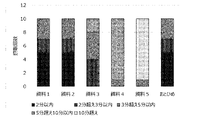
- FIG. 1 is a graph showing the time required for zebrafish to feed Diets 1 to 5 and Otohime of Test Example 6.
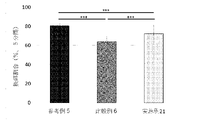
- FIG. FIG. 2 is a graph showing the rate of food intake up to 5 minutes after the start of feeding when zebrafish were fed with the feeds of Examples, Comparative Examples, and Reference Examples of Test Example 6.
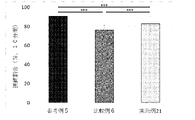
- FIG. 3 is a graph showing the rate of food intake up to 10 minutes after the start of feeding when zebrafish were fed with the feeds of Examples, Comparative Examples, and Reference Examples of Test Example 6.
- FIG. 1 is a graph showing the time required for zebrafish to feed Diets 1 to 5 and Otohime of Test Example 6.
- FIG. FIG. 2 is a graph showing the rate of food intake up to 5 minutes after the start of feeding when zebrafish were fed with the feeds of Examples, Comparative Examples, and Reference Examples of Test Example 6.
- FIG. 3 is a graph showing the rate of food intake up to 10 minutes after the start of feeding when zebrafish were fed with the feeds
- the present invention provides a catechin-containing composition in which catechin-derived bitterness and astringency (collectively referred to as bitterness and astringency) are effectively masked, and catechins in which catechin-derived bitterness and astringency are effectively masked.
- the present invention relates to a containing food and drink, a method and agent for effectively suppressing bitterness and astringency derived from catechins, and a method for producing a composition and food and drink in which bitterness and astringency derived from catechins are effectively suppressed.
- the present inventors found that the bitterness and astringency derived from catechins can be effectively masked by eating catechins in the presence of arabinoxylan.
- the present invention has been completed through further studies based on these findings.
- the catechin-containing composition of the present invention is a composition in which bitterness and astringency derived from catechins are effectively masked.
- the catechin-containing food or drink of the present invention is a food or drink in which the bitterness and astringency derived from catechins are effectively masked.
- bitterness and astringency derived from catechins can be effectively suppressed.
- the bitterness and astringency inhibitor of catechins of the present invention can effectively suppress the bitterness and astringency derived from catechins.
- composition of the present invention contains at least catechins and arabinoxylan.
- composition refers to a mixture in which each component is uniformly mixed, a form in which the concentration of a specific component is locally increased, or a form in which some of the constituent components of the composition are separated. is also meant to include For example, a form in which catechins and arabinoxylan are separately separated shall also be included in the composition of the present invention as a whole.
- the composition of the present invention may be solid, semi-solid (gel, slurry, etc.) or liquid at room temperature (20° C. ⁇ 5° C.), and can take various forms depending on the purpose.
- the composition of the present invention can be in various forms such as powder, granule, tablet, plate and block. Also, the size thereof can be appropriately designed according to the purpose.
- examples of the medium (substrate) include water, milk, soup, emulsion, cream, jelly, whey drink, soft drink, yogurt and the like.
- each component may be dissolved or dispersed in the medium.
- its pH (20° C.) is preferably 2.0 to 8.0, more preferably 2.5 to 7.0, more preferably 2.6 to 6.5, More preferably 3.0 to 5.5, still more preferably 3.0 to 5.0.
- the total content of catechins and arabinoxylan can be appropriately adjusted, for example, within the range of 0.1 to 100% by mass. That is, a typical application of the composition of the present invention is blending into foods and beverages. can be controlled to For example, when the composition of the present invention is in a solid form, the total content of catechins and arabinoxylan in the composition may be 5% by mass or more, and may be 10% by mass or more. It may be at least 40% by mass, or at least 60% by mass. The total amount is usually 90% by mass or less, may be 85% by mass or less, or may be 80% by mass or less.
- each content can be 5 to 90% by mass, may be 10 to 90% by mass, may be 20 to 85% by mass, may be 40 to 85% by mass, and may be 60 to It is good also as 80 mass %.
- the remainder excluding catechins and arabinoxylan includes components derived from plants from which catechins and arabinoxylan are derived (components coexisting in the extraction process of catechins and arabinoxylan, etc.) ) can be included.
- the remainder is wheat flour (strong flour, all-purpose flour, weak flour, durum flour, etc.), rice flour, corn flour, soybean flour, protein (wheat protein, soybean protein, etc.), starch, paste (modified starch, methylcellulose, etc.) ), milk fat, powdered skim milk, sugars (sugar, etc.), salt, egg yolk, egg white, polysaccharides, flavors, oils, processed oils and fats (butter, margarine, etc.), emulsifiers, chocolate, food fruit ingredients (raisins, walnuts, etc.) ), thickeners, pH adjusters, pigments, water, yeast, baking powder, seasonings, acidulants, antioxidants, nutrients (vitamins, etc.), and the like.
- the water content of the composition may be 0.5% by mass or more, may be 1% by mass or more, or may be 2% by mass or more. good too.
- the water content can be 50% by mass or less, 40% by mass or less, or 30% by mass or less.
- the content can be 0.5 to 50% by mass, may be 1 to 40% by mass, and may be 2 to 30% by mass.
- the composition of the present invention is liquid, the total content of catechins and arabinoxylan in the composition may be 1% by mass or more, 2% by mass or more, or 5% by mass or more. , or 10% by mass or more.
- the total amount is usually 70% by mass or less, may be 50% by mass or less, may be 30% by mass or less, or may be 20% by mass or less.
- the total of each content can be 1 to 70% by mass, may be 2 to 50% by mass, may be 5 to 30% by mass, or may be 10 to 20% by mass.
- the composition of the present invention is in a liquid form, the remainder excluding catechins and arabinoxylan contains a liquid medium. (components coexisting in the extraction process, etc.).
- the composition of the present invention preferably contains water as a liquid medium, and in addition to water or instead of water, milk, alcohol, edible organic solvents such as edible oils and fats.
- the content of the liquid medium in the composition (liquid) of the present invention can be, for example, 60% by mass or more, can be 80% by mass or more, or can be 90% by mass or more. Further, the content can be 99.9% by mass or less, may be 99.5% by mass or less, or be 99.0% by mass or less. Furthermore, the content can be 60 to 99.9% by mass, may be 80 to 99.5% by mass, and may be 90 to 99.0% by mass.
- the preferred total amount of the catechin content and the arabinoxylan content in the composition is not particularly limited, and the above solid form and the preferred total amount in the case of the liquid form, it can be appropriately set in consideration of the blending of other components so as to obtain a desired semi-solid form.
- the total content of catechins and arabinoxylan in the semi-solid composition can be 1 to 70% by mass, preferably 2 to 50% by mass.
- the content of the liquid medium in the semi-solid composition can be, for example, 30 to 95% by mass, and may be 40 to 95% by mass.
- catechins means a compound represented by the chemical formula C 15 H 14 O 6 which is a polyoxy derivative of 3-oxyflavan and polyphenol compounds derived therefrom.
- Catechins used in the composition of the present invention are preferably non-polymer catechins.
- Non-polymer catechins include, for example, epigallocatechin, epicatechin, gallocatechin, free catechins such as catechins, and gallate-type catechins in which a gallate group is bound to these free catechins (epigallocatechin gallate, epi catechin gallate, gallocatechin gallate, catechin gallate, etc.) can be used.
- the composition of the present invention preferably contains one or more of epigallocatechin, epicatechin, gallocatechin, catechin, epigallocatechin gallate, epicatechin gallate, gallocatechin gallate, and catechin gallate.
- the catechins contained in the composition of the present invention more preferably contain gallate-type catechins, since they are effective in reducing body fat.
- catechins examples include plants containing catechins such as tea, grapes, apples, soybeans, cherries, pears, and blackberries.
- teas rich in catechins are preferred.
- tea include green tea, oolong tea, black tea, white tea, yellow tea, and black tea, among which green tea rich in catechins is preferred.
- the term "processed product of catechins-containing plant” is a general term for crushed catechins-containing plant, slurry preparation of the crushed product, extract of the preparation, purified product of the extract, etc. be.
- the term “crushed catechins-containing plant” refers to crushed catechins-containing plant crushed to a desired size.
- the crushing method is not particularly limited as long as the catechin-containing plant can be crushed. For example, it may be chopped with a knife or cutter, or crushed with a mixer or food processor.
- the term "slurry preparation of a catechins-containing plant” refers to a slurry of the pulverized material of the catechins-containing plant (a state in which the pulverized material is dispersed in a liquid medium). or a slurry-like preparation prepared by crushing a catechin-containing plant in the presence of a liquid.
- extract in “extract of slurry preparation of catechins” (catechins extract) is used in a broader sense than usual. That is, the catechin extract means an extract and/or an extraction residue obtained by solid-liquid separation of the slurry preparation (meaning that both the extract and the extraction residue are included).
- the catechin extract that can be used in the present invention may be liquid, powder, or paste. In the case of liquid or paste, a more concentrated one can also be used. Extraction method etc. are not particularly limited, for example, Japanese Patent Laid-Open No. 59-219384, Japanese Patent Laid-Open No. 4-20589, Japanese Patent Laid-Open No. 5-260907, Japanese Patent Laid-Open No. 5-306279, etc. are extracted. be able to.
- the term “purified catechin extract” is obtained by further purifying the catechins extract.
- separation means such as fractionation of fractions with high physiological activity by gel filtration, various types of chromatography, precision distillation, etc. can be used.
- the refined product may be liquid, powder, or paste. In the case of liquid or paste, a more concentrated one can also be used.
- Examples of processed products of catechin-containing plants that are preferably used in the present invention include catechin extracts and purified catechins that preferably contain tea catechins at a high mass ratio.
- Catechin extracts and purified catechins are also commercially available, for example, commercially available Lunafenon T-100 (manufactured by Kao Corporation), Polyphenon (manufactured by Tokyo Food Techno Co., Ltd.), Theafuran (manufactured by Itoen Co., Ltd.), Sanfenon. (manufactured by Taiyo Kagaku Co., Ltd.) and other catechin preparations can be used.
- the content of catechins in the processed product of the catechins-containing plant is preferably 10% by mass or more of the required amount from the viewpoint of further enhancing the physiological effects.
- the catechins used in the present invention are prepared by dissolving and diluting a sample with pure water, using a high-performance liquid chromatograph (model SCL-10AVP, manufactured by Shimadzu Corporation), and using an octadecyl group-introduced liquid chromatograph packed column (L-column ODS, 4 0.6 mm ⁇ 250 mm, particle size 5 ⁇ m: manufactured by the Chemical Evaluation and Research Institute), and the column temperature is 35° C., and the gradient method can be used for measurement.
- Mobile phase A solution is a distilled aqueous solution containing 0.1 mol/L of acetic acid
- B solution is an acetonitrile solution containing 0.1 mol/L of acetic acid
- the flow rate is 1 mL/min
- the sample injection amount is 10 ⁇ L
- the UV detector wavelength is It is carried out under the condition of 280 nm.
- the types and concentrations of catechins described in the attached component table can be referred to.
- the contents of catechins in Lunafenone T-100 used in this example were 36% by mass and 37.2% by mass.
- the content of catechins in the composition of the present invention may be, for example, 1% by mass or more, may be 2% by mass or more, or may be 5% by mass or more. 10% by mass or more, 20% by mass or more, or 40% by mass or more.
- the content is usually 70% by mass or less, may be 68% by mass or less, may be 66% by mass or less, may be 64% by mass or less, may be 62% by mass or less, or may be 60% by mass. % or less.
- the content may be 1 to 70% by mass, may be 2 to 68% by mass, may be 5 to 66% by mass, may be 10 to 64% by mass, and may be 20 to 62% by mass.
- the content of catechins in the composition of the present invention can be, for example, 0.1% by mass or more, and may be 0.5% by mass or more. It may be 1% by mass or more, 2% by mass or more, or 5% by mass or more.
- the content is usually 50% by mass or less, may be 40% by mass or less, may be 30% by mass or less, may be 20% by mass or less, or may be 10% by mass or less.
- the content may be 0.1 to 50% by mass, may be 0.5 to 40% by mass, may be 1 to 30% by mass, may be 2 to 20% by mass, and may be 5 to 5% by mass. It is good also as 10 mass %.
- the lower limit is to ensure health functions such as body fat reduction
- the upper limit is the limit of bitterness and astringency preference.
- the content of catechins contained may be 0.1 to 70% by mass, may be 0.5 to 68% by mass, may be 1 to 66% by mass, may be 2 to 64% by mass, It may be 5 to 62% by mass.
- arabinose is a type of hemicellulose composed of a main chain composed of a xylose component and a side chain composed of an arabinose component bonded thereto.
- a composition obtained by blending arabinoxylan itself into a composition or blending a processed product of a plant containing arabinoxylan (arabinoxylan-containing plant) (processed product of an arabinoxylan-containing plant) into a composition containing arabinoxylan can be Arabinoxylan is generally contained in large amounts in coniferous trees and plants of the Poaceae family, and is contained particularly in the hulls of cereal grains.
- arabinoxylan-containing plants include wheat, barley, oats, rye, rice, barnyard millet, millet, corn, bamboo, and oats.
- arabinoxylan derived from wheat, barley or corn it is preferable to use arabinoxylan derived from bran of wheat, barley or corn, since the effect of suppressing the bitterness and astringency of the present invention is likely to be obtained.
- processed product of arabinoxylan-containing plant is a general term for crushed arabinoxylan-containing plant, slurry preparation of the crushed product, extract of the preparation, purified extract of the extract, and the like.
- crushed arabinoxylan-containing plant refers to a crushed product obtained by crushing the arabinoxylan-containing plant to a desired size. The crushing method is not particularly limited as long as the arabinoxylan-containing plant can be crushed.
- a portion containing a large amount of arabinoxylan, such as wheat bran is pulverized, and if necessary, the pulverized product can be processed by a conventional method and used as a pulverized product of the arabinoxylan-containing plant.
- the term "slurry preparation of an arabinoxylan-containing plant” refers to a slurry preparation prepared from the crushed arabinoxylan-containing plant, or a slurry prepared by crushing an arabinoxylan-containing plant in the presence of a liquid. preparation.
- extract of a slurry preparation of an arabinoxylan-containing plant means an extract and/or extraction residue obtained by solid-liquid separation of the slurry preparation.
- the arabinoxylan extract that can be used in the present invention may be liquid, powder, or paste. In the case of liquid or paste, a more concentrated one can also be used.
- the extraction method and the like are not particularly limited, and extraction can be performed according to a conventional method.
- purified arabinoxylan extract purified arabinoxylan extract
- purified arabinoxylan is obtained by further purifying the above arabinoxylan extract.
- separation means such as fractionation of highly active fractions by gel filtration, various types of chromatography, precision distillation, or the like can be used.
- the refined product may be liquid, powder, or paste. In the case of liquid or paste, a more concentrated one can also be used.
- the content of arabinoxylan in the processed product of the arabinoxylan-containing plant is preferably 1% by mass or more, more preferably 15% by mass or more, from the viewpoint of stably containing the required amount of arabinoxylan. It is preferably 20% by mass or more, and more preferably 20% by mass or more. Moreover, the said content is 90 mass % or less normally.
- the content of arabinoxylan in the arabinoxylan-containing plant or its processed product can be determined, for example, by the method described in Examples.
- the processed products of arabinoxylan-containing plants that are preferably used in the present invention are commercially available as crushed products of arabinoxylan-containing plants such as whole grains and bran processed products, arabinoxylan extracts, and purified arabinoxylan products.
- the molecular weight of arabinoxylan used in the present invention can be appropriately set within a range that does not impair the effects of the present invention.
- the weight average molecular weight (Mw) of arabinoxylan is preferably 300 or more, more preferably 10,000 or more, and more preferably 50,000 or more.
- the upper limit is preferably 1,000,000, more preferably 500,000, and more preferably 200,000.
- 300 to 500,000 is preferred, and 50,000 to 200,000 is more preferred.
- the ratio of arabinose and xylose, which constitute the arabinoxylan used in the present invention can be appropriately set within a range that does not impair the effects of the present invention.
- the ratio of arabinose to xylose is preferably 0.01:1 or more, more preferably 0.05:1 or more, and more preferably 0.1:1 or more on a mass basis.
- the upper limit thereof is preferably 10:1, more preferably 2:1, and more preferably 1.2:1.
- 0.01:1 to 10:1 is preferred, 0.05:1 to 2:1 is more preferred, and 0.1:1 to 1.2:1 is more preferred.
- the arabinoxylan used in the present invention may be formed by binding sugars other than these monosaccharides.
- Sugars other than arabinose and xylose that constitute arabinoxylan include glucose and galactose.
- the composition ratio of sugars other than arabinose and xylose constituting these arabinoxylans is preferably 10% by mass or less, more preferably 7% by mass or less, and 5% by mass, from the viewpoint of obtaining effective physiological activity. The following are more preferred.
- the content of arabinoxylan contained in the composition of the present invention is preferably 1% by mass or more from the viewpoint of effectively masking the bitterness and astringency derived from catechins. , 2% by mass or more, 5% by mass or more, 10% by mass or more, 20% by mass or more, or 40% by mass or more.
- the content is preferably 70% by mass or less, may be 68% by mass or less, may be 66% by mass or less, and may be 64% by mass or less. may be 62% by mass or less, and preferably 60% by mass or less.
- the content is preferably 1 to 70% by mass, may be 2 to 68% by mass, may be 5 to 66% by mass, may be 10 to 64% by mass, and may be 20 to 64% by mass. It may be 62% by mass, or 40 to 60% by mass.
- the content of arabinoxylan contained in the composition of the present invention should be 0.1% by mass or more from the viewpoint of effectively masking the bitterness and astringency derived from catechins. is preferably 0.5% by mass or more, 1% by mass or more, 2% by mass or more, or 5% by mass or more.
- the content is preferably 50% by mass or less, may be 40% by mass or less, may be 30% by mass or less, and may be 20% by mass or less from the viewpoint of reducing production costs and smoothness. , or 10% by mass or less. From the same viewpoint, the content is preferably 0.1 to 50% by mass, may be 0.5 to 40% by mass, may be 1 to 30% by mass, may be 2 to 20% by mass, and may be 5 It may be up to 10% by mass.
- the content of arabinoxylan contained in the composition of the present invention can be 0.1 to 70% by mass. 5 to 68% by mass, 1 to 66% by mass, 2 to 64% by mass, or 5 to 62% by mass.
- the ratio of the content of arabinoxylan to the content of catechins contained in the composition of the present invention is preferably 0.1 to 8.0. be.
- the value of the ratio is preferably 0.2 or more, more preferably 0.5 or more, and more preferably 0.8 or more.
- the value of the ratio is preferably 1.0 or more, preferably 1.5 or more, preferably 2.0 or more, preferably 2.5 or more, and 3.0 or more. , preferably 3.5 or more, preferably 4.0 or more, preferably 4.5 or more, and preferably 5.0 or more.
- the value of the ratio is preferably 7.5 or less, more preferably 7.0 or less. Further, the value of the ratio is preferably 1.0 to 7.5, preferably 1.5 to 7.5, preferably 2.0 to 7.5, and 2.5 to It is also preferably 7.5, preferably 3.0 to 7.0, preferably 3.5 to 7.0, preferably 4.0 to 7.0, and 4.5. It is also preferably 5 to 7.0, more preferably 5.0 to 7.0.
- composition of the present invention contains catechins and arabinoxylan from the viewpoint of effectively masking the bitterness and astringency derived from catechins, and the ratio of the content of the arabinoxylan to the content of the catechins is A catechin-containing composition having a ratio of 0.2 to 8.0 is preferred.
- the composition of the present invention contains catechins and arabinoxylan from the viewpoint of effectively masking the bitterness and astringency derived from catechins, and the ratio of the content of the arabinoxylan to the content of the catechins is The ratio is 0.2 to 8.0, the content of the catechins in the composition is 1 to 70% by mass, and the content of the arabinoxylan in the composition is 1 to 70% by mass. , preferably a catechin-containing composition.
- the composition of the present invention contains catechins and arabinoxylan from the viewpoint of effectively masking the bitterness and astringency derived from catechins, and the ratio of the content of the arabinoxylan to the content of the catechins is The ratio is 0.2 to 8.0, the content of the catechins in the composition is 5 to 62% by mass, and the content of the arabinoxylan in the composition is 5 to 62% by mass. , preferably a catechin-containing composition.
- the method for producing the composition of the present invention is not particularly limited.
- the composition is a homogeneous mixture, it can be obtained by mixing catechins and arabinoxylan according to a conventional method.
- the order of mixing catechins and arabinoxylan is not particularly limited, and one may be added to the other, or both may be added simultaneously.
- an appropriate method such as stirring or shaking can be adopted.
- the composition of the present invention is in a solid form, it may be compression-molded or granulated by a known granulation method to obtain a desired shape. Alternatively, it may be prepared or manufactured by heating using a commercially available extruder or the like.
- a stirrer, a disperser, a high-pressure homogenizer, or the like may be used to prepare or produce a liquid or slurry state. It may be dried by a hot air dryer, spray drying, freeze drying, or the like. Alternatively, it may be tableted or compacted into a solid state.
- the method for producing a catechin-containing composition of the present invention (hereinafter also referred to as the production method of the present invention) is to allow catechins and arabinoxylan to coexist from the viewpoint of effectively masking the bitterness and astringency derived from catechins. wherein the ratio of the content of the arabinoxylan to the content of the catechins in the composition is 0.1 to 8.0 in mass ratio. preferable.
- the method for producing a catechin-containing composition of the present invention includes allowing catechins and arabinoxylan to coexist from the viewpoint of effectively masking the bitterness and astringency derived from catechins, and containing the catechins in the composition. It is also preferable to provide a method for producing a catechin-containing composition, wherein the ratio of the arabinoxylan content to the amount is 0.2 to 8.0 in terms of mass ratio.
- the method for producing a catechin-containing composition of the present invention includes allowing catechins and arabinoxylan to coexist from the viewpoint of effectively masking the bitterness and astringency derived from catechins, and containing the catechins in the composition.
- the value of the ratio of the content of the arabinoxylan to the amount is set to 0.2 to 8.0 by mass
- the content of the catechins in the composition is set to 0.1 to 2.4% by mass
- the composition It is also preferable to provide a method for producing a catechin-containing composition in which the content of the arabinoxylan in the product is 0.1 to 6.0% by mass.
- the method for producing a catechin-containing composition of the present invention includes allowing catechins and arabinoxylan to coexist from the viewpoint of effectively masking the bitterness and astringency derived from catechins, and containing the catechins in the composition.
- the value of the ratio of the content of the arabinoxylan to the amount is set to 0.2 to 8.0 by mass
- the content of the catechins in the composition is set to 0.2 to 1.9% by mass
- the composition It is also preferable to provide a method for producing a catechin-containing composition in which the content of the arabinoxylan in the product is 0.2 to 5.0% by mass.
- the method for producing a catechin-containing composition of the present invention includes allowing catechins and arabinoxylan to coexist from the viewpoint of effectively masking the bitterness and astringency derived from catechins, and containing the catechins in the composition.
- the value of the ratio of the content of the arabinoxylan to the amount is set to 0.2 to 8.0 by mass
- the content of the catechins in the composition is set to 0.3 to 1.7% by mass
- the composition It is also preferable to provide a method for producing a catechin-containing composition in which the content of the arabinoxylan in the product is 0.4 to 4.5% by mass.
- the composition of the present invention can be blended into various foods and beverages in order to obtain catechin-containing foods and beverages.
- food and drink There is no particular restriction on such food and drink. Examples include bread, baked goods, cakes, ice creams, cereals, croutons, noodles, chocolate, soft drinks, hot cakes, Japanese sweets with filling, soups, jelly-like foods, powder molded foods, feeds, feeds. etc.
- By adding the composition of the present invention to a food or drink it is possible to obtain a food or drink in which the bitterness and astringency derived from the catechins are effectively masked while containing the catechins.
- Bread includes, for example, bread such as white bread, sweet bread, special bread, and cooked bread containing catechins, and pizza containing catechins.
- Examples of bread include white bread, black bread, French bread, variety bread, and rolls (table rolls, buns, butter rolls, etc.).
- Sweet buns include, for example, jam buns, red bean buns, cream buns, raisin buns, melon buns, sweet rolls, and rich goods (croissants, brioches, Danish pastries, etc.).
- special bread include muffins.
- cooking bread include hot dogs and hamburgers.
- the bread of the present invention is preferably bread containing catechins.
- the content of ingredients in bread means the content of ingredients in the portion derived from the bread dough before baking.
- “Anpan” means the content of ingredients in the part excluding “An”, and in the case of hot dogs, it means the content of ingredients in the part excluding ingredients such as sausages sandwiched in bread. means. The same applies hereinafter.
- "baked confectionery” means biscuits, cookies, crackers, hard bread, pretzels, pies, cut bread, shortbread, etc. described in "Confectionery Encyclopedia", First Edition, October 30, 1981, page 204. do.
- biscuits, cookies, crackers, hard breads, pretzels, pies, cut breads stipulated in the Fair Competition Code of 1971, calorie bars, etc., which are nutritional supplements or baked confectionery considering nutritional balance. be.
- cake is obtained by adding a foaming agent for confectionery composed of leavening powder, meringue, fats and oils, etc. to the dough, stirring and kneading to incorporate air bubbles, and then baking.
- a foaming agent for confectionery composed of leavening powder, meringue, fats and oils, etc.
- a foaming agent for confectionery composed of leavening powder, meringue, fats and oils, etc.
- stirring and kneading to incorporate air bubbles, and then baking.
- cakes include confectionery such as steamed buns, donuts, hot cakes, dorayaki, and imagawa-yaki.
- ice cream has different definitions depending on the country, but in the present invention, “ice creams” include, for example, ice cream, ice milk, lacto ice, ice cream, sherbet, gelato, fruit juice and/or frozen fruit pulp, frozen It is a concept that includes all frozen solids such as yogurt containing fat and fruit juice, liquids containing catechins, and matcha flavored ice cream containing catechins. Fats that may be contained in the ice cream include cocoa-based raw materials such as cocoa butter, cocoa powder, cacao mass, chocolate dough, semi-chocolate dough, and edible oils and fats.
- Edible fats and oils include milk fat, shortening, margarine, olive oil, soybean oil, safflower oil, corn oil, sesame oil, sunflower oil, rapeseed oil, coconut oil, palm oil, palm kernel oil, vegetable oils such as palm fractionated oil, Animal fats and oils such as lard and fish oil can be mentioned, and one or more of these can be used in combination.
- milk fat milk, whole milk powder, condensed milk, cheese, butter, fresh cream, yogurt, etc. containing milk fat can be used.
- Chocolate dough and quasi-chocolate dough include chocolate dough and quasi-chocolate dough complying with the "Fair Competition Code Concerning Labeling of Chocolates".
- various forms such as cup, stick, monaka, ice cream cone, etc. can be adopted.
- the content of catechins in food and drink is preferably 0.1% by mass or more, more preferably 0.2% by mass or more, more preferably 0.3% by mass or more, more preferably 0% by mass or more. 0.4% by mass or more, more preferably 0.5% by mass or more, and still more preferably 0.6% by mass or more.
- the content is preferably 2.4% by mass or less, more preferably 1.9% by mass or less, more preferably 1.7% by mass or less, more preferably 1.3% by mass or less, more preferably 1.3% by mass or less.
- the content is preferably 0.1 to 2.4% by mass, more preferably 0.2 to 1.9% by mass, more preferably 0.3 to 1.7% by mass, more preferably 0.3% to 1.7% by mass. 4 to 1.3% by mass, more preferably 0.5 to 1.1% by mass, more preferably 0.6 to 0.9% by mass, the lower limit for ensuring health functions such as body fat reduction , the upper limit can be blended from the limit of bitterness and astringency preference.
- the content of arabinoxylan in the food and drink has a lower limit to ensure health functions such as body fat reduction, and an upper limit of bitterness and astringency.
- the limit of taste preferably 0.1% by mass or more, more preferably 0.2% by mass or more, more preferably 0.4% by mass or more, more preferably 0.7% by mass or more, more preferably 0.9% by mass It can be blended so as to be at least 1.0% by mass, more preferably at least 1.0% by mass.
- the content is preferably 6.0% by mass or less, more preferably 5.0% by mass or less, more preferably 4.5% by mass or less, more preferably 4.0% by mass or less, more preferably 3.0% by mass or less.
- the content is preferably 0.1 to 6.0% by mass, more preferably 0.2 to 5.0% by mass, more preferably 0.4 to 4.5% by mass, more preferably 0.7 4.0% by mass, more preferably 0.9 to 3.5% by mass, more preferably 1.0 to 3.0% by mass.
- the composition of the present invention is a value of the ratio of the content of arabinoxylan to the content of catechins contained in the food and drink (content of arabinoxylan / catechin).
- the lower limit is to ensure health functions such as body fat reduction
- the upper limit is preferably 0.1 or more, more preferably 0.5 or more, more preferably 0.5 or more, from the limit of bitterness and astringency preference.
- the ratio can be blended so as to be preferably 8.0 or less, more preferably 7.5 or less, and even more preferably 7.0 or less.
- the lower limit of the value of the ratio is to ensure health functions such as body fat reduction
- the upper limit is preferably 0.1 to 8.0, more preferably 0.5 to 8.0, from the limit of bitterness and astringency preference. , more preferably 1.0 to 7.5, more preferably 2.0 to 7.5, more preferably 3.0 to 7.5, more preferably 4.0 to 7.0, still more preferably 5. It can be blended so as to be 0 to 7.0.
- the food and drink of the present invention may contain other ingredients as appropriate, in addition to the above catechins and arabinoxylan, depending on the purpose.
- examples of such ingredients include water, acidulants, sweeteners, amino acids, proteins, vitamins, minerals, flavors, fruit juices, plant extracts, esters, pigments, milk ingredients, cocoa powder, seasonings, vegetable oils and fats, and antioxidants.
- One or two or more additives such as agents, preservatives, pH adjusters, quality stabilizers, thickeners and emulsifiers can be contained.
- the content of the additive can be appropriately set within a range that does not impair the object of the present invention.
- the content of the water can be appropriately set according to the form of the food and drink, for example, it can be 1% by mass or more, or 5% by mass or more. Well, it may be 10% by mass or more, or 20% by mass or more.
- the content can be 90% by mass or less, 80% by mass or less, 70% by mass or less, 60% by mass or less, 50% by mass or less, or 40% by mass. % or less, or 30% by mass or less.
- the content may be 1 to 90% by mass, may be 1 to 80% by mass, may be 5 to 70% by mass, may be 5 to 60% by mass, and may be 10 to 50% by mass. 10 to 40% by mass, or 20 to 30% by mass.
- the content when the food and drink of the present invention is bread, the content can be 15 to 50% by mass, and when the food and drink of the present invention is hot cakes, the content is 20 to 50% by mass. And when the food and drink of the present invention are baked goods, the content can be 1 to 30% by mass, and when the food and drink of the present invention are biscuits, the content is It can be 1 to 10% by mass, and when the food and drink of the present invention is a cake, the content can be 10 to 60% by mass, and when the food and drink of the present invention is a cereal food.
- the content can be 0 to 8% by mass, and when the food and drink of the present invention are croutons, the content can be 0 to 8% by mass, and the food and drink of the present invention In the case of noodles (dried noodles, raw noodles, boiled noodles), the content can be 5 to 80% by mass, and when the food and drink of the present invention is chocolate, the content is 0 to 10% by mass. can be
- the food or drink of the present invention is not limited to the form in which the composition of the present invention is blended. That is, the present invention provides a catechin-containing food or drink containing catechins and arabinoxylan. Therefore, the food or drink of the present invention can contain catechins and arabinoxylan independently of each other, or both can be mixed together. Furthermore, arabinoxylan may be added to the catechin-containing food and drink, and catechins may be added to the arabinoxylan-containing food and drink.
- catechins that can be blended include the above-mentioned catechin-containing plants and their processed products, and the blending amount and blending ratio of catechins and the blending ratio with arabinoxylan described above can be used.
- arabinoxylan that can be blended include the arabinoxylan-containing plants and their processed products, and the blending amount and blending ratio of arabinoxylan described above and the blending ratio with catechins can be used.
- the food and drink of the present invention contain catechins and arabinoxylan from the viewpoint of effectively masking the bitterness and astringency derived from catechins, and the ratio of the content of the arabinoxylan to the content of the catechins in the food and drink. is preferably 0.1 to 8.0 in terms of mass ratio.
- the food and drink of the present invention contain catechins and arabinoxylan from the viewpoint of effectively masking the bitterness and astringency derived from catechins, and the ratio of the content of the arabinoxylan to the content of the catechins in the food and drink. is preferably 0.2 to 8.0 in terms of mass ratio.
- the food and drink of the present invention contain catechins and arabinoxylan from the viewpoint of effectively masking the bitterness and astringency derived from catechins, and the ratio of the content of the arabinoxylan to the content of the catechins in the food and drink. is 0.2 to 8.0 in mass ratio, the content of the catechins in the food and drink is 0.1 to 2.4% by mass, and the content of the arabinoxylan in the food and drink A catechin-containing food or drink with an amount of 0.1 to 6.0% by mass is preferred.
- the food and drink of the present invention contain catechins and arabinoxylan from the viewpoint of effectively masking the bitterness and astringency derived from catechins, and the ratio of the content of the arabinoxylan to the content of the catechins in the food and drink. is 0.2 to 8.0 in mass ratio, the content of the catechins in the food and drink is 0.2 to 1.9% by mass, and the content of the arabinoxylan in the food and drink A catechin-containing food or drink with an amount of 0.2 to 5.0% by mass is preferred.
- the food and drink of the present invention contain catechins and arabinoxylan from the viewpoint of effectively masking the bitterness and astringency derived from catechins, and the ratio of the content of the arabinoxylan to the content of the catechins in the food and drink. is 0.2 to 8.0 in mass ratio, the content of the catechins in the food and drink is 0.3 to 1.7% by mass, and the content of the arabinoxylan in the food and drink A catechin-containing food or drink with an amount of 0.4 to 4.5% by mass is preferred.
- the method for producing a catechin-containing food or drink of the present invention (hereinafter also referred to as the production method of the present invention) is based on the coexistence of catechins and arabinoxylan. and a method for producing a catechin-containing food or drink, wherein the ratio of the content of the arabinoxylan to the content of the catechin in the food or drink is 0.1 to 8.0 by mass. preferable.
- the method for producing a catechin-containing food or drink according to the present invention includes allowing catechins and arabinoxylan to coexist from the viewpoint of effectively masking the bitterness and astringency derived from catechins, and containing the catechins in the food or drink. It is preferable that the method for producing a catechin-containing food or drink is such that the ratio of the arabinoxylan content to the amount is 0.2 to 8.0 in terms of mass ratio.
- the method for producing a catechin-containing food or drink according to the present invention includes allowing catechins and arabinoxylan to coexist from the viewpoint of effectively masking the bitterness and astringency derived from catechins, and containing the catechins in the food or drink.
- the ratio of the content of the arabinoxylan to the amount of It is preferable that the method for producing a catechins-containing food or drink is such that the content of the arabinoxylan in the product is 0.1 to 6.0% by mass.
- the method for producing a catechin-containing food or drink according to the present invention includes allowing catechins and arabinoxylan to coexist from the viewpoint of effectively masking the bitterness and astringency derived from catechins, and containing the catechins in the food or drink.
- the value of the ratio of the content of the arabinoxylan to the amount is set to 0.2 to 8.0 in mass ratio
- the content of the catechins in the food and drink is set to 0.2 to 1.9% by mass
- the food and drink It is preferable that the method for producing a catechins-containing food or drink is such that the content of the arabinoxylan in the product is 0.2 to 5.0% by mass.
- the method for producing a catechin-containing food or drink according to the present invention includes allowing catechins and arabinoxylan to coexist from the viewpoint of effectively masking the bitterness and astringency derived from catechins, and containing the catechins in the food or drink.
- the value of the ratio of the content of the arabinoxylan to the amount is set to 0.2 to 8.0 in terms of mass ratio
- the content of the catechins in the food and drink is set to 0.3 to 1.7% by mass
- the food and drink It is preferable that the method for producing a catechin-containing food or drink is such that the content of the arabinoxylan in the product is 0.4 to 4.5% by mass.
- a catechin bitterness and astringency inhibitor (hereinafter also referred to as the bitterness and astringency inhibitor of the present invention) containing arabinoxylan as an active ingredient.
- the amount of the bitterness and astringency inhibitor of the present invention blended into the composition or food or drink is the ratio of the content of arabinoxylan to the content of catechins in the composition or food or drink (content of arabinoxylan/content of catechins Amount, mass ratio) is preferably 0.1 or more, more preferably 0.2 or more, and more preferably 0.5 or more in terms of mass ratio. , 0.8 or more. Further, the value of the ratio is preferably 1.0 or more, preferably 2.0 or more, preferably 3.0 or more, and 4.0 or more. , preferably 4.5 or more, and preferably 5.0 or more.
- the value of the ratio is preferably 8.0 or less in terms of mass ratio, more preferably 7.5 or less, and further preferably 7.0 or less. preferable.
- the lower limit of the value of the ratio is to ensure health functions such as body fat reduction, and the upper limit is preferably 0.1 to 8.0 from the limit of bitterness and astringency preferences, and 0.2 to 8. 0.0, preferably 0.5 to 8.0, preferably 0.8 to 8.0, and 1.0 to 8.0 It is also preferable to be 2.0 to 8.0, preferably 3.0 to 7.5, and 4.0 to 7.5 , preferably 4.5 to 7.0, and more preferably 5.0 to 7.0.
- the bitterness and astringency suppressor of the present invention when blended into a composition or food or drink, the content of catechins in the composition or food or drink is lower than the lower limit to ensure health functions such as reducing body fat.
- the upper limit is preferably 0.1% by mass or more, more preferably 0.2% by mass or more, more preferably 0.3% by mass or more, more preferably 0.4% by mass or more, more preferably 0.4% by mass or more, from the limit of bitterness and astringency preference. is 0.5% by mass or more, more preferably 0.6% by mass or more.
- 2.4% by mass or less more preferably 1.9% by mass or less, more preferably 1.7% by mass or less, more preferably 1.3% by mass or less, more preferably 1.1% by mass or less, and further Preferably, it is 0.9% by mass or less.
- the content is preferably 0.1 to 2.4% by mass, more preferably 0.2 to 1.9% by mass, more preferably 0.3 to 1.7% by mass, and 0.4 to 1.0% by mass. 3% by mass is more preferable, 0.5 to 1.1% by mass is more preferable, and 0.6 to 0.9% by mass is even more preferable.
- the bitterness and astringency suppressor of the present invention may contain catechins.
- the composition or food or drink can be made to contain desired amounts of catechins and arabinoxylan. Therefore, when the bitterness and astringency suppressant of the present invention contains catechins, the ratio of the content of arabinoxylan to the content of catechins in the bitterness and astringency suppressant is preferably within the range described above in terms of mass ratio. . Also, the content of catechins in the bitterness and astringency suppressor of the present invention is preferably within a range where the range of catechins content in the composition or food or drink described above can be realized.
- the content of arabinoxylan contained in the bitterness and astringency inhibitor of the present invention is preferably 1.0% by mass or more, and is preferably 2.0% by mass or more. more preferably 5.0% by mass or more, more preferably 10.0% by mass or more, more preferably 15.0% by mass or more, more preferably 18.0% by mass or more is more preferable.
- the content is preferably 99.0% by mass or less, more preferably 93.0% by mass or less, more preferably 90.0% by mass or less, and 88.0% by mass. or less, more preferably 85.0% by mass or less, and even more preferably 83.0% by mass or less.
- the content is preferably 1.0 to 99.0% by mass, more preferably 2.0 to 93.0% by mass, and 5.0 to 90.0% by mass. % by mass, more preferably 10.0 to 88.0% by mass, more preferably 15.0 to 85.0% by mass, more preferably 18.0 to 83.0% by mass is more preferable.
- the amount of the bitterness and astringency inhibitor of the present invention to be added to food and drink is such that the content of arabinoxylan in food and drink is preferably 0.1% by mass or more, and preferably 0.2% by mass.
- the blending amount is preferably 6.0% by mass or less, more preferably 5.0% by mass or less, and 4.5% by mass or less. is more preferable, more preferably 4.0% by mass or less, more preferably 3.5% by mass or less, and further preferably 3.0% by mass or less preferable.
- the content is preferably 0.1 to 6.0% by mass, more preferably 0.2 to 5.0% by mass, and 0 .4 to 4.5% by mass, more preferably 0.7 to 4.0% by mass, more preferably 0.9 to 3.5% by mass more preferably 1.0 to 3.0% by mass.
- the bitterness and astringency inhibitor of the present invention can be blended with the above-described processed arabinoxylan-containing plant and catechin-containing plant as a source of arabinoxylan and catechins. That is, when the bitterness and astringency suppressor of the present invention contains components other than arabinoxylan and catechins, components derived from plants derived from arabinoxylan and catechins (components coexisting in the extraction process of catechins and arabinoxylan, etc.) are included.
- arabinoxylan and catechins may be wheat flour (strong flour, all-purpose flour, soft flour, durum flour, etc.), rice flour, corn flour, soybean flour, protein (wheat protein, soybean protein, etc.), starch, paste, if necessary.
- processed starch, methyl cellulose, etc. milk fat, powdered skim milk, saccharides (sugar, etc.), salt, egg yolk, egg white, polysaccharides, flavors, oils and fats, processed oils and fats (butter, margarine, etc.), emulsifiers, chocolate, food fruits Materials (raisins, walnuts, etc.), thickeners, pH adjusters, pigments, water, yeast, baking powder, seasonings, acidulants, antioxidants, nutrients (vitamins, etc.) and the like can be contained.
- the bitterness and astringency inhibitor of the present invention contains arabinoxylan as an active ingredient, and the content of the arabinoxylan in the bitterness and astringency inhibitor is 1.0 to 99.0. It is preferably a catechin bitterness and astringency suppressor, which is % by mass.
- the bitterness and astringency inhibitor of the present invention contains arabinoxylan as an active ingredient, and the content of the arabinoxylan in the bitterness and astringency inhibitor is 5.0 to 90.0. It is preferably a catechin bitterness and astringency suppressor, which is % by mass.
- the bitterness and astringency inhibitor of the present invention contains arabinoxylan as an active ingredient, and the content of the arabinoxylan in the bitterness and astringency inhibitor is 10.0 to 88.0. % by mass, and the ratio of the amount of arabinoxylan to the amount of catechins is preferably 0.1 to 8.0 in terms of mass ratio.
- the bitterness and astringency inhibitor of the present invention contains arabinoxylan as an active ingredient, and the content of the arabinoxylan in the bitterness and astringency inhibitor is 10.0 to 88.0. It is preferably 0% by mass and is a catechin bitterness/astringency suppressor that uses the ratio of the amount of arabinoxylan to the amount of catechins at a mass ratio of 0.2 to 8.0.
- a method for suppressing bitterness and astringency of catechins (hereinafter also referred to as the method for suppressing bitterness and astringency of the present invention), which comprises allowing catechins and arabinoxylan to coexist.
- the amount of catechins used, the amount of arabinoxylan used, the ratio of the amount of catechins used to the amount of arabinoxylan used, etc. in the method for suppressing bitterness and astringency of catechins of the present invention are described in the bitterness and astringency suppressor of the present invention. can be applied appropriately.
- the ratio of the amount of the arabinoxylan to the amount of the catechins is set to 0.1 to 8.0 in mass ratio. It is preferable that it is a method for suppressing the bitterness and astringency of catechins, which includes allowing catechins and arabinoxylan to coexist.
- the ratio of the amount of the arabinoxylan to the amount of the catechins is set to 0.2 to 8.0 in mass ratio. It is preferable that it is a method for suppressing the bitterness and astringency of catechins, which includes allowing catechins and arabinoxylan to coexist.
- the composition of the present invention is not limited to food and drink for humans, and can be blended into various feeds and feeds to obtain catechin-containing mixed feeds and feeds for non-humans.
- feeds and feeds There are no particular restrictions on such compound feeds and feeds. Examples include livestock and poultry such as bovines, deer, equids, boars, pigs and birds, and pets such as fish, canines, felines, and rodents.
- the present invention further discloses the following compositions, food and drink, methods, agents, and manufacturing methods.
- a catechin-containing composition containing catechins and arabinoxylan containing catechins and arabinoxylan.
- the ratio of the arabinoxylan content to the catechin content is preferably 0.1 or more, more preferably 0.2 or more, more preferably 0.5 or more, and more preferably 0.8 in mass ratio. more preferably 1.0 or more, more preferably 1.5 or more, more preferably 2.0 or more, more preferably 2.5 or more, more preferably 3.0 or more, more preferably 3.5 or more,
- the ratio of the arabinoxylan content to the catechin content is preferably 8.0 or less, more preferably 7.5 or less, and still more preferably 7.0 or less in terms of mass ratio; Or the catechin-containing composition according to ⁇ 2>.
- the ratio of the arabinoxylan content to the catechin content is preferably 0.1 to 8.0, more preferably 0.2 to 8.0, and more preferably 0.5 to 8 in mass ratio.
- the catechin-containing composition according to any one of ⁇ 1> to ⁇ 3>.
- the content of the catechins may be 1% by mass or more, may be 2% by mass or more, may be 5% by mass or more, may be 10% by mass or more, or may be 20% by mass or more.
- the catechin-containing composition according to any one of ⁇ 1> to ⁇ 4> which may be 40% by mass or more.
- the content of the catechins may be 70% by mass or less, may be 68% by mass or less, may be 66% by mass or less, may be 64% by mass or less, or may be 62% by mass or less.
- the catechin-containing composition according to any one of ⁇ 1> to ⁇ 5> which may be 60% by mass or less.
- the content of the catechins may be 1 to 70% by mass, may be 2 to 68% by mass, may be 5 to 66% by mass, may be 10 to 64% by mass, The catechin-containing composition according to any one of ⁇ 1> to ⁇ 6>, which may be 20 to 62% by mass or 40 to 60% by mass.
- the content of the catechins may be 0.1% by mass or more, may be 0.5% by mass or more, may be 1% by mass or more, may be 2% by mass or more, The catechin-containing composition according to any one of ⁇ 1> to ⁇ 4>, which may be 5% by mass or more.
- the content of the catechins may be 50% by mass or less, may be 40% by mass or less, may be 30% by mass or less, may be 20% by mass or less, or may be 10% by mass or less.
- the content of the catechins may be 0.1 to 50% by mass, may be 0.5 to 40% by mass, may be 1 to 30% by mass, and may be 2 to 20% by mass.
- the content of the catechins may be 0.1 to 70% by mass, may be 0.5 to 68% by mass, may be 1 to 66% by mass, and may be 2 to 64% by mass.
- the content of the arabinoxylan may be 1% by mass or more, may be 2% by mass or more, may be 5% by mass or more, may be 10% by mass or more, or may be 20% by mass or more.
- the catechin-containing composition according to any one of ⁇ 1> to ⁇ 11> which may be 40% by mass or more.
- the content of the arabinoxylan may be 70% by mass or less, may be 68% by mass or less, may be 66% by mass or less, may be 64% by mass or less, or may be 62% by mass or less.
- the content of the arabinoxylan may be 1 to 70% by mass, may be 2 to 68% by mass, may be 5 to 66% by mass, may be 10 to 64% by mass, may be 20
- the catechin-containing composition according to any one of ⁇ 1> to ⁇ 13> which may be up to 62% by mass or 40 to 60% by mass.
- the content of the arabinoxylan may be 0.1% by mass or more, may be 0.5% by mass or more, may be 1% by mass or more, may be 2% by mass or more,
- the content of the arabinoxylan may be 50% by mass or less, may be 40% by mass or less, may be 30% by mass or less, may be 20% by mass or less, or may be 10% by mass or less.
- the content of the arabinoxylan may be 0.1 to 50% by mass, may be 0.5 to 40% by mass, may be 1 to 30% by mass, and may be 2 to 20% by mass.
- the content of the arabinoxylan may be 0.1 to 70% by mass, may be 0.5 to 68% by mass, may be 1 to 66% by mass, and may be 2 to 64% by mass.
- the catechin-containing composition according to any one of ⁇ 1> to ⁇ 11>, ⁇ 13> and ⁇ 15> which may be 5 to 62% by mass.
- the non-polymer catechins are preferably tea catechins, more preferably at least selected from the group consisting of epigallocatechin gallate, epicatechin gallate, gallocatechin gallate, catechin gallate, epigallocatechin, epicatechin, gallocatechin, and catechin.
- ⁇ 21> The above ⁇ 1> to ⁇ 20, wherein the arabinoxylan is preferably derived from at least one plant selected from the group consisting of wheat, barley, oats, rye, rice, barnyard millet, millet, corn, bamboo, and oats.
- ⁇ 22> The catechin-containing composition according to any one of ⁇ 1> to ⁇ 21>, wherein the arabinoxylan has a mass average molecular weight of preferably 300 or more, more preferably 10,000 or more, and still more preferably 50,000 or more. thing.
- the mass average molecular weight of the arabinoxylan is preferably 1,000,000 or less, more preferably 500,000 or less, and still more preferably 200,000 or less, according to any one of ⁇ 1> to ⁇ 22>.
- ⁇ 25> The catechins according to any one of ⁇ 1> to ⁇ 24>, wherein the ratio of arabinose to xylose in the arabinoxylan is 0.01:1 or more, preferably 0.1:1 or more on a mass basis.
- ⁇ 26> Any one of ⁇ 1> to ⁇ 25> above, wherein the ratio of arabinose to xylose in the arabinoxylan is 10:1 or less, preferably 2:1 or less, more preferably 1.2:1 or less on a mass basis.
- the ratio of arabinose to xylose in said arabinoxylan is from 0.01:1 to 10:1, preferably from 0.05:1 to 2:1, more preferably from 0.1:1 to 1.2: 1, the composition containing catechins according to any one of ⁇ 1> to ⁇ 26>.
- the composition contains water, and the water content (water content) may be 0.5% by mass or more, may be 1% by mass or more, may be 2% by mass or more, and may be 2% by mass or more. > to the composition containing catechins according to any one of ⁇ 27>.
- the composition contains water, and the water content (water content) may be 50% by mass or less, may be 40% by mass or less, or may be 30% by mass or less.
- the composition contains water, and the water content (water content) may be 0.5 to 50% by mass, may be 1 to 40% by mass, or may be 2 to 30% by mass.
- ⁇ 31> The above ⁇ 1> to ⁇ 27>, wherein the composition contains water, and the water content may be 60% by mass or more, may be 80% by mass or more, or may be 90% by mass or more.
- ⁇ 32> The composition contains water, and the water content may be 99.9% by mass or less, may be 99.5% by mass or less, may be 99.0% by mass or less, and the ⁇ 1 > to the composition containing catechins according to any one of ⁇ 27> and ⁇ 31>.
- the composition contains water, and the water content may be 60 to 99.9% by mass, may be 80 to 99.5% by mass, and may be 90 to 99.0% by mass.
- ⁇ 34> The composition according to any one of ⁇ 1> to ⁇ 27>, wherein the composition contains water, and the water content can be 30 to 95% by mass, and may be 40 to 95% by mass.
- a catechin-containing composition. ⁇ 35> A catechin-containing food or drink containing the catechin-containing composition according to any one of ⁇ 1> to ⁇ 34>.
- the ratio of the arabinoxylan content to the catechin content is preferably 0.1 or more, more preferably 0.2 or more, and more preferably 0.5 in mass ratio. more preferably 0.8 or more, more preferably 1.0 or more, more preferably 1.5 or more, more preferably 2.0 or more, more preferably 2.5 or more, more preferably 3.0 or more,
- the ratio of the arabinoxylan content to the catechin content is preferably 8.0 or less, more preferably 7.5 or less, and even more preferably 7.0 in terms of mass ratio.
- the ratio of the arabinoxylan content to the catechin content is preferably 0.1 to 8.0, more preferably 0.2 to 8.0, in mass ratio, more preferably 0.5 to 8.0, more preferably 0.8 to 8.0, more preferably 1.0 to 8.0, more preferably 1.5 to 7.5, more preferably 2.0 ⁇ 7.5, more preferably 2.5 to 7.5, more preferably 3.0 to 7.5, more preferably 3.5 to 7.0, more preferably 4.0 to 7.0, more
- the content of the catechins is preferably 0.1% by mass or more, more preferably 0.2% by mass or more, more preferably 0.3% by mass or more, and more preferably 0.4% by mass.
- the catechin-containing food or drink according to any one of ⁇ 35> to ⁇ 39> above which is at least 0.5% by mass, more preferably at least 0.6% by mass, and more preferably at least 0.6% by mass.
- the content of the catechins is preferably 2.4% by mass or less, more preferably 1.9% by mass or less, more preferably 1.7% by mass or less, more preferably 1.3% by mass.
- the catechin-containing food or drink according to any one of the above ⁇ 35> to ⁇ 40> which is 1.1% by mass or less, more preferably 0.9% by mass or less.
- the content of the catechins is preferably 0.1 to 2.4% by mass, more preferably 0.2 to 1.9% by mass, more preferably 0.3 to 1.7%.
- the arabinoxylan content in the catechin-containing food or drink is preferably 0.1% by mass or more, more preferably 0.2% by mass or more, more preferably 0.4% by mass or more, and more preferably 0.7% by mass. % or more, more preferably 0.9% by mass or more, and still more preferably 1.0% by mass or more, according to any one of ⁇ 35> to ⁇ 42>.
- the arabinoxylan content in the catechin-containing food or drink is preferably 6.0% by mass or less, more preferably 5.0% by mass or less, more preferably 4.5% by mass or less, and more preferably 4.0% by mass. % or less, more preferably 3.5 mass % or less, and still more preferably 3.0 mass % or less, according to any one of ⁇ 35> to ⁇ 43>.
- the arabinoxylan content in the catechin-containing food or drink is preferably 0.1 to 6.0% by mass, more preferably 0.2 to 5.0% by mass, more preferably 0.4 to 4.5% by mass.
- ⁇ 35> to ⁇ 44> the catechin-containing food or drink according to any one of the above items.
- ⁇ 46> The catechin-containing food or drink according to any one of ⁇ 35> to ⁇ 45>, wherein the catechin is the catechin according to ⁇ 19> or ⁇ 20>.
- ⁇ 47> The catechin-containing food or drink according to any one of ⁇ 35> to ⁇ 46>, wherein the arabinoxylan is the arabinoxylan according to any one of ⁇ 21> to ⁇ 27>.
- the catechin-containing food or drink contains water, and the water content can be 1% by mass or more, 5% by mass or more, 10% by mass or more, or 20% by mass or more. Good, the catechin-containing food or drink according to any one of ⁇ 35> to ⁇ 47>.
- the catechin-containing food and drink contains water, and the water content can be 90% by mass or less, may be 80% by mass or less, may be 70% by mass or less, or may be 60% by mass or less.
- the catechin-containing food or drink according to any one of ⁇ 35> to ⁇ 48> which may be 50% by mass or less, 40% by mass or less, or 30% by mass or less.
- the catechin-containing food and drink contains water, and the water content can be 1 to 90% by mass, may be 1 to 80% by mass, may be 5 to 70% by mass, and may be 5 to 60% by mass.
- the catechins according to any one of ⁇ 35> to ⁇ 49>, which may be % by mass, may be 10 to 50% by mass, may be 10 to 40% by mass, or may be 20 to 30% by mass. Containing Food and Beverages.
- ⁇ 52> The method for producing a catechin-containing composition according to any one of ⁇ 1> to ⁇ 34>.
- ⁇ 53> A method for producing a catechin-containing composition, comprising allowing catechins and arabinoxylan to coexist.
- ⁇ 54> The method for producing the catechin-containing composition according to ⁇ 53>, wherein the catechin-containing composition is the catechin-containing composition according to any one of ⁇ 1> to ⁇ 34>.
- ⁇ 55> The method for producing a catechin-containing food or drink according to any one of ⁇ 35> to ⁇ 51>.
- ⁇ 56> A method for producing a catechin-containing food or drink according to ⁇ 55>, comprising a step of blending the catechin-containing composition according to any one of ⁇ 1> to ⁇ 34>.
- ⁇ 57> A method for producing a catechin-containing food or drink, comprising allowing catechins and arabinoxylan to coexist.
- ⁇ 58> The method for producing a catechin-containing food or drink according to ⁇ 57>, wherein the catechin-containing food or drink is the catechin-containing food or drink according to any one of ⁇ 35> to ⁇ 51>.
- a method for suppressing the bitterness and astringency of catechins comprising allowing catechins and arabinoxylan to coexist.
- the value of the ratio of the amount of the arabinoxylan to the amount of the catechins is preferably 0.1 or more, more preferably 0.2 or more, more preferably 0.5 or more, more preferably 0.8 or more in mass ratio, More preferably 1.0 or more, more preferably 1.5 or more, more preferably 2.0 or more, more preferably 2.5 or more, more preferably 3.0 or more, more preferably 3.5 or more, more preferably is 4.0 or more, more preferably 4.5 or more, and still more preferably 5.0.
- the ratio of the amount of arabinoxylan to the amount of catechins is preferably 0.1 to 8.0, more preferably 0.2 to 8.0, and more preferably 0.5 to 8.0 in mass ratio. , more preferably 0.8 to 8.0, more preferably 1.0 to 8.0, more preferably 1.5 to 7.5, more preferably 2.0 to 7.5, more preferably 2.
- ⁇ 65> An agent for suppressing bitterness and astringency of catechins containing arabinoxylan as an active ingredient.
- the content of arabinoxylan in the bitterness and astringency suppressor is preferably 1.0% by mass or more, more preferably 2.0% by mass or more, more preferably 5.0% by mass or more, and more preferably 10.0% by mass.
- the content of arabinoxylan in the bitterness and astringency suppressor is preferably 99.0% by mass or less, preferably 93.0% by mass or less, more preferably 90.0% by mass or less, and more preferably 88.0% by mass or less. , More preferably 85.0% by mass or less, still more preferably 83.0% by mass or less, the bitterness suppressant according to ⁇ 65> or ⁇ 66>.
- the content of arabinoxylan in the bitterness and astringency suppressor is preferably 1.0 to 99.0% by mass, more preferably 2.0 to 93.0% by mass, and more preferably 5.0 to 90.0% by mass.
- the value of the ratio of the amount of arabinoxylan to the amount of catechins is preferably 0.1 or more, more preferably 0.2 or more, more preferably 0.5 or more, more preferably 0.8 or more, and more Preferably 1.0 or more, more preferably 2.0 or more, more preferably 3.0 or more, more preferably 4.0 or more, more preferably 4.5 or more, still more preferably 5.0 ,
- the value of the ratio of the amount of arabinoxylan to the amount of catechins is preferably 0.1 to 8.0, more preferably 0.2 to 8.0, more preferably 0.5 to 8.0, more preferably 0.5 to 8.0, more preferably preferably 0.8 to 8.0, more preferably 1.0 to 8.0, more preferably 2.0 to 7.5, more preferably 3.0 to 7.5, more preferably 4.0 to 7.0, more preferably 4.0 to 7.0, more preferably 4.5 to 7.0, more preferably 5.0 to 7.0, the above ⁇ 65> to ⁇ 70>
- the bitterness and astringency inhibitor for catechins according to any one of the above.
- ⁇ 72> The bitter and astringent suppressant of catechins according to any one of ⁇ 65> to ⁇ 71>, wherein the catechins are the catechins according to ⁇ 19> or ⁇ 20>.
- ⁇ 73> The bitterness and astringency inhibitor of catechins according to any one of ⁇ 65> to ⁇ 72>, wherein the arabinoxylan is the arabinoxylan according to any one of ⁇ 21> to ⁇ 27>.
- the value of the ratio of the amount of the arabinoxylan to the amount of the catechins is preferably 0.1 or more, more preferably 0.2 or more, more preferably 0.5 or more, more preferably 0.8 or more in mass ratio, More preferably 1.0 or more, more preferably 1.5 or more, more preferably 2.0 or more, more preferably 2.5 or more, more preferably 3.0 or more, more preferably 3.5 or more, more preferably is 4.0 or more, more preferably 4.5 or more, and still more preferably 5.0.
- the value of the ratio of the amount of the arabinoxylan to the amount of the catechins is preferably 8.0 or less, more preferably 7.5 or less, and still more preferably 7.0 or less in mass ratio, ⁇ 74 > or use according to ⁇ 75>.
- the ratio of the amount of arabinoxylan to the amount of catechins is preferably 0.1 to 8.0, more preferably 0.2 to 8.0, and more preferably 0.5 to 8.0 in mass ratio. , more preferably 0.8 to 8.0, more preferably 1.0 to 8.0, more preferably 1.5 to 7.5, more preferably 2.0 to 7.5, more preferably 2.
- the content of arabinoxylan in the roasted wheat bran (trade name: domestic wheat bran (roasted type), manufactured by Hoshino Bussan Co., Ltd.) and whole wheat flour (trade name: whole wheat flour, manufactured by Nippon Flour Mills Co., Ltd.) used in this example is Determined by the following method.
- ⁇ LC analysis conditions> Preparation of mobile phase- 100 mL of a 1 mol/L sodium hydroxide aqueous solution and 900 mL of ultrapure water were thoroughly mixed and degassed to obtain a mobile phase.
- the contents of arabinoxylan in the roasted wheat bran and whole grain used in this example were 19.1% by mass and 2.0% by mass, respectively.
- Examples 1 and 2 Hobart Mixer N50 MIXER manufactured by Hobart Co., butter (salt-free) (product name: Hokkaido Yotsuba butter, salt-free, manufactured by Yotsuba Milk Industry Co., Ltd.) 17.5 g, sugar (product name: refined white sugar ST, Dainippon Meiji Sugar Co., Ltd.) (manufactured by Co., Ltd.) was weighed and added, mixed at low speed for 30 seconds, and then mixed at medium speed for 6 minutes.
- butter (salt-free) product name: Hokkaido Yotsuba butter, salt-free, manufactured by Yotsuba Milk Industry Co., Ltd.
- sugar product name: refined white sugar ST, Dainippon Meiji Sugar Co., Ltd.
- the dough obtained above was packed in a circular ( ⁇ 38) baking mold so that each piece weighed about 10 g, and was placed on a baking sheet covered with release paper and baked under the following baking conditions.
- - Firing conditions - Firing temperature: top heat 170°C / bottom heat 170°C Baking time: 7 minutes The following test was performed using the biscuits that had been baked at room temperature for one day.
- Examples 3 to 7 Biscuits of Examples 3 to 7 were obtained in the same manner as in Examples 1 and 2 above, except that 1.25 to 25 g of the above-mentioned roasted wheat bran was used instead of the eclipse arabinoxylan.
- Example 8 A biscuit of Example 8 was obtained in the same manner as in Examples 1 and 2 above, except that 25 g of the whole wheat flour described above was used instead of the soft flour and eclipse arabinoxylan.
- Comparative Example 1 A biscuit of Comparative Example 1 was obtained in the same manner as in Examples 1 and 2, except that the raw material blending amounts shown in Table 2 were used.
- Examples 9 to 14 Camellia (strong flour, Nisshin Seifun Co., Ltd.) 250 g, Lunafenon T-100 9 g, butter 10 g, sugar (white sugar) 17 g, salt 2.5 g, water 200 g, dry yeast (product name: Super Camellia Dry Yeast, Nisshin) Foods Co., Ltd.) and 5.0 to 76.6 g of roasted wheat bran were weighed.
- a home bakery SD-MDX102 manufactured by Panasonic Corporation was used.
- the menu 1 firing program was used and formulated with an all-in mix.
- the bread dough obtained by absorbing water, kneading and aging was fermented at 28° C. for 2 hours and 30 minutes. After the fermentation treatment, it was baked at 200° C. for 30 minutes to obtain breads (breads) of Examples 9 to 14.
- Example 15 Bread of Example 15 was obtained in the same manner as in Examples 9 to 14 above, except that 3.75 g of eclipse arabinoxylan was used instead of the roasted wheat bran.
- Hot cake dough was prepared according to the raw material blending amounts shown in Table 4, and hot cakes of Example 16 and Comparative Example 3 were obtained. Specific procedures are shown below.
- Example 16 20 g of sugar (superfine sugar), 1 g of salt, and 5 g of Marish Super (trade name, manufactured by Kao Corporation) were dispersed by stirring at medium speed for 2 minutes using Hobart Mixer N50 MIXER (manufactured by Hobart Corporation). 45 g of eggs were added to the dispersion and stirred at low speed for 2 minutes. There, 100 g of Violet (soft flour, manufactured by Nisshin Flour Milling Co., Ltd.), 13.62 g of roasted wheat bran (Example 16), 3.6 g of Lunafenon T-100 (trade name, manufactured by Kao Corporation), and 4.5 g of baking powder. was added and stirred at low speed for 20 seconds.
- Violet soft flour, manufactured by Nisshin Flour Milling Co., Ltd.
- roasted wheat bran Example 16
- 3.6 g of Lunafenon T-100 trade name, manufactured by Kao Corporation
- Comparative Example 3 A hot cake of Comparative Example 3 was obtained in the same manner as in Example 16 above, except that the raw material blending amounts shown in Table 4 were used.
- Examples 19 and 20 Catechin (trade name: Lunafenon T-100, manufactured by Kao Corporation, catechin content: 37.2% by mass) 0.144 g, calcium stearate (trade name: calcium stearate, manufactured by Taihei Kagaku Sangyo Co., Ltd.) 0.017 g, silicon dioxide (trade name: CARPLEX FPS-500, manufactured by DSL.
- Catechin trade name: Lunafenon T-100, manufactured by Kao Corporation, catechin content: 37.2% by mass
- calcium stearate trade name: calcium stearate, manufactured by Taihei Kagaku Sangyo Co., Ltd.
- silicon dioxide trade name: CARPLEX FPS-500, manufactured by DSL.
- Comparative Example 5 A tablet composition of Comparative Example 5 was obtained in the same manner as in Examples 19 and 20, except that the raw material blending amounts shown in Table 6 were used.
- ⁇ Evaluation of feeding rate> As test fish, 8-month-old zebrafish (strain: RW200708A, male) were used. Five zebrafish were placed in a zebrafish cage (model number: MS-80, manufactured by Meito Suien Co., Ltd.) and raised at 28°C. The feed was administered twice a day at fixed times (8:00 am to 9:00 am and 4:00 pm to 5:00 pm) at a dose of 0.025 g/1 gauge. The time taken until the animals were fed was measured. In addition, as a control experiment, when only Otohime (Lunafenon T-100, gluten-free feed) was administered, the time required for the entire diet to be consumed was measured. The time taken to eat all the food was measured by visual observation. Fig. 1 summarizes the time required for feeding when fed for 5 days (10 times in total), and the results are shown in Fig. 1 . In any of the feeding tests, no food remained on the bottom of the cage without being eaten until the start of the next feeding.
- the ratio of the time required until all the food was consumed was the same when the feed containing no catechins (feed 1) was fed and when Otohime was fed. That is, of the 10 feedings in total, 5 were all fed within 2 minutes, 2 were all fed within 2 minutes and within 3 minutes, and 2 were all fed within 3 minutes. The number of times that all food was ingested within 5 minutes was 3 times. Also, when the feed (feed 2) containing 1.86% by mass of catechins was fed, the results were similar to those when feed 1 and otohime were fed. On the other hand, in the diets 3 to 5, in which the content of catechins contained in the diet was increased, the ratio of the time required for the entire diet to be ingested increased.
- Figures 2 and 3 show the average value and standard deviation of the ratio of food intake to the food when fed for 5 days (9 times in total). In any of the feeding tests, no food remained on the bottom of the cage without being eaten until the start of the next feeding. In addition, the results of FIGS. 2 and 3 were tested using IBM's SPSS (IBM Corp., Armonk, NY). Significant differences between groups were analyzed by TurkeyHSD test after one-way ANOVA. In Figures 2 and 3, "***" in the graph indicates that there is a significant difference.
Landscapes
- Life Sciences & Earth Sciences (AREA)
- Chemical & Material Sciences (AREA)
- Engineering & Computer Science (AREA)
- Food Science & Technology (AREA)
- Polymers & Plastics (AREA)
- Health & Medical Sciences (AREA)
- Nutrition Science (AREA)
- Zoology (AREA)
- Animal Husbandry (AREA)
- Inorganic Chemistry (AREA)
- Mycology (AREA)
- Microbiology (AREA)
- Molecular Biology (AREA)
- Wood Science & Technology (AREA)
- Coloring Foods And Improving Nutritive Qualities (AREA)
- Bakery Products And Manufacturing Methods Therefor (AREA)
- Confectionery (AREA)
- Fodder In General (AREA)
- Noodles (AREA)
- Seasonings (AREA)
- Grain Derivatives (AREA)
- Seeds, Soups, And Other Foods (AREA)
- Non-Alcoholic Beverages (AREA)
- Jellies, Jams, And Syrups (AREA)
- Pharmaceuticals Containing Other Organic And Inorganic Compounds (AREA)
Priority Applications (2)
| Application Number | Priority Date | Filing Date | Title |
|---|---|---|---|
| KR1020237024763A KR102690119B1 (ko) | 2021-03-22 | 2022-03-18 | 카테킨류 함유 조성물 |
| CN202280022703.7A CN117042632B (zh) | 2021-03-22 | 2022-03-18 | 含有儿茶素类的组合物 |
Applications Claiming Priority (2)
| Application Number | Priority Date | Filing Date | Title |
|---|---|---|---|
| JP2021047927 | 2021-03-22 | ||
| JP2021-047927 | 2021-03-22 |
Publications (1)
| Publication Number | Publication Date |
|---|---|
| WO2022202695A1 true WO2022202695A1 (ja) | 2022-09-29 |
Family
ID=83397293
Family Applications (1)
| Application Number | Title | Priority Date | Filing Date |
|---|---|---|---|
| PCT/JP2022/012772 Ceased WO2022202695A1 (ja) | 2021-03-22 | 2022-03-18 | カテキン類含有組成物 |
Country Status (5)
| Country | Link |
|---|---|
| JP (3) | JP7171954B2 (enExample) |
| KR (1) | KR102690119B1 (enExample) |
| CN (1) | CN117042632B (enExample) |
| TW (1) | TWI841936B (enExample) |
| WO (1) | WO2022202695A1 (enExample) |
Cited By (1)
| Publication number | Priority date | Publication date | Assignee | Title |
|---|---|---|---|---|
| WO2026088075A1 (en) * | 2024-10-22 | 2026-04-30 | Comet Biorefining Inc. | Arabinoxylan compositions |
Citations (2)
| Publication number | Priority date | Publication date | Assignee | Title |
|---|---|---|---|---|
| JP2006187258A (ja) * | 2005-01-07 | 2006-07-20 | Nisshin Pharma Inc | パン酵母由来のβ−グルカンを含有する免疫力改善食品 |
| JP2020092667A (ja) * | 2018-12-13 | 2020-06-18 | 花王株式会社 | 渋味抑制剤及びその製造方法 |
Family Cites Families (11)
| Publication number | Priority date | Publication date | Assignee | Title |
|---|---|---|---|---|
| JPS60156614A (ja) | 1984-01-26 | 1985-08-16 | Mitsui Norin Kk | コレステロ−ル上昇抑制剤 |
| JP3018013B2 (ja) | 1989-10-19 | 2000-03-13 | 三井農林株式会社 | α―アミラーゼ活性阻害剤 |
| JP2008200032A (ja) | 2007-01-24 | 2008-09-04 | Kao Corp | パン類 |
| ES2613865T3 (es) * | 2008-03-17 | 2017-05-26 | Suntory Beverage & Food Limited | Agente mejorador del gusto y bebida de té que contiene el mismo |
| CA2746008C (en) * | 2008-12-10 | 2016-05-10 | Willem Broekaert | Nutriment containing arabinoxylan and oligosaccharides |
| JP2011103780A (ja) * | 2009-11-13 | 2011-06-02 | Uha Mikakuto Co Ltd | 緑茶由来カテキン類を含有する組成物 |
| JP5812657B2 (ja) * | 2011-04-14 | 2015-11-17 | 小川香料株式会社 | 飲料又は食品の苦渋味抑制剤 |
| JP5871526B2 (ja) * | 2011-08-30 | 2016-03-01 | サッポロビール株式会社 | アラビノキシラン及びα−グルカンを含む飲料 |
| JP2015027309A (ja) | 2014-09-30 | 2015-02-12 | 太一 染谷 | ビール風味付与剤およびビール風味飲料 |
| TWI796493B (zh) | 2018-06-22 | 2023-03-21 | 日商花王股份有限公司 | 經口組合物 |
| TW202038742A (zh) * | 2018-12-27 | 2020-11-01 | 日商花王股份有限公司 | 飲料及飲料用粉末食品 |
-
2022
- 2022-03-18 KR KR1020237024763A patent/KR102690119B1/ko active Active
- 2022-03-18 JP JP2022044084A patent/JP7171954B2/ja active Active
- 2022-03-18 WO PCT/JP2022/012772 patent/WO2022202695A1/ja not_active Ceased
- 2022-03-18 CN CN202280022703.7A patent/CN117042632B/zh active Active
- 2022-03-21 TW TW111110349A patent/TWI841936B/zh active
- 2022-11-02 JP JP2022176631A patent/JP7298001B2/ja active Active
-
2023
- 2023-06-14 JP JP2023097883A patent/JP2023120300A/ja active Pending
Patent Citations (2)
| Publication number | Priority date | Publication date | Assignee | Title |
|---|---|---|---|---|
| JP2006187258A (ja) * | 2005-01-07 | 2006-07-20 | Nisshin Pharma Inc | パン酵母由来のβ−グルカンを含有する免疫力改善食品 |
| JP2020092667A (ja) * | 2018-12-13 | 2020-06-18 | 花王株式会社 | 渋味抑制剤及びその製造方法 |
Non-Patent Citations (1)
| Title |
|---|
| ANONYMOUS: "Kampo Specialty Isshindo Pharmacy Online Shop (Rakuten)", 2 December 2020 (2020-12-02), XP055970086, Retrieved from the Internet <URL:https://web.archive.org/web/20201202063501/https://www.rakuten.ne.jp/gold/kanpou-isshindo/> [retrieved on 20221011] * |
Cited By (1)
| Publication number | Priority date | Publication date | Assignee | Title |
|---|---|---|---|---|
| WO2026088075A1 (en) * | 2024-10-22 | 2026-04-30 | Comet Biorefining Inc. | Arabinoxylan compositions |
Also Published As
| Publication number | Publication date |
|---|---|
| TWI841936B (zh) | 2024-05-11 |
| JP2023120300A (ja) | 2023-08-29 |
| JP7298001B2 (ja) | 2023-06-26 |
| KR20230114324A (ko) | 2023-08-01 |
| JP2022146931A (ja) | 2022-10-05 |
| JP2023009122A (ja) | 2023-01-19 |
| JP7171954B2 (ja) | 2022-11-15 |
| KR102690119B1 (ko) | 2024-07-30 |
| CN117042632A (zh) | 2023-11-10 |
| CN117042632B (zh) | 2026-07-24 |
| TW202304324A (zh) | 2023-02-01 |
Similar Documents
| Publication | Publication Date | Title |
|---|---|---|
| RU2311801C2 (ru) | Обогащенный убихинолом жиросодержащий пищевой продукт, способ его получения и способ доставки убихинола | |
| TW200302054A (en) | Ubiquinone-enriched foods | |
| EP1744772B1 (en) | Flaxseeds for body weight management | |
| TWI411397B (zh) | Dessert class | |
| KR19990063480A (ko) | 비만 개선에 효과적인 조성물 및 이를 함유하는 식품 및 음료 | |
| RU2604824C1 (ru) | Способ производства выпечных изделий | |
| JP7298001B2 (ja) | カテキン類含有組成物 | |
| KR101415143B1 (ko) | 곡물 과자 및 그 제조방법 | |
| JP2008212111A (ja) | 穀物粒及びこれを用いた穀粉、全粒粉、食品、動物用飼料、シロップ及びその製造方法、並びに、単離抽出したβ‐グルカンを含有する食品、添加剤、皮膚外用剤、医薬組成物及びその製造方法 | |
| JP2005515761A (ja) | アリューロンの投与形 | |
| WO2006132042A1 (ja) | 食薬栄養末と油脂 | |
| KR101822515B1 (ko) | 아로니아 쿠키의 제조방법 | |
| US20250101233A1 (en) | Stable natural colourant | |
| KR102523295B1 (ko) | 즉시 섭취가 가능한 쿠키 크림 및 그 제조방법 | |
| JP2005097168A (ja) | 整腸用組成物 | |
| JP6252922B2 (ja) | テストステロン分泌促進剤、抗疲労剤及びその製造方法と利用 | |
| JP6024942B2 (ja) | テストステロン分泌促進剤、抗疲労剤及びその製造方法と利用 | |
| JP2021169430A (ja) | 筋繊維維持用組成物 | |
| JP7163521B2 (ja) | パン | |
| Haiam et al. | Preparation of beef burger supplemented with quinoa seeds powder as healthy food | |
| EP1454530A1 (de) | Gemisch aus einem Träger und Aloe Vera, Lebensmittel, umfassend ein Aloe Vera Gel, ein Aloe Vera Pulver und/oder das Gemisch, sowie die Verwendung von Aloe Vera Gel, Aloe Vera Pulver und/oder des Gemischs bei der Herstellung von Lebensmitteln | |
| RU2784807C1 (ru) | Пряничное изделие из безглютенового вида смеси | |
| O ELKatry et al. | physicochemical and biological evaluation of beef burger partially substituted with powdered quinoa seed instead of animal fat | |
| JP2008094797A (ja) | 肥満抑制剤及び該肥満抑制剤を含む高脂肪含有飲食品 | |
| KR20230088120A (ko) | 저탄닌 노을찰 수수를 포함하는 소화율 및 기호성이 개선된 제과제빵용 조성물 |
Legal Events
| Date | Code | Title | Description |
|---|---|---|---|
| 121 | Ep: the epo has been informed by wipo that ep was designated in this application |
Ref document number: 22775482 Country of ref document: EP Kind code of ref document: A1 |
|
| ENP | Entry into the national phase |
Ref document number: 20237024763 Country of ref document: KR Kind code of ref document: A |
|
| WWE | Wipo information: entry into national phase |
Ref document number: 202280022703.7 Country of ref document: CN |
|
| NENP | Non-entry into the national phase |
Ref country code: DE |
|
| 122 | Ep: pct application non-entry in european phase |
Ref document number: 22775482 Country of ref document: EP Kind code of ref document: A1 |