WO2022172895A1 - ポリウレタンフォーム及びシートパッド - Google Patents
ポリウレタンフォーム及びシートパッド Download PDFInfo
- Publication number
- WO2022172895A1 WO2022172895A1 PCT/JP2022/004708 JP2022004708W WO2022172895A1 WO 2022172895 A1 WO2022172895 A1 WO 2022172895A1 JP 2022004708 W JP2022004708 W JP 2022004708W WO 2022172895 A1 WO2022172895 A1 WO 2022172895A1
- Authority
- WO
- WIPO (PCT)
- Prior art keywords
- polyol
- polyurethane foam
- less
- mass
- parts
- Prior art date
- Legal status (The legal status is an assumption and is not a legal conclusion. Google has not performed a legal analysis and makes no representation as to the accuracy of the status listed.)
- Ceased
Links
Images
Classifications
-
- C—CHEMISTRY; METALLURGY
- C08—ORGANIC MACROMOLECULAR COMPOUNDS; THEIR PREPARATION OR CHEMICAL WORKING-UP; COMPOSITIONS BASED THEREON
- C08G—MACROMOLECULAR COMPOUNDS OBTAINED OTHERWISE THAN BY REACTIONS ONLY INVOLVING UNSATURATED CARBON-TO-CARBON BONDS
- C08G18/00—Polymeric products of isocyanates or isothiocyanates
- C08G18/06—Polymeric products of isocyanates or isothiocyanates with compounds having active hydrogen
- C08G18/28—Polymeric products of isocyanates or isothiocyanates with compounds having active hydrogen characterised by the compounds used containing active hydrogen
- C08G18/40—High-molecular-weight compounds
- C08G18/48—Polyethers
- C08G18/4804—Two or more polyethers of different physical or chemical nature
- C08G18/4808—Mixtures of two or more polyetherdiols
-
- C—CHEMISTRY; METALLURGY
- C08—ORGANIC MACROMOLECULAR COMPOUNDS; THEIR PREPARATION OR CHEMICAL WORKING-UP; COMPOSITIONS BASED THEREON
- C08G—MACROMOLECULAR COMPOUNDS OBTAINED OTHERWISE THAN BY REACTIONS ONLY INVOLVING UNSATURATED CARBON-TO-CARBON BONDS
- C08G18/00—Polymeric products of isocyanates or isothiocyanates
- C08G18/06—Polymeric products of isocyanates or isothiocyanates with compounds having active hydrogen
- C08G18/28—Polymeric products of isocyanates or isothiocyanates with compounds having active hydrogen characterised by the compounds used containing active hydrogen
- C08G18/40—High-molecular-weight compounds
- C08G18/48—Polyethers
- C08G18/4833—Polyethers containing oxyethylene units
- C08G18/4837—Polyethers containing oxyethylene units and other oxyalkylene units
- C08G18/4845—Polyethers containing oxyethylene units and other oxyalkylene units containing oxypropylene or higher oxyalkylene end groups
-
- A—HUMAN NECESSITIES
- A47—FURNITURE; DOMESTIC ARTICLES OR APPLIANCES; COFFEE MILLS; SPICE MILLS; SUCTION CLEANERS IN GENERAL
- A47C—CHAIRS; SOFAS; BEDS
- A47C7/00—Parts, details, or accessories of chairs or stools
- A47C7/02—Seat parts
- A47C7/18—Seat parts having foamed material included in cushioning part
-
- C—CHEMISTRY; METALLURGY
- C08—ORGANIC MACROMOLECULAR COMPOUNDS; THEIR PREPARATION OR CHEMICAL WORKING-UP; COMPOSITIONS BASED THEREON
- C08G—MACROMOLECULAR COMPOUNDS OBTAINED OTHERWISE THAN BY REACTIONS ONLY INVOLVING UNSATURATED CARBON-TO-CARBON BONDS
- C08G18/00—Polymeric products of isocyanates or isothiocyanates
- C08G18/06—Polymeric products of isocyanates or isothiocyanates with compounds having active hydrogen
- C08G18/08—Processes
- C08G18/16—Catalysts
- C08G18/18—Catalysts containing secondary or tertiary amines or salts thereof
- C08G18/1833—Catalysts containing secondary or tertiary amines or salts thereof having ether, acetal, or orthoester groups
-
- C—CHEMISTRY; METALLURGY
- C08—ORGANIC MACROMOLECULAR COMPOUNDS; THEIR PREPARATION OR CHEMICAL WORKING-UP; COMPOSITIONS BASED THEREON
- C08G—MACROMOLECULAR COMPOUNDS OBTAINED OTHERWISE THAN BY REACTIONS ONLY INVOLVING UNSATURATED CARBON-TO-CARBON BONDS
- C08G18/00—Polymeric products of isocyanates or isothiocyanates
- C08G18/06—Polymeric products of isocyanates or isothiocyanates with compounds having active hydrogen
- C08G18/08—Processes
- C08G18/16—Catalysts
- C08G18/18—Catalysts containing secondary or tertiary amines or salts thereof
- C08G18/20—Heterocyclic amines; Salts thereof
- C08G18/2009—Heterocyclic amines; Salts thereof containing one heterocyclic ring
- C08G18/2027—Heterocyclic amines; Salts thereof containing one heterocyclic ring having two nitrogen atoms in the ring
-
- C—CHEMISTRY; METALLURGY
- C08—ORGANIC MACROMOLECULAR COMPOUNDS; THEIR PREPARATION OR CHEMICAL WORKING-UP; COMPOSITIONS BASED THEREON
- C08G—MACROMOLECULAR COMPOUNDS OBTAINED OTHERWISE THAN BY REACTIONS ONLY INVOLVING UNSATURATED CARBON-TO-CARBON BONDS
- C08G18/00—Polymeric products of isocyanates or isothiocyanates
- C08G18/06—Polymeric products of isocyanates or isothiocyanates with compounds having active hydrogen
- C08G18/08—Processes
- C08G18/16—Catalysts
- C08G18/18—Catalysts containing secondary or tertiary amines or salts thereof
- C08G18/20—Heterocyclic amines; Salts thereof
- C08G18/2045—Heterocyclic amines; Salts thereof containing condensed heterocyclic rings
- C08G18/2063—Heterocyclic amines; Salts thereof containing condensed heterocyclic rings having two nitrogen atoms in the condensed ring system
-
- C—CHEMISTRY; METALLURGY
- C08—ORGANIC MACROMOLECULAR COMPOUNDS; THEIR PREPARATION OR CHEMICAL WORKING-UP; COMPOSITIONS BASED THEREON
- C08G—MACROMOLECULAR COMPOUNDS OBTAINED OTHERWISE THAN BY REACTIONS ONLY INVOLVING UNSATURATED CARBON-TO-CARBON BONDS
- C08G18/00—Polymeric products of isocyanates or isothiocyanates
- C08G18/06—Polymeric products of isocyanates or isothiocyanates with compounds having active hydrogen
- C08G18/28—Polymeric products of isocyanates or isothiocyanates with compounds having active hydrogen characterised by the compounds used containing active hydrogen
- C08G18/30—Low-molecular-weight compounds
- C08G18/32—Polyhydroxy compounds; Polyamines; Hydroxyamines
- C08G18/3203—Polyhydroxy compounds
- C08G18/3206—Polyhydroxy compounds aliphatic
-
- C—CHEMISTRY; METALLURGY
- C08—ORGANIC MACROMOLECULAR COMPOUNDS; THEIR PREPARATION OR CHEMICAL WORKING-UP; COMPOSITIONS BASED THEREON
- C08G—MACROMOLECULAR COMPOUNDS OBTAINED OTHERWISE THAN BY REACTIONS ONLY INVOLVING UNSATURATED CARBON-TO-CARBON BONDS
- C08G18/00—Polymeric products of isocyanates or isothiocyanates
- C08G18/06—Polymeric products of isocyanates or isothiocyanates with compounds having active hydrogen
- C08G18/28—Polymeric products of isocyanates or isothiocyanates with compounds having active hydrogen characterised by the compounds used containing active hydrogen
- C08G18/40—High-molecular-weight compounds
- C08G18/48—Polyethers
- C08G18/4804—Two or more polyethers of different physical or chemical nature
-
- C—CHEMISTRY; METALLURGY
- C08—ORGANIC MACROMOLECULAR COMPOUNDS; THEIR PREPARATION OR CHEMICAL WORKING-UP; COMPOSITIONS BASED THEREON
- C08G—MACROMOLECULAR COMPOUNDS OBTAINED OTHERWISE THAN BY REACTIONS ONLY INVOLVING UNSATURATED CARBON-TO-CARBON BONDS
- C08G18/00—Polymeric products of isocyanates or isothiocyanates
- C08G18/06—Polymeric products of isocyanates or isothiocyanates with compounds having active hydrogen
- C08G18/28—Polymeric products of isocyanates or isothiocyanates with compounds having active hydrogen characterised by the compounds used containing active hydrogen
- C08G18/40—High-molecular-weight compounds
- C08G18/48—Polyethers
- C08G18/4829—Polyethers containing at least three hydroxy groups
-
- C—CHEMISTRY; METALLURGY
- C08—ORGANIC MACROMOLECULAR COMPOUNDS; THEIR PREPARATION OR CHEMICAL WORKING-UP; COMPOSITIONS BASED THEREON
- C08G—MACROMOLECULAR COMPOUNDS OBTAINED OTHERWISE THAN BY REACTIONS ONLY INVOLVING UNSATURATED CARBON-TO-CARBON BONDS
- C08G18/00—Polymeric products of isocyanates or isothiocyanates
- C08G18/06—Polymeric products of isocyanates or isothiocyanates with compounds having active hydrogen
- C08G18/28—Polymeric products of isocyanates or isothiocyanates with compounds having active hydrogen characterised by the compounds used containing active hydrogen
- C08G18/40—High-molecular-weight compounds
- C08G18/48—Polyethers
- C08G18/4833—Polyethers containing oxyethylene units
- C08G18/4837—Polyethers containing oxyethylene units and other oxyalkylene units
-
- C—CHEMISTRY; METALLURGY
- C08—ORGANIC MACROMOLECULAR COMPOUNDS; THEIR PREPARATION OR CHEMICAL WORKING-UP; COMPOSITIONS BASED THEREON
- C08G—MACROMOLECULAR COMPOUNDS OBTAINED OTHERWISE THAN BY REACTIONS ONLY INVOLVING UNSATURATED CARBON-TO-CARBON BONDS
- C08G18/00—Polymeric products of isocyanates or isothiocyanates
- C08G18/06—Polymeric products of isocyanates or isothiocyanates with compounds having active hydrogen
- C08G18/28—Polymeric products of isocyanates or isothiocyanates with compounds having active hydrogen characterised by the compounds used containing active hydrogen
- C08G18/40—High-molecular-weight compounds
- C08G18/48—Polyethers
- C08G18/4854—Polyethers containing oxyalkylene groups having four carbon atoms in the alkylene group
-
- C—CHEMISTRY; METALLURGY
- C08—ORGANIC MACROMOLECULAR COMPOUNDS; THEIR PREPARATION OR CHEMICAL WORKING-UP; COMPOSITIONS BASED THEREON
- C08G—MACROMOLECULAR COMPOUNDS OBTAINED OTHERWISE THAN BY REACTIONS ONLY INVOLVING UNSATURATED CARBON-TO-CARBON BONDS
- C08G18/00—Polymeric products of isocyanates or isothiocyanates
- C08G18/06—Polymeric products of isocyanates or isothiocyanates with compounds having active hydrogen
- C08G18/28—Polymeric products of isocyanates or isothiocyanates with compounds having active hydrogen characterised by the compounds used containing active hydrogen
- C08G18/65—Low-molecular-weight compounds having active hydrogen with high-molecular-weight compounds having active hydrogen
- C08G18/66—Compounds of groups C08G18/42, C08G18/48, or C08G18/52
- C08G18/6666—Compounds of group C08G18/48 or C08G18/52
- C08G18/667—Compounds of group C08G18/48 or C08G18/52 with compounds of group C08G18/32 or polyamines of C08G18/38
- C08G18/6674—Compounds of group C08G18/48 or C08G18/52 with compounds of group C08G18/32 or polyamines of C08G18/38 with compounds of group C08G18/3203
- C08G18/6677—Compounds of group C08G18/48 or C08G18/52 with compounds of group C08G18/32 or polyamines of C08G18/38 with compounds of group C08G18/3203 having at least three hydroxy groups
-
- C—CHEMISTRY; METALLURGY
- C08—ORGANIC MACROMOLECULAR COMPOUNDS; THEIR PREPARATION OR CHEMICAL WORKING-UP; COMPOSITIONS BASED THEREON
- C08G—MACROMOLECULAR COMPOUNDS OBTAINED OTHERWISE THAN BY REACTIONS ONLY INVOLVING UNSATURATED CARBON-TO-CARBON BONDS
- C08G18/00—Polymeric products of isocyanates or isothiocyanates
- C08G18/06—Polymeric products of isocyanates or isothiocyanates with compounds having active hydrogen
- C08G18/70—Polymeric products of isocyanates or isothiocyanates with compounds having active hydrogen characterised by the isocyanates or isothiocyanates used
- C08G18/72—Polyisocyanates or polyisothiocyanates
- C08G18/721—Two or more polyisocyanates not provided for in one single group C08G18/73 - C08G18/80
- C08G18/725—Combination of polyisocyanates of C08G18/78 with other polyisocyanates
-
- C—CHEMISTRY; METALLURGY
- C08—ORGANIC MACROMOLECULAR COMPOUNDS; THEIR PREPARATION OR CHEMICAL WORKING-UP; COMPOSITIONS BASED THEREON
- C08G—MACROMOLECULAR COMPOUNDS OBTAINED OTHERWISE THAN BY REACTIONS ONLY INVOLVING UNSATURATED CARBON-TO-CARBON BONDS
- C08G18/00—Polymeric products of isocyanates or isothiocyanates
- C08G18/06—Polymeric products of isocyanates or isothiocyanates with compounds having active hydrogen
- C08G18/70—Polymeric products of isocyanates or isothiocyanates with compounds having active hydrogen characterised by the isocyanates or isothiocyanates used
- C08G18/72—Polyisocyanates or polyisothiocyanates
- C08G18/74—Polyisocyanates or polyisothiocyanates cyclic
- C08G18/76—Polyisocyanates or polyisothiocyanates cyclic aromatic
- C08G18/7614—Polyisocyanates or polyisothiocyanates cyclic aromatic containing only one aromatic ring
- C08G18/7621—Polyisocyanates or polyisothiocyanates cyclic aromatic containing only one aromatic ring being toluene diisocyanate including isomer mixtures
-
- C—CHEMISTRY; METALLURGY
- C08—ORGANIC MACROMOLECULAR COMPOUNDS; THEIR PREPARATION OR CHEMICAL WORKING-UP; COMPOSITIONS BASED THEREON
- C08G—MACROMOLECULAR COMPOUNDS OBTAINED OTHERWISE THAN BY REACTIONS ONLY INVOLVING UNSATURATED CARBON-TO-CARBON BONDS
- C08G18/00—Polymeric products of isocyanates or isothiocyanates
- C08G18/06—Polymeric products of isocyanates or isothiocyanates with compounds having active hydrogen
- C08G18/70—Polymeric products of isocyanates or isothiocyanates with compounds having active hydrogen characterised by the isocyanates or isothiocyanates used
- C08G18/72—Polyisocyanates or polyisothiocyanates
- C08G18/74—Polyisocyanates or polyisothiocyanates cyclic
- C08G18/76—Polyisocyanates or polyisothiocyanates cyclic aromatic
- C08G18/7657—Polyisocyanates or polyisothiocyanates cyclic aromatic containing two or more aromatic rings
- C08G18/7664—Polyisocyanates or polyisothiocyanates cyclic aromatic containing two or more aromatic rings containing alkylene polyphenyl groups
-
- C—CHEMISTRY; METALLURGY
- C08—ORGANIC MACROMOLECULAR COMPOUNDS; THEIR PREPARATION OR CHEMICAL WORKING-UP; COMPOSITIONS BASED THEREON
- C08G—MACROMOLECULAR COMPOUNDS OBTAINED OTHERWISE THAN BY REACTIONS ONLY INVOLVING UNSATURATED CARBON-TO-CARBON BONDS
- C08G18/00—Polymeric products of isocyanates or isothiocyanates
- C08G18/06—Polymeric products of isocyanates or isothiocyanates with compounds having active hydrogen
- C08G18/70—Polymeric products of isocyanates or isothiocyanates with compounds having active hydrogen characterised by the isocyanates or isothiocyanates used
- C08G18/72—Polyisocyanates or polyisothiocyanates
- C08G18/74—Polyisocyanates or polyisothiocyanates cyclic
- C08G18/76—Polyisocyanates or polyisothiocyanates cyclic aromatic
- C08G18/7657—Polyisocyanates or polyisothiocyanates cyclic aromatic containing two or more aromatic rings
- C08G18/7664—Polyisocyanates or polyisothiocyanates cyclic aromatic containing two or more aromatic rings containing alkylene polyphenyl groups
- C08G18/7671—Polyisocyanates or polyisothiocyanates cyclic aromatic containing two or more aromatic rings containing alkylene polyphenyl groups containing only one alkylene bisphenyl group
-
- C—CHEMISTRY; METALLURGY
- C08—ORGANIC MACROMOLECULAR COMPOUNDS; THEIR PREPARATION OR CHEMICAL WORKING-UP; COMPOSITIONS BASED THEREON
- C08G—MACROMOLECULAR COMPOUNDS OBTAINED OTHERWISE THAN BY REACTIONS ONLY INVOLVING UNSATURATED CARBON-TO-CARBON BONDS
- C08G18/00—Polymeric products of isocyanates or isothiocyanates
- C08G18/06—Polymeric products of isocyanates or isothiocyanates with compounds having active hydrogen
- C08G18/70—Polymeric products of isocyanates or isothiocyanates with compounds having active hydrogen characterised by the isocyanates or isothiocyanates used
- C08G18/72—Polyisocyanates or polyisothiocyanates
- C08G18/77—Polyisocyanates or polyisothiocyanates having heteroatoms in addition to the isocyanate or isothiocyanate nitrogen and oxygen or sulfur
- C08G18/78—Nitrogen
- C08G18/79—Nitrogen characterised by the polyisocyanates used, these having groups formed by oligomerisation of isocyanates or isothiocyanates
- C08G18/797—Nitrogen characterised by the polyisocyanates used, these having groups formed by oligomerisation of isocyanates or isothiocyanates containing carbodiimide and/or uretone-imine groups
-
- C—CHEMISTRY; METALLURGY
- C08—ORGANIC MACROMOLECULAR COMPOUNDS; THEIR PREPARATION OR CHEMICAL WORKING-UP; COMPOSITIONS BASED THEREON
- C08J—WORKING-UP; GENERAL PROCESSES OF COMPOUNDING; AFTER-TREATMENT NOT COVERED BY SUBCLASSES C08B, C08C, C08F, C08G or C08H
- C08J9/00—Working-up of macromolecular substances to porous or cellular articles or materials; After-treatment thereof
- C08J9/0014—Use of organic additives
- C08J9/0042—Use of organic additives containing silicon
-
- B—PERFORMING OPERATIONS; TRANSPORTING
- B60—VEHICLES IN GENERAL
- B60N—SEATS SPECIALLY ADAPTED FOR VEHICLES; VEHICLE PASSENGER ACCOMMODATION NOT OTHERWISE PROVIDED FOR
- B60N2/00—Seats specially adapted for vehicles; Arrangement or mounting of seats in vehicles
- B60N2/70—Upholstery springs ; Upholstery
-
- C—CHEMISTRY; METALLURGY
- C08—ORGANIC MACROMOLECULAR COMPOUNDS; THEIR PREPARATION OR CHEMICAL WORKING-UP; COMPOSITIONS BASED THEREON
- C08G—MACROMOLECULAR COMPOUNDS OBTAINED OTHERWISE THAN BY REACTIONS ONLY INVOLVING UNSATURATED CARBON-TO-CARBON BONDS
- C08G2101/00—Manufacture of cellular products
-
- C—CHEMISTRY; METALLURGY
- C08—ORGANIC MACROMOLECULAR COMPOUNDS; THEIR PREPARATION OR CHEMICAL WORKING-UP; COMPOSITIONS BASED THEREON
- C08G—MACROMOLECULAR COMPOUNDS OBTAINED OTHERWISE THAN BY REACTIONS ONLY INVOLVING UNSATURATED CARBON-TO-CARBON BONDS
- C08G2110/00—Foam properties
- C08G2110/0008—Foam properties flexible
-
- C—CHEMISTRY; METALLURGY
- C08—ORGANIC MACROMOLECULAR COMPOUNDS; THEIR PREPARATION OR CHEMICAL WORKING-UP; COMPOSITIONS BASED THEREON
- C08G—MACROMOLECULAR COMPOUNDS OBTAINED OTHERWISE THAN BY REACTIONS ONLY INVOLVING UNSATURATED CARBON-TO-CARBON BONDS
- C08G2110/00—Foam properties
- C08G2110/0041—Foam properties having specified density
- C08G2110/0058—≥50 and <150kg/m3
-
- C—CHEMISTRY; METALLURGY
- C08—ORGANIC MACROMOLECULAR COMPOUNDS; THEIR PREPARATION OR CHEMICAL WORKING-UP; COMPOSITIONS BASED THEREON
- C08G—MACROMOLECULAR COMPOUNDS OBTAINED OTHERWISE THAN BY REACTIONS ONLY INVOLVING UNSATURATED CARBON-TO-CARBON BONDS
- C08G2110/00—Foam properties
- C08G2110/0083—Foam properties prepared using water as the sole blowing agent
-
- C—CHEMISTRY; METALLURGY
- C08—ORGANIC MACROMOLECULAR COMPOUNDS; THEIR PREPARATION OR CHEMICAL WORKING-UP; COMPOSITIONS BASED THEREON
- C08J—WORKING-UP; GENERAL PROCESSES OF COMPOUNDING; AFTER-TREATMENT NOT COVERED BY SUBCLASSES C08B, C08C, C08F, C08G or C08H
- C08J2375/00—Characterised by the use of polyureas or polyurethanes; Derivatives of such polymers
- C08J2375/04—Polyurethanes
Definitions
- the present disclosure relates to polyurethane foams and seat pads.
- This application is based on Japanese Patent Application No. 2021-20786 filed on February 12, 2021 and Japanese Patent Application No. 2021-72390 filed on April 22, 2021, Priority benefit is claimed and the entire contents of those patent applications are incorporated herein by reference.
- Patent Document 1 discloses a polyurethane foam used as a cushion material for vehicle seats.
- the polyurethane foam of the present disclosure has moderate impact resilience and reduced stress relaxation rate and hysteresis loss rate.
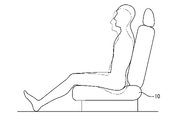
- FIG. 1 shows a vehicle seat with polyurethane foam
- the number of functional groups of the polyol (a) is less than 3, A polyurethane foam, wherein the polyol (a) has a number average molecular weight of 2000 or more and 20000 or less.
- a seat pad comprising a polyurethane foam.
- Polyurethane Foams Polyurethane foams are obtained from compositions comprising polyols and isocyanates.
- polyols include polyols (a) in which the content of ethylene oxide units (hereinafter abbreviated as "EO units") is 60 mol% or more when the total amount of alkylene oxide units is 100 mol%.
- the content of the polyol (a) is 60 parts by mass or more and 95 parts by mass or less when the total amount of the polyol is 100 parts by mass.
- composition contains a polyol and an isocyanate.
- the composition may optionally contain at least one selected from foaming agents, catalysts, foam stabilizers, and cross-linking agents. Each component of the composition will be described.
- Polyol Polyols include polyols (a) having an EO unit content of 60 mol % or more when the total amount of alkylene oxide units is 100 mol %.
- the polyol is used in combination with another polyol (b) having an EO unit content of less than 60 mol % (it may contain no EO units).
- Polyol (a) is a polyether polyol having an EO unit content of 60 mol % or more.
- the content of EO units is preferably 70 mol % or more, more preferably 80 mol % or more, from the viewpoint of reducing stress relaxation rate and hysteresis loss rate.
- the upper limit of the EO unit content is not particularly limited, and may be 100 mol %.
- alkylene oxides other than ethylene oxide used in the production of polyol (a) include propylene oxide and butylene oxide, and propylene oxide is often used.
- a polyol containing propylene oxide units hereinafter abbreviated as "PO units" in total other than EO units can be suitably used.
- the content of the polyol (a) is 60 parts by mass or more and 95 parts by mass or less when the total amount of the polyol is 100 parts by mass.
- the lower limit of the content of the polyol (a) is preferably 70 parts by mass or more, more preferably 80 parts by mass or more.
- the upper limit of the content of the polyol (a) is preferably 93 parts by mass or less, more preferably 90 parts by mass or less. From these points of view, the content of the polyol (a) is preferably 70 parts by mass or more and 93 parts by mass or less, more preferably 80 parts by mass or more and 90 parts by mass or less.
- the number average molecular weight of polyol (a) is not particularly limited.
- the number average molecular weight of the polyol (a) is preferably 20,000 or less, more preferably 15,000 or less, still more preferably 10,000 or less, and still more preferably 7,000 or less, from the viewpoint of achieving low resilience. , more preferably 5000 or less.
- the lower limit of the number average molecular weight of polyol (a) is usually 2000 or more.
- the number average molecular weight of polyol (a) can be measured by gel permeation chromatography (GPC). When polyol (a) is a commercial product, the catalog value may be adopted as the number average molecular weight of polyol (a).
- the number of functional groups of polyol (a) is not particularly limited.
- the number of functional groups of the polyol (a) is preferably less than 3, more preferably 2.5 or less, still more preferably 2, from the viewpoint of reducing stress relaxation rate and hysteresis loss rate.
- the number of functional groups of polyol (a) is usually 2 or more.
- Polyol (a) is preferably a polyoxyethylene/propylene glycol copolymer having an EO unit content of 60 mol % or more. If the number of functional groups of the polyol (a) is the above value, formation of a network structure can be suppressed when the polyol and isocyanate react.
- the number of functional groups means the average number of active hydrogen groups possessed by each component contained in the polyol.
- the catalog value may be adopted as the number of functional groups of the polyol (a).
- the polyol (b) is not particularly limited as long as it has an EO unit content of less than 60 mol% (it may contain no EO units). Other polyols (b) may be used alone or in combination of two or more.
- polyol (b) examples include polyether polyols containing PO units, butylene oxide units, etc. as alkylene oxide units other than EO units. This polyol is hereinafter referred to as polyol (b1).
- polyol (b1) it is possible to suitably use a polyol in which the entire amount other than EO units is PO units.
- the cushioning properties of the polyurethane foam can be improved. Although the reason is not clear, it is presumed as follows. When only the polyol (a) is used as the polyol, a rough foam with low cushioning properties is obtained.
- polyol (a) when only polyol (a) was used as the polyol, the components of the polyol were homogenized and the reaction proceeded quickly. It is speculated that the combined use of polyol (a) and polyol (b1), which is a polyether polyol having properties different from those of polyol (a), makes it possible to slow down the reaction and improve cushioning properties. be.
- the content of EO units in the polyol (b1) is not particularly limited.
- the content of EO units in the polyol (b1) is preferably more than 0 mol%, more preferably 10 mol% or more, more preferably 15 mol%, from the viewpoint of reducing the stress relaxation rate and hysteresis loss rate. It is more preferable that it is above.
- the upper limit of the EO unit content of the polyol (b1) is not particularly limited as long as it is less than 60 mol %.
- the number of functional groups of the polyol (b1) is not particularly limited.
- the number of functional groups of the polyol (b1) is preferably less than 3, more preferably 2.5 or less, still more preferably 2.
- the number of functional groups of the polyol (b1) is usually 2 or more.
- the polyol (b1) is preferably a polyoxyethylene/propylene glycol copolymer or polypropylene glycol having an EO unit content of less than 60 mol%, and a polyoxyethylene/propylene glycol having an EO unit content of less than 60 mol%. Copolymers are more preferred. If the number of functional groups of the polyol (b1) is the above value, formation of a network structure can be suppressed when the polyol and isocyanate react.
- the number average molecular weight of polyol (b1) is not particularly limited.
- the number average molecular weight of this polyol (b1) is preferably 2000 or more and 20000 or less, more preferably 2500 or more and 15000 or less, still more preferably 3000 or more and 10000 or less.
- polyol (b) examples include aliphatic polyether polyols having 3 to 20 carbon atoms such as polyoxytetramethylene glycol (PTMG). This polyol is hereinafter referred to as polyol (b2).
- polyol (b2) When the polyol (a) and the polyol (b2) are used together, the tensile strength and tear strength of the polyurethane foam can be improved.
- Polyoxytetramethylene glycol (having 2 functional groups) can be preferably used as the polyol (b2). If the number of functional groups of the polyol (b2) is 2, formation of a network structure can be suppressed when the polyol and isocyanate react.
- the number average molecular weight of polyol (b2) is not particularly limited.
- the number average molecular weight of this polyol (b2) is preferably 1,500 or more and 15,000 or less, more preferably 2,000 or more and 10,000 or less, and still more preferably 2,500 or more and 8,000 or less.
- the polyol (b2) is preferable to use as the polyol (b).
- the stress relaxation rate and the hysteresis loss rate can be suitably reduced while ensuring the basic physical properties of the polyurethane foam.
- a polyol other than the polyol (b1) and the polyol (b2) may be used as long as the properties of the polyurethane foam such as impact resilience, stress relaxation rate and hysteresis loss rate are not impaired. Only one type of polyol other than the polyol (b1) and the polyol (b2) may be used, or two or more types may be used in combination.
- Blowing agent As the blowing agent, water, a CFC alternative, or a hydrocarbon such as pentane can be used singly or in combination. Water is particularly preferred as the foaming agent. In the case of water, carbon dioxide gas is generated during the reaction between polyol and isocyanate, and the carbon dioxide gas causes foaming.
- the amount of water as a foaming agent is preferably 1.0 parts by mass or more and 4.0 parts by mass or less with respect to 100 parts by mass of polyol.
- a known catalyst for polyurethane foam can be used.
- the combined use of a foaming catalyst and a resinification catalyst is preferred.
- a foaming catalyst is a catalyst that accelerates the reaction between polyisocyanate and water to generate carbon dioxide gas.
- the foaming catalyst is not limited and includes, for example, bis(2-dimethylaminoethyl) ether, triethylamine, dimethylaminoethoxyethanol, N,N,N'-trimethylaminoethyl-ethanolamine, N,N,N' , N′′,N′′-pentamethyldiethylenetriamine.
- the resinification catalyst is a catalyst that promotes the urethanization reaction (resinification reaction) between polyol and isocyanate.
- the resinification catalyst is not limited, and examples thereof include triethylenediamine, 1,2-dimethylimidazole, N.(N',N'-dimethylaminoethyl)-morpholine, tetramethylguanidine, dimethylaminoethanol, N-methyl -N'-(2-hydroxyethyl)-piperazine, N,N,N',N'-tetramethylpropane 1,3-diamine, N,N'-dimethylpiperazine, N,N,N',N'-tetra Methylhexane-1,6-diamine, N,N,N',N'',N'-pentamethyldipropylene-triamine, N-(2-hydroxyethyl)morpholine, ethylene glycol bis(3-dimethyl)-aminopropyl Amine catalyst
- the total amount of the catalyst is preferably 0.3 parts by mass or more and 3.0 parts by mass or less with respect to 100 parts by mass of the polyol.
- foam Stabilizer Any foam stabilizer may be used as long as it is commonly used as a raw material for urethane foam, and examples thereof include silicone compounds and nonionic surfactants.
- the amount of the foam stabilizer is preferably 0.2 parts by mass or more and 2.0 parts by mass or less with respect to 100 parts by mass of the polyol.
- cross-linking agent is added to improve the hardness and tear strength of the polyurethane foam, and is particularly effective for increasing the hardness.
- the cross-linking agent is an optional component, and the stress relaxation rate and hysteresis loss rate can be reduced without adding it.
- cross-linking agents include polyhydric alcohols such as trimethylolpropane, glycerin, 1,4-butanediol and diethylene glycol, and amines such as ethanolamines and polyethylenepolyamines. Two or more kinds of cross-linking agents may be used.
- the total amount of the cross-linking agent is preferably 0.1 parts by mass or more and 6.0 parts by mass or less with respect to 100 parts by mass of the polyol.
- the isocyanate is not particularly limited.
- MDI-based isocyanate (diphenylmethane diisocyanate-based isocyanate) is preferable.
- MDI-based isocyanate the surface of the polyurethane foam can be made softer to the touch than, for example, when TDI (toluenediisocyanate) is used.
- MDI-based isocyanates include 2,2′-diphenylmethane diisocyanate (2,2′-MDI), 2,4′-diphenylmethane diisocyanate (2,4′-MDI), 4,4′-diphenylmethane diisocyanate ( 4,4′-MDI), polymeric MDI which is a mixture of diphenylmethane diisocyanate and polymethylene polyphenylene polyisocyanate, carbodiimide modified products thereof, urethane modified products, urea modified products, allophanate modified products, biuret modified products, Modified isocyanurate and MDI prepolymers obtained by reacting these isocyanates with polyols can also be mentioned.
- the isocyanate preferably contains carbodiimide-modified MDI, more preferably contains carbodiimide-modified MDI and polymeric MDI, and further preferably contains carbodiimide-modified MDI, monomeric MDI, and polymeric MDI.
- the isocyanate index is preferably 80 or more and 120 or less, more preferably 90 or more and 110 or less.
- the isocyanate index is a value obtained by dividing the number of moles of isocyanate groups in isocyanate by the total number of moles of active hydrogen groups such as hydroxyl groups in polyols and water as a blowing agent and multiplying this value by 100. [NCO equivalent of isocyanate/activity Hydrogen equivalent x 100].
- additives include flame retardants and colorants.
- a flame retardant is added to make the polyurethane foam less flammable.
- the flame retardant include known liquid flame retardants and solid flame retardants. Examples include halogenated polymers such as polyvinyl chloride, chloroprene rubber, and chlorinated polyethylene; phosphate esters and halogenated phosphate ester compounds; organic flame retardants such as melamine resins and urea resins; Inorganic flame retardants and the like can be mentioned.
- the flame retardant is not limited to one type, and two or more types may be used in combination.
- the total amount of the flame retardant is preferably 0.1 parts by mass or more and 6.0 parts by mass or less with respect to 100 parts by mass of the polyol.
- the coloring agent is blended in order to give the polyurethane foam an appropriate color, and is used according to the required color. Examples of coloring agents include pigments and graphite.
- the physical properties of the polyurethane foam can be appropriately set depending on the application.
- the polyurethane foam is preferably flexible polyurethane foam.
- the polyurethane foam preferably has the following physical properties.
- the hysteresis loss rate (JIS K6400-2 method B) is preferably 20% or less, more preferably 15% or less, even more preferably 10% or less. Although the lower limit of the hysteresis loss rate is not particularly limited, it is usually 5.0% or more.
- the stress relaxation rate is preferably 15% or less, more preferably 10% or less, and even more preferably 5.0% or less. Although the lower limit of the stress relaxation rate is not particularly limited, it is usually 1.0% or more.
- the impact resilience (JIS K6400-3) is preferably 5% or more and 80% or less, more preferably 10% or more and 50% or less, and even more preferably 15% or more and 30% or less.
- the 25% hardness (JIS K6400-2 D method) is preferably 10N to 600N, more preferably 100N to 400N. If it is 600 N or less, it is highly flexible and is preferable as a polyurethane foam.
- the apparent core density (JIS K7222) is preferably 10 kg/m 3 to 150 kg/m 3 , more preferably 30 kg/m 3 to 80 kg/m 3 .
- the tensile strength (JIS K6400-5) is preferably 45 kPa or more, more preferably 70 kPa or more, and even more preferably 95 kPa or more.
- the tear strength (JIS K6400-5) is preferably 2.0 N/cm or more, more preferably 3.5 N/cm or more, and even more preferably 5.0 N/cm or more.
- Elongation (JIS K6400-5) is preferably 50% to 500%, more preferably 60% to 300%, and preferably 70% to 150%. If the elongation is 50% or more, it is highly flexible and is preferable as a polyurethane foam.
- Polyurethane foam can be produced by a known foaming method in which a polyurethane resin composition is stirred and mixed to react polyol and isocyanate.
- Foaming methods include slab foaming and mold foaming, and either molding method may be used.
- Slab foaming is a method in which a mixed polyurethane resin composition is discharged onto a belt conveyor and foamed at room temperature under atmospheric pressure.
- mold foaming is a method in which a mixed polyurethane resin composition is filled into a mold and foamed in the mold.
- a molding method using mold foaming is suitable for a molded article having a complicated three-dimensional shape. For example, it is suitable for molding cushion materials such as seat pads, bedding such as pillows and mattresses, cushions, pads for legless chairs, and pads for clothing.
- FIG. 1 illustrates a seat pad 10 comprising the polyurethane foam of the present disclosure.
- FIG. 1 the state of a seated person using a seat pad having a stress relaxation rate and a hysteresis loss rate higher than those of the seat pad 10 is schematically shown by a two-dot dashed line.
- improvement in riding comfort is required due to thinning. In order to improve ride comfort, it is important to suppress wobble during boarding and running.
- the seat pad 10 including the polyurethane foam of the present disclosure can suppress wobble during boarding and running, and provides a comfortable ride even when the thickness is reduced.
- EO unit content (mol%) of the polyol is shown in the table as "EO ratio".
- ⁇ Blowing agent water
- Catalyst-1 foaming catalyst, bis(2-dimethylaminoethyl) ether, product number
- DABCO BL-11 manufactured by MOMENTIVE
- Catalyst-2 resinification catalyst, triethylenediamine 33%, product number
- DABCO 33LSI manufactured by Evonik Japan Co., Ltd.
- Catalyst-3 Foaming catalyst, bis(2-dimethylaminoethyl) ether, product number; DABCO BL-19, manufactured by MOMENTIVE
- ⁇ Foam stabilizer-1 silicone-based foam stabilizer, product number; L-3184J, manufactured by MOMENTIVE
- ⁇ Foam stabilizer-2 silicone-based foam stabilizer, product number; B8715LF2, manufactured by EVONIK ⁇ Foam stabilizer-3: silicone System foam stabilizer, product number: B8738LF2, manufactured by EVONIK
- ⁇ Crosslinking agent-1 trimethylolpropane trimethacrylate
- Crosslinking agent-2 glycerin
- ⁇ Crosslinking agent-3 N,N-diethanolamine 80%
- ⁇ Isocyanate-1 A mixture of 80% MDI (4,4′-MDI) containing carbodiimide-modified MDI and 20% polymeric MDI
- ⁇ Isocyanate-2 MDI (4,4′-MDI) containing carbodiimide-modified MDI 40% mixture of 40% monomeric MDI and 20% polymeric MDI
- Isocyanate-3 mixture of 80% toluenediisocyanate (TDI) and 20% polymeric MDI
- Apparent core density Apparent core density (kg/m 3 ) was measured according to JIS K7222.
- Tensile Strength, Tear Strength and Elongation Tensile strength (kPa), tear strength (N/cm) and elongation (%) were measured according to JIS K6400-5.
- the polyurethane foam has a smaller impact resilience than the conventional product (Experimental Example 1), a hysteresis loss rate of 20% or less, and a stress relaxation rate of 15% or less.
- C The polyurethane foam did not meet the criteria A and B, but had a smaller impact resilience than the conventional product (Experimental Example 1), a hysteresis loss rate of 20% or less, or a stress relaxation rate of 15% or less.
- D The impact resilience of the polyurethane foam is equal to or higher than that of the conventional product (Experimental Example 1), or the hysteresis loss rate is greater than 20% and the stress relaxation rate is greater than 15%.
- the polyurethane foams of Experimental Examples 3, 4, 6-8, 10, and 11 gave good overall evaluation results. It was confirmed that by using 60 parts by mass or more and 95 parts by mass or less of polyol (a) having an EO unit content of 60 mol% or more, impact resilience is reduced, and stress relaxation rate and hysteresis loss rate are also reduced. .
Landscapes
- Chemical & Material Sciences (AREA)
- Health & Medical Sciences (AREA)
- Chemical Kinetics & Catalysis (AREA)
- Medicinal Chemistry (AREA)
- Polymers & Plastics (AREA)
- Organic Chemistry (AREA)
- Engineering & Computer Science (AREA)
- Materials Engineering (AREA)
- Polyurethanes Or Polyureas (AREA)
- Mattresses And Other Support Structures For Chairs And Beds (AREA)
- Chair Legs, Seat Parts, And Backrests (AREA)
Priority Applications (6)
| Application Number | Priority Date | Filing Date | Title |
|---|---|---|---|
| CA3203262A CA3203262A1 (en) | 2021-02-12 | 2022-02-07 | Polyurethane foam and seat pad |
| EP22751243.1A EP4292475B1 (en) | 2021-02-12 | 2022-02-07 | Polyurethane foam and seat pad |
| JP2022580619A JP7456022B2 (ja) | 2021-02-12 | 2022-02-07 | ポリウレタンフォーム及びシートパッド |
| CN202280009120.0A CN116782797A (zh) | 2021-02-12 | 2022-02-07 | 聚氨酯泡沫以及座椅垫 |
| US18/267,290 US20240010781A1 (en) | 2021-02-12 | 2022-02-07 | Polyurethane foam and seat pad |
| JP2024038825A JP7735454B2 (ja) | 2021-02-12 | 2024-03-13 | ポリウレタンフォーム及びシートパッド |
Applications Claiming Priority (4)
| Application Number | Priority Date | Filing Date | Title |
|---|---|---|---|
| JP2021-020786 | 2021-02-12 | ||
| JP2021020786 | 2021-02-12 | ||
| JP2021-072390 | 2021-04-22 | ||
| JP2021072390 | 2021-04-22 |
Publications (1)
| Publication Number | Publication Date |
|---|---|
| WO2022172895A1 true WO2022172895A1 (ja) | 2022-08-18 |
Family
ID=82837799
Family Applications (1)
| Application Number | Title | Priority Date | Filing Date |
|---|---|---|---|
| PCT/JP2022/004708 Ceased WO2022172895A1 (ja) | 2021-02-12 | 2022-02-07 | ポリウレタンフォーム及びシートパッド |
Country Status (5)
| Country | Link |
|---|---|
| US (1) | US20240010781A1 (https=) |
| EP (1) | EP4292475B1 (https=) |
| JP (2) | JP7456022B2 (https=) |
| CA (1) | CA3203262A1 (https=) |
| WO (1) | WO2022172895A1 (https=) |
Citations (6)
| Publication number | Priority date | Publication date | Assignee | Title |
|---|---|---|---|---|
| JP2004115819A (ja) * | 2004-01-20 | 2004-04-15 | Nippon Polyurethane Ind Co Ltd | 軟質ポリウレタンフォーム用ポリイソシアネート |
| JP2012214778A (ja) * | 2011-03-30 | 2012-11-08 | Asahi Glass Co Ltd | 軟質ポリウレタンフォームの製造方法およびシート |
| JP2019031666A (ja) | 2017-08-08 | 2019-02-28 | 三洋化成工業株式会社 | 軟質ポリウレタンフォーム |
| JP2020033553A (ja) * | 2018-08-23 | 2020-03-05 | アキレス株式会社 | 軟質ポリウレタンフォーム |
| JP2021020786A (ja) | 2019-07-29 | 2021-02-18 | 株式会社沖データ | 媒体搬送装置および画像形成装置 |
| JP2021072390A (ja) | 2019-10-31 | 2021-05-06 | 日亜化学工業株式会社 | 発光デバイスの製造方法 |
Family Cites Families (12)
| Publication number | Priority date | Publication date | Assignee | Title |
|---|---|---|---|---|
| JPS583488B2 (ja) * | 1978-05-15 | 1983-01-21 | 株式会社ブリヂストン | 軟質ポリエ−テルポリウレタンフオ−ムの製造方法 |
| JP3992869B2 (ja) | 1999-04-07 | 2007-10-17 | 三井化学株式会社 | エネルギー吸収軟質ポリウレタン発泡体及びその製造方法 |
| US20090012195A1 (en) * | 2007-07-05 | 2009-01-08 | Neff Raymond A | Resin composition for use in forming a polyurethane article with increased comfort |
| EP2172501A1 (en) * | 2008-09-24 | 2010-04-07 | Recticel | Process for the preparation of flexible, resilient polyurethane foam and the resulting foam |
| KR20130094688A (ko) * | 2010-04-30 | 2013-08-26 | 아사히 가라스 가부시키가이샤 | 폴리옥시알킬렌폴리올, 폴리머 분산 폴리올, 및 연질 폴리우레탄폼, 그리고 이들의 제조 방법 |
| KR20140005266A (ko) * | 2011-02-25 | 2014-01-14 | 아사히 가라스 가부시키가이샤 | 고농도 폴리머폴리올 및 그 제조 방법 |
| JP2012214779A (ja) * | 2011-03-30 | 2012-11-08 | Asahi Glass Co Ltd | 軟質ポリウレタンフォームの製造方法およびシート |
| WO2012133812A1 (ja) | 2011-03-30 | 2012-10-04 | 旭硝子株式会社 | ポリエーテルポリオールおよび軟質ポリウレタンフォームの製造方法、ならびにシート |
| JP6559513B2 (ja) | 2015-09-10 | 2019-08-14 | アキレス株式会社 | マットレス用軟質ポリウレタンフォーム |
| CN110753710B (zh) * | 2017-06-27 | 2022-07-26 | 巴斯夫欧洲公司 | 具有改善的透气性的软质聚氨酯泡沫 |
| JP6965046B2 (ja) * | 2017-07-04 | 2021-11-10 | 株式会社イノアックコーポレーション | 車両用内装材 |
| JP6510098B1 (ja) * | 2018-02-14 | 2019-05-08 | Agc株式会社 | ポリウレタンフォーム製造用組成物、ポリオールシステム液及びポリウレタンフォームの製造方法 |
-
2022
- 2022-02-07 WO PCT/JP2022/004708 patent/WO2022172895A1/ja not_active Ceased
- 2022-02-07 JP JP2022580619A patent/JP7456022B2/ja active Active
- 2022-02-07 CA CA3203262A patent/CA3203262A1/en active Pending
- 2022-02-07 US US18/267,290 patent/US20240010781A1/en active Pending
- 2022-02-07 EP EP22751243.1A patent/EP4292475B1/en active Active
-
2024
- 2024-03-13 JP JP2024038825A patent/JP7735454B2/ja active Active
Patent Citations (6)
| Publication number | Priority date | Publication date | Assignee | Title |
|---|---|---|---|---|
| JP2004115819A (ja) * | 2004-01-20 | 2004-04-15 | Nippon Polyurethane Ind Co Ltd | 軟質ポリウレタンフォーム用ポリイソシアネート |
| JP2012214778A (ja) * | 2011-03-30 | 2012-11-08 | Asahi Glass Co Ltd | 軟質ポリウレタンフォームの製造方法およびシート |
| JP2019031666A (ja) | 2017-08-08 | 2019-02-28 | 三洋化成工業株式会社 | 軟質ポリウレタンフォーム |
| JP2020033553A (ja) * | 2018-08-23 | 2020-03-05 | アキレス株式会社 | 軟質ポリウレタンフォーム |
| JP2021020786A (ja) | 2019-07-29 | 2021-02-18 | 株式会社沖データ | 媒体搬送装置および画像形成装置 |
| JP2021072390A (ja) | 2019-10-31 | 2021-05-06 | 日亜化学工業株式会社 | 発光デバイスの製造方法 |
Non-Patent Citations (1)
| Title |
|---|
| See also references of EP4292475A4 |
Also Published As
| Publication number | Publication date |
|---|---|
| JP7735454B2 (ja) | 2025-09-08 |
| JPWO2022172895A1 (https=) | 2022-08-18 |
| CA3203262A1 (en) | 2022-08-18 |
| EP4292475A4 (en) | 2024-12-18 |
| EP4292475A1 (en) | 2023-12-20 |
| JP2024073541A (ja) | 2024-05-29 |
| US20240010781A1 (en) | 2024-01-11 |
| EP4292475B1 (en) | 2025-11-19 |
| JP7456022B2 (ja) | 2024-03-26 |
Similar Documents
| Publication | Publication Date | Title |
|---|---|---|
| JP4624560B2 (ja) | 低レジリエンスで低振動数の成形ポリウレタンフォーム | |
| US10166893B2 (en) | Seat pad | |
| JP6741420B2 (ja) | 乗り物のシート用パッド形成用軟質ポリウレタンフォーム、及び乗り物のシート用パッド | |
| JP6735773B2 (ja) | シート用パッド | |
| KR0182311B1 (ko) | 통기성이 우수한 연질폴리우레탄 포옴의 제조방법 | |
| JP3992869B2 (ja) | エネルギー吸収軟質ポリウレタン発泡体及びその製造方法 | |
| CN108368228A (zh) | 软质聚氨酯泡沫和座垫 | |
| US20180079853A1 (en) | Polyurethane forming composition and flexible polyurethane foam | |
| JP2025160350A (ja) | シートパッド | |
| JP7456022B2 (ja) | ポリウレタンフォーム及びシートパッド | |
| JP2010280855A (ja) | 車輌用シートクッション用軟質ポリウレタンフォームおよびその製造方法 | |
| JP2816806B2 (ja) | 車両用座席の背もたれクッション及びその製造方法 | |
| JP7220009B2 (ja) | 低反発性ポリウレタンフォームの製造方法と低反発性ポリウレタンフォーム用組成物と低反発性ポリウレタンフォーム | |
| JP5717791B2 (ja) | 車両用シートパッドの製造方法及び車両用シートパッド | |
| CN116782797A (zh) | 聚氨酯泡沫以及座椅垫 | |
| JP2024038651A (ja) | ポリウレタンフォーム | |
| JP2006008773A (ja) | 軟質ポリウレタンフォーム、及びその製造方法 | |
| JP2022123873A (ja) | シートパッド | |
| JPH0680106B2 (ja) | ポリウレタンフォームの製造方法 | |
| JP6964466B2 (ja) | シートパッド | |
| JP2006008774A (ja) | 軟質ポリウレタンフォーム、及びその製造方法 |
Legal Events
| Date | Code | Title | Description |
|---|---|---|---|
| 121 | Ep: the epo has been informed by wipo that ep was designated in this application |
Ref document number: 22751243 Country of ref document: EP Kind code of ref document: A1 |
|
| ENP | Entry into the national phase |
Ref document number: 2022580619 Country of ref document: JP Kind code of ref document: A |
|
| WWE | Wipo information: entry into national phase |
Ref document number: 18267290 Country of ref document: US |
|
| ENP | Entry into the national phase |
Ref document number: 3203262 Country of ref document: CA |
|
| WWE | Wipo information: entry into national phase |
Ref document number: 202280009120.0 Country of ref document: CN |
|
| WWE | Wipo information: entry into national phase |
Ref document number: 2022751243 Country of ref document: EP |
|
| NENP | Non-entry into the national phase |
Ref country code: DE |
|
| ENP | Entry into the national phase |
Ref document number: 2022751243 Country of ref document: EP Effective date: 20230912 |
|
| WWG | Wipo information: grant in national office |
Ref document number: 2022751243 Country of ref document: EP |