WO2022162842A1 - 貨客混載システム、貨客混載システムの配車装置及び貨客混載システムの配車方法 - Google Patents
貨客混載システム、貨客混載システムの配車装置及び貨客混載システムの配車方法 Download PDFInfo
- Publication number
- WO2022162842A1 WO2022162842A1 PCT/JP2021/003077 JP2021003077W WO2022162842A1 WO 2022162842 A1 WO2022162842 A1 WO 2022162842A1 JP 2021003077 W JP2021003077 W JP 2021003077W WO 2022162842 A1 WO2022162842 A1 WO 2022162842A1
- Authority
- WO
- WIPO (PCT)
- Prior art keywords
- vehicle
- candidate
- passenger
- point
- delivery
- Prior art date
- Legal status (The legal status is an assumption and is not a legal conclusion. Google has not performed a legal analysis and makes no representation as to the accuracy of the status listed.)
- Ceased
Links
Images





Classifications
-
- G—PHYSICS
- G06—COMPUTING OR CALCULATING; COUNTING
- G06Q—INFORMATION AND COMMUNICATION TECHNOLOGY [ICT] SPECIALLY ADAPTED FOR ADMINISTRATIVE, COMMERCIAL, FINANCIAL, MANAGERIAL OR SUPERVISORY PURPOSES; SYSTEMS OR METHODS SPECIALLY ADAPTED FOR ADMINISTRATIVE, COMMERCIAL, FINANCIAL, MANAGERIAL OR SUPERVISORY PURPOSES, NOT OTHERWISE PROVIDED FOR
- G06Q10/00—Administration; Management
- G06Q10/08—Logistics, e.g. warehousing, loading or distribution; Inventory or stock management
- G06Q10/083—Shipping
- G06Q10/08355—Routing methods
-
- G—PHYSICS
- G01—MEASURING; TESTING
- G01C—MEASURING DISTANCES, LEVELS OR BEARINGS; SURVEYING; NAVIGATION; GYROSCOPIC INSTRUMENTS; PHOTOGRAMMETRY OR VIDEOGRAMMETRY
- G01C21/00—Navigation; Navigational instruments not provided for in groups G01C1/00 - G01C19/00
- G01C21/26—Navigation; Navigational instruments not provided for in groups G01C1/00 - G01C19/00 specially adapted for navigation in a road network
- G01C21/34—Route searching; Route guidance
- G01C21/3407—Route searching; Route guidance specially adapted for specific applications
- G01C21/343—Calculating itineraries
-
- G—PHYSICS
- G06—COMPUTING OR CALCULATING; COUNTING
- G06Q—INFORMATION AND COMMUNICATION TECHNOLOGY [ICT] SPECIALLY ADAPTED FOR ADMINISTRATIVE, COMMERCIAL, FINANCIAL, MANAGERIAL OR SUPERVISORY PURPOSES; SYSTEMS OR METHODS SPECIALLY ADAPTED FOR ADMINISTRATIVE, COMMERCIAL, FINANCIAL, MANAGERIAL OR SUPERVISORY PURPOSES, NOT OTHERWISE PROVIDED FOR
- G06Q10/00—Administration; Management
- G06Q10/04—Forecasting or optimisation specially adapted for administrative or management purposes, e.g. linear programming or "cutting stock problem"
- G06Q10/047—Optimisation of routes or paths, e.g. travelling salesman problem
-
- G—PHYSICS
- G06—COMPUTING OR CALCULATING; COUNTING
- G06Q—INFORMATION AND COMMUNICATION TECHNOLOGY [ICT] SPECIALLY ADAPTED FOR ADMINISTRATIVE, COMMERCIAL, FINANCIAL, MANAGERIAL OR SUPERVISORY PURPOSES; SYSTEMS OR METHODS SPECIALLY ADAPTED FOR ADMINISTRATIVE, COMMERCIAL, FINANCIAL, MANAGERIAL OR SUPERVISORY PURPOSES, NOT OTHERWISE PROVIDED FOR
- G06Q10/00—Administration; Management
- G06Q10/08—Logistics, e.g. warehousing, loading or distribution; Inventory or stock management
-
- G—PHYSICS
- G06—COMPUTING OR CALCULATING; COUNTING
- G06Q—INFORMATION AND COMMUNICATION TECHNOLOGY [ICT] SPECIALLY ADAPTED FOR ADMINISTRATIVE, COMMERCIAL, FINANCIAL, MANAGERIAL OR SUPERVISORY PURPOSES; SYSTEMS OR METHODS SPECIALLY ADAPTED FOR ADMINISTRATIVE, COMMERCIAL, FINANCIAL, MANAGERIAL OR SUPERVISORY PURPOSES, NOT OTHERWISE PROVIDED FOR
- G06Q10/00—Administration; Management
- G06Q10/08—Logistics, e.g. warehousing, loading or distribution; Inventory or stock management
- G06Q10/083—Shipping
-
- G—PHYSICS
- G06—COMPUTING OR CALCULATING; COUNTING
- G06Q—INFORMATION AND COMMUNICATION TECHNOLOGY [ICT] SPECIALLY ADAPTED FOR ADMINISTRATIVE, COMMERCIAL, FINANCIAL, MANAGERIAL OR SUPERVISORY PURPOSES; SYSTEMS OR METHODS SPECIALLY ADAPTED FOR ADMINISTRATIVE, COMMERCIAL, FINANCIAL, MANAGERIAL OR SUPERVISORY PURPOSES, NOT OTHERWISE PROVIDED FOR
- G06Q50/00—Information and communication technology [ICT] specially adapted for implementation of business processes of specific business sectors, e.g. utilities or tourism
- G06Q50/40—Business processes related to the transportation industry
-
- G—PHYSICS
- G08—SIGNALLING
- G08G—TRAFFIC CONTROL SYSTEMS
- G08G1/00—Traffic control systems for road vehicles
- G08G1/01—Detecting movement of traffic to be counted or controlled
- G08G1/0104—Measuring and analyzing of parameters relative to traffic conditions
- G08G1/0108—Measuring and analyzing of parameters relative to traffic conditions based on the source of data
- G08G1/0112—Measuring and analyzing of parameters relative to traffic conditions based on the source of data from the vehicle, e.g. floating car data [FCD]
-
- G—PHYSICS
- G08—SIGNALLING
- G08G—TRAFFIC CONTROL SYSTEMS
- G08G1/00—Traffic control systems for road vehicles
- G08G1/09—Arrangements for giving variable traffic instructions
- G08G1/0962—Arrangements for giving variable traffic instructions having an indicator mounted inside the vehicle, e.g. giving voice messages
- G08G1/0968—Systems involving transmission of navigation instructions to the vehicle
- G08G1/096805—Systems involving transmission of navigation instructions to the vehicle where the transmitted instructions are used to compute a route
- G08G1/096811—Systems involving transmission of navigation instructions to the vehicle where the transmitted instructions are used to compute a route where the route is computed offboard
- G08G1/096816—Systems involving transmission of navigation instructions to the vehicle where the transmitted instructions are used to compute a route where the route is computed offboard where the complete route is transmitted to the vehicle at once
-
- G—PHYSICS
- G08—SIGNALLING
- G08G—TRAFFIC CONTROL SYSTEMS
- G08G1/00—Traffic control systems for road vehicles
- G08G1/09—Arrangements for giving variable traffic instructions
- G08G1/0962—Arrangements for giving variable traffic instructions having an indicator mounted inside the vehicle, e.g. giving voice messages
- G08G1/0968—Systems involving transmission of navigation instructions to the vehicle
- G08G1/096833—Systems involving transmission of navigation instructions to the vehicle where different aspects are considered when computing the route
- G08G1/096844—Systems involving transmission of navigation instructions to the vehicle where different aspects are considered when computing the route where the complete route is dynamically recomputed based on new data
-
- G—PHYSICS
- G08—SIGNALLING
- G08G—TRAFFIC CONTROL SYSTEMS
- G08G1/00—Traffic control systems for road vehicles
- G08G1/09—Arrangements for giving variable traffic instructions
- G08G1/0962—Arrangements for giving variable traffic instructions having an indicator mounted inside the vehicle, e.g. giving voice messages
- G08G1/0968—Systems involving transmission of navigation instructions to the vehicle
- G08G1/096855—Systems involving transmission of navigation instructions to the vehicle where the output is provided in a suitable form to the driver
- G08G1/096866—Systems involving transmission of navigation instructions to the vehicle where the output is provided in a suitable form to the driver where the complete route is shown to the driver
-
- G—PHYSICS
- G08—SIGNALLING
- G08G—TRAFFIC CONTROL SYSTEMS
- G08G1/00—Traffic control systems for road vehicles
- G08G1/20—Monitoring the location of vehicles belonging to a group, e.g. fleet of vehicles, countable or determined number of vehicles
- G08G1/202—Dispatching vehicles on the basis of a location, e.g. taxi dispatching
-
- G—PHYSICS
- G08—SIGNALLING
- G08G—TRAFFIC CONTROL SYSTEMS
- G08G1/00—Traffic control systems for road vehicles
- G08G1/123—Traffic control systems for road vehicles indicating the position of vehicles, e.g. scheduled vehicles; Managing passenger vehicles circulating according to a fixed timetable, e.g. buses, trains, trams
- G08G1/127—Traffic control systems for road vehicles indicating the position of vehicles, e.g. scheduled vehicles; Managing passenger vehicles circulating according to a fixed timetable, e.g. buses, trains, trams to a central station ; Indicators in a central station
Definitions
- the present invention relates to a vehicle allocation device and a vehicle allocation method for a freight-passenger mixed loading system in which cargo and passengers are mixed and transported on a service vehicle, and the crew of the service vehicle collects and delivers the cargo.
- Patent Document 1 has been disclosed as an on-demand cargo-passenger mixed loading system that enables people and cargo to be loaded and moved together.
- the route of the operating vehicle is determined based on the movement request of passengers and luggage.
- the present invention has been proposed in view of the above circumstances, and aims to prevent the occurrence of troubles by preventing the occurrence of a situation in which the passenger is absent from the vehicle due to the collection and delivery of luggage while passengers are boarding the vehicle. It is an object of the present invention to provide a vehicle dispatching device and a vehicle dispatching method for a freight-passenger mixed loading system capable of
- a vehicle dispatching device and a vehicle dispatching method for a freight-passenger mixed loading system acquires a delivery request and a vehicle allocation request, and selects a candidate based on a baggage collection point or a passenger boarding point. Detect vehicles. Then, for the candidate vehicle, based on the delivery request and the dispatch request, when no passengers are on board, the candidate vehicle calculates a candidate route through the package collection point and the delivery point. As a result, the calculated candidate route is set as the travel route, and the candidate vehicle on the candidate route set as the travel route is dispatched as a service vehicle.
- the present invention it is possible to prevent the occurrence of a situation in which the crew member is absent from the vehicle to collect and deliver packages while passengers are on board, thereby preventing troubles such as theft of packages and vehicles. can be prevented.
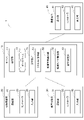
- FIG. 1 is a block diagram showing the configuration of a cargo-passenger mixed loading system according to the first embodiment of the present invention.
- FIG. 2 is a diagram for explaining a method of setting travel routes for transporting cargo and passengers by a conventional cargo-passenger mixed loading system.
- FIG. 3 is a diagram for explaining a method of setting a travel route for transporting cargo and passengers by the freight-passenger mixed loading system according to the first embodiment of the present invention.
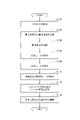
- FIG. 4 is a flow chart showing a processing procedure of dispatch processing by the freight-passenger mixed loading system according to the first embodiment of the present invention.
- FIG. 5 is a diagram for explaining a method of calculating candidate routes for transporting cargo and passengers by the freight-passenger mixed loading system according to the first embodiment of the present invention.
- FIG. 1 is a block diagram showing the configuration of a cargo-passenger mixed loading system according to the first embodiment of the present invention.
- FIG. 2 is a diagram for explaining a method of setting travel routes for transporting cargo
- FIG. 6 is a flow chart showing a processing procedure of dispatch processing by the freight-passenger mixed loading system according to the second embodiment of the present invention.
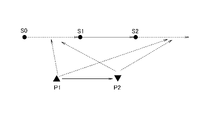
- FIG. 7 is a diagram for explaining a method of calculating candidate routes for transporting cargo and passengers by the cargo-passenger mixed loading system according to the second embodiment of the present invention.
- FIG. 8 is a diagram for explaining a method of calculating candidate routes for transporting cargo and passengers by the cargo-passenger mixed loading system according to the second embodiment of the present invention.
- FIG. 1 is a block diagram showing the configuration of a freight-passenger mixed loading system according to this embodiment.
- the freight-passenger mixed loading system 1 includes a server 10 for managing service vehicles, a luggage terminal 20 for requesting delivery of luggage, and a passenger terminal for requesting boarding of the service vehicle. 30 and an in-vehicle terminal 40 mounted on the service vehicle.
- the server 10 is connected to the luggage terminal 20, the passenger terminal 30, and the vehicle-mounted terminal 40 via a wireless or wired network.
- the network is, for example, the Internet and may utilize mobile communication capabilities such as 5G.
- the freight-passenger mixed loading system 1 is a system in which freight and passengers are mixed and carried on a service vehicle, and the crew of the service vehicle, for example, the driver, collects and delivers the freight.
- a luggage manager who requests delivery of luggage transmits a delivery request from a luggage terminal 20, and a passenger who wishes to board a service vehicle transmits a dispatch request from a passenger terminal 30.
- the server 10 acquires a delivery request and a vehicle allocation request, it sets a travel route in consideration of the collection and delivery points of the cargo and the boarding and alighting points of the passengers, and determines and allocates the service vehicle that carries the cargo and the passengers.
- the server 10 transmits information such as the driving route to the onboard terminal 40 of the dispatched service vehicle, and the service vehicle picks up the luggage and picks up the passengers, and then follows the set driving route. Drive to deliver packages and transport passengers to drop off points.
- a server 10 manages service vehicles of a freight-passenger mixed loading system 1 that transports cargo and passengers together. Specifically, the server 10 receives a delivery request from the luggage terminal 20, receives a vehicle allocation request from the passenger terminal 30, sets a traveling route of a service vehicle that transports the cargo and passengers together, and dispatches the vehicle. determine which vehicle
- the server 10 includes a communication unit 11, a database 13, and a vehicle allocation device 15, as shown in FIG.
- the communication unit 11 has a function of transmitting and receiving information via a network.
- the communication unit 11 acquires predetermined information such as a delivery request transmitted from the luggage terminal 20 and a vehicle allocation request transmitted from the passenger terminal 30 via the network, and records the acquired information in the database 13.
- the communication unit 11 also transmits information such as the travel route set by the vehicle allocation device 15 and the vehicles allocated to the luggage terminal 20, the passenger terminal 30, and the vehicle-mounted terminal 40 via the network.
- the database 13 stores information acquired by the communication unit 11 and information necessary for dispatching service vehicles. Specifically, the database 13 stores the delivery request acquired from the baggage terminal 20 and the dispatch request acquired from the passenger terminal 30, and also stores the information of the manager of the baggage and the information of the passenger. The database 13 also stores map information and the like as information necessary for allocating service vehicles, together with information such as vehicle information and position information of service vehicles and vehicle allocation plans. Further, with regard to the collection points and delivery points of the packages, whether or not it is necessary for the crew of the service vehicle to load and unload the packages is recorded for each point.
- the vehicle allocation device 15 executes vehicle allocation processing for service vehicles that transport luggage and passengers together. Specifically, the vehicle allocation device 15 acquires a delivery request and a vehicle allocation request, detects a candidate vehicle, and when the candidate vehicle does not have any passengers on board, the candidate vehicle passes through the package collection point and the delivery point. Calculate candidate routes to Then, the calculated candidate route is set as the travel route, and the candidate vehicle of the candidate route set as the travel route is dispatched as a service vehicle.
- the vehicle allocation device 15 includes a request acquisition unit 51 , a candidate vehicle detection unit 53 , a candidate route calculation unit 55 and a vehicle allocation determination unit 57 .
- the request acquisition unit 51 acquires a delivery request and a dispatch request from the luggage terminal 20 and the passenger terminal 30 via the communication unit 11 .
- the delivery request includes at least the collection point and delivery point of the package, and also includes information on the manager of the package, content of the package (weight, type), desired collection time, desired delivery time, and the like.
- the dispatch request includes at least the pick-up and drop-off points of passengers, and also includes information such as the number of passengers, the presence or absence of luggage, the desired boarding time, and the desired alighting time.
- the candidate vehicle detection unit 53 detects candidate vehicles that are service vehicle candidates for transporting luggage and passengers, based on the luggage collection point or passenger boarding point acquired by the request acquisition unit 51 . Specifically, the candidate vehicle detection unit 53 detects, as candidate vehicles, all service vehicles existing within a predetermined range (for example, within several kilometers) from the baggage collection point or the passenger boarding point.
- the candidate route calculation unit 55 calculates, based on the delivery request and the vehicle allocation request, the candidate vehicle detected by the candidate vehicle detection unit 53, when there are no passengers on board, the candidate vehicle passes through the package collection point and the delivery point. Calculate candidate routes to Specifically, the candidate route calculation unit 55 calculates all candidate routes that pass through the package collection point, the delivery point, and the passenger pick-up point and drop-off point by changing the order of passage.
- the candidate route calculation unit 55 selects a candidate route that passes through the package collection point and delivery point when no passengers are on board from the calculated candidate routes. However, collection points and delivery points that do not require service vehicle crews to load and unload packages may be selected as candidate routes even when passengers are boarding.
- the vehicle allocation determination unit 57 sets the candidate route calculated by the candidate route calculation unit 55 as a traveling route for carrying luggage and passengers, and selects a candidate vehicle for the candidate route set as the traveling route for a service vehicle for carrying luggage and passengers. Dispatch as When a plurality of candidate routes are calculated by the candidate route calculation unit 55, the candidate route with the best traveling conditions for the candidate vehicle is set as the travel route from among the calculated candidate routes.
- the vehicle allocation device 15 is a controller composed of a general-purpose electronic circuit including a microcomputer, a microprocessor, a CPU, and peripheral devices such as a memory, and has a function of allocating service vehicles in the freight-passenger mixed loading system 1 .
- Each function of dispatch device 15 may be implemented by one or more processing circuits.
- Processing circuitry includes, for example, a programmed processing device, such as a processing device including electrical circuitry, and an application specific integrated circuit (ASIC) or conventional circuit arranged to perform the functions described in the embodiments. Also includes devices such as parts.
- the luggage terminal 20 is a device that can access the server 10 via a network. tablet, etc.).
- the cargo terminal 20 is installed with an application necessary for executing the cargo delivery service provided by the consolidation system 1 . Therefore, the baggage terminal 20 can transmit necessary information to the server 10 and receive and display the information transmitted from the server 10 .
- the luggage terminal 20 includes a communication section 21, a controller 23, and an input section 25, as shown in FIG.
- the communication unit 21 has a function of transmitting and receiving information to and from the server 10 via a network, stores the received information in a memory (not shown), and transmits predetermined information such as a delivery request.
- the communication unit 21 may be a device having a mobile communication function such as 5G.
- the controller 23 accepts a package delivery request based on the operation of the package manager on the input unit 25 .
- the type of package, the size of the package, the number of packages, etc. are entered in addition to the collection point and delivery point of the package.
- the controller 23 is a general-purpose microcomputer including a CPU (central processing unit), memory, and input/output unit.
- a computer program is installed in the controller 23 to function as a part of the luggage terminal 20 .
- the controller 23 controls the communication section 21 by executing a computer program.
- Various information processing provided by the controller 23 may be realized by software or may be realized by dedicated hardware.
- the input unit 25 is an input interface that accepts operations from the package manager.
- the input unit 25 may be a device operated with a plurality of buttons, or may be a touch panel.
- the passenger terminal 30 is a device that can access the server 10 via a network, and is, for example, a personal computer installed in a commercial facility or a mobile terminal (smartphone, tablet, etc.) that the user uses on a daily basis. .
- the passenger terminal 30 is installed with an application necessary for executing the passenger transport service provided by the freight-passenger mixed loading system 1 . Therefore, the passenger terminal 30 can transmit necessary information to the server 10 and receive and display the information transmitted from the server 10 .
- the passenger terminal 30 includes a communication section 31, a controller 33, and an input section 35, as shown in FIG.
- the communication unit 31 has a function of transmitting and receiving information to and from the server 10 via a network, stores the received information in a memory (not shown), and transmits predetermined information such as a vehicle dispatch request.
- the communication unit 31 may be a device having a mobile communication function such as 5G.
- the controller 33 accepts the passenger's dispatch request based on the passenger's operation on the input unit 35 .
- the number of passengers, the presence or absence of luggage, etc. are input in addition to the pick-up point and drop-off point of the passenger.
- the controller 33 is a general-purpose microcomputer including a CPU (central processing unit), memory, and input/output unit.
- a computer program is installed in the controller 33 to function as part of the passenger terminal 30 .
- the controller 33 controls the communication section 31 by executing a computer program.
- Various information processing provided by the controller 33 may be realized by software or may be realized by dedicated hardware.
- the input unit 35 is an input interface that receives operations from passengers.
- the input unit 35 may be a device operated with a plurality of buttons, or may be a touch panel.
- the in-vehicle terminal 40 is a device that is mounted on a service vehicle that carries both luggage and passengers, and that can access the server 10 via a network.
- the onboard terminal 40 is installed with an application necessary for executing a service of transporting cargo and passengers in a mixed cargo-passenger system 1 . Therefore, the vehicle-mounted terminal 40 can transmit necessary information to the server 10 and receive and display the information transmitted from the server 10 .
- the in-vehicle terminal 40 includes a communication section 41, a controller 43, and a display section 45, as shown in FIG.
- the communication unit 41 has a function of transmitting and receiving information to and from the server 10 via a network, stores the received information in a memory (not shown), and transmits predetermined information such as service vehicle position information.
- the communication unit 41 may be a device having a mobile communication function such as 5G.
- the controller 43 displays the travel route transmitted from the server 10 on the display unit 45 and instructs the driver of the service vehicle on the travel route. Also, the controller 43 periodically transmits the location information of the service vehicle to the server 10 .
- the controller 43 is a general-purpose microcomputer having a CPU (Central Processing Unit), memory, and input/output unit.
- a computer program is installed in the controller 43 to function as a part of the in-vehicle terminal 40 .
- the controller 43 controls the communication section 41 by executing the computer program.
- Various information processing provided by the controller 43 may be realized by software or may be realized by dedicated hardware.
- the display unit 45 is a display device for displaying instructions from the server 10, and is, for example, a display of a navigation device mounted on a service vehicle.
- FIG. 4 is a flow chart showing a processing procedure of a service vehicle allocation process by the vehicle allocation device 15 according to the present embodiment.
- the service vehicle may carry only luggage or only passengers, but in this embodiment, a case will be described in which luggage and passengers are carried at the same time. In the case of transporting luggage and passengers at the same time, there are cases where passengers are picked up after the service vehicle is traveling with luggage, and luggage is picked up after the service vehicle is traveling with passengers. There is.
- the request acquisition unit 51 acquires the delivery request transmitted from the luggage terminal 20 and the vehicle dispatch request transmitted from the passenger terminal 30 via the communication unit 11. For example, when a service vehicle loads luggage first and then passengers, the request acquisition unit 51 has already acquired a delivery request, and then receives a new delivery request. Also, when the service vehicle picks up the passengers first and then the luggage, the request acquisition unit 51 has already acquired the dispatch request, and then receives a new delivery request.
- the candidate vehicle detection unit 53 determines the collection point and delivery point of the package or the pick-up point and drop-off point of the passenger. For example, when a delivery request is acquired, since the delivery request specifies the collection point and the delivery point of the package, the specified points may be determined as the collection point and the delivery point. However, in the case of a service in which the service vehicle makes a round of predetermined stop points, the stop points near the point specified in the delivery request are determined as the collection point and the delivery point. Similarly, when a vehicle allocation request is received, the passenger's boarding point and drop-off point are determined based on the boarding point and drop-off point specified in the vehicle allocation request.
- the pick-up and drop-off points for passengers are determined. Also, when a new delivery request is acquired while the service vehicle is carrying passengers, the collection point and delivery point of the package are determined.
- step S105 the candidate vehicle detection unit 53 detects candidate vehicles that are service vehicle candidates for transporting luggage and passengers, based on the luggage collection point or passenger boarding point determined in step S103.
- a new dispatch request is received while a service vehicle is carrying luggage, all service vehicles within a predetermined range (for example, within several kilometers) from the boarding point of the passenger are detected.
- a new delivery request is acquired while service vehicles are carrying passengers, all service vehicles existing within a predetermined range from the baggage collection point are detected.
- all service vehicles existing within a predetermined range from the point with the earliest scheduled collection time or scheduled boarding time are detected.
- the candidate route calculation unit 55 calculates a candidate route for the candidate vehicle detected at step S105 based on the delivery request and the vehicle allocation request. Specifically, the collection point and delivery point are specified in the delivery request, and the boarding point and drop-off point are specified in the dispatch request. Calculate everything. Further, when a plurality of candidate vehicles are detected, candidate routes are calculated for each of the plurality of candidate vehicles. In addition, when receiving multiple delivery requests or multiple dispatch requests, all candidate routes connecting all collection points, delivery points, pick-up points, and drop-off points included in multiple requests are calculated. do.
- a delivery request to carry a package from the collection point P1 to the delivery point P2 is received and three candidate vehicles A, B, and C are detected.
- Candidate vehicle A is running with passengers on board at the current location, and after the passengers get off at point S0, it is planned to move to point S1 without passengers, and travel from point S1 to point S2 with another passenger on board. is.
- the dotted arrow in FIG. 5 indicates no passengers, and the solid arrow indicates the presence of passengers. If a new delivery request is received here and the package is to be delivered from the collection point P1 to the delivery point P2, the candidate routes are six patterns shown in FIG.
- the delivery point P2 can be arranged between the points S0 and S1, between the points S1 and S2, and after the point S2. .
- the collection point P1 since the vehicle is currently traveling between the current location and the point S0, the collection point P1 is not arranged.
- the delivery point P2 can be arranged between the points S1 and S2 and after the point S2.
- the collection point P1 is placed after the point S2
- candidate vehicle B receives a new delivery request because no passengers are boarding at the current location. , and travel to the delivery point P2. Therefore, for candidate vehicle B, only one pattern of candidate routes is calculated.
- candidate vehicle C is traveling with passengers on board at the current location, and is scheduled to travel without passengers to point S1 after passengers get off at point S0. If a new delivery request is received here and a package is to be transported from the collection point P1 to the delivery point P2, there are three candidate routes.
- the candidate route calculator 55 calculates the travel distance and the travel time for each candidate route.
- a case where luggage is picked up after the service vehicle is carrying passengers has been described. can be calculated.
- the candidate route calculation unit 55 calculates the scheduled delivery time for the package to arrive at the delivery point, adds a predetermined allowable delay time to the calculated scheduled delivery time, and calculates the delivery limit time. Calculate Similarly, the expected alighting time for the passenger to arrive at the alighting point is calculated, and a predetermined allowable delay time is added to the calculated expected alighting time to calculate the alighting limit time.
- the candidate route calculation unit 55 may calculate the delivery time limit based on the desired delivery time.
- the time limit for getting off may be calculated based on the desired time to get off.
- the desired delivery time may be set as the delivery limit time, or the delivery limit time may be obtained by adding the allowable delay time to the desired delivery time.
- the desired getting-off time may be set as the getting-off time limit, or the allowable delay time may be added to the desired getting-off time to set the getting-off time limit.
- the allowable delay time for luggage is set longer than the allowable delay time for passengers.
- the allowable delay time for passengers is about several minutes, while the allowable delay time for luggage is about tens of minutes. If the arrival of passengers is delayed, the passengers will be dissatisfied even if there is a delay of several minutes, but the dissatisfaction of the recipients of the parcels will not be so great if the delivery of the parcels is delayed. Therefore, the permissible delay time for luggage is set longer than the permissible delay time for passengers. As a result, passengers can be transported preferentially, so the number of passengers to be transported can be increased.
- a new dispatch request when a new dispatch request is received from a passenger, by delaying the delivery of the package by, for example, 30 minutes within the delay allowable time, the new passenger can be transported ahead of the package.
- the delay tolerance time By setting a longer delay tolerance time, it is possible to increase the number of passengers that can be carried during that time.
- step S109 the candidate route calculation unit 55 selects, from among the candidate routes calculated in step S107, a candidate route that passes through the package collection point and the delivery point when no passengers are boarding.
- candidate vehicle B since candidate vehicle B has no passengers on board, it passes through collection point P1 and delivery point P2 when no passengers are on board. Therefore, one pattern of the candidate route for the candidate vehicle B is selected.
- the candidate route calculation unit 55 calculates such a collection point and delivery point when passengers are boarding. Even if it passes through, it is calculated as a candidate route. For example, in commercial facilities, personnel are assigned to deliver and receive packages, so there is no need for service vehicle crews to load and unload packages in such places. Therefore, troubles such as theft do not occur even if passengers are on board the service vehicle, so such collection points and delivery points are calculated as candidate routes even when passengers are on board. You may
- the candidate route calculation unit 55 calculates the same point even if the candidate route has the same point of the delivery point of the package and the boarding point of the passenger. If the passenger gets on after the package is delivered, it is calculated as a candidate route.
- the candidate route calculation unit 55 selects calculate. As a result, it is possible to prevent a situation in which the passenger is absent from the vehicle to deliver the luggage when the luggage and the passenger are unloaded at the same point, even though the passenger is on board.
- the candidate route calculation unit 55 calculates the same point even if the candidate route has the same point as the baggage collection point and the passenger drop-off point. If the luggage is to be collected after the passengers get off, it is calculated as a candidate route.
- the candidate route calculation unit 55 excludes candidate routes that violate the conditions from the candidate routes selected in step S109. For example, if there is a candidate route in which the cargo to be delivered exceeds the loading capacity of the service vehicle or a candidate route in which the number of passengers exceeds the capacity of the service vehicle, such a candidate route is excluded.
- the candidate route calculation unit 55 also excludes candidate routes that arrive at the delivery point after the delivery time limit and excludes candidate routes that arrive at the drop-off point after the drop-off time limit.
- step S113 the vehicle allocation determination unit 57 sets the candidate routes that were selected in step S109 and not excluded in step S111 as travel routes for transporting luggage and passengers. Then, the vehicle allocation determination unit 57 allocates the candidate vehicle of the candidate route set as the travel route as a service vehicle for transporting luggage and passengers.
- the vehicle allocation determination unit 57 selects a candidate route that provides the best driving conditions for the candidate vehicle from among the selected candidate routes. set to As the travel conditions, for example, the travel distance and travel time of candidate routes may be set, and the candidate route with the shortest travel distance and travel time is set as the travel route.
- step S109 there are 7 candidate routes selected in step S109. 3 patterns are selected. If the travel distance of the candidate route of the candidate vehicle A is the shortest among these, the candidate route of the candidate vehicle A is set as the travel route, and the candidate vehicle A is dispatched as a service vehicle.
- step S115 when the service vehicle to be dispatched is determined in step S113, the dispatch decision unit 57 notifies the manager of the parcel of the delivery information via the parcel terminal 20, and sends the dispatch information to the passengers via the passenger terminal 30. to notify you.
- the delivery information includes information necessary for the delivery of the package, such as the collection point, scheduled collection time, delivery point, and scheduled delivery time. It contains information required by the passenger, such as scheduled drop-off time. Also, if the scheduled delivery time or scheduled drop-off time is changed, the notification is sent again.
- the vehicle allocation processing of the service vehicle according to the present embodiment ends.
- step S109 from among the candidate routes calculated in step S107, a candidate route that passes through the package collection point and delivery point when no passengers are boarding is selected.
- the candidate route calculation unit 55 excludes candidate routes on which passengers are boarding at the package collection points and delivery points from the candidate routes calculated in step S107, and selects the remaining candidate routes. may be selected.
- the vehicle allocation device 15 of the freight-passenger mixed loading system 1 detects candidate vehicles based on the baggage collection point or the passenger boarding point, and the candidate vehicle is selected by the passenger.
- a candidate route is calculated for the candidate vehicle via the package collection point and the delivery point when the package is not available.
- the calculated candidate route is set as the travel route, and the candidate vehicle of the candidate route set as the travel route is dispatched as a service vehicle for transporting luggage and passengers.
- the vehicle allocation device 15 of the freight-passenger mixed loading system 1 calculates candidate routes based on the delivery request and the vehicle allocation request, and from among the calculated candidate routes, when no passengers are boarding, the cargo is delivered. Select candidate routes through the collection and delivery points. As a result, in an actual system, it is possible to reliably select a candidate route and prevent a situation from occurring in which a passenger is absent from the vehicle to collect and deliver packages while a passenger is on board.
- a candidate route in which the pickup and delivery point of the baggage and the boarding point of the passengers are the same point is selected. If so, it is calculated as a candidate route. As a result, even if the pick-up/delivery point of the baggage and the boarding point of the passenger are the same point, it is possible to prevent the occurrence of a situation in which the crew member is absent from the vehicle for the pick-up and delivery of the baggage while the passenger is on board. can.
- a candidate route in which the pickup/delivery point of the baggage and the passenger's drop-off point are the same point is collected or delivered after the passenger gets off at the same point. If so, it is calculated as a candidate route.
- the pick-up/delivery point of the baggage and the drop-off point of the passenger are the same point, it is possible to prevent the occurrence of a situation in which the crew member is absent from the vehicle for the pick-up and delivery of the baggage while the passenger is on board. can.
- candidate routes are calculated for each of the multiple candidate vehicles.
- all candidate routes can be calculated.
- a candidate route having the best traveling conditions for candidate vehicles is selected from among the calculated candidate routes. set to As a result, the service vehicle can be driven on the route with the best driving conditions among the calculated candidate routes.
- the vehicle allocation device 15 of the cargo-passenger mixed loading system 1 it is registered in advance whether it is necessary for the crew to load and unload the cargo at the collection point and the delivery point. Collection points and delivery points that do not require cargo loading and unloading operations are calculated as candidate routes even when passengers are on board. As a result, it is possible to calculate a candidate route by considering whether or not it is necessary to load and unload packages at the collection point and the delivery point, so it is possible to set a better travel route.
- the dispatch device 15 of the passenger-freight consolidation system 1 calculates the scheduled delivery time for the package to arrive at the delivery point, and adds a predetermined allowable delay time to the scheduled delivery time to calculate the delivery time limit. , exclude candidate routes that reach the delivery point beyond the delivery time limit. This prevents unacceptable delays in package delivery.
- the scheduled alighting time for the passenger to arrive at the alighting point is calculated, and a predetermined allowable delay time is added to the scheduled alighting time to calculate the alighting limit time. , exclude candidate routes that reach the drop-off point beyond the drop-off time limit. This prevents unacceptable delays in the arrival of passengers.
- the allowable delay time for luggage is made longer than the allowable delay time for passengers.
- passengers can be transported preferentially, so the number of passengers to be transported can be increased.
- the delivery time limit is calculated based on the desired delivery time.
- the time limit for getting off is calculated based on the desired time to get off.
- the delivery manager when a service vehicle is dispatched, the delivery manager is notified of the scheduled delivery time, the passengers are notified of the scheduled alighting time, and the scheduled delivery time or the scheduled alighting time is notified to the passengers. If the time is changed, we will notify you again. This allows passengers and baggage managers to know when they will arrive at the drop-off or delivery point.
- a candidate route passing through the package collection point and the delivery point is selected from the calculated candidate routes when no passengers are on board.
- candidate routes that pass through the package collection point and delivery point when no passengers are on board are directly calculated.
- FIG. 6 is a flow chart showing a processing procedure of dispatching service vehicles by the dispatching device 15 according to the present embodiment.
- the step of selecting the candidate route in step S109 of FIG. 4 is deleted from the flowchart of FIG.
- step S107 the candidate route calculation unit 55 determines, based on the delivery request and the dispatch request, the candidate vehicle detected in step S105 to determine whether the candidate vehicle is at the package collection point and the delivery location when no passengers are boarding. Calculate a candidate route that passes through the points.
- the candidate route calculation unit 55 acquires a delivery request while a passenger is boarding the candidate vehicle, the candidate route calculation unit 55 extracts a section in which the passenger is not boarding on the candidate route, and calculates the extracted section. , set the collection point and delivery point of the package.
- the candidate vehicle is scheduled to travel from point S0 to point S1 without passengers, travel with passengers from point S1 to point S2, and travel from point S2 without passengers.
- the dotted arrow in FIG. 7 indicates that there are no passengers, and the solid arrow indicates that there are passengers.
- a new delivery request is received here, and the package is delivered from the collection point P1 to the delivery point P2.
- the candidate route calculation unit 55 determines the section between the points S0 and S1 and the section between the points S2 as the section where no passengers are boarding. Extract the later interval.
- the candidate route calculation unit 55 sets the package collection point P1 and the delivery point P2 in the section between the extracted points S0 and S1 and in the section after the point S2. As a result, it is possible to calculate a candidate route in which the candidate vehicle passes through the package collection point and the delivery point when no passengers are on board.
- the candidate route calculation unit 55 acquires a dispatch request while the candidate vehicle is delivering packages
- the candidate route calculation unit 55 sets both the boarding point and the drop-off point of the passenger before the package collection point and before the package collection point. Set after the delivery point of the package, between the point and the delivery point.
- the candidate vehicle is scheduled to travel from point S0, collect packages at point S1, and deliver the packages to point S2.
- a new dispatch request is received, and the vehicle travels from the pick-up point P1 to the drop-off point P2 with the passengers on board.
- the candidate route calculation unit 55 determines both the passenger's pick-up point P1 and the passenger's drop-off point P2 before the package collection point S1, between the package collection point S1 and the delivery point S2, and between the package delivery point S2. set later. As a result, it is possible to calculate a candidate route in which the candidate vehicle passes through the package collection point and the delivery point when no passengers are on board.
- step S107 When the candidate route is calculated in step S107 in this manner, the processing of steps S111 to S115 is performed in the same manner as in the first embodiment, and the service vehicle allocation processing according to this embodiment ends.
- both the boarding point and the drop-off point of the passenger are set to the destination of the package. Before the collection point, between the package collection and delivery points, and after the package delivery point. As a result, it is possible to directly calculate the candidate route via the package collection point and the delivery point when no passengers are on board, so the load on the server 10 can be reduced.
Landscapes
- Business, Economics & Management (AREA)
- Engineering & Computer Science (AREA)
- Physics & Mathematics (AREA)
- Economics (AREA)
- General Physics & Mathematics (AREA)
- Human Resources & Organizations (AREA)
- Strategic Management (AREA)
- Tourism & Hospitality (AREA)
- General Business, Economics & Management (AREA)
- Marketing (AREA)
- Theoretical Computer Science (AREA)
- Radar, Positioning & Navigation (AREA)
- Operations Research (AREA)
- Entrepreneurship & Innovation (AREA)
- Development Economics (AREA)
- Quality & Reliability (AREA)
- Remote Sensing (AREA)
- Game Theory and Decision Science (AREA)
- Health & Medical Sciences (AREA)
- Primary Health Care (AREA)
- General Health & Medical Sciences (AREA)
- Analytical Chemistry (AREA)
- Automation & Control Theory (AREA)
- Mathematical Physics (AREA)
- Chemical & Material Sciences (AREA)
- Traffic Control Systems (AREA)
- Management, Administration, Business Operations System, And Electronic Commerce (AREA)
Priority Applications (4)
| Application Number | Priority Date | Filing Date | Title |
|---|---|---|---|
| CN202180004835.2A CN115151962A (zh) | 2021-01-28 | 2021-01-28 | 客货混载系统、客货混载系统的车辆调配装置及客货混载系统的车辆调配方法 |
| JP2022504229A JP7248192B2 (ja) | 2021-01-28 | 2021-01-28 | 貨客混載システム、貨客混載システムの配車装置及び貨客混載システムの配車方法 |
| US17/632,741 US20230162100A1 (en) | 2021-01-28 | 2021-01-28 | Combined passenger and freight transport system, vehicle dispatch device therein, and vehicle dispatch method therein |
| PCT/JP2021/003077 WO2022162842A1 (ja) | 2021-01-28 | 2021-01-28 | 貨客混載システム、貨客混載システムの配車装置及び貨客混載システムの配車方法 |
Applications Claiming Priority (1)
| Application Number | Priority Date | Filing Date | Title |
|---|---|---|---|
| PCT/JP2021/003077 WO2022162842A1 (ja) | 2021-01-28 | 2021-01-28 | 貨客混載システム、貨客混載システムの配車装置及び貨客混載システムの配車方法 |
Publications (1)
| Publication Number | Publication Date |
|---|---|
| WO2022162842A1 true WO2022162842A1 (ja) | 2022-08-04 |
Family
ID=82654311
Family Applications (1)
| Application Number | Title | Priority Date | Filing Date |
|---|---|---|---|
| PCT/JP2021/003077 Ceased WO2022162842A1 (ja) | 2021-01-28 | 2021-01-28 | 貨客混載システム、貨客混載システムの配車装置及び貨客混載システムの配車方法 |
Country Status (4)
| Country | Link |
|---|---|
| US (1) | US20230162100A1 (https=) |
| JP (1) | JP7248192B2 (https=) |
| CN (1) | CN115151962A (https=) |
| WO (1) | WO2022162842A1 (https=) |
Cited By (6)
| Publication number | Priority date | Publication date | Assignee | Title |
|---|---|---|---|---|
| JP2023094094A (ja) * | 2021-12-23 | 2023-07-05 | 株式会社MaaS Tech Japan | プログラム及び情報処理装置 |
| JP2024022376A (ja) * | 2022-08-05 | 2024-02-16 | トヨタ自動車株式会社 | 情報処理装置、情報処理システム、情報処理方法、及び車両 |
| JPWO2024048231A1 (https=) * | 2022-08-31 | 2024-03-07 | ||
| WO2024057714A1 (ja) * | 2022-09-15 | 2024-03-21 | 日産自動車株式会社 | 配車装置、配車システム及び配車方法 |
| JP2024116073A (ja) * | 2023-02-15 | 2024-08-27 | Kddi株式会社 | 配車管理システム、配車管理方法及びコンピュータプログラム |
| WO2025254201A1 (ja) * | 2024-06-06 | 2025-12-11 | 株式会社エアロネクスト | 情報処理システム、情報処理装置、情報処理方法及びプログラム |
Families Citing this family (3)
| Publication number | Priority date | Publication date | Assignee | Title |
|---|---|---|---|---|
| JP7622471B2 (ja) * | 2021-03-01 | 2025-01-28 | トヨタ自動車株式会社 | 搬送計画システム、搬送計画方法、及びプログラム |
| JP2025008118A (ja) * | 2023-07-04 | 2025-01-20 | トヨタ自動車株式会社 | 配達車管理システム |
| CN119990956B (zh) * | 2025-01-16 | 2025-09-26 | 武汉高达软件系统有限公司 | 基于大数据分析的物流配送路线规划方法及系统 |
Citations (3)
| Publication number | Priority date | Publication date | Assignee | Title |
|---|---|---|---|---|
| JP2017182137A (ja) * | 2016-03-28 | 2017-10-05 | パナソニックIpマネジメント株式会社 | デマンド型運行管理システムの制御方法及びデマンド型運行管理システム |
| JP2019079425A (ja) * | 2017-10-26 | 2019-05-23 | トヨタ自動車株式会社 | 荷物集配システム |
| JP2019105914A (ja) * | 2017-12-11 | 2019-06-27 | トヨタ自動車株式会社 | ユーザ配車対応システム |
Family Cites Families (21)
| Publication number | Priority date | Publication date | Assignee | Title |
|---|---|---|---|---|
| US6411897B1 (en) * | 2000-07-10 | 2002-06-25 | Iap Intermodal, Llc | Method to schedule a vehicle in real-time to transport freight and passengers |
| US7231355B2 (en) * | 2002-12-06 | 2007-06-12 | The Boeing Company | Method and apparatus for correlating and tracking passengers and baggage for a trackable passenger trip |
| US9569740B2 (en) * | 2014-05-06 | 2017-02-14 | Elwha Llc | System and methods for directiing one or more transportation vehicle units to transport one or more end users |
| US20170169366A1 (en) * | 2015-12-14 | 2017-06-15 | Google Inc. | Systems and Methods for Adjusting Ride-Sharing Schedules and Routes |
| US20170213165A1 (en) * | 2016-01-26 | 2017-07-27 | GM Global Technology Operations LLC | Systems and methods for vehicle ride safety and security of person and property |
| CN105702021B (zh) * | 2016-04-13 | 2018-01-05 | 广州市沃希信息科技有限公司 | 一种基于计程车的快递派送方法、系统及服务器 |
| JP6673037B2 (ja) * | 2016-06-09 | 2020-03-25 | 株式会社デンソー | オンデマンド客貨混載システム及び車載機 |
| CN107248051A (zh) * | 2017-05-16 | 2017-10-13 | 胡志成 | 一种共享模式下的新型物流运输方法 |
| US20180350024A1 (en) * | 2017-06-06 | 2018-12-06 | At&T Intellectual Property I, L.P. | Baggage Management for Mobility-As-A-Service |
| CN107563683A (zh) * | 2017-07-21 | 2018-01-09 | 闫凯 | 一种城市内乘客及货物协同运输方法及系统 |
| CN107563786A (zh) * | 2017-07-21 | 2018-01-09 | 闫凯 | 一种城市内乘客及货物协同运输的定价方法 |
| CN107491826A (zh) * | 2017-08-09 | 2017-12-19 | 成都我来啦网格信息技术有限公司 | 一种基于交通共享平台的快递捎带系统及方法 |
| WO2019203816A1 (en) * | 2018-04-18 | 2019-10-24 | Ford Global Technologies, Llc | Mixed vehicle selection and route optimization |
| US11235712B2 (en) * | 2018-08-08 | 2022-02-01 | Uatc, Llc | Automatically adjustable partition wall for an autonomous vehicle |
| CN109284960A (zh) * | 2018-09-11 | 2019-01-29 | 高志发 | 一种同程物流共享系统 |
| CN110969317B (zh) * | 2018-09-28 | 2022-06-10 | 北京三快在线科技有限公司 | 订单确定方法、装置、电子设备和计算机可读存储介质 |
| CN109635971A (zh) * | 2018-11-21 | 2019-04-16 | 北京智行者科技有限公司 | 一种人货共享用车服务方法 |
| WO2020227694A1 (en) * | 2019-05-08 | 2020-11-12 | Agility Robotics, Inc. | Systems and methods for mixed-use delivery of people and packages using autonomous vehicles and machines |
| CN110472912B (zh) * | 2019-08-12 | 2023-04-18 | 重庆字符漫步教育科技有限公司 | 一种网约车提供快递同城配送服务的方法及系统 |
| CN110580546A (zh) * | 2019-08-26 | 2019-12-17 | 安徽师范大学 | 基于同种车辆运载人和货物的线路规划方法及系统 |
| JP7318606B2 (ja) * | 2020-07-28 | 2023-08-01 | トヨタ自動車株式会社 | 配送システム、配送方法及びプログラム |
-
2021
- 2021-01-28 JP JP2022504229A patent/JP7248192B2/ja active Active
- 2021-01-28 CN CN202180004835.2A patent/CN115151962A/zh active Pending
- 2021-01-28 US US17/632,741 patent/US20230162100A1/en not_active Abandoned
- 2021-01-28 WO PCT/JP2021/003077 patent/WO2022162842A1/ja not_active Ceased
Patent Citations (3)
| Publication number | Priority date | Publication date | Assignee | Title |
|---|---|---|---|---|
| JP2017182137A (ja) * | 2016-03-28 | 2017-10-05 | パナソニックIpマネジメント株式会社 | デマンド型運行管理システムの制御方法及びデマンド型運行管理システム |
| JP2019079425A (ja) * | 2017-10-26 | 2019-05-23 | トヨタ自動車株式会社 | 荷物集配システム |
| JP2019105914A (ja) * | 2017-12-11 | 2019-06-27 | トヨタ自動車株式会社 | ユーザ配車対応システム |
Cited By (13)
| Publication number | Priority date | Publication date | Assignee | Title |
|---|---|---|---|---|
| JP7504472B2 (ja) | 2021-12-23 | 2024-06-24 | 株式会社MaaS Tech Japan | プログラム及び情報処理装置 |
| JP2023094094A (ja) * | 2021-12-23 | 2023-07-05 | 株式会社MaaS Tech Japan | プログラム及び情報処理装置 |
| JP7735956B2 (ja) | 2022-08-05 | 2025-09-09 | トヨタ自動車株式会社 | 情報処理装置、情報処理システム、情報処理方法、及び車両 |
| JP2024022376A (ja) * | 2022-08-05 | 2024-02-16 | トヨタ自動車株式会社 | 情報処理装置、情報処理システム、情報処理方法、及び車両 |
| WO2024048231A1 (ja) * | 2022-08-31 | 2024-03-07 | 日産自動車株式会社 | 配車管理装置及び配車管理方法 |
| JPWO2024048231A1 (https=) * | 2022-08-31 | 2024-03-07 | ||
| JP7782708B2 (ja) | 2022-08-31 | 2025-12-09 | 日産自動車株式会社 | 配車管理装置及び配車管理方法 |
| WO2024057714A1 (ja) * | 2022-09-15 | 2024-03-21 | 日産自動車株式会社 | 配車装置、配車システム及び配車方法 |
| JPWO2024057714A1 (https=) * | 2022-09-15 | 2024-03-21 | ||
| JP7754336B2 (ja) | 2022-09-15 | 2025-10-15 | 日産自動車株式会社 | 配車装置、配車システム及び配車方法 |
| JP2024116073A (ja) * | 2023-02-15 | 2024-08-27 | Kddi株式会社 | 配車管理システム、配車管理方法及びコンピュータプログラム |
| JP7571315B2 (ja) | 2023-02-15 | 2024-10-22 | Kddi株式会社 | 配車管理システム、配車管理方法及びコンピュータプログラム |
| WO2025254201A1 (ja) * | 2024-06-06 | 2025-12-11 | 株式会社エアロネクスト | 情報処理システム、情報処理装置、情報処理方法及びプログラム |
Also Published As
| Publication number | Publication date |
|---|---|
| US20230162100A1 (en) | 2023-05-25 |
| JP7248192B2 (ja) | 2023-03-29 |
| CN115151962A (zh) | 2022-10-04 |
| JPWO2022162842A1 (https=) | 2022-08-04 |
Similar Documents
| Publication | Publication Date | Title |
|---|---|---|
| JP7248192B2 (ja) | 貨客混載システム、貨客混載システムの配車装置及び貨客混載システムの配車方法 | |
| US10847035B2 (en) | Demand responsive operation system | |
| JPWO2022162842A5 (https=) | ||
| JP6013739B2 (ja) | 運搬車両運行支援システム及び運搬車両運行支援方法 | |
| US20130231965A1 (en) | Transport booking management | |
| CN111695849A (zh) | 信息处理装置、信息处理方法及存储信息处理程序的存储介质 | |
| JP2002302348A (ja) | エレベータの制御装置 | |
| CN110910672B (zh) | 货车集货卸货方法、系统及计算机可读存储介质 | |
| JP2021128366A (ja) | 車両運行管理装置、車両運行管理システム、及び車両運行管理方法 | |
| JP2010117965A (ja) | 車両運行管理システム | |
| JP7359083B2 (ja) | 配車計画装置、配車計画システム、及び配車計画プログラム | |
| JP2021147140A (ja) | 管理装置、管理方法、およびプログラム | |
| JP2003168193A (ja) | 物流及び交通システム | |
| JP7808508B2 (ja) | 配車支援装置、配車支援方法、配車支援システム | |
| JP2003162567A (ja) | タクシー配車支援システム | |
| US20240085200A1 (en) | Information processing device, information processing system, and information processing method | |
| JP2020071714A (ja) | 情報処理装置、情報処理方法、及び情報処理プログラム | |
| RU2823392C1 (ru) | Система комбинированных пассажирских и грузовых перевозок, устройство отправки транспортных средств для неё и способ отправки транспортных средств для неё | |
| JP6465925B2 (ja) | 旅客案内システム | |
| JP2024035060A (ja) | 配車管理装置及び配車管理方法 | |
| JP2020004336A (ja) | タクシーシステム | |
| JP7844231B2 (ja) | 配車管理装置、配車管理システム及び配車管理方法 | |
| JP2002312894A (ja) | 車両予約方法、車両装置及びサーバ装置 | |
| JP7669464B1 (ja) | 配車処理装置、配車処理方法及び配車処理システム | |
| JP7782708B2 (ja) | 配車管理装置及び配車管理方法 |
Legal Events
| Date | Code | Title | Description |
|---|---|---|---|
| ENP | Entry into the national phase |
Ref document number: 2022504229 Country of ref document: JP Kind code of ref document: A |
|
| REG | Reference to national code |
Ref country code: BR Ref legal event code: B01A Ref document number: 112022002217 Country of ref document: BR |
|
| 121 | Ep: the epo has been informed by wipo that ep was designated in this application |
Ref document number: 21922858 Country of ref document: EP Kind code of ref document: A1 |
|
| ENP | Entry into the national phase |
Ref document number: 112022002217 Country of ref document: BR Kind code of ref document: A2 Effective date: 20220204 |
|
| WWE | Wipo information: entry into national phase |
Ref document number: 2022102531 Country of ref document: RU |
|
| NENP | Non-entry into the national phase |
Ref country code: DE |
|
| 122 | Ep: pct application non-entry in european phase |
Ref document number: 21922858 Country of ref document: EP Kind code of ref document: A1 |