WO2022092284A1 - 脂質ペプチドとショ糖エステルを含む組成物 - Google Patents
脂質ペプチドとショ糖エステルを含む組成物 Download PDFInfo
- Publication number
- WO2022092284A1 WO2022092284A1 PCT/JP2021/040107 JP2021040107W WO2022092284A1 WO 2022092284 A1 WO2022092284 A1 WO 2022092284A1 JP 2021040107 W JP2021040107 W JP 2021040107W WO 2022092284 A1 WO2022092284 A1 WO 2022092284A1
- Authority
- WO
- WIPO (PCT)
- Prior art keywords
- group
- carbon atoms
- acid
- membered ring
- extract
- Prior art date
- Legal status (The legal status is an assumption and is not a legal conclusion. Google has not performed a legal analysis and makes no representation as to the accuracy of the status listed.)
- Ceased
Links
Images













Classifications
-
- C—CHEMISTRY; METALLURGY
- C07—ORGANIC CHEMISTRY
- C07K—PEPTIDES
- C07K5/00—Peptides containing up to four amino acids in a fully defined sequence; Derivatives thereof
- C07K5/04—Peptides containing up to four amino acids in a fully defined sequence; Derivatives thereof containing only normal peptide links
- C07K5/06—Dipeptides
- C07K5/06008—Dipeptides with the first amino acid being neutral
- C07K5/06017—Dipeptides with the first amino acid being neutral and aliphatic
- C07K5/06026—Dipeptides with the first amino acid being neutral and aliphatic the side chain containing 0 or 1 carbon atom, i.e. Gly or Ala
-
- A—HUMAN NECESSITIES
- A61—MEDICAL OR VETERINARY SCIENCE; HYGIENE
- A61K—PREPARATIONS FOR MEDICAL, DENTAL OR TOILETRY PURPOSES
- A61K8/00—Cosmetics or similar toiletry preparations
- A61K8/18—Cosmetics or similar toiletry preparations characterised by the composition
- A61K8/30—Cosmetics or similar toiletry preparations characterised by the composition containing organic compounds
- A61K8/60—Sugars; Derivatives thereof
-
- A—HUMAN NECESSITIES
- A61—MEDICAL OR VETERINARY SCIENCE; HYGIENE
- A61K—PREPARATIONS FOR MEDICAL, DENTAL OR TOILETRY PURPOSES
- A61K8/00—Cosmetics or similar toiletry preparations
- A61K8/18—Cosmetics or similar toiletry preparations characterised by the composition
- A61K8/30—Cosmetics or similar toiletry preparations characterised by the composition containing organic compounds
- A61K8/64—Proteins; Peptides; Derivatives or degradation products thereof
-
- A—HUMAN NECESSITIES
- A61—MEDICAL OR VETERINARY SCIENCE; HYGIENE
- A61Q—SPECIFIC USE OF COSMETICS OR SIMILAR TOILETRY PREPARATIONS
- A61Q1/00—Make-up preparations; Body powders; Preparations for removing make-up
-
- A—HUMAN NECESSITIES
- A61—MEDICAL OR VETERINARY SCIENCE; HYGIENE
- A61Q—SPECIFIC USE OF COSMETICS OR SIMILAR TOILETRY PREPARATIONS
- A61Q17/00—Barrier preparations; Preparations brought into direct contact with the skin for affording protection against external influences, e.g. sunlight, X-rays or other harmful rays, corrosive materials, bacteria or insect stings
-
- A—HUMAN NECESSITIES
- A61—MEDICAL OR VETERINARY SCIENCE; HYGIENE
- A61Q—SPECIFIC USE OF COSMETICS OR SIMILAR TOILETRY PREPARATIONS
- A61Q19/00—Preparations for care of the skin
-
- A—HUMAN NECESSITIES
- A61—MEDICAL OR VETERINARY SCIENCE; HYGIENE
- A61Q—SPECIFIC USE OF COSMETICS OR SIMILAR TOILETRY PREPARATIONS
- A61Q5/00—Preparations for care of the hair
-
- C—CHEMISTRY; METALLURGY
- C07—ORGANIC CHEMISTRY
- C07K—PEPTIDES
- C07K5/00—Peptides containing up to four amino acids in a fully defined sequence; Derivatives thereof
- C07K5/04—Peptides containing up to four amino acids in a fully defined sequence; Derivatives thereof containing only normal peptide links
- C07K5/06—Dipeptides
- C07K5/06008—Dipeptides with the first amino acid being neutral
- C07K5/06017—Dipeptides with the first amino acid being neutral and aliphatic
-
- C—CHEMISTRY; METALLURGY
- C07—ORGANIC CHEMISTRY
- C07K—PEPTIDES
- C07K5/00—Peptides containing up to four amino acids in a fully defined sequence; Derivatives thereof
- C07K5/04—Peptides containing up to four amino acids in a fully defined sequence; Derivatives thereof containing only normal peptide links
- C07K5/08—Tripeptides
- C07K5/0802—Tripeptides with the first amino acid being neutral
- C07K5/0804—Tripeptides with the first amino acid being neutral and aliphatic
-
- C—CHEMISTRY; METALLURGY
- C07—ORGANIC CHEMISTRY
- C07K—PEPTIDES
- C07K5/00—Peptides containing up to four amino acids in a fully defined sequence; Derivatives thereof
- C07K5/04—Peptides containing up to four amino acids in a fully defined sequence; Derivatives thereof containing only normal peptide links
- C07K5/10—Tetrapeptides
- C07K5/1002—Tetrapeptides with the first amino acid being neutral
- C07K5/1005—Tetrapeptides with the first amino acid being neutral and aliphatic
-
- C—CHEMISTRY; METALLURGY
- C07—ORGANIC CHEMISTRY
- C07K—PEPTIDES
- C07K5/00—Peptides containing up to four amino acids in a fully defined sequence; Derivatives thereof
- C07K5/04—Peptides containing up to four amino acids in a fully defined sequence; Derivatives thereof containing only normal peptide links
- C07K5/10—Tetrapeptides
- C07K5/1002—Tetrapeptides with the first amino acid being neutral
- C07K5/1005—Tetrapeptides with the first amino acid being neutral and aliphatic
- C07K5/1008—Tetrapeptides with the first amino acid being neutral and aliphatic the side chain containing 0 or 1 carbon atoms, i.e. Gly, Ala
-
- C—CHEMISTRY; METALLURGY
- C07—ORGANIC CHEMISTRY
- C07K—PEPTIDES
- C07K5/00—Peptides containing up to four amino acids in a fully defined sequence; Derivatives thereof
- C07K5/04—Peptides containing up to four amino acids in a fully defined sequence; Derivatives thereof containing only normal peptide links
- C07K5/10—Tetrapeptides
- C07K5/1024—Tetrapeptides with the first amino acid being heterocyclic
-
- A—HUMAN NECESSITIES
- A61—MEDICAL OR VETERINARY SCIENCE; HYGIENE
- A61K—PREPARATIONS FOR MEDICAL, DENTAL OR TOILETRY PURPOSES
- A61K2800/00—Properties of cosmetic compositions or active ingredients thereof or formulation aids used therein and process related aspects
- A61K2800/40—Chemical, physico-chemical or functional or structural properties of particular ingredients
- A61K2800/59—Mixtures
- A61K2800/591—Mixtures of compounds not provided for by any of the codes A61K2800/592 - A61K2800/596
-
- A—HUMAN NECESSITIES
- A61—MEDICAL OR VETERINARY SCIENCE; HYGIENE
- A61Q—SPECIFIC USE OF COSMETICS OR SIMILAR TOILETRY PREPARATIONS
- A61Q17/00—Barrier preparations; Preparations brought into direct contact with the skin for affording protection against external influences, e.g. sunlight, X-rays or other harmful rays, corrosive materials, bacteria or insect stings
- A61Q17/02—Barrier preparations; Preparations brought into direct contact with the skin for affording protection against external influences, e.g. sunlight, X-rays or other harmful rays, corrosive materials, bacteria or insect stings containing insect repellants
Definitions
- the present invention relates to a composition containing a lipid peptide and a sucrose ester. Specifically, by forming a film on the surface of the skin or hair, dust, pollen, particulate matter and the like are prevented from adhering and skin penetration is prevented. With respect to compositions that can be promoted.
- the film formed on the skin and the surface of the hair provides an effective barrier on the skin and the surface of the hair, and thus suppresses the evaporation of water in the skin and the hair. It also plays various important roles in personal care products, such as percutaneous absorption and enhancing the retention of active ingredients that penetrate into the hair.
- a film cosmetic having a self-assembled structure such as one using a layered ⁇ -gel can be mentioned (Patent Document 3).
- a film cosmetic having a self-assembled structure such as one using a layered ⁇ -gel can be mentioned (Patent Document 3).
- hair preparations using polypeptides have been proposed (Patent Documents 4 and 5).
- An object of the present invention is a new composition capable of preventing the adhesion of contaminants by forming a film on the skin or on the surface of hair, preventing contamination of the skin and hair surface by the substances, and promoting skin penetration. To provide things.
- the present inventors prevent the adhesion of contaminants and promote skin penetration by forming a film on the skin or on the surface of the hair of the composition containing at least one lipid peptide type compound and sucrose ester. We found that and completed the present invention.
- the present invention is a lipid peptide in which a lipid moiety composed of an aliphatic group having 10 to 24 carbon atoms is bound to a peptide moiety formed by repeating at least two or more identical or different amino acids.
- the present invention relates to a composition containing a type compound and a sucrose ester.
- it relates to the composition according to the first aspect, which is capable of forming a film on the surface of skin or hair.
- the first aspect or the second aspect is described in which dust, pollen, particulate matter, mites (including carcasses), gaseous substances, or odorous substances are prevented from adhering to the surface of the skin or hair.
- the lipid peptide type compound comprises at least one of the compounds represented by the following formulas (1) to (3) or pharmaceutically usable salts thereof.
- R 1 represents an aliphatic group having 9 to 23 carbon atoms
- R 2 is a hydrogen atom or an alkyl group having 1 to 4 carbon atoms which can have a branched chain having 1 or 2 carbon atoms.
- R 3 represents a- (CH 2 ) n -X group, n represents a number from 1 to 4,
- X represents an amino group, a guanidino group, -CONH 2 groups, or 1 to 3 nitrogen atoms.
- R 4 represents an aliphatic group having 9 to 23 carbon atoms
- R 5 to R 7 each independently have a hydrogen atom and a branched chain having 1 or 2 carbon atoms.
- X represents an amino group, a guanidino group, -CONH 2 group, or a nitrogen atom 1 to 3.
- R 8 represents an aliphatic group having 9 to 23 carbon atoms
- R 9 to R 12 each independently have a hydrogen atom and a branched chain having 1 or 2 carbon atoms.
- X represents an amino group, a guanidino group, -CONH 2 group, or a nitrogen atom 1 to 3.
- lipid peptide-type compound and sucrose in which a peptide moiety formed by repeating at least two or more identical or different amino acids is bound to a lipid moiety consisting of an aliphatic group having 10 to 24 carbon atoms.
- the present invention relates to a method for preventing contamination of the skin surface or the hair surface, which comprises a film forming step of forming a film composed of a composition containing an ester on the skin surface or the hair surface.
- a sixth aspect is that the lipid peptide type compound comprises at least one of the compounds represented by the formulas (1) to (3) or pharmaceutically usable salts thereof. It relates to the method described in 5 viewpoints.
- a lipid peptide-type compound and sucrose in which a peptide moiety formed by repeating at least two or more identical or different amino acids is bound to a lipid moiety consisting of an aliphatic group having 10 to 24 carbon atoms. Dust, pollen, particulate matter, mites (including carcasses), gaseous substances, on the skin surface or hair surface, comprising a film forming step of forming a film of the composition containing the ester on the skin surface or hair surface.
- the lipid peptide type compound comprises at least one of the compounds represented by the formulas (1) to (3) or pharmaceutically usable salts thereof. Regarding the method described in 7 viewpoints.
- a lipid peptide-type compound and sucrose in which a peptide moiety formed by repeating at least two or more identical or different amino acids is bound to a lipid moiety consisting of an aliphatic group having 10 to 24 carbon atoms.
- a lipid peptide-type compound and sucrose in which a peptide moiety formed by repeating at least two or more identical or different amino acids is bound to a lipid moiety consisting of an aliphatic group having 10 to 24 carbon atoms.
- a method for promoting skin penetration which comprises a film forming step of forming a film composed of a composition containing an ester on a skin surface or a hair surface.
- the composition according to any one of the second aspect to the fourth aspect which has a roughness on the surface of the coating film and has an average surface roughness of 3 nm to 500 nm.
- a composition containing a specific lipid peptide type compound and sucrose ester forms a film on the surface of skin or hair to prevent adhesion of dust, pollen, particulate matter, etc., and these It is possible to prevent the contamination of the skin or hair by substances. Further, since the composition can prevent the adhesion of dust, pollen, particulate matter and the like, skin irritation and the like that can be caused by these substances can be suppressed, and troubles such as inflammation, oxidation and skin aging can be avoided.
- the lipid peptide-type compound used in the composition of the present invention is a highly safe artificial small molecule compound composed of only lipids and peptides.
- sucrose ester is also a highly stable substance for living organisms.
- the material of the present invention has high biosafety and is very useful in the above-mentioned applications from the viewpoint of high safety required in pharmaceutical and cosmetic applications.
- the present invention uses a membrane composed of a composition containing a low-molecular-weight lipid peptide-type compound and a sucrose ester, so that it can be used on the skin. When a film is formed by applying it to hair, it can promote skin penetration and improve the feeling of use.
- 3 is a graph showing the amount of nicotinamide in the skin extract extracted from the three-dimensional cultured epidermis model of Examples 29 to 34 and Comparative Example 3.
- 3 is a graph showing the amount of nicotinamide detected in the reservoirs of Examples 29 to 34 and Comparative Example 3.
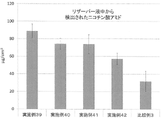
- 3 is a graph showing the amount of nicotinamide detected in the skin extracts extracted from the three-dimensional cultured epidermis models of Examples 39 to 42 and Comparative Example 3.
- 3 is a graph showing the amount of nicotinamide detected in the reservoirs of Examples 39 to 42 and Comparative Example 3.
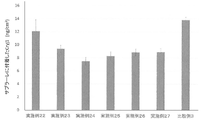
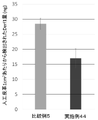
- Comparative Example 4 and Example 44 it is a graph which shows the amount of silicon contained in PM2.5 particles adhering to artificial leather supplere.
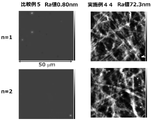
- Comparative Example 5 and Example 44 it is a graph which shows the amount of the metal element contained in PM2.5 particles adhering to artificial leather supplere when the composition was sprayed and then dried. It is an image obtained by observing with a scanning electron microscope of the film formed on the surface of the artificial leather supplere sprayed with the solution of Example 44. It is a graph which shows the result of having quantified Derf1 contained in the adhered Dermatophagoides farinae when the solutions of Comparative Example 5 and Example 44 were added to the artificial leather supplere and dried.
- the present invention relates to a composition containing a specific lipid peptide type compound and a sucrose ester.
- the composition of the present invention can form a film on the surface of the skin or hair, thereby preventing the adhesion of pollutants such as dust to the skin surface and the hair surface, thereby preventing contamination by these substances. It has an effect that can be prevented (anti-pollution effect) and an effect that can promote skin penetration.
- Particulate matter that can be contained in dust, pollen, air pollutants such as exhaust gas and factory smoke, and tobacco smoke PM10, Floating Particulate Matter (SPM), PM2.5 (Microparticulate Matter, etc.)), Gaseous Matter (SOx, CO, etc.), Odorous Substances, House Dust, Fungal Allergens, Mites (including Carcasses), Examples include viruses such as influenza virus.
- air pollutants such as exhaust gas and factory smoke
- tobacco smoke PM10, Floating Particulate Matter (SPM), PM2.5 (Microparticulate Matter, etc.)
- Gaseous Matter SOx, CO, etc.
- Odorous Substances House Dust
- Fungal Allergens Mites (including Carcasses)
- viruses such as influenza virus.
- each component will be described.
- composition By repeating at least two or more identical or different amino acids in the lipid portion (10 to 24 carbon atoms of the entire lipid part) composed of an aliphatic group having 10 to 24 carbon atoms used in the composition of the present invention.
- the lipid peptide type compound to which the formed peptide portion is bound includes, for example, a compound represented by the following formulas (1) to (3) (lipid peptide) or a pharmaceutically usable salt thereof (at a hydrophobic site).
- a low molecular weight compound having a certain lipid part and a peptide part which is a hydrophilic part can be used.
- R 1 represents an aliphatic group having 9 to 23 carbon atoms, and preferably R 1 is a linear chain having 11 to 23 carbon atoms which can have 0 to 2 unsaturated bonds. It is preferably an aliphatic group.
- Specific examples of the lipid moiety (acyl group) composed of R1 and an adjacent carbonyl group include a lauroyl group, a dodecylcarbonyl group, a myritoyl group, a tetradecylcarbonyl group, a palmitoyl group, a margalloyl group, an oleoyl group and an eridoyl group.
- Linole oil group Linole oil group, stearoyl group, baxenoyl group, octadecylcarbonyl group, arachidoyl group, eicosylcarbonyl group, behenoyl group, ercanoyl group, docosilcarbonyl group, lignosail group, nervonoyl group and the like, and are particularly preferable.
- Examples thereof include a lauroyl group, a myritoyl group, a palmitoyl group, a margalloyl group, a stearoyl group, an oleoyl group, an elelideyl group and a behenoyl group.
- R 2 contained in the peptide portion represents a hydrogen atom or an alkyl group having 1 to 4 carbon atoms which can have a branched chain having 1 or 2 carbon atoms.
- the alkyl group having 1 to 4 carbon atoms which can have a branched chain having 1 or 2 carbon atoms is a branched chain having 1 to 4 carbon atoms in the main chain and 1 or 2 carbon atoms.
- R 2 is preferably a hydrogen atom or an alkyl group having 1 to 3 carbon atoms which can have a branched chain having 1 carbon atom, and more preferably a hydrogen atom.
- An alkyl group having 1 to 3 carbon atoms capable of having a branched chain having 1 carbon atom is an alkyl group having 1 to 3 carbon atoms in the main chain and capable of having a branched chain having 1 carbon atom. Specific examples thereof include a methyl group, an ethyl group, an n-propyl group, an i-propyl group, an i-butyl group or a sec-butyl group, and a methyl group, an i-propyl group, etc. are preferable. It is an i-butyl group or a sec-butyl group.
- R 3 represents a ⁇ (CH 2 ) n—X group.
- n represents a number of 1 to 4
- X is a 5-membered ring group which may have 1 to 3 amino groups, guanidino groups, -CONH 2 groups, or nitrogen atoms.
- it represents a 6-membered ring group or a fused heterocyclic group composed of a 5-membered ring and a 6-membered ring.
- X is preferably an amino group, a guanidino group, a carbamoyl group (-CONH 2 group), a pyrrole group, an imidazole group, a pyrazole group or an indole group, and more. It is preferably an imidazole group. Further, in the above- (CH 2 ) n-X group, n is preferably 1 or 2, and more preferably 1.
- the- (CH 2 ) n-X group is preferably an aminomethyl group, a 2-aminoethyl group, a 3-aminopropyl group, a 4-aminobutyl group, a carbamoylmethyl group, a 2-carbamoylethyl group, 3-.
- lipid peptide type compound a particularly suitable lipid peptide in the compound represented by the above formula (1) is a compound formed from the following lipid part and peptide part (amino acid assembly part).
- amino acids include alanine (Ala), asparagine (Asn), glutamine (Gln), glycine (Gly), histidine (His), isolocin (Ile), leucine (Leu), lysine (Lys), and tryptophan (Trp). ), Val.
- lauroyl-Gly-His lauroyl-Ala-His
- myristoyl-Gly-His myristoyl-Ala-His
- palmitoyl-Gly-His palmitoyl-Ala-His
- stearoyl-Gly-His stearoyl-Ala.
- -His is mentioned.
- R 4 represents an aliphatic group having 9 to 23 carbon atoms, and a preferable specific example thereof is the same group as defined by R 1 described above.
- R5 to R7 are independently hydrogen atoms, or alkyl groups having 1 to 4 carbon atoms which can have a branched chain having 1 or 2 carbon atoms, or-(. CH 2 ) represents an n—X group, preferably at least one or more of R5 to R7 represents a ⁇ (CH 2 ) n—X group.
- n a number from 1 to 4
- X is a 5- or 6-membered ring group capable of having 1 to 3 amino groups, guanidino groups, -CONH 2 groups, or 1 to 3 nitrogen atoms, or 5-membered rings
- 6 Represents a fused heterocyclic group composed of a member ring.
- R5 to R7 include the same groups as those defined in R2 and R3 described above.
- a suitable lipid peptide is a compound formed from the following lipid part and peptide part (amino acid assembly part). Lauroyl-Gly-Gly-His, Millistyl-Gly-Gly-His, Millistyl-Gly-Gly-Gln, Millistyl-Gly-Gly-Asn, Millistyl-Gly-Gly-Trp, Millistyl-Gly-Gly-Lys, Millist Gly-Ala-His, Miritoil-Gly-Ala-Gln, Miritoil-Gly-Ala-Asn, Miritoil-Gly-Ala-Trp, Miritoil-Gly-Ala-Lys, Miritoil-Ala-Gly-His, Miritoil-Ala- Gly-Gln, Millistyl-Ala-Gly-Asn, Millistyl-Ala-Gly-His, Miritoil-A
- lauroyl-Gly-Gly-His myristoyl-Gly-Gly-His, palmitoyl-Gly-Gly-His, palmitoyl-Gly-His-Gly, palmitoyl-His-Gly-Gly, and stearoyl.
- -Gly-Gly-His can be mentioned.
- R 8 represents an aliphatic group having 9 to 23 carbon atoms, and a preferable specific example thereof is the same group as defined by R 1 described above.
- R 9 to R 12 are independently hydrogen atoms, or alkyl groups having 1 to 4 carbon atoms which can have a branched chain having 1 or 2 carbon atoms, or-(. CH 2 ) represents an n—X group, preferably at least one of R 9 to R 12 represents a ⁇ (CH 2 ) n—X group.
- n a number from 1 to 4
- X is a 5- or 6-membered ring group capable of having 1 to 3 amino groups, guanidino groups, -CONH 2 groups, or 1 to 3 nitrogen atoms, or 5-membered rings and 6 Represents a fused heterocyclic group composed of a member ring.
- R 9 to R 12 include the same groups as those defined in R 2 and R 3 described above.
- lipid peptide type compound particularly suitable lipid peptide is lauroyl-Gly-Gly-Gly-His, myristoyl-Gly-Gly-Gly-His, Palmitoyl-Gly-Gly-Gly-His, Palmitoyl-Gly-Gly-His-Gly, Palmitoyl-Gly-His-Gly-Gly, Palmitoyl-His-Gly-Gly, Palmitoyl-His-Gly-Gly-Gly, Stearoyl-Gly-Gly-Gly- Can be mentioned.
- the blending amount of the lipid peptide type compound is, for example, 0.001% by mass to 30% by mass, preferably 0.005% by mass to 10% by mass, more preferably 0.% by mass, based on the total mass of the composition. It is 01% by mass to 5% by mass, more preferably 0.05% by mass to 1% by mass.
- the lipid peptide type compound used in the present invention comprises at least one of the compounds represented by the above formulas (1) to (3) (lipid peptide) or pharmaceutically usable salts thereof, and these compounds. Can be used alone or in combination of two or more.
- sucrose ester includes, for example, sucrose capric acid ester, sucrose lauric acid ester, sucrose myristic acid ester, sucrose palmitate ester, sucrose stearate ester, sucrose oleic acid ester, sucrose sucrose.
- sucrose capric acid ester sucrose lauric acid ester
- sucrose myristic acid ester sucrose palmitate ester
- sucrose stearate ester sucrose oleic acid ester
- sucrose sucrose examples thereof include arachidic acid ester and sucrose behenic acid ester
- particularly suitable sucrose ester includes sucrose lauric acid ester, sucrose myristic acid ester, sucrose palmitate ester, sucrose stearate ester and the like. ..
- the blending amount of the sucrose ester is, for example, 0.001% by mass to 20% by mass, preferably 0.005% by mass to 10% by mass, and more preferably 0.01 with respect to the total mass of the composition. It is mass% to 10% by mass, more preferably 0.05% by mass to 5% by mass, and particularly preferably 0.1% by mass to 1% by mass.
- the sucrose ester used in the present invention comprises at least one of the above sucrose esters, and these sucrose esters can be used alone or in combination of two or more.
- composition of the present invention may contain water, alcohol, polyhydric alcohol or a mixed solution thereof in addition to the above-mentioned lipid peptide type compound and sucrose ester.
- Examples of the water include purified water, purified water, hard water, soft water, natural water, deep ocean water, electrolytic alkaline ionized water, electrolytically acidic ionized water, ionized water, and cluster water.
- the alcohol is a monohydric alcohol, and is, for example, an alcohol having 1 to 6 carbon atoms dissolved in water at an arbitrary ratio, specifically, methanol, ethanol, 2-propanol, i-butanol, etc., and higher grade alcohols. Alcohols, specifically oleyl alcohol, phenyl alcohol and the like can be mentioned.
- the polyvalent alcohol is a dihydric or higher alcohol, and is, for example, propylene glycol, 1,3-butanediol, 2-ethyl-1,3-hexanediol, glycerin, isopentyldiol, ethylhexanediol, or erythrulose.
- the content thereof is, for example, 0.001% by mass to 10% by mass, preferably 0.001% by mass to 5% by mass, and further based on the total mass of the composition. It can be preferably 0.005% by mass to 0.5% by mass.
- the polyhydric alcohol when the polyhydric alcohol is contained, the polyhydric alcohol may be used alone or in combination of two or more.
- composition of the present invention can generally contain cosmetic additives, additives for quasi-drugs, additives that can be used as pharmaceutical additives, and the like, if necessary.
- Additive components such as physiologically active substances and functional substances contained in cosmetics, non-pharmaceutical products, or skin external preparations such as pharmaceuticals include, for example, pigments, oily bases, moisturizers, tactile improvers, and surface activities other than the above.
- Agents polymers / thickeners / gelling agents, solvents, antioxidants, reducing agents, oxidizing agents, preservatives, antibacterial agents, bactericides, chelating agents, pH regulators, acids, alkalis, powders, inorganic salts , UV absorbers, whitening agents, vitamins and their derivatives, hair growth agents, white hair preventives, blood circulation promoters, stimulants, hormones, anti-wrinkles, anti-aging agents, tightening agents, cooling sensations, warmth Agents, wound healing promoters, irritation relievers, painkillers, cell activators, plant / animal / microbial extracts, antipruritic agents, keratin exfoliating / solubilizers, antiseptic agents, cooling agents, astringents, enzymes, nucleic acids, fragrances, Examples thereof include pigments, colorants, dyes, anti-inflammatory agents, anti-inflammatory agents, anti-asthma, anti-chronic obstructive pulmonary diseases, anti-allergies,
- Pigments include inorganic white pigments such as titanium dioxide and zinc oxide; inorganic red pigments such as red iron oxide (Bengala) and iron titanate; inorganic brown pigments such as ⁇ -iron oxide; yellow iron oxide, ocher and the like.
- Inorganic yellow pigments Inorganic black pigments such as black iron oxide and low-order titanium oxide; Inorganic purple pigments such as mango violet and cobalt violet; Inorganic green pigments such as chromium oxide, chromium hydroxide and cobalt titanate; Ultramarine blue , Navy blue and other inorganic blue pigments; titanium oxide coated mica, titanium oxide coated bismuth chloride, titanium oxide coated talc, colored titanium oxide coated mica, bismuth oxychloride, pearl pigments such as fish scale foil; talc, sericite, mica, Constitution pigments such as kaolin, calcium carbonate, magnesium carbonate, anhydrous silicic acid, barium sulfate, aluminum hydroxide; metal powder pigments such as aluminum powder, copper powder and gold; surface-treated inorganic and metal powder pigments; zirconium, barium or aluminum lake Organic pigments such as; surface-treated organic pigments and the like are preferable.
- oily base examples include higher (polyvalent) alcohols such as oleyl alcohol, jojoba alcohol, kimil alcohol, seraquil alcohol, batyl alcohol, hexyldecanol, isostearyl alcohol, 2-octyldodecanol, and dimerdiol; benzyl alcohol and the like.
- higher (polyvalent) alcohols such as oleyl alcohol, jojoba alcohol, kimil alcohol, seraquil alcohol, batyl alcohol, hexyldecanol, isostearyl alcohol, 2-octyldodecanol, and dimerdiol
- benzyl alcohol and the like.
- Aralkyl alcohol and its derivatives stearic acid, isostearic acid, behenic acid, undecylenic acid, 12-hydroxystearic acid, palmitooleic acid, oleic acid, linoleic acid, linoleic acid, erucic acid, docosahexaenoic acid, eicosapentaenoic acid, iso Hexadecanoic acid, anteisohenicosanoic acid, long-chain branched fatty acid, dimer acid, hydrogenated dimer acid, etc .; liquid paraffin (mineral oil), heavy liquid isoparaffin, light liquid isoparaffin, ⁇ -olefin oligomer, polyisobutene, hydrogenated polyisobutene , Polybutene, squalane, olive-derived squalane, squalane, vaseline, solid paraffin and other hydrocarbons; candelilla wax, carnauba wax, rice wax, wood wax, honey wax
- Moisturizing agents / feeling improvers include polyols such as glycerin, trimethylolpropane, pentaerythritol, hexylene glycol, diglycerin, polyglycerin, diethylene glycol, dipropylene glycol, polypropylene glycol, ethylene glycol / propylene glycol copolymer, and the like.
- glycol alkyl ethers such as diethylene glycol monoethyl ether (ethoxydiglycol), ethylene glycol monoethyl ether, ethylene glycol monobutyl ether, diethylene glycol dibutyl ether; (eicosandioic acid / tetradecanedic acid) polyglyceryl-10, tetradecanedi Water-soluble esters such as polyglyceryl-10 acid; sugar alcohols such as sorbitol, xylitol, erythritol, mannitol, martitol; glucose, fructose, galactose, mannose, treose, xylose, arabinose, fucose, ribose, deoxyribose, maltose, Trehalose, lactose, raffinose, gluconic acid, glucuronic acid, cyclodextrins ( ⁇ -, ⁇ -, ⁇
- surfactant examples include anionic surfactants, nonionic surfactants, cationic surfactants, amphoteric surfactants, and polymer surfactants.
- preferred surfactants include fatty acid salts such as potassium laurate and potassium myristate; alkyl sulphates such as sodium lauryl sulphate, triethanolamine lauryl sulphate and ammonium lauryl sulphate; Polyoxyethylene alkyl sulfates such as sodium laures sulphate and triethanolamine laures sulphate; cocoyl methyl taurine sodium, cocoyl methyl taurine potassium, lauroyl methyl taurine sodium, myristoyl methyl taurine sodium, lauroyl methyl alanine sodium, lauroyl sulcocin sodium, lauroyl sulcocintri Acyl N-methyl amino acid salts such as ethanolamine, sodium methylalanine lauroyl glutamate; sodium cocoyl glutamate, triethanolamine coco
- Acylamino acid salts such as amines; Polyoxyethylene alkyl ether acetates such as sodium laureth acetate; Succinic acid ester salts such as lauroyl monoethanolamide sodium succinate; Fatty acid alkanolamide ether carboxylates; Acyl lates; Polyoxyethylene fats Amin sulfate; fatty acid alkanolamide sulfate; hardened coconut oil fatty acid fatty acid glyceride sulfate such as sodium glycerin sulfate; alkylbenzenepolyoxyethylene sulfate; olefin sulfonate such as ⁇ -olefin sulfonate sodium; lauryl lauryl sulfosuccinate disodium, Alkyl sulfosuccinates such as dioctyl sodium sulfosuccinate; alkyl ether sulfosuccinates such as laures disodium s
- Polyoxyethylene alkyl ethers with various polyoxyethylene additions such as ethers), octyldodeces (polyoxyethylene octyldodecyl ethers); polyoxyethylene alkylphenyl ethers; polyoxyethylene hydrogenated castor oil, polyoxyethylene castor oil , Polyoxyethylene cured castor oil monoisostearate, polyoxyethylene cured castor oil triisostearate, polyoxyethylene cured castor oil monopyroglutamic acid monoisostearic acid diester, polyoxyethylene cured castor oil maleic acid and other castor oils and Hardened castor oil derivative; polyoxyethylene phytosterol; polyoxyethylene cholesterol; polyoxyethylene cholestanol; polyoxyethylene lanolin; polyoxyethylene reduced lanolin; polyoxyethylene / polyoxypropylene cetyl ether, polyoxyethylene / polyoxypropylene 2 -Polyoxyethylene / polyoxypropylene alkyl ethers such as decyltetradecy
- Polyglycerin fatty acid ester such as polyglyceryl-10 acid; ethylene glycol monofatty acid ester such as ethylene glycol monostearate; propylene glycol monofatty acid ester such as propylene glycol monostearate; pentaerythritol partial fatty acid ester; sorbitol partial fatty acid ester; martitol Partial fatty acid ester; multi-toll ether; sorbitan monooleate, sorbitan monoisostearate, sorbitan monolaurate, sorbitan monopalmitate, sorbitan monostearate, sorbitan sesquioleate, sorbitan trioleate, penta-2-ethylhexyl acid di
- Silicone-based nonionic surfactants such as copolymers, polyglycerin-modified silicones, sugar-modified silicones, etc .;
- Examples of cationic surfactants include behentrimonium chloride, steartrimonium chloride, cetrimonium chloride, and lauryltrimonium.
- Alkyltrimethylammonium chlorides such as chloride; Alkyltrimethylammonium bromides such as stearyltrimonium bromide; Dialkyldimethylammonium chlorides such as distearyldimonium chloride and dicocodimonium chloride; And its salts; alkyl ether amines such as stearoxypropyl dimethylamine and its salts or quaternary salts; ethyl sulfate long chain branched fatty acids (12-31) aminopropyl ethyl dimethyl ammonium, ethyl sulfate lanolin fatty acids aminopropyl ethyl dimethyl ammonium and the like.
- Fatty acid amide type quaternary ammonium salt polyoxyethylene alkylamine and its salt or quaternary salt; alkylamine salt; fatty acid amide guanidium salt; alkyl etheraminemonium salt; alkyltrialkylene glycol ammonium salt; benzalconium salt; Benzetnium salt; Pyridinium salt such as cetylpyridinium chloride; Imidazolinium salt; Alkylisoquinolinium salt; Dialkylmoriphonium salt; Polyamine fatty acid derivative; Amino-modified silicone such as aminopropyldimethicone and amodimethicone, cation-modified silicone, cation Silicone-based cationic surfactants such as modified and polyether-modified silicones, amino-modified and polyether-modified silicones; as amphoteric surfactants, N-alkyl-N such as lauryl betaine (lauryldimethylaminoacetic acid betaine), N-di
- polymer / thickener / gelling agent examples include guar gum, locust bean gum, queens seed, carrageenan, galactan, arabic gum, tara gum, tamarind, farseleran, karaya gum, trolley aoi, cara gum, tragant gum, pectin, pectic acid and the like.
- Salts such as sodium salts, salts such as alginic acid and its sodium salts, mannan; starches such as rice, corn, potatoes, wheat; xanthan gum, dextran, succinoglucan, curdran, hyaluronic acid and its salts, zansan gum, purulan, gellan gum.
- Octenyl succinate Corn starch Destars such as aluminum; Alginic acid derivatives such as sodium alginate and propylene glycol alginate; Polyvinylpyridone (PVP), Polyvinyl alcohol (PVA), Vinylpidridone / vinyl alcohol copolymer, Polyvinylmethyl ether; Polyethylene glycol , Polyoxyglycol, polyoxyethylene / polyoxypropylene copolymer; (methacryloyloxyethylcarboxybetaine / alkyl methacrylate) copolymer, (Acrylate / stearyl acrylate / ethylamine methacrylate) copolymer and other amphoteric methacrylic acid ester copolymers.
- PVP Polyvinylpyridone
- PVA Polyvinyl alcohol
- Vinylpidridone / vinyl alcohol copolymer Polyvinylmethyl ether
- Polyethylene glycol Polyoxyglycol, polyoxyethylene / polyoxypropylene cop
- the solvent examples include lower alcohols such as ethanol, 2-propanol (isopropyl alcohol), butanol and isobutyl alcohol; glycols such as propylene glycol, diethylene glycol, dipropylene glycol and isopentyldiol; diethylene glycol monoethyl ether (ethoxydiglycol).
- lower alcohols such as ethanol, 2-propanol (isopropyl alcohol), butanol and isobutyl alcohol
- glycols such as propylene glycol, diethylene glycol, dipropylene glycol and isopentyldiol
- diethylene glycol monoethyl ether ethoxydiglycol
- Glycol ethers such as ethylene glycol monoethyl ether, ethylene glycol monobutyl ether, triethylene glycol monoethyl ether, diethylene glycol diethyl ether, diethylene glycol dibutyl ether, propylene glycol monoethyl ether, dipropylene glycol monoethyl ether; ethylene glycol monoethyl ether Glycol ether esters such as acetate, diethylene glycol monoethyl ether acetate and propylene glycol monoethyl ether acetate; glycol esters such as diethoxyethyl succinate and ethylene glycol disuccinate; benzyl alcohol, benzyloxyethanol, propylene carbonate, dialkyl carbonate , Acetone, ethyl acetate, N-methylpyrrolidone; toluene and the like are preferred.
- antioxidants examples include tocopherol derivatives such as tocopherol (vitamin E) and tocopherol acetate; BHT, BHA; gallic acid derivatives such as propyl bisulfate; vitamin C (ascorbic acid) and / or its derivatives; erythorbic acid and its derivatives; Sodium bisulfite and other sulfites; Sodium bisulfite and other sulfite hydrogen salts; Sodium bisulfite and other thiosulfates; Metahydrosulfite hydrogen salts; Thiotaurine, hypotaurine; Thioglycerol, thiourea, thioglycolic acid, cysteine hydrochloride are preferred. Is mentioned as.
- reducing agent thioglycolic acid, cysteine, cysteamine and the like are preferable.
- oxidizing agent hydrogen peroxide solution, ammonium persulfate, sodium bromate, percarbonate and the like are preferable.
- preservatives, antibacterial agents, and bactericidal agents include hydroxybenzoic acid such as methylparaben, ethylparaben, propylparaben, and butylparaben and salts thereof or esters thereof; salicylic acid; sodium benzoate; phenoxyethanol; methylchloroisothiazolinone, methylisothiazo.
- Isothiazolinone derivatives such as linone; imidazolinium urea; dehydroacetic acid and its salts; phenols; halogenated bisphenols such as triclosan, acidamides, quaternary ammonium salts; trichlorocarbanide, zincpyrythion, benzalconium chloride, chloride Benzethonium, sorbic acid, chlorhexidine, chlorhexidine gluconate, halocarban, hexachlorophen, hinokithiol; other phenols such as phenol, isopropylphenol, cresol, timole, parachlorophenol, phenylphenol, sodium phenylphenol; phenylethyl alcohol, photosensitizer Phenols, antibacterial phenols and silver ions are preferred.
- chelating agent examples include edetates (ethylenediamine tetraacetate) such as EDTA, EDTA2Na, EDTA3Na, and EDTA4Na; hydroxyethylethylenediamine triacetate such as HEDTA3Na; pentetate (diethylenetriaminepentaacetate); phytic acid; ethidronic acid and the like.
- edetates ethylenediamine tetraacetate
- HEDTA3Na EDTA2Na
- EDTA3Na EDTA4Na
- hydroxyethylethylenediamine triacetate such as HEDTA3Na
- pentetate diethylenetriaminepentaacetate
- phytic acid ethidronic acid and the like.
- Phosphonic acid and salts such as sodium salts thereof; polyamino acids such as polyaspartic acid and polyglutamic acid; sodium polyphosphate, sodium metaphosphate, phosphoric acid; sodium citrate, citrate, alanine, dihydroxyethylglycine, gluconic acid, Ascorbic acid, succinic acid and tartrate acid are preferred.
- pH adjusters / acids / alkalis include ascorbic acid, citric acid, sodium citrate, lactic acid, sodium lactate, potassium lactate, glycolic acid, succinic acid, acetic acid, sodium acetate, malic acid, tartrate acid, fumaric acid, phosphoric acid, Citric acid, sulfuric acid, monoethanolamine, diethanolamine, triethanolamine, isopropanolamine, triisopropanolamine, 2-amino-2-methyl-1,3-propanediol, 2-amino-2-hydroxymethyl-1,3-propane Preferred are diol, arginine, sodium hydroxide, potassium hydroxide, aqueous ammonia, guanidine carbonate and ammonium carbonate.
- Powders include mica, talc, kaolin, sericite, montmorillonite, kaolinite, mica, white mica, gold mica, synthetic mica, red mica, black mica, permiculite, magnesium carbonate, calcium carbonate, aluminum silicate, silicic acid.
- calcium phosphate such as tricalcium phosphate, fluoroapatite, hydroxyapatite, ceramic powder, bentonite, smectite , Clay, mud, metal soap (eg zinc myristate, calcium palmitate, aluminum stearate), calcium carbonate, red iron oxide, yellow iron oxide, black iron oxide, ultramarine, dark blue, carbon black,
- silicone such as hydrogen silicone and cyclic hydrogen silicone or other silane or titanium coupling agents.
- Inorganic powders such as powders that have been treated with an agent to make them hydrophobic or hydrophilic; starch, cellulose, nylon powder, polyethylene powder, polymethyl methacrylate powder, polystyrene powder, styrene and acrylic acid copolymer resin powder, Organic powder of various sizes and shapes such as polyester powder, benzoguanamine resin powder, polyethylene terephthalate / polymethylmethacrylate laminated powder, polyethylene terephthalate / aluminum / epoxy laminated powder, urethane powder, silicone powder, Teflon (registered trademark) powder, etc. Body and surface treatment powders and organic-inorganic composite powders are preferred.
- inorganic salts include sodium chloride-containing salts such as salt, normal salt, rock salt, sea salt, and natural salt; potassium chloride, aluminum chloride, calcium chloride, magnesium chloride, ginger, zinc chloride, ammonium chloride; sodium sulfate, aluminum sulfate, etc.
- Aluminum / potassium sulfate (myoban), aluminum / ammonium sulfate, barium sulfate, calcium sulfate, potassium sulfate, magnesium sulfate, zinc sulfate, iron sulfate, copper sulfate; sodium phosphates such as 1Na / 2Na / 3Na phosphate, phosphoric acid Potassiums, calcium phosphates and magnesium phosphates are preferred.
- ultraviolet absorber examples include paraaminobenzoic acid, paraaminobenzoic acid monoglycerin ester, N, N-dipropoxyparaaminobenzoic acid ethyl ester, N, N-diethoxyparaaminobenzoic acid ethyl ester, and N, N-dimethylparaaminobenzoic acid ethyl.
- Esters benzoic acid-based UV absorbers such as N, N-dimethylparaaminobenzoic acid butyl ester, N, N-dimethylparaaminobenzoic acid methyl ester; anthranilic acid-based UV absorbers such as homomentyl-N-acetylanthranilate; salicylic acid And salicylic acid-based ultraviolet absorbers such as sodium salts, amilsalicylate, menthylsalicylate, homomentylsalicylate, octylsalicylate, phenylsalicylate, benzylsalicylate, p-isopropanolphenylsalicylate; octylcinnamate, ethyl-4-isopropylsinnate, methyl.
- anthranilic acid-based UV absorbers such as homomentyl-N-acetylanthranilate
- salicylic acid And salicylic acid-based ultraviolet absorbers such as sodium salts, am
- Enon-based UV absorber 3- (4'-methylbenziliden) -d, l-camfur, 3-benziliden-d, l-campul; 2-phenyl-5-methylbenzoxazole; 2,2'-hydroxy- 5-Methylphenylbenzotriazole; 2- (2'-hydroxy-5'-t-octylphenyl) benzotriazole; 2- (2'-hydroxy-5'-methylphenylbenzotriazole; dibenzalazine; dianisoilmethane; 5- (3,3-Dimethyl-2-norbornylidene) -3-pentan-2-one; dibenzoylmethane derivatives such as 4-t-butylmethoxydibenzoylmethane; octylriazone; urocanic acid such as urocanic acid and ethyl urocanate Derivatives; 2- (2'-hydroxy-5'-methylphenyl) benzotriazole, 1- (3
- the whitening agent examples include hydroquinone glycosides such as arbutin and ⁇ -albutin and their esters; ascorbic acid, ascorbic acid phosphate ester salts such as ascorbic acid, ascorbic acid phosphate sodium salt and ascorbic acid phosphate ester magnesium salt, and ascorbic acid.
- hydroquinone glycosides such as arbutin and ⁇ -albutin and their esters
- ascorbic acid ascorbic acid phosphate ester salts such as ascorbic acid, ascorbic acid phosphate sodium salt and ascorbic acid phosphate ester magnesium salt, and ascorbic acid.
- Ascorbic acid fatty acid ester such as tetraisopalmitic acid ester, ascorbic acid alkyl ether such as ascorbic acid ethyl ether, ascorbic acid glucoside such as ascorbic acid-2-glucoside and its fatty acid esters, ascorbic acid sulfate ester, tocopheryl ascorbyl phosphate Ascorbic acid derivatives such as; Plant extracts such as 4-n-butylresorcinol (lucinol), linoleic acid S (linolec S), potassium 4-methoxysalicylic acid salt, adenosine-disodium phosphate, 5,5'-dipropyl-biphenyl-2,2' -Diol (magnolignan), dexpantenol W, cetyl tranexamic acid hydrochloride, rhododenol are preferred.
- Plant extracts such as 4-n-butylresorcino
- Vitamins and their derivatives include vitamin A such as retinol, retinol acetate, retinol palmitate; thiamine hydrochloride, thiamine sulfate, riboflavin, riboflavin acetate, pyridoxin hydrochloride, pyridoxin dioctanoate, pyridoxin dipalmitate, etc.
- Vitamin derivatives such as tocopheryl ascorbyl phosphate; vitamin derivatives such as tocopherol derivatives such as tocopherol nicotinate, tocopherol acetate, tocopherol linoleate, tocopherol ferulate, tocopherol phosphate ester, tocotrienol, and various other vitamin derivatives are preferable. It is mentioned as.
- hair growth agents blood circulation promoters and stimulants
- plant extracts and tinctures such as Senburi extract, Togarashi tincture, Shokyo tincture, Shokyo extract, Cantalis tincture; , Borneol, cyclanderate, cinnaridine, trazoline, acetylcholine, verapamil, cepharanthin, ⁇ -orizanol, vitamin E and derivatives such as tocopherol nicotinic acid / tocopherol acetate, ⁇ -orizanol, nicotinic acid and nicotinic acid amide / nicotinic acid benzyl ester.
- Derivatives such as inositol hexanicotinate and nicotine alcohol, allantin, photosensitizer 301, photosensitizer 401, capronium chloride, pentadecanoic acid monoglyceride, flavanonol derivative, stigmasterol or stigmasterol and its glycosyl, minoxidil, International Publication No. 2005
- the ALK5 inhibitory compound described in the specification of / 085241 and the WNT-5A inhibitory compound described in the specification of International Publication No. 2003/086343 are preferable.
- estradiol As the hormones, estradiol, estrone, ethinyl estradiol, cortisone, hydrocortisone, prednisone and the like are preferable.
- Other medicinal agents such as anti-wrinkle agents, anti-aging agents, tightening agents, cold sensitizers, warming agents, wound healing promoters, stimulants, painkillers, cell activators, etc. include retinols, retinoic acids, retinoins.
- Tocopheryl acid derivatives such as lactic acid, glycolic acid, gluconic acid, fruit acid, salicylic acid and glycosides / esterified products thereof, hydroxycapric acid, long-chain ⁇ -hydroxy fatty acid, long-chain ⁇ -hydroxy fatty acid cholesteryl and the like ⁇ -or ⁇ -Hydroxy acids and their derivatives; ⁇ -aminobutyric acid, ⁇ -amino- ⁇ -hydroxybutyric acid; carnitine; carnosin; creatin; ceramides, spingosins; caffeine, xanthin and its derivatives; coenzyme Q10, carotene, lycopene , Astaxanthin, lutein, ⁇ -lipoic acid, platinum nanocolloids, fullerene and other antioxidant / active oxygen scavengers; catechins; kelcetin and other flavones; isoflavones; Polyphenols such as anthocyanidin, chlorogenic acid, apple poly
- Plant / animal / microbial extracts include iris extract, acitaba extract, asnalo extract, asparagus extract, avocado extract, flaxseed extract, almond extract,retea extract, arnica extract, aloe extract, apricot extract, apricot kernel extract, ginkgo biloba extract.
- antipruritic agent examples include diphenhydramine hydrochloride, chlorpheniramine maleate, camphor, substance-P inhibitor and the like.
- exfoliating / dissolving agent examples include salicylic acid, sulfur, resorcin, selenium sulfide, pyridoxine and the like.
- antiperspirant examples include chlorohydroxyaluminum, aluminum chloride, zinc oxide, zinc paraphenolsulfonate and the like.
- Examples of the refreshing agent include menthol and methyl salicylate.
- astringent examples include citric acid, tartaric acid, lactic acid, aluminum / potassium sulfate, tannic acid and the like.
- enzymes include superoxide dismutase, catalase, lysozyme chloride, lipase, papain, pancreatin, protease and the like.
- nucleic acids include ribonucleic acid and its salt, deoxyribonucleic acid and its salt, and adenosine triphosphate disodium.
- fragrances acetylsedrene, amilcinnamaldehyde, allylamylglycolate, ⁇ -ionone, isoe super, isobutylquinoline, iris oil, iron, indole, ylang ylang oil, undecanal, undecenal, ⁇ -undecalactone, Estragor, Eugenol, Oak Moss, Opoponax Resinoid, Orange Oil, Eugenol, Oranthiol, Galaxolid, Carbacrol, L-Carbon, Camfur, Cannon, Carrot Seed Oil, Clove Oil, Methyl Caynate, Geraniol, Geranylnitrile , Isobornyl acetate, Geranyl acetate, Dimethylbenzylcarbyl acetate, Styralyl acetate, Sedrill acetate, Telepinel acetate, pt-butylcyclohexyl acetate, Vetiberyl acetate
- Dyes / colorants / dyes include brown 201, black 401, purple 201, purple 401, blue 1, blue 2, blue 201, blue 202, blue 203, blue 204, and blue.
- 205 Blue 403, Blue 404, Green 201, Green 202, Green 204, Green 205, Green 3, Green 401, Green 402, Red 102, Red 104-1, Red 105-1, Red 106, Red 2, Red 201, Red 202, Red 203, Red 204, Red 205, Red 206, Red 207, Red 208, Red 213, Red 214, Red 215, Red 218, Red 219, Red 220, Red 221, Red 223, Red 225, Red 226, Red 227, Red 228, Red 230-1, Red 230-2, Red 231, Red 232, Red 3, Red 401, Red 404, Red 405, Red 501, Red 502, Red 503, Red 504, Red 505, Red 506, Orange 201, Orange 203, Orange 204, Orange 205, Orange 206, Orange 207, Orange
- Natural dyes / dyes such as bin, lycopene, riboflavin, rutin; p-phenylenediamine, toluene-2,5-diamine, o-, m-, or p-aminophenol, m-phenylenediamine, 5-amino-2- Oxidation dye intermediates and couplers such as methylphenol, resorcin, 1-naphthol, 2,6-diaminopyridine and salts thereof; automatic oxidation dyes such as indolin; dihydroxyacetones are preferred.
- Anti-inflammatory and anti-inflammatory agents include glycyrrhizinic acid and its derivatives, glycyrrhetinic acid derivatives, salicylic acid derivatives, hinokithiol, guaiazulene, allantoin, indomethacin, ketoprofen, ibuprofen, diclofenac, loxoprofen, selecociquib, infliximab, etanelcept, zinc oxide, hydro.
- Prednison, difedramin hydrochloride, chlorpheniramine maleate; plant extracts such as peach leaf extract and honoha extract are preferred.
- Anti-asthma, anti-chronic obstructive pulmonary disease, anti-allergy, immunomodulators include aminophylline, theophylline, steroids (fluticasone, bechrometazone, etc.), leukotriene antagonists, thromboxane inhibitors, intal, ⁇ 2 stimulants.
- oseltamivir As the anti-infective agent and antifungal agent, oseltamivir, zanamivir, and itraconazole are preferable.
- cosmetic raw material standards compounding ingredient standards by cosmetic type, Japan Cosmetic Industry Association ingredient display name list, INCI dictionary (The International Cosmetic Ingredient Handbook), non-pharmaceutical raw material standards, Japanese Pharmacy, pharmaceutical additive standards , Ingredients described in Food Additives Official Regulations, etc., and Japanese and foreign patent gazettes and patent publication gazettes (including published gazettes and republished gazettes) whose international patent classification IPC belongs to the A61K7 and A61K8 classifications. It is possible to contain known cosmetic ingredients, pharmaceutical ingredients, food ingredients, etc. in known combinations, blending ratios, and blending amounts.
- the dosage form of the composition of the present invention is arbitrary as long as it can form a film (layer) on the skin or on the surface of hair.
- emulsified type such as underwater oil (O / W) type, in-oil water (W / O) type, W / O / W type, O / W / O type, oily, solid, liquid, kneaded, stick-shaped.
- Volatile oil type, powder type, jelly type, gel, paste type, emulsified polymer type, sheet type, mist type, spray type and the like but are not limited thereto.
- the product form is also arbitrary, and can be used as a dispersion, a milky lotion, a cream, a pack, a spray, a gel, or the like.
- the composition may contain various components known to those skilled in the art in order to realize the dosage form / product form according to the dosage form / product form.
- composition of the present invention is produced, for example, by mixing and stirring at least one lipid peptide-type compound, sucrose ester, water and, if desired, other components while heating, and then allowing to cool to about room temperature. Can be done.
- the heating / stirring temperature is not particularly limited as long as each component can be uniformly mixed.
- the stirring temperature is 50 ° C. to 90 ° C., 60 ° C. to 90 ° C., for example 70 ° C., or 80 ° C., and the stirring time. Can be appropriately selected from, for example, 5 minutes to 3 hours.
- the present invention also relates to a method for preventing contamination of the skin surface or the hair surface, which comprises a film forming step of forming a film composed of the composition containing the lipid peptide type compound and the sucrose ester on the skin surface or the hair surface. Further, the present invention comprises a film forming step of forming a film composed of a composition containing the lipid peptide type compound and a sucrose ester on the skin surface or the hair surface, and dust, pollen, and particles on the skin surface or the hair surface. It relates to a method for preventing the adhesion of substances, mites (including carcasses), gaseous substances, or odorous substances.
- compositions to be used those described in detail above can be used.
- the film made of the composition of the present invention has an effect of preventing contamination of the surface of the skin and hair by forming an appropriate roughness (hereinafter, also referred to as roughness) on the surface of the skin and hair. .. Roughness is expressed by the width of the maximum and minimum heights in the vertical direction with respect to the surface of the skin or hair, and examples of the measuring method include an atomic force microscope (AFM).
- AFM atomic force microscope
- the roughness formed by the film made of the composition in the present invention is, for example, an average surface roughness of 3 nm to 500 nm, more preferably 10 nm to 300 nm.
- the film made of the composition in the present invention is formed by a fiber structure, and the average diameter thereof is preferably 10 nm to 100 nm.
- the average diameter of the fibers can be calculated from the image of the surface of the film by creating an image of the surface of the film by detecting secondary electrons using a scanning microscope.
- the solid obtained here was dissolved in a mixed solution of 600 g of water and 750 g of methanol, and 30.5 ml (183.2 mmol) of 6N hydrochloric acid was added thereto to neutralize the solid, and the solid was precipitated and filtered.
- the obtained solid was dissolved in a mixed solution of 120 g of tetrahydrofuran and 30 g of water at 60 ° C., 150 g of ethyl acetate was added, and the mixture was cooled from 60 ° C. to 30 ° C.
- Examples 1 to 7, Comparative Example 1: Preparation of Pal-GH composition using various saccharides The Pal-GH, various sugar activators, and other components obtained in the above synthetic example are weighed into a 200 mL beaker (manufactured by HARIO Co., Ltd.) so as to have the composition (mass: g) shown in Table 1.
- the Pal-GH composition was obtained by heating and stirring in a water bath having a set temperature of about 80 ° C. for 20 minutes at 150 rpm. Further, the dispersibility of Pal-GH in the composition after heating and stirring at 80 ° C. is such that the Pal-GH powder is uniformly dispersed in the composition (no precipitation or lump of powder is generated). Those in which Pal-GH was unevenly dispersed (precipitation or lumps of powder were generated) were visually evaluated as x. The obtained results are also shown in Table 1.
- Example 8 to 14 Comparative Example 2: Preparation of aqueous dispersion of Pal-GH composition
- a Pal-GH aqueous dispersion having the composition shown in Table 2 was prepared.
- Phases A and B were weighed so as to have the composition (mass: g) shown in Table 2, and the phases A and B were heated to 70 ° C. or higher in a water bath at a set temperature of about 80 ° C.
- the A phase was added to the B phase which was heated and stirred, and the heating and stirring were carried out under the condition of 150 rpm for 5 minutes to obtain a Pal-GH aqueous dispersion. Further, in the evaluation of the prepared Pal-GH aqueous dispersion, those in which Pal-GH was uniformly dispersed in water (no precipitation or aggregation occurred) were evaluated as ⁇ , and Pal-GH was unevenly dispersed in water. Those (precipitation or aggregation) were visually evaluated as x. The obtained results are also shown in Table 2.
- Examples 15 to 21 Preparation of Pal-GH composition in combination with sucrose fatty acid ester
- a 200 mL beaker manufactured by HARIO Co., Ltd.
- the Pal-GH obtained in the above synthetic example two kinds of sucrose fatty acid esters, and other components are weighed so as to have the composition (mass: g) shown in Table 3.
- the mixture was heated and stirred in a water bath at a set temperature of about 80 ° C. for 20 minutes at 150 rpm to obtain a Pal-GH composition.
- the dispersibility of Pal-GH in the composition after heating and stirring at 80 ° C. is such that the Pal-GH powder is uniformly dispersed in the composition (no precipitation or lump of powder is generated).
- Those in which Pal-GH was unevenly dispersed precipitation or lumps of powder were generated
- were visually evaluated as x The obtained results are also shown in Table 3.
- Examples 22 to 28 Preparation of aqueous dispersion of Pal-GH composition
- a Pal-GH aqueous dispersion having the composition shown in Table 4 was prepared.
- Phases A and B were weighed so as to have the composition (mass: g) shown in Table 4, and the phases A and B were heated to 70 ° C. or higher in a water bath at a set temperature of about 80 ° C.
- the A phase was added to the B phase which was heated and stirred, and the heating and stirring were carried out under the condition of 150 rpm for 5 minutes to obtain a Pal-GH aqueous dispersion. Further, in the evaluation of the prepared Pal-GH aqueous dispersion, those in which Pal-GH was uniformly dispersed in water (no precipitation or aggregation occurred) were evaluated as ⁇ , and Pal-GH was unevenly dispersed in water. Those (precipitation or aggregation) were visually evaluated as x. The obtained results are also shown in Table 4.
- FIG. 2 shows the results of calculating the area ratio of the colored portion with respect to the entire image by coloring the PM2.5 particles in the observed images of Examples 22 to 27 and Comparative Example 3 by image processing.
- FIG. 4 shows the observation results of the scanning electron microscope (SEM) [Miniscope (registered trademark) TM3000 (manufactured by Hitachi High-Technologies Corporation)] of the Sugi pollen adhered in Examples 22 and 24 and Comparative Example 3.
- SEM scanning electron microscope
- ntinic acid amide skin permeation amount per unit area was calculated by measuring the nicotinic acid amide concentration in the obtained filtrate and receiver liquid by high performance liquid chromatography (manufactured by HPLC Agilent).
- FIGS. 5 and 6 show the amount of nicotinamide extracted from the three-dimensional cultured epidermis model
- FIG. 6 shows the amount of nicotinamide detected in the reservoir.
- Examples 39 to 42, Comparative Example 3 Skin penetration promoting effect of Pal-GH composition
- a human three-dimensional cultured epidermis model (LabCyte EPI-MODEL12, ⁇ 10.5 mm, lot number # LCE12-20817-A, manufactured by Japan Tissue Engineering Co., Ltd.) was installed on a 12-well tissue culture plate (IWAKI, manufactured by Asahi Glass Co., Ltd.).
- IWAKI phosphate buffered saline
- PBS phosphate buffered saline
- ntinic acid amide skin permeation amount per unit area was calculated by measuring the nicotinic acid amide concentration in the obtained filtrate and receiver liquid by high performance liquid chromatography (manufactured by HPLC Agilent).
- FIGS. 7 and 8 show the amount of nicotinamide extracted from the three-dimensional cultured epidermis model
- FIG. 8 shows the amount of nicotinamide detected in the reservoir.
- Example 43, Example 44, Comparative Example 4 and Comparative Example 5 Suppression of adhesion of pollen, PM2.5 particles and mites in artificial leather] ⁇ Preparation of sample> According to Table 8, each raw material heated to 75 ° C. in a 200 mL beaker (manufactured by HARIO Co., Ltd.) was stirred, and heated and stirred in 75 ° C. for 10 minutes. After 10 minutes, stirring and cooling were performed at room temperature until the temperature reached 40 ° C. In the above steps, all the stirring was performed at 200 rpm.
- Example 43 suppressed the adhesion of pollen as compared with Comparative Example 4 and Comparative Example 5, and Example 44 seemed to have a higher effect, indicating that it had an anti-pollution effect.
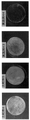
- Example 11 shows the results of visually observing the PM2.5 particles adhering to each supplere after removing the excess PM2.5 particles adhering to each saplare by shaking for 10 seconds. Further, in Comparative Example 4 and Example 44, the amount of adhered PM2.5 particles was evaluated by quantifying the metal elements contained in the PM2.5 particles using an ICP-emission spectrophotometer. The results are shown in FIG. Example 43 suppressed the adhesion of PM2.5 particles with respect to Comparative Example 4 and Comparative Example 5, and Example 44 seemed to have a higher effect, indicating that it had an anti-pollution effect. ..
- Example 44 suppressed the adhesion of PM2.5 particles as compared with Comparative Example 5, and was shown to have an anti-pollution effect. Further, it was confirmed that a fiber-like film was formed on the surface of the supplere sprayed with Example 44.
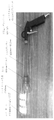
- FIG. 18 shows a photograph of Dermatophagoides farinae attached to the saprale.
- FIG. 19 shows the results of measuring the roughness of the film formed on the surface of the silicon wafer with the AFM atomic force microscope Dimension Icon (manufactured by Bruker AXS). While the roughness average of Comparative Example 5 was 0.80 nm, the roughness average of Example 44 showed a value of 72.3 nm. Example 44 showed a large roughness value as compared with Comparative Example 5, suggesting that contaminants could be suppressed from adhering.
- Example 45 Comparative Example 6: Skin penetration promoting effect of Pal-GH composition
- Table 9 each raw material heated to 75 ° C. was stirred in a 200 mL beaker (manufactured by HARIO Co., Ltd.), heated and stirred at 75 ° C. for 10 minutes, then A phase and B phase were mixed, and further. The mixture was heated and stirred for 5 minutes. Then, stirring and cooling were performed at room temperature until the temperature reached 40 ° C. In the above steps, all the stirring was performed at 200 rpm.
- ⁇ Skin penetration test using a three-dimensional cultured skin model A human three-dimensional culture epidermis model (LabCyte EPI-MODEL12, ⁇ 10.5 mm, lot number # LCE12-201109-A, manufactured by Japan Tissue Engineering Co., Ltd.) was installed on a 12-well tissue culture plate (IWAKI, manufactured by Asahi Glass Co., Ltd.). , 1 mL of phosphate buffered saline (pH 7.4) (PBS) was dispensed into each well, and this was used as a receiver solution.
- PBS phosphate buffered saline
- methanol / purified water 1/1 v / v extract was added and treated with a vortex mixer (manufactured by KENIS, Ltd.) for 1 hour to extract retinol from the three-dimensional cultured epidermis model, and the pore size was 0.45 ⁇ m. It was filtered with a syringe filter (manufactured by Merck). The retinol concentration of the obtained filtrate was measured by high performance liquid chromatography (manufactured by HPLC Agilent) to calculate the amount of retinol skin permeation per unit area.
- the test was carried out three times for each sample, the average value thereof was calculated, and the skin permeation amount after 24 hours of permeation was calculated from the value.
- Example 46 Comparative Example 7: Skin penetration promoting effect of Pal-GH composition
- Table 10 each raw material heated to 75 ° C. was stirred in a 200 mL beaker (manufactured by HARIO Co., Ltd.), heated and stirred at 75 ° C. for 10 minutes, then A phase and B phase were mixed, and further. The mixture was heated and stirred for 5 minutes. Then, stirring and cooling were performed at room temperature until the temperature reached 40 ° C. In the above steps, all the stirring was performed at 200 rpm.
- ⁇ Skin penetration test using a three-dimensional cultured skin model A human three-dimensional culture epidermis model (LabCyte EPI-MODEL12, ⁇ 10.5 mm, lot number # LCE12-201109-A, manufactured by Japan Tissue Engineering Co., Ltd.) was installed on a 12-well tissue culture plate (IWAKI, manufactured by Asahi Glass Co., Ltd.). , 1 mL of phosphate buffered saline (pH 7.4) (PBS) was dispensed into each well, and this was used as a receiver solution.
- PBS phosphate buffered saline
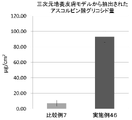
- Example 46 was shown to promote skin penetration of ascorbic acid glycosides as compared to Comparative Example 7.
- Example 47, Example 48 and Comparative Example 8 Suppression of adhesion of Gobi yellow sand in artificial leather] ⁇ Preparation of sample>
- Each raw material was added to a 200 mL beaker (manufactured by HARIO Co., Ltd.) at the ratio shown in Table 11 below, and heated and stirred at a liquid temperature of 75 ° C. for 10 minutes to prepare a uniform solution. After heating and stirring, the mixture is stirred and cooled at room temperature until the liquid temperature reaches 40 ° C., and the sample is Example 47 (hereinafter, also referred to as Formula 47), Example 48 sample (hereinafter, also referred to as Formula 48), and Comparative Example 8. A sample (hereinafter, also referred to as Comparative Formula 8) was prepared. In the above steps, all the stirring was performed at 200 rpm.
- Example 47 suppressed the adhesion of Gobi yellow sand as compared with Comparative Example 8, and Example 48 seemed to have a higher effect, indicating that it had an anti-pollution effect.
- ntinic acid amide skin permeation amount per unit area was calculated by measuring the nicotinic acid amide concentration in the obtained filtrate and receiver liquid by high performance liquid chromatography (manufactured by HPLC Agilent).
- the test was carried out three times for each sample, the average value thereof was calculated, and the skin permeation amount after 4 hours of permeation was calculated from the value.
- FIG. 24 shows the amount of nicotinamide detected in the reservoir of the three-dimensional cultured epidermis model. From the cultured skin to which Examples 49 to 52 were added, a higher nicotinamide permeation amount was confirmed as compared with the cultured skin to which Comparative Example 9 was added.
- Example 53 Comparative Example 10: Skin penetration promoting effect of Pal-GH beauty essence
- a human three-dimensional culture epidermis model (LabCyte EPI-MODEL12, ⁇ 10.5 mm, lot number # LCE12-210920-A, manufactured by Japan Tissue Engineering Co., Ltd.) was installed on a 12-well tissue culture plate (IWAKI, manufactured by Asahi Glass Co., Ltd.).
- IWAKI phosphate buffered saline
- PBS phosphate buffered saline
- ntinic acid amide skin permeation amount per unit area was calculated by measuring the nicotinic acid amide concentration in the obtained filtrate and receiver liquid by high performance liquid chromatography (manufactured by HPLC Agilent).
- the test was carried out three times for each sample, the average value thereof was calculated, and the skin permeation amount after 4 hours of permeation was calculated from the value.
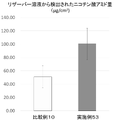
- FIG. 25 shows the amount of nicotinamide detected in the reservoir of the three-dimensional cultured epidermis model. From the cultured skin to which the beauty essence of Example 53 was added, a higher nicotinamide permeation amount was confirmed as compared with the cultured skin to which the beauty essence of Comparative Example 10 was added.
- Example 54 Comparative Example 11: Effect of suppressing adhesion of PM2.5 particles in Pal-GH composition
- Artificial leather supplere manufactured by Idemitsu Technofine Co., Ltd.
- 1.0 mL of the solutions of Comparative Example 11 and Example 54 prepared according to Table 14 are applied in a constant temperature bath at 32 ° C. It was dried for 1 hour.
- Put 1.5g of PM2.5 particles (NIES-CRM N technically. Urban air dust) in a 10mL laboran screw tube bottle, cover with each supplere created above, invert and contact with PM2.5 particles. was attached.
- the visual observation result of the attached PM2.5 particles is shown in FIG. It was confirmed that the adhesion of PM2.5 particles was suppressed in the supplere coated with the solution of Example 54 as compared with the supplere coated with the solution of Comparative Example 11.
Landscapes
- Health & Medical Sciences (AREA)
- Life Sciences & Earth Sciences (AREA)
- General Health & Medical Sciences (AREA)
- Chemical & Material Sciences (AREA)
- Animal Behavior & Ethology (AREA)
- Public Health (AREA)
- Veterinary Medicine (AREA)
- Organic Chemistry (AREA)
- Biochemistry (AREA)
- Biophysics (AREA)
- Genetics & Genomics (AREA)
- Medicinal Chemistry (AREA)
- Molecular Biology (AREA)
- Proteomics, Peptides & Aminoacids (AREA)
- Dermatology (AREA)
- Epidemiology (AREA)
- Birds (AREA)
- Pest Control & Pesticides (AREA)
- Plant Pathology (AREA)
- Cosmetics (AREA)
- Medicines That Contain Protein Lipid Enzymes And Other Medicines (AREA)
Priority Applications (5)
| Application Number | Priority Date | Filing Date | Title |
|---|---|---|---|
| KR1020237016502A KR20230098211A (ko) | 2020-10-30 | 2021-10-29 | 지질펩티드와 자당에스테르를 포함하는 조성물 |
| US18/034,817 US20230404888A1 (en) | 2020-10-30 | 2021-10-29 | Composition containing lipid peptide and sucrose ester |
| CN202180074098.3A CN116744892A (zh) | 2020-10-30 | 2021-10-29 | 包含脂质肽和蔗糖酯的组合物 |
| EP21886401.5A EP4230265A4 (en) | 2020-10-30 | 2021-10-29 | Composition containing lipid peptide and sucrose ester |
| JP2022559273A JPWO2022092284A1 (https=) | 2020-10-30 | 2021-10-29 |
Applications Claiming Priority (6)
| Application Number | Priority Date | Filing Date | Title |
|---|---|---|---|
| JP2020-183070 | 2020-10-30 | ||
| JP2020183070 | 2020-10-30 | ||
| JP2020-217691 | 2020-12-25 | ||
| JP2020217691 | 2020-12-25 | ||
| JP2021-083963 | 2021-05-18 | ||
| JP2021083963 | 2021-05-18 |
Publications (1)
| Publication Number | Publication Date |
|---|---|
| WO2022092284A1 true WO2022092284A1 (ja) | 2022-05-05 |
Family
ID=81383969
Family Applications (1)
| Application Number | Title | Priority Date | Filing Date |
|---|---|---|---|
| PCT/JP2021/040107 Ceased WO2022092284A1 (ja) | 2020-10-30 | 2021-10-29 | 脂質ペプチドとショ糖エステルを含む組成物 |
Country Status (6)
| Country | Link |
|---|---|
| US (1) | US20230404888A1 (https=) |
| EP (1) | EP4230265A4 (https=) |
| JP (1) | JPWO2022092284A1 (https=) |
| KR (1) | KR20230098211A (https=) |
| TW (1) | TW202233646A (https=) |
| WO (1) | WO2022092284A1 (https=) |
Cited By (1)
| Publication number | Priority date | Publication date | Assignee | Title |
|---|---|---|---|---|
| WO2025216117A1 (ja) * | 2024-04-08 | 2025-10-16 | 日産化学株式会社 | 脂質ペプチド及びショ糖エステルを含む組成物 |
Citations (12)
| Publication number | Priority date | Publication date | Assignee | Title |
|---|---|---|---|---|
| JPH1077210A (ja) | 1996-09-06 | 1998-03-24 | Nakanihon Seni Kogyo Kyodo Kumiai | 化粧料用組成物及びその製造方法並びにこれを配合した化粧品 |
| JP2002308756A (ja) | 2001-03-05 | 2002-10-23 | L'oreal Sa | ポリアミノ酸の保湿剤としての用途とそれを含有する化粧品用又は製薬用組成物 |
| WO2003086334A1 (en) | 2002-04-17 | 2003-10-23 | Taisho Pharmaceutical Co., Ltd. | Hair growth tonic |
| WO2005085241A1 (ja) | 2004-03-05 | 2005-09-15 | Taisho Pharmaceutical Co., Ltd. | チアゾール誘導体 |
| JP2006528935A (ja) * | 2003-07-25 | 2006-12-28 | ザ プロクター アンド ギャンブル カンパニー | N−アシルアミノ酸組成物を用いた哺乳類のケラチン組織の調整 |
| JP4562585B2 (ja) | 2004-05-18 | 2010-10-13 | 株式会社資生堂 | 花粉吸着防止剤 |
| JP2015051961A (ja) * | 2013-06-05 | 2015-03-19 | 国立大学法人九州大学 | 経皮吸収基材 |
| JP2016006030A (ja) | 2014-05-30 | 2016-01-14 | 花王株式会社 | 皮膚化粧料 |
| WO2016121867A1 (ja) * | 2015-01-28 | 2016-08-04 | 国立大学法人九州大学 | 脂質ペプチド型化合物を含有する経皮吸収基材 |
| JP6198799B2 (ja) | 2014-10-24 | 2017-09-20 | アース製薬株式会社 | 有害物質付着防止剤 |
| WO2020004649A1 (ja) * | 2018-06-29 | 2020-01-02 | 日産化学株式会社 | 被膜形成組成物 |
| WO2021132653A1 (ja) * | 2019-12-26 | 2021-07-01 | 日産化学株式会社 | 汚染防止材料 |
Family Cites Families (7)
| Publication number | Priority date | Publication date | Assignee | Title |
|---|---|---|---|---|
| US20070020220A1 (en) * | 2005-04-27 | 2007-01-25 | Procter & Gamble | Personal care compositions |
| DE102007022448A1 (de) * | 2007-05-10 | 2008-03-27 | Henkel Kgaa | Mittel zur Hautaufhellung |
| EP2229132B1 (en) * | 2007-12-20 | 2019-02-27 | Avon Products, Inc. | Cosmetic compositions for imparting superhydrophobic films |
| CN103313732B (zh) * | 2010-11-12 | 2017-07-25 | 日产化学工业株式会社 | 含有脂质肽型胶凝剂和高分子化合物的凝胶片 |
| JP5902810B2 (ja) * | 2011-06-20 | 2016-04-13 | ザ プロクター アンド ギャンブル カンパニー | 成形研磨粒子を含むパーソナルケア組成物 |
| KR102419538B1 (ko) * | 2014-05-15 | 2022-07-12 | 닛산 가가쿠 가부시키가이샤 | 지질 펩티드형 화합물을 함유하는 증점성 조성물 |
| FR3049194B1 (fr) * | 2016-03-23 | 2019-10-04 | Sederma | Utilisation d’un ingredient cosmetique comprenant un materiel vegetal issu de marrubium vulgare pour un traitement cosmetique |
-
2021
- 2021-10-29 KR KR1020237016502A patent/KR20230098211A/ko active Pending
- 2021-10-29 EP EP21886401.5A patent/EP4230265A4/en not_active Withdrawn
- 2021-10-29 US US18/034,817 patent/US20230404888A1/en active Pending
- 2021-10-29 TW TW110140439A patent/TW202233646A/zh unknown
- 2021-10-29 WO PCT/JP2021/040107 patent/WO2022092284A1/ja not_active Ceased
- 2021-10-29 JP JP2022559273A patent/JPWO2022092284A1/ja active Pending
Patent Citations (12)
| Publication number | Priority date | Publication date | Assignee | Title |
|---|---|---|---|---|
| JPH1077210A (ja) | 1996-09-06 | 1998-03-24 | Nakanihon Seni Kogyo Kyodo Kumiai | 化粧料用組成物及びその製造方法並びにこれを配合した化粧品 |
| JP2002308756A (ja) | 2001-03-05 | 2002-10-23 | L'oreal Sa | ポリアミノ酸の保湿剤としての用途とそれを含有する化粧品用又は製薬用組成物 |
| WO2003086334A1 (en) | 2002-04-17 | 2003-10-23 | Taisho Pharmaceutical Co., Ltd. | Hair growth tonic |
| JP2006528935A (ja) * | 2003-07-25 | 2006-12-28 | ザ プロクター アンド ギャンブル カンパニー | N−アシルアミノ酸組成物を用いた哺乳類のケラチン組織の調整 |
| WO2005085241A1 (ja) | 2004-03-05 | 2005-09-15 | Taisho Pharmaceutical Co., Ltd. | チアゾール誘導体 |
| JP4562585B2 (ja) | 2004-05-18 | 2010-10-13 | 株式会社資生堂 | 花粉吸着防止剤 |
| JP2015051961A (ja) * | 2013-06-05 | 2015-03-19 | 国立大学法人九州大学 | 経皮吸収基材 |
| JP2016006030A (ja) | 2014-05-30 | 2016-01-14 | 花王株式会社 | 皮膚化粧料 |
| JP6198799B2 (ja) | 2014-10-24 | 2017-09-20 | アース製薬株式会社 | 有害物質付着防止剤 |
| WO2016121867A1 (ja) * | 2015-01-28 | 2016-08-04 | 国立大学法人九州大学 | 脂質ペプチド型化合物を含有する経皮吸収基材 |
| WO2020004649A1 (ja) * | 2018-06-29 | 2020-01-02 | 日産化学株式会社 | 被膜形成組成物 |
| WO2021132653A1 (ja) * | 2019-12-26 | 2021-07-01 | 日産化学株式会社 | 汚染防止材料 |
Non-Patent Citations (3)
| Title |
|---|
| DATABASE GNPD MINTEL; "L'Extrait Intense Recovery Treatment", XP055926487, Database accession no. 3642271 * |
| DATABASE GNPD MINTEL; "Serum Gel", XP055913806, Database accession no. 7532975 * |
| See also references of EP4230265A4 |
Cited By (1)
| Publication number | Priority date | Publication date | Assignee | Title |
|---|---|---|---|---|
| WO2025216117A1 (ja) * | 2024-04-08 | 2025-10-16 | 日産化学株式会社 | 脂質ペプチド及びショ糖エステルを含む組成物 |
Also Published As
| Publication number | Publication date |
|---|---|
| US20230404888A1 (en) | 2023-12-21 |
| EP4230265A4 (en) | 2024-05-08 |
| JPWO2022092284A1 (https=) | 2022-05-05 |
| KR20230098211A (ko) | 2023-07-03 |
| EP4230265A1 (en) | 2023-08-23 |
| TW202233646A (zh) | 2022-09-01 |
Similar Documents
| Publication | Publication Date | Title |
|---|---|---|
| JP5971487B2 (ja) | 化粧料の製造方法、化粧料用ゲルの調製方法及び化粧料原料に配合される高分子増粘剤の使用量を軽減する方法 | |
| JP6274440B2 (ja) | 分散液及びヒドロゲル形成方法 | |
| JP5700222B2 (ja) | 化粧料及び皮膚外用剤、並びに医療用機器 | |
| JP7011243B2 (ja) | 脂質ペプチド型化合物を含有する経皮吸収組成物 | |
| JP6865239B2 (ja) | 親水性薬物を経皮吸収させる方法 | |
| JP6132108B2 (ja) | ヒドロゲル形成材料、プレミックス及びヒドロゲル形成方法 | |
| JP7460962B2 (ja) | 被膜形成組成物 | |
| JP6802711B2 (ja) | 脂質ペプチド型化合物を含有する保湿基材 | |
| JPWO2015005219A1 (ja) | 分散液及びヒドロゲル形成方法 | |
| JPWO2015099074A1 (ja) | 脂質ペプチド型化合物を含有するスティック状基材 | |
| JPWO2016208473A1 (ja) | 脂質ペプチド型化合物を含有するスティック状基材 | |
| JP5214102B2 (ja) | クレンジング用の化粧料 | |
| CN114846108B (zh) | 防污染材料 | |
| WO2022092284A1 (ja) | 脂質ペプチドとショ糖エステルを含む組成物 | |
| JPWO2019139143A1 (ja) | 粉体を含む組成物 | |
| JPWO2018117156A1 (ja) | スティック状皮膚外用固形基材 | |
| JP2023091264A (ja) | 付着抑制方法 | |
| WO2021132668A1 (ja) | 浸透促進材料 | |
| JP2021193141A (ja) | 脂質ペプチドを含む液状組成物 | |
| WO2018207947A1 (ja) | 多糖含有スティック状基材 | |
| WO2025216117A1 (ja) | 脂質ペプチド及びショ糖エステルを含む組成物 | |
| WO2016031079A1 (ja) | フェニルエチルアミン誘導体又はシネフリン含有アデノシン三リン酸フォスファターゼ発現誘導剤 | |
| WO2018207948A1 (ja) | 高含水スティック状基材 | |
| WO2015194054A1 (ja) | フェニルエチルアミン誘導体又はシネフリン含有デスモプラキン発現誘導剤又はデスモプラキン細胞膜局在誘導剤 | |
| JP2016006019A (ja) | マンダリンオレンジ抽出物含有デスモプラキン発現誘導剤又はデスモプラキン細胞膜局在誘導剤 |
Legal Events
| Date | Code | Title | Description |
|---|---|---|---|
| 121 | Ep: the epo has been informed by wipo that ep was designated in this application |
Ref document number: 21886401 Country of ref document: EP Kind code of ref document: A1 |
|
| ENP | Entry into the national phase |
Ref document number: 2022559273 Country of ref document: JP Kind code of ref document: A |
|
| WWE | Wipo information: entry into national phase |
Ref document number: 202180074098.3 Country of ref document: CN |
|
| ENP | Entry into the national phase |
Ref document number: 20237016502 Country of ref document: KR Kind code of ref document: A |
|
| ENP | Entry into the national phase |
Ref document number: 2021886401 Country of ref document: EP Effective date: 20230515 |
|
| NENP | Non-entry into the national phase |
Ref country code: DE |
|
| WWW | Wipo information: withdrawn in national office |
Ref document number: 2021886401 Country of ref document: EP |