WO2022080486A1 - ポリペプチド、多量体、固相、被検物質の測定方法および試薬キット - Google Patents
ポリペプチド、多量体、固相、被検物質の測定方法および試薬キット Download PDFInfo
- Publication number
- WO2022080486A1 WO2022080486A1 PCT/JP2021/038254 JP2021038254W WO2022080486A1 WO 2022080486 A1 WO2022080486 A1 WO 2022080486A1 JP 2021038254 W JP2021038254 W JP 2021038254W WO 2022080486 A1 WO2022080486 A1 WO 2022080486A1
- Authority
- WO
- WIPO (PCT)
- Prior art keywords
- biotin
- amino acid
- polypeptide
- streptavidin
- solid phase
- Prior art date
- Legal status (The legal status is an assumption and is not a legal conclusion. Google has not performed a legal analysis and makes no representation as to the accuracy of the status listed.)
- Ceased
Links
Images








Classifications
-
- G—PHYSICS
- G01—MEASURING; TESTING
- G01N—INVESTIGATING OR ANALYSING MATERIALS BY DETERMINING THEIR CHEMICAL OR PHYSICAL PROPERTIES
- G01N33/00—Investigating or analysing materials by specific methods not covered by groups G01N1/00 - G01N31/00
- G01N33/48—Biological material, e.g. blood, urine; Haemocytometers
- G01N33/50—Chemical analysis of biological material, e.g. blood, urine; Testing involving biospecific ligand binding methods; Immunological testing
- G01N33/53—Immunoassay; Biospecific binding assay; Materials therefor
- G01N33/543—Immunoassay; Biospecific binding assay; Materials therefor with an insoluble carrier for immobilising immunochemicals
- G01N33/54366—Apparatus specially adapted for solid-phase testing
- G01N33/54386—Analytical elements
-
- G—PHYSICS
- G01—MEASURING; TESTING
- G01N—INVESTIGATING OR ANALYSING MATERIALS BY DETERMINING THEIR CHEMICAL OR PHYSICAL PROPERTIES
- G01N33/00—Investigating or analysing materials by specific methods not covered by groups G01N1/00 - G01N31/00
- G01N33/48—Biological material, e.g. blood, urine; Haemocytometers
- G01N33/50—Chemical analysis of biological material, e.g. blood, urine; Testing involving biospecific ligand binding methods; Immunological testing
- G01N33/53—Immunoassay; Biospecific binding assay; Materials therefor
- G01N33/543—Immunoassay; Biospecific binding assay; Materials therefor with an insoluble carrier for immobilising immunochemicals
- G01N33/54306—Solid-phase reaction mechanisms
-
- C—CHEMISTRY; METALLURGY
- C07—ORGANIC CHEMISTRY
- C07K—PEPTIDES
- C07K14/00—Peptides having more than 20 amino acids; Gastrins; Somatostatins; Melanotropins; Derivatives thereof
- C07K14/195—Peptides having more than 20 amino acids; Gastrins; Somatostatins; Melanotropins; Derivatives thereof from bacteria
- C07K14/36—Peptides having more than 20 amino acids; Gastrins; Somatostatins; Melanotropins; Derivatives thereof from bacteria from Actinomyces; from Streptomyces (G)
-
- C—CHEMISTRY; METALLURGY
- C07—ORGANIC CHEMISTRY
- C07K—PEPTIDES
- C07K14/00—Peptides having more than 20 amino acids; Gastrins; Somatostatins; Melanotropins; Derivatives thereof
- C07K14/37—Peptides having more than 20 amino acids; Gastrins; Somatostatins; Melanotropins; Derivatives thereof from fungi
- C07K14/375—Peptides having more than 20 amino acids; Gastrins; Somatostatins; Melanotropins; Derivatives thereof from fungi from Basidiomycetes
-
- C—CHEMISTRY; METALLURGY
- C07—ORGANIC CHEMISTRY
- C07K—PEPTIDES
- C07K14/00—Peptides having more than 20 amino acids; Gastrins; Somatostatins; Melanotropins; Derivatives thereof
- C07K14/435—Peptides having more than 20 amino acids; Gastrins; Somatostatins; Melanotropins; Derivatives thereof from animals; from humans
- C07K14/46—Peptides having more than 20 amino acids; Gastrins; Somatostatins; Melanotropins; Derivatives thereof from animals; from humans from vertebrates
- C07K14/465—Peptides having more than 20 amino acids; Gastrins; Somatostatins; Melanotropins; Derivatives thereof from animals; from humans from vertebrates from birds
-
- G—PHYSICS
- G01—MEASURING; TESTING
- G01N—INVESTIGATING OR ANALYSING MATERIALS BY DETERMINING THEIR CHEMICAL OR PHYSICAL PROPERTIES
- G01N33/00—Investigating or analysing materials by specific methods not covered by groups G01N1/00 - G01N31/00
- G01N33/48—Biological material, e.g. blood, urine; Haemocytometers
- G01N33/50—Chemical analysis of biological material, e.g. blood, urine; Testing involving biospecific ligand binding methods; Immunological testing
- G01N33/74—Chemical analysis of biological material, e.g. blood, urine; Testing involving biospecific ligand binding methods; Immunological testing involving hormones or other non-cytokine intercellular protein regulatory factors such as growth factors, including receptors to hormones and growth factors
- G01N33/76—Human chorionic gonadotropin including luteinising hormone, follicle stimulating hormone, thyroid stimulating hormone or their receptors
-
- C—CHEMISTRY; METALLURGY
- C07—ORGANIC CHEMISTRY
- C07K—PEPTIDES
- C07K17/00—Carrier-bound or immobilised peptides; Preparation thereof
Definitions
- the present invention relates to a method for measuring a polypeptide, a multimer, a solid phase, a test substance, and a reagent kit.
- biotin and a polypeptide belonging to the avidin-streptavidin family are used in various fields.
- a trap is immobilized on a solid phase such as a plate or particles via streptavidin and biotin, and the target substance is measured using the trap.
- pretargeting therapy in which an antibody to which avidin is added and a drug to which a biotin group is added is administered to a patient is known (for example, Non-Patent Document 1).
- this D-biotin (endogenous D-biotin) can bind to avidin or streptavidin. Blood levels of D-biotin may be high, especially if the subject is taking supplements such as vitamins. In such a case, in the immunological measurement method using a blood sample, the biotinylated capture body and the endogenous D-biotin in the blood compete with each other, and some capture bodies cannot be fixed to the solid phase. , Measurement accuracy may decrease. Further, in pretargeting therapy, when an antibody to which avidin is bound is administered to a patient, endogenous D-biotin in the blood may bind to avidin.
- Patent Document 1 discloses a streptavidin mutant having a reduced affinity for D-biotin and a biotin variant capable of binding to the mutant.
- An object of the present invention is to provide a polypeptide that does not substantially bind to D-biotin but binds strongly to L-biotin.
- the present invention also includes a multimer of the polypeptide, a solid phase in which the polypeptide is immobilized, a method for measuring a test substance using the solid phase, and a trap in which the solid phase is bound to L-biotin. It is an object of the present invention to provide a reagent kit.
- Avidin-Strept A polypeptide belonging to the avidin family, 90% or more of the amino acid residues other than glycine of the polypeptide contains a D-amino acid residue and has a binding ability to L-biotin. , A polypeptide, which has substantially no binding ability to D-biotin.
- the present invention provides the polypeptide and a multimer of the polypeptide.
- the present invention provides a reagent kit containing a solid phase on which the polypeptide and the multimer are immobilized, a measurement method using the solid phase, and a trap in which the solid phase and L-biotin are bound.
- a polypeptide that does not substantially bind to D-biotin and has a binding ability to L-biotin.
- a reagent kit including a multimer of the polypeptide, a solid phase to which the polypeptide is bound, a measurement method using the solid phase, and a trap in which the solid phase is bound to L-biotin is provided. Will be done.
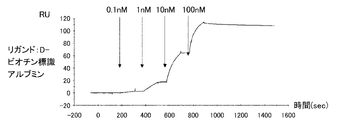
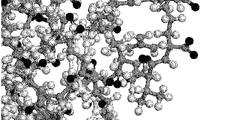
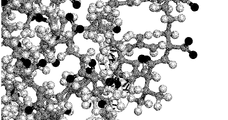
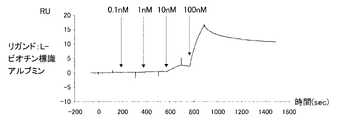
- Example 4 It is a graph which shows the result of Example 4. It is a structural model before substituting the 21st amino acid involved in the structural maintenance of Example 5 with the L-form. It is a structural model after the 21st amino acid related to the structural maintenance of Example 5 is replaced with the L form. This is a structural model in which the 21st amino acid involved in the structural maintenance of Example 5 was replaced with an L-form, and then the structural optimization was performed by Clean Geometry. 6 is a sensorgram of surface plasmon resonance (SPR) between D-tamavidin TM 2 of Example 7 and L-biotin-labeled albumin.
- SPR surface plasmon resonance
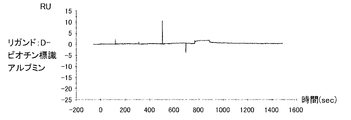
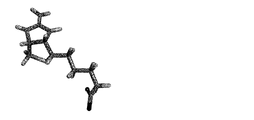
- Example 3 is a sensorgram of surface plasmon resonance (SPR) between D-tamavidin TM 2 of Example 7 and D-biotin-labeled albumin. It is a graph which shows the result of Example 8. It is a graph which shows the result of Example 9. It is the structure of L-biotin. It is the structure of D-biotin.
- SPR surface plasmon resonance
- polypeptide of this embodiment belongs to the avidin-streptavidin family. In this polypeptide, 90% or more of amino acid residues other than glycine are D-amino acid residues.
- This polypeptide is a polypeptide having a binding ability to L-biotin and substantially no binding ability to D-biotin.
- Avidin-streptavidin family polypeptides are naturally composed of L-amino acid residues, except for glycine, which does not have optical isomers.
- the polypeptide of the present embodiment may contain L-amino acid residues, but it is preferable that 90% or more of the amino acid residues other than glycine are D-amino acid residues. In a more preferred embodiment, 95% or more of amino acid residues other than glycine are D-amino acid residues, and in a more preferred embodiment, all amino acid residues other than glycine are present. It is a D-amino acid residue.
- the polypeptide of the present embodiment does not substantially bind to D-biotin, and therefore, the influence of endogenous D-biotin in the immunological measurement method is affected. Can be reduced. In addition, in pretargeting therapy, the effect of endogenous D-biotin is reduced and the drug can be delivered to the affected area more appropriately.
- polypeptide includes proteins and fragments thereof.
- the length of the amino acid of the polypeptide of this embodiment is not particularly limited as long as it has the ability to bind to L-biotin, and is, for example, tens to hundreds of residues.
- the polypeptide of this embodiment preferably has at least a core sequence.
- the "core sequence” refers to an amino acid sequence required for binding to biotin among the amino acid sequences of the polypeptide of the present embodiment.
- Avidin-polypeptide belonging to the streptavidin family includes avidin, streptavidin, avidin-like protein derived from Pleurotus cornucopiae (hereinafter, tamavidin TM), bradavidin, chimera of lizavidin (Rhizavid). Includes variants and the like.
- a D-type polypeptide eg, D-type avidin (hereinafter referred to as “D-avidin” or “avidin of the present embodiment”), a D-type streptavidin (hereinafter, “D-streptavidin”).
- streptavidin of the present embodiment D-type tamavidin (trademark) (hereinafter referred to as “D-tamavidin TM” or “tamavidin of the present embodiment”), D-type bradavidin (hereinafter referred to as “bradavidin”).
- D-Bradavidin D-type bradavidin
- D-type rezavidin are also included in "avidins-polypeptides belonging to the streptavidin family”.
- polypeptide variant examples include a polypeptide having a modified amino acid sequence and a polypeptide obtained by chemically treating the polypeptide.
- modification of the amino acid sequence examples include substitution, deletion, addition and the like of amino acid residues.
- chemical treatments include deglycosylation.
- Streptavidin is a biotin-binding protein derived from Streptomyces avidini.
- D-streptavidin comprises the 19th to 133rd amino acid sequence of SEQ ID NO: 1.
- the 19th to 133rd amino acid sequences are known as the core sequence of D-streptavidin.
- D-streptavidin comprises the 13th to 133rd amino acid sequence or the 19th to 133rd amino acid sequence.
- D-streptavidin comprises the 13th-139th amino acid sequence.
- D-streptavidin comprises the entire amino acid sequence of SEQ ID NO: 1.
- the binding property with D-biotin is low, and the binding property with L-biotin is low. Highly binding.
- Avidin is a biotin-binding protein produced in birds and the like.
- D-avidin which is an embodiment of the present invention, may contain the amino acid sequence of SEQ ID NO: 2.
- D-avidin comprises the 2nd to 128th amino acid sequences of SEQ ID NO: 2.
- the second to 128th amino acid sequences are considered to be the core sequence of D-avidin.
- D-avidin comprises the entire amino acid sequence of SEQ ID NO: 2. Since 90% or more of the amino acid residues other than glycine of the amino acid residues other than glycine are composed of D-amino acid residues, the avidin of the present embodiment has low binding property to D-biotin and is compatible with L-biotin. Highly binding.
- Tamavidin is a protein discovered in Pleurotus cornucopiae. It has a high affinity for biotin and is superior in thermal stability to avidin (International Publication No. 2002/072817).
- Examples of the amino acid sequence of tamavidin (trademark) include the amino acid sequence shown in SEQ ID NO: 3 (tamavidin TM 1) and SEQ ID NO: 4 (tamavidin TM 2).
- D-tamavidin TM 1 comprises the 4th to 129th amino acid sequence of SEQ ID NO: 3.
- the 4th to 129th amino acid sequences are considered to be the core sequence of Tamavidin TM 1.
- D-tamavidin TM 2 contains the amino acid sequences 4 to 127 of SEQ ID NO: 4.
- the 4th to 127th amino acid sequences are considered to be the core sequence of Tamavidin TM 2.
- D-tamavidin TM 1 and D-tamavidin TM 2 are different from D-biotin because 90% or more of the amino acid residues other than glycine are composed of D-amino acid residues. The binding property is low and the binding property to L-biotin is high.
- the core sequence of the polypeptide of the present embodiment may contain L-amino acid residues, but it is preferable that 90% or more of the amino acid residues other than glycine are D-amino acid residues. .. In a more preferred embodiment, 95% or more of the amino acid residues other than glycine in the core sequence are D-amino acid residues, and in a more preferred embodiment, all amino acid residues other than glycine are D-. It is an amino acid residue.
- the polypeptide of the present embodiment may be a polypeptide containing amino acid modification such as substitution, deletion or addition as compared with the above-mentioned amino acid sequence.
- a preferred embodiment is a polypeptide having 90% or more homology with the above amino acid sequence, and a more preferred embodiment is a polypeptide having 95% or more homology with the above amino acid sequence.
- streptavidin variant 1 As a specific example of a polypeptide having a modified amino acid sequence, Qureshi et al. , THE JOURNAL OF BIOLOGICAL CHEMISTRY, Vol. 276, No. 49, Issue of December 7, pp.
- streptavidin variant 1 The streptavidin variant described in 46422-46428, 2001 (hereinafter referred to as "streptavidin variant 1") can be mentioned.
- Streptavidin variant 1 has a substitution mutation of S45A, T90A and D128A as compared to the amino acid sequence of SEQ ID NO: 1 (SEQ ID NO: 5).
- the homology between the core sequence of streptavidin and the core sequence of streptavidin variant 1 is 97.4%.
- the streptavidin of one embodiment is a D-form streptavidin variant 1 (hereinafter referred to as “D-streptavidin variant 1”) and contains the amino acid sequences 19 to 133 of SEQ ID NO: 5.
- the 19th to 133rd amino acid sequences are known as the core sequence of streptavidin variant 1.
- the D-streptavidin variant 1 comprises the 13th to 133rd amino acid sequence or the 19th to 139th amino acid sequence.
- the D-streptavidin variant 1 comprises the 13th to 139th amino acid sequences.
- the D-streptavidin variant 1 comprises the entire amino acid sequence of SEQ ID NO: 5.
- streptavidin variant 2 has a substitution mutation of T76R, V125R, V55T and L109T as compared to the amino acid sequence of SEQ ID NO: 1 (SEQ ID NO: 6).
- the homology between the core sequence of streptavidin and the core sequence of streptavidin variant 2 is 96.5%.
- the streptavidin of one embodiment is a D-form streptavidin variant 2 (hereinafter referred to as “D-streptavidin variant 2”) and contains the 19th to 133rd amino acid sequences of SEQ ID NO: 6.
- the 19th to 133rd amino acid sequences are known as the core sequence of streptavidin variant 2.
- the D-streptavidin variant 2 comprises the 13th to 133rd amino acid sequence or the 19th to 139th amino acid sequence.
- the D-streptavidin variant 2 comprises the 13th to 139th amino acid sequences.
- the D-streptavidin variant 2 comprises the entire amino acid sequence of SEQ ID NO: 6.
- streptavidin variant 3 The streptavidin variant according to 57-67 (hereinafter referred to as “streptavidin variant 3”) can be mentioned.
- This protein has the amino acid sequence of SEQ ID NO: 7.
- the streptavidin of one embodiment is preferably D-form streptavidin variant 3 (hereinafter referred to as “D-streptavidin variant 3”) and preferably contains the entire amino acid sequence of SEQ ID NO: 7.
- streptavidin variant 4 As another example of the streptavidin variant, Sano et al. , Proc. Natl. Acad. Sci. USA Vol. 94, pp. Examples thereof include the streptavidin variant described in 6153-6158, June 1997 (hereinafter referred to as "streptavidin variant 4"). Streptavidin variant 4 has a substitution mutation of H127D and a deletion mutation of G113-W120 as compared to the amino acid sequence of SEQ ID NO: 1 (SEQ ID NO: 8). The homology between the core sequence of streptavidin and the core sequence of streptavidin variant 2 is 92.2%.
- the streptavidin of one embodiment is a D-form streptavidin variant 4 (hereinafter referred to as “D-streptavidin variant 4”) and contains the 19th to 125th amino acid sequences of SEQ ID NO: 8.
- the 19th to 125th amino acid sequences are known as the core sequence of streptavidin variant 4.
- the D-streptavidin variant 4 comprises the 13th to 125th amino acid sequence or the 19th to 131st amino acid sequence.
- the D-streptavidin variant 4 comprises the 13th to 131st amino acid sequences.
- the D-streptavidin variant 4 comprises the entire amino acid sequence of SEQ ID NO: 8.
- streptavidin variant 5 As another example of the streptavidin variant, the streptavidin variant described in International Publication No. 2006/088222 (hereinafter referred to as "streptavidin variant 5”) can be mentioned.
- Streptavidin variant 5 has the amino acid sequence of SEQ ID NO: 9.
- the streptavidin of one embodiment is a D-form streptavidin variant 5 (hereinafter referred to as "D-streptavidin variant 5"), and the first to 20th, 35th to 196th and sequences of SEQ ID NO: 9 and streptavidin. Includes the 213rd to 261st amino acid sequences.
- the 1st to 20th, 35th to 196th and 213rd to 261st amino acid sequences are known as sequences corresponding to the core sequence of streptavidin variant 5.
- the D-streptavidin variant 5 comprises the 1st to 24th, 29th to 202nd and 207th to 261st.
- the D-streptavidin variant 5 comprises the entire amino acid sequence of SEQ ID NO: 9.
- the notation of D- or L- in the present specification is a notation indicating the configuration of a compound based on the IUPAC nomenclature, and a compound that can be produced without breaking this configuration using d-glyceraldehyde as a reference for configuration. It is based on the notation notation that the D-form is used and the enantiomer is called the L-form.
- L-biotin which is a binding partner of the polypeptide of this embodiment, is an enantiomer of D-biotin.
- L-biotin is a concept comprising free L-biotin and L-biotin groups added to other substances such as traps.
- L-biotin can be synthesized by a known method such as, for example, a method in a non-patent document (Journal of the American Chemical Society 1978, 100, 1558-1563), and can be obtained by optical resolution using chiral column chromatography or the like. can.
- the production method is not particularly limited, and a commercially available product may be used.
- the binding property of the polypeptide of this embodiment to L-biotin and D-biotin is, for example, a signal in a plate assay using a biotinylated enzyme and a polypeptide-immobilized plate, a change in sensorgram in surface plasmon resonance (SPR), and the like.
- the dissociation constant (Kd value) can be confirmed as an index.
- a method for measuring the dissociation constant for example, a known method using SPR analysis, isothermal titration calorimetry analysis, or the like can be used.
- Biacore T200 (Cytiva) is exemplified.
- the dissociation constant between the polypeptide of this embodiment and L-biotin is preferably 10-7 M or less, more preferably 10-10 M or less, and most preferably 10-13 M or less.
- “Substantially having no binding ability to D-biotin” means that, for example, the dissociation constant between the polypeptide of the present embodiment and D-biotin is preferably 10-6 M or more, more preferably 10. It is -4 M or more, more preferably 10-2 M or more.
- the binding ability between the polypeptide of the present embodiment and L-biotin is measured using Biacore T200 (Cytiva)
- Biacore T200 Cytiva
- substantially having no binding ability to D-biotin is synonymous with “substantially not binding to D-biotin”.
- the method for determining the binding property using the Biacore T200 system is, for example, as follows.
- Bovine serum albumin is immobilized on flow cells 1 and 3 of the CM5 sensor chip (manufactured by Cytiva) of the Biacore T200 system at a target level of 400 RU by an amine coupling method using an amine coupling kit (Cytiva).
- L-biotin-labeled albumin and D-biotin-labeled albumin are immobilized on flow cells 2 and 4 at a target level of 400 RU, respectively, by an amine coupling method.
- Each flow cell is blocked with 1M ethanolamine solution, pH 8.5 (manufactured by Cytiva).
- the D-biotin-labeled albumin As the D-biotin-labeled albumin, the one whose D-biotin-labeled number per albumin is estimated to be 0.4 by the HABA method is used, and the L-biotin-labeled albumin is prepared under the same conditions as the D-biotin-labeled albumin. Therefore, the one estimated to have the same number of D-biotin labels is used.
- HBS-EP + (manufactured by Cytiva) is used as a running buffer, and a polypeptide belonging to the avidin-streptavidin family is flowed into each flow cell in the range of 100 pM to 100 nM at a flow rate of 30 ⁇ L / min by a single cycle method, and Biacore T200 Evolution Software ( Data showing changes in the sensorgram in SPR with respect to D-biotin-labeled albumin or L-biotin-labeled albumin (manufactured by Cytiva) are acquired.
- the data obtained from the flow cell immobilized with bovine serum albumin indicates the background value, and therefore the background value is used to indicate the change in the sensorgram in SPR with respect to D-biotin-labeled albumin or L-biotin-labeled albumin.
- the data may be normalized.
- the binding property of the polypeptide belonging to the avidin-streptavidin family is, for example, [data showing the binding property between the L-biotin-labeled albumin and the polypeptide belonging to the avidin-streptavidin family] (hereinafter referred to as "data L1"). And [data showing the binding property between D-biotin-labeled albumin and avidin-streptavidin family of polypeptides] (hereinafter referred to as "data D1").
- the polypeptide belonging to the avidin-streptavidin family is "D-biotin and parenchyma". It can be determined that it does not bind to each other.
- the polypeptide belonging to the avidin-streptavidin family "substantially does not bind to D-biotin". Can be determined.
- the absolute value of the value obtained by subtracting the value of data D1 from the value of data L1 or the value obtained by subtracting the value of data L1 from the value of data D1 is 1/10 or less, 1/100 or less of the value of data L1. Or when it is 1/1000, it can be determined that a polypeptide belonging to the avidin-streptavidin family "substantially does not bind to D-biotin".
- a biotin measurement system using an ELISA method is constructed based on Example 3 described later, and L.
- data L2 The value of the enzyme activity when biotin is used
- data D2 the value of the enzyme activity when D-biotin is used
- the embodiment according to the multimer is a multimer having the above-mentioned polypeptide as a monomer unit.
- This multimer can be formed by associating a plurality of the above-mentioned polypeptides.
- the number of monomer units is not particularly limited.
- this multimer is a dimer, tetramer or octamer.
- the polypeptide of the present embodiment can be produced by a known peptide synthesis method.
- the method for synthesizing the peptide is not particularly limited as long as a desired polypeptide can be obtained.
- liquid phase synthesis, solid phase synthesis, cell-free synthesis using artificial tRNA, and the like can be mentioned.
- the number of amino acid residues in the product polypeptide is a certain number or more (generally 30 to 50 residues or more)
- the polypeptide is ligated by using a known ligation reaction after synthesizing two or more peptide fragments. By doing so, it can be manufactured.
- the polypeptide of this embodiment can be synthesized, for example, by the following solid-phase synthesis method.
- the carboxyl group of the amino acid at the first residue, which protects the nitrogen atom of the amino group is bonded to the resin.
- the protecting group of the reactant obtained by the binding reaction of (1) or (3) is desorbed with a deprotecting agent, and then washed with a solvent to form a free amino acid.
- the free amino acid obtained in (2) above and an arbitrary amino acid whose amino group is protected by a protecting group are condensed using a condensing agent.
- the protecting group of the product of (3) above is desorbed with a deprotecting agent to form a free amino acid.
- a polypeptide in which an arbitrary amino acid having a resin bonded to the C-terminal is linked can be obtained.
- Any polypeptide to which the protecting group is bound is obtained by protecting the N-terminal amino group of the polypeptide to which the resin washed in (6) is bound with a protecting group and then cleaving the resin with an acid. Can be obtained.
- Each process may be hand-synthesized or an automatic synthesizer or the like may be used.
- a part may be manually synthesized and an automatic synthesizer may be used as appropriate.
- Examples of the automatic synthesizer include Liberty Blue (manufactured by CEM), Multipep2 (manufactured by CEM), Initiator + Alstra (manufactured by Biotage), AMD II (manufactured by Biotage), and the like, but are not particularly limited.
- the resin used in (1) may be a known resin used in the solid phase synthesis method.
- the resin for supplying the C-terminal as an amide group include a Rink-Amide-resin (manufactured by Merck KGaA) functionalized with an amino group, a Rink-Amide-PEGA-resin (manufactured by Merck KGaA), and Fmoc-NH-. It is preferable to use SAL-resin (manufactured by Watanabe Chemical Industry Co., Ltd.).
- Fmoc-NH-SAL-resin-linker manufactured by Watanabe Chemical Industry Co., Ltd.
- Amino-PEGA-resin manufactured by Merck KGaA
- Examples of the resin for converting the C-terminal to a carboxylic acid include 2-chlorotrityl chloride resin functionalized with chlorine (manufactured by Merck KGaA) and Amino-PEGA-resin (Merck) functionalized with an amino group.
- 2-chlorotrityl chloride resin functionalized with chlorine manufactured by Merck KGaA
- Amino-PEGA-resin Merck
- a linker may be present between the Amino-PEGA-resin and the amino acid, and examples of such a linker include 4-hydroxymethylphenoxyacetic acid (HMPA) and 4- (4-hydroxymethyl-3-methoxy). Phenoxy) -butylacetic acid (HMPB) and the like can be mentioned. H-Cys (Trt) -Trityl NovaPEG resin (manufactured by Merck KGaA) in which the amino acid at the C-terminal is preliminarily bonded to the resin can be used.
- the bond between the resin and the amino acid in which the nitrogen atom of the amino group is protected by a protecting group causes the carboxyl group of the amino acid to be bonded to the resin by an ester bond.
- a resin functionalized with an amino group is used, the carboxyl group of the amino acid is bound to the resin by an amide bond.
- the protecting group may be any known protecting group, for example, 9-fluorenylmethoxycarbonyl (Fmoc) group, t-butyloxylcarbonyl (Boc) group, benzyl group, allyloxycarbonyl group, acetyl group and the like. Carbonyl or amide protecting groups can be used.
- a protecting group into an amino acid for example, when introducing an Fmoc group, it can be introduced by adding 9-fluorenylmethoxycarbonyl-N-succinimidyl carbonate and sodium carbonate to carry out a reaction. ..
- the reaction temperature is 0 to 50 ° C., preferably room temperature, and the reaction time is 1 to 5 hours, preferably 3 hours.
- amino acid in which the nitrogen atom of the amino group is protected by using a protecting group a commercially available amino acid may be used.
- an amino acid protected with a protecting group and having a protecting group introduced in the side chain may be used.
- an HMPB resin When a resin having a hydroxyl group is used, for example, an HMPB resin can be used as an esterification catalyst.
- known dehydration condensing agents such as 1-mesitylenesulfonyl-3-nitro-1,2,4-triazole (MSNT), dicyclohexylcarbodiimide (DCC), and diisopropylcarbodiimide (DIC) may be used.
- MSNT 1-mesitylenesulfonyl-3-nitro-1,2,4-triazole
- DCC dicyclohexylcarbodiimide
- DIC diisopropylcarbodiimide
- the ratio of the amino acid to the dehydration condensing agent is usually 1 to 10 equivalents, preferably 1 to 5 equivalents, with respect to 1 equivalent of the former.
- the esterification reaction is preferably carried out, for example, by providing a resin on a solid-phase column, washing with a solvent, and adding an amino acid solution.
- the cleaning solvent include dimethylformamide (DMF), 2-propanol, dichloromethane (DCM) and the like.
- the solvent for dissolving the amino acid include dimethyl sulfoxide (DMSO), DMF, DCM and the like.
- the reaction temperature of the esterification reaction is 0 to 50 ° C., preferably room temperature, and the reaction time is about 10 minutes to 30 hours, preferably about 15 minutes to 24 hours.
- Desorption of the fat-soluble protecting group can be performed, for example, by treating with a base.
- a base include piperidine, morpholine and the like.
- a solvent examples include DMF, DMSO, methanol and the like.
- amidation reaction between the free amino group and the carboxy group of any amino acid whose amino group nitrogen is protected by a protecting group is preferably carried out in the presence of an activator, a base and a solvent.
- activator examples include DIC, DCC, 1-ethyl-3- (3-dimethylaminopropyl) carbodiimide hydrochloride (WSC / HCl), diphenylphosphoryl azide (DPPA), carbonyldiimidazole (CDI), diethyl.
- Cyanophosphonate (DEPC), benzotriazole-1-yloxy-trispyrrolidinophosphonium hexafluorophosphate (PyBOP), 1-hydroxybenzotriazole (HOBt), hydroxysuccinimide (HOSu), dimethylaminopyridine (DMAP), 1-hydroxy- 7-azabenzotriazole (HOAt), hydroxyphthalimide (HOPht), pentafluorophenol (Pfp-OH), O- (1H-6-chlorobenzotriazole-1-yl) -1,1,3,3-tetramethyl Uronium hexafluorophosphate (HCTU), O- (7-azabenzotriazole-1-yl) -1,1,3,3-tetramethyluronium hexafluorophosphonate (HATU), 2- (1H-benzotriazole-) 1-yl) -1,1,3,3-tetramethyluronium tetrafluoroborate (TBTU), 3,4
- the amount of the activator to be used is preferably 1 to 20 equivalents, preferably 1 to 10 equivalents, more preferably 1 to 5 equivalents, relative to any amino acid protected with an amino group nitrogen by a protecting group. ..
- a base that can coexist with the alkylation reaction is preferable.
- DIPEA N-ethyldiisopropylamine
- DBU 1,8-diazabicyclo [5.4.0] undec-7-ene
- DMAP 1,4-diazabicyclo [2.2.2] octane
- DBN 2,6-Dimethylpyridine
- TAA triethylamine
- DBN 1,5-diazabicyclo [4.3.0] nona-5-ene
- DBN 1,5-diazabicyclo [4.3.0] nona-5-ene
- the solvent examples include DMF, DMSO, and DCM.
- the reaction temperature is 0 to 50 ° C., preferably room temperature, and the reaction time is preferably about 10 minutes to 30 hours, preferably about 15 minutes to 24 hours. Desorption of the protecting group can be performed in the same manner as described above. It is preferable to treat with an acid to cleave the peptide chain from the resin.
- the acid include trifluoroacetic acid (TFA).
- NCL method Native chemical ligation
- NCL method can be used as a known ligation reaction in which two or more peptide fragments are ligated (Dawson et al., Synthesis of Proteins by Native Chemical Ligation. Science, 266: 767-779). 1994)).
- the NCL method is a chemical selection reaction between a first peptide having an ⁇ -carboxythioester moiety at the C-terminal and a second peptide having a cysteine residue at the N-terminal, and is a thiol group (SH group) in the side chain of cysteine.
- SH group thiol group
- sulfhydryl group selectively react with the carbonyl carbon of the thioester group, and a thiol exchange reaction produces an initial thioester-bonded intermediate. This intermediate spontaneously undergoes intramolecular rearrangement to give the linking site a natural amide bond, while regenerating the cysteine side chain thiol.
- the cysteine binding site of the second peptide having a cysteine residue at the N-terminal is converted to alanine by a desulfurization reaction (Yanet al., J. Am. Chem. Soc. 123, 526 (2001)) after the ligation reaction. It can also be replaced. That is, a site that is originally alanine can be replaced with cysteine for synthesis, and the site can be used as a binding site for a ligation reaction.
- Separation and / or purification steps may be included in the steps before and after the peptide synthesis reaction or ligation reaction.
- the purification method a known method may be used, and examples thereof include column chromatography. Examples of column chromatography include, but are not limited to, normal phase chromatography, reverse phase chromatography, gel filtration chromatography, affinity chromatography and the like.
- the solvent, the filler of the column, the detection method of the separation target and the purification target, the temperature condition, the pressure condition and the like can be appropriately selected depending on the object for which separation and purification are desired.
- a known washing, drying, diluting, and concentrating steps may be appropriately included before and after the peptide synthesis reaction, ligation reaction or separation and / or purification step.
- the polypeptide is not folded correctly, it is preferable to refold it.
- refolding for example, the purified polypeptide is dissolved in a denaturing buffer containing urea, guanidine hydrochloride, etc., or a denaturing agent such as urea, guanidine hydrochloride is added to the crude purified solution of the fusion polypeptide, and the fusion poly After dissolving the aggregate of the peptide, for example, the diluted refolding method, the dialysis refolding method, the solid phase refolding method, and the size exclusion chromatograph described in the non-patent document (Arakawa et al., Antibodies 232 (2014)). It can be performed by a chromatographic refolding method, a surfactant refolding method, or the like. A dialysis refolding method is preferred.
- the measurement method of the present embodiment is a method of measuring a test substance in a sample in vitro using a solid phase on which the above-mentioned polypeptide or a multimer thereof is immobilized and a capture body immobilized on the solid phase. Is.
- the trap a substance that specifically binds to the test substance can be used.
- L-biotin and its variants are added directly or indirectly to the trap.
- the trap include antibodies, antigens, aptamers, lectins, nucleic acids, enzymes and the like, but are not particularly limited.
- the "antibody” used as a trap or a detector described below can be a full-length antibody or a fragment thereof.
- the class of antibody may be any of IgG, IgA, IgM, IgD and IgE, but IgG is preferable.
- the subclass of IgG is not particularly limited and may be any of IgG1, IgG2, IgG3 and IgG4.
- Examples of antibody fragments include reduced IgG (rIgG), Fab, Fab', F (ab'), F (ab') 2, Fv, single-chain antibody (scFv), diabodies, triabodies and the like. Be done. The methods for preparing these antibody fragments are known.
- the antibody may be either a monoclonal antibody or a polyclonal antibody, but is preferably a monoclonal antibody.
- the monoclonal antibody may be a chimeric antibody, a humanized antibody, a fully humanized antibody, or the like. Further, the antibody may be an antibody derived from any animal such as mouse, rat, hamster, rabbit, goat, horse, camel, alpaca, and chicken.
- the test substance may be a substance to be detected by the measurement method of the present embodiment and may be a substance that can be captured by the trap.
- Examples of the test substance include, but are not limited to, cells, extracellular vesicles, proteins, nucleic acids, polysaccharides, glycoproteins, phospholipids and the like.
- the sample is a sample containing a test substance or a sample suspected of containing a test substance.
- samples include biological samples, environmental samples, and pretreated samples.
- biological samples include body fluids and excrement.
- body fluids are not particularly limited as long as they are samples collected from a living body, but are serum, plasma, blood, spinal fluid, semen, tissue, tissue fluid, lymph, saliva, nasopharyngeal swab, sputum, and bronchoalveolar lavage fluid. And so on.
- Examples of excrement include, but are not limited to, urine, feces and the like.
- environmental samples include sewage, river water, seawater, and soil.
- the above-mentioned polypeptide or its multimer is immobilized on a solid phase.
- the embodiment of the fixation is not particularly limited.
- the above-mentioned polypeptide or its multimer may be directly bound to the solid phase, or may be indirectly bound.
- Examples of the direct bond include physical adsorption.
- Indirect binding is an embodiment in which another substance intervenes between the above-mentioned polypeptide or its multimer and the solid phase.
- a blocking agent such as bovine serum albumin or polyethylene glycol
- the above-mentioned polypeptide or its multimer is bound to the solid phase and the blocking agent to form the above-mentioned polypeptide or its multimer.
- the multimer can be immobilized on the solid phase.
- the capture body and the solid phase may be separately provided to the user, or the capture body and the solid phase may be provided to the user in a state of being fixed to the solid phase in advance. ..
- the measurement method of the present embodiment may include a step of contacting the sample, the solid phase, and the capture body. In this step, the order of contact between the sample, the solid phase, and the trap is not particularly limited. Preferably, the sample and the trap are brought into contact with each other to form a complex of the test substance in the sample and the trap, and then the complex and the solid phase are brought into contact with each other to form a complex on the solid phase. ..
- the above-mentioned polypeptide or multimer immobilized on the solid phase does not substantially bind to D-biotin and captures the L-biotin group. Can bind to the body.
- the capture body and the solid phase are separately provided to the user in that the solid phase can be shared with a plurality of types of test substances.
- the measuring method of the present embodiment is a step of forming a complex (hereinafter, also referred to as “sandwich complex”) containing a trap, a test substance, and a detector on a solid phase (hereinafter, “complex forming step”). ”) And a step of measuring a signal based on the detector contained in this complex (hereinafter, also referred to as a“ measurement step ”).
- a sandwich complex can be formed on the solid phase by contacting the solid phase, the capture body, the sample containing the test substance, and the detector.
- the order of contact between the solid phase, the trap, the sample, and the detector is not particularly limited.
- the sample and the trap are brought into contact with each other to form a complex of the test substance in the sample and the trap, and then the complex and the solid phase are brought into contact with each other to form a complex on the solid phase.
- the complex and the detector are brought into contact with each other to form a sandwich complex on the solid phase.
- the above-mentioned polypeptide or multimer immobilized on the solid phase does not substantially bind to D-biotin and contains an L-biotin group. Can bind to the captive.
- B / F separation After forming a complex of the test substance and the trapped substance on the solid phase, it is preferable to perform B / F separation to remove unreacted components before contacting the detector.
- the reaction conditions for example, solvent, temperature, pressure, reaction time, etc.
- each component in the complex forming step can be appropriately selected by those skilled in the art.
- the detector preferably contains a substance that binds to the test substance and a labeling substance.
- the substance that binds to the test substance include antibodies, antigens, aptamers, lectins, nucleic acids and the like.
- the detector may include a primary substance that binds to the test substance and a secondary substance that includes a labeling substance and binds to the primary substance.
- Primary and secondary substances include, for example, antibodies, antigens, aptamers, lectins, nucleic acids and the like. When both the primary substance and the secondary substance are antibodies, they are called primary antibody and secondary antibody, respectively, and are widely used in the art.
- a sandwich complex containing a labeling substance can be formed by binding the primary antibody to the test substance and binding the secondary antibody to the primary antibody.
- the primary substance is a primary antibody that is derived from an animal such as a mouse or a rabbit and specifically binds to the test substance
- the secondary substance contains a labeling substance and is specific to the antibody of the animal. It is a secondary antibody that binds to the target.
- the labeling substance is not particularly limited, and examples thereof include a substance that generates a signal by itself (hereinafter, also referred to as a “signal generating substance”) and a substance that catalyzes the reaction of another substance to generate a signal. ..
- the signal generating substance include a fluorescent substance, a radioisotope, and a coloring substance.
- substances that catalyze the reaction of other substances to generate a detectable signal include enzymes.
- the fluorescent substance include fluorescent dyes such as fluorescein isothiocyanate (FITC), rhodamine, Alexa Fluor (registered trademark), and fluorescent proteins such as GFP. Radioisotopes include 125 I, 14 C, 32 P and the like.
- Examples of the color-developing substance include metal colloids such as gold nanocolloids.
- Examples of the enzyme include alkaline phosphatase, peroxidase, ⁇ -galactosidase, glucosidase, polyphenol oxidase, tyrosinase, acid phosphatase, luciferase and the like.
- the preferred labeling material is an enzyme, with alkaline phosphatase being particularly preferred.
- the test substance can be measured by measuring the signal based on the detector. Based on the values obtained by the measurement step, quantitative, qualitative or semi-quantitative detection of the test substance can be performed.
- the semi-quantitative detection means that the intensity of the signal is shown stepwise, such as "no signal generated”, “weak”, “medium”, “strong” and the like.
- the method itself for detecting a signal is known in the art.
- a method according to the type of the signal derived from the above-mentioned labeling substance may be appropriately selected.
- the signal detection device for example, an absorbance meter, a spectrophotometer, a fluorescence photometer, an infrared photometer, a Raman spectrophotometer, an SPR measuring device, a chemiluminescent enzyme immunoassay device, and the like can be used, but are particularly limited. Not done.
- the test substance in the sample is immunologically measured.
- the immunological measurement method include an ELISA method, an immunochromatographic method, and an immune complex transfer method described in JP-A No. 1-254868.
- the target nucleic acid in the sample is measured as a test substance.
- a solid phase in which the above-mentioned polypeptide or multimer is immobilized and a nucleic acid probe that hybridizes to a target nucleic acid can be used as a trap.
- the nucleic acid probe is labeled with L-biotin and binds to the polypeptide or multimer of the present embodiment on a solid phase.
- a DNA elongation reaction is carried out on the solid phase using a target nucleic acid as a template and a nucleic acid probe as a primer by DNA polymerase and dNPTs.
- DNA can be detected by a known method.
- the synthesized amplicon can be labeled with an intercalator (eg, SYBR TM Green I dye, ethidium bromide, etc.) as a detector and the fluorescence can be measured.
- an intercalator eg, SYBR TM Green I dye, ethidium bromide, etc.
- a fluorescent probe capable of binding to an extended chain can be bound as a detector to measure fluorescence.
- the TaqMan TM method may be used. An example of the measurement method of the present embodiment will be described with reference to FIG.
- the sample containing the test substance 81 and the R1 reagent are dispensed into the container 90.
- the first reagent dispensing unit 551 dispenses the R1 reagent into the container 90
- the sample dispensing section 530 dispenses the sample into the container 90.
- the R1 reagent contains the capture body 84 to which L-biotin is added, and reacts with and binds to the test substance 81.
- the sample in the container 90 is heated to a predetermined temperature in the reaction unit 580, so that the capture body 84 and the test substance 81 are bound to each other.
- the R2 reagent is dispensed into the container 90 by the second reagent dispensing section 552.
- the R2 reagent contains a solid phase 82.
- the solid phase 82 is immobilized on the polypeptide of the present embodiment or a multimer thereof.
- the sample in the container 90 is heated to a predetermined temperature in the reaction unit 580.
- the test substance 81 and the trap 84 are fixed to the solid phase 82 by binding the L-biotin to the polypeptide of the present embodiment or a multimer thereof on the solid phase.
- test substance 81 and the capture body 84 formed on the solid phase 82 and the unreacted capture body 84 may be separated by a primary BF separation treatment by the BF separation device 100.
- the primary BF separation treatment unnecessary components such as the unreacted trap 84 are removed from the container 90.
- the R3 reagent is dispensed into the container 90 by the third reagent dispensing section 553.
- the R3 reagent contains the detector 83 and reacts with and binds to the test substance 81.
- the sample in the container 90 is heated to a predetermined temperature in the reaction unit 580.
- a sandwich complex 85 containing the test substance 81, the detector 83, and the trap 84 is formed on the solid phase 82.
- the detector 83 is an enzyme-labeled antibody.
- the sandwich complex 85 formed on the solid phase 82 and the unreacted labeling substance 83 are separated by a secondary BF separation treatment by the BF separation device 100.
- the secondary BF separation treatment unnecessary components such as the unreacted detector 83 are removed from the container 90.
- the R4 reagent and the R5 reagent are dispensed into the container 90 by each of the 4th reagent dispensing section 554 and the 5th reagent dispensing section 555.
- the R4 reagent contains a buffer solution.
- the sandwich complex 85 bound to the solid phase 82 is dispersed in the buffer solution.
- the R5 reagent contains a chemiluminescent substrate.
- the buffer solution contained in the R4 reagent has a composition that promotes the reaction between the enzyme labeled on the detector 83 contained in the sandwich complex 85 and the chemiluminescent substrate contained in the R5 reagent.
- the sample in the container 90 is heated to a predetermined temperature in the reaction unit 580.
- Light is generated by reacting the substrate with the detector 83, and the generated light is detected by the photodetector 521 of the detection unit 520.
- the test substance 81 is measured based on the detected light intensity.
- the R1 reagent and the R2 reagent are separately dispensed into the container 90, but the R1 reagent and the R2 reagent are mixed in advance, and the container is in a state where the capture body 84 is fixed to the solid phase 82. It may be dispensed into 90.
- the solid phase of this embodiment is a solid phase in which the above-mentioned polypeptide or a multimer thereof is immobilized.
- the solid phase of the present embodiment is an insoluble carrier for fixing the trap.
- the mode of immobilization of the above-mentioned polypeptide or its multimer to the solid phase is as described above.
- the solid phase can be selected from known solid phases according to the purpose.
- As the material of the solid phase for example, a polymer compound, an inorganic substance, or the like can be selected.
- As the solid phase material a plurality of materials may be appropriately combined.
- Polymer compounds include organic polymer compounds, inorganic polymer compounds, and semi-organic compounds.
- Polymer compounds include, for example, latex, rubber, polystyrene, polyethylene, polypropylene, styrene-butadiene copolymer, polyvinyl chloride, polyvinyl chloride, polyacrylamide, polymethacrylate, styrene-methacrylate copolymer, polyglycidylmethacrylate, achlorin-.
- Examples thereof include ethylene glycol dimethacrylate copolymer, polyvinylidene difluoride (PVDF), silicone, insoluble agarose, and insoluble dextran.
- PVDF polyvinylidene difluoride
- Inorganic substances include inorganic compounds and metals.
- the inorganic compound include magnetic substances (iron oxide, chromium oxide, cobalt, nickel, ferrite, magnetite, etc.), glass, silica, alumina and the like.
- the metal include gold, silver and substances containing them.
- the reagent kit of the present embodiment includes a solid phase to which the above-mentioned polypeptide or a multimer thereof is bound, and a trap to which L-biotin is added.
- FIG. 2 An example of the reagent kit of this embodiment is shown in FIG.
- 11 shows a reagent kit
- 12 shows a first container containing a reagent containing the above-mentioned polypeptide or particles bound to a multimer thereof
- 13 shows a capture with L-biotin added.
- a second container containing a reagent containing a body is shown
- 14 is a packing box
- 15 is a package insert.
- the package insert may describe the composition, usage, storage method, etc. of each reagent.
- Reagent kits may include other reagents, such as buffer solutions, calibrators, detectors, and the like.
- Example 1 Preparation of D-streptavidin 1-1. Method
- a polypeptide consisting of the 13th to 139th amino acids of the polypeptide shown in SEQ ID NO: 1 D-coastreptavidin
- a peptide thioester consisting of the 13th to 71st amino acids of SEQ ID NO: 1 and 72 A polypeptide consisting of the 139th amino acid was synthesized from the polypeptide in which the alanine residue was replaced with cysteine.
- Fmoc-D-Ser (tBu) -OH 500 ⁇ mol
- Fmoc-D-Asp (OtBu)-(Hmb) -Gly-OH 1st time: 150 ⁇ mol,) amino acids whose side chains were protected with a protecting group by the same procedure.
- Fmoc-D-Asp (OtBu)-(Hmb) -Gly-OH was condensed by double coupling.
- acetic anhydride 1.5 mL, 15 mmol
- pyridine 1.2 mL, 15 mmol
- a polypeptide having a total length of 127 residues was dissolved in a denaturing buffer (50 mM Tris-HCl, 6M guanidine-HCl, 1 mM EDTA, 200 mM NaCl, pH 8.0 (4 ° C.)) at 1 mg / mL at 85 ° C. for 45 minutes. Heated. 5 mL of the heated solution was dialyzed against buffer 1 (50 mM Tris-HCl, 1 mM EDTA, 200 mM NaCl, pH 8.0) containing 3 M guanidine HCl at 4 ° C. for 12 hours.
- a denaturing buffer 50 mM Tris-HCl, 6M guanidine-HCl, 1 mM EDTA, 200 mM NaCl, pH 8.0 (4 ° C.)
- Fraction 8 is the peak of aggregates. Since the fractions 14 to 18 are the fractions in which the same peak was observed in the commercially available tetrameric core streptavidin, it is presumed to be the peak of the tetrameric polypeptide. Fractions 14 to 18 were recovered, concentrated using an Amicon Ultra-15 10K centrifugal filter device (manufactured by Merck KGaA), and a tetramer of D-streptavidin composed of D-amino acid residues. Avidin (hereinafter, simply referred to as "D-streptavidin" in the examples for convenience) was prepared.
- Example 2 Evaluation of biotin binding property of D-streptavidin by SPR analysis 2-1.
- L-biotin a mixture of D-biotin and L-biotin is synthesized by the method described in the non-patent document (Journal of the American Chemical Society 1978, 100, 1558-1563), and then optical resolution by liquid chromatography is performed by Daicel. Prepared by outsourcing to the company.
- CHIRALPAK IG manufactured by Daicel, ⁇ 46 ⁇ 50 mm
- the mobile phase was a methanol: acetic acid mixed solvent (100: 0.1 (v / v)) with a flow rate of 1.0 mL / min, a column temperature of 40 ° C., and a detection wavelength.
- Optical resolution was performed under the condition of 205 nm.
- Bovine serum albumin was added to flow cells 1 and 3 of the CM5 sensor chip (manufactured by Cytiva) of the Biacore T200 system at a target level of 400 RU by an amine coupling method using an amine coupling kit (Cytiva). Immobilized. Further, L-biotin-labeled albumin and D-biotin-labeled albumin were immobilized on flow cells 2 and 4 at a target level of 400 RU, respectively, by an amine coupling method. All flow cells were blocked with 1M ethanolamine solution, pH 8.5 (manufactured by Cytiva).
- HBS-EP + manufactured by Cytiva
- D-streptavidin prepared in Example 1 was flowed into each flow cell in the range of 10 pM to 100 nM at a flow rate of 30 ⁇ L / min by a single cycle method.
- FIG. 4A A sensorgram of the intermolecular interaction between D-streptavidin and L-biotin-labeled albumin is shown in FIG. 4A, and a sensorgram of the intermolecular interaction of D-streptavidin and D-biotin-labeled albumin is shown in FIG. 4B.
- FIG. 4A A sensorgram of the intramolecular interaction between natural core streptavidin and D-biotin-labeled albumin is shown in FIG.
- Example 3 Evaluation of the effect of D-biotin on the measurement system in the ELISA method 3-1.
- Method Preparation of streptavidin-bound solid phase
- PBS buffer 200 ⁇ L
- bovine serum albumin 2% bovine serum albumin
- 6-Aminohexanoic acid (24.2 mg) was dissolved in a 0.25 M aqueous sodium carbonate solution (0.4 mL). This solution was added to a solution of compound 2 in DMF (1 mL) and stirred at room temperature for 23 hours. After distilling off the solvent, the residue was washed with water. Acidify with 4M hydrochloric acid, and the resulting solid is collected by filtration and 6-(5-((3aR, 4R, 6aS) -2-oxohexahydro-1H-thieno [3,4-d] imidazole-4-yl). ) Pentanamide) Caproic acid (Compound 3) (68.5 mg) was obtained.
- L-Biotin-labeled TSH antibody was prepared. The same treatment was performed for D-biotin-AC5-OSu (manufactured by Dojin Kagaku) to prepare a D-biotin-labeled TSH antibody.
- FIG. 6 shows the results of TSH detection by the ELISA method in the presence of D-biotin.
- FIG. 6 shows the percentage of the signal measurement value of each sample when the signal measurement value when the sample having a D-biotin concentration of 0 ng / mL is measured in each measurement system is 100%.
- the signal decreased in the D-biotin / L-streptavidin measurement system depending on the concentration of D-biotin added.
- L-biotin / D-streptavidin almost no influence by the addition of D-biotin was observed.
- the D-streptavidin / L-biotin measurement system was substantially unaffected by the endogenous D-biotin present in the specimen.
- Example 4 Confirmation of quantitativeness of the measurement system 4-1.
- Method (1) Add HISC L TM TSH calibration C0 to C5 (manufactured by Sysmex) to 0 ⁇ IU / mL, 2 ⁇ IU / mL, 10 ⁇ IU / mL, 50 ⁇ IU / mL, 120 ⁇ IU / mL or 200 ⁇ IU / mL as a sample in 1.5 mL tube. It was added so as to be.
- HISC L TM TSH R1 reagent manufactured by Sysmex
- HISC L TM TSH Calibrator C0 to C5 manufactured by Sysmex
- FIG. 7 is a graph showing a count value of TSH concentration of 0 to 120 ⁇ IU / mL.
- TSH concentration 50 ⁇ IU / mL samples were prepared, and the TSH concentration was measured for each sample.
- the results are shown in Table 2. The coefficient of variation was about 5%. It was found that the measurement system of this example has no problem in terms of reproducibility.
- Example 5 L-amino acid residue substitution of amino acid residues involved in structure maintenance 5-1.
- the crystal structure (PDBID: 3RY2) of the natural core streptavidin tetramer was obtained from the protein data bank (PDB), and one monomer structure was extracted from the tetramer.
- a monomer structure of D-streptavidin was constructed by converting all amino acid residues into D-amino acid residues on Discovery Studio based on the extracted structure. Then, the degree of solvent contact of the amino acid residues constituting the D-streptavidin monomer structure was confirmed.
- amino acid residues in the core sequence of D-streptavidin amino acid residues other than glycine with a solvent contact degree of 25% or less were identified.
- amino acid residues are arranged in ascending order of solvent contact degree, 21, 29, 77, 104, 130, 54, 56, 39, 43, 27, 75, 31, 92, 90, 128, 102 of SEQ ID NO: 1. , 33, 79, 71, 73, 106, 23, 60, 96, 81, 122, 28, 86, 88, 50, 45, 108, 38, 110, 132 and 42nd, for a total of 36 amino acid residues. there were. These amino acid residues are thought to be particularly involved in maintaining the structure inside the monomer of D-streptavidin.
- Example 5 for any of the 36 amino acid residues, the collision between atoms that occurs when the D-amino acid residue is replaced with the L-amino acid residue utilizes the Clean Geometri function. It was solved by performing structural optimization. As an example thereof, FIGS. 8A to 8C show how the atomic collisions that occur when the D-tryptophan residue, which is the 21st amino acid residue, is replaced with the L-tryptophan residue are eliminated. The structure before replacing the 21st D-tryptophan residue with the L-form is shown in FIG. 8A. FIG.
- FIG. 8B shows how an atomic collision occurs in D-streptavidin when the 21st D-tryptophan residue is replaced with an L-tryptophan residue (the cylinder highlighted by an ellipse indicates the atomic collision). show).
- FIG. 8C shows how the collision between atoms in D-streptavidin is eliminated by performing structural optimization using the Clean Geometry function.
- Example 6 Synthesis of Avidin-like Protein from Pleurotus cornucopiae consisting of D amino acid
- An avidin-like protein derived from Pleurotus cornucopiae consisting of D amino acid (hereinafter, D-tamavidin TM 2) was synthesized.
- the polypeptide having the 2nd to 141st amino acid sequences of SEQ ID NO: 4 was divided into 5 peptide segments, each of which was synthesized by an automatic peptide synthesizer (Prelude, Protein Technologies, Inc.).
- the five segments include segment 1 containing the 2nd to 23rd sequences of SEQ ID NO: 4, segment 2 containing the 24th to 49th sequences, segment 3 containing the 50th to 76th sequences, and the 77th to 105th sequences. It was segment 4 containing, and segment 5 containing the 106th to 141st sequences.
- segments 1 and 2 are connected by chemical ligation to prepare segment 1-2
- segments 3 and 4 are connected by chemical ligation to prepare segment 3-4
- segment 5 is chemically combined with segment 3-4.
- Segments 3-4-5 are ligated to prepare segments 3-4-5
- segments 1-2 and 3-4-5 are ligated by chemical ligation to have the second to 141st amino acid sequences of SEQ ID NO: 4.
- D-tamavidin TM 2 was produced. (Preparation of tetramer)
- D-tamavidin TM 2 was dissolved in denaturing buffer (80 mM Tris-HCl, 6M guanidine-HCl, 1 mM DTT, pH 8.0) at 20 mg / mL and heated at 85 ° C. for 45 minutes. A 5-fold amount of buffer (80 mM Tris-HCl, 1 mM DTT, pH 8.0) was added to the heated solution, and the mixture was allowed to stand at room temperature for 30 minutes. Next, the solution was diluted 50-fold with a buffer (80 mM Tris-HCl, 1 mM DTT, pH 8.0) and then allowed to stand at 4 ° C. O / N. Then, the solution was concentrated with Amicon Ultra-4 (30k) (Merck Millipore) and then recovered as a D-tamavidin TM 2 protein solution.
- denaturing buffer 80 mM Tris-HCl, 6M guanidine-HCl, 1 mM DTT, pH 8.0
- Example 7 Evaluation of biotin binding property of D-tamavidin TM 2 by SPR analysis 7-1.
- Method (1) Preparation of biotin-labeled albumin 50 mg / mL bovine serum albumin / 0.1 M phosphate buffer (pH 7.5) 2.8 mL to 10 mg / mL D-biotin-AC5-OSu (manufactured by Dojin Kagaku Co., Ltd.) ) was added to an N, N-dimethylformamide solution (16.3 ⁇ L), and the mixture was stirred and then allowed to stand at 35 ° C. for 1 hour.
- Bovine serum albumin was added to flow cells 1 and 3 of the CM5 sensor chip (manufactured by Cytiva) of the Biacore T200 system at a target level of 400 RU by an amine coupling method using an amine coupling kit (Cytiva). Immobilized. Further, L-biotin-labeled albumin and D-biotin-labeled albumin were immobilized on flow cells 2 and 4 at a target level of 400 RU, respectively, by an amine coupling method. All flow cells were blocked with 1M ethanolamine solution, pH 8.5 (manufactured by Cytiva).
- Example 8 Evaluation of the effect of D-biotin on the measurement system in the ELISA method using D-tamavidin TM 2 immobilized plate 8-1.
- Method (1) Add 200 ⁇ L of HISCL (trademark) TSH calibrationr C3 (manufactured by Sysmex) and 200 ⁇ L of HISCL (trademark) TSH R1 reagent (manufactured by Sysmex) as samples to 1.5 mL tube, and react at 37 ° C. and 600 rpm for 30 minutes. I let you.
- D-tamavidin TM 2 (1 ⁇ g / mL, PBS, 50 ⁇ L) was allowed to stand at 4 ° C. overnight on a 96-well ELISA plate (Thermo Fisher) to solidify it, and blocking was performed with 2% BSA / PBS. ..
- Results Figure 10 shows the results of TSH detection by the ELISA method in the presence of D-biotin.
- FIG. 10 shows the percentage of the signal measurement value of each sample when the signal measurement value when the sample having a D-biotin concentration of 0 ng / mL is measured in each measurement system is 100%.
- the effect of adding D-biotin was hardly observed.
- Example 9 Quantitative confirmation of the measurement system using D-tamavidin TM 2 immobilized plate 9-1.
- Method (1) Add HISC L TM TSH calibration C0 to C5 (manufactured by Sysmex) to 0 ⁇ IU / mL, 2 ⁇ IU / mL, 10 ⁇ IU / mL, 50 ⁇ IU / mL, 120 ⁇ IU / mL or 200 ⁇ IU / mL as a sample in 1.5 mL tube. 200 ⁇ L was added so as to be.
- HISC L TM TSH R1 reagent manufactured by Sysmex
- HISC L TM TSH calibration C0 to C5 manufactured by Sysmex
- Example 8 The blocked D-tamavidin (trademark) 2 immobilized plate prepared in Example 8 (1) was washed 3 times with HISCL (trademark) wash solution (manufactured by Sysmex), and 1.5 mL was added to each well. 60 ⁇ L of the solution reacted with tube was added. The reaction was carried out at 37 ° C. and 600 rpm for 20 minutes. The L-biotin-labeled TSH antibody prepared above was added and reacted at 37 ° C. and 600 rpm for 30 minutes.
- HISCL trademark
- Example 10 In silico analysis For each of D-bradavidin and D-avidin, the binding property to L-biotin or D-biotin was examined by in silico analysis. 10-1. Method
- L-biotin used in the analysis is shown in FIG. 12A
- D-biotin is shown in FIG. 12B
- Discovery Studio 2018 was used for the preparation and calculation of the structure of L-biotin or D-biotin.
- natural streptavidin-D-biotin complex crystal structure data (PDB ID: 3RY2 Biological Assembury 1)
- natural bradavidin-D-biotin complex crystal structure data (PDB ID: 4BBO Biological Assembury 1)
- natural body for the avidin-D-biotin complex crystal structure data (PDB ID: 2AVI Biological Assessment 1)
- ligands other than D-biotin were removed in a tetramer state.
- the L / D Convesion command is used to generate the structure of the optical isomer protein composed of D-amino acids, and set the binding site with a radius of 12 ⁇ at the coordinates corresponding to the biotin binding site in the natural form. It was used for predicting ligand docking of D-biotin and L-biotin.
- the ligand docking structure was predicted by the CDOCKER function on the Discovery Studio, and the value of the interaction score (CDOCKER ENERGY) was obtained.
- the interaction score between the natural streptavidin and the optical isomers of each biotin is a measure of binding.
Landscapes
- Health & Medical Sciences (AREA)
- Life Sciences & Earth Sciences (AREA)
- Chemical & Material Sciences (AREA)
- Molecular Biology (AREA)
- Immunology (AREA)
- Engineering & Computer Science (AREA)
- Organic Chemistry (AREA)
- Biochemistry (AREA)
- Medicinal Chemistry (AREA)
- General Health & Medical Sciences (AREA)
- Hematology (AREA)
- Biomedical Technology (AREA)
- Urology & Nephrology (AREA)
- Genetics & Genomics (AREA)
- Proteomics, Peptides & Aminoacids (AREA)
- Biophysics (AREA)
- Gastroenterology & Hepatology (AREA)
- Cell Biology (AREA)
- Biotechnology (AREA)
- Physics & Mathematics (AREA)
- General Physics & Mathematics (AREA)
- Pathology (AREA)
- Food Science & Technology (AREA)
- Microbiology (AREA)
- Analytical Chemistry (AREA)
- Endocrinology (AREA)
- Reproductive Health (AREA)
- Mycology (AREA)
- Toxicology (AREA)
- Zoology (AREA)
- Chemical Kinetics & Catalysis (AREA)
- Peptides Or Proteins (AREA)
Priority Applications (4)
| Application Number | Priority Date | Filing Date | Title |
|---|---|---|---|
| EP21880221.3A EP4230643A4 (en) | 2020-10-16 | 2021-10-15 | POLYPEPTIDE, POLYMER, SOLID PHASE, MEASURING METHOD FOR TEST SUBSTANCE, AND REAGENT KIT |
| CN202180070129.8A CN116348498A (zh) | 2020-10-16 | 2021-10-15 | 多肽、多聚体、固相、受试物质的测定方法及试剂盒 |
| JP2022557482A JPWO2022080486A1 (https=) | 2020-10-16 | 2021-10-15 | |
| US18/299,833 US20230288411A1 (en) | 2020-10-16 | 2023-04-13 | Polypeptide, multimer, solid phase, measurement method for test substance, and reagent kit |
Applications Claiming Priority (2)
| Application Number | Priority Date | Filing Date | Title |
|---|---|---|---|
| JP2020174961 | 2020-10-16 | ||
| JP2020-174961 | 2020-10-16 |
Related Child Applications (1)
| Application Number | Title | Priority Date | Filing Date |
|---|---|---|---|
| US18/299,833 Continuation-In-Part US20230288411A1 (en) | 2020-10-16 | 2023-04-13 | Polypeptide, multimer, solid phase, measurement method for test substance, and reagent kit |
Publications (1)
| Publication Number | Publication Date |
|---|---|
| WO2022080486A1 true WO2022080486A1 (ja) | 2022-04-21 |
Family
ID=81208108
Family Applications (1)
| Application Number | Title | Priority Date | Filing Date |
|---|---|---|---|
| PCT/JP2021/038254 Ceased WO2022080486A1 (ja) | 2020-10-16 | 2021-10-15 | ポリペプチド、多量体、固相、被検物質の測定方法および試薬キット |
Country Status (5)
| Country | Link |
|---|---|
| US (1) | US20230288411A1 (https=) |
| EP (1) | EP4230643A4 (https=) |
| JP (1) | JPWO2022080486A1 (https=) |
| CN (1) | CN116348498A (https=) |
| WO (1) | WO2022080486A1 (https=) |
Cited By (2)
| Publication number | Priority date | Publication date | Assignee | Title |
|---|---|---|---|---|
| EP4242660A1 (en) * | 2022-03-10 | 2023-09-13 | Sysmex Corporation | Reagent for measuring l-biotin, method for measuring sample containing l-biotin, method for determining number of labels of l-biotin-labeled substance, and method for producing solid phase on which optically isomeric biotin-binding site is immobilized |
| WO2023220761A3 (en) * | 2022-05-13 | 2024-06-06 | University Of Utah Research Foundation | Biotin orthogonal streptavidin system |
Citations (7)
| Publication number | Priority date | Publication date | Assignee | Title |
|---|---|---|---|---|
| JPH01254868A (ja) | 1988-04-05 | 1989-10-11 | Eiji Ishikawa | 超高感度抗原物質の測定法 |
| JPH07289264A (ja) * | 1994-04-27 | 1995-11-07 | Kikkoman Corp | 変異型ストレプトアビジン遺伝子、変異型ストレプトアビジン−ホタルルシフェラーゼ融合蛋白質遺伝子、新規な組み換え体dna及びストレプトアビジン−ホタルルシフェラーゼ融合蛋白質の製造法 |
| WO2002072817A1 (en) | 2001-03-12 | 2002-09-19 | Japan Tobacco Inc. | Novel protein, gene encoding the same and method of using the same |
| JP2004357568A (ja) * | 2003-06-04 | 2004-12-24 | National Food Research Institute | アビジンをコードする人工合成遺伝子 |
| WO2006058226A2 (en) | 2004-11-24 | 2006-06-01 | The Trustees Of Boston University | Modified dimeric streptavidins and uses thereof |
| US20140242620A1 (en) * | 2011-08-01 | 2014-08-28 | Japan Tobacco Inc. | Method of inhibiting non-specific binding in step of detecting substance in biological sample, and agent for use in the method |
| US20160137704A1 (en) | 2013-02-20 | 2016-05-19 | Savid Therapeutics Inc. | Modified biotin, mutant streptavidin, and use thereof |
Family Cites Families (8)
| Publication number | Priority date | Publication date | Assignee | Title |
|---|---|---|---|---|
| WO1995015978A1 (en) * | 1993-12-07 | 1995-06-15 | Neorx Corporation | Pretargeting methods and compounds |
| JPH1010359A (ja) * | 1996-06-21 | 1998-01-16 | Ando Electric Co Ltd | 光結合器 |
| EP0977770A4 (en) * | 1997-03-14 | 2000-04-05 | Univ Boston | DIFFERENTLY FLAVORED STREPTAVIDINE |
| GB0919102D0 (en) * | 2009-10-30 | 2009-12-16 | Isis Innovation | Streptavidin mutant proteins |
| WO2011158798A1 (ja) * | 2010-06-14 | 2011-12-22 | 国立大学法人山口大学 | 乾癬治療効果の経過観察及び早期の予測方法並びにそれらに使用するキット |
| RU2013111677A (ru) * | 2010-08-30 | 2014-10-10 | Ф. Хоффманн-Ля Рош Аг | Конструкция для экспрессии у прокариот |
| JP7339160B2 (ja) * | 2017-04-27 | 2023-09-05 | ジュノ セラピューティクス ゲーエムベーハー | オリゴマー粒子試薬およびその使用方法 |
| JP7153460B2 (ja) * | 2018-03-30 | 2022-10-14 | シスメックス株式会社 | リポタンパク質の取り込み能を測定する方法及び試薬 |
-
2021
- 2021-10-15 JP JP2022557482A patent/JPWO2022080486A1/ja active Pending
- 2021-10-15 CN CN202180070129.8A patent/CN116348498A/zh active Pending
- 2021-10-15 WO PCT/JP2021/038254 patent/WO2022080486A1/ja not_active Ceased
- 2021-10-15 EP EP21880221.3A patent/EP4230643A4/en active Pending
-
2023
- 2023-04-13 US US18/299,833 patent/US20230288411A1/en active Pending
Patent Citations (7)
| Publication number | Priority date | Publication date | Assignee | Title |
|---|---|---|---|---|
| JPH01254868A (ja) | 1988-04-05 | 1989-10-11 | Eiji Ishikawa | 超高感度抗原物質の測定法 |
| JPH07289264A (ja) * | 1994-04-27 | 1995-11-07 | Kikkoman Corp | 変異型ストレプトアビジン遺伝子、変異型ストレプトアビジン−ホタルルシフェラーゼ融合蛋白質遺伝子、新規な組み換え体dna及びストレプトアビジン−ホタルルシフェラーゼ融合蛋白質の製造法 |
| WO2002072817A1 (en) | 2001-03-12 | 2002-09-19 | Japan Tobacco Inc. | Novel protein, gene encoding the same and method of using the same |
| JP2004357568A (ja) * | 2003-06-04 | 2004-12-24 | National Food Research Institute | アビジンをコードする人工合成遺伝子 |
| WO2006058226A2 (en) | 2004-11-24 | 2006-06-01 | The Trustees Of Boston University | Modified dimeric streptavidins and uses thereof |
| US20140242620A1 (en) * | 2011-08-01 | 2014-08-28 | Japan Tobacco Inc. | Method of inhibiting non-specific binding in step of detecting substance in biological sample, and agent for use in the method |
| US20160137704A1 (en) | 2013-02-20 | 2016-05-19 | Savid Therapeutics Inc. | Modified biotin, mutant streptavidin, and use thereof |
Non-Patent Citations (11)
| Title |
|---|
| ARAKAWA ET AL., ANTIBODIES, vol. 232, 2014 |
| DAWSON ET AL.: "Synthesis of Proteins by Native Chemical Ligation", SCIENCE, vol. 266, 1994, pages 776 - 779, XP002064666, DOI: 10.1126/science.7973629 |
| HNATOWICH ET AL., JOURNAL OF NUCLEAR MEDICINE, vol. 28, no. 8, 1987, pages 1294 - 1302 |
| JOURNAL OF THE AMERICAN CHEMICAL SOCIETY, vol. 100, 1978, pages 1558 - 1563 |
| LIM ET AL., BIOTECHNOLOGY AND BIOENGINEERING, vol. 110, no. 1, January 2013 (2013-01-01), pages 57 - 67 |
| QURESHI ET AL., THE JOURNAL OF BIOLOGICAL CHEMISTRY, vol. 276, no. 49, 2001, pages 46422 - 46428 |
| SANO ET AL., PROC. NATL. ACAD. SCI. USA, vol. 94, June 1997 (1997-06-01), pages 6153 - 6158 |
| See also references of EP4230643A4 |
| WU ET AL., THE JOURNAL OF BIOLOGICAL CHEMISTRY, vol. 280, no. 24, 2005, pages 23225 - 23231 |
| YANET, J. AM. CHEM. SOC., vol. 123, 2001, pages 526 |
| ZHAO LE, LU WUYUAN: "Mirror image proteins", CURRENT OPINION IN CHEMICAL BIOLOGY, CURRENT BIOLOGY LTD, LONDON, GB, vol. 22, 1 October 2014 (2014-10-01), GB , pages 56 - 61, XP055923423, ISSN: 1367-5931, DOI: 10.1016/j.cbpa.2014.09.019 * |
Cited By (2)
| Publication number | Priority date | Publication date | Assignee | Title |
|---|---|---|---|---|
| EP4242660A1 (en) * | 2022-03-10 | 2023-09-13 | Sysmex Corporation | Reagent for measuring l-biotin, method for measuring sample containing l-biotin, method for determining number of labels of l-biotin-labeled substance, and method for producing solid phase on which optically isomeric biotin-binding site is immobilized |
| WO2023220761A3 (en) * | 2022-05-13 | 2024-06-06 | University Of Utah Research Foundation | Biotin orthogonal streptavidin system |
Also Published As
| Publication number | Publication date |
|---|---|
| JPWO2022080486A1 (https=) | 2022-04-21 |
| EP4230643A1 (en) | 2023-08-23 |
| CN116348498A (zh) | 2023-06-27 |
| US20230288411A1 (en) | 2023-09-14 |
| EP4230643A4 (en) | 2025-04-02 |
Similar Documents
| Publication | Publication Date | Title |
|---|---|---|
| JP6602884B2 (ja) | ビタミンdの測定法 | |
| EP2205641B1 (en) | Method for preparing antibody monolayers which have controlled orientation using peptide hybrid | |
| US20230288411A1 (en) | Polypeptide, multimer, solid phase, measurement method for test substance, and reagent kit | |
| JPH04505857A (ja) | C反応性蛋白質に対するモノクローナル抗体 | |
| JP2009533339A (ja) | C−反応性タンパク質についての結合剤 | |
| WO2009136676A1 (en) | Method for specific covalent coupling of antibody using a photoactivable protein g variant | |
| Babos et al. | Role of N-or C-terminal biotinylation in autoantibody recognition of citrullin containing filaggrin epitope peptides in rheumatoid arthritis | |
| KR20210126135A (ko) | 신규한 비오틴-특이적 단일클론 항체 및 그 용도 | |
| JP2000095799A (ja) | 抗体のフレ―ムワ―ク領域から誘導される物質によるイムノアッセイの干渉の減少 | |
| CN109154602B (zh) | 免疫测定对照及其使用方法 | |
| AU634479B2 (en) | Hcg peptides for use in antibody purification procedures | |
| US20030124574A1 (en) | Rapid, sensitive and quantitative methods for tissue and cell-based proteomics via consecutive addition of quantifiable extenders | |
| KR102413013B1 (ko) | 신규한 비오틴-특이적 단일클론 항체 및 그 용도 | |
| CN121086077A (zh) | 能够与标记物特异性结合的融合蛋白及其用途 | |
| WO1995025172A1 (fr) | Fragments d'anticorps recombinants synthetises et biotinyles dans e. coli, leur utilisation en immunodosages et en purification par immunoaffinite | |
| Nath et al. | Antibody labeling with fluorescent dyes using magnetic protein A and protein G beads | |
| JP2024000487A (ja) | 標識ポリペプチド、修飾ポリペプチド、それらのポリペプチドの製造方法、それらのポリペプチドを含む試薬、及び標的物質の測定方法 | |
| CN116284424A (zh) | 抗鼠抗体可结晶段的纳米抗体及其应用 | |
| EP4242660A1 (en) | Reagent for measuring l-biotin, method for measuring sample containing l-biotin, method for determining number of labels of l-biotin-labeled substance, and method for producing solid phase on which optically isomeric biotin-binding site is immobilized | |
| CN113811770B (zh) | 抑制干扰的药代动力学免疫测定 | |
| JP2010122002A (ja) | 抗体の検出方法及び該方法に用いられる試薬キット | |
| EP4296672B1 (en) | Labeled polypeptide, modified polypeptide, production method for these polypeptides, reagent containing these polypeptides, and measurement method for target substance | |
| JP7762913B2 (ja) | IgG結合ペプチドを用いたIgG抗体の部位特異的修飾体を用いた免疫測定方法 | |
| JP2002014102A (ja) | タンパク質の検出方法、プローブペプチドおよびインシュリンの検出方法 | |
| JPH10259197A (ja) | ペプチド混合物の製造方法 |
Legal Events
| Date | Code | Title | Description |
|---|---|---|---|
| 121 | Ep: the epo has been informed by wipo that ep was designated in this application |
Ref document number: 21880221 Country of ref document: EP Kind code of ref document: A1 |
|
| WWE | Wipo information: entry into national phase |
Ref document number: 202317023966 Country of ref document: IN |
|
| ENP | Entry into the national phase |
Ref document number: 2022557482 Country of ref document: JP Kind code of ref document: A |
|
| NENP | Non-entry into the national phase |
Ref country code: DE |
|
| ENP | Entry into the national phase |
Ref document number: 2021880221 Country of ref document: EP Effective date: 20230516 |