WO2022070424A1 - 長尺医療器具 - Google Patents
長尺医療器具 Download PDFInfo
- Publication number
- WO2022070424A1 WO2022070424A1 PCT/JP2020/037644 JP2020037644W WO2022070424A1 WO 2022070424 A1 WO2022070424 A1 WO 2022070424A1 JP 2020037644 W JP2020037644 W JP 2020037644W WO 2022070424 A1 WO2022070424 A1 WO 2022070424A1
- Authority
- WO
- WIPO (PCT)
- Prior art keywords
- medical device
- outer diameter
- long medical
- condition
- outer layer
- Prior art date
- Legal status (The legal status is an assumption and is not a legal conclusion. Google has not performed a legal analysis and makes no representation as to the accuracy of the status listed.)
- Ceased
Links
Images











Classifications
-
- A—HUMAN NECESSITIES
- A61—MEDICAL OR VETERINARY SCIENCE; HYGIENE
- A61M—DEVICES FOR INTRODUCING MEDIA INTO, OR ONTO, THE BODY; DEVICES FOR TRANSDUCING BODY MEDIA OR FOR TAKING MEDIA FROM THE BODY; DEVICES FOR PRODUCING OR ENDING SLEEP OR STUPOR
- A61M25/00—Catheters; Hollow probes
- A61M25/0043—Catheters; Hollow probes characterised by structural features
- A61M25/0045—Catheters; Hollow probes characterised by structural features multi-layered, e.g. coated
-
- A—HUMAN NECESSITIES
- A61—MEDICAL OR VETERINARY SCIENCE; HYGIENE
- A61M—DEVICES FOR INTRODUCING MEDIA INTO, OR ONTO, THE BODY; DEVICES FOR TRANSDUCING BODY MEDIA OR FOR TAKING MEDIA FROM THE BODY; DEVICES FOR PRODUCING OR ENDING SLEEP OR STUPOR
- A61M25/00—Catheters; Hollow probes
- A61M25/01—Introducing, guiding, advancing, emplacing or holding catheters
- A61M25/09—Guide wires
-
- A—HUMAN NECESSITIES
- A61—MEDICAL OR VETERINARY SCIENCE; HYGIENE
- A61L—METHODS OR APPARATUS FOR STERILISING MATERIALS OR OBJECTS IN GENERAL; DISINFECTION, STERILISATION OR DEODORISATION OF AIR; CHEMICAL ASPECTS OF BANDAGES, DRESSINGS, ABSORBENT PADS OR SURGICAL ARTICLES; MATERIALS FOR BANDAGES, DRESSINGS, ABSORBENT PADS OR SURGICAL ARTICLES
- A61L29/00—Materials for catheters, medical tubing, cannulae, or endoscopes or for coating catheters
- A61L29/08—Materials for coatings
- A61L29/085—Macromolecular materials
-
- A—HUMAN NECESSITIES
- A61—MEDICAL OR VETERINARY SCIENCE; HYGIENE
- A61L—METHODS OR APPARATUS FOR STERILISING MATERIALS OR OBJECTS IN GENERAL; DISINFECTION, STERILISATION OR DEODORISATION OF AIR; CHEMICAL ASPECTS OF BANDAGES, DRESSINGS, ABSORBENT PADS OR SURGICAL ARTICLES; MATERIALS FOR BANDAGES, DRESSINGS, ABSORBENT PADS OR SURGICAL ARTICLES
- A61L29/00—Materials for catheters, medical tubing, cannulae, or endoscopes or for coating catheters
- A61L29/14—Materials characterised by their function or physical properties, e.g. lubricating compositions
-
- A—HUMAN NECESSITIES
- A61—MEDICAL OR VETERINARY SCIENCE; HYGIENE
- A61L—METHODS OR APPARATUS FOR STERILISING MATERIALS OR OBJECTS IN GENERAL; DISINFECTION, STERILISATION OR DEODORISATION OF AIR; CHEMICAL ASPECTS OF BANDAGES, DRESSINGS, ABSORBENT PADS OR SURGICAL ARTICLES; MATERIALS FOR BANDAGES, DRESSINGS, ABSORBENT PADS OR SURGICAL ARTICLES
- A61L31/00—Materials for other surgical articles, e.g. stents, stent-grafts, shunts, surgical drapes, guide wires, materials for adhesion prevention, occluding devices, surgical gloves, tissue fixation devices
- A61L31/08—Materials for coatings
- A61L31/10—Macromolecular materials
-
- A—HUMAN NECESSITIES
- A61—MEDICAL OR VETERINARY SCIENCE; HYGIENE
- A61M—DEVICES FOR INTRODUCING MEDIA INTO, OR ONTO, THE BODY; DEVICES FOR TRANSDUCING BODY MEDIA OR FOR TAKING MEDIA FROM THE BODY; DEVICES FOR PRODUCING OR ENDING SLEEP OR STUPOR
- A61M25/00—Catheters; Hollow probes
- A61M25/0009—Making of catheters or other medical or surgical tubes
-
- A—HUMAN NECESSITIES
- A61—MEDICAL OR VETERINARY SCIENCE; HYGIENE
- A61M—DEVICES FOR INTRODUCING MEDIA INTO, OR ONTO, THE BODY; DEVICES FOR TRANSDUCING BODY MEDIA OR FOR TAKING MEDIA FROM THE BODY; DEVICES FOR PRODUCING OR ENDING SLEEP OR STUPOR
- A61M25/00—Catheters; Hollow probes
- A61M25/0043—Catheters; Hollow probes characterised by structural features
- A61M25/005—Catheters; Hollow probes characterised by structural features with embedded materials for reinforcement, e.g. wires, coils, braids
-
- B—PERFORMING OPERATIONS; TRANSPORTING
- B29—WORKING OF PLASTICS; WORKING OF SUBSTANCES IN A PLASTIC STATE IN GENERAL
- B29C—SHAPING OR JOINING OF PLASTICS; SHAPING OF MATERIAL IN A PLASTIC STATE, NOT OTHERWISE PROVIDED FOR; AFTER-TREATMENT OF THE SHAPED PRODUCTS, e.g. REPAIRING
- B29C67/00—Shaping techniques not covered by groups B29C39/00 - B29C65/00, B29C70/00 or B29C73/00
- B29C67/02—Moulding by agglomerating
- B29C67/04—Sintering
-
- B—PERFORMING OPERATIONS; TRANSPORTING
- B29—WORKING OF PLASTICS; WORKING OF SUBSTANCES IN A PLASTIC STATE IN GENERAL
- B29C—SHAPING OR JOINING OF PLASTICS; SHAPING OF MATERIAL IN A PLASTIC STATE, NOT OTHERWISE PROVIDED FOR; AFTER-TREATMENT OF THE SHAPED PRODUCTS, e.g. REPAIRING
- B29C67/00—Shaping techniques not covered by groups B29C39/00 - B29C65/00, B29C70/00 or B29C73/00
- B29C67/20—Shaping techniques not covered by groups B29C39/00 - B29C65/00, B29C70/00 or B29C73/00 for porous or cellular articles, e.g. of foam plastics, coarse-pored
- B29C67/205—Shaping techniques not covered by groups B29C39/00 - B29C65/00, B29C70/00 or B29C73/00 for porous or cellular articles, e.g. of foam plastics, coarse-pored comprising surface fusion, and bonding of particles to form voids, e.g. sintering
-
- A—HUMAN NECESSITIES
- A61—MEDICAL OR VETERINARY SCIENCE; HYGIENE
- A61L—METHODS OR APPARATUS FOR STERILISING MATERIALS OR OBJECTS IN GENERAL; DISINFECTION, STERILISATION OR DEODORISATION OF AIR; CHEMICAL ASPECTS OF BANDAGES, DRESSINGS, ABSORBENT PADS OR SURGICAL ARTICLES; MATERIALS FOR BANDAGES, DRESSINGS, ABSORBENT PADS OR SURGICAL ARTICLES
- A61L2400/00—Materials characterised by their function or physical properties
- A61L2400/10—Materials for lubricating medical devices
-
- A—HUMAN NECESSITIES
- A61—MEDICAL OR VETERINARY SCIENCE; HYGIENE
- A61M—DEVICES FOR INTRODUCING MEDIA INTO, OR ONTO, THE BODY; DEVICES FOR TRANSDUCING BODY MEDIA OR FOR TAKING MEDIA FROM THE BODY; DEVICES FOR PRODUCING OR ENDING SLEEP OR STUPOR
- A61M25/00—Catheters; Hollow probes
- A61M25/0043—Catheters; Hollow probes characterised by structural features
- A61M25/0045—Catheters; Hollow probes characterised by structural features multi-layered, e.g. coated
- A61M2025/0046—Coatings for improving slidability
-
- A—HUMAN NECESSITIES
- A61—MEDICAL OR VETERINARY SCIENCE; HYGIENE
- A61M—DEVICES FOR INTRODUCING MEDIA INTO, OR ONTO, THE BODY; DEVICES FOR TRANSDUCING BODY MEDIA OR FOR TAKING MEDIA FROM THE BODY; DEVICES FOR PRODUCING OR ENDING SLEEP OR STUPOR
- A61M25/00—Catheters; Hollow probes
- A61M25/0043—Catheters; Hollow probes characterised by structural features
- A61M2025/006—Catheters; Hollow probes characterised by structural features having a special surface topography or special surface properties, e.g. roughened or knurled surface
-
- A—HUMAN NECESSITIES
- A61—MEDICAL OR VETERINARY SCIENCE; HYGIENE
- A61M—DEVICES FOR INTRODUCING MEDIA INTO, OR ONTO, THE BODY; DEVICES FOR TRANSDUCING BODY MEDIA OR FOR TAKING MEDIA FROM THE BODY; DEVICES FOR PRODUCING OR ENDING SLEEP OR STUPOR
- A61M25/00—Catheters; Hollow probes
- A61M25/0043—Catheters; Hollow probes characterised by structural features
- A61M2025/0062—Catheters; Hollow probes characterised by structural features having features to improve the sliding of one part within another by using lubricants or surfaces with low friction
-
- A—HUMAN NECESSITIES
- A61—MEDICAL OR VETERINARY SCIENCE; HYGIENE
- A61M—DEVICES FOR INTRODUCING MEDIA INTO, OR ONTO, THE BODY; DEVICES FOR TRANSDUCING BODY MEDIA OR FOR TAKING MEDIA FROM THE BODY; DEVICES FOR PRODUCING OR ENDING SLEEP OR STUPOR
- A61M25/00—Catheters; Hollow probes
- A61M25/01—Introducing, guiding, advancing, emplacing or holding catheters
- A61M25/09—Guide wires
- A61M2025/09108—Methods for making a guide wire
-
- A—HUMAN NECESSITIES
- A61—MEDICAL OR VETERINARY SCIENCE; HYGIENE
- A61M—DEVICES FOR INTRODUCING MEDIA INTO, OR ONTO, THE BODY; DEVICES FOR TRANSDUCING BODY MEDIA OR FOR TAKING MEDIA FROM THE BODY; DEVICES FOR PRODUCING OR ENDING SLEEP OR STUPOR
- A61M25/00—Catheters; Hollow probes
- A61M25/01—Introducing, guiding, advancing, emplacing or holding catheters
- A61M25/09—Guide wires
- A61M2025/09133—Guide wires having specific material compositions or coatings; Materials with specific mechanical behaviours, e.g. stiffness, strength to transmit torque
-
- A—HUMAN NECESSITIES
- A61—MEDICAL OR VETERINARY SCIENCE; HYGIENE
- A61M—DEVICES FOR INTRODUCING MEDIA INTO, OR ONTO, THE BODY; DEVICES FOR TRANSDUCING BODY MEDIA OR FOR TAKING MEDIA FROM THE BODY; DEVICES FOR PRODUCING OR ENDING SLEEP OR STUPOR
- A61M2205/00—General characteristics of the apparatus
- A61M2205/02—General characteristics of the apparatus characterised by a particular materials
- A61M2205/0222—Materials for reducing friction
Definitions
- This disclosure relates to long medical devices.
- Patent Documents 1 and 2 A technique for reducing frictional resistance with the inner surface of a catheter or the inner wall of a blood vessel by covering the surface of a guide wire with fluororesin and forming a plurality of fine protrusions on the surface of the fluororesin coating is known. (Patent Documents 1 and 2).
- the conventional technology has room for improving slidability.
- the present disclosure provides a long medical device capable of improving slidability.
- the long medical device has a base material portion and a resin outer layer portion provided on the surface of the base material portion, and is substantially among the outer layer portions.
- the flat surface has recesses that are irregularly arranged.
- the substantially flat surface may be a surface corresponding to a region where the coil is not arranged under the outer layer portion.
- the shape of the concave portion may be an irregularly shaped linear portion.
- the shape of the recess may include a spatial frequency of 3 to 10 (1 / mm).
- a long medical device that satisfies at least one of the following (Condition 1) to (Condition 9) when the measurement result of the outer diameter dimension along the long axis direction is analyzed by FFT (Fast Fourier Transform) may be used. ..
- At least one of the median power frequency (MeDian Power Frequency: MDF, hereinafter MDF) and the average frequency (Mean Power Frequency: MPF, hereinafter MPF) is 4 to 7 (1 / mm) (Condition 2).
- At least one value of MDF or MPF is 5 (1 / mm) or more
- Condition 3) There are at least 10 spatial frequencies having a power value of 0.01 or more, (Condition 4) Power value is 0. Spatial frequencies of 0.01 or more are dispersed in 1 to 10 (1 / mm), and (Condition 5) the distribution ratio in the range of plus or minus 1 (1 / mm) of the average frequency component value is smaller than 35%.
- the distribution ratio in the range of plus or minus 4 (1 / mm) of the average frequency component value is about 70% or more.
- the difference between the distribution ratio of plus or minus 4 (1 / mm) is about 40% or more,
- the power spectrum of the spatial frequency 3 to 10 (1 / mm) is 50% or more,
- the power spectrum with a spatial frequency of 3 to 10 (1 / mm) is 70% or more.
- a long medical device may be used in which the measurement result of the outer diameter dimension along the long axis direction satisfies at least one of the following (condition 10) or (condition 11).
- the outer diameter fluctuation rate excluding the outer diameter change due to the tapered portion may be 3% or more with respect to the minimum outer diameter value.
- the outer layer portion may be PFA (perfluoroalkoxy alkane), FEP (tetrafluoroethylene / hexafluoropropylene copolymer), ETFE (tetrafluoroethylene / ethylene copolymer).
- PFA perfluoroalkoxy alkane
- FEP tetrafluoroethylene / hexafluoropropylene copolymer
- ETFE tetrafluoroethylene / ethylene copolymer
- the long medical device may be a guide wire.
- the outer diameter of the guide wire may be 1 mm or less.
- the outer diameter of the guide wire may be 700 ⁇ m or less.
- the average value of the outer diameter of the guide wire may be 500 to 600 ⁇ m.
- the long medical device may be a catheter.
- the irregularly arranged recesses on the surface of the outer layer allow sliding resistance between the inner wall of the blood vessel and other biological walls that come into contact with the long medical device, or allow the long medical device to be inserted.
- the sliding resistance between the long medical device and the inner wall of the lumen can be reduced.
- 6 is a waveform diagram obtained by FFT analysis of the measurement data of FIG. 8. It is a table which shows the FFT analysis result of the measurement data of FIG. It is a table which shows the result of having measured the outer diameter dimension of the guide wire which has a recess in the outer layer part. It is a graph of the data which measured the outer diameter dimension of the guide wire of the comparative example along the axial direction. 6 is a waveform diagram obtained by FFT analysis of the measurement data of FIG. 12. It is a table which shows the FFT analysis result of the measurement data of FIG.
- the long medical device according to the present embodiment is configured as a long medical device such as a guide wire 1 or a catheter 2.
- the long medical instrument has a base material portion 11 and a resin outer layer portion 12 provided on the surface of the base material portion 11, and the substantially flat surface 121 of the outer layer portion 12 is irregularly formed. It has a recess 13 to be arranged.
- the substantially flat surface 121 is a surface having no unevenness and being flat except for the recess 13 according to the present disclosure.
- the substantially flat surface 121 is a surface having no unevenness in the absence of the recess 13 according to the present disclosure.
- the substantially flat surface 121 may be a surface corresponding to a region where the coil is not arranged under the outer layer portion 12.
- the region 121 on the proximal end side of the balloon is a substantially flat surface 121.
- the long medical instrument 1 is a guide wire
- the recess 13 according to the present disclosure is irregularly formed on a surface other than the substantially flat surface 121 is also included in the scope of the present disclosure.
- a long medical device in which a recess 13 is formed on the surface of an outer layer portion 12 corresponding to the coil shape together with irregularities due to the coil shape is a kind of the long medical device of the present disclosure.
- the shape of the recess 13 may be an irregularly shaped linear portion.
- the shape of the recess 13 may include a spatial frequency of 3 to 10 (1 / mm).
- the irregularly shaped recess 13 that is irregularly arranged (formed) can also be expressed as an irregularly shaped linear portion 13 that is irregularly formed on the surface of the outer layer portion 12.
- the irregularly shaped recess 13 can also be expressed as an irregularly shaped linear portion 13 derived from a crack generated in the outer layer portion 12.
- the long medical instrument has, for example, a base material portion 11 and a resin outer layer portion 12 provided on the surface of the base material portion 11, and is predetermined on the surface side of the outer layer portion 12. It may be expressed that the region 121 is provided with a plurality of irregularly formed linear portions 13 having irregular shapes and a linear portion 12 recessed toward the base material portion 11. ..
- the long medical device has, for example, a base material portion 11 and a resin outer layer portion 12 provided on the surface of the base material portion 11, and has a predetermined region on the surface side of the outer layer portion 12.
- the 121 is provided with a plurality of irregularly shaped linear portions 13 irregularly formed due to cracks generated in the outer layer portion 12, and the linear portions 12 are recessed toward the base material portion 11. It may be expressed as.
- a recess formed in a direction in which the outer diameter becomes smaller than the substantially flat surface 121 of the outer layer portion 12 will be described, but for example, the diameter of the base material portion 11 will be used as a reference. It may be understood that a convex portion having an irregular shape is formed in the direction in which the outer diameter increases.
- the guide wire 1 will be described as an example as a long medical instrument.
- the present disclosure is not limited to the guide wire 1, but can be applied to the catheter 2. It is also possible to irregularly form irregularly shaped recesses in the outer layer portion provided on the surface of the catheter 2.
- the present disclosure is applicable not only to guide wires or catheters 2, but also to therapeutic long medical components (eg, endoscopes) that are inserted into tubular living tissues such as blood vessels or gastrointestinal tracts.
- Example 1 will be described with reference to FIGS. 1 to 18.
- the catheter 2 is used, for example, to diagnose or treat a stenosis or occlusion.
- the catheter 2 may be a balloon catheter, a microcatheter, a heart catheter, a pulmonary artery catheter, an angiography catheter, a urinary tract catheter, a digestive organ catheter, or the like.
- the catheter 2 includes a catheter shaft 21 and a connector 22 joined to the proximal end side of the catheter shaft 21.
- the catheter shaft 21 includes, for example, a coil body and a resin tube that covers the outside of the coil body (neither is shown).
- a lumen (not shown) through which the guide wire 1 or another catheter can be inserted is formed along the longitudinal direction of the coil body.
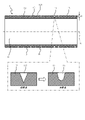
- FIG. 2 is an enlarged vertical sectional view showing the guide wire 1 according to the present embodiment.
- the guide wire 1 has a core material 11 as an example of the "base material portion” and an outer layer portion 12 provided in close contact with the core material 11 so as to cover the surface of the core material 11. Irregularly shaped recesses 13 are irregularly formed.
- the guide wire 1 may include a different resin layer or the like (not shown) between the core material 11 and the outer layer portion 12.
- a coil-shaped portion may be provided on the tip end side of the core material 11, but the illustration is omitted.
- FIG. 2 shows an enlarged region of the guide wire 1 in which the coil-shaped portion does not exist.
- the depth dimension h1 of the recess 13 is not a constant value but is scattered. However, the depth dimension h1 of the recess 13 does not exceed the thickness dimension of the outer layer portion 12.
- the irregularly shaped recess 13 is a plurality of wrinkled linear portions formed on the surface of the guide wire 1 and is recessed toward the core material 11.
- FIG. 2 shows an outline of the cross section of the recess 13.
- FIG. 3 shows a method of forming the recess 13. This will be described with reference to FIGS. 2 and 3.
- the core material 11 is dip-coated using the PFA dispersion which is the material of the outer layer portion 12.
- the PFA dispersion is a suspension in which PFA particles (dispersible material) are dispersed in a dispersion medium such as water.
- the entire circumference of the core material 11 may be dip-coated over the entire length, or the entire circumference of the core material 11 within a predetermined range may be dip-coated.
- the dispersoid is not limited to PFA.
- a thermoplastic resin having a low frictional resistance can be used as a material for the outer layer portion 12.
- the dip-coated core material 11 is heated at the first temperature TEMP1 for 1 hour at t1 to evaporate the dispersion medium and dry it.
- the tentative firing step can also be expressed as a drying step.
- the first temperature TEMP1 may be selected from, for example, a temperature range that is equal to or higher than the evaporation temperature of the dispersion medium and lower than the melting point of the dispersoid (evaporation temperature of the dispersion medium ⁇ TEMP1 ⁇ melting point of the dispersoid). ..
- the first time t1 can be set to a predetermined time required for evaporation of the dispersion medium.
- a crack 130 is generated in the resin outer layer portion 12 provided on the surface of the guide wire 1 as shown in the lower left of FIG.
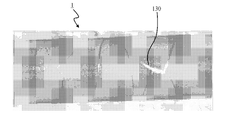
- one crack 130 is enlarged and schematically shown, but in reality, as shown in the external view of FIG. 4, a plurality of cracks 130 are formed on the surface of the guide wire 1 after the temporary firing step S2 is completed. Crack 130 is formed.
- the guide wire 1 in which the crack 130 is generated on the surface is main fired by heating it at the second temperature TEMP2 for 2 hours t2.
- the temporary firing step is called a drying step
- the main firing step can also be called a firing step.
- the temporary firing step and the main firing step may be continuously performed in time.
- the second temperature TEMP2 is set higher than the first temperature TEMP1 at the time of temporary firing (TEMP1 ⁇ TEMP2).
- the second temperature TEMP2 is set to be equal to or higher than the melting point of the dispersoid (here, the melting point of PFA).
- the second time t2 can be set to such a time that the resin on the upper side of the crack 130 melts and flows into the crack 130, and the crack 130 is not completely buried by the inflowing resin.
- the first time t1 which is the time for tentative firing, may be set to be equal to or longer than the second time t2, which is the time for main firing (t1 ⁇ t2).
- the first time t1 and the second time t2 may be set to the same value or close values.
- the recess 13 is formed by melting and flowing the resin on the surface side of the outer layer portion 12 into the crack 130. Since the recess 13 is formed from the crack 130, it has an irregularly shaped linear shape similar to that of the crack 13. The cross section of the recess 13 is gentler than the cross section of the crack 130.
- the recess 13 is formed from the crack 130 generated in the temporary firing step S2, it becomes an irregularly shaped linear recess 13 that is irregularly generated on the surface of the outer layer portion 12.
- the recess 13 containing either or both curved and straight lines can also be referred to as a wrinkled shape.
- FIG. 4 shows an enlarged part of the surface of the guide wire 1 when the temporary firing step S2 is completed.
- FIG. 5 shows an enlarged part of the surface of the guide wire 1 when the main firing step S3 is completed.
- the shape of the crack 130 and the shape of the recess 13 do not correspond to each other because the place different from FIG. 4 and FIG. 5 is enlarged and the magnification is also different. Since the recess 13 is formed by melting and flowing in the resin, the shape of the crack 130 in a plan view and the shape of the recess 13 in a plan view substantially correspond to each other. However, the small crack 130 may be filled with the resin that has flowed in.
- FIG. 6 shows an enlarged part of the guide wire 1C as a comparative example.
- An irregularly shaped unevenness 13 is not formed on the surface of the guide wire 1C as a comparative example. If the guide wire 1C shown in FIG. 6 is observed at a magnification higher than the magnification of the external view of FIG. 5, unevenness will appear on the surface, but it is not intentionally formed.
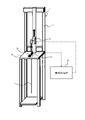
- FIG. 7 shows a measuring device 3 for measuring the outer diameter dimension of the guide wire 1.
- the outer diameter measuring device 3 includes, for example, a frame 31, a flat plate portion 32 having an insertion hole 33, an outer diameter measuring device 34, a linear actuator 35, and a measurement control device 36.
- the outer diameter measuring instrument 34 and the measuring control device 36 for example, the measuring head LS-9006 and the controller LS-9500 of the ultra-high speed and high precision dimensional measuring instrument LS-9000 series of KEYENCE CORPORATION can be used.
- the frame 31 extends upward from a flat floor surface, and a flat plate portion 32 is attached in the middle in the vertical direction thereof.
- the flat plate portion 32 is formed with an insertion hole 33 into which the guide wire 1 is inserted.
- An outer diameter measuring instrument 34 is arranged around the insertion hole 33.
- the outer diameter measuring device 34 measures the outer diameter dimension of an object by, for example, a laser beam, and the floodlight and the light receiver are arranged so as to face each other with the insertion hole 33 interposed therebetween.
- a linear actuator 35 is vertically provided in the flat plate portion 32 at a position slightly away from the insertion hole 33.
- the linear actuator 35 moves vertically upward at a constant speed according to a control signal from the measurement control device 36 while holding one end of the guide wire 1 (the upper end of the guide wire 1 in FIG. 7). ..
- the outer diameter measuring instrument 34 measures the outer diameter dimension of the guide wire 1 in real time and outputs it to the measurement control device 36.
- the outer diameter may be measured with a sampling cycle of 8000 times / sec, a vertical movement speed of 10 mm / sec, and a measurement length of 30 mm.
- the external dimensional data of the guide wires of the present embodiment and the comparative example obtained by such measurement will be described below.
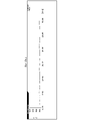
- FIG. 8 shows the results (raw data) of measuring the outer diameter dimension of the guide wire 1 in which irregularly shaped irregularities 13 are formed on the surface of the outer layer portion 12 by the outer diameter measuring device 3 described in FIG. 7. It is a graph which shows. The vertical axis indicates the outer diameter dimension ( ⁇ m), and the horizontal axis indicates the position of the guide wire 1 in the length direction. From the graph of FIG. 8, it can be seen that various recesses 13 having various recesses are irregularly formed on the surface of the guide wire 1 of the present embodiment.
- FIG. 9 is a waveform diagram showing the results of FFT analysis of the measurement data shown in FIG.
- the vertical axis shows the power value
- the horizontal axis shows the spatial frequency (1 / mm).
- the waveform showing the unevenness 13 includes the spatial frequency in the range from the lower limit value SF1 to the upper limit value SF2.
- the lower limit value SF1 is 1 (1 / mm)
- the upper limit value SF2 is 10 (1 / mm). That is, it was sought from the experiment that the sliding resistance was reduced when the recess 13 including the spatial frequency of 1 to 10 (1 / mm) was formed.
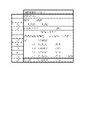
- FIG. 10 is a table T1 showing the result of FFT analysis of the outer diameter dimension of the guide wire 1 having the recess 13.
- the MPF is 5.7322 and the MDF is 5.542.
- the second row (2) of the table T1 there are 289 data having a power value larger than 0.01.
- the third row (3) to the seventh row (7) of the table T1 show the data distribution status when the range of the spatial frequency with respect to the MPF is changed.
- the cumulative value of the power values in the entire spatial frequency range is 7.834504.
- the cumulative value is 6.24272 in the range of the spatial frequency of plus or minus 4 of the MPF.
- the distribution ratio is 80%.
- the cumulative value is 5.40852 in the range of the spatial frequency of plus or minus 3 of the MPF.
- the distribution ratio is 69%.
- the cumulative value is 3.95915 in the range of the spatial frequency of plus or minus 2 of the MPF.
- the distribution ratio is 51%.
- the cumulative value is 2.10406 in the range of the spatial frequency of plus or minus 1 of the MPF.
- the distribution ratio is 27%, and the difference between the distribution ratio of the spatial frequency of plus or minus 4 and the distribution ratio of the spatial frequency of plus or minus 1 is 53%.
- the cumulative value is 5.546508 in the range of the spatial frequency of 3 to 10 (1 / mm).
- the distribution ratio is 71%.
- FIG. 11 is a table showing the results of measuring the outer diameter of the guide wire 1 having the recess 13 in the outer layer portion 12.
- the unit is ⁇ m.
- the maximum value of the outer diameter dimension is 573.1
- the minimum value of the outer diameter dimension is 556
- the median value of the outer diameter dimension is 564.55
- the average value of the outer diameter dimension is 567.6373
- the fluctuation value of the outer diameter dimension is 2. .452621.
- the maximum value of the outer diameter fluctuation with respect to the minimum value of the outer diameter dimension is 17, the minimum value of the outer diameter fluctuation is 0, and the outer diameter fluctuation rate is 3.0%.
- the outer diameter variation value with respect to the average value of the outer diameter dimension is from 5.362737 to -11.6373, and the outer diameter variation rate is from +0.94 to ⁇ 2.05%.
- the outer diameter variation value with respect to the median outer diameter dimension is from 8.45 to ⁇ 8.55, and the outer diameter volatility is from +1.50 to ⁇ 1.51%.
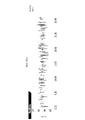
- FIG. 12 is a graph of data obtained by measuring the outer diameter dimension of the guide wire 1C of the comparative example along the axial direction.
- the vertical axis indicates the outer diameter dimension ( ⁇ m), and the horizontal axis indicates the position of the guide wire 1 in the length direction. From the graph of FIG. 12, it can be seen that the surface of the guide wire 1C of the comparative example is smooth without unevenness as compared with the guide wire shown in FIG.
- FIG. 13 is a waveform diagram showing the results of FFT analysis of the measurement data shown in FIG.
- the vertical axis shows the power value
- the horizontal axis shows the spatial frequency (1 / mm). According to the waveform diagram of FIG. 13, it can be seen that the surface of the guide wire 1C as a comparative example has substantially no unevenness.
- FIG. 14 is a table T2 showing the result of FFT analysis of the outer diameter dimension of the guide wire 1C of the comparative example.
- the MPF is 1.064 and the MDF is 0.2441.
- the second row (2) of the table T2 there is no data whose power value is larger than 0.01.
- the dissociation between the MPF value and the MDF value is due to the fact that the power value does not appear in the figure at 1 (1 / mm) or more in FIG. Such fluctuations are caused by fluctuations in diameter caused by processing of the core material 11 of the guide wire.
- the third row (3) to the seventh row (7) of the table T2 show the data distribution status when the range of the spatial frequency with respect to the MPF is changed.
- the cumulative value in the entire spatial frequency range is 1.51776.
- the cumulative value is 0.926171 in the range of the spatial frequency of plus or minus 4 of the MPF.
- the distribution ratio is 61%.
- the cumulative value is 0.861739 in the range of the spatial frequency of plus or minus 3 of the MPF.
- the distribution ratio is 57%.
- the cumulative value is 0.801288 in the range of the spatial frequency of plus or minus 2 of the MPF.
- the distribution ratio is 53%.
- the cumulative value is 0.612517 in the range of the spatial frequency of plus or minus 1 of the MPF.
- the distribution ratio is 40%.
- the cumulative value is 0.357573 in the range of the spatial frequency of 3 to 10 (1 / mm).
- the distribution ratio is 24%.
- FIG. 15 is a table showing the results of measuring the outer diameter dimension of the guide wire 1C.
- the unit is ⁇ m.
- the maximum value of the outer diameter dimension is 561.7
- the minimum value of the outer diameter dimension is 559
- the median value of the outer diameter dimension is 560.35
- the average value of the outer diameter dimension is 560.1724
- the fluctuation value of the outer diameter dimension is 0. It is .662483.
- the surface of the guide wire 1C of the comparative example does not have the recess 13 of the present embodiment and is substantially smooth, so that there is almost no change in the outer diameter dimension.
- FIG. 16 is a table showing the results of measuring the outer diameter dimension of the tapered portion of the guide wire 1.
- the guide wire 1 may have a tapered portion whose diameter gradually decreases toward the tip side.
- the core material 11 is tapered and the recess 13 is formed on the surface of the guide wire 1, so that the change in the external dimension of the tapered portion is larger than the change in the external dimension of the non-tapered portion. .. Therefore, in order to obtain the change in the external dimensions due to the formation of the concave portion 13 in the tapered portion, it is necessary to obtain the numerical value of the external dimensional change corrected so as to offset the change in the diameter of the core material 11. ..
- the change in the outer diameter of the core material 11 between the tip and the base end of the tapered portion is approximated by a linear function, and the tip or base end of the tapered portion is used by using the inverse function of the linear function or the like. It is performed by adding or subtracting the outer diameter value according to the distance from.
- FIG. 16 On the upper side of FIG. 16, the analysis value of the measurement data when the recess 13 is irregularly formed on the tapered portion where the core material 11 of the guide wire 1 has a reduced diameter of 8 ⁇ m per 10 cm in the long direction is shown. It is shown.
- the lower side of FIG. 16 shows the analysis value of the measurement data when the recess 13 is not formed in the tapered portion where the core material 11 of the guide wire 1C has a reduced diameter of 8 ⁇ m per 10 cm in the long direction. There is. The unit is ⁇ m.
- the upper side of the table will be explained.
- the maximum value of the outer diameter dimension is 570.205, the minimum value of the outer diameter dimension is 550.655, the median value of the outer diameter dimension is 560.43, the average value of the outer diameter dimension is 563.6368, and the fluctuation value of the outer diameter dimension. Is 3.269153.
- the maximum value of the outer diameter fluctuation with respect to the minimum value of the outer diameter dimension is 19, the minimum value of the outer diameter fluctuation is 0, and the outer diameter fluctuation rate is 3.55%.
- the outer diameter fluctuation value with respect to the average value of the outer diameter dimension is from +6.363237 to -12.36368, and the outer diameter fluctuation rate is from +1.13% to -2.24%.
- the outer diameter variation value with respect to the median outer diameter dimension is from +9.57 to -9.43, and the outer diameter variation rate is from + 1.71% to -1.68%.
- FIGS. 17 to 22 will be described.
- FIG. 17 is an analysis result table T3 for another case in which an irregular recess 13 is formed on the surface of the guide wire 1.
- FIG. 18 is a graph obtained by measuring the measurement of external dimensions.
- FIG. 19 is a graph showing the FFT analysis result of the external dimension measurement data.
- FIG. 20 is an analysis result table T4 for still another case in which an irregular recess 13 is formed on the surface of the guide wire 1.
- FIG. 21 is a graph obtained by measuring the measurement of external dimensions.
- FIG. 22 is a graph showing the FFT analysis result of the external dimension measurement data.
- the analysis result table T3 and the analysis result table T4 are examples in which the thickness of the outer layer portion 12 made of resin is formed to be thicker than that of the analysis result table T1 of FIGS. 8 to 10.
- the guide wire 1 in which the recess 13 is formed has an MPF in the range of 4 to 7 and an MDF in the range of 4 to 7.
- the second line (2) there are at least 100 pieces of data having a power value larger than 0.01.
- the lower limit of the distribution ratio of the spatial frequency plus or minus 4 is 66%.
- the upper limit of the distribution ratio of spatial frequency plus or minus 1 is 35%.
- the lower limit of the distribution ratio of the spatial frequency plus or minus 4 is the minimum value (70% of T4) of the fourth row (4) of the table T1, T3, T4 forming the unevenness and the second of the table T2 having no unevenness. It is the median value with the value (61%) in the 4th line (4).
- the upper limit of the distribution ratio of the spatial frequency plus or minus 1 is the maximum value (31% of T3) of the 7th row (7) of the table T1, T3, T4 forming the unevenness and the second of the table T2 having no unevenness. It is the median value with the value (40%) in the 7th line (7).
- the lower limit of the ratio difference between the lower limit of the distribution ratio of the spatial frequency plus or minus 4 and the upper limit of the distribution ratio of the spatial frequency plus or minus 1 of the table having unevenness is 31%.
- the irregular recess 13 As shown in the eighth row (8) of the tables T1, T3, and T4, the irregular recess 13 according to the present embodiment is formed on the surface of the catheter 1 in the range of the spatial frequency of 3 to 10 (1 / mm). It can be seen that it is formed.
- FIG. 23 is a graph showing a comparison between the sliding resistance of the guide wire 1 of the present embodiment having the recess 13 on the surface and the sliding resistance of the guide wire 1C of the comparative example having no recess on the surface.
- the vertical axis shows the value of sliding resistance.
- a simulated environment was used in which the endoscope was inserted from the oral cavity to the duodenum via the esophagus and stomach, and a guide wire was inserted into the endoscope.
- the introduction of the guide wire into the environment where the guide wire insertion lumen of the endoscope is filled with physiological saline is simulated, and when the guide wire is introduced into the endoscope.
- the guide wire 1 and the guide wire 1C are installed in the case where the guide wire is introduced into the environment where the bile flows back from the tip of the endoscope and the guide wire insertion lumen is filled with the bile. Compare.
- the bar graph in the shaded area shows the guide wire 1 of this embodiment, and the white bar graph shows the guide wire 1C of the comparative example.
- the guide wire 1 of the present embodiment having the irregular recesses 13 on the surface has a smaller sliding resistance.
- the sliding resistance can be reduced by arranging the recesses 13 irregularly on the substantially flat surface 121 of the outer layer portion 13.
- the shape of the recess can reduce the sliding resistance by including the spatial frequency of 3 to 10 (1 / mm).
- 1 Guide wire
- 1C Guide wire as a comparative example
- 2 Catheter
- 11 Base material
- 12 Outer layer
- 13 Recess
- 130 Crack
Landscapes
- Health & Medical Sciences (AREA)
- Life Sciences & Earth Sciences (AREA)
- Animal Behavior & Ethology (AREA)
- Veterinary Medicine (AREA)
- Public Health (AREA)
- General Health & Medical Sciences (AREA)
- Engineering & Computer Science (AREA)
- Heart & Thoracic Surgery (AREA)
- Hematology (AREA)
- Biomedical Technology (AREA)
- Anesthesiology (AREA)
- Pulmonology (AREA)
- Biophysics (AREA)
- Epidemiology (AREA)
- Mechanical Engineering (AREA)
- Surgery (AREA)
- Vascular Medicine (AREA)
- Media Introduction/Drainage Providing Device (AREA)
- Materials For Medical Uses (AREA)
Priority Applications (12)
| Application Number | Priority Date | Filing Date | Title |
|---|---|---|---|
| CN202080105730.1A CN116322860B (zh) | 2020-10-02 | 2020-10-02 | 长条医疗器具 |
| EP20956352.7A EP4223349A4 (en) | 2020-10-02 | 2020-10-02 | LONG MEDICAL INSTRUMENT |
| JP2022553413A JP7611262B2 (ja) | 2020-10-02 | 2020-10-02 | 長尺医療器具 |
| PCT/JP2020/037644 WO2022070424A1 (ja) | 2020-10-02 | 2020-10-02 | 長尺医療器具 |
| CN202180067586.1A CN116209494B (zh) | 2020-10-02 | 2021-10-01 | 长条医疗器具及其制造方法 |
| JP2022554158A JP7523564B2 (ja) | 2020-10-02 | 2021-10-01 | 長尺医療器具およびその製造方法 |
| EP21875896.9A EP4223350A4 (en) | 2020-10-02 | 2021-10-01 | ELONGATED MEDICAL INSTRUMENT AND PROCESS FOR PRODUCING SAME |
| PCT/JP2021/036524 WO2022071600A1 (ja) | 2020-10-02 | 2021-10-01 | 長尺医療器具およびその製造方法 |
| US18/129,570 US20230241356A1 (en) | 2020-10-02 | 2023-03-31 | Elongated medical instrument and production method therefor |
| US18/129,123 US20230233799A1 (en) | 2020-10-02 | 2023-03-31 | Elongated medical instrument |
| JP2024113484A JP7633460B2 (ja) | 2020-10-02 | 2024-07-16 | 長尺医療器具およびその製造方法 |
| JP2025018354A JP7821341B2 (ja) | 2020-10-02 | 2025-02-06 | 長尺医療器具およびその製造方法 |
Applications Claiming Priority (1)
| Application Number | Priority Date | Filing Date | Title |
|---|---|---|---|
| PCT/JP2020/037644 WO2022070424A1 (ja) | 2020-10-02 | 2020-10-02 | 長尺医療器具 |
Related Child Applications (1)
| Application Number | Title | Priority Date | Filing Date |
|---|---|---|---|
| US18/129,123 Continuation US20230233799A1 (en) | 2020-10-02 | 2023-03-31 | Elongated medical instrument |
Publications (1)
| Publication Number | Publication Date |
|---|---|
| WO2022070424A1 true WO2022070424A1 (ja) | 2022-04-07 |
Family
ID=80950117
Family Applications (2)
| Application Number | Title | Priority Date | Filing Date |
|---|---|---|---|
| PCT/JP2020/037644 Ceased WO2022070424A1 (ja) | 2020-10-02 | 2020-10-02 | 長尺医療器具 |
| PCT/JP2021/036524 Ceased WO2022071600A1 (ja) | 2020-10-02 | 2021-10-01 | 長尺医療器具およびその製造方法 |
Family Applications After (1)
| Application Number | Title | Priority Date | Filing Date |
|---|---|---|---|
| PCT/JP2021/036524 Ceased WO2022071600A1 (ja) | 2020-10-02 | 2021-10-01 | 長尺医療器具およびその製造方法 |
Country Status (5)
| Country | Link |
|---|---|
| US (2) | US20230233799A1 (https=) |
| EP (2) | EP4223349A4 (https=) |
| JP (4) | JP7611262B2 (https=) |
| CN (2) | CN116322860B (https=) |
| WO (2) | WO2022070424A1 (https=) |
Families Citing this family (1)
| Publication number | Priority date | Publication date | Assignee | Title |
|---|---|---|---|---|
| JP7611262B2 (ja) * | 2020-10-02 | 2025-01-09 | 朝日インテック株式会社 | 長尺医療器具 |
Citations (6)
| Publication number | Priority date | Publication date | Assignee | Title |
|---|---|---|---|---|
| US5404887A (en) * | 1993-11-04 | 1995-04-11 | Scimed Life Systems, Inc. | Guide wire having an unsmooth exterior surface |
| JP2004130123A (ja) * | 2002-09-20 | 2004-04-30 | Ist:Kk | 医療用ガイドワイヤー及びその製造方法 |
| US20040106930A1 (en) * | 2002-03-21 | 2004-06-03 | Biotronik Gmbh & Co. Corporate Intellectual Properties | Surface structure for a catheter sliding surface |
| JP2008125523A (ja) | 2006-11-16 | 2008-06-05 | Terumo Corp | 医療用器具 |
| WO2009081844A1 (ja) | 2007-12-26 | 2009-07-02 | Terumo Kabushiki Kaisha | 医療用長尺体、その製造方法およびその製造装置 |
| JP2019516441A (ja) * | 2016-04-18 | 2019-06-20 | キューエックスメディカル リミテッド ライアビリティ カンパニー | 血管狭窄を通して進めるためのカテーテルおよび関連する方法 |
Family Cites Families (14)
| Publication number | Priority date | Publication date | Assignee | Title |
|---|---|---|---|---|
| WO2004026385A1 (ja) * | 2002-09-20 | 2004-04-01 | I.S.T Corporation | 医療用ガイドワイヤー及びその製造方法 |
| JP2007202846A (ja) * | 2006-02-02 | 2007-08-16 | Ist Corp | 摺動性部材およびその製造方法 |
| US20080119762A1 (en) * | 2006-11-16 | 2008-05-22 | Tateishi Tadasu | Guide wire |
| JP2008161491A (ja) * | 2006-12-28 | 2008-07-17 | Asahi Intecc Co Ltd | 医療用ガイドワイヤ |
| US8231926B2 (en) * | 2007-12-21 | 2012-07-31 | Innovatech, Llc | Marked precoated medical device and method of manufacturing same |
| CN102933253B (zh) * | 2010-06-10 | 2015-06-03 | 株式会社钟化 | 医疗用管及其制造方法 |
| JP2013158588A (ja) * | 2012-02-08 | 2013-08-19 | Sumitomo Bakelite Co Ltd | 医療用コイル、医療機器および医療用コイルの製造方法 |
| JP6078271B2 (ja) * | 2012-09-06 | 2017-02-08 | 株式会社パイオラックスメディカルデバイス | カテーテル |
| JP5975486B2 (ja) * | 2013-02-15 | 2016-08-23 | 朝日インテック株式会社 | カテーテル |
| EP3395395B1 (en) * | 2015-12-21 | 2025-02-19 | Terumo Kabushiki Kaisha | Balloon catheter and medical elongated body |
| EP3603687B1 (en) * | 2017-03-30 | 2024-08-07 | Terumo Kabushiki Kaisha | Medical implement |
| CN112023125B (zh) * | 2019-06-03 | 2023-03-21 | 上海微创医疗器械(集团)有限公司 | 结晶型涂层及其制备方法、载药植入医疗器械及其制备方法 |
| JP6723489B1 (ja) * | 2019-09-13 | 2020-07-15 | 日立金属株式会社 | ケーブルおよび医療用中空管 |
| JP7611262B2 (ja) | 2020-10-02 | 2025-01-09 | 朝日インテック株式会社 | 長尺医療器具 |
-
2020
- 2020-10-02 JP JP2022553413A patent/JP7611262B2/ja active Active
- 2020-10-02 EP EP20956352.7A patent/EP4223349A4/en active Pending
- 2020-10-02 WO PCT/JP2020/037644 patent/WO2022070424A1/ja not_active Ceased
- 2020-10-02 CN CN202080105730.1A patent/CN116322860B/zh active Active
-
2021
- 2021-10-01 EP EP21875896.9A patent/EP4223350A4/en active Pending
- 2021-10-01 JP JP2022554158A patent/JP7523564B2/ja active Active
- 2021-10-01 CN CN202180067586.1A patent/CN116209494B/zh active Active
- 2021-10-01 WO PCT/JP2021/036524 patent/WO2022071600A1/ja not_active Ceased
-
2023
- 2023-03-31 US US18/129,123 patent/US20230233799A1/en active Pending
- 2023-03-31 US US18/129,570 patent/US20230241356A1/en active Pending
-
2024
- 2024-07-16 JP JP2024113484A patent/JP7633460B2/ja active Active
-
2025
- 2025-02-06 JP JP2025018354A patent/JP7821341B2/ja active Active
Patent Citations (6)
| Publication number | Priority date | Publication date | Assignee | Title |
|---|---|---|---|---|
| US5404887A (en) * | 1993-11-04 | 1995-04-11 | Scimed Life Systems, Inc. | Guide wire having an unsmooth exterior surface |
| US20040106930A1 (en) * | 2002-03-21 | 2004-06-03 | Biotronik Gmbh & Co. Corporate Intellectual Properties | Surface structure for a catheter sliding surface |
| JP2004130123A (ja) * | 2002-09-20 | 2004-04-30 | Ist:Kk | 医療用ガイドワイヤー及びその製造方法 |
| JP2008125523A (ja) | 2006-11-16 | 2008-06-05 | Terumo Corp | 医療用器具 |
| WO2009081844A1 (ja) | 2007-12-26 | 2009-07-02 | Terumo Kabushiki Kaisha | 医療用長尺体、その製造方法およびその製造装置 |
| JP2019516441A (ja) * | 2016-04-18 | 2019-06-20 | キューエックスメディカル リミテッド ライアビリティ カンパニー | 血管狭窄を通して進めるためのカテーテルおよび関連する方法 |
Non-Patent Citations (1)
| Title |
|---|
| See also references of EP4223349A4 |
Also Published As
| Publication number | Publication date |
|---|---|
| JP7633460B2 (ja) | 2025-02-19 |
| CN116209494A (zh) | 2023-06-02 |
| WO2022071600A1 (ja) | 2022-04-07 |
| US20230233799A1 (en) | 2023-07-27 |
| JP7821341B2 (ja) | 2026-02-26 |
| CN116322860A (zh) | 2023-06-23 |
| CN116322860B (zh) | 2025-02-25 |
| EP4223349A4 (en) | 2024-07-17 |
| JP2025062129A (ja) | 2025-04-11 |
| JPWO2022070424A1 (https=) | 2022-04-07 |
| EP4223349A1 (en) | 2023-08-09 |
| EP4223350A1 (en) | 2023-08-09 |
| JP2024128132A (ja) | 2024-09-20 |
| JPWO2022071600A1 (https=) | 2022-04-07 |
| JP7523564B2 (ja) | 2024-07-26 |
| US20230241356A1 (en) | 2023-08-03 |
| JP7611262B2 (ja) | 2025-01-09 |
| CN116209494B (zh) | 2025-07-18 |
| EP4223350A4 (en) | 2024-11-20 |
Similar Documents
| Publication | Publication Date | Title |
|---|---|---|
| CN102844071B (zh) | 用于神经脉管应用的低剖面引导导管 | |
| US9622706B2 (en) | Catheter for in vivo imaging | |
| KR102770735B1 (ko) | 일체형 코일 혈관 장치 | |
| US6648874B2 (en) | Guide catheter with lubricious inner liner | |
| US20060264905A1 (en) | Improved Catheters | |
| JP2019141605A (ja) | 解剖学的な損傷長さの見積もりのための装置、システム、及び方法 | |
| US20060264907A1 (en) | Catheters having stiffening mechanisms | |
| US20110166566A1 (en) | Devices and methods for performing percutaneous surgical procedures | |
| JP2015526200A (ja) | 解剖学的な損傷長さの見積もりのためのx線不透過性部材を用いた装置、システム、及び方法 | |
| EP2956197A1 (en) | Steerable medical device having multiple curve profiles | |
| CN108348726A (zh) | 导管轴和相关联的装置、系统和方法 | |
| WO2006119422A2 (en) | Improved catheters | |
| JP2021053386A (ja) | 屈曲可能なガイドワイヤ | |
| WO2022070424A1 (ja) | 長尺医療器具 | |
| JPWO2009081844A1 (ja) | 医療用長尺体、その製造方法およびその製造装置 | |
| JP6397156B2 (ja) | センサ化湾曲カテーテル | |
| JP2017524397A (ja) | 薬剤溶出性バルーンを有する画像ガイドされる治療カテーテル | |
| US20150119757A1 (en) | Coil body and guide wire | |
| JP7461606B2 (ja) | 食道用送液カテーテル及び食道用送液カテーテル製造用中間部品 | |
| CN115487399B (zh) | 一种医用管材及球囊导管 | |
| KR102580508B1 (ko) | 카테터 | |
| US20240390638A1 (en) | Variable stiffness catheter liners | |
| JP2007075655A (ja) | マーカー付きカテーテル | |
| Azarnoush et al. | Real-time control of angioplasty balloon inflation based on feedback from intravascular optical coherence tomography: experimental validation on an excised heart and a beating heart model | |
| US10350385B2 (en) | Thermodilution catheter |
Legal Events
| Date | Code | Title | Description |
|---|---|---|---|
| 121 | Ep: the epo has been informed by wipo that ep was designated in this application |
Ref document number: 20956352 Country of ref document: EP Kind code of ref document: A1 |
|
| ENP | Entry into the national phase |
Ref document number: 2022553413 Country of ref document: JP Kind code of ref document: A |
|
| NENP | Non-entry into the national phase |
Ref country code: DE |
|
| ENP | Entry into the national phase |
Ref document number: 2020956352 Country of ref document: EP Effective date: 20230502 |
|
| WWG | Wipo information: grant in national office |
Ref document number: 202080105730.1 Country of ref document: CN |